LONDON (AP) — Three runaway horses bolted through the streets of central London Monday after one was spooked by a bus and two others tossed their riders, the Army said.
The Army said one horse Monday had minor injuries but didn’t require further treatment and neither soldier was injured.
The scene was reminiscent of — but less chaotic — than an incident when five horses bolted in April and two were seriously injured.
The incident Monday occurred as five soldiers from the Household Cavalry Mounted Regiment conducted a routine exercise with six horses.
A riderless horse that was being led got spooked while two other horses threw off their riders and bolted.
One was caught a short distance away but two others made it to Vauxhall Bridge, about 1.5 miles (2.5 kilometers) away.
None of the horses Monday was involved in the April escape.
Winds up to 150 mph (240 kph), just shy of a Category 5 storm, blew off roofs, uprooted trees and caused other damage on Carriacou, one of the islands of Grenada, and elsewhere in the southeast Caribbean.
“This is an extremely dangerous and life-threatening situation,” the National Hurricane Center said.
Hurricane warnings were in effect for Barbados, Grenada, Tobago and St. Vincent and the Grenadines as thousands of people hunkered down in homes and shelters. The last strong hurricane to hit the southeast Caribbean was Hurricane Ivan 20 years ago, which killed dozens of people in Grenada.
In a briefing, National Hurricane Center director Michael Brennan says Hurricane Beryl is churning westward in the Caribbean with winds over 120 mph, storm surge and flooding rains.
NBC Radio in St. Vincent and the Grenadines said it received reports of roofs being torn off churches and schools as communications began collapsing across the southeast Caribbean.
“Jesus Christ!” a woman yells in a video that showed tin roofs flying through the air.
In nearby Grenada, officials received “reports of devastation” from Carriacou and surrounding islands, said Terence Walters, Grenada’s national disaster coordinator. Prime Minister Dickon Mitchell said he would travel to Carriacou as soon as it’s safe, noting that there’s been an “extensive” storm surge.
Grenada officials had to evacuate patients to a lower floor after hospital roof was damaged, he said.
“There is the likelihood of even greater damage,” he told reporters. “We have no choice but to continue to pray.”
Later on Monday morning, Beryl was about 30 miles (50 kilometers) north of the island of Grenada, moving west-northwest at 20 mph (31 kph).
In Barbados, officials received more than a dozen reports of roof damage, fallen trees and downed electric posts across the island, said Kerry Hinds, emergency management director. Wilfred Abrahams, minister of home affairs and information, said drones — which are faster than crews fanning across the island — would assess damage once Beryl passes.
A tropical storm warning was in effect for St. Lucia, Martinique and Trinidad. A tropical storm watch was issued for Haiti’s entire southern coast, and from Punta Palenque in the Dominican Republic west to the border with Haiti. A hurricane watch was issued for Jamaica.
Forecasters warned of a life-threatening storm surge of up to 9 feet (3 meters) in areas where Beryl made landfall, with 3 to 6 inches (7.6 to 15 centimeters) of rain for Barbados and nearby islands and possibly 10 inches in some areas (25 centimeters), especially in Grenada and the Grenadines.
The storm was expected to weaken slightly over the Caribbean Sea on a path that would take it just south of Jamaica and later toward Mexico’s Yucatan Peninsula as a Category 1.
“Beryl is forecast to remain a significant hurricane during its entire trek across the Caribbean region,” the National Hurricane Center said.
Officials in some southeast Caribbean islands announced controlled power outages and warned of water cuts ahead of the storm, as well as landslides and flash floods. Schools, airports and government offices shuttered.
Hours before the storm, Barbadian Michael Beckles said he still feared the worst for his island.
“As prepared as we can try to be, there are a lot of things that we can’t control,” he said. “There are a lot of houses that are not ready for a storm like this.”
Historic hurricane
Beryl strengthened from a tropical depression to a major hurricane in just 42 hours — a feat accomplished only six other times in Atlantic hurricane history, and with Sept. 1 as the earliest date, according to hurricane expert Sam Lillo.
It also was the earliest Category 4 Atlantic hurricane on record, besting Hurricane Dennis, which became a Category 4 storm on July 8, 2005.
“This is a dangerous hurricane for the Windward Islands,” said hurricane specialist and storm surge expert Michael Lowry. Beryl amassed its strength from record warm waters that are hotter now than they would be at the peak of hurricane season in September, he said.
Beryl also marked the farthest east that a hurricane has formed in the tropical Atlantic in June, breaking a record set in 1933, according to Philip Klotzbach, Colorado State University hurricane researcher.
On Sunday night, Beryl formed a new eye, or center, something that usually weakens a storm slightly as it grows larger in area. Experts say it’s now back to strengthening.
Jaswinderpal Parmar of Fresno, California, who had traveled to Barbados for Saturday’s Twenty20 World Cup cricket final, said he and his family were now stuck there with scores of other fans, their flights canceled on Sunday.
He said by phone that it’s the first time he has experienced a hurricane — he and his family have been praying, as well as taking calls from concerned friends and family as far away as India.
“We couldn’t sleep last night,” Parmar, 47, said.
Looking ahead
Even as Beryl bore down on the southeast Caribbean, government officials warned about a cluster of thunderstorms mimicking the hurricane’s path that have a 70% chance of becoming a tropical depression.
“There’s always a concern when you have back-to-back storms,” Lowry said. “If two storms move over the same area or nearby, the first storm weakens the infrastructure, so the secondary system doesn’t need to be as strong to have serious impacts.”
Beryl is the second named storm in the Atlantic hurricane season, which runs from June 1 to Nov. 30. Earlier this month, Tropical Storm Alberto made landfall in northeast Mexico and killed four people.
On Sunday night, a tropical depression near the eastern Mexico coastal city of Veracruz briefly strengthened into Tropical Storm Chris, the third named storm of the season. It weakened on Monday and was downgraded back to a tropical depression forecast to move inland. The National Hurricane Center early Monday reported heavy rainfall and flooding, with the possibility of mudslides, before the storm dissipates.
The National Oceanic and Atmospheric Administration predicts the 2024 hurricane season is likely to be well above average, with between 17 and 25 named storms. The forecast calls for as many as 13 hurricanes and four major hurricanes.
An average Atlantic hurricane season produces 14 named storms, seven of them hurricanes and three major hurricanes.
___
Associated Press videographer Kofi Jones in Bridgetown, Barbados, contributed to this report.
DENVER (AP) — The final fire truck rolled through the streets of Denver for the Nuggets’ celebratory parade a year ago, carrying Nikola Jokic, Jamal Murray and the franchise’s first NBA championship trophy.
The truck suddenly stopped following a right turn around a corner. An instant later, chaos.
On the concrete, amid the noise and celebrations, police Sgt. Justin Dodge found himself fighting for his life, his left foot run over by the front wheel of the 80,000-pound vehicle.
There, in the street, he made a vow — that if the tourniquets held and if rescue workers got him to the hospital in time aboard an all-terrain vehicle, he would stage an epic comeback.
He has, too, after eight surgeries including one that amputated his leg inches below the knee. A year after the June 15 accident, he is back full-time on the job as a SWAT team supervisor, has become a motivational speaker and the subject of a PBS documentary and is a phone call away for anyone going through a similar difficult time.
“That day was pretty rough for me,” Dodge said in a series of interviews with The Associated Press. “But because of the things that are happening and the positive story that I’m trying to create, and that people are seeing, I’m having the ability to hopefully impact people in a way that I never would have been able to impact them before.”
His new motto is, “Crush the Hard.”
Really, though, he has always operated in that manner. That’s how he became an elite goaltender as a kid, including a stint with the St. Paul Vulcans of the United States Hockey League. That’s how he rose to the ranks of second-degree black belt in the martial arts discipline of Brazilian jiu-jitsu.
And that’s how he returned to full duties with the SWAT team four days before the one-year anniversary of the accident.
“People root for the underdog,” said the 51-year-old Dodge, who has been with the Denver Police Department for 27 years, including 18 with SWAT. “Based on my situation, I feel like they’re cheering for me.”
Parade day
An estimated 750,000 fans had assembled along the parade route — and at Civic Center Park — to celebrate the Nuggets beating Miami and bringing home the Larry O’Brien Trophy for the first time.
Dodge provided security by walking along with the last fire truck — the one carrying Jokic and Murray, along with team owner Stan Kroenke and president Josh Kroenke.
Nearing the end of the route, the truck turned and the tire caught Dodge’s foot. It dragged him under the wheel but he was able to maneuver in a way — he credits Brazilian jiu-jitsu — that it didn’t roll over his knee or hip.
All around there were shouts for the truck to brake. But the noise was so loud.
The truck stopped on his leg before backing up. It lasted only seconds “but felt like an eternity,” Dodge said.
Fellow first responders sprang into action. Two tourniquets were applied. Given the crowded streets, they didn’t wait for an ambulance but instead loaded him onto an ATV and raced him to Denver Health.
Immediately, he went into surgery in an effort to save both him and his lower leg.
Three weeks after the accident, his lower leg was amputated.
As he healed, many visitors stopped by the hospital to wish him well, including Murray. Another was the driver of the fire truck. They’ve become good friends.
“There’s never been a day that I just sat there and went, ‘Why me?’” Dodge said. “Not one day. Because you can’t look back.”
Rehab
Denver Police Department Sgt. Justin Dodge hurries up the stairs on his prosthetic leg during a training exercise. (AP Photo/David Zalubowski)
Former Nuggets director of performance Steve Hess reached out to offer his help to Dodge. Hess, who runs his own fitness company, is known for his infectious energy.
It was the perfect pairing. They designed a blueprint to take Dodge from a wheelchair to back to his line of work using his prosthetic leg.
“Justin looks at everything as an opportunity,” Hess said. “He’s limitless, because he doesn’t buy into any restrictions.”
There were tough days. Simple tasks early on, like taking a shower or scooting his way up stairs, were so draining.
“Sometimes, I would just literally lay my head on the floor (at the top of the stairs) and just openly cry with my kids surrounding me,” Dodge said.
Those moments only fueled him.
“He’d come to workouts hyped and I’d be like, ‘You do know that I’m about to kick your (butt),’” Hess said with a laugh. “There’s no off switch.”
That’s what it took to get him back to SWAT, where he’s part of a team called in for hostage rescues or situations involving active shooters. To get him into elite SWAT shape, Hess had Dodge climbing over walls and performing heavy squat lifts and pushups.
When Dodge tested to return to his unit, he was stronger than before during an exercise in which he ran 400 meters with 25-pound weights in each hand and while wearing a gas mask.
“Nothing slows him down,” Hess said. “He rises above it.”
Motivational speaker
Denver Police Department Sgt. Justin Dodge stands for a portrait. Dodge lost his left leg below the knee when he was struck by a firetruck carrying members of the NBA champion Denver Nuggets. He was providing security along the parade route for winning the title last June. (AP Photo/David Zalubowski)
These days, Dodge does numerous speaking engagements with an emphasis on resiliency and wellness. He makes time to talk to anyone who reaches out and is going through a similar experience. One of the questions he always asks: What are they doing today to be better for tomorrow?
“With the truck still on top of me, I was already starting my mental rehab,” Dodge said. “I knew my course of life had changed in an instant. But I told myself, ‘If I live to get to the hospital, I’m going to make an epic comeback.’”
ALBUQUERQUE, N.M. (AP) — The Albuquerque Police Department headquarters and City Hall have both been damaged from flooding, Mayor Tim Keller said Sunday.
According to the National Weather Service, quarter-sized hail and 60 mph wind hit the Albuquerque area late Saturday night.
Heavy rain from a severe thunderstorm brought flash flooding to many parts of the city and downed power poles, leaving up to 20,000 residents without electricity for hours.
Keller said basements of City Hall and the Albuquerque police flooded, but there was no immediate damage estimate.
Part of Central Avenue was closed after the underpass filled with several feet of water, according to the mayor.
The Albuquerque Fire Department performed 10 water rescues after heavy rain flooded multiple streets and storm drains and downed some power lines.
PARK CITY, Kan. (AP) — A Kansas fire marshal said Tuesday he’s hopeful that fire crews supported by water-dropping helicopters can control a wood pallet fire at a Kansas recycling center that has been raging for days.
There have been no reports of injuries or damage to other buildings from the fire, which started Sunday night at Evergreen Recycle in suburban Wichita. Firefighters have been working to control its spread to a nearby business.
The cause of the fire is under investigation.
Strong, straight-line winds and temperatures in the 90s have complicated firefighters’ work.
“We’re hoping we’re going to be able to get it under control today,” Sedgwick County Fire Marshal Brad Crisp said Tuesday. “We’re really worried about the wind conditions, not only today but tomorrow.”
Air National Guard helicopters on Tuesday began dropping up to 600 gallons (2,271 litres) of water on the blaze every 10 minutes, Crisp said. The guard stepped in after Sedgwick County officials on Monday declared a local disaster.
LA PINE, Ore. (AP) — A wildfire in Oregon’s high desert, near the popular vacation destination of Bend, grew rapidly Wednesday and officials urged the continued evacuations of hundreds of homes in the area best known for its microbreweries, hiking, river rafting and skiing on nearby Mount Bachelor.
The wind-driven Darlene 3 wildfire was burning on the outskirts of La Pine, about 30 miles south of Bend, and grew to nearly 4 square miles (10 square kilometers). Officials said it was 30% contained, Central Oregon Fire Information posted on the social media site X. The focus for firefighters Wednesday was to keep the fire within its current footprint.
Video showed a huge plume of thick black-and-grey smoke billowing behind homes, strip malls and grocery stores. Officials set up an evacuation center at a local high school and were working to get horses and other animals out of the area.
Evacuation alerts were sent to 1,100 homes and businesses, said Lt. Jayson Janes of the Deschutes County Sherriff’s Office. He said about 50-60 people sought refuge at a local high school serving as an evacuation center.
The Lahaina fire worsened Maui’s housing shortage. Now officials eye limiting tourist Airbnb rentals It was not known whether any structures had burned.
Jodi Kerr was packing up her home decor and gifts store in La Pine so she could evacuate.
“It’s part of the risk of living in an area like this. It’s beautiful, but it’s wild,” said Kerr, the owner of Meandering Maker Mercantile.
She said it’s hard to think about the people who’ve spent years building businesses and then be concerned about losing it all overnight.
The fire started Tuesday about a mile (1.6 kilometers) south of La Pine. It’s cause was under investigation.
Central Oregon Fire Management Service firefighters used dozers, or heavy construction equipment adapted to battle wildfires, to establish control lines around the blaze. Aircraft dropped fire retardant to slow the flames.
La Pine High School was serving as a temporary evacuation point while La Pine Rodeo Grounds was hosting a livestock and small animal shelter.
TV station KTVZ reported that several U.S. Forest Service campgrounds and trails had been evacuated and closed.
La Pine is about 192 miles (309 kilometers) south of Portland.
It is among the latest dangerous U.S. wildfires. In New Mexico, thousands of people fled their homes last week as two fast-moving wildfires approached their village. Search and rescue crews this week have cleared more properties in the areas of Ruidoso, the mountain community that was hardest hit by the flames.
In the central area of California, a new group of three large wildfires and several smaller ones covered nearly 11 square miles (28 square kilometers) in rural eastern Fresno County. The Fresno June Lightning Complex was ignited as remnants of tropical system Alberto flowed across the state Tuesday. The complex was 15% contained early Wednesday.
In Southern California, evacuation orders for about 2,500 San Diego residents were lifted after firefighters stopped a fire’s spread through a nature preserve near Torrey Pines State Beach on Tuesday. Two firefighters were treated for heat exhaustion, the San Diego Union-Tribune reported.
In rural Northern California, a fire that threatened the community of Palermo late Monday lost steam as weather improved the next morning, and residents were allowed to return home. The Apache Fire destroyed two structures in its initial surge over about 1 square mile (2.6 square kilometers).
NAIROBI, Kenya (AP) — Hundreds of Kenyan police officers were leaving Monday for Haiti, where they will lead a multinational force against the powerful gangs whose deadly violence spiked this year and helped bring about a change in government.
The deployment is controversial. The government of Kenyan President William Ruto is defying a court’s ruling calling it unconstitutional. And critics have expressed concern about the long history of alleged abuses by police officers.
The 400 police officers are the first of the 1,000 that Kenya expects to send for the United Nations-led force in Haiti. Ruto’s sendoff ceremony on Monday was closed to the media, but his office shared a speech in which he urged the officers to uphold integrity.
“We have mediated many conflicts and are currently engaged in resolving more,” he said. “Don’t let down the confidence the people of Kenya and the international community have in you.”
A court case seeking to block the deployment is pending, but an initial ruling had called the deployment unconstitutional, citing the lack of a reciprocal agreement between Kenya and Haiti.
U.S. President Joe Biden, however, thanked Ruto for Kenya’s leadership of the multinational force during Ruto’s recent state visit to Washington. The United States has agreed to contribute $300 million to the force, but Biden argued that an American troop presence in Haiti would raise “all kinds of questions that can easily be misrepresented.”
More than 2,500 people were killed or injured in the first three months of the year in Haiti. The spike in violence began in late February and has displaced more than half a million people. Gangs now control at least 80% of the capital, Port-au-Prince and key roads. Trapped outside the country as the international airport was closed, Prime Minister Ariel Henry was forced to resign.
The most recent allegations by watchdogs against Kenyan police for using excessive force came last week, when two people died during anti-government protests. One protester was shot dead by a suspected plainclothes officer. The other was killed by a tear gas canister thrown by police.
Kenya’s Independent Policing Oversight Authority is looking into police conduct during the protests in which more than 200 other people were injured.
HOUSTON (AP) — Houston leaders have agreed to a bond deal that could cost the city’s taxpayers more than $1 billion to cover years of back pay owed to firefighters.
Firefighters in the nation’s fourth-largest city have worked without a contract for seven years. A new settlement and a proposed 5-year labor agreement between the city and their union has promised salary increases of at least 25% over the next five years.
The bond deal approved by Houston City Council on Wednesday would cover about $650 million in retroactive pay for firefighters who have worked since 2017. The cost of the bond, including interest, could be as much as $1.3 billion over 25 to 30 years, depending on bond market price changes.
Three council members voted no on the bond deal, hoping to push it to a public vote in November, a move opposed by Mayor John Whitmire.
The council has not yet approved the settlement or the new labor agreement. City Controller Chris Hollins, Houston’s independently elected watchdog, has not certified either of them, a needed step before the council can approve the specific financial commitments needed to take on the debt.
PORTLAND, Ore. (AP) — Emergency crews in Oregon rescued 28 people Friday after they were stuck for about half an hour dangling upside down high on a ride at a century-old amusement park.
Portland Fire and Rescue said on the social platform X that firefighters worked with engineers at Oaks Park to manually lower the ride, but crews had been preparing to conduct a high-angle ropes rescue if necessary. All riders were being evacuated and medically evaluated, and there were no reports of injuries.
One rider with a pre-existing medical condition was taken to a hospital for further evaluation as a precaution, Oaks Amusement Park said in a statement posted on social media. Medics released all other passengers.
The ride, called AtmosFEAR, operates like a pendulum, with the capacity to swing riders completely upside down.
Chris Ryan and his wife, from nearby Gresham, were at the park for his birthday. He told The Associated Press in a Facebook message that they had just been planning to ride AtmosFEAR when they saw it was stuck and heard people saying, “Oh my God, they are upside down.”
They decided to walk away because of “how scary the situation was,” he said. They eventually got on the Ferris wheel and heard a loudspeaker announcement that the park was closed and that people should evacuate.
When the ride stopped, park staff immediately called 911 and emergency responders arrived about 25 minutes later, the park statement said. Park maintenance workers were able to return the ride to its unloading position minutes after first responders arrived.
Portland Fire said about 30 people were on board. The amusement park statement said there were 28 riders.
The ride has been in operation since 2021 and has not had any prior incidents, the park said. It will remain closed until further notice. The park said it would work with the ride’s manufacturer and state inspectors to determine the cause of the stoppage.
“We wish to express our deepest appreciation to the first responders and our staff for taking prompt action, leading to a positive outcome today, and to the rest of the park guests who swiftly followed directions to vacate the park to make way for the emergency responders to attend to the situation,” it said.
Oaks Park first opened in 1905. Its website says it offers a “uniquely Portland blend of modern thrills and turn-of-the-century charm on a midway that has delighted generations of Northwesterners.”
LITTLEROCK, Calif. (AP) — A Los Angeles County firefighter was killed and another was injured Friday after responding to a vehicle fire at a quarry in a desert community north of Los Angeles, authorities said.
In this aerial still image provided by KABC-TV, firefighters respond to an explosion and fire in a large front-loader that was burning and sending thick, black smoke into the air southeast of Palmdale, Calif., Friday, June 14, 2024. A Los Angeles County firefighter was killed in the line of duty in an incident involving a vehicle fire or explosion, authorities confirmed Friday. (KABC-TV via AP)
An explosion occurred shortly after a firefighting crew arrived at the quarry in Littlerock around 2:10 p.m., killing the 19-year veteran firefighter who was based in the nearby city of Palmdale, L.A. County Fire Chief Anthony Marrone said.
Marrone hadn’t been to the site of the explosion and didn’t know how the fire in the front end loader started or what exploded. The Los Angeles County Sheriff’s office will conduct an investigation, he said.
Television images from the scene showed the front loader burning and sending thick black smoke into the air.
“I asked that everyone please allow our firefighters the space that they need to process our profound loss,” Marrone said.
A second firefighter who was near the blast was taken to Antelope Valley Medical Center but did not suffer any serious injuries and would be released later Friday, he said.
The name of the dead firefighter would be released once his wife and children were notified, Marrone said.
Los Angeles County Supervisor Kathryn Barger, whose district includes the Littlerock area, said her heart was heavy to learn of a firefighter losing his life on the line of duty.
“It’s a sobering reminder of the dangers our first responders face every day,” she said in a statement. “We owe them our steadfast support as they grapple with this loss.”
DENVER (AP) — Four people were hospitalized in serious to critical condition after a small plane crashed into the front yard of a suburban Denver home after trying to land in the street, authorities said.
In this image provided by the Arvada, Colo. Police Department, emergency personnel work at the scene of small plane crash, Friday morning, June 7, 2024, in Arvada, Colo. Four people were hospitalized after a small plane crashed in the front yard of a suburban Denver home on Friday, authorities said. (Arvada Police Department via AP)
The plane burst into flames after crashing, and the injuries to the plane’s four passengers included burns, Alex Lemishko, a senior accident investigator for the National Transportation Safety Board, said. Two of the four people taken to the hospital from the crash in Arvada, about 12 miles northwest of Denver, were adults. But it was not clear yet whether the other two people were adults or children, he said.
No one in the home, which is on a street running parallel to railroad tracks, was hurt, he said.
The 1969 Beechcraft 35 crashed about 15 minutes after taking off from Centennial Airport south of Denver, apparently headed to another suburban airport about 30 miles to the northwest, Rocky Mountain Metropolitan Airport, Lemishko said.
The unidentified pilot radioed that he was experiencing engine problems shortly before the crash and planned to land at Rocky Mountain Metropolitan Airport, which was probably visible from the air by then, Lemishko said.
Instead, the pilot tried to land in the street in the residential neighborhood, he said. The plane’s left wing hit a large spruce tree, and the plane skidded down the roadway and veered into the yard, he said. The plane also hit a pickup truck parked on the street in front of the home, pushing the truck up into the home’s driveway into another truck, Arvada Fire Protection District spokesperson Deanna Harrington said.
A roadway or even railroad tracks is a reasonable option for a pilot to try to land if they cannot make it to an airport, Lemishko said.
“I’m sure what was going through the pilot’s mind was “I see a roadway, I need to get this aircraft down, let’s give it a shot,’ ” he said.
The plane was on fire when firefighters responded to the crash about 9:30 a.m., Arvada Fire operations chief Matt Osier said.
This story has been updated to correct that Deanna Harrington is the spokesperson for the Arvada Fire Protection District.
SAGINAW TOWNSHIP, Mich. (AP) — Animal control officers in Michigan are struggling to capture an elusive peacock that has been on the loose for at least two days.
A student discovered the peacock on Monday as he was driving to Valley Lutheran High School in Saginaw County, MLive.com reported. Rachel Horton, director of the Saginaw County Animal Care and Control Center, said the student decided to bring the peacock with him to school and try to find the owner but the peacock got away, MLive.com reported.
Animal control officers almost captured it Tuesday morning, but it escaped again, leaving the officers with scratches and “a tree-climbing experience that we may need to train on in the future,” Horton said.
The center is now seeking donations to buy a $150 animal capture net.
Citizens have been trying to capture the bird as well, to no avail, Horton said.
The identity of the peacock’s owner remains a mystery, she said.
BERLIN (AP) — Clashes between weapon-wielding fans. Organized fights between hundreds of supporters. Late-night attacks. Life-threatening injuries.
A recent surge in violence around soccer games is contributing to concerns over security when Germany hosts the European Championship.
“We’re readying for all imaginable dangers with high levels of deployment from all security authorities,” said German interior minister Nancy Faeser, who added the country was preparing for all manner of threats, from hooligans, to terrorists, to cyber criminals. “The police will have a very visible presence.”
Faeser’s ministry confirmed some 22,000 police officers will be on duty each day for the tournament, with no vacations.
“For the federal police it’s the largest deployment since it was founded in 1951,” ministry spokesman Lars Harmsen told The Associated Press.
German police will be supported by police from countries participating in the tournament, and internal border controls have already been temporarily reintroduced.
A formidable challenge Euro 2024 features matches in 10 cities, including four in the densely populated Rhine-Ruhr metropolitan region — easily accessible from neighboring countries with some of the best rail links in Europe.
The tournament presents multiple opportunities for soccer-related violence, which has been increasing steadily around Europe since 2021. Last season, one fan in Greece and one in France were killed in fights. The season started and ended with attention-grabbing clashes and even saw intense soccer rivalries carried into other sports.
British police in 2022 reported more arrests in any season since 2013-14, and in 2023 they reported issuing more banning orders than at any time since 2010-11, as well as an increase in arrests from the season before. In France, more than 100 police officers were injured in soccer-related incidents during the 2022-23 season. The violence continued last season with multiple incidents, including pre-arranged fights and coaches transporting fans being pelted with objects.
Among the recent incidents, rivals from Lyon and Paris Saint-Germain fought a pitched battle at a motorway stopoff before the French Cup final last month.
That same weekend, fans of Dutch club Utrecht clashed violently with police. One officer needed hospital treatment and others were treated at the scene.
Also that weekend, soccer rivalry spilled into EuroLeague basketball finals in Berlin with coordinated late-night attacks by Olympiakos fans and Serbian allies from Red Star Belgrade against supporters of Olympiakos’ Greek rival Panathinaikos. Police arrived to find blood-covered men, with many injured from baseball bats and batons and one in a life-threatening condition. Red Star were not even playing at the tournament and arrived undetected.
Growing alliances Alliances among hooligan firms are one of the hazards facing German authorities at Euro 2024. Cross-nation club rivalries carrying into the international scene make it harder to identify and control troublemakers.
Italian ultras from Atalanta joined Eintracht Frankfurt fans to fight Napoli supporters before a Champions League game. The Atalanta fans helped Eintracht fans circumvent a travel ban to enter Italy through a club ally in Calabria.
The season began with the death of a fan in Athens after heavy clashes between supporters of Greek club AEK and Croatian side Dinamo Zagreb before a Champions League qualifier. Dinamo fans were joined by supporters of Panathinaikos, a fierce rival of AEK, underlining dangerous alliances.
“Hooligan firms who are keen on fighting it out, they’re much more organized than before,” German soccer researcher and authorChristoph Wagner told the AP. “Red Star coming down with Olympiakos, that’s the kind of thing people don’t have on their monitors.”
High-risk games England’s game against Serbia on June 16 in Gelsenkirchen stands out since both fan groups have a history of domestic and international violence.
Euro 2016 in France was marred by violence as Russian hooligans roamed Marseille attacking English fans. Many known English hooligans were absent because more than 2,000 were banned from traveling. But many of those bans will have elapsed before Euro 2024.
Gelsenkirchen’s location in the Rhine-Ruhr region could be a factor. Fans staying in Cologne can reach Gelsenkirchen within an hour. Those staying in Düsseldorf, Wuppertal, Essen or Duisburg are even closer and could arrive by car.
British newspaper The Daily Telegraph, citing German police intelligence, reported Tuesday that up to 500 Serbian hooligans planned to arrive.
Other high-risk games involve Poland, Croatia, Romania, the Netherlands and the Czech Republic.
Hooligans from Poland are among Europe’s most violent. Last November, police arrested 46 Legia Warsaw fans before a Europa Conference League game against Aston Villa. Four police were injured.
German groups, such as Eintracht Frankfurt or Schalke 04 from Gelsenkirchen, may look for confrontation when teams are playing in their city.
Tensions with police Rival hooligan groups have a common enemy – the police. Some 155 officers were injured in clashes with Dynamo Berlin and Energie Cottbus supporters last month. Most injuries were from tear gas, suggesting the police struggled to control the situation.
During the disturbances with Utrecht fans, police drove a van at fans to disperse them.
“You would think a police force with more powerful resources available should actually step back,” Wagner said. He added that police are not always accountable and sometimes remove identification before going into clashes.
Avoiding police is easier fighting the night before games, or very early. In May, 200 Schalke and Hansa Rostock supporters fought before 6 a.m. in Gelsenkirchen.
Monetizing violence Soccer violence seems to have its own market.
Some people filming fights post them online, and there are specialized social network sites dedicated to showing them.
There’s also a hooligan video game. “Dive into the world of street football hooligans, epic battles,” it promises.
Hooligans can buy a T-shirt with the logo “Euro 2024, Festival of Violence,” while one Instagram account tracking hooligan fights pledges to report “events outside the stadium.”
BLANTYRE, Malawi (AP) — Hundreds of soldiers, police officers and forest rangers continued to search Tuesday for a missing military plane carrying Malawi’s vice president, a former first lady and eight others that is suspected to have crashed in a mountainous region of thick forests in the north of the country.
The plane carrying 51-year-old Vice President Saulos Chilima and former first lady Shanil Dzimbiri went missing Monday morning while making the 45-minute flight from the southern African nation’s capital, Lilongwe, to the city of Mzuzu, around 370 kilometers (230 miles) to the north.
Air traffic controllers told the plane not to attempt a landing at Mzuzu’s airport because of bad weather and poor visibility and asked it to turn back to Lilongwe, President Lazarus Chakwera said. Air traffic control then lost contact with the aircraft and it disappeared from radar, he said.
Seven passengers and three military crew members were on board. The president described the aircraft as a small, propeller driven plane operated by the Malawian armed forces. The tail number he provided shows it is a Dornier 228-type twin propeller plane that was delivered to the Malawian army in 1988, according to the ch-aviation website that tracks aircraft information.
Around 600 personnel were involved in the search in a vast forest plantation in the Viphya Mountains near Mzuzu, authorities said. They said 300 police officers had been mobilized to join around 200 soldiers and also local forest rangers in the search operation. Malawi Red Cross spokesperson Felix Washoni said his organization also had team members involved in the search and they were using a drone to help with efforts to find the plane.
Gen. Valentino Phiri, the commander of the Malawian armed forces, said Tuesday that the thick forest and hilly terrain were making the search operation extremely difficult. The area has large manmade forests used for lumber.
In a live television address to the nation late on Monday night, the president vowed that search operations would continue through the night and until the plane was found. He said authorities had used telecommunications towers to track the last known position of the plane to a 10-kilometer (6-mile) radius in one of the plantations. That area was the focus of the search and rescue operation, he said.
“I have given strict orders that the operation should continue until the plane is found,” Chakwera said.
“I know this is a heartbreaking situation. I know we are all frightened and concerned. I too am concerned,” he said in a speech after 11 p.m. that was broadcast on state TV. “But I want to assure you that I am sparing no available resource to find that plane. And I am holding onto every fiber of hope that we will find survivors.”
Chakwera said the U.S., the U.K., Norway and Israel offered assistance in the search operation and had provided “specialized technologies” that the president hoped would help find the plane sooner.
The U.S. Embassy in Malawi said it was assisting and had offered the use of a Department of Defense small C-12 plane. Gen. Phiri said Malawi had also asked for help from neighboring Zambia and Tanzania and helicopters and more drones were on their way.
Malawi is a country of around 21 million people and was ranked as the fourth poorest nation in the world by the World Bank in 2019.
Officials with Chilima’s United Transformation Movement political party — a different party to the president — criticized the government response as slow and said there was no transponder on the plane, and that was concerning for an aircraft carrying a high-level delegation.
Chakwera said Dzimbiri, the ex-wife of former President Bakili Muluzi, was also one of the passengers. The group was traveling to attend the funeral of a former government minister. Chilima had just returned from an official visit to South Korea on Sunday.
Chakwera asked Malawians to pray for all those onboard and their families.
Chilima is serving his second term as vice president. He was also in the role from 2014-2019 under former President Peter Mutharika. He was a candidate in the 2019 Malawian presidential election and finished third, behind the incumbent, Mutharika, and Chakwera. The vote was later annulled by Malawi’s Constitutional Court because of irregularities.
Chilima then joined Chakwera’s campaign as his running mate in an historic election rerun in 2020, when Chakwera was elected president. It was the first time in Africa that an election result that was overturned by a court resulted in a defeat for the sitting president.
Chilima had previously been facing corruption charges over allegations that he received money in return for influencing the awarding of government procurement contracts for the Malawi armed forces and the police, but prosecutors dropped the charges last month. He had denied the allegations, but the case led to criticism that Chakwera’s administration was not taking a hard enough stance against graft.
MINNEAPOLIS (AP) — A Minneapolis police officer who was killed by a man he was trying to help at the site of a shooting will be memorialized at a public ceremony Tuesday.
Investigators are calling the May 30 shooting of Officer Jamal Mitchell an ambush. They said he was responding to a call about a double shooting when he tried to help a man he believed was injured. That man then shot Mitchell multiple times. Three other people, including the gunman, were killed.
Mitchell had been with the Minneapolis Police Department for about 18 months. Tori Myslajek, Mitchell’s long-term partner, said Mitchell’s greatest joys were his four children.
“Our family is completely devastated by our recent loss. Jamal was our whole world,” Myslajek said in a statement. “Jamal and I created a beautiful life in Minnesota, and he was deeply passionate about helping and serving the community of Minneapolis. On behalf of our family and from the bottom of my heart, I want to thank our friends, neighbors, loved ones and the entire community for the continued support.”
The memorial service was scheduled for Tuesday morning at a high school in Maple Grove, Minnesota. Thousands of police officers from across the state, region and nation are expected to attend the service, a spokesperson for the police department said.
Mitchell’s killing stunned a department that has struggled to fill its ranks since the murder of George Floyd and the ensuing turmoil. It also added to the state’s trauma of seeing public safety officers die when rushing to help people in need, Minnesota Gov. Tim Walz said. Mitchell was killed three months after two officers and a firefighter-paramedic in the Minneapolis suburb of Burnsville were fatally shot while responding to a domestic violence call.
In the May attack, officers responded to a call of a double shooting at an apartment complex in the south Minneapolis neighborhood of Whittier. Mitchell was the first to respond and approached 35-year-old Mustafa Mohamed outside. When the officer asked if Mohamed was injured, Mohamed pulled a gun and shot Mitchell several times.
Another officer arrived and exchanged gunfire with Mohamed, who died of his injuries, Minneapolis Assistant Police Chief Katie Blackwell said. The second officer sustained non-life-threatening wounds. Another person, believed to be a bystander, was shot and taken to a hospital in critical condition. A responding firefighter also received minor injuries.
Authorities said two people were shot inside the apartment: Osman Said Jimale, 32, and Mohamed Aden, 36. Jimale died in the apartment. Aden died Friday from complications related to multiple gunshot wounds, the Hennepin County Medical Examiner’s Office said Sunday.
Few details about the initial shooting have been released, and investigators have not speculated on Mohamed’s motives. According to the Minneapolis Star Tribune, he had been convicted of federal gun charges and was released from prison in 2020. He was rearrested with a handgun about two years later. Warrants were issued after he failed to appear at a hearing.
Mitchell was previously lauded by the Minneapolis Police Department for rescuing an elderly couple from a house fire on his third day on the job. In a statement following the shooting, Minneapolis Mayor Jacob Frey called Mitchell a hero.
“This officer gave the ultimate sacrifice to protect and save the lives of others,” Frey said. “His life, his service and his name will forever be remembered in the city of Minneapolis.”
SANTA FE, N.M. (AP) — Ambulance rates will rise for some in New Mexico, particularly those without health insurance after state regulators approved a rate hike for a Presbyterian-affiliated nonprofit ambulance company.
The Santa Fe New Mexican reported that Albuquerque Ambulance Service cited rising labor costs and inflation when it applied for the rate increase that resulted in 65% in service rate increases and 15% in mileage rate increases. It had initially applied for much higher increases.
The rate hike was approved Thursday.
Patients on Medicaid or Medicare, which make up about 77% of the patients that use Albuquerque Ambulance Service, will not see a rate increase, along with those on veterans health benefits, according to the New Mexican.
The patients most affected are those without health insurance, which makes up approximately 7% of the company’s patients, according to the New Mexican.
Health care spending in the United States has more than doubled in the past two decades, reaching $4.5 trillion in 2022, according to the Centers for Medicare & Medicaid Services.
Albuquerque Ambulance Service operates nearly 100,000 transports annually in the counties with Albuquerque and Santa Fe, along with Sandoval and Rio Arriba counties, according to the New Mexican.
MINNEAPOLIS (AP) — A fourth person has died from injuries sustained in a late May mass shooting in Minneapolis that also killed a police officer.
FILE – Mourners leave flowers on a police car at a precinct, May 31, 2024, a day after an officer and two others were killed in a shooting. A fourth person has died from injuries sustained in a late May mass shooting in Minneapolis that also killed a police officer. Mohamed Aden, 36, of Columbia Heights, died Friday from complications of multiple gunshot wounds he sustained in the May 30 shooting, the Hennepin County Medical Examiner’s Office said Sunday, June 9 in a news release. (AP Photo/Mark Vancleave, file)
Mohamed Aden, 36, of Columbia Heights, died Friday from complications of multiple gunshot wounds he sustained in the May 30 shooting, the Hennepin County Medical Examiner’s Office said Sunday in a news release.
Aden was one of two people shot inside an apartment by 35-year-old Mustafa Mohamed, according to police. Osman Said Jimale, 32, died in the apartment.
Officer Jamal Mitchell was the first to respond to reports of the shooting and approached Mohamed outside the apartment. When Mitchell asked if Mohamed was injured, Mohamed pulled a gun and shot Mitchell several times in what investigators have called an ambush.
Another officer arrived and exchanged gunfire with Mohamed, who died of his injuries. The second officer sustained non-life-threatening wounds. Another person, believed to be a bystander, was shot and taken to a hospital in critical condition. A responding firefighter also received minor injuries.
A memorial service for Mitchell has been set for Tuesday morning at Maple Grove Senior High School in Maple Grove, Minnesota.
Investigators have not said what led up to the shooting or speculated on the shooter’s motives.
MADISON, Wis. (AP) — Police are now saying at least a dozen people were hurt in a shooting at a rooftop party in Wisconsin’s capital city.
More than 25 people were at the party on the roof of a high-rise apartment building in downtown Madison around 12:45 a.m. Sunday when shots were fired.
Police initially said 10 people were hurt, including nine people who suffered gunshot wounds and another who was injured by broken glass. Police Chief Shon Barnes said at a news conference Monday that two more people have come forward to report injuries. Ten people were shot or grazed by gunfire, one person was hurt by broken glass and one person suffered a shoulder injury while trying to flee the party, Barnes said. At least two people remained hospitalized as of Monday morning, the chief said.
No one has been arrested in connection with the shooting and a motive remains unknown, Barnes said. Detectives were still working Monday to determine who threw the party and why, he said.
MIAMI (AP) — A massive fire broke out at a four-story apartment complex in Miami on Monday morning.
Firefighters and police officers arrived at the building just west of Interstate 95 near downtown Miami after receiving calls about a fire around 8:15 a.m., and began rescuing residents from the building’s balconies, Miami Mayor Francis Suarez said during a news conference.
Suarez said arriving first responders also found a man with gunshot wounds at the scene. He was taken to a hospital, where he was in critical condition. Officials said the shooting is part of an active investigation. They offered few other details.
The mayor said two firefighters were taken to a hospital due to heat exhaustion, and both were in stable condition.
Miami police officials said this was “an isolated incident,” meaning there is no gunman at large.
News helicopters showed flames rising from the building along with large plumes of smoke several hours after the fire started. At least two ladder trucks were pouring water and foam onto the building.
The Temple Court apartment complex is made up of one-bedroom and studio units near the Miami River.
Residents from the building, many of them elderly, were taken to a staging area where they were offered food and any medications they needed, Suarez said.
Smoke from the fire was also drifting over Interstate 95, and much of downtown Miami.
It was not immediately known whether anyone was injured in the fire.
JEFFERSON CITY, Mo. (AP) — Missouri voters in August will weigh in on a constitutional amendment requiring Kansas City to spend more money on police, the state Supreme Court ordered Tuesday.
The high court changed the date when the ballot measure will appear from November to Aug. 6, the same day as Missouri’s primaries. The court in April took the unusual step of striking down the 2022 voter-approved amendment.
Democratic Kansas City Mayor Quinton Lucas has said voters were misled because the ballot language used poor financial estimates in the fiscal note summary. The measure requires the city to spend 25% of general revenue on police, up from previous 20%.
A lawsuit Lucas filed last year said Kansas City leaders informed state officials before the November 2022 election that the ballot measure would cost the city nearly $39 million and require cuts in other services. But the fiscal note summary stated that “local governmental entities estimate no additional costs or savings related to this proposal.”
CAMP HILL, Pa. (AP) — A young black bear took a dive from a tree Tuesday, landing in a giant tarp held aloft by a group of wildlife, public safety and rescue officials who tranquilized it after it roamed into a suburban Pennsylvania neighborhood.
Pennsylvania’s wildlife agency, firefighters and police use a large blue tarp to capture a wayward black bear as it falls from a tree Tuesday, June 4, 2024 in Camp Hill, Pa. (Sean Simmers/The Patriot-News via AP)
The bruin showed up around lunchtime in a residential area of Camp Hill, outside the capital of Harrisburg. Students and staff of a nearby high school were notified to stay indoors, and a stretch of road was closed, Pennlive.com reported.
Fire and rescue officials used a ladder truck to get close to and tranquilize the bear. The sedated animal fell about 20 feet (6 meters) into a large blue tarp held up by several wildlife officials, police and firefighters. The animal was tranquilized again, then moved to a bear trap that had been placed on a trailer, the news outlet reported.
The bear did not seem to be fully grown, and game officials said they would likely take it to state land elsewhere in central Pennsylvania, according to the report. The Associated Press left a message with the Game Commission seeking details.
MANILA, Philippines (AP) — Four police officers assigned in the Philippine capital region have been arrested for kidnapping for ransom that victimized four foreign tourists, officials said Wednesday.
Two of the officers onboard motorcycles flagged down a luxury car carrying three Chinese and a Malaysian over the weekend, while their armed civilian cohorts handcuffed and dragged the four tourists into a van. Two of the Chinese managed to escape and notified authorities, police said.
The remaining captives were beaten by the kidnappers but freed overnight after payment of a 2.5-million-peso ($43,100) ransom, Interior Secretary Benhur Abalos said. Information provided by the freed tourists and images from security cameras led to the arrest of the four police, including a police major, he said.
A security camera footage the police obtained showed the suspected kidnappers, including one who appeared to be in police uniform, stopping a car then forcibly pulling out its passengers in full view of many passing motorists. One of the passengers is seen struggling to break loose as he was shoved into a van.
“I was shocked that policemen were the ones involved,” Abalos said in a news conference, where the four police were presented in handcuffs and orange detainee shirts. “This incident is a serious breach of public trust and core values of the police force.”
Police said they’re looking for at least 10 other suspects who were not police but implicated in the kidnapping.
Police said they filed criminal complaints for kidnapping, carjacking and robbery against the suspects.
Former President Rodrigo Duterte had described many members of the national police, numbering more than 230,000 nationwide, as “rotten to the core,” although he ordered them to enforce his anti-drugs crackdown that led to the killings of thousands of mostly poor suspects.
The International Criminal Court has been investigating the large-scale killings as a possible crime against humanity. Duterte and the national police chiefs who served under him had denied authorizing extrajudicial killings although the former president had publicly threatened drug suspects with death during his presidency, which ended in 2022.
MINNEAPOLIS (AP) — Authorities in Minnesota have confiscated cellphones and taken all seven defendants into custody as investigators try to determine who attempted to bribe a juror with a bag of cash containing $120,000 to get her to acquit them on charges of stealing more than $40 million from a program meant to feed children during the pandemic.
The case went to the jury late Monday afternoon, after the 23-year-old juror, who promptly reported the attempted bribe to police, was dismissed and replaced with an alternate. She told court officials that a woman had dropped the bag at her home and offered her more money if she would vote to acquit. She said a woman left it with her father-in-law Sunday with the message that she would get another bag of cash if she voted to acquit, according to a report in the Minneapolis Star Tribune.
A second juror was dismissed Tuesday morning, KSTP-TV and KARE-TV reported. According to U.S. District Judge Nancy Brasel, the juror called her family Monday night to let them know the jury was being sequestered and the family member responded, “Is it because of the bribe?” The juror then reported that conversation to the court, which told her to not talk to any other jurors about what she had heard. She was also replaced with an alternate.
“This is completely beyond the pale,” Assistant U.S. Attorney Joseph Thompson said in court on Monday. “This is outrageous behavior. This is stuff that happens in mob movies.”
Defense attorney Andrew Birrell told the judge that the bag of cash is “a troubling and upsetting accusation.”
Minneapolis FBI spokesperson Diana Freedman said Tuesday that she could not provide information about the ongoing investigation.
The seven defendants are the first of 70 expected to go to trial in a conspiracy that cost taxpayers $250 million. Eighteen others have pleaded guilty, and authorities said they recovered about $50 million in one of the nation’s largest pandemic-related fraud cases. Prosecutors say just a fraction of the money went to feed low-income children, while the rest was spent on luxury cars, jewelry, travel and property.
During the trial, which began in April, defense attorneys questioned the quality of the FBI’s investigation and suggested that this might be more of a case of record-keeping problems than fraud as these defendants sought to keep up with rapidly changing rules for the food aid program.
These seven initial defendants were affiliated with a restaurant that participated in the food aid program. Those still awaiting trial include Feeding our Future’s founder Aimee Bock, who has pleaded not guilty and denied any wrongdoing.
Before allowing the trial to continue with final closing arguments on Monday, Brasel questioned the remaining 17 jurors and alternates, and none reported any unauthorized contact at that point. Brasel decided to sequester the jury for the rest of the proceeding as a precaution.
“I don’t do it lightly,” Brasel said. “But I want to ensure a fair trial.”
Brasel also ordered all seven defendants detained and ordered an FBI agent to confiscate the defendants’ phones.
The aid money came from the U.S. Department of Agriculture and was administered by the state Department of Education. Nonprofits and other partners under the program were supposed to serve meals to kids.
Two of the groups involved, Feeding Our Future and Partners in Nutrition, were small nonprofits before the pandemic, but in 2021 they disbursed around $200 million each. Prosecutors allege they produced invoices for meals that were never served, ran shell companies, laundered money, indulged in passport fraud and accepted kickbacks.
PHOENIX (AP) — Arizona would step directly into immigration enforcement by making it a state crime to cross the Arizona-Mexico border anywhere except a port of entry, under a proposal that’s up for a final vote by lawmakers on Tuesday. If approved, voters would decide in November if the measure becomes law.
The measure, scheduled for a vote in the Arizona House, would let state and local police arrest people crossing the border without authorization. It also would empower state judges to order people convicted of the offense to go back to their home country.
House Republicans closed access to the upper gallery of the chamber before the session started Tuesday, citing concerns about security and possible disruptions. The move immediately drew the criticism of Democrats, who demanded that the gallery be reopened.
“The public gallery should be open to the public. This is the people’s House,” said state Rep. Analise Ortiz.
The proposal is similar to a Texas law that has been put on hold by a federal appeals court while it’s being challenged. The Arizona Senate approved the proposal on a 16-13 party-line vote. If it clears the House, the proposal would bypass Democratic Gov. Katie Hobbs, who vetoed a similar proposal in early March, and instead get sent to the Nov. 5 ballot.
While federal law already prohibits the unauthorized entry of migrants into the U.S., proponents of the measure say it’s needed because the federal government hasn’t done enough to stop people from crossing illegally over Arizona’s vast, porous border with Mexico. They also said some people who enter Arizona without authorization commit identity theft and take advantage of public benefits.
Opponents say the proposal would inevitably lead to racial profiling by police and saddle the state with new costs from law enforcement agencies that don’t have experience with immigration law, as well as hurt Arizona’s reputation in the business world.
Supporters of the proposed ballot measure waved off concerns about racial profiling, saying local officers would still have to develop probable cause to arrest people who enter Arizona outside ports of entry.
The backers also say the measure focuses only on the state’s border region and — unlike Arizona’s landmark 2010 immigration law — doesn’t target people throughout the state. Opponents point out the proposal doesn’t contain any geographical limitations on where it can be enforced within the state.
The ballot proposal contains other provisions that aren’t included in the Texas measure and aren’t directly related to immigration. Those include making it a felony punishable by up to 10 years in prison for selling fentanyl that leads to a person’s death, and a requirement that government agencies that administer benefit programs use a federal database to verify that a noncitizen’s eligibility for benefits.
Warning about potential legal costs, opponents pointed to Arizona’s 2005 immigrant smuggling ban used by then-Maricopa County Sheriff Joe Arpaio to carry out 20 large-scale traffic patrols that targeted immigrants. That led to a 2013 racial profiling verdict and taxpayer-funded legal and compliance costs that now total $265 million and are expected to reach $314 million by July 2025.
Under the current proposal, a first-time conviction of the border-crossing provision would be a misdemeanor punishable by up to six months in jail. State judges could order people to return to their countries of origin after completing a term of incarceration, although the courts would have the power to dismiss cases if those arrested agree to return home.
The measure would require the state corrections department to take into custody people who are charged or convicted under the measure if local or county law enforcement agencies don’t have enough space to house them.
The proposal includes exceptions for people who have been granted lawful presence status or asylum by the federal government.
The provision allowing for the arrests of border crossers in between ports would not take effect until the Texas law or similar laws from other states have been in effect for 60 days.
This isn’t the first time Republican lawmakers in Arizona have tried to criminalize migrants who aren’t authorized to be in the United States.
When passing its 2010 immigration bill, the Arizona Legislature considered expanding the state’s trespassing law to criminalize the presence of immigrants and impose criminal penalties. But the trespassing language was removed and replaced with a requirement that officers, while enforcing other laws, question people’s immigration status if they were believed to be in the country illegally.
The questioning requirement was ultimately upheld by the U.S. Supreme Court despite the racial profiling concerns of critics, but courts barred enforcement of other sections of the law.
PARIS (AP) — A multinational operation by Interpol and the FBI cracked down on attempts in Moldova to sabotage one of the international police agency’s key tools, the Red Notice system, officials said Tuesday. Four people were detained in the eastern European country.
FILE – People walk on the Interpol logo at the international police agency headquarters in Lyon, central France, Thursday Nov. 8, 2018. Interpol said Tuesday, June 4, 2024, it has carried out an anti-corruption operation in the eastern European country of Moldova targeting attempts to sabotage its Red Notice system. The international policing agency, headquartered in Lyon, France, issued a communique stating the move followed the detection of a “small number” of attempts to “block and delete” Red Notices, a critical tool that flags fugitives to law enforcement worldwide. (AP Photo/Laurent Cipriani, File)
The joint sting, which also involved cooperation with French and British authorities, uncovered an international criminal organization with ties to individuals in Russia, Ukraine, and Belarus suspected of cybercrime, Moldova’s anticorruption chief said.
The suspected individuals “paid intermediaries and public figures in Moldova to inform wanted criminals of (their) Red Notice status,” Veronica Dragalin, the anticorruption chief, told reporter.
The notice flags people deemed fugitives to law enforcement worldwide and is one of Interpol’s most important tools. The investigation led to the detention of four people for 72 hours on suspicion of interfering with the notices, Dragalin said.
The scheme sought to have people subject to Red Notices “obtain asylum or refugee status” in Moldova and other countries “with the aim of blocking and deleting” the notices by bribing public officials, she added.
How events in Moldova’s breakaway Transnistria region raised fears of Russian interference The sums of money involved, she said, amount to several million dollars (euros).
Interpol said the operation by the international policing agency, headquartered in Lyon, France, followed the detection of attempts to “block and delete” the notices, which flag people deemed fugitives to law enforcement worldwide.
Moldova opened an investigation on April 2, after receiving information from France’s National Financial Prosecutor’s Office, and subsequently requested the assistance of the FBI.
“We are committed to fighting high-level corruption in all of its forms, particularly those schemes that put in jeopardy criminal investigations worldwide,” Dragalin said.
A statement from Interpol said the agency has taken steps to prevent further “misuse of its systems.”
“Our robust monitoring systems identified suspicious activity,” said Interpol Secretary General Jürgen Stock. “We took immediate action, including reporting the issue to law enforcement authorities in our host country France.”
Stock highlighting the vast number of individuals subject to Red Notices — over 70,000 people — but did not elaborate on the attempted sabotage.
When reached by The Associated Press, Interpol said because it was a Moldovan-French probe, it would not be appropriate for the agency to elaborate on an ongoing investigation.
A grizzly that accidentally inflicted itself with a burst of pepper spray while attacking a hiker in Wyoming’s Grand Teton National Park won’t be captured or killed because it may have been trying to protect a cub, park officials said in a statement.
FILE – The morning sun illuminates the Grand Tetons at Grand Teton National Park, north of Jackson Hole, Wyo., Aug 26, 2016. A grizzly bear that attacked a hiker in Wyoming’s Grand Teton National Park won’t be captured or killed by wildlife authorities because it may have been trying to protect a cub, park officials said in a statement Tuesday, May 21, 2024. (AP Photo/Brennan Linsley, File)
While mauling a hiker on Signal Mountain, the grizzly bit into the man’s can of bear repellent and was hit with a burst of it, causing the animal to flee. The 35-year-old Massachusetts man, who’d pretended to be dead while he was being bitten, made it to safety and spent Sunday night in the hospital.
There was no word when Signal Mountain or a road and trail to its 7,700-foot (2,300-meter) summit would reopen after being closed because of the attack. Such closures are typical after the handful of grizzly attacks on public land in the Yellowstone region every year.
The decision not to pursue the bears, which officials determined behaved naturally after being surprised, also was consistent with attacks that don’t involve campsite raids, eating food left out by people, or similar behaviors that make bears more dangerous.
Rangers track and study many of the Yellowstone region’s 1,000 or so bears but weren’t familiar with the ones responsible for the attack Sunday afternoon, according to the statement.
The attack happened even though the victim was carrying bear-repellant spray and made noise to alert bears in the forest, the statement said.
Speaking to rangers afterward, the man said he came across a small bear that ran away from him. As he reached for his bear repellant, he saw a larger bear charging at him in his periphery vision.
He had no time to use his bear spray before falling to the ground with fingers laced behind his neck and one finger holding the spray canister.
The bear bit him several times before biting into the can of pepper spray, which burst and drove the bears away.
The man got to an area with cell phone coverage and called for help. A helicopter, then an ambulance evacuated him to a nearby hospital.
Investigators suspect from the man’s description that the smaller bear he saw was an older cub belonging to the female grizzly that attacked. Mother bears aggressively defend their offspring and remain with them for two to three years after birth.
Park officials didn’t release the victim’s name. He was expected to make a full recovery.
VANCOUVER, British Columbia (AP) — Residents in the western Canadian city of Fort Nelson, British Columbia, were given permission Monday to return home after more than 4,700 were evacuated from the community for more than two weeks due to wildfires.
This photo provided by the BC Wildfire Service shows a view of the Parker Lake wildfire near Fort Nelson, B.C. on Monday, May 13, 2024. (BC Wildfire Service/The Canadian Press via AP)
The Northern Rockies Regional Municipality and the Fort Nelson First Nation jointly rescinded their evacuation orders, lifting roadblocks and clearing the way for people to go home.
About 4,700 people were forced to leave their homes in Fort Nelson on May 10, when strong winds pushed the Parker Lake wildfire within a few miles of the town.
The wildfire is now classified as “being held.” The BC Wildfire Service said rain on Sunday and the efforts of firefighters meant the 123-square-kilometer (47-square- mile) fire in the northeastern corner of the province was not expected to grow.
But the blaze hasn’t been extinguished and the service says it expects parts of it to continue burning into the fall.
The fire destroyed four homes and damaged six other properties in the area.
In 2023, Canada experienced a record number of wildfires that caused choking smoke in parts of the U.S. and forced more than 235,000 Canadians to evacuate their communities.
YOUNGSTOWN, Ohio (AP) — A massive explosion blew out much of the ground floor of an apartment building, killing a bank employee and injuring several other people. Police and emergency officials initially blamed natural gas, but the fire chief later said the cause is under investigation.
The blast happened around 2:45 p.m. Tuesday, collapsing part of the ground floor of Realty Tower into its basement and sending the façade across a street where both sides had been blocked off by orange construction fencing. The 13-story building has a Chase Bank branch at street level and apartments in upper floors.
Speaking at a news conference Wednesday, city officials said the state fire marshal’s office was leading the investigation into the cause, and it wasn’t known when a determination may be made.
The bank employee, 27-year-old Akil Drake, had been seen inside the building right before the blast, the Youngstown Police Department said Wednesday. Youngstown Fire Chief Barry Finley said in a news conference Tuesday that firefighters rescued several people and cleared the building to ensure no one else was hurt.
Finley said Wednesday that two people — Drake and a woman whose name has not been released — were initially unaccounted for after the blast, so firefighters and other emergency responders remained on scene for several hours to locate them. Finley said the woman was found in a hospital where, for unknown reasons, she had been registered under another name.
Drake’s body was eventually found in a basement.
“We were not going to leave there until we found him. His family deserved closure,” Finley said.
JPMorgan Chase mourned his loss and said it would work with local officials. “Our hearts go out to their family as well as our injured employees, their families and others affected by this tragedy,” a company statement read.
Police and the Mahoning County Emergency Management Agency said there was a natural gas explosion, but the fire chief later said it was too early to say.
“We have no idea what caused the explosion. We know that there was an explosion and it did a lot of damage to the bottom of the building,” Finley said Tuesday. He said none of the apartments in the building are habitable.
Seven injured people were taken to Mercy Health Hospital in Youngstown. Finley said one woman remained in critical condition Wednesday.
The blast shook downtown Youngstown, a city of about 60,000 residents. Bricks, glass and other debris littered the sidewalk.
LONDON (AP) — Twelve people were injured when a Qatar Airways plane flying from Doha to Dublin on Sunday hit turbulence, airport authorities said. Eight of the injured were hospitalized.
Dublin Airport said in a statement that flight QR017, a Boeing 787 Dreamliner, landed safely as scheduled before 1 p.m. (1200 GMT).
It said that upon landing the aircraft was met by emergency services, including airport police and the fire and rescue department, “due to six passengers and six crew … reporting injuries after the aircraft experienced turbulence while airborne over Turkey.”
The airport said all passengers were assessed for injuries aboard the plane, and eight were then taken to hospital.
Passenger Paul Mocc told Irish broadcaster RTE that he saw “people hitting the roof” and food and drink flying everywhere.
Another traveler, Emma Rose Power, told RTE that after the turbulence, “some of the flight attendants I saw, they had scratches on their face, they had ice to their face. There was one girl that had a sling on her arm.”
Qatar Airways said in a statement that “a small number of passengers and crew sustained minor injuries in flight and are now receiving medical attention.”
It said “the matter is now subject to an internal investigation.”
The incident comes five days after a British man died of a suspected heart attack and dozens of people were injured when a Singapore Airlines flight from London hit severe turbulence.
While turbulence-related fatalities are rare, injuries have piled up over the years. Some meteorologists and aviation analysts note that reports of turbulence encounters also have been increasing and point to the potential impacts that climate change may have on flying conditions.
MELBOURNE, Australia (AP) — A man accused of running naked down the aisle of an Australian domestic flight, knocking down a flight attendant and forcing the plane to turn back, was arrested by police at the airport, officials said on Tuesday.
A Virgin Airlines plane takes from Melbourne Airport in Melbourne, Australia, on Jan. 31, 2022. A man accused of running naked down the aisle of an Australian domestic flight on Monday, May 27, 2024, knocking down a flight attendant and forcing the plane to turn back, has been arrested by police at the airport. (Con Chronis/AAP Image via AP)
The incident happened early in what was scheduled to be a 3 hour and 30 minute Virgin Australia flight on Monday night from the west coast city of Perth to Melbourne on the east coast.
Flight VA696 returned to Perth Airport due to a “disruptive passenger,” an airline statement said.
Australian Federal Police officers were waiting for the plane and “the disruptive guest was offloaded,” Virgin said.
Police said “officers arrested a man after he allegedly ran naked through the aircraft mid-flight and knocked a crew member to the floor.”
“The man was transferred to hospital for assessment, where he remains,” a police statement said.
It was not clear how or where on the plane the passenger removed his clothes.
Police expect to order the man by summons to appear in a Perth court on June 14. What charges he will face have yet to be finalized.
The airline apologized to “guests impacted,” adding the safety of passengers and crew was its top priority.
Both the airline and police declined comment beyond their statements.
Australian Broadcasting Corp. reported that it understood nobody was injured during the incident.
MOOSE, Wyo. (AP) — A grizzly bear attacked and seriously injured a man in western Wyoming’s Grand Teton National Park, prompting closure of a mountain there Monday.
FILE – The morning sun illuminates the Grand Tetons, Aug. 26, 2016, in Grand Teton National Park, north of Jackson Hole, Wyo. A grizzly bear attacked and seriously injured a man in western Wyoming’s Grand Teton National Park, prompting closure of a mountain there Monday, May 20, 2024. (AP Photo/Brennan Linsley, File)
The grizzly was one of two that surprised the 35-year-old man from Massachusetts on Sunday afternoon on Signal Mountain. Rescuers flew the injured man by helicopter to an ambulance that drove him to a nearby hospital.
He was expected to recover, park officials said in a statement, declining to identify him.
The statement did not detail the man’s injuries or say how he encountered the bear. Park officials closed a trail and the road to an overlook atop the 7,700-foot (2,300-meter) mountain.
The attack happened as Grand Teton and nearby Yellowstone National Park begin their busy summer tourist season.
Several such attacks occur each year as the region’s grizzly population has grown. Park officials urge people to give bears plenty of space, carry bear spray and avoid leaving out food that might attract bears.
LONDON (AP) — Britain’s High Court ruled Tuesday that new regulations that gave U.K. police more powers to intervene in protests are unlawful.
FILE- An activist from the group Just Stop Oil is arrested by police officers as they slow the traffic, marching on a road, in London, on Oct. 30, 2023. Britain’s High Court ruled Tuesday, May 21, 2024, that new regulations that gave U.K. police more powers to intervene in protests were unlawful. Campaign group Liberty brought legal action against the British government over a law passed last year that lowered the threshold for what is considered “serious disruption” to community life caused by a protest. (AP Photo/Kin Cheung, File)
Civil liberties campaign group Liberty brought legal action against the British government over a law passed last year that lowered the threshold for what is considered “serious disruption” to community life caused by a protest.
The 2023 Public Order Act broadened the definition of “serious disruption” from “significant” and “prolonged” disturbance to individuals or an organization to “more than minor.”
Authorities introduced the changes by a process called statutory instrument, which faces less scrutiny, after Parliament rejected them earlier. The measures targeted environmental activists who have staged disruptive protests in recent years on busy highways and roads in the U.K. and beyond to raise awareness about the urgency of climate change.
Suella Braverman, the home secretary at the time, told lawmakers last year that the measures would allow ordinary people to drive or get to work on time free from obstruction from a “selfish minority.”
Critics say the change was part of a worrying constriction of the right to protest in Britain.
Two judges ruled Tuesday that the Home Office acted outside of its powers and failed to carry out a fair consultation process.
Judges Nicholas Green and Timothy Kerr said “‘serious’ cannot, in the enabling legislation, mean ‘more than minor.’”
Akiko Hart, Liberty’s director, said the ruling was a “huge victory for democracy.”
“These dangerous powers were rejected by Parliament yet still sneaked through the back door with the clear intention of stopping protesters that the government did not personally agree with,” Hart said.
The government said it was disappointed with the ruling.
“We’ve said before that the right to protest is fundamental to democracy, but we simply will not tolerate intimidation or serious disruption of the law-abiding majority.,” said Prime Minister Rishi Sunak’s spokesman, Dave Pares.
“We will consider all options to keep this important power for police, including appealing the judgment if necessary.”
COPENHAGEN, Denmark (AP) — Police in Denmark on Wednesday issued a temporary ban on the Danish arm of the Bandidos motorcycle club, citing the group’s violent behavior.
The temporary ban was based on the assessment that the group’s activities and the behavior of its members “pose both a serious threat to citizens’ lives and safety, but also to public order as such,” said Lasse Boje, head of Denmark’s National Special Crime Unit that handles the most complex economic crime, organized crime and cybercrime.
The measure took effect immediately, meaning members of the group cannot use their clubhouses, hold meetings or wear their insignias.
“Their violence must stop now,” Boje said, adding said that in the past decade, the Danish branch of Bandidos has been involved in at least 10 violent conflicts with other criminal groups.
He said that while they will not cease to exist and be criminals, “this will, among other things, weaken their ability to recruit.”
Last month, Denmark’s government said it wants a court to formally dissolve Bandidos. Under the Danish Constitution, an organization that promotes or incites violence can be dissolved by court.
Justice Minister Peter Hummelgaard then said that “the freedom of association was not created to protect vicious criminals,” and that the Bandidos had engaged in especially “brutal behavior.”
The Danish chapter of Bandidos MC was created in 1993. Three years later, a feud between them and rivals Hells Angels broke out in Norway, Sweden, Finland and Denmark, ending with 11 dead and nearly 100 wounded.
In recent years, members of the Bandidos in Denmark have been jailed for murder, attempted murder, assault and drug-related crimes.
BOULDER, Colo. (AP) — A Colorado woman’s attempt to steal a pickup truck — shortly after she was released from jail on a car theft charge — was thwarted not by officers, nor the truck’s owners, but by her inability to drive a stick shift, Boulder Police said.
The woman had been released from jail on May 3 after being accused of stealing a car a day earlier, and walked down the road until she spotted a pickup truck with the keys inside. She then started the pickup, but apparently discovered she couldn’t manage the manual transmission, so she got out and walked away, leaving the truck to roll forward and strike a fire hydrant, police said.
The woman was arrested and now has a May 30 court date on new charges of motor vehicle theft, careless driving, driving without a license and failing to report the crash. The truck was returned to its owner, police said.
Police titled a social media post about the case “Stick Shift FTW,” which is an acronym for “for the win.”
ZAGREB, Croatia (AP) — A fire early at a marina in northwestern Croatia early Wednesday destroyed 22 boats and caused huge damage but no injuries.
An investigation was underway to determine what caused the fire at the marina in Medulin, a small town on the Istrian peninsula that’s popular with tourists in the northern part of the Adriatic Sea.
Photos showed boats in the marina burning in a raging blaze. Local media said some owners jumped into the sea to escape as firefighters rushed to separate the boats still untouched by the fire.
The fire was brought under control. Authorities said they put up barriers in the sea in stop any environmental damage.
Croatia is a top European tourism destination and a favorite spot for sailing.
BERLIN (AP) — A fire at a residential building in western Germany left three people dead and two others with life-threatening injuries Thursday, authorities said.
The blaze broke out during the night in a kiosk that was part of the building in Duesseldorf and spread to the entrance and second floor, the fire service said in a statement. Firefighters used ladders to rescue several people from balconies.
Sixteen people were taken to hospitals, the fire service said. The cause of the fire was unclear, according to police.
VANCOUVER, British Columbia (AP) — Hundreds of residents in four neighborhoods in the southern end of Canada’s oil sand hub of Fort McMurray, Alberta, were ordered to evacuate with a wildfire threatening the community, authorities said Tuesday.
The Rural Municipality of Wood Buffalo said residents in Beacon Hill, Abasand, Prairie Creek and Grayling Terrace needed to leave by 4 p.m.
An emergency evacuation warning remained in place for the rest of Fort McMurray and surrounding areas.
The rural municipality said the residents in the four neighborhoods were being ordered out to clear room for crews to fight the fire, which had moved to within 13 kilometers (8 miles) of the city.
Fort McMurray has a population of about 68,000, and a wildfire there in 2016 destroyed 2,400 homes and forced more than 80,000 people to flee.
“It’s very important for me to know that this fire activity is very different than the 2016 Horse River wildfire. We have an abundance of resources and we are well positioned to respond to this situation,” Regional Fire Chief Jody Butz said.
Suzy Gerendi, who runs the dessert shop in the Beacon Hill neighborhood, said she was already packed up when the evacuation order came down. Gerendi lived in Beacon Hill when fire overtook it in 2016.
She immediately began the drive towards Edmonton, Alberta with her three dogs.
“It’s very, very dark and orange,” Gerendi said. “It brings up some memories and it’s not a good feeling.”
Residents were also dealing with heavy smoke and ash.
“It’s dark. The smoke is everywhere,” said resident Else Hoko.
Hoko picked up her two sons from school in Abasand after receiving the evacuation order. She had also fled in 2016.
“I’m so stressed,” she said, adding that she’s praying for rain.
The Beacon Hill and Abasand neighborhoods saw serious losses in 2016.
The current fire has grown to about 110 square kilometers (42.5 square miles) and remains out of control.
Josee St. Onge, an Alberta Wildfire information officer, said wind is pushing the fire toward the community.
She said crews have been pulled from the fire line for safety reasons, and air tankers and helicopters continue to drop water and retardant on the “active edges.”
“Unfortunately, these are not favorable winds for us, and the fire will continue to advance towards the town until we see a wind shift,” she said.
More than 230 wildfires were burning across western Canada, most of them in British Columbia, where about 130 were counted, officials said.
In the northeast of the neighboring province of British Columbia, areas subject to mandatory evacuation increased, with the latest order Monday for Doig River First Nation and the Peace River Regional District as a fire threatened nearby.
Forecasts on Tuesday called for wind that could blow a growing wildfire closer to Fort Nelson. Emergency workers had been phoning as many of the estimated 50 residents still in town and urging them to go.
The British Columbia Wildfire Service said the blaze had grown to 84 square kilometers (32 miles). On Monday, it was about 53 square kilometers (21 miles) in size. A photo by the service shows the billowing blaze spreading in a vast wooded area.
The community of about 4,700 and the neighboring Fort Nelson First Nation have been under an evacuation order since Friday.
Northern Rockies Regional Municipality Mayor Rob Fraser said one drawback of the evacuation is the challenge for essential staff, including firefighters, to find food.
“This is really going to be weather dependent, and so far the weather has been holding with us,” Fraser said of the wildfire in a video posted to Facebook.
In 2023, Canada experienced a record number of wildfires that caused choking smoke in parts of the U.S. and forced more than 235,000 Canadians to evacuate their communities. At least four firefighters died.
BOISE, Idaho (AP) — An Idaho inmate who slipped custody from a hospital in March after a violent attack on corrections officers has pleaded guilty to escape, while still facing the possibility of two felony enhancements that could add to his sentence.
Skylar Meade entered the plea in 4th District Court on Wednesday. He could face up to life in prison when sentenced in July.
Violence erupted March 20 at a Boise hospital as Idaho Department of Correction officers were preparing to transport Meade back to prison after he was treated for injuries. Prosecutors say Nicholas Umphenour shot two corrections officers. A third officer was injured when a fellow police officer mistook him for the shooter and opened fire. All three officers survived.
Meade and Umphenour fled the scene, first driving to north-central Idaho before heading back to the southern half of the state, where they were arrested the following day.
Umphenour is charged with three counts of aggravated battery on law enforcement officers, using a firearm during a crime and aiding and abetting escape, all felonies. He has not yet entered a plea, but is scheduled for a hearing later this month.
Hospital video captures armed escape of Idaho white supremacist prison gang member from hospital Meade also faces felony enhancements because prosecutors say he conspired or aided Umphenour in inflicting injury on two of the officers. He has not yet entered a plea to those allegations. They will be addressed in a hearing set for June 20, according to court documents.
Meade’s defense attorney did not immediately respond to a voice message, and Umphenour’s public defender could not be reached Wednesday afternoon.
PARIS (AP) — A massive search was underway in France on Wednesday for armed assailants who ambushed a prison convoy, killing two prison officers, seriously injuring three others and freeing the inmate they were escorting. The prime minister vowed the gang would be caught, saying, “They will pay.”
“We are tracking you, we will find you and we will punish you,” Prime Minister Gabriel Attal said in parliament, to applause from lawmakers.
The escaped convict, Mohamed Amra, 30, has a long criminal record, with at least 13 convictions for robbery and other crimes, the first when he was 15, prosecutors said.
International policing agency Interpol issued a Red Notice to find Amra. The notice flags people deemed fugitives to law enforcement worldwide and is one of Interpol’s most important tools.
French Interior Minister Gerald Darmanin said “unprecedented” efforts were being deployed. Hundreds of officers were mobilized in the search for Amra and the assailants who rammed a car head-on into the prison van transporting him and opened fire on Tuesday.
The violence shocked France. Prison workers held moments of silence to commemorate the officers killed.
“I haven’t closed my eyes all night. I cried so much that I have no more tears left in my body,” the father of 34-year-old slain officer Arnaud Garcia, Dominique Garcia, told BFM-TV.
Darmanin, speaking on RTL radio, said 450 officers had been deployed in the region in Normandy in northern France to search for the assailants.
“The means employed are considerable,” he said. “We are progressing a lot.”
The attack appeared to have been carefully prepared. The convoy was transporting Amra back to jail in the Normandy town of Évreux after a hearing with an investigator in Rouen when it was ambushed at a toll booth on the A154 freeway.
The Paris prosecutor’s office said the car had been stolen and had gone through the toll booth a few minutes ahead of the prison convoy and then waited.
Another car followed behind the convoy, seemingly boxing it in. Assailants sprang from the cars and opened fire, Paris prosecutor Laure Beccuau said. Two burned cars were found.
The other officer killed was a 52-year-old captain in the prison service, Beccuau said.
NEWARK, N.J. (AP) — A police chase in northern New Jersey ended when at least two cruisers crashed early Monday, injuring some officers.
The chase began around 2 a.m. in Bloomfield, when officers tried to stop a sport utility vehicle, WABC-TV in New York reported. The pursuit continued into nearby Newark, where the crash occurred.
It wasn’t immediately clear how many officers were injured or how many vehicles were involved. The injured officers were treated at a hospital.
The SUV that was being pursued was not involved in the crash and fled, authorities said. It was not clear why officers were trying to stop it.
Newark police declined to comment on the crash, which remains under investigation. Bloomfield police did not immediately respond to a request for comment.
MELBOURNE, Australia (AP) — A light plane with three people aboard landed safely without landing gear Monday after circling an Australian airport for almost three hours to burn off fuel.
The pilot, Peter Schott, and his passengers, a 60-year-old man and a 65-year-old woman, walked unaided from the twin-turboprop Beechcraft Super King Air after landing at Newcastle Airport north of Sydney, police Superintendent Wayne Humphrey said.
Schott “made a textbook wheels-up landing, which I was very happy to see,” Humphrey told reporters at the airport.
Paramedics checked all three at the airport and none needed to be taken to a hospital, Humphrey said.
Schott, 53, said he has been flying since he was 15 and had no doubt he would land safely despite the seized landing gear.
“Everything was thrown at us: bad weather, the showers came through, there were about 20 pelicans downwind -– you know, bird hazards,” a smiling Schott told Nine News television at the airport.
“I never had any doubt in the outcome of the flight,” he said.
Passenger Michael Reynolds praised the pilot’s performance.
“Pete the pilot, he did a wonderful job. He was awesome, 100% calm all the time,” Reynolds told Nine.
The plane had just taken off from Newcastle for a 180-kilometer (112-mile) flight north to Port Macquarie when the pilot raised the alarm about “issues with the landing gear,” Humphrey said.
The plane landed on the tarmac around three hours later at 12:20 p.m. without incident, video showed.
Fire engines and ambulances were among emergency services standing by.
The plane is owned by Port Macquarie-based Eastern Air Services, which did not immediately respond to a request for comment.
Aviation safety expert Ron Bartsch said the pilot would have decided to return to Newcastle because the airport has better emergency response resources than are available at Port Macquarie.
“The pilot has done quite a copy book landing and got everybody on the ground safely, and that’s the most important outcome,” Bartsch said. “The situation could’ve been a lot worse.”
“They have to shut off the fuel, shut off the electrics to reduce the chance of a fire upon doing a belly-up landing. But obviously the pilot has done this textbook-style,” Bartsch said.
The Australian Transport Safety Bureau will investigate the incident.
The runway will remain closed for 24 hours while its condition is assessed, but damage to the tarmac appears to be “superficial,” Humphrey said.
BY JOHN HANNA, TOM MURPHY AND KATHLEEN FOODY from the Associated Press
TOPEKA, Kan. (AP) — A cyberattack on the Ascension health system operating in 19 states across the U.S. forced some of its 140 hospitals to divert ambulances, caused patients to postpone medical tests and blocked online access to patient records.
FILE – Buildings stand in the Milwaukee skyline on Sept. 6, 2022, in Milwaukee. A cyberattack on the Ascension health system across the U.S. diverted ambulances, caused patients to miss medical visits and blocked online their online access to their records. An Ascension spokesperson said it detected “unusual activity” Wednesday, May 8, 2024 on its computer network systems and that both its electronic records system and the MyChart system that gives patients access to their records and allows them to communicate with their doctors were offlline. (AP Photo/Morry Gash, File)
An Ascension spokesperson said it detected “unusual activity” Wednesday on its computer network systems. Officials refused to say whether the non-profit Catholic health system, based in St. Louis, was the victim of a ransomware attack or whether it had paid a ransom, and it did not immediately respond to an email seeking updates.
But the attack had the hallmarks of a ransomware, and Ascension said it had called in Mandiant, the Google cybersecurity unit that is a leading responder to such attacks. Earlier this year, a cyberattack on Change Healthcare disrupted care systems nationwide, and the CEO of its parent, UnitedHealth Group Inc., acknowledged in testimony to Congress that it had paid a ransom of $22 million in bitcoin.
Ascension said that both its electronic records system and the MyChart system that gives patients access to their records and allows them to communicate with their doctors were offline.
“We have determined this is a cybersecurity incident,” the national Ascension spokesperson’s statement said. “Our investigation and restoration work will take time to complete, and we do not have a timeline for completion.”
To prevent the automated spread of ransomware, hospital IT officials typically take electronic medical records and appointment-scheduling systems offline. UnitedHealth CEO Andrew Witty told congressional committees that Change Healthcare immediately disconnected from other systems to prevent the attack from spreading during its incident.
The Ascension spokesperson’s latest statement, issued Thursday, said ambulances had been diverted from “several” hospitals without naming them.
In Wichita, Kansas, local news reports said the local emergency medical services started diverting all ambulance calls from its hospitals there Wednesday, though the health system’s spokesperson there said Friday that the full diversion of ambulances ended Thursday afternoon.
The EMS service for Pensacola, Florida, also diverted patients from the Ascension hospital there to other hospitals, its spokesperson told the Pensacola News Journal.
And WTMJ-TV in Milwaukee reported that Ascension patients in the area said they were missing CT scans and mammograms and couldn’t refill prescriptions.
Connie Smith, president of the Wisconsin Federation of Nurses and Health Professionals, is among the Ascension providers turning to paper records this week to cope. Smith, who coordinates surgeries at Ascension St. Francis Hospital in Milwaukee, said the hospital didn’t cancel any surgical procedures and continued treating emergency patients.
But she said everything has slowed down because electronic systems are built into the hospital’s daily operations. Younger providers are often unfamiliar with paper copies of essential records and it takes more time to document patient care, check the results of prior lab tests and verify information with doctors’ offices, she said.
Smith said union leaders feel staff and service cutbacks have made the situation even tougher. Hospital staff also have received little information about what led to the attack or when operations might get closer to normal, she said.
“You’re doing everything to the best of your ability but you leave feeling frustrated because you know you could have done things faster or gotten that patient home sooner if you just had some extra hands,” Smith said.
Ascension said its system expected to use “downtime” procedures “for some time” and advised patients to bring notes on their symptoms and a list of prescription numbers or prescription bottles with them to appointments.
Cybersecurity experts say ransomware attacks have increased substantially in recent years, especially in the health care sector. Increasingly, ransomware gangs steal data before activating data-scrambling malware that paralyzes networks. The threat of making stolen data public is used to extort payments. That data can also be sold online.
“We are working around the clock with internal and external advisors to investigate, contain, and restore our systems,” the Ascension spokesperson’s latest statement said.
The attack against Change Healthcare earlier this year delayed insurance reimbursements and heaped stress on doctor’s offices around the country. Change Healthcare provides technology used by doctor offices and other care providers to submit and process billions of insurance claims a year.
It was unclear Friday whether the same group was responsible for both attacks.
Witty said Change Healthcare’s core systems were now fully functional. But company officials have said it may take several months of analysis to identify and notify those who were affected by the attack.
They also have said they see no signs that doctor charts or full medical histories were released after the attack. Witty told senators that UnitedHealth repels an attempted intrusion every 70 seconds.
A ransomware attack in November prompted the Ardent Health Services system, operating 30 hospitals in six states, to divert patients from some of its emergency rooms to other hospitals while postponing certain elective procedures.
Murphy reported from Indianapolis and Foody reported from Chicago.
BUENOS AIRES, Argentina (AP) — At least 60 people were injured in Argentina’s capital when a passenger train struck an empty boxcar on the tracks and derailed Friday, authorities said, a rare collision that fueled questions about basic safety.
The train was on its way from Buenos Aires to the northern suburbs when it derailed around 10:30 a.m. on a bridge in the trendy neighborhood of Palermo, safety officials said. Authorities said it was not immediately clear why the empty boxcar had been on the rails but that they were investigating.
“There is not enough information about the mechanics of this accident,” Buenos Aires Mayor Jorge Macri said from the crash site where he praised the swift evacuation of victims.
Dozens of injured people were treated at the scene and taken to hospitals, at least two by helicopter with chest trauma and broken bones. Alberto Crescenti, director of the city’s emergency service, said emergency responders with police dogs had rescued 90 people trapped in the train’s wreckage, lowering some from the highway overpass by rope. At least 30 of the passengers loaded into ambulances had moderate and serious injuries.
Dazed passengers staggering out of the derailed boxcars told local media that the train had stopped on the bridge for several minutes before starting up again and slamming violently into the other train, jolting passengers and veering off the rails in a jumble of sparks and smoke.
Interstate near Arizona-New Mexico line reopens after train derailment as lingering fuel burns off Officials at the Argentine rail authority, Trenes Argentinos, said service on the popular rail line had been suspended.
Work was underway Friday to secure the area around the crash site, authorities said. They asked residents to stay away from the site to make room for emergency responders.
The crash brought increased scrutiny to rail safety in Argentina, where a string of several train collisions from 2012-2014 left over 50 people dead and hundreds injured. It emerged at the time that outdated infrastructure, delays and various mistakes in Buenos Aires had left the railway system vulnerable to crashes, prompting the government to invest in new safety and braking systems.
BY GABRIELA SÁ PESSOA AND MAURICIO SAVARESE from the Associated Press
CANOAS, Brazil (AP) — A Brazilian horse nicknamed Caramelo by social media users garnered national attention after a television news helicopter filmed him stranded on a rooftop in southern Brazil, where massive floods have killed more than 100 people.
A man and his dog reunite at a shelter providing refuge for dogs evacuated from areas flooded by heavy rains, in Canoas, Rio Grande do Sul state, Brazil, Thursday, May 9, 2024. (AP Photo/Andre Penner)
About 24 hours after he was first spotted and with people clamoring for his rescue, a team in Brazil’s Rio Grande do Sul state on Thursday successfully removed Caramelo, providing a dose of hope to a beleaguered region.
The brown horse had been balancing on two narrow strips of slippery asbestos for days in Canoas, a city in the Porto Alegre metropolitan area that is one of the hardest-hit areas in the state, much of which has been isolated by floodwaters.
Firefighters use a raft to transport a horse after rescuing it from a roof, where it was trapped for days amid flooding, after heavy rain in Canoas, Rio Grande do Sul state, Brazil, Thursday, May 9, 2024. (AP Photo/Wesley Santos)
“We found the animal in a debilitated state,” Cap. Tiago Franco, a firefighter from Sao Paulo deployed to lead the rescue, was quoted as saying in a statement from that state’s security secretariat. “We tried to approach in a calm way.”
Firefighters and veterinarians climbed onto the mostly submerged roof, sedated and immobilized the horse and then laid him on an inflatable raft — all 770 pounds of him. The operation involved four inflatable boats and four support vessels, with firefighters, soldiers and other volunteers.
The rescue was broadcast live on television networks that filmed from their helicopters. Social media influencer Felipe Neto sent out updates to his almost 17 million followers on X as the rescue was underway. Afterwards, he offered to adopt him.
“Caramelo, Brazil loves you!!! My God, what happiness,” he wrote.
President Luiz Inácio Lula da Silva’s wife, Janja, posted a video of herself sharing the good news with the Brazilian leader, whispering into his ear at an official event. He smiled, gave a thumbs up and hugged her to him. Rio Grande do Sul’s Gov. Eduardo Leite also celebrated the rescue, posting on X: “All lives matter, we stand firm!”
Caramelo is recovering at a veterinary hospital affiliated with a university.
Mariângela Allgayer, a veterinarian and professor at the institution, said Thursday afternoon on social media that he arrived very dehydrated.
He is about 7 years old and, based on his characteristics, was likely used as a draft animal for a cart, Bruno Schmitz, one of the veterinarians who helped rescue and evaluate Caramelo, later told television network GloboNews. He’s also very gentle, Schmitz added, which greatly helped with the administration of sedatives.
“It was a very difficult operation, well beyond the standards even for specialized teams. I think they had never been through something like this before, but thank God everything went well,” he said, then showed Caramelo standing up.
The stranded horse is just one of many animals rescue workers have been striving to save in recent days. Rio Grande do Sul state agents have rescued about 10,000 animals since last week, while those in municipalities and volunteers have saved thousands more, according to the state’s housing secretariat.
People rescue a dog named Maia from a flooded area after heavy rain in Canoas, Rio Grande do Sul state, Brazil, Thursday, May 9, 2024. (AP Photo/Carlos Macedo)
A Brazilian soldier carries a dog after rescuing it from a flooded area after heavy rain in Canoas, Rio Grande do Sul state, Brazil, Thursday, May 9, 2024. (AP Photo/Carlos Macedo)
Animal protection groups and volunteers have been sharing images of difficult rescues and heartwarming scenes of pets reuniting with their owners on social media. One video that went viral showed a man crying inside a boat, hugging his four dogs after rescuers went back to his home to save them.
Heavy rains and flooding in Rio Grande do Sul have killed at least 107 people. Another 136 are reported missing and more than 230,000 have been displaced, according to state authorities. There is no official tally for the number of animals that have been killed or are missing, but local media have estimated the number is in the thousands.
Not far from where Caramelo was rescued, pet owners in Canoas celebrated as they waited in line to get donations at a makeshift animal shelter organized by volunteers.
A dog, evacuated from an area flooded by heavy rains, is caressed by a volunteer at a shelter in Canoas, Rio Grande do Sul state, Brazil, Thursday, May 9, 2024. (AP Photo/Andre Penner)
A man and his dog reunite at a shelter providing refuge for dogs evacuated from areas flooded by heavy rains, in Canoas, Rio Grande do Sul state, Brazil, Thursday, May 9, 2024. (AP Photo/Andre Penner)
“So much bad news, but this rescue does give people here some more hope,” said Guilherme Santos, 23, as he sought dog food for his two puppies. “If they can rescue a horse, why not all dogs that are still missing? We can definitely do this.”
Carla Sassi, chairwoman of Grad, a Brazilian nonprofit that rescues animals after disasters, said she is meeting with state government officials in Canoas to discuss emergency measures to rescue pets.
NORTH CANAAN, Conn. (AP) — It was the barking that saved Rippy, a mutt that fell deep into a working rock quarry.
After passersby and even a drone failed to locate the lost dog, rescue workers drawn to his barks rappelled down the pit’s walls and lifted him out three days after he went missing, according to a social media post about the saga.
The 30-pound terrier mix’s owner reported Rippy missing in North Canaan on May 4. A local animal shelter got first word of the barking days later.
Shelter workers asked a volunteer to fly a drone over the Specialty Minerals quarry, but they couldn’t find him. When workers at the quarry went on a lunch break the next day, Rippy’s barks could be heard again. Quarry managers said they couldn’t reach the dog, so firefighters were called in. Two members of a rope team then rappelled off a cliff and captured the mutt.
“He could have been stuck there since Saturday night but no one will know for sure,” North Canaan Animal Control said in a social media post. “Rippy was caught and safely brought back up the cliff. I called his owner right away who came and picked him up so he could go home to decompress, get cleaned up and then checked out.”
Rescue workers said it’s not the first time an animal has fallen or become stuck in the quarry and some have not been as lucky as Rippy, who was not seriously injured.
NICOSIA, Cyprus (AP) — Jordan on Monday stationed two helicopters in Cyprus to help the Mediterranean island nation combat potential forest fires until it can lease firefighting aircraft of its own for the summer fire season.
Cypriot Environment Minister Maria Panayiotou said the Cypriot government considers firefighting and prevention a national security matter and is also moving to purchase 10 aircraft for that reason.
Panayiotou welcomed the 18 Royal Jordanian Air Force technical staff, crew and pilots who will “stand shoulder to shoulder with us in aerial firefighting.” The Cypriot government will cover the Jordanian mission’s expenses through its deployment. It was unclear how long that will be.
The minister said the Jordanian crews will undergo immediate training to adapt to local conditions and will become operationally ready in the next few days.
The Jordanian helicopters will bolster a fleet of at least three other aircraft from Cyprus’ police and National Guard, including a helicopter from two military bases that Britain maintains on the island, that will be on round-the-clock call.
The Jordanian deployment comes after a Cypriot proposal to set up a regional fire fighting hub in Cyprus from which aircraft and other technology could be dispatched to help put out fires in neighboring countries. Two years ago, Jordan’s King Abdullah II replied by offering to station firefighting aircraft in Cyprus through the summer fire season.
Cyprus, Greece, Jordan and Israel have often assisted each other in recent years by sending firefighting teams, gear and aircraft to help combat massive wildfires.
CAPE TOWN, South Africa (AP) — Rescue teams searching for dozens of construction workers missing after an apartment complex collapsed in South Africa brought out more survivors Tuesday as they entered a second night of desperate work to find anyone alive in the wreckage. At least seven people have been confirmed dead.
Authorities said 26 workers had now been rescued from the site where the five-story building collapsed Monday while under construction in George, about 400 kilometers (250 miles) east of Cape Town on South Africa’s south coast. An additional 42 people are believed to be still buried in the debris of concrete and metal scaffolding.
Rescuers were hopeful of more people being found alive after saying earlier that they had made contact with at least 11 workers trapped in the rubble and were communicating with them.
It wasn’t immediately clear how many of those had been rescued but five survivors were brought out on Tuesday, adding to the 21 found on Monday, according to a count provided by city authorities. There were 75 construction workers on the site when the building collapsed.
Rescuers erupted in applause as one of the survivors was brought to the surface. They yelled at the man to “stay with us!” as he was pulled out of a gap in the wreckage and put on a stretcher. They then shouted to him, “you are outside now!”
Authorities haven’t given updated details on the extent of the injuries but said in the first few hours after the collapse that at least 11 of the workers rescued had severe injuries.
Colin Deiner, head of the provincial Western Cape disaster management services, said the search-and-rescue operation would likely take at least three days. He said it would take at least the rest of Tuesday to bring out all 11 of the survivors they had located, which included a group of four workers trapped in what was the basement of the building.
Some of those workers had limbs under concrete slabs and couldn’t move, Deiner said.
“We are going to give it the absolute maximum time to see how many people we can rescue,” Deiner said at a news conference. “It is very, very difficult if you are working with concrete breakers and drillers close to people.”
“Our big concern is entrapment for many hours, when a person’s body parts are compressed. So, you need to get medical help to them. We got our medics in as soon as we possibly could.”
Deiner said it was possible that there were more survivors deeper in the wreckage and a process of removing layers of concrete would begin in time.
More than 100 emergency services and other personnel had been working on the site in shifts and the rescue operation had passed the 30-hour mark since the building collapsed. Rescuers were using sniffer dogs to try to locate workers. Large cranes and other heavy lifting equipment were brought in to help and tall spotlights were erected to allow the rescuers to work in the dark.
Deiner said a critical part of the rescue operation came when they had ordered everyone to remain quiet and shut off machinery so they could listen for any survivors. That’s when they located some of them, he said.
“We were actually hearing people through the rubble,” Deiner said.
Several local hospitals were making space in their trauma units in anticipation that more people might be brought out alive. More than 50 emergency responders had also been brought in from other towns and cities to help, including a specialized team that deals with rescue operations in collapsed structures.
Family and friends of the workers had gathered at the nearby municipal offices and were being supported by social workers, the George municipality said.
Authorities were starting investigations into what caused the tragedy, and a criminal case was opened by police, but there was no immediate information on why the building collapsed. CCTV footage from a nearby home showed the concrete structure and metal scaffolding suddenly collapsing, causing a plume of dust to rise over the neighborhood.
People came streaming out of other buildings after the collapse, with some of them screaming and shouting.
Alan Winde, the premier of the Western Cape province, said there would be investigations by both the provincial government and the police.
Authorities said that under city law the private construction company’s engineers were responsible for the safety of the building site until its completion, when it would be handed over to the city to check and clear.
Winde said the priority was the rescue effort and investigations would unfold after that.
“At the moment, officials are focused on saving lives. This is our top priority at this stage,” Winde said.
The national government was being briefed on the rescue operation, Winde said. South African President Cyril Ramaphosa released a statement offering his condolences to families of the victims and also called for investigations into the cause of the collapse.
HOUSTON (AP) — The mayor of Houston has accepted the retirement of the city’s police chief as the department investigates why thousands of cases including sexual assault crimes were dropped, a city spokesperson said Wednesday.
FILE – Houston Police Chief Troy Finner speaks, Feb. 18, 2024, in Houston. Houston police said Thursday, April 11, 2024, they were still reviewing if DNA testing done in connection with thousands of sexual assault and sex crime cases that were dropped over manpower issues could have led officers to potential suspects and possible arrests. (AP Photo/David J. Phillip, File)
Mayor John Whitmire accepted the retirement of Police Chief Troy Finner, who is stepping away following reports Tuesday that he was aware of a code used to drop the cases, years before acknowledging its existence.
Whitmire appointed assistant Chief Larry Satterwhite as acting chief and will discuss the chief’s retirement during a City Council meeting Wednesday, according to spokesperson Mary Benton.
Finner’s retirement comes as police investigate the dropping of more 4,000 sexual assault cases that are among more than 264,000 incident reports never submitted for investigation due to staffing issues during the past eight years.
Finner, who joined the Houston police department in 1990 and became chief in 2021, announced the investigation in March after revealing that officers were assigning an internal code to the unsubmitted cases that cited a lack of personnel available.
Finner apologized at that point, saying he had ordered officers to stop in November 2021 after finding out for the first time that officers had been using the code to justify dropping cases. Despite this, he said, he learned on Feb. 7 of this year that it was still being used to dismiss a significant number of adult sexual assault cases.
On Tuesday, several Houston TV stations reported that Finner was included and responded to an email in 2018 referring to the suspended cases.
Finner posted a statement on X saying he did not remember that email until he was shown a copy of it on Tuesday. “I have always been truthful and have never set out to mislead anyone about anything,” Finner wrote.
“Even though the phrase ‘suspended lack of personnel’ was included in the 2018 email, there was nothing that alerted me to its existence as a code or how it was applied within the department,” Finner wrote.
LOS ANGELES (AP) — At least 55 people were hurt, two seriously, when a Metro light rail train and a University of Southern California shuttle bus collided Tuesday along a busy thoroughfare in downtown Los Angeles, officials said.
In this aerial still image provided by KABC-TV, firefighters respond to the scene of an accident where a shuttle bus collided with a Metro light rail train on Tuesday, April 30, 2024, in Los Angeles. (KABC via AP)
The crash happened shortly before noon along Exposition Boulevard, near the USC campus and Natural History Museum, according to the LA Fire Department.
Two victims were hospitalized with serious injuries and 16 others were transported in fair condition, the department said. Another 37 people were treated at the scene.
Dave Sotero, a spokesperson for LA Metro, said the bus crossed into the path of an E Line train. The light rail line runs from East Los Angeles to downtown Santa Monica mostly along streets, and not all of the crossings have gates.
Genesis Hernandez was transferring from a Metro bus to catch the E Line to Santa Monica, where she attends college when “all of a sudden I just saw a bunch of ambulances going by,” she recalled.
The 19-year-old was able to view the crash scene from a platform at the Expo/Vermont Metro station. “The bus definitely got crunched on its front end,” she said. “The train didn’t look too damaged.”
Television news footage showed the left side of the red and white bus smashed against the first car of the train. The front section of the bus had significant damage.
The Starcraft 40-passenger bus was traveling westbound on Exposition Boulevard with only the driver and one passenger aboard when the collision occurred, according to a statement from USC Transportation. The bus driver and passenger were the two most severely injured, according to fire department officials.
There were more than 150 passengers on the Santa Monica-bound Metro train, officials said.
“Metro offers its sympathy to those injured in the accident,” Sotero said in an email.
Exposition Boulevard was closed in both directions during the initial investigation. Metro said its train service would be limited and buses would be used to get passengers through the crash area.
__ Associated Press writer Christopher Weber in Los Angeles contributed to this report.
BERLIN (AP) — A trailer packed with people celebrating May Day overturned in southern Germany on Wednesday, leaving 30 injured, 10 of them seriously, police and media reports said.
Rescue workers stand next to an overturned May wagon after an accident in Kandern, Germany, Wednesday, May 1, 2024. Police say an accident involving a trailer in southwestern Germany has left 30 people injured, 10 of them seriously. German news agency dpa reported that the accident happened near the city of Freiburg on Wednesday. (Gudrun Gehr, Oberbadisches Verlagshaus/dpa via AP)
According to the German news agency dpa, the accident happened near the city of Freiburg. Police say it took place in the village of Kandern, and that rescue helicopters were deployed, including some from neighboring Switzerland, as well as a large number of rescue and police forces.
None of the injured were in life-threatening condition, dpa reported.
Local papers said the trailer that was being pulled by an agricultural machine overturned at around 1 p.m.
Reports said the people on the trailer were celebrating May Day, which is observed in many countries to celebrate workers’ rights.
Police said that the injured included a group of friends aged between 20 and 25 years who came from surrounding villages and were celebrating on the open trailer when the it toppled over on a road going downhill.
LOS ANGELES (AP) — Dueling groups of protesters clashed overnight at the University of California, Los Angeles, shoving, kicking and beating each other with sticks after pro-Israel demonstrators tried to pull down barricades surrounding a pro-Palestinian encampment. Hours earlier, police burst into a building occupied by anti-war protesters at Columbia University, breaking up a demonstration that had paralyzed the school.
Police stand in front of a University of Utah sign as they move demonstrators who had gathered to show support for Palestinians off the property at the University of Utah in Salt Lake City, Monday, April 29, 2024. (Scott G Winterton/The Deseret News via AP)
After a couple of hours of scuffles between pro-Palestinian and pro-Israeli demonstrators at UCLA, police wearing helmets and face shields slowly separated the groups and quelled the violence. The scene was calm as day broke. UCLA canceled classes on Wednesday and urged people to avoid the area where the clashes happened.
“Due to the distress caused by the violence that took place on Royce Quad late last night and early this morning, all classes are cancelled today,” UCLA said in a statement.
Tent encampments of protesters calling on universities to stop doing business with Israel or companies that support the war in Gaza have spread across campuses nationwide in a student movement unlike any other this century. The ensuing police crackdowns echoed the removal decades ago of a much larger protest movement at the school against the Vietnam War.
There have been confrontations with law enforcement and more than 1,000 arrests. In rare instances, university officials and protest leaders struck agreements to restrict the disruption to campus life and upcoming commencement ceremonies.
People threw chairs and other objects. A group piled on one person who lay on the ground, kicking and beating them with sticks until others pulled them from the scrum.
People outside the encampment, one draped in an Israeli flag, played recordings of a variety of sounds, including a baby crying and sirens.
Los Angeles Mayor Karen Bass called the violence “absolutely abhorrent and inexcusable” in a social media post and said city police were on the scene. California Highway Patrol officers also appeared to join. The university said it requested help.
The university tightened security Tuesday after officials reported “physical altercations.”
Later Tuesday, New York City police officers entered Columbia’s campus after the university requested help. They cleared a tent encampment, along with Hamilton Hall where a stream of officers used a ladder to climb through a second-floor window. Protesters had seized the Ivy League school building about 20 hours earlier.
“After the University learned overnight that Hamilton Hall had been occupied, vandalized, and blockaded, we were left with no choice,” the school said in a statement. “The decision to reach out to the NYPD was in response to the actions of the protesters, not the cause they are championing.”
A few dozen protesters at Columbia were arrested after shrugging off an earlier ultimatum to abandon the encampment Monday or face suspension, inspiring demonstrations on campuses elsewhere.
Fabien Lugo, a first-year accounting student who said he was not involved in the protests, said he opposed the university’s decision to call in police.
“This is too intense,” he said. “It feels like more of an escalation than a de-escalation.”
Blocks away from Columbia, at The City College of New York, demonstrators were in a standoff with police outside the public college’s main gate. Video posted on social media by reporters late Tuesday showed officers forcing some people to the ground and shoving others as they cleared the street and sidewalks.
After police arrived, officers lowered a Palestinian flag from the City College flagpole and tossed it to the ground before raising an American flag.
Brown University, another Ivy League school, reached an agreement Tuesday with protesters on its Rhode Island campus. Demonstrators said they would close their encampment if administrators consider divestment from Israel in October — apparently the first time a U.S. college has agreed to protester demands to vote on divestment.
Meanwhile, at Northern Arizona University in Flagstaff, police in riot gear closed in on an encampment late Tuesday and arrested about 20 people for trespassing. University officials warned earlier that day that students would face criminal charges if they did not disperse.
First-year student Brayden Lang watched from the sidelines. “I still know very little about this conflict,” he said. “But the deaths of thousands is something I cannot stand for.”
Police also cleared an encampment on Wednesday morning at Tulane University in New Orleans and took down all but one tent at the University of Wisconsin in Madison, where police with shields shoved protesters, resulting in a scrum and at least a dozen arrests.
The nationwide campus protests began at Columbia in response to Israel’s offensive in Gaza after Hamas launched a deadly attack on southern Israel on Oct. 7. Militants killed about 1,200 people, most of them civilians, and took roughly 250 hostages. Vowing to stamp out Hamas, Israel has killed more than 34,000 Palestinians in the Gaza Strip, according to the Health Ministry there.
As cease-fire negotiations appeared to gain steam, it wasn’t clear whether those talks would lead to an easing of protests.
Israel and its supporters have branded the university protests as antisemitic, while Israel’s critics say it uses those allegations to silence opposition. Although some protesters have been caught on camera making antisemitic remarks or violent threats, organizers of the protests, some of whom are Jewish, say it is a peaceful movement aimed at defending Palestinian rights and protesting the war.
Columbia’s police action happened on the 56th anniversary of a similar move to quash the occupation of Hamilton Hall by students protesting racism and the Vietnam War.
The police department had said officers wouldn’t enter without the college administration’s request or an imminent emergency. Now, law enforcement will be there through May 17, when the university’s commencement events are scheduled to end.
In a letter to senior police officials, Columbia President Nemat Shafik said the administration asked officers to remove protesters from the occupied building and a tent encampment “with the utmost regret.”
New York City Mayor Eric Adams said on MSNBC’s “Morning Joe” that police had to move into Hamilton Hall “for the safety of those children.”
He again blamed outside agitators for the building takeover — an idea Shafik has also raised, though neither provided specific evidence to back up the contention, which was disputed by protest organizers and participants.
Adams, a Democrat and former police captain, insisted that while students were among those who entered Hamilton Hall, “It was led by individuals who were not affiliated with the university.”
“There is a movement to radicalize young people. And I’m not going to wait until it is done to acknowledge the existence of it,” Adams said. He said that, as mayor, he would “not allow that to happen.”
Pressed, however, about the identities of the “outside agitators” cited by the mayor, officials repeatedly declined to provide details. Police commanders talked generally about tactics demonstrators had used, like using chains to secure doors, saying those strategies must have been taught.
Rebecca U. Weiner, the NYPD’s deputy commissioner of intelligence and counterterrorism, simply said that some of the people present at the campus protests were “known” to the department to have participated in past protests.
Adams said revealing those details would be “too sensitive” to an ongoing law enforcement investigation.
The police department’s deputy commissioner for public information, Tarik Sheppard, said 40 to 50 people were arrested at Hamilton Hall and that there were no injuries.
About 300 people were arrested at Columbia University and City College in police crackdowns, Adams said.
Protesters first set up a tent encampment at Columbia almost two weeks ago. The school sent in police to clear the tents the following day, arresting more than 100 people, only for the students to return.
Negotiations between the protesters and the college came to a standstill in recent days, and the school set a deadline for the activists to abandon the tent encampment Monday afternoon or be suspended.
Instead, protesters defied the ultimatum and took over Hamilton Hall early Tuesday, carrying in furniture and metal barricades.
Ilana Lewkovitch, a self-described “leftist Zionist” student at Columbia, said it’s been hard to concentrate on school for weeks. Her exams have been disrupted with chants of “say it loud, say it clear, we want Zionists out of here.”
Lewkovitch, who is Jewish, said she wished the current pro-Palestinian protests were more open to people like her who criticize Israel’s war policies but believe there should be an Israeli state.
Offenhartz and Frederick reported from New York. Associated Press journalists around the country contributed to this report, including Cedar Attanasio, Jonathan Mattise, Colleen Long, Karen Matthews, Jim Vertuno, Hannah Schoenbaum, Sarah Brumfield, Christopher Weber, Carolyn Thompson, Dave Collins, Makiya Seminera, Philip Marcelo, Corey Williams, Felicia Fonseca and Kathy McCormack.
LUPTON, Ariz. (AP) — Crews plan to extinguish a fire on Saturday night from a freight train derailment near the Arizona-New Mexico state line that forced the closure of a stretch of Interstate 40.
Some wreckage has been removed from the tracks, but about 35 rail cars remain, including a half-dozen rail cars that were carrying non-odorous propane and had caught fire, said Lawrence Montoya Jr., chief of fire and rescue in McKinley County, New Mexico.
No injuries were reported in the derailment Friday of the BNSF Railway train near Lupton, Arizona, though, as it turned out, the derailment happened on the New Mexico side of the tracks.
About 40 people living within a two-mile radius of the derailment site remain evacuated as a precaution as winds carried away thick smoke and local firefighting crews responded.
“We are hoping we can extinguish the fire before midnight,” Montoya said.
Once the fire is extinguished, any fuel that isn’t burned off and remains on the site also will be contained.
The eastbound lanes of Interstate 40 are closed around Holbrook, Arizona, and the westbound lanes of the interstate are closed at Grants, New Mexico.
Authorities say people should expect long delays and look for other routes or postpone travel in the area.
No dates have been specified for when that stretch of interstate will reopen. Montoya said he expects the interstate to remain closed until the fire is put out and hazardous materials are mitigated.
The cause of the derailment is under investigation.
LONDON (AP) — A very fast car has made a very slow return.
British police said Monday that they have recovered a Ferrari stolen from Austrian Formula One driver Gerhard Berger in Italy almost three decades ago.
The red Ferrari F512M was one of two sports cars taken while their drivers were in Imola for the San Marino Grand Prix in April 1995.
Neither was ever found, until London’s Metropolitan Police force was tipped off by the manufacturer in January that a Ferrari in the process of being sold to a U.S. buyer by a U.K. broker had been flagged as a stolen vehicle.
The force’s Organized Vehicle Crime Unit investigated and found the car had been brought to Britain from Japan in late 2023. Officers seized the car, which the force said is valued at close to 350,000 pounds ($444,000).
“Our inquiries were painstaking and included contacting authorities from around the world,” said Constable Mike Pilbeam, who led the investigation.
“We worked quickly with partners including the National Crime Agency, as well as Ferrari and international car dealerships, and this collaboration was instrumental in understanding the vehicle’s background and stopping it from leaving the country.”
No one has been arrested, and the second stolen Ferrari remains missing.
Ferrari manufactured 501 of the F512M model between 1994 and 1996. The car has a top speed of 315 kilometers an hour (196 miles per hour).
BY PATRICK ORSAGOS AND BRUCE SHIPKOWSKI for the Associated Press
WHITEHALL, Ohio (AP) — Two Ohio lawmakers are looking to ease a looming financial burden on law enforcement agencies in their state that will have to replace marijuana-sniffing dogs after voters approved a plan last year to legalize recreational marijuana use.
Nearly 400 police dogs in Ohio trained in the detection of marijuana will need to be retired because they cannot be reliably retrained. That means any alert they give to the presence of drugs could be challenged in court because they cannot unlearn the smell of cannabis.
State Rep. Sean Brennan, a Democrat from Parma, called that an “unintended consequence” of the decision by Ohio voters in November to legalize recreational use.
Brennan and Rep. Josh Williams, R-Sylvania, are the lead sponsors of a bill that would provide each agency with up to $20,000 per dog to offset the cost of acquiring, training and equipping narcotics dogs that don’t alert to the smell of marijuana.
“I don’t think that anybody that voted for the issue, either intended or knew that this was even going to be a problem for our police departments, and it’s a real concern,” Brennan said.
He noted that acquiring the dogs and training them is a major expense.
“The fact that we’re now going to need 300 canines, like overnight in Ohio, the demand for dogs and for training is going to be at a premium,” he added.
Whitehall Police Officer Matthew Perez, a trained dog handler who serves with his canine partner Rico, said the measure would greatly help communities such as his.
“These dogs can range (in price) from $7,500 to $11,000, and some places might sell them more,” Perez said.
He encouraged support for the bill.
“I think the (grant money) would be super beneficial for some departments that may not have as much money or profit coming in, you know, and they’re needing a dog, or they’re wanting a dog and they’re wanting to continue that program,” he said.
Whitehall Police Deputy Chief Dan Kelso said the dogs on staff live with their handlers and the handlers will be able to buy the dogs from the city for $1 when they’re retired.
Under the referendum approved by voters, adults in Ohio can legally legally grow and possess cannabis at home. However, they cannot legally buy it yet since the state legislature and state regulators are still debating exactly how the new rules will be phased in. A hearing on that plan was held Thursday, but it’s not clear when a final decision will come.
MEXICO CITY (AP) — Residents and schoolkids in Mexico City helped squads of police in a long-winded pursuit of a wolf loose in one of the city’s neighborhoods, authorities said.
Citizens and police officers chased the animal on foot and on motorbikes in the north-side neighborhood, before the medium-sized wolf finally was cornered “with the help of neighbors,” the city police department said late Monday.
The Milenio television station interviewed a 15-year-old boy who headed off the wolf with his motorbike. “We came to catch the wolf,” the boy said.
Once corned, police animal-control officers snared the wolf with a rope and forced the German-shepherd-sized animal into a cage for transport.
It was unclear where the wolf came from. It appeared trotting down sidewalks in a densely built-up neighborhood near a city zoo. But the city’s Environment Department said all of the zoo’s wolves were accounted for.
Wolves are native to central Mexico, but are rarely if ever seen in the metropolis of 20 million.
BROCKTON, Mass. (AP) — Officials have asked Gov. Maura Healey to send in the Massachusetts National Guard to stop violence and address security concerns at a troubled high school in a city south of Boston, some school committee members said Monday.
Four of the seven members of the Brockton School Committee backed the National Guard request amid teacher shortages and budget deficits, but city officials weren’t unanimous in their support.
The governor’s office acknowledged the concerns about Brockton High School, where teachers reported fighting and drug use in the hallways, and verbal abuse of staff. “Our administration is committed to ensuring that schools are safe and supportive environments for students, educators, and staff,” Healey’s office said.
Brockton Mayor Robert Sullivan, who serves as chair of the school committee, said he forwarded the request to the governor on Friday, even though he opposed it. “National Guard soldiers are not the answer,” he said.
School committee members who backed the request held a news conference Monday to press their case for help. They said National Guard personnel could be used as hall monitors or even substitute teachers.
“We’re not asking them to deploy a whole army to our school. We’re asking for support,” committee member Ana Oliver said.
“If you support safety in our schools, you will support the National Guard to come in here and keep our schools safe,” said Tony Rodrigues, another committee member.
Students are not in class this week. The police chief will provide an update on efforts to address the problems after the winter break concludes, the mayor said.
LONDON (AP) — Law-enforcement agencies have infiltrated and disrupted Lockbit, a prolific ransomware syndicate behind cyberattacks around the world, Britain’s National Crime Agency said Tuesday.
The agency said it led an international operation targeting LockBit, which provides ransomware as a service to so-called affiliates who infect victim networks with the computer-crippling malware and negotiate ransoms. The group has been linked to thousands of attacks since 2019.
Hours before the announcement, the front page of LockBit’s site was replaced with the words “this site is now under control of law enforcement,” alongside the flags of the U.K., the U.S. and several other nations.
The message said the website was under the control of the U.K.’s National Crime Agency “working in close cooperation with the FBI and the international law enforcement task force, Operation Cronos.”
It says it is an “ongoing and developing operation” that also involves agencies from Germany, France, Japan, Australia, New Zealand and Canada, among others, including Europol.
LockBit, which has been operating since 2019, has been the most prolific ransomware syndicate two years running. The group accounted for 23% of the nearly 4,000 attacks globally last year in which ransomware gangs posted data stolen from victims to extort payment, according to the cybersecurity firm Palo Alto Networks.
A rare offensive cyber-operation for the U.K. crime agency, the operation aimed to steal all of LockBit’s data and then destroy its infrastructure, causing a “significant major degradation” of the cybercrime threat.
LockBit is dominated by Russian speakers and does not attack former Soviet nations. The syndicate provides clients with the platform and the malware to conduct attacks and collect ransoms.
It has been linked to attacks on the U.K.’s Royal Mail, Britain’s National Health Service, airplane manufacturer Boeing, international law firm Allen and Overy and China’s biggest bank, ICBC.
Last June, U.S. federal agencies released an advisory that attributed about 1,700 ransomware attacks in the United States since 2020 to LockBit and said victims included “municipal governments, county governments, public higher education and K-12 schools, and emergency services.”
An NCA official called LockBit “the Instagram or Rolls-Royce” of ransomware and said the aim of the operation was to discredit the syndicate and “obliterate their reputation.”
“Attacking the brand is as important as attacking the infrastructure,” said an NCA official, adding that the goal of the operation was to “sow distrust amongst all the criminal users, shatter their credibility.”
Ransomware is the costliest and most disruptive form of cybercrime, crippling local governments, court systems, hospitals and schools as well as businesses. It is difficult to combat as most gangs are based in former Soviet states and out of reach of Western justice. Law enforcement agencies have scored some recent successes against ransomware gangs, most notably the FBI’s operation against the Hive syndicate. But the criminals regroup and rebrand.
Britain’s National Cyber Security Centre has previously warned that ransomware remains one of the biggest cyber threats facing the U.K. and urges people and organisations not to pay ransoms if they are targeted.
TOPEKA, Kan. (AP) — Lawmakers in at least six states are considering longer prison sentences or bigger fines for harming or killing police dogs, and the idea has bipartisan support despite questions about how the animals are used and a fraught history.
In Kansas on Wednesday, the Republican-controlled House voted 107-4 to pass a bill sponsored by its top leader to allow judges to sentence first-time offenders to five years in prison and mandate a fine of at least $10,000 for killing dogs used by police, arson investigators, game wardens or search and rescue teams, and for killing police horses. Those crimes already are felonies, but the maximum prison sentence is one year; the maximum fine is $5,000, and the law does not specifically cover horses.
Two days ago, Colorado’s Democratic-dominated House voted 52-12 for a measure that would require people convicted of aggravated cruelty to a law enforcement animal to also pay a minimum fine of $2,000 and reimburse an agency for its costs in caring for the animal or replacing it. They already face a prison sentence of up to six years.
And Monday, the GOP-controlled Missouri House gave its initial approval to legislation that would increase the penalties for harming dogs and horses used by law enforcement, with a final vote expected next week. The penalty for severely injuring or killing an animal is up to four years in prison, and the bill would make it up to seven years.
Similar bills have been filed this year in Democratic-led Hawaii and in GOP-leaning South Carolina and West Virginia.
In South Carolina, GOP Gov. Henry McMaster mentioned Rico, a police dog who died along with fallen police, firefighters and paramedics, during his State of the State address after attending the dog’s funeral in October.
“When Rico had his funeral, I’ve never seen so many people at the police academy. There wasn’t a dry eye in the place,” McMaster said, after becoming a little emotional when he paused at Rico’s name.
But in Missouri, Black lawmakers have raised concerns about the legislation, suggesting it could be too broadly applied.
“Historically, police animals have been used to affect and, quite frankly, harass marginalized communities,” Democratic Rep. LaKeySha Bosley of St. Louis said during Monday’s debate.
A final vote in the Missouri House will determine whether the bill goes to the Senate. The measures in Colorado and Kansas went to their senates.
The federal government and other states have acted on the issue. Under a 2000 federal law, a person who kills a police dog can be sentenced to up to 10 years in prison. In 2019, the possible penalty in Florida increased from up to five years in prison to up to 15 years. Tennessee increased its penalties in 2022, and Kentucky did so last year.
Supporters of the tougher penalties argue that the animals cost thousands of dollars to obtain and train, are vital to protecting the public and are like family both to the officers who work with them and their relatives.
In a Kansas House committee hearing earlier this month, Tyler Brooks, a sheriff’s deputy in the Wichita area, paid tribute to Bane, an 8-year-old dog who died in November.
“It’s kind of funny to me that this very large dog who frequently broke things and knocked everything over during a training session would be the one that would be the one that would break my 7-year-old autistic son of his crippling fear of dogs,” Brooks told the committee.
Authorities say a suspect in a domestic violence case took refuge in a storm drain and strangled Bane when a deputy sent the dog in to flush out the suspect.
The dog’s death inspired the Kansas measure, and House Speaker Dan Hawkins immediately dubbed it “Bane’s Law” after Wednesday’s vote. Hawkins is a Wichita Republican who is sponsoring the bill along with the House Corrections and Juvenile Justice Committee’s chair.
During the Colorado House debate Monday, rural Republican Rep. Ryan Armagost stood beside Majority Leader Monica Duran, a Denver-area Democrat, to promote that state’s measure.
“It is a huge hit on every agency to lose an animal that’s part of their team. So, I encourage everyone to get behind this, support this, protect those that protect us,” Armagost said.
But injuries caused by police dogs have made headlines.
In rural Ohio in July 2023, a police dog bit a Black truck driver severely enough that he needed hospital treatment after the man was on his knees with his hands in the air.
The Salt Lake City police department suspended its dog apprehension program in 2020 after a Black man was bitten and an audit found 27 dog bite cases during the previous two years. And the same year, a Black man in Lafayette, Indiana, was placed in a medically induced coma after police dogs mauled him as he was arrested in a battery case.
During Tuesday’s debate in the Kansas House, Democratic Rep. Ford Carr, of Wichita, one of six Black members, mentioned the Ohio case and recalled how during the Civil Rights Movement, authorities turned dogs on peaceful Black protesters.
Carr also suggested the Wichita suspect was defending himself.
“I don’t think that there’s any one of us here who would sit idly by and let an animal maul you without fighting back,” Carr said.
___
Lieb reported from Jefferson City, Missouri. Associated Press writers Jesse Bedayn in Denver and Jeffrey Collins in Columbia, South Carolina, also contributed.
BOSTON (AP) — A U.S. Customs and Border Protection dog sniffed out something unusual in luggage from a traveler returning from Africa — mummified monkeys.
EDS NOTE: GRAPHIC CONTENT – This undated photo shows the mummified remains of four monkeys discovered and seized from luggage from a traveler who’d been to the Democratic Republic of Congo before arriving at Boston Logan Airport. (Customs and Border Protection via AP)
The passenger returning from a visit to the Democratic Republic of Congo reported that the luggage contained dried fish, but an inspection at Boston Logan Airport revealed dead and dehydrated bodies of four monkeys, agents said. The traveler said he brought the monkeys into the U.S. for his own consumption, Ryan Bissette, a CPB spokesperson, said Sunday.
Raw or minimally processed meat from wild animals, sometimes referred to as “bushmeat,” is banned in the U.S. because of the threat of disease.
“The potential dangers posed by bringing bushmeat into the United States are real. Bushmeat can carry germs that can cause illness, including the Ebola virus,” said Julio Caravia, local port director for Customs and Border Protection.
The incident happened last month but was made public on Friday.
Bissette said Sunday that no charges were filed but all of the luggage was seized and the nearly 9 pounds (4 kilograms) of bushmeat were marked for destruction by U.S. Centers for Disease Control and Prevention.
BY HEATHER HOLLINGSWORTH AND NICK INGRAM for the Associated Press
KANSAS CITY, Mo. (AP) — A historic railway station on the edge of downtown Kansas City became the latest backdrop for a mass shooting as gunfire near the end of the Kansas City Chiefs’ Super Bowl celebration sent terrified fans scrambling for cover and left 21 people wounded — including at least eight children — and a mother of two dead.
Wednesday’s shooting outside Union Station happened despite the presence of more than 800 police officers who were in the building and nearby, including on top of nearby structures, said Mayor Quinton Lucas, who attended with his wife and mother and ran for safety when the shots rang out.
“Parades, rallies, schools, movies. It seems like almost nothing is safe,” Lucas said.
Three people were detained and firearms were recovered, Police Chief Stacey Graves said at an evening news conference. She said police were still piecing together what happened and did not release details about those who were detained or a possible motive.
“I’m angry at what happened today. The people who came to this celebration should expect a safe environment,” Graves said.
It is the latest sports celebration in the U.S. to be marred by gun violence, following a shooting that wounded several people last year in Denver after the Nuggets’ NBA championship, and gunfire last year at a parking lot near the Texas Rangers’ World Series championship parade.
Social media users posted shocking video of police running through Wednesday’s crowded scene as people scrambled for cover and fled. One video showed someone apparently performing chest compressions on a victim as another person, seemingly writhing in pain, lay on the ground nearby. People screamed in the background.
Police clear the area following a shooting at the Kansas City Chiefs NFL football Super Bowl celebration in Kansas City, Mo., Wednesday, Feb. 14, 2024. (AP Photo/Reed Hoffmann)
Another video showed two people chase and tackle a person, holding them down until two police officers arrived. In an interview Thursday with ABC’s “Good Morning America,” Trey Filter of Wichita, Kansas, said he saw someone being chased and took action.
“I couldn’t see much. I heard, ‘Get ‘em!’ I saw a flash next to me. And I remember I jumped and remember thinking, ‘I hope this is the fool they were talking about,’” he said. “They started yelling that, ‘There’s a gun, there’s a gun!’”
Filter said he and another man kept the person pinned down until officers arrived. “I remember the officers pulling my feet off of him and at that point I was just looking for my wife and kids.” It was not immediately clear if the person he held down was involved in the shooting, but Filter’s wife, Casey, saw a gun nearby and picked it up,
“There honestly was not much to think about except just my husband and my kids,” Casey Filter said. “And then a gun I saw obviously, there. I was just wanting everyone to be safe. That was my main concern.”
The woman killed in the shooting was identified by radio station KKFI as Lisa Lopez-Galvan, host of “Taste of Tejano.”
“This senseless act has taken a beautiful person from her family and this KC Community,” KKFI said in a statement on its Facebook page.
Fans watch as the Kansas City Chiefs celebrate during their victory rally at Union Station in Kansas City, Mo., Wednesday, Feb. 14, 2024. (AP Photo/Charlie Riedel)
Law enforcement personnel clear the area around Union Station following a shooting at the Kansas City Chiefs NFL football Super Bowl celebration in Kansas City, Mo., Wednesday, Feb. 14, 2024. (AP Photo/Reed Hoffmann)
Lopez-Galvan, whose DJ name was “Lisa G,” was an extrovert and devoted mother from a prominent Latino family in the area, said Rosa Izurieta and Martha Ramirez, two childhood friends who worked with her at a staffing company. Izurieta said Lopez-Galvan attended the parade with her husband and her adult son, a die-hard Kansas City sports fan who also was shot.
“She’s the type of person who would jump in front of a bullet for anybody — that would be Lisa,” Izurieta said.
Kansas City has long struggled with gun violence, and in 2020 it was among nine cities targeted by the U.S. Justice Department in an effort to crack down on violent crime. In 2023 the city matched a record with 182 homicides, most of which involved guns.
Lucas has joined with mayors across the country in calling for new laws to reduce gun violence, including mandating universal background checks.
“We had 800 officers out yesterday,” Lucas, a Democrat, said in an interview on KMBC-TV Thursday. “We had snipers on roofs, we had cameras everywhere. We did everything to make this event as safe as possible. But as long as we have fools who will commit these types of acts, as long as we have their access to firearms with this level of capacity, then we may see incidents like this one.”
A person is taken to an ambulance following a shooting at the Kansas City Chiefs NFL football Super Bowl celebration in Kansas City, Mo., Wednesday, Feb. 14, 2024. (AP Photo/Charlie Riedel)
A law enforcement officer looks around the scene following a shooting at the Kansas City Chiefs NFL football Super Bowl celebration in Kansas City, Mo., Wednesday, Feb. 14, 2024. (AP Photo/Charlie Riedel)
The parade and rally was the third in five years following Chiefs’ Super Bowl wins. Lucas said it may be time to reconsider how to handle the next one if they win again, perhaps holding a “vastly smaller event” at Arrowhead Stadium, with fans going through metal detectors.
“It’s a shame that this is what we’ve come to today in America and in our city. But I think this is something that we need to evaluate,” Lucas said.
Lisa Money of Kansas City was trying to gather some confetti near the end of the parade when she heard somebody yell, “Down, down, everybody down!” At first she thought it might be a joke, until she saw the SWAT team jumping over the fence.
“I can’t believe it really happened,” Money said. “Who in their right mind would do something like this?”
Kevin Sanders of Lenexa, Kansas, said he heard what sounded like firecrackers and then people started running. After that initial flurry, calm returned, and he didn’t think much of it. But 10 minutes later, ambulances started showing up.
“It sucks that someone had to ruin the celebration, but we are in a big city,” Sanders said.
Emergency personnel, left, take a stretcher into Union Station following a shooting at the Kansas City Chiefs NFL football Super Bowl celebration in Kansas City, Mo., Wednesday, Feb. 14, 2024. (AP Photo/Reed Hoffmann)
University Health spokesperson Nancy Lewis said the hospital was treating eight gunshot victims. Two were in critical condition and six were stable. The hospital also was treating four people for other injuries resulting from the chaos after the shooting, Lewis said.
Stephanie Meyer, chief nursing officer for Children’s Mercy Kansas City, said it was treating 12 patients from the rally, including 11 children between the ages of 6 and 15, many of whom suffered gunshot wounds. All were expected to recover, she said.
When asked about the condition of the children, Meyer responded: “Fear. The one word I would use to describe what we saw and how they came to us was fear.”
St. Luke’s Hospital of Kansas City received one gunshot patient in critical condition, a spokesperson said.
Chiefs trainer Rick Burkholder said he was with coach Andy Reid and other coaches and staff members at the time of the shooting, and that the team was on buses and returning to Arrowhead Stadium.
“We are truly saddened by the senseless act of violence that occurred outside of Union Station at the conclusion of today’s parade and rally,” the team said in a statement.
Missouri’s Republican Gov. Mike Parson and first lady Teresa Parson were at the parade during the gunfire but were unhurt. In a statement, he thanked security officers and first responders for their professionalism.
President Joe Biden, who was briefed on the shooting and received updates throughout the day, said the tragedy “cuts deep in the American soul” and called for Congress to take action to prevent gun violence.
“And I ask the country to stand with me,” Biden said in a statement. “To make your voice heard in Congress so we finally act to ban assault weapons, to limit high-capacity magazines, strengthen background checks, keep guns out of the hands of those who have no business owning them or handling them.”
Throngs had lined the parade route before the shooting, with fans climbing trees and street poles or standing on rooftops for a better view. Players rolled through the crowd on double-decker buses, as DJs and drummers heralded their arrival.
___
Associated Press writers Scott McFetridge in Des Moines, Iowa; Jim Salter in St. Louis; Josh Funk in Omaha, Nebraska; Summer Ballentine in Columbia, Missouri; and John Hanna in Topeka, Kansas, contributed to this report.
MADRID (AP) — Two Spanish police officers have been killed when a speedboat suspected of belonging to drug smugglers smashed into their patrol craft, Spain’s Civil Guard said Saturday.
The incident occurred late on Friday, police said, when the Civil Guard craft was tasked with identifying speedboats spotted in the southern port of Barbate. Video footage showed how one speedboat slammed into the patrol craft in the port’s waters.
The Civil Guard said Saturday that it had arrested eight suspects.
Another two officers from the six-member crew were hurt, the Civil Guard said.
GOODYEAR, Ariz. (AP) — The pilot and lone passenger escaped injury when a small airplane made a crash landing Saturday on a residential street in a suburban neighborhood on the west edge of Phoenix, Goodyear police said.
The single engine plane experienced mechanical problems shortly after takeoff Saturday morning from nearby Glendale Airport, police said.
The pilot attempted to make an emergency landing at Phoenix Goodyear Airport but the engine lost power so the pilot had to put the aircraft down on the street in Goodyear, south of Interstate 10, at about 8:30 a.m., police said.
The Cessna 172P struck a tree, a mailbox and a parked, unoccupied vehicle that suffered minimal damage but no one in the plane or on the ground was hurt, police said.
Fire crews cleaned up about 5 gallons (19 liters) of leaking fuel. The street remained closed at midday. No names have been released.
The Federal Aviation Administration was taking over the investigation of the crash, Goodyear Police spokeswoman Lisa Berry said in an email to The Associated Press.
TAMPA, Fla. (AP) — A wayward kangaroo was corralled safely by sheriff’s deputies Thursday after it was spotted hopping around the pool area of a Florida apartment complex.
The Hillsborough County Sheriff’s Office released video and still photos of the kangaroo, including some footage shot from a helicopter. The agency also released audio of a female resident of the complex calling in to report it.
“I actually see a kangaroo. It’s kind of a large kangaroo,” the unidentified woman says. “We got him closed in the pool gate area.”
Deputies were able to figure out the animal’s owner and reunite them after checking for its proper registration, the agency said in a Facebook post. No injuries to the kangaroo or any people were reported.
STOCKHOLM (AP) — A senior member of the Swedish security police said Thursday that Iran has planned attacks on the country, days after local media reported that two Iranians were deported for a plot to kill three Swedish Jews several years ago.
Earlier this week, Swedish broadcast SR reported that two Iranians had been suspected of planning to kill members of the Swedish Jewish community. They were arrested in 2021 and were expelled from Sweden in 2022 without charges, according to Swedish radio.
Daniel Stenling, counterespionage head at Sweden’s domestic security agency, told SR on Thursday that Iran “has been preparing and conducted activities aimed at carrying out a so-called physical attack against someone or something in Sweden.”
He added, “we have worked on a number of such cases where we have, as we gauge it, thwarted such preparations.” He declined to give specifics.
The two deported Iranians sought asylum in the Scandinavian country in 2015, claiming to be Afghans, and eventually got shelter in Sweden, according to SR. The report identified them as Mahdi Ramezani and Fereshteh Sanaeifarid, and said they have links to Iran’s Revolutionary Guard.
A Swedish prosecutor earlier confirmed to The Associated Press that the two, a man and woman, were suspected of planning to carry out an attack “deemed to be terror” and that they have been expelled from Sweden. Prosecutor Hans Ihrman did not say when.
Ihrman told the AP that the prosecution “failed to get the necessary evidence that had been a prerequisite to be able to bring charges.” He also declined to give further details.
SR said the Iranians arrived in Sweden in 2015 as hundreds of thousands of asylum seekers sought to Europe. Sweden, with a population of 10 million, took in a record 163,000 migrants in 2015 — the highest per capita of any European country.
Swedish Prime Minister Ulf Kristersson said Wednesday the report was “very serious.”
“We have had too many people in Sweden entering on the wrong grounds and who were not stopped at the border,” Kristersson said. “It is extremely important that dangerous people are stopped if they try to enter.”
The security agency earlier has said that Iran was active in Sweden and has been described as one of the countries that pose the greatest intelligence threat to Sweden.
“But I can’t go into detail about what it’s about, because then I’d reveal what we’re doing,” Stenling told SR.
AUGUSTA, Maine (AP) — A special commission organized to investigate the response to the Lewiston, Maine, mass shooting last year is set to hear testimony from more police.
Maine Gov. Janet Mills and state Attorney General Aaron Frey assembled the commission to review the events that led up to the shootings that killed 18 people at a bowling alley and a restaurant in Lewiston on Oct. 25. The commission has heard from officers with the Sagadahoc County Sheriff’s Office and will hear from members of the Lewiston and Lisbon police departments on Thursday.
While previous hearings have focused on encounters police had with shooter and former Army reservist Robert Card previous to the killings, Thursday’s testimony could center more on the immediate aftermath of the shootings. The Lewiston and Lisbon departments were both involved in the emergency response and subsequent manhunt that followed the shootings.
Card was found dead of a self-inflicted gunshot after the two-day search, police said. Lawyers for victims have pointed to potential missed opportunities to prevent the shootings in the preceding weeks, as they had received warnings about Card’s deteriorating mental health and potential for violence.
The session with Lewiston and Lisbon police was a late addition to the panel’s schedule, officials with the independent commission said. A session with Maine State Police scheduled for next week is still on the calendar, said Kevin Kelley, a spokesperson for the commission.
“The previously scheduled meeting with officials from the Maine State Police is still scheduled for next week, Thursday, February 15,” Kelley said. “This meeting was added to the schedule.”
The commission is expected to investigate potential missed opportunities to prevent the shootings and produce a written report in the coming months. Sagadahoc Sheriff’s Office members previously told the commission that they had difficulty using the state’s yellow flag law that allows guns to be confiscated from someone in a mental health crisis.
In another session, tearful family members of people who died in the shootings called on the commission to make sure others don’t experience a similar fate. Kathleen Walker, whose husband, Jason, was killed while rushing the gunman to try to stop him, told the commission: “The system failed.”
There were numerous signs Card was unstable. He underwent a mental health evaluation last year after he began acting erratically during Army Reserve training. He had been committed to a mental health facility for two weeks and had made threats that he would “shoot up” an Army drill center in Maine. There were also reports that he was hearing voices.
The governor, a Democrat, has announced a series of proposals aimed at preventing future gun tragedies. They include boosting background checks for private sales of weapons and improving mental crisis care. The Maine Legislature’s Judiciary Committee has also signed off on a proposal to make sure survivors of violent crime get access to support services.
“I’m eager to see this funded and passed into law, so that these vital services to support victims and survivors of violence can continue,” said Democratic Sen. Anne Carney, who proposed the bill.
The independent commission also hopes to hear from Army officials at a future hearing.
SAN DIEGO (AP) — Five U.S. Marines aboard a helicopter that went down during stormy weather in the mountains outside of San Diego are confirmed dead, the military said Thursday.
Authorities say the CH-53E Super Stallion vanished late Tuesday night while returning to Marine Corps Air Station Miramar in San Diego after training at Creech Air Force Base, northwest of Las Vegas.
“It is with a heavy heart and profound sadness that I share the loss of five outstanding Marines from 3d Marine Aircraft Wing and the “Flying Tigers,” Maj. Gen. Michael J. Borgschulte, commander of 3rd Marine Aircraft Wing, said in a statement.
The names of the Marines were not immediately released.
“To the families of our fallen Marines, we send our deepest condolences and commit to ensuring your support and care during this incredibly difficult time,” Borgshulte said. “Though we understand the inherent risks of military service, any loss of life is always difficult.”
Efforts to recover the remains of the five have begun and an investigation into the crash is underway, according to the statement.
Capt. Stephanie Leguizamon, spokesperson for the wing, said she had little information beyond the statement.
“I do know that it’s cold … I know that’s been a contentious issue” for searchers in reaching the crash site.
President Joe Biden said in a statement that he and first lady Jill Biden are “heartbroken” to learn of the Marines’ deaths.
“Our service members represent the very best of our nation — and these five Marines were no exception,” Biden said. “As the Department of Defense continues to assess what occurred, we extend our deepest condolences to their families, their squadron, and the U.S. Marine Corps as we grieve the loss of five of our nation’s finest warriors.”
The last known contact with the helicopter was at about 11:30 p.m. Tuesday, Mike Cornette of the California Department of Forestry and Fire Protection told CBS 8 news. That location was based on a “ping” reported to a Cal Fire dispatch center.
The craft was discovered Wednesday morning near the mountain community of Pine Valley, an hour’s drive from San Diego.
Civilian authorities searching on ground and by air located the aircraft, which went down during stormy weather in the Southern California mountains, about 45-miles (72-kilometers) from San Diego.
The helicopter, which was designed to fly in harsh conditions, went missing as an historic storm dumped heavy snow and record rain over California. More rain and snow hit the region Wednesday night, forcing searchers to battle through heavy snow to reach the helicopter.
The five Marines were assigned to Miramar’s Marine Heavy Helicopter Squadron 361, Marine Aircraft Group 16, 3rd Marine Aircraft Wing, the military said in a statement.
While it can carry dozens of people, the normal crew component for the Super Stallion is four: a pilot, copilot, crew chief, and mechanic/gunner, according to a U.S. Navy website.
The military worked with federal, state and local agencies, including the U.S. Forest Service, U.S. Border Patrol, San Diego County Sheriff’s Department and the state Civil Air Patrol.
But weather and rugged terrain made the task difficult. Pine Valley is at about 3,700 feet (1,127 meters) in elevation in the Cuyamaca Mountains, an area which saw as much 8 inches (20 centimeters) of accumulating snow within hours Tuesday night and early Wednesday and saw more falling Wednesday night, according to forecasters.
The area includes San Diego County’s second highest mountain, Cuyamaca Peak, at 6,512 feet (1,985 meters), and is also near the Cleveland National Forest, which covers 720 square miles (1,860 square kilometers) with much of it steep, rocky and with limited trails.
The CH-53E Super Stallion is the largest helicopter in the military and the Marines have used it for heavy-lifting duties around the world for more than three decades. More than 130 are in operation.
Equipped with GPS, infrared radar and other equipment, the aircraft has performed “a full range of military combat operations in Beirut, Somalia, the Persian Gulf, Afghanistan, Iraq and Libya,” according to a U.S. Navy website.
About 99 feet (30 meters) long, the Super Stallion can move troops and equipment from ships to shore, ferry supplies and launch amphibious assaults.
Nicknamed the “hurricane maker” because of the downwash from its three engines, the Super Stallion has a 50-mile (80.5-kilometer) range. It was designed to carry up to 55 troops or about 16 tons (more than 13,000 kilograms) of cargo both inside and slung outside the cabin.
With an external load, the helicopter can weigh up to nearly 35 tons (31,638 kilograms).
Two CH-53E helicopters were used in the civil war-torn capital of Mogadishu, Somalia, in January 1990 to rescue American and foreign allies from the U.S. embassy.
The helicopter has been involved in several deadly accidents. In 2018, four Marines from Miramar died when their Super Stallion crashed near El Centro, near the California-Mexico border, during a training mission. The Marine Corps ruled out pilot error for the accident. The victims’ families later sued two companies they alleged provided a defective part that they blamed for the crash.
In 2005, a Super Stallion went down in a sandstorm in Iraq, killing 31 people on board. The accident, blamed on pilot error, was the single deadliest loss of U.S. troops during the war.
___
Baldor reported from Washington. Associated Press writers Ken Miller in Edmond, Okla. and John Antczak in Los Angeles contributed to this report.
COPENHAGEN, Denmark (AP) — Not all heroes wear capes. Some don’t wear anything at all.
With only towels around their waists, patrons aboard a floating sauna in a Norwegian fjord rescued two people whose car had plunged into the water.
The car appeared to have driven off the quay on Thursday at the Akershusstranda, an area where ships dock at the foot of the Norwegian capital Oslo’s picturesque medieval fortress and castle.
A witness told the Norwegian VG newspaper that he saw the car stopped, before it suddenly accelerated and ended up in the water. The paper reported that the driver had thought the vehicle was in park when he hit the accelerator pedal.
As the car went down, the two occupants escaped and were on the roof of the vehicle as the sauna raft headed toward them.
Nicholay Nordahl, the skipper, told VG that “I gave full throttle toward the people who came climbing out of the car” and reached them just as the car went under.
“With good help from two of the guests, we got them up. They warmed up in the sauna,” he said.
The wooden sauna rafts that operate on the fjord in Oslo are electrically powered, allowing people to take part in the much-loved Scandinavian pastime in peace while enjoying the natural beauty of the area — and perhaps taking a dip in the icy waters.
NEW DELHI (AP) — Indian police cleared a suspected Chinese spy pigeon after eight months’ detention and released it into the wild Tuesday, news agency Press Trust of India reported.
The pigeon’s ordeal began in May when it was captured near a port in Mumbai with two rings tied to its legs, carrying words that looked like Chinese. Police suspected it was involved in espionage and took it in, later sending it to Mumbai’s Bai Sakarbai Dinshaw Petit Hospital for Animals.
Eventually, it turned out the pigeon was an open-water racing bird from Taiwan that had escaped and made its way to India. With police permission, the bird was transferred to the Bombay Society for the Prevention of Cruelty to Animals, whose doctors set it free on Tuesday.
Mumbai police could not be reached for comment.
It is not the first time a bird has come under police suspicion in India.
In 2020, police in Indian-controlled Kashmir released a pigeon belonging to a Pakistani fisherman after a probe found that the bird, which had flown across the heavily militarized border between the nuclear-armed nations, was not a spy.
In 2016, another pigeon was taken into custody after it was found with a note that threatened Indian Prime Minister Narendra Modi.
FORT WORTH, Texas (AP) — A Texas firefighter was critically injured and three others suffered lesser injuries when the firetruck they were in rolled over early Tuesday while responding to a fire.
In addition to the firefighter who was hospitalized in critical condition, one firefighter was in stable condition and two others were treated and released, the Fort Worth Fire Department said in a statement.
A department spokesperson did not immediately return a phone call for comment.
“Our foremost priority is supporting the wellbeing of our firefighters and their families in this difficult moment,” Fort Worth Fire Chief Jim Davis said in the statement.
The statement said the firefighters were en route to a house fire when the firetruck rolled over and crashed just after 2:30 a.m.
The department said no other vehicles appeared to be involved in the crash and police are investigating the cause of the crash.
A police spokesperson also did not immediately return a phone call for comment.
“Our firefighters are always there for our community, and right now, we need the community’s prayers for their recovery and healing,” Fort Worth Mayor Mattie Parker said in a statement.
DENVER (AP) — Two people were killed and four others injured after gunfire broke out during a confrontation at a late-night party in a residential area of Denver, police said Sunday.
Evidence from the scene pointed to multiple shots being fired from multiple firearms, Denver police said.
A 26-year-old man and a boy were killed. The boy did not appear to have been involved in the conflict, which began after a group of uninvited guests showed up at the party and the confrontation escalated into gunfire, Denver police spokesperson Sean Towle said.
Four male victims remained hospitalized, one of them in critical condition, Towle said. Three were adults and the age of the fourth had not been determined.
“We don’t believe it’s random at this time,” Towle said. “No arrests at this point, and we’re working to develop suspect information.”
The shooting was reported Sunday at 1:23 a.m. in northeast Denver’s Green Valley Ranch neighborhood. Four of the victims were taken to hospitals by ambulance and the other two went to a hospital on their own, Towle said.
The identities of the man and boy who were killed will be released at a later time by the Denver medical examiner.
Investigators continued to work at the shooting scene Sunday night, Towle said.
Some witnesses likelySome witnesses likely left the scene prior to the arrival of police officers, said Towle, who asked for anyone with information about the shooting to contact authorities.
Firefighters wrestled Sunday with massive forest fires that broke out in central Chile two days earlier, as officials extended curfews in cities most heavily affected by the blazes and said at least 112 people had been killed.
The fires burned with the highest intensity around the city of Viña del Mar, where a famous botanical garden founded in 1931 was destroyed by the flames Sunday. At least 1,600 people were left without homes.
Several neighborhoods on the eastern edge of Viña del Mar were devoured by flames and smoke, trapping some people in their homes. Officials said 200 people were reported missing in Viña del Mar and the surrounding area. The city of 300,000 people is a popular beach resort and also hosts a well-known music festival during the southern hemisphere’s summer.
On Sunday morning, Chilean President Gabriel Boric visited the town of Quilpé, which was also heavily affected by the fires and reported that 64 people had been killed. Late Sunday, Chile’s Forensic Medicine Service updated the confirmed death toll to 112 people.
Boric said the death toll could rise as rescue workers search through homes that have collapsed. Some of those arriving in hospitals were also in critical condition.
Rodrigo Mundaca, the governor of the Valparaiso region, where Viña del Mar and other affected cities are located, said Sunday he believed some of the fires could have been intentionally caused, echoing a theory that had also been mentioned Saturday by Boric.
“These fires began in four points that lit up simultaneously,” Mundaca said. “As authorities we will have to work rigorously to find who is responsible.”
Locals clean the rubble of burnt-out houses after forest fires reached their neighborhood in Vina del Mar, Chile, Sunday, Feb. 4, 2024. (AP Photo/Cristobal Basaure)
Locals clean the rubble of burnt-out houses after forest fires reached their neighborhood in Vina del Mar, Chile, Sunday, Feb. 4, 2024. (AP Photo/Cristobal Basaure)
The fires around Viña del Mar began in mountainous forested areas that are hard to reach. But they have moved into densely populated neighborhoods on the city’s periphery despite efforts by Chilean authorities to slow down the flames.
On Saturday, Boric said that unusually high temperatures, low humidity and high wind speeds were making it difficult to control the wildfires in central Chile, which have already burnt through 8,000 hectares (30 square miles) of forest and urban areas.
Boric flew over some of the areas burned by the fires Sunday and visited a school that has been turned into a shelter for the displaced. He said that a presidential vacation home on the shores of Viña del Mar that is surrounded by large gardens would be temporarily converted into a leisure center for the children of families affected by the fires.
The president declared two days of national mourning.
A resident poses displays a Chilean flag from a burnt-out house after forest fires reached his neighborhood in Vina del Mar, Chile, Sunday, Feb. 4, 2024. (AP Photo/Cristobal Basaure)
“All of Chile is suffering” Boric said. “But we will stand up once again.”
Officials asked people in areas affected by the fires to evacuate their homes as quickly as possible, while those farther from the fires were told to stay at home in order to facilitate the transit of fire engines and ambulances.
Curfews were declared in Viña del Mar and the neighboring cities of Quilpé and Villa Alemana as part of an effort to prevent looting.
The fires broke out during a week of record high temperatures in central Chile. Over the past two months, the El Niño weather pattern has caused droughts and high temperatures in western South America that have also increased the risk of forest fires.
BY CHRISTOPHER WEBER, JOHN ANTCZAK AND JULIE WATSON from the Associated Press
A storm of historic proportions unleashed record levels of rain over parts of Los Angeles on Monday, sending mud and boulders down hillsides dotted with multimillion-dollar homes, posing grave dangers for the city’s large homeless population and knocking out power for more than a million people in California.
The storm was the second one fueled by an atmospheric river to hit the state over the span of days. About 1.4 million people in the Los Angeles area, including the Hollywood Hills and Beverly Hills, were under a flash flood warning Monday morning. Up to 9 inches (23 centimeters) of rain had already fallen in the area, with more expected, according to the National Weather Service, which called the flash flooding and threat of mudslides “a particularly dangerous situation.”
Already crews were rescuing people from swift-moving water in various parts of Southern California.
Gushing rivers carried mud, rocks and objects from people’s multimillion-dollar homes, including coolers, ladders and plastic crates, in Studio City, an area named after a movie studio lot, on the backside of the Hollywood Hills. Several homes were damaged, including one with a crumpled garage door from the debris slide.
Search and rescue workers investigate a car surrounded by floodwater as heavy rains caused the Guadalupe River to swell, Sunday, Feb. 4, 2024, in San Jose, Calif. The vehicle was uninhabited.(AP Photo/Noah Berger)
Rescue workers assist a boater, left, after his sailboat drifted to a breakwater while dragging its anchor on Sunday, Feb. 4, 2024, in Alameda, Calif. (AP Photo/Noah Berger)
A text late Sunday alerted Keki Mingus that a neighbor’s house at the top of a hill was in trouble.
“Mud, rocks and water came rushing down through their house and another neighbor’s house and into our street,” Mingus said as water continued to rush down the road around dawn on Monday. “I can’t believe it. It looks like a river that’s been here for years. I’ve never seen anything like it.”
A record 4.1 inches (10.41 centimeters) of rain fell Sunday in downtown Los Angeles, blowing past the previous record of 2.55 inches (6.48 centimeters) set in 1927, the National Weather Service said.
That didn’t stop the Grammy Awards on Sunday night from continuing as planned at downtown’s Crypto.com Arena.
The weather service forecast up to 8 inches (20 centimeters) of rainfall across Southern California’s coastal and valley areas, with 14 inches (35 centimeters) possible in the foothills and mountains over the next two days.
More than 474,061 homes, businesses or other locations were without electricity statewide on Monday morning, according to poweroutage.us. Commuters stepped through several inches of floodwater as they rushed to catch trains at Union Station in downtown Los Angeles.
The havoc on Monday in Southern California came after the storm over the weekend inundated streets and brought down trees and electrical lines throughout the San Francisco Bay Area, where winds topped 60 mph (96 kph) in some areas. Gusts exceeding 80 mph (128 kph) were recorded in the mountains.
A sign warns motorists of severe weather on California State Route 2 (SR-2) in Los Angeles, Sunday, Feb. 4, 2024. (AP Photo/Damian Dovarganes)
Fallen trees and power lines block a road in Pebble Beach, Calif., Sunday, Feb. 4, 2024. (AP Photo/Ryan Sun)
Just to the south in San Jose, emergency crews pulled occupants out of the windows of a car that was stranded by flooding and rescued people from a homeless encampment alongside a rising river.
In Yuba City, about 100 miles (160 kilometers) northeast of San Francisco, police said they were investigating the death of a man found under a big redwood tree in his backyard Sunday evening. A neighbor heard the tree fall, and it was possible the man was using a ladder to try and clear the redwood when he was killed, police said on Facebook.
The weather service issued a rare “hurricane force wind warning” for the Central Coast, with wind gusts of up to 92 mph (148 kph) possible from the Monterey Peninsula to the northern section of San Luis Obispo County.
The storm then moved into Southern California, where officials warned of potentially devastating flooding and ordered evacuations for canyons that burned in recent wildfires and that are at high risk for mud and debris flows.
Nineteen people were rescued Sunday in Long Beach after the 40-foot sailboat they were traveling in lost its mast, said Brian Fisk, a firefighter and paramedic for the Long Beach Fire Department.
A resident attempts to protect his home as floodwaters rise during a rainstorm, Sunday, Feb. 4, 2024, in Santa Barbara, Calif. (AP Photo/Ethan Swope)
Another vessel heard the distress call on the marine radio and helped rescue eight people while 11 were able to get onto the rocky breakwater by Alamitos Bay where they were rescued by lifeguards, he said. One person was treated for injuries.
“They went out sailing in gale-force winds and stormy weather,” Fisk said. “They’re very, very lucky.”
Gov. Gavin Newsom declared a state of emergency for Los Angeles, Orange, Riverside, San Bernardino, San Diego, San Luis Obispo, Santa Barbara and Ventura counties. The Governor’s Office of Emergency Services activated its operations center and positioned personnel and equipment in areas most at risk.
Evacuation orders were issued in many parts, stretching from Santa Barbara to Los Angeles Counties where emergency shelters were in place.
The Los Angeles Unified School District, the nation’s second largest, said its schools would be open Monday, with the exception of Topanga Elementary Charter School and Vinedale College Preparatory Academy.
But classes were canceled Monday for schools throughout Santa Barbara County, where numerous streets were flooded Sunday. The area in 2018 was devastated by deadly mudslides.
Palisades Tahoe, a ski resort about 200 miles (320 kilometers) northeast of San Francisco, said Sunday it was anticipating the heaviest snowfall yet this season, with accumulations of 6 inches (15 centimeters) per hour for a total of up to two feet (60 centimeters). Heavy snow was expected into Monday throughout the Sierra Nevada and motorists were urged to avoid mountain roads.
Much of the state had been drying out from the initial atmospheric river-powered storm that blew in last week. Atmospheric rivers are relatively narrow plumes of moisture that form over an ocean and can produce torrential amounts of rain as they move over land.
Both atmospheric rivers were called a “Pineapple Express” because the plume of moisture stretches back across the Pacific to near Hawaii.
“We’ve had flooding. We’ve had gusty winds,” said Todd Hall, a meteorologist with the National Weather Service near Los Angeles. “We’ve had the whole gamut here.”
___
Watson reported from San Diego and Amy Taxin in Orange County contributed to this report.
BOISE, Idaho (AP) — A hangar under construction on the grounds of the airport in Boise, Idaho, collapsed Wednesday, killing three people and injuring another nine, officials said.
Five of those injured in the collapse at the Boise Airport are in critical condition, the city said in a statement released Wednesday night.
Authorities responded at about 5 p.m. to the privately owned steel-framed hangar, which suffered a “catastrophic” collapse, Boise Fire Department Operations Chief Aaron Hummel said during an earlier news briefing. Everyone who had been at the site had been accounted for as of Wednesday evening, he said.
The city statement said that the three people killed died at the scene. It said that responding fire crews worked to stabilize the scene and rescued multiple victims.
“It was a very chaotic scene,” Hummel said, describing the incident as a “large-scale collapse” of the framework of the building. “I don’t know what caused it, but I can tell you it was a pretty global collapse,” he said.
Boise Airport operations were not impacted, officials said.
Terra Furman was driving on Interstate 84 at about 5:30 p.m. when she spotted at least 20 police cars, ambulances and firetrucks about a quarter mile (400 meters) from the entry to the airport. They were around what she described as a crane folded in half and a building collapsed into the shape of an ‘M.’
“The walls were still up at a point and the middle collapsed in on either side,” she said.
Hummel said some of the victims were on a hoist or other elevated platform at the time the structure fell, and that required some specialized rescue efforts. He confirmed that a crane also collapsed in the incident.
Leticia Ramirez, a spokesperson for Saint Alphonsus Regional Medical Center in Boise, said emergency and trauma teams were working with first responders to treat patients who arrived from the scene.
Authorities are investigating what caused the collapse. It happened next to Jackson Jet Center, which offers private airplane charters and maintenance.
Boise city permitting records show the contractor Big D Builders had obtained permits to build a 39,000-square-foot (3,623-square-meter) jet hangar for Jackson Jet Center.
The $6.2 million project was to include the construction of a concrete foundation and a metal building. Messages left by phone and email seeking comment from Big D Builders were not immediately returned.
Jackson Jet Center said in a statement that their “hearts go out to everyone affected by this horrific event.”
Jessica Flynn, CEO of the public relations firm Red Sky, issued the statement on behalf of Jackson Jet Center. The statement said the collapse happened just west of the existing Jackson Jet Center at a site where the company’s new hangar was under construction, and that dozens of people were working on the site.
“We do not know exactly what caused the hangar collapse,” the statement said. “Our focus now is on supporting our team and partners during this difficult time.”
James Quintana was driving to the airport when he saw emergency vehicles rushing past him. He said he immediately thought it was a plane crash. He then saw the collapsed hangar and paramedics tending to victims.
“I’m retired law enforcement and when there is that much commotion, that many emergency personnel and vehicles, there is something huge that has taken place,” he said. “It was a scary sight.”
Cody McGowan was working about 100 yards (91 meters) from the building when he said he heard something that sounded like a loud dog whine. When he looked up, he saw a hangar as tall as 3 ½ to 4 stories tall collapsing in on itself and part of the crane on top.
“When I walked up there, you’re just kind of like, ‘Wow,’” he said. “It’s shocking to see a building falling in on itself.”
—-
This story was first published on January 31, 2024. It was updated on February 1, 2024 to correct that Jessica Flynn is not the CEO of Jackson Jet Center. Flynn is CEO of the public relations firm that issued a statement on the center’s behalf.
LOS ANGELES (AP) — Heavy rain flooded California roadways and much-needed snow piled up in the mountains as the first of back-to-back atmospheric rivers pummeled the state Thursday.
The storm focused its energy on the southern and eastern parts of the state after initially hitting the San Francisco Bay Area on Wednesday, where it halted cable car service. The downpours arrived Thursday in Southern California in time to snarl the morning commute.
An atmospheric river, which is a long band of moisture that forms over the Pacific, was fueling the storms dousing the Los Angeles and San Diego areas, said National Weather Service forecaster Bob Oravec.
Atmospheric rivers “typically occur ahead of cold fronts across the Pacific,” he said. “And when they interact with the West Coast topography, you often get some very heavy rain both along the coastal ranges and also inland through the Sierras.”
Warming causes more extreme rain, not snow, over mountains. Scientists say that’s a problem As sheets of rain fell in San Diego, Ruben Gomez cleaned debris from storm drains in his parents’ neighborhood Thursday.
He piled sandbags around what was left of their home, which was hit hard by flooding from an earlier deluge. Firefighters had to rescue his parents, both 82, from the home after the earlier storm, which filled with water reaching six feet high (2 meters). His father was hospitalized for two days because of hypothermia and his mother for a week after she got water in one of her lungs.
“Every hole in the house, I’ve got plugged with plastic and paper to make sure water doesn’t go up so high again,” he said.
Long distance expedition cyclist Stu LaBrosse takes self videos overlooking the Channel Islands They have no insurance and are relying on donations from family, friends and neighbors. He said he is grateful still because his parents survived and are now safe at his home in an area less prone to flooding.
Last winter, California was battered by numerous drought-busting atmospheric rivers that unleashed extensive flooding, big waves that hammered shoreline communities and extraordinary snowfall that crushed buildings. More than 20 people died.
This week’s “Pineapple Express” — called that because its plume of moisture stretches back across the Pacific to near Hawaii — will be followed by an even more powerful storm on Sunday, forecasters said.
The California Governor’s Office of Emergency Services activated its operations center and positioned personnel and equipment in areas most at risk.
Brian Ferguson, the office’s deputy director of crisis communications, characterized the situation as “a significant threat to the safety of Californians.” He said an area from the state’s border with Oregon all the way south to San Diego and from the coast into the mountains could be affected over the next 10 to 14 days.
“This really is a broad sweep of California that’s going to see threats over the coming week,” Ferguson said.
A 100-foot (30-meter) redwood tree fell in the Silicon Valley city of Saratoga on Wednesday, crashing down onto a car and trapping a girl inside, according to KNTV. Freed by firefighters, she suffered only minor injuries.
“We were very lucky,” Santa Clara County Fire Department Capt. Matt Mokhtarian told the TV station. “Just a matter of feet in this scenario.”
On Thursday, southern Los Angeles County was hit hard by flash flooding. Vehicles plowed through water on low-lying sections of freeways and at least one underpass beneath a rail crossing in Long Beach was inundated, submerging a car.
Seal Beach, south of Los Angeles, saw flooding along the Pacific Coast Highway on Thursday that closed parts of the freeway at times, with one white van stranded at an intersection.
In nearby Costa Mesa, a swift-water rescue team pulled someone from a flowing storm channel. The person was taken to hospital in stable condition, the Orange County Fire Authority said in a social media post.
The fire authority also rescued a man who was trapped on a small island in the Santa Ana riverbed, surrounded by rushing water. A paramedic had to be lowered by a helicopter to hoist the man to safety.
The Mammoth Mountain ski resort in the Sierra Nevada reported 12 to 14 inches (30-36 centimeters) of snow overnight. Earlier this week, state officials reported that the vital Sierra snowpack, which normally supplies about 30% of California’s water, was far below normal. Heavy snowfall was also reported in the mountains east of Los Angeles.
A winter storm warning was in effect through Friday morning for a nearly 300-mile (480-kilometer) stretch of the Sierra, from north of Lake Tahoe to south of Yosemite National Park, said the weather service office in Reno, Nevada. Snow could fall at rates up to 2 inches (5 centimeters) per hour in some areas, with winds gusting at up to 100 mph (160 kph), forecasters said.
The second atmospheric river, expected to move in late Saturday, is already predicted to be “the largest storm of the season,” according to the National Weather Service. The worst part of the storm will hit late Sunday into Monday as it stalls over Point Conception in Santa Barbara County.
“This system will likely produce 24 to 36 hours (or more) of continuous rain,” the weather service wrote Thursday in a forecast update.
Significant rain and, at higher elevations, snowfall are then expected to hit Southern California from Monday through Wednesday, which could cause mudslides and dangerous flooding.
Associated Press journalists Stefanie Dazio in Los Angeles; Nic Coury in Capitola, California; Eugene Garcia in Seal Beach, California; Julie Watson in San Diego; Scott Sonner in Reno, Nevada; and Donna Warder in Washington contributed to this report.
COPENHAGEN, Denmark (AP) — Norwegian authorities issued several warnings for landslides and avalanches in southern Norway Friday as bad weather continued to hammer the Scandinavian country. In the northern part of the country, officials said roads might be closed at short notice.
Flights to and from the airport in Tromsoe, a city in the Arctic, resumed Friday after some 200 passengers had to sleep there because of Norway’s most powerful storm since 1992.
The Norwegian Meteorological Institute said strong winds were still blowing over northern Norway and warned that rain was expected in the southern part of the country with up to 100 milimeters (4 inches) within 24 hours.
The Norwegian Water Resources and Energy Directorate issued its highest avalanche warnings for most of southern and central Norway for the coming days.
Police in southeastern Norway reported several accidents — including a school bus skidding off the road — because of icy surfaces. No one was injured.
The storm, named Ingunn by Norwegian meteorologists, brought gusts of up to 180 kilometers per hour (112 mph) in some places. The strong wind, rain and snow ripped off roofs, canceled flights and left thousands without power. Areas were flooded and ferry operators suspended service. There were scattered reports of closed schools, roads, tunnels and bridges.
In neighboring Sweden and Denmark, strong winds and rain are also expected over the weekend.
PORT CLINTON, Ohio (AP) — Twenty people were rescued from an ice floe in Lake Erie, the Coast Guard said Monday.
The Coast Guard’s Ninth District Great Lakes station said it received a report about 10:20 a.m. that the people were stuck on a mile-long floe about a half-mile off Catawba Island State Park near Port Clinton in Ohio.
A Coast Guard helicopter was sent from Air Station Detroit and two airboats headed to the scene from nearby Station Marblehead, said Petty Officer Jessica Fontenette. Rescuers from the Put-In-Bay fire department on South Bass Island and the Ottawa County sheriff’s office also assisted.
The Coast Guard was able to rescue nine people; four others were rescued by the other agencies; and seven were able to get to shore themselves on an airboat, she said. No injuries were reported.
BY DENIS POROY, JULIE WATSON AND JOHN ANTCZAK from the Associated Press
An astonishing 2.73 inches (6.9 centimeters) of rain fell Monday in the Pacific coast city, which normally gets about 2 inches (5 centimeters) on average for the entire month of January. It was also the city’s rainiest day ever in January, according to records dating to 1850.
Waves crash into the windows of the Marine Room restaurant Tuesday, Jan. 23, 2024, in La Jolla, Calif. (AP Photo/Denis Poroy)
“Nothing is salvageable,” said Deanna Samayoa, who spent Tuesday morning hugging and crying with neighbors outside their homes, surrounded by towering piles of debris and trash.
Vehicles were swept away as people fled amid the torrents coursing through their Shelltown neighborhood, which is near a drainage canal. Several other pockets in the city were also hit by the deluge. Samayoa’s son waded through water up to his neck as he carried a toddler to safety, she said.
“It was horrible,” she said. “Help did not arrive soon enough.”
California Gov. Gavin Newsom declared a state of emergency for San Diego County and Ventura County, which was hit by heavy rains and high surf that caused flooding.
“I find that local authority is inadequate to cope with the magnitude of the damage caused by these winter storms,” Newsom said.
The rain fell quickly in San Diego on Monday morning, submerging streets and freeways, halting traffic, buses and trolleys, and catching many people off guard. Rainfall forecasts had predicted 1 inch (2.5 cm) on the coast and double that in the mountains.
“The water rose in an hour up to our necks,” said Anna Ramirez, whose mother, Maria Hernandez, also suffered damage to her home nearby. “I had to pull a lady out of the water and she didn’t know how to swim. She was crying for her life. It was very scary, very traumatizing.”
Hundreds were rescued from homes, according to a city of San Diego statement. Firefighters and lifeguards rescued about two dozen people from the rushing San Diego and Tijuana rivers, the fire department said. Two homeless shelters were also evacuated.
It was just sprinkling when Eddie Ochoa and his sister went out for breakfast, but when they returned to their family-owned auto body shop, the entire block was flooded and his sister’s parked car had been washed away.
“It’s never been that bad, ever,” Ochoa said. “It’s crazy.”
The Red Cross set up an emergency shelter for those who were displaced.
A rough calculation shows that more than 150 billion gallons (568 billion liters) of water fell on San Diego County over three days, much of it in a three-to-six-hour period, Ryan Maue, former chief scientist for the National Oceanic and Atmospheric Administration, said in an email to The Associated Press. He said the city’s drainage canals and infrastructure are not able to handle such a deluge.
“The rainfall rates and duration … overwhelmed the capability of the urban and natural interface to reroute the water back to the ocean especially with so much also falling inland at high elevations,” Maue said.
Hundreds of city workers were sent out in advance to clear storm drains and monitor pump stations, but many of the pump stations reached capacity during the storm and were overwhelmed, the city statement said.
The city described the stormwater system as aging with limited capacity.
“Monday’s record rainfall revealed the fragile state of the City’s stormwater infrastructure and the need for significant investments going forward to prevent the current situation from becoming the new normal for San Diego,” the statement said.
Elsewhere, nearly a foot of snow (30 centimeters) fell in parts of the Sierra overnight. In Livermore, east of San Francisco, a woman was rescued Tuesday morning after spending 14 hours on top of her overturned and submerged pickup in a swollen, rushing creek after she tried to cross it the previous night, authorities said. She was cold but unhurt.
The next storm system aimed at California is expected to move in late Wednesday into Thursday.
Wet and snowy weather hit a large portion of the U.S. this week, including Alaska, where the capital city, Juneau, was under a winter storm warning until Wednesday. City offices and facilities were closed Tuesday, and officials urged residents to avoid nonessential travel. Juneau has received more than 55 inches (140 centimeters) of snow so far this month, more than double the average amount for January.
Watson and Antczak reported from Los Angeles. AP Science Writer Seth Borenstein in Kensington, Maryland, and journalists Christopher Weber in Los Angeles, Scott Sonner in Reno, Nevada, and Becky Bohrer in Juneau, Alaska, contributed to this report.
A helicopter team rescued a woman Tuesday morning who was trapped for almost 15 hours atop her overturned pickup truck in rushing waters after she tried to traverse a swollen creek after recent rains in Northern California.
A helicopter of California Highway Patrol Air Operations airlifted the woman to shore as waters surged around her vehicle at a crossing in a park.
Harrowing footage posted online showed the woman being plucked from the car by a helicopter technician using a rescue harness. California Highway Patrol Golden Gate Division Air Operations said on Facebook that the woman was taken to a hospital with minor injuries. Her name wasn’t released.
Shaun Bouyea, a California Highway Patrol flight officer and paramedic, said it was remarkable that the woman survived the 15-hour ordeal.
“Climbing on top of the car saved her life,” he said.
Following recent rain in the area, the unexpected creek water levels overtook the woman’s car as she tried to cross the Del Valle creek around 7 p.m. Monday in Livermore, a city about 35 miles (60 kilometers) east of San Francisco.
After the woman spent the night atop the vehicle, a person camping nearby spotted her the next morning and alerted the county fire department. The department then turned to the California Highway Patrol Air Operations for support. Several emergency agencies assisted in the rescue.
Firefighters had attempted to use their ladder truck to reach the woman until highway patrol air operations were able to send a helicopter to rescue her, said Cheryl Hurd, Alameda County Fire Department public affairs manager.
A San Ramon Valley Fire Department helicopter rescue technician landed on top of the vehicle and was able to harness the woman and take her to emergency responders waiting onshore.
Hurd said the woman had often made that crossing before but had underestimated the water levels that day.
Emergency crews had conducted a similar rescue on the same creek in 2012 after a man became stranded atop his vehicle.
DENVER (AP) — A motorcyclist who authorities say posted a video of himself on YouTube speeding from Colorado Springs to the Denver metro area on Interstate 25 in 20 minutes — a trip that typically takes about an hour — is wanted on multiple charges.
Rendon Dietzmann, a 32-year-old from Texas, recorded himself Sept. 28 going more than 150 mph (241 kph), squeezing through small gaps in traffic and traveling on the shoulder, according to a Colorado State Patrol news release sent Wednesday. The video has since been deleted from YouTube, but the State Patrol shared a clip with the news release.
Dietzmann, who is known as Gixxer Brah on YouTube, has posted multiple similar videos from different parts of the country. He is wanted on charges of menacing, engaging in a speed contest, reckless endangerment, reckless driving, speeding 40 mph (64 kph) over the limit, engaging in an exhibition of speed and driving without license plates attached.
“This is an extreme example, but sadly a real one,” State Patrol Sgt. Troy Kessler said. “If you drive like this, you can expect to be arrested when you are located. This is the best outcome for a person who drives violently since the smallest mistake could result in his death or that of an innocent person in the area.”
The State Patrol coordinated with the Dallas Police Department in Texas and the El Paso County District Attorney’s Office in Colorado to identify the rider as Dietzmann, whose hometown was not released.
Investigators say numerous drivers and online viewers contacted the Colorado State Patrol about the incident.
KILLINGTON, Vt. (AP) — Twenty-three skiers and snowboarders had to be rescued in frigid temperatures on Saturday after becoming lost in the backcountry in Killington, Vermont, police said.
After a call came in around 2:30 p.m., search and rescue crews hiked, snowshoed and used skis with skins to travel about 5 miles (8 kilometers) to bring a group of 21 lost skiers and riders back to safety, Killington police posted on Facebook. Temperatures were in the single digits.
The skiers and snowboarders warmed up in rescuers’ vehicles on their return.
Then another call came for two more lost skiers. Six rescuers went back into the woods, found them and walked them out to safety at around 7:30 p.m., police said.
Rescuers included members of Killington Search and Rescue and the Killington Resort Ski Patrol.
“A special thanks should be given to all the volunteers who responded and worked this call,” the police department posted.
LONDON (AP) — Two motorists were killed, tens of thousands of people were left without electricity and hundreds of trains were canceled Monday after the latest winter storm lashed Britain and Ireland with heavy rain and wind gusts that topped 100 mph (160 kph).
The storm littered roads and railways with downed trees that created deadly hazards and blocked travel, disrupting morning commutes. On Sunday night, an 84-year-old male passenger in a car in Scotland and a van driver in his 60s in Northern Ireland were killed when their vehicles struck toppled trees.
The U.K.’s Met Office weather service had issued an unusual wind warning for the whole country before Storm Isha, which peaked overnight after exceeding forecasts for 90 mph (145 kph) gusts.
The Tay Road Bridge, a 1.4-mile (2.2-kilometer) span over the River Tay estuary in Scotland, recorded a 107 mph (172 kph) gust, it announced on social media. A 99 mph gust was recorded at Brizlee Wood radar station in northeastern England, the weather service said.
Ireland and the U.K. have been hammered since fall by gusty, wet storms that have knocked out power and caused flooding along river valleys. Isha is the ninth named storm since September and a 10th, named Jocelyn by the Irish forecaster Met Eireann, is due to bring more wind and rain on Tuesday and Wednesday.
The railway operator for Scotland halted train service Sunday night, and service was disrupted through most of Monday morning. Network Rail, which owns the railway infrastructure in England, Scotland and Wales, placed speed limits on most lines to prevent engines from running into debris, leading to delays.
Several major roads in Scotland and northern England were shut because of high winds, downed trees or overturned trucks. Chief Superintendent Davy Beck of the Police Service of Northern Ireland said many roads there remained impassable Monday morning.
In County Antrim in Northern Ireland, three trees were blown down at Dark Hedges, a roadway lined with majestic beeches that became a popular tourist destination after being featured as Kingsroad in “Game of Thrones.”
The trees are said to be about 250 years old and are approaching the end of their typical life span. Several have been toppled by other storms.
“This is another blow to the Dark Hedges,” said Mervyn Storey, chair of the Dark Hedges Preservation Trust. “In fact, one of the trees that was healthy has been blown down. It is very sad.”
In North Yorkshire in northern England, firefighters rescued several people trapped in flooded vehicles.
“It was definitely a terrifying experience at the time,” Charlie Curry told ITV news after her rescue in Morton-on-Swale.
In Huddersfield outside Leeds in Northern England, an Alpaca shed was blown into the road, the local council warned on X, formerly Twitter.
“I don’t think we’re in Kansas anymore!” the Kirklees Council said.
Planes bound for several airports were diverted, including flights bound for Dublin that ended up in France.
Power was being restored throughout Monday. At one point, about 230,000 homes and businesses were without electricity in Ireland, and 40,000 lacked power in neighboring Northern Ireland.
_ Associated Press writer Jill Lawless in London contributed.
NICOSIA, Cyprus (AP) — In a renewed bid to clamp down on violence at soccer games, police in Cyprus said Monday they will step up security screening of fans at stadium entrances, shutter team supporter clubs if necessary and call for matches to either be canceled or halted if safety is compromised.
The announcement of the measures comes just three days after the country’s soccer association banned away fans from all top-flight matches for the remainder of the season following a spate of violent incidents.
Police spokesman Christos Andreou said police will also be empowered to determine fan arrival times in order to give officers ample time to carry out the tougher security screening.
Andreou also referred to an upcoming bill that would mandate the installation of closed circuit TV cameras in all stadiums where top-tier matches are held and give police the authority to carry out drug and alcohol tests prior to matches and prohibit entry to fans found to be under the influence.
The bill also foresees raising the time — up to a decade — that a court can ban fans found guilty of violence-related offenses.
The anti-sports violence steps are part of a wider package of measures aimed at combating organized crime.
Justice Minister Marios Hartsiotis said the measures in their totality are hardly new but the point is to more effectively implement them with immediate effect.
Violence at soccer matches has triggered players’ union complaints that its members felt their personal safety to be increasingly under risk on and off the field.
Union chief Spyros Neophytides had warned of a possible players’ walkout if no measures are taken.
On Tuesday, a cup match between league leader APOEL Nicosia and Nea Salamina was cut short early in the second half after a firecracker struck a Nea Salamina player
TRAVERSE CITY, Mich. (AP) — A man who fell through the ice on a frozen Michigan lake was rescued after a quick-thinking state police officer used the stranded man’s dog to get rescue equipment to him and pull the man to safety.
Bystanders called 911 on Thursday after the 65-year-old Traverse City man fell through ice-covered Arbutus Lake, state police said.
The body camera worn by Michigan State Police Motor Carrier Officer Kammeron Bennetts captured the rescue, initially showing the man trapped in frigid waters with just his head and shoulders above the thin ice, and his dog standing at his side.
Take these steps to prepare yourself, avoid hazards and stay safe in this arctic blast. Winter storm is snarling traffic in the air and on the highways. This is what you need to do if your flight is canceled This trick will help your EVs survive the bitter cold. It shows Bennetts first trying to throw a rescue disc tethered to a rope out to the man. When it fails, Bennetts asks the man to send his dog to him.
“Send your pup here. Will she come to me?” he yells to the man, who replies that his dog’s name is Ruby.
“Ruby come here! Come here Ruby!” Bennetts shouts in the video before whistling for the canine, which runs to him and arrives tail wagging.
The officer ties the rescue disc to the dog’s collar and asks the man to call Ruby back to him. When she returns to her owner, Bennetts tells the man to take the disc from Ruby and to start kicking his legs.
“Bring your feet up to the surface by kicking your feet!” he yells, pulling the man onto the lake’s icy surface and urging him to hold onto the disc as he keeps pulling on the rope, dragging him onto safer ice near the lake’s edge. Bennetts and a local firefighter are then able to grab his arms to complete the rescue, with Ruby still attached to the rope.
State police said the man was taken by ambulance to a hospital for treatment and later released. The agency cheered the rescue in a posting on X, formerly known as Twitter, praising Ruby in particular.
“What a good girl!!! Amazing ice rescue from 7th District, MCO Bennetts. Creative thinking helped save a life!! EXCELLENT JOB MCO Bennetts and RUBY!!” the tweet states, adding, “Great team work and well done!”
WEATHERFORD, Okla. (AP) — Three members of an air ambulance crew were killed when their helicopter crashed late Saturday in Oklahoma, officials said.
The crash was reported near Weatherford after the control center lost contact with the Air Evac Lifeteam helicopter crew shortly before 11:30 p.m., the company said in a statement Sunday.
The crew was returning to base in Weatherford, 70 miles (113 kilometers) west of Oklahoma City, after completing a patient care transport to the capital, the statement said.
Nearby Air Evac teams assisted law enforcement with the search for the crew members. The company did not say where the Bell 206L3 was found and did not immediately release the victims’ names.
The National Transportation Safety Board will investigate the crash.
PORTLAND, Ore. (AP) — A power line fell on a parked car in northeast Portland, Oregon, on Wednesday, killing three people and injuring a baby during an ice storm that turned roads and mountain highways treacherous in the Pacific Northwest.
Jose Peralta, with the Oregon Department of Forestry, uses a chainsaw to cut a downed tree into smaller pieces after it fell on a car and a home on Saturday, Jan. 13, 2024, in Portland, Ore. (AP Photo/Jenny Kane)
Shortly before noon, dispatchers started receiving frantic calls about a downed power line and people appearing to be electrocuted, according to a statement from the city’s fire department. A branch had fallen on a power line, causing it to fall onto an SUV, the statement said.
As the chaotic situation unfolded, a resident grabbed the baby from one of the people lying in the street in a bid to save its life, according to the statement. The three killed — two adults and one teenager — were found dead upon firefighters’ arrival, and the baby was taken to a hospital. It is believed the victims were electrocuted after they got out of the vehicle, the statement said.
The power company later deenergized the line, the statement added without specifying which company.
Around Portland, driving and even walking were virtually impossible as slick ice coated roads and sidewalks. Icicles dangled from roofs and cars, and ice encased branches, plants and leaves like thick glass.
A large swath of the region was under warnings Wednesday for as much as 1 inch (2.5 centimeters) of ice, promising only to add to the damage wrought by a deadly, powerful storm that hit over the weekend. The warning area was reduced later in the morning to parts of southwest Washington and northwest Oregon, including Portland, and further limited to the western edge of the Columbia River Gorge in the afternoon.
Freezing rain could return to the region Thursday evening through Friday morning, the National Weather Service said. The areas most likely to be impacted include the eastern Portland metro area and the western Columbia River Gorge.
Portland transportation officials asked the public to stay off the roads through Thursday morning, and numerous school districts, including Oregon’s largest, canceled classes for a third straight day as roads remained slick.
The three deaths Wednesday added to at least seven deaths linked to fallen trees and suspected hypothermia during the previous weekend’s storm.
Daniel Buck, who lives just a few steps from where the deaths took place in northeast Portland, told The Associated Press he heard an explosion and then saw a person running out of a car with a downed power line laying on top in flames. When he got closer, he said, he saw that person and two others on the ground about 35 feet (10.7 meters) away from the car, where the rest of the power line had fallen. He said he saw one of the victim’s pant legs on fire.
“All of them were making contact with the live wire, so nobody could touch them to help,” said Buck, who described the victims as residents of a nearby apartment. “It was just terrible.”
Workers from PGE work on restoring power to the area after a storm on Tuesday, Jan. 16, 2024, in Lake
Diane Flaherty, resident of a forested neighborhood in southwest Portland, said her home has been without power since Saturday. That day, she left her house to stay with her brother-in-law when she saw the large tree in her front yard start swaying in the strong wind.
“It was like a war zone,” she said, describing the sound of trees cracking as they toppled onto her neighbors’ cars and homes. “We were absolutely stunned.”
The storm canceled or delayed flights, including in Vancouver, British Columbia, where heavy snow blanketed the city and snarled traffic, The Canadian Press reported.
The storm hit the northwest corner of the U.S. as much of the rest of the country coped with bitter weather that in some places put electricity supplies at risk. Some 90,000 homes and businesses across the U.S. — mostly in Oregon — did not have power as of late Wednesday, according to PowerOutage.us.
Freezing temperatures spread as far south as North Florida on Wednesday morning, the National Weather Service said.
It was 5 degrees in Chicago (minus 15 Celsius) and 6 degrees (minus 14.4 Celsius) in Detroit — significantly colder than Alaska’s capital of Juneau, where it was 18 degrees (minus 7.8 Celsius). Some Midwesterners managed to find a bright side.
“It’s probably the most beautiful time in Chicago, ever,” Richard Wineberg said as he admired the snow-covered landscape.
In western New York, the weather was blamed for three deaths in three days. Two people were apparently stricken while clearing snow, and a third was struck by a vehicle while brushing snow from his car, officials said Wednesday.
A motorist is pushed through the snow Tuesday, Jan. 16, 2024, in Nashville, Tenn. A snowstorm blanketed the area with up to eight inches of snow and frigid temperatures.(AP Photo/George Walker IV) A motorist is pushed through the snow Tuesday, Jan. 16, 2024, in Nashville, Tenn. A snowstorm blanketed the area with up to eight inches of snow and frigid temperatures.(AP Photo/George Walker IV)
Five people were struck and killed by a tractor-trailer on Interstate 81 in northeastern Pennsylvania after they left their vehicles following a separate crash on slick pavement. Investigators were still determining the exact cause.
Heavy lake-effect snow was forecast in Buffalo, with up to 4 inches (10 centimeters) an hour expected through the afternoon. The blast came days after a storm that delayed an NFL playoff game for a day.
Early Wednesday, Patrick Sahr shoveled snow from his car and driveway in Buffalo after at least 18 inches (45.7 centimeters) of snow fell overnight — on top of 3 feet (1 meter) over the weekend.
“I just want to keep up with it,” he said during a lull.
On the Crow Creek Sioux Reservation near Fort Thompson, South Dakota, about three dozen people stayed in a shelter and the tribe paid to put up about 40 families in a motel. The tribe also provided propane and wood for home heating, and plastic to cover drafty windows, for what tribal Chairman Peter Lengkeek called “substandard government homes.”
It’s expensive, but “you can’t put a price on life and suffering,” Lengkeek said.
In Tennessee, health officials have confirmed at least 14 weather-related deaths. Memphis-Shelby County Schools, the state’s largest public school system with about 100,000 students, canceled Thursday classes.
The Tennessee Valley Authority, which provides electricity to seven Southern states, reported a preliminary all-time record for peak power demand Wednesday morning as the region dropped to an average of 4 degrees (minus 15.5 Celsius).
Contributing to this report were Associated Press writers Jim Salter in O’Fallon, Missouri; Adrian Sainz in Memphis, Tennessee; Jonathan Mattise in Nashville, Tennessee; Julie Walker in New York City; and Carolyn Thompson in Buffalo, New York. Golden reported from Seattle.
ATLANTA (AP) — The longstanding and at times violent protests against Atlanta’s planned police and firefighter training center are partially responsible for a nearly $20 million rise in costs connected to the project, city officials said.
FILE – Protestors react before council members voted 11-4 to approve legislation to fund the Atlanta Public Safety Training Center, which critics call “Cop City,” June 6, 2023, in Atlanta. On Wednesday, Jan. 17, 2024, city officials said that the longstanding and at times violent protests against Atlanta’s planned police and firefighter training center are partially responsible for a nearly $20 million rise in costs connected to the project. (Jason Getz/Atlanta Journal-Constitution via AP, File)
The 85-acre (34-hectare) project, which critics call “Cop City,” is now expected to cost $109.65 million, up from a previous estimate of $90 million, Atlanta Deputy Chief Operating Officer LaChandra Burkes told City Council members on Wednesday.
Atlanta has already committed $67 million toward the project, but Burkes emphasized that taxpayers would not be on the hook for the newly incurred security, insurance, legal and construction costs. She said that money already set aside for contingencies, as well as private donors to the nonprofit Atlanta Police Foundation, would pay for the costs. The foundation is leading construction of the project.
“We are confident, in working closely with the foundation, that any gaps in this project will be filled,” she said.
Burkes said the “Stop Cop City” movement is responsible for 23 acts of arson that have damaged or destroyed 81 items, including construction equipment and police vehicles. Officials have both increased the number of police officers assigned to guard the site at all hours, and have taken on $6 million in outside security costs to protect companies and people who have received threats from self-described “forest defenders.” The attacks have also caused the project’s insurance costs to rise by $400,000, Burkes said.
“The frequency and intensity of the attacks in opposition of the training center … have contributed significantly to an increase in the estimated cost,” Burkes said.
Atlanta has also accumulated more than $1.2 million in outside legal fees to defend itself against multiple environmental lawsuits against the project, as well as a referendum campaign that officials are trying to quash.
The fight over the training center in DeKalb County has gone national, with opponents saying the facility will worsen police militarization and harm the environment in a poor, majority-Black neighborhood. They say the city’s fight against the referendum is anti-democratic — and dovetails with their concerns about a violent police response to protests and prosecution of dozens of opponents on racketeering charges.
Supporters of the training center, including Democratic Atlanta Mayor Andre Dickens, say that the city must replace outdated facilities and that it is key to train officers better to avoid improper use of force.
Officials have repeatedly made changes to the project in order to respond to local residents’ concerns. Burkes said those tweaks — which include changes to the training center’s layout and the addition of a 100-foot (30-meter) tree buffer around the property — are another significant reason for the rise in costs.
Burkes said all of the pre-construction work has been completed and that crews are in the “beginning phases of the actual construction work,” with the project expected to be completed by December.
MEXICO CITY (AP) — Mexican marines detained one of the top leaders of the Gulf drug cartel, the gang that kidnapped four Americans and killed two of them in March 2023.
The public safety department of the border state of Tamaulipas said the suspect was arrested in the neighboring state of Nuevo Leon, and identified him as “La Kena.”
That was the nickname the state previously listed on a Tamaulipas wanted poster for José Alberto García Vilano in 2022. Mexico’s national arrest registry said García Vilano was taken into custody on Thursday.
Mexico’s Navy Department said in a statement that marines had detained a suspect it called “one of the key leaders of one of the most powerful criminal organizations in Tamaulipas,” adding he was “one of the main targets of the Drug Enforcement Administration,” but did not provide his name.
Miguel Treviño, the mayor San Pedro Garza García, located on the outskirts of Monterrey and considered one of Mexico’s wealthiest communities, confirmed that García Vilano was arrested at a local shopping mall.
In 2022, Tamaulipas state prosecutors also identified García Vilano by a second nickname, “Cyclone 19,” and had offered a $150,000 reward for his arrest.
The Cyclones are one of the most powerful and violent factions of the now-divided Gulf cartel. The kidnapping and killing of the Americans has been linked to another faction, known as “The Scorpions.”
Americans Zindell Brown and Shaeed Woodard died in the attack; Eric Williams and Latavia McGee survived. Most of them had grown up together in the small town of Lake City, South Carolina. A Mexican woman, Areli Pablo Servando, 33, was also killed, apparently by a stray bullet.
The Gulf drug cartel turned over five men to police soon after the abduction. A letter claiming to be from the Scorpions faction condemned the violence and said the gang had turned over to authorities its own members who were responsible. A Mexican woman also died in the March 3 shootings.
“We have decided to turn over those who were directly involved and responsible in the events, who at all times acted under their own decision-making and lack of discipline,” according to the letter.
BATON ROUGE, La. (AP) — Louisiana’s capital city has a new police chief.
Baton Rouge Mayor Sharon Weston Broome on Thursday named Thomas Morse Jr. to lead the city’s police department. He replaces Chief Murphy Paul who announced his retirement in July, news outlets reported.
Morse, one of five finalists for the job, currently serves as commander of training services and is a member of the department’s Special Response Team also known as SWAT.
“I look forward to helping guide this great department and letting everyone see what I already know, that we have a great group of law enforcement professionals in the Baton Rouge Police Department and that we’re one of the best in the country,” Morse said at a news conference Thursday.
Morse will assume his new post starting in January, The Advocate reported.
Morse recently served as the department’s Commander of Training Services. His career also included stints as a uniform patrolman, and officials said his various roles and training gives him the diverse and unique skill set to lead the department.
“Chief Morse’s expertise in tactical operations, crime fighting strategies, procedural justice, and bias-free policing makes him an ideal leader for our community,” Broome said. “His passion for comprehensive training, including emotional intelligence and medical response, aligns with our vision for a police department that serves with excellence and empathy.”
The Baton Rouge Union of Police, in a statement, said Morse has more than 20 years of service to the city’s citizens.
“We believe that Chief Morse will bring a new attitude to the office of the chief, and new leadership that will serve the needs of the community, and of those who serve under him,” the statement said.
BALTIMORE (AP) — Officials said Wednesday that the Baltimore Police Department has completed its first step toward fulfilling a series of court-ordered reforms, including changes to how it transports people in custody, which was what initially landed the department under federal oversight following the 2015 death of Freddie Gray.
FILE – Baltimore Mayor Brandon Scott, left, and Baltimore Deputy Police Commissioner Richard Worley walk to a news conference in the Shipley Hill neighborhood of Baltimore, May 11, 2023. The Baltimore Police Department has reached compliance with two sections of its court-ordered reform agreement — including a piece that governs transportation of people in custody, which landed the agency under federal oversight in the first place following the 2015 death of Freddie Gray. (Jerry Jackson/The Baltimore Sun via AP, file)
Gray died from spinal injuries after officers loaded the handcuffed man into a police van and transported him without a seatbelt. His death ignited widespread calls for police reform in Baltimore and led the U.S. Department of Justice to open an investigation into the agency. The probe uncovered a pattern of unconstitutional policing practices that especially affected Black residents. As a result of those findings, the department entered into a consent decree with federal prosecutors in 2017 that outlines a series of mandated reform measures.
Prosecutors acknowledged the department’s progress in a joint motion filed Tuesday, saying the agency had complied with two sections of the decree. Officials called it a “major milestone.”
“BPD has transformed its policies and procedures related to transportation … so that today, the department can meet the standards required for the safe transportation of persons in custody,” the city’s acting solicitor, Ebony Thompson, said during a Wednesday news conference.
The other section of the decree the department has complied with focuses on officer safety and wellness. The agency boasts a robust peer support program for officers dealing with trauma. It also implemented an early intervention system to address officer behavior and a training program that teaches officers emotional regulation and the basics of brain science.
Police Commissioner Richard Worley said the changes demonstrate a “major shift in the culture of our department.” He said they’re especially significant because the department has simultaneously seen a decrease in violent crime across Baltimore. The city recently celebrated a 20% drop in homicides last year.
“Our reform initiatives are not only helping us win back our community, but they are also the roadmap to sustained reductions in gun violence,” Worley said.
The department has achieved full compliance with 25% of the paragraphs contained in the consent decree, while another 60% have been deemed to be on track to compliance, officials said. The designations come from a court-appointed team of experts tasked with evaluating the department’s progress.
Evaluations pertaining to misconduct investigations and use of force are expected in the coming months, officials said.
Worley, who assumed leadership of the department last year, said he hopes to achieve compliance with the entire consent decree by the end of his three-year contract.
“Reform and accountability go hand in hand with law enforcement productivity,” said Baltimore Mayor Brandon Scott. “Let me be very clear, the only way we’re able to improve public safety is by doing it the right way.”
A man wanted on felony charges and a police dog were killed in a shooting involving Connecticut State Police troopers on Thursday evening, authorities said.
These photos, provided by the Connecticut State Police, Friday, Dec. 22, 2023, show K9 Broko, a member of the Connecticut State Police Search and Rescue team. The dog was killed in a shooting Thursday evening, Dec. 22, 2023. involving troopers and a man they were trying to arrest on a felony warrant, in the Pawcatuck section of Stonington, CT, authorities said. (Connecticut State Police via AP)
State police said troopers went to the Pawcatuck section of Stonington, near the Rhode Island state line, at about 7:30 p.m. to serve the warrant and a shooting occurred. No details about the shooting, including who fired their guns, were released.
The state Inspector General’s Office said Friday that the man, Vaughn Malloy, and a state police dog, Broko, died in the shooting. It was not immediately clear whether any troopers were injured.
Authorities said the felony arrest warrant was obtained by Norwich police, but did not disclose additional details.
Missouri man who spent nearly 28 years in prison on a wrongful conviction sues St. Louis, police State police said in a statement that Broko “courageously gave his life protecting his handler, fellow troopers, and our community.”
“K9 Broko heroically served with unwavering dedication, saving lives by locating missing individuals, apprehending dangerous suspects, and providing a steadfast shield to his handler. K9 Broko ultimately sacrificed his life doing what he was known best for,” state police said.
A procession of dozens of police vehicles drove through town several hours after the shooting.
Broko graduated from the 2021 state police patrol K-9 class and was a member of the state police search and rescue team, police said. Broko and his handler were assigned to the Southbury barracks before joining the statewide K-9 unit, authorities said.
According to state court records, arrest warrants had been issued for a Vaughn Malloy who was wanted for allegedly violating probation and failing to appear in court.
The probation violation was related to a conviction for violating a protective order that led to a sentence of two years of probation, court records show. The “failure to appear in court” charges were related to motor vehicle violations including fleeing the scene of an accident, according to the records.
Public defenders listed as previously having clients named Vaughn Malloy did not immediately return email messages seeking comment Friday.
BELLEVILLE, Ill. (AP) — A firetruck responding to a fire at a fast-food restaurant crashed into an SUV and rolled onto its side Tuesday in southern Illinois, injuring three firefighters, authorities said.
The Belleville firetruck collided about 5:50 a.m. with an SUV near Belleville East High School and flipped onto its side. The SUV’s occupant was not injured in the crash, but three firefighters suffered minor injuries, Belleville fire Chief Stephanie Mills said.
Mills said two of the firefighters were treated at a hospital and released, and doctors were still performing tests on the third firefighter more than four hours later, the St. Louis Post-Dispatc h reported.
“We’re just glad they’re all OK,” Mills said.
At the time of the crash, the firefighters had been on their way to a fire at a fast-food restaurant in a pumper truck that was carrying 1,000 gallons (3,785 liters) of water.
The firetruck was severely damaged in the crash, Mills said. Tow-truck crews were able to get the vehicle upright after about 8 a.m. Tuesday.
Illinois State Police are investigating the crash. Belleville is about 15 miles (24 kilometers) southeast of St. Louis.
PHOENIX (AP) — Phoenix has asked the U.S. Department of Justice to end its two-year civil rights investigation of the city’s police department through an agreement in which it would take recommendations for changes from the federal agency but wouldn’t be subject to costly court supervision.
FILE – Michael Sullivan, the interim police chief for the Phoenix Police Department, speaks a news conference, Feb. 7, 2023, in Phoenix. On Thursday, Jan. 11, 2024, the city of Phoenix asked the U.S. Department of Justice to end its two-year civil rights investigation of the city’s police department through an agreement in which it would take recommendations for changes from the federal agency but wouldn’t be subject to costly court supervision. (AP Photo/Gregory Payan, File)
The city made the request Thursday in a letter to the Justice Department, complaining that the federal agency won’t share a report on its investigative findings prior to its public release. Local officials also released a report that highlights changes that the department has made over the last decade.
“These changes demonstrate a powerful commitment to reform, a commitment that warrants a different approach from the DOJ than has been the case over the past dozen years,” wrote Michael Bromwich, an attorney representing the city who previously worked as an inspector general for the Justice Department.
The investigation that began in August 2021 is examining whether Phoenix officers used excessive force, engaged in discriminatory policing practices, seized and disposed of the belongings of homeless people and violated the rights of people who are disabled, including whether decisions to criminally detain people with mental disabilities are proper. The Justice Department also investigated whether officers retaliated against people participating in protests.
Developers want water policy changes in response to construction limits on metro Phoenix’s fringes The Justice Department declined to comment Thursday on the city’s request. It also would not say when its investigation of Phoenix police was expected to conclude or whether it plans to file a lawsuit against Phoenix.
The police force in Phoenix has been criticized in recent years for its treatment of protesters in 2020, as well as the deaths of people who were restrained by officers, and a high number of shootings by officers.
Jared Keenan, an attorney for the American Civil Liberties Union of Arizona, said the city’s request to resolve the investigation through a “technical assistance letter” — rather than through a lawsuit that could lead to court supervision and the appointment of a court monitor — is a public relations move intended to shape impressions of the investigation before the Justice Department releases its findings.
“There is a concerted effort by city officials and also the police union to create this false narrative that the DOJ report shouldn’t be trusted and that they need to see the findings before they can negotiate in good faith,” Keenan said.
Darrell Kriplean, president of the Phoenix Law Enforcement Association, a union representing about 2,100 officers, applauded the city’s effort to resolve the investigation, saying court supervision of the police department would slow the pace of changes at the agency and be a “red tape nightmare.”
“It grinds everything to a halt,” Kriplean said.
The union president pointed to heavy compliance costs that taxpayers are footing in the 2007 racial profiling lawsuit filed over then-Maricopa County Sheriff Joe Arpaio’s traffic patrols that targeted immigrants. Since the sheriff’s office was found to have profiled Latinos in those crackdowns, the county agency remains under court supervision. By this summer, the legal and compliance costs of that case are projected to reach $273 million.
Before the investigation was launched, civil rights advocates had complained that Phoenix police and prosecutors were pursuing gang charges as part of abusive political prosecutions intended to silence dissent and scare protesters.
A criminal case brought by Phoenix police in the fall of 2020 was dismissed against 15 demonstrators at a protest because there wasn’t credible evidence to support the claim that they were members of an anti-police gang. A report by the outside lawyers hired by the city concluded the decision to charge them with assisting a street gang was made without seeking input from Phoenix police’s gang enforcement unit.
The agency was criticized for a “challenge coin” circulating among Phoenix officers in 2017 that depicted a gas mask-wearing demonstrator getting shot in the groin with a pepper ball and contains a vulgar comment about his injury.
The image on the police souvenir closely resembled a protester who was shot with a pepper ball during a 2017 protest outside a rally held by then-President Donald Trump in downtown Phoenix. Video of the encounter, which also showed the protester kicking a smoke canister back at officers, became viral on social media. The outside attorneys hired by the city also said the coin was circulated among officers in late 2017 while they were on city property and on the clock.
The police department’s leadership changed one year into the investigation with the retirement of Chief Jeri Williams after 33 years in law enforcement. She was replaced on an interim basis by Michael Sullivan, who previously served as deputy commissioner overseeing police reform in Baltimore and was expected to serve up to two years while the city searched for a permanent chief.
In an interview Thursday on KTAR radio, Sullivan said his agency is self-correcting and noted the bureaucracy that comes from oversight by the federal government. “We can accelerate reform, we can be better, faster and provide better service and continue to fight crime and hold ourselves accountable outside of that process,” Sullivan said.
Under Sullivan’s leadership, the department changed its use of force policy, including adding a requirement that force used by officers be not only reasonable but also proportional and necessary in the circumstances.
WASHINGTON (AP) — The number of police officers who died on the job dropped again last year, including deaths from gunfire, traffic accidents and COVID-19, according to a new report released Thursday.
A total of 136 U.S. police officers died in the line of duty in 2023, the National Law Enforcement Officers Memorial Fund yearend report found.
That’s a decrease of about 39% from the year before, when 224 officers died, and continues a downward trend after police deaths hit an all-time high of 586 in 2021, largely driven by the coronavirus.
“Just in the last two or three years, we’ve posted some really, really big, alarming numbers in terms of overall officer deaths each year,” said Bill Alexander, the Memorial Fund’s executive director. “This year, for the first time in a while, we’re down in almost every category.”
A total of 47 officers died after being shot in the line of duty, down 25% from the year before. Still, another report from the National Fraternal Order of Police found the number of officers struck by gunfire was at a high of 378, showing that firearm danger remains serious even as trauma care and gear like bullet-resistant vests have advanced in saving lives, Alexander said.
Officers killed in traffic crashes dropped 27% compared with the year before. Five deaths were related to COVID-19, compared with 74 in 2022.
The National Law Enforcement Officers Memorial Fund is a private nonprofit in Washington that built and maintains the National Law Enforcement Officers Memorial monument, as well as a database of officer deaths dating to 1786. The data in its yearend reports come from federal, state, tribal and local law enforcement agencies.
CHICAGO (AP) — A man already facing federal gun charges was charged Wednesday with attempted murder in a Monday shooting that wounded a Chicago police officer responding to a burglary at a high-end store, police said.
Deshawn Lucas of Chicago was charged with attempted murder, aggravated battery, burglary, unlawful use of a weapon and being a fugitive from justice, the Chicago Police Department said.
The 33-year-old Chicago man was scheduled to make his first court appearance Wednesday, and it was unclear if he has an attorney who could speak on his behalf.
Police allege that Lucas shot a Chicago police officer early Monday after someone tried to drive an SUV through the windows of a Prada store in the city’s Gold Coast neighborhood.
Several suspects fled the store as officers arrived, but officers caught up with Lucas at a nearby intersection, where he allegedly exchanged gunfire with police. Police said Lucas fired several shots at officers, striking a 55-year-old officer in the leg and inflicting non-life-threatening injuries.
Lucas, who was wounded by officers’ gunfire, was initially reported in serious-to-critical condition. He remained hospitalized Wednesday while in police custody, police said.
A federal indictment against Lucas was returned in April 2019, charging him with felony gun possession after he was arrested by Chicago police officers three months earlier. That case has been on hold since October 2022 while Lucas was a fugitive, according to federal court records, the Chicago Tribune reported.
WASHINGTON (AP) — A Montana fire chief who lost a previous job over a coronavirus vaccine mandate has been charged with spraying a chemical irritant on police officers during the riot at the U.S. Capitol on Jan. 6, 2021.
Prosecutors say that Frank Dahlquist sprayed “an orange-colored chemical agent” directly into the face of one officer and later sprayed a second officer as supporters of former president Donald Trump attacked the Capitol building in Washington D.C., according to court documents unsealed Wednesday.
He was identified in part by matching his distinctive facial hair with a photo from the riot to a TV news story about firefighters who were terminated from a fire department near Seattle in April 2022 after the agency required a COVID-19 vaccination, court documents state.
Later that year, Dahlquist was named chief of West Valley Fire Rescue, near Helena, Montana.
No lawyer was listed for Dahlquist in court records, and he did not immediately respond to phone and email messages seeking comment. The Associated Press also left messages with the fire department.
Dahlquist was charged with assault, obstruction of law enforcement and other counts. The case was first reported by the online publication Court Watch.
He is also accused of throwing a piece of lumber toward a line of police officers, though it fell short of the officers and did not come close to hitting them, prosecutors said. FBI agents confirmed his identity by talking to firefighters who had worked with him in in Issaquah, Washington and identified him from video and photos taken on Jan. 6. They also provided his cellphone number, which was traced to the restricted area of the Capitol that day.
Investigators also found text messages he sent from that number to someone else convicted in the riot, saying “It was a great day!! It got spicy but I love the taste of Freedom.”
He was arrested in Montana and made his first court appearance Wednesday, according to court records.
Associated Press writers Michael Kunzelman in Washington and Amy Beth Hanson in Helena, Montana contributed to this story.
PORT MORESBY, Papua New Guinea (AP) — The Papua New Guinea government worked to restore order Thursday after at least 15 people were reportedly killed during rioting and looting that left the country’s two biggest cities in flames.
This image made from video shows the destroyed shopfront in Port Moresby, Papua New Guinea Thursday Jan. 11, 2024. The Papua New Guinea government worked to restore order Thursday after multiple people were reportedly killed during rioting and looting that left the country’s two biggest cities in flames. (Australian Broadcasting Corp. via AP)
The unrest began in the capital, Port Moresby, on Wednesday after hundreds of police officers, soldiers, prison staff and public servants walked off their jobs in protest over a pay dispute.
The Papua New Guinea government attributed the pay cut to an administrative glitch.
Similar riots also caused damage in Lae, the second-biggest city in the southwestern Pacific country. The Australian Broadcasting Corporation reported that at least 15 people died in Port Moresby and Lae. An additional 180 defense personnel flew into Port Moresby on Thursday.
Tensions in the country have risen amid high unemployment and increased living costs.
Papua New Guinea Prime Minister James Marape said Port Moresby was “under stress and duress” but that violence had eased.
“Police were not at work yesterday in the city and people resorted to lawlessness — not all people, but in certain segments of our city,” Marape said in a news conference on Thursday. ”(The) situation report as of this morning shows tension in the city has subsided.”
Many shops and banking services were closed Thursday as business owners repaired damage.
Papua New Guinea is a diverse, developing nation of mostly subsistence farmers where some 800 languages are spoken. It is in a strategically important part of the South Pacific. With 10 million people, it the most populous South Pacific nation after Australia, which is home to 26 million.
Australian Prime Minister Anthony Albanese appealed for calm. He said his government had not received any requests for help from its closest neighbor.
Papua New Guinea and Australia last month signed a bilateral security pact.
“Our high commission in Port Moresby are keeping a very close eye on what is occurring there, making sure Australians are looked after,” Albanese told reporters Thursday.
Papua New Guinea struggles to contain escalating tribal violence and civil unrest in remote regions and has a long-term aim to increase its police numbers from 6,000 officers to 26,000.
BERLIN (AP) — Authorities in Berlin said Monday that New Year’s Eve celebrations in the German capital were more peaceful compared to last year despite the temporary detention of 390 people and 54 police officers being injured.
Police said many were detained for violating the Weapons and Explosives Act, either using illegal firecrackers or firing them off at officers or other people
Some 4,500 officers patrolled the city at night to prevent a repeat of the 2022 New Year’s Eve riots. It was the strongest police presence Berlin witnessed in decades.
On Sunday night, police banned the use of traditional firecrackers across the city.
Both the city’s mayor and Germany’s interior minister had vowed a zero-tolerance strategy toward rioters, particularly any trying to attack officers.
“It turned out that the many months of preparation by police and firefighters … have paid off,” Berlin’s top security official Iris Spanger wrote on social media platform X, formerly Twitter. She condemned “every single act of violence,” saying that “every injured colleague is one too many.”
German Interior Minister Nancy Faeser, in a statement, thanked the officers deployed. She it was clear that increased police presence coupled with “an early crackdown” comprised “the right strategy against riots and violence.”
A year ago, Berlin witnessed violent excesses during New Year’s celebrations, in which rioters targeted and attacked officers, firefighters and medical personnel with fireworks, causing an uproar across the country. Online videos at the time showed people firing rockets and throwing firecrackers at police cars and rescue vehicles which drew widespread condemnation from German authorities.
WAJIMA, Japan (AP) — A woman was pulled carefully from the rubble 72 hours after a series of powerful quakes started rattling Japan’s western coast. Despite rescue efforts, the death toll Friday grew to at least 94 people, and the number of missing was lowered to 222 after it shot up the previous day.
An older man was found alive Wednesday in a collapsed home in Suzu, one of the hardest-hit cities in Ishikawa Prefecture. His daughter called out, “Dad, dad,” as a flock of firefighters got him out on a stretcher, praising him for holding on for so long after Monday’s 7.6 magnitude earthquake.
Others were forced to wait while rescuers searched for loved ones.
Ishikawa officials said 55 of those who died were in the city of Wajima and 23 were in Suzu, while the others were reported in five neighboring towns. More than 460 people have been injured, at least 24 seriously.
The Earthquake Research Institute at the University of Tokyo found that the sandy coastline in western Japan shifted by up to 250 meters (820 feet) seaward in some places.
The earthquakes set off a large fire in the town of Wajima, as well as tsunamis and landslides in the region. With some routes cut off by the destruction, worries grew about communities in which water, food, blankets and medicine had yet to arrive.
The United States announced $100,000 in aid Friday, including blankets, water and medical supplies, and promised more help would come. Dodgers major leaguer Shohei Ohtani also announced aid for the Noto area, though he did not disclose the amount.
Thousands of Japanese troops have joined the effort to reach the hardest-hit spots on the Noto Peninsula, the center of the quake, connected by a narrow land strip to the rest of the main island of Honshu.
Experts warned of disease and even death at the evacuation centers that now house about 34,000 people who lost their homes, many of them older.
Masashi Tomari, a 67-year-old oyster farmer who lives in Anamizu city in Ishikawa, said it was tough sleeping on the floor with just one blanket. There was no heating until two stoves finally arrived Thursday — three days after the 7.6 quake struck.
“This is a terrible, cold place,” he said.
Tomari felt at a loss thinking about his home, where broken glass and knocked over items littered the floor. It was pitch dark at night because the area was still out of power.
But Tomari and others were already thinking about rebuilding.
Sachiko Kato, who owns a clothing shop in Anamizu, put up a yellow notice as a warning inside her store where the walls have tipped slanted, and a red one for the shed in the back that was completely flattened.
“So many stores were on this street. Now, they’re all gone. Maybe we can work hard to rebuild,” she said.
As of Friday, running water was not fully restored in Anamizu. Kato had to get water from a nearby river to flush the toilet.
Dozens of aftershocks have rattled Ishikawa and the neighboring region in the past week. Japan, with its crisscrossing fault lines, is an extremely quake-prone nation. Weather forecasts called for rain and snow over the weekend, and experts warned of more aftershocks.
The region affected by the latest quakes is famous for its craftwork, including lacquerware, knives, ceramics, candles and kimono fabric.
Tsutomu Ishikawa, who oversees a resin company called Aras that makes fashionable plates and cups, said no lives were lost around him, but the atelier was seriously damaged.
He apologized for delayed deliveries and expressed determination to pick up and rebuild, while acknowledging the challenges. “We are feeling a deep helplessness that works we created with so much love are gone.”
Sachiko Takagi, who owns a kimono shop on a street lined with picturesque stores in Wajima, said she was lucky her 80-year-old store — inherited over generations — was still standing. Others were not so lucky.
“These people do not have the energy to start something from scratch,” she said. “I really wonder what will happen to this street.”
Kageyama reported from Tokyo. Haruka Nuga in Bangkok contributed.
BEAUMONT, Miss. (AP) — A Mississippi sheriff’s deputy was shot and killed during a traffic stop by a suspect who was killed by police following a car chase Thursday evening, authorities said.
George County Deputy Jeremy Malone was killed after he stopped a vehicle around 5:15 p.m. on U.S. Route 98 in Rocky Creek, George County Sheriff Mitchell Mixon said in a statement.
The suspect, who was not immediately identified, led police on a chase out of the county and the suspect was killed by police as the pursusit ended, Mixon said.
After the suspect left George County, the chase went through Greene County into Perry County before the suspect was fatally shot on U.S. 98 near Beaumont, WLOX-TV reported.
The Mississippi Department of Investigations will oversee investigations into the shootings.
Mississippi Gov. Tate Reeves confirmed the deputy’s death in a social media post.
“Mississippi will always remember Deputy Malone,” Reeves wrote. “Our state remains deeply thankful for all our law enforcement officers who bravely place their lives on the line every day in defense of our communities.”
DALLAS, Ga. (AP) — A worker at a Georgia rock quarry was rescued Tuesday after spending hours trapped and partially buried in a funnel-shaped hopper filled with gravel.
“He conscious and alert,” Lt. Steve Mapes of Paulding County Fire and Rescue told reporters Tuesday afternoon after the worker was pulled free. “He knows what happened. He’s talked to the rescuers. He’s complaining of pain in his back and his legs, and he’s cold.”
The man, whose name was not released, somehow got buried Tuesday morning chest-deep in gravel inside a hopper that’s about 30 feet (9 meters) deep, Mapes said. The hoppers act like giant funnels to fill trucks at the quarry in Paulding County northwest of Atlanta.
Mapes said rescue workers were able to talk with the trapped worker throughout the ordeal, which lasted roughly five hours as firefighters worked to free him without triggering a rockslide that could bury him completely.
An ambulance was standing by with paramedics to examine the worker as soon as he was freed. He was then flown by helicopter to an Atlanta hospital. The man’s condition was not immediately known.
“He was absolutely trapped,” Mapes said. “It’s just very fortunate that he wasn’t buried any worse.”
NEW YORK (AP) — A driver fleeing police in Manhattan early Monday morning sped onto a sidewalk and injured seven pedestrians, including a woman who was pinned under a food truck struck by the sedan, according to police.
The 39-year-old woman trapped under the food truck in midtown Manhattan and six other pedestrians were taken to hospitals and were in stable condition. The vehicle’s driver and a police officer also were taken to hospitals after the crash, which occurred just after 1:30 a.m., according to the New York Police Department.
None of the injuries appeared life-threatening.
The crash happened less than two hours after thousands of New Year’s Eve revelers packed into Times Square, about a dozen blocks north in Manhattan.
Police said officers were responding to “a possible crime” at the intersection of West 33rd St. and 7th Ave., near Penn Station, and were trying to intervene in a dispute in a vehicle. The unidentified 44-year-old driver struck multiple vehicles before speeding off on a sidewalk and hitting the food truck. The driver was caught several blocks away.
RIVERDALE, Utah (AP) — A foreign exchange student from China who was reported missing last week in Utah has been found in what authorities said was an apparent “cyber kidnapping” scheme to extort $80,000 from the student’s family.
The 17-year-old student was reported missing Friday, a day after he was last seen at the home where he had been staying in Riverdale, about 30 miles (48 kilometers) from Salt Lake City.
Riverdale police initially said that they believed the student had been forcefully taken from his home. But on Sunday night they said he was found safe in a tent about 25 miles (40 kilometers) away from Riverdale in the Brigham City area.
He was convinced that his family in China was threatened and that he needed to isolate himself, according to police. It’s unclear how he received this information or why he was isolating himself.
Meanwhile, his family had received a ransom note and photograph of the student that made it appear that he’d been abducted and was in danger. The family paid $80,000 in ransom before he was found.
WASHINGTON (AP) — Firefighters in Washington, D.C., on Friday battled a three-alarm fire that started in a three-story former firehouse under renovation near the U.S. Capitol.
DC Fire and EMS said one firefighter declared mayday and was rescued. No injuries were reported.
The fire began Friday evening in Old Engine Company No. 12, now a landmark historic site along North Capitol Street in the Bloomingdale neighborhood of Washington. Vito Maggiolo, a spokesman for the fire department, told The Washington Post that the fire may have been fueled by a gas line and it was well along by the time firefighters arrived.
DC Fire posted on social media that an adjacent four-story building that is part of new complex attached to the firehouse was also “well involved.” The department said several adjacent homes were evacuated as a precaution, but the fire appeared to be contained as of 9 p.m. EST.
About 25 fire trucks and 125 firefighters, including some from nearby Montgomery County in Maryland, responded to the blaze.
According to the nonprofit DC Preservation League, Old Engine Company No. 12 was built in 1896. It was vacated by the fire department in 1987.
BEIJING (AP) — A strong overnight earthquake rattled a mountainous region of northwestern China, authorities said Tuesday, destroying homes, leaving residents out in a below-freezing winter night and killing 127 people in the nation’s deadliest quake in nine years.
The magnitude 6.2 earthquake struck just before midnight on Monday, injuring more than 700 people, damaging roads and knocking out power and communication lines in Gansu and Qinghai provinces, officials and Chinese media reports said.
As emergency workers searched for the missing in collapsed buildings and at least one landslide, people who lost their homes were preparing to spend a cold winter night in tents at hastily erected evacuation sites.
“I just feel anxious, what other feelings could there be?” said Ma Dongdong, who said in a phone interview that three bedrooms in his house had been destroyed and a part of his milk tea shop was cracked wide open.
At least 13 dead, 178 injured after a massive fuel depot explosion in Guinea’s capital Afraid to return home because of aftershocks, he spent the night in a field with his wife, two children and some neighbors, where they made a fire to stay warm. In the early morning, they went to a tent settlement that Ma said was housing about 700 people. As of mid-afternoon, they were waiting for blankets and warm clothing to arrive.
The earthquake struck at a relatively shallow depth of 10 kilometers (6 miles) in Gansu’s Jishishan county, about 5 kilometers (3 miles) from the provincial boundary with Qinghai, the China Earthquake Networks Center said. The U.S. Geological Survey measured the magnitude at 5.9.
State broadcaster CCTV said 113 were confirmed dead in Gansu and another 536 injured in the province. Fourteen others were killed and 198 injured in Qinghai, in an area north of the epicenter, according to the People’s Daily, the Communist Party’s official mouthpiece.
There were nine aftershocks measuring magnitude 3.0 or higher by 10 a.m. — about 10 hours after the initial earthquake — the largest one registering a magnitude of 4.1, officials said.
Emergency authorities in Gansu issued an appeal for 300 additional workers for search and rescue operations, and Qinghai officials reported 20 people missing in a landslide, according to Chinese state-owned media.
The earthquake was felt in much of the surrounding area, including Lanzhou, the Gansu provincial capital, about 100 kilometers (60 miles) northeast of the epicenter. Photos and videos posted by a student at Lanzhou University showed students hastily leaving a dormitory building and standing outside with long down jackets over their pajamas.
“The earthquake was too intense,” said Wang Xi, the student who posted the images. “My legs went weak, especially when we ran downstairs from the dormitory.”
The death toll was the highest since an August 2014 quake that killed 617 people in southwest China’s Yunnan province. The country’s deadliest earthquake in recent years was a 7.9 magnitude quake in 2008 that left nearly 90,000 dead or presumed dead and devastated towns and schools in Sichuan province, leading to a yearslong effort to rebuild with more resistant materials.
Li Haibing, an expert at the Chinese Academy of Geological Sciences, said that the relatively high number of casualties in the latest quake was in part because it was shallow. “Therefore, it has caused greater shaking and destruction, even though the magnitude was not large,” he said.
Other factors include the quake’s mainly vertical movement, which causes more violent shaking; the lower quality of buildings in what is a relatively poor area, and the fact that it happened in the middle of the night when most people were home, Li said.
The epicenter was about 1,300 kilometers (800 miles) southwest of Beijing, the Chinese capital. The remote and mountainous area is home to several predominantly Muslim ethnic groups and near some Tibetan communities. Geographically, it is in the center of China, though the area is commonly referred to as the northwest, as it is at the northwestern edge of China’s more populated plains.
Tents, folding beds and quilts were being sent to the disaster area, state broadcaster CCTV said. It quoted Chinese leader Xi Jinping as calling for an all-out search and rescue effort to minimize the casualties.
The overnight low in the area was minus 15 to minus 9 degrees Celsius (5 to 16 degrees Fahrenheit), the China Meteorological Administration said. The Beijing Youth Daily, a Communist Party newspaper, quoted an unnamed rescue coordinator saying there was a need for generators, long coats and fuel for stoves, among other items. The coordinator recommended sending halal food because of the ethnic makeup of the affected population.
At least 4,000 firefighters, soldiers and police officers were dispatched in the rescue effort, and the People’s Liberation Army Western Theatre set up a command post to direct its work.
A video posted by the Ministry of Emergency Management showed emergency workers in orange uniforms using rods to try to move heavy pieces of what looked like concrete debris at night. Other nighttime videos distributed by state media showed workers lifting out a victim and helping a slightly stumbling person to walk in an area covered with light snow.
Two residents of Jishishan county told The Associated Press that there were cracks in their walls but that their buildings did not collapse. They were unsure whether it was safe to stay in their homes and figuring out where to spend the night.
Middle school student Ma Shijun ran out of his dormitory barefoot without even putting on a coat, according to a Xinhua report. It said the strong tremors left his hands a bit numb, and that teachers quickly organized the students on the playground.
Earthquakes are somewhat common in the mountainous area of western China that rises up to form the eastern edge of the Tibetan Plateau.
In September 2022, 93 people were killed in a 6.8 magnitude earthquake that shook China’s southwestern province of Sichuan, triggering landslides and shaking buildings in the provincial capital of Chengdu, where 21 million residents were under a COVID-19 lockdown.
Associated Press researchers Wanqing Chen and Yu Bing contributed to this report.
—-
This story has been corrected to say the earthquake was the deadliest in China in nine years.
PORTLAND, Maine (AP) — Utility crews worked Tuesday to restore power to hundreds of thousands of customers in Maine and some rivers continued to rise following a powerful storm that hit the northeastern U.S., drenching communities and bringing windspeeds over 60 mph (96 kph) in some areas. At least five people were killed.
“It was pretty loud, the wind was pretty strong, branches are breaking, things are flapping outside,” said Drew Landry of Hallowell, Maine, who lost power and was looking at a street that was under water Tuesday. “All the basements are pretty much flooded.”
Central Maine Power, the state’s largest utility, posted online, “We anticipate a multi-day restoration effort involving hundreds of line and tree crews.”
Many communities were saturated, with some getting well over 3 inches (7.6 centimeters) of rain during the storm. Some towns in Vermont, which had suffered major flooding from a storm in July, were seeing more flood damage. Some school districts remained closed in the region Tuesday.
Vermont’s flood-wracked capital city ponders a rebuild with one eye on climate change More than 5 inches (13 centimeters) of rain fell in parts of New Jersey and northeastern Pennsylvania, and parts of several other states got more than 4 inches (10 centimeters), according to the National Weather Service. Streets were flooded in some communities. Wind gusts reached nearly 70 mph (113 kph) along the southern New England shoreline.
In New Jersey, a house surrounded by floodwaters caught fire Tuesday morning in Lincoln Park and was engulfed by flames. Firefighters were unable to get to it. Police said the house was unoccupied.
Maine Gov. Janet Mills delayed the opening of state offices until midday Tuesday to allow time for power restoration and cleanup efforts from the storm, which took down many trees and closed roads. One office building in Augusta will remain closed to remove scaffolding damaged by the storm.
“If you must travel, please exercise caution and be sure to provide plenty of room for emergency first responders and for crews that are restoring power and clearing roadways,” Mills said in a statement urging people to stay off the roads, if possible.
“Since moving here, I have seen some wicked storms but yesterday took the cake,” said Pete Chagnon, who came to Oxford, Maine in 2015. He lost his power, but had a generator.
Chagnon, 75, helped a couple of people remove a tree that was blocking a road, one of many that had fallen in his neighborhood.
Landry talked to a lot of people about the blocked roads.
“Trying to get home was like trying to solve a maze from the inside, because you kept kept hitting a block and had to turn around and go try another way,” he said.
Some rivers in the region crested. The Androscoggin River in Rumford, Maine, reached a maximum stage of 22 feet (6.7 meters) in a 24-hour period ending early Tuesday, the National Weather Service said. Flood stage is 15 feet (4.6 meters). The river was expected to fall below flood stage Tuesday afternoon.
The Kennebec River at Augusta was at 20 feet (6 meters) and still rising. It was expected to reach a crest of 25 feet (7.6 meters) Thursday evening, the weather service said. Flood stage is 12 feet (3.6 meters).
Five months after flooding inundated Vermont’s capital city of Montpelier, water entered the basements of some downtown businesses as the city monitored the level of the Winooski River, officials said.
Three people were rescued from a home in Jamaica and another in Waterbury when that person’s vehicle was swept away by floodwaters, said Vermont Public Safety Commissioner Jennifer Morrison at a news conference with the governor. Several shelters were set up.
A numbers of roads were also closed around the state due to flooding, including in Londonderry and Ludlow, the southern Vermont communities that were hit hard by flooding in July.
“Although there will be damage to infrastructure, homes and businesses, we do not expect this to be the same scale as July,” Vermont Gov. Phil Scott said. “That being said, some of the places that were impacted in July are currently experiencing flooding once again. So for them, this is July and it’s a real gut punch.”
Authorities in northwestern Connecticut said they responded to numerous accidents Tuesday morning as roads drenched from Monday’s rain froze and created slippery conditions.
But elsewhere, as rain and river levels rose, so did the temperatures Monday, setting some records. It reached 62 degrees in Concord, New Hampshire, breaking the record of 59 set on Dec. 18, 1928, the National Weather Service said. It got to 59 degrees in Portland, Maine on Monday, topping the record of 53 degrees set on Dec. 18, 1996.
Conditions were expected to calm the next few days.
Early in the storm, the weather service issued flood and flash-flood warnings for New York City and the surrounding area, parts of Pennsylvania, upstate New York, western Connecticut, western Massachusetts and parts of Vermont, New Hampshire and Maine.
An 89-year-old Hingham, Massachusetts, man was killed early Monday when high winds caused a tree to fall on a trailer, authorities said. In Windham, Maine, police said part of a tree fell and killed a man who was removing debris from his roof. Another man in Fairfield, Maine, died while trying to move a storm-downed tree with a tractor, news outlets reported, citing a news release from authorities.
In Catskill, New York, a driver was killed after the vehicle went around a barricade on a flooded road and was swept into the Catskill Creek, the Times Union reported. A man was pronounced dead in Lancaster County, Pennsylvania, after he was found in a submerged vehicle Monday morning.
On Sunday in South Carolina, one person died when their vehicle flooded on a road in a gated community in Mount Pleasant.
Rathke reported from Marshfield, Vermont. McCormack reported from Concord, New Hampshire. Associated Press reporters Robert Buakty in Hallowell, Maine; David Collins in Hartford, Connecticut; Bruce Shipkowski and Michael Catalini in Trenton, New Jersey; Michael Casey in Boston and Jeffrey Collins in Columbia, South Carolina; contributed to this report.
INDIANAPOLIS (AP) — Indianapolis Police Chief Randal Taylor said Friday that he will step down at the end of the year after four years in charge and will take another role within the department.
FILE -Chief Randal Taylor of the Indianapolis Metropolitan Police Department speaks at a news conference following a shooting at a FedEx facility in Indianapolis, Friday, April 16, 2021. Indianapolis Police Chief Randal Taylor said Friday, Dec. 15, 2023 that he will step down at the end of the year after four years in charge and will take another role within the department. (AP Photo/Michael Conroy, File)
Taylor posted a video saying that he had planned to serve as chief for two more years, but that after reflecting on the toll the job has taken, he doesn’t think he could last that long.
He said he consulted with Mayor Joe Hogsett, who told him he should step down at the end of this year. Taylor called the mayor’s decision “an answer to a prayer” and said he harbors no animosity toward him.
Taylor said he will remain with the police department for another 18 months and will work with crime victims’ families.
Hogsett issued a statement thanking Taylor for his service, WTHR-TV reported.
Taylor started at the Marion County Sheriff’s Department in 1993 and joined the Indianapolis Metro Police Department in 2007, when the agency merged with the sheriff’s department. He was named chief in December 2019.
The city recorded more than 200 homicides in each of the four years he served as chief, according to a tally by WXIN-TV. The city saw a record 272 homicides in 2021, according to the station.
Officers shot 39 people during Taylor’s stint as chief, killing 20 of them, according to IMPD data. They’ve killed 10 people so far this year alone.
MALVERN, Ark. (AP) — A federal judge has ordered an indicted southwest Arkansas sheriff to give up all his law enforcement duties and stay away from the sheriff’s office.
The order by U.S. Magistrate Judge Barry Bryant says Hot Spring County Sheriff Scott Finkbeiner’s only remaining authority is over payroll. Finkbeiner was indicted Nov. 15 on charges of obstruction of justice and concealing a crime, after first being arrested on Nov. 2.
The indictment and an earlier sworn statement by an FBI agent say Finkbeiner tried to get federal agents to stop investigating a drug dealer who had provided the sheriff with methamphetamine.
Finkbeiner has pleaded not guilty. In a Nov. 6 post of the sheriff’s office Facebook page, he denied wrongdoing.
“I do want to emphatically say I DID NOT OBSTRUCT JUSTICE in any way!” he wrote. “In fact it is the contrary. Thank you for the huge outpouring of support!! It’s my hope that you can all come to the trial and see the truth!”
By agreeing to give up his duties as sheriff, Finkbeiner appears to have avoided a renewed push by federal prosecutors to jail him before trial. He’s currently free on $5,000 bail.
The order was earlier reported by the Arkansas Democrat-Gazette.
Prosecutors said in an earlier court filing that Finkbeiner had said he would fire or lay off potential witnesses who worked for the sheriff’s department, asked two elected constables to investigate the case for him in what could be interpreted as witness intimidation, and claimed he would release a Hot Spring County jail inmate if the inmate gave Finkbeiner information about his own case.
They also say Finkbeiner complained to Malvern police officers and state prosecutors that the FBI was interfering in his own investigation, threatening to arrest FBI agents.
Federal agents say audio recordings by a confidential informant show Finkbeiner arriving at a house in Perla after 2 a.m. on May 21, smoking meth and repeatedly asking the informant for sex.
After Finkbeiner found a surveillance camera outside the house, FBI agents say, he called them Aug. 21 to say that the alleged drug dealer agents were investigating was an informant for the sheriff on a theft of government funds investigation and a drug arrest.
“I assure you, he ain’t moving a bunch of drug weight,” Finkbeiner said in the conversation, according to an Oct. 30 sworn statement by FBI Special Agent Brian Ambrose.
BRISBANE, Australia (AP) — More than 300 people were rescued overnight from floodwaters in northeast Australia, with dozens of residents clinging to roofs, officials said on Monday.
Cairns Airport was closed on Monday due to flooding and authorities were concerned that the city of 160,000 people will lose drinking water.
While rain was easing in Cairns, severe weather warnings were in place in nearby Port Douglas, Daintree, Cooktown, Wujal Wujal and Hope Vale, with more rain forecast.
Queensland state Police Commissioner Katarina Carroll described the flooding as “absolutely devastating.”
“Last night, we had an extraordinarily challenging, challenging evening, rescuing some 300 people,” Carroll told reporters.
There were no deaths or serious injuries, she said.
All 300 residents would be evacuated by helicopter from the Aboriginal community of Wujal Wujal, where nine adults and a 7-year-old child spent hours overnight on a hospital roof, officials said.
A Category 2 tropical cyclone passed close by Wujal Wujal on Wednesday. But while strong winds did little damage to the community, heavy rains have continued to lash the region.
Roads and railway lines were cut, communities were isolated and 14,000 homes and businesses were without power on Monday.
BISMARCK, N.D. (AP) — New charges approved Thursday against the 42-year-old son of U.S. Sen. Kevin Cramer included an upgraded homicide count in a crash that killed a North Dakota sheriff’s deputy.
Ian Cramer initially faced a manslaughter charge related to the Dec. 6 death of Mercer County Sheriff’s Deputy Paul Martin on a highway near Hazen. A judge on Thursday approved new charges that amend that offense to homicide while fleeing a peace officer, and add drug charges.
The homicide charge says the death was caused negligently rather than recklessly, and brings higher maximum penalties than manslaughter — up to 20 years in prison and a possible $20,000 fine.
Cramer still faces counts of fleeing a police officer, preventing arrest and reckless endangerment. The drug charges include possession of methamphetamine, cocaine, marijuana and drug paraphernalia. He is charged with nine offenses, including four felonies.
Cramer, who is in jail, is set for a court appearance on Monday. His attorney did not immediately return a phone message for comment.
Authorities who searched the vehicle, impounded since the crash, say they found several grams of meth, cocaine and marijuana in a backpack, as well as baggies, rolled up dollar bills, smoking devices and lighters, as well as Arizona jail booking paperwork for Ian Cramer.
His mother was driving him around on the afternoon of the day of the crash, and stopped at his home and he retrieved items including the backpack, according to court documents.
Mercer County State’s Attorney Todd Schwarz said in court on Friday he intended to add drug charges. He did not immediately return a message left at his office.
At that court appearance, District Judge Bobbi Weiler set a $500,000 cash bond, which prosecutors requested, and ordered a mental health evaluation.
The senator, who did not immediately respond to a request for comment Thursday, has said in a statement that his son was having a mental health issue when he fled from a Bismarck hospital in the family’s vehicle. Cramer’s mother had driven him there over concerns about his mental health, police said. When she got out of the SUV, Cramer took the wheel and crashed through a door to get out of an enclosed ambulance bay.
Deputies in Mercer County later spotted Cramer in Hazen, about 70 miles (113 kilometers) northwest of Bismarck, the North Dakota Highway Patrol said.
Cramer hit speeds of 100 mph (160 kph) and kept going even after a spiked device flattened two tires, authorities said. About 5 miles (8 kilometers) outside of Hazen, more spikes were set up and Cramer swerved and then crashed head-on into Martin’s squad car, launching him about 100 feet (30 meters), according to charging documents.
Martin was an 18-year veteran of the sheriff’s office. He was married with three children and four grandchildren.
Kevin Cramer, who was elected to the Senate in 2018 after serving three terms in the House, said in a statement that his son “suffers from serious mental disorders which manifest in severe paranoia and hallucinations.”
In 2013, Ian Cramer was charged with misdemeanor simple assault for injuring his brother’s head; he pleaded guilty. His record also includes a guilty plea for assaulting his brother, driving under the influence, several traffic citations. Schwarz said Cramer is also suspected in a Houston assault.
BEIJING (AP) — Two subway trains collided in heavy snow in Beijing, sending 515 people to the hospital, including 102 with broken bones, authorities said Friday.
The accident occurred Thursday evening in Beijing’s mountainous west on an above-ground portion of the sprawling subway system’s Changping line.
Slippery tracks prompted automatic braking on the leading train. A train following from behind was on a descending section and went into a skid and was unable to brake in time, the city transport authority said in a statement Friday on its social media account.
Emergency medical personnel, police and transport authorities responded, and all passengers were evacuated by about 11 p.m., it said. Twenty-five passengers were under observation and 67 remained hospitalized Friday morning, the authority said.
Unusually heavy snow that began falling Wednesday has prompted the suspension of some train operations and school closures.
Alerts remain in place for icy roads, extreme cold and further snowfall. Temperatures were due to fall to minus 11 degrees Celsius (12 degrees Fahrenheit) overnight.
No deaths have been reported from the winter storms that have struck a wide swath of northern China. Beijing’s winters tend to be bitterly cold, but heavy snowfall is rare.
MADRID (AP) — Fourteen workers at one of Spain’s main airports for tourists were arrested on suspicion of stealing items from checked-in luggage, police said Friday.
In this photo provided by the Guardia Civil on Friday Dec. 15, 2023, items stolen from suitcases are displayed on the Canary island of Tenerife, Spain. Spanish police say they have arrested 14 workers at one of the country’s main tourist airports on suspicion of stealing items from checked-in luggage. Police seized allegedly stolen items worth almost 2 million euros ($2.2 million) from the group of employees at the largest airport in Tenerife, in Spain’s Canary Islands. (Guardia Civil via AP)
Police seized allegedly stolen items worth almost 2 million euros ($2.2 million), including around 13,000 euros ($14,000) in cash, from the group of employees at the largest airport in Tenerife, in Spain’s Canary Islands, a statement said. Another 20 airport employees are under investigation in the same case.
The Tenerife South airport handles about 11 million passengers a year, most of them European tourists seeking the pleasant climate of the islands off the coast of northwest Africa.
The investigation began after an increase in passenger complaints about items missing from their luggage, the police statement said.
The thefts occurred as baggage was being placed in the aircrafts’ hold, police said. Inside the hold, the alleged thieves forced open suitcases, took out valuables and shut them again.
Authorities seized 29 luxury wristwatches, 120 items of jewelry, 22 high-end cellphones and assorted electronic devices. The suspects had sold many other items online or in local stores, police believe.
BUFFALO, N.Y. (AP) — Operator error likely caused a medical helicopter to break apart mid-flight and crash during a training exercise last year, killing the pilot and flight instructor, National Transportation Safety Board investigators said in their final report.
The Mercy Flight helicopter was on its second training run of the day when it went down in a field in the western New York town of Elba in April 2022. No patients were on board.
In a report issued Dec. 8, investigators cited the pilots’ “inappropriate flight control inputs” while practicing for an unstable condition known as vortex ring state. The errors caused the main rotor blade to make contact with the helicopter’s tail, leading to the mid-flight break-up. The flight instructor’s “inadequate monitoring of the flight” also contributed, the NTSB said.
Killed were pilot James Sauer of Churchville, a retired New York state police pilot, and Bell Helicopter instructor Stewart Dietrick, of Prosper, Texas.
According to the report, the pilot from the day’s earlier training flight described being surprised that the instructor did not intervene when, after instructing the pilot to perform a vortex ring state recovery maneuver, the helicopter developed a very high descent rate.
“While in VRS, the pilot stated that he didn’t know why they were going so deep into VRS and that the instructor was just sitting there, ‘hands on his lap,’” the report said. “So, the pilot, feeling uncomfortable at that point, had to exit this very high descent rate on his own rather than waiting for further guidance from the instructor pilot.”
A spokesperson for Bell, based in Fort Worth, Texas, did not immediately respond to a request for comment.
Buffalo-based Mercy Flight transports patients to area hospitals in a Bell 429 helicopter, according to the not-for-profit company’s website. The twin-engine aircraft was housed at the Genesee County Airport, which is a little less than 3 miles (5 kilometers) from the crash site.
PHILADELPHIA (AP) — A man who authorities say engaged in a shootout with Philadelphia police that left him and two officers wounded is now facing numerous charges including two counts of attempted murder, prosecutors announced Wednesday.
Dioul Devaughn, 40, also faces four counts each of aggravated assault and assault on a law enforcement officer stemming from the shootout. He remained hospitalized in critical condition Wednesday, and prosecutors did not know if he has retained an attorney.
The shooting happened around 2:30 a.m. Sunday after officers responded to reports of gunfire and saw a pickup truck that was occupied by a man believed to have been involved. The man initially stopped the truck after an officer activated his emergency lights, but he then drove off as the officer approached the vehicle on foot.
Officers soon spotted the truck again, and the pursuit ended when the driver rammed a police car. He then got out and started shooting at police, prosecutors said.
Four city officers — Christopher Rycek, Harry Glenn, Michael Mitchell and Kenneth Fazio— returned fire, striking Devaughn. He was taken to a hospital and underwent surgery.
Glenn, 31, who has served on the force for six years, was shot in the ankle and had a graze wound to his head. Rycek, 32, a nine-year veteran of the force, had a graze wound to the bridge of his nose. Both officers were treated at hospitals and were later released.
Mitchell, 34, who is a 12-year veteran of the force, and Fazio, 40, an 18-year veteran, were not hurt, and no other injuries were reported in the chase or the shootout.
Glenn and Rycek were in the vehicle that was rammed, prosecutors said. It also was struck by several shots, and its rear passenger window was shattered by gunfire.
The four officers have been put on administrative duty while the shooting is investigated, which is standard policy in such matters.
COPENHAGEN, Denmark (AP) — Danish police made several arrests Thursday, saying they carried out the operation “on suspicion of preparation for a terrorist attack.”
The arrests were made in “a coordinated action” in several locations in Denmark early Thursday.
No other details were given. The Copenhagen police and Denmark’s domestic intelligence service were to give a press conference later.
“This is extremely serious ,” Danish Prime Minister Mette Frederiksen said at a European Union summit in Brussels. “It shows the situation we are in in Denmark. Unfortunately.”
The terror threat level in Denmark current is at level four, the second highest.
Earlier this month, the European Union’s home affairs commissioner, Ylva Johansson, warned that Europe faces a “huge risk of terrorist attacks” over the Christmas holiday period due to the fallout from the war between Israel and the Palestinian militant group Hamas.
In July 2022, a gunman at a shopping mall in Copenhagen killed three people and injured seven. The man, who believed the victims were zombies, was sentenced in July to detention in a secure medical facility. He had been charged with murder and attempted murder in the rampage at the huge Field’s shopping center on the outskirts of Copenhagen.
In 2015, a 22-year-old Danish Muslim gunman killed two people and wounded five others at a free speech event and a synagogue in Copenhagen.
Earlier this month, the Danish parliament passed a law making it illegal to desecrate any holy text, after a handful of anti-Islam activists carried out public desecrations of the Quran, sparking angry demonstrations in Muslim countries.
WALTHAM, Mass. (AP) — A pickup truck driver in a Boston suburb is accused of crashing into a police officer and a utility employee at a work site, killing both, then pulling a knife on another officer before stealing his cruiser and crashing, law enforcement officials said.
Two other utility workers were injured in the initial crash Wednesday afternoon in Waltham, about 10 miles (16 kilometers) west of Boston, and “multiple other vehicles” were struck by the truck before it was abandoned, Middlesex District Attorney Marian Ryan said in a news release. The two other workers were treated and released from the hospital.
“Clearly what happened … is an unimaginable tragedy,” Ryan said at a news conference. “These two men were doing their job at 4 o’clock in the afternoon when they were killed and crashes like this happen far too often.”
After the cruiser crashed, police said they arrested the driver after a brief foot pursuit.
A combination of heavy rain, snow and wind brought threats of flooding and power outages to the Northeast on Monday, part of the same storm system that killed six people in Tennessee, including a 10-year-old boy, as tornadoes toppled houses and tens of thousands of people lost power.
The National Weather Service issued winter storm warnings through the evening as snow fell across Vermont and northern New York, where up to 10 inches (25 centimeters) of snow could accumulate. The weather service said that snowfall rates of an inch an hour were possible. Many schools were closed in Vermont, while the National Weather Service in Burlington warned of black ice as temperatures dropped on wet roads.
In Boston, the National Weather Services reported that 1.75 inches (4.4 centimeters) of rain fell at Logan Airport, breaking the previous daily rainfall record for Dec. 11 of 1.52 inches (3.9 cm), which was set in 1936. A mix of rain and snow was falling in New Hampshire and some roads had minor flooding in Maine, where the National Weather Service reported “significant amounts or precipitation.”
Heavy rain and strong winds left thousands of Connecticut homes without power Monday morning, and some roads were closed because of downed trees and poles. With parts of the state receiving more than 5 inches (13 centimeters) of rain Sunday and Monday, river and stream flooding will be a concern for the next few days, the Connecticut state Division of Emergency Management and Homeland Security said.
Extreme weather can hit farmers hard. Those with smaller farming operations often pay the price In the New York City area, between 1.5 to 3 inches (3.8-7.6 cm) of rain fell overnight but the storm was moving fast and a flood watch and wind advisory were lifted Monday morning.
The Washington, D.C., area also saw rain and mild temperatures turn into some slushy snow and near-freezing conditions Sunday night.
The situation in parts of Tennessee and Kentucky was more dire: Emergency workers and community members were dealing with the aftermath of severe weekend storms and tornadoes that sent dozens of people to hospitals while damaging buildings, turning over vehicles and knocking out power. In all, 11 Tennessee counties were affected by Saturday’s tornadoes and severe weather. Weather service teams were out Monday assessing damage.
The tornado that hit Clarksville, Tennessee, on Saturday, killing three people and injuring 62 others, was an EF3, with peak winds of 150 mph (241 kph), the weather service office in Nashville announced. It was on the ground for more than an hour, traveling 43 miles (69 kilometers) across Montgomery County, Tennessee, and Todd and Logan counties in Kentucky. At its widest point the tornado’s path was 600 yards (meters).
In a Monday afternoon news release, police in Clarksville identified three people who died. They were Arlan Coty, age 10, of Clarksville; Stephen Kwaah Hayes, 34, of Clarksville; and Donna Allen, 59, of Florida.
Another tornado that struck the Madison neighborhood just north of Nashville and also raked Hendersvonville and Gallatin was an estimated EF2, with winds of 125 mph (201 kph), the weather service said. Authorities said it tossed one mobile home onto another, killing three people inside the two homes.
“It’s nothing out of the ordinary for us to have tornadoes this time of year,” meteorologist Scott Unger in Nashville told The Associated Press on Monday. “The environment was just right. We had the warm, moist air coming up from the Gulf. We had the cold air coming down from the north. The two things combine and create the right conditions for us to have tornadoes.”
In the Bowling Green, Kentucky, area, an EF1 tornado traveled more than 2 miles with peak winds of 90 mph (145 kph). And in west Tennessee, a survey team determined that an EF1 tornado with peak winds of 110 mph (177 kph) tracked nearly 25 miles (40 kilometers) over a half hour across Gibson and Weakley counties in west Tennessee with a maximum width of 600 yards (549 meters), but there were no fatalities and only three minor injuries.
“It’s really painful to watch, especially at Christmas season,” Tennessee Gov. Bill Lee toward reporters after touring the damage Sunday. “But again, there’s a great wave of hope when you watch Tennesseans come alongside.”
The weather service office in Raleigh, North Carolina, confirmed that an EF1 tornado with maximum winds of 110 mph (177 kph) was on the ground for about 4 minutes on Sunday afternoon as it traveled about 1.5 mile (2.4 kilometers) in the Garner area south of Raleigh. No injuries or deaths were reported and the damage was mostly snapped and uprooted trees, leaving some structures damaged. Central North Carolina received much-needed rain on Sunday, with some spots getting 3 inches (7.6 centimeters) or more, the weather service said in a social media post.
This story has been corrected to show that meteorologist Scott Unger is in Nashville, not Nashua.
PARIS (AP) — Interpol and the World Customs Organization said Tuesday they seized 53 primates, four big cats and more than 1,300 birds, as well as some 300 kilograms of ivory, thousands of turtle eggs, and rhino horns, leopard skins, and lion teeth and paws in their sweeping annual crackdown on wildlife and timber trafficking that this year covered 133 countries.
Interpol said it coordinated around 500 arrests worldwide from Oct. 2 to 27. More than 2,000 confiscations of animals and plants were made. This year’s operation marks the highest participation in Operation Thunder since its inception in 2017.
The live animals were destined for the pet trade, egg harvesting or as a source of meat, while the wildlife parts are used for jewelry or rituals.
“Important and endangered animals, birds and plants are being put at risk of extinction by wildlife and timber traffickers,” said Interpol Secretary General Jürgen Stock. “These appalling crimes not only deprive the world of unique animals and plants but also countries of their natural assets.”
As part of the operation, hundreds of vehicles, including cars, trucks, and cargo ships, were searched at checkpoints across all regions. Specialized sniffer dogs and X-ray scanners were deployed to detect hidden wildlife and camouflaged timber shipments. Hundreds of parcels, suitcases, vehicles, boats, and cargo transporters were examined.
Interpol stresses the links between environmental crime and other forms of crime, including violence, corruption, and financial crime.
WCO highlighted the critical role of customs in disrupting criminal networks through strict border controls, intelligence-sharing, and technological advancements.
WCO Secretary General Kunio Mikuriya said this involves “enforcing strict controls at borders” to thwart traffickers and “intelligence-sharing, championing collaboration and adopting technological advancements” in customs operations.
Operation Thunder is an annual joint-operation coordinated by Interpol and the WCO, with the backing of intergovernmental organizations.
WASHINGTON (AP) — President Joe Biden will join Philadelphia firefighters on Monday to announce federal funding that will reopen three fire companies, according to the White House.
FILE – President Joe Biden speaks about investment in rail projects, including high-speed electric trains, Friday, Dec. 8, 2023, in Las Vegas. (AP Photo/Manuel Balce Ceneta, File)
The companies — Engine 6, Ladder 1 and Ladder 11 — were decommissioned during the Great Recession. Union leaders have said the cutbacks hampered the city’s response to a deadly rowhouse fire in the Fairmount neighborhood last year. Three adults and nine children were killed in the blaze.
The White House said Philadelphia would receive $22.4 million to pay for 72 firefighters’ salaries and benefits for three years. The money comes from the Staffing for Adequate Fire and Emergency Response (SAFER) program, which is administered by the Federal Emergency Management Agency, and was made available through last year’s budget.
Also scheduled to attend Monday’s event are Pennsylvania Gov. Josh Shapiro, Philadelphia Mayor Jim Kenney and U.S. Fire Administrator Lori Moore-Merrell.
Ed Kelly, president of the International Association of Fire Fighters, and Mike Bresnan, president of the International Association of Fire Fighters Local 22, are expected to be there as well.
Biden has political reasons to be in Philadelphia as well. He’s scheduled to hold a campaign fundraiser in the city.
The Democratic president is ramping up his fundraising as he prepares for a potential rematch with Republican former President Donald Trump next year.
PARIS (AP) — Lost a very expensive diamond ring? Try checking the vacuum cleaner. That’s what employees of Paris’ luxury Ritz hotel did — and got lucky.
Le Parisien newspaper reported Sunday that a Malaysian guest of the hotel filed a police complaint on Friday alleging that her diamond ring vanished from her room. The newspaper said the ring was worth an estimated 750,000 euros, or more than $800,000.
The Ritz Paris wouldn’t release details about the ring or the client but said the ring had been found on Sunday.
“Thanks to meticulous searches by security agents at the Ritz Paris, the ring was found this morning in a vacuum cleaner bag,” the hotel said in a statement.
COPENHAGEN, Denmark (AP) — A temporary elevator crashed to the ground on a building site in Stockholm Monday, seriously injuring several people, Swedish police said.
The construction elevator fell 20 meters (66 feet) with four or five people inside in Sundbyberg, in the north of the city, Kurt Jonsson, a spokesman for the rescue service, told Swedish news agency TT.
Police said no foul play was suspected and a preliminary investigation has been launched into “work environment violations.”
Swedish media carried photos of first responders at the site and the area cordoned off.
PORTLAND, Ore. (AP) — Authorities rescued people from raging rivers and roads submerged by high waters in the Pacific Northwest and continued to investigate the deaths of two people whose bodies were found in Oregon creeks this week as an atmospheric river brought heavy rain, flooding and unseasonably warm temperatures to the region.
The U.S. Coast Guard rescued five people by helicopter from flooded areas Tuesday and the conditions also closed rail links, schools and roads in some areas and shattered daily rainfall and temperature records in Washington state. Amtrak said that no passenger trains will be running between Seattle and Portland, Oregon, until Thursday because of a landslide.
Nicole Langer was on her front porch in Grays River in southwestern Washington on Tuesday when she heard a neighbor yelling for someone to call 911. Her neighbor had tried to drive through high waters on a flooded road and had to be rescued from the roof of her car by the Coast Guard, video taken by Langer showed.
“I was scared for her,” she said. “We didn’t want her to fall in or anything like that.”
Langer called her neighbor, Tony Zhao, to tell him that a helicopter was coming to rescue his stranded wife. Zhao said he hopped on his tractor to try to reach her, but by the time he neared the scene the Coast Guard had already arrived. He said he worried that she was in danger and was relieved that she had been rescued. On Wednesday, the day after the rescue, he said she was doing well.
Atmospheric rivers, sometimes known as a “Pineapple Express” because the long and narrow bands of water vapor convey warm subtropical moisture across the Pacific from near Hawaii, delivered enormous amounts of rain and snow to California last winter.
The National Weather Service has issued flood warnings in parts of western Washington. While river flooding was expected to linger in western Washington on Wednesday, the rivers were receding and none in the region remained in major flood stage, the weather service said. Flood warnings were also issued for several rivers in Oregon with reports of minor flooding.
Portland Fire & Rescue said a man is believed to have drowned in Johnson Creek in southeast Portland on Monday, news outlets reported. Officials received reports of a person who appeared to be grasping a couch cushion floating down the creek, Portland Fire & Rescue spokesperson Rick Graves said. Rescuers found the cushion, but not the person, he said. Hours later, a body was found and authorities determined it was the body of the missing man, Multnomah County Sheriff’s Deputy John Plock said. The Portland Police Bureau was investigating the person’s death.
Initial reports suggested that the man might have been camping near the creek or visiting the area to help people experiencing homelessness, Graves said. More than 100 people live in the brush along Johnson Creek, Kristle Delihanty, founder of PDX Saints Love, told The Oregonian. Whenever severe rainstorms approach the area, her nonprofit, which offers aid to people living unsheltered, sends out weather alerts to clients, who spread the word that it’s time to move to higher ground.
“The message we try to get out to them is, ‘I know you think it looks like it’s far away, but it’s not. It can come in the night when you’re sleeping and not aware,’” Delihanty said. “We try to explain the dangers of being in a zipped-up tent and trying to navigate yourself when the flooding comes up.”
In neighboring Washington County, officials said they were investigating the death of a man found entangled in tree branches in Bronson Creek southeast of Hillsboro on Tuesday morning, the county sheriff’s office said in a social media post. There were no visible signs of injury to the man’s body, the sheriff’s office said. Authorities are investigating the cause of his death.
A man who was in a small boat with no oars was saved from a raging Skykomish River in Monroe, Washington, during a challenging nighttime rescue Tuesday that involved 23 first responders, Snohomish Regional Fire & Rescue said in a social media post. Firefighters threw him a rope from an overpass, but when he stood up to grab it, the swift current ripped the boat from under him and he was swept away by the river surrounded by large tree debris. He was able to swim to shore and hold on to a tree on the riverbank as crews cut through bushes to reach him.
After plucking the woman from the roof of her car in Grays River, a helicopter also rescued four people who were trapped in a house surrounded by 4 feet (1.2 meters) of water, a Coast Guard statement said.
In Skagit County, Washington, officials declared a county emergency Tuesday due to flooding and warned residents in some flood-prone areas to prepare for evacuation as the Skagit River rose.
The wet conditions also brought warm temperatures to the region. At 64 degrees Fahrenheit (17.8 Celsius) in Walla Walla in southwestern Washington, it was as warm as parts of Florida and Mexico, according to the NWS. Seattle reported 59 F (15 C) at 1 a.m. Tuesday morning, breaking its previous daily record high, the weather service said.
In Granite Falls, Washington, about 45 miles (72 kilometers) north of Seattle, a video posted on social media by Kira Mascorella showed water surrounding homes and flooding driveways and yards. Mascorella, who lives in nearby Arlington, said it was “pouring down rain” when she woke up Tuesday and was still raining hard late in the afternoon. She said she called out of work because of water on the roadways and wasn’t sure if they would be passable Wednesday.
Heavy rains also battered Oregon. As of Wednesday morning, water levels had receded enough to allow traffic on coastal U.S. Highway 101 between Seaside and the junction with U.S. 26, the state’s transportation department said. But parts of the 101 remained closed because of flooding, including near the junction with Oregon Route 6.
Cape Lookout State Park, located on the coast about 10 miles (16 kilometers) south of the junction, was closed due to flooding on its entrance road, Oregon’s state parks department said. Other state parks, including one on Oregon’s southern coast and one on the Willamette River about 60 miles (97 kilometers) south of Portland, were partially closed because of high water and flooding.
At least three school districts along the Oregon coast shuttered for the day because of flooding and road closures.
Officials have urged drivers to use caution, avoid deep water on roadways and expect delays.
This story has been corrected to show the rescue happened Tuesday, not Monday; the Coast Guard rescued a woman from the car, not a man; and the spelling of the man’s last name is Zhao, not Zhoa.
AP writer Sarah Brumfield in Washington, D.C., contributed to this report.
UTTARKASHI, India (AP) — Forty-one construction workers emerged dazed and smiling late Tuesday from a collapsed tunnel where they had been stranded the last 17 days — a happy ending to an ordeal that had gripped India and involved a massive rescue operation that overcame several setbacks.
Rescuers work at the site of an under-construction road tunnel that collapsed in Silkyara in the northern Indian state of Uttarakhand, India, Tuesday, Nov. 28, 2023. Officials in India said Tuesday they were on the verge of rescuing the 41 construction workers trapped in a collapsed mountain tunnel for over two weeks in the country’s north, after rescuers drilled their way through debris to reach them. (AP Photo)
Locals, relatives and government officials erupted in joy, set off firecrackers and shouted “Bharat Mata ki Jai” — Hindi for “Long live mother India” — as happy workers walked out after receiving a brief checkup by doctors. Officials hung garlands around their necks as the crowd cheered.
Nitin Gadkari, the country’s minister of road transport and highways, said in a video posted on the social media platform X that he was “completely relieved and happy” that all of the workers were rescued from the Silkyara Tunnel in Uttarkashi, a town in India’s northern state of Uttarakhand.
“This was a well-coordinated effort by multiple agencies, marking one of the most significant rescue operations in recent years,” Gadkari said.
No one was seriously injured or killed when a landslide caused a section of the 4.5-kilometer (2.8-mile) tunnel about 200 meters (220 yards) from the entrance to collapse early on the morning of Nov. 12. The workers were finishing their shifts and many were likely looking forward to celebrating Diwali, the Hindu festival of lights, that day.
The workers had light in the collapsed tunnel, and since early in their ordeal, they were provided with food, water and oxygen through pipes. More than a dozen doctors, including psychiatrists, were also at the site monitoring their health.
Officials said all 41 workers made it through the ordeal in good health. Before emerging to the cameras and crowds and being whisked away in ambulances, each was given a checkup at a makeshift medical camp in the tunnel entrance.
The rescue was expected to be straightforward and last only a few days, but a series of setbacks led to its expansion and to the workers being trapped for more than two weeks.
During the final stretch, about a dozen rescuers took turns digging through rocks and debris overnight Monday into Tuesday using hand-held drilling tools, said Kirti Panwar, a state government spokesperson.
Rescuers resorted to digging by hand after the machine they had been using broke down Friday. The machine had bored through about 47 meters (51 yards) of the roughly 57-60 meters (62-66 yards) needed to reach the workers.
The workers were extracted one by one on a wheeled stretcher that was pulled through a roughly meter-wide (yard-wide) tunnel of welded pipes that crews had pushed through the dug-out space.
Devender, a rescuer who only gave his first name, told the New Delhi Television channel that “the trapped workers were overjoyed when they spotted us in the tunnel. Some rushed toward me and hugged me.”
Most of the workers were migrant laborers from throughout the country, and many of their families traveled to the site and camped out for days in hopes of seeing them rescued.
Prime Minister Narendra Modi spoke to some of the rescued workers over the phone and asked about their wellbeing, the Press Trust of India news agency reported. He said their courage and patience were an inspiration to everyone, and he wished them good health.
He also praised the many people who took part in the rescue.
“Everyone involved in the mission has created an amazing example of humanity and teamwork,” Modi said.
The tunnel the workers were building was designed as part of the Chardham all-weather road, which will connect various Hindu pilgrimage sites. Some experts say the project, a flagship initiative of the federal government, will exacerbate fragile conditions in the upper Himalayas, where several towns are built atop landslide debris.
Large numbers of pilgrims and tourists visit Uttarakhand’s many Hindu temples, with the number increasing over the years because of the continued construction of buildings and roadways.
A storm dropped a mix of rain and snow on parts of New England with some locations recording more than a half-foot (15 centimeters) of snowfall on Monday, knocking out power for tens of thousands of customers and causing slick roads that contributed to a fiery propane truck crash in Vermont.
Dave Torres, left, Till Graves, center, and Henry Torres, right, build a snow cave, Monday Dec. 4, 2023, in Marshfield, Vt. A storm dropped a mix of rain and snow on parts of New England, with some locations recording more than a half-foot of snow. (AP Photo/Lisa Rathke)
Evacuations were ordered in two communities, including at a pair of schools, after the propane tanker went off the Vermont Route 14 bridge into the Black River in Irasburg and caught fire, state police said.
Emergency workers created a 1-mile (1.6-kilometer) perimeter around the crash site in the event of an explosion, but firefighters opted to let the blaze burn itself out after drone video revealed a puncture in the 10,000-gallon (38-kiloliter) tank that reduced the likelihood of a catastrophic blast. The driver was unhurt, officials said.
At the peak, more than 25,000 homes and businesses in Maine and more than 11,000 in Vermont were without electricity as trees and branches laden with heavy, wet snow fell on power lines, officials said. Temperatures were hovering close to freezing across much of northern New England.
The National Weather Service declared the first winter storm warning of the season for New Hampshire and western Maine. Northernmost Vermont was also under a winter storm warning Monday. Far northern Maine, also under a warning, already saw heavy snow before Thanksgiving.
Some mountainous areas of western Maine and New Hampshire could see over a foot of snow. Vermont was expected to get closer to 8 inches (20 centimeters).
The snow made for a messy, slushy commute in many places. Many communities in northern New England had school delays and closures for the day.
TOMS RIVER, N.J. (AP) — A New Jersey elementary school had an unexpected visitor over the Thanksgiving holiday weekend: A deer jumped through a small window and knocked over items in a classroom before fleeing the building.
A man walking his dog around 10 p.m. on Nov. 25 saw the young deer smash through a window at Cedar Grove Elementary School in Toms River, which is about 60 miles east (96.5 kilometers) of Philadelphia. The man notified police, and their subsequent search of the school was recorded by the officers’ bodycams.
When officers encountered the deer in a stairwell, the animal — who police have nicknamed “Rudolph” — initially charged at them as it ran down a hallway. It then entered a classroom by opening a door that happened to be unlatched and jumped onto a bookshelf, scattering some items — but it didn’t cause any major damage.
The officers eventually used a dog snare to get the deer out of the classroom, and it soon fled the building the same way it got in. Authorities said the animal didn’t appear to be seriously injured.
School staffers boarded up the window and cleaned up after the deer’s escape.
The city of Detroit is on-track to see its fewest yearly homicides in nearly six decades, officials said Monday.
Through Nov. 30, Detroit had recorded 228 homicides — an 18% decrease over the same period last year. In 2018, Detroit had 261 homicides, the fewest number since 1966, when there were 214 homicides.
Officials credit a partnership between the city, Wayne County and the state that improves coordination among agencies and courts. It also has resulted in a 36% drop in carjackings and 13% decrease in non-fatal shootings, they said.
The coalition was formed in late 2021 by County Executive Warren Evans and Detroit Mayor Mike Duggan to improve the local criminal justice system following disruptions from the coronavirus pandemic. Officials said the COVID-19 outbreak caused court dockets to back up, forced jails to release prisoners due to lack of space and made it difficult for police and the prosecutor’s office to fill vacant positions.
Eyeing 2024, Michigan Democrats expand voter registration and election safeguards in the swing state “We are seeing record drops in gun violence in Detroit because every single part of the criminal justice system is getting past COVID obstacles and is now working again,” Duggan said.
A joint fugitive apprehension unit between the city and sheriff’s office caught nearly 1,000 people wanted on outstanding felony warrants. Gun crimes were given priority.
A backlog of felony gun cases in Wayne County Circuit Court was cut from more than 4,000 in January 2022 to 1,330 through the end of last month. More than 2,000 pending pre-trial felony gun cases in Detroit’s 36th District Court in January 2022 were reduced to 415.
Detroit added 200 additional officers to its ranks this year, while the Wayne County sheriff’s office has begun to fill 200 vacancies. Pay was increased at both departments and at the county prosecutor’s office.
Prosecutors also were placed at Detroit Public Safety Headquarters, improving communication with the city’s homicide investigators.
“This collaboration is unique in that issues are identified, solutions discussed, and these solutions are implemented,” Prosecutor Kym Worthy said in a news release. “It is not just talk, talk, talk. The people at the table are the decision makers and significant work is done at each meeting.”
ARLINGTON, Va. (AP) — A massive explosion at a duplex where police were investigating reports of shots fired shook a Washington, D.C, suburb Monday and destroyed the home.
All officers escaped serious injury but it was unclear what happened to the suspect who was inside the home when it was leveled by the explosion, Arlington County, Virginia, police spokesperson Ashley Savage said.
Officers went to the home at about 4:45 p.m. after receiving reports of shots fired. They later determined the shots came from a flare gun, Savage said. While police investigated, they obtained a search warrant for the home.
When police later attempted to execute the warrant the suspect fired several rounds inside the home and the explosion occurred just before 8:30 p.m., shooting flames and debris into the air police said.
Savage said it was unclear whether the rounds were fired from a flare gun or a firearm. Police don’t have any evidence that others were in the duplex but can’t rule out the possibility, she said.
Carla Rodriguez of South Arlington said she could hear the explosion more than 2 miles (3.2 kilometers) away and came to the scene but police kept onlookers blocks away.
“I actually thought a plane exploded,” she said.
Bob Maynes thought maybe a tree had fallen on his house when he heard the explosion.
“I was sitting in my living room watching television and the whole house shook,” Maynes said. “It wasn’t an earthquake kind of tremor, but the whole house shook.”
Arlington is located across the Potomac River from Washington, D.C. The explosion occurred in Bluemont, a neighborhood in north Arlington where many of the homes are duplexes.
Fire officials do not know the cause of the explosion, said Capt. Nate Hiner, a spokesperson for the Arlington Fire Department.
The Bureau of Alcohol, Tobacco, Firearms and Explosives said federal agents and federal fire investigators were at the scene and assisting in the investigation.
PHOENIX (AP) — Phoenix first responders are reminding the public to be prepared when hiking after they tended to three different mountain rescues on Saturday.
Phoenix firefighters had to assist an injured hiker on a trail on South Mountain. Farther north on Camelback Mountain, a woman suffered a leg injury and had to be airlifted. Also in north Phoenix on Lookout Mountain, a rescue team had to take a hiker to the bottom of a trail on a stretcher due to an injury.
The Phoenix Fire Department warned hikers need to make sure they dress appropriately and have plenty of water, even with the city seeing cooler temperatures.
People should also make sure they are carrying a cellphone and consider hiking with company. Also, they should also not push themselves if they have health condition such as asthma, diabetes or knee or back pain.
BY TSVANGIRAYI MUKWAZHI AND NOEL SICHALWE from the Associated Press
LUSAKA, Zambia (AP) — A member of a rescue team raised hope Monday that there may be survivors at a Zambian mine where more than 30 informal miners have been trapped under debris for days and presumed dead after heavy rain caused landslides.
Rescuers have been searching for the miners since early Friday after they were buried Thursday night while digging tunnels at an open-pit mine near the city of Chingola on the country’s copper belt.
“We are getting close and expect to find survivors as there is some voices we are hearing from one of the tunnels,” Wiva Chanda, an informal miner from the area helping with the rescue effort, told The Associated Press by telephone. “There is hope but I think it will be a mix of survivors and dead bodies.”
Chingola District Commissioner Raphael Chumupi said at least 36 miners were buried in three separate tunnels while they were digging for copper ore illegally at the Seseli mine without the knowledge of the mine owner. Zambian government officials said more than 30 miners were trapped under the landslides but couldn’t give an exact number.
Zambian Vice President Mutale Nalumango said in a statement that rescuers were still removing debris and pumping water out of the tunnels in the hope of finding some survivors.
“Their condition remains unknown,” Nalumango said of the miners. Rescue efforts were being hampered by more rain and one of the three sites where rescuers were working was completely waterlogged, she said. The army is also helping with the rescue effort.
Zambia is among the top 10 copper producers in the world. Chingola, which is around 400 kilometers (250 miles) north of the capital, Lusaka, has large open-pit copper mines surrounded by huge waste piles of rock and earth that has been dug out of the mines.
Informal mining is common, where artisanal miners dig in search of minerals, often without proper safety procedures.
COPENHAGEN, Denmark (AP) — A toaster placed under an electric vehicle by its owner to warm up its battery likely caused a fire that destroyed the car and damaged a nearby house in southern Denmark, police said Monday.
Police said that they “strongly discourage” people to use that method to heat power cells.
“The cause of the fire is most likely to be found in the toaster that the owner of the car had placed under the front of his car to keep the battery warm,” police said in a daily report.
The fire happened on Saturday in Stenlille, about 60 kilometers (nearly 40 miles) southwest of Copenhagen. No one was injured.
The car was parked in a carport — a shelter for vehicles that is attached to a house and consists of a flat roof supported on pillars. The make of the car wasn’t known, and it also wasn’t immediately clear if it was the vehicle owner’s house that was damaged or a neighbor’s home.
An explosion and subsequent fire leveled a home in a St. Paul, Minnesota, suburb early Thursday, killing at least one person, a fire official said.
The explosion happened just after 6:15 a.m. in South St. Paul, said South Metro Fire Department Chief Mark Juelfs. Firefighters arrived within minutes and quickly extinguished the flames, Juelfs said. An initial search of the demolished home turned up one person dead inside the garage.
Authorities haven’t yet identified the person and don’t yet know if there were other people in the house, Juelfs said. “We can’t confirm whether there are additional victims until we sort through a lot of the debris,” he said.
Fire officials are working with local police and public works officials to determine the cause of the blast, Juelfs said.
South St. Paul is a city of about 21,000 about 8 miles (13kilometers) south of St. Paul.
PORTLAND, Ore. (AP) — The City Council in Portland, Oregon, approved $2.6 million for permanent police body cameras in a unanimous vote, a crucial step toward the city no longer being among the last major U.S. police agencies without the technology.
All of the city’s roughly 800 uniformed officers who interact with the public will have body-worn cameras by the summer, after training and further negotiations with the police union, The Oregonian/OregonLive reported Wednesday.
But only around 300 patrol officers will be required to wear them routinely on their shifts, the news outlet reported.
Roughly 500 other sworn members, including detectives and sergeants, will put on their cameras when they interact with the public, said police spokesperson Mike Benne
WASHINGTON (AP) — An FBI agent was carjacked Wednesday in Washington, D.C., a theft that comes amid a sharp increase in the number of carjackings in the nation’s capital.
FILE – The FBI’s J. Edgar Hoover headquarters building in Washington on Nov. 2, 2016. Police say two people carjacked an FBI agent in Washington, D.C., a theft that comes amid a sharp increase in the number of carjackings in the nation’s capital. Police say the theft was carried out mid-afternoon on Wednesday. The FBI says it’s under investigation by the bureau’s Washington field office and the Metropolitan Police Department. (AP Photo/Cliff Owen, File)
Two people carried out the midafternoon armed carjacking, police said. The car was found about 30 minutes later about a mile away, Metropolitan Police said. The FBI’s Washington field office and the Metropolitan Police Department’s carjacking task force are investigating, the FBI said in a statement.
Carjackings in the nation’s capital have more than doubled this year, up 104%. Recent victims include a diplomat from the United Arab Emirates and U.S. Rep. Henry Cuellar of Texas. He was carjacked near the Capitol in October by three armed assailants, who stole his car but didn’t physically harm him.
Earlier this month, Secret Service agents protecting President Joe Biden’s granddaughter opened fire after three people tried to break into an unmarked Secret Service vehicle. No one was struck.
Violent crime in Washington has also been on the rise this year, up more than 40% compared with last year.
BATON ROUGE, La. (AP) — Throughout his election campaign, Republican Gov.-elect Jeff Landry promised to prioritize fighting crime in Louisiana, a state that in recent years has had one of the highest homicide rates in the country.
FILE – Louisiana Attorney General Jeff Landry talks to reporters outside the Supreme Court, Jan. 7, 2022, in Washington. For the entirety of his campaign trail, Louisiana Gov.-elect Landry vowed to prioritize the issue of crime in Louisiana and on Wednesday, Nov. 29, 2023, he took a step toward those plans, naming a new leadership tasked with the state’s safety and security including a new State Police chief. (AP Photo/Evan Vucci, File)
On Wednesday, he took steps that he said would help fulfill that promise, appointing a new state police chief and other statewide safety and security leadership positions. Landry said he also plans to call the legislature into a special session to address crime once he’s in the governor’s office.
Currently the state’s attorney general, Landry said an integral part of his plan as Louisiana’s chief executive is to improve safety in New Orleans, which has often been in the national spotlight for violent crime.
The governor-elect remarked during a news conference that he will bring “as much of a law enforcement presence” as necessary to keep New Orleans safe.
Louisiana-Monroe fires coach Terry Bowden after a 2-10 record and team’s 5th straight losing season But when pressed for specifics on tackling crime in the state’s tourist-friendly and most-populous city, he was not forthcoming.
“We just announced the new adjutant general (leader of the Louisiana National Guard) and he’d tell you that you would never lay your plans out to the enemy,” he said. “And in the battle to fight crime, I would not come here and give you all specifics.”
Landry held the news conference on the field of the Caesars Superdome, site of the 2025 Super Bowl.
“The past statistics that have plagued the city cannot be in place when kickoff time comes, and so everything is on the table,” Landry said.
As in numerous other parts of the country, violence surged in Louisiana following the onset of COVID-19. And while data from the Federal Bureau of Investigation shows that crime has steadily decreased in Louisiana over the past decade, New Orleans has continued to struggle with a surge of killings.
Landry, who was backed by former President Donald Trump in this year’s gubernatorial election, has employed a lot of tough-on-crime rhetoric, and has repeatedly slammed Louisiana’s 2017 criminal justice overhaul.
In a surprise collaboration on Wednesday, Landry was joined by Jason Williams, an Orleans Parish district attorney who is a progressive Democrat and has butted heads with the governor-elect. Standing side-by- side, Landry announced that GOP Attorney General-elect Liz Murrill will lead the prosecution of defendants arrested as a result of state police investigations in the parish.
“You look around the country, you don’t often see Republicans and Democrats sitting down to solve the toughest problems,” Williams said. “And that’s what we’ve been doing, focusing on crime in the city of New Orleans.”
Landry announced that Major Robert Hodges will be the head of Louisiana State Police. Hodges, a 28-year veteran of the agency, will oversee the beleaguered department, which has faced a slew of controversies — including the deadly arrest of Black motorist Ronald Greene in 2019 and a federal probe by the U.S. Justice Department.
Landry named Gen. Thomas Friloux to lead the Louisiana National Guard and former state Rep. Bryan Adams to lead the state fire marshal’s office.
The appointees will assume their new roles when Landry is inaugurated on Jan. 8.
BOSASO, Puntland (AP) — Somalia’s maritime police force on Thursday intensified patrols in the Gulf of Aden following a failed pirate hijacking of a ship earlier this week.
The commander of the maritime force in the semiautonomous region of Puntland, Abdullahi Mohamed Ahmed, told The Associated Press that patrols in the waters had doubled and were on a 24-hour rotation to deter pirates.
“Here now we have many challenges. We had initially dealt with the pirates and stopped their activities, but recently on top of al-Shabab and IS we have had to look out for them again,”
On Sunday, the U.S. military said it had captured five men who had attempted to hijack an Israeli-linked tanker off the coast of Yemen.
U.S. and British militaries said the armed attackers seized the Liberian-flagged Central Park, managed by Zodiac Maritime, in the Gulf of Aden. The pirates had attempted to escape using speedboats but surrendered after being pursued by American destroyer the USS Mason, a statement from the U.S. Military’s central command said.
Yemeni Houthi rebels have conducted recent attacks on commercial vessels on the Gulf of Eden, seen as part of a rise in violence in the region due to the Israel-Hamas war. But the Pentagon said this latest attempt was carried out by Somali nationals.
That is the first in many years and has led the Somali government to appeal for International support to deter a resurgence of piracy in the Horn of Africa.
“Puntland State is all alone in this security effort. No assistance from the African Union Mission in Somalia, the European Union or any international assistance. But we are doing our best,” Mohamed said.
Somalia had for years been blighted by piracy, with the peak being 2011, when the U.N. says more than 160 attacks were recorded off the Somali coast.
The incidents have declined drastically since then, however, largely due to the presence of American and allied navies in international waters.
KUALA LUMPUR, Malaysia (AP) — More than 120 suspected victims of job scams have been rescued after being stranded by fighting in northern Myanmar between the military and armed ethnic groups, Malaysia’s government said.
FILE – Malaysian Foreign Minister Zambry Abdul Kadir attends the Retreat Session at the 56th Association of Southeast Asian Nations (ASEAN) Foreign Ministers’ Meeting in Jakarta, Indonesia, Wednesday, July 12, 2023. Malaysia’s government says more than 120 suspected victims of job scams have been rescued after being stranded by fighting in northern Myanmar between the military and armed ethnic groups. Foreign Minister Zambry said they are in a safe location and the government hoped to fly them home by Thursday, Nov. 30. (Ajeng Dinar Ulfiana/Pool Photo via AP, File)
The number of Malaysians rescued surged from an initial 26 to 127 in the past few days, Foreign Minister Zambry Abd Kadir told local media late Monday before flying to New York.
He said they are in a safe location and the government hoped to fly them home by Thursday. The foreign ministry earlier said the group were stranded in Laukkaing, a town known as a notorious hub for online scams, gambling and other major organized crimes.
Fighting has continued in northern Myanmar after an alliance of armed ethnic minority groups launched a surprise offensive last month. They have seized control of several border crossings to China, in a major disruption to trade.
Zambry said the ministry was asked to help evacuate an Indonesian and a Hong Kong citizen from the area. He said the duo will be flown out with the Malaysians. He thanked China and Myanmar authorities for their help in the operation but didn’t give further details.
A government official who declined to be named as he isn’t authorized to speak to the media said Tuesday that based on initial information, the 127 Malaysians were lured to the area by fraud job offers. He said details of the rescue operation and their evacuation couldn’t be released yet due to the sensitivity of the case and the various parties involved.
Earlier this month, 266 Thai victims of human traffickers, several Filipinos and a Singaporean were also rescued from Laukkaing and taken to China’s Kunming city, where they boarded chartered flights to Bangkok. Another group of 41 Thais were also reportedly repatriated across the land border.
Unrest in Myanmar’s border region has been a constant irritant to China, despite its support for the country’s military rulers who took power in a takeover in 2021.
Beijing earlier this week called for a cease-fire in Myanmar but said it will continue live-firing drills on its side of the frontier to prepare for any emergency. Chinese police have reportedly fired tear gas to drive away people who were sheltering close to the border fence.
China is highly wary of conflicts spilling over the border that is already rife with drug trafficking and people smuggling. Cybercrime targeting Chinese victims has become a major concern, and China has pushed hard to eliminate the groups based in Myanmar and other countries and to send the perpetrators back to China for prosecution.
TOKYO (AP) — Japan’s coast guard has found a person and debris in the ocean where a U.S. military Osprey aircraft carrying eight people crashed Wednesday off southern Japan, officials said.
A U.S. military CV-22 Osprey takes off from Iwakuni base, Yamaguchi prefecture, western Japan, on July 4, 2018. A U.S. military Osprey aircraft carrying eight people crashed Wednesday, Nov. 29, 2023 into the sea off southern Japan, and the Japanese coast guard is heading to the site for search and rescue operations, officials said. (Kyodo News via AP)
The cause of the crash and the status of the person and the others on the aircraft were not immediately known, coast guard spokesperson Kazuo Ogawa said.
The coast guard received an emergency call from a fishing boat near the crash site off Yakushima, an island south of Kagoshima on the southern main island of Kyushu, he said.
Coast guard aircraft and patrol boats found one person, whose condition was not immediately known, and gray-colored debris believed to be from the aircraft, Ogawa said. They were found at sea about 1 kilometer (0.6 mile) off the eastern coast of Yakushima.
“The government will confirm information about the damage and place the highest priority on saving lives,” Chief Cabinet Secretary Hirokazu Matsuno told reporters.
The Osprey is a hybrid aircraft that takes off and lands like a helicopter, but during flight can rotate its propellers forward and cruise much faster like an airplane. Versions of the aircraft are flown by the U.S. Marine Corps, Navy and Air Force.
Ogawa said the aircraft had departed from the U.S. Marine Corps Air Station Iwakuni in Yamaguchi prefecture and crashed on its way to Kadena Air Base on Okinawa. The Osprey apparently attempted to make an emergency landing at the Yakushima airport before crashing, he said.
Kyodo News agency, quoting Kagoshima prefectural officials, said witnesses reported seeing fire coming from the Osprey’s left engine.
U.S. and Japanese officials said the aircraft belonged to Yokota Air Base in western Tokyo. U.S. Air Force officials at Yokota said they were still confirming information and had no immediate comment.
A U.S. Marine Corps Osprey aircraft with 23 Marines aboard crashed on a north Australian island in August, killing at least three and critically injuring at least five during a multinational training exercise.
There have been at least five fatal crashes of Marine Ospreys since 2012, causing a total of at least 19 deaths.
JOINT BASE ELMENDORF-RICHARDSON, Alaska (AP) — Santa Claus’ sleigh took on new responsibilities in rural Alaska this week when delivering gifts to an Alaska Native village.
Santa’s ride, an Alaska Army National Guard UH-60 Black Hawk helicopter, was shuttling Santa, Mrs. Claus, volunteer elves and gifts in shifts Wednesday to provide the children of Tuluksak some Christmas cheer. The flights originated about 35 miles (56 kilometers) southwest, from the hub community of Bethel, the guard said in a release.
However, after the first trip to Tuluksak, the helicopter crew got an urgent call seeking help for a medical evacuation in the nearby village of Napaskiak, located about 5 miles (8 kilometers) south of Bethel on the other side of the Kuskokwim River.
The river in the winter serves as an ice road, but there was only enough ice at this time of the year to prevent boats from operating. The ice wasn’t thick enough to support vehicles, and bad weather prevented small planes from landing at the village air strip.
Helicopter pilots Colton Bell and David Berg, both chief warrant officers, shifted focus, adding two paramedics and medical equipment to the flight and the remaining gifts for children.
They flew the five minutes to Napaskiak and dropped off the paramedics, who said they would need about 40 minutes to stabilize the patient. That gave the pilots time to take the 15-minute flight to Tuluksak to drop off the gifts and volunteers.
They then returned to the other village to pick up the patient and paramedics and flew them to an awaiting ambulance in Bethel. The patient was in stable condition Thursday and awaiting transport to an Anchorage hospital.
“This mission specifically showcases our abilities to adapt to multiple, rapidly changing missions while operating in adverse weather while still completing them efficiently and safely,” Bell said in a statement.
The Alaska National Guard for decades has delivered gifts, supplies and sometimes Christmas itself to tiny rural communities dotting the nation’s largest and largely roadless state. The program began in 1956 when residents of St. Mary’s village had to choose between buying gifts for children or food to make it through winter after flooding, followed by drought, wiped out hunting and fishing opportunities that year.
The guard stepped up, taking donated gifts and supplies to the village. Now they attempt every year to visit two or three villages that have experienced hardships.
Long-distance and extreme rescues by guard personnel are common in Alaska because most communities don’t have the infrastructure that exists in the Lower 48.
WEST NEW YORK, New Jersey (AP) — Eight firefighters were injured battling a Thanksgiving night fire that displaced more than a dozen residents in West New York, New Jersey, officials said.
WABC-TV reports that the fire was in an apartment above a pharmacy on Bergenline Avenue at 53rd Street. Video showed flames billowing from the building.
Neighbors had to evacuate their homes when the building two doors down on Bergenline Avenue collapsed.
An explosion caused the roof to cave with firefighters on top of it, sending eight of them to the hospital with injuries ranging from smoke inhalation to broken bones, North Hudson fire officials said.
“I got a call that we had three members missing, we had a mayday and your heart just drops,” West New York Fire Chief David Donnarumma said. It was not immediately clear if the three missing were accounted for.
Donnarumma said the explosion happened as firefighters were battling flames shooting out the windows of the three-story corner building. The blast turned the building next to it into rubble.
“It’s a sad day for the township of West New York. They with their residents, cause people are displaced, they lost their residences and lost their belongings,” he said. “It’s a difficult day for the firefighters, not because we had to work but because of the injuries. Now their families will be suffering as well.”
Firefighters were able to get everyone out, rescuing several residents. Others were able to escape on their own.
The fire was contained but 20 people were displaced. The Red Cross said they were assisting at least 10 families.
The cause of the fire and explosion is under investigation.
ANN ARBOR, Mich. (AP) — Police in Michigan have arrested a 12-year-old boy who they said led them on a chase in a stolen forklift.
Police were called to Forsyth Middle School at about 6:45 p.m. Saturday on a report of a stolen forklift, MLive.com reported. Officers found the forklift heading south through the city and gave chase at speeds between 15 and 20 mph (24 and 32 kph).
The driver, later identified as a 12-year-old Ann Arbor boy, finally stopped the forklift and was taken into custody at about 8 p.m.
Police later discovered the forklift had been left unlocked with a key hidden in the cab.
LONDON (AP) — A crane operator played down tributes paid to him on Thursday after he lifted a man to safety from a burning high-rise building in England.
The scene at the Station Hill development site in Reading where a fire broke out trapping a workman on the roof in Reading, England, Thursday Nov. 23, 2023. A crane operator played down tributes paid to him on Thursday after he lifted a man to safety from a burning high-rise building in England. (Lucy North/PA via AP)
Video from the scene in the town of Reading in southern England showed a man being rescued by a crane cage from the roof of a building under construction as thick plumes of dark smoke and flames billowed around him.
A crowd that had gathered near the building broke out in applause as the man was lifted in the air and then lowered to the ground.
Crane operator Glen Edwards, 65, described the situation as a “close call” because of windy conditions.
A man was arrested in the death of a hockey player whose neck was cut with a skate blade during a game “I was no more than 20 meters up in the air and I looked out my left-hand window and saw a guy standing on the corner of the building,” said Edwards, who had been working at the site before the blaze broke out.
“I’d only just seen him and someone said ‘can you get the cage on,’ so that was it, I got the cage on and got it over to him the best I could,” he added.
He said he tried to position the cage between the man and the flames but he was “hampered by the wind swirling around there.”
“But I got the cage down and I managed to get him in there,” he said.
More than 50 firefighters arrived at the scene to tackle the blaze, officials said, and another man was also lifted from the building by crane. Both men were taken to a hospital for treatment for smoke inhalation. The fire was extinguished later Thursday.
PHILADELPHIA (AP) — Philadelphia Mayor-elect Cherelle Parker, who won her post by promising gun-violence-weary residents to get tough on crime, on Wednesday selected longtime police official Kevin J. Bethel to become the next police commissioner of the nation’s sixth most populous city.
FILE – Deputy Police Commissioner Kevin Bethel speaks during a news conference, Nov. 4, 2015, in Philadelphia. Philadelphia Mayor-elect Cherelle Parker has selected Bethel to become the next police commissioner of the nation’s sixth most populous city. Parker announced the decision Wednesday, Nov. 22, 2023. (AP Photo/Matt Rourke, File)
The move is Parker’s first major personnel decision in a heavily Black city where her campaign tried to connect with voters who are increasingly worried about public safety as well as quality-of-life issues, from faulty streetlights to trash collection. On the stump, Parker argued that her mayoral administration can both invest in policing and address broader societal problems at the same time.
In an interview with ABC Philadelphia announcing the decision, Parker said Bethel is “a leader who is not afraid to make the tough decisions that we need to bring some order back to our city.”
Bethel, 60, is a former deputy police commissioner in Philadelphia who since 2019 has served as the chief of safety in the city’s school district, where Bethel earned a reputation as a reformer interested in breaking the school-to-prison pipeline in the majority Black district.
In 2008, Bethel became a deputy police commissioner in charge of patrol operations in the city and in 2016 went to work for the nonprofit Stoneleigh Foundation, where he worked on policies to create alternatives to sending juveniles into the criminal justice system.
During a press conference Wednesday, Bethel described himself as data-driven, saying that will guide where to put police officers and direct efforts.
“I’m proud to be a cop. But we’re not your enemy. We’re here to serve. We have our issues and we can address them,” he said. “Give us the opportunity to be what you want us to be.”
Parker, a former state legislator and City Council member, has said she wants to hire hundreds of additional police officers to walk their beats and get to know residents. The Democrat wants to devote resources to recruiting more police and says officers should be able to stop and search pedestrians if they have a legitimate reason to do so.
Parker said she started holding informal meetings with candidates in her backyard over the summer. She was impressed Bethel came well-versed with her neighborhood safety and community policing plan.
In addition to hiring 300 more officers, her public safety plan also called for fixing broken streetlights, removing graffiti and investing in programs for at-risk youth. She promised a well-trained police force that is engaged with the community along with mental health and behavioral support.
Parker also defended her support for “Terry stops,” or for officers to use “just and reasonable suspicion” to stop pedestrians. She and other candidates faced criticism including a protest at City Hall during the primary campaign from those opposed to “stop and frisk.”
The policy has riled the city in the past, with critics saying it was used disproportionately against people of color. The ACLU sued to stop the practice and monitors police use of stop and frisk under a settlement with the city.
Philadelphia has been buffeted by violent crime, tallying a record number of homicides in 2021, most of them gun-related. That number fell from 562 to 516 in 2022 but was still significantly higher than pre-pandemic levels, and advocates have said they are on track to decrease further this year.
“Let me be clear: The challenges that our city faces are significant, but they’re solvable,” Bethel said. “Experience has taught me that the right strategy, the right tactics and solid solutions will deliver a safe city and will make our police department the best police department in the nation.”
Bethel will lead a 6,000-member force that has been hit with morale problems, clashed with the city’s progressive prosecutor Larry Krasner and seen a parade of officers being prosecuted.
Officers also have been killed and wounded this year, including last month when officers Richard Mendez and Raul Ortiz confronted several people breaking into a vehicle at Philadelphia International Airport. Mendez was shot multiple times, dying shortly afterward, and Ortiz was shot once in his arm, police said.
Philadelphia drew headlines in September for what authorities called social media-fueled mayhem in which groups of thieves smashed their way into stores in several areas of the city, stuffing plastic bags with merchandise and fleeing.
In July, Philadelphia was the site of the nation’s worst violence around the July Fourth holiday when a gunman went on a shooting rampage that left five people dead and four others wounded, while a 2-year-old boy and a 13-year-old youth were also wounded by gunfire.
Bethel will succeed Danielle Outlaw, who stepped down in September to take a top position with the Port Authority of New York and New Jersey, a New York-area transit system. Outlaw, the first Black woman to hold the position, was hired from Portland, Oregon.
Parker will take office in January. Outgoing Mayor Jim Kenney named First Deputy John M. Stanford Jr. as interim police commissioner.
NEW YORK (AP) — A pair of multicolored briefs peeking out above a robbery suspect’s low-slung trousers helped police arrest him more than a year later, federal authorities in New York said Wednesday.
The robbery happened at a tobacco shop in Queens on Sept. 14, 2022. Three masked men got out of a Mazda and entered the store, according to a complaint filed in federal court last week.
Two of the men pointed guns at employees and customers while the third emptied the cash register and grabbed merchandise and employees’ cellphones, the complaint said. The robbers fled in the Mazda
Surveillance videos that were disseminated through the media showed the third robber wearing brightly colored briefs with a large letter R in white and the year 1990 in yellow.
Atlanta officer used Taser on church deacon after he said he could not breathe, police video shows An anonymous tipster passed along the Instagram handle of the suspect with the colorful underwear, the complaint said. The caller also told police that the robbers had tried to sell their stolen merchandise at another Queens location.
Detectives reviewed video footage from the sale location and spotted the man with the colorful underwear, now easily identifiable because he was no longer wearing a mask, the complaint said.
Police identified the suspect based on his Instagram account, the video from the merchandise sale spot and photos from prior arrests, according to the complaint.
The 30-year-old suspect was arrested Wednesday morning at his home in Queens by members of a New York Police Department-Bureau of Alcohol, Tobacco and Firearms joint task force. He was awaiting arraignment in federal court in Brooklyn, a spokesperson for the U.S. attorney’s office said.
An email seeking comment was sent to the suspect’s attorney with the federal public defender’s office.
The other two robbery suspects are still at large, authorities said.
PORT-AU-PRINCE, Haiti (AP) — A heavily armed gang surrounded a hospital in Haiti on Wednesday, trapping women, children and newborns inside until police rescued them, according to the director of the medical center, who pleaded for help via social media.
FILE – The entrance at the Fontaine Hospital Center in Cité Soleil area of the Port-au-Prince, Haiti, Monday, Jan. 23, 2023. A heavily armed gang burst into a hospital in Haiti on Wednesday, Nov. 15, and took hostage hundreds of women, children and newborns, according to the director of the medical center who pleaded for help via social media. Jose Ulysse, founder and director of the Fontaine Hospital Center confirmed the incident in a brief message exchange with The Associated Press. (AP Photo/Odelyn Joseph, File
The Fontaine Hospital Center in the capital of Port-au-Prince is considered an oasis and a lifeline in a community overrun by gangs that have unleashed increasingly violent attacks against each other and residents. People who live in the capital’s sprawling Cite Soleil slum are routinely raped, beaten and killed.
The hospital founder and director, Jose Ulysse, told The Associated Press that gangs were torching homes around the hospital and preventing people inside from leaving. He initially said that it appeared some gang members had entered the hospital but later said they did not go inside.
Ulysse said members of Haiti’s National Police force responded to his call for help and arrived with three armored trucks to evacuate 40 children and 70 patients to a private home in a safer part of the city. Among those delicately evacuated were children on oxygen, he said.
Tensions between Dominican Republic and Haiti flare after a brief armed standoff at the border “Gangs are in total control of the area,” he said.
A spokesman for the National Police did not immediately return a message seeking comment.
Ulysse identified those responsible as members of the Brooklyn gang, led by Gabriel Jean-Pierre, best known as “Ti Gabriel.” Jean-Pierre also is the leader of a powerful gang alliance known as G-Pep, one of two rival coalitions in Haiti.
The Brooklyn gang has some 200 members and controls certain communities within Cite Soleil, including Brooklyn. They are involved in extortion, hijacking of goods and general violence, according to a recent United Nations report.
“The G-Pep coalition and its allies strongly reinforced cooperation and diversified their revenues, in particular by committing kidnapping for ransom, which has enabled them to strengthen their fighting capacity,” the report stated.
When the AP visited the Fontaine Hospital Center earlier this year, Ulysse said in an interview that gangs had targeted him personally twice.
Gangs across Haiti have continued to grow more powerful since the July 2021 assassination of President Jovenel Moïse, and the number of kidnappings and killings keeps rising.
Earlier this year, at least 20 armed gang members burst into a hospital run by Doctors Without Borders and snatched a patient from an operating room. The criminals gained access after faking a life-threatening emergency, the organization said.
Associated Press Writer Dánica Coto in San Juan, Puerto Rico, contributed to this report.
GRANTS PASS, Ore. (AP) — An investigation into what authorities described as a major drug trafficking group based in southern Oregon resulted in two dozen arrests and seizures of guns, fentanyl, methamphetamine and other drugs, law enforcement agencies said Wednesday.
The Drug Enforcement Administration, Oregon State Police and the Grants Pass Police Department were among the agencies involved in the probe, which lasted more than a year. The agencies announced the investigation at a joint press conference in Grants Pass on Wednesday.
As part of the investigation, 24 people were arrested in Oregon on Tuesday, authorities said.
Officers seized 37 guns, 4.4 pounds (2 kilograms ) of meth, 1.4 pounds (636 grams) of fentanyl pills and 0.11 pounds (52 grams) of fentanyl, Oregon State Police said.
That amount of fentanyl had the potential to yield more than 144,000 lethal doses, said David Reames, special agent in charge of the DEA’s Seattle division. Just 2 milligrams of fentanyl can be deadly, according to the DEA.
Officers also seized 0.13 pounds (58 grams) of cocaine and 250 pounds (113 kilograms) of marijuana, state police said.
Before Tuesday, officers had already seized more than 9 pounds (4 kilograms) of fentanyl and 40 pounds (18 kiliograms) of meth over the course of the investigation, state police said.
CARSON CITY, Nev. (AP) — Nevada must pay $340,000 total to the ACLU of Nevada and eight people on a prison firefighting crew in a settlement reached earlier this week, but clears the state of admitting to claims including negligence, intentional infliction of emotional distress and cruel and unusual punishment.
The settlement reached Tuesday by the Nevada Board of Examiners ends both state and federal lawsuits filed in March stemming from a 2021 fire cleanup on the southern tip of the state.
In a lawsuit filed in Clark County District Court, the ACLU of Nevada alleged that supervisors “mocked and abused” prison firefighters after what was described as a gruesome cleanup assignment that left several unable to walk, stand or shower without assistance for days. The lawsuit claimed none of the incarcerated firefighters received medical treatment that night.
In the lawsuit, the ACLU of Nevada alleged on behalf of the plaintiffs that when the sole of one plaintiff’s boot melted off from the heat, a Nevada Division of Forestry supervisor duct-taped it back on and told her to continue working. When another plaintiff started crying from pain, the supervisor allegedly said, “You can keep crying as long as you keep working.
The Nevada Division Forestry will also expand on training for its prison firefighting program, and implement or ensure a host of policies meant to protect incarcerated firefighters including avenues to submit anonymous concerns and better maintenance of protective equipment — including work boots.
The crew fighting the 2021 fire was from Jean Conservation Camp, the only prison firefighting facility designed for women. The Division of Forestry owns the camp and firefighting programs while the Department of Corrections staffs the camp.
The Nevada Department of Corrections and Division of Forestry both declined to comment. The settlement was first reported by The Nevada Independent.
The plaintiffs — comprised of current and formerly incarcerated people — will receive between about $24,000 and $48,000 each.
NEW YORK (AP) — Raids on storage facilities in New York City turned up a huge haul of counterfeit handbags, shoes and other luxury merchandise that could have been worth more than $1 billion if the knockoffs had been real, federal authorities announced.
Roughly 219,000 items were seized from Manhattan storage facilities in recent enforcement actions by U.S. Homeland Security investigators and city police, authorities said Wednesday. Two people were charged with trafficking counterfeit goods.
Photographs released by prosecutors showed shelves stacked with wallets and bags in one location and handbags hanging from hooks from floor to ceiling in another.
U.S. Attorney Damian Williams called the raids, “the largest-ever seizure of counterfeit goods in U.S. history.”
The two men charged could face up to 10 years in prison if convicted. Indictments accuse them of distributing counterfeit goods since at least January.
Counterfeit luxury goods have been a staple of the underground New York City shopping experience for generations, with some savvy shoppers actually seeking out inexpensive knockoffs that look identical to designer goods but can be bought for hundreds or even thousands of dollars less.
Law enforcement officials, often working in conjunction with investigators from luxury brands, have taken a more aggressive approach to cracking down on counterfeiting in recent decades, targeting both the retailers who sell them and the importers and distribution centers.
The actual street value of the items seized in the raids is likely well under $1 billion, federal authorities said. That price was based on the manufacturer’s suggested retail price for the real versions of the seized fakes.
JANESVILLE, Wis. (AP) — A live cluster bomblet and ammunition have been found in a donation dropped off at a thrift shop in southeastern Wisconsin.
An employee at the Janesville Goodwill made the discovery while conducting inventory Friday morning, according to the Janesville Police Department.
The store and surrounding area were evacuated as a bomb squad was called in to remove the small bomb and ammunition.
“Employees quickly followed safety protocols by informing store and donation center management and safety teams who then evacuated the building out of precaution for shoppers, donors and employees,” Goodwill Industries of Southeastern Wisconsin said in a statement to WKOW-TV.
The store and donation center resumed operations shortly after 1:30 p.m. Friday, the statement continued.
Bomblets are part of cluster bombs which contain multiple explosive submunitions. Used during battle, the bombs can be dropped from planes or fired from the ground. Janesville police were trying to determine who left the bomblet and ammunition at the Goodwill store.
Janesville is about 76 miles (122 kilometers) southwest of Milwaukee.
CHICAGO (AP) — A Chicago commuter train collided with rail equipment Thursday morning, injuring at least 19 people, three of them seriously, a fire official said.
The Chicago Fire Department said a Chicago Transit Authority train crashed into a piece of equipment that was on the rails just before 11 a.m. on the city’s North Side.
Three people suffered serious injuries while 16 others had non-life-threatening injuries, fire department spokesman Larry Langford, told the Chicago Sun-Times.
“That’s probably going to go up,” Langford said of the injured.
At least 15 ambulances were dispatched to the scene of a train collision, located near the Howard CTA station.
Train service on CTA’s Red, Purple and Yellow lines had been temporarily suspended due to the crash, the commuter service said on its website.
LOS ANGELES (AP) — Los Angeles motorists should expect traffic snarls indefinitely as crews assess how much damage was caused by a raging fire that closed a major elevated interstate near downtown, officials said Sunday.
Hazardous materials teams were clearing burned material from underneath Interstate 10 to make way for engineers to make sure the columns and deck of the highway can support the 300,000 vehicles that typically travel that route daily, Gov. Gavin Newsom said at a news conference.
“Remember, this is an investigation as to the cause of how this occurred, as well as a hazmat and structural engineering question,” Newsom said. “Can you open a few lanes? Can you retrofit the columns? Is the bridge deck intact to allow for a few lanes to remain open again?”
Newsom said answering those questions would be a “24-7 operation,” but officials couldn’t yet offer a timeline for when the highway might reopen.
Commuters were urged to work from home or take public transportation into downtown Los Angeles. The I-10 closure between Alameda Street and Santa Fe Avenue will have ripple effects on surface streets and other key freeways including State Route 60 and Interstate 5, the California Highway Patrol said.
The cause of the fire was under investigation. Flames reported around 12:20 a.m. Saturday raged through two storage lots in an industrial area underneath the highway, burning piles of wooden pallets, parked cars and support poles for high-tension power lines, Fire Chief Kristin M. Crowley said. No injuries were reported.
More than 160 firefighters from 26 companies responded to the blaze, which spread across 8 acres (3 hectares) — the equivalent of about six football fields — and burned for more than three hours. The highway’s columns are charred and chipped, while guardrails along the deck are twisted and blackened.
Newsom declared a state of emergency Saturday afternoon and directed the state Department of Transportation to request assistance from the federal government.
The governor said Sunday that the state has been in litigation with the owner of the business leasing the storage property where the fire started. The lease is expired, Newsom said, and the business had been in arrears while subleasing the space. “This is a site we were aware of, this is a lessee we were aware of,” he said.
California Secretary of Transportation Toks Omishakin said storage yards under highways are common statewide and across the country. He said the practice would be reevaluated following the fire.
At least 16 homeless people living underneath the highway were evacuated and brought to shelters, Mayor Karen Bass said. Officials said there was no immediate indication that the blaze began at the encampment.
Bass said the fire’s long-term impact was reminiscent of damage from the Northridge earthquake that flattened freeways in 1994.
“Unfortunately there is no reason to think that this is going to be over in a couple of days,” she said.
ATLANTA (AP) — Police used tear gas and flash-bang grenades Monday to halt a march against building an Atlanta-area police and firefighter training center that opponents call “Cop City.”
More than 400 people marched about 2 miles (3.2 kilometers) from a park to the site in suburban DeKalb County, chanting “stop Cop City” and “Viva, viva Tortuguita,” invoking the nickname of an activist who was fatally shot by state troopers while camping in the woods in protest earlier this year.
A wedge of marchers, including some in masks, goggles and chemical suits intended to protect against tear gas, pushed into a line of officers in riot gear on a road outside the training center site. Officers pushed back and deployed tear gas. One protester threw a canister back at officers.
Atlanta Police Chief Darin Schierbaum later said the protesters disobeyed orders to stop the march, noting they didn’t have a permit for it. He said marchers showing up with gas masks was one indication they sought to provoke police.
“This is not a group that has the best interests of Atlanta at heart. This is a group today that left Gresham Park prepared to reach the site, prepared to do harm, prepared to do destruction,” Schierbaum said.
Some protesters acknowledged they wanted to enter the construction site as an act of civil disobedience, but disputed any intention of violence.
“The police continue to show themselves to be a group that is weaponized against the larger public, particularly the larger public that has the nerve to protest against police violence and police actions,” said Kamau Franklin of Community Movement Builders.
Protests against the proposed training center have been going on for more than two years. Georgia Attorney General Chris Carr obtained a sweeping indictment in August, using the state’s anti-racketeering law to charge 61 protesters, characterizing them as “militant anarchists.”
Protesters called Monday’s march “Block Cop City” and events were held across the country in recent weeks to support the movement. It was the latest effort to stop construction of a project that has galvanized environmentalists and anti-police protesters across the country.
Some marchers retreated from the clash while others tried to wash away the effects of tear gas. Dozens of protesters ran into the woods near the property where the training center is being built and exited with their hands up. The marchers eventually retreated as a group without any arrests being made. Vomiting and irritation from the tear gas were the only apparent injuries.
Police agencies including the DeKalb County Police Department and Georgia state troopers were guarding the site, including with armored vehicles.
Atlanta Mayor Andre Dickens and other supporters say the 85-acre, $90 million facility would replace inadequate training facilities and help the police department recruit and retain officers. Opponents say the facility could lead to greater police militarization and that its construction in the South River Forest will worsen environmental damage in a poor, majority-Black area.
Ahead of the march, Franklin told the crowd they had a duty to practice civil disobedience against the project. Prior to the march, protester Sam Beard said activists had been urged not to bring weapons, use incendiary devices or destroy construction equipment.
But at the afternoon news conference, Schierbaum displayed what appeared to be handmade tree-planting spades with long sticks and metal blades that he alleged were intended as weapons, not garden tools. He also displayed bolt-cutters and a gas masks and said umbrellas carried Monday could be used by “professional protesters and anarchists” to shield themselves from tear gas and push through police lines.
“We see a number of devices that would appear innocent on the forefront that are actually used in a very aggressive and violent manner,” Schierbaum said.
Franklin, however, said some protesters planted trees while they were retreating after the confrontation.
Some protesters in Monday’s march had hoped to reoccupy the wooded area that includes the construction site and adjoining park. Activists spent months camping in the woods there until police pushed them out in January. That sweep included the fatal shooting of 26-year-old protester Manuel Esteban Paez Terán, known as Tortuguita.
A prosecutor last month declined to pursue charges against the state troopers who shot Paez Terán, saying the activist shot a trooper and that law enforcement’s use of deadly force was “objectively reasonable.”
Paez Terán’s parents spoke before the march. Previously, they have said they do not believe authorities’ version of events and have called for an independent investigation. The family commissioned an autopsy that concluded Paez Terán’s hands were in the air when the activist was shot.
“I see, in each one of them, my son,” Belkis Terán told The Associated Press of the crowd. “Manuel always said, ‘To fight the police, you have to be happy.’ So happiness is what we have brought.”
Resistance to the project has at times sparked violence and vandalism. Prosecutors now characterize the protest movement as a conspiracy, saying it has led to underlying crimes including possessing fire accelerants and throwing Molotov cocktails at police officers.
Most of those indicted in August on the racketeering charges had already been charged with other crimes in connection with the movement.
LONDON (AP) — Residents of a fishing town in southwestern Iceland left their homes Saturday after increasing concern about a potential volcanic eruption caused civil defense authorities to declare a state of emergency in the region.
FILE- In this Feb. 21, 2006 file photo Tourists relax in the Blue Lagoon geothermal spa, Iceland on Feb. 21,2006. The geothermal spa Blue Lagoon has temporarily closed after a series of earthquakes have put Iceland’s southwestern corner on volcanic alert, reaching a state of panic on Thursday when a magnitude 5.0 earthquake occurred just after midnight. (AP Photo/Kirsty Wigglesworth, File)
Police decided to evacuate Grindavik after recent seismic activity in the area moved south toward the town and monitoring indicated that a corridor of magma, or semi-molten rock, now extends under the community, Iceland’s Meteorological Office said. The town of 3,400 is on the Reykjanes Peninsula, about 50 kilometers (31 miles) southwest of the capital, Reykjavik.
“At this stage, it is not possible to determine exactly whether and where magma might reach the surface,” the Meteorological Office said.
Authorities also raised their aviation alert to orange, indicating an increased risk of a volcanic eruption. Volcanic eruptions pose a serious hazard to aviation because they can spew highly abrasive ash high into the atmosphere, where it can cause jet engines to fail, damage flight control systems and reduce visibility.
A major eruption in Iceland in 2010 caused widespread disruption to air travel between Europe and North America, costing airlines an estimated $3 billion as they canceled more than 100,000 flights.
The evacuation comes after the region was shaken by hundreds of small earthquakes every day for more than two weeks as scientists monitor a buildup of magma some 5 kilometers (3.1 miles) underground.
Concern about a possible eruption increased in the early hours of Thursday when a magnitude 4.8 earthquake hit the area, forcing the internationally known Blue Lagoon geothermal resort to close temporarily.
The seismic activity started in an area north of Grindavik where there is a network of 2,000-year-old craters, geology professor Pall Einarrson, told Iceland’s RUV. The magma corridor is about 10 kilometers (6.2 miles) long and spreading, he said.
“The biggest earthquakes originated there, under this old series of craters, but since then it (the magma corridor) has been getting longer, went under the urban area in Grindavík and is heading even further and towards the sea,” he said.
PETERSBURG, Va. (AP) — A Virginia State University police officer was in stable condition Sunday after being critically wounded in a shooting near campus, university officials said.
The shooting happened at about 1:30 a.m. when an on-duty VSU police officer responded to a disturbance at the campus in Petersburg, Virginia, according to Chesterfield County police.
The suspect, who remains at large, ran off campus before shots were fired, injuring the officer.
The university was put on lockdown after the shooting. The lockdown was lifted at about noon, the university said.
Chesterfield police Chief Col. Jeffrey Katz said in a social media post that Virginia State Police and the FBI are assisting in the investigation.
“CCPD stands in unwavering solidarity with our partners at Virginia State University.” Katz said. “We will not rest until the individual who shot their officer is brought to justice.”
LUCKNOW, India (AP) — Rescuers were digging through dirt and parts of a collapsed road tunnel Monday to reach 40 workers trapped by a landslide at the construction project in northern India.
All of the construction workers are safe, police officer Prashant Kumar said, adding that they have been supplied with oxygen and water. He said the rescuers had established contact with the trapped individuals.
The collapse occurred Sunday in Uttarakhand, a mountainous state dotted with Hindu temples that attracts many pilgrims and tourists.
Massive construction of buildings and roadways have taken place in recent years in Uttarakhand. The trapped workers were building part of the Chardham all-weather road, a flagship federal government project connecting various Hindu pilgrimage sites. The number of workers trapped was confirmed Monday by Rajesh Pawar, the project manager at the Navyug Construction Company, which is overseeing the construction of the tunnel.
Rescue efforts began Sunday, with authorities pumping oxygen through a pipe into the collapsed section of the tunnel to help workers breathe.
“The team has progressed 15 meters (yards) into the tunnel, with an additional 35 meters (yards) yet to cover,” Kumar said, adding that more than 150 rescuers had used drilling equipment and excavators to clear debris through the night.
The collapsed portion of the 4.5-kilometer (2.7-mile) tunnel is about 200 meters (500 feet) from the entrance, officials told the Press Trust of India news agency.
In January, Uttarakhandstate authorities moved hundreds of people to temporary shelters after a temple collapsed and cracks appeared in over 600 houses because of the sinking of land in and around Joshimath town in the region.
BEIJING (AP) — Heavy snow blanketed swaths of northeastern China on Monday, shutting schools and halting transportation in the country’s first substantial snowstorm of the season.
Major highways in the city of Harbin, the capital of Heilongjiang province, were closed and flights canceled, China’s state broadcaster CCTV said. Grade school classes were canceled Monday in parts of Heilongjiang as well as neighboring Liaoning and Inner Mongolia provinces.
A gymnasium in Heilongjiang partially collapsed trapping three people inside, CCTV reported late Monday, though the cause was unclear.
The National Meteorological Center said that the snowfall is likely to “break through historical records” for the same period. Heavy snowstorms were expected to continue in parts of Inner Mongolia, Heilongjiang, Jilin and Liaoning provinces, with the depth reaching 20 centimeters (8 inches) in some places.
CCTV footage showed trucks stranded bumper to bumper, stretching 1 kilometer (0.6 mile) outside Harbin.
China’s weather authorities issued an orange alert through Tuesday, the second highest on a scale of four.
Late Monday evening, CCTV said that a section of a two-story gymnasium had collapsed in Jiamusi city in Heilongjiang. The broadcaster said three people were trapped and that rescue work was ongoing.
Video that circulated online showed firefighters and rescue workers at a site covered by snow and rubble. There were no official statements on the incident.
LOS ANGELES (AP) — An off-duty Los Angeles police officer and one of his passengers were killed in a collision early Saturday morning involving a man suspected of drunken driving, authorities said.
Officer Darrell Cunningham and another person riding with Cunningham were killed after a 20-year-old man, driving at more than 100 miles (161 kilometers) per hour, failed to stop at a red light and struck the car, Los Angeles Police Department Chief Michel Moore said at a press conference.
An off-duty San Bernardino County deputy sheriff, another passenger in the car with Cunningham, was injured in the crash.
Moore said details police know about the crash are “preliminary,” but he called the incident a “senseless tragedy.”
“Darrell had just under five years on the job. He worked as recently as two nights ago. He’s described as hard-working, honest, a person you can go to to get the job done with a great attitude,” Moore said. “As a department, we’re grieving today.”
The collision happened at about 1:15 a.m. Saturday in Los Angeles’ Northridge neighborhood, Moore said. Authorities did not identify the second person killed in the crash by midday Saturday, saying they were waiting to notify family members.
The driver who authorities said hit Cunningham’s vehicle was in critical condition Saturday at a nearby hospital, Moore said. Los Angeles police said he would be booked for gross vehicular manslaughter.
BERLIN (AP) — The hostage situation at Hamburg Airport ended Sunday afternoon, around 18 hours after a man drove his vehicle through the gates of the airport with his 4-year-old daughter as a passenger, authorities said. The man was arrested and the girl is safe.
Hamburg police said that man had left the car with his daughter, who didn’t appear to be harmed, and he was “arrested by the emergency services without resistance.” Authorities said the man’s ex-wife had previously contacted them about a child abduction.
The airport in the northern German city had been closed to passengers and flights were canceled since Saturday night when the man, who was armed, broke through an airport gate with his vehicle and fired twice into the air with a weapon, according to German news agency dpa. The man drove the vehicle just outside a terminal building and parked it under a plane.
Police said the 35-year-old man, a Turkish citizen, had his daughter inside the car after reportedly taking her by force from the mother in an ongoing custody battle.
A psychologist had been negotiating with the man for several hours. Nobody was injured during the standoff after all passengers had evacuated the airport, police said.
The mother of the girl also arrived at the airport earlier on Sunday.
On Sunday evening, police released details about the hostage taker’s identity saying he was a Turkish citizen who was already under investigation for allegedly kidnapping his daughter in March 2022, dpa reported.
At that time, he had traveled to Turkey with his daughter without authorization, but the mother was later able to bring the child back to Germany.
Police didn’t give the suspect’s name in line with German privacy rules.
Local media reported that the man, who parked his car next to a Turkish Airlines plane during the standoff, had demanded that he and his daughter could leave Germany and fly to Turkey.
More than 100 flights were canceled and several planes were rerouted during the hostage situation. Thousands of travelers had been affected by the standoff and hundreds were put up at hotels close by.
Flight operations at the airport resumed on Sunday night, almost 24 hours after the hostage situation began.
Hamburg Mayor Peter Tschentscher expressed relief that nobody was injured.
“The hostage-taking at Hamburg Airport is over after long, dramatic hours,” Tschentscher said, thanking police for their efforts.
“I wish the mother, the child and her family a lot of strength to cope with these terrible experiences,” he added.
MEMPHIS, Tenn. (AP) — Tennessee Gov. Bill Lee and U.S. Rep. David Kustoff on Monday praised security measures at a Memphis Jewish school where a former student with a gun was stopped from entering the building in July, declaring strong safety procedures have become even more critical in light of the Israel-Hamas war.
Lee and Kustoff, both Republicans, spoke with students at Margolin Hebrew Academy-Feinstone Yeshiva of the South during a visit to the suburban school. Kustoff, who is Jewish and attended the school from kindergarten through 2nd grade, expressed support with Lee for Israel in the war that began when it was attacked by Hamas on Oct. 7.
Inside the one-story Memphis school, a sign saying “we stand with Israel” hangs on a hallway wall. Nearby, a bulletin board features names and photos of Israeli hostages as another sign of solidarity from the school’s students and staff.
Before Lee and Kustoff addressed about 140 students, faculty and staff, Rabbi Yonasan Gersten led students in a song of prayer for people in captivity. Afterward, both politicians spoke with students about the school and activities such as history class and basketball.
Lee told the students to “raise their voices” in support of Israel.
“As difficult as it may be to look at the events that occurred on Oct. 7, what’s more inappropriate is to turn away from looking at those events, is to not speak out,” Lee said.
Lee and Kustoff also mentioned the attempt by a former student to enter the school on July 31. Authorities say Joel Bowman, 33, was denied entry when he went to the school with a gun. Class was not in session but a limited number of staff and construction workers were there.
Police said Bowman walked around the exterior of the school and fired two shots at a contractor, who was not hit. Bowman then fired two more shots outside the school before driving away in a pickup truck, police said.
Officers tracked down Bowman a short drive from the school. He exited his truck and pointed the gun at an officer, who shot him in the chest, police said. Bowman was hospitalized in critical condition and has since recovered. He is now in custody at the Shelby County Jail.
A possible motive for the attempt to enter the school has not been disclosed. Bowman, who friends and lawyers say has mental health issues, has pleaded not guilty to charges including attempted second-degree murder.
Margolin School leaders said safety measures installed over recent years were a deterrent to the incident in July. The school has metal doors with electronic fob access, security cameras, and an emergency response system that allows police to be quickly notified of an active shooter.
After the shooting, security officials for the Jewish community said places of learning, synagogues and community centers in Memphis and around the U.S. have strengthened security in recent years following a spate of shootings at places where Jewish people gather in public.
More concerns emerged after the start of the Israel Hamas war. Kustoff pointed to statements about Jews posted on an internet discussion board has unnerved students at Cornell University and prompted officials to send police to guard a Jewish center and kosher dining hall at the Ithaca, New York, campus. President Joe Biden’s administration on Monday condemned what it says is an alarming increase in antisemitic incidents at U.S. schools and colleges.
“We can never take things for granted. We always have to be on our toes,” Kustoff said.
The school has received $200,000 from the federal Nonprofit Security Grant Program and state Houses of Worship grant program to bolster its security, officials said.
Tennessee’s Houses of Worship grant program funds security personnel for religious institutions. The federal program this year is providing $305 million nationally for security enhancements for nonprofits that are at high risk of terrorist or other extremist attack.
“By you showing us, the governor and me, what you all were able to do to prevent what could have been an awful tragedy on July 31, that’s firsthand, personal stories that I can take back to my colleagues in Washington and say, ‘you know what, this works, and it’s money well spent,’” Kustoff said.
BOGOTA, Colombia (AP) — Police air and land patrols searched a cloud forest in northern Colombia on Monday for soccer star Luis Díaz’s father, who was kidnapped over the weekend along with the player’s mother.
The couple were at a gas station in the small town of Barrancas on Saturday when they were abducted by armed men on motorcycles. Diaz’s mother, Cilenis Marulanda, was rescued within hours by police that set up roadblocks around the town of 40,000 people, which is near Colombia’s border with Venezuela.
But his father, Luis Manuel Díaz, remained missing. On Monday, special forces searched a mountain range that straddles both countries and is covered by cloud forest. Police also offered a $48,0000 reward for information leading to Diaz’s father.
Officials said they did not rule out the possibility that the elder Díaz could have been smuggled into Venezuela, where he would be beyond the reach of Colombian police.
Díaz is one of the most talented players on Colombia’s national team and currently plays for Liverpool in the English Premier League, which he joined last year in a deal worth $67 million.
The 26-year-old striker was absent from Liverpool’s match against Nottingham Forest on Sunday. Díaz’s teammates expressed their solidarity with the Colombian by holding up one of his jerseys on the pitch after scoring the team’s first goal in their 3-0 victory.
The abduction of Díaz’s parents comes as kidnappings for ransom and extortion of businesses increase in Colombia despite efforts by the nation’s first left-wing government to broker ceasefires with rebel groups. Criminals and rebel groups in the country have long kidnapped civilians for ransom in order to finance their operations.
So far, none of the armed groups operating in Colombia has claimed responsibility for kidnapping Diaz’s parents.
SAN FRANCISCO (AP) — A man has been arrested for allegedly knocking a parishioner unconscious inside a San Francisco Catholic church and throwing pipe bombs at a patrol car during a car chase, authorities said Monday.
The 42-year-old Concord man was arrested Sunday by California Highway Patrol officers in Martinez, east of San Francisco, following a 30-minute pursuit, San Francisco Assistant Police Chief David Lazar said.
The suspect was booked on suspicion of attempted murder, unlawful possession of an explosive device and other crimes.
Police were called after the man punched a parishioner in the head during mass at the Saints Peter and Paul Church in the city’s North Beach neighborhood, temporarily knocking him out, Lazar said.
Peter Marlow, spokesperson for the San Francisco Archdiocese, told KTVU-TV, that the man assaulted the parishioner Sunday evening after being reprimanded for failing to eat the consecrated host at Communion.
The man pulled a knife as he left the church and led officers who had responded to 911 calls on a car chase through city streets, Lazar alleged.
A few blocks from the church, the fleeing driver threw a pipe bomb at officers who “saw the flames and could feel when the bomb detonated,” and he threw a second, larger bomb before crossing the Bay Bridge, Lazar alleged.
The officers weren’t injured.
CHP officers who took over the pursuit from San Francisco police arrested the man after he crashed his car, authorities said.
DOUGLASVILLE, Ga. (AP) — A Georgia deputy shot in the chest, shoulder and back while responding to a shooting a day earlier has been released from a hospital and is recovering at home, authorities said Thursday.
“My deputy is doing fine. I want to thank God and the vest that saved his life, but he’s at home and doing well,” Douglas County Sheriff Tim Pounds told WSB-TV.
The Georgia Bureau of Investigation said Walter Jackson Sr., 66, was killed and two others, including the alleged shooter, were injured at a home in Douglas County during the incident, which started about 9:30 a.m. Wednesday.
Inside the home, deputies found a woman who was shot. She told them the shooter, identified by police as Jonathan Christian Roman, 27, of Douglasville, Georgia, was in another room. Deputies then found Roman and continued to give commands of “show me your hands,” the GBI said in a statement.
Roman shot the deputy and retreated briefly before emerging and shooting again at the deputy who was on the ground, according to the GBI. Deputies returned fire, hitting Roman.
Roman was listed as stable at an area hospital, the agency said.
“My brother, he is stable and he’s conscious, but he was shot multiple times,” Ashley Budahazy told WSB-TV.
“My nanna was hit in the crossfire on the way to her room while holding my daughter,” she added.
Budahazy said her daughter was not injured. The woman’s condition was not immediately available.
The shooting remains under investigation. The GBI said it will turn over its findings to the Douglas County District Attorney’s Office for review.
LOUISVILLE, Ky. (AP) — Struck by tragedy when one of his closest friends died in a mass shooting, Kentucky’s Democratic governor supports a proposal meant to keep firearms away from people deemed as threats to themselves or others. His Republican challenger offers condolences for his rival’s loss but opposes the measure.
FILE – Louisville metro Police and emergency personnel block the streets outside of the Old National Bank building in Louisville, Ky., April 10, 2023. Struck by tragedy when one of his closest friends died in a mass shooting, Kentucky’s Democratic governor supports a proposal meant to keep firearms away from people deemed as threats to themselves or others. His Republican challenger offers condolences for his rival’s loss but opposes the measure. (AP Photo/Timothy D. Easley, file)Read More
In one of the most personal exchanges of their campaign for governor, Gov. Andy Beshear and GOP Attorney General Daniel Cameron staked out their stands on gun policy during a recent debate in Louisville. It’s a wrenching issue in Kentucky’s largest city, which has recorded at least 100 homicides in each of the last four years including 2023, with a high mark of 174 killings in 2021, and has struggled to come to terms with gun violence.
The hometown of boxing great and global humanitarian Muhammad Ali has coped with tragedy repeatedly in recent years, notably when Breonna Taylor was fatally shot in 2020 during a botched police raid at her home. During one of the ensuing protests that year, a Louisville restaurant owner, David McAtee, was shot to death during an exchange of gunfire on his own property as law enforcement officers moved aggressively to enforce a curfew.
The city’s current mayor had his own brush with gun violence, escaping unharmed when a gunman opened fire at his campaign office last year. Then in April of 2023, a man killed five coworkers at a Louisville bank before police fatally shot him. Bank executive Tommy Elliott, a mentor and longtime friend of Beshear, was among the victims.
Statewide politicians tread cautiously on gun issues in the Bluegrass State, where support for gun rights is seen as “almost the third rail of Kentucky politics,” said longtime political commentator Al Cross.
During the recent televised debate, Beshear and Cameron declared their support for the Second Amendment. But they disagreed about the need for legislation designed to prevent people who might hurt themselves or others from acquiring firearms — commonly known as “red flag” laws.
Beshear, who is seeking reelection to a second term in the Nov. 7 election, made his case for the law in personal terms, as he did in the days after Elliott’s death at Old National Bank in downtown Louisville.
“Everyone should be able to defend themselves and their family,” Beshear said during the debate. “But I’ve now understood, seen and felt what it’s like to lose someone you love and care about in this city to gun violence.”
Cameron said his “heart goes out” to the governor for losing a dear friend — offering a brief pause from his unrelenting criticism of the incumbent throughout what has been a testy campaign. But Cameron flatly rejected the need for such a law and said Beshear had put “qualifications” on his support for the Second Amendment.
“We don’t need ‘red flag’ laws here in Kentucky,” Cameron said. “We need to make sure that we look out and support the Second Amendment, and I will certainly ensure that.”
Red flag proposals have been floated in the past in Kentucky. In 2019, a bipartisan trio of state lawmakers proposed allowing courts to issue temporary orders barring someone from possessing guns based on some showing of imminent danger. The proposal made no headway in Kentucky’s Republican-dominated legislature, which instead has relaxed gun laws in recent years.
The exchange at the debate took place before a mass shooting in Maine on Wednesday night, though that tragedy could add to the intensity of the policy disagreement.
Nationally, 21 states have similar laws on the books — with many lawmakers enacting them after tragedies. Florida did so after the 2018 mass shooting at Marjory Stoneman Douglas High School in Parkland that killed 17 people. Law enforcement officials had received numerous complaints about the gunman’s threatening statements.
In Louisville, the man who opened fire at the bank last April had wrestled with mental health problems, but the situation appeared to be managed until days before the shooting, according to his mother. Police said the 25-year-old man bought the AR-15 assault-style rifle used in the attack at a local dealership, several days before the shooting. He killed his coworkers while livestreaming the attack before police fatally shot him. The wounded included a police officer who was shot in the head. He was discharged from the hospital in July after enduring multiple surgeries.
In promoting a red flag law for the Bluegrass State, Beshear said: “All that does is trust our law enforcement to step in when they know someone is about to commit an atrocity, is about to murder a bunch of people, and go to the court and get some help. We trust our courts with custody of our kids. Surely we can trust them to balance our Second Amendment and prevent murders.”
Cameron nudged the discussion toward his public safety plan, which includes awarding recruitment and retention bonuses to bolster police forces and installing a state police post in Louisville to augment the metro police. Beshear, a former attorney general, has proposed another round of pay raises for state troopers and support for more law enforcement training in his plan to bolster public safety.
Louisville Mayor Craig Greenberg says the shooting at his campaign office — when a bullet grazed his sweater — has bolstered his resolve to tackle gun violence. He has urged state lawmakers to give the city more authority to set its own gun policies. That includes taking weapons used during crimes out of circulation. A Kentucky law sends guns confiscated by police to auction, with the proceeds used to buy law enforcement equipment. Greenberg has been critical of the law.
During the debate, Cameron sidestepped the broader issue of what to do with such guns. Beshear supported taking murder weapons out of circulation, calling it a matter of showing empathy for families that lost loved ones to gun violence.
“You can support the Second Amendment and have enough care for people to understand how much they may be hurting, to say let’s not auction that weapon off,” the governor said.
___
Associated Press Writer Dylan Lovan in Louisville contributed to this report.
ATLANTA (AP) — The city of Atlanta has temporarily closed three of its more than 30 fire stations because of truck breakdowns and a shortage of firefighters.
FILE – Firefighters work at the scene of a fast-moving fire, Feb. 10, 2021, in Atlanta. The city’s fire chief announced on Monday, Oct, 23, 2023, that Atlanta Fire Rescue has temporarily closed three of its more than 30 fire stations because of truck breakdowns and a shortage of firefighters. (John Spink/Atlanta Journal-Constitution via AP, File)
Atlanta Fire Rescue Chief Roderick Smith told a City Council committee of the closures on Monday.
Smith told the committee that the department had 17 fire trucks out of service on Monday, including eight of 31 fire engines and nine of 15 ladder trucks. Many of the trucks are being repaired, but those repairs can take months.
Some other trucks, while still running, don’t have their full capabilities.
“Right now I think we’re down to two or three fully operational ladder trucks in the whole city,” said Dustin Hillis, chair of the council’s Public Safety Committee.
While Hillis described the fire truck fleet as being “in shambles”, Smith told council members the situation while serious, is “not in a dire space right now.” He said the city is working to replace its reserve fleet.
Firefighters have seen the number of emergency calls double compared to last year, Smith said. Most calls are for emergency medical service.
The chief said Atlanta has 11 fire vehicles that have been ordered but not delivered because of manufacturing backlogs. Some of those trucks could be delivered by the end of the month.
Council members are considering a proposal to spend $16.4 million to buy 12 more fire engines, two ladder trucks, a platform truck and three other vehicles. But Smith said new orders of specialized equipment may not be delivered for as long as three years.
“The goal is to aggressively order as much equipment as possible, but we have to figure out the funding,” he said.
Smith told WANF-TV that the department will continue to close different stations to offset the equipment shortage.
“I have nightmares about situations where a fire truck or fire engine isn’t coming to save people’s lives,” said Hillis, who said he believes the city needs to spend $12 million a year for each of the next three years on fire trucks.
NEW YORK (AP) — A man was trapped inside a steel-reinforced concrete jewelry vault in New York City overnight after firefighters had to abandon an attempt to rescue him for safety reasons. Fortunately, the vault was on a timer and opened on its own Wednesday morning, officials said.
The fire department was called to the midtown Manhattan building on Tuesday evening after the man became trapped while trying to access his safe deposit box, Assistant Fire Chief John Sarrocco said. The building at 580 Fifth Avenue is known as the World Diamond Tower and houses several jewelry businesses. Sarrocco did not explain how the man became trapped.
Fire and police department personnel were in communication with the man inside the vault and could watch him on a security camera.
Sarrocco said the fire department’s rescue units have tools that would be able to break through the vault’s 30-inch (76-centimeter) steel-reinforced concrete walls.
“The process was started to breach the wall at the vault,” he said in a news conference at the scene.
After about 10 hours, Sarrocco said, the firefighters reached the steel plating and decided to hold off going any further, fearing their rescue attempts could harm the man trapped inside.
“The problem with the plating is we’d have to use our torches,” he said, “which would affect the environment for that person inside the vault.”
The doors opened as scheduled around 7 a.m. and the man was freed unharmed, Sarrocco said.
BRUSSELS (AP) — Security tensions were running high on Wednesday ahead of a European Union summit in Brussels, with police launching a search for a man they wanted to question over reports of unspecified threats.
Police patrol outside the King Baudouin Stadium, after a match between Belgium and Sweden was suspended, after a shooting in the center of Brussels, Monday, Oct. 16, 2023. Belgian authorities raised the terror alert to its highest level in the capital late Monday after the fatal shooting of two Swedes in Brussels that Prime Minister Alexander De Croo linked to terrorism. The gunman remained at large. (AP Photo/Sylvain Plazy)
The Brussels prosecutor’s office later said authorities had detained a man in the case and were checking his identity.
The police operation came one week after an Islamic extremist shot dead two Swedes and wounded a third. Authorities said the Tunisian suspect died following a police operation trying to arrest him.
The search for the man wanted in connection with the unspecified threats came on the eve of the two-day European Union summit, which starts Thursday in Brussels, where the 27 EU leaders will discuss, among other things, the Israel-Hamas war.
Last week’s killings laid bare inefficiencies within the government and judicial apparatus, which had allowed the suspect to roam free in Brussels even though Tunisia had actively sought his extradition. The justice minister resigned over the incident last weekend.
Since the attack, the terror alert level in Belgium was raised to the second-highest level, meaning the threat is considered “serious.”
The federal prosecutor’s office also announced Wednesday that it detained a suspect with the semiautomatic rifle that was used to kill the two Swedes. He would be questioned later Wednesday before a decision on an arrest is made.
LONDON (AP) — Two of London’s Metropolitan Police officers were dismissed from the force on Wednesday after a disciplinary panel concluded that they committed gross misconduct over the stop and search of two Black athletes.
Athletes Bianca Williams and Ricardo Dos Santos speak to the media outside Palestra House, central London, after the judgement was given for the gross misconduct hearing of five Metropolitan Police officers over their stop and search, in London, Wednesday, Oct. 25, 2023. Two of London’s Metropolitan Police officers were dismissed from the force on Wednesday after a disciplinary panel concluded that they committed gross misconduct over the stop and search of two Black athletes. (Jonathan Brady/PA via AP)
Bianca Williams and Ricardo Dos Santos, both professional sprinters, told the police watchdog that they were racially profiled by a group of police officers on July 4, 2020.
The couple were driving home in London with their 3-month-old infant son in the back seat when police followed their car and pulled them over outside their home. The athletes were handcuffed and searched on suspicion of having drugs and weapons, but nothing was found.
The disciplinary panel heard the officers said they followed the athletes’ vehicle because of Dos Santos’ “appalling” and “suspicious” driving, and that they were doing their duty when they conducted the stop and search.
But the panel concluded that two of the officers, Jonathan Clapham and Sam Franks, lied about smelling cannibis during the incident.
The panel’s chair, Chiew Yin Jones, said their conduct breached standards of professional behavior in respect of honesty and integrity, and the two were dismissed without notice. The panel found it not proven that Clapham and Franks breached equality and diversity standards in their behavior.
Three other officers were cleared.
Williams, a sprint relay gold medalist at the 2018 Commonwealth Games and 2018 European Championships, filmed the incident and the video was shared widely online. She has said that she hoped the hearing would lead to the Metropolitan Police being “more honest” about its “culture of racism.”
Dos Santos said after Wednesday’s hearing that he believed he was accused of “bad driving, threatening violence and drugs” based on “racial stereotypes.” During the hearing, he accused the officers of detaining him for “DWB — driving while Black.”
“We’ve supported the IOPC (Independent Office for Police Conduct) case over the past three years and it’s highlighted what most Black people are far too aware of regardless of their background, education and employment,” he told reporters. “They are nine times more likely to be stopped by the Met and three times more likely to be handcuffed.”
The Metropolitan Police, the U.K.’s biggest police force, has been dogged by allegations of institutional racism and sexism in recent years. In March, an independent review said the force had lost the public’s confidence because of ingrained racism, misogyny and homophobia and must overhaul itself.
“Mr. Dos Santos and Ms. Williams deserved better and I apologize to them for the distress they have suffered,” said Matt Ward, the force’s deputy assistant commissioner.
The panel’s findings highlight that police “still have a long way to go to earn the trust of our communities, particularly our Black communities, when it comes to our use of stop and search,” he added.
PHILADELPHIA (AP) — Federal authorities have released more details and unsealed charges in the theft of more than 2 million dimes earlier this year from a tractor-trailer that had picked up the coins from the U.S. Mint in Philadelphia.
The truck driver was bound for Miami when he pulled into a parking lot to sleep on April 13. During the night, thieves made off with a portion of its cargo of $750,000 in dimes, a shipment weighing about six tons, authorities had said earlier.
Thousands of coins were left scattered all over the lot in northeast Philadelphia.
The Philadelphia Inquirer reports that prosecutors contend that the theft — which they now say totaled $234,500 in stolen dimes — was part of a spree of robberies from tractor-trailers passing through the region that also netted the thieves frozen crab legs, shrimp, meat, beer and liquor.
Detectives said at the time that surveillance video showed six men, dressed in gray hoodies and armed with bolt cutters, approaching the truck in the middle of the night and breaking into it, then loading the coins into smaller bags and into a waiting truck.
The indictment unsealed Friday alleges that after the theft, thousands of dimes were converted into cash at coin machines in Maryland or through deposits to at least four different suburban Philadelphia banks, the newspaper reported.
Four Philadelphia men — 25-year-old Rakiem Savage, 31-year-old Ronald Byrd, 30-year-old Haneef Palmer and 32-year-old Malik Palmer — face conspiracy, robbery, theft of government money and other charges.
Messages seeking comment on the charges were sent Monday to attorneys for Savage and Malik Palmer; court documents don’t list attorneys for Byrd and Haneef Palmer, and a message could not be left at a number listed for the latter.
MADRID (AP) — Spanish police said Monday they have confiscated 11 pieces of ancient gold jewelry that were taken out of Ukraine illegally in 2016.
In this photo provided by the Spanish national police in Madrid, on Monday Oct. 23, 2023, pieces of ancient gold jewelery are displayed after being recovered. Spanish police say they have confiscated 11 pieces of ancient gold jewelry that were taken out of Ukraine illegally in 2016 and said five people that were attempting to sell the pieces in Spain have been arrested. The jewelry was said to be worth some 60 million euros ($64 million) and dated from between the eighth and fourth centuries B.C. National Police said the items were part of Ukraine’s national heritage. (Policia Nacional via AP)
A police statement said five people who were attempting to sell the pieces in Spain have been arrested in recent weeks. Those arrested included two Ukrainians, one of them an Orthodox Church priest, and three Spaniards.
The jewelry was said to be worth 60 million euros ($64 million) and dated from between the eighth and fourth centuries B.C.
Police said the items were part of Ukraine’s national heritage. They went missing after being put on display between 2009 and 2013 in a museum in Kyiv, Ukraine’s capital. The pieces included a belt, earrings and necklaces.
An ornate gold belt was seized in 2021 and the rest of the pieces were seized in recent weeks. Police said the investigation continued.
The pieces are being studied by Spain’s National Archeological Museum and the country’s Cultural Heritage Institute.
Interior ministry attachés in Albania, Bulgaria, Cyprus, North Macedonia and Ukraine helped with the investigation, police said.
LA VERGNE, Tenn. (AP) — Police in Tennessee were searching Sunday for the estranged son of Nashville’s police chief as the suspect in the shooting of two police officers outside a Dollar General store.
Officers in La Vergne, a city about 20 miles (32 kilometers) southeast of Nashville, were investigating a stolen vehicle outside the store Saturday afternoon when they struggled with the suspect, who pulled a handgun and shot them, said La Vergne Police Chief Christopher Moews.
Police identified the suspect as John C. Drake, Jr., 38, who is the son of Metro Nashville Police Department Chief John Drake.
Police said Sunday that Drake is considered armed and dangerous, and urged the public to remain vigilant and to call authorities immediately if they see someone matching his description.
Anne Smith, a spokesperson for the city of La Vergne, identified the officers as Ashely Boleyjack and Gregory Kern. Boleyjack was released from Vanderbilt University Medical Center in Nashville on Saturday, while Kern was kept overnight for observation and is in stable condition, the city said in a news release Sunday.
The police chief issued a statement Saturday confirming his son was the suspect in the shooting. Drake said they were estranged and over many years he has had only minimal contact with his son. The younger Drake is a convicted felon who “resorted to years of criminal activity,” he said.
“He now needs to be found and held accountable for his actions today. I hope that anyone who sees him or has information about him will contact law enforcement immediately,” Drake said in the statement.
The Tennessee Bureau of Investigation said in a social media post that a statewide alert had been issued for Drake, who was wanted on two counts of attempted first-degree murder. Smith said about a dozen law enforcement agencies are involved in the search.
After the shooting, the La Vergne police issued a shelter-in-place order for residents in the city. The shelter order was later lifted while the search for Drake continued, the department said in a social media post.
Mayor Freddie O’Connell issued a statement in support of the police chief.
“My heart goes out to Chief Drake, his family, and the two wounded LaVergne police officers. I know that despite our best efforts — including in their early years — we can’t be responsible for the choices of family members,” O’Connell said. “I support Chief Drake and stand by him at this difficult time. ”
SACRAMENTO, Calif. (AP) — A magnitude 4.1 earthquake shook part of Northern California between the state capital and the San Francisco Bay region on Wednesday, setting off automated quake alerts.
The 9:29 a.m. quake was centered in the agricultural Isleton area about 32 miles (52 kilometers) southwest of Sacramento, according to the U.S. Geological Survey. The area is largely occupied by the Sacramento-San Joaquin River Delta.
Sacramento County Office of Emergency Services spokesperson Kim Nava said there were no immediate reports of harm from the quake. In particular, Nava said there were no reports of damage to the area’s extensive levees that protect farmland.
The tremor triggered a warning from the West Coast’s ShakeAlert system, which detects the start of a quake and sends alerts to smartphones in areas expected to experience shaking.
In Sacramento, a ShakeAlert arrived before the shaking started. Blinds swayed in The Associated Press’ Sacramento office on the ninth floor of a high-rise building.
The quake initially was estimated at magnitude 5.7 but was downgraded.
The Isleton jolt occurred the day after the 34th anniversary of the destructive Oct. 17, 1989, Loma Prieta earthquake that rocked the San Francisco Bay region, and one day before California’s annual statewide ShakeOut earthquake drill.
BALTIMORE (AP) — A former Baltimore police officer convicted in 2018 as part of the department’s Gun Trace Task Force corruption scandal is asking a federal judge for compassionate release from prison, saying he’s been diagnosed with terminal cancer.
Daniel Hersl, the oldest member of the deeply corrupt and now-disbanded Baltimore police unit, was sentenced to 18 years behind bars after a jury found him guilty of racketeering and robbery.
In a court filing Tuesday, the 53-year-old ex-detective said he was recently diagnosed with metastatic prostate cancer that has spread to his lymph nodes, liver, lungs and more. He said a prison doctor concluded he has less than 18 months to live and asked for home detention.
A ruling has not yet been issued on his request.
Hersl was one of eight indicted members of the once-lauded Gun Trace Task Force, which was created to get illegal guns off the streets of a city plagued by violent crime. But instead, members robbed drug dealers, planted narcotics and firearms on innocent people and assaulted random civilians. More than a dozen officers have been convicted in the scandal since 2017. Hundreds of cases that hinged on their testimony were later dropped.
Prosecutors said Hersl “devalued” people he dealt with as an officer and “abused his power to prey on them.” They said he also ripped off taxpayers by committing rampant overtime fraud, including an entire month that he spent refurbishing his house while on the clock.
City leaders have since undertaken significant efforts to reform the Baltimore Police Department, which remains under a federal consent decree because Justice Department investigators found a pattern of unconstitutional and discriminatory policing practices, especially against Black residents.
SANTA FE, N.M. (AP) — New Mexico Gov. Michelle Lujan Grisham signed an executive order Monday directing state agencies to switch to an all-electric vehicle fleet within the next 12 years.
Lujan Grisham also said she intends to pursue tax credits for electric vehicles during the upcoming legislative session.
The Democratic governor made the announcement Monday during her Symposium on the Future of Transportation in New Mexico.
“The fact of the matter is that consumers and dealers want better access to electric vehicles, and the actions we’ve taken through Clean Car rules and now tax credits are leveling the playing field,” Lujan Grisham said. “I also took action today to make sure the state is ‘walking the walk’ when it comes to widely adopting low- and zero-emission vehicles by requiring the state fleet to be zero-emission by 2035.”
The proposed tax credits would apply to new and used electric vehicles to help meet climate goals.
Lujan Grisham’s order directs departments to purchase zero-emission vehicles for all new acquisitions where one or more options are available.
Exceptions to the order include law enforcement vehicles, firefighting trucks and some other heavy-duty vehicles.
NEW YORK (AP) — A New York City police officer lost his left ring finger up to the first knuckle when a reckless driving suspect bit him, prosecutors said Wednesday.
Lenni Rodriguez Cruz, 28, could be sentenced to 25 years in prison for leading police on a wild car chase, crashing into several vehicles and biting a sergeant who was trying to put him in a holding cell, Queens District Attorney Melinda Katz said.
The episode started shortly before midnight on Sept. 20. A police officer patrolling in the Jamaica section of Queens spotted Rodriguez Cruz driving a car with license plates that weren’t registered to the vehicle, Katz said in a news release.
The officer tried to pull Rodriguez Cruz over, but he sped off, mounted a sidewalk and drove through a park, scattering parkgoers as they ran to safety, Katz said.
PHILADELPHIA (AP) — A Philadelphia police officer was released from the hospital on Saturday after being wounded in an airport shooting that killed another officer, and police were still searching for the shooting suspects.
A line of fellow officers saluted and applauded as Officer Raul Ortiz, 60, was wheeled out of Thomas Jefferson University Hospital to a waiting SUV.
Ortiz, a 20-year veteran of the force, was shot in the arm when he and Officer Richard Mendez confronted several people breaking into a vehicle in a parking garage at Philadelphia International Airport at about 11 p.m. Thursday. Fifty-year-old Mendez, who had been on the force for more than two decades, was shot multiple times and was pronounced dead at a hospital.
Authorities said the suspects fled in an SUV reported stolen a week ago that was later seen at a hospital dropping off 18-year-old Jesus Herman Madera Duran, who authorities say was believed to be involved in the confrontation with the officers. Duran had been shot in the chest, abdomen and left arm and was pronounced dead around 11:30 p.m. Thursday.
It wasn’t clear if any other suspects were wounded in the shooting, authorities said, or how many of them had fired weapons. Interim Police Commissioner John Stanford noted that the shooting came only a week after three officers were shot and wounded while responding to a call and called the new shooting “a numb, numb moment for us.”
The slain officer’s gun has not been located and it wasn’t immediately known whether anyone fired it, Stanford said. Police released video showing “at least one suspect” as well as the vehicle used to drop off Madera Duran at Children’s Hospital of Philadelphia.
A reward totaling $148,500 was offered for information leading to an arrest as the $30,000 posted by two local police unions was supplemented by money from other police groups, businesses and Pennsylvania and New Jersey residents. That’s in addition to $20,000 offered by the city for information that leads to an arrest and conviction.
President Joe Biden, who was in Philadelphia on Friday, offered his condolences the families of the officers, saying “They put their lives on the line to protect this community.”
LINCOLN, Maine (AP) — A driver led police on a 55-mile chase in Maine after nearly hitting a game warden who was investigating a moose complaint, police said.
Police said the chase began late Thursday morning after multiple agencies were informed that the vehicle almost hit the warden in Lincoln. The warden had witnessed the vehicle leaving the scene of a suspected trespassing and theft at a pulp and tissue mill and the high-speed pursuit began, police said.
The pursuit ended more than 90 minutes later in Haynesville after police deployed tire deflation mats and other techniques to slow the vehicle. Police said two passengers in the car were taken into custody and charged with crimes including theft and criminal trespassing.
Police said the driver fled the scene but was quickly located and charged with numerous offenses.
It was not immediately clear if the driver and passengers had hired attorneys. The driver was transported to Aroostook County Jail and the passengers posted bail.
CAPE TOWN, South Africa (AP) — South African authorities said they conducted raids across five provinces Thursday to break up a coal-smuggling syndicate they blamed for stealing more than $26 million in coal, degrading state-owned power plants and contributing to an electricity crisis.
The criminal gang diverted trucks carrying high-grade coal to power stations, stealing the coal to sell, and replacing it with sub-standard product, the country’s tax and revenue agency said in a statement. The substandard coal has caused crippling damage to the country’s power plants, authorities said.
The South African Revenue Service worked with other law enforcement agencies to carry out the search and seizure operations in the Gauteng, Mpumalanga, KwaZulu-Natal, Free State and Limpopo provinces. No arrests have been made yet, national police spokesperson Brig. Athlenda Mathe said.
Africa’s most advanced economy is in the midst of a power crisis that has resulted in scheduled rolling blackouts because its coal-fired stations are not generating enough electricity for the country’s 62 million people.
The state-owned power utility, Eskom, produces about 95% of South Africa’s electricity.
The blackouts have been largely blamed on years of corruption and mismanagement at Eskom, though authorities also have said that suspected organized crime syndicates have been operating for years around Eskom’s power station supply chains.
Suspects involved in the syndicate include former Eskom employees, the tax agency said.
The switching of coal destined for state-owned plants has worsened the country’s electricity crisis, the agency said.
“The low-grade coal damages the infrastructure at the Eskom power stations, which is a major factor in crippling the power utility’s ability to generate electricity for the South African grid,” it said.
South Africa experienced its worst blackouts ever at the start of the year, when homes and businesses went without electricity for more than eight hours a day. The electricity is usually cut off in two-hour blocks spread out over the day. The cuts have eased in recent weeks but energy analysts have said the blackouts will last until at least the end of 2024.
The electricity crisis has badly impacted South Africa’s economy, which is only expected to grow by less than 1% this year.
It has also been politically problematic for the ruling African National Congress party, which has been in government since the end of apartheid in 1994 and has been largely blamed for the problems at Eskom and other state-owned entitities.
South Africa has national elections next year, when the power crisis is expected to be a key issue for voters.
PRINCETON, Minn. (AP) — Five drug task force officers were shot and wounded Thursday while serving a search warrant near the Minnesota city of Princeton, authorities said. The suspect was arrested after a standoff that lasted several hours.
A news release from Benton County Sheriff Troy Heck said the officers exchanged gunfire with the suspect when they were confronted by the man, who was injured in the incident and was taken away for treatment after his arrest. The cause and extent of his injuries were not immediately known, the sheriff said.
The officers’ injuries were not life-threatening, the sheriff said. Three of the officers were taken to North Memorial Hospital in the Minneapolis suburb of Robbinsdale while two were taken to a hospital in St. Cloud.
The confrontation started Thursday morning at a home in Glendorado Township, which is a few miles west of Princeton, about 50 miles (80 kilometers) northwest of Minneapolis.
LONDON (AP) — A Kenya Airways plane from Nairobi bound for London’s Heathrow Airport was intercepted by air force fighter jets and diverted to land at Stansted airport on Thursday over a potential security threat.
The Essex Police force said officers attended an “incident” at the airport, and established there was “nothing of concern” aboard the plane.
The airport remained open throughout the incident.
The Ministry of Defense said Royal Air Force Typhoon fighters were launched “as a precaution this afternoon to investigate a civilian aircraft which was approaching the U.K.”
It said the plane “remained in contact with air traffic controllers throughout, and was escorted to Stansted Airport where it landed safely.”
The airline said in a statement that its headquarters had received “an alert of a potential security threat” aboard the plane. It said the airline and Kenyan and U.K. authorities “carried out a thorough risk assessment of the threat.”
“The crew on board were briefed, and all safety and security precautions were taken to ensure the safety and security of our crew and passengers on board,” the airline said.
Stansted said the Boeing 787 jet landed safely on Thursday afternoon and was parked at a remote stand, away from the terminal.
Stansted is some 30 miles (40 kilometers) north of London, and is used for flights when there are security incidents because of its remote location.
LOS ANGELES (AP) — Multiple Los Angeles County sheriff’s deputies were taken to the hospital Tuesday morning after a fire during a “training incident” north of Los Angeles, authorities said.
The extent of the deputies’ injuries weren’t immediately known, said sheriff’s department spokesperson Nicole Nishida. It also was not known yet what caused the fire, which fire fighters were still battling in Castaic, a community roughly 35 miles (55 kilometers) northwest of downtown Los Angeles.
“We’re still trying to determine that. We know for sure there was a fire,” Nishida said.
The exact number of people injured was also unclear. Fire department officials said four deputies were taken to the hospital before firefighters were on the scene, while Nishida initially said at least two deputies were transported to the hospital. Her department later said in a statement that “several deputies” were injured.
The fire happened at about 9:30 a.m. at a training facility located on a sprawling campus that also houses the Pitchess Detention Center, the sheriff’s department said.
Firefighters were dispatched to the law enforcement training facility, near a county jail, at 9:41 a.m., said Fred Fielding, a spokesperson for the Los Angeles County Fire Department. They arrived 11 minutes later to find a blaze but the deputies had already been taken to the hospital.
Fielding said there were “live rounds” at the training center, forcing firefighters to be cautious in battling the blaze.
A KTLA helicopter over the scene showed firefighters spraying water into the smoking rear of a parked semitrailer.
INDIANAPOLIS (AP) — Momo the monkey’s taste of freedom is over.
The primate spurred an hourslong search on Indianapolis’ east side after he escaped Wednesday evening from his owner’s property. But the male patas monkey was finally captured safely Thursday morning, police said.
This photo provided by the Indianapolis Metropolitan Police Department shows IMPD officer Lt. William Carter, left, with an unidentified person holding a monkey, which is named Momo, in Indianapolis, Thursday, Oct. 5, 2023. The monkey spurred an hours-long search on Indianapolis’ east side after he escaped Wednesday, Oct. 4, from his owner’s property. (Indianapolis Metropolitan Police Department via AP)
Momo was captured by the brother of the monkey’s owner after police tracked the primate to the bathroom of a house under construction, said Lt. William Carter of the Indianapolis Metropolitan Police Department.
“That was more than enough monkey business for us,” the department said in a post on X, formerly known as Twitter, to announce Momo’s capture.
Carter said police were called to the city’s east side about 6 p.m. Wednesday on a report of “an aggressive animal” that turned out to be the monkey on the run.
After his capture, Momo was taken into the care of Indianapolis’ Animal Care Services, which turned him over to staff at the Indianapolis Zoo for now, said Katie Trennepohl, deputy director of Indianapolis Animal Care Services.
While a permit is not required in Marion County to own such an animal, she said Momo will remain held under the advice of the county’s prosecutor’s office, which will work with Animal Care Services to determine whether Momo will be returned to his owner.
Trennepohl said Animal Care Services had “dealt with Momo one other time” when he had escaped in July.
Last night, after Momo escaped again, she said his owner was issued a a citation because the monkey was “chasing and approaching in an unsafe fashion” while on the run in a residential area.
She said that anyone who had direct contact with Momo during his time on the lam should contact the local health department because of a concern about “diseases that can be transmitted to humans.”
CAIRO (AP) — An Egyptian policeman opened fire Sunday on Israeli tourists in the Mediterranean city of Alexandria, killing at least two Israelis and one Egyptian, Israeli and Egyptian authorities said.
This is a locator map for Egypt with its capital, Cairo. (AP Photo)
A statement from Egypt’s Interior Ministry said that another person was wounded in the attack at the Pompey’s Pillar site in Alexandria. It provided no further details.
Israel’s Foreign Ministry identified the wounded person as an Israeli who suffered moderate injuries. The ministry said in a statement that Israeli authorities were working with the Egyptian government to bring the Israelis home.
Extra News television channel, which has close ties to Egyptian security agencies, reported that the suspected assailant was detained. The dead Egyptian was a tour guide, according to media outlets.
Security forces quickly cordoned off the site of the attack. Graphic footage posted on social media showed two people lying motionless on the ground. Another was seen being helped by a group of men. One woman was heard shouting for an ambulance.
The attack triggered mixed reactions from social media users. Some lauded the attack in Alexandria while others condemned the killing of civilians visiting Egypt.
Writing on social media platform X, formerly known as Twitter, renowned Egyptian writer and TV host Ibrahim Issa called the attack a “terrorist crime,” adding that, “any attempt to justify it is a crime against humanity and the nation.”
Amr Magdi, researcher with Human Rights Watch, condemned the attack, saying on X: “No justification whatsoever for intentionally targeting Israeli civilians in #Egypt, Gaza or anywhere else.”
Egypt was the first Arab country to make peace with Israel in the 1970s and has long served as a mediator in the Israeli-Palestinian conflict. But anti-Israeli sentiment runs high in the country, especially during bouts of violence between Israel and the Palestinians.
GANGTOK, India (AP) — Air force helicopters rescued scores of stranded tourists Monday in India’s Himalayan northeast after a 6-year-old hydroelectric dam cracked open last week in intense rain, flooding a valley with glacial lake water and killing at least 74 people.
Officials told the Press Trust of India news agency that they recovered 34 bodies in Sikkim state since the flooding began on Wednesday, while authorities in neighboring West Bengal state have retrieved 40 bodies from the Teesta River as the floodwaters carried them downstream.
Around 100 people are still missing, police said. As weather conditions improved in Sikkim state, helicopters arrived in the worst-hit Mangan district to help some 3,000 stranded tourists.
The design and placement of the Teesta 3 dam, the biggest hydroelectric dam in Sikkim, were controversial from the time it was built. A 2019 report identified Lhonak Lake as “highly vulnerable” to flooding that could breach dams and cause extensive damage.
KUALA LUMPUR, Malaysia (AP) — Malaysia said Monday that 43 citizens have been rescued by police in Peru after they fell victim to a human trafficking syndicate operating a telecommunication fraud.
They Malaysians were involved in the so-called “Macau scam” that reportedly originates from crime syndicates in Taiwan and China, in which scammers impersonate banks or a public official to trick a person into disclosing their personal banking details or transfer money into a third-party account.
The Foreign Ministry said in a statement that Peruvian police found the 43 Malaysians after raiding a house in La Molina in the capital Lima on Oct. 7. It said the Malaysian Embassy in Lima had visited them and found them in good condition.
“All victims have also undergone an investigation process and will be repatriated to Malaysia” soon, it said. No further details were provided on how the Malaysians were ensnared by the syndicate or how they ended up in Peru.
Activists and government officials say hundreds of Malaysians have been lured by lucrative job offers in Southeast Asian nations such as Myanmar, Thailand, Cambodia and Laos, only to end up being made to defraud online users with internet romances and cryptocurrency schemes.
RALEIGH, N.C. (AP) — North Carolina’s elected insurance commissioner will no longer hold a second role as state fire marshal because of a new provision in the state budget that will take effect in January.
FILE – North Carolina Insurance Commissioner Mike Causey talks to reporters, April 24, 2023, at the Albemarle Building in Raleigh, N.C. North Carolina’s elected insurance commissioner will soon no longer hold the dual role as state fire marshal because a provision in the final state budget separates the jobs starting in January. Causey will have to appoint someone else to a three-year term as fire marshal. House Speaker Tim Moore said Tuesday, Sept. 26, 2023 the fire marshal’s post should be a fire professional position and not a political one. (AP Photo/Hannah Schoenbaum, file)
Commissioner Mike Causey said this week he is unhappy with the change, which he said was inserted into the budget by fellow Republicans without input from him, local fire marshals or firefighters, news outlets reported.
The budget will soon become law without Democratic Gov. Roy Cooper’s formal approval because he has said he wouldn’t sign it.
“I have yet to meet the first person outside of the General Assembly that favors an independent State Fire Marshal,” Causey said Monday, calling the lack of communication with lawmakers and absence of discussion “very disturbing.”
Under rules starting Jan. 1, Causey will have to appoint someone else to a three-year term as fire marshal and the choice will be subject to General Assembly confirmation. A fire marshal’s office within Causey’s department may act independently under the bill.
The state Senate sought the fire marshal change during budget negotiations, House Speaker Tim Moore said Tuesday.
“The state fire marshal should not be a political position,” Moore told reporters. “That should be a person who is a professional, who understands what’s involved in that process.”
Randy Brechbiel, a spokesperson for Senate leader Phil Berger, said late Tuesday in a written statement that the state was drastically different when the two positions were combined in the 1940s.
With the change, “the Insurance Commissioner can fully focus on insurance matters, and the Fire Marshal can dedicate their full attention to fire-related matters,” Brechbiel said.
Causey is in his second four-year term as insurance commissioner, a position that this fiscal year will pay $168,384. His salary will be unaffected by the change in responsibilities. The new fire marshal’s salary will be $135,000.
MOREAU, N.Y. (AP) — A 9-year-old girl who vanished during a family camping trip in upstate New York was “safe and in good health” Monday after a massive two-day search ended with her rescue and the arrest of a person suspected in her abduction, police said.
This photo provided by her family on Monday, Oct. 2, 2023, shows Charlotte Sena, 9, who vanished during a camping trip in upstate New York. Authorities say that Sena has been found safe Monday, following a two day search. She went missing while riding her bicycle Saturday evening, Sept. 30, 2023, in Moreau Lake State Park, about 35 miles (60 kilometers) north of Albany, N.Y. (Family photo via AP)
Charlotte Sena disappeared while riding her bike early Saturday evening at Moreau Lake State Park, a heavily wooded area some 35 miles (60 kilometers) north of Albany.
Gov. Kathy Hochul said Monday night during a news conference that investigators were able to identify a fingerprint from a ransom note allegedly left by the suspect she identified as Craig Nelson Ross Jr., 47.
“What happened was extraordinary,” she said.
She said while the rest of Charlotte’s family remained at the campground where she had gone missing, police watching their home saw someone drop a note in their mailbox at 4:20 a.m. Monday. State police pulled fingerprints off the note and the second one matched Ross, who was in a database from a 1999 DWI case, Hochul said.
Law enforcement agents linked Ross to a property owned by his mother, made entry and found him in a camper at about 6:30 p.m., she said.
“After some resistance, the suspect was taken into custody and immediately the little girl was found in a cabinet,” Hochul said. “She knew she was being rescued. She knew that she was in safe hands.”
Charlotte was taken to a local hospital, as is customary, Hochul said, adding that she appeared physically unharmed and that she and her family have been reunited.
No charges have been brought against Ross, but they are expected, Hochul said. Ross was still being questioned on Monday night, Hochul said.
The governor named Ross as the suspect late Monday night and it wasn’t immediately known if he had a lawyer to comment on his behalf.
Authorities said it was still an active investigation.
The rescue marked the end of an intense search. About 400 people took part in the hunt for the girl Monday, including forest rangers, police officers and firefighters. The search had expanded over 46 linear miles (74 linear kilometers).
Charlotte, a fourth grader from nearby Greenfield, had been riding her bike around a campsite loop in the park with other children when she decided to ride around one more time by herself. Her parents became alarmed when she failed to return after 15 minutes, Hochul said at a briefing Sunday.
The girl’s mother called 911 after her bicycle was found at around 6:45 p.m. Saturday.
Officials issued an Amber Alert on Sunday morning after an exhaustive search because “it was quite possible that an abduction had taken place,” state police Lt. Colonel Richard Mazzone said. The alert described her as a white girl with blonde hair and green eyes who is about 4 feet 6 inches tall (1.37 meters).
The girl’s family pleaded with the public for help in finding Charlotte, including providing any tips to the state police.
“We just want her returned safely like any parent would,” the family said in a statement earlier Monday. “No tip is too small, please call if you know anything at all.”
Troopers had set up several checkpoints on the winding, rural roads around the park. They stopped drivers and asked if they knew the family, had seen the girl’s photo or had any other information that could help the search. They also had some drivers open their trunks.
The park remained closed because of the search, and officials asked members of the public who showed up hoping to help to stay away and leave the search to professionals. Federal authorities also issued a temporary flight restriction over the park for the safety of law enforcement air operations.
The Corinth Central School District said it had extra counselors at Charlotte’s elementary school for any students or staff who need support.
“Our hearts go out to the Sena family,” the district said in a statement.
___
AP writer Lisa Baumann contributed from Bellingham, Washington.
A procession honoring Manhattan Beach Officer Chad Swanson arrives at the Los Angeles County Coroner’s office on Wednesday, Oct. 4, 2023. Swanson, who was a hero of the 2017 Las Vegas mass shooting, died Wednesday when his motorcycle was hit by a car on a Los Angeles-area highway, authorities said. (Dean Musgrove/The Orange County Register via AP)
CARSON, Calif. (AP) — A Southern California police officer who was a hero of the 2017 Las Vegas mass shooting died Wednesday when his motorcycle was hit by a car on a Los Angeles-area highway, authorities said.
Manhattan Beach Police Officer Chad Swanson was likely heading to work when the collision happened shortly after 5 a.m. on Interstate 405 in Carson, according to the California Highway Patrol.
CHP Officer Steve Carapia told reporters that it appears the car that hit Swanson’s police motorcycle was initially struck by another vehicle that likely made “an unsafe lane change.” Investigators are trying to determine if a fourth vehicle may have also been involved.
The Southern California News Group reported that Swanson, 35, died at a hospital. A second person was hospitalized with minor injuries.
Manhattan Beach Police Lt. Kelly Benjamin said Swanson was married with three sons.
“We’re hurting, we’re grieving,” Benjamin said.
Swanson was in the crowd at the Route 91 Harvest Music Festival in Las Vegas on Oct. 1, 2017, when a gunman opened fire from a window of the Mandalay Bay hotel. Benjamin said Swanson helped get shooting victims and others out of the area.
Swanson was a 13 year veteran of the department and became a motorcycle officer in 2017, officials said.
LONDON (AP) — A bus carrying dozens of schoolchildren overturned on a highway near the English city of Liverpool on Friday, killing the driver and a 14-year-old girl, police said.
Emergency services at the scene of a coach crash on the M53 motorway, between junction 5 at Ellesmere Port and junction 4 at Bebbington in Hooton, England, Friday Sept. 29, 2023. A bus carrying school children overturned on a highway near Liverpool on Friday. (Peter Byrne/PA via AP)
The bus was transporting students from Calday Grange Grammar School and West Kirby Grammar School on the Wirral Peninsula, across the River Mersey from Liverpool. Traffic on the M53 highway was blocked as police and other emergency services responded to the incident, which was reported shortly after 8 a.m.
Two other occupants of the bus were taken to Alder Hey Children’s Hospital in Liverpool with serious injuries, while a number of other patients were taken to surrounding hospitals for treatment to minor injuries, North West Ambulance Service said.
A total of 50 children were transported to a casualty clearing center. Thirty-nine of them were discharged while the others were taken to hospitals for further treatment.
LANSING, Mich. (AP) — Former Detroit Police Chief James Craig, who was a leading GOP candidate for governor last year before fraudulent signatures on his paperwork derailed his campaign, is planning to enter the race for Michigan’s U.S. Senate seat, according to two people familiar with the matter.
FILE – James Craig, a former Detroit police chief, announces he is a Republican candidate for governor of Michigan, on Sept. 14, 2021, in Detroit. Craig is planning to announce a Republican bid for U.S. Senate in Michigan next week, according to two people familiar with the matter. Craig retired from his position as Detroit’s police chief in 2021 to pursue a run for governor. He was a leading candidate until a signature fraud controversy knocked him and four others off the ballot. (AP Photo/Paul Sancya, File)
Craig will join a growing field of GOP candidates trying to flip a seat that’s remained in Democratic control for over two decades. Former U.S. Rep. Mike Rogers announced a bid less than a month ago and several others, including former U.S. Rep. Peter Meijer, are still considering campaigns.
The people familiar with the matter spoke to The Associated Press on condition of anonymity ahead of an official announcement scheduled for next week.
Craig is positioning himself to win the support of former President Donald Trump, who has often swung Republican primaries with his endorsement. He has supported Trump for president in 2024 and wrote in a column this month for the conservative Daily Caller that with Trump in the White House, “it was a proud time to be an American.”
Rogers has been critical of Trump in the past and Meijer, who launched an exploratory committee last month, voted to impeach Trump in 2021 after rioters stormed the U.S. Capitol.
Michigan Republicans are vying to replace the U.S. Senate’s third-highest-ranking Democrat, Debbie Stabenow, who announced in January that she would retire after her fourth term. Michigan has long been considered a swing state where Republicans have had success in the past, but the party has not won a Michigan U.S. Senate race since 1994.
The GOP nominees for governor, attorney general and secretary of state in last year’s midterms were all endorsed by Trump but lost by massive margins in the general election to Democratic incumbents.
Third-term U.S. Rep. Elissa Slotkin leads a field of Democrats vying to replace Stabenow.
Craig spent eight years as the police chief of Michigan’s largest city before retiring in 2021 to pursue a run for governor. He was considered a favorite to win the GOP nomination in last year’s gubernatorial election before he and four other candidates were kept off the ballot after fraudulent signatures were found on their nominating petitions.
Three people have been charged with forgery and other crimes related to the phony petition signatures but no candidate was personally accused of knowingly submitting fraudulent petitions.
While Craig has no prior experience in elected office, he would have among the highest name recognition of the Michigan Senate candidates.
Craig is a native of Detroit, which lost Black representation in Congress in the midterms for the first time since the 1950s. If he wins next year, Craig will become one of four Black members of the Senate, joining Democrats Sens. Raphael Warnock of Georgia and Cory Booker of New Jersey as well as Republican Sen. Tim Scott of South Carolina.
STOCKHOLM (AP) — Sweden’s prime minister said Friday that the military will soon assist the police with some duties to help deal with an unprecedented crime wave that has shocked the Scandinavian country with almost daily shootings and bombings.
Sweden’s Prime Minister Ulf Kristersson, left, and Minister of Justice Gunnar Strömmer attend a press conference after a meeting with National Police Chief Anders Thornberg, and Commander-in-Chief Micael Bydén in Stockholm, Sweden, Friday Sept. 29, 2023. Sweden’s prime minister said Friday the Swedish military can carry out some duties to free up police so it can focus on the unprecedented crime wave that has shocked the Scandinavian country with almost daily shootings and bombings. (Anders Wiklund/TT News Agency via AP)
Prime Minister Ulf Kristersson said his center-right government will announce proposals next Thursday for how the armed forces would work with police. The country’s national police chief, Anders Thornberg, clarified earlier Friday that members of the armed forces won’t be given “direct” policing tasks.
Still, getting the military involved in crime-fighting in any capacity would be a highly unusual step for Sweden, underscoring the severity of the gang violence that has claimed a dozen lives across the country this month, including teenagers and innocent bystanders.
“The police cannot do all the work themselves,” Kristersson said after a meeting with the heads of the armed forces and the national police.
The prime minister noted that the country’s military already is preoccupied with ensuring readiness because of the war in Ukraine. But he said the armed forces could perhaps help the national police with knowledge of explosives, helicopter logistics and analyses, and that this could be done within the country’s existing laws.
Sweden has grappled with gang violence for years, but the surge in shootings and bombings in September has been exceptional. Three people were killed in recent days in separate attacks with suspected links to criminal gangs, which often recruit teenagers in socially disadvantaged immigrant neighborhoods to carry out hits.
Kristersson said Sweden’s laws need to be tightened to counter the recruitment of young people into gangs, and that he believed there was a majority in the Swedish parliament to make appropriate changes.
More than 60 people died in shootings last year in Sweden, the highest figure on record. This year is on track to be the same or worse. Authorities have linked the latest surge in violence to a feud between rival factions of international criminal gangs.
LONDON (AP) — London police have been forced to call on neighboring departments and the military for backup after scores of specially trained firearms officers refused to carry guns after a murder charge was filed against one of their colleagues.
Police officers stand guard outside the Houses of Parliament in London, Monday, Sept. 25, 2023. The head of London’s police force is calling for increased legal protections for officers who use force in the line of duty after more than 100 officers refused to carry guns to protest murder charges filed against one of their colleagues. (AP Photo/Kin Cheung)Read More
LONDON (AP) — London police have been forced to call on neighboring departments and the military for backup after scores of specially trained firearms officers refused to carry guns after a murder charge was filed against one of their colleagues.
The action deepened the sense of crisis in Britain’s largest police force, which is struggling to restore public confidence after a series of scandals and an independent review that found it was riddled with institutional racism, sexism and homophobia.
Commissioner Mark Rowley, who heads the Metropolitan Police Service, called for greater clarity on the rules governing the use of lethal force and legal protections for officers when they make split-second decisions to fire their weapons. But that only fueled the concerns of some campaigners who said there is already a “lack of accountability” in the police force.
“Police cannot be judge, jury and executioner and must not be above the law,” said Deborah Coles, director of Inquest, a charity focused on state-related deaths. Rowley’s proposal “would make accountability for police use of force virtually impossible, effectively giving firearms officers a license to kill,” she added. “That cannot be in the public interest.”
The police department, known as the Met, has more than 34,000 officers, about 2,500 of whom are licensed to carry firearms.
Some firearms officers decided not to carry their guns after prosecutors last week filed murder charges against an officer who was involved in the shooting of an unarmed Black man in south London on Sept. 5, 2022. Chris Kaba, 24, died after he was struck by a single gunshot fired into the car he was driving.
The BBC reported that as many as 300 officers had laid down their firearms. The Met didn’t confirm that number, saying only that “a number of officers” had stepped back from armed duties in recent days as they reviewed the implications of the charging decision for themselves and their families. The department said it was having discussions with the officers and some have already returned to firearms duties.
On Saturday, the Ministry of Defense agreed to provide backup for counter-terrorism operations, but that was no longer needed by midday on Monday, the Met said. A “limited number” of armed officers from other departments are still providing assistance in other areas of policing.
Home Secretary Suella Braverman, whose department oversees policing, on Sunday announced a review of the rules governing police use of force.
Rowley wrote to Braverman later in the day, calling for increased legal protections for officers. While Rowley acknowledged that police must be held to the highest standards, he said current rules are cumbersome and leave officers at risk of prosecution even when they follow their training.
“We rely on officers who are willing to put themselves at risk on a daily basis to protect the public from dangerous criminals including terrorists,’’ Rowley said. “Officers need sufficient legal protection to enable them to do their job and keep the public safe, and the confidence that it will be applied consistently and without fear or favor.”
Rowley stressed that officer-involved shootings are very rare in London.
London police respond to about 4,000 armed incidents every year, with officers firing their weapons less than twice a year on average, Rowley said in his letter to Braverman. That means that 0.05% of armed operations result in shots fired by police, he said.
The tensions over armed officers comes as Rowley tries to rebuild public confidence in his force following a series of scandals, including a serving officer who was convicted of kidnapping and murdering a young woman in 2021.
Restoring public trust is crucial for the Met because British law enforcement is based on the idea of “policing by consent,” which means most officers don’t carry guns and they rely on the public to respect their authority.
Rowley said police should be held to the “highest standards,” but the current system leaves good officers facing lengthy investigations and legal proceedings even when they follow their training.
“There is a concern on the part of firearms officers that even if they stick to the tactics and training they have been given, they will face years of protracted legal proceedings which impact on their personal wellbeing and that of their family,” Rowley said.
Peter Fahy, the former chief constable of the Greater Manchester Police in northern England, said that the action by firearms officers was symptomatic of a wider discontent among officers and a lack of confidence in the Home Office and the Independent Office of Police Conduct.
But he said that police understand that they are subject to criminal law in the same way as any other member of the public.
“The law is clear, the stated cases are clear, and I think those firearms officers absolutely fundamentally understand that because it’s part of their training,″ Fahy told the BBC. “As I say, this is really symptomatic of a wider discontent that officers feel that they’re misunderstood and unappreciated.”
RIALTO BEACH, Wash. (AP) — Teams are searching for a 26-year-old woman who was swept into the ocean Monday from a popular beach on the Washington coast, according to the U.S. Coast Guard.
The Coast Guard said it received a call at 10:50 a.m. about a woman who was reportedly taken by ocean currents while she was on Rialto Beach near Olympic National Park. The beach is on the Olympic Peninsula northwest of Seattle.
The Coast Guard has two helicopters as well as a crew on land searching along with people from the Clallam County Sheriff’s Office, the La Push Tribal Police Department and the national park.
The National Weather Service in Seattle had issued a small craft advisory and a gale warning Monday along the coast for strong winds causing hazardous seas.
A powerful system was bringing heavy rain, gusty winds, below-average temperatures and a wintry mix at higher elevations to parts of the Northwest, including western Washington and western Oregon, on Monday, the weather service said.
LOUISVILLE, Ky. (AP) — A Kentucky police officer who was critically wounded by gunfire while conducting a traffic stop has been released from the hospital.
The family of Louisville Metro Police Officer Brandon Haley shared the news of his discharge in an update posted Monday to the police department’s Facebook page and said he would continue to receive outpatient services.
“The strength and determination he has shown continues to improve as he works through the next phases of recovery,” the post said. “Our family cannot express how much the love and support from the community means to them.”
Haley, who has been an officer since 2021, was struck in the torso by gunfire Sept. 7 when shots were fired from a home near where he was conducting a traffic stop, Louisville Metro Police Chief Jacquelyn Gwinn-Villaroel has said. Another officer on the scene fired his weapon and later dragged Haley to safety, but was not injured.
While five men at the scene were arrested on various counts, no one has been charged in the shooting, news outlets reported.
CHICAGO (AP) — A Chicago White Sox game last month where two women were wounded by gunfire should have been stopped or delayed, the city’s interim police superintendent said Thursday.
The Aug. 25 game against the Oakland A’s was allowed to continue without interruption after the two women were shot near Section 161 of Guaranteed Rate Field because of “miscommunication” on the protocol for notifying Major League Baseball, interim Supt. Fred Waller told the Chicago Sun-Times.
“We’ve taken some steps to make sure that … we have the right people in place to delay or stop completely a game like that, so it won’t happen again,” Waller said in an interview.
“We did not know exactly what we had on our hands. We didn’t think it was an active shooter. But we didn’t know,” Waller said.
Police still don’t know whether the bullets came from inside or outside Guaranteed Rate Field and likely will never be certain, Waller said.
Waller was overseeing street operations citywide when he learned of the shooting. He was told Chief of Patrol Brian McDermott had called for the game to be stopped and that police, team officials and the private security firm hired by the Sox had started looking at video.
“A mistake was made because the (game) was not stopped,” Waller said.
No suspects have been identified. The gunfire wounded a 42-year-old woman’s leg and grazed a 26-year-old woman.
“We’re still using technology to show us if it could have happened from outside the park. … We’re looking at cameras from inside the park to make sure that we’re not missing something,” Waller said.
White Sox Chairman Jerry Reinsdorf has stated he doesn’t “see any way in the world that the shots could have come from inside the ballpark.”
STOCKHOLM (AP) — Two people were killed and two wounded when a gunman opened fire in a crowded bar northwest of Stockholm, police said Friday, in the latest outburst of deadly violence in Sweden.
Police stand outside a pub where two people were killed and two wounded following a shooting, in Sandviken, some 162 kilometers (100 miles) northwest of Stockholm, Friday, Sept. 22, 2023. In a statement, police said that a man in his 20s and another in his 70s died Friday of injuries sustained in the shooting late Thursday at the pub in Sandviken. (Henrik Hansson/TT News Agency via AP)Read More
Police said that a 20-year-old man and another in his 70s died Friday of injuries sustained in the shooting late Thursday at a pub in Sandviken some 162 kilometers (100 miles) northwest of Stockholm.
Two people were injured — a woman in her 20s and a man in his 50s.
Senior investigator Karin Wessén said that the deceased 20-year-old was likely the shooter’s target while the other three are believed to be bystanders. The Expressen daily reported that the elderly victim was blind.
She said several shots were fired in the pub, which was packed at the time, before the gunman walked away. Police investigating the shooting appealed for witnesses.
The motive remained unclear. Wessén told a press conference that the shooting could “possibly be part of a local personal conflict” and that it was “uncertain whether it was connected to any of the national conflicts.”
Feuding criminal gangs have become a growing problem in Sweden, with an increasing number of drive-by shootings, bombings and grenade attacks. So far this year, there have been 261 shootings, 36 people have died and 73 were wounded.
“It’s bad enough that the gangs shoot each other to death, but when completely innocent people end up in the line of fire, it’s absolutely horrific,” Swedish Prime Minister Ulf Kristersson said Kristersson said, according to Swedish news agency TT.
Earlier this month, a 13-year-old boy was found shot in the head in woods, near his home near Stockholm. Prosecutor Lisa dos Santos said Thursday that his death was a chilling example of “gross and completely reckless gang violence.”
The violence reportedly is fueled by a feud over drugs and arms between two gangs, led by a dual Turkish-Swedish man who lives in Turkey and his former lieutenant.
Sweden’s center-right government has been tightening laws to tackle gang-related crime, while the head of Sweden’s police said earlier this month that warring gangs had brought an “unprecedented” wave of violence to the Scandinavian country.
ATLANTA (AP) — An investigator with the Fulton County district attorney’s office accidentally shot herself in the leg Friday inside the county courthouse in downtown Atlanta, police said.
The investigator is “alert, conscious and breathing,” police said in an email. The police department “has been requested and is assisting.”
A spokesperson for the district attorney’s office did not immediately respond to a text message seeking comment.
LONDON (AP) — London police arrested a 25-year-old man early Saturday morning after he allegedly climbed over a wall and entered the royal stables at Buckingham Palace.
The man was detained at 1:25 a.m Saturday for trespassing on a protected site, London’s Metropolitan Police Service said in a statement. He was taken to a London police station, where he remained by late morning.
Officers found the man outside the royal stables following a search of the area. He didn’t enter enter the palace or its gardens at any time, police said.
Buckingham Palace, which is some 300 years old, is undergoing renovations, and King Charles III does not live there.
JOINT BASE ELMENDORF-RICHARDSON, Alaska (AP) — Two bears on an Alaska military base raided a Krispy Kreme doughnut van that was stopped outside a convenience store during its delivery route.
This Tuesday, Sept. 12, 2023 photo provided by Shelly Deano shows two bears getting into a donut truck in Anchorage. Alaska. The bears on an Alaska military base raided the Krispy Kreme doughnut van that was stopped outside a convenience store during its delivery route. The driver usually left his doors open when he stopped at the store but this time a sow and one of her cubs that loiter nearby sauntered inside, where they stayed for probably 20 minutes Tuesday morning, said Shelly Deano, the store manager for Joint Base Elmendorf-Richardson JMM Express. (Shelly Deano via AP)
The driver usually left his doors open when he stopped at the store but this time a sow and one of her cubs that loiter nearby sauntered inside, where they stayed for probably 20 minutes Tuesday morning, said Shelly Deano, the store manager for Joint Base Elmendorf-Richardson JMM Express. The bears chomped on doughnut holes and other pastries, ignoring the banging on the side of the van that was aimed at shooing them away, Deano said.
“I was beating on the van and they’re not moving. I could hear them breaking open the packages and everything,” she said. “I was like, ‘They don’t even care.’”
When the bears couldn’t be roused, base security was called and sounded sirens meant to scare away the bears, she said.
The bears eventually came out and wandered in front of the convenience store and gas station a bit before heading into the woods.
It’s not unusual to see bears on base or around the store but nothing like this has happened before, Deano said, adding that the delivery driver now closes his doors when he stops at the shop.
“We’re cautious when we come in, when we leave. When we take out garbage, we do it in pairs, especially if it’s dark,” she said.
Capt. Lexi Smith, a spokesperson at the base, said authorities on base “are aware of this and other wildlife situations throughout the past several months.”
“We urge the public to use caution to ensure you are protecting our wildlife and yourselves. Wildlife may be our neighbor, but they should not be attracted to our human food sources,” she said by email.
LONDON (AP) — Hundreds of London police officers are facing dismissal as the department steps up efforts “to root out those who are corrupt” after a series of scandals eroded public trust and a scathing report found it was institutionally racist, homophobic and misogynistic.
FILE – A view of a Metropolitan police officer on patrol, in London, on Oct. 1, 2021. London’s police force says that over 1,000 officers are currently suspended or on restricted duties as the department steps up efforts to root out bad cops following a scathing report that found it was institutionally racist, homophobic and misogynistic in a statement released on Tuesday Sept. 19, 2023. (AP Photo/Frank Augstein, File)
The Metropolitan Police Service said Tuesday that more than 1,000 officers are currently suspended or on restricted duties. That means the public is likely to be bombarded with stories of police misconduct over the next few years as the department works through the backlog of cases and around 60 officers face disciplinary proceedings each month.
“This is going to take one, two or more years to root out those who are corrupt,” Deputy Assistant Commissioner Stuart Cundy said as he updated reporters on efforts to reform the department.
London’s police force, known by many as Scotland Yard, is under immense pressure to fire officers accused of misconduct and change its male-dominated culture after a serving officer kidnapped and murdered a young woman two years ago and another was convicted of a series of sexual assaults. An independent review found that the department had failed to properly vet and train officers, and had allowed many to remain on the job even after they were accused of domestic abuse or racial harassment.
The scandals have undermined public confidence in Britain’s largest police force, which has more than 34,000 officers serving about 9 million people across the capital. Rebuilding that trust is crucial in a country where most officers don’t carry guns and the police rely on the support of the public to do their jobs, a model known as “policing by consent.”
The “eye-watering” figures released Tuesday are part of a painful but necessary process as the department tackles corruption in its ranks, said Zoe Billingham, who for 12 years led the Inspectorate of Constabulary in England and Wales.
“The whole of the British policing model is built on the concept of legitimacy, and if the police aren’t seen as legitimate in the eyes of the public, if they can’t police by consent, then the whole fabric of law and order begins to break down,” she told the BBC.
The figures were released a year after Commissioner Mark Rowley took over leadership of the Metropolitan Police, pledging to reform the department.
In March, Rowley apologized after an independent review concluded that the department had lost the confidence of the public because of deep-seated racism, misogyny and homophobia. Louise Casey, an expert on victims’ rights and social welfare who led the review, concluded that the force had to “change itself” or risk being broken up.
The department said Tuesday that it was making progress on Rowley’s commitment to change the culture of the department and speed up the dismissal of corrupt officers.
Around 100 officers have been dismissed for gross misconduct over the past 12 months, an increase of 66% over historic dismissal rates, the department said Tuesday.
The number of officers awaiting gross misconduct hearings more than doubled to 275, with 38 of those cases involving allegations of violence against women and 42 related to discrimination.
Overall, the number of misconduct allegations reported during the period jumped 90% to 1,668. A third of those incidents were reported by police officers or staff.
The department also said it had improved leadership training for police sergeants, started a program to increase the number of female officers trained to carry firearms, and boosted efforts to increase the number of women and minority officers in the prestigious Parliamentary and Diplomatic Command, which protects politicians, royals and diplomatic officers.
Both Wayne Couzens, the officer who was convicted of kidnap and murder, and David Carrick, the officer convicted for a series of rapes and sexual assaults, were members of the parliamentary protection unit.
“We hope that the progress set out today reassures Londoners that we are doing all we can to deliver an organization they deserve and our people are proud of,” Cundy said.
CANBERRA, Australia (AP) — Emergency crews were working to protect the Outback Australian town of Tennant Creek with containment lines on Wednesday as a huge wildfire threatened the remote community of 3,000.
In this photo released by Bushfires NT, a large bushfire burns in the Outback of Australia near Tennant Creek in the Northern Territory, Wednesday, Sept. 13, 2023. Emergency crews were working to protect the Outback Australian town of Tennant Creek with containment lines on Wednesday as a huge wildfire threatened the remote community of 3,000. (Bushfires NT via AP)
The fire has scorched 10,000 square kilometers (3,900 square miles) of grass and scrubland in the Northern Territory east of Tennant Creek, a former gold mining town.
Police Acting Commander James Gray-Spence said authorities had worked through the night to burn protective containment lines east and south of the town.
“There is a high level of confidence that those containment lines are in place, planned and prepared,” Gray-Spence told Australian Broadcasting Corp.
Wildfires are common across Australia’s northern tropical region during the current dry season that will end when the monsoons arrive during the Southern Hemisphere summer.
Because water is in short supply across the region, fire fighting largely involves excavating fire breaks with earthmoving equipment.
But teams were also using water bombers and strategic backburning against the fire near Tennant Creek which began last week.
Charles Darwin University wildfire researcher Rohan Fisher said the fire was unusual in its large size and that it was encroaching on a community. Fires rarely threaten communities in Australia’s sparsely populated north.
“It is one of the largest events that we’ve seen for a while,” Fisher said.
“Fires of around this scale are not that uncommon in really remote parts of Australia, although they’re usually not reported on,” Fisher added.
Unusually abundant rain in recent years meant there was more fuel in the landscape than usual, he said.
The Northern Territory government on Tuesday declared an emergency situation in Tennant Creek and the surrounding Barkly region, which gives police emergency powers to move people and assets.
Police Commissioner Michael Murphy said he was confident the town would not need to be evacuated and the emergency declaration was a precautionary measure for public safety.
MINNEAPOLIS (AP) — Complying with court orders to end racist and unconstitutional policing in Minneapolis will require hiring nearly three dozen new workers at a cost of millions of dollars each year for years to come, the Minneapolis Star Tribune reported Wednesday.
The Minneapolis City Council on Monday formally took up Mayor Jacob Frey’s proposed 2024 budget. It is the first spending plan directly connecting taxpayer costs to the specific jobs required by the court orders that followed the examination of the police department after the killing of George Floyd in May 2020.
The spending plan adds $7.6 million in costs for new jobs related to the compliance in 2024. That includes adding 34 full-time positions across four city departments for jobs such as lawyers, IT people, workers to examine body-worn camera footage, counselors and trainers for police officers, and overtime.
After 2024, the new positions will continue at an expected cost of nearly $6 million annually for years to come.
There are other costs, too, that are associated with the effort largely prescribed by a court-approved settlement with the Minnesota Department of Human Rights and the expected court-approved consent decree with the U.S. Department of Justice.
Another cost not yet detailed will include an estimated $1.5 million for the salary and possibly staff for the independent monitor who will assure compliance with the reform agreements.
“Change isn’t cheap,” Frey said in announcing his budget in August. “And change isn’t optional.”
POTTSTOWN, Pa. (AP) — A murderer who brazenly escaped from a Pennsylvania jail was captured Wednesday in the woods by a team of tactical officers, bringing an end to an intense search that terrified residents as the fugitive broke into homes for food, changed his appearance, and stole a van and rifle during two weeks on the run.
Law enforcement agents stand by an armored vehicle with Danelo Souza Cavalcante inside at the Pennsylvania State Police barracks at Avondale Pa., on Wednesday, Sept. 13, 2023. Cavalcante was captured Wednesday after eluding hundreds of searchers for two weeks, a conclusion that brought relief to anxious residents of southeastern Pennsylvania who had endured sleepless nights as he hid in the woods, broke into suburban homes for food, changed his appearance, and fled under gunfire with a rifle pilfered from a garage, authorities said.(WPI via AP)
Law enforcement’s big break came overnight as a plane fitted with a thermal imaging camera picked up Danelo Souza Cavalcante’s heat signal, allowing tactical teams on the ground to secure the area, surround him and move in with search dogs.
“They were able to move in very quietly. They had the element of surprise,” Pennsylvania State Police Lt. Col. George Bivens said at a news conference. “Cavalcante did not realize he was surrounded until that had occurred.”
Cavalcante — still armed with the rifle he stole from a homeowner’s garage — tried to escape by crawling through thick underbrush, but a U.S. Customs and Border Protection officer released a search dog that subdued him, said Bivens, adding that Cavalcante continued to resist as he was taken into custody after 8 a.m.
Cavalcante, 34, was bitten on the scalp by a police dog and suffered a minor wound, Bivens said. Footage from a news helicopter showed an officer wiping Cavalcante’s bloody head and face with a towel.
No shots were fired.
“Our nightmare is finally over, and the good guys won,” said Chester County District Attorney Deb Ryan.
State police had announced Cavalcante’s capture on social media earlier Wednesday, as the search entered its 14th day. The attorney general’s office said Cavalcante will be arraigned on a felony escape charge.
Cavalcante, handcuffed and wrapped in what appeared to be a thermal blanket, was driven to the Pennsylvania State Police barracks at Avondale. Bivens said investigators would try to interview him about his time on the run before taking him to a state prison.
“He was desperate, and it was just a matter of time,” said Gov. Josh Shapiro.
The end of the search for Cavalcante unfolded just beyond Philadelphia’s heavily populated suburbs, in an area of woods, rolling farmland and a county park. Police brought in hundreds of heavily armed law enforcement personnel with dogs, armored carriers, horses, and helicopters that circled over the rural stretch of southeastern Pennsylvania.
The search forced schools to close right at the start of the academic year, led to warnings for homeowners to lock their doors, and blocked roads over the busy Labor Day weekend. Overnight into Wednesday, heavily armed law enforcement officers searched for the fugitive through downpours and thunder.
A Drug Enforcement Administration plane picked up Cavalcante’s heat signature around 1 a.m. and began tracking his movements, but the storms forced the aircraft to leave the area for a time, delaying his capture by several hours, Bivens said.
Cavalcante escaped from the Chester County jail in southeastern Pennsylvania on Aug. 31 by crab-walking up between two walls that were topped with razor wire, then jumping from the roof and dashing away. He had been awaiting transfer to state prison after being sentenced days earlier for fatally stabbing his girlfriend, and is wanted in connection with another killing in Brazil.
Authorities said over the weekend that Cavalcante had slipped out of the initial search area, shaved and changed his clothing, stole a vehicle to travel miles to seek aid from former co-workers in the northern part of the county, and then abandoned the vehicle, at least in part because it was low on fuel.
Authorities have declined to say how they think Cavalcante slipped out of the first search area, and officials have pushed back against questions about whether they blew a chance to catch him.
Then, late Monday, a motorist alerted police to a man matching Cavalcante’s description crouching in the darkness along a line of trees near a road in northern Chester County. Police found footprints and tracked them to the prison shoes identical to those Cavalcante had been wearing. A pair of work boots was reported stolen from a porch nearby.
State police said they believe he was looking for a place to hide when he saw an open garage. There, he stole a .22-caliber rifle and ammunition, and fled when the homeowner who was in the garage drew a pistol and shot at him several times, state police said.
That led hundreds of law enforcement personnel to search an area of about 8 to 10 square miles near South Coventry Township, roughly 30 miles northwest (50 kilometers) of Philadelphia.
People tried to help Cavalcante during his time on the run, Bivens said Wednesday, but authorities thwarted those attempts. He did not elaborate or say anyone had been charged criminally.
Cavalcante’s escape was big news in Brazil, where prosecutors in Tocantins state say he is accused of “double qualified homicide” in the 2017 slaying of Válter Júnior Moreira dos Reis in the municipality of Figueiropolis, which authorities say was over a debt the victim owed him in connection with repair of a vehicle.
Pennsylvania authorities even broadcast a recording of Cavalcante’s mother speaking in Portuguese imploring him to surrender peacefully.
Cavalcante received a life sentence in Pennsylvania in August for killing his ex-girlfriend, Deborah Brandao, in front of her children in 2021. Prosecutors say he murdered her to stop her from telling police he was wanted in the Brazil killing. He had been arrested in Virginia after Brandao’s killing, and authorities say they believe he was trying to return to Brazil.
The prison tower guard on duty when Cavalcante escaped was fired. The escape went undetected for more than an hour until guards took a headcount.
___
Levy reported from Harrisburg, Pa., and Rubinkam from northeastern Pennsylvania.
LONDON (AP) — A former British soldier awaiting trial on terror charges who appears to have escaped from a London prison by strapping himself to the underside of a food delivery truck remained at large Thursday as police stepped up security checks across the United Kingdom amid concerns he may try to flee the country.
Opposition parties linked the escape to years of financial austerity, while Britain’s Conservative government said an independent investigation will take place “in due course” into how Daniel Abed Khalife managed to slip out of the medium-security Wandsworth Prison, which opened in 1851 during the reign of Queen Victoria.
His escape has prompted extra security checks at major transport hubs, particularly in and around the Port of Dover, the main boat crossing from England to France.
Britain’s justice secretary told lawmakers that “no stone must be left unturned in getting to the bottom of what happened” as he confirmed an “independent investigation into this incident.” Alex Chalk also said “urgent” reviews into prison categorization would be carried out as questions remained over how Khalife wasn’t being held at a maximum-security facility such as Belmarsh Prison in east London.
Khalife, 21, is accused of planting fake bombs at a military base and of violating Britain’s Official Secrets Act by gathering information “that could be useful to an enemy.” He was discharged from the British army after his arrest earlier this year and had denied the allegations. His trial is set for November.
Chalk said Khalife, who had been working in a kitchen at the prison, escaped at around 7:30 a.m. on Wednesday morning, when a vehicle that had made a delivery left.
Shortly afterward, he said, contingency plans for an unaccounted prisoner were activated and police were informed. The vehicle, he added, was subsequently stopped and searched by police after the alert was raised.
“Strapping was found underneath the vehicle which appeared to indicate that Daniel Khalife may have held onto the underside of it in order to escape,” Chalk said.
More than 150 investigators and police staff are on the case, according to Metropolitan Police Commander Dominic Murphy, who is the lead investigator.
“We have issued a nationwide alert that has resulted in increased security at our ports and borders, however currently there have not been any confirmed sightings,” he said.
Opposition politicians have sought to pin the blame on the Conservative government, which has been in power since 2010. Many U.K. prisons, including Wandsworth, are over capacity and short of staff. The escape could hardly have come at a worse time for a government that is already scrambling to get all schools to reopen for the new academic year amid concerns over crumbling concrete.
“It simply beggars belief that a man being held on suspected terror charges was able to escape a prison by clinging to the bottom of a food delivery van,” said Shabana Mahmood, the justice spokesperson for the main opposition Labour Party. “How is such an escape even possible?”
Charlie Taylor, who scrutinizes detention facilities in England in his role as the chief inspector of prisons, said staff shortages are “the source of many problems” at Wandsworth.
Taylor said it “should be standard practice” for vehicles entering and leaving the prison to be checked and a prisoner has to earn a “certain level of trust” in order to be allowed to work in a kitchen.
“But the issue that we are particularly concerned about is there are too many prisoners in Wandsworth for the amount of staff who are there,” he said. “And that ultimately is the source of many of the problems in the jail.”
In an annual review, published in July, Wandsworth Prison was deemed to be a “serious concern.” The prison, which is in the middle of a residential area, holds around 1,600 defendants appearing at London courts and offenders due to be released in five wings.
JACKSON, Mich. (AP) — Four firefighters suffered heat exhaustion Tuesday afternoon battling a fire in southern Michigan that destroyed a large vacant factory.
Jackson fire crews responded about noon to the fire near the Jackson County Fairgrounds and were met with heavy flames coming from the building, city spokesman Aaron Dimick said.
An all-call alarm was sent out countywide for additional assistance, resulting in crews from every fire station in Jackson County responding to the scene, Dimick told the Jackson Citizen Patriot.
Three Jackson firefighters and one Napoleon Township firefighter suffered minor injuries from heat exhaustion while fighting the fire and were treated at the scene, Dimick said.
HARTFORD, Conn. (AP) — A police officer was killed and another was seriously injured Wednesday night when their cruiser was struck by a car speeding through a red light while fleeing a traffic stop in Connecticut’s capital city, authorities said. The driver of the car was arrested.
Officer Robert “Bobby” Garten, 34, an eight-year veteran of Hartford police whose father retired as a detective on the force, died from his injuries, police said. Officer Brian Kearney was seriously injured and was listed as stable at a local hospital. Other details of his condition were not disclosed.
“This is a devastating loss for our community, for our department, and our whole city is grieving this morning,” Mayor Luke Bronin said at a news conference Thursday. “Bobby loved this city. … He served this city with courage and compassion and tremendous skill and dedication.”
Police Chief Jason Thody said Garten was in the passenger’s seat and Kearney was driving the cruiser with its emergency lights and siren on as they responded to an unrelated call at about 10:30 p.m. Wednesday. Another car that had fled a traffic stop by other officers smashed into the passenger’s side of the cruiser just west of downtown Hartford.
The driver of the car, Richard Barrington, 18, of Hartford, was treated at a hospital, discharged and arrested, police said. He was charged with failure to obey a traffic control signal, failure to renew registration, misuse of plates and interfering with police. It was not immediately clear if he had a lawyer who could respond to the allegations.
Other officers had pulled over Barrington after he disobeyed a traffic signal and they checked his license plate, which showed the car’s registration had been canceled, Thody said. While officers approached the car, Barrington sped away, drove through one red light and went through another red light before crashing into Garten and Kearney’s cruiser, he said.
The other officers did not chase after Barrington when he fled the traffic stop, the police chief said.
Early Thursday morning, a procession of police transported Garten’s body from the hospital to the chief medical examiner’s office in Farmington. Gov. Ned Lamont later directed all state and U.S. flags in Connecticut to be flown at half-staff in Garten’s memory.
Garten grew up in nearby Wethersfield and enjoyed going to the now-defunct Hartford Whalers NHL hockey games as a kid and Hartford Yard Goats minor league baseball games as an adult, Bronin and Thody said.
Garten worked patrol walking city streets before joining the department’s street crimes unit two years ago, Thody said. The unit focuses on gun violence and taking firearms off the street, Thody said.
“I think if you ask anybody in the police department about him, they’ll say he was the guy that was always smiling,” Thody said. “Really loved the work when he got on the job. Was one of those officers that really wanted to excel and do different things. … He was a great man.”
Thody said state police are investigating the crash.
Funeral arrangements were not immediately announced.
CHICAGO (AP) — A Chicago television news crew reporting on a string of robberies ended up robbed themselves after they were accosted at gunpoint by three armed men wearing ski masks.
Spanish-language station Univision Chicago said a reporter and photographer were filming just before 5 a.m. Monday in Chicago’s West Town neighborhood when three masked men brandishing firearms robbed them, taking their television camera and other items.
“They were approached with guns and robbed. Mainly it was personal items, and they took a camera,” Luis Godinez, vice president of news at Univision Chicago, told the Chicago Tribune.
Godinez said the news crew was filming a story about robberies in the West Town community that was slated to run on the morning news. He said the footage they shot was in the stolen camera, and the story never made it on the air.
Chicago police identified the victims as a 28-year-old man and 42-year-old man. Police said the pair was outside when the three men drove up in a gray sedan and black SUV. After the armed robbers took items from the news crew they fled in their vehicles.
No injuries were reported and no one is in custody, police said.
Godinez said Univision Chicago, the local TV affiliate of international media company TelevisaUnivision, is not disclosing the names of the reporter and photographer to protect their privacy.
“They’re OK, and we’re working on it together as a team,” he said.
The episode was the second robbery this month involving a Chicago news crew, after a WLS-TV photographer was assaulted and robbed on Aug. 8 while preparing to cover a weekday afternoon news conference on Chicago’s West Side, the station reported.
The robberies prompted the National Association of Broadcast Employees and Technicians Local 41, which represents TV photographers in Chicago, to warn about the growing safety threats to those who cover the news.
“Our news photographers and reporters provide a very important public service in keeping our community informed. We are committed to making sure that their safety comes first,” Raza Siddiqui, president of the union local, said in a statement.
Siddiqui told the Chicago Sun-Times that some of the news stations affiliated with the union planned to take additional safety steps, including assigning security to some TV crews.
He said the union is arranging a safety meeting for members to “voice some of their concerns that they may have from the streets” and to determine what the union can do to provide support for its members.
SAN FRANCISCO (AP) — Gusty winds and low humidity brought high risk of wildfires to the interior of Northern California on Wednesday and a utility proactively cut electricity to approximately 8,400 customers to prevent potential ignitions in the blustery conditions.
Red flag warnings for critical fire danger were to remain in effect until 8 p.m. in much of the Sacramento Valley and adjacent areas to the west, the National Weather Service said.
Pacific Gas & Electric said that shortly before 2 a.m., it began public safety power shutoffs in small portions of eight counties.
Customers in the “targeted high-fire-threat areas” were notified in advance Tuesday, the utility said in a statement.
The gusty northerly winds were generated in the wake of a trough of low pressure that moved through Northern California on Tuesday, the weather service said.
Public safety power shutoffs are intended to prevent fires from starting when power lines are downed by winds or struck by falling trees or windblown debris. Such fires have caused extensive destruction and deaths in California.
The issue of power shutoffs surfaced in Hawaii after the deadly fire that destroyed the Maui community of Lahaina. Maui County claims Hawaiian Electric Company negligently failed to cut power despite high winds and dry conditions. The utility acknowledges its lines started the fire but faults county firefighters for declaring the blaze contained and leaving the scene.
Wednesday’s power cuts were PG&E’s first since 2021. PG&E first implemented the shutoffs in 2019, leaving nearly 2 million people in the San Francisco Bay Area and elsewhere in Northern California without power and drawing fierce criticism.
The utility has since been able to reduce the impact by adding more circuit switches to its grid, allowing it to more precisely determine which customers will lose power, said Paul Moreno, a PG&E spokesperson.
PG&E also added hundreds of weather stations in areas prone to wildfires and now it has nearly 1,500 units that provide information on when fire conditions are present and when those conditions have passed, he said.
California has so far avoided widespread wildfires this year following an extraordinarily wet winter and cool spring that melted the mountain snowpack slowly. Downpours from recent Tropical Storm Hilary further dampened much of the southern half of the state.
Major fires have been limited to the southeastern desert and the lightly populated far northwest corner of the state where lightning ignited many blazes this month.
PERRY, Fla. (AP) — Hurricane Idalia tore into Florida at the speed of a fast-moving train Wednesday, splitting trees in half, ripping roofs off hotels and turning small cars into boats before sweeping into Georgia as a still-powerful storm that flooded roadways and sent residents running for higher ground.
“All hell broke loose,” said Belond Thomas of Perry, a mill town located just inland from the Big Bend region where Idalia came ashore.
Thomas fled with her family and some friends to a motel, thinking it would be safer than riding out the storm at home. But as Idalia’s eye passed over about 8:30 a.m., a loud whistling noise pierced the air and the high winds ripped the building’s roof off, sending debris down on her pregnant daughter, who was lying in bed. Fortunately, she was not injured.
“It was frightening,” Thomas said. “Things were just going so fast. … Everything was spinning.”
After coming ashore, Idalia made landfall near Keaton Beach at 7:45 a.m. as a high-end Category 3 hurricane with maximum sustained winds near 125 mph (205 kph). It had weakened to a tropical storm with winds of 70 mph (113 kph) by Wednesday afternoon.
As the eye moved inland, high winds shredded signs, blew off roofs, sent sheet metal flying and snapped tall trees. But as of midday Wednesday, there were no confirmed deaths in Florida, although fatal traffic accidents in two counties may end up being storm-related Florida Gov. Ron DeSantis said.
Unlike last year’s Hurricane Ian, which hit the heavily populated Fort Myers area, leaving 149 dead in the state, Idalia blew into a very lightly populated area known as Florida’s “nature coast,” one of the state’s most rural regions that lies far from crowded metropolises or busy tourist areas and features millions of acres of undeveloped land.
That doesn’t mean that it didn’t do major damage. Rushing water covered streets near the coast, unmoored small boats and nearly a half-million customers in Florida and Georgia lost power. In Perry, the wind blew out store windows, tore siding off buildings and overturned a gas station canopy. Heavy rains partially flooded Interstate 275 in Tampa , and toppled power lines onto the northbound side of Interstate 75 just south of Valdosta, Georgia.
Storm surge could rise as high as 16 feet (4.9 meters) in some places. Some counties implemented curfews to keep residents off roads.
Less than 20 miles (32 kilometers) south of where Idalia made landfall, businesses, boat docks and homes in Steinhatchee, Florida, were swallowed up by water surging in from Deadman’s Bay. Police officers blocked traffic into the coastal community of more than 500 residents known for fishing and foresting industries.
State officials, 5,500 National Guardsman and rescue crews were in search-and-recovery mode, inspecting bridges, clearing toppled trees and looking for anyone in distress.
Because of the remoteness of the Big Bend area, search teams may need more time to complete their work compared with past hurricanes in more urban areas, said Kevin Guthrie, director of the Florida Department of Emergency Management.
“You may have two houses on a 5-mile (8-kilometer) road so it’s going to take some time,” Guthries said.
On the island of Cedar Key, downed trees and debris blocked roads, and propane tanks exploded.
RJ Wright stayed behind so he could check on elderly neighbors. He hunkered down with friends in a motel and when it was safe, walked outside into chest-high water. It could have been a lot worse for the island, which juts into the Gulf, since it didn’t take a direct hit, he said.
“It got pretty gnarly for a while, but it was nothing compared to some of the other storms,” Wright said.
The system remained a hurricane as it crossed into Georgia with top winds of 90 mph (150 mph), after drenching Florida mostly to the east of Tallahassee. Forecasters said it would punish the Carolinas overnight as a tropical storm.
Jonathon Wick said he didn’t take the approaching hurricane seriously until Wednesday morning when he awoke to howling winds outside his home in Valdosta, Georgia. After plucking his young nephews from a trampoline in their back yard where waters were at his knees, they started piling into his car when a tree toppled right in front of the vehicle.
“If that tree would have fell on the car, I would be dead,” said Wick, who ended up getting rescued by another family member.
Some models had predicted that Idalia could circle southward toward land again after that, but the National Hurricane Center predicted it would move deeper into the Atlantic this weekend.
In Tallahassee, Florida’s capital, the power went out well before the center of the storm arrived, but the city avoided a direct hit. A giant oak tree next to the governor’s mansion split in half, covering the yard with debris.
“If they do cut down the whole tree, that is more room for my kids to hit baseballs,” DeSantis said.
The National Weather Service in Tallahassee called Idalia “an unprecedented event” since no major hurricanes on record have ever passed through the bay abutting the Big Bend. The state, still dealing with lingering damage from Ian, feared disastrous results.
Idalia grew into a Category 2 system on Tuesday and then a Category 3 storm on Wednesday before peaking as a Category 4 hurricane.
Hurricane Idalia strengthened to a dangerous Category 4 storm Wednesday morning as it steams toward Florida’s Big Bend region and threatens to unleash life-threatening storm surges and rainfall. (Aug. 30)(AP Video Production: Rod Jussim)
More than 30,000 utility workers in Florida were gathering to make repairs as quickly as possible in the hurricane’s wake. Airports in the region, including Tampa International Airport, planned to restart commercial operations either Wednesday afternoon or Thursday. By midday Wednesday, more than 900 flights had been canceled in Florida and Georgia, according to tracking service FlightAware.
In Valdosta, Idalia’s fierce winds uprooted trees and sent rain flying sideways, toppling a large tree onto a house and mangling awning. Georgia Gov. Brian Kemp told reporters that there were no confirmed reports of injuries.
“The good thing is this is a narrow storm and it’s very fast moving, so it’s not sitting on us and dumping even more rain,” Kemp said.
As he finished tying down about 20 sailboats and motor yachts docked on Wilmington Island east of Savannah, Georgia, Brandon Long said his biggest worry was that the storm surge was forecast to coincide with a higher-than-normal tide.
“If these docks float off their pylons or come apart because of the violent current and the choppy waters, then that’s what destroys a marina,” said Long, owner of the Bull River Marina.
Officials in Bermuda warned that Idalia could hit the island early next week as a tropical storm. Bermuda on Wednesday was being lashed by the outer bands of Hurricane Franklin, a Category 2 storm that was on track to pass near the island in the north Atlantic Ocean.
President Joe Biden called the governors of Florida, Georgia, North Carolina and South Carolina on Wednesday and told them their states had his administration’s full support, the White House said.
A Donald Trump supporter who surrendered to Georgia authorities Thursday on charges he conspired with the former president and other allies to overturn Trump’s 2020 election loss is also facing federal charges that he assaulted an FBI agent in Maryland.
An official stands guard in front of the Fulton County Jail in Atlanta on Thursday, 24 August.
Harrison William Prescott Floyd turned himself in to the Fulton County jail in Atlanta a week after being indicted in the Georgia case alongside Trump and 17 others.
Court records show Floyd, identified as a former U.S. Marine who’s active with the group Black Voices for Trump, was also arrested three months ago in Maryland on a federal warrant that accuses him of aggressively confronting two FBI agents sent to serve him with a grand jury subpoena.
An agent’s affidavit filed in U.S. District Court says Floyd screamed, cursed and jabbed a finger in one FBI agent’s face and twice chest-bumped the agent in a stairwell. It says Floyd backed down only when the second agent opened his suit coat to reveal his holstered gun.
The records don’t disclose the purpose of the grand jury seeking Floyd’s testimony. But he was served during the months that special counsel Jack Smith was calling witnesses before the federal grand jury that indicted Trump on Aug. 1 for trying to overturn his election loss.
On the heels of Floyd’s May arrest in Maryland on a charge of simple assault against a federal officer, Floyd got swept up in the sprawling Georgia case in which Trump and numerous allies are charged with trying to undo the former president’s 2020 election loss in the state.
Court records do not list an attorney for Floyd in the Georgia case. Jail records show he was being held with no bond, unlike other defendants in the case who had attorneys negotiate bonds with a judge before their surrender.
Floyd’s attorney in the federal case in Maryland, Carlos J.R. Salvado, did not immediately return phone and email messages from The Associated Press. Federal court records show Floyd had his first appearance May 15, in which the judge set conditions for his pretrial release. He later surrendered his passport.
The Aug. 14 indictment in Fulton County charges Floyd with violating Georgia’s anti-racketeering law, conspiring to commit false statements and illegally influencing a witness.
It says the charges stem from harassment of Ruby Freeman, a Fulton County election worker who had been falsely accused of election fraud by Trump. Floyd took part in a Jan. 4, 2020, conversation in which Freeman was told she “needed protection” and was pressured to make false statements about election fraud, the indictment says.
In the Maryland case, the agents first reached Floyd by phone as they stood outside his apartment building in Rockville, over 20 miles (32 kilometers) northwest of Washington, according to court records. The agents told Floyd they had a subpoena to serve him, and Floyd told them he wasn’t home.
When Floyd returned home with his daughter, he brushed past the agents without taking the subpoena being held out to him, according to a May 3 affidavit by FBI agent Dennis McGrail. It says the agents followed Floyd inside the building and up several flights of stairs.
“Bro, I don’t even know who you are,” Floyd told the agents, according to McGrail’s affidavit, which says the agents made an audio recording of the encounter. “You’re two random guys who are following me up here, into my house, with my daughter. You’re not showing me a (expletive) badge, you haven’t shown me (expletive). Get the (expletive) away from me.”
As Floyd slammed his apartment door shut, one of the agents wedged the subpoena between the door and its frame, the affidavit says.
The agents were heading down the stairs when they saw Floyd rushing toward them, screaming expletives, the affidavit says.
Floyd ran into one of the agents in the stairwell, “striking him chest to chest” and knocking him backward, the affidavit says. Then he chest-bumped the same agent again, ignoring commands to back away. Instead, Floyd began jabbing a finger in the agent’s face as he kept screaming.
The affidavit says Floyd only backed down when the second agent showed Floyd his badge and holstered gun.
Floyd returned to his apartment and called 911 to report that two men had threatened him at his home, one of them armed with a gun.
“They were lucky I didn’t have a gun on me, because I would have shot his (expletive) ass,” Floyd told a dispatcher, according to the FBI agent’s affidavit.
Floyd told Rockville police officers dispatched to his apartment that he didn’t know who the men were. He told them his mother-in-law had called earlier in the day saying two men showed up at her home wanting to talk with him. The affidavit says he showed the officers a text message his mother-in-law had sent of the men’s business cards, which identified them as FBI agents.
HARTFORD, Conn. (AP) — A Hartford police officer quit the force earlier this year while facing allegations that he reported a traffic stop that never happened to get an arrest warrant, according to an internal affairs report released Thursday.
Michael R. Fallon, whose late father was the chief of Connecticut State Capitol Police, also was accused of inflating his overall enforcement stats for last year, overreporting nearly 200 traffic stops that couldn’t be verified and claiming 31 more traffic citations than he actually issued, the report said.
A judge issued the arrest warrant in March 2022 for a man Fallon claims fled a traffic stop that never occurred. The man was never arrested, and the judge later invalidated the warrant after being notified by Hartford police of the false report, the investigation found. Why Fallon wanted the man arrested was not disclosed.
Fallon admitted to falsifying records, and the internal affairs probe substantiated misconduct allegations against him, Police Chief Jason Thody said. Fallon resigned in March before the investigation was completed, avoiding any discipline, records show. But Thody said the department notified the state agency that decertifies police officers about Fallon.
“The Hartford Police Department has no tolerance for conduct like this, and our process worked exactly as it should to identify discrepancies, initiate an investigation, and take swift and appropriate action when the misconduct was substantiated,” Thody said in a statement.
Fallon could not be reached for comment Thursday. A message was left at a phone listing for him. His father, Michael J. Fallon, who died in 2009, was the chief of the Connecticut State Capitol Police.
A Hartford police spokesperson said the department is working with state prosecutors to see if criminal charges are warranted against Fallon.
Fallon is the latest Connecticut officer accused of submitting false or inaccurate information on traffic stops.
Federal authorities and an independent investigator are probing state police after an audit said dozens of troopers likely submitted false or inaccurate information on thousands of traffic stops. The state police union has cautioned against coming to any conclusions about the troopers until the investigations are complete, saying more than 20 troopers already have been cleared of wrongdoing, and some of the problems may be due to data input errors and other mistakes.
A Norwalk officer was arrested year on allegations he submitted bogus data on traffic stops that never happened.
The investigation into Fallon was revealed Thursday during a meeting of the board of the Connecticut Racial Profiling Prohibition Project, which analyzes traffic stop information of all police departments in the state. Hartford police, which had notified the board of the probe, released their investigation report later in the day in response to media requests, including one by The Associated Press.
Investigators said Fallon reported to superiors that he made 575 traffic stops last year. But the report said the department’s record management system showed he only made 380 stops.
Fallon reported that he issued 281 traffic infractions for the year, but the investigation found he only issued 250. Investigators also said Fallon submitted forms for 33 traffic stops that never happened, forms that were also sent to the state for traffic stop analysis. He also was accused of not activating his body camera when he should have several times and making mistakes on reports.
Fallon met with two superiors in January about discrepancies in his reports over the previous month.“
Officer Fallon admitted to the sergeants that he purposely lied on his activity reports to embellish his activities over the four-week period,” the report said. “He responded that his reason for doing so was that he did not want to disappoint his supervisors with a limited amount of activity.”
The president of the Hartford Police Union, Sgt. James Rutkauski, said Fallon’s actions were not defensible and the department’s internal controls for identifying wrongdoing worked.
ATHENS, Greece (AP) — Firefighters struggled Thursday against strong winds and hot, dry conditions to tame multiple wildfires ravaging Greece, including one in the country’s northeast that officials say is the largest recorded in the European Union.
The wildfires have left 20 people dead over the last week. Eighteen of those, including two boys aged between 10 and 15, are believed to be migrants who crossed the nearby border with Turkey. Their bodies were found near a shack in a burnt forest area near Alexandroupolis in northeastern Greece. Sixty firefighters have been injured, fire department spokesman Ioannis Artopios said.
The wildfire in the Alexandroupolis region, burning for a sixth day, combined with smaller fires to create a massive blaze that consumed homes and vast tracts of forest and triggered multiple evacuations of villages and of the city’s hospital.
With more than 730 square kilometers (282 square miles) burned, the Alexandroupolis blaze was the EU’s largest on record, European Commissioner for Crisis Management Janez Lenarcic said on X, the social media platform formerly known as Twitter.
“We must continue strengthening national & collective prevention and preparedness efforts in view of more brutal fire seasons,” he tweeted.
Elsewhere in Europe, fires in Spain’s Canary Islands and northwestern Turkey were being brought under control, officials said.
Firefighters in Greece tackled 104 fires across the country in the 24 hours between Wednesday and Thursday evening, 69 of which were new wildfires, the fire department said.
One of the major blazes was on the outskirts of the Greek capital, where flames scorched homes on Wednesday and burned into the national park on Mount Parnitha, one of the last green areas near Athens. By Thursday night, the situation appeared somewhat improved, although firefighters were still dealing with flare-ups, the fire department said.
Greece’s Climate Crisis and Civil Protection Minister Vassilis Kikilias said arson was to blame for some of the blazes near Athens.“Some … arsonists are setting fires, endangering forests, property and above all human lives,” Kikilias said in a televised statement. “What is happening is not just unacceptable but despicable and criminal.”
The minister said nine fires had been set in the space of four hours Thursday morning in the area of Avlona, in the northern foothills of Mount Parnitha.
“You are committing a crime against the country,” Kikilias said. “We will find you. You will be held accountable to justice.
”Police on Thursday arrested a 45-year-old man on suspicion of arson for allegedly setting at least three fires in the Avlona area. A search of his home revealed kindling, a fire torch gun and pine needles, police said.
With firefighting forces stretched to the limit, Greece has asked other European countries for assistance. Germany, Sweden, Croatia, Cyprus sent aircraft, while dozens of Romanian, French, Czech, Bulgarian, Albanian and Slovak firefighters have been helping on the ground.
Artopios, the Greek fire department spokesman, said 260 firefighters, including more than a dozen from France, battled the Parnitha fire supported by 10 planes and 11 helicopters. Bulgarian, Albanian, Romanian and Czech firefighters with vehicles were helping in the Alexandroupolis fire.
Greece suffers destructive wildfires every summer. The deadliest killed 104 people in 2018 in a seaside resort near Athens that residents had not been warned to evacuate. Authorities have since erred on the side of caution, ordering evacuations whenever inhabited areas are under threat.
In 2007, a series of devastating wildfires that affected mainly the southern Peloponnese region killed more than 70 people by the end of that summer and burnt around 2,700 square kilometers (1,040 square miles).Last month a large wildfire on the resort island of Rhodes forced the evacuation of some 20,000 tourists. Days later, two air force pilots were killed when their water-dropping plane crashed while tackling a blaze on the island of Evia.
With their hot, dry summers, southern European countries are particularly prone to wildfires. EU officials have blamed climate change for the increasing frequency and intensity of wildfires in Europe, noting that 2022 was the second-worst year for wildfire damage on record after 2017.In Spain’s Tenerife, a fire that has scorched 150 square kilometers (58 square miles) was being brought under control.
Canary Island regional President Fernando Clavijo said Thursday the blaze had “not gained a single square meter” for the first time in over a week. Of the 12,000 people forced to evacuate their homes earlier in the week, only about 200 were still unable to return.
In Turkey, firefighters in the northwestern Canakkale province brought a wildfire under control Thursday, less than 48 hours after it erupted amid high temperatures and strong winds, Turkish Forestry Minister Ibrahim Yumakli said.
Yumakli said the fire, which had forced the evacuation of 11 villages, had affected 40 square kilometers (15 square miles) including 14 square kilometers (5.4 square miles) of agricultural land.
A firefighting volunteer who was injured and six other people who suffered from smoke inhalation were being kept under observation in hospitals, Yumakli said.
“We are extremely happy that there was no loss of life,” Yamukli said. “However, we are heartbroken for other creatures of the ecosystem that were affected.”
Shipping traffic through the Dardanelles Strait, a major maritime thoroughfare linking the Aegean Sea with the Sea of Marmara, was being partially restored to one lane only, after being completely suspended as fire-dousing aircraft use the waterway to pick up water.
____
Suzan Fraser in Ankara, Turkey and Raf Casert in Brussels, contributed.
BY MIKE HOUSEHOLDER AND SAMANTHA HENDRICKSON from Associated Press
ROMULUS, Mich. (AP) — Heavy rain flooded an Ohio highway where people were rescued from their cars, covered the Las Vegas strip with water and closed a busy airport terminal outside Detroit.
Parts of southeast Michigan got over 5 inches (12.7 centimeters) of rain by Thursday morning resulting in street flooding in the Detroit area, including tunnels leading to Detroit Metropolitan Airport in the suburb of Romulus, officials said. Officials started reopening the McNamara Terminal Wednesday.
Mitzi Hale and her three sons ate some snacks out of a vending machine as they awaited word on the status of the terminal.
The 42-year-old from Brighton and her sons — 10, 13 and 20 — were to board a mid-morning flight to Florida. They were scheduled to visit Walt Disney World’s Magic Kingdom theme park on Friday before embarking on a Disney cruise through the Caribbean, beginning on Saturday.
Making matters worse: The quartet had the same vacation booked for November of last year, but missed out due to a tropical storm that struck the region.
“We’re just having flashbacks,” said Hale, who lives in Brighton, Michigan, located between Detroit and Lansing.
Hale and her boys stood on a pedestrian walkway inside the airport’s Evans terminal, which was open on Thursday morning. They looked through a window toward street level at a fleet of shuttle buses that typically take passengers to McNamara.
“I’m trying to be positive, but the boys are a little stressed out,” Hale said.While speaking to a reporter, she received a text from Delta Air Lines informing her that their flight had been pushed back another hour.Asked whether Hale believed she and her family would make it to Florida by the end of the day, she said: “Fingers crossed.”
Scientists say that without extensive study they cannot directly link a single weather event to climate change, but that climate change is responsible for more intense and more frequent extreme events such as storms, droughts, floods and wildfires. Climate change is largely caused by human activities that emit carbon dioxide, methane and other greenhouse gases into the atmosphere, according to the vast majority of peer-reviewed studies, science organizations and climate scientists.
The overnight storms caused power outages across Michigan, concentrated in the Detroit area. More than 58,000 homes and businesses were in the dark Wednesday morning, according to poweroutage.us.
“We were getting rainfall rates above an inch an hour, which is pretty significant,” said Brian Cromwell, a meteorologist with the National Weather Service in Detroit.
Cromwell added that more severe thunderstorms with torrential rains were possible over the region Thursday evening.
Up to 8 inches of rain (20 centimeters) also hit some areas of north-central Ohio, according to Brian Mitchell with the National Weather Service in Cleveland. The northeast part of the state saw at least 5 inches (12.7 centimeters) from midday Wednesday into Thursday morning, with winds reaching up to 60 mph (37 kph) in some areas.
Lorain County, which received around 6 inches (15.2 centimeters) of rain, canceled its county fair Thursday due to “storms, flooding, closed roads and damage.”
In Lakewood, Ohio, 10 people were rescued from seven cars on a section of Interstate 90 on Wednesday night after their vehicles got stuck in the water that reached to the windows, Capt. Gary Stone said. The highway was shut down in both directions at one point. No one was hurt.
“It was a bad mess down there,” Stone said, noting that while Lakewood is often hit by bad storms coming off of Lake Erie, this kind of flooding was unheard of.
In Las Vegas, a fast-moving storm flooded parts of the city, including the strip. Police started getting calls shortly before 9 p.m. Wednesday for help and rescued one person, Metropolitan Police Department Lt. Miguel Ibarra told the Las Vegas Review-Journal. But he said another person was believed to be missing.
Police attempted a rescue around 9:30 p.m., but were unsuccessful and were still searching, Ibarra said. He said there may be two other victims. A message seeking further comment was left with the department.
Accumulations were less than an inch, the National Weather Service said. More rain was in the forecast Thursday.
“We do have so much moisture” lingering from tropical storms Hilary and the remnants of Harold, meteorologist Jenn Varian said Thursday morning.
_____
Associated Press reporters Samantha Hendrickson in Columbus, Ohio, and Rick Callahan in Indianapolis contributed to this story.
LONDON (AP) — Two men were arrested Thursday on suspicion of torching an historic British pub in central England that was famous for its lopsided walls and sagging foundation, police said.
FILE – The burnt remains of The Crooked House pub in Himley. England, Aug. 7, 2023. British police said Thursday Aug. 24, 2023, two men have been arrested on suspicion of burning down an historic English pub that was famous for its lopsided walls and sagging foundation. (Jacob King/PA via AP)
The suspects were being questioned by Staffordshire Police about the Aug. 5 blaze that gutted the 18th century Crooked House pub in the village of Himley, 110 miles (180 kilometers) northwest of London.
Locals mourning the loss of the tavern, which had recently been sold, were doubly devastated when it’s charred skeletal remains were bulldozed two days later before the cause of the fire had been determined and before local authorities had granted permission to demolish it.
Fans of the pub dubbed “Britain’s wonkiest” for its slumping foundation and sloping walls had hoped it would be restored and many are now pushing for it to be rebuilt brick by brick.
A 66-year-old man from Dudley, and 33-year-old from Milton Keynes were arrested on suspicion of arson with intent to endanger life, police said.
The pub, built as a farmhouse in 1765, began sinking on one side because of extensive coal mining in the area. It became a pub known as The Siden House around 1830 — named for the word in the local dialect that meant crooked.
In the 1940s, after being renamed Glynne Arms, the pub was condemned as unsafe until new owners shored it up so it was structurally sound but retained its asymmetrical charms.
It was then called The Crooked House and became a tourist destination. One side of the building was about 4 feet (around 1.2 meters) lower than the other and it was known for its tilting grandfather clock and a bar where coins and marbles appeared to roll uphill.
Days before the fire, an online petition was launched to save the bar because the developers who bought it planned to use it for something else. The “Save The Crooked House” petition was up to more than 22,000 signatures Thursday.
When the blaze broke out, firefighters were unable to reach the pub because a large mound of dirt was piled in a rural road.
Protesters showed up Monday to try to prevent heavy machinery from taking part in a salvage operation.
The South Staffordshire Council said it reached an agreement with the new owners to keep the bricks and foundation pieces at the site and would monitor the work.
JEFFERSONVILLE, Ind. (AP) — Police fatally shot a 65-year-old man during a standoff at an apartment complex in southern Indiana, authorities said Wednesday.
A SWAT team member shot Richard Glass around 11:30 p.m. Tuesday after Glass pointed a gun out his apartment window in Jeffersonville, north of Kentucky along the Ohio River, according to Indiana State Police, who are investigating the shooting.
Glass had earlier fired shots inside the apartment and toward officers from the window.
A resident called 911 about 9:30 p.m. Tuesday and requested a welfare check after Glass reportedly made statements about going back to prison.
Glass called 911 himself a short time later, requesting officers and telling a dispatcher someone was trying to hack his phone. He said he had a firearm and “did not want to use it on the person hacking his phone,” police said.
Glass would not open his apartment door when police and paramedics arrived. He told a dispatcher “he did not think the people in the hallway were police and repeated statements about having a gun.”
Officers pulled back and later saw Glass from a window, confirming he had firearms. Officers reported that at about 11:30 p.m. Glass was shooting toward them from his window, state police said.
A police helicopter that crashed at a South Carolina airport was missing a bolt that should have been removed and reinstalled during maintenance about six weeks earlier, federal officials said in a report.
A second bolt on the Charleston County Sheriff’s Office helicopter also was loose and the pilot, who survived, told investigators he felt like his foot controls to move the aircraft’s tail rotors weren’t working, according to the preliminary report from the National Transportation Safety Board.
“It felt as if the pedals were not attached,” the pilot said.
The tail rotor is key to keeping the helicopter stable and steering it. About 35 minutes into the Aug. 1 flight from Sumter to Charleston, the pilot reported the helicopter wanted to keep pulling to the right, according to the report.
NEW YORK (AP) — Some Bank of Ireland customers were able to withdraw money they did not have Tuesday and early Wednesday after an hours-long technical glitch that also halted many of the bank’s online services.
The outage allowed some customers to transfer and withdraw funds “above their normal limits,” the Bank of Ireland said. Customers could withdraw up to €500 ($546) with their Bank of Ireland card, the bank confirmed to The Associated Press Wednesday. They could also transfer funds from their Bank of Ireland account to a different account and withdraw up to €1,000 ($1,091), the bank said.
As word spread on social media, images and video footage appeared to show people lining up at ATMs in hopes of receiving the “free money.” As more people appeared to arrive at ATMs in large numbers on Tuesday, images of police standing on guard close by began to appear on social media.
An Garda Síochána, Ireland’s national police, said it was “aware of an unusual volume of activity at some ATMs across the country” — and that “local decisions were made depending on the public safety and public order presented to members of An Garda Síochána” on a case-by-case basis.
The Bank of Ireland, however, warns that all withdrawals will still appear as a debit on customer accounts.
“These transfers and withdrawals will be applied to customers’ accounts today,” the bank said in a Wednesday statement. “We urge any customer who may find themselves in financial difficulty due to overdrawing on their account to contact us.”
Beyond the withdrawals, the technical issue also impacted many online and mobile app services. On social media, a number of frustrated customers reported not being able to access their accounts or see payments. Some stressed the difficulty of buying food and other essentials without being able to check their account balances — and others noted that this wasn’t the first times a technical issue at the bank has impacted them, pointing to a June glitch that similarly cut off access to online services.
The Bank of Ireland said that its online services were working again Wednesday, but that the bank’s app may be slow as the bank continues to catch up on processing payments. Overnight payments should appear throughout the day, the bank said.
“We sincerely apologise for the disruption this outage caused – we know we fell far below the standards our customers expect from us,” the bank said.
Ireland’s Minister for Finance Michael McGrath later announced he had asked the Central Bank of Ireland, which regulates the Bank of Ireland, “to establish a full account” of the outage and what can be done to avoid such issues in the future.
“Financial service providers have to do whatever is required to ensure continuity of service for their customers,” McGrath said in a statement. “Disruption to banking services can have a significant effect on people’s personal lives and on the running of businesses. Customers rightly have an expectation of a high quality of service and to be able to have uninterrupted access to services.
”In a Wednesday statement, the Central Bank confirmed it was monitoring the situation and had begun the process of establishing a full account of this week’s incident with the Bank of Ireland.
“Where issues occur which impact on customers we expect banks to rectify the issues urgently,” the regulator said. “We require banks to put things right where they have made errors or cause customer harm.”
NEW YORK (AP) — A 93-year-old New York City woman died, and another was rescued, when fire and smoke filled a building. Firefighters said one focus of the investigation is on an e-bike battery that might have exploded into flames.If so, it would add to the mounting number of deaths city officials blame on malfunctioning e-bike batteries.
With some 65,000 e-bikes zipping through its streets, New York City is the epicenter of battery-related fires. There have been more than 100 such blazes so far this year, resulting in at least 14 deaths, already more than double the six fatalities last year.
Fire officials said the elderly victim, Kam Mei Koo, was found unconscious on the second floor. She was pronounced dead at a nearby hospital.
Jack Koo, who identified himself to the New York Daily News as the woman’s son, said he had left the building earlier in the day, only to return to see the fire-gutted building and learn of his mother’s fate.
“I left to pick up my daughter and I came back to this,” Koo told the paper. “My mother is dead. What can I do? What can I do?”
The fire and smoke had spread quickly, according to Marie Rodriguez who made a harrowing escape.
“I was taking a nap and I heard something pop three times real loud,” Rodriguez told WABC. “Woke up, then I started choking. And when I looked to the door, I saw smoke coming in.”
She ran to the window as she gasped for air. She leaned outside the window as onlookers urged her to jump then tried to rescue her with a ladder.
But firefighters soon arrived and rescued her.
The Daily News reported that Koo, the dead woman’s son, told fire officials that the bike was his.
NEW DELHI (AP) — Heavy monsoon rains triggered floods and landslides in India’s Himalayan region, leaving at least 48 people dead and many others trapped, officials told local media on Monday.
A portion of the Shimla-Kalka heritage railway track that got washed away following heavy rainfall on the outskirts of Shimla, Himachal Pradesh state, Monday, Aug.14, 2023. Heavy monsoon rains triggered floods and landslides in India’s Himalayan region, leaving more than a dozen people dead and many others trapped, officials said Monday. (AP Photo/ Pradeep Kumar)
Torrential downpours that began over the weekend in the mountainous Himachal Pradesh state have flooded roads and washed away homes as scores of rescuers work to help those trapped under piles of debris.
Among the worst hit was the Mandi district in Pradesh, where 19 bodies were recovered by rescuers, officials told the Press Trust of India news agency.
In the capital city of Shimla, 14 people died following two landslides and a cloudburst — a sudden, very heavy rain — in the state’s Solan district on Sunday night killed nine people in the area, they added.
The death toll rose through the day as heavy rains battered various parts of the state, sparking flash floods and more landslides, authorities said.
The state’s chief minister, Sukhvinder Singh Sukhu, said rescuers in Shimla were working to clear the debris and help those still trapped.
Cloudbursts are defined as when more than 10 centimeters (3.9 inches) of rainfall occurs within 10 square kilometers (3.8 square miles) within an hour. They are a common occurrence in Himalayan regions, where they have the potential to cause intense flooding and landslides affecting thousands of people.
Homes in Solan were washed away and roads flooded in the incessant rains, police told PTI. In Shimla, the landslides brought down a Hindu temple, which was crowded with devotees, raising fears that the death toll could rise as rescue work carries on.
All schools and colleges in the state have been shut and more than 700 inundated roads have been closed.
India’s weather department warned that moderate to heavy rainfall were hitting various parts of the state on Monday, and said rains could continue until the end of the week. It had issued a red alert over the weekend for intense downpours in neighboring Uttarakhand state, where 60 people have died in monsoon rains this season, PTI reported.
Last month, record monsoon showers killed more than 100 people over two weeks in parts of northern India, including in Himachal Pradesh, which was the worst hit.
Disasters caused by landslides and floods are common in India’s Himalayan north during the June-September monsoon season. Scientists say they are becoming more frequent as global warming contributes to the melting of glaciers there.
CHICAGO (AP) — Chicago Mayor Brandon Johnson on Monday will introduce Larry Snelling, the police department’s counterterrorism head, as his choice for police superintendent of the nation’s third-largest city.
The introduction comes after Johnson named Snelling on Sunday after a monthslong search led by the Community Commission for Public Safety and Accountability. The selection of Snelling, 54, to head the department is subject to City Council approval.
“Today, a new chapter begins in our journey to create a better, stronger and safer Chicago,” Johnson said in a news release Sunday. “Chief Snelling is a proven leader who has the experience and the respect of his peers to help ensure the safety and well-being of city residents, and address the complex challenges we all face related to community safety.”
Snelling was raised on the city’s South Side and attended its public schools. He has a bachelor’s degree in adult education from DePaul University and joined the department in 1992 as a patrol officer.
“It is a tremendous honor to answer the call to serve my hometown and the people of Chicago as superintendent of the Chicago Police Department,” Snelling said in a statement. “It is also a tremendous responsibility, and one that I do not take lightly.”
“In order to continue to make progress as a department, we must embrace innovation, continue to strengthen morale, and go further in strengthening bonds of trust between police and community,” Snelling said.
He has been chief of the department’s bureau of counterterrorism, which coordinates with the Office of Emergency Management and Communication and other city agencies, since 2022.
While crime in Chicago often focuses on murders and shootings, the numbers so far in 2023 are down in both categories by 5% and 10%, respectively, according to the most recent department crime statistics. However, overall major crime rates are up 35% so far this year over 2022.
Snelling was one of three finalists nominated by the Community Commission for Public Safety and Accountability. The other two finalists were Shon Barnes, the police chief in Madison, Wisconsin; and Angel Novalez, Chicago police chief of constitutional policing and reform.
This photo provided by the Willacy County Livestock Show and Fair shows a rodeo goat named Willy, who went missing on July 15, 2023, in a rural South Texas county. The search for Willy has residents enthralled as they’re using horses, ATVs and even contemplating using a helicopter to locate the missing animal. (Alma Barron/Willacy County Livestock Show and Fair via AP)
RAYMONDVILLE, Texas (AP) — First there was Gone Girl. Now there is Gone Goat.
The search for a rodeo goat that has been missing for more than a week has the residents of a rural South Texas county enthralled as they are using horses, ATVs and even contemplating utilizing a helicopter to find the missing animal.
Local businesses have donated nearly 90 prizes and gifts worth more than $5,000, including brisket, frescoes and salon service, as a reward for the person who finds the goat.
“This has just gotten bigger than we ever dreamed. Our county is a really small county, about 20,000 population and a mostly agriculture, farming and ranching community. And we’re very much one big family … So, we’re excited that everybody wants to find our goat,” said Alison Savage, president of the Willacy County Livestock Show and Fair.
Residents, including families, have been scouring cotton and sugar cane fields since the goat escaped from a pen in the county’s rodeo arena near Raymondville on July 15 following a youth rodeo. On Sunday, possible goat tracks were spotted in a cotton field near Lyford, south of Raymondville.
When the goat first went missing, it didn’t have a name. But after a poll on the livestock show’s Facebook page, the goat was named Willy, short for Willacy County, Savage said. While the goat has a name, Savage said officials are not sure if Willy is a boy or a girl.
The livestock show has been posting regular updates on its Facebook page. The search has also been a boon for the livestock show, as residents and businesses have donated hundreds of dollars to make improvements to the nonprofit’s arena and other facilities.
“He’s hiding from us somewhere. But we’re getting closer. We’re going to find him” Savage said.
FRANKFORT, Ky. (AP) — Gov. Andy Beshear on Wednesday proposed another round of pay raises for Kentucky State Police troopers and more training for law officers as part of his latest budget proposals to increase public safety, coming amid a sharp focus on crime rates in his bid to win a second term.
The Democratic governor’s proposals would be part of the overall state budget plan he presents to the Republican-dominated legislature in January if he wins reelection this November. It comes about a month after his Republican challenger Attorney General Daniel Cameron unveiled his own plan, which includes awarding recruitment and retention bonuses to bolster police forces.
Beshear said his plan shifts all statewide law enforcement officers back to defined pension benefits, funding to upgrade body armor, and boosting training stipends for officers — including making part-time officers eligible for the stipend.
“With a historic budget surplus, there is no excuse not to provide the help that is needed, the best equipment to all law enforcement,” Beshear said at a news conference. “Because heroes like these deserve the best wages, the best benefits, the best training. And that is exactly what my budget proposal will do.”
The governor proposed an additional $2,500 pay raise for a group of officers that includes state police troopers and vehicle enforcement officers. It follows up on the large pay raise previously awarded to state troopers — a bipartisan policy supported by Beshear and lawmakers.
Other parts of Beshear’s plan would raise the current $4,300 training stipend to $4,800 and provide grant funding to upgrade body armor to better protect law officers.
Public safety issues have risen to the forefront of Kentucky’s closely watched gubernatorial campaign.
In his plan, Cameron also proposed requiring pursuit of the death penalty against anyone convicted of murdering a police officer. He pledged to work with lawmakers to pass a wiretapping law to support investigations of drug-cartel and gang-related crime. And he vowed to push for a standalone carjacking law to combat a crime that he said has become more prevalent in Kentucky’s largest cities.
A recent law enforcement report showed that overall serious crime rates fell across Kentucky in 2022, with double-digit declines in reports of homicides, robberies and drug offenses.
Cameron has blasted the governor’s decision to allow the early release of some nonviolent inmates during the early stages of the COVID-19 pandemic. Some people released committed new crimes, Cameron said. Beshear countered that more than 20 governors from both parties took the same action to release low-level, nonviolent inmates near the end of their sentences to help ease the spread of the virus in prisons.
HONOLULU (AP) — Wildfires in Hawaii fanned by strong winds burned multiple structures in areas including historic Lahaina town, forcing evacuations and closing schools in several communities Wednesday, and rescuers pulled a dozen people escaping smoke and flames from the ocean.The U.S. Coast Guard responded to areas where people went into the ocean to escape the fire and smoky conditions, the County of Maui said in a statement. The Coast Guard tweeted that a crew rescued 12 people from the water off Lahaina.
The county tweeted that multiple roads in Lahaina were closed with a warning: “Do NOT go to Lahaina town.”
Fire was widespread in Lahaina, including Front Street, an area of the town popular with tourists, County of Maui spokesperson Mahina Martin said in a phone interview early Wednesday. Traffic has been very heavy as people try to evacuate and officials asked people who weren’t in an evacuation area to shelter in place to avoid adding to the traffic, she said.
The National Weather Service said Hurricane Dora, which was passing to the south of the island chain at a safe distance of 500 miles (805 kilometers), was partly to blame for gusts above 60 mph (97 kph) that knocked out power as night fell, rattled homes and grounded firefighting helicopters. Dangerous fire conditions created by strong winds and low humidity were expected to last through Wednesday afternoon, the weather service said.
Acting Gov. Sylvia Luke issued an emergency proclamation on behalf of Gov. Josh Green, who is traveling, and activated the Hawaii National Guard.
Officials were not aware of any deaths and knew of only one injury, a firefighter who was in stable condition at a hospital after experiencing smoke inhalation, Martin said There’s no count available for the number of structures affected by the fires or the number of people affected by evacuations, but Martin said there are four shelters open, with more than 1,000 people at the largest.
“This is so unprecedented,” Martin said, noting that multiple districts were affected. An emergency in the night is terrifying, she said, and the darkness makes it hard to gauge the extent of the damage.
“Right now it is all-hands-on-deck and we are anxious for daybreak,” she said.
The Federal Emergency Management Agency approved a disaster declaration to provide assistance with a fire that threatened about 200 homes in and around Kohala Ranch, a rural community with a population of more than 500 on the Big Island, according to the Hawaii Emergency Management Agency. When the request was made, the fire had burned more than 600 acres (243 hectares) and was uncontained. Much of Hawaii was under a red flag warning that continued Wednesday, and two other uncontrolled fires were burning on the Big Island and Maui, officials said.
Fire crews on Maui were battling multiple blazes concentrated in two areas: the popular tourist destination of West Maui and an inland, mountainous region. In west Maui 911 service was not available and residents were directed to call the police department.
Because of the wind gusts, helicopters weren’t able to dump water on the fires from the sky — or gauge more precise fire sizes — and firefighters were encountering roads blocked by downed trees and power lines as they worked the inland fires, Martin said.
About 14,500 customers in Maui were without power early Wednesday, according to poweroutage.us.
“It’s definitely one of the more challenging days for our island given that it’s multiple fires, multiple evacuations in the different district areas,” Martin said.
Winds were recorded at 80 mph (129 kph) in inland Maui and one fire that was believed to be contained earlier Tuesday flared up hours later with the big winds, she added.
“The fire can be a mile or more from your house, but in a minute or two, it can be at your house,” Fire Assistant Chief Jeff Giesea said.
In the Kula area of Maui, at least two homes were destroyed in a fire that engulfed about 1.7 square miles (4.5 square kilometers), Maui Mayor Richard Bissen said. About 80 people were evacuated from 40 homes, he said.
“We’re trying to protect homes in the community,” Big Island Mayor Mitch Roth said of evacuating about 400 homes in four communities in the northern part of the island. As of Tuesday, the roof of one house caught on fire, he said.
Fires in Hawaii are unlike many of those burning in the U.S. West. They tend to break out in large grasslands on the dry sides of the islands and are generally much smaller than mainland fires.
Fires were rare in Hawaii and on other tropical islands before humans arrived, and native ecosystems evolved without them. This means great environmental damage can occur when fires erupt. For example, fires remove vegetation. When a fire is followed by heavy rainfall, the rain can carry loose soil into the ocean, where it can smother coral reefs.
The island of Oahu, where Honolulu is located, also was dealing with power outages, downed power lines and traffic problems, said Adam Weintraub, communication director for Hawaii Emergency Management Agency.
___
Associated Press writer Audrey McAvoy contributed to this report.
BOSTON (AP) — Massachusetts State Police must reinstate seven troopers who refused to be vaccinated for COVID-19, an independent arbitrator has ruled. The troopers have been on unpaid leave, but the arbitrator’s decision means they can return to work with retroactive pay if they choose.
The union representing state troopers, which plans to hold a news conference Monday outside the State House, filed a grievance after the law enforcement officers were suspended following former Republican Gov. Charlie Baker’s 2021 order requiring executive department employees to be vaccinated. Current Democratic Gov. Maura Healey lifted the vaccine mandate in May.
Massachusetts State Police are in the process of determining the “scope as well as the administrative and legal steps” needed to implement the arbitrator’s ruling, David Procopio, an agency spokesperson, said Sunday in an email.
The arbitrator concluded State Police violated a collective bargaining agreement in the way they handled the cases of eight troopers who cited religious grounds for refusing to take the vaccine. The agency summarily dismissed the troopers instead of reviewing their accommodation requests, the arbitrator said Friday. One of the eight troopers later returned to work.
The State Police Association of Massachusetts criticized the former Baker administration for refusing to work with the troopers.
“These members, whose religious convictions were trampled, and who were left without pay or benefits, now can choose to return to work and will be made whole through retroactive pay and earned seniority,” said Patrick McNamara, the union president.
He said the union will continue to fight for another 13 troopers who weren’t deemed eligible for exemptions and were fired or dishonorably discharged for failing to get vaccinated.
1 of 6 | FILE – Law enforcement officers stand Northside Hospital Midtown medical office building, where a man opened fire in the medical center waiting room, killing one woman and wounding four, on May 3, 2023, in Atlanta. Data shows American health care workers now suffer more nonfatal injuries from workplace violence than workers in any other profession, including law enforcement. (Arvin Temkar/Atlanta Journal-Constitution via AP)Read More
Word spread through an Oregon hospital last month that a visitor was causing trouble in the maternity ward, and nurses were warned the man might try to abduct his partner’s newborn.
The shooting at Legacy Good Samaritan Medical Center in Portland was part of a wave of gun violence sweeping through U.S. hospitals and medical centers, which have struggled to adapt to the growing threats.
Such attacks have helped make health care one of the nation’s most violent fields. Data shows American health care workers now suffer more nonfatal injuries from workplace violence than workers in any other profession, including law enforcement.
“Health care workers don’t even think about that when they decide they want to be a nurse or a doctor. But as far as actual violence goes, statistically, health care is four or five times more dangerous than any other profession,” said Michael D’Angelo, a former police officer who focuses on health care and workplace violence as a security consultant in Florida.
Other industries outpace health care for overall danger, including deaths.
Similar shootings have played out in hospitals across the country.
Last year, a man killed two workers at a Dallas hospital while there to watch his child’s birth. In May, a man opened fire in a medical center waiting room in Atlanta, killing one woman and wounding four. Late last month, a man shot and wounded a doctor at a health center in Dallas. In June 2022, a gunman killed his surgeon and three other people at a Tulsa, Oklahoma, medical office because he blamed the doctor for his continuing pain after an operation.
It’s not just deadly shootings: Health care workers racked up 73% of all nonfatal workplace violence injuries in 2018, the most recent year for which figures are available, according to the U.S. Bureau of Labor Statistics.
One day before the July 22 shooting in Portland, employees throughout the hospital were warned during meetings to be prepared for a possible “code amber” announcement in case the visitor attempted to kidnap the child, according to a nurse with direct knowledge of the briefing who spoke to The Associated Press. She spoke on condition of anonymity because she feared retaliation at work.
Fifteen minutes before the shooting, someone at the hospital called 911 to report the visitor was threatening staffers, according to a timeline provided by Portland police.
“He kind of fell through the cracks,” the nurse said. “I don’t know how many chances he received. It kind of got to the point where staff did not know what to do, or what they could or couldn’t do with him.”
Police arrived at the maternity ward within minutes, but it was too late. Bobby Smallwood, a security guard who had been called in from another Legacy hospital to cover shifts for Good Samaritan’s understaffed security team, had been fatally shot. Another hospital employee was wounded by shrapnel. The suspect fled and was later killed by police in a nearby community.
The hospital declined to respond to the nurse’s comments because the case is still under investigation.
“Events like these are unpredictable, but our team exhibited professionalism and a great deal of courage in the face of extraordinarily challenging circumstances that day,” Legacy Health said in a statement to the AP.
Legacy Health in Portland plans to install additional metal detectors, require bag searches at every hospital and send patients and visitors to controlled entrances. More security officers will be provided with stun guns, the hospital said, and bullet-slowing film is being applied to some interior glass and at main entrances.
Around 40 states have passed laws creating or increasing penalties for violence against health care workers, according to the American Nurses Association. Hospitals have armed security officers with batons, stun guns or handguns, while some states, including Indiana, Ohio and Georgia, allow hospitals to create their own police forces.
Critics say private hospital police can exacerbate the health care and policing inequities already experienced by Black people. They also say private police forces often don’t have to disclose information such as how often they use force or whether they disproportionately detain members of minority groups.
Security teams cannot address all of the factors leading to violence because many of them are caused by a dysfunctional health care system, said Deborah Burger, a registered nurse and the president of National Nurses United.Patients and families are often bounced between emergency rooms and home, and are frustrated over high costs, limited treatment options or long wait times, Burger said.
“Hospitals don’t really have a complaints department, so the only real target they have is the nurse or staff that are standing right in front of them,” she said.
Understaffing forces nurses to care for more patients and affords them less time to assess each one for behavior problems. Efforts to de-escalate aggression aren’t as effective if nurses haven’t had time to bond with patients, Burger said.
Understaffing is an “absolutely catastrophic formula for workplace violence increasing,” D’Angelo said. “Now you don’t even have the good old buddy system of two co-workers keeping an eye out for each other.”
Some hospital administrators encourage staff to placate aggressive visitors and patients because they are worried about getting bad reviews, Burger said. That’s because the Affordable Care Act tied a portion of federal reimbursement rates to consumer satisfaction surveys and low satisfaction means a hit to the financial bottom line.
“The results of those surveys should never take priority over staff safety,” D’Angelo said.
Eric Sean Clay, the president-elect of the International Association for Healthcare Security & Safety and vice president of security at Memorial Hermann Health in Houston, said the workplace violence rates attributed to health care facilities are “grossly underreported.”
“I think that a lot of it comes down to caregivers are just very tolerant, and they come to look at it as just part of the job,” he said. “If they’re not injured, sometimes they don’t want to report it, and sometimes they don’t think there will be any change.”
Clay’s hospital uses armed and unarmed security officers, though he hopes to have them all armed eventually.
“We actually have our own firing range that we use,” Clay said. None of his security officers have drawn their weapons on the job in recent years, but he wants them to be ready because of the rise in gun violence.
Clay and Memorial Hermann Health declined to answer questions about whether an armed security force could negatively affect access to health care or existing inequities.
The nurse at the Portland hospital said the shooting left her colleagues terrified and unusually solemn. She is worried Legacy Health’s promises of increased safety will be temporary because of the cost of finding, training and retaining security officers.
Some of her co-workers have resigned because they don’t want to face another “code silver,” the alert issued when someone at the hospital has a weapon.
“You know, we always say these patients and their families are so vulnerable, because they’re having the worst day of their life here,” the nurse said, and that makes many staffers reluctant to demand better behavior.
“We have to stop that narrative,” she said. “Being vulnerable is bleeding out from a bullet wound in your chest. Being vulnerable is having to barricade yourself and your patients in a room because of a code silver.”
MISSION, Kan. (AP) — A car chase through two Kansas City suburbs that ended in a shootout at a convenience store this weekend has killed a Tennessee man and left an officer from Fairway critically wounded, authorities said.
Lenexa police released the additional details late Sunday, identifying the man as Shannon Wayne Marshall, 40, from the town of Ashland City near Nashville.
He was shot and killed Sunday morning at a QuikTrip store in Mission, Kansas, after leading police on a chase along Interstate 35 in what officers believed was a stolen car. When officers initially found the vehicle around 7:30 a.m., police said the driver struck a patrol car and fled.
The wounded Fairway police officer was in critical condition as of Sunday night. The officer wasn’t immediately identified. Police from multiple agencies had been trying to arrest the suspects when gunfire broke out.“
Upon hearing the call for assistance, our officer courageously and without hesitation responded to help,” Fairway Chief of Police J.P. Thurlo said in a statement Sunday evening. “These brave actions are reflective of the men and women in law enforcement in our community, and throughout this country, who put on the badge knowing the potential dangers they may face in the course of their duties.”
A 32-year-old female passenger in the vehicle from Goodlettsville, Tennessee, was arrested on suspicion of aggravated assault on a law enforcement officer. The Associated Press does not generally name suspects until they are charged.
A Johnson County law enforcement team that is charged with reviewing officer-involved shootings is investigating.
NEW YORK (AP) — A swimmer who got swept out to sea by a powerful current was rescued off New York’s Long Island after treading water for five hours, police said.
This image provided by Suffolk County Police shows Dan Ho, left, being treated by medics after having been rescued after treading water for five hours in the Atlantic Ocean off the coast of Long Island, Monday, July 31, 2023, in Babylon, N.Y. Suffolk County Police say that the 63-year-old went swimming at a beach in Babylon at around 5 a.m. Monday and was pulled out to open water by the current. (Courtesy of the Suffolk County Police via AP)
Dan Ho, 63, went swimming at a beach in Babylon at around 5 a.m. Monday and was pulled out by the current, Suffolk County police said in a news release.
After treading water with no flotation device for five hours, Ho found a broken fishing pole and tied his shirt to it to try to flag down a passing boat, police said.
Two men in a fishing boat spotted Ho about 2 1/2 miles (4 kilometers) south of where he had entered the water, police said.
The men, Jim Hohorst and Michael Ross, pulled Ho onto their boat and radioed police for help.
Hohorst said Tuesday that Ho appeared to be “almost done” when he was rescued.
“He wasn’t looking good, couldn’t move his legs,” said Hohorst, a former New York City firefighter. “Hypothermia had set in big time, probably some dehydration. He said he drank a lot of salt water.”
Officers from the Suffolk department’s marine bureau took Ho to their boat and gave first aid, police said. They took him ashore U.S. Coast Guard’s Fire Island station, where he received further treatment before going to a local hospital.
COLUMBUS, Ohio (AP) — An Ohio police agency shared records Tuesday that showed an officer who released his police dog on a surrendering truck driver was repeatedly told not to keep talking about the incident before he was fired last week.
FILE – This image taken from police body cam video shows a police dog attacking Jadarrius Rose, 23, of Memphis, Tenn., on Tuesday, July 4, 2023, in Circleville, Ohio. An Ohio police department has fired an officer who released his police dog on a surrendering truck driver even after state troopers told him to hold the dog back. A statement issued Wednesday, July 26, 2023, by Circleville police said Ryan Speakman “did not meet the standards and expectations we hold for our police officers” and that he has been “terminated from the department, effective immediately.” (Ohio State Highway Patrol via AP, File).
Records provided to The Associated Press by the Circleville Police Department indicated Officer Ryan Speakman met twice with Chief Shawn Baer to discuss reports of Speakman crying, talking to employees, families and K-9 trainers and exhibiting stress-related behavior after the July 4 incident.
The Circleville Police Department fired Officer Speakman last week, alleging that he “did not meet the standards and expectations we hold for our police officers.”
Late last month, Baer wrote that Speakman had “released confidential information” and was deceptive when Baer sought information from him.
A message seeking comment was left Tuesday for Speakman’s union, the Ohio Patrolman’s Benevolent Association. The organization filed a grievance last week on his behalf arguing he had been fired without just cause.
During a July 19 meeting, Baer wrote, he met with Speakman over reports that he had been crying and speaking to colleagues about being stressed over the incident. Baer said he told Speakman that his conduct was not beneficial to himself or the agency, according to the documents the department provided.
The two met again on July 20, following reports Speakman was still speaking with colleagues about the matter. Baer asked Speakman for a list of people he spoke to about the situation. After receiving the list, Speakman admitted to also sharing details of the incident with members of his family.
According to the report, Speakman reportedly implored Baer to not “take his best friend from him,” meaning the police dog involved in the attack. The agency records also state Speakman provided a two-page list to investigators of the people outside the police department with whom he spoke following the attack.
His firing came one day after the department said he had been placed on paid administrative leave, a standard practice during use-of-force investigations.
The town’s civilian police review board found Speakman did not violate department policy when he deployed the dog, police said last week, although the review board lacks authority to recommend discipline.
Speakman, who joined the Circleville department in February 2020, deployed his police dog following a lengthy pursuit involving the Ohio State Highway Patrol.
Troopers tried to stop a truck that was missing a mudflap and failed to halt for an inspection, according to a highway patrol report. Circleville Police was asked to assist.
Jadarrius Rose initially refused to get out of the truck and later defied instructions to get on the ground, according to the incident report and the body cam video. Rose eventually got on his knees and raised his hands in the air.
The body camera video shows Speakman holding back the dog, and a trooper can be heard off-camera repeatedly yelling, “Do not release the dog with his hands up!” However, Speakman deployed the dog and it can be seen in the video attacking Rose, who said, “Get it off! Please! Please!”
Rose was treated at a hospital for dog bites.
He was charged with failure to comply, and hasn’t responded to an email sent last week seeking comment. Florida-based attorney Benjamin Crump announced last week that he would represent Rose. Crump did not immediately respond to a request for comment.
It’s not clear why Rose refused to stop for police. Rose is Black, and Speakman is white. Rose told The Columbus Dispatch that he couldn’t talk about why he didn’t stop. But when asked about the video, told the newspaper: “I’m just glad that it was recorded. What you saw is what, pretty much, happened.”
Audio recordings of 911 calls show Rose told emergency dispatchers that the officers pursuing him were “trying to kill” him and he didn’t feel safe pulling over. He also said he was confused about why the officers were trying to stop him and why they had their guns drawn after he briefly stopped the truck before driving away.
SEATTLE (AP) — Seattle Mayor Bruce Harrell is asking members of the City Council who voted against adopting the state’s controlled substance law to consider an amended plan.
Harrell is offering a proposal that would align the city’s code with new state law, making possession and public use of drugs such as fentanyl, a gross misdemeanor. But it would also emphasize diversion and health programs, and spend $27 million to pay for opioid treatment and related facilities. Seattle saw a 72% increase in overdose deaths from 2021 to 2022.
The “announcements represent important steps forward toward a safer, healthier Seattle, as we continue to act with urgency to build out a bold health-first approach, help those in need, curtail impacts of public drug consumption, and hold dealers and traffickers accountable,” Harrell said in a statement Monday.
The City Council declined to adopt the new state law in a 5-4 June vote. Opponents said the law could result in harsher enforcement, especially for low-income people and people of color, and could revitalize the war on drugs.
Harrell’s plan comes after he appointed a task force — including City Council members and public safety experts — to further work on the measure for a month. The $27 million would come from settlement money the city received from opioid lawsuits, Harrell said.
The measure also informs police that “diversion, treatment, and other alternatives to booking are the preferred approach,” and instructs them to consider “whether the individual, through their actions and conduct, presents a threat of harm” to themselves or others before arrests are made on either charge, The Seattle Times reported. “This package is a balanced approach to respond to the crisis fentanyl has brought to our streets,” Councilmember Andrew Lewis said Monday in a statement.
“This legislation, that I will co-sponsor, responds to the needs I laid out at the beginning of this process and gives our first responders the tools they need to divert to services where possible and make arrests when necessary.” Lewis was the swing vote that caused the June measure to fail, KUOW reported.
The Washington law signed by Gov. Jay Inslee in May struck a balance between public order and compassion for people struggling with substance abuse, lawmakers said at the time.
Legislators had been under pressure to pass a bill this year because a temporary law that made intentional drug possession illegal was due to expire July 1. Unless the Legislature passed a new law, drug possession would have been decriminalized under state law.
The state law makes it a gross misdemeanor punishable by up to six months in jail for the first two drug possession offenses and up to a year after that. But police and prosecutors would be encouraged to divert cases for treatment or other services. The state measure provides $44 million for investments that include methadone mobile units, crisis centers and short-term housing for people with substance use disorders.
The temporary measure was approved by state lawmakers after the Washington Supreme Court in 2021 struck down as unconstitutional the state law making drug possession a felony because it did not require prosecutors to prove someone knowingly had the drugs. Washington was the only state in the country without that requirement.
Many questions remained Sunday about what led a gunman in Fargo, North Dakota, to open fire on police officers as they were responding to a traffic crash. One officer was killed and two others were critically wounded before the gunman was killed by a fourth officer.
The shooting happened Friday afternoon along a busy street, and roughly nine hours passed before authorities told the public that officers were shot. On Saturday, Fargo’s police chief released the names of the officers and the name of the gunman, but he said the motive was unclear and that the 37-year-old man opened fire for “no known reason at all.”
Chief Dave Zibolski also said little about how the situation unfolded, noting the investigation was in the hands of state and federal investigators.
“We are not in the position to provide many details in terms of the actual incident itself,” Zibolski said. Authorities released no new information Sunday.
Here’s what we know, and what we don’t, about the shooting:
WHAT HAPPENED AT THE SCENE?
Police and fire officials were responding to a routine traffic accident on a busy street Friday afternoon when a gunman began firing multiple rounds at them — killing one and wounding two, Zibolski said. A fourth officer shot and killed the man, who authorities identified as Mohamad Barakat of Fargo.
Zibolski described the first few minutes as “very chaotic,” but he said that firefighters on scene and a nearby ambulance were essential in preventing additional fatalities. As soon as the firing stopped, “firefighters bounced out and they were applying first aid immediately to our officers,” Zibolski said, which “probably had a very significant impact on their survival.”
Authorities released few details about what happened in the moments before Barakat began firing, and his motive was not clear.
“The first thing we always want to know in a situation like this is, ‘Why?’ ” Zibolski said. “Why would somebody do this?”
WHAT DID WITNESSES SEE?
Among the drivers who witnessed what happened was Chenoa Peterson. She told The Associated Press on Saturday that a man appeared to have ambushed the officers. The gunman was at the rear of a car in a bank parking lot near the traffic crash when he fired on an officer not more than 20 feet (6 meters) away, she said.“He was holding up the trunk of the car with his arm, and then I see the gun come up, and he set it on his shoulder and just pointed it directly at an officer in front of him,” Peterson said. “It was like 10 shots right away.”
Officers weren’t looking in the direction of the gunman when he began shooting, she said.Peterson’s 22-year-old daughter was with her and said the suspect exchanged simultaneous gunfire with police.
“I saw them firing at each other both at once,” Katriel Peterson said. “But soon as the shooter took a break, the cop came walking towards him letting off round after round. There was already an officer down. And a family hiding just on the other side of the vehicle next to the shooter.”
WHAT DO WE KNOW ABOUT THE FALLEN OFFICER?
Officer Jake Wallin, 23, was killed. Zibolski said Saturday that his wounds were fatal, and “there was nothing that could be done.”
A military veteran, Wallin served in the Minnesota Army National Guard and was deployed to Afghanistan and Iraq from November 2020 to July 2021, according to a spokesperson for the Minnesota National Guard.“His death is a loss to our military family,” said Army Maj. Gen. Shawn Manke, the Minnesota National Guard’s adjutant general. “We are grateful for his commitment to others even in the face of danger.”Wallin was sworn in as a Fargo officer in April, Zibolski said.
“He served his country, came back here and wanted nothing more but to serve in a position with purpose and meaning – his exact words — and he did that,” Zibolski said.
Zibolski spoke to his sense of humor and his excellence throughout training, calling him a member of the department family.
In video played at a Saturday news conference showing Wallin training with fellow recruits, he spoke of his desire to pursue a career in law enforcement.“
Throughout my entire life, I’ve always wanted to work in some sort of position that had purpose behind my job, and police officer is always what kind of came to me,” said Wallin of St. Michael, Minnesota,. “I don’t want to be sitting in an office wondering why I’m here every day. I want to be out. I want to be doing something that I can tell myself at the end of the day I made a difference somehow.”
Funeral arrangements have not been made public. The governor has ordered that flags be flown at half-staff on the day of Wallin’s interment.
HOW ARE THE OTHER VICTIMS?
Two other officers, Andrew Dotas and Tyler Hawes, were in critical but stable condition as of Saturday, and Zibolski said they were in “good spirits” but had significant recovery ahead of them. No update on their conditions was provided Sunday.
Wallin and Hawes were both young recruits, sworn in less than three months earlier and still in training when they responded to the scene. Dotus was a six-year veteran who was responsible for training officers.
A fourth officer, Zach Robinson, shot and killed Barakat, Zibolski said. As is Fargo Police Department procedure, Robinson was placed on paid administrative while state authorities complete an investigation into his use of force, spokesperson Katie Ettish said.
A 25-year-old female bystander also was injured in the shooting, though authorities haven’t said who shot her. A hospital spokesman said Sunday that she was in fair condition.
WHAT HAPPENED AFTERWARD?
Shortly after the shooting, authorities, including the FBI, converged on a residential area about 2 miles (3.2 kilometers) away and evacuated residents of an apartment building to gather what they said was related evidence. Court documents that would indicate what authorities were looking for have not been made public. Authorities have said little about that search, other than to say it was happening at the time.
On Saturday, investigators were still at the apartment building, going back and forth from the third floor, where police tape hung across a hallway. Few residents were around, and an FBI truck was out front.
WHAT WE KNOW ABOUT THE SUSPECT
The city also has said little about Barakat or the gun he used. Zibolski said he believed police previously had some sort of contact with Barakat “but not anything significant.”
Zibolski said it does not appear that Barakat was involved in the car crash that brought officers to the scene. But he indicated investigators are determining whether this was a planned ambush of officers.
Zibolski said he was confident authorities would eventually understand Barakat’s motive and that the information would be made public at the appropriate time.
WILLISTON, N.D. (AP) — Guardian Flight has stopped its emergency helicopter services in Williston, and first responders in North Dakota’s sixth largest city say they’re noticing longer wait times for people with time-sensitive injuries who need quick care.
The company’s helicopter had been primarily used to pick up patients up at the scene of emergencies on locations ranging from farms to oil fields, the city fire department’s assistant chief, Corey Johnson, told The Bismarck Tribune.“
It’s not a high volume that we do scene flights with them, but it is significant,” Johnson said. “Just a week before the closure, we had a scene flight with them where they were called out.”
An inability to fulfill flight requests due to weather and inflation was a contributing factor to the company’s decision to end the service, said Nicole Michel, spokesperson for Guardian Flight’s parent company, Global Medical Response. The company said there were other challenges, but it didn’t list them.
First responders must now pick up certain patients in an ambulance while they wait 40 minutes for a helicopter to fly more than 100 miles (160 kilometers) from Minot’s Trinity Health trauma center to Williston, Johnson said. After the parties meet at the Williston hospital, the helicopter will bring the patient to Trinity.“
Some of those injuries are time-sensitive, so the quicker we can get those patients to those locations, the better off they’re going to be in the long run,” Johnson said.
Guardian Flight specializes in the critical medical transport of patients in some of the most remote parts of the United States, linking rural communities to health care facilities, the company’s website said.
About 27,000 people live in Williston, which is in the state’s northwest near its borders with Montana and Canada.
Guardian Flight also shut down its base at Devils Lake in northeastern North Dakota, the Tribune reported. About 7,000 people live in Devils Lake.
PHOENIX (AP) — A federal judge has ruled that an Arizona law limiting how close people can get to recording law enforcement is unconstitutional, citing infringement against a clearly established right to film police doing their jobs.
FILE – Phoenix Police stand in front of police headquarters on May 30, 2020, in Phoenix, waiting for protesters marching to protest the death of George Floyd. A federal judge has ruled that an Arizona law limiting how close people can get to recording law enforcement is unconstitutional, citing a clearly established right to film police doing their jobs. The ruling Friday, July 21, 2023 from U.S. District Judge John J. Tuchi permanently blocks enforcement of the law that he suspended last year (AP Photo/Ross D. Franklin, File)
The ruling Friday from U.S. District Judge John J. Tuchi permanently blocks enforcement of the law that he suspended last year.
The Republican-backed law was signed by former Republican Gov. Doug Ducey in July 2022 but enthusiasm for the restrictions faded and legislators refused an opportunity to defend the law during an initial court suspension. Republican state Sen. John Kavanagh, who sponsored the measure, has said he was unable to find an outside group to defend the legislation.
The law would have made it illegal to knowingly film police officers 8 feet (2.5 meters) or closer if the officer tells the person to stop. And on private property, an officer who decides that someone is interfering or that the area is unsafe could have ordered the person to stop filming even if the recording was being made with the owner’s permission.“
The law prohibits or chills a substantial amount of First Amendment protected activity and is unnecessary to prevent interference with police officers given other Arizona laws in effect,” Tuchi ruled.
A coalition of media groups and the ACLU successfully sued to block the law. Prominent law enforcement officials refused to defend the law, including former Republican Attorney General Mark Brnovich and both the prosecutor and sheriff’s office in Maricopa County, home to Phoenix.
Bystander cellphone videos are largely credited with revealing police misconduct — such as with the 2020 killing of George Floyd at the hands of Minneapolis officers — and reshaping the conversation around police transparency. But Republican Arizona lawmakers initially said the legislation was needed to limit people with cameras who deliberately impede officers.
The Associated Press filed a friend of the court brief urging Tuchi to block the law from being enforced. The AP’s attorneys said that photographers especially could be caught up while covering rallies, where it could limit their ability to capture the full interactions between police and protesters.
WARSAW, Poland (AP) — Two men have died in a shooting in a downtown restaurant in the Polish city of Poznan, local police said Sunday.A spokesman for Poznan police, Andrzej Borowiak, said the incident took place in the hotel restaurant garden on St. Martin street, in Poznan Old Town, an area popular with tourists.
Borowiak said one of the two men was killed on the spot while the other died in hospital. The men were Poznan residents, aged 30 and 31.
He said police are “sure” that one of the men was responsible for the incident and are trying to find out what was the connection between the two.
Gazeta Wyborcza newspaper reported witnesses saying the one man shot the other and then shot himself. The daily did not identify the witnesses.
WHITEMARSH TOWNSHIP, Pa. (AP) — A freight train derailment in southeast Pennsylvania early Monday spurred precautionary evacuations, but officials said no injuries were reported and there was no known hazard to the public.The 40-car CSX train, which was operating on tracks owned by Norfolk Southern, derailed around 4:50 a.m. in a wooded area Whitemarsh Township. CSX said at least 16 cars went off the tracks, but local officials later said 15 cars had derailed.
Barren Hill Fire Police block a local intersection after a train derailment on Monday morning, July 17, 2023. (Alexandro A. Alvarez/The Philadelphia Inquirer via AP)
Twelve nearby homes were evacuated shortly after the derailment was reported “out of an abundance of caution,” Whitemarsh Township Police Chief Christopher Ward said. Those residents were allowed to return to their homes around 9:30 a.m.
Silicone pellets leaked from at least one train car, Whitemarsh police said, but they posed no risk to the public. Among the other derailed cars, five contained urea, a liquid fertilizer, and another had tetrachloroethylene, which is used as a dry cleaning agent and metal degreasing solvent. At least two other cars were empty.
The cause of the derailment was under investigation, but a CSX spokesperson said it may have been “weather related.”
Norfolk Southern — and the entire rail industry — has been under intense scrutiny since one of its trains derailed and caught fire in February in Ohio, creating towering black smoke, forcing evacuations and raising environmental worries.
NEW YORK (AP) — Edward Caban, who joined the New York Police Department as a young patrol officer in 1991 and rose through the ranks, was sworn in Monday as police commissioner, becoming the first Latino to lead the 178-year-old department.
Mayor Eric Adams administered the oath of office in front of the Bronx stationhouse where Caban started his career, and praised his new police commissioner as “representative of this blue-collar city.”
Caban, the son of a transit police officer who served with Adams when the now-mayor was on the transit force, said he joined the NYPD as “a young Puerto Rican kid” at a time when when “the top bosses of the police department didn’t really look like me.”
His beaming father, retired Detective Juan Caban, and other family members joined Caban as he was sworn in as the city’s top police official.
Caban thanked Adams for choosing him to head the 33,000-member police department.
“To be the first Hispanic police commissioner is an honor of the highest measure,” Caban said.
Caban, 55, has served as acting commissioner since the resignation of Keechant Sewell, who announced last month that she was stepping down after 18 months.
Sewell, the first woman to lead the department, did not provide a reason for her resignation, but there had been speculation that other officials including Deputy Mayor for Public Safety Philip Banks III, an Adams ally, were undermining her authority.
Adams and Caban both praised Sewell, who did not attend her successor’s swearing-in.
“Commissioner Sewell smashed a glass ceiling,” Caban said, “and she did so with grace, confidence and honor.” Adams said Caban, who served as first deputy commissioner under Sewell, had “worked side by side with Commissioner Sewell to deliver double digit decreases in shootings and murders.”
Caban worked in several precincts across the city as he climbed the ranks from patrol officer to sergeant, lieutenant, captain, executive officer, commanding officer, deputy inspector, inspector and first deputy commissioner.
The police department he will lead, the nation’s largest, is more diverse than the largely white and male police force he joined 32 years ago.
According to department figures, 31% of uniformed officers are Hispanic, a slightly higher number than the 29% of the city’s population identified as Hispanic by the Census Bureau.
About 11% of the department’s officers are Asian and about 16% are Black, compared with a city population that is about 14% Asian and 24% Black.
FORT ST. JOHN, British Columbia (AP) — When James Bergen steps from a plane and plummets toward fire below, he’s not scared. Instead, he says, he gets a rush from not knowing exactly what he’ll face when he parachutes in as one of the smokejumpers confronting the wildfires that have scorched Canada this spring and summer.One call may mean a drop and a hike to a meadow to put out a single burning tree. “Next day you go to a fire and it’s a giant roaring beast threatening a community,” said Bergen, a solidly built 46-year-old with graying stubble. “That anticipation of what you’re going to get, an unknown every time you get on the plane — that to me is still the excitement.”
As more than 900 fires burn in a Canadian fire season that has periodically pushed dangerous smoke south into the U.S. and even far east to Europe, only one province — British Columbia — relies on smokejumpers to help fight the blazes. Its history dates back to 1998.
Canada’s provinces organize their own fire resources, and others may choose to use helicopters to get firefighters to remote areas, or aircraft to fly people and equipment to bases. British Columbia does that too. But Bergen, whose primary job is serving as wildfire officer for the Fort St. John Fire Zone, pointed to British Columbia’s size, large population and huge timber industry as reasons it maintains a smokejumper program that takes significant money and expertise — but can get to fires faster.“It’s not something you can quickly stand up,” Bergen said.Bergen said this wildfire year is the busiest he can remember since 2016.
Flames from the Donnie Creek wildfire burn along a ridge top north of Fort St. John, British Columbia, on Sunday, July 2, 2023. (AP Photo/Noah Berger)
U.S. Forest Service smokejumper Mike Dunn steps through a puddle while exiting a plane in Fort St. John, British Columbia, July 5, 2023. His crew is assisting Canadian firefighters battling fires throughout the region. (AP Photo/Noah Berger)
WHERE SMOKEJUMPERS ARE USED
When fires are remote or there’s a need to move resources from one location to another very quickly, that can be a time to send in smokejumpers, who bail out of planes at 1,500 feet (458 meters) to 3,000 feet (914 meters).“It’s just one of the fastest, quickest delivery methods … to take action on a fire that by other means may not be possible,” Bergen said. “The big value to smokejumping is speed, range and payload.”Though helicopters are sometimes used to get firefighters into tough-to-reach areas, they don’t parachute in like smokejumpers — the copters land and unload them quickly, or they jump to the ground as the craft hovers. And the copters can’t carry nearly as many people or get to a fire as fast as fixed-wing aircraft.The modified DC-3 that’s one of the planes used at Bergen’s Fort St. John base carries up to 13 smokejumpers plus two spotters.
Smokejumper Chris Thalmann packs a cargo parachute while fighting Canadian wildfires on Saturday, July 1, 2023, in Fort St. John, British Columbia. (AP Photo/Noah Berger) –
Canadian smokejumper David Pon rigs a parachute on Wednesday, June 5, 2023, in Fort St. John, British Columbia. (AP Photo/Noah Berger) –
THE GEAR THEY CARRY (AND WEAR)
Outfitting a single jumper can run about $12,000, Bergen said, with equipment that protects the firefighters from being speared by tree limbs, allows them to rappel down if they get hung up in a tree, and floats them if they wind up in a lake or river. Ballistic Kevlar suits protect against sharp objects as well as against intense fire heat; helmets have mesh face shields.Many smokejumpers wear additional armor — hockey pads or motocross gear — for further protection. The whole package, including the parachute, weighs 70 to 90 pounds.The plane also carries fire suppression equipment the firefighters will need: four chain saws, hand tools for everyone, four heavy pumps, 6,000 feet (1,829 meters) of hose and enough water for everyone for 48 hours, Bergen said. All that gets dropped separately.After arriving at a fire and evaluating what they see, the firefighters work out a plan to tackle it. Then it’s time to jump.“It could be three or four, one crew, or it could be the entire bus — all 13 jumpers on the fire,” Bergen said.
U.S. Forest Service smokejumper Kevin Schmitz rigs a parachute on Saturday, July 1, 2023, in Fort St. John, British Columbia, Canada. (AP Photo/Noah Berger)
WHO WANTS TO BE A SMOKEJUMPER
The jumpers are experienced wildland firefighters — at least two years, and more typically six to seven years of experience before they become smokejumpers, Bergen said.But it takes more than experience. Not everyone wants to jump out of planes, Bergen said. “They’re generally people that are quite passionate about wildland firefighting,” he said. “It is a very specific person that wants to do that.”He said the ranks include people who are gung ho and supremely fit, but also more ordinary people. He said many wildland firefighters are people who started to make summer money while in college, but then fell in love with the work and eventually decided to be smokejumpers. The lure, he said, is being part of a team “focused on becoming the best you can, in smoke jumping as well as fire suppression.”
The province has 67 smokejumpers. About 120 jumpers are working in the region right now, with the balance made up of American firefighters sent over by the U.S. Forest Service and the Bureau of Land Management.
A co-pilot secures a plane that carries smokejumpers battling Canadian wildfires on Saturday, July 1, 2023, in Fort St. John, British Columbia, Canada. According to Wildfire Officer James Bergen, approximately a hundred American smokejumpers, firefighters who parachute into remote wildfires, are working with their Canadian counterparts at the Fort St. John base. (AP Photo/Noah Berger)
Gear lines the inside of a plane that carries smokejumpers parachuting into Canadian wildfires on Saturday, July 1, 2023, in Fort St. John, British Columbia. (AP Photo/Noah Berger)
THE GUY WITH 100 JUMPS
Dan Frittenburg, one of the North Peace Smokejumpers at the Fort St. John base, started fighting fires in 2005 and became a jumper in 2008.Earlier this summer he set a Canadian record with his 100th jump, he and Bergen said.“I’ve kind of always been a thrill seeker,” said Frittenburg, 41. “But the reason why I do it (is) my love for the outdoors, working with the people that this program draws, and also just challenging myself. I find it’s definitely a job that keeps you young.”Frittenburg said it took him a while to learn the intricacies of jumping, and has become more comfortable doing it as years pass.“But that feeling (nerves) never kind of leaves the pit of your stomach,” he said. “I find that a good thing because it keeps you on your game. Once you’re comfortable, you’ll get shown very quickly that mistakes can be made.”
Smoke billows from the Donnie Creek wildfire burning north of Fort St. John, British Columbia, on Sunday, July 2, 2023. (AP Photo/Noah Berger)
BY MENELAOS HADJICOSTIS AND LEFTERIS PITARAKIS for the Associated Press
NICOSIA, Cyprus (AP) — Disgruntled tourists bemoaned the temporary closing of the Acropolis in Athens on Friday as Greek authorities proactively shut the world monument’s gates between midday and early evening amid a heat wave that continues to grip southern Europe.Red Cross staff handed out bottled water to tourists wilting in long lines hoping to beat the closure and scale the steps up to the gleaming Parthenon temple as temperatures were expected to peak above 40 degrees Celsius (104 Fahrenheit) in the Greek capital.Some visitors were frustrated at being left in the lurch because they were unaware of Greek authorities’ last-minute announcement of the Acropolis’ closure at noon. One visitor said he was disappointed as his cruise ship would depart later in the day.
“I even bought a €50 ticket to skip the line to enter and I couldn’t enter the place,” Hector from Mexico told The Associated Press.
Others who beat the closing timewere elated despite the heat, like Sylvia from Colombia, who said she came prepared.“
We have water, we have some ventilators,” she told the AP. “And I think it’s always an amazing experience to be here.”
Red Cross coordinator Ioanna Fotopoulou said paramedics on hand administered first aid to a number of tourists exhibiting symptoms of dehydration and experiencing fainting spells.
A woman gives massage to a bather in the shade of a tree during a hot day at Alimos beach near Athens, Friday, July 14, 2023. Temperatures were starting to creep up in Greece, where a heatwave was forecast to reach up to 44 degrees Celsius in some parts of the country over the weekend. (AP Photo/Petros Giannakouris)–
In Spain, people packed the beaches as the country enjoyed a short-lived respite from its second heat wave of the summer.Temperatures were still expected to reach 40 degrees Celsius in at least 12 of Spain’s 17 regions Friday, although that was down from a high of 45 degrees (113 Fahrenheit) that scorched the southeastern town of Albox on Wednesday.Aemet, the Spanish state weather agency, says another heat wave is expected to start Sunday with highest temperatures yet to come.In Italy, the country’s health ministry on Friday warned residents of 10 cities from Bologna to Rome to avoid being out in the midday heat due to extreme temperatures. The same warning has been issued to another five cities in Sicily, Sardinia and Puglia for this weekend.Temperatures in the country are expected to reach 12 degrees Celsius (53.6 Fahrenheit) above average in some areas this weekend.
On the island nation of Cyprus, in the southeastern Mediterranean, people clustered under air conditioning units and cooling fans set to full blast, as midday temperatures inland were forecast to hit a high of 43 C (110 Fahrenheit).Temperatures weren’t expected to go below 25 C (77 Fahrenheit) through the night, while humidity levels especially along the southern coastline were expected to reach an uncomfortable 65%.The temperatures were forecast to hover at the same levels Saturday, with a small dip expected the following day.
The Forestry Service issued a “red alert”, appealing to the public to take extra care and avoid using any machinery outdoors that could spark a fire.
Bathers take a shower during a hot day at Alimos beach near Athens, Friday, July 14, 2023. Temperatures were starting to creep up in Greece, where a heatwave was forecast to reach up to 44 degrees Celsius in some parts of the country over the weekend. (AP Photo/Petros Giannakouris)–
In the capital, Nicosia, more than two dozen elderly people sought refuge at a dedicated heat shelter the municipality reserves for summer heat waves.Councillor Elena Loucaidou told The Associated Press that many of the elderly who are on low incomes appreciate the opportunity to save on their electricity bill and enjoy the shelter’s air-conditioned environs.
Yiannoula Phinikaridou, 78, was among them.
“In this heat wave, it’s very helpful for us to come here, get refreshed with cold drinks that they offer us,” she told Cypriot media. “It’s very important for us low-income retirees to save on electricity.”
The heat is taking a toll on the country’s economic activity, particularly in the construction sector where laws oblige employers to offer workers frequent water breaks, shaded rest areas and even suspend work if temperatures hit specified high levels.
Cyprus Building Contractors Federation Director Yiannos Poumbouris said most contractors adhere to the law, but that often translates to diminished productivity because of delays and additional pay to employees if they are required to work either very early or later in the day to avoid peak temperature hours.For instance, cement pouring must be done either very early in the day or much later, meaning higher costs for contractors. Poumbouris said there are no figures on lost productivity as it is difficult to gauge, but that the contractors expect this during summer time.
Swedish climate activist Greta Thunberg weighed in on the high temperatures in a post on Twitter, saying global heat records should serve as an urgent wake-up call.
“Last week we experienced the hottest days ever recorded, many days in a row. We are also experiencing record high sea level temperatures and record low ice levels. This is an emergency.”
BY RAJESH KUMAR SINGH, PIYUSH NAGPAL AND SIBI ARASU for the Associated Press
BANPUR, India (AP) — Siren blaring, Sunil Kumar Naik’s ambulance tore across a dry and rocky countryside blasted by dangerous midday heat, rushing to check on a vomiting and dizzy 30-year-old man with possible heat stroke. As soon as they reached the man’s village, Naik’s paramedic partner guided the stricken man into the ambulance, then checked his pulse and oxygen levels as Naik sped back to the public hospital.
Jitendra Kumar, a paramedic checks the oxygen level of his patient who is suffering from a heat stroke after carrying him in an ambulance from his home in village Mirchwara, 24 kilometers (14.91 miles) from Banpur in Indian state of Uttar Pradesh, Saturday, June 17, 2023. Ambulance drivers and other healthcare workers in rural India are the first line of care for those affected by extreme heat. (AP Photo/Rajesh Kumar Singh)
With barely a moment to drink some water and splash their faces, the men were dispatched again, this time to pick up a pregnant woman who had gone into labor as the temperature soared to 43 degrees Celsius (109.4 Fahrenheit). And so went another furious 12-hour shift in India’s increasingly deadly summer, when Naik and paramedic Jitendra Kumar sometimes find themselves hurrying to as many as twice the usual number of calls.
Extreme heat is fast becoming a public health crisis in India, with more than 150 people dying during the latest brutal heat wave in June. Prolonged heat waves, sometimes classified as a slow-onset disaster, are one of the deadliest consequences of global warming that India faces. The government estimates nearly 11,000 people have died during heat waves this century, yet experts say such figures are likely a vast undercount.
Jitendra Kumar, a paramedic who travels in ambulance, washes his face with water to cool himself off after dropping a patient at Lalitpur district hospital, in Banpur, in Indian state of Uttar Pradesh, Saturday, June 17, 2023. (AP Photo/Rajesh Kumar Singh) –
A doctor checks a boy suffering from heat related ailments at the Lalitpur district hospital, in Indian state of Uttar Pradesh, Saturday, June 17, 2023. Extreme heat is fast becoming a serious public health crisis in India. (AP Photo/Rajesh Kumar Singh) –
Jitendra Kumar, a paramedic, center, talks to a patient, left, who is suffering from a heat stroke before carrying him to his ambulance from his home in village Mirchwara, 24 kilometers (14.91 miles) from Banpur in Indian state of Uttar Pradesh, Saturday, June 17, 2023. (AP Photo/Rajesh Kumar Singh)
Banpur, a village of about 13,000, lies in the mostly poor Bundelkhand region deep in India’s interior. It’s arid and stony, with little tree cover to protect people in one of the nation’s hottest regions. Naik and Kumar make up one of two ambulance crews that cover the village and surrounding area, carrying patients to the government-run public health center. The state and federal governments help fund the not-for-profit ambulance service, making it a free lifeline for patients.“
I consider every patient my family member. I don’t care if it is hot or if I am hungry, I go on a mission to get the patient out and transport them to the hospital,” said Naik, whose only protection from the heat and dry, hot winds is a white cotton towel wrapped around his head. “It is difficult for me driving the vehicle in extreme heat, but it is nothing compared to the hardships of a patient in a medical emergency.”
Health experts say the heat can kill slowly — and quickly. The quick way could be through simple heat stroke, while a slower death may result when people who already have serious health conditions suffer through extended heat, said Dileep Mavalankar, former head of the Indian Institute of Public Health, Gandhinagar.
Mavalankar was instrumental in developing India’s first heat action plan, for the city of Ahmedabad in 2013, three years after more than 1,300 people died during a heat wave there. The plan set out guidelines that included issuing a heat alert when temperatures rose past 41 degrees Celsius (105.8 Fahrenheit), educating people such as outdoor laborers, farmers and others exposed to heat about the risks they face, and providing resources to local health centers and hospitals to deal with heat-related illnesses.“
When a cyclone happens, everyone is on alert, and they act immediately but there is little awareness or action to deal with extreme heat,” Mavalankar said. “There needs to be a media blitzkrieg, local governments should warn people to stay indoors and make their hospitals ready to deal with heat-related cases,” he said.
Aditya Valiathan Pillai of the Centre for Policy Research, a New Delhi think tank, recently studied India’s readiness to respond to extremely hot weather. He said such plans — which include cooling centers and health care assistance —- are essential to saving lives.
Climate experts say that heat waves are here to stay, and India needs to prepare better to deal with their consequences. A study by World Weather Attribution, an academic group that examines the source of extreme heat, found that a searing heat wave in April that struck parts of South Asia was made at least 30 times more likely by climate change.
Yet poorer regions like Uttar Pradesh, where Banpur lies, may have a plan on paper but not the ability to carry it out.“
The afflicted population is vulnerable because it lacks resources and has insufficient infrastructure to handle severe temperatures,” said Anjal Prakash, a research director at the Indian School of Business, Hyderabad and author of several U.N. climate reports. “The construction of efficient early warning systems, public awareness campaigns about heat-related hazards, the provision of adequate healthcare facilities, and targeted assistance to vulnerable populations are only a few steps that need to be taken immediately.”
In Banpur, the paramedic Kumar shares lodging in guest quarters at the hospital with several others. With only an old fan for cooling, he’s frequently sweating before his work day begins. The ambulance has air conditioning, but it is “no match for the temperature outside,” Kumar said.
He and Naik skip lunches most days. When they find time, they eat under whatever shade they can find. They earn a little more than $150 a month, hardly enough to support their families given rising costs. Naik has three young children and Kumar sends most of his income to his wife and parents, who live 350 kilometers away.
Despite the hardships, they make the best of what they say is a difficult job.
“I feel proud of my work,” Kumar said. “The more critical the patient, the more challenging it becomes for us to save their life. I feel happy that I can save lives and help people.” ___
WICHITA, Kan. (AP) — Police have arrested another person in a Kansas nightclub shooting earlier this month that injured nearly a dozen people.
This July 2, 2023 file photo shows people talking in front of the City Nightz nightclub in Wichita, Kan. Police have arrested another person in the Kansas night club shooting earlier this month that injured nearly a dozen people. A 23-year-old Wichita man was arrested Tuesday, July 11, 2023 on suspicion of attempted murder, assault and battery, Wichita police said. He is one of three people now in custody for their suspected roles in the July 2 shooting in which nine people were shot and two others were trampled in the chaos. (Travis Heying/The Wichita Eagle via AP, file)
A 23-year-old Wichita man was arrested Tuesday night on suspicion of attempted murder, assault and battery, Wichita police said. He is one of three people in custody for their suspected roles in the July 2 shooting at City Nightz in downtown Wichita, in which nine people were shot and two others were trampled in the chaos. No one died.
Police said details of the investigation have been sent to Sedgwick County District Attorney Marc Bennett, who will determine any charges against the suspect. Bennett did not immediately respond Wednesday to messages seeking comment.
The Associated Press typically does not name people arrested for crimes unless they’ve been charged.
Two other Wichita men have been charged in the shooting. John Houze, 27, and Ameir King-Ingram, 19, are charged with several gun and aggravated assault counts. King-Ingram is also charged with aggravated battery. Both are being held on $500,000 bond.
A St. Louis-area man was arrested July 3, but prosecutors later determined he fired his gun to defend himself after shots were fired by others.
The gunshot victims — seven men and two women — ranged in age from 22 to 34, police said. The two people trampled were a 30-year-old woman and a 31-year-old male.
Wichita is a city of nearly 400,000 people, about 200 miles (320 kilometers) southwest of Kansas City, Missouri.
BIRMINGHAM, Ala. (AP) — Two firefighters in Alabama were shot on Wednesday while on duty at a fire station, authorities said.
Investigators believe the Birmingham firefighters were targeted, though they do not have an exact motive, Birmingham Police Chief Scott Thurmond told news outlets. At least one of them was shot multiple times. They remain in serious condition at a hospital.“Our firefighters are there to protect and aid and rescue our citizens and to see them critically injured is troubling, disheartening,” Thurmond said.
The shooter entered the station through an open bay door, Thurmond said. At least one other firefighter was in the station during the attack and was not hurt.
The shooting happened just after the two firefighters who were wounded started their shifts.
UNDERWOOD, Wash. (AP) — Authorities have more than doubled the number of people battling a wildfire that has burned structures and forced the evacuation of homes in southwestern Washington near the Columbia River Gorge.
Smoke from a wildfire in the Columbia River Gorge in Washington State rises in the background in this view Hood River, Ore, Sunday, July 2, 2023. Authorities have more than doubled the number of people battling the wildfire that has burned some homes and forced the evacuation of hundreds of others in southwestern Washington near the Columbia River Gorge. (Joel Odom/The Oregonian via AP)
The blaze that began Sunday in the unincorporated area of Underwood across from Hood River, Oregon, had burned about 546 acres (221 hectares) and was 5% contained as of Wednesday, according to a post on an interagency Facebook page backed by the state Department of Natural Resources.
Nearly 375 people are fighting the fire, with more on the way including an elite firefighting crew to work in challenging terrain on the fire’s western edge, according to the post.
The National Weather Service’s red flag warning remained for the area through 11 p.m. Wednesday, with hot, dry and unstable conditions that could cause the fire to spread rapidly.
Fire activity increased Tuesday afternoon on the western edge of the fire, with helicopters and air tankers helping keep the blaze in check, officials said. Fire engine crews patrolled again overnight and tamed hot spots around the fire’s perimeter.
Evacuations remained in place Wednesday for an area affecting about 1,000 people, officials previously said. The Skamania County Sheriff’s Office said Sunday that several structures had been lost, but it didn’t release further details.
State Route 14 remained closed Wednesday between mile markers 56 to 65 because of fire activity. Smoke and firefighting aircraft are visible from Interstate 84 on the Oregon side of the river, officials said.
The fire’s cause remains under investigation.
A separate brush fire that started Tuesday afternoon was also threatening homes and prompting evacuations near the western Washington city of Shelton. More than 200 homes were under evacuation notices and a shelter was set up at a Shelton middle school. It was not immediately known what caused the fire.
State fire assistance has been mobilized to work to contain it. A strike team, air resources and State Fire Marshall’s Office personnel were responding
THE HAGUE, Netherlands (AP) — A powerful summer storm lashed the Netherlands and parts of Germany on Wednesday, killing at least two people, blowing trees onto houses and forcing one of Europe’s busiest airports to cancel or delay hundreds of flights.
Icelandic horses stand on a meadow of a stud farm in Wehrheim near Frankfurt, Germany, after a rain storm passed by on Wednesday, July 5, 2023. (AP Photo/Michael Probst)
The Royal Netherlands Meteorological Institute issued its highest-level alert in three provinces as Storm Poly hit the country with heavy rain and powerful winds. One gust, on the coast west of Amsterdam, was recorded at just over 145 kilometers per hour (90 mph), the institute said.
The alert level was scaled back early in the afternoon as the storm headed northeast and weakened.
Dutch media showed pictures of uprooted trees and wind-blown debris littering streets in Amsterdam, The Hague and the city of Haarlem as the storm barreled through during the normally busy morning rush hour.
A woman was killed in Haarlem when a tree fell on a car, police spokesperson Nina Moers said. In Amsterdam, a tree fell on a houseboat moored in one of the city’s historic canals.
Strong gusts of wind also hit some areas of northwestern Germany. Police said a pedestrian died in Rhede, a municipality near the Netherlands border, after a tree fell on her. Police initially identified the victim as a man.
Videos showed trees scattered across highways, toppled on a row of houses in Haarlem and uprooted onto a tram in The Hague. Amsterdam municipality closed parks as the storm hit the Dutch capital.
Emergency services in North Holland province, which includes the capital Amsterdam, sent a push alert to mobile phones urging people to stay indoors as the storm passed. Traffic authorities also advised motorists to avoid driving, if possible.
Amsterdam Airport Schiphol, one of Europe’s busiest aviation hubs, said on its website that it expected “very limited air traffic will be possible” into the afternoon, leading to cancellations and delays for incoming and departing flights.
With the wind easing by mid-afternoon, the airport said more planes could take off and land but disruptions would continue.
“Together with airlines, we are trying to get as many travelers as possible to their destinations today,” Schiphol said in a message to passengers.
The national railway company halted all trains in the northern Netherlands.
In Germany, some ferries to islands just off the North Sea coast were canceled, and trees fell on a railway line between the city of Emden and the town of Leer. A line that runs between Hamburg and Sylt, a popular vacation island, was also shut between the towns of Husum and Niebuell.
Bystanders watch firefighters try to extinguish a fire at an explosion in a building Monday, July 3, 2023, in Tokyo. An explosion at a building in Tokyo’s commercial district of Shimbashi on Monday shattered windows and spewed smoke, according to media reports. (AP Photo/Eugene Hoshiko)
TOKYO (AP) — An explosion at a building in Tokyo’s Shimbashi commercial district on Monday shattered windows and spewed smoke, injuring four people, department officials said.
Tokyo Fire Department said the explosion occurred at an eatery on the second floor of an eight-story building, injuring two people inside and two pedestrians who were hit by shards of glass.
Fire department officials said the four injured were all conscious but further details were unknown. NHK national television said three of them were seriously injured.
An owner of the eatery who was among the injured told police that he noticed a smell of gas or sewage when he entered a smoking room, and the explosion occurred when he flicked his lighter, NHK said.
ORLANDO, Fla. (AP) — A Michigan man accused of attacking a police officer with a flagpole during the insurrection at the U.S. Capitol on Jan. 6, 2021 has been arrested in Florida, officials said.
Jeremy Rodgers, 28, of Midland, Michigan, faces several felony and misdemeanor charges, including assaulting a federal officer with a deadly or dangerous weapon, according to court records. He was arrested Friday in Orlando, Florida, and made his initial court appearance there. The case will be prosecuted in District of Columbia federal court.
According to court documents, Rodgers joined with others in objecting to Democrat Joe Biden’s 2020 election victory over then-President Donald Trump. A mob stormed the Capitol to try to stop Congress from certifying election results for Biden over Trump, a Republican, authorities have said. Five people died in the violence.
According to the criminal complaint, surveillance video shows Rodgers carrying a blue flag attached to a wooden flagpole as he approaches a line of law enforcement officers guarding the entrance to the East Rotunda Door. Investigators said Rodgers used his flagpole to strike a U.S. Capitol police officer three times on the helmet and then swung the flagpole twice more in the direction of officers.
Rodgers also used the flagpole to prevent officers from closing the door so that he could enter the building, prosecutors said. Once inside, Rodgers removed railings so the others in the crowd could enter the building, officials said.
Rodgers was part of a crowd that pushed through a police line outside the entrance to the House Chamber, investigators said. After another scuffle with police, Rodgers paraded through the Rotunda waving his flag before finally leaving, officials said.
Online court records didn’t list an attorney for Rodgers who might speak on his behalf.
More than 1,000 people have been arrested in nearly all 50 states for alleged crimes related to the Capitol breach, according to officials. More than 350 people have been charged with assaulting or impeding law enforcement.
TARRYTOWN, N.Y. (AP) — A patient stole the ambulance that had taken him to a New York City hospital and took it on a 25-mile (40-kilometer) joyride that ended when state police used a spike strip to stop him, authorities said.
The incident unfolded early Thursday after a 47-year-old man was taken to Mount Sinai Morningside Hospital in Manhattan for observation, police said.
The ambulance he had ridden in was sitting outside the hospital unlocked, unoccupied and with the keys in the ignition when the man left the facility just before 5 a.m., a New York City police spokesperson said. The man got in and drove off, police said.
The ambulance was tracked by GPS heading north through Westchester County on Interstate 87, police said.
State troopers spotted the ambulance near Tarrytown and tried to stop it, the New York state police said in a news release. The driver failed to stop, and the troopers gave chase, police said.
The runaway ambulance was finally stopped when troopers put a tire-spiking device on the Mario M. Cuomo Bridge that spans the Hudson River, police said. The ambulance’s tires deflated when the man tried to cross the bridge.
The man was arrested on charges including grand larceny, criminal possession of stolen property, unlawfully fleeing a police officer in a motor vehicle and driving while intoxicated, police said. Information on his attorney wasn’t immediately available.
A spokesperson for the Mount Sinai hospital system declined to comment on the joyride.
PORTLAND, Ore. (AP) — A man died while waiting over a half-hour for an ambulance after being struck by a hit-and-run driver last month, according to emergency dispatch logs, an incident that Portland firefighters say highlights their frustration at a lack of available ambulances to respond to emergency calls.
An American Medical Response vehicle drives in San Francisco, Monday, May 22, 2023. Lawyers sued medical transport provider American Medical Response West, saying the ambulance company’s lax oversight allowed a paramedic to sexually assault two women in their 80s on their way to a hospital. (AP Photo/Jeff Chiu)
The Bureau of Emergency Communications 911 dispatch log was obtained by KGW-TV through a public records request. It revealed that American Medical Response, the private provider contracted by Multnomah County, was operating at level zero — a code meaning there are no ambulances available to respond to an emergency call.
“More and more, day after day, we’re seeing this level zero pop up, and as firefighters we’re getting frustrated,” Isaac McLennan, president of the Portland Fire Fighters’ Association, told KGW-TV. “This is a highly dangerous situation and it should be unacceptable not only just for firefighters, it should be unacceptable for everybody who lives in this community.”
Shortly after midnight on April 28, both firefighters and an ambulance crew were dispatched to the accident scene in northeast Portland. Police said it appeared the man, who has not been publicly identified, was attempting to cross the street in a wheelchair when he was hit.
The man was still alive when firefighters arrived, but 911 dispatchers repeatedly told them that American Medical Response was operating at level zero, according to dispatch logs. The firefighters worked to stabilize the man in the road while waiting for an ambulance.
The logs show the initial dispatch went out at 12:10 a.m. Firefighters arrived at 12:14, and an ambulance got there at 12:42. The ambulance left the scene five minutes later, as a hospital transport was no longer necessary because the man had died.
McLennan told KGW-TV there was no practical way firefighters could have taken the man to the hospital themselves as it was clear he needed an ambulance.
Global Medical Response, the parent company of American Medical Response, said in a statement to KGW-TV that the incident is still under review by the company as well as by county emergency officials.
“The safety of our patients is always our top priority. American Medical Response is committed to responding to all calls in a timely manner,” it said.
Official in Multnomah County, which is home to Portland, have said ambulances should arrive to 90% of emergency calls within eight minutes. However KGW-TV reported that during a five-month period ending in February, that mark was missed about a third of the time.
TAPACHULA, Mexico (AP) — Assailants tossed at least one explosive device at a police station in the southern Mexico state of Chiapas, police said Wednesday, as a massive search continued for 16 police employees abducted at gunpoint on a local highway.
The attacks highlight a new turf battle between cartels for influence over police in the state, which borders Guatemala, and control of its drug and immigrant trafficking.
President Andrés Manuel López Obrador confirmed the kidnappings were part of a battle between two gangs, saying “nowadays that is the most common thing … that the groups clash.”
López Obrador said the men worked at a local prison, apparently as guards or administrative staff, though they are formally employed by the state police.
Police had originally said 14 men were abducted — and that 17 female employees were released — from a bus Tuesday. But on Wednesday police upped the number to 16.
The spread of cartel conflict to Chiapas would mark an escalation. The state has long experienced land, ethnic, political and religious conflicts, but had largely been spared from the drug cartel violence hitting other parts of the country.
The president has taken a sort of paternalistic, non-confrontational attitude toward the cartels, and on Wednesday said “they had better release them (the abducted police employees). If not, I’m going to tell on them to their fathers and grandfathers.”
Also Wednesday, police in the city of Tapachula, near the border, said two patrol vehicles were damaged in the explosion outside a police station late Tuesday. There was no immediate information on who tossed the explosive, which appeared to have been homemade.
More than 1,000 state and federal law enforcement officers conducted a land and air search for the missing police employees, who were forced from the bus by gunmen earlier Tuesday.
A video of the abducted police employees was posted on social media Wednesday. In it, one of the victims said the abductors were demanding the resignation of at least three state police officials, including the second-in-command of the force. One of the cartels operating in Chiapas has accused the police officials of favoring a rival gang.
The men in the video did not appear to be bound or show any obvious signs of mistreatment.
The police employees were traveling to the capital of Chiapas when they were intercepted by several trucks with gunmen.
The women in the vehicle were released, while the men were taken away.
The abduction occurred on the highway between Ocozocoautla and Tuxtla Gutierrez, the state capital. Two men found near the scene were detained by police for questionins.
Violence in the Mexican border region with Guatemala has escalated in recent months amid a territorial dispute between the Sinaloa Cartel, which has dominated the area, and the Jalisco New Generation Cartel.
On June 19, a confrontation between the military and presumed organized crime members left a National Guard officer and a civilian dead in Ocozocoautla, near where Tuesday’s kidnapping occurred.
This photo provided by the Kansas City Fire Department shows a wood-pallet warehouse burning in the Northeast Industrial District in Kansas City, Mo., Thursday, June 15, 2023. (Jason Spreitzer/Kansas City Fire Department via AP)
Workers at a massive Kansas City wood-pallet warehouse fire escaped to safety Thursday, but three firefighters have been hospitalized, a spokesman said.
The firefighters were hospitalized for minor burns and heat exposure after battling flames at Pioneer Pallet’s warehouse, said Kansas City Fire Department spokesman Jason Spreitzer. Another seven firefighters were treated at the site of the fire.
Spreitzer said about 160 firefighters were helping to put out the flames in an effort that he expected to last at least through the night.
There are no threats of hazardous materials catching on fire at this point, Spreitzer said. He said firefighters protectively drenched a propane refilling station for forklifts in water.
It’s not yet known what caused the blaze. Investigators are waiting for the flames to die down before searching for more clues.
The area includes residential homes, a small baseball park and some industrial sites, including a commercial transportation business. The neighborhood is separated from downtown Kansas City by a rail line.
Virginia State Police said Daniel Barmak, 23, of Towson, Maryland, is charged with capital murder, two felony counts of malicious wounding and use of a firearm in the commission of a felony in the killing of Officer Mark Christopher Wagner II Friday night in Nelson County’s Wintergreen community. Barmak is being held at the Albemarle-Charlottesville Regional Jail.
The shooting happened after an emergency call came into the Wintergreen Police Department about Barmak assaulting two other men at a home where they were all staying, state police said in a news release. After calling police, the two injured men, both 23, ran away.
Wagner, 31, was the first to arrive and encountered Barmak in the woods. During a struggle over Wagner’s department-issued handgun, Barmak shot and killed the officer, police said. Barmak was also shot during the encounter.
Wintergreen Police and the Nelson County Sheriff’s Office took Barmak into custody. He and the two men he allegedly assaulted were all taken to UVA Medical Center to be treated for non-life threatening injuries.
Wintergreen Police Chief Chief Dennis Russell said in a Facebook post that Wagner had been with the force since August 2020. He said Wagner enjoyed hiking and photographing nature in his spare time.
“Chris was dedicated to his job and whenever called for extra duty he was ready, willing and able. His love for the badge was evident and his commitment to the community was undeniable,” Russell said.
Wintergreen is about 100 miles (160 kilometers) west of Richmond.
ATLANTA (AP) — A metro Atlanta prosecutor announced Friday that her office is withdrawing from criminal cases tied to protests over plans to build a police and firefighter training center, citing disagreements with the state’s Republican attorney general, including the decision to charge a legal observer with domestic terrorism.
FILE – DeKalb County District Attorney Sherry Boston speaks during a news conference in front of the DeKalb County Courthouse in Decatur, Ga., Monday, Oct. 14, 2019. Boston announced Friday, June 23, 2023, that her office is withdrawing from criminal cases tied to protests over plans to build a police and firefighter training center, citing disagreements with the state’s Republican attorney general, including the decision to charge a legal observer with domestic terrorism.(Alyssa Pointer/Atlanta Journal-Constitution via AP)
DeKalb County District Attorney Sherry Boston’s decision means Georgia Attorney General Chris Carr will have sole oversight regarding more than 40 additional cases connected to the “Stop Cop City” movement. Previously, the two offices held joint jurisdiction over those cases, Boston, a Democrat, said in a news release.
“It is clear to both myself and to the attorney general that we have fundamentally different prosecution philosophies,” Boston told WABE-FM.
Over the past seven months, more than 40 people have been charged with domestic terrorism in connection with violent protests. Fireworks and rocks have been thrown at officers and police vehicles and construction equipment have been torched. The Georgia statute, which had been rarely employed prior to December, carries a sentence of between five and 35 years behind bars.
Protesters argue that the charges are overblown — none of those arrested have been accused of injuring anyone — and meant to scare off others from joining the movement against the $90 million training center.
In a statement, Carr said his office is “fully committed to moving forward with the prosecution of those who have engaged in or supported violent acts surrounding the Public Safety Training Center.”
City officials say the new 85-acre (34-hectare) campus would replace inadequate training facilities and would help address difficulties in hiring and retaining police officers that worsened after nationwide protests against police brutality and racial injustice three years ago.
But demonstrators argue that the site will exacerbate environmental damage and be a staging ground for militarized officers to be trained in quelling social movements.
In an on-air interview with WABE’s Rose Scott, Boston said she and the attorney general’s office “had some differences … about who should be charged and what they should be charged with.”
Boston said she had concerns with the prosecution of Thomas Jurgens, a Southern Poverty Law Center staff attorney. Jurgens was one of 23 people charged with domestic terrorism March 5 after more than 150 masked protesters stormed a construction site, torching equipment while throwing projectiles at fleeing officers. Protesters were arrested more than an hour later about three-quarters of a mile (1.2 kilometers) away after they retreated to a nearby music festival that was filled with other activists.
Jurgens was wearing a bright green hat — a well-known identifier for legal observers — and his arrest alarmed many human rights organizations. The law center called it an example of “heavy-handed law enforcement intervention against protesters.”
“That was one of the touch points of a number of touch points that ultimately led me to make (this) decision,” Boston said of Jurgens’ arrest. “I will only proceed on cases that I believe that I can make beyond a reasonable doubt.”
During bond hearings, prosecutors have admitted that they have struggled to specifically identify many of the suspects among the crowd of masked protesters, though they insist that wet, muddy clothes proved they had traipsed through the woods and crossed a nearby creek after attacking the construction site.
The NAACP Legal Defense Fund called on the U.S. Department of Justice to investigate officials’ “apparent targeting of individuals who oppose Cop City.”
“Today’s decision … deepens our serious concern about whether these arrests have been motivated by something other than an impartial and objective evaluation of the evidence or a just exercise of prosecutorial discretion,” the organization said in a news release.
Boston told WABE that she hopes Carr will proceed appropriately when it comes to prosecuting those who deserve to be charged.
“There’s absolutely been destruction and violence, but how you approach all of these cases needs to be approached individually — every case, individually,” she said.
KANSAS CITY, Mo. (AP) — A person of interest has been questioned in a weekend shooting that killed three people and wounded several more in Kansas City, police said.
Evidence markers filled the street as police were investigating the scene after several people died and others were injured following a shooting early Sunday, June 25, 2023, near 57th Street and Prospect Avenue in Kansas City, Mo. (Tammy Ljungblad/The Kansas City Star via AP)
Responding officers found two men and a woman dead from gunshot wounds at around 4:30 a.m. Sunday in a parking lot where a crowd had gathered, near an auto shop known to host informal after-hours get-togethers, police said.
Police initially said at least five others where shot and taken to hospitals by private vehicles and ambulances. On Monday, police said they had identified a sixth person who was wounded and taken to a hospital.
The fatalities were identified Monday as Nikko Manning, 22; Jasity Strong, 28; and Camden Brown, 29.
Police said Sunday that another person was wounded in a separate shooting blocks away about 3 a.m. No additional information in that shooting has been released.
Homicide detectives identified a person of interest in the shooting near the auto shop and took a man into custody in Grandview, Missouri, just after 5 p.m. Sunday, according to Officer Jacob Becchina, a police spokesperson. The man’s name was not released, and no charges were reported.
Kansas City Police Chief Stacey Graves joined people at the scene in a prayer circle as officers collected evidence.
ATLANTA (AP) — Federal regulators want first responders to a train derailment to know exactly what they are dealing with even before they reach the scene, because the dangerous chemicals trains carry might require a specialized response.
FILE – This photo taken with a drone shows portions of a Norfolk and Southern freight train that derailed the night before in East Palestine, Ohio, on Feb. 4, 2023. The Federal Railroad Administration recently completed a review of Norfolk Southern’s safety culture done in the wake of the fiery Feb. 3 derailment in Ohio, and officials plan to follow up with similar investigations of all the major freight railroads over the next year. (AP Photo/Gene J. Puskar, File)
So the Pipelines and Hazardous Materials Safety Administration proposed a new rule Wednesday that would require all railroads to immediately send the details of everything aboard their trains to every emergency responder within 10 miles, as soon as the railroad becomes aware of an accident.
The new rule comes one day ahead of a National Transportation Safety Board hearing to scrutinize emergency responses to the fiery Feb. 3 derailment of a Norfolk Southern train outside East Palestine, Ohio. The NTSB is still working to determine exactly what caused that wreck, which prompted the evacuation of thousands of people and ignited nationwide concern about railroad safety and calls for reforms.
The largest freight railroads already have an app they developed, AskRail, which for nearly a decade has enabled firefighters to quickly look up the details of what each train carries. Some 35,000 first responders already have access to that app, and the rail industry is working to expand that. And crews have long carried printed copies of their cargo in the cabs of their locomotives.
And railroads should already know who to push that information to electronically — dispatchers and rail police are expected to maintain contacts for first responders all along their routes, to reach out to whenever there is a crossing accident, a trespasser or any other issue.
But this proposed rule would apply to every railroad that carries chemicals — not just the six biggest ones that created AskRail. Nearly 600 railroads would be covered. And the rule would force the railroads to proactively send out this information to all nearby emergency services, using electronic push alerts, anytime there is a derailment or hazardous chemical release, instead of expecting arriving firefighters to look up the details on an app.
“On-demand access to key information about hazmat shipments coupled with proactive information sharing with those closest to the problem will enable first responders to better prepare for the risks present at the scene of an incident before they arrive on scene,” said Tristan Brown, deputy administrator of the agency.
The old standby of expecting train crews to provide cargo information at the scene has its limitations. Precious minutes can elapse in the chaos of a major derailment before first responders find crewmembers. But that would still be the backup plan in case first responders don’t get the electronic information right away.
The Association of American Railroads trade group emphasizes that railroads remain the safest way to ship dangerous chemicals by land with more than 99 percent of those shipments arriving safety.
But even one derailment involving hazardous materials can prove disastrous, and last year there were more than 1,000 derailments — roughly three a day. More than three quarters happened at slow speeds in railyards, without causing major damage.
An AAR spokeswoman said railroads want to make sure “every first responder who arrives at the scene of a rail emergency has the right information to respond safely.” The industry plans to work with regulators to determine the best way to give first responders what they need while still protecting the security of sensitive information about the cargo railroads carry.
Since the East Palestine derailment, U.S. Transportation Secretary Pete Buttigieg and other regulators have pressed for changes, urging railroads to do more to prevent similar disasters and issuing advisories about various aspects of railroad operations.
Regulators said this proposed rule may not have changed the outcome of the derailment in East Palestine, but that accident and others show how important it is to provide emergency responders with timely, complete and accurate information.
Volunteer firefighters were first on the scene of the East Palestine derailment, and Ohio officials said they handled it about as well as they could under the circumstances, but Gov. Mike DeWine has pushed the railroads to disclose more information ahead of time to states and communities about the chemicals they carry.
“We applaud the DOT for prioritizing fire fighter and public safety,” said Edward A. Kelly, who leads the International Association of Fire Fighters.
UNITED STATES, June 22, 2023/ EINPresswire.com / — Kologik, a leading provider of responsive, scalable, and user-friendly software for law enforcement organizations, proudly announced that the Hammond Police Department (HPD) in Louisiana has selected Kologik’s Public Safety Platform featuring CAD, a Computer-Aided Dispatch solution; RMS, a Records Management System; JMS, a Jail Management System, and COPsync, a network for officers and deputies, to replace their existing systems.
Hammond is the largest city in Tangipahoa Parish, Louisiana. The population was 21,359 in the 2020 census and is home to Southeastern Louisiana University. Hammond is the principal city of the Hammond Micropolitan Statistical Area, which includes all of Tangipahoa Parish. Through an extensive RFP process, HPD identified that Kologik’s suite of public safety software offered the most comprehensive solution for providing a system with efficient functionality and performance capabilities to support all the City’s needs. Kologik’s 24/7/365 care team, offering HPD with continuous access to a team of specialists capable of resolving issues swiftly and around the clock was also a major factor in the selection process.
“Kologik has been one of the most responsive vendors we have ever worked with,” commented Edwin Bergeron Jr, Hammond Chief of Police. “While no vendor is perfect, they have gone above and beyond to ensure our requirements are met and we have the tools necessary to support our parish effectively.”
Within Kologik’s Public Safety Suite, CAD, RMS, JMS and COPsync are fully integrated, aligning all aspects of dispatch, response, and reporting. From the initial 911 call to investigations, report writing and arrests, the HPD can enter information into their system just once and access it wherever it is needed, creating overall efficiencies.
“Kologik is excited to partner with HPD in providing end-to-end technology that will support the City in its quest to provide a safer community,” said Robert Wolf, CEO and President of Kologik. “Our top-notch 24/7/365 customer support makes it easy and fast for HPD to get the help they need, when they need it.”
About Kologik Kologik is a technology company specializing in public safety solutions that connect small and medium-sized law enforcement agencies with the information they need to keep officers and communities safe. With years of experience working with local, county, and state agencies in the judicial and public safety sectors, Kologik is dedicated to offering quality products and fast, friendly 24/7 customer support. For more information about Kologik, visit www.kologik.com or call toll-free at 1-855-339-9417.
DOVER, Del. (AP) — House lawmakers in Delaware voted overwhelmingly Thursday to approve a bill aimed at greater transparency and public accountability in cases alleging police misconduct.
The legislation, which targets current confidentiality provisions in Delaware’s Law Enforcement Officers’ Bill of Rights, was approved on a 39-1 vote. It now goes to the Senate.
Critics have argued for years that the bill of rights has been used to shield information from the public regarding officers who have been disciplined for misconduct.
“This bill has been a long time coming,” said House Speaker Pete Schwartzkopf, a Rehoboth Democrat. “It’s been a lot of hard work.”
Schwartzkopf, a retired state trooper, thanked members of the law enforcement community for helping draft legislation that could be accepted by both police officers and advocates for more accountability.
Representatives of the NAACP, ACLU and Metropolitan Wilmington Urban League have argued, however, that the bill does not go far enough and is too police-friendly. Rep. Madinah Wilson-Anton, a progressive Democrat from Newark, was the only House member to vote against the bill.
Under the reform measure, a police agency would be required to inform the state Council on Police Training when an investigation finds that an officer engaged in sexual assault, sexual harassment, dishonest conduct or domestic violence. Instances involving an officer firing his weapon at a person or causing serious physical injury also would have to be reported. The council would be required to post the narratives on its website within 30 days.
The bill also requires that a complainant or victim of officer misconduct be informed of an investigation’s findings.
Prosecutors in criminal cases would be required to provide the defense, upon request, records including personnel files involving sustained findings of dishonest conduct, including false statements and witness tampering, by an officer involved in the case. A police agency also would be required to disclose to prosecutors unsubstantiated allegations of dishonest conduct by an officer involved in a criminal case if the allegations are the subject of an ongoing investigation. If that investigation cannot substantiate the allegation, the information could not be used in the case.
The legislation also requires police agencies to submit annual reports to the Criminal Justice Council regarding the number of misconduct complaints received each year, the number of formal investigations undertaken, the number of investigations substantiating misconduct, and the number of complaints resolved without a formal investigation.
Lawmakers are expected to vote next week on a separate bill that establishes a new Police Officer Standards and Training Commission, which would replace the Council on Police Training. The legislation shifts responsibility for administrative support and oversight of mandatory training and education programs for police officers from the Delaware State Police to the Department of Safety and Homeland Security.
It also requires that every police department, large or small, be accredited by July 2028. Currently, only 21 of Delaware’s 52 police departments meet that standard.
PARIS (AP) — A strong explosion rocked a building in Paris’ Left Bank on Wednesday, injuring at least 24 people, igniting a fire that sent smoke soaring over the French capital’s monuments and prompting an evacuation of other properties, authorities said. Police were investigating suspicions that a gas leak caused the blast.
Firemen use a water canon as they fight a blaze Wednesday, June 21, 2023 in Paris. Firefighters fought a blaze on Paris’ Left Bank that is sent smoke soaring over the domed Pantheon monument and prompted evacuation of buildings in the neighborhood, police said. Local media cited witnesses describing a large explosion preceding the fire, and saying that part of a building collapsed. (AP Photo/Christophe Ena)
The facade of the building in the 5th arrondissement collapsed, and officials said rescuers were searching for two people who might be trapped inside. The explosion happened near the historic Val de Grace military hospital, in one of the most upscale neighborhoods of the French capital.
Some 270 firefighters were involved in putting out the flames and 70 emergency vehicles were sent to the scene. The fire was contained but not yet extinguished Wednesday evening, as Paris bars and restaurants celebrated the summer solstice with a citywide annual music festival.
Sirens wailed as ambulances passed through the neighborhood and police initially cordoned off the street, rue Saint-Jacques. By evening, smoke had stopped pouring out of the building where the explosion occurred.
“It is possible that overnight we will find bodies or people alive,” Interior Minister Gerald Darmanin said from the scene.
District Mayor Florence Berthout said on French TV channel BFM that firefighters were searching for two people believed to have been inside the building at the time of the blast. “The explosion was extremely violent,” she said, describing pieces of glass still falling from buildings.
Paris police chief Laurent Nunez said the building housed a private school, the Paris American Academy. The school was founded in 1965 and offers teaching in fashion design, interior design, fine arts and creative writing.
A Paris police official told the Associated Press that 24 people were injured, including four in critical condition and 20 with less severe injuries. The injuries were sustained mainly when people were blown off their feet by the blast, the official said.
Jema Halbert, who owns a butcher’s shop close to the explosion site, said she went upstairs to fetch something, and “I heard a ‘boom’. … So then I went downstairs, where I found my husband in shock, dust by the till and I thought, wait, there’s a problem. So I stepped outside and I saw big flames and I said, it’s impossible. I called my daughter. She was crying. She was shocked.”
Edouard Civel, deputy mayor of the 5th arrondissement, attributed the explosion to a gas leak, but other officials were more cautious. A judicial official said a gas explosion was one of the possible causes under investigation.
Renowned Greek-French filmmaker Costa-Gavras was among the witnesses at the scene .
“A huge noise and the house was shaken like this,” the 90-year-old told the AP, visibly rattled. ”“We thought, what is going on? We thought it could be the sky (a storm). … It’s not something to laugh about.”
The Paris prosecutor said an investigation was opened into aggravated involuntary injury and the probe would examine whether the explosion stemmed from a suspected violation of safety rules. Prosecutor Laure Beccuau said investigators would seek to “determine whether or not there was failure to respect a rule or individual imprudence that led to the explosion.”
Firefighters prevented the fire from igniting two neighboring buildings that were “seriously destabilized” by the explosion and had to be evacuated, Nunez said. The explosion blew out several windows in the area, witnesses and the police chief said.
With more than 2 million people densely packed within the city limits and historic, sometimes ageing, infrastructure, Paris is not a stranger to gas explosions. A January 2019 blast in the 9th district killed four people and left dozens injured.
After Wednesday’s blast, a student at the private school said he was in a building about 100 meters (yards) away when the explosion hit.
“I was sitting on the windowsill, and we moved 2 meters away from the window, carried by a small blast (from the explosion) and huge fear,” Achille, whose last name was not given, told BFM television.
“We came down (from the building) and saw the flames,” he said. “The police gave us great support and we evacuated quickly.”
___
Sylvie Corbet in Paris, John Leicester in Le Pecq, France and Kirsten Grieshaber in Berlin contributed to this report.
The U.S. Coast Guard says a missing submersible imploded near the wreckage of the Titanic, killing all five people on board.
This photo provided by OceanGate Expeditions shows a submersible vessel named Titan used to visit the wreckage site of the Titanic. In a race against the clock on the high seas, an expanding international armada of ships and airplanes searched Tuesday, June 20, 2023, for the submersible that vanished in the North Atlantic while taking five people down to the wreck of the Titanic. (OceanGate Expeditions via AP)
Coast Guard officials said during a news conference Thursday that they’ve notified the families of the crew of the Titan, which has been missing for several days. Debris found during the search for the vessel “is consistent with a catastrophic implosion of the vessel,” said Rear Adm. John Mauger of the First Coast Guard District.
“The outpouring of support in this highly complex search operation has been great appreciated. Our most heartfelt condolences go out to the friends and loved ones of the crew,” Mauger said.
OceanGate Expeditions said in a statement that all five people on board, including company CEO Stockton Rush, are believed to be dead. Rush, Shahzada Dawood and his son Suleman Dawood, Hamish Harding, and Paul-Henri Nargeolet “have sadly been lost,” OceanGate said in a statement.
OceanGate did not provide details when the company announced the “loss of life” in a statement or how officials knew the crew members perished. The Titan’s 96-hour oxygen supply likely ended early Thursday.
OceanGate has been chronicling the Titanic’s decay and the underwater ecosystem around it via yearly voyages since 2021.
The Titan was estimated to have about a four-day supply of breathable air when it launched Sunday morning in the North Atlantic — but experts have emphasized that was an imprecise approximation to begin with and could be extended if passengers have taken measures to conserve breathable air. And it’s not known if they survived since the sub’s disappearance.
Rescuers have rushed ships, planes and other equipment to the site of the disappearance. On Thursday, the U.S. Coast Guard said an undersea robot sent by a Canadian ship had reached the sea floor, while a French research institute said a deep-diving robot with cameras, lights and arms also joined the operation.
Authorities have been hoping underwater sounds might help narrow their search, whose coverage area has been expanded to thousands of miles — twice the size of Connecticut and in waters 2 1/2 miles (4 kilometers) deep. Coast Guard officials said underwater noises were detected in the search area Tuesday and Wednesday.
Jamie Pringle, an expert in Forensic Geosciences at Keele University, in England, said even if the noises came from the submersible, “The lack of oxygen is key now; even if they find it, they still need to get to the surface and unbolt it.”
The Titan was reported overdue Sunday afternoon about 435 miles (700 kilometers) south of St. John’s, Newfoundland, as it was on its way to where the iconic ocean liner sank more than a century ago. OceanGate Expeditions, which is leading the trip, has been chronicling the Titanic’s decay and the underwater ecosystem around it via yearly voyages since 2021.
By Thursday morning, hope was running out that anyone on board the vessel would be found alive.
Dr. Rob Larter, a marine geophysicist with the British Antarctic Survey, emphasized the difficulty of finding something the size of the submersible, which is about 22 feet (6.5 meters) long and 9 feet (nearly 3 meters) high.
“You’re talking about totally dark environments,” in which an object several dozen feet away can be missed, he said. “It’s just a needle in a haystack situation unless you’ve got a pretty precise location.”
Broadcasters around the world started newscasts at the critical hour Thursday with news of the submersible. The Saudi-owned satellite channel Al Arabiya showed a clock on air counting down to their estimate of when the air could potentially run out.
Captain Jamie Frederick of the First Coast Guard District said a day earlier that authorities were still holding out hope of saving the five passengers onboard.
“This is a search-and-rescue mission, 100%,” he said Wednesday.
Retired Navy Capt. Carl Hartsfield, now the director of the Woods Hole Oceanographic Systems Laboratory, said the sounds detected have been described as “banging noises,” but he warned that search crews “have to put the whole picture together in context and they have to eliminate potential manmade sources other than the Titan.” Frederick acknowledged Wednesday that authorities didn’t what the sounds were.
The report of sounds was encouraging to some experts because submarine crews unable to communicate with the surface are taught to bang on their submersible’s hull to be detected by sonar.
The U.S. Navy said in a statement Wednesday that it was sending a specialized salvage system that’s capable of hoisting “large, bulky and heavy undersea objects such as aircraft or small vessels.”
The Titan weighs 20,000 pounds (9,000 kilograms). The U.S. Navy’s Flyaway Deep Ocean Salvage System is designed to lift up to 60,000 pounds (27,200 kilograms), the Navy said on its website.
Lost aboard the vessel is pilot Stockton Rush, the CEO of OceanGate. His passengers are: British adventurer Hamish Harding; Pakistani businessman Shahzada Dawood and his son Suleman; and French explorer and Titanic expert Paul-Henry Nargeolet.
In the first comments from Pakistan since the Titan vanished, Pakistani Foreign Ministry spokesperson Mumtaz Zahra Baloch said Thursday that officials have confidence in the search efforts.
“We would not like to speculate on the circumstances of this incident and we would also like to respect the wishes of the Dawood family that their privacy be respected,” she said.
At least 46 people successfully traveled on OceanGate’s submersible to the Titanic wreck site in 2021 and 2022, according to letters the company filed with a U.S. District Court in Norfolk, Virginia, that oversees matters involving the Titanic shipwreck.
“Imagine a metal tube a few meters long with a sheet of metal for a floor. You can’t stand. You can’t kneel. Everyone is sitting close to or on top of each other,” said Arthur Loibl, a retired businessman and adventurer from Germany. “You can’t be claustrophobic.”
During the 2 1/2-hour descent and ascent, the lights were turned off to conserve energy, he said, with the only illumination coming from a fluorescent glow stick.
The dive was repeatedly delayed to fix a problem with the battery and the balancing weights. In total, the voyage took 10 1/2 hours.
The submersible had seven backup systems to return to the surface, including sandbags and lead pipes that drop off and an inflatable balloon.
Nick Rotker, who leads underwater research for the nonprofit research and development company MITRE, said the difficulty in searching for the Titan has underscored the U.S.’s need for more underwater robots and remotely operated underwater vehicles.
“The issue is, we don’t have a lot of capability or systems that can go to the depth this vessel was going to,” Rotker said.
Nicolai Roterman, a deep-sea ecologist and lecturer in marine biology at the University of Portsmouth, England, said the disappearance of the Titan highlights the dangers and unknowns of deep-sea tourism.
“Even the most reliable technology can fail, and therefore accidents will happen. With the growth in deep-sea tourism, we must expect more incidents like this.”
___
Associated Press writers Jon Gambrell in Dubai, United Arab Emirates; Ben Finley in Norfolk, Virginia; Frank Jordans in Berlin; Danica Kirka in London; and John Leicester in Paris contributed to this report.
WELLINGTON, New Zealand (AP) — A drug syndicate that tried to smuggle tons of methamphetamine from Canada to Australia and New Zealand by hiding it in shipments of maple syrup and canola oil has had its ruse busted, authorities said Thursday.
In this photo provided by the Australian Federal Police a man is taken into custody in Melbourne, Wednesday, June 14, 2023. A drug syndicate that tried to smuggle tons of methamphetamine from Canada to Australia and New Zealand by hiding it in shipments of maple syrup and canola oil has been busted, authorities said Thursday, June 15. (Australian Federal Police via AP)
Authorities from the three nations say they worked together for more than five months to unravel the elaborate scheme that was worth billions of dollars.
Authorities in New Zealand and Australia say they’ve made a dozen arrests and expect more to come, while Canadian authorities said they are still investigating the case and aren’t yet providing all the details.
Australian police said they intercepted four separate hauls of meth weighing more than six tons and filed charges against six men.
They said that in January, Canadian authorities alerted them that 2,900 liters (766 gallons) of liquid meth had been hidden in 180 bottles of canola oil bound for Australia.
They said Canadian authorities swapped out the meth for a harmless substance and allowed the shipment to continue.
Australian police said that two men then moved what they believed were the drugs to storage locations around the city of Melbourne. Two more shipments came in May and June, and the syndicate was also linked to a December shipment, Australian police said.
In New Zealand, police said the syndicate tried to hide more than three-quarters of a ton of meth in a shipment of maple syrup, the largest such shipment that had been intercepted at New Zealand’s border.
New Zealand police said they have arrested and charged five men at a rural property near the town of Helensville, north of Auckland, who had taken the bulk of the shipment. A sixth person that police say took the remainder of the shipment was also facing charges.
“The international drug trade and organized crime groups are creating havoc and harm in communities around the globe,” New Zealand Police Commissioner Andrew Coster said.
“Our best opportunity to disrupt, intercept, and keep our communities safe is to work collaboratively with other agencies, and other nations,” Coster said.
In Australia, Victoria state police assistant commissioner Bob Hill said importing such drugs on an industrial scale ruins lives, families and communities.
“Unfortunately, the insatiable appetite for illicit drugs in Australia makes us a lucrative market for organized crime,” Hill said in a statement.
British Columbia Royal Canadian Mounted Police Acting Commissioner Will Ng said the operation was a perfect example of what law enforcement agencies around the globe can achieve when working together.
PENSACOLA, Fla. (AP) — A Florida sheriff’s deputy and a motorist are lucky to be alive after they were sucked into a flooded storm drain during a torrential downpour, then dragged underwater for around 30 seconds before emerging — soaked but unharmed — on the other side of a highway.
This image provided by Escambia County Sheriff’s Office. shows police bodycam footage of a motorist being sucked into a flooded storm drain during a torrential downpour on Friday, June 16, 2023 in Escambia County, Fla. Deputy William Hollingsworth and a motorist were sucked into a flooded storm drain during a torrential downpour, then dragged under water for around 30 seconds before emerging — soaked but unharmed — on the other side of a highway. (Escambia County Sheriff’s Office via AP)
Deputy William Hollingsworth was helping stranded drivers amid the rapidly rising water early Friday when he saw the motorist disappear beneath the surface. Hollingsworth “rushed to his aid without regard to his own safety,” Escambia County Sheriff Chip Simmons told reporters.
The pair traveled nearly 100 feet (30 meters) under four lanes of Highway 98, Simmons said. The episode was recorded by the deputy’s body camera — although the underwater portion of the video is completely dark, filled only with the muffled sounds of rushing water.
After emerging on the other side, Hollingsworth calls out to the driver while wading toward him, shouting “Buddy I got you! Oh Jesus!” Red and blue lights from his police cruiser reflect off the pitch-black water. The motorist, who wasn’t identified by name, yells, “I almost died.”
The two hold onto each other as they head back across the road, still in disbelief.
“I’ve never held my breath like that in my life,” the deputy says. “Me neither,” the motorist agrees.
Other law enforcement officers arrive and the pair recounts their experience.
“Thank you man, for like, being there when I came out,” the driver tells Hollingsworth. “When I came out, you were right behind me.”
Later, sitting in a law enforcement vehicle, the driver gives the deputy a firm handshake.
“Me and you, man!” he says, “That’s an experience for life and I appreciate you.”
FILE – OceanGate CEO Stockton Rush emerges from the hatch atop the OceanGate submarine Cyclops 1 in the San Juan Islands, Wash., on Sept. 12, 2018. Rescuers are racing against time to find the missing submersible carrying five people, who were reported overdue Sunday night, June 18, 2023. (Alan Berner/The Seattle Times via AP, File)
Coast Guard officials were bringing in more ships and other vessels to search the more narrowly defined area, though the exact location and source of the sounds has not yet been determined. The full scope of the search was twice the size of Connecticut in waters 2 1/2 miles deep, said Captain Jamie Frederick of the First Coast Guard District.
“This is a search and rescue mission, 100%,” Frederick said. “We are smack dab in the middle of search and rescue and we’ll continue to put every available asset that we have in an effort to find the Titan and the crew members.”
Frederick said the noises were heard for a second day Wednesday, but “we don’t know what they are, to be frank.”
Retired Navy Capt. Carl Hartsfield, now the director of the Woods Hole Oceanographic Systems Laboratory, told a news conference Wednesday that the sounds have been described as “banging noises,” but warned that search crews “have to put the whole picture together in context and they have to eliminate potential manmade sources other than the Titan.”
Even those who expressed some optimism warned that many obstacles remain: from pinpointing the vessel’s location, to reaching it with rescue equipment, to bringing it to the surface — assuming it’s still intact — before the passengers’ oxygen supply runs out.
The area of the North Atlantic where the Titan submersible went missing on Sunday is prone to fog and stormy conditions, making it an extremely challenging environment to conduct a search-and-rescue mission, said Donald Murphy, an oceanographer who served as chief scientist of the Coast Guard’s International Ice Patrol.
After a Canadian military surveillance aircraft detected underwater noises in the search area, a robotic vessel was sent to scour the region but had so far “yielded negative results,” the Coast Guard wrote on Twitter.
The Coast Guard did not elaborate on what rescuers believed the noises could be. The vessel is estimated to have as little as a day’s worth of oxygen left if it is still functioning.
Three search vessels arrived on-scene Wednesday morning, including one that has side-scanning sonar capabilities. Authorities pushed to get salvage equipment to the scene in case the submersible is found.
The Coast Guard statement about detecting sounds underwater came after Rolling Stone reported that search teams heard “banging sounds in the area every 30 minutes.”
The report was encouraging to some experts because submarine crews unable to communicate with the surface are taught to bang on their submersible’s hull to be detected by sonar.
“It sends a message that you’re probably using military techniques to find me and this is how I’m saying it,” said Frank Owen, a submarine search and rescue expert. “So, that’s really encouraging if that’s the case.”
Richard Garriott de Cayeux, the president of The Explorers Club, wrote an open letter to his club’s adventurers, saying he had “much greater confidence” about the search after speaking to officials in Congress, the U.S. military and the White House.
However, no official has publicly suggested they know the source of the underwater noises.
Meanwhile, questions remain about how teams could reach the lost submersible, which could be as deep as about 12,500 feet (3,800 meters) below the surface near the watery tomb of the historic ocean liner. Newly uncovered allegations also suggest there had been significant warnings made about vessel safety during its development.
Lost aboard the vessel are pilot Stockton Rush, the CEO of the company leading the expedition. His passengers are a British adventurer, two members of a Pakistani business family and a Titanic expert.
The submersible had a four-day oxygen supply when it put to sea around 6 a.m. Sunday, according to David Concannon, an adviser to OceanGate Expeditions, which oversaw the mission.
Owen said the estimated 96-hour oxygen supply is a useful “target” for searchers, but is only based on a “nominal amount of consumption the average human might consume in doing certain things.” Owen said the diver on board the Titan would likely be advising passengers to “do anything to reduce your metabolic levels so that you can actually extend this 96 hours.”
Chris Brown, a British adventurer who paid a deposit to go on the Titan voyage but later withdrew because of what he called safety concerns, said word that the searchers have heard sounds is both good news and bad news.
“If the sounds are coming from below the water indicator then that indicates that they may be alive in the water, but now we’ve got time pressures in getting them up to the surface,” Brown told ABC’s “Good Morning America” Wednesday.
Brown has previously criticized the use of a simple commercially available video game controller to steer the Titan. But OceanGate has said that many of the vessel’s parts are off-the-shelf because they have proved to be dependable.
“It’s meant for a 16-year-old to throw it around,” and is “super durable,” Rush told the CBC in an interview last year while he demonstrated by throwing the controller around the Titan’s tiny cabin. He said a couple of spares are kept on board “just in case.”
The submersible had seven backup systems to return to the surface, including sandbags and lead pipes that drop off and an inflatable balloon.
Aaron Newman, who has been a passenger on the Titan, told NBC’s “Today” show Wednesday that if the submersible is below a couple hundred meters and without power, the passengers are in complete darkness and it’s cold.
“It was cold when we were at the bottom,” he said. “You had layered up. You had wool hats on and were doing everything to stay warm at the bottom.”
Jeff Karson, a professor emeritus of earth and environmental sciences at Syracuse University, said the temperature is just above freezing, and the vessel is too deep for human divers to get to it. The best chance to reach the submersible could be to use a remotely operated robot on a fiber optic cable, he said.
“I am sure it is horrible down there,” Karson said. “It is like being in a snow cave and hypothermia is a real danger.”
Meanwhile, documents show that OceanGate had been warned there might be catastrophic safety problems posed by the way the experimental vessel was developed.
David Lochridge, OceanGate’s director of marine operations, said in a 2018 lawsuit that the company’s testing and certification was insufficient and would “subject passengers to potential extreme danger in an experimental submersible.”
The company insisted that Lochridge was “not an engineer and was not hired or asked to perform engineering services on the Titan.” The firm also says the vessel under development was a prototype, not the now-missing Titan.
The Marine Technology Society, which describes itself as “a professional group of ocean engineers, technologists, policy-makers, and educators,” also expressed concern that year in a letter to Rush, OceanGate’s chief executive. The society said it was critical that the company submit its prototype to tests overseen by an expert third party before launching in order to safeguard passengers. The New York Times first reported on those documents.
The search for the missing vessel has drawn international attention. In Dubai, where the missing British adventurer Hamish Harding lives, Crown Prince Hamadan bin Mohammed Al Maktoum wrote: “Dubai and its people pray for their safety and hopeful return home.”
Others aboard include Pakistani nationals Shahzada Dawood and his son Suleman, whose eponymous firm invests across the country. In Pakistan’s port city of Karachi, employees at his firms said they prayed for the two’s safe return, as did government officials. French explorer and Titanic expert Paul-Henry Nargeolet also was on the vessel.
Retired Navy Vice Admiral Robert Murrett, who is now deputy director of the Institute for Security Policy and Law at Syracuse University, said the disappearance of the submersible underscores the dangers associated with operating in deep water and the recreational exploration of the sea and space, “two environments where in recent past we’ve seen people operate in hazardous, potentially lethal environments,” Murrett said.
“I think some people believe that because modern technology is so good, that you can do things like this and not have accidents, but that’s just not the case,” he said.
___
Associated Press writers Jon Gambrell in Dubai, United Arab Emirates; and Munir Ahmed in Islamabad contributed to this report.
Tyler Technologies, Inc. (NYSE: TYL) announced it has signed a ten-year agreement with Oregon State Police for Tyler’s Enterprise Public Safety suite, including Tyler’s Enterprise CAD and Mobile solutions. To ensure the highest level of reliability and security, the solution will be hosted in Amazon Web Services’ AWS GovCloud environment.
“Oregon State Police is a leader in delivering high-quality services that support and enhance public safety in the 21 st century,” said Andre Billingsley, project manager for Oregon State Police. “A key component of delivering those high-quality services includes equipping our troopers with the best technology solutions to respond to emergencies as quickly and safely as possible. We look forward to partnering with Tyler Technologies on the replacement of one of our core, mission critical systems.”
Tyler’s computer aided dispatch (CAD) solution effectively manages single or multi-jurisdictional dispatching activities for law enforcement, fire, and EMS agencies. Once implemented, Oregon State Police will be able to share real-time, critical data across state and local dispatch centers through CAD-to-CAD communication, which will help accelerate response times and improve situational awareness of first responders.
“We are honored to partner with Oregon State Police in its mission of delivering high-quality services that enhance public safety,” said Andrew Hittle, president of Tyler’s Public Safety Division. “Tyler’s solutions will enable Oregon State Police to more effectively and efficiently provide critical public safety services to all Oregonians.”
This agreement expands Tyler’s partnership with the state of Oregon, building upon previous deployments of the statewide court case management solution, jury management, pre-trial supervision, and digital solutions.
About Tyler Technologies, Inc.
Tyler Technologies (NYSE: TYL) provides integrated software and technology services to the public sector. Tyler’s end-to-end solutions empower local, state, and federal government entities to operate efficiently and transparently with residents and each other. By connecting data and processes across disparate systems, Tyler’s solutions transform how clients turn actionable insights into opportunities and solutions for their communities. Tyler has more than 40,000 successful installations across nearly 13,000 locations, with clients in all 50 states, Canada, the Caribbean, Australia, and other international locations. Tyler has been recognized numerous times for growth and innovation, including Government Technology’s GovTech 100 list. More information about Tyler Technologies, an S&P 500 company headquartered in Plano, Texas, can be found at tylertech.com.
INDUSTRY KEYWORD: PUBLIC POLICY/GOVERNMENT SOFTWARE STATE/LOCAL LAW ENFORCEMENT/EMERGENCY SERVICES DATA MANAGEMENT PUBLIC SAFETY TECHNOLOGY MOBILE/WIRELESS
SOURCE: Tyler Technologies
Copyright Business Wire 2023.
PUB: 06/20/2023 09:17 AM/DISC: 06/20/2023 09:15 AM
COLUMBIA, S.C. (AP) — Sheriff’s deputies in South Carolina killed armed men in two different shootouts over the weekend, authorities said.
The officers in both shootings — one in McCormick County and the other in Lee County — were wounded but survived, the State Law Enforcement Division said in statements.
In McCormick County, deputies were investigating a 911 call Sunday morning about a suspicious person when 20-year-old Obed Barba shot at them and at least one deputy also fired, state agents said.
Barba died from gunshot wounds. A deputy was taken to the hospital. Further details on the officer’s condition or other information like how many deputies fired or what led to the gunfire were not released by state agents.
In Lee County, deputies were called Sunday afternoon to someone reporting a domestic assault involving a gun, authorities said.
Marquis Griffin, 27. got in a gunfight with deputies when they arrived. Griffin was killed and one deputy was hit in the leg and survived, state agents said.
No additional details were released by state police, including how many deputies were at the home or whether anyone else was hurt in the initial domestic assault.
There have been 18 people shot by police officers in South Carolina in 2023, according to the State Law Enforcement Division. Last year, state agents investigated 32 police shootings.
SACRAMENTO, Calif. (AP) — California Gov. Gavin Newsom’s administration has proposed an end to public disclosure of investigations of abusive and corrupt police officers, handing the responsibility instead to local agencies in an effort to help cover an estimated $31.5 billion budget deficit.
J Vasquez, a representative with the Communities United For Restorative Justice, speaks in front of the state Capitol in Sacramento, Calif., June 14, 2023. Vasquez is part of a coalition that is criticizing the California governor’s administration over a proposed change to a 2021 landmark law – a change that could make it harder to access police misconduct records. (AP Photo/Trân Nguyễn)
The proposal, part of the governor’s budget package that he is still negotiating with the Legislature, has prompted strong criticism from a coalition of criminal justice and press freedom groups, which spent years pushing for the disclosure rules that were part of a landmark law Newsom signed in 2021.
The law allows the state Commission on Peace Officer Standards and Training to investigate and decertify police officers for misconduct, such as use of excessive force, sexual assault and dishonesty. It requires the commission to make public the records of decertification cases.
The Newsom administration now wants to get rid of that transparency element. The commission says the public could still get the records from police departments. But advocates say local police departments often resist releasing that information.
A number of states with a police decertification process, including Republican-led ones such as Tennessee and Georgia, require state agencies to divulge records of police misconduct.
In Tennessee, records made available through the requirement provided a slew of new details on police officers’ actions when they brutally beat Tyre Nichols, a Black man, during a traffic stop earlier this year. Those details, released by the state police certification commission, were not previously made public by the local police department.
“It’s a slap in the face to the family members who have had their loved ones stolen from them that … a key provision of the decertification process is not being honored,” J Vasquez, of social justice group Communities United For Restorative Justice, said at a news conference last week.
Removing the transparency element from the 2021 law would continue eroding public trust, Antioch Mayor Pro Tem Tamisha Torres-Walker said. The city, 45 miles (72 kilometers) east of San Francisco, was shaken after a federal investigation found more than half of the officers in the Antioch police force were in a group text where some officers freely used racial slurs and bragged about fabricating evidence and beating suspects.
“To say, ‘go to the very people who commit the crimes against your community and ask them to reveal themselves to you so that you can hold them accountable,’ I don’t think that’s a fair process,” Torres-Walker said.
The coalition of more than 20 groups, including the American Civil Liberties Union, also accused the Democratic governor of abusing the budget process to push through his proposal introduced in April.
Carmen-Nicole Cox, director of government affairs for ACLU California Action, said Newsom’s proposal should have gone through the traditional legislative process, instead of being put into the budget.
Democratic Sen. Steven Bradford, who authored the 2021 landmark bill, declined to comment on the proposed change.
The governor’s office referred questions to the commission, whose spokesperson said the proposed change is a cost-saving measure that would still allow the public to access information on decertification cases from local police departments. California is facing a nearly $32 billion budget deficit this year after enjoying several years of record-breaking surpluses and the proposal is one of many of Newsom’s cost-cutting measures.
Neither the governor’s office nor the commission shared how much money the state could save under the proposal.
According to a May budget request, the commission estimated it will handle up to 3,500 decertification cases each year. That’s about 4% of all officers in California. The commission, which has suspended or decertified 44 police officers so far this year, requested an additional $6 million to handle the large number of complaints.
“Because of the substantial fiscal implications, as well as the need to urgently implement these cost-saving measures into law, the budget process is the most appropriate avenue for this,” commission spokesperson Meagan Poulos said in a statement.
For decades, police officers in California have enjoyed layers of legal protections helping shield most of law enforcement misconduct records from public scrutiny, First Amendment Coalition Legal Director David Loy said.
In 2018, things began to shift after the Legislature passed a bill requiring the disclosure of records pertaining to police misconduct including use of excessive force, sexual assault and dishonesty. That law was expanded in 2021 to include the release of investigations into police racist or biased behavior, unlawful searches or arrests and use of unreasonable force.
The 2021 decertification law was hailed as another mechanism to hold law enforcement accountable.
“California has always been a black hole for police transparency,” said Loy, whose group is part of the coalition opposing the change. “The last thing California should be doing is taking any step backward on police transparency.”
The state Legislature passed its own version of the state budget Thursday to meet its deadline without including Newsom’s proposed change to the decertification process. Legislative leaders and the governor’s office will continue negotiations to finalize the budget by the end of the month.
BERLIN (AP) — A large fire broke out at Germany’s biggest theme park Monday, sending a dense plume of black smoke billowing into the sky visible from miles around.
Police said the firefighters were at the scene and that the blaze at the Europa-Park in the town of Rust, near the French border, was “under control.”
“All visitors are currently in the process of leaving the park in an orderly manner,” police in the southwestern town of Offenburg said. “There is currently no information about injured persons.”
Regional daily Badische Zeitung reported that the fire is centered around the Spanish-themed section of the park and an area known as the Magic World of Diamonds.
Europa-Park is a popular tourist destination, that drew more than six million visitors last year, mostly from Germany, France and Switzerland.
It has1 6 areas with themes based on different European countries, and three based on fantasy settings. The park also hosts conferences and is a popular venue for events and television productions.
A rescue operation was underway deep in the waters of the Atlantic Ocean on Monday in search of a submersible vessel that carries people to view the wreckage of the Titanic.
FILE – This 2004 photo provided by the Institute for Exploration, Center for Archaeological Oceanography/University of Rhode Island/NOAA Office of Ocean Exploration, shows the remains of a coat and boots in the mud on the sea bed near the Titanic’s stern. A search is underway for a missing submersible that carries people to view the wreckage of the Titanic, according to media reports. The U.S. Coast Guard told BBC News that a search was underway Monday, June 19, 2023, off the coast of Newfoundland. (Institute for Exploration, Center for Archaeological Oceanography/University of Rhode Island/NOAA Office of Ocean Exploration, File)
The Joint Rescue Coordination Centre in Halifax, Nova Scotia said the vessel was reported overdue around 9:13 p.m. Sunday, about 435 miles (700 kilometres) south of St. John’s, Newfoundland. Lt. Cmdr. Len Hickey said a Canadian Coast Guard vessel and military aircraft were assisting the search effort, which was being led by the U.S. Coast Guard in Boston.
OceanGate Expeditions confirmed the search for its five-person submersible and said its focus was on those aboard the vessel and their families.
“We are deeply thankful for the extensive assistance we have received from several government agencies and deep sea companies in our efforts to reestablish contact with the submersible,” the company said in a statement. “We are working toward the safe return of the crewmembers.”
David Concannon, an adviser to the company, said Oceangate lost contact with the sub Sunday morning. It had a 96-hour oxygen supply, he said in an email to The Associated Press on Monday afternoon. “Now 32 hours since sub left surface,” said Concannon, who said he was supposed to be on the dive but could not go due to another client matter. He said officials are working to get a remotely operated vehicle that can reach a depth of 6,000 meters (about 20,000 feet) to the site as soon as possible.
Action Aviation confirmed that its company chairman, U.K. businessman Hamish Harding, was one of the tourists on board. The company’s managing director, Mark Butler, told the AP that the crew set out on Friday.
“Every attempt is being made for a rescue mission. There is still plenty of time to facilitate a rescue mission, there is equipment on board for survival in this event,” Butler said. “We’re all hoping and praying he comes back safe and sound.”
The expedition was OceanGate’s third annual voyage to chronicle the deterioration of the iconic ocean liner that struck an iceberg and sank in 1912, killing all but about 700 of the roughly 2,200 passengers and crew. Since the wreckage’s discovery in 1985, it has been slowly succumbing to metal-eating bacteria, and some have predicted the ship could vanish in a matter of decades as holes yawn in the hull and sections disintegrate.
The initial group of tourists was funding the expedition by spending anywhere from $100,000 to $150,000 apiece.
The latest trip was scheduled to depart from St. John’s, Newfoundland, in early May and finish up at the end of June, according to a court documents filed by the company in April with a U.S. District Court in Virginia that presides over Titanic matters.
Unlike submarines that leave and return to port under their own power, submersibles require a ship to launch and recover them. OceanGate hired the Canadian vessel Polar Prince, a medium duty icebreaker that was formerly operated by the Canadian Coast Guard, to ferry dozens of people and the submersible craft to the North Atlantic wreck site.
The 5-person submersible, named Titan, is capable of diving 4,000 meters or 13,120 ft. “with a comfortable safety margin,” OceanGate said in its filing with the court.
It weighs 20,000 pounds (9,072 kilograms) in the air, but is ballasted to be neutrally buoyant once it reaches the seafloor, the company said.
The Titan is made of “titanium and filament wound carbon fiber” and has proven to “withstand the enormous pressures of the deep ocean,” OceanGate stated. OceanGate told the court that Titan’s viewport is “the largest of any deep diving submersible” and that its technology provides an “unrivaled view” of the deep ocean.
Chris Parry, a retired navy rear admiral from the U.K., told Sky News that the rescue taking place was “a very difficult operation.”
““The actual nature of the seabed is very undulating. Titanic herself lies in a trench. There’s lots of debris around. So trying to differentiate with sonar in particular and trying to target the area you want to search in with another submersible is going to be very difficult indeed.”
CANTONMENT, Fla. (AP) — Animal control officers rounded up more than 600 pigs from an animal sanctuary in Florida after their overwhelmed owner called for help.
Numerous pigs roam the property of Mary Tharp in the Cottage Hill community, Thursday, June 1, 2023, in Pensacola, Fla. Animal control officers spent 3-and-a-half days rounding up 608 animals and shipping them off to farms or other locations in the region. (Tony Giberson/Pensacola News Journal via AP)
It took nearly four days for officers in Escambia County to capture so many pigs on the 8-acre (3.2-hectare) property used by In Loving Swineness Sanctuary, said John Robinson, the county’s animal control director.
Last year, the sanctuary had about 150 miniature pigs that its owners were using to remove invasive cogon grass around the Florida Panhandle community of Cantonment, the Pensacola News Journal reported.
The pigs proved to be prolific procreators. Their population had grown so large, Robinson said, that the sanctuary operator called his agency last week saying: “I can’t take this anymore.”
During the roundup, the pigs showed “zero interest” in cooperating with animal control officers, who left several of the larger hogs behind to ensure nobody got hurt, Robinson said.
“It’s so difficult when you’re dealing with that many animals,” Robinson said. “It shouldn’t be the county’s responsibility to clean up somebody’s mess like that. At this point, we’ve basically zapped our resources.”
The captured pigs were divided up and trucked off to farms and other new homes outside the county.
The landowner on Tuesday was cited for violating a local zoning ordinance and ordered to pay a $250 fine. Robinson said county officials are weighing other potential sanctions against the property owner and the sanctuary operators.
MARLTON, N.J. (AP) — Authorities say they have completely contained one of the two forest fires burning in the New Jersey Pinelands, while the other remains mostly contained.
The New Jersey Forest Fire Service announced Monday that the fire in the Brendan T. Byrne State Forest in Burlington County remains at 1.3 square miles (3.4 square kilometers) and warned that smoke may still be visible for an extended period of time while firefighters work to mop up remaining hotspots. Motorists were also urged to remain alert for blowing smoke.
No injuries were reported in the fire, and authorities said the cause remains under investigation. During the course of the fire two structures were considered at risk, but neither was damaged.
Meanwhile, the fire burning in Evesham Township in Burlington County remained Monday at just over a square mile (2.6 square kilometers) and 90% containment. Authorities have said no injuries were reported and the fire no longer poses a threat to the four structures that had been cited earlier.
TOKYO (AP) — Police in the western Japanese city of Osaka said Wednesday they are searching for a suspect who sprayed an unknown liquid on several women inside a department store, causing pain to their faces and eyes.
One of the victims was 85-year-old woman who was sprayed inside the ladies room on the 9th floor of the Hankyu Department Store in Osaka, a local police official said on condition of anonymity, citing protocol. The woman complained of pain in the cheek and was taken to a hospital for treatment, police said.
At least six other people also had the unidentified liquid sprayed on their faces and had eye sores and other minor irritation, but none of them was seriously injured, police said.
Police are searching for the suspect, believed to be in their 30s. Kyodo News reported that the suspect is believed to be a woman.
MONTREAL (AP) — The hazardous haze from wildfires in Canada’s northeast eased there and throughout much of northeastern United States on Friday, but Canadian officials warned it could be a marathon fire season and welcomed the help of firefighters arriving from other countries.
American flags fly with a cloudy sky above the U.S. Capitol in Washington, Friday, June 9, 2023. While the air quality remains unhealthy, the record smoke pollution from wildfires in eastern Canada this week has diminished significantly over the nation’s capital. (AP Photo/Jose Luis Magana)
A contingent of 100 French firefighters landed in Canada and was en route to the fire region Friday. Hundreds more are expected to arrive from the U.S., Portugal and Spain in the coming days, and there should be about 1,200 people fighting fires in the province of Quebec by Monday, said Public Security Minister François Bonnardel.
The thick wildfire smoke that loomed over daily life this week for millions of people in Canada and parts of the U.S. East Coast has mostly dissipated, U.S. and Canadian officials said.
“We’re doing a lot better,” U.S. National Weather Service meteorologist Bryan Putnam said. “It looks like there is less smoke being produced in in Canada.”
He said the weather pattern seems to be the same, but there is less smoke.
Maïté Blanchette Vézina, Quebec’s minister of forests and natural resources, said the situation in the province remains critical but is improving.
The province’s forest fire prevention agency said the additional firefighters is a sign “the sprint phase has ended and we’re now in the marathon phase,” she told a Quebec City briefing.
Blanchette Vézina said efforts in the coming days will permit firefighters to contain and begin extinguishing some of the roughly 140 fires that remained active across Quebec on Friday, including some that have been allowed to burn freely due to a lack of personnel.
She said the improved situation is also allowing the province to lift the ban on activities in the woods in most of the Côte-Nord and parts of the Saguenay-Lac-St-Jean regions, although forestry work and all forms of fires are still prohibited.
As of Friday, the fires had forced more than 13,500 Canadians from their homes, many of them in the northern municipalities of Chibougamau and Lebel-sur-Quévillon. About 50 people were also evacuated from a detention center in Amos, Quebec, as a preventive measure, Bonnardel said.
Despite the stabilizing situation, Bonnardel said it was likely many of the evacuees wouldn’t be able to return home before next week.
He announced the province would offer $1,500 Canadian (US$1,224) to each household that was evacuated and would fully reimburse affected municipalities for the costs they incurred to run shelters, manage evacuations and fight fires.
Quebec’s forest fire prevention agency has described the current wildfire season as the worst on record. The province has reported a total of 444 wildfires so far this year, compared to an average of 207 at the same date during prior years.
Experts says the wildfires have been fueled by an unusually dry and warm period in spring, and no rains are expected until next week.
Canadian officials say there have been no reports of injuries and deaths so far from the fires.
In Nova Scotia, meanwhile, most evacuation orders were lifted Friday, almost two weeks after a series of unprecedented wildfires broke out in the southwestern corner of the province and in suburban Halifax.
Officials in Shelburne County, where the largest wildfire in the province’s history continued to burn out of control, lifted all evacuation orders at noon. The wildfire there, which started May 27 near Barrington Lake, hasn’t grown since the weekend thanks to the work of firefighters and the wet, cool weather.
The Barrington Lake fire forced more than 6,000 people from their homes and destroyed 60 homes and cottages, as well as 150 other structures.
Wildfire smoke that hung over Toronto for several days has now cleared, resulting in a notable improvement in air quality for Canada’s most populous city, but the haze is persisting in western Quebec, Saskatchewan, Alberta and parts of British Columbia.
BOCA RATON, Fla. (AP) — Before Fred Kalfon began exercising at the Grey Team veterans center a couple months ago, the 81-year-old rarely left his Florida home.
Parkinson’s disease, an inner ear disorder and other neurological problems, all likely caused by the Vietnam vet’s exposure to the infamous defoliant Agent Orange, made it difficult for him to move. His post-traumatic stress disorder, centering on the execution of a woman who helped his platoon, was at its worst.
Treatment through the federal Department of Veterans Affairs didn’t work, he said.
“I felt stupid the way I walk around and stumble,” said Kalfon, who led a medical aid unit as a first lieutenant in 1964-65. “I was depressed.”
But after months in a veteran-specialized gym and recovery program, the retired pharmaceutical researcher and sales manager is socializing and has thrown aside his walker for a cane.
He’s among the latest of 700 veterans of all ages working with the Grey Team, a 7-year-old organization combining personalized workouts, camaraderie, community outings and an array of machines in a 90-day program targeted at improving physical and mental health.
“It’s the machines, sure. It’s the therapy you are taking. It’s the (staff’s) encouragement — they are there all the time for you. They are caring. Caring makes a difference,” Kalfon said.
The nonprofit center, located in a converted warehouse in Boca Raton, Florida, gets its name, in part, from the brain’s nickname: “gray matter.” Many of the vets who apply and are accepted into the free program suffered head trauma in battle or have PTSD.
“What we have created here is really magical,” said Grey Team co-founder Cary Reichbach, 62, a physical trainer and former Army police officer. The goal, he said, is to get the vets off medications for their mental and physical ailments when possible. Even after completing the program, participants can still workout, hang out and participate in outings.
With the government saying vets are 50% more likely to kill themselves than non-veterans, Reichbach is proud the center helps combat that statistic.
“We want to tackle the suicidal ideation before it even starts,” he said.
He concedes suicide prevention is easier because the center doesn’t accept clients who are homeless or have uncontrolled addictions.
“I wish we had the funding to tackle” those issues, he said.
The Grey Team’s program features an array of machines using infrared light, lasers and sound waves meant to relieve stress, heal mental and physical wounds and help the vets sleep without the use of pharmaceuticals. The program is run by a primary team of seven, including a medical director.
Drugs are overutilized in other veteran programs, such as those in VA hospitals, often because “they have a budget and they have to spend it,” Reichbach said.
Ohio State University psychologist Craig Bryan, a former executive director of the National Center for Veterans Studies, said the successes of the Grey Team program are not surprising given the selective participant pool.
“They are selecting from a subgroup with less severe problems,” said Bryan, a former Air Force captain who now works with the VA.
His skepticism also extends to the effectiveness of the machines.
“To my knowledge, they’ve never been rigorously studied so it’s hard to know if they have any benefit at all and/or if they have side effects or cause harms,” Bryan said. “Exercise is a common feature of many therapies and treatments that have demonstrated efficacy for PTSD, depression and suicide risk.”
University researchers are collecting data that Reichbach said he believes will show his program’s treatments work.
Reichbach’s 93-year-old father, Ed, offers hugs and back slaps to everyone entering the Grey Team lobby. Sometimes the Army vet and former university professor drops to give 10 rapid-fire pushups — a demonstration to give older vets a jolt on their first visit.
“We have to get them in here, that’s the difficult part,” he said.
Upstairs in the center’s “safe space” community area, Navy vet Bill Tolle discussed his service as a meteorologist and oceanographer from 1983 to 1990. As a petty officer second-class stationed in Puerto Rico, Hawaii and Antarctica, he never experienced combat.
But in 1988, Tolle witnessed a plane crash at his Antarctic base that killed two people. A year later, he sustained a back injury in a helicopter crash. The back-to-back traumas left him with PTSD. He worked as a firefighter and then a registered nurse in an inner-city emergency room. His PTSD led to alcoholism.
“I really wasn’t familiar with what PTSD was. I always thought it was combat-related,” Tolle said. “For years I went untreated and it got progressively worse.”
He finally was diagnosed in 2016 but didn’t get treatment until 2020 through a residential VA program. He then lived at the Salvation Army, which introduced him to the Grey Team.
Tolle is a believer in the center’s machines.
“My thinking was foggy, at best. A lot of short-term memory stuff. I would forget. I can now think things through, resolve things,” he said. “My whole cognitive function is sharper.”
In the center’s gym, Kalfon talked about walking through Vietnam jungles still wet with Agent Orange, the herbicide sprayed by the U.S. from planes to kill the brush where enemy soldiers hid. It has been linked to veterans’ health problems.
His health began failing about seven years ago. First, a heart attack and quintuple bypass. Then the neurological problems. His health insurance agent told him about the Grey Team and he applied, seeing it as a last hope.
For about two months, Kalfon has been coming to the center three times weekly. He can now walk up stairs and has set a goal to jog 3 miles (5 kilometers).
“When I can do that,” he said, “I think I will have accomplished everything I need.”
BUDAPEST, Hungary (AP) — After a rocket attack in eastern Ukraine, half of Rambo’s face was mangled and bloody. Shrapnel had ravaged the right side of his head, and it was uncertain if he would survive.
Rambo, a German Shepherd, who was injured in Ukraine’s embattled Kharkiv region and was later adopted by the Budapest Police’s dog squad is photographed, in Budapest Hungary. June 6, 2023. Rambo is now training with the Budapest Police in neighboring Hungary, and setting an example that dogs and people, can do great things despite their disabilities. Three-year-old Rambo accompanied Ukrainian soldiers on the front line in Ukraine’s Kharkiv region when a rocket attack sent shrapnel into his head, blowing away pieces of skull, damaging his jaw and severely mangling his right ear. (AP Photo/Bela Szandelszky)
The 3-year-old German shepherd, who had accompanied Ukrainian soldiers on the front lines of the war, underwent emergency surgery that saved his life. Now, Rambo is training with the Budapest police department in neighboring Hungary and serving as a reminder that dogs — and people — with disabilities can do great things.
Recovered from his brush with death in northeastern Ukraine’s Kharkiv province, Rambo is learning how to interact with children, older adults and disabled people at police demonstrations and rehabilitation institutions, according to Lt. Col. Maria Stein with the Budapest Metropolitan Police.
Demonstrating the tasks performed by canine units is part of the department’s crime prevention program, with a goal of teaching young people to be more tolerant and to respect one another’s differences, Stein said.
“Nowadays, unfortunately, it happens that children mock each other because they wear glasses, because they have braces, because their ears look funny or whatever — because they’re different,” she said. “With Rambo, we might be able to sensitize these children a little and show them that, yes, he is injured, he’s different, but he can do the same things as other dogs.”
Rambo’s journey to police service didn’t come easy. Last year, shrapnel from the rocket attack, which also injured some Ukrainian soldiers, blew away pieces of skull, damaging his jaw and severely mangling his right ear.
After his initial surgery, Rambo was taken to safety in western Ukraine. Violetta Kovacs, head of a Hungarian organization dedicated to rescuing German shepherds, soon collected him and brought him to a rehabilitation center near Budapest.
“The dog needed immediate help,” Kovacs, head of the German Shepherd Breed Rescue Foundation, said. “We had to operate again here in Hungary because several of his teeth were causing him great pain because of the injury, which required immediate intervention.”
Rambo spent eight months at the center, where his jaw was reconstructed, his right ear amputated and several teeth removed. He underwent training to be socialized with other dogs, Kovacs said, but his fondness for children was clear from the start.
Gyula Desko, a lieutenant colonel with the Budapest Metropolitan Police, then adopted Rambo, providing him with further training and a home.
He called Rambo a “very friendly, good-natured dog” who is making good progress in his training and whose survival was “a miracle.”
“Working with him requires more patience and more attention, as we do not know what kind of mental problems his head injury caused him,” Desko said, but Rambo is “so open with people and accepts them, despite his injuries and the shock that befell him.”
It’s those qualities, Desko said, that the police force hopes will inspire those who meet Rambo to open themselves to kindness and acceptance.
“As a police dog, one can see through him that you can live a full life even when injured, and can be a useful member of society and do very diverse things,” Desko said.
TLANTA (AP) — The Atlanta City Council early Tuesday approved funding for the construction of a proposed police and firefighter training center, rejecting the pleas of hundreds of activists who packed City Hall and spoke for hours in fierce opposition to the project they decry as “Cop City.”
Protestors gather in the atrium of Atlanta City Hall to protest the proposed police training center on Monday, June 5, 2023. (Natrice Miller/Atlanta Journal-Constitution via AP)
The 11-4 vote just after 5 a.m. is a significant victory for Mayor Andre Dickens, who has made the $90 million project a large part of his first term in office, despite pushback to the effort. The City Council also passed a resolution requesting two seats on the Atlanta Police Foundation’s board.
In a statement, Dickens said the passage of the budget resolution “marks a major milestone for better preparing our fire, police and emergency responders to protect and serve our communities.”
“Atlanta will be a national model for police reform with the most progressive training and curriculum in the country,” he said.
The decentralized “Stop Cop City” movement has galvanized protesters from across the country, especially in the wake of the January fatal police shooting of Manuel Paez Terán, a 26-year-old environmental activist known as “Tortuguita” who had been camping in the woods near the site of the proposed project in DeKalb County.
For about 14 hours, residents again and again took to the podium to slam the project, saying it would be a gross misuse of public funds to build the huge facility in a large urban forest in a poor, majority-Black area.
“We’re here pleading our case to a government that has been unresponsive, if not hostile, to an unprecedented movement in our City Council’s history,” said Matthew Johnson, the executive director of Beloved Community Ministries, a local social justice nonprofit. “We’re here to stop environmental racism and the militarization of the police. … We need to go back to meeting the basic needs rather than using police as the sole solution to all of our social problems.”
The training center was approved by the City Council in September 2021 but required an additional vote for more funding. City officials say the new 85-acre (34-hectare) campus would replace inadequate training facilities and would help address difficulties in hiring and retaining police officers that worsened after nationwide protests against police brutality and racial injustice three years ago.
But opponents, who have been joined by activists from around the country, say they fear it will lead to greater militarization of the police and that its construction will exacerbate environmental damage. Protesters had been camping at the site since at least last year, and police said they had caused damage and attacked law enforcement officers and others.
Though more than 220 people spoke publicly against the training center, a small handful voiced support, saying they trusted Dickens’ judgment.
Council members agreed to approve $31 million in public funds for the site’s construction, as well as a provision that requires the city to pay $36 million — $1.2 million a year over 30 years — for using the facility. The rest of the $90 million project would come from private donations to the Atlanta Police Foundation, though city officials had, until recently, repeatedly said the public obligation would only be $31 million.
The highly scrutinized vote occurred in the wake of the arrests Wednesday of three organizers who lead the Atlanta Solidarity Fund, which has provided bail money and helped to find attorneys for arrested protesters.
Prosecutors have accused the three activists of money laundering and charity fraud, saying they used some of the money to fund violent acts of “forest defenders.” Warrants cite reimbursements for expenses including “gasoline, forest clean-up, totes, covid rapid tests, media, yard signs.” But the charges have alarmed human rights groups and prompted both of Georgia’s Democratic senators to issue statements expressing their concerns.
U.S. Sen. Raphael Warnock tweeted that bail funds held important roles during the Civil Rights Movement and said the images of the heavily armed police officers raiding the home where the activists lived “reinforce the very suspicions that help to animate the current conflict — namely, concerns Georgians have about over-policing, the quelling of dissent in a democracy, and the militarization of our police.”
Devin Franklin, an attorney with the Southern Center For Human Rights, also invoked Wednesday’s arrests while speaking before the City Council.
“This is what we fear — the image of militarized forces being used to effectuate arrests for bookkeeping errors,” Franklin said.
Numerous instances of violence and vandalism have been linked to the decentralized “Stop Cop City” movement, including a January protest in downtown Atlanta in which a police car was set alight, as well as a March attack in which more than 150 masked protesters chased off police at the construction site and torched construction equipment before fleeing and blending in with a crowd at a nearby music festival. Those two instances have led to more than 40 people being charged with domestic terrorism, though prosecutors have had difficulty so far in proving that many of those arrested were in fact those who took part in the violence.
In a sign of the security concerns Monday, dozens of police officers were posted throughout City Hall and officials temporarily added “liquids, aerosols, gels, creams and pastes” to the list of things prohibited inside the building.
In a statement Tuesday after voting against the facility, council member Keisha Sean Waites said $67 million in taxpayer funds could be better spent elsewhere, including on “affordable housing, resources for the homeless and unsheltered, infrastructure improvements, mental health services, health care for the uninsured, rental and mortgage assistance, including providing housing and salary increasing for our first responders and law enforcement officers.
“These resources directly impact the root causes of crime, which policing does not,” Waites said.
LONDON (AP) — A British police motorcyclist faced a criminal investigation Tuesday over the death of a woman who was struck in a collision with the officer’s vehicle, which was escorting Sophie, the Duchess of Edinburgh, at the time.
FILE – Sophie, the Duchess of Edinburgh speaks with guests during a Garden Party at Buckingham Palace, London, Wednesday May 3, 2023, in celebration of the coronation of King Charles III on May 6. The Duchess of Edinburgh expressed her condolences Wednesday, May 24, 2023 after the death of an 81-year-old woman who was hit by a motorcycle that was part of the UK royal’s police escort. Sophie, the wife of Prince Edward, expressed her sympathies for the death of Helen Holland, who was struck at a west London intersection May 10. (Yui Mok/Pool via AP, File)
Helen Holland, 81, was hit in west London on May 10. She suffered serious injuries and died two weeks later.
The Independent Office for Police Conduct said the constable was told a criminal investigation was underway for causing death by dangerous driving and causing death by careless or inconsiderate driving.
The officer is also being investigated for potential gross misconduct.
Following the crash, Holland’s son Martin told the BBC she died after sustaining “multiple broken bones and massive internal injuries.” He said she was using a pedestrian crossing when she was struck by the motorcycle.
Sophie, who is the wife of Prince Edward, King Charles III’s younger brother, has said she was “deeply saddened” that Holland died.
LOS ANGELES (AP) — An arson investigation was under way Sunday after fire damaged a nearly 100-year-old Los Angeles church for the second time in less than two years, authorities.
Flames broke out shorty before 7 p.m. Saturday in the sanctuary of St. John’s United Methodist Church and spread into a balcony, the Los Angeles Fire Department said in a statement.
More than 30 firefighters took about 20 minutes to extinguish the blaze at the two-story church in the Watts neighborhood, the statement said. No injuries were reported.
The blaze occurred as St. John’s was undergoing renovations from another fire that caused major damage in February 2022, the Los Angeles Times reported.
After the earlier fire, worshippers moved services to the parking lot, where they were still being held as of this weekend, the Times said.
The church, built in the Spanish Colonial style with a red-tile roof and beige exterior, is celebrating 97 years of ministry in the Watts community south of downtown LA, according to its Facebook page.
U.S. Conference of Mayors. (PRNewsFoto/U.S. Conference of Mayors) (PRNewsfoto/U.S. Conference of Mayors)
Program Supported by Target Recognizes Arlington (TX), Lansing (MI), and Huntington (WV)
COLUMBUS, Ohio, June 4, 2023 /PRNewswire/ — Today, the U.S. Conference of Mayors and Target announced the winners of this year’s Police Reform and Equitable Justice Grant Program designed to identify, promote, and support police policies and practices that cities of all sizes are finding to be most effective in advancing the goal of justice for all residents. In the third year of this competitive grant program, judges named one winner in the program’s large (over 300,000), mid-sized (100,000 – 300,000) and small (under 100,000) population categories.
The three winning cities share in a total of $350,000 in grant funds. Grant winners this year are:
Arlington (TX), for its GameUP 5-0 program that strengthens police relationships with targeted youth by engaging them in video games and by bringing the games into their communities.
Lansing (MI), for its Mikey23 Program in which police officers engage targeted youth in hands-on skill-building through rehabilitation of distressed houses in the community.
Huntington (WV), for its Crisis Intervention Team that pairs mental health providers with police officers to respond to mental health/co-occurring substance use crises.
Three additional cities, one in each population category, also were recognized by the program’s judges as honorable mentions:
Anaheim (CA), for its Homeless Assessment Liaison Officer (HALO) team that coordinates with and supports other homeless outreach teams where mental health experts would be beneficial.
Charleston (SC), where the police department is voluntarily implementing a comprehensive racial bias audit that is substantially changing policies, practices, training, and data collection capacities.
Trenton (NJ), for its Resilience Increases Success & Excellence (RISE) program with eight components providing at-risk youth with a wide range of career and personal development experiences.
“At Target, we place an emphasis on creating a culture of caring, growing, and thriving together, which can be seen throughout our business and in the way we invest in the communities we serve. Mayors play a critical role in creating strong, safe, and sustainable communities across America and we value our partnership with each and every one of you. Together, we will continue to advance a more just and prosperous society. We are proud to sponsor the USCM and Target Police Reform and Equitable Justice grant awards and congratulate the winning cities,” said Isaac Reyes, SVP Enterprise Risk & Government Affairs for Target Corporation.
“We commend these mayors and cities, and we thank Target for making possible these local-led programs that will improve justice and strengthen trust between communities and their law enforcement,” said Tom Cochran, CEO and Executive Director of the U.S. Conference of Mayors. “Our hope is that by supporting and promoting these programs, we can connect mayors with information on the approaches to police reform being taken or planned by their colleagues throughout the United States.”
“We are thrilled to be the recipient of the Police Reform and Equitable Justice Grant. I truly believe Arlington has one of the best police departments in the country, due in large part to the way our officers dedicate themselves to community policing. Game Up 5-0 is a unique and creative way to bridge the gap between our youth and our officers and will help to build camaraderie and trust. This funding will help us grow this outstanding program which, in turn, will help make our community safer and more inclusive,” said Arlington (TX) Mayor Jim Ross.
“The Mikey 23 Foundation is such an awesome asset to our community that involves officers from the Lansing Police Department working alongside the youth,” said Lansing (MI) Mayor Andy Schor. “The program teaches participants important skilled trades in a positive environment from professionals who also serve in a mentoring role. It also helps to support families who have been directly impacted by gun violence. I’m beyond thrilled that this deserving foundation was one of just a few chosen to be awarded this grant,” said Lansing (MI) Mayor Andy Schor.
“Our Crisis Intervention Team enables our police officers, working alongside mental health workers, to provide individuals suffering from a mental health crisis multiple paths to services as opposed to arresting them. People must still be accountable for criminal violations, but these avenues to receive treatment create compassionate accountability,” said Huntington (WV) Mayor Stephen T. Williams.
Summary descriptions of the winning programs are below and online, where you will also soon find descriptions of all other programs submitted to the program by cities this year.
Learn more about the partnership between Target and USCM, and the Police Reform and Equitable Justice Grant program, in the program’s original announcement here.
Police Reform and Racial Justice Grant Winners
Large City Award: Arlington, TX – GameUp 5-0 Mobilization
Expanding on a successful youth mentoring model created in 2015 following the murder of a high school football player, the Arlington Police Department (APD) introduced GameUp 5-0 that targets a segment of the youth population that does not play traditional sports. Its goals include strengthening relationships with youth and the community through video games and humanizing the police badge. In 2018, the City of Arlington opened an Esports Stadium as a pioneering venue for large-scale esports productions and events, and for community-building. In 2021, APD partnered with the Arlington Independent School District to host a GameUp 5-0 esports tournament at the complex, an event involving about 100 local students and more than 30 officers. The event offered officers an opportunity to mentor youth on cyberbullying, stress relief, safe places/environments, and scholarship opportunities. Given the range of serious threats posed by cyberbullying, a goal is to make youth aware of risks and the need to take steps to protect themselves and others. In recent years, gaming trucks have become increasingly popular. Mobile gaming units are easily transported to any location, making them a convenient choice for GameUp 5-0 mobile events. Through these trucks, the program is reaching into Operation Connect zones, areas of the city in which a high percentage of juvenile offenses occur, particularly in summer months.
Mid-Size City Award: Lansing, MI – The Mikey23 Program The Mikey23 non-profit was started in 2014, just months after the founder, Michael McKissic Sr., lost his son Michael to gun violence. A second-generation construction contractor and lifelong Lansing resident, his aim was to take the youth in the area out of a potentially negative environment and engage them in construction projects. Currently, the program engages young men and women in the rehabilitation of distressed houses. Police officers work alongside the youth; positive interactions with them are aimed at building the community’s trust of the police. The increase in firearms crimes among juveniles over the past two years – caseloads for the Police Department’s investigators have doubled – underscores the current need for a program that teaches young people a skilled trade in a positive environment. New members can join at the age of 12. The program supplies safety equipment and tools. At the end of a program year, some members are elevated to the next age group and some start apprenticeship programs. During the past year the program had 24 participants, mostly male, across its age groups. Most are drawn from the underrepresented communities most impacted by gun violence. The program has earned community support and positive evaluations by researchers. It operates as a nonprofit foundation and relies on donations to fund its programming.
Small City Award: Huntington, WV – Crisis Intervention Team The Huntington Police Department has adopted a strategic Community Policing model that deploys proactive strategies in the fight against crime. Engaged in the SMART Policing initiative and Police-Mental-Health-Collaboration, the Department developed its own Crisis Intervention Team (CIT) in September 2022. The purpose of the CIT is to handle active mental health crises in the community that cannot be solved by other mental health programs such as crisis phone numbers. West Virginia leads the nation in overdoses per capita, with Cabell County (Huntington) experiencing the second highest number of overdoses in the State. The CIT, a part of the Department’s new Coordinated Care Unit that will focus solely on mental health needs within the community, pairs mental health providers with law enforcement officers to respond to mental health/co-occurring substance use disorder crises. In addition to the Police Department’s Mental Health Liaison and CIT officers, the project currently utilizes partners from the City of Huntington (Mayor’s Council on Drug Control Policy) and mental health providers in the community. In most instances the Cabell County 911 dispatcher informs the HPD shift supervisor of incoming calls and a decision to dispatch the CIT is made after ensuring the scene is clear. Calls can also come from sources such as 311, from within the Department, and from community partners and stakeholders. Substance use and mental illness are leading causes of homelessness, and the city has recently experienced an influx of unsheltered individuals that continuously fall through the gaps in the continuum of care. The project will provide resources for those unsheltered or unstably housed, those suffering mental health and/or SUD crises, and others at risk of continuous interactions with the criminal justice system.
About the United States Conference of Mayors — The U.S. Conference of Mayors is the official nonpartisan organization of cities with populations of 30,000 or more. There are more than 1,400 such cities in the country today, and each city is represented in the Conference by its chief elected official, the mayor. Like us on Facebook or follow us on Twitter.
COPENHAGEN, Denmark (AP) — A 57-year-old truck driver was detained Thursday after loads of potatoes were found spilled on a key bridge linking two Danish islands, police have said. The driver was held on suspicion of causing reckless endangerment to life.
Potatoes are seen scattered across the carriageway on the western part of the Great Belt Bridge, Denmark, Thursday, June 1, 2023. A 57-year-old truck driver was Thursday detained after loads of potatoes have found on the key bridge linking two Danish islands, police said, adding the man was suspected of recklessly causes imminent danger to others. A first spill was reported in the westward direction on the Storebaelt bridge at 6.35 a.m., police spokesman Kenneth Taanquist said, adding a similar incident happened shortly after in the opposite direction. (presse-fotos.dk/Ritzau Scanpix via AP)
A first spill was reported on the westbound side of the Storebaelt bridge at 6.35 a.m. (0435 GMT), police spokesman Kenneth Taanquist said. The bridge connects the island where the capital, Copenhagen, is located to the rest of Denmark.
A similar incident happened on the eastbound side a short time later, Tanquist added.
”It looks weird,” he said. “We are working on two hypotheses: it is either an accident or it is something that has been done deliberately.”
Police said the roads had become slippery and urged drivers to drive slowly. According to the Danish Road Directorate, lines of vehicles were reported on either side of the roughly 18-kilometer (11 .2 miles) bridge and tunnel link between the islands of Funen, where Odense — Denmark’s third largest city — is located, and Zealand, where Copenhagen sits.
A third incident of potatoes on the road was reported near the town of Kolding on the Jutland peninsula. Kolding is near the Storebaelt bridge.
Danish public broadcaster DR noted that the potato spills occurred on the same day as the Danish parliament passed a law to tax diesel trucks transporting heavy loads.
The new measure has drawn protests from truck drivers. In recent weeks, they peacefully blocked highways and main roads throughout the country, claiming the tax will make their livelihoods unsustainable. A majority in the Danish parliament argue it is vital as the continued use of gas and diesel-fueled trucks is environmentally unsustainable.
As of 2025, the drivers of gas and diesel-fueled vehicles over 3.5 tons (7, 716 pounds) will be taxed 1.3 kroner ($0.19) per kilometer driven (half a mile).
Torben Dyhl Hjorth, a spokesman for the protesting truckers, said on Facebook that they “strongly distance themselves from today’s ‘stunts’.” He added that they plan protest at a later stage which ”can be felt but without risk to people’s lives and well-being.”
The officer, Metro Nashville Police Detective Donovan Coble, 33, was expected to recover after being shot in his side Thursday while pursuing an armed auto burglary suspect, the department said in a statement. The suspect, Delama Casimir, 37, of Pompano Beach, Florida, died hours later after surgery, police said Thursday night.
Officers initially responded to a call from The Parking Spot, a parking area near the airport for travelers, which reported an armed man breaking into cars, police said.
Authorities said that when officers encountered Casimir, they ordered him to stop, but he ran through the lot and jumped over a wooden fence with Coble following and ordering him to stop. During the foot pursuit, Casimir pointed a pistol over his shoulder and fired at the officer, who was seriously wounded but returned fire, police said.
After Coble was shot, a fellow officer took him to Vanderbilt University Medical Center and police began searching again for Casimir, who went down in heavy brush, police said.
During the search, SWAT Officer Tim Brewer found Casimir in the brush and ordered him to show his hands. Brewer perceived a gunshot and fired on Casimir, police said. Casimir also was taken to Vanderbilt University Medical Center, but later died.
Coble has served with the Metro Nashville Police Department for four years, while Brewer is a 16-year veteran of the agency.
PHOENIX (AP) — Retired Phoenix Police Capt. Carroll Cooley, the arresting officer in the landmark case partially responsible for the Supreme Court’s Miranda rights ruling that requires suspects be read their rights, has died, the department confirmed Friday. He was 87.
FILE – Retired Phoenix Police Capt. Carroll Cooley demonstrates Wednesday, March 13, 2013, at the Phoenix Police Museum in Phoenix, how Ernesto Miranda was fingerprinted on the same fingerprinting device used on Miranda. Cooley, the arresting officer in the landmark self-incrimination case that led in part to the Supreme Court’s Miranda rights ruling requiring officers to read suspects their rights, died on Monday, May 29, after an unspecified illness, the department confirmed Friday, June 2, 2023. He was 87. (AP Photo/Matt York, File)
Phoenix police said in a brief statement that Cooley died on May 29 after an unspecified illness. The location and exact cause of his death were not immediately available, nor was information about services or survivors.
Cooley joined the Phoenix department in 1958 and retired two decades later.
On March 13, 1963, Cooley arrested Ernesto Miranda in the kidnap and rape of an 18-year-old Phoenix woman. Miranda was eventually convicted based on his handwritten confession and sentenced to 20-30 years in prison.
Miranda appealed, and the case eventually went up to the U.S. Supreme Court, which issued a 1966 ruling overturning the conviction, saying that suspects should be advised of their constitutional rights against self-incrimination and to an attorney before questioning.
That decision, along with three other similar cases that were bundled together, led to the so-called “Miranda rights” or “Miranda warning,” which is familiar to anyone who has watched a police procedural drama on television.
“You have the right to remain silent,” it begins. “Anything you say can and will be used against you in a court of law.
“You have the right to speak to an attorney. If you cannot afford an attorney, one will be appointed for you,” it continues.
After the Supreme Court overturned his conviction, Miranda remained in jail on another conviction and was convicted again of raping and kidnapping the 18-year-old. Prosecutors at the second trial didn’t use the confession and instead relied on testimony from a woman who was close to Miranda.
After he was paroled, Miranda was fatally stabbed in February 1976 in a dispute during a card game at a downtown Phoenix bar.
During his career with Phoenix police, Cooley worked in the city’s Maryvale precinct, the general investigations bureau, and the police academy. He rose to become captain, a rank the department said is equivalent to commander today.
After retiring from the police department in December 1978, Cooley went on to work for the Arizona Motor Vehicle Division and the Arizona Department of Public Safety.
He also volunteered at the Phoenix Police Museum, where in 2013 he recounted his story before a 50th anniversary display about the Miranda arrest.
AUSTIN, Texas (AP) — A Texas firefighter was stabbed in the thigh early Monday morning by a man accused of starting the multiple fires firefighters were putting out along Interstate 35 in Austin, authorities said.
Austin Fire Department shift commander Eddie Martinez told the Austin American-Statesman that the firefighter’s injuries weren’t life-threatening.
Martinez said the man accused of starting the fires had walked onto the interstate, and as firefighters tried to remove him from the roadway, he became agitated and stabbed the firefighter.
The fire department said on Twitter that the injured firefighter was treated at a hospital and released and that now “he’s home and doing ok.”
Fire officials say the suspect was arrested on the scene.
Authorities did not immediately say what object the firefighter was stabbed with.
Lanes on Interstate 35 near the incident were closed for a time but had reopened by 5:45 a.m.
HALIFAX, Nova Scotia (AP) — Wildfires in Canada’s Atlantic coast province of Nova Scotia have caused thousands to evacuate.
Thick plumes of heavy smoke fill the Halifax sky as an out-of-control fire in a suburban community quickly spread, engulfing multiple homes and forcing the evacuation of local residents, in Halifax, Nova Scotia, on Sunday May 28, 2023. (Kelly Clark/The Canadian Press via AP)
The Halifax Regional Municipality said late Monday that preliminary estimates indicate approximately 200 homes or structures have been damaged, based on initial visual inspections by first responders.
Halifax deputy fire Chief David Meldrum said an estimated 14,000 people were told to flee their homes, most of which are about a 30-minute drive northwest of downtown Halifax.
As firefighters spent a second day battling a wildfire in suburban Halifax, some residents from evacuated subdivisions received the grim news that their homes were among those destroyed by the wind-driven flames. Katherine Tarateski said police told her her home was burned down and they couldn’t find her pets.
Tarateski said she was with her husband Nick and their young daughter Mia at a family gathering on Sunday when they heard about the approaching fires and rushed back to their home in Hammonds Plains to save their dog and cat. But when they arrived police had already blocked their street.
“The house can be rebuilt,” she said. “But my pets … I’m just devastated. It’s hard.”
Fire officials said the out-of-control fire, which started Sunday in nearby Upper Tantallon, has destroyed or damaged dozens of homes, though there hadn’t been any reports of deaths or injuries.
By early afternoon, Nova Scotia’s Department of Natural Resources confirmed the wildfire covered about 8 square kilometers (3 miles). Meldrum said firefighters had concentrated on battling spot fires in residential areas in order to protect buildings and prevent the fire’s spread.
“This fire has not been contained, this fire is not under control,” he said. “It did not spread appreciably and that is thanks to weather, the work of the firefighters on the ground and the work of the air units.”
However, Meldrum stressed a change in weather conditions forecast for Tuesday could complicate things.
David Steeves, a forest resources technician with Nova Scotia’s Department of Natural Resources, said the fire was helped by a lack of rain and a wooded area thick with softwood trees, which provide a volatile fuel source. “It was perfect conditions for a fast, quick, dangerous fire,” Steeves said.
No additional evacuations were ordered Monday, despite challenging conditions. In all, about 200 firefighters were battling the fire on Monday.
HOLLYWOOD, Fla. (AP) — Police launched a search Tuesday for three suspects they believe to be the gunmen who opened fire along a crowded Florida beachside promenade on Memorial Day, wounding a 1-year-old and eight others while sending people frantically running for cover.
A police officer shines his flashlight downward as he pauses on Hollywood Beach while investigating a shooting Monday, May 29, 2023, in Hollywood, Fla. Multiple people were injured Monday evening when gunfire erupted along the beach boardwalk. (Mike Stocker/South Florida Sun-Sentinel via AP)
Hollywood police sought the public’s help in identifying the gunmen, who ran from the scene during the chaos of hundreds of people fleeing for their lives and diving for cover as shots hit bystanders.
Two people involved in the altercation that led to the shooting have been arrested on firearms charges, police said. Five handguns have been recovered, with one of them reported stolen in the Miami area and another in Texas, they said.
Police and witnesses said the shooting began as a group of people fought in front of a busy stretch of shops on the Hollywood Oceanfront Broadwalk about 7 p.m. Monday.
The sound of gunshots sent witness Alvie Carlton Scott III ducking for cover behind a tree before he fled on foot at the command of a police officer. Another witness, Jamie Ward, said several young men were fighting when one of them pulled a gun and started firing.
The shooting upended busy holiday weekend festivities at the popular beach destination where there was already a heavy police presence to oversee the big crowds.
Police spokesperson Deanna Bettineschi said four children between the ages of 1 and 17 were hit, along with five adults between 25 and 65. Six of those shot remain hospitalized in stable condition, while three have been released, police said.
The names of those arrested and those wounded have not been released.
Hollywood Mayor Josh Levy said that he was “deeply saddened and angered” by the shooting. Dozens of officers are assigned to the beach on busy holiday weekends and that meant there was an immediate response and multiple people were detained, Levy said in a statement.
“People come to enjoy a holiday weekend on the beach with their families and to have people in complete reckless disregard of the safety of the public and to have an altercation with guns in a public setting with thousands of people around them is beyond reckless,” he said.
Videos posted Monday evening on Twitter showed emergency medical crews responding and providing aid to multiple injured people.
Hollywood Beach is a popular beach destination about 11 miles (17 kilometers) south of Fort Lauderdale and 20 miles (32 kilometers) north of Miami. The beach was expected to see more visitors than usual because of the Memorial Day holiday.
Automated Body Camera Review Platform Empowers Police to Optimize Officer Training
CHICAGO, May 25, 2023 /PRNewswire/ — Truleo, the leading provider of automated body camera review and analysis technology for law enforcement, today announced that the Elkton Police Department has signed on to utilize the company’s body camera data analysis platform.
Image: Truleo’s body camera analytics was recently featured on CNN
Truleo processes body camera videos for departments across the country to help automate supervision, facilitate coaching, and promote police professionalism. The technology automatically detects critical events such as uses of force, pursuits, frisking, and non-compliance incidents, and screens for both professional and unprofessional officer language so supervisors can then praise or review officers’ conduct.
Like most departments in the U.S., Sergeants in the Elkton Police Department manually conduct random body camera reviews each month on a small percentage of the videos, but Truleo’s body camera analytics platform will automatically scan 100% of all videos for insights that are designed to provide a more comprehensive review that can facilitate coaching. This “precision guided audit” is designed to save the Sergeant’s time and create a more efficient performance review process.
“Body cameras merely capture and store data. The overwhelming academic evidence now shows that it is the insights buried in that data that is the key to improving outcomes for both officers and the community,” said Anthony Tassone, CEO of Truleo.
Truleo analyzes police body camera videos using A.I. to help promote police professionalism. Truleo partnered with FBI National Academy alumni to build models that detect critical events and deconstruct officers’ language into professionalism metrics to help agencies promote best practices, train new officers, and mitigate risk. To learn more about Truleo’s mission to improve trust in the police with body camera analytics, visit www.truleo.co.
HOLLY, Mich. (AP) — A team of wranglers — including one on horseback — chased down and captured a wayward steer named Lester across several lanes of a Detroit-area freeway.
State police in-car video shows the tail-end of Sunday afternoon’s chase on northbound Interstate 75 in Holly, about 57 miles (120 kilometers) northwest of Detroit.
A rider on horseback and three people in two ATVs can be seen chasing Lester in and around fields and woods along the east side of the freeway as the state police car follows slowly behind on the shoulder.
At one point, Lester races from near a clump of trees toward the freeway lanes and is quickly cut off by one of the ATVs before running behind the vehicle and into traffic. Three vehicles pass the steer as it runs into the northbound lanes.
The rider on horseback catches up and lassos Lester, which then runs into the median and hops a guardrail onto the freeway’s southbound shoulder before it is stopped.
“Eventually after much tom foolery, the critter was captured and removed from the freeway,” the state police wrote on the agency’s Twitter page. “Troopers reopened the freeway and things quickly got back to normal. The bovine was not charged and is back in the pasture with a story to tell all the other livestock.”
Lester had been on the lam for several weeks from a ranch where Lester and four other bovine were relocated after escaping from pens at an animal rescue facility in Rose Township, said Bill Mullan, a spokesperson for Oakland County.
Another agency called in wranglers who initially captured the group, but Lester escaped again and was on the loose until his recapture Sunday.
LOXAHATCHEE, Fla. (AP) — The 24 bright green baby parrots began chirping and bobbing their heads the second anyone neared the large cages that have been their homes since hatching in March.
The Central American natives, seized from a smuggler at Miami International Airport, are being raised by the Rare Species Conservatory Foundation — a round-the-clock effort that includes five hand feedings a day in a room filled with large cages.
At just 9 weeks old, these parrots have already survived a harrowing journey after being snatched from their nests in a forest. They are almost fully feathered now and the staff has started transitioning them from a special formula to a diet of food pellets and fruit.
“You ready to meet the children?” asked Paul Reillo, a Florida International University professor and director of the foundation, as he led visitors Friday into a small building tucked behind a sprawling house in Loxahatchee, a rural community near West Palm Beach.
“They are hand-raised babies,” he said, as the chicks squawked and looked inquisitively at the visitors. “They’ve never seen mom and dad; they’ve been raised by us since they hatched.”
It was the hatchlings’ faint chirping inside a carry-on bag at the Miami airport that brought them to the attention of a U.S. Customs and Border Protection officer. The passenger, Szu Ta Wu, had just arrived on TACA Airlines flight 392 from Managua, Nicaragua, on March 23, and was changing flights in Miami to return home to Taiwan, according to a criminal complaint filed in U.S. District Court in Miami.
Officers stopped Wu at a checkpoint. He was asked about the sound coming from his bag, which Reillo later described as a “sophisticated” temperature controlled cooler.
Wu reached in and pulled out a smaller bag and showed the officer an egg, the complaint said. The officer then looked inside and saw more eggs and a tiny featherless bird that had just hatched.
He told the officer there were 29 eggs, and that he did not have documentation to transport the birds, according to the complaint.
Wu was arrested, and on May 5 pleaded guilty to charges of smuggling birds into the United States. He faces up to 20 years in prison when he’s sentenced Aug. 1.
A lawyer who could speak on his behalf was not listed on court records, but Wu told investigators through a Mandarin interpreter that a friend had paid him to travel from Taiwan to Nicaragua to pick up the eggs. He denied knowing what kind of birds they were.
The officer took the bag and contacted the U.S. Fish and Wildlife Service. By then, eight of the birds had already hatched or were in the process of hatching.
It didn’t take long for federal officials to reach out to Reillo.
“They didn’t know what these things were and wanted my advice on it,” Reillo said. Baby parrots are featherless, so it’s difficult to properly identify them.
He helped set up a makeshift incubator in the U.S. Department of Agriculture’s aviary at the airport in a mad dash to save the now-hatching parrots.
The next day, Dr. Stacy McFarlane, a USDA veterinarian who initially tended to the birds and eggs at the airport, and other officials, delivered the baby parrots and remaining eggs to Reillo’s conservatory.
“At that point we were off to the races,” he said. “We’ve got all these eggs, the chicks are hatching, the incubator’s running and by the time it was all said and done, we hatched 26 of the 29 eggs, and 24 of the 26 chicks survived.”
USDA regulations required the birds to be quarantined for 45 days, meaning that Reillo and his team had to scrub down when entering and leaving the room.
But they still weren’t sure which of the 360 varieties of parrots they were dealing with.
A forensics team at Florida International extracted DNA samples from the eggshells and the deceased birds to identify the species. They discovered the 24 surviving parrots were from eight or nine clutches and included two species — the yellow naped Amazon and the red-lored Amazon.
Both birds are popular in the trafficking and caged-bird industries because they are pretty and have a nice temperament, Reillo said.
The trafficking pipeline out of Central America is well established and has gone on for years, he said.
“In fact, the biggest threat to parrots globally is a combination of habitat loss and trafficking,” Reillo said, adding that about 90% of eggs are poached for illegal parrot trade.
BirdLife International lists the yellow-naped Amazon as “critically endangered” with a population in the wild of between 1,000 and 2,500. The red-lored Amazon is also listed as having a decreasing population.
“The vast majority of these trafficking cases end in tragedy,” Reillo said. “The fact that the chicks were hatching the first day of his travel from Managua to Miami tells you that it’s extremely unlikely that any of them would have survived had he actually gotten all the way to his destination in Taiwan. That would have been another 24 to 36 hours of travel.”
Reillo is now faced with the challenge of finding a permanent home for the birds, which can live 60 to 70 years, or longer. He said he’s working with the U.S. Fish and Wildlife Services on a plan “to have the birds fly free and help restore their species in the wild.”
“Parrots live a long time. They are sentient creatures. They’re highly intelligent, very social, and these guys deserve a chance,” he said. “The question will be where will they wind up? What is their journey going to be? It’s just beginning.”
KITTERY, Maine (AP) — A fire destroyed a Days Inn hotel in Kittery Wednesday afternoon, and firefighters worked to find one to two people unaccounted for in the blaze.
Firefighters douse the smoky remnants of a Days Inn in Kittery, Maine, Wednesday, May 17, 2023. Kittery Fire Chief David O’Brien said firefighters are chasing down reports of two missing people. (Ben McCanna/Portland Press Herald via AP)
Kittery Fire Chief David O’Brien said the call on the fire came in at 12:03 p.m. He said the fire at the $1.6 million hotel went to five alarms.
“It is a total loss,” he said. “There is nothing left of the building.”
O’Brien said firefighters are chasing down reports of missing people. “At this point, we have one possibly two that are unaccounted for,” he said.
O’Brien said one firefighter was injured with cuts. He also said a passerby was injured but didn’t provide additional details.
Flames tore through parts of the roof, and smoke could be seen from more than a mile away. Part of the building also collapsed.
O’Brien said the fire was under investigation. The size of the fire, the size of the building, wind and lack of water all made it challenging to fight the blaze, he said.
___
This story has been corrected to say the fire took place on Wednesday afternoon, not Thursday.
MADISON, Wis. (AP) — Not reaching a deal on a massive bill increasing state aid to Wisconsin’s local governments will only increase the chances that Milwaukee runs out of money, forcing deep cuts to police and fire protection, while smaller communities around the state will also struggle to pay bills, state lawmakers were warned Tuesday.
The urgent warnings came as Republican leaders who control the Senate and Assembly disagree on a key part of the plan — who determines whether the Milwaukee city and county can raise the local sales tax to pay for pension costs and emergency services.
That disagreement has increased fears that the bill being worked on by Democratic Gov. Tony Evers, local communities, the GOP-controlled Legislature and groups representing police and firefighters among others, is in jeopardy of not passing.
“Without question, my city’s budgetary situation is dire,” Milwaukee Mayor Cavalier Johnson told senators at a hearing Tuesday. Without an increase in state aid, the city faces potential bankruptcy in 2025 when federal COVID-19 relief funds run out.
Wisconsin state law does not allow for cities to declare bankruptcy, which means the Legislature would have to vote to allow Milwaukee to take that step if no deal is reached and the city runs out of money as projected.
Milwaukee is the only city in America of its size that can’t currently raise additional money by raising sales taxes, Johnson told lawmakers in arguing for giving it that power.
“My city is on a path to catastrophic budget cuts,” he said.
Bill sponsor, Republican Sen. Mary Felzkowski, said without the additional money provided under the plan Milwaukee would be forced to cut 545 police officers and more than 200 firefighters in order to offset pension costs that are rising faster than the rate of inflation.
“I don’t think that’s healthy for the city,” she said. “That is not something I want to see happen.”
Republicans on the Senate committee said they worried that crime would increase in Milwaukee and spread to outlying communities.
Both Republican and Democratic lawmakers working closely on the proposal urged further compromise to reach a deal.
The Assembly passed a bill last week that would require voters in the city and county to approve any increase. The Senate version of the bill would allow for local elected officials to vote on approving an increase.
Johnson, Milwaukee’s mayor, urged lawmakers to allow for the city to approve the sales tax increase. Putting it in the hands of voters, with so much at stake, “adds a significant element of uncertainty,” he said.
But Assembly Speaker Robin Vos said last week that the Assembly would not pass a version of the bill that does not require voter approval of a higher sales tax. He declared that he was “done negotiating.”
Democratic Senate Minority Leader Melissa Agard, in a rare public show of bipartisanship, said her talks with Senate Republicans on the measure have been productive.
“While Speaker Vos may have drawn a line in the sand, my caucus certainly hasn’t and we will continue to negotiate in good faith for the betterment of our local communities and our state,” Agard said in a statement.
The wide-ranging bill as passed by the Assembly increases state aid to all towns, cities, villages and counties by at least 15%, except for Milwaukee which would have increases capped at 10% but with the ability to raise more through sales taxes.
Under the bill, Milwaukee could levy a 2% sales tax, and Milwaukee County could add 0.375% sales tax to its current 0.5% sales tax.
In a significant change to current law, aid to local governments, known as shared revenue, would be paid for with 20% of the money the state collects from the sales tax. Future increases in aid would then be tied to sales tax, rather than requiring the Legislature to vote on increasing it.
The shared revenue program to fund local governments, created in 1911, has remained nearly unchanged for almost 30 years, despite overall growth in tax revenues. Shared revenue for counties and municipalities was cut in 2004, 2010 and 2012 and since then has been relatively flat.
“City of London Police is dedicated to ensuring London is a safe and attractive destination, and the body-worn camera roll out will help our officers continue to serve and protect those who live in, work in and visit the city,” said Superintendent Neal Donohoe, City of London Police. “The new video technology will capture valuable incident footage that provides an objective record to promote transparency and accountability while also helping to keep our officers and communities safe.”
Known for its modern approach to policing, the City’s police force relies on advanced technologies to maintain safety and security throughout London’s bustling Square Mile which hosts around 8,000 residents and 513,000 transient commuters who travel in and out of the City each day. The new VB400 body-worn cameras will integrate seamlessly with the police force’s existing ecosystem of technologies to maximize end-to-end safety, security and productivity. Collaboration with the Pronto mobile digital policing platform will align video footage with other incident report information and connectivity with a wide range of sensors will automate recording when critical events occur, such as an officer pressing the emergency button on theirMXP600 TETRA portable radio.
Designed to streamline an officer’s workflow, after a shift, officers simply place the VB400 into its dock where it will automatically upload footage of the day’s events into VideoManager evidence management software. VideoManager will store the data in-country and organize it with time, date and location details along with supporting incident data reported by officers.
“We’re proud to support City of London Police with an ecosystem of public safety technologies that help officers form a more complete picture of everything that’s happening around them,” said Fergus Mayne, country manager for U.K. and Ireland at Motorola Solutions. “Ultimately, clear and timely information helps them to work more efficiently and make better-informed decisions, leading to better safety and security outcomes for all.”
This is the latest in a series of Motorola Solutions’ body-worn camera deployments both within law enforcement and enterprises globally, including French Gendarmerie and National Police, London Ambulance Services, Malta Police, U.K.’s National Highways and rail operators, MetrôRio and Swedish Rail.
About Motorola Solutions
Motorola Solutions is a global leader in public safety and enterprise security. Our solutions in land mobile radio communications, video security and the command center, bolstered by managed & support services, create an integrated technology ecosystem to help make communities safer and businesses stay productive and secure. At Motorola Solutions, we’re ushering in a new era in public safety and security. Learn more at www.motorolasolutions.com.
The ultimate patrol vehicle now comes with more power for police forces that need it.
“All three wheels are now identical, providing extra grip and cushion for riding the not-so-smooth terrain of inner-city streets.”— Gildo Beleski, CEO
The all-new Positron 72V XL
BUELLTON, CA, USA, May 18, 2023/ EINPresswire.com / — Trikke Professional Mobility is proud to introduce the Trikke Positron XL, the 72-volt, battery-powered electric patrol vehicle made for those times when law enforcement needs to amp up its capabilities to keep up with the increasing challenges of community policing.
The Positron is quickly becoming the personal electric vehicle of choice for more and more police departments, from the Bay Area Rapid Transit Police in Northern California to the Wheeling, West Virginia PD. Be it through already-existing models — the standard 60V AWD and the Elite 72V — the Positron’s high-performance features are an ideal solution for reliable green transportation. Each three-wheel vehicle comes complete with all-wheel drive, full suspension, and disc brakes, and serves as a stealth-like, emission-free transport for all-weather, continuous operation both indoors and outdoors and on and off-road. The Positron’s maneuverability and versatility make it an excellent tool for navigating crowded areas and interacting with the community. In congested locales, it can provide a faster response time than cars, making it an efficient and effective option for any operation.
“But sometimes more is better,” says Gildo Beleski, CEO of Trikke Tech, Inc, Trikke Professional Mobility’s parent company. “The newest model, the Positron XL, is fitted with new shoes and the much-sought-after wider wheels for navigating rough terrain with comfort, confidence, and increased safety.”
Beleski, the Positron’s chief engineer, notes that the XL frame has a longer wheelbase while the deck is two inches longer and one inch taller. The result: the steering geometry has been improved for working effortlessly with the new tires.
Additionally, the wider tires allow for heavier riders (up to 350 lbs) and can be ridden with lower air pressure, which makes the XL more forgiving when hitting irregularities such as potholes and bumps.
“The power and torque have been increased to a whooping 3.5KW – a 17% increase over the Elite version,” notes Beleski, “and the XL employs new heavy-duty, custom brakes with larger brake pads for enhanced stopping power.”
While the standard and elite models remain the best options for mixed use indoors and outdoors — the new Positron XL is now the ultimate tool when it comes to conquering the (sometimes) mean streets of the city.
Visitors to the annual NSA (National Sheriffs’ Association) conference at the Devos Place Convention Center in Grand Rapids. MI, will be able to get an up-close and personal look at the Positron 72V XL, to be showcased in the Trikke Professional Mobility booth # 746 from June 26-29.
To learn more about the Trikke Positron XL or to schedule a demo, click here.
About Trikke Professional Mobility
TRIKKE Professional Mobility is a US-based manufacturer and distributor of rugged professional-grade personal patrol vehicles with all-wheel-drive and a proprietary cambering design for efficiently moving around large campuses, congested areas, and public events. TRIKKE vehicles are quiet and ergonomic, with high-torque electric motors and heavy-duty construction. The frame folds flat for easy deployment and storage in a small footprint, and the lithium-ion battery can be swapped out for quick recharging. These vehicles are designed for around-the-clock operations and are currently in use by many police departments around the US. TRIKKE leads the law enforcement industry in reliable alternative transportation.
LOS ANGELES (AP) — A volunteer police officer responding to a report of a bee swarm was hospitalized after getting stung multiple times on his face and collapsing onto the street in a Los Angeles neighborhood.
A TV news helicopter recorded dramatic video of the attack Monday afternoon in the Encino area as the man flailed around while trying to swat the bees away. He tripped and fell, hitting his head on the ground.
The uniformed volunteer officer was treated for a fractured eye socket and bee stings to his face and eyes, the Los Angeles Police Department said in a statement Tuesday. He was in stable condition, the statement said.
The officer and his partner were assisting with traffic control when the attack occurred, police said.
A professional bee-removal service was called to the neighborhood in the San Fernando Valley northwest of downtown LA, the city’s fire department said.
NASHVILLE, Tenn. (AP) — Gov. Bill Lee on Thursday signed off on legislation that will gut Tennessee’s community oversight boards and instead replace those panels with review committees that have no power to investigate police misconduct allegations.
FILE – Tennessee Gov. Bill Lee responds to questions during a news conference Tuesday, April 11, 2023, in Nashville, Tenn. The Republican Lee says he plans to call the Tennessee’s legislature into special session in August to consider ways to further tighten Tennessee’s gun laws. (AP Photo/George Walker IV, File)
Lee, a Republican, quietly enacted the measure after the GOP-dominated General Assembly easily pushed through the proposal during this year’s legislative session despite objections from local officials and Democratic lawmakers. They have pointed to the killing of Tyre Nichols — who died after a brutal beating by five Memphis police officers — as a reason to maintain police accountability across the state.
Under the new law, which goes into effect July 1, community oversight boards will now be transformed into “police advisory and review committees,” which will only allow the mayor-appointed members to refer complaints to law enforcement internal affairs units rather than allowing the board to independently investigate the complaints.
Republican lawmakers pushed for the bill as part of a long string of proposals targeting Nashville and other left-leaning cities this year in an attempt to undermine local authorities. Supporters argued that the law was needed to provide uniformity across the state and said, without showing evidence, that some community oversight boards had hindered police investigations.
This is the second time over the years that Republican lawmakers have sought to limit community oversight boards. In 2019, the Legislature required community oversight board members to be registered to vote and prohibited limiting membership based on demographics, economic status or employment history. Additionally, while documents provided to the community oversight boards were deemed confidential, the board’s subpoena power was reduced.
The move came as Nashville voters approved creating a community oversight board just the year before that had subpoena power.
Separately, Knoxville has had a police review committee since 1998 — which includes subpoena power, but it’s never been exercised — and Memphis established its civilian law enforcement review board in 1994 but cannot subpoena officers to come in and testify.
Lee signed off on the contentious bill as he continues to move through the remaining bills passed in the legislative session that ended last month. He has never vetoed a bill in office, but occasionally he has let bills become law without signing them to signal his disapproval or concern over a change.
This week, Lee signed the proposal he backed to raise the minimum teacher salary gradually up to $50,000 for the 2026-2027 school year, while also banning educators from deducting dues for professional organizations from their paychecks. The second component takes aim at the Tennessee Education Association.
In recent days, he also signed bills that protect teachers from lawsuits if they don’t use a transgender student’s preferred pronouns; block state economic incentives for companies when unions try to use the simpler “card-check” method to unionize, with an exception for a big Ford project; and a series of business tax cuts paired with three months of tax-free shopping on many grocery items.
PORTLAND, Ore. (AP) — Firefighters rescued over a dozen people and three dogs from a dramatic apartment building fire Tuesday in downtown Portland, Oregon.
Portland Fire & Rescue work at the scene of a major apartment fire in downtown Portland, Ore., Tuesday, May 16, 2023. Firefighters rescued people and at least one dog from a dramatic, three-alarm apartment fire in downtown Portland on Tuesday before they were ordered to fall back. (Sean Meagher/The Oregonian via AP)
Portland Fire & Rescue tweeted about 10:45 a.m. that they had responded to the blaze and shortly after said rescues were underway. Fire officials said before noon that firefighters had been for a time told to pull back because of the fire’s growth. Crews then did one of several checks to make sure all the firefighters were accounted for, officials said.
Rick Graves, told The Associated Press Tuesday that the department was confident everyone got out of the building, which had about 50 units and was built in 1910. A few cats may have perished, he said.
Photos and video posted by the fire agency showed black smoke pouring out of the four-story building and firefighters helping residents and even a dog down ladders to safety.
Several times, windows exploded as the fire ripped through the structure. Authorities were concerned the building might collapse or the flames might spread to another structure just feet away, Graves said. Huge plumes of thick smoke were visible from most areas of the city.
Graves said they moved fire trucks to areas that would be safe should the building collapse. One firefighter was hit in the forehead with glass while standing across the street. The injury was minor, and the firefighter returned to fighting the blaze, Graves said.
Portland General Electric also cut power to the area at the fire bureau’s request.
The fire in the city’s core also posed dangers for drivers. Transportation officials closed Interstate 405 for about two hours, and surface streets were closed in the immediate area because of low visibility from heavy smoke.
John Rosenthal lives several blocks from the building. “It’s just nonstop hoses going in there,” he said of firefighters flooding the building with water.
From Blake Stroud’s apartment about a half mile away, he could see a smoke plume “oscillating between white and dark smoke,” he said.
More than dozen rescued from major apartment fire
Firefighters rescued more than a dozen people and two dogs from a dramatic apartment fire in downtown Portland (16 May 2023)
“At the bottom of the plume you could see the flames,” he said.
The cause of the blaze wasn’t immediately known, but it appears to have started on the third floor and jumped to the fourth, Graves said.
Around 1 p.m., Graves said the fire had “maxed out” but likely would burn until Wednesday.
It’s unlikely residents will be allowed back inside, he said.
A complaint filed with the Bureau of Development Services late last year said the apartment building didn’t have smoke, gas and carbon-monoxide detectors, had exposed electrical wiring and had “severe leaks” leading to mold and mildew, records show.
Ken Ray, a spokesperson for the fire department, confirmed to The Oregonian/OregonLive the existence of the complaint and said inspectors had been investigating the issues before the fire Tuesday.
WELLINGTON, New Zealand (AP) — New Zealand police said Wednesday they believe a fire that killed at least six people in a Wellington hostel was arson and launched a homicide investigation.
Morning light bathes the scene Wednesday, May 17, 2023, after an apartment fire at Loafers Lodge in Wellington, New Zealand. A fire ripped through the hostel in New Zealand’s capital Tuesday, killing multiple people and forcing others to flee the four-story building in their pajamas in what a fire chief called his “worst nightmare.” (George Heard/New Zealand Herald via AP)
Police Inspector Dion Bennett said they haven’t yet arrested anybody but they have a list of people they want to speak to and hope to quickly identify any suspects or persons of interest. He declined to say if they had found accelerant or other evidence of criminal behavior at the scene.
Police said there had been a couch fire at the Loafers Lodge hostel about two hours before the large, fatal fire on Tuesday. They said the couch fire was not reported to emergency services at the time, and they were investigating to see if there was any link between the two fires.
Bennett also told reporters there was more reconnaissance and examination to be done in some unstable parts of the four-story hostel building and his “gut feeling” was the death toll could rise.
The homicide investigation represents a change in outlook by police, who on Tuesday said they didn’t believe the fire was deliberately lit.
Bennett said police had accounted for 92 people who were in the hostel and had a list of fewer than 20 others who remained unaccounted for, although were not necessarily missing. Police had earlier said they expected that the final death toll would be fewer than 10 people.
News outlet RNZ identified Liam Hockings, a journalist, as one of the hostel’s residents who was missing. RNZ said Hockings is the brother of the BBC presenter Lucy Hockings.
The fire ripped through the building early Tuesday, forcing some people to flee in their pajamas. Others were rescued by firefighters from the roof or dived from windows.
The Loafers Lodge offered 92 basic, affordable rooms with shared lounges, kitchens and laundry facilities to people of a wide range of ages. Some people were placed there by government agencies and were considered vulnerable because they had little in the way of resources or support networks. Others worked at a nearby hospital.
Emergency officials said the building had no fire sprinklers. Prime Minister Chris Hipkins said that under the nation’s building codes, sprinklers were not required in older buildings that would need to be retrofitted.
“I have asked the minister for housing to look particularly at issues around building regulations to see whether there’s anything more that we should be doing right at this point,” Hipkins told reporters Wednesday.
ROME (AP) — With the help of a high-leaping dog with a fine nose for cocaine, Italian police seized more than 2,700 kilos (about 3 tons) of the drug hidden in 70 tons of boxed bananas shipped from Ecuador, authorities said Tuesday.
Police estimated that the cocaine, which they described as of the finest quality, could have brought traffickers more than 800 million euros ($900 million) in street sales if it had reached its ultimate destination in Armenia.
Customs police became suspicious about two containers on a cargo ship that recently arrived at the port of Gioia Tauro, in the “toe” of the Italian peninsula and a stronghold of a ’ndrangheta organized crime clan.
Police told Italian state radio that documents and a background check indicated the shippers of the bananas weren’t in the business of moving that much fruit.
Officers used scanning machines and the dog, named Joel, to uncover packets of cocaine hidden in boxes stacked meters-high in container trucks.
Joel leaped high and eagerly when the officers opened the back doors of the truck, and pawed furiously at the unloaded boxes to try to move the bananas aside, police recounted.
Had the drug eluded detection, the containers with the cocaine would have continued through the Mediterranean to a Black Sea port in Georgia for eventual transport to Armenia, authorities said.
They didn’t specify just when the container ship arrived in Gioia Tauro.
But customs police said that said just days before the seizure, customs police at the same port found some 600 kilos (1,320 pounds) of cocaine in six container trucks also laden with exotic fruit from Ecuador. Those shipments had been destined for Croatia, Greece and Georgia, the customs police said.
Anti-Mafia investigative police aided in the seizure of the the cocaine.
The Gioia Tauro port, one of Italy’s busiest, has long been under the watch of anti-Mafia investigators because of its proximity to towns where the ’ndrangheta has bases. The crime clan is one of the world’s most powerful cocaine traffickers.
Since the start of 2021, and including the latest seizure, customs police at the port have intercepted and seized a total of 37 tons of cocaine, the police said.
BERLIN (AP) — German police have detained a suspect in connection with an explosion at a residential building that injured dozens of first responders on Thursday, some of them seriously, officials said.
An injured police officer is taken to an ambulance in front of a high-rise building in Ratingen, Germany, Thursday May 11, 2023. A senior security official says at least a dozen people have been injured in an explosion at a residential building in western Germany. Herbert Reul, Interior Minister of the German state of North Rhine-Westphalia, said that 10 firefighters and two police officers were injured in the blast at a high-rise building in the town of Ratingen. (Rolf Vennenbernd/dpa via AP)
Police said two officers and three firefighters received life-threatening injuries in the blast at a high-rise building in the town of Ratingen. Four firefighters were seriously injured and 22 police officers suffered minor injuries, they said.
The body of a dead woman was recovered from the building, police said. The identity of the person and the circumstances of her death weren’t immediately known.
Firefighters and police were initially called to the building in the morning after being alerted about the possibility of a person in distress inside a 10th floor apartment.
Police said they were still investigating what caused the blast, which happened shortly after the suspect opened the apartment door. The man then started a fire, preventing police from entering the unit.
Following the explosion, heavily armed officers took up positions around the site, with television footage showing police snipers on a balcony across the road from the building as smoke poured out of a top-floor apartment.
Hours later, a 57-year-old German man was detained on suspicion of homicide, police said.
The interior minister of North Rhine-Westphalia state, Herbert Reul, said social media posts indicated the man had shown an affinity for ideas downplaying the threat posed by the coronavirus.
Ratingen is located on the northeastern outskirts of Duesseldorf, the state capital.
FRANKFORT, Ky. (AP) — Democratic Gov. Andy Beshear on Thursday highlighted law enforcement successes in blocking the spread of illegal drugs in Kentucky, offering an election-year response to Republican criticism of his record in fighting back against the deadly drug scourge.
FILE – Kentucky Gov. Andy Beshear speaks during a news conference Louisville, Ky., April 10, 2023. Beshear on Thursday, May 11, 2023, highlighted law enforcement successes in blocking the spread of illegal drugs in Kentucky, offering an election-year response to Republican criticism of his record in fighting back against the deadly drug scourge. (AP Photo/Timothy D. Easley, File)
Beshear pointed to the seizure of 142 pounds (64 kilograms) of fentanyl in the past seven months and discussed the work by the state’s Counterdrug Program in supporting seizures of fentanyl, methamphetamine, cocaine and heroin.
The governor also pointed to advances in addiction recovery services as he focused on a comprehensive response to drug woes in a state where drug overdose deaths have surpassed 2,000 per year.
“At this point, we all know somebody that’s not only been touched by addiction, we all know somebody that we have lost to addiction,” Beshear said during his weekly news conference.
Republicans say the state’s illegal drug epidemic worsened during Beshear’s tenure. State Republican Party spokesman Sean Southard said in a recent statement that drug addiction continues to have a “devastating impact” on communities, and that Beshear has “failed to address this crisis adequately.”
The state’s drug woes emerged as a leading issue in the GOP gubernatorial primary, where a dozen candidates are competing for their party’s nomination. Beshear faces nominal opposition in his party’s primary. The primary election is next Tuesday, but three days of in-person, no-excuse early voting started Thursday.
GOP gubernatorial candidate Kelly Craft has made fighting drugs, especially fentanyl, a centerpiece of her campaign. Attorney General Daniel Cameron, another leading GOP gubernatorial contender, points to the nearly $900 million his office secured for Kentucky to fight the opioid epidemic, as part of settlements with companies for their roles in the opioid addiction crisis.
There’s a running debate — which could continue into the general election campaign — about who deserves credit for holding drug companies accountable for the drug crisis.
Cameron has given credit to the office he leads, saying at a campaign stop Wednesday in Shelbyville that “it’s one thing to talk about these issues, it’s another thing to lead on them.”
On Thursday, Beshear said he has fought back against the state’s addiction problems since his term as attorney general, which preceded Cameron’s term. While in that position, Beshear filed multiple lawsuits against opioid manufacturers and distributors.
Beshear recently pointed to statistics showing that drug overdose deaths in Kentucky fell by 5% in 2022, which he attributed to drug treatment efforts. This is the first decline in drug overdose deaths in four years.
Kentucky has increased the number of treatment beds by 50% during Beshear’s term, according to the governor. His administration is seeking support and oversight of mobile crisis intervention service providers in another initiative to help people overcome addiction. The state’s GOP-dominated legislature also has focused on efforts to combat the drug crisis.
Meanwhile, Beshear noted that hundreds of Kentucky National Guard soldiers have been deployed to the nation’s southwest border during his term as governor. The governor has declared in the past that a “strong national security requires strong border security.”
Craft has been outspoken in blaming border security problems for the flow of illegal drugs to Kentucky.
Beshear on Thursday signed the state’s 2024 Drug Interdiction and Counterdrug Activities Plan. He said the action will pave the way for federal funding to back the counterdrug program in Kentucky.
The governor also offered a slew of statistics to showcase drug interdiction successes.
From Oct. 1, 2022 to May 1 of this year, the counterdrug program team supported law enforcement in the seizure of 88,253 fentanyl pills, Beshear said. During the prior fiscal year, only 5,100 fentanyl pills were seized, he said.
Fentanyl has been partially blamed for the state’s high death toll from drug overdoses.
Kentucky State Police Commissioner Phillip Burnett Jr., who joined the governor at the news conference, said law enforcement agencies will continue working together to “develop innovative ways” to combat the spread of illegal drugs causing the deaths of Kentuckians.
“Here in Kentucky, we continue to send a strong message to drug traffickers that our focus will be upon you if you distribute such poisons in our state,” he said.
HUDSON, Wis. (AP) — Some 1,500 law enforcement officers from several states were among 3,000 mourners paying final respects Friday to a Wisconsin sheriff’s deputy who was fatally shot by a suspected drunken driver during a traffic stop.
Law enforcement members comfort each other after St. Croix County Deputy Kaitie Leising’s body was carried into a Baldwin, Wis., funeral home Sunday afternoon, May 7, 2023. Leising was shot and killed during a traffic stop Saturday. (Jeff Wheeler/Star Tribune via AP)
The funeral for St. Croix County Sheriff’s Deputy Kaitlin “Kaitie” R. Leising was held in the gymnasium of Hudson High School while a montage of photos from her life were shown on a large screen overhead. Leising’s family, including her wife, Courtney, and their 3-month-old son, Syler, stood to the side of the casket, hugging visitors.
In less than a year with the sheriff’s office, Leising earned commendations and the admiration of her colleagues, Sheriff Scott Knudson said.
“There was so much to like about Kaitie,” he said, the Minneapolis Star Tribune reported.
Services lasted more than six hours as officers first arrived for three hours of visitation, then sat for the funeral before silently marching to the high school parking lot for an honor guard, gun salute and helicopter flyover. A law enforcement procession drove the casket to a private gathering of family in Baldwin, Wisconsin.
Courtney Leising said she was “completely heartbroken” that their son will grow up without Kaitlin. Leising’s sister, Jordyn Stevens, remembered her as inspiring and confident, with a competitive streak that went beyond golf and basketball to board games and cribbage.
Mourners included a large delegation from the Pennington County, South Dakota, Sheriff’s Office, where Leising worked before moving to St. Croix County last year.
Leising, 29, was slain May 6 in Glenwood, about 60 miles (97 kilometers) east of Minneapolis. Leising and the driver she pulled over, Jeremiah Johnson, were discussing field sobriety tests when he drew a handgun and shot her, the Wisconsin Department of Justice has said. She discharged her weapon three times, but none of the rounds hit Johnson before he fled to a nearby wooded area. Leising was pronounced dead at a hospital.
An hour after the shooting, an officer heard a gunshot in the woods. Johnson, 34, killed himself, investigators said.
Leising’s death was the third fatal shooting of an on-duty law enforcement officer in western Wisconsin in a month, the Star Tribune reported.
MADISON, Wis. (AP) — Four people were injured in an apparent explosion at a Madison condominium building Tuesday evening, the city’s fire chief said.
One person was taken to an area hospital by ambulance, and three other people transported themselves for treatment of minor injuries, Madison Fire Chief Chris Carbon said.
There are no reports of any missing people, but firefighters were searching the rubble to make sure no one else was inside, Carbon said.
The building is no longer habitable, Carbon said.
The explosion occurred around 6 p.m., he said.
One of the units in the building was believed to be the origin of the explosion, and Carbon said at least six units were affected. The entire building was uninhabitable, Carbon said.
THESSALONIKI, Greece (AP) — A group of 17 stranded migrants, including eight children, have been rescued from a tiny islet in the river that runs along Greece’s northeastern land border with Turkey, police said Wednesday.
A police statement said the migrants were left on the islet in the Evros River by a smuggler who had ferried them across from the Turkish side in a boat. All 17 were in good health, the statement said. They identified themselves as Syrians, police said.
Wednesday’s rescue came a week after a similar incident involving 39 migrants found stranded on an Evros islet. In both cases, police said the migrants phoned humanitarian groups for assistance, who in turn notified Greek authorities and members of the European Union’s Frontex border agency stationed in the area.
The Evros is a major crossing point for thousands of people from the Middle East, Asia and Africa seeking a better life in Europe, who mostly pay smugglers to ferry them to Greece. The Greek authorities are planning to extend a fence designed to stop illegal crossings that currently covers part of the Evros border.
Humanitarian groups have accused Greece of sending migrants caught crossing the Evros illegally back to Turkey without allowing them to claim asylum, in breach of international law. Greece denies that.
LONDON (AP) — An anti-monarchy group says it plans to take legal action against London’s Metropolitan Police after several of its members were arrested as they prepared to protest the coronation of King Charles III.
Members of the anti-monarchist group Republic stage a protest along the route of the procession ahead of the coronation of King Charles III and Camilla, the Queen Consort, in London, Saturday, May 6, 2023. (Sebastien Bozon/Pool via AP)
Civil liberties groups are accusing the police, and Britain’s Conservative government, of stifling the right to protest with new powers to clamp down on peaceful but disruptive demonstrations.
The police force expressed “regret” late Monday that the activists were prevented from protesting, but defended its handling of the coronation, which drew hundreds of thousands of people into the streets of London — hundreds of protesters among them.
Police arrested 64 people around Saturday’s coronation, most for allegedly planning to disrupt the ceremonies. Four have been charged, while most were released on bail. Six members of anti-monarchist group Republic were let go and told they would not face any charges.
Republic chief executive Graham Smith said three senior police officers came to his house and apologized in person for the arrest that saw him held in custody for 16 hours.
“I said for the record I won’t accept the apology,” Smith said, adding that the group “will be taking action.”
The U.K.’s recently passed Public Order Act, introduced in response to civil disobedience by environmental groups, allows police to search demonstrators for items including locks and glue and imposes penalties of up to 12 months in prison for protesters who block roads or interfere with “national infrastructure.”
Police said the Republic members had items that could be used to “lock on” to infrastructure. Republic said the items were ties for their placards and police acknowledged its “investigation has been unable to prove intent to use them to lock on and disrupt the event.”
“We regret that those six people arrested were unable to join the wider group of protesters in Trafalgar Square and elsewhere on the procession route,” police said.
London police chief Mark Rowley defended his officers’ actions.
“Much of the ill-informed commentary on the day is wholly inaccurate. For example, protest was not banned,” Rowley wrote in the Evening Standard newspaper. “I want to be absolutely clear: our activity was targeted at those we believed were intent on causing serious disruption and criminality. Serious and reliable intelligence told us that the risks were very real.”
The Conservative government also defended the way police handled the protests.
“This was the context: a once-in-a-generation national moment, facing specific intelligence threats about multiple, well-organized plots to disrupt it,” Policing Minister Chris Philp said.
“We had specific intelligence that people planned to disrupt the coronation by creating a stampede of horses and covering the ceremonial procession in paint,” he said.
London Mayor Sadiq Khan, a member of the opposition Labour Party, requested “further clarity” from the force. He said the right to peaceful protest is an integral part of democracy.
Conservative lawmaker David Davis said the new powers of arrest were too broad.
“No one wants a day ruined, but the right to put up placards is virtually absolute in British democracy,” he told the BBC on Tuesday.
The Metropolitan Police force was already under intense pressure after a series of scandals involving its treatment of women and minorities. Confidence in the force plummeted after a serving officer raped and killed a young woman in London in 2020.
An independent review commissioned after the murder of marketing executive Sarah Everard said the force was riddled with racism, misogyny and homophobia. This year, another officer pleaded guilty to 48 rapes and dozens of other serious crimes committed over a 17-year period. ___
SOUTH PASADENA, Calif. (AP) — A small Southern California city is transitioning to an all-electric police car fleet.
The city of South Pasadena is acquiring 20 Teslas for patrol duties, administration and detective work, the Los Angeles Times reported Monday.
The plan includes 10 Tesla Model Y vehicles, 10 Tesla Model 3 cars and more than 30 charging ports at South Pasadena City Hall, including some for public use.
Some vehicles are already in use and others still need to be outfitted, Deputy City Manager Domenica Megerdichian told the Times.
“We have been investigating this transition for five to six years and determined that these electric vehicles will be the best operationally for us,” South Pasadena Police Chief Brian Solinsky said in a statement.
The transition is expected to be complete by next February.
South Pasadena has a population of about 26,000 in an area of 3.4 square miles (8.81 square kilometers).
EDMONTON, Alberta (AP) — Fire crews battled wildfires threatening communities in western Canada on Sunday as cooler temperatures and a bit of rain brought some relief, but officials warned the reprieve came only in some areas.
In this photo provided by the Government of Alberta Fire Service, a burned section of forest in the area near Edson, Alberta, smolders, Saturday, May 6, 2023. (Government of Alberta Fire Service/The Canadian Press via AP)
Officials in Alberta said there were 108 active fires in the province and the number of evacuees grew to about 29,000, up from approximately 24,000 Saturday, when a provincewide state of emergency was declared.
Two out-of-control wildfires in neighboring British Columbia also caused some people to leave their homes, and officials warned that they expected high winds to cause the blazes to grow bigger in the next few days.
Provinicial officials in Alberta said the weather forecast was favorable for the next few days, with small amounts of rain and overcast conditions. But they cautioned that hot and dry conditions were predicted to return within a few days.
“People have called this season certainly unprecedented in recent memory because we have so many fires so spread out,” Christie Tucker with Alberta Wildfire said at a briefing. “It’s been an unusual year.”
Colin Blair, executive director of the Alberta Emergency Management Agency, said accurate damage reports were not yet available because conditions made it difficult to assess the situation. There were of buildings destroyed in the town of Fox Lake, including 20 homes, a police station and a store.
In northeastern British Columbia, officials urged residents to evacuate the areas around two out-of-control wildfires near the Alberta border, saying there were reports of some people staying behind.
“This is impeding the response and putting their lives and the lives of firefighters at risk,” said Leonard Hiebert, chairman of the Peace River Regional District.
A third fire in British Columbia was burning out of control 700 kilometers (430 miles) to the south, in the Teare Creek region, and some residents near the village of McBride were evacuated.
CHICAGO (AP) — An off-duty Chicago police officer was shot and killed early Saturday as she headed home on the city’s Southside after her shift.
The officer was shot about 1:42 a.m. in the city’s Avalon Park neighborhood, police said.
She was found wounded by another officer who responded to an alert from the city’s gunshot detection system, the Chicago Sun-Times reported.
The second officer rushed her to a hospital where she was pronounced dead. The slain officer had been with Chicago police about three years.
No arrests have been made.
Relatives identified the slain officer to the Chicago Sun-Times as Areanah Preston, 24.
“She was trying to make a change on this Earth,” her father, Allen Preston, told the newspaper.
Preston, who lives in Los Angeles, described his daughter as a “beautiful soul” who “always saw the best in people.”
“This was my baby. Everything I did was for her,” he said. “I don’t know what to do, right now. I’ll be dealing with this for the rest of my life.”
Late Saturday morning, more than a dozen family members gathered outside Areanah Preston’s home.
“She was a definite role model with a career path that just didn’t stop,” said her aunt, Sonia Rawsk.
Areanah Preston earned a bachelor’s degree in criminal justice and law enforcement administration from Illinois State University.
Professor Charles Bell told the Sun-Times that she was “very passionate about making a difference and showing young people that policing is a profession that can make a difference in the community.”
“She was very aware of a lot of the problems that in her opinion had manifested in the Chicago community,” Bell added. “She was a reformer. She saw a problem and she was dedicated to making a difference.”
NASHVILLE, Tenn. (AP) — A 14-year-old in Tennessee stole a school bus on Saturday and drove it around Nashville before police were able to capture the teen as he tried to turn it around in the middle of Interstate 40, according to police.
The teen took the bus from Kipp College Prep in the Antioch neighborhood. He drove it across town to West Nashville where he hit a diesel fuel pump and allegedly tried to run someone over at a service station at around 4 p.m., according to a news release from the Metro Nashville Police Department.
From there, the teen allegedly drove onto I-40 heading west, hitting a car in the process. Officers pursued the bus on the interstate as it traveled at speeds of 60 mph and 65 mph, police said. They deployed a spike strip near exit 192 to try to stop the bus.
“The teen evidently saw the spike strip, slowed the bus, and attempted to turn around in the middle of the west bound lanes,” according to police.
As the teen was trying to make the turn, officers ran up to the bus, broke out the door glass, and used a Taser to capture him. He was taken into custody and placed in juvenile detention. The teen is charged with vehicle theft, aggravated assault, evading arrest, reckless driving, driving without a license, leaving the scene of a crash, and failure to report a crash.
WASHINGTON (AP) — A curious toddler on Tuesday earned the title of one of the tiniest White House intruders after he squeezed through the metal fencing on the north side of the executive mansion.
U.S. Secret Service uniformed division police officers carry a young child who crawled through the White House fence on Pennsylvania Avenue in Washington, Tuesday, April 18, 2023. The toddler earned the title of one of the tiniest White House intruders after he squeezed through the metal fencing on the north side of the executive mansion. Officers walked across the North Lawn to retrieve the child and reunite him with his parents on Pennsylvania Avenue. (AP Photo/Nancy Benac)
U.S. Secret Service Uniformed Division officers, who are responsible for security at the White House, walked across the North Lawn to retrieve the tot and reunite him with his parents on Pennsylvania Avenue. Access to the complex was briefly restricted while officers conducted the reunification. Officers briefly questioned the parents before allowing them to continue on their way.
Secret Service spokesman Anthony Guglielmi said officers “encountered a curious young visitor along the White House north fence line who briefly entered White House grounds.”
“The White House security systems instantly triggered Secret Service officers and the toddler and parents were quickly reunited,” he said in a statement.
It may be the first successful intrusion onto the complex since the White House fence was doubled in height to roughly 13 feet (3.96-meters) in recent years after a series of security breaches. While taller, the new fence has an additional inch of space between pickets, for a total of 5½ inches (12.7 centimeters) between posts.
Older children have sometimes become stuck in the iconic barrier, which has also been the scene of demonstrations, with protesters chaining themselves to the fence.
BOSTON (AP) — An airline passenger was arrested for carrying a self-defense weapon known as a vampire straw through security at Boston’s Logan International Airport, authorities said Tuesday.
Arman Achuthan Nair was detained Sunday evening and charged with carrying a dangerous weapon, Massachusetts State Police said in a statement. A trooper was alerted after the 10-inch-long (25-centimeter-long) titanium straw with a beveled end was found in Nair’s backpack.
The Transportation Security Administration doesn’t allow vampire straws to be carried onto a flight. The company that makes the straw bills it as a self-defense weapon since it can be used like a dagger. It also can be used as a straw to slurp down smoothies and other drinks.
“These items are not allowed in passenger carry-on bags,” the TSA said Monday in a tweet that included a photo of the straw. “A passenger found that out yesterday.”
Nair, 26, of Chicago, posted bail and is scheduled to be arraigned May 30 in East Boston Municipal Court. A phone and text message seeking comment was left with his attorney. A phone number could not be found for Nair.
OTTAWA, Ontario (AP) — The Canadian government reached a tentative contract agreement Monday with its largest workers union, ending a 12-day strike by more than 120,000 public servants.
FILE – A flag flies as Public Service Alliance of Canada members walk the picket line outside government buildings, April 21, 2023 in Gatineau, Quebec. The Canadian government has reached a tentative contract agreement with its largest workers union, ending a 12-day strike by more than 120,000 public servants. The four-year deal reached Monday, May 1, affects a majority of the Public Service Alliance of Canada workers, including immigration workers, administrative personnel across various agencies, maintenance workers, port workers and firefighters. (Adrian Wyld/The Canadian Press via AP, file)
The four-year deal affects a majority of the Public Service Alliance of Canada workers, including immigration workers, administrative personnel across various agencies, maintenance workers, port workers and firefighters.
But some 35,000 Canada Revenue Agency workers remain on the picket line.
Chris Aylward, the union’s national president, said in a statement that group “held the line” and “secured a fair contract that keeps up with the cost of living, increased protections around remote work and creates safer, more inclusive workplaces.″
Treasury Board President Mona Fortier called the deal “fair and competitive.”
“We negotiated, we compromised and we found creative solutions,” she told a news conference.
Fortier said the deal will increase wages 11.5% over four years and will cost Canadian taxpayers CDN$1.3 billion (US$96 million a year).
The union said the contract agreement secured wage increases totaling 12.6% compounded over four years, along with a one-time, pensionable CDN$2,500 (US$1,896.00) lump sum payment that represents an additional 3.7% of salary for the average union member in Treasury Board bargaining units.
It said members will have access to additional protection when the employer makes arbitrary decisions about remote work, and that managers will have to assess telework requests individually, not by group, and provide written responses.
The union said the tentative deal also addresses its demands regarding seniority rights in the event of layoffs. Also, when there are layoffs, an employee who can carry out work that is being conducted by a hired contractor will not lose their job.
Fortier said talks with the tax agency workers continue.
“They’re still at the table and negotiating as we speak and we’re looking forward to see how this will unfold,” she said.
Public servants had hit picket lines at locations across the country for a dozen days in what the union said was one of the biggest job actions in Canadian history.
Service disruptions loomed large during the strike, from slowdowns at the border to pauses on new employment insurance, immigration and passport applications.
Initial negotiations on a new collective agreement had initially begun in June 2021, and the union had declared an impasse in May 2022, with both parties filing labor complaints since then.
SAO PAULO (AP) — Brazil’s federal police said Sunday they are investigating a shooting that killed one and wounded two Yanomami Indigenous people, saying the main suspects were illegal gold miners working in that area of Roraima state.
A Yanomami Indigenous youth paints his face while traveling on a bus to a civic center to attend an event related to the annual Free Land Encampment protests, in Boa Vista, Roraima state, Brazil, Tuesday, April 25, 2023. The Free Land Encampment protests by Indigenous groups, held annually in Brazil’s capital, demand that the government protect their rights. (AP Photo/Matias Delacroix)
A police statement said in a statement that the incident took place Saturday and added that the government sent members of the Air force and the Indigenous issues agency FUNAI to help with the probe.
Earlier this year, Brazil’s government pushed illegal gold miners out of Yanomami territory, saying their mining had caused widespread river contamination, famine and disease for one of the most isolated groups in the world.
An estimated 30,000 Yanomami people live in Brazil’s largest Indigenous territory, which covers an area roughly the size of Portugal and stretches across Roraima and Amazonas states in the northwestern corner of Brazil’s Amazon.
CANBERRA, Australia (AP) — Tennis star Nick Kyrgios helped police catch a man who allegedly stole his Tesla at gunpoint from a home in Australia’s capital city, the Australian Broadcasting Corp. reported Tuesday.
FILE – Australia’s Nick Kyrgios plays a forehand return to Serbia’s Novak Djokovic during an exhibition match on Rod Laver Arena ahead of the Australian Open tennis championship in Melbourne, Australia, on Jan. 13, 2023. Kyrgios has helped police Tuesday, May 1, 2023, catch a man who allegedly stole his Tesla at gunpoint from a home in Australia’s capital city. (AP Photo/Mark Baker, File)
The ABC said court documents showed the 2022 Wimbledon finalist used the Tesla app to track and slow down the vehicle as police pursued it on Monday morning in Canberra.
The ABC said documents from court proceedings Tuesday allege a man pointed a gun at Kyrgios’ mother, Norlaila Kyrgios, demanded the keys for the car and asked her how to drive it. When he got into the car, she fled and screamed for help. Kyrgios, who was nearby, telephoned a police emergency number and helped them track the vehicle.
The police pursuit ended when the car entered a school zone but a man was arrested soon after with help from a police tactical response team.
A 32-year-old man was denied bail Tuesday after appearing in the Australian Capital Territory Magistrates Court on five charges relating to the incident, including aggravated robbery, driving a stolen vehicle, furious driving, and failing to stop for police.
Kyrgios reached the final at Wimbledon and the U.S. Open quarterfinals last year but hasn’t played a competitive match at the elite level since withdrawing from a tournament in Japan last October because of a left knee injury.
The 28-year-old Australian has a career-high ranking of No. 13.
NEW YORK (AP) — A 31-year-old man was sentenced to life in prison without parole on Wednesday for killing a New York City emergency medical technician by running her over with her own ambulance.
FILE – In this photo provided by the New York City Mayor’s Office, pallbearers from the New York City Fire Department carry the casket of fallen FDNY EMT Yadira Arroyo into St. Nicholas of Tolentine Church, in the Bronx borough of New York, March 25, 2017. Jose Gonzalez, convicted of murder in the death of Arroyo when he ran over her with her own ambulance in 2017, has been sentenced to life in prison Wednesday, April 26, 2023, in New York. (Michael Appleton/New York City Mayor’s Office via AP, File)
Jose Gonzalez was convicted of first-degree murder last month in the March 2017 murder of Yadira Arroyo, a 14-year Fire Department veteran and mother of five, in the Bronx.
Prosecutors said the fatal encounter started when Gonzalez grabbed the back of Arroyo’s ambulance and rode on it, then jumped off and stole a man’s backpack.
The robbery victim flagged down the ambulance and Arroyo got out and spoke briefly to Gonzalez, Bronx District Attorney Darcel Clark said.
Gonzalez then jumped into the driver’s seat of the ambulance, backed up over Arroyo and drove forward, dragging her across an intersection, Clark said. Arroyo was pronounced dead at a hospital.
The case against Gonzalez was delayed by psychiatric evaluations to determine his fitness to stand trial. He was convicted on March 8 after a month-long trial.
Clark said in a statement that the sentencing “closes a long and difficult chapter for the victim’s family and her FDNY colleagues, who have waited for justice for six years.”
The Daily News reported that Arroyo’s mother, Leida Rosado, said in court before the sentencing, “At night, before I close my eyes, Yadi is the last thought on my mind. Taken from me in the most savage way.”
Gonzalez told the courtroom, “I apologize to the victim’s family. I never knew what was going on.”
Gonzalez’s attorney had sought a sentence of 20 years to life.
INDIANAPOLIS, April 27, 2023 /PRNewswire/ — The Polsky Foundation is pleased to announce the Help Ukrainian Firefighters In Need Project has brought three Ukrainian firefighters to the United States to attend the Fire Department Instructors Conference (FDIC). The conference will take place from April 24-29, 2023 at the Indiana Convention Center and Lucas Oil Stadium in Indianapolis, Indiana.
The firefighters, Roman Kachanov, Oleksii Chernomorchenko, and Serhii Bilous, have been working in an active war zone amidst constant fires and threats to their lives. Ukrainian firefighters have become some of the best in the world, but they cannot combat such an incredible undertaking alone.
That’s why for the last 14 months, the Polsky Foundation has undertaken the effort of supporting firefighters and those they are serving in the Russian invasion of Ukraine. Ukraine Fire Service has conducted nearly 82,000 visits to Ukrainian victims, amounting to 196 visits a day. The Polsky Foundation, lead by Tonya Polsky and Yana Feyganova, coordinated more than 200 tons of firefighter/EMS equipment that has been shipped to Ukrainian firefighters. The group’s effectiveness in supporting the emergency personnel during an active war has been acknowledged with support, but more is still needed, the Polsky and Feyganova said.
“Lives and families are at stake, and the firefighters are receiving support from local people in the United States for them to continue helping war victims,” Feyganova said. “They may be a whole continent away, but they are feeling and receiving our support. This war is very personal to us and to many who are helping.”
This conference offers a one-of-a-kind opportunity to meet highly motivated and involved Ukrainian first responders who have devoted their lives to protecting and serving others in the war zone. The conference will provide an opportunity for the Ukrainian firefighters to share their experience, meet with US firefighters, promote awareness of the war and challenges they face in Ukraine, and gain potential support to help this important cause.
The Polsky Foundation hopes to accomplish the following goals during the tour:
Raise awareness of the conflict in Ukraine among fire professionals in the United States of America.
Raise awareness and visibility of the valiant and innovative work that the firefighters’ methods in Ukraine have been doing.
Establish meaningful connections with prospective as well as current sources of funding and equipment donations.
Make it possible for firefighters to express their gratitude to current and potential donors.
Raise the profile of The Polsky Foundation in the media by highlighting its work on the fireman initiative and its support of first responders in Ukraine.
In addition to attending the FDIC Conference, the Ukrainian firefighters will also be meeting conference organizers, sponsors, dignitaries, and local fire departments in Chicago, New York City, and Washington D.C. The Polsky Foundation invites interested individuals to visit their website or contact them for more information and ways to help this important cause.
For more information and to help support the effort, please contact:
BILLINGS, Mont. (AP) — A legal dispute in Montana could drastically curb the government’s use of aerial fire retardant to combat wildfires after environmentalists raised concerns about waterways that are being polluted with the potentially toxic red slurry that’s dropped from aircraft.
FILE – An aircraft drops fire retardant to slow the spread of the Richard Spring fire, east of Lame Deer, Mont., on Aug. 11, 2021. A legal dispute in Montana could drastically curb the government’s use of aerial fire retardant to combat wildfires. Environmentalists have sued the U.S. Forest Service over waterways being polluted with the potentially toxic red slurry that’s dropped from aircraft. Forest Service officials have acknowledged more than 200 cases of retardant landing in water. (AP Photo/Matthew Brown, File)
A coalition that includes Paradise, California — where a 2018 blaze killed 85 people and destroyed the town — said a court ruling against the U.S. Forest Service in the case could put lives, homes and forests at risk.
An advocacy group that’s suing the agency claims officials are flouting a federal clean water law by continuing to use retardant without taking adequate precautions to protect streams and rivers.
The group, Forest Service Employees for Environmental Ethics, requested an injunction blocking officials from using aerial retardant until they get a pollution permit.
The dispute comes as wildfires across North America have grown bigger and more destructive over the past two decades because climate change, people moving into fire-prone areas, and overgrown forests are creating more catastrophic megafires that are harder to fight.
Forest Service officials acknowledged in court filings that retardant has been dropped into waterways more then 200 times over the past decade. They said it happens usually by mistake and in less than 1% of the thousands of drops annually, and that environmental damage from fires can exceed the pollution from retardant.
“The only way to prevent accidental discharges of retardant to waters is to prohibit its use entirely,” government attorneys wrote. “Such a prohibition would be tantamount to a complete ban of aerial discharges of retardant.”
Government officials and firefighters say fire retardant can be crucial to slowing the advance of a blaze so firefighters can try to stop it.
“It buys you time,” said Scott Upton, a former region chief and air attack group supervisor for California’s state fire agency. “We live in a populous state — there are people everywhere. It’s a high priority for us to be able to use the retardant, catch fires when they’re small.”
Forest Service officials said they are trying to come into compliance with the law by getting a pollution permit but that could take years.
“The Forest Service says it should be allowed to pollute, business as usual,” said Andy Stahl, who leads the Eugene, Oregon-based group behind the lawsuit. “Our position is that business as usual is illegal.”
A ruling from U.S. District Judge Dana Christensen is expected sometime after the opposing sides present their arguments during a Monday hearing in federal court in Missoula.
Christensen denied a request to intervene in the case by the coalition that includes Paradise, other California communities and trade groups such as the California Forestry Association. The judge is allowing the coalition’s attorney to present brief arguments.
As the 2023 fire season gets underway, California Forestry Association President Matt Dias said the prospect of not having fire retardant available to a federal agency that plays a key role on many blazes was “terrifying.”
“The devastation that could occur as a result of the Forest Service losing that tool could be just horrific,” Dias said.
More than 100 million gallons (378 million liters) of fire retardant were used during the past decade, according to the Department of Agriculture. It’s made up of water and other ingredients including fertilizers or salts that can be harmful to fish, frogs, crustaceans and other aquatic animals.
A government study found misapplied retardant could adversely affect dozens of imperiled species, including crawfish, spotted owls and fish such as shiners and suckers.
Health risks to firefighters or other people who come into contact with fire retardant are considered low, according to a 2021 risk assessment commissioned by the Forest Service.
To keep streams from getting polluted, officials in recent years have avoided drops inside buffer zones within 300 feet (92 meters) of waterways.
Under a 2011 government decision, fire retardant may only be applied inside the zones, known as “avoidance areas,” when human life or public safety is threatened and retardant could help. Of 213 instances of fire retardant landing in water between 2012 and 2019, 190 were accidents, officials said.
The remaining 23 drops were necessary to save lives or property, they said.
Stahl’s organization suggested in court filings that the buffer zones be increased, to 600 feet (182 meters) around lakes and streams.
In January — three months after the lawsuit was filed — the Forest Service asked the Environmental Protection Agency to issue a permit allowing the service to drop retardant into water under certain conditions. The process is expected to take more than two years.
Forest Service spokesperson Wade Muehlhof declined comment on the case.
BOGALUSA, La. (AP) — Firefighters from departments across southeast Louisiana and nearby areas of Mississippi worked for hours before extinguishing the flames from a massive fire at a sawmill on Lake Pontchartrain’s north shore early Monday.
The fire at the site of Hood Industries, north of Bogalusa, started about 10 p.m. Sunday. No injuries were reported.
Pearl River County firefighters said in a post on Facebook that the “large and dangerous” blaze was under control around 3:30 a.m. Monday.
It is still unclear how much damage was caused by the fire or what had started it.
The sawmill on Highway 21 is one of the largest employers in Washington Parish with additional locations in Mississippi and Georgia.
WARNER ROBINS, Ga. (AP) — A middle Georgia city has suspended its police department’s six-officer narcotics unit after the district attorney began investigating alleged misconduct.
Houston County District Attorney William Kendall told local news outlets Monday that he began investigating after he was told of the unspecified allegations against Warner Robins officers on April 11, getting assistance from the Georgia Bureau of Investigation.
Kendall said no one has yet been charged, but he said if the investigation finds illegal activity, he will ask grand jurors to consider indictments.
“This is just like any other case for us, regardless of whether police officers are involved,” Kendall said. “If people are found to have violated laws, then we’ll hold them accountable.”
The district attorney said he could know by May whether he will seek indictments.
Kendall said if no illegal activity is found, the matter will be returned to the department for an internal inquiry into possible violations of department policy.
Warner Robins Police Chief Roy Whitehead said he placed the six officers on paid administrative leave on April 12. Whitehead said none of the officers can do police work while prosecutors are investigating and that the police department has given prosecutors “full access.”
“We take these matters very seriously, and we will ensure that the appropriate actions will be taken as a result should the district attorney find any wrongdoing,” Whitehead said in a statement.
SOUTH BURLINGTON, Vt. (AP) — A man caused a disturbance at a checkpoint at the Burlington International Airport and assaulted a police officer after he was taken into custody for refusing to leave, police said.
The 63-year-old man became agitated and disruptive at the Transportation Security Administration checkpoint Wednesday after his hands were swabbed during a routine security procedure. police said. The checkpoint had to be closed briefly. Police and South Burlington Fire Department personnel tried to calm the man and offered him medical care, which he refused, police said.
Airport officials said the man would not be allowed to fly and needed to leave the airport, which he refused to do, police said. He was taken into custody for unlawful trespass and disorderly conduct and transported to police headquarters. A judge ordered that the man be released with conditions. The man then refused to leave the holding area and assaulted an officer, police said.
He then tried to kick and bite officers and head-butted a fire department employee as they attempted to take him to the University of Vermont Medical Center for a mental health evaluation, police said. He was admitted to the hospital.
LONDON (AP) — A British nursing union on Friday rejected a pay offer from the government, dashing hopes of a quick end to a months-long wave of public-sector strikes that has disrupted schools, hospitals and services.
People take part in a rally in Trafalgar Square in support of striking NHS junior doctors, as the British Medical Association holds a 96-hour walkout in a dispute over pay, in London, Tuesday April 11, 2023. (Kirsty O’Connor/PA via AP)
However, another major health union voted to accept the deal.
The Royal College of Nursing said its members would walk out again later this month. after 54% voted to reject the offer of a lump sum payment for 2022-23 and a 5% raise this year.
General Secretary Pat Cullen said members would strike for 48 hours starting April 30. For the first time, the walkout will include nurses working in intensive care, emergency rooms and cancer wards.
“What has been offered to date is simply not enough,” she said, adding: “Until there is a significantly improved offer, we are forced back to the picket line.”
In contrast, Unison, which represents health workers including ambulance crews, hospital porters and some nurses, said 74% of its members voted to accept the offer
“Clearly health workers would have wanted more, but this was the best that could be achieved through negotiation,” said Unison’s head of health, Sara Gorton. “Over the past few weeks, health workers have weighed up what’s on offer. They’ve opted for the certainty of getting the extra cash in their pockets soon.”
A wave of strikes has disrupted Britons’ lives for months, as workers demand pay raises to keep pace with soaring inflation, which stood at 10.4% in February.
Firefighters and London bus drivers have reached deals to keep working. But many other professions remain locked in pay disputes. Ambulance crews, teachers, border staff, driving examiners, bus drivers and postal workers – as well as doctors and nurses — have all walked off their jobs to demand higher pay.
Unions say wages, especially in the public sector, have fallen in real terms over the past decade, and a cost-of-living crisis fueled by sharply rising food and energy prices has left many struggling to pay their bills.
Thousands of junior doctors in the state-funded National Health Service held the final day of a four-day walkout on Friday. The early-career medics are seeking a 35% pay increase, a demand the government calls unreasonable.
Civil servants also announced a new strike on Friday after rejecting the government’s offer of a pay raise of 4.5% to 5%. The Prospect union said its members, who include weather service staff and health inspectors, will walk out on May 10 and June 7.
INDIANAPOLIS (AP) — Firefighters in Indianapolis rescued dozens of people from a fatal blaze in a multilevel apartment building early Monday morning.
Multiple people called to report the fire in the three-story, 44-unit building around 4:45 a.m., the Indianapolis Star reported.
Firefighters arrived to find heavy smoke and flames. They used ground ladders to rescue at least 30 people from the building, the Indianapolis Fire Department tweeted. Other residents escaped by leaping from balconies.
Emergency responders discovered a dead woman in the building. Nine people were hospitalized, including four children. A firefighter also suffered a minor injury.
DADEVILLE, Ala. (AP) — Students at a small-town Alabama school, its flag flying at half-mast Monday, returned to class as investigators worked to piece together what happened at a Saturday night shooting that killed four people, including two Dadeville High School students.
The 485-student school is a center of civic life in Dadeville, population 3,200, where “Home of the Tigers” is painted on the water tower. The melee at a teenager’s birthday party also injured 28 at the Mahogany Masterpiece dance studio, were the teen-age sister of one of the victims was celebrating her Sweet 16.
The weekend was marked by a series of high-profile shootings in the U.S.. One left two people dead and four wounded Saturday in Louisville, Missouri; another resulted in four men being shot — one fatally — in Los Angeles; and a third left two women wounded at Lincoln University in southeastern Pennsylvania.
It wasn’t clear if all of the 28 people injured in Alabama were shot, although Heidi Smith, spokesperson for Dadeville’s Lake Martin Community Hospital, said 15 people with gunshot wounds were received there. Others were taken to other hospitals.
The dead include Marsiah Emmanuel “Siah” Collins, 19, of Opelika; Corbin Dahmontrey Holston, 23, of Dadeville; Philstavious “Phil” Dowdell, 18, of Camp Hill and Shaunkivia Nicole “Keke” Smith, 17, of Dadeville, Tallapoosa County Coroner Mike Knox told The Associated Press on Monday. Relatives had identified Dowdell and Smith on Sunday.
Tallapoosa County Superintendent Raymond Porter said counselors would be present at the school Monday. Smith said her hospital and others would provide at least some of those, saying students “are going to arrive today to a tragedy.”
“It’s going to be a tough time for graduation and for these kids and we will be here for them and their families for the duration,” Smith said.
It’s also unclear who may have started the shooting and why, or whether investigators have made any arrests. Sgt. Jeremy Burkett of the Alabama Law Enforcement Agency did not take questions during news conferences Sunday. Officials repeatedly asked others to come forward with information on the shooting.
Dowdell was a Dadeville High School student who planned to attend Jacksonville State University to play football.
Michael Taylor, an assistant coach, said he met Dowdell when the boy was 9 and coached him in youth football. Taylor said the team was invited to Atlanta to play in the stadium used by the NFL’s Atlanta Falcons.
“He did some amazing things there, and he never stopped doing them since then,” he said. “He was the No. 1 athlete in the school.”
Smith was also a Dadeville High senior who managed the basketball and track teams.
Collins had played football at Opelika High School before graduating in 2022, his father, Martin Collins, told AL.com. Collins was an aspiring rapper and his father said Collins planned to attend Louisiana State University, where the father is a law student.
Keenan Cooper, the DJ at the party, told WBMA-TV the party was stopped briefly when attendees heard someone had a gun. He said people with guns were asked to leave, but no one left. Cooper said when the shooting began some time later, some people took shelter under a table where he was standing, and others ran out.
At least five bullet holes were visible in the windows of the front of the dance studio Sunday. Investigators combed the scene for more than 12 hours, including climbing onto the roof of the one-story brick building to look for evidence.
The shooting sparked what Mayor Frank Goodman said was a “chaotic” scene at the town’s small hospital, where emergency workers, relatives and friends swarmed on Saturday. Smith said six people were treated locally and have been released, but said others were transferred to larger hospitals in Birmingham, Montgomery, Opelika and Columbus, Georgia. She said transfers by helicopter were slowed by stormy weather Saturday.
“It’s very traumatic in a health care setting, in an emergency room setting when you have one gunshot wound come through, but when you have 15 and they’re all teenagers, our staff has been through a lot,” Smith said.
Antojuan Woody, from the neighboring town of Camp Hill, was a senior and fellow wide receiver with Dowdell on a Dadeville Tigers football team that went undefeated before losing in the second round of the playoffs last year. He said he and Dowdell had been best friends for all of their lives.
He described the victims “as great people who didn’t deserve what happened to them.”
Tallapoosa County Superintendent Raymond Porter said counselors would be present Monday at the system’s schools. Flags flew at half-staff outside Dadeville High Monday as an electronic sign displayed information about the prom and make-up days to take college entrance exams.
NEW YORK (AP) — Two men have been arrested on charges that they helped establish a secret police outpost in New York City on behalf of the Chinese government, and more than three dozen officers with China’s national police force have been charged with using social media to harass dissidents inside the United States, the Justice Department said Monday.
The cases, taken together, are part of a series of Justice Department prosecutions in recent years aimed at disrupting Chinese government efforts to locate in America pro-democracy activists and others who are openly critical of Beijing’s policies.
One of the cases concerns a local branch of the Chinese Ministry of Public Security, which operated inside an office building in Manhattan’s Chinatown neighborhood before closing last fall amid an FBI investigation. The two men charged with establishing the outpost were acting under the direction and control of a Chinese government official, and deleted communication with that official from their phones after becoming aware of the investigation, according to the Justice Department.
The men, identified as “Harry” Lu Jianwang, 61, of the Bronx, and Chen Jinping, 59, of Manhattan, were arrested at their homes on Monday morning. It was not immediately clear if they had lawyers who could comment on their behalf.
At no point did the men register with the Justice Department as agents of a foreign government, U.S. law enforcement officials said. And though the police outpost did perform some basic services, such as helping Chinese citizens renew their Chinese driver’s licenses, it also performed a more “sinister” function, including helping the Chinese government locate a pro-democracy activist of Chinese descent living in California, according to the officials.
“New York City is home to New York’s finest: the NYPD,” U.S. Attorney Breon Peace, the top federal prosecutor in Brooklyn, said at a news conference announcing the arrests. “We don’t need or want a secret police station in our great city.”
BOSTON (AP) — There are no known threats to this year’s Boston Marathon, but on the 10-year anniversary of the terrorist attack that killed three spectators, federal, state and city law enforcement leaders said Thursday that they are prepared for anything.
Boston Police Commissioner Michael Cox, left, and Boston Mayor Michelle Wu, attend a news conference in Boston, Thursday, April 13, 2023, to discuss public safety at the Boston Marathon. The race on Monday, April 17, is the 10th anniversary of a terrorist attack at the finish line that killed three spectators. (AP Photo/Mark Pratt)
“At this point in time, the FBI is not aware of any specific or credible threats targeting this year’s race,” Joseph Bonavolonta, head of the FBI’s Boston office, said at a news conference. “And while we’re confident in this assessment at this particular time, we are asking you to remain vigilant because we all know how quickly the threat landscape can change.”
Law enforcement agencies are more coordinated and prepared than ever to respond to any emergency, officials said, but the public remains the first line of defense. Spectators have been urged to report anything suspicious.
In addition to the multitude of uniformed police officers along the marathon’s route, plainclothes officers will also be dispersed throughout the crowds, officials said.
Bomb squads, hazardous material teams and SWAT units will also be standing at the ready to respond to any emergency situation, police said.
“As you can see, we have a multilayered approach and a well-coordinated plan by both the city, state and federal partners,” Boston Police Commissioner Michael Cox said.
Spectators were urged to take public transportation not just to the marathon, but to the annual Patriots’ Day Boston Red Sox game and a possible Boston Bruins playoff game, Cox said.
Marathon fans should also be prepared to pass through security checkpoints in some areas where they will be subjected to bag checks, authorities said.
In addition to the three people killed in the 2013 attack, 17 people lost limbs and nearly 300 others were injured when two pressure-cooker bombs exploded at the finish line, putting a violent end to that year’s race.
Those victims and their families will be on everyone’s minds this year, Boston Mayor Michelle Wu said.
“This year’s 10-year anniversary, the marking of a decade since the horrific attacks, brings with it another set of emotions and reflections,” she said.
BALTIMORE (AP) — Baltimore police leaders hope to show that crime reduction and police reform aren’t mutually exclusive as they push to overhaul the troubled department.
Praise for the city’s police has been hard to come by in recent years. Baltimore has a court-enforceable agreement with the federal government to reform its police department, known as a consent decree, which began in 2017 after the U.S. Justice Department discovered longstanding patterns of excessive force, unlawful arrests and discriminatory police practices.
But on Thursday, the federal judge overseeing the consent decree said it’s clear reform is possible.
“Now the question is: Will the job be completed here?” U.S. District Judge James Bredar said at a quarterly review hearing. “City and police leaders now know what to do, but will they find and allocate the necessary resources?”
The police department has already overhauled its training and technology, improved efficiency despite a deepening manpower shortage, and strengthened accountability measures to address officer misconduct, according to agency leaders.
Crime in Baltimore is also trending downward: Violent crime has decreased about 16% since 2018 and property crime about 26%, according to a report the department released this week.
“We’re demonstrating we can do it, both reform and crime fighting,” Baltimore Police Commissioner Michael Harrison said during the court hearing. “But we still have a long way to go.”
Other law enforcement leaders from across the country are taking note and trying to emulate Baltimore’s accomplishments, Harrison said, calling his department “the greatest comeback story in America.”
The bigger challenge is rebuilding trust with Baltimore residents, whose deep-seated skepticism comes from decades of negative experiences with police. Harrison’s critics, including leadership of the city’s police union, also argue some reform efforts are hobbling officers’ ability to prevent crimes.
“The narrative is changing, but it is slow and it is hard,” Harrison said in an interview Wednesday.
The federal investigation that led to the consent decree was launched after Freddie Gray’s 2015 death from spinal injuries while in Baltimore police custody. Not long after the decree was announced, the Gun Trace Task Force scandal revealed abuse and corruption inside an elite plainclothes unit. Settlements from lawsuits connected to the task force have cost the city more than $22 million.
Harrison was appointed police commissioner in 2019, a tumultuous time for the department. He moved to Baltimore from New Orleans, where he also led a embattled police department implementing court-ordered reforms.
He highlighted a number of recent accomplishments to show how far the department has come, including decreased use of force, fewer complaints from civilians and more gun seizures. He also said the department is doing more to engage with the community.
One of the city’s flagship anti-violence programs, the Group Violence Reduction Strategy, offers services to people most at-risk of becoming involved with gun violence. It also uses law enforcement action to create what officials called a combination of positive and punitive consequences.
Keko Thompson, 36, said the program changed his life. He agreed to accept services not long after losing his cousin to gun violence. With support from a life coach and others, he started working in a warehouse six months ago and got his forklift certification — the longest he’s ever stayed at a job.
“I have given myself a chance, something I’d never done,” he said during a news conference alongside city and police leaders Wednesday.
Baltimore’s homicide rate is down about 17% compared to this time last year, according to police department statistics.
Harrison said the drivers of gun violence extend far beyond policing. Reducing violence in the long term will require a robust effort, he said, one that addresses underlying social challenges like poverty, addiction, mental illness, housing instability and struggling schools.
LONDON (AP) — Tens of thousands of doctors walked off the job across England on Tuesday, kicking off a four-day strike billed as the most disruptive in the history of the U.K.’s public health service.
People take part in a rally in Trafalgar Square in support of striking NHS junior doctors, as the British Medical Association holds a 96-hour walkout in a dispute over pay, in London, Tuesday April 11, 2023. (Kirsty O’Connor/PA via AP)
The walkout by junior doctors, who form the backbone of hospital and clinic care in the National Health Service, is due to last until 7 a.m. on Saturday.
Picket lines formed outside major hospitals and hundreds of doctors marched past the prime minister’s 10 Downing St. residence to Parliament, chanting “We are off to Australia” — in reference to doctors’ higher wages abroad.
Junior doctors — those in the first years of their careers — make up almost half of all NHS doctors. Health service bosses say as many as 350,000 scheduled operations and appointments will be canceled during the walkout. Senior doctors and other medics have had to be drafted in to cover for emergency services, critical care and maternity services.
Stephen Powis, medical director of NHS England, said the walkout “is going to be the most disruptive period of strike action that we’ve seen this winter, probably the most disruptive period of action in NHS history.”
The British Medical Association, the doctors’ trade union, is seeking a 35% pay raise to make up for what it says are years of below-inflation increases. The union says newly qualified medics earn just 14.09 pounds ($17) an hour — the U.K. minimum wage is just over 10 pounds an hour — though salaries rise rapidly after the first year.
“Four of my close friends went to Australia and New Zealand to work and never came back,” said Dr. Mike Andrews, standing on a picket line outside the Royal London Hospital. “I can’t leave because of my family but I am worried about how I am going to do my job in a week, a month, a year’s time when we can’t staff the wards already because they are leaving.”
Dr. Vivek Trivedi, co-chairperson of the union’s junior doctors committee, said the walkout could be stopped if Health Secretary Steve Barclay made a “credible offer” on pay. The government says it is willing to negotiate if the strike is called off, but calls the 35% demand unaffordable.
A wave of strikes has disrupted Britons’ lives for months, as workers demand pay raises to keep pace with soaring inflation, which stood at 10.4% in February.
Nurses, ambulance crews, teachers, border staff, driving examiners, bus drivers and postal workers have all walked off their jobs to demand higher pay.
Unions say wages, especially in the public sector, have fallen in real terms over the past decade, and a cost-of-living crisis fueled by sharply rising food and energy prices has left many struggling to pay their bills.
NEW YORK (AP) — New York City officials unveiled three new high-tech policing devices Tuesday, including a robotic dog that critics called creepy when it first joined the police pack 2 1/2 years ago.
The new devices, which also include a GPS tracker for stolen cars and a cone-shaped security robot, will be rolled out in a manner that is “transparent, consistent and always done in close collaboration with the people we serve,” said police Commissioner Keechant Sewell, who joined Mayor Eric Adams and other officials at a Times Square press conference where the security robot and the mechanical canine nicknamed Digidog were displayed.
“Digidog is out of the pound,” said Adams, a Democrat and former police officer. “Digidog is now part of the toolkit that we are using.”
The city’s first robot police dog was leased in 2020 by Adams’ predecessor, former Mayor Bill de Blasio, but the city’s contract for the device was cut short after critics derided it as creepy and dystopian.
Adams said he won’t bow to anti-robot dog pressure.
“A few loud people were opposed to it and we took a step back,” the mayor said. “That is not how I operate. I operate on looking at what’s best for the city.”
Adams said the remote-controlled, 70-pound (32-kilogram) Digidog will be deployed in risky situations like hostage standoffs starting this summer.
“If you have a barricaded suspect, if you have someone that’s inside a building that is armed, instead of sending police in there, you send Digidog in there,” he said. “So these are smart ways of using good technologies.”
The tracking system called StarChase will allow police to launch a GPS tag that will attach itself to a stolen car so that officers can track the vehicle’s location. The New York Police Department’s pilot program for using the system will last 90 days, officials said.
The Autonomous Security Robot, which Adams compared to a Roomba, will be deployed inside the Times Square subway station in a seven-month pilot program starting this summer, police officials said.
The device, used in shopping centers and other locations for several years, will at first be joined by a human partner, police said.
Civil libertarians and police reform advocates questioned the need for the high-tech devices.
“This latest announcement is just the most recent example of how Mayor Adams allows unmitigated overspending of the NYPD’s massively bloated budget,” said Ileana Mendez-Penate, program director of Communities United for Police Reform. “The NYPD is buying robot dogs and other fancy tech while New Yorkers can’t access food stamps because city agencies are short-staffed, and New Yorkers are getting evicted because they can’t access their right to counsel.”
Albert Fox Cahn, executive director of the Surveillance Technology Oversight Project, said: “The NYPD is turning bad science fiction into terrible policing. New York deserves real safety, not a knockoff RoboCop.”
Michael Coleman is a Former Delray Beach Police Captain
“His leadership of our two key programs, Project UpLift and the Above and Beyond Awards, has done so much for the community, and we wish him nothing but the best in his new endeavor.”— Ted Hoskinson, Founder of Roots and Wings
DELRAY BEACH, FL, UNITED STATES, April 6, 2023/ EINPresswire.com / — Roots and Wings, a Delray Beach based 501(c)(3) non-profit organization, announced today that their Executive Director, Michael Coleman, has been offered and accepted the position as Chief of Police for the town of Riviera Beach. Coleman was selected to replace Nathan Osgood and has amicably resigned his post at Roots and Wings.
“We want to sincerely thank Michael for his time at Roots and Wings,” said Ted Hoskinson, Founder of Roots and Wings, “His leadership of our two key programs, Project UpLift and the Above and Beyond Awards, has done so much for the community, and we wish him nothing but the best in his new endeavor.”
A long-time South Florida resident, Coleman previously served for five years as Director of Neighborhood and Community Services for the City of Delray Beach before joining Roots and Wings.
He also served as Division Commander for the Delray Beach Police Department, where he forged collaborative relationships with Delray Beach business, education, and government leaders to protect and build “community” in the city.
“I am honored to have been selected as the new police chief of Riviera Beach,” Coleman said. “I am committed to working closely with the community and the department to ensure the safety and security of all residents.”
About Roots and Wings
Roots and Wings is a Delray Beach based 501(c)(3) non-profit organization dedicated to improving the quality of education in the extended South Florida community by supporting students who most need help in learning to read and providing encouragement for the teachers who are working hard each day to influence and inspire children to learn. Learn more at https://rootsandwingsinc.org.
FAIRFAX, Va. (AP) — A police force and university in northern Virginia are teaming up for what they say will be a first-of-its-kind study that will seek over the next 20 years the assess the challenges police agencies face in recruitment and retention.
Police departments across the country are reporting that they cannot hire officers fast enough to replace those retiring or resigning. An annual survey of nearly 200 agencies by the Police Executive Research Forum shows that resignations increased by 47 percent from 2019 to 2022.
Fairfax County Police Chief Kevin Davis announces a study, Friday, April 7, 2023, in Faifax, Va., in conjunction with George Mason University that will seek over the next 20 years to shed light on police recruitment and retention. (AP Photo/Matthew Barakat)
The Fairfax County Police Department, which is participating in the study announced Friday, is emblematic of the trend. Police Chief Kevin Davis said the police force is more than 200 officers short of the 1,484 officers it is authorized to employ, though he said a larger-than-normal academy class of 58 will soon fill some of the gap.
Davis said at a press conference Friday that the study will help agencies like his understand what police need to do to attract the best recruits and keep them on the force.
“We think over time, and hopefully over many years, we’ll learn a lot more about who wants to become part of this profession and why,” Davis said.
The study, led by George Mason University, will not only follower officers throughout their careers, but will also look at applicants who decide for whatever reason against becoming officers.
Cynthia Lum, a professor with GMU’s Center for Evidence-Based Crime Policy, said that while recruitment and retention are key issues in the policing profession, there’s a lack of academic studies assessing the reasons.
“These are questions that have existed for decades about why people join the police department, why they leave,” she said. “And I feel like we’re just still guessing. And we’re guessing because we don’t have these types of studies.”
Lum said the plan is to continue the study for 20 years, though long-term funding will still have to be secured.
The National Policing Institute is providing initial funding. Its president, Jim Burch, said the lessons learned in Fairfax will be relevant across the country. But he said he’d like to see this sort of study replicated across the country.
For a profession that faces accusations of racism, especially in recent years, Burch said it will be important for the study to address applicants’ and officers’ views on race. He said he’s confident that academics have the skills and tools necessary to get an honest assessment of those views. And Lum emphasized that the study will be independent and officers will have the ability to speak freely and at times anonymously about their views.
Davis said he thinks the quality of officers entering the profession is better than it was when he started 30 years ago. He said that stems in part from recruitment efforts that seek to draw from a broader pool of the population. That extends beyond racial demographics. As an example, Davis said his force used to provide a salary bump for applicants with criminal justice degrees. That has been changed to incorporate graduates who had different academic interests.
“We hired psychology majors, sociology majors, and we’re looking for a greater representation of the community,” he said.
LOS ANGELES (AP) — A woman was arrested Friday after she pushed a burning shopping cart into a Los Angeles police station, damaging the lobby, authorities said.
This image released Friday, April 7, 2023, by Los Angeles Police Department Southwest shows fire damage to the Southwest Community Police Station’s front lobby after an arson attack in Los Angeles. Police are seeking an arson suspect who set a fire that damaged the Los Angeles police station late Thursday, authorities said. No one was injured in the blaze. (LAPD Southwest via AP)
Mishauna Eaton, 30, was arrested on suspicion of arson and was being held on $250,000 bail, police said.
It wasn’t immediately clear whether she had a lawyer to speak on her behalf.
Los Angeles Police Department spokesperson Annie Moran had stated earlier Friday the suspect was a man.
No one was injured in the incident that occurred shortly before 11:30 p.m. Thursday at Southwest Community Police Station.
Nicholas Prange, a spokesperson for the Los Angeles Fire Department, said firefighters were summoned to the scene for what was described as a rubbish fire.
Photos showed the lobby with a blackened ceiling and walls, as well as broken windows.
“Due to an arson fire set last night, Southwest front lobby operations will be closed indefinitely,” the LAPD’s Southwest Division said on Twitter Friday. “Community members who would like to meet with an in-person officer or detective may visit any local station.”
Police didn’t immediately mention a possible motive for the arson.
The station is roughly a mile (1.61 kilometers) from Los Angeles’ famed Exposition Park, which includes museums and sports stadiums.
TARRYTOWN, N.Y. (AP) — A patient stole the ambulance that had taken him to a New York City hospital and took it on a 25-mile (40-kilometer) joyride that ended when state police used a spike strip to stop him, authorities said.
The incident unfolded early Thursday after a 47-year-old man was taken to Mount Sinai Morningside Hospital in Manhattan for observation, police said.
The ambulance he had ridden in was sitting outside the hospital unlocked, unoccupied and with the keys in the ignition when the man left the facility just before 5 a.m., a New York City police spokesperson said. The man got in and drove off, police said.
The ambulance was tracked by GPS heading north through Westchester County on Interstate 87, police said.
State troopers spotted the ambulance near Tarrytown and tried to stop it, the New York state police said in a news release. The driver failed to stop, and the troopers gave chase, police said.
The runaway ambulance was finally stopped when troopers put a tire-spiking device on the Mario M. Cuomo Bridge that spans the Hudson River, police said. The ambulance’s tires deflated when the man tried to cross the bridge.
The man was arrested on charges including grand larceny, criminal possession of stolen property, unlawfully fleeing a police officer in a motor vehicle and driving while intoxicated, police said. Information on his attorney wasn’t immediately available.
A spokesperson for the Mount Sinai hospital system declined to comment on the joyride.
SAN JUAN, Puerto Rico (AP) — A man involved in a car accident Monday in Puerto Rico’s capital fled the scene in an ambulance that had arrived to help him, police said.
The incident occurred when the unidentified man hit another car on one of Puerto Rico’s busiest highways in a minor fender-bender, Police Lt. Elvis Zeno told The Associated Press.
An ambulance was called out of precaution, and when the police officer at the scene was surveying the damage and taking notes, the suspect jumped into the ambulance and fled, he said.
Police pursued the suspect from San Juan to the nearby city of Caguas but found only the abandoned ambulance, authorities said.
Zeno said it’s the first time he has heard of such an incident, adding that he wasn’t that surprised: “People have lost their values. They don’t value life or safety.”
Police were still looking for the suspect on Monday evening, noting that he was traveling alone when the accident occurred.
PARIS (AP) — For French authorities, police are protectors ensuring that citizens can peacefully protest President Emmanuel Macron’s contentious retirement age increase. But for human rights advocates and demonstrators who were clubbed or tear-gassed officers have overstepped their mission.
A man in a Paris protest march lost a testicle to an officer’s club, and a police grenade took the thumb of a woman in Rouen. A railroad worker hit by grenade fragments lost an eye.
FILE – Police officers scuffle with protesters during a demonstration in Lyon, central France, on March 23, 2023. French authorities see the police as protectors ensuring that citizens can peacefully protest President Emmanuel Macron’s contentious retirement age increase. But to human rights advocates and demonstrators who were clubbed or tear-gassed, officers have overstepped their mission. (AP Photo/Laurent Cipriani, File)
“Where is your humanity?” a woman shouted at officers who knocked an apparently homeless man to the ground in Paris, kicked him and used vulgar language while ordering him to get up and go. A video posted on Twitter shows another passerby helping the man to his feet in the scene last month near the Place de la Bastille.
The violence adds to anger in the streets and complicates efforts to invite dialogue between the government and labor unions, who are planning an 11th round of nationwide demonstrations Thursday.
The protests, which began in January, gained momentum after Macron’s decision last month to push a bill to raise the retirement age through the lower house of parliament without a vote. The common French reference to law enforcement officers as “forces of order” has been turned on its head. Now the question is whether police represent force or order.
Jarred by the bad publicity, authorities have shifted to damage control by offering accolades for security forces.
“There is no police violence,” Interior Minister Gerald Darmanin said Wednesday on RTL radio while condemning “individual acts” of officers who use disproportionate force. “Can’t we occasionally thank the forces of order?” he pleaded.
The minister said Sunday in an interview with Le Journal du Dimanche that since the start of the protests, 38 officers and gendarmes are being investigated by internal inspection units.
Concerns about police brutality have reverberated beyond France. Amnesty International, the International Federation of Human Rights and the Council of Europe — the continent’s main human rights body — are among organizations that cited excessive use of force by police during what has been a largely peaceful protest movement.
French police are sent into demonstrations with stun grenades and rubber bullets which are prohibited in most European countries, according to Sebastian Roche, an expert on security forces with France’s National Center for Scientific Research.
Demonstrations and potentially mutilating weapons are a combustible combination, Roche said, because “the temptation will be very big to use these armaments” especially when police come under a cascade of objects hurled at them, including Molotov cocktails.
The strategy is “at once very violent” and in some aspects illegal, Roche said, citing cases in which demonstrators were detained en masse and released without charges the next morning. Lawyers’ and magistrates’ associations have said such practices are an abuse of the law.
Jonas Cardoso, a 20-year-old student, was among more than 100 people detained during a March 23 protest in Paris.
“I spent hours in a cell for four people with nine other protesters. I slept on the floor,” he told The Associated Press. Cardoso denied any wrongdoing and was released without charges.
Worse, Cardoso said, is that violence may beget more violence.
“If the government doesn’t listen to us, the violence will rise. Our worst fear is that someone will die while protesting,” the young man said.
Videos of police brutality posted on social media largely fail to capture violence by black-clad ultra-leftists or anarchists who infiltrate the protest marches, destroy property and attack police officers.
“There are troublemakers, often extreme left, who want to take down the state and kill police and ultimately take over the institutions,” Darmanin said after a protest in March that turned especially violent.
The ranks of these provocateurs have grown, bolstered by opportunists and some leftist students. The intruders work in small, highly mobile groups, appearing and disappearing in formations known as black blocs.
Black blocs are not a new phenomenon, but they represent a danger to police. In one dramatic video posted on social networks, an officer is seen crashing to the ground after being hit with a paving stone. Colleagues dragged him away.
Violence by and against police is not limited to Paris, or to protests over Macron’s retirement plan.
Gendarmes and militants opposed to an artificial water basin recently clashed in rural France. Four people — two gendarmes and two protesters — were hospitalized in serious condition.
According to French policing rules, the use of force “must be absolutely necessary, strictly proportionate and graduated.”
“Of course, the police response is proportionate,” Paris Police Chief Laurent Nunez insisted in a television interview. Police intervene only when black blocs move into action, he said.
“Without police, demonstrations wouldn’t take place,” he said, insisting on their role as guardians of peace.
However, some protesters have found themselves trapped by police tactics such as encirclement, in which officers surround marchers so police can chase down troublemakers. But protesters stuck inside the police bubble can’t escape tear gas fumes.
Roche said the latest tensions show that France has “an accumulation of (police) crises that no other European country has.”
He cited the 2018-2019 Yellow Vest protests for social and economic justice where a brutal police response left two people dead, and multiple protesters lost eyes. Next came a debacle during last year’s Champions League Cup final when British soccer fans were gassed by police at the Stade de France.
Amnesty International’s France chief, Jean-Claude Samouiller, said last week at a news conference that France should improve its policing strategy and cited “a doctrine of de-escalation and dialogue” observed in Germany, Belgium and Sweden.
Compared with other European countries, Samouiller said, the two protest deaths in France in recent years put the nation at the bottom of the class, in the category of “bad student.”
___
Associated Press writers Jade Le Deley and Lori Hinnant in Paris contributed to this report.
DETROIT (AP) — Nearly 43,000 people died in U.S. traffic crashes in 2021, the highest number in 16 years with deaths due to speeding and impaired or distracted driving on the rise.
FILE – Emergency workers work the scene of a fatal accident on Aug. 24, 2021 in Tulsa, Okla. Nearly 43,000 people died in U.S. traffic crashes in 2021, with deaths due to speeding and impaired or distracted driving on the rise. The 2021 final numbers, released Monday, April 3, 2023 by the National Highway Traffic Safety Administration, confirmed earlier estimates showing a 10.5% increase in deaths over 2020. (Michael Noble Jr./Tulsa World via AP, File)
Data shows a 12% rise in fatal crashes involving at least one distracted driver, with 3,522 people killed. That prompted the agency to kick off a $5 million advertising campaign in an effort to keep drivers focused on the road. Agency officials said such cases likely are under-reported by police.
The number of pedestrians killed rose 13%, and cyclist fatalities were up 2% for the year. The number of unbelted passengers killed rose 8.1%, while fatalities involving alcohol-impaired driving were up 14%.
Speeding-related deaths increased 7.9%, while crash deaths involving large trucks weighing over 10,000 pounds were up 17%.
At a news conference Monday in Seattle, NHTSA focused on distracted driving fatalities, which speakers said are entirely preventable if people stop using their cell phones, eating, or doing other things that divert attention from the road.
“Remember it only takes a moment to change your life forever,” said Sophie Shulman, NHTSA deputy administrator.
Steve Kiefer, a retired General Motors executive whose son, Mitchel, was killed in a 2016 distracted driving crash, said cell phones are a primary cause of distraction. But technology is available to prevent it including “do not disturb” modes, as well as apps and in-car systems that watch drivers to make sure they’re paying attention.
“All of this technology is available today, and there’s no reason we can’t use it and roll it out quickly,” Kiefer said.
Distracted driving deaths are related to America’s addiction to cell phones, said Kiefer, who started a foundation with the goal of ending distracted driving. He said 90% of people are aware of the danger of distracted driving, yet 80% admit to doing it. In 25 states with laws against hand-held cell phone use, traffic deaths, crashes and insurance rates have dropped, he said.
“We believe that legislation will change behavior,” Kiefer said.
Mitchel Kiefer was driving from home to Michigan State University on Interstate 96 when traffic slowed and his car was hit from behind by a driver who was distracted by her phone, Kiefer said. His car was knocked across the median and into oncoming traffic, where he was killed instantly.
The crash was not reported as involving a distracted driver, illustrating how distracted driving deaths are under-reported, Kiefer said.
Part of the increase in crash deaths is due to people driving more as the coronavirus pandemic waned. NHTSA reported that the fatality rate per 100 million vehicle miles traveled increased 2.2% to 1.37 in 2021.
NHTSA also estimates that 2.5 million people were injured in crashes during 2021, up 9.4% from 2020.
TAMPA, Fla. (AP) — Tampa police officers were called to a commercial part of town because of a disturbance, but it wasn’t a public brawl or anyone behaving in a disorderly manner. It was a 9-foot (2.7-meter) alligator Wednesday night ambling down a street not far from Raymond James Stadium, home of the Tampa Bay Buccaneers.
The urban gator whipped its tail several times when an officer first approached it, poking with an outstretched baton. A half dozen officers along with a crowd of spectators watched as lights from squad cars flashed on the blocked off street, according to bodycam video released by the Tampa Police Department.
The officer then fashioned a noose from a yellow rope and lassoed it around the top of the gator’s mouth.
“Ready?” one of the officers said. “You want to jump on him?”
And that’s what they did, as one officer went for the head with outstretched hands and another officer weighed down the rest of the alligator’s body. A third officer was recruited to help weigh the gator down.
The officer keeping the gator’s mouth shut asked his colleagues for a towel to cover its eyes and some duct tape to wrap its mouth. They also taped together the gator’s legs. “Behind his back, like you’re handcuffing him,” an officer said.
Phil Walters, an alligator trapper contracted with the Florida Fish and Wildlife Conservation Commission Nuisance Alligator Program who was called in to assist the officers, said he was impressed with the job done by Tampa’s finest before he arrived at the scene.
“And they did a great job,” Walters told Tampa television station WFLA. “They had that thing taken care of for me.”
MINNEAPOLIS (AP) — The Minneapolis City Council on Friday approved an agreement with the state to revamp policing, nearly three years after a city officer killed George Floyd.
FILE – Minneapolis Mayor Jacob Frey answers a question during a press conference on July 20, 2022, at Currie Maintenance Facility in Minneapolis. The Minneapolis City Council on Friday, March 31, 2023, approved an agreement with the state to revamp policing, nearly three years after a city officer killed George Floyd. (Alex Kormann/Star Tribune via AP, File)
The state Department of Human Rights issued a blistering report last year that said the police department had engaged in a pattern of race discrimination for at least a decade. City leaders subsequently agreed to negotiate a settlement with the agency.
The City Council approved the court-enforceable agreement Friday on an 11-0 vote, but not before several members expressed harsh criticism of the Minneapolis Police Department and other city leaders over the years.
“The lack of political will to take responsibility for MPD is why we are in this position today,” council member Robin Wonsley said. “This legal settlement formally and legally prevents city leadership from deferring that responsibility anymore. And I hope this settlement is a wake-up call for city leaders, who the public has watched rubber-stamp poor labor contracts, have signed off on endless misconduct settlements, and then shrugged their shoulders when residents asked then why we have a dysfunctional police department.”
The state agency launched its investigation shortly after Derek Chauvin, a white police officer, knelt on Floyd’s neck for 9 1/2 minutes, disregarding the Black man’s fading pleas that he couldn’t breathe. Floyd’s death sparked mass protests that spread around the world. It forced a national reckoning on racial injustice and compelled the Minneapolis Police Department to begin an overhaul.
Chauvin was later convicted of murder. He and three other officers who were at the scene are now serving prison terms.
Mayor Jacob Frey and Minnesota Human Rights Commissioner Rebecca Lucero signed the agreement after the council vote and were expected to brief reporters later Friday morning.
The U.S. Department of Justice is still investigating whether Minneapolis police engaged in a pattern or practice of discrimination, and that investigation could lead to a separate consent decree with the city.
The state settlement, which still requires court approval, runs over 140 pages. It contains sections governing the use of force; stops, searches and arrests; the use of body-worn and dashboard cameras; training; officer wellness; responding to mental health and behavioral crises; and others. It also requires the appointment of an independent evaluator to monitor compliance.
HONOLULU (AP) — An investigation has found that an ambulance fire that killed a patient and critically injured a paramedic last year originated in a portable oxygen cylinder’s regulatory assembly, Honolulu officials said Wednesday.
Honolulu Emergency Medical Services hired Emergency Care Research Institute, an independent nonprofit organization based in Pennsylvania, to study the cause of the fire.
The investigator’s report said the exact cause could not be determined but contamination or particulates within the oxygen cylinder could have caused the fire.
The fire killed a 91-year-old patient being transported to a hospital. Emergency services said it continues to send its condolences to the family of the patient.
The fire also critically injured a Honolulu paramedic, who is still healing.
“Paramedic Jeff Wilkinson is recovering at home and we keep him in our thoughts,” EMS spokesperson Shayne Enright said in a statement.
The report said investigators quickly determined the fire originated from an oxygen source because of the widespread damage within the ambulance box. No other devices were being used when the fire began, the paramedic told investigators.
Investigators didn’t find any other readily identifiable ignition sources like faulty electronic equipment.
The report said oxygen regulator fires are rare but they have received the attention of government agencies and other organizations.
MEXICO CITY (AP) — Northern Mexico has developed such a habit of exotic animals and violence, that people not only keep tigers as pets, they steal them.
Prosecutors in the violent northern state of Sonora said Tuesday they are searching for a full-grown Bengal tiger named Baluma. They said the 5-year-old male tiger was stolen Monday from a home in the state capital, Hermosillo.
They said the owners had the proper paperwork needed to keep the animal.
Prosecutors distributed photos of the big cat resting in its cage alongside a dog, hoping residents will phone police if they see the tiger.
Mexico has long had a problem with people keeping — and occasionally losing control of — large cats, which are sometimes found at drug traffickers’ residences and are occasionally seen wandering loose.
NASHVILLE, Tenn. (AP) — Authorities say they believe the 28-year-old female shooter who killed three children and three adults at a private Christian school in Nashville on Monday was a former student.
Children from The Covenant School, a private Christian school in Nashville, Tenn., hold hands as they are taken to a reunification site at the Woodmont Baptist Church after a deadly shooting at their school on Monday, March 27, 2023. (AP Photo/Jonathan Mattise)
The violence at The Covenant School, a Presbyterian school for about 200 students from preschool through sixth grade, marks the latest in a series of mass shootings in a country growing increasingly unnerved by bloodshed in schools.
The suspect — who was wielding two “assault-style” rifles and a pistol — also died after being shot by police. Authorities said she was from the Nashville area. Her motive in the attack has not been determined.
President Joe Biden called on Congress again to pass his assault weapons ban in the wake of the Nashville shooting.
“It’s heartbreaking, a family’s worst nightmare,” he said.
First lady Jill Biden also spoke about the slayings on Monday.
“I am truly without words. And our children deserve better,” she said during a National League of Cities conference in Washington. “We stand – all of us, we stand – with Nashville in prayer.”
The tragedy unfolded over roughly 14 minutes. Police received the initial call about an active shooter at 10:13 a.m.
Officers began clearing the first story of the school when they heard gunshots coming from the second level, police spokesperson Don Aaron said during a news briefing.
Two officers from a five-member team opened fire in response, fatally shooting the suspect at 10:27 a.m., Aaron said. He said there were no police officers present or assigned to the school at the time of the shooting because it is a church-run school.
The Covenant School’s victims were pronounced dead at the Monroe Carell Jr. Children’s Hospital and Vanderbilt University Medical Center. One officer had a hand wound from cut glass.
Other students walked to safety Monday, holding hands as they left their school surrounded by police cars, to a nearby church to be reunited with their parents.
“In a tragic morning, Nashville joined the dreaded, long list of communities to experience a school shooting,” Mayor John Cooper wrote on Twitter. “My heart goes out to the families of the victims. Our entire city stands with you.”
Jozen Reodica heard the police sirens and fire trucks blaring from outside her office building nearby. As her building was placed under lockdown, she took out her phone and recorded the chaos.
“I thought I would just see this on TV,” she said. “And right now, it’s real.”
On WTVF TV, reporter Hannah McDonald said that her mother-in-law works at the front desk at The Covenant School. The woman had stepped outside for a break Monday morning and was coming back when she heard gunshots, McDonald said during a live broadcast. The reporter said she has not been able to speak with her mother-in-law but said her husband had.
The Covenant School was founded as a ministry of Covenant Presbyterian Church in 2001, according to the school’s website. The school is located in the affluent Green Hills neighborhood just south of downtown Nashville, situated close to the city’s top universities and home to the famed Bluebird Café – a beloved spot for musicians and song writers.
The grade school has roughly 50 staff members. The school’s website features the motto “Shepherding Hearts, Empowering Minds, Celebrating Childhood.”
Top legislative leaders announced Monday that the GOP-dominant Statehouse would meet briefly later in the evening and delay taking up any legislation.
Republican Gov. Bill Lee said he was “closely monitoring” the situation, while Democratic state Rep. Bob Freeman, whose district includes The Covenant School, called Monday’s shooting an “unimaginable tragedy.”
“I live around the corner from Covenant and pass by it often. I have friends who attend both church and school there,” Freeman said in a statement. “I have also visited the church in the past. It tears my heart apart to see this.”
Nashville has seen its share of mass violence in recent years.
On Christmas Day 2020, a recreational vehicle was intentionally detonated in the heart of Music City’s historic downtown, killing the bomber, injuring three others and forcing more than 60 businesses to close.
A man shot and killed four people at a Nashville Waffle House in April 2018. He was sentenced in February 2022 to life imprisonment without the possibility of parole.
In September 2017, a masked gunman opened fire at the Burnette Chapel Church of Christ, walking silently down the aisle as he shot unsuspecting congregants. One person was killed and seven others were wounded. The gunman was sentenced in 2019 to life in prison without the possibility of parole.
PATERSON, N.J. (AP) — New Jersey’s attorney general said Monday that his office has taken control of the police department in the state’s third-largest city, Paterson, less than a month after officers there fatally shot a well-known crisis intervention worker during a tense standoff.
Attorney General Matt Platkin said in a news release that his office had assumed control of all police functions without delay, including the division that investigates internal police matters. His announcement didn’t mention the shooting of 31-year-old Najee Seabrooks directly, but it reflected activists’ concerns about how the department was being run.
“Due to a number of events and concerns relating to the Paterson Police Department, there is a crisis of confidence in law enforcement in the City of Paterson,” Platkin said. “People throughout Paterson deserve a public safety system that protects and serves all members of its community.”
Isa Abbassi, a 25-year veteran of the New York Police Department currently serving as the chief of strategic initiatives there, will take charge of Paterson’s police department in May, Platkin said. In the meantime, a New Jersey State Police officer will service as the interim head of the department.
It isn’t clear how long the takeover will last. Platkin said the takeover is a first step in making the city safer and more just.
In addition to the takeover, he said he’s implementing a handful of other changes. They include a program that pairs a police officer with a mental health screener in an unmarked vehicle to respond to 911 calls about mental or behavioral health issues.
He also said the state will revamp its protocols statewide for dealing with people who have barricaded themselves in a room or building — as Seabrooks had done for more than five hours before he was killed. Platkin also formed a “working group” to study and make recommendations on interactions between police officers and violence intervention officers.
The standoff started about 8 a.m. March 3 when police were called to Seabrooks’ brother’s apartment where he had been holed up in the bathroom. Seabrooks, who was a crisis intervention worker and mentor with the nonprofit Paterson Healing Collective, had called 911 at least seven times and told dispatchers that people were threatening him and he needed immediate help.
Police arrived soon after and talked to him through the door, offering to get him water and calling him “love” in one instance. But the tension increased when he told police he was armed with a “pocket rocket” gun and a knife.
Police shot Seabrooks when he emerged from the bathroom with a knife, according to the attorney general’s office.
His death shook his co-workers, who were at the scene and texting with him, Seabrooks’ boss at the Paterson Healing Collective Liza Chowdhury said. She said Seabrooks had been texting with colleagues, asking to see them, but that police blocked the co-workers from entering the apartment.
In the weeks since his death, anti-violence advocates organized a vigil calling for a number of reforms, including the creation of a civilian review board. The New Jersey Institute for Social Justice has called on the Justice Department to investigate the city’s police department, and the ACLU of New Jersey said the shooting shows the need to invest in non-law enforcement responses to mental health calls.
NEW YORK (AP) — Five mischievous boys had to be rescued after they crawled through a storm drain tunnel in New York City and got lost, authorities said.
In audio released by the fire department, 911 dispatchers work to pinpoint the boys’ exact location and then tell them to scream once rescuers are close enough to hear.
“Now you can scream as loud as you can,” a dispatcher says. “They want you to scream and yell.”
The five boys, aged 11 and 12, crawled into a storm drain on Staten Island at about 6 p.m. Tuesday, fire department officials said at a news conference Wednesday.
The boys walked about a quarter mile and then called 911 when they couldn’t find their way back, officials said.
“We’re stuck in the sewer,” one of the boys says on the recording. “You’re stuck where?” a dispatcher responds.
A second dispatcher says he is familiar with the area and tries to determine exactly where the boys are. “Once you went down, was the sewer left, right, straight — where was it?” the dispatcher asks. “I need you to guide me.”
When sirens can be heard, the dispatcher tells the boys to scream. At first the boys fear that the rescuers aren’t stopping.
“It sounded like they went past us,” one boy says.
The dispatcher assures the boys, “They’re not going anywhere, we’re going to get you out of there.”
Soon an emergency responder can be heard saying “We might have hands on the kids right now,” and then, “We have all five children removed from the sewer.”
Firefighters said the boys were in the tunnel for about an hour. The boys and one firefighter were taken to a hospital for evaluation, but none had significant injuries, officials said.
“Amazing that the cellphone worked in the tunnel,” FDNY Chief of Department John Hodgens told reporters. “That was a key component of us finding them.”
By MICHAEL GOLDBERG and EMILY WAGSTER PETTUS from the Associated Press
ROLLING FORK, Miss. (AP) — Help began pouring into one of the poorest regions of the U.S. after a deadly tornado wrought a path of destruction in the Mississippi Delta, even as furious new storms Sunday struck Georgia, where two tigers briefly escaped their badly damaged safari park.
Damage is visible Sunday, March 26, 2023, in Rolling Fork, Miss., after a tornado ripped through the community. Emergency officials in Mississippi say several people have been killed by tornadoes that tore through the state on Friday night, destroying buildings and knocking out power as severe weather produced hail the size of golf balls moved through several southern states. (AP Photo/Julio Cortez)
At least 25 people were killed and dozens of others were injured in Mississippi as the massive storm ripped through several towns on its hour-long path late Friday. One man was killed in Alabama after his trailer home flipped over several times.
Search and recovery crews resumed the daunting task of digging through the debris of flattened and battered homes, commercial buildings and municipal offices after hundreds of people were displaced.
Jarrod Kunze drove to the hard-hit town of Rolling Fork, Mississippi, from his home in Alabama after hearing about the storm, ready to volunteer “in whatever capacity I’m needed.”
“The town is devastated,” Kunze said. “Everything I can see is in some state of destruction.”
Kunze was among several volunteers working Sunday morning at a staging area, where cases of bottled water and other supplies were being prepared for distribution.
“Sharkey County, Mississippi, is one of the poorest counties in the state of Mississippi, but we’re still resilient,” Rolling Fork Mayor Eldridge Walker said Sunday. “I feel confident that we’re going to come back and build this community back bigger and better for our families and that’s what we’re hoping and that’s what we’re looking to do.”
“Continue to pray for us,” he added. “We’ve got a long way to go, and we certainly thank everybody for their prayers and for anything they will do or can do for this community.”
President Joe Biden issued an emergency declaration for Mississippi early Sunday, making federal funding available to the areas hardest hit.
The recovery efforts in Mississippi were underway even as the National Weather Service warned of a new risk of more severe weather Sunday — including high winds, large hail and possible tornadoes in Georgia, Louisiana, Mississippi and Alabama.
A tornado reportedly touched down early Sunday in Troup County, Georgia, near the Alabama border, according to the Georgia Mutual Aid Group. Affected areas included the county seat of LaGrange, about 67 miles (about 108 kilometers) southwest of Atlanta.
“Many buildings damaged, people trapped,” the agency said on Facebook. In nearby West Point, roads, including Interstate Highway 85, were blocked by debris. “If you do not have to get on the roads this morning please do not travel.”
Two tigers “briefly escaped” early Sunday from their enclosures at Wild Animal Safari in Pine Mountain, Georgia, after the park sustained extensive tornado damage, the park announced on its Facebook page. “THE TIGERS ARE SAFE!,” the park added. “Both have now been found, tranquilized, and safely returned to a secure enclosure.” It added that none of its employees or animals were hurt.
Following Biden’s declaration, federal funding can be used for recovery efforts in Mississippi’s Carroll, Humphreys, Monroe and Sharkey counties, including temporary housing, home repairs, loans covering uninsured property losses and other individual and business programs, the White House said in a statement.
The twister flattened entire blocks, obliterated houses, ripped a steeple off a church and toppled a municipal water tower.
Based on early data, the tornado received a preliminary EF-4 rating, the National Weather Service office in Jackson said late Saturday in a tweet. An EF-4 tornado has top wind gusts between 166 mph and 200 mph (265 kph and 320 kph), according to the service. The Jackson office cautioned it was still gathering information on the tornado.
The tornado devastated a swath of the town of Rolling Fork where 2,000 people live, reducing homes to piles of rubble and flipping cars on their sides. Other parts of the Deep South were digging out from damage caused by other suspected twisters. One man died in Morgan County, Alabama, the sheriff’s department there said in a tweet.
The Federal Emergency Management Agency said in a briefing that 25 people were confirmed killed in Mississippi, 55 people were injured and 2,000 homes were damaged or destroyed. High winds, hail and strong storms were expected for parts of Alabama and Georgia on Sunday, the National Weather Service said.
“How anybody survived is unknown by me,” said Rodney Porter, who lives 20 miles (32 kilometers) south of Rolling Fork. When the storm hit Friday night, he immediately drove there to assist. Porter arrived to find “total devastation” and said he smelled natural gas and heard people screaming for help in the dark.
“Houses are gone, houses stacked on top of houses with vehicles on top of that,” he said.
Annette Body, who drove to the hard-hit town of Silver City from nearby Belozi, said she was feeling “blessed” because her own home was not destroyed, but other people lost everything.
“Cried last night, cried this morning,” she said, looking around at flattened homes. “They said you need to take cover, but it happened so fast a lot of people didn’t even get a chance to take cover.”
Mississippi Gov. Tate Reeves issued a state of emergency and vowed to help rebuild as he viewed the damage in the region of wide expanses of cotton, corn and soybean fields and catfish farming ponds. He spoke with Biden, who also held a call with the state’s congressional delegation.
More than a half-dozen shelters were opened in Mississippi to house those who have been displaced.
Preliminary information based on estimates from storm reports and radar data indicate the tornado was on the ground for more than an hour and traversed at least 170 miles (274 kilometers), said Lance Perrilloux, a meteorologist with the National Weather Service’s Jackson, Mississippi, office.
“That’s rare — very, very rare,” he said, attributing the long path to widespread atmospheric instability.
Perrilloux said preliminary findings showed the tornado began its path of destruction just southwest of Rolling Fork before continuing northeast toward the rural communities of Midnight and Silver City and onward toward Tchula, Black Hawk and Winona.
The supercell that produced the deadly twister also appeared to produce tornadoes causing damage in northwest and north-central Alabama, said Brian Squitieri, a severe storms forecaster with the weather service’s Storm Prediction Center in Norman, Oklahoma.
In Georgia, Rachel McMahon awoke Sunday morning to news from her dad that the Troup County motel he’d been staying in was totally destroyed in the storm. She said her dad, who is disabled and has a hard time moving around, took shelter in the bathtub when the tornado hit.
He was badly shaken up, but not injured. She went to check on him and had to walk the last half-mile because of downed trees blocking the road.
“SO thankful my dad is ok,” she posted on Facebook, along with photos and videos of the damage: houses with gaping holes in their roofs, massive tree trunks snapped in half and powerlines dangling every which way.
___
Associated Press journalists Leah Willingham in Charleston, West Virginia; Jim Salter in O’Fallon, Missouri; Lea Skene in Baltimore; Jeff Martin in Woodstock, Georgia; Christopher Weber in Los Angeles, and Nicole Winfield in Rome contributed to this report.
LONDON (AP) — Unions representing more than a million health care workers in England, including nurses and paramedics — but not doctors — reached a deal Thursday to resolve months of disruptive strikes for higher wages.
FILE – Junior doctors hold placards on a picket line outside St Mary’s Hospital in London, Tuesday, March 14, 2023. Unions representing hundreds of thousands of nurses, ambulance crews and other health care workers in England reached a deal Thursday, March 16, 2023, to resolve months of disruptive strikes for higher wages, though the pact didn’t include doctors. (AP Photo/Alastair Grant, File)
Any strike actions will be halted while rank-and-file members vote on whether to accept an offer of a lump sum payment for the current year and a 5% raise next year.
Prime Minister Rishi Sunak said it was good deal for National Health Service staff who persevered through the pandemic along with patients and taxpayers. He encouraged other striking unions to come to the bargaining table.
“We don’t want disruption for patients, we don’t want disruption for schoolchildren in our classrooms,” Sunak said during a visit to a London hospital, where he met with nurses. “Today’s agreement demonstrates we are serious about this and we can find workable solutions.”
But the head of the Royal College of Nursing, one of at least five unions supporting the deal, said the pay offer would not have come if nurses hadn’t made the difficult decision to go on strike, forcing the government to negotiate.
“It is not a panacea, but it is real, tangible progress, and the RCN’s member leaders are asking fellow nursing staff to support what our negotiations have secured,” Royal College of Nursing general secretary Pat Cullen said.
Unite, the largest trade union in the U.K. but with a smaller presence in the health care field, blasted the government for months of “dither and delay” that caused unnecessary pain to staff and patients and said it would would not recommend the deal but let workers vote on it.
“It is clear that this government does not hold the interest of workers or the NHS at heart,” Unite general secretary Sharon Graham said. “Their behavior and disdain for NHS workers and workers generally is clear from their actions. Britain has a broken economy and workers are paying the price.”
Unions argue that wages in the public sector have failed to keep pace with skyrocketing food and energy costs that have left many households struggling to pay their bills.
Inflation in the U.K. reached a 40-year high of 11.1% in October before dropping in January to 10.1%.
A wave of strikes by train drivers, airport baggage handlers, border staff, driving instructors and postal workers since last summer has created havoc for residents.
Firefighters, who canceled a planned strike, and London bus drivers recently reached deals to keep working. But many other professions remain locked in pay disputes. Tens of thousands of teachers, civil servants and workers on the capital’s subway system all walked off the job on Wednesday.
Some have criticized health care workers for jeopardizing lives, though ambulance crews said they responded to the most urgent calls and emergency rooms were staffed.
The health care workers, including midwives and physical therapists, had been in talks since they held what organizers said was the largest strike in the history of the country’s National Health Service last month.
The labor actions echo the economic unrest that has rippled across in France, including over the government’s plan to increase the retirement age.
The U.K.’s lackluster economy is likely to avoid a recession this year, though growth will still shrink. The International Monetary Fund last month said the country would be the only major economy to contract this year, performing even worse than sanctions-hit Russia.
It was not immediately clear where the funding for raises would come from because they weren’t in the budget Hunt announced Wednesday and The Department of Health and Social Care had recently claimed raises above 3.5% were unaffordable.
Health Secretary Steve Barclay said they would look for cost savings and the funding would ultimately be up to the Treasury and would not come at the expense of patients.
If the Treasury doesn’t provide the additional money, the overburdened public health system could be forced for a second consecutive year to cut spending or positions, said Ben Zaranko of the Institute of Fiscal Studies, an independent think tank that analyzes U.K. government fiscal and economic policies.
“There must be a risk that the NHS is asked to make heroic efficiency savings to absorb these costs, struggles to do so, and instead has to be bailed out in 6 months or a year’s time,” Zaranko said. “That would hardly lend itself to sensible financial planning.”
A ratified deal with nurses and others will ease some of the pain on the state-funded public health system, which has been beset by winter viruses, staff shortages and backlogs from the COVID-19 pandemic.
The deal only applies to workers in England because Scotland and Wales have semiautonomous governments in charge of health policy.
MONTREAL (AP) — Montreal’s mayor vowed Monday to tighten regulation of Airbnb as a search continued for six people missing after a fire swept through a building that included Airbnb units in a historic city section where they are banned.
Firefighters continue the search for victims Monday, March 20, 2023 at the scene of last week’s fire in Montreal. Montreal’s mayor is vowing to better regulate Airbnb in her city as the search continues for six people missing through a building that included Airbnb units in a historic city section where they are banned. (Ryan Remiorz/The Canadian Press via AP)
Firefighters initially thought there was one person missing in the blaze Thursday in the eastern Canadian city. However, reports emerged later of illegal Airbnb units in the more than 130-year-old building, and authorities updated the missing over the weekend to seven, including some from the United States.
Montreal police reported pulling the body of a woman from the rubble Sunday evening.
Montreal police Inspector David Shane said the six who are still missing are from Quebec, Ontario and the U.S., adding that investigators have contacted their families. The fire also injured nine people, including two who were hospitalized.
The cause of the fire is being investigated.
Montreal Mayor Valérie Plante said the building included illegal Airbnb units as well as an architect’s office. Plante said Airbnb should have demanded that unit owners provide a permit number from the Quebec provincial government.
“What happened here is a complete tragedy,” Plante said. “Clearly, we would not be in this position if we had been dealing with a company that took its responsibilities seriously and said to these owners ‘You don’t have a certificate, you cannot rent your unit.’” And that would force people who want to act illegally and don’t pay taxes to not escape their responsibilities.”
Plante said she planned to work with the Quebec provincial government to tighten regulations on short-term rentals.
Firefighters have said several apartments in the building were being used as Airbnb rentals, and police they didn’t know how many of the missing were tourists. San Francisco-based Airbnb is “washing its hands” of the problem of illegal rentals in cities across Quebec, Plante said.
Nathan Rotman, Airbnb’s regional policy lead for Canada, said in a emailed statement: “We are assisting law enforcement as they investigate. We are also engaged with the mayor’s office.”
Alexandre Bergevin, a lawyer for the building’s owner — Emile-Haim Benamor — said on Sunday that Airbnb rentals in the building were not being operated by his client but by tenants, adding that steps had been taken to stop the practice.
Montreal fire operations chief Martin Guilbault said firefighters would begin dismantling the second and third floors of the building Monday.
Shane said the police force’s fire unit used a drone to help locate the body of the woman that was removed Sunday.
“The assumption is that there are six more people inside,” Shane said. “The different steps we’ve taken (suggest) these people who are still missing are probably in the rubble, unfortunately.”
City officials said Airbnb-style, short-term rentals are illegal in the Old Montreal neighborhood where the building is located. The fire took place at the Édifice William-Watson-Ogilvie, built in 1890, the city said.
Bergevin said in a text message Sunday that the alarm system had been replaced in 2019 and was regularly tested.
Shane said no one has been charged in connection with the fire and that the cause remains under investigation.
The Cedar City Council Approved 5-Year Deal Covers Body Camera Equipment for Officers, Dash Cameras for Vehicles and Fixed Cameras for Interview Rooms
“Lenslock offered a cohesive system for vehicle, body and interview room cameras, where footage is uploaded to cloud storage and easily accessible.”— Police Chief Darin Adams
CEDAR CITY, UTAH, UNITED STATES, March 20, 2023/ EINPresswire.com / — The Cedar City Police Department announced a new rollout of LensLock’s police camera system following an exhaustive market evaluation. Ongoing challenges with their existing camera system prompted a “critically important” hardware and software upgrade. Police Chief Darin Adams submitted several bids to the Cedar City Council. With Adams’ input, the council ultimately selected LensLock citing strong field testing, an intuitive, cohesive system and easily accessible cloud storage.
“The devices offered by the company have tested well and appear to be user-friendly, Adams said. Additionally, Lenslock offered a cohesive system for vehicle, body and interview room cameras, where footage is uploaded to cloud storage and “easily accessible.” -Police Chief Darin Adams
The 5-year deal covers LensLock’s body cameras, police dash cameras and fixed cameras as well as periodic hardware updates through the contract duration. In addition to the hardware rollout, LensLock’s digital evidence management system is included free, with customer support and cloud-based unlimited storage. Implementation is expected to start in the spring of 2023 beginning with officer body cameras, followed by in-car cameras for police cruisers.
About LensLock, Inc. LensLock, Inc. is a privately held, law enforcement technology company specializing in body-worn and in-car dash cameras. As a Microsoft Azure Government Cloud partner, LensLock’s secure video cloud management solution is FBI CJIS-compliant, reliable, user-friendly, and affordable.
LensLock’s mission is to make the lives of law enforcement officers easier and safer. LensLock builds innovative, cost-effective technology solutions specifically designed for law enforcement agencies, and delivers best-in-class service each and every day.
HONOLULU (AP) — Honolulu prosecutors on Thursday filed charges against four police officers alleging a cover-up in connection with a high-speed car chase that they say resulted in a crash and a traumatic brain injury to the driver of another car.
Honolulu Prosecuting Attorney Steve Alm said the charges are the result of an exhaustive investigation and review of the evidence.
“These charges demonstrate that it is important to seek justice even when those believed to have committed crimes are the very people we expect to uphold the law,” Alm said in a statement.
Prosecutors charged Officer Joshua Nahulu with a felony, saying he drove a vehicle involved in a collision resulting in serious bodily injury and failed to stop at the scene. He faces up to 10 years in prison if convicted.
The prosecutor’s office charged Officers Erik Smith, Jake Bartolome and Robert Lewis each with one felony count for hindering prosecution and another felony count for conspiracy. The first charge is punishable by up to five years in prison, the second by up to one year.
Rick Sing, an attorney for Nahulu, declined to comment. Court records did not list attorneys for the other defendants.
The police officer’s union, the State of Hawaii Organization of Police Officers, did not immediately return a phone message seeking comment.
Court documents allege the events occurred in the early hours of Sept. 12, 2021. The four officers were dispatched to respond to a noise complaint at a Waianae beach park at 3:30 a.m. when they saw a white Honda exit the parking lot to Farrington Highway.
A civil lawsuit filed against the city and several officers last year by Jonaven Perkins-Sinapati and representatives of his passengers alleges Nahulu, Smith and Bartolome separately chased the Honda at high speeds using two marked Honolulu Police Department vehicles and one vehicle subsidized by police.
The lawsuit alleges the officers never commanded Perkins-Sinapati to stop during their pursuit nor did they turn on their blue lights and sirens. The lawsuit says the chase continued until the Honda “left the roadway and crashed, causing serious, life-threatening injuries.”
Nahulu, Smith and Bartolome drove past the crash scene without stopping and the trio then met with Lewis at nearby Waianae Intermediate School, prosecutors allege in court documents.
From the school, Smith, Bartolome and Lewis were dispatched to the crash site. But when they arrived, they claimed to have no prior knowledge of what led to the collision, the charging documents say.
The lawsuit filed seeks unspecified damages. The case is pending in Circuit Court in Honolulu.
KOSTIANTYNIVKA, Ukraine (AP) — Thick grey smoke pours from the roof as the firefighters arrive at the brick house, one of several homes hit by Russian shelling in a residential neighborhood of Kostiantynivka.
A rescue worker speaks on the phone while his team puts out a fire in a house which was shelled by Russian forces at the residential neighbourhood in Kostiantynivka, Ukraine, Friday, March 10, 2023. (AP Photo/Evgeniy Maloletka)
The city in eastern Ukraine’s Donetsk province has come under intense bombardment in recent days amid a Russian push to capture nearby Bakhmut, where Ukrainian forces have held on during a grinding battle that started last summer.
Ukrainian authorities say Russian forces are attacking Kostiantynivka with cluster bombs and missiles. Pavlo Kyrylenko, the governor of Donetsk province, said one person was killed and at least three civilians wounded after several rounds of Russian shelling on Saturday.
An attack on the city a day earlier injured eight people and destroyed or damaged more than a dozen houses. The barrages have overwhelmed local firefighters, who take great risks putting out fires in buildings and cars even as the shelling continues.
The air is heavy with smoke and the sharp smell of explosives as the firefighters unfold a hose. They smash the windows of the brick house and spray water from the outside.
There are no people inside, but a dog is trapped in a cage in the backyard. A firefighter opens the gate and the dog runs out amid the smoke and debris.
The chief of the unit calls on his team to stop what they’re doing.
“Attention everyone. Air raid!” he shouts.
The firefighters take cover behind the house. They sit quietly as explosions go off in the near distance. One lights a cigarette.
It’s unclear whether the blasts are a new wave of attacks or secondary explosions caused by fires in the area. Either way, the explosions are getting too close, and the leader of the team orders everyone back to the truck.
As they run down the dirt road, another loud explosion rocks the neighborhood, sending a cloud of smoke toward the sky not far from the house they just left.
AUSTIN, Texas (AP) — Republican lawmakers in Texas are proposing legislation that would make it a state felony to cross the border from Mexico illegally and create a new border police force that could deputize private citizens, the latest in the state’s continued push to test the limits of the federal government’s authority over immigration.
FILE – Officials take pictures along the U.S.-Mexico border, May 11, 2021, in Roma, Texas. Texas lawmakers are proposing laws that would make it a felony to cross the border from Mexico illegally and create a new border police force that could deputize private citizens in a continued push to test the limits of the federal government’s authority over immigration.(AP Photo/Gregory Bull, file)
Civil rights organizations, immigration advocates and Democrats immediately decried the proposals, which began drawing attention after Friday’s deadline for filing bills in Texas’ ongoing biennial legislative session.
“I think the underlying fact that it is going to allow people to question our being American in our border communities and across Texas is unacceptable,” said Texas state Rep. Victoria Neave Criado, chairwoman of the Mexican American Legislative Caucus.
Since President Joe Biden took office, illegal crossings have soared. Many migrants have turned themselves in to U.S. Border Patrol agents and were released in the U.S. to pursue their cases in federal immigration court.
The Republican proposals in the Texas Legislature would continue pushing Texas Gov. Greg Abbott’s massive, $4 billion border mission known as Operation Lone Star. That has included the governor heavily increasing patrols near the border with Mexico, gridlocking traffic with increased commercial truck inspections, and building more barriers along the international boundary, echoing former President Donald Trump’s unfished campaign promise.
The effort also has included directing officers to detain migrants who trespass on private property and bused thousands of migrants to Democrat-led cities, including New York and Washington, D.C. The moves have put a spotlight on Abbott, who aides say is weighing a run for president.
Bills filed this session would allow a newly created unit of state police to arrest, detain and deter people crossing into Texas illegally, construct more and maintain existing barriers between Texas and Mexico and return immigrants to Mexico if they are seen crossing into Texas.
State border officers would serve at the direction of a chief, who would be appointed by the governor. According to a draft bill, which will have to pass reviews by both of the state’s Republican-controlled legislative chambers before the end of May, the chief will be able to employ licensed state and local police officers to serve on the border force, as well as “law-abiding citizens” without felony convictions.
Private citizens employed by the force would be allowed to participate in “unit operations and functions” and have the same criminal and civil liability immunity on the job as the licensed officers. But, they will not have arresting power, unless trained and authorized by the governor, according to the bill’s current form.
People arrested for crossing into Texas illegally would face up to 10 years in prison and up to $10,000 in fines for each violation.
The proposal cites a U.S. constitutional clause on state powers when facing invasion and imminent danger and follows numerous calls from former Trump administration officials and sheriffs in several South Texas counties for Abbott to declare what they have called an “invasion” under this clause.
Neave Criado said language such as “invasion” matters and has been used by individuals such as the North Texas man who drove to El Paso and killed 23 people in a racially motivated rampage.
Texas House Speaker Dade Phelan, a Republican, said in a statement that “addressing our state’s border and humanitarian crisis” was a priority. Phelan said the proposed border police as well as a proposed Legislative Border Safety Oversight Committee, which would provide border safety policy recommendations and oversight to the new policing unit and work on issues in South Texas, were a “must-pass issue.”
Abbott’s office did not immediately respond to a request for comment.
Civil rights organizations and state Democrats quickly denounced the legislation. The proposal also drew comparisons to a 2017 “ban on sanctuary cities” that allowed police to ask a person’s immigration status and threatened sheriffs and police chiefs with jail time if they refused to cooperate with federal authorities to enforce immigration law.
That proposal was signed into law and but was later challenged in court and is pending a resolution, according to Alexis Bay, legislative coordinator with the Beyond Borders at the Texas Civil Rights Project.
Bay said the powers and immunity that would be conveyed to private citizens serving on the proposed border force is unlike anything seen in recent Texas history.
“It is designed to create racial profiling,” Texas Democratic Party Chairman Gilberto Hinojosa told The Associated Press on Monday. “Something that is just horrendous.”
A spokeswoman for U.S. Customs and Border Protection said the agency does not comment on pending legislation.
Tensions at the border with Mexico remain high. Over the weekend, video showed hundreds of apparent Venezuelan migrants brush past Mexican National Guard members while trying to cross a bridge into El Paso, Texas, before being blocked by U.S. agents.
Authorities said Sunday that at least eight people were killed when two migrant smuggling boats capsized off the coast of San Diego in one of the deadliest maritime human smuggling operations ever off of U.S. shores.
CHARLESTON, W.Va. (AP) — West Virginia’s governor on Monday signed a bill that makes interfering with a police officer and causing their death a felony punishable by up to life in prison.
The bill that passed unanimously in both chambers of the Legislature was named after Charleston Patrol Officer Cassie Johnson, who was fatally shot in December 2020 as she was responding to a parking complaint.
Republican Gov. Jim Justice signed the bill in his reception room before Johnson’s family and two dozen Charleston police officers.
The law, which is effective in June, calls for the same possible penalties as a murder conviction. The distinction is the bill doesn’t require the state to prove the traditional elements of murder, which include premeditation or malice.
The law comes in the midst of a national uproar over police brutality prompted by the fatal beating in January of Tyre Nichols by police officers in Memphis, Tennessee.
The bill did not explain what would constitute obstruction, although state code defines it as someone who threatens, or forcibly or illegally interferes with, impedes or hinders an officer acting in their official duties. It allows for parole after 15 years in prison. It also applies to probation, parole and corrections officers, as well as courthouse security, firefighters, emergency medical service workers and fire marshal employees.
Joshua Phillips, of Charleston, was sentenced last year to 40 years in prison for second-degree murder in Johnson’s death. He also got six more months for drug possession.
A resident had said that Phillips parked his sport utility vehicle on her property, according to a police complaint.
Johnson, 28, was worried about her safety because Phillips had pulled a gun, prevented Johnson from getting to her service revolver and struggled with her before shots were fired, prosecutors said.
Phillips fired six shots, according to testimony at the trial. Johnson was shot in the neck.
DUDLEY, N.C. (AP) — Firefighters responded to a large-scale fire that engulfed at least 30 acres early Saturday at the National Salvage and Service Corp. industrial site in Dudley, North Carolina.
Stacks of railroad ties are engulfed at the 30-acre site of the fire at the National Salvage yard on Saturday, Feb. 11, 2023 in Wayne County, N.C. The Wayne County sheriff’s office says no injuries have been reported, and no evacuations have taken place in the area. (Aviel Smolka/The Goldsboro News-Argus via AP)
The Goldsboro News-Argus reports that firefighters from 23 departments responded to the fire, which was first reported at about 1:27 a.m.
“The caller said when they saw it, it was three stories high,” said Joel Gillie, Wayne County spokesman.
No injuries were reported but two homes off Genoa Road, in the vicinity of the fire, were evacuated to ensure the safety of residents.
“We ended up evacuating two homes just out of precaution,” he said.
The cause of the fire is unknown pending an investigation, Gillie said.
“We’re waiting to hear on that,” said Tim Rushenberg, spokesman for National Salvage and Service Corp., which recycles railroad ties at the site. “We want to know what happened as much as anyone else.”
The company, which employs a staff of four at the Dudley site, recycles railroad ties in coordination with railroad companies, including CSX, which operates the railroad near the industrial site.
WELLINGTON, New Zealand (AP) — The New Zealand government declared a national state of emergency Tuesday after Cyclone Gabrielle battered the country’s north in what officials described as the nation’s most severe weather event in years.
People move away from flood water in Hastings, southeast of Auckland, New Zealand, Tuesday, Feb. 14, 2023. The New Zealand government declared a state of emergency across the country’s North Island, which has been battered by Cyclone Gabrielle. (Paul Taylor /Hawkes Bay Today via AP)
A firefighter was missing and another was rescued with critical injuries after they were caught in a landslide overnight near the country’s largest city, Auckland, authorities said.
The national emergency declaration enables the government to support affected regions and provide additional resources, the government said. It is only the third national emergency ever declared.
The country was lashed by intense rainfall overnight that forced evacuations of 2,500 people and brought widespread flooding, road closures including the main route between Auckland and the capital Wellington, and left communities isolated and without telecommunications.
Weather conditions eased Tuesday as the weather system tracked southeast over ocean away from New Zealand, a nation of 5 million people.
But 225,000 homes and businesses remained without power and people were continuing to be evacuated, emergency services reported.
The power grid had not experienced such damage since 1988, when Cyclone Bola became one of the most destructive storms to ever hit New Zealand, Prime Minister Chris Hipkins said.
Hipkins could not yet say how the scale of the latest destruction compared to Cyclone Bola.
“Certainly, the reports that we’ve had is that it’s the most extreme weather event that we’ve experienced in a very long time,” Hipkins told reporters in Wellington. “In the fullness of time, we’ll know how it compares with Cyclone Bola.”
Hipkins said British Prime Minister Rishi Sunak had phoned offering his country’s support and assistance. The Australian government also said New Zealand’s near-neighbor was ready to provide support where and if needed, Hipkins said.
The national state of emergency includes six regions where local emergencies had already been declared. They are Auckland, as well as the regions of Northland, Tairawhiti, Bay of Plenty, Waikato and Hawke’s Bay.
A weather station in the Hawke’s Bay and Napier region recorded three times more rain overnight than usually falls for the entire month of February, MetService meteorologist Lewis Ferris said.
“It’s going to be wet, sodden devastation around there,” Ferris said. “We’ve seen the worst of the storm now. We’ve just got to get through today.”
Hipkins said the military was already on the ground on the hardest-hit northern reaches of the North Island helping with evacuations and keeping essential supplies moving.
“I want to acknowledge the situation New Zealanders have been waking up to this morning,” Hipkins told reporters. “A lot of families displaced. A lot of homes without power. Extensive damage done across the country.”
“It will take us a wee while to get a handle on exactly what’s happened and, in due course, helping with the clean-up when we get to that point,” Hipkins added.
Much of Auckland ground to a halt Monday as train services were canceled, libraries and most schools were closed, and authorities asked people to make only essential trips.
Air New Zealand canceled all domestic flights to and from Auckland through Tuesday morning, as well as many international flights.
International and domestic flights had resumed Tuesday afternoon at Auckland Airport, but disruptions and delays were expected for the next few days, Hipkins said.
___
This story corrects the scope of New Zealand’s emergency declaration. It was nationwide, not just for North Island.
The mobility vehicle offers several advantages over traditional forms of patrolling.
“Our vehicles offer law enforcement a mobility solution that bridges the gap between traditional squad cars and foot patrol.”— Gildo Beleski, CEO
BUELLTON, CA, UNITED STATES, February 15, 2023/ EINPresswire.com / — Trikke, the industry leader in reliable alternative transportation for law enforcement agencies, is thrilled to be an exhibitor at the World Police Summit, the self-described “world’s largest convention for policing and law enforcement officials,” from March 7-9, 2023, at the World Trade Centre in Dubai, United Arab Emirates. The summit will include over 200 speakers, 250 exhibitors, and more than 15,000 attendees who will explore emerging technologies and cutting-edge solutions designed to redefine the future of policing.
“Visitors will meet the best electric personal patrol vehicle in its category,” said Gildo Beleski, Trikke CEO and Chief Engineer. “Our flagship model, the Positron 72V Elite, has speeds of up to 44 mph, and can go as far as 35 miles on a single charge.”
Trikke has been a frequent exhibitor at law enforcement and security-related shows, including the annual gatherings of the International Association of Chiefs of Police, the National Sheriffs Association, and the International Association of Campus Law Enforcement Administrators. However, this will be the company’s first foray into a trade show on the world stage.
“We hope to expose our products and technology to quite a different market,” said Beleski. “Also, we want to establish commercial partnerships with local representatives and learn how we can customize our vehicles to their needs.”
Trikke Professional Vehicles are prevalent in the United States, but recently, the UAE Armed Forces obtained a fleet of Positrons. Additionally, the Dubai World Trade Centre — the home of the summit — deploys the Trikke Defender for its security patrols.
“Our vehicles offer law enforcement a mobility solution that bridges the gap between traditional squad cars and foot patrol,” said Beleski. “The Positron can navigate sidewalks, streets, parking garages, and hallways, and allows for a quicker response time than cars in congested areas.”
To learn more about Trikke Electric Patrol Vehicles, click here.
About Trikke Professional Mobility
Trikke Professional Mobility is a US-based manufacturer and distributor of rugged professional-grade personal patrol vehicles with all-wheel-drive and a proprietary cambering design for efficiently moving around large campuses, congested areas, and public events. Trikke vehicles are quiet and ergonomic, with high-torque electric motors and heavy-duty construction. The frame folds flat for easy deployment and storage in a small footprint, and the lithium-ion battery can be swapped out for quick recharging. These vehicles are designed for around-the-clock operations and are currently in use by many police departments around the US. Trikke leads the law enforcement industry in reliable alternative transportation.
SEATTLE (AP) — A stolen yacht. A dramatic Coast Guard rescue. A dead fish. And the famed home featured in the classic 1985 film “The Goonies.”
In this photo provided by the U.S Coast Guard Pacific Northwest, Coast Guard personnel help carry a swimmer from a rescue helicopter after he was rescued from the mouth of the Columbia River after his boat was capsized by a giant wave on Friday, Feb. 3, 2023, at Coast Guard Base Astoria, Ore. A newly minted Coast Guard rescue swimmer saved the man’s life at the mouth of the river between Oregon and Washington state. (AET1 Kyle Turcotte/U.S. Coast Guard Pacific Northwest via AP)
Combined, Oregon police called it a series of “really odd” events along the Pacific Northwest coast spanning 48 hours that concluded Friday night with the arrest of a Canadian man.
Jericho Wolf Labonte, 35, of Victoria, British Columbia, was taken into custody in the northwestern Oregon resort town of Seaside, police said in a news release.
He’d been pulled from the ocean hours earlier by a Coast Guard swimmer, just after the yacht he was piloting capsized amid high waves. He was briefly hospitalized for mild hypothermia.
Labonte was discharged before authorities in nearby Astoria, Oregon, saw the rescue video and said they recognized him as the same person who covered over security cameras at the “Goonies” house and left the fish on the porch.
Police in Seaside, about 17 miles south of Astoria, said they found Labonte on Friday evening at a homeless shelter where he was staying “under an alias,” and arrested him on charges of theft, criminal mischief, endangering another person and unauthorized use of a vehicle.
He’s also wanted in Canada for “other cases,” Seaside police said.
It wasn’t immediately clear Sunday whether Labonte had an attorney who could comment on his behalf.
“It’s been a really odd 48 hours,” Astoria Police Chief Stacy Kelly said Friday.
Police had been looking for Labonte since Wednesday, when an acquaintance alerted them to a video Labonte posted on social media of himself leaving a dead fish at the “Goonies” house and dancing around the property, Kelly said. The Victorian home was recently sold to a fan of the film, after being listed for $1.7 million.
Friday afternoon, before Labonte’s arrest, the Coast Guard shared stunning video of the rescue by Petty Officer 1st Class Branch Walton, a newly minted rescue swimmer from Greenville, South Carolina.
The 35-foot (11-meter) yacht had been reported stolen by its owner Friday afternoon. As the swimmer approached, a large wave slammed into the vessel, rolling it over and throwing a man, later identified as Labonte, into the water.
The mouth of the Columbia, the largest North American river flowing into the Pacific Ocean, is known as “the graveyard of the Pacific” for its notoriously rough seas.
WELLINGTON, New Zealand (AP) — New Zealand police said Wednesday they found more than 3 tons of cocaine floating in a remote part of the Pacific Ocean after it was dropped there by an international drug-smuggling syndicate.
In this undated photo supplied by the New Zealand police, a shipment of cocaine floats on the surface of the Pacific Ocean with Royal New Zealand Navy vessel HMNZS Manawanui behind. New Zealand police said Wednesday, Feb. 8, 2023 they found more than 3 tons of cocaine floating in a remote part of the Pacific Ocean after it was dropped there by an international drug-smuggling syndicate. (NZ Police via AP)
While they had yet to make any arrests, police said they had dealt a financial blow to everyone from the South American producers of the drugs through to the distributors in what was the nation’s largest-ever drug seizure.
New Zealand Police Commissioner Andrew Coster said the cocaine had been dropped at a floating transit point in 81 bales before it was intercepted by a navy ship, which was deployed to the area last week. The ship then made the six-day trip back to New Zealand, where the drugs were being documented and destroyed.
Coster said the wholesale value of the 3.2 tonnes (3.5 tons) of cocaine was about 500 million New Zealand dollars ($316 million) and it was likely destined for Australia.
“We believe there was enough cocaine to service the Australian market for about one year, and this would be more than New Zealand would use in 30 years,” Coster said.
He said police, customs and the military found the drugs after launching Operation Hydros in December in collaboration with international partner agencies to identify and monitor the movements of suspicious vessels.
Coster said they were continuing to investigate the case with other international agencies.
Bill Perry, the acting comptroller of the New Zealand Customs Service, said the haul illustrated the lengths that organized syndicates were going to in order to smuggle drugs in the South Pacific.
“We see perhaps this is just an indication that the transnational organized crime groups are testing the market in different ways, so as agencies, we need to collaborate,” Perry said.
By BERNARD CONDON, JIM MUSTIAN and ADRIAN SAINZ for the Associated Press
Memphis Police Director Cerelyn Davis speaks during an interview with The Associated Press in Memphis, Tenn., Friday, Jan. 27, 2023, in advance of the release of police body cam video showing Tyre Nichols being beaten by Memphis police officers. Nichols later died as a result of the incident. (AP Photo/Gerald Herbert)
MEMPHIS, Tenn. (AP) — Beyond the beating, kicking, cursing and pepper spraying, the video of Tyre Nichols’ deadly arrest at the hands of young Memphis police officers is just as notable for what’s missing — any experienced supervisors showing up to stop them.
That points to a dangerous confluence of trends that Memphis’ police chief acknowledged have dogged the department as the city became one of the nation’s murder hotspots: a chronic shortage of officers, especially supervisors, increasing numbers of police quitting and a struggle to bring in qualified recruits.
Former Memphis police recruiters told The Associated Press of a growing desperation to fill hundreds of slots in recent years that drove the department to increase incentives and lower its standards.
“They would allow just pretty much anybody to be a police officer because they just want these numbers,” said Alvin Davis, a former lieutenant in charge of recruiting before he retired last year out of frustration. “They’re not ready for it.”
The department offered new recruits $15,000 signing bonuses and $10,000 relocation allowances while phasing out requirements to have either college credits, military service or previous police work. All that’s now required is two years’ work experience — any work experience. The department also sought state waivers to hire applicants with criminal records. And the police academy even dropped timing requirements on physical fitness drills and removed running entirely because too many people were failing.
“I asked them what made you want to be the police and they’ll be honest — they’ll tell you it’s strictly about the money,” Davis said, adding that many recruits would ask the minimum time they would actually have to serve to keep the bonus money. “It’s not a career for them like it was to us. It’s just a job.”
Another former patrol officer-turned-recruiter who recently left the department told the AP that in addition to drawing from other law enforcement agencies and college campuses, recruits were increasingly coming from jobs at the McDonald’s and Dunkin’ drive-thrus.
In one case, a stripper submitted an application. And even though she didn’t get hired, it reinforced the message that “anyone can get this job. You could have any type of experience and be the police.”
“There were red flags,” said the former recruiter, who spoke on the condition of anonymity to discuss personnel and hiring. “But we’re so far down the pyramid nobody really hears the little person.”
Many young officers, before ever walking a beat with more experienced colleagues, found themselves thrust into specialized units like the now-disbanded SCORPION high-crime strike force involved in Nichols’ arrest. Their lack of experience was shocking to veterans, who said some young officers who transfer back to patrol don’t even know how to write a traffic ticket or respond to a domestic call.
“They don’t know a felony from a misdemeanor,” Davis said. “They don’t even know right from wrong yet.”
Memphis police did not respond to requests for comment about their hiring standards.
Of the five SCORPION team officers now charged with second-degree murder in Nichols’ Jan. 7 beating, two had only a couple of years on the force and none had more than six years’ experience.
One of the officers, Emmitt Martin III, 30, a former tight end on the Bethel University football team, appeared to have had at least one arrest, according to files from the Peace Officers Standards and Training Commission, a state oversight agency. But the date and details of the case were blacked out.
The section for arrests in the agency’s file for another officer, Demetrius Haley, 30, who worked at a Shelby County Corrections facility before joining the force, was also redacted from the state records. Haley was sued for allegedly beating an inmate there, which he denied, and the case was dismissed because papers had not been properly served.
“If you lower standards, you can predict that you’re going to have problems because we’re recruiting from the human race,” said Ronal Serpas, the former head of the police in Nashville and New Orleans and the Washington State Patrol. “There’s such a small number of people who want to do this and an infinitesimally smaller number of people we actually want doing this.”
Memphis, in many ways, stands as a microcosm of the myriad crises facing American policing. Departments from Seattle to New Orleans are struggling to fill their ranks with qualified officers amid a national movement of mounting scrutiny and calls for reform in the wake of the 2020 killing of George Floyd.
Boosting staffing was a major goal of Memphis police Director Cerelyn Davis when she took over in June 2021, with her department announcing it was aiming to increase staff from 2,100 to 2,500, close to the size of the force a decade ago. Instead, the police ranks have dropped to 1,939 officers — like the city, majority Black — even as the population has increased and the number of homicides topped 300 in each of the past two years.
A big part of the reason for the dwindling ranks is that more than 1,350 officers either resigned or retired over the past decade — more than 300 in the last two years alone.
In an interview with the AP last week, Davis said a lack of supervisors was a particular concern, noting that 125 new supervisor slots have been approved by the city but still not filled.
Davis said the department is investigating, among other things, why a supervisor failed to respond to Nichols’ arrest despite department policy that requires a ranking officer when pepper spray or a stun gun has been deployed.
“If that had happened somebody could have been there to intercept what happened,” Davis said.
“Culture eats policy for lunch in police departments,” she added. “If you don’t have the checks and balances you will have problems.”
Michael Williams, former head of the Memphis Police Association, the officers’ union, said strict supervision is essential, especially for the specialized teams like SCORPION.
“Why would you have an elite task force that you know is designed for aggressive policing and you don’t cover your bases? They may have to shoot someone. They may have to kick someone’s door down. They may have to physically restrain someone,” Williams said. “You should have experienced people around to restrain them and keep them from going down a dark path.”
Longtime observers of the Memphis police say this is not the first moment of reckoning for a department with a history of civil rights abuses.
After the 2015 death of Darrius Stewart, a 19-year-old Black man fatally shot by a white police officer, activists and U.S. Rep. Steve Cohen, a Tennessee Democrat, called on the U.S. Justice Department to conduct a “pattern or practice” investigation of civil rights violations in the department. Such inquiries often result in sweeping reforms, including staffing and training overhauls.
Carlos Moore, an attorney for Stewart’s family, warned the Justice Department at the time of a deadly trend that preceded Stewart’s death. “There have been over 24 suspicious killings of civilians by officers of the Memphis Police Department since 2009,” he wrote in a 2015 letter obtained by AP, “and not one officer has been indicted for killing unarmed, largely Black young men.”
The Justice Department decided not to open such an inquiry for reasons it didn’t explain at the time, and it declined to comment this week.
“The Department of Justice missed a golden opportunity to properly investigate the Memphis Police Department,” Moore said in an interview. “It was just as corrupt then as it is now.”
Thaddeus Johnson, a former Memphis police officer who is now a criminal justice professor at Georgia State University, said the missed chance for federal intervention allowed the problems of the department — soaring crime, community distrust and chronic understaffing — to fester until they exploded.
“A deadly brew came together,” he said. “But that same mixture is in many other places, too, where the bubble just hasn’t burst yet.”
___
Condon and Mustian reported from New York. News researcher Rhonda Shafner in New York contributed.
HUNTINGTON, W.Va. (AP) — The police chief in Huntington, West Virginia, has resigned after a little more than a year on the job, the mayor announced Monday.
Mayor Steve Williams said Karl Colder resigned for undisclosed family reasons.
“Out of respect to him and his family, I will have no further comment,” Williams said.
Williams said Deputy Police Chief Phil Watkins has been promoted to police chief. His appointment will go before the City Council on Feb. 13. Watkins would be the Ohio River community’s third police chief in less than three years. Ray Cornwell served as police chief from April 2020 until his retirement in July 2021.
Colder became Huntington’s first Black police chief in November 2021. Before that he had a 32-year career with the U.S. Department of Justice’s Drug Enforcement Administration.
By MEHMET GUZEL, GHAITH ALSAYED and SUZAN FRASER for the Associated Press
ADANA, Turkey (AP) — A powerful 7.8 magnitude earthquake rocked wide swaths of Turkey and neighboring Syria on Monday, killing more than 2,500 people and injuring thousands more as it toppled thousands of buildings and trapped residents under mounds of rubble.
A man carries the body of an earthquake victim in the Besnia village near the Turkish border, Idlib province, Syria, Monday, Feb. 6, 2023. A powerful earthquake has caused significant damage in southeast Turkey and Syria and many casualties are feared. Damage was reported across several Turkish provinces, and rescue teams were being sent from around the country. (AP Photo/Ghaith Alsayed)
Authorities feared the death toll would keep climbing as rescuers searched through tangles of metal and concrete for survivors in a region beset by more than a decade of Syria’s civil war and a refugee crisis.
Residents jolted out of sleep by the pre-dawn quake rushed outside in the rain and snow to escape falling debris, while those who were trapped cried for help. Throughout the day, major aftershocks rattled the region, including a jolt nearly as strong as the initial quake. After night fell, workers were still sawing away slabs and still pulling out bodies as desperate families waited for news on trapped loved ones.
“My grandson is 1 1/2 years old. Please help them, please. We can’t hear them or get any news from them since morning. Please, they were on the 12th floor,” Imran Bahur wept by her destroyed apartment building in the Turkish city of Adana. Her daughter and family were still not found.
Tens of thousands who were left homeless in Turkey and Syria faced a night in the cold. In Turkey’s Gaziantep, a provincial capital about 33 kilometers (20 miles) from the epicenter, people took refuge in shopping malls, stadiums and community centers. Mosques around the region were opened to provide shelter.
The quake, which was centered on Turkey’s southeastern province of Kahramanmaras, sent residents of Damascus and Beirut rushing into the street and was felt as far away as Cairo.
Turkish Vice President Fuat Oktay said such a disaster could hit “once in a hundred years.” Turkish President Recep Tayyip Erdogan said official do not know how high the number of dead and injured will rise.
The quake piled more misery on a region that has seen tremendous suffering over the past decade. On the Syrian side, the area affected is divided between government-held territory and the country’s last opposition-held enclave, which is surrounded by Russian-backed government forces. Turkey, meanwhile, is home to millions of refugees from the civil war.
In the rebel-held enclave, hundreds of families remained trapped in rubble, the opposition emergency organization, called the White Helmets, said in a statement. The area is packed with some 4 million people displaced from other parts of the country by the war. Many of them live in buildings that are already wrecked from past bombardments.
Strained health facilities quickly filled with injured, rescue workers said. Others had to be emptied, including a maternity hospital, according to the SAMS medical organization.
The region sits on top of major fault lines and is frequently shaken by earthquakes. Some 18,000 were killed in similarly powerful earthquakes that hit northwest Turkey in 1999.
The U.S. Geological Survey measured Monday’s quake at 7.8, with a depth of 18 kilometers (11 miles). Hours later, a 7.5 magnitude one struck more than 100 kilometers (60 miles) away.
The second jolt in the afternoon caused a multistory apartment building to topple face-forward onto the street in the Turkish city of Sanliurfa. The structure disintegrated into rubble and raised a cloud of dust as bystanders screamed, according to video of the scene.
Thousands of buildings were reported collapsed in a wide area extending from Syria’s cities of Aleppo and Hama to Turkey’s Diyarbakir, more than 330 kilometers (200 miles) to the northeast.
In Turkey alone, more than 3,700 buildings were destroyed, authorities said. Hospitals were damaged, and one collapsed in the Turkish city of Iskenderun.
Bitterly cold temperatures could reduce the time frame that rescuers have to save trapped survivors, said Dr. Steven Godby, an expert in natural hazards at Nottingham Trent University. He added that the difficulty of working in areas beset by civil war would only complicate rescue efforts.
Offers of help — from search-and-rescue teams to medical supplies and money — poured in from dozens of countries, as well as the European Union and NATO. The vast majority were for Turkey, with Russian and even an Israeli promise of help to the Syrian government, but it was not clear if any would go to the devastated rebel-held pocket in the northwest.
The Syrian opposition’s Syrian Civil Defense described the situation in the enclave as “disastrous.”
The opposition-held area, centered on the province of Idlib, has been under siege for years, with frequent Russian and government airstrikes. The territory depends on a flow of aid from nearby Turkey for everything from food to medical supplies.
At a hospital in Idlib, Osama Abdel Hamid said most of his neighbors died. He said their shared four-story building collapsed just as he, his wife and three children ran toward the exit. A wooden door fell on them and acted as a shield.
“God gave me a new lease on life,” he said.
In the small Syrian rebel-held town of Azmarin in the mountains by the Turkish border, the bodies of several dead children, wrapped in blankets, were brought to a hospital.
Television stations in Turkey aired screens split into four or five, showing live coverage from rescue efforts in the worst-hit provinces. In the city of Kahramanmaras, rescuers pulled two children alive from the rubble, and one could be seen lying on a stretcher on the snowy ground.
In Adana, 20 or so people, some in emergency rescue jackets, used power saws atop the cement mountain of a collapsed building to saw out space for any survivors to climb out or be rescued.
“I don’t have the strength anymore,” one survivor could be heard calling out from beneath the rubble of another building in Adana earlier in the day, as rescue workers tried to reach him, said a resident, journalism student Muhammet Fatih Yavuz.
In Diyarbakir, hundreds of rescue workers and civilians formed lines across a mountain of wreckage, passing down broken concrete pieces, household belongings and other debris as they searched for trapped survivors while excavators dug through the rubble below.
More than 1,600 people were killed in 10 Turkish provinces, with more than 11,000 injured, according to Turkish authorities. The death toll in government-held areas of Syria climbed to over 539 people, with some 1,300 injured, according to the Health Ministry. In the country’s rebel-held northwest, groups that operate there said the death toll was at least 380, with many hundreds injured.
Huseyin Yayman, a legislator from Turkey’s Hatay province, said several of his family members were stuck under the rubble of their collapsed homes.
“There are so many other people who are also trapped,” he told HaberTurk television by telephone. “There are so many buildings that have been damaged. People are on the streets. It’s raining, it’s winter.”
___
Alsayed reported from Azmarin, Syria, while Fraser reported from Ankara, Turkey. Associated Press writers Zeynep Bilginsoy in Istanbul, Bassem Mroue and Kareem Chehayeb in Beirut, and Kim Tong-hyung in Seoul, South Korea, contributed to this report.
ALBUQUERQUE, N.M. (AP) — The Albuquerque Police Department is making no apologies for official tweets that have been criticized by some, including city officials, as inappropriate.
The department’s Twitter account has been questioned over biting responses such as “Calling out your b.s. is public service” and “You only complain and never offer solutions,” KOAT-TV reported Thursday.
Most of the tweets were in response to Doug Peterson, whose company is considered the largest landlord in the city. He recently took to Twitter to complain about crime and homelessness in downtown.
Police Chief Harold Medina said the department will “push back” on social media when it comes to people spreading misinformation and cyberbullying.
He told the broadcaster that although some of the tweets might not be in line with the city’s policy, others “bluntly point out differences.”
“And I’m okay with that,” he said.
Two city councilors who also are former police officers want the tweets toned down.
“The department thinks that harassing and intimidating people is community policing; they’re on the wrong path,” City Councilor Louie Sanchez said.
Peterson, the landlord, says he wasn’t trying to attack the police, just the policies of the mayor and police chief.
“I have supported APD, and I still support APD very much,” he said.
One tweet that generated controversy came in July after the death of a 15-year-old boy caught in a SWAT standoff in a home that later caught fire. Some used Twitter to blame the police for the boy’s “murder.” In response, the department account tweeted: “didn’t know a fire could murder someone.”
In that case, Medina said he told department spokesperson Gilbert Gallegos to take a different tone. But Medina continues to stand behind tweets that respond to seeming inaccuracies.
Mayor Tim Keller also echoed that sentiment.
“APD has its own social media policy,” his office said in a statement. “We support their efforts to pushback on misinformation on social media.”
The embattled department is in the middle of revamping its use-of-force policies under approval of the U.S. Department of Justice. Officers will begin training on the new policies over the next quarter, according to authorities.
The goal of city leaders is to see a decrease in officer-involved shootings. There were 18 shootings by Albuquerque police officers last year and 10 of them were fatal. That number caused Department of Justice attorneys and community stakeholders to raise concerns at a federal court hearing in December.
Hosted by Dubai Police between March 7 – 9 2023 at the Dubai World Trade Center, UAE
TORONTO, ONTARIO, CANADA, January 31, 2023/ EINPresswire.com / — Digital Mobility Inc. (DMI), a Canadian public safety software company is proud to announce its attendance at the World Police Summit between March 7-9, 2023 in Dubai, UAE, hosted by Dubai Police.
World Police Summit
At the summit, DMI will showcase its extensive suite of digital solutions developed for law enforcement agencies. Including its flagship product Intelligent Mobile Patrol ® (IMP) eNotes solution which is making a significant impact in the digitalization of Police work in Canada.
Visitors at the World Police Summit in Dubai are invited to visit DMI at Stand 7B11.
About Digital Mobility Inc. The Toronto-based company Digital Mobility Inc. (DMI) specializes in eNotes and public safety ICT solutions. An agile business that prioritizes its clients and is driven to offer solutions that are sustainable, scalable, and reasonably priced.
The digital solutions by DMI are created in collaboration with active and retired law enforcement personnel as well as other public safety professionals to achieve time-saving efficiencies through enhanced workflow, service integration, quick access to data, and workload reduction. Not only frontline staff members but also internal and external stakeholders would gain from these.
About World Police Summit The World Police Summit is the platform where the security industry can engage with global trends impacting policing and law enforcement and address the challenges and futuristic trends around crime prevention, forensic science, anti-narcotics, police innovation and drones.
The World Police Summit Exhibition is a unique global law enforcement marketplace brimming with cutting-edge policing and security technologies, services and solutions.
The Exhibition and Conference will provide an unrivalled opportunity to explore the latest thinking, innovative products and technological advances across the global security industry.
SEATTLE (AP) — A man suspected of breaking into a Seattle home has refused to come clean about his intentions, even though police found him fully clothed in a bathtub filled with water.
A woman returned to her home Friday night to find a window smashed and an unknown man inside the house, according to the Seattle Police Department.
She remained outside the home and called police. Upon their arrival, officers instructed anyone inside to come out. When they got no reply, they went in to search the home — and found a suspect in a bathroom.
“The man was clothed but very wet, and the bathtub was full of water,” police said in a statement.
The 27-year-old man was arrested for residential burglary and refused to explain his actions, including his choice of a bathing spot, police said.
FLOWERY BRANCH, Ga. (AP) — The smoke was coming from inside the fire station.
Firefighters in suburban Atlanta returned from a call Sunday to find their own breakfast was in flames.
The Times of Gainesville reports that a Hall County fire crew accidentally left the stove on when they left the station to respond to a house fire on Sunday morning.
Other firefighters returned to the Flowery Branch station to find smoke and a small fire.
Fire officials say the stove’s fire suppression system put out the blaze while firefighters tried to grab a fire extinguisher.
The stove was lightly damaged, while no one was injured.
NEW YORK (AP) — After the relative quiet of the pandemic, New York City has come roaring back. Just listen: Jackhammers. Honking cars and trucks. Rumbling subway trains. Sirens. Shouting.
Cars drive through Manhattan on Tuesday, Jan. 17, 2023, in New York. After the relative quiet of the pandemic, New York City has come roaring back. Just listen: Jackhammers disrupt the peace and fleets of honking cars, trucks and buses again clog thoroughfares as millions of denizens return to the streets — their voices and clacking heels adding to the ear-splitting din. In one of the world’s noisiest cities, the cacophony has returned louder than ever. (AP Photo/Andres Kudacki)
Over the years, there have been numerous efforts to quiet the cacophony. One of the latest: traffic cameras equipped with sound meters capable of identifying souped-up cars and motorbikes emitting an illegal amount of street noise.
At least 71 drivers have gotten tickets so far for violating noise rules during a yearlong pilot program of the system. The city’s Department of Environmental Protection now has plans to expand the use of the roadside sound meters.
“Vehicles with illegally modified mufflers and tailpipes that emit extremely loud noise have been a growing problem in recent years,” said City Council member Erik Bottcher, who heralded the arrival of the radars to his district to help reduce “obnoxious” noise.
New York City already has one of the most extensive noise ordinances in the country, setting allowable levels for a host of noisemakers, such as jackhammers and vehicles.
A state law known as the Stop Loud and Excessive Exhaust Pollution Act, or the SLEEP Act, that went into effect last spring raised fines for illegal modifications of mufflers and exhaust systems.
Because police officers often have other priorities, offenders have gone their merry, noisy way. The new devices record the license plates of offenders, much like how speedsters are nabbed by roadside cameras. Vehicle owners face fines of $800 for a first noise offense and a penalty of $2,625 if they ignore a third-offense hearing.
City officials declined to reveal where the radars are currently perched.
A year ago, Paris, one of Europe’s noisier cities, installed similar equipment along some streets.
Evidence is clear that noise affects not only hearing but mood and mental health, not to mention possible links to heightened risks of heart disease and elevated blood pressure.
“You listen to the noise out there, it is nonstop — the horns, the trucks, the sirens,” New York City Mayor Eric Adams bemoaned during a recent press conference that blamed an expressway for noise and illness. “Noise pollution makes it hard to sleep and increases the risk of chronic disease.”
Nearly a decade ago, one of Adams’ predecessors, Mayor Michael Bloomberg, launched a war on noise, releasing 45 pages of rules that covered chiming ice cream trucks and how long a canine can continuously yap (five minutes during the wee hours of the night, 10 during most of the day) before its owner gets in the doghouse.
In 1905, the New York Times had declared the metropolis “a bonfire of sound that is rapidly spreading beyond control of any ordinary extinguisher.” The article asked: “Is there any relief possible?”
A global pandemic more than a century later answered that question. For a few months in the spring of 2020, the roar of vehicles on city streets stopped as people stayed in their homes.
The silence allowed people to hear birdsong again — though it was often interrupted by wailing ambulance sirens and, at night, bursts of illegal fireworks.
“As quiet as it was during the lockdown, it was a very uncomfortable quiet. It was a scary quiet because it carried a lot of implications with it,” said Juan Pablo Bello, the lead investigator of Sounds of New York City, or SONYC, a New York University endeavor to study urban noise.
Bello and his team initially hoped to collect data on the dissonance of routine urban life but the coronavirus intervened. Instead, they monitored the acoustical rhythms of a city under lockdown.
The number of noise complaints actually grew during the pandemic, but some experts say that was a symptom of homebound people becoming hypersensitive to their uneasy environments.
Complaints over noisy neighbors nearly doubled in the first year of the pandemic. Many other complaints were attributed to cars and motorcycles with modified mufflers.
Still, some people say efforts to quiet loud vehicles go too far. Phillip Franklin, a 30-year-old Bronx car enthusiast, launched an online petition to protest the state’s noise law.
“The majority of us live here in New York City, where noise is a part of our daily lives,” said his petition, which asserted that quiet vehicles pose dangers to inattentive pedestrians.
“Fixing potholes is a lot more important than going after noisy cars,” Franklin said in an interview.
Loud noise, hitting 120 decibels, can cause immediate harm to one’s ears, according to the Centers for Disease Control and Prevention. Even prolonged noise above 70 decibels can eventually damage hearing. A roaring motorcycle is about 95 decibels.
Firms specializing in architectural acoustics have multiplied. Designing new buildings or retrofitting old ones with anti-noise technology is now a booming business.
At the Manhattan offices of the environmental engineering firm AKRF, the company has what it calls the “PinDrop” room — suggesting a space so quiet you might hear a pin drop — that has an audio system that simulates the erratic symphony of sounds that the city’s denizens must endure.
While architectural drawings might render the use of space, acoustical renderings depict how sound and noise might fill a space.
“So if it’s for sleeping, we want you to be able to sleep. If it’s for listening, we want you to be able to hear,” said AKRF acoustical consultant Nathaniel Fletcher.
Even with sound barriers, tight-fitting windows and noise-dampening insulation, there’s only so much that can be done about the racket. Most New Yorkers come to peace with that.
“I think people developed an appreciation for the fact that it’s a messy, noisy city,” said Bello, the NYU researcher. “We like it to be active, and we like it to be lively. And we like it to be full of jobs and activity, and not this sort of scary, quite unnerving place.”
DES MOINES, Iowa (AP) — The killing of two students at an alternative education program designed to help at-risk teenagers in Des Moines was a targeted attack that stemmed from an ongoing gang dispute, police said, and an 18-year-old has been charged.
Law enforcement officers stand outside a school housing an educational program called Starts Right Here that is affiliated with the Des Moines school district, following a shooting Monday, Jan. 23, 2023, in Des Moines, Iowa. Police say two students were killed, and an adult employee was seriously injured in the shooting at the school dedicated to helping at-risk youth. (Zach Boyden-Holmes/The Des Moines Register via AP)
The teenagers killed in Monday’s shooting at the Starts Right Here program were both males, ages 18 and 16, police said. The program’s founder, 49-year-old William Holmes, was seriously wounded and underwent surgery.
Holmes, an activist and rapper who goes by the stage name Will Keeps, had left a life of gangs and violence and has been dedicated to helping youth in Des Moines, according to information from a regional community development group.
Preston Walls, 18, of Des Moines, is charged with two counts of murder and one count of attempted murder, police said. He is also charged with criminal gang participation, and authorities said the shooting was the result of an ongoing gang dispute. Walls was on supervised release for a weapons charge and he removed his ankle monitor 16 minutes before the shooting, police said.
“The incident was definitely targeted. It was not random. There was nothing random about this,” Sgt. Paul Parizek said.
Walls entered a common area where Holmes and the two students were, police said. Walls had a 9mm handgun with an extended ammunition magazine with him, they said.
Holmes tried to escort Walls away from the area, but Walls pulled away, “pulled the handgun and began to shoot both teenage victims,” police said in a statement. Holmes was standing nearby and was also shot, and Walls ran away, police said.
Officers who responded saw a suspicious vehicle leaving the area and stopped it, but Walls ran away and was arrested a short time later. Police said a 9mm handgun was found nearby. The ammunition magazine, which has a capacity of 31 rounds, contained three.
The Starts Right Here board of directors said in a statement that classes were cancelled for the remainder of the week and that grief counselors will be available.
“These actions are contrary to all that we stand for and point out more must be done,” the board said. “These two students had hope and a future that will never be realized. We can no longer say this type of violence doesn’t happen in Des Moines. Sadly, it does.”
Mayor Frank Cownie said the two other people in the vehicle with Walls are also teenagers. They were taken into custody and released without charges.
Cownie said he spoke to the victims’ family members. “But there is little one can say that will lessen their pain. Nothing that can be said to bring them back, those who were killed so senselessly,” he said.
Walls has not yet appeared in court.
Last year, Walls was charged with three counts alleging that he knowingly resisted or obstructed a West Des Moines police officer while armed with a firearm and intoxicated, court records show.
His attorney in that case, Jake Feuerhelm, said that in the incident last May, Walls was part of gathering of young people that police approached. While they were trying to sort out what was happening, Walls, who was 17 at the time, took off. Because he was armed while fleeing from police, he was charged, Feuerhelm said.
In December, he was placed under the supervision of the Department of Correction’s Youthful Offender Program, a type of diversion in which he could avoid a felony conviction if he completed the intensive supervision successfully.
Feuerhelm said he didn’t know whether Walls was part of the school program.
Starts Right Here is an educational program that helps at-risk youth in grades 9-12 and is affiliated with the Des Moines school district.
“The school is designed to pick up the slack and help the kids who need help the most,” Parizek said.
The Greater Des Moines Partnership, the economic and community development organization for the region, says on its website that Keeps came to Des Moines about 20 years ago from Chicago, where he “lived in a world of gangs and violence” before finding healing through music. He founded Starts Right Here in 2021.
The partnership said the Starts Right Here movement “seeks to encourage and educate young people living in disadvantaged and oppressive circumstances using the arts, entertainment, music, hip hop and other programs.” The program teaches financial literacy, along with communication and job interview skills.
The school’s website says 70% of the students it serves are members of minority groups, and it has had 28 graduates since it began. The school district said the program serves 40 to 50 students at any given time.
Gov. Kim Reynolds, who serves on an advisory board for Starts Right Here, said she was “shocked and saddened to hear about the shooting.”
“I’ve seen first-hand how hard Will Keeps and his staff works to help at-risk kids through this alternative education program,” Reynolds said in a statement. “My heart breaks for them, these kids and their families.”
The shooting was the sixth at a school in the U.S. this year in which someone was injured or killed, but the first with fatalities, according to Education Week, which tracks school shootings. The website said there were 51 school shootings last year involving injuries or deaths, and there have been 150 since 2018. In the worst school shooting last year, 21 people were killed in an elementary school in Uvalde, Texas.
In a separate shooting outside a Des Moines high school last March, one student was killed and two other teens were badly injured. Ten people, who were all between the ages of 14 and 18 at the time of the shooting, were charged afterward. Five of them have pleaded guilty to various charges.
BOSTON (AP) — The speed with which five Memphis police officers were fired following the traffic stop of a man who later died in a hospital is unusual but could become more common, according to those studying police and criminal justice issues.
A portrait of Tyre Nichols is displayed at a memorial service for him on Tuesday, Jan. 17, 2023 in Memphis, Tenn. Nichols was killed during a traffic stop with Memphis Police on Jan. 7. (AP Photo/Adrian Sainz)
The five Memphis Police Department officers were fired Friday, less than two weeks after the Jan. 7 arrest of Tyre Nichols, 29, Officials said the five were dismissed for excessive use of force, failure to intervene and failure to render aid.
It’s rare for a police department to act so quickly, said David Thomas, a professor of forensic studies at Florida Gulf Coast University. Investigations can sometimes go on for up to a year, he said.
“It never happens this quickly,” Thomas said.
All five officers — Tadarrius Bean, Demetrius Haley, Emmitt Martin III, Desmond Mills, Jr. and Justin Smith – are Black, as was Nichols. The decision to fire the officers followed a probe by the Memphis Police Department. Nichols died three days after the traffic stop.
The U.S. Justice Department has opened a civil rights investigation. The Tennessee Bureau of Investigation also is looking into the force used in the arrest.
One recent turning point has been the advent of police body cameras, which can be quickly reviewed, along with cellphone video taken by passersby, said Thomas, who served 20 years as a police officer in Michigan and Florida.
“In the old days, you’d have the officer’s word. If the victim was still alive, you’d have their testimony, If someone had died, you’d have the medical examiner’s report. All of that would play a role,” he said. “With body cameras, the evidence is right there.”
Nichols was arrested after officers stopped him for reckless driving, police said. There was a confrontation when officers approached Nichols, and he ran before he was confronted again and arrested, authorities said. He complained of shortness of breath and was hospitalized.
Relatives have accused police of beating Nichols and causing him to have a heart attack. Authorities said Nichols experienced a medical emergency. Relatives have pushed for the release of police body camera footage and called for officers to be charged.
Body cameras can only tell a full story if they are on and working throughout an entire incident, Thomas said. Some officers may forget to turn them on. Others may deliberately turn them off.
“Law enforcement can no longer act with impunity,” he said. “Absolutely, officers will be let go more quickly.”
Typically before a firing, officials will determine if an officer has violated a department’s general orders, which set out the procedures and regulations officers are meant to follow, said Patrick Oliver, director of the criminal justice program at Cedarville University in Ohio.
“The seriousness of the job action is based on the severity of the violation,” said Oliver, who spent 28 years in law enforcement, 16 of them as a police chief, including as chief of the Cleveland Police Department.
Firing an officer is the most severe job action, Oliver said, suggesting that department officials feel confident they can support the decision.
“There is far more scrutiny of police today,” he said. “When I was in policing there was less of a likelihood that something a police officer was doing would be caught on video.”
Oliver added that many times videos will confirm police acted properly. “I would say that’s the majority of times,” he said.
While unusual, it’s not unheard of for a city to fire an officer before criminal charges are filed, but that’s not necessarily the end of the story, said Stephen Rushin, a Loyola University Chicago law school professor who has studied police contracts.
Cities often give officers the ability to appeal disciplinary action, including termination of their employment, Rushin said.
“In many agencies, the initial decision to fire an officer begins a lengthy appellate process that can take months to complete,” he said. “At the end of this process, it is not uncommon for an officer to be rehired on appeal.”
MONTEREY PARK, Calif. (AP) — Authorities searched for a motive for the gunman who killed 10 people at a Los Angeles-area ballroom dance club during Lunar New Year celebrations, slayings that sent a wave of fear through Asian American communities and cast a shadow over festivities nationwide.
A body is seen on the driver’s side of a van as authorities investigate, in Torrance, Calif., Sunday, Jan. 22, 2023. Authorities say the driver, the suspect in a California dance club shooting that left multiple people dead, shot and killed himself. (AP Photo/Damian Dovarganes)
The suspect, 72-year-old Huu Can Tran, was found dead of a self-inflicted gunshot wound Sunday in the van that authorities say he used to flee after attempting to attack a second dance hall. The mayor of Monterey Park said Tran may have frequented the first dance hall that he targeted.
The massacre was the nation’s fifth mass killing this month, and it struck one of California’s largest celebrations of a holiday observed in many Asian cultures, dealing another blow to a community that has been the target of high-profile violence in recent years.
It was also the deadliest attack since May 24, when 21 people were killed in an elementary school in Uvalde, Texas.
Law enforcement officials said the rampage could have been even deadlier. A man whose family runs the second dance hall confronted the assailant in the lobby and wrested the gun from him, The New York Times reported.
Authorities have shared little about Tran.
“We do understand that he may have had a history of visiting this dance hall and perhaps the motivation has to do with some personal relationships. But that’s something that I think investigators are still uncovering and investigating,” said Monterey Park Mayor Henry Lo. Public records show Tran once had addresses in the city and neighboring ones.
But the mayor and LA County Sheriff Robert Luna stressed that the motive remained unclear for the attack, which also wounded 10 people. Speaking at a Sunday evening news conference, Luna said all of the people killed appeared to be over 50. No other suspects were at large, according to the sheriff.
The suspect was carrying what Luna described as a semi-automatic pistol with an extended magazine, and a second handgun was discovered in the van where Tran died.
Within three minutes of receiving the call, officers arrived at the Star Ballroom Dance Studio in Monterey Park, according to Monterey Park Police Chief Scott Wiese.
There, they found carnage inside and people trying to flee through all the doors.
“When they came into the parking lot, it was chaos,” Wiese said.
About 20 minutes after the first attack, the gunman entered the Lai Lai Ballroom in the nearby city of Alhambra.
Brandon Tsay was in the lobby at the time, and he told ABC’s “Good Morning America” that he thought he was going to die.
“Something came over me. I realized I needed to get the weapon away from him, I needed to take this weapon, disarm him or else everybody would have died,” Tsay said. “When I got the courage, I lunged at him with both my hands, grabbed the weapon and we had a struggle.”
Once Tsay seized the gun, he pointed it at the man and shouted: “Get the hell out of here, I’ll shoot, get away, go!”
The assailant paused, but then headed back to his van, and Tsay called the police, the gun still in his hand.
While Luna told reporters on Sunday that two people wrested the weapon away from the attacker, Tsay, who works a few days a week at the dance hall his grandparents started, told The New York Times that he acted alone. Stills from security footage shown on “Good Morning America” showed only the two men struggling for the gun.
The suspect’s white van was found in Torrance, another community home to many Asian Americans.
After surrounding the vehicle for hours, law enforcement officials swarmed and entered it. A person’s body appeared to be slumped over the wheel and was later removed. Members of a SWAT team looked through the van’s contents before walking away.
Congresswoman Judy Chu said she still has questions about the attack but hopes residents now feel safe.
“The community was in fear thinking that they should not go to any events because there was an active shooter,” Chu said Sunday at a news conference.
“What was the motive for this shooter?” she said. “Did he have a mental illness? Was he a domestic violence abuser? How did he get these guns and was it through legal means or not?”
Monterey Park is a city of about 60,000 people on the eastern edge of Los Angeles and is composed mostly of Asian immigrants from China or first-generation Asian Americans. The shooting happened in the heart of its downtown where red lanterns decorated the streets for the Lunar New Year festivities. A police car was parked near a large banner that proclaimed “Happy Year of the Rabbit!”
The celebration in Monterey Park is one of California’s largest. Two days of festivities, which have been attended by as many as 100,000 people in past years, were planned. But officials canceled Sunday’s events following the shooting.
An Associated Press/USA Today database on mass killings in the U.S. shows that 2022 was one of the nation’s worst years, with 42 such attacks — the second-highest number since the creation of the tracker in 2006. The database defines a mass killing as four people killed, not including the perpetrator.
___
Associated Press journalists Andrew Dalton, Jae C. Hong and Eugene Garcia in Los Angeles and Julie Watson in San Diego contributed to this report.
NASHVILLE, TENNESSEE, USA, January 18, 2023/ EINPresswire.com / — The Metropolitan Nashville Police Department recently transitioned to the innovative eSOPH background investigation system by Miller Mendel, Inc. and in doing so, the agency joined the largest public safety background network in the nation.
Metropolitan Nashville Police Department
The Metropolitan Nashville Police Department expects to process at least 500 applicants per year using eSOPH. In addition to taking advantage of eSOPH’s industry-leading standard functionality and one-click access to the National Decertification Index, the department will utilize eSOPH’s optional Smart Fax, integrated Social Media Screening and On-Demand Credit Reporting features.
eSOPH, which stands for electronic Statement of Personal History, has been used by city, county, and state police agencies across the nation to conduct over 100,000 pre-employment public safety background investigations. Agencies using eSOPH report saving up to 50 percent of their time per background investigation. By transitioning to eSOPH, the Metropolitan Nashville Police Department is now connected to over 165 agencies using the software nationwide.
ABOUT METROPOLITAN NASHVILLE POLICE DEPARTMENT The Metropolitan Nashville Police Department is the primary provider of law enforcement services for Metropolitan Nashville and Davidson County, Tennessee. The department covers a total area of 526.1 square miles that encompasses everything from high density urban locations to rural areas. With over 1450 full-time sworn members, the department responds to more than 950,000 police calls per year on average. The Mission of the Metropolitan Nashville Police Department is to provide community-based police products to the public so they can experience a safe and peaceful Nashville.
ABOUT MILLER MENDEL, INC. Miller Mendel, Inc. (“MMI”) creates, sells, and supports its software technology solutions for local, state, and federal public safety agencies and is the holder of two patents ( U.S. Patent No. 9070098 and U.S. Patent No. 10043188 ) related to the features of its flagship product, eSOPH. Our primary focus is to turn past practices used by city, county, and state governments into efficient and cost-effective electronic solutions. MMI is known for creating category-leading systems and providing responsive, exceptional support to all our clients. We place great pride in straightforward and transparent operational practices that foster a high level of respect and praise from our government clients. ###
LONDON (AP) — Thousands of nurses in Britain walked out Wednesday in a new protest over pay, with no end in sight to a wave of strikes that has piled pressure on the U.K.’s overburdened public health system.
Nurses hold banners and placards as they picket during a strike over pay, outside the University College Hospital, in London, Wednesday, Jan. 18, 2023.(AP Photo/Alberto Pezzali)
Two 12-hour nursing strikes on Wednesday and Thursday affect about a quarter of hospitals and clinics in England. Emergency care and cancer treatment will continue, but thousands of appointments and procedures are likely to be postponed.
With more walkouts by nurses planned for next month — and ambulance workers announcing a new slate of February strikes — the Conservative government is under growing pressure to lift its opposition to substantial raises for health care staff.
“It’s a job that I love, but I need to pay my bills,” said intensive care nurse Nav Singh, on a picket line in London. “Nursing students don’t want to be nurses, experienced nurses are leaving, there will be no-one left and I don’t blame them, but I can’t imagine doing anything else.”
Nurses, ambulance crews, train drivers, airport baggage handlers, border staff, driving instructors, bus drivers and postal workers have all walked off their jobs in recent months to demand higher pay amid a cost-of-living crisis.
Inflation in the U.K. hit a 41-year high of 11.1% in October, driven by sharply rising energy and food costs, before easing slightly to 10.5% in December.
The nurses’ union has been seeking a pay raise of 5% above inflation, though it has said it will accept a lower offer.
Pat Cullen, head of the Royal College of Nursing union, urged health officials to “get round a table and let’s stop the strikes so we don’t have to continue this into February.”
“I would say to the prime minister this morning: If you want to continue to have strikes, then the voice of nursing will continue to speak up on behalf of their patients and that’s exactly what you will get,” she told ITV.
The British government argues that double-digit public sector pay increases will drive inflation even higher.
“Unaffordable pay hikes will mean cutting patient care and stoking the inflation that would make us all poorer,” Health Secretary Steve Barclay wrote in the Independent newspaper.
The government also has angered unions by introducing a bill that will make it harder for key workers to strike by setting ”minimum safety levels” for firefighters, ambulance services and railways that must be maintained during a walkout.
The nursing union has announced two more strike days next month, when disruption across the economy looks set to intensify. Feb. 1 is shaping up to be the most disruptive day yet, with walkouts by teachers, train drivers, civil servants and university staff.
The GMB union said Wednesday that 10,000 ambulance call handlers, paramedics and other staff across most of England will strike on February 6 and 20 and March 6 and 20.
“Our message to the government is clear — talk pay now,” said GMB national secretary Rachel Harrison.
Opposition Labour Party leader Keir Starmer accused the government of presiding over “lethal chaos” in the state-funded National Health Service, with many patients waiting hours for ambulances in emergencies.
Prime Minister Rishi Sunak said the health system was dealing with “unprecedented challenges,” but insisted the government was spending extra money to relieve the pressure — though he did not mention staff demands for higher pay.
“We are investing more in urgent and emergency care to create more bed capacity, we are ensuring that the flow of patients through emergency care is faster than it ever has been,” Sunak said in the House of Commons.
The LeadHER. MentHER. SupportHER Luncheon, Honors 3 on International Women’s Day March 8, 2023
“Since the inception of the Women in Blue initiative, SDPD has increased the number of females sworn in to nearly 17% and as a result, exceeds the national average of 12%,”— Sara Napoli, President, and CEO of the San Diego Police Foundation.
SAN DIEGO, CA, USA, January 17, 2023/ EINPresswire.com / — The San Diego Police Foundation will convene regional business and community leaders to honor the achievements of San Diego Police Department (SDPD) female leaders to elevate awareness of the importance of increased gender diversity in policing. The 12th annual Women in Blue luncheon: “LeadHER. MentHER. SupportHER,” will be held on March 8, 2023, at the Hilton San Diego Bayfront. Additional event details are at www.womeninblue.org.
“Since the inception of the Women in Blue initiative, SDPD has increased the number of females sworn in to nearly 17% and as a result, exceeds the national average of 12%,” stated Sara Napoli, President, and CEO of the San Diego Police Foundation. “Yet, there is more effort and awareness needed to achieve gender parity, which is critical, as police departments operate best when they reflect the communities they serve.” The Women in Blue initiative provides funding for training, mentoring, collaboration, and networking opportunities for aspiring female leaders in law enforcement, including grants for women in blue to attend the Women in Law Enforcement Leadership Symposium (WLLE).
“Since SDPD leads the nation in the percentage of female officers in its ranks, we strongly believe that the Women in Blue initiative has been and will continue to be critical to creating a more inclusive and diverse department,” said Assistant Chief Sandra Albrektsen, the highest-ranking active-duty female officer at SDPD. “Research suggests that women officers excel in areas of seeking better outcomes for crime victims, especially violence against women, facilitating community policing, and de-escalating violent confrontations; they are also less likely to use force. Bringing the strengths of men and women together makes the department a better place to work, and therefor positively impacts the communities SDPD serves.”
As part of a concerted effort to increase women in the department’s ranks, SDPD Chief David Nisleit has signed the 30×30 Pledge, a national movement to advance the representation of women in all ranks of policing, with a specific goal of achieving 30% women in recruits in training academies by 2030.
SDPD’s Chief Nisleit will keynote the luncheon. The Rita Olsen Legacy Scholarship will also be awarded to a rising SDPD female leader, and three accomplished women in policing will be honored at the event. This year’s 2023 honorees are: 1.) SDPD Captain, Julie Epperson 2.) SDPD Police Dispatch Administrator & 911 Communications Operations Manager, Mellissa Santagata 3.) SDPD Sergeant, Lorraine Tangog
About The Event: The annual Women in Blue luncheon, now in its 12th year, elevates inclusion, leadership, and the empowerment of women and propels the advancement and representation of women in all ranks of policing. Women in Blue is a fundraiser for the San Diego Police Foundation to support SDPD by cultivating positive community engagement and helping fund vital equipment and specialized training that ensures peace and safety for all. Proceeds from the Women in Blue luncheon supports the mission of the San Diego Police Foundation, which includes support for SDPD’s peer mentoring program, the Women’s Leadership Conference, efforts to recruit more females to the ranks of SDPD, the Women’s Recruiting Expo, as well as scholarships to empower women and inspire the next generation of women in blue.
Individual tickets for the luncheon are $150 and tables are $1,500. For sponsorship opportunities, please contact Cathy Abarca at (619) 232-2130 ext. 110 or cathy@sdpolicefoundation.org. For more information on the event, please call (619) 232-2130 or visit https://womeninblue.org.
About San Diego Police Foundation: Since 1998, the San Diego Police Foundation, a California 501(c)(3) nonprofit, has funded equipment, training, and outreach programs to ensure that those who protect and serve San Diego have what they need to do their jobs safely and with excellence. The Police Foundation is dedicated to preventing crime, saving lives, and making our community a safer place to live and work by providing resources not otherwise available to the San Diego Police Department (SDPD). Learn more about the San Diego Police Foundation at https://sdpolicefoundation.org/.
CONCORD, N.H. (AP) — A former police captain in New Hampshire has been acquitted by a jury of filing a false income tax return deriving from profits earned from selling firearms.
Michael Wagner, who was with the Salem Police Department, was indicted in 2020, accused of buying 36 assault rifles using his police discount from Sig Sauer Academy in Epping in 2012 and 2013 and reselling them at a profit that was omitted from his tax return.
He was found not guilty Friday following his trial in U.S. District Court in Concord.
Wagner’s lawyers said the verdict validated the defense’s central theme that the Internal Revenue Service investigation was disorderly and unfairly targeted Wagner because he was a police officer.
“The tax fraud charges were not supported by the evidence, and we are grateful for the jury’s decision,” his lawyer, Mark Lytle, said in a statement.
Wagner and other Salem officers were named in letters from the attorney general’s office in 2019 saying they were under investigation following a department audit. He was not charged with any other offenses.
A MILITARY BASE IN SOUTHEASTERN POLAND (AP) — The top U.S. military officer, Army Gen. Mark Milley, traveled to a site near the Ukraine-Poland border on Tuesday and talked with his Ukrainian counterpart face to face for the first time — a meeting underscoring the growing ties between the two militaries and coming at a critical time as Russia’s war with Ukraine nears the one-year mark.
In this image provided by the U.S. Army, U.S. Chairman of the Joint Chiefs of Staff Gen. Mark Milley meets with U.S. Army leaders responsible for the collective training of Ukrainians at Grafenwoehr Training Area, Grafenwoehr, Germany, on Monday, Jan. 16, 2023. At left is Brig. Gen. Joseph E. Hilbert, who is the commanding general for the 7th Army Training Command. Milley visited the training site in Germany for Ukrainian forces and met with troops and commanders.(Staff Sgt. Jordan Sivayavirojna/U.S. Army via AP)
Milley, the chairman of the Joint Chiefs of Staff, met for a couple of hours with Ukraine’s chief military officer, Gen. Valerii Zaluzhnyi, at an undisclosed location in southeastern Poland. The two leaders have talked frequently about Ukraine’s military needs and the state of the war over the past year but had never met.
The meeting comes as the international community ramps up the military assistance to Ukraine, including expanded training of Ukrainian troops by the U.S. and the provision of a Patriot missile battery, tanks and increased air defense and other weapons systems by the U.S. and a coalition of European and other nations.
It also marks a key time in the war. Ukraine’s troops face fierce fighting in the eastern Donetsk province, where Russian forces — supplemented by thousands of private Wagner Group contractors — seek to turn the tide after a series of battlefield setbacks in recent months.
Army Col. Dave Butler, a spokesman for Milley, told two reporters traveling with the chairman that the two generals felt it was important to meet in person. The reporters did not accompany Milley to the meeting and, under conditions set by the military, agreed to not identify the military base in southeastern Poland where they were located.
“These guys have been talking on a very regular basis for about a year now, and they’ve gotten to know each other,” Butler said. “They’ve talked in detail about the defense that Ukraine is trying to do against Russia’s aggression. And it’s important — when you have two military professionals looking each other in the eye and talking about very, very important topics, there’s a difference.”
Butler said there had been some hope that Zaluzhnyi would travel to Brussels for a meeting of NATO and other defense chiefs this week, but when it became clear on Monday that it would not happen, they quickly decided to meet in Poland, near the border.
While a number of U.S. civilian leader s have gone into Ukraine, the Biden administration has made it clear that no uniformed military service members will go into Ukraine other than those connected to the embassy in Kyiv. Butler said only a small group — Milley and six of his senior staffers — traveled by car to the meeting.
He said that the meeting will allow Milley to relay Zaluzhnyi’s concerns and information to the other military leaders during the NATO chiefs’ meeting. Milley, he said, will be able to “describe the tactical and operational conditions on the battlefield and what the military needs are for that, and the way he does that is one by understanding it himself but by also talking to Zaluzhnyi on a regular basis.”
Milley also will be able to describe the new training of Ukrainian forces that the U.S. is doing at the Grafenwoehr training area in Germany. The chairman, who got his first look at the new, so-called combined arms instruction during a nearly two-hour visit there on Monday, has said it will better prepare Ukrainian troops to launch an offensive or counter any surge in Russian attacks.
More than 600 Ukrainian troops began the expanded training program at the camp just a day before Milley arrived.
Milley and Zaluzhnyi’s meeting kicks off a series of high-level gatherings of military and defense leaders this week. Milley and other chiefs of defense will meet in Brussels on Wednesday and Thursday, and then the so-called Ukraine Contact Group will gather at Ramstein Air Base in Germany on Thursday and Friday. That group consists of about 50 top defense officials, including Defense Secretary Lloyd Austin, and they work to coordinate military contributions to Ukraine.
The meetings are expected to focus on Ukraine’s ongoing and future military needs as the hard-packed terrain of the winter months turns into muddy roads and fields in the spring.
After several months of losing territory it had captured, Russia in recent days claimed it took control of the small salt-mining town of Soledar. Ukraine asserts that its troops are still fighting, but if Moscow’s troops take control of Soledar it would allow them to inch closer to the bigger city of Bakhmut, where fighting has raged for months.
And in a barrage of airstrikes over the weekend, Russia struck Kyiv, the northeastern city of Kharkiv and the southeastern city of Dnipro, where the death toll in one apartment building rose to 44.
Western analysts point to signs that the Kremlin is digging in for a drawn-out war, and say the Russian military command is preparing for an expanded mobilization effort.
YUMA, Ariz. (AP) — The border city of San Luis has named a temporary police chief until a permanent pick can be found.
The Yuma Sun reported Friday that Lt. Miguel Alvarez will fill the role.
Alvarez, 43, has been with the San Luis Police Department for 18 years. He also is a criminal justice instructor at Arizona Western College.
He has not ruled out applying for the job himself.
Chief Richard Jessup, who has been police chief since 2018, is now retired.
The San Luis City Council recently approved an ordinance that tasks the city administrator with selecting the new police chief. In the past it was the city council who did the hiring.
Mayor Nieves Riedel says the new ordinance is to prevent politics from influencing hiring decisions.
SELMA, Ala. (AP) — Rescuers raced Friday to find survivors in the aftermath of a tornado-spawning storm system that barreled across parts of Georgia and Alabama, killing at least nine people, and inflicted heavy damage on Selma, a flashpoint of the civil rights movement.
Luther Owensby looks out from the front porch of his storm-damaged home Friday, Jan. 13, 2023, in Jackson, Ga. Powerful storms spawned tornadoes across Georgia Thursday night. (AP Photo/John Bazemore)
A better picture of the damage was expected to emerge later in the day as authorities surveyed the scarred landscape. At least 35 possible tornado touchdowns were reported across several states, according to the Federal Emergency Management Agency.
The National Weather Service, which was working to confirm the twisters, said suspected tornado damage was reported in at least 14 counties in Alabama and five in Georgia.
Tens of thousands of homes and businesses were without power in both states, according to PowerOutage.us, which tracks outages nationwide.
One tornado cut a 20-mile (32-kilometer) path across two rural Alabama communities Thursday before the worst of the weather moved across Georgia on a track south of Atlanta.
Searchers in Autauga County found a body after daybreak near a home that had been badly damaged, authorities said. That death brought the toll to seven in the county about 40 miles (64 kilometers) northeast of Selma.
At least 12 people were taken to hospitals, Ernie Baggett, Autauga County’s emergency management director, said as crews cut through downed trees looking for survivors.
About 40 homes were destroyed or seriously damaged, including several mobile homes that were launched into the air, he said.
“They weren’t just blown over,” he said. “They were blown a distance.”
A 5-year-old child riding in a vehicle was killed by a falling tree in central Georgia’s Butts County, said Georgia Emergency Management and Homeland Security Director James Stallings. He said a parent who was driving suffered critical injuries.
Elsewhere, a state Department of Transportation worker also was killed while responding to storm damage, Georgia Gov. Brian Kemp said. He gave no further details.
Kemp surveyed some of the worst storm damage Friday by helicopter. In some areas, he said, rescue teams had to dig into collapsed homes to free trapped survivors.
“We know people that were stranded in homes where literally the whole house collapsed, and they were under the crawl space,” Kemp told reporters.
The governor said the storm inflicted damage statewide, with some of the worst around Troup County near the Georgia-Alabama line, where dozens of homes were hit and at least 12 people were treated at a hospital.
In Spalding County, south of Atlanta, the storm struck as mourners gathered for a wake at Peterson’s Funeral Home in Griffin. About 20 people scrambled for shelter in a restroom and an office when a loud boom sounded as a large tree fell on the building.
“When we came out, we were in total shock,” said Sha-Meeka Peterson-Smith, the funeral home’s chief operational officer. “We heard everything, but didn’t know how bad it actually was.”
The uprooted tree crashed straight through the front of the building, she said, destroying a viewing room, a lounge and a front office. No one was hurt.
The tornado that hit Selma cut a wide path through the downtown area, where brick buildings collapsed, oak trees were uprooted, cars were tossed onto their sides and power lines were left dangling.
Plumes of thick, black smoke from a fire rose over the city. It wasn’t clear whether the storm caused the blaze.
Selma Mayor James Perkins said no fatalities were reported, but several people were seriously injured. Officials hoped to get an aerial view of the city Friday.
“We have a lot of downed power lines,” he said. “There is a lot of danger on the streets.”
Mattie Moore was among Selma residents who picked up boxed meals offered by a charity downtown.
“Thank God that we’re here. It’s like something you see on TV,” Moore said of the destruction.
A city of about 18,000 people, Selma is about 50 miles (80 kilometers) west of Montgomery, the Alabama capital. It was a flashpoint of the civil rights movement where state troopers viciously attacked Black people who marched non-violently for voting rights across the Edmund Pettus Bridge on March 7, 1965.
Malesha McVay took video of the giant twister, which turned black as it swept away home after home.
“It would hit a house, and black smoke would swirl up,” she said. “It was very terrifying.”
Three factors — a natural La Nina weather cycle, warming of the Gulf of Mexico likely related to climate change and a decades-long eastward shift of tornado activity — combined to make Thursday’s tornado outbreak unusual and damaging, said Victor Gensini, a meteorology professor at Northern Illinois University who studies tornado trends.
La Nina, a cooling of parts of the Pacific that changes weather worldwide, was a factor in making a wavy jet stream that brought a cold front through, Gensini said. But that’s not enough for a tornado outbreak. The other ingredient is moisture.
Normally the air in the Southeast is fairly dry this time of year, but the dew point was twice the normal level, likely because of unusually warm water in the Gulf of Mexico, which is likely influenced by climate change, Gensini said. That moisture hit the cold front, adding up to killer storms.
In Kentucky, the weather service confirmed that an EF-1 tornado struck Mercer County and said crews were surveying damage in a handful of other counties.
___
Martin reported from Woodstock, Georgia. Associated Press writers Jeff Amy in Atlanta; Russ Bynum in Savannah, Georgia; Sara Brumfield in Silver Spring, Maryland; Seth Borenstein in Denver; and photographer Butch Dill in Selma, Alabama, contributed to this report.
LONDON (AP) — Around 25,000 U.K. ambulance workers went on strike Wednesday, walking out for the second time since December in an ongoing dispute with the government over pay.
An ambulance worker take part in a strike in London, Wednesday, Jan. 11, 2023. Around 25,000 U.K. ambulance workers went on strike Wednesday, walking out for the second time since December in an ongoing dispute with the government over pay. (AP Photo/Kin Cheung)
The industrial action by paramedics, drivers and call handlers was the latest in a wave of strikes in recent months that has crippled the country’s rail network on some days and strained the U.K.’s overburdened public health system.
Health officials have warned that the impact of Wednesday’s strike will be worse than the one held in December because more staff, including call handlers, are walking out. People were advised to call in cases of life-threatening emergencies — such as cardiac arrest or a serious road accident — and ambulances will still respond to such situations.
But less urgent cases won’t be prioritized and some people will have to make their own way to hospitals.
Union leaders say some of the lowest-paid public health workers, including call handlers and drivers, are close to falling below the national minimum wage.
“When people accuse us of putting the public at risk, I would say it is this government that has put the public at risk by refusing consistently to talk to us. There is no offer on the table,” Christina McAnea, general secretary of the UNISON union, told striking workers outside an ambulance station in Sheffield in northern England.
Scores of other workers, including nurses, train and bus drivers and postal workers, have in recent months joined the strikes — the biggest in decades in Britain — to demand better salaries as inflation soars to the highest levels the U.K. has seen since the early 1980s. Inflation rose to 11.1% in October, before coming down slightly to 10.7% in November.
Wages, especially in the public sector, haven’t kept pace with the skyrocketing cost of living.
The strike action comes at a time of severe strain for the U.K.’s National Health Service, which has reported record demand on urgent and emergency care services this winter.
Officials have blamed the pressures on a surge of flu and other winter viruses after two years of COVID-19 restrictions. But the opposition Labour Party and many health workers say the problems run much deeper. Years of underfunding and staff shortages partly caused by a post-Brexit lack of European workers in the U.K. have combined to cause a public health crisis, they say.
Paramedics have described waiting outside hospitals on a daily basis for patients to be seen, and patients being left in hospital corridors for hours waiting to be transferred.
“People are waiting longer because we can’t get to them. It’s a lack of capacity in every department,” said Ian Grimble, an assistant ambulance practitioner.
Government officials met withtrade union leaders on Monday, but there has been no breakthrough in negotiations. Union leaders have also been angered by government plans to introduce legislation to set “minimum service levels” for firefighters, ambulance services and railways that must be maintained during a strike.
“No one denies the unions freedom to strike, but it is also important to balance that with people’s right to have access to lifesaving health care,” Prime Minister Rishi Sunak told lawmakers on Wednesday.
RENO, Nev. (AP) — The city council has confirmed Reno’s first female police chief in the city’s history.
Kathryn Nance is a 26-year veteran of the Stockton Police Department in California.
City Manager Doug Thornley nominated Nance to replace retiring Reno Police Chief Jason Soto. The city council unanimously ratified and confirmed her appointment on Wednesday. She’s expected to be sworn in next month.
“Today is a monumental day for the Biggest Little City,” Reno Mayor Hillary Schieve said.
“With over 26 years of law enforcement experience, Chief Nance will be an invaluable member of our public safety team,” she said in a statement.
Nance said she’s been “overwhelmed by the genuine kindness and sense of community I’ve experienced in Reno thus far, and I could not be more excited to get to work.”
“I look forward to jumping right in and working with the RPD team to support the community’s needs, while also strengthening the department and providing stability for staff,” she said in a statement.
Soto spent more than 25 years with the Reno force before announcing his retirement effective later this month.
Nance most recently served as Stockton’s deputy police chief of operations, responsible for nearly 400 sworn and professional employees and a $107 million budget, Reno officials said.
She’s also served as chief of logistics, a police captain of strategic operations and a lieutenant in patrol and special investigations. She has a bachelor’s degree in criminal justice and is pursuing a master’s degree in education she expects to obtain later this year.
NEW YORK (AP) — Thousands of nurses went on strike Monday at two of New York City’s major hospitals after contract negotiations stalled over staffing and salaries nearly three years into the coronavirus pandemic.
Nurses stage a strike in front of Mt. Sinai Hospital in the Manhattan borough of New York Monday, Jan. 9, 2023, after negotiations broke down hours earlier. (AP Photo/Craig Ruttle)
As many as 3,500 nurses at Montefiore Medical Center in the Bronx and about 3,600 at Mount Sinai Hospital in Manhattan were off the job. Talks were set to resume Monday afternoon at Montefiore, but there was no immediate word on when bargaining might resume at Mount Sinai.
Hundreds of nurses picketed, some singing the chorus from Twisted Sister’s 1984 hit “We’re Not Gonna Take It,” outside Mount Sinai. It was one of many New York hospitals deluged with COVID-19 patients as the virus made the city an epicenter of deaths in spring 2020.
“We were heroes only two years ago,” said Warren Urquhart, a nurse in transplant and oncology units. “We was on the front lines of the city when everything came to a stop. And now we need to come to a stop so they can understand how much we mean to this hospital and to the patients.”
The nurses union, the New York State Nurses Association, said members had to strike because chronic understaffing leaves them caring for too many patients.
Jed Basubas said he generally attends to eight to 10 patients at a time, twice the ideal number in the units where he works. Nurse practitioner Juliet Escalon said she sometimes skips bathroom breaks to attend to patients. So does Ashleigh Woodside, who said her 12-hour operating-room shifts often stretch to 14 hours because short staffing forces her and others to work overtime.
“We love our job. We want to take care of our patients. But we just want to d it safely and in a humane way, where we feel appreciated,” said Woodside, who has been a nurse for eight years.
Montefiore said it had agreed to add 170 more nurses. Mount Sinai’s administration said the union’s focus on nurse-to-patient ratios “ignores the progress we have made to attract and hire more new nurses, despite a global shortage of healthcare workers that is impacting hospitals across the country.”
The hospitals said Monday that they had prepared for the strike and were working to minimize the disruption.
“We remain committed to seamless and compassionate care, recognizing that the union leadership’s decision will spark fear and uncertainty across our community,” Montefiore said. “This is a sad day for New York City.”
Mount Sinai called the union “reckless.”
Gov. Kathy Hochul urged the union and the hospitals late Sunday to take their dispute to binding arbitration. Montefiore’s administration had said it was willing to let an arbitrator settle the contract “as a means to reaching an equitable outcome.”
The union did not immediately accept the proposal. In a statement, it said Hochul, a Democrat, “should listen to the frontline COVID nurse heroes and respect our federally-protected labor and collective bargaining rights.”
A lineup of other city and state Democratic politicians, including Attorney General Letitia James, joined a midday union rally Monday, flanked by workers carrying signs with such messages as “Patients Over Profits” and “Will Work for Respect.”
Both hospitals had been getting ready for a walkout by transferring patients, including intensive-care newborns at Mount Sinai.
Montefiore and Mount Sinai are the last of a group of hospitals with contracts with the union that expired simultaneously. The Nurses Association had i nitially warned that it would strike at all of them at the same time — a potential calamity even in a city with as many hospitals as New York.
Nurses at NewYork-Presbyterian Hospital ratified a deal Saturday that will give them raises of 7%, 6%, and 5% over the next three years while also increasing staffing levels. That deal, which covers 4,000 nurses, has been seen as a template for the negotiations with other hospital systems.
Nurses at two facilities in the Mount Sinai system also tentatively agreed to contracts Sunday. But there was no such pact at the system’s flagship hospital on Manhattan’s Upper East Side.
KNOXVILLE, Tenn. (AP) — The Tennessee National Guard says it has used a military helicopter to rescue two hikers who were stranded on the Appalachian Trail.
In a news release, the Guard says the hikers were stranded on Dec. 31 due to sheer cliffs and drop-offs during early morning darkness in the Sampson Mountain Wilderness Area, south of Johnson City.
The Guard says the Greene County Sheriff’s Office requested the air support after deputies were unable to reach the hikers.
The crew from the 1-230th Assault Helicopter Battalion in Knoxville consisted of two pilots, a crew chief and two flight paramedics. They made the rescue that morning and administered aid during the brief flight to the hospital.
The Guard says the hikers have recovered from minor injuries.
LONDON (AP) — The British government on Thursday dangled the prospect of public-sector pay hikes next year in an attempt to end strikes by nurses and ambulance staff that have piled pressure on an already overburdened health system.
Trains are stored at a sidings in Ely, Cambridgeshire, Thursday, Jan. 5, 2023, during a strike by the Aslef union in a long-running dispute over jobs and pensions. (Joe Giddens/PA via AP)
The government invited union leaders for talks on 2023-24 pay rates and promised a “cooperative spirit” – while also saying it will introduce legislation in the coming weeks to make it harder for key workers to walk out.
The Conservative administration said it will set ”minimum safety levels” regarding staffing for firefighters, ambulance services and railways that must be maintained during a strike.
Business Secretary Grant Shapps said the new law would “restore the balance between those seeking to strike and protecting the public from disproportionate disruption.” Some Conservative lawmakers have argued for an even tougher law that would ban strikes by essential health care workers.
Unions condemned the planned law. The GMB union, which represents some ambulance staff, said its members “should have the right to stand up for themselves and the health service we all depend on.”
The government said it hopes to sit down with union leaders to discuss evidence on pay and working conditions that will be submitted to the review bodies that oversee salaries in parts of the public sector.
Britain has seen months of strikes, including a walkout by train drivers on Thursday that scuttled journeys across the country.
Rail workers, like others who work in the public sector, say wages have failed to keep pace with the skyrocketing cost of living. Inflation in the U.K. soared to a 41-year high of 11.1% late last year, driven by sharply rising energy and food costs.
Nurses, airport baggage handlers, ambulance and bus drivers and postal workers were among those who walked off their jobs in December to demand higher pay.
Ambulance staff are set to strike again on Jan. 11 and 23, while nurses will do the same Jan. 18-19.
MONCKS CORNER, S.C. (AP) — A South Carolina town’s police chief has submitted his resignation after serving less than four months as the head of the force.
Moncks Corner Police Chief David Brabham said unspecified medical reasons sparked the decision, town spokesperson Steve Young confirmed Wednesday to WCSC-TV.
“I’m glad I was able to end my law enforcement career where it started, with the Moncks Corner Police Department,” Brabham said in a statement. “But sometimes God has other plans, and I appreciate the trust and support I received from Mayor (Michael Lockliear) and Council. I will miss working with the men and women of the department. Their professionalism made my transition into the department easy.”
The town announced on Aug. 29 that it had hired Brabham, 48, to fill the post left vacant when Police Chief Rick Ollic retired. He was sworn in on Sept. 15.
Before serving in Moncks Corner, he had been a major with the Berkeley County Sheriff’s Office and had more than 27 years of law enforcement experience.
While only with the town for a few months, Young said Brabham had worked to improve officer retention and recruitment.
“We are sorry to see Chief Brabham go,” Lockliear said. “Even in his short tenure with the Town we could see that he was focused on improving the department for our community and for the officers with whom he served. This had to be a difficult decision for him, and we certainly wish him the best.”
Brabham will continue to serve as chief until a permanent or interim successor is named or until Jan. 31, whichever comes first, Young said.
MANILA, Philippines (AP) — The Philippine national police chief said Thursday he has tendered his resignation to encourage nearly a thousand other ranking police officials to do the same to regain public trust after some enforcers were arrested due to illegal drugs, further tainting the police force’s notorious image.
Philippine Police Chief, Police Gen. Rodolfo Azurin Jr., gestures during a news conference at Camp Crame police headquarters, Thursday, Jan. 5, 2023, in Metro Manila, Philippines. The Philippine national police chief said Thursday he has offered to resign to encourage nearly a thousand other top police officials to do the same to regain public trust after some enforcers were arrested due to illegal drugs and further tainted the police force’s notorious image. (AP Photo/Aaron Favila)
Interior Secretary Benjamin Abalos Jr. on Wednesday appealed to all police generals and colonels to submit their “courtesy resignations” in a drastic move to improve the police force’s image after law enforcers in the frontlines of the drug crackdown were caught engaging in drug dealing.
Police Gen. Rodolfo Azurin Jr. told a televised news conference that those who would submit their “courtesy resignations” — offers to voluntarily resign from the force — would stay in their jobs unless President Ferdinand Marcos Jr. decides to accept their resignation after an investigation. Azurin dispelled fears of a massive loss of leaders that could paralyze the 227,000-member force.
He also defended the police top brass, saying less than 10 of more than 100 generals were currently being investigated for alleged links to illegal drugs. He said some fellow officials opposed the move and lamented that just a few misfits were ruining the image and careers of a majority of decent officers, including hundreds of full colonels.
“Our organization is on trial here,” Azurin told a nationally televised news conference.
The call by Abalos for top police resignations sparked questions and concerns because, for years, an internal police disciplinary office along with a police commission has been investigating and helping prosecute officers accused of extrajudicial killings of drug suspects, as well as those accused of crimes and corruption under the government’s anti-drug campaign.
Others said the move could demoralize police officials who carry out their work properly.
“While this process may be outside the disciplinary machinery of the Philippine National Police, this will be undertaken due to the exigency of the situation,” Azurin said.
He asked a five-member committee, which would be formed to assess possible links of police generals and colonels to the illegal drugs trade, to be fair and objective.
The national police force’s image took a blow in October, when a police sergeant was arrested for drug pushing and for helping conceal nearly a ton of methamphetamines, a powerful and prohibited stimulant in Manila. A regional chief of the country’s main antinarcotics agency and his men were implicated in a brazen drug dealing that happened in his office in December.
The alarming arrests bolstered concerns over a police force that former President Rodrigo Duterte used to enforce his brutal anti-drugs crackdown, which left more than 6,200 mostly poor suspects dead based on police estimates and sparked an International Criminal Court investigation as a possible crime against humanity.
Duterte himself had once described the police force as “rotten to the core” but still proceeded to harness law enforcers nationwide to carry out his extra tough anti-drug campaign. In 2017, he ordered the police to stop all anti-drug operations amid mounting criticisms after rogue anti-narcotics officers were accused of strangling to death a South Korean businessman in the main police camp in the capital region. He later allowed the police to resume anti-drug raids.
Human Rights Watch said the call for top police resignations could work against the government’s anti-drug campaign.
“It is a cynical ploy that allows abusers to evade accountability, especially because Abalos invoked the defects of the criminal justice and judicial systems to try to justify his idea,” said Carlos Conde of Human Rights Watch.
Marcos Jr. had said he would continue his predecessor’s anti-drug campaign but would do it differently, including by focusing on the rehabilitation of drug users and avoiding the use of excessive force.
In an interview with The Associated Press in New York in September, Marcos redirected his criticism to law enforcers when asked if Duterte went too far with his lethal drug crackdown.
“His people went too far sometimes,” Marcos had told the AP. “We have seen many cases where policemen, other operatives, some were just shady characters that we didn’t quite know where they came from and who they were working for. But now we’ve gone after them.”
Marcos has not taken aggressive actions to prosecute his predecessors over the massive drug killings. He teamed up with Duterte’s popular daughter, now Vice President Sara Duterte, in an alliance that has been credited for helping him win the presidency in the 2022 elections.
POINCIANA, Fla. (AP) — Two people in Florida were arrested after one of them made a 911 call to get help with moving their belongings from a home they were burglarizing, authorities said.
Deputies responded to a home Saturday after a 911 call was made but nobody spoke, the Polk County Sheriff’s Office said. At the home, the deputies concluded that nobody lived there, but they found a male suspect and his girlfriend inside the home after entering it through an unlocked door.
Deputies had been searching for the male suspect after identifying him from security video as a burglar at a Dollar General store in Poinciana, Florida, where several items were stolen earlier in the day, the sheriff’s office said in a statement. Poinciana is about 35 miles (55 kilometers) south of Orlando.
While talking to deputies, the female suspect told them that she had called 911 for the purpose of having law enforcement help them move their belongings from the house they were burglarizing. They also wanted to get a ride to the airport so they could spend the weekend in New York, the sheriff’s office said.
“Deputies DID help them with their belongings, and DID give them a ride, but it wasn’t to the airport … it was to the Polk Pokey,” the sheriff’s office said in a Facebook post. “And they are welcome to stay there all weekend long. The Polk Pokey is much better than New York anyway.”
The male suspect was charged with burglary and theft related to the store and also burglary of a residence. The female suspect was charged with burglary of a residence, according to the sheriff’s office.
NORTH HAVEN, Conn. (AP) — Hundreds of firefighters gathered with family and friends Tuesday for the funeral of a Connecticut firefighter who died from heart problems while battling a house blaze last week.
North Haven Firefighter Matthias Wirtz’ wife, Barbara Cardito, center, surrounded by family watch members of Wirtz’ engine company escort Engine 9 to Saint Barnabus Church in North Haven, Conn., for his funeral on Tuesday, Jan. 3, 2023. (Arnold Gold /Hearst Connecticut Media via AP)
Matthias Wirtz, a 22-year veteran of the North Haven Fire Department, was remembered as family man who was dedicated to serving the community. He was 46.
Firefighters from across the region lined a street in North Haven in the rain as a procession including the fire engine Wirtz drove and bagpipers made its way to St. Elizabeth of Trinity Parish at St. Barnabas Church. A large U.S. flag hung from two fire ladder trucks.
Speaking during the service, North Haven Fire Chief Paul Januszewski described Wirtz’s last moments before Wirtz collapsed on Dec. 26 while operating a fire engine outside the burning home. He said there was distress in Wirtz’s voice as he responded, “Roger, ready for water,” his last words on the radio.
“He was hurting, but he wasn’t going to say anything to anybody because he knew his brothers were inside looking for occupants,” Januszewski said. “He knew that failure wasn’t an option. And he was putting everybody else above himself, just what he has done his entire life.”
“He would not want to be called a hero. I can tell you that,” Januszewski said. “But I don’t know what else to call him at this point.”
Wirtz received numerous letters of commendation over the years. He was among the Connecticut firefighters who responded to the terrorist attacks in New York City on Sept. 11, 2001.
His cremains were to be entombed at a local cemetery.
Wirtz is survived by his wife and mother.
The state chief medical examiner’s office determined Wirtz died of heart problems.
The fire displaced 13 residents of the multifamily home. No one else was injured. The cause remains under investigation.
BOSTON (AP) — A Massachusetts panel created in 2020 partially in response to nationwide calls for police reform following the death of George Floyd in Minneapolis has suspended 15 police officers from around the state who face allegations of misconduct.
The law allows the Massachusetts Peace Officer Standards and Training Commission to suspend the certification of any officer who faces felony allegations.
The officers whose suspensions were announced Tuesday include one accused of repeatedly using a stun gun on a pregnant woman during an arrest, one charged with using a baton to strike a man in custody, and another charged with getting paid for details he did not work.
A law enforcement officer whose certification is suspended can request a hearing before a commissioner within 15 days. A suspension order is in effect until a final decision or revocation is made by the commission.
“We continue to make progress to meet the directives of the statute and add information to the database that is of great public interest,” commission Executive Director Enrique Zuniga said in a statement. “POST will suspend the certification of an officer who is arrested, charged or indicted of a felony and will revoke the certification of an officer who is convicted of a felony.”
Two of the suspended officers are from Fall River, and the others are from Holyoke, Springfield, Needham, Lowell, Woburn, Somerville, West Springfield, Stoneham, Natick, Watertown, Worcester, the State Police and Fitchburg State University.
The nine-member commission was established as part of a 2020 criminal justice reform law to create a mandatory certification process for police officers, and to focus on efforts to improve public safety and increase trust between members of law enforcement and the public. Its members include law enforcement personnel, a judge, lawyer and social worker, and civilians.
MEXICO CITY (AP) — Mexican authorities on Monday raised the death toll from an attack on a state prison in Ciudad Juarez across the border from El Paso, Texas to 17, a brazen operation that appeared designed to free the leader of a local gang.
A Mexican soldiers stands guard outside a state prison in Ciudad Juarez, Mexico, Sunday Jan 1, 2023. Mexican soldiers and state police regained control of a state prison in Ciudad Juarez across the border from El Paso, Texas after violence broke out early Sunday, according to state officials. (AP Photo/Christian Chavez)
Twenty-five inmates escaped in the attack.
Security Secretary Rosa Icela Rodríguez said 10 of the dead were prison guards who were attacked by gunmen who arrived early Sunday in armored vehicles and fired on the entrance and inside dormitories.
Rodríguez identified the inmates who escaped as being with the Mexicles gang, which she associated with the Caborca Cartel. She said the Mexicles’ leader was among the fugitives. The Mexicles have been one of Juarez’s main gangs for decades and for many years were known to work with the Sinaloa Cartel.
The Caborca Cartel had been led by drug lord Rafael Caro Quintero who was recaptured in July.
Mexican National Guard stand guard outside a state prison in Ciudad Juarez, Mexico, Sunday Jan 1, 2023. Mexican soldiers and state police regained control of a state prison in Ciudad Juarez across the border from El Paso, Texas after violence broke out early Sunday, according to state officials. (AP Photo/Christian Chavez)
Defense Secretary Luis Cresencio Sandoval said the soldiers and state police who retook control of the prison found 10 “VIP” cells outfitted with televisions and other comforts. One even had a safe filled with cash.
Authorities also found cocaine, methamphetamine, heroin, fentanyl and marijuana inside the prison.
Sandoval said two other gunmen killed after attacking local police a short time before the attack on the prison were likely a diversion. They were not included in the 17 dead, which were made up of 10 guards and seven inmates.
In August, a riot inside the same state prison spread to the streets of Juarez in violence that left 11 people dead.
In that case, two inmates were killed inside the prison and then alleged gang members started shooting up the town, including killing four employees of a radio station who were doing a promotion at a restaurant.
Violence is frequent in Mexican prisons, including in some where authorities only maintain nominal control. Clashes regularly erupt among inmate of rival gangs, which in places like Juarez serve as proxies for drug cartels.
BRACKENRIDGE, Pa. (AP) — Authorities say five guns were recovered from a man shot and killed by police after a chase and gunfire that killed a western Pennsylvania police chief and wounded two other officers.
The police chief and another officer were shot blocks apart Monday in Brackenridge, an Allegheny County borough northeast of Pittsburgh, authorities said. The suspect was later shot and killed in Pittsburgh after he crashed a carjacked vehicle and exchanged gunfire with police, authorities said.
State Attorney General Josh Shapiro, the governor-elect, said slain Brackenridge Police Chief Justin McIntire “ran towards danger to keep Pennsylvanians safe — and he made the ultimate sacrifice in service to community.” The second officer was in stable condition with a leg wound and a third officer was hit by suspected shrapnel.
Allegheny County police said Tuesday that state police had tried to stop Aaron Lamont Swan Jr., 28, of nearby Duquesne, on Route 22 on probation violations involving weapons Sunday evening, but he fled.
Police said Harrison Township officers spotted him Monday and gave chase, and he fled again on foot. Police said he was spotted again about 2 p.m. Monday and officers from a number of departments pursued him for several hours through various neighborhoods.
Another foot pursuit began in Brackenridge after an officer spotted him about 4:15 p.m. Monday, and shots were fired in two locations that left McIntire dead and the Tarentum officer wounded in the leg. Police said Swan then walked into a home and demanded the inhabitant’s car keys, fleeing in the vehicle.
After multiple police departments and a SWAT team responded for the suspect now considered armed and dangerous, the stolen vehicle was spotted in Pittsburgh’s Lincoln-Lemington neighborhood. After a short pursuit the car crashed in the city’s Homewood-Brushton neighborhood and Swan again fled on foot into a wooded area.
While police set up a perimeter, Swan left the wooded area and ran into a housing development, firing at officers while fleeing, police said. Swan fired additional shots and police returned fire. Swan was declared dead at the scene. A Pittsburgh officer had a minor injury from what is believed to have been shrapnel, police said.
Five guns believed to have been used by Swan during the case were recovered, four in Brackenridge and one in Homewood-Brushton, police said. Allegheny County police will investigate the shooting of the suspect and turn their findings over to the county’s district attorney, authorities said.
On Monday evening, dozens of police cars lined the southbound lanes of Route 28 as a procession of officers brought McIntire’s body to the Allegheny County medical examiner’s office. Dozens of officers from departments across the county lined Pittsburgh streets as the procession passed, the Pittsburgh Post-Gazette reported.
“He’s going to be sorely missed, there’s no doubt about that,” fire Chief Rick Jones said of McIntire on Monday evening, noting that McIntire grew up in the borough, The Post-Gazette reported.
“(He) loved his job, loved his community,” said Dave Miller, a firefighter and fire police captain with Pioneer Hose, told the Tribune-Review. “He was a hell of a guy.”
McIntire’s wife, Ashley, expressed heartbreak at her family’s loss. Describing him in a Facebook post as her best friend, she wrote that her entire world was gone “in the blink of an eye.”
“I am literally broken. I just want someone to tell me this nightmare is over … ,” she said. “I can’t even put into words how great of a person my husband was. He was my person. I love you with all my heart. Until we meet again.”
BERLIN (AP) — Germany’s biggest police union called Tuesday for concerted action to prevent a repeat of the violent excesses seen in Berlin and other cities during the New Year’s celebrations, in which officers, firefighters and medical personnel were attacked with fireworks.
A woman with a child look to a burned-out bus standing beneath a residential building in the district Neukoelln in Berlin, Germany, Tuesday, Jan. 3, 2023. People across Germany on Saturday resumed their tradition of setting off large numbers of fireworks in public places to see in the new year. The bus was set on fire during the New Year’s celebrations. (AP Photo/Markus Schreiber)
Police in the capital recorded dozens of attacks and said 41 officers were injured. Online videos showing people firing rockets and throwing firecrackers at police cars and rescue vehicles drew widespread condemnation from German authorities.
The head of the GdP union, Jochen Kopelke, said there should be an “immediate debate” about the causes and consequences of such attacks, adding that they “must not be repeated at the next turn of the year.”
Kopelke said it was important to discuss the facts of what had happened and avoid blanket accusations against particular social groups.
Some conservative and far-right politicians have noted that some of the attacks took place in areas of Berlin with large immigrant communities.
Christoph de Vries, a lawmaker with the center-right Christian Democrats, wrote on Twitter that to tackle the issue of violence toward police officers and firefighters it was necessary to “talk about the role of people (with the) phenotype: West Asiatic, darker skin type.”
His comments drew accusations of racism, but De Vries said he was “ironically” referring to recent guidance by Berlin police on how to describe suspects’ ethnicity and this should not distract from “the necessary discussion about migration policy and glaring deficits when it comes to integration.”
Berlin police have so far said only that out of 103 suspects released from detention, 98 were male.
The German government’s top integration official, Reem Alabali-Radovan, condemned the New Year’s attacks and called for those responsible to swiftly be punished “with the full force of our laws.”
In an interview with the Funke media group, she also called for the perpetrators to be judged “according to their deeds, not according to their presumed origins, as some are doing now,” warning that this could cause further divisions in society rather than address the social causes of the problem.
The attacks have also reignited a debate in Germany about the use of fireworks around New Year. The tradition suffered a blow during the pandemic, when the government banned their sale in an effort to ease the pressure on hospitals and discourage large public gatherings.
Experts say the absence of such a ban may have contributed to the scale of violence and large number of fireworks injuries — including at least one death — seen this year.
The GdP union’s regional head in Berlin, Stephan Weh, suggested it was time to consider a nationwide ban on pyrotechnics, saying the attacks in the capital had shown how they can be used “as weapons against people.”
LONDON (AP) — The British government said Sunday it will dispatch 1,200 troops to fill in for striking ambulance drivers and border staff as multiple public sector unions walk off the job in the week before Christmas.
FILE – A train arrives a platform at Clapham Junction station in London, on Dec. 14, 2022. The British government said Sunday Dec. 18, 2022 it will dispatch 1,200 troops to fill in for striking ambulance drivers and border staff as multiple public sector unions walk off the job in the week before Christmas. (AP Photo/Kin Cheung, File)
Ambulance crews are due to strike on Wednesday, joining nurses, railway staff, passport officers and postal workers, who are all staging a series of walkouts in the coming weeks.
The U.K.’s most intense strike wave for decades is a response to a cost-of-living crisis driven by soaring food and energy prices in the wake of the COVID-19 pandemic and Russia’s invasion of Ukraine.
Some 417,000 working days were lost to strikes in October, the highest number in a decade.
Unions are seeking pay increases to keep pace with inflation, which was running at 10.7% in November, down slightly from 11.1% in October but still a 40-year high.
The Conservative government argues that double-digit raises would drive inflation even higher, and has tried to pin blame for disruption on union leaders. In the tabloid Sun on Sunday, Prime Minister Rishi Sunak branded union chiefs “Grinches that want to steal Christmas for their own political ends.”
Cabinet minister Oliver Dowden said “it would be irresponsible to allow public sector pay and inflation to get out of control.”
“We’re making progress with the economy. Don’t put that at risk with these unaffordable demands,” he told the BBC.
The government is calculating that public opinion will turn on the unions as people across the U.K. face postponed hospital appointments, canceled trains and travel delays during the winter holiday season. But opinion polls show a high level of support for the workers – especially nurses, whose strikes across England, Wales and Northern Ireland are the first in the 100-year history of their union, the Royal College of Nursing.
Nurses and ambulance crews say they will still respond to emergencies during their strikes.
“We’ve given a commitment that our members will scramble off picket lines and get into ambulances if there are emergencies that need to be covered,” said Onay Kasab, national lead officer of the Unite union.
But Matthew Taylor, who heads health service body the NHS Confederation, said patients will be at risk, and called on both government and unions to compromise.
“We’re in the middle of winter and we have a health service which, even on an ordinary day without industrial action, is finding it difficult to cope,” he told the BBC. “So there are going to be risks to patients. There’s no question about that.”
DEARBORN, Mich. (AP) — A suburban Detroit police officer fatally shot a man Sunday in a police station lobby after he pulled out a handgun, pointed it at the officer and attempted to fire the weapon, police said.
The Dearborn officer fired multiple rounds, striking the man, about 3:30 p.m. ET during the confrontation, which began as the officer was sitting behind the desk in the front lobby of the Dearborn Police Station.
The 33-year-old man was transported to a hospital, where he was pronounced dead, police said. The man’s name was not immediately released by authorities.
No one else was injured and police said the station’s lobby remains closed to the public during the initial shooting investigation.
Michigan State Police are investigating the shooting in Dearborn, which is located west of Detroit in Wayne County.
Police Chief Issa Shahin said authorities hope to provide answers to the “many questions” about the shooting in the coming days, WXYZ-TV reported.
“What I want to make very clear is that I extend my sincerest condolences to the individual who lost his life here,” Shahin said.
TORONTO (AP) — A 73-year-old man shot and killed five people at a suburban Toronto condominium building before police officers killed him, authorities said.
York Regional Police tactical officers stand in the lobby of a condominium building in Vaughan, Ontario, Sunday, Dec. 18, 2022. Police said multiple people are dead, including the suspect, after a shooting in a unit of the building. (Arlyn McAdorey/The Canadian Press via AP)
Chief James MacSween of the York Regional Police said one of his officers fatally shot the gunman at a condo in Vaughan, Ontario.
Police did not disclose a possible motive for the attack or release the names or ages of anyone who was killed, including the alleged assailant. But Ontario’s Special Investigations Unit, which gets involved when there is a death or serious injury involving police, said Monday that the alleged attacker was 73.
“Horrendous scene,” MacSween said late Sunday. “Six deceased. One of them is the subject. The other five are victims.”
One person who was shot by the attacker was hospitalized and was expected to survive, the chief said.
MacSween said he didn’t know whether the shooter lived at the condo building.
York Regional Police say officers were called to the Vaughan, Ontario condo for an active shooting around 7:20 p.m. Sunday.
Police evacuated the building on Sunday, but MacSween said there was no further threat to the community. Residents were allowed to return home early Monday.
Resident John Santoro said police went floor to floor to try to find out if anybody else was involved. “When I opened my door, police were in the corridor. There were two officers right outside my door in the elevator lobby,” he said.
Mass shootings are rare in Canada, and Toronto has long prided itself as being one of the world’s safest big cities. Vaughan is just north of Toronto.
Canadians are nervous about anything that might indicate they are moving closer to the gun violence situation in the U.S., where mass shootings are common.
“Everybody is horrified,” Vaughan Mayor Steven Del Duca said. “To wake up to this news this morning or see it last night, we are in absolute shock. … This is something I never thought I would see here.”
NEW YORK (AP) — Eight people suffered minor injuries Tuesday in a fire at a New York Police Department warehouse that houses DNA evidence from crime scenes as well as cars, e-bikes and motor scooters, police and fire officials said.
Firefighters battle a blaze at a warehouse in the Brooklyn Borough of New York on Tuesday, Dec. 13, 2022 in New York. Eight people suffered minor injuries in the fire at a New York Police Department warehouse that houses DNA evidence from crime scenes as well as cars, e-bikes and motor scooters, police and fire officials said. (WABC via AP)
The fire at the Erie Basin Auto Pound, a low warehouse situated atop a long, curving breakwater on the Brooklyn waterfront, broke out at around 10:30 a.m., FDNY Chief of Department John Hodgens said.
The volume of fire quickly overwhelmed firefighters who had gone inside to battle the blaze and then had to retreat and fight it from the outside, Hudgens said. The effort included drones as well as boats spraying water into the warehouse from the harbor, he said.
The fire, which sent a plume of smoke that could be seen for miles (kilometers), was still going Tuesday afternoon and might take days to bring under control, Hodgens said.
Hodgens said three firefighters, three emergency medical workers and two civilians suffered minor injuries.
Police Chief of Department Jeffrey Maddrey, who joined Hudgens at a briefing at the fire scene, said the facility is used to store DNA evidence from crime scenes as well as e-bikes, motorbikes and cars. “It’s mainly evidence but we store other things there as well,” he said.
The police have sometimes used the warehouse for public events in which they have crushed illegal motorcycles, scooters and ATVs seized from people operating them illegally.
Maddrey said that once the fire is under control, police property specialists will go inside and see what has been destroyed and what can be salvaged. “We don’t know the severity of the damage inside,” he said.
______
An earlier version of this story incorrectly spelled the name of the fire department’s chief of department as Hudgens in the second and third references. His name is John Hodgens.
MARATHON, Fla. (AP) — Several motorists who were speeding through an elementary school zone on the Florida Keys Overseas Highway received an odorous onion as a reminder to slow down from a county sheriff’s deputy dressed as the Grinch.
In this photo provided by the Florida Keys News Bureau, Monroe County Sheriff’s Office Colonel Lou Caputo, right, costumed as the Grinch, leans on the shoulder of Deputy Andrew Leird, left, as he uses a laser speed detector to check speeds of motorists traveling through a school zone on the Florida Keys Overseas Highway Tuesday, Dec. 13, 2022, in Marathon, Fla. For drivers slightly speeding through the area, Caputo offers them the choice between an onion or a traffic citation. (Andy Newman/Florida Keys News Bureau via AP)
Col. Lou Caputo, a 37-year veteran of the Monroe County Sheriff’s Office who conjured up the concept more than 20 years ago, was back on the streets Tuesday.
Drivers who travel about 5 mph or less above the school zone’s speed limit can choose between traffic citations and an onion presented by the Grinch. Those speeding beyond that likely receive a costly ticket.
“It’s about education, awareness that our school zones are still operating even though it’s the holiday season,” Caputo said. “We want people to slow down.”
Caputo said he portrays the fictional character created by children’s author Dr. Seuss to give motorists a “gift” but also to call attention in a nice way to the need to obey speed limits in school zones.
“It catches them off guard,” Caputo said.
“But when I give them a clear choice of a citation or the onion, they will take the onion. And I’ve had them eat the onion right in front of me.”
MISSION, Texas (AP) — A U.S. Customs and Border Patrol agent died Wednesday after an all-terrain vehicle accident while patrolling along the border in south Texas, according to the agency.
An ATV vehicle is removed from the scene where an off duty border patrol agent was killed on Wednesday Dec. 7, 2022 in Mission, Texas. (Delcia Lopez/The Monitor via AP)
The accident happened about 1 a.m. near Mission, Texas, along the border with Mexico, Customs and Border Patrol said in a statement. The agent was tracking a group of people who had crossed the border illegally.
Fellow agents found the man unresponsive, began life-saving efforts and called for an ambulance, the statement said. The agent died at a hospital.
“The death of an Agent who died while securing our nation’s border is a tremendous loss for our organization and our nation, our prayers are with his family and co-workers during this difficult time,” said U.S. Border Patrol Chief Raul Ortiz in the statement.
The agency did not release the identity of the agent and declined further comment.
The Texas-Mexico border has seen multiple deadly accidents in recent years stemming from immigration-related pursuits.
In January, Texas Department of Public Safety Special Agent Anthony Salas died after being involved in a single vehicle traffic accident near Eagle Pass while working with U.S. Border Patrol to transport six people who had illegally immigrated to the U.S.
Last year, an Austin man was charged in the deaths of eight migrants after a deadly crash near the border city of Del Rio following a police chase.
MARENGO, Iowa (AP) — It took nearly all night, but firefighters extinguished a fire that tore through an asphalt shingle recycling plant at Marengo in east-central Iowa.
Firefighters work to control a blaze at a grain elevator, Thursday, Dec. 8, 2022, in Marengo, Iowa. An explosion has caused injuries and an evacuation of people near the operation. The explosion and fire happened about 11:15 a.m. Thursday in Marengo at a grain elevator owned by Heartland Crush. (Joseph Cress/Iowa City Press-Citizen via AP)
Firefighters worked until 4 a.m. Friday to extinguish the fire, Marengo Police Chief Ben Gray said. The fire broke out following an explosion at the C6-Zero plant shortly after 11 a.m. Thursday. C6-Zero recycles used asphalt shingles into biofuel.
Gray said multiple people were injured, including 5 people who were taken by ambulances to a hospital in Iowa City and others who were driven to hospitals in private vehicles. He did not have an exact count of the number of people injured, nor did he answer questions about what caused the explosion. Gray said he expected to release more information by the end of the day Friday.
Gray told the Des Moines Register that at least one person was in serious condition at the University of Iowa Hospitals and Clinics’ burn unit. Iowa State Patrol Senior Trooper Bob Conrad told the Des Moines Register on Thursday that at least 30 people were in the plant when the explosion happened.
People living and working near the plant were evacuated, and residents a safe distance from the fire were urged to stay inside to avoid exposure to smoke. Those evacuated were allowed to return to their homes around 7 p.m. Thursday, Gray said.
Marengo is about 80 miles (129 kilometers) east of Des Moines.
MARENGO, Iowa (AP) — It took nearly all night, but firefighters extinguished a fire that tore through an asphalt shingle recycling plant at Marengo in east-central Iowa.
Firefighters worked until 4 a.m. Friday to extinguish the fire, Marengo Police Chief Ben Gray said. The fire broke out following an explosion at the C6-Zero plant shortly after 11 a.m. Thursday. C6-Zero recycles used asphalt shingles into biofuel.
Gray said multiple people were injured, including 5 people who were taken by ambulances to a hospital in Iowa City and others who were driven to hospitals in private vehicles. He did not have an exact count of the number of people injured, nor did he answer questions about what caused the explosion. Gray said he expected to release more information by the end of the day Friday.
Gray told the Des Moines Register that at least one person was in serious condition at the University of Iowa Hospitals and Clinics’ burn unit. Iowa State Patrol Senior Trooper Bob Conrad told the Des Moines Register on Thursday that at least 30 people were in the plant when the explosion happened.
People living and working near the plant were evacuated, and residents a safe distance from the fire were urged to stay inside to avoid exposure to smoke. Those evacuated were allowed to return to their homes around 7 p.m. Thursday, Gray said.
Marengo is about 80 miles (129 kilometers) east of Des Moines.
BERLIN (AP) — Police in western Germany are appealing for help in cracking a potentially very cold case.
Authorities say about 60 containers of bull sperm were stolen from a farm in the town of Olfen, 90 kilometers (56 miles) northeast of Cologne, late Monday or early Tuesday.
Police said in a statement Wednesday that while it’s unclear how the rustle happened, the precious cargo needs to be supercooled with liquid nitrogen at –196 Celsius degrees (–320 Fahrenheit) so it isn’t spoiled.
They are seeking tips from the public that might lead to the recovery of the sperm, which was intended for artificial insemination.
BALTIMORE (AP) — Baltimore’s fire chief resigned Friday, the same day as the release of a report that reviewed the department’s response to a January vacant rowhouse fire that left three firefighters dead.
Mayor Brandon Scott announced that he decided to accept Chief Niles Ford’s resignation immediately to position the fire department for the necessary changes. Ford had led the department since 2014.
“There are no words or actions that will fill the void or ease the pain felt by the family, loved ones and colleagues of these three heroes who made the ultimate sacrifice while serving the people of Baltimore,” Scott said in a statement.
The 314-page report by a board comprised of officials from area fire departments aimed to make recommendations to prevent future tragedies, not find fault, news outlets reported. It notes that many of its recommendations could also be found in previous reports about close calls and deaths in the department. The table of contents states that a message from Ford would appear on page 4, but that page is blank.
“There must be a renewed commitment to leadership, accountability, safety, and professionalism at every level of the Department to bring these recommendations to fruition and solve some of the chronic issues the Department has been dealing with for years,” the report stated.
Four firefighters were battling a blaze inside the home on Jan. 24 when part of the three-story building collapsed, officials said.
Paramedics/firefighters Kenneth Lacayo and Kelsey Sadler were pulled from the fire and taken to a trauma hospital, where they were both pronounced dead. Lt. Paul Butrim was recovered from the building and pronounced dead at the scene. EMT/firefighter John McMaster was initially put on life support, but he was released from the hospital a few days later.
The firefighters’ deaths were later ruled homicides and the blaze was classified the blaze as “incendiary,” meaning it was set or spread into an area where flames shouldn’t be and involves a violation of law, intentional or not. The Bureau of Alcohol, Tobacco, Firearms and Explosives said a person of interest was identified.
The report released Friday described the challenges that department members faced that day as extreme, saying that they had never been experienced in the department’s 65-year history. It identified communication and leadership problems at the fire scene, stating that the incident commander was “overwhelmed and reached task saturation because command was not expanded.”
The report also found that there was no program to notify firefighters about vacant and unsafe homes or standard procedures for battling fires or coordinating EMS responses at vacant buildings.
The mayor said an accountabililty program will be established to ensure that the recommendations are properly implemented and that the department is committed to protecting residents’ lives and doing so in a way that protects those who “selflessly serve others on a daily basis,” Scott said.
By MARY CLARE JALONICK, FARNOUSH AMIRI and LISA MASCARO for the Associated Press
WASHINGTON (AP) — Law enforcement officers who defended the U.S. Capitol on Jan. 6, 2021 were honored Tuesday with Congressional Gold Medals nearly two years after they fought supporters of then-President Donald Trump in a brutal and bloody attack.
From left, Speaker of the House Nancy Pelosi of Calif., U.S. Capitol Police Chief J. Thomas Manger, Washington D.C. Metropolitan Police Chief Robert J. Contee, Senate Minority Leader Mitch McConnell of Ky., and House Minority Leader Kevin McCarthy of Calif., pray during a Congressional Gold Medal ceremony honoring law enforcement officers who defended the U.S. Capitol on Jan. 6, 2021, in the U.S. Capitol Rotunda in Washington, Tuesday, Dec. 6, 2022. (AP Photo/Alex Brandon)
House Speaker Nancy Pelosi praised the “heroes” as she opened the ceremony in the the stately Capitol Rotunda, which was overrun that day when Trump supporters roamed the halls trying to stop Congress from certifying Joe Biden’s election.
In bestowing Congress’ highest honor, Pelosi praised the heroes for “courageously answering the call to defend our democracy in one of the nation’s darkest hours.”
To recognize the hundreds of officers who were at the Capitol on Jan. 6, the medals will be placed in four locations — at U.S. Capitol Police headquarters, the Metropolitan Police Department, the Capitol and the Smithsonian Institution. President Joe Biden said when he signed the legislation last year that a medal will be placed at the Smithsonian museum “so all visitors can understand what happened that day.”
The ceremony in the Capitol Rotunda comes as Democrats, just weeks away from losing their House majority, race to finish a nearly 18-month investigation of the insurrection. Democrats and two Republicans conducting the probe have vowed to uncover the details of the attack, which came as Trump tried to overturn his election defeat and encouraged his supporters to “fight like hell” in a rally just before the congressional certification.
Awarding the medals is among Pelosi’s last ceremonial acts as she prepares to step down from leadership. When the bill passed the House more than a year ago, she said the law enforcement officers from across the city defended the Capitol because they were “the type of Americans who heard the call to serve and answered it, putting country above self.”
“They enabled us to return to the Capitol,” and certify Biden’s presidency, she said then, “to that podium that night to show the world that our democracy had prevailed and that it had succeeded because of them.”
Dozens of the officers who fought off the rioters sustained serious injuries. As the mob of Trump’s supporters pushed past them and into the Capitol, police were beaten with American flags and their own guns, dragged down stairs, sprayed with chemicals and trampled and crushed by the crowd. Officers suffered physical wounds, including brain injuries and other lifelong effects, and many struggled to work afterward because they were so traumatized.
Four officers who testified at a House hearing last year spoke openly about the lasting mental and physical scars, and some detailed near-death experiences.
Metropolitan Police Officer Daniel Hodges described foaming at the mouth, bleeding and screaming as the rioters tried to gouge out his eye and crush him between two heavy doors. Metropolitan Police Officer Michael Fanone, who rushed to the scene, said he was “grabbed, beaten, tased, all while being called a traitor to my country.” Capitol Police Officer Harry Dunn said a large group of people shouted the N-word at him as he was trying to keep them from breaching the House chamber.
At least nine people who were at the Capitol that day died during and after the rioting, including a woman who was shot and killed by police as she tried to break into the House chamber and three other Trump supporters who suffered medical emergencies. Two police officers died by suicide in the days that immediately followed, and a third officer, Capitol Police Officer Brian Sicknick, collapsed and later died after one of the rioters sprayed him with a chemical. A medical examiner determined he died of natural causes.
Several months after the attack, in August 2021, the Metropolitan Police announced that two more of their officers who had responded to the insurrection had died by suicide. The circumstances that led to their deaths were unknown.
The June 2021 House vote to award the medals won widespread support from both parties. But 21 House Republicans voted against it — lawmakers who had downplayed the violence and stayed loyal to Trump. The Senate passed the legislation by voice vote, with no Republican objections.
Pelosi, House Republican Leader Kevin McCarthy, Senate Majority Leader Chuck Schumer and Senate Republican Leader Mitch McConnell attended the ceremony and awarded medals. Capitol Police Chief Thomas Manger and Metropolitan Police Department Chief Robert Contee also attended.
The Congressional Gold Medal, the highest honor Congress can bestow, has been handed out by the legislative branch since 1776. Previous recipients include George Washington, Sir Winston Churchill, Bob Hope and Robert Frost. In recent years, Congress has awarded the medals to former New Orleans Saints player Steve Gleason, who became a leading advocate for people struggling with Lou Gehrig’s disease, and biker Greg LeMond.
Signing the bill at the White House last year, Biden said the officers’ heroism cannot be forgotten.
The insurrection was a “violent attempt to overturn the will of the American people,” and Americans have to understand what happened, he said. “The honest and unvarnished truth. We have to face it.”
SAN FRANCISCO (AP) — The unabashedly liberal city of San Francisco became the unlikely proponent of weaponized police robots last week after supervisors approved limited use of the remote-controlled devices, addressing head-on an evolving technology that has become more widely available even if it is rarely deployed to confront suspects.
A police officer uses a robot to investigate a bomb threat in San Francisco, on July 25, 2008. The liberal city of San Francisco became the unlikely proponent of weaponized police robots on Tuesday, Nov. 29, 2022, after supervisors approved limited use of the remote-controlled devices, addressing head-on an evolving technology that has become more widely available even if it is rarely deployed to confront suspects. (Michael Macor/San Francisco Chronicle via AP)
The San Francisco Board of Supervisors voted 8-3 on Tuesday to permit police to use robots armed with explosives in extreme situations where lives are at stake and no other alternative is available. The authorization comes as police departments across the U.S. face increasing scrutiny for the use of militarized equipment and force amid a years-long reckoning on criminal justice.
The vote was prompted by a new California law requiring police to inventory military-grade equipment such as flashbang grenades, assault rifles and armored vehicles, and seek approval from the public for their use.
So far, police in just two California cities — San Francisco and Oakland — have publicly discussed the use of robots as part of that process. Around the country, police have used robots over the past decade to communicate with barricaded suspects, enter potentially dangerous spaces and, in rare cases, for deadly force.
Dallas police became the first to kill a suspect with a robot in 2016, when they used one to detonate explosives during a standoff with a sniper who had killed five police officers and injured nine others.
The recent San Francisco vote, has renewed a fierce debate sparked years ago over the ethics of using robots to kill a suspect and the doors such policies might open. Largely, experts say, the use of such robots remains rare even as the technology advances.
Michael White, a professor in the School of Criminology and Criminal Justice at Arizona State University, said even if robotics companies present deadlier options at tradeshows, it doesn’t mean police departments will buy them. White said companies made specialized claymores to end barricades and scrambled to equip body-worn cameras with facial recognition software, but departments didn’t want them.
“Because communities didn’t support that level of surveillance. It’s hard to say what will happen in the future, but I think weaponized robots very well could be the next thing that departments don’t want because communities are saying they don’t want them,” White said.
Robots or otherwise, San Francisco official David Chiu, who authored the California bill when in the state legislature, said communities deserve more transparency from law enforcement and to have a say in the use of militarized equipment.
San Francisco “just happened to be the city that tackled a topic that I certainly didn’t contemplate when the law was going through the process, and that dealt with the subject of so-called killer robots,” said Chiu, now the city attorney.
In 2013, police maintained their distance and used a robot to lift a tarp as part of a manhunt for the Boston Marathon bombing suspect, finding him hiding underneath it. Three years later, Dallas police officials sent a bomb disposal robot packed with explosives into an alcove of El Centro College to end an hours-long standoff with sniper Micah Xavier Johnson, who had opened fire on officers as a protest against police brutality was ending.
Police detonated the explosives, becoming the first department to use a robot to kill a suspect. A grand jury declined charges against the officers, and then-Dallas Police Chief David O. Brown was widely praised for his handling of the shooting and the standoff.
“There was this spray of doom about how police departments were going to use robots in the six months after Dallas,” said Mark Lomax, former executive director of the National Tactical Officers Association. “But since then, I had not heard a lot about that platform being used to neutralize suspects … until the San Francisco policy was in the news.”
The question of potentially lethal robots has not yet cropped up in public discourse in California as more than 500 police and sheriffs departments seek approval for their military-grade weapons use policy under the new state law. Oakland police abandoned the idea of arming robots with shotguns after public backlash, but will outfit them with pepper spray.
Many of the use policies already approved are vague as to armed robots, and some departments may presume they have implicit permission to deploy them, said John Lindsay-Poland, who has been monitoring implementation of the new law as part of the American Friends Service Committee.
“I do think most departments are not prepared to use their robots for lethal force,” he said, “but if asked, I suspect there are other departments that would say, ‘we want that authority.’”
San Francisco Supervisor Aaron Peskin first proposed prohibiting police from using robot force against any person. But the department said while it would not outfit robots with firearms, it wanted the option to attach explosives to breach barricades or disorient a suspect.
The approved policy allows only a limited number of high-ranking officers to authorize use of robots as a deadly force — and only when lives are at stake and after exhausting alternative force or de-escalation tactics, or concluding they would not be able to subdue the suspect through alternate means.
San Francisco police say the dozen functioning ground robots the department already has have never been used to deliver an explosive device, but are used to assess bombs or provide eyes in low visibility situations.
“We live in a time when unthinkable mass violence is becoming more commonplace. We need the option to be able to save lives in the event we have that type of tragedy in our city,” San Francisco Police Chief Bill Scott said in a statement.
Los Angeles Police Department does not have any weaponized robots or drones, said SWAT Lt. Ruben Lopez. He declined to detail why his department did not seek permission for armed robots, but confirmed they would need authorization to deploy one.
“It’s a violent world, so we’ll cross that bridge when we come to it,” he said.
There are often better options than robots if lethal force is needed, because bombs can create collateral damage to buildings and people, said Lomax, the former head of the tactical officers group. “For a lot of departments, especially in populated cities, those factors are going to add too much risk,” he said.
Last year, the New York Police Department returned a leased robotic dog sooner than expected after public backlash, indicating that civilians are not yet comfortable with the idea of machines chasing down humans.
Police in Maine have used robots at least twice to deliver explosives meant to take down walls or doors and bring an end to standoffs.
In June 2018, in the tiny town of Dixmont, Maine, police had intended to use a robot to deliver a small explosive that would knock down an exterior wall, but instead collapsed the roof of the house.
The man inside was shot twice after the explosion, survived and pleaded no contest to reckless conduct with a firearm. The state later settled his lawsuit against the police challenging that they had used the explosives improperly.
In April 2020, Maine police used a small charge to blow a door off of a home during a standoff. The suspect was fatally shot by police when he exited through the damaged doorway and fired a weapon.
As of this week, the state attorney general’s office had not completed its review of the tactics used in the 2018 standoff, including the use of the explosive charge. A report on the 2020 incident only addressed the fatal gunfire.
TAMPA, Fla. (AP) — The police chief in Tampa, Florida, resigned Monday after using her position to escape a ticket during a traffic stop involving a golf cart driven by her husband.
Mary O’Connor addresses reporters during a news conference at the Tampa Police Department headquarters, Feb. 8, 2022, in Tampa, Fla. O’Connor has been placed on leave after a video emerged of her flashing her badge from the passenger seat of a golf cart to get out of a traffic ticket. Tampa Mayor Jane Castor placed Chief O’Connor on administrative leave Friday, Dec. 2, 2022 pending an investigation of the Nov. 12 traffic stop. (Dirk Shadd/Tampa Bay Times via AP)
Mary O’Connor submitted her resignation after an internal affairs review found she violated police department policy during the Nov. 12 stop by a Pinellas County sheriff’s deputy.
During that stop — which was recorded on video by the deputy’s body camera — O’Connor identified herself as the Tampa chief, flashed her badge and said “I’m hoping you will let us go tonight.”
The deputy issued only a verbal warning instead of a citation. The golf cart did not have a license tag, a requirement for when such vehicles are driven on public streets. O’Connor’s husband, Keith, said they had just come from a restaurant and didn’t usually drive the cart on streets.
The internal review found O’Connor violated regulations on standards of conduct and “abuse of position or identification.”
“The Tampa Police Department has a code of conduct that includes high standards for ethical and professional behavior that apply to every member of our police force,” Mayor Jane Castor — herself a former Tampa police chief — said in a statement requesting the resignation. “As the Chief of Police, you are not only to abide by and enforce those standards but to also lead by example. That clearly did not happen in this case.”
Castor appointed Lee Bercaw, who was assistant chief, as acting chief while a nationwide search begins. O’Connor served in the post for nearly a year.
Last week, O’Connor issued a statement apologizing for her conduct.
“In hindsight, I realize how my handling of this matter could be viewed as inappropriate, but that was certainly not my intent,” she said.
This time, Suffolk County Sgt. Jon-Erik Negron joined officers Conor Diemer, Jadin Rodriguez and Zachary Vormittag after a woman went into labor at her Shirley home on Saturday.
The woman gave birth to a boy about 15 minutes after calling 911, police said. An ambulance arrived soon after the birth, and the baby and mother were taken to a hospital in good health.
Back in August 2017, Negron responded when another baby arrived unexpectedly at a Mount Sinai home. After a complication, the baby wasn’t breathing when Negron arrived. He sucked fluid out of the infant’s airway with a turkey baster or the like from the parents’ kitchen, and the boy started breathing.
The grateful parents asked Negron to be the infant’s godfather, and he accepted. The boy’s father, Mike Pappalardo, told Newsday that the sergeant celebrates birthdays and holidays with the family.
Negron, 37, has no children himself, but he has also assisted at other births during his career, according to Newsday.
He told the newspaper that he keeps expecting each one to be the last, “but at this point, I wouldn’t be surprised if it happened again.”
HOUSTON (AP) — After last year’s deadly Astroworld music festival in Houston, questions were raised about whether there was sufficient coordination and communication among officials, public safety agencies and promoters in planning the event and implementing an emergency response when it turned tragic.
A task force this week unveiled a new agreement its members said will clearly outline responsibilities between all parties involved in such events to ensure they are safe. The group’s members said it will also improve communication, the development of safety plans and permitting procedures for large events like the Astroworld festival, which was attended by some 50,000 people.
Some of the changes in the new agreement, which updates one from 2018, include requiring all relevant safety stakeholders to be together at one location during an event to better monitor any possible problems; creating an internal calendar of events so agencies, officials and departments know about and plan for upcoming events; having a streamlined event permitting process and creating an event safety planning checklist.
“It’s not to say those things were absent so to speak. They weren’t as aligned as they needed to be,” Houston Mayor Sylvester Turner said on Monday. “And when there’s not alignment, there’s confusion. And when there’s confusion, there’s hesitancy and when there’s hesitancy, bad things can happen.”
Questions were raised about a possible lack of coordination between officials who work for the city of Houston and surrounding Harris County, and festival promoter Live Nation over several issues before the Nov. 5, 2021, concert. Among the questions were whether there was sufficient coordinated planning for responding to emergency situations like the massive crowd surge that led to 10 deaths at the festival, which was headlined by rapper Travis Scott.
There was also confusion about which agencies and officials ultimately had authority over the event. The festival was held on a parking lot that is part of NRG Park, a complex that consists of stadiums, an arena and a convention center that’s owned by Harris County but sits within Houston city limits.
Houston Police Chief Troy Finner said he’s grateful the new agreement between the city and county requires there be a unified command center where all public safety agencies will be located in one location for better communication. During the Astroworld festival, for example, Houston firefighters were not given radios to be in direct contact with festival organizers.
Finner said as police chief he will now have the authority to reject any security plan for such an event.
Houston Fire Chief Samuel Peña said while the previous agreement already required the creation of an emergency action plan, the updated agreement requires that all public safety agencies and other officials take part in that process from the beginning and not simply review it at the end.
“That is the big difference,” Peña said.
Harris County Commissioner Adrian Garcia said the new agreement will help also the city and county better prepare for upcoming events with large crowds that are set to be held at NRG Park, including next year’s NCAA Final Four and the World Cup in 2026.
“When it comes to safety, this is commitment,” Garcia said.
But Andrea Luoma, who runs the entertainment management program at the University of Montana College of Business, said she was concerned the new agreement did not offer specific guidelines for dealing with crowd sizes.
“Crowd management is a well-established science. If the authorities in Houston did not do their due diligence to understand the nuances of crowds, then crowd crush or crowd collapse could easily happen again,” Luoma said.
Those killed during the Astroworld festival died from compression asphyxia. They ranged in age from 9 to 27 years old. Roughly 300 people were injured and treated at the scene, and 25 were taken to hospitals.
More than 500 lawsuits were filed after the deadly concert. The families of two people who died ha ve settled wrongful death lawsuits they filed.
PORTLAND, Ore. (AP) — The city of Portland, Oregon, has reached a $250,000 settlement to a federal lawsuit over its police bureau’s use of tear gas and other crowd control devices during the racial justice protests that rocked its streets in 2020, court documents show.
FILE – Portland police chase demonstrators during a Black Lives Matter protest on July 26, 2020, in Portland, Ore. The city of Portland, Oregon, has settled a federal lawsuit over its police bureau’s use of tear gas and other crowd control devices during racial justice protests in 2020. (AP Photo/Marcio Jose Sanchez, File )
Under the settlement filed Tuesday in U.S. District Court in Portland, the city agreed to pay the $250,000 to five demonstrators who alleged they were subject to tear gas while protesting lawfully.
The city also agreed to stop using rubber ball distraction devices, commonly known as flash-bang grenades, and to dismantle its remaining stock under an injunction that will last 14 months. While the plaintiffs’ ability to enforce the injunction will lapse after that time period, one of their attorneys, Juan Chavez, said he would be “perplexed” if the city reintroduced the devices.
The injunction additionally requires police to restrict their use of tear gas, pepper spray, less-lethal launchers and long-range acoustic devices in accordance with bureau policy and state law.
The lawsuit was originally filed by the nonprofit Don’t Shoot Portland in June 2020 as protests following the death of George Floyd in Minneapolis erupted nightly on Portland’s streets, at times prompting violent clashes between police and demonstrators.
The group’s founder and executive director, Teressa Raiford, called the settlement “a win for organizers.”
“Our freedom of expression is the foundation of how we make social change possible,” Raiford said in a news release. “We’re grateful to everyone — all of our supporters and our individual donors — who made it possible to bring this lawsuit. Black Lives Still Matter.”
Portland Mayor Ted Wheeler said in an emailed statement that the agreement “fairly and appropriately resolves the case to provide certainty for all parties,” adding that since 2020 the city has worked to improve crowd management trainings and its response to protests.
A Portland police directive that governs the use of force, including during crowd control situations, states that less-lethal tactics can be used for managing encounters with threatening or actively resistive persons. Another directive that is currently under review instructs officers not to deploy less-lethal munitions or tear gas indiscriminately into a crowd.
A bill passed by the Legislature earlier this year limits police use of tear gas to specific scenarios, including when there is a risk of injury or death, when de-escalation efforts have been attempted but failed, and in the event of an “objectively dangerous and unlawful situation.” The law also bars police from using less-lethal projectiles or “handheld chemical incapacitants,” not including tear gas, for crowd management.
U.S. District Judge Marco A. Hernandez will enforce the 14-month injunction. Hernandez had previously found the city in contempt for violating a court order he issued in June 2020 that prohibited police from using pepper spray and less-lethal launchers against people engaged in passive resistance.
SAN FRANCISCO (AP) — Supervisors in San Francisco voted Tuesday to give city police the ability to use potentially lethal, remote-controlled robots in emergency situations — following an emotionally charged debate that reflected divisions on the politically liberal board over support for law enforcement.
FILE – San Francisco Police Chief Bill Scott answers questions during a news conference in San Francisco, on May 21, 2019. The Democratic San Francisco Board of Supervisors could allow police to use potentially lethal, remote-controlled robots in emergency situations. The 11-member board will vote Tuesday, Nov. 29, 2022, on a controversial proposal opposed by civil rights advocates critical of the militarization of police. (AP Photo/Eric Risberg, File)
The vote was 8-3, with the majority agreeing to grant police the option despite strong objections from civil liberties and other police oversight groups. Opponents said the authority would lead to the further militarization of a police force already too aggressive with poor and minority communities.
Supervisor Connie Chan, a member of the committee that forwarded the proposal to the full board, said she understood concerns over use of force but that “according to state law, we are required to approve the use of these equipments. So here we are, and it’s definitely not a easy discussion.”
The San Francisco Police Department said it does not have pre-armed robots and has no plans to arm robots with guns. But the department could deploy robots equipped with explosive charges “to contact, incapacitate, or disorient violent, armed, or dangerous suspect” when lives are at stake, SFPD spokesperson Allison Maxie said in a statement.
“Robots equipped in this manner would only be used in extreme circumstances to save or prevent further loss of innocent lives,” she said.
Supervisors amended the proposal Tuesday to specify that officers could use robots only after using alternative force or de-escalation tactics, or concluding they would not be able to subdue the suspect through those alternative means. Only a limited number of high-ranking officers could authorize use of robots as a deadly force option.
San Francisco police currently have a dozen functioning ground robots used to assess bombs or provide eyes in low visibility situations, the department says. They were acquired between 2010 and 2017, and not once have they been used to deliver an explosive device, police officials said.
But explicit authorization was required after a new California law went into effect this year requiring police and sheriffs departments to inventory military-grade equipment and seek approval for their use.
The state law was authored last year by San Francisco City Attorney David Chiu while he was an assembly member. It is aimed at giving the public a forum and voice in the acquisition and use of military-grade weapons that have a negative effect on communities, according to the legislation.
A federal program has long dispensed grenade launchers, camouflage uniforms, bayonets, armored vehicles and other surplus military equipment to help local law enforcement.
In 2017, then-President Donald Trump signed an order reviving the Pentagon program after his predecessor, Barack Obama, curtailed it in 2015, triggered in part by outrage over the use of military gear during protests in Ferguson, Missouri, after the shooting death of Michael Brown.
San Francisco police said late Tuesday that no robots were obtained from military surplus, but some were purchased with federal grant money.
Like many places around the U.S., San Francisco is trying to balance public safety with treasured civilian rights such as privacy and the ability to live free of excessive police oversight. In September, supervisors agreed to a trial run allowing police to access in real time private surveillance camera feeds in certain circumstances.
Debate on Tuesday ran more than two hours with members on both sides accusing the other of reckless fear mongering.
Supervisor Rafael Mandelman, who voted in favor of the policy authorization, said he was troubled by rhetoric painting the police department as untrustworthy and dangerous.
“I think there’s larger questions raised when progressives and progressive policies start looking to the public like they are anti-police,” he said. “I think that is bad for progressives. I think it’s bad for this Board of Supervisors. I think it’s bad for Democrats nationally.”
Board President Shamann Walton, who voted against the proposal, pushed back, saying it made him not anti-police, but “pro people of color.”
“We continuously are being asked to do things in the name of increasing weaponry and opportunities for negative interaction between the police department and people of color,” he said. “This is just one of those things.”
The San Francisco Public Defender’s office sent a letter Monday to the board saying that granting police “the ability to kill community members remotely” goes against the city’s progressive values. The office wanted the board to reinstate language barring police from using robots against any person in an act of force.
On the other side of the San Francisco Bay, the Oakland Police Department has dropped a similar proposal after public backlash.
The first time a robot was used to deliver explosives in the U.S. was in 2016, when Dallas police sent in an armed robot that killed a holed-up sniper who had killed five officers in an ambush.
BRUSSELS (AP) — Law enforcement authorities in six different countries have joined forces to take down a “super cartel” of drugs traffickers controlling about one third of the cocaine trade in Europe, the European Union crime agency said on Monday.
FILE- This Wednesday, Oct. 10, 2018, file photo shows the sun bouncing off the Europol headquarters in The Hague, Netherlands. Europol says law enforcement authorities in six different countries have joined forces to take down a “super cartel” of drugs traffickers controlling about one third of the cocaine trade in Europe. (AP Photo/Peter Dejong, File)
Europol said 49 suspects have been arrested during the investigation, with the latest series of raids across Europe and the United Arab Emirates taking place between Nov. 8-19.
The agency said police forces involved in “Operation Desert Light” targeted both the “command-and-control center and the logistical drugs trafficking infrastructure in Europe.”
Over 30 metric tons (33 tons) of drugs were seized during the investigations run in Spain, France, Belgium, the Netherlands and the UAE with the support of Europol. The U.S. Drug Enforcement Administration also played a role in bringing down the organization, which was also involved in money laundering, Europol said.
“The scale of cocaine importation into Europe under the suspects’ control and command was massive,” Europol said, adding that the suspects used encrypted communications to organize drugs shipments.
The Netherlands was the country where most of the arrests were made, with 14 suspects arrested in 2021. Europol said six “high-value targets” were arrested in Dubai.
Dutch authorities said one of the suspects arrested in Dubai allegedly imported thousands of kilos of cocaine into the Netherlands in 2020 and 2021. The 37-year-old man with both Dutch and Moroccan nationality is also being prosecuted for laundering large amounts of money and possession of firearms. Police started investigating him after investigators cracked the encrypted messaging service Sky ECC, which is popular with criminals.
A 40-year-old Dutch-Bosnian citizen was also arrested in Dubai following an investigation based on intercepted Sky messages, according to Dutch police. He is suspected of importing into Europe cocaine and raw materials for the production of amphetamines.
Record amounts of cocaine are being seized in Europe. Its availability on the continent has never been higher, with extremely high purity and low prices.
More than 214 tons of cocaine were seized in the region in 2020, a 6% increase from the previous year, and experts from the European Monitoring Center for Drugs and Drug Addiction believe that amount could reach 300 metric tons (330 tons) in 2022.
BROOKFIELD, Conn. (AP) — A suburban New York firefighter said that his instinct and training kicked in when he spotted a burning car on a Connecticut roadside this weekend and went on to rescue the injured driver.
Nicholas Perri Jr. was off-duty, driving home from work, and didn’t have firefighting gear when he saw the blazing vehicle on the side of Route 7 near Brookfield early Saturday morning. But he pulled over, ran to the fire and “did the best I could do,” he told NBC Connecticut.
“I used every ounce of muscle and adrenaline possible,” Perri told the news station in a story published Sunday.
He said he broke the front passenger-side window and was able to pull the driver through it after struggling a bit to free one of her legs, which was mangled.
“I said, ‘Listen, you have to work with me because we’re running out of time here,’” he told the news station.
Brookfield volunteer firefighters and EMS personnel arrived to find Perri guiding the driver to them. She was taken to a hospital.
Brookfield Fire Chief Andrew Ellis is convinced the woman would have died without Perri’s help.
“There is no doubt in my mind,” Ellis told NBC Connecticut.
NEW HAVEN, Conn. (AP) — Five Connecticut police officers were charged with misdemeanors Monday over their treatment of a Black man after he was paralyzed from the chest down in the back of a police van.
FILE – In this image taken from police body camera video provided by New Haven Police, Richard “Randy” Cox, center, is pulled from the back of a police van and placed in a wheelchair after being detained by New Haven Police on June 19, 2022, in New Haven, Conn. Five Connecticut police officers were charged with misdemeanors Monday, Nov. 28, over their treatment of Cox after he was paralyzed from the chest down in the back of a police van. (New Haven Police via AP, File)
Randy Cox, 36, was being driven to a New Haven police station June 19 for processing on a weapons charge when the driver braked hard, apparently to avoid a collision, causing Cox to fly headfirst into the wall of the van, police said.
As Cox pleaded for help, saying he couldn’t move, some of the officers mocked him and accused him of being drunk and faking his injuries. Then, the officers dragged him by his feet from the van and placed him in a holding cell prior to his eventual transfer to a hospital.
The five New Haven police officers were charged with second-degree reckless endangerment and cruelty to persons.
The officers turned themselves in at a state police barracks Monday. Each was processed, posted a $25,000 bond and are due back in court Dec. 8, according to a news release from state police. Messages seeking comment were sent to attorneys for the officers.
The case has drawn outrage from civil rights advocates like the NAACP, along with comparisons to the Freddie Gray case in Baltimore. Gray, who was also Black, died in 2015 after he suffered a spinal injury while handcuffed and shackled in a city police van.
Five officers were placed on administrative leave in Cox’s case. The state later dropped all charges against Cox that led to him being put in the van. They included illegal possession of a firearm and threatening.
New Haven officials announced a series of police reforms this summer stemming from the case, including eliminating the use of police vans for most prisoner transports and using marked police vehicles instead. They also require officers to immediately call for an ambulance to respond to their location if the prisoner requests or appears to need medical aid.
LONDON (AP) — More than 70,000 potential victims of banking scams across the U.K. will receive text messages from police on Thursday asking for their help in what authorities are calling their biggest ever anti-fraud operation.
British authorities have already arrested more than 100 people after taking down a website they described as an “international one-stop spoofing shop,” London’s Metropolitan Police Service said. Spoofing refers to fraudsters who disguise their phone numbers to make potential victims believe a call is coming from a trusted source such as their own bank.
Police are now contacting fraud victims who lost “tens of millions of pounds” to encourage them to report the crimes and help authorities prosecute thousands of suspected scammers who used the iSpoof website. One victim alone was conned out of 3.2 million pounds ($3.9 million), police said.
The campaign comes as authorities change their approach to combatting widespread electronic fraud, going after the individual scammers instead of simply shutting down websites like iSpoof that enable them, said Commissioner Mark Rowley, who heads London’s police service. Police in Britain are working with the U.S. Federal Bureau of Investigation and authorities in Europe on the iSpoof investigation.
“The Met is targeting the criminals at the center of these illicit webs that cause misery for thousands,” Rowley said. “By taking away the tools and systems that have enabled fraudsters to cheat innocent people at scale, this operation shows how we are determined to target corrupt individuals intent on exploiting often vulnerable victims.”
Fraudsters used iSpoof to disguise their phone numbers then posed as representatives of legitimate British banks, including Barclays, Santander, HSBC, Lloyds, Halifax, First Direct, Nationwide and TSB, police said.
In their effort to identify and prosecute the fraudsters, police allowed iSpoof to continue operating so they could infiltrate the site and gather information on its users.
The website was created in December of 2020 and had 59,000 user accounts, police said. Of 10 million fraudulent calls made through iSpoof, 40% were to numbers in the United States and 35% were in the U.K.
Because of the large number of potential suspects, police are focusing first on U.K. users who paid at least 100 pounds in Bitcoin to use iSpoof.
The suspected organizer of the website was arrested earlier this month in East London. He has been charged with a number of offenses and remains in custody, police said.
British authorities have forwarded information about other suspects to law enforcement agencies in The Netherlands, Australia, France and Ireland.
SHREVEPORT, La. (AP) — A bell has been stolen from a Louisiana memorial to firefighters and police which has also been vandalized several times this year, authorities said.
The memorial bell at the Shreveport Police and Fire Memorial was taken sometime between Monday and Wednesday, police said in a statement.
The memorial, maintained by the Rotary Club, has been spray painted and otherwise damaged several times this year, police said. Off-duty officers have helped clean up the damage.
A reward is being offered to recover the bell and arrest the people who took it.
Ringing a bell traditionally represents the end of an emergency call so first responders could return home.
CLEVELAND (AP) — The Cleveland Browns are working to repair damage to their field inside FirstEnergy Stadium ahead of Sunday’s game against Tampa Bay after it was vandalized Monday night.
FILE – A general overall interior view of FirstEnergy Stadium during an NFL football game between the Cleveland Browns and the New England Patriots on Oct. 16, 2022, in Cleveland. The Browns are working to repair damage caused to their turf field inside FirstEnergy Stadium ahead of Sunday’s game against Tampa Bay after it was vandalized by a vehicle Monday, Nov. 21. (AP Photo/Kirk Irwin, File)
The team said it has provided information to Cleveland police, who are investigating.
At some point overnight, someone broke into the stadium and drove a vehicle onto the grass playing surface, causing “some superficial damage,” according to the team. Aerial TV footage showed looping tire tracks spanning half the field.
The Browns said the stadium’s grounds maintenance crew is repairing the surface.
“We take pride in the strong reviews and reputation of our stadium’s playing surface,” the Browns said in a statement. “We have been in touch with the NFL on the matter and are confident after repair our field will be ready for Sunday’s game vs. the Tampa Buccaneers.”
The Browns, who have lost six of seven games, have played at the lakefront stadium since their return as an expansion team in 1999.
Last week, the Browns’ game at Buffalo was moved to Detroit because of a blizzard that dumped more than 6 feet of snow on the Bills’ home field in Orchard Park, New York.
ALBUQUERQUE, N.M. (AP) — New Mexico investigators say a University of New Mexico student conspired with two other students and a teenage girl to lure a visiting New Mexico State University basketball player onto campus, leading to a shootout that left the UNM student dead and the player wounded.
Law enforcement continue their investigation of a deadly overnight shooting at Coronado Hall on the campus of the University of New Mexico in Albuquerque, N.M., on Saturday, Nov. 19, 2022. (Chancey Bush/The Albuquerque Journal via AP)
The investigation into the shooting early Saturday continued Monday, with New Mexico State Police confirming that they have arrested and charged the teen with aggravated battery and conspiracy, but that it was too early to say whether others would face charges.
Police identified Brandon Travis as the University of New Mexico student who was fatally shot and accused of planning the assault on Mike Peake, the starting power forward for the Aggies basketball team. Police have identified the other two students, but their names have not been released.
The shooting in Albuquerque happened hours before the scheduled tipoff of a basketball game between the rival schools that was later postponed. It was not clear if the game would be rescheduled. The two teams already were set to face off in Las Cruces on Dec. 3.
New Mexico State Police said an altercation between Travis, 19, and Peake led to the shooting. They said Travis had plotted with his friends “to lure the 21-year-old victim to UNM campus and assault him.” How and why the two first crossed paths remained unclear.
“Once at the campus, Travis, armed with a firearm, confronted and shot the victim. The victim, who also had a firearm, shot Travis,” authorities said in a statement issued Sunday.
The teen girl and Travis’ friends fled the scene outside a dormitory at UNM’s Albuquerque campus.
Peake was listed in stable condition at a hospital.
New Mexico State University officials confirmed Monday that the player was Peake, a Chicago native who spent most of high school playing in Kansas before signing with Georgia and then transferring to Austin Peay State University. He came to NMSU for the 2021-22 season.
New Mexico State University Chancellor Dan E. Arvizu said in a statement it was important that “no one rush to judgment until all the facts are made available.”
University of New Mexico President Garnett Stokes said the university community was shaken by the shooting, calling it a “tragedy on so many levels.”
The shooting came six days after a former University of Virginia football player allegedly killed three Cavaliers football players and wounded two other students on the Charlottesville campus before being arrested.
COLORADO SPRINGS, Colo. (AP) — A 22-year-old gunman opened fire with a semiautomatic rifle inside a gay nightclub in Colorado Springs, killing five people and leaving 25 injured before he was subdued by “heroic” patrons and arrested by police who arrived within minutes, authorities said Sunday.
Tyrice Kelley, center right, a performer at Club Q, is comforted during a service held at All Souls Unitarian Church following an overnight fatal shooting at the gay nightclub, in Colorado Springs, Colo., on Sunday, Nov. 20, 2022. (Parker Seibold/The Gazette via AP)
The suspect in the Saturday night shooting at Club Q used an AR-15-style semiautomatic weapon, a law enforcement official said. A handgun and additional ammunition magazines also were recovered, according to the official, who could not discuss details of the investigation publicly and spoke to The Associated Press on condition of anonymity.
The attack ended when a patron grabbed a handgun from the suspect and hit him with it, Colorado Springs Mayor John Suthers told The Associated Press. The person who hit the gunman had him pinned down when police arrived, Suthers said.
“Had that individual not intervened this could have been exponentially more tragic,” Suthers said.
On its Facebook page, the club called it a “hate attack.” Investigators were still determining a motive and whether to prosecute it as a hate crime, said El Paso County District Attorney Michael Allen. Charges against the suspect will likely include first-degree murder, he said.
Police identified the alleged gunman as Anderson Lee Aldrich, who was in custody and being treated for injuries.
Aldrich was arrested in 2021 after his mother reported he threatened her with a homemade bomb and other weapons, authorities said. They declined to elaborate on that arrest. No explosives were found, authorities said at the time, and The Gazette in Colorado Springs reported that prosecutors did not pursue any charges and that records were sealed.
Of the 25 injured, at least seven were in critical condition, authorities said. Some were hurt trying to flee, and it was unclear if all of the victims were shot, a police spokesperson said.
Suthers said there was “reason to hope” that all of those hospitalized would recover.
The shooting rekindled memories of the 2016 massacre at the Pulse gay nightclub in Orlando, Florida, that killed 49 people. Colorado has experienced several mass killings, including at Columbine High School in 1999, a movie theater in suburban Denver in 2012 and at a Boulder supermarket last year.
Authorities were called to Club Q at 11:57 p.m. Saturday with a report of a shooting, and the first officer arrived at midnight.
Joshua Thurman said he was in the club with about two dozen other people and was dancing when the shots began. He initially thought it was part of the music, until he heard another shot and said he saw the flash of a gun muzzle.
Thurman, 34, said he ran with another person to a dressing room where someone already was hiding. They locked the door, turned off the lights and got on the floor but could hear the violence unfolding, including the gunman getting beaten up, he added.
“I could have lost my life — over what? What was the purpose?” he said as tears ran down his cheeks. “We were just enjoying ourselves. We weren’t out harming anyone. We were in our space, our community, our home, enjoying ourselves like everybody else does.”
Detectives also were examining whether anyone had helped Aldrich before the attack, Police Chief Adrian Vasquez said. He said patrons who intervened during the attack were “heroic” and owed a debt of gratitude for preventing more deaths.
Club Q is a gay and lesbian nightclub that features a drag show on Saturdays, according to its website. Club Q’s Facebook page said planned entertainment included a “punk and alternative show” preceding a birthday dance party, with a Sunday all-ages drag brunch.
Suthers noted that the club had operated for 21 years and had not reported any threats before Saturday’s attack.
Drag events have become a focus of anti-LGBTQ rhetoric and protests recently as opponents, including politicians, have proposed banning children from them, falsely claiming they’re used to “groom” children.
Attorney General Merrick Garland was briefed on the shooting and the FBI was assisting police with the investigation.
To substantiate a hate-crime charge against Aldrich, prosecutors would have to prove he was motivated by the victims’ actual or perceived sexual orientation or gender identity. So far, the suspect has not been cooperative in interviews with investigators and has not given them clear insight yet about the motivation for the attack, according to the official who spoke on condition of anonymity.
President Joe Biden said that while the motive for the shootings was not yet clear, “we know that the LGBTQI+ community has been subjected to horrific hate violence in recent years.”
“Places that are supposed to be safe spaces of acceptance and celebration should never be turned into places of terror and violence,” he said. “We cannot and must not tolerate hate.”
Colorado Gov. Jared Polis, who became the first openly gay man in the United States to be elected governor in 2018, called the shooting “sickening.”
“My heart breaks for the family and friends of those lost, injured and traumatized,” Polis said. “Colorado stands with our LGTBQ community and everyone impacted by this tragedy as we mourn.”
A makeshift memorial sprang up Sunday near the club, with flowers, a stuffed animal and candles and a sign saying “Love over hate” next to a rainbow-colored heart.
Seth Stang was buying flowers for the memorial when he was told that two of the dead were his friends. The 34-year-old transgender man said it was like having “a bucket of hot water getting dumped on you. … I’m just tired of running out of places where we can exist safely.”
Ryan Johnson, who lives near the club and was there last month, said it was one of only two nightspots for the LGBTQ community in conservative-leaning Colorado Springs. “It’s kind of the go-to for pride,” the 26-year-old said of the club, which is tucked behind other businesses, including a bowling alley and a sandwich shop.
Colorado Springs, a city of about 480,000 located 70 miles (112 kilometers) south of Denver, is home to the U.S. Air Force Academy, the U.S. Olympic Training Center, as well as Focus on the Family, a prominent evangelical Christian ministry that lobbies against LGBTQ rights. The group condemned the shooting and said it “exposes the evil and wickedness inside the human heart.”
In November 2015, three people were killed and eight wounded at a Planned Parenthood clinic in the city when authorities say a gunman targeted the clinic because it performed abortions.
“Club Q is devastated by the senseless attack on our community,” the club posted on Facebook. “We thank the quick reactions of heroic customers that subdued the gunman and ended this hate attack.”
The CEO of a national LGBTQ-rights organization, Kevin Jennings of Lambda Legal, pleaded for tighter restrictions on guns.
“America’s toxic mix of bigotry and absurdly easy access to firearms means that such events are all too common and LGBTQ+ people, BIPOC communities, the Jewish community and other vulnerable populations pay the price again and again for our political leadership’s failure to act,” he said in a statement.
In June, 31 members of the neo-Nazi group Patriot Front were arrested in Coeur d’Alene, Idaho, and charged with conspiracy to riot at a Pride event. Experts warned that extremist groups could see anti-gay rhetoric as a call to action.
The previous month, a fundamentalist Idaho pastor told his small Boise congregation that gay, lesbian and transgender people should be executed by the government, which lined up with similar sermons from a Texas fundamentalist pastor.
Bedayn is a corps member for The Associated Press/Report for America Statehouse News Initiative. Report for America is a nonprofit national service program that places journalists in local newsrooms to report on undercovered issues.
___
Associated Press reporters Colleen Slevin in Denver, Michael Balsamo in Washington, Jamie Stengle in Dallas, Jeff McMillan in Scranton, Pennsylvania, and Matthew Brown in Billings, Montana, contributed.
CIANJUR, Indonesia (AP) — A powerful earthquake killed at least 162 people and injured hundreds on Indonesia’s main island on Monday. Terrified residents fled into the street, some covered in blood and debris.
Earthquake survivors are treated outside of a hospital in Cianjur, West Java, Indonesia, Monday, Nov. 21, 2022. An earthquake shook Indonesia’s main island of Java on Monday damaging dozens of buildings and sending residents into the capital’s streets for safety. (AP Photo/Kholid)
Many of the dead were public-school students who had finished their classes for the day and were taking extra lessons at Islamic schools when they collapsed, West Java Governor Ridwan Kamil said as he announced the latest death toll in the remote, rural area.
Hospitals were overwhelmed by injured people, and the toll was expected to rise further. No estimates were immediately available because of the area’s far-flung, rural population, but many structures collapsed, and residents and emergency workers braced for grim news.
“Buildings were completely flattened,” said Dwi Sarmadi, who works for an Islamic educational foundation in a neighboring district.
Roughly 175,000 people live in the town of Cianjur, part of a mountainous district of the same name with more than 2.5 million people. Known for their piety, the people of Cianjur live mostly in towns of one- and two-story buildings and in smaller homes in the surrounding countryside.
Kamil said that more than 13,000 people whose homes were heavily damaged were taken to evacuation centers.
Emergency workers treated the injured on stretchers and blankets outside hospitals, on terraces and in parking lots in the Cianjur region, about three hours drive from the capital, Java. The injured, including children, were given oxygen masks and IV lines. Some were resuscitated.
Hundreds of people gathered outside the Cianjur regional hospital building, waiting for treatment
“I was working inside my office building. The building was not damaged, but as the quake shook very strongly, many things fell. My leg was hit by heavy stuff,” Sarmadi said.
Sarmadi was waiting near a tent outside the hospital after some overwhelmed clinics were unable to see him. Many people were coming in worse shape.
“I really hope they can handle me soon,” he said.
Hasan, a construction worker who, like many Indonesians, uses one name, is also one of the survivors that is being taken to the hospital.
“I fainted. It was very strong,” said Hasan.
“I saw my friends running to escape from the building. But it was too late to get out and I was hit by the wall.”
Residents, some crying and holding their children, fled damaged homes after the magnitude 5.6 quake shook the region in West Java province in the late afternoon, at a depth of 10 kilometers (6.2 miles). It also caused panic in the greater Jakarta area, where high-rises swayed and some people evacuated.
In many homes in Cianjur, chunks of concrete and roof tiles fell inside bedrooms.
Shopkeeper Dewi Risma was working with customers when the quake hit, and she ran for the exit.
“The vehicles on the road stopped because the quake was very strong,” she said. “I felt it shook three times, but the first one was the strongest one for around 10 seconds. The roof of the shop next to the store I work in had collapsed, and people said two had been hit.”
Twenty-five people were still stuck buried in the debris in Cijedil village, National Disaster Mitigation Agency spokesman Abdul Muhari said earlier in the day.
Several landslides closed roads around the Cianjur district. Among the dozens of buildings that were damaged was a hospital, the agency said. Power outages were reported.
Indonesia’s Meteorology, Climatology, and Geophysical Agency recorded at least 25 aftershocks.
“The quake felt so strong. My colleagues and I decided to get out of our office on the ninth floor using the emergency stairs,” said Vidi Primadhania, a worked in the capital, where many residents ran into the streets and others hid under desks.
The country of more than 270 million people is frequently struck by earthquakes, volcanic eruptions and tsunamis because of its location on the “Ring of Fire,” an arc of volcanoes and fault lines in the Pacific Basin.
In February, a magnitude 6.2 earthquake killed at least 25 people and injured more than 460 in West Sumatra province. In January 2021, a magnitude 6.2 earthquake killed more than 100 people and injured nearly 6,500 in West Sulawesi province.
A powerful Indian Ocean quake and tsunami in 2004 killed nearly 230,000 people in a dozen countries, most of them in Indonesia.
From the Associated Press – PRESS RELEASE: Paid content from Business Wire
TEANECK, N.J.–(BUSINESS WIRE)–Nov 15, 2022–
Aetrex, Inc. (“Aetrex”), the global market leader in foot scanning technology, orthotics and comfort & wellness footwear, today announced the implementation of its Albert 2 Pro 3D foot scanning technology in the Denver Fire Department (DFD). The foot scanning system is a key component of its firefighters’ wellness and fitness program, developed in February 2021 to provide firefighters with a holistic approach to performance health. In addition to scanning feet, the program includes fitness and medical exams, movement and asymmetry analysis, aerobic capacity measurement, and other physical and mental health evaluations.
Most safety footwear available to firefighters today does not offer the comfort, support and alignment needed for proper foot health. Armed with the knowledge that a large part of physical health and injury prevention begins with one’s feet, the DFD began searching for a simple foot scanning solution in 2021 and decided to purchase the Albert 2 Pro in May 2022 to gain holistic insight into the footwear needs of the department’s 1,000+ firefighters.
“Compared to other foot scanning technologies on the market, Aetrex’s Albert 2 Pro stood out for its tailored orthotic recommendations, ease of use and scalability for the needs of our team. We were also drawn to the dual static and dynamic scan capability,” said Eric Tade, Assistant Chief of the Fire Department.
The scanner has proven to be an important, seamless addition to their program. “The interactive, visual education component of an Albert 2 Pro foot scan allows our firefighters to open up about any foot pain or related issues they are experiencing. We use the scanner’s built-in Learning Center program to educate firefighters on common foot pain sources and how orthotics can help,” said Tade.
As one of the nation’s first fire departments to hire a full-time physical therapist, the team has consulted with their in-house physical therapists and leveraged foot scans to offer firefighters personalized foot health solutions. Aetrex Orthotics, including 3D-printed custom orthotics, are recommended to each firefighter based on their unique needs and are funded through the DFD’s charitable foundation. Foot scan findings have shown plantar fasciitis to be the most common ailment among firefighters, while many experience knee and hip issues related to stability concerns.
The DFD’s wildland team, which deploys in the Alaskan wilderness for 2-3 weeks at a time, has benefitted the most from the integration of Aetrex’s products. After weeks on their feet in uneven terrain, using custom Aetrex Orthotics recommended by the scanner, wildland firefighters have reported faster recovery, fewer injuries and improved performance.
“Lack of proper foot support is a common problem among frontline and service workers of all kinds. We’re thrilled our foot scanning technology and orthotics are providing a personalized level of comfort and support to each of the Denver Firefighters, especially in their line of work where staying healthy on their feet is vital to their lives and others,” said Larry Schwartz, CEO at Aetrex, Inc.
Following the success of the Albert 2 Pro’s introduction into the fire department’s wellness program, the City of Denver plans to supply Aetrex’s scanner and orthotics to the sheriff’s department, beginning with scans for several hundred sheriffs this winter.
To learn more about Aetrex’s technology suite and footwear, please visit www.aetrex.com.
About Aetrex Aetrex, Inc. is widely recognized as a global leader in foot scanning technology, orthotics and comfort and wellness footwear. Aetrex has developed state-of-the-art foot scanning devices, including Albert, Albert 2 Pro, a CES 2022 Innovation Award Honoree, 3D Fit and iStep, designed to accurately measure feet and determine foot type and pressure points. Since 2002, Aetrex has placed over 10,000 scanners worldwide that have performed more than 40 million unique customer foot scans, currently averaging more than 2.5 million scans a year.
The company is renowned for its over-the-counter orthotics – the worlds #1 premium foot orthotic. With fashion, function and quality at the forefront, Aetrex also designs and manufactures stylish, performance footwear. Based in New Jersey, Aetrex is consistently named one of New Jersey’s Top 100 Privately Held Companies and was also included in NJBIZ’s Top 30 Manufacturing Companies. It has remained privately owned by the Schwartz family for three generations. For additional information, visit www.aetrex.com.
BOSTON (AP) — Federal prosecutors on Tuesday announced an investigation into whether the police department in Massachusetts’ second-largest city routinely uses excessive force or discriminates against residents based on race or gender.
The civil investigation into the Worcester Police Department will review how the agency addresses misconduct complaints and discipline; review department policies, procedures and training; and evaluate how officers interact with the public, collect evidence, and complete investigations, the U.S. attorney’s office in Boston said in a statement.
“Based on information provided to the Justice Department, we find significant justification to investigate whether the Worcester Police Department engages in a pattern or practice of racially discriminatory and gender-biased policing, and uses excessive force,” Assistant Attorney General Kristen Clarke of the Justice Department’s Civil Rights Division said in a statement.
The “majority of Worcester’s officers do their jobs with honor, pride, restraint and distinction,” said U.S. Attorney for Massachusetts Rachael Rollins, but she added that the investigation’s “ultimate goal is to ensure that policing in Worcester is constitutional, safe, and effective all while the civil rights of their residents remain intact”
City leaders pledged full cooperation with the investigation.
“The city and Worcester Police Department collectively strive to deliver the highest quality of municipal services to residents and will continue to do so in a transparent and professional manner as the investigation takes its course,” police Chief Steven Sargent, Mayor Joseph Petty and acting City Manager Eric Batista said in a statement.
Worcester has roughly 200,000 residents and is about 40 miles (65 kilometers) west of Boston. More than 23% of its population is Latino or Hispanic, and 13% is Black or African American, according to Census Bureau statistics.
The Violent Crime Control and Law Enforcement Act of 1994 prohibits state and local governments from engaging in a pattern or practice of conduct by law enforcement officers that deprives individuals of rights protected by the Constitution or federal law, federal prosecutors said.
The U.S. attorney’s office did not point to any specific incidents that spurred the investigation, but in April, a Black man sued the city and five officers saying he was wrongfully charged with murder based on his race and what his attorneys called fabricated evidence.
WHITTIER, Calif. (AP) — A vehicle that struck 22 Los Angeles County sheriff’s recruits on a training run around dawn Wednesday, critically injuring at least five of them, was traveling on the wrong side of the road just before the crash, authorities said.
Two investigators stand next to a mangled SUV that struck Los Angeles County sheriff’s recruits in Whittier, Calif., Wednesday, Nov. 16, 2022. The vehicle struck several Los Angeles County sheriff’s recruits on a training run around dawn Wednesday, some were critically injured, authorities said. (AP Photo/Jae C. Hong)
A total of 23 people were injured, including the driver, said Los Angeles County Fire Department spokesperson Capt. Sheila Kelliher.
In addition to the five who were critically injured, there were four with moderate injuries and 14 with minor injuries. The driver was among those with minor injuries, she said.
“I am personally heart sick,” Los Angeles County Supervisor Janice Hahn said, adding that she was focusing on the cadets who were injured to pull through this.
The crash occurred just before 6:30 a.m. in suburban Whittier, where a training academy is located.
California Highway Patrol Assistant Chief Charlie Sampson said about 75 recruits were running in formation northbound in the street when the southbound vehicle veered into the opposing lane and struck the victims.
Sampson identified the driver a 22-year-old man from suburban Diamond Bar but withheld his name.
Sampson said the driver was cooperating with investigators. All possibilities, ranging from an intentional act to impaired driving, will be investigated, he said. Sampson said he did not have results of a field sobriety test.
TV news helicopter broadcasts showed a large response of firefighters and ambulances, an SUV with severe front-end damage straddling a toppled pole on a sidewalk, as well as numerous individuals nearby in uniform workout clothes. Close by was also a 25 mph (40 kph) speed limit sign.
Running shoes and a backpack were strewn around the scene.
“Our hearts are with the Los Angeles County Sheriff’s recruits injured this morning while training to serve their communities,” Gov. Gavin Newsom said in a statement. “Jennifer and I send our best wishes for their recovery and stand with their loved ones and colleagues at the Los Angeles County Sheriff’s Department during this difficult time.”
PORT-AU-PRINCE, Haiti (AP) — Just weeks after the United States and Canada sent a fleet of armored vehicles to Haiti to keep gangs at bay, Haitian police briefly lost control of one of the cars in an incident that left at least two people dead, officials said.
Police officers in an armored vehicle patrol the Varreux fuel terminal in Port-au-Prince, Haiti, Monday, Nov. 7, 2022. Authorities seemed to have gained control of the key fuel terminal a day after a powerful gang leader announced that he was lifting a blockade that has strangled Haiti’s capital for nearly two months. (AP Photo/Odelyn Joseph)
The incident speaks to the difficult path ahead for the Caribbean country paralyzed by gang warfare and struggling with its worst crisis in years.
A police station in the south of Haiti was overtaken by gangs Thursday morning, police said in a local radio broadcast. When authorities sent reinforcements in armored vehicles to control the gangs, police claim one of the vehicles broke down.
But officials within Haiti with direct knowledge of the situation said the car got caught in a sand trap and was assaulted by minors wielding Molotov cocktails, said Renata Segura, deputy director of Latin America and Caribbean for International Crisis Group.
Segura, who tracks Haiti for the nongovernmental organization that tries to prevent or resolve conflict, said she was not authorized to reveal the identity of the official.
Police fled the vehicle in an attempt to avoid an armed conflict, she said, and a video confirmed by The Associated Press shows young men surrounding the tan vehicle labeled “POLICE” while firing automatic weapons in the air, cheering and recording video on their phones.
The armored vehicle was part of a fleet sent by the U.S. and Canada last month after being purchased by Haitian officials for an unconfirmed amount. It was part of an effort by the two countries that Secretary of State Antony Blinken said would help “cut the insecurity knot” that has allowed gangs to create a humanitarian crisis in Haiti.
Police eventually regained control of the vehicle and the police station later in the day, but it ended in two alleged gang members dead and two police officers shot.
The incident comes a few days after the country’s biggest gang and its leader Jimmy Cherizier, a former police officer nicknamed “Barbecue,” lifted a blockade of the country’s main fuel depot in Port-au-Prince.
The blockade deepened turmoil in Haiti, which has been reeling since the 2021 assassination of President Jovenel Moïse. The chaos has spurred on a huge migratory exodus from the island.
BAGHDAD (AP) — Firefighters at Baghdad’s international airport on Tuesday put out a fire that broke out in its departure hall that temporarily suspended flights.
According to Iraqi state media, citing Iraq’s civil defense directorate, the fire broke out in a cafeteria kitchen, causing plumes of smoke to spread across the airport, as some passengers looked on from a distance.
Firefighters were able to put out the fire in minutes. Flights have since resumed.
Three airport workers with breathing issues were treated after inhaling the smoke, while no deaths were reported.
CHARLESTON, W.Va. (AP) — West Virginia State Police are receiving more than $285,000 to improve and advance the agency’s Forensic Lab through education and training.
The funds from the Paul Coverdell Forensic Science Improvement Grants Program are provided by the U.S. Department of Justice, Office of Justice Programs and Bureau of Justice Assistance. The grant is administered by the Justice and Community Services Section of the West Virginia Division of Administrative Services.
The award will provide continued education to forensic analysts through specialized training and improve the quality of state police Forensic Lab services, according to a news release from Gov. Jim Justice’s office.
LOS ANGELES (AP) — A drenched California emerged Wednesday from a powerful multiday storm that unleashed rain, snow and raging floodwaters, leaving one person dead and four others missing.
Passing storm clouds move over Castaic Lake in Castaic, Calif. on Wednesday, Nov. 9, 2022. A powerful storm pounded California with rain and snow Tuesday, leaving one person dead and two others missing after they were swept away by floodwaters in a canal, while a tornado touched down in Sacramento County. (AP Photo/Richard Vogel)
Lingering showers, mountain snow and gusty winds were tapering off, and the National Weather Service issued overnight frost and freeze advisories due to the cold airmass behind the storm.
The tempest unleashed heavy downpours Tuesday in Southern California, where one person was found dead after runoff surging down a creek channel swept 10 people away in the city of Ontario. Five were rescued and firefighters were searching for four others, Fire Chief Ray Gayk said Wednesday.
“As far as we know, there were homeless people in the storm drains and that’s when they got washed away by the surge of water and they ended up in the actual storm drain system,” Gayk told the Los Angeles Times.
A tornado touched down a few miles outside the town of Galt near Sacramento at 1:40 p.m. Tuesday, according to the National Weather Service. No major damage was reported.
The storm continued to affect travel Wednesday on highways through the Sierra Nevada after heavy snow and whiteout conditions. Chain controls remained in effect and big rigs were restricted altogether on some sections of routes through the towering mountain range.
In the southern Sierra, a helicopter crew retrieved the body of a hiker found on a mountain pass, the Inyo County Sheriff’s Office said Wednesday. The body was discovered Saturday after an earlier storm swept through the area last week.
The potent fall storms are a promising start to California’s wet season, although experts say it will take much more precipitation to reverse the impacts of the state’s historic drought.
UC Berkeley’s Central Sierra Snow Lab reported that this week’s storm dropped 34.3 inches (87 centimeters) of snow by Wednesday, and that the the eight-day total was 54 inches (130.5 cm).
Among Lake Tahoe snow sport resorts, Mt. Rose and Boreal announced plans to open for the season on Friday. The Eastern Sierra resort of Mammoth Mountain, which opened last weekend, reported totals from the departing storm ranged from 49-70 inches (124-178 cm).
Annual snowfall in the Sierra normally provides about a third of the state’s water when it melts. Last year, however, California had powerful storms in October and December but experienced its driest January through April on record.
LOUISVILLE, Ky. (AP) — The leader of a pro-gun group who was convicted of pointing a rifle at law enforcement while in Kentucky for a demonstration has been sentenced to seven years and two months in prison, officials said.
The sentence for John F. Johnson, 59, of Cincinnati, who goes by “Grandmaster Jay,” was announced Wednesday in a joint statement from U.S. Attorney Michael A. Bennett, FBI Special Agent Jodi Cohen and Louisville Police Chief Erika Shields.
A federal jury convicted Johnson in May on charges of assaulting, resisting or impeding law enforcement and brandishing a firearm during racial justice protests two years ago. Court documents and evidence presented during the trial said Johnson pointed an AR-15 platform rifle and tactical flashlight at two federally deputized officers on a roof in downtown Louisville. The alleged incident occurred the day before the Kentucky Derby, when hundreds of protesters peacefully marched to demand justice in the fatal shooting of Breonna Taylor by Louisville police.
Johnson’s group has often demonstrated against white supremacy and police violence.
YAKIMA, Wash. (AP) — A police chief in central Washington has been fired and a police commander placed on leave amid an investigation.
Sunnyside City Manager Elizabeth Alba said Monday that Sunnyside Police Chief Albert Escalera was fired, The Yakima Herald-Republic reported.
Alba cited crime, shootings by police and reports of misconduct from within the department as reasons for firing Escalera, who served as chief for the past eight years.
“I have not come to this decision lightly, but ultimately believe my decision best serves the interests of the police department, the city as a whole, and the community of Sunnyside,” Alba wrote.
Alba said trust and cohesion between her and the police chief were lacking.
Attempts by the newspaper to reach Escalera for comment were not immediately successful.
Cmdr. Scott Bailey was also placed on administrative leave pending an investigation into alleged misconduct. Alba said Bailey’s leave is not disciplinary in nature.
FORT LAUDERDALE, Fla. (AP) — Security officers at a South Florida airport have reported finding a handgun hidden inside a raw chicken packed in a traveler’s luggage.
The Transportation Security Administration posted photos of the gun and poultry Monday on its official Instagram account. The weapon was recovered at the Fort Lauderdale-Hollywood International Airport.
The post didn’t identify the traveler who was transporting the weapon or whether any arrests were made.
According to the TSA, fresh meat, seafood and other non-liquid food items are permitted in both carry-on and checked bags, as long as they are packed in ice. Unloaded firearms are allowed to be transported in checked bags, but they must be declared at the ticket counter and packed in a locked hard-sided container.
LONDON (AP) — A 23-year-old man was arrested Wednesday after hurling eggs and vitriol at King Charles III and Camilla, the queen consort, as they walked in the northern England city of York.
A protester, top left, throws eggs at King Charles III, right, and the Queen Consort, left, as they arrive for a ceremony at Micklegate Bar, where the Sovereign is traditionally welcomed to the city, in York, England, Wednesday Nov. 9, 2022. (Jacob King/PA via AP)
The incident happened as the king and his wife were entering York through Micklegate Bar, a medieval gateway where monarchs are traditionally welcomed to the city.
Video footage showed several eggs in motion and smashed on the ground. None appeared to hit the royal couple, who continued to be greeted by local dignitaries and to meet assembled well-wishers.
Several police officers could be seen grappling with a man at a crowd barrier. Britain’s PA news agency reported that the protester booed and shouted “This country was built on the blood of slaves” as he was being detained.
Other members of the crowd tried to drown him out by chanting “Shame on you” and “God save the King.”
North Yorkshire Police said a 23-year-old man was arrested on suspicion of a public order offense and was being held in custody.
Charles and Camilla traveled to York as part of a series of engagements around the U.K. marking the start of the new king’s reign. They attended a service at the city’s cathedral, York Minster, and unveiled a statue of the king’s mother, Queen Elizabeth II, who died in September after 70 years on the throne.
MEXICO CITY (AP) — A Canadian man was in custody after allegedly shooting and killing a police officer responding to a call in the Mexican resort town of Tulum, prosecutors said Tuesday.
On Monday, police in Tulum had responded to a report of a man firing at a car, according to the Quintana Roo state prosecutor’s offfice. When they arrived in the community of Francisco Hu May, a man fired at them, striking one officer who died later.
The shooter, identified only as “Patrick C” in line with Mexican law enforcement policy, then entered his home and set fire to it before running back out. The man was shot by police in the leg and hospitalized in Playa del Carmen.
Quintana Roo’s state security agency also confirmed the police officer’s death.
SAVANNAH, Ga. (AP) — A large fire burned Monday inside a chemical plant on the coast of Georgia, where authorities ordered about 100 nearby homes to evacuate because of threats from toxic smoke and potential explosions.
Members with the Waynesville Fire and Rescue Department take a break from battling large fire that burned inside a chemical plant on the coast of Georgia, Monday, Nov. 7, 2022, in Brunswick, Ga. (AP Photo/Stephen B. Morton)
Emergency responders safely evacuated a small handful of employees working when the fire broke out at about 4 a.m. Monday at the plant outside the port city of Brunswick, Georgia, said fire Capt. Eric Prosswimmer, who was on the scene with fire crews from Jacksonville, Florida, sent to help battle the flames.
The fire sent a large plume of thick smoke into the air from the plant, located located about 70 miles (113 kilometers) south of Savannah.
As a precaution, local emergency officials ordered neighborhoods within a 1-mile (1.6 kilomter) radius of the plant to evacuate. People within a 3-mile (5-kilomter) radius were told to shelter in place.
Wayne Neal, chairman of Glynn County’s elected Board of Commissioners, estimated roughly 100 households had been told to evacuate. Sheriff’s deputies were using patrol cars to block entrances to affected neighborhoods.
Smoke from the plant had largely died down by late morning. But fire still burned inside, Prosswimmer said, and changing winds could stir up more smoke. Hazardous materials crews were working to survey the threats to determine whether evacuations should cover a larger area.
“We will evacuate more than we need to evacuate,” Prosswimmer told a news conference. “I know it’s a big inconvenience to the people, but it’s the right thing to do for health and safety reasons.”
Officials said they were mostly concerned about hazards posed by smoke drifting into populated areas. There had also been explosions at the site.
Prosswimmer said heat from the fire had caused three metal tanks containing chemicals to explode. Fighting the blaze was further complicated when firefighters depleted more than 1 million gallons (3.8 million litres) of water stored in tanks on the site.
Prosswimmer said firefighters had backed away from the fire to await the arrival of tankers carrying more water to the scene.
“We’re going to take very calculated, slow steps at this and make sure no one’s in jeopardy,” Prosswimmer said, adding: “Right now we’re staged way far back from it and some of it’s just being allowed to burn.”
He said one firefighter suffering from exhaustion had been taken to a hospital and was in stable condition. There were no other injuries.
The plant is operated by Symrise, a German company that produces fragrances, flavoring and other ingredients for foods and cosmetics. The Georgia plant manufactures fragrance ingredients used in perfumes, detergents and household cleaners, said Smyrise spokesperson Christina Witter.
The company said in a statement Monday the cause of the fire was not known.
“Currently, Symrise has no reason to believe that the fire will cause additional health hazards to the local community,” Symrise’s statement said. “Symrise will closely cooperate and support local authorities in analyzing the causes for the fire as soon as the authorities allow return to the area.”
Prosswimmer said an investigation would be conducted after the fire was extinguished.
___
An earlier version of this report had an incorrect spelling of Capt. Eric Prosswimmer’s last name.
LOS ANGELES (AP) — A raging fire destroyed a vacant commercial building in Los Angeles early Wednesday and numerous other small fires broke out in the same area, triggering an arson investigation in which one person was detained, authorities said.
Flames lit up the sky before dawn in the North Hollywood area of the San Fernando Valley as fire spread through a former restaurant, blanketing the neighborhood with smoke.
More than 100 firefighters battled the flames. Some perched high on ladders to direct streams of water into the building. The Los Angeles Fire Department also deployed its robot firefighting vehicle into the building, fire department spokesperson Nicholas Prange said.
The building sustained heavy damage and substantially collapsed, but no injuries were reported, he said.
Approximately eight other small blazes, including a car fire and rubbish fires, broke out in the same area within the span of an hour, Prange said.
All of the fires were being investigated by LAFD arson investigators but there was no immediate evidence connecting the blazes, he said.
The arson team was working with police and a “person of interest” was detained for questioning, Prange said. There was no additional information about that person.
The building that burned was the original Lamplighter Family Restaurant, a staple of the eastern San Fernando Valley for many years until it closed in 2006.
RICHMOND, Va. (AP) — The police chief in Virginia’s capital city resigned Tuesday after months of scrutiny for comments he made about an alleged shooting plot.
Gerald Smith resigned Tuesday afternoon and will be on administrative leave through Dec. 31, according to a statement released by a spokeswoman for the city of Richmond. Smith, who served as chief for two and a half years, said at a July 6 news conference that two men had planned a shooting at a Fourth of July fireworks show at the Dogwood Dell Amphitheater.
The Richmond Times-Dispatch later reported that records obtained through the Virginia Freedom of Information Act showed that Smith was informed in writing before his news conference that the location of any potential incident was not known. Neither person who was charged in the case is accused of planning a mass shooting.
Acting police Major Richard Edwards has been temporarily appointed as police chief while officials conduct a nationwide search for Smith’s replacement.
Smith’s July 6 news conference came two days after seven people were killed in an Independence Day parade shooting in Illinois. Smith said a “hero citizen” had contacted police after overhearing a conversation indicating that an attack was being planned on an Independence Day celebration in Richmond.
Two suspects, both Guatemalan immigrants, were charged in state court with possession of a firearm by a non-U.S. citizen. Those charges were dropped after charges against the men were filed in federal court. Federal prosecutors charged one man with possession of a firearm by a non-U.S. citizen. The other man was charged with entering the United States illegally.
Smith was named police chief in July 2020 after previously serving as deputy chief of the Charlotte-Mecklenburg Police Department in North Carolina.
___
This story was first published on October 25, 2022. It was updated on October 26, 2022, to correct that Smith previously served as deputy chief of the Charlotte-Mecklenburg, North Carolina, police department, rather than its chief.
SAN DIEGO, CA, UNITED STATES, October 25, 2022/ EINPresswire.com / — After testing 5 vendors, Sequim Police Department Chief Sheri Crain and the city council agreed to a 5-year contract with LensLock, Inc. Each of Sequim PD’s 20 officers will receive a LensLock body-worn camera this month. Additionally, LensLock’s in-car video cameras will be installed in all SPD vehicles to capture feeds of the front and backseat of the patrol car. This rollout for the dash cameras is expected to complete by the end of the year.
The criteria for selection of LensLock, Inc. included the cameras and software programs’ ease of use, redaction abilities, and more. Sequim gathered over one month of testing data and feedback from their officers and civilian staff.
“Part of the decision was for ease of redaction,” Crain said, as people in private and/or public spaces may need to be blurred out for various legal reasons.
Police staff said they interviewed 12 other agencies in the northwest using LensLock, Inc. and that the company’s products received good reviews. LensLock supplies police and sheriff departments on a national basis and prides itself on best-in-class customer service.
About LensLock, Inc. LensLock, Inc. is a privately held, law enforcement technology company specializing in body-worn and in-car dash cameras. As a Microsoft Azure Government Cloud partner, LensLock’s secure video cloud management solution is FBI CJIS-compliant, reliable, user-friendly, and affordable.
LensLock’s mission is to make the lives of law enforcement officers easier and safer. LensLock builds innovative, cost-effective technology solutions specifically designed for law enforcement agencies, and delivers best-in-class service each and every day.
JACKSON, Miss (AP) — State investigators in Mississippi are probing at least five police shootings that occurred in October. The shootings took place across the state and have resulted in multiple injuries and at least three deaths.
The latest shooting happened on Sunday and resulted in the death of a person in northeast Mississippi. Witnesses attending a family member’s visitation at a funeral home near the shooting told WLBT-TV they heard a car crash outside and an exchange of gunfire. The Mississippi Department of Public Safety has not identified the person who died.
On Friday in southeast Mississippi, a 58-year-old man was taken to a hospital for treatment after he was shot by a deputy, according to WLOX-TV. The man was in stable condition at the hospital. The sheriff’s department had been responding to a domestic disturbance, the news station reported.
In the north Mississippi college town of Oxford on Oct. 19, deputies shot and killed a man who took a woman and her two teenage children hostage, the Lafayette County Sheriff’s Department said. The woman and teens survived the incident.
Another man was shot at a seafood restaurant in the Memphis suburb of Southaven, though it was not immediately clear how police were connected to the shooting. The fatal shooting of a Black teenager on Oct. 6 on the opposite end of the state sparked protests in Gulfport.
Jaheim McMillan, 15, died days after Gulfport police shot him in the head outside a discount store. Gulfport police said in a news release that the shooting occurred after they responded to a 911 call about several minors waving guns at other motorists.
The high school freshman died after he was taken off life support at a hospital in Alabama. McMillan’s family doesn’t believe he was armed, and their supporters are calling for the release of body camera footage of the shooting. Mississippi Public Safety Commissioner Sean Tindell has said the footage will be released after the Mississippi Bureau of Investigation completes its work.
MBI is examining all of the shootings and will share its findings with the state attorney general’s office. MBI investigates all police shootings in the state, and the attorney general’s office is in charge of any prosecutions.
On Monday, the attorney general’s office said it found that a Mississippi deputy was justified in the fatal shooting of a man in July. The attorney general’s office made its decision following an MBI investigation.
NEW YORK (AP) — New York City and state officials on Saturday announced new efforts to curb violence and other crimes on the city’s subway system, including increased police patrols, cameras and mental health help for those in need.
Mayor Eric Adams and Gov. Kathy Hochul, both Democrats, and other officials disclosed the new measures in the wake of more disturbing attacks in the system, including the fatal shooting of a 15-year-old boy on an A train in Queens earlier this month and the death of a man pushed in front of another Queens train during a dispute on Monday.
Adams said that while crime in the city is down 4% since 2019, and down 17% from 10 years ago, many in the public don’t feel safer. He said the new efforts complement the subway safety plan he announced at the beginning of the year.
“We can give you stats all day,” he said. “The question is, how do New Yorkers feel? We must match the actual impacts with how New Yorkers feel on the streets and in the subway system.”
Adams and Hochul said police with the Metropolitan Transportation Authority will be taking primary responsibility for patrolling subway stations adjacent and linked to the four major commuter rail hubs — Penn Station and Grand Central Station in Manhattan, Atlantic Terminal in Brooklyn and Sutphin-Archer Station in Queens. That will free up about 100 New York Police Department officers and allow for increased patrols at additional subway stations, they said.
Hochul said the state will provide funds for additional police overtime pay. The New York Police Department plans to increase the police presence in the subway system by adding 1,200 overtime shifts per day, or about 10,000 overtime hours daily.
The officials said that will allow NYPD officers to patrol platforms in at least 300 stations during peak hours and transit officers to ride hundreds of additional trains per day, also during peak hours.
Hochul said the state also will help to open two new units at psychiatric care centers, with 50 total beds, to help people on the streets and in the subway system who are experiencing homelessness and severe mental illness.
The MTA also will have conductors announce to riders when they are entering stations with police officers present.
Patrick Lynch, president of the City of New York Police Benevolent Association, the union representing rank-and-file officers, in a statement Saturday called the plan to add overtime shifts “unsustainable.”
“We have 12.45% fewer rank-and-file cops permanently assigned to the subways than we did in 2020,” he said. “The increased workload is crushing the cops who remain. The answer is not to squeeze them for more forced OT. Our city must immediately boost pay and improve working conditions in order to recruit and retain enough police officers.”
Last month, Hochul announced that the MTA had received about $5.5 million in state and federal funding to purchase and install security cameras on all of the city’s nearly 6,400 subway cars. The installation is expected to be completed sometime in 2025. The subway system already has more than 10,000 existing security cameras in its 472 stations.
LAFAYETTE, La. (AP) — A police department in southwest Louisiana has named its first woman to lead the law enforcement agency.
Lafayette Mayor-President Josh Guillory has selected Capt. Judith Estorge to be the Lafayette Police Department’s new permanent chief, The Advocate reported.
Estorge joined the police department in 1993 and has climbed the department ranks, working as a patrol officer, traffic motor officer, detective, precinct sergeant and watch commander. She commands a precinct covering northeast Lafayette. She’s responsible for overseeing 25 patrol officers, four sergeants, a lieutenant and administrative assistant, Lafayette Consolidated Government said in a statement.
“I am proud to serve our community and the officers of the Lafayette Police Department, and I thank Mayor-President Josh Guillory and the selection committees for entrusting me with the responsibility of protecting and serving the citizens of Lafayette,” Estorge said in the statement.
Estorge, a Lafayette native, assumes the new post Nov. 1.
Estorge’s appointment follows 2 1/2 years of leadership upheaval at the department.
Chief Toby Aguillard resigned under pressure the day Guillory took office in January 2020. Scott Morgan served as the interim chief for a year until Thomas Glover, retired from the Dallas Police Department, was selected for the top role. Glover was fired Oct. 7, 2021, after 10 months on the job. He has appealed his termination.
Sgt. Wayne Griffin, who was then named interim chief, was put on leave Oct. 21, 2021 after a sexual harassment complaint was filed. Griffin was later demoted, then terminated in January for lying during that investigation. His termination was successfully appealed on Oct. 5 and he was restored to the police force as a sergeant.
Interim Chief Monte Potier has led the department for a year.
Guillory said he’s confident that Estorge “will bring all of the qualities necessary to lead the LPD as their next Chief. Her nearly 30 years of experience and the respect she has earned from those on the force make her ideal to lead the department moving forward.”
EAST HARTFORD, Conn. (AP) — Thousands of police officers from around the country gathered in a football stadium in Connecticut on Friday for a joint funeral for two officers who were shot to death in an apparent ambush.
This combo of images provided by the Connecticut State Police, show, from left, Bristol, Conn. Police Department Sgt. Dustin Demonte, Officer Alex Hamzy and Officer Alec Iurato. Authorities said Thursday, Oct. 13, 2022, they believe that police officers Demonte and Hamzy, who were shot dead in Connecticut, had been drawn into an ambush by a 911 call about possible domestic violence. A third officer, Alec Iurato, was wounded but expected to recover. (Connecticut State Police via AP)
The service for Bristol officers Dustin DeMonte and Alex Hamzy was set to be held at Pratt & Whitney Stadium at Rentschler Field — the University of Connecticut’s 40,000-seat stadium in East Hartford. Major highway closures were announced for the processions of the two officers from funeral homes to the stadium.
DeMonte, Hamzy and Officer Alec Iurato were shot on Oct. 12 in what police believe was an ambush set up by a 911 call made by the shooter, Nicholas Brutcher. Iurato, who survived a gunshot wound to his leg, struggled to get behind a police cruiser and fired a single shot that killed Brutcher. Brutcher’s brother, Nathan, also was shot and survived.
At the time of the shooting, DeMonte was a sergeant with 10 years experience on the force and Hamzy was an officer for eight years. They were promoted posthumously to lieutenant and sergeant, respectively.
Mourners including many police officers from New England and beyond streamed into the stadium hours before the service.
Sgt. Greg Dube of the New Hampshire State Police said it was important to show support in large numbers after such a tragedy.
“We’re all family,” he said. “We definitely feel their pain. The best way we can show our respect is in strength in numbers.”
“I might not have met them, but I understand it could have easily happened to me or my colleagues. You just can’t take any day for granted,” Dube said.
Authorities have not released a motive for the shooting. A preliminary report said Nicholas Brutcher fired more than 80 rounds as he attacked the officers from behind. The state inspector general also said in the report that it was evident Iurato’s deadly use of force on Nicholas Brutcher was justified.
Calling hours for Hamzy on Wednesday drew hundreds of people, while a private wake for DeMonte was held Thursday.
CAMAS, Wash. (AP) — A wildfire in southwest Washington state that ballooned in size Sunday, causing regional air quality issues, may have been started by a firework or firearm, officials said.
The Nakia Creek Fire started Oct. 9 on Larch Mountain, northeast of Camas.
Clark County Fire Marshal Dan Young said this week that someone visiting Larch Mountain spotted smoke and got video on his cellphone, Oregon Public Broadcasting reported.
In the video, starts of smoke can be seen as well as two women, two men and a light-colored Subaru, and investigators would like to speak to those people, Young said.
“We’re not sure what they were doing; we’re calling it a pyrotechnic at this time,” he said. “We don’t know if it’s a firework or a firearm, or something like that.”
Since Sunday when the blaze spread quickly and caused ongoing evacuations, improved weather conditions have allowed firefighters to reduce the threat to nearby homes.
Officials said Wednesday the fire was the number one priority in the country because of its potential risk to life and the resources it will take to put it out, The Oregonian/OregonLive reported.
“We’re not out of the woods yet,” said Dave Larson, deputy incident commander for the Oregon Department of Forestry, the agency that has taken charge of the firefighting.
SPRINGFIELD, Mass. (AP) — A Massachusetts woman who released a swarm of bees on sheriff’s deputies as they tried to serve an eviction notice is facing multiple assault and battery charges, authorities said.
Rorie S. Woods, 55, of Hadley, Mass., center, wears a beekeeping suit while taken into custody by Hampden County Sheriff’s Department officers, in Longmeadow, Mass., Wednesday, Oct. 12, 2022. Woods is facing multiple assault and battery charges for allegedly unleashing a swarm of bees on a group of sheriff’s deputies trying to serve an eviction notice, some of whom are allergic to bee stings, authorities said. (Robert Rizzuto/Hampden County Sheriff’s Department via AP)
Rorie S. Woods, 55, pleaded not guilty at her arraignment on Oct. 12 in Springfield District Court and was released without bail, Masslive.com, citing court records, reported on Wednesday.
She and other protesters maintain that they were trying to prevent a wrongful eviction. The homeowner, Alton King, brought evidence of a bankruptcy stay to court the next day, at which point “everything should have stopped,” said Grace Ross of the Massachusetts Alliance Against Predatory Lending.
Woods’ lawyer did not immediately respond to a voicemail left by The Associated Press on Wednesday.
Hampden County deputies were met by protesters when they went to the home in Longmeadow on the morning of Oct. 12, according to the official department report.
Woods, who lives in Hadley, arrived in an SUV towing a trailer carrying bee hives and started “shaking” them, breaking the cover off one and causing hundreds of bees to swarm out and initially sting one deputy, according to the report.
Woods, who put on a beekeeper’s suit to protect herself, was eventually handcuffed but not before several more sheriff’s department employees were stung, including three who are allergic to bees, the report said.
When Woods was told that several officers were allergic, she said “Oh, you’re allergic? Good,” according to the report.
Hampden County Sheriff Nick Cocchi said Woods could have faced more serious charges if anything worse had happened. “We had one staff member go the hospital, and, luckily, he was all right,” Cocchi said.
The deputies were simply doing their duty, Chief Deputy Sheriff Robert Hoffman said.
“We had a court order that’s been presented to us and it’s our job to effectuate that court order,” Hoffman said. “It was Miss Woods’ arrival with her vehicle and her trailer that really caused things to go haywire.”
Police in Germany said Friday they detained a man for resisting arrest and biting a service dog.
Officers were called to a dispute between two 29-year-old men and a 35-year-old woman in the western town of Ginsheim-Gustavsburg shortly after midnight.
The trio acted in an “extremely aggressive and uncooperative” fashion, police said in a statement. Officers were only able to overpower one of the men by using “massive physical force,” it said.
“In the course of resisting arrest the 29-year-old man also bit a police dog,” the statement said, adding that the canine did not sustain any injuries.
Meanwhile, the 35-year-old woman injured a police officer with a punch to the face.
All three were detained and spent the rest of the night in jail to sober up.
EVANSVILLE, Ind. (AP) — Firefighters were battling a large fire Monday in southwestern Indiana that’s left an Evansville warehouse and neighboring buildings in ruins and produced a smoke plume visible for miles around.
Firefighters walk near a large fire near the Lloyd Expressway in Evansville, Ind., Monday, Oct. 17, 2022. (MaCabe Brown/Evansville Courier & Press via AP)
Evansville Fire Department spokesman Mike Larson said about “every truck in the city” as well as one fire unit from Henderson, Kentucky, was called to the scene of the warehouse fire along Morton Avenue.
He said the fire was contained as of 9:15 a.m. CDT and no longer a threat to spread, but fires were still burning inside the warehouse and neighboring buildings. Dozens of firefighters would likely remain at the scene for hours, Larson told the Evansville Courier & Press.
Larson said there were no reported injuries, and there was no word yet on a possible cause of the fire in the city about 170 miles (270 kilometers) southwest of Indianapolis.
The fire, which was reported about 4:40 a.m., produced a smoke plume so thick it was clearly visible on weather radar in the city.
Video footage of the scene showed that flames were still rising by mid-morning from multiple collapsed buildings across a large area and producing smoke plumes.
Authorities closed the Lloyd Expressway near the Evansville’s Division Street and U.S. 41 exits and asked motorists to avoid the area.
Officers in London’s Metropolitan Police force are getting away with breaking the law, and the system for investigating police misconduct is marred by racism and misogyny, a report said Monday.
In the latest withering criticism of Britain’s biggest police force, Louise Casey said some officers were “getting away both with misconduct but also criminal behavior” without being fired.
“Cases are taking too long to resolve, allegations are more likely to be dismissed than acted upon, the burden on those raising concerns is too heavy, and there is racial disparity across the system, with white officers dealt with less harshly than Black or Asian officers,” Casey said in a letter to police chief Mark Rowley.
Casey, an experienced former government official, was asked to investigate the force after a string of controversies over alleged misogyny and racism among officers. She issued an interim report on Monday, with her full findings due next year.
Last year a police officer, Wayne Couzens, was convicted of kidnapping, raping and murdering a woman who was walking home at night in London. Sarah Everard’s slaying by a serving officer shocked the nation, and the police force’s subsequent handling of vigils and protests against Everard’s slaying — where women were detained for breaching coronavirus restrictions — drew strong criticism.
Earlier this year, an investigation slammed a culture of misogyny, bullying and sexual harassment at one London police station, Charing Cross.
The force also has been criticized for the way it handled the case of two Black sisters murdered in a London park in 2020 — their bodies found by a family search party because police weren’t looking for them — and for failing to stop serial killer Stephen Port, who drugged and killed four young men he met online.
In February, Cressida Dick resigned from her role as police chief after London Mayor Sadiq Khan said she was not doing enough to urgently overhaul the force and regain public confidence. In June the force was placed in “special measures” by the country’s police watchdog.
Rowley, who replaced Dick, said the force fired between 30 and 50 officers and staff a year but that the number should be much higher.
“You have to come to the conclusion there must be hundreds of people that shouldn’t be here, who should be thrown out,” he said. “There must be hundreds who are behaving disgracefully, undermining our integrity and need ejecting.”
The British government said it would review the system and procedures for firing police officers.
Rowley said the failings uncovered by Casey were “completely unacceptable.”
“I am sorry to those we have let down: both the public and our honest and dedicated officers,” he said in a letter to Casey. “The public deserves a better Met, and so do our good people who strive every day to make a positive difference to Londoners.”
SEATTLE (AP) — Poor communication, deception, bad judgment and a lack of leadership contributed to tension, violence and killings in Seattle in 2020, according to a review of the city’s response to racial injustice demonstrations that year.
Seattle’s inspector general, Lisa Judge, released the 81-page review Tuesday. It focuses on 23 days in June, shortly after the killing of George Floyd in Minneapolis led to protests across the U.S., The Seattle Times reported. Earlier reports by her office looked at the Seattle Police Department’s crowd control policies and on rebuilding community trust.
On June 8, 2020, police abandoned the East Precinct building in Seattle’s Capitol Hill neighborhood in an attempt to defuse tension with protesters. The demonstrators used the opportunity to declare an eight-block “cop-free” zone known as the Capitol Hill Occupied Protest or the Capitol Hill Autonomous Zone.
The inspector general’s office concluded the occupation revealed a dysfunctional relationship between the city administration, led by then-Mayor Jenny Durkan, and the police department, led by then-Police Chief Carmen Best.
It also found police brass misled the public, exaggerated dangers posed by protesters to justify leaving the precinct, and employed a racist ruse in an apparent attempt to frighten and intimidate thousands of Black Lives Matter protesters.
The ruse involved fake radio chatter on public channels warning that an armed group of Proud Boys — a far-right group with a reputation for street violence — was gathering downtown and heading toward Capitol Hill. As a result, some protesters armed themselves and prepared for violence.
“Lying to the community in this way was not only contrary to policy, but it was also a poorly considered tactic contributing to the tensions,” the report said. “Many panelists viewed this incident as an example of the way structural and internalized racism can coalesce in police decision-making and cause harm to the community.”
Police, including the chief, made unsubstantiated or false claims that Capitol Hill leaders were extorting area business owners and that protesters were stopping citizens at armed checkpoints, the review found.
The report raised concerns about the decisions by police and Seattle Fire Department medics to stand by at the protest zone perimeter after two fatal shootings, leaving treatment and transportation of the victims to volunteer medics and private vehicles while trained medical responders and ambulances were just blocks away.
Violence and crime escalated until the night of June 20, when 19-year-old Lorenzo Anderson was shot multiple times during an altercation. He was taken to a medic tent where civilian medics tried to stop his bleeding. Seattle Fire Department medics and firefighters declined to respond without a police escort, citing Fire Department policy.
Early June 29, someone in a white Jeep was reported to have fired shots toward a nearby park. As the vehicle approached a set of barricades, people believed to be armed, self-appointed CHOP security guards opened fire, killing the 16-year-old driver and wounding his 14-year-old passenger.
Two days later, police moved through the area and expelled the protesters.
MEXICO CITY (AP) — Mexico’s Congress has approved a constitutional reform that allows the armed forces to continue performing domestic law enforcement duties through 2028.
FILE – Soldiers patrol after a mass shooting that killed 20 people at the town hall of San Miguel Totolapan, Mexico, Oct. 6, 2022. Mexico’s Chamber of Deputies approved a constitutional reform late Oct. 12, 2022 that extends to 2028 the use of the military for public security. (AP Photo/Eduardo Verdugo, File)
Putting soldiers on the streets to fight crime was long viewed as a stopgap measure to fight drug gang violence, and legislators had previously said civilian police should take over those duties by 2024.
But President Andrés Manuel López Obrador supports relying on the military indefinitely because he views the armed forces as more honest. The president has given the military more responsibilities than any Mexican leader in recent memory.
The reform backed by López Obrador passed the lower house late Wednesday, and must still be approved by a majority of Mexico’s 32 state legislatures.
Most experts agree that Mexico needs better-paid, trained and equipped civilian police. The army and marines were called in to aid local police forces in 2006 in fighting the country’s well-armed drug cartels. Mexico’s state and municipal police are often corrupt, poorly trained and unprofessional.
But López Obrador has relied almost exclusively on the military for law enforcement. He eliminated the civilian federal police and created the National Guard, which he now wants to hand over completely to the Defense Department.
López Obrador has relied on the armed forces for everything from building infrastructure projects to running airports and trains.
The reform extending the military mandate also promises to restore some funding to improve state and local police forces, which López Obrador cut soon after he took office in December 2018.
However, new measure — which was already approved by the Senate — does not specify how much funding will be provided to improve civilian police other than saying it cannot be less than the annual increase in funding given to the military and National Guard.
In fact, under a bill passed this week by the lower house, much of that funding would come from the government confiscating domestic bank accounts if they have laid untouched for six years or more.
But on Thursday, López Obrador said he opposed giving even that money to police, saying “it should be for disabled people, the elderly, health care.”
Starved for money, many local police forces are in a precarious state, with ill-paid cops working 24-hour shifts and having to buy their own equipment or uniforms.
“We have seen in the south, southeast of Mexico a lot of them don’t even wear uniforms; they wear a white T-shirt and boots they have to buy themselves,” said Magda Ramírez, a researcher at the civic group Mexico Evalua.
“There isn’t funding even to buy indispensable things like bulletproof vests or equipment,” she noted. Even in better-funded police departments — and there are some, especially in northern Mexico — police officers often must fix their own patrol vehicles.
“Okay, maybe you have a uniform and a bulletproof vest, but you are fixing your own patrol car. You’re a policeman, not a mechanic,” Ramírez said.
Critics note the military is not trained for police work and does little investigation. The armed forces have been accused of human rights violations while performing law enforcement duties.
But polls have found most Mexicans trust the military more than local police and want the army and navy to continue in law enforcement tasks. That is not surprising, given the poor state of most of the police forces they have seen; but most Mexicans have never been given the choice between good, efficient police and soldiers.
The problems with law enforcement in Mexico are unlikely to be solved by the army or the militarized National Guard, said security expert Alejandro Hope.
“Crimes aren’t reported. When they are reported, they aren’t investigated. When they are investigated, they aren’t prosecuted properly,” said Hope, noting that none of that will be solved by “a military force that carries out patrols, but doesn’t investigate.”
For example, the National Guard has about 118,000 officers and the Mexican army and navy have about 140,000 deployable troops. “There are 400,000 local police: That is where the efforts should be concentrated,” Hope said.
Exterior of a Ghostbusters Firehouse in Portland, managed by Vacasa (Photo: Business Wire)
Vacasa (Nasdaq: VCSA), North America’s leading vacation rental management platform, is offering the getaway of an afterlife-time at a Ghostbusters Firehouse in Portland, Oregon, in collaboration with Sony Pictures. One group of up to five lucky guests will have the opportunity to experience a three-night stay, Oct. 28-31, 2022, in an immersive recreation of where the Ghostbusters first studied and contained the spooky specters.
Exterior of a Ghostbusters Firehouse in Portland, managed by Vacasa (Photo: Business Wire)
Ghostbusters fans, paranormal enthusiasts and intrepid travelers can try their hand at ghost-hunting by booking the firehouse at 10 a.m. on Oct. 21, 2022. The single stay will be available to book exclusively on Vacasa.com on a first-come-first-served basis.
The private two-bedroom, three-story firehouse built in the early 1900s includes all the comforts of home with a full kitchen, multiple living quarters and endless Ghostbusters features, including a scientist-approved Ghost Containment System and a Dark Room where guests can develop and analyze photos of the Scourge of Carpathia. Courtesy of Vacasa’s dedicated local team, the beds are freshly made, the Ectoplasm has been expertly cleaned up, and the pantry is stocked—with StayPuft marshmallows and cheezy crackers (as long as Slimer doesn’t get to them first).
All of Egon’s essentials, including smoking Ghost Traps, a P.K.E. Meter, Proton Packs, Aura Video-Analyzer, and even an Ecto-Containment Unit are available throughout the firehouse so guests have everything they need to send ghosts back to their place of origin or the nearest convenient parallel dimension. In addition to the shelves of ghostly gadgets and ready-to-wear flight suits, no Ghostbusters station would be complete without Janine’s desk—and ringing phone—and an ominous seven-foot Vigo painting watching from the wall.
Vacasa’s courteous and efficient staff will be on call 24-hours a day to ensure the stay is a super(natural) experience. There’s just one house rule: Don’t. Cross. The streams. It would be bad. It would be a total protonic reversal…
So, where you gonna book? Visit the Vacasa.com listing on Oct. 21, 2022, at 10 a.m. PT for the chance to experience the Ghostbusters Firehouse in Portland for a nightly rate of $19.84 (plus local taxes + fees), in honor of the year the first movie was released. Vacasa will also make a donation to the Oregon Volunteer Firefighters Association to commemorate the stay.
To learn more about all that awaits in the firehouse, and take a Matterport virtual tour, visit www.vacasa.com/ghostbusters.
About Vacasa
Vacasa is the leading vacation rental management platform in North America, transforming the vacation rental experience by integrating purpose-built technology with expert local and national teams. Homeowners enjoy earning significant incremental income on one of their most valuable assets, delivered by the company’s unmatched technology that adjusts rates in real time to maximize revenue. Guests can relax comfortably in Vacasa’s 35,000+ homes across more than 400 destinations in North America, Belize and Costa Rica, knowing that 24/7 support is just a phone call away. In addition to enabling guests to search, discover and book its properties on Vacasa.com and the Vacasa Guest App, Vacasa provides valuable, professionally managed inventory to top channel partners, including Airbnb, Booking.com and Vrbo.
Ghost Corps, Inc., a subsidiary of Columbia Pictures Industries, Inc., is focused on expanding the Ghostbusters brand with live-action feature films, animated motion pictures, television, merchandise, and other new entertainment products. Ghost Corps is headquartered on the Sony Pictures Studios lot in Culver City, Calif.
ALBANY, N.Y. (AP) — A New York City man has been charged with smuggling three Burmese pythons in his pants at a U.S-Canadian border crossing.
Calvin Bautista, 36, is accused of bringing the hidden snakes on a bus that crossed into northern New York on July 15, 2018. Importation of Burmese pythons is regulated by an international treaty and by federal regulations listing them as “injurious to human beings.”
Bautista, of Queens, was arraigned Tuesday in Albany on the federal smuggling charge and released pending trial, according to a news release from the office of U.S. Attorney Carla B. Freedman.
An email seeking comment was sent to Bautista’s lawyer.
The charge carries the potential for a maximum sentence of 20 years in prison and a fine as high as $250,000, according to federal prosecutors.
The Burmese python, one of the world’s largest snakes, is considered a vulnerable species in its native Asia and is invasive in Florida, where it threatens native animals.
The MHN Paramedic Partnership connects Chicago paramedics with community health centers to bring preventive care to patients with the greatest medical need.
CHICAGO, Oct. 11, 2022 /PRNewswire/ — A team of Chicago Fire Department Community Paramedics are piloting an innovative home visiting program focused on transforming care for patients who have chronic conditions or need extra help managing their health at home. The MHN Paramedic Partnership, a pilot program funded by Medical Home Network (MHN), connects Chicago Fire Department Community Paramedics with patients who live on the South Side to bring preventive care to those with the greatest medical need and build healthier communities.
The first cohort of 12 community paramedics is making non-emergency field clinical assessments on South Side patients of Chicago Family Health Center, Friend Health and Sinai Medical Group.
“Community paramedics engage patients in their homes and focus on addressing barriers to their healthcare including social determinants of health, education on chronic conditions and navigating the healthcare system to optimize their health,” said Dr. Katie Tataris, University of Chicago EMS medical director and Chicago Fire Department Mobile Integrated Healthcare (MIH) medical director.
Paramedics Take Wellness Checks to Deeper Level
In addition to their regular training as community paramedics, MHN provides training that helps improve their understanding of how community health centers manage cases and coordinate care.
Paramedics put their training to work in field clinical assessments in under-resourced South Side neighborhoods. They follow up with patients after transitions of care such as a transport to an emergency department or following discharge from a hospital stay back to home. Connecting with a patient’s medical home is central to the program, so paramedics have an opportunity to provide an update to the primary care physician – especially for the those who have not seen a doctor or have chronic conditions.
“Paramedics are the ‘eyes and ears’ of the community and are skilled at assessing patient health and needs,” said Tina Spector, MHN vice president for clinical integration and innovation. “They can do a medical check and identify what is troubling the patient, whether it’s a broken wheelchair, medication side effects or identifying another social determinant of health. The MHN Paramedic Partnership will swiftly connect patients with their care managers and primary care physicians to address any issues.”
During the pilot program, community paramedics will check on high-risk patients up to four times. They size up potential home health and safety hazards, answer patient questions about their conditions and treatments, check the medicines they currently take and help them follow treatment plans. In addition, they are in a unique position to assess if a patient has social determinants such as food insecurity or transportation issues that are impacting physical health.
Community Health Centers Extend Reach of Safety Net
MHN technology helps paramedics collaborate and connect with the community health centers. The secure MHNConnect care management platform gives them patient information, including access to the MHN Baseball Card summary of ED visits, inpatient stays and a care management plan. Paramedics use MHN’s Community Connect software to confer with care teams at the primary care clinics. Care managers schedule medical appointments and reach out to providers who can address social determinants of health.
“Community paramedics assist individuals in overcoming healthcare barriers by identifying and mitigating gaps in their health and wellness needs,” said Jonathan Zaentz, Chicago Fire Department district chief of special projects. “The MHN Paramedic Partnership allows them to coordinate with community resources and support relationships between the patient and medical and social services.”
If the pilot is successful, MHN hopes to renew its yearlong funding and work with the city to expand the project to other regions served by Chicago EMS.
“The MHN Paramedic Partnership envisions a new role for EMS in community health,” said MHN President and CEO Cheryl Lulias. “We expect this groundbreaking collaboration with the City of Chicago to expand to other communities to help eliminate unnecessary ambulance calls and Emergency Department visits and encourage closer ties between patients and their primary care physicians.”
About Medical Home Network
Medical Home Network (MHN) is a nationally recognized not-for-profit organization focused on transforming care in the safety net and building healthier communities. Based in Chicago, MHN powers the future of healthcare delivery by creating clinically integrated, digitally connected and community-based systems of care that focus on the whole person. MHN’s innovative approach consistently delivers leading health outcomes, savings, and quality results under value-based arrangements. For the second year in a row, Modern Healthcare named MHN one of the Best Places to Work in Healthcare. Learn more at medicalhomenetwork.org and on LinkedIn.
HALSEY, Neb. (AP) — A destructive Nebraska Sandhills wildfire that saw one firefighter die while fighting the flames was more than half contained by Wednesday, officials said.
This photo provided by the Nebraska National Forest & Grasslands Service shows distant flames Sunday, Oct. 3, 2022 from the Bovee Fire near the Bessey Ranger District of the Nebraska National Forest. By Sunday night, the grassland fire in the state’s Sandhills region had grown to about 15,000 acres, or around 24 square miles (62 square kilometers), according to the Nebraska National Forests & Grasslands. (Julie Bain/Nebraska National Forest & Grasslands Service via AP)
The size of the Bovee Fire in west-central Nebraska was mapped Tuesday at nearly 19,000 acres, or about 30 square miles (78 square kilometers), up from the 15,000 acres, or about 23 square miles (60 square kilometers), reported Sunday night, according to a report from the Rocky Mountain Complex Incident Management Team.
Officials said the fire was 56% contained going into Wednesday. Continued favorable weather conditions are helping fire crews contain the grasslands blaze that was sparked Sunday afternoon and ballooned over a matter of hours in the tinder-dry region.
The fire destroyed the main lodge and cabins of the Nebraska State 4-H Camp, as well as an observation tower in the Bessey Ranger District of the Nebraska National Forest. Purdum Volunteer Fire Department Assistant Chief Mike Moody died Sunday after suffering an apparent heart attack while battling the fire, officials said.
The flames also forced the brief evacuation of the nearby village of Halsey and shut down a stretch of Nebraska Highway 2 on Sunday as smoke from the fire cut visibility. Officials have said the fire was “human-caused,” but have not released details on how the fire started.
PORTLAND, Ore. (AP) — A jury on Tuesday awarded $40,000 to a woman who sued the city of Portland, Oregon, over police use of force at a 2020 protest against police brutality, agreeing police used unreasonable force against her and committed battery.
Erin Wenzel sued the city for assault, battery and negligence, claiming that on Aug. 14, 2020, an officer “ran at her and violently slammed into her with a nightstick” while she was leaving the area as police had instructed, Oregon Public Broadcasting reported. After she stood up, she said another officer pushed her.
Jurors heard from medical experts during the trial who confirmed her arm was broken and that she has PTSD, at least in part, because of the incident.
This was the first civil trial from the Portland 2020 racial justice protests to reach a jury. After the killing of George Floyd by Minneapolis police in late May 2020, protesters in Portland clashed nightly with Portland police and federal law enforcement officers from the U.S. Department of Homeland Security and the U.S. Marshals Service.
More than 50 similar lawsuits are pending against the city, and nearly two dozen Portland city attorneys and risk managers, as well as attorneys for plaintiffs involved in the pending lawsuits, at times tuned in to watch the proceedings.
The jury awarded Wenzel $14,106 for the battery claim and $26,166 in non-economic damages. They decided that the police did not assault her and awarded no damages for that claim. Wenzel had asked for $450,000.
Battery is when someone intentionally hurts another person. Assault is when someone makes another person afraid they are going to be battered.
Wenzel testified she didn’t think the police would use force against her since she was complying with their orders, likely negating the assault claim.
The jury also said the city was not negligent in how it trains police officers.
The officers who pushed Wenzel were never identified and there is no known video of the incident. During the six-day trial, the jury heard from Wenzel who said she was at the protest as a medic and that her helmet was marked with a red cross. She also testified that she never threw anything at the police or participated in vandalism.
After police rushed the crowd of protesters and pushed the group to disperse, Wenzel said she moved in the direction they had ordered.
Several officers testified they believed that protesters who moved slowly during dispersals were often providing cover for other protesters to escape and they were therefore allowed to use force.
Detective Erik Kammerer testified moving slowly or dispersing on its own does not warrant use of force but also said officers pushed intentionally slow walking people out of the way.
The U.S. Department of Justice specifically cited that logic as violating bureau directives.
Before the trial started, Multnomah County Circuit Court Judge Katharine von Ter Stegge limited admissible evidence to the approximately two-hour window Wenzel was at the protest. That meant video of Portland police pushing dispersing protesters on other nights couldn’t be used to show the city was likely aware of and took no action to stop officers from using the tactic.
The jury agreed that it is not acceptable for officers to push protesters for dispersing too slowly and that the city should be required to cover resulting medical expenses. The jury appeared less willing to award sizable monetary amounts for severe emotional distress and pain, a decision which could factor into settlement negotiations for the dozens of lawsuits pending against the city.
MALANG, Indonesia (AP) — An Indonesian police chief and nine elite officers were removed from their posts Monday and 18 others were being investigated for responsibility in the firing of tear gas inside a soccer stadium that set off a stampede, killing at least 125 people, officials said.
Distraught family members were struggling to comprehend the loss of their loved ones, including 17 children, at the match in East Java’s Malang city that was attended only by hometown Arema FC fans. The organizer had banned supporters of the visiting team, Persebaya Surabaya, because of Indonesia’s history of violent soccer rivalries.
Players and officials of the soccer club Arema FC pray outside Kanjuruhan Stadium where a deadly crush broke out on Saturday night, in Malang, Indonesia, Monday, Oct. 3, 2022. Police firing tear gas at Saturday night’s match between host Arema FC of East Java’s Malang city and Persebaya Surabaya in an attempt to stop violence triggered a disastrous crush of fans making a panicked, chaotic run for the exits, leaving a large number of people dead, most of them trampled upon or suffocated. (AP Photo/Achmad Ibrahim)
The disaster Saturday night was among the deadliest ever at a sporting event.
Arema players and officials laid wreaths Monday in front of the stadium.
“We came here as a team asking forgiveness from the families impacted by this tragedy, those who lost their loves ones or the ones still being treated in the hospital,” head coach Javier Roca said.
On Monday night, about a thousand soccer fans dressed in black shirts held a candlelight vigil at a soccer stadium in Jakarta’s satellite city of Bekasi to pray for the victims of the disaster.
Witnesses said some of the 42,000 Arema fans ran onto the pitch in anger on Saturday after the team was defeated 3-2, its first loss at home against Persebaya in 23 years. Some threw bottles and other objects at players and soccer officials. At least five police vehicles were toppled and set ablaze outside the stadium.
But most of the deaths occurred when riot police, trying to stop the violence, fired tear gas, including in the stands, triggering a disastrous stampede of fans making a panicked, chaotic run for the exits. Most of the 125 people who died were trampled or suffocated. The victims included two police officers.
At least 17 children were among the dead and seven were being treated in hospitals, the Ministry of Women’s Empowerment and Child Protection said. Police said 323 people were injured in the crush, with some still in critical condition.
National Police spokesperson Dedy Prasetyo said Malang police chief Ferli Hidayat had been removed along with nine members of an elite police mobile brigade and face possible dismissal in a police ethics trial.
125 die in crush after tear gas at Indonesia stadium
Police firing tear gas after a soccer match in an attempt to stop violence sent a crush of fans running for the exits, leaving at least 125 people dead.
He said 18 officers responsible for firing the tear gas, ranging from middle- to high-ranking, were being investigated.
Police are questioning witnesses and analyzing video from 32 security cameras inside and outside the stadium and nine cellphones owned by the victims as part of an investigation that will also identify suspected vandals, he said.
The parents and other relatives of Faiqotul Hikmah, 22, wailed Monday when an ambulance arrived at their home with her body wrapped in white cloth and a black blanket. She died while fleeing to exit 12 at Kanjuruhan Stadium.
A dozen friends had traveled with her to see the match, but Hikmah was one of only four who were able to enter the stadium because tickets were sold out, her friend, Abdul Mukid, said Monday. He later bought a ticket from a broker after hearing of the chaos inside the stadium in order to search for Hikman.
“I have to find her, save her,” Mukid recalled thinking.
Mukid found Hikmah’s body laid at a building in the stadium compound, with broken ribs and bluish bruises on her face. He learned that a second friend had also died from other friends who called him while he was in an ambulance taking Hikmah’s body to a hospital.
“I can’t put into words how much my sorrow is to lose my sister,” said Nur Laila, Hikmah’s older sibling. “She was just a big Arema fan who wanted to watch her favorite team play. She shouldn’t die just for that,” she said, wiping away tears.
President Joko Widodo ordered the premier soccer league suspended until safety is reevaluated and security tightened. Indonesia’s soccer association also banned Arema from hosting soccer matches for the rest of the season.
Arema FC President Gilang Widya Pramana expressed his sadness and deepest apologies to the victims and the Indonesian people, and said he is ready to take full responsibility for the tragedy at his team’s stadium.
He said the management, coach and players were in shock and speechless.
“I am ready to provide assistance, even though it will not be able to return the victims’ lives,” Pramana said at a news conference Monday at Arema’s headquarters in Malang.
“This incident was beyond prediction, beyond reason … in a match watched only by our fans, not a single rival supporter,” he said, sobbing. “How can that match kill more than 100 people?”
He said Arema FC is ready to accept any sanctions from Indonesia’s Soccer Association and the government, and “hopefully, it will be a very valuable lesson.”
Security Minister Mohammad Mahfud said he will lead an inquiry that will examine law violations in the disaster and provide recommendations to the president to improve soccer safety. The investigation is to be completed in three weeks.
Mahfud instructed the national police and military chiefs to punish those who committed crimes and actions that triggered the stampede.
“The government urged the national police to evaluate their security procedures,” Mahfud said at a news conference.
Rights group Amnesty International urged Indonesia to investigate the use of tear gas and ensure that those found responsible are tried in open court. While FIFA has no control over domestic games, it has advised against the use of tear gas at soccer stadiums.
Despite Indonesia’s lack of international prominence in the sport, hooliganism is rife in the soccer-obsessed country where fanaticism often ends in violence. Data from Indonesia’s soccer watchdog, Save Our Soccer, showed 78 people have died in game-related incidents over the past 28 years.
Saturday’s game was among the world’s worst crowd disasters in sports, including a 1996 World Cup qualifier between Guatemala and Costa Rica in Guatemala City in which over 80 died and more than 100 were injured. In April 2001, more than 40 people were crushed to death during a soccer match at Ellis Park in Johannesburg, South Africa. In February 2012, 74 people were killed and more than 500 injured after a match between rivals al-Masry and al-Ahly when thousands of al-Masry fans invaded the field and attacked visiting supporters. The Egyptian league was suspended for two years as a result.
SANIBEL ISLAND, Fla. (AP) — There was no time to waste. As Hurricane Ian lashed southwest Florida, Bryan Stern, a veteran of the U.S. military, and others began gathering crews, boats and even crowbars for the urgent task that would soon be at hand: rescuing hundreds of people who might get trapped by floodwaters.
A team from the non-profit Project Dynamo helps Betty Reynolds onto a boat as she is rescued from Sanibel Island, Fla., Saturday, Oct. 1, 2022. Reynolds home was flooded when Hurricane Ian swept through the area. (AP Photo/Robert Bumsted)
“As soon as the sun came up, we started rolling,” said Stern, who last year put together a search-and-rescue team called Project Dynamo, which has undertaken operations in Afghanistan, Ukraine and, now, Florida.
Project Dynamo has rescued more than 20 people, many of them elderly residents who became cut off when the Category 4 storm washed away a bridge connecting the Florida mainland with Sanibel Island, a crescent-shaped sliver of shell-strewn sand popular with tourists that is home to about 7,000 residents.
On a stretch of beach, etched into the sand, there were calls for immediate assistance: “Help,” “SOS.”
As local authorities continue reaching people isolated on barrier islands or trapped by floodwaters, others unwilling to be bystanders have sprung into action, sometimes risking their own safety or setting aside their own losses and travails to aid official rescue operations. It isn’t a new phenomenon: Grassroots rescue groups have responded to past disasters, including after Hurricane Ida pounded Louisiana last year.
Although some officials frown on people running their own rescue operations — especially in the early going if it’s not safe enough yet or if the rescuers lack training — others welcome every bit of help.
“It sort of restores your view of humanity. You see people chipping in and they aren’t getting paid for it,” said Tim Barrett, the training division chief for the Sanibel Fire Department. “There’s even people whose homes are destroyed, but they’re helping them. They’re still helping other people.”
It can be dangerous work. Hundreds of buildings were destroyed by the ferocious storm, which lashed some areas with winds of 155 mph (249 kph) or more and pummeled the coast with ocean surge.
“We’re still working on rescuing people. I mean, this is just horrible that people have lost their lives. It’s horrible that people are still possibly stuck in rubble,” Republican Sen. Rick Scott of Florida said Sunday on NBC’s “Meet the Press.”
Inside the search for Hurricane Ian’s survivors
As local authorities continue reaching people trapped by floodwaters, others unwilling to be bystanders have sprung into action to aid official rescuers do their important work. (Oct. 2) (AP Video/Robert Bumsted)
“But I’ve been talking to the sheriffs and first responders and they’re trying to get to these people as quickly as they can.,” he said. “They’ve been working to evacuate people that stayed on, places like Sanibel and Pine Island and Fort Myers Beach.”
The storm has killed dozens of people in Florida and more bodies might still be recovered.
Matt Mengel and his friends said they had made seven rescues so far, most of them elderly residents of Sanibel Island whom they reached on jet skis.
“We had gasoline. We had jet skis. We had water. We had food and snacks. And our mission was just to go find them, dead or alive,” he said.
He called the destruction of the area, where he has lived for seven years, heartbreaking. “It was sad to see our home get destroyed and our favorite spots get destroyed.”
The group’s rescue missions began Friday when they hadn’t heard from a friend who lives and works on Sanibel Island. That friend was found safe and sound, but they quickly found others who needed help.
Just as they were leaving, Mengel’s girlfriend heard a woman calling out for help. They responded and found a couple who desperately wanted to leave the island.
A Coast Guard helicopter was patrolling nearby, and Mengel — with the help of the Project Dynamo crew — began frantically waving for attention. The helicopter spotted him and touched down on the beach to whisk the couple away.
“All I wanted to do was help,” Mengel said.
A local television station recounted how three siblings — Leah, Evan and Jayden Wickert — helped save about 30 people from rising floodwaters in a Naples neighborhood.
Water had deepened to about 6 feet (nearly 2 meters) in their neighborhood, and folks were standing on whatever they could to keep their necks above water. The siblings used kayaks and boats to save people.
“There were a lot of people standing on their couches getting out of the water,” Leah Wickert told WBBH-TV.
Betty Reynolds, 73, expressed appreciation for the men who came to her rescue after she spent days in her damaged Sanibel Island home.
“You hate to leave a home you’ve lived in for 47 years,” she said, but said it filled with “lots and lots of mud.”
She said she didn’t evacuate before the storm because she and her home survived previous storms unscathed. But she said this one took her by surprise: “I just didn’t believe there was going to be so much storm surge.”
Reynolds was taken off the island Saturday while Stern and his Project Dynamo team were on another mission, having received a text from a man who was concerned about his mother.
Stern, whose cohorts are also military veterans, speaks quickly and is full of bravado. On a recent trip to Sanibel Island, he landed a boat directly on the beach, jumped into the water as it hit the sand and ran ashore.
“It’s like D-Day,” he said afterward.
When there was no answer at the home of the woman whose son had texted, his team used a crowbar to enter, with the son’s permission.
Stern said he couldn’t stand by. His rescue project was borne out of his frustrations watching Americans and their allies struggle last year to get out of Afghanistan.
He has since turned his attention to helping people flee the war in Ukraine, where Stern and his team plan to return soon after what he called a brief “vacation” in Florida.
WASHINGTON (AP) — President Joe Biden, a self-described “car guy,″ often promises to lead by example on climate change by moving swiftly to convert the sprawling U.S. government fleet to zero-emission electric vehicles. But efforts to eliminate gas-powered vehicles from the fleet have lagged.
FILE – President Joe Biden drives a Cadillac Lyriq through the showroom during a tour at the Detroit Auto Show, Sept. 14, 2022, in Detroit. Biden, a self-described “car guy,” often promises to lead by example by moving swiftly to convert the sprawling federal fleet to zero-emission electric vehicles. But efforts to help meet his ambitious climate goals by eliminating gas-powered vehicles from the federal fleet have lagged. (AP Photo/Evan Vucci, File)
The White House frequently describes the 2027 timeline as on track. But the General Services Administration, the agency that purchases two-thirds of the 656,000-vehicle federal fleet, says there are no guarantees.
Then there is the U.S. Postal Service, which owns the remaining one-third of the federal fleet. After initially balking and facing lawsuits, the agency now says that half of its initial purchase of 50,000 next-generation vehicles will be powered by electricity. The first set of postal vehicles will hit delivery routes late next year.
Climate advocates say that agency can do even better.
“USPS should now go all-electric or virtually all electric with its new vehicles,″ said Luke Tonachel, senior director of clean vehicles and buildings at the Natural Resources Defense Council, citing an additional $3 billion in federal spending targeted for the postal fleet under the landmark climate law Biden signed last month.
About 30% of U.S. greenhouse gas emissions come from the transportation sector, making it the single largest source of planet-warming emissions in the country.
Electrification of the federal fleet is a “cornerstone” of Biden’s efforts to decarbonize the federal government, said Andrew Mayock, chief federal sustainability officer for the White House.
“The future is electric, and the federal government has built a strong foundation … that’s going to deliver on this journey we’re on over the next decade,″ he said in an interview.
Excluding the Postal Service, about 13% of new light-duty vehicles purchased across the government this year, or about 3,550, were “zero emissions,” according to administration figures provided to The Associated Press. The government defines zero emissions as either electric or plug-in hybrid, which technically has a gas-burning engine. That compares with just under 2% in the 2021 budget year and less than 1% in 2020.
Nationwide, about 6% of new car sales are electric.
When it comes to vehicles actually on the road, the federal numbers are even smaller. Many of the purchases in recent months won’t be delivered for as long as a year due to supply chain problems.
Currently just 1,799 of the 656,000-vehicle federal fleet are zero-emissions vehicles.
At a rate of 35,000 to 50,000 GSA car purchases a year, it will take years, if not decades, to convert the entire fleet.
“It hasn’t been exactly a fast start,” said Sam Abuelsamid, principal mobility analyst for Guidehouse Insight. “It’s going to be challenging for them probably for at least the next year or two to really accelerate that pace.”
Christina S. Kingsland, who directs the business management division for the federal fleet at GSA, said “the federal fleet is a working fleet.”
The agency pointed to a limited EV supply from automakers with big upfront costs. In addition, it said the needs of agencies are often highly specialized, from Interior Department pickup trucks on large rural tribal reservations to hulking Department of Homeland Security SUVs along the U.S. border.
Agencies also need easy access to public EV charging stations. The White House has acknowledged agencies are “way behind” on their own charging infrastructure, with roughly 600 charging stations and 2,000 total chargers nationwide.
Meeting Biden’s goal for the federal fleet is contingent on industry increasing production as predicted beginning in 2025 and 2026, analysts say. By that time, the effects of big federal investments to build public chargers and boost EV manufacturing in the U.S. will likely be felt alongside tougher rules for automakers to curtail tailpipe emissions.
GM, for example, has set a target of 1 million EV annual production capacity worldwide by 2025, while Ford expects to make 2 million EVs globally by 2026. Stellantis also is cranking up production capacity and is getting ready to launch a whole slate of new EVs.
The White House has declined to set a specific goal for EV purchases in 2023, but Mayock said he expects the number to be higher than 13%.
While the Postal Service is an independent agency, it plays an essential role in fleet electrification, not only because it owns 234,000 vehicles in the federal fleet, but also because the familiar blue-and-white mail trucks are by far the most visible federal vehicle, rolling into neighborhoods across America each day.
The agency plans to buy up to 165,000 of next-generation vehicles over a decade. The Postal Service remains “committed to reducing our carbon footprint in many areas of our operations and expanding the use of EVs in our fleet is a priority,″ said spokesperson Kim Frum.
White House officials say government EV purchases can only increase exponentially after a near-zero baseline a few years ago under President Donald Trump, who sought to loosen fuel economy requirements for gas-powered vehicles and proposed doing away with a federal tax credit for electric cars.
At a recent EV demonstration at a Federal Law Enforcement Training Center outside Washington, officers test-drove EVs outfitted for police use, including the Ford Mustang Mach-E. Officers were impressed with the EV’s acceleration and “nimbleness,″ Mayock said, calling the test drives “a big change-management moment″ for the government.
Lawyers for Randy Cox, a Black man who was paralyzed from the chest down in June when a police van without seat belts braked suddenly, filed a $100 million lawsuit Tuesday against the city of New Haven, Connecticut.
FILE – Doreen Coleman, left, mother of Richard “Randy” Cox Jr., walks with civil rights attorney Benjamin Crump during a march for Justice for Randy Cox on Dixwell Avenue in New Haven, Conn., Friday, July 8, 2022. At right is Attorney Michael Jefferson. Lawyers for Cox, a Black man who was paralyzed from the chest down in June when a police van without seat belts braked suddenly, filed a $100 million lawsuit Tuesday, Sept. 27, 2022, against the city of New Haven. (Arnold Gold/New Haven Register via AP, File)
Cox, 36, was being driven to a police station in the city June 19 for processing on a weapons charge when the driver braked hard, apparently to avoid a collision, causing Cox to fly headfirst into the wall of the van, police said.
Civil rights attorney Ben Crump said Cox’s legal team is still in talks with the city but filed a federal negligence lawsuit Tuesday in U.S. District Court to make sure Cox is compensated for his suffering.
“If we say we respect life and respect Randy Cox’s life experiences and people like Randy Cox, similarly situated, then we have to show that by action, not just by rhetoric,” Crump said. “Not just say we care about Black lives, but we have an actual duty in New Haven and throughout America to show that we believe Black lives matter.”
In the lawsuit, the city and the officers involved in Cox’s transport are accused of negligence, recklessness, use of excessive force, denial of medical treatment and the intentional infliction of emotional distress.
Cox’s supporters say the police mocked his cries for help after he was injured and accused him of being drunk and faking his injuries. Police video shows the officers dragged him by his feet from the van and placed him in a holding cell at the police department before paramedics finally took him to a hospital.
“The treatment of Mr. Cox while in the custody of the New Haven Police Department was completely unacceptable, and the City of New Haven is deeply committed to doing everything within its power to ensure an incident like this never happens again,” Mayor Justin Elicker said.
LaToya Boomer, Cox’s sister, said, “We don’t want any lip service; we want action. The action can’t come from me, it has to come from the people have those jobs, being the mayor or the police commission or someone with any of those titles. I’ll be waiting.”
The case drew outrage from civil rights advocates like the NAACP, along with comparisons to the Freddie Gray case in Baltimore. Gray, who was also Black, died in 2015 after he suffered a spinal injury while handcuffed and shackled in a city police van.
Five officers were placed on administrative leave in Cox’s case.
New Haven officials announced a series of police reforms this summer stemming from the case, including eliminating the use of police vans for most prisoner transports and using marked police vehicles instead. They also require officers to immediately call for an ambulance to respond to their location if the prisoner requests or appears to need medical aid.
ST. PETERSBURG, Fla. (AP) — Hurricane Ian left a path of destruction in southwest Florida, trapping people in flooded homes, damaging the roof of a hospital intensive care unit and knocking out power to 2 million people before aiming for the Atlantic Coast.
Curious sightseers walk in the receding waters of Tampa Bay due to the low tide and tremendous winds from Hurricane Ian in Tampa, Fla., Wednesday, Sept. 28, 2022. (Willie J. Allen Jr./Orlando Sentinel via AP)
One of the strongest hurricanes to ever hit the United States barreled across the Florida peninsula overnight Wednesday, threatening catastrophic flooding inland, the National Hurricane Center warned.
The center’s 2 a.m. advisory said Ian was expected to emerge over Atlantic waters later on Thursday, with flooding rains continuing across central and northern Florida.
In Port Charlotte, along Florida’s Gulf Coast, the storm surge flooded a lower-level emergency room in a hospital even as fierce winds ripped away part of the roof from its intensive care unit, according to a doctor who works there.
Water gushed down onto the ICU, forcing staff to evacuate the hospital’s sickest patients — some of whom were on ventilators — to other floors, said Dr. Birgit Bodine of HCA Florida Fawcett Hospital. Staff members used towels and plastic bins to try to mop up the sodden mess.
The medium-sized hospital spans four floors, but patients were forced into just two because of the damage. Bodine planned to spend the night there in case people injured from the storm arrive needing help.
“As long as our patients do OK and nobody ends up dying or having a bad outcome, that’s what matters,” Bodine said.
Law enforcement officials in nearby Fort Myers received calls from people trapped in flooded homes or from worried relatives. Pleas were also posted on social media sites, some with video showing debris-covered water sloshing toward homes’ eaves.
Brittany Hailer, a journalist in Pittsburgh, contacted rescuers about her mother in North Fort Myers, whose home was swamped by 5 feet (1.5 meters) of water.
“We don’t know when the water’s going to go down. We don’t know how they’re going to leave, their cars are totaled,” Hailer said. “Her only way out is on a boat.”
Hurricane Ian turned streets into rivers and blew down trees as it slammed into southwest Florida on Wednesday with 150 mph (241 kph) winds, pushing a wall of storm surge. Ian’s strength at landfall was Category 4 and tied it for the fifth-strongest hurricane, when measured by wind speed, to ever strike the U.S.
Ian dropped in strength by late Wednesday to Category 1 with 90 mph (144 kph) winds as it moved overland. Still, storm surges as high as 6 feet (2 meters) were expected on the opposite side of the state, in northeast Florida, on Thursday.
The storm was about 55 miles (90 km) southwest of Orlando with maximum sustained winds of 75 mph (120 kph) at 2 a.m. Thursday, the Miami-based hurricane center said.
A hurricane warning remained in effect north of Bonita Beach, about 31 miles (50 km) south of Fort Myers, to Anclote River including Tampa Bay and from Sebastian Inlet to the Flagler/Volusia county line.
The center discontinued a hurricane warning between Bonita Beach and Chokoloskee. A tropical storm warning from Chokoloskee to Flamingo on the state’s southwest tip also was discontinued.
Hurricane-force winds were expected across central Florida through early Thursday with widespread, catastrophic flooding likely, the hurricane center said.
No deaths were reported in the United States from Ian by late Wednesday. But a boat carrying Cuban migrants sank Wednesday in stormy weather east of Key West.
The U.S. Coast Guard initiated a search and rescue mission for 23 people and managed to find three survivors about two miles (three kilometers) south of the Florida Keys, officials said. Four other Cubans swam to Stock Island, just east of Key West, the U.S. Border Patrol said. Air crews continued to search for possibly 20 remaining migrants.
The storm previously tore into Cuba, killing two people and bringing down the country’s electrical grid.
The hurricane’s eye made landfall near Cayo Costa, a barrier island just west of heavily populated Fort Myers. As it approached, water drained from Tampa Bay.
More than 2 million Florida homes and businesses were left without electricity, according to the PowerOutage.us site. Nearly every home and business in three counties was without power.
Sheriff Bull Prummell of Charlotte County, just north of Fort Myers, announced a curfew between 9 p.m. and 6 a.m. “for life-saving purposes,” saying violators may face second-degree misdemeanor charges.
“I am enacting this curfew as a means of protecting the people and property of Charlotte County,” Prummell said.
The Weather Underground predicted the storm would pass near Daytona Beach and go into the Atlantic before veering back ashore in South Carolina on Friday.
The governors of South Carolina, North Carolina, Georgia and Virginia all preemptively declared states of emergency. Forecasters predicted Ian will turn toward those states as a tropical storm, likely dumping more flooding rains into the weekend.
PITTSBURGH, Pa. — John Moon stands on the 2000 block of Centre Avenue in Pittsburgh’s Hill District. He’s in front of a building that houses the Hill District Federal Credit Union, but he points to a plaque affixed to the stone façade commemorating the Freedom House ambulance service, widely acknowledged as the first paramedic program in the United States.
A group shot of Freedom House paramedics. Heinz History Center
A half-century ago, Moon was a Freedom House paramedic, and he remains fiercely proud of it: The service, staffed overwhelmingly by Black men from the neighborhood, revolutionized emergency street medicine on the same blocks where many were underemployed, or even believed to be “unemployable.”
“We were considered the least likely to succeed by society’s standards,” said Moon, who was 22 and a hospital orderly when he started training to join Freedom House. “But one problem I noticed is, no one told us that!”
Today, however, Moon worries that Freedom House is in danger of being forgotten – a victim not just of time, but of the deliberate erasure of its memory.
“Unfortunately, today there are probably people who live here that has never heard of Freedom House ambulance service,” he said.
Sponsor Message
A new book could help.
Their story is committed to the page
“American Sirens” (Hachette Books), by Kevin Hazzard, tells the story of Freedom House, which operated from 1967-75, its historic accomplishments, and its unjust and untimely demise.
Moon, himself, plays a central role. He spent much of his childhood in an Atlanta orphanage before relatives living in the Hill adopted him. As an orderly at Oakland’s Montefiore Hospital, he was astonished one night when two Black men entered with a patient on a stretcher, giving orders and clearly in command – a nearly unimaginable thing in those days. Moon learned they were from Freedom House, and he vowed to follow in their footsteps.
Cover of American Sirens: The Incredible Story of the Black Men Who Became America’s First Paramedics by Kevin Hazzard.
Hachette Books
Hazzard sketches other key characters. One is Peter Safar, the storied Viennese-born anesthesiologist and Holocaust survivor who invented cardiopulmonary resuscitation, or CPR, in the 1950s, while working in Baltimore. Safar was also interested in emergency street medicine at a time when ambulances were driven by police, volunteer firefighters or even mortuary workers with little to no medical training. For victims of car crashes, heart attacks and gunshots, there was no on-site treatment, only an imperative to get them to the hospital as quickly as possible. Mortality rates were high. In the 1960s, working at Pittsburgh’s Presbyterian Hospital, Safar developed a plan to do emergency street medicine, but he had no means to implement it.
Enter Philip Hallen, a former ambulance driver who was now president of the Maurice Falk Medical Fund, a local foundation. Hallen also saw the need for street medicine, especially in the Hill, which was medically underserved. He reached out to James McCoy Jr., a Hill-based entrepreneur who ran a job-training program called Freedom House Enterprises. After connecting with Safar, the men took the unusual step of recruiting their first class of “paramedics” – a job that, technically, did not yet exist – from the Hill itself.
“So, what you end up with was, you know, a number of guys maybe who were fresh back from Vietnam. A number of guys maybe who were fresh out of prison. A number of guys who were in-between jobs, because literally they’re picking people up who they see kind of wandering the streets,” said Hazzard, an Atlanta-based writer and former paramedic.
The rigorous training paid off, Hazzard writes: Serving just the Hill and Oakland at first, Freedom House saved lives that would have been lost before. Tour the Hill today with Moon, for instance, and stops will include the site of his first call for a heroin overdose, as well as the story of how he became, he believes, the first paramedic to intubate a patient in the field. The latter story involves another key figure in the book, Nancy Caroline, a doctor who in later years was Freedom House’s medical director.
Doctors speak of Freedom House’s success
“They were the first true paramedic program in the world,” said Ronald Stewart, a Canadian expert in emergency medicine who was medical director for Pittsburgh’s Public Safety department in the 1970s and ’80s.
“It just amazes me, the quality of the program they were able to develop,” said Jon Krohmer, a Michigan-based expert in emergency medicine and a board member of the National EMS Museum.
One intangible impact of Freedom House was the community pride it generated: Highly trained technicians – dozens of them, over the years — were saving lives in their own neighborhood, which was often ignored by the rest of the city.
“Often times, when a person would call for assistance, they would say, ‘Don’t send the police, send Freedom House,’ ” said Moon.
The flip side: Hazzard recounts that some white patients refused treatment by Freedom House, even though their lives might have been at stake.
Freedom House defibrillator.
Heinz History Center
Freedom House operated under a city contract – meaning that for years, the Hill had better emergency care than the rest of the city, where ambulances were still driven by police. But, in fact, emergency medicine was in the midst of a revolution sparked in part by “Accidental Death and Disability: The Neglected Disease of Modern Society,” a 1966 report by the National Academies of Sciences/National Research Council. In this atmosphere, Freedom House’s influence spread nationally, too. Under a contract from the U.S. Department of Transportation, Freedom House director Dr. Caroline wrote the first national curricula on emergency street medicine.
Saving lives gets in the way
But despite such successes, in “American Sirens,” Hazzard writes, a new Pittsburgh mayor, Pete Flaherty, began to withhold support from Freedom House. At least one issue was racism: The overwhelmingly white police force saw the work of the overwhelmingly Black paramedics as an incursion onto their turf.
“There are many within Freedom House who eventually came to the conclusion that, you know, the problems that we’re having with City Hall are not what we’re doing, but rather who’s doing it,” said Hazzard.
Headshot of author Kevin Hazzard.
Hachette Books
Funding cuts were followed, in 1975, by the absorption of Freedom House into a new citywide EMS department. Many Freedom House paramedics stayed on, but most say they were treated poorly, their years of experience discounted. John Moon recalls being forced to “ride as the third person on a two-person crew.”
“I endured a concerted effort to eliminate as many, if not all, of Freedom House employees as humanly possible, and it was very, very successful,” he said.
But Moon himself persisted: In 2009, he retired as assistant chief of the department. These days, he is one of the main advocates for keeping the memory of Freedom House alive.
Savoring their memory
Public remembrances include the plaque on Centre Avenue (which was the headquarters of Jim McCoy’s Freedom House Enterprises), and another on the site of UPMC Presbyterian, where the Freedom House ambulance service actually operated (though the original building is gone). Heinz History Center also houses a Freedom House display as part of its permanent exhibit “Pittsburgh: A Tradition of Innovation.”
Moon hopes “American Sirens” helps spread the word. But in any case, Freedom House lives on in his heart.
“I owe Freedom House a debt that I don’t think I will ever be able to repay,” he said, “because they’re the ones that instilled that motivation and that drive into me that I could do something no matter what it is, no matter what the hurdle, no matter what the barrier.”
PETERSBURG, Va. — Law enforcement agencies across Central Virginia, including Virginia State Police, are facing challenges acquiring new police vehicles this year.
Maj. Robert Ruxler with Colonial Heights Police said he believes the issue is nationwide as police departments and sheriff’s offices routinely buy new vehicles because of the miles they quickly rack up.
“We would run for 100,000 miles before we actually pull them out of service,” Petersburg Chief Travis Christian explained. “We’re quickly approaching those numbers right now.”
But now there is a problem trying to replace aging police cars in the Tri-Cities that date back from 2011, 2015 and 2017.
“The accessibility of vehicles is usually pretty easy,” Capt. Damon Stoker with Hopewell Police said. “But now I think, universally, they’re harder to come by.”
Colonial Heights got the bad news about their July 2021 order from Ford on Monday.
“We were notified that Ford canceled all of our orders for 2022 Police Interceptors,” Ruxler said.
Ruxer said the department was given the option to purchase 2023 vehicles, but with a caveat.
“The cost was increased by approximately $7,500 per vehicle,” Ruxer said. “Fortunately, our city is very supportive and understood our needs for police vehicles and was able to work with us to make this purchase.”
Petersburg Police Chief Travis Christian
Christian said Petersburg has been seeking 15 new cars for over six months.
“We’ve been trying since actually late December of last year to find vehicles, we can’t find vehicles,” Christian said.
Because the cruisers are hard to find and buy, Petersburg decided to lease. But that that still came with another issue.
“So even though we can purchase more vehicles by way of leasing, there’s still a delay in getting those vehicles because the manufacturers, can’t produce the vehicles fast enough for us to purchase,” Christian said.
Stoker said Hopewell is still expecting several 2022 models, but like many agencies they are also looking to save money while still equipping their fleet.
“Hopefully we can make a deal with our sheriff’s office,” Stoker said. “They got a vehicle that’s used, got some mileage on it… It’s outfitted for a police K-9 and hopefully we can get that from them.”
State police also got the cancellation notice for more than 100 2022 models. As a result, the agency will now be getting 2023 models at the increased price.
DOVER, Del. (AP) — A federal judge has issued an injunction barring Delaware from enforcing provisions of a new law outlawing the manufacture and possession of homemade “ghost guns,” which can’t be traced by law enforcement officials because they don’t have serial numbers.
Friday’s ruling came in a lawsuit filed by gun rights advocates after Democratic Gov. John Carney signed a law last October criminalizing the possession, manufacture and distribution of such weapons as well as unfinished firearm components.
Judge Maryellen Noreika denied a motion by Democratic state Attorney General Kathleen Jennings, the sole defendant, to dismiss the lawsuit. She instead granted a preliminary injunction in favor of the plaintiffs to prohibit enforcement of certain provisions pending resolution of the lawsuit.
The judge wrote that without an injunction, the plaintiffs would “face irreparable harm … because they are threatened by criminal penalties should they engage in conduct protected by the Second Amendment.”
While declining to issue a permanent injunction, Noreika said that the plaintiffs are likely to succeed in their arguments that a ban on possessing homemade guns violates the Second Amendment, and that the prohibition on manufacturing untraceable firearms is also likely unconstitutional.
Noreika said Jennings had offered no evidence to support her assertion that the prohibitions don’t burden protected conduct because untraceable firearms are “not in common use and typically possessed by law-abiding citizens for lawful purposes.”
Jennings similarly failed to substantiate her argument that the prohibitions on possession and manufacturing are “consistent with the nation’s historical tradition of firearm regulation.”
At the same time, however, Noreika said restrictions on the distribution of unfinished firearm frames or components do not unduly burden a person’s Second Amendment rights. She noted that such components are still available if they include serial numbers and manufacturer information and are obtained from federally licensed gun dealers.
The judge also held that a provision restricting the distribution of instructions for using a three-dimensional printer to produce a firearm or component is not an unjustifiable regulation of speech under the First Amendment.
“The statute prohibits only the distribution of functional code,” the judge wrote. “It does not prohibit gunsmiths and hobbyists from exchanging information about how to use their 3D-printer to manufacture a firearm, or for instructing individuals on how to program their 3D-printer to make the firearm of their choice.”
MEXICO CITY (AP) — An explosion occurred outside Mexico’s Attorney General’s Office on Thursday, injuring police as protesters demonstrating ahead of the anniversary of the 2014 disappearance of 43 students clashed with officers clad in riot gear.
A police officer grimaces in pain as he is aided by paramedics after being injured by an explosive device thrown by protesters during clashes outside of Mexico’s Attorney General’s Office in Mexico City, Thursday, Sept. 22, 2022. The demonstrators were marching ahead of the anniversary of the 2014 disappearance of 43 students of a teachers’ college in Iguala, Guerrero. Multiple police were injured by the explosion and loaded onto ambulances. (AP Photo/Fernando Llano)
Those injured by the explosion were loaded onto ambulances. Broken glass and blood were visible.
Members of a bomb squad cordoned off the area. One undetonated object that an explosives technician recovered appeared to be a small pipe bomb — a tube with two capped ends.
Mexico City’s police department said that 11 police officers were injured by shrapnel from fireworks and some suffered bruises. They were all taken to hospitals and the injuries were not considered life threatening.
The protest was just one of a host of activities planned in advance of Monday’s 8th anniversary of the students’ disappearances. Protests that includes relatives of the disappeared students have usually remained peaceful.
Thursday’s demonstration started that way too, with chants and speeches. Most of the protesters boarded buses and left before a small group that stayed behind clashed with police.
Some masked protesters threw rocks and launched bottle rockets into police lines. Others spray painted areas around the building with demands for the missing students’ safe return.
The police bunched together, crouching below their plastic shields and were engulfed in smoke.
“I was in the entrance to my store when four bombs went off like bottle rockets which is what they launched at the Attorney General’s Office, toward the windows,” said 19-year-old Jose Rivera Cruz, who sells clothing to one side of the office. “There was smoke and they closed the metro bus station (across the street). And most of the police were running and trying to get to the patrol cars and the ambulances.”
As more police arrived to help the injured and secure the area, the protesters left, he said.
On Sept. 26, 2014, local police in Iguala, Guerrero abducted 43 students from a radical teachers’ college. They were allegedly turned over to a drug gang and never seen again. Three victims were later identified by burned bone fragments.
Last month, Interior Undersecretary Alejandro Encinas, who leads a truth commission investigating the case, called it a “state crime” and directly implicated the military, among other state actors including local and state police.
Former Attorney General Jesus Murillo Karam, who oversaw the original investigation into the disappearances, was arrested last month on charges of torture, official misconduct and forced disappearance. Last week, Mexico arrested a retired general, who had been in charge of the local army base in Iguala when the abductions occurred.
Dozens of student protesters arrived at the Attorney General’s Office aboard buses Thursday morning. Police with helmets and riot shields formed several lines of defense in front the entrances.
On Wednesday, activists had vandalized the exterior of Israel’s embassy in Mexico City. Mexico is seeking the extradition from Israel of another key figure in the investigation of the students’ disappearances.
BEVERLY, Mass. (AP) — A gray seal that wandered into a Massachusetts pond and evaded authorities’ attempts to capture him turned himself in Friday after waddling up to the local police station.
The gray seal first appeared earlier this month in Shoe Pond in the city of Beverly, northeast of Boston. The animal is believed to have traveled to the pond from the sea via a river and drainage pipes.
The seal quickly became a local attraction and was even named “Shoebert” after his chosen pond.
Firefighters and wildlife experts used boats and giant nets in an effort to capture the wily animal Thursday, but gave up after several fruitless hours. Early Friday morning, however, Shoebert left the pond, crossed a parking lot and appeared outside the side door of the local police station looking, according to a police statement, “for some help.”
The seal was quickly corralled by a team of wildlife experts, firefighters and the police department’s “entire midnight shift,” according to a Facebook post from the Beverly Police Department.
“Shoebert appeared to be in good health and was a little sassy in the early morning hours,” the department noted.
The seal was transported to Mystic Aquarium in Mystic, Connecticut, where aquarium staff will perform a medical exam before releasing him back into the wild, Sarah Callan, manager of the aquarium’s animal rescue program, wrote in an email.
“He is acting like a typical, feisty, 4-year-old gray seal,” Callan added. “We are planning to release him in a quiet, remote location near other seals.”
SEATTLE (AP) — Seattle Mayor Bruce Harrell has named Adrian Diaz as the city’s new police chief.
FILE – Then-Interim Seattle Police Chief Adrian Diaz addresses a news conference in Seattle, on Sept. 2, 2020. Seattle Mayor Bruce Harrell has named Diaz as his pick for permanent chief of the Seattle department. Harrell on Tuesday, Sept. 20, 2022, announced his intent to appoint Diaz, who has served as interim police chief since 2020. (AP Photo/Elaine Thompson, File)
Harrell on Tuesday announced his intent to appoint Diaz, who has served as interim police chief since September 2020.
“Throughout this process, we’ve heard Seattleites’ clear expectations for the Seattle Police Department: effective public safety, meaningful community engagement, and a commitment to accountability and continuous improvement,” Harrell said in a written statement. “I am confident that Chief Adrian Diaz will provide the leadership necessary to advance these critical priorities and make Seattle safe for all residents.”
Harrell had encouraged Diaz to apply for the permanent role and chose him after a committee appointed by the mayor identified Diaz, Seattle Police Department Assistant Chief Eric Greening and Tucson Police Assistant Chief Kevin Hall as finalists for the position, The Seattle Times reported.
The Seattle City Council must confirm Harrell’s selection.
In a public forum last week, the finalists fielded questions about alternatives to police response, culture within the department and violence in the city. Diaz indicated support for increased policing alternatives and reform within the department, but he spoke more about his previous experience than about new ideas.
Diaz joined the agency in 1997 and has worked in the Seattle Police Department’s patrol and investigations units. He also served as assistant chief of the collaborative policing bureau before he was promoted to deputy chief.
Diaz said in a statement Tuesday that he was committed to ensuring that community is at the forefront of the department’s work and engagement.
“I approach this work with optimism, mindful of the trust that was shattered by the events of 2020 following the murder of George Floyd, of the combined trauma of community and our officers alike, and of the long path towards reconciliation ahead of us,” Diaz said.
Former Seattle Police Chief Carmen Best resigned in August 2020 after a tumultuous summer of racial justice protests in Seattle and nationally, sparked by the police killing of Floyd in Minneapolis.
Best, Seattle’s first Black police chief, said at the time that she quit in protest of efforts to decrease police spending.
The council at the same time approved hiring more than 100 officers and has since approved money for incentives as it has, like many cities, struggled to retain and attract police.
As interim chief, Diaz reworked the department’s crowd management policies and procedures, reducing the need for police use of crowd control tools, the statement from the city said.
Harrell and Diaz have said little about how they will navigate reform within the department, which has been under a federal consent decree for a decade because of sustained issues of force and bias within the department.
Harrell said in the statement that Diaz understands the department must continue striving for excellence, reject bias and complacency, and act on the needs of the city’s communities.
MILWAUKEE (AP) — Milwaukee’s police union is suing the city over service weapons that officers say aren’t safe because they have inadvertently fired without anyone pulling the trigger.
It’s the latest legal action involving the P320 model firearm manufactured by SIG Sauer, including a case filed in Philadelphia in June by a U.S. Army veteran who suffered a serious leg injury when his holstered gun discharged. SIG Sauer, based in Newington, New Hampshire, has denied the P320 model is defective.
The Milwaukee Police Association says the department-issued handguns have inadvertently misfired three times in the last two years resulting in injuries to two officers.
Most recently, a 41-year-old officer was shot in the knee on Sept. 10. In July 2020, Officer Adam Maritato, who is a party in the union’s lawsuit that was filed this week, was unintentionally shot in the leg by another officer’s holstered gun.
The lawsuit alleges that when the city purchased the guns in 2019, it knew, or should have known, about the discharge and safety issues. It also says that during training for the weapons, the city “failed to disclose that the P320 had issues with discharging without a trigger pull, and the officers relied on the safety training to be accurate and complete.”
The lawsuit accuses the city of endangering the safety of its officers and the public by issuing the firearm. The union is asking a Milwaukee County Circuit Court judge to force the city to pay damages for the officers’ injuries and to replace every department-issued P320 with another firearm.
“It is unacceptable that we now have hundreds of cases around the country with known unintentional discharges and the city is failing to act,” union President Andrew Wagner said in a statement Tuesday.
Wagner said the union filed the lawsuit after the latest shooting because it had not heard anything since it formally notified the city in June 2021 that it needed to replace the guns for “known safety issues.”
The Milwaukee city attorney did not immediately return a phone call seeking comment.
PASADENA, Calif. (AP) — Firefighters have rescued a 13-year-old blind dog that fell into a hole at a California construction site.
This image provided by the Pasadena Fire Department showing firefighters pose with a Cesar a blind dog that was rescued from a hold in Pasadena, Calif. on Tuesday, Sept. 20, 2022. Firefighters have rescued a 13-year-old blind dog that fell into a hole at a California construction site. The dog, named Cesar, lives next to the site in Pasadena with his owner. He apparently wandered onto the site, said Cesar’s owner Mary, who declined to give her last name. (Pasadena Fire Department via AP)
According to KABC-TV, the dog, named Cesar, lives next to the site in Pasadena with his owner. The dog apparently wandered onto the site, said Cesar’s owner Mary, who declined to give her last name.
Cesar then fell into the hole, which was about 15 feet (4.5 meters) deep and 3 feet (0.91 meters) wide, around 7 p.m. Tuesday.
Mary was alerted by the barking of her other dog. Cesar responded and she could hear he was no longer in her own yard. A Pasadena search and rescue team soon responded to the scene.
Pasadena Fire Chief Chad Augustin said confined-space rescues present unique challenges for firefighters.
“There’s a lot of steps we need to do to make it as safe as possible. For not just the dog but also our rescuers,” Augustin said.
The team hooked up a series of ropes and pulleys to lower one team member into the hole. It took the team member about 12 minutes to reach the dog, secure him in a harness and bring him back to the surface.
Cesar appeared to be healthy and uninjured after he was retrieved from the hole. He shook off a heavy coat of construction dirt and dust and was reunited with his owner at the scene.
HONOLULU (AP) — Preliminary findings from an investigation into an ambulance fire that killed a patient and injured a paramedic last month show the blaze originated in an oxygen device that is routinely used, officials in Hawaii said Wednesday.
The Aug. 24 fire killed a 91-year-old patient and severely injured a 36-year-old paramedic when flames engulfed the back of the ambulance in the parking lot of a Kailua hospital.
“Based on the preliminary findings of this investigation … the fire is classified as accidental and originated at the portable oxygen regulator assembly,” Honolulu Fire Chief Sheldon “Kalani” Hao said at a news conference. “The exact and definitive cause of this fire cannot be determined within the scope of the Honolulu Fire Department.”
Dr. Jim Ireland, the emergency services director for the city and county, said the injured paramedic reported hearing a loud sound when he was connecting a breathing device called a CPAP, which stands for continuous positive airway pressure, to an oxygen source in the back of the ambulance.
“It is reported that at the time the paramedic connected the CPAP oxygen line to the portable oxygen cylinder, there was a sound described as a pop, followed by a bright flash of light with the back of the ambulance immediately filling with smoke and fire,” Ireland said.
He said the emergency medical technician who was driving the ambulance reported hearing the same sound before the fire.
The city hired investigators from the Emergency Care Research Institute, a private, nonprofit firm that specializes in medical device evaluations, to help the fire department determine the cause of the fire.
Ireland said the investigation into what sparked the fire is ongoing and a final report will be issued once complete.
ALBUQUERQUE, N.M. (AP) — An alligator, drugs, guns and money were seized during a raid at two homes in Albuquerque last month, but New Mexico wildlife officials said Saturday they are still searching for a young tiger they believe is being illegally kept as a pet.
This undated image released by New Mexico Department of Game and Fish shows a missing tiger in Alburquerque, N.M. The animal is believed to be less than 1 year old and 60 pounds, but tigers can grow to 600 pounds. Officials say the alligator was taken to a wildlife facility after a Aug. 12 search, and a 26-year-old man was arrested. Authorities in New Mexico found an alligator and large quantities of drugs, guns and money at two homes in Albuquerque last month, but on Saturday, Sept. 10, 2022, they said they are still searching for a young tiger they think is being being illegally kept as a pet. (New Mexico Department of Game and Fish via AP)
Investigators think the tiger is with someone “in New Mexico or a nearby state,” New Mexico Department of Game and Fish conservation officers said in a statement
The animal was believed to be less than 1 year old and weigh under 60 pounds (27 kilograms), but tigers can grow to 600 pounds (272 kilograms), the department said, calling large meat-eating animals such as tigers and alligators a clear danger to the public.
Wild tigers are listed globally as an endangered species. Alligators were listed as endangered in the U.S. from 1967 to 1987, but today thrive in the wild.
The alligator seized by authorities is about 3 feet (almost 1 meter) long. It was taken to a wildlife facility after state conservation officers and federal, state and local police served search warrants Aug. 12.
Albuquerque police reported a 26-year-old man was arrested and investigators seized 2 pounds (0.9 kilograms) of heroin, 10.5 pounds (4.75 kilograms) of cocaine, 49 pounds (22 kilograms) of marijuana, 17 rifles and pistols, fentanyl and Xanax pills, and nearly $42,000.
BIRMINGHAM, Ala. (AP) — Firefighters used a ladder truck to rescue dogs from the roof of a downtown kennel on Monday after chemical fumes from work on a floor forced an evacuation.
Two workers and several animals at Dog Days of Birmingham began having what appeared to be breathing difficulties after a contractor put new sealant on a concrete floor that was being refinished, said Jay Barrett, a spokesperson for the company.
Small dogs that were kept on the ground floor were taken out the front door to safety, he said, but 13 larger dogs that were housed on the second floor were taken to a rooftop play area to get out of the fumes.
Firefighters used a ladder truck parked beside the building to carry the animals off the roof. Firefighters handed down one animal from a fire truck to kennel workers waiting on the ground.
Four people and 26 animals were inside the business when the smell became too strong to remain, he said.
“The humans are all fine. We did take five dogs to the vets as a precaution,” said Barrett. “All were cleared and returned to their owners.”
Capt. Orlando Reynolds of the Birmingham Fire and Rescue Service said crews were trying to clear the building of the fumes before staff returned inside.
LOS ANGELES (AP) — Heavy rains Monday unleashed mudslides in a mountain area east of Los Angeles that burned two years ago, sending boulders and other debris across roads and prompting evacuation and shelter-in-place orders for thousands of residents.
In this photo released by the San Bernardino County Fire Department, a fallen tree and other debris blocks a road in Forest Falls after a mudslide in San Bernardino County, Calif., on Monday, Sept. 12, 2022. (San Bernardino County Fire Department via AP)
Firefighters went street by street in the community of Forest Falls to make sure no residents were trapped. Eric Sherwin, spokesperson for the San Bernardino County Fire Department, said crews hadn’t found anyone who needed to be rescued and no one was reported missing.
Many structures in the area had varying levels of damage, Sherwin said, including a commercial building where the mud was so high it collapsed the roof.
The rains were the remnants of a tropical storm that brought high winds and some badly needed rainfall to drought-stricken Southern California last week, helping firefighters largely corral a wildfire that had been burning out of control about 20 miles (32 kilometers) south of the mudslides.
The mud flows and flash flooding occurred in parts of the San Bernardino Mountains where there are burn scars — areas where there’s little vegetation to hold the soil — from the 2020 wildfires.
“All of that dirt turns to mud and starts slipping down the mountain,” Sherwin said.
Concerns about additional mud and debris flows Monday night prompted authorities to put 2,000 homes in the San Bernardino Mountain communities of Oak Glen and Forest Falls under evacuation orders after nearly 2 inches (5 centimeters) of rain fell on Yucaipa Ridge.
For some homes in Forest Falls it was too late to evacuate and residents were told to shelter in place through the night because it was safer than venturing out.
“The roads are compromised or they’re covered in debris,” Sherwin said, adding that crews planned to work all night using heavy equipment to clear routes.
The mudslides came after a week that saw California endure a record-long heatwave, where temperatures in many parts of the state rocket past 100 degrees Fahrenheit (38 degrees Celsius), and pushed the state’s electrical grid to the breaking point as air conditioners sucked up power. The Fairview Fire and the Mosquito Fire burning east of Sacramento broke out and raged out of control.
The tropical storm aided crews battling the Fairview Fire about 75 miles (121 kilometers) southeast of Los Angeles. The 44-square-mile (114-square-kilometer) blaze was 56% contained by late Monday. Two people died fleeing the fire, which destroyed at least 30 homes and other structures in Riverside County.
The Mosquito Fire has grown to 76 square miles (197 square kilometers), with 16% containment, according to the California Department of Forestry and Fire Protection. While crews were able to take advantage of cooler temperatures and higher humidity Monday to strengthen control lines, more than 5,800 structures in Placer and El Dorado counties remained under threat, and some 11,000 residents were under evacuation orders.
Smoky skies from wildfires in many areas of the West caused air quality to deteriorate Monday, with dangerous levels of particulate pollution detected by government and private monitors in portions of eastern Oregon and Washington, Northern California, central Idaho and western Montana. In some areas, people were told to avoid all outdoor activity until the pollution cleared.
In Washington, fire officials scrambled to secure resources for a blaze sparked Saturday in the remote Stevens Pass area that sent hikers fleeing and forced evacuations of mountain communities. As of Monday, the Bolt Creek Fire was 2% contained and had scorched nearly 12 square miles (31 square kilometers) of forestland about 65 miles (104 kilometers) northeast of Seattle. A larger incident management team and additional fire crews were slated to arrive Tuesday, officials said.
In Oregon, utility companies said Monday they restored power to tens of thousands of customers after shutting down service over the weekend to try to prevent wildfires during high winds, low humidity and hot temperatures.
Both Portland General Electric and Pacific Power enacted planned power shutoffs Friday as gusting winds and low humidity moved into Oregon, posing extreme fire danger. The utilities were concerned that the winds would cause power lines to break or sag, making sparks that could ignite tinder-dry vegetation.
South of Portland, evacuation levels were reduced near the 135-square-mile (349-square-kilometer) Cedar Creek Fire, which has burned for over a month across Lane and Deschutes counties. Firefighters were protecting remote homes in Oakridge, Westfir and surrounding mountain communities. Sheriff’s officials warned that people should remain ready to leave at a moment’s notice should conditions change.
Scientists say climate change has made the West warmer and drier over the last three decades and will continue to make weather more extreme and wildfires more frequent and destructive. In the last five years, California has experienced the largest and most destructive fires in its history.
LONDON (AP) — A police officer who fatally shot an unarmed Black man in London has been suspended from duty, the British capital’s Metropolitan Police force said.
Chris Kaba, 24, was killed in south London on Sept. 5 after police pursued his car and tried to stop it. His vehicle was hemmed in by two police cars in a narrow residential street in the Streatham Hill neighborhood, and one round was fired from a police weapon.
Metropolitan Police assistant commissioner Amanda Pearson said Monday the firearms officer was suspended partly because of the “significant impact on public confidence.”
“We understand how concerned communities are, particularly Black communities, and thank those who are working closely with our local officers,” she said.
The police watchdog, the Independent Office for Police Conduct, launched a homicide investigation last week into Kaba’s death.
The office said the shooting came after the activation of an automatic number plate recognition camera, which indicated that the vehicle Kaba was driving was linked to a firearms incident in previous days. It said the car that Kaba was driving wasn’t registered to him.
SALEM, Ore. (AP) — Oregon firefighters will face challenges this week as continued heat combines with windy and unstable conditions, possible thunderstorms and unwanted east winds, fire meteorologists said.
Forecasters said the concern isn’t on the same level as the 2020 Labor Day fires east wind event, but there is concern about active wildfires near Oakridge, Grants Pass and Joseph spreading as well as new blazes starting and growing quickly.
Oregon utilities told the Statesman Journal they’re watching conditions closely and may consider shutting down power lines to limit wildfire danger. Falling power active lines in the high winds were at least partly to blame for the Labor Day wildfires.
Eric Wise, fire meteorologist for the Northwest Coordination Center, described his level of concern as “about a 6 or 7,” on a scale of 1 to 10.
August has generally been the state’s busiest month for wildfires, but in September — when hot and dry east winds are involved — Oregon has experienced the largest wildfire spreads in state history.
“This is a concerning forecast for western Oregon, but we’re also not expecting anything like the winds we saw back in 2020,” Wise said about this week.
Wednesday and then Friday into early Saturday are the most concerning days, officials said.
Heat Tuesday and Wednesday combined with an unstable atmosphere could create dry thunderstorms, with lightning strikes that could ignite fires.
Friday and into Saturday is when the east winds are forecast. Unlike the moisture-laden winds from the Pacific, east winds have a tendency to dry out over the Cascade Range and sweep down into western Oregon.
Weather models are projecting sustained winds speeds around 20 mph (32 kph) with gusts up to 40 mph (64 kph) in the Columbia River Gorge.
That’s decent news for the largest active fire in southwest Oregon — the Cedar Creek Fire — which is southeast of Eugene and about 12 miles (19 kilometers) from Oakridge. The fire, next to Waldo Lake, has burned about 28 square miles (72 square kilometers) and growth appears likely.
Other wildfires likely to be impacted include the Rum Creek Fire in southwest Oregon above the Rogue River, and the Double Creek, Sturgill and Nebo fires in the Wallowa Mountains of northeast Oregon.
Pacific Power spokesman Drew Hanson said if the forecasted conditions develop, the utility is prepared to turn off power to reduce wildfire risks. Hanson said the goal is to notify potentially affected customers 48 hours in advance.
Portland General Electric spokeswoman Andrea Platt said it was too early to say whether a public safety power shutoff may be called.
Cooler temperatures and possibly even rain are expected next week.
COLUMBUS, Ohio (AP) — The new police department watchdog for Ohio’s capital city will investigate three recent police shootings, including the killing of a man shot in his bed.
The probes by Inspector General Jacqueline Hendricks follows a vote by the Columbus Civilian Police Review Board on Tuesday directing Hendricks’ office to look into the shootings, including the Aug. 30 death of Donovan Lewis, The Columbus Dispatch reported.
Lewis, 20, was shot less than a second after Columbus officer Ricky Anderson opened the door of the bedroom where Lewis was sleeping. An attorney representing Lewis has called the shooting reckless and senseless. Officers were at the apartment trying to arrest Lewis on multiple warrants.
Hendricks’ office will also investigate the Aug. 24 nonfatal shooting of a 17-year-old boy and an Aug. 22 incident when a Columbus officer fired at — but did not hit — two fleeing suspects. The reviews will start after the Ohio Bureau of Criminal Investigation completes its examination of the first two shootings. The state declined to investigate the Aug. 22 incident.
Hendricks will determine whether to recommend that administrative misconduct charges be filed against officers involved in the shootings. The civilian review board has the final say on whether those recommendations are forwarded to the Columbus public safety director or police chief for review and possible disciplinary action.
Hendricks says her office has opened 50 investigations into complaints of alleged misconduct by Columbus police, including 10 alleged cases of excessive force, in the new office’s first two months, the Dispatch reported.
ROME (AP) — A drug-sniffing dog led frontier police Friday at a Milan airport to some 13 kilograms (nearly 30 pounds) of cocaine stuffed into the leather upholstery of a motorized wheelchair, whose user immediately stood up and was arrested, authorities said.
This picture made available Friday, Sep. 2, 2022, by the Italian Financial Police shows the motorized wheelchair used by a man who tried to sniff some 13 kilos (nearly 30 pounds) of cocaine, foreground, at Milan airport, northern Italy. Police said that when the cocaine was found, the chair user, a Spaniard who had requested airport personnel to help guide the wheelchair, got up, walked without assistance, and was taken into custody. (Guardia di Finanza via AP)
The specialized canine unit was being deployed at Malpensa airport to check arriving passengers and their luggage from a flight from the Dominican Republic, since previously drug couriers had used that route, the Financial Guard police said in a statement.
When a dog drew officers’ attention to the traveler, police first checked his luggage, which yielded nothing, then slashed the wheelchair’s upholstery, discovering the cocaine.
Police said that when the cocaine was found, the chair user — a Spaniard who had requested airport personnel to help guide the wheelchair — got up, walked without assistance and was taken into custody.
The passenger was brought to a local jail, where judicial authorities upheld his detention pending investigation of the case, the statement said.
Police said the 11 packets of cocaine, weighing a total of 13.35 kilograms (nearly 30 pounds) could have yielded some 27,000 individual doses of the drug and had a street sale value of some 1.4 million euros (dollars).
KYIV, Ukraine (AP) — Ukrainian firefighters known for rescuing people from buildings hit by shelling in more than six months of war helped a small, furry survivor this weekend — a gray-and-white kitten.
In this image made from video, a firefighter holds a kitten after rescuing it from a burning building in Kharkiv, Ukraine, Sunday, Sept. 4, 2022. Ukraine’s emergency services posted video to Facebook on Sunday showing the firefighters petting and cuddling the kitten as they carried it to safety. One said, “We found a beauty.” Ukraine’s emergency services said the kitten’s paw needed medical attention. (State Emergency Service of Ukraine via AP)
The rescuers, wearing full firefighting gear, battled raging flames and smoke to pull the kitten out from under a metal chair in the rubble of a wooden hotel-restaurant complex hit by a rocket in Ukraine’s second-largest city, Kharkiv, the country’s emergency services said Sunday on Facebook.
Video showed the firefighters petting and cuddling the feline as they carried it to safety. One used water from a firetruck to wipe down the kitten in his arms.
“We found a beauty,” one of the firefighters said as the kitten wiggled around in a colleague’s arms. Another said, “Get this kitty some oxygen.”
Ukraine’s emergency services said the kitten’s paw needed medical attention.
“Heroes of our time,” the emergency services proclaimed of the firefighters. “They protect, work, save, treat … And we wish the cat a speedy recovery.”
WELDON, Saskatchewan (AP) — Canadian police searched Monday for two men suspected of killing 10 people in a series of stabbings in an Indigenous community and a nearby town, as a massive manhunt for the perpetrators of one of the deadliest attacks in the nation’s history stretched into its second day.
Investigators gather in front of the scene of a stabbing in Weldon, Saskatchewan, Sunday, Sept. 4, 2022. A series of stabbings at an Indigenous community and at another in the village of Weldon left multiple people dead and others wounded, Canadian police said Sunday as they searched for two suspects. (Heywood Yu/The Canadian Press via AP)
Authorities have said some of the victims were targeted and others appeared to have been chosen at random on the James Smith Cree Nation and in the town of Weldon in Saskatchewan province. They have given no motive for the crimes, which also left 18 people injured — but a senior Indigenous leader suggested drugs were somehow involved.
Police believe the suspects were last spotted around midday on Sunday in the provincial capital of Regina, about 335 kilometers (210 miles) south of where the stabbings happened. Authorities issued alerts in Canada’s three vast prairie provinces — which also include Manitoba and Alberta — and contacted U.S. border officials.
With the suspects still at large, fear gripped communities in the rural, working class area of Saskatchewan surrounded by farmland that were terrorized by the crimes. One witness who said he lost family members described seeing people with bloody wounds scattered throughout the Indigenous reserve.
“No one in this town is ever going to sleep again. They’re going to be terrified to open their door,” said Ruby Works, who also lost someone close to her and is a resident of Weldon, which has a population of about 200 and is home to many retirees.
As the Labor Day holiday weekend drew to a close Monday, police urged Saskatchewan residents who were returning from trips away to look for suspicious activity around their homes before entering.
Arrest warrants have been issued for Damien Sanderson, 31, and Myles Sanderson, 30, and both men face at least one count each of murder and attempted murder. More charges are expected.
Police have given few details about the men. Last May, Saskatchewan Crime Stoppers issued a wanted list that included Myles Sanderson, writing that he was “unlawfully at large.”
The attack was among the deadliest mass killings in Canada, where such crimes are less common than in the United States. The deadliest gun rampage in Canadian history happened in 2020, when a man disguised as a police officer shot people in their homes and set fires across the province of Nova Scotia, killing 22 people. In 2019, a man used a van to kill 10 pedestrians in Toronto.
Deadly mass stabbings are rarer than mass shootings, but have happened around the world. In 2014, 29 people were slashed and stabbed to death at a train station in China’s southwestern city of Kunming. In 2016, a mass stabbing at a facility for the mentally disabled in Sagamihara, Japan, left 19 people dead. A year later, three men killed eight people in a vehicle and stabbing attack at London Bridge.
“It is horrific what has occurred in our province,” said Rhonda Blackmore, assistant commissioner of the Royal Canadian Mounted Police in Saskatchewan.
Police got their first call about a stabbing at 5:40 a.m. on Sunday, and within minutes heard about several more. In all, dead or wounded people were found at 13 different locations on the sparsely populated reserve and in the town, Blackmore said. James Smith Cree Nation is about 30 kilometers (20 miles) from Weldon.
She couldn’t provide a motive, but the chief of the Federation of Sovereign Indigenous Nations suggested the stabbings could be drug-related.
“This is the destruction we face when harmful illegal drugs invade our communities, and we demand all authorities to take direction from the chiefs and councils and their membership to create safer and healthier communities for our people,” said Chief Bobby Cameron.
As the manhunt stretched on, Regina Police Chief Evan Bray urged anyone with information to come forward.
“They have not been located, so efforts continue,” Bray said in a video posted on Twitter on Monday morning. “We will not stop until we have those two safely in custody.”
The night before, he said police believed the suspects were still in Regina but didn’t say why.
The elected leaders of the three communities that make up the James Smith Cree Nation declared a local state of emergency.
Chakastaypasin Chief Calvin Sanderson — who apparently is not related to the suspects — said everyone has been affected by the tragic events.
“They were our relatives, friends,” Sanderson said of the victims. “It’s pretty horrific.”
Among the 10 killed was Lana Head, who is the former partner of Michael Brett Burns and the mother of their two daughters.
“It’s sick how jail time, drugs and alcohol can destroy many lives,” Burns told the Aboriginal Peoples Television Network. “I’m hurt for all this loss.”
Burns later posted on Facebook that there were dead and wounded people everywhere on the reserve, making it look like “a war zone.”
“The look in their eyes couldn’t express the pain and suffering for all those who were assaulted,” he posted.
Doreen Lees, an 89-year grandmother from Weldon, said she and her daughter thought they saw one of the suspects when a car came barreling down her street early Sunday as her daughter was having coffee on her deck. Lees said a man approached them and said he was hurt and needed help.
But Lees said the man took off after her daughter said she would call for help.
“He wouldn’t show his face. He had a big jacket over his face. We asked his name and he kind of mumbled his name twice and we still couldn’t get it,” she said. “He said his face was injured so bad he couldn’t show it.”
She said she began to follow him because she was concerned about him, but her daughter told her to come back to the house.
Weldon residents have identified one of the dead as Wes Petterson. Works said the 77-year-old widower was like an uncle to her.
“I collapsed and hit the ground. I’ve known him since I was just a little girl,″ she said, describing the moment she heard the news. She said he loved his cats, was proud of his homemade Saskatoon berry jam and frequently helped out his neighbors.
“He didn’t do anything. He didn’t deserve this. He was a good, kind hearted man,″ said Works.
Weldon resident Robert Rush described the victim as gentle.
“He wouldn’t hurt a fly,” he said.
Rush said Petterson’s adult grandson was in the basement when the suspects entered the home, and he phoned police.
Prime Minister Justin Trudeau said the flag above Canada’s parliament building in Ottawa would be flown at half-staff to honor the victims.
“As Canadians, we mourn with everyone affected by this tragic violence, and with the people of Saskatchewan,” Trudeau said.
MEMPHIS, Tenn. (AP) — A police officer was shot and critically wounded Wednesday while patrolling for stolen vehicles in Memphis, Tennessee, officials said.
The Memphis Police Department said the officer was shot by someone in a silver Infiniti. The officer was taken to a hospital by a fellow officer and listed in critical but stable condition, police said.
A second officer was hurt in a crash with another car. That officer was taken to a hospital in noncritical condition, police said. The civilian driver of the other vehicle also was taken to a hospital. That person’s condition was not immediately known.
Memphis Police Director Cerelyn “CJ” Davis said the shooting took place during an operation in an area where vehicle thefts have been committed and where stolen cars have been dropped off.
Three people have been detained for questioning, Davis said in a news conference outside Regional One Hospital.
Schools in the area of the shooting were placed on lockdown during the incident. The lockdowns have been lifted.
LAKE CITY, Fla. (AP) — Three puppies in northeast Florida were saved from a burning house after a delivery driver noticed a fire in the home whose owner was away, fire officials said.
The driver for Amazon was delivering a package on Tuesday when she noticed smoke coming from the home and called 911. Firefighters rescued the pups from the home and revived them from smoke inhalation, according to Columbia County Fire Rescue. Firefighters contained the fire to the room where it was started.
“Thank you to the Amazon driver who noticed the smoke and called 911,” Columbia County Fire Rescue said in a Facebook post. “Since the homeowner was not at home at the time, she saved the home and the puppies’ lives!”
The county is located about 60 miles (about 97 kilometers) west of Jacksonville, Florida.
It’s not the first time a delivery driver has come to the rescue.
In January, a newspaper delivery woman in Georgia saved the lives of three adults, four children and several household pets after she noticed smoke billowing from the family’s garage. In July, a UPS driver administered emergency CPR to a girl who had nearly drowned in a swimming pool near Soap Lake, Washington.
KHARKIV, Ukraine (AP) — For 22 days, Serhiy Chornobryvets barely slept and rarely took off his red paramedic uniform. Day and night, he raced around his hometown of Mariupol, rescuing those wounded by the Russian bombs and shells that pummeled the southern Ukrainian city.
Ukrainian medic Serhiy Chornobryvets poses for a photo on Aug. 20, 2022, in Kharkiv, Ukraine. Chornobryvets, who won praise for his bravery in the siege of Mariupol, now works to save soldiers on the front lines of Ukraine’s war with Russia. (AP Photo/Evgeniy Maloletka)
When he finally escaped Mariupol — whose residents endured some of the worst suffering of the war during a nearly three-month siege — he still did not rest. Instead, he joined an organization that sends medics to the front lines in eastern Ukraine, where the fighting is currently concentrated.
“Me before Mariupol and me after what happened: It’s two different people,” the skinny, fresh-faced 24-year-old said during a recent interview with The Associated Press in Kharkiv, another city that has endured intense bombardment.
“If I had not survived Mariupol, I would not have gone to work as a paramedic now. I wouldn’t have had enough courage,” explained Chornobryvets, who is simply called “Mariupol” on the battlefield and now wears a patch that bears the symbol of the port city, a yellow anchor, on his camouflage uniform.
In fact, he could see no other way of making sense of the horrors he witnessed in a place that became a worldwide symbol of Ukrainian resistance to Russia’s invasion. Residents suffered relentless bombardment, many trapped without food, water, heat or electricity.
“It was like going back to the Stone Age,” Chornobryvets said. “There was looting, constant shelling, planes, aerial bombardment. People around us were losing their minds, but we got on with our work.”
While many hid in basements or bomb shelters, Chornobryvets said he never did. He stayed above ground to tend to the wounded — all while risking his own life. He finally fled on March 18 — his birthday — still in his red paramedic’s overalls.
His tireless efforts were publicly praised by Ukrainian President Volodymyr Zelenskyy, when the leader accepted an award in May from the Atlantic Council, the Washington-based think tank, on behalf of the Ukrainian people.
Chornobryvets said that his new work on the front and what he did in Mariupol were almost indistinguishable: “Same wounds, only I’m wearing a different uniform.”
In footage from July, he and his fellow medics can be seen rushing toward a soldier hit by Russian fire. They tightened a tourniquet around the man’s right thigh, and then carefully tended to a gaping wounds in an arm and a leg, where the bone was exposed.
He has a year left of college to finish — but resists making plans for the future. Until the war is won, he has vowed to stay on the battlefield.
“Medicine is my life, and my duty is to save people,” said Chornobryvets.
He dreams of one day returning to Mariupol, which fell to the Russians in May, but tries not to think about it too much because it’s too painful.
“My soul will calm down when I enter Mariupol — and the Ukrainian flag is flying over it,” he said.
DURHAM, N.C. (AP) — North Carolina U.S. Senate candidate Cheri Beasley pitched herself Monday as a bridge between law enforcement and the Democratic party, appealing to moderate voters in one of the nation’s most competitive races for a seat in the narrowly divided chamber.
Democratic U.S. Senate candidate Cheri Beasley speaks during a campaign appearance in Durham, N.C., on Monday, Aug. 29, 2022. (AP Photo/Hannah Schoenbaum)
Joined by more than a dozen current and former law enforcement officers at a news conference in Durham, Beasley announced new legislative priorities to strengthen public safety and mend the frayed relationship between her party and the police force.
The Democrat committed to working with Republican lawmakers to secure funding for local law enforcement to train officers on deescalation techniques, mindful responses to behavioral health crises and alternatives to using force. She also told sheriffs she would fight for federal funding to help rural departments address officer shortages and the ongoing opioid crisis.
With the Senate in a 50-50 deadlock, North Carolina is one of the few states where Democrats have strong potential to flip a seat this November. Beasley, former chief justice of the state Supreme Court, will face off this fall against Republican U.S. Rep. Ted Budd, who is endorsed by former President Donald Trump.
Beasley distanced herself Monday from the “defund the police” movement — a progressive push to divest funds from police department budgets and reallocate them to social services and other community resources.
Popularized by Black Lives Matter activists during the 2020 George Floyd protests, the slogan spun into a political weapon for Republican candidates in the last election cycle, giving them a mechanism to paint their Democratic opponents as anti-law enforcement.
“I do not support defund the police,” Beasley said Monday. “I know that police officers need more funding … for recruitment, retention, training, mental health and addressing the opioid crisis. We’ve got to be more realistic about the kinds of issues that they’re dealing with in our communities.”
Beasley is among several Democratic candidates in competitive races who have recently spoken out against the polarizing political movement.
U.S. Rep. Val Demings, a Florida Democrat and former Orlando police chief who’s challenging U.S. Sen. Marco Rubio for his seat, pledged in a recent campaign ad to protect Floridians from “crazy” ideas like “defund the police.” And Democratic Nevada Gov. Steve Sisolak, who is fighting for a second term in one of the nation’s most contentious gubernatorial races, has called unjustified police shootings “isolated instances” and lauded the state’s high law enforcement budget.
Budd said Monday that it’s “dishonest” for Beasley to portray herself as favored by law enforcement. He touted his own endorsements from the North Carolina Troopers Association, a separate union that represents most border patrol agents, and many local sheriffs as evidence that he’d be the best candidate to support officers and deputies.
Beasley’s campaign is in “a desperate place when it comes to law enforcement,” Budd said after a speech to Christian ministers and their spouses at a Greenville church.
Republicans criticized Beasley last year when a Federal Election Commission filing showed her campaign listed as participating in a joint fundraiser that included the campaign committee for Democratic U.S. Rep. Cori Bush from Missouri. Bush is a vocal advocate for defunding the police and reinvesting that money in social services and mental health programs. Budd made an indirect reference to Beasley’s association with Bush at his campaign appearance Monday.
Later organizational documents filed for the “Lead the Way 2022” committee do not mention the Beasley campaign’s continued involvement.
Durham County Sheriff Clarence Birkhead said Beasley has been rightfully critical of law enforcement, noting that she was the first chief justice in the nation to call out racial bias in the justice system after a white Minneapolis police officer murdered Floyd, a 46-year-old Black man, in May 2020.
But Birkhead also described her as the only candidate in the race “who law enforcement officers can truly count on.”
“She has demonstrated her knowledge and her leadership and her advocacy,” the sheriff said. “Folks like her opponent talk a big game about supporting us, but his (Budd’s) record speaks otherwise.”
ATLANTA (AP) — Georgia will give out $100 million in federal COVID-19 money to bolster policing and reduce violence, Gov. Brian Kemp announced Thursday.
Local agencies can apply for up to $1.5 million apiece if they can show that violent gun crimes and other violence got worse during the pandemic in their communities. State agencies can’t apply.
“With these funds, I am sending reinforcements to those on the front lines to help with recruitment and retention, crime reduction, violence intervention, and equipment and technology,” the Republican Kemp said in a statement. “I look forward to the positive impact these investments will have and expect local governments to take full advantage of these available funds to take the fight to the criminals.”
It’s the third announcement spending federal pandemic relief funds that Kemp has made in recent days as he runs for reelection, with more likely to come. The announcements infuriate Democrats, who say Kemp is using money he opposed to bolster his chances against Democrat Stacey Abrams.
“Once again, Brian Kemp is turning to funds provided by Democrats’ American Rescue Plan, which he called ‘a slap in the face for hardworking Georgians’ and urged Georgia’s U.S. senators to oppose,” state Democratic Party spokesperson Max Flugrath said in a statement.
Kemp has been hammering Abrams on the stump and in advertising, claiming that her statements and her membership on the boards of the Black Voices for Black Justice Fund and Marguerite Casey Foundation show she favored defunding the police. Abrams says she does not support defunding the police. In a public safety plan released in June, Abrams said she actually supports increasing police funding, proposing to raise starting pay for state trooper cadets, prison guards and juvenile justice guards to $50,000, at a cost of $182 million over two years.
Abrams also called for $25 million in grants to raise officer pay and subsidize housing, saying local agencies would have to adopt state best practices to be eligible.
Kemp rolled out endorsements from 102 of Georgia’s 159 sheriffs in June and was endorsed Thursday by the Fraternal Order of Police. While Kemp touts his “back the blue” stance, state documents make clear that much of the money could go to other programs that aim to reduce violence that Abrams supports.
One use of the grants announced Thursday would be to hire back for public safety positions that were eliminated or went unfilled between January 2020 and March 2021. Agencies could also hire more officers than they had before the pandemic if they meet certain federal qualifications.
The money can also go for items including hiring outreach workers to try to persuade people who are violence-prone to choose other ways of addressing their problems, according to a document published by the state Office of Planning and Budget. For example, some hospital-based programs reach out to shooting victims and their family and friends to try to deter them from seeking revenge. Abrams supports violence intervention programs in her plan.
HONOLULU (AP) — A patient died and a paramedic was critically injured when their ambulance caught fire outside a hospital in Hawaii, emergency officials said.
“We had an ambulance tonight for reasons we don’t understand catch on fire, possibly explode, prior to entering the hospital,” said Dr. Jim Ireland, the emergency services director. “We’re all just very concerned about our team and the patient that lost their life.”
The 91-year-old patient and the paramedic were in the back of the ambulance as it pulled up to Adventist Castle Health in Kailua on Wednesday night. Another emergency medical technician who was driving the ambulance escaped injury after helping the injured paramedic escape the back of the burning vehicle.
The injured 36-year- old paramedic, a 10-year veteran, was initially treated at the hospital and then taken to another emergency room at the Straub Burn Unit, a city and county news release said.
“All our paramedics, EMTs and dispatchers are all treasured members of our staff and or family, they save lives every day, and it’s just very hard to be in a situation where our team is the ones who are injured. I’ll just leave it at that,” Ireland said. “Please pray for him.”
Ireland said at a news conference Thursday afternoon that officials at this time would not be releasing the names of the injured paramedic or the patient who died.
The patient, who was being transported to the hospital after a 911 call, died inside the ambulance. Officials declined to say what the initial call was for, citing privacy concerns.
The Honolulu Fire Department and federal officials will investigate the cause of the fire.
“This morning we were in contact with the National Highway Traffic Safety Administration, as well as the ATF, and we are making all records available to these agencies because I want answers,” Ireland said. “We want answers because we want to know what happened and we want to make sure this never happens again.”
Calls and emails to the Bureau of Alcohol, Tobacco, Firearms and Explosives and the National Highway Traffic Safety Administration were not immediately answered.
Ireland said that he and his colleagues could not recall a similar incident in Hawaii.
“This is extremely rare. And if you look at reports from the mainland, it has happened, but it’s very, very rare,” Ireland said. “In 30 years here, I’ve never seen it.”
___
This story has been corrected to show the injured paramedic is a 10-year veteran, not eight.
SACRAMENTO, Calif. (AP) — As wildfires rage across California each year, exhausted firefighters call for reinforcements from wherever they can get them — even as far as Australia.
Cadets, who were formerly-incarcerated firefighters, train at the Ventura Training Center (VTC) during an open house media demonstration Thursday, July 14, 2022, in Camarillo, Calif. California has a first-in-the nation law and a $30 million training program both aimed at trying to help former inmate firefighters turn pro after they are released from prison. The 18-month program is run by Cal Fire, the California Conservation Corps, the state corrections department and the nonprofit Anti-Recidivism Coalition at the Ventura Training Center northwest of Los Angeles. (AP Photo/Damian Dovarganes)
Yet one homegrown resource is rarely used: thousands of experienced firefighters who earned their chops in prison. Two state programs designed to get more former inmate firefighters hired professionally have barely made a dent, according to an Associated Press review, with one $30 million effort netting jobs for just over 100 firefighters, little more than one-third of the inmates enrolled.
Clad in distinctive orange uniforms, inmate crews protect multimillion-dollar homes for a few dollars a day by cutting brush and trees with chainsaws and scraping the earth to create barriers they hope will stop flames.
Once freed from prison, however, the former inmates have trouble getting hired professionally because of their criminal records, despite a first-in-the-nation, 18-month-old law designed to ease their way and a 4-year-old training program that cost taxpayers at least $180,000 per graduate.
“It’s absolutely an untapped pool of talent,” said Genevieve Rimer, who works with former inmates trying to clear their records. “Thousands of people are coming back from California’s fire camps annually. They have already been trained. They have a desire to go and put their lives on the line in order to ensure public safety.”
California is hardly alone in needing seasoned smoke eaters, but the nation’s most populous state faces different challenges than other more sparsely settled Western regions. A wildfire that nearly leveled the Sierra Nevada foothills town of Paradise nearly four years ago, for instance, was the nation’s deadliest wildfire in nearly a century, killing 85 people.
The U.S. Forest Service is short about 1,200 firefighters, 500 of them in California, and the Interior Department is down about 450 firefighters, 150 of them in California, said two of the state’s top elected officials, U.S. Sens. Dianne Feinstein and Alex Padilla, in a recent letter to Biden administration officials.
Other Western states are grappling with the issue. Nevada is considering a program like Arizona’s “Phoenix Crew,” which started in 2017 and provides mostly former inmate firefighters a pipeline to firefighting jobs.
Gov. Gavin Newsom signed the California legislation in 2020, allowing former inmates to seek to withdraw guilty pleas or overturn convictions. A judge can then dismiss the charges. Former inmates convicted of murder, kidnapping, arson, escape and sex offenses are excluded.
Yet they have only been able to file 34 petitions, and just 12 had records expunged during what the program warns “can be a long and drawn out process.”
Ashleigh Dennis is one of at least three attorneys filing expungement petitions through the Oakland-based advocacy group Root & Rebound. She has similarly been able to file just 23 requests, with 14 granted.
Among other hurdles, applicants must show a judge evidence they have been rehabilitated, and the expungement only applies to crimes they were incarcerated for while working in firefighting crews. Many people have unrelated convictions that must be separately expunged.
It’s been a learning curve to educate judges about the law and get the corrections department to speed up certifying to the court that inmates have served as firefighters, said Dennis and one of her clients, Phi Le. He petitioned the court in October and his record was expunged in January.
Da’Ton Harris Jr.’s record was finally cleared in August, about 18 months after starting the process.
“I’m out here, a public servant, risking my life every day to try and better my community,” said Harris. “I don’t think it was a smooth transaction at all.”
Despite his record, Harris obtained firefighting jobs with the U.S. Forest Service, the state’s firefighting agency Cal Fire, and the Forestry & Fire Recruitment Program.
But like Le, his advancement was limited because his criminal record made him ineligible for an Emergency Medical Technician certification, an obstacle that disappeared with the expungement. Outside of temporary federal and state firefighting agency jobs, most fire departments require applicants to be licensed EMTs — a certification the state bans certain felons from obtaining because the job comes with access to narcotics and sharp objects.
Rimer, the Forestry & Fire Recruitment Program’s director of supportive services, said California should automatically expunge records of eligible former inmates, much as it does for those convicted of antiquated marijuana crimes. And it should include their entire criminal record, she said.
“I think it spearheaded opportunity for people, but I don’t think it’s good enough,” she said of the expungement law.
The law’s author, Assembly Majority Leader Eloise Reyes, a Democrat from San Bernardino, has been struggling ever since to learn how many former inmates it has helped. She said many former inmates have contacted her office to praise “the life-changing impact of the legislation.”
The corrections department informs eligible inmates about the law but doesn’t track expungements, said department spokeswoman Tessa Outhyse. Cal Fire, the court system and the state Department of Justice also couldn’t say how many have had their records expunged.
In another effort, California in 2018 created a training program to help former inmates get hired professionally.
The 18-month program is run by Cal Fire, the California Conservation Corps, the state corrections department and the nonprofit Anti-Recidivism Coalition at the Ventura Training Center northwest of Los Angeles. Conservation corps members also are eligible. Former inmates convicted of arson or sex offenses are excluded.
Participants spend six months on life skills and firefighter training and the next year fighting or preventing fires and doing other community service, for which they are paid $1,905 a month. The center has four fire crews with 60 participants.
In four years the program has cost over $29.5 million but has just 106 graduates.
Nearly all found a professional job: 98 are with Cal Fire and three are with other agencies including the Orange County Fire Authority and the U.S. Forest Service, according to corrections officials. Cal Fire provided slightly different figures.
But they’re the fortunate ones among the 277 who have participated since the program’s inception. Another 111 participants, or 40%, left before completing the program, said Outhyse.
Climate change is making wildfires more frequent and destructive, so the shortage comes at a time when demand for wildfire crews is going up.
And the state is turning more to professional wildland firefighters, largely because inmate crews are less available after voters shortened criminal sentences and officials released thousands of lower-level inmates early to prevent coronavirus infections.
This August about 1,670 inmates are in fire camps, including staff like cooks and laundry workers, down about 40% from August 2019. The corrections department was budgeted for 152 crews this year, but fielded just 51, each with about 15-18 firefighters.
With fewer inmate crews, California is turning more to other agencies. The conservation corps is responsible for filling 30 crews, Cal Fire 26 and the California National Guard 14.
“We’ve recognized for a few years now that due to early release, due to COVID, a number of other reasons, we have to do something,” said Battalion Chief Issac Sanchez, a Cal Fire spokesman.
STOCKHOLM (AP) — A bag with an explosive charge was found in a Stockholm park during an annual cultural festival and police have opened a preliminary investigation into attempted public destruction, police in Sweden said Monday.
On Sunday, a bag was found and its content was immediately “assessed as dangerous.” The surrounding area was cordoned off and traffic was temporarily rerouted, police said. A bomb squad neutralized the content of the bag on the spot.
“It is only after the investigation at the national forensic center that we can say whether the dangerous object was functional,” said Erik Åkerlund, local police manager.
The police department said it was working ”widely,” interviewing witnesses and examining photo and video images. At the moment no one is in custody.
Police said the bag was found at 9:40 p.m. Sunday. The Aftonbladet newspaper said it was left near the Cafe Opera, a famous nightclub.
The five-day Stockholm Culture Festival ended Sunday with a concert by Iranian pop singer Ebi, whose real name is Ebrahim Hamedi and who is a known Iranian dissident. The free festival included musical acts, activities and performances in six areas across the Swedish capital.
MULBERRY, Ark. (AP) — Three Arkansas law enforcement officers were suspended, and state police launched an investigation after a video posted on social media showed two of them beating a suspect while a third officer held him on the ground.
A car is parked outside the Kountry Xpress in Mulberry, Ark. Three law enforcement officers have been suspended after a video posted on social media showed a South Carolina man being held down on the ground and beaten by police. Arkansas State Police said Sunday night that it would investigate the use of force by the officers earlier in the day outside the convenience store in Mulberry, about 140 miles northwest of Little Rock. (AP Photo/Andrew DeMillo)
The officers were responding to a report of a man making threats outside a convenience store Sunday in the small town of Mulberry, about 140 miles (220 kilometers) northwest of Little Rock, near the border with Oklahoma, authorities said.
The video shows one officer punching the suspect with a clenched fist, while another can be seen hitting the man with his knee. The third officer holds him against the pavement.
In video recorded from a car nearby, someone yells at officers to stop hitting the man in the head. Two of the officers appear to look up and say something back to the person who yelled. The officers’ comments could not be heard clearly on the video.
Two Crawford County sheriff’s deputies and one Mulberry police officer were suspended, city and county authorities said.
Arkansas State Police said the agency would investigate the use of force. State police identified the suspect as Randal Worcester, 27, of Goose Creek, South Carolina.
He was taken to a hospital for treatment then released and booked into the Van Buren County jail on multiple charges, including second-degree battery, resisting arrest and making terroristic threats, state police said.
Worcester’s father declined to comment when contacted Monday by The Associated Press. He referred a reporter to a law firm representing the family. That firm said it was still trying to gather information and did not immediately have a comment on the video.
Worcester is white, according to jail booking information, and the three officers involved also appear to be white.
Authorities have not released the names of the three officers.
“I hold all my employees accountable for their actions and will take appropriate measures in this matter,” Crawford County Sheriff Jimmy Damante said.
In a statement released Sunday evening, Mulberry Police Chief Shannon Gregory said the community and the department take the matter “very seriously.”
Arkansas Gov. Asa Hutchinson said on Twitter that the incident “will be investigated pursuant to the video evidence and the request of the prosecuting attorney.”
Cellphone video of often-violent police interactions has put a spotlight on officer conduct in recent years, particularly since the 2020 killing of George Floyd while he was being arrested by police in Minneapolis.
The resulting nationwide protests called attention to officer brutality that often targets Black Americans.
The front door at building that serves as the Mulberry police headquarters and city hall was locked Monday. A sign on the door directed anyone with questions about “the police investigation” to contact Arkansas State Police.
It was unclear whether the officers were wearing body cameras.
Amid public pressure for transparency and the proliferation of videos exposing police misconduct, there has been some pushback against recording officers. In July, the governor of Arizona signed a bill that makes it illegal to knowingly record officers from 8 feet (2.5 meters) or closer without permission.
Mulberry is a town of 1,600 people on the southern edge of the Ozarks in western Arkansas, right off Interstate 40, which runs from California to North Carolina.
___
This story has been corrected to fix the spelling of Randal Worcester. Authorities initially gave an incorrect spelling.
BRUNSWICK, Ga. (AP) — A Georgia woman is jailed after police said she pepper-sprayed a school bus driver and bus monitor who were trying to remove her from a bus.
Shaquayle Cuyler, 29, was arrested after she boarded a bus Tuesday morning in Brunswick following a Friday disagreement with the bus driver, Glynn County Schools Police Chief Rod Ellis told The Brunswick News.
Cuyler boarded the bus when it stopped to pick up students, Ellis said. When the driver and monitor tried to remove her, Ellis said she aimed the pepper spray at the two adults.
The driver and monitor were taken to a Brunswick hospital, while paramedics examined the 24 children aboard and cleared them to proceed to their elementary school on another bus. The Glynn County school district said parents were notified.
Cuyler is charged with three counts of battery, cruelty to children, criminal trespass, intentional disruption of a school bus and reckless conduct.
“It was just absolutely bizarre,” Ellis told the newspaper. “She was aggravated. She had words with the driver about something that happened Friday. Then she forced her way onto the bus and got into a confrontation. It is unlawful to just board a bus like that.”
Cuyler is jailed without bail. It’s unclear if she has a lawyer representing her.
BEIJING (AP) — A sudden rainstorm in western China triggered a landslide that diverted a river and caused flash flooding in populated areas, killing at least 16 people and leaving 18 others missing, Chinese state media said Thursday.
In this photo released by Xinhua News Agency, residents clear sludge from their property in the aftermath of floods in Qingshan Township of Datong Hui and Tu Autonomous County in northwest China’s Qinghai Province on Thursday, Aug. 18, 2022. A sudden rainstorm in western China triggered a landslide that diverted a river and caused flash flooding in populated areas, killing some and leaving others missing, Chinese state media said Thursday. (Zhang Hongxiang/Xinhua via AP)
Rescuers, who earlier reported 36 people missing, had found 18 of them by early afternoon, state broadcaster CCTV said in an online update. The Wednesday night disaster affected more than 6,000 people in six villages in Qinghai province, CCTV said.
China is facing both heavy rains and flooding in some parts of the country this summer and extreme heat and drought in other regions. State media have described the prolonged heat and drought as the worst since record keeping started 60 years ago.
Emergency authorities described the flash flooding in Qinghai’s Datong county as a “mountain torrent.” Such torrents generally result from heavy squalls in mountainous areas. Water running down the mountain can turn gullies or streams into raging rivers, catching people by surprise.
Video posted by the Beijing News website showed muddy water rushing down a wide street at night and debris-strewn areas with uprooted trees, partially washed-away roads and overturned cars after the waters had receded.
Seven people died last weekend from a mountain torrent in southwestern China’s Sichuan province.
Elsewhere in Sichuan and other provinces, crops are wilting and factories have been shut down as a drought cut hydropower supplies and high temperatures raised demand for electricity to run air conditioners.
Tesla Ltd. and SAIC, one of China’s biggest state-owned automakers, suspended production at factories in Shanghai due to a lack of components from 16 suppliers in Sichuan that shut down, the Shanghai Economic and Information Industry Committee said in a letter released Thursday.
The Shanghai committee appealed to its counterpart in Sichuan to make sure auto components factories have adequate power during daytime working hours to avoid supply disruptions.
Authorities in three provinces shot rockets into the sky in recent days to “seed” clouds with agents to try to induce them to produce more rain, according to Chinese media and government reports.
DES MOINES, Iowa (AP) — A Des Moines council member is countersuing two police officers who took the unusual step earlier this year of suing several people who participated in a 2020 protest following a Minneapolis officer’s killing of George Floyd.
FILE – Protestors chant “Let them go” as Des Moines, Iowa, police vans arrive at the Polk County Jail after protestors were arrested outside the Capitol, in Des Moines, Wednesday, July 1, 2020. Two central Iowa police officers are suing Indira Sheumaker, who is a sitting Des Moines City Council member, and five other people who participated in a racial justice protest in 2020. Now, Sheumaker is countersuing the two police officers. (Zach Boyden-Holmes/The Des Moines Register via AP, File)
Councilwoman Indira Sheumaker’s countersuit says that Officers Peter Wilson and Jeffrey George used excessive force and violated her civil rights when they arrested her during a protest on July 1, 2020, outside the Iowa State Capitol. Sheumaker’s lawsuit — first reported by the Des Moines Register — also accuses the officers of filing a frivolous lawsuit against protesters.
In June, Wilson and George sued Sheumaker and five other protesters, accusing them of assault and seeking monetary damages, including an unspecified amount in punitive damages.
The officers’ lawsuit — which they filed as individuals and not as representatives of the Des Moines Police Department — accuses Sheumaker and another protester of putting George in a chokehold as protesters attempted to thwart the officers’ attempts to arrest several people on prior warrants.
The officers’ lawsuit describes protesters’ actions as “nothing short of domestic terrorism.” Protesters have said police escalated tensions and were heavy-handed in their handling of arrests.
Sheumaker, who was elected to the City Council in 2021 on a platform calling for police reform, denies the officers’ accusations in her countersuit. The lawsuit says she was taking video of police actions at the protest when she was pushed by the crowd into George. As she tried to get back on her feet, her countersuit says, Wilson put her in a chokehold and dragged her across the ground before both officers tackled her.
Sheumaker also states in her counter claim that that the officers’ lawsuit is barred by Iowa case law known as the “fireman’s rule,” which holds that firefighting and policing are inherently dangerous jobs and generally keeps emergency responders from suing or collecting damages for injuries that occur in the course of their duties.
The officers’ attorney, Mark Hedberg, called Sheumaker’s claim meritless, the Register reported.
SEATTLE (AP) — The private ambulance contractor for the Seattle Fire Department paid nearly $1.4 million last year for violating the terms of its contract with Seattle and arriving late to calls.
American Medical Response contracts with Seattle to provide basic life support ambulance services and transport low-acuity patients. Under the contract, AMR has target response times they must meet at least 90 percent of the time to avoid paying fines.
The first AMR ambulance must arrive in under 11.5 minutes. Last year, AMR ambulances arrived late around 20 percent of the time, according to records KUOW obtained from the Seattle Fire Department. Many ambulances were a few minutes late. A few took an hour or more to show up.
In a statement, a spokesperson for AMR said the longer response times are due to staffing shortages and long wait times at emergency rooms.
“During these waits for a hospital bed, which can range from 40 minutes to four hours, ambulance crews continue providing high-quality patient care either in the ambulance or in the receiving areas of the emergency department,” the statement said. “However, ambulances held at local emergency rooms with patients cannot respond to other 911 calls.”
Seattle Fire Chief Harold Scoggins was not available for an interview.
In a statement, department spokesperson Kristin Tinsley said, “Chief Scoggins recognizes that there is a larger challenge with the entire healthcare system for transporting and getting patients to emergency rooms. His hope is that AMR can meet their contractual obligations so SFD units can remain available for the next response.”
She said AMR’s failure to meet its obligations “keeps our units on scene for longer and presents a challenge for SFD to provide the best customer service to the patients we treat.”
The company’s performance didn’t improve much during the first part of 2022. AMR racked up nearly $500,000 in fines as of May 1. The money goes into the city of Seattle’s general fund.
Winds over 100 kph (60 mph) were recorded at the top of the Eiffel Tower during a flash flood Tuesday, and similar winds were forecast Wednesday in the southeast.
People with umbrellas walking in the rain on Millennium Bridge, London, Wednesday Aug. 17, 2022.. After weeks of sweltering weather, which has caused drought and left land parched, the Met Office’s yellow thunderstorm warning forecasts torrential rain and thunderstorms that could hit parts England and Wales. (Victoria Jones/PA via AP)
In southern France, thunderstorms overnight and Wednesday flooded the Old Port of Marseille and the city’s main courthouse and forced the closure of nearby beaches.
As scattered storms swept across Belgium on Wednesday, one flooded parts of the historic town of Ghent following weeks of unrelenting drought.
ADVERTISEMENT
London and other parts of southern England were lashed with torrential rain and thunderstorms after one of the driest summers on record which gave the country its first-ever 40 degree Celsius (104 Fahrenheit) temperature last month.
There was widespread flash flooding as the downpours fell on parched ground.
Despite the rain, much of Britain is still officially in drought. Thames Water, which supplies 15 million people in and around London, says a ban on watering lawns and gardens will take effect Aug. 24.
Amid the storm warnings, French President Emmanuel Macron postponed an event Wednesday on the French Riviera to mark the 78th anniversary of a key Allied invasion of Nazi-occupied France. It was rescheduled for Friday.
Across much of Europe this summer, a series of heat waves has compounded a critical drought, creating prime wildfire conditions.
Rainfall in recent days has eased the burden on firefighters facing France’s worst fire season in the past decade, though emergency authorities said scattered wildfires continued to burn Wednesday in southwest France.
PARIS (AP) — After a summer of drought, heat waves and forest fires, violent storms are whipping France and neighboring countries and have flooded Paris subway stations, snarled traffic and disrupted the president’s agenda.
Winds over 100 kph (60 mph) were recorded at the top of the Eiffel Tower during a flash flood Tuesday, and similar winds were forecast Wednesday in the southeast.
In southern France, thunderstorms overnight and Wednesday flooded the Old Port of Marseille and the city’s main courthouse and forced the closure of nearby beaches.
As scattered storms swept across Belgium on Wednesday, one flooded parts of the historic town of Ghent following weeks of unrelenting drought.
London and other parts of southern England were lashed with torrential rain and thunderstorms after one of the driest summers on record which gave the country its first-ever 40 degree Celsius (104 Fahrenheit) temperature last month.
There was widespread flash flooding as the downpours fell on parched ground.
Despite the rain, much of Britain is still officially in drought. Thames Water, which supplies 15 million people in and around London, says a ban on watering lawns and gardens will take effect Aug. 24.
Amid the storm warnings, French President Emmanuel Macron postponed an event Wednesday on the French Riviera to mark the 78th anniversary of a key Allied invasion of Nazi-occupied France. It was rescheduled for Friday.
Across much of Europe this summer, a series of heat waves has compounded a critical drought, creating prime wildfire conditions.
Rainfall in recent days has eased the burden on firefighters facing France’s worst fire season in the past decade, though emergency authorities said scattered wildfires continued to burn Wednesday in southwest France.
LONDON (AP) — Britain’s police watchdog is investigating after armed officers pulled over Portuguese sprinter Ricardo dos Santos’ car in London two years after a traffic stop of the athlete led to accusations of racial profiling.
The Metropolitan Police force said officers on a routine patrol pulled over a car in west London early Sunday because they thought the driver might be using a mobile phone at the wheel. The force said officers spoke to the driver, who then went on his way.
Police said the driver lodged a complaint and the force has referred the incident to the Independent Office for Police Conduct, “recognizing the public interest.”
Dos Santos, 27, said Tuesday that he doesn’t feel safe driving in the British capital.
“I’ve recently changed cars. I’ve got a family car just so I can stand out a lot less, but I guess it’s not the car – it’s the person driving the car,” he told the BBC.
“And every time I do see a police car when I’m driving I think, ‘Is it going to happen this time? Will it happen this time? When is it going to happen again?’” he said.
In 2020, dos Santos and his partner, British runner Bianca Williams, were stopped in west London while traveling with their 3-month-old baby in a car. The couple, who are both Black, were handcuffed and searched for weapons and drugs. Nothing was found.
Police later apologized, and five officers face gross misconduct hearings over the 2020 stop and search.
London Mayor Sadiq Khan said in 2020 that the incident highlighted the need to overhaul the leadership of the Metropolitan Police, Britain’s largest police department.
London police chief Cressida Dick quit in February after Khan publicly criticized her leadership following a string of allegations involving racist and misogynistic behavior within her department’s ranks.
BOSTON (AP) — Officers with the Boston Police Department’s harbor patrol unit are used to helping boaters in distress, but last weekend Officer Joe Matthews came to the rescue of a groom in danger of missing his own wedding.
This photo provided by the Boston Police Dept., shows from left, Patrick Mahoney, Hannah (Crawford) Mahoney and Boston police officer Joe Matthews on the dock at Thompson Island in Boston Harbor on Saturday, Aug. 13, 2022. Patrick Mahoney was scheduled to get married on Thompson Island, but the boat that was supposed to ferry him to the island where his bride-to-be was waiting broke down. Officer Matthews transported the groom and his party to the island on his police boat so Mahoney’s marriage to Hannah Crawford could go on as scheduled.(Boston Police Dept. via AP)
Patrick Mahoney was scheduled to get married on Thompson Island in the middle of Boston Harbor on Saturday, but the boat that was supposed to ferry him to the island where his bride-to-be was already waiting broke down, police said in a post on their website.
It gets worse. The groomsmen, photographer, DJ and floral arrangements were also stuck on the mainland.
Enter Matthews, who transported more than a dozen people to the island on his police boat so Mahoney’s marriage to Hannah Crawford could go on as scheduled.
“They were there very quickly to get my groomsmen and all of our vendors out here to the island and kind of save the day,” Mahoney told The Boston Globe.
Matthews was only too happy to help.
“It was good to get a nice call for a change and help people out,” he said. “They seemed happy, and we were happy we could do it. It all worked out.”
NASHVILLE, Tenn. (AP) — The Nashville Predators Foundation is teaming up on an event offering people gift cards, preseason vouchers and giveaways if they turn in guns to the city’s police.
The NHL team says its foundation is partnering on the event Saturday at Greater Revelations Missionary Baptist Church.
People can turn in guns to the Metro Nashville Police Department there with no questions asked.
They can also drop off unused or expired medication that police will destroy.
In seven Gift Card for Guns days since 2011, people turned in 658 firearms. It’s the first year the Preds Foundation has been involved in the event.
Predators Vice President of Community Relations Rebecca King expressed hope that the initiative would make the community safer.
HAVANA (AP) — A deadly fire that consumed at least half of a large oil storage facility in western Cuba and threatened to bring more power failures to the island’s already fragile electricity system was largely controlled Wednesday after nearly five days, authorities said.
Firefighters work to put out a deadly fire at a large oil storage facility in Matanzas, Cuba, Tuesday, Aug. 9, 2022. The fire was triggered when lighting struck one of the facility’s eight tanks late Friday, Aug. 5th. (Yamil Lage, Pool photo via AP)
Flames that recently consumed the fourth tank in the eight-tank facility in Matanzas were almost quelled, although the third tank remained on fire and surrounded by smoke, officials said.
Col. Daniel Chávez, second in command at Cuba’s firefighting department, said the fire could keep burning for the next couple of days, but he did not expect it to spread further. He said the next step is to cool the area.
The blaze killed at least one person and injured 128 others, with 14 firefighters still reported missing and 20 people hospitalized. The fire also forced officials to evacuate more than 4,900 people and shut down a key thermoelectric plant after it ran out of water, raising concerns about a new round of blackouts in addition to the ones the government announced last week for Havana.
Arturo López-Levy, a politics and international relations professor at Holy Names University in California, said the fire will complicate an already difficult scenario in Cuba.
“I think any realistic forecast would point to more blackouts and more difficulty in carrying out the minimum economic activity in the country,” he said.
López-Levy also warned that it would be difficult “to lift up this country after this triple tragedy,” referring to the U.S. sanctions, the pandemic and now the fire.
Some Cubans worry the blaze could lead to more planned power outages as the government grapples with a fuel shortage.
“That gives way to more justification of blackouts that are going to occur,” said Pedro Pozo, a state worker.
Cuban President Miguel Díaz-Canel praised the work by local firefighters and special teams sent byt Mexico and Venezuela that employed boats, planes and helicopters to fight the blaze whose billowing, toxic smoke could be seen from the capital of Havana.
“(Tuesday) was a victory day, but we cannot be overconfident,” the president tweeted Wednesday as he warned about a possible switch in the wind direction. “Danger is lurking.”
The fire at the Matanzas Supertanker Base began Friday when lightning struck the key infrastructure, which operates an oil pipeline that receives Cuban crude oil that powers thermoelectric plants. It also serves as the unloading and transshipment center for imported crude oil, fuel oil and diesel.
The government has not provided an estimate of damages or said how much it has lost overall in key fuel supplies. The first tank was at 50% capacity and contained nearly 883,000 cubic feet (25,000 cubic meters) of fuel. The second tank was full.
COLUMBIA, S.C. (AP) — A paramedic and the motorcyclist he was trying to help after a wreck were killed when a car drove into the scene of emergency responders to the crash on a South Carolina highway Tuesday night, a sheriff said.
Four people in all were struck as the car crossed into the crash scene in Florence from the other lanes of traffic, including a state trooper and a Florence police officer, authorities said.
The first responders were helping after two motorcyclists were severely injured in a crash around 9 p.m. on state Highway 51 near Florence, The officers and paramedics had little time to respond as the car came toward them, Florence County Sheriff TJ Joye said.
“The city police officer pushed the trooper out of the way,” the sheriff said. The police officer appeared to suffer a broken ankle and the trooper suffered a head injury, but both are expected to recover, Joye said.
The driver who hit the people was taken to a hospital. Investigators said she appeared to be elderly. The sheriff did not release her name or condition.
“Why she plowed through there, I have no idea,” Joye said.
The paramedic killed was Sara Kinsey Weaver, 32, and the motorcyclist who died was Cedric Antonio Gregg, 37, Florence County Coroner Keith von Lutcken said.
A crash reconstruction team out of Myrtle Beach is helping his department’s investigation. Deputies will review the team’s findings and consult with prosecutors to see if any charges should be filed, the sheriff said.
Florence County Emergency Medical Services said its people are “heartbroken and overwhelmed by grief” by the deaths, according to a post on the agency’s Facebook page.
RIO DE JANEIRO (AP) — Police in Rio de Janeiro on Wednesday were seeking the arrest of six people accused of involvement in stealing 16 artworks together valued at more than 700 million reais ($139 million), some of which were recovered.
In this photo provided by the Rio de Janeiro Civil Police, officers show artist Tarsila do Amaral’s painting titled “Sol Poente” after it was seized during a police operation in Rio de Janeiro, Brazil, Wednesday, Aug. 10, 2022. Police say they seek the arrest of six people accused of stealing 16 artworks, valued at a total of more than 700 million reais ($139 million), stolen from an 82-year-old widow whose daughter orchestrated the theft. (Rio de Janeiro Civil Police via AP)
Police said in a statement that the group stole the works from an 82-year-old widow, who had been married to an art collector and dealer.
The haul included museum-quality pieces from Brazilian masters Tarsila do Amaral and Emiliano Di Cavalcanti. Video provided by police showed them finding more than 10 works underneath a bed and, at the bottom of the pile, was “Sol Poente” – a do Amaral painting of a brilliant-hued sunset.
“Wow! Look who’s here!” one officer exclaimed as she removed bubble wrap from the work. “Oh, little beauty. Glory!”
The theft was orchestrated by the widow’s daughter, according to the statement, which didn’t provide either of their names. The daughter was among those arrested Wednesday, according to local media, which also showed images of a woman attempting to escape through a window as police arrived.
The paintings weren’t stolen in a heist, but rather through a bizarre con. In January 2020, a self-proclaimed soothsayer approached the widow in the Copacabana neighborhood and informed her that her daughter was sick and soon to die, according to the police statement.
The widow, who holds mystical beliefs, was compelled to make bank transfers totaling 5 million reais over the course of two weeks for supposed spiritual treatment. Her daughter, who encouraged the payments, proceeded to fire domestic employees so her accomplices could enter the residence unimpeded and remove the artworks. Upon receiving threats from her daughter and the accomplices, the widow made additional bank transfers.
Three of the artworks, collectively worth more than 300 million reais, were recovered in an art gallery in Sao Paulo. The gallery’s owner told police he had purchased them directly from the widow’s daughter, and sold two others to the Museum of Latin American Art in Buenos Aires, according to the statement.
A press officer for the world-renowned museum told The Associated Press that its founder, Eduardo Costantini, purchased the works for his personal collection, and possible display at the museum in the future. The museum identified the widow as Genevieve Boghici and said Costantini has maintained direct contact with her throughout the acquisition of the paintings and since.
___
AP writer Daniel Politi contributed from Buenos Aires
KLAMATH RIVER, Calif. (AP) — Firefighters have gotten their first hold on California’s deadliest and most destructive fire of the year and expected that the blaze would remain stalled through the weekend.
A chimney stands at a home destroyed by the McKinney Fire on Tuesday, Aug. 2, 2022, in Klamath National Forest, Calif. (AP Photo/Noah Berger)
The McKinney Fire near the Oregon border was 10% contained as of Thursday morning and bulldozers and hand crews were making progress carving firebreaks around much of the rest of the blaze, fire officials said at a community meeting.
The southeastern corner of the blaze above the Siskyou County seat of Yreka, which has about 7,800 residents, was contained. Evacuation orders for sections of the town and Hawkinsville were downgraded to warnings, allowing people to return home but with a warning that the situation remained dangerous.
About 1,300 residents remained under evacuation orders, officials said.
The fire didn’t advance much on Wednesday, following several days of brief but heavy rain from thunderstorms that provided cloudy, damper weather.
“This is a sleeping giant right now,” said Darryl Laws, a unified incident commander on the blaze.
In addition, firefighters expected Thursday to fully surround a 1,000-acre (404-hectare) spot fire on the northern edge of the McKinney Fire.
The fire broke out last Friday and has charred nearly 92 square miles (238 square kms) of forestland, left tinder-dry by drought. More than 100 homes and other buildings have burned and four bodies have been found, including two in a burned car in a driveway.
The blaze was driven at first by fierce winds ahead of a thunderstorm cell. More storms earlier this week proved a mixed blessing. A drenching rain Tuesday dumped up to 3 inches (7.6 cm) on some eastern sections of the blaze but most of the fire area got next to nothing, said Dennis Burns, a fire behavior analyst.
The latest storm also brought concerns about possible river flooding and mudslides. A private contractor in a pickup truck who was aiding the firefighting effort was hurt when a bridge gave out and washed away the vehicle, Kreider said. The contractor had non-life-threatening injuries, she said.
However, no weather events were forecast for the next three or four days that could give the fire “legs,” Burns said.
The good news came too late for many people in the scenic hamlet of Klamath River, which was home to about 200 people before the fire reduced many of the homes to ashes, along with the post office, community center and other buildings.
At an evacuation center Wednesday, Bill Simms said that three of the four victims were his neighbors. Two were a married couple who lived up the road.
“I don’t get emotional about stuff and material things,” Simms said. “But when you hear my next-door neighbors died … that gets a little emotional.”
Their names haven’t been officially confirmed, which could take several days, said Courtney Kreider, a spokesperson with the Siskiyou County Sheriff’s Office.
Simms, a 65-year-old retiree, bought his property six years ago as a second home with access to hunting and fishing. He went back to check on his property Tuesday and found it was destroyed.
“The house, the guest house and the RV were gone. It’s just wasteland, devastation,” Simms said. He found the body of one of his two cats, which he buried. The other cat is still missing. He was able to take his two dogs with him to the shelter.
Harlene Schwander, 82, lost the home she had just moved into a month ago to be closer to her son and daughter-in-law. Their home survived but her house was torched.
Schwander, an artist, said she only managed to grab a few family photos and some jewelry before evacuating. Everything else — including her art collection — went up in flames.
“I’m sad. Everybody says it was just stuff, but it was all I had,” she said.
California and much of the rest of the West is in drought and wildfire danger is high, with the historically worst of the fire season still to come. Fires are burning in Montana, Idaho and Nebraska and have destroyed homes and threaten communities.
Scientists say climate change has made the West warmer and drier over the last three decades and will continue to make weather more extreme and wildfires more frequent and destructive. California has seen its largest, most destructive and deadliest wildfires in the last five years. In 2018, a massive blaze in the Sierra Nevada foothills destroyed much of the city of Paradise and killed 85 people, the most deaths from a U.S. wildfire in a century.
In northwestern Montana, a fire that has destroyed at least four homes and forced the evacuation of about 150 residences west of Flathead Lake continued to be pushed north by winds on Wednesday, fire officials said.
Crews had to be pulled off the lines on Wednesday afternoon due to increased fire activity, Sara Rouse, a public information officer, told NBC Montana.
There were concerns the fire could reach Lake Mary Ronan by Wednesday evening, officials said.
The fire, which started on July 29 in grass on the Flathead Indian Reservation, quickly moved into timber and charred nearly 29 square miles (76 square km).
The Moose Fire in Idaho has burned more than 85 square miles (220 square km) in the Salmon-Challis National Forest while threatening homes, mining operations and fisheries near the town of Salmon.
And a wildfire in northwestern Nebraska led to evacuations and destroyed or damaged several homes near the small city of Gering. The Carter Canyon Fire began Saturday as two separate fires that merged.
___
Weber reported from Los Angeles. Associated Press reporters Amy Hanson in Helena, Montana; Margery Beck in Omaha, Nebraska; and Keith Ridler in Boise, Idaho, contributed to this report.
LOUISVILLE, Ky. (AP) — The U.S. Justice Department announced civil rights charges Thursday against four Louisville police officers over the drug raid that led to the death of Breonna Taylor, a Black woman whose fatal shooting contributed to the racial justice protests that rocked the U.S. in the spring and summer of 2020.
Attorney General Merrick Garland with Assistant Attorney General Kristen Clarke for the Civil Rights Division, speaks during a news conference at the Department of Justice in Washington, Thursday, Aug. 4, 2022. The U.S. Justice Department announced civil rights charges Thursday against four Louisville police officers over the drug raid that led to the death of Breonna Taylor, a Black woman whose fatal shooting contributed to the racial justice protests that rocked the U.S. in the spring and summer of 2020. (AP Photo/Manuel Balce Ceneta)
The charges are another effort to hold law enforcement accountable for the killing of the 26-year-old medical worker after one of the officers was acquitted of state charges earlier this year.
Federal officials “share but cannot fully imagine the grief” felt by Taylor’s family, U.S. Attorney General Merrick Garland said in announcing the charges.
“Breonna Taylor should be alive today,” he said. The charges range from unlawful conspiracies, use of force and obstruction of justice, Garland said.
The charges are against former officers Joshua Jaynes and Brett Hankison, along with current officers Kelly Goodlett and Sgt. Kyle Meany. Louisville police said Thursday they are beginning termination procedures for Goodlett and Meany.
Local activists and members of the Taylor family celebrated the charges and thanked federal officials.
“This is a day when Black women saw equal justice in America,” lawyer Benjamin Crump said.
Some of Taylor’s family and other supporters gathered in a park downtown Thursday and chanted “Say her name, Breonna Taylor!”
Taylor’s mother, Tamika Palmer, said she has waited 874 days for police to be held accountable.
“Today’s overdue but it still hurts,” she said Thursday. “You all (are) learning today that we’re not crazy.”
Taylor was shot to death by Louisville officers who had knocked down her door while executing the search warrant. Taylor’s boyfriend fired a shot that hit one of the officers as they came through the door and they returned fire, striking Taylor multiple times.
In the protests of 2020, Taylor’s name was often shouted along with George Floyd, who was killed less than three months after Taylor by a Minneapolis police officer in a videotaped encounter that shocked the nation.
Garland said the officers at Taylor’s home just after midnight on March 13, 2020, “were not involved in the drafting of the warrant, and were unaware of the false and misleading statements.” Hankison was the only officer charged Thursday who was on the scene that night.
Hankison was indicted on two deprivation of rights charges alleging he used excessive force when he retreated from Taylor’s door, turned a corner and fired 10 shots into the side of her two-bedroom apartment. Bullets flew into a neighbor’s apartment, nearly striking one man.
He was acquitted by a jury of state charges of wanton endangerment earlier this year in Louisville.
A separate indictment said Jaynes and Meany both knew the warrant used to search Taylor’s home had information that was “false, misleading and out of date.” Both are charged with conspiracy and deprivation of rights.
Jaynes had applied for the warrant to search Taylor’s house. He was fired in January 2021 by former Louisville Police interim chief Yvette Gentry for violating department standards in the preparation of a search warrant execution and for being “untruthful” in the Taylor warrant.
Jaynes and Goodlett allegedly conspired to falsify an investigative document that was written after Taylor’s death, Garland said. Federal investigators also allege Meany, who testified at Hankison’s trial earlier this year, lied to the FBI during its investigation.
Federal officials filed a separate charge against Goodlett, alleging she conspired with Jaynes to falsify Taylor’s warrant affidavit.
Garland alleged that Jaynes and Goodlett met in a garage in May 2020 “where they agreed to tell investigators a false story.”
Former Louisville Police Sgt. Johnathan Mattingly, who was shot at Taylor’s door, retired last year. Another officer, Myles Cosgrove, who investigators said fired the shot that killed Taylor, was dismissed from the department in January 2021.
RICHMOND, Va. (AP) — Virginia State Police has temporarily reduced the operating hours for its Med-Flight helicopter service in central and southwest Virginia due to a shortage of pilots.
State police said until more pilots can be hired and trained, the service has been reduced from 24-hour coverage to 16 hours per day, from 8 a.m. through midnight, The Richmond Times-Dispatch reported. The changes went into effect on Sunday.
In the meantime, private, for-hire air ambulance services such as those offered by VCU Health Systems and HCA Hospitals will fill the gap in the Richmond area. Med-Flight is free of charge, but the private services bill patients for the transport. In most cases, the fee is covered by a patient’s health care insurance.
Traditionally, sworn state police officers have piloted Med-Flight helicopters, but civilian pilots have been employed in the past and the shortage has opened hiring to civilians.
The state has posted job listings seeking pilots for the Med-Flight programs based in Chesterfield County and Abingdon.
PARIS (AP) — A weekend wildfire in the southern French Gard region that injured four firefighters has now been contained, officials said Monday.
This photo provided by the fire brigade of the Gard region (SDIS 30) shows a water-bombing plane spreads water at a forest fire in Aubais, southern France, July 31, 2022. A weekend wildfire in the southern French Gard region that injured four firefighters has now been contained. Firefighter spokesman Colonel Eric Agrinier told French media that 370 hectares were burned and two homes affected by the flames. (SDIS 30 service audiovisuel via AP)
Firefighter spokesman Col. Eric Agrinier told French media that 370 hectares (915 acres) were burned and two homes affected by the flames. But he highlighted “dozens and dozens of houses were preserved and (we saw) a human toll of zero casualties among civilians.”
The fire was contained overnight Sunday with some 400 firefighters monitoring the blaze Monday morning, according to the civil protection agency.
Interior Minister Gerald Darmanin tweeted an alert on Sunday regarding the fire that broke out around 3 p.m. in a pine forest in Aubais, a village of 2,000. Several families were evacuated.
France is set to face another heat wave, and several regions have been put on alert for possible wildfires.
SALISBURY, N.C. (AP) — A North Carolina woman apparently seeking revenge on her ex-boyfriend tried to set fire to a house owned by someone else, according to a sheriff’s office.
The Rowan County Sheriff’s Office said in a report that a homeowner in Gold Hill was awakened Friday by a neighbor who saw a woman trying to set fire to the house. There were bundles of wood and a fire on the front porch and deputies found a jug of oil that they say was used to start the fire.
As the homeowner went to get a garden hose, he saw burning pieces of wood around a propane tank. The garden hose didn’t work because the woman had apparently used a sealant to block the flow of water, deputies said.
The homeowner grabbed a rifle and confronted the woman, who was holding one of his dogs on a leash. With law enforcement and emergency personnel approaching, the woman drove off, the sheriff’s office reported.
Deputies arrested the woman and charged her with felony first-degree arson, assault with a deadly weapon, and larceny of an animal. Bond was set at $101,500. It couldn’t be determined Tuesday if she had an attorney.
Investigators estimate the home sustained approximately $20,000 in damage.
SAN RAFAEL, Calif. (AP) — A Northern California burglar returned to the scene of the crime this weekend after he forgot his keys inside a doughnut company’s corporate office.
This Monday, July 25, 2022, image taken from a surveillance video posted on YouTube and provided by the San Rafael Police Department shows a subject who forced entry into the corporate office of Johnny Doughnuts in San Rafael. The burglar had to double back to the scene of the crime, the corporate office of a the San Francisco Bay Area doughnut company – this week because he forgot his keys. Police are asking for the public’s help in identification. (San Rafael Police Department via AP)
The thief stole some petty cash from Johnny Doughnuts’ office in the San Francisco Bay Area on Saturday night, police said. In another twist, he also grabbed the keys to a bakery vehicle, but didn’t steal the vehicle itself.
San Rafael police are seeking the public’s help to identify the burglar, who used an unknown tool to “manipulate” the office’s doorknob and get inside around 10 p.m., according to Lt. Dan Fink. The crime was reported to police on Monday.
Surveillance video shows the man moving between the office and a back storage area, where he pried open a filing cabinet, Fink said.
The lieutenant said the thief took a bank bag with an unknown amount of cash.
“Part of the investigating is finding out why this specific business was targeted,” he said.
Craig Blum, founder of Johnny Doughnuts, said his company plans to deliver a few dozen doughnuts to the San Rafael police officers “who came to our aid to ensure that we can continue serving our community hand-crafted doughnuts without interruption.”
“It was an unfortunate incident, but we’re glad no doughnuts or team members were harmed,” Blum said. “Sometimes even the thought of a doughnut makes you do crazy things.”
JACKSON, Ky. (AP) — Search and rescue teams backed by the National Guard looked Friday for people missing in record floods that wiped out entire communities in some of the poorest places in America. Kentucky’s governor said 16 people have died, a toll he expected to grow.
Members of the Winchester, Ky., Fire Department walk inflatable boats across flood waters over Ky. State Road 15 in Jackson, Ky., to pick up people stranded by the floodwaters Thursday, July 28, 2022. Flash flooding and mudslides were reported across the mountainous region of eastern Kentucky, where thunderstorms have dumped several inches of rain over the past few days. (AP Photo/Timothy D. Easley)
Gov. Andy Beshear told The Associated Press that children were among the victims, and that the death toll could more than double as rescue teams search the disaster area.
“The tough news is 16 confirmed fatalities now, and folks that’s going to get a lot higher,” the governor said later at a briefing. He said the deaths were in four eastern Kentucky counties.
Powerful floodwaters swallowed towns that hug creeks and streams in Appalachian valleys and hollows, swamping homes and businesses, trashing vehicles in useless piles and crunching runaway equipment and debris against bridges. Mudslides marooned people on steep slopes and at least 33,000 customers were without power. Numerous state roads were blocked by high water or mud, and crews were “unable to even get to some of these roadways it is so bad,” Beshear said.
“We’ve still got a lot of searching to do,” said Jerry Stacy, the emergency management director in Kentucky’s hard-hit Perry County. “We still have missing people.”
Emergency crews made dozens of air rescues and hundreds of water rescues, and more people still needed help, Beshear said: “This is not only an ongoing disaster but an ongoing search and rescue. The water is not going to crest in some areas until tomorrow.”
Rachel Patton said floodwaters filled her Floyd County home so quickly that her mother, who is on oxygen, had to be evacuated on a door that was floated across the high water. Patton’s voice faltered as she described their harrowing escape.
“We had to swim out and it was cold. It was over my head so it was, it was scary,” she told WCHS TV.
The water was so swift that some people trapped in their homes couldn’t be reached on Thursday, said Floyd County Judge-Executive Robbie Williams.
Just to the west in Perry County, some people remained unaccounted for and almost everyone in the area had suffered some sort of damage, firefighter Glenn Caudil said.
“Probably 95% of the people in this area lost everything — houses, cars, animals. It’s heartbreaking,” Caudil told WCHS.
Determining the number of people unaccounted for is tough with cell service and electricity out across the disaster area, Beshear said: “This is so widespread, it’s a challenge on even local officials to put that number together.”
More than 330 people have sought shelter, Beshear said. He deployed National Guard soldiers to the hardest-hit areas. With property damage so extensive, the governor opened an online portal for donations to the victims. President Joe Biden called to express his support for what will be a lengthy recovery effort, Beshear said, predicting it will take more than a year to fully rebuild.
Biden also declared a federal disaster to direct relief money to more than a dozen Kentucky counties, and the Federal Emergency Management Agency appointed an officer to coordinate the recovery. FEMA Administrator Deanne Criswell joined Beshear at a briefing.
“We’re committed to bringing whatever resources are necessary to support the life-saving efforts as well as the ongoing recovery efforts,” Criswell said.
Even the governor had problems reaching the devastation. His plans to tour the disaster area on Friday were initially postponed because conditions at an airport where they planned to land were unsafe, his office said. The governor scheduled a flyover for later in the day.
Days of torrential rainfall in the region sent water gushing from hillsides and surging out of streambeds, inundating roads and forcing rescue crews to use helicopters and boats to reach trapped people. Flooding also damaged parts of western Virginia and southern West Virginia, across a region where poverty is endemic.
“There are hundreds of families that have lost everything,” Beshear said. “And many of these families didn’t have much to begin with. And so it hurts even more. But we’re going to be there for them.”
Poweroutage.us reported more than 33,000 customers remained without electricity Friday in eastern Kentucky, West Virginia and Virginia, with the bulk of the outages in Kentucky.
Rescue crews also worked in Virginia and West Virginia to reach people in places where roads weren’t passable. Gov. Jim Justice declared a state of emergency for six counties in West Virginia where the flooding downed trees, power outages and blocked roads. Gov. Glenn Youngkin also made an emergency declaration, enabling Virginia to mobilize resources across flooded areas of southwest Virginia.
“With more rainfall forecasted over the next few days, we want to lean forward in providing as many resources possible to assist those affected,” Youngkin said in a statement.
The National Weather Service said another storm front adding misery to flood victims in St. Louis, Missouri, on Friday could bring more thunderstorms to the Appalachians, where flash flooding remained possible through Friday evening in places across the region.
Brandon Bonds, a weather service meteorologist in Jackson, said some places could see more rain Friday afternoon and begin to dry out on Saturday “before things pick back up Sunday and into next week.”
The hardest hit areas of eastern Kentucky received between 8 and 10 1/2 inches (20-27 centimeters) over a 48-hour period ending Thursday, Bonds said. Some areas got more rain overnight, including Martin County, which was pounded with another 3 inches (7.6 centimeters) or so leading to the new flood warning.
The North Fork of the Kentucky River rose to broke records in at least two places. A river gauge recorded 20.9 feet (6.4 meters) in Whitesburg, more than 6 feet (1.8 meters) over the previous record, and the river crested at a record 43.47 feet (13.25 meters) in Jackson, Bonds said.
In Whitesburg, Kentucky, floodwaters seeped into Appalshop, an arts and education center renowned for promoting and preserving the region’s history and culture.
“We’re not sure exactly the full damage because we haven’t been able to safely go into the building or really get too close to it,” said Meredith Scalos, its communications director. “We do know that some of our archival materials have flooded out of the building into Whitesburg streets.”
___
Contributors include Rebecca Reynolds in Louisville, Ky., Timothy D. Easley in Jackson, Ky., and Sarah Brumfield in Silver Spring, Md.,
SAN DIEGO (AP) — The U.S. Marine Corps will keep its new amphibious combat vehicle — a kind of seafaring tank — out of the water while it investigates why two of the vehicles ran into trouble off Southern California’s coast this week amid high surf, military officials said Wednesday.
FILE – Amphibious Assault Vehicles storm Red Beach during exercises at Camp Pendleton, Calif., June 2, 2010. The U.S. Marine Corps will keep its new amphibious combat vehicle – a kind of seafaring tank – out of the water while it investigates why two of the vehicles ran into troubles off the Southern California coast this week amid high surf, military officials said Wednesday, July 20, 2022. (AP Photo/Lenny Ignelzi, File)
No Marines or sailors were injured when one of the vehicles rolled onto its side Tuesday in waves that were unusually high because of a storm in the southern hemisphere. The other one became disabled when waves as high as 8-feet (2.4 meters) slammed the coastline.
The mishaps prompted troops to leap out of the vehicles and make their way to shore at Marine Corps Base Camp Pendleton, north of San Diego. The mishaps were first reported by The San Diego Union-Tribune.
The new vehicles were introduced to replace Vietnam War-era amphibious assault vehicles, one of which was involved in one of Marine Corps’ deadliest training accidents of its kind two years ago off Southern California’s coast.
Lt. Gen. David J. Furness, the deputy commandant of the Marine Corps for plans, policies, and operations, said the officials decided to halt waterborne operations involving the newer vehicles as a precaution while an investigation is underway. The Marine Corps will continue using the vehicles for land operations.
“This is the right thing to do,” Furness said in a statement. The effort will allow time to “ensure our assault amphibian community remains ready to support our nation,” he added.
In the July 30, 2020 amphibious vehicle accident, eight Marines and one sailor died when the vehicle sank rapidly in 385 feet (117 meters) of water off San Clemente Island. Seven of the Marines were rescued.
A Marine Corps investigation found that inadequate training, shabby maintenance and poor judgment by leaders led to the sinking.
The Marines use the amphibious vehicles to transport troops and their equipment from Navy ships to land. The armored vehicles that have machine guns and grenade launchers look like tanks as they roll ashore for beach attacks, with Marines pouring out of them to take up positions.
WAYNESBURG, Pa. (AP) — Authorities have filed charges against three more people in the case of a Pennsylvania 911 operator accused of failing to send an ambulance to the rural home of a woman who died of internal bleeding about a day later.
Kelly Titchenell sits on her porch in Mather, Pa., holding a photo of her mother Diania Kronk, and an urn containing her mother’s ashes, Thursday, July 7, 2022. A Greene County, Pa., detective last week filed charges against 911 operator Leon “Lee” Price, 50, of Waynesburg, in the July 2020 death of Diania Kronk, 54, based on Price’s reluctance to dispatch help without getting more assurance that Kronk would actually go to the hospital. (AP Photo/Gene J. Puskar)
According to a criminal complaint, the three men were charged Monday with tampering with public records, tampering with or fabricating evidence and obstruction.
They are or were managers for Greene County’s emergency management. Prosecutors allege they failed to provide policy memo binders that detail standard operating procedures.
According to the criminal complaint, the three conspired to “knowingly and purposefully conceal, withhold, omit, obstruct or pervert the release of documents” to investigators.
Earlier this month, authorities charged 911 operator Leon “Lee” Price, 50, of Waynesburg, with involuntary manslaughter in the July 2020 death of Diania Kronk, 54, based on Price’s reluctance to dispatch help without getting more assurance that Kronk would actually go to the hospital.
“I believe she would be alive today if they would have sent an ambulance,” said Kronk’s daughter Kelly Titchenell, 38.
Price, who also was charged with reckless endangerment, official oppression and obstruction, questioned Titchenell repeatedly during the four-minute call about whether Kronk would agree to be taken for treatment.
VANCOUVER, Wash. (AP) — An Oregon man has been sentenced to more than seven years in prison in connection with a stolen firearms trafficking scheme that led to the shooting death of Clark County sheriff’s Sgt. Jeremy Brown in southwest Washington.
Brian Clement, 51, pleaded guilty in Clark County Superior Court Tuesday to second-degree burglary and theft of a firearm, The Columbian reported. A charge of unlawful possession of a firearm was dismissed as part of his plea agreement.
The plea deal also requires Clement to testify against his co-defendant, Misty Raya. Prosecutors say he helped her break into a storage unit to steal firearms and thousands of rounds of ammunition.
Prosecutors have said one of the stolen guns was used by Raya’s brother-in-law, Guillermo Raya Leon, to shoot Brown as he was working undercover July 23, 2021 at an apartment complex in east Vancouver.
Senior Deputy Prosecutor Jessica Smith said during Tuesday’s hearing that Clement was not directly involved in Brown’s death, but Clement’s actions set off a series of events that led to it. She said he helped Raya break into safes inside the storage unit to get to the guns and ammunition.
Defense attorney Kari Reardon said that under different circumstances, she likely would’ve asked Judge John Fairgrieve to sentence Clement to drug treatment court, because he had relapsed at the time.
Clement apologized to the Brown family Tuesday and said he wouldn’t have been involved if he knew someone would be killed.
“As a previous military police officer, my heart goes out to the family,” Clement said.
Fairgrieve ordered the agreed-upon 90-month sentence and acknowledged the compromises prosecutors have made to ensure cooperation agreements and stronger cases against those charged directly with Brown’s killing. He also recognized that Clement showed remorse for his role.
Investigators have said that Raya Leon admitted to shooting Brown, 46, while the detective was seated in an unmarked police SUV.
Detectives were following Raya Leon, his brother, Abran Raya Leon and his brother’s wife, Misty Raya that day as part of an investigation into the firearms and ammunition theft from the storage unit.
Court records say Misty Raya’s friend, Lani Kraabell, was helping them find buyers for the stolen guns when Guillermo Raya Leon shot Brown.
Kraabell pleaded guilty in June to second-degree manslaughter in connection with Brown’s death and also agreed to cooperate with the criminal cases against her co-defendants. She was sentenced to six years in prison.
Raya Leon has pleaded not guilty to first-degree aggravated murder and other charges. Misty Raya has pleaded not guilty to burglary, identity theft and multiple counts of firearm theft.
PEARL RIVER COUNTY, Miss. (AP) — A volunteer fire department in a Mississippi community lost the use of three trucks when its own station went up in flames.
WLOX TV reports that the fire happened Monday night at the Nicholson Volunteer Fired Department station. Nicholson is a community in Pearl River County, near the Gulf Coast and the Louisiana state line. Five neighboring firefighting agencies assisted in fighting the blaze.
Three trucks were heavily damaged, according to the TV station. And a county press release says several other pieces of key firefighting equipment were destroyed in the fire.
Former Nicholson fire chief Bobby Robbins estimated the damage at $1 million and said it could take around 100 days to have the equipment replaced. There were no injuries. The cause of the fire was not immediately known.
Robbins said the trucks were donated by Deep South, a company the team is now considering renting from. The Pearl River County Fire Marshal added they are working with other agencies in the meantime to borrow equipment.
Authorities must determine how the fire started as well as how to provide immediate protection in Nicholson without the fire trucks, equipment and a useable firehouse.
LITHONIA, Ga. (AP) — A Georgia man became trapped while trying to crawl down through a vent from a strip mall roof into a pizza restaurant on Tuesday, forcing firefighters to slice open the vent to free him, police said.
The man was taken to a hospital and the extent of his injuries was unclear.
Police told local news outlets that emergency responders cut open the vent where it extended upward from a pizza oven at a Little Caesars outlet in suburban Lithonia, about 15 miles (25 kilometers) east of downtown Atlanta.
Brittany Davis, a U.S. Army recruiter, told The Atlanta Journal-Constitution she could hear the man yelling for help when she arrived for work at a neighboring recruiting office.
“I looked on the roof but couldn’t see anybody,” Davis said. She called 911.
Davis said a Little Caesars employee told her he could hear the man’s voice coming from inside the oven. Davis said she went inside the pizza restaurant and spoke to the man, who reported he was in pain and having a panic attack.
“I’m not sure what time the restaurant closes at night but the oven still gives off heat after they close I imagine,” DeKalb County Fire Cpt. Jason Daniels told WXIA-TV. “For him to get down into the pipe … he had to do it in a certain window of time when the oven was cool enough and obviously nobody was there.”
The man walked to an ambulance shortly after being removed and was taken to a hospital. Police did not identify him or announce any criminal charges.
Photographs showed the vent broken off and laying on the roof and firefighters cutting away the sheet metal vent while standing atop the oven.
By MICHAEL KUNZELMAN and ALANNA DURKIN RICHER for Associated Press
A man who joined the pro-Trump mob that attacked the U.S. Capitol apologized Tuesday to officers who protected the building after telling lawmakers that he regrets being duped by the former president’s lies of election fraud.
Stephen Ayres, who pleaded guilty last in June 2022 to disorderly and disruptive conduct in a restricted building, shakes hands with Washington Metropolitan Police Department officer Daniel Hodges as the hearing with the House select committee investigating the Jan. 6 attack on the U.S. Capitol, concludes at the Capitol in Washington, Tuesday, July 12, 2022. (AP Photo/Jacquelyn Martin)
During a hearing before the U.S. House committee that’s investigating the insurrection, Stephen Ayres testified that he felt called by former President Donald Trump to come to Washington on Jan. 6, 2021.
He described being swept up by Trump’s bogus claims, and believing as he marched to the Capitol that Trump would join them there and that there was still a chance the election could be overturned.
“I felt like I had like horse blinders on. I was locked in the whole time,” said Ayres, who is scheduled to be sentenced in September after pleading guilty to a misdemeanor in the riot.
His message to others: “Take the blinders off, make sure you step back and see what’s going on before it’s too late.”
“It changed my life,” he said. “And not for the good.”
Ayres, who was not accused of any violence or destruction on Jan. 6, said he worked for a cabinet company in northeast Ohio for 20 years, but lost his job and sold his home after the riot. He was joined by his wife at the hearing.
After the hearing, Ayres approached officers in the committee room who have testified about being verbally and physically attacked by the angry mob. Ayres apologized for his actions to Capitol Police Officers Aquilino Gonell and Harry Dunn, Metropolitan Police Officer Daniel Hodges and former MPD officer Michael Fanone.
The officers appeared to have different responses to Ayres’ attempt to make amends.
Fanone told The Associated Press that the apology was not necessary because “it doesn’t do s— for me.” Hodges said on CNN that he accepted the apology, adding that “you have to believe that there are people out there who can change.”
Gonell, who recently found out that the injuries he succumbed to on Jan. 6 won’t allow him to be a part of the force any longer, said he accepted the sentiment from Ayres, but it doesn’t amount to much.
“He still has to answer for what he did legally. And to his God. So it’s up to him,” the former sergeant said.
Dunn, who didn’t stand up when Ayres approached him, said he does not accept his apology.
The Jan. 6 House committee that’s investigating the insurrection sought to use Ayres’ testimony to show how Trump’s Dec. 19, 2020, tweet calling his supporters to Washington mobilized not only far-right extremist groups, but average Americans to descend on the nation’s capital.
Ayres described being a loyal follower of Trump on social media before Jan. 6 and said he felt he needed to heed the president’s call to come to Washington, D.C., for the “Stop the Steal” rally.
“I was very upset, as were most of his supporters,” Ayres said when asked about Trump’s unfounded election claims. Asked by Rep. Liz Cheney if he still believes the election was stolen, Ayres said, “Not so much now.”
Ayres said he wasn’t planning to storm the Capitol before Trump’s speech “got everybody riled up.” He had believed the president would be joining them at the Capitol.
“Basically, we were just following what he said,” Ayres said.
Ayres said he and friends who accompanied him to Washington decided to leave the Capitol when Trump sent a tweet asking rioters to leave. If Trump had done that earlier in the day, “maybe we wouldn’t be in this bad of a situation,” Ayres said.
Ayres said it makes him mad that Trump is still pushing his bogus claims about the election.
“I was hanging on every word he was saying,” he said. “Everything he was putting out, I was following it.”
His testimony echoed the words of many Capitol rioters who have expressed remorse for their crimes at sentencing hearings.
He’s among about 840 people who have been charged with federal crimes related to the Jan. 6 riot. More than 330 of them have pleaded guilty, mostly to misdemeanor charges punishable by no more than one year in prison. More than 200 have been sentenced.
In his court case, Ayres admitted that he drove from Ohio to Washington on the eve of the “Stop the Steal” rally to protest Congress’ certification of the Electoral College vote count. He entered the Capitol through the Senate Wing doors and remained inside for about 10 minutes, joining other rioters in chanting.
In a Facebook post four days before the riot, Ayres attached an image of a poster that said “the president is calling on us to come back to Washington on January 6th for a big protest.”
In another Facebook post before the riot, he wrote, “Mainstream media, social media, Democrat party, FISA courts, Chief Justice John Roberts, Joe Biden, Nancy Pelosi, etc….all have committed TREASON against a sitting U.S. president! !! All are now put on notice by ‘We The People!’”
____
Associated Press reporters Farnoush Amiri, Mary Clare Jalonick and Nomaan Merchant contributed to this report from Washington.
BANGKOK (AP) — The world’s largest recorded freshwater fish, a giant stingray, has been caught in the Mekong River in Cambodia, according to scientists from the Southeast Asian nation and the United States.
In this photo provided by Wonders of the Mekong taken on June 14, 2022, a man touches a giant freshwater stingray before being released back into the Mekong River in the northeastern province of Stung Treng, Cambodia. A local fisherman caught the 661-pound (300-kilogram) stingray, which set the record for the world’s largest known freshwater fish and earned him a $600 reward. (Chhut Chheana/Wonders of the Mekong via AP)
The stingray, captured on June 13, measured almost 4 meters (13 feet) from snout to tail and weighed slightly under 300 kilograms (660 pounds), according to a statement Monday by Wonders of the Mekong, a joint Cambodian-U.S. research project.
The previous record for a freshwater fish was a 293-kilogram (646-pound) Mekong giant catfish, discovered in Thailand in 2005, the group said.
The stingray was snagged by a local fisherman south of Stung Treng in northeastern Cambodia. The fisherman alerted a nearby team of scientists from the Wonders of the Mekong project, which has publicized its conservation work in communities along the river.
The scientists arrived within hours of getting a post-midnight call with the news, and were amazed at what they saw.
“Yeah, when you see a fish this size, especially in freshwater, it is hard to comprehend, so I think all of our team was stunned,” Wonders of the Mekong leader Zeb Hogan said in an online interview from the University of Nevada in Reno. The university is partnering with the Cambodian Fisheries Administration and USAID, the U.S. government’s international development agency.
Freshwater fish are defined as those that spend their entire lives in freshwater, as opposed to giant marine species such as bluefin tuna and marlin, or fish that migrate between fresh and saltwater like the huge beluga sturgeon.
The stingray’s catch was not just about setting a new record, he said.
“The fact that the fish can still get this big is a hopeful sign for the Mekong River, ” Hogan said, noting that the waterway faces many environmental challenges.
The Mekong River runs through China, Myanmar, Laos, Thailand, Cambodia and Vietnam. It is home to several species of giant freshwater fish but environmental pressures are rising. In particular, scientists fear a major program of dam building in recent years may be seriously disrupting spawning grounds.
“Big fish globally are endangered. They’re high-value species. They take a long time to mature. So if they’re fished before they mature, they don’t have a chance to reproduce,” Hogan said. “A lot of these big fish are migratory, so they need large areas to survive. They’re impacted by things like habitat fragmentation from dams, obviously impacted by overfishing. So about 70% of giant freshwater fish globally are threatened with extinction, and all of the Mekong species.”
The team that rushed to the site inserted a tagging device near the tail of the mighty fish before releasing it. The device will send tracking information for the next year, providing unprecedented data on giant stingray behavior in Cambodia.
“The giant stingray is a very poorly understood fish. Its name, even its scientific name, has changed several times in the last 20 years,” Hogan said. “It’s found throughout Southeast Asia, but we have almost no information about it. We don’t know about its life history. We don’t know about its ecology, about its migration patters.”
Researchers say it’s the fourth giant stingray reported in the same area in the past two months, all of them females. They think this may be a spawning hotspot for the species.
Local residents nicknamed the stingray “Boramy,” or “full moon,” because of its round shape and because the moon was on the horizon when it was freed on June 14. In addition to the honor of having caught the record-breaker, the lucky fisherman was compensated at market rate, meaning he received a payment of around $600.
DHAKA, Bangladesh (AP) — Authorities in India and Bangladesh struggled Monday to deliver food and drinking water to hundreds of thousands of people evacuated from their homes in days of flooding that have submerged wide swaths of the countries.
A man stands at the doorway of his flooded shop in Sylhet, Bangladesh, Monday, June 20, 2022. Floods in Bangladesh continued to wreak havoc Monday with authorities struggling to ferry drinking water and dry food to flood shelters across the country’s vast northern and northeastern regions. (AP Photo/Mahmud Hossain Opu)
The floods triggered by monsoon rains have killed more than a dozen people, marooned millions and flooded millions of houses.
In Sylhet in northeastern Bangladesh along the Surma River, villagers waded through streets flooded up to their knees. One man stood in the doorway of his flooded shop, where the top shelves were crammed with items in an effort to keep them above water. Local TV said millions remained without electricity.
Enamur Rahman, junior minister for disaster and relief, said up to 100,000 people have been evacuated in the worst-hit districts, including Sylhet. About 4 million are marooned, the United News of Bangladesh said.
Flooding also ravaged India’s northeastern Assam state, where two policemen involved in rescue operations were washed away by floodwaters on Sunday, state officials said. They said about 200,000 people were taking shelter in 700 relief camps. Water in all major rivers in the state was above danger levels.
Chief Minister Himanta Biswa Sarma said Monday his administration is using military helicopters to airlift food and fuel to badly affected parts of the state.
Assam has already been reeling from massive floods after torrential rains over the past few weeks caused the Brahmaputra River to break its banks, leaving millions of homes underwater and severing transport links.
The Brahmaputra flows from Tibet through India and into Bangladesh, with a nearly 800-kilometer (500-mile) journey through Assam.
Major roads in affected regions of Bangladesh were submerged, leaving people stranded. In a country with a history of climate change-induced disasters, many expressed frustration that authorities haven’t done more locally.
“There isn’t much to say about the situation. You can see the water with your own eyes. The water level inside the room has dropped a bit. It used to be up to my waist,” said Muhit Ahmed, owner of a grocery shop in Sylhet.
Bangladesh called in soldiers on Friday to help evacuate people, but Ahmed said he hasn’t seen any yet.
“We are in a great disaster. Neither the Sylhet City Corporation nor anyone else came here to inquire about us,” he said. “I am trying to save my belongings as much as I can. We don’t have the ability to do any more now.”
The national Flood Forecasting and Warning Center said on Sunday that flooding in the northeastern districts of Sunamganj and Sylhet could worsen. It said the Teesta, a major river in northern Bangladesh, may rise above danger levels. The situation could also deteriorate in other northern districts, it said.
Officials said floodwaters have started receding in the northeast but are posing a threat to the central region, where water flows south to the Bay of Bengal.
Media reports said villagers in remote areas are struggling to obtain drinking water and food.
BRAC, a private nonprofit group, opened a center Monday to prepare food as part of plans to feed 5,000 families in one affected district, but the arrangements were inadequate, senior director Arinjoy Dhar said. In a video posted online, Dhar asked for help in providing food for flood-affected people.
Last month, a pre-monsoon flash flood triggered by water from upstream in India’s northeastern states hit Bangladesh’s northern and northeastern regions, destroying crops and damaging homes and roads.
Bangladesh is mostly flat and low-lying, so short-term floods during the monsoon season are common and are often beneficial to agriculture. But devastating floods hit the country every few years, damaging its infrastructure and economy. Almost 28% of the nation’s 160 million people live in coastal regions, according to the World Bank.
One of the worst floods took place in 1988, when much of the country was under water. In 1998, another devastating flood inundated almost 75% of the country. In 2004, more prolonged flooding occurred.
Scientists say flooding in Bangladesh has been worsened by climate change. According to the United Nations’ Intergovernmental Panel on Climate Change, about 17% of the population will need to be relocated over the next decade or so if global warming persists at the present rate.
___
Hussain reported from Gauhati, India. Associated Press writer Al-Emrun Garjon in Sylhet, Bangladesh, contributed to this report.
MINNEAPOLIS (AP) — A judge on Tuesday rescheduled the state trial for two former Minneapolis police officers in George Floyd’s killing to Oct. 24 to resolve dueling requests for a new trial date after the state sought to start it as soon as this summer while a defense lawyer asked to delay it to next spring.
Community members lay flowers down near gravestone markers at the ‘Say Their Names’ cemetery Wednesday, May 25, 2022, in Minneapolis. The intersection where George Floyd died at the hands of Minneapolis police officers was renamed in his honor Wednesday, among a series of events to remember a man whose killing forced America to confront racial injustice. (Aaron Lavinsky/Star Tribune via AP)
Tou Thao and J. Alexander Kueng are charged with aiding and abetting both second-degree murder and second-degree manslaughter in the May 2020 killing of Floyd. Their trial was supposed to start this month, but Judge Peter Cahill earlier this month postponed it until Jan. 5, saying that would improve prospects for a fair trial. He settled on the October date during a brief hearing Tuesday.
Thao held back onlookers at the scene. Kueng helped restrain Floyd.
State prosecutor Matthew Frank on Friday had requested a speedy trial on behalf of Floyd’s family, which under Minnesota law could have meant mid-August. Kueng’s defense attorney, Tom Plunkett, followed with a request Sunday for a longer delay — until April — because of a scheduling conflict.
Attorneys for all sides told Cahill they agreed to the Oct. 24 start date for jury selection. The judge also scheduled a hearing on pretrial motions for Sept. 26-27.
Frank told the court that it would have been “traumatic” for the Floyd family to push the trial date out farther. Not only was their loved one killed by police officers, he said, they’ve had to watch the video of his dying minutes “time and time again in the media and throughout the trial process.”
Thao and Kueng have already been convicted of federal counts of violating Floyd’s rights. Their former colleague, Thomas Lane, was also convicted on a federal count and pleaded guilty in May to a state charge of aiding and abetting second-degree manslaughter. All three are free pending their federal sentencing hearings, which have not been set.
Cahill also presided over last year’s trial of Chauvin, who was convicted of second-degree murder and sentenced to 22 1/2 years. Chauvin has been in prison since that conviction. He also pleaded guilty to a federal civil rights charge.
COPENHAGEN, Denmark (AP) — A territorial dispute between Denmark and Canada over a barren and uninhabited rock in the Arctic that has led to decades of friendly friction has come to an end, with the two countries agreeing to divide the tiny island between them.
A decades-old dispute between Denmark and Canada over a tiny, barren and uninhabited rock in the Arctic has come to an end.
Under the agreement, to be signed later Tuesday, a border will be drawn across the 1.3-square-kilometer (half-square-mile) Hans Island, in the waterway between the northwestern coast of the semi-autonomous Danish territory of Greenland and Canada’s Ellesmere Island. The rock has no mineral reserves.
“It sends a clear signal that it is possible to resolve border disputes … in a pragmatic and peaceful way, where the all parties become winners,” said Danish Foreign Minister Jeppe Kofod. He said it was “an important signal now that there is much war and unrest in the world.”
Canada and Denmark agreed in 1973 to create a border through Nares Strait, halfway between Greenland and Canada. But they were unable to agree which country would have sovereignty over Hans Island, which lies about 1,100 kilometers (684 miles) south of the North Pole. In the end, they decided to work out the question of ownership later.
In the following years, the territorial dispute — nicknamed the “whisky war” by media — raised its head multiple times.
In 1984, Denmark’s minister of Greenland affairs raised a Danish flag on the island, buried a bottle of Danish schnapps at the base of the flagpole and left a note saying, “Welcome to the Danish island.” Canadians then planted their own flag and left a bottle of Canadian brandy. Since then, the countries have in turns hoisted their flags and left bottles of various spirits in tit-for-tat moves.
In 2002, Nana Flensburg was part of a Danish military crew that stood on the cliff to perform a flag-raising ceremony. The Politiken newspaper on Tuesday quote her as saying in her diary that “among the stones in the cairns were lots of bottles, glasses, etc. with documents that informed about previous visits to the island.”
The agreement enters into force after the two countries’ internal procedures have been completed. In Denmark, the Parliament must first give its consent to the agreement.
AUSTIN, Texas (AP) — As public pressure mounts for more information on the deadly Uvalde school shooting, some are concerned that Texas officials will use a legal loophole to block records from being released — even to the victims’ families — once the case is closed.
FILE – A Texas Department of Public Safety officer keeps watch on June 3, 2022, in Uvalde, Texas, near a memorial outside Robb Elementary School created to honor the victims killed in last a school shooting. As public pressure mounts for more information on the deadly Uvalde school shooting, some are concerned that Texas officials will use a legal loophole to block records from being released — even to the victims’ families — once the case is closed. (AP Photo/Eric Gay, File)
Since the May 24 shooting at a Texas elementary school that left 19 kids and two teachers dead, law enforcement officials have provided little or conflicting information, sometimes withdrawing statements hours after making them. State police have said some accounts were preliminary and may change as more witnesses are interviewed.
Officials have declined to release more details, citing the investigation. In a letter received Thursday by The Associated Press and other media outlets, a law firm representing the City of Uvalde asked for the Texas attorney general’s office to rule on records requested in relation to the shooting, citing 52 legal areas — including the section containing the loophole — that they believe exempt the records from being released. Amid the growing silence, lawyers and advocates for the victim’s families are beginning to fear they may never get the answers, that authorities will close the case and rely on the exception to the Texas Public Information law to block the release of any further information.
“They could make that decision; they shouldn’t have that choice,” said Democratic state Rep. Joe Moody of El Paso, who since 2017 has led several efforts to amend the loophole. “To understand what our government is doing should not be that difficult — and right now it is very difficult.”
The law’s exception protects information from being released in crimes for which no one has been convicted. The Texas Attorney General’s Office has ruled that it applies when a suspect is dead. Salvador Ramos, the 18-year-old man who police say was responsible for the mass killing at Robb Elementary School, was fatally shot by law enforcement.
The loophole was created in the 1990s to protect those wrongfully accused or whose cases were dismissed, according to Kelley Shannon, executive director of the Freedom of Information Foundation of Texas. “It is meant to protect the innocent,” Shannon said. But she said that in some cases “it is being used and misused in a way that was never intended.”
Following the shooting, Texas House of Representatives Speaker Dade Phelan, a Republican, took to Twitter to voice his continued support for closing the loophole during the Texas Legislature’s next session, which begins in January 2023.
“More than anything, the families of the Uvalde victims need honest answers and transparency,” Phelan tweeted. He said it would be “absolutely unconscionable” to deny information based on the “dead suspect loophole.”
Charley Wilkison, executive director of the Combined Law Enforcement Associations of Texas, said the organization was opposed and “will always be opposed” to a loophole amendment proposed in previous years that he said would have allowed the release of records pertaining to law enforcement officers, even those falsely accused of wrongdoing. He said that would negatively affect the officers’ ability to keep working. But Wilkison said he would be willing to participate in future discussions in an attempt to find a middle ground.
Public focus in the Uvalde shooting has been on school district police Chief Pete Arredondo. Steven McCraw, head of the Texas Department of Public Safety, said recently that Arredondo believed the active shooting had turned into a hostage situation, and that he made the “wrong decision” to not order officers to breach the classroom more quickly to confront the gunman.
The New York Times reported Thursday that it obtained documents showing police waited for protective equipment as they delayed entering the campus, even as they became aware that some victims needed medical treatment.
If efforts to amend the public information loophole fail and law enforcement continues to refuse to release information, families could turn to any involved federal agencies. In one case in Mesquite, Texas, the parents of an 18-year-old who died after being arrested received records from federal authorities showing that police had used more force against their son than they had originally understood. The police had refused to turn over any information under the legal loophole.
“If someone dies in police custody, this is when we would want to open all of our records,” the father, Robert Dyer, said as he testified before the legislature in 2019 in favor of amending the legal exception.
Military officials and law enforcement said Robinson pulled a gun and shot himself as police were trying to make contact with him. But local police wouldn’t allow Vanessa Guillen’s family to view the officers’ body camera footage of the confrontation because the suspect hadn’t been convicted, Mayra Guillen said.
“We were honestly just trying to receive closure and see if what was being said was true,” Guillen said. “It is only right to have these records be public to some extent. It is so hard to tell whether there will be justice or not.”
HELENA, Mont. (AP) — Raging floodwaters that pulled houses into rivers and forced rescues by air and boat began to slowly recede Tuesday across the Yellowstone region, leaving tourists and others stranded after roads and bridges were knocked out by torrential rains that swelled waterways to record levels.
The flooding across parts of southern Montana and northern Wyoming forced the indefinite closure of Yellowstone National Park just as a summer tourist season that draws millions of visitors annually was ramping up.
In this photo provided by Sam Glotzbach, the fast-rushing Yellowstone River flooded what appeared to be a small boathouse in Gardiner, Mont., on Monday, June 13, 2022, just north of Yellowstone National Park. (Sam Glotzbach via AP)
Just north of the park, hundreds of people remained isolated after the Yellowstone River and its tributaries washed away the only roadways in and out of the area.
Near Gardiner, Montana, campground manager Marshall Haley said some people had evacuated before the roads washed out after being warned that the river was rising. But others stayed behind and now couldn’t leave, he said. There was no word on when the roads could be repaired and re-opened.
“We’re on an island so to speak,” said Haley. “Most of the motels were full, and the store’s going to run out of food pretty soon probably because no truck can get down here.”
The towns of Cooke City and Silvergate, just east of the park, were also isolated by floodwaters.
Numerous homes and other structures were destroyed, but there were no immediate reports of injuries or fatalities.
Heavy rain on top of melting mountain snow pushed the Yellowstone, Stillwater and Clarks Fork rivers to record levels Monday, according to the National Weather Service.
Officials in Yellowstone and in several southern Montana counties were assessing damage from the storms that also triggered mudslides and rockslides. Montana Gov. Greg Gianforte declared a statewide disaster.
In Livingston, low-lying neighborhoods were evacuated and the city’s hospital was evacuated as a precaution after its driveway flooded.
It was unclear how many visitors to the region remained stranded or have been forced to leave Yellowstone, or how many people who live outside the park were rescued and evacuated.
Some of the worst damage happened in the northern part of the park and Yellowstone’s gateway communities in southern Montana. National Park Service photos of northern Yellowstone showed a mudslide, washed out bridges and roads undercut by churning floodwaters of the Gardner and Lamar rivers.
Officials in Park County, which includes Gardiner and Cooke City, said extensive flooding throughout the county had made drinking water unsafe in many areas.
The Montana National Guard said Monday it sent two helicopters to southern Montana to help with the evacuations.
In south-central Montana, flooding on the Stillwater River stranded 68 people at a campground. Stillwater County Emergency Services agencies and crews with the Stillwater Mine rescued people Monday from the Woodbine Campground by raft. Some roads in the area are closed because of flooding and residents have been evacuated.
“We will be assessing the loss of homes and structures when the waters recede,” the sheriff’s office said in a statement.
Cory Mottice, a meteorologist with the National Weather Service in Billings, Montana, said rain is not in the immediate forecast, and cooler temperatures will lessen the snowmelt in coming days.
“This is flooding that we’ve just never seen in our lifetimes before,” Mottice said.
Scientists say climate change is responsible for more intense and more frequent extreme events such as storms, droughts, floods and wildfires, although single weather events usually cannot be directly linked to climate change without extensive study.
The Yellowstone River at Corwin Springs crested at 13.88 feet (4.2 meters) Monday, higher than the previous record of 11.5 feet (3.5 meters) set in 1918, according the the National Weather Service.
At a cabin in Gardiner, Parker Manning got an up-close view of the water rising and the river bank sloughing off in the raging Yellowstone River floodwaters just outside his door.
“We started seeing entire trees floating down the river, debris,” Manning, who is from Terra Haute, Indiana, told The Associated Press. “Saw one crazy single kayaker coming down through, which was kind of insane.”
On Monday evening, Manning watched as the rushing waters undercut the opposite riverbank, causing a house to fall into the Yellowstone River and float away mostly intact.
Floodwaters inundated a street in Red Lodge, a Montana town of 2,100 that’s a popular jumping-off point for a scenic, winding route into the Yellowstone high country. Twenty-five miles (40 kilometers) to the northeast, in Joliet, Kristan Apodaca wiped away tears as she stood across the street from a washed-out bridge, The Billings Gazette reported.
The log cabin that belonged to her grandmother, who died in March, flooded, as did the park where Apodaca’s husband proposed.
“I am sixth-generation. This is our home,” she said. “That bridge I literally drove yesterday. My mom drove it at 3 a.m. before it was washed out.”
On Monday, Yellowstone officials evacuated the northern part of the park, where roads may remain impassable for a substantial length of time, park Superintendent Cam Sholly said in a statement.
But the flooding affected the rest of the park, too, with park officials warning of yet higher flooding and potential problems with water supplies and wastewater systems at developed areas.
The rains hit just as area hotels have filled up in recent weeks with summer tourists. More than 4 million visitors were tallied by the park last year. The wave of tourists doesn’t abate until fall and June is typically one of Yellowstone’s busiest months.
Yellowstone got 2.5 inches (6 centimeters) of rain Saturday, Sunday and into Monday. The Beartooth Mountains northeast of Yellowstone got as much as 4 inches (10 centimeters), according to the National Weather Service.
The flooding happened while other parts of the U.S. burned in hot and dry weather. More than 100 million Americans were being warned to stay indoors as a heat wave settles over states stretching through parts of the Gulf Coast to the Great Lakes and east to the Carolinas.
Associated Press writers Thomas Peipert in Denver, Mead Gruver in Fort Collins, Colorado, and Lisa Baumann in Bellingham, Washington, contributed to this report.
SAN ISIDRO DEL PALMAR, Mexico (AP) — Hurricane Agatha made history as the strongest hurricane ever recorded to come ashore in May during the eastern Pacific hurricane season, making landfall on a sparsely populated stretch of small beach towns and fishing villages in southern Mexico.
This satellite image made available by NOAA shows Hurricane Agatha off the Pacific coast of Oaxaca state, Mexico on Monday, May 30, 2022, at 8:30 a.m. EDT. (NOAA via AP)
The storm hit Oaxaca state Monday afternoon as a strong Category 2 hurricane with maximum sustained winds of 105 mph (165kph), then quickly lost power as it moved inland over the mountainous interior.
Remnants of Agatha were moving northeast Tuesday into Veracruz state, with sustained winds down to 30 mph (45 kph). The U.S. National Hurricane Center said the storm should dissipate by the evening, but warned that the system’s heavy rains still posed a threat of dangerous floods for Mexico’s southern states.
Oaxaca Gov. Alejandro Murat told local media that the state’s emergency services office had no reports of deaths. Several municipalities near the coast remained without power Tuesday and mudslides blocked a number of the state’s highways.
San Isidro del Palmar, only a couple miles inland from the coast, was swamped by the Tonameca river that flows through town.
Residents waded through neck-deep water to salvage what items they could from their homes, walking gingerly with piles of clothing atop their heads and religious figures in their arms.
Argeo Aquino, who had lived in the town his whole life, could recall only two other occasions when he saw such flooding.
“The houses are totally flooded, so they are getting everything out,” Aquino said Monday as he watched his neighbors. “There are stores, houses. More than anything else, we have to try to save all the good material, because everything else is going to be washed away.”
The Tonameca’s brown waters reached the windows of parked cars and the minibuses used for local transportation.
Nearby, heavy rain and big waves lashed the beach town of Zipolite Monday, long known for its clothing-optional beach and bohemian vibe.
“There is a lot of rain and sudden gusts of strong wind,” said Silvia Ranfagni, manager of the Casa Kalmar hotel in Zipolite. Ranfagni, who decided to ride out Agatha at the property, said as the storm approached, “You can hear the wind howling.”
Agatha formed on Sunday and quickly gained power. It was the strongest hurricane on record to make landfall in May in the eastern Pacific, said Jeff Masters, meteorologist with Yale Climate Connections and the founder of Weather Underground.
OLYMPIA, Wash. (AP) — The Washington State Patrol says drivers are increasingly refusing to stop for troopers – and other law enforcement agencies also say this is becoming a common occurrence.
The Northwest News Network reports that from January 1 to May 17 of this year, the agency logged 934 failure-to-yield incidents. While the patrol didn’t track this in the past, veteran troopers say there’s been a dramatic uptick in drivers fleeing traffic stops.
“Something’s changed. People are not stopping right now,” said Sgt. Darren Wright, a WSP spokesperson with 31 years on the job. “It’s happening three to five times a shift on some nights and then a couple times a week on day shift.”
Local police departments are also seeing this behavior. The Puyallup Police Department logged 148 instances of drivers fleeing from officers from July 26, 2021 to May 18, 2022.
Asked if that represents a significant increase, Chief Scott Engle wrote in an email, “I could 1,000,000% say this is completely absolutely emphatically totally unusual.”
In Lakewood, another small city in Pierce County, Chief Mike Zaro said drivers are refusing to stop for his officers on average once a day.
“A lot of times they’re stolen cars; sometimes we don’t know what the deal is,” Zaro said.
Steve Strachan, the executive director of the Washington Association of Sheriffs and Police Chiefs, and others in law enforcement connect the increase in failures-to-yield to passage last year of House Bill 1054, a sweeping police tactics law that, among other things, barred high-speed pursuits except in very limited circumstances.
The law was part of a package of police reforms majority Democrats passed in response to the murder by police of George Floyd in Minneapolis and other high-profile police killings — reforms aimed at addressing racial disproportionality in policing.
Minority Republicans in the Legislature criticized many of the changes, including the pursuit law, and said they jeopardized public safety.
Strachan said he doesn’t dispute the need for statewide rules governing police pursuits, but thinks the new law went too far.
Under the new law, police officers can’t give chase unless there’s reasonable suspicion to believe the driver is impaired or the higher standard of probable cause to believe they’re an escaped felon or have committed a violent crime or a sex crime.
Even then there are restrictions on when officers can pursue. Officers must balance whether the person poses an “imminent threat” and whether the safety risks of the person getting away outweigh the danger of engaging in a high-speed chase.
This year both the Washington House and Senate passed a bill with bipartisan votes that would have amended the new pursuit law in response to concerns from police that it was too restrictive. But a final version of the measure died in the state Senate. Advocates for police reform opposed the change.
“Why is it we are so concerned about hot pursuits,” asked Martina Morris with the group Next Steps Washington at a February rally at the Capitol. “Because they are dangerous. They are the number two cause of deaths during encounters with police.”
The prime sponsor of House Bill 1054, Democratic state Rep. Jesse Johnson, also opposed lowering the threshold for pursuits.
“I just do not believe pursuits in a 21st century policing system are needed,” Johnson said in a March interview on TVW’s “Inside Olympia” program.
Since the Columbine High School massacre more than 20 years ago, police have been trained to quickly confront shooters in the horrific attacks that have followed.
People visit a memorial outside Robb Elementary School in Uvalde, Texas, Monday, May 30, 2022. On May 24, 2022, an 18-year-old entered the school and fatally shot several children and teachers. (AP Photo/Wong Maye-E)
But officers in Uvalde, Texas, took more than an hour to kill a shooter who massacred 19 children, a lapse of time that will likely be a key part of a Justice Department probe into the police response.
The rare federal review comes amid growing, agonized questions and shifting information from police. Authorities now say that several officers entered the elementary school just two minutes after alleged gunman Salvador Ramos and exchanged fire with him, but he wasn’t stopped until a tactical team entered a classroom more than an hour later.
That’s a confounding timeline for law enforcement experts like Jarrod Burguan, who was the police chief in San Bernardino, California, when the city was hit by a terrorist attack that killed 14 people in 2015. Officers entered that facility, a training center for residents with developmental disabilities, within two minutes of arriving.
“Columbine changed everything,” Burguan said Monday. Officers are now trained to form up and enter buildings to confront shooters as quickly as possible to prevent them from killing more people. “This has been drilled into this industry for years now.”
Justice Department officials probing the Texas slayings will examine a host of questions about the police response in Uvalde. A similar review that largely praised the response to the San Bernardino mass shooting was over 100 pages long.
In announcing the review, Justice Department spokesman Anthony Coley said it would be conducted in a fair, impartial and independent manner and the findings would be made public. It could take months. Handling the review is the department’s Office of Community Oriented Policing Services.
One key question for Maria Haberfeld, a professor at John Jay College of Criminal Justice in New York, is why a school district police chief had the power to tell more than a dozen officers to wait in a hallway at Uvalde’s Robb Elementary.
“The key question for me is, who designated him to be in charge?” she said.
Officials have said he believed the suspect was barricaded inside adjoining classrooms and there was no longer an active threat. But school police officers don’t typically have the most experience with active shooters, and Haberfeld questioned why people with more specialized training didn’t take the reins.
A U.S. Border Patrol tactical team finally used a janitor’s key to unlock the classroom door and kill the gunman, raising more questions about the choice of entry.
“It’s not some fortified castle from the Middle Ages. It’s a door,” she said. “They knew what to do. You don’t need the key.”
The Justice review won’t investigate the crime itself, or directly hold police civilly or criminally liable. What it will likely do is examine things like how police communicated with each other, said Thor Eells, executive director of the National Tactical Officers Association. It’s not yet known why the school chief, Pete Arredondo, thought the shooter was barricaded and he hasn’t commented.
“I think we need to be a little patient on that and wait to ensure we understand what that mindset was,” Eells said. “It goes back to communication. What information did they have?”
The review will also likely examine how well officers were prepared with gear like weapons and body armor. The shooter wore a tactical vest and was armed with an AR-15-style rifle, a powerful weapon capable of piercing basic bulletproof vests.
In previous shootings reviewed by the Justice Department, non-specialized law enforcement units did not have the kind of body armor needed to fully protect themselves.
At the 2016 massacre that killed 49 people and hurt dozens more in the LGBT community at the Pulse Nightclub in Orlando, Florida, a detective on the scene exchanged gunfire with the suspect, knowing his handgun was “no match” for the weapon being fired in the club. Despite that, the first officers on the scene formed up in a team to enter the club quickly and begin searching for the shooter, according to the report.
In San Bernardino, meanwhile, only one of the first officers on scene had a shotgun and several did not have body armor. But they still used their training on active shooter situations to form up in a four-officer team to immediately enter the complex.
Moving quickly is important not only to stop a shooter from killing more people, but to help the wounded. In San Bernardino and Orlando, the Justice Department reviews credited the quick response in getting the wounded transported to treatment within a “golden hour” where victims are mostly likely to survive.
It is unclear what impact the delayed entry into the Texas classroom might have had on any of the children who were wounded and needed treatment more than an hour away in San Antonio.
Police do have to quickly analyze the risks to themselves and others in a violent, quickly changing situation — but they’re also trained to stop people from getting hurt, Eells said.
“Making an entry into that room is very, very, very dangerous,” he said. “But we are going to incur that risk, knowingly and willingly, because our priorities are to help those that cannot help themselves.”
___
Whitehurst reported from Salt Lake City. Associated Press writer Gary Fields in Washington contributed to this report.
SANTA FE, N.M. (AP) — Firefighters have rescued an abandoned newborn elk calf found amid the ashes of the nation’s largest wildfire as calving season approaches its peak in New Mexico and fires rage across the American West.
In this photo provided by Nate Sink, a newborn elk calf rests alone in a remote, fire-scarred area of the Sangre de Cristo Mountains near Mora, N.M., on Saturday, May 21, 2022. Sink says he saw no signs of the calf’s mother and helped transport the baby bull to a wildlife rehabilitation center to be raised alongside a surrogate gown elk. (Nate Sink via AP)
Missoula, Montana-based firefighter Nate Sink said Tuesday that he happened upon the motionless elk calf on the ground of a fire-blackened New Mexico forest as he patrolled and extinguished lingering hot spots.
“The whole area is just surrounded in a thick layer of ash and burned trees. I didn’t think it was alive,” said Sink, who was deployed to the state to help contain a wildfire that by Wednesday had spread across 486 square miles (1,260 square kilometers) and destroyed hundreds of structures.
It’s is one of five major uncontained fires burning in New Mexico amid extremely dry and windy conditions. More than 3,000 firefighters battling the biggest blaze have made significant progress halting its growth in recent days ahead of more dangerous fire conditions forecast to return into the weekend, crew commanders said Wednesday night.
Wildlife officials in general discourage interactions with elk calves that are briefly left alone in the first weeks of life as their mothers forage at a distance. Sink says he searched diligently for traces of the calf’s mother and found none.
The 32-pound (14.5-kilogram) singed bull calf, dubbed “Cinder,” was taken for care to a nearby ranch and is now regaining strength at a wildlife rehabilitation center in Espanola, north of Santa Fe.
Veterinarian Kathleen Ramsay at Cottonwood Rehab says she paired Cinder with a full-grown surrogate elk to be raised with as little human contact as possible.
“They do elk things, they don’t do people things,” said Ramsay, noting Cinder arrived at a tender days-old age with his umbilical cord still attached.
Ramsay said the calf hopefully can be released into the wild in December after elk-hunting season. The strategy has worked repeatedly with elk tracked by tags as they rejoined wild herds.
The calf’s rescue was reminiscent of events 70 years ago in New Mexico involving a scalded black bear cub and the fire prevention mascot “Smokey Bear.”
The U.S. fire-safety campaign took on new urgency in 1950 with the rescue by firefighters of a black bear cub that was badly burned by wildfire in southern New Mexico. The cub — named Smokey Bear after the mascot — recovered and lived at the National Zoo until its death in 1976.
Wildfires have broken out this spring in multiple states in the West, where climate change and an enduring drought are fanning the frequency and intensity of forest and grassland fires.
Crews battling the biggest U.S. fire in northern New Mexico took advantage of one last day of favorable weather Wednesday before hotter, drier and windier conditions are forecast to return late Thursday and continue to worsen into next week.
“All across the fire, we’re making a lot of really good progress over the last few days,” incident commander Carl Schwope said at a briefing Wednesday night.
“We do have some more critical fire weather moving in … starting now and getting warmer and drier throughout the weekend. (But) feeling real confident that we are ahead of the curve on that,” he said.
Bruno Rodriguez, an inter-agency meteorologist assigned to the fire, said gusts should continue to increase by about 5 mph (8 kph) per day, from 25 mph (40 kph) Thursday to as strong as 50 mph (80 kph) by Monday.
“It’s definitely going to be a critical fire weather pattern and unfortunately it’s going to be fairly prolonged and persistent,” he said.
__
Associated Press writer Scott Sonner contributed to this report from Reno, Nevada.
UVALDE, Texas (AP) — Law enforcement authorities faced mounting questions and criticism Thursday over how much time elapsed before they stormed a Texas elementary school classroom and put a stop to the rampage by a gunman who killed 19 children and two teachers.
A family pays their respects next to crosses bearing the names of Tuesday’s shooting victims at Robb Elementary School in Uvalde, Texas, Thursday, May 26, 2022. (AP Photo/Jae C. Hong)
Investigators were also unable to say with any certainty whether an armed school district security officer outside Robb Elementary in the town of Uvalde exchanged fire with the attacker, 18-year-old Salvador Ramos, when Ramos first arrived on Tuesday.
The motive for the massacre — the nation’s deadliest school shooting since Newtown, Connecticut, a decade ago — remained under investigation, with authorities saying Ramos had no known criminal or mental health history.
During the siege, which ended when a U.S. Border Patrol team burst in and shot the gunman to death, frustrated onlookers urged police officers to charge into the school, according to witnesses.
“Go in there! Go in there!” women shouted at the officers soon after the attack began, said Juan Carranza, 24, who watched the scene from outside a house across the street.
Texas Department of Public Safety Director Steve McCraw said Wednesday that 40 minutes to an hour elapsed from when Ramos opened fire on the school security officer to when the tactical team shot him.
“The bottom line is law enforcement was there,” McCraw said. “They did engage immediately. They did contain (Ramos) in the classroom.”
But a department spokesman said Thursday that authorities were still working to clarify the timeline of the attack, uncertain whether that period of 40 minutes to an hour began when the gunman reached the school, or earlier, when he shot his grandmother at home.
“Right now we do not have an accurate or confident timeline to provide to say the gunman was in the school for this period,” Lt. Christopher Olivarez told CNN.
Border Patrol Chief Raul Ortiz did not give a timeline but said repeatedly that the tactical officers from his agency who arrived at the school did not hesitate. He said they moved rapidly to enter the building, lining up in a “stack” behind an agent holding up a shield.
“What we wanted to make sure is to act quickly, act swiftly, and that’s exactly what those agents did,” Ortiz told Fox News.
But a law enforcement official said that once in the building, the Border Patrol agents had trouble breaching the classroom door and had to get a staff member to open the room with a key. The official spoke on condition of anonymity because he was not authorized to talk publicly about the investigation.
Olivarez said investigators were trying to establish whether the classroom was, in fact, locked or barricaded in some way.
Javier Cazares, whose fourth grade daughter, Jacklyn Cazares, was killed in the attack, said he raced to the school when he heard about the shooting, arriving while police were still gathered outside.
Upset that police were not moving in, he raised the idea of charging into the school with several other bystanders.
“Let’s just rush in because the cops aren’t doing anything like they are supposed to,” he said. “More could have been done.”
“They were unprepared,” he added.
Carranza had watched as Ramos crashed his truck into a ditch outside the school, grabbed his AR-15-style semi-automatic rifle and shot at two people outside a funeral home, who ran away uninjured.
Olivarez told CNN that the school security officer outside was armed and that initial reports said he and Ramos exchanged gunfire, “but right now we’re trying to corroborate that information.”
As Ramos entered the school, two Uvalde police officers exchanged fire with him, and were wounded, according to Olivarez. Ramos went into a classroom and began to kill.
Carranza said the officers should have entered the school sooner.
“There were more of them. There was just one of him,” he said.
On Wednesday night, hundreds packed the bleachers at the town’s fairgrounds for a vigil. Some cried. Some closed their eyes tight, mouthing silent prayers. Parents wrapped their arms around their children as the speakers led prayers for healing.
Before attacking the school, Ramos shot and wounded his grandmother at the home they shared.
Neighbor Gilbert Gallegos, 82, who lives across the street and has known the family for decades, said he was puttering in his yard when he heard the shots.
Ramos ran out the front door and across the yard to a truck parked in front of the house and raced away: “He spun out, I mean fast,” spraying gravel in the air, Gallegos said.
Ramos’ grandmother emerged covered in blood: “She says, ‘Berto, this is what he did. He shot me.’” She was hospitalized.
Gallegos said he had heard no arguments before or after the shots, and knew of no history of bullying or abuse of Ramos, whom he rarely saw.
Lorena Auguste was substitute teaching at Uvalde High School when she heard about the shooting and began frantically texting her niece, a fourth grader at Robb Elementary. Eventually she found out the girl was OK.
But that night, her niece had a question.
“Why did they do this to us?” the girl asked. “We’re good kids. We didn’t do anything wrong.”
OLYMPIA, Wash. (AP) — Washington Gov. Jay Inslee was quick to react to this week’s carnage at a Texas elementary school, sending a tweet listing the gun control measures the Democratic-controlled state has taken. He finished with: “Your turn Congress.”
California Gov. Gavin Newsom discusses the recent mass shooting in Texas, during a news conference in Sacramento, Calif., Wednesday, May 25, 2022. Flanked by lawmakers from both houses of the state legislature, Newsom said he is ready to sign more restrictive gun measures passed by lawmakers.(AP Photo/Rich Pedroncelli)
But gun control measures are likely going nowhere in Congress, and they also have become increasingly scarce in most states. Aside from several Democratic-controlled states, the majority have taken no action on gun control in recent years or have moved aggressively to expand gun rights.
That’s because they are either controlled politically by Republicans who oppose gun restrictions or are politically divided, leading to stalemate.
“Here I am in a position where I can do something, I can introduce legislation, and yet to know that it almost certainly is not going to go anywhere is a feeling of helplessness,” said state Sen. Greg Leding, a Democrat in the GOP-controlled Arkansas Legislature. He has pushed unsuccessfully for red flag laws that would allow authorities to remove firearms from those determined to be a danger to themselves or others.
After Tuesday’s massacre at Robb Elementary School in Uvalde, Texas, that left 19 students and two teachers dead, Democratic governors and lawmakers across the country issued impassioned pleas for Congress and their own legislatures to pass gun restrictions. Republicans have mostly called for more efforts to address mental health and to shore up protections at schools, such as adding security guards.
Among them is Texas Gov. Greg Abbott, who has repeatedly talked about mental health struggles among young people and said tougher gun laws in places like New York and California are ineffective. In Tennessee, GOP Rep. Jeremy Faison tweeted that the state needs to have security officers “in all of our schools,” but stopped short of promising to introduce legislation during next year’s legislative session: “Evil exists and we must protect the innocent from it,” Faison said.
Wisconsin Gov. Tony Evers has repeatedly clashed with the GOP-controlled Legislature over gun laws. He has called for passage of universal background checks and “red flag” laws, only to be ignored by Republicans. Earlier this year, the Democrat vetoed a Republican bill that would have allowed holders of concealed carry permits to have firearms in vehicles on school grounds and in churches located on the grounds of a private school.
“We cannot accept that gun violence just happens,” Evers said in a tweet. “We cannot accept that kids might go to school and never come home. We cannot accept the outright refusal of elected officials to act.”
On Wednesday, a day after the Texas shooting, legislative Democrats asked that the Wisconsin gun safety bills be taken up again, apparently to no avail. Republican Senate Majority Leader Devin LeMahieu and Assembly Speaker Robin Vos did not return messages seeking their response.
In Pennsylvania, an effort by Democratic lawmakers Wednesday in the GOP-controlled Legislature to ban owning, selling or making high-capacity, semi-automatic firearms failed, as House Republicans displayed their firm opposition to gun restrictions. The GOP-majority Legislature has rejected appeals by Democratic governors over the past two decades to tighten gun control laws, including taking steps such as expanding background checks or limiting the number of handgun purchases one person can make in a month.
The situation is similar in Michigan, which has a Democratic governor and Republican-controlled Legislature. On Wednesday, Democrats in the state Senate were thwarted in their efforts to advance a group of bills that would require gun owners to lock up their firearms and keep them away from minors.
“Every day we don’t take action, we are choosing guns over children,” said Democratic Sen. Rosemary Bayer, whose district includes a high school where a teen was charged in a shooting that killed four in November and whose parents are charged with involuntary manslaughter, accused of failing to lock up their gun. “Enough is enough. No more prayers, no more thoughts, no more inaction.”
Republican state Sen. Ken Horn responded by urging discussion about the other potential causes of gun violence.
“I would just point out that there are political solutions, but there are just as many spiritual solutions,” he said. “We don’t know what’s really happening in this world, what’s happening in this country, what’s happening to young men.”
Florida stands out as a Republican-controlled state that took action. The 2018 shooting at a high school in Parkland that left 14 students and three staff members dead prompted lawmakers there to pass a law with a red flag provision that lets law enforcement officers petition a court to have guns confiscated from a person considered a threat.
Democrats now want that expanded to allow family members or roommates to make the same request of the courts, but there has been little appetite among Republicans to amend the law. Instead, Republican Gov. Ron DeSantis said he wants lawmakers to allow people to carry handguns without a permit. The state currently requires a concealed weapons license.
In Washington state, the governor earlier this year signed a package of bills related to firearm magazine limits, ghost guns and adding more locations where guns are prohibited, including ballot counting sites.
In California on Wednesday, Gov. Gavin Newsom and top Democratic legislative leaders vowed to fast-track gun legislation, identifying about a dozen bills they plan to pass this year. Newsom highlighted a bill that would let private citizens enforce a ban on assault weapons by filing lawsuits – similar to a law in Texas that bans most abortions through civil enforcement.
Oregon’s Democratically controlled Legislature has passed bills that require background checks, prohibit guns on public school grounds, allow firearms to be taken from those who pose a risk and ensure safe storage of firearms. On Wednesday, a group of six Democrats said more must be done after the mass shooting in Texas and the racially motivated massacre in Buffalo, New York. They pledged additional action next year.
“We ran for office to solve big problems and make life better for our constituents — and that includes taking on the gun lobby and politicians that place profits and political power over children’s lives,” they said in a joint statement.
But there are limits even in some Democratic-controlled states, underscoring the challenge of gaining consensus to combat the rising frequency of mass shootings in the U.S.
Rhode Island has passed restrictions in recent years that include measures to ban firearms from school grounds and close the “straw purchasing” loophole that had allowed people to buy guns for someone else. But bills that would ban high-capacity ammunition magazines and assault weapons have been bottled up in committee, in part because the overwhelmingly Democratic chamber includes many lawmakers who have opposed the measures, citing their support for the Second Amendment.
In Connecticut, gun violence legislation supported by both parties swiftly followed after 20 children and six staff members were shot and killed at Sandy Hook Elementary Schoo l in 2012. But additional gun control measures stalled this year in the Democratic-led General Assembly, in large part because of a short legislative session and threats by Republicans to hold up legislation through a filibuster.
Democratic Gov. Ned Lamont said Wednesday he’s uncertain whether he will call a special session on the bills. They would put limits on bulk purchases of firearms and require the registration of so-called ghost guns, untraceable firearms that can be assembled at home.
“I think it’s become an incredibly partisan argument right now in our society,” Lamont said. “It wasn’t that way, you know, 30, 40 years ago. So that is disturbing, even in a state like Connecticut, where after Sandy Hook we had strong bipartisan support.”
___
DeMillo reported from Little Rock, Arkansas. Associated Press statehouse reporters from around the U.S. contributed to this report.
Lightning sparked a few new small fires in the drought-stricken Southwest Monday but the thunderstorms brought welcome rain to the monster blaze that’s been churning for a month in New Mexico and is now the state’s largest in recorded history.
“We haven’t seen rain in a really long time so that’s exciting,” San Miguel County Sheriff Chris Lopez said Monday might at a briefing on the biggest active fire in the U.S. burning east of Santa Fe.
“It gave us a little bit of a breather,” he said at one of the command posts in Las Vegas, New Mexico, on the southeast flank of the blaze that’s charred 465 square miles (1,204 square kilometers).
More than 2,000 fire personnel remain on the lines in the Sangre de Cristo mountain range south of Taos. The fire now covers an area nearly one-quarter the size of Delaware.
More than 260 homes have burned and more evacuations were prompted over the weekend as the blaze moved through dry — and in some cases dead — stands of pine and fir trees. Huge columns of smoke could be seen from miles away, and fire officials and weather forecasts continue to refer to it as an unprecedented situation.
Stepped up aerial attacks also helped about 1,000 firefighters continue to make progress Monday on a big fire west of Santa Fe.
Richard Nieto, wildland fire manager officer for the Los Alamos National Laboratory, said Monday night authorities were preparing to relax the status of evacuation alerts as crews were pushing back the flames about 3 miles (5 km) southwest of the lab’s federal boundary.
New lightning-sparked fires Monday included one about 2.5 miles (4 km) from Sedona, Arizona, but fire officials said Monday night it had burned less than an acre and the growth potential was low.
Forecasters said the weather will remain unstable throughout the week with shifting winds and rising humidity. But crews should enjoy at least another day of more favorable fire conditions.
It should be a “good work day for the crews,” fire behavior specialist Stewart Turner said Monday night. “Not suspecting big growth at all.”
Monday’s reprieve allowed ground crews to move into position to capitalize on retardant drops from airtankers and water spilled from helicopter buckets to expand contingency plans for back-up fire lines in the days ahead farther south of Santa Fe and to the northeast toward the Colorado line.
“We’re trying to think bigger box, bigger picture,” Nickie Johnny, an incident commander from California who is helping with the fire, said about efforts to find places miles ahead of the flames where crews can cut fire lines and mount a defense.
Fires also were burning elsewhere in New Mexico and in Colorado as much of the West has marked a notably hot, dry and windy spring. Predictions for the rest of the season do not bode well, with drought and warmer weather brought on by climate change worsening wildfire danger.
Colorado Springs enacted a fire ban after a series of fires have spread quickly due to hot and dry conditions, including a fatal one caused by smoking. Under a ban taking effect Monday, smoking and grilling will be prohibited in parks in Colorado’s second-largest city and people grilling at home will be allowed to use only gas or liquid fuel, not charcoal or wood.
Burn bans and fire restrictions also have been put in place in cities and counties around New Mexico in recent weeks, with officials warning that any new fire starts would further stress firefighting resources.
Nationwide, about 2,030 square miles (5,258 square kilometers) have burned so far this year — the most at this point since 2018, according to the National Interagency Fire Center.
___
Associated Press writer Colleen Slevin in Denver and Scott Sonner in Reno, Nevada, contributed to this report.
BUDAPEST, Hungary (AP) — Hungary’s military has found a new mission in life for a talented dog who was rescued from abusive owners, recruiting 2-year-old Logan to serve in counterterrorism operations for an elite bomb squad.
Sgt. 1st Class Balazs Nemeth and his bomb sniffer dog Logan are seen together at the garrison of Explosive Ordnance Disposal and Warship Regiment of the Hungarian Defense Forces in Budapest, Hungary, April 28, 2022. Logan, a two-year-old Belgian shepherd, has received a second chance after being rescued from abusive owners and recruited to serve in an elite military bomb squad. Logan is undergoing intensive training as an explosive detection dog for the Hungarian Defense Forces. (AP Photo/Bela Szandelszky)
The Belgian shepherd is undergoing intensive training as an explosives detection dog for the explosive ordnance disposal and warship regiment of the Hungarian Defense Forces.
At the unit’s garrison on the Danube River in the capital Budapest, Logan receives daily socialization and obedience exercises, and is trained to recognize the smell of 25 different explosive substances.
“He has already started to learn how to smell explosives in a completely homogeneous environment, and he has also started to learn how to search motor vehicles and ships,” said Logan’s trainer, Sgt. 1st Class Balazs Nemeth.
Logan’s new role as a bomb sniffer came only after an early life full of hardships. In 2021, animal welfare officers received a tip that a dog was being abused and held in inhumane conditions at a rural residence in northeastern Hungary. During an on-site inspection, the officers found Logan confined to a one-meter (3-foot) chain and suffering from malnourishment.
Several weeks later, Nemeth, the regiment’s training officer, visited the shelter where Logan was housed and began assessing his suitability for becoming a professional bomb sniffer.
“The moment we met him the first impressions were very positive. We saw a well-motivated dog in relatively good condition and we immediately had confidence in him,” Nemeth said.
In a demonstration at the unit’s garrison, Nemeth opened a case containing two dozen vials of mock explosive materials like C-4, TNT, ammonium nitrate and others, which Logan is trained to detect.
After concealing a small package of explosive in a hidden crevice on one of the regiment’s river boats, Nemeth brought Logan to the training area where he went immediately to work sniffing for the package, which he found within seconds. The dog’s body tensed as he pointed with his nose at the source of the smell, alerting his handler.
The regiment’s commanding officer, Col. Zsolt Szilagyi, said that the increased use of improvised explosive devices by extremist cells since the turn of the millennium have made it necessary to employ new methods for detecting potential bombs.
“This was a challenge to which the military had to respond, and one of the best ways to detect these devices is to use explosive detection dogs,” Szilagyi said. “These four-legged comrades have been supporting the activities of our bomb disposal soldiers.”
Logan, he said, will serve as an inspector of important sites in Hungary, and could be sent along with the country’s military to NATO missions abroad.
While rescued dogs often present challenges in training given their often traumatic backgrounds, Nemeth said he is confident that Logan will be successful and make a valuable addition to the unit.
“Logan is very valuable because about one out of 10,000 rescued dogs is fit for military service, both medically and psychologically,” he said.
Recruiting rescued dogs often reveals their undiscovered capabilities, and allows for them to find a new home where they can thrive, Szilagyi said.
“There are dogs that have great potential but for some reason they have been pushed to the margins,” he said. “We can give these dogs a new opportunity to be placed in a family, so to speak, where they can live a proper life in loving, competent hands and be useful.”
DETROIT (AP) — Nearly 43,000 people were killed on U.S. roads last year, the highest number in 16 years as Americans returned to the highways after the pandemic forced many to stay at home.
FILE – The scene of a fatality car crash, June 2, 2021, in Tulsa, Okla. Nearly 43,000 people were killed on U.S. roads last year, the highest number in 16 years as Americans returned to the highways after the pandemic forced many to stay at home. The 10.5% jump over 2020 numbers was the largest percentage increase since the National Highway Traffic Safety Administration began its fatality data collection system in 1975. (Tanner Laws/Tulsa World via AP, File)
The 10.5% jump over 2020 numbers was the largest percentage increase since the National Highway Traffic Safety Administration began its fatality data collection system in 1975.
Transportation Secretary Pete Buttigieg said America faces a crisis on its roads. The safety administration urged state and local governments, drivers and safety advocates to join in an effort to reverse the rising death trend.
Preliminary figures released Tuesday by the agency show that 42,915 people died in traffic crashes last year, up from 38,824 in 2020. Final figures will be released in the fall.
Americans drove about 325 billion miles last year, 11.2% higher than in 2020, which contributed to the increase.
Nearly 118 people died in U.S. traffic crashes every day last year, according to the agency’s figures. The Governors Highway Safety Association, a group of state traffic safety officials, blamed the increase on dangerous behavior such as speeding, driving while impaired by alcohol and drugs, and distracted driving, as well as “roads designed for speed instead of safety.”
The combination, the group said, “has wiped out a decade and a half of progress in reducing traffic crashes, injuries and deaths.”
Deaths last year increased in almost all types of crashes, NHTSA reported. Fatalities in urban areas and deaths in multi-vehicle crashes each rose 16%. Pedestrian deaths were up 13%, while fatalities among drivers 65 and older rose 14%.
Fatalities involving at least one big truck were up 13%, while motorcycle deaths were up 9% and deaths of bicyclists rose 5%. Fatalities involving speeding drivers and deaths in alcohol-related crashes each were up 5%.
Government estimates show the rate of road deaths declined slightly from 2020. Last year there were 1.33 deaths per 100 million vehicle miles traveled, compared with 1.34 in 2020. The fatality rate rose in the first quarter of last year, but declined the rest of the year, NHTSA said.
Traffic deaths began to spike in 2019. NHTSA has blamed reckless driving behavior for increases during the pandemic, citing behavioral research showing that speeding and traveling without a seat belt have been higher. Before 2019, the number of fatalities had fallen for three straight years.
Deputy NHTSA Administrator Steven Cliff, the Biden administration’s nominee to run the agency, said the roadway crisis is urgent and preventable. “We will redouble our safety efforts, and we need everyone — state and local governments, safety advocates, automakers and drivers, to join us,” Cliff said in a statement. “All of our lives depend on it.”
Buttigieg pointed to a national strategy unveiled earlier this year aimed at reversing the trend. He said earlier that over the next two years his department will provide federal guidance as well as billions in grants under President Joe Biden’s new infrastructure law to spur states and localities to lower speed limits and embrace safer road design such as dedicated bike and bus lanes, better lighting and crosswalks. The strategy also urges the use of speed cameras, which the department says could provide more equitable enforcement than police traffic stops.
In Tuesday’s statement, the department said it opened up its first round of applications for the program, which will spend $6 billion over five years on local efforts to cut crashes and deaths.
The Transportation Department is moving in the right direction to stem the increase in deaths, but it will take years for many of the steps to work, said Michael Brooks, acting executive director of the nonprofit Center for Auto Safety.
NHTSA, for instance, has regulations pending to require electronic automatic emergency braking and pedestrian detection systems on all new light vehicles, and to require automatic emergency braking on heavy trucks, he said. Automatic emergency braking can slow or stop a vehicle if there’s an object in its path.
The agency also is requiring automakers to install systems that alert rear-seat passengers if their safety belts aren’t buckled.
“Responding to this is difficult,” Brooks said. “It takes a lot of work on a lot of different strategies to address these issues. They’ve got a lot of work on their hands.”
PORT ST. LUCIE, Fla. (AP) — A 20-year-old man drove a stolen Mercedes SUV as fast as 178 mph (286 kph) during a chase Monday night through six counties along Florida’s Turnpike and Interstate 95, authorities said.
Deputies deployed stop sticks to flatten the vehicle’s tires and a K-9 named Zorro then helped secure the fleeing suspect, the Martin County Sheriff’s Office said in a Facebook post. The chase began near Orlando and ended some 150 miles (241 kilometers) later near Hobe Sound.
“The danger to innocent lives related to this crime cannot be overstated,” the release said.
Deputies in Martin County, which is north of West Palm Beach, were alerted to the chase through an alert from the Florida Highway Patrol. Video footage from a sheriff’s office aircraft showed the car speeding along without headlights after deputies attempted to stop it.
The sheriff’s office said the ground pursuit was terminated because of the dangerous speeds, but the aircraft continued to track the stolen SUV. Deputies were able to deploy the stop sticks to deflate the vehicle’s tires.
The driver ran from the vehicle and into a wooded area.
“Multiple deputies followed along with K-9 Zorro,” the release said. After he ignored multiple commands to surrender, deputies unleashed the dog “into the woods ending this dangerous criminal joyride.”
The South Florida suspect faces multiple charges including grand theft of a motor vehicle, fleeing with a disregard for safety, and obstruction. His 28-year-old passenger was also arrested.
The sheriff’s office commended “every agency and every person on-shift” for ending the pursuit with no injuries or loss of life.”
HARRISBURG, Pa. (AP) — Video footage from a bus of the bridge collapse in Pittsburgh this year shows one end of the structure had already fallen when an expansion joint at the other end was pulling apart, federal investigators said Thursday.
The National Transportation Safety Board (NTSB) says this image is from the forward-facing camera on the bus that was involved in the collapse of the Fern Hollow Bridge in Pittsburgh and shows the bridge deck separating at the east expansion joint (the red oval highlights the expansion joint). The image is from video provided by NTSB in a report issued, Thursday, May 5, 2022, pertaining to the Jan. 28 2022, collapse of the bridge. (National Transportation Safety Board via AP)
The National Transportation Safety Board issued an update on the Fern Hollow bridge collapse, saying the video is giving them more information about the sequence of events.
So far there’s no evidence of “widespread deficiencies” in the “rigid K-frame superstructure types” that form the bridge’s basic structure, the report said.
The investigative update said that all aspects of the disaster are still being looked at and that the cause has yet to be determined. Investigators plan mechanical and chemical testing on material samples and will examine plate dimensions and weld quality.
A preliminary report issued less than two weeks after the Jan. 28 collapse had found the collapse began at the structure’s west end and noted there had been no primary fractures in sections of welded steel girders considered “fracture critical.” A fracture critical area in a beam is the part most likely to show damage if the bridge has suddenly given way.
When the Forbes Avenue bridge gave way, it sent a city bus and four passenger cars down some 100 feet (30 meters) to a ravine carved by Fern Hollow Creek. Another vehicle drove off the east bridge abutment and landed on its roof.
Although the preliminary report had said a total of 10 vehicle occupants had been injured, the agency has now concluded that there were nine people in six vehicles. Two were injured seriously, two had minor injuries, four were not hurt, and the injury status of one person is uncertain, the agency said Thursday. No one was killed.
Natural gas lines ruptured and required the evacuation of nearby homes.
The 447-foot-long (136-meter) bridge, about 50 years old, showed some deterioration during an inspection in September, but not enough to require its closure. The bridge has had a 26-ton (24,000 kilogram) weight limit since 2014.
The future of the bridge is the topic of a virtual meeting Thursday night in which city officials and neighbors are expected to participate.
The Pennsylvania Department of Transportation has said up to $25.3 million in National Highway Performance Program funds is being used to rebuild the structure. The contractor began gearing up for construction last month, and early foundation work is about to begin, PennDOT spokesperson Alexis Campbell said Thursday.
The state agency has posted images of the replacement bridge’s “overall design concept.”
LVIV, Ukraine (AP) — Ukrainian fighters battling Russian forces in the tunnels beneath Mariupol’s immense steel plant refused to surrender in the face of relentless attacks, with the wife of one commander saying they had vowed to “stand till the end.”
The gutted remains of an Antonov An-225, the world’s biggest cargo aircraft, destroyed during recent fighting between Russian and Ukrainian forces, at the Antonov airport in Hostomel, on the outskirts of Kyiv, Ukraine, Thursday, May 5, 2022. (AP Photo/Efrem Lukatsky)
The fight in the last Ukrainian stronghold of the strategic port city reduced to ruins by the Russian onslaught appeared increasingly desperate amid growing speculation that President Vladimir Putin wants to present the Russian people with a battlefield triumph — or announce an escalation of the war — in time for Victory Day on Monday.
“They won’t surrender,” Kateryna Prokopenko said Thursday after speaking by phone to her husband, a leader of the steel plant defenders. “They only hope for a miracle.”
She said her husband, Azov Regiment commander Denys Prokopenko, told her he would love her forever. “I am going mad from this. It seemed like words of goodbye,” she said.
The Ukrainian military’s General Staff said Friday that “the blockade of units of the defense forces in the Azovstal area continues” and that the Russians, with aviation support, had resumed assault operations to take control of the sprawling plant.
Monday’s Victory Day is the biggest patriotic holiday on the Russian calendar, marking the Soviet Union’s triumph over Nazi Germany. But as long as Ukrainians resist the takeover of the plant, “Russian losses will continue to build and frustrate their operational plans in southern Donbas,” the British Defense Ministry said in an assessment.
Some 2,000 Ukrainian fighters, by Russia’s most recent estimate, were holed up in a maze of tunnels and bunkers beneath Azovstal steelworks. A few hundred civilians were also believed trapped there.
“There are many wounded (fighters), but they are not surrendering,” Ukrainian President Volodymyr Zelenskyy said in his nightly video address. “They are holding their positions.”
“Just imagine this hell! And there are children there,” he said. “More than two months of constant shelling, bombing, constant death.”
The Russians managed to get inside the plant Wednesday with the help of an electrician who knew the layout, said Anton Gerashchenko, an adviser to Ukraine’s Internal Affairs Ministry.
“He showed them the underground tunnels which are leading to the factory,” Gerashchenko said in a video.
Zelenskyy said the attack was preventing evacuation of the remaining civilians, even as U.N. Secretary-General Antonio Guterres said another attempt was underway. “We must continue to do all we can to get people out of these hellscapes,” Guterres said.
The Kremlin denied its troops were storming the plant and has demanded the Ukrainians surrender. They have refused. Russia has also accused the fighters of preventing the civilians from leaving.
The fall of Mariupol would deprive Ukraine of a vital port, allow Russia to establish a land corridor to the Crimean Peninsula, which it seized from Ukraine in 2014, and free up troops to fight elsewhere in the Donbas, the eastern industrial region that the Kremlin says is now its chief objective.
Capt. Sviatoslav Palamar, deputy commander of the Azov Regiment, pleaded on Ukrainian TV for the evacuation of civilians and wounded fighters from the steelworks, saying soldiers were “dying in agony due to the lack of proper treatment.”
More than 100 civilians were rescued from the steelworks over the weekend. But many previous attempts to open safe corridors from Mariupol have fallen through, with Ukraine blaming shelling and firing by the Russians.
Meanwhile, 10 weeks into the devastating war, Ukraine’s military claimed it recaptured some areas in the south and repelled other attacks in the east, further frustrating Putin’s ambitions after his abortive attempt to seize Kyiv. Ukrainian and Russian forces are fighting village by village.
The General Staff in Kyiv said Russian forces were conducting surveillance flights, and in the hard-hit areas of Donetsk and Luhansk, Ukrainian forces repulsed 11 attacks and destroyed tanks and armored vehicles. Russia gave no immediate acknowledgement of those losses.
Pentagon spokesman John Kirby said Russian forces are making only “plodding” progress in the Donbas.
There are growing suggestions that Ukraine might try to widen its push to seize more territory from Russia outside of Kharkiv, its second-largest city.
Ukrainian chief of defense, Gen. Valerii Zaluzhnyi, said Thursday that a counteroffensive could begin to push Russian forces away from Kharkiv and Izyum, which has been a key node in Russia’s control of the eastern cauldron. Ukraine in recent days has driven Russian troops some 40 kilometers (25 miles) east of Kharkiv, which has been repeatedly struck by Russian shelling.
Additional Ukrainian advances may spare the city from artillery strikes, as well as force Moscow to divert troops from other areas of the front line.
The U.S. has provided “a range of intelligence” that includes locations of warships, said the official, who was not authorized to speak publicly and spoke on condition of anonymity. The official said the decision to target the missile cruiser Moskva was purely a Ukrainian decision.
Fearful of new attacks surrounding Victory Day, the mayor of the western Ukrainian city of Ivano-Frankivsk urged residents to leave for the countryside over the long weekend and warned them not to gather in public places.
And the southeastern city of Zaporizhzhia, a key transit point for evacuees from Mariupol, announced a curfew from Sunday evening through Tuesday morning.
Mariupol, which had a prewar population of over 400,000, has come to symbolize the misery inflicted by the war. The siege of the city has trapped perhaps 100,000 civilians with little food, water, medicine or heat.
As the battle raged there, Russian Defense Ministry spokesman Maj. Gen. Igor Konashenkov said Russian bombardment Thursday hit dozens of Ukrainian military targets, including troop concentrations in the east, an artillery battery near the eastern settlement of Zarozhne and rocket launchers near the southern city of Mykolaiv.
The war has devastated Ukraine’s medical infrastructure, Zelenskyy said in a video link to a charity event in the U.K. Nearly 400 health care facilities have been damaged or destroyed, he said.
“There is simply a catastrophic situation regarding access to medical services and medicines,” in areas occupied by Russian forces, he said. “Even the simplest drugs are lacking.”
With the challenge of mine-clearing and rebuilding after the war in mind, Zelenskyy announced the launch of a global fundraising platform called United24.
At the same time, Poland hosted an international donor conference that raised $6.5 billion in humanitarian aid. The gathering was attended by prime ministers and ambassadors from many European countries, as well as representatives of other nations and some businesses.
In addition, a Ukrainian cabinet body began to develop proposals for a comprehensive postwar reconstruction plan, while Zelenskyy also urged Western allies to put forward a program similar to the post-World War II Marshall Plan plan to help Ukraine rebuild.
___
Anna reported from Zaporizhzhia, Ukraine. Associated Press journalists Yesica Fisch in Zaporizhzhia, Inna Varenytsia and David Keyton in Kyiv, Yuras Karmanau in Lviv, Mstyslav Chernov in Kharkiv, Lolita C. Baldor in Washington and AP staff around the world contributed to this report.
ST. PAUL, Minn. (AP) — The mayor of St. Paul has picked a new interim police chief.
The Minneapolis Star Tribune reported that Mayor Melvin Carter announced Wednesday that Deputy Chief Jeremy Ellison will take over as interim chief after Todd Axtell steps down on June 1.
Former Mayor Chris Coleman appointed Axtell, who has clashed with Carter over department budgets and officer salaries. Axtell announced in October he wouldn’t seek reappointment to another six-year term.
Carter said he hopes to name a new chief by late summer or early fall.
Ellison has worked for the police department since 2000, including stints on patrol and traffic safety as well as narcotics and special investigations.
LVIV, Ukraine (AP) — Ukrainian forces said Thursday they repelled Russian attacks in the east and recaptured some territory, even as Moscow moved to obstruct the flow of Western weapons to Ukraine by bombarding rail stations and other supply-line targets across the country.
FILE – Debris covers the inside of the Donetsk Academic Regional Drama Theatre following a March 16, 2022, bombing in Mariupol, Ukraine, in an area now controlled by Russian forces, Monday, April 4, 2022. The bombing of the theater that was used as a shelter stands out as the single deadliest known attack against civilians to date in the war. (AP Photo/Alexei Alexandrov, File)
Heavy fighting also raged at the Azovstal steel mill in Mariupol that represented the last stronghold of Ukrainian resistance in the ruined southern port city, the Ukrainian military reported. A Russian official earlier denied that troops were storming the plant, but the commander of the main Ukrainian unit inside said Russian soldiers had pushed into the mill’s territory.
“With the support of aircraft, the enemy resumed the offensive in order to take control of the plant,” the General Staff in Kyiv said, adding that the Russians were “trying to destroy Ukrainian units.”
To the west of Mariupol, Ukrainian forces made some gains on the border of the southern regions of Kherson and Mykolaiv, where Russian troops were reportedly trying to launch a counteroffensive, and repelled 11 Russian attacks in the Donetsk and Luhansk regions, the military said.
Five people were killed and at least 25 more wounded in shelling of several eastern cities over the past 24 hours, Ukrainian officials said.
The Russian military said it used sea- and air-launched missiles to destroy electric power facilities at five railway stations across Ukraine on Wednesday. Artillery and aircraft also struck troop strongholds and fuel and ammunition depots. Videos on social media suggested a bridge there was attacked.
Ukrainian Foreign Minister Dmytro Kuleba accused Russia of “resorting to the missile terrorism tactics in order to spread fear across Ukraine.”
Responding to the strikes in his nightly video address, Ukrainian President Volodymyr Zelenskyy said: “All of these crimes will be answered, legally and quite practically – on the battlefield.”
The flurry of attacks comes as Russia prepares to celebrate Victory Day on May 9, marking the Soviet Union’s defeat of Nazi Germany. The world is watching for whether Russian President Vladimir Putin will use the occasion to declare a victory in Ukraine or expand what he calls the “special military operation.”
A declaration of all-out war would allow Putin to introduce martial law and mobilize reservists to make up for significant troop losses.
Kremlin spokesman Dmitry Peskov dismissed the speculation as “nonsense.”
Meanwhile, Belarus, which Russia used as a staging ground for its invasion, announced the start of military exercises Wednesday. A top Ukrainian official said the country will be ready to act if Belarus joins the fighting.
The British Defense Ministry said it does not anticipate that the drills currently posed a threat to Ukraine, but that Moscow will likely use them “to fix Ukrainian forces in the north, preventing them from being committed to the battle for the Donbas,” the eastern industrial heartland that is Russia’s stated war objective.
The attacks on rail infrastructure were meant to disrupt the delivery of Western weapons, Russian Defense Ministry spokesman Maj. Gen. Igor Konashenkov said. Defense Minister Sergei Shoigu complained that the West is “stuffing Ukraine with weapons.”
A senior U.S. defense official, speaking on condition of anonymity to discuss the Pentagon’s assessment, said that while the Russians have tried to hit critical infrastructure around the western city of Lviv, specifically targeting railroads, there has been “no appreciable impact” on Ukraine’s effort to resupply its forces. Lviv, close to the Polish border, has been a major gateway for NATO-supplied weapons.
Weaponry pouring into Ukraine helped its forces thwart Russia’s initial drive to seize Kyiv and seems certain to play a central role in the growing battle for the Donbas.
Ukraine has urged the West to ramp up the supply of weapons ahead of that potentially decisive clash.
In addition to supplying weapons to Ukraine, Europe and the U.S. have sought to punish Moscow with sanctions. The EU’s top official called on the 27-nation bloc on Wednesday to ban Russian oil imports, a crucial source of revenue.
“We will make sure that we phase out Russian oil in an orderly fashion, in a way that allows us and our partners to secure alternative supply routes and minimizes the impact on global markets,” European Commission President Ursula von der Leyen told the European Parliament in Strasbourg, France.
The proposal needs unanimous approval from EU countries and is likely to be debated fiercely. Hungary and Slovakia have already said they won’t take part in any oil sanctions. They could be granted an exemption.
The EU is also talking about a possible embargo on Russian natural gas. The bloc has already approved a cutoff of coal imports.
Russia’s economy is heavily dependent on oil and natural gas exports.
In Mariupol, Mayor Vadym Boychenko said that Russian forces were targeting the already shattered Azovstal plant with heavy artillery, tanks, aircraft, warships and “heavy bombs that pierce concrete 3 to 5 meters thick.”
“Our brave guys are defending this fortress, but it is very difficult,” he said.
Ukrainian fighters said Tuesday that Russian forces had begun storming the plant. But the Kremlin denied it. “There is no assault,” Peskov said.
Denys Prokopenko, commander of the Ukrainian Azov regiment that’s defending the plant, said in a video that the incursions continued “and there are heavy, bloody battles.”
“The situation is extremely difficult, but in spite of everything, we continue to carry out the order to hold the defense,” he added.
His wife, Kateryna Prokopenko, told The Associated Press: “We don’t want them to die. They won’t surrender. They are waiting for the bravest countries to evacuate them.”
Meanwhile, the United Nations announced that more than 300 civilians were evacuated Wednesday from Mariupol and other nearby communities. The evacuees arrived in Zaporizhzhia, about 140 miles (230 kilometers) to the northwest, where they were receiving humanitarian assistance.
Over the weekend, more than 100 people — including women, the elderly and 17 children — were evacuated from the plant during a cease-fire in an operation overseen by the U.N. and the Red Cross. But the attacks on the plant soon resumed.
The Russian government said on the Telegram messaging app that it would open another evacuation corridor from the plant during certain hours on Thursday through Saturday. But there was no immediate confirmation of those arrangements from other parties, and many previous such assurances from the Kremlin have fallen through, with the Ukrainians blaming continued fighting by the Russians.
It was unclear how many Ukrainian fighters were still inside, but the Russians put the number at about 2,000 in recent weeks, and 500 were reported to be wounded. A few hundred civilians also remained there, the Ukrainian side said.
Mariupol, and the plant in particular, have come to symbolize the misery inflicted by the war. The Russians have pulverized most of the city in a two-month siege that has trapped civilians with little food, water, medicine or heat.
The city’s fall would deprive Ukraine of a vital port, allow Russia to establish a land corridor to the Crimean Peninsula, which it seized from Ukraine in 2014, and free up troops to fight elsewhere in the Donbas.
___
Anna reported from Zaporizhzhia, Ukraine. Associated Press journalists Yesica Fisch in Zaporizhzhia, Inna Varenytsia and David Keyton in Kyiv, Yuras Karmanau in Lviv, Mstyslav Chernov in Kharkiv, Lolita C. Baldor in Washington and AP staff around the world contributed to this report.
BEIJING (AP) — Rescuers in central China have pulled a woman alive from the rubble of a building that partially collapsed almost six days earlier, state media reported Thursday.
In this photo released by Xinhua News Agency, rescue workers evacuate the 10th survivor pulled alive after being trapped 132 hours from the debris of a self-built residential structure that collapsed in Changsha in central China’s Hunan Province on Thursday May 5, 2022. Rescuers in central China have pulled the woman alive from the rubble of a building that partially collapsed almost six days earlier, state media reported Thursday. (Shen Hong/Xinhua via AP)
The unidentified woman is the 10th survivor of the disaster in the city of Changsha, in which at least five people have died and an unknown number, possibly dozens, are still missing.
She was rescued shortly after midnight on Thursday, about 132 hours after the rear of the six-story building suddenly caved in on April 29, the official Xinhua News Agency reported.
The woman was conscious and advised rescuers on how to pull her out without causing further injury, Xinhua said. Teams had used dogs and hand tools as well as drones and electronic life detectors in the search.
All the survivors were reportedly in good condition after having been treated in a hospital. Intermittent rain showers in recent days may have increased their chances of survival without food or water.
At least nine people have been arrested in relation to the collapse of what Xinhua has described as a “self-built building,” including its owner, on suspicion of ignoring building codes or committing other violations.
Also held were three people in charge of design and construction and five others who allegedly gave a false safety assessment for a guest house on the building’s fourth to sixth floors.
The building also held a residence, a cafe and shops.
An increase in the number of collapses of self-built buildings in recent years prompted Chinese President Xi Jinping to call last month for additional checks to uncover structural weaknesses.
Poor adherence to safety standards, including the illegal addition of extra floors and failure to use reinforcing iron bars, is often blamed for such disasters. China also suffers from decaying infrastructure such as gas pipes that has led to explosions and collapses.
COCOA, Fla. (AP) — A woman has been arrested months after threatening to blow up her son’s high school unless cafeteria workers started giving him more food, officials said.
The threat was left Feb. 3 in a voicemail to Cocoa High School on Florida’s Atlantic Coast, according to police and court records. The 41-year-old woman was arrested on Wednesday and charged with making a false bomb threat and disruption of a school.
She did not leave her name on the voicemail, but the school’s caller ID recorded the number, an arrest report said.
Staff members at the school listened to the message the next morning and contacted Cocoa police.
The school was evacuated, but no weapons or explosive devices were found.
Investigators located the woman’s phone number in school records and a resource officer confirmed that her child had gotten into an argument Feb. 3 with a cafeteria worker because he wanted more food.
The state attorney’s office filed paperwork ordering the woman’s arrest on April 7. Officials arrested her Wednesday.
WASHINGTON (AP) — President Joe Biden has granted the first three pardons of his term, providing clemency to a Kennedy-era Secret Service agent convicted of federal bribery charges that he tried to sell a copy of an agency file and to two people who were convicted on drug-related charges but went on to become pillars in their communities.
President Joe Biden speaks Friday, April 22, 2022, at Green River College in Auburn, Wash., south of Seattle. President Joe Biden is announcing that he has granted the first three pardons of his term. In one case he is providing clemency to a Kennedy-era Secret Service agent convicted of trying to sell a copy of an agency file. (AP Photo/Ted S. Warren, File)
The Democratic president also commuted the sentences of 75 others for nonviolent, drug-related convictions. The White House announced the clemencies Tuesday as it launched a series of job training and reentry programs for those in prison or recently released.
Many of those who received commutations have been serving their sentences on home confinement during the COVID-19 pandemic. Several were serving lengthy sentences and would have received lesser terms had they been convicted today for the same offenses as a result of the 2018 bipartisan sentencing reform ushered into law by the Trump administration.
“America is a nation of laws and second chances, redemption, and rehabilitation,” Biden said in a statement announcing the clemencies. “Elected officials on both sides of the aisle, faith leaders, civil rights advocates, and law enforcement leaders agree that our criminal justice system can and should reflect these core values that enable safer and stronger communities.”
Those granted pardons are:
— Abraham Bolden Sr., 86, the first Black Secret Service agent to serve on a presidential detail. In 1964, Bolden, who served on President John F. Kennedy’s detail, faced federal bribery charges that he attempted to sell a copy of a Secret Service file. His first trial ended in a hung jury.
Following his conviction in a second trial, key witnesses admitted lying at the prosecutor’s request. Bolden, of Chicago, was denied a retrial and served several years in federal prison. Bolden has maintained his innocence and wrote a book in which he argued he was targeted for speaking out against racist and unprofessional behavior in the Secret Service.
— Betty Jo Bogans, 51, was convicted in 1998 of possession with intent to distribute crack cocaine in Texas after attempting to transport drugs for her boyfriend and his accomplice. Bogans, a single mother with no prior record, received a seven-year sentence. In the years since her release from prison, Bogans has held consistent employment, even while undergoing cancer treatment, and has raised a son.
— Dexter Jackson , 52, of Athens, Georgia, was convicted in 2002 for using his pool hall to facilitate the trafficking of marijuana. Jackson pleaded guilty and acknowledged he allowed his business to be used by marijuana dealers.
After Jackson was released from prison, he converted his business into a cellphone repair service that employs local high school students through a program that provides young adults with work experience. Jackson has built and renovated homes in his community, which has a shortage of affordable housing.
Civil rights and criminal justice reform groups have pushed the White House to commute sentences and work harder to reduce disparities in the criminal justice system. Biden’s grants of clemency also come as the administration has faced congressional scrutiny over misconduct and the treatment of inmates in the beleaguered federal Bureau of Prisons, which is responsible for inmates serving sentences of home confinement.
Biden, as head of the Senate Judiciary Committee, helped shepherd through the 1994 crime bill that many criminal justice experts say contributed to harsh sentences and mass incarceration of Black people.
During his 2020 White House run, Biden vowed to reduce the number of people incarcerated in the U.S. and called for nonviolent drug offenders to be diverted to drug courts and treatment.
He also has pushed for better training for law enforcement and called for criminal justice system changes to address disparities that have led to minorities and the poor making up a disproportionate share of the nation’s incarcerated population.
Inimai Chettiar, federal director of the criminal justice reform advocacy group Justice Action Network, called Biden’s first pardons and commutations “just modest steps” and urged Biden “to meet the urgency of the moment.”
“President Biden ran on a promise to help end mass incarceration, and he has broad public support for that promise,” Chettiar added.
Biden’s predecessor, Donald Trump, granted 143 pardons and clemency to 237 during his four years in office.
Trump sought the advice of prison reform advocate Alice Johnson, a Black woman whose life sentence for a nonviolent drug offense he commuted in 2018. He was also lobbied by celebrity Kim Kardashian as well as advisers inside the White House, including daughter Ivanka Trump and son-in-law Jared Kushner, as he weighed applications for clemency.
The Republican used his pardon authority to help several political friends and allies, including former campaign chairman Paul Manafort, Republican operative Roger Stone and Charles Kushner, the father-in-law of Ivanka Trump.
Among Trump’s final acts as president was pardoning his former chief strategist Steve Bannon and Al Pirro, the husband of Fox News host and Trump ally Jeanine Pirro.
Prosecutors alleged that Bannon, who had yet to stand trial when he was pardoned, had duped thousands of donors who believed their money would be used to fulfill Trump’s chief campaign promise to build a wall along the southern border. Instead, Bannon allegedly diverted more than $1 million, paying a salary to one campaign official and personal expenses for himself. Pirro was convicted in 2000 on tax charges.
With the slate of pardons and commutations announced Tuesday, Biden has issued more grants of clemency than any of the previous five presidents at this point in their terms, according to the White House.
In addition to the grants of clemency, Biden announced several new initiatives that are meant to help formerly incarcerated people gain employment — an issue that his administration is driving home as key to lowering crime rates and preventing recidivism.
The Labor Department is directing $140 million toward programs that offer job training, pre-apprenticeship programs, digital literacy training and pre-release and post-release career counseling and more for youth and incarcerated adults.
The $1 trillion infrastructure bill passed by Congress last year includes a trio of grant programs that the administration says promote hiring of formerly incarcerated individuals. And the Labor and Justice Departments announced on Tuesday a collaborative plan to provide $145 million over the next year on job skills training as well as individualized employment and reentry plans for people serving time in the Bureau of Prisons.
Biden said the new initiatives are vital to helping the more than 600,000 people released from prison each year get on stable ground.
“Helping those who served their time return to their families and become contributing members of their communities is one of the most effective ways to reduce recidivism and decrease crime,” Biden said.
___
Associated Press writer Michael Balsamo contributed to this report.
OMAHA, Neb. (AP) — Firefighters across the country are battling multiple wildfires as tinder-dry conditions and high winds whip up flames from Arizona to Florida — including a prairie fire in rural southwestern Nebraska that has killed one person, injured at least 15 firefighters and destroyed at least six homes.
This image provided by the Nebraska State Patrol shows smoke from a wildfire, Saturday, April 23, 2022 near Cambridge, Neb. Several small towns, including Cambridge, Bartley, Indianola and Wilsonville, in Nebraska’s southwest and Macy in its northeast, were forced to temporarily evacuate because of the wind-driven wildfires. (Nebraska State Patrol via AP)
A break in the weather in parts of the Midwest and West allowed crews to make progress Monday on some of the nearly dozen new large fires that were reported in recent days across the nation — four in New Mexico, three in Colorado and one each in Florida, Nebraska, South Dakota and Texas.
With more than 1,350 square miles (3,496 square kilometers) burned so far this year, officials at the National Interagency Fire Center said the amount of land singed to date is outpacing the 10-year average by about 30%.
Hotter, drier weather has combined with a persistent drought to worsen fire danger across many parts of the West, where decades of fire suppression have resulted in overgrown and unhealthy forests and increasing development have put more communities at risk.
In northern New Mexico, evacuations remained in place for several communities Monday and conditions were still too volatile for authorities to assess the damage caused Friday and Saturday. The blaze has has grown into the largest wildfire burning in the U.S., charring more than 88 square miles (228 square kilometers).
Members of New Mexico’s congressional delegation joined Gov. Michelle Lujan Grisham on a call Monday with officials from the White House and federal agencies to appeal for more federal ground resources ahead of another blast of strong fire-fueling winds expected later in the week.
Thanks to lighter winds in the Midwest on Monday, firefighters made significant progress on the fire that’s burned about 70 square miles (181 square km) of mostly grasslands and farmland near the Nebraska-Kansas state line. It’s now estimated to be about 47% contained.
They made the most of the opportunity Monday to dump water in dry creeks and draws filled with cottonwoods where dense fuels and brush has built up ahead of the return of more dangerous conditions expected on Tuesday, said Jonathan Ashford, spokesman for the Rocky Mountain Complex Incident Management Team.
“It’s supposed to be about 20 degrees warmer tomorrow, lower humidity and increased wind,” he said Monday night.
In Arizona, firefighters also took advantage of lighter winds to boost containment of a more than 33-square-mile (85 square-kilometer) blaze that has been burning outside of Flagstaff for more than a week. Strong winds that had fueled the fire are expected to return later this week. Meanwhile, hundreds of evacuated residents were given the go-ahead on Sunday to return home.
About 160 firefighters, emergency management personnel and others — twice as many as the day before — were helping fight the fire in Nebraska by Monday evening.
Known as the Road 702 Fire, it has destroyed at least six homes and threatened 660 others, along with 50 commercial or farm buildings, Ashford said.
A retired Cambridge, Nebraska, fire chief who was helping as a fire spotter in Red Willow County died Friday night after his truck went off the road in a blinding haze of smoke and dust. The body of John Trumble, 66, of Arapahoe, was recovered around early Saturday.
BRNO, Czech Republic (AP) — Of the first four shots Olha Dembitska fired from an AK-47 assault rifle in her life, one hit the target.
“It’s pretty difficult the first time,” the 22-year-old Ukrainian woman acknowledged.
Instructors train Ukrainian national at a shooting range in Brno, Czech Republic, Sunday April 10, 2022. Since Russia launched its brutal attack against Ukraine, Ukrainians living across Czech Republic have been arriving in the second largest Czech city of Brno. They have come for courses designed to teach them skills to safely handle lethal rifles while being able to inflict damage on their enemy. (AP Photo/Petr David Josek)
On this occasion, the target was the shape of a human body at a shooting range in the Czech Republic. Next time, it might be for real, in Ukraine, and the target could be one of the Russian troops who have invaded her homeland.
Dembitska is one of at least 130 men and women who have so far undergone free-of-charge training for Ukrainians living in the Czech Republic who want to learn how to fight the aggressor.
“I might return to Ukraine if they need me,” she said.
Almost none of the participants had any experience with weapons before war struck their homeland.
Since Russia launched its brutal attack, Ukrainians from all parts of the country and elsewhere have been arriving in the Czech Republic’s second-largest city, Brno, attracted by courses designed to teach them essentials and skills to safely handle lethal rifles while being able to inflict damage on their enemy.
Beside learning to shoot, the courses give them the basics about guns, movement around the battlefield and a lesson in providing first aid, something that can save lives if they‘re mobilized by their embattled country or decide to return home as volunteers to join the Ukrainian army.
They are all motivated.
“It’s horrible,” Dembitska said about the situation in her homeland. She gets her news from social media and from phone calls with a friend based in the southern city of Kherson, seized by Russian troops in the early stages of the invasion.
“She tells me everything. They haven’t received humanitarian aid. It’s a horror what the Russian soldiers are doing, I’m sick of it.”
Michal Ratajsky, the owner of CS Solutions, a security company that offers the training program at its base on the outskirts of Brno, located some 200 kilometers (125 miles) southeast of Prague, called it “our contribution to the help for Ukrainians.”
“We view it as a morale boost we’re giving them in this situation, an effort to show we’re supporting them and that we will do for them what we can at the given moment,” Ratajsky said. “That was our motivation and goal.”
A crowdfunding campaign helped secure enough money for the ammunition, while his company provides the rest, including experienced instructors, weapons and the shooting range.
Ratajsky said the brief, three-hour training can’t do miracles but should be enough to introduce the Ukrainians to new, unfamiliar skills.
“We know that we don’t make soldiers of them in those three hours,” he said. “We try to do the maximum for them in the time, with the focus on their safety.”
Some of the participants have returned for repeated lessons. Some have come from as far away as Vienna. in neighboring Austria. Some took the course on their way back to Ukraine from Western Europe, Ratajsky said.
He said the Ukrainians are united by anger about the Russian aggression, and determined to end it.
“They take it seriously and want to do something about it.”
He said that because some 80% percent of troop losses in a war like the one in Ukraine are caused by artillery and missiles, a sense of self-preservation and knowledge of first aid might be more useful for survival than shooting.
“We’re aware of the limits of what we can get them ready for and make no secret of it,” Ratajsky said.
Yehor Nechyporenko, 38, who had traveled some 260 kilometers (160 miles) from the town of Mlada Boleslav to Brno for the second time said he is helping Ukrainian refugees who have arrived in the Czech Republic but wants to be ready to go back home to fight.
“It’s very useful for me,” he said of the training. “I really like it. I need to learn those things because I didn’t do military service.”
Nechyporenko said he was sure the Russians have no chance of taking the entire country.
“I think the war will be over in a couple of months,” he said. “And if we see we’re losing, we’ll all travel home.”
AURORA, Colo. (AP) — Community leaders and activists on Monday rallied around a suburban Denver police chief who was fired last week despite her community work, including efforts to rebuild trust with residents following the 2019 death of Elijah McClain.
Vanessa Wilson, who was just dismissed as the chief of police in Aurora, Colo., last week, speaks at a rally in support of her efforts to insure police reforms on the steps of the municipal building Monday, April 11, 2022, in the east Denver suburb of Aurora, Colo. (AP Photo/David Zalubowski)
Pastor Topazz McBride said the firing of Vanessa Wilson by the city of Aurora sent a message that supporting justice, communities of color, victims, families and those without homes can result in you losing your job.
“She has showed up when others wouldn’t,” McBride said of Wilson, standing among other supporters, including some city council members, outside the Aurora Municipal Center, near police headquarters.
City Manager Jim Twombly has said Wilson was fired because of concerns about her leadership and management, although he credited her for her outreach work.
Wilson said her firing was part of a “political agenda.” She did not elaborate but after she was fired her lawyers said members of the city council’s new conservative majority had engaged in a campaign to smear her reputation and did not support her efforts to reform the department and eradicate systemic racism f ound by the state attorney general’s office last year.
The attorney general’s office is also prosecuting three police officers and two paramedics indicted in McClain’s death. He got into a struggle with police officers who confronted him as he was walked down the street and was then injected with ketamine, a powerful sedative. He later died at the hospital.
“It’s not about me. It’s about making sure that we have leaders in police departments in this city, in this state and across the country that are willing to stand up to the unions, that are willing to stand up to people that are doing it wrong, and are willing to fire officers that are doing it wrong,” said Wilson, who did not rule out filing a lawsuit over her firing.
Wilson was quick to fire officers accused of misconduct, posting the results of investigations online for the public to read. Some were fired for using excessive force but some lost their jobs for lying about the hours they worked or wrongly claiming overtime.
Then in February, Wilson fired the president of one of police department’s two police unions for an email he sent to over 200 department employees criticizing diversity provisions the city had agreed to under a consent decree with the state attorney general’s office and disparaging the city’s residents.
“To match the ‘diversity’ of ‘the community’ we could make sure to hire 10% illegal aliens, 50% weed smokers, 10% crackheads, and a few child molesters and murderers to round it out. You know, so we can make the department look like the ‘community,’” Doug Wilkinson wrote in the email.
Last fall, Wilson received an overwhelming vote of no confidence from members of both unions after she called for an investigation of officers previously cleared of wrongdoing in a controversial traffic stop of a Black man, Sentinel Colorado reported.
Aurora Sgt. Paul Poole said it appears that Wilson’s “transparent disciplinary decisions” drew the wrath of police unions and some politicians. Poole, who is Black, said he believes that there are people in the department’s unions that agree with Wilkinson’s email but said he wanted to speak out against Wilson’s firing despite fears he could be retaliated against.
Dustin Zvonek, one of the new conservative council members who was endorsed by the police union during last year’s campaign, said he deplored Wilkinson’s email.
Zvonek blamed Wilson for poor morale in the department, calling her an insecure and insular leader more focused on community relations than in managing the police department. He blames her for an increase in retirements and resignations, which he said were even worse than other departments have been experiencing, leaving the department without enough staff to respond to less-violent crimes.
He said he did not object to Wilson’s firings of police officers over misconduct and did not think they contributed to the poor morale in the department. Instead, they were concerned that her efforts to heal the rift with the community might prevent her from standing by them even if they acted correctly but it looked bad to the public.
“I would also expect the new chief to be willing to stand unapologetically with any officer who does everything right even if the optics draw concern because we owe it to officers,” he said.
NEW YORK (AP) — There are no life-threatening injuries among the 10 people shot in Tuesday morning’s Brooklyn subway attack, NYPD Commissioner Keechant Sewell said. At least six more people were injured.
New York City Police Department personnel gather at the entrance to a subway stop in the Brooklyn borough of New York, Tuesday, April 12, 2022. Multiple people were shot and injured Tuesday at a subway station in New York City during a morning rush hour attack that left wounded commuters bleeding on a train platform. (AP Photo/John Minchillo)
There was no known link to terrorism, the commissioner said, adding that there were no known explosive devices. Five people were in critical condition, but stable, according to the New York Fire Department commissioner.
The gunman sought in the attack “is still on the loose” and dangerous, New York Gov. Kathy Hochul said at a press conference shortly after noon.
THIS IS A BREAKING NEWS UPDATE. AP’s earlier story follows below.
NEW YORK (AP) — A gunman filled a rush-hour subway train with smoke and shot multiple people Tuesday, leaving wounded commuters bleeding on a Brooklyn platform as others ran screaming, authorities said. Police were still searching for the shooter.
Officials said the gunfire wounded at least eight people, and at least 16 in all were injured in some way in the attack at the 36th Street station in the borough’s Sunset Park neighborhood.
A train rider’s video shows smoke and people pouring out of a subway car. Wails erupt as passengers run for an exit as a few others limp off the train. One falls to the platform, and a person hollers, “Someone call 911!” In other video and photos from the scene, people tend to bloodied passengers lying on the platform, some amid what appear to be small puddles of blood, and another person is on the floor of a subway car.
“My subway door opened into calamity. It was smoke and blood and people screaming,” eyewitness Sam Carcamo told radio station 1010 WINS, saying he saw a gigantic billow of smoke pouring out of the N train once the door opened.
According to multiple law enforcement sources briefed on the investigation, preliminary information indicated that the gunman who fled was wearing a construction vest and a gas mask.
Investigators believe the gunman deployed a smoke device before opening fire, one of the law enforcement officials said. Investigators are examining whether he may have used that device in an effort to distract people before shooting, the official said.
Fire and police officials were investigating reports that there had been an explosion, but the police department tweeted that there were “no active explosive devices at this time.” Multiple smoke devices were found on the scene, said mayoral spokesperson Fabien Levy, who confirmed the initial shooting injury count.
At least 11 people were being treated at two local hospitals. No MTA workers were physically hurt, according to a statement from the Transport Workers Union Local 100.
Juliana Fonda, a broadcast engineer at WNYC-FM, told its news site Gothamist she was riding the train when passengers from the car behind hers started banging on the door between them.
“There was a lot of loud pops, and there was smoke in the other car,” she said. “And people were trying to get in and they couldn’t, they were pounding on the door to get into our car.”
President Joe Biden and Attorney General Merrick Garland were briefed on the incident, as was Gov. Kathy Hochul. New York City Mayor Eric Adams, who is isolating following a positive COVID-19 test on Sunday, was briefed at the mayor’s residence.
The incident happened on a subway line that runs through south Brooklyn in a neighborhood — predominantly home to Hispanic and Asian communities — about a 15-minute train ride to Manhattan. Local schools, including Sunset Park High School across the street, were locked down.
Danny Mastrogiorgio of Brooklyn had just dropped his son off at school when he saw a crush of passengers, some of them wounded, running up the subway stairway at the nearby 25th Street station in panic. At least two had visible leg injuries, he said.
“It was insane,” he told The Associated Press. “No one knew exactly what was going on.”
Allan Lee was running his business, Cafe Nube, when a half-dozen police cars and fire vehicles suddenly converged on the block that contains the 36th Street station.
“Then they started ushering people that were on the block to the adjacent block and then closed off the subway entrance” near the cafe’s door, he told the AP. When he noticed bomb squad officers and dogs, he was certain it was no everyday subway problem.
A sea of emergency lights was visible from at least a dozen blocks away, where a police cordon was set up.
New York City has faced a spate a shootings and high-profile incidents in recent months, including on the city’s subways. One of the most shocking was in January when a woman was pushed to her death in front of a train by a stranger.
Adams, a Democrat a little over 100 days into his term, has made cracking down on crime — especially on the subways — a focus of his early administration, pledging to send more police officers into stations and platforms for regular patrols. It wasn’t immediately clear whether officers had already been inside the station when the shootings occurred.
___
Associated Press reporters Michael Balsamo in Washington and Michelle L. Price and Jennifer Peltz contributed to this report.
WASHINGTON (AP) — President Joe Biden is nominating an Obama-era U.S. attorney to run the Bureau of Alcohol, Tobacco, Firearms and Explosives, as his administration unveils its formal rule to rein in ghost guns, privately made firearms without serial numbers that are increasingly cropping up at crime scenes, six people familiar with the matter told The Associated Press.
FILE – This Nov. 27, 2019, file photo shows “ghost guns” on display at the headquarters of the San Francisco Police Department in San Francisco. The Biden administration is expected to come out within days with its long-awaited ghost gun rule. The aim is to rein in privately made firearms without serial numbers. They’re increasingly cropping up at crime scenes across the U.S. Three people familiar with the matter tell The Associated Press the rule could be released as soon as Monday, April 11,2022. They could not discuss the matter publicly and spoke to AP on condition of anonymity. (AP Photo/Haven Daley, File)
Biden is expected to make the announcement nominating Steve Dettlebach, who served as a U.S. attorney in Ohio from 2009 to 2016, at the White House on Monday, the people said. They were not authorized to discuss the nomination publicly and spoke to the AP on condition of anonymity.
The administration will also release the finalized version of its ghost gun rule, which comes as the White House and the Justice Department have been under growing pressure to crack down on gun deaths and violent crime in the U.S.
Dettlebach’s confirmation is likely to be an uphill battle for the Biden administration. Biden had to withdraw the nomination of his first ATF nominee, gun-control advocate David Chipman, after the nomination stalled for months because of opposition from Republicans and some Democrats in the Senate.
Both Republican and Democratic administrations have failed to get nominees for the ATF position through the politically fraught process since the director’s position was made confirmable in 2006. Since then, only one nominee, former U.S. Attorney B. Todd Jones, has been confirmed. Jones made it through the Senate in 2013 but only after a six-month struggle. Jones was acting director when President Barack Obama nominated him in January 2013.
The Biden administration’s plan was first reported by Politico.
For nearly a year, the ghost gun rule has been making its way through the federal regulation process. Gun safety groups and Democrats in Congress have been pushing for the Justice Department to finish the rule for months. It will probably be met with heavy resistance from gun groups and draw litigation in the coming weeks.
On Sunday, the Senate’s top Democrat, Sen. Chuck Schumer of New York, implored the administration to move faster.
“It’s high time for a ghost gun exorcism before the proliferation peaks, and before more people get hurt — or worse,” Schumer said in a statement. “My message is a simple one: No more waiting on these proposed federal rules.” Ghost guns are “too easy to build, too hard to trace and too dangerous to ignore.”
Justice Department statistics show that nearly 24,000 ghost guns were recovered by law enforcement at crime scenes and reported to the government from 2016 to 2020. It is hard to say how many are circulating on the streets, in part because in many cases police departments don’t contact the government about the guns because they can’t be traced.
The rule is expected to change the current definition of a firearm under federal law to include unfinished parts, like the frame of a handgun or the receiver of a long gun.
In its proposed rule released last May, the ATF said it was also seeking to require manufacturers and dealers who sell ghost gun parts to be licensed by the federal government and require federally licensed firearms dealers to add a serial number to any unserialized guns they plan to sell.
The rule would also require firearms dealers to run background checks before they sell ghost gun kits that contain parts needed to assemble a firearm.
For years, federal officials have been sounding the alarm about an increasing black market for homemade, military-style semi-automatic rifles and handguns. As well as turning up more frequently at crime scenes, ghost guns have been increasingly encountered when federal agents buy guns in undercover operations from gang members and other criminals.
Some states, like California, have enacted laws in recent years to require serial numbers to be stamped on ghost guns.
The critical component in building an untraceable gun is what is known as the lower receiver, a part typically made of metal or polymer. An unfinished receiver — sometimes referred to as an “80-percent receiver” — can be legally bought online with no serial numbers or other markings on it, no license required.
Police across the country have been reporting spikes in ghost guns being recovered by officers. The New York Police Department, for example, said officers found 131 unserialized firearms since January.
A gunman who killed his wife and four others in Northern California in 2017 had been prohibited from owning firearms, but he built his own to skirt the court order before his rampage. And in 2019, a teenager used a homemade handgun to fatally shoot two classmates and wound three others at a school in suburban Los Angeles.
PORTLAND, Maine (AP) — The Navy that once wanted smaller, speedy warships to chase down pirates has made a speedy pivot to Russia and China — and many of those recently built ships could be retired.
FILE – The USS Detroit, a Freedom-class of littoral combat ship, arrives Friday, Oct. 14, 2016, in Detroit. The Navy that once wanted smaller, speedy warships to chase down pirates has made a speedy pivot to Russia and China and many of those ships, like the USS Detroit, could be retired. The Navy wants to decommission nine ships in the Freedom-class, warships that cost about $4.5 billion to build. (AP Photo/Carlos Osorio, File)
The U.S. Navy wants to decommission nine ships in the Freedom-class of littoral combat ships — warships that cost about $4.5 billion altogether to build.
The Navy contends in its budget proposal that the move would free up $50 million per ship annually for other priorities. But it would also reduce the size of the fleet that’s already surpassed by China in sheer numbers, something that could cause members of Congress to balk.
Adm. Mike Gilday, chief of naval operations, defended the proposal that emphasizes long-range weapons and modern warships, while shedding other ships ill equipped to face current threats.
“We need a ready, capable, lethal force more than we need a bigger force that’s less ready, less lethal, and less capable,” he said Monday at the Navy League’s Sea-Air-Space symposium in Maryland.
All told, the Navy wants to scrap 24 ships, including five cruisers and a pair of Los Angeles-class submarines, as part of its cost-cutting needed to maintain the existing fleet and build modern warships. Those cuts surpass the proposed nine ships to be built.
Most of them are older vessels. However, the littoral combat ships that are targeted are young. The oldest of them is 10 years old.
The Navy envisioned fast, highly maneuverable warships capable of operating in near-shore, littoral waters when it announced the program a few months after Sept. 11, 2001, terrorist attacks. The ships topped 50 mph (80 kph) — fast enough to chase down pirates — and utilized steerable waterjets instead of conventional propellers.
The ships were supposed to be made versatile through plug-and-play mission modules for surface combat, mine-sweeping operations or anti-submarine warfare. But those mission modules were beset by problems, and the anti-submarine capability was canceled in the new budget.
And what about that speed? The fastest ship can’t outrun missiles, and firing up those marine turbines for an extra burst of speed turned the ships into gas guzzlers, analysts said. Early versions also were criticized as too lightly armed and armored to survive combat.
The speedy Freedom-class ships proposed for decommissioning feature a traditional steel hull. That entire class of ships suffers from a propulsion defect that will be costly repair. The Navy proposes keeping a second variant, the aluminum Independence class.
Jim Inhofe, the ranking Republican on the U.S. Senate Armed Services Committee, said the program was plagued by troubles from the start, and that “moving forward the Navy must avoid similar acquisition disasters.”
U.S. Rep. Elaine Luria, D-Virginia, was more blunt, tweeting that it “sucks” to be decommissioning so many ships, especially newer ones.
“The Navy owes a public apology to American taxpayers for wasting tens of billions of dollars on ships they now say serve no purpose,” she said.
Some detractors proclaimed littoral combat ships to be the Navy’s “Little Crappy Ship,” but that’s not fair, said defense analyst Loren Thompson.
“It’s not a little crappy ship. It does what it was supposed to do. What it was supposed to do isn’t enough for the kind of threats that we face today,” said Thompson, from the Lexington Institute.
In the Navy’s defense, threats shifted swiftly from the Cold War to the war on terror to the current Great Power Competition in which Russia and China are asserting themselves, he said.
In the end, the Navy may be content with smaller numbers of Freedom-class ships for maritime security and small surface combatant operations, said Bryan Clark, defense analyst at the Hudson Institute.
Congress must sign off on the Navy’s proposal to decommission ships ahead of their projected service life.
The House Armed Services Committee on Tuesday grilled Defense Secretary Lloyd Austin and Army Gen. Mark Milley, chair of the Joint Chiefs of Staff, on the proposal.
U.S. Rep. Rob Wittman, R-Virginia, suggested the ship cuts were “grossly irresponsible” when the U.S. Navy has dipped from 318 ships to 297, while the Chinese fleet has grown from 210 to 360 ships over the past two decades.
Milley said it’s important to focus on the Navy’s capabilities rather than the size of its fleet.
“I would bias towards capability rather than just sheer numbers,” he said.
___
This story has been corrected to show that Jim Inhofe is the ranking Republican on the U.S. Senate Armed Services Committee, not the chairman.
PARK TOWNSHIP, Mich. (AP) — Police are investigating the theft of a 7-foot-tall (2.13 meter-tall) metal sasquatch lawn ornament from a home in southern Michigan.
The item crafted from sheet metal was stolen from a home in St. Joseph County’s Park Township on or after March 22, Michigan State Police said.
It has a rusty brown color with various sharp edges to resemble the fur of the mythical, ape-like bigfoot.
It appeared the sasquatch was cut away from a steel post with a pair of bolt cutters or a similar instrument, police said.
A white panel van with dark driver- and passenger-side windows was observed parked in the area on March 22, police said.
BILOXI, Miss. (AP) — Biloxi firefighters are getting new gear aimed at making their jobs safer.
Firefighters are being fitted the new equipment this week, WLOX-TV reported.
The Biloxi Fire Department purchased 82 new air packs with 183 masks. The equipment cost more than $600,000 and was purchased through a federal grant awarded to the agency last fall, the station reported.
The new compression system will convert outside air into the tanks on firefighters’ backs, WLOX reported. The new masks are also equipped with a display indicating several things like how much air is left in the tank.
The new equipment also features a voice amplifier, which makes it easier for fire crews to communicate during a fire.
WASHINGTON (AP) — Capitol Hill has a fox problem. And that’s not the lead-in to a joke.
Rep. Ami Bera, D-Calif., learned firsthand Monday evening while walking to the Capitol for votes. Now he’s undergoing a series of four rabies shots out of an abundance of caution.
In his image provided by U.S. Capitol Police, a fox looks out from a cage after being captured on the grounds of the U.S. Capitol on Tuesday, April 5, 2022, in Washington. (U.S. Capitol Police via AP)
Bera said he felt something lunge at him from behind as he walked near one of the Senate office buildings. He turned and used his umbrella to fend off what he thought would be a small dog, but he soon realized he was tangling with a fox.
Bera said the encounter lasted about 15 seconds. A bystander yelled to alert others and the fox fled as U.S. Capitol Police officers ran up on the scene. A medical doctor, Bera looked for puncture wounds. He didn’t see evidence of any, but there was some abrasion, so he consulted the Capitol physician, who told him not to take any chances and to get treated.
He said he went to Walter Reed National Military Medical Center after votes for the first of a series of four shots.
“I would say it’s the most unusual day on the Hill in 10 years,” Bera said of his experience.
Of course, there were many joking references to Fox News at the Capitol on Tuesday. But the House Sergeant at Arms was serious when telling lawmakers and their staffs Tuesday afternoon that there had been multiple recent fox encounters and that the animals should not be approached.
The warning noted that there are possibly several fox dens on the Capitol grounds and that animal control personnel would be seeking to trap and locate any that they find.
In at least one case, they were successful. Capitol Police tweeted pictures of one fox safely captured in a cage.
Bera harbored no ill will toward the culprit.
“Hopefully, the animal can be relocated,” he said.
SACRAMENTO, Calif. (AP) — A wounded man arrested in connection with a Sacramento shooting that killed six people and injured a dozen more had been released from prison weeks earlier and was rejected for even earlier release after prosecutors argued he “clearly has little regard for human life,” documents show.
Smiley Martin, 27, was arrested Tuesday on suspicion of possession of a firearm by a prohibited person and possession of a machine gun. Hours before Sunday’s attack, Martin had posted a live Facebook video of himself brandishing a handgun, a law enforcement official told The Associated Press.
Dandrae Martin makes his first court appearance in Sacramento County Superior Court, in Sacramento, Calif., Tuesday, April 5, 2022. Martin is facing charges connected to the shooting that killed and injured multiple people in Sacramento days earlier. He was arrested as a “related suspect,” on charges of assault with a deadly weapon and being a convict carrying a loaded gun. (AP Photo/Rich Pedroncelli)
Police were trying to determine if a stolen handgun found at the crime scene was used in the massacre. It had been converted to a weapon capable of automatic gunfire. They also were trying to determine whether the gun Martin brandished in his video was used, the official told the AP. He was briefed on the investigation but was not authorized to publicly discuss details and spoke on condition of anonymity.A
Martin and his brother were among those wounded when gunfire erupted near the state Capitol at about 2 a.m. Sunday as bars were closing and patrons filled the streets. More than 100 shots were unleashed in rapid-fire succession as hundreds of people scrambled to find safety. Authorities were trying to determine if a street fight outside a nightclub may have sparked the shooting.
The Sacramento County coroner identified the women killed as Johntaya Alexander, 21; Melinda Davis, 57; and Yamile Martinez-Andrade, 21. The three men killed were Sergio Harris, 38; Joshua Hoye-Lucchesi, 32; and De’vazia Turner, 29.
Martin remained hospitalized and will be booked on the charges when his condition improves enough for him to be jailed, a police statement said.
His brother, Dandrae Martin, 26, was arrested Monday as a “related suspect” on suspicion of assault with a deadly weapon and being a convict carrying a loaded gun. He was not seriously wounded and made a brief appearance on the gun possession charge Tuesday in Sacramento Superior Court wearing orange jail scrubs.
Investigators believe both brothers had stolen guns and are trying to determine how they got them, the law enforcement official told the AP.
A 31-year-old man who was seen carrying a handgun immediately after the shooting was arrested Tuesday on a weapons charge, though police said his gun was not believed to be used in the crime.
Smiley Martin has a criminal history dating back to 2013. He was released from state prison in February on probation after serving two years of a 10-year sentence for punching a girlfriend, dragging her from her home by her hair and whipping her with a belt, prosecutors said.A
Martin might have been released sooner, but a Parole Board rejected his bid for early release in May after prosecutors said the 2017 felony assault along with convictions for possessing an assault weapon and thefts posed “a significant, unreasonable risk of safety to the community.”
Martin “clearly has little regard for human life and the law,” and has displayed a pattern of criminal behavior from the time he was 18, a Sacramento County deputy district attorney wrote in a letter last year to the Board of Parole Hearings.
It wasn’t clear if Smiley Martin had an attorney who could speak on his behalf.
Dandrae Martin, who was held without bail, was freed from an Arizona prison in 2020 after serving just over 1 1/2 years for violating probation in separate cases involving marijuana and aggravated assault.
Defense lawyer Linda Parisi said she doesn’t know enough about the California case yet and whether she will seek his Martin’s release will depend on whether prosecutors bring stiffer charges.
“If it turns out that the evidence demonstrates that this was mere presence at a scene that certainly argues more for a release,” Parisi said. “If it shows some more aggressive conduct then it would argue against it. But we don’t know that yet.”
___
Associated Press writers Stefanie Dazio, Brian Melley and Christopher Weber in Los Angeles, Don Thompson in Sacramento, Jacques Billeaud in Phoenix and News Researcher Rhonda Shafner in New York City contributed to this story.
RIVERHEAD, N.Y. (AP) — A wayward seal has been captured after an early morning foray through a Long Island, New York, town.
Police in Southampton said they received a call at approximately 6:30 a.m. Sunday from a person who saw the roving mammal, later identified as a phocid, or earless seal, in the parking lot of a beverage store about 500 feet (150 meters) from the Peconic River in Riverhead.
When officers arrived, the seal fled southwest toward a motel but eventually was corralled and taken into custody.
The seal was handed over to the Riverhead Foundation for Marine Research and Preservation for evaluation, according to police.
SACRAMENTO, Calif. (AP) — For all California’s nation-leading attempts to regulate firearms, the state has not found a way to deter those happy to skirt the laws with stolen or homemade and increasingly prevalent “ghost” guns.
A person passes a memorial near the location of a mass shooting in Sacramento, Calif., Monday, April 4, 2022. Multiple people were killed and injured in the shooting a day earlier. (AP Photo/Rich Pedroncelli)
In just two recent examples, police say the first weapon recovered after gunmen killed six people and wounded 12 in downtown Sacramento early Sunday had been stolen. The homemade assault weapon a father used a month ago and a few miles away to kill his three daughters, their chaperone and then himself was unregistered.
“People argue that we’ve got the toughest gun laws in the nation. But they’re clearly not tough enough,” Democratic state Sen. Robert Hertzberg said Monday.
The latest mass shooting in a nightclub area blocks from the state Capitol renewed calls for tougher firearms laws from President Joe Biden. Biden called for Congress to take many of the steps nationwide that California already has in place — imposing background checks, banning assault weapons and high-capacity magazines, and outlawing ghost guns.
The most populous state will consider an innovative new approach Tuesday when Hertzberg, at the urging of Gov. Gavin Newsom, expects to take the first step to advance a bill allowing private citizens to sue anyone who distributes illegal assault weapons, parts that can be used to build weapons, guns without serial numbers, or .50 caliber rifles.
The penalty: at least $10,000 in civil damages for each weapon, plus attorneys fees.
But the bill would not bar anyone from possessing or using the weapons, though they’re illegal under other laws. And it would not include stolen weapons unless they are otherwise made illegal, for instance by filing off the serial number.
“It’s going to have hopefully a chilling effect on folks with ghost guns or assault weapons,” Hertzberg said. “You’ve got to have millions of eyeballs looking for these guns. If someone flashes one, talks about it, all of a sudden there’s an incentive among the public in a way that there’s never been before to try to pull them off the street.”
Yet, Hertzberg’s bill is patterned after a similar Texas law allowing citizens to go after those who provide or assist in providing abortions. And even if it becomes law, Hertzberg’s bill will automatically be invalidated if the Texas law is eventually ruled unconstitutional.
“This is tit for tat political gamesmanship, which is the worst reason to be passing some kind of a bill,” said Chuck Michel, president of the California Rifle and Pistol Association and an attorney who wrote a book about California’s complicated gun laws. “You’re going to deputize a bunch of amateurs — non-lawyers, non-cops — to judge a neighbor’s actions and then give them the right to drag them into court over it.”
Giffords Law Center to Prevent Gun Violence, which generally favors firearms restrictions, hasn’t taken a position on the bill.
The center’s state policy director, attorney Ari Freilich, said it “would essentially bring more enforcement oversight to some specific criminal laws in California.”
“It’s not something that’s really been tried before,” Freilich said.
He wouldn’t predict if it would be effective, but said the proposal has some “potential challenges.” Among them is encouraging civil actions to punish crimes, and establishing “a bounty” to be collected by those who haven’t been directly harmed.
Legislative analysts also raised concerns, including that California’s bill might be seen as legitimizing Texas’ approach.
Much like the Texas law, the analysts said Hertzberg’s legislation is written so broadly that it might ensnare, for instance, “a taxi driver that takes a person to a gun shop,” though Hertzberg said that is not the intent.
Parts use to make weapons are not themselves illegal, but a California law taking effect July 1 will require that they be sold only through licensed firearms dealers.
Sen. Tom Umberg, chairman of the Senate Judiciary Committee and a Democrat like Hertzberg and Newsom, said he expects Hertzberg’s bill to clear his committee “in order to continue the conversation about the absurdity of the Texas law.”
Umberg said he supports Hertzberg’s goal, though he recognizes that “the enforcement mechanism is susceptible to challenge.”
The bill would then have to clear two other committees before getting a full Senate vote. It would also have to pass the Assembly before going to Newsom.
Hertzberg said he thinks his bill could also help root out dangerous domestic abusers like David Mora. Investigators said Mora used a homemade semiautomatic rifle-style weapon with an illegal 30-round ammunition magazine to kill his daughters at a Sacramento church Feb. 28 despite a restraining order barring him from possessing weapons.
“I think this will have bigger teeth, sharper teeth than a court order,” Hertzberg said. “This goes to somebody’s bank account. You win this case, you seize their bank account. Their world changes.”
SPRINGFIELD, Ill. (AP) — Democrats in the General Assembly, under pressure from a law enforcement community that feels unappreciated in a time of rising crime, introduced a package of legislation Monday to bolster support, from pinning badges on top candidates to allowing retirees to keep their service revolvers.
Rep. Dave Vella, D-Rockford, speaks at a news conference about an anti-crime package from Illinois Democrats, Monday, April 4, 2022, in Springfield, Ill. The plans are aimed at supporting law enforcement with money for recruiting and training, body cameras, mental health resources and more. (AP Photo/John O’Connor)
The plan would provide unspecified funding for local police departments to recruit and train candidates; to buy body cameras and storage capacity for video; to create off-hours daycare for single parents to advance careers despite the job’s unusual hours; and to expand mental health resources for first responders to deal with the trauma that can lead to an early exit from the field.
“We are all experiencing across the nation an uptick in violence,” said the mental health program’s sponsor, Rep. Lindsey LaPointe, a Chicago Democrat, adding that survivors and first responders “are carrying the biggest burden of this crisis.”
With four days left in the spring session, this is the second crime-reduction package to come from Democrats in four days. The first focused on support services for victims. Monday’s measures aim to support police communities that complained they were demonized 15 months ago when the Black Caucus-led policing overhaul was signed into law. Known as the -T Act, the overhaul came amid a spate of police-involved shootings in Chicago and nationwide.
SAFE-T set standards for police use of force, set a schedule to require all police to wear body cameras, eliminated cash bail for criminal suspects and more.
Presenters at the Democrats’ state Capitol news conference Monday were overwhelmingly white. Rockford Democratic Rep. Dave Vella said members of the Black Caucus were meeting on other issues but had worked on and endorsed the package. He rebuffed a question about whether the the plan is an “antidote” to ease the discomfort police feel about SAFE-T.
“This isn’t an antidote to anything,” Vella said. “This is us trying to make the streets safer and get more police on the street. That’s it.”
Some Republicans have gone so far as to blame rising crime on the SAFE-T Act, despite virtually none of it having taken effect. House Minority Leader Jim Durkin, a Western Springs Republican, continued the campaign Monday.
“Democrats in Illinois have repeatedly attacked our police and justice system,” Durkin said in a statement. “Today, they are trying to rewrite history. Until they wake up and repeal their pro-criminal SAFE-T Act, there will be no safe communities in Illinois.”
PORTLAND, Ore. (AP) — People across Portland, Oregon, looking to help someone experiencing a mental health crisis have a new option: They can call 911 and ask for the Portland Street Response.
The unarmed emergency response program began serving people citywide on Monday, Oregon Public Broadcasting reported.
“The expansion is an integral part of modernizing our public safety system into a community safety system that works for all,” Mayor Ted Wheeler said on Twitter Monday.
The program, housed within the city’s fire bureau, dispatches a firefighter paramedic, a mental health crisis therapist and two community health workers to calls in which a person is potentially experiencing a mental health crisis or is intoxicated and doesn’t have a visible weapon.
It was designed to provide better outcomes for people and reduce the call load for the city’s public safety bureaus. The program started a Southeast Portland neighborhood a year ago and has been expanding since. Portland Street Response took over 1,000 calls in its first year.
LONDON (AP) — British police have issued 20 fines over illegal parties held by Prime Minister Boris Johnson and his staff during coronavirus lockdowns — though the recipients don’t yet include Johnson, whose hold on power has been threatened by the illicit gatherings.
FILE – An anti-Conservative Party protester holds a placard with an image of British Prime Minister Boris Johnson including the words “Now Partygate” backdropped by the Houses of Parliament, in London, Wednesday, Dec. 8, 2021. British police are getting ready to issue a first batch of fines on over parties held by Prime Minister Boris Johnson’s staff during coronavirus lockdowns. The Metropolitan Police declined to confirm reports multiple U.K. media outlets that fines would come as soon as Tuesday, March 29, 2022, saying it would not give “a running commentary” on its probe. (AP Photo/Matt Dunham, File)
The Metropolitan Police force said Tuesday it wouldn’t identify the recipients of the fixed penalty notices, but Johnson’s office said it would reveal if he gets one. It wasn’t clear whether 20 people received fines or whether some individuals got more than one.
Opponents, and some members of the governing Conservative Party, have said that Johnson should resign if he is issued a fine for breaking rules he imposed on the rest of the country during the pandemic.
The “partygate” scandal had left Johnson’s tenure on a knife-edge before Russia launched a war in Ukraine more than a month ago that gave Britain’s politicians more urgent priorities and pushed the scandal from the headlines.
But the police have continued their investigation of dozens of politicians and officials over allegations that the government flouted its own pandemic restrictions. Officers sent questionnaires to more than 100 people, including the prime minister, and interviewed witnesses as part of the investigation.
Confirming that it had authorized 20 fines, the police force said officers were working through a “significant amount of investigative material” and more people could face penalties later.
Johnson’s government was shaken by public anger over revelations that his staff held “bring your own booze” office parties, birthday celebrations and “wine time Fridays” in 2020 and 2021 while millions in Britain were barred from meeting with friends and family because of his government’s COVID-19 restrictions. Thousands of people were fined between 60 pounds ($79) and 10,000 pounds ($13,200) by police for rule-breaking social gatherings.
Johnson has denied any wrongdoing, but he is alleged to have been at several of the dozen events in his 10 Downing St. office and other government buildings that are being investigated by the police. He has acknowledged attending a “bring your own booze” party in the Downing Street garden in May 2020 during the first lockdown, but insisted he believed it would be a work event.
In January, civil servant Sue Gray published a report into some of the gatherings, the ones not under criminal investigation. She said “failures of leadership and judgment” in Johnson’s government allowed events to occur that should not have happened.
Angela Rayner, deputy leader of the opposition Labour Party, said the party revelations were “a slap in the face” to millions who had followed the national coronavirus restrictions.
“The culture is set from the very top,” she said. “The buck stops with the prime minister, who spent months lying to the British public, which is why he has got to go.”
Hannah Brady, a spokeswoman for the group COVID-1919 Bereaved Families for Justice, said Johnson “should have resigned months ago over this.”
“By dragging it out longer, all he is doing is pouring more salt on the wounds of those who have already suffered so much,” she said.
Johnson spokesman Max Blain declined to say whether the prime minister would quit if he is fined.
KYIV, Ukraine (AP) — Russia announced Tuesday it will “fundamentally” scale back military operations near Ukraine’s capital and a northern city, as talks to end the grinding war brought the outlines of a possible deal into view.
Col. Gen. Oleksandr Syrskyi, top military commander in charge of the defense of the Ukrainian capital, walks in a trench at a position north of the capital Kyiv, Ukraine, Tuesday, March 29, 2022. The first face-to-face talks in two weeks between Russia and Ukraine began Tuesday in Turkey, raising flickering hopes there could be progress toward ending a war that has ground into a bloody campaign of attrition. (AP Photo/Vadim Ghirda)
Deputy Defense Minister Alexander Fomin said the change on the battlefield was meant to increase trust at the talks after several rounds of negotiations failed to halt what has devolved into a bloody campaign of attrition.
The announcement was met with skepticism from the U.S. and others.
While Moscow portrayed it as a goodwill gesture, its ground troops have become bogged down and taken heavy losses in their bid to seize Kyiv and other cities. Last week and again on Tuesday, the Kremlin seemed to lower its war aims, saying its “main goal” now is gaining control of the mostly Russian-speaking Donbas region in eastern Ukraine.
U.S. Secretary of State Antony Blinken said he had not seen anything indicating talks were progressing in a “constructive way,” and he suggested Russian indications of a pullback could be an attempt by Moscow to “deceive people and deflect attention.”
“There is what Russia says and there is what Russia does, and we’re focused on the latter,” Blinken said in Morocco. “And what Russia is doing is the continued brutalization of Ukraine.”
He added, “If they somehow believe that an effort to subjugate only the eastern part of Ukraine or the southern part of Ukraine … can succeed, then once again they are profoundly fooling themselves.”
Western officials say Moscow is reinforcing troops in the Donbas in an attempt to encircle Ukraine’s best-trained and best-equipped forces, which are concentrated in the east.
Even as negotiators from the two sides assembled in Istanbul, Russian President Vladimir Putin’s forces hit an oil depot in western Ukraine late Monday and blasted a gaping hole Tuesday morning in a nine-story government administration building in the southern port city of Mykolaiv. At least seven people were killed in that attack, Ukrainian President Volodymyr Zelenskyy said.
“It’s terrible. They waited for people to go to work” before striking the building, said regional governor Vitaliy Kim. “I overslept. I’m lucky.”
Fomin said Moscow has decided to “fundamentally … cut back military activity in the direction of Kyiv and Chernihiv” to “increase mutual trust and create conditions for further negotiations.” He did not immediately spell out what that would mean in practical terms.
Ukraine’s military said it has noted withdrawals of some forces around Kyiv and Chernihiv. Pentagon spokesman John Kirby told CNN “we haven’t seen anything to corroborate” reports of Russia pulling back significant forces from around Kyiv. “But what we have seen over the last couple of days is they have stopped trying to advance on Kyiv.”
Rob Lee, a military expert at the U.S.-based Foreign Policy Research Institute, tweeted: “This sounds like more of an acknowledgment of the situation around Kyiv where Russia’s advance has been stalled for weeks and Ukrainian forces have had recent successes. Russia doesn’t have the forces to encircle the city.”
The meeting in Istanbul was the first time negotiators from Russia and Ukraine talked face-to-face in two weeks. Earlier talks, held in person in Belarus or by video, made no progress toward ending the more than month-long war that has killed thousands and driven over 10 million Ukrainians from their homes, including almost 4 million who have fled the country.
Ukraine’s delegation set out a detailed framework for a peace deal under which the nation would remain neutral but its security would be guaranteed by a group of third countries, including the U.S., Britain, France, Turkey, China and Poland, in an arrangement similar to NATO’s “an attack on one is an attack on all” principle.
Ukraine said it would also be willing to hold talks over a 15-year period on the future of the Crimean Peninsula, seized by Russia in 2014.
The Kremlin has demanded among other things that Ukraine drop any hope of joining NATO.
Vladimir Medinskiy, the head of the Russian delegation, said on Russian TV that the Ukrainian proposals are a “step to meet us halfway, a clearly positive fact.” He cautioned that the parties are still far from reaching an agreement, but said: “We know now how to move further toward compromise. We aren’t just marking time in talks.”
Fomin likewise suggested there had been progress, saying “negotiations on preparing an agreement on Ukraine’s neutrality and non-nuclear status, as well as on giving Ukraine security guarantees, are turning to practical matters.”
In other developments:
— In what appeared to be a coordinated action to tackle Russian espionage, the Netherlands, Belgium, the Czech Republic, Ireland and North Macedonia expelled scores of Russian diplomats.
— The head of the U.N. nuclear watchdog agency arrived in Ukraine to try to ensure the safety of the country’s nuclear facilities. Russian forces have taken control of the decommissioned Chernobyl plant, site in 1986 of the world’s worst nuclear accident, and of the active Zaporizhzhia plant, where a building was damaged in fighting.
— Russia has destroyed more than 60 religious buildings across the country in just over a month of war, with most of the damage concentrated near Kyiv and in the east, Ukraine’s military said.
— In the room at the Istanbul talks was Roman Abramovich, a longtime Putin ally who has been sanctioned by Britain and the European Union. Kremlin spokesman Dmitry Peskov said the Chelsea soccer team owner has been serving as an unofficial mediator approved by both countries. But mystery about his role has been deepened by news reports that he may have been poisoned during an earlier round of talks.
Over the past several days, Ukrainian forces have mounted counterattacks and reclaimed ground on the outskirts of Kyiv and other areas. They retook Irpin, a key suburb northwest of the capital, Zelenskyy said Monday. But he warned that Russian troops were regrouping to take the area back.
Ukrainian soldiers gathered in a trench for photos with Col. Gen. Oleksandr Syrskyi, who said that Ukraine controls a vast majority of Irpin.
“We defend our motherland because we have very high morale,” said Syrskyi, the top military commander in charge of defense of Kyiv. “And because we want to win.”
Ukrainian forces also seized back Trostyanets, south of Sumy in the northeast, after weeks of Russian occupation that left a devastated landscape.
Arriving in the town Monday shortly afterward, The Associated Press saw the bodies of two Russian soldiers in the woods, and Russian tanks sat burned and twisted. A red “Z” marked a Russian truck, its windshield fractured, near stacked boxes of ammunition. Ukrainian forces on top of a tank flashed victory signs. Dazed residents lined up amid charred buildings, seeking aid.
Putin’s ground forces have been thwarted not just by stronger-than-expected Ukrainian resistance, but by what Western officials say are Russian tactical missteps, poor morale, shortages of food, fuel and cold weather gear, and other problems.
Reinforcing what the military said last week, Russian Defense Minister Sergei Shoigu said Tuesday that “liberating Donbas” is now Moscow’s chief objective.
While that presents a possible face-saving exit strategy for Putin, it has also raised Ukrainian fears the Kremlin aims to split the country and force it to surrender a swath of its territory.
___
Karmanau reported from Lviv, Ukraine. Associated Press journalists around the world contributed to this report.
Nearly 20,000 people who were forced to flee a wildfire in northern Colorado were back home Monday after firefighters were able to stop the spread of the fire at 190 acres (77 hectares).
The fire that broke out Saturday in the rolling hills near Boulder burned to within 1,000 yards (914 meters) of homes on the west end of the college town, near the area where more than 1,000 homes were destroyed by a wildfire pushed by strong winds in late December. This time, winds did not prevent aircraft from being used and they were able to lay down lines of fire retardant near homes.
Firefighters’ vehicles sit as a wildfire burns near the National Center for Atmospheric Research, Sunday, March 27, 2022, in Boulder, Colo. The fire, which started Saturday, is 35 percent contained and most evacuation orders have been lifted for the residents of nearby housing developments in the south end of Boulder. (AP Photo/David Zalubowski)
Containment lines surrounded 35% of the fire Monday. Those lines were expected to hold despite winds caused by a shift in the weather that is forecast to bring rain Tuesday, incident commander Brian Oliver said.
Firefighters were trying to extinguish embers in the burned area, working them into the soil which is moist from recent snowfall, he said. The grass which burned, however, was still dormant and dry. Pockets of smoke hung over some trees in the burn area, which would likely continue for some weeks and be monitored, Oliver said.
Previously a summer staple, wildfires are becoming a year-round occurrence in the West, as drier weather and extreme temperatures grow across much of the region.
Winter precipitation helped ease the severity of the dry fall that preceded December’s destructive fire in Colorado. However, a heat wave engulfed Western states in recent days. In Boulder County, the temperature hit 78 degrees Fahrenheit (26 Celsius), more than 20 degrees above average highs. Meanwhile, temperatures in southern Arizona and across Texas shot into the 90s.
In Texas, firefighters were battling several wildfires, the largest of which has burned 85 square miles (220 square kilometers) and was 90% contained.
Another fire, burning near the U.S. Army’s Fort Hood base in Texas, prompted evacuations of about 200 homes Sunday, but residents were allowed to return home later in the day. That fire has burned about 27 square miles (70 square kilometers).
Many areas of Texas were under red flag warnings Monday because of the dry, windy conditions.
LOS ANGELES (AP) — A Southern California man is accused of smuggling more than 1,700 reptiles — including baby crocodiles and Mexican beaded lizards — into the U.S. since 2016, authorities said Thursday.
FILE – This February 2022 photo provided by the U.S. Customs and Border Protection shows snakes in bags found hidden under and in a man’s clothes by CBP officers at the San Ysidro, Calif., port of entry. A Southern California man is accused of smuggling more than 1,700 reptiles, including baby crocodiles and Mexican beaded lizards, into the U.S. since 2016, authorities said Thursday, March 24, 2022. (U.S. Customs and Border Protection via AP, File)
Jose Manuel Perez, also known as “Julio Rodriguez,” was taken into custody on Feb. 25 at the San Ysidro border crossing with Mexico.
Border patrol agents found about 60 lizards and snakes tied up in small bags, “which were concealed in the man’s jacket, pants pockets, and groin area,” authorities said last month. Perez allegedly told the agents that the animals were his pets.
Perez, 30, of Oxnard, has been in federal custody since then and the U.S. Attorney’s Office in Los Angeles on Thursday announced additional charges on a superseding indictment that also includes Perez’s sister as a defendant.
Perez is scheduled to be arraigned in Los Angeles on Monday. His federal attorney in San Diego declined to comment Thursday. Some of the smuggled reptiles were protected and endangered species, authorities said.
Beginning January 2016, Perez and his sister, as well as others, are accused of using social media to buy and sell wildlife in the U.S. The animals, including Yucatan and Mexican box turtles, were allegedly imported from Mexico and Hong Kong without permits.
The reptiles were initially taken to Perez’s home in Missouri but later shipped to Oxnard when he moved to California, authorities said. His sister assisted him in the smuggling business, prosecutors alleged, especially during times when Perez was incarcerated in the U.S.
WASHINGTON (AP) — The FBI is warning that it has seen increased interest by Russian hackers in energy companies since the start of Russia’s war against Ukraine, though it is offering no indication that a specific cyberattack is planned.
Anne Neuberger, Deputy National Security Advisor for Cyber and Emerging Technology, speaks alongside White House press secretary Jen Psaki during a press briefing at the White House, Monday, March 21, 2022, in Washington. (AP Photo/Patrick Semansky)
An FBI advisory obtained by The Associated Press on Tuesday says Russian hackers have scanned at least five energy companies for vulnerabilities and at least 18 other companies in sectors including the defense industrial base and financial services. The advisory does not identify any of the companies.
Scanning a network for flaws or vulnerabilities is common and does not indicate that an attack is forthcoming, though the activity can sometimes be a precursor of one. Still, the warning by the FBI, dated Friday, underscores the Biden administration’s heightened cybersecurity concerns due to Russia’s war with Ukraine.
On Monday, the White House said there was “evolving intelligence” indicating that Russia was considering launching cyberattacks against critical infrastructure in the U.S. Anne Neuberger, the White House’s deputy national security adviser for cyber and emerging technologies, expressed frustration at a White House press briefing that some critical infrastructure entities have failed to fix known software flaws that could be exploited by Russian hackers.
Meanwhile, the Cybersecurity and Infrastructure Security Agency convened a call Tuesday with more than 13,000 industry stakeholders to warn about the potential for future cyberattacks and to reinforce the need to act now to protect themselves.
The FBI advisory shares 140 internet protocol, or IP, addresses that it says have been previously associated with the scanning of critical infrastructure in the U.S. since at least March 2021. That scanning has increased since the start of the war last month, the alert says, “leading to a greater possibility of future intrusions.”
The advisory says that though the FBI recognizes that scanning activity is common, the IP addresses are associated with cyber actors who have previously “conducted destructive cyber activity against foreign critical infrastructure.” In this instance, the advisory said, the scanning activity “likely indicates early stages of reconnaisance.”
SEOUL, South Korea (AP) — North Korea test-fired possibly its biggest intercontinental ballistic missile toward the sea Thursday, according to its neighbors, raising the ante in a pressure campaign aimed at forcing the United States and other rivals to accept it as a nuclear power and remove crippling sanctions.
A woman walks along a sidewalk past a TV displaying a news program on North Korea’s missile launch Thursday, March 24, 2022, in Tokyo. North Korea has fired a suspected long-range missile toward the sea in what would be its first such test since 2017, raising the ante in a pressure campaign aimed at forcing the United States and other rivals to accept it as a nuclear power and remove crippling sanctions. (AP Photo/Eugene Hoshiko)
The launch, which extended North Korea’s barrage of weapons tests this year, came after the U.S. and South Korean militaries said the country was preparing a flight of a new large ICBM first unveiled in October 2020.
South Korea’s military responded with live-fire drills of its own missiles launched from land, a fighter jet and a ship, underscoring a revival of tensions as nuclear negotiations remain frozen. It said it confirmed readiness to execute precision strikes against North Korea’s missile launch points as well as command and support facilities.
South Korea’s Joint Chiefs of Staff said the North’s ICBM fired from the Sunan area near capital Pyongyang traveled 1,080 kilometers (670 miles) and reached a maximum altitude of over 6,200 kilometers (3,850 miles). The missile was apparently fired on high angle to avoid reaching the territorial waters of Japan.
Japan’s Deputy Defense Minister Makoto Oniki said flight details suggested a new type of ICBM.
“It’s an unforgivable recklessness. We resolutely condemn the act,” Japanese Prime Minister Fumio Kishida said after arriving in Belgium for the Group of Seven meetings.
The missile flew 71 minutes before possibly landing near Japanese territorial waters off the island of Hokkaido, said Tokyo’s Chief Cabinet Secretary Hirokazu Matsuno. Japan may search for debris inside its exclusive economic zone to analyze the North’s technology, he said.
Japan’s coast guard issued a warning to vessels in nearby waters, but there were no immediate reports of damage to boats or aircraft. A Japanese fisheries organizations released a statement denouncing the launch as a “barbaric act” that puts fishermen’s lives and livelihoods at risk.
South Korean President Moon Jae-in during an emergency National Security Council meeting criticized North Korean leader Kim Jong Un for breaking a self-imposed moratorium on ICBM tests and posing a “serious threat” to the region and the broader international community.
The United States strongly condemns the North’s launch, said White House Press Secretary Jen Psaki, calling it a “brazen violation” of U.N. Security Council resolutions that risks destabilizing the region’s security.
“The door has not closed on diplomacy, but Pyongyang must immediately cease its destabilizing actions. The United States will take all necessary measures to ensure the security of the American homeland and Republic of Korea and Japanese allies,” she said, referring to South Korea’s formal name.
In Brussels, Kishida and President Joe Biden discussed the North’s launch on the sidelines of the G-7 summit, stressed the need for diplomacy and agreed to continue working together to hold Pyongyang responsible, the White House said.
Kim Dong-yub, a professor at Seoul’s University of North Korean Studies, said flight details suggest the missile could reach targets 15,000 kilometers (9,320 miles) away when fired on normal trajectory with a warhead weighing less than a ton. That would place the entire U.S. mainland within striking distance.
Following a highly provocative streak in nuclear explosive and ICBM tests in 2017, Kim Jong Un suspended such testing in 2018 ahead of his first meeting with then-U.S. President Donald Trump.
North Korea’s resumption of nuclear brinkmanship reflects a determination to cement its status as a nuclear power and wrest badly needed economic concessions from Washington and others from a position of strength, analysts say.
Kim may also feel a need to trumpet his military accomplishments to his domestic audience as he grapples with a broken economy worsened by pandemic border closures.
“Despite economic challenges and technical setbacks, the Kim regime is determined to advance its missile capabilities,” said Leif-Eric Easley, a professor at Seoul’s Ewha Womans University. “It would be a mistake for international policymakers to think the North Korean missile threat can be put on the back burner while the world deals with the pandemic and Russia’s invasion of Ukraine.”
The Biden administration’s passive handling of North Korea so far, while it focuses on Russia’s invasion of Ukraine and an intensifying rivalry with China, is allowing more room for the North to dial up its testing activity, some experts say. The administration’s actions on North Korea have so far been limited to largely symbolic sanctions imposed over its recent tests and offers of open-ended talks that were rejected by Pyongyang.
It was North Korea’s 12th round of weapons launches this year and came after it fired suspected artillery pieces into the sea on Sunday.
The North has also tested a variety of new missiles, including a purported hypersonic weapon and its first launch since 2017 of an intermediate range missile with a potential of reaching Guam, a key U.S. military hub in the Pacific.
It also conducted two medium-range tests in recent weeks from Sunan, home to the country’s main airport, that the U.S. and South Korean militaries assessed to have involved components of the North’s largest ICBM. The allies had said the missile, which the North calls Hwasong-17, could be tested at full range soon.
Those tests were followed by another launch from Sunan last week. But South Korea’s military said the missile likely exploded shortly after liftoff.
North Korea’s official media insisted that the two successful tests were aimed at developing cameras and other systems for a spy satellite. Analysts say the North is attempting to simultaneously advance its ICBMs and acquire some level of space-based reconnaissance capability under the pretense of a space launch to reduce international backlash to those moves.
That launch may possibly come around a major political anniversary in April, the birthday of state founder Kim Il Sung, the late grandfather of current leader Kim.
The North’s previous ICBMs demonstrated potential range to reach the American homeland during three flight tests in 2017. The development of the larger Hwasong-17, which was first revealed in a military parade in October 2020, possibly indicates an aim to arm it with multiple warheads to overwhelm missile defenses.
In North Korea’s last test of an ICBM in November 2017, the Hwasong-15 flew about 1,000 kilometers (600 miles) for about 50 minutes at a maximum altitude of 4,000 kilometers (2,400 miles). It wasn’t immediately clear whether the missile from the latest test was the Hwasong-17.
Denuclearization talks with the U.S. have been stalled since 2019, when the Americans rejected North Korea’s demand for major sanctions relief in exchange for a partial surrender of its nuclear capabilities.
Kim presided over a ruling Workers’ Party meeting on Jan. 19, where Politburo members issued a veiled threat to end his moratorium on ICBM and nuclear tests, citing U.S. hostility.
South Korea’s military has also detected signs that North Korea was possibly restoring some of the tunnels at its nuclear testing ground that were detonated in May 2018, weeks ahead of Kim’s first meeting with Trump.
PORTLAND, Maine (AP) — With inflation raging and state coffers flush with cash, governors and lawmakers across the U.S. are considering a relatively simple solution to help ease the pain people are feeling at the gas pump and grocery store — sending money.
Wayne Holly, the owner of Rio Rancho T-Shirts, poses for a portrait at the family-owned shop in Rio Rancho, N.M., Monday, March 21, 2022. Holly said the small business he and his wife have operated for more than 20 years is feeling the pinch of inflation and that tax rebates offered by state governments won’t be enough to combat rising prices or ongoing economic fallout from the coronavirus pandemic. (AP Photo/Susan Montoya Bryan)
At least a dozen states have proposed giving rebate checks of several hundred dollars directly to taxpayers, among them California, Kansas and Minnesota. Critics, including many Republican lawmakers, say those checks won’t go far enough given the pace of inflation and are pushing instead for permanent tax cuts.
A proposal from Maine Gov. Janet Mills is among the most generous in a state where the cost of food and fuel has skyrocketed in recent months. The Democratic governor wants to send $850 to most residents as part of the state’s budget bill.
The rebate “will help Maine people grapple with these increased costs by putting money directly back into their pockets,” Mills said.
But Wendell Cressey, a clamdigger in Harpswell, said the soaring cost of fuel for people in his business means the check will provide just temporary relief.
“It might help a little, but it would have to be a lot more because we’re paying for gas. Most of us have V-8 trucks,” Cressey said. “I just don’t think it’s going to help as much as they think it is.”
It’s also no coincidence that the relief is being floated during an election year, said Mark Brewer, a political science professor at the University of Maine. Maine’s governor’s race is one of many closely watched contests at the state level this year.
“There’s some real policy reason to do this,” Brewer said. “But at the same time, it’s also clear that this is an election year, and in an election year there are few things as popular as giving voters what voters see as free money from the state.”
The states are moving toward sending people money as consumer inflation has jumped nearly 8% over the past year. That was the sharpest spike since 1982.
Inflation boosted the typical family’s food expenses by nearly $590 last year, according to the Penn Wharton Budget Model, a project of the University of Pennsylvania’s Wharton Business School. Overall, the average family had to spend $3,500 more last year to buy the same amount of goods and services as they purchased in previous years.
In New Mexico, some have questioned whether Democratic Gov. Michelle Lujan Grisham’s plan for a $250 rebate goes far enough given how much consumer prices have risen.
Wayne Holly and his wife, Penny, were among the small business owners in the state who were forced to shut their doors early in the COVID-19 pandemic because of the governor’s public health orders.
Their T-shirt and screen-printing business narrowly weathered that storm but is now feeling the pinch again as the cost of materials skyrockets and customers look to keep their own bank accounts from being drained.
“Do we get customers who are angry and irate because things have changed? Yes, we sure do,” Wayne Holly said. “Do we get customers who say ‘I never used to pay that before?’ I say ‘Yeah, I’ve never paid $4.50 for a gallon of gas.’”
The rebate plan in New Mexico, and concerns about how much it will help, reflects a growing trend among states as they try to find some relief for their residents amid criticism that they could do more.
Many states are awash with record amounts of cash, due partly to federal COVID-19 relief funding. Measures enacted by presidents Donald Trump in 2020 and Joe Biden last year allotted a combined total of more than $500 billion to state and local governments. Some of that is still sitting in state coffers waiting to be spent.
Those federal pandemic relief laws also provided stimulus checks to U.S. taxpayers, which helped boost consumer spending on goods subject to state and local sales taxes. From April 2021 to January 2022, total state tax revenues, adjusted for inflation, increased more than 19% compared to the same period a year earlier, according to a recent Urban Institute report.
“Overall, the fiscal condition of states is strong, and much better than where we thought states would be at the start of the pandemic,” said Erica MacKellar, a fiscal policy analyst at the National Conference of State Legislatures.
That’s given state officials greater confidence to consider tax rebates or direct payments to residents. But some financial experts are urging caution, noting that inflation also could drive up state expenses and wages.
“State legislatures should not rush into enacting permanent tax cuts based on what very well might be temporary growth in real revenues,” Lucy Dadayan, senior research associate at the Urban Institute, wrote in a recent analysis.
Democratic governors in other states have proposed other approaches. Pennsylvania Gov. Tom Wolf is seeking a one-time property tax subsidy for lower-income homeowners and renters. In Illinois, Gov. J.B. Pritzker has proposed halting a 2.2-cent increase in the motor fuel tax, suspending a 1% grocery sales tax for a year and providing a property tax rebate of up to $300.
New Jersey got out front early. Gov. Phil Murphy and the Democrat-led Legislature included cash checks of up to $500 to about 1 million families as part of a budget deal last year, when the governor and lawmakers were up for election.
The state’s rosy financial picture, fueled by healthy tax receipts and federal funds — as well as higher taxes on people making $1 million — has continued this year. But Murphy’s fiscal year 2023 budget doesn’t call for additional cash rebates.
Proposals for relief haven’t gone so smoothly in other states. Vermont Gov. Phil Scott, a Republican, has proposed returning half of a $90 million surplus in the state Education Fund to the state’s property taxpayers with a check of between $250 and $275, but the Democrat-controlled Legislature has shown little interest.
“Typically, when you overpay for something, you get some of that money back,” Scott said when he made the proposal earlier this month.
___
Associated Press writers Susan Montoya Bryan in Albuquerque, New Mexico; Mike Catalini in Trenton, New Jersey; David A. Lieb in Jefferson City, Missouri; Wilson Ring in Montpelier, Vermont; and Business Writer Christopher Rugaber in Washington contributed to this report.
LONDON (AP) — Authorities said 29 people were taken to the hospital with breathing difficulties on Wednesday after a “high quantity of chlorine gas” leaked in a swimming pool at the London sports complex that hosted the 2012 Summer Olympics.
Emergency services near the Aquatics Centre, at the Queen Elizabeth Olympic Park, following a gas-related incident causing the area to be evacuated and cordoned off, in London, Wednesday March 23, 2022. A swimming pool in London’s Olympic park has been evacuated and several people were treated by ambulance workers after an incident involving a “release of gas.” The Queen Elizabeth Olympic Park in east London was built for the 2012 Games in London. (AP Photo/Alberto Pezzali)
The London Fire Brigade said around 200 people were evacuated after the chlorine gas was discharged inside the Aquatics Center at the Queen Elizabeth Olympic Park in east London due to a “chemical reaction.”
The brigade said it took 29 people to the hospital and assessed another 48 people at the scene. Most of those affected reported minor breathing difficulties, it said.
The fire service declared a “major incident” and sent a large team of emergency workers including 13 ambulance crews and members of its hazardous area response team. Surrounding roads were cordoned off and members of the public were denied access to the park.
Local residents were asked to close their doors and windows while workers ventilated the affected area.
While the chlorine that is added to swimming pools to kill bacteria is safe, chlorine in gas form is highly toxic.
The Aquatics Center’s management said the chlorine gas release occurred “when the facilities management company that operates the plant room took delivery of pool chemicals.”
It added that it was waiting for guidance on when the pool building can safely reopen.
Queen Elizabeth Olympic Park, which was built for and hosted the 2012 Olympic Games, first opened to the public in 2014.
GERING, Neb. (AP) — A western Nebraska police officer has been arrested and accused of stealing and pawning guns from his department.
Bryan Martinez, 32, of Gering, was arrested at his home Tuesday by Nebraska State Patrol investigators, the Scottsbluff Star-Herald reported. He’s charged in Scotts Bluff County with three counts of theft and one count of passing a bad check.
The investigation into Martinez began in January when a local store reported that he had written a bad check, the patrol said. Investigators then learned that several guns were missing from the Minatare Police Department.
Investigators believe that Martinez stole the guns and sold three of them to a local pawn shop.
The patrol said Martinez has served with other law enforcement agencies in the area and is also employed by the Sioux County Sheriff’s Office.
No attorney was listed for Martinez on Wednesday in online court records.
ARABI, La. (AP) — Residents in the New Orleans area were digging out and assessing damage Wednesday after tornadoes lashed the region, flipping vehicles, ripping off rooftops and depositing a house with a family inside in the middle of their street.
In this aerial photo, people walk amidst destruction from a tornado that struck Tuesday night in Arabi, La., Wednesday, March 23, 2022. (AP Photo/Gerald Herbert)
Other tornadoes spawned by the same system caused so much damage in Texas that the governor declared a disaster in 16 counties. Buildings were shredded in Alabama, where torrential rainfall was recorded.
Two people were killed and multiple others were injured as the storm front blew across the South. The dead included a woman north of Dallas and a person in St. Bernard Parish, next to New Orleans. Authorities didn’t immediately describe how they were killed.
Planning to fly over damaged areas later Wednesday, Gov. John Bel Edwards declared an emergency in St. Bernard, Orleans, Jefferson and St. Tammany parishes.
There were “no injuries, casualties or significant damage reported in Orleans Parish,” New Orleans Mayor LaToya Cantrell said Wednesday, but tornadoes touched down in Arabi, just east of the city, and further east in Lacombe, across Lake Pontchartrain.
In Arabi, debris hung from electrical wires and trees amid destroyed houses. Power poles were down, forcing emergency workers to walk slowly through darkened neighborhoods checking for damage early Wednesday.
“I wasn’t mentally prepared to see what I was seeing,” said Amy Sims, who jumped into her car when the tornado warning sounded and drove to the Arabi Heights area to check on relatives. She said emergency medics, some crying, were dodging live wires as they went door-to-door through shattered homes.
“A bomb looked like it had gone off,” she said, adding that her cousin’s home and family were OK, but houses all around them were flattened.
The National Weather Service said the Arabi damage had been caused by a tornado of at least EF-3 strength, meaning it had winds of 158-206 mph (254-332 km/h), while the Lacombe-area twister was an EF-1, with winds as strong as 90 mph (145 km/h).
Television stations broadcast live images as the storm damaged an area about 2 miles (3.2 kilometers) long and a half-mile (0.8 kilometer) wide in St. Bernard Parish, where Ochsner Health said eight patients were treated in an emergency department.
Collin Arnold, director of homeland security and emergency preparedness in neighboring New Orleans, described “incredible devastation” in Arabi, where he said a state team including fire, EMS and police officers from across Louisiana was doing searches and damage assessments.
Louisiana activated 300 National Guard personnel to clear roads and provide support. They joined firefighters and others searching door-to-door to make sure no one had been left behind, said John Rahaim Jr., the parish’s homeland security director.
Residents of severely damaged or destroyed homes in Arabi swept up broken glass and tried to salvage their belongings. The community next to the city’s Lower 9th Ward was wrecked by Hurricane Katrina in 2005 and hit hard again when Hurricane Ida swept through last year.
Stacey Mancuso’s family had just finished repairing the damage from Ida, which ripped off the roof and caused extensive water damage. Huddling in the laundry room with her husband, two children and dogs, they all survived as the tornado blew away part of their new roof.
“We’re alive. That’s what I can say at this point,” said Mancuso. Still, the twister was the third time they’ve had major weather damage since Katrina.
Entergy reported that about 3,700 of its customers remained without electricity Wednesday. A strong smell of natural gas was in the air, and downed power lines forced emergency workers to walk slowly through the wreckage.
Michelle Malasovich was texting relatives from her home in Arabi when “all of a sudden the lights started flickering.” Her husband saw the twister approaching.
“It just kept getting louder and louder,” Malasovich said. After it passed, they saw some columns were blown off their porch, and her Jeep’s windows were blown out. Others fared worse: “Our neighbor’s house is in the middle of the street right now.”
The couple inside that home emerged from the wreckage seeking help to rescue their daughter, who was on a breathing machine and trapped inside, neighbors and authorities said.
“A young girl was on a ventilator, her father was looking for firefighters to come help,” St. Bernard Parish President Guy McInnis said. “And they were already in there taking care of the young lady and she’s doing fine.”
Gene Katz said he, his wife and their two children hid in a closet as the tornado pushed their home off its slab and caved in the part where they took shelter.
“By the time we closed the door, the roof came off, and that was it,” he said.
As the storm front moved eastward, an apparent twister shredded a metal building and shattered windows east of Mobile Bay. The weather service reported more than 8 inches (20 centimeters) of rainfall in the central Alabama city of Sylacauga overnight. The roofs of several homes were damaged in Toxey, Alabama, where tornado warnings were issued.
The Mississippi Emergency Management Agency said a dozen counties had damage to homes and two injuries were reported.
The vicious weather hit Texas on Monday, with several tornadoes reported along the Interstate 35 corridor. In Elgin, broken trees lined the rural roads and pieces of metal hung from the branches as residents stepped gingerly through the mess.
J.D. Harkins, 59, said he saw two tornadoes pass by his Elgin home.
“There used to be a barn there,” Harkins said, pointing to an empty plot on his uncle’s property, covered with debris.
Texas Gov. Greg Abbott said 10 people were injured by storms in the Crockett area, while more than a dozen were reportedly hurt elsewhere. The Grayson County Emergency Management Office said a 73-year-old woman was killed in Sherwood Shores, about 60 miles (95 kilometers) north of Dallas, but provided no details.
___
Associated Press journalists Meg Kinnard in Columbia, South Carolina; Jay Reeves in Birmingham, Alabama; Kimberly Chandler in Montgomery, Alabama; Ken Miller in Oklahoma City; Jill Bleed in Little Rock, Arkansas; Terry Wallace in Dallas; Janet McConnaughey in New Orleans; and Acacia Coronado in Austin, Texas, contributed to this report.
COLUMBUS, Miss. (AP) — Police officers in a northeast Mississippi city tell a newspaper that that they blame the police chief for low morale attributable that led to a sickout earlier this month when an entire five-officer shift called in sick.
Four Columbus officers and a supervisor didn’t appear for work on the morning of March 11, all calling in sick. Police Chief Fred Shelton and other officers covered the shifts.
Officers speaking anonymously to The Commercial Dispatch of Columbus say that Chief Fred Shelton and other city officials are to blame for unhappiness. Shelton said he may be able to address some officer concerns, but said others are “sour grapes.”
A longtime officer, Shelton said the complaints did not surprise him.
“I’ve been through eight chiefs, and some of the stuff they’re complaining about is stuff I complained about,” he said.
The department has had a history of officer unrest, dating back at least to the 2015 shooting of Ricky Ball, a Black man, by white officer Canyon Boykin. The officer was indicted for manslaughter in Ball’s death, but Republican Attorney General Lynn Fitch dropped the charges after taking office in 2020.
Complaints allege a culture of favoritism and retaliation, which along with low pay drives officers to leave. They also say Mayor Keith Gaskin has allowed the problems to persist.
Officers also complain about selective discipline, lack of equal access to training and promotion, commanders and poor equipment.
The department if budgeted for 64 officers but has fewer than 50 now. Officers say even then, there aren’t enough patrol cars to go around.
Gaskin said he and Shelton had talked about “probably every issue that has been brought up.”
“Officers tell me it’s not so much pay but morale,” the mayor said. “It’s a young staff and they’re having to deal with a lot of pressures, and the city doesn’t have a plan of training them or a clear path to higher salaries or promotion.”
Gaskin said the city is trying to buy more cars, but said improving equipment is hard because of limited money.
Shelton said training decisions are made by supervisors, but said he doesn’t want officers to load up on training only to seek work elsewhere.
“You bring that training back to benefit the police department,” Shelton said. “If someone wants to be a firearms instructor, I’m not going to send him to 40-hour training if he’s going to leave.
Shelton said if officers feel they are being retaliated against or discipline is improper, they can file a grievance. However, he said no officers have filed grievances. Shelton said he’s also trying to accelerate promotional exams.
Gaskin and Shelton agreed that a recent anonymous survey of police officers would help provide a road map for bettering the department.
“(Shelton) and I have to bring morale up,” Gaskin said. “That’s the main thing. We know we can’t give pay raises right now.”
“I wish I could write a check and cover it all, but I can’t,” Shelton said. “We’ve got to be able to sustain it.”
CHILTON, Ala. (AP) — An Alabama man who called a wrecker service asking to have a 70-ton crane pulled out of the woods is now charged with stealing the heavy machinery, sheriff’s officials said.
This photo provided by the Chilton County Sheriff’s Office in Clanton, Ala., shows a 70-ton crane that was allegedly stolen on Monday, March 14, 2022. A man was arrested after calling a towing service asking to have it removed from woods, authorities said. (Chilton County Sheriff’s Office via AP)
The owner of a towing service contacted the Chilton County Sheriff’s Office on Monday, saying the man had called claiming someone gave him the crane, and he wanted it removed so he could sell it for scrap, the agency said in a statement.
The wrecker service owner recalled moving the same crane a few years before and contacted its owner, who denied having given it away. The towing operator then called law enforcement. The man who wanted the crane moved fled before officers arrived, driving the rig into a ditch where it became stuck.
The 26-year-old Clanton man was arrested Tuesday on a probation violation and first-degree theft charges. Court records didn’t include the name of a defense attorney who could speak on Mims’ behalf.
“We have worked a lot of theft cases over the years, but this one definitely takes first place in the heavyweight category,” Sheriff John Shearon’s office said in a statement, thanking the wrecker service.
BEIJING (AP) — A China Eastern Boeing 737-800 with 132 people on board crashed in a remote mountainous area of southern China on Monday, officials said, setting off a forest fire visible from space in the country’s worst air disaster in nearly a decade.
In this photo taken by mobile phone released by Xinhua News Agency, a piece of wreckage of the China Eastern’s flight MU5735 are seen after it crashed on the mountain in Tengxian County, south China’s Guangxi Zhuang Autonomous Region on Monday, March 21, 2022. A China Eastern Boeing 737-800 with 132 people on board crashed in a remote mountainous area of southern China on Monday, officials said, setting off a forest fire visible from space in the country’s worst air disaster in nearly a decade. (Xinhua via AP)
More than seven hours after communication was lost with the plane, there was still no word of survivors.
The Civil Aviation Administration of China said in a statement that the crash occurred near the city of Wuzhou in the Guangxi region. The flight was traveling from Kunming in the southwestern province of Yunnan to the industrial center of Guangzhou along the east coast, it added.
China Eastern flight 5735 had been traveling 455 knots (523 mph, 842 kph) at around 30,000 feet when it entered a steep dive around 2:20 p.m. local time, according to data from flight-tracking website FlightRadar24.com. The plane stopped transmitting data 96 seconds later.
Local villagers were first to arrive at the forested area where the plane went down and sparked a blaze big enough to be seen on NASA satellite images. Hundreds of rescue workers were swiftly dispatched from Guangxi and neighboring Guangdong province.
The plane was carrying 123 passengers and nine crew members, the CAAC said, correcting earlier reports that 133 people had been on board.
Chinese President Xi Jinping called for an “all-out effort” by the rescue operation, as well as for an investigation into the crash and to ensure complete civil aviation safety.
State media reported all 737-800s in China Eastern’s fleet were ordered grounded. Aviation experts said it is unusual to ground an entire fleet of planes unless there is evidence of a problem with the model.
Boeing 737-800s have been flying since 1998, and Boeing has sold more than 5,100 of them. They have been involved in 22 accidents that totaled the planes and killed 612 people, according to data compiled by the Aviation Safety Network, an arm of the Flight Safety Foundation.
“There are thousands of them around the world. It’s certainly had an excellent safety record,” the foundation’s president, Hassan Shahidi, said of the 737-800.
China’s air-safety record has improved since the 1990s as air travel has grown dramatically with the rise of a burgeoning middle class. Before Monday, the last fatal crash of a Chinese airliner occurred in August 2010, when an Embraer ERJ 190-100 operated by Henan Airlines hit the ground short of the runway in the northeastern city of Yichun and caught fire. All 44 people on board were killed. Investigators blamed pilot error.
Aviation experts said they expect that China will ask the U.S. National Transportation Safety Board for help, although a safety board spokesman said Monday that had not happened yet. The U.S. Federal Aviation Administration, which certified the 737-800 in the 1990s, said it was ready to help in the investigation if asked.
Crash investigations are usually led by officials in the country where the crash occurred, but they typically include the airplane’s manufacturer and the investigator or regulator in the manufacturer’s home country.
Shahidi said he expects investigators to comb through the maintenance history of the plane and its engines, the training and records of the pilots, air traffic control discussions and other topics.
Chicago-based Boeing Co. said it was aware of reports of the crash and was trying to gather more information. Boeing shares fell more than 4% in afternoon trading in New York.
Headquartered in Shanghai, China Eastern is one of the country’s top three airlines, operating scores of domestic and international routes serving 248 destinations.
The aircraft was delivered to the airliner from Boeing in June 2015 and had been flying for more than six years. China Eastern Airlines uses the Boeing 737-800 as a workhorse of its fleet — the airline has more than 600 planes, and 109 are Boeing 737-800s.
Chinese broadcaster CCTV said China Eastern set up nine teams to deal with aircraft disposal, accident investigation, family assistance and other pressing matters.
The CAAC and China Eastern both said they had sent officials to the crash site in accordance with emergency measures.
China Eastern online made its website have a black-and-white homepage after the crash.
The accident quickly became a leading topic on China’s Twitter-like Weibo platform, with 1.34 billion views and 690,000 discussions. Many posts expressed condolences to the families of victims, while others questioned the planes’ safety.
The twin-engine, single-aisle Boeing 737 in various versions has been flying for more than 50 years and is one of the world’s most popular planes for short and medium-haul flights.
The 737 Max, a later version, was grounded worldwide for nearly two years after two crashes in 2018 and 2019 killed 346 people. China’s aviation regulator cleared the Max to return to service late last year, making the country the last major market to do so.
The deadliest crash involving a Boeing 737-800 came in January 2020, when Iran’s paramilitary Revolutionary Guard accidentally shot down a Ukraine International Airlines flight, killing all 176 people on board.
___
Associated Press researcher Yu Bing and news assistant Caroline Chen in Beijing, researcher Si Chen in Shanghai, writer Jon Gambrell in Dubai, United Arab Emirates, video producer Penny Wang and writer Adam Schreck in Bangkok and airlines writer David Koenig in Dallas also contributed.
WASHINGTON (AP) — The Senate unanimously approved a measure Tuesday that would make daylight saving time permanent across the United States next year.
Sunlight shines on the U.S. Capitol dome on Capitol Hill in Washington, Monday, Feb. 21, 2022. (AP Photo/Patrick Semansky)
The bipartisan bill, named the Sunshine Protection Act, would ensure Americans would no longer have to change their clocks twice a year. But the bill still needs approval from the House, and the signature of President Joe Biden, to become law.
“No more switching clocks, more daylight hours to spend outside after school and after work, and more smiles — that is what we get with permanent Daylight Saving Time,” Sen. Ed Markey of Massachusetts, the original cosponsor of the legislation, said in a statement.
Markey was joined on the chamber floor by senators from both parties as they made the case for how making daylight saving time permanent would have positive effects on public health and the economy and even cut energy consumption.
“Changing the clock twice a year is outdated and unnecessary,” Republican Sen. Rick Scott of Florida said.
“I’ve said it before and I’ll say it again: Americans want more sunshine and less depression — people in this country, all the way from Seattle to Miami, want the Sunshine Protection Act,” Sen. Patty Murray of Washington added.
Nearly a dozen states across the U.S. have already standardized daylight saving time.
Daylight saving time is defined as a period between spring and fall when clocks in most parts of the country are set one hour ahead of standard time. Americans last changed their clocks on Sunday. Standard time lasts for roughly four months in most of the country.
Members of Congress have long been interested in the potential benefits and costs of daylight saving time since it was first adopted as a wartime measure in 1942. The proposal will now go to the House, where the Energy and Commerce Committee had a hearing to discuss possible legislation last week.
Rep. Frank Pallone, the chairman of the committee, agreed in his opening statement at the hearing that it is “time we stop changing our clocks.” But he said he was undecided about whether daylight saving time or standard time is the way to go.
Markey said Tuesday, “Now, I call on my colleagues in the House of Representatives to lighten up and swiftly pass the Sunshine Protection Act.”
Nine people died in a fiery, head-on collision in West Texas, including six students and a coach from a New Mexico university who were returning home from a golf tournament, authorities said.
Emergency responders work the scene of a fatal crash late Tuesday, March 15, 2022 in Andrews County, Texas. A vehicle carrying members of the University of the Southwest’s golf teams collided head-on with a pickup truck in West Texas, killing multiple people, authorities said. (NewsWest 9 KWES-TV via AP)
A pickup truck crossed the center line of a two-lane road in Andrews County, about 30 miles (50 kilometers) east of the New Mexico state line on Tuesday evening and crashed into a van carrying members of the University of the Southwest men’s and women’s golf teams, said Sgt. Steven Blanco of the Texas Department of Public Safety.
Six students and a faculty member were killed in the crash along with the driver and a passenger in the pickup truck, Blanco said. Two students were taken in critical condition by helicopter to a hospital in Lubbock, about 110 miles (180 kilometers) to the northeast.
Family members confirmed freshman Laci Stone was among those who died in the crash. Stone graduated from Nocona High School in Texas in 2021, where she played golf, volleyball and softball.
“She has been an absolute ray of sunshine during this short time on earth,” her mother, Chelsi Stone, said on Facebook. “… We will never be the same after this and we just don’t understand how this happened to our amazing, beautiful, smart, joyful girl.”
Laci Stone was majoring in global business management, according to her biography on the golf team’s website.
The National Transportation Safety Board will send a 12-member “go team” to the crash site, including experts in human performance, vehicle and motor carrier factors and accident reconstruction, agency spokesman Eric Weiss said. The team is expected to arrive later Wednesday, he said.
“We’ll try to find out not only what happened, but why it happened, so we can possibly prevent things like this from happening in the future,” he said.
The golf team was traveling in a 2017 Ford Transit van that was towing a box trailer when it collided with a 2007 Dodge pickup truck, Weiss said. Both vehicles caught fire after the collision, he said, calling it a “high-energy event.”
The crash happened on a two-lane asphalt highway where the speed limit is 75 mph (120 kph), though investigators have not yet determined how fast either vehicle was traveling, Weiss said.
The University of the Southwest is a private, Christian college located in Hobbs, New Mexico, near the state’s border with Texas.
New Mexico Gov. Michelle Lujan Grisham said on Facebook that she is “deeply saddened” by the loss of life.
“This is a terrible accident. As we await additional information from authorities, my prayers are with the community and the loved ones of all those involved,” she said.
Texas Gov. Greg Abbott also expressed sympathy.
“We grieve with the loved ones of the individuals whose lives were horrifically taken too soon in this fatal vehicle crash near Andrews last night,” Abbott said.
The teams were taking part in a golf tournament at Midland College, about 315 miles (505 kilometers) west of Dallas.
“We are still learning the details about the accident but we are devastated and deeply saddened to learn about the loss of our students’ lives and their coach,” University President Quint Thurman said in a statement.
The university said on Twitter that it was working to notify family members of those involved in the crash, and that counseling and religious services would be available on campus.
Midland College, which hosted the golf tournament, said Wednesday’s play would be canceled because of the crash. Eleven schools were participating in the event.
“All of the players and their coaches from the participating schools met together early this morning,” Midland College athletic director Forrest Allen said in a statement Wednesday. “We were all shocked to learn of this tragedy, and our thoughts and prayers are with USW as they grieve this terrible loss.”
WASHINGTON (AP) — Ukrainian President Volodymyr Zelenskyy summoned the memory of Pearl Harbor and the Sept. 11, 2001, terror attacks in appealing Wednesday to the U.S. Congress to do more to help Ukraine’s fight against Russia. President Joe Biden said the U.S. is sending more anti-aircraft, anti-armor weapons and drones.
Ukrainian President Volodymyr Zelenskyy delivers a virtual address to Congress by video at the Capitol in Washington, Wednesday, March 16, 2022. (Sarah Silbiger, Pool via AP)
Zelenskyy, livestreamed to a rapt audience of lawmakers on a giant screen, acknowledged the no-fly zone he has sought to “close the sky” to airstrikes on his country may not happen. Biden has resisted that, as well as approval for the U.S. or NATO to send MiG fighter jets from Poland.
Instead, Zelenskyy pleaded for other military aid to stop the Russian assault.
Biden, describing help he was already prepared to announce, said the U.S. will be sending an additional $800 million in military assistance, making a total of $2 billion in such aid sent to Kyiv since he took office more than a year ago. About $1 billion in aid has been sent in the past week. Biden said the new assistance includes 800 Stinger anti-aircraft systems, 100 grenade launchers, 20 million rounds of small arms ammunition and grenade launchers and mortar rounds and an unspecified number of drones.
“We’re going to give Ukraine the arms to fight and defend themselves through all the difficult days ahead,” Biden said.
Biden spoke hours after Zelenskyy delivered a video address to members of U.S. Congress in which he made an impassioned plea for the U.S. and West to provide more help to save his young democracy than world leaders have so far pledged to provide.
For the first time in a public address to world leaders, he showed a packed auditorium of lawmakers a graphic video of the destruction and devastation his country has suffered in the war, along with heartbreaking scenes of civilian casualties.
“We need you right now,” Zelenskyy said. “I call on you to do more.”
Lawmakers gave him a standing ovation, before and after his short remarks, which Zelenskyy began in Ukrainian through an interpreter but then switched to English in a heartfelt appeal to help end the bloodshed.
“I see no sense in life if it cannot stop the deaths,” he said.
Nearing the three-week mark in an ever-escalating war, Zelenskyy has used the global stage to implore allied leaders to help stop the Russian invasion of his country. The young actor-turned-president often draws from history, giving weight to what have become powerful appearances.
The White House has been weighing giving Ukraine access to U.S.-made Switchblade drones that can fly and strike Russian targets, according to a separate person familiar with the matter who was not authorized to speak publicly. It was not immediately clear if the new drones that Biden said would be delivered to Ukraine include the Switchblades.
Zelenskyy has emerged as a heroic figure at the center of what many view as the biggest security threat to Europe since World War II. Almost 3 million refugees have fled Ukraine, the fastest exodus in modern times.
Wearing his now trademark army green T-shirt, Zelinskyy began the remarks to his “American friends” by invoking the destruction the U.S. suffered in 1941 when Japan bombed the naval base at Pearl Harbor in Hawaii, and the 2001 attacks on the World Trade Center and the Pentagon by militants who commandeered passenger airplanes to crash into the symbols of Western democracy and economy.
“Remember Pearl Harbor? … Remember September 11?” Zelenzkyy asked. “Our countries experience the same every day right now.”
Biden said he listened to Zelenskyy’s “significant” speech but did not directly address the Ukrainian’s critique that the U.S. and West could be doing more. The U.S. president said Zelenskyy’s speech reflected Ukrainians “courage and strength” shown throughout the crisis.
“We are united in our abhorrence of Putin’s depraved onslaught and we’re going to continue to have their backs as they fight for their freedom, their democracy, their very survival.”
Sen. Angus King, the Maine independent. said there was a “collective holding of the breath” in the room during Zelenskyy’s address. Republican Sen. Lisa Murkowski of Alaska said, “If you did not look at that video and feel there is an obligation for not only the United States but but the free countries of the world to come together in support of Ukraine, you had your eyes closed.” Majority Whip Dick Durbin called the address heartbreaking and said, “I’m on board with a blank check on sanctions, just whatever we can do to stop this Russian advance.”
Outside the Capitol demonstrators held a large sign lawmakers saw as they walked back to their offices. “No Fly Zone=World War 3.”
The Ukrainian president is no stranger to Congress, having played a central role in Donald Trump’s first impeachment. As president, Trump was accused of withholding security aid to Ukraine as he pressured Zelenskyy to dig up dirt on political rival Biden. Zelenskyy spoke Wednesday from a giant screen to many of the same Republican lawmakers who declined to impeach or convict Trump, but are among the bipartisan groundswell in Congress now clamoring for military aid to Ukraine.
He thanked the American people, saying Ukraine is grateful for the outpouring of support, even as he urged Biden to do more.
“You are the leader of the nation. I wish you be the leader of the world,” he said “Being the leader of the world means being the leader of peace.”
It was the latest visit as Zelenskky uses the West’s great legislative bodies in his appeals for help, invoking Shakespeare’s Hamlet last week at the British House of Commons asking whether Ukraine is “to be or not to be” and appealing Tuesday to “Dear Justin” as he addressed the Canadian Parliament and Prime Minister Justin Trudeau. He often pushes for more help to save his young democracy than world leaders have so far pledged to provide.
To Congress, he drew on the image of Mount Rushmore and told the lawmakers that people in his country want to live their national dreams just as they do.
“Democracy, independence, freedom.”
Biden has insisted there will be no U.S. troops on the ground in Ukraine and has resisted Zelenskyy’s relentless pleas for warplanes as too risky, potentially escalating into a direct confrontation with nuclear-armed Russia.
“Direct conflict between NATO and Russia is World War III,” Biden has said.
Zelenskyy appeared to acknowledge the political reality.
“Is this to too much to ask to create a no fly zone over Ukraine?” he asked, answering his own question. “If this is too much to ask, we offer an alternative,” he said, calling for weapons systems that would help fight Russian aircraft.
Already the Biden administration has sent Ukraine more than 600 Stinger missiles, 2,600 Javelin anti-armor systems, unmanned aerial system tracking radars, grenade launchers, 200 shotguns, 200 machine guns and nearly 40 million rounds of small arms ammunition, along with helicopters, patrol boats, satellite imagery and body armor, helmets, and other tactical gear, the U.S. official said.
Congress has already approved $13.6 billion in military and humanitarian aid for Ukraine, and the newly announced security aid will come from that allotment, which is part of a broader bill that Biden signed into law Tuesday.
___
Associated Press writers Zeke Miller, Mary Clare Jalonick, Aamer Madhani, Ellen Knickmeyer, Farnoush Amiri, Kevin Freking, Alan Fram, Nomaan Merchant and Chris Megerian and Raf Casert in Brussels, Jill Lawless in London, Aritz Parra in Madrid and videojournalist Rick Gentilo contributed to this report.
CAMARILLO, Calif. (AP) — The average U.S. price of regular-grade gasoline shot up a whopping 79 cents over the past two weeks to a record-setting $4.43 per gallon (3.8 liters) as Russia’s invasion of Ukraine is contributing to already-high prices at the pump.
FILE – A California street sign is shown next to the price board at a gas station in San Francisco, on March 7, 2022. The average U.S. price of regular-grade gasoline shot up a whopping 79 cents over the past two weeks to $4.43 per gallon. Industry analyst Trilby Lundberg of the Lundberg Survey says Sunday, March 13, the new price exceeds by 32 cents the prior record high of $4.11 set in July 2008. Lundberg said gas prices are likely to remain high in the short term as crude oil costs soar amid global supply concerns following Russia’s invasion of Ukraine. Nationwide, the highest average price for regular-grade is in the San Francisco Bay Area, at $5.79. (AP Photo/Jeff Chiu, File)
Industry analyst Trilby Lundberg of the Lundberg Survey said Sunday the new price exceeds by 32 cents the prior all-time high of $4.11 set in July 2008. But that’s still quite a ways from the inflation-adjusted record high of about $5.24 per gallon.
The price at the pump is $1.54 higher than it was a year ago.
Lundberg said gas prices are likely to remain high in the short term as crude oil costs soar amid global supply concerns following Russia’s invasion of Ukraine.
Prices at the pump were rising long before Russia invaded Ukraine as post-lockdown demand has pushed prices higher. Crude prices plummeted in early 2020 as economies around the world shut down because of COVID-19 — the price of futures even turned negative, meaning some sellers were paying buyers to take oil. Prices rebounded, however, as demand recovered faster than producers pulled oil out of the ground and inventories dried up.
Then, the price increase accelerated after war began.
Energy prices are also contributing to the worst inflation that Americans have seen in 40 years, far outpacing higher wages.
Nationwide, the highest average price for regular-grade gas is in the San Francisco Bay Area, at $5.79 per gallon. The lowest average is in Tulsa, Oklahoma, at $3.80 per gallon.
According to the survey, the average price of diesel also spiked, up $1.18 over two weeks, to $5.20 a gallon. Diesel costs $2.11 more than it did one year ago.
RALEIGH, N.C. (AP) — North Carolina’s Supreme Court has upheld a lower court’s ruling that said domestic violence protection orders in the state must apply to same-sex dating cases .
The state’s highest court on Friday affirmed and altered a Court of Appeals decision from December 2020 that had involved a woman who ended her relationship with another woman in 2018 and feared for her safety.
The appeals panel had ruled that the state law laying out how protection orders are issued had treated LGBT people differently and therefore violated both the North Carolina and U.S. constitutions.
The law allowed protection orders to be issued between former and current spouses and couples who live or have lived in the same household. But North Carolina appears to have been the only state that expressly prevented protection orders for people in same-sex relationships who are not spouses or former spouses and who are not current or former household members.
A divided Court of Appeals panel had reversed a local judge’s decision that denied the protection order to the Wake County woman on the basis on the limitations for granting one. The judge did issue a civil no-contact order to the woman, identified in the opinion only by her initials for privacy, but such orders are considered to provide fewer protections.
Several outside groups and individuals had filed legal briefs in the case, including Democratic Attorney General Josh Stein and Gov. Roy Cooper, who both favored Friday’s decision.
“Our state constitution provides robust protections against sex-based discrimination, including discrimination arising from sexual orientation and gender identity,” said Irena Como, an attorney with American Civil Liberties Union of North Carolina, which helped represent the woman seeking the order.
The state’s three registered Republicans on the seven-member court joined a separate dissenting opinion Friday. The court’s majority, Associate Justice Phil Berger Jr. wrote, had ignored rules of civil procedure in part to “allow reverse engineered arguments based on sympathies and desired results.”
PORTLAND, Ore. (AP) — Makeshift shelters abut busy roadways, tent cities line sidewalks, tarps cover broken-down cars, and sleeping bags are tucked in storefront doorways. The reality of the homelessness crisis in Oregon’s largest city can’t be denied.
Workers carry a tent used by people experiencing homelessness to a garbage truck, Friday, March 11, 2022, during the clearing and removal of several tents at an encampment in Westlake Park in downtown Seattle. Increasingly in liberal cities across the country — where people living in tents in public spaces have long been tolerated — leaders are removing encampments and pushing other strict measures to address homelessness that would have been unheard of a few years ago. (AP Photo/Ted S. Warren)
“I would be an idiot to sit here and tell you that things are better today than they were five years ago with regard to homelessness,” Portland Mayor Ted Wheeler said recently. “People in this city aren’t stupid. They can open their eyes.”
As COVID-19 took root in the U.S., people on the street were largely left on their own — with many cities halting sweeps of homeless camps following guidance from federal health officials. The lack of remediation led to a situation that has spiraled out of control in many places, with frustrated residents calling for action as extreme forms of poverty play out on city streets.
Wheeler has now used emergency powers to ban camping along certain roadways and says homelessness is the “most important issue facing our community, bar none.”
Increasingly in liberal cities across the country — where people living in tents in public spaces have long been tolerated — leaders are removing encampments and pushing other strict measures to address homelessness that would have been unheard of a few years ago.
In Seattle, new Mayor Bruce Harrell ran on a platform that called for action on encampments, focusing on highly visible tent cities in his first few months in office. Across from City Hall, two blocks worth of tents and belongings were removed Wednesday. The clearing marked the end of a two and a half week standoff between the mayor and activists who occupied the camp, working in shifts to keep homeless people from being moved.
In Washington, D.C., Mayor Muriel Bowser launched a pilot program over the summer to permanently clear several homeless camps. In December, the initiative faced a critical test as lawmakers voted on a bill that would ban clearings until April. It failed 5-7.
In California, home to more than 160,000 homeless people, cities are reshaping how they address the crisis. The Los Angeles City Council used new laws to ban camping in 54 locations. LA Mayoral candidate Joe Buscaino has introduced plans for a ballot measure that would prohibit people from sleeping outdoors in public spaces if they have turned down offers of shelter.
In Sacramento voters may decide on multiple proposed homeless-related ballot measures in November — including prohibiting people from storing “hazardous waste,” such as needles and feces, on public and private property, and requiring the city to create thousands of shelter beds. City officials in the area are feeling increasing pressure to break liberal conventions, including from an conservation group that is demanding that 750 people camping along a 23-mile (37-kilometer) natural corridor of the American River Parkway be removed from the area.
Advocates for the homeless have denounced aggressive measures, saying the problem is being treated as a blight or a chance for cheap political gains, instead of a humanitarian crisis.
Donald H. Whitehead Jr., executive director of the National Coalition for the Homeless, said at least 65 U.S. cities are criminalizing or sweeping encampments. “Everywhere that there is a high population of homeless people, we started to see this as their response.”
Portland’s homeless crisis has grown increasingly visible in recent years. During the area’s 2019 point-in-time count — a yearly census of sorts — an estimated 4,015 people were experiencing homelessness, with half of them “unsheltered” or sleeping outside. Advocates say the numbers have likely significantly increased.
Last month Wheeler used his emergency powers to ban camping on the sides of “high-crash” roadways — which encompass about 8% of the total area of the city. The decision followed a report showing 19 of 27 pedestrians killed by cars in Portland last year were homeless. People in at least 10 encampments were given 72 hours to leave.
“It’s been made very clear people are dying,” Wheeler said. “So I approach this from a sense of urgency.”
Wheeler’s top adviser — Sam Adams, a former Portland mayor — has also outlined a controversial plan that would force up to 3,000 homeless people into massive temporary shelters staffed by Oregon National Guard members. Advocates say the move, which marks a major shift in tone and policy, would ultimately criminalize homelessness.
“I understand my suggestions are big ideas,” Adams wrote. “Our work so far, mine included, has … failed to produce the sought-after results.”
Oregon’s Democratic governor rejected the idea. But Adams says if liberal cities don’t take drastic action, ballot measures that crack down on homelessness may emerge instead.
That’s what happened in left-leaning Austin, Texas. Last year voters there reinstated a ban that penalizes those who camp downtown and near the University of Texas, in addition to making it a crime to ask for money in certain areas and times.
People who work with the homeless urge mayors to find long-term solutions — such as permanent housing and addressing root causes like addiction and affordability — instead of temporary ones they say will further traumatize and villainize a vulnerable population.
The pandemic has added complications, with homeless-related complaints skyrocketing in places like Portland, where the number of campsites removed each week plummeted from 50 to five after COVID-19 hit.
The situation has affected businesses and events, with employers routinely asking officials to do more. Some are looking to move, while others already have — notably Oregon’s largest annual golf tournament, the LPGA Tour’s Portland Classic, relocated from Portland last year due to safety concerns related to a nearby homeless encampment.
James Darwin “Dar” Crammond, director at the Oregon Water Science Center building downtown, told the City Council about his experience working in an area populated with encampments.
Crammond said four years ago the biggest security concerns were vandalism and occasional car break-ins. Now employees often are confronted by “unhinged” people and forced to sidestep discarded needles, he said.
Despite spending $300,000 on security and implementing a buddy system for workers to safely be outdoors, the division of the U.S. Geological Survey is looking to move.
“I don’t blame the campers. There are a few other options for housing. There’s a plague of meth and opiates and a world that offers them no hope and little assistance,” Crammond said. “In my view, where the blame squarely lies is with the City of Portland.”
In New York City, where a homeless man is accused of pushing a woman to her death in front of a subway in January, Mayor Eric Adams announced a plan to start barring people from sleeping on trains or riding the same lines all night.
Adams has likened homelessness to a “cancerous sore,” lending to what advocates describe as a negative and inaccurate narrative that villainizes the population.
“Talk to someone on the street and literally just hear a little bit about their stories — I mean, honestly, homelessness can happen to any one of us,” said Laura Recko, associate director of external communications for Central City Concern in Portland.
And some question whether the tougher approach is legal — citing the 2018 federal court decision known as Martin v. City of Boise, Idaho, that said cities cannot make it illegal for people to sleep or rest outside without providing sufficient indoor alternatives.
Whitehead, of the National Coalition for the Homeless, thought the landmark ruling would force elected officials to start developing long-term fixes and creating enough shelter beds for emergency needs. Instead, some areas are ignoring the decision or finding ways around it, he said.
“If cities become as creative about solutions as they are about criminalization, then we could end homelessness tomorrow,” he said.
___
Cline is a corps member for the Associated Press/Report for America Statehouse News Initiative. Report for America is a nonprofit national service program that places journalists in local newsrooms to report on undercovered issues.
FLAGSTAFF, Ariz. (AP) — A New York City man who needed to be rescued twice on consecutive days while hiking in a northern Arizona mountain range is urging others to pay more attention to winter weather than he did.
“Warning: Unless you are an experienced alpine mountaineer, DO NOT attempt Humphreys Peak in the winter. There is so much snow that it’s difficult to follow the trail and very easy to fall off of it. Moreover, the wind is absolutely brutal,” Phillip Vasto said in an online post.
The 28-year-old Brooklyn man first called 911 last Wednesday at about 7 p.m. to say he got lost while hiking on Humphreys Trail in the San Francisco Peaks overlooking Flagstaff, the Coconino County Sheriff’s Office said in a statement.
The statement didn’t identify Vasto by name but he spoke to the Arizona Daily Sun, telling the newspaper in a story published Tuesday that he was an experienced hiker but had underestimated the difficult conditions.
“I was thinking if I start early in the morning, I’ll have all the time in the world to reach the summit,” Vasto said of his second attempt.
The trail runs through some 5.5 miles (8.9 kilometers) of steep, rocky terrain between the Arizona Snowbowl ski resort and Humphreys Peak, the state’s highest point with an elevation of 12,633 feet (3,851 meters).
During the first rescue, tracked vehicles from the ski resort that travel on snow drove Vasto off the mountain and he declined medical attention.
But at 5 p.m. the next day, Vasto called 911 to say he needed help after injuring himself in a fall near a ridge on the Humphreys Trail.
An Arizona Department of Public Safety rescue helicopter was sent to pick up Vasto and another hiker who had stopped to help him.
Vasto was “provided with preventative search and rescue education about the conditions on the trail and the approaching winter storm and encouraged to not attempt the hike again,” the Sheriff’s Office statement said.
The other hiker who stopped to help Vasto, Phillip Wyatt, said it was “very apparent that he wasn’t prepared for the climate that he had gotten himself into.”
Wyatt decided to stay with Vasto and provided his number to the search and rescue team so that they could make contact in the likely scenario that Vasto’s phone ran out of battery life because he had been using it to check his route on a trail locater app.
“I really respect Phil’s perseverance,” Wyatt told the Daily Sun. “I hope that he’s able to make it to the top sometime.”
SAN DIEGO (AP) — A man who tried to slither past U.S. border agents in California had 52 lizards and snakes hidden in his clothing, authorities said Tuesday.
This February 2022 photo provided by the U.S. Customs and Border Protection shows snakes in bags found hidden under and in a man’s clothes by CBP officers at the San Ysidro, Calif., port of entry. An alleged smuggler who tried to slither past U.S. border agents in California had dozens of lizards and snakes hidden in his clothing, authorities said Tuesday, March 8, 2022 (U.S. Customs and Border Protection via AP)
The man was driving a truck when he arrived at the San Ysidro border crossing with Mexico on Feb. 25 and was pulled out for additional inspection, U.S. Customs and Border Protection said in a statement.
Agents found 52 live reptiles tied up in small bags “which were concealed in the man’s jacket, pants pockets, and groin area,” the statement said.
Nine snakes and 43 horned lizards were seized. Some of the species are considered endangered, authorities said.
“Smugglers will try every possible way to try and get their product, or in this case live reptiles, across the border,” said Sidney Aki, Customs and Border Protection director of field operations in San Diego. “In this occasion, the smuggler attempted to deceive CBP officers in order to bring these animals into the US, without taking care for the health and safety of the animals.”
The man, a 30-year-old U.S. citizen, was arrested.
WASHINGTON (AP) — Russia’s invasion of Ukraine has given the smaller nation’s embassy in Washington an unexpected role: recruitment center for Americans who want to join the fight.
Major General Borys Kremenetskyi, Defense Attache with the Embassy of Ukraine, listens to Ukraine’s Ambassador to the United States Oksana Markarova as she speaks during a news conference at the Embassy of Ukraine in Washington, on Feb. 24, 2022. Russia’s invasion of Ukraine has given the smaller nation’s embassy in Washington an unexpected role: recruitment center for Americans who want to join the fight. Diplomats working out of the embassy, in a townhouse in the Georgetown section of the city, are fielding thousands of offers from volunteers seeking to fight for Ukraine. (AP Photo/Patrick Semansky)
Diplomats working out of the embassy, in a townhouse in the Georgetown section of the city, are fielding thousands of offers from volunteers seeking to fight for Ukraine, even as they work on the far more pressing matter of securing weapons to defend against an increasingly brutal Russian onslaught.
“They really feel that this war is unfair, unprovoked,” said Ukraine’s military attaché, Maj. Gen. Borys Kremenetskyi. “They feel that they have to go and help.”
U.S. volunteers represent just a small subset of foreigners seeking to fight for Ukraine, who in turn comprise just a tiny fraction of the international assistance that has flowed into the country. Still, it is a a reflection of the passion, supercharged in an era of social media, that the attack and the mounting civilian casualties have stirred.
“This is not mercenaries who are coming to earn money,” Kremenetskyi said. “This is people of goodwill who are coming to assist Ukraine to fight for freedom.”
The U.S. government discourages Americans from going to fight in Ukraine, which raises legal and national security issues.
Since the Feb. 24 invasion, the embassy in Washington has heard from at least 6,000 people inquiring about volunteering for service, the “vast majority” of them American citizens, said Kremenetskyi, who oversees the screening of potential U.S. recruits.
Half the potential volunteers were quickly rejected and didn’t even make it to the Zoom interview, the general said. They lacked the required military experience, had a criminal background or weren’t suitable for other reasons such as age, including a 16-year-old boy and a 73-year-old man.
Some who expressed interest were rejected because the embassy said it couldn’t do adequate vetting. The general didn’t disclose the methods used to screen people.
Kremenetskyi, who spoke to The Associated Press just after returning from the Pentagon for discussions on the military hardware his country needs for its defense, said he appreciates the support from both the U.S. government and the public.
“Russians can be stopped only with hard fists and weapons,” he said.
So far, about 100 U.S. citizens have made the cut. They include veterans of the wars in Iraq and Afghanistan with combat experience, including some helicopter pilots, the attaché said.
They must make their own way to Poland, where they are to cross at a specified point, with their own protective gear but without a weapon, which they will get after they arrive. They will be required to sign a contract to serve, without pay, in the International Legion for the Territorial Defense of Ukraine.
The Ukrainian government says about 20,000 foreigners from various nations have already joined.
Borys Wrzesnewskyj, a former Liberal lawmaker in Canada who is helping to facilitate recruitment there, said about 1,000 Canadians have applied to fight for Ukraine, the vast majority of whom don’t have any ties to the country.
“The volunteers, a very large proportion are ex-military, these are people that made that tough decision that they would enter the military to stand up for the values that we subscribe to,” Wrzesnewskyj said. “And when they see what is happening in Ukraine they can’t stand aside.”
It’s not clear how many U.S. citizens seeking to fight have actually reached Ukraine, a journey the State Department has urged people not to make.
“We’ve been very clear for some time, of course, in calling on Americans who may have been resident in Ukraine to leave, and making clear to Americans who may be thinking of traveling there not to go,” Secretary of State Antony Blinken told reporters recently.
U.S. citizens aren’t required to register overseas. The State Department says it’s not certain how many have entered Ukraine since the Russian invasion.
Under some circumstances, Americans could face criminal penalties, or even risk losing their citizenship, by taking part in an overseas conflict, according to a senior federal law enforcement official.
But the legal issues are only one of many concerns for U.S. authorities, who worry about what could happen if an American is killed or captured or is recruited while over there to work for a foreign intelligence service upon their return home, said the official, who spoke on condition of anonymity to discuss sensitive security matters.
The official and independent security experts say some of the potential foreign fighters may be white supremacists, who are believed to be fighting on both sides of the conflict. They could become more radicalized and gain military training in Ukraine, thereby posing an increased danger when they return home.
“These are men who want adventure, a sense of significance and are harking back to World War II rhetoric,” said Anne Speckhard, who has extensively studied foreigners who fought in Syria and elsewhere as director of the International Center for the Study of Violent Extremism.
Ukraine may be getting around some of the potential legal issues by only facilitating the overseas recruitment, and directing volunteers to sign their contracts, and receive a weapon, once they arrive in the country. Also, by assigning them to the territorial defense forces, and not front-line units, it reduces the chance of direct combat with Russians, though it’s by no means eliminated.
The general acknowledges the possibility that any foreigners who are captured could be used for propaganda purposes. But he didn’t dwell on the issue, focusing instead on the need for his country to defend itself against Russia.
“We are fighting for our existence,” he said. “We are fighting for our families, for our land. And we are not going to give up.”
___
Associated Press writer Rob Gillies in Toronto contributed to this report.
In better times, Ukrainian drone enthusiasts flew their gadgets into the sky to photograph weddings, fertilize soybean fields or race other drones for fun. Now some are risking their lives by forming a volunteer drone force to help their country repel the Russian invasion.
This 2022 aerial image provided by Ukrainian security forces, taken by a drone and shown on a screen, shows a blown-up building near the outskirts of Kyiv, Ukraine. The exact date and time of the image are unknown. In better times, Ukrainian drone enthusiasts flew their gadgets into the sky to photograph weddings, fertilize soybean fields or race other drones for fun. Now some are risking their lives by forming a volunteer drone force to help their country repel the Russian invasion. (Ukrainian Security Forces via AP)
“Kyiv needs you and your drone at this moment of fury!” read a Facebook post late last week from the Ukrainian military, calling for citizens to donate hobby drones and to volunteer as experienced pilots to operate them.
One entrepreneur who runs a retail store selling consumer drones in the capital said its entire stock of some 300 drones made by Chinese company DJI has been dispersed for the cause. Others are working to get more drones across the border from friends and colleagues in Poland and elsewhere in Europe.
“Why are we doing this? We have no other choice. This is our land, our home,” said Denys Sushko, head of operations at Kyiv-based industrial drone technology company DroneUA, which before the war was helping to provide drone services to farmers and energy companies.
Sushko fled his home late last week after his family had to take cover from a nearby explosion. He spoke to The Associated Press by phone and text message Friday after climbing up a tree for better reception.
“We try to use absolutely everything that can help protect our country and drones are a great tool for getting real-time data,” said Sushko, who doesn’t have a drone with him but is providing expertise. “Now in Ukraine no one remains indifferent. Everyone does what they can.”
Unlike the much larger Turkish-built combat drones that Ukraine has in its arsenal, off-the-shelf consumer drones aren’t much use as weapons — but they can be powerful reconnaissance tools. Civilians have been using the aerial cameras to track Russian convoys and then relay the images and GPS coordinates to Ukrainian troops. Some of the machines have night vision and heat sensors.
But there’s a downside: DJI, the leading provider of consumer drones in Ukraine and around the world, provides a tool that can easily pinpoint the location of an inexperienced drone operator, and no one really knows what the Chinese firm or its customers might do with that data. That makes some volunteers uneasy. DJI declined to discuss specifics about how it has responded to the war.
Taras Troiak, a dealer of DJI drones who started the Kyiv retail store, said DJI has been sending mixed signals about whether it’s providing preferential access to — or disabling — its drone detection platform AeroScope, which both sides of the conflict can potentially use to monitor the other’s flight paths and the communication links between a drone and the device that’s controlling it.
DJI spokesperson Adam Lisberg said wartime uses were “never anticipated” when the company created AeroScope to give policing and aviation authorities — including clients in both Russia and Ukraine — a window into detecting drones flying in their immediate airspace. He said some users in Ukraine have reported technical problems but DJI has not disabled the tool or given preferential access.
In the meantime, Ukrainian drone experts said they’ve been doing whatever they can to teach operators how to protect their whereabouts.
“There are a number of tricks that allow you to increase the level of security when using them,” Sushko said.
Sushko said many in the industry are now trying to get more small drones — including DJI alternatives — transported into Ukraine from neighboring European countries. They can also be used to assist search-and-rescue operations.
Ukraine has a thriving community of drone experts, some of whom were educated at the National Aviation University or the nearby Kyiv Polytechnic University and went on to found local drone and robotics startups.
“They’ve got this homebuilt industry and all these smart people who build drones,” said Faine Greenwood, a U.S.-based consultant on drones for civic uses such as disaster response.
Troiak’s DJI-branded store in Kyiv, which is now shuttered as city residents take shelter, was a hub for that community because it runs a maintenance center and hosts training sessions and a hobby club. Even the country’s president, Volodymyr Zelenskyy, once paid a visit to the store to buy a drone for one of his children, Troiak said.
A public drone-focused Facebook group administered by Troiak counts more than 15,000 members who have been trading tips about how to assist Ukrainian troops. One drone photographer who belongs to the Ukrainian Association of Drone Racing team told The Associated Press he decided to donate his DJI Mavic drone to the military rather than try to fly it himself. He and others asked not to be named out of fear for their safety.
“The risk to civilian drone operators inside Ukraine is still great,” said Australian drone security expert Mike Monnik. “Locating the operator’s location could result in directed missile fire, given what we’ve seen in the fighting so far. It’s no longer rules of engagement as we have had in previous conflicts.” In recent days, Russian-language channels on the messaging app Telegram have featured discussions on ways to find Ukrainian drones, Monnik said.
Some in Ukraine’s drone community already have experience deploying their expertise in conflict zones because of the country’s long-running conflict with Russian-backed separatists in eastern Ukraine. Monnik’s firm, DroneSec, has tracked multiple instances just in the past year of both sides of that conflict arming small drones with explosives. One thing that Ukrainians said they’ve learned is that small quadcopter drones, such as those sold at stores, are rarely effective at hitting a target with explosive payloads.
“It would seem somewhat short-sighted to waste one,” said Greenwood, the consultant based in Cambridge, Massachusetts. “I assume the chief goal would be recon. But if things are getting desperate, who knows.”
DJI also has experience in responding to warfighters trying to weaponize its drones and used so-called “geofencing” technology to block drone movements during conflicts in Syria and Iraq. It’s not clear yet if it will do the same in Ukraine; even if it does, there are ways to work around it.
Small civilian drones are no match against Russian combat power but will likely become increasingly important in a protracted war, leaving drone-makers no option to be completely neutral. Any action they take or avoid is “indirectly taking a side,” said P.W. Singer, a New America fellow who wrote a book about war robots.
“We will see ad-hoc arming of these small civilian drones much the way we’ve seen that done in conflicts around the world from Syria to Iraq and Yemen and Afghanistan,” Singer said. “Just like an IED or a Molotov cocktail, they won’t change the tide of battle but they will definitely make it difficult for Russian soldiers.”
——
AP video journalist Nathan Ellgren contributed to this report.
INDIANAPOLIS (AP) — A teenager who scaled a tree at an Indianapolis park to rescue a cat he spotted high up in the branches ended up stuck himself and in need of a rescue, officials said.
This photo provided by the Indianapolis Fire Department shows firefighters on Saturday, March 5, 2022 at Holliday Park in Indianapolis. A teenager who scaled a tree at an Indianapolis park to rescue a cat he spotted high up in the branches ended up stuck himself and in need of a rescue, officials said. (Indianapolis Fire Department via AP)
The 17-year-old boy was at Holliday Park on Indianapolis’ north side Saturday afternoon when he saw the cat and decided to rescue it by climbing 35 feet (10.7 meters) into the tree, the Indianapolis Fire Department said in a news release.
The teen, identified in the release only as “Owen,” told firefighters “he was trying to do a good deed and bring the cat to safety,” wrote Rita Reith, battalion chief and the department’s spokeswoman.
“While Owen had no trouble climbing up the tree –- his positioning did not allow the same ease for getting down,” she added.
Firefighting crews were called to the park and they used a rope system to lower the boy safely to the ground about two hours later. The department also released video of the rescue.
The teen was checked out by medics, found to have only a few scrapes, and was released to his parents, although the cat remained in the tree.
“The cat seemed to enjoy the commotion but made no effort to climb down the tree,” Reith wrote.
Reith said Monday that a 21-year-old woman who was the cat’s owner ended up hiring a private company to retrieve the feline.
WASHINGTON (AP) — The Defense Department will permanently shut down the Navy’s massive fuel tank facility in Hawaii that leaked petroleum into Pearl Harbor’s tap water, and will remove all the fuel, the Pentagon said Monday.
FILE – In this Dec. 23, 2021, photo provided by the U.S. Navy, Rear Adm. John Korka, Commander, Naval Facilities Engineering Systems Command (NAVFAC), and Chief of Civil Engineers, leads Navy and civilian water quality recovery experts through the tunnels of the Red Hill Bulk Fuel Storage Facility, near Pearl Harbor, Hawaii. Native Hawaiians who revere water in all its forms as the embodiment of a Hawaiian god say the Navy’s acknowledgement that jet fuel leaked into Pearl Harbor’s tap water has deepened the distrust they feel toward the U.S. military. (Mass Communication Specialist 1st Class Luke McCall/U.S. Navy via AP, File)
Pentagon press secretary John Kirby said the decision by Defense Secretary Lloyd Austin is based on a new Pentagon assessment, but also is in line with an order from Hawaii’s Department of Health to drain fuel from the tanks at the Red Hill Bulk Fuel Storage Facility.
The tanks, built into the side of a mountain during World War II to protect them from enemy attack, had leaked into a drinking water well and contaminated water at Pearl Harbor homes and offices.
Nearly 6,000 people, mostly those living in military housing at or near Joint Base Pearl Harbor-Hickam were sickened, seeking treatment for nausea, headaches, rashes and other ailments. And 4,000 military families were forced out of their homes and are in hotels.
Lauren Wright remembers her skin peeling, feeling nauseous and vomiting. Her symptoms disappeared only when she stopped drinking, showering and washing dishes with her home’s water.
Since early December, Wright, her sailor husband and their three children ages 7 to 17 have been among the thousands of military families living in Honolulu hotels paid for by the Navy so they can have clean water.
“I am happy because it is a step in the right direction. It should have happened a long time ago,” Wright said. “Hopefully, they don’t drag their feet and it moves quickly so another spill or leak doesn’t happen again.”
She said her water at home still has a sheen and smell. The Wright family hopes to find a new home and said she and her family won’t be drinking the water, even after officials sign off on its safety.
“My plan is not to use the water, or if we have to use it very, very little. I will not be drinking it, cooking with it,” she said. ”We’ve been looking at home filtration systems that we could use, but I don’t trust it. I don’t even want to bathe in it. I don’t want to brush our teeth with it because I don’t trust the water.”
Austin spoke with Hawaii government leaders on Monday to inform them of the decision, which he said will protect the population and the environment, and will also lay the groundwork for a more secure military fueling system.
“This is the right thing to do,” Austin said in a statement. “Centrally-located bulk fuel storage of this magnitude likely made sense in 1943, when Red Hill was built. And Red Hill has served our armed forces well for many decades. But it makes a lot less sense now.”
Hawaii Gov. David Ige called it “great news for the people of Hawaii.”
U.S. Sen. Mazie Hirono, D-Hawaii, said she has been encouraging the Pentagon to make the shutdown decision for weeks.
“I have said from day one that ensuring the health and safety of the residents of Oahu is my top priority and I share the community’s big sigh of relief with this news,” said Hirono, who is a member of the Senate Armed Services Committee.
The Pentagon said it will move to a more dispersed fueling system for military ships and aircraft in the Indo-Pacific. Based on the new assessment, the expanded system will be more cost effective and provide greater security by spreading the fuel supply more broadly across the region.
The new plan, laid out in recommendations delivered to Austin by a study group, would increase the fuel contracts that the U.S. has with other territories and nations in the Indo-Pacific, and add several more tanker ships that are based at sea. There are currently less than a dozen tanker ships, so several more would have to be built.
An assessment team that had been studying how to make the tanks safe to operate will now determine how to shut the tanks down and remove the fuel in an environmentally safe way. The team must report back to Austin by the end of April with recommendations.
After the facility can operate again, the defueling will begin and the process is expected to take about a year, meaning it would be finished some time next year. Austin has asked the Navy secretary to plan a budget for all necessary corrective action for any prior fuel releases from the facility.
Austin said the department will also work with state, national and local leaders to clean up the contamination and consider other uses for the property after the fueling plant is closed. And the military will also provide health care to the families and workers affected.
U.S. Rep. Kaiali’i Kahele said the military must also make sure it cleans up the contaminated aquifer underneath the fuel tanks. The Navy’s water system and Honolulu’s municipal water utility use that aquifer.
“At this point, the extent of contamination and environmental damage is not yet known. We know fuel continues to drip, as we speak, from the rock formations into our fresh water aquifer right now,” the Hawaii Democrat said in a statement.
Carmen Hulu Lindsey, chair of the board of trustees for the Office of Hawaiian Affairs, commended Austin’s decision, but said officials must continue to monitor the situation as the facility is drained.
“Being good stewards of Hawai’i’s natural resources is the expectation for all that use Hawaiian lands and water,” Lindsey said in a statement.
The tanks can hold 250 million gallons (1.1 billion liters) of fuel, and they are at less than half capacity right now. Officials said that 13 of the 20 tanks have fuel in them, two are permanently closed and five are being repaired.
The Navy hasn’t determined how the petroleum got in the water. Officials are investigating a theory that jet fuel spilled from a ruptured pipe last May and somehow entered a fire suppression system drain pipe. They suspect fuel then leaked from the second pipe on Nov. 20, sending it into the drinking water well.
Weeks after the leak was discovered, Hawaii state officials and members of Congress began to demand the shutdown of the facility.
The Navy in early February appealed the state’s closure order, and at the time Deputy Defense Secretary Kathleen Hicks said the appeal would give the military time “to make evidence-based and transparent decisions.”
Lawyers representing the Sierra Club of Hawaii, which intervened in the case, said the Navy must now drop its appeals lodged in state and federal court.
Kirby on Monday said the department realizes the closure of the fuel complex will not be a quick fix.
“We have work to do,” he said. “But we do believe that this decision by the Secretary today marks a significant first step in the path forward.”
U.S. Sen. Brian Schatz, a member of the Senate Appropriations Committee, said political leaders will need to make that the military follows through on its plans.
“In order to implement this decision, we’re going to have to provide additional resources and hold (the Department of Defense’s) feet to the fire through congressional oversight,” he said.
___
Associated Press writers Caleb Jones and Audrey McAvoy contributed to this report from Honolulu.
By JIM HEINTZ, YURAS KARMANAU, VLADIMIR ISACHENKOV and DASHA LITVINOVA for the Associated Press
KYIV, Ukraine (AP) — More than 1 million people have fled Ukraine following Russia’s invasion, in the swiftest refugee exodus this century, the United Nations said Thursday, as Russian forces kept up their bombardment of the country’s second-biggest city, Kharkiv, and laid siege to two strategic seaports.
The tally the U.N. refugee agency released to The Associated Press was reached Wednesday and amounts to more than 2% of Ukraine’s population being forced out of the country in less than a week. The mass evacuation could be seen in Kharkiv, where residents desperate to escape falling shells and bombs crowded the city’s train station and pressed onto trains, not always knowing where they were headed.
Passengers rush to board a train leaving to Slovakia from the Lviv railway station, in Lviv, west Ukraine, Wednesday, March 2, 2022. Russian forces have escalated their attacks on crowded cities in what Ukraine’s leader called a blatant campaign of terror. (AP Photo/Felipe Dana)
Overnight, Associated Press reporters in Kyiv heard at least one explosion before videos started circulating of apparent strikes on the capital. The targets were not immediately clear.
A statement from the general staff of Ukraine’s armed forces didn’t address the strikes, saying only that Russian forces were “regrouping” and “trying to reach the northern outskirts” of the city.
“The advance on Kyiv has been rather not very organized and now they’re more or less stuck,” military analyst Pavel Felgenhauer told the AP in Moscow.
In a videotaped address, Ukrainian President Volodymyr Zelenskyy called on Ukrainians to keep up the resistance. He vowed that the invaders would have “not one quiet moment” and described Russian soldiers as “confused children who have been used.”
Moscow’s isolation deepened when most of the world lined up against it at the United Nations to demand it withdraw from Ukraine. And the prosecutor for the International Criminal Court opened an investigation into possible war crimes.
Felgenhauer said with the Russian economy already suffering, there could be a “serious internal political crisis” if Russian President Vladimir Putin does not find a way to end the war quickly.
“There’s no real money to run to fight this war,” he said, adding that if Putin and the military “are unable to wrap up this campaign very swiftly and victoriously, they’re in a pickle.”
With fighting going on on multiple fronts across Ukraine, Britain’s Defense Ministry said Mariupol, a large city on the Azov Sea, was encircled by Russian forces, while the status of another vital port, Kherson, a Black Sea shipbuilding city of 280,000, remained unclear.
Ukraine’s military said Russian forces “did not achieve the main goal of capturing Mariupol” in its statement, which did not mention Kherson.
Putin’s forces claimed to have taken complete control of Kherson, which would be the biggest city to fall yet in the invasion. A senior U.S. defense official disputed that.
“Our view is that Kherson is very much a contested city,” the official said, speaking on condition of anonymity.
Zelenskyy’s office told the AP that it could not comment on the situation in Kherson while the fighting was still going on.
The mayor of Kherson, Igor Kolykhaev, said Russian soldiers were in the city and came to the city administration building. He said he asked them not to shoot civilians and to allow crews to gather up the bodies from the streets.
“We don’t have any Ukrainian forces in the city, only civilians and people here who want to LIVE,” he said in a statement later posted on Facebook.
The mayor said Kherson would maintain a strict 8 p.m.-to-6 a.m. curfew and restrict traffic into the city to food and medicine deliveries. The city will also require pedestrians to walk in groups no larger than two, obey commands to stop and not to “provoke the troops.”
“The flag flying over us is Ukrainian,” he wrote. “And for it to stay that way, these demands must be observed.”
Mariupol Mayor Vadym Boychenko said the attacks there had been relentless.
“We cannot even take the wounded from the streets, from houses and apartments today, since the shelling does not stop,” he was quoted by the Interfax news agency as saying.
Russia reported its military casualties for the first time in the war, saying nearly 500 of its troops have been killed and almost 1,600 wounded. Ukraine did not disclose its own military losses but said more than 2,000 civilians have died, a claim that could not be independently verified.
In a video address to the nation early Thursday, Zelenskyy praised his country’s resistance.
“We are a people who in a week have destroyed the plans of the enemy,” he said. “They will have no peace here. They will have no food. They will have here not one quiet moment.”
He said the fighting is taking a toll on the morale of Russian soldiers, who “go into grocery stores and try to find something to eat.”
“These are not warriors of a superpower,” he said. “These are confused children who have been used.”
Meanwhile, the senior U.S. defense official said an immense Russian column of hundreds of tanks and other vehicles appeared to be stalled roughly 25 kilometers (16 miles) from Kyiv and had made no real progress in the last couple of days.
The convoy, which earlier in the week had seemed poised to launch an assault on the capital, has been plagued with fuel and food shortages, the official said.
On the far edges of Kyiv, volunteers well into their 60s manned a checkpoint to try to block the Russian advance.
“In my old age, I had to take up arms,” said Andrey Goncharuk, 68. He said the fighters needed more weapons, but “we’ll kill the enemy and take their weapons.”
Around Ukraine, others crowded into train stations, carrying children wrapped in blankets and dragging wheeled suitcases into new lives as refugees.
In an email, U.N. refugee agency spokesperson Joung-ah Ghedini-Williams told the AP that the refugee count surpassed 1 million as of midnight in central Europe, based on figures collected by national authorities.
Shabia Mantoo, another spokesperson for the agency, said that “at this rate” the exodus from Ukraine could make it the source of “the biggest refugee crisis this century.”
Russian forces pounded Kharkiv, Ukraine’s biggest city after Kyiv, with about 1.5 million people, in another round of aerial attacks that shattered buildings and lit up the skyline with flames. At least 21 people were killed over the past day, said Oleg Sinehubov, head of the Kharkiv regional administration.
Several Russian planes were shot down over Kharkiv, according to Oleksiy Arestovich, a top adviser to Zelenskyy.
“Kharkiv today is the Stalingrad of the 21st century,” Arestovich said, invoking what is considered one of the most heroic episodes in Russian history, the five-month defense of the city from the Nazis during World War II.
From his basement bunker, Kharkiv Mayor Igor Terekhov told the BBC: “The city is united and we shall stand fast.”
Russian attacks, many with missiles, blew the roof off Kharkiv’s five-story regional police building and set the top floor on fire, and also hit the intelligence headquarters and a university building, according to officials and videos and photos released by Ukraine’s State Emergency Service. Officials said residential buildings were also hit, but gave no details.
___
Isachenkov and Litvinova reported from Moscow; Karmanau reported from Lviv, Ukraine. Mstyslav Chernov in Mariupol, Ukraine; Sergei Grits in Odesa, Ukraine; Francesca Ebel, Josef Federman and Andrew Drake in Kyiv; Jamey Keaten in Geneva; Lynn Berry, Robert Burns and Eric Tucker in Washington; Edith M. Lederer and Jennifer Peltz at the United Nations; and other AP journalists from around the world contributed to this report.
WELLINGTON, New Zealand (AP) — New Zealand police said Thursday they will review hours of cellphone footage taken by themselves, the media and the public to identify lawbreakers, while crews begin the cleanup of Parliament’s grounds after a protest there against coronavirus vaccine mandates ended in violence.
Workers start the clean up of Parliament lawn’s following Wednesday’s violent end to protests opposing coronavirus vaccine mandates in Wellington, New Zealand, Thursday, March 3, 2022. Since the beginning of the pandemic, New Zealand has reported fewer than 100 virus deaths among its population of 5 million, after it imposed strict border controls and lockdowns to eliminate earlier outbreaks. (Mike Scott/New Zealand Herald via AP)
The protest is also prompting a rethink of security at the grounds, which have been the site of many peaceful protests in the past, as well as a favored spot for workers and families to walk through or eat lunch.
House Speaker Trevor Mallard said on Twitter he thought a wall was needed, with gates that could be closed when they were confronted by groups like the unruly protesters.
“I love the openness and accessibility of our House and grounds,” he said. “I want to retain that but have a way of keeping people safe.”
Hundreds of officers were involved in the operation to break up the camp. They wore riot gear and used pepper spray and water hoses after protesters sprayed fire extinguishers and threw objects at them.
Protesters had blocked the streets around Parliament with hundreds of cars and trucks after being inspired by the convoy protests in Canada.
Police Assistant Commissioner Richard Chambers told reporters eight officers were admitted to a local hospital after the confrontation, suffering injuries like broken bones and lacerations. All had since been released.
Chambers said about 100 protesters had been arrested since Wednesday — suspected of crimes like trespassing, causing damage and theft — and a significant investigation would follow.
Prime Minister Jacinda Ardern took a tour of the damage, saying the grounds looked and smelled like a dump.
“But I have every confidence it will be restored, and quickly,” she told reporters.
Ardern said she’d been quite upset about the damage to a children’s slide and play area after a fire had been set there, but said after viewing it that it would be okay, despite some fire damage.
New Zealand is experiencing its biggest outbreak since the pandemic began as the omicron variant spreads. On Thursday, health authorities reported a record 23,000 new daily cases.
Ardern has said she plans to begin easing virus mandates and restrictions after the peak of the omicron outbreak has passed.
HONOLULU (AP) — A well-known adage in Hawaiian, ola i ka wai, means “water is life.”
A group of demonstrators gather at the Hawaii state capitol for a rally over water contamination by the U.S. Navy near Pearl Harbor on Feb. 11, 2022, in Honolulu. Native Hawaiians who revere water in all its forms as the embodiment of a Hawaiian god say the Navy’s acknowledgement that jet fuel leaked into Pearl Harbor’s tap water has deepened the distrust they feel toward the U.S. military. (AP Photo/Caleb Jones)
Native Hawaiians revere water in all its forms as the embodiment of one of the Hawaiian pantheon’s four principal gods.
The resource is so valuable that to have it in abundance means prosperity. The Hawaiian word for water — wai — is repeated in the word for wealth — waiwai.
“This has been the most egregious assault on a public trust resource in the history of Hawaii,” said Kamanamaikalani Beamer, a former trustee of the Commission on Water Resource Management.
Nearly 6,000 people, mostly those living in military housing at or near Joint Base Pearl Harbor-Hickam, got sick after petroleum-laced water came pouring out of their taps late last year. Residents worry fresh water for broader Oahu also is in danger because the aging tank system sits above an aquifer that provides drinking water to most of the island and has a history of leaks.
The Navy is working to address the problem. But many say it has deepened a distrust in the military that dates to at least 1893, when a group of American businessmen, with support from U.S. Marines, overthrew the Hawaiian kingdom. More recently, Native Hawaiians fought to stop target practice bombing on the island of Kahoolawe and at Makua Valley in west Oahu.
“The military has a long history of poor stewardship of Hawaii’s natural and cultural resources,” Carmen Hulu Lindsey, chair of the board of trustees of the Office of Hawaiian Affairs, said in an email in response to questions. “Time after time the people of Hawaii have been left to clean up after the military ravages our sacred lands — from unexploded ordnance and toxic waste to the loss of cultural and historic sites and endangered species — without even appropriating resources to finance these efforts.”
For some, the water contamination was the last straw.
The crisis has “shattered people’s trust in the military,” said Kawenaʻulaokalā Kapahua, a Native Hawaiian political science doctoral student and one of the activists pushing to shut down the tank facility.
“I think this is really pushing people to the edge because we all need water to live,” Kapahua said. “And I think it’s a very scary thought for people that their children or their grandchildren may never be able to drink the water that comes out of the tap.”
Navy officials seemed aware of the distrust when they announced to members of Congress in January the Navy wouldn’t continue fighting Hawaii’s order to defuel the tanks.
“I understand the deep connection that the people of Hawaii, particularly the Native Hawaiian community, have with the lands and waters of Hawaii,” Rear Adm. Blake Converse, deputy commander of the U.S. Pacific Fleet, said while noting he lived in Hawaii off and on for more than eight years.
Rear Adm. John Korka, commander of Naval Facilities Engineering Systems Command, also noted his connection to the islands, sharing which church he worshipped in and the Catholic school his children attended while living in Hawaii. “This is a personal issue for me, and I’m sorry.”
Using 2019 Census data, the Office of Hawaiian Affairs estimates that 3,439 Native Hawaiians across the United States serve in the armed forces, which is 0.8% of the total Native Hawaiian adult population in the U.S.
Many see value in the state’s relationship with the military, which also provides civilian jobs that are considered desirable alternatives to service work in the tourism industry.
Native Hawaiian Vietnam War veteran Shad Kane said he is troubled by the contaminated water, but it hasn’t tested his faith in the military. His trusty pickup truck bears special Hawaii license plates indicating he’s a combat veteran. He plans to transfer the plates to his new Toyota Tacoma.
“Yes, I’m bothered by that, but I also know the Navy has a greater responsibility,” Kane said. “The Navy wants to do the right thing.”
The Navy hasn’t determined how petroleum got in the water. Officials are investigating a theory that jet fuel spilled from a ruptured pipe last May and somehow entered a fire suppression system drain pipe. They suspect fuel then leaked from the second pipe Nov. 20, sending it into the drinking water well.
The Navy has been trying to clear petroleum from the contaminated well and pump it out of the aquifer. Officials are also flushing clean water through the Navy’s water system — which serves 93,000 people in military homes and offices in and around Pearl Harbor. In the meantime, the Navy put up affected military families in Waikiki hotels.
Beamer, the former water commission trustee, had been calling for the decommissioning of the tanks since 2014, when more than 27,000 gallons (102,200 liters) of fuel leaked from one of tanks.
The Navy “promised us nothing like this would possibly happen,” he recalled. “They would never risk the lives of their own. … They drink out of the same aquifer.”
After initially resisting, the Navy said in January it would comply with Hawaii’s order to remove fuel from the tank facility, which is used to power many U.S. military ships and planes that patrol the Pacific Ocean. But in February, the Navy lodged an appeal in court.
Rear Adm. Tim Kott, commander of Navy Region Hawaii, said in a statement this week that Navy officials will continue to work with, listen to and learn from the Native Hawaiian community.
“We know we have a lot of work ahead of us to gain the trust of the communities across the island, and in particular Native Hawaiians,” he said. “We will continue to work tirelessly to restore community trust and the safe drinking water of our families and neighbors.”
U.S. Rep. Kaiali‘i Kahele, a combat pilot who serves as an officer in the Hawaii National Guard, has invoked the Hawaiian word hewa, which can mean sinful or wrong, to describe the Navy water contamination. He has also called it “crisis of astronomical proportions.”
He traces his Native Hawaiian family’s roots to a small fishing village near the southern tip of Hawaii’s Big Island where there’s no running water and residents rely on catching rain.
Elders instilled in him that every drop is precious.
“All life originated through having healthy, fresh water,” Kahele said.
___
Associated Press writer Audrey McAvoy contributed to this report.
LISBON, Portugal (AP) — A large cargo vessel carrying cars from Germany to the United States sank Tuesday in the mid-Atlantic, 13 days after a fire broke out on board, the ship’s manager and the Portuguese navy said.
FILE – In this undated photo provided by the Portuguese Navy on Feb. 18, 2022, smoke billows from the burning Felicity Ace car transport ship as seen from the Portuguese Navy NPR Setubal ship southeast of the mid-Atlantic Portuguese Azores Islands. A large cargo vessel carrying cars from Germany to the United States has sunk in the mid-Atlantic, 13 days after a fire broke out on board. The ship’s manager and the Portuguese navy said the Felicity Ace sank Tuesday, March 1 about 400 kilometers (250 miles) off Portugal’s Azores Islands as it was being towed.(Portuguese Navy via AP, file)
The Felicity Ace sank about 400 kilometers (250 miles) off Portugal’s Azores Islands as it was being towed, MOL Ship Management in Singapore said in a statement. A salvage team had put out the fire.
The 200-meter-long (650-foot-long) vessel listed to starboard before going under, the ship’s manager said.
The Portuguese navy confirmed the sinking, saying it occurred outside Portuguese waters. A Portuguese Air Force helicopter evacuated the 22 crew members when the fire first broke out, setting the ship adrift.
Ocean-going tugboats with firefighting equipment had been hosing down the ship’s hull to cool it.
It wasn’t clear how many cars were onboard the ship, but vessels of the Felicity Ace’s size can carry at least 4,000 vehicles.
European carmakers declined to discuss how many vehicles and what models were on board, but Porsche customers in the United States were being contacted by their dealers, the company said.
“We are already working to replace every car affected by this incident and the first new cars will be built soon,” Angus Fitton, vice president of PR at Porsche Cars North America, Inc., told The Associated Press in an email.
The ship was transporting electric and non-electric vehicles, according to Portuguese authorities. Suspicion on what started the fire on Feb. 16 has fallen on lithium batteries used in electric vehicles, though authorities say they have no firm evidence about the cause.
Authorities feared the ship could pollute the ocean. The ship was carrying 2,000 metric tons (2,200 tons) of fuel and 2,000 metric tons (2,200 tons) of oil. It can carry more than 17,000 metric tons (18,700 tons) of cargo.
The Portuguese navy said in a statement that only a few pieces of wreckage and a small patch of oil was visible where the ship went down. The tugboats were breaking up the patch with hoses, it said.
A Portuguese Air Force plane and a Portuguese navy vessel are to remain at the scene on the lookout for signs of pollution.
By YURAS KARMANAU, JIM HEINTZ, VLADIMIR ISACHENKOV and DASHA LITVINOVA from the Associated Press
KYIV, Ukraine (AP) — Russian forces escalated their attacks on crowded urban areas Tuesday, bombarding the central square in Ukraine’s second-biggest city and Kyiv’s main TV tower in what the country’s president called a blatant campaign of terror.
A view of the central square following shelling of the City Hall building in Kharkiv, Ukraine, Tuesday, March 1, 2022. Russia on Tuesday stepped up shelling of Kharkiv, Ukraine’s second-largest city, pounding civilian targets there. Casualties mounted and reports emerged that more than 70 Ukrainian soldiers were killed after Russian artillery recently hit a military base in Okhtyrka, a city between Kharkiv and Kyiv, the capital. (AP Photo/Pavel Dorogoy)
“Nobody will forgive. Nobody will forget,” President Volodymyr Zelenskyy vowed after the bloodshed on the square in Kharkiv.
Ukrainian authorities said five people were killed in the attack on the TV tower, which is a couple of miles from central Kyiv and a short walk from numerous apartment buildings. A TV control room and power substation were hit, and at least some Ukrainian channels briefly stopped broadcasting, officials said.
Zelenskyy’s office also reported a powerful missile attack on the site of the Babyn Yar Holocaust memorial, near the tower.
At the same time, a 40-mile (64-kilometer) convoy of hundreds of Russian tanks and other vehicles advanced slowly on Kyiv in what the West feared was a bid by Russian President Vladimir Putin to topple Ukraine’s government and install a Kremlin-friendly regime.
Russian forces pressed their assault on other towns and cities across the country, including the strategic ports of Odesa and Mariupol in the south.
Day 6 of the biggest ground war in Europe since World War II found Russia increasingly isolated, beset by tough sanctions that have thrown its economy into turmoil and left the country practically friendless, apart from a few nations like China, Belarus and North Korea.
Many military experts worry that Russia may be shifting tactics. Moscow’s strategy in Chechnya and Syria was to use artillery and air bombardments to pulverize cities and crush fighters’ resolve.
The bombing on the TV tower came after Russia announced it would target transmission facilities in the capital used by Ukraine’s intelligence agency. It urged people living near such places to leave their homes.
Overall death tolls from the fighting remained unclear, but a senior Western intelligence official estimated that more than 5,000 Russian soldiers have been captured or killed.
Britain’s Defense Ministry said it had seen an increase in Russian air and artillery strikes on populated urban areas over the past two days. It also said three cities — Kharkiv, Kherson and Mariupol —were encircled by Russian forces.
In Kharkiv, with a population of about 1.5 million, at least six people were killed when the region’s Soviet-era administrative building on Freedom Square was hit with what was believed to be a missile.
The attack on Freedom Square — Ukraine’s largest plaza, and the nucleus of public life in the city — was seen by many Ukrainians as brazen evidence that the Russian invasion wasn’t just about hitting military targets but also about breaking their spirits.
The bombardment blew out windows and walls of buildings that ring the massive square, which was piled high with debris and dust. Inside one building, chunks of plaster were scattered, and doors, ripped from their hinges, lay across hallways.
“People are under the ruins. We have pulled out bodies,” said Yevhen Vasylenko, an emergency official.
Zelenskyy pronounced the attack on the square “frank, undisguised terror” and a war crime. “This is state terrorism of the Russian Federation,” he said.
In an emotional appeal to the European Parliament later, Zelenskyy said: “We are fighting also to be equal members of Europe. I believe that today we are showing everybody that is what we are.”
He said 16 children had been killed around Ukraine on Monday, and he mocked Russia’s claim that it is going after only military targets.
“Where are the children? What kind of military factories do they work at? What tanks are they going at?” Zelenskyy said.
Human Rights Watch said it documented a cluster bomb attack outside a hospital in Ukraine’s east in recent days. Local residents also reported the use of the weapons in Kharkiv and the village of Kiyanka, The Kremlin denied using cluster bombs.
If the allegations are confirmed, that would represent a new level of brutality in the war and could lead to even further isolation of Russia.
Unbowed by Western condemnation, Russian officials upped their threats of escalation, days after raising the specter of nuclear war. A top Kremlin official warned that the West’s “economic war” against Russia could turn into a “real one.”
Inside Russia, a top radio station critical of the Kremlin was taken off the air after authorities threatened to shut it down over its coverage of the invasion. Among other things, the Kremlin is not allowing the fighting to be referred to as an “invasion” or “war.”
More than a half-million people have fled the country, and countless others have taken shelter underground. Bomb damage to water pipes and other basic services have left hundreds of thousands of families without drinking water, U.N. humanitarian coordinator Martin Griffiths said.
“It is a nightmare, and it seizes you from the inside very strongly. This cannot be explained with words,” said Kharkiv resident Ekaterina Babenko, taking shelter in a basement with neighbors for a fifth straight day. “We have small children, elderly people, and frankly speaking it is very frightening.”
The U.N. human rights office said it has recorded 136 civilian deaths. The real toll is believed to be far higher.
A Ukrainian military official said Belarusian troops joined the war Tuesday in the Chernihiv region in the north, without providing details. But just before that, Belarusian President Alexander Lukashenko said his country had no plans to join the fight.
In Kharkiv, explosions burst one after another through a residential area in a video verified by The Associated Press. In the background, a man pleaded with a woman to leave, and a woman cried.
Hospital workers moved a Kharkiv maternity ward to a bomb shelter. Amid mattresses piled up against the walls, pregnant women paced the crowded space, accompanied by the cries of dozens of newborns.
Russia’s goals in hitting central Kharkiv were not immediately clear. Western officials speculated that it is trying to pull in Ukrainian forces to defend the city while a larger Russian force encircles Kyiv.
Russian troops continued to press toward the capital, a city of nearly 3 million. The leading edge of the convoy was 17 miles (25 kilometers) from the center of the city, according to satellite imagery from Maxar Technologies.
A senior U.S. defense official described the long convoy as “bogged down,” saying Russia appeared to be pausing and regrouping to re-evaluate how to retake the momentum in the fighting.
Overall, the Russian military has been been stalled by fierce resistance on the ground and a surprising inability to completely dominate Ukraine’s airspace.
The immense convoy, packed together along narrow roads, would seemingly be “a big fat target” for Ukrainian forces, the senior Western intelligence official said on condition of anonymity.
“But it also shows you that the Russians feel pretty comfortable being out in the open in these concentrations because they feel that they’re not going to come under air attack or rocket or missile attack,” the official said.
Ukrainians used whatever they had to try to stop the Russian advance. On a highway between Odesa and Mykolaiv in southern Ukraine, residents piled tractor tires filled with sand and topped with sandbags to block convoys.
___
Isachenkov and Litvinova reported from Moscow. Mstyslav Chernov in Mariupol, Ukraine; Sergei Grits in Odesa, Ukraine; Robert Burns and Eric Tucker in Washington; Francesca Ebel, Josef Federman and Andrew Drake in Kyiv; Lorne Cook in Brussels; and other AP journalists from around the world contributed to this report.
WESTON, Mass. (AP) — A tractor-trailer veered off the road and plunged into a river in Massachusetts on Saturday, state police said.
The truck went down a long embankment near an exit from Interstate 95 to the Massachusetts Turnpike at around noon and ended up in the Charles River.
The driver, who police said can’t swim, was standing atop the truck when first responders arrived.
Weston Fire Department firefighters brought the driver to safety and he was taken to Brigham and Women’s Hospital in Boston by a Newton Fire Department unit.
Authorities said the driver was conscious and alert and didn’t appear to sustain any injuries.
State police told the Boston Herald the truck had been carrying mail, but it wasn’t clear if it was an official U.S. Postal Service truck or one operated by a contractor.
The Newton Fire Department advised drivers to avoid the area as the State Police dive team was assisting in the removal of the truck from the river.
SOUTH LAKE TAHOE, Calif. (AP) — Hank the Tank is actually a three-bear battalion.
DNA evidence now shows that the 500-pound black bear the public had nicknamed “Hank the Tank” is, in fact, at least three not-so-little bears who have damaged more than 30 properties around Lake Tahoe in recent months.
The state Department of Fish and Wildlife on Thursday said it will soon begin trapping bears in the South Lake Tahoe area to tag the animals and collect evidence for genetic analysis. The bears will be released in a “suitable habitat” and the agency said no trapped animals will be euthanized as part of the project.
The bears are responsible for more than 150 incident reports in the region straddling Northern California and Nevada, including a break-in at a residence in the Tahoe Keys neighborhood last week.
One of the Hanks smashed a window Friday and squeezed into the house on Catalina Drive while the residents were at home, CBS Sacramento reported. Police responded and banged on the outside of the house until Hank exited out the back door and disappeared into the woods.
Also known as Jake or Yogi or simply Big Guy, the then-solo bear was what one wildlife official described as a “severely food habituated bear” that has “lost all fear of people” and thinks of them as a food source.
“What’s problematic about this bear is how large it is,” Peter Tira, a spokesman for the California Department of Fish and Wildlife, told SF Gate on Sunday. “It’s learned to use that size and strength to break into a number of occupied residences, bursting through the garage door or front door.”
Once the trapping efforts begin, the three Hanks — at least — may well form a brigade.
KYIV, Ukraine (AP) — When the children start crying, the adults start playing Ukrainian folk songs, or make up fairy tales to chase away the fear. Food and water are sometimes scarce. Everyone hopes for peace.
People sleep in the Kyiv subway, using it as a bomb shelter in Kyiv, Ukraine, Friday, Feb. 25, 2022. In Ukraine’s capital, many residents hurried underground for safety overnight Thursday and Friday as Russian forces fired on the city and moved closer. (AP Photo/Emilio Morenatti)
These are the vagaries of life in makeshift shelters around Ukraine, where families try to protect the young and old and make conditions bearable amid the distant clatter of bullets, missiles or shells outside.
Hundreds of thousands of citizens rushed to spend yet another night in Kyiv’s subway network as air raid sirens howled Sunday. Among those taking refuge in shelters are some Associated Press journalists bearing witness to how Ukrainians are coping with the war tearing their country apart, like piano teacher Alla Rutsko.
“A terrible dream … It seems to me that all this is not happening to me. The eyes see, but the mind refuses to believe,” said Rutsko, 37, sitting on an air mattress in Kyiv’s Pecherskaya subway station.
“On the fourth night, I can even sleep and dream,” she said. “But waking up is especially hard.”
She focused her thoughts on her grand piano and her fears of losing it – “an excellent instrument, inherited from my grandfather, survived the last war.”
The fighting is still raging in the southeastern Ukrainian city of Mariupol, where Ukrainian forces have so far thwarted the Russian military from taking the strategic stronghold on the Azov Sea.
“God forbid that any rockets hit. That’s why we’ve gathered everyone here,” said local volunteer Ervand Tovmasyan, who helped organize a shelter in the basement of a city gym. His young son clung to him.
The workout equipment lining the walls contrasts sharply with the gym’s revised purpose. The shelter has seen shortages in drinking water, food and gasoline for generators since the fighting began last week, so residents are bringing what they can to stock up.
Many at the shelter remembered shelling in 2014, when Russia-backed separatists briefly captured the city. Anna Delina survived that, and went on to have two children. Now she’s doing the best she can to comfort them with soothing words and caresses as they cuddle under blankets on a cold gym floor.
“Now the same thing is happening, but now we’re with children,” she said.
Countless human moments shaped by war are playing out across Ukraine.
While Kyiv, the Ukrainian capital, waits for the expected Russian onslaught, the platform at Kyiv’s Pecherskaya subway station where residents sleep is lined with baby carriages interspersed with pet carriers.
At first, authorities barred pets, but then they turned a blind eye. Anxious cats and dogs now huddle alongside their owners.
Denis Shestakov, a 32-year-old architect, made up a fairy tale to ease his 5-year-old daughter Katya’s fears.
“But how can you explain it to a dog? He began to lose his fur from stress,” he said.
“You can get used to a nightmare,” he said, trying to shrug the pressure off. “And this is also a nightmare.”
Despite the shortages, the lack of privacy and all the challenges that come with life on an underground railway platform, complaining comes hard to families.
“It’s much harder for soldiers at the front. It’s embarrassing to complain about the icy floor, drafts and terrible toilets,” said 74-year-old Irina, who would not give her last name. Her grandson Anton is among those fighting in eastern Ukraine.
The internet mostly works and everyone reads the news. The potential participation of Belarus in the war on the side of Russia has become one of the most discussed topics.A couple embrace prior to the woman boarding a train carriage leaving for western Ukraine, at the railway station in Kramatorsk, eastern Ukraine, Sunday, Feb. 27, 2022. (AP Photo/Andriy Andriyenko)
“Oh, Ukrainians, Belarusians and Russians can hardly be called brothers now,” said Dmitro Skorobogaty, a 69-year-old engineer. Then he added, “though you can’t choose your relatives.”
Citizens are constantly warned about Russian saboteurs reportedly trying to provoke panic in Kyiv.
Police squads descend into the subway station, check documents, distribute water, and, among other things, advise people whether it’s safe to step out.
Amid the din of parents singing folk songs to their children, foreign students from Africa joined some Ukrainians in singing the melodic national anthem: “Ukraine has not died yet, Glory to Ukraine!”
A flicker of hope is still nurtured by those taking shelter.
“There is hope (for negotiations) because everyone wants peace, and some kind of result so that civilians aren’t being killed,” said Delina, the mother of two small children.
MAUMELLE, Ark. (AP) — An Arkansas Department of Correction sergeant was fatally shot Monday morning while assisting local law enforcement in central Arkansas, authorities said.
The Pulaski County Sheriff’s Office says deputies were responding to a residential disturbance at a home in Maumelle, just outside Little Rock. The Department of Correction sergeant was part of a K9 team assisting the deputies.
Police believe someone fled from the home and the tracking dog led authorities to a nearby trailer.
The sheriff’s office says a person opened fire on the officers from underneath the trailer. Lt. Cody Burk tells Little Rock TV station KTHV that the sergeant was struck and killed.
Authorities have surrounded the trailer but no one is in custody yet. Several nearby schools were locked down as a precaution.
PORTLAND, Ore. (AP) — Oregon Gov. Kate Brown said Thursday she will rescind her statewide COVID-19 emergency declaration on April 1.
In addition, Oregon’s mask requirement for indoor public places and schools will be lifted on March 19, officials said. Both announcements come as COVID-19 hospitalizations and case numbers continue to decrease in the state.
“Lifting Oregon’s COVID-19 emergency declaration today does not mean that the pandemic is over, or that COVID-19 is no longer a significant concern,” Brown said.
The emergency declaration, which was first announced in March 2020, has been the legal underpinning for the executive orders the governor has issued throughout the pandemic — including orders surrounding reopening the state, vaccine mandates, childcare, liability protections for schools and higher education operations.
While many of Brown’s coronavirus-related executive orders were lifted in June 2021, the declaration has also been used to provide help to overwhelmed healthcare systems, by activating the Oregon National Guard and providing volunteer medical providers in hospitals and at vaccination clinics, during the omicron surge.
Oregon officials also announced that indoor mask requirements will be lifted on March 19, nearly two weeks ahead of the state-set March 31 deadline.
Officials say that the reasoning behind lifting the mask requirement earlier is due to decreasing hospitalizations. Health officials predict that by March 20, there will be 400 or fewer people per day hospitalized with the virus in Oregon — a level the state experienced prior to the arrival of the omicron variant.
Daily COVID-19 hospitalizations have declined 48% since peaking in late January. Over the past two weeks, hospitalizations have fallen by an average of more than 30 a day. Yesterday, there were 579 people hospitalized with COVID-19 across the state.
—
Cline is a corps member for the Associated Press/Report for America Statehouse News Initiative. Report for America is a nonprofit national service program that places journalists in local newsrooms to report on undercovered issues.
By YURAS KARMANAU, JIM HEINTZ, VLADIMIR ISACHENKOV and DASHA LITVINOVA for the Associated Press
KYIV, Ukraine (AP) — Russia launched a full-scale invasion of Ukraine on Thursday, unleashing airstrikes on cities and military bases and sending troops and tanks from multiple directions in a move that could rewrite the world’s geopolitical landscape. Ukraine’s government pleaded for help as civilians piled into trains and cars to flee.
President Vladimir Putin ignored global condemnation and cascading new sanctions as he unleashed the largest ground war in Europe in decades, and chillingly referred to his country’s nuclear arsenal. He threatened any foreign country trying to interfere with “consequences you have never seen.”
A woman holds her baby inside a bus as they leave Kyiv, Ukraine, Thursday, Feb. 24, 2022. Russia launched a wide-ranging attack on Ukraine on Thursday, hitting cities and bases with airstrikes or shelling, as civilians piled into trains and cars to flee. (AP Photo/Emilio Morenatti)
Ukrainian officials said their forces were battling Russians on a multiple fronts, and had lost control of the decommissioned Chernobyl nuclear power plant, scene of the world’s worst nuclear disaster.
“Russia has embarked on a path of evil, but Ukraine is defending itself and won’t give up its freedom,” Ukrainian President Volodymyr Zelenskyy tweeted.
Later, he offered Russia an end to the hostilities.
“It wasn’t Ukraine that chose the path of war, but Ukraine is offering to go back to the path of peace,” he said.
Zelenskyy, who earlier cut diplomatic ties with Moscow and declared martial law, described Russian forces advancing on a series fronts, including a “difficult situation” developing in Kharkiv, Ukraine’s second-largest city, just over 20 kilometers away from the eastern border with Russia, and Russian troops slowly advancing from the north on the city of Chernihiv. He said a Russian airborne unit at an airport just outside Kyiv, the capital, was being destroyed.
He appealed to global leaders, saying that “if you don’t help us now, if you fail to offer a powerful assistance to Ukraine, tomorrow the war will knock on your door.”
Both sides claimed to have destroyed some of the other’s aircraft and military hardware, though little of that could be confirmed.
Hours after the invasion began, Russian forces seized control of the zone around the now-unused Chernobyl plant after a fierce battle, Zelenskyy adviser Myhailo Podolyak told The Associated Press.
A Ukrainian official said Russian shelling hit a radioactive waste repository and an increase in radiation levels was reported. The official spoke on condition of anonymity to discuss the sensitive matter.
A nuclear reactor at the plant 130 kilometers (80 miles) north of Ukraine’s capital, Kyiv, exploded in 1986, sending a radioactive cloud across Europe. The damaged reactor was covered by a protective shelter several years ago to prevent radiation leaks.
“This is one of the most serious threats to Europe today,” Podolyak said.
The chief of the NATO alliance said the “brutal act of war” shattered peace in Europe, joining a chorus of world leaders who decried the attack, which could cause massive casualties, topple Ukraine’s democratically elected government and upend the post-Cold War security order. The conflict was already shaking global financial markets: Stocks plunged and oil prices soared amid concerns that heating bills and food prices would skyrocket.
Condemnation rained down not only from the U.S. and Europe, but from South Korea, Australia and beyond — and many governments readied new sanctions. Even friendly leaders like Hungary’s Viktor Orban sought to distance themselves from Putin. British Prime Minister Boris Johnson said he aimed to cut off Russia from the U.K.’s financial markets as he announced sanctions in response to the invasion.
A senior U.S. official said the U.N. Security Council was expected to vote Friday on a resolution condemning Russia for the attack and demanding the immediate withdrawal of its forces. The vote will proceed even though the legally binding measure will almost certainly be vetoed by Russia, said the official, who wasn’t authorized to discuss the matter publicly and spoke on condition of anonymity.
While some nervous Europeans speculated about a possible new world war, the U.S. and its NATO partners have so far shown no indication they would join in a war against Russia. They instead mobilized troops and equipment around Ukraine’s western flank — as Ukraine pleaded for defense assistance and help protecting its airspace.
In Washington, President Joe Biden convened a meeting of the National Security Council on Ukraine as the U.S. prepares new sanctions. Biden administration officials have signaled that two of the measures they were considering most strongly include hitting Russia’s biggest banks and slapping on new export controls meant to starve Russia’s industries and military of U.S. semiconductors and other high-tech components.
The attacks came first from the air. Later Ukrainian authorities described ground invasions in multiple regions, and border guards released footage showing a line of Russian military vehicles crossing into Ukraine’s government-held territory. European authorities declared the country’s airspace an active conflict zone.
It wasn’t until late Thursday afternoon that Russia confirmed that its ground forces had moved into Ukraine, saying they’d crossed over from Crimea, the southern region that Russia annexed in 2014.
In a worrying development, Zelenskyy said Russian forces were trying to seize the Chernobyl plant, and a Ukrainian official said Russian shelling hit a radioactive waste repository and an increase in radiation levels was reported. The official spoke on condition of anonymity to discuss the sensitive matter.
Other governments did not immediately corroborate or confirm the claims.
The plant was the site of the world’s worst nuclear accident when a nuclear reactor exploded in 1986, spewing a radioactive cloud across Europe. The plant lies 130 kilometers (80 miles) north of the capital of Kyiv.
After weeks of denying plans to invade, Putin launched the operation on a country the size of Texas that has increasingly tilted toward the democratic West and away from Moscow’s sway. The autocratic leader made clear earlier this week that he sees no reason for Ukraine to exist, raising fears of possible broader conflict in the vast space that the Soviet Union once ruled. Putin denied plans to occupy Ukraine, but his ultimate goals remain hazy.
Ukrainians who had long braced for the prospect of an assault were urged to shelter in place and not to panic.
“Until the very last moment, I didn’t believe it would happen. I just pushed away these thoughts,” said a terrified Anna Dovnya in Kyiv, watching soldiers and police remove shrapnel from an exploded shell. “We have lost all faith.”
With social media amplifying a torrent of military claims and counter-claims, it was difficult to determine exactly what was happening on the ground.
Associated Press reporters saw or confirmed explosions in the capital, in Mariupol on the Azov Sea, Kharkiv in the east and beyond. AP confirmed video showing Russian military vehicles crossing into Ukrainian-held territory in the north from Belarus and from Russian-annexed Crimea in the south.
Russian and Ukrainian authorities made competing claims about damage they had inflicted. Russia’s Defense Ministry said it had destroyed scores of Ukrainian air bases, military facilities and drones, and confirmed the loss of a Su-25 attack jet, blaming it on “pilot error.” It said it was not targeting cities, but using precision weapons and claimed that “there is no threat to civilian population.”
Ukraine’s armed forces They reported at least 40 soldiers dead, and said a military plane carrying 14 people crashed south of Kyiv.
Poland’s military increased its readiness level, and Lithuania and Moldova moved toward doing the same. Border crossings increased from Ukraine to Poland, which has prepared centers for refugees.
Putin justified his actions in an overnight televised address, asserting that the attack was needed to protect civilians in eastern Ukraine — a false claim the U.S. had predicted he would make as a pretext for an invasion. He accused the U.S. and its allies of ignoring Russia’s demands to prevent Ukraine from joining NATO and for security guarantees.
He called the military action a “forced measure” stemming from rising security risks for Russia.
Anticipating international condemnation and countermeasures, Putin issued a stark warning to other countries not to meddle.
In a reminder of Russia’s nuclear power, he warned that “no one should have any doubts that a direct attack on our country will lead to the destruction and horrible consequences for any potential aggressor.”
Among Putin’s pledges was to “denazify” Ukraine. World War II looms large in Russia, after the Soviet Union suffered more deaths than any country while fighting Adolf Hitler’s forces.
Kremlin propaganda paints members of Ukrainian right-wing groups as neo-Nazis, exploiting their admiration for WWII-era Ukrainian nationalist leaders who sided with the Nazis. Ukraine is now led by a Jewish president who lost relatives in the Holocaust and angrily dismissed the Russian claims.
Putin’s announcement came just hours after the Ukrainian president rejected Moscow’s claims that his country poses a threat to Russia and made a passionate, last-minute plea for peace.
___
Isachenkov and Litvinova reported from Moscow. Angela Charlton in Paris; Geir Moulson and Frank Jordans in Berlin; Raf Casert and Lorne Cook in Brussels; Nic Dumitrache in Mariupol, Ukraine, Inna Varennytsia in eastern Ukraine; and Robert Burns, Matthew Lee, Aamer Madhani, Eric Tucker, Nomaan Merchant, Ellen Knickmeyer, Zeke Miller, Chris Megerian and Darlene Superville in Washington contributed.
BOSTON (AP) — A Worcester man was arrested Monday for trying to enter a tiger enclosure after breaking into Boston’s Franklin Park Zoo.
The Massachusetts State Police said that when questioned, the man only said he was very interested in tigers.
Visitors to the Franklin Park Zoo walk past the signs advising safe distancing near an entrance to the zoo, May 28, 2020, in Boston. A Worcester man has been arrested, Monday, Feb. 21, 2022 for trying to enter a tiger enclosure after breaking into Boston’s Franklin Park Zoo. When questioned by Massachusetts State Police, the man only said that he was very interested in tigers. (AP Photo/Steven Senne, file)
Matthew Abraham, 24, allegedly climbed over a gate into the zoo at around 9 a.m., scaled several fences and ignored warning signs but was unable to gain access to the tiger enclosure, investigators said.
Zoo New England, which operates the 72-acre Boston zoo, said in a statement that the man was in an area behind the tiger exhibit not meant for the public. When approached by staff, he ran off but was quickly located by security officials.
He was arrested and charged with trespassing and disorderly conduct.
It was not immediately known if Abraham had a lawyer.
ANAHEIM, Calif. (AP) — Two firefighters were injured in an explosion during a fire at an illegal marijuana extract operation hidden at a commercial building in Southern California, authorities said.
The blast occurred while fire crews were battling the blaze Sunday at the single-story structure in Anaheim, fire officials said.
One firefighter suffered minor burns to his face, said Anaheim Fire & Rescue spokesman Stephen Peña. The other hurt his back when he was knocked back several feet by the explosion and fell onto his oxygen tank, he said. Both are expected to recover.
Firefighters rescued one person in the building who was taken to a hospital with life-threatening injuries, according to the Orange County Register.
A 37-year-old man found uninjured at the scene of the fire was arrested on suspicion of producing a controlled substance and crimes related to the fire, Peña said.
The man told authorities he had been in the unit that caught fire, and that a concentrated extract of marijuana known as honey oil was being produced inside, the Register reported. Flammable chemicals like butane are often used to make the substance.
The fire spread to other parts of the building, Peña said. Two people in an adjacent unit that was damaged took themselves to a nearby hospital with unspecified injuries.
BOSTON (AP) — First responders in Massachusetts will be allowed to treat and transport injured police dogs to veterinary hospitals under legislation signed in to law Tuesday by Gov. Charlie Baker.
Nero’s bill was named for the K9 partner of slain Yarmouth Police Sgt. Sean Gannon.
Gannon was fatally shot in 2018 while serving an arrest warrant. Nero was also shot, but because of state law, EMTs weren’t allowed to treat or transport him.
Nero had to be rushed to the animal hospital in the back of a police cruiser and survived the shooting.
The new law will permit emergency personnel to treat injured police dogs and bring them to veterinary facilities, as long as there are no injured people still requiring a hospital transport.
“This law will help ensure the wellbeing of working dogs who risk their lives every day to keep us safe,” Sen. Mark Montigny, lead sponsor of the bill, said in a statement Tuesday.
“I hope this provides some comfort to the Gannon family who fought tirelessly for this moment that will forever honor Sean and his fearless partner Nero,” he added.
Supporters had argued that police dogs face danger from guns, narcotics, and even explosives and that letting emergency personnel provide basic treatment and transport is one way to honor that service.
NEW YORK (AP) — New York’s latest plan to tackle both crime and homelessness in subways was rolling into action Monday after police logged more than a half-dozen attacks in trains and stations over the holiday weekend.
FILE — People ride the subway, in New York, on Jan. 28, 2022. New York’s latest plan to tackle both crime and homelessness in subways was rolling into action Monday, Feb. 21, after police logged more than a half-dozen attacks in trains and stations over the holiday weekend. (AP Photo/Ted Shaffrey, File)
Mayor Eric Adams’ plan, announced Friday, involves sending more police, mental health clinicians and social service outreach workers into the subways. Adams spokesperson Fabien Levy said Monday that a “phased-in” implementation was beginning.
The plan notes that many people who use the subways for shelter need help, not handcuffs, but says police will crack down on sleeping, littering, smoking, doing drugs or hanging out in the system. It calls for clearing all passengers out of trains at the ends of their lines, an approach that has waxed and waned over the years.ADVERTISEMENT
The Metropolitan Transportation Authority, which runs the subways, “knows that there are people in the subway system who need help and must and will be helped. But they can’t stay in the subway system,” spokesperson Aaron Donovan said Monday.
Adams, a Democrat and onetime transit police officer who took office last month, said Friday that allowing people to live on subways is “cruel and inhumane” to them and unfair to other riders and transit workers.
“The days of turning a blind eye to this growing problem are over,” said Adams, who campaigned on improving public safety.
But Shelly Nortz, a deputy executive director of the nonprofit Coalition for the Homeless, cautioned against “criminalizing homelessness and mental illness” and suggested the city was falling back on policing strategies that had failed in the past.
In recent years, the city has veered between responding to concerns about crime in the subways and complaints about heavy-handed policing there. The last mayor, Democrat Bill de Blasio, at times deployed more police into the system. So did Adams, just last month.
Since Adams and Gov. Kathy Hochul announced the new safety plan Friday, six people were stabbed or slashed in subway stations or trains, according to the New York Police Department. Two female teenagers were arrested in one of those attacks, accused of slashing a 74-year-old man in the face, pushing him to the ground and taking his cell phone on Saturday afternoon after he argued with them while they smoked on a train.
On Monday, the Presidents Day holiday, a 58-year-old man was arrested on charges of going after another man with a hatchet around 12:30 a.m. in a Brooklyn subway stop where police were stationed. The victim, who managed to dodge the swinging hatchet, had asked why the attacker was staring at him, police said.
About two hours later, a man hit a woman in the face with a metal pipe aboard a subway train in the Bronx, police said. The woman, who declined medical care, told officers the man lashed out after asking her to stop talking with a friend of hers. No arrest has been made in that case.
Donovan, the MTA spokesperson, said that although investigations into the weekend attacks are in early stages, they “underscore the urgent need” for the new safety plan.
Levy, however, advised New Yorkers not to conflate “isolated acts of violence on the subways” with “the issues of aiding those experiencing homelessness that the mayor’s plan directly addresses.”
COPENHAGEN, Denmark (AP) — Police in southeastern Denmark on Monday appealed for public help to track down what appeared to be a kangaroo that was filmed hopping across a field.
Police said on Facebook that a driver saw the marsupial “hopping around” near Øster Ulslev, a village 16 kilometers (10 miles) from the port city of Rødbyhavn where ferries connect to northern Germany. They said the driver, whom they didn’t identify, had the presence of mind to film the animal, although they acknowledged the three-second video they posted was “short and grainy.”
Nobody has reported a kangaroo missing.
The South Zealand and Lolland-Falster Police requested any sightings or information on the animal’s whereabouts to be reported using non-emergency number 114. The animal is not considered to be dangerous.
Despite the fact that kangaroos are not common in northern Europe, it is the second time the same police district has reached out for help in finding one: in 2014, a kangaroo escaped from a private animal farm in the same area.
And in July 2018, a kangaroo was on the run elsewhere in Denmark for half a day before its owner found it.
NEWPORT BEACH, Calif. (AP) — A pilot reported mechanical issues shortly before a police helicopter crashed nose first along the Southern California coast, killing one officer, authorities said Sunday.
A crane is used to lift a Huntington Beach Police helicopter out of the water in Newport Beach, Calif., Sunday, Feb. 20, 2022. Authorities were investigating the cause of a police helicopter crash along the Southern California coast that killed Huntington Beach Officer Nicholas Vella, a 14-year veteran of the force, and sent another officer to the hospital with critical injuries. (Mindy Schauer/The Orange County Register via AP)
A Huntington Beach officer who was injured in the crash Saturday was released from a hospital Sunday morning, police said. Authorities haven’t identified the officer or detailed his injures, but police spokeswoman Jennifer Carey told the Orange County Register that officials “are optimistic about his recovery.”
Nicholas Vella, a 14-year veteran, died in the crash, police Chief Eric Parra said Saturday night. Vella, 44, leaves behind behind a wife and daughter.
The two officers were responding to a disturbance in the neighboring city of Newport Beach around 6:30 p.m. Saturday when the aircraft crashed in a narrow strip of water in Newport Bay between Lido Isle and the Balboa Peninsula. Witnesses said boaters rushed to pull the officers out of the helicopter, which landed upside down in shallow water.
The pilot made a brief call to report that the helicopter was experiencing mechanical issues, before calling again to say that they were going to crash, said National Transportation Safety Board spokesperson Elliott Simpson during a Sunday news conference.
Simpson said preliminary reports are that the helicopter made “a nose-down descent into the water,” according to the Los Angeles Times.
Crews used a crane to hoist the damaged helicopter from the shallow water on Sunday.
The cause of the crash will be determined at the end of the NTSB’s investigation, which could take 12 to 18 months, the agency said.
It wasn’t immediately clear which officer was piloting the helicopter.
Dozens of officers and first responders formed a line Saturday night outside the hospital to salute Vella’s casket as it was escorted to the Orange County coroner’s office.
Vella “was truly dedicated to his job and was doing what he loved doing,” the chief said.
“This is a difficult night for all of us and I would ask for your prayers and support as we support our officers’ families.”
The Huntington Beach Police Department has three helicopters and typically keeps one in operation 24 hours a day. The two other aircraft will be grounded pending an inspection and the preliminary investigation, Parra said.
LONDON (AP) — The second major storm in three days smashed through northern Europe on Friday, killing at least six people as high winds felled trees, cancelled train services and ripped sections off the roof of London’s O2 Arena.
Waves crash against the sea wall and Porthcawl Lighthouse in Porthcawl, Bridgend, Wales, Britain, as Storm Eunice makes landfall Friday, Feb. 18, 2022. Millions of Britons are being urged to cancel travel plans and stay indoors Friday amid fears of high winds and flying debris as the second major storm this week prompted a rare “red” weather warning across southern England. ( Jacob King/PA via AP)
The U.K. weather service said a gust provisionally measured at 122 mph (196 kph), thought to be the strongest ever in England was recorded on the Isle of Wight as Storm Eunice swept across the country’s south. The weather system, known as Storm Zeynep in Germany, is now pushing into the European mainland, prompting high wind warnings in Belgium, the Netherlands, Denmark and Germany.
The storm caused mayhem with travel in Britain, shutting the English Channel port of Dover, closing bridges linking England and Wales and halting most trains in and out of London.
A woman in her 30s died in London when a tree fell on a car, police said, and firefighters said three people were killed by falling trees in and around Amsterdam. In County Wexford, Ireland, a local government worker was killed as he responded to the scene of a fallen tree, the local council said.ADVERTISEMENT
In Belgium, one elderly man died when high winds pushed him into a canal in Ypres. Police said he was quickly pulled out, but his life could not be saved.
Eunice is the second named storm to hit Europe this week, with the first storm killing at least five people in Germany and Poland. Peter Inness, a meteorologist at the University of Reading in England, attributed the storms to an unusually strong jet stream over the eastern Atlantic Ocean, with winds close to 200 mph (321 kph) at high altitudes.
“A strong jet stream like this can act like a production line for storms, generating a new storm every day or two,” Inness said. “There have been many occasions in the recent past when two or more damaging storms have passed across the U.K. and other parts of Europe in the space of a few days.”
The forecast led British authorities to take the unusual step of issuing ”red” weather warnings — indicating a danger to life — for parts of southern England, including London, and Wales that lasted through early afternoon. A lower level amber warning for gusts up to 80 mph covers the whole of England from 5 a.m. to 9 p.m.
Even before Britain was hit by the full force of the storm, Eunice disrupted travel across southern England and Wales with many train services interrupted and numerous flights and ferry services cancelled. A number of tourist attractions in England, including the London Eye, Legoland and Warwick Castle, closed ahead of the storm, as were all of London’s Royal Parks.
In the town of Wells in southwest England, the wind toppled the spire of a 19th-century church. In London, high winds ripped sections of roofing from the 02 Arena, a landmark on the south bank of the River Thames that was originally known as the Millennium Dome. Firefighters evacuated 1,000 people from the area.
“I urge all Londoners to stay at home, do not take risks, and do not travel unless it is absolutely essential,″ Mayor Sadiq Khan said before the storm.
The Environment Agency issued 10 severe flood warnings, another indicator of life-threatening weather conditions.
The storm was expected to hit northern Germany later Friday and sweep eastward overnight. A flood warning was issued for Germany’s North Sea coast on Friday. Meteorologists warned Friday’s storm could cause more damage than the earlier weather system, which triggered accidents that killed at least three people, toppled trees and damaged roofs and railroad tracks.
Germany’s biggest rail operator, Deutsche Bahn, cancelled all train services in the north of the country on Friday due to the storm.
In the Netherlands, authorities sent a push alert to mobile phone users on Friday afternoon, warning them to stay indoors.
The Dutch weather institute earlier issued its highest warning, code red, for coastal regions and code orange for much of the rest of the low-lying nation. The country’s rail company said it would halt all trains nationwide from 2 p.m. (1300 GMT). The airline KLM cancelled dozens of flights at Amsterdam’s Schiphol Airport.
In The Hague, high winds tore off part of the roof of soccer club ADO The Hague’s stadium. There were no immediate reports of injuries.
At Scheveningen beach in The Hague, authorities built walls of sand to protect beachfront bars from the storm, even as dozens of surfers braved the weather in search of storm-driven waves.
In Denmark, strong winds prompted authorities to ban light vehicles from crossing the Storebælt tunnel and bridge linking the central island of Funen to Zealand, home to the capital, Copenhagen.
Storm Eunice produced heightened concern because it had the potential to produce a “sting jet,” a small area of intense winds that may exceed 100 mph.
One example of such a phenomenon occurred during what’s known as the Great Storm of 1987, which killed 18 people and knocked down 15 million trees across the U.K., according to the Met Office.
Liz Bentley, chief executive of the Royal Meteorological Society, described the phenomenon as being akin to a scorpion in the sky.
“It’s often referred to as a sting-jet because it’s like it’s the sting in the tail as the storm moves through,″ she said. “And that’s usually the bit where the strong winds are — right on the tip of that curl of cloud.”
Train operators across Britain urged passengers to avoid traveling on Friday and many services shut down. Airlines warned of delays and cancelled flights at airports in southern England, including London Heathrow, where hundreds of flights were canceled.
Friederike Otto, a climate scientist at Imperial College who is an expert in extreme weather events, said there is no evidence climate change is leading to more violent storms in Europe.
But she said the damage caused by such storms has increased because rainfall has become more intense as a result of human-caused climate change.
“The second thing is that sea levels have risen,” said Otto, who is part of World Weather Attribution, which investigates the link between extreme weather and global warming. “This means that storm floods, which also occur during such storms, (are) higher and therefore lead to greater damage than there would be without climate change.”
___
Associated Press reporters Mike Corder in The Hague, Frank Jordans in Berlin, Jill Lawless in London, Raf Casert in Brussels and Jan M. Olsen in Copenhagen contributed.
GENEVA (AP) — Would you willingly live like a prisoner for a day or two — or four? Hundreds of people have jumped at just such a chance in the Swiss city of Zurich, volunteering to take part in an open house of sorts for a new jail before the facility accepts its first inmates.
Prison cells are under construction in a new jail and detention center as part of the police and justice complex in Zurich, Switzerland, June 9, 2021. Corrections officials in the Swiss city of Zurich says hundreds of people have jumped at the chance to volunteer as pretend inmates for a novel open house of sorts for a sprawling at the new jail and detention center before it starts taking in detainees for real in April. (Gaetan Bally/Keystone via AP)
Details of the March 24-27 test run are still being worked out. But Zurich corrections authorities said Thursday they received 832 applications for an as-yet undecided number of spots.
The selected volunteers, who must live locally and be at least 18 years old, are in store for an experience that borders on a reality TV plot when they enter “Gefaegnis Zurich West” — Zurich West Prison — to test the pre-trial detention and jail services.
The facility, located west of the city’s main train station, is expected to house up to 124 people who are under provisional arrest and to have 117 places for individuals held in pre-trial detention.
Their temporary stand-ins won’t have to pay or get paid to participate in the jail’s dress rehearsal, and they will be treated like inmates in some regards: testing food, undergoing intake procedures, walking the yard, etc.
The volunteers can’t bring cellphones or other electronic devices inside. Every participant will require security clearance, and need to undergo checks similar to airport screenings. Strip-searches upon entry, however, will be optional.
The stunt doubles also will receive a “safe word” they can give the staff to bail out immediately if they get cold feet or start to crack under the conditions.
Next month’s trial run will enable corrections officials to test the jail’s capacity, services and operations, as well as to review their cooperation and communication with other authorities, such as police and prosecutors.
They also hope the drill will help clear up what they consider misconceptions about how guards, wardens and other employees operate in such facilities.
“There are so many penny dreadfuls about life in prison and about the demanding work the prison staff does every day that we wanted to use this opportunity to show how we really work — and how much professionalism and experience is needed to work with inmates,” Marc Eiermann, head of prison management at Zurich West Prison, said in an email.
He was referring to a mostly 19th-century genre of sensationalist crime literature known as “penny dreadfuls” that helped caricature prison life.
Elena Tankovski, a spokeswoman for the Zurich region’s corrections and rehabilitation services department, said, by phone: “A lot of our wardens, they have a lot of social skills. They know how treat people right. It’s more like they want to be on the same eye level with them (the inmates) …. They are actually more a carer than a guard.”
SAN DIEGO (AP) — A new bill in California would allow private citizens go after gun makers in the same way Texas lets them target abortion providers.
FILE – California Gov. Gavin Newsom speaks during a news conference in Sacramento, Calif., on Jan. 10, 2022. On Friday, Feb. 18, 2022, California Gov. Gavin Newsom announced legislation aimed at letting private citizens file lawsuits to enforce a ban on assault weapons. The bill is modeled after a Texas law that lets private citizens enforce a ban on abortions once a fetal heartbeat is detected. (AP Photo/Rich Pedroncelli, File)
“If Texas can use a law to ban a woman’s right to chose and to put her health at risk, we will use that same law to save lives and improve the health and safety of the people in the state of California,” Newsom said at a news conference Friday.
Texas and other conservative-led states have tried for years to ban abortions once a heartbeat is detected, at around six weeks of pregnancy, which is sometimes before the person knows they are pregnant. But the states’ attempts have been blocked by the courts.
But Texas’ new abortion law is unique in that it bars the government from enforcing the law. The idea is if the government can’t enforce the law, it can’t be sued to block it in court. That hasn’t stopped abortion providers from trying to block the law. But so far, the U.S. Supreme Court’s conservative majority has allowed the abortion law to stay in place pending a legal challenge.
That decision incensed Newsom and his Democratic allies in the state Legislature. California has banned the manufacture and sale of assault weapons for decades. But last year, a federal judge overturned that ban. The law is still in place while the state appeals the decision.
But the decision inspired Newsom and Democrats in the state Legislature to copy Texas’ abortion law, but make it apply to gun makers instead of abortion providers.
“Our message to the United States Supreme Court is as follows: What’s good for the goose is good for the gander,” said Democratic state Sen. Bob Hertzberg, the author of the proposal. “I look forward to rushing a new bill to the governor’s desk to take advantage of that United States Supreme Court guidance.”
The proposal fulfills fears from some gun rights groups, who have opposed the Texas abortion law because they worried liberal states like California would use the same principle to on guns.
“If Texas succeeds in its gambit here, New York, California, New Jersey, and others will not be far behind in adopting equally aggressive gambits to not merely chill but to freeze the right to keep and bear arms,” attorney Erik Jaffe wrote in a legal brief on behalf of the Firearms Policy Coalition, a nonprofit group that advocates for gun rights.
California’s bill has not been filed yet in the state Legislature. But a fact sheet provided by Hertzberg’s office said the bill would apply to those who manufacture, distribute, transport, import into California, or sell assault weapons, .50 BMG rifles, ghost guns or ghost gun kits.
Ghost guns are weapons bought online and assembled at home. They don’t have serial numbers, making them difficult to trace.
The bill would let people seek a court order to stop the spread of these weapons and recover up to $10,000 in damages for each weapon, plus attorney’s fees.
PETROPOLIS, Brazil (AP) — The death toll from devastating mudslides and floods that swept through a mountainous region of Rio de Janeiro state has reached 58, local authorities said Wednesday.
Residents and volunteers remove the body of a mudslide victim in Petropolis, Brazil, Wednesday, Feb. 16, 2022. Extremely heavy rains set off mudslides and floods in a mountainous region of Rio de Janeiro state, killing multiple people, authorities reported. (AP Photo/Silvia Izquierdo)
The city of Petropolis was slammed by a deluge on Tuesday, and Mayor Rubens Bomtempo said the number of dead could rise as searchers pick through the wreckage. Twenty-one people had been recovered alive.
Civilians joined the official recovery efforts early Wednesday. Among them were Priscila Neves and her siblings, who looked through the mud for any sign of their disappeared parents, but found only clothing. Neves told The Associated Press she had given up hope of finding her parents alive.
And Rosilene Virgilio, 49, was in tears as she recalled the desperate pleas from someone she couldn’t save.
“There was a woman screaming, ‘Help! Get me out of here!’ But we couldn’t do anything; the water was gushing out, the mud was gushing out,” Virgilio told The Associated Press. “Our city unfortunately is finished.”
Petropolis is a German-influenced city named for a former Brazilian emperor. Nestled in the mountains above the coastal metropolis, for almost two centuries it has been a refuge for people escaping summer heat and tourists keen to explore the so-called “Imperial City.”
Petropolis was among the nation’s first planned cities and features stately homes along its waterways. But its population has grown haphazardly, climbing mountainsides now covered with small residences packed tightly together. Many are in areas unfit for structures and rendered more vulnerable by deforestation and inadequate drainage.
The stricken mountain region has seen similar catastrophes in recent decades, including one that caused more than 900 deaths. In the years since, Petropolis presented a plan to reduce risks of landslides, but works have been advancing only slowly.
Gov. Claudio Castro told reporters on Wednesday that the situation “was almost like war” and that he was mustering all the state government’s heavy machinery to help dig out the buried area.
The state fire department said late Tuesday the area received 25.8 centimeters (just over 10 inches) of rain within three hours Tuesday — almost as much as during the previous 30 days combined. Petropolis’ civil defense authority said moderate rain was expected Wednesday afternoon and evening.
Video posted on social media Tuesday showed cars and houses being dragged away by landslides, and water swirling through Petropolis and neighboring districts.
The Globo television network on Wednesday showed houses buried beneath mud in areas firefighters hadn’t yet been able to access. Several streets remained inaccessible as cars and household goods piled up, blocking access to higher parts of the city.
“The neighbors came down running and I gave them shelter,” bar owner Emerson Torre, 39, recalled.
But under torrents of water, his roof collapsed. He managed to get his mother and three other people out of the bar in time, but one neighbor and the person’s daughter were unable to escape.
“It was like an avalanche, it fell all at once. I’ve never seen anything like it,” Torre told the AP as rescue helicopters hovered overhead. “Every neighbor has lost a loved one, has lost two, three, four members of the same family, kids.”
Petropolis’ city hall declared three days of mourning. Brazil’s President Jair Bolsonaro expressed solidarity while on a trip to Russia, as did his counterpart Vladimir Putin.
“May God comfort their family members,” Bolsonaro said Wednesday in a press conference in Moscow.
OTTAWA, Ontario (AP) — Ottawa police trying to break the nearly three-week siege of the capital by truckers protesting Canada’s COVID-19 restrictions began handing out leaflets Wednesday warning drivers to leave immediately or risk arrest.
A police officer speaks with a trucker as he distributes a notice to protesters, Wednesday, Feb. 16, 2022 in Ottawa. Ottawa’s police chief was ousted Tuesday amid criticism of his inaction against the trucker protests that have paralyzed Canada’s capital for over two weeks, while the number of blockades maintained by demonstrators at the U.S. border dropped to just one. (Adrian Wyld /The Canadian Press via AP)
Authorities in yellow “police liaison” vests went from rig to rig, knocking on the doors of the trucks parked outside Parliament, to serve notice to the truckers that they could also lose their licenses and see their vehicles seized under Canada’s Emergencies Act.
Police also began ticketing vehicles.
Some truckers ripped up the order, and one protester shouted, “I will never go home!” Some threw the warning into a toilet put out on the street. Protesters sat in their trucks and defiantly honked their horns in a chorus that echoed loudly downtown.
At least one trucker pulled away from Parliament Hill.
There was no immediate word from police on when or if they might move in to clear the hundreds trucks by force. But protest leaders braced for action on Wednesday.
“If it means that I need to go to prison, if I need to be fined in order to allow freedom to be restored in this country — millions of people have given far more for their freedom,” said David Paisley, who traveled to Ottawa with a friend who is a truck driver.
Marie Eye, of Victoriaville, Quebec, who has been making soup for the protesters, said the warnings were “just a piece of paper” and doubted police had the manpower to remove the rigs or the protesters.
Since late January, protesters in trucks and other vehicles have jammed the streets of the capital and obstructed border crossings, decrying vaccine mandates for cross-border truckers and other COVID-19 precautions and condemning Trudeau’s Liberal government.
The protests have drawn support from right-wing extremists and have been cheered on and received donations from conservatives in the U.S., triggering complaints in some quarters about America being a bad influence on Canada.
As the crisis appeared to heat up in Ottawa, the premiers of two Canadian provinces and 16 U.S. governors sent a letter to Trudeau and U.S. President Joe Biden calling on them to end their nations’ requirements that truckers crossing the border be vaccinated.
Just one blockade remained at the U.S. border, and the Royal Canadian Mounted Police said they expected the last remaining demonstrators to leave the site at Emerson, Manitoba, opposite North Dakota, by early Wednesday afternoon, with the Mounties escorting the vehicles out.
In Ottawa, the bumper-to-bumper demonstrations by the so-called Freedom Convoy have infuriated many residents, who have complained of being harassed and intimidated on the clogged streets.
Police in Ottawa were optimistic they could gain control in the coming days after Trudeau invoked the Emergencies Act on Monday.
Over the past weeks, authorities have hesitated to move against the protesters, citing in some cases a lack of manpower and fears of violence.
Trudeau’s decision came amid growing frustration with government inaction. Ottawa Police Chief Peter Sloly lost his job this week after he failed to move decisively against the demonstrators.
Interim Ottawa Police Chief Steve Bell said Tuesday he believes authorities have reached a turning point: “I believe we now have the resources and partners to put a safe end to this occupation.”
But protesters in the capital appeared to be entrenched. On Tuesday, Ottawa officials said 360 vehicles remained involved in the blockade in the city’s core, down from a high of roughly 4,000.
“They don’t want to give this up because this is their last stand, their last main hub,” said Michael Kempa, a criminology professor at the University of Ottawa.
Even after the warnings, a few protesters roasted a pig on the street in front of Parliament, and a child played with blocks in a small playground area on a road lined with trucks.
An Ottawa child welfare agency advised parents at the demonstration to arrange for someone to take care of their children in the event of a police crackdown. Some protesters had their youngsters with them.
Police in the capital appeared to be following the playbook that authorities used over the weekend to break the blockade at the economically vital Ambassador Bridge connecting Windsor, Ontario, to Detroit. Police there handed out leaflets informing protesters they risked arrest.
After many of those demonstrators left and the protest had dwindled, police moved in and made dozens of arrests. The blockade there had disrupted the flow of goods between the two countries and forced the auto industry on both sides to curtail production.
___
Gillies reported from Toronto. Associated Press writer Robert Bumsted in Ottawa contributed to this report.
OMAHA, Neb. (AP) — First responders rescued a baby who was born on an Omaha sidewalk and left there by the woman who had just given birth to him in sub-freezing temperatures.
The woman gave birth to the baby around 10 a.m. Sunday on a pile of blankets on the sidewalk in southeast Omaha, the Omaha World-Herald reported. The temperature at the time was around 16 degrees, with wind chills in the single digits.
Firefighters called to the scene found the newborn boy being attended by two passersby and took the baby to a hospital. Witnesses told officials that the woman who had given birth to the baby wrapped herself in a black coat and wandered off. Firefighters found her a short distance away and also took her to a hospital.
Officials have not released the name of the woman or the medical conditions of the woman or the baby.
ALBUQUERQUE, N.M. (AP) — Police in Albuquerque arrested a man suspected of stabbing 11 people as he rode a bicycle around the city over the weekend, leaving two victims critically injured, authorities said.
Albuquerque Police crime talk with bystanders after multiple people were stabbed near Central and Wyoming NE on Sunday, Feb. 13, 2022. (Adolphe Pierre-Louis/The Albuquerque Journal via AP)
The suspect was identified as Tobias Gutierrez, a 42-year-old man with a criminal history that includes felony offenses that range from burglary to battery and possession of a controlled substance.
He was booked into jail on charges of aggravated battery with a deadly weapon, police in New Mexico’s largest city said in a statement Monday. Booking documents said he was homeless.
The stabbings appeared to have been committed at random within hours along Central Avenue, one of the city’s main thoroughfares. One of the crime scenes included a homeless encampment and another was near a smoke shop where the suspect asked a victim for money and yelled obscenities before swinging a knife, according to a criminal complaint.
“There doesn’t seem to be any rhyme or reason” to the attacks, police spokesman Gilbert Gallegos said.
There was no immediate information on whether Gutierrez had a lawyer who could speak on his behalf.
New Mexico court records show Gutierrez also had been charged over the years with drug possession and driving while intoxicated.
In 2014, Gutierrez failed to appear in court for driving on a revoked license, records show. He responded to the court with a handwritten note saying that he was in federal custody in another county and that he was making an effort to better himself while incarcerated.
His federal prison sentence stemmed from a case in which he entered a tribal casino north of Albuquerque while carrying a revolver and ammunition.
Authorities said Gutierrez got into an altercation with a casino security officer, dropped the revolver, got into a vehicle and led police on a chase through a suburb until he crashed and was found hiding.
Records show he was released from federal custody in 2020.
Records also show that police were called to his mother’s home twice last September for domestic altercations, including one in which he was accused of stabbing her husband. No charges were filed.
Sunday’s attacks began around 11:15 a.m., when officers responded to a crime scene downtown and found a man suffering a laceration to his hand. About an hour later, another call came in about the stabbing outside a smoke shop near the University of New Mexico a couple miles away.
Police were called to two more stabbings along Central Avenue over the next two hours before another call came in at 2 p.m. about a man trying to stab people outside a convenience store. Arriving officers found two victims with neck wounds.
Within the next 20 minutes, two more calls came in — and the final one involved a victim stabbed outside of a restaurant along another busy street less than a mile away.
The witnesses identified a man on a bike armed with a large knife. Some described the man as acting strangely and said he appeared to be upset.
According to the criminal complaint, an officer saw a suspect who fit the description and saw him toss something into a trash can before the officer stopped the suspect. A search warrant was issued, and a knife was found.
The victims were taken to different hospitals. While two suffered critical injuries, all of those hospitalized were in stable condition, police said. Some were treated for their injuries and released.
OTTAWA, Ontario (AP) — Prime Minister Justin Trudeau invoked emergency powers Monday to quell the paralyzing protests by truckers and others angry over Canada’s COVID-19 restrictions, outlining plans not only to tow away their rigs but to strike at their bank accounts and their livelihoods.
Prime Minister Justin Trudeau attends news conference on Monday, Feb. 14, 2022 in Ottawa. Trudeau says he has invoked the Emergencies Act to bring to an end antigovernment blockades he describes as illegal and not about peaceful protest. (Adrian Wyld/The Canadian Press via AP)
“These blockades are illegal, and if you are still participating, the time to go home is now,” he declared.
In invoking Canada’s Emergencies Act, which gives the federal government broad powers to restore order, Trudeau ruled out using the military.
His government instead threatened to tow away vehicles to keep essential services running; freeze truckers’ personal and corporate bank accounts; and suspend the insurance on their rigs.
“Consider yourselves warned,” Deputy Prime Minister Chrystia Freeland said. “Send your rigs home.”
Freeland, who is also the finance minister, said the government will also broaden its anti-money-laundering regulations to target crowd-funding sites that are being used to support the illegal blockades.
Trudeau did not indicate when the new crackdowns would begin. But he gave assurances the emergency measures “will be time-limited, geographically targeted, as well as reasonable and proportionate to the threats they are meant to address.”
For more than two weeks, hundreds and sometimes thousands of protesters in trucks and other vehicles have clogged the streets of Ottawa, the capital, and besieged Parliament Hill, railing against vaccine mandates for truckers and other COVID-19 precautions and condemning Trudeau’s Liberal government.
Members of the self-styled Freedom Convoy have also blockaded various U.S.-Canadian border crossings, though the busiest and most important — the Ambassador Bridge connecting Windsor, Ontario, to Detroit — was reopened on Sunday after police arrested dozens of demonstrators and broke the nearly week-long siege that had disrupted auto production in both countries.
“This is the biggest, greatest, most severe test Trudeau has faced,” said Wesley Wark, a University of Ottawa professor and national security expert.
Invoking the Emergencies Act would allow the government to declare the Ottawa protest illegal and clear it out by such means as towing vehicles, Wark said. It would also enable the government to make greater use of the Royal Canadian Mounted Police, the federal police agency.
One of the protest organizers in Ottawa vowed not to back down in the face of pressure from the government.
“There are no threats that will frighten us. We will hold the line,” Tamara Lich said.
Cadalin Valcea, a truck driver from Montreal protesting for more than two weeks, said he will move move only if forced: “We want only one thing: to finish with this lockdown and these restrictions.”
Trudeau met virtually with leaders of the country’s provinces before announcing the crackdown.
Doug Ford, the Conservative premier of Ontario, which is Canada’s most populous province and includes Ottawa and Windsor, expressed support for emergency action, saying: “We need law and order. Our country is at risk now.”
But the leaders of other provinces warned the prime minister against taking such a step, some of them cautioning it could inflame an already dangerous situation.
“At this point, it would not help the social climate. There is a lot of pressure, and I think we have to be careful,” said Quebec Premier François Legault. “It wouldn’t help for the polarization.”
The protests have drawn support from right-wing extremists and armed citizens in Canada, and have been cheered on in the U.S. by Fox News personalities and conservatives such as Donald Trump.
Some conservatives pushed Trudeau to simply drop the pandemic mandates.
“He’s got protests right around the country, and now he’s dropping in the polls, desperately trying to save his political career. The solution is staring him in the face,” said opposition Conservative lawmaker Pierre Poilievre, who is running for the party’s leadership.
Millions in donations have poured in supporting the protests, including a big chunk from the U.S.
Hackers who apparently infiltrated one of fundraising websites, GiveSendGo.com, dumped a file online that showed a tally of nearly 93,000 donations totaling $8.4 million through Thursday, an Associated Press analysis of the data found.
Roughly 40% of the money raised came from the U.S. while slightly over half was from Canada.
In other developments, the Mounties said they arrested 11 people at the blockaded border crossing at Coutts, Alberta, opposite Montana, after learning of a cache of guns and ammunition.
Police said a small group within the protest was said to have a “willingness to use force against the police if any attempts were made to disrupt the blockade.” Authorities seized long guns, handguns, body armor and a large quantity of ammunition.
Alberta Premier Jason Kenney also said protesters in a tractor and a heavy-duty truck tried to ram a police vehicle at Coutts on Sunday night and fled. He said some protesters want to “take this in a very dangerous and dark direction.”
Over the past weeks, authorities have hesitated to move against the protesters. Local officials cited a lack of police manpower and fears of violence, while provincial and federal authorities disagreed over who had responsibility for quelling the unrest.
An earlier version of the Emergencies Act, called the War Measures Act, was used just once during peacetime, by Trudeau’s late father, Prime Minister Pierre Trudeau, to deal with a militant Quebec independence movement in 1970.
The demonstrations have inspired similar convoys in France, New Zealand and the Netherlands. U.S. authorities have said that truck convoys may be in the works in the United States.
Invoking emergency powers would be a signal to Canadians and allies like the United States and around the world “who are wondering what the hell has Canada been up to,” Wark said.
Also Monday, Ontario’s premier announced that on March 1, the province will lift its requirement that people show proof of vaccination to get into restaurants, restaurants, gyms and sporting events. The surge of cases caused by the omicron variant has crested in Canada.
“We are moving in this direction because it is safe to do so. Today’s announcement is not because of what’s happening in Ottawa or Windsor but despite it,” Ford said.
The Ambassador Bridge, which carries 25% of all trade between the two countries, reopened to traffic late Sunday night. The interruption forced General Motors, Ford, Toyota and other automakers to close plants or curtail production on both sides of the border. Some of them have yet to get back to full production.
The siege in Ottawa, about 470 miles (750 kilometers) away, has infuriated residents fed up with government inaction. They have complained of being harassed and intimidated by the protesters who have parked their rigs bumper to bumper on the streets.
“It’s stressful. I feel angry at what’s happening. This isn’t Canada. This does not represent us,” Colleen Sinclair, a counter-protester who lives in Ottawa.
Many of Canada’s COVID-19 restrictions, such as mask rules and vaccine passports for getting into restaurants and theaters, are already falling away as the omicron surge levels off.
Pandemic restrictions have been far stricter in Canada than in the U.S., but Canadians have largely supported them. The vast majority of Canadians are vaccinated.
_____
Gillies reported from Toronto. Associated Press writers Ted Shaffrey in Ottawa, Ontario, Larry Fenn in New York, Frank Bajak in Boston and Gene Johnson in Seattle contributed to this report.
PALU, Indonesia (AP) — A wild crocodile with a used motorcycle tire stuck around its neck for six years has finally been freed by an Indonesian bird catcher in a tireless effort that wildlife conservation officials hailed as a milestone Wednesday.
Rescuers hold a crocodile after removing a tire from its neck, in Palu, Central Sulawesi, on Feb. 7, 2022. The wild crocodile with the used motorcycle tire stuck around its neck for six years has finally been freed by an Indonesian bird catcher in a tireless effort that wildlife conservation officials hailed as a milestone. (AP Photo/Mohammad Taufan)
The 4.5-meter (14.8-foot) saltwater female crocodile has become an icon to the people in Palu, the capital city of Central Sulawesi. The beast was seen on the city’s river with the tire around its neck becoming increasingly tighter, running the risk of choking her.
Conservation officials were racing to rescue the crocodile since residents spotted the reptile in 2016, generating sympathy among residents and worldwide. In 2020, Australian crocodile wrangler Matthew Wright and American wildlife biologist Forrest Galante tried and failed to free the reptile.
In early January, 35-year-old bird catcher and trader Tili, who recently moved to the city, heard about the famous crocodile from his neighbors and determined to rescue the reptile after he saw her frequently sunbathing at a nearby estuary.
“I have experiences and skills in catching animals, not only birds, but farm animals that are released from the cage,” Tili, who goes by a single name, told The Associated Press. “I believe I can rescue the crocodile with my skills.”
He stringed ropes of various sizes into a trap tied to a tree near the river, and laid chickens, ducks and birds as bait. After three weeks of waiting and several failed attempts, the crocodile finally fell into the trap Monday night. With the help of two of his friends, Tili pulled the trapped crocodile ashore and sawed through the tire, which was 50 centimeters (1.6 feet) in diameter.
A video that circulated widely on the internet showed a crowd cheering nearby as Tili and his friends broke the crocodile free. Other residents then contacted firefighters and a wildlife conservation agency to help them release the animal back into the wild.
“For all of the efforts Tili has done for protected wildlife and being the kind of animal lover he is, that’s a great milestone,” said Haruna Hamma who heads Central Sulawesi province’s conservation agency.
He said it was unclear how a used motorcycle tire got stuck around the crocodile neck. Conservationists have said that it was likely deliberately placed by people in a failed attempt to trap it as a pet or skin it for sale, but crocodiles and other swimming reptiles often travel into garbage-studded waters with nothing to stop a tire from encircling them, Hamma said.
Government data recorded 279 crocodile attacks in Indonesia, the world’s largest archipelago nation with more than 17,000 islands, between 2007 and 2014. Of these, as many as 268 cases of attacks were carried out by saltwater crocodiles, of which 135 were fatal.
Despite the attacks, the saltwater crocodile is protected under Indonesian law.
SAN JUAN, Puerto Rico (AP) — Puerto Rico’s governor on Thursday announced a $500 monthly salary increase for firefighters a day after they joined thousands of public employees in a protest to demand higher wages and improved pensions.
The money will temporarily come from federal funds that run out in 2026 until officials identify a local source to make the increase permanent, Gov. Pedro Pierluisi said.
Firefighters in the U.S. territory earn a base salary of $1,500 a month but were seeking $2,500 plus an improved pension plan.
Pierluisi noted that the $500 increase goes into effect July 1, the same day firefighters also would receive an additional $125 increase previously approved by a federal control board that oversees the island’s finances.
Earlier this week, Pierluisi also announced a $1,000 monthly increase for teachers, school principals, regional superintendents and others. That announcement came after 70% of public school teachers left their classrooms last week and took to the streets to demand higher wages.
Their salary increase is dependent on federal funds that run out in 2024.
The recent announcements come as the island of 3.2 million people tries to emerge from a deep economic crisis and restructure a portion of its more than $70 billion public debt load as part of a bankruptcy process.
LONDON (AP) — The head of London’s Metropolitan Police, Cressida Dick, said she is resigning Thursday after a string of controversies that undermined public confidence in the force and prompted a falling out between her and the capital’s mayor.
FILE – London Metropolitan Police commissioner Cressida Dick in London, April 10, 2017. The head of London’s Metropolitan Police, Cressida Dick, said she is resigning Thursday Feb. 10, 2022, after a string of controversies that undermined public confidence in the force and prompted a falling out between her and the capital’s mayor, Sadiq Khan. (AP Photo/Frank Augstein, File)
Mayor Sadiq Khan had recently threatened to oust Dick from her role, saying she wasn’t doing enough to reform the Metropolitan Police, Britain’s largest police force, and tackle growing accusations of misogyny and racism within her ranks.
Khan said late Thursday it was clear the only way to overhaul the force urgently was to have “new leadership right at the top of the Metropolitan Police.”
Dick, who has headed the force since 2017 and is the first woman to lead Scotland Yard, said it was with “huge sadness” that it has become clear that Khan “no longer has sufficient confidence in my leadership to continue.”
“He has left me no choice but to step aside as Commissioner of the Metropolitan Police Service,” she said in a statement.
Dick, 61, added that she will stay in her role for a short period to ensure the force’s stability while a replacement is found.
A report last week by the Independent Office for Police Conduct, the police watchdog, condemned misogyny, bullying, discrimination and sexual harassment among a dozen officers, most of them based in central London’s Charing Cross police station.
The report cited officers joking about rape and using other offensive language in social media messages, and said the incidents were part of a wider culture that can’t be blamed on a few “bad apples.”
Khan said last week he was “not satisfied” with Dick’s response to calls for change following scandals including the killing of a woman by a serving police officer and the behavior of officers cited by the police watchdog.
“Last week, I made clear to the Metropolitan Police Commissioner the scale of the change I believe is urgently required to rebuild the trust and confidence of Londoners in the Met and to root out the racism, sexism, homophobia, bullying, discrimination and misogyny that still exists,” Khan said.
He thanked Dick for her 40 years of policing service.
Dick faced intense pressure to quit last year after a police officer, Wayne Couzens, was convicted of kidnapping, raping and murdering a woman, Sarah Everard, who was walking home at night in London. Everard’s slaying by a serving officer shocked the nation, and the police force’s subsequent handling of vigils and protests against Everard’s slaying also came under heavy fire.
Dick acknowledged Thursday that the Everard case and others had “damaged confidence” in her force.
WASHINGTON (AP) — A strained Border Patrol is getting increased attention from the Biden administration after tense meetings between senior officials and the rank and file while the agency deals with one of the largest spikes in migration along the U.S.-Mexico border in decades.
U.S. Customs and Border Protection Commissioner Chris Magnus poses for a photograph during an interview in his office with The Associated Press, Tuesday, Feb. 8, 2022, in Washington. A strained Border Patrol is getting increased attention from the Biden administration after tense meetings between senior officials and the rank-and-file while the agency deals with one of the largest spikes in migration along the U.S.-Mexico border in decades. Department of Homeland Security Secretary Alejandro Mayorkas, who oversees the Border Patrol, laid out 19 ways to address working conditions after frosty receptions by agents, said Magnus. (AP Photo/Patrick Semansky)
Mayorkas also pledged in a memo to push for more prosecutions of people accused of assaulting CBP personnel in the course of their duties, an issue raised at a recent meeting in Laredo, Texas, and elsewhere, Magnus said Tuesday.
“That’s something that agents in the field want to hear because assaults are on the uptick,” Magnus told The Associated Press. “We are not just seeing folks who are fleeing to the U.S. to get away from conditions. We are seeing smugglers, members of cartels, and drug organizations that are actively engaged in doing harm.”
CBP encountered migrants from all over the world about 1.7 million times along the U.S.-Mexico border last year. The total, among the highest in decades, is inflated by repeated apprehensions of people who were turned away, without being given a chance to seek asylum, under a public health order issued at the start of the pandemic.
Immigration advocates have condemned the administration for not repealing the public health order, known as Title 42, while critics, including many Border Patrol agents, say a Biden policy of allowing children and families to stay in the country and pursue asylum has encouraged irregular migration.
Magnus said the agents, and the administration, are just trying to manage a complicated situation.
“We’re seeing folks that are encountering political conditions and violence, unsafe conditions to live and work, at unprecedented levels,” the former police chief of Tucson, Arizona, said in an interview, the first since he was sworn in Friday. “We’ve seen, for example, in places, earthquakes or other environmental conditions. We’re seeing unprecedented levels of poverty. All of these are things that are in many ways, you know, pushing migrants again at high levels to this country.”
The administration has sought to address the cause of migration, including by increasing aid to Central America and re-starting a visa program that was ended under President Donald Trump. It has also sought assistance from other countries, including Mexico, to do more to stop or take in migrants.
As the overall numbers have increased, and the administration has decided to allow many families to stay and seek asylum in a process that can take years, some Border Patrol agents have grown disenchanted as they spend their shifts processing and transporting people, not out in the field.
That frustration boiled over in Laredo as agents met late last month with Mayorkas and Border Patrol Chief Raul Ortiz, who acknowledged morale was at an “all-time low,” according to a leaked video published by the Washington Examiner. One agent complained about “doing nothing” except releasing people into the United States, referring to the practice of allowing migrants to remain free while their cases wind through immigration court.
At another meeting, in Yuma, Arizona, Mayorkas told agents he understood that apprehending families and children “is not what you signed up to do” and that their jobs were becoming more challenging amid an influx of Cubans, Nicaraguans and Venezuelans, according to video published by the conservative website Townhall. One of the agents turned his back on the secretary.
Magnus has heard similar concerns raised in meetings. “I think it has been difficult for many of them who spent most of their careers or anticipated that their careers would be largely working in the field, on the border,” he said.
The commissioner declined to specify the 19 areas where Mayorkas “wants to see improvement,” because they have not been publicly released. But another official, speaking on condition of anonymity to discuss internal plans, said they include expanding the role of a new class of civilian employees to add tasks such as transporting migrants to medical facilities so agents can return to other duties.
Another point calls for faster decisions on asylum cases at the border. Agents have expressed frustration that asylum-seekers are freed in the U.S., often for years, while their claims make their way through a system backlogged with about 1.6 million cases.
Magnus said he hopes to expand mental health services for agents and provide additional resources to help them and their families cope with a stressful job that requires them to move often.
“There is never one simple solution to addressing morale at any organization, but I absolutely appreciate the very challenging conditions that the men and women of the Border Patrol and CBP in general have been have been working under,” he said.
___
Associated Press writer Elliot Spagat in San Diego contributed to this report.
TORONTO (AP) — A rapidly growing list of Canadian provinces moved to lift their COVID-19 restrictions as protesters decrying virus precautions kept up the pressure with truck blockades Wednesday in the capital and at key U.S. border crossings, including the economically vital bridge to Detroit.
A small line of semi-trailer trucks line up along northbound I-75 in Detroit as the Ambassador Bridge entrance is blocked off for travel to Canada on Tuesday, Feb. 8, 2022. Canadian lawmakers are expressing increasing worry about the economic effects of disruptive COVID-19 demonstrations. They spoke Tuesday after the busiest border crossing between the U.S. and Canada became partially blocked by truckers protesting vaccine mandates and other coronavirus restrictions. The Ambassador Bridge between Detroit and Windsor, Ontario, carries 25 percent of trade between the two countries. (Ryan Garza/Detroit Free Press via AP)
Alberta, Saskatchewan, Quebec and Prince Edward Island announced plans this week to roll back some or all measures, with Alberta, Canada’s most conservative province, dropping its vaccine passport for places such as restaurants immediately and getting rid of masks at the end of the month.
Alberta opposition leader Rachel Notley accused Alberta Premier Jason Kenney of allowing an “illegal blockade to dictate public health measures.”
Protesters have been blocking the border crossing at Coutts, Alberta, for more than a week and a half. About 50 trucks remained there Wednesday.
Also, more than 400 trucks have paralyzed downtown Ottawa, Canada’s capital, in a protest that began late last month.
And a blockade by people mostly in pickup trucks entered its third day at the Ambassador Bridge between Detroit and Windsor, Ontario. Traffic was prevented from entering Canada, while some U.S.-bound traffic was still moving.
The bridge carries 25% of all trade between Canada and the U.S., and Canadian lawmakers expressed increasing worry about the economic effects.
Windsor Mayor Drew Dilkens said police had not removed people for fear of inflaming the situation and causing a larger protest. Police said the demonstration involved 50 to 74 vehicles and about 100 protesters.
“When this bridge is closed for an hour, the auto sector notices,” Dilkens said, referring to the auto industry in and around Windsor and Detroit. “When it is closed for a number of days, people start demanding action, and we hear you. We’re not going to let this happen for a prolonged period of time.”
Some of the protesters say they are willing to die for their cause, he said.
“I’ll be brutally honest: You are trying to have a rational conversation and not everyone on the ground is a rational actor,” the mayor said. “Police are doing what is right by taking a moderate approach, trying to sensibly work through this situation where everyone can walk away, nobody gets hurt, and the bridge can open.”
The “freedom truck convoy” has been promoted by Fox News personalities and attracted support from many U.S. Republicans, including former President Donald Trump, who called Prime Minister Justin Trudeau a “far left lunatic” who has “destroyed Canada with insane Covid mandates.”
Some demonstrators are protesting a rule that took effect Jan. 15 requiring truckers entering Canada to be fully immunized against the coronavirus. But the protests have also encompassed grievances about masks and other COVID-19 restrictions and a hatred of Trudeau.
Protesters have been calling for the removal of his government, although most of the restrictive measures were put in place by provincial governments.
Pandemic restrictions have been far stricter in Canada than in the U.S., but Canadians have largely supported them. Canada’s COVID-19 death rate is one-third that of the U.S.
“We’re all tired, yes, we’re all frustrated, but we continue to be there for each other. We continue to know that science and public health rules and guidance is the best way through this pandemic,” Trudeau said on Ottawa’s Parliament Hill.
Ontario, Canada’s largest province with almost 40% of Canada’s population, is sticking to what it calls a “very cautious” approach to the pandemic and not backing down from a phased approach to lifting restrictions.
“We have no plans currently to drop the passport vaccination situation or masking. We believe that masking is going to be important for sometime to come,” said Ontario Deputy Premier and Health Minister Christine Elliott, who added her government takes the advice of medical experts.
“We’ve always said we’re going to take a very cautious, phased, prudent approach to opening up and that’s the path we’re going to follow.” she said.
The latest COVID-19 wave fueled by the highly contagious omicron variant has crested in Canada, which is one of the most vaccinated countries in the world. More than 84% have received at least one dose.
Despite Alberta’s plans to scrap the public health measures, the protest there continued.
“We’re here for the big picture. It started with the border thing, it started with Trudeau, and until Trudeau moves, we don’t move,” said John Vanreeuwyk, a feedlot operator from Coaldale, Alberta.
About 90% of truckers in Canada are vaccinated, and trucker associations and many big-rig operators have denounced the protests. The U.S. has the same vaccination rule for truckers entering the country, so it would make little difference if Trudeau lifted the restriction.
“The protests in Ottawa Canada and the Ambassador Bridge are less and less about vaccines and more and more about political extremism and desires to disrupt the Canadian government and economy (done with external radical influences and money),” Bruce Heyman, a former U.S. Ambassador to Canada, tweeted.
When Kenney, the Conservative Alberta premier, announced late Tuesday the lifting of restrictions, he likened the stigmatization the unvaccinated face to how people with the AIDS virus were treated in the 1980s. Kenney apologized Wednesday.
The impasse in Alberta has stranded travelers and cross-border truckers, disrupted millions of dollars in trade and impeded access to basic goods and medical services for area residents.
“We’ve got guys here — they’ve lost everything due to these mandates and they’re not giving up and they’re willing to stand their ground and keep going until this is done,” Vanreeuwyk said.
Garrett Buchanan drove 10 hours from High Prairie in northern Alberta to join the protest and said he is staying until their demands are met.
“Yeah — until the mandates get dropped, and if they can work on getting (Trudeau) out, I’d stay longer for that, too,” he said.
Coutts Mayor Jim Willett said he had hoped the provincial government would go further in its announcement and isn’t expecting things to return to normal any time soon.
“Leaving masking until March 1 is not going to make anybody happy,” he said.
CASTLE ROCK, Colo. (AP) — A sheriff’s deputy is being praised for smashing the windows of a burning SUV and rescuing a frightened dog in a neighborhood south of Denver.
An image taken from Douglas County Sheriff’s Deputy Michael Gregorek’s body camera video shows a dog in the back of a vehicle in Castle Rock, Colo., on Jan. 22, 2022. Gregorek is being praised for smashing the windows of a burning SUV and rescuing a frightened dog in a neighborhood south of Denver. (Douglas County Sheriff’s Office via AP)
Douglas County Deputy Michael Gregorek’s body camera video from Jan. 22, which was released Thursday, shows him arriving on the scene as smoke pours from the driver’s side window of the SUV. The owner frantically yells that his dog Hank is somewhere inside the locked vehicle.
Gregorek uses his retractable baton to smash a side window and then the rear window before pulling Hank out and quickly carrying him to a nearby snowbank.
“I just went in there and grabbed on. And his body had already kind of started to tense up, so I knew he was really in a bad way. … Nothing else really mattered at that point other than getting Hank out of the car,” Gregorek said in an interview released by the sheriff’s department.
A neighbor told the deputy his wife was a veterinarian, but by the time she got home, Hank was already sprinting around and ready to play.
“I’m a dog parent. My only child is my dog, so I would have done the same thing, whether it be baby, human, dog, cat. A life is a life, and you kind of treat it as such in a situation like that,” Gregorek said.
SALEM, Ore. (AP) — Firefighters responding to a fire at a barn in rural Oregon early Thursday were hit by an explosion, killing one of them, and investigators haven’t yet determined the cause.
Some 12 hours after the predawn blast it was still too dangerous for investigators to approach, Sgt. Jeremy Landers of the sheriff’s office said.
In this provided by Sgt. Jeremy Landers of the Marion County Sheriff’s office, the wreckage of a Barn near St. Paul, Ore., smolders on Thursday, Feb. 3, 2022, after a fire and explosion destroyed it. A firefighter was critically injured in the explosion and has been airlifted to a hospital. Investigators were at the scene to determine the cause of the fire and explosion. (Sgt. Jeremy Landers, Marion County Sheriff’s Department via AP)
The blast occurred soon after firefighters arrived at the burning barn near the tiny town of St. Paul, located about 30 miles (48 kilometers) southwest of Portland. The fire was reported to authorities around 4 a.m.
The explosion critically injured volunteer firefighter Austin Smith. Paramedics already at the scene provided first aid and Smith was flown by a medical evacuation helicopter to Oregon Health & Science University Hospital in Portland, but he did not survive, Chief Bryan Lee of the St. Paul Rural Fire Protection District told reporters.
Smith, 30, of St. Paul, had been with the St. Paul Fire District since 2015.
“We in the community are absolutely heartbroken over this loss,” Lee said.
St. Paul has barely 400 residents, but hosts a rodeo every summer that attracts thousands of spectators. One of Smith’s relatives, Bill Smith, was the first president of the rodeo, first held in 1936. Lee spoke with reporters on the rodeo grounds.
Landers said it may be several days before information about the cause of the fire and explosion are released.
A farm that raises turkeys is located on the same gravel road where the barn was located, but it was unclear if the farm owned the barn. No one picked up the phone at Champoeg Farm or responded to a message.
FILE – This combination of photos provided by the Hennepin County Sheriff’s Office in Minnesota on June 3, 2020, shows, from left, former Minneapolis police officers J. Alexander Kueng, Thomas Lane and Tou Thao. The former policer officers are on trial in federal court accused of violating Floyd’s civil rights as fellow Officer Derek Chauvin killed him. Judge Paul Magnuson abruptly recessed on Wednesday, Feb. 2, 2022 after one of the defendants tested positive for COVID-19. (Hennepin County Sheriff’s Office via AP, File)
Officer Nicole Mackenzie, the department’s medical support coordinator, testified Monday that J. Alexander Kueng and Thomas Lane were in a police academy “emergency medical responder” class that she taught, which covered first aid, ethics in care and how to hand people off to paramedics.
Lane and Kueng were rookies, just a few days out of field training, when they were dispatched to a call alleging that Floyd had tried to pass a counterfeit $20 bill at a neighborhood market in April of 2020. They were soon joined by two more experienced officers, Derek Chauvin and Tou Thao, and the ensuing confrontation led to Floyd’s death.
On Thursday, a lung specialist testified that Floyd could have been saved if the officers had moved him into a position in which he could breathe more easily, and that his chances of survival would have “doubled or tripled” if they had performed CPR as soon as his heart stopped.
Floyd died because his upper airway was compressed by Chauvin’s knee, while his position on hard asphalt with his hands cuffed behind his back — as Kueng and Lane helped hold him down while Thao held back the crowd — did not allow his lungs to expand, said Dr. David Systrom, a pulmonologist and critical care physician at Brigham and Women’s Hospital in Boston.
Kueng, Lane and Thao are accused in this case of depriving Floyd, 46, of his rights when they failed to give him medical aid as Chauvin knelt on the Black man’s neck for 9 1/2 minutes. Kueng and Thao are also accused of failing to intervene in the killing, which triggered protests worldwide and a reexamination of racism and policing.
Mackenzie testified that cadets are taught on their very first day about the need to roll subjects into the “side recovery position” so they can breathe instead of keeping them them prone on their stomachs. Their first day also would have included training on ethics, she said, including how responders have a duty of care to people in medical emergencies. And she went through excerpts from a textbook that she said they would have been required to read before class.
Systrom, who is also an associate professor at Harvard Medical School, testified that video from Kueng’s body camera shows him holding Floyd’s wrist while pressing it down on Floyd’s back, which would have prevented Floyd from being able to relieve the pressure. In video from Lane’s body camera, it looks like Kueng’s knee is putting pressure on Floyd’s abdomen, Systrom said. He said “it’s difficult to know” if Floyd would have died without the pressure Kueng applied.
He said Lane’s restriction of Floyd’s legs also would have prevented Floyd from getting into a position to breathe properly.
Prosecutor Manda Sertich asked what could have been done before Floyd lost consciousness. Systrom responded that it “could have been as simple as removal of pressure on the upper airway by a knee” or letting Floyd sit up.
When asked about Floyd’s chances of survival if officers had immediately begun CPR after his cardiac arrest, Systrom replied: “They would have been doubled or tripled.”
Dr. Andrew Baker, Hennepin County’s chief medical examiner, testified last week that Floyd died after police “subdual, restraint and neck compression” caused his heart and lungs to stop.
While Baker did not rule asphyxiation as a cause of Floyd’s death, Systrom agreed under cross-examination by Thao’s attorney, Robert Paule, that his opinion was “entirely different.” He noted that Baker has said he would defer to a pulmonologist and other experts on some issues.
Systrom acknowledged under questioning by Kueng’s attorney, Tom Plunkett, that it’s difficult to tell from videos how much pressure Kueng is applying to Floyd. But he said all the pressure points on Floyd’s body “added up.”
Systrom also said he reviewed multiple videos, Floyd’s medical records, Baker’s grand jury transcripts and testimony from experts at Chauvin’s murder trial last year to assemble a “big picture” view. When Plunkett suggested that Systrom had a lot more information available to him than Kueng did, Systrom pushed back.
“From my opinion, counsel, Mr. Kueng had a front-row seat as to what was going on,” Systrom said.
Lane’s attorney, Earl Gray, got Systrom to acknowledge that Lane asked Kueng to check Floyd’s pulse after not being able to find one in Floyd’s ankle and that Lane got into the ambulance with paramedics to try to help resuscitate Floyd.
Kueng, who is Black, Lane, who is white, and Thao, who is Hmong American, are charged with willfully depriving Floyd of his constitutional rights while acting under government authority. The charges allege that the officers’ actions resulted in Floyd’s death.
PORT ST. LUCIE, Fla. (AP) — A Florida man says he jumped from a stolen car seconds before it was hit by a train and sent flying into a nearby home. The sleeping residents were unharmed and the man was later arrested, authorities said.
This photo provided by the Martin County Sheriff’s Office shows a car destroyed after a collision with a train in Port St. Lucie, Fla. Saturday, Feb. 5, 2022. A Florida man says he jumped from the stolen car seconds before it was hit by a train and sent flying into a nearby home. The sleeping residents were unharmed and the man was later arrested, authorities said. (Martin County Sheriff’s Office via AP)
Police said the man claimed he stole the car in a “good faith effort” to search for his own vehicle after leaving a bar early Saturday in Martin County, around 50 miles (80 kilometers) north of West Palm Beach. Instead, he got stuck on the railroad tracks in the path of an oncoming train.
After the crash, the man tried to steal a forklift from a nearby fruit stand, which he also vandalized, the Martin County Sheriff’s Office said in a statement. He was arrested after flagging down responding deputies “to let them know he was still looking for his car,” the statement said.
The homeowners were fine, but “the explosive sound of a driverless car smashing into the side of their home was clearly jolting,” the sheriff’s office said.
The 38-year-old faces charges of grand theft and criminal mischief, and additional charges are expected.
In describing the episode, the sheriff’s office said, “No title could explain this case, but the details will… well, it’s best to just read on.”
IGHRAN, Morocco (AP) — An eerie silence fell on a Moroccan village on Sunday after the death of a 5-year-old boy who had been trapped in a well for four days.
A view of the village of Ighran and the hill in which the rescue mission of 5-year-old Rayan had been taking place after he was stuck for several days, in Morocco’s Chefchaouen province, Sunday, Feb. 6, 2022. Morocco’s king says a 5-year-old boy has died after rescuers pulled him out of a deep well where he was trapped for four days. Moroccan King Mohammed VI expressed his condolences to the boy’s parents in a statement released by the palace. (AP Photo/Mosa’ab Elshamy)
For days — and nights — the community of Ighran, a village in a mountainous area in northern Morocco, had gathered along the edges of the well, cheering on the rescue workers and volunteers digging deep into difficult terrain to reach the hole where the boy, Rayan, was trapped. They offered support to Rayan’s parents. Millions watched the rescue operation on state TV.
The boy was pulled out Saturday night by rescuers after a lengthy operation that captivated global attention. Convinced that Rayan was alive, the crowd was cheering as the child was rushed to an ambulance where his parents had been waiting.
Just minutes after the ambulance pulled away, a statement from the royal palace said the boy has died. Moroccan King Mohammed VI expressed his condolences to the boy’s parents, Khaled Oram and Wassima Khersheesh.
Messages of support, concern and grief for the boy and his family poured in from around the world as the news of Rayan’s death spread overnight Saturday.
Pope Francis on Sunday described as “beautiful” how people had rallied around efforts to save Rayan’s life. Francis expressed thanks to the Moroccan people as he greeted the public in St. Peter’s Square. He praised people for “putting their all” into trying to save the child.
The palace statement said Morocco’s king had been closely following the frantic rescue efforts by locals authorities, “instructing officials to use all means necessary to dig the boy out of the well and return him alive to his parents.” The king hailed the rescuers for their relentless work and the community for lending support to Rayan’s family.
Rayan fell into a 32-meter (105-feet) well located outside his home on Tuesday evening. The exact circumstances of how he fell are unclear.
For three days, search crews used bulldozers to dig a parallel ditch. Then on Friday, they started excavating a horizontal tunnel to reach the trapped boy. Morocco’s MAP news agency said that experts in topographical engineering were called upon for help.
Rescuers used a rope to send oxygen and water down to the boy as well as a camera to monitor him. By Saturday morning, the head of the rescue committee, Abdelhadi Temrani, said: “It is not possible to determine the child’s condition at all at this time. But we hope to God that the child is alive.”
The work had been especially difficult because of fears that the soil surrounding the well could collapse on the boy.
The village of about 500 people is dotted with deep wells, many used for irrigating the cannabis crop that is the main source of income for many in the poor, remote and arid region of Morocco’s Rif Mountains. Most of the wells have protective covers.
CHARLOTTE, N.C. (AP) — Firefighters rescued one of two dogs trapped in a North Carolina quarry, using a crane to bring the 1-year-old animal to safety and a reunion with his family, officials said.
The Charlotte Fire Department received a call on Monday about two dogs stuck in a quarry near Interstate 485 in southwest Charlotte, The Charlotte Observer reported. The dogs were on a ledge, about 170 feet down in the quarry. Firefighters and Charlotte-Mecklenburg Police Animal Care and Control determined there was no safe way to rescue them, a news release said.
A drone lowered into the quarry to check on the dogs discovered that one of the two had died. To rescue Zeus, the husky and pit bull mix, the quarry operators brought in a crane to lower a firefighter into the quarry on Wednesday.
Zeus was checked out at an emergency animal hospital and reunited with his family, which was not identified. The family’s 1-year-old Bella was identified as the dog that died in the quarry.
BALTIMORE (AP) — Thousands gathered in Baltimore on Wednesday to mourn the loss of three firefighters who died after they were trapped in a burning vacant rowhome when it partially collapsed last week.
A fire engine carries the casket of Baltimore Fire EMT/firefighter Kenny Lacayo during a procession following a funeral service fo him, Lt. Paul Butrim and firefighter/paramedic Kelsey Sadler, Wednesday, Feb. 2, 2022, in Baltimore. The three fire officials died while responding to a vacant row home fire. A fourth firefighter was injured during the blaze. (AP Photo/Julio Cortez)
The memorial at the city’s convention center drew firefighters and others from around the country.
Fire Chief Niles Ford thanked firefighters from around the state who responded to calls while the city’s firefighters attended the memorial, allowing the Baltimore City Fire Department to “grieve as a family.”
“To lose one member of the BCFD family is a terrible tragedy, but to lose three is almost unbearable,” Ford said.
Officials recounted the early morning response to the fire on Jan. 24, noting that just seconds before firefighters arrived on the scene, they received a report of people trapped inside.
Firefighters could see flames coming from the second and third floors of the rowhouse when they pulled up and entered the building searching for those who might be trapped. But less than five minutes later — without warning — there was a collapse that trapped firefighters inside.
Firefighters worked to clear the debris to rescue four colleagues. They reached injured EMT/firefighter John McMaster and he was taken to Shock Trauma, but the three others died: Lt. Paul Butrim, Lt. Kelsey Sadler and EMT/firefighter Kenny Lacayo.
McMaster was released from the hospital three days later.
The Bureau of Alcohol, Tobacco, Firearms and Explosives is investigating the cause and origin of the blaze. A reward of $100,000 has been offered for information leading to the identification of a “person of interest” captured on surveillance cameras the night before the fire.
“When we learned that we’d lost them, it shook us to the core,” Gov. Larry Hogan said in his remarks at the memorial. No words can give their families lasting comfort, but Hogan assured them that their lives, memories and ultimate sacrifice won’t be forgotten.
Sacrifice is the cornerstone of being a firefighter, and Butrim, Sadler and Lacayo teach us that others come first, International Association of Fire Fighters President Edward Kelly said. They were told that somebody was in danger of dying, he said.
“They decided that that somebody was worth dying for,” Kelly said. “Now that’s some love.”
Sadler, 33, began her career with the fire department after graduating from high school in 2006, according to an obituary. Sister Lacey Marino remembered Sadler’s “strong words, strong feeling and very strong hugs” in her remarks at the memorial.
“Kelsey loved life and lived it like she meant it. All gas and no brakes, up for any challenge,” she said. “She was loyal. Loyalty was tattooed on her wrist and if you were one of her people there was nothing she wouldn’t do for you.”
Battalion Chief Joshua Fannon remembered 37-year-old Butrim’s leadership, sense of humor, love of camping and sports. Butrim, who was honored with a valor award in 2015 for rescuing a child trapped in a fire. He dreamed as a lieutenant of working with Truck Company No. 23 and last year that wish came true, Fannon said.
Lacayo, 30, of Silver Spring, joined the department in 2014, according to an obituary. He was also a member of the Wheaton Volunteer Rescue Squad, where he was named paramedic of the year in 2016. Fiancee Clara Fenelon remembered a life full of adventure with Lacayo, traveling and attending concerts, one of his favorite activities.
“I was on top of the world with my Kenny,” she said. “Those flames burned our live together, our dreams, the family we so desperately wanted.”
After the memorial, a procession carried the firefighters’ flag-draped caskets to a suburban cemetery, which has a fallen heroes section dedicated to public safety workers who die in the line of duty. Hogan, Scott and fire officials lined up along the side of the street as pallbearers carried three caskets to three fire engines. Behind them, the firefighters’ immediate family members walked together as the trucks passed beneath an enormous U.S. flag suspended between two ladder trucks.
Matthew Urso of Baltimore brought his children Michelle, 8, and Morgan, 4, to watch the procession. He helped his daughter hold a U.S. flag as they viewed the firetrucks passing by in the procession. Along the route, firefighters and members of the public stood along bridges above the highway to pay their respects.
WASHINGTON (AP) — A wandering chicken was caught sneaking around a security area at the Pentagon, a local animal welfare organization said.
In this photo provided by the Animal Welfare League of Arlington, is a wandering chicken that was caught sneaking around a security area at the Pentagon, a local animal welfare organization said. The loose hen was found Monday, Jan. 31, 2022, near the U.S. Department of Defense headquarters, the Animal Welfare League of Arlington wrote in a tweet. She has been named Henny Penny. (Animal Welfare League of Arlington via AP)
The loose hen was found early Monday morning near the U.S. Department of Defense headquarters, the Animal Welfare League of Arlington, Virginia, wrote on social media.
“Apparently, the answer to ‘why did the chicken cross the road’ is to get to the Pentagon,” the group posted.
The chicken was taken into custody by one of the league’s employees.
Chelsea Jones, a spokesperson for the organization, said in an email that she couldn’t reveal the precise location where the bird was spotted.
“We are not allowed to disclose exactly where she was found,” Jones said. “We can only say it was at a security checkpoint.”
It’s also unclear where the chicken came from or how she got to the Pentagon.
The hen — which has brown feathers and a red comb and wattles — is a Rhode Island Red. Jones described the bird as “sweet” and “nervous” but said she has allowed some people to pet her.
She’s now known as Henny Penny, one of the names given to the chicken that thinks “the sky is falling” in a folk tale.
This one has gained notoriety of her own: Jimmy Fallon performed a song about her on “The Tonight Show.”
“Are you a normal clucker or an undercover spy?” Fallon sang on his Tuesday episode.
Jones said Henny Penny is being adopted by a staff member who has a small farm in western Virginia.
CHICAGO (AP) — A major winter storm with millions of Americans in its path spread rain, freezing rain and heavy snow further across the country on Thursday, knocking out power to more than 100,000 homes and businesses and disrupting flights at the busy Dallas Fort Worth International Airport.
A rider steps onto a bus during a light freezing rain in Dallas, Thursday, Feb. 3, 2022. A major winter storm with millions of Americans in its path is spreading rain, freezing rain and heavy snow further across the country. (AP Photo/LM Otero)
A long stretch of states from New Mexico to Maine remained under winter storm warnings and watches and the path of the storm stretched further from the central U.S. into more of the South and Northeast. Heavy snow was expected from the southern Rockies to northern New England, while forecasters said heavy ice buildup was likely from Texas to Pennsylvania.
“We have a lot of real estate covered by winter weather impacts this morning,” Andrew Orrison, a meteorologist with the National Weather Service in College Park, Maryland, said early Thursday. “We do have an expansive area of heavy snow, sleet and freezing rain occurring.”
Parts of Ohio, New York and northern New England were expected to see heavy snowfall as the storm moves to the east with 12 to 18 inches (30 to 45 centimeters) of snow possible in some places through Friday, Orrison said.
Along the warmer side of the storm, strong thunderstorms capable of damaging wind gusts and tornadoes were possible Thursday in parts of Mississippi and Alabama, the Storm Prediction Center said.
More than 20 inches (51 centimeters) of snow was reported in the southern Rockies, while more than a foot of snow fell in areas of Illinois, Indiana and Michigan.
Sleet and freezing rain were occurring early Thursday in the Dallas-Fort Worth area and in parts of Oklahoma and Arkansas. More than 100,000 homes and businesses were without power, mostly in Texas, Tennessee and Arkansas, according to the website poweroutage.us, which tracks utility reports.
“Unfortunately we are looking at enough ice accumulations that we will be looking at significant travel impacts,” Orrison said.
Ice began accumulating Thursday in parts of West Tennessee including Memphis, Tennessee, causing power outages and dangerous road conditions during the morning commute. Trees sagged under the weight of ice, resulting in fallen tree limbs and branches. Parked cars had a layer of ice on them and authorities in several communities around Memphis warned of some cars sliding off slick roadways.
Texas had about 70,000 power outages Thursday morning, far from the more than 4 million outages that paralyzed the state during the February 2021 freeze in one of the worst blackouts in U.S. history.
The return of subfreezing weather and ice in Texas was unsettling to many residents after last year’s catastrophic outages. In San Antonio, where roughly 30,000 homes were without power Thursday morning, officials stressed the outages were local disruptions — such as downed power lines — and not grid failures.
South Bend, Indiana, reported a record snowfall for the date on Wednesday with 11.2 inches (28.5 centimeters), eclipsing the previous record of 8 inches (20.3 centimeters) set on the date in 1908, said Hannah Carpenter, a meteorologist with the National Weather Service’s office in Syracuse, Indiana.
Once the storm pushes through, she said temperatures will see a big drop, with Friday’s highs mostly in the upper teens followed by lows in the single digits in northern Indiana, along with bone-chilling wind chills.
“It’s definitely not going to be melting real quick here,” Carpenter said Thursday morning.
The frigid temperatures settled into areas after the snowy weather, with Kansas residents awakening to dangerous wind chills of around 15 below zero (26 degrees Celsius below zero). In New Mexico, schools and nonessential government services were closed in some areas Thursday because of the icy roads.
The disruptive storm began Tuesday and moved across the central U.S. on Wednesday’s Groundhog Day, the same day the famed groundhog Punxsutawney Phil predicted six more weeks of winter. The storm came on the heels of a nor’easter last weekend that brought blizzard conditions to many parts of the East Coast.
Airlines canceled nearly 7,000 flights in the U.S. scheduled for Wednesday or Thursday, the flight-tracking service FlightAware.com showed. More than 1,000 flights were canceled Thursday alone at Dallas-Fort Worth International Airport, and more than 300 were canceled at nearby Dallas Love Field.
___
Bleed reported from Little Rock, Arkansas. Associated Press writers Adrian Sainz in Memphis, Tennessee; Paul J. Weber in Austin; Terry Wallace in Dallas; James Anderson in Denver; Rick Callahan in Indianapolis; and Margery Beck in Omaha, Nebraska contributed to this report.
QUITO, Ecuador (AP) — A rain-weakened hillside collapsed in Ecuador’s capital, sweeping over homes and a sports field and killing at least 24 people, city officials said Tuesday.
Rescue workers carry away the body of a victim after flash flooding triggered by rain filled up nearby streams that burst their containment mechanisms, collapsing a hillside and bringing waves of mud over homes in La Gasca area of Quito, Ecuador, Tuesday, Feb. 1, 2022. (AP Photo/Dolores Ochoa)
The Quito Security Department said at least 48 more people were injured, while eight houses collapsed and others were damaged when the hillside gave way late Monday. The authorities also reported 12 missing people.
Neighbors joined rescue workers in hunting through the ruins for survivors of the disaster that hit following nearly 24 hours of rainfall.
The storm was pounding outside when Imelda Pacheco said she felt her house move as if an earthquake had struck. Suddenly water and rocks began to pour in through doors and windows and she fled before the building was destroyed.
“I barely had time to grab the hand of my 4-year-old son and I ran to the stairs, to the terrace. Suddenly the walls in front and to the side disappeared,” she told The Associated Press.
“We shouted to the neighbors on the first floor, but the water carried away the mother and daughter,” she said, standing before the ruins of her home.
“I thought I was going to die with my son. I hugged him strongly and we shook, I think from the cold and the fear.. We barely survived,” she added, breaking into tears.
Waves of mud, some 3 meters (10-feet) high, carried vehicles, motorcycles, trash bins and other debris under a heavy rain in the neighborhoods of La Gasca and La Comuna below the slopes of the Ruco Pinchincha mountain.
As the rescue began, police called for silence so cries of those trapped could be heard.
Quito Mayor Santiago Guarderas said the intense rains saturated the soils, setting off the landslide.
Smaller waves of muddy water continued pouring down the ravine Tuesday past weary neighbors trying to move stones, tree trunks and debris. An overturned taxi and other vehicles were partly buried in mud on a sports field.
“I’ve lost everything. I don’t have anything. Everything is over,” said 65-year-old Laura Quiñónez, who stood beside an ambulance as her neighbors tried to recover appliances from their destroyed homes.
LAS VEGAS (AP) — The police department for metro Las Vegas has lifted its requirement that new hires be vaccinated against COVID-19.
Clark County Sheriff Joe Lombardo told the Las Vegas Review-Journal that he still encourages Las Vegas Metropolitan Police Department personnel to get vaccinated but that he lifted the requirement for new hires about a week ago due to a dip in positive cases at the department.
“I support the vaccines,” the sheriff said. “I think they keep you from a detrimental experience or hospitalization possibly resulting in death, but that is a personal decision.”
The department imposed the vaccination requirement last summer, saying that applicants had to show proof of vaccination before being hired. The requirement didn’t apply to current employees.
Detective Steve Grammas, president of the Las Vegas Police Protective Association, told KVVU-TV that the union welcomed the change.
“We did not and do not support any mandates to be vaccinated for current or future officers,” Grammas said, “”From what we have been told, interest in hiring at LVMPD has increased since this mandate was removed.”
By LOLITA C. BALDOR, AAMER MADHANI, LORNE COOK and DASHA LITVINOVA for the Associated Press
WASHINGTON (AP) — President Joe Biden is sending about 2,000 U.S.-based troops to Poland and Germany and shifting 1,000 soldiers from Germany to Romania as demonstrations of America’s commitments to allies on NATO’s eastern flank amid fears of a Russian invasion of Ukraine, the Pentagon said Wednesday.
In this photo taken from video and released by the Russian Defense Ministry Press Service on Wednesday, Feb. 2, 2022, Russian and Belarusian tanks and military helicopters attend a joint military drills at Brestsky firing range, Belarus. Russian and Belarus troops held joint combat training at firing ranges in Belarus Wednesday as tensions remain high under the looming threat of war with Ukraine. The drills involved motorized rifle, artillery and anti-tank missile units, as well tanks’ and armoured personnel carriers’ crews. (Russian Defense Ministry Press Service via AP)
Russia fired back with a sharply worded objection, calling the deployments unfounded and “destructive.”
Russian President Vladimir Putin also had a new telephone exchange with British Prime Minister Boris Johnson. Readouts from both governments showed no progress, with Putin saying the West was giving no ground on Russia’s security concerns and Johnson expressing deep concern about Russia’s “hostile activity” on the Ukrainian border.
Pentagon press secretary John Kirby said the soon-to-deploy U.S. forces are intended to temporarily bolster U.S. and allied defensive positions and will not enter Ukraine.
“These are not permanent moves,” he said, stressing that the purpose is to reassure allies at a time of heightened tension over Russia’s buildup of an estimated 100,000 troops along Ukraine’s borders. Kirby said Russia had continued its buildup, even in the previous 24 hours, despite U.S. urgings that it deescalate.
The newly announced U.S. troop movements are in line with expectations based on Biden administration efforts to reassure allies and demonstrate U.S. resolve without undermining efforts to find a diplomatic solution to the Ukraine crisis. In Moscow, however, a senior official said they will complicate the crisis.
“The unfounded destructive steps will only fuel military tensions and narrow the field for political decisions,” Russian Deputy Foreign Minister Alexander Grushko said in remarks carried by the Interfax news agency.
Ukraine’s Foreign Minister Dmytro Kuleba again played down fears of a Russian attack in a call with reporters but said that if Russia makes moves that could signal an imminent invasion Ukraine would react as necessary.
The U.S. already has several thousand troops in Poland, and Romania is host to a NATO missile defense system that Russia considers a threat to its security. Biden notably has not sent American military reinforcements to the three Baltic countries on NATO’s eastern flank — Estonia, Latvia and Lithuania — that are former states of the Soviet Union.
Of the 2,000 newly deploying from Fort Bragg, North Carolina, about 1,700 are members of the 82nd Airborne Division infantry brigade, who will go to Poland. The other 300 are with the 18th Airborne Corps and will go to Germany as what the Pentagon called a “joint task force-capable headquarters.”
Poland’s Defense Minister Mariusz Blaszczak wrote on Twitter that the U.S. deployment to his country is “a strong signal of solidarity in response to the situation in Ukraine.”
The 1,000 U.S. troops going to Romania are members of the 2nd Cavalry Regiment based at Vilseck, Germany. They will augment about 900 U.S. troops already in Romania, Kirby said.
The cavalry deployment’s purpose is to “deter aggression and enhance our defensive capabilities in frontline allied states during this period of elevated risk,” the Pentagon said in a separate written statement.
“It’s important that we send a strong signal to Mr. Putin and to the world” of the U.S commitment to NATO, Kirby said.
He said France has decided it, too, will send troop reinforcements to Romania under NATO command, and he noted that a number of other European NATO countries are considering adding forces on NATO’s eastern flank.
NATO has been beefing up its defenses around allies in Eastern Europe since late last year. Denmark, for example, said it was sending a frigate and F-16 warplanes to Lithuania, and Spain was sending four fighter jets to Bulgaria and three ships to the Black Sea to join NATO naval forces. The Netherlands plans to send two F-35 fighter aircraft to Bulgaria in April and is putting a ship and land-based units on standby for NATO’s Response Force.
Biden has said he will not put American troops in Ukraine to fight any Russian incursion, although the United States is supplying Ukraine with weapons to defend itself and seeking to reassure allies in Eastern Europe that Washington will fulfill its treaty obligation to defend them in the event they are attacked. Ukraine is not a NATO member and therefore the U.S. has no treaty obligation to come to its defense.
The military moves come amid stalled talks with Russia over its military buildup at Ukraine’s borders. And they underscore growing fears across Europe that Russian President Putin is poised to invade Ukraine. Smaller NATO countries on the alliance’s eastern flank worry they could be next.
The Pentagon also has put about 8,500 U.S.-based troops on higher alert for possible deployment to Europe as additional reassurance to allies, and officials have indicated the possibility that additional units could be placed on higher alert soon. The U.S. already has between 75,000 and 80,000 troops in Europe as permanently stationed forces and as part of regular rotations in places such as Poland.
Washington and Moscow have been at loggerheads over Ukraine, with little sign of a diplomatic path forward. However, Kirby on Wednesday confirmed the validity of a document reported by a Spanish newspaper that indicated the United States could be willing to enter into an agreement with Russia to ease tensions over missile deployments in Europe if Moscow steps back from the brink in Ukraine.
The daily El Pais published two documents that Kirby confirmed were written replies from the United States and NATO last week to Russia’s proposals for a new security arrangement in Europe. The U.S. State department declined to comment on them.
In reference to the second document, NATO said that it never comments on “alleged leaks.” But the text closely reflects statements made to the media last week by NATO Secretary-General Jens Stoltenberg as he laid out the 30-nation military organization’s position on Russia’s demands.
The U.S. document, marked as a confidential “non-paper,” said the United States would be willing to discuss in consultation with its NATO partners “a transparency mechanism to confirm the absences of Tomahawk cruise missiles at Aegis Ashore sites in Romania and Poland.”
That would happen on condition that Russia “offers reciprocal transparency measures on two ground-launched missiles bases of our choosing in Russia.”
Aegis Ashore is a system for defending against short- or intermediate-range missiles. Russia argues the site in Romania could be easily adapted to fire cruise missiles instead of interceptors, a claim that Washington has denied.
Fears of a Russian invasion of Ukraine have mounted in recent months, after Putin deployed more than 100,000 troops to areas near Ukraine’s borders, including in neighboring Belarus, backed by tanks, artillery, helicopters and warplanes. Russian officials have insisted that Moscow has no intention of invading.
In his first public remarks on the standoff in more than a month, Putin on Tuesday accused the U.S. and its allies of ignoring Russia’s central security demands but said that Moscow is willing to keep talking.
Russia invaded Georgia in 2008, and in 2014 annexed Ukraine’s Crimean Peninsula. Around 14,000 people have been killed in the conflict that still simmers in eastern Ukraine.
___
Litvinova reported from Moscow. Baldor and Madhani reported from Washington. AP writers Vladimir Isachenkov in Moscow, Yuras Karmanau in Kyiv, Matthew Lee and Robert Burns in Washington, Aritz Parra in Madrid and Mike Corder in The Hague contributed to this report.
HONOLULU (AP) — An undercover police unit is among the ideas Hawaii lawmakers are considering to tackle illegal fireworks.
Various bills have been introduced as possible solutions, including one to establish a task force focused on catching illegally imported fireworks and another that would create random shipping container inspections with help from explosive-sniffing dogs, the Honolulu Star-Advertiser reported Monday.
“There are a number of issues that are causing the problem, but the primary one is that we have knuckleheads out in our community who know that they can get away with it,” said Sen. Jarrett Keohokalole, who introduced a bill which would create a new undercover unit in the Honolulu Police Department.
On New Year’s Eve, Honolulu paramedics responded to 11 fireworks-related injuries, including dismembered fingers.
Some firecrackers are allowed with a permit, and can only be set off between 9 p.m. New Year’s Eve and 1 a.m. New Year’s Day. But all types of illegal fireworks, including aerials, are common at other times.
“I would say in the last five years or so, ever since the really loud aerials started, we get complaints all the time, year-round,” Keohokalole said. “It really picks up after Halloween, and then there’s just like a general tidal wave of complaints around the holiday time.”
STOCKTON, Calif. (AP) — A veteran central California firefighter was fatally shot Monday when he and others responded to a report of a dumpster fire and authorities arrested a suspect, officials said.
This undated photo released by the Stockton Police Department shows Stockton Fire Captain Vidal “Max” Fortuna. Officials said, Fortuna was fatally shot Monday, Jan. 31, 2022, in the city of Stockton, Calif., when he and others responded to a report of a dumpster fire and authorities arrested a suspect. (Stockton Police Department via AP)
Fire Capt. Vidal “Max” Fortuna was shot before dawn in the city of Stockton and died at a hospital, Stockton Fire Chief Rick Edwards told reporters.
Edwards said the death is his “worst nightmare” as a fire chief.
“My message to my firefighters is to be strong. My heart breaks with you but we will get through this,” he said.
A 67-year-old man was detained at the scene and officers recovered a firearm, said interim Police Chief Jim Chraska. Homicide detectives are trying to determine what led up to the shooting, he said.
“This highlights the dangers public safety faces every day, and again, our thoughts and prayers go out to the Fortuna family,” Chraska said.
Fortuna, 47, had been a firefighter for more than two decades and is survived by his wife and two adult children, Edwards said.
Dozens of police and fire department vehicles accompanied Fortuna’s body from the hospital to a funeral home.
The flag at Stockton City Hall was lowered to half-staff in honor of Fortuna.
Although Stockton firefighters have died doing their job, officials said it was likely the first time one was shot while on duty.
“This is something that I’ve never heard of here in the city of Stockton, firefighter being shot and killed,” police Officer Joe Silva told the Stockton Record.
TYBEE ISLAND, Ga. (AP) — A police department in Georgia got an unusual request for help.
Police on Tybee Island outside Savannah say a woman came to the station on Saturday with a live vulture in the grille of her vehicle.
She told police she struck it on a rural road in South Carolina. When she stopped to check for damage, the bird was still there. She couldn’t remove it herself and couldn’t find anyone to help on the way to Tybee Island.
So she came to the police department, Tybee Island police said on its Facebook page. Officers removed the bird and brought it into the building to stay warm. They also sought veterinary care.
DETROIT (AP) — Lawyers who argued that a Michigan city violated the U.S. Constitution by chalking tires have successfully turned the case into a class action affecting thousands of parking tickets.
A judge twice dismissed the unusual lawsuit against Saginaw, but it was overturned both times by an appeals court.
U.S. District Judge Thomas Ludington will give Saginaw yet another opportunity to claim that tire chalking was a legal way to enforce parking limits, though he said the city’s arguments after two losses don’t seem “immediately compelling.”
In the same order, Ludington last week approved a request to make the case a class action. It means vehicle owners who were ticketed since 2014 could be compensated unless Saginaw turns things around and wins the litigation. A trial was set for Aug. 30.
The lawsuit began in 2017 when Alison Taylor sued to challenge 14 parking tickets.
Her lawyers, Philip Ellison and Matthew Gronda, argued that Saginaw was violating the Fourth Amendment by marking tires with chalk without a search warrant and then returning to write a ticket if the vehicle was parked too long.
Saginaw said marking a tire was a “minimal intrusion” when weighed against the city’s interest in managing parking.
Ludington ruled in the city’s favor and dismissed the case. But the 6th U.S. Circuit Court of Appeals twice has reversed his decisions.
“Tire chalking is not necessary to meet the ordinary needs of law enforcement, let alone the extraordinary,” Judge Richard Griffin said in a 3-0 opinion last August.
Tire chalking was used in approximately 4,800 parking tickets, which cost $15 or $30, depending on whether they were paid on time, Ellison said in a court filing Monday.
He’s eager to get Ludington’s approval to send postcards to people who could be affected.
NEW YORK (AP) — A New York City police officer gravely wounded last week in a Harlem shooting that killed his partner has also died of his injuries, police said Tuesday.
Officer Wilbert Mora, 27, died at a Manhattan hospital four days after he and Officer Jason Rivera were shot while responding to a domestic disturbance call.
A makeshift memorial is seen outside the New York City Police Department’s 32nd Precinct, near the scene of a shooting days earlier in the Harlem neighborhood of New York, Monday Jan. 24, 2022. (AP Photo/Yuki Iwamura)
“It’s with great sadness I announce the passing of Police Officer Wilbert Mora,” NYPD Commissioner Keechant Sewell said in a tweet.
“Wilbert is 3 times a hero. For choosing a life of service. For sacrificing his life to protect others. For giving life even in death through organ donation. Our heads are bowed & our hearts are heavy.”
Mora entered the police academy in October 2018 and was assigned to Harlem’s 32nd precinct since November 2019. He made 33 arrests, police records show.
The two officers were fatally wounded Friday after they were called to a Harlem apartment by a woman who said she needed help with her adult son. The gunman, Lashawn J. McNeil, threw open a bedroom door and shot the officers as they walked down a narrow hall, authorities said.
A third officer shot McNeil. The gunman, 47, died Monday, authorities said.
Irina Zakirova, a professor at John Jay College of Criminal Justice, remembered Mora as an earnest and engaged student.
“He was so certain about becoming a police officer — a good police officer — and he was looking forward to taking the next step for a police career,” she said Tuesday.
“He cared about people and the community,” Zakirova said, adding that he was particularly interested in finding different and innovative ways in improving relationships between police and the neighborhoods they patrolled.
The slayings came in Mayor Eric Adams’s first weeks on the job. The Democrat, a former police captain, campaigned partly on a promise to improve public safety. On Monday, he unveiled what he called his “Blueprint to End Gun Violence.”
The multi-pronged strategy includes searching travelers for illegal guns, getting courts moving again after pandemic slowdowns and pushing lawmakers to give judges more leeway to hold potentially violent defendants without bail.
Mora had been in critical condition since the shooting. He was moved Sunday from Harlem Hospital to NYU Langone Medical Center, where he died.
Mora’s funeral arrangements have not been announced.
The exact circumstances of the shooting were still under investigation, but police said McNeil had a handgun with a high-capacity magazine that had been stolen years ago in Baltimore. Police said Monday that while searching the apartment over the weekend they also found a loaded semi-automatic rifle under McNeil’s mattress.
McNeil’s mother said she was trying to convince her son to get help for mental health issues and that she wouldn’t have called 911 had she known he was going to use violence against the officers.
“If I knew, I never would have made the phone call,” Shirley Sourzes told the New York Post in an article published Monday on the Post’s website. “I would never have called!”
A funeral was planned for Rivera on Friday at St. Patrick’s Cathedral in Manhattan. Rivera was 22 and had joined the force in 2020. He had been assigned to the 32nd precinct in Harlem since graduating last May. He’d made 15 arrests in his short career, according to police records.
Mora and Rivera’s deaths deaths’ echoed the 2014 killings of another pair of officers, Wenjian Liu, 32, and Rafael Ramos, 40, who were fatally shot by a man who ambushed them as they sat in their patrol car.
In an essay at the police academy, Rivera wrote that he became an officer to “better the relationship between the community and the police,” acknowledging unpleasant experiences with police while growing up in the Inwood section of Manhattan.
NASHVILLE, Tenn. (AP) — Tennessee has $1 million available for firefighting equipment for the state’s more than 500 volunteer fire departments.
The Tennessee Department of Commerce and Insurance and the Tennessee State Fire Marshal’s Office announced on Tuesday they had begun accepting applications for grants through the Volunteer Firefighter Equipment and Training Grant Program.
The program created in 2019 by the General Assembly sets aside money that can be used to either purchase firefighting equipment or to pay a cost share for federal grants for equipment, according to a news release from Commerce and Insurance.
The program’s initial launch in 2020 provided $500,000 in grants to 41 volunteer fire departments. For 2022, the program’s funding was increased to $1 million.
Eligible fire departments must hold a valid recognition from the State Fire Marshal’s Office and have a staff of less than 51% full-time firefighters. Applications will be accepted until 2 p.m. CST Feb. 28.
SAN FRANCISCO (AP) — Police shot and killed a man who was allegedly armed and causing a disturbance at a train station near the San Francisco airport Thursday after he ignored their orders and continued advancing toward them, airport and police officials said.
Airport spokesman Doug Yakel said in a statement that the officers responded to reports of an armed person at the Bay Area Rapid Transit station near the airport’s international terminal and confirmed the man had two guns.
First responders enter the International Terminal at San Francisco International Airport (SFO) after an incident involving an armed individual in front of the BART station entrance in San Francisco, Calif., Thursday, Jan. 20, 2022. The suspect, allegedly armed with two guns, was fatally shot after officers were unable to de-escalate and non-lethal measures were ineffective, authorities said. (Stephen Lam/The San Francisco Chronicle via AP)
It is not clear what kind of gun or guns the man had or whether he was threatening others before police arrived.
San Francisco Police spokeswoman Officer Grace Gatpandan later said at a news conference the man “appeared to be armed with a handgun.”
When asked to clarify what kind of weapon the man was carrying, Gatpandan said that was still under investigation and that more information would be released within 10 days as is the department’s policy in officer-involved shootings.
The California Department of Justice will independently review the shooting, Attorney General Rob Bonta announced.
Yakel said in his statement that officers tried to de-escalate the situation but the man continued to demonstrate “threatening behavior,” and even though officers tried to neutralize the man with “non-lethal measures,” he kept advancing toward the officers.
Gatpandan said she couldn’t comment on the officers’ de-escalation tactics or how many officers fired their weapons due to the ongoing investigation.
Another person was treated for a minor injury at a hospital and released, Yakel said.
BART service to SFO was temporarily suspended and passengers were routed around the affected area.
Yakel said no flights were impacted by the fatal shooting.
TAUNTON, Mass. (AP) — A Massachusetts State Police trooper was treated at the hospital for minor injuries after his cruiser was struck by a man authorities say was driving drunk.
The trooper, who is assigned to the Middleborough Barracks, advised the barracks over his radio at about 10 p.m. Thursday that his cruiser had just been hit by another vehicle in Taunton, according to a statement from state police. The other vehicle remained at the scene.
Other officers responded and determined that the driver of the other vehicle was operating under the influence of alcohol and placed him in custody.
The trooper was taken to Morton Hospital in Taunton, treated for minor injuries and released just before midnight, state police said.
His name was not released.
The other driver, a 44-year-old Taunton man, was released on bail pending a court date Friday on a drunken driving charge.
JEFFERSON CITY, Mo. (AP) — The Missouri State Highway Patrol alert sent cellphones blaring statewide: Authorities in Gotham City, Missouri, were searching for a purple and green 1978 Dodge 3700GT.
But there is no Gotham City, Missouri, and the car referenced was the one used by the Joker in the 1989 “Batman” movie. Soon after the Tuesday evening alert, the patrol sent another saying to disregard it.
In a brief news release, the patrol said a routine test of Missouri’s Blue Alert system was inadvertently transmitted statewide. The system is meant to let the public know when a police officer is killed or seriously injured in the line of duty.
“During the test, an option was incorrectly selected, allowing the message to be disseminated to the public,” the news release stated. A message left with patrol on Wednesday seeking additional information wasn’t immediately returned.
MINNEAPOLIS (AP) — The federal trial for three former Minneapolis police officers who were with Derek Chauvin when he pinned George Floyd to the street is expected to be complex as prosecutors try to prove each officer willingly violated the Black man’s constitutional rights.
A fence is seen placed around the entire perimeter of the Warren E. Burger Federal Building and U.S. Courthouse ahead of a pretrial conference for former Minneapolis police Officers J. Alexander Kueng, Thomas Lane and Tou Thao, Tuesday, Jan. 11, 2022, in St. Paul, Minn. The former officers are charged with violating George Floyd’s civil rights. (Alex Kormann/Star Tribune via AP)
In the federal case, all three are broadly charged with depriving Floyd of his civil rights while acting under “color of law,” or government authority. Legal experts say it will be more complicated than the state trial because prosecutors have the difficult task of proving they willfully violated Floyd’s constitutional rights — unreasonably seizing him and depriving him of liberty without due process.
“In the state case, they’re charged with what they did. That they aided and abetted Chauvin in some way. In the federal case, they’re charged with what they didn’t do — and that’s an important distinction. It’s a different kind of accountability,” said Mark Osler, a former federal prosecutor and professor at the University of St. Thomas School of Law.
While the state would try to prove the officers helped Chauvin commit murder or manslaughter, federal prosecutors must show that they failed to intervene. As Phil Turner, another former federal prosecutor, put it, prosecutors must show the officers should have done something to stop Chauvin, rather than show they did something directly to Floyd.
Floyd, 46, died on May 25, 2020, after Chauvin pinned him to the ground with his knee on Floyd’s neck for 9 1/2 minutes while Floyd was facedown, handcuffed and gasping for air. Kueng knelt on Floyd’s back and Lane held down his legs. Thao kept bystanders from intervening.
Federal prosecutions of officers involved in on-duty killings are rare. Prosecutors face a high legal standard to show that an officer willfully deprived someone of their constitutional rights, including the right to be free from unreasonable seizures or the use of unreasonable force; an accident, bad judgment or negligence isn’t enough to support federal charges.
Essentially, prosecutors must prove that the officers knew what they were doing was wrong, but did it anyway.
Kueng, Lane and Thao are all charged with willfully depriving Floyd of the right to be free from an officer’s deliberate indifference to his medical needs. The indictment says the three men saw Floyd clearly needed medical care and failed to aid him.
Thao and Kueng are also charged with a second count alleging they willfully violated Floyd’s right to be free from unreasonable seizure by not stopping Chauvin as he knelt on Floyd’s neck. It’s not clear why Lane is not mentioned in that count, but evidence shows he asked twice whether Floyd should be rolled on his side.
Both counts allege the officers’ actions resulted in Floyd’s death.
Federal civil rights violations that result in death are punishable by up to life in prison or even death, but those stiff sentences are extremely rare and federal sentencing guidelines rely on complicated formulas that indicate the officers would get much less if convicted.
John Baker, a former defense attorney and professor at St. Cloud State University, said each officer has good defense arguments available. Baker said Chauvin was a senior officer and Lane and Kueng, who were new to the job, can argue they were doing what they were told to do. Baker said Thao can say he was just trying to keep other people from getting involved.
“The question is: Did they do enough and should they have stopped Derek Chauvin from doing what he was doing?” Baker said.
It’s not known whether any of the three officers will testify. Baker said he would advise them not to, because their testimony could be used against them in a state trial. But Osler thinks at least some of them might take the stand, saying police officers make some of the best witnesses because they are trained on how to testify.
It’s not clear whether Chauvin will testify, either. Turner said prosecutors don’t need his testimony because they have video that shows what happened. Osler said Chauvin’s federal plea agreement was crafted carefully to limit his usefulness to the defense.
That agreement says Chauvin knew that officers are trained to intervene if another officer is using inappropriate force, and that Chauvin didn’t threaten or force any of the three officers to disregard that duty.
It also says that Chauvin did not observe Thao or Kueng do or say anything to try to get Chauvin to stop. It says Chauvin heard Lane ask twice whether Floyd should be rolled on his side, but that Chauvin “did not hear or observe Officer Lane press the point, and did not hear or observe Officer Lane say or do anything else to try to get Officer Kueng and the defendant off of Mr. Floyd.”
Osler said those details are “quite intentional.”
“There must be some fear that he would fall on his sword and say it was all on me, not these other guys,” Osler said.
As rare as federal prosecutions of officers are, it’s rarer still that such a case would precede a state trial.
The future of the state case is uncertain. Osler said if the officers are convicted in federal court, the state trial could proceed, the officers could plead guilty, or the state could dismiss the charges — avoiding another trial. If the officers are acquitted, a state trial is likely to proceed.
“This trial is going to present an evolutionary step beyond what we saw at the Chauvin trial because we’re not looking at the killer, but the people who enable the killer. And that gets a step closer to the culture of the department,” Osler said.
ATLANTA (AP) — A dangerous winter storm combining high winds and ice swept through parts of the U.S. Southeast on Sunday, knocking out power, felling trees and fences and coating roads with a treacherous, frigid glaze.
A motorist leaves wiper blades exposed in anticipation of heavy snowfall in Southwest Roanoke City on Sunday, Jan. 16, 2022, in Roanoke, Va. (AP Photo/Don Petersen)
Tens of thousands of customers were without power in Georgia, North Carolina, South Carolina and Florida. Highway patrols reported hundreds of vehicle accidents, and a tornado ripped through a trailer park in Florida. More than 1,200 Sunday flights at Charlotte Douglas International were cancelled – more than 90% of the airport’s Sunday schedule, according to the flight tracking service flightaware.com.
Winter Storm Izzy dumped as much as 10 inches of snow in some areas of western North Carolina as the system moved across the southeastern U.S., said Brian Hurley, a meteorologist with the Weather Prediction Center in College Park, Maryland.
First Sgt. Christopher Knox, a North Carolina Highway Patrol spokesperson, said that by midafternoon, the agency had responded to 300 car crashes and nearly 800 calls for service. Two people died Sunday when their car drove off the road and into trees in a median east of Raleigh. The driver and passenger, both 41-year-old South Carolina residents, were pronounced dead at the scene of the single-vehicle crash. Knox said investigators believe the car was driving too fast for the conditions, described as mixed winter precipitation.
Durham police tweeted a photo of a tractor-trailer that slid off the N.C. Highway 147 overpass in Durham. The truck’s cab appeared to have landed upright on Highway 15-501 below, while the trailer came down in a vertical position from the bridge to the highway below. Police spokesperson Kammie Michael said the driver was stable with injuries that did not appear life-threatening.
Kristen Baker Morrow’s 6-year-old son made snow angels after their home in Crouse, North Carolina, got four inches of snow Sunday morning, but she said they couldn’t stay outside long because of the uncomfortable wind chill.
“It took 30 to 45 minutes to get everything on for about 10 minutes in the snow, but it was definitely worth it for him, to get our pictures and make some memories,” said Morrow, a 35-year-old registered nurse.
Outages, which had ballooned to a quarter-million customers earlier in the day, stood at around 130,000 customers by late Sunday, according to poweroutage.us. North Carolina was hardest hit, peaking at some 90,000 outages. Parts of Georgia, South Carolina, Florida, Virginia and Kentucky also lost power.
The National Weather Service confirmed a tornado with 118 mph winds (190 kph) struck southwest Florida. The weather service said the tornado was on the ground for almost two miles (3 kilometers) with a maximum path width of 125 yards (115 meters). Thirty mobile homes were destroyed and 51 had major damage. Three minor injuries were reported.
Edward Murray, 81, told the Naples Daily News that he was inside his mobile home Sunday morning when a tornado picked it up and tossed it on top of his neighbor’s home.
“That’s my house that’s turned upside down,” he told the newspaper. “The tornado took me off my feet, blew me toward the east wall and buried me under the sink, refrigerator, kitchen chairs and everything else.”
Murray and his daughter, Cokie, escaped unharmed, crawling from the wreckage.
“I was so happy when I saw the sky,” Murray told the newspaper. “I said to the devil, ‘It’s not going to be today.’”
Virginia State Police said traffic came to a standstill on Interstate 81 in Roanoke County for several hours Sunday afternoon after a tractor-trailer jackknifed and the cab of the truck disconnected from the trailer in the northbound lanes. Two additional accidents occurred in the traffic backup, one with minor injuries. “Please stay off the roads if possible. Begging again! Hazardous conditions,” read a tweet from VDOT’s Salem office.
At Mountain Crossings, a hikers’ outfitting store on the Appalachian Trail near Georgia’s Blood Mountain, a handful of hikers were trekking up the mountain in the snow, employee Julia Leveille said Sunday.
“We’re open, but it’s kind of a mess up here,” she said by phone. A tree fell along the highway about a mile south of the store, and crews were working to clear it, she said.
Despite the heavy snow and ice in the area, several hikers had already started hiking from Georgia to Maine, Leveille said.
“You’ve got to really like the snow for that, because you’re heading north and into higher mountains and you could see some nasty storms,” she said.
Most of the hikers who stopped in Sunday were ascending Blood Mountain on a day hike. At 4,458 feet (1,359 meters), it’s the highest peak on Georgia’s portion of the Appalachian Trail.
In Tennessee, there were multiple reports of abandoned and wrecked cars on snow-covered roads.
The storm system could cause hazardous driving conditions over a large portion of the eastern U.S. through Monday as the wet roadways refreeze in southern states and the storm turns and moves northward through the Mid-Atlantic states and New England.
“It’s a very expansive storm,” Hurley said. “A lot of real estate is going to get four to eight inches of snow and a lot more are also going to get to get some of that ice accumulation.”
New York City was expected to be spared most, if not all, of the snowfall, but Long Island and Connecticut coastal areas were expecting gale conditions. Upstate New York was projected to get hit with up to a foot of snow along with high winds.
Six to 13 inches (15 to 33 centimeters) of snow was expected in parts of east-central Ohio and western Pennsylvania from Sunday afternoon.
___
Associated Press reporters Dave Porter in New York City; Jeff Martin in Woodstock, Georgia; Rebecca Reynolds in Simpsonville, Kentucky; Terry Spencer in Fort Lauderdale, Florida; Ron Todt in Philadelphia; Kim Chandler in Montgomery, Alabama; and Collin Binkley in Killington, Vermont contributed to this report.
WELLINGTON, New Zealand (AP) — New Zealand and Australia were able to send military surveillance flights to Tonga on Monday to assess the damage a huge undersea volcanic eruption left in the Pacific island nation.
A towering ash cloud since Saturday’s eruption had prevented earlier flights. New Zealand hopes to send essential supplies, including much-needed drinking water, on a military transport plane Tuesday.
In this photo provided by the New Zealand Defense Force, an Orion aircraft is prepared at a base in Auckland, New Zealand, Monday, Jan. 17, 2022, before flying to assist the Tonga government after the eruption of an undersea volcano. (NZDF via AP)
Communications with Tonga remained extremely limited. The company that owns the single underwater fiber-optic cable that connects the island nation to the rest of the world said it likely was severed in the eruption and repairs could take weeks.
The loss of the cable leaves most Tongans unable to use the internet or make phone calls abroad. Those that have managed to get messages out described their country as looking like a moonscape as they began cleaning up from the tsunami waves and volcanic ash fall.
Tsunami waves of about 80 centimeters (2.7 feet) crashed into Tonga’s shoreline, and New Zealand Prime Minister Jacinda Ardern described damage to boats and shops on Tonga’s shoreline. The waves crossed the Pacific, drowning two people in Peru and causing minor damage from New Zealand to Santa Cruz, California.
No casualties have been reported on Tonga, although there were still concerns about people on some of the smaller islands near the volcano.
Scientists said they didn’t think the eruption would have a significant impact on the Earth’s climate.
Huge volcanic eruptions can sometimes cause temporary global cooling as sulfur dioxide is pumped into the stratosphere. But in the case of the Tonga eruption, initial satellite measurements indicated the amount of sulfur dioxide released would only have a tiny effect of perhaps 0.01 Celsius (0.02 Fahrenheit) global average cooling, said Alan Robock, a professor at Rutgers University.
Satellite images showed the spectacular undersea eruption Saturday evening, with a plume of ash, steam and gas rising like a giant mushroom above the South Pacific waters.
A sonic boom could be heard as far away as Alaska and sent pressure shockwaves around the planet twice, altering atmospheric pressure that may have briefly helped clear out the fog in Seattle, according to the National Weather Service. Large waves were detected as far away as the Caribbean due to pressure changes generated by the eruption.
Samiuela Fonua, who chairs the board at Tonga Cable Ltd. which owns the single cable that connects Tonga to the outside world via Fiji, said the cable appeared to have been severed about 10 to 15 minutes after the eruption. He said the cable lies atop and within coral reef, which can be sharp.
Fonua said a ship would need to pull up the cable to assess the damage and then crews would need to fix it. A single break might take a week to repair, he said, while multiple breaks could take up to three weeks. He added that it was unclear yet when it would be safe for a ship to venture near the undersea volcano to undertake the work.
A second undersea cable that connects the islands within Tonga also appeared to have been severed, Fonua said. However, a local phone network was working, allowing Tongans to call each other. But he said the lingering ash cloud was continuing to make even satellite phone calls abroad difficult.
He said Tonga, home to 105,000 people, had been in discussions with New Zealand about getting a second international fiber-optic cable to ensure a more robust network but the nation’s isolated location made any long-term solution difficult.
The cable also broke three years ago, possibly due to a ship dragging an anchor. At first Tongans had no access to the internet but then some limited access was restored using satellites until the cable was repaired.
Ardern said the capital, Nuku’alofa, was covered in a thick film of volcanic dust, contaminating water supplies and making fresh water a vital need.
Aid agencies said thick ash and smoke had prompted authorities to ask people to wear masks and drink bottled water.
In a video posted on Facebook, Nightingale Filihia was sheltering at her family’s home from a rain of volcanic ash and tiny pieces of rock that turned the sky pitch black.
“It’s really bad. They told us to stay indoors and cover our doors and windows because it’s dangerous,” she said. “I felt sorry for the people. Everyone just froze when the explosion happened. We rushed home.” Outside the house, people were seen carrying umbrellas for protection.
One complicating factor to any international aid effort is that Tonga has so far managed to avoid any outbreaks of COVID-19. Ardern said New Zealand’s military staff were all fully vaccinated and willing to follow any protocols established by Tonga.
Dave Snider, the tsunami warning coordinator for the National Tsunami Warning Center in Palmer, Alaska, said it was very unusual for a volcanic eruption to affect an entire ocean basin, and the spectacle was both “humbling and scary.”
The U.S. Geological Survey estimated the eruption caused the equivalent of a magnitude 5.8 earthquake. Scientists said tsunamis generated by volcanoes rather than earthquakes are relatively rare.
Rachel Afeaki-Taumoepeau, who chairs the New Zealand Tonga Business Council, said she hoped the relatively low level of the tsunami waves would have allowed most people to get to safety, although she worried about those living on islands closest to the volcano.
“We are praying that the damage is just to infrastructure and people were able to get to higher land,” she said.
The explosion of the Hunga Tonga Hunga Ha’apai volcano, about 64 kilometers (40 miles) north of Nuku’alofa, was the latest in a series of dramatic eruptions. In late 2014 and early 2015, eruptions created a small new island and disrupted international air travel to the Pacific archipelago for several days.
Earth imaging company Planet Labs PBC had watched the island in recent days after a new volcanic vent began erupting in late December. Satellite images showed how drastically the volcano had shaped the area, creating a growing island off Tonga.
___
Associated Press Science Writer Seth Borenstein contributed to this report from Kensington, Maryland.
COLLEYVILLE, Texas (AP) — U.S. and British authorities Monday continued an investigation into the weekend standoff at a Texas synagogue that ended with an armed British national dead and a rabbi crediting past security training for getting him and three members of his congregation out safely.
Shortly after 5 p.m., local time, authorities escort a hostage out of the Congregation Beth Israel synagogue in Colleyville, Texas, Saturday, Jan. 15, 2022. Police said the man was not hurt and would be reunited with his family. (Elias Valverde/The Dallas Morning News via AP)
Authorities identified the hostage-taker as a 44-year-old British national, Malik Faisal Akram, who was killed Saturday night after the last hostages ran out of Congregation Beth Israel around 9 p.m. The FBI said there was no early indication that anyone else was involved, but it had not provided a possible motive.
The investigation stretched to England, where late Sunday police in Manchester announced that two teenagers were in custody in connection with the standoff. Greater Manchester Police tweeted that counter-terrorism officers had made the arrests but did not say whether the pair faced any charges.
Rabbi Charlie Cytron-Walker said security training at his suburban Fort Worth congregation over the years is what allowed him and the other three hostages to make it through the 10-hour ordeal, which he described as traumatic.
“In the last hour of our hostage crisis, the gunman became increasingly belligerent and threatening,” Cytron-Walker said in a statement. “Without the instruction we received, we would not have been prepared to act and flee when the situation presented itself.”
Video of the standoff’s end from Dallas TV station WFAA showed people running out a door of the synagogue, and then a man holding a gun opening the same door just seconds later before he turned around and closed it. Moments later, several shots and then an explosion could be heard.
Authorities have declined to say who shot Akram, saying it was still under investigation.
Akram could be heard ranting on a Facebook livestream of the services and demanding the release of Aafia Siddiqui, a Pakistani neuroscientist suspected of having ties to al-Qaida who was convicted of trying to kill U.S. Army officers in Afghanistan.
President Joe Biden called the episode an act of terror. Speaking to reporters in Philadelphia on Sunday, Biden said Akram allegedly purchased a weapon on the streets.
Federal investigators believe Akram purchased the handgun used in the hostage taking in a private sale, according to a person familiar with the matter who spoke on condition of anonymity because the investigation is ongoing. Akram arrived in the U.S. at John F. Kennedy International Airport in New York about two weeks ago, a law enforcement official said.
Akram arrived in the U.S. recently on a tourist visa from Great Britain, according to a U.S. official who spoke on condition of anonymity because the information was not intended to be public. London’s Metropolitan Police said in a statement that its counter-terrorism police were liaising with U.S. authorities about the incident.
FBI Special Agent in Charge Matt DeSarno had said Saturday night that the hostage-taker was specifically focused on an issue not directly connected to the Jewish community. It wasn’t clear why Akram chose the synagogue, though the prison where Siddiqui is serving her sentence is in nearby Fort Worth.
On Sunday night, the FBI issued a statement calling the ordeal “a terrorism-related matter, in which the Jewish community was targeted.” The agency said the Joint Terrorism Task Force is investigating.
Michael Finfer, the president of the congregation, said in a statement “there was a one in a million chance that the gunman picked our congregation.”
Akram used his phone during the course of negotiations to communicate with people other than law enforcement, according to a law enforcement official who was not authorized to discuss an ongoing investigation by name and spoke on condition of anonymity.
Multiple people heard the hostage-taker refer to Siddiqui as his “sister” on the livestream. But John Floyd, board chair for the Houston chapter of the Council on American-Islamic Relations — the nation’s largest Muslim advocacy group — said Siddiqui’s brother, Mohammad Siddiqui, was not involved.
Texas resident Victoria Francis, who said she watched about an hour of the livestream, said she heard the man rant against America and claim he had a bomb. Biden said there were apparently no explosives, despite the threats.
“He was just all over the map. He was pretty irritated and the more irritated he got, he’d make more threats, like ‘I’m the guy with the bomb. If you make a mistake, this is all on you.’ And he’d laugh at that,” Francis said. “He was clearly in extreme distress.”
Colleyville, a community of about 26,000 people, is about 15 miles (23 kilometers) northeast of Fort Worth. Reached outside his home Sunday, Cytron-Walker declined to speak at length about the episode. “It’s a little overwhelming as you can imagine. It was not fun yesterday,” he told the AP.
Andrew Marc Paley, a Dallas rabbi who was called to the scene to help families and hostages upon their release, said Cytron-Walker acted as a calm and comforting presence. The first hostage was released shortly after 5 p.m. That was around the time food was delivered to those inside the synagogue, but Paley said he did not know if it was part of the negotiations.
Cytron-Walker said his congregation had received training from local authorities and the Secure Community Network, which was founded in 2004 by a coalition of Jewish organizations and describes itself as “the official safety and security organization” of the Jewish community in North America. Michael Masters, the CEO of the organization, said the congregation had provided security training in August and had not been previously aware of Akram.
The standoff led authorities to tighten security in other places, including New York City, where police said that they increased their presence “at key Jewish institutions” out of an abundance of caution.
___
Tucker reported from Washington, D.C. Also contributing to this report were Associated Press writers Paul J. Weber and Acacia Coronado in Austin; Michael Balsamo in Washington; Colleen Long in Philadelphia; Elliot Spagat in San Diego; Jennifer McDermott in Providence, Rhode Island; Michael R. Sisak in New York; Holly Meyer in Nashville, Tenn.; and Issac Scharf in Jerusalem.
A man has been saved from near-death by police officers in Los Angeles after he crash-landed his plane onto railway tracks seconds before it was hit by a train.
The unnamed pilot was saved from the Cessna by quick-thinking officers who pulled him out just before a high-speed train smashed into the aircraft, sending debris flying everywhere.
The incident happened on Sunday, near to the Los Angeles Police Department’s station in Foothill on Osborne Street, near Whiteman Airport.
Dramatic video obtained by Reuters news agency shows several officers freeing the man from the downed plane, which had crashed shortly after take off in the Pacoima neighbourhood, according to local media.
In it, the police officers and pilot are just a few feet away from the tracks when the passing train destroys the plane.Advertisement
“The plane had a failed take off and landed on the train tracks at a popular intersection,” said Luis Jimenez, a 21-year-old music composer who filmed the video.
“Just seconds before impact police officers saved the pilot, and a piece of debris almost hit me.”
Separate video footage posted on Twitter by the LAPD showed bodycam footage of officers pulling the bleeding pilot from the plane.
The pilot was the sole passenger on the plane and first responders were called at around 2pm.
According to the LAPD’s Valley Bureau, the plane had lost power and crashed into the tracks.
The department applauded its officers, saying in the tweet they had “displayed heroism and quick action by saving the life of a pilot who made an emergency landing on the railroad tracks”.
The pilot was treated for cuts and bruises and is in a stable condition, according to local media.
ZAGREB, Croatia (AP) — Croatian police on Tuesday displayed hundreds of pounds of drugs they say were seized in two separate operations last year in a southern Adriatic Sea port close to the famous resort of Dubrovnik.
The discovery last October in the port of Ploce of nearly 220 kilograms (482 pounds) of heroin was the biggest ever in Croatia, police said.
’We conducted a search of a container on board a ship that came to port of Ploce from Iraq,” Dubrovnik police criminal investigator Zoran Tikvica said. “Inside the container we found 80 boxes made of lead, weight of about 300 kilograms, and within 40 of these lead boxes we found 296 packages (of heroin.)
The heroin was meant for distribution in Western Europe, police said in a statement.
In November, divers found 61 kilograms (136 pounds) of cocaine in a metal container attached with magnets to the bottom of another ship from South America.
“In both of these operations, when we seized heroin, and when we seized cocaine, it was determined that the drugs were of extremely high quality and pure,” Tikvica said.
Police said the total estimated value of the seized drugs was 17 million euros ($19 million.)
WASHINGTON (AP) — The Justice Department is establishing a specialized unit focused on domestic terrorism, the department’s top national security official told lawmakers Tuesday as he described an “elevated” threat from violent extremists in the United States.
Assistant Attorney General for National Security Division Matthew Olsen, seen from a video monitor, testifies remotely before a Senate Judiciary Committee during a virtual hearing to examine the domestic terrorism threat one year after January 6, on Capitol Hill, Thursday, Feb. 10, 2022, in Washington. (AP Photo/Manuel Balce Ceneta)
Assistant Attorney General Matthew Olsen, testifying just days after the nation observed the one-year anniversary of the violent insurrection at the U.S. Capitol, said the number of FBI investigations into suspected domestic violent extremists has more than doubled since the spring of 2020.
“We have seen a growing threat from those who are motivated by racial animus, as well as those who ascribe to extremist anti-government and anti-authority ideologies,” Olsen said.
Olsen’s assessment tracked with a warning last March from FBI Director Christopher Wray, who testified that the threat was “metastasizing.” Jill Sanborn, the executive assistant director in charge of the FBI’s national security branch who testified alongside Olsen, said Tuesday the greatest threat comes from lone extremists who radicalize online and look to carry out violence at so-called “soft targets.”
The department’s National Security Division, which Olsen leads, has a counterterrorism section. But Olsen told the Senate Judiciary Committee that he has decided to create a specialized domestic terrorism unit “to augment our existing approach” and to “ensure that these cases are properly handled and effectively coordinated” across the country.
The formulation of a new unit underscores the extent to which domestic violence extremism, which for years after the Sept. 11 attacks was overshadowed by the threat of international terrorism, has attracted urgent attention inside the federal government.
But the issue remains politically freighted, in part because the absence of a federal domestic terrorism statute has created ambiguities as to precisely what sort of violence meets that definition.
Several Republican senators, for instance, suggested Tuesday that the FBI and the Justice Department had given more attention to the Jan. 6 insurrection than to the 2020 rioting that erupted in American cities and grew out of racial justice protests.
Republican Sen. Ted Cruz of Texas accused the department of “wildly disparate” treatment. Sen. Chuck Grassley of Iowa, the Senate’s top Republican, played video clips of the 2020 violence as a counter to the video of the Jan. 6 Capitol rioting played by Democratic Sen. Richard Durbin, the committee’s chairman.
The officials said the department treats domestic extremist violence the same regardless of ideology.
BUCHAREST, Romania (AP) — Tighter pandemic measures came into force in Romania on Saturday as authorities hoped to quell sharply rising coronavirus cases amid concerns that the next virus wave could overstretch the country’s health care system.
FILE – People watch from a passing bus health workers protesting outside the government building in Bucharest, Romania, Tuesday, Dec. 28, 2021. Tighter pandemic measures have come into force in Romania as authorities hope to quell sharply rising coronavirus cases amid concerns that the next virus wave could overstretch the country’s health care system. (AP Photo/Vadim Ghirda. File)
In mid-December, Romania was reporting fewer than a thousand COVID-19 infections a day, but over the past week, daily cases have surged to around 6,000. It is the highest number of infections since early November when cases were on the decline following a vicious fourth virus wave.
Over the winter holiday period, hundreds of thousands of Romanians return home from other countries, many from the West, which fueled concerns over the threat of the fast-spreading omicron variant. Romania has so far confirmed almost 300 cases of the new variant.
Health minister Alexandru Rafila said in a press briefing Friday that Romania is “already in the fifth wave of the pandemic” and that omicron is expected to soon become the dominant virus strain.ADVERTISEMENT
“For the time being, there is a sporadic transmission (of omicron),” he said. “But it is very possible that in the coming days, the coming weeks, we will witness a community transmission supported by this new strain.”
The new measures Saturday include the mandatory wearing of face masks in outdoor and indoor public spaces, and textile masks have been banned. Non-compliance with mask rules could result in hefty fines of up to 500 euros ($567), authorities said.
Bars and restaurants can stay open until 10 p.m. and operate at 50% or 30% capacity depending on the area’s infection rate, and COVID-19 passes are required. The same goes for sporting events, gyms, and cinemas. Meanwhile, quarantine and isolation periods have been reduced.
Octavian Jurma, a physician and health care statistician, said the new pandemic measures are “mostly cosmetic” and compared them to “giving aspirin to a cancer patient.”
“These measures were never meant to limit the pandemic, but to create an illusion they are doing something more than in the delta wave,” Jurma told The Associated Press. “We have a perfect storm lined up in Romania … we will again see record numbers of hospitalizations, ICU admissions, and deaths.”
Through October and November, Romania recorded pandemic highs of COVID-19 infections and deaths, and at one time had the highest mortality rate globally. The situation crippled the country’s aging health care system.
Romania, a European Union country of around 19.5 million, is the bloc’s second-lowest vaccinated nation against COVID-19, with just 40% fully vaccinated. Experts blame widespread disinformation, a strong distrust of government authorities and an ineffective national campaign among reasons for vaccine hesitancy.
“I am not sure the pandemic is manageable in Romania anymore since the negationists have clearly won the ‘hearts and minds’ war,” Jurma said.
LOS ANGELES (AP) — The Coast Guard has announced new safety rules following a deadly blaze that killed 34 people on a scuba diving boat off the California coast more than two years ago, including installation of fire detection and suppression equipment.
FILE – In this Sept. 2, 2019, file photo, provided by the Ventura County Fire Department, VCFD firefighters respond to a fire aboard the Conception dive boat fire in the Santa Barbara Channel off the coast of Southern California. The Coast Guard has announced several new safety rules following the deadly blaze that sent dozens of people on a scuba diving boat to a watery grave off the California coast more than two years ago. (Ventura County Fire Department via AP, File)
The Labor Day 2019 fire aboard the Conception off Santa Barbara marked the deadliest marine disaster in modern state history and led to criminal charges and calls for tougher regulations for small passenger vessels.
The new interim rules will take effect over the next two years. In addition to the fire systems, owners of boats with overnight passengers will be required, among other things, to provide better escapes from below deck and use devices that make sure a night watchman is alert and making frequent rounds.
An investigation into the disaster blamed the Conception’s owners for a lack of oversight and the boat’s captain for failing to post a roving watchman aboard the vessel, which allowed the fire to quickly spread and trap the 33 passengers and one crew member below deck. Captain Jerry Boylan and four crew members, all of whom were sleeping above deck, escaped.ADVERTISEMENT
Boylan has pleaded not guilty to 34 counts of seaman’s manslaughter. He is free on bond awaiting trial in U.S. District Court in Los Angeles.
The new rules were expected after Congress mandated in December 2020 that the Coast Guard review its regulations for small passenger vessels. The law, included in the National Defense Authorization Act, also added new requirements regarding fire detection and suppression.
The new rules apply to small passenger vessels with sleeping quarters or operating on oceans or coastal routes, but excludes fishing boats and ferries.
The National Transportation Safety Board recommended in its investigation that the Coast Guard require boat owners to install more comprehensive smoke detector systems, upgrade emergency exits and make mandatory inspection checks on roving watches.
Since 1991, no owner, operator or charterer has been issued a citation or fine for failure to post a roving patrol, prompting the NTSB to fault the Coast Guard for not enforcing that requirement and recommend it develop a program to ensure boats with overnight passengers actually have watchmen.
The rules would also require boats to have at least two exits so if one is unavailable there is another way to escape. The exits must be clear and both cannot be directly above a berth.
The Conception bunkroom had an open stairwell toward the bow and a small escape hatch that was difficult to access and climb through above one of the bunks in the center of the boat. However, both led to the galley, which was in flames.
Family members of those who died have filed wrongful death lawsuits against the boat company, Truth Aquatics Inc., and the family that owned it. They have also sued the Coast Guard for lax enforcement that they say doomed the people below deck.
The families said the fire detection and suppression systems were out of compliance, and the two escapes from the bunkroom violated Coast Guard regulations because they led to the same place.
The boat had passed its two most recent Coast Guard safety inspections.
The Coast Guard has declined to comment on the lawsuit because of a policy not to discuss pending litigation.
The rules published late last month in the Federal Register begin taking effect March 28 and could be changed after a public comment period that ends in June.
Other new requirements include better training of crew, escape drills for passengers and guidance on how to handle flammable items such as rechargeable batteries.
While investigators said they couldn’t determine what caused the fire because the boat burned and sank, they say the blaze started toward the back of the main deck salon — where divers had plugged in phones, flashlights and other items with combustible lithium ion batteries.
After the fire, the Coast Guard issued a bulletin recommending a limit on the unsupervised onboard use of lithium ion batteries and extensive use of power strips and extension cords.
___
Associated Press journalist Janet McConnaughey contributed from New Orleans.
CAMP PENDLETON, Calif. (AP) — A Marine Corps battalion commander testified Friday that in retrospect he would have halted the exercise that killed nine of his Marines whose amphibious assault vehicle sank off the Southern California coast but at the time he did not have accurate information to make such a decision.
FILE – In this July 31, 2020, file photo, the U.S. flag is seen lowered to half-staff at Park Semper Fi in San Clemente, Calif., after a seafaring assault vehicle sank off the coast of Southern California. A Marine Corps panel convenes Tuesday, Jan. 4, 2022, to decide if an officer should be discharged over the sinking of the amphibious assault vehicle that killed nine service members. (Paul Bersebach/The Orange County Register via AP, File)
Lt. Col. Michael J. Regner said his decisions were based in part on what other commanders told him, including that all the Marines had completed their swim certifications and that the aging vehicles they were in had been fixed and were ready for the mission.
He said he was also unaware that the Navy had changed plans that day and did not launch a safety boat.
“Had I known that at the time, I would have said ‘No we’re not going to go into the ocean without a safety boat,’” Regner said.
Regner gave his account to a three-officer panel at a Board of Inquiry. That panel will issue a recommendation to the commanding general of Regner’s unit as to whether the decorated officer, who served in Iraq and Afghanistan, should be considered for discharge just shy of his 20-year mark and be denied retirement benefits.
However, a decision isn’t expected until later this month and will follow Boards of Inquiry pending for other officers, including one scheduled for next Tuesday.
A Marine Corps investigation found that inadequate training, shabby maintenance and poor judgment by leaders led to the July 30, 2020, sinking of the amphibious assault vehicle in one of the deadliest Marine training accidents in decades.
The vehicle — a kind of seafaring tank — had 16 people aboard when it sank rapidly in 385 feet (117 meters) of water off the coast of San Clemente Island. Seven Marines were rescued as the vessel was returning to a Navy ship on a training exercise.
Regner was relieved of command of the landing team of the 1st Battalion, 4th Marine Regiment, 15th Marine Expeditionary Unit, shortly after the sinking. A Marine Corps statement at the time said his removal was based on a “substantial amount of information and data” and cited a loss of trust.
The government argued at Friday’s hearing that while Regner is not the only one to blame for the tragedy, his “substandard” leadership set the groundwork for things to go as badly as they did.
Lt. Col. Michael McDonald said in the military’s closing statement that Regner decided to risk sending his Marines who were inexperienced and had not completed their training, including how to escape the vehicles, into the ocean.
“That was just an absolute comedy of errors,” McDonald said. “This didn’t come out of the blue.”
Regner’s attorney said the panel’s task is to determine if Regner is of value to the Marine Corps and has potential for future service, which he argued his client clearly has demonstrated.
“He’s never shirked his responsibilities,” said Maj. Cory Carver, Regner’s attorney.ADVERTISEMENT
Regner became emotional when he talked about how he has served his country his “entire adulthood,” becoming a Marine as the United States went to war following the Sept. 11, 2001, terror attacks.
He said he has excelled throughout his career, including in the last 18 months after he was relieved from his command and assigned to another job.
“Hell I grew up in this,” Regner said, wiping a tear. “My dad was a Marine. I was raised by the Marine Corps.”
Regner said he was aware that 12 of the 13 amphibious assault vehicles his Marines would be using in the training had problems but that a fellow battalion commander who overseas the vehicles assured him they would be fixed before the exercise.
He said he tried to get his Marines extra training in the water and warned senior leaders that his troops had never done this type of exercise.
He said he was constrained by a number of factors including the fact that Marines had to squeeze in their preparations after being deployed to the U.S-Mexico border under the Trump administration, and then they faced restrictions due to the coronavirus pandemic that interrupted their training.
But he said he was led to believe by a company commander that all had been certified as swimmers, though two of the troops had not.
Other Marines are expected to face possible discharge. Col. Christopher J. Bronzi, who supervised Regner, was relieved of command of the 15th Marine Expeditionary Unit last year.
The panel was expected to review 6,000 pages of investigative reports and evidence before making its decision.
The Marines use the vehicles to transport troops and their equipment from Navy ships to land. The armored vehicles outfitted with machine guns and grenade launchers look like tanks as they roll ashore for beach attacks, with Marines pouring out of them to take up positions.
BOSTON (AP) — Two dogs trained to detect an odor distinct to people who are sick with COVID-19 will visit three school districts in Bristol County this week.
A black Labrador named Huntah and a golden Lab called Duke can detect the smell of the virus on surfaces and will sit to indicate when they pick up the scent.
The dogs will visit schools in the Freetown, Lakeville and Norton school districts, WBZ-TV reported Tuesday.
“With COVID, whether it’s the omicron, whether it’s the delta, our dogs will hit on it,” said Bristol County Capt. Paul Douglas. “And if there’s a new variant that comes out in six months, hopefully there isn’t, but if there is one, COVID is COVID.”
Fairhaven School Superintendent Tara Kohler welcomed the dogs saying their presence shows students, “we are doing everything we can to mitigate the risk and I want them to feel secure and safe and not anxious about their surroundings.”
The dogs were trained using a detection program developed by Florida International University’s International Forensic Research Institute. WBZ-TV first reported on the Bristol County’s use of the detection dogs in July.
The U.S. is urging that everyone 12 and older get a COVID-19 booster as soon as they’re eligible, to help fight back the hugely contagious omicron mutant that’s ripping through the country.
FILE – A doctor loads a dose of Pfizer COVID-19 vaccine into a syringe, Thursday, Dec. 2, 2021, at a mobile vaccination clinic in Worcester, Mass. In January 2022, an influential government advisory panel is considering COVID-19 boosters for younger teens, as the U.S. battles the omicron surge and schools struggle with how to restart classes amid the spike. (AP Photo/Steven Senne, File)
Boosters already were encouraged for all Americans 16 and older, but Wednesday the Centers for Disease Control and Prevention endorsed an extra Pfizer shot for younger teens — those 12 to 15 — and strengthened its recommendation that 16- and 17-year-olds get it, too.
“It is critical that we protect our children and teens from COVID-19 infection and the complications of severe disease,” Dr. Rochelle Walensky, the CDC’s director, said in a statement Wednesday night.
“This booster dose will provide optimized protection against COVID-19 and the Omicron variant. I encourage all parents to keep their children up to date with CDC’s COVID-19 vaccine recommendations,” she said.
Vaccines still offer strong protection against serious illness from any type of COVID-19, including omicron — what experts say is their most important benefit. But the newest mutant can slip past a layer of the vaccines’ protection to cause milder infections. Studies show a booster dose at least temporarily revs up virus-fighting antibodies to levels that offer the best chance at avoiding symptomatic infection, even from omicron.
Earlier Wednesday, the CDC’s independent scientific advisers wrestled with whether a booster should be an option for younger teens, who tend not to get as sick from COVID-19 as adults, or more strongly recommended.
Giving teens a booster for a temporary jump in protection against infections is like playing whack-a-mole, cautioned CDC adviser Dr. Sarah Long of Drexel University. But she said the extra shot was worth it to help push back the omicron mutant and shield kids from the missed school and other problems that come with even a very mild case of COVID-19.
More important, if a child with a mild infection spreads it to a more vulnerable parent or grandparent who then dies, the impact “is absolutely crushing,” said panelist Dr. Camille Kotton of Massachusetts General Hospital.
“Let’s whack this one down,” agreed Dr. Jamie Loehr of Cayuga Family Medicine in Ithaca, New York.
The vaccine made by Pfizer and its partner BioNTech is the only option for American children of any age. The CDC says about 13.5 million children ages 12 to 17 — slightly more than half of that age group — have received two Pfizer shots. Boosters were opened to the 16- and 17-year-olds last month.
Wednesday’s decision means about 5 million of the younger teens who had their last shot in the spring are eligible for a booster right away. New U.S. guidelines say anyone who received two Pfizer vaccinations and is eligible for a booster can get it five months after their last shot, rather than the six months previously recommended.
But one committee member, Dr. Helen Keipp Talbot of Vanderbilt University, worried that such a strong recommendation for teen boosters would distract from getting shots into the arms of kids who have not been vaccinated at all.
The advisers saw U.S. data making clear that symptomatic COVID-19 cases and hospitalizations are between seven and 11 times higher in unvaccinated adolescents than vaccinated ones.
While children do tend to suffer less serious illness from COVID-19 than adults, child hospitalizations are rising during the omicron wave — the vast majority of them unvaccinated.
During the public comment part of Wednesday’s meeting, Dr. Julie Boom of Texas Children’s Hospital said a booster recommendation for younger teens “cannot come soon enough.”
The chief safety question for adolescents is a rare side effect called myocarditis, a type of heart inflammation seen mostly in younger men and teen boys who get either the Pfizer or Moderna vaccines. The vast majority of cases are mild — far milder than the heart inflammation COVID-19 can cause — and they seem to peak in older teens, those 16 and 17.
The FDA decided a booster dose was as safe for the younger teens as the older ones based largely on data from 6,300 12- to 15-year-olds in Israel who got a Pfizer booster five months after their second dose. Israeli officials said Wednesday that they’ve seen two cases of mild myocarditis in this age group after giving more boosters, 40,000.
Earlier this week, FDA vaccine chief Dr. Peter Marks said the side effect occurs in about 1 in 10,000 men and boys ages 16 to 30 after their second shot. But he said a third dose appears less risky, by about a third, probably because more time has passed before the booster than between the first two shots.
___
The Associated Press Health and Science Department receives support from the Howard Hughes Medical Institute’s Department of Science Education. The AP is solely responsible for all content.
Treasure hunters who believe they found a huge cache of fabled Civil War-era gold in Pennsylvania are now on the prowl for something as elusive as the buried booty itself: government records of the FBI’s excavation.
Finders Keepers filed a federal lawsuit against the Justice Department over its failure to produce documents on the FBI’s search for the legendary gold, which took place nearly four years ago at a remote woodland site in northwestern Pennsylvania.
The FBI has since dragged its feet on the treasure hunters’ Freedom of Information Act request for records, their lawyer said Wednesday.
FILE-This Sept. 20, 2018 file photo, Dennis Parada, right, and his son Kem Parada stand at the site of the FBI’s dig for Civil War-era gold in Dents Run, Pa. Government emails released under court order show that FBI agents were looking for gold when they excavated Dent’s Run in 2018, though the FBI says that nothing was found. The treasure hunters have filed suit against the Justice Department over its failure to produce documents related to the FBI’s 2018 search for Civil War-era gold at the remote woodland site. (AP Photo/Michael Rubinkam, File)
“There’s been a pattern of behavior by the FBI that’s been very troubling,” said Anne Weismann, who represents Finders Keepers. She questioned whether the agency is “acting in good faith.”
A message was sent to the Justice Department seeking comment on the suit, which asks a judge to order the FBI to immediately turn over the records.
Finders Keepers’ owners, the father-son duo of Dennis and Kem Parada, had spent years looking for what, according to legend, was an 1863 shipment of Union gold that was lost or stolen on its way to the U.S. Mint in Philadelphia. The duo focused on a spot where they say their instruments detected a large metallic mass.
After meeting with the treasure hunters in early 2018, the FBI brought in a contractor with more sophisticated instruments. The contractor detected an underground mass that weighed up to nine tons and had the density of gold, according to an FBI affidavit unsealed last year at the request of news organizations, including The Associated Press.
The Paradas accompanied the FBI to the site in Dent’s Run, about 135 miles (220 kilometers) northeast of Pittsburgh, but say they were confined to their car while the FBI excavated.
The FBI initially claimed it had no files about the investigation. Then, after the Justice Department ordered a more thorough review, the FBI said its records were exempt from public disclosure. Finally, in the wake of the treasure hunters’ appeal, the FBI said it had located 2,400 pages of records and 17 video files that it could potentially turn over — but that it would take years to do so.
Finders Keepers asked the Justice Department for expedited processing, which can be granted in cases where there is widespread media interest involving questions about the government’s integrity. The Justice Department denied the request — and, as of last month, had yet to assign the FOIA request to a staffer for processing, according to the lawsuit.
“From the outset, it seems as if the FBI is doing everything it can to avoid answering the question of whether they actually found gold,” Weismann said.
WASHINGTON (AP) — A year after thousands of violent pro-Trump rioters overwhelmed police officers at the U.S. Capitol — severely injuring dozens in the process — the force dedicated to protecting the premier symbol of American democracy has transformed.
U.S. Capitol Police officers try to hold back rioters on the West Frontof the U.S. Capitol on Jan. 6, 2021, in Washington. (AP Photo/John Minchillo)
The leaders who were in charge of the U.S. Capitol Police on Jan. 6 were ousted following criticism for intelligence and other failures that left the legislative branch vulnerable to the stunning attack. And more broadly, the agency that was once little-known outside of Washington now has an elevated profile, leading to a roughly 15% increase in funding and a greater awareness of its role in the patchwork of groups that protect the region.
With the nation’s political divide running deep and an unprecedented number of threats against lawmakers, there is still concern about the readiness of the Capitol Police to thwart another attack. But experts say the shock of the insurrection has prompted needed changes, including better communication among the Capitol Police, other law enforcement agencies and the public.
“It’s a sea change between this year and last year in terms of how the Capitol Police are thinking, and operating,” said Chuck Wexler, the head of the Police Executive Research Forum, an organization that focuses on professionalism in policing. “They’re going to be over-prepared, and willing to be criticized for being over-prepared.”
As the temporary public face of the department, then-acting Police Chief Yogananda Pittman conceded to Congress in February that multiple levels of failures allowed rioters to storm the building. But she disputed the notion that law enforcement had failed to take the threat seriously, noting how Capitol Police several days before the riot had distributed an internal document warning that extremists were poised for violence.
The police department had compiled numerous intelligence documents suggesting the crowd could turn violent and even target Congress. The intelligence documents, obtained by The Associated Press, warned that crowds could number in the tens of thousands and include members of extremist groups like the Proud Boys.
The Capitol Police Board has oversight of the force and is comprised of the House and Senate sergeants-at-arms and the architect of the Capitol, who oversees the building. It passed over Pittman in its search for a permanent chief and, in July, selected J. Thomas Manger, the former chief of the police departments in Fairfax County, Virginia, and Montgomery County, Maryland.
Manger has focused on making major changes to the agency, which includes 1,800 sworn police officers and nearly 400 civilian employees. He’s ordered new equipment for front-line officers and officers assigned to the civil disturbance unit while expanding training sessions with the National Guard and other agencies. He’s also pushed for stronger peer support and mental health services for officers.
“I think that the damage that was done on Jan. 6 was not just the physical damage to the Capitol itself. It was not just the harm, the injuries, the deaths that occurred to the men and women of the Capitol Police Department, to the demonstrators, to the folks that were on the Capitol grounds that day,” Manger said in an interview with the AP in September. “The damage went beyond that. It went to where it damaged, I think, the confidence of the American public that the Capitol could be adequately protected.”
In the last year, Capitol Police say they have also improved the way that investigators gather, analyze and disseminate intelligence and have brought on someone dedicated to planning major events to focus on intelligence and coordination. The agency has also started conducting planning sessions and exercises ahead of major events and is briefing officers in person.
Many officers within the department had criticized their own leaders, saying they had failed to recognize the threat ahead of the insurrection and didn’t do enough to bolster staffing. Some officers were outfitted with equipment for a protest, rather than a riot.
But even with a new chief and major changes to operations, questions still remain about whether the Capitol is adequately protected. While many, both inside and outside the Capitol, were surprised by the attack that took place last January, some were cautioning the intelligence community to take the planned rallies by pro-Trump entities seriously.
Sen. Mark Warner, D-Va., who chairs the Senate intelligence committee, said he had been calling the FBI for days leading up to the attack and had been assured officials were prepared. But as he made his way to the Senate floor for the certification of Democrat Joe Biden’s electoral votes, he saw the crowd of protesters coming up the hill through the Capitol windows.
“I’ve been here a long time and lived in Washington for years, and never before had I seen protesters appearing to be that close to the building, and there was a lot of them,” Warner told the AP last month. What happened next, he says, could only be described as chaotic, “ad hoc,” and an embarrassment of a response.
The Capitol Police watchdog has said only a small number of the recommendations he made to make the Capitol complex “safe and secure” have been adopted. And he says there were clear systemic issues identified after the insurrection.
“The Department still lacks an overall training infrastructure to meet the needs of the department, the level of intelligence gathering and expertise needed, and an overall cultural change needed to move the department into a protective agency as opposed to a traditional police department,” Inspector General Michael Bolton told lawmakers on the Senate Rules Committee last month.
Police say they have been focused on “completing the recommendations that could help prevent another attack” and have detailed plans in place to address the dozens of recommendations from the inspector general.
Still, the most pressing issue the force faces is staffing shortages. Manger plans to hire about 400 new officers and officials plan to bring on about 280 sworn officers this year.
“The United States Capitol Police is stronger than it was before January 6,” the agency said in a statement. “We are incredibly proud of the work our dedicated employees have done during this challenging year.”
___
Associated Press writer Colleen Long contributed to this report.
WASHINGTON (AP) — A record 4.5 million American workers quit their jobs in November, a sign of confidence and more evidence that the U.S. job market is bouncing back strongly from last year’s coronavirus recession.
The Labor Department also reported Tuesday that employers posted 10.6 million job openings in November, down from 11.1 million in October but still high by historical standards.
FILE – A hiring sign is shown at a booth for Jameson’s Irish Pub during a job fair on Sept. 22, 2021, in the West Hollywood section of Los Angeles. Hiring in California slowed significantly in November 2021 even as the state’s unemployment rate dipped below 7% for the first time since March 2020, at the start of the pandemic, according to data made public Friday, Dec. 17, 2021. (AP Photo/Marcio Jose Sanchez, File)
Employers hired 6.7 million people in November, up from 6.5 million in October, the Labor Department reported Tuesday in its monthly Jobs Openings and Labor Turnover Survey.
Nick Bunker, research director at the Indeed Hiring Lab, noted that quits were high in the low-wage hotel and restaurant industries. “Lots of quits means stronger worker bargaining power which will likely feed into strong wage gains,″ he said. “Wage growth was very strong in 2021, and … we might see more of the same in 2022.″
Still, the Labor Department collected the numbers before COVID-19′s omicron variant had spread widely in the United States. “While each successive wave of the pandemic caused less economic damage, there is still a risk to the labor market from the current surge of cases,″ Bunker said.
The job market is rebounding from last year’s brief but intense coronavirus recession. When COVID hit, governments ordered lockdowns, consumers stayed home and many businesses closed or cut hours. Employers slashed more than 22 million jobs in March and April 2020, and the unemployment rate rocketed to 14.8%.
But massive government spending — and eventually the rollout of vaccines — brought the economy back. Employers have added 18.5 million jobs since April 2020, still leaving the U.S. still 3.9 million jobs short of what it had before the pandemic. The December jobs report, out Friday, is expected to show that the economy generated almost 393,000 more jobs this month, according to a survey by the data firm FactSet.
The unemployment rate has fallen to 4.2%, close to what economists consider full employment.
RICHMOND, Va. (AP) — Hundreds of motorists waited desperately for help Tuesday after being stranded for nearly 24 hours in freezing temperatures along a 50-mile stretch of highway south of the nation’s capital that became impassable when tractor-trailers jackknifed in a winter storm.
Motorists sit stranded on Interstate 95 near Fredericksburg, Va, on Tuesday, Jan. 4, 2022. Hundreds of motorists were stranded all night in snow and freezing temperatures along a 50-mile stretch of Interstate 95 after a crash involving six tractor-trailers in Virginia, where authorities were struggling Tuesday to reach them. (WJLA via AP)
The disabled trucks triggered a chain reaction Monday as other vehicles lost control and blocked lanes in both directions of Interstate 95, the main north-south highway along the East Coast, police said. As hours passed and night fell, motorists posted messages on social media about running out of fuel, food and water.
Meera Rao and her husband, Raghavendra, were driving home from visiting their daughter in North Carolina when they got stuck Monday evening. They were only 100 feet past an exit but could not move for roughly 16 hours.
“Not one police (officer) came in the 16 hours we were stuck,” she said. “No one came. It was just shocking. Being in the most advanced country in the world, no one knew how to even clear one lane for all of us to get out of that mess?”
There were no immediate reports of serious injuries.
Around daybreak, road crews began helping drivers get off “at any available interchange,” the Virginia Department of Transportation tweeted.
By 9 a.m., a single lane of traffic was creeping forward between many stalled trucks and cars in one direction. People could be seen walking down traffic lanes still covered with ice and snow.
Crews were working to tow the stopped trucks and to remove snow and ice while guiding stranded motorists to the nearest exits, transportation officials said.
Gov. Ralph Northam said his team responded through the night, sending out emergency messages to connect drivers with help and working with local officials to set up warming shelters as needed.
The governor said he could not provide an estimate for when I-95 would reopen or how many vehicles remained stranded. Transportation Department engineer Marcie Parker said the agency expected to finish clearing the interstate by Tuesday night and that it should be open for the Wednesday morning rush hour.
People who were stranded overnight and their families lashed out at Northam on Twitter, asking why the National Guard was not deployed.
Northam said he opted not to request National Guard help because the issue facing state crews was not a lack of manpower but the difficulty of getting workers and equipment through the snow and ice to where they needed to be. He said that effort was complicated by disabled vehicles, freezing temperatures and ice.
Heavy rain that preceded the storm made it difficult to pretreat roads, and conditions began to deteriorate around midnight, he added.
Rao said they stopped their car engine at least 30 times to conserve gas and ran the heat just enough to get warm. They had some potato chips, nuts and apples to eat, but Rao did not want to drink any bottled water because she had a sprained ankle and did not think she could reach a makeshift restroom.
Finally, around midmorning Tuesday, a tow truck driver appeared and cleared away snow, allowing the Raos and other cars back up and take the exit.
“He was a messenger from God,” Rao said. “I literally was in tears.”
Up to 11 inches of snow fell in the area during Monday’s blizzard, according to the National Weather Service, and state police had warned people to avoid driving unless absolutely necessary, especially as colder nighttime temperatures set in.
Compounding the challenges, traffic cameras went offline as much of central Virginia lost power in the storm, the transportation department said.
Sen. Tim Kaine, who lives in Richmond, said he was stuck in his car 21 hours after starting his two-hour commute to the Capitol at 1 p.m. Monday.
“This has been a miserable experience,” Kaine told WTOP. Traffic was so tightly packed that emergency vehicles struggled to remove disabled cars and trucks, he said.
Kaine described camaraderie among those who were stranded, including a Connecticut family returning from a Florida vacation who walked up and down lines of parked cars sharing a bag of oranges.
Darryl Walter, of Bethesda, Maryland, was stuck for 10 hours as he drove home from a Florida beach vacation with his wife, son and dog Brisket.
They had a few bottles of water, some bags of chips, a blanket for warmth and Trivial Pursuit to pass the time. Walter said the worst part of the ordeal was not knowing how long it would last.
Walter felt fortunate that they were able to make it home as soon as they did knowing that many others remained stranded for much longer. They passed a long line of southbound cars that were unable to get past the jackknifed trucks.
“It had to be 15 miles of backup,” he said.
A planned one-hour drive home from her parents’ house turned into a 16-hour nightmare for Susan Phelan when she got stuck in the northbound lanes of I-95 and did not move for roughly 10 hours.
After a frigid night without sleep, food or water, she pulled into the driveway at her Alexandria, Virginia, home just before noon Tuesday.
“Mom was right: Always pack a Snickers bar,” said Phelan, a former federal communications officer. “At some point in the gridlock, I was going to have to start knocking on windows asking for water. At that point, everybody was helping everybody. If you needed something, it was not a problem.”
In Prince William County, emergency crews responded Tuesday to 10 calls from motorists, including complaints about hypothermia and diabetics concerned about a prolonged lack of food, said Matt Smolsky, assistant fire chief. None of the calls were life-threatening, but four patients were transported.
Crews used the express lanes that separate the northbound and southbound lanes to reach patients, he said.
Also stranded was NBC News correspondent Josh Lederman, who spoke on NBC’s “Today” show on Tuesday via video feed from his car. He said he had been stuck about 30 miles (48 kilometers) south of Washington since 8 p.m. Monday.
There were no signs of any emergency vehicles, said Lederman, a former White House reporter for The Associated Press.
“You really start to think if there was a medical emergency, someone that was out of gas and out of heat — you know it’s 26 degrees, and there’s no way that anybody can get to you in this situation.”
___
Kunzelman reported from College Park, Maryland. Associated Press writers Bryan Gallion in Roseland, New Jersey, and Julie Walker in New York also contributed to this report.
THIBODAUX, La. (AP) — A wintertime law enforcement fundraiser called “No Shave November” has raised about $4,000 in two months, proving so popular that a Louisiana sheriff is making it year-round.
“After what we’ve been through in the past two years, I figured there’s plenty of great causes to allow this to continue all year. So, I am changing No Shave November into No Shave Forever,” Sheriff Craig Webre said in a news release.
Deputies and other employees of the Lafourche Parish Sheriff’s Office have been donating $25 a month to charity to be allowed to grow beards in November and December. Those who don’t grow beards can dress more casually on Fridays if their jobs allow it.
Employees raised $2,595 for the American Cancer Society and $1,260 for Special Olympics Louisiana, the sheriff’s office said. They could also choose other nonprofit groups, and smaller amounts were given to 22, including Wheelchairs for Warriors and the American Red Cross.
More than 125 of the office’s 350 employees have been participating, and about one-third of the participants were women, Capt. Brennan Matherne, spokesman for the sheriff’s office, said Wednesday in an email.
“The idea of having a casual Friday every Friday with no uniforms is definitely something they are excited about,” he said.
Patrol deputies must wear uniforms, but Webre relaxed policies earlier this year to let them wear short-sleeved shirts — which don’t require neckties — throughout the year rather than only in the spring and summer, Matherne said.
Traditionally, many law enforcement agencies allowed male officers to grow mustaches but no beards.
“Beards have become more commonplace and accepted in our society, even in professional settings,” Webre said. “The public has had a positive reception to our deputies’ beards. I’ve even received positive comments myself, so I will be participating along with many deputies, and it’s all for great causes.”
WASHINGTON (AP) — Defense Secretary Lloyd Austin said Sunday he has tested positive for COVID-19 and was experiencing mild symptoms while quarantining at home.
FILE – Secretary of Defense Lloyd Austin stands with Lithuania’s Minister of Defense Arvydas Anusauskas during an honor cordon upon his arrival at the Pentagon in Washington, Monday, Dec. 13, 2021. In a statement Sunday, Jan. 2, 2022, Austin said he has tested positive for COVID-19 and is experiencing mild symptoms while quarantining at home. (AP Photo/Andrew Harnik, File)
In a statement Sunday night, Austin said he plans to attend key meetings and discussions virtually in the coming week “to the degree possible.” He said Deputy Secretary Kathleen Hicks would represent him in appropriate matters.
Austin said he last met with President Joe Biden on Dec. 21, more than a week before he began to experience symptoms, and had tested negative the morning of that day.
“I have informed my leadership team of my positive test result, as well as the President,” Austin said. “My staff has begun contact tracing and testing of all those with whom I have come into contact over the last week.”
Austin, 68, said he was fully vaccinated and received a booster in October. He said he requested a test Sunday morning after experiencing symptoms while at home on leave and, given the result, planned to remain in quarantine for five days, per guidelines from the Centers for Disease Control and Prevention.
“The vaccines work and will remain a military medical requirement for our workforce. I continue to encourage everyone eligible for a booster shot to get one. This remains a readiness issue,” he said.
In October, another member of Biden’s Cabinet, Homeland Security Secretary Alejandro Mayorkas, tested positive for COVID-19.
WASHINGTON (AP) — A winter storm packing heavy snow blew into the nation’s capital on Monday, closing government offices and schools and grounding the president’s helicopter. As much as 10 inches (25 centimeters) of snow was forecast for the District of Columbia, northern Virginia and central Maryland through the afternoon.
Snow falls at the White House early in the morning in Washington, Monday, Jan. 3, 2022, as a winter storm blows into the Mid-Atlantic area. (AP Photo/Andrew Harnik)
The National Weather Service issued a winter storm warning for the area until 4 p.m. EST Monday. Wind gusts of up to 35 mph (56 kph) were forecast, and travel was expected to be very difficult because of the hazardous conditions, the weather service said.
“The timing of this isn’t great,” said National Weather Service meteorologist David Roth. “For the D.C. area, it’s morning rush hour. At least for places to the northeast, it’ll be closer to midday.”
More than half the flights were delayed or canceled Monday morning at Ronald Reagan National Airport, Baltimore/Washington Thurgood Marshall International Airport and Washington Dulles International Airport, according to FlightAware.com’s misery map. A quarter of the flights at New York’s three major airports were delayed or canceled as well.
The snow also grounded President Joe Biden’s helicopter, so he was motorcading to the White House from Andrews Air Force Base in suburban Maryland after a weekend in Delaware. With snow blanketing the streets in and around the nation’s capital, the White House Press briefing was canceled, although Biden’s other public events were still on.
Air Force One landed safely in the snow at Andrews Air Force Base, then spent 27 minutes on the runway as plows worked to clear a safe path. Biden emerged on the stairwell into the whiteout and left in a motorcade for a slow slog back to the White House, as District of Columbia officials warned residents against unnecessary trips in the snow.
The Weather Prediction Center said 2 inches (5 centimeters) of snow per hour could fall in some areas, and thunder snow was possible.
Other parts of the country were also dealing with a snowy start to the new year.
Western Washington state and Oregon were seeing a mix of rain and snow while heavy snow, gusty winds, drifts and crashes shut down mountain passes and some highways.
Even Florida woke up to a dusting of snow, with temperatures plunging in parts of the Panhandle after typical beach weather on Sunday.
“Well how’s this for a temperature change? “From 75 degrees at 3 in the afternoon to snow at 3 am,” read a post from the Okaloosa County Sheriff’s Office early Monday.
More than 500,000 customers were without power Monday morning as the winter storm warning extended from northern Alabama and southern Tennessee through Georgia, Kentucky, North Carolina and West Virginia, Virginia and Maryland.
Snow began falling Sunday night in parts of Alabama, Kentucky and Tennessee. As much as 6 inches accumulated in north Alabama, where authorities reported multiple roads were blocked because of icy spots and wrecks, and businesses, schools and government offices delayed opening until mid-morning to allow time for temperatures to rise above freezing.
Authorities across Virginia and Maryland were reporting numerous crashes and treacherous roads. The Virginia State Police urged people to travel only if necessary after responding to 82 traffic crashes as of 8 a.m., as people drove too fast in slick conditions.
The largest snowfall total reported in the Baltimore-Washington region on Monday morning was in Virginia’s Augusta County, where a trained spotter in Greenville reported 4 inches, according to the weather service.
Maryland State Police said they responded to nine crashes, three disabled vehicles and 57 calls for service well before the heaviest snow fell. Flooding made some roads dangerous in North Carolina.
In Washington, the U.S. Office of Personnel Management announced that federal offices in the area would be closed on Monday. Emergency employees and telework employees were expected to keep working, the OPM said on its website.
Many COVID-19 testing and vaccination sites were closed in Virginia and in Maryland due to the weather.
Multiple school districts in the region said they would be closed, delayed or have virtual learning Monday. DC Public Schools said students and staff wouldn’t be returning to school until Thursday.
___
Associated Press contributors include Colleen Long in Washington, Julie Walker in New York and Jay Reeves in Birmingham.
BOSTON (AP) — The nation’s second-largest city called off its New Year’s Eve celebration Monday, and its smallest state re-imposed an indoor mask mandate as fears of a potentially devastating winter COVID-19 surge triggered more cancellations and restrictions ahead of the holidays.
People wait in a long line to get tested for COVID-19 in Times Square, New York, Monday, Dec. 20, 2021. Just a couple of weeks ago, New York City seemed like a relative bright spot in the U.S. coronavirus struggle. Now it’s a hot spot, confronting a dizzying spike in cases, a scramble for testing, a quandary over a major event and an exhausting sense of déjà vu. (AP Photo/Seth Wenig)
Organizers of the New Year’s Eve party planned for downtown Los Angeles’ Grand Park say there will not be an in-person audience. The event will be livestreamed instead, as it was last year. In Rhode Island, a mask mandate took effect Monday for indoor spaces that can hold 250 people or more, such as larger retail stores and churches.
And in Boston, the city’s new Democratic mayor announced to howls of protests and jeers that anyone entering a restaurant, bar or other indoor business will need to show proof of vaccination starting next month.
“There is nothing more American than coming together to ensure that we’re taking care of each other,” Mayor Michelle Wu said at City Hall as protesters loudly blew whistles and shouted “Shame on Wu.”
Across the Atlantic, British Prime Minister Boris Johnson on Monday said officials have decided against imposing further restrictions, at least for now.
“We will have to reserve the possibility of taking further action to protect the public,” Johnson said. “The arguments either way are very, very finely balanced.”
The conservative government re-imposed face masks in shops and ordered people to show proof of vaccination at nightclubs and other crowded venues earlier this month. It is also weighing curfews and stricter social distancing requirements.
Johnson’s warning threw into stark relief the unpalatable choice government leaders face: wreck holiday plans for millions for a second consecutive year, or face a potential tidal wave of cases and disruption.
In the U.S., President Joe Biden is set to address the nation on the latest variant on Tuesday, less than a year after he suggested that the country would essentially be back to normal by Christmas.
His top medical adviser, Dr. Anthony Fauci, made the rounds on television over the weekend, promising that the Democrat will issue “a stark warning of what the winter will look like” for unvaccinated Americans.
Cases are surging in parts of the U.S., particularly the Northeast and Midwest, though it’s not always clear which variant is driving the upswing.
In New York City, where the mayor has said the new variant is already in “full force,” a spike is scuttling Broadway shows and spurring long lines at testing centers, but so far new hospitalizations and deaths are averaging well below their spring 2020 peak.
The city is also weighing what to do with its famous New Year’s Eve bash in Times Square. Mayor Bill de Blasio has said a decision will be made this week about whether the event will come back “full strength” — with attendees providing proof of vaccination — as he promised in November. Last year’s bash was limited to small groups of essential workers.
Much about the omicron coronavirus variant remains unknown, including whether it causes more or less severe illness. Scientists say omicron spreads even easier than other coronavirus strains, including delta, and it is expected to become dominant in the U.S. by early next year. Early studies suggest the vaccinated will need a booster shot for the best chance at preventing an omicron infection but even without the extra dose, vaccination still should offer strong protection against severe illness and death.
Even if it is milder, the new variant could still overwhelm health systems because of the sheer number of infections. Confirmed coronavirus cases in the U.K. have surged by 60% in a week as omicron overtook delta as the dominant variant.
But many political leaders are reluctant to impose the stiff measures they resorted to earlier in the pandemic — often because they promised their people that vaccines would offer a way out of such restrictions, and it may be politically untenable to impose them again.
In Britain, the government hopes vaccine boosters will offer more protection against omicron, as the data suggests, and has set a goal of offering everyone 18 and up an extra shot by the end of December. More than 900,000 booster shots were delivered on Sunday, as soccer stadiums, shopping centers and cathedrals were turned into temporary inoculation clinics.
U.S. vaccine maker Moderna said Monday that lab tests suggested that a booster dose of its vaccine should offer protection against omicron. Similar testing by Pfizer also found that a booster triggered a big jump in omicron-fighting antibodies.
But many scientists say boosters along are not enough and tougher action is needed.
The speed of omicron’s spread in the U.K., where cases of the variant are doubling about every two days, is decimating the economy in the busy pre-Christmas period.
Usually teeming theaters and restaurants are being hit by cancellations. Some eateries and pubs have closed until after the holidays because so many staff are off sick or self-isolating. The Natural History Museum, one of London’s leading attractions, said Monday that it was closing for a week because of staff shortages.
Other countries are warily watching the U.K., which reported 91,743 more lab-confirmed COVID-19 cases on Monday, close to the record high for a single day set last week.
The Dutch government began a tough nationwide lockdown on Sunday to rein in sharply rising infections. The World Economic Forum, meanwhile, announced Monday that it is again delaying its annual meeting of world leaders, business executives and other elites in Davos, Switzerland, because of omicron uncertainty.
But many European leaders have opted for something less.
France and Germany have barred most British travelers from entering, and the government in Paris has also banned public concerts and fireworks displays at New Year’s celebrations. Ireland imposed an 8 p.m. curfew on pubs and bars and limited attendance at indoor and outdoor events, while Greece will have 10,000 police officers on duty over the holidays to carry out COVID pass checks.
In Spain, the national average of new cases is double what it was a year ago. But authorities in the country with one of Europe’s highest vaccination rates are betting primarily on mandatory mask-wearing indoors and the rollout of booster shots, with no further restrictions planned.
Neighboring Portugal is telling most nonessential workers to work from home for a week in January, but the country has no other new measures in the pipeline.
Hendrik Wuest, governor of North Rhine-Westphalia, Germany’s most populous state, said more restrictions could be on the horizon shortly after Christmas.
“I don’t think big New Year parties can happen this year — unfortunately, again,” he added. “Omicron won’t forgive us any carelessness if we aren’t cautious.”
___
Lawless reported from London. Associated Press writers Geir Moulson in Berlin, Aritz Parra in Madrid, Barry Hatton in Lisbon and Derek Gatopoulos in Athens contributed to this story.
MINNEAPOLIS (AP) — The suburban Minneapolis police officer who says she meant to use her Taser instead of her gun when she shot and killed Black motorist Daunte Wright made a “blunder of epic proportions” and did not have “a license to kill,” a prosecutor told jurors on Monday shortly before they began deliberations in her manslaughter trial.
Kim Potter’s attorney Earl Gray, though, countered during closing arguments that the former Brooklyn Center officer made an honest mistake by pulling her handgun instead of her Taser and that shooting Wright wasn’t a crime.
“In the walk of life, nobody’s perfect. Everybody makes mistakes,” Gray said. “My gosh, a mistake is not a crime. It just isn’t in our freedom-loving country.”
The jury began deliberating the case shortly before 1 p.m.
In this screen grab from video, defense attorney Earl Gray delivers closing arguments, Monday, Dec. 20, 2021, in former Brooklyn Center police Officer Kim Potter’s trial for the April 11, 2021, death of Daunte Wright, at the Hennepin County Courthouse in Minneapolis, Minn. (Court TV via AP, Pool)
Prosecutor Erin Eldridge said during her summation that Wright’s death was “entirely preventable. Totally avoidable.”
“She drew a deadly weapon,” Eldridge said. “She aimed it. She pointed it at Daunte Wright’s chest, and she fired.”
Gray argued that Wright “caused the whole incident” because he tried to flee from police during a traffic stop.
“Daunte Wright caused his own death, unfortunately,” he asserted.
Potter mistakenly grabbed her gun instead of her Taser because the traffic stop “was chaos,” Gray said.
Potter, 49, told jurors on Friday that she “didn’t want to hurt anybody,” saying during her sometimes tearful testimony that she shouted a warning about using her Taser on Wright after she saw fear in a fellow officer’s face. She said she was “sorry it happened” and that she doesn’t remember what she said or everything that happened after the shooting, as much of her memory of those moments “is missing.”
Eldridge said Monday that the case wasn’t about whether Potter was sorry.
“Of course she feels bad about what she did. … But that has no place in your deliberations,” she said.
Playing Potter’s body camera video frame by frame, Eldridge sought to raise doubts about Potter’s testimony that she fired after seeing a look of fear on the face of another officer who was leaning into the car’s passenger-side door and trying to handcuff Wright. The defense argued that he was at risk of being dragged.
“Playing the video not at the right speed where it showed chaos, playing it as slow as possible … that’s the rabbit hole of misdirection,” Gray said.
As prosecutors have done throughout the three-week trial, Eldridge stressed that Potter, who resigned from the police force two days after the shooting, was a “highly trained” and “highly experienced” 26-year veteran and said she acted recklessly when she killed Wright.
“She made a series of bad choices that led to her shooting and killing Daunte Wright,” Eldridge said. “This was no little oopsie. This was not putting the wrong date on a check. … This was a colossal screwup. A blunder of epic proportions.”
Although there is a risk every time an officer makes a traffic stop, that didn’t justify Potter using her gun on Wright after he pulled away from her and other officers during an April 11 traffic stop as they were trying to arrest him on an outstanding weapons possession warrant, Eldridge said.
“Carrying a badge and a gun is not a license to kill,” she said.
Potter is charged with first-degree and second-degree manslaughter in the April 11 killing of Wright, who was pulled over for having expired license plate tags and an air freshener hanging from his rearview mirror.
Potter, who was training another officer at the time, said she probably wouldn’t have pulled over the 20-year-old Wright’s car if she had been on her own that day.
Potter’s attorneys argued that she made a mistake but also would have been justified in using deadly force if she had meant to because of the potential harm to the other officer, then-Sgt. Mychal Johnson, if he had been dragged by Wright’s car.
While playing Potter’s body camera video frame by frame, Eldridge raised doubt about Potter’s assertion that she saw “fear” in Johnson’s face. She pointed out that Potter was behind Luckey for much of the interaction and that Johnson didn’t come into view of her body camera until after she opened fire.
Wright’s death set off angry demonstrations for several days in Brooklyn Center. It happened as another white officer, Derek Chauvin, was standing trial in nearby Minneapolis for the killing of George Floyd.
Eldridge went into detail on the elements to prove first-degree manslaughter, including the requirement that a slaying be a “voluntary act.” She said various actions taken by Potter — unsnapping her holster, shifting a piece of paper from her right hand to her left, putting her hand on her gun as she approached Wright’s car — were all voluntary acts and not reflexive.
Chu told jurors that intent is not part of the charges against Potter and that the state doesn’t have to prove she tried to kill Wright.
The judge said to prove first-degree manslaughter, prosecutors have to prove that Potter caused Wright’s death while committing the crime of reckless handling of a firearm. This means they must prove that she committed a conscious or intentional act while handling or using a firearm that creates a substantial or unjustifiable risk that she was aware of and disregarded, and that she endangered safety.
For second-degree manslaughter, the state must prove that she acted with culpable negligence, meaning she consciously took a chance of causing death or great bodily harm.
Gray said jurors have a constitutional duty to presume Potter is innocent. He also reminded jurors that they need to find that prosecutors proved every element of the charges beyond a reasonable doubt.
The case was heard by a mostly white jury. State sentencing guidelines call for just over seven years in prison upon conviction of first-degree manslaughter and four years for second-degree, though prosecutors have said they plan to push for longer sentences.
___
Associated Press writer Michael Tarm in Chicago contributed to this story. Bauer reported from Madison, Wisconsin.
SUMTER, S.C. (AP) — Authorities in South Carolina are searching for a pig that they say has been “wreaking havoc” in people’s yards.
On Monday, police in Sumter posted on their Facebook page that the department had received calls over the weekend about a “large, pink and elusive” pig suspected of causing damage in some neighborhoods.
Alongside the post were photos of a large pig, as well as large dirt piles the yard of a home.
Officers warned people not to try to approach the hefty hog, writing that “its size alone is of concern.”
Police say they have asked officials with South Carolina Department of Natural Resources for help in finding the porcine renegade.
COLORADO SPRINGS, Colo. (AP) — A dog missing for two weeks in Colorado was rescued from a ledge about 50 yards (46 meters) above a creek and is now back home.
An animal control officer with the Humane Society of the Pikes Peak Region anchored herself to a wooden fence and rappelled down to the dog using a mountaineering harness and rope provided by a man living nearby during the Dec. 1 rescue, the humane society said Monday on Facebook.
In this Dec. 1, 2021, photo provided by the Humane Society of the Pikes Peak Region, rescued dog Jessie Lee is seen in Colorado Springs, Colo. The dog went missing for two weeks and was rescued from a ledge about 50 yards above a creek and is now back home. An animal control officer with the Humane Society of the Pikes Peak Region anchored herself to a wooden fence and rappelled down to the dog, who immediately wagged her tail and crawled towards the officer during the Dec. 1 rescue, the humane society said Monday, Dec. 13, 2021, on Facebook. (Humane Society of the Pikes Peak Region via AP)
The dog later identified through her microchip and tag as Jessie Lee immediately wagged her and crawled towards the officer but the ground started slipping out from underneath the dog, the humane society said.
The officer put a catchpole around the dog’s neck and shoulder to slowly pull Jessie Lee closer safely so she would not fall. Another officer then lowered a second rope which was tied into a makeshift harness for the dog and pulled them both up to safety, the humane society said.
Jessie Lee was reunited with her owners, who had been looking for daily since she went missing two weeks ago, the humane society said.
NEW YORK (AP) — New York City Mayor-elect Eric Adams named Keechant Sewell, a Long Island police official, as the city’s next police commissioner, making her the first woman to lead the nation’s largest police force.
Adams, himself a former New York police captain, introduced Sewell on Wednesday as his barrier-breaking choice for one of the most high-profile and powerful jobs in his upcoming administration.
Keechant Sewell speaks to the media at the Queensbridge houses in Long Island City, in the Queens borough of New York on Wednesday, Dec. 15, 2021. New York City Mayor-elect Eric Adams named Sewell, a Long Island police official, as the city’s next police commissioner, making her the first woman to lead the nation’s largest police force. (AP Photo/Brittainy Newman)
“She’s the woman for the job,” Adams declared as he appeared with Sewell at a news conference in her native Queens.
“She carried with her throughout her career a sledgehammer and she crushed every glass ceiling that was put in her way,” Adams said. “Today, she has crashed and destroyed the final one we need in New York City.”
Sewell, who serves as the Nassau County Police Chief of Detectives, will be the third Black person to serve as New York Police Department commissioner. The 49-year-old will replace Dermot Shea, who is retiring from the NYPD after 30 years, having spent the last two as commissioner. She’ll begin when Adams takes office Jan. 1.
Adams had promised on the campaign trail that he would hire a woman as commissioner. Other potential candidates included former Seattle chief Carmen Best, Philadelphia Commissioner Danielle Outlaw, former Newark chief Ivonne Roman and NYPD Chief of Patrol Juanita Holmes.
Adams praised Sewell for her “emotional intelligence,” describing her as “calm, collected, confident” and someone who had risen through the ranks.
It has been decades since a Black person ran the NYPD, with Benjamin Ward and Lee Brown, who served in the 1980s and 1990s, preceding Sewell. She will inherit a police department in flux. The NYPD has struggled to keep crime down a few years after achieving record lows.
The rise, particularly in shootings and killings, is part of a national trend in the wake of the pandemic, but police officials have also blamed state reforms that eliminated pretrial detention for many charges. There is little evidence that the reforms have resulted in more crime.
Sewell said she will be “laser-focused on violent crime,” with a particular emphasis on gun crimes.
“We are in a pivotal moment in New York as our city faces the twin challenge of public safety and police accountability. They are not mutually exclusive,” Sewell said after Adams introduced her.
Adams, the cofounder of 100 Blacks in Law Enforcement Who Care, an advocacy group that sought criminal justice reform and spoke out against police brutality, has pledged new strategies to fight crime, including the return of foot patrols.
He has pushed back against progressive calls to defund the police and has defended the controversial stop-and-frisk police strategy as a useful tool that has been abused. He has also pledged to diversify the NYPD’s ranks.
Among about 35,000 uniformed members of the department, about 45% are white, 30% are Hispanic, 15% are Black and 10% are Asian.
Sewell on Wednesday reiterated that promise to diversify the force.
“I am mindful of the historic nature of this announcement as the first woman and only the third Black person to lead the NYPD in its 176-year history. I bring a different perspective, committed to make sure the department looks like the city it serves, and making the decision, just as Mayor-elect Adams did, to elevate women and people of color to leadership positions,” she said.
Sewell was named Nassau’s Chief of Detectives in September 2020 overseeing a staff of about 350 people. The NYPD has about 35,000 officers.
Adams acknowledged Sewell has been leading a much smaller force in her current role, but said Wednesday she helped make Nassau County one of the safest communities in the country.
Sewell has overseen Nassau County’s detectives, including its homicide squad and special victims squad, for about a year. Before that, she oversaw the department’s professional standards bureau and internal affairs, according to a report last year in Newsday.
She started with the department as a patrol officer in 1997 and worked her way up the ranks to become a precinct commander, to head the department’s bureau of major cases and to serve as the chief hostage negotiator.
The New York Post first reported the selection of Sewell on Tuesday night.
The new omicron coronavirus mutant speeding around the world may bring another wave of chaos, threatening to further stretch hospital workers already struggling with a surge of delta cases and upend holiday plans for the second year in a row.
The White House on Wednesday insisted there is no need for a lockdown because vaccines are widely available and appear to offer protection against the worst consequences of the virus. But even if omicron proves milder on the whole than delta, it may disarm some of the life-saving tools available and put immune-compromised and elderly people at particular risk as it begins a rapid assault on the United States.
FILE – People wait in line at a COVID-19 testing site in Times Square, New York, Dec. 13, 2021. The new omicron coronavirus mutant speeding around the world may bring another wave of chaos, threatening to further stretch hospital workers already struggling with a surge of delta cases and upend holiday plans for the second year in a row. (AP Photo/Seth Wenig, File)
“Our delta surge is ongoing and, in fact, accelerating. And on top of that, we’re going to add an omicron surge,” said Dr. Jacob Lemieux, who monitors variants for a research collaboration led by Harvard Medical School.
“That’s alarming, because our hospitals are already filling up. Staff are fatigued,” leaving limited capacity for a potential crush of COVID-19 cases “from an omicron wave superimposed on a delta surge.”
Most likely, he and other experts said at a press briefing Tuesday, an omicron surge is already under way in the United States, with the latest mutant coronavirus outpacing the nation’s ability to track it.
Based on specimens collected last week, the Centers for Disease Control and Prevention said omicron accounted for about 3% of genetically-sequenced coronaviruses nationally. Percentages vary by region, with the highest – 13% – in the New York/New Jersey area.
But Harvard experts said these are likely underestimates because omicron is moving so fast that surveillance attempts can’t keep up.
Globally, more than 75 countries have reported confirmed cases of omicron. In the United States, 36 states have detected the variant. Meanwhile, delta is surging in many places, with hot spots in New England and the upper Midwest. The five states with the highest two-week rolling average of cases per 100,000 people are New Hampshire, Rhode Island, Michigan, Minnesota and Vermont.
Universities are abruptly closing classrooms during finals week with infections multiplying at a fast rate. The NBA is postponing games and the NFL had its worst two-day outbreak since the start of the pandemic, with dozens of players infected.
Outside the U.S., the president of the European Union said omicron will become the dominant variant in a month and declared that “once again, this Christmas will be overshadowed by the pandemic.”
Scientists around the world are racing to understand omicron, which has a large number of worrisome mutations in important regions of its genetic structure that could affect how well it spreads from person to person. How quickly the number of cases doubles, known as “doubling time,” can give a preview of what the disease burden could be in a few weeks.
CDC Director Rochelle Walensky said Wednesday that early data suggests omicron is more transmissible than delta, with a doubling time of about two days.
In Britain, where omicron cases are doubling every two to three days, the variant is expected to soon replace delta as the dominant strain in the country.
“The data out of the UK are quite alarming at this point,” and foreshadow what’s to come in the United States, said Bronwyn MacInnis, director of pathogen genomic surveillance at the Broad Institute of MIT and Harvard. For example, she said, by Tuesday afternoon, omicron was already the most common variant in London.
In many ways, omicron remains a mystery. Hints are emerging from South Africa, where it was first reported, indicating it may cause less severe disease than delta but be better at evading vaccines.
But, MacInnis warned: “There’s much more that we don’t know about this variant than we do, including the severity.”
At the same time, Lemieux said, there seem to be fewer tools to fight it. Some monoclonal antibody treatments don’t work as well against omicron in lab tests, Lemieux said. Vaccines appear to offer less protection, although CDC officials said booster shots strengthen that protection.
Dr. Anthony Fauci, the nation’s top infectious disease expert, said Wednesday there is no need, for now, for an omicron-specific booster shot. The two-dose mRNA vaccines, the Pfizer and Moderna shots, still appear to offer considerable protection against hospitalization from omicron, Fauci said.
“If we didn’t have these tools, I would be telling you to be really, really worried,” Fauci said.
Jeff Zients, the White House coronavirus response coordinator, said the U.S. has the tools to fight the virus, including omicron, and “there is no need to lock down.” With vaccines available now for 95% of Americans, “we know how to keep our kids in schools and our businesses open. And we’re not going to shut down.”
Health officials called on Americans to get vaccinated, get their booster shots, wear masks indoors and get tested before traveling and before holiday gatherings.
“Hospital capacity is already at a breaking point in many states because of severe cases of COVID-19,” Michael Fraser, CEO of the Association of State and Territorial Health Officials, said in a statement.
Given the high level of transmission, MacInnis said there will undoubtedly be severe cases.
“No matter how severely it affects healthy, fully-vaccinated and boosted populations, it will hit the most vulnerable among us the hardest still,” she said. “So the elderly, the immunocompromised, other vulnerable populations will still be at greatest risk and still bear the brunt of this.”
__
The Associated Press Health and Science Department receives support from the Howard Hughes Medical Institute’s Department of Science Education. The AP is solely responsible for all content.
A major storm hitting Northern California with rain and snow was expected to intensify Monday and bring travel headaches and the threat of localized flooding after an especially warm and dry fall in the U.S. West.
Light rain and snow that began falling on Sunday got heavier overnight. The multiday storm could dump more than 8 feet (2.4 meters) of snow on the highest peaks in California and Nevada and drench other parts of the states as it pushes south and east before moving out midweek.
“This is a pretty widespread event,” said National Weather Service meteorologist Anna Wanless in Sacramento. “Most of California, if not all, will see some sort of rain and snow.”
A cold weather front brings clouds skies and rainstorms to downtown San Francisco, Calif., on Sunday, Dec. 12, 2021. Meteorologists say the storms are just the beginning of an “atmospheric river” that will bring more intense rainfall and heavy snow in the Sierras. A significant storm ramped up Sunday with snow in Northern California that forced drivers to wrap their tires in chains and light rain in the lower elevations. The storm promises to drop up to 8 feet of snow on the highest peaks and drench other parts of the state. (Brontë Wittpenn/San Francisco Chronicle via AP)
The storm will bring much needed moisture to the broader region that’s been gripped by drought caused by climate change. The latest U.S. drought monitor shows parts of Montana, Oregon, California, Nevada and Utah are classified as being in exceptional drought, which is the worst category.
Most western U.S. reservoirs that deliver water to states, cities, tribes, farmers and utilities rely on melted snow in the springtime.
The storm this week is typical for this time of the year but notable because it’s the first big snow that is expected to significantly affect travel with ice and snow on the roads, strong wind and limited visibility, Wanless said.
Drivers on some mountainous passes on Sunday had to put chains on their tires and were warned of possible road closures in coming days.
Officials urged people to delay travel and stay indoors. The rain could cause minor flooding and rockslides, especially in areas that have been scarred by wildfires, forecasters said.
South of the San Francisco Bay Area, a 40-mile (64-kilometer) stretch of Highway 1 in California’s Big Sur area was closed as a precaution until Tuesday. The scenic coastal route frequently experiences damage during wet weather.
Nearby Monterey County residents who live close to burn scars from last year’s Dolan Fire were warned to be prepared to evacuate if rains loosen hillsides and cause debris flows.
In Southern California, the San Bernardino County sheriff’s department issued evacuation warnings for several areas, citing the potential for flooding, and Los Angeles County fire officials urged residents to be aware of the potential for mud flows.
Forecasters said strong winds accompanying the storm could lead to power outages. Karly Hernandez, a spokesperson for Pacific Gas & Electric, said crews and equipment are staged across the state to respond quickly if the power goes out.
Rain fell intermittently across California on Sunday. Andy Naja-Riese, chief executive of the Agricultural Institute of Marin, said farmers markets carried on as usual in San Rafael and San Francisco amid light wind.
The markets are especially busy this time of year with farmers making jellies, jams and sauces for the holidays, he said. And, he said, rain always is needed in a parched state.
“In many ways, it really is a blessing,” Naja-Riese said.
A second storm predicted to hit California midweek could deliver almost continuous snow, said Edan Weishahn of the weather service in Reno, which monitors an area straddling the Nevada state line. Donner Summit, one of the highest points on Interstate 80 and a major commerce commuter route, could have major travel disruptions or road closures, Weishahn said.
The weather follows a November that was unseasonably warm for California.
Vail Resorts’ three Tahoe-area ski resorts opened with limited offerings over the weekend after crews produced artificial snow. Spokeswoman Sara Roston said the resorts are looking forward to more of the real thing.
The Sierra Avalanche Center warned heavy snow and strong winds on top of a weak snowpack could cause large and destructive avalanches.
One man died Saturday in a backcountry area of the Crystal Mountain ski resort in Washington state when he was caught in an avalanche that temporarily buried five others.
___
Associated Press writers Christopher Weber in Los Angeles and Amy Taxin in Orange County, California, contributed to this story.
When Katie Posten walked outside Saturday morning to her car parked in her driveway, she saw something that looked like a note or receipt stuck to the windshield.
She grabbed it and saw it was a black and white photo of a woman in a striped sundress and headscarf holding a little boy in her lap. On the back, written in cursive, it said, “Gertie Swatzell & J.D. Swatzell 1942.” A few hours later, Posten would discover that the photo had made quite a journey – almost 130 miles (209 kilometers) on the back of monstrous winds.
This photo combo shows Katie Posten holding the front and back of a photograph she found stuck to her car’s windshield on Saturday, Dec. 11, 2021 in New Albany, Ind. The photo is from a tornado-damaged home in Kentucky that landed almost 130 miles away in Indiana. (Katie Posten via AP).
Posten had been tracking the tornadoes that hit the middle of the U.S. Friday night, killing dozens of people. They came close to where she lives in New Albany, Indiana, across the Ohio River from Louisville, Kentucky. So she figured it must be debris from someone’s damaged home.
“Seeing the date, I realized that was likely from a home hit by a tornado. How else is it going to be there?” Posten said in a phone interview Sunday morning. “It’s not a receipt. It’s well-kept photo.”
So, doing what any 21st century person would do, she posted an image of the photo on Facebook and Twitter and asked for help in finding its owners. She said she was hoping someone on social media would have a connection to the photo or share it with someone who had a connection.
Sure enough, that’s what happened.
“A lot of people shared it on Facebook. Someone came across it who is friends with a man with the same last name, and they tagged him,” said Posten, 30, who works for a tech company.
That man was Cole Swatzell, who commented that the photo belonged to family members in Dawson Springs, Kentucky, almost 130 miles (209 kilometers) away from New Albany, as the crow flies, and 167 miles (269 kilometers) away by car. Swatzell on Sunday didn’t respond to a Facebook message seeking comment.
In Dawson Springs — a town of about 2,700 people 60 miles (97 kilometers) east of Paducah — homes were leveled, trees were splintered and search and rescue teams continued to scour the community for any survivors. Dozens of people across five states were killed.
The fact that the photo traveled almost 130 miles is “unusual but not that unusual,” said John Snow, a meteorology professor at the University of Oklahoma.
In one documented case from the 1920s, paper debris traveled 230 miles from the Missouri Bootheel into southern Illinois. The paper debris rides winds, sometimes reaching heights of 30,000 to 40,000 feet above the ground, he said.
“It gets swirled up,” Snow said. “The storm dissipates and then everything flutters down to the ground.”
Posten wasn’t alone in finding family photos and school pictures that had traveled dozens of miles in the tornadoes’ paths. A Facebook group was set up after the storms so people could post photos and other items like an ultrasound image they had found deposited in their yards.
Posten plans to return the photo to the Swatzell family sometime this week.
“It’s really remarkable, definitely one of those things, given all that has happened, that makes you consider how valuable things are — memories, family heirlooms, and those kinds of things,” Posten said. “It shows you the power of social media for good. It was encouraging that immediately there were tons of replies from people, looking up ancestry records, and saying ‘I know someone who knows someone and I’d like to help.’”
LONDON (AP) — Long lines formed Monday at vaccination centers across England as people heeded the government’s call for all adults to get booster shots to protect themselves against the omicron variant, and as the U.K. recorded its first death of a patient infected with omicron.
In a televised announcement late Sunday, Prime Minister Boris Johnson said everyone 18 and up would be offered a third vaccine dose by Dec. 31 — less than three weeks away, and a month earlier than the previous target. Johnson said boosters would “reinforce our wall of vaccine protection” against an anticipated “tidal wave of omicron.”
People queue to go for coronavirus booster jabs at St Thomas’ Hospital, backdropped by the scaffolded Elizabeth Tower, known as Big Ben, and the Houses of Parliament, in London, Monday, Dec. 13, 2021. Long lines formed at vaccination centers in Britain as people heeded the government’s call for all adults to get booster shots to protect against the omicron variant of the coronavirus, which the prime minister said Monday has caused at least one death. (AP Photo/Matt Dunham)
U.K. health authorities say omicron cases are doubling every two to three days in Britain, and that the variant will replace delta as the dominant coronavirus strain within days. Health Secretary Sajid Javid told lawmakers Monday that omicron will be dominant in London “within 48 hours.”
While omicron is acknowledged to be much more transmissible than previous coronavirus variants, it’s unclear both how virulent it is and whether the expected wave of infections will inundate the country’s state-funded health care systemADVERTISEMENThttps://97f57ebe770f33ec885f3b16bdd22f45.safeframe.googlesyndication.com/safeframe/1-0-38/html/container.html
Barely two weeks after it was identified in South Africa, 10 people are in British hospitals with omicron-related COVID-19. The British government raised the country’s coronavirus threat level on Sunday, warning that the rapid spread of omicron “adds an additional and rapidly increasing risk to the public and health care services.”
Scientists in South Africa say the variant may cause less severe disease than the delta variant but caution that it’s too soon to be certain. Health authorities around the world are watching Britain closely to see what an omicron surge looks like in a country with an older, more highly vaccinated population than South Africa’s.
“The idea that this is somehow a milder version of the virus, I think that’s something we need to set on one side and just recognize the sheer pace at which it accelerates through the population,” Johnson said as he visited a vaccination center in London. “So the best thing we can do is all get our boosters.”
The U.K. Health Security Agency says existing vaccines appear less effective in preventing symptomatic infections in people exposed to omicron, though that effectiveness appears to rise to between 70% and 75% after a third dose.
More than 80% of people age 12 and up in Britain have received two vaccine doses, and 40% of adults have had three. But the acceleration of the booster program will be a huge challenge, requiring almost 1 million doses given out each day — more than the previous high of around 850,000 a day. Some 750 soldiers and thousands of volunteer vaccinators will be drafted to give the shots at doctors’ offices, hospitals, pharmacies and pop-up vaccination centers.
Many routine procedures will be postponed as Britain’s National Health Service swings into high gear for the boosters.
While the online booster appointment system will not be open to under-30s until Wednesday, adults could — and did — show up at a walk-in centers to get a booster starting Monday.
At St. Thomas’ Hospital, on the south bank of the River Thames in London, the lines of people waiting for booster shots stretched across Westminster Bridge toward Parliament. At the Gordon Hospital walk-in clinic in central London, most of those lining up were in their 20s and 30s.ADVERTISEMENThttps://97f57ebe770f33ec885f3b16bdd22f45.safeframe.googlesyndication.com/safeframe/1-0-38/html/container.html
Sam Collins, 30, said he was “not especially” worried about omicron, “but I’d just prefer to be triple vaxxed.″
“Also my partner has just had a baby and she’s not vaccinated, so if I can be extra vaccinated, then that will help,” he said.
The government’s appointment-booking website struggled to keep up with demand, and also ran out of rapid at-home virus test kits, which have been distributed free to households during the pandemic.
The British government’s Dec. 31 booster target applies to England. The other parts of the U.K. — Scotland, Wales and Northern Ireland — are also expected to speed up their vaccination campaigns.
While omicron is spreading around the world, Britain may be especially affected because it ordinarily has high levels of travel to South Africa. The omicron outbreak is also more visible in Britain because U.K. is also a world leader in genomic sequencing, which identifies and tracks new variants.
Researchers in the U.K. have sequenced about 13.3% of all positive cases, compared with 3.8% in the U.S., according to GISAID, which promotes rapid sharing of data on COVID-19 and the flu. While Iceland and Denmark have sequenced a greater percentage of their positive cases, the size of the U.K.’s population and the scope of its outbreak mean that Britain has sequenced many more cases.
This surveillance provided key evidence that Johnson and his chief medical officers used in deciding to tighten pandemic restrictions and ramp up the U.K.’s vaccination program.
Johnson’s Conservative government is requiring vaccine certificates to enter nightclubs and reintroducing restrictions that were lifted almost six months ago. Masks must be worn again in most indoor settings and as of Monday, people were urged to work from home if possible.
Many scientists say those measures are unlikely to be enough and are calling for tougher ones. But cafes, pubs and shops in city centers fear that plummeting numbers of commuters will hammer their businesses in the usually busy pre-Christmas period.
Johnson is facing a major rebellion from unhappy Conservative lawmakers when Parliament votes on the new virus restrictions. The measures are still highly likely to pass with support from the opposition Labour Party.
Robert Read, a professor of infectious diseases at the University of Southampton, said it was still unclear how severe cases of COVID-19 from omicron are but “omicron probably requires much larger amounts of antibody in the blood in order to thwart the virus as much as possible.”
“We need to get those third doses into as many adults as we possibly can, just in case this virus turns out to be a raging bull rather than a pussy cat,” Read told radio station LBC.
KENSINGTON, N.H. (AP) — An accidental shooting led police in New Hampshire to a house that was overrun with more than 70 cats and was declared uninhabitable because it was covered with feline feces and urine.
Police in Kensington got a call from a hospital on Wednesday that a man was admitted to the emergency room with a gunshot wound to the abdomen. Police went to the hospital and spoke to the man, who said he was cleaning a rifle and put it on a workbench when it fell to the floor and discharged a round, injuring him. Police concluded it was an accidental shooting.
Police also went to the home, where they initially found at least 30 cats.
“There was an overwhelming odor coming from inside the residence,” Kensington Police Chief Scott Cain said in a news release Friday. “It was discovered (the) inside was completely covered in feline feces and urine.”
Police called the New Hampshire Society for the Prevention of Cruelty to Animals, which removed 67 black and white cats on Wednesday. Five more were found on Friday.
Cain said that ammonia levels tested in the house were much higher than what is considered safe. A health officer was contacted, and “it was determined the residence was uninhabitable and was condemned immediately,” Cain said.
He said the cats’ health will be determined before any criminal charges would be brought forward. He said the man would face a charge related to the rifle discharge.
Based on preliminary exams of the cats, “they are in pretty good shape,” Lisa Dennison, executive director of the SPCA in Stratham, said on Friday. “Some were thinner, some were chunkier … you can imagine with 72 cats fighting over food, there’ll be winners and losers, just in terms of individuality and competing.”
She said the cats, who range in age from kittens to adults, are scared but friendly.
Dennison said the organization just cut the ribbon on a campus expansion last Saturday, and a week later, “we are using every single inch of that new space to quarantine and isolate this very large volume of cats.”
She directed adoption inquiries to the organization’s website.
JOHANNESBURG (AP) — As the omicron variant sweeps through South Africa, Dr. Unben Pillay is seeing dozens of sick patients a day. Yet he hasn’t had to send anyone to the hospital.
FILE — Melva Mlambo, right, and Puseletso Lesofi, both medical scientists prepare to sequence COVID-19 omicron samples at the Ndlovu Research Center in Elandsdoorn, South Africa, Dec. 8, 2021. Health experts still don’t know if omicron is causing milder COVID-19 but some more hints are emerging with doctors in South Africa saying their patients aren’t getting as sick with omicron, compared to the delta variant. (AP Photo/Jerome Delay, File)
That’s one of the reasons why he, along with other doctors and medical experts, suspect that the omicron version really is causing milder COVID-19 than delta, even if it seems to be spreading faster.
“They are able to manage the disease at home,” Pillay said of his patients. “Most have recovered within the 10 to 14-day isolation period.” said Pillay.
And that includes older patients and those with health problems that can make them more vulnerable to becoming severely ill from a coronavirus infection, he said.
In the two weeks since omicron first was reported in Southern Africa, other doctors have shared similar stories. All caution that it will take many more weeks to collect enough data to be sure, their observations and the early evidence offer some clues.
— Only about 30% of those hospitalized with COVID-19 in recent weeks have been seriously ill, less than half the rate as during the first weeks of previous pandemic waves.
— Average hospital stays for COVID-19 have been shorter this time – about 2.8 days compared to eight days.
— Just 3% of patients hospitalized recently with COVID-19 have died, versus about 20% in the country’s earlier outbreaks.
“At the moment, virtually everything points toward it being milder disease,” Willem Hanekom, director of the Africa Health Research Institute, said, citing the national institute’s figures and other reports. “It’s early days, and we need to get the final data. Often hospitalizations and deaths happen later, and we are only two weeks into this wave.”
In the meantime, scientists around the world are watching case counts and hospitalization rates, while testing to see how well current vaccines and treatments hold up. While delta is still the dominant coronavirus strain worldwide, omicron cases are popping up in dozens of countries, with South Africa the epicenter.
Pillay practices in the country’s Gauteng province, where the omicron version has taken hold. With 16 million residents, It’s South Africa’s most populous province and includes the largest city, Johannesburg, and the capital, Pretoria. Gauteng saw a 400% rise in new cases in the first week of December, and testing shows omicron is responsible for more than 90% of them, according to health officials.
Pillay says his COVID-19 patients during the last delta wave “had trouble breathing and lower oxygen levels. Many needed hospitalization within days,” he said. The patients he’s treating now have milder, flu-like symptoms, such as body aches and a cough, he said.ADVERTISEMENT
Pillay is a director of an association representing some 5,000 general practitioners across South Africa, and his colleagues have documented similar observations about omicron. Netcare, the largest private healthcare provider, is also reporting less severe cases of COVID-19.
But the number of cases is climbing. South Africa confirmed 22,400 new cases on Thursday and 19,000 on Friday, up from about 200 per day a few weeks ago. The new surge has infected 90,000 people in the past month, Minister of Health Joe Phaahla said Friday.
“Omicron has driven the resurgence,” Phaahla said, citing studies that say 70% of the new cases nationwide are from omicron.
The coronavirus reproduction rate in the current wave – indicating the number of people likely to be infected by one person — is 2.5, the highest that South Africa has recorded during the pandemic, he said.
“Because this is such a transmissible variant, we’re seeing increases like we never saw before,” said Waasila Jassat, who tracks hospital data for the National Institute for Communicable Diseases.
Of the patients hospitalized in the current wave, 86% weren’t vaccinated against the coronavirus, Jassat said. The COVID-patients in South Africa’s hospitals now also are younger than at other periods of the pandemic: about two-thirds are under 40.
Jassat said that even though the early signs are that omicron cases are less severe, the volume of new COVID-19 cases may still overwhelm South Africa’s hospitals and result in a higher number of severe symptoms and deaths.
“That is the danger always with the waves,” she said.
MAYFIELD, Ky. (AP) — Dozens were feared dead Saturday after tornadoes and severe weather caused catastrophic damage across multiple states, tearing through a candle factory in Kentucky, an Amazon facility in Illinois and a nursing home in Arkansas.
A feed store damaged by a tornado is seen in Mayfield, Ky.,on Saturday, Dec. 11, 2021. Tornadoes and severe weather caused catastrophic damage across multiple states late Friday, killing several people overnight. (AP Photo/Timothy D. Easley)
Kentucky Gov. Andy Beshear said about 110 people were in the factory in Mayfield when the tornado hit.
“We believe our death toll from this event will exceed 50 Kentuckians and probably end up 70 to 100,” he said at a news conference Saturday. “It’s very hard, really tough, and we’re praying for each and every one of those families.”
Kentucky State Police Trooper Sarah Burgess said search and rescue teams are still going through the rubble but don’t yet have a number for how many have died.
“We just can’t confirm a number right now because we are still out there working, and we have so many agencies involved in helping us,” Burgess said.
She said rescue crews are using heavy equipment to move rubble at the candle factory in western Kentucky. Coroners have been called to the scene and bodies have been recovered, but she didn’t know how many. She said it could take a day and potentially longer to remove all the rubble.
President Joe Biden tweeted Saturday that he was briefed on the situation and pledged the affected states would “have what they need as the search for survivors and damage assessments continue.”
Kyana Parsons-Perez, an employee at the factory, was trapped under 5 feet (about 1.5 meters) of debris for at least two hours until rescuers managed to free her.
In an interview with “TODAY,” she said it was the “absolutely the most terrifying” event she had ever experienced. “I did not think I was going to make it at all.”
Just before the tornado struck, the building’s lights flickered. She felt a gust of wind, her ears started “popping” and then, “Boom. Everything came down on us.” People started screaming, and she heard Hispanic workers praying in Spanish.
Among those who helped rescue the trapped workers were inmates from the nearby Graves County Jail, she said.
“They could have used that moment to try to run away or anything, but they did not. They were there, helping us,” she said. Elsewhere in Graves County, the landscape was a scene of devastation with uprooted trees, downed utility poles, a store destroyed and homes severely damaged.
At least one person died at an Amazon facility in Edwardsville, Illinois, Police Chief Mike Fillback told reporters Saturday morning. The roof of the building was ripped off and a wall about the length of a football field collapsed.
Two people at the facility were taken by helicopter to hospitals in St. Louis, Fillback said. The chief said he did not know their medical conditions. Edwardsville is about 25 miles (40 kilometers) east of St. Louis.
It wasn’t immediately clear whether the damage was caused by straight-line storms or a tornado, but the National Weather Service office near St. Louis reported “radar-confirmed tornadoes” in the Edwardsville area around the time of the collapse.
About 30 people who were in the building were taken by bus to the police station in nearby Pontoon Beach for evaluation.
Early Saturday, rescue crews were still sorting through the rubble. Fillback said the process could take several more hours. Cranes and backhoes were brought in to help move debris.
“The safety and well-being of our employees and partners is our top priority right now,” Amazon spokesperson Richard Rocha said in a written statement Friday night. “We’re assessing the situation and will share additional information when it’s available.”
Workers at a National Weather Service office had to take shelter as a tornado passed near their office in Weldon Spring, Missouri, about 30 miles (48 kilometers) west of St. Louis. One person died and two others were injured in building collapses near the towns of Defiance and New Melle, both just a few miles from the weather service office.
A tornado struck the Monette Manor nursing home in Arkansas on Friday night, killing one person and trapping 20 people inside as the building collapsed, Craighead County Judge Marvin Day told The Associated Press.
Five people had serious injuries, and a few others had minor ones, he said. The nursing home has 86 beds.
Three storm-related deaths were confirmed in Tennessee, said Dean Flener, spokesman for the Tennessee Emergency Management Agency. Two of the deaths occurred in Lake County, and the third was in Obion County — both in the northwestern corner of the state.
The storms swept through Bowling Green, Kentucky, near the Tennessee border, tearing off roofs of homes and flinging debris into roadways. The GM Corvette Assembly Plant and the nearby Corvette Museum sustained light damage. A semitrailer was overturned and pushed against a building just across the street.
Western Kentucky University’s president said on Twitter that one of its student who lived off-campus was killed. Timothy C. Caboni, the school’s president, offered condolences and asked all students to check in with loved ones. He said the school’s main structures were mostly spared of major damage and that workers were trying to restore power, campus networks and phone lines.
The school called off commencement ceremonies that were planned for Saturday because the campus was without power.
Ronnie Ward, a Bowling Green police spokesman, said in a telephone interview that rescue efforts in Bowling Green and elsewhere were hampered by debris strewn across roads. Ward said numerous apartment complexes in Bowling Green had major structural damage, and some factories had collapsed during the storms.
“Right now we’re focusing on the citizens, trying to get to everybody that needs us,” Ward said.
COLUMBUS, Ohio (AP) — A former deep-sea treasure hunter is preparing to mark his sixth year in jail for refusing to disclose the whereabouts of 500 missing coins made from gold found in an historic shipwreck.
Research scientist Tommy Thompson has been held in contempt of court since Dec. 15, 2015, for that refusal. He is also incurring a daily fine of $1,000.
FILE – In this Aug. 29, 1991, file photo, Tommy Thompson stands at the helm of the Arctic Explorer as Bob Evans, center, and Barry Schatz look on in Norfolk, Va. Thompson, a former deep-sea treasure hunter, is about to mark his fifth year in jail for refusing to disclose the whereabouts of 500 missing gold coins found in the historic shipwreck of the S.S. Central America, known as the Ship of Gold. (Doral Chenoweth III/The Columbus Dispatch via AP, File)
Thompson’s case dates to his discovery of the S.S. Central America, known as the Ship of Gold, in 1988. The gold rush-era ship sank in a hurricane off South Carolina in 1857 with thousands of pounds of gold aboard, contributing to an economic panic.
Despite an investors lawsuit and a federal court order, Thompson, 69, still won’t cooperate with authorities trying to find those coins, according to court records, federal prosecutors and the judge who found Thompson in contempt.
Thompson says he’s already said everything he knows about the coins. Thompson pleaded guilty in April 2015 for his failure to appear for a 2012 hearing and was sentenced to two years in prison and a $250,000 fine. But Thompson’s criminal sentence has been delayed until the issue of the gold coins is resolved.
Federal law generally limits jail time for contempt of court to 18 months. But a federal appeals court in 2019 rejected Thompson’s argument that that law applies to him, saying his refusal violates conditions of a plea agreement.
After technology problems cancelled Thompson’s latest virtual hearing last week, federal Judge Algenon Marbley scheduled a new hearing for Jan. 7.
A U.S. Coast Guard helicopter crew braved poor visibility and frigid rapids to reach a car partly submerged in water near the brink of Niagara Falls, then lowered a rescue swimmer on a hoist who pulled out the woman trapped inside.
She did not survive.
A U.S. Coast Guard diver is lowered from a hovering helicopter to pull a body from a submerged vehicle stuck in rushing rapids just yards from the brink of Niagara Falls, Wednesday, Dec. 8, 2021, in Niagara Falls, N.Y. (AP Photo/ Jeffrey T. Barnes)
Video from the harrowing rescue attempt showed Petty Officer 2nd Class Derrian Duryea, in an orange suit and with an axe in his left hand, buffeted by winds and spraying water as he was lowered 80 feet (24 meters) to the car through falling snow. After slowly spinning and swinging past the car, he was able to grab hold on the passenger side and open the door.
“As I was coming down I was just really focused on how am I going to get in this car when there’s, you know, pretty much rapids coming over the car right next to Niagara Falls,” Duryea said by phone later after returning to Selfridge Air National Guard Base, northeast of Detroit, where the crew is stationed. ”My sole focus was which window or door am I going in.”
“Luckily, the car was unlocked and I didn’t have to break out any windows and I was able to open up the passenger side door and push it up against the current,” he said.
Throughout the operation, the helicopter’s pilot, Lt. Chris Monacelli, and flight mechanic Jon Finnerty kept a wary eye on the waterfall’s icy mist as it coated the hovering aircraft, including the windows, further limiting what they could see.
“A lot of bigger planes have deicing capabilities, but we don’t,” Monacelli said. “We have a lot of discussions and training for what we’d do if we got into that situation because if you do accumulate enough ice on the helicopter, it will fall out of the sky.”
About two minutes after entering the car, with water surging around the vehicle and over the brink of the falls about 50 yards (45 meters) downstream, Duryea emerged and signaled for Finnerty to hoist him and the motionless driver, a woman in her 60s, from the water.
“The current was ripping pretty good through there and the car was close to the edge of the falls. If it moved, we didn’t want him getting dragged out with it,” Finnerty said.
It was unclear how the car got into the Niagara River. Witnesses reported seeing it floating near a pedestrian bridge, where it was believed to have gone in. Roads in the area were slippery.
Conditions in the air were no easier, with snow limiting visibility to a half mile for the Coast Guard crew that had assembled for a training flight at Lake St. Clair, Michigan, when they were dispatched to Niagara Falls, New York.
“At one point we were literally just flying down a street because we saw the road and we were trying to avoid the windmill farm that’s just west of Niagara,” Monacelli said. ”So we’re flying the road as these gigantic windmills are popping up like a half mile away from us.”
After the rescue, the car remained almost completely submerged, with only part of the roof and open trunk hatch visible, in the rapids upstream from the American Falls, one of three waterfalls that make up Niagara Falls. Onlookers watched as emergency crews prepared to try to pull the vehicle from the water.
Authorities said the driver lived in the area. Her name was not released pending notification of her relatives.
New York Park Police Capt. Christopher Rola said his department’s swift-water rescue teams were unable to get to the car because of its location. Police had used a drone to determine it was occupied.
“It was an incredible job by the Coast Guard,” Rola said at a news conference. He said rescuers have never been called to a vehicle so close to the edge.
He said investigators would try to determine whether the vehicle wound up in the water by accident or intentionally.
Niagara Falls has a history of attracting both daredevils who try to cheat death by plunging over the falls in homemade contraptions, and those driven by suicide.
Two lawsuits seeking $100 million each have been filed against a Michigan school district, its superintendent and others after four students were fatally shot and others wounded at Oxford High School, a lawyer announced Thursday.
The lawsuits were filed in federal court in Detroit by Jeffrey and Brandi Franz on behalf of their daughters, Riley, a 17-year-old senior who was shot in the neck Nov. 30, and her sister Bella, a 14-year-old ninth grader who was next to her at the time, attorney Geoffrey Fieger said.
Handwritten messages are left at the memorial site at the memorial site on Tuesday, Dec. 7, 2021 outside Oxford High School in Oxford, Mich., after a 15-year-old allegedly killed these four classmates, and injured seven others in a shooting inside the northern Oakland County school one week earlier. (Jake May/The Flint Journal via AP)
They’re the first known civil suits filed in connection with the shooting. Named in the suits are the Oxford Community School District, Superintendent Tim Throne, Oxford High School principal Steven Wolf, the dean of students, two counselors, two teachers and a staff member.
The Associated Press sent an email Thursday seeking comment from the district.
Ten students and a teacher were shot at the school in Oxford Township, roughly 30 miles (50 kilometers) north of Detroit.ADVERTISEMENT
Ethan Crumbley, a 15-year-old sophomore at the school, was arrested at the school and has been charged as an adult with murder, terrorism and other crimes. His parents, James and Jennifer Crumbley, later were charged with involuntary manslaughter and arrested.
Personal-injury lawyers have expressed doubt that the school district could be successfully sued for letting Crumbley stay in school. That’s because Michigan law sets a high bar to wring liability out of public schools and other arms of government.
“You have to show that the administration or faculty members were grossly negligent, meaning they had a reckless disregard for whether an injury was likely to take place,” said attorney A. Vince Colella.
The gun used in the shooting was bought days before by James Crumbley and their son had full access to it, prosecutors said.
The morning before the shooting school officials met with Ethan Crumbley and his parents after the school after a teacher found a drawing of a gun, a bullet and a person who appeared to have been shot, along with messages stating “My life is useless” and “The world is dead.”
The Crumbleys “flatly refused” to take their son home, Throne has said.
The Franz family lives in Leonard, just northwest of Oxford. One of the lawsuits criticized school officials for not expelling, disciplining or searching Crumbley prior to the shooting which allowed Crumbley to return to his classroom “and carry out his murderous rampage.”
The lawsuit also said the school district “knew or should have known that the policies, procedures, training supervision and discipline” staff members named in the suit “were inadequate for the tasks that each defendant was required to perform.”
On Wednesday, a statement posted on the district’s website by Throne said that after all the facts have been obtained and released through the course of the prosecution, he will recommend to the Oxford Board of Education that the district initiate a review of its entire system “as other communities have done when facing similar experiences.”
“Our goal with all of this is to bring together all of the facts of what happened before, during and after this horrific incident,” he wrote. “We are committed to doing this in a way that allows our community to move forward and does not re-traumatize our community members, who are reeling and suffering from this horrible event.”
POOLESVILLE, Md. (AP) — A Maryland home was accidentally burned to the ground by an owner trying to get rid of a snake infestation, officials said.
The homeowner in Poolesville, a town about 25 miles (about 40 kilometers) outside of Washington D.C., was attempting to use smoke to purge the snakes from the house, according to Montgomery County Fire Department officials.
In the process, the homeowner caught the house on fire, causing about $1 million in damage, The Washington Post reported.
The fire broke out around 10 p.m. on Nov. 23, officials said. Pete Piringer, a spokesman for the county fire department, said on Twitter that 75 firefighters were called to put out the blaze that started in the basement.
Piringer said the fire, caused by placing coals too close to combustible material, was accidental and that no people were hurt. But he said the well-being of the snakes is “undetermined.”
COLUMBUS, Ohio (AP) — The Ohio sheriff’s deputy who shot Casey Goodson Jr. in the back five times was charged with murder Thursday, as Goodson’s family also filed a federal civil rights lawsuit and the now-retired deputy publicly shared details of what happened from his perspective for the first time.
FILE -Tamala Payne, center, with attorney Sean Walton, participate during a protest march for the shooting of her son, Casey Goodson Jr., by a Franklin County deputy sheriff in Columbus, Ohio, Friday, Dec. 11, 2020. Jason Meade, the former Ohio deputy who fatally shot Casey Goodson Jr. in the back five times was charged Thursday, Dec. 2, 2021, with murder in Goodson’s death in an encounter that is still largely unexplained and involved no body camera or dashcam footage. (Doral Chenoweth/The Columbus Dispatch via AP)
The December 2020 shooting of Goodson, who was Black, by longtime deputy Jason Meade, who is white, led to protests in Columbus and many lingering questions, in part because the killing wasn’t recorded on body or dash camera footage.
Meade’s lawyer says the deputy fired when Goodson pointed a gun at him. Goodson’s family has said he was holding a sandwich, not a gun, but noted he also had a license to carry a firearm.
The case remains under criminal investigation by the U.S. attorney’s office with help from the Justice Department’s Civil Rights Division.
Goodson’s mother, Tamala Payne, said she was “overwhelmed with joy” at word of the indictment Thursday.
“It’s been a year of sadness, it’s been a year of grief, it’s been a year of pain,” Payne said at a late morning news conference, surrounded by several relatives. “But I know that every day of this year, that my family and I wake up and just fight for what’s right.”
The Dec. 4, 2020 shooting happened as Meade, a 17-year member of the sheriff’s office, was finishing an unsuccessful search for a fugitive as part of his work for a U.S. Marshals Service task force. Goodson was not the subject of the fugitive search and the Marshals have said Meade wasn’t performing a mission for them at the time of the shooting.
The deputy began a pursuit of Goodson after he said he saw him pointing a gun at another driver and then at Meade, according to a lengthy account from Meade’s perspective released by attorney Mark Collins Thursday. Meade himself has not spoken publicly about the shooting.
Meade in his car followed Goodson, whom the deputy said was “waving the firearm erratically,” and then parked and put on a tactical vest identifying himself as a member of the Marshals’ task force, according to the statement.
Meade followed Goodson on foot as Goodson walked toward a house, with Goodson carrying a gun in his right hand and a plastic bag in his left, the statement said. Meade identified himself as an officer and ordered Goodson to show his hands, according to Meade’s account. He thought Goodson was about to comply when Goodson turned and lifted his right arm back, pointing the gun at the deputy, the statement said.
Meade “commanded Mr. Goodson to once again ‘drop the gun,’ and when that command was ignored, and while the gun was pointing at Mr. Meade, he, in fear for his life as well as those inside the house, fired his weapon at Mr. Goodson,” the statement said.
Relatives say Goodson was opening the door to his grandmother’s house at the time he was shot. Investigators said that a gun was recovered from the scene but have not provided further details.
The family has said Goodson had a sandwich, not a gun, in his hand. But even if Goodson had been carrying a gun, the family has reiterated, he had a license to do so.
A judge scheduled an initial hearing Friday for Meade, who will plead not guilty, Collins said.
“We intend to litigate this case in a manner to ensure that all stones are turned over and Jason gets the process he’s due,” Collins said.
Also Thursday, attorney Sean Walton announced the family’s wrongful-death lawsuit against Meade and the sheriff’s office.
The lawsuit claims Meade received hundreds of hours on firearms and SWAT training but little on violence deescalation techniques, despite subpar performances as a deputy, including being placed on “no inmate contact status” for nearly four years. The lawsuit did not provide details of the reasons for that placement.
The Franklin County Prosecutor’s Office, representing the sheriff’s office, doesn’t comment on pending lawsuits, said spokesperson Kayla Merchant.
That officer, Adam Coy, who was subsequently fired, has pleaded not guilty to murder and is scheduled for trial next year.
Large protests followed Goodson’s shooting, with people shouting “Justice for Casey” as they blocked downtown streets.
Meade retired July 2 on disability. The deputy had been on administrative leave from the sheriff’s office since the shooting.
Sheriff Dallas Baldwin had previously said that the autopsy did not “provide all of the facts needed,” and that he will wait until the criminal investigation is complete before pursuing any disciplinary action against Meade.
Baldwin said Thursday that he has asked his staff to review the investigation when possible, to see what the agency can learn.
“This office has a professional obligation to do everything in its power to ensure the community and our deputies are kept safe,” he said in a statement. “As I’ve said from the very beginning, I pray for everyone involved in this tragedy.”
In June, Franklin County Prosecutor Gary Tyack appointed two outside prosecutors to investigate, since the county prosecutor’s office serves as legal counsel to the sheriff’s office and anticipates having to defend the county and the law enforcement agency in this case.
COPENHAGEN, Denmark (AP) — In northern Denmark, an IKEA showroom turned into a vast bedroom. Six customers and about two dozen employees were stranded by a snowstorm and spent the night in the store, sleeping in the beds that are usually on show.
Up to 30 centimeters (12 inches) of snow fell, trapping the customers and employees when the department store in Aalborg closed on Wednesday evening.
A snowstorm causes chaos on the roads around Aalborg, Denmark, Wednesday Dec. 1, 2021. (Henning Bagger/Ritzau Scanpix via AP)
“We slept in the furniture exhibitions and our showroom on the first floor, where we have beds, mattresses and sofa beds,” store manager Peter Elmose told the Ekstra Bladet tabloid. People could “pick the exact bed they always have wanted to try.”
Elmose said they spent the evening watching television and eating, adding it went “super well. It’s been a good night. All fun.”
Denmark’s public broadcaster DR said people working in a toy shop that is next door to IKEA also spent the night in the department store.
“It’s much better than sleeping in one’s car. It has been nice and warm and we are just happy that they would let us in,” Michelle Barrett, one of the toy shop staff, told DR.
“We just laughed at the situation, because we will probably not experience it again,” Barrett added.
Officials in Oregon are asking for public assistance to locate the person or persons responsible for poisoning eight wolves in the eastern part of the state earlier this year.
FILE – This Feb., 2017, file photo provided by the Oregon Department of Fish and Wildlife shows a gray wolf in Oregon’s northern Wallowa County. Officials in Oregon are asking for help locating the person or persons responsible for poisoning an entire wolf pack in the eastern part of the state earlier this year. The Oregon State Police said Thursday, Dec. 2, 2021, it has been investigating the killing of all five members of the Catherine Pack in Union County, plus three other wolves from other packs. (Oregon Department of Fish and Wildlife via AP, File)
The Oregon State Police has been investigating the killing of all five members of the Catherine Pack in Union County, plus three other wolves from other packs, the agency said in a news release Thursday.
“To my knowledge this is the first wolf pack to be killed by poison in Oregon,” said Capt. Stephanie Bigman of the OSP in Salem. “To my knowledge there are no suspects. All investigative leads have been exhausted and that is why we are reaching out to the public for assistance.”
Wolf advocates were stunned by the news.
“This is horrific,” said Sristi Kamal of Defenders of Wildlife in Portland. “This is quite clearly an intentional and repeat offense.”
Oregon has only about 170 wolves within its borders, and the loss of eight “is so egregious,” Kamal said.
“The poisoning of the Catherine wolf pack is tragic and disgusting” said Sophia Ressler, a staff attorney at the Center for Biological Diversity. “No wolf should have to suffer such a fate. Awful events like this show how much more work is needed for us to coexist with these vitally important animals.”
A group of conservation and animal protection groups late Thursday said they were offering a combined $26,000 in rewards for information leading to a conviction in the poisonings. The rewards were offered by the Center for Biological Diversity, Cascadia Wildlands, Defenders of Wildlife, The Humane Society of the United States, Northeast Oregon Ecosystems, Oregon Wild, Predator Defense and WildEarth Guardians.
Wolves once ranged most of the U.S. but were wiped out in most places by the 1930s under government-sponsored poisoning and trapping campaigns.
More than 2,000 wolves occupy six states in the Northern Rockies and Pacific Northwest after animals from Canada were reintroduced in Idaho and Yellowstone National Park starting in 1995.
However, wolves remain absent across most of their historical range. Wildlife advocates argue that continued protections are needed so they can continue to expand in California, Colorado, Oregon and other states.
The Fish and Wildlife Division of the Oregon State Police was alerted on Feb. 9 that a collared wolf from the Catherine Pack was possibly deceased.
Troopers responded and located five deceased wolves, three males, and two females. The wolves were located southeast of Mount Harris, within Union County. Investigators also found a dead magpie in the vicinity of the dead wolves, the agency said.
The animals were sent to the U.S. Fish and Wildlife Service forensics lab in Ashland to determine the cause of death.
On March 11, State Police were told a mortality signal from an additional wolf collar had been received in the same general location. Searchers found a deceased female wolf, a skunk, and a magpie all very close to the scene. The female wolf was determined to be a member of the Keating Pack.
In April, the federal lab released findings consistent with poisoning as the cause of death for all six wolves, the skunk, and two magpies.
In addition, two more collared wolves were found deceased in Union County after the initial incidents. In April, a deceased adult male wolf from the Five Points Pack was located west of Elgin, and in July a young female wolf from the Clark Creek Pack was located northeast of La Grande, the county seat.
Toxicology reports confirmed the presence of differing types of poison in both those wolves, the OSP said.
HONOLULU (AP) — The Hawaii State Department of Health said Wednesday a laboratory has detected petroleum product in a water sample from an elementary school near Pearl Harbor amid heightened concerns that fuel from a massive Navy storage facility could contaminate Oahu’s water supply.
This photo shows a tunnel inside the Red Hill Underground Fuel Storage Facility in Pearl Harbor, Hawaii on Jan. 26, 2018. The state of Hawaii says a laboratory has detected petroleum product in a water sample from an elementary school near Pearl Harbor. The news comes amid heightened concerns that fuel from the massive Navy storage facility may contaminate Oahu’s water supply. (U.S. Navy via AP)
The department said the test result from a University of Hawaii lab is preliminary, and it’s not yet clear what type of petroleum was in the water. The sample was taken Tuesday at Red Hill Elementary School. The department is still awaiting test results of samples sent to a lab in California.
For three days, hundreds of residents in Navy housing have complained of a fuel-like odor coming from their tap water. Some have said they suffered from stomach pain and headaches.
The department said all complaints have come from people using the Navy’s water system, and not from anyone who gets their water from Honolulu’s municipal water utility. Both the Navy and the utility have wells that draw on the Moanalua-Waimalu aquifer which is located 100 feet (30 meters) underneath the Navy’s fuel storage tanks at Red Hill.
The Navy on Sunday shut down a Red Hill well that draws water from the aquifer out of an “abundance of caution,” a spokesperson said.
The department has advised all those using the Navy’s water not to drink their tap water. It’s recommending that those who can smell fuel in their water not to use it for bathing, washing dishes or laundry. The system provides water to about 93,000 people living in and near Pearl Harbor.
The Navy and the state Department of Health are both investigating where the contamination is coming from, though the Navy said it has not detected any fuel in the water. The elementary school gets its water from the Navy’s water system.
Dr. Diana Felton, Hawaii’s state toxicologist, said people who ingest petroleum may experience nausea, vomiting and diarrhea as well as dizziness and headaches. Skin exposure may lead to itching and rashes. People who stop drinking effected water should start to feel better in a few hours, she said.
Felton said she won’t know whether anyone would be expected to suffer any long-term effects of drinking the water until she learns what type of petroleum was involved, but at this point she believes it’s unlikely.
Last week, the Navy said a water and fuel mixture leaked from a fire suppression system drain line into a lower tunnel in the Red Hill fuel tank farm. The Navy said no fuel leaked into the environment in that episode.
Honolulu Civil Beat reported last month that officials waited months to report a January fuel leak at Pearl Harbor to the state Department of Health because they were worried doing so would hurt their ability to get a permit for the Red Hill tanks. Hawaii’s congressional delegation has asked the Department of Defense to investigate.
The tank farm contains 20 large underground fuel tanks that date back to World War II. The Navy built the tanks in two rows of 10 inside a mountain ridge 3 miles (4.8 kilometers) inland from Pearl Harbor. Each tank is as tall as a 25-story building.
Total storage capacity of the facility is 250 million gallons, giving the U.S. military what it calls a vital fuel reserve in the Pacific. The tanks provide the last fully U.S.-owned fuel stop for forces going from from the West Coast and Hawaii to Asia and the Middle East.
NEW YORK (AP) — New York City’s troubled jail system is facing more turmoil: the suspension of hundreds of corrections officers for failing to meet a Tuesday night deadline to get vaccinated against COVID-19.
FILE – A corrections officer watches monitors at a security post in an enhanced supervision jail unit on Rikers Island in New York, on March 12, 2015. New York City’s troubled jail system is facing more turmoil: the suspension of hundreds of corrections officers for failing to meet a Tuesday night, Nov. 30, 2021, deadline to get vaccinated against COVID-19. The city’s Department of Correction reported 77% of its uniformed staff had gotten at least one vaccine dose as of 5 p.m. Monday, Nov. 29 (AP Photo/Seth Wenig, File)
The city’s Department of Correction reported 77% of its uniformed staff had gotten at least one vaccine dose as of 5 p.m. Monday.
Corrections Department Commissioner Vincent Schiraldi said Wednesday morning that about 700 jail workers who’ve applied for religious or medical exemptions can continue to work while their cases are reviewed.
City Hall officials said Wednesday afternoon that 570 workers could be put on leave without pay for failing to comply with the mandate, but they would not know the precise number until those corrections officers show up for scheduled shifts and do not show proof of vaccination.
The deadline for jail workers to be vaccinated was delayed a month because of existing staffing shortages.
Workers who haven’t applied for an exemption and who failed to show proof of vaccination by 5 p.m. Tuesday were to be placed on unpaid leave and surrender any city-issued firearms and protective gear, officials said.
Mayor Bill de Blasio, who already imposed similar mandates for other city workers, said he expects the vaccination rate to rise as workers begin missing paychecks or their requests for an exemption are denied.
“I expect those numbers to up in a very substantial way in the days ahead,” de Blasio told reporters at a virtual news conference Wednesday.
In anticipation of the impending mandate, de Blasio on Monday issued an emergency executive order designed to beef up jail staffing by authorizing a switch to 12-hour shifts from the normal 8-hour tours.
The president of the union for jail guards balked at that move saying it was “reckless and misguided.” The union said it would sue to block the mandate — the same tactic a police union tried in late October as the vaccine requirement for its officers neared. The police union lost and the mandate went into effect as scheduled.
Benny Boscio Jr., the president of the Correction Officers’ Benevolent Association, said staffing in the city’s jails is as bad or worse than it was in October, when de Blasio announced jail workers would have extra time to meet the vaccine mandate.
Fewer than 100 of a promised 600 guards have been hired, Boscio said, and none of them have started working in the jails. Resignations and retirements have piled up, and guards are continuing to work round-the-clock shifts, with no time for meals or rest, Boscio said.
Suspending jail workers over the vaccine mandate could be deadly, the union chief warned.
“To move forward with placing what little staff we do have on leave tomorrow would be like pouring gasoline on a fire, which will have a catastrophic impact on the safety of our officers and the thousands of inmates in our custody,” Boscio said Tuesday.
The promised suspensions threaten to add to the problems at the city’s jails, which includes the notorious Rikers Island complex. The jails, rotted by years of neglect, have spiraled out of control during the pandemic with staggering violence, self-harm and the deaths this year of at least 14 inmates — the most since 2013.
The troubles have led to growing calls to overhaul or immediately close Rikers Island, which the city has said will be shuttered by 2027. The city on Tuesday announced it had awarded contracts for work on new jails in Manhattan, Queens, Brooklyn and the Bronx.
Last week, members of the House Oversight Committee, including New York Reps. Carolyn Maloney and Alexandria Ocasio-Cortez, sent letters to New York City district attorneys expressing “grave concerns” that excessive bail amounts were putting too many people in jail.
At the same time, staffing levels have dropped sharply during the pandemic. Uniformed personnel fell from a staff of 10,862 in 2017 to 8,388 in 2021. At one point in the summer, one-third of guards were out sick or medically unfit to work with inmates and an untold number of guards went AWOL, the city said.
The vaccine mandate for jail workers is taking effect as scientists are racing to learn more about the omicron variant, which was identified last week by researchers in South Africa. No cases have been detected in the United States, though de Blasio said he believes it’s “very likely” there will eventually be cases reported in New York City.
De Blasio announced an additional vaccine mandate Monday for child care workers, reiterating his commitment to the mandates he’s unveiled for almost the city’s entire municipal workforce in recent months.
The Department of Correction said it held town halls, called employees and gave them literature to encourage them to get vaccinated. It also offered a $500 bonus, parked a truck displaying a pro-vaccine message on a digital billboard at Rikers Island and recruited Dr. Anthony Fauci, the nation’s top infectious disease expert, author Piper Kerman and former New York Mets player Mookie Wilson to tape messages for the department encouraging workers to get the shots.
The campaign has moved the needle, with Monday’s 77% vaccination total among jail workers up from 72% a week earlier and 46% in late October when the mandate was announced. Still, at all other city agencies, at least at least 86% of workers have received at least one vaccine dose — and most agencies were reporting vaccination rates above 90% as of Monday.
SEOUL, South Korea (AP) — U.S. Defense Secretary Lloyd Austin said Thursday that China’s pursuit of hypersonic weapons “increases tensions in the region” and vowed the U.S. would maintain its capability to deter potential threats posed by China.
Austin made the remarks in Seoul following annual security talks with his South Korean counterpart that focused on challenges from China and North Korea and other issues facing the allies.
U.S. Defense Secretary Lloyd Austin, left, and South Korean Defense Minister Suh Wook salute during a welcoming ceremony at the Defense Ministry in Seoul, South Korea, Thursday, Dec. 2, 2021. (AP Photo/Ahn Young-joon, Pool)
“We have concerns about the military capabilities that the PRC continues to pursue. Again, the pursuit of those capabilities increases tensions in the region,” Austin said referring to China’s latest hypersonic weapons test in July and using the abbreviation for the People’s Republic of China, the country’s official name.
“It just underscores why we consider the PRC to be our pacing challenge,” Austin said. “We’ll continue to maintain the capabilities to defend and deter against a range of potential threats from the PRC to ourselves and to our allies.”
China’s growing military muscle and its drive to end American predominance in Asia has triggered unease in Washington. China’s efforts to accelerate its military capabilities were highlighted by its July test of a hypersonic weapon capable of partially orbiting the Earth before reentering the atmosphere and gliding on a maneuverable path to its target.
Experts say the weapons system is clearly designed with a purpose of evading U.S. missile defenses, although China insisted it was testing a reusable space vehicle, not a missile.
On North Korea, Austin said he and South Korean Defense Minister Suh Wook discussed a wide range of topics including bilateral unity in the face of the threat from the North. The two agreed that North Korea’s advancement of its missile and other weapons programs “is increasingly destabilizing for regional security,” Austin said.
The U.S. and South Korea remain committed to a diplomatic approach to North Korea, he added.
Suh said the allies share an understanding that “diplomacy and dialogue based on previous commitments between South and North Korea and between North Korea and the United States is essential for achieving permanent peace on the Korean Peninsula.”
Despite severe pandemic-related economic hardships, North Korea has continuously rebuffed U.S. offers to resume talks, saying Washington must first abandon its hostility toward the North. The Biden administration maintains that international sanctions on North Korea will stay in place unless the country takes concrete steps toward denuclearization.
Earlier this week, the Pentagon released the results of a global posture review that directs additional cooperation with allies and partners to deter “potential Chinese military aggression and threats from North Korea.” The review also informed Austin’s approval of the permanent stationing of a previously rotational attack helicopter squadron and artillery division headquarters in South Korea.
BRUSSELS (AP) — New findings about the coronavirus’s omicron variant made it clear Tuesday that the emerging threat slipped into countries well before their defenses were up, as two distant nations announced their first cases and a third reported its presence before South African officials sounded the alarm.
The Netherlands’ RIVM health institute found omicron in samples dating from Nov. 19 and 23. The World Health Organization said South Africa first reported the variant to the U.N. health agency on Nov. 24. Meanwhile, Japan and France reported their first cases of the new variant that has forced the world once again to pinball between hopes of returning to normal and fears that the worst is yet to come.
People wear face mask to protect against the coronavirus at the public transport station Friedrichstrasse in Berlin, Germany, Tuesday, Nov. 30, 2021. According to local authorities wearing face masks mandatory in public transport and passengers need to be vaccinated, recovered or tested negative of the coronavirus. (AP Photo/Markus Schreiber)
It remains unclear where or when the variant first emerged or how contagious it might be — but that hasn’t stopped wary nations from rushing to impose travel restrictions, especially on visitors coming from southern Africa. Those moves have been criticized by South Africa and the WHO has urged against them, noting their limited effect.
The latest news though made it increasingly clear that travel bans would struggle to stop the spread of the variant. German authorities said they had an omicron infection in a man who had neither been abroad nor had contact with anyone who was.
The WHO warned Monday that the global risk from omicron is “very high” and that early evidence suggests it may be more contagious. Others sent more reassuring messages, like European Medicines Agency chief Emer Cooke, who insisted that the 27-nation European Union was well prepared for the variant. While it is not known how effective current vaccines are against omicron, Cooke said the shots could be adapted within three or four months if need be.
But nearly two years after the virus first held the world in its grip, the current response echoed in many ways the chaos of the early days, including haphazard travel bans and a poor understanding of who was at risk and where.
Many officials tried to calm fears, insisting vaccines remain the best defense and that the world must redouble its efforts to get the shots to every part of the globe.
The latest variant makes those efforts even more important, U.S. Secretary of State Antony Blinken said, noting as many have before that “as long as the virus is replicating somewhere, it could be mutating.”
In the face of the new variant, some introduced new measures aimed at mitigating the spread.
England made face coverings mandatory again on public transport and in shops, banks and hairdressers. And one month ahead of Christmas, the head of the U.K,’s Health Security Agency, Jenny Harries, urged people not to socialize if they don’t need to.
And after COVID-19 already led to a one-year postponement of the Summer Games, Olympic organizers were beginning to worry about the February Winter Games in Beijing.
Chinese Foreign Ministry spokesperson Zhao Lijian said omicron would “certainly bring some challenges in terms of prevention and control.”
Japan had announced that it would ban all foreign visitors beginning Tuesday — but that turned out to be too late. It confirmed its first case that day, a Namibian diplomat who recently arrived from his country.
World markets continued to seesaw on every piece of medical news, either worrisome or reassuring.
Global shares mostly slipped Tuesday as investors cautiously weighed how much damage omicron may unleash on the global economy.
Some analysts think a serious economic downturn, like what happened last year, likely will be averted because many people have been vaccinated. But they also think a return to pre-pandemic levels of economic activity, especially in tourism, has been dramatically delayed.
In a world that is already unnerved by the more contagious delta variant that filled hospitals again in many places, even in some highly vaccinated nations, the latest developments underscored the need for the whole globe to get their hands on vaccines.
“We have vaccination rates in the United States, in Europe of 50, 60, 70 %, depending on exactly who you’re counting. And in Africa, it’s more like 14, 15 % or less,” Blinken said.
“We know, we know, we know that none of us will be fully safe until everyone is.”
MOSCOW (AP) — Rescue crews have found a survivor in a Siberian coal mine where dozens of miners are presumed dead after a devastating methane explosion, a senior regional official said on Friday.
A Russian Emergency Ministry truck is parked at the Listvyazhnaya mine, right, near Belovo, in the Kemerovo region of southwestern Siberia, Russia, Friday, Nov. 26, 2021. A devastating explosion in the Siberian coal mine Thursday left dozens of miners and rescuers dead about 250 meters (820 feet) underground, Russian officials said.(AP Photo/Sergei Gavrilenko)
Kemerovo region Governor Sergei Tsivilyov said on the messaging app Telegram that the survivor was found in the Listvyazhnaya mine in southwestern Siberia, and “he is being taken to the hospital.”
Acting Emergency Minister Alexander Chupriyan identified the survivor as rescuer Alexander Zakovryashin who had been presumed dead. “I can consider it a miracle,” Chupriyan said.
Zakovryashin was conscious when rescuers reached him and has been hospitalized with moderate carbon monoxide poisoning, according to emergency officials.
Authorities on Thursday confirmed 14 fatalities — 11 miners and three rescuers who perished while searching for others trapped in a remote section of the mine. Six more bodies were recovered on Friday morning, while 31 people remain missing. Authorities now put the presumed death toll to 51.
Gov. Tsivilyov said finding other survivors at this point was highly unlikely.
Rescuers were for forced to halt their search for survivors following Thursday’s methane gas explosion and fire because of a buildup of methane and carbon monoxide gas. A total 239 people were rescued from the mine; 63 of them so far have sought medical treatment, according to Kemerovo officials.
It appears to be the deadliest mine accident in Russia since 2010, when two methane explosions and a fire killed 91 people at the Raspadskaya mine in the same Kemerovo region.
In 2016, 36 miners were killed in a series of methane explosions in a coal mine in Russia’s far north. In the wake of the incident, authorities analyzed the safety of the country’s 58 coal mines and declared 20 of them potentially unsafe. Media reports say the Listvyazhnaya mine wasn’t among them, however in 2004 a methane explosion in the mine killed 13 people.
Russia’s top independent news site, Meduza, reported that this year authorities suspended the work of certain sections of the mine nine times and fined the mine more than 4 million rubles (roughly $53,000) for safety violations.
Law enforcement officials also said Friday that miners had complained about the high level of methane in the mine.
Regional officials have declared three days of mourning while Russia’s Investigative Committee has launched a criminal probe into potential safety violations. The director of the mine and two senior managers were detained.
A separate criminal probe was launched Friday into allegations that state officials who inspected the mine earlier this month were negligent.
BRUSSELS (AP) — A slew of nations moved to stop air travel from southern Africa on Friday, and stocks plunged in Asia and Europe in reaction to news of a new, potentially more transmissible COVID-19 variant.
“The last thing we need is to bring in a new variant that will cause even more problems,” said German Health Minister Jens Spahn, amid a massive spike in cases in the 27-nation European Union, which is recommending a ban on flights from southern African nations.
People wait to get vaccinated at a shopping mall, in Johannesburg, South Africa, Friday Nov. 26, 2021. Advisers to the World Health Organization are holding a special session Friday to flesh out information about a worrying new variant of the coronavirus that has emerged in South Africa, though its impact on COVID-19 vaccines may not be known for weeks. (AP Photo/Denis Farrell)
Within a few days of the discovery of the new variant, it has already impacted on a jittery world that is sensitive to bad COVID-19 news, with deaths around the globe standing at well over 5 million.
Medical experts, including the World Health Organization, warned against any overreaction before all elements were clear but nations who acted said their concerns were justified.
“Early indications show this variant may be more transmissable than the delta variant and current vaccines may be less effective against it,” British Health Secretary Sajid Javid told lawmakers. “We must move quickly and at the earliest possible moment,” he said.
Belgium became the first European Union country to announce a case of the variant.
“We have one case of this variant that is confirmed. It’s someone who came from abroad,” said Health Minister Frank Vandenbroucke. “It’s a suspicious variant. We don’t know if it’s a very dangerous variant.”
Israel, one of the world’s most vaccinated countries, announced Friday that it has also detected the country’s first case of the new variant, in a traveler who returned from Malawi. The traveler and two other suspected cases have been placed in isolation. It said all three are vaccinated but that it is currently looking into their exact vaccination status.
The new variant immediately infected stock markets around the world. Major indexes fell in Europe and Asia and Dow Jones futures dipped 800 points ahead of the market opening in the U.S.
“Investors are likely to shoot first and ask questions later until more is known,” said Jeffrey Halley of foreign exchange broker Oanda.
Oil prices plunged, with US. crude off 6.7% at $73.22 per barrel and the international Brent benchmark off 5.6% at $77.64, both unusually large moves for a single day. The pandemic caused oil prices to plunge during the initial outbreak of the pandemic in 2020 because travel restrictions reduced demand for fuel.
Airlines shares were hammered, with Lufthansa off 12.4%, IAG, parent of British Airways and Iberia, off 14.4%, Air France-KLM down 8.9% and easyJet falling 10.9%
The WHO cautioned not to jump to conclusions too fast.
Speaking before the EU announcement, Dr. Michael Ryan, the head of emergencies at the WHO said that “it’s really important that there are no knee-jerk responses.”
“We’ve seen in the past, the minute there’s any kind of mention of any kind of variation and everyone is closing borders and restricting travel. It’s really important that we remain open, and stay focused,” Ryan said.
The Africa Centers for Disease Control and Prevention agreed and it “strongly discourages the imposition of travel ban for people originating from countries that have reported this variant,” it said in a statement. It added that “over the duration of this pandemic, we have observed that imposing bans on travelers from countries where a new variant is reported has not yielded a meaningful outcome.”
Those urgings quickly fell on deaf ears.
The U.K. announced that it was banning flights from South Africa and five other southern African countries effective at noon on Friday, and that anyone who had recently arrived from those countries would be asked to take a coronavirus test.
Germany said its flight ban could be enacted as soon as Friday night. Spahn said airlines coming back from South Africa will only be able to transport German citizens home, and travelers will need to go into quarantine for 14 days whether they are vaccinated or not.
Germany has seen new record daily case numbers in recent days and passed the mark of 100,000 deaths from COVID-19 on Thursday.
Italy’s health ministry also announced measures to ban entry into Italy of anyone who has been in seven southern African nations — South Africa, Lesotho, Botswana, Zimbabwe, Mozambique, Namibia and Eswatini — in the past 14 days due to the new variant. The Netherlands and the Czech Republic are planning similar measures.
The Japanese government announced that from Friday, Japanese nationals traveling from Eswatini, Zimbabwe, Namibia, Botswana, South Africa and Lesotho will have to quarantine at government-dedicated accommodation for 10 days and do a COVID test on Day 3, Day 6 and Day 10. Japan has not yet opened up to foreign nationals.
The actions had a quick effect in the world of sports. A batch of British and Irish golfers withdrew from the Joburg Open before Friday’s second round after the U.K. government announced it was banning flights from South Africa.
The South African government said in a statement that the “U.K.’s decision to temporarily ban South Africans from entering the U.K. seems to have been rushed as even the World Health Organization is yet to advise on the next steps.”
The coronavirus evolves as it spreads and many new variants, including those with worrying mutations, often just die out. Scientists monitor for possible changes that could be more transmissible or deadly, but sorting out whether new variants will have a public health impact can take time.
Currently identified as B.1.1.529, the new variant has also been found in Botswana and Hong Kong in travelers from South Africa, he said.
The WHO’s technical working group is to meet Friday to assess the new variant and may decide whether to give it a name from the Greek alphabet. It says coronavirus infections jumped 11% in Europe in the past week, the only region in the world where COVID-19 continues to rise. The WHO’s Europe director, Dr. Hans Kluge, warned that without urgent measures, the continent could see another 700,000 deaths by the spring.
____
Lorne Cook in Brussels, Colleen Barry in Milan, Pan Pylas in London, Jamey Keaten in Geneva, Mike Corder in The Hague, Dave McHugh in Frankfurt, Carley Petesch in Dakar, Andrew Meldrum in Johannesburg and Frank Jordans in Berlin contributed
CANBERRA, Australia (AP) — Australia says it is sending police, troops and diplomats to the Solomon Islands to help after anti-government demonstrators defied lockdown orders and took to the streets for a second day in violent protests.
In this image made from aerial video, smoke rises from burning buildings during a protest in the capital of Honiara, Solomon Islands, Thursday, Nov. 25, 2021. Prime Minister Manasseh Sogavare declared a lockdown after about 1,000 people took to the streets in the capital for a second day, demanding his resignation over a host of domestic issues, according to local media reports. (Australian Broadcasting Corporation via AP)
Prime Minister Scott Morrison said Thursday the deployment would include a detachment of 23 federal police officers and up to 50 more to provide security at critical infrastructure sites, as well as 43 defense force personnel, a patrol boat and at least five diplomats.
He says the aid comes at the request of his Solomon Islands’ counterpart, Prime Minister Manasseh Sogavare.
Sogavare declared a lockdown Wednesday after about 1,000 people gathered in protest in the capital Honiara demanding his resignation over a host of domestic issues. The protesters breached the National Parliament building and burned the thatched roof of a nearby building, the government said.
WASHINGTON (AP) — President Joe Biden will require essential, nonresident travelers crossing U.S. land borders, such as truck drivers, government and emergency response officials, to be fully vaccinated beginning on Jan. 22, the administration planned to announce.
President Joe Biden delivers remarks on the economy in the South Court Auditorium on the White House campus, Tuesday, Nov. 23, 2021, in Washington. (AP Photo/Evan Vucci)
A senior administration official said the requirement, which the White House previewed in October, brings the rules for essential travelers in line with those that took effect earlier this month for leisure travelers, when the U.S. reopened its borders to fully vaccinated individuals.
Essential travelers entering by ferry will also be required to be fully vaccinated by the same date, the official said. The official spoke to The Associated Press on the condition of anonymity to preview the announcement.
The rules pertain to non-U.S. nationals. American citizens and permanent residents may still enter the U.S. regardless of their vaccination status, but face additional testing hurdles because officials believe they more easily contract and spread COVID-19 and in order to encourage them to get a shot.
The Biden administration pushed back the requirement for essential travelers by more than two months from when it went into effect on Nov. 8 for non-essential visitors to prevent disruptions, particularly among truck drivers who are vital to North American trade. While most cross-border traffic was shut down in the earliest days of the pandemic, essential travelers have been able to transit unimpeded.
Even with the delay, though, Norita Taylor, spokeswoman for the trucking group Owner-Operator Independent Drivers Association, criticized the vaccination requirement, calling it an example of “how unnecessary government mandates can force experienced owner-operators and independent truckers out of business.”
“These requirements are another example of how impractical regulations will send safe drivers off the road,” she said.
The latest deadline is beyond the point by which the Biden administration hopes to have large businesses require their employees to be vaccinated or tested weekly under an emergency regulation issued by the Occupational Health and Safety Administration. That rule is now delayed by litigation, but the White House has encouraged businesses to implement their own mandates regardless of the federal requirement with the aim of boosting vaccination.
About 47 million adults in the U.S. remain unvaccinated, according to figures from the Centers for Disease Control and Prevention.
___
Associated Press writer David Koenig in Dallas contributed to this report.
CARLSBAD, Calif. (AP) — Drivers scrambled to grab cash Friday morning after bags of money fell out of an armored truck on a Southern California freeway, authorities said.
The incident occurred shortly before 9:15 a.m. on Interstate 5 in Carlsbad.
“One of the doors popped open and bags of cash fell out,” California Highway Patrol Sgt. Curtis Martin said.
Several bags broke open, spreading money — mainly $1 and $20 bills — all over the lanes and bringing the freeway to a chaotic halt, Martin said.
Video posted online showed some people laughing and leaping as they held wads of cash.
Two people were arrested at the scene, and Martin warned that any others who are found to have taken the money could face criminal charges. He noted there was plenty of video taken by bystanders at the scene and that the CHP and FBI were investigating.
Anyone who took money was urged to bring it to the CHP office in Vista.
Authorities didn’t immediately say how much money was lost. However, at least a dozen people had returned money they collected to the CHP by Friday afternoon, the San Diego Union-Tribune reported.
“People are bringing in a lot,” Martin said. “People got a lot of money.”
The freeway was reopened shortly before 11 a.m.
___
This story was corrected to delete a reference to a truck heading to an office of the Federal Deposit Insurance Corp. The FDIC says it doesn’t accept cash and the truck wasn’t heading to any of its offices.
WASHINGTON (AP) — Jill Biden opened the holiday season at the White House by breaking off a sprig from the official Blue Room tree and giving it — and a big smooch — to her toddler grandson.
President Joe Biden serves dinner during a visit to soldiers at Fort Bragg to mark the upcoming Thanksgiving holiday, Monday, Nov. 22, 2021, in Fort Bragg, N.C. (AP Photo/Evan Vucci)
“Look how beautiful this is,” the first lady said of the 18 1/2-foot (5.6 meter) Fraser fir that was delivered by wagon to her Pennsylvania Avenue doorstep by Clydesdale horses named Ben and Winston.
“It is beautiful. It’s magnificent, really,” she said Monday.
The first lady later joined President Joe Biden for a visit to the Army’s Fort Bragg in North Carolina to celebrate “friendsgiving” with service members and military families.
The two events set off a White House holiday season that is expected to be much more festive this year, as public health officials encourage those vaccinated against COVID-19 to get together in person, instead of begging Americans to stay home, as they’ve done for holidays past.
The holiday tree was presented by the father-and-son team of Rusty and Beau Estes of Peak Farms in Jefferson, North Carolina — a three-time winner of the National Christmas Tree Association’s annual contest. The winner gets to present its official tree to the White House.
Son Hunter Biden, his wife, Melissa, and their toddler, Beau, were among a sizable group of White House aides, guests and others who braved crisp winds to watch the brief ceremony marking the start of the administration’s first Christmas in the White House.
The Fraser fir will be decorated in the coming days and displayed in the Blue Room, a tradition that dates back to President Dwight D. Eisenhower, after a chandelier is removed so it can be tethered to the ceiling for safety. White House grounds superintendent Dale Haney went to the farm in October to pick out a tree. Peak Farms also supplied the official White House tree in 2008 and 2012.
The White House Christmas decorations will be revealed on the Monday after Thanksgiving, the first lady said.
Jill Biden was joined by a D.C. Army National Guard family to honor the National Guard’s role in responding to the COVID-19 pandemic, her office said. She has been using her new role to help highlight and rally support for military families from across the country through an initiative named Joining Forces.
At Fort Bragg, the meal was held in a large hanger replete with pumpkin and pine cone centerpieces for about 250 servicemembers and families. Jill Biden spoke first, stepping out from behind a table to walk the room, talking to families about their late son, Beau, who served in the Delaware National Guard, and how she understood how hard it was to be away during holidays. She talked about how proud she was of the troops before introducing the president, who echoed her praise.
“You do so much, your families do so much,” President Biden said. “You’re the finest military the world has ever seen … and I’m so damn proud to be associated with you.”
After a quick prayer from the chaplain, the Bidens walked behind the serving tables, donned gloves and aprons and started dishing out the meal to waiting troops. Jill Biden scooped mashed potatoes, the president the stuffing. The troops were handed chocolate chip cookies with the presidential seal, and the long table was full of food including chocolate cakes.
On Tuesday, the Bidens plan to participate in a to-be-announced local service project before resuming their family tradition of celebrating Thanksgiving on the Massachusetts island of Nantucket. Biden put tradition on hold last fall over COVID-19 concerns and hunkered down over Thanksgiving dinner in Delaware with just his wife, their daughter and their son-in-law.
“Last Thanksgiving, for the first time, it was just the four of us,” Biden said earlier this month as he commented on the nation’s progress against the coronavirus.
___
Jaffe reported from Fort Bragg, N.C. Associated Press writer Colleen Long contributed to this report.
As Kyle Rittenhouse was acquitted in two killings that he said were self-defense, armed civilians patrolled the streets near the Wisconsin courthouse with guns in plain view.
A protester carrying a rifle leaves the the Kenosha County Courthouse after speaking with Kenosha County Sheriffs Department officers, Wednesday, Nov. 17, 2021 in Kenosha, Wis., during the Kyle Rittenhouse murder trial. Rittenhouse is accused of killing two people and wounding a third during a protest over police brutality in Kenosha, last year. (AP Photo/Paul Sancya)
In Georgia, testimony in the trial of Ahmaud Arbery’s killers showed that armed patrols were commonplace in the neighborhood where Arbery, a 25-year-old Black man, was chased down by three white men and shot.
The two proceedings sent startling new signals about the boundaries of self-defense as more guns emerge from homes amid political and racial tensions and the advance of laws that ease permitting requirements and expand the allowable use of force.
Across much of the nation, it has become increasingly acceptable for Americans to walk the streets with firearms, either carried openly or legally concealed. In places that still forbid such behavior, prohibitions on possessing guns in public could soon change if the U.S. Supreme Court strikes down a New York law.
The new status quo for firearms outside the home was on prominent display last week in Kenosha, Wisconsin. Local resident Erick Jordan carried a rifle and holstered handgun near the courthouse where Rittenhouse was tried for killing two men and wounding a third with an AR-15-style semiautomatic rifle during a protest last year.
“I got a job to do — protect these people. That’s it,” said Jordan, referring to speakers at a news conference that was held in the hours after the verdict.
Speakers included an uncle of Jacob Blake, the Black man who was paralyzed in a shooting by a white police officer that touched off tumultuous protests across the city in the summer of 2020.
“This is my town, my people,” Jordan said. “We don’t agree on a lot of things, but we fight, we argue, we agree to disagree and go home safe, alive.”
“That’s real self-defense.”
The comments were a counter punch to political figures on the right who welcomed the Rittenhouse verdict and condemned his prosecution.
Mark McCloskey, who pleaded guilty in June to misdemeanor charges stemming from when he and his wife waved a rifle and a handgun at Black Lives Matter protesters outside their St. Louis home in 2020, said the verdict shows that people have a right to defend themselves from a “mob.” He currently is a Republican candidate for U.S. Senate in Missouri.
The verdict arrived as many states are expanding self-defense laws and loosening the rules for carrying guns in public. Both gun sales and gun violence have been on the rise.
At the same time, six more states this year removed requirements to get a permit to carry guns in public, the largest number in any single year, according to the Giffords Law Center to Prevent Gun Violence. In all, 30 states have enacted “stand your ground” laws, which remove a requirement to retreat from confrontations before using deadly force.
Wisconsin has a tougher standard for claiming self-defense, and Rittenhouse was able to show the jury that he reasonably believed his life was in danger and that the amount of force he used was appropriate.
Ryan Busse, a former firearms-industry executive who now supports moderate gun control as an author and consultant, said the case reinforced the normalization of military-style weapons on city and suburban streets.
“Reasonable gun owners are freaked out by this,” he said. “How is it that we see this and people are just like, ‘There’s a guy with an AR-15.’ That happens in third-world countries.”
He highlighted that a lesser charge against Rittenhouse as a minor in possession of a dangerous weapon was dropped before the verdict.
“There’s a facet of Wisconsin law that allows kids to take their hunting rifle out with their dad or uncle,” Busse said. “Well he’s not hunting. … The old gun culture is being used to cover up for this new, dangerous firearms culture.”
Gun-rights advocates seeking greater access to weapons and robust self-defense provisions argue that armed confrontations will remain rare.
Republicans including former President Donald Trump have been quick to applaud the verdict. They stand by Rittenhouse as a patriot who took a stand against lawlessness and exercised his Second Amendment rights.
Discord over the right to carry guns in public places spilled over into state legislatures in the aftermath of a 2020 plot to storm the Michigan Capitol, the Jan. 6 insurrection at the U.S. Capitol and other threats. States including Michigan and New Mexico this year banned guns at their capitols, while Montana and Utah shored up concealed-carry rights.
At the Supreme Court, justices are weighing the biggest guns case in more than a decade, a dispute over whether New York’s gun permitting law violates the Second Amendment right to “keep and bear arms.”
Defenders of the law say that striking it down would lead to more guns on the streets of cities, including New York and Los Angeles.
During oral arguments this month, justices also appeared to worry that a broad ruling might threaten gun restrictions on subways and at bars, stadiums and other gathering places.
New York’s law has been in place since 1913. It says that to carry a concealed handgun in public for self-defense, an applicant has to demonstrate an actual need for the weapon.
___
This story has been edited to correct that Jacob Blake was paralyzed, not killed, in a shooting by a police officer.
HARARE, Zimbabwe (AP) — At a busy market in a poor township outside Harare this week, Nyasha Ndou kept his mask in his pocket, as hundreds of other people, mostly unmasked, jostled to buy and sell fruit and vegetables displayed on wooden tables and plastic sheets. As in much of Zimbabwe, here the coronavirus is quickly being relegated to the past, as political rallies, concerts and home gatherings have returned.
People are seen at a busy market in a poor township on the outskirts of the capital Harare, Monday, Nov, 15, 2021. When the coronavirus first emerged last year, health officials feared the pandemic would sweep across Africa, killing millions and destroying the continent’s fragile health systems. Although it’s still unclear what COVID-19’s ultimate toll will be, that catastrophic scenario has yet to materialize in Zimbabwe or much of Africa. (AP Photo/Tsvangirayi Mukwazhi)
“COVID-19 is gone, when did you last hear of anyone who has died of COVID-19?” Ndou said. “The mask is to protect my pocket,” he said. “The police demand bribes so I lose money if I don’t move around with a mask.” Earlier this week, Zimbabwe recorded just 33 new COVID-19 cases and zero deaths, in line with a recent fall in the disease across the continent, where World Health Organization data show that infections have been dropping since July.
When the coronavirus first emerged last year, health officials feared the pandemic would sweep across Africa, killing millions. Although it’s still unclear what COVID-19’s ultimate toll will be, that catastrophic scenario has yet to materialize in Zimbabwe or much of the continent.
Scientists emphasize that obtaining accurate COVID-19 data, particularly in African countries with patchy surveillance, is extremely difficult, and warn that declining coronavirus trends could easily be reversed.
But there is something “mysterious” going on in Africa that is puzzling scientists, said Wafaa El-Sadr, chair of global health at Columbia University. “Africa doesn’t have the vaccines and the resources to fight COVID-19 that they have in Europe and the U.S., but somehow they seem to be doing better,” she said.
Fewer than 6% of people in Africa are vaccinated. For months, the WHO has described Africa as “one of the least affected regions in the world” in its weekly pandemic reports.
Some researchers say the continent’s younger population — the average age is 20 versus about 43 in Western Europe — in addition to their lower rates of urbanization and tendency to spend time outdoors, may have spared it the more lethal effects of the virus so far. Several studies are probing whether there might be other explanations, including genetic reasons or exposure to other diseases.
Christian Happi, director of the African Center of Excellence for Genomics of Infectious Diseases at Redeemer’s University in Nigeria, said authorities are used to curbing outbreaks even without vaccines and credited the extensive networks of community health workers.
“It’s not always about how much money you have or how sophisticated your hospitals are,” he said.
Devi Sridhar, chair of global public health at the University of Edinburgh, said African leaders haven’t gotten the credit they deserve for acting quickly, citing Mali’s decision to close its borders before COVID-19 even arrived.
“I think there’s a different cultural approach in Africa, where these countries have approached COVID with a sense of humility because they’ve experienced things like Ebola, polio and malaria,” Sridhar said.
In past months, the coronavirus has pummeled South Africa and is estimated to have killed more than 89,000 people there, by far the most deaths on the continent. But for now, African authorities, while acknowledging that there could be gaps, are not reporting huge numbers of unexpected fatalities that might be COVID-related. WHO data show that deaths in Africa make up just 3% of the global total. In comparison, deaths in the Americas and Europe account for 46% and 29%.
In Nigeria, Africa’s most populous country, the government has recorded nearly 3,000 deaths so far among its 200 million population. The U.S. records that many deaths every two or three days.
The low numbers have Nigerians like Opemipo Are, a 23-year-old in Abuja, feeling relieved. “They said there will be dead bodies on the streets and all that, but nothing like that happened,” she said.
Oyewale Tomori, a Nigerian virologist who sits on several WHO advisory groups, suggested Africa might not even need as many vaccines as the West. It’s an idea that, while controversial, he says is being seriously discussed among African scientists — and is reminiscent of the proposal British officials made last March to let COVID-19 freely infect the population to build up immunity.
That doesn’t mean, however, that vaccines aren’t needed in Africa.
“We need to be vaccinating all out to prepare for the next wave,” said Salim Abdool Karim, an epidemiologist at South Africa’s University of KwaZulu-Natal, who previously advised the South African government on COVID-19. “Looking at what’s happening in Europe, the likelihood of more cases spilling over here is very high.”
The impact of the coronavirus has also been relatively muted in poor countries like Afghanistan, where experts predicted outbreaks amid ongoing conflict would prove disastrous.
Hashmat Arifi, a 23-year-old student in Kabul, said he hadn’t seen anyone wearing a mask in months, including at a recent wedding he attended alongside hundreds of guests. In his university classes, more than 20 students routinely sit unmasked in close quarters.
“I haven’t seen any cases of corona lately,” Arifi said. So far, Afghanistan has recorded about 7,200 deaths among its 39 million people, although little testing was done amid the conflict and the actual numbers of cases and deaths are unknown.
Back in Zimbabwe, doctors were grateful for the respite from COVID-19 — but feared it was only temporary.
“People should remain very vigilant,” warned Dr. Johannes Marisa, president of the Medical and Dental Private Practitioners of Zimbabwe Association. He fears that another coronavirus wave would hit Zimbabwe next month. “Complacency is what is going to destroy us because we may be caught unaware.”
___
Cheng reported from London. Rahim Faiez in Islamabad, Pakistan, and Chinedu Asadu in Lagos contributed to this report.
WOODBRIDGE, Va. (AP) — One person was shot during a fight in a clothing store at a northern Virginia mall Thursday afternoon, and police said afterward that there was no active threat to the public.
Prince William County police said in a news release that the shooting occurred at Potomac Mills Mall in Woodbridge, an outer Virginia suburb of the nation’s capital. Officers called to the mall quickly determined the incident was isolated to the Fashion Mechanics store, police said.
They said a man entered the store and got into a fight with a patron, who then shot the man. Both men fled the store and the injured man drove to a hospital with injuries that weren’t considered life-threatening, according to police.
The shooter fled before officers arrived and hasn’t been found, police said. No additional injuries were reported.
The mall has more than 200 stores, according to its website. It is located about 25 miles (40 kilometers) south-southwest of downtown Washington, D.C.
ALGONAC, Mich. (AP) — First responders broke windows to help some residents escape a fire Thursday in a building at their housing complex in southeastern Michigan, authorities said.
The fire at Rolling Brook Senior Living was reported shortly before noon.
St. Clair County Sheriff Mat King said all of the approximately 24 residents were able to evacuate safely.
First responders needed to break windows to free some of the residents, King said.
The blaze started outside the main entrance in or around a garbage can, and the cause is under investigation, Algonac Fire Chief Joe Doan said. The building was destroyed, he said.
Resident Joe Perry said when he heard the fire alarm he grabbed his coat and found smoke coming down the hallway before running out a back door.
“I feel disgusted, we lost everything,” Perry told the Times Herald of Port Huron.
One firefighter suffered a minor injury, Doan said. No residents were hurt.
A bus took residents to the Algonac Lions Club, said Mark White, deputy director of the St. Clair County Office of Homeland Security and Emergency Management.
WASHINGTON (AP) — The number of airline passengers traveling for Thanksgiving this year is expected to rebound to pre-coronavirus pandemic levels, but the Transportation Security Administration says it is ready to handle the surge.
Administrator David Pekoske said Wednesday he expects agency staffing to be sufficient for what’s traditionally TSA’s busiest travel period.
FILE – Two airplane pilots pass by a line of passengers while waiting at a security check-in line at O’Hare International Airport in Chicago, ahead of Fourth of July weekend, July 1, 2021. The number of people traveling for Thanksgiving this year is expected to rebound to pre-coronavirus pandemic levels, but the Transportation Security Administration say it is ready to handle the surge. (AP Photo/Shafkat Anowar, File)
“We are prepared,” Pekoske told ABC’s “Good Morning America.” He said travelers should expect long lines at airports and plan to spend a little more time getting through security.
Pekoske said he didn’t think a vaccine mandate going into effect for TSA agents Monday would have any effect on staffing for Thanksgiving next week.
“In fact, implementation of the mandate will make travel safer and healthier for everyone,” he said. “So, we see quite a significant increase in the number of our officers that are vaccinated, and I’m very confident that there will be no impact for Thanksgiving.”
Pekoske told NBC’s “Today” on Wednesday he remains “very concerned” about the issue of unruly passengers as incidents on airplanes have continued.
“The level of unruly behavior is much higher than I’ve ever seen it,” he said.
VANCOUVER, British Columbia (AP) — The Canadian government said Wednesday it is sending the air force to the Pacific coast Canadian province of British Columbia to assist with evacuations and to support supply lines following floods and mudslides caused by extremely heavy rainfall.
Floodwaters cover Highway 1 in Chilliwack, British Columbia, Tuesday, Nov. 16, 2021. (Jonathan Hayward/The Canadian Press via AP)
Minister of Emergency Preparedness Bill Blair said they will also protect residents against further flooding or landslides. Military helicopters already helped evacuate about 300 people from one highway where people were trapped in their cars overnight Monday following a mudslide,
“Torrential rains have led to terrible flooding that has disrupted the lives and taken lives of people across B.C. I want people to know that the federal government has been engaging with the local authorities,” Canadian Prime Minister Justin Trudeau said in Washington. “We’re sending resources like the Canadian Armed Forces to support people but also we’ll be there for the cleanup and the rebuilding after impacts of these extreme weather events.”
Every major route between the Lower Mainland of British Columbia and the Interior has been cut by washouts, flooding or landslides following record-breaking rainfall across southern British Columbia between Saturday and Monday.
The body of a woman was recovered from one of the mudslides caused by extremely heavy rainfall and the mudslides have destroyed parts of several major highways.
The total number of people and vehicles unaccounted for had not yet been confirmed. Investigators had received reports of two other people who were missing but added that other motorists might have been buried in a slide on Highway 99 near the town of Lillooet.
Elsewhere in the province, Abbotsford Mayor Henry Braun said residents of the low-lying Sumas Prairie area south of the city face a significant risk to life and must get out immediately.
An evacuation order was issued for about 1,000 properties Tuesday as flooding linked to a severe weekend rainstorm pushed up water levels in the area which is home to many large dairy farms and other agricultural and livestock operations.
Braun said in a news briefing Wednesday that conditions were dire overnight because a key pumping station was in danger of being overwhelmed. The station was the only thing keeping water from the nearby Fraser River from engulfing most of the Sumas Prairie flats, he said.
“Right now, things are holding steady,” Braun said of the situation at the Barrowtown Pump Station. Crews spent Tuesday night sandbagging around the station.
“I’m feeling much better today than last night,” he said, although he cautioned the danger has not passed and river levels, which have dropped two meters since the storm ended, must drop further before flood gates can be opened to allow even more water to escape.
Abbotsford Fire Chief Darren Lee said about 180 rescues were completed Tuesday and early Wednesday as trapped residents asked for help to leave their flooded properties.
“Overnight we actually brought in additional helicopters when we realized the flooding was worsening in the east Prairie area,” he said. Three helicopters carried people to safety overnight, said Lee, while 11 teams in boats also brought out trapped residents.
No one was unaccounted for, said Abbotsford Police Chief Mike Serr.
About 80 callers were still awaiting help by daylight and responders planned to “work through the queue” through the morning, he said.
WARSAW, Poland (AP) — Hundreds of migrants who were camped in the cold on the Poland-Belarus border have been moved to a nearby warehouse in Belarusian territory, reports said Wednesday, with some reported to still harbor hopes of entering the European Union.
The move came a day after a melee broke out in the border crisis, with migrants throwing stones at Polish forces massed on their side of the razor-wire fence, injuring 12, and they responded with water cannons and tear gas. Warsaw accused Belarusian forces of instigating the conflict, while the government in Minsk denounced Poland’s “violent actions.”
Migrants children stand in front of a barbed wire fence and Polish servicemen at the checkpoint “Kuznitsa” at the Belarus-Poland border near Grodno, Belarus, on Wednesday, Nov. 17, 2021. A Polish government official says migrants camped on the Belarusian side of Poland’s eastern border are being taken away by bus, in a sign a tense standoff could be easing. Poland’s Border Guard posted on Twitter a video showing migrants with bags and backpacks being directed by Belarus forces away from the border. (Maxim Guchek/BelTA via AP)
The migrants, mostly from the Middle East, have been stuck at the border since Nov. 8. Most are fleeing conflict or despair at home and want to reach Germany or other western European countries.
The West has accused Belarus President Alexander Lukashenko of using the migrants as pawns to destabilize the 27-nation bloc in retaliation for its sanctions on his authoritarian regime. Belarus denies orchestrating the crisis, which has seen migrants entering the country since summer and then trying to cross the borders into Poland, Lithuania and Latvia.
On Wednesday, Poland’s Border Guard tweeted a video showing migrants with bags and backpacks being directed by Belarus forces away from the camp near the Kuznica border crossing, and Polish Deputy Interior Minister Maciej Wasik said he had received information that they were leaving on buses.
The Belarus state news agency Belta reported that migrants were moved to a heated, warehouse-like building about 500 meters (yards) from the border near Bruzgi, giving them the chance to rest indoors after many days in tents.
One of them, an Iraqi Kurd named Miran Ali, took video inside the warehouse and said Belarusian authorities said they wouldn’t be forced to return home, causing the migrants to chant in gratitude, “Belarus! Belarus! Belarus!”
“This is the joy and happiness of Kurdish people after they were told that they will not be sent back to Kurdistan by force, and that they can wait here until Germany or one of the cities in Germany take them there,” Ali said as he shot video of the chants. “These people are expressing happiness and optimism in this cold and ugly camp.”
They sat on blankets, most still wrapped in heavy jackets and raincoats.
Belta reported about 1,000 migrants agreed Tuesday to move into the building, located near Bruzgi, to “wait for the situation to resolve,” and it quoted some of them as saying that they are not planning to return to their home countries. Most of the building’s space has been allocated for the migrants, who are offered food, water, medical aid, mattresses and pillows, the news agency said.
Some migrants opted to stay outside near the border. Poland’s Defense Ministry posted video showing people and tents there, with some smoke rising from bonfires.
The next steps in the crisis are unclear. Although arrangements have been made for flights from Minsk to Iraq to repatriate those who want to return, it is not certain how many will want to go.
Iraq has been appealing for its citizens to fly home, telling them the way into the EU is closed. The first flight from Minsk for voluntary repatriation to Iraq is expected to take place Thursday.
Belarus also released video from its State Border Committee, alleging it showed Lithuanian border guards with dogs pushing migrants away from the Belarus-Lithuania frontier Tuesday night.
Lithuania denied the claim, releasing its own video of the same incident. It blamed Belarusian officials for pushing the group of 13 migrants toward the Lithuanian side and preventing them from returning to Belarus after being stopped by the Lithuanian guards.
German Chancellor Angela Merkel spoke with Lukashenko for the second time this week, stressing that migrants should be given the possibility to return to their home countries with the help of the UNHCR and the International Organization for Migration.
Steve Alter, a spokesman for the German Interior Ministry, denied Berlin was planning to bring the migrants to Germany. The “road to Belarus is a dead end for most people who want to go to Germany. There are no plans to approve taking people in,” he said.
German government spokesman Steffen Seibert said U.N. aid was beginning to reach the migrants and it was important to ensure humanitarian agencies gain permanent access, even if it meant talking to Lukashenko, whose legitimacy is questioned by the West following a disputed 2020 reelection.
“It makes sense to also talk to those who have the opportunity to change this situation in Minsk, even when it comes to a ruler whose legitimacy, like all other European member states, Germany does not recognize,” Seibert said, adding that Merkel coordinated with other EU partners and is committed to the bloc’s stance of tightening sanctions on Minsk.
Meanwhile, Polish President Andrzej Duda said there is “no military threat” at the border from the primarily civilian police and border guards that are there to protect the EU from the pressure of “illegal migration.” The presence of the Polish military there is chiefly as a backup, Duda said on a visit to Montenegro.
Duda stressed that Poland will not accept any international decisions on the border standoff that are made without Poland’s participation. Duda was referring to the talks involving Merkel and Lukashenko.
Information on both sides of the border is hard to verify due to government restrictions. A state of emergency in Poland is keeping journalists, human rights workers and others away from the border along a zone that is 3 kilometers (2 miles) deep, and Belarus limits the presence of independent journalists.
Estonia, which also is affected by migrant movements but to a lesser degree, said it would build a temporary razor wire barrier of up to 40 kilometers (25 miles) on its eastern border with Russia as a temporary solution to ensure border security.
This northernmost of the three Baltic nations with a population of 1.3 million, Estonia shares a 294-kilometer (183-mile) land border with Russia and a 340-kilometer border with Latvia but does not neighbor Belarus.
Estonian Foreign Minister Eva-Maria Liimets told public broadcaster ERR on Tuesday that the crisis stems from Lukashenko’s bid to be recognized by the West as president and have the EU sanctions lifted, stressing it was important for them to remain in place.
“In our view, it is important that the European Union remains united and exerts its influence on Belarus through action,” Liimets said, adding new sanctions should be imposed as soon as possible.
___
Salar Salim in Baghdad, Daria Litvinova in Moscow, Frank Jordans in Berlin, Jari Tanner in Tallinn, Estonia, and Vanessa Gera in Warsaw contributed.
SEATTLE (AP) — After rejecting a half-billion-dollar settlement, Washington Attorney General Bob Ferguson on Monday took the state’s case against the nation’s three biggest drug distributors to trial, saying they must be held accountable for their role in the nation’s opioid epidemic.
The Democrat delivered part of the opening statement in King County Superior Court himself, calling the case possibly the most significant public health lawsuit his agency had ever filed.
FILE – Washington state Attorney General Bob Ferguson looks on during a news conference in Seattle on Dec. 17, 2019. Ferguson rejected a half-billion-dollar settlement offer, and now he’s taking the state’s case against the nation’s three biggest drug distributors to trial Monday, Nov. 15, 2021. He says they must be held accountable for their role in the opioid crisis. (AP Photo/Elaine Thompson, File)
“These companies knew what would happen if they failed to meet their duties,” Ferguson told Judge Michael Ramsey Scott. “We know they were aware of the harms flowing from their conduct because in private correspondence, company executives mocked individuals suffering the painful effects of opioid dependence. … They displayed a callous disregard for the communities and people who bear the impact of their greed.”
But Ferguson’s legal strategy isn’t without risk, as a loss by three California counties in a similar case this month — and an Oklahoma Supreme Court decision overturning a $465 million judgment against drug manufacturer Johnson & Johnson — demonstrates.
Orange County Superior Court Judge Peter Wilson issued a tentative ruling Nov. 1 that the counties, plus the city of Oakland, had not proven the pharmaceutical companies used deceptive marketing to increase unnecessary opioid prescriptions and create a public nuisance. The Oklahoma ruling said a lower court wrongly interpreted the state’s public nuisance law.
In an email, Ferguson stressed that the relevant Washington laws differ and called the cases “apples and oranges.”
Public nuisance claims are at the heart of some 3,000 lawsuits brought by state and local governments against drug makers, distribution companies and pharmacies. Washington’s is the first by a state against drug distribution companies to go to trial. Ferguson is claiming public nuisance and violations of state consumer protection law.
“There is always uncertainty when you take a case to trial,” he said. “However, we feel confident in the strength of our case.”
The attorney general’s office sued McKesson Corp., Cardinal Health Inc. and AmerisourceBergen Corp. in 2019, alleging they made billions off the opioid epidemic by shipping huge amounts of prescription painkillers into the state even when they knew or should have known those drugs were likely to find their way to drug dealers and people suffering from addiction.
Ferguson is seeking a “transformative” payout of tens of billions of dollars from the companies to help undo the epidemic’s damage in Washington state, which includes more than 8,000 deaths from 2006 to 2017 and untold devastation to families. The state wants $38 billion to pay for treatment services, criminal justice costs, public education campaigns and other programs over a 15-year period, plus billions more in additional damages.
The trial is expected to last about three months.
In July, Ferguson rejected a settlement offer of $527.5 million over 18 years as “woefully insufficient.” That deal would have provided about $30 million a year for Washington and its 320 cities and counties to split. Considering inflation over the 18-year payment period, the true value of the settlement was just $303 million, Ferguson said.
The drug companies say that they cannot be blamed for epidemic; they merely supplied opioids that had been prescribed by doctors. It wasn’t their role to second-guess the prescriptions or interfere in the doctor-patient relationship, they argued in a trial brief filed this month.
Further, they argued, Washington state itself played a large role in the epidemic. In the 1990s, concerned that people in chronic pain were being undertreated, lawmakers passed the Intractable Pain Act, which made it easier to prescribe opioids.
“Increased opioid prescribing by well-meaning doctors, supported by the State’s good-faith efforts to spare its residents from pain, in turn resulted in increased opioid distributions,” the companies wrote. “Defendants played no role in changing the standard of care, nor do wholesale distributors have the expertise, the obligation, or the ability to second-guess good-faith medical decisions made by doctors to prescribe opioids.”
Nevertheless, the state argues, the companies had a duty to maintain controls against drug diversion. Instead, they shipped so much to Washington that it was obvious that it was fueling addiction: Opioid sales in Washington rose more than 500% between 1997 and 2011.
In 2011, more than 112 million daily doses of all prescription opioids were dispensed in the state — enough for a 16-day supply for every resident, the attorney general says. In 2015, eight of Washington’s 39 counties had more prescriptions than residents.
The prescription-drug epidemic has ebbed with further attention and controls, and prescription opioid deaths have fallen by half since 2010. But since then, heroin and fentanyl deaths have soared: Heroin-related mortality more than quintupled in Washington from 2010 to 2018, and fentanyl-related mortality more than doubled from 2016 to 2018.
“This occurred as a foreseeable result of users’ addiction, particularly for those who could no longer obtain or afford prescription opioids,” the state wrote in its trial brief. “These deaths and other heroin and fentanyl-related harms thus are an integral and tragic part of the opioid epidemic and public nuisance.”
The federal government says nearly a half-million Americans have died from opioid abuse since 2001.
Other opioid trials rooted in public nuisance law are happening before juries in a federal court in Cleveland and a state court in New York. A ruling is expected soon in a trial before a judge in West Virginia.
Johnson & Johnson also faces a separate lawsuit from Washington state that is scheduled to go to trial next year.
Johnson & Johnson and the three distribution companies have been in the final stages of negotiating a $26 billion in settlements covering thousands of government lawsuits, though it could take months to get final approval.
DETROIT (AP) — Take a step back from the picked-over store shelves, the stalled container ships and the empty auto showrooms, and you’ll find a root cause of the shortages of just about everything.
Even as the pandemic has dragged on, U.S. households flush with cash from stimulus checks, booming stock markets and enlarged home equity have felt like spending freely again — a lot. And since consumer demand drives much of the U.S. and global economies, high demand has brought goods shortages to the U.S. and much of the world.
Trucks line up to enter a Port of Oakland shipping terminal on Wednesday, Nov. 10, 2021, in Oakland, Calif. Intense demand for products has led to a backlog of container ships outside the nation’s two largest ports along the Southern California coast. (AP Photo/Noah Berger)
Add the fact that companies are ordering — and hoarding — more goods and parts than they need so they don’t run out, and you end up with an almost unquenchable demand that is magnifying the supply shortages.
That’s where a big problem comes in: Suppliers were caught so flat-footed by how fast pent-up spending surged out of the recession that they won’t likely be able to catch up as long as demand remains so robust. That’s especially so because Americans, still hunkered down at home more than they did before the pandemic, continue to spend more on goods — electronics, furniture, appliances, sporting goods — than on services like hotels, meals out and movie tickets. All that demand for goods, in turn, is helping to accelerate U.S. inflation.
Unless spending snaps sharply back to services — or something else leads people to stop buying so much — it could take deep into 2022 or even 2023 before global supply chains regain some semblance of normalcy.
“Demand is completely skewed,” said Bindiya Vakil, CEO of Resilinc, a consulting firm that helps companies manage supply chains. “This has now become more and more painful by the day.”
One reason people may eventually stop spending so much is that everything simply costs more now. Consumer prices in the U.S. skyrocketed 6.2% over the past year as food, gasoline, autos and housing catapulted inflation to its highest pace since 1990. The laws of gravity suggest that the cumulative effect of so much inflation will eventually exert a brake on spending.
For now, though, manufacturers foresee no end to heavy demand — and no end to beleaguered supply chains or spiking inflation pressures. A chronic lack of computer chips has forced Ford Motor Co., for instance, to revamp its system of ordering parts that require long periods from order to delivery to try to address shortages.
“It’s highlighted that the “just-in-time” operating model that’s been prevalent in autos may not be the right operating model,” Hau Thai-Tang, Ford’s chief operations and product officer, told analysts.
Smaller companies, too, have felt compelled to build up as many supplies as they can so they can still make products. Moriarty’s Gem Art near Chicago, a family business for 40 years, has been stocking up on gold, silver and platinum to make necklaces and rings, desperate not to run out of supplies as holiday orders pick up.
“We’re ordering a lot more than what we actually have orders for — just in case,” said Jeff Moriarty, the marketing manager.
Even a normal post-holiday shopping lull, though it might help, isn’t expected to be enough to unclog ports, speed shipping traffic or allow factories to replenish inventories.
“The baseline expectation for improvement is around the middle of 2022,” said Oren Klachkin, lead U.S. economist for Oxford Economics. “But I think the risks of that happening later are fairly high.”
Though Americans have increasingly ventured out in recent months, the balance between spending on goods and services remains skewed. The pent-up demand that followed the economic recovery is still tilted toward goods like furniture and cars and less toward haircuts, concerts and restaurant meals. Though services spending has grown in recent months, it isn’t nearly enough to close the gap.
Since April 2020, consumer spending on goods has jumped 32%. It’s now 15% above where it was in February 2020, just before the pandemic paralyzed the economy. Goods account for roughly 40% of consumer spending now, up from 36% before the pandemic.
U.S. factories have tried mightily to keep up with demand. Production rose nearly 5% over the past year, according to the Federal Reserve, despite periodic ups and downs, including disruptions to auto production caused by chip shortages.
Imports have narrowed the gap between what America’s consumers want and what its factories can produce. From January through September this year, the U.S. imported 23% more than in the same period in 2020. In September, thanks to surging imports, the U.S. posted a record deficit in goods trade: Imports topped exports by $98.2 billion.
Voracious demand for goods has accelerated as more people have become vaccinated in wealthier countries. Yet in poorer countries, especially in Southeast Asia, the spread of the delta variant forced new factory shutdowns in recent months and crimped supply chains again. Only recently did it start to recover.
At the same time, many U.S. workers have decided to quit jobs that had required frequent public contact. This created shortages of workers to unload ships, transport goods or staff retail shops.
Ports clogged up. Last month, 65 ships waited off the California coast to be unloaded at the Ports of Los Angeles and Long Beach — two weeks’ worth of work. The average wait: 12 days. That has since worsened to 78 ships, with an average wait of nearly 17 days, despite around-the-clock port operations beginning in October.
Before the pandemic, ships had set arrival times and went straight to a berth for unloading, said Gene Seroka, the L.A. port’s executive director. Now, with Asian factory output at record highs, the port is moving record levels of goods. Yet it’s not enough to meet the demand.
Seroka doesn’t foresee the shipments easing even next year. Retailers have told him they plan to use the slower months of January and February — if they actually are slower — to replenish inventory.
As with ports, rail lines are moving more goods. Through early November, freight shipped by America’s railroads was up 7.5% from a year ago. Truck shipments were up 1.7% in September. Yet there aren’t enough drivers or trucks to move all the freight.
In China, too, manufacturers are struggling with shipping delays, container shortages and cost increases. Shantou Limei International Ltd., which makes children’s toys in the city of Shantou, expects sales to fall 30% this year because of delays and costlier shipping.
“The most serious problem for us is being unable to deliver goods on time because of the difficulties in securing freight containers,” said Frank Xie, the company’s general manager. “A lot of things have gone beyond our controls and expectation.”
Philip Richardson, an American who manufactures loudspeakers in Panyu, near Hong Kong, said orders have increased 400%. A key reason is increased demand from Americans and Europeans, who have gone on a home electronics buying spree. The price to ship goods to U.S. customers on a 40-foot cargo container, meantime, more than tripled in July.
“The customer has to bear it or cut back on orders,” Richardson said.
Song Wenjie, owner of Hand-in-Hand Electric Appliance Technology Co., a manufacturer of home appliances in Jiaxing, south of Shanghai, said that soaring cargo prices make it unprofitable to ship some goods.
“The combination of power outages and shipping delays might lead to a 20% fall in production this year, Song said.
Among European companies grappling with snarled supply lines is Shoe Zone, a British retailer that sources most of its footwear from China. Shipping container prices have jumped at least five-fold in 12 months, said Anthony Smith, the chief executive.
“This will continue to impact us for at least a further six months until the issues being experienced in the whole supply chain return to more sensible levels,” he said.
____
Wiseman reported from Washington. Joe McDonald and Yu Bing in Beijing, Kelvin Chan in London and Mae Anderson in New York contributed to this report.
BERLIN (AP) — Austria took what its leader called the “dramatic” step Monday of implementing a nationwide lockdown for unvaccinated people who haven’t recently had COVID-19, perhaps the most drastic of a string of measures being taken by European governments to get a massive regional resurgence of the virus under control.
Children wait with their parents to receive the Pfizer vaccine against the COVID-19 disease. The official vaccination for children between the age of 5 and 12 years start today in Vienna, Austria, Monday, Nov. 15, 2021. (AP Photo/Lisa Leutner)
The move, which took effect at midnight, prohibits people 12 and older who haven’t been vaccinated or recently recovered from leaving their homes except for basic activities such as working, grocery shopping, going to school or university or for a walk — or getting vaccinated.
The lockdown is initially being imposed until Nov. 24 in the Alpine country of 8.9 million. It doesn’t apply to children under 12 because they cannot yet officially get vaccinated — though the capital, Vienna, on Monday opened up vaccinations for under-12s as part of a pilot project and reported high demand.
Officials say police patrols and checks will be stepped up and unvaccinated people can be fined up to 1,450 euros ($1,660) if they violate the lockdown.
“We really didn’t take this step lightly and I don’t think it should be talked down,” Chancellor Alexander Schallenberg told Oe1 radio. “This a dramatic step — about 2 million people in this country are affected. … What we are trying is precisely to reduce contact between the unvaccinated and vaccinated to a minimum, and also contact between the unvaccinated.”
“My aim is very clearly to get the unvaccinated to get themselves vaccinated and not to lock down the vaccinated,” Schallenberg added. “In the long term, the way out of this vicious circle we are in — and it is a vicious circle, we are stumbling from wave to lockdown and that can’t carry on ad infinitum — is only vaccination.”
About 65% of Austria’s population is fully vaccinated, a rate Schallenberg described as “shamefully low.” All students at schools, whether vaccinated or not, are now required to take three COVID-19 tests per week, at least one of them a PCR test.
The leader of the far-right opposition Freedom Party vowed to combat the new restrictions by “all parliamentary and legal means we have available.” Herbert Kickl said that “two million people are being practically imprisoned without having done anything wrong.”
On Monday, Kickl announced on Facebook that he had tested positive for COVID-19 and must self-isolate for 14 days, so he won’t be able to attend a protest in Vienna planned for Saturday.
Authorities are concerned about rising infections and increasing pressure on hospitals. Austria on Monday recorded 894.3 new cases per 100,000 residents over the previous seven days. That is far worse than neighboring Germany, which has set its own pandemic records of late, and has 303 new cases per 100,000 residents over seven days.
Berlin on Monday became the latest of several German states to limit access to restaurants, cinemas, museums and concerts to people who have been vaccinated or recently recovered — shutting out other unvaccinated people, even those who have tested negative. Under-18s are exempt.
On Thursday, the German parliament is due to vote on a new legal framework for coronavirus restrictions drawn up by the parties that are expected to form the country’s next coalition government. Those plans are reportedly being beefed up to allow tougher contact restrictions than originally planned.
Separately, one of the three German parties hoping to take office next month said they will consider introducing a vaccine mandate in some areas, a step that officials so far have balked at.
“We will need compulsory vaccination … in nursing homes, in day care centers and so on,” said the Greens’ parliamentary group leader, Katrin Goering-Eckardt.
Germany has struggled to bring new momentum to its vaccination campaign, with just over two-thirds of the population fully vaccinated, and is trying to ramp up booster shots.
Outgoing Chancellor Angela Merkel issued a new appeal Saturday for holdouts to get vaccinated. “Think about it again,” she said. The country’s disease control center called last week for people to cancel or avoid large events.
To Germany’s west, the Netherlands on Saturday night implemented a partial lockdown that is to run for at least three weeks, forcing bars and restaurants to close at 8 p.m. In the northern Dutch city of Leeuwarden, hundreds of young people gathered in a central square to protest the restrictions, setting off fireworks and holding flares, before riot police moved in to push the protesters out.
The Austrian government’s next move may well be to tighten the screws.
Health Minister Wolfgang Mueckstein told ORF television that he wants to discuss further coronavirus restrictions on Wednesday, and said one proposal is limits on going out at night that would also apply to the vaccinated.
But Schallenberg sounded more cautious.
“Of course I don’t rule out sharpening” the measures, he said, but he indicated that he doesn’t expect restrictions on bars and nighclubs at present.
WASHINGTON (AP) — Congress has created a new requirement for automakers: Find a high-tech way to keep drunken people from driving cars.
FILE – In this March 31, 2021,photo, traffic flows along Interstate 90 highway as a Metra suburban commuter train moves along an elevated track in Chicago. Congress has created a new requirement for automakers: find a high-tech way to keep drunken people from driving cars. It’s one of the mandates along with a burst of new spending aimed at improving auto safety amid escalating road fatalities in the $1 trillion infrastructure package that President Joe Biden is expected to sign soon. (AP Photo/Shafkat Anowar, File)
Under the legislation, monitoring systems to stop intoxicated drivers would roll out in all new vehicles as early as 2026, after the Transportation Department assesses the best form of technology to install in millions of vehicles and automakers are given time to comply.
In all, about $17 billion is allotted to road safety programs, the biggest increase in such funding in decades, according to the Eno Center for Transportation. Transportation Secretary Pete Buttigieg said Monday that could mean more protected bike paths and greener spaces built into busy roadways.
“It’s monumental,” said Alex Otte, national president of Mothers Against Drunk Driving. Otte called the package the “single most important legislation” in the group’s history that marks “the beginning of the end of drunk driving.”
“It will virtually eliminate the No. 1 killer on America’s roads,” she said.
Last month, the National Highway Traffic Safety Administration reported an estimated 20,160 people died in traffic collisions in the first half of 2021, the highest first-half total since 2006. The agency has pointed to speeding, impaired driving and not wearing seatbelts during the coronavirus pandemic as factors behind the spike.
Each year, around 10,000 people are killed due to alcohol-related crashes in the U.S., making up nearly 30% of all traffic fatalities, according to NHTSA.
Currently, some convicted drunken drivers must use breathalyzer devices attached to an ignition interlock, blowing into a tube and disabling the vehicle if their blood alcohol level is too high. The legislation doesn’t specify the technology, only that it must “passively monitor the performance of a driver of a motor vehicle to accurately identify whether that driver may be impaired.”
Sam Abuelsamid, principal mobility analyst for Guidehouse Insights, said the most likely system to prevent drunken driving is infrared cameras that monitor driver behavior. That technology is already being installed by automakers such as General Motors, BMW and Nissan to track driver attentiveness while using partially automated driver-assist systems.
The cameras make sure a driver is watching the road, and they look for signs of drowsiness, loss of consciousness or impairment.
If signs are spotted, the cars will warn the driver, and if the behavior persists, the car would turn on its hazard lights, slow down and pull to the side of the road.
Abuelsamid said breathalyzers aren’t a practical solution because many people would object to being forced to blow into a tube every time they get into the car. “I don’t think it’s going to go over very well with a lot of people,” he said.
The voluminous bill also requires automakers to install rear-seat reminders to alert parents if a child is left inadvertently in the back seat, a mandate that could begin by 2025 after NHTSA completes its rulemaking on the issue. Since 1990, about 1,000 children have died from vehicular heatstroke after the highest total in a single year was 54 in 2018, according to Kidsandcars.org.
Congress, meanwhile, directed the agency to update decades-old safety standards to avert deaths from collapsing front seatbacks and issue a rule requiring automatic emergency braking and lane departure warnings in all passenger vehicles, though no date was set for compliance.
Most automakers had already agreed to make automatic emergency braking standard equipment in most of their models by September of next year, as part of a voluntary plan announced in the final weeks of the Obama administration.
Buttigieg, promoting the legislation’s benefits at a White House briefing, said he had traveled the country in recent months and seen too many roadside memorials for people who had died in preventable traffic deaths.
He pointed to a new $5 billion “Safe Streets & Roads for All” program under his department that will in part promote healthier streets for cyclists and pedestrians. The federal program, which he acknowledged may take several months to set up, would support cities’ campaigns to end traffic fatalities with a “Vision Zero” effort that could build traffic roundabouts to slow cars, carve out new bike paths and widen sidewalks and even reduce some roads to shift commuters toward public transit or other modes of transportation.
The legislation requires at least 15% of a state’s highway safety improvement program funds to address pedestrians, bicyclists and other nonmotorized road users if those groups make up 15% or more of the state’s crash fatalities.
“The best way to allow people to move in ways that are better for congestion and better for climate is to give them alternatives,” Buttigieg said. Describing much of it as a longer-term effort, he said, “this is how we do right by the next generation.”
Still, safety advocates worry that the bipartisan bill missed opportunities to address more forcefully an emerging U.S. crisis of road fatalities and urged the Transportation Department to deliver on immediate solutions.
They have called on a sometimes slow-moving NHTSA to address a backlog of traffic safety regulations ordered by Congress nearly a decade ago, such as mandatory rear seat belt reminders. The department recently said it will release a “safe system approach” to road safety in January that identifies safety action for drivers, roads, vehicles, speeds and post-crash medical care.
“Prompt action must be taken on comprehensive, commonsense and confirmed solutions to steer our nation toward zero crash fatalities,” said Cathy Chase, president of Advocates for Highway and Auto Safety. “Proven solutions are at hand; it’s time to take action.”
NEW YORK (AP) — On a field ringed by rolling green hills in Iceland, fans attached to metal structures that look like an industrial-sized Lego project are spinning. Their mission is to scrub the atmosphere by sucking carbon dioxide from the air and storing it safely underground.
In this undated image provided by Climeworks AG shows a geothermal power plant near Reykjavik, Iceland. The Iceland plant, called Orca, is the largest such facility in the world, capturing about 4,000 metric tons of carbon dioxide per year. (Arni Saeberg/Climeworks AG via AP)
Just a few years ago, this technology, known as “direct air capture,” was seen by many as an unrealistic fantasy. But the technology has evolved to where people consider it a serious tool in fighting climate change.
The Iceland plant, called Orca, is the largest such facility in the world, capturing about 4,000 metric tons of carbon dioxide per year. But compared to what the planet needs, the amount is tiny. Experts say 10 billion tons of carbon dioxide must be removed annually by mid-century.
“Effectively, in 30 years’ time, we need a worldwide enterprise that is twice as big as the oil and gas industry, and that works in reverse,” said Julio Friedmann, senior research scholar at the Center on Global Energy Policy at Columbia University.
Leading scientific agencies including the United Nations Intergovernmental Panel on Climate Change say that even if the world manages to stop producing harmful emissions, that still won’t be enough to avert a climate catastrophe. They say we need to suck massive amounts of carbon dioxide out of the air and put it back underground — yielding what some call “negative emissions.”
“We have already failed on climate to the extent to which direct air capture is one of the many things we must do,” Friedmann said. “We have already emitted so many greenhouse gases at such an incredible volume and rate that CO2 removal at enormous scales is required, as well as reduction of emissions.”
As dire warnings have accelerated, technology to vacuum carbon dioxide from the air has advanced. Currently, a handful of companies operate such plants on a commercial scale, including Climeworks, which built the Orca plant in Iceland, and Carbon Engineering, which built a different type of direct air capture plant in British Columbia. And now that the technology has been proven, both companies have ambitions for major expansion.
DIRECT AIR CAPTURE AT WORK
At Climeworks’ Orca plant near Reykjavik, fans suck air into big, black collection boxes where the carbon dioxide accumulates on a filter. Then it’s heated with geothermal energy and is combined with water and pumped deep underground into basalt rock formations. Within a few years, Climeworks says, the carbon dioxide turns into stone.
It takes energy to build and run Climeworks’ plants. Throughout the life cycle of the Orca plant, including construction, 10 tons of carbon dioxide are emitted for every 100 tons of carbon dioxide removed from the air. Carbon Engineering’s plants can run on renewable energy or natural gas, and when natural gas is used, the carbon dioxide generated during combustion is captured.
Carbon dioxide can also be injected into geological reservoirs such as depleted oil and gas fields. Carbon Engineering is taking that approach in partnership with Occidental Petroleum to build what’s expected to be the world’s largest direct air capture facility in the Southwest’s Permian Basin — the most productive U.S. oil field.
Direct air capture plants globally are removing about 9,000 tons of carbon dioxide from the air annually, according to the International Energy Agency.
Climeworks built its first direct air capture plant in 2017 in Hinwil, Switzerland, which captured 900 metric tons of carbon dioxide annually that was sold to companies for use in fizzy beverages and fertilizer. The company built another plant, called Artic Fox, in Iceland that same year; it captured up to 50 metric tons of carbon dioxide annually that was injected underground.
“Today we are on a level that we can say it’s on an industrial scale, but it’s not on a level where we need to be to make a difference in stopping climate change,” said Daniel Egger, chief commercial officer at Climeworks.
BIG PLANS, CHALLENGES
Their plans call for scaling up to remove several million metric tons of carbon dioxide annually by 2030. And Eggers said that would mean increasing capacity by a factor of 10 almost every three years.
It’s a lofty, and expensive, goal.
Estimates vary, but it currently costs about $500 to $600 per ton to remove carbon dioxide using direct air capture, said Colin McCormick, chief innovation officer at Carbon Direct, which invests in carbon removal projects and advises businesses on buying such services.
As with any new technology, costs can decrease over time. Within the next decade, experts say, the cost of direct air capture could fall to about $200 per ton or lower.
For years, companies bought carbon offsets by doing things like investing in reforestation projects. But recent studies have shown many offsets don’t deliver the promised environmental benefits. So McCormick said companies are looking for more verifiable carbon removal services and are investing in direct air capture, considered the “gold standard.”
“This is really exploding. We really didn’t see hardly any of this until a couple of years ago,” he said, referring to companies investing in the technology. “Two years ago Microsoft, Stripe and Shopify were really the leaders on this who first went out and said, ‘We want to procure carbon dioxide removal from the atmosphere.’”
Companies are setting targets of net zero carbon emissions for their operations but can only reduce emissions so far. That’s where purchasing carbon removal services such as direct air capture comes in.
Individuals can buy atmosphere-scrubbing services too: Climeworks offers subscriptions starting at $8 a month to people who want to offset emissions.
In the U.S., direct air capture facilities can get a tax credit of $50 a ton, but there are efforts in Congress to increase that to up to $180 a ton, which if passed, could stimulate development.
The Department of Energy announced Friday a goal to reduce the cost of carbon removal and storage to $100 per metric ton, saying it would collaborate with communities, industry and academia to spur technological innovation.
Oil companies such as Occidental and Exxon have been practicing a different form of carbon capture for decades. For the most part, they are taking carbon dioxide emissions from production facilities and injecting it underground to shake loose more oil and gas from between rocks.
Some question the environmental benefits of using captured CO2 to produce more fossil fuels that are eventually burned, producing greenhouse gases. But Occidental says part of the goal is to make products such as aviation fuel with a smaller carbon footprint — since while producing the fuel, they’re also removing carbon dioxide from the air and storing it underground.
Capturing carbon dioxide from oil and gas operations or industrial facilities such as steel plants or coal-burning power plants is technically easier and less costly than drawing it from the air, because plant emissions have much more highly concentrated CO2.
Still, most companies are not capturing carbon dioxide that leaves their facilities.
Worldwide, industrial facilities capturing carbon dioxide from their operations had a combined capacity to capture 40 million tons annually, triple the amount in 2010, according to the International Energy Agency.
But that’s less than 1% of the total emissions that could be captured from industrial facilities globally, said Sean McCoy, assistant professor in the department of chemical and petroleum engineering at the University of Calgary.
If governments created policies to penalize carbon dioxide emissions, that would drive more carbon removal projects and push companies to switch to lower-carbon fuels, McCoy said.
“Direct air capture is something you get people to pay for because they want it,” he said. “Nobody who operates a power plant wants (carbon capture and storage). You’re going to have to hit them with sticks.”
___
Associated Press reporter Jamey Keaten contributed from Geneva.
BEIJING (AP) — Satellite images show China has built mock-ups of a U.S. Navy aircraft carrier and destroyer in its northwestern desert, possibly for practice for a future naval clash as tensions rise between the nations.
This satellite image provided by Maxar Technologies shows a building on rail tracks in Ruoqiang county, China, Wednesday, Oct. 20, 2021. Satellite images appear to show China has built mock-ups of U.S. Navy aircraft carriers and destroyers in its northwestern desert, such as one at center in this image, possibly as practice for a future naval clash as tensions rise between the nations. (Maxar Technologies via AP)
China has massively upgraded its military in recent years, and its capability and intentions are increasingly concerning to the United States as tensions rise over the South China Sea, Taiwan and military supremacy in the Indo-Pacific.
The images captured by Colorado-based satellite imagery company Maxar Technologies dated Sunday show the outlines of a U.S. aircraft carrier and at least one destroyer sitting on a railway track.
Maxar identified the location as Ruoqiang, a Taklamakan Desert county in the northwestern Xinjiang region.
The independent U.S. Naval Institute said on its website that the mock-ups of U.S. ships were part of a new target range developed by the People’s Liberation Army.
It wasn’t clear from the images how many details had been included in the apparent targets, although USNI said it had identified features on the destroyer including its funnels and weapons systems.
Chinese Foreign Ministry spokesperson Wang Wenbin said at a daily briefing Monday that he had no information about the images, saying, “I’m not aware of the situation you mentioned.”
China’s massive military upgrade has emphasized countering the U.S. and other countries’ naval forces.
That includes the development of land, sea and air-launched missiles to repel and possibly sink opposing vessels, expressed most emphatically by the land-based DF-21D ballistic missile known as the “carrier killer.”
Recent months have also seen a substantial increase in Chinese military flights just southwest of Taiwan, the self-governing island republic claimed by Beijing and which it threatens to annex by force. Washington provides Taiwan with much of its weaponry and U.S. law requires that it ensures the island can defend itself and treats threats to it as matters of “grave concern.”
The images released by Maxar come amid growing concerns over the possibility of military conflict between the world’s two biggest economies, who are at odds over a litany of political and economic issues.
The Pentagon this month issued a report saying China is expanding its nuclear force much faster than U.S. officials predicted just a year ago. That appears designed to enable Beijing to match or surpass U.S. global power by midcentury, the report said.
U.S. defense officials have said they are increasingly wary of China’s intentions, largely with regard to the status of Taiwan.
“The PLA’s evolving capabilities and concepts continue to strengthen (China’s) ability to ‘fight and win wars’ against a ‘strong enemy’ — a likely euphemism for the United States,” the report said.
China’s navy and coast guard are also adding new vessels at a record pace, concentrating them in the South China Sea, the strategic waterway that China claims virtually in its entirety.
While the U.S. Navy remains predominant, its resources are divided between the Indo-Pacific, the Persian Gulf, the Mediterranean and other regions where American interests lie.
China’s test of a hypersonic weapon capable of partially orbiting Earth before reentering the atmosphere and gliding on a maneuverable path to its target also surprised top U.S. military leaders. Beijing insisted it was testing a reusable space vehicle, not a missile, but the weapon system’s design is meant to evade U.S. missile defenses.
Gen. Mark Milley, chairman of the Joint Chiefs of Staff, said the test was “very close” to being a “Sputnik moment,” akin to the 1957 launching by the Soviet Union of the world’s first space satellite, which fed fears the United States had fallen behind technologically.
HOUSTON (AP) — Investigators are expected to examine the design of safety barriers and the use of crowd control in determining what led to a crush of spectators at a Houston music festival that left eight people dead and hundreds more injured.
Authorities planned to use videos, witness interviews and a review of concert procedures to figure out what went wrong Friday night during a performance by rapper Travis Scott. The tragedy unfolded when the crowd rushed the stage, squeezing people so tightly they couldn’t breathe.
A man cries at a memorial for the victims of the Astroworld music festival in Houston on Sunday, Nov. 7, 2021. (AP Photo/Robert Bumsted)
Billy Nasser, 24, who had traveled from Indianapolis to attend the concert, said about 15 minutes into Scott’s set, things got “really crazy” and people began crushing one another. He said he “was picking people up and trying to drag them out.”
Nasser said he found a concertgoer on the ground.
“I picked him up. People were stepping on him. People were like stomping, and I picked his head up and I looked at his eyes, and his eyes were just white, rolled back to the back of his head,” he said.
Over the weekend, a makeshift memorial of flowers, votive candles, condolence notes and T-shirts took shape outside at NRG Park.
Michael Suarez, 26, visited the growing memorial after the concert.
”It’s very devastating. No one wants to see or hear people dying at a festival,” Suarez said. “We were here to have a good time — a great time — and it’s devastating to hear someone lost their lives.”
The dead, according to friends and family members, included a 14-year-old high school student; a 16-year-old girl who loved dancing; and a 21-year-old engineering student at the University of Dayton. The youngest was 14, the oldest 27.
Thirteen people remained hospitalized Sunday. Their conditions were not disclosed. Over 300 people were treated at a field hospital at the concert.
City officials said they were in the early stages of investigating what caused the pandemonium at the sold-out Astroworld festival, an event founded by Scott. About 50,000 people were there.
Authorities said that among other things, they will look at how the area around the stage was designed.
Julio Patino, of Naperville, Illinois, who was in London on business when he got a middle-of-the-night call informing him his 21-year-old son Franco was dead, said he had a lot of questions about what happened.ADVERTISEMENT
“These concerts should be controlled,” Patino said. “If they don’t know how to do that, they should have canceled the concert right then, when they noticed there was an overcrowd.” He added: “They should not wait until they see people laying down on the floor, lifeless.”
Steven Adelman, vice president of the industry group Event Safety Alliance, which was formed after the collapse of a stage at the Indiana State Fair in 2011 killed seven people, helped write industry guidelines widely used today.
Besides looking at safety barriers and whether they correctly directed crowds or contributed to the crush of spectators, Adelman said, authorities will look at whether something incited the crowd besides Scott taking the stage.
Adelman said another question is whether there was enough security there, noting there is a nationwide shortage of people willing to take low-wage, part-time security gigs.
“Security obviously was unable to stop people. Optically, that’s really bad-looking,” he said. “But as for what it tells us, it’s too early to say.”
Contemporary Services Corp., headquartered in Los Angeles, was responsible for security staff at the festival, according to county records in Texas. Representatives for the company — which advertises online as being “recognized worldwide as the pioneer, expert and only employee owned company in the crowd management field” — did not immediately respond to emails and phone messages seeking comment.
Houston police and fire department officials said their investigation will include reviewing video taken by concert promoter Live Nation, as well as dozens of clips from people at the show.
Officials also planned to review the event’s security plan and various permits issued to organizers to see whether they were properly followed. In addition, investigators planned to speak with Live Nation representatives, Scott and concertgoers.
Izabella Ramirez of Texas City was celebrating her 21st birthday and said that once Scott came on stage, no one could move.
“Everybody was squishing in, and people were trying to move themselves to the front. You couldn’t even lift up your arms,” Ramirez said.
Ramirez said a security guard pulled her over the barricade, while her date, Jason Rodriguez, lifted her up.
“Everyone was yelling for different things. They were either yelling for Travis or they were yelling for help,” Rodriguez said.
On video posted to social media, Scott could be seen stopping the concert at one point and asking for aid for someone in the audience: “Security, somebody help real quick.”
There is a long history of similar catastrophes at concerts, sporting events and even religious events. In 1979, 11 people were killed as thousands of fans tried to get into Cincinnati’s Riverfront Coliseum to see a concert by The Who. Other past crowd catastrophes include the deaths of 97 people at a soccer match in Hillsborough Stadium in 1989 in Sheffield, England, and numerous disasters connected with the annual hajj pilgrimage in Saudi Arabia.
Also Sunday, one of the first of many expected lawsuits was filed on behalf of a man injured in the crush of people in state court in Houston. Attorneys for Manuel Souza sued Scott, Live Nation and others, saying they were responsible.
In a tweet posted Saturday, Scott said he was “absolutely devastated by what took place.” He pledged to work “together with the Houston community to heal and support the families in need.”
___
Associated Press writers Jake Bleiberg in Dallas; Randall Chase in Dover, Delaware; Kristin M. Hall in Nashville and Bob Christie in New Bloomfield, Pennsylvania, contributed to this report
SAN DIEGO (AP) — The U.S. fully reopened its borders with Mexico and Canada on Monday and lifted restrictions on travel that covered most of Europe, setting the stage for emotional reunions nearly two years in the making and providing a boost for the travel industry decimated by the pandemic.
The restrictions, among the most severe in U.S. history, kept families apart, including spouses who have not been able to hug in months, grandparents whose grandchildren doubled in age since they last saw them, and uncles and aunts who have not met nieces and nephews who are now toddlers.
Lines moved quickly Monday morning at San Diego’s border with Mexico, the busiest crossing in the United States, despite the added checks for vaccinations required to enter the country.
Jolly Dave, right, makes a phone call after arriving from India and being reunited with her boyfriend, Nirmit Shelat, at Newark Liberty International Airport in Newark, N.J., Monday, Nov. 8, 2021. The couple has not been able to see one another for nine months due to pandemic travel restrictions. The U.S. lifted restrictions Monday on travel from a long list of countries including Mexico, Canada and most of Europe, setting the stage for emotional reunions nearly two years in the making and providing a boost for the airline and tourism industries decimated by the pandemic. (AP Photo/Seth Wenig)
The new rules also allow air travel from a series of countries from which it has been restricted since the early days of the pandemic — as long as the traveler has proof of vaccination and a negative COVID-19 test.
American citizens and permanent residents were always allowed to enter the U.S., but the travel bans grounded tourists, thwarted business travelers and often separated families.
Gaye Camara was already imagining her reunion with her husband, who she has not seen since before COVID-19 brought the fly-here-there-and-everywhere world to a halt.
“I’m going to jump into his arms, kiss him, touch him,” said Camara, 40, as she wheeled her luggage through Paris’ Charles de Gaulle airport, which could almost be mistaken for its pre-pandemic self, busy with humming crowds, albeit in face masks.
When Camara last saw him in January 2020, they had no way of knowing that they’d have to wait 21 months before holding each other again. She lives in France’s Alsace region, where she works as a secretary. He is based in New York.
“It was very hard at the beginning. I cried nearly every night,” she said.
Video calls, text messages, phone conversations kept them connected — but couldn’t fill the void of separation.
“I cannot wait,” she said. “Being with him, his presence, his face, his smile.”
Airlines are preparing for a surge in activity — especially from Europe — after the pandemic and resulting restrictions caused international travel to plunge.
The 28 European countries that were barred under the U.S. policy that just ended made up 37% of overseas visitors in 2019, the U.S. Travel Association says. As the reopening takes effect, carriers are increasing flights between the United Kingdom and the U.S. by 21% this month over last month, according to data from travel and analytics firm Cirium.
In a sign of the huge importance of trans-Atlantic travel for airlines, British Airways and Virgin Atlantic celebrated the reopening by synchronizing the departures of their early-morning flights to New York on parallel runways at London’s Heathrow Airport. BA CEO Sean Doyle was aboard his company’s plane.
“Together, even as competitors, we have fought for the safe return of trans-Atlantic travel — and now we celebrate that achievement as a team. Some things are more important than one-upmanship, and this is one of those things,” Doyle wrote in a message to customers, noting that the flight carried the number that used to belong to the supersonic Concorde.
For Martine Kerherve, being separated from loved ones in the United States was filled with worries that they might not survive the pandemic that has killed more than 5 million people worldwide.
“We told ourselves that we could die without seeing each other,” said Kerherve, who was heading for Fort Lauderdale, Florida, from Paris. “We all went through periods of depression, anxiety.”
Before the pandemic, it was a trip Kerherve and her partner, Francis Pasquier, would make once or twice a year. When they lost that, “we lost our bearings,” Pasquier said.
Maria Giribet, meanwhile, has not seen her twin grandchildren Gabriel and David for about half of their lives. Now 3 1/2, the boys are in San Francisco, which during the height of the pandemic might as well have been another planet for 74-year-old Giribet, who lives on the Mediterranean isle of Majorca.
“I’m going to hug them, suffocate them, that’s what I dream of,” Giribet said after checking in for her flight. A widow, she lost her husband to a lengthy illness before the pandemic and her three grown children all live abroad.
“I found myself all alone,” said Giribet, who was flying for the first time in her life by herself.
Malls, restaurants and Main Street shops in U.S. border towns have been devastated by the lack of visitors from Mexico. On the boundary with Canada, cross-border hockey rivalries that were community traditions were upended. Churches that had members on both sides of the border are hoping to welcome parishioners they haven’t seen in nearly two years.
River Robinson’s American partner wasn’t able to be in Canada for the birth of their baby boy 17 months ago. She was thrilled to hear about the U.S. reopening.
“I’m planning to take my baby down for the American Thanksgiving,” said Robinson, who lives in St. Thomas, Ontario. “If all goes smoothly at the border, I’ll plan on taking him down as much as I can.”
It’s “crazy to think he has a whole other side of the family he hasn’t even met yet,” she added.
The U.S. will accept travelers who have been fully vaccinated with any of the shots approved for emergency use by the World Health Organization, not just those in use in the U.S. That’s a relief for many in Canada, where the AstraZeneca vaccine is widely used.
But millions of people around the world who were vaccinated with Russia’s Sputnik V, China’s CanSino or others not OK’d by the WHO won’t be able to travel to the U.S.
The moves come as the U.S. has seen its COVID-19 outlook improve dramatically in recent weeks since the summer delta surge that pushed hospitals to the brink in many locations.
___
Leicester reported from Paris’ Charles de Gaulle Airport. Associated Press writers Travis Loller in Nashville, Tennessee, and Rob Gillies in Toronto contributed to this report.
RICHMOND, Va. (AP) — The Biden administration announced Wednesday it is putting new export limits on Israel’s NSO Group, the world’s most infamous hacker-for-hire company, saying its tools have been used to “conduct transnational repression.”
The company, whose spyware researchers say has been used around the world to break into the phones of human rights activists, journalists, and even members of the Catholic clergy, said it would advocate for a reversal.
FILE – A logo adorns a wall on a branch of the Israeli NSO Group company, near the southern Israeli town of Sapir on Aug. 24, 2021. The Biden administration announced Wednesday, Nov. 3, that it is putting new export limits on two Israeli hacker-for-hire companies — including the well-known spyware company NSO Group — saying their tools have been used to “conduct transnational repression.” (AP Photo/Sebastian Scheiner, File)
The U.S. Commerce Department said NSO Group and three other firms are being added to the “entity list,” which limits their access to U.S. components and technology by requiring government permission for exports. The department said putting these companies on the entity list was part of the Biden administration’s efforts to promote human rights in U.S. foreign policy.
“The United States is committed to aggressively using export controls to hold companies accountable that develop, traffic, or use technologies to conduct malicious activities that threaten the cybersecurity of members of civil society, dissidents, government officials, and organizations here and abroad,” U.S. Secretary of Commerce Gina Raimondo said in a statement.
The announcement was another blow to NSO Group, which was the focus of reports by a media consortium earlier this year that found the company’s spyware tool Pegasus was used in several instances of successful or attempted phone hacks of business executives, human rights activists and others around the world.
Pegasus infiltrates phones to vacuum up personal and location data and surreptitiously controls the smartphone’s microphones and cameras. Researchers have found several examples of NSO Group tools using so-called “zero click” exploits that infect targeted mobile phones without any user interaction.
Tech giant Facebook is currently suing NSO Group in U.S. federal court for allegedly targeting some 1,400 users of its encrypted messaging service WhatsApp with its spyware.
The company has broadly denied wrongdoing and issued a statement Wednesday saying its tools “support US national security interests and policies by preventing terrorism and crime.”
“We look forward to presenting the full information regarding how we have the world’s most rigorous compliance and human rights programs that are based (on) the American values we deeply share, which already resulted in multiple terminations of contacts with government agencies that misused our products,” the company said.
The full impact of being put on the entity list is unclear. Kevin Wolf, a lawyer at the firm Akin Gump and former top Commerce official, said being placed on the entity list can have a broad impact on a company.
“Many companies choose to avoid doing business with listed entities completely in order to eliminate the risk of an inadvertent violation and the costs of conducting complex legal analyses,” he said.
In 2019 the Commerce Department placed Chinese tech giant Huawei, which U.S. defense and intelligence communities have long accused of being an untrustworthy agent of Beijing’s repressive rulers, on the entity list.
Stewart Baker, a cybersecurity lawyer and former general counsel at the National Security Agency, said it remains to be seen how big an impact Wednesday’s announcement will have on the NSO Group’s long-term health. He said the Commerce Department will have significant discretion in how it handles licensing requests related to the NSO Group, and could face pressure from U.S. exporters and the Israeli government.
“We could see a situation in which the sanction has been granted and it has a great symbolic significance and some practical significance for NSO, but certainly isn’t a death penalty and may over time just be really aggravating,” he said.
Another Israeli spyware company, Candiru, was also added to the entity list. In July, Microsoft said it had blocked tools developed by Candiru that were used to spy on more than 100 people around the world, including politicians, human rights activists, journalists, academics and political dissidents.
A prominent Russian firm, Positive Technologies, and the Singapore-based Computer Security Initiative Consultancy were also placed on the list for trafficking in “cyber tools used to gain unauthorized access” to IT systems, the department said. The Treasury Department put sanctions on Positive Technology, which has a broad international footprint and partnerships with such IT heavyweights as Microsoft and IBM, earlier this year.
Hugs with friends. Birthday parties indoors. Pillow fights. Schoolchildren who got their first COVID-19 shots Wednesday said these are the pleasures they look forward to as the U.S. enters a major new phase in fighting the pandemic.
Health officials hailed shots for kids ages 5 to 11 as a major breakthrough after more than 18 months of illness, hospitalizations, deaths and disrupted education.
Carter Giglio, 8, joined by service dog Barney of Hero Dogs, shows off the bandaid over his injection site after being vaccinated, Wednesday, Nov. 3, 2021, at Children’s National Hospital in Washington. The U.S. enters a new phase Wednesday in its COVID-19 vaccination campaign, with shots now available to millions of elementary-age children in what health officials hailed as a major breakthrough after more than 18 months of illness, hospitalizations, deaths and disrupted education. (AP Photo/Carolyn Kaster)
Kid-sized doses of the Pfizer-BioNTech vaccine cleared two final hurdles Tuesday — a recommendation from CDC advisers, followed by a green light from Dr. Rochelle Walensky, director of the Centers for Disease Control and Prevention.
At a Decatur, Georgia, pediatrician’s office, 10-year-old Mackenzie Olson took off her black leather jacket and rolled up her sleeve as her mother looked on.
“I see my friends but not the way I want to. I want to hug them, play games with them that we don’t normally get to,” and have a pillow fight with her best friend, Mackenzie said after getting her shot at the Children’s Medical Group site.https://interactives.ap.org/embeds/zzk6a/25/
With the federal government promising enough vaccine to protect the nation’s 28 million kids in this age group, pediatricians’ offices and hospitals began inoculating children. Schools, pharmacies and other locations plan to follow suit in the days ahead.
The atmosphere surrounding the launch of shots for elementary-age students was festive in many locations. California vaccine sites welcomed children with inflatable animals and handed out coloring books and prizes. Vehicles lined up before dawn at an Atlanta site.
Many pediatricians’ offices expected strong interest in the shots at least initially, but health officials are worried about demand tapering off. Almost two-thirds of parents recently polled by the Kaiser Family Foundation said they would wait or not seek out vaccines for their kids.
Brian Giglio, 40, of Alexandria, Virginia, brought his 8-year-old son, Carter, in for vaccination at Children’s National Hospital in Washington, where kids with underlying conditions got first dibs. Carter has Type 1 diabetes that puts him at risk for complications if he were to become infected.
Giglio said the vaccine was “like a hallway pass for us to begin living life again.” And Carter said he can’t wait to leave masks behind once he’s fully vaccinated, so he can smell the things he used to be able to smell without it.
“I’m ready to trash it,” he said, though the CDC still recommends masks in schools and indoor public spaces where virus activity is high, even for the fully vaccinated.
Cate Zeigler-Amon, 10, was first in line Wednesday for a drive-through vaccination at Viral Solutions in Atlanta. The girl enthusiastically bounced around the car before the shot, which she broadcast live on her computer during morning announcements at her elementary school.
Afterward, Cate said she was looking forward to hugging her friends and celebrating her birthday indoors next month “instead of having a freezing cold outside birthday party.”
Hartford Hospital in Connecticut vaccinated seven youngsters Tuesday night, minutes after the CDC’s director gave the OK, and three more early Wednesday. As they got their shots, one girl squeezed her eyes shut and a boy barely flinched, and other waiting kids applauded.
The vaccine — one-third the dose given to older children and adults and administered with kid-sized needles — requires two doses three weeks apart, plus two more weeks for full protection. That means children who get vaccinated before Thanksgiving will be covered by Christmas.
“The timing before winter holidays is very fortunate,” said Dr. Jennifer Shu, whose Children’s Medical Group office in Decatur, Georgia, began vaccinating first thing Wednesday. “This age group will be able to spend holidays with friends and family more safely than they have been able to since the start of the pandemic.”
Thousands of pediatricians pre-ordered doses, and Pfizer began shipments soon after the Food and Drug Administration’s decision Friday to authorize emergency use. Pfizer said it expects to make 19,000 shipments totaling about 11 million doses in the coming days, and millions more will be available to order on a weekly basis.
Authorities said they expect a smooth rollout, unlike the chaos that plagued the national one for adults nearly a year ago.
Asked about parents having trouble finding vaccine appointments, White House coronavirus coordinator Jeff Zients said the vaccines.gov website will be updated by Friday for parents to search for locations near them. He said the kid vaccination campaign will be at full speed next week as Pfizer continues to ship millions more doses to locations around the country.
More than 6,000 vaccination clinics are being planned at schools around the country before the winter holiday break, he said.
Walgreens planned to start kids’ vaccinations Saturday and said parents could sign up online or by calling 1-800-Walgreens. CVS was also accepting appointments online and by phone at select pharmacies starting Sunday.
Despite the initial enthusiasm, not everyone is rushing out to get shots.
Hannah Hause, a Colorado mother of four children ages 2, 5, 7 and 8, is herself vaccinated, but wants to see how the child vaccines play out and are studied in the larger childhood population.
“It’s not studied long-term. It just makes me nervous,” she said. “As long as I can wait, I will wait.”
At a White House briefing Wednesday, Walensky said authorities thoroughly reviewed all available data on the vaccine’s safety, efficacy and the immune response it generates before recommending shots for kids.
Dr. Ada Stewart, a Black family physician in Columbia, South Carolina, and past president of the American Academy of Family Physicians, said she’s seen the toll the virus has taken on younger children — not just in family illness and death but with school disruptions, slipping grades and mental strain.
School closures throughout the pandemic have disproportionately burdened children of color, widening academic gaps and worsening mental health, according to data presented Tuesday to CDC advisers. It showed more than 2,000 COVID-related school closures in just the first two months of the current school year.
A Pfizer study of 2,268 children found the vaccine was almost 91% effective at preventing symptomatic COVID-19 infections. The FDA examined 3,100 vaccinated kids in concluding the shots are safe.
Some skeptics have questioned the need for kids to get vaccinated since they are less likely than adults to develop severe COVID-19. But with the delta variant, they get infected and transmit “just as readily as adults do,” Dr. Anthony Fauci said at a recent White House briefing.
Infected kids have also contributed to the U.S. toll — almost 46 million infections and more than 740,000 deaths.
Since the pandemic began, at least 94 children ages 5 to 11 have died from COVID-19, more than 8,300 have been hospitalized and over 5,000 have developed a serious inflammatory condition linked to the coronavirus. Black and Latino youngsters and those with chronic conditions are among the hardest hit.
Kye’vontay Jordan, 7, who is Black, has diabetes and got his shot at Children’s National Hospital in Washington. The vaccine gave his dad peace of mind.
“Now I can sleep not worrying about him going to school,” said Brian Jordan. “Being exposed to the coronavirus could really affect him and mess him up.”
___
Associated Press writers Patty Nieberg in Denver, Angie Wang in Washington, Lauran Neergaard in Alexandria, Virginia, and Kate Brumback and Ron Harris in Atlanta contributed to this report.
The woman in charge of weapons on the movie set where actor Alec Baldwin fatally shot cinematographer Halyna Hutchins said Wednesday night that she had inspected the gun Baldwin shot but doesn’t know how a live bullet ended up inside.
“Who put those in there and why is the central question,” Hannah Gutierrez Reed, the armorer for the movie “Rust” said in a statement issued by one of her lawyers, Jason Bowles of Albuquerque, New Mexico. “Hannah kept guns locked up, including throughout lunch on the day in question (Oct. 21), and she instructed her department to watch the cart containing the guns when she was pulled away for her other duties or on a lunch break.”
FILE – This aerial photo shows the Bonanza Creek Ranch in Santa Fe, N.M., on Saturday, Oct. 23, 2021. The person in charge of weapons on the movie set at the ranch where actor Alec Baldwin fatally shot cinematographer Halyna Hutchins said Wednesday night, Nov. 3 that she suspects someone put in a live bullet in the prop gun that Baldwin shot. (AP Photo/Jae C. Hong, File)
The statement goes on to say that “Hannah did everything in her power to ensure a safe set. She inspected the rounds that she loaded into the firearms that day. She always inspected the rounds.”
The statement adds that she inspected the rounds before handing the firearm to assistant director David Halls “by spinning the cylinder and showing him all of the rounds and then handing him the firearm.”
“No one could have anticipated or thought that someone would introduce live rounds into this set,” Gutierrez Reed’s statement said.
The statement also noted that “she did firearms training for the actors as well as Mr. Baldwin, she fought for more training days and she regularly emphasized to never point a firearm at a person.”
On Oct. 29, attorneys for Hannah Gutierrez Reed said she doesn’t know where the live rounds found there came from and blamed producers for unsafe working conditions.
Santa Fe County Sheriff Adan Mendoza has said there was “some complacency” in how weapons were handled on the set of “Rust.”
Investigators initially found 500 rounds of ammunition — a mix of blanks, dummy rounds and what appeared to be live rounds. Industry experts have said live rounds should never be on set.
Additional ammunition, a dozen revolvers and a rifle also were seized in the search of a white truck used for storing props including firearms, according to an inventory list filed Friday in court.
HOLLYWOOD, Fla. (AP) — A South Florida woman says she was warned by a local police officer not to wear a Halloween costume that is designed like a condo building project that she and others oppose since it would be considered a protest for which she needs a permit.
Cat Uden told the South Florida Sun Sentinel that the officer told her that if she wore the costume to the city of Hollywood’s Hollyweird Halloween block party Saturday night it would be considered a planned protest march.
Uden said she still plans to wear the costume but that she won’t bring along her 12-year-old son.
“I don’t want him to see me getting harassed by the police,” Uden said.
Uden has been a leading critic of a developer’s plan to build a 30-story condo on taxpayer-owned beachfront land. The land is currently home to a park with a community center. A vote on the matter by city commissioners is expected later this year.
On Facebook, Uden urged other opponents of the development to wear a costume like hers, designed like a condo building, or to bring signs that said, “No Condo,” to the Halloween block party. A few days after she posted the message, Uden said she got the call from the local police lieutenant.
“I told him it’s a costume party,” she said. “I don’t consider it a demonstration and that’s why I didn’t apply for a permit.”
Police spokeswoman Deanna Bettineschi said that Uden needs a permit to hold a “planned protest march.” If she attends the event and leads an organized demonstration, Uden will be given a warning and asked to leave. After a warning, the penalty could include arrest with a fine up to $500 or 60 days in jail, Bettineschi said.
Bob Jarvis, a constitutional law professor at Nova Southeastern University, told the Sun Sentinel that Uden had a right to wear the costume since doing so was protected by the First Amendment.
“The police are on very shaky ground,” Jarvis said. “There is no reason to think she is inciting anyone or that she will be starting a riot.”
KENOSHA, Wis. (AP) — Kyle Rittenhouse instigated the confrontation that led him to shoot three people on the streets of Kenosha during a turbulent protest against racial injustice, and he killed one of the victims with a shot to the back, a prosecutor told the jury during opening statements Tuesday at Rittenhouse’s murder trial.
Prosecutor Thomas Binger described what he said were “two of the roughest nights that our community has ever seen,” when Kenosha was rocked by rioting, arson and looting over the police wounding of a Black man.
Kyle Rittenhouse sits inside the courtroom before his trial begins at the Kenosha County Courthouse in Kenosha, Wis, on Tuesday, Nov. 2, 2021. Rittenhouse is accused of killing two people and wounding a third during a protest over police brutality in Kenosha, last year. (Mark Hertzberg /Pool Photo via AP)
“Like moths to a flame, tourists from outside our community were drawn to the chaos here in Kenosha,” he said.
Yet Binger repeatedly stressed that amid the hundreds of people in Kenosha and the anger and chaos in the streets, “the only person who killed anyone is the defendant, Kyle Rittenhouse.”
The shootings left two people dead and one person wounded.
Rittenhouse was a 17-year-old aspiring police officer when he traveled to Kenosha from his home in Illinois, just across the Wisconsin state line, in August 2020 after protests broke out over the shooting of a Black man, Jacob Blake, by a white Kenosha police officer.
Rittenhouse said he went there to protect property after two previous nights in which rioters set fires and ransacked businesses.
The jury — selected with remarkable speed in just one day Monday, considering how politically polarizing the case has become — must decide whether Rittenhouse acted in self-defense, as his lawyers claim, or was engaged in vigilantism when he opened fire with an AR-15-style semiautomatic rifle.
Rittenhouse, now 18, faces a mandatory life sentence if convicted of the most serious count against him, first-degree intentional homicide, which is Wisconsin’s top murder charge.
Binger told the jury that self-defense can be a valid claim only if Rittenhouse reasonably believed that he was using deadly force to prevent imminent death or great bodily harm.
The prosecutor said there was nothing wrong with Rittenhouse offering to protect Car Source, a used car dealership where the first shooting occurred. But he repeated that amid all the chaos, only one person killed anyone.
“When we consider the reasonableness of the defendant’s actions, I ask you to keep this in mind,” he said.
Binger said infrared camera from the FBI shows Rittenhouse chasing Joseph Rosenbaum, the first person who was shot. He said that it’s not known exactly what words were said, but it is clear that Rittenhouse started a confrontation that caused Rosenbaum to begin chasing Rittenhouse and throwing a plastic bag.
Binger emphasized, too, that Rosenbaum was killed by a shot to the back. The prosecutor noted that the first two bullets hit Rosenbaum in the lower extremities, causing him to fall forward. Then came the shot to the back.
Binger also said that after shooting Rosenbaum, Rittenhouse fled the scene instead of rendering aid, despite portraying himself as a medic earlier in the night. The others who were shot afterward “clearly believed” Rittenhouse was an active shooter when they tried to stop him, the prosecutor said.
Rittenhouse looked on in apparent calm in a dark pinstriped suit and tie. He occasionally fidgeted with a water bottle or glanced toward the jury box. His mother, Wendy Rittenhouse, sat behind him on a spectators’ bench.
About a dozen prospective jurors were dismissed Monday after they expressed strong opinions about the case or worried that they couldn’t be fair. Others worried about their personal safety. “No one wants to be sitting in this chair,” one woman said.
“I figure either way this goes you’re going to have half the country upset with you and they react poorly,” said another woman, a special education teacher who expressed anxiety about serving. She was chosen.
Twenty people in all were selected: 12 jurors and eight alternates. Eleven are women and nine are men. The court did not immediately provide a racial breakdown of the group, but it appeared to be overwhelmingly white.
Rittenhouse has been painted by supporters on the right — including foes of the Black Lives Matter movement — as a patriot who took a stand against lawlessness by demonstrators and exercised his Second Amendment gun rights. Others see him as a vigilante and police wannabe.
He is white, as were those he shot, but many activists see an undercurrent of race in the case, in part because the protesters were on the streets to decry police violence against Black people.
“It was mentioned by both political campaigns and the presidential campaign last year, in some instances very, very imprudently,” he said.
The judge said Rittenhouse’s constitutional right to a fair trial, not the Second Amendment right to bear arms, will come into play, and “I don’t want it to get sidetracked into other issues.”
One of the jurors is a gun-owning woman with a high school education who said she was so afraid during the protests that she pulled her cars to the back of her house and made sure her doors were locked. She said she went downtown in the aftermath and cried.
Another juror, a man, said he owns a gun and has it for “home defense.” Another is a pharmacist who said that she was robbed at gunpoint in 2012 but that it would have no effect on her ability to weigh the evidence in this case.
Rittenhouse fatally shot Rosenbaum, 36, after Rosenbaum chased Rittenhouse across a parking lot and threw a plastic bag at him shortly before midnight on Aug. 25. Moments later, as Rittenhouse was running down a street, he shot and killed Anthony Huber, 26, a protester from Silver Lake, Wisconsin, and wounded Gaige Grosskreutz, 27, a protester from West Allis, Wisconsin.
Bystander video captured Rosenbaum chasing Rittenhouse but not the actual shooting. Video showed Huber swinging a skateboard at Rittenhouse before he was shot. Grosskreutz had a gun in his hand as he stepped toward Rittenhouse.
Rittenhouse faces two homicide counts and one of attempted homicide, along with charges of reckless endangering and illegal possession of a dangerous weapon by a person under 18.
___ Bauer reported from Madison, Wisconsin, Forliti from Minneapolis. Associated Press writer Tammy Webber contributed from Fenton, Michigan.
GLASGOW, Scotland (AP) — World leaders promised to protect Earth’s forests, cut methane emissions and help South Africa wean itself off coal at the U.N. climate summit Tuesday — part of a flurry of deals intended to avert catastrophic global warming.
Colorful trees stand near a road through the Taunus region near Frankfurt, Tuesday, Oct. 2, 2021. More than 100 countries are pledging to end deforestation, which scientists say is a major driver of climate change. Britain hailed the commitment as the first big achievement of the United Nations climate conference in Glasgow. (AP Photo/Michael Probst)
Britain hailed the commitment by over 100 countries to end deforestation in the coming decade as the first big achievement of the conference in the Scottish city of Glasgow, known as COP26 — but experts noted such promises have been made and broken before.
The U.K. government said it has received commitments from leaders representing more than 85% of the world’s forests to halt and reverse deforestation by 2030. Among them are several countries with massive forests, including Brazil, China, Colombia, Congo, Indonesia, Russia and the United States.
More than $19 billion in public and private funds have been pledged toward the plan.
“With today’s unprecedented pledges, we will have a chance to end humanity’s long history as nature’s conqueror, and instead become its custodian,” British Prime Minister Boris Johnson said. “Let’s end this great chainsaw massacre by making conservation do what we know it can do, and that is deliver long-term sustainable jobs and growth as well.”
Experts and observers said fulfilling the pledge will be critical to limiting climate change, but many noted that such grand promises have been made in the past — to little effect.
“Signing the declaration is the easy part,” U.N. Secretary-General António Guterres said on Twitter. “It is essential that it is implemented now for people and planet.”
Alison Hoare, a senior research fellow at political think tank Chatham House, said world leaders promised in 2014 to end deforestation by 2030, “but since then deforestation has accelerated across many countries.”
Forests are important ecosystems and provide a critical way of absorbing carbon dioxide — the main greenhouse gas — from the atmosphere. But the value of wood as a commodity and the growing demand for agricultural and pastoral land are leading to widespread and often illegal felling of forests, particularly in developing countries.
“We are delighted to see Indigenous Peoples mentioned in the forest deal announced today,” said Joseph Itongwa Mukumo, an Indigenous Walikale and activist from Congo.
He called for governments and businesses to recognize the effective role Indigenous communities play in preventing deforestation.
Luciana Tellez Chavez, an environmental researcher at Human Right Watch, said the agreement contains “quite a lot of really positive elements.”
The EU, Britain and the U.S. are making progress on restricting imports of goods linked to deforestation and human rights abuses, “and it’s really interesting to see China and Brazil signing up to a statement that suggests that’s a goal,” she said.
But she noted that Brazil’s public statements don’t yet line up with its domestic policies and warned that the deal could be used by some countries to “greenwash” their image.
The Brazilian government has been eager to project itself as a responsible environmental steward in the wake of surging deforestation and fires in the Amazon rainforest and Pantanal wetlands that sparked global outrage and threats of divestment in recent years. But critics caution that its promises should be viewed with skepticism, and the country’s president, Jair Bolsonaro, is an outspoken proponent of developing the Amazon.
Brian Rohan, head of forests at environmental law charity ClientEarth, said that to succeed, the pledge “needs teeth.” He said that “declaring ‘legal’ deforestation to be exempt is a false solution.”
The founder of Amazon — the company, not the rainforest — announced separately that his philanthropic fund is devoting $2 billion to fight climate change through landscape restoration and the transformation of agricultural systems.
“We must conserve what we have, restore what we’ve lost, and grow what we need in harmony with nature,” Jeff Bezos said.
About 130 world leaders are in Glasgow for what host Britain says is the last realistic chance to keep global warming to 1.5 degrees Celsius (2.7 degrees Fahrenheit) above pre-industrial levels — the goal the world set in Paris six years ago.
Increased warming over coming decades would melt much of the planet’s ice, raise global sea levels and greatly increase the likelihood and intensity of extreme weather, scientists say.
But Johnson’s spokesman, Max Blain, cautioned: “We are not complacent. This is not a done deal by any means.”
On Tuesday, the administration of U.S. President Joe Biden launched a plan to reduce methane emissions, a potent greenhouse gas that contributes significantly to global warming. The announcement was part of a broader effort with the European Union and other nations to reduce overall methane emissions worldwide by 30% by 2030.
Clamping down on methane flaring and leaks from oil wells and gas pipelines — the focus of the Biden plan — is considered one of the easiest ways to cut emissions. Reducing methane produced from agriculture, in particular by belching cows, is a trickier matter.
Helen Mountford, a climate expert at the World Resources Institute, said the agreement “sets a strong floor in terms of the ambition we need globally.”
Separately, the United States, Britain, France and Germany announce a plan to provide funds and expertise to help South Africa phase out coal, a major source of greenhouse gas emissions.
South Africa, which gets about 90% of its electricity from coal-fired plants, will receive about $8.5 billion in loans and grants over five years to roll out more renewable energy.
The announcements were not part of the formal negotiations taking place in Glasgow, but rather a reflection of the efforts by many countries to meet previously agreed targets.
But campaigners say the world’s biggest carbon emitters need to do much more. Earth has already warmed 1.1 degrees Celsius (2 degrees Fahrenheit). Current projections based on planned emissions cuts over the next decade are for it to hit 2.7C (4.9F) by the year 2100.
Climate activist Greta Thunberg told a rally outside the high-security climate venue that the talk inside was just “ blah blah blah” and would achieve little.
CHICAGO (AP) — A judge on Monday suspended a Dec. 31 deadline for Chicago police officers to be vaccinated against COVID-19 but didn’t interfere with a requirement that they be regularly tested.
Disputes over vaccinations should be handled as a labor grievance with an arbitrator, Cook County Judge Raymond Mitchell said.
“The effect of this order is to send these parties back to the bargaining table and to promote labor peace by allowing them to pursue” remedies under Illinois law, Mitchell said.
Fraternal Order of Police Lodge 7 members and their supporters protest against COVID-19 vaccine mandates outside City Hall before a Chicago City Council meeting, Monday, Oct. 25, 2021. (Ashlee Rezin/Chicago Sun-Times via AP)
The grievance process could last months, the city said last week.
Officers who haven’t been vaccinated still must be tested twice a week under city policy. Officers also can lose work and pay if they don’t disclose their vaccine status.
“The principal risk to those who are unvaccinated is to themselves and to others who choose to be unvaccinated,” the judge said.
Police have lagged behind other city departments in meeting the vaccine requirements, but the numbers have been slowly increasing. City data released Monday showed about 73% of Chicago Police Department employees had reported their vaccination status, and about 80% of those employees reported being fully vaccinated.
Mayor Lori Lightfoot’s administration announced the vaccine policy weeks ago, drawing sharp objections from police union leaders.
The judge noted that COVID-19 has killed many officers nationwide.
“In light of that terrible sacrifice, the police unions’ request just to have their grievances heard seems a pretty modest task,” Mitchell said.
Council member Alderman Anthony Napolitano, a union ally, said taking the dispute to arbitration is “a lot more American.”
“Instead of forcing people to do something, you bring it to a conversation and arbitration. … This has become too much of a control situation,” Napolitano said of City Hall.
GLASGOW, Scotland (AP) — In a markedly more humble tone for a U.S. leader, President Joe Biden acknowledged at a U.N. summit Monday that the United States and other energy-gulping developed nations bear much of the responsibility for climate change, and said actions taken this decade to contain global warming will be decisive in preventing future generations from suffering.
“None of us can escape the worst that is yet to come if we fail to seize this moment,” Biden declared.
U.S. President Joe Biden speaks during the opening ceremony of the UN Climate Change Conference COP26 in Glasgow, Scotland, Monday Nov. 1, 2021. The U.N. climate summit in Glasgow gathers leaders from around the world, in Scotland’s biggest city, to lay out their vision for addressing the common challenge of global warming. (Yves Herman/Pool via AP)
The president treated the already visible crisis for the planet — flooding, volatile weather, droughts and wildfires — as a unique opportunity to reinvent the global economy. Standing before world leaders gathered in Scotland, he sought to portray the enormous costs of limiting emissions from coal, oil and natural gas as a chance to create jobs by transitioning to renewable energy and electric automobiles.
Yet he also apologized for former President Donald Trump’s decision to leave the Paris Agreement and the role the U.S. and other wealthy countries played in contributing to climate change.
“Those of us who are responsible for much of the deforestation and all of the problems we have so far,” Biden said, have “overwhelming obligations” to the poorer nations that account for few of the emissions yet are paying a price as the planet has grown hotter.
As for Trump’s action, Biden said: “I shouldn’t apologize, but I do apologize for the fact the United States, the last administration, pulled out of the Paris Accords and put us sort of behind the eight ball a little bit.”
His words, in seemingly impromptu comments, appeared a break from past comments of many U.S. leaders, who either made little mention of U.S. responsibility for the warming earth or — as Biden himself did on the eve of the climate summit — blamed China as the world’s current biggest emitter of climate-wrecking coal and petroleum fumes.
Over history, scientists say, it’s the United States that has pumped out the most climate-damaging pollution of any nation, as coal, diesel and gasoline powered the United States and other developed nations to wealth.
Biden, who briefly closed his eyes at one point during the speeches, used the summit to announce he planned to work with the U.S. Congress to provide $3 billion annually to help poorer countries and communities cope with climate damage, as developing nations increasingly are demanding of established, wealthier economies.
At Glasgow, the magnitude of the moment is crashing head-first into complicated global and domestic politics. The Biden administration is exhorting other nations to make big, fast emissions cuts to stave off the worst scenarios of global warming. But the president is simultaneously fighting to nail down his own climate investments with Congress that would keep the U.S. on track with Biden’s own pledges.
“We’ll demonstrate to the world the United States is not only back at the table, but hopefully leading by the power of our example,” Biden said. “I know it hasn’t been the case, and that’s why my administration is working overtime to show that our climate commitment is action, not words.”
The summit is often billed as essential to putting into action the landmark 2015 Paris climate accord, which Biden rejoined after becoming president this year. The Trump administration largely withdrew from hands-on diplomacy. Part of Biden’s efforts at the climate summit and the gathering of the Group of 20 nations in Rome last weekend was to reestablish the U.S. as a partner.
But Biden and his administration face obstacles in prodding the U.S. and other nations to act fast enough on climate, abroad as at home. In the runup to the climate summit, the administration has tried hard to temper expectations that two weeks of talks involving more than 100 world leaders will produce major breakthroughs.
Rather than a quick fix, “Glasgow is the beginning of this decade race, if you will,” Biden’s climate envoy, John Kerry, told reporters Sunday.
As the summit opened, the U.S. was still struggling to get some of the world’s biggest climate polluters — China, Russia and India — to make stronger pledges to burn far less coal, gas and oil and to move to cleaner energy. China under President Xi Jinping has made firmer commitments to cut back on coal power and make other cuts, but not at the pace that the United States and its allies are asking.
Scientists say massive, fast cuts in fossil fuel pollution over the next several years are essential to having any hope of keeping global warming at or below the limits set in the Paris climate accord.
Trump before his presidency famously accused China of manufacturing climate change, and Trump’s administration invariably pointed to China as the top climate offender in justifying its rollbacks of U.S. climate measures.
Biden, too, said he was disappointed that the Group of 20 summit in Rome before the Glasgow gathering failed to nail down stronger promises on climate.
Russia and China “basically didn’t show up” at the Rome meeting with new climate commitments, Biden told reporters Sunday night. Neither Russian President Vladimir Putin nor China’s Xi attended the G-20 and climate summits. Xi sent a senior official, his climate envoy, to the Glasgow summit.
The Biden administration on Monday also released its strategy for transforming the U.S. into an entirely clean energy nation by 2050.
The long-term plan, filed in compliance with the Paris agreement, would increasingly run the world’s largest economy on wind, solar and other clean energy. More Americans would zip around in electric vehicles and on mass transit. And state-of-the-art technology and wide open spaces carefully preserved could soak up carbon dioxide from the air.
As with much of Biden’s climate promises, fulfillment of the long-term strategy depends in part on lawmakers and American voters, both blocs that are now sharply divided.
U.S. national security adviser Jake Sullivan told reporters traveling with the president that climate change should not viewed as a rivalry between the U.S. and China, as China, the world’s second largest economy, could act on its own.
“Nothing about the nature of the relationship between the U.S. and China, structurally or otherwise, impedes or stands in the way of them doing their part,” Sullivan said.
The global death toll from COVID-19 topped 5 million on Monday, less than two years into a crisis that has not only devastated poor countries but also humbled wealthy ones with first-rate health care systems.
Together, the United States, the European Union, Britain and Brazil — all upper-middle- or high-income countries — account for one-eighth of the world’s population but nearly half of all reported deaths. The U.S. alone has recorded over 745,000 lives lost, more than any other nation.
Relatives of Luis Enrique Rodriguez, who died of COVID-19, visit where he was buried on a hill at the El Pajonal de Cogua Natural Reserve, in Cogua, north of Bogota, Colombia, Monday, Oct. 25, 2021. Rodriguez died May 14, 2021. Relatives bury the ashes of their loved ones who died of coronavirus and plant a tree in their memory. (AP Photo/Ivan Valencia)
“This is a defining moment in our lifetime,” said Dr. Albert Ko, an infectious disease specialist at the Yale School of Public Health. “What do we have to do to protect ourselves so we don’t get to another 5 million?”
The death toll, as tallied by Johns Hopkins University, is about equal to the populations of Los Angeles and San Francisco combined. It rivals the number of people killed in battles among nations since 1950, according to estimates from the Peace Research Institute Oslo. Globally, COVID-19 is now the third leading cause of death, after heart disease and stroke.
The staggering figure is almost certainly an undercount because of limited testing and people dying at home without medical attention, especially in poor parts of the world, such as India.
Hot spots have shifted over the 22 months since the outbreak began, turning different places on the world map red. Now, the virus is pummeling Russia, Ukraine and other parts of Eastern Europe, especially where rumors, misinformation and distrust in government have hobbled vaccination efforts. In Ukraine, only 17% of the adult population is fully vaccinated; in Armenia, only 7%.
“What’s uniquely different about this pandemic is it hit hardest the high-resource countries,” said Dr. Wafaa El-Sadr, director of ICAP, a global health center at Columbia University. “That’s the irony of COVID-19.”
Wealthier nations with longer life expectancies have larger proportions of older people, cancer survivors and nursing home residents, all of whom are especially vulnerable to COVID-19, El-Sadr noted. Poorer countries tend to have larger shares of children, teens and young adults, who are less likely to fall seriously ill from the coronavirus.
India, despite its terrifying delta surge that peaked in early May, now has a much lower reported daily death rate than wealthier Russia, the U.S. or Britain, though there is uncertainty around its figures.
The seeming disconnect between wealth and health is a paradox that disease experts will be pondering for years. But the pattern that is seen on the grand scale, when nations are compared, is different when examined at closer range. Within each wealthy country, when deaths and infections are mapped, poorer neighborhoods are hit hardest.
In the U.S., for example, COVID-19 has taken an outsize toll on Black and Hispanic people, who are more likely than white people to live in poverty and have less access to health care.
“When we get out our microscopes, we see that within countries, the most vulnerable have suffered most,” Ko said.
Wealth has also played a role in the global vaccination drive, with rich countries accused of locking up supplies. The U.S. and others are already dispensing booster shots at a time when millions across Africa haven’t received a single dose, though the rich countries are also shipping hundreds of millions of shots to the rest of the world.
Africa remains the world’s least vaccinated region, with just 5% of the population of 1.3 billion people fully covered.
“This devastating milestone reminds us that we are failing much of the world,” U.N. Secretary-General António Guterres said in a written statement. “This is a global shame.”
In Kampala, Uganda, Cissy Kagaba lost her 62-year-old mother on Christmas Day and her 76-year-old father days later.
“Christmas will never be the same for me,” said Kagaba, an anti-corruption activist in the East African country that has been through multiple lockdowns against the virus and where a curfew remains in place.
The pandemic has united the globe in grief and pushed survivors to the breaking point.
“Who else is there now? The responsibility is on me. COVID has changed my life,” said 32-year-old Reena Kesarwani, a mother of two boys, who was left to manage her late husband’s modest hardware store in a village in India.
Her husband, Anand Babu Kesarwani, died at 38 during India’s crushing coronavirus surge earlier this year. It overwhelmed one of the most chronically underfunded public health systems in the world and killed tens of thousands as hospitals ran out of oxygen and medicine.
In Bergamo, Italy, once the site of the West’s first deadly wave, 51-year-old Fabrizio Fidanza was deprived of a final farewell as his 86-year-old father lay dying in the hospital. He is still trying to come to terms with the loss more than a year later.
“For the last month, I never saw him,” Fidanza said during a visit to his father’s grave. “It was the worst moment. But coming here every week, helps me.”
Today, 92% of Bergamo’s eligible population have had at least one shot, the highest vaccination rate in Italy. The chief of medicine at Pope John XXIII Hospital, Dr. Stefano Fagiuoli, said he believes that’s a clear result of the city’s collective trauma, when the wail of ambulances was constant.
In Lake City, Florida, LaTasha Graham, 38, still gets mail almost daily for her 17-year-old daughter, Jo’Keria, who died of COVID-19 in August, days before starting her senior year of high school. The teen, who was buried in her cap and gown, wanted to be a trauma surgeon.
“I know that she would have made it. I know that she would have been where she wanted to go,” her mother said.
In Rio de Janeiro, Erika Machado scanned the list of names engraved on a long, undulating sculpture of oxidized steel that stands in Penitencia cemetery as an homage to some of Brazil’s COVID-19 victims. Then she found him: Wagner Machado, her father.
“My dad was the love of my life, my best friend,” said Machado, 40, a saleswoman who traveled from Sao Paulo to see her father’s name. “He was everything to me.”
___
AP journalists Rajesh Kumar Singh in Chhitpalgarh, India; Cara Anna in Nairobi, Kenya; Rodney Muhumuza in Kampala, Uganda; Kelli Kennedy in Fort Lauderdale, Florida; Colleen Barry in Bergamo, Italy; and Diane Jeantet in Rio de Janeiro contributed.
When Amish gather for worship each week, they regularly sing the solemn, German-dialect hymns that their spiritual forebears composed nearly five centuries ago in a condition akin to that of 17 missionaries recently kidnapped in Haiti — captivity.
FILE- In this Thursday, Oct. 21, 2021, a man and woman hold children as they walk on the grounds of the Christian Aid Ministries headquarters in Titanyen, Haiti. Seventeen members of the CAM have been kidnapped. A joint statement by the hostages’ families said “God has given our loved ones the unique opportunity to live out our Lord’s command to, ‘love your enemies, bless them that curse you, do good to them that hate you.’” (AP Photo/Matias Delacroix)
Those hymns emerged from miserable prison conditions experienced by early Anabaptists — founders of the movement carried on today by Amish, Mennonites, Brethren and others — and their words extolled the virtues of loving one’s tormentors and persevering at risk of persecution, even martyrdom.
So when kidnappers in Haiti abducted 12 adult missionaries and five of their children, including an infant, it wasn’t surprising that those sharing that Christian tradition would draw on these values as they joined around-the-clock prayer vigils.
The words of the captors’ families and supporters, while holding out hope for the safety of the hostages, put a heavy emphasis on different themes: “Love your enemies.” “Forgive them.” “Pray for the kidnappers.”
One joint statement by the hostages’ families even spoke of the situation in welcoming terms. “God has given our loved ones the unique opportunity to live out our Lord’s command to, ‘love your enemies, bless them that curse you, do good to them that hate you,’” said the statement, issued by Christian Aid Ministries. It is based in Ohio’s Amish heartland of Holmes County, and has operated in Haiti and other lands for nearly four decades.
Such statements may seem surprising, even callous, to those who might expect the prayers to focus on the well-being of loved ones.
But these statements are deeply rooted in the unique religious tradition of conservative Anabaptists — a group that shares some beliefs with mainstream evangelical Christians, such as salvation through Jesus, but also has stark differences.
Conservative Anabaptists largely seek to live separate from mainstream society and are distinctive for their plain dress, with women wearing head coverings. They emphasize a “non-resistance” to evil and violence, a stance that goes far beyond their refusal to serve in the military. They also have a deep tradition of martyrdom – well-earned, since their forebears suffered fierce persecutions from their 16th century Reformation origins, when they were deemed too radical to Catholics and fellow Protestants alike.
Anabaptists in particular draw on the biblical Sermon on the Mount, which contains some of Jesus’ most radical and counter-cultural sayings — to love enemies, live simply, bless persecutors, turn the other cheek, endure sufferings joyfully.
“Living out the Sermon on the Mount principles is one of the key tenets of our faith,” said Wayne Wengerd, a member of a steering committee that represents the Amish in church-state relations. “That is something that we take literally.”
Those principles mandate “we do good to those who hurt or persecute us, and we pray for not only those that are likeminded but those that are not yet within the faith,” he said.
Wengerd, who lives in Wayne County, adjacent to Holmes, said it would be a misunderstanding to view such a mindset as callous to the real suffering involved with the kidnappings.
“People are still concerned, they are aware, they talk about it, they pray and of course hope for a good outcome,” he said. At the same time, “We realize as Christians, as followers of Christ, there will be persecution.”
The missionary group was kidnapped Oct. 16 while returning from a visit to an orphanage supported by CAM. The 400 Mawozo gang has threatened to kill the 16 Americans and one Canadian if ransom demands aren’t met.
CAM says those kidnapped are from Amish, Mennonite and other conservative Anabaptist communities in Ohio, Michigan, Wisconsin, Tennessee, Pennsylvania, Oregon and Ontario. Conservative Anabaptists make up the core of CAM’s missionary staff, donors and volunteers.
Wengerd said Anabaptists draw on resources such as the “Ausbund,” a hymnal that includes the 16th century prison hymns, and the book, “Martyrs Mirror,” for “reminding us of the cost of discipleship in Christ’s kingdom.”
“Martyrs Mirror” tells of hundreds of Anabaptists and other Christians who died for their faith. One entry tells of Dirk Willems, a 16th century Dutch Anabaptist who was fleeing authorities in winter — but turned around to saved the life of a pursuer who had fallen through the ice. Willems was arrested and executed anyway. His example of sacrificial love for an enemy is still widely taught.
An often-cited modern example of Anabaptist values is the response of the Amish community around Nickel Mines, Pennsylvania, after a gunman killed five Amish schoolgirls and wounded five more in 2006 before taking his own life. Local Amish immediately expressed forgiveness for the killer and supported his widow. “If we do not forgive, how can we expect to be forgiven?” the Amish leaders said in a statement.
Marcus Yoder, executive director of the Amish & Mennonite Heritage Center in Holmes County, said he often tells the story of Dirk Willems to groups touring the museum. One tour included a survivor of the Nickel Mines shooting.
“She cried and cried and cried,” Yoder recalled. “Her father had used the story to talk to his own family about forgiveness. These pieces of our history really do reside a long time in our worldview and theology.”
Yoder, a Mennonite minister, said these examples shouldn’t obscure the ordeal of those whose loved ones were kidnapped. “I cannot imagine the anguish that the families are going through,” he said.
Steven Nolt, professor of History and Anabaptist Studies at Elizabethtown College in Pennsylvania, recalled attending one of the Nickel Mines funerals in which the preacher said within a span of a few minutes, “We don’t understand but we just accept what happened as God’s will” and “It’s not God’s will that people shoot other people.”
That seems contradictory, said Nolt. But it reflects a profound belief in “divine providence” — that believers can’t always understand why things happen, but they “can know what God wants and how humans are to live.”
___
Associated Press religion coverage receives support from the Lilly Endowment through The Conversation U.S. The AP is solely responsible for this content.
NEW YORK (AP) — Is it OK to go trick-or-treating during the pandemic?
It depends on the situation and your comfort level, but there are ways to minimize the risk of infection this Halloween.
Is it safe to go trick-or-treating during the pandemic? (AP Illustration/Peter Hamlin)
Whether you feel comfortable with your children trick-or-treating could depend on factors including how high the COVID-19 transmission rate is in your area and if the people your kids will be exposed to are vaccinated.
But trick-or-treating is an outdoor activity that makes it easy to maintain a physical distance, notes Emily Sickbert-Bennett, an infectious disease expert at the University of North Carolina. To prevent kids crowding in front of doors, she suggests neighbors coordinating to spread out trick-or-treating.
The Centers for Disease Control and Prevention says outdoor activities are safer for the holidays, and to avoid crowded, poorly ventilated spaces. If you attend a party inside, the agency says people who aren’t vaccinated — including children who aren’t yet eligible for the shots — should wear a well-fitting mask, not just a Halloween costume mask. In areas with high COVID-19 transmission rates, even the fully vaccinated should wear masks inside.
It’s generally safe for children to ring doorbells and collect candy, since the coronavirus spreads mainly through respiratory droplets and the risk of infection from surfaces is considered low. But it’s still a good idea to bring along hand sanitizer that kids can use before eating treats.
For adults, having a mask on hand when you open the door to pass out candy is important.
“You probably won’t necessarily know until you open the door how many people will be out there, whether they’ll be wearing masks, what age they’ll be, and how great they’ll be at keeping distance from you,” Sickbert-Bennett says.
Another option if you want want to be extra cautious: Set up candy bowls away from front doors.
CORONADO, Calif. (AP) — A woman pretended she owned a Southern California home so a locksmith would make her new keys. Then police locked her up.
Officers arrested a 43-year-old woman on suspicion of burglary Thursday night in Coronado, a resort city across the bay from San Diego.
The brazen burglary was foiled when the real homeowner called Coronado police and said her neighbor noticed suspicious activity at the home. The homeowner was out of town, yet the neighbor saw the home’s lights being turned on and off.
Officers arrived and the neighbor — a relative of the homeowner’s — gave them a spare key. But it didn’t fit the front door’s lock, and metal shavings and pieces of an old lock were on the ground nearby.
As police walked around the home, they saw back doors open and a fireplace turned on as music played inside. After calling for a helicopter and a K-9 unit, officers saw someone moving around on the second floor in what was supposed to be an empty house with only one spare key.
MOBILE, Ala. (AP) — An Alabama apartment complex was paid a visit by an unusual guest as children were coming home from school Monday afternoon: an alligator that crawled out of a storm drain.
Kenisha Miller and her boyfriend, Anthony Patterson, told WKRG-TV that they were driving home when they stopped to do a double-take in a downtown Mobile neighborhood.
“We saw a gator coming out of the drainage hole, and I was like, ‘Is that really a gator?’” Miller said.
The couple tried to get police and wildlife officials to the scene quickly as the reptile inched toward the complex.
A school bus was dropping off kids not even 50 feet (15.2 meters) down the street. Miller and Patterson said other people were initially oblivious to the gator.
But a crowd soon formed, with some neighborhood residents trying to record the surprising scene.
“They were just as shocked as we were,” Patterson said. “Never (seen) nothing like this, in the hood anyway.”
Wildlife officials safely captured the alligator and took it away.
WASHINGTON (AP) — President Joe Biden heads to a vital U.N. climate summit at a time when a majority of Americans regard the deteriorating climate as a problem of high importance to them, an increase from just a few years ago.
As Biden struggles to pass significant climate legislation at home ahead of next week’s U.N. climate summit, the new AP-NORC/EPIC poll also shows that 55% of Americans want Congress to pass a bill to ensure that more of the nation’s electricity comes from clean energy and less from climate-damaging coal and natural gas.
The shoreline is receding at Emerald Bay on the southwest corner of Lake Tahoe on Oct. 20, 2021 east of South Lake Tahoe, Calif. Drought fueled by climate change has dropped Lake Tahoe below its natural rim and halted flows into the Truckee River. President Joe Biden heads to a vital U.N. climate change summit at a time when a majority of Americans regard the deteriorating climate as a problem of high importance to them. That’s the finding of a new poll by the Associated Press and the NORC Center for Public Affairs Research and the Energy Policy Institute at the University of Chicago. (AP Photo/Scott Sonner)
Only 16% of Americans oppose such a measure for electricity from cleaner energy. A similar measure initially was one of the most important parts of climate legislation that Biden has before Congress. But Biden’s proposal to reward utilities with clean energy sources and penalize those without ran into objections from a coal-state senator, Democrat Joe Manchin of West Virginia, leaving fellow Democrats scrambling to come up with other ways to slash pollution from burning fossil fuels.l
For some of the Americans watching, it’s an exasperating delay in dealing with an urgent problem.
“If you follow science, the signs are here,” said Nancy Reilly, a Democrat in Missouri who’s retired after 40 years as a retail manager, and worries for her children as the climate deteriorates. “It’s already here. And what was the first thing they start watering down to get this bill through? Climate change.”
“It’s just maddening,” Reilly said. “I understand why, I do — I get the politics of it. I’m sick of the politics of it.”
After President Donald Trump pulled the United States out of the Paris climate accord, the Biden administration hoped to help negotiate major emissions cuts globally to slow the rise of temperatures. But it’s unclear whether Biden will be able to get any significant climate legislation through Congress before the U.N. summit starts Sunday.
In all, 59% of Americans said the Earth’s warming is very or extremely important to them as an issue, up from 49% in 2018. Fifty-four percent of Americans cited scientists’ voices as having a large amount of influence on their views about climate change, and nearly as many, 51%, said their views were influenced by recent extreme weather events like hurricanes, deadly heat spells, wildfires and other natural disasters around the world.
Over the last 60 years, the pollution pumped out by gasoline and diesel engines, power plants and other sources has changed the climate and warmed the Earth by 1.7 degrees Fahrenheit, making the extremes of weather more extreme.
In east Tennessee’s Smoky Mountains, leaf-peeper websites this year are advising fall foliage tourists that leaves are taking days longer than normal to turn from green to fiery orange and red. It’s not evidence of climate change as a one-off instance, but typical of the changes Americans are seeing as the Earth heats up.
“Normally you get the four seasons, fall, spring, and winter, and it goes in that way. But lately, it’s not been that,” said Jeremy Wilson, a 42-year-old who votes independent and works the grounds at a scenic chairlift park that runs people up to the top of the Smoky Mountains. “It’s been either way hotter, or way colder.”
Seventy-five percent of Americans believe that climate change is happening, while 10% believe that it is not, the poll found. Another 15% are unsure.
Among those who say it is happening, 54% say that it’s caused mostly or entirely by human activities compared to just 14% who think — incorrectly, scientists say — that it’s caused mainly by natural changes in the environment. Another 32% of Americans believe it’s a mix of human and natural factors.
And while Democrats are more likely than Republicans to say climate change is happening, majorities of both parties agree that it is. That breaks down to 89% of Democrats and and 57% of Republicans.
The poll also gauged Americans’ willingness to pay for the cost of cutting climate-wrecking pollution as well as mitigating its consequences.
Fifty-two percent said they would support a $1 a month carbon fee on their energy bill to fight climate change, but support dwindles as the fee increases.
“I would say, like 5, 10 dollars, as long as it’s really being used for what it should be,” said Krystal Chivington, a 46-year-old Republican in Delaware who credits her 17-year-old daughter for reviving her own passion for fighting climate change and pollution.
It’s not ordinary consumers who should bear the brunt of paying to stave off the worst scenarios of climate change, said Mark Sembach, a 59-year-old Montana Democrat who works in environmental remediation.
“I think it needs to fall a great deal on responsible corporations that’s — and unfortunately … most corporations aren’t responsible,” Sembach said. “And I think there needs to be a lot of pushback as to who ultimately pays for that.”
___
The AP-NORC poll of 5,468 adults was conducted Sept. 8-24 using a combined sample of interviews from NORC’s probability-based AmeriSpeak Panel, which is designed to be representative of the U.S. population, and interviews from opt-in online panels. The margin of sampling error for all respondents is plus or minus 1.7 percentage points. The AmeriSpeak panel is recruited randomly using address-based sampling methods, and respondents later were interviewed online or by phone.
CAPE TOWN, South Africa (AP) — In a pair of Cape Town warehouses converted into a maze of airlocked sterile rooms, young scientists are assembling and calibrating the equipment needed to reverse engineer a coronavirus vaccine that has yet to reach South Africa and most of the world’s poorest people.
Scientists re-enact the calibration procedure of equipment at an Afrigen Biologics and Vaccines facility in Cape Town, South Africa, Tuesday Oct. 19, 2021. In a pair of warehouses converted into a maze of airlocked sterile rooms, young scientists are assembling and calibrating the equipment needed to reverse engineer a coronavirus vaccine that has yet to reach South Africa and most of the world’s poor. (AP Photo/Jerome Delay)
The energy in the gleaming labs matches the urgency of their mission to narrow vaccine disparities. By working to replicate Moderna’s COVID-19 shot, the scientists are effectively making an end run around an industry that has vastly prioritized rich countries over poor in both sales and manufacturing.
And they are doing it with unusual backing from the World Health Organization, which is coordinating a vaccine research, training and production hub in South Africa along with a related supply chain for critical raw materials. It’s a last-resort effort to make doses for people going without, and the intellectual property implications are still murky.
“We are doing this for Africa at this moment, and that drives us,” said Emile Hendricks, a 22-year-old biotechnologist for Afrigen Biologics and Vaccines, the company trying to reproduce the Moderna shot. “We can no longer rely on these big superpowers to come in and save us.”
Some experts see reverse engineering — recreating vaccines from fragments of publicly available information — as one of the few remaining ways to redress the power imbalances of the pandemic. Only 0.7% of vaccines have gone to low-income countries so far, while nearly half have gone to wealthy countries, according to an analysis by the People’s Vaccine Alliance.
That WHO, which relies upon the goodwill of wealthy countries and the pharmaceutical industry for its continued existence, is leading the attempt to reproduce a proprietary vaccine demonstrates the depths of the supply disparities.
The U.N.-backed effort to even out global vaccine distribution, known as COVAX, has failed to alleviate dire shortages in poor countries. Donated doses are coming in at a fraction of what is needed to fill the gap. Meanwhile, pressure for drug companies to share, including Biden administration demands on Moderna, has led nowhere.
Until now, WHO has never directly taken part in replicating a novel vaccine for current global use over the objections of the original developers. The Cape Town hub is intended to expand access to the novel messenger RNA technology that Moderna, as well as Pfizer and German partner BioNTech, used in their vaccines.
“This is the first time we’re doing it to this level, because of the urgency and also because of the novelty of this technology,” said Martin Friede, a WHO vaccine research coordinator who is helping direct the hub.
Dr. Tom Frieden, the former head of the U.S. Centers for Disease Control and Prevention, has described the world as “being held hostage” by Moderna and Pfizer, whose vaccines are considered the most effective against COVID-19. The novel mRNA process uses the genetic code for the spike protein of the coronavirus and is thought to trigger a better immune response than traditional vaccines.
Arguing that American taxpayers largely funded Moderna’s vaccine development, the Biden administration has insisted the company must expand production to help supply developing nations. The global shortfall through 2022 is estimated at 500 million and 4 billion doses, depending on how many other vaccines come on the market.
“The United States government has played a very substantial role in making Moderna the company it is,” said David Kessler, the head of Operation Warp Speed, the U.S. program to accelerate COVID-19 vaccine development.
Kessler would not say how far the administration would go in pressing the company. “They understand what we expect to happen,” he said.
Moderna has pledged to build a vaccine factory in Africa at some point in the future. But after pleading with drugmakers to share their recipes, raw materials and technological know-how, some poorer countries are done waiting.
Afrigen Managing Director Petro Terblanche said the Cape Town company is aiming to have a version of the Moderna vaccine ready for testing in people within a year and scaled up for commercial production not long after.
“We have a lot of competition coming from Big Pharma. They don’t want to see us succeed,” Terblanche said. “They are already starting to say that we don’t have the capability to do this. We are going to show them.”
If the team in South Africa succeeds in making a version of Moderna’s vaccine, the information will be publicly released for use by others, Terblanche said. Such sharing is closer to an approach U.S. President Joe Biden championed in the spring and the pharmaceutical industry strongly opposes.
Commercial production is the point at which intellectual property could become an issue. Moderna has said it would not pursue legal action against a company for infringing on its vaccine rights, but neither has it offered to help companies that have volunteered to make its mRNA shot.
Chairman Noubar Afeyan said Moderna determined it would be better to expand production itself than to share technology and plans to deliver billions of additional doses next year.
“Within the next six to nine months, the most reliable way to make high-quality vaccines and in an efficient way is going to be if we make them,” Afeyan said.
Zoltan Kis, an expert in messenger RNA vaccines at Britain’s University of Sheffield, said reproducing Moderna’s vaccine is “doable” but the task would be far easier if the company shared its expertise. Kis estimated the process involves fewer than a dozen major steps. But certain procedures are tricky, such as sealing the fragile messenger RNA in lipid nanoparticles, he said.
“It’s like a very complicated cooking recipe,” he said. “Having the recipe would be very, very helpful, and it would also help if someone could show you how to do it.”
A U.N.-backed public health organization still hopes to persuade Moderna that its approach to providing vaccines for poorer countries misses the mark. Formed in 2010, the Medicines Patent Pool initially focused on convincing pharmaceutical companies to share patents for AIDS drugs.
“It’s not about outsiders helping Africa,” Executive Director Charles Gore said of the South Africa vaccine hub. “Africa wants to be empowered, and that’s what this is about.”
It will eventually fall to Gore to try to resolve the intellectual property question. Work to recreate Moderna’s COVID-19 vaccine is protected as research, so a potential dispute would surround steps to sell a replicated version commercially, he said.
“It’s about persuading Moderna to work with us rather than using other methods,” Gore said.
He said the Medicines Patent Pool repeatedly tried but failed to convince Pfizer and BioNTech to even discuss sharing their formulas.
Rep. Raja Krishnamoorthi, who is among the members of Congress backing a bill that calls on the United States to invest more in making and distributing COVID-19 vaccines in low- and middle-income countries, said reverse engineering isn’t going to happen fast enough to keep the virus from mutating and spreading further.
“We need to show some hustle. We have to show a sense of urgency, and I’m not seeing that urgency,” he said. “Either we end this pandemic or we muddle our way through.”
Campaigners argue the meager amount of vaccines available to poorer countries through donations, COVAX and purchases suggests the Western-dominated pharmaceutical industry is broken.
“The enemy to these corporations is losing their potential profit down the line,” Joia Mukherjee, chief medical officer of the global health nonprofit Partners in Health, said. “The enemy isn’t the virus, the enemy isn’t suffering.”
Back in Cape Town, the promise of using mRNA technology against other diseases motivates the young scientists.
“The excitement is around learning how we harness mRNA technology to develop a COVID-19 vaccine,” Caryn Fenner, Afrigen’s technical director, said. But more important, Fenner said, “is not only using the mRNA platform for COVID, but for beyond COVID.”
___
Cheng reported from London; Hinnant reported from Paris.
BLACKSTONE, Va. (AP) — Civil War history casts a long shadow in Virginia, the birthplace of Confederate generals, scene of their surrender and now a crossroad of controversy over renaming military bases that honor rebel leaders.
In and around Blackstone, about 50 miles (80 kilometers) southwest of Richmond, that shadow can stir passions when talk turns to nearby Fort Pickett. Some are troubled by Congress requiring the Pickett name be dropped as part of a wider scrubbing of military base names that commemorate the Confederacy or honor officers who fought for it. In all, the names of at least nine Army bases in six states will be changed.
This Oct. 19, 2021, photo shows a Confederate monument in front a county courthouse in Nottoway County, Va. Voters will cast ballots in a November referendum on whether to relocate this monument to Confederate soldiers that has stood in front of the county courthouse since 1893. It is a few miles from Fort Pickett. (AP Photo/Robert Burns)
Others here say it’s high time to drop the names.
“Change them!” says Nathaniel Miller, a Black member of the town council who was stationed at Pickett after he returned from Vietnam in 1973. “It should have happened a long time ago,” he says, because the names are a reminder of slavery and a period in American history when Black people had no voice.
Fort Pickett’s namesake is Maj. Gen. George E. Pickett, best remembered for a failed Confederate assault at Gettysburg that became known as Pickett’s Charge. He was a Virginia native and a West Point graduate who resigned his U.S. Army officer commission shortly after the outbreak of the Civil War in 1861.
The push to rename Fort Pickett and other bases is part of a national reckoning with centuries of racial injustice, triggered most recently by the May 2020 police killing of George Floyd in Minneapolis. For years, the military defended the naming of bases after Confederate officers; as recently as 2015 the Army argued that the names did not honor the rebel cause but were a gesture of reconciliation with the South.
Congress easily agreed last year to compel the name changes to remove what are seen by many as emblems of human bondage and Black oppression.
Reflecting a shift in the military’s thinking, Army Gen. Mark Milley, chairman of the Joint Chiefs of Staff, has spoken forcefully about a legacy of Black pain reflected in Confederate names at Army bases where today at least 20% of soldiers are Black. He said those names can be reminders to Black soldiers that the rebel officers fought for an institution that may have enslaved their ancestors.
Milley told a House committee in June 2020 the Confederacy doesn’t deserve to be commemorated in this way.
“It was an act of rebellion, it was an act of treason at the time, against the Union, against the Stars and Stripes, against the U.S. Constitution,” he said. “And those officers turned their back on their oath. Now, some have a different view of that. Some think it’s heritage. Others think it’s hate.”
No one around Blackstone seems to know why the government picked the Pickett name in the first place. The 1942 dedication ceremony for what originally was called Camp Pickett, attended by the general’s descendants, was held on July 3 to coincide with the 79th anniversary of his Gettysburg charge. An Associated Press account of the ceremony quoted Virginia Gov. Colgate Darden saying the story of Pickett’s Charge “will live forever as an epic of superb courage” that made him a Virginia “immortal.”
Some folks, like Greg Eanes, an Air Force veteran who grew up in the nearby town of Crewe, see removing the Pickett name as disrespecting the rebels and their descendants.
“In my opinion, it is nothing less than cultural genocide, albeit with a velvet glove,” Eanes says, standing beside a still-visible Confederate trench on a battlefield in an adjacent county. “The South has a unique history. Many of its people have ancestors and family members who were in the Confederate armies. It would be wrong, in my opinion, to dismiss — just arbitrarily dismiss — their concerns.”
Still, stripping Fort Pickett of its Confederate connection is hardly a hot topic around here.
“There was probably a time in my life when this would have gotten me riled up,” says Billy Coleburn, 52, a Blackstone native who publishes the local newspaper and is mayor of the town of about 3,500 residents.
“The times change,” he adds.
Local innkeepers Jim and Christine Hasbrouck applaud the removal of Confederate generals’ names.
“We need to stop putting them on a pedestal,” says Jim.
Fort Pickett is used mainly by the Virginia National Guard. Situated in what is known as Southside Virginia, it is roughly halfway between Richmond, former capital of the Confederacy, and Appomattox, where Gen. Robert E. Lee surrendered his Confederate forces in 1865.
This is a heavily Republican area that voted for Donald Trump over Joe Biden by 57% to 42% last November and also favored Trump over Hillary Clinton four years earlier by a 55% to 42% margin. Reminders of the Civil War are not hard to find here; up the road among groves of pine, elm, maple and oak is Sailor’s Creek Battlefield State Park, scene of a series of battles on April 6, 1865, in which Confederate forces — including a unit commanded by Pickett — were defeated. Three days later, Lee surrendered at Appomattox.
Congress last year created a federal commission to recommend new names for at least nine Army bases named for Confederate officers, including three in Virginia. The others are in North Carolina, Georgia, Alabama, Louisiana and Texas. The law was passed over the objection of Trump, who argued that renaming disrespects those who trained at the bases.
Two active Navy ships also will be renamed. The USNS Maury, an oceanographic survey ship, was named for Matthew Fontaine Maury, a naval officer and scientist who resigned to join the Confederates. The cruiser USS Chancellorsville was named for the 1863 Confederate victory at Chancellorsville, Virginia.
Tom Wilkinson, a Blackstone resident and retired Army colonel who commanded Fort Pickett from 2008 to 2012, says he accepts the renaming decision but considers it a mistake.
“If we could look back in hindsight, I would say leave it alone,” Wilkinson says. “Because what’s next? Are you going to change the names of streets throughout the United States?”
In fact the post-George Floyd debate over racial injustice does extend beyond military base names. Pickett, for example, is a name that stirs controversy as far away as Washington state. In 2019 the Bellingham city council voted to remove the Pickett name from a bridge that troops under his command built during his establishment of a frontier post called Fort Bellingham in the 1850s.
A hotter topic here in Nottoway County is a November referendum on whether to relocate a Confederate war monument that has stood in front of the county courthouse since 1893.
Fort Pickett is among the last bases to be visited by members of the federal Naming Commission created by Congress. In their other visits, the commissioners were generally well received by communities, although some people “took the opportunity to vent a little,” according to Michelle Howard, a retired Navy admiral who heads the commission, which will visit Pickett soon.
Aside from his decision to take up arms against the federal government, Pickett’s military record is the subject of conflicting interpretation by historians. But it’s generally agreed that his performance was spotty at best.
After the decimation of his division at Gettysburg in 1863, Pickett commanded Confederate forces in North Carolina and Virginia. His defeat at Five Forks, about 20 miles east of Blackstone, in 1865 was especially humiliating because he had slipped away earlier to a fish bake, not expecting a Union attack. Days later he fled the battlefield at Sailor’s Creek after his men were overwhelmed and forced to surrender.
Whatever the details of his legacy, people who grew up near Fort Pickett say the name change won’t really matter.
“It will always be Pickett to me,” says Leigh Hart, who was born and raised in Blackstone. “It will be Pickett forever.”
TAIPEI, Taiwan (AP) — Children as young as 3 will start receiving COVID-19 vaccines in China, where 76% of the population has been fully vaccinated and authorities are maintaining a zero-tolerance policy toward outbreaks.
Women wearing face masks to help curb the spread of the coronavirus ride scooters passing by masked residents line up to receive booster shots against COVID-19 at a vaccination site in Beijing, Monday, Oct. 25, 2021. A northwestern Chinese province heavily dependent on tourism closed all tourist sites Monday after finding new COVID-19 cases. (AP Photo/Andy Wong)
China becomes one of the very few countries in the world to start vaccinating children that young against the virus. Cuba, for one, has begun a vaccine drive for children as young as 2. The U.S. and many European countries allow COVID-19 shots down to age 12, though the U.S. is moving quickly toward opening vaccinations to 5- to 11-year-olds.
Local city and provincial level governments in at least five Chinese provinces issued notices in recent days announcing that children ages 3 to 11 will be required to get their vaccinations.
The expansion of the vaccination campaign comes as parts of China take new clampdown measures to try to stamp out small outbreaks. Gansu, a northwestern province heavily dependent on tourism, closed all tourist sites Monday after finding new COVID-19 cases. Residents in parts of Inner Mongolia have been ordered to stay indoors because of an outbreak there.
The National Health Commission reported that 35 new cases of local transmission had been detected over the past 24 hours, four of them in Gansu. An additional 19 cases were found in the Inner Mongolia region, with others scattered around the country.
China has employed lockdowns, quarantines and compulsory testing for the virus throughout the pandemic and has largely stamped out cases of local infection while fully vaccinating 1.07 billion people out of a population of 1.4 billion.
In particular, the government is concerned about the spread of the more contagious delta variant by travelers and about having a largely vaccinated public ahead of the Beijing Olympics in February. Overseas spectators already have been banned from the Winter Games, and participants will have to stay in a bubble separating them from people outside.
China’s most widely used vaccines, from Sinopharm and Sinovac, have shown efficacy in preventing severe disease and transmission of the virus, based on public data. But the protection they offer against the delta variant has not been answered definitively, although officials say they remain protective.
Hubei, Fujian and Hainan provinces all issued provincial level notices alerting new vaccination requirements, while individual cities in Zhejiang province and Hunan province have also issued similar announcements.
China in June had approved two vaccines — Sinopharm’s from the Beijing Institute of Biological Products and Sinovac — for children ages 3 to 17, but it has only been vaccinating those 12 and older. In August, regulators approved another, Sinopharm’s from the Wuhan Institute of Biological Products.
After the vaccines received domestic approval for children in China, foreign governments began giving the shots to children in their own countries. Cambodia uses both Sinovac and Sinopharm’s shots in children 6 to 11. Regulators in Chile approved Sinovac for children as young as 6. In Argentina, regulators approved the Sinopharm vaccine for children as young as age 3.
Many developing countries left out of the race to get shots from Western pharmaceutical companies like Pfizer and Moderna bought Chinese vaccines. China has shipped more than 1.2 billion doses as of September, according to its Ministry of Foreign Affairs.
Even with widespread domestic and global use, not every parent is reassured about the vaccine, citing less publicly available data on the shots.
Wang Lu, who lives in the southern city of Fuzhou in Fujian province, said she isn’t particularly rushing to get her 3-year-old son vaccinated. “I’m just not very clear on the vaccine’s safety profile, so I don’t really want to get him vaccinated, at the very least, I don’t want to be the first,” Wang said.
Sinovac started an efficacy trial with 14,000 child participants across multiple countries in September. Its approval in China was based on smaller phase 1 and phase 2 trials. Sinopharm’s Beijing shot was also approved based on smaller phase 1 and phase 2 trials. These were published later in peer-reviewed journals.
Other parents said they weren’t concerned, given that many other people had already gotten the shot.
Wu Cong, a mom of a 7-year old, said her daughter’s school in Shanghai hadn’t yet notified them of any vaccinations.
“I think this isn’t too different from the flu vaccine, there’s already been so many people vaccinated, so I don’t have too many worries,” said Wu.
___
Associated Press researcher Chen Si in Shanghai contributed to this report.
LAGOS, Nigeria (AP) — Gunmen have attacked a prison in southwest Nigeria, freeing around 575 inmates, officials said Saturday.
The third jailbreak in Africa’s most populous country this year raises more concerns about how safe detention facilities are in the West African nation where authorities have struggled to stem rising violence. A handful of security facilities, especially police stations, have been attacked in a similar manner in the past year.
Olanrewaju Anjorin, a spokesman of the Oyo correctional center in Oyo state, told The Associated Press that the gunmen attacked the facility late Friday and an investigation into the incident which will reveal the extent of damage has begun.
Francis Enobore of the Nigerian Prisons Service also confirmed the incident and said he was on his way to the attacked facility.
Friday’s attack is the third this year in Nigeria, where jailbreaks are becoming more frequent and police only capture a fraction of those who escape. Lagos-based online newspaper TheCable reported in July this year that at least 4,307 inmates had escaped from prisons since 2017, based on compiled media reports.
In 2021 alone, more than 2,000 inmates were freed in two earlier jailbreaks: on Sept. 13 when 240 inmates were freed after gunmen attacked a detention facility in north-central Kogi state with explosives and on April 5 when at least 1,800 were freed in the southeast Imo state when another facility was also blown up.
Most of the recent jailbreaks in Nigeria seem not to be connected although the attacks are carried out in a similar manner with the use of explosives. Authorities have managed to rearrest some escaped inmates, sometimes in neighboring states, while others return willingly.
A good number of those who have escaped in such attacks are yet to be convicted and still awaiting trial. Nigerian prisons hold 70,000 inmates but only about 20,000, or 27%, have been convicted, according to government data.
SAN FRANCISCO (AP) — Northern California residents relieved that this week’s rain helped contain stubborn wildfires and soaked dry gardens were cleaning up Friday and preparing for a massive storm this weekend that could bring flash flooding to vast areas scorched by fire.
The National Weather Service for the San Francisco Bay Area issued a high surf advisory through Friday for a portion of the coast and a flash flood watch Sunday for parts of the region, especially in areas burned by last year’s wildfires. Strong winds are also expected Sunday, with gusts of up to 60 mph (97 kph) at the windiest spots.
The weather service said elevations above 9,000 feet (2,745 meters) in the Sierra Nevada could get 18 inches of snow or more from Sunday until Monday morning and warned of possible power outages and road closures.
Mike Pierre, owner of Mission Ace Hardware and Lumber in Santa Rosa in Sonoma County, said they sold out of tarps this week and expect to do so again in advance of Sunday’s big storm.
But there is a feeling of relief that the area could escape wildfire this year, unlike last year when the Glass Fire broke out in late September and destroyed nearly 1,600 homes and other buildings. Customers had been stocking up on generators and power cords to prepare, Pierre said.
“People were bracing for that, and it never happened,” he said, “and hopefully, this rain will keep it from happening.”
But burn areas remain a concern, as land devoid of vegetation can’t soak up heavy rainfall as quickly, increasing the likelihood of mud or debris slides and flash flooding that could trap people.
Paul Lowenthal, an assistant fire marshal with the Santa Rosa Fire Department in Sonoma County, said the city is providing free sand and bags for residents who need to control rain runoff. They are also asking residents to clear gutters and on-site storm drains as the city prepares for up to 6 inches (15 centimeters) of rain.
“Given the volume of water we’re expecting, we want it to go where it needs to go,” he said.
About 375 miles (603.50 kilometers) south of Santa Rosa, parts of western Santa Barbara County were under an evacuation warning Friday night in the area that had been burned by the Alisal Fire. The blaze charred 26.5 square miles (68.6 square kilometers) and is 97% contained. The fire erupted in the Santa Ynez Mountains during high winds on Oct. 11.
Californians rejoiced when rain started falling this week for the first time in any measurable way since spring. NWS Bay Area tweeted that San Francisco International Airport set a record rainfall for Thursday, with 0.44 inches (1.1 centimeters) of rain tallied. The old record was 0.13 inches (0.3 centimeter) on the same day in 1970.
Rain and snow will continue soaking central and Northern California before spreading into Southern California on Monday.
The storms have helped contain some of the nation’s largest wildfires this year, including one that threatened the popular Lake Tahoe resort region this summer. That wildfire is now 100% contained after snow blanketed the western side of the blaze and rain dropped on the eastern side.
But this week’s storms won’t end drought that’s plaguing California and the western United States. California’s climate is hotter and drier now and that means the rain and snow that does fall is likely to evaporate or absorb into the soil.
California’s 2021 water year, which ended Sept. 30, was the second driest on record and last year’s was the fifth driest on record. Some of the state’s most important reservoirs are at record low levels. Things are so bad in Lake Mendocino that state officials say it could be dry by next summer.
BEND, Ore. (AP) — A Bend police officer is facing criminal charges after being accused of slamming a man’s head into the ground during an attempted arrest.
Bend Police Officer Kevin Uballez was charged Friday with fourth-degree assault and harassment, The Bulletin reported.
Deschutes County District Attorney John Hummel said in a news conference Friday that two other officers reported Uballez’s alleged conduct to supervisors.
“These officers put service to their community ahead of protection of a colleague,” Hummel said.
Uballez is a police dog handler hired by the department in 2014. It wasn’t immediately known if he has a lawyer to speak on his behalf.
The alleged incident happened around 1 a.m. June 6 after someone called 911 to report an intoxicated man running down NW Skyliners Road. Uballez reported that the man, Caleb Hamlin initially refused to comply with orders.
Hamlin, a Colville resident staying in Bend as a construction worker, eventually knelt as instructed, Hummel said.
According to Hummel, Uballez approached Hamlin to take him into custody and “grabbed him from the back and slammed his upper body forward, resulting in Hamlin’s face violently striking the pavement. The force of this blow significantly injured Hamlin’s nose.”
Hamlin was treated by paramedics.
The case was investigated by Oregon State Police. Uballez’s first court appearance is scheduled for Nov. 9.
HONOLULU (AP) — At first, he was just a boyfriend. He gave Ashley Maha’a gifts and attention. But then he gave her drugs and became controlling and abusive. He would punish her for breaking ambiguous, undefined “rules,” only to later say he was sorry and shower her with flowers and lavish presents.
After a while, he led the Honolulu high school senior — a 17-year-old minor — into Hawaii’s commercial sex trade.
“I shouldn’t be here with everything that was going on. I should be dead. And the majority of the people who are in my situation are missing or dead,” said Maha’a, who is Native Hawaiian.
Maha’a got out of that world years ago and is now a married mother of four. But it’s on her mind as she joins a new task force studying the issue of missing and murdered Native Hawaiian women and girls. She reminds herself of her plight every day so she can fight for others similarly trapped and vulnerable.
Ashley Maha’a sits in a park in Honolulu on June 22, 2021. “I’ve met so many people on the mainland, and so, so, so many of them have told me that when they were being trafficked nationally, they would be flown here for a period of time and work here when things were slow, because the demand is so high,” Maha’a says. (AP Photo/Audrey McAvoy)
The panel, created by the state House earlier this year, aims to gather data and identify the reasons behind the problem. As of now, few figures exist, but those that do suggest Native Hawaiians are disproportionately represented among the state’s sex trafficking victims.
Its work comes amid renewed calls for people to pay more attention to missing and killed Indigenous women and girls and other people of color after the recent disappearance of Gabby Petito, a white woman, triggered widespread national media coverage and extensive searches by law enforcement. Petito’s body was later found in Wyoming.
Several states formed similar panels after a groundbreaking report by the Urban Indian Health Institute found that of more than 5,700 cases of missing and slain Indigenous girls in dozens of U.S. cities in 2016, only 116 were logged in a Justice Department database.
Wyoming’s task force determined 710 Indigenous people disappeared there between 2011 and September 2020 and that Indigenous people made up 21% of homicide victims even though they are only 3% of the population. In Minnesota, a task force led to the creation of a dedicated office to provide ongoing attention and leadership on the issue.
The Urban Indian Health Institute’s report didn’t include data on Native Hawaiians because the organization is funded by the Indian Health Service, a U.S. agency that serves Native Americans and Alaska Natives but not Native Hawaiians. The Seattle institute didn’t have the resources to extend the study to Hawaii, Director Abigail Echo-Hawk said.
It’s not the first time Native Hawaiians have been sidelined in the broader national conversation. The federal government’s efforts to tackle the problem of missing and murdered Indigenous women often focus on Native Americans and Alaska Natives — in part because it has authority over major crimes on most tribal lands, and Native Hawaiians don’t have such lands in the same sense as many other U.S. Indigenous communities. An Interior Department spokesman said it instead works to support and collaborate with state programs in the islands.
Yet Hawaii faces many of the same challenges as other states, including a lack of data on missing and murdered Indigenous women. The precise number of nationwide cases is unknown because many have gone unreported or have not been well-documented or tracked.
Public and private agencies don’t always collect statistics on race. And some data groups Native Hawaiians with other Pacific Islanders, making it impossible to identify the degree to which Hawaii’s Indigenous people are affected. About 20% of the state’s population is Native Hawaiian.
Its task force is being led by representatives from the Hawaii State Commission on the State of Women and the Office of Hawaiian Affairs, a semi-autonomous state agency directed by Native Hawaiians. The panel also includes members from state agencies, county police departments and private organizations.
Khara Jabola-Carolus, executive director of the commission and co-chairperson of the task force, suspects its work will show Hawaii’s large tourism industry and military presence fuel sex trafficking. Money to be made from these sectors gives people an incentive to take girls and women from their families, she said.
“It’s not like someone is kidnapped off the street. It’s that person is enticed and convinced to cut off their family if they’re a child, or a teenager,” Jabola-Carolus said.
Advocates for Native American and Alaska Native women and girls say sex trafficking affects them as well, particularly in areas with high populations of transitory male workers.
Maha’a said the extent of the commercial sex industry in Hawaii also is illustrated by the number of girls and women brought to the islands from other states.
“I’ve met so many people on the mainland, and so, so, so many of them have told me that when they were being trafficked nationally, they would be flown here for a period of time and work here when things were slow, because the demand is so high,” Maha’a said.
Advocates say a number of systemic issues contribute to the problem. Native Hawaiians have the highest poverty rate — 15.5% — of any of the five largest racial groups in Hawaii, which is also one of country’s the most expensive places to rent or own property.
The history of colonization has torn Native Hawaiians from their land, language and culture, similar to Indigenous communities in other states.
Rosemond Pettigrew, board president of Pouhana ’O Na Wahine, a grassroots collective of Native Hawaiian women advocating against domestic and sexual violence, said land is family, and not being connected to it severs Native Hawaiians from their past.
“When you separate yourself from what you know or what you believe, and you’re no longer on land, then you’re left where you don’t know where you come from and who you are, and your identity becomes lost,” she said.
Echo-Hawk, of the Urban Indian Health Institute, said Hawaii’s task force is “monumental” and necessary to understanding the full scope of the problem.
She suspects some of its biggest obstacles will be in getting cooperation from law enforcement agencies and not having dedicated funding. Lawmakers didn’t allocate the panel any money, so its members are relying on existing resources to do their research. The most successful state task forces had funding, Echo-Hawk said.
It will be important for the task force to recognize the problems are rooted in government policies, said Paula Julian, senior policy specialist with the Montana-based National Indigenous Women’s Resource Center. The solutions for Native Hawaiians, meanwhile, must come from Native Hawaiians, she said.
Pettigrew said she’d like to see resources put into prevention. For example, Hawaii’s public schools could teach students about healthy relationships, starting as early as elementary grades. Lessons could address dating once students get to middle and high schools.
State Rep. Stacelynn Eli, a Native Hawaiian and a Democrat who sponsored the resolution creating the task force, said she has friends and classmates who were trafficked. She doesn’t want her nieces to face the same thing because no one knew enough to take action.
“We are surviving, and I would like to see our people get to a point where we are thriving. And I think we won’t get to that point until we know for sure that we are protecting our Native women and children and holding those who try to harm them accountable,” she said.
The panel is expected to produce reports for the Legislature by the end of 2022 and 2023.
By MICHAEL BIESECKER, STEFANIE DAZIO and MICHAEL BALSAMO for the Associated Press
HUNTINGTON BEACH, Calif. (AP) — A massive cargo ship made a series of unusual movements while anchored in the closest spot to a Southern California oil pipeline that ruptured and sent crude washing up on beaches, according to data collected by a marine navigation service.
The Rotterdam Express is seen at the Port of Oakland, Wednesday, Oct. 6, 2021 in Oakland, Calif. The Rotterdam Express, a massive cargo ship made a series of unusual movements while anchored in the closest spot to a Southern California oil pipeline that ruptured and sent crude washing up on beaches, according to data collected by a marine navigation service. (AP Photo/Josh Edelson)
The Coast Guard is investigating whether a ship anchor might have snagged and bent the pipeline owned by Amplify Energy, a Houston-based company that operates three offshore oil platforms south of Los Angeles.
The Associated Press reviewed more than two weeks of data from MarineTraffic, a navigation service that tracks radio signals from transponders that broadcast the locations of ships and large boats every few minutes.
That data shows the Rotterdam Express, a German-flagged ship nearly 1,000 feet (305 meters) long, was assigned to anchorage SF-3, the closest to where the pipeline ruptured off Huntington Beach. The ship made three unusual movements over two days that appear to put it over the pipeline.
In a statement to AP, Hapag-Lloyd, the shipping company that operates the Rotterdam Express, denied any role in the spill.
A U.S. official told the AP on Wednesday that the Rotterdam Express has become a focus of the spill investigation. The official cautioned the ship is only one lead being pursued in the investigation, which is in the early stages.
The investigators are seeking to collect tracking and navigational information from the vessel that could help them identify its exact movements, the official said. They are also seeking preliminary interviews with at least some crew members.
The official could not discuss the investigation publicly and spoke to the AP on condition of anonymity.
Petty Officer Steve Strohmaier, a Coast Guard spokesperson, declined to comment on the Rotterdam Express but said the agency is analyzing electric charting systems from its vessel traffic service to see what ships were anchored or moving over the spill area.
The MarineTraffic data shows the Rotterdam Express arrived outside the Port of Long Beach early on Sept. 22 and dropped anchor about 2,000 feet (610 meters) from the pipeline.
The following day, at about 5 p.m., the data for the ship’s locator beacon indicated that while anchored it suddenly moved thousands of feet to the southeast, a track that would have taken it over the pipeline lying on the seafloor about 100 feet (30 meters) below. The ship appears to have then engaged its engines to return to its anchorage about 10 minutes later.
The ship then moved again around midnight and a third time shortly before 8 a.m. on Sept. 23, each time moving back to its assigned anchorage, according to its online location data. The Rotterdam Express remained at spot SF-3 until Sunday, when it moved into the port to unload.
The first report of oil in the water near the pipeline were made Friday evening. Amplify said the pipeline was shut down early Saturday morning but has not said how long it believes oil flowed from it.
Amplify’s CEO Martyn Willsher said Tuesday divers determined a 4,000-feet (1,219-meter) section of the pipeline was dislodged 105 feet (32 meters), bent back like the string on a bow. Oil escaped through a slender crack.
The amount is unclear. Amplify has said publicly that no more than 126,000 gallons (476,962 liters) leaked but told federal investigators it may be only 29,400 gallons (111,291 liters).
AP first contacted Hapag-Lloyd on Tuesday evening, seeking an explanation for the ship’s movements on Sept. 22 and 23.
Nils Haupt, a spokesman at its headquarters in Hamburg, Germany, denied in an email Wednesday that the ship ever moved off anchor from spot SF-3 during that period. He said the transponder data displayed by MarineTraffic is erroneous.
“We have proof by the logbook, which is updated hourly, that the vessel did not move,” Haupt said. “MarineTraffic in this case is wrong and the position is indeed incorrect.”
Haupt said Hapag-Lloyd would cooperate with any investigation.
On Wednesday morning, AP sent an email that included a screenshot of the Rotterdam Express movements as indicated on MarineTraffic to the Unified Command Joint Information Center for state and federal agencies responding to the oil spill. Senior Chief Petty Officer Lauren Jorgensen said the command was unable to discuss matters involving an ongoing investigation.
Nikolas Xiros, a professor of marine engineering at the University of New Orleans, said it would be highly unlikely that the transponder data for a ship, which works through a global network called the Automatic Identification System, would be off by several thousand feet.
“AIS transporters are very accurate and the whole system is also very accurate,” Xiros said after reviewing the location track for Rotterdam Express. “I think probably the ship moved, that’s what I think. And with the anchor down, which was a big problem.”
Xiros, who has spent more than two decades teaching marine navigation and electronics to future ship captains and crew, said the only alternative explanation he could think of was that either someone had hacked the AIS system to make the Rotterdam Express appear to move or that the ship’s transmitter somehow became unfastened from its mast, fell in the water and drifted away before being retrieved by the crew, only to have it come unfastened two more times.
Xiros said he could provide no reasonable explanation for why the ship might have moved so far off its assigned station. Records show relatively calm weather and seas during the days in question.
“There is a series of peculiar things and all that need to be explained,” Xiros said. “It may very well be some kind of an accident, but not necessarily a human error. We will have to see. But … I think he most probable explanation is the ship with anchor down moved both back and forth and possibly caused damage to the pipeline.”
If a ship’s anchor were to become entangled with an underwater obstacle such as a communications cable or petroleum pipeline, the operator is required by federal law to notify the Coast Guard. The locations and movements of ships are also regularly monitored by both the AIS system and radar, according to the Coast Guard.
Xiros said if he were investigating the cause of the oil spill, he would seek to review the digital logs for both location and engine operations aboard the Rotterdam Express.
According to MarineTraffic data, the ship left Long Beach on Monday for the Port of Oakland, where it was moored at a dock Wednesday night.
___
Associated Press writer Michael Blood in Los Angeles contributed to this report.
QUETTA, Pakistan (AP) — A powerful earthquake collapsed at least one coal mine and dozens of mud houses in southwest Pakistan early Thursday, killing at least 20 people and injuring more than 200, an official said.
The death toll was expected to rise even further as crews searched in the remote mountainous area, said Suhail Anwar Shaheen, the local deputy commissioner.
At least four of the dead were killed when the coal mine in which they were working collapsed, said Shaheen, citing coal miners in the area. As many as 100 homes also collapsed, burying sleeping residents inside.
A local resident looks his damaged house following a severe earthquake hit the area, in Harnai, about 100 kilometers (60 miles) from Quetta, Pakistan, Thursday, Pakistan. A powerful earthquake shook parts of southwestern Pakistan early Thursday. (AP Photo)
The epicenter of the 5.9 magnitude quake was about 15 kilometers (9 miles) north-northeast of Harnai in Baluchistan province, according to the U.S. Geological Survey. The initial measurement of the quake’s strength was 5.7 magnitude. It struck about 9 kilometers (5.5 miles) below the Earth’s surface; shallower quakes tend to cause more damage.
The area, about 100 kilometers (60 miles) from Quetta, the provincial capital, is dotted with coal mines, which has Shaheen worried the death toll could rise. It struck in the early morning while scores of miners were already at work, he said.
Pakistan’s military was deployed to the earthquake area to airlift dozens of injured from mountain peaks. At least nine critically injured people were taken to the provincial hospital in Quetta. Search and rescue teams have arrived in the mountains, an army statement said.
Concern has grown about scores of coal miners who might be trapped. Homes lay in heaps of mud and straw. Residents of small mountain villages were seen wandering stunned among the rubble.
“Women, children, everyone, was running here and there,” said resident Ghulam Khan. “We were scared and we didn’t know what to do.”
Ambulances soon arrived to transport the injured to the hospital in Harnai.
Doctors treated patients outside the hospital as 4.6 magnitude aftershocks continued into the morning hours. Children with bloodied bandages were in stretchers outside the hospital as ambulances brought more wounded.
“So far we have treated more than 200 casualties,” said Manzoor Ahmed, medical superintendent of the Harnai district hospital. The small rural facility has been taxed to the limit, he said. As many as 15 bodies were brought there.
Most of the population in the area live in sunbaked mud houses, many of which collapsed. Rescue efforts were underway, but Shaheen said it would take hours just to reach many of the hardest-hit areas.
Witnesses in the area said residents were wrapped in blankets against the cold, sitting on the side of the road waiting for the aftershocks to subside and for help to arrive.
The area is remote and already the autumn nighttime temperatures are chilly.
Pakistan’s southwestern Baluchistan lies on a seismically active region, according to the provincial disaster management authority. The worst earthquake, in 1935, destroyed the provincial capital of Baluchistan and killed more than 35,000 people. Since then, scores of earthquakes have rattled the province, Pakistan’s least populated, with just 12 million people.
Pakistan is a nation of 220 million people, 60 percent of whom live in the country’s eastern Punjab province.
BERLIN (AP) — A 28-year-old man in Germany faces a hefty bill after trying to catch a flight at Munich airport Thursday with a live mortar shell in his rucksack.
German news agency dpa reported Friday that the explosive device was discovered during a security check, prompting an immediate lockdown of parts of the airport.
The man told police that he had found the shell during a hiking trip in Switzerland and forgotten it was in his bag. Specialists were able to safely remove the live ammunition and destroy it.
The man is likely to face criminal charges for breaching aviation safety and explosives laws, and will have to pay for the cost of the police operation. It was unclear whether the operators of Munich airport, Germany’s second biggest, will also sue the man for damages, dpa reported.
Mayor Bill de Blasio said 95% of the city’s roughly 148,000 public school staffers had received at least one vaccine dose as of Monday morning, including 96% of teachers and 99% of principals.
A school bus passes through a steam vent on a morning route, Monday, Oct. 4, 2021, in the Manhattan borough of New York. (AP Photo/John Minchillo)
Some 43,000 employees have gotten the shots since the mandate was announced Aug. 23, de Blasio said.
“Our parents need to know their kids will be safe,” the mayor said. “They entrust us with their children. That’s what this mandate is all about. Every adult in our schools is now vaccinated, and that’s going to be the rule going forward.”
U.S. Secretary of Education Miguel Cardona joined de Blasio’s virtual briefing and hailed the vaccine mandate.
“You’re doing it right,” Cardona said. “Students need to be in the classroom. They need to be safe and we need to make sure we’re doing everything possible to let our staff get vaccinated and make sure that our schools are as safe as possible.”
The mayor had warned that unvaccinated school employees would be placed on unpaid leave and not be allowed to work this week. The city planned to bring in substitutes where needed.
Schools Chancellor Meisha Ross Porter said she did not know exactly how many employees had declined the shots and been put on leave.
Implementing the mandate smoothly will be a test for de Blasio, a Democrat who boasted of the city’s record of keeping school buildings open during most of the last school year when other districts went to all-remote instruction. New York City is not offering a remote option this year.
The vaccination mandate in the nation’s largest school system does not include a test-out option, but does allow for medical and religious exemptions. It was supposed to go into effect last week but was delayed when a federal appeals court granted a temporary injunction. An appeals panel reversed that decision three days later.
The 96% teacher vaccination rate cited by the mayor was slightly different from the 97% figure provided earlier Monday by United Federation of Teachers head Michael Mulgrew.
New York City’s million-plus-student public school system is one of the first in the nation to require inoculations for all staff members. A similar mandate is set to go into effect in Los Angeles on Oct. 15.
A group of teachers and other school employees who had sued over New York’s school vaccine mandate asked the U.S. Supreme Court on Thursday for an emergency injunction blocking its implementation. The request was denied Friday.
Many students and parents support the vaccine mandate as the best way to keep schools open during the pandemic.
“It’s safer for our kids,” said Joyce Ramirez, 28, who was picking her three children up from a Bronx elementary school last week.
Ramirez said she hopes the requirement will lessen the chances of teachers contracting the virus and prompting classroom or school shutdowns.
Cody Miller, a 15-year-old sophomore at a high school in Manhattan, said teachers should all be vaccinated. “I think they should,” said the teen, who got vaccinated himself as soon as the Pfizer shot was approved for people 12 and up. “It’s so many kids, it’s a big environment, you know?”
But Mally Diroche, another Bronx parent, had mixed feelings. “I kind of feel like that’s a decision they should be able to make on their own,” said the mom of three boys between 3 and 12. Diroche, 29, said she feels that masks and other precautions can check the spread of the virus within schools.
Some educators have reservations about the mandate but are complying.
Maurice Jones, 46, a support staff member at a Manhattan middle school, said he got vaccinated months ago but sympathizes with co-workers who have not gotten the shots. “If they’ve got to get tested more they’ve got to get tested more,” Jones said. “I don’t think they should lose their job.”
Roxanne Rizzi, who teaches technology at an elementary school in Queens, waited until Friday to get her first coronavirus vaccine shot.
“I had to do it for the finances of my family,” she said.
Rizzi, 55, had resisted the vaccine because she contracted COVID-19 in November and believed natural immunity would protect her. She said she would continue to protest the mandate.
According to the U.S. Centers for Disease Control and Prevention, people should get vaccinated even if they have already been infected by the virus. The agency says COVID-19 vaccines offer better protection than natural immunity and help prevent getting infected again.
___
Associated Press writer Jennifer Peltz contributed to this report.
HUNTINGTON BEACH, Calif. (AP) — Some residents, business owners and environmentalists questioned whether authorities reacted quickly enough to contain one of the largest oil spills in recent California history, caused by a suspected leak in an underwater pipeline that fouled the sands of famed Huntington Beach and could keep the beaches there closed for weeks or longer.
Booms were deployed on the ocean surface Sunday to try to contain the oil while divers sought to determine where and why the leak occurred. On land, there was a race to find animals harmed by the oil and to keep the spill from harming any more sensitive marshland.
People who live and work in the area said they noticed an oil sheen and a heavy petroleum smell Friday evening.
Lifeguards ready to post signs warning that water contact may cause illness, as they close the beach after an oil spill in Huntington Beach, Calif., Sunday., Oct. 3, 2021. The closure stretched from the Huntington Beach Pier nearly 4 miles (6.4 kilometers) south to the Santa Ana River jetty amid summerlike weather that would have brought beachgoers to the wide strand for volleyball, swimming and surfing. Yellow caution tape was strung between lifeguard towers to keep people away. (AP Photo/Ringo H.W. Chiu)
But it wasn’t until Saturday afternoon that the Coast Guard said an oil slick had been spotted and a unified command established to respond. And it took until Saturday night for the company that operates the pipeline believed responsible for the leak to shut down operations.
Rick Torgerson, owner of Blue Star Yacht Charter said on Friday evening “people were emailing, and the neighbors were asking, ‘do you smell that?’” By Saturday morning boats were returning to the marina with their hulls covered in oil, he said.
Garry Brown, president of the environmental group Orange County Coastkeeper, decried a lack of initial coordination among the Coast Guard and local officials in dealing with the spreading oil slick.
“By the time it comes to the beach, it’s done tremendous damage. Our frustration is, it could have been averted if there was a quick response,” said Brown, who lives in Huntington Beach.
An estimated 126,000 gallons (572,807 liters) of heavy crude leaked into the water and some washed up on the shores of Orange County. The city and state beaches at Huntington Beach were closed, and late Sunday the city of Laguna Beach, just to the south, said its beaches also were shuttered.
Huntington Beach Mayor Kim Carr said the beaches of the community nicknamed “Surf City” could remain closed for weeks or even months. The oil created a miles-wide sheen in the ocean and washed ashore in sticky black globules.
“In a year that has been filled with incredibly challenging issues this oil spill constitutes one of the most devastating situations that our community has dealt with in decades,” Carr said. “We are doing everything in our power to protect the health and safety of our residents, our visitors and our natural habitats.”
Some birds and fish were caught in the muck and died, Orange County Supervisor Katrina Foley said. But by early afternoon Saturday the U.S. Coast Guard said so far there was just one ruddy duck that was covered in oil and receiving veterinary care. “Other reports of oiled wildlife are being investigated,” the Coast Guard said in a statement.
The state Department of Fish and Wildlife warned of a “threat to public health” from consuming any fish and shellfish taken from near the shoreline from Huntington Beach about 20 miles (32 kilometers) south to Dana Point.
The leaking pipeline connects to an oil production platform named Elly, which in turn is connected by a walkway to a drilling platform named Ellen. Those two platforms and another nearby platform are in federal waters and owned by Amplify Energy Corp.
Elly began operating in 1980 in an area called the Beta Field. Oil pulled from beneath the ocean and processed by Elly is taken by the pipeline to Long Beach.
Amplify CEO Martyn Willsher said the pipeline and three platforms were shut down Saturday night. The 17.5-mile (28.16-kilometer) pipeline that is 80 to 100 feet (24 to 30 meters) below the surface was suctioned out so no more oil would spill while the location of the leak was being investigated.
Crews led by the Coast Guard-deployed skimmers laid some 3,700 feet (1,128 meters) of floating barriers known as booms to try to stop more oil from seeping into areas including Talbert Marsh, a 25-acre (10-hectare) wetland officials said.
A petroleum stench permeated the air throughout the area. “You get the taste in the mouth just from the vapors in the air,” Foley said.
The oil will likely continue to wash up on the shore for several days and could affect Newport Beach and other nearby communities, officials said.
The closure included all of Huntington Beach, from the city’s north edge about 6 miles (9.6 kilometers) south to the Santa Ana River jetty. The shutdown came amid summerlike weather that would have brought big crowds to the wide strand for volleyball, swimming and surfing. Yellow caution tape was strung between lifeguard towers to keep people away.
Officials canceled the final day of the annual Pacific Air Show that typically draws tens of thousands of spectators to the city of about 200,000 residents south of Los Angeles. The show featured flyovers by the U.S. Navy Blue Angels and the U.S. Air Force Thunderbirds.
Huntington Beach resident David Rapchun said he’s worried about the impact of the spill on the beaches where he grew up as well as the local economy.
“For the amount of oil these things produce I don’t think it’s worth the risk,” Rapchun said. He questioned whether drilling for oil was a wise idea along some of Southern California’s most scenic beaches, noting the loss of the final day of the air show could deal a blow to the local economy.
“We need oil, but there’s always a question: Do we need it there?” he said.
The spill comes three decades after a massive oil leak hit the same stretch of Orange County coast. On Feb. 7, 1990, the oil tanker American Trader ran over its anchor off Huntington Beach, spilling nearly 417,000 gallons (1.6 million liters) of crude. Fish and about 3,400 birds were killed.
In 2015, a ruptured pipeline north of Santa Barbara sent 143,000 gallons (541,313 liters) of crude oil gushing onto Refugio State Beach.
The area affected by the latest spill is home to threatened and endangered species, including a plump shorebird called the snowy plover, the California least tern and humpback whales.
“The coastal areas off of Southern California are just really rich for wildlife, a key biodiversity hot spot,” said Miyoko Sakashita, director of the Center for Biological Diversity’s oceans program.
The effects of an oil spill are wide-ranging, environmentalists said. Birds that get oil on their feathers can’t fly, can’t clean themselves and can’t monitor their own temperatures, Sakashita said. Whales, dolphins and other sea creatures can have trouble breathing or die after swimming through oil or breathing in toxic fumes, she said.
“The oil spill just shows how dirty and dangerous oil drilling is and oil that gets into the water. It’s impossible to clean it up so it ends up washing up on our beaches and people come into contact with it and wildlife comes in contact with it,” she said. “It has long-lasting effects on the breeding and reproduction of animals.”https://interactives.ap.org/embeds/y58ls/3/
___
Associated Press reporters Felicia Fonseca in Phoenix and Julie Walker in New York contributed.
NASHVILLE, Tenn. (AP) — A federal utility is requiring its workers to get fully vaccinated against COVID-19 by Nov. 22.
Tennessee Valley Authority spokesperson Jim Hopson says the nation’s largest public utility is working on developing the processes and procedures to implement the new requirement, including a secure system for employees to document their vaccination status.
Hopson says the requirement comes amid President Joe Biden’s order requiring COVID-19 vaccinations for federal employees.
The Tennessee Valley Authority has about 10,000 employees.
The utility was created in 1933 under the New Deal to provide electricity, flood control and economic development in Tennessee and parts of six surrounding states. Its customers include some businesses and local power distributors serving 10 million people.
CANBERRA, Australia (AP) — An Australian wildlife tour operator said he was lucky to escape more serious injury or even death when a crocodile lunged from a river and clamped his hand in its jaws.
Sean Dearly was attacked on Monday on the Adelaide River which is renowned for its “jumping crocodiles” — large crocodiles that rise vertically from the water to snatch chicken carcasses dangled from long poles extended from tourist cruise boats.
In this image made from a video, Australian wildlife tour operator Sean Dearly is interviewed in Darwin, Australia Tuesday, Sept. 28, 2021. Dearly said he was lucky to escape more serious injury or even death when a crocodile lunged from a river and clamped his hand in its jaws. Dearly was attacked on Monday on the Adelaide River which is renowned for its “jumping crocodiles,” large crocodiles that rise vertically from the water to snatch chicken carcasses dangled from long poles extended from tourist cruise boats. (CHANNEL 9 via AP)
The 60-year-old Dearly spoke Wednesday about his encounter with a young 2.2-meter (7-foot) crocodile.
“I’m feeling all right. I’m a bit sore in the arm, of course, but, yeah, I survived it,” he told Nine Network television.
Dearly had his right hand and forearm in a cast, but did not detail his injuries. He had undergone surgery to repair a severed tendon in his hand, the Northern Territory News reported.
Dearly said he told the 18 tourists on his cruise on Monday to keep their entire bodies inside the boat at all times for safety.
He then did the opposite when he decided to retrieve a pole he had been using to feed meat to raptors and had dropped overboard.
He was about to grab the pole and “immediately something lunged on to me,” Dearly said.
The crocodile remained clamped on to his arm as he drew back.
“I’ve lifted a crocodile up and I’ve gone: ‘My god, what have I got here?’ And I’m thinking: ‘What are we going to do about this? It’s hanging off my arm,’” Dearly said.
Dearly said he hoped the crocodile would not twist its body, which could have caused more serious tearing wounds and potentially dragged him overboard.
“If it had gone into a twist, it would have given me a bit of grief,” Dearly said.
“It went for another bite and it actually released its grip and I just got my arm out as soon as it released. So I was pretty lucky it dropped back down in the water,” he added.
An ambulance was called to the scene but Dearly had already left in a car to make the hourlong journey to the nearest hospital at Palmerston, near Darwin.
“If it had been one of our bigger crocodiles, we’ve got Brutus and the Dominator up the river there, massive animals,” Dearly said, referring to Adelaide River crocs that are respectively 5.5 meters (18 feet) and 6 meters (20 feet) long.
WASHINGTON (AP) — The newly installed chief of the U.S. Capitol Police says the force, still struggling six months after an insurrection that left its officers battled, bloodied and bruised, “cannot afford to be complacent.” The risk to lawmakers is higher than ever. And the threat from lone-wolf attackers is only growing.
In this Monday, Sept. 27, 2021, photo U.S. Capitol Police Chief Tom Manger, who came to the job six months after the Jan. 6 insurrection and attack on the Capitol, answers questions during an interview with The Associated Press, at his office on Capitol Hill in Washington. (AP Photo/J. Scott Applewhite)
In an interview with The Associated Press, J. Thomas Manger said his force is seeing a historically high number of threats against lawmakers, thousands more than just a few years ago. He predicts authorities will respond to close to 9,000 threats against members of Congress in 2021 — more than 4,100 had been reported from January to March.
“We have never had the level of threats against members of Congress that we’re seeing today,” Manger said. “Clearly, we’ve got a bigger job in terms of the protection aspect of our responsibilities, we’ve got a bigger job than we used to.”
Manger touted changes that have been made in intelligence gathering after the department was widely criticized for being woefully underprepared to fend off a mob of insurrectionists in January. Officials had compiled intelligence showing white supremacists and other extremists were likely to assemble in Washington on Jan. 6 and that violent disruptions were possible. Police officers were brutally beaten in the insurrection. Five people died.
The events of that day have redefined how the U.S. Capitol police and other law enforcement agencies in Washington approach security. Extreme measures put into place two weeks ago for a rally in support of those jailed in the riot aren’t a one-off, they might be the new normal. Propelled by former President Donald Trump, the awakening of domestic extremist groups and the continued volatility around the 2020 election have changed the calculus.
Manger said putting up temporary fencing around the Capitol and calling in reinforcements was a prudent decision. It may not be the same for every demonstration.
“It’s really going to depend on the intelligence we have beforehand,” he said. “It’s going to depend on the potential for violence at a particular demonstration.”
With Manger, the police force got a longtime lawman. He served as chief in Maryland’s Montgomery County, outside Washington, from 2004 to 2019. Before that, he led the Fairfax County, Virginia, police department. Those jobs, as well as a leadership position in the Major Cities Chiefs Association, have made him a familiar face in Washington law enforcement circles and on Capitol Hill.
He took over in late July, months after the former chief resigned amid the fallout from the insurrection. The Sept. 18 rally was Manger’s first test — and he was taking no chances.
“We just were in a position where we could not allow another January 6th,” he said. “And I really needed to ensure that the men and women of the Capitol Police department understood that we had the resources we need, the training that we needed, the equipment that we needed, and the staffing that we needed to ensure that they could do their job and do it safely.”
In the end, police far outnumbered the protesters and the Capitol officers were mocked by some for going overboard. But Michael Chertoff, a Homeland Security secretary during the George W. Bush administration, said it’s just smart policing to learn from mistakes and be better prepared the next time, and so what if there’s too many police milling around — if the result is no one is killed or hurt.
“When you get demonstrations that are advertised or pitch to right wing or left wing extremists, I think you’re going to see that they’re going to lean into a visible show of protection, maybe more than they need but enough to make it clear they won’t be overwhelmed again,” he said.
Chertoff, who now runs the Chertoff Group security and cybersecurity risk management, said such fortifications won’t be necessary for every free speech event planned in the nation’s capital, but law enforcement must be better prepared when it comes to people who have expressed sympathy for Jan. 6, because there is strong reason to believe they’re sympathetic to the idea of using violent force to disrupt government. Because it already happened.
The Capitol Police are part security agency, part local police — it has an annual budget of approximately $460 million and about 2,300 officers and civilian employees to police the Capitol grounds and the people inside the building, including all the lawmakers and staff. By contrast, the entire city of Minneapolis has about 800 sworn officers and a budget of roughly $193 million.
A scathing internal report earlier this year found that serious gaps in tactical gear including weapons, training and intelligence capabilities contributed to security problems during the Jan. 6 melee. In his report, obtained by the AP, Capitol Police Inspector General Michael A. Bolton cast serious doubt on the force’s ability to respond to future threats and another large-scale attack.
But then a second task force later charged with reviewing Jan. 6 said the Capitol Police already has the ability to “track, assess, plan against or respond” to threats from domestic extremists who continue to potentially target the building.
The report recommended a major security overhaul, including the funding of hundreds of new officer positions and establishing a permanent “quick response force” for emergencies.
But those changes would require massive influx of money. In a $2.1 billion measure in July, Congress delegated nearly $71 million, with much of that funding going to cover overtime costs.
Still, Manger said, “I think that what we have in place today is an improvement over what we had a year ago or nine months ago.”
The event, which Republican lawmakers and Trump and his allies have sought to downplay and dismiss, has prompted a surge in applications to join the force. Manger likened it to police and firefighter applications after the Sept. 11 terrorist attacks.
Manger also defended keeping on Yogananda Pittman, the Capitol Police official who led intelligence operations for the agency ahead of January’s attack. Pittman, who was elevated to acting chief with a tenure marred by a vote of no-confidence from rank-and-file officers on the force and questions about intelligence and leadership failures, is back in charge of intelligence and protecting congressional leaders.
“This notion that I should come in and just fire everybody on the leadership team because they failed on January 6th … first of all, this department was in enough chaos without me firing everybody,” he said, “and then where would I have been without any experience on my leadership team to rely on and to assist me going forward?”
ATHENS, Greece (AP) — A strong, prolonged earthquake with a preliminary magnitude of at least 5.8 struck the Greek island of Crete on Monday, killing one person and injuring 20, while damaging homes and churches and causing rock slides near the country’s fourth-largest city.
A Resident passes next to a damaged Greek Orthodox chapel after a strong earthquake in Arcalochori village on the southern island of Crete, Greece, Monday, Sept. 27, 2021. A strong earthquake with a preliminary magnitude of 5.8 has struck the southern Greek island of Crete, and Greek authorities say one person has been killed and several more have been injured. (AP Photo/Harry Nikos)
The quake sent people fleeing into the streets in the city of Heraklion, and schools were evacuated. Repeated aftershocks — described by witnesses as feeling like small explosions — rattled the area, adding to damage in villages near the epicenter.
“The earthquake was strong and was long in duration,” Heraklion mayor Vassilis Lambrinos told private Antenna television.
The Athens Geodynamic Institute, which gave the 5.8 magnitude, said the quake struck at 9:17 a.m. (0617 GMT), with an epicenter 246 kilometers (153 miles) south southeast of the Greek capital, Athens.
Hospital officials said 20 people had been treated for injuries, ten of them receiving first aid.
International and domestic flights to Heraklion airport weren’t affected by the quake, while the region’s hoteliers association said there was no serious damage to any hotels in the area, which includes many popular holiday resorts.
Municipal construction vehicles helped clear a path for the emergency services, scooping up rubble and knocking down a badly damaged apartment block balcony.
“This is not an event that occurred without warning. We have seen activity in this region for several months. This was a strong earthquake, it was not under sea but under land and affecting populated areas,” seismologist Gerasimos Papadopoulos said on Greece’s state broadcaster ERT.
The European-Mediterranean Seismological Center and the U.S. Geological Survey put the preliminary magnitude of 6.0, with an epicenter seven kilometers (four miles) north of the village of Thrapsano. It is common for different seismological institutes to give varying magnitudes for an earthquake.
Greece’s Climate Crisis and Civil Protection Ministry said one man had been killed. He was pulled from the rubble of a partially collapsed church in the village of Arkalochori, very close to the epicenter, authorities said. Local media said the victim was a 65-year-old builder who had been working inside the church when the roof collapsed on him.
Government spokesman Giannis Oikonomou said there were no reports of people missing or trapped under rubble.
Seismologist Efthimios Lekkas, who heads Greece’s Earthquake Planning and Protection Organization, said inspections of critical buildings such as schools and hospitals had already begun.
“We are urging people who live in damaged older buildings to remain outdoors. One aftershock can cause a collapse,” Lekkas said from Crete. “We are talking about structures built before 1970. Structures built after 1985 are built to a higher standard that can withstand the effect of an earthquake.”
Climate Crisis and Civil Protection Minister Christos Stylianides, who traveled to Crete, said a state of emergency was being declared in the area. Local media said hundreds of homes had been damaged, including more than half the houses in Arkalochori.
Civil protection officials said tents were being set up for residents whose homes had been damaged, and there would be capacity for up to 2,500 people.
The fire department said it was flying 30 members of its disaster response units with sniffer dogs and specialized rescue equipment to Crete, while all its disaster response units and the fire department services on Crete were placed on general alert.
Numerous aftershocks struck the area, with the EMSC giving a preliminary magnitude of 4.6 for the two strongest.
Greece lies in one of the most seismically active parts of the world, but strong quakes that cause extensive loss of life or widespread damage are rare. In 1999, an earthquake just outside Athens killed 143 people.
A federal judge said Monday that John Hinckley Jr., who tried to assassinate President Ronald Reagan four decades ago, can be freed from all remaining restrictions next year if he continues to follow those rules and remains mentally stable.
U.S. District Court Judge Paul L. Friedman in Washington said during a 90-minute court hearing that he’ll issue his ruling on the plan this week.
FILE – In this Nov. 18, 2003, file photo, John Hinckley Jr. arrives at U.S. District Court in Washington. Lawyers for Hinckley, the man who tried to assassinate President Ronald Reagan, are scheduled to argue in court Monday, Sept. 27, 2021, that the 66-year-old should be freed from restrictions placed on him after he moved out of a Washington hospital in 2016. (AP Photo/Evan Vucci, File)
Since Hinckley moved to Williamsburg, Virginia, from a Washington hospital in 2016, court-imposed restrictions have required doctors and therapists to oversee his psychiatric medication and therapy. Hinckley has been barred from having a gun. And he can’t contact Reagan’s children, other victims or their families, or actress Jodie Foster, who he was obsessed with at the time of the 1981 shooting.
Friedman said that Hinckley, now 66, has displayed no symptoms of active mental illness, no violent behavior and no interest in weapons since 1983.
“If he hadn’t tried to kill the president, he would have been unconditionally released a long, long, long time ago,” the judge said. “But everybody is comfortable now after all of the studies, all of the analysis and all of the interviews and all of the experience with Mr. Hinckley.”
Friedman said the plan is to release Hinckley from all court supervision in June if all goes well.
A 2020 violence risk assessment conducted on behalf of Washington’s Department of Behavioral Health concluded that Hinckley would not pose a danger if he’s unconditionally released from the court-ordered restrictions.
The U.S. government had previously opposed ending restrictions. But it took a different position Monday, with attorneys saying they would agree to unconditional release if Hinckley follows the rules and shows mental stability for the next nine months.
Kacie Weston, an attorney for the U.S. government, said that it wants to make sure Hinckley can adapt well to living on his own after his mother died in July. Another concern is the impending retirement of one of his therapists and the looming end to a therapy group, which has provided a lot of support and social interaction for Hinckley.
Hinckley was 25 when he shot and wounded the 40th U.S. president outside a Washington hotel. The shooting paralyzed Reagan press secretary James Brady, who died in 2014. It also injured Secret Service agent Timothy McCarthy and Washington police officer Thomas Delahanty.
Jurors decided Hinckley was suffering from acute psychosis and found him not guilty by reason of insanity, saying he needed treatment and not life in prison.
JOPLIN, Mont. (AP) — Federal investigators are seeking the cause of an Amtrak train derailment near a switch on tracks in the middle of vast farmland in far northern Montana that killed three people and left seven hospitalized over the weekend.
The westbound Empire Builder was traveling from Chicago to Seattle when it left the tracks about 4 p.m. Saturday near Joplin, a town of about 200. Amtrak spokesman Jason Abrams said the train was carrying about 141 passengers and 16 crew members. It had two locomotives and 10 cars, eight of which derailed, with some tipping onto their sides.
Trevor Fossen was first on the scene. The Joplin resident was on a dirt road near the tracks Saturday when he saw “a wall of dust” hundreds of feet high.
“I started looking at that, wondering what it was and then I saw the train had tipped over and derailed,” said Fossen, who called 911 and started trying to get people out. He called his brother to bring ladders for people who couldn’t get down after exiting through the windows of cars resting on their sides.
Passenger Jacob Cordeiro from Rhode Island was traveling with his father to Seattle to celebrate his college graduation.
“I was in one of the front cars and we got badly jostled, thrown from one side of the train to the other,” he told MSNBC. He said the train car left the tracks near a switch where two tracks narrow to one but did not fall over.
“I’m a pretty big guy and it picked me up from my chair and threw me into one wall and then threw me into the other wall,” Cordeiro said.
Railroad safety expert David Clarke, director of the Center for Transportation Research at the University of Tennessee, said the two locomotives and two cars at the front of the train reached the switch and continued on the main track, but the remaining eight cars derailed. He said it was unclear whether some of the last cars moved onto the second track.
“Did the switch play some role? It might have been that the front of the train hit the switch and it started fish-tailing and that flipped the back part of the train,” Clarke said.
Another possibility was a defect in the rail, Clarke said, noting that regular testing doesn’t always catch such problems. He said speed was not a likely factor because trains on that line have systems that prevent excessive speeds and collisions.
Allan Zarembski, director of the University of Delaware’s Railway Engineering and Safety Program, said he didn’t want to speculate but suspected the derailment stemmed from an issue with the train track, equipment, or both.
Railways have “virtually eliminated” major derailments by human error after the implementation of positive train control nationwide, Zarembski said.
Matt Jones, a BNSF Railway spokesman said at a news conference that the track where the accident occurred was last inspected on Thursday.
A 14-member National Transportation Safety Board team including investigators and railroad signal specialists will be looking into the cause of the accident on a BNSF Railway track, NTSB spokesman Eric Weiss said.
Law enforcement on Sunday said the officials from the NTSB, Amtrak and BNSF were at the accident scene just west of Joplin, where the tracks cut through vast, golden brown wheat fields that were recently harvested. Several large cranes were brought to the tracks that run roughly parallel to U.S. Highway 2, along with a truckload of gravel and new railroad ties.
The site is about 150 miles (241 kilometers) northeast of Helena and about 30 miles (48 kilometers) from the Canadian border.
Amtrak CEO Bill Flynn expressed condolences to those who lost loved ones and said the company is working with the NTSB, Federal Railroad Administration and local law enforcement, sharing their “sense of urgency” to determine what happened.
Because of the derailment, Sunday’s westbound Empire Builder from Chicago was terminating in St. Paul, Minnesota, and the eastbound train was originating in Minnesota.
Montana Gov. Greg Gianforte said BNSF was readying replacement track for when the NTSB gives the go-head. “BNSF has assured me they can get the line up and running in short order,” he said.
Most of those on the train were treated and released for their injuries, but five who were more seriously hurt remained at the Benefis Health System hospital in Great Falls, Montana, said Sarah Robbin, Liberty County emergency services coordinator. Two were in the intensive care unit, a hospital spokeswoman said.
Another two people were at Logan Health, a hospital in Kalispell, Montana, spokeswoman Melody Sharpton said.
Liberty County Sheriff Nick Erickson said the names of the dead would not be released until relatives are notified.
STILLWATER, N.Y. (AP) — Military veterans who carefully dug and sifted through clumps of dirt this month at a Revolutionary War battlefield in New York did more than uncover artifacts fired from muskets and cannons.
Veteran Tim Madere sifts through dirt as part of an archeological dig at the site of the Second Battle of Saratoga, Thursday, Sept. 9, 2021, in Stillwater, N.Y. Veterans with American Veterans Archaeological Recovery are searching for Revolutionary War artifacts at the Saratoga National Historical Park this month. (AP Photo/Michael Hill)
The meticulous field work gave the veterans — some dealing with post-traumatic stress disorder and physical injuries — a familiar sense of camaraderie and mission.
So while the archaeological dig at the Saratoga National Historical Park produced evidence from the tide-turning Second Battle of Saratoga, the teamwork behind the finds also benefited the veterans.
“We can all come together, share your battle stories, your deployment stories, and share your love for the history of what you’re digging,” said Bjorn Bruckshaw, of Laconia, New Hampshire, during a break on a recent hazy morning.
Bruckshaw, 38, was part of a three-person crew that spent the morning digging small holes at spots that set off metal detectors, then searching though the damp clumps to uncover … old nails, mostly.
But the self-described Revolutionary War buff was loving it.
Bruckshaw, an Army veteran injured in a roadside bombing in Iraq, is among 15 veterans taking part in the dig through American Veterans Archaeological Recovery, an organization that helps service members transition into the civilian world. While the group deals mostly with vets with disabilities, their focus is on what participants can do in the field instead of any injuries, said AVAR’s Stephen Humphreys.
“In the military you’re trained to be on time for everything,” Bruckshaw said. “So transitioning into the civilian world is a little bit harder for a lot of people. For me, it was a little bit difficult suffering from TBI (traumatic brain injury) and PTSD from my combat injuries. But you have support groups like these.”
National Park Service archaeologist William Griswold said the team is looking for artifacts that shed more light on the Battle of Bemis Heights, or the Second Battle of Saratoga, on Oct. 7, 1777. The American victory over British and German soldiers is credited with persuading France to lend crucial support the fight for independence.
The battle also burnished the heroic resume of future traitor Benedict Arnold, who was wounded in the leg and is memorialized here with a monument to his boot.
While maps and journal accounts from the time describe troop movements during that fateful battle, artifacts can pinpoint movements and provide a reality check.
For instance, historians know the British at Saratoga loaded their cannons with tin canisters packed with iron balls, or “case shot,” that spread out like shotgun blasts. Locations of the buried iron balls found here are being used to deduce more precisely where the cannons fired from.
“It’s a good way to check a lot of these textual sources because in the fog of battle, people often make mistakes or embellish things,” Griswold said.
Field work was first conducted here in 2019, with supervision from the National Park Service’s regional archaeology program. The American Battlefield Trust is a sponsor. Work was interrupted by the pandemic last year, but crews with shovels and metal detectors were back this month and wrapping up this week.
“It’s partially about the chase,” said veteran Megan Lukaszeski. “You never know what you’re going to find. You could dig and you could find nothing, or you could dig and find the most amazing things.”
After retiring from the Air Force, Lukaszeski went to school to study archaeology. The 36-year-old from New York has already taken part in AVAR excavations to recover remains at WWII crash sites in England and Sicily through the group’s partnership with the Defense POW/MIA Accounting Agency. She plans to get her master’s degree and pursue archaeology professionally.
For others, the work is more a chance to learn about archaeology while having some fun.
Former Army Col. Tim Madere once hunted for weapons of mass destruction in Iraq. This month, the 68-year-old sifted dirt through a screen in a hunt for artifacts and shared laughs with other workers. The Savannah, Georgia-area resident said he has gotten over most of his PTSD, but believes you can never totally get rid of it.
He sees this sort of field work as a good way for people to manage it.
“You hear their stories and then you tell yours so that we kind of get a better appreciation of what all these Americans did to protect the United States,” he said. ”So it’s good to see other people, and they’re doing well.”
OEIRAS, Portugal (AP) — As Portugal closes in on its goal of fully vaccinating 85% of the population against COVID-19 in nine months, other countries in Europe and beyond want to know how it was accomplished.
Rear Admiral Henrique Gouveia e Melo shares a joke with a military nurse during a visit to a vaccination center in Lisbon, Tuesday, Sept. 21, 2021. As Portugal nears its goal of fully vaccinating 85% of the population against COVID-19 in nine months, other countries want to know how it was able to accomplish the feat. A lot of the credit is going to Gouveia e Melo. (AP Photo/Armando Franca)
A lot of the credit is going to Rear Adm. Henrique Gouveia e Melo. With his team from the three branches of the armed forces, the naval officer took charge of the vaccine rollout in February — perhaps the moment of greatest tension in Portugal over the pandemic.
Now, the county could be just days away from hitting its target. As of Wednesday, 84% of the total population was fully vaccinated, the highest globally, according to Our World in Data.
Along with the rising number of shots, the COVID-19 infection rate and hospitalizations from the virus have dropped to their lowest levels in nearly 18 months. Portugal could end many of its remaining pandemic restrictions in October — a coveted development for many countries still in the grip of the highly infectious delta variant and lagging in their own vaccination rollouts.
Previously unheralded outside the military, Gouveia e Melo is now a household name in Portugal, having made a point of going on television regularly to answer public concerns about the vaccination program.
Easily recognizable even behind a face mask due to his blue eyes, close-cropped salt-and-pepper hair and 1.93-meter (6-foot-3-inch) height, he’s often greeted in the street by people wanting to thank him.
“People are very nice,” he says. But the 60-year-old officer also is quick to insist he is just “the tip of the iceberg” in the operation and that many others share the credit.
Military involvement in rolling out the COVID-19 vaccine is not uncommon elsewhere, but Portugal has given it the leading role.
It turned out to be an inspired choice: Although Gouveia e Melo’s team works hand-in-hand with health authorities, police and town councils, the military’s expertise has proven invaluable.
“People in the military are used to working under stress in uncertain environments,” he said at his office in a NATO building near Lisbon that commands a view of the Atlantic. “They’re organized, have a good logistics set-up … and are usually very focused on the mission.”
Gouveia e Melo set the tone of the rollout with his no-nonsense approach and emphasis on discipline. His straight-talking style endeared him to many who worried they might not get vaccinated in time.
In an interview with The Associated Press, he admitted that replacing a political appointee who quit after only three months was “intimidating.”
At the time, Portugal was in the worst phase of the pandemic, when it was among the hardest-hit countries with public hospitals near collapse. Promised vaccine deliveries weren’t arriving. And jockeying for shots was threatening to undermine public trust in the rollout.
“I felt like I had the eyes of 10 million people on me,” Gouveia e Melo said, referring to Portugal’s population.
His 42-year military career helps explain how he handled the pressure.
He was a submarine commander, and at one point was in charge of two of the vessels at the same time — returning to base with one, eating a meal on shore and then taking another out to sea.
Gouveia e Melo also captained a frigate, led Euromarfor, the European Union’s Maritime Force, and has logged the most hours at sea of any serving Portuguese naval officer.
He is unapologetic about couching the vaccine rollout as a battle and has worn combat fatigues ever since taking over the effort. He said he wanted to send a message that it was a call to arms.
“This uniform … was symbolic for people to comprehend the need to roll up our sleeves and fight this virus,” he says.
Gouveia e Melo did away with Portugal’s initial efforts to piggyback on established vaccination strategies, such as those used annually for flu shots in usually small, public health centers. The demands of scale and speed to address COVID-19 required a very different approach.
Portugal began using large sports facilities around the country to set up what Gouveia e Melo called a “production line”: a reception and processing area; a waiting room; cubicles where injections are given; and a recovery area. He used soldiers as guinea pigs at the Lisbon military hospital to figure out the fastest flow of people through a building.
A major push came with what he described as a “tsunami” of vaccine deliveries in mid-June, which allowed a shift into a higher gear.
Tiago Correia, an associate professor in international public health at Lisbon’s New University Institute of Hygiene and Tropical Medicine, reckons that the public view of Gouveia e Melo as the principal factor in the successful rollout is an “exaggeration” of his role.
A key factor, Correia says, is the traditional consenting attitude in Portugal toward national vaccination programs. Its vaccination rate for measles, mumps and rubella, for example, is 95% — one of the EU’s highest – and there is no significant anti-vaccination movement.
Even so, Gouveia e Melo’s military background meant he was able to “cut through all the politics” and ensure public trust in the rollout, Correia told AP.
These days, Gouveia e Melo is often greeted with spontaneous applause from the public when he visits vaccine centers and poses for selfies. He has been the subject of TikTok videos and poems.
Framed on the wall behind his desk is a drawing given to him by a child who wrote “Obrigado” — “Thank you” — in capital letters.
On a visit Tuesday to a vaccine center at the Lisbon University campus, Gouveia e Melo strode around in his combat fatigues and handed out a cloth crest he designed for the rollout to those waiting for their shots. The emblem, worn by many in the effort, depicts a three-headed hydra lunging at two virus cells, with a green border representing the more than 4,700 people who have worked at Portugal’s vaccine centers.
Claudia Boigues, a 53-year-old waiting in the recovery area with her 15-year-old son who had just been vaccinated, said she marveled at the swift rollout.
“I never thought we’d reach 85%,” she said. “But now we deserve congratulations.”
Other countries, which Gouveia e Melo declined to identify because their requests have not been made public, have asked Portugal about its effort.
Gouveia e Melo will soon be able to say “mission accomplished” for his immediate goal. But with significant vaccination hesitancy in some wealthier countries and many poorer countries without sufficient doses, he’s under no illusion that virus variants could come back to torment Portugal.
“We’ve won a battle,” he says. “I don’t know if we’ve won the war against the virus. This is a world war.”
QUINCY, Calif. (AP) — Clutching a bag full of duct tape and snacks, Woody Faircloth climbs aboard a motorhome complete with carpet and drapes. At his side, his 9-year-old daughter, Luna, quizzes a family who has just donated the recreational vehicle, appropriately called Residency. In the distance, above hills dotted with sagebrush, smoke billows from the second-largest wildfire in California history.
Woody Faircloth hugs Sheri Roen as her family donates their motorhome to EmergencyRV.org on Sunday, Sept. 5, 2021, in Sierra County, Calif. Accompanied by daughter Luna, left, Faircloth delivered it to a Dixie Fire victim later that day, (AP Photo/Noah Berger)
Father and daughter drive west an hour where they deliver the 35-foot (11-meter) RV to its new owner — a volunteer firefighter who lost his home in August when the Dixie Fire leveled most of historic downtown Greenville, a tiny Northern California mountain town dating to the gold rush era.
The vehicle is the 95th that Faircloth has delivered to wildfire victims. Run entirely on volunteer efforts and donated RVs, the nonprofit EmergencyRV.org fills a gap for victims who often wait months for emergency housing, Faircloth said.
“We’re grassroots; we can move a lot faster than that. It’s people helping people. … We can get there almost immediately,” he said.
And Faircloth has a long list of people who need help. Thousands of wildfires have burned in California and the U.S. West this year as a historic drought makes the flames harder to fight.
His mission began Thanksgiving week in 2018. Recently divorced and home in Denver with Luna, then 6, Faircloth watched news coverage of a man fleeing in an RV as the nation’s deadliest wildfire in a century — the Camp Fire — burned his California home. Despite losing his house, the man was grateful to have the RV to call home for Thanksgiving. That struck Faircloth.
He had never been in an motorhome before, but he turned to Luna and asked, “Why don’t we get an RV and drive it out there and give it to a family that lost their home? What do you think about that?”
Her reply: “Aw, Dad, God and Santa Claus are gonna be proud of us.”
“That kinda sealed the deal,” Faircloth said.
Within three days, with Luna riding shotgun, Faircloth steered west from Denver in a $2,500 motorhome he found on Craigslist. They celebrated Thanksgiving on the road and delivered the vehicle the next day to a victim of the Camp Fire, which nearly destroyed the town of Paradise and killed 85 people.
As social media posts about the trip spread, donors started offering Faircloth their RVs. Some offered to deliver the vehicles themselves, but Faircloth makes many of the drops personally.
He tries to schedule the trips on weekends but often dips into vacation time from his full-time job at telecom company Comcast. Faircloth has traversed thousands of miles over the past three years, often with Luna at his side. Last year, she joined him more often as COVID-19 precautions had her going to school remotely.
While those who are given RVs own them outright, Faircloth estimates 5% to 10% return them once they’re on their feet so they can be donated to other fire victims.
Faircloth and Luna spent three weekends in the last two months making the 20-hour drive from Denver to rural Northern California, where the more than 1,500-square-mile (3,898-square-kilometer) Dixie Fire has destroyed 1,329 homes, businesses and other buildings since mid-July. They have delivered three RVs to firefighters and one to a sheriff’s deputy.
One of them was firefighter George Wolley. He was battling the Dixie Fire on Aug. 4 when the flames, whipped by strong winds and bone-dry vegetation, descended from the hills and leveled most of central Greenville, including Wolley’s house.
“We fought the fire until we couldn’t fight it no more. We couldn’t stop it. We did our best,” he said.
Wolley parks the RV near an air base where he’s still helping load fire retardant into air tankers to battle the blaze.
“Before I got that RV, I felt like I was a burden on everybody that helped me,” Wolley said. “I slept a lot in tents and in my car. It gave me a place to go.”
Faircloth and Luna recently delivered their 95th motorhome to John Hunter. An assistant chief with the Indian Valley Fire Department, Hunter has been fighting blazes for 46 years. The same day Wolley’s house burned, flames destroyed Hunter’s home and Hunter Ace Hardware, the Greenville store his family has operated since 1929. It also gutted a building he owned next door, a former medical clinic where the 69-year-old was born.
Hunter and his girlfriend, Kimberly Price, 57, will call the RV home as they decide whether to rebuild or start over elsewhere.
“It’s been really hard because our town’s gone, and this is all John’s known all his life,” Price said, wiping away tears as she watched a video of the family who donated the motorhome.
Price said they will park in a lot near Greenville Junior/Senior High School, one of the few buildings still standing in the town center. That will allow her to keep visiting ruined homes each day to feed cats that were left behind as owners evacuated.
Although Faircloth said it’s challenging to balance work, family and his nonprofit, he hopes to expand the volunteer effort. He envisions staging RVs in hurricane and fire zones in the future to respond even faster during disasters.
For now, there are more than 100 families on EmergencyRV.org’s waitlist. He plans to drive to California in the next two weeks to make his next delivery.
BERLIN (AP) — German police say they have solved a burglary case at a kindergarten after a storytelling gadget the suspect had swiped revealed his location.
Police said Tuesday that the 44-year-old suspect had stolen various items during a break-in at a kindergarten in the western town of Halver in April.
Among them were a laptop, picture books, cups and glasses, some fish sticks, pasta and a smart speaker for playing children’s stories.
When the man tried to download new stories onto the device a month later it sent his home location to the manufacturers, who informed police.
Police said the device has since been returned in working condition to the kindergarten, where it was eagerly received by the children.
There was no fairytale ending for the suspect, however.
“He faces criminal charges,” district police spokesman Christof Huels told The Associated Press.
COVID-19 has now killed about as many Americans as the 1918-19 Spanish flu pandemic did — approximately 675,000.
The U.S. population a century ago was just one-third of what it is today, meaning the flu cut a much bigger, more lethal swath through the country. But the COVID-19 crisis is by any measure a colossal tragedy in its own right, especially given the incredible advances in scientific knowledge since then and the failure to take maximum advantage of the vaccines available this time.
FILE – This photo made available by the Library of Congress shows a demonstration at the Red Cross Emergency Ambulance Station in Washington during the influenza pandemic of 1918. Historians think the pandemic started in Kansas in early 1918, and by winter 1919 the virus had infected a third of the global population and killed at least 50 million people, including 675,000 Americans. Some estimates put the toll as high as 100 million. (Library of Congress via AP, File)
“Big pockets of American society — and, worse, their leaders — have thrown this away,” medical historian Dr. Howard Markel of the University of Michigan said of the opportunity to vaccinate everyone eligible by now.
Like the Spanish flu, the coronavirus may never entirely disappear from our midst. Instead, scientists hope it becomes a mild seasonal bug as human immunity strengthens through vaccination and repeated infection. That could take time.
“We hope it will be like getting a cold, but there’s no guarantee,” said Emory University biologist Rustom Antia, who suggests an optimistic scenario in which this could happen over a few years.
For now, the pandemic still has the United States and other parts of the world firmly in its jaws.
While the delta-fueled surge in infections may have peaked, U.S. deaths are running at over 1,900 a day on average, the highest level since early March, and the country’s overall toll topped 675,000 Monday, according to the count kept by Johns Hopkins University, though the real number is believed to be higher.
Winter may bring a new surge, with the University of Washington’s influential model projecting an additional 100,000 or so Americans will die of COVID-19 by Jan. 1, which would bring the overall U.S. toll to 776,000.
The 1918-19 influenza pandemic killed 50 million victims globally at a time when the world had one-quarter the population it does now. Global deaths from COVID-19 now stand at more than 4.6 million.
The Spanish flu’s U.S. death toll is a rough guess, given the incomplete records of the era and the poor scientific understanding of what caused the illness. The 675,000 figure comes from the U.S. Centers for Disease Control and Prevention.
The ebbing of COVID-19 could happen if the virus progressively weakens as it mutates and more and more humans’ immune systems learn to attack it. Vaccination and surviving infection are the main ways the immune system improves. Breast-fed infants also gain some immunity from their mothers.
Under that optimistic scenario, schoolchildren would get mild illness that trains their immune systems. As they grow up, the children would carry the immune response memory, so that when they are old and vulnerable, the coronavirus would be no more dangerous than cold viruses.
The same goes for today’s vaccinated teens: Their immune systems would get stronger through the shots and mild infections.
“We will all get infected,” Antia predicted. “What’s important is whether the infections are severe.”
Something similar happened with the H1N1 flu virus, the culprit in the 1918-19 pandemic. It encountered too many people who were immune, and it also eventually weakened through mutation. H1N1 still circulates today, but immunity acquired through infection and vaccination has triumphed.
Getting an annual flu shot now protects against H1N1 and several other strains of flu. To be sure, flu kills between 12,000 and 61,000 Americans each year, but on average, it is a seasonal problem and a manageable one.
Before COVID-19, the 1918-19 flu was universally considered the worst pandemic disease in human history. Whether the current scourge ultimately proves deadlier is unclear.
In many ways, the 1918-19 flu — which was wrongly named Spanish flu because it first received widespread news coverage in Spain — was worse.
Spread by the mobility of World War I, it killed young, healthy adults in vast numbers. No vaccine existed to slow it, and there were no antibiotics to treat secondary bacterial infections. And, of course, the world was much smaller.
Yet jet travel and mass migrations threaten to increase the toll of the current pandemic. Much of the world is unvaccinated. And the coronavirus has been full of surprises.
Markel said he is continually astounded by the magnitude of the disruption the pandemic has brought to the planet.
“I was gobsmacked by the size of the quarantines” the Chinese government undertook initially, Markel said, “and I’ve since been gob-gob-gob-smacked to the nth degree.” The lagging pace of U.S. vaccinations is the latest source of his astonishment.
Just under 64% of the U.S. population has received as least one dose of the vaccine, with state rates ranging from a high of approximately 77% in Vermont and Massachusetts to lows around 46% to 49% in Idaho, Wyoming, West Virginia and Mississippi.
Globally, about 43% of the population has received at least one dose, according to Our World in Data, with some African countries just beginning to give their first shots.
“We know that all pandemics come to an end,” said Dr. Jeremy Brown, director of emergency care research at the National Institutes of Health, who wrote a book on influenza. “They can do terrible things while they’re raging.”
COVID-19 could have been far less lethal in the U.S. if more people had gotten vaccinated faster, “and we still have an opportunity to turn it around,” Brown said. “We often lose sight of how lucky we are to take these things for granted.”
The current vaccines work extremely well in preventing severe disease and death from the variants of the virus that have emerged so far.
It will be crucial for scientists to make sure the ever-mutating virus hasn’t changed enough to evade vaccines or to cause severe illness in unvaccinated children, Antia said.
If the virus changes significantly, a new vaccine using the technology behind the Pfizer and Moderna shots could be produced in 110 days, a Pfizer executive said Wednesday. The company is studying whether annual shots with the current vaccine will be required to keep immunity high.
One plus: The coronavirus mutates at a slower pace than flu viruses, making it a more stable target for vaccination, said Ann Marie Kimball, a retired University of Washington professor of epidemiology.
So, will the current pandemic unseat the 1918-19 flu pandemic as the worst in human history?
“You’d like to say no. We have a lot more infection control, a lot more ability to support people who are sick. We have modern medicine,” Kimball said. “But we have a lot more people and a lot more mobility. … The fear is eventually a new strain gets around a particular vaccine target.”
To those unvaccinated individuals who are counting on infection rather than vaccination for immune protection, Kimball said, “The trouble is, you have to survive infection to acquire the immunity.” It’s easier, she said, to go to the drugstore and get a shot.
___
AP Health Writer Tom Murphy in Indianapolis contributed to this report.
___
The Associated Press Health and Science Department receives support from the Howard Hughes Medical Institute’s Department of Science Education. The AP is solely responsible for all content.
TORONTO (AP) — Prime Minister Justin Trudeau’s Liberal Party secured victory in parliamentary elections but failed to get the majority he wanted in a vote that focused on the coronavirus pandemic but that many Canadians saw as unnecessary.
Liberal Leader Justin Trudeau greets supporters prior to his victory speech at Party campaign headquarters in Montreal, early Tuesday, Sept. 21, 2021. (Paul Chiasson/The Canadian Press via AP)
Trudeau entered Monday’s election leading a stable minority government that wasn’t under threat of being toppled — but he was hoping Canadians would reward him with a majority for navigating the pandemic better than many other leaders. Still, Trudeau struggled to justify why he called the election early given the virus, and the opposition was relentless in accusing him of holding the vote two years before the deadline for his own personal ambition.
In the end, the gamble did not pay off, and the results nearly mirrored those of two years ago. The Liberal Party was leading or elected in 158 seats — one more than they won 2019, and 12 short of the 170 needed for a majority in the House of Commons.
The Conservatives were leading or elected in 119 seats, two less than they won in 2019. The leftist New Democrats were leading or elected in 25, while the Bloc Québécois were leading or elected in 34 and the Greens were down to two.
“You are sending us back to work with a clear mandate to get Canada through this pandemic,” Trudeau said. “I hear you when you say you just want to get back to the things you love and not worry about this pandemic or an election.”
Hours after the results came in, Trudeau greeted commuters and posed for pictures at a subway stop in his district in Montreal on Tuesday morning — a post-election tradition for the prime minister.
But experts noted that it was not the victory Trudeau had hoped for.
“Trudeau lost his gamble to get a majority so I would say this is a bittersweet victory for him,” said Daniel Béland, a political science professor at McGill University in Montreal.
“Basically we are back to square one, as the new minority parliament will look like the previous one. Trudeau and the Liberals saved their skin and will stay in power, but many Canadians who didn’t want this late summer, pandemic election are probably not amused about the whole situation,” he said.
Trudeau bet Canadians didn’t want a Conservative government during a pandemic, playing up his own party’s successes. Canada has one of the highest vaccination rates in the world, and Trudeau’s government spent hundreds of billions of dollars to prop up the economy amid lockdowns. Trudeau argued that the Conservatives’ approach, which has been skeptical of lockdowns and vaccine mandates, would be dangerous.
Trudeau supports making vaccines mandatory for Canadians to travel by air or rail, something the Conservatives oppose.
And he has pointed out that Alberta, run by a Conservative provincial government, is in crisis. Alberta Premier Jason Kenney said the province might run out of beds and staff for intensive care units within days. Kenney apologized for the dire situation and is now reluctantly introducing a vaccine passport and imposing a mandatory work-from-home order two months after lifting nearly all restrictions.
Conservative leader Erin O’Toole, meanwhile, didn’t require his party’s candidates to be vaccinated and would not say how many were not. O’Toole described vaccination as a personal health decision, but a growing number of vaccinated Canadians are increasingly upset with those who refuse to get the shot.
“The debate on vaccination and Trudeau taking on the anti-vaccination crowd helped the Liberals to salvage a campaign that didn’t start well for the party,” Béland said.
Nelson Wiseman, a political science professor at the University of Toronto, said the Conservatives were hurt by the situation in Alberta.
“The explosion of the pandemic in Alberta in the past 10 days undermined O’Toole’s compliments of the Alberta Conservatives on how they had handled the pandemic and reinforced Trudeau’s argument for mandatory vaccinations,” he said.
The 49-year-old Trudeau channeled the star power of his father, the Liberal icon and late Prime Minister Pierre Trudeau, when he first won election in 2015 and has led his party to the top finish in two elections since.
A Conservative win would have represented a rebuke of Trudeau by a politician with a fraction of his name recognition. O’Toole, 47, is a military veteran, former lawyer and a member of Parliament for nine years.
“Canadians did not give Mr. Trudeau the majority mandate he wanted,” O’Toole said. Conservative campaign co-chair Walied Soliman earlier said holding Trudeau to a minority government would be a win.
O’Toole said he was more determined than ever to continue but his party might dump him as it did the previous leader who failed to beat Trudeau in 2019.
O’Toole advertised himself a year ago as a “true-blue Conservative.” He became Conservative Party leader with a pledge to “take back Canada,” but immediately started working to push the party toward the political center.
O’Toole’s strategy, which included disavowing positions held dear by his party’s base on issues such as climate change, guns and balanced budgets, was designed to appeal to a broader cross section of voters in a country that tends to be far more liberal than its southern neighbor.
Whether moderate Canadians believed O’Toole is the progressive conservative he claims to be and whether he alienated traditional Conservatives became central questions of the campaign.
Regina Adshade, a 28-year-old Vancouver software developer, said she was bothered that an election was called early, during a pandemic and with wildfires burning in British Columbia. But it didn’t stop her from voting Liberal because the party represents her values.
“I don’t love there was an election right now, but it wasn’t going to change my vote,” she said.
Trudeau’s legacy includes embracing immigration at a time when the U.S. and other countries closed their doors. He also legalized cannabis nationwide and brought in a carbon tax to fight climate change. And he preserved free trade deal with the U.S. and Mexico amid threats by former U.S. President Donald Trump to scrap the agreement.
___
Associated Press writer Jim Morris in Vancouver, British Columbia, contributed to this report.
NEW YORK (AP) — Chris Rock on Sunday said he has been diagnosed with COVID-19 and sent a message to anyone still on the fence: “Get vaccinated.”
FILE – In this March 30, 2019 file photo, Chris Rock presents the award for outstanding comedy series at the 50th annual NAACP Image Awards at the Dolby Theatre in Los Angeles. Chris Rock on Sunday, Sept. 19, 2021 said he has been diagnosed with COVID-19 and sent a message to anyone still on the fence: “Get vaccinated.” (Photo by Chris Pizzello/Invision/AP, File)
The 56-year-old comedian wrote on Twitter: “Hey guys I just found out I have COVID, trust me you don’t want this. Get vaccinated.”
Rock has previously said he was vaccinated. Appearing on “The Tonight Show” in May, he called himself “Two-shots Rock” before clarifying that he received the one-shot Johnson & Johnson vaccine.
“You know, I skipped the line. I didn’t care. I used my celebrity, Jimmy,” he told host Jimmy Fallon. “I was like, ‘Step aside, Betty White. Step aside, old people. … I did ‘Pootie Tang.’ Let me on the front of the line.’”
EL FUERTE, Spain (AP) — Giant rivers of lava tumbled slowly but relentlessly toward the sea Monday after a volcano erupted on a Spanish island off northwest Africa, destroying everything in their path while prompt evacuations helped avoid casualties.
Lava flows from an eruption of a volcano near El Paso on the island of La Palma in the Canaries, Spain, Sunday, Sept. 19, 2021. Lava continues to flow slowly from a volcano that erupted in Spain’s Canary Islands off northwest Africa. The head of the islands’ regional government says Monday he expects no injuries to people in the area after some 5,000 were evacuated. (Europa Press via AP)
The eruption occurred Sunday on the island of Palma, in the volcanic Canary Islands, along a ridge called Cumbre Vieja, where two fissures belched bright red magma into the air and set the glowing lava rivers in motion.
Scientists had been monitoring the area in recent days amid a surge in mostly small earthquakes, and authorities evacuated around 5,000 people.
The lava was moving at 700 meters (2,300 feet) per hour, according to the Canary Islands Volcanology Institute. Officials said they expected it to reach the Atlantic Ocean around sunset.
The lava left black swathes of destruction through the sparsely populated, green countryside and destroyed around 100 houses, officials said.
Authorities told people in areas where volcanic ash was falling to stay indoors with their doors and windows closed.
The lava crept into the town of Los Llanos de Aridane, which lies close to the volcano. Town Mayor Noelia García said people had been evacuated from houses all the way down to the shoreline.
Mariano Hernández, head of the island’s government, described the scene in the area affected by the lava as “bleak.”
He said a wall of lava six meters (20 feet) high “is consuming houses, infrastructure, crops in its path to the coast,” state news agency Efe reported.
Scientists monitoring the lava measured it at more than 1,000 C (more than 1,800 F). When it hits the Atlantic Ocean, explosions and clouds of acidic steam were expected. Merchant shipping was halted around La Palma.
Scientists say the lava flows could last for weeks or months, but the immediate danger to local people appeared to be over.
Daniel Álvarez, a bar owner in Las Manchas, one of the closest villages to the volcano, was evacuated with his family on Sunday and was staying at the El Fuerte military barracks with some other 300 evacuees. He didn’t know whether the lava had consumed his home.
“For now,” he said, “it seems like it’s safe, but the lava is opening many paths. We have all of our lives inside (our house). We would need to start over again.”
Canary Islands government chief Ángel Víctor Torres said officials weren’t expecting any more eruptions, adding that air traffic in the area wasn’t affected.
“There will be considerable material damage,” Torres told SER radio. “We hope there won’t be any personal injuries.”
No further evacuations were expected, officials said.
“The lava probably won’t take any lives, but it will destroy everything it encounters,” Nemesio Pérez, scientific coordinator at the Canary Islands Volcanology Institute, told SER.
The eruption opened two fissures, about 200 meters (650 feet) apart. Officials said the lava streams would likely merge before reaching the sea.
The Military Emergencies Unit was increasing its deployment on La Palma to 180 soldiers and 57 vehicles, backed up with three water-dropping aircraft due to arrive later Monday.
People on La Palma largely live from farming.
Spanish Prime Minister Pedro Sánchez visited the affected area Monday after canceling his trip to New York to attend the U.N. General Assembly.
He praised scientists for monitoring the eruption, saying their work was “fundamental” in avoiding casualties, and promised that his government would help local people rebuild their lives.
The Canary Islands Volcanology Institute reported the initial eruption shortly after 3 p.m. Sunday near the southern end of the island, which saw its last eruption in 1971.
A 4.2-magnitude quake was recorded before the eruption, which took place in an area known as Cabeza de Vaca on the western slope as the ridge descends to the coast.
Huge red plumes topped with black-and-white smoke shot out along the Cumbre Vieja ridge, which scientists had been monitoring following the accumulation of molten lava below the surface and days of small earthquakes.
La Palma, with a population of 85,000, is one of eight volcanic islands in Spain’s Canary Islands archipelago off Africa’s western coast. At their nearest point, the islands are 100 kilometers (60 miles) from Morocco.
Authorities closed seven roads.
Hernández, the head of the island’s government, asked people to stay away from the eruption.
“People should not come near the eruption site where the lava is flowing,” he said. “We are having serious problems with the evacuation because the roads are jammed with people who are trying to get close enough to see it.”
The last eruption on La Palma 50 years ago lasted just over three weeks. The last eruption on all the Canary Islands occurred underwater off the coast of El Hierro island in 2011. It lasted five months.
___
Barry Hatton reported from Lisbon, Portugal.
___
A previous version of this story was corrected to show that Mariano Hernández is the head of the island’s government, not the mayor.
WESTMINSTER, Calif. (AP) — In the faces of Afghans desperate to leave their country after U.S. forces withdrew, Thuy Do sees her own family, decades earlier and thousands of miles away.
A 39-year-old doctor in Seattle, Washington, Do remembers hearing how her parents sought to leave Saigon after Vietnam fell to communist rule in 1975 and the American military airlifted out allies in the final hours. It took years for her family to finally get out of the country, after several failed attempts, and make their way to the United States, carrying two sets of clothes a piece and a combined $300. When they finally arrived, she was 9 years old.
Abdul, right, who worked as a mechanic before he left Kabul, Afghanistan with his family about a month ago, shows his family a donated tea kettle as they stand in the kitchen of a rental house, Thursday, Sept. 16, 2021, that has been provided as a place for them to stay in Seattle. The home is owned by Thuy Do, who was nine years old when her family arrived in the United States from Vietnam in the 1980s. Now Do and her husband have offered their vacant rental home to refugee resettlement groups to house newly arriving Afghans in need of a place to stay. (AP Photo/Ted S. Warren)
These stories and early memories drove Do and her husband Jesse Robbins to reach out to assist Afghans fleeing their country now. The couple has a vacant rental home and decided to offer it up to refugee resettlement groups, which furnished it for newly arriving Afghans in need of a place to stay.
“We were them 40 years ago,” Do said. “With the fall of Saigon in 1975, this was us.”
Television images of Afghans vying for spots on U.S. military flights out of Kabul evoked memories for many Vietnamese Americans of their own attempts to escape a falling Saigon more than four decades ago. The crisis in Afghanistan has reopened painful wounds for many of the country’s 2 million Vietnamese Americans and driven some elders to open up about their harrowing departures to younger generations for the first time.
It has also spurred many Vietnamese Americans to donate money to refugee resettlement groups and raise their hands to help by providing housing, furniture and legal assistance to newly arriving Afghans. Less tangible but still essential, some also said they want to offer critical guidance they know refugees and new immigrants need: how to shop at a supermarket, enroll kids in school and drive a car in the United States.
Since the Vietnam War, hundreds of thousands of Vietnamese have come to the United States, settling in communities from California to Virginia. Today, Vietnamese Americans are the sixth-largest immigrant group in the United States. Many settled in California’s Orange County after arriving initially at the nearby Camp Pendleton military base and today have a strong voice in local politics.
“We lived through this and we can’t help but feel that we are brethren in our common experience,” Andrew Do, who fled Saigon with his family a day before it fell to communism and today chairs the county’s board of supervisors, said during a recent press conference in the area known as “Little Saigon.”
The U.S. had long announced plans to withdraw from Afghanistan after a 20-year war. But the final exit was much more frantic, with more than 180 Afghans and 13 U.S. service members killed in an attack on the Kabul airport.
In the last two weeks of August, the U.S. evacuated 31,000 people from Afghanistan, three-quarters of them Afghans who supported American military efforts during the extensive operations. But many Afghan allies were left behind with no clear way out of the landlocked nation under strict Taliban control.
Similarly, many Vietnamese Americans recall how they couldn’t get out before the impending fall of Saigon to communism. They stayed behind and faced long spells in reeducation camps in retaliation for their allegiance to the Americans who had fought in their country. Once they were allowed to return to their families, many Vietnamese left and took small boats onto the seas, hoping to escape and survive.
For some families, the journey took years and many failed attempts, which is why many Vietnamese Americans view the departure of the U.S. military from Afghanistan not as the end of the crisis, but the beginning.
“We have to remember now is the time to lay a foundation for a humanitarian crisis that may last long past the moment the last U.S. help leaves the Afghan space,” said Thanh Tan, a Seattle filmmaker who started a group for Vietnamese Americans willing to house arriving Afghans. Her own family, she said, made the trip four years after the U.S. left Vietnam. “We have to be prepared because people will do whatever it takes to survive.”
Afghans arriving in the United States may have a special status for those who supported U.S. military operations, or may have been sponsored to come by relatives already here. Others are expected to arrive as refuges or seek permission to travel to the United States under a process known as humanitarian parole and apply for asylum or other legal protection once they are here.
For parole, Afghans need the support of a U.S. citizen or legal resident, and some Vietnamese Americans have signed up to sponsor people they have never met, said Tuấn ĐinhJanelle, director of field at the Southeast Asia Resource Action Center. He said a coalition of legal and community groups has secured sponsors for 2,000 Afghans seeking parole. His sister, Vy Dinh, said she’s sponsoring a family of 10 including women in danger for working in medicine and teaching. “As soon as he called, I said, ‘Yes, I am in,’” she said.
Other efforts have focused on fundraising for refugee resettlement groups. Vietnamese and Afghan American artists held a benefit concert this month in Southern California to raise money to assist Afghan refugees. The event titled “United for Love” was broadcast on Vietnamese language television and raised more than $160,000, according to Saigon Broadcasting Television Network.
It also aired on Afghan American satellite television, said Bilal Askaryar, an Afghan American advocate and spokesperson for the #WelcomeWithDignity campaign aimed at supporting asylum seekers. “They saw the need. They saw the parallels,” Askaryar said. “It’s really powerful to see that they saw that link of common humanity between the Afghan community and the Vietnamese community. We’ve been really touched and inspired.”
Thi Do, an immigration attorney in Sacramento, California, said he is also doing what he can to help. He was a boy when Saigon fell and his father, who served in the South Vietnamese army, was sent to a reeducation camp. When he returned, the family set out by boat into the ocean, hoping to reach a country that would take them.
Do remembers how the boat bumped up against dead bodies floating on the water and how his father apologized for putting him and his siblings in danger before throwing overboard his ID and keys from Vietnam. “’He said, ‘I would rather die here than go back there,’” Do said. They eventually reached Thailand and Malaysia, both countries that forced them back out to sea until they got to Indonesia and were processed at a refugee camp.
Decades later, Do said he has helped people fleeing persecution in his work as a lawyer, but until now nothing that has reminded him so much of Vietnam. He’s working with Afghan families who are filing petitions to bring their relatives here, but what happens next is complicated with no U.S. embassy in Kabul to process the papers and no guarantee the relatives will make it to a third country to get them.
“I see a lot of myself in those children who were running on the tarmac at the airport,” he said.
ROCKLAND, Maine (AP) — When Virginia Oliver started trapping lobster off Maine’s rocky coast, World War II was more than a decade in the future, the electronic traffic signal was a recent invention and few women were harvesting lobsters.
Nearly a century later, at age 101, she’s still doing it. The oldest lobster fisher in the state and possibly the oldest one in the world, Oliver still faithfully tends to her traps off Rockland, Maine, with her 78-year-old son Max.
Virginia Oliver, age 101, works as a sternman, measuring and banding lobsters on her son Max Oliver’s boat, Tuesday, Aug. 31, 2021, off Rockland, Maine. The state’s oldest lobster harvester has been doing it since before the onset of the Great Depression. (AP Photo/Robert F. Bukaty)
Oliver started trapping lobsters at age 8, and these days she catches them using a boat that once belonged to her late husband and bears her own name, the “Virginia.” She said she has no intention to stop, but she is concerned about the health of Maine’s lobster population, which she said is subject to heavy fishing pressure these days.
“I’ve done it all my life, so I might as well keep doing it,” Oliver said.
The lobster industry has changed over the course of Oliver’s many decades on the water, and lobsters have grown from a working class food to a delicacy. The lobsters fetched 28 cents a pound on the docks when she first starting trapping them; now, it’s 15 times that. Wire traps have replaced her beloved old wooden ones, which these days are used as kitsch in seafood restaurants.
Other aspects, though, are remarkably similar. She’s still loading pogeys — lobster-speak for menhaden, a small fish — into traps to lure the crustaceans in. And she’s still getting up long before dawn to get on the boat and do it.
She was destined for this life, in some ways. Her father was a lobster dealer, starting around the turn of the century, and instilled a love of the business in Oliver, who would join him on trips.
Wayne Gray, a family friend who lives nearby, said Oliver had a brief scare a couple of years ago when a crab snipped her finger and she had to get seven stitches. She never even considered hanging up her lobster traps, though.
“The doctor admonished her, said ‘Why are you out there lobstering?’” Gray said. “She said, ‘Because I want to’.”
After all these years, Oliver still gets excited about a lobster dinner of her own and typically fixes one for herself about once a week. And she has no plans to quit lobstering any time soon.
“I like doing it, I like being along the water,” she said. “And so I’m going to keep on doing it just as long as I can. ”
WELLINGTON, New Zealand (AP) — The U.S., Britain and Australia have announced they’re forming a new security alliance that will help equip Australia with nuclear-powered submarines. The alliance will see a reshaping of relations in the Indo-Pacific region and beyond. Here’s what it might mean for various players:
Australia’s Prime Minister Scott Morrison, center, appears on stage with video links to Britain’s Prime Minister Boris Johnson, left, and U.S. President Joe Biden at a joint press conference at Parliament House in Canberra, Thursday, Sept. 16, 2021. The leaders are announcing a security alliance that will allow for greater sharing of defense capabilities — including helping equip Australia with nuclear-powered submarines. (Mick Tsikas/AAP Image via AP)
THE UNITED STATES
Ten years ago under President Barack Obama, the U.S. began discussing the need to focus more attention on the Indo-Pacific region while pivoting away from conflicts in the Middle East. Under President Joe Biden, the U.S. has now withdrawn its troops from Afghanistan while finding that tensions with China have only grown. In the Pacific, the U.S. and others have been concerned about China’s aggressive actions in the South China Sea and its antipathy toward Japan, Taiwan and Australia. In announcing the deal, none of the three leaders mentioned China, although the alliance was seen as a provocative move by Beijing. The U.S. had previously only shared the nuclear propulsion technology with Britain. Biden said it was about ensuring peace and stability in the Indo-Pacific over the long term.
BRITAIN
Leaving the European Union under Brexit has left Britain seeking to reassert its global position. Part of that has been an increased focus — or tilt — toward the Indo-Pacific. British Prime Minister Boris Johnson said the new alliance would allow the three nations to sharpen their focus on an increasingly complicated part of the world. He said that perhaps most significantly, it would bond the three nations even more closely together.
AUSTRALIA
Under the arrangement, Australia will build at least eight nuclear-powered submarines using U.S. expertise, while dumping a contract with France for diesel-electric subs. Experts say the nuclear subs will allow Australia to conduct longer patrols and give the alliance a stronger military presence in the region.
Australian Prime Minister Scott Morrison said he had called the leaders of Japan and India to explain the new alliance. Japan, India, Australia and the U.S. already have a strategic dialogue known as “the Quad.” Biden is set to host fellow Quad leaders at the White House next week.
FRANCE
Australia told France it would end its contract with state majority-owned DCNS to build 12 of the world’s largest conventional submarines. The contract was worth tens of billions of dollars. France is furious, demanding explanations from all sides.
“It was really a stab in the back. We built a relationship of trust with Australia, and this trust was betrayed,” said French Foreign Minister Jean-Yves Le Drian on France-Info radio.
CHINA
China said the alliance would severely damage regional peace and stability, and jeopardize efforts to halt nuclear weapon proliferation. It said it was “highly irresponsible” for the U.S. and Britain to export the nuclear technology, and that Australia was to blame for a breakdown in bilateral relations.
“The most urgent task is for Australia to correctly recognize the reasons for the setbacks in the relations between the two countries, and think carefully whether to treat China as a partner or a threat,” said Zhao Lijian, a spokesperson of China’s Ministry of Foreign Affairs.
Beijing has been unhappy with the Biden administration calling it out over human rights abuses in the Xianjing region, the crackdown on democracy activists in Hong Kong, and cybersecurity breaches. Biden spoke by phone with China’s President Xi Jinping last week. After the call, the official Xinhua News Agency reported that Xi expressed concerns that U.S. government policy toward China has caused “serious difficulties” in relations.
NEW ZEALAND
Left out of the new alliance is Australia’s neighbor New Zealand. It has a longstanding nuclear-free policy that includes a ban on nuclear-powered ships entering its ports. That stance has sometimes been a sticking point in otherwise close relations with the U.S. Prime Minister Jacinda Ardern said New Zealand wasn’t asked to be part of the alliance and wouldn’t have expected an invitation. Still, it leaves New Zealand out of a deal to share a range of information including artificial intelligence, cyber and underwater defense capabilities.
BOISE, Idaho (AP) — Idaho public health leaders on Thursday expanded health care rationing statewide amid a massive increase in the number of coronavirus patients requiring hospitalization.
The Idaho Department of Health and Welfare made the announcement after St. Luke’s Health System, Idaho’s largest hospital network, on Wednesday asked state health leaders to allow “crisis standards of care” because the increase in COVID-19 patients has exhausted the state’s medical resources.
FILE – In this Sept. 10, 2021 file photo an emergency department sign is photographed at Kootenai Health, in Coeur d’Alene, Idaho. Idaho’s public health leaders have expanded health care rationing statewide amid a massive increase in the number of coronavirus patients requiring hospitalization. The Idaho Department of Health and Welfare made the announcement Thursday Sept. 16, 2021. (AP Photo/Young Kwak,File)
Idaho is one of the least vaccinated U.S. states, with only about 40% of its residents fully vaccinated against COVID-19. Only Wyoming and West Virginia have lower vaccination rates.
Crisis care standards mean that scarce resources like ICU beds will be allotted to the patients most likely to survive. Other patients will be treated with less effective methods or, in dire cases, given pain relief and other palliative care.
Thursday’s move came a week after Idaho officials started allowing health care rationing at hospitals in northern parts of the state.
“The situation is dire – we don’t have enough resources to adequately treat the patients in our hospitals, whether you are there for COVID-19 or a heart attack or because of a car accident,” Idaho Department of Welfare Director Dave Jeppesen said in statement.
He urged people to get vaccinated and wear masks indoors and in crowded outdoor settings.
“Our hospitals and healthcare systems need our help. The best way to end crisis standards of care is for more people to get vaccinated. It dramatically reduces your chances of having to go to the hospital if you do get sick from COVID-19,” Jeppesen said.
One in every 201 Idaho residents tested positive for COVID-19 over the past week, according to a tally by Johns Hopkins University. The mostly rural state ranks 12th in the U.S. for newly confirmed cases per capita. More than 1,300 new coronavirus cases were reported to the state on Wednesday, according to the Idaho Department of Health and Welfare.
Hospitalizations have skyrocketed. On Sept. 13, the most recent data available from the state showed that 678 people were hospitalized statewide with coronavirus.
Meanwhile, the number of COVID-19 patients in intensive care unit beds has stayed mostly flat for the last two weeks at 70 people each day — suggesting the state may have reached the limit of its ability to treat ICU patients.
Though all of the state’s hospitals can now ration health care resources as needed, some might not need to take that step. Each hospital will decide how to implement the crisis standards of care in its own facility, public health officials said.
Kootenai Health in the city of Coeur d’Alene was the first hospital in the state to officially enter crisis standards of care last week.
At the time, chief of staff Dr. Robert Scoggins said some patients were being treated in a conference center that had been converted into a field hospital. Others received treatment in hallways or in converted emergency room lobbies. Urgent and elective surgeries are on hold across much of the state.
On Wednesday, nearly 92% of all of the COVID-19 patients in St. Luke’s hospitals were unvaccinated. Sixty one of the hospital’s 78 intensive care unit patients had COVID-19.
Public health officials have warned Idaho residents for weeks to take extra care to ensure they don’t end up in hospitals. Last week, Jeppesen said residents should take their medications as prescribed, wear seatbelts and reconsider participating in any activities like cycling that could lead to injuries.
One day not long ago, I watched my soon-to-be 3-year-old son jump up and down to the sound of “ho” and “hey.”
Associated Press investigative reporter James LaPorta and his son Joel, 5, sit at their home, Tuesday, Sept. 7, 2021, in Boca Raton, Fla. LaPorta recalls a boy he encountered in Afghanistan back in 2013 while serving as a Marine. (AP Photo/Marta Lavandier)
It’s a song by the Lumineers, an American folk-rock band. The lyrics and stomp reverberate throughout the kitchen and into the house. My son jumps on each verse that ends with a shout.
“So show me, family. Hey!” He jumps.
“All the blood that I will bleed. Ho!” He jumps.
“I don’t know where I belong. Hey!” He jumps.
“I don’t know where I went wrong. Ho!”
He jumps. And then, so do I.
___
This is a story about a curious boy with no name — at least, no name that I ever came to know. It was 2013, more than a decade after the 9/11 attacks. I was a Marine then, back in Afghanistan for a second time.
At the time, I was working to stop a Taliban cell that specialized in making improvised explosive devices. In that effort, a video emerged. I watched it.
I remember him. I cannot forget him. I remember watching a minute-long video showing a static video camera aimed down a narrow path between two mud hut walls, common in the small hamlets often surrounded by opium-poppy fields. On the screen, not much was moving.
I remember the wind from the east kicking up the moon-like dust to the west. The tree and its shadow moved across the ground as the branches and leaves broke up the rays of sunlight to make abstract art patterns on the desert floor.
I remember the boy, full of energy and life, running into the frame and then out of it. From left to right.
With little boys like him — with little boys like mine — the curiosities of life can be palpable. And so the curious boy with no name wandered slowly back into the frame. From right to left.
He is an Afghan and, given the province we’re in — Helmand, to be exact — he maybe speaks Pashto. His small size places him somewhere between 3 and 5 years old. Maybe he’s 6, a feat in itself; it’s said one in 10 children in Afghanistan die before they turn 5.
As his curiosity runs rampant, I know what he does not. When he ran into the frame and then out of it, he had stepped on a soft spot in the ground — a patch different from the rest of the hard-packed dirt. He wanted to know why. I did not.
Slowly he walks back to mid-frame, studying the ground closely. Like a newly discovered toy, he starts to stomp on the soft spot in the dirt. Over and over again, he stomps. I wait, knowing what I know.
___
Victim-operated improvised explosive devices, known as VOIEDs, have various switches known as pressure plates. The idea is that the bomb is detonated by an unsuspecting individual by completing the circuit when pressure is applied or removed to the switch.
A power source supplies electricity between the switch and the detonator and by completing the circuit, the main charge explodes. Gas heats up and expands rapidly under pressure sending shock waves and shrapnel outward.
In short: Step on the IED and, if you weigh enough, the bomb goes off.
None of this is known to the curious boy with no name who continues to stomp on the bomb that won’t go off — the bomb that he does not know is a bomb.
The reason for this is perhaps even more insidious than the bomb itself: He is too malnourished and does not weigh enough to set off the bomb that will surely kill him. So he continues to stomp.
I remember all of it. I remember wanting to yell at him through the computer screen to stop being a curious 5-year-old boy, to stop, to PLEASE STOP stomping on that soft spot in the ground. I remember wanting to scream. I remember standing silent and watching the screen. I remember being powerless.
The curious boy with no name jumps one last time. He disappears into a dust cloud of fire and ripped flesh.
The video ends with a simple question: “Replay?”
Inside my head, I have no control over the answer.
___
My mental replays of the video continue, year after year, as if in perfect harmony with the Afghan war itself. In many ways, the war became a monster in my life. Everything was defined by who I was before it and who I was after.
The monster took my friends in gun battles — or later, via their own hands. I could blame it for my anger and depression. My sleepless nights and unhealthy eating habits and weight gain. My failed marriage. The pills from the VA. The ringing in my ear and shortness of breath in my lungs. How long until cancer develops from toxic burn pits, I wonder.
Afghanistan is my sucking chest wound, and always will be because — despite what we’ve seen these recent weeks — wars do not end with a withdrawal or retreat or retrograde or the signing of a peace treaty.
Instead, they ebb and flow within the memories of those who were there and the ones who received an unfortunate knock on the door one day from people in uniforms. On those battlegrounds, there is a permanent shattering. It’s the real “forever war.”
The skepticism about America’s longest running war — and, now, its chaotic and bloody conclusion — is bolstered by recent history. It reminds us that President Trump said he would have the troops home by Christmas, and how that didn’t happen. Less than a year before I would watch the curious boy live through his final moments, President Obama tweeted out then-Vice President Biden’s words: “We are leaving in 2014. Period.” We did not.
After years of statements from Washington about “turning a corner” in Afghanistan, Army Gen. Mark Milley, the chairman of the Joint Chiefs of Staff, said in December that the United States had only achieved a “modicum of success” after nearly two decades of war that have left both American and Afghan families permanently devastated.
I look around me. What do my people know of this war, of its blood spilled and treasure lost, of me?
In 2009, then-Defense Secretary Robert Gates said, “Whatever their fond sentiments for men and women in uniform, for most Americans the wars remain an abstraction, a distant and unpleasant series of news items that do not affect them personally.”
Around me, around you, America’s newest generation of combat veterans transition to civilian life. They look for jobs, and only find them sometimes. They look for healthcare, and find they need more.
They are sometimes noticed, sometimes ignored — combatants still, this time in a deepening divide between the small slice of Americans who bore the brunt of war, and those for whom the wars are only, as Gates said, “an abstraction.”
___
I am in my house again, far from Helmand province, far from my jumbled days in Afghanistan, far from the anguish that is unfolding right now. It is years after the curious boy jumped on the soft patch of Afghan earth one final time. In my house, The Lumineers sing. My son dances.
“All the blood that I will bleed. Ho!” He jumps.
“I don’t know where I belong. Hey!” He jumps.
“I don’t know where I went wrong. Ho!”
He jumps once more. And keeps on dancing.
___
James LaPorta is a reporter on the AP’s Global Investigations Team, covering national security and military affairs. He is a former U.S. Marine infantryman and a veteran of the Afghanistan War. Follow him on Twitter at http://twitter.com/Jimlaporta
HARRISBURG, Pa. (AP) — The union that represents corrections officers in Pennsylvania prisons wants a state court to intervene over the governor’s recent mandate that they all get coronavirus vaccines or submit to weekly testing.
The six-page Commonwealth Court complaint over a rule Democratic Gov. Tom Wolf announced last month requests that the court issue a preliminary injunction to end mandatory testing unless inmates, visitors and outside vendors are also subject to the requirement.
“The entry of a preliminary injunction is necessary in order to maintain the equity” between members of the Pennsylvania State Corrections Officers Association “and all other participants in the commonwealth controlled congregate settings, and to further ensure the intent of the order itself,” which is to protect the public from COVID-19, according to the lawsuit filed Friday.
“The commonwealth’s failure to apply the ‘vaccinate or weekly test’ rule to all individuals in the congregate setting unnecessarily increases the risk to the health and safety” of union members, the lawsuit claims.
Wolf a month ago announced that about 25,000 employees of Pennsylvania’s prisons and state health care and congregate care facilities would have to be vaccinated against COVID-19 by Sept. 7 or take weekly tests for the virus. In addition to the Corrections Department, it applies to state hospitals, veterans’ homes, community health centers and homes for those with intellectual disabilities.
Wolf press secretary Lyndsay Kensinger declined to comment on the specifics of the lawsuit but called the union’s opposition to the pandemic mitigation “extremely disappointing.”
“This is an initiative that incentivizes employees who work with our most vulnerable populations to protect themselves, their families and those they work amongst. Our corrections officers work hard every day to ensure the public’s safety and this initiative gives them the tools to protect themselves and their families and coworkers,” Kensinger said in a statement.
The union noted it also filed a labor grievance over the policy last week, charging that the Wolf administration implemented the policy unilaterally and that it took “discriminatory/disparate” actions that are creating unsafe working conditions. The grievance will take until at least early next year to get to a hearing, the filing said.
In a memo to staff Sept. 3, the Corrections Department said requests for religious or medical exceptions can be submitted through the agency’s employee self-service system. Unvaccinated workers will have to be tested until decisions are made on their exemption requests.
The prison system only permits visitors for inmates who are vaccinated, although the visitors are not required to have a vaccine or to be tested.
The union says more than 3,700 of its members have been infected with the virus since the pandemic began.
Starting Oct. 1, all state workers under Wolf’s jurisdiction who prove they are fully vaccinated will also be given an extra day off of work as an incentive to increase the vaccination rate.
Last week, a Wolf administration mandate went into place requiring that students, staff and visitors at K-12 schools and child care facilities wear masks while indoors, regardless of vaccination status.
Some 67% of Pennsylvania adults were fully vaccinated as of Monday, according to federal data, with nearly 15,000 people per day getting their shots — not enough to prevent a recent surge in COVID-19 cases, hospitalizations and deaths.
Pennsylvania is averaging about 4,000 new, confirmed infections per day, around 25 times the daily rate two months ago, according to data from Johns Hopkins University. The average number of people hospitalized with COVID-19 is up more than sevenfold since July, to about 2,000. COVID-19 is killing about 24 Pennsylvania residents daily.
In other coronavirus-related developments in Pennsylvania on Monday:
___
INFECTIONS IN CHILDREN
School-aged children in Pennsylvania are becoming infected with the coronavirus at much greater rates than at this time last year, according to data released by the state Health Department.
Nearly 5,400 children between the ages of 5 and 18 tested positive in the first week of September — nearly 10 times as many children who tested positive in the year-ago period, according to health officials.
The delta variant of the coronavirus is far more transmissible than earlier versions, and children under 12 remain ineligible for a COVID-19 vaccine. Moreover, mask-wearing at schools has been a hot-button issue as the academic year gets underway, with some districts allowing students to avoid a statewide mask mandate with a parent’s signature.
Health officials said they can’t break down where the infected children were exposed to the virus, and caution it wasn’t necessarily in school or at day care.
Cumulatively, more than 13,500 school-age children have tested positive since mid-August, according to the Health Department. About 2,700 younger children, from infancy through age 4, gave been infected since Aug. 16.
HOUSTON (AP) — Tropical Storm Nicholas strengthened just off the Gulf Coast and could blow ashore in Texas as a hurricane Monday as it brings heavy rain and flooding to coastal areas from Mexico to storm-battered Louisiana.
This satellite image provided by NOAA shows Tropical Storm Nicholas in the Gulf of Mexico on Sunday, Sept. 12, 2021. Tropical storm warnings have been issued for coastal Texas and the northeast coast of Mexico. Nicholas is expected to produce storm total rainfall of 5 to 10 inches, with isolated maximum amounts of 15 inches, across portions of coastal Texas into southwest Louisiana Sunday, Sept. 12 through midweek. (NOAA via AP)
Forecasters at the National Hurricane Center in Miami said top sustained winds reached 60 mph (95 kph). It was traveling north at 12 mph (19 kph) on a forecast track to pass near the South Texas coast later Monday, then move onshore along the coast of south or central Texas by late Monday afternoon or evening.
Several schools in the Houston and Galveston area were closed Monday because of the incoming storm.
Nicholas was centered roughly 45 miles (72 kilometers) northeast of the mouth of the Rio Grande River in deep South Texas, and 140 miles (225 kilometers) south of Port O’Connor, Texas, as of Monday morning.
As of 10 a.m. CDT, the storm was “moving erratically” just offshore of the southern coast of Texas, the National Hurricane Center said.
A hurricane watch was issued from Port Aransas to San Luis Pass, Texas. Nearly all of the state’s coastline was under a tropical storm warning as the system was expected to bring heavy rain that could cause flash floods and urban flooding.
Rainfall totals of 8 to 16 inches (20 to 40 centimeters) were expected along the middle and upper Texas coast with isolated maximum amounts of 20 inches (50 centimeters) possible. Other parts of Texas and southwest Louisiana could see 5 to 10 inches (12.5 to 25 centimeters) of rain over the coming days.
Texas Gov. Greg Abbott said the state has placed rescue teams and resources in the Houston area and along the Texas Gulf Coast.
“This is a storm that could leave heavy rain, as well as wind and probably flooding, in various different regions along the Gulf Coast. We urge you to listen to local weather alerts, heed local warnings,” Abbott said in a video message.
Nicholas is headed toward the same area of Texas that was hit hard by Hurricane Harvey in 2017. That storm made landfall in the middle Texas coast then stalled for four days, dropping more than 60 inches (152 cm) of rain in parts of southeast Texas. Harvey was blamed for at least 68 deaths.
“The most severe threat to Louisiana is in the southwest portion of the state, where recovery from Hurricane Laura and the May flooding is ongoing. In this area heavy rain and flash flooding are possible. However, it is also likely that all of south Louisiana will see heavy rain this week, including areas recently affected by Hurricane Ida,” Edwards said.
The storm was expected to bring the heaviest rainfall west of where Hurricane Ida slammed into Louisiana two weeks ago. Although forecasters did not expect Louisiana to suffer from strong winds again, meteorologist Bob Henson at Yale Climate Connections predicted rainfall could still plague places where the hurricane toppled homes, paralyzed electrical and water infrastructure and left at least 26 people dead.
“There could be several inches of rain across southeast Louisiana, where Ida struck,” Henson said in an email.
Across Louisiana, just under 120,000 customers remained without power Monday morning, according to the utility tracking site poweroutage.us.
The storm is projected to move slowly up the coastland and could bring torrential rain over several days, said meteorologist Donald Jones of the National Weather Service in Lake Charles, Louisiana.
“Heavy rain, flash flooding appears to be the biggest threat across our region,” he said.
While Lake Charles received minimal impact from Ida, the city saw multiple wallops from Hurricane Laura and Hurricane Delta in 2020, a winter storm in February as well as historic flooding this spring.
“We are still a very battered city,” Lake Charles Mayor Nic Hunter said.
He said the city is taking the threat of the storm seriously, as it does all tropical systems.
“Hope and prayer is not a good game plan,” Hunter said.
In Cameron Parish in coastal Louisiana, Scott Trahan is still finishing repairs on his home damaged from last year’s Hurricane Laura that put about 2 feet of water in his house. He hopes to be finished by Christmas. He said many in his area have moved instead of rebuilding.
“If you get your butt whipped about four times, you are not going to get back up again. You are going to go somewhere else,” Trahan said.
Colorado State University hurricane researcher Phil Klotzbach said via Twitter that Nicholas is the 14th named storm of 2021 Atlantic hurricane season. Only 4 other years since 1966 have had 14 or more named storms by Sept. 12: 2005, 2011, 2012 and 2020.
___
Associated Press writer Jill Bleed in Little Rock, Arkansas, contributed to this report.
FORT MYERS, Fla. (AP) — A man fed up with a private road in poor condition near his southwest Florida business has a novel solution: plant a banana tree in a pothole to warn motorists away.
Last week, Bryan Raymond planted the tree in a stubborn pothole along Honda Drive just off U.S. 41 in south Fort Myers. Raymond, who owns Progress and Pride Fitness Group, said the idea of planting a banana tree ripened in his mind after having to fill holes in the street with cement multiple times.
Because Honda Drive is a private street, county officials said, it’s up to the business owners to maintain the street.
For Raymond, the banana tree is an attention-grabbing repair.
“If we have to maintain it and make sure nobody gets hurt, we are going to put something obvious there to make sure nobody gets in the hole,” Raymond told television station WBBH.
For some time, Raymond’s security cameras have caputured problems along the street, including a pothole damaging cars and floodwaters causing his trash bin to float away.
Some who work along the road say anything is better than potholes.
NEW ORLEANS (AP) — Supply trucks are once again delivering beer on Bourbon Street and the landmark Cafe Du Monde is serving beignets, fried pastries covered with white sugar, even though there aren’t many tourists or locals around to partake of either.
With almost all the power back on in New Orleans nearly two weeks after Hurricane Ida struck, the city is showing signs of making a comeback from the Category 4 storm, which is blamed for more than two dozen deaths in the state. More businesses are opening daily, gasoline is easier to find and many roads are lined with huge debris piles from cleanup work.
A mule pulling a carriage ambles through the heart of the French Quarter in hurricane-tossed New Orleans on Thursday, Sept. 2, 2021. With nearly all the power back on in New Orleans nearly two weeks after Ida stuck, the city is showing signs of making a comeback from the Category 4 killer. (AP Photo/Stacey Plaisance)
Thousands are still struggling without electricity and water outside the metro area, and officials say oppressive heat is contributing to both health problems and the misery. It could still be weeks before power is restored in some areas, and many residents who evacuated haven’t returned.
“It is not lost on anybody here at the state level and certainly not on our local partners just how many people continue to suffer,” Gov. John Bel Edwards said Thursday. “While things are getting better and we can be thankful for that … this is going to be a very long-term recovery.”
Around New Orleans, residents are seeing signs that life is getting back to normal after Ida. Philip Palumbo, who lives in the French Quarter and works at a bar that remains shuttered, said the citywide curfew being lifted should help restaurants and bars struggling to reopen get more customers.
“There’s not a lot around yet, but they’ll be back,” he said.
Power crews reached a “major milestone” in the New Orleans area by restoring electricity to the vast majority of customers, Phillip May, chief executive of the state’s largest power provider, Entergy Louisiana, said in a conference call with reporters Thursday. About 201,000 of Entergy’s 205,000 customers, or 98% percent, now have power, the company said, and those that don’t had more severe damage.
But more than 270,000 homes and businesses remained without power, according to the Louisiana Public Service Commission. In Jefferson Parish, 46,000 homes and businesses are still without electricity, May said, but progress is being made in hard-hit places including LaPlace, a town in St. John the Baptist Parish where service has been restored to a hospital.
Other parts of the state’s health care network, which was slammed with COVID-19 cases even before Ida, are struggling. Executives of Ochsner Health System, Louisiana’s largest care provider, estimate it will take about four weeks to get two of its damaged hospitals fully operational.
Across the system, “heat illness is a big concern,” said Dr. Robert Hart, Ochsner’s chief medical officer. Hart said emergency rooms have also seen several patients stricken by carbon monoxide, a common problem after big storms as people use gas-powered generators for electricity, sometimes indoors.
“Many of those have not had to be admitted, thank goodness. But it certainly is a good reason to keep reminding people that they’ve got to be careful with their generators,” he said. “We had one family say they put the generator in their house because they were afraid it would get stolen.”
In one bright spot, Ochsner said the number of people being treating for COVID-19 is down significantly. Ochsner had 486 COVID-19 patients Thursday, down from 1,074 a month ago, chief executive Warner Thomas said.
“We’ve continued to see a decline pretty much every day over the past couple of weeks,” Thomas said.
Around New Orleans, progress is showing up both in lights that are back on and piles of debris that line multiple streets. As residents return home they are stacking up wet mattresses, fractured lumber, tree limbs and other storm refuse along curbs. In the French Quarter, a big pile sat beneath balconies with decorative ironwork.
In the New Orleans suburb of Gretna, Tiffany Scott and her family had a long pile of debris along the sidewalk outside her home. Scott said it has slowly gotten easier to get gas, ice and other supplies that were scarce immediately after the hurricane.
“We’ve been through this before, so most of us are used to knowing that we have to go drive and sit in a line,” she said. “But it’s a lot easier to find the things you need.”
Still, there is evidence the city has a ways to go before it is fully recovered.
Sid Padil, visiting from San Francisco to check on gas stations and convenience stores he owns in Louisiana and Mississippi, said he was surprised by the devastation and swaths of blue-tarped roofs visible upon landing in New Orleans on Monday. He had a hard time finding a place to eat, and when he did, it was mostly locals and what appeared to be recovery workers, said Padil.
“I don’t see many tourists right now,” he said.
___
Reeves reported from Birmingham, Alabama. Associated Press reporters Melinda Deslatte in Baton Rouge, Louisiana; and Jeff Martin in Marietta, Georgia, contributed to this report.
WASHINGTON (AP) — In his most forceful pandemic actions and words, President Joe Biden ordered sweeping new federal vaccine requirements for as many as 100 million Americans — private-sector employees as well as health care workers and federal contractors — in an all-out effort to curb the surging COVID-19 delta variant.
Speaking at the White House Thursday, Biden sharply criticized the tens of millions of Americans who are not yet vaccinated, despite months of availability and incentives.
“We’ve been patient. But our patience is wearing thin, and your refusal has cost all of us,” he said, all but biting off his words. The unvaccinated minority “can cause a lot of damage, and they are.”
Republican leaders — and some union chiefs, too — said Biden was going too far in trying to muscle private companies and workers, a certain sign of legal challenges to come.
In this photo provided by the Defense Visual Information Distribution Service, U.S. Army Capt. Corrine Brown, a critical care nurse, administers an anti-viral medication to a COVID-19 positive patient at Kootenai Health regional medical center during response operations in Coeur d’Alene, Idaho, on Sept. 6, 2021. Roughly 11,000 kids in Coeur d’Alene were getting ready for their first day of school when Idaho public health officials announced this week that northern hospitals were so crowded with coronavirus patients that they would be allowed to ration health care. Kootenai Health has had to move some patients into a conference room and get help from the military to deal with the flood of coronavirus patients. (Michael H. Lehman/DVIDS U.S. Navy/via AP)
Gov. Henry McMaster of South Carolina said in a statement that “Biden and the radical Democrats (have) thumbed their noses at the Constitution,” while American Federation of Government Employees National President Everett Kelley insisted that “changes like this should be negotiated with our bargaining units where appropriate.”
On the other hand, there were strong words of praise for Biden’s efforts to get the nation vaccinated from the American Medical Association, the National Association of Manufacturers and the Business Roundtable — though no direct mention of his mandate for private companies.
The expansive rules mandate that all employers with more than 100 workers require them to be vaccinated or test for the virus weekly, affecting about 80 million Americans. And the roughly 17 million workers at health facilities that receive federal Medicare or Medicaid also will have to be fully vaccinated.
Biden is also requiring vaccination for employees of the executive branch and contractors who do business with the federal government — with no option to test out. That covers several million more workers.
Biden announced the new requirements in a Thursday afternoon address from the White House as part of a new “action plan” to address the latest rise in coronavirus cases and the stagnating pace of COVID-19 shots.
Just two months ago Biden prematurely declared the nation’s “independence” from the virus. Now, despite more than 208 million Americans having at least one dose of the vaccines, the U.S. is seeing about 300% more new COVID-19 infections a day, about two-and-a-half times more hospitalizations, and nearly twice the number of deaths compared to the same time last year. Some 80 million people remain unvaccinated.
“We are in the tough stretch and it could last for a while,” Biden said.
After months of using promotions to drive the vaccination rate, Biden is taking a much firmer hand, as he blames people who have not yet received shots for the sharp rise in cases killing more than 1,000 people per day and imperiling a fragile economic rebound.
In addition to the vaccination requirements, Biden moved to double federal fines for airline passengers who refuse to wear masks on flights or to maintain face covering requirements on federal property in accordance with Centers for Disease Control and Prevention guidelines.
He announced that the government will work to increase the supply of virus tests, and that the White House has secured concessions from retailers including Walmart, Amazon and Kroger to sell at-home testing kits at cost beginning this week.
The administration is also sending additional federal support to assist schools in safely operating, including additional funding for testing. And Biden called for large entertainment venues and arenas to require vaccinations or proof of a negative test for entry.
The requirement for large companies to mandate vaccinations or weekly testing for employees will be enacted through a forthcoming rule from the Occupational Safety and Health Administration that carries penalties of $14,000 per violation, an administration official said.
The rule will require that large companies provide paid time off for vaccination.
Meanwhile, the Centers for Medicare & Medicaid Services will extend a vaccination requirement issued earlier this summer — for nursing home staff — to other healthcare settings including hospitals, home-health agencies and dialysis centers.
Separately, the Department of Health and Human Services will require vaccinations in Head Start Programs, as well as schools run by the Department of Defense and Bureau of Indian Education, affecting about 300,000 employees.
Biden’s order for executive branch workers and contractors includes exceptions for workers seeking religious or medical exemptions from vaccination, according to press secretary Jen Psaki. Federal workers who don’t comply will be referred to their agencies’ human resources departments for counseling and discipline, to include potential termination.
An AP-NORC poll conducted in August found 55% of Americans in favor of requiring government workers to be fully vaccinated, compared with 21% opposed. Similar majorities also backed vaccine mandates for health care workers, teachers working at K-12 schools and workers who interact with the public, as at restaurants and stores.
Biden has encouraged COVID-19 vaccine requirements in settings like schools, workplaces and university campuses. On Thursday, the Los Angeles Board of Education v oted to require all students 12 and older to be fully vaccinated in the the nation’s second-largest school district.
Walmart, the nation’s largest private employer, said in late July it was requiring all workers at its headquarters in Bentonville, Arkansas, as well as its managers who travel within the U.S., to be vaccinated against COVID-19 by Oct. 4. But the company had stopped short of requiring shots for its frontline workers.
CVS Health said in late August it would require certain employees who interact with patients to be fully vaccinated by the end of October. That includes nurses, care managers and pharmacists.
In the government, several federal agencies have previously announced vaccine requirements for much of their staffs, particularly those in healthcare roles like the Department of Veterans Affairs, and the Pentagon moved last month to require all servicemembers to get vaccinated. Combined, the White House estimates those requirements cover 2.5 million Americans. Thursday’s order is expected to affect nearly 2 million more federal workers and potentially millions of contractors.
Biden’s measures should help, but what’s really needed is a change in mindset for many people, said Dr. Joshua Sharfstein, vice dean at the Johns Hopkins Bloomberg School of Public Health in Baltimore.
“There is an aspect to this now that has to do with our country being so divided,” said Sharfstein. “This has become so politicized that people can’t see the value of a vaccination that can save their lives. Our own divisions are preventing us from ending a pandemic.”
More than 177 million Americans are fully vaccinated against the coronavirus, but confirmed cases have shot up in recent weeks to an average of about 140,000 per day with on average about 1,000 deaths, according to data from the Centers for Disease Control and Prevention.
Most of the spread — and the vast majority of severe illness and death — is occurring among those not yet fully vaccinated. So-called breakthrough infections in vaccinated people occur, but tend to be far less dangerous.
Federal officials are moving ahead with plans to begin administering booster shots of the mRNA vaccines to bolster protection against the more transmissible delta variant. Last month Biden announced plans to make them available beginning Sept. 20, but only the Pfizer vaccine will likely have received regulatory approval for a third dose by that time.
Officials are aiming to administer the booster shots about eight months after the second dose of the two-dose vaccines.
___
This story corrects the organization of the union official in the 5th paragraph.
Associated Press writers Anne D’Innocenzio, Ricardo Alonso-Zaldivar and Hannah Fingerhut contributed.
MARRERO, La. (AP) — Amid the devastation caused by Hurricane Ida, there was at least one bright light Sunday: Parishioners found that electricity had been restored to their church outside of New Orleans, a small improvement as residents of Louisiana struggle to regain some aspects of normal life.
In Jefferson Parish, the Rev. G. Amaldoss expected to celebrate Mass at St. Joachim Catholic Church in the parking lot, which was dotted with downed limbs. But when he swung open the doors of the church early Sunday, the sanctuary was bathed in light. That made an indoor service possible.
A man prays during Mass in the gymnasium at St. Joan of Arc Catholic Church in LaPlace, La., Sunday, Sept. 5, 2021, in the aftermath of Hurricane Ida. (AP Photo/Matt Slocum)
“Divine intervention,” Amaldoss said, pressing his hands together and looking toward the sky.
A week after Hurricane Ida struck, many in Louisiana continue to face food, water and gas shortages as well as power outages while battling heat and humidity. The storm was blamed for at least 17 deaths in Louisiana, Mississippi and Alabama.
On Sunday, state health officials announced that the death toll in Louisiana has climbed to 13, including a 74-year-old man who died of heat during an extensive power outage. In the Northeast, Ida’s remnants dumped record-breaking rain and killed at least 50 people from Virginia to Connecticut.
As Mass began Sunday, Amaldoss walked down the aisle of the church in his green robe, with just eight people spread among the pews. Instead, the seats brimmed with boxes of donated toothpaste, shampoo and canned vegetables.
“For all the people whose lives are saved and all the people whose lives are lost, we pray for them,” he said. “Remember the brothers and sisters driven by the wind and the water.”
Through the wall of windows behind the altar, beyond the swamp abutting the church, the floodgates that saved the building could be seen. The Gospel was the story of Jesus bringing sight to a blind man, and throughout the tiny church, stories of miracles were repeated.
Wynonia Lazaro gave thanks for newly restored power in her home, where the only casualties of Ida were some downed trees and loosened shingles.
“We are extremely blessed,” she said.
Some parishioners suffered total losses of their homes, or devastating damage. Gina Caulfield, a 64-year-old retired teacher, has been hopping from relative to relative after her cousin’s trailer, where she’d been living, was left uninhabitable. Still, she was grateful to have survived the storm.
“It’s a comfort to know we have people praying for us,” she said.
Some parishes outside New Orleans were battered for hours by winds of 100 mph (160 kph) or more, and Ida damaged or destroyed more than 22,000 power poles, more than hurricanes Katrina, Zeta and Delta combined.
More than 630,000 homes and businesses remained without power Sunday across southeast Louisiana, according to the state Public Service Commission. At the peak, 902,000 customers had lost power.
Fully restoring electricity to some places in the state’s southeast could take until the end of the month, according Phillip May, president and CEO of Entergy, which provides power to New Orleans and other areas in the storm’s path.
Entergy is in the process of acquiring air boats and other equipment needed to get power crews into swampy and marshy regions. May said many grocery stores, pharmacies and other businesses are a high priority.
“We will continue to work until every last light is on,” he said during a briefing Sunday.
In Jean Lafitte, a small town of about 2,000 people, pools of water along the roadway were receding and some of the thick mud left behind was beginning to dry.
At St. Anthony Church, the 4 feet (about 1.2 meters) of water once inside had seeped away, but a slippery layer of muck remained. Outside, the faithful sat on folding metal chairs under a blue tent to celebrate Mass. Next door, at the Piggly Wiggly, military police in fatigues stood guard.
“In times such like these, we come together and we help one another,” the Rev. Luke Nguyen, the church’s pastor, told a few dozen congregants.
Ronny Dufrene, a 39-year-old oil field worker from Lafayette, returned to his hometown to help.
“People are taking pictures of where their houses used to be,” he said. “But this is a chance to get together and praise God for what we do have, and that’s each other.”
In New Orleans, many churches remained closed due to lingering power outages.
But First Grace United Methodist Church opened its doors and held service without power. Sunlight from large windows brightened the sanctuary, where about 10 people sat.
“Whatever situation you’re in, you get to choose how you see it,” said Pastor Shawn Anglim, whose first time pastoring the congregation was after the church recovered from Hurricane Katrina 16 years ago. “You can see it from a place of faith, a place of hope and a place of love, and a place of possibility.”
Jennifer Moss, who attended service with her husband, Tom, said power had been restored to their home on Saturday.
“We’ve been blessed throughout this entire ordeal,” she said. “That storm could have been a little closer to the east, and we wouldn’t have a place to come and worship.”
In Lafitte, about 28 miles (45 kilometers) south of New Orleans, animal control officer Koby Bellanger experienced his own little blessing after he heard the sounds of an animal crying as he rode through the flooded streets with a sheriff’s deputy.
Bellanger waded through the water and found a tiny, green-eyed black kitten clinging to the engine of a car outside a devastated house. He hoisted the animal up, to the delight of Lafayette Parish Deputy Rebecca Bobzin.
Edwards was briefed Sunday about a cluster of thunderstorms near Mexico’s Yucatan Peninsula, but said forecasters “don’t see much potential at all for it developing into a storm of any real significance and we’re very, very thankful for that.”
He said it does have the potential to bring some rain to coastal Louisiana and southeast Louisiana.
___
Morrison reported from New Orleans. Associated Press writer Denise Lavoie in Richmond, Virginia, contributed.
America’s major religions and denominations, often divided on other big issues, have united behind the effort to help receive an influx of refugees from Afghanistan following the end of the United States’ longest war and one of the largest airlifts in history.
Among those gearing up to help are Jewish refugee resettlement agencies and Islamic groups; conservative and liberal Protestant churches; and prominent Catholic relief organizations, providing everything from food and clothes to legal assistance and housing.
FILE – In this Tuesday, Aug. 31, 2021, file photo, Berny Lopez, an operations specialist for Lutheran Immigration and Refugee Service, moves donated diapers at the organization’s drop-off site for items to help refugees from Afghanistan, in Baltimore. Many different religion groups across the U.S. are gearing up to assist the thousands of incoming refugees. (AP Photo/Steve Ruark, File)
“It’s incredible. It’s an interfaith effort that involved Catholic, Lutheran, Muslim, Jews, Episcopalians … Hindus … as well as nonfaith communities who just believe that maybe it’s not a matter of faith, but it’s just a matter of who we are as a nation,” said Krish O’Mara Vignarajah, president and CEO of Lutheran Immigration and Refugee Service.
The U.S. and its coalition partners have evacuated more than 100,000 people from Afghanistan since the airlift began Aug. 14, including more than 5,400 American citizens and many Afghans who helped the U.S. during the 20-year war.
The effort by faith groups to help resettle them follows a long history of religious involvement in refugee policy, said Stephanie Nawyn, a sociologist at Michigan State University who focuses on refugee issues.
Decades before the U.S. Refugee Resettlement Program was created in 1980, faith organizations advocated for the resettlement of Jewish refugees during World War II. Religious groups also helped receive people who fled wars in Vietnam, the Balkans and elsewhere.
Besides helping distribute government resources, the groups mobilize private assets such as donations and volunteers and work with other private entities to provide supplies and housing, Nawyn said.
“It’s a historic effort, and there are and have been challenges — especially after rebounding from four years of what was a war on immigration, which decimated the refugee resettlement infrastructure,” O’Mara Vignarajah said.
“Some of our local offices might have resettled 100 families throughout the entirety of last year, and they may now be looking at 100 families in the next few weeks,” she said.
The U.S. Conference of Catholic Bishops, Catholic Charities and other agencies have been welcoming Afghan families at U.S. military bases where they’re being housed temporarily.
A major challenge is finding affordable housing in areas where Afghans have typically resettled, including California and the Washington, D.C., region.
“I’m very concerned about children, getting them into schools,” said Bill Canny, executive director of the USCCB’s Migration and Refugee Services program.
World Relief, a global Christian humanitarian organization, has helped resettle about 360 Afghans in the past month and is expecting many more, said Matthew Soerens, the group’s U.S. director of church mobilization.
“These are individuals in many cases who have put their lives at risk and their families’ lives at risk for the people of the United States of America,” he said. “Now that they’re facing the risk of retribution and retaliation from the Taliban … I think most Americans of all religious traditions see it as a moral imperative for us to keep our promise.”
But thousands of others who also qualified for visas have been left behind because of a backlog of applications, and faith-based groups have called on President Joe Biden’s administration to get them safely to the U.S.
“Some of the cases we are involved with have gotten out, but many have not,” said Mark Hetfield, president and CEO of the Jewish refugee agency HIAS, one of nine groups that contract with the State Department on resettlement.
“We have a girl who was literally shot by the Taliban and is now severely disabled who can’t get out,” he said. “We are aware of many, many others who are trapped — and the U.S. has left them behind.”
Biden says he has tasked Secretary of State Antony Blinken to coordinate with international partners to hold the Taliban to their promise of safe passage for those who want to leave in the days ahead.
The president has historically supported receiving refugees, co-sponsoring legislation that created the government’s program in 1980. This June, for World Refugee Day, Biden said that “resettling refugees helps reunite families, enriches the fabric of America and enhances our standing, influence and security in the world.”
Ardiane Ademi, director of the Refugee Resettlement Program for Catholic Charities in the Archdiocese of Galveston-Houston, said it recently resettled several families who left Afghanistan before the airlift and is bracing for hundreds more.
John Koehlinger, executive director of Kentucky Refugee Ministries, said his agency has received two families through the special immigrant visa program and has begun receiving additional evacuees. But other families the agency had been expecting have not yet arrived.
“Hopefully some or all of them are on a U.S. military base being processed,” he said.
Ademi and Koehlinger said individuals and local congregations have volunteered to help with resettlement. Some have worked with refugees before, while others are newcomers motivated by the desperate news out of Afghanistan.
“It’s a huge response,” Ademi said.
The humanitarian arm of The Church of Jesus Christ of Latter-day Saints has been providing personal hygiene items, underwear, sandals and toys to refugees at an air base in Qatar, church spokesman Doug Anderson said.
Widely known as the Mormon church, it has also been distributing supplies to the thousands of Afghans temporarily sheltered at Ramstein Air Base in Germany. And it is working with the U.S. military to provide aid to the 10,000 refugees expected to arrive at Fort McCoy in Wisconsin, from where they will be relocated in communities across the country.
Hala Halabi, national director of refugee facilitation for the Islamic Circle of North America Relief USA, said Muslim Americans have been flooding the group with calls, emails and text messages offering to make donations, mentor refugees or prepare welcome boxes.
The nonprofit recently furnished three apartments in the Dallas area with everything from the “doormat to the food in the fridge,” Halabi said, and is collecting supplies from pots and microwaves to pasta, sugar and cleaning agents as it prepares for additional arrivals.
Beyond the response from Muslim Americans, Halabi said she is heartened by how different faith groups have mobilized to help refugees: “It’s amazing from everybody.”
___
Associated Press journalists Sophia Eppolito in Salt Lake City and Jessie Wardarski and Emily Leshner in New York contributed to this report.
___
Associated Press religion coverage receives support from the Lilly Endowment through The Conversation U.S. The AP is solely responsible for this content.
March 11, 2021. It was supposed to be a turning point in the coronavirus pandemic for Erin Tokley, a longtime Philadelphia police officer, Baptist minister and 47-year-old father of three. It was supposed to be the day of his vaccine appointment.
Amethyst, Erin “Toke” Tokley’s five year old daughter, holds a photo of her father, on Aug. 29, 2021, in Secane, Pa. Tokley — “Toke” to his friends and family — died on March 3, becoming the Philadelphia Police Department’s sixth confirmed COVID-19 death. (AP Photo/Laurence Kesterson)
Instead it was the date of his funeral.
Tokley — “Toke” to his friends and family — died on March 3, becoming the Philadelphia Police Department’s sixth confirmed COVID-19 death.
Philadelphia officers first became eligible for their shots in late January and Tokley was eager to get it as soon as he could. But he fell ill in early February, before it was his turn to roll up his sleeve.
The resurgence of COVID-19 this summer and the national debate over vaccine requirements have created a fraught situation for the nation’s first responders, who are dying in larger numbers but pushing back against mandates.
It’s a heartbreaking situation for Tokley’s widow, Octavia, as the 21st anniversary of their first date approaches on Sept. 10. She said she has moved beyond her anger at other police officers who are refusing the vaccine, and is now disappointed. Her husband’s life couldn’t be saved, but theirs still can.
“I don’t want to have to be there to support your family for this,” she said. “Nobody deserves this, especially when it can be prevented.”
Her husband is one of 132 members of law enforcement agencies who are known to have died of COVID-19 in 2021, as of Monday, according to the Officer Down Memorial Page. In Florida alone last month, six people affiliated with law enforcement died over a 10-day period.
In the first half of 2021, 71 law enforcement officials in the U.S. died from the virus — a small decrease compared to the 76 who died in the same time period in 2020, per data compiled by the National Law Enforcement Officers Memorial Fund. Last year, the total figure was 241 — making the virus the the leading cause of law enforcement line-of-duty deaths.
Despite the deaths, police officers and other first responders are among those most hesitant to get the vaccine and their cases continue to grow. No national statistics show the vaccination rate for America’s entire population of first responders but individual police and fire departments across the country report figures far below the national rate of 74% of adults who have had at least one dose.
Frustrated city leaders are enacting mandates for their municipal employees — including police officers and firefighters — as the delta variant surges. The mandates’ consequences range from weekly testing to suspension to termination. It’s a stark contrast from the beginning of the vaccine rollout when first responders were prioritized for shots.
“It makes me sad that they don’t see it as another safety precaution,” Octavia Tokley said. “You wear masks, you wear bulletproof vests. You protect each other. That’s what you do, you protect and you serve.”
Nearly 3,000 miles (4,828 kilometers) away, San Francisco firefighter Christopher Salas offers his condolences to Tokley’s family. “I feel for her, I feel for her husband,” he said.
Salas, 58, has nearly 28 years on the job — 21 of them in the city’s tough Tenderloin district. He wears a mask and washes his hands and sanitizes himself. But he stops short at getting the shot — and plans to retire early instead of acquiescing to the city’s ultimatum of get vaccinated or get terminated.
“I’m not an anti-vaxxer,” he said. “I have all my other vaccines. I’m just not taking this one.”
He considered it, just to be able to finish out his career with three decades of service. But after praying about it with his wife, he remains concerned about the efficacy and side effects of the vaccine.
“I don’t think I’d be comfortable with myself if I did something that went against my belief,” he said of getting the vaccine. “It’s about liberty and having your own choice to be your own person.”
Public health professionals and elected officials, however, contend that it’s bigger than that.
Dr. Jennifer Bryan, a family physician and member of the Mississippi State Medical Association’s Board of Trustees, says she’s working to change minds a half-hour appointment at a time in a state with one of the lowest vaccination rates in the country. With first responders, she reminds them that they can become patients, too.
“It’s harder when you want to protect those who are on the front lines,” she said. “When you share air with someone, there’s a risk. If you share more air with sick people and your job is more public-facing, then you are at risk.”
“This vaccine really is about not just protecting yourself but protecting your coworkers, your community, people who go to your church, people in your kids’ school,” said Seattle Mayor Jenny Durkan, whose city requires all employees to be fully vaccinated by Oct. 18 or face termination.
Twenty workers who did not disclose whether they had received a shot by a previous deadline may receive 10-day unpaid suspensions. One firefighter has sued San Francisco, which was the first major U.S. city to adopt a vaccine mandate for its workers. The overwhelming majority of the city’s workforce of 36,000 is vaccinated, according to The San Francisco Chronicle.
Buford, who is vaccinated, says he needs more time to educate his hesitant members, and he’s disappointed that San Francisco took such a harsh stance from the beginning. Firefighters like Salas have threatened to retire, and others say they will risk termination.
“To me, they deserve more than an ultimatum,” Buford said.
In Los Angeles, over 3,000 employees in the police department have been infected by the virus and the numbers continue to climb. Ten LAPD workers have died, as well as three spouses.
LAPD Chief Michel Moore said 51% of the department has been vaccinated as of Aug. 31 and more than 100 personnel got their shots in the last week and a half.
In California’s state prisons, a federal judge could order all correctional employees and inmate firefighters to be vaccinated under a class-action lawsuit. In mid-July, 41% of correctional officers statewide had at least one dose of a vaccine, compared to 75% of inmates.
Officials fear a repeat of last summer’s outbreak at San Quentin State Prison north of San Francisco, which sickened 75% of the prison’s incarcerated population. Twenty-nine people, including a correctional officer, died.
“Every minute, every day, every week we delay, it’s putting our clients at greater and greater risk,” said Rita Lomio, a staff attorney at the nonprofit Prison Law Office, which is representing the state’s incarcerated people in the lawsuit.
Octavia Tokley, the 41-year-old Philadelphia widow, got her first dose just three days after her husband died, collapsing in a stranger’s arms in grief as they waited in line. Her 5-year-old daughter, Amethyst, constantly asks why her father didn’t get one, too.
He tried, her mother says, but the shot wasn’t ready for him yet.
Every night, their child struggles to fall asleep.
“I miss Daddy, I miss Daddy,” she cries. “I feel so lonely, I miss Daddy.”
___
Associated Press Writer Claudia Lauer in Philadelphia contributed.
By SAYED ZIARMAL HASHEMI, LOLITA C. BALDOR and JOSEPH KRAUSS for the Associated Press
KABUL, Afghanistan (AP) — A U.S. official says several Marines were killed and a number of other American military were wounded Thursday in an attack on Kabul’s airport.
U.S. officials have said that information is still coming in and they are trying to determine exact numbers of casualties.
Smoke rises from a deadly explosion outside the airport in Kabul, Afghanistan, Thursday, Aug. 26, 2021. Two suicide bombers and gunmen have targeted crowds massing near the Kabul airport, in the waning days of a massive airlift that has drawn thousands of people seeking to flee the Taliban takeover of Afghanistan. (AP Photo/Wali Sabawoon)
The official spoke on condition of anonymity to discuss ongoing military operations.
The Pentagon would not say what troops were involved but acknowledged that “a number of U.S. service members were killed.”
THIS IS A BREAKING NEWS UPDATE. AP’s earlier story follows below.
KABUL, Afghanistan (AP) — Two suicide bombers and gunmen attacked crowds of Afghans flocking to Kabul’s airport Thursday, transforming a scene of desperation into one of horror in the waning days of an airlift for those fleeing the Taliban takeover. At least 13 people were killed and 15 wounded, Russian officials said.
One of the bombers struck people standing knee-deep in a wastewater canal under the sweltering sun, throwing bodies into the fetid water. Those who moments earlier had hoped to get on flights out could be seen carrying the wounded to ambulances in a daze, their own clothes darkened with blood.
A U.S. official said the complex attack was believed to have been carried out by the Islamic State group. The IS affiliate in Afghanistan is far more radical than the Taliban, who recently took control of the country in a lightning blitz and condemned the attack.
Western officials had warned of a major attack, urging people to leave the airport, but that advice went largely unheeded by Afghans desperate to escape the country in the last few days of an American-led evacuation before the U.S. officially ends its 20-year presence on Aug. 31.
At least 13 people died and 15 were wounded, according to Russia’s Foreign Ministry, which gave the first official casualty count. Pentagon spokesman John Kirby also confirmed the blasts and said there were casualties but gave no figure. He said one explosion was near an airport entrance and another was a short distance away by a hotel.
A U.S. official, who spoke on condition of anonymity to discuss ongoing operations, said members of the American military were among the wounded.
Even as the area was hit, the official said evacuation flights continued to take off from Kabul airport.
Adam Khan was waiting nearby when he saw the first explosion outside what’s known as the Abbey gate. He said several people appeared to have been killed or wounded, including some who were maimed.
The second blast was at or near Baron Hotel, where many people, including Afghans, Britons and Americans, were told to gather in recent days before heading to the airport for evacuation.
A former Royal Marine who runs an animal shelter in Afghanistan says he and his staff were caught up in the aftermath of the blast near the airport.
“All of a sudden we heard gunshots and our vehicle was targeted, had our driver not turned around he would have been shot in the head by a man with an AK-47,” Paul “Pen” Farthing told Britain’s Press Association news agency.
Farthing is trying to get staff of his Nowzad charity out of Afghanistan, along with the group’s rescued animals.
He is among thousands trying to flee. Over the last week, the airport has been the scene of some of the most searing images of the chaotic end of America’s longest war and the Taliban’s takeover, as flight after flight took off carrying those who fear a return to the militants’ brutal rule. When the Taliban were last in power, they confined women largely to their home and widely imposed draconian restrictions.
Already, some countries have ended their evacuations and begun to withdraw their soldiers and diplomats, signaling the beginning of the end of one of history’s largest airlifts. The Taliban have insisted foreign troops must be out by America’s self-imposed deadline of Aug. 31 — and the evacuations must end then, too.
In Washington, U.S. President Joe Biden spent much of the morning in the secure White House Situation Room where he was briefed on the explosions and conferred with his national security team and commanders on the ground in Kabul.
Overnight, warnings emerged from Western capitals about a threat from IS, which has seen its ranks boosted by the Taliban’s freeing of prisoners during its advance through Afghanistan.
Shortly before the attack, the acting U.S. ambassador to Kabul, Ross Wilson, said the security threat at the Kabul airport overnight was “clearly regarded as credible, as imminent, as compelling.” But in an interview with ABC News, he would not give details.
Late Wednesday, the U.S. Embassy warned citizens at three airport gates to leave immediately due to an unspecified security threat. Australia, Britain and New Zealand also advised their citizens Thursday not to go to the airport.
Taliban spokesman Zabihullah Mujahid denied that any attack was imminent at the airport, where the group’s fighters have deployed and occasionally used heavy-handed tactics to control the crowds. After the attack, he appeared to shirk blame, noting the airport is controlled by U.S. troops.
Before the blast, the Taliban sprayed a water cannon at those gathered at one airport gate to try to drive the crowd away, as someone launched tear gas canisters elsewhere.
Nadia Sadat, a 27-year-old Afghan, carried her 2-year-old daughter with her outside the airport. She and her husband, who had worked with coalition forces, missed a call from a number they believed was the State Department and were trying to get into the airport without any luck. Her husband had pressed ahead in the crowd to try to get them inside.
“We have to find a way to evacuate because our lives are in danger,” Sadat said. “My husband received several threatening messages from unknown sources. We have no chance except escaping.”
Aman Karimi, 50, escorted his daughter and her family to the airport, fearful the Taliban would target her because of her husband’s work with NATO.
“The Taliban have already begun seeking those who have worked with NATO,” he said. “They are looking for them house-by-house at night.”
The Sunni extremists of IS, with links to the group’s more well-known affiliate in Syria and Iraq, have carried out a series of brutal attacks, mainly targeting Afghanistan’s Shiite Muslim minority, including a 2020 assault on a maternity hospital in Kabul in which they killed women and infants.
The Taliban have fought against Islamic State militants in Afghanistan, where the Taliban have wrested back control nearly 20 years after they were ousted in a U.S.-led invasion. The Americans went in following the 9/11 attacks, which al-Qaida orchestrated while being sheltered by the group.
Amid the warnings and the pending American withdrawal, Canada ended its evacuations, and European nations halted or prepared to stop their own operations.
“The reality on the ground is the perimeter of the airport is closed. The Taliban have tightened the noose. It’s very, very difficult for anybody to get through at this point,” Canadian General Wayne Eyre, the country’s acting Chief of Defense Staff, said ahead of the attack.
Lt. Col. Georges Eiden, Luxembourg’s army representative in neighboring Pakistan, said that Friday would mark the official end for U.S. allies. But two Biden administration officials denied that was the case.
A third official said that the U.S. worked with its allies to coordinate each country’s departure, and some nations asked for more time and were granted it.
“Most depart later in the week,” he said, while adding that some were stopping operations Thursday. All three officials spoke on condition of anonymity because they were not authorized to discuss the information publicly.
Danish Defense Minister Trine Bramsen bluntly warned earlier: “It is no longer safe to fly in or out of Kabul.”
Denmark’s last flight has already departed, and Poland and Belgium have also announced the end of their evacuations. The Dutch government said it had been told by the U.S. to leave Thursday.
But Kirby, the Pentagon spokesman, said some planes would continue to fly.
“Evacuation operations in Kabul will not be wrapping up in 36 hours. We will continue to evacuate as many people as we can until the end of the mission,” he said in a tweet.
The Taliban have said they’ll allow Afghans to leave via commercial flights after the deadline next week, but it remains unclear which airlines would return to an airport controlled by the militants. Turkish presidential spokesman Ibrahim Kalin said talks were underway between his country and the Taliban about allowing Turkish civilian experts to help run the facility.
___
Baldor reported from Washington and Krauss from Jerusalem. Associated Press writers Jill Lawless in London; Jon Gambrell in Dubai, United Arab Emirates; Sylvie Corbet in Paris; Jan M. Olsen from Copenhagen, Denmark; Tameem Akhgar and Andrew Wilks in Istanbul; James LaPorta in Boca Raton, Florida; Mike Corder at The Hague, Netherlands; Philip Crowther in Islamabad; Colleen Barry in Milan; and Aamer Madhani and Robert Burns in Washington contributed to this report.
WASHINGTON (AP) — U.S. Capitol Police officers who were attacked and beaten during the Capitol riot filed a lawsuit Thursday against former President Donald Trump, his allies and members of far-right extremist groups, accusing them of intentionally sending a violent mob on Jan. 6 to disrupt the congressional certification of the election.
FILE – In this Jan. 6, 2021, file photo President Donald Trump speaks during a rally protesting the electoral college certification of Joe Biden as President in Washington. U.S. Capitol Police officers who were attacked and beaten during the Capitol riot filed a lawsuit Thursday, Aug. 26, against former President Donald Trump, his allies and members of far-right extremist groups, accusing them of intentionally sending insurrectionists to disrupt the congressional certification of the election in January. (AP Photo/Evan Vucci, File)
The suit in federal court in Washington alleges Trump “worked with white supremacists, violent extremist groups, and campaign supporters to violate the Ku Klux Klan Act, and commit acts of domestic terrorism in an unlawful effort to stay in power.”
The suit was filed on behalf of the seven officers by the Lawyers’ Committee for Civil Rights Under Law. It names the former president, the Trump campaign, Trump ally Roger Stone and members of the extremist groups the Proud Boys and Oath Keepers who were present at the Capitol and in Washington on Jan. 6.
Two other similar cases have been filed in recent months by Democratic members of Congress. The suits allege the actions of Trump and his allies led to the violence siege of the Capitol that injured dozens of police officers, halted the certification of Democrat Joe Biden’s electoral victory and sent lawmakers running for their lives as rioters stormed into the seat of American democracy wielding bats, poles and other weapons.
A House committee has started in earnest to investigate what happened that day, sending out requests Wednesday for documents from intelligence, law enforcement and other government agencies. Their largest request so far was made to the National Archive for information on Trump and his former team.
Trump accused the committee of violating “long-standing legal principles of privilege” but his team had no immediate comment on Thursday’s lawsuit.
“Executive privilege will be defended, not just on behalf of my Administration and the Patriots who worked beside me, but on behalf of the Office of the President of the United States and the future of our Nation,” Trump said.
The suit names as defendants several people who have been charged with federal crimes related to the riot. They are alleged to have “conspired to use force, intimidation, and threats to prevent Joe Biden and Kamala Harris from taking office, to prevent Congress from counting the electoral votes, and to prevent the Capitol Police from carrying out their lawful duties.”
The filing provides vivid accounts of the injuries the officers sustained while trying to fend off the mob as rioters pushed past lines of overwhelmed law enforcers and barged into the Capitol. One officer, Jason DeRoche, was hit with batteries and sprayed with mace and bear spray until his eyes were swollen shut. A second officer, Governor Latson, was inside the Senate chamber when the rioters broke through the doors and beat him as they shouted racial slurs, according to the suit.
“We joined the Capitol Police to uphold the law and protect the Capitol community,” the group of officers said in a statement released by their lawyers. “On Jan. 6 we tried to stop people from breaking the law and destroying our democracy. Since then our jobs and those of our colleagues have become infinitely more dangerous. We want to do what we can to make sure the people who did this are held accountable and that no one can do this again.”
The documents requested by the House committee this week are just the beginning of what is expected to be lengthy, partisan and rancorous congressional investigation into how the mob was able to infiltrate the Capitol and disrupt the certification of Democrat Joe Biden’s presidential victory, inflicting the most serious assault on Congress in two centuries.
Committee members are also considering asking telecommunications companies to preserve phone records of several people, including members of Congress, to try to determine who knew what about the unfolding riot and when they knew it. With chants of “hang Mike Pence,” the rioters sent the then-vice president and members of Congress running for their lives and did more than $1 million in damage, and wounded dozens of police officers.
The demands were made for White House records from the National Archives, along with material from the departments of Defense, Justice, Homeland Security and Interior, as well as the FBI and the Office of the Director of National Intelligence.
The committee so far has heard from police officers who were at the Capitol on Jan. 6. In emotional testimony, those officers spoke of how afraid and frustrated they were by the failure of law enforcement leaders to foresee the potential for violence and understand the scope of planning by the Trump backers.
CHARLESTON, W.Va. (AP) — The mayor of West Virginia’s largest city wants to give $500 to all city workers in Charleston who are fully vaccinated against the coronavirus.
Mayor Amy Shuler Goodwin announced Tuesday that she sent a letter to the City Council requesting approval for either a cash payment or a $500 health savings account contribution to eligible employees. Workers must have at least two doses of either Pfizer or Moderna vaccines or the one-dose Johnson & Johnson vaccine, the city said in a statement.
The payment would come from the city’s allocation of American Rescue Plan funding, the statement said. Goodwin anticipates the cost would be $450,000 if all city employees participate.
Kanawha County currently has 842 active coronavirus cases, up from 478 a week earlier.
“We serve the public every day and it is not only our job to keep the public safe — but we need to keep our employees safe,” Goodwin said.
SEATTLE (AP) — A Washington state tech executive has been sentenced to two years in prison after fraudulently obtaining nearly $1.8 million in federal COVID-19 disaster relief loans.
Mukund Mohan, of Clyde Hill, previously worked for Microsoft and Amazon and was making more than $200,000 a year as the chief of technology for the Canadian e-commerce company BuildDirect when he was arrested in July 2020.
The U.S. Attorney’s Office in Seattle said he submitted eight fraudulent Paycheck Protection Program loan applications seeking $5.5 million for companies he purportedly ran, and he actually received almost $1.8 million.
Mohan’s attorneys sought a six-month sentence, noting Mohan had no criminal history and had spent only $16,500 of the money. They said his actions, possibly triggered by mental health issues, were such an aberration for him that he fainted when federal agents knocked on his door.
Federal authorities were able to seize the money from Mohan’s accounts. He paid back the amount he had spent and was ordered to pay a $100,000 fine.
As part of the scheme, Mohan submitted fake and altered documents, including phony federal tax filings and altered incorporation documents. He said one of his companies had dozens of employees when in reality it had none.
In a news release, Corinne Kalve, acting special agent in charge of IRS Criminal Investigation, attributed the crime to Mohan’s greed, saying that when people abuse such benefit programs “they are stealing from those that are most vulnerable.”
HENDERSON, Ky. (AP) — A 2-year-old filly got loose before a race at a Kentucky track and ran onto a highway alongside cars before being apprehended Saturday.
The filly named Bold and Bossy got loose on her way to the starting gate at Ellis Park. Jockey Miguel Mena was thrown off.
She then ran off the track and over a levee heading to U.S. 41. Bold and Bossy ran briefly onto Interstate 69 and Veterans Memorial Parkway, with a posse of trainers chasing her in their vehicles. Police and the sheriff’s department also showed up.
“Thank god for all the people who jumped in to go find her because she left town,” her owner-trainer Michael Ann Ewing said from Lexington.
Ewing said Bold and Bossy lost two shoes and a hind hoof knocked some flesh off the heel of a front foot during her escapade, but she wasn’t seriously injured. The trainer said the filly was cramping from dehydration when she was finally corralled by a man and his wife.
Bold and Bossy was wearing her saddle and blinkers to restrict her vision as she galloped down the highway close to vehicles in other lanes. The blinkers probably made it harder to stop her, said Jack Hancock, a trainer who gave chase.
“She couldn’t see anything beside her, so that made it a little worse trying to catch her,” he said. ”I’ve been here all my life and I’ve never seen one to do a run like this, not that far and not that much highway.”
Horses that get loose on a racetrack often run back to the familiar setting of their barn, but Bold and Bossy had shipped in from Lexington to run in a race for the first time.
SALEM, Ore. (AP) — Oregon was once the poster child for limiting the spread of the coronavirus, after its Democratic governor imposed some of the nation’s strictest safety measures, including mask mandates indoors and outdoors, limits on gatherings and an order closing restaurants.
But now the state is being hammered by the super-transmissible delta variant, and hospitals are getting stretched to the breaking point. The vast majority of hospitalized COVID-19 patients are unvaccinated.
Two visitors peer into the room of a COVID-19 patient in the intensive care unit at Salem Hospital in Salem, Oregon, on Friday, Aug. 20, 2021, as a nurse dons full protective gear before going into the room of another patient. The hospitalization rate of unvaccinated COVID-19 is breaking records and squeezing hospital capacity, with several running out of room to take more patients. (AP Photo/Andrew Selsky)
The intensive care unit at Salem Hospital in Oregon’s capital city is completely full, with 19 of the 30 beds occupied last week by COVID-19 patients, the youngest only 20 years old. It’s the same at a hospital in Roseburg, a former timber town in western Oregon. A COVID-19 patient died in its emergency room last week while waiting for an ICU bed to open, an event that was deeply distressing to the medical staff.
“We need your help, grace and kindness,” the staff of CHI Health Medical Center said on Facebook. They are reeling “from the extraordinary onslaught of new cases and hospitalizations.”
Oregon is among a handful of states, including Florida, Arkansas and Louisiana, that have more people hospitalized with COVID-19 than ever before.
“This is really a dire situation,” said Jeff Absalon, chief physician executive for St. Charles Health System in Bend. National Guard troops were deployed to the mountain town’s hospital last week to assist medical workers.
Some 1,500 guard troops have been dispatched to hospitals around the state by Gov. Kate Brown, who warned of the “seriousness of this crisis for all Oregonians, especially those needing emergency and intensive care.”
Oregon keeps breaking records for the number of hospitalized COVID-19 patients, reaching 937 on Monday. That’s a 50% increase over last year’s record, when vaccines were not yet available. More than 90% of Oregon’s adult hospital and ICU beds are currently full.
And on Monday Legacy Health, a hospital system in Portland that includes six hospitals, said it was pausing all non-urgent surgical procedures for two weeks to create bed capacity.
Lisa, a nurse in Salem Hospital’s ICU, told a small group of visiting journalists Friday that she is both frustrated and sad to see a record number of COVID-19 patients, even though vaccines are widely available. She spoke on the condition that her last name not be used, because the pandemic and how to fight it have become highly politicized.
“We’ve been dealing with the second wave when we thought — I guess we hoped — it wouldn’t come. And it’s come. And it’s harder and worse, way worse, than before,” she said. Hours earlier, a COVID-19 patient died in the ICU.
As she spoke, a patient’s heart monitor beeped. A mechanical ventilator occasionally added a higher-pitched tone. Fifteen of the COVID-19 patients were on ventilators. The hospital’s wellness department, which normally recommends yoga and deep breathing for relaxation, recently set up a booth and filled it with dinner plates for a different kind of stress relief.
“We put on safety glasses,” Lisa said. “And we took plates and we shattered them. And I kept going back. I kept going back, and they told me I had enough turns.”
She said one advantage over last year’s surge is that she’s vaccinated, so she is not as scared of dying. Another improvement is that there are plenty of masks, gowns and other personal protective equipment.
Other than the beeping monitors, the ICU was quiet. The COVID-19 patients are heavily sedated and behind closed doors. Outside their rooms stand poles draped with IV bags, the tubes running through a crack in the door so nurses can change the bags without exposing themselves to the virus.
Beds outside the unit can be upgraded to ICU-level care by adding monitors and life-support machines, said Martin Johnson, the ICU medical director. A rapid-response team composed of an ICU nurse and an ICU-level respiratory therapist provide backup support, he said, stressing that the hospital can still take in patients.
After conferring on each patient’s medical status, ICU team members, who have spent a year and a half trying to keep COVID-19 patients alive, stand in a circle, sometimes holding hands, and try to come up with positive things to say.
“Sometimes it’s, ‘Their oxygen needs are less, or their fever is gone,’” Johnson said. “At other times, it’s ‘The patient opened his eyes and squeezed my hand.’”
When there is no improvement, staff will instead express gratitude for each other or for the support of patients’ relatives.
Oregon’s early success against the virus may have helped fuel the delta variant’s toll on the state, because the aggressive measures to curb the first surge left many population pockets with no immunity. And though some 72% of adults statewide are at least partially vaccinated, that number drops to less than 50% in 10 of Oregon’s 36 counties.
Oregon’s low immunity level, considering previous infection rates and the number of unvaccinated people, creates a high risk for new infections, said Renee Edwards, chief medical officer at Oregon Health & Science University in Portland.
Compounding the problem: Oregon has, along with Washington state, the lowest per-capita supply of hospital beds in the nation. The two states each have only 1.7 beds per 1,000 residents, according to the Kaiser Family Foundation, a nonprofit focusing on national health issues. South Dakota ranks first, with 4.8 beds per 1,000.
It will be a race against time to see if Oregon’s health care system can withstand the current surge before it eases off. Oregon Health & Science University predicts the peak will be Sept. 7.
___ Cline reported from Portland, Oregon. Cline is a corps member for the Associated Press/Report for America Statehouse News Initiative. Report for America is a nonprofit national service program that places journalists in local newsrooms to report on undercovered issues.
The leader of the Proud Boys extremist group was sentenced to more than five months in jail on Monday for burning a Black Lives Matter banner that was torn down from a historic Black church in downtown Washington and bringing two high-capacity firearm magazines into the nation’s capital days shortly before the Jan. 6 riot.
Enrique Tarrio told the court he was “profusely” sorry for his actions, calling them a “grave mistake.”
FILE – In this Sept. 26, 2020, file photo, Proud Boys leader Henry “Enrique” Tarrio wears a hat that says The War Boys during a rally in Portland, Ore. Tarrio, has been sentenced to five months in jail. Tarrio was convicted of burning a Black Lives Matter banner that was torn down from a historic Black church in downtown Washington and for bringing two high-capacity firearm magazines into the nation’s capital two days before the Jan. 6 riot. (AP Photo/Allison Dinner, File)
“What I did was wrong,” Tarrio said during the hearing held via videoconference.
Tarrio, from Miami, was arrested as he arrived in Washington two days before thousands of supporters of then-President Donald Trump — including members of the Proud Boys — descended on the U.S. Capitol and disrupted the certification of the Electoral College vote. Tarrio was ordered to stay away from Washington, and law enforcement later said Tarrio was picked up in part to help quell potential violence.
Authorities say Proud Boys members stole the banner that read #BLACKLIVESMATTER from the Asbury United Methodist Church on Dec. 12 and then set it ablaze using lighter fluid and lighters. Tarrio posted a picture of himself holding an unlit lighter to his Parler account and admitted days later in an interview with The Washington Post that he joined in the burning of the banner.
Rev. Dr. Ianther Mills, senior pastor of the church, told the judge it was an “act of intimidation and racism” that caused “immeasurable and possibly irreparable harm” on the community.
“His careless act of violence and hatred, targeted at a congregation of individuals with a lived history of social and racial injustice, had the presumably desired effect,” she said. “Asbury was forced to reckon with the very tangible evidence that we continue to live in a world where people radicalize hate based upon race and skin color.”
When police pulled Tarrio over on Jan. 4 on the warrant for vandalizing the sign, officers found two unloaded magazines emblazoned with the Proud Boys logo in his bag. Tarrio said, according to a police report, that he sells the clips and the ones he was carrying were purchased by a customer.
Tarrio pleaded guilty last month to destruction of property and attempted possession of a large-capacity ammunition feeding device.
A police spokesman told The Associated Press in December that investigators were probing the events as potential hate crimes, but no hate crime charges were filed against Tarrio.
The judge said Tarrio deserved even more time behind bars than the three months that prosecutors had sought. Judge Harold Cushenberry blasted the Proud Boys leader for claiming that he didn’t know that the banner came from a church even though there was a video of Tarrio standing near the church when it was stolen.
“Mr. Tarrio has clearly — intentionally and proudly — crossed the line from peaceful protest and assembly to dangerous and potentially violent criminal conduct,” the judge said.
Proud Boys members describe themselves as a politically incorrect men’s club for “Western chauvinists.” Its members frequently have engaged in street fights with antifascist activists at rallies and protests.
Authorities have narrowed in on the Proud Boys and other extremist groups, like the Oath Keepers, in their investigation into the Jan. 6 attack on the Capitol that sent lawmakers running and injured dozens of law enforcement officers.
About three dozen people charged have been identified by federal authorities as Proud Boys leaders, members or associates. In one case, four group leaders have been charged with conspiring to impede the certification of President Joe Biden’s victory. Tarrio hasn’t been charged in the Capitol attack.
It was revealed in court records recently that Tarrio had worked undercover and cooperated with investigators after he was accused of fraud in 2012. After Tarrio’s 2012 indictment for participating in a scheme involving the resale of diabetic test strips, he helped the government prosecute more than a dozen other people, the records show.
BERLIN (AP) — No job is too small for Hamburg police.
Officers in the German city found themselves having to perform CPR on a Chihuahua last week after a distraught girl came rushing into a police station saying her pet had stopped breathing after she accidentally dropped it.
After checking its vitals, officers cupped the dog’s nose to provide mouth-to-snout resuscitation and massaged its tiny heart all the way to a nearby veterinary clinic.
In a statement Friday, Hamburg police said vets later called the precinct to say the dog was in a stable condition.
JACKSONVILLE, Fla. (AP) — As quickly as one COVID patient is discharged, another waits for a bed in northeast Florida, the hot zone of the state’s latest surge. But the patients at Baptist Health’s five hospitals across Jacksonville are younger and getting sick from the virus faster than people did last summer.
In this photo provided by Impact Church, a man gets his temperature taken during a vaccination event held by Impact Church on Aug. 8, 2021, in Jacksonville, Fla. The church has lost seven members in the last few weeks, according to Pastor George Davis. (Impact Church via AP)
Baptist has over 500 COVID patients, more than twice the number they had at the peak of Florida’s July 2020 surge, and the onslaught isn’t letting up. Hospital officials are anxiously monitoring 10 forecast models, converting empty spaces, adding over 100 beds and “bracing for the worst,” said Dr. Timothy Groover, the hospitals’ interim chief medical officer.
“Jacksonville is kind of the epicenter of this. They had one of the lowest vaccination rates going into July and that has probably really came back to bite them,” said Justin Senior, CEO of the Florida Safety Net Hospital Alliance, which represents some of the largest hospitals in the state.
Duval County, which consists almost entirely of Jacksonville, is a racially diverse Democratic bastion, won by Joe Biden. The overwhelmingly white rural counties that surround it went firmly for Donald Trump.
But all had lower than average vaccination rates before the highly contagious delta variant swept through this corner of Florida, driving caseloads in a state that now accounts for one in five COVID patients hospitalized nationwide.
Nearly one-third of Jacksonville’s population is African American, and racial tensions here date back to the Civil Rights era, when 40 young Black people sat down at a whites-only department store lunch counter and were attacked with axes and baseball bats by 150 white men. That 1960 conflict was a turning point for equal rights in the city, but mistrust of government officials still lingers.
The city is just a five hour drive from the home of the infamous “Tuskegee syphilis study,” in which the government used unsuspecting Black men as guinea pigs in a study of a sexually transmitted disease. Groover, who is Black, understands why people are wary, even though his hospital system promises the highest quality of care to its community, using the most advanced technologies.
The system is working overtime to get a pro-vaccine message out, but it’s competing against rumors that filter through social media feeds to local BBQs and church congregations. Black leaders in the community told The Associated Press they’ve heard everything, including that the government is using the vaccine to implanttracking devices.
“A whole lot of rumors,” said Dr. Rogers Cain, a Black primary care doctor with a predominantly Black practice, who said his elderly patients are easier to persuade to get the vaccine than his younger ones. “We’ve done a massive effort at educating. But it hasn’t really came through.”
“The people that actually were closer to the Tuskegee incident are the ones who got the vaccine the quickest,” he said.
While Duval’s vaccination rate of 56% is in the middle among Florida counties, it has jumped 17% since early July, one of the largest increases in the state.
Vaccine skepticism also is high among the Hispanics who represent 10% of Duval’s population, said Dr. Leonardo Alfonso. He rotates between emergency rooms at two other Jacksonville hospitals, working on his days off because they are so desperate for staff. One typically has around 50 patients, but some days it treats 100 or more.
“The ICUs are brimming. They’re running out of ventilators,” Alfonso said with frustration. “People are dying. It’s so preventable.”
Gov. Ron DeSantis recently ordered a rapid response unit to help deliver monoclonal antibody therapy to a wider range of higher-risk patients who become infected, in hopes of relieving “some of the pressure” on local hospitals.
Alfonso says vaccinations could have blunted this surge, but when he asks patients if they got their shots, “I get this deer in the headlights headlights look, kind of just a blank stare, like they didn’t give it importance or they just blew it off or they thought they were young and healthy.”
Persuading the hesitant to protect themselves and the people around them is a ground game, experts say.
“We’re getting out in front of every audience we possibly can,” said Dr. Groover.
His father pastors one of the area’s large predominantly Black churches, where Groover says some of the parishioners told him they don’t need a vaccine because God would protect them. The doctor spoke to the congregation at a recent Sunday service, trying to dispel myths and describing how he’s seen families devastated by infection and deaths that vaccines could have prevented.
“I got about 10 texts later that day from people who went out to Publix that same day and got the shot,” he said. “A large majority of the membership now is vaccinated.”
Across town at Impact Church, Pastor George Davis buried six church members under the age of 35 in just 10 days. All had been healthy, all unvaccinated. Friends he’s lost include a 24-year-old man Davis had known since he was a toddler, a young woman on the worship team who celebrated her first wedding anniversary just weeks before her death, and another man in his early 30s that Davis had mentored for years.
The predominantly young, Black megachurch of 6,000 has a hipster vibe, with contemporary music, and jeans and sneakers welcome. Davis has partnered with community health officials to work through misconceptions about the delta variant’s impact after officials said for months that the disease couldn’t hurt them much.
Now, his church members can simply walk across the hall each Sunday and talk with a medical expert about their vaccine concerns. Davis also hosted two vaccination drives, where more than 1,000 got shots.
“As a pastor, honestly we really don’t have much time to lick our wounds,” he said. “Like a police officer, if somebody they know has been shot, they still have to reach for their weapon to protect those that are left.”
__
Kennedy reported from Fort Lauderdale. Terry Spencer contributed to this report.
In this photo made available by Britain’s Ministry of Defence, a civilian charter flight arrives at a British midlands airport (exact location withheld) from Kabul on Wednesday Aug. 18, 2021. The flight carried eligible Afghans under the Afghan Relocation and Assistance Policy Programme along with British Nationals who were based in Afghanistan. (SAC Samantha Holden RAF via AP)
WASHINGTON — The Pentagon says the U.S. military is ramping up evacuations out of Afghanistan, and that 7,000 civilians have been taken out of the country since August 14.
Army Maj. Gen. Hank Taylor told reporters that 12 C-17 aircraft departed with 2,000 evacuees over the past 24 hours. Speaking at a Pentagon briefing Thursday, Taylor said the military now has enough aircraft to get 5,000-9,000 people out a day, depending on how many have been processed and other factors, such as weather.
There are now about 5,200 U.S. troops at the airport, a number that has been steadily increasing in recent days.
“We are ready to increase throughout,” said Taylor. His comments came amid ongoing chaos at the Kabul airport as Afghans and other civilians desperately try to get on flights out of the country in the wake of the Taliban takeover on Sunday.
Pentagon press secretary John Kirby said there has been no Taliban violence against U.S. personnel, and that the U.S. hasn’t seen the group obstruct American citizens trying to leave. There have been widespread reports of Taliban violence against Afghans, including efforts to prevent them from getting to the airport.
He declined to say whether Defense Secretary Lloyd Austin believes it will be necessary to continue the operation beyond August 31. And he said there have been no discussions with the Taliban for an extension.
President Joe Biden has said he will continue military evacuations of Americans until all those who want to leave are evacuated.
___
HERE’S WHAT ELSE IS HAPPENING:
___
LONDON — Police say a five-year-old boy who fell to his death from a hotel in the north England city of Sheffield was an Afghan refugee.
South Yorkshire Police have appealed for information following the boy’s death in what was reported to be a fall from the ninth floor of Sheffield’s Metropolitan Hotel at around 2.30pm on Wednesday.
The boy’s family are being supported by specially trained officers and no formal identification has taken place yet. According to local media, the family had arrived in Sheffield just four days ago.
The hotel has been used to accommodate Afghan refugees who had assisted the British authorities in Afghanistan.
Like others, Britain is trying to evacuate its own nationals as well as Afghan allies after the Taliban seized control 20 years after being driven from power by a U.S.-led international force following the 9/11 attacks.
___
ROME — Italian Premier Mario Draghi and Russian President Vladimir Putin have together analyzed the “situation on the ground” in Afghanistan as well as its regional implications, Draghi’s office said.
During Thursday’s phone call, the two leaders “also assessed guidelines that could inspire action of the international community” in various contexts with the aim to “restore Afghanistan’s stability, fight terrorism and illegal trafficking and protect women’s rights,” a statement from the office said.
Russian Foreign Minister Sergey Lavrov is due to meet with Draghi and with his Italian counterpart next week in Rome, with Afghanistan high on the geo-political matters on the agenda.
Draghi on Thursday also discussed the Afghan crisis with French President Emmanuel Macron, including “management of the migration flows and the protection of human rights and fundamental freedoms” in the country.
___
PARIS — French non-governmental groups, lawyers and activists are asking President Emmanuel Macron take bold action to welcome Afghan migrants fleeing their Taliban-run country.
“We demand simplification of the immigration procedure, a faster reunion of families, a broad and long-term resettling of Afghan families seeking asylum, and the end of all expulsions toward Afghanistan,” Henry Masson, the president of La Cimade, a French NGO advocating for undocumented people, told The Associated Press on Thursday.
La Cimade is among six NGOs and unions circulating a petition to make those demands heard. It has been signed by more than 11,000 people so far.
France, which withdrew its military from Afghanistan in 2014, has brought out about 400 people from Kabul on three evacuation flights this week, primarily Afghans who worked with the French government or French groups in Afghanistan. But many more are trying to flee, fearing reprisals from the Taliban for their work with Western organizations.
Macron said Monday that France would “do its duty to protect those who are most at risk,” but also said Europeans must “protect ourselves against significant irregular migratory flows.”
___
ISLAMABAD — A delegation of prominent Afghan leaders and officials has warned that a Taliban government will not survive for long if it repeats past mistakes.
The delegation, headed by Afghan parliament speaker, Mir Rehman Rehmani, spoke to reporters in Islamabad on Thursday, after meeting Pakistani Prime Minister Imran Khan and other government and military officials this week. The Afghans arrived in the Pakistani capital on Monday, a day after the Taliban swept into Kabul and took over Afghanistan.
A former Afghan vice president, Mohammad Younis Qanooni, said the future government in Afghanistan should be inclusive, with the participation of all ethnic groups.
“We oppose a rule by one party or group,” he said.
Khalid Noor, a prominent politician, said the Taliban cannot rule by force in Afghanistan. He says they have taken power by force, but warned their rule would be short-lived if they didn’t respect the rights of the people.
Other members of the Afghan delegation include Salahud-din-Rabbani, Ahmad Zia Massoud and Ahmad Wali Massoud.
___
MOSCOW — Russia has blamed Afghanistan’s president for precipitating the Taliban takeover of the country by dragging his feet on negotiating a comprehensive peace deal.
Russian Foreign Ministry spokeswoman Maria Zakharova said on Thursday that Afghan President Ashraf Ghani had “every opportunity over the past three years to ensure the success of an inter-Afghan peace process and help a gradual formation of an inclusive government involving all ethnic and political factions.”
She added that Ghani, who fled the country just as the Taliban swept into Kabul on Sunday in a lightning offensive, had missed the chance for a peaceful settlement and “bears responsibility for what happened.”
Moscow long has been critical of Ghani, accusing him of stonewalling proposals for an inclusive government during the protracted talks with the Taliban and other Afghan factions in the past.
___
COPENHAGEN, Denmark — Danish Foreign Minister Jeppe Kofod said on Thursday that more than 300 locally hired people, interpreters, employees of non-governmental organizations and family members have been evacuated from Afghanistan.
The 320 people have been flown to Islamabad, Pakistan, from where they will fly in two planes to Denmark on Friday. He declined to say what nationalities they were.
Earlier in the day, a plane with 84 people evacuated from Afghanistan landed in Copenhagen. Danish media said that those aboard the plane reportedly were locally hired people and interpreters who had worked for Denmark. No further details were available.
___
WASHINGTON — President Joe Biden says the Taliban have not changed but are going through an “existential crisis” about whether they want legitimacy on the global stage as they’ve taken over Afghanistan.
In an interview on ABC’s “Good Morning America,” Biden said that he’s “not sure” the Taliban want to be “recognized by the international community as being a legitimate government.”
He also said that the threat from al-Qaida and their affiliate organizations is “greater in other parts of the world than it is in Afghanistan, adding that it’s “not rational” to ignore the “looming problems” posed by al-Qaida affiliates in Syria or East Africa, where he said the threat to the U.S. is “significantly greater.”
“We should be focusing on where the threat is the greatest,” Biden said, in defense of the U.S. withdrawal from Afghanistan.
Biden also pushed back against concerns about the treatment of women and girls in the country, arguing that it’s “not rational” to try to protect women’s rights around the globe through military force. Instead, it should be done through “diplomatic and international pressure” on human rights abusers to change their behavior.
___
MOSCOW — Russia has offered to provide its aircraft to fly Afghans willing to leave the country to any nations willing to host them.
Russian Foreign Ministry spokeswoman Maria Zakharova said on Thursday that Moscow would be ready to offer its planes to airlift “any number of Afghan citizens, including women and children to any foreign countries that would be interested in accommodating them.”
Zakharova’s statement came as thousands of Afghans are desperate to flee the country fearing that the Taliban will reimpose a brutal rule after taking over Kabul on Sunday.
Afghans and aid organizations have said that people desperate to leave are having a hard time getting past the Taliban and into Kabul’s international airport. Military evacuation flights have continued at the airport, but Taliban militants fired shots in the air on Thursday to try to control the crowds.
___
WARSAW, Poland — The Polish government says it has evacuated its last citizens from Afghanistan.
Marcin Przydacz, a deputy foreign minister, said on Thursday that “at the moment, all Poles with whom we had contact have left Afghanistan.” However, he also said he couldn’t exclude the possibility that others might still appear.
The evacuations being carried out so far by Polish authorities have included Poles and “people who actively worked for a democratic Afghanistan in cooperation with Poland,” Przydacz said.
___
PRAGUE — The Czech leaders declared the country’s effort to evacuate the Czech nationals and the Afghans who have worked with them a mission accomplished.
Three Czech evacuation flights in three days transported almost 200 people from Kabul to Prague by Wednesday night.
Foreign Minister Jakub Kulhanek says 170 Afghan nationals were among them, including all the local staffers at the Czech Embassy in Kabul and interpreters who helped the Czech armed forces during NATO missions and their families. Also, the Afghans who have a permanent residency in the Czech Republic were included.
Four Afghans were transported at the request of another European Union member state Slovakia. Czech embassy staff and two Polish nationals were also evacuated.
“We’ve saved everyone we wanted to,” Prime Minister Andrej Babis said on Thursday. “The mission has been accomplished.”
A Czech NGO that helps army veterans says several interpreters with families who have helped the Czechs still need to be rescued.
Foreign Minister Jakub Kulhanek says that a possible transport in such cases will be coordinated with the allies.
Kulhanek said the successful rescue operation was “a big miracle.” He described the situation in Afghanistan as “a total and unexpected collapse… a tragedy that nobody could be ready for.”
___
ISTANBUL — A top Afghan official says he and other top officials left Kabul on Monday on board a Turkish Airlines flight to Istanbul with the help of the Turkish Embassy.
Babur Farahmand, deputy chief of Afghanistan High Council for National Reconciliation, told The Associated Press in Istanbul that other senior officials on board the flight included Second Vice President Sarwar Danish, Foreign Minister Hanif Atmar, intelligence chief Ahmad Zia Saraj, former foreign minister and politician Rangin Dadfar Spanta.
Farahmand said he and some other officials reached the Hamid Karzai International Airport’s military airfield in Kabul on Sunday evening. They spent the night inside the military compound waiting for the flight. Various countries facilitated the Afghan officials’ entry into airport but Turkish government facilitated the flight, he said.
Earlier, Turkey’s Hurriyet newspaper reported that as many as 40 Afghan officials arrived in Istanbul on Monday on board a Turkish Airlines flight. The plane with 324 passengers on board, took off from Kabul with several hours of delay due to the chaos at the airport.
___
MOSCOW — Russia’s top diplomat on Thursday reiterated a call for a broad dialogue between all political forces in Afghanistan, noting that the Taliban do not control “the entire territory” of Afghanistan yet.
Speaking at a news conference in Moscow, Foreign Minister Sergey Lavrov pointed to “reports … about the situation in the Panjshir Valley, where the resistance forces of Afghan Vice President (Amrullah) Saleh and Ahman Massod have been gathering.”
He said that it makes Moscow’s stance on the necessity of a dialogue between all rival forces and groups even more consistent. Russia has been calling for one when “all of Afghanistan was engulfed in a civil war,” and continues to urge it now, “when the Taliban have taken power in Kabul, in the majority of other cities, in the majority of Afghanistan’s provinces.”
“We support the same thing — a nationwide dialogue”″ that will lead to a representative government, Lavrov said. “”This, with the support of Afghan citizens, will work out agreements on the final make-up of this long-suffering country.”
Earlier this week, the minister stressed that Moscow was “in no rush” to recognize the Taliban as the new rulers of Afghanistan. Russia had labeled the Taliban a terrorist organization in 2003, but has since hosted several rounds of talks in Afghanistan, most recently in March, that involved the group.
Moscow, which fought a 10-year war in Afghanistan that ended with Soviet troops’ withdrawal in 1989, has made a diplomatic comeback as a mediator, reaching out to feuding Afghan factions and cultivating ties with the Taliban as it has jockeyed with the U.S. for influence in the country.
___
ROME — A plane carrying some 202 Afghans, including an activist and medical researchers affiliated with an Italian think-tank, have arrived in Rome in the latest airlift fleeing the country overtaken by the Taliban.
The Italian foreign ministry said Italy was committed to evacuating “those who collaborated with Italy and who are threatened, such as women and children.”
One of the passengers was Zahra Ahmadi, whose brother lives in Venice and apparently helped rally diplomatic efforts to get her out. Other passengers were affiliated with the Veronesi Foundation, which supports medical research, especially for women, and hosted Afghan doctors in the past.
Italy has been flying groups of Afghans out at a clip of two or more flights a day, transferring them to a plane in Kuwait and then onto Rome. The new arrivals are then tested for the coronavirus and placed in mandatory quarantine, as called for by current Italian health regulations.
Italy had one of the largest military contingents during the two-decade NATO and U.S.-led operation in Afghanistan.
___
BUDAPEST, Hungary — More than two dozen Hungarian nationals evacuated from Kabul arrived in Frankfurt, Germany early Thursday, and will likely be transported to Hungary later in the day, deputy foreign minister Levente Magyar told reporters.
The air evacuation of the 26 Hungarians was carried out by Hungary’s military allies with a stopover in Tashkent, the capital of Uzbekistan. The evacuees had worked as private security contractors at the Dutch embassy in Kabul before the city’s takeover by the Taliban. Magyar did not say which allies were involved in the operation.
A separate evacuation mission was launched from Hungary early Thursday, which will attempt to recover other Hungarians still in Afghanistan and some Afghan citizens who assisted Hungarian military forces, Magyar said. Not all of the Hungarian citizens awaiting evacuation have yet made it to Kabul airport, he added.
___
LONDON — Britain’s foreign secretary is rejecting calls to resign for not interrupting his holiday on the Greek island of Crete to make a call to help translators flee Afghanistan.
According to the Daily Mail newspaper, Dominic Raab did not call his Afghan counterpart Hanif Atmar on Friday after officials suggested he “urgently” do so in order to arrange help for those who supported British troops.
Two days later, the Taliban captured Kabul and Raab cut short his holiday and headed back to the U.K. to deal with the crisis.
Defense Secretary Ben Wallace told BBC radio that the suggested phone call would not have made “any difference whatsoever” given the Afghan government was “melting away quicker than ice.”
Keir Starmer, leader of the main opposition Labour Party, said on Twitter: “Who wouldn’t make a phone call if they were told it could save somebody’s life?”
Lisa Nandy, Labour’s foreign affairs spokesperson, was one of many to call for Raab’s resignation after what she described as “yet another catastrophic failure of judgment.”
On entering 10 Downing Street, Prime Minister Boris Johnson’s office, Raab was asked if he would resign. In response, he said “no.”
___
BEIRUT — An al-Qaida-linked group in Syria is congratulating the people of Afghanistan for the “dear victory” achieved by the Taliban.
Hayat Tahrir al-Sham, or the Levant Liberation Committee, compared the Taliban’s control of much of Afghanistan with the early Muslim conquests.
The group, also known as HTS, is the most powerful faction in rebel-held parts of northwest Syria. Over the past months it has been working on improving its image by distancing itself from extremist ideology.
Some of the founding members of the group — which used to be known as the Nusra Front — include Arab commanders who were close to Osama bin Laden in Afghanistan. Many of them were killed in U.S. drone attacks in Syria over the past years.
In 2017, Brett McGurk, then top U.S. envoy for the coalition battling the Islamic State group, said that Syria’s northwestern province of Idlib had become the largest al-Qaida haven since Afghanistan in bin Laden’s days.
In a statement released late Wednesday, HTS said “no matter how long it takes, righteousness will end up victorious.” It added: “Occupiers don’t last on usurped lands no matter how much they harm its people.”
HTS said it hopes that insurgents in Syria will be also victorious by learning from the experience of the Taliban to remove the government of President Bashar Assad, its adversary in the country’s 10-year conflict.
___
BRATISLAVA, Slovakia — The first evacuation flight from Kabul organized by the Slovak government has landed in Slovakia.
Foreign Minister Ivan Korcok says a total of 20 passengers were onboard, 16 Slovak nationals and four Afghans among them, including a 10-month old baby. It was the full capacity of the military transport plane.
Four other Afghan nationals who were working with the Slovak armed forces were transported onboard of a Czech evacuation flight and flown to Slovakia overnight.
Defense Minister Jaroslav Nad said the members of Slovak army’s special forces had to use weapons to secure the passengers’ safe transport to the plane. He cited a deteriorating situation at the airport but declined to give details.
Prime Minister Eduard Heger says his country is coordinating further steps with allies.
___
WARSAW, Poland — A second airplane carrying people evacuated from Afghanistan has landed in Warsaw.
The plane landed on Thursday morning, following one that brought people late Wednesday.
Poland has deployed 100 soldiers to Afghanistan to help with the evacuations of Polish and Afghan citizens. Those evacuated are first transported to Uzbekistan by military transport and then brought to Poland on civilian airliners.
Polish Prime Minister Mateusz Morawiecki has shared images on Facebook of some of those being evacuated.
___
ROME — Two more Italian C130s have brought nearly 200 Afghan citizens out of Kabul, as Italy continues its evacuation of people who worked with Italian forces and their families following the Taliban takeover of the country.
The Defense Ministry said the passengers aboard the two flights were transferring Thursday to other aircraft in Kuwait, and from there would continue onto Rome.
Italy has vowed to evacuate as many Afghans as it can, particularly those who worked with Italian forces during the nearly two-decade long NATO and U.S.-led operation in the country.
With the arrival in Rome later Thursday of the latest evacuees Italy says it will have airlifted out some 500 Afghans.
___
KABUL, Afghanistan — Afghanistan’s steel factories’ association is concerned scrap metal smuggling abroad has increased and exhausted supplies, putting thousands of workers at risk of losing their jobs.
Abdul Nasir Reshtia, chief executive of the association says that with borders reopening, Afghanistan’s scrap metal is being smuggled once again to neighboring countries.
Reshtia warns that in next ten days, the smuggling will push factories to close as they cannot operate without scrap metal.
Former Afghan President Ashraf Ghani had banned the export of scrap metal to support Afghan steel factories so they could compete with imported steel from neighboring countries.
Reshtia says that he has not been able to reach the Taliban leadership to share his concerns.
___
BUCHAREST, Romania — Romania’s foreign ministry says that a military aircraft has evacuated a single Romanian citizen from Kabul airport to Islamabad.
It said in a statement that “the particularly difficult security conditions in Kabul meant that the access of other groups of Romanian citizens to the airport could not be achieved.”
The C-130 Hercules aircraft, which evacuated a NATO employee on Wednesday evening, had military personnel and a mobile consular team onboard ready to provide “specialized assistance.” It is set to return to Kabul airport to continue evacuating Romanian citizens, officials said.
Authorities said that at the time of the operation there were 33 Romanian citizens registered as present in Afghanistan.
___
THE HAGUE, Netherlands — A Dutch military transport plane has arrived in Amsterdam carrying people evacuated from Kabul.
The Ministry of Defense says that a C-17 plane landed late Wednesday night at Schiphol airport. On board were 35 Dutch nationals along with citizens from Belgium, Germany and the United Kingdom.
The government says it has now airlifted 50 Dutch nationals out of Kabul. A Dutch consular crisis team along with dozens of troops to protect the personnel flew into the Afghan capital on Wednesday.
___
BRUSSELS — The European Union said Thursday that 106 staff members of EU delegations and their families had safely left Afghanistan but said that some 300 still remained behind.
EU foreign policy chief Josep Borrell said Thursday that the first plane with EU staff had landed in Madrid, from where they will be relocated among the 27 EU member states.
“There are still 300 more Afghani staff of European Union delegations blocked on the streets of Kabul trying to reach the airport and trying to have a seat on some of the European Union member state flights,” Borrell told a EU parliament committee.
He insisted that “these people have loyally promoted and defended the union’s interests and values in Afghanistan over many years,” adding that it was the EU’s “moral duty to protect them and to have to save as many people as possible.”
___
MADRID — Spain has evacuated 53 people from Afghanistan on its first flight to airlift Spanish citizens and Afghan workers and their families from Kabul.
The military cargo plane landed at an airport near Madrid on Thursday morning with five Spaniards and 48 Afghans on board. An unspecified number of children were included.
Spain has two more planes prepared to continue with the evacuation of Afghan workers and their families.
All the passengers received a COVID-19 test on arrival and were attended by police so that they could ask for “international protection,” the government said in a statement.
The airport also received a flight from the European Union External Action service with five Afghan families on board. Spain’s government has offered to take in additional evacuees from EU partners and care for them until they can be distributed to other countries of the bloc.
“We are still working to evacuate those Afghans who worked with Spain in the quickest manner possible and guarantee their security along with those people who have worked with the EU,” said Spanish Foreign Minister José Albares.
___
COPENHAGEN, Denmark — Denmark says that a plane with 84 people who had been evacuated from Afghanistan has landed in Copenhagen and were now on “safe ground in Denmark.”
On Twitter, Foreign Minister Jeppe Kofod wrote Thursday that the evacuation “is still in full swing and we are working hard to evacuate the last local staff, interpreters and other groups from Kabul.”
Danish media said that those aboard the plane reportedly were locally hired people and interpreters who had worked for Denmark. No further details were available.
___
WARSAW, Poland — Poland’s president has approved the deployment of a 100-person military contingent to Afghanistan to help secure the evacuation of Polish citizens and the citizens of other countries in coordination with allies.
President Andrzej Duda signed the order late Wednesday for the mission, and which is to last until Sept. 16.
Meanwhile, a first plane carrying a group of people who were evacuated from Afghanistan landed at Warsaw’s military airport late Wednesday, said Defense Minister Mariusz Blaszczak. The group was first taken from Kabul by military plane to Uzbekistan and from there was transported on to Warsaw.
Since Tuesday, Polish forces have been carrying out an operation to evacuate Poles and Afghans who previously cooperated with the Polish military or diplomatic mission or who helped otherwise with western groups.
Those who arrived in Warsaw will have to go into quarantine.
___
WASHINGTON — The Biden administration has suspended all arms sales to the government of Afghanistan following the Taliban takeover of the country.
In a notice to defense contractors posted Wednesday, the State Department’s Political/Military Affairs Bureau said pending or undelivered arms transfers to Afghanistan had been put under review.
“In light of rapidly evolving circumstances in Afghanistan, the Directorate of Defense Sales Controls is reviewing all pending and issued export licenses and other approvals to determine their suitability in furthering world peace, national security and the foreign policy of the United States,” it said.
The notice said it would issue updates for defense equipment exporters in the coming days.
___
WASHINGTON — President Joe Biden says he’s committed to keeping U.S. troops in Afghanistan until every American is evacuated, even if that means maintaining a military presence there beyond his Aug. 31 deadline for withdrawal.
In an interview with ABC News’ George Stephanopoulos on Wednesday, Biden said that the U.S. will do “everything in our power” to get Americans and U.S. allies in the nation out before the deadline. Pressed repeatedly on how the administration would help Americans left in the nation after Aug. 31, Biden finally affirmed, “if there’s American citizens left, we’re gonna stay till we get them all out.”
Up to 15,000 Americans remain in Afghanistan after the Taliban took full control of the nation. The Biden administration has received criticism for the scenes of violence and disorder in recent days as thousands attempted to flee while the Taliban advanced.
But during the same interview, Biden suggested there wasn’t anything the administration could’ve done to avoid such chaos. “The idea that somehow, there’s a way to have gotten out without chaos ensuing, I don’t know how that happens,” he said.
___
WASHINGTON — The International Monetary Fund says that the new Taliban government in Afghanistan will not at the current time be allowed to access loans or other resources from the 190-nation lending organization.
In a statement Wednesday, the IMF said it would be guided by the views of the international community.
The statement said, “There is currently a lack of clarity within the international community regarding recognition of a government in Afghanistan, as a consequence of which the country cannot access SDRs or other IMF resources.”
SDRs are special drawing rights which serve as a reserve that IMF member countries can tap into to meet payment obligations.
CHICAGO (AP) — Scores of police officers stood to attention as the casket containing the body of a Chicago police officer fatally shot this month was carried into a South Side church for her funeral Thursday morning.
A sea of officers in their dress blue uniforms formed outside St. Rita of Cascia Shrine Chapel as mourners — including Mayor Lori Lightfoot, former Mayor Richard M. Daley, and top department officials and friends and family — filed slowly inside to remember Officer Ella French.
Chicago police officers salute as the body of slain Chicago police officer Ella French is carried into the St. Rita of Cascia Shrine Chapel for a funeral service Thursday, Aug. 19, 2021, in Chicago. French was killed and her partner was seriously wounded during an Aug. 7 traffic stop on the city’s South Side. (AP Photo/Charles Rex Arbogast)
The leader of Chicago’s Roman Catholic Archdiocese, Cardinal Blase Cupich, was scheduled to give the homily at the funeral Mass.
Outside, a large American flag waved from atop the ladders of Chicago Fire Department trucks.
The line of mourners entering the church walked past a photo of the smiling French with her dress gloves and baton. The ceremony began about 30 minutes late to accommodate the hundreds of others still waiting in line when the scheduled start time, 10 a.m., arrived.
As happens whenever an officer is killed in the line of duty, the green uniforms of the Illinois State Police, the white hats worn by members of the Chicago Fire Department, and uniforms from departments across the state and beyond were in attendance.
The 29-year-old officer was killed and another officer was critically injured on Aug. 7 when a passenger in a vehicle opened fire during a routine traffic stop for an expired license plate
French is the first member of the department to be killed in the line of duty in nearly three years. She is the fifth female member of the department to die in the line of duty and the first since 1988 — three years before French was born.
Though she is the first officer to be fatally shot in Chicago this year, she was just one of nearly 40 officers who have been fired upon — 11 of whom have been struck by bullets.
The other officer who was shot, Carlos Yanez Jr., remains hospitalized. Though his condition, which was critical for several days, has improved, his father told the Chicago Sun-Times that doctors have thus far not removed two bullets lodged in his brain.
“They can’t,” Carlos Yanez Sr., a retired Chicago police officer, told the paper.
Yanez Jr.’s sister, Nicole Christina, a doctor who is coordinating her brother’s medical team, told the Sun-Times that he lost an eye and has “no movement on left side of his body or his right leg.”
The shooting suspect, 21-year-old Monty Morgan, was shot in the abdomen by a third officer. He has been arrested and is charged with first-degree murder of a peace officer and attempted murder.
His brother, 22-year-old Eric Morgan, who prosecutors say was driving the vehicle, was also arrested. He faces gun charges and an obstruction of justice charge. Both were being held in Cook County Jail without bail.
A third man accused of acting as a straw purchaser to buy the gun used in the shooting faces federal gun charges.
WASHINGTON (AP) — A man sitting in a pickup truck outside the Library of Congress told police on Thursday that he had a bomb, prompting a massive law enforcement response to determine whether it was an operable explosive device, people briefed on the matter said.
People are evacuated from the James Madison Memorial Building, a Library of Congress building, in Washington on Thursday, Aug. 19, 2021, as law enforcement investigate a report of a pickup truck containing an explosive device near the U.S. Capitol. (AP Photo/Alex Brandon)
The truck had no license plates, and when law enforcement noticed it in the morning, authorities reported a possible bomb threat over police radios. Investigators were trying to determine whether the man was holding a detonator. They were communicating with him as he wrote notes and showed them to police from inside the truck, according to three people were not authorized to publicly discuss the matter and spoke on condition of anonymity.
Police sent snipers to the area near the Capitol and Supreme Court and evacuated multiple buildings on the sprawling Capitol complex. Congress is in recess this week, but staffers were seen calmly walking out of the area at the direction of authorities.
The nation’s capital has been tense since the Jan. 6 insurrection at the Capitol by supporters of then-President Donald Trump.
Fencing that had been installed around the Capitol grounds had been up for months but was taken down this summer. A day before thousands of pro-Trump rioters stormed the Capitol, pipe bombs were left at the headquarters of the Democratic National Committee and the Republican National Committee in Washington. No one has been arrested yet for placing the bombs.
The RNC, not far away from where the truck was parked Thursday, was also evacuated over the threat.
The area was blocked off by police cars and barricades, and multiple fire trucks and ambulances were staged nearby. Also responding were the District of Columbia’s Metropolitan Police, FBI and the Bureau of Alcohol, Tobacco, Firearms and Explosives.
Capitol Police said officers were “responding to a suspicious vehicle near the Library of Congress,” and that it was an “active bomb threat investigation.”
The White House said it was monitoring the situation and was being briefed by law enforcement.
SUSANVILLE, Calif. (AP) — Firefighters faced more dangerously windy weather Tuesday as they struggled to keep the nation’s largest wildfire from moving toward a Northern California county seat and other small mountain communities.
A home burns on Jeters Road as the Dixie fire jumps Highway 395 south of Janesville, Calif., on Monday, Aug. 16, 2021. Critical fire weather throughout the region threatens to spread multiple wildfires burning in Northern California. (AP Photo/Ethan Swope)
Forecasters issued red flag warnings of critical fire weather conditions including gusts up to 40 mph (64 kph) from late morning to near midnight.
Winds spawned by a new weather system arrived Monday afternoon and pushed the Dixie Fire within a few miles of Susanville, population about 18,000, and prompted evacuation orders for the small nearby mountain community of Janesville, fire officials said.
“The fire moved fast last night,” fire spokesman David Janssen said early Tuesday.
Susanville is the seat of Lassen County and the largest city that the Dixie Fire, named for the road where it started, has approached since it broke out last month. The former Sierra Nevada logging and mining town has two state prisons, a nearby federal lockup and a casino.
Ash fell from the advancing fire and a Police Department statement urged residents “to be alert and be ready to evacuate” if the fire threatens the city, although no formal evacuation warning had been issued.
Bulldozers had cut fire lines in the path of the northward-trending blaze.
“We really had our fire lines challenged,” Janssen said. “This is a really big fire. It’s really hard to button up the perimeters.”
The weather forecast prompted Pacific Gas & Electric to warn that it might cut off power to 48,000 customers in portions of 18 California counties from Tuesday evening through Wednesday afternoon to prevent winds from knocking down or hurling debris into power lines and sparking new wildfires. Most of those customers are in Butte and Shasta counties, which have seen a number of deadly and devastating wildfires in recent years, including the Dixie Fire.
The Dixie Fire has scorched more than 900 square miles (2,331 square kilometers) in the northern Sierra Nevada and southern Cascades since it ignited on July 13 and eventually merged with a smaller blaze called the Fly Fire. It’s less than a third contained..
Investigations are continuing, but PG&E has notified utility regulators that the Dixie and Fly fires may have been caused by trees falling into its power lines. The Dixie Fire began near the town of Paradise, which was devastated by a 2018 wildfire ignited by PG&E equipment during strong winds. Eighty-five people died.
Ongoing damage surveys have counted more than 1,100 buildings destroyed, including 627 homes, and more than 14,000 structures remained threatened. Numerous evacuation orders were in effect.ADVERTISEMENT
The small lumber town of Westwood was still under evacuation orders and protective lines were holding but the blaze remained a threat.
California was dealing with several other massive fires, including one called the Caldor Fire that started on Saturday southeast of the Dixie Fire in El Dorado County that has grown to about 10 square miles (26 square kilometers).
About 2,500 people are under evacuation orders and warnings because of the Caldor Fire, which nearly tripled in size overnight, said Chris Vestal, a fire spokesman.
The Dixie Fire is the largest of nearly 100 major wildfires burning across more than a dozen Western states that have seen historic drought and weeks of high temperatures and dry weather that have left trees, brush and grasslands as flammable as tinder.
Two dozen fires were burning in Montana and nearly 50 more in Idaho, Washington and Oregon, according to the National Fire Interagency Center.
In Montana, a fire near the small community of Hays that began on Monday had burned about 8 square miles (20 square kilometers) and residents in and around the tiny enclave of Zortman were put on notice for possible evacuation.
The U.S. Forest Service said last week that it is operating in crisis mode, with more than double the number of firefighters deployed than at the same time a year ago. More than 25,000 firefighters, support personnel and management teams were assigned to U.S. blazes.
Climate change has made the U.S. West warmer and drier in the past 30 years and will continue to make the weather more extreme and wildfires more destructive, according to scientists.
Tropical Storm Fred weakened to a depression and spawned several apparent tornadoes in Georgia on Tuesday as it dumped heavy rains into the Appalachian mountains along a path that could cause flash floods as far north as upstate New York.
One death was reported — a Las Vegas man whose car hydroplaned near Panama City, Florida, Monday night and overturned into a water-filled ditch, the Florida Highway Patrol said.
In a downpour, an SUV driver makes their way down Alligator Drive in Alligator Point, Fla., as waves crash onto the road during Tropical Storm Fred, Monday, Aug. 16, 2021. (Tori Lynn Schneider/Tallahassee Democrat via AP)
Fewer than 30,000 customers were without power in Florida and Georgia after the storm crashed ashore late Monday afternoon near Cape San Blas in the Florida Panhandle. Emergency crews were repairing downed power lines and clearing toppled trees in Fred’s aftermath. Some schools and colleges in Florida, Alabama and Georgia cancelled Tuesday’s in-person classes due to the storm.
The National Hurricane Center said Fred had top sustained winds of 35 mph (56 kph) as it crossed southeast Alabama into western and north Georgia. Senior hurricane specialist Stacy Stewart said Tuesday that it could dump 5 to 7 inches (13-18 centimeters) of rain into parts of Alabama, Georgia and the Carolinas — and possibly up to 10 (25 centimeters) of rain in isolated spots, causing flash flooding in mountainous areas.
At least three apparent tornadoes touched down in Georgia: One hit Americus, in the southwestern part of the state, one hit a rural area of Meriwether County, between Atlanta and Columbus, and one hit Jeffersonville, near Macon, according to the National Weather Service.
The storm hit Americus around 1:30 a.m., knocking over trees, with some falling on houses, and downing power lines, WRBL-TV reported.
An Academy Sports warehouse near Jeffersonville was hit by another likely tornado before 6 a.m., with metal siding torn off the building, a semi truck trailer tipped over and Twiggs County Sheriff Darren Mitchum telling WMAZ-TV that eight boats were scattered around by the storm. Weather officials warned of a tornado in the Jeffersonville area as well.
Heavy rains drenched parts of metro Atlanta just before dawn Tuesday, snarling commutes. About 2 inches of rain was recorded in Atlanta and Macon, with more than an inch falling overnight in Augusta and Columbus.
Meanwhile, reconnaissance aircraft found Grace regained tropical cyclone strength early Tuesday. Grace lashed earthquake-damaged Haiti as a tropical depression on Monday, dumping up to 10 inches (25 centimeters) of rain that pelted people huddling under improvised shelters in the aftermath of Saturday’s 7.2 magnitude earthquake, now blamed for more than 1,400 deaths.
Grace’s sustained winds grew to 45 mph (75 kph) as it left Haiti on a westward path between southeastern Cuba and Jamaica. Forecasters said it could be near hurricane strength as it approaches Mexico’s Yucatan peninsula late Wednesday or early Thursday.
Tropical Storm Henri, meanwhile, was about 135 miles (215 kilometers) south-southeast of Bermuda. The small tropical cyclone had 50 mph (80 kph) winds and was expected to circle widely around the island, the hurricane center said.
LES CAYES, Haiti (AP) — Heavy rain from Tropical Storm Grace forced a temporary halt Tuesday to the Haitian government’s response to the deadly weekend earthquake, feeding the growing anger and frustration among thousands who were left homeless.
Grace battered southwestern Haiti, which was hit hardest by Saturday’s quake, and officials warned some areas could get 15 inches (38 centimeters) of rain before the storm moved on. Heavy rain also drenched the capital of Port-au-Prince.
A man walks along a road in a slightly flooded area the morning after Tropical Storm Grace swept over the area in Trou Mahot, Haiti, Tuesday, Aug. 17, 2021, three days after a 7.2-magnitude earthquake. (AP Photo/Matias Delacroix)
The storm hit Haiti late Monday, the same day that the country’s Civil Protection Agency raised the death toll from the earthquake to 1,419 and the number of injured to 6,000, many of whom have had to wait for medical help lying outside in wilting heat.
As rains soaked the earthquake-damaged city of Les Cayes on Tuesday, patience was running out in the Western Hemisphere’s poorest nation. Haitians already were struggling with the coronavirus, gang violence, worsening poverty and the July 7 assassination of President Jovenel Moïse when the quake hit.
Bodies continued to be pulled from the rubble, and the smell of death hung heavily over a pancaked, three-story apartment building. A simple bed sheet covered the body of a 3-year-old girl that firefighters had found an hour earlier.
Neighbor Joseph Boyer, 53, said he knew the girl’s family.
“The mother and father are in the hospital, but all three kids died,” he said. The bodies of the other two siblings were found earlier.
Illustrating the lack of government presence, volunteer firefighters from the nearby city of Cap-Hatien had left the body out in the rain because police have to be present before it could be taken away.
Another neighbor, James Luxama, 24, repeated a popular rumor at many disaster scenes, saying that someone was sending text messages for help from inside the rubble. But Luxama had not personally seen or received such a message.
A throng of angry, shouting men gathered in front of the collapsed building, a sign that patience was running out.
“The photographers come through, the press, but we have no tarps for our roofs,” said one man, who refused to give his name. The head of Haiti’s office of civil protection Jerry Chandler acknowledged the situation.
Earthquake assessments had to be paused because of the heavy rain, “and people are getting aggressive,” Chandler said Tuesday.
About 20 soldiers finally showed up to help rescuers at the collapsed apartment building.
The lack of adequate aid was made more apparent by the fact that the only help that arrived was from poorly equipped volunteers.
“All we have are sledgehammers and hands. That’s the plan,” said Canadian volunteer Randy Lodder, director of the Adoration Christian School in Haiti.
Sarah Charles, assistant administrator for USAID’s Bureau of Humanitarian Affairs, said its disaster response teams were forced to suspend operations as the storm arrived Monday, but members were back Tuesday to assess its impact and continue helping.
“We do not anticipate that the death toll related to this earthquake will be anywhere near the 2010 earthquake, where more than 200,000 people were killed,” Charles told reporters.
The scale of the damage was not comparable to 2010, she said, adding: “That’s not what we’re seeing on the ground right now.”
John Morrison, public information officer for the Fairfax Co. (Va.) Urban Search and Rescue, said its team was still trying to find survivors. Two U.S. Coast Guard helicopters ferried searchers to six stricken communities Monday.
“The team reports that food, health care services, safe drinking water, hygiene and sanitation and shelter are all priority needs,” Morrison said. He also noted, “we have not yet found any signs of persons alive trapped in buildings.”
The rain and wind raised the threat of mudslides and flash flooding as Grace slowly passed over southwestern Haiti’s Tiburon Peninsula before heading toward Jamaica and southeastern Cuba. Forecasters said it could become a hurricane before hitting Mexico’s Yucatan Peninsula.
Officials said the magnitude 7.2 earthquake destroyed more than 7,000 homes and damaged nearly 5,000, leaving some 30,000 families homeless. Hospitals, schools, offices and churches also were demolished or badly damaged.
“We are in an exceptional situation,” Haitian Prime Minister Ariel Henry told reporters Monday as the tropical storm approached.
In Jeremie, Police Commissioner Paul Menard denied a social media report of looting after the quake.
“If it were going to happen, it would have been on the first or second night,” Menard said.
Structural engineers from Miyamoto International, a global earthquake and structural engineering firm, visited hard-hit areas Monday to help with damage assessment and search-and-rescue efforts. Chief among their duties was inspecting government water towers and the damaged offices of charities in the region, said Kit Miyamoto, the company’s CEO and president.
Miyamoto said he has seen places struck by earthquakes build back stronger. He said the destruction in Port-au-Prince from the devastating 2010 earthquake led masons and others to improve building practices. People there felt the Saturday morning quake, centered about 75 miles to the west, and rushed into the streets, but there were no reports of damage in the capital.
“Port-au-Prince building is much better than it was in 2010 — I know that,” Miyamoto said. “It’s a huge difference, but that knowledge is not widespread. The focus is definitely on Port-au-Prince.”
___
Associated Press writers Trenton Daniel in New York and Christopher Sherman in Mexico City contributed.
ALBUQUERQUE, N.M. (AP) — It’s only a few days into the new school year, but New Mexico’s largest district is reeling from a shooting that left one student dead and another in custody after, according to police, the victim tried to protect another boy who was being bullied.
Students embrace after being released from school after a fatal shooting at Washington Middle School in Albuquerque, N.M., Friday, Aug. 13, 2021. New Mexico authorities say one student was killed and another was taken into custody following a shooting at a middle school near downtown Albuquerque during the lunch hour Friday. (Robert Browman/The Albuquerque Journal via AP)
The gunfire at Washington Middle School during the lunch hour Friday marked the second shooting in Albuquerque in less than 24 hours. With the city on pace to shatter its homicide record this year, top state officials said they were heartbroken by what they described as a scourge.
“These tragedies should never occur. That they do tells us there is more work to be done,” Gov. Michelle Lujan Grisham said.
The boy who was killed, identified by police on Saturday as 13-year-old Bennie Hargrove, was a hero, Police Chief Harold Medina said Friday night in a brief statement.
“He stood up for a friend and tried to deescalate a violent confrontation between classmates,” Medina said. He said the incident was “a tragedy that has shaken our community.”
A probable-cause statement released Saturday said the 13 year-old boy was charged with one count each of open murder and unlawfully carrying a deadly weapon on school premises. The Associated Press does not generally identify juvenile crime suspects.
A witness, a third 13-year-old boy, told detectives after the shooting that the shooting occurred after Hargrove approached the suspect to tell him to stop bullying and punching a smaller boy.
The witness said the suspect held a gun behind his leg so Hargrove couldn’t see it when he approached and the suspect then chambered a round and shot at Hargrove multiple times, according to the probable-cause statement.
A police officer assigned to the school heard the shooting, ran over to the boys and handcuffed the suspect to a fence before radioing for help and tending to the injured boy until medical personnel arrived, the statement said.
Police later learned that the suspect’s father right before the shooting had discovered that his gun was missing and went to the school, where he arrived to see his son in handcuffs, the statement said.
The 13-year-old witness also told police that the suspect had been a nice boy but recently picked on other boys and acted as if he was a gang member, the statement said.
It wasn’t immediately known whether the suspect has a lawyer who could speak on his behalf.
Friday marked the third day of classes for Albuquerque’s public school district. While students won’t return until Tuesday, Superintendent Scott Elder said the staff will be making preparations to ensure students have access to counseling and any other support services they need.
“Of course it’s extremely difficult,” he said of something like this happening so early in the school year. “There’s a lot of pressure in the community. People are nervous. It was a terrible incident that happened between two people. It should have never happened. … This shouldn’t happen in the community. It certainly shouldn’t happen at a school.”
Police said more officers will be present when students return, hoping to provide a sense of security and in case students have any more information about the shooting they want to share.
Gunfire also rang out Thursday night at a sports bar and restaurant near a busy Albuquerque shopping district. Police said one person was killed and three were injured after someone pulled out a gun during a fight.
No arrests have been made in that case. Investigators were reviewing surveillance video and interviewing witnesses.
Authorities identified the man who was killed as Lawrence Anzures, a 30-year old boxer from Albuquerque.
The shootings come as Mayor Tim Keller convened his latest session with other officials to talk about curbing violence and crime in the city. His administration is hoping to come up with recommendations for improving the criminal justice system and addressing the problem of repeat offenders. The mayor’s office noted that for most Albuquerque homicides this year, more than 45% of charged offenders and nearly 60% of suspects have criminal records.
“For low-level offenders, we need to bolster diversion programs and real access to resources to change their lives,” Keller said in a statement. “But for violent offenders, we have to stop the revolving door.”
LOS ANGELES (AP) — A man was stabbed and a reporter was attacked Saturday at a protest against vaccine mandates on the south lawn of Los Angeles’ City Hall after a fight broke out between the protesters and counterprotesters, the Los Angeles Police Department and local media said.
About 2 p.m., a group of several hundred people holding American flags, Trump memorabilia and signs calling for “medical freedom” arrived at City Hall around 2 p.m. for the rally, the Los Angeles Times reported. A small group of counterprotesters gathered nearby.
Los Angeles Police officer Gutierrez, left, puts pressure on the open wound of a demonstrator, who was stabbed during clashes between anti-vaccination demonstrators and counter-protesters during an anti-vaccination protest in front of the City Hall in Los Angeles on Saturday, Aug. 14, 2021. A man was stabbed and a reporter was attacked Saturday at a protest against vaccine mandates on the south lawn of Los Angeles’ City Hall after a fight broke out between the protesters and counter-protesters, the Los Angeles Police Department and local media said. (AP Photo/Damian Dovarganes)
About half an hour later, a fight broke out between the protesters and counterprotesters, the Times reported.
The LAPD said on its Twitter account that it is “aware of 1 male that was stabbed & is being treated by LAFD,” referring to the Los Angeles Fire Department.
The man was taken to a nearby hospital, where he is in serious condition, LAPD Officer Mike Lopez said.
“No arrests have been made but investigation is on going,” the department tweeted.
Counterprotesters could be seen spraying mace while members of the anti-vaccine rally screamed death threats, the Times reported.
KPCC radio reporter Frank Stoltze was seen walking out of the park near City Hall being screamed at by anti-mask protesters, the Times reported. One man was seen kicking him.
Stoltze told a police officer he had been assaulted while trying to conduct an interview, the Times reported.
Stoltze later tweeted: “Something happened to me today that’s never happened in 30 yrs of reporting. In LA. @LAist. I was shoved, kicked and my eyeglasses were ripped off of my face by a group of guys at a protest – outside City Hall during an anti-vax Recall @GavinNewsom Pro Trump rally.”
Stoltze added that he is in good condition.
___
This story has been updated to correct the last name of a KPCC reporter who was attacked. His name is Frank Stoltze, not Stolze.
By AHMAD SEIR, RAHIM FAIEZ, KATHY GANNON AND JOSEPH KRAUSS for the Associated Press
KABUL, Afghanistan (AP) — Thousands of people packed into the Afghan capital’s airport on Monday, rushing the tarmac and pushing onto planes in desperate attempts to flee the country after the Taliban overthrew the Western-backed government. U.S. troops fired warning shots as they struggled to manage the chaotic evacuation.
Taliban fighters patrol inside the city of Kandahar, southwest Afghanistan, Sunday, Aug. 15, 2021. (AP Photo/Sidiqullah Khan)
The Taliban swept into Kabul on Sunday after President Ashraf Ghani fled the country, bringing a stunning end to a two-decade campaign in which the U.S. and its allies had tried to transform Afghanistan. The country’s Western-trained security forces collapsed or fled in the face of an insurgent offensive that tore through the country in just over a week, ahead of the planned withdrawal of the last American troops at the end of the month.
In the capital, a tense calm set in, with most people hiding in their homes as the Taliban deployed fighters at major intersections. There were scattered reports of looting and armed men knocking on doors and gates, and there was less traffic than usual on eerily quiet streets. Fighters could be seen searching vehicles at one of the city’s main squares.
Many fear chaos, after the Taliban freed thousands of prisoners and the police simply melted away, or a return to the kind of brutal rule the Taliban imposed when it was last in power. They raced to Kabul’s international airport, where the “civilian side” was closed until further notice, according to Afghanistan’s Civil Aviation Authority. The military was put in control of the airspace.
Videos circulating on social media showed hundreds of people running across the tarmac as U.S. soldiers fired warning shots in the air. One showed a crowd pushing and shoving its way up a staircase, trying to board a plane, with some people hanging off the railings.
In another video, hundreds of people could be seen running alongside a U.S. Air Force transport plane as it moved down a runway. Some climbed onto the side of the jet just before takeoff. That raised questions about how much longer aircraft would be able to safely take off and land.
Massouma Tajik, a 22-year-old data analyst, described scenes of panic at the airport, where she was hoping to board an evacuation flight.
After waiting six hours, she heard shots from outside, where a crowd of men and women were trying to climb aboard a plane. She said U.S. troops sprayed gas and fired into the air to disperse the crowds after people scaled the walls and swarmed onto the tarmac. Gunfire could be heard in the voice messages she sent to The Associated Press.
Shafi Arifi, who had a ticket to travel to Uzbekistan on Sunday, was unable to board her plane because it was packed with people who had raced across the tarmac and climbed aboard, with no police or airport staff in sight.
“There was no room for us to stand,” said the 24-year-old. “Children were crying, women were shouting, young and old men were so angry and upset, no one could hear each other. There was no oxygen to breathe.”
After another woman fainted and was carried off the plane, Arifi gave up and went back home.
The U.S. Embassy has been evacuated and the American flag lowered, with diplomats relocating to the airport to aid with the evacuation. Other Western countries have also closed their missions and are flying out staff and nationals.
Afghans are also trying to leave through land border crossings, all of which are now controlled by the Taliban. Rakhmatula Kuyash, 30, was one of the few people with a visa allowing him to cross into Uzbekistan on Sunday. He said his children and relatives had to stay behind.
“I’m lost and I don’t know what to do. I left everything behind,” he said.
The speed of the Taliban offensive through the country appears to have stunned American officials. Just days before the insurgents entered Kabul with little if any resistance, a U.S. military assessment predicted it could take months for the capital to fall.
The rout threatened to erase 20 years of Western efforts to remake Afghanistan that saw more than 3,500 U.S. and allied troops killed as well as tens of thousands of Afghans. The initial invasion drove the Taliban from power and scattered al-Qaida, which had planned the 9/11 attacks while being sheltered in Afghanistan. Many had hoped the Western-backed Afghan government would usher in a new era of peace and respect for human rights.
As the U.S. lost focus on Afghanistan during the Iraq war, the Taliban eventually regrouped. The militants captured much of the Afghan countryside in recent years and then swept into cities as U.S. forces prepared to withdraw ahead of an Aug. 31 deadline.
Under the Taliban, which ruled in accordance with a harsh interpretation of Islamic law, women were largely confined to their homes and suspected criminals faced amputation or public execution. The insurgents have sought to project greater moderation in recent years, but many Afghans remain skeptical.
Suhail Shaheen, a Taliban spokesman, tweeted that fighters had been instructed not to enter any home without permission and to protect “life, property and honor.” The Taliban have also said they will stay out of the upscale diplomatic quarter housing the U.S. Embassy complex and the posh villas of U.S.-allied former warlords who have fled the country or gone into hiding.
Those assurances are part of an effort by the Taliban to “shape the narrative that their accession to power is legitimate — a message for both inside Afghanistan and beyond its borders,” the Texas-based private intelligence firm Stratfor wrote.
“The speed of the Taliban’s final advance suggests less military dominance than effective political insurgency coupled with an incohesive Afghan political system and security force struggling with flagging morale.”
When the Taliban last seized Kabul in 1996, it had been heavily damaged in the civil war that broke out among rival warlords after the Soviet withdrawal seven years earlier. The city was then home to around a million people, most traveling on dusty roads by bicycle or aging taxi.
Today Kabul is a built-up city home to 5 million people where luxury vehicles and SUVs struggle to push through endemic traffic jams.
Wahidullah Qadiri, a resident of the city, said he hoped for peace after decades of war that have claimed the lives of two of his brothers and a cousin.
“We haven’t seen anything but catastrophes and fighting,” he said, “so we always live with hope for a long-lasting peace.”
___
Faiez reported from Istanbul, Krauss from Jerusalem and Gannon from Guelph, Canada. Associated Press writers Jon Gambrell in Dubai, United Arab Emirates, Samya Kullab in Baghdad and Daria Litvinova in Moscow contributed.
MEXICO CITY (AP) — The United States will send Mexico 8.5 million more doses of COVID-19 vaccine as the delta variant drives the country’s third wave of infections, Mexican officials said Tuesday.
Wearing a mask to curb the spread of the new coronavirus, a patient looks out of a window at the Ignacio Zaragoza general hospital in the Iztapalapa borough of Mexico City, Monday, August 9, 2021. Mexico will ask the United States to send at least 3.5 million more doses of COVID-19 vaccine as the country faces a third wave of infections, President Andres Manuel Lopez Obrador said Monday. (AP Photo/Marco Ugarte)
Foreign Affairs Secretary Marcelo Ebrard said the U.S. government will send AstraZeneca and Moderna vaccines, though the latter hasn’t yet been approved by Mexican regulators.
U.S. Vice President Kamala Harris informed Mexican President Andrés Manuel López Obrador of the new shipments during a call Monday, Ebrard said. On Tuesday, however, White House press secretary Jen Psaki was less definite. “We don’t have anything confirmed at this point in time in terms of the numbers or the timeline on that decision,” she said.
As Mexico’s third wave started, hospitalizations and deaths lagged significantly. But hospitalizations are starting to rise in parts of the country as infections expand rapidly and the health system grows more stressed.
“The appearance of new cases is much greater than what we saw in the first and second waves,” said public health specialist Miguel Betancourt. The much more contagious delta variant is likely responsible. “With this velocity that we are seeing, the risk of saturation of the hospitals is very high.”
Mexico has received 91.2 million doses of five different vaccines, about 73 million of which have been applied. Some 51 million people have received at least one dose and 27 million have been fully vaccinated.
In June, the U.S. government sent Mexico more than 1.3 million doses of the Johnson & Johnson vaccine following a visit by Harris to the country.
Assistant Health Secretary López-Gatell compared the first 50 days of the second and third waves Tuesday, noting that the number of deaths this time are a fraction of what was seen at the end of last year.
Another change between the two waves is that the bulk of the new infections this time are not in those 60 years and up, but rather people 20 to 50 years old. Mortality was less in all age groups.
Betancourt said the focus of infections in younger age groups is because a lower proportion are vaccinated, they are working age so more likely to be out and they are more tired of restrictions and ready to return to some semblance of normal life.
Mexico has seen more than 244,000 test-confirmed deaths, but the country does little testing and studies of death certificates indicate the real toll is nearly 370,000.
Federal health officials placed Mexico City on red alert Friday, a level determined by case loads, hospital bed availability and the rate of change in those and others factors. Mexico City’s Mayor Claudia Sheinbaum has so far resisted reimposing restrictions that could curtail economic activity, arguing instead that the rate of vaccinations should be increased.
Betancourt said the possibility of closing restaurants and bars or limiting public transportation is now unlikely. He said officials should re-emphasize the measures that have proven to reduce transmission: wearing masks, maintaining distance and only gathering in well-ventiliated areas.
“I hope I’m wrong, but I believe now that we’re seeing in some places where the hospital saturation is around 70%, we could start to see an increase in deaths because they won’t have the capacity to quickly attend to the people who become serious and require attention,” Betancourt said.
__
Associated Press journalists Alexis Triboulard in Mexico City and Zeke Miller in Washington contributed to this report.
ALGIERS, Algeria (AP) — At least 25 soldiers died saving residents from wildfires ravaging mountain forests and villages east of Algeria’s capital, the president announced Tuesday night as the civilian toll rose to at least 17.
A man flees a village near Tizi Ouzou some 100 km (62 miles) east of Algiers following wildfires in this mountainous region, Tuesday, Aug.10, 2021. Firefighters were battling a rash of fires in northern Algeria that have killed at least six people in the mountainous Kabyle region, the interior minister said Tuesday, accusing “criminal hands” for some of the blazes. (AP Photo/Fateh Guidoum)
President Abdelmadjid Tebboune tweeted that the soldiers were “martyrs” who saved 100 people from the fires in two areas of Kabyle, the region that is home to the North African nation’s Berber population. Eleven other soldiers were burned fighting the fires, four of them seriously, the Defense Ministry said.
Prime Minister Aïmene Benabderrahmane later said on state TV that 17 civilians had lost their lives, raising the count of citizens from seven previously and bringing the total death toll to 42. He provided no details.
The mountainous Kabyle region, 100 kilometers (60 miles) east of Algeria’s capital of Algiers, is dotted with difficult-to-access villages and with temperatures rising has had limited water. Some villagers were fleeing, while others tried to hold back the flames themselves, using buckets, branches and rudimentary tools. The region has no water-dumping planes.
The deaths and injuries Tuesday occurred mainly around Kabyle’s capital of Tizi-Ouzou, which is flanked by mountains, and also in Bejaia, which borders the Mediterranean Sea, the president said.
The prime minister told state television that initial reports from security services showed the fires in Kabyle were “highly synchronized,” adding that “leads one to believe these were criminal acts.” Earlier, Interior Minister Kamel Beldjoud traveled to Kabyle to assess the situation and also blamed the fires there on arson.
“Thirty fires at the same time in the same region can’t be by chance,” Beldjoud said on national television, although no arrests were announced.
There were no immediate details to explain the high death toll among the military. A photo pictured on the site of the Liberte daily showed a soldier with a shovel dousing sputtering flames with dirt, his automatic weapon slung over his shoulder.
Dozens of blazes sprang up Monday in Kabyle and elsewhere, and Algerian authorities sent in the army to help citizens battle blazes and evacuate. Multiple fires were burning through forests and devouring olive trees, cattle and chickens that provide the livelihoods of families in the Kabyle region.
The Civil Protection authority counted 41 blazes in 18 wilayas, or regions, as of Monday night, with 21 of them burning around Tizi Ouzou.
A 92-year-old woman living in the Kabyle mountain village of Ait Saada said the scene Monday night looked like “the end of the world.”
“We were afraid,” Fatima Aoudia told The Associated Press. “The entire hill was transformed into a giant blaze.”
Aoudia compared the scene to bombings by French troops during Algeria’s brutal independence war, which ended in 1962.
“These burned down forests. It’s a part of me that is gone,” Aoudia said. “It’s a drama for humanity, for nature. It’s a disaster.”
An opposition party with roots in the Kabyle region, the RCD, denounced authorities’ slow response to the rash of blazes as citizens organized local drives to collect bottled water and other supplies. Calls for help, including from Algerians living abroad, went out on social media, one in English trending on Twitter with the hashtag #PrayforAlgeria. Photos and videos posted showed plumes of dark smoke and orange skies rising above hillside villages or soldiers in army fatigues without protective clothing.
PORTLAND, Ore. (AP) — People in the Pacific Northwest braced for another major, multiday heat wave starting Wednesday, just over a month after record-shattering hot weather killed hundreds of the region’s most vulnerable when temperatures soared to 116 degrees Fahrenheit (47 Celsius).
In a “worst-case scenario,” the temperature could reach as high as 111 F (44 C) in some parts of western Oregon by Friday before a weekend cooldown, the National Weather Service in Portland, Oregon, warned this week. It’s more likely temperatures will rise above 100 F (38 C) for three consecutive days, peaking around 105 F (40.5 C) on Thursday.
FILE – In this June 30, 2021 file photo Missoulians cool off in the Bitterroot River as temperatures crested 100 degrees Fahrenheit in Missoula, Mont. The Pacific Northwest is bracing for another major, multi-day heat wave in mid-August 2021 just a month after temperatures soared as high as 116 F in a record-shattering heat event that killed scores of the most vulnerable across the region. (AP Photo/Tommy Martino, File)
Those are eye-popping numbers in a usually temperate region and would have come close to — or broken — all-time records if it weren’t for the late June heat wave, meteorologist Tyler Kranz said. Seattle will be cooler than Portland, with temperatures in the mid-90s, but it still has a chance to break records, and many people there, like in Oregon, don’t have air conditioning.
“We’ll often hear people say, ‘Who cares if it’s 106 or 108? It gets this hot in Arizona all the time.’ Well, people in Arizona have air conditioning, and here in the Pacific Northwest, a lot of people don’t,” Kranz said. “You can’t really compare us to the desert Southwest.”
Gov. Kate Brown has declared a state of emergency over the heat and activated an emergency operations center, citing the potential for disruptions to the power grid and transportation. City and county governments are opening cooling centers and misting stations in public buildings, extending the hours of public libraries and waiving bus fare for those headed to cooling centers. A statewide help line will direct callers to the nearest cooling shelter and offer tips on how to stay safe.
The back-to-back heat waves, coupled with a summer that’s been exceptionally warm and dry overall, are pummeling a region where summer highs usually drift into the 70s or 80s. The heat comes amid a historic drought across the American West, both of which are tied to climate change.
The June heat in Oregon, Washington and British Columbia killed hundreds of people and was a wake-up call as climate change makes weather more extreme in the historically temperate region. The heat wave was virtually impossible without human-caused climate change, a scientific analysis found.
In Oregon, officials say at least 83 people died of heat-related illness, and the hot weather is being investigated as a possible cause in 33 more deaths. Washington state reported at least 91 heat deaths, and officials in British Columbia say hundreds of “sudden and unexpected deaths” were likely due to the soaring temperatures.
The toll exposed huge blind spots in emergency planning in a region unaccustomed to dealing with such high temperatures, said Vivek Shandas, a professor of climate adaptation at Portland State University.
Most of those who died in Oregon were older, homebound and socially isolated, and many were unable, or unwilling, to get to cooling centers.
The call center designed to provide information about cooling centers was unstaffed during part of the peak heat, and hundreds of callers got stuck in a voicemail menu that didn’t include a prompt for heat-related help. Portland’s famed light-rail train also shut down to reduce strain on the power grid, eliminating a transportation option for low-income residents seeking relief.
“We knew a week in advance. What would happen if we knew an earthquake was going to hit us a week in advance?” Shandas said. “That’s the kind of thinking we need to be aligned with. We know something disastrous is coming, and we need to get all hands on deck and focus on the most vulnerable.”
Yet even younger residents struggled with the heat in June and dreaded this week’s sweltering temperatures.
Katherine Morgan, 27, has no air conditioning in her third-floor apartment and can’t afford a window unit on the money she makes working at a bookstore and as a hostess at a brewery.
She estimated that it hit 112 F (44 C) in her apartment in June. She tried to keep cool by taking cold showers, dousing her hair with water, eating Popsicles and sitting immobile in front of a fan for hours.
Morgan, who doesn’t have a car, got ill from the heat after walking 20 minutes to work when it was 106 F (41 C). She took the following two days off rather than risk it again. The heat from the sidewalk, she said, felt like it was “cooking my ankles.”
This week, she’ll have to walk to work Thursday, the day when temperatures could again soar just as high.
“All my friends and I knew that climate change was real, but it’s getting really scary because it was gradually getting hot — and it suddenly got really hot, really fast,” Morgan said. “It’s eye-opening.”
FILE – In this Wednesday, Feb. 17, 2021 file photo, a floating dock sits on the lakebed of the Suesca lagoon, in Suesca, Colombia. The lagoon, a popular tourist destination near Bogota that has no tributaries and depends on rain runoff, has radically decreased its water surface due to years of severe droughts in the area and the deforestation and erosion of its surroundings. (AP Photo/Fernando Vergara, File)
GENEVA (AP) — The U.N.-appointed Intergovernmental Panel on Climate Change published a new report Monday summarizing the latest authoritative scientific information about global warming. Here are five important takeaways.
BLAMING HUMANS
The report says almost all of the warming that has occurred since pre-industrial times was caused by the release of heat-trapping gases such as carbon dioxide and methane. Much of that is the result of humans burning fossil fuels — coal, oil, wood and natural gas.
The authors say global temperatures have already risen by 1.1 degrees Celsius (2 degrees Fahrenheit) since the 19th century, reaching their highest in over 100,000 years, and only a fraction of that increase can have come from natural forces.
___
PARIS GOALS
Almost all countries have signed up to the 2015 Paris climate accord, which aims to limit global warming to an increase of 2 degrees Celsius (3.6 Fahrenheit) above the pre-industrial average by the year 2100. The agreements says that ideally the increase would be no more than 1.5 degrees Celsius (2.7 degrees Fahrenheit).ADVERTISEMENT
But the report’s 200-plus authors looked at five scenarios and concluded that all will see the world cross the 1.5-degree threshold in the 2030s — sooner than in previous predictions. Three of those scenarios will also see temperatures rise 2 degrees Celsius.
___
DIRE CONSEQUENCES
The 3,000-plus-page report concludes that ice melt and sea level rise are already accelerating. Wild weather events — from storms to heat waves — are also expected to worsen and become more frequent.
Further warming is “locked in” due to the greenhouse gases humans have already released into the atmosphere. That means even if emissions are drastically cut, some changes will be “irreversible” for centuries, the report said.
___
SOME HOPE
While many of the report’s predictions paint a grim picture of humans’ impact on the planet and the consequences that will have going forward, the IPCC also found that so-called tipping points, like catastrophic ice sheet collapses and the abrupt slowdown of ocean currents, are “low likelihood,” though they cannot be ruled out.
___
BIG CATCH
Although temperatures are expected to overshoot the 1.5-degree-Celsius target in the next decade, the report suggests that warming could be brought back down to this level through what are known as “negative emissions.” That means sucking more carbon dioxide out of the atmosphere than is added, effectively cooling the planet again. The panel said that could be done staring about halfway through this century but doesn’t explain how, and many scientists are skeptical it’s possible.
WASHINGTON (AP) — The Pentagon will require members of the U.S. military to get the COVID-19 vaccine by Sept. 15, according to a memo obtained by The Associated Press. That deadline could be pushed up if the vaccine receives final FDA approval or infection rates continue to rise.
FILE – In this July 21, 2021 file photo, Defense Secretary Lloyd Austin speaks at a press briefing at the Pentagon in Washington. Austin has said he is working expeditiously to make the COVID-19 vaccine mandatory for military personnel and is expected to ask Biden to waive a federal law that requires individuals be given a choice if the vaccine is not fully licensed. (AP Photo/Kevin Wolf, File)
“I will seek the president’s approval to make the vaccines mandatory no later than mid-September, or immediately upon” licensure by the Food and Drug Administration “whichever comes first,” Defense Secretary Lloyd Austin says in the memo to troops, warning them to prepare for the requirement.
He added that if infection rates rise and potentially affect military readiness, “I will not hesitate to act sooner or recommend a different course to the President if l feel the need to do so. To defend this Nation, we need a healthy and ready force.”
The memo is expected to go out Monday.
Austin’s decision comes a bit more than a week after President Joe Biden told defense officials to develop a plan requiring troops to get shots as part of a broader campaign to increase vaccinations in the federal workforce. It reflects similar decisions by governments and companies around the world, as nations struggle with the highly contagious delta variant that has sent new U.S. cases, hospitalizations and deaths surging to heights not see since the peaks last winter.
Austin said in his memo says that the military services will have the next few weeks to prepare, determine how many vaccines they need, and how this mandate will be implemented. The additional time, however, also is a nod to the bitter political divisiveness over the vaccine and the knowledge that making it mandatory will likely trigger opposition from vaccine opponents across the state and federal governments, Congress and the American population.
It also provides time for the FDA to give final approval to the Pfizer vaccine, which is expected early next month. Without that formal approval, Austin would need a waiver from Biden to make the shots mandatory.
Troops often live and work closely together in barracks and on ships, increasing the risks of rapid spreading. And any large outbreak of the virus in the military could affect America’s ability to defend itself in any national security crisis.
The decision will add the COVID-19 vaccine to a list of other inoculations that service members are already required to get. Depending on their location around the world, service members can get as many as 17 different vaccines.
Austin’s memo also said that in the meantime, the Pentagon will comply with Biden’s order for additional restrictions on any federal personnel w
According to the Pentagon, more than 1 million troops are fully vaccinated and another 237,000 have received one shot. But the military services vary widely in their vaccination rates.
The Navy said that more than 74% of all active duty and reserve sailors have been vaccinated with at least one shot. The Air Force, meanwhile, said that more than 65% of its active duty and 60% reserve forces are at least partially vaccinated, and the number for the Army — by far the largest service — appears to be closer to 50%.
Military officials have said the pace of vaccines has been growing across the force, with some units — such as sailors deploying on a warship — seeing nearly 100% of their members get shots. But the totals drop off dramatically, including among the National Guard and Reserve, who are much more difficult to track.
Some unvaccinated service members have suggested they’d get the shot once it’s required, but others are flatly opposed. Military officials have said that once the vaccine is mandated, a refusal could constitute failure to obey an order, and may be punishable under the Uniform Code of Military Justice.
Army guidance, for example, includes counseling soldiers to ensure they understand the purpose of the vaccine and the threat the disease poses. The Army also notes that if a soldier “fails to comply with a lawful order to receive a mandatory vaccine, and does not have an approved exemption, a commander may take appropriate disciplinary action.”
Military service officials have said they don’t collect data on the number of troops who have refused other mandated vaccines, such as anthrax, hepatitis, chicken pox or flu shots over the past decade or more. And they weren’t able to provide details on the punishments any service members received as a result of the refusal.
Officials said they believe the number of troops refusing other mandated vaccines is small. And the discipline could vary.
Also, service members can seek an exemption from any vaccine — either temporary or permanent — for a variety of reasons including health issues or religious beliefs. Regulations involving the other mandatory vaccines say, for example, that anyone who had a severe adverse reaction to the vaccine can be exempt, and those who are pregnant or have other conditions can postpone a shot.
Some have argued that those who have already had the virus — and have antibodies — are immune and thus should not have to get the shot. It’s not clear how the military will act on those types of assertions.
According to defense officials, some senior military leaders have expressed support for making the vaccine mandatory believing it will help keep the force healthy. Military commanders have also struggled to separate vaccinated recruits from unvaccinated recruits during early portions of basic training across the services in order to prevent infections. So, for some, a mandate could make training and housing less complicated.
Navy officials said last week that there has been only one case of COVID-19 hospitalization among sailors and Marines who are fully vaccinated. In comparison, the Navy said there have been more than 123 hospitalizations “in a similarly sized group of unvaccinated sailors and Marines.” It said fewer than 3% of its immunized troops have tested positive for COVID-19.
The other military services did not provide similar data.
Thick smoke that held down winds and temperatures in the zone of the largest single wildfire in California history cleared Monday from scenic Northern California forestlands, allowing firefighting aircraft to rejoin the battle to contain the massive Dixie Fire.
The newly clear skies will allow more than two dozen helicopters and two air tankers that have been grounded to fly again and make it safer for ground crews to maneuver.
A fire truck drives through central Greenville, which was largely leveled by the Dixie Fire, Friday, Aug. 6, 2021, in Plumas County, Calif. (AP Photo/Noah Berger)
“With this kind of weather, fire activity will pick up. But the good thing is we can get aircraft up,” said fire spokesman Ryan Bain.
Winds were not expected to reach the ferocious speeds that helped the blaze explode in size last week. But they were still a concern for firefighters working in unprecedented conditions to protect thousands of threatened homes.
Fueled by powerful gusts and bone-dry vegetation, the fire incinerated much of the small community of Greenville last Wednesday and Thursday. At least 627 homes and other structures had been destroyed by Monday and another 14,000 buildings were still threatened in the northern Sierra Nevada.
Damage reports are preliminary because assessment teams can’t get into many areas, officials said.
The Dixie Fire, named for the road where it started nearly four weeks ago, grew to an area of 765 square miles (1,980 square kilometers) by Sunday evening and was just 21% contained, according to the California Department of Forestry and Fire Protection. It had scorched an area more than twice the size of New York City.
With smoke clearing out above eastern portions of the fire, crews that had been directly attacking the front lines would be forced to retreat and build containment lines farther back, said Dan McKeague, a fire information officer from the U.S. Forest Service.
The blaze became the largest single fire in California’s recorded history, surpassing last year’s Creek Fire in the the state’s central valley agricultural region.
The Dixie Fire is about half the size of the August Complex, a series of lightning-caused 2020 fires across seven counties that were fought together and that state officials consider California’s largest wildfire overall.
The fire’s cause was under investigation. The Pacific Gas & Electric utility has said it may have been sparked when a tree fell on one of its power lines. A federal judge ordered PG&E on Friday to give details by Aug. 16 about the equipment and vegetation where the fire started.
Gov. Gavin Newsom surveyed the damage in Greenville over the weekend, writing on Twitter that “our hearts ache for this town.”
“These are climate-induced wildfires and we have to acknowledge that we have the capacity in not just the state but in this country to solve this,” Newsom said on CNN.
Heat waves and historic drought tied to climate change have made wildfires harder to fight in the American West. Scientists have said climate change has made the region much warmer and drier in the past 30 years and will continue to make the weather more extreme and wildfires more frequent and destructive.
Northwest of the Dixie Fire in the Shasta-Trinity National Forest, hundreds of homes remained threatened by the McFarland and Monument fires. About a quarter of the McFarland Fire was contained and about 3% of the Monument Fire was contained.
South of the Dixie Fire, firefighters prevented further growth of the River Fire, which broke out Wednesday near the community of Colfax and destroyed 68 homes.
Smoke from wildfires burning in the U.S. West continues to flow into parts of Colorado and Utah, where the air quality in many areas was rated as unhealthy. Denver’s air quality improved on Sunday, but the smoke wafting into Colorado and Utah has made the air there and in Salt Lake City among the worst in the world.
California’s fire season is on track to surpass last year’s season, which was the worst in recent recorded state history.
Since the start of the year, more than 6,000 blazes have destroyed more than 1,260 square miles (3,260 square kilometers) of land — more than triple the losses for the same period in 2020, according to state fire figures.
California’s raging wildfires were among 107 large fires burning across 14 states, mostly in the West, where historic drought conditions have left lands parched and ripe for ignition.
Thick smoke that held down winds and temperatures in the zone of the largest single wildfire in California history cleared Monday from scenic Northern California forestlands, allowing firefighting aircraft to rejoin the battle to contain the massive Dixie Fire.
The newly clear skies will allow more than two dozen helicopters and two air tankers that have been grounded to fly again and make it safer for ground crews to maneuver.
“With this kind of weather, fire activity will pick up. But the good thing is we can get aircraft up,” said fire spokesman Ryan Bain.
Winds were not expected to reach the ferocious speeds that helped the blaze explode in size last week. But they were still a concern for firefighters working in unprecedented conditions to protect thousands of threatened homes.
Fueled by powerful gusts and bone-dry vegetation, the fire incinerated much of the small community of Greenville last Wednesday and Thursday. At least 627 homes and other structures had been destroyed by Monday and another 14,000 buildings were still threatened in the northern Sierra Nevada.
Damage reports are preliminary because assessment teams can’t get into many areas, officials said.
The Dixie Fire, named for the road where it started nearly four weeks ago, grew to an area of 765 square miles (1,980 square kilometers) by Sunday evening and was just 21% contained, according to the California Department of Forestry and Fire Protection. It had scorched an area more than twice the size of New York City.
With smoke clearing out above eastern portions of the fire, crews that had been directly attacking the front lines would be forced to retreat and build containment lines farther back, said Dan McKeague, a fire information officer from the U.S. Forest Service.
The blaze became the largest single fire in California’s recorded history, surpassing last year’s Creek Fire in the the state’s central valley agricultural region.
The Dixie Fire is about half the size of the August Complex, a series of lightning-caused 2020 fires across seven counties that were fought together and that state officials consider California’s largest wildfire overall.
The fire’s cause was under investigation. The Pacific Gas & Electric utility has said it may have been sparked when a tree fell on one of its power lines. A federal judge ordered PG&E on Friday to give details by Aug. 16 about the equipment and vegetation where the fire started.
Gov. Gavin Newsom surveyed the damage in Greenville over the weekend, writing on Twitter that “our hearts ache for this town.”
“These are climate-induced wildfires and we have to acknowledge that we have the capacity in not just the state but in this country to solve this,” Newsom said on CNN.
Heat waves and historic drought tied to climate change have made wildfires harder to fight in the American West. Scientists have said climate change has made the region much warmer and drier in the past 30 years and will continue to make the weather more extreme and wildfires more frequent and destructive.
Northwest of the Dixie Fire in the Shasta-Trinity National Forest, hundreds of homes remained threatened by the McFarland and Monument fires. About a quarter of the McFarland Fire was contained and about 3% of the Monument Fire was contained.
South of the Dixie Fire, firefighters prevented further growth of the River Fire, which broke out Wednesday near the community of Colfax and destroyed 68 homes.
Smoke from wildfires burning in the U.S. West continues to flow into parts of Colorado and Utah, where the air quality in many areas was rated as unhealthy. Denver’s air quality improved on Sunday, but the smoke wafting into Colorado and Utah has made the air there and in Salt Lake City among the worst in the world.
California’s fire season is on track to surpass last year’s season, which was the worst in recent recorded state history.
Since the start of the year, more than 6,000 blazes have destroyed more than 1,260 square miles (3,260 square kilometers) of land — more than triple the losses for the same period in 2020, according to state fire figures.
California’s raging wildfires were among 107 large fires burning across 14 states, mostly in the West, where historic drought conditions have left lands parched and ripe for ignition.
TAIPEI, Taiwan (AP) — Chinese President Xi Jinping pledged 2 billion doses of COVID-19 vaccines would be supplied to the world through this year, increasing China’s commitment as the largest exporter of the shots.
Xi’s announcement was delivered at the International Forum on COVID-19 Vaccine Cooperation, state media reported Wednesday, which China hosted virtually.
FILE – In this June 9, 2021, file photo, a man wearing a face mask to help curb the spread of the coronavirus browses his smartphone lining up with masked residents to receive their vaccine at a vaccination point at the Central Business District in Beijing. Chinese President Xi Jinping pledged 2 billion doses of Chinese vaccines would be supplied to the world through this year and $100 million would be donated to a U.N.-backed distribution program, state media reported. (AP Photo/Andy Wong, File)
That figure likely includes the 770 million doses China has already donated or exported already since September last year, according to the Ministry of Foreign Affairs. Most of the Chinese shots have been exported under bilateral deals. It is unclear if the figure also includes the agreements with the COVAX mechanism where two Chinese vaccine manufacturers will provide up to 550 million doses.
Xi also promised to donate $100 million to the UN-backed COVAX program, which aims to distribute vaccines to low- and middle-income countries, the official Xinhua News Agency said Wednesday night.
Vaccine distributions have been starkly unequal, as wealthy countries now consider issuing booster shots to their citizens and poorer nations struggle to get enough vaccines for a first dose.
“Over 4 billion vaccines have been administered globally, but more than 75% of those have gone to just 10 countries,” said Tedros Adhanom Ghebreyesus, the WHO Director General, at the vaccine forum.
Hundreds of millions of Chinese shots, the vast majority of which are from Sinopharm and Sinovac, have already been administered to people in many countries across the world, as many were desperate for access to any vaccine.
However the vaccines have been followed with questions and concerns, especially as the highly transmissible delta variant spread and caused the number of COVID-19 deaths to climb again.
In Indonesia, which has relied heavily on Sinovac’s shot, the government said it was planning boosters for health workers, using some of the newly delivered Moderna doses, after reports that some of the health workers who had died since June had been fully vaccinated with the Chinese shot.
Access to vaccines have not only been plagued by inequality, but also been dominated by geopolitics.
China has been accused of using vaccines as leverage in diplomatic dealings. In June, diplomats told The Associated Press that China threatened to withhold vaccines to pressure Ukraine into withdrawing from a statement calling for more scrutiny about how China was treating ethnic and religious minorities in the Xinjiang region.
President Joe Biden had made a point to say vaccine donations would come without “pressure for favors or potential concessions” when announcing U.S. donation plans in June.
The White House said Tuesday the U.S. had donated 110 million doses, most of which was through COVAX coordinated by Gavi, a vaccine alliance.
Japan has also stepped up its donations in the region, pledging 30 million doses of vaccine through COVAX and other channels. It has already donated several million vaccines through bilateral deals.
Taiwan was one such beneficiary of Japan’s aid, after the island faced an outbreak which stressed its health system in May and June. Taiwan had accused China, which claims the self-governing island as its own territory, of interfering in deals to buy the Pfizer-BioNTech vaccine.
SAN DIEGO (AP) — Since President Joe Biden asked the Pentagon last week to look at adding the COVID-19 vaccine to the military’s mandatory shots, former Army lawyer Greg T. Rinckey has fielded a deluge of calls.
His firm, Tully Rinckey, has heard from hundreds of soldiers, Marines and sailors wanting to know their rights and whether they could take any legal action if ordered to get inoculated for the coronavirus.
“A lot of U.S. troops have reached out to us saying, ‘I don’t want a vaccine that’s untested, I’m not sure it’s safe, and I don’t trust the government’s vaccine. What are my rights?’” Rinckey said.
Retired Army Col. Arnold Strong poses for a portrait Thursday, Aug. 5, 2021, in Long Beach, Calif. President Joe Biden asked the Pentagon last week to look at adding the COVID-19 vaccine to the military’s mandatory shots. “I think the majority of service members are going to line up and get vaccinated as soon as it is a Department of Defense policy,” Strong said. He has lost five friends to the virus, three of whom were veterans. (AP Photo/Marcio Jose Sanchez)
Generally, their rights are limited since vaccines are widely seen as essential for the military to carry out its missions, given that service members often eat, sleep and work in close quarters.
Defense Secretary Lloyd Austin has said he is working expeditiously to make the COVID-19 vaccine mandatory for military personnel and is expected to ask Biden to waive a federal law that requires individuals be given a choice if the vaccine is not fully licensed. Biden has also directed that all federal workers be vaccinated or face frequent testing and travel restrictions.
Lawyers say the waiver will put the military on firmer legal ground so it can avoid the court battles it faced when it mandated the anthrax vaccine for troops in the 1990s when it was not fully approved by the federal Food and Drug administration.
The distrust among some service members is not only a reflection of the broader public’s feelings about the COVID-19 vaccines, which were quickly authorized for emergency use, but stems in part from the anthrax program’s troubles.
Scores of troops refused to take that vaccine. Some left the service. Others were disciplined. Some were court martialed and kicked out of the military with other-than-honorable discharges.
In 2003, a federal judge agreed with service members who filed a lawsuit asserting the military could not administer a vaccine that had not been fully licensed without their consent, and stopped the program.
The Pentagon started it back up in 2004 after the FDA issued an approval, but the judge stopped it again after ruling the FDA had not followed procedures.
Eventually the FDA issued proper approvals for the vaccine, and the program was reinstated on a limited basis for troops in high-risk locations.
Military experts say the legal battles over the anthrax vaccine could be why the Biden administration has been treading cautiously. Until now, the government has relied on encouraging troops rather than mandating the shots. Yet coronavirus cases in the military, like elsewhere, have been rising with the more contagious delta variant.
If the military makes the vaccine mandatory, most service members will have to get the shots unless they can argue to be among the few given an exemption for religious, health or other reasons.
According to the Pentagon, more than 1 million service members are fully vaccinated, and more than 237,000 have gotten at least one shot. There are roughly 2 million active-duty, Guard and Reserve troops.
Many see the COVID-19 vaccine as being necessary to avoid another major outbreak like the one last year that sidelined the USS Theodore Roosevelt and resulted in more than 1,000 crewmember cases and one death.
An active-duty Army officer said he would welcome the vaccine among the military’s mandatory shots. The soldier, who asked not to be named because he was not authorized to speak to the media, said he worries unvaccinated service members may be abusing the honor system and going to work without a mask.
He recently rode in a car with others for work but didn’t feel like he could ask if everyone was vaccinated because it’s become such a political topic. Commanders have struggled to separate vaccinated and unvaccinated recruits during early portions of basic training across the services to prevent infections.
Accommodating unvaccinated troops would burden service members who are vaccinated since it would limit who is selected for deployment, according to active-duty troops and veterans.
“The military travels to vulnerable populations all over the world to be able to best serve the U.S.,” said former Air Force Staff Sgt. Tes Sabine, who works as a radiology technician in an emergency room in New York state. “We have to have healthy people in the military to carry out missions, and if the COVID-19 vaccine achieves that, that’s a very positive thing.”
Dr. Shannon Stacy, who works at a hospital in a Los Angeles suburb, agreed.
“As an emergency medicine physician and former flight surgeon for a Marine heavy helicopter squadron, I can attest that COVID-19 has the potential to take a fully trained unit from mission ready to non-deployable status in a matter of days,” she said.
The biggest challenge will be scheduling the shots around trainings, said Stacy, who left the Navy in 2011 and did pre-deployment, group immunizations.
Army Col. Arnold Strong, who retired from the military in 2017, said he believes it’s not anything the U.S. military cannot overcome: Troops working in the farthest corners of the Earth have access to medical officers. Given that most people sign up to follow orders, he thinks this time will be no different.
“I think the majority of service members are going to line up and get vaccinated as soon as it is a Department of Defense policy,” he said.
Strong has lost five friends to the virus, three of whom were veterans.
His hope is that the military can set the example for others to follow.
“I would hope if people see the military step up and say, ‘Yes, let’s get shots in arms,’ it will set a standard for the rest of country,” he said. “But I don’t know because I think we face such a strong threat of disinformation being deployed daily.”
___
Associated Press writer Lolita C. Baldor in Washington contributed to this report.
GREENVILLE, Calif. (AP) — Eva Gorman says the little California mountain town of Greenville was a place of community and strong character, the kind of place where neighbors volunteered to move furniture, colorful baskets of flowers brightened Main Street, and writers, musicians, mechanics and chicken farmers mingled.
Now, it’s ashes.
Homes and cars destroyed by the Dixie Fire line central Greenville on Thursday, Aug. 5, 2021, in Plumas County, Calif. (AP Photo/Noah Berger)
As hot, bone-dry, gusty weather hit California, the state’s largest current wildfire raged through the Gold Rush-era Sierra Nevada community of about 1,000, incinerating much of the downtown that included wooden buildings more than a century old.
The winds were expected to calm and change direction heading into the weekend but that good news came too late for Gorman.
“It’s just completely devastating. We’ve lost our home, my business, our whole downtown area is gone,” said Gorman, who heeded evacuation warnings and left town with her husband a week and-a-half ago as the Dixie Fire approached.
She managed to grab some photos off the wall, her favorite jewelry and important documents but couldn’t help but think of the family treasures left behind.
“My grandmother’s dining room chairs, my great-aunt’s bed from Italy. There is a photo I keep visualizing in my mind of my son when he was 2. He’s 37 now,” she said. “At first you think, ‘It’s OK, I have the negatives.’ And then you realize, ‘Oh. No. I don’t.’”
Officials had not yet assessed the number of destroyed buildings, but Plumas County Sheriff Todd Johns estimated on Thursday that “well over” 100 homes had burned in and near the town.
“My heart is crushed by what has occurred there,” said Johns, a lifelong Greenville resident.
About a two-hour drive south, officials said some 100 homes and other buildings burned in the fast-moving River Fire that broke out Wednesday near Colfax, a town of about 2,000. There was no containment and about 6,000 people were ordered to evacuate in Placer and Nevada counties, state fire officials said.
The three-week-old Dixie Fire was one of 100 active, large fires burning in 14 states, most in the West where historic drought has left lands parched and ripe for ignition.
The Dixie Fire had consumed about 565 square miles (1,464 square kilometers), an area larger than the size of Los Angeles. The cause was under investigation, but Pacific Gas & Electric has said it may have been sparked when a tree fell on one of the utility’s power lines.
The blaze exploded on Wednesday and Thursday through timber, grass and brush so dry that one fire official described it as “basically near combustion.” Dozens of homes had already burned before the flames made new runs.
No deaths or injuries were reported but the fire continued to threaten more than 10,000 homes.ADVERTISEMENT
On Thursday, the weather and towering smoke clouds produced by the fire’s intense, erratic winds kept firefighters struggling to put firefighters at shifting hot spots.
“It’s wreaking havoc. The winds are kind of changing direction on us every few hours,” said Capt. Sergio Arellano, a fire spokesman.https://interactives.ap.org/wildfire-tracker
“We’re seeing truly frightening fire behavior,” said Chris Carlton, supervisor for Plumas National Forest. “We really are in uncharted territory.”
Heat waves and historic drought tied to climate change have made wildfires harder to fight in the American West. Scientists say climate change has made the region much warmer and drier in the past 30 years and will continue to make weather more extreme and wildfires more frequent and destructive.
The blaze hit Greenville from two angles and firefighters already were in the town trying to save it but first they had to risk their lives to save people who had refused to evacuate by loading people into cars to get them out, fire officials said.
“We have firefighters that are getting guns pulled out on them, because people don’t want to evacuate,” said Jake Cagle, an incident management operations section chief.
The flames also reached the town of Chester, northwest of Greenville, but crews managed to protect homes and businesses there, with only minor damage to one or two structures, officials said.
The fire was not far from the town of Paradise, which was largely destroyed in a 2018 wildfire sparked by PG&E equipment that killed 85 people, making it the nation’s deadliest in at least a century.
___
Weber reported from Los Angeles. Associated Press writers Janie Har and Jocelyn Gecker in San Francisco contributed to this report.
O’FALLON, Mo. (AP) — Missouri Gov. Mike Parson announced Tuesday that he made good on his promise to pardon a couple who gained notoriety for pointing guns at social justice demonstrators as they marched past the couple’s home in a luxury St. Louis enclave last year.
Parson, a Republican, on Friday pardoned Mark McCloskey, who pleaded guilty in June to misdemeanor fourth-degree assault and was fined $750, and Patricia McCloskey, who pleaded guilty to misdemeanor harassment and was fined $2,000.
FILE – In this June 28, 2020 file photo, armed homeowners Mark and Patricia McCloskey, standing in front their house confront protesters marching to St. Louis Mayor Lyda Krewson’s house in the Central West End of St. Louis. Missouri Gov. Mike Parson has made good on his promise to pardon the couple. The Republican governor announced Tuesday, Aug. 3, 2021 that he pardoned the McCloskeys, who pleaded guilty to misdemeanor charges in June. (Laurie Skrivan/St. Louis Post-Dispatch via AP, File)
“Mark McCloskey has publicly stated that if he were involved in the same situation, he would have the exact same conduct,” the McCloskeys’ lawyer Joel Schwartz said Tuesday. “He believes that the pardon vindicates that conduct.”
The McCloskeys, both lawyers in their 60s, said they felt threatened by the protesters, who were passing their home in June 2020 on their way to demonstrate in front of the mayor’s house nearby in one of hundreds of similar demonstrations around the country after George Floyd’s death. The couple also said the group was trespassing on a private street.
Mark McCloskey emerged from his home with an AR-15-style rifle, and Patricia McCloskey waved a semiautomatic pistol, according to the indictment. Photos and cellphone video captured the confrontation, which drew widespread attention and made the couple heroes to some and villains to others. No shots were fired, and no one was hurt.
Special prosecutor Richard Callahan said his investigation determined that the protesters were peaceful.
“There was no evidence that any of them had a weapon and no one I interviewed realized they had ventured onto a private enclave,” Callahan said in a news release after the McCloskeys pleaded guilty.
Several Republican leaders — including then-President Donald Trump — spoke out in defense of the McCloskeys’ actions. The couple spoke on video at last year’s Republican National Convention.
Mark McCloskey, who announced in May that he was running for a U.S. Senate seat in Missouri, was unapologetic after the plea hearing.
“I’d do it again,” he said from the courthouse steps in downtown St. Louis. “Any time the mob approaches me, I’ll do what I can to put them in imminent threat of physical injury because that’s what kept them from destroying my house and my family.” He echoed those comments in a statement issued Tuesday by his campaign and added: “Today we are incredibly thankful that Governor Mike Parson righted this wrong and granted us pardons.”
Because the charges were misdemeanors, the McCloskeys did not face the possibility of losing their law licenses or their rights to own firearms.
The McCloskeys were indicted by a grand jury in October on felony charges of the unlawful use of a weapon and evidence tampering. Callahan later amended the charges to give jurors the alternative of convictions of misdemeanor harassment instead of the weapons charge.
Parson’s legal team has been working through a backlog of clemency requests for months.
He hasn’t yet taken action on longtime inmate Kevin Strickland, who several prosecutors now say is innocent of a 1978 Kansas City triple homicide. Parson could pardon Strickland, but he has said he’s not convinced he is innocent.
Missouri’s Democratic leader contrasted Parson’s treatment of Strickland’s case with the McCloskeys in bitter denunciations of the governor’s action.
“It is beyond disgusting that Mark and Patricia McCloskey admitted they broke the law and within weeks are rewarded with pardons, yet men like Kevin Strickland, who has spent more than 40 years in prison for crimes even prosecutors now say he didn’t commit, remain behind bars with no hope of clemency,” Missouri House Democratic Minority Leader Crystal Quade said in a statement.
Democratic state Rep. LaKeySha Bosley said, “The governor’s stunt ominously underscores that under his watch, justice belongs only to the privileged elite in this state.”
_____
Associated Press writer Summer Ballentine contributed to this story from Columbia, Missouri.
WASHINGTON (AP) — The Pentagon police force on Wednesday identified the officer who was fatally stabbed at a transit center outside the Pentagon.
This undated photo provided by the Pentagon Force Protection Agency shows Pentagon Police Officer George Gonzalez. On Tuesday, Aug. 3, 2021, Gonzalez died after being stabbed during a burst of violence at a transit center outside the Pentagon building, and a suspect was shot by law enforcement and died at the scene. (Pentagon Force Protection Agency via AP)
The Pentagon Force Protection Agency said Officer George Gonzalez was a New York native and Army veteran who served in Iraq. He’d been on the police force for three years. He died after being stabbed during a burst of violence at a transit center outside the building, and a suspect was shot by law enforcement and died at the scene.
The Pentagon, the headquarters of the U.S. military, was temporarily placed on lockdown Tuesday after a man attacked the officer on a bus platform shortly after 10:30 a.m. The ensuing violence, which included a volley of gunshots, resulted in “several casualties,” said Woodrow Kusse, the chief of the Pentagon Force Protection Agency, which is responsible for security in the facility.
The suspect was identified by multiple law enforcement officials as Austin William Lanz, 27, of Georgia.
The officer was ambushed by Lanz, who ran at him and stabbed him in the neck, according to two of the law enforcement officials. Responding officers then shot and killed Lanz. Investigators were still trying to determine a motive for the attack and were digging into Lanz’s background, including any potential history of mental illness or any reason he might want to target the Pentagon or police officers.
The officials could not discuss the investigation publicly and spoke to The AP on condition of anonymity.
Lanz had enlisted in the U.S. Marine Corps in October 2012 but was “administratively separated” less than a month later and never earned the title Marine, the Corps said in a statement.
Lanz was arrested in April in Cobb County, Georgia, on criminal trespassing and burglary charges, according to online court records. The same day, a separate criminal case was filed against Lanz with six additional charges, including two counts of aggravated battery on police, a count of making a terrorist threat and a charge for rioting in a penal institution, the records show.
A judge reduced his bond in May to $30,000 and released him, imposing some conditions, including that he not ingest illegal drugs and that he undergo a mental health evaluation. The charges against him were still listed as pending. A spokesman for the Cobb County Sheriff’s Office confirmed that Lanz had been previously held at the agency’s detention center but referred all other questions to the FBI’s field office in Washington.
An attorney who represented Lanz in the Georgia cases didn’t immediately respond to a phone message and email seeking comment, and messages left with family members at Lanz’s home in the Atlanta suburb of Acworth, Georgia, were not immediately returned.
Tuesday’s attack on a busy stretch of the Washington area’s transportation system jangled the nerves of a region already primed to be on high alert for violence and potential intruders outside federal government buildings, particularly following the Jan. 6 riot at the Capitol.
At a Pentagon news conference, Kusse declined to confirm that the officer had been killed or provide even basic information about how the violence had unfolded or how many might be dead. He would only say that an officer had been attacked and that “gunfire was exchanged.”
Kusse and other officials declined to rule out terrorism or provide any other potential motive. But Kusse said the Pentagon complex was secure and “we are not actively looking for another suspect at this time.” He said the FBI was leading the investigation.
“I can’t compromise the ongoing investigation,” Kusse said.
The FBI confirmed only that it was investigating and there was “no ongoing threat to the public” but declined to offer details or a possible motive.
Later Tuesday, the Pentagon Force Protection Agency issued a statement confirming the loss of the officer, and Defense Secretary Lloyd Austin expressed his condolences and said flags at the Pentagon will be flown at half-staff.
“This fallen officer died in the line of duty, helping protect the tens of thousands of people who work in — and who visit — the Pentagon on a daily basis,” Austin said in a statement. “This tragic death today is a stark reminder of the dangers they face and the sacrifices they make. We are forever grateful for that service and the courage with which it is rendered.”
The attack occurred on a Metro bus platform that is part of the Pentagon Transit Center, a hub for subway and bus lines. The station is steps from the Pentagon building, which is in Arlington County, Virginia, just across the Potomac River from Washington.
An Associated Press reporter near the building heard multiple gunshots, then a pause, then at least one additional shot. Another AP journalist heard police yelling “shooter.”
A Pentagon announcement said the facility was on lockdown, but that was lifted after noon, except for the area around the crime scene.
Austin and Gen. Mark Milley, chairman of the Joint Chiefs of Staff, were at the White House meeting with President Joe Biden at the time of the shooting. Pentagon spokesman John Kirby said Austin returned to the building and went to the Pentagon police operations center to speak to the officers there.
It was not immediately clear whether any additional security measures might be instituted in the area.
In 2010, two officers with the Pentagon Force Protection Agency were wounded when a gunman approached them at a security screening area. The officers, who survived, returned fire, fatally wounding the gunman, identified as John Patrick Bedell.
_____
Associated Press writers Colleen Long and Michael Biesecker in Washington and Matthew Barakat and Sagar Meghani in Arlington, Virginia, contributed to this report.
SALEM, Ore. (AP) — Lightning bolts struck the parched forests of southern Oregon hundreds of times in 24 hours, igniting some 50 new wildfires even as the nation’s largest wildfire continued to burn less than 100 miles (161 kilometers) away, officials said on Monday.
State, federal and contracted firefighters, augmented by helicopters and planes dropping fire retardant, pounced on the new wildfires in national forests in southwest Oregon before they could spread out of control. The largest one was estimated at up to 5 acres (2 hectares).
Thunderstorms unleashed some 700 lightning bolts that hit the ground and also brought rain to some places, but left others dry while triggering multiple fires, said Margueritte Hickman, a spokeswoman for the U.S. Forest Service.
Firefighters and support personnel worked through the night to locate and extinguish fires.
“After a storm like this, it’s important to quickly and efficiently suppress these fires when they’re small, not only to protect our communities, but to free up firefighting resources to provide aggressive initial attack on the next fire,” says Dan Quinones, fire staff officer for the Rogue River-Siskiyou National Forest.
The Oregon Department of Forestry estimated the number of new fires at 50. No towns or homes were immediately threatened.
The Bootleg Fire, at 647 square miles (1,676 square kilometers) the nation’s largest, was 84% contained Monday, though it isn’t expected to be fully contained until Oct. 1. Such megafires don’t usually burn out until late fall or early winter when moisture increases and temperature decreases.
Firefighters driving bulldozers straightened the ragged edge of a fire line that had been gouged out by firefighters to keep the Bootleg Fire from spreading further east, the firefighting command center said.
The U.S. Department of Agriculture announced Monday that Agriculture Secretary Tom Vilsack will travel to Oregon and attend a briefing Tuesday with Oregon Gov. Kate Brown on wildfire response, prevention and preparedness efforts.
Vilsack is co-chair of the Biden Administration’s Wildfire Resilience Interagency Working Group and Interagency Drought Relief Working Group.
BERLIN (AP) — A German court on Tuesday convicted an 84-year-old man of illegal weapons possession for having a personal arsenal that included a tank, a flak cannon and multiple other items of World War II-era military equipment.
The state district in the northern city of Kiel handed the man a suspended prison sentence of 14 months and ordered him to pay a fine of 250,000 euros ($300,000), the German news agency dpa reported.
It also ordered the defendant, whose name was not given in line with German privacy laws, to sell or donate the 45-ton tank and the anti-aircraft cannon to a museum or a collector within the next two years.
FILE – In this May 28, 2021 file photo a 84-year-old, accused of possession of a tank, waits in the courtroom for the start of the trial in Kiel, Germany. A German court has convicted a 84-year-old man for illegal weapons possession of a Panther tank, a flak canon and multiple other World War II-era military weapons to a suspended prison sentence of one year and two months. (Axel Heimken/dpa via AP)
Authorities discovered the illegal military arsenal during a 2015 raid of the collector’s storage facility in northern Germany in an investigation into black market Nazi-era art that turned up two bronze horse statues which once stood in front of Adolf Hitler’s chancellery. Those items were in another man’s possession.
During the raid of the defendant’s property, authorities also seized machine guns, automatic pistols and more than 1,000 rounds of ammunition.
Local media reported at the time that the man made no secret of his weapons collection and even brought the tank out during a bad winter to use as a snow plow.
Before the court’s verdict was announced, the defendant’s lawyer read out a confession on his client’s behalf, dpa reported.
WASHINGTON (AP) — The U.S. has donated and shipped more than 110 million doses of COVID-19 vaccines to more than 60 countries, ranging from Afghanistan to Zambia, the White House announced Tuesday.
President Joe Biden was expected to discuss that milestone and more later Tuesday in remarks updating the public on the U.S. strategy to slow the spread of coronavirus abroad.
President Joe Biden arrives at the White House in Washington, Monday, Aug. 2, 2021, after spending the weekend at Camp David. (AP Photo/Andrew Harnik)
Biden has promised that the U.S. will be the “arsenal of vaccines” for the world, and it has shipped the most vaccines abroad of any donor nation.
But while notable, the 110 million doses the U.S. has donated largely through a global vaccine program known as COVAX represent a fraction of what is needed worldwide.
The White House said in a statement Tuesday that U.S. at the end of August will begin shipping 500 million doses of Pfizer vaccine that it has pledged to 100 low-income countries by June 2022.
The 110 million donated doses came from U.S. surplus vaccine stock as the pace of domestic vaccinations slowed amid widespread vaccine hesitancy in the country.
Roughly 90 million eligible Americans aged 12 and over have yet to receive one dose of vaccine.
Biden had pledged to ship more than 80 million doses overseas by the end of June, but had only been able to share a fraction of that due to logistical and regulatory hurdles in recipient countries.
The pace of shipments picked up significantly through July.
Under Biden’s sharing plan, about 75% of U.S. doses are shared through COVAX, which aims to help lower- and middle-income nations, with the balance being sent to U.S. partners and allies.
The White House insists that nothing is being sought in return for the shots, contrasting its approach to Russia and China, which it alleges have used access to their domestically produced vaccines as a tool of geopolitical leverage.
ORLANDO, Fla. (AP) — A day after it recorded the most new daily cases since the start of the pandemic, Florida on Sunday broke a previous record for current hospitalizations set more than a year ago before vaccines were available.
The Sunshine State had 10,207 people hospitalized with confirmed COVID-19 cases, according to data reported to the U.S. Department of Health & Human Services.
Raquel Heres gets a COVID-19 rapid test to be able to travel overseas, Saturday, July 31, 2021, in North Miami, Fla. Federal health officials say Florida has reported 21,683 new cases of COVID-19, the state’s highest one-day total since the start of the pandemic. The state has become the new national epicenter for the virus, accounting for around a fifth of all new cases in the U.S. Florida Gov. Ron DeSantis has resisted mandatory mask mandates and vaccine. (AP Photo/Marta Lavandier)
The previous record was from July 23, 2020, more than a half-year before vaccinations started becoming widespread, when Florida had 10,170 hospitalizations, according to the Florida Hospital Association.
Florida is now leading the nation in per capita hospitalizations for COVID-19, as hospitals around the state report having to put emergency room visitors in beds in hallways and others document a noticeable drop in the age of patients.
In the past week, Florida has averaged 1,525 adult hospitalizations a day, and 35 daily pediatric hospitalizations. Both are the highest per capita rate in the nation, according to Jason Salemi, an associate professor of epidemiology at the University of South Florida.
The hospitalizations and increasing cases have come as the new, more transmittable delta variant has spread throughout Florida, and residents have returned to pre-pandemic activities.
“The recent rise is both striking and not-at-all surprising,” Salemi said in an email late Saturday.
Federal health data released Saturday showed that Florida reported 21,683 new cases of COVID-19, the state’s highest one-day total since the start of the pandemic. The latest numbers were recorded on Friday and released on Saturday on the U.S. Centers for Disease Control and Prevention’s website. The figures show how quickly the number of cases is rising in the Sunshine State: only a day earlier, Florida reported 17,093 new daily cases.
Republican Florida Gov. Ron DeSantis has resisted mandatory mask mandates and vaccine requirements, and along with the state Legislature, has limited local officials’ ability to impose restrictions meant to stop the spread of COVID-19. DeSantis on Friday barred school districts from requiring students to wear masks when classes resume next month.
Florida’s Democratic agriculture commissioner, Nikki Fried, who is seeking to run against DeSantis for governor, on Sunday urged unvaccinated Floridians to get the shots. She said she was heartened by a recent uptick in vaccinations in the state.
“We are already behind the curve and in a worse spot every time the numbers come out,” Fried said at a news conference in Tallahassee. “This surge is and will impact every single one of us.”
Throughout Florida, from Jacksonville to Miami to Tampa, hospitals have become overwhelmed.
Barry Burton, the Pinellas County administrator, told the Tampa Bay Times that some local hospitals are already having to divert ambulances to different locations because of capacity concerns.
There has been a startling rise in the number of children with the virus at hospitals in Miami, many of them requiring intensive care.
Memorial Health’s Joe DiMaggio Children’s Hospital in Hollywood had seven patients with COVID-19. At Nicklaus Children’s Hospital in Miami, there were 17 patients with COVID-19 on Friday, including six in the ICU and one who needed a ventilator, Dr. Marcos Mestre, vice president and chief medical officer, told the Miami Herald.
About half of the patients were under 12, Mestre said, and the rest were older and eligible for the vaccine. But none of the patients with COVID-19 at Nicklaus Children’s on Friday were vaccinated. Most children who get COVID-19 do not need hospitalization, Mestre said.
In the state capital, COVID-19 hospitalizations reached 70 patients on Sunday at Tallahassee Memorial HealthCare, a jump of 11 people in two days.
“This is the most we’ve ever had,” Stephanie Derzypolski, a hospital spokeswoman, told the Tallahassee Democrat.
The Mayo Clinic hospital in Jacksonville said it had exceeded its capacity of 304 licensed beds due to COVID-19 cases and asked the Agency for Health Care Administration for permission to operate overcapacity until the current surge ends, First Coast News in Jacksonville reported Sunday.
At the UF Health North hospital emergency room in Jacksonville, COVID-19 patients once again were being put in beds in hallways due to a surge in visits.
For many hospital workers, up until a month ago, it looked like there was light at the end of the tunnel, as people got vaccinated and hospitalizations decreased. But then the summer surge, powered by the new delta variant, hit Florida in July.
“That light did turn out to be a train in this case,” Marsha Tittle, a nursing manager at UF Health North, told The Florida Times Union. “We’re taking more patients than we normally would take. … My staff is wonderful. You walk out there, they’re going to have smiles on their faces and they’re doing a great job. But there’s a sense of defeat, like they’re just defeated.”
___
This story has been corrected to reflect hospitalizations broke 10,000-person threshold, not 1,000-person threshold.
TOKYO (AP) — A surfer jumping in to translate for the rival who’d just beaten him. High-jumping friends agreeing to share a gold medal rather than move to a tiebreaker. Two runners falling in a tangle of legs, then helping each other to the finish line.
FILE – In this July 27, 2021, file photo, Claire Michel of Belgium is assisted by Lotte Miller of Norway after the finish of the women’s individual triathlon competition at the 2020 Summer Olympics, in Tokyo, Japan. In an extraordinary Olympic Games where mental health has been front and center, acts of kindness are everywhere. The world’s most competitive athletes have been captured showing gentleness and warmth to one another — celebrating, pep-talking, wiping away each another’s tears of disappointment. (AP Photo/David Goldman, File)
In an extraordinary Olympic Games where mental health has been front and center, acts of kindness are everywhere. The world’s most competitive athletes have been captured showing gentleness and warmth to one another — celebrating, pep-talking, wiping away one another’s tears of disappointment.
Kanoa Igarashi of Japan was disappointed when he lost to Brazilian Italo Ferreira in their sport’s Olympic debut.
Not only did he blow his shot at gold on the beach he grew up surfing, he was also being taunted online by racist Brazilian trolls.Brazil’s Italo Ferreira, center, gold medal, Japan’s Kanoa Igarashi, right, silver medal, and Australia’s Owen Wright, bronze medal, pose for photographers. (AP Photo/Francisco Seco)
The Japanese-American surfer could have stewed in silence, but he instead deployed his knowledge of Portuguese, helping to translate a press conference question for Ferreira on the world stage.
The crowd giggled hearing the cross-rival translation and an official thanked the silver medalist for the assist.
“Yes, thank you, Kanoa,” said a beaming Ferreira, who is learning English.
Days later, at the Olympic Stadium, Gianmarco Tamberi of Italy and Mutaz Barshim of Qatar found themselves in a situation they’d talked about but never experienced — they were tied.
Both high jumpers were perfect until the bar was set to the Olympic-record height of 2.39 meters (7 feet, 10 inches). Each missed three times.o, Gianmarco Tamberi, of Italy, embraces fellow gold medalist Mutaz Barshim, of Qatar,. (AP Photo/Matthias Schrader, File)
They could have gone to a jump-off, but instead decided to share the gold.
“I know for a fact that for the performance I did, I deserve that gold. He did the same thing, so I know he deserved that gold,” Barshim said. “This is beyond sport. This is the message we deliver to the young generation.”
After they decided, Tamberi slapped Barshim’s hand and jumped into his arms.
“Sharing with a friend is even more beautiful,” Tamberi said. “It was just magical.”
Earlier, on the same track, runners Isaiah Jewett of the U.S. and Nijel Amos of Botswana got tangled and fell during the 800-meter semifinals. Rather than get angry, they helped each other to their feet, put their arms around each other and finished together.Jewett, left, and Nijel Amos, right, shake hands after falling in the men’s 800-meter semifinal. (AP Photo/Jae C. Hong)
Many top athletes come to know each other personally from their time on the road, which can feel long, concentrated, and intense — marked by career moments that may be the best or worst of their lives.
Those feelings have often been amplified at the pandemic-delayed Tokyo Games, where there is an unmistakable yearning for normalcy and, perhaps, a newfound appreciation for seeing familiar faces.
Restrictions designed to prevent the spread of COVID-19 have meant Olympians can’t mingle the way they normally do.
After a hard-fought, three-set victory in the beach volleyball round-robin final on Saturday at Shiokaze Park, Brazilian Rebecca Cavalcanti playfully poured a bottle of water on American Kelly Claes’ back as she did postgame interviews.
The U.S. team had just defeated Brazil but the winners laughed it off, explaining that they’re friends.
“I’m excited when quarantine’s done so we can sit at the same table and go to dinner with them. But it’s kind of hard in a bubble because we have to be away,” said Sarah Sponcil, Claes’ teammate.
For fellow American Carissa Moore, the pandemic and its accompanying restrictions brought her closer with the other surfers.
The reigning world champion said she typically travels to surfing competitions with her husband and father. But all fans were banned this year, and Moore admitted she struggled without their reassuring presence in the initial days of the Games.
Moore had flown to Japan with the U.S. team 10 days before the first heat, and soon adjusted to living in a home with the other surfers, including Caroline Marks, whom Moore considered the woman to beat.
Moore said she didn’t know Marks well before the Tokyo Games but on the night she was crowned the winner and Marks came in fourth, her rival was the first to greet her.
“Having the USA Surf team with me, it’s been such a beautiful experience to bond with them,” Moore said. “I feel like I have a whole another family after the last two weeks.”
After the punishing women’s triathlon last week in Tokyo, Norwegian Lotte Miller, who placed 24th, took a moment to give a pep talk to Belgium’s Claire Michel, who was inconsolable and slumped on the ground, sobbing.
Michel had come in last, 15 minutes behind winner Flora Duffy of Bermuda — but at least she finished. Fifty-four athletes started the race but 20 were either lapped or dropped out.
“You’re a (expletive) fighter,” Miller told Michel. “This is Olympic spirit, and you’ve got it 100%.”
___
Associated Press reporters Pat Graham, Jimmy Golen and Jim Vertuno contributed.
BOZALAN, Turkey (AP) — Selcuk Sanli set his two cows lose, put his family’s most treasured belongings in a car and fled his home as a wildfire approached his village near Turkey’s beach resort of Bodrum, one of thousands fleeing flames that have coated the skies with a thick yellow haze.
People run away from the fire-devastated Sirtkoy village, near Manavgat, Antalya, Turkey, Sunday, Aug. 1, 2021. More than 100 wildfires have been brought under control in Turkey, according to officials. The forestry minister tweeted that five fires are continuing in the tourist destinations of Antalya and Mugla. (AP Photo)
For the sixth straight day, Turkish firefighters battled Monday to control the blazes that are tearing through forests near Turkey’s beach destinations. Fed by strong winds and scorching temperatures, the fires that began Wednesday have left eight people dead. Residents and tourists have fled vacation resorts in flotillas of small boats or convoys of cars and trucks. Many villagers have lost their homes and farm animals and have had trouble breathing amid the heavy smoke.
Overall, some 10,000 people have been evacuated in Mugla province alone, Interior Minister Suleyman Soylu said Monday.
Sanli returned to check on his house Monday in Bozalan only to find that the fire had flared.
“Property is an important part of life but life itself comes first,” he said as he prepared to leave once again.
Agriculture and Forestry Minister Bekir Pakdemirli said crews were still tackling seven fires in the coastal provinces of Antalya and Mugla that are popular tourist areas. Other active fires were in Isparta, 380 kilometers (236 miles) northeast, and in Denizli province in southwest Turkey.
Another fire in Tunceli, in southeast Turkey, was contained on Monday, the minister said. In all, 129 fires that broke out in over 30 provinces since Wednesday have been extinguished.
“We are going through days when the heat is above 40 C (104 degrees Fahrenheit), where the winds are strong and humidity is extremely low,” Pakdemirli said. “We are struggling under such difficult conditions.”
In Bozalan, Esra Sanli sobbed as she pointed at a fire raging near the village.
“There’s no plane, there’s no helicopter, there’s no roads. How is this going to be extinguished? How?” she said.
Firetrucks, with their sirens on, drove toward Bozalan, while villagers were seen herding cows away from the area.
On Sunday, residents were forced to evacuate the nearby village of Cokertme as flames neared. Some got on small boats and others left by cars as the fire got closer and closer — scenes that Ahmet Aras, the mayor of the nearby resort of Bodrum, described as “hell.” Precautions were taken to protect two nearby thermal power plants.
An evacuation order was also issued for the town of Turunc, near the seaside resort of Marmaris in Mugla province. People carrying suitcases fled on small boats.
The EU said it helped mobilize firefighting planes from Croatia and Spain to help Turkey. Planes from Ukraine, Russia, Azerbaijan and Iran have also been fighting the blazes. Spain said it was sending two water-dumping aircraft and one transport plane as well as 27 soldiers to help.
The EU announcement followed allegations that the Turkish government was compromising firefighting efforts by refusing help from Western nations. Pakdemirli refuted that, saying that the government had only refused offers for planes whose water-dumping capacities were less than 5 tons. A total of 16 planes, 51 helicopters and more than 5,000 personnel were tackling the fires, he said.
Turkish President Recep Tayyip Erdogan’s government has also been widely criticized for failing to purchase state-of-the-art firefighting planes.
In Marmaris, Mayor Mehmet Oktay said fires were still burning in two locations and estimated that 11,000 hectares (28,000 acres) of forest had been incinerated. On Monday, a fire reached the edge of the village of Hisaronu, burning a number of homes and descending down a mountainside toward a road as police evacuated ambulance crews and journalists.
“Our lungs have been burning for the past five days,” Oktay told Haberturk television.
The health minister, Fahrettin Koca, said at least 27 people affected by the fires were still being treated in hospitals while hundreds of others had been treated and released.
Soylu, the interior minister, said authorities were investigating the cause of the fires, including human “carelessness” and possible sabotage by outlawed Kurdish militants. He said one person was detained over allegations that he may have been paid by the group to start a fire.
Experts however, mostly point to climate change as being behind the fires, along with accidents caused by people. Erdogan has said one of the fires was started by children.
A heat wave across southern Europe, fed by hot air from North Africa, has led to wildfires across the Mediterranean, including in Italy and Greece, where people had to be evacuated by sea to escape the flames.
__
Fraser reported from Ankara, Turkey. Ayse Wieting in Istanbul and Barry Hatton in Lisbon contributed.
A New York man and a Maine woman are facing charges over cocaine disguised as a cake that was seized from their vehicle, the Maine Drug Enforcement Agency said Wednesday.
This undated photo provided by the Maine Drug Enforcement Agency shows a marble cake which contained about 2 pounds of cocaine, and cash, seized from a vehicle in Gardiner, Maine. A New York man and a Maine woman are facing charges, Wednesday, July 21, 2021, after the cocaine disguised as a cake was seized from their vehicle, authorities said. (Maine Drug Enforcement Agency via AP)
Acting on a tip, police stopped the car on Interstate 295 in Gardiner on Tuesday, and a drug-sniffing dog found 4 pounds (2 kilograms) of cocaine worth $200,000 on the street, the MDEA said. Also seized was $1,900 in cash.
About 2 pounds of the cocaine was disguised as a marble cake with coffee grounds used to cover up the scent, officials said.
The two were released on bail and were expected in court on Wednesday. It was unknown if they had a lawyer.
Agents believe the drugs were to be distributed in Kennebec and Somerset counties. The MDEA was assisted in the investigation by the Winslow Police Department, Maine State Police and Homeland Security Investigations.
WASHINGTON (AP) — President Joe Biden’s administration is beginning to make $3 billion in economic development grants available to communities — a tenfold increase in the program paid for by this year’s COVID-19 relief bill.
Commerce Secretary Gina Raimondo said her agency on Thursday will begin accepting applications for the competitive grants, which officials hope will create hundreds of thousands of jobs and help struggling cities and towns make long-term investments to drive development for years to come.
FILE – In this May 5, 2021, file photo, Vice President Kamala Harris, left, and Commerce Secretary Gina Raimondo participate in a roundtable with women-led small business owners in Providence, R.I. President Joe Biden’s administration says it is making $3 billion in economic development grants available to communities. Raimondo tells The Associated Press her agency will begin accepting applications for the competitive grants, which officials hope will create hundreds of thousands of jobs. (AP Photo/Andrew Harnik, File)
“This is about real help for communities across the country as they rebuild,” Raimondo said Wednesday in an interview with The Associated Press. “It’s about longer-term investments to help communities build themselves back from the bottom up in the ways that work best for them.”
The grants will be targeted at supporting local infrastructure, job training programs and developing new industries. Recipients will be selected on the basis of the anticipated return on investment to taxpayers. Raimondo was set to appear at Thursday’s White House press briefing to promote the new program.
“These are taxpayer dollars we are investing in communities, so we want to help them get recovery right,” said Raimondo. “These investments can help ensure they can rebuild more sustainably and more equitably in the ways that work best for them.”
The administration hopes that the competitive nature of the program will also coax private businesses and philanthropies to focus on rehabilitating their communities by making their own development commitments. There will be $1 billion available in a competitive process for 20 to 30 regions to spend on projects that would rebuild their economies, as well as $750 million in grants targeted for travel, tourism and outdoor recreation.
Fully 10% of the total will be earmarked for coal communities, which have struggled for decades amid the nation’s shift away from fossil fuels and are set to bear the economic brunt of the Biden administration’s even more aggressive efforts to move toward clean energy technologies.
“This is not hypothetical,” Raimondo said. “This is about real good-paying jobs today and investments needed to keep them coming.”
TERNATE, Indonesia (AP) — An Indonesian man with the coronavirus has boarded a domestic flight disguised as his wife, wearing a niqab covering his face and carrying fake IDs and a negative PCR test result.
But the cover didn’t last long.
In this July 18, 2021, photo, a man who used a fake identity arrives at the Sultan Babullah airport in Ternate, Indonesia. The man with the coronavirus boarded a domestic flight disguised as his wife, wearing a niqab covering his face and carrying fake IDs and a negative PCR test result. He was arrested upon landing and tested positive for COVID-19. (AP Photo/Harmoko)
Police say a flight attendant aboard a Citilink plane traveling from Jakarta to Ternate in North Maluku province on Sunday noticed the man change the clothes in the lavatory.
“He bought the plane ticket with his wife’s name and brought the identity card, the PCR test result and the vaccination card with his wife’s name. All documents are under his wife’s name,” Ternate police chief Aditya Laksimada said after arresting the man upon landing. He was only identified by his initials.
Police took him for a COVID-19 test, which came back positive.
The man is currently self-isolating at home and police said the investigation will continue.
Indonesia is in the grip of the worse coronavirus surge in Asia with 33,772 new confirmed cases and 1,383 deaths in the last 24 hours. The total number of reported cases is 2.9 million with 77,583 fatalities.
Restrictions on nonessential travel, including a mandatory negative coronavirus test, and public gatherings have been toughened over the Eid al-Adha holiday this week.
TOKYO (AP) — A third athlete at the Olympic Village in Tokyo has tested positive for COVID-19, with the Czech Republic team reporting the case Monday of a beach volleyball player who could miss his first game.
Czech beach volleyball player Ondřej Perušič could miss his opening game on Monday after a PCR test confirmed his infection. Perušič and his playing partner are due to the begin their Olympic program against a team from Latvia.
The Olympic athletes from the United States arrive at Narita International Airport in Narita, east of Tokyo, on July 1, 2021. Tens of thousands of visiting athletes, officials and media are descending on Japan for a Summer Olympics unlike any other. There will be no foreign fans, no local fans in Tokyo-area venues. A surge of virus cases has led to yet another state of emergency. (Kyodo News via AP)
Czech team leader Martin Doktor said in a statement they would ask to postpone the game until the infected player is cleared to play.
Perušič, who said he has been vaccinated, is the second member of the Czech delegation to test positive in Tokyo after a team official’s case was reported Saturday.
He is the third athlete who was staying at the village to test positive. Two South African men’s soccer players had their COVID-19 cases announced Sunday.
Also Monday, the personal coach for U.S. gymnast Kara Eaker confirmed that the 18-year-old alternate had tested positive in an Olympic training camp in Japan. The coach, Al Fong, said the 18-year-old Eaker was vaccinated against the novel coronavirus two months ago. Eaker, the first American athlete to test positive after arriving in Japan, had been rooming with other alternates, with the competitive team rooming with fellow competitors.
The South African players and a team video analyst who tested positive one day earlier were moved to the “isolation facility” managed by the Tokyo Olympic organizing committee.
Their 21 close contacts around the South Africa team now face extra scrutiny before their first game Thursday against Japan in Tokyo. The monitoring regime includes daily testing, traveling in a dedicated vehicle, training separately from teammates not affected and being confined to their rooms for meals.
“Although you are a close contact, you are able to do the minimum that you need to do so that you can continue your preparation for the Games while you are being monitored,” said Pierre Ducrey, the Olympic Games operations director.
Earlier Monday, before the Czech case was reported, Tokyo Olympic organizers confirmed three new COVID-19 cases, including a media worker arriving in Tokyo and a Games staffer or official in the Chiba prefecture.
Both people, who were not identified, went into a 14-day quarantine, organizers said.
The Tokyo metropolitan authority reported 727 new COVID-19 cases Monday, which was the 30th straight day the tally was higher than the previous week. The count was 502 last Monday.
The games open Friday with no fans in nearly all event venues, including at the opening ceremony, amid a state of emergency in Tokyo, and a slower than hoped for vaccine rollout. Japanese authorities said Monday 21.6% of the nation’s 126 million population is fully vaccinated.
The total of Games-related infections was officially 58 since July 1 before the two new cases were announced. They should be added to the official tally on Tuesday.
These resulted from 22,000 people arriving in Japan since July 1 with 4,000 of those staying in the village, Ducrey said. About 11,000 athletes are scheduled to compete at the Tokyo Olympics.
LONDON (AP) — Corks popped, beats boomed out and giddy revelers rushed onto dancefloors when England’s nightclubs reopened Monday as the country lifted most remaining coronavirus restrictions after more than a year of lockdowns, mask mandates and other pandemic-related curbs on freedom.
People drink on the dance floor shortly after the reopening, at The Piano Works in Farringdon, in London, Monday, July 19, 2021. Thousands of young people plan to dance the night away at ‘Freedom Day’ parties after midnight Sunday, when almost all coronavirus restrictions in England are to be scrapped. Nightclubs, which have been shuttered since March 2020, can finally reopen. (AP Photo/Alberto Pezzali)
For clubbers and nightclub owners, the moment lived up to its media-given moniker, “Freedom Day.” But the big step out of lockdown was met with nervousness by many Britons and concern from scientists, who say the U.K. is entering uncharted waters by opening up when confirmed cases are not falling but soaring.
As of Monday, face masks were no longer legally required in England, work-from-home guidance ended and, with social distancing rules shelved, no limits existed on the number of people attending theater performances or big events.
Nightclubs were allowed to open for the first time in almost 18 months, and from London to Liverpool, thousands of people danced the night away at “Freedom Day” parties starting at midnight.
“I’m absolutely ecstatic,” clubgoer Lorna Feeney said at Bar Fibre in the northern England city of Leeds. “That’s my life, my soul — I love dancing.”
At The Piano Works in London, patrons packed the area around the cordoned-off dance floor on Sunday as a host led a countdown to midnight.
Once a ceremonial ribbon was cut, the crowd ran toward the dance floor as confetti canons went off and a disco ball spun above. Soon, unmasked clubgoers dancing to a live band’s rendition of Whitney Houston’s “I Wanna Dance With Somebody” filled the floor.
But while entertainment businesses and ravers are jubilant, many others are deeply worried about scrapping restrictions at a time when COVID-19 cases are on a rapid upswing because of the highly infectious delta variant first identified in India. Cases topped 50,000 per day last week for the first time since January. Deaths remain far lower than in the winter thanks to vaccines, but have risen from less than 10 a day in June to about 40 a day in the past week.
Prime Minister Boris Johnson, who has dialed down talk of freedom in recent weeks, urged the public to “proceed cautiously” and “recognize that this pandemic is far from over.”
Or, as Deputy Chief Medical Officer Jonathan Van-Tam put it at a televised news conference: “Don’t tear the pants out of this.”
In a reminder of how volatile the situation is, the prime minister was spending “Freedom Day” in quarantine. Johnson and Treasury chief Rishi Sunak are both self-isolating for 10 days after contact with Health Secretary Sajid Javid, who has tested positive for COVID-19.
Johnson initially said he would take daily tests instead of self-isolating — an option not offered to most people — but U-turned amid public outrage.
The prime minister is among hundreds of thousands of Britons who have been told to quarantine because they have been near someone who tested positive. The situation is causing staff shortages for businesses including restaurants, car manufacturers and public transport.
Globally, the World Health Organization says cases and deaths are climbing after a period of decline, spurred by the delta variant. Like the U.K., Israel and the Netherlands both opened up widely after vaccinating most of their people, but had to reimpose some restrictions after new infection surges. The Dutch prime minister admitted that lifting restrictions too early “was a mistake.”
In the U.S., many areas abandoned face coverings when the Centers for Disease Control and Prevention said fully vaccinated people didn’t need to wear them in most settings. Some states and cities are now trying to decide what to do as cases rise again.
British officials have repeatedly expressed confidence that the U.K.’s vaccine rollout — 68.5% of adults, or more than half the total population, has received two doses — will keep the threat to public health at bay. But 1,200 scientists from around the world backed a letter to British medical journal The Lancet criticizing the Conservative government’s decision.
“I can’t think of any realistic good scenario to come out of this strategy, I’m afraid,” said Julian Tang, a clinical virologist at the University of Leicester. “I think it’s really a degree of how bad it’s going to be.”
Tang said nightclubs in particular are potent spreading grounds, because they increase close physical contact among a core customer base — people 18 to 25 — that hasn’t yet been fully vaccinated.
“That’s the perfect mixing vessel for the virus to spread and to even generate new variants,” he said.
The government wants nightclubs and other crowded venues to check whether customers have been vaccinated, have a negative test result or have recovered from the disease.
“I don’t want to have to close nightclubs again, as they have elsewhere, but it does mean nightclubs need to do the socially responsible thing,” Johnson said.
There is no legal requirement for them to do so, however, and most say they won’t. Michael Kill, chief executive of the Night Time Industries Association, said many owners accuse the government of “passing the buck” to businesses.
“Either mandate it or don’t mandate it,” Kill said. “This is putting an inordinate amount of pressure on us.”
Soon they may have no choice. Johnson said that from the end of September, full vaccination will become a condition of entry to nightclubs and other venues with big crowds. He said by that time, everyone 18 and over will have had the chance to get both doses of a vaccine.
Johnson’s decision to scrap the legal requirement for face masks in indoor public spaces — while recommending people keep them on — has also sowed confusion.
Some retailers said they would encourage customers to keep their masks on, and London Mayor Sadiq Khan said they remain mandatory on the capital’s subways and buses — though police can no longer be called in to enforce the rule.
Khan said Monday that more than 90% of passengers appeared to be wearing masks, “and what I think that shows is that people are carrying on their great habits.”
The end of restrictions in England is a critical moment in Britain’s handling of the pandemic, which has killed more than 128,000 people nationwide, the highest death toll in Europe after Russia. Other parts of the U.K. — Scotland, Wales and Northern Ireland — are taking slightly more cautious steps out of lockdown and keeping mask requirements for now.
Psychologist Robert West, who sits on a science panel that advises the government, said telling people to be careful without giving them thorough knowledge of risks was “like putting someone out on the road without having taught them to drive.”
At London’s Egg nightclub, clubber Alex Clark acknowledged feeling “a bit of apprehension and uncertainty.”
Fellow clubgoer Kevin Ally felt no such qualms.
“There’s zero concern,” he said. “The only concern is why we haven’t been here for a year and a half. It’s been a very long time since we’ve been out.
“It’s good to be back, and we’re here to dance.”
___
Sylvia Hui and Jo Kearney contributed to this story.
BERLIN (AP) — German officials defended their actions ahead of last week’s severe floods that caught many towns by surprise and killed 196 people in Western Europe, but they conceded that more lessons can be learned from the disaster.
Two brothers weep in each other’s arms in front of their parents’ house, which was destroyed by the flood in Altenahr, Germany, Monday, July 19, 2021. Numerous houses in the town were completely destroyed or severely damaged, there are numerous fatalities. (Boris Roessler/dpa via AP)
As floodwaters receded Monday, authorities continued searching for more victims and intensified their efforts to clean up a sodden swath of western Germany, eastern Belgium and the Netherlands.
So far, 117 people have been confirmed dead in the worst-affected German region, Rhineland-Palatinate, while 47 were killed in the neighboring state of North Rhine-Westphalia, and at least one in Bavaria, parts of which saw heavy rain and flooding over the weekend. The death toll in Belgium was 31.
Authorities said they were likely to find more victims among destroyed homes.
Weather officials had forecast the downpours that led to even small rivers swelling rapidly, but warnings of potentially catastrophic damage didn’t appear to have made it to many people in affected areas — often in the middle of the night.
Federal and state authorities faced criticism from some opposition politicians over the disaster, which comes as a national election looms in September. But Interior Minister Horst Seehofer dismissed suggestions that federal officials had made mistakes and said warnings were passed to local authorities “who make decisions on disaster protection.”
“I have to say that some of the things I’m hearing now are cheap election rhetoric,” Seehofer said during a visit to the Steinbach Reservoir in western Germany, where authorities say they no longer fear a dam breach. “Now really isn’t the hour for this.”
Seehofer underlined that message during a visit Monday to Bad Neuenahr, in the worst-hit area, but said authorities will have to draw lessons once the immediate relief phase is over.
“Wherever we can improve anything — in alarms, in equipment … we must do so,” he said. “We owe that to the families who have been affected, and above all to the victims.”
The head of Germany’s civil protection agency said the weather service had “forecast relatively well” and that the country was well-prepared for flooding on its major rivers.
But, Armin Schuster told ZDF television Sunday night, “half an hour before, it is often not possible to say what place will be hit with what quantity” of water. He said 150 warning notices had been sent out via apps and media.
He said “we will have to investigate” where sirens sounded and where they didn’t.
Officials in Germany’s Rhineland-Palatinate state said they were well-prepared for flooding, and municipalities were alerted and acted.
But the state’s interior minister, Roger Lewentz, said after visiting the hard-hit village of Schuld with Chancellor Angela Merkel on Sunday that “we, of course, had the problem that the technical infrastructure — electricity and so on — was destroyed in one go.”
Local authorities “tried very quickly to react,” he said. “But this was an explosion of the water in moments. … You can have the very best preparations and warning situations (but) if warning equipment is destroyed and carried away with buildings, then that is a very difficult situation.” Cellphone networks also were knocked out by flooding.
Broader questions about Germany’s emergency warning system had arisen after a nationwide test in September 2020, the first in 30 years, largely failed. Sirens didn’t sound in many places, or had been removed after the end of the Cold War, and push alerts from the national warning app arrived late or not all.
Schuster, the head of the civil protection agency, noted that a program to reform civil protection was launched earlier this year, including a drive to encourage local authorities to install more sirens. Germany doesn’t have a text messaging system for disaster warnings, but Schuster told Deutschlandfunk radio it is exploring the possibility.
As local communities face the huge task of rebuilding smashed homes and infrastructure such as bridges and water systems, Merkel’s Cabinet is set to draw up a package of immediate and medium-term financial aid Wednesday.
At the Steinbach Reservoir, North Rhine-Westphalia state governor Armin Laschet said the dam was designed for a risk that might occur once in 10,000 years.
“This was exceeded in the last few days,” he said. “It was a likelihood nobody had foreseen.”
VANCOUVER, Wash. (AP) — The Clark County Jail and the U.S. Department of Justice have reached a settlement to ensure that people who are deaf or hard of hearing have equal access to services.
“When a person with communication disabilities has their liberty restrained by incarceration, the ability to effectively communicate is of critical importance,” Acting U.S. Attorney Tessa Gorman said in a press release. “They must be able to provide and receive information about medical care, legal rights, and their basic human needs.”
The settlement stemmed from a complaint filed by a woman who was deaf and was denied aids or services while held in the jail for two days in 2019, Gorman said. There have been multiple lawsuits against the jail by inmates with hearing impairments since 2014.
An investigation determined that jail staff were not trained on how to assess an inmate’s communication needs despite the fact that the jail deals with many people with hearing impairments.
Under the settlement, the jail must provide interpreter services for things like medical appointments, educational classes, classification reviews and religious services. The jail must also modify its restraint and handcuffing policy so inmates can communicate with sign language or writing.
In the beginning, Genshu Price recycled for his own sake — his father said it would be a good way to save money for his college tuition.
In this May 2021 photo provided by Maria Price, Genshu Price stands on the back of a truck after loading it with recyclable cans and bottles from Kualoa Ranch in Kāne’ohe, Hawaii, for his fundraiser, Bottles4College. (Bottles4College Price via AP)
But then, he came up with grander idea: Why not recycle thousands of bottles and cans to help other students in Hawaii reach their college dream.
“That way, it would be able to help a lot more local families, help a lot more people throughout the generations,” Price said.
The 13-year-old from Oahu launched Bottles4College three years ago. The goal is to collect and recycle 2 to 4 million cans and bottles annually to fund college tuition for up to two students. Price said his project “gained traction” during the coronavirus pandemic.
“People saw this as a way to give an opportunity back to local families, especially since the pandemic has hit everyone so hard, especially the kids,” he said. At the same time, they would protect the environment and keep their island clean.ADVERTISEMENT
His mother, Maria Price, recalled how he began going around to beaches, Little League baseball games and parks, “just asking people if they’re done with their drinks,” to collect their bottles and cans, which he sorted with his parents’ help.
Since then, he has collected more than 100,000 bottles and cans and has received support from businesses and schools, setting up drop-off depots at places like Mililani Uka Elementary School, the Kualoa Ranch nature reserve and S.W. King Intermediate School, which he attends.
“Hawaii already has very high living costs. COVID made that even harder,” he said. “I want to give a way for students who may not … have been able to go to college by themselves.”
Bottles4College, he said, is based on four pillars: education, environment, community and lifestyle. “We’re helping the environment by recycling,” he said. “We’re helping education by providing scholarship funds for Hawaii kids and inspiring them to want to get a good education. And then you’re bringing communities together.”
It’s a lifestyle, he said, because the other pillars become a part of your life.
The soon-to-be eighth grader is also an aspiring filmmaker; he created a documentary highlighting his work. He also posts videos on YouTube, including tips on how to sort cans and bottles and encouraging others to recycle.
“We still have a little bit to go to get to the place where we want to be, but it’s definitely exciting. Every can counts, it’s one can or bottle at a time,” he said.
Caring about others, he said, is even more important during challenging times.
“In school they teach you how to treat other people how you want to be treated,” he said. “And especially at a time like during the pandemic, that phrase really comes into play.”
___
“One Good Thing” is a series that highlights individuals whose actions provide glimmers of joy in hard times — stories of people who find a way to make a difference, no matter how small. Read the collection of stories at https://apnews.com/hub/one-good-thing
___
Associated Press religion coverage receives support from the Lilly Endowment through The Conversation U.S. The AP is solely responsible for this content.
This image provided on Friday, July 16, 2021 by the Cologne district government shows the Blessem district of Erftstadt in Germany. Rescuers were rushing Friday to help people trapped in their homes in the town of Erftstadt, southwest of Cologne. Regional authorities said several people had died after their houses collapsed due to subsidence, and aerial pictures showed what appeared to be a massive sinkhole. (Rhein-Erft-Kreis via AP)
BERLIN (AP) — Emergency workers in western German and Belgium rushed Friday to rescue hundreds of people in danger or still unaccounted for as the death toll from devastating floods rose to more than 120 people.
Authorities in the German state of Rhineland-Palatinate said 63 people had died there, including 12 residents of an assisted living facility for disabled people in the town of Sinzig who were surprised by a sudden rush of water from the nearby Ahr River. In neighboring North Rhine-Westphalia state officials put the death toll at 43, but warned that the figure could increase.
German President Frank-Walter Steinmeier said he was “stunned” by the devastation caused by the flooding and pledged support to the families of those killed and to cities and towns facing significant damage.
“In the hour of need, our country stands together,” Steinmeier said in a statement. “It’s important that we show solidarity for those from whom the flood has taken everything.”
Rescuers sought to save people trapped in their homes in the German town of Erftstadt, southwest of Cologne. Regional authorities said several people had died after their houses collapsed when the ground beneath them sank suddenly. Aerial photos showed what appeared to be a massive sinkhole.
“We managed to get 50 people out of their houses last night,” county administrator Frank Rock said. “We know of 15 people who still need to be rescued.”
Speaking to German broadcaster n-tv, Rock said authorities had no precise number yet for how many had died in the flash floods that turned roads into wild raging torrents, ripping up cobblestones, collapsing homes and flipping parked cars into piles of rubble.
“One has to assume that under the circumstances some people didn’t manage to escape,” he said.
Authorities were still trying to account for hundreds of people listed as missing, but cautioned that the high number could be due to duplicated reports and difficulties reaching people because of disrupted roads and phone service.
After Germany, where more than 100 people have died, Belgium was the hardest hit by the floods that caused homes to be ripped away. Belgian Interior Minister Annelies Verlinden told the VRT network Friday that the country’s official confirmed death toll had grown to 20, with 20 other people still missing.
Water levels on the Meuse Rriver that runs from Belgium into the Netherlands remains critical, and several dikes were at risk of collapsing, Verlinden said. Authorities in the southern Dutch town of Venlo evacuated 200 hospital patients due to the looming threat of flooding from the river.
The governor of North Rhine-Westphalia, who is hoping to succeed Chancellor Angela Merkel as the nation’s leader after Germany’s election on Sept. 26, said the disaster had caused immense economic damage to the country’s most densely populated state.
“The floods have literally pulled the ground from beneath many people’s feet,” Gov. Armin Laschet said at a news conference. “They lost their houses, farms or businesses.”
Federal and state officials have pledged financial aid to the affect areas, which also includes the state of Rhineland-Palatinate, where at least 60 people died and entire villages were destroyed.
Malu Dreyer, the governor of Rhineland-Palatinate state, said the disaster showed the need to speed up efforts to curb global warming. She accused Laschet and Merkel’s center-right Union bloc of hindering efforts to achieve greater greenhouse gas reductions in Germany, Europe’s biggest economy and a major emitter of planet-warming gases.
“Climate change isn’t abstract anymore. We are experiencing it up close and painfully,” she told the Funke media group.
Steinmeier, the German president, echoed her calls for greater efforts to combat global warming.
“Only if we decisively take up the fight against climate change will we be able to limit the extreme weather conditions we are now experiencing,” he said.
Experts say such disasters could become more common in the future.
“Some parts of Western Europe … received up to two months of rainfall in the space of two days. What made it worse is that the soils were already saturated by previous rainfall,” World Meteorological Organization spokesperson Clare Nullis said.
While she said it was too soon to blame the floods and preceding heat wave on rising global temperatures, Nullis added: “Climate change is already increasing the frequency of extreme events. And many single events have been shown to be made worse by global warming.”
Defense Ministry spokesman Arne Collatz said the German military had deployed over 850 troops to help with flood effeorts but the number is “rising significantly because the need is growing.” He said the ministry had triggered a “military disaster alarm.”
Italy sent a civil protection officials, firefighters and rescue dinghies to Belgium to help in the search for missing people from the devastating floods.
In the southern Dutch province of Limburg, which also has been hit hard by flooding, troops piled sandbags to strengthen a 1.1-kilometer (0.7 mile) stretch of dike along the Maas River and police helped evacuate low-lying neighborhoods.
Caretaker Dutch Prime Minister Mark Rutte said the government was officially declaring flood-hit regions a disaster area, meaning businesses and residents are eligible for compensation. Dutch King Willem-Alexander visited the region Thursday night and called the scenes “heart-breaking.”
Meanwhile, sustained rainfall in Switzerland has caused several rivers and lakes to burst their banks. Public broadcaster SRF reported that a flash flood swept away cars, flooded basements and destroyed small bridges in the northern villages of Schleitheim und Beggingen late Thursday.
Erik Schulz, the mayor of the hard-hit German city of Hagen, 50 kilometers (31 miles) northeast of Cologne, said there had been a wave of solidarity from other regions and ordinary citizens to help those affected by the floods.
“We have many, many citizens saying ‘I can offer a place to stay, where can I go to help, where can I registered, where can I bring my shovel and bucket?’,” he told n-tv. “The city is standing together and you can feel that.”
____
Associated Press writers Geir Moulson and Emily Schultheis in Berlin, Raf Casert in Brussels, Nicole Winfield in Rome, Angela Charlton in Paris, Mike Corder in The Hague and contributed to this report.
THE HAGUE, Netherlands (AP) — Coronavirus infections in the Netherlands skyrocketed by more than 500% over the last week, the country’s public health institute reported Tuesday. The surge follows the scrapping of almost all remaining lockdown restrictions and the reopening of night clubs in late June.
Dutch Prime Minister Mark Rutte arrives for an EU summit at the European Council building in Brussels, Thursday, June 24, 2021. At their summit in Brussels, EU leaders are set to take stock of coronavirus recovery plans, study ways to improve relations with Russia and Turkey, and insist on the need to develop migration partners with the countries of northern Africa, but a heated exchange over a new LGBT bill in Hungary is also likely. (John Thys, Pool Photo via AP)
The weekly update showing that nearly 52,000 people in the Netherlands tested positive for COVID-19 over the past week came a day after caretaker Dutch Prime Minister Mark Rutte apologized for the June 26 lockdown relaxation and called it “an error of judgment.”
Rutte backtracked Friday and reintroduced some restrictions in an attempt to rein in the soaring infection rate. Bars again have to close at midnight, while discotheques and clubs were shuttered again until at least Aug. 13.
The Netherlands, along with other European nations, is facing a rise in infections fueled by the more contagious delta variant just as governments hoped to greatly ease or eliminate remaining pandemic restrictions during the summer holiday season.
With infections rising around France, President Emmanuel Macron on Monday cranked up pressure on people to get vaccinated and said special COVID passes would be required to go into restaurants and shopping malls starting next month.
The Dutch public health institute said that of the infections that could be traced to their source, 37% happened in a hospitality venue such as a bar or club. Infections among people ages 18-24 surged by 262%, followed by a 191% rise in 25-29 year-olds.
Despite the alarming rise in confirmed cases, hospital admissions increased by a modest 11%, or 60 COVID-19 patients, over the week, the institute said. Twelve of the admissions were to intensive care units.
More than 46% of the Netherlands’ adult population is fully vaccinated, and more than 77% of the country’s adults have had at least one shot. Health authorities said more than 1.3 million people would receive their first or second doses this week.
Health Minister Hugo de Jonge said Monday that the late June loosening of restrictions combined with a lack of social distancing and the delta variant “has had, of course, an accelerating effect. You can unfortunately see that with hindsight.”
Other countries in Europe are scrambling to accelerate coronavirus vaccinations in the hope of outpacing the spread of the more infectious delta variant.
KELOWNA, British Columbia (AP) — Five people died when a crane toppled off a 25-story residential tower in Canada, police said Tuesday.
A worker looks on as a police officer investigates a collapsed crane resting on the building it damaged in Kelowna, Brith Columbia, Monday, July 12, 2021. Five people died when a crane toppled off a 25-story residential tower in Canada, police said Tuesday. (Alistair Waters/The Canadian Press via AP)
Four construction workers on the ground were killed in the accident Monday in Kelowna, 241 miles (390 kilometers) east of Vancouver, police Insp. Adam MacIntosh said.
The crane operator hasn’t been found but police believe his body is buried in the rubble, MacIntosh said.
The upper portion of the crane smashed into a neighboring building.
Jonathan Friesen, head of the Mission Group, the development company building the structure, said he doesn’t know what caused the crane to fall.
The collapse knocked out power for most of the city’s downtown core and forced an evacuation of the surrounding area.
OAKLAND, Calif. (AP) — A San Francisco Bay Area zoo is inoculating its big cats, bears and ferrets against the coronavirus as part of a national effort to protect animal species using an experimental vaccine.
Tigers Ginger and Molly were the first two animals at the Oakland Zoo to get the vaccine this week, the San Francisco Chronicle reported Saturday. The doses were donated and developed by veterinary pharmaceutical company Zoetis in New Jersey.
In this Thursday, July 1, 2021, image released by the Oakland Zoo, a tiger receives a COVID-19 vaccine at the Oakland Zoo in Oakland, Calif. Tigers are trained to voluntarily present themselves for minor medical procedures, including COVID-19 vaccinations. The Oakland Zoo zoo is vaccinating its large cats, bears and ferrets against the coronavirus using an experimental vaccine being donated to zoos, sanctuaries and conservatories across the country. (Oakland Zoo via AP)
Alex Herman, vice president of veterinary services at the zoo, said none of the animals have gotten the virus, but they wanted to be proactive. Tigers, black and grizzly bears, mountain lions and ferrets were the first to receive the first of two doses. Next are primates and pigs.
In a press release, she said the zoo has used barriers for social distancing and staff have worn protective gear to protect susceptible species. “We’re happy and relieved to now be able to better protect our animals with this vaccine,” she said.
Zoetis is donating more than 11,000 doses for animals living in nearly 70 zoos, as well as more than a dozen conservatories, sanctuaries, academic institutions and government organizations located in 27 states, according to the press release.
The San Diego Zoo started inoculating primates in January after a COVID-19 breakout among a troop of gorillas at its Safari Park.
Great apes share 98% of their DNA with humans and are especially susceptible, as are felines. Confirmed coronavirus cases include gorillas, tigers and lions at zoos, and domestic cats and dogs.
MASON, Mich. (AP) — A sheriff’s deputy hoofed it for 3 miles along a two-lane Michigan road to help guide eight wayward cows back to a farm.
The Ingham County sheriff’s office transport unit responded Friday to a report of cattle blocking a road near Mason, WLNS-TV reported Monday.
The deputy and two other men spent about two hours rounding up and herding the bovine back home. Part of the trek was recorded by a dashcam in a sheriff’s office vehicle.
The sheriff’s office said on its Facebook page that the effort was “all in a day’s work.”
Mason is about 88 miles (141 kilometers) northwest of Detroit.
PARIS (AP) — Nearly 1 million people in France made vaccine appointments in a single day, after the president cranked up pressure on everyone to get vaccinated to save summer vacation and the French economy.
A medical technician administers nasal swabs at a mobile testing site in Paris, Monday, July 12, 2021. France’s President Emmanuel Macron is hosting a top-level virus security meeting Monday morning and then giving a televised speech Monday evening, the kind of solemn speech he’s given at each turning point in France’s virus epidemic.(AP Photo/Michel Euler)
An app that centralizes France’s vaccine and other medical appointments, Doctolib, announced Tuesday morning that 926,000 people had made appointments Monday, a daily record since the country rolled out coronavirus vaccines in December. People under age 35 made up 65% of the new appointments.
President Emmanuel Macron announced Monday that vaccination would be obligatory for all health care workers by Sept. 15, and held out the possibility of extending the requirement to other parts of the population.
With infections on the rise again around France, expectations had mounted in recent days that Macron would announce some kind of vaccination requirement, driving new demand for appointments.
Around 41% of the French population has been fully vaccinated, though the pace of vaccination waned as summer vacations approached.
Health Minister Olivier Veran welcomed the renewed vaccine interest, saying on BFM television Tuesday: “That’s thousands of lives saved.”
More than 111,000 people with the virus have died in France.
WASHINGTON (AP) — President Joe Biden will host New York City’s Democratic mayoral candidate and other city and law enforcement leaders from around the country to talk about reducing crime.
President Joe Biden walks from the Oval Office to Marine One on the South Lawn of the White House in Washington, Friday, July 9, 2021. Biden is heading to Delaware for the weekend. (AP Photo/Susan Walsh)
Eric Adams, Brooklyn borough president and the likely next mayor of New York, plus Washington, D.C., Mayor Muriel Bowser and San Jose, California, Mayor Sam Liccardo are among those expected to attend the meeting Monday, according to the White House. Biden will also host Memphis Police Chief C.J. Davis, Chief David Brown of Chicago, Lt. Anthony Lima of the Newark, New Jersey, police, and Chief Robert Tracy of the Wilmington, Delaware, Police Department.
Shootings and killings are up around the nation, with local politicians and police struggling to manage the violence that has ballooned since the coronavirus pandemic. But there is a continued push for police reform, revived nationwide after the death of George Floyd, and Biden is trying to work on both simultaneously.
The president recently announced new efforts to stem the tide of violence, but the federal government is limited in what it can do to help localities reduce the spike. His plan focuses on providing funding to cities that need more police, offering community support and cracking down on gun violence and supplying illegal firearms.
But much of Biden’s effort is voluntary — centered on encouraging cities to invest some of their COVID-19 relief funds into policing and pushing alternative crime reduction steps such as increased community support and summer jobs for teenagers — often both targets and perpetrators of violence.
Biden will be joined Monday by Attorney General Merrick Garland and other anti-violence experts. The president is expected to talk through the work federal law enforcement is doing to stop the flow of illegal guns, including new strike forces in Chicago, New York, Los Angeles, San Francisco and Washington to help take down illegal gun traffickers and a new “zero tolerance” policy for dealers who sell guns illegally.
A federal effort is underway to expand and enhance community violence interruption programs in 15 cities.
Adams, a former New York Police Department captain, is the prohibitive favorite in the general election against Curtis Sliwa, the Republican founder of the Guardian Angels. Democrats outnumber Republicans 7-to-1 in New York City.
Adams won a crowded primary after appealing to the political center and promising to strike the right balance between fighting crime and ending racial injustice in policing.
LONDON (AP) — British police opened investigations Monday into the racist abuse of three Black players who failed to score penalties in England’s shootout loss to Italy in the European Championship final.
Ed Wellard, from Withington, tapes bin liners across offensive wording on the mural of Manchester United striker and England player Marcus Rashford on the wall of the Coffee House Cafe on Copson Street, which appeared vandalised the morning after the England soccer team lost the Euro 2021 final against Italy, in Withington, Manchester, England, Monday, July 12, 2021. British Prime Minister Boris Johnson has condemned the racist abuse directed at three Black England players who missed their penalties in the team’s shootout loss to Italy in the final of the European Championship on Sunday. Johnson tweeted that “those responsible for this appalling abuse should be ashamed of themselves.” Marcus Rashford’s penalty hit the post and spots kicks from Bukayo Saka and Jadon Sancho were saved by Italy’s goalkeeper. (Peter Byrne/PA via AP)
The Metropolitan Police condemned the “unacceptable” abuse of Marcus Rashford, Jadon Sancho and Bukayo Saka, and said they will be investigating the “offensive and racist” social media posts published soon after Italy won Sunday’s shootout 3-2 following a 1-1 draw. A mural of Rashford on the wall of a cafe in south Manchester was also defaced with graffiti in the wake of the match.
The racist abuse, which was condemned as “unforgivable” by England coach Gareth Southgate, has led to calls for social media companies, such as Facebook and Twitter, to do more in hunting down the perpetrators of the abuse.
All three players targeted are part of a young England squad that has been widely praised for its diversity and social conscience. Rashford, for one, has been at the forefront of a campaign against child poverty, which convinced the British government to restore free lunches for thousands of poor children amid the coronavirus pandemic.
“We have been a beacon of light in bringing people together, in people being able to relate to the national team, and the national team stands for everybody and so that togetherness has to continue,” Southgate said Monday.
The abuse was widely condemned, with Prince William, the president of the English Football Association, saying he was “sickened” by the racism aimed at the England players.
“It is totally unacceptable that players have to endure this abhorrent behaviour,” he wrote on Twitter. “It must stop now and all those involved should be held accountable.”
Although British Prime Minister Boris Johnson said “those responsible for this appalling abuse should be ashamed of themselves,” he has faced criticism for emboldening those booing the England team for taking a knee before their matches to protest against racial injustice.
Last month, Johnson’s spokesman said the prime minister is “more focused on action rather than gestures.” That comment led to widespread criticism that Johnson was effectively encouraging those booing to carry on. Three days later, his spokesman changed tack, saying the prime minister “respects the right of all people to peacefully protest and make their feelings known about injustices” and that he wanted them to cheer the team and “not boo.”
Keir Starmer, leader of the main opposition Labour Party, accused Johnson of a failure of leadership for not calling out the booing of the England team.
“The prime minister failed to call that out and the actions and inactions of leaders have consequences, so I’m afraid the prime minister’s words today ring hollow,” he said.
Gary Neville, a former Manchester United player and now a TV commentator, said he wasn’t surprised that the three players who failed to convert their penalties were targeted for racist abuse and also called out Johnson.
“The prime minister said it was OK for the population of this country to boo those players who are trying to promote equality and defend against racism,” he said on Sky News. “It starts at the very top and so for me I wasn’t surprised in the slightest that I woke up this morning to those headlines.”
In recent years, soccer authorities in England have joined with the players in trying to tackle racism both within the sport — at every level — and in society as a whole.
The English FA said it will give the players affected what support it can and will press on authorities for the “toughest punishments possible” for anyone found to have been responsible for the abuse.
“We will continue to do everything we can to stamp discrimination out of the game, but we implore government to act quickly and bring in the appropriate legislation so this abuse has real life consequences,” it said.
Social media companies, it said, need to “step up and take accountability and action to ban abusers from their platforms” to ensure that their platforms are “free from this type of abhorrent abuse.”
Facebook, which owns Instagram, said Monday it tried to remove harmful content as quickly as possible and encouraged people to use the tools it offers to block abuse.
“We quickly removed comments and accounts directing abuse at England’s footballers last night and we’ll continue to take action against those that break our rules,” it said in a statement.
Twitter said the “abhorrent racist abuse” has no place on its platform, adding it removed more than 1,000 tweets and permanently suspended a number of accounts for violating its rules.
“We will continue to take action,” Twitter said, “when we identify any tweets or accounts that violate our policies.”
The British government is planning new laws to enshrine a new legal duty of care on online companies to protect users from harm, including people receiving abusive comments, threats and harassment.
Firefighters were working in extreme temperatures across the U.S. West and struggling to contain wildfires, the largest burning in California and Oregon, as another heat wave baked the region, straining power grids.
A firefighter sprays water while trying to stop the Sugar Fire, part of the Beckwourth Complex Fire, from spreading to neighboring homes in Doyle, Calif., Saturday, July 10, 2021. Pushed by heavy winds amid a heat wave, the fire came out of the hills and destroyed multiple residences in central Doyle. (AP Photo/Noah Berger)
The largest wildfire of the year in California — the Beckwourth Complex — was raging along the Nevada state line and has burned about 134 square miles (348 square kilometers) as state regulators asked consumers to voluntarily “conserve as much electricity as possible” to avoid any outages starting Monday afternoon.
In Oregon, the Bootleg Fire exploded to 224 square miles (580 square kilometers) as it raced through heavy timber in the Fremont-Winema National Forest, near the Klamath County town of Sprague River. The fire disrupted service on three transmission lines providing up to 5,500 megawatts of electricity to neighboring California.
A wildfire in southeast Washington grew to almost 60 square miles while in Idaho, Gov. Brad Little has mobilized the National Guard to help fight fires sparked after lightning storms swept across the drought-stricken region.
The blazes come as the West is in the midst of a second extreme heat wave within just a few weeks and as the entire region is suffering from one of the worst droughts in recent history. Extreme heat warnings in California were finally expected to expire Monday night.
On Sunday, firefighters working in temperatures that topped 100 degrees Fahrenheit (38 Celsius) were able to gain some ground on the Beckwourth Complex, doubling containment to 20%.
Late Saturday, flames jumped U.S. 395, which was closed near the small town of Doyle in California’s Lassen County. The lanes reopened Sunday, and officials urged motorists to use caution and keep moving along the key north-south route where flames were still active.
“Do not stop and take pictures,” said the fire’s Operations Section Chief Jake Cagle. “You are going to impede our operations if you stop and look at what’s going on.”
Cagle said structures had burned in Doyle, but he didn’t have an exact number. Bob Prary, who manages the Buck-Inn Bar in the town of about 600 people, said he saw at least six houses destroyed after Saturday’s flareup. The fire was smoldering Sunday in and around Doyle, but he feared some remote ranch properties were still in danger.
“It seems like the worst is over in town, but back on the mountainside the fire’s still going strong,” Prary said.
A new fire broke out Sunday afternoon in the Sierra Nevada south of Yosemite National Park and by evening covered more than 6 square miles (15.5 square kilometers), triggering evacuations in areas of two counties. Containment was just 5% but the highway leading to the southern entrance of the park remained open early Monday.
In Arizona, a small plane crashed Saturday during a survey of a wildfire in rural Mohave County, killing both crew members.
The Beech C-90 aircraft was helping perform reconnaissance over the lightning-caused Cedar Basin Fire, near the tiny community of Wikieup northwest of Phoenix.
Officials on Sunday identified the victims as Air Tactical Group Supervisor Jeff Piechura, 62, a retired Tucson-area fire chief who was working for the Coronado National Forest, and Matthew Miller, 48, a pilot with Falcon Executive Aviation contracted by the U.S. Forest Service. The National Transportation Safety Board is investigating the crash.
A wildfire in southeast Washington had burned almost 60 square miles (155 square kilometers) as it blackened grass and timber while it moved into the Umatilla National Forest.
In Idaho, Gov. Brad Little declared a wildfire emergency Friday and mobilized the state’s National Guard to help fight fires sparked after lightning storms swept across the drought-stricken region.
SURFSIDE, Fla. (AP) — Rescue workers now focused on finding remains instead of survivors in the rubble of a Florida condominium collapse vowed Thursday to keep up their search for victims until they cleared all the debris at the site.
Rescuers walk away from the rubble of the Champlain Towers South collapse, during a shift change, in Surfside, Fla. on Thursday, July 8, 2021. Rescue workers now focused on finding remains instead of survivors in the rubble of the Florida condominium collapse vowed to keep up their search for victims until they cleared all the debris at the site. (Pedro Portal/Miami Herald via AP)
Earlier, a fire official told family members at a meeting that crews “will not stop working until they’ve gotten to the bottom of the pile and recovered every single of the families’ missing loved ones,” Surfside Mayor Charles Burkett said at an evening news conference. He did not identify the official, but said the families were grateful.
“This is exactly the message the families wanted to hear,” he said.
As the search continued, a Paraguayan official disclosed late Thursday that rescuers had found in the rubble the bodies of Sophia López Moreira, the sister of Paraguay’s first lady Silvana Abdo, and López Moreira’s husband Luis Pettengill and the youngest of their three children.
That South American nation’s foreign minister, Euclides Acevedo, told Paraguay’s ABC Cardinal radio station that the two other children and the family assistant are still missing.
“We ask people for their solidarity and a prayer,” he said. “In the face of a tragedy, Paraguayan people must show their traditional solidarity.”
During the day, the death toll rose to 64, with another 76 people unaccounted for, Miami Dade Mayor Daniella Levine Cava said earlier. Detectives are still working to verify that each of those listed as missing was actually in the building when it collapsed.
Levine Cava said teams paused briefly atop the pile to mark the two-week anniversary of the disaster, but there was no let-up in the pace or number of rescuers at the site.
“The work continues with all speed and urgency,” she said. “We are working around the clock to recover victims and to bring closure to the families as fast as we possibly can.”
The painstaking search for survivors shifted to a recovery effort at midnight Wednesday after authorities said they had come to the agonizing conclusion that there was “no chance of life” in the rubble of the Champlain Towers South condo building in Surfside.
“When that happened, it took a little piece of the hearts of this community,” said U.S. Rep. Debbie Wasserman Schultz, whose congressional district includes Surfside.
Michael Stratton, whose wife, Cassie, has not officially been confirmed dead, said friends and family had accepted “the loss of a bright and kind soul with an adventurous spirit.” He was talking on the phone with his wife right when the building collapsed, and she described shaking before the phone went dead, he has told Denver’s KDVR-TV.
“This wasn’t the miracle we prayed for, but it was not for lack of trying by rescue crews whose tireless bravery will never be forgotten,” he said in a statement Thursday.
Wasserman Schultz and Florida Gov. Ron DeSantis pledged financial assistance to families of the victims, as well as to residents of the building who survived but lost all their possessions.
In addition to property tax relief for residents of the building, DeSantis said, the state government will work toward channeling an outpouring of charitable donations to families affected by the collapse. Levine Cava said crews were also collecting and cataloguing numerous personal items, including legal documents, photo albums, jewelry, and electronic goods that they would seek to reunite families with.
The Rev. Juan Sosa of St. Joseph Catholic Church met with other spiritual leaders at the collapse site, where heavy machinery worked in the rubble and mourners left flowers and photos. He said faith leaders hope to bring peace to the grieving families.
“I’m hoping that they have some closure as we continue to pray for them,” he said.
The change from search and rescue to recovery was somber. Hours before the transition Wednesday, rescue workers stood at solemn attention, and clergy members hugged local officials, many of them sobbing.
Miami-Dade Fire Rescue Chief Alan Cominsky said Wednesday he expects the recovery effort will take several more weeks. He added crews are now using heavier equipment, expediting the removal of debris.
“We are expecting the progress to move at a faster pace,” he added.
Hope of finding survivors was briefly rekindled after workers demolished the remainder of the building, allowing access to new areas of debris.
Some voids where survivors could have been trapped did exist, mostly in the basement and the parking garage, but no one was found alive. Instead, teams recovered more than a dozen additional victims.
No one has been pulled out alive since the first hours after the 12-story building fell on June 24.
Meanwhile, authorities are launching a grand jury investigation into the collapse. And at least six lawsuits have been filed by families.
___
Associated Press writers Stacey Plaisance in Surfside, Florida; Kelli Kennedy and Freida Frisaro in Fort Lauderdale, Florida; Ian Mader and Adriana Gomez Licon in Miami; Pedro Serving in Asuncion, Paraguay, and Sudhin Thanawala in Atlanta contributed to this report.
DHAKA, Bangladesh (AP) — A fire engulfed a food and beverage factory outside Bangladesh’s capital, killing at least 52 people, many of whom were trapped inside by an illegally locked door, fire officials said Friday.
The blaze began Thursday night at the five-story Hashem Foods Ltd. factory, in Rupganj, just outside Dhaka, sending huge clouds of black smoke billowing into the sky. Police initially gave a toll of three dead, but then discovered piles of bodies on Friday afternoon after the fire was extinguished.
Firefighters carry the body of a victim at a food and beverage factory in Rupganj, outside Dhaka, Bangladesh, Friday, July 9, 2021. At least 52 people died in a huge blaze that engulfed a food and beverage factory outside Bangladesh’s capital, fire officials said Friday, in the latest industrial disaster to hit the South Asian nation. (AP Photo/Mahmud Hossain Opu)
So far 52 bodies have been recovered, but the top two floors of the factory have yet to be searched, said Debasish Bardhan, deputy director of the Fire Service and Civil Defense.
He said the main exit of the factory was locked from the inside and many of those who died were trapped.
Many workers jumped from the upper floors of the factory, and at least 26 suffered injuries, the United News of Bangladesh agency reported.
Information about how many people were in the factory and how many were missing was not immediately available.
“For now, we only have these details. After searching the top floors we will be able to get a complete picture,” Bardhan said.
Bangladesh has a tragic history of industrial disasters, including factories catching fire with the workers locked inside. Continuing corruption and lax enforcement have resulted in many deaths over the years, and big international brands, which employ tens of thousands of low-paid workers in Bangladesh, have come under heavy pressure to improve factory conditions after fires and other disasters killed thousands of people.
The factory that caught fire Thursday was subsidiary of Sajeeb Group, a Bangladeshi company that produces juice under Pakistan’s Lahore-based Shezan International Ltd., said Kazi Abdur Rahman, the group’s senior general manager for export.
According to the group’s website, the company exports its products to a number of countries including Australia, the United States, Malaysia, Singapore, India, Bhutan, Nepal and nations in the Middle East and Africa.
Rahman told The Associated Press by phone that the company is fully compliant with international standards, but he was not certain whether the exit of the factory was locked. According to Bangladesh’s factory laws, a factory cannot lock its exit when workers are inside during production hours.
“We are a reputed company; we maintain rules,” he said. “What happened today is very sad. We regret it.”
As the recovery effort was carried out Friday, victims in white body bags were piled in a fleet of ambulances as relatives wailed. As the heavy smoke continued to rise from the still smoldering factory, weeping family members of missing workers waited anxiously for news of loved ones outside the charred site.
Earlier, family members clashed with police as they waited overnight without any word of the fate of their loved ones.
The government ordered an investigation into the cause of the fire.
Past industrial tragedies have often been attributed to safety lapses that still plague the South Asian country despite its rapid economic growth.
In 2012, about 117 workers died when they were trapped behind locked exits in a garment factory in Dhaka.
The country’s worst Industrial disaster came the following year, when the Rana Plaza garment factory outside Dhaka collapsed, killing more than 1,100 people.
Authorities imposed tougher safety rules after that disaster and the country’s garment industry has since become largely compliant under domestic and global watchdogs. But many other local industries fail to maintain safety compliance and the disasters have continued.
In February 2019, a blaze ripped through a 400-year-old area cramped with apartments, shops and warehouses in the oldest part of Dhaka and killed at least 67 people. Another fire in Old Dhaka in a house illegally storing chemicals killed at least 123 people in 2010.
The International Labor Organization said in a 2017 report that Bangladesh’s regulatory framework and inspections “had not been able to keep pace with the development of the industry.”
PORT-AU-PRINCE, Haiti (AP) — Seventeen suspects have been detained so far in the stunning assassination of Haiti’s president, and Haitian authorities say two are believed to hold dual U.S.-Haitian citizenship and Colombia’s government says at least six are former members of its army.
Suspects in the assassination of Haiti’s President Jovenel Moise are displayed to the media at the General Direction of the police in Port-au-Prince, Haiti, Thursday, July 8, 2021. Moise was assassinated in an attack on his private residence early Wednesday. (AP Photo/Joseph Odelyn)
Léon Charles, chief of Haiti’s National Police, said Thursday night that 15 of the detainees were from Colombia.
The police chief said eight more suspects were being sought and three others had been killed by police. Charles had earlier said seven were killed.
“We are going to bring them to justice,” the police chief said, the 17 handcuffed suspects sitting on the floor during a news conference on developments following the brazen killing of President Jovenel Moïse at his home before dawn Wednesday.
Colombia’s government said it had been asked about six of the suspects in Haiti, including two of those killed, and had determined they were retired members of its army. It didn’t release their identities.
The head of the Colombian national police, Gen. Jorge Luis Vargas Valencia, said President Iván Duque had ordered the high command of Colombia’s army and police to cooperate in the investigation.
“A team was formed with the best investigators … they are going to send dates, flight times, financial information that is already being collected to be sent to Port-au-Prince,” Vargas said.
The U.S. State Department said it was aware of reports that Haitian Americans were in custody but could not confirm or comment.
The Haitian Americans were identified by Haitian officials as James Solages and Joseph Vincent. Solages, at age 35, is the youngest of the suspects and the oldest is 55, according to a document shared by Haiti’s minister of elections, Mathias Pierre. He would not provide further information on those in custody.
Solages described himself as a “certified diplomatic agent,” an advocate for children and budding politician on a website for a charity he started in 2019 in south Florida to assist people in the Haitian coastal town of Jacmel. On his bio page for the charity, Solages said he previously worked as a bodyguard at the Canadian Embassy in Haiti.
Canada’s foreign relation department released a statement that did not refer to Solages by name but said one of the men detained for his alleged role in the killing had been “briefly employed as a reserve bodyguard” at its embassy by a private contractor. He gave no other details.
Calls to the charity and Solages’ associates at the charity either did not go through or weren’t answered.
Meanwhile, Taiwan’s foreign ministry said Haitian police had arrested 11 armed suspects who tried to break into the Taiwanese embassy early Thursday. It gave no details of the suspects’ identities or a reason for the break-in.
“As for whether the suspects were involved in the assassination of the President of Haiti, that will need to be investigated by the Haitian police,” Foreign Affairs spokesperson Joanne Ou told The Associated Press in Taipei.
Police were alerted by embassy security guards while Taiwanese diplomats were working from home. The ministry said some doors and windows were broken but there was no other damage to the embassy.
Haiti is one of a handful of countries worldwide that maintain diplomatic relations with Taiwan instead of the rival mainland Chinese government in Beijing.
In Port-au-Prince, witnesses said a crowd discovered two suspects hiding in bushes, and some people grabbed the men by their shirts and pants, pushed them and occasionally slapped them. An Associated Press journalist saw officers put the pair in the back of a pickup and drive away as the crowd ran after them to a police station.
“They killed the president! Give them to us! We’re going to burn them,” people chanted outside Thursday.
The crowd later set fire to several abandoned cars riddled with bullet holes that they believed belonged to the suspects. The cars didn’t have license plates, and inside one was an empty box of bullets and some water.
Later, Charles urged people to stay calm and let his officers do their work. He cautioned that authorities needed evidence that was being destroyed, including the burned cars.
Officials have given out little information on the killing, other than to say the attack was carried out by “a highly trained and heavily armed group.”
Not everyone was buying the government’s description of the attack. When Haitian journalist Robenson Geffrard, who writes for a local newspaper and has a radio show, tweeted a report on comments by the police chief, he drew a flood of responses expressing skepticism. Many wondered how the sophisticated attackers described by police could penetrate Moïse’s home, security detail and panic room and escape unharmed but then be caught without planning a successful getaway.
A Haitian judge involved in the investigation said Moïse was shot a dozen times and his office and bedroom were ransacked, according to the Haitian newspaper Le Nouvelliste. It quoted Judge Carl Henry Destin as saying investigators found 5.56 and 7.62 mm cartridges between the gatehouse and inside the house.
Moïse’s daughter, Jomarlie Jovenel, hid in her brother’s bedroom during the attack, and a maid and another worker were tied up by the attackers, the judge said.
Interim Prime Minister Claude Joseph, who assumed leadership of Haiti with the backing of police and the military, asked people to reopen businesses and go back to work as he ordered the reopening of the international airport.
Joseph decreed a two-week state of siege after the assassination, which stunned a nation already in crisis from some of the Western Hemisphere’s worst poverty, widespread violence and political instability.
Haiti had grown increasingly unstable under Moïse, who had been ruling by decree for more than a year and faced violent protests as critics accused him of trying to amass more power while the opposition demanded he step down.
The U.N. Security Council met privately Thursday to discuss the situation in Haiti, and U.N. special envoy Helen La Lime said afterward that Haitian officials had asked for additional security assistance.
Public transportation and street vendors remained scarce Thursday, an unusual sight for the normally bustling streets of Port-au-Prince.
Marco Destin was walking to see his family since no buses, known as tap-taps, were available. He was carrying a loaf of bread for them because they had not left their house since the president’s killing out of fear for their lives.
“Every one at home is sleeping with one eye open and one eye closed,” he said. “If the head of state is not protected, I don’t have any protection whatsoever.”
Gunfire rang out intermittently across the city hours after the killing, a grim reminder of the growing power of gangs that displaced more than 14,700 people last month alone as they torched and ransacked homes in a fight over territory.
Robert Fatton, a Haitian politics expert at the University of Virginia, said gangs were a force to contend with and it isn’t certain Haiti’s security forces can enforce a state of siege.
“It’s a really explosive situation,” he said.
___
Coto reported from San Juan, Puerto Rico. Goodman reported from Miami. AP videographer Pierre-Richard Luxama in Port-au-Prince and Johnson Lai in Taipei, Taiwan, contributed to this report.
CANBERRA, Australia (AP) — Sydney’s two-week lockdown has been extended for another week due to the vulnerability of an Australia population largely unvaccinated against COVID-19, officials said on Wednesday.
“The situation we’re in now is largely because we haven’t been able to get the vaccine that we need,” New South Wales state Health Minister Brad Hazzard said.
A normally busy shopping area in Sydney is nearly empty of people, Wednesday, July 7, 2021. Sydney’s two-week lockdown has been extended for another week due to the vulnerability of an Australia population largely unvaccinated against COVID-19, officials said. (AP Photo/Rick Rycroft)
The decision to extend the lockdown through July 16 was made on health advice, state Premier Gladys Berejiklian said.
“The reason why we’ve extended the lockdown is because of a number of cases still infectious in the community and we extended the lockdown to give us the best chance of not having another lockdown,” Berejiklian said.
The extension of the lockdown, which covers Australia’s largest city and some nearby communities, means most children will not return to school next week following their midyear break.
Of 27 new infections of the delta variant reported in latest 24-hour period on Wednesday, only 13 had been in isolation while infectious, officials said. The delta variant is considered more contagious than the original coronavirus or other variants.
Only 9% of Australian adults are fully vaccinated, heightening fears that the delta variant could quickly spread beyond control.
Berejiklian expected lockdowns would no longer be necessary once a large majority of Australians were vaccinated.
There have been more than 300 infections linked to a limousine driver who tested positive on June 16. He is thought to have been infected while transporting a U.S. flight crew from Sydney airport.
Last week, almost half Australia’s population was locked down with cities on the east, west and north coasts tightening pandemic restrictions due to clusters. Some of those lockdowns were as short as three days.
Sydney and its surrounds are the only part of Australia still in lockdown.
Australia has been relatively successful in containing clusters throughout the pandemic, registering fewer than 31,000 cases and 910 deaths total.
Australia has recorded a single COVID-19 death since October: an 80-year-old man who died in April after being infected overseas and diagnosed in hotel quarantine.
But now there are 37 COVID-19 cases in Sydney hospitals. Of those, seven are in intensive care, the youngest in their 30s.
AMSTERDAM (AP) — One of the Netherlands’ best known crime reporters was shot Tuesday evening in a brazen attack in downtown Amsterdam and was fighting for his life in a hospital, the Dutch capital’s mayor said.
Peter R. de Vries, who is widely lauded for fearless reporting on the Dutch underworld, was shot after making one of his regular appearances on a current affairs television show. It was an unusually brutal attack on a journalist in the Netherlands.
FILE – In this Thursday Jan. 31, 2008 file photo, Dutch crime reporter Peter R. de Vries arrives for a live TV show in Amsterdam, Netherlands. De Vries, one of the Netherlands best known crime reporters was shot Tuesday evening July 6, 2021, and taken to a hospital with serious injuries, police said.(AP Photo/Peter Dejong, File)
“Peter R. de Vries is for all of us a national hero, an unusually courageous journalist, tirelessly seeking justice,” Mayor Femke Halsema said at a hastily convened news conference at the city’s police headquarters.
“Today, justice in our country appears a long way off. A brutal, cowardly crime has been committed,” Halsema added.
Police Chief Frank Paauw said two suspects were detained, “including a possible shooter” in a suspected getaway car stopped on a highway some 50 kilometers (30 miles) south of the city. A third suspect was detained in Amsterdam, he said.
There was no immediate word on a motive.
De Vries had long been considered a possible target of the criminals he doggedly reported on. Police and prosecutors declined Tuesday night to comment on whether the 64-year-old reporter received police protection.
Caretaker Prime Minister Mark Rutte called the shooting “shocking and incomprehensible”
“An attack on a courageous journalist and also an attack on the free journalism that is so essential for our democracy, our constitutional state, our society,” Rutte said
De Vries had recently been acting as an adviser and confidant to a witness in a major trial of the alleged leader of a crime gang police described as an “oiled killing machine.”
The suspected gangland leader, Ridouan Taghi, was extradited to the Netherlands from Dubai in 2019. He is currently in jail while he stands trial along with 16 other suspects.
King Willem-Alexander and his wife Queen Maxima tweeted a message of support and said that “journalists must be free to carry out their important work without threats.”
De Vries won an International Emmy in 2008 for a television show he made about the disappearance of U.S. teenager Natalee Holloway while she was on holiday in the Dutch Caribbean island of Aruba in 2005.
ST. PETERSBURG, Fla. (AP) — Elsa weakened to a tropical storm as it threatened Florida’s northern Gulf Coast on Wednesday after raking past the Tampa Bay region with gusty winds and heavy rain.
The storm was moving northward, almost parallel to the west coast of the state, according to forecasters.
Pedestrians dash across the intersection of Greene and Duval streets as heavy winds and rain associated with Tropical Storm Elsa passes Key West, Fla., on Tuesday, July 6, 2021. The weather was getting worse in southern Florida on Tuesday morning as Tropical Storm Elsa began lashing the Florida Keys, complicating the search for survivors in the condo collapse and prompting a hurricane watch for the peninsula’s upper Gulf Coast. (Rob O’Neal/The Key West Citizen via AP)
Gov. Ron DeSantis said forecasts called for the cyclone to come ashore sometime between 8 a.m. and 9 a.m. A tropical storm warning was in effect for a long stretch of coastline, from Egmont Key at the mouth of Tampa Bay to the Steinhatchee River.
“We ask that you please take it seriously,” the Republican governor told reporters Tuesday in Tallahassee. “This is not a time to joyride because we do have hazardous conditions out there.”
There were no immediate reports of damage or injuries in the Tampa Bay area, which is highly vulnerable to storm surge. The most powerful winds were forecast to remain just offshore from the beach towns west of St. Petersburg.
Elsa’s maximum sustained winds stood at 65 mph (100 kph) early Wednesday. Its core was about 50 miles (75 kilometers) south southwest of Cedar Key. It was moving north at 14 mph (22 kmh), according to the National Hurricane Center.
Forecasters said Elsa would slice across inland north Florida as a tropical storm with strong rains and wind, then move on to Georgia, the Carolinas and Virginia before heading out in the Atlantic Ocean by Friday.
Schools and government offices in the Tampa area were closed and most public events postponed as Elsa approached Tuesday. Tampa Mayor Jane Castor, however, predicted hockey’s Stanley Cup finals game between the Tampa Bay Lightning and Montreal Canadiens would be played as scheduled Wednesday night.
“We’re fairly confident,” she said.
Tampa International Airport suspended operations at 5 p.m. Tuesday and planned to resume flights at 10 a.m. Wednesday following a check for any storm damage, according to its website.
Duke Energy, the main electric utility in the Tampa Bay area, said in a statement it had about 3,000 employees, contractors, tree specialists and support personnel ready to respond to power outages in the storm’s aftermath. Additional crews were being brought in from other states served by Duke.
“We’re trained and prepared, and we want to ensure our customers are safe and prepared for any impacts from the storm,” said Todd Fountain, the utility’s Florida storm director.
Earlier Tuesday, Elsa swept past the Florida Keys but spared the low-lying island chain a direct hit. Still, there were heavy rains predicted in the Keys through Wednesday, along with strong winds.
The storm also complicated the search for potential survivors and victims in the collapse of a Miami-area condominium on June 24. Despite that challenge, crews continued the search in the rubble of Champlain Towers South in Surfside, Florida, on the state’s southeast coast.
In Georgia, a tropical storm warning was posted along the portion of the coast of Brunswick, with the National Hurricane Center saying tropical storm conditions with sustained winds of up to 50 mph (80 kph) are expected in parts of southeast Georgia.
“Right now, we’re basically looking at a cloudy, rainy and windy day,” Glynn County Emergency Management Agency Director Alec Eaton told the Brunswick News on Tuesday. “I feel confident we can sit down and let it pass over us without any major impacts. Hopefully.”
To the north in South Carolina, emergency officials were watching Elsa, but no evacuations were ordered during the peak summer beach tourism season.
The storm was expected to track inland, but coastal forecasters noted the worst weather was on the east side of the storm and could dump up to 5 inches (13 centimeters) of rain and bring wind gusts up to 55 mph (88 kph) in places like Hilton Head Island, Charleston and Myrtle Beach.
Earlier, Cuban officials evacuated 180,000 people against the possibility of heavy flooding from a storm that already battered several Caribbean islands, killing at least three people.
Elsa is the earliest fifth-named storm on record, said Brian McNoldy, a hurricane researcher at the University of Miami.
___
Associated Press writers Jeff Amy in Atlanta and Jeffrey Collins in Columbia, South Carolina contributed to this story.
MANILA, Philippines (AP) — A small volcano near the Philippine capital belched a dark plume of steam and ash into the sky in a brief explosion Thursday, prompting officials to start evacuating thousands of villagers from high-risk areas.
Government experts said magmatic materials came into contact with water in the main crater of Taal Volcano in Batangas province, setting off the steam-driven blast with no accompanying volcanic earthquake. They said it’s unclear if the volcanic unrest could lead to a full-blown eruption.
In this image made from video from Philippine Institute of Volcanology and Seismology – Department of Science and Technology, a plume of steam and ash is seen from Taal Volcano, Batangas province, Philippines on Thursday July 1, 2021. A tiny volcano near the Philippine capital belched a plume of steam and ash into the sky in a brief explosion Thursday, prompting an alert level to be raised due to heightened risks to nearby villages. (Philippine Institute of Volcanology and Seismology – Department of Science and Technology via AP)
“It’s just one explosive event; it’s too early to tell,” Renato Solidum of the Philippine Institute of Volcanology and Seismology said at a news conference. Three smaller steam-driven emissions occurred Thursday night, he said.
The agency raised the alarm at 1,020-foot (311-meter) Taal, one of the world’s smallest volcanoes, to the third of a five-step warning system, meaning “magma is near or at the surface, and activity could lead to hazardous eruption in weeks.”
Alert level 5 means a life-threatening eruption that could endanger communities is underway.
Mark Timbal, a spokesman for the government’s disaster-response agency, said officials started to pre-emptively evacuate residents from five high-risk villages. Up to 14,000 residents may have to be moved temporarily away from the restive volcano, he said.
Officials reminded people to stay away from a small island in a scenic lake where Taal is located and is considered a permanent danger zone along with a number of nearby lakeside villages.
The ABS-CBN network broadcast videos of some residents with their belongings in cars and motorcycles forming a line at a gasoline station. Residents said they did not feel any tremors but reported a volcanic sulfur smell.
Batangas Gov. Hermilando Mandanas said evacuation camps, trucks, food packs and face masks were ready in case the volcanic unrest escalated and more people needed to be moved to safety. There were concerns that crowding in evacuation camps might spread the coronavirus in a region that has seen a spike in cases in recent months.
Taal erupted in January last year, displacing hundreds of thousands of people and sending clouds of ash to Manila, about 65 kilometers (40 miles) to the north, where the main airport was temporarily shut down.
The Philippines lies along the Pacific “Ring of Fire,” a region prone to earthquakes and volcanic eruptions. A long-dormant volcano, Mount Pinatubo, blew its top north of Manila in 1991 in one of the biggest volcanic eruptions of the 20th century, killing hundreds of people.
LYTTON, British Columbia (AP) — A wildfire amid a record heat wave in western Canada has forced authorities to order residents to evacuate a village in British Columbia that smashed the country’s record for hottest temperature three days in a row this week.
Mayor Jan Polderman of Lytton issued the evacuation order Wednesday, saying on Twitter that the fire was threatening structures and the safety of residents of the community, which is 95 miles (153 kilometers) northeast of Vancouver.
“All residents are advised to leave the community and go to a safe location,″ Polderman said.
In an interview with CBC News, the mayor said the situation was dire for the community of 250 people.
“The whole town is on fire,” he said. “It took, like, a whole 15 minutes from the first sign of smoke to, all of a sudden, there being fire everywhere.”
Erica Berg, a provincial fire information officer, said the evacuation order was issued about an hour after the blaze began but she did not know the size of it.
Highways north and south of the village reported were closed as firefighters also dealt with two other wildfires in the area.
Lytton’s temperature hovered around 102 degrees Fahrenheit (39 Celsius) Wednesday. That was down from Tuesday, when the village recorded a new Canadian high of 121.2 F (49.6 C), breaking the previous highs of 118.2 F (47.9 C) it reached Monday and 115 F (46.1 C) on Sunday.
Roughly 15 kilometers (10 miles) to the south in the First Nations community of Kanaka Bar, Jean McKay said she and her 22-year-old daughter, Deirdre McKay, started to panic as the smell of smoke grew stronger.
“I was still sitting there and wondering what to pack, emotionally walking out my door but thinking ‘I’m leaving all this behind.’ It’s hard. Very hard. When my girlfriend told me her house was burning it really hit home,” McKay said.
“My daughter phoned before we lost services and stuff, she’s telling us, ‘Get out of there, get out of there.’”
There was one memento her daughter couldn’t leave behind: “She grabbed my dad’s picture off the wall,” McKay said. “I’m telling her, ‘We’re walking out and this is the home we built forever and that you guys grew up in.’ It’s harsh.”
SURFSIDE, Fla. (AP) — Rescue efforts at the site of a partially collapsed Florida condominium building were halted Thursday out of concern about the stability of the remaining structure after crews noticed widening cracks and up to a foot of movement in a large column, officials said.
The stoppage that began shortly after 2 a.m. threatened to keep search teams off the rubble pile for an unknown period and dim hopes for finding anyone alive in the debris a week after the tower came down.
A parked crane sits beside the still standing section of Champlain Towers South, which partially collapsed last Thursday, as rescue efforts on the rubble below were paused out of concern about the stability of the remaining structure, Thursday, July 1, 2021, in Surfside, Fla. Scores of residents are still missing one week after the seaside condominium building partially collapsed. (AP Photo/Mark Humphrey)
The collapse of the 12-story Champlain Towers South beachfront condominium killed at least 18 people and left 145 missing. Hundreds of search-and-rescue personnel have painstakingly searched the pancaked rubble for potential signs of life, but no one has been rescued since the first hours after the collapse.
“This is life and death,” Biden said during a briefing. “We can do it, just the simple act of everyone doing what needs to be done, makes a difference.”
“There’s gonna be a lot of pain and anxiety and suffering and even the need for psychological help in the days and months that follow,” he said. “And so, we’re not going anywhere.”
The president was expected to meet later with first responders and family members of those affected by the collapse before delivering remarks Thursday afternoon.
Rescue work was halted after crews noticed several expansions in cracks they had been monitoring. They also observed 6 to 12 inches of movement in a large column hanging from the structure “that could fall and cause damage to support columns” in the underground parking garage, Miami-Dade Fire Rescue Chief Alan Cominsky said.
In addition, they noticed movement in the debris pile and slight movement in some concrete floor slabs “that could cause additional failure of the building,” he said.
Officials will work with structural engineers and other experts to “develop options” to continue rescue operations, Cominsky said.
Peter Milián is a cousin of Marcus Guara, who died along with his wife, Anaely Rodriguez, and their two children, 10-year-old Lucia Guara and 4-year-old Emma Guara. Milián said he understands why the rescue work had to be temporarily halted and is confident search efforts will continue.
“I mean, they’ve done everything they can. But we trust the people that are on the ground. And obviously, they’ve got to do what’s best for their people, right? Because it is a dangerous situation,” he said.
Biden’s visit “will have no impact on what happens at the site,” Miami-Dade County Mayor Daniella Levine Cava told a news conference.
“The search-and-rescue operation will continue as soon as it is safe to do so. The only reason for this pause is concerns about the standing structure,” she said.
Gov. Ron DeSantis said state engineers, the fire department and county officials are exploring options on how to deal with the structural concerns.
“Obviously, we believe that continuing searching is very, very important,” DeSantis said, adding that the state will ”provide whatever resources they need” to allow the search to continue.
Cominsky confirmed Thursday that workers tried to rescue a woman shortly after the building collapsed when they heard a voice in the rubble.
“We were searching for a female voice … we heard for several hours, and eventually we didn’t hear her voice anymore,” he said.
Cominsky said they continued searching. “Unfortunately, we didn’t have success on that,” he said.
The cause of the collapse is under investigation. A 2018 engineering report found that the building’s ground-floor pool deck was resting on a concrete slab that had “major structural damage” and needed extensive repairs. The report also found “abundant cracking” of concrete columns, beams and walls in the parking garage.
Just two months before the building came down, the president of its board wrote a letter to residents saying that structural problems identified in the 2018 inspection had “gotten significantly worse” and that major repairs would cost at least $15.5 million. With bids for the work still pending, the building suddenly collapsed last Thursday.
___
Associated Press writers Adriana Gomez Licon in Miami and Bobby Caina Calvan in Tallahassee, Florida, contributed to this report.
RALEIGH, N.C. (AP) — Officials in North Carolina are warning people to be on the lookout for a venomous snake on the loose.
The Raleigh Police Department sent out a notice early Tuesday urging anyone who sees the missing zebra cobra to stay away and 911. They say the venomous snake could spit and bite if cornered.
An animal control officer was called to a home in northwest Raleigh on Monday evening for a report of a live snake spotted on a resident’s porch, police said. But when the officer arrived, the snake had slithered away. Then they learned that a zebra cobra was missing from a home in the area.
Venomous snakes are legal to own in North Carolina, but they must be kept in an escape-proof, bite-proof enclosures and owners must notify law enforcement if one escapes.
The African Snake Bite Institute classifies zebra cobras as “very dangerous,” but says fatalities are not common. The nocturnal snakes found in Namibia and Angola are black to brown with light cross bars, and average 4 feet (1.2 meters) in length.
SPOKANE, Wash. (AP) — The unprecedented Northwest U.S. heat wave that slammed Seattle and Portland, Oregon, moved inland Tuesday — prompting a electrical utility in Spokane, Washington, to warn that people will face more rolling blackouts amid heavy power demand.
A parking garage sign shows the temperature at 96 degrees Fahrenheit in the shade, Monday, June 28, 2021, in downtown Seattle. Seattle and other cities broke all-time heat records over the weekend, with temperatures soaring well above 100 degrees Fahrenheit (37.8 Celsius). (AP Photo/Ted S. Warren)
The intense weather that gave Seattle and Portland consecutive days of record high temperatures far exceeding 100 degrees (37.7 degrees Celcius) was expected to ease in those cities. But inland Spokane was likely to surpass Monday’s high temperature — a record-tying 105 Fahrenheit (40.6 Celsius).
About 8,200 utility customers in parts of Spokane lost power on Monday and Avista Utilities warned that there will be more rolling blackouts on Tuesday in the city of about 220,000 people with the high temperature predicted at 110 F (43.3C), which would be an all-time record.
Avista had planned for much higher than normal demand but hit its limit quicker than anticipated because of the intense heat, said Heather Rosentrater, the company’s senior vice president for energy delivery, said Monday night.ADVERTISEMENT
Temperatures in other eastern Washington and Oregon communities could reach about 115 degrees F (45.6 C) Tuesday, a day after Seattle and Portland shattered all-time heat records.
Seattle hit 108 degrees Fahrenheit (42 Celsius) by Monday evening — well above Sunday’s all-time high of 104 F (40 C). Portland, Oregon, reached 116 F (46.6 C) after hitting records of 108 F (42 C) on Saturday and 112 F (44 C) on Sunday.
The temperatures have been unheard of in a region better known for rain, and where June has historically been referred to as “Juneuary” for its cool drizzle. Seattle’s average high temperature in June is around 70 F (21.1 C), and fewer than half of the city’s residents have air conditioning, according to U.S. Census data.
The heat forced schools and businesses on Monday to close to protect workers and guests, including some places like outdoor pools and ice cream shops where people seek relief from the heat. COVID-19 testing sites and mobile vaccination units were out of service as well.
The Seattle Parks Department closed one indoor community pool after the air inside became too hot — leaving Stanlie James, who relocated from Arizona three weeks ago, to search for somewhere else to cool off. She doesn’t have AC at her condo, she said.
“Part of the reason I moved here was not only to be near my daughter, but also to come in the summer to have relief from Arizona heat,” James said. “And I seem to have brought it with me. So I’m not real thrilled.”
The heat wave was caused by what meteorologists described as a dome of high pressure over the Northwest and worsened by human-caused climate change, which is making such extreme weather events more likely and more intense.
Zeke Hausfather, a scientist at the climate-data nonprofit Berkeley Earth, said that the Pacific Northwest has warmed by about 3 degrees F (1.7 degrees C) in the past half-century.
That means a heat wave now is about 3 degrees warmer than it would have been before — and the difference between 111 degrees and 114 is significant, especially for vulnerable populations, he noted.
“In a world without climate change, this still would have been a really extreme heat wave,” Hausfather said. “This is worse than the same event would have been 50 years ago, and notably so.”
The blistering heat exposed a region with infrastructure not designed for it, hinting at the greater costs of climate change to come.
“We are not meant for this,” Washington Gov. Jay Inslee said in an interview on MSNBC.
He added that “we have to tackle the source of this problem, which is climate change.”
In Portland, light rail and street car service was suspended on Monday as power cables melted and electricity demand spiked.
Heat-related expansion caused road pavement to buckle or pop loose in many areas, including a Seattle highway. Workers in tanker trucks hosed down drawbridges with water twice daily prevent the steel from expanding in the heat and interfering with their opening and closing mechanisms.
Democratic U.S. Sen. Maria Cantwell said in a statement that the Northwest heat illustrated an urgent need for the upcoming federal infrastructure package to promote clean energy, cut greenhouse gas emissions and protect people from extreme heat.
“Washington state was not built for triple digit temperatures,” she said.
SURFSIDE, Fla. (AP) — Search and rescue teams from Miami-Dade are considered among the best and most experienced in the world, dispatched to epic disaster scenes far beyond their Florida base — from the rubble of the World Trade Center to earthquake-ravaged Haiti, Mexico and the Philippines.
The rescuers are searching urgently for the scores of souls buried beneath the fallen 12-story wing of the Champlain Towers condo building. As of Tuesday morning, more than five days after the collapse, the death toll stood at 11, with 150 people unaccounted for.
FILE – In this June 28, 2021, file photo, workers search the rubble at the Champlain Towers South Condo in Surfside, Fla. Search and rescue teams from Miami-Dade have been described as among the best and most experienced in the world. (AP Photo/Lynne Sladky, File)
“It’s personal,” said Miami-Dade County’s former fire chief, Dave Downey, a 37-year veteran of the department who retired two years ago but joined in the search.
“I’d much rather be giving help than asking for help, but right now it’s in our own backyard,” he said from a command trailer near the pile of broken concrete and twisted metal.
Crews from across Florida and from Mexico and Israel have descended on Surfside to join the effort. More than 400 rescue workers are at the scene, rotating in and out from the rubble every 45 minutes during 12-hour shifts. At any given time, six or seven squads — each with six members — tramp over the mountain of debris or tunnel into it.
The search for survivors continued amid anguished pleas from family for rescuers to work more quickly. On-and-off downpours have not stopped the crews. Nor did a smoky fire smoldering deep within the ruins. The oppressive Florida heat hasn’t helped either.
Joseph A. Barbera, an expert at George Washington University on search and rescue, crossed paths with a team from Miami-Dade in 1990 while advising rescuers in the Philippines.
“They have a very strong reputation,” said Barbera, noting that the Miami-Dade search and rescue task force predates many of the other teams put in place in the United States and internationally. “I’m very confident that they will continue to do a great job.”
They’ve had lots of practice.
In 1985, a Miami-Dade team rushed to Mexico City, where an 8.1-magnitude earthquake crumbled homes and buildings, killing some 5,000 people. A decade later, the department sent personnel to Oklahoma City after the truck bombing at a federal building that killed 168 people.
Then on to earthquakes in Turkey, Taiwan and Colombia.
The 9/11 terrorist attacks in 2001 sent Florida crews to the World Trade Center, an especially emotional assignment. Many of the dead pulled from the debris were first responders who had rushed in to save lives.
But there were episodes of hope in Port-au-Prince, Haiti — devastated by an earthquake in 2010 — whenever rescuers pulled out a survivor. A reporter for the Christian Science Monitor recounted witnessing a Miami-Dade crew going into a collapsed building to save three children, ages 5, 7 and 14, while a frantic mother looked on from the street.
There have been other tragedies at home, including the collapse in 2012 of a parking structure under construction at Miami Dade College that killed four workers. But perhaps nothing has hit as hard as this most recent disaster.
No one has been pulled out alive from the ruins since the first hours after the building fell. Rescue workers have had to move cautiously amid the precarious pile of debris.
Alfredo Lopez, who lived on the sixth floor of the condominium complex, in a portion that remained standing, bristled at complaints that crews weren’t working hard enough or fast enough.
“When we got out there that night, I could see nothing but ambulances and fire trucks and police cars,” he said. “Perhaps they didn’t get in there soon enough because they didn’t know what the hell was going on, like none of us.”
A seven-member search and rescue team from Mexico’s Jewish community is using for the first time a $23,000 suitcase-size device that uses microwave radar to see through 40 feet of shattered concrete and can detect signs of breathing and heartbeats. The team has also used dogs to sniff for victims.
“We are hopeful for a miracle,” said Ricardo Aizenman, one of the rescuers from Cadena International. It’s happened before, he said. “People can live up to 15, 16 days with only water, drops of water.”
Dr. Howard Lieberman also believes survivors might still be found.
“As a trauma surgeon, the one thing that I’ve learned is never count someone out. I’ve made that mistake once or twice,” Lieberman said. “And you know what? They proved me wrong.”
Lieberman was on the scene hours after Thursday’s collapse and now leads a five-person medical team attached to Miami-Dade’s search and rescue unit. He has found himself treating rescue workers for blisters and injured feet, heat exhaustion and fatigue from toiling in heat approaching 90 degrees.
“These guys work 12-hour cycles. I see them coming off the pile at 12 noon and they are spent, and they’re working their way back down to their tents,” said Downey, the former Miami-Dade fire chief who now chairs the Urban Search and Rescue Committee of the International Association of Fire Chiefs
“They get cleaned up. They get a little bit of food. A few hours later, I’m talking to my guys. They say, ‘We’re ready to go, chief. Put us in. We want to get to work.’”
_____
Calvan reported from Tallahassee. Associated Press writers Mike Schneider in Orlando, Freida Frisaro in Fort Lauderdale, and Adriana Gomez Licon and Terry Spencer in Surfside contributed to this report.
SYDNEY (AP) — Sydney was going through one the “scariest” times of the pandemic as a cluster of the highly contagious delta variant infects more people, an Australian state leader said on Thursday.
New South Wales Premier Gladys Berejiklian said she tested negative for the coronavirus after her Agriculture Minister Adam Marshall tested positive Thursday. Health Minister Brad Hazzard is self-isolating as a close contact of a suspected COVID-19 case in Parliament House.
New South Wales Premier Gladys Berejiklian prepares to address a press conference in Sydney, Thursday, June 24, 2021. Berejiklian says Sydney is going through one the “scariest” times of the pandemic as a cluster of the highly-contagious Delta variant continues to spread. (Dean Lewins/AAP Image via AP)
Sydney tightened pandemic restrictions on Wednesday, but Berejiklian said Australia’s largest city did not yet need to lock down further.
“Since the pandemic has started, this is perhaps the scariest period that New South Wales is going through,” Berejiklian told reporters.
“It is a very contagious variant but at the same time we are at this stage comfortable that the settings that are in place are the appropriate settings,” she added.
Authorities say the cluster spread from a Sydney airport limousine driver who tested positive last week. He was not vaccinated, reportedly did not wear a mask and is suspected to have been infected while transporting a foreign air crew. The cluster had grown to 36 cases by Thursday.
Police were considering charging the driver and his employer with a range of offenses, Police Force Deputy Commissioner Gary Worboys said.
Marshall tested positive after dining with three government colleagues on Monday at a Sydney restaurant after an infected diner.
All four lawmakers had been attending Parliament as recently as Tuesday.
Several government ministers, lawmakers and staff were told to get tested and isolate until July 6 after a positive case attended a political party dinner in Sydney on Tuesday. Australia’s Deputy Prime Minister Barnaby Joyce also attended the dinner, but was allowed to attend Parliament in the national capital Canberra on Thursday after taking medical advice.
Australian states have closed their borders to travelers either from parts of Sydney or from anywhere in New South Wales. And New Zealand has stopped quarantine-free travel from New South Wales for at least three days.
Victoria state said it would continue to ease pandemic restrictions in its capital Melbourne following a fourth lockdown despite a Melbourne resident testing positive after returning from Sydney on Sunday.
Australia has been relatively successful in containing coronavirus clusters, although the delta variant first detected in India is proving more challenging.
The pandemic has claimed 910 deaths in Australia, which has a population of 26 million. The only COVID-19 death since October was an 80-year-old man who became infected overseas and was diagnosed in hotel quarantine.
Nearly all COVID-19 deaths in the U.S. now are in people who weren’t vaccinated, a staggering demonstration of how effective the shots have been and an indication that deaths per day — now down to under 300 — could be practically zero if everyone eligible got the vaccine.
Karen McKnight stands in her backyard on Saturday, June 19, 2021, in Sammamish, Wash., holding two books written by her brother Ross Bagne of Cheyenne, Wyo. Nearly all COVID-19 deaths in the United States now are in people who weren’t vaccinated like Bagne, a staggering demonstration of how effective the vaccines have been (AP Photo/John Froschauer)
An Associated Press analysis of available government data from May shows that “breakthrough” infections in fully vaccinated people accounted for fewer than 1,200 of more than 853,000 COVID-19 hospitalizations. That’s about 0.1%.
And only about 150 of the more than 18,000 COVID-19 deaths in May were in fully vaccinated people. That translates to about 0.8%, or five deaths per day on average.
The AP analyzed figures provided by the Centers for Disease Control and Prevention. The CDC itself has not estimated what percentage of hospitalizations and deaths are in fully vaccinated people, citing limitations in the data.
Among them: Only about 45 states report breakthrough infections, and some are more aggressive than others in looking for such cases. So the data probably understates such infections, CDC officials said.
Still, the overall trend that emerges from the data echoes what many health care authorities are seeing around the country and what top experts are saying.
Earlier this month, Andy Slavitt, a former adviser to the Biden administration on COVID-19, suggested that 98% to 99% of the Americans dying of the coronavirus are unvaccinated.
And CDC Director Dr. Rochelle Walensky said on Tuesday that the vaccine is so effective that “nearly every death, especially among adults, due to COVID-19, is, at this point, entirely preventable.” She called such deaths “particularly tragic.”
Deaths in the U.S. have plummeted from a peak of more than 3,400 day on average in mid-January, one month into the vaccination drive.
About 63% of all vaccine-eligible Americans — those 12 and older — have received at least one dose, and 53% are fully vaccinated, according to the CDC. While vaccine remains scarce in much of the world, the U.S. supply is so abundant and demand has slumped so dramatically that shots sit unused.
Ross Bagne, a 68-year-old small-business owner in Cheyenne, Wyoming, was eligible for the vaccine in early February but didn’t get it. He died June 4, infected and unvaccinated, after spending more than three weeks in the hospital, his lungs filling with fluid. He was unable to swallow because of a stroke.
“He never went out, so he didn’t think he would catch it,” said his grieving sister, Karen McKnight. She wondered: “Why take the risk of not getting vaccinated?”
The preventable deaths will continue, experts predict, with unvaccinated pockets of the nation experiencing outbreaks in the fall and winter. Ali Mokdad, a professor of health metrics sciences at the University of Washington in Seattle, said modeling suggests the nation will hit 1,000 deaths per day again next year.
In Arkansas, which has one of the lowest vaccination rates in the nation, with only about 33% of the population fully protected, cases, hospitalizations and deaths are rising.
“It is sad to see someone go to the hospital or die when it can be prevented,” Gov. Asa Hutchinson tweeted as he urged people to get their shots.
In Seattle’s King County, the public health department found only three deaths during a recent 60-day period in people who were fully vaccinated. The rest, some 95% of 62 deaths, had had no vaccine or just one shot.
“Those are all somebody’s parents, grandparents, siblings and friends,” said Dr. Mark Del Beccaro, who helps lead a vaccination outreach program in King County. “It’s still a lot of deaths, and they’re preventable deaths.”
In the St. Louis area, more than 90% of patients hospitalized with COVID-19 have not been vaccinated, said Dr. Alex Garza, a hospital administrator who directs a metropolitan-area task force on the outbreak.
“The majority of them express some regret for not being vaccinated,” Garza said. “That’s a pretty common refrain that we’re hearing from patients with COVID.”
The stories of unvaccinated people dying may convince some people they should get the shots, but young adults — the group least likely to be vaccinated — may be motivated more by a desire to protect their loved ones, said David Michaels, an epidemiologist at George Washington University’s school of public health in the nation’s capital.
Others need paid time off to get the shots and deal with any side effects, Michaels said.
The Occupational Safety and Health Administration this month began requiring health care employers, including hospitals and nursing homes, to provide such time off. But Michaels, who headed OSHA under President Barack Obama, said the agency should have gone further and applied the rule to meat and poultry plants and other food operations as well as other places with workers at risk.
Bagne, who lived alone, ran a business helping people incorporate their companies in Wyoming for the tax advantages. He was winding down the business, planning to retire, when he got sick, emailing his sister in April about an illness that had left him dizzy and disoriented.
“Whatever it was. That bug took a LOT out of me,” he wrote.
As his health deteriorated, a neighbor finally persuaded him to go to the hospital.
“Why was the messaging in his state so unclear that he didn’t understand the importance of the vaccine? He was a very bright guy,” his sister said. “I wish he’d gotten the vaccine, and I’m sad he didn’t understand how it could prevent him from getting COVID.”
SURFSIDE, Fla. (AP) — A wing of a 12-story beachfront condo building collapsed with a roar in a town outside Miami early Thursday, killing at least one person and trapping residents in rubble and twisted metal. Rescuers pulled dozens of survivors from the tower during the morning and continued to look for more.
This aerial photo shows part of the 12-story oceanfront Champlain Towers South Condo that collapsed early Thursday, June 24, 2021 in Surfside, Fla. (Amy Beth Bennett /South Florida Sun-Sentinel via AP)
Surfside Mayor Charles Burkett warned that the death toll was likely to rise, saying the building manager told him the tower was quite full at the time of the collapse around 1:30 a.m., but the exact number of people present was unclear.
“The building is literally pancaked,” Burkett said. “That is heartbreaking because it doesn’t mean, to me, that we are going to be as successful as we wanted to be in finding people alive.”
Authorities did not say what may have caused the collapse. Work was being done on the building’s roof, but Burkett said he did not see how that could have been the cause.
About half of the building’s roughly 130 units were affected, Miami-Dade County Mayor Daniella Levine Cava told a news conference. Rescuers pulled at least 35 people from the wreckage by mid-morning, and heavy equipment was being brought in to help stabilize the structure to give them more access, Raide Jadallah of Miami-Dade Fire and Rescue said.
Sally Heyman, of the Miami-Dade Board of County Commissioners, said that 51 people who were thought to be in the building at the time of the collapse were unaccounted for by mid-morning — but there was a possibility that some weren’t at home. The tower has a mix of seasonal and year-round residents, and while the building keeps a log of guests staying, it does not keep track of when owners are in residence, Burkett said.
Earlier, Burkett said two people were brought to the hospital, one of whom died. He added that 15 families walked out of the building on their own.
Gov. Ron DeSantis said officials were “bracing for some bad news just given the destruction that we’re seeing.”
The collapse, which appeared to affect one leg of the L-shaped tower, tore away walls and left a number of homes in the still-standing part of the building exposed in what looked like a giant dollhouse. Television footage showed bunk beds, tables and chairs still left inside. Air conditioner units hung from some parts of the building, where wires now dangled.
Piles of rubble and debris surrounded the area, and cars up to two blocks away were coated with with a light layer of dust from the debris.
Barry Cohen, 63, said he and his wife were asleep in the building when he first heard what he thought was a crack of thunder. The couple went onto their balcony, then opened the door to the building’s hallway to find “a pile of rubble and dust and smoke billowing around.”
“I couldn’t walk out past my doorway,” said Cohen, the former vice mayor of Surfside. “A gaping hole of rubble.”
He and his wife made it to the basement and found rising water there. They returned upstairs, screamed for help and were eventually brought to safety by firefighters using a cherry-picker.
Cohen said he raised concerns years ago about whether nearby construction might be causing damage to the building after seeing cracked pavers on the pool deck.
At an evacuation site set up in a nearby community center, people who live in buildings neighboring the collapse gathered after being told to flee. Some wept. Some were still dressed in pajamas. Some children tried to sleep on mats spread on the floor. When a news conference about the collapse appeared on the TV, the room went silent.
Jennifer Carr was asleep in a neighboring building when she was awakened by a loud boom and her room shook. She thought it was a thunderstorm but checked the weather app on her phone and saw none. The building’s fire alarms went off, and she and her family went outside and saw the collapse.
“It was devastation,” Carr said. “People were running and screaming.”
Miami-Dade Fire Rescue said in a tweet that more than 80 units were “on scene with assistance from municipal fire departments.”
Teams of firefighters walked through the rubble, picking up survivors and carrying them from the wreckage.
Nicolas Fernandez waited early Thursday for word on close family friends who lived in the collapsed section of the building.
“Since it happened, I’ve been calling them nonstop, just trying to ring their cellphones as much as we can to hep the rescue to see if they can hear the cellphones.”
The seaside condo development was built in 1981 in the southeast corner of Surfside. It had a few two-bedroom units currently on the market, with asking prices of $600,000 to $700,000 in an area with a neighborhood feel that provides a stark contrast to the glitz and bustle of nearby South Beach.
The area has a mix of new and old apartments, houses, condominiums and hotels, with restaurants and stores serving an international combination of residents and tourists. The main oceanside drag is lined with glass-sided, luxury condominium buildings, but more modest houses are on the inland side. Among the neighborhood’s residents are snowbirds, Russian immigrants and Orthodox Jews.
“And then I came here, and it’s gone,” she said. “Everything is disaster.”
___
This story has been corrected to show that Sgt. Marian Cruz works for the Surfside Police Department, not Miami Dade Fire Rescue.
___
Associated Press writers Tim Reynolds and Ian Mader in Miami; Freida Frisaro in Fort Lauderdale; Bobby Caina Calvan in Tallahassee; and Jay Reeves in Birmingham, Alabama, contributed to this report.
DUBAI, United Arab Emirates (AP) — The capital of the United Arab Emirates has apparently started offering free coronavirus vaccines to tourists flying into the emirate, a move that could entice travelers and help revive the country’s struggling tourism industry.
FILE – In this Feb. 8, 2021 file photo, a man receives his Sinopharm COVID-19 vaccine from a medical staffer at Guru Nanak Darbar temple in Dubai, United Arab Emirates. Abu Dhabi, the capital of the UAE, has apparently started offering free coronavirus vaccines to tourists flying into the emirate, a move that could entice travelers and help revive the country’s struggling tourism industry. While no official announcement was made on the matter, the health authority’s phone application showed updated criteria for vaccine access on Tuesday, June 22, 2021, saying visitors to the capital could now get the COVID-19 shot by presenting their passports. (AP Photo/Kamran Jebreili, File)
While Abu Dhabi has made no official announcement on the matter, the health authority’s phone application showed updated criteria for vaccine access on Tuesday, saying visitors to the capital could now get the COVID-19 shot by presenting their passports.
Passport holders must be eligible for entry visas on arrival, the guidelines said, without offering further information. Previously, vaccine recipients in the emirate had to show proof of Emirati residency. The UAE’s government-run media office did not immediately respond to a request for comment.
Abu Dhabi will lift mandatory quarantine measures on travelers from an approved list of countries starting July 1.
The federation of seven sheikhdoms boasts among the fastest vaccination campaigns in the world, with 14.6 million doses administered to its population of over 9 million. The country has relied heavily on China’s state-backed Sinopharm shot and even started manufacturing Sinopharm earlier this year. Abu Dhabi and the nearby emirate of Dubai also offer the Pfizer-BioNtech shot. Since March, everyone over age 16 in the country has been eligible to get the vaccine.
With its small population and ample vaccine supply, the UAE has sent free vaccine shipments to places that need them, such as Egypt, the Gaza Strip and the Indian Ocean island nation of the Seychelles.
As vaccination inequality grows increasingly stark worldwide, Abu Dhabi’s expanded vaccine access could prove a major draw for those frustrated by the sluggish pace of inoculation campaigns in their surge-stricken home countries. But medical tourism for vaccines has also raised ethical concerns over access being limited to those with the means to travel far afield while others remain vulnerable and exposed.
Throughout the year, Abu Dhabi has kept strict anti-COVID measures in place, even shuttering its border with Dubai. In its reopening, the capital announced a new “green pass” system this month that limits access to public places to those who can show proof of vaccination or a recent negative virus test.
Dubai, the regional financial hub home to long-haul carrier Emirates, has not unveiled plans to vaccinate tourists.
PROVIDENCE, R.I. (AP) — When U.S. law enforcement officials need to cast a wide net for information, they’re increasingly turning to the vast digital ponds of personal data created by Big Tech companies via the devices and online services that have hooked billions of people around the world.
FILE – This Aug. 11, 2019, file photo an iPhone displays the apps for Facebook and Messenger in New Orleans. When U.S. law enforcement officials are fishing for information, they increasingly know where to go — in the vast digital ponds of personal data that Big Tech companies have created in their devices and online services that have hooked billions of people around the world. (AP Photo/Jenny Kane, File)
Data compiled by four of the biggest tech companies shows that law enforcement requests for user information — phone calls, emails, texts, photos, shopping histories, driving routes and more — have more than tripled in the U.S. since 2015. Police are also increasingly savvy about covering their tracks so as not to alert suspects of their interest.
That’s the backdrop for recent revelations that the Trump-era U.S. Justice Department sought data from Apple, Microsoft and Google about members of Congress, their aides and news reporters in leak investigations — then pursued court orders that blocked those companies from informing their targets.
In just the first half of 2020 — the most recent data available — Apple, Google, Facebook and Microsoft together fielded more than 112,000 data requests from local, state and federal officials. The companies agreed to hand over some data in 85% of those cases. Facebook, including its Instagram service, accounted for the largest number of disclosures.
Consider Newport, Rhode Island, a coastal city of 24,000 residents that attracts a flood of summer tourists. Fewer than 100 officers patrol the city — but they make multiple requests a week for online data from tech companies.
That’s because most crimes – from larceny and financial scams to a recent fatal house party stabbing at a vacation rental booked online – can be at least partly traced on the internet. Tech providers, especially social media platforms, offer a “treasure trove of information” that can help solve them, said Lt. Robert Salter, a supervising police detective in Newport.
“Everything happens on Facebook,” Salter said. “The amount of information you can get from people’s conversations online — it’s insane.”
As ordinary people have become increasingly dependent on Big Tech services to help manage their lives, American law enforcement officials have grown far more savvy about technology than they were five or six years ago, said Cindy Cohn, executive director of the Electronic Frontier Foundation, a digital rights group.
That’s created what Cohn calls “the golden age of government surveillance.” Not only has it become far easier for police to trace the online trails left by suspects, they can also frequently hide their requests by obtaining gag orders from judges and magistrates. Those orders block Big Tech companies from notifying the target of a subpoena or warrant of law enforcement’s interest in their information — contrary to the companies’ stated policies.
Of course, there’s often a reason for such secrecy, said Andrew Pak, a former federal prosecutor. It helps prevent investigations getting sidetracked because someone learns about it, he said —“the target, perhaps, or someone close to it.”
Longstanding opposition to such gag orders has recently resurfaced in the wake of the Trump-era orders. Apple in 2018 shared phone and account data generated by two Democratic members of the House Intelligence Committee, but the politicians didn’t find out until May, once a series of gag orders expired.
Microsoft also shared data about a congressional aide and had to wait more than two years before telling that person. Brad Smith, Microsoft’s president, last week called for an end to the overuse of secret gag orders, arguing in a Washington Post opinion piece that “prosecutors too often are exploiting technology to abuse our fundamental freedoms.”
Critics like Cohn have called for revision of U.S. surveillance laws drawn up years ago when the police and prosecutors typically had to deliver warrants to the home of the person being targeted for searches. Now that most personal information is kept in the equivalent of vast digital storehouses controlled by Big Tech companies, such searches can proceed in secret.
“Our surveillance laws are really based on the idea that if something is really important, we store it at home, and that doesn’t pass the giggle test these days,” Cohn said. “It’s just not true.”
Many tech companies are quick to point out that the majority of the information they are forced to share is considered “non-content” data. But that can include useful details such as the basic personal details you supply when you register for an account, or the metadata that shows if and when you called or messaged someone, though not what you said to them.
Law enforcement can also ask tech companies to preserve any data generated by a particular user, which prevents the target from deleting it. Doing so doesn’t require a search warrant or any judicial oversight, said Armin Tadayon, a cybersecurity associate at advisory firm the Brunswick Group.
If police later find reasonable grounds for conducting a search, they can return with a warrant and seize the preserved data. If not, the provider deletes the copies and “the user likely never finds out,” Tadayon said.
In Newport, getting a search warrant for richer online data isn’t that difficult. Salter said it requires a quick trip to a nearby courthouse to seek a judge’s approval; some judges are also available after hours for emergency requests. And if a judge finds there is probable cause to search through online data, tech companies almost always comply.
“Most of the companies do play ball,” Salter said. “We can speak with people, get questions answered. They’re usually pretty helpful.”
Nearly all big tech companies — from Amazon to rental sites like Airbnb, ride-hailing services like Uber and Lyft and service providers like Verizon — now have teams to respond to such requests and regularly publish reports about how much they disclosed. Many say they work to narrow overly broad requests and reject those that aren’t legally valid.
Some of the most dramatic increases in requests have been to tech companies that cater to younger people. As the messaging app Snapchat has grown in popularity, so have government requests for its data. Snap, the company behind the app, fielded nearly 17,000 data requests in the first six months of 2020, compared to 762 in the same period of 2015.
Salter said the fact that we’re all doing so much online means police detectives need to stay tech-savvy. But training courses for how to file such requests aren’t hard to find.
For those worried about the growing volume of online data sought by law enforcement, Salter said: “Don’t commit crimes and don’t use your computer and phones to do it.”
“Judges are not going to sign off on something if we don’t have probable cause to go forward,” he said. “We’re not going to look at people’s information without having something to go on.”
But Cohn said more tech companies should be using encryption technology to make all personal information, including metadata, virtually impossible to decipher without a user key to unlock it.
Until then, she said, police can short circuit constitutional protections against unreasonable searches “by just going to the company instead of coming directly to us.”
SALT LAKE CITY (AP) — The number of people stopped from buying guns through the U.S. background check system hit an all-time high of more than 300,000 last year amid a surge of firearm sales, according to new records obtained by the group Everytown for Gun Safety.
FILE – In this March 25, 2020, file photo semi-automatic handguns are displayed at shop in New Castle, Pa. The number of people stopped from buying guns though the U.S. background check system hit an all-time high of more than 300,000 last year amid a surge of firearm sales, according to new records obtained by the group Everytown for Gun Safety. The FBI numbers provided to The Associated Press show the background checks blocked nearly twice as many gun sales in 2020 as in the year before. (AP Photo/Keith Srakocic, File)
The FBI numbers provided to The Associated Press show the background checks blocked nearly twice as many gun sales in 2020 as in the year before. About 42% of those denials were because the would-be buyers had felony convictions on their records.
It comes as Congress has failed to pass major legislation on guns despite the Democratic majority and President Joe Biden’s push. A bill that would strengthen background checks is stalled in the Senate. The House in March passed the legislation requiring the checks on all sales and transfers, as well as an expanded 10-day review for gun purchases. Most states require background checks only for sales at federally licensed dealers. But the legislation faces an uphill battle getting any Republican support in the Senate.
According to the data, the rate of barred would-be gun buyers also increased somewhat over the previous two years, from about 0.6% to 0.8%. That could be in part because many of the people who tried to get guns in 2020 were buying them for the first time and may not have been aware that they were legally barred from owning them, said Adam Winkler, a UCLA Law professor specializing in gun policy.
“Some may have a felony conviction on their record and not think about it,” he said.
Making a false statement in connection with a background check is a felony punishable by up to 10 years in prison and a hefty fine, but few people are prosecuted for what would amount to lying on the form filled out before a gun purchase, he said.
In 2017, just 12 of the 112,000 people denied a gun purchase, about 0.01%, were federally prosecuted, largely due to limited resources for the time-intensive investigations, according to a U.S. Government Accountability Office report.
Everytown’s research found that 16% of would-be gun buyers in 2020 were prohibited by state law, like the extreme-risk protection orders or red-flag laws passed in several states. Another 12% were related to domestic violence, either people subject to a protective order or convicted of a misdemeanor domestic violence crime.
The data shows how necessary the legislation is, said Sarah Burd-Sharps, Everytown’s director of research.
“There’s no question that background checks work, but the system is working overtime to prevent a record number of people with dangerous prohibitors from being able to buy firearms,” she said in a statement. “The loopholes in the law allow people to avoid the system, even if they just meet online or at a gun show for the first time.”https://interactives.ap.org/embeds/mm3c5/2/
Gun rights groups have pushed back against the proposal, and Alan Gottlieb, founder of the group the Second Amendment Foundation, said the increase in denials might be partly because more states have been updating their records of restricted people. There are sometimes false positives as well, he said. “A day doesn’t go by that our office doesn’t get complaint calls from people who’ve been denied wrongly,” he said.
The data also comes as a growing number of conservative-leaning states drop requirements for people to get background checks and training to carry guns in public.
Texas last week became the latest state of about 20 to drop permitting requirements amid a push that began gathering steam several years ago. Gun rights groups say those requirements are an unfair burden for law-abiding gun owners, but firearm safety groups worry it’s a dangerous trend that will allow more firearms in the wrong hands.
Denial data is released by the FBI, but the information collected by Everytown breaks it down by year and includes data from states such as California and Florida, which conduct their own background checks.
BERLIN (AP) — Thunderstorms brought a much-needed cooldown to parts of Western Europe over the weekend as the continent sweltered under its first summer heat wave. Dozens of people were reported drowned as they sought relief from the heat.
Forecasters predicted further downpours Monday moving east toward Poland, which has seen five days of unusually hot weather.
Lightning lights up the night sky In Neumarkt, Germany, Sunday, June 20, 2021. Heavy rains and thunderstorms have caused flooded cellars and streets as well as fallen trees and a variety of property damage in Central and Upper Franconia in the night to Monday. (Tobias Hartl/dpa via AP)
Germany’s national weather service DWD said temperatures in the west and north of the country dropped from over 30 degrees Celsius (86 Fahrenheit) over the weekend to about 20 C (68 F) after a night of heavy rain.
After days of soaring temperatures, France was lashed by violent thunderstorms that sent a belltower crashing into the nave of a village church in central France. The storm also tore through vineyards and flooded homes and public buildings.
Winds reached 137 kilometers per hour (85 mph) in Champagne country, felling trees and ripping off roofs. Huge hail stones damaged cars and homes in the east, and the French national weather service registered 44,000 lightning flashes on Saturday alone.
No deaths linked to the storms have been reported but several countries reported drownings as people sought relief in pools, lakes and rivers.
At least 15 people drowned in Poland over the weekend, which was also the hottest so far this year with temperatures reaching 35 C (96 F). Rescuers say the most frequent causes of drownings are recklessness, overestimating one’s swimming abilities and going into the water after drinking alcohol.
Police in the Netherlands said two bodies were found in recent days at different locations in the Waal River, a branch of the Rhine. There was no immediate confirmation of their identities, but authorities in neighboring Germany have been searching for two girls, aged 13 and 14, who went missing while swimming in the Rhine near Duisburg last week. A third teen was pulled out of the river Wednesday but couldn’t be resuscitated.
In total, more than a dozen people have drown in Germany over the past week.
Police in Austria said a 26-year-old man died Sunday after jumping from a 40-meter (131-foot) cliff at Wolfgangsee lake.
Moscow has also been hit with a heat wave this week, with temperatures spiking above 30 C (86 F) on Sunday. Russia’s weather agency Rosgidromet warned that the unusually hot weather, with temperatures 7 C to 10 C higher than normal, is likely to persist in the Russian capital and the surrounding region through Friday.
Russia’s public health watchdog recommended that employers cut working hours by one hour if the temperature indoors reaches 28.5 C, (83 F); by two hours if it reaches 29.5 C (85 F) and four hours if it reaches 30.5 C (87 F).
The European Commission said Monday it’s readying a fleet of 11 planes and 6 helicopters around the bloc to help member nations cope with forest fires in the coming months.
“The season’s risk for forest fires is forecasted to be above average, with temperatures expected to be higher-than-average from June to September in the Mediterranean region,” EU’s executive arm said. “The season might also see less rainfall, especially in central Europe and many areas of the Mediterranean. This can increase the risk of wildfires.”
___
Angela Charlton in Paris, Mike Corder in The Hague, Monika Scislowska in Warsaw and Daria Litvinova in Moscow contributed to this report
CIUDAD VICTORIA, Mexico (AP) — Fear has invaded the Mexican border city of Reynosa after gunmen in vehicles killed 14 people, including taxis drivers, workers and a nursing student, and security forces responded with operations that left four suspects dead.
While this city across the border from McAllen, Texas is used to cartel violence as a key trafficking point, the 14 victims in Saturday’s attacks appeared to be what Tamaulipas Gov. Francisco García Cabeza de Vaca called “innocent citizens” rather than members of one gang killed by a rival.
Law enforcement officials say gunmen aboard a number of vehicles have staged attacks in several neighborhoods in the Mexican border city of Reynosa.
Local businessman Misael Chavarria Garza said many businesses closed early Saturday after the attacks and people were very scared as helicopters flew overhead. On Sunday, he said “the people were quiet as if nothing had happened, but with a feeling of anger because now crime has happened to innocent people.”
“It’s not fair,” said taxi driver Rene Guevara, adding that among the dead were two of his fellow taxi drivers whom he defended and said were not involved in crime.
The attacks took place in several neighborhoods in eastern Reynosa, according to the Tamaulipas state agency that coordinates security forces, and sparked a deployment of the military, National Guard and state police across the city. Images posted on social media showed bodies in the streets.
Authorities say they are investigating the attacks and haven’t provided a motive.
But the area’s criminal activity has long been dominated by the Gulf Cartel and there have been fractures within that group. Experts say there has been an internal struggle within the group since 2017 to control key territories for drug and human trafficking. Apparently, one cell from a nearby town may have entered Reynosa to carry out the attacks.
Olga Ruiz, whose 19-year-old brother Fernando Ruiz was killed by the gunmen, said her sibling was working as a plumber and bricklayer in a company owned by his stepfather to pay for his studies.
“They killed him in cold blood, he and two of his companions,” said Olga Ruiz, adding that the gunmen arrived where her brother was fixing a drain.
“They heard the gunshots from afar and my stepfather told him: ‘son, you have to take shelter.’ So he asked permission to enter a house but my brother and his companions were only about to enter when the vehicles arrived,” Ruiz said. “They stopped in front of them and started to shoot.”
On Saturday, authorities detained a person who was transporting two apparently kidnapped women in the trunk of a car.
Security is one of the great challenges facing the government of President Andrés Manuel López Obrador. He has assured Mexicans that he is fighting the root causes of the violence and since the beginning of his administration in December 2018, he has advocated “hugs, not bullets” in dealing with criminals. He also says he is fighting corruption to stop the infiltration of organized crime among authorities.
But the violence continues.
“Criminal organizations must receive a clear, explicit and forceful signal from the Federal Government that there will be no room for impunity, nor tolerance for their reprehensible criminal behavior,” said García Cabeza de Vaca of the rival National Action Party. “In my government there will be no truce for the violent.”
But García Cabeza de Vaca himself is being investigated by the federal prosecutor’s office for organized crime and money laundering – accusations he says are part of plan by López Obrador’s government to attack him for being an opponent.
Tamaulipas – the state where the Zetas cartel arose and where the Gulf Cartel continues to operate – has seen several of its past governors from the Institutional Revolutionary Party accused of corruption and links to organized crime. One former governor, Tomás Yarrington, was extradited to the United States from Italy in 2018 on drug trafficking charges.
__
Associated Press journalist María Verza contributed to this report.
ATLANTA (AP) — Claudette regained tropical storm status Monday morning as it neared the coast of the Carolinas less than two days after 13 people died — including eight children in a multi-vehicle crash — due to the effects of the storm in Alabama.
Some of the wreckage from a fatal multiple-vehicle crash a day earlier is loaded to be carried away, Sunday, June 20, 2021, in Butler County, Ala. (Lawrence Specker/Press-Register/AL.com via AP)
The children who died Saturday were in a van for a youth home for abused or neglected children. The vehicle erupted in flames in the wreck along a wet Interstate 65 about 35 miles (55 kilometers) south of Montgomery. Butler County Coroner Wayne Garlock said vehicles likely hydroplaned.
The crash also claimed the lives of two other people who were in a separate vehicle. Garlock identified them as 29-year-old Cody Fox and his 9-month-old daughter, Ariana; both of Marion County, Tennessee.
Multiple people were also injured.
Additionally, a 24-year-old man and a 3-year-old boy were also killed Saturday when a tree fell on their house just outside the Tuscaloosa city limits, said Capt. Jack Kennedy of the Tuscaloosa Violent Crimes Unit. Makayla Ross, a 23-year-old Fort Payne woman, died Saturday after her car ran off the road into a swollen creek, DeKalb County Deputy Coroner Chris Thacker told WHNT-TV.
A search was also underway for one man believed to have fallen into the water during flash flooding in Birmingham, WBRC-TV reported. Crews were using boats to search Pebble Creek.
Monday morning, Claudette had maximum sustained winds of 40 mph (65 kph), the National Hurricane Center said in an advisory. The storm was located 30 miles (50 kilometers) south of Norfolk, Virginia, and moving east-northeast at 28 mph (45 kph), forecasters said.
The storm was expected to move into the Atlantic Ocean later in the morning, then travel near or south of Nova Scotia on Tuesday.
A tropical storm warning was in effect from Cape Fear, North Carolina, to the town of Duck on the Outer Banks.
“An isolated tornado is possible early this morning over parts of the Outer Banks,” said Brad Reinhart, a specialist with the National Hurricane Center. “By afternoon, we expect the system to be well offshore.”
About 1 to 2 inches (3 to 5 centimeters) of rain was expected for the Carolinas before Claudette moved out to sea, with isolated flash flooding possible.
The van in Saturday’s crash was carrying children ages 4 to 17 who belonged to the Tallapoosa County Girls Ranch, a youth home operated by the Alabama Sheriffs Association.
Michael Smith, the youth ranch’s CEO, said the van was heading back to the ranch near Camp Hill, northeast of Montgomery, after a week at the beach in Gulf Shores. Candice Gulley, the ranch director, was the van’s only survivor — pulled from the flames by a bystander.
“Words cannot explain what I saw,” Smith said of the accident site, which he visited Saturday. He had returned from Gulf Shores in a separate van and did not see the crash when it happened.
Gulley remained hospitalized Sunday in Montgomery in serious but stable condition. Two of the dead in the van were Gulley’s children, ages 4 and 16. Four others were ranch residents and two were guests, Smith said.
Garlock, the coroner, said the location of the wreck is “notorious” for hydroplaning, as the northbound highway curves down a hill to a small creek. Traffic on that stretch of I-65 is usually filled with vacationers driving to and from Gulf of Mexico beaches on summer weekends.
The National Transportation Safety Board tweeted that it was sending 10 investigators to the area Sunday to investigate the crash.
___
Forliti reported from Minneapolis. Associated Press writers Julie Walker in New York and Meg Kinnard in Columbia, South Carolina, contributed to this report.
LONDON (AP) — A public inquiry into a mass attack at a 2017 Ariana Grande concert in northwest England concluded Thursday that “serious shortcomings” by venue operators, security staff and police helped a suicide bomber who killed 22 people carry out his “evil intentions.”
Retired judge John Saunders, who is leading the ongoing inquiry, said Salman Abedi should have been identified as a threat by those in charge of security at Manchester Arena “and a disruptive intervention undertaken.”
FILE – In this Tuesday May 23, 2017 file photo, a sign with flowers and candles are placed after a vigil in Albert Square, Manchester, England, the day after the suicide attack at an Ariana Grande concert that left 22 people dead. A public inquiry into a mass attack at a 2017 Ariana Grade concert in northwest England concluded Thursday June 17, 2021, that “serious shortcomings” by venue operators, security staff and police helped a suicide bomber who killed 22 people carry out his “evil intentions.” (AP Photo/Kirsty Wigglesworth, File)
“Had that occurred, I consider it likely that Salman Abedi would still have detonated his device, but the loss of life and injury is highly likely to have been less,” Saunders said.
Abedi, 22, set off a knapsack bomb in the arena’s foyer at the end of the May 22, 2017 concert, as fans — including thousands of children and young people — were leaving the pop star’s show. He died in the explosion. His younger brother Hashem Abedi was convicted last year of helping plan and carry out the attack.
Saunders recounted missed opportunities to stop Abedi, citing failures by arena operator SMG, security company Showsec and British Transport Police, the agency responsible for patrolling the area in the city of Manchester.
He said authorities showed a reluctance to believe an attack could happen, even though Britain and other European countries had experienced multiple deadly attacks in the previous months and years.
“I have concluded that there were serious shortcomings in the security provided by those organizations which had responsibility for it, and also failings and mistakes made by some individuals,” Saunders said.
He said one of the biggest missed opportunities came when Christopher Wild, who was waiting to pick up his partner’s daughter from the concert, became suspicious when he saw Abedi loitering in a CCTV blind spot on a mezzanine above the arena foyer with a large knapsack. Wild said he raised concerns with a security steward but was “fobbed off.”
The judge said it was “distressing” that “no effective steps were taken” to act on Wild’s concerns.
Lawyer Neil Hudgell, who represents the families of two victims, said there had been “an inexcusable catalogue of failings at every level.”
Britain’s interior minister, Home Secretary Priti Patel, said the government was considering introducing a measure giving public places a legal duty to take steps to protect against terrorist attacks. The idea has been called “Martyn’s Law” after a campaign by the mother of Martyn Hett, who died in the concert attack.
“After this report we are one step closer to ensuring that a difference can be made,” said Hett’s mother, Figen Murray. “Now the recommendations have to be acted upon by the government, so that all venues have security and that no other families have to go through what we have.”
Saunders’ findings came in the first of three planned reports into the bombing by the inquiry, which has been hearing evidence in Manchester since September. The others will look at the emergency response and whether the attack could have been prevented.
As cases tumble and states reopen, the potential final stage in the U.S. campaign to vanquish COVID-19 is turning into a slog, with a worrisome variant gaining a bigger foothold and lotteries and other prizes failing to persuade some Americans to get vaccinated.
FILE – In this May 12, 2021, file photo, one man holds the door for another as they arrive at a COVID-19 vaccination clinic at the Auburn Mall in Auburn, Maine. As cases fall and states reopen, the potential final stage in the U.S. campaign to vanquish COVID-19 is turning into a slog, with a worrisome variant gaining a bigger foothold and lotteries and other inducements failing to persuade some Americans to get vaccinated. Maine and other states are convening focus groups to better understand who is declining to get vaccinated, why, and how they could be persuaded that vaccinating is the right choice. (AP Photo/Robert F. Bukaty)
“The last half, the last mile, the last quarter-mile always requires more effort,” Dr. Nirav Shah, director of the Maine Center for Disease Control and Prevention, said Wednesday.
While two of the states slammed hardest by the disaster, California and New York, celebrated their reopenings this week with fireworks and a multimillion-dollar drawing, hospitalizations in parts of Missouri are surging and cases are rising sharply in Texas, illustrating the challenges the country faces this summer.
One major concern is the highly contagious and potentially more severe delta variant of the coronavirus that originated in India. While health officials say the vaccines are effective against it, the fear is that it will lead to outbreaks in states with lower vaccination rates.
The delta variant has increased from 2.7% of all cases in May to 9.7% this month, Dr. Rochelle Walensky, director of the U.S. Centers for Disease Control and Prevention, said during a call for governors on Monday, according to details provided by the Washington governor’s office.
At the same time, states are convening focus groups to better understand who is declining to get vaccinated, why, and how to convince them that getting the shot is the right thing to do.
“It’s a race between the vaccines going into people and the current or future variants,” said Kansas Health Secretary Dr. Lee Norman.
Average deaths and cases per day have plummeted 90% or more across the U.S. since the winter. But the picture is uneven.
In Texas, the rolling average of newly confirmed infections has climbed from about 1,000 per day on May 31 to nearly 2,000 this week.
A swath of Missouri is seeing a big rise in cases and hospitalizations as tourists eager to get out after being cooped up for a year make their way to popular destinations like Branson and Lake of the Ozarks. Health officials said more than 200 people were hospitalized with the virus in southwestern Missouri, nearly double the number at the start of May. The number of patients in intensive care units in the region has tripled.
Health experts cite two factors driving the surge there: the faster-spreading delta variant and a reluctance among residents to get vaccinated.
The U.S. is expected to fall short of President Joe Biden’s goal of dispensing at least one dose to 70% of American adults by July 4. The figure stands at about 65%.
Among the states that don’t expect to hit the goal are Kansas and Idaho. In Idaho, some counties have adult vaccination rates under 30%, said Elke Shaw-Tulloch, public health administrator for the state Department of Health and Welfare.
To increase vaccinations, several states are working to break up large shipments of vaccine into smaller lots, which can then be distributed to doctors’ offices. Health officials see primary care physicians as key to easing people’s concerns.
“People want to hear it from their doctor, their medical providers, people that they know and trust,” Norman said.
Big, splashy giveaways such as lotteries have gotten a lot of headlines and dispensed millions of dollars. In Maine, home of the outdoor wear company L.L. Bean, Bean gift cards were a big hit. But elsewhere, there has been skepticism about such programs.
Shaw-Tulloch said some businesses in Idaho had offered financial incentives for employees to get vaccinated but didn’t get many takers. Instead, she said, the key is making it easy to get a vaccine by turning it into part of a person’s “daily flow.”
Some people’s attitude is that “if a vaccine were to fall out of the sky and hit me in the arm, I’ll get it. But I’m not going to interrupt my busy daily life to make that effort and go in and get a vaccination,” she said.
She added: “That’s why we’re really focusing on walk-in clinics, pop-up clinics where, wherever they turn, there’s a place that’s easily available for getting the vaccine.”
Elsewhere around the world, there have been glimmers of hope, as India reopened the Taj Mahal amid a decline in new infections. In France, where virus cases are below 4,000 per day — down from 35,000 in the spring — authorities eased the requirements on wearing masks outdoors and said the nightly curfew will end this weekend.
“We have not known such a low level of virus spreading since last August,” Prime Minister Jean Castex said.
Meanwhile, South Africa imposed tighter restrictions on public gatherings and liquor sales as hospital admissions due to COVID-19 increased by 59% over the past two weeks, authorities said. New cases there have nearly doubled.
The recorded U.S. death toll from COVID-19 hit 600,000 on Tuesday, according to a tally by Johns Hopkins University. Worldwide, it stands at 3.8 million, though both numbers are thought to be a significant undercount.
___
Associated Press writer Rachel La Corte contributed to this report.
SPOKANE, Wash. (AP) — Scientists have found a dead Asian giant hornet north of Seattle, the first so-called murder hornet discovered in the country this year, federal and state investigators said Wednesday.
FILE – In this Oct. 24, 2020 file photo a Washington State Department of Agriculture worker displays an Asian giant hornet taken from a nest, in Blaine, Wash. Scientists have found a dead Asian giant hornet north of Seattle, the first so-called murder hornet found in the state this year, federal and state investigators said Wednesday, June 16, 2021. (AP Photo/Elaine Thompson,File)
Entomologists from the state and U.S. Agriculture departments said it’s the first confirmed report from Snohomish County, north of Seattle, and appears to be unrelated to the 2019 and 2020 findings of the hornets in Canada and Whatcom County, along the Canadian border, that gained widespread attention.
The 2-inch-long (5-centimeter-long) invasive insects, first found near the U.S.-Canadian border in December 2019, are native to Asia and pose a threat to honeybees and native hornet species. While not particularly aggressive toward humans, their sting is extremely painful and repeated stings, though rare, can kill.
The world’s largest hornet is much more of a threat to honeybees that are relied on to pollinate crops. They attack hives, destroying them in mere hours and decapitating bees in what scientists call their “slaughter phase.” How they got here from Asia is unclear, although it is suspected they travel on cargo ships.
“Hitchhikers are a side effect of all the commerce we do globally,” said Sven Spichiger, an entomologist with the state Agriculture Department who is leading the fight to eradicate the hornets.
In the latest sighting, a resident found the dead hornet on his lawn near the city of Marysville and reported it June 4 to the state agency. Entomologists retrieved it June 8, reporting that it was very dried out and a male hornet.
Given the time of year, that it was a male and that the specimen was exceptionally dry, entomologists believe it was an old hornet from a previous season that wasn’t discovered until now, officials said. New males usually don’t emerge until at least July.
There is no obvious pathway for how the hornet got to Marysville, officials said.
“The find is perplexing because it is too early for a male to emerge,” said Dr. Osama El-Lissy, deputy administrator for the U.S. Department of Agriculture’s quarantine program.
El-Lissy said the federal agency would work with state officials “to survey the area to verify whether a population exists in Snohomish County.”
Because it was found for the first time in that county and had different coloring than previously collected specimens in North America, the hornet was submitted to the federal Animal and Plant Health Inspection Service for final verification.
On June 11, entomologists confirmed it was an Asian giant hornet. DNA testing indicated the specimen appeared to be unrelated to the hornet introductions in Whatcom County or Canada.
Spichiger said the newly found hornet lacked orange bands on its abdomen and likely came from a country in southern Asia.
“This new report continues to underscore how important public reporting is for all suspected invasive species, but especially Asian giant hornet,” he said.
In 2020, half of the confirmed Asian giant hornet sightings in Washington and all of the confirmed sightings in Canada came from the public, officials said.
“We’ll now be setting traps in the area and encouraging citizen scientists to trap in Snohomish and King counties,” Spichiger said. “None of this would have happened without an alert resident taking the time to snap a photo and submit a report.”
The USDA has placed the giant hornets on the list of quarantine pests, giving Washington state more tools to help eradicate the invasive species.
BRUSSELS (AP) — The European Union is recommending that its 27 member countries start lifting restrictions on tourists from the United States.
FILE – In this Friday, June 4, 2021 file photo, tourists throw their coins into the Trevi fountain as a wish to come back to the eternal city, in downtown Rome. The European Union is recommending that member countries start lifting restrictions on tourists from the United States. EU members agreed Wednesday, June 16, 2021 to add the U.S. to the list of countries in whose cases restrictions on non-essential travel should be lifted. (AP Photo/Gregorio Borgia, File)
EU members agreed Wednesday to add the U.S. to the list of countries for which they should gradually remove restrictions on non-essential travel. The move was adopted during a meeting in Brussels of permanent representatives to the bloc.
The recommendation is non-binding, and national governments have authority to require test results or vaccination records and to set other entry conditions.
The EU has no unified COVID-19 tourism or border policy, but has been working for months on a joint digital travel certificate for those vaccinated, freshly tested, or recently recovered from the virus. EU lawmakers endorsed the plan last week.
The free certificates, which will contain a QR code with advanced security features, will allow people to move between European countries without having to quarantine or undergo extra coronavirus tests upon arrival.
Several EU countries have already begun using the system, including Belgium, Spain, Germany, Greece, Bulgaria, Croatia, the Czech Republic, Denmark and Poland. The rest are expected to start using it July 1.
It’s mainly meant for EU citizens, but Americans and others can obtain the certificate too — if they can convince authorities in an EU country they’re entering that they qualify for one. And the lack of an official U.S. vaccination certification system may complicate matters.
Some EU countries have already started allowing in American visitors, though. On the other hand, Belgium’s Prime Minister Alexander De Croo said this week a careful and phased-in approach should remain the rule.
“Let’s look at science and let’s look at the progress. Let’s look at the numbers and when it’s safe, we will do it,” De Croo said. “The moment that we see that a big part of the population is double-vaccinated and can prove that they are safe, travel will pick up again. And I would expect that over the course of this summer.”
In addition to the U.S., the representatives of EU nations added five other countries — North Macedonia, Albania, Serbia, Lebanon and Taiwan — to the tourist travel list. The European Council updates the list based on epidemiological data. It gets reviewed every two weeks.
The representatives also decided to remove a reciprocity clause for the special administrative regions of China, Macau and Hong Kong.
The recommendations are expected to be formalized on Friday.
___
Mark Carlson in Brussels contributed to this story.
MUNICH (AP) — Greenpeace has apologized and Munich police are investigating after a protester parachuted into the stadium and injured two people before Germany’s game against France at the European Championship.
A Greenpeace paraglider lands on the pitch before the Euro 2020 soccer championship group F match between France and Germany at the Allianz Arena in Munich, Germany, Tuesday, June 15, 2021. (AP Photo/Matthias Schrader, Pool)
The protester used a powered paraglider with a motor attached to his back but lost control and hit overhead camera wires attached to the stadium roof, careening over spectators’ heads before he landed on the field ahead of Tuesday’s game. Debris fell on the field and main grandstand, narrowly missing France coach Didier Deschamps.
German Chancellor Angela Merkel’s spokesman on Wednesday slammed the Greenpeace stunt and said those behind it should reflect on what had happened.
“This was an irresponsible action that put people in great danger,” Steffen Seibert said, adding that it was a relief nothing more serious had happened.
Greenpeace spokesperson Benjamin Stephan apologized for the botched protest and the injuries caused.
“The paraglider didn’t want to go into the stadium yesterday. The pilot wanted to fly over the stadium while maintaining the necessary safety distance and only let a balloon float into the stadium with a message to Volkswagen, a main sponsor, with the demand that they get out of the production of climate-damaging diesel and gasoline engines quicker,” Stephan said.
“And there was a technical problem during the flight over — the hand throttle of the electric para motor failed, and because there was no more thrust, the glider suddenly lost height.”
Stephan said the pilot had no option but to make an emergency landing on the field after striking the steel cables attached to the stadium’s roof.
“We are in the process of clarifying this and are working with everyone and of course we take responsibility and would like to emphasize again that we’re very sorry, and that we apologize to the two people who were harmed,” Stephan said.
Bavaria interior minister Joachim Herrmann said snipers had the pilot in their sights.
“Because of the Greenpeace logo, it was decided not to have the snipers intervene,” Herrmann told the Bild tabloid. “If the police had come to another conclusion, that it was a terrorist attack, then the pilot might have had to pay for the action with his life.”
Seibert called on the organizers to “critically reflect on the purpose of such actions, which are about maximum spectacle for maximum PR-effect. This leads to such situations which potentially endanger the public.”
Local police had earlier blasted “such irresponsible actions in which a considerable risk to human life is accepted.”
Police spokesman Andreas Franken said the two men who were hurt both sustained light head injuries and have since been discharged from the hospital. They had been working at the game.
The 38-year-old pilot, who has an address in the southwestern state of Baden Württemberg, was unharmed. He was released late Tuesday but remains under investigation for a string of charges, including interfering with air traffic and bodily harm, as well as breaching the peace, Franken said.
Franken said security measures will be toughened for Saturday’s match between Germany and Portugal, but declined to give further details.
“Of course this will lead to us looking at our measures again and if necessary adapting them,” Franken said. “This must disturb and alarm us, and lead to us reviewing our concept.”
The protester’s parachute had the slogan “KICK OUT OIL!” and “Greenpeace” written on it.
The parachutist managed to land on the field and Germany players Antonio Rüdiger and Robin Gosens were the first to approach him. He was then led away by security stewards.
UEFA called the action “reckless and dangerous” and said “law authorities will take the necessary action.”
The German soccer federation also condemned the action.
“It could probably have turned out much worse,” Germany team spokesman Jens Grittner said.
UEFA and one of its top-tier tournament sponsors, Russian state energy firm Gazprom, have previously been targeted by Greenpeace protests.
In 2013, a Champions League game in Basel was disrupted when Greenpeace activists abseiled from the roof of the stadium to unfurl a banner protesting Russian oil and Gazprom, which sponsored the visiting team, German club Schalke.
Greenpeace later donated money to a charity supported by Basel, which was fined by UEFA for the security lapse.
UEFA defended its environmental credentials in a statement on Tuesday after the incident.
“UEFA and its partners are fully committed to a sustainable Euro 2020 tournament,” UEFA said, “and many initiatives have been implemented to offset carbon emissions.”
QUITO, Ecuador (AP) — They were a pair of young doctors in love who put off marriage to save lives.
As the pandemic raged in Ecuador last year, they posted a social media photo of themselves dressed in biohazard suits kissing and holding a sign saying: “Today was to be our wedding day, but instead…”
Doctor David Vallejo and his fiancee Doctor Mavelin Bonilla rest at home in Quito, Ecuador, Wednesday, June 9, 2021. Doctor Vallejo and Doctor Bonilla suspended their wedding in order to tend to COVID-19 patients and in the process, Vallejo got sick himself with the disease, ending up in an ICU for several days. (AP Photo/Dolores Ochoa)
David Vallejo and Mavelin Bonilla’s decision to postpone their May 23, 2020, wedding to treat COVID-19 patients at a large public hospital in southern Quito moved many people in Ecuador and beyond.
A second photo posted later showed them holding a sign reading: “We are working for you. BE CAREFUL! Don’t let your guard down.”
But within months, both would come down with what appeared to be COVID-19.
Vallejo would be fighting for his life in intensive care. Bonilla, who experienced only mild symptoms, would be shattered after being told her fiancée had a less than 10% chance of survival.
Bonilla, 26, told The Associated Press that she had been sad when the couple posted the initial photo announcing the wedding delay. “It really was a dream — I don’t know if for all girls but at least for me it was — to leave my house in white and marry David. It was my longing, my dream.”
But the health crisis in Ecuador was spiraling out of control. Hundreds of patients were arriving every day at the Social Security hospital where they worked, and there were long waiting lists for hospital beds.
The South American country of 17.4 million people by now has recorded about 434,000 cases and 21,000 confirmed deaths.
Vallejo was the oldest resident at the time and was in charge of the most seriously ill patients. He immersed himself for months trying to save lives — and sometimes failing.
“They were months in which a lot of patients died and it was hard; I came home crying,” said Vallejo, who survived COVID-19 but is still undergoing physical and speech therapy to recover. “I had to call the relatives to inform them.”
In January, both of the couple exhibited COVID-19 symptoms and Vallejo’s condition deteriorated rapidly. He was told he would be intubated for seven days to save his life.
“I never felt more scared,” he recalled.
He said he asked for a pen and paper and wrote: “I am Doc David, I have a fervent desire to live life, fulfill my dreams.” Among his dreams, he wrote, was to get married, build a family and travel to Spain to study a specialty. He thanked his colleagues for their efforts to save him.
On Jan. 17, he was sedated and his memories went on hold, but the ordeal was just beginning for Bonilla.
She recalls that at the end of January a doctor informed her that “David was very ill and only has a 10% chance of surviving.” She cried uncontrollably but had to keep their families informed.
Vallejo was still unconscious and in intensive care on Feb. 2, his 28th birthday. Bonilla and his medical colleagues brought a birthday cake and a loudspeaker and sang “Happy Birthday” to him from outside the hospital holding hands in the shape of a heart.
After 17 days, Vallejo emerged from sedation, but was then overtaken by a hospital infection that almost claimed his life again. It took 30 days to recover from that.
The young doctor emerged from the ordeal with a facial paralysis and no strength in his muscles from his prolonged immobility. He “couldn’t even raise his hand,” he recalls. He communicated with his fiancée by moving his eyelashes.
“I had to learn to speak again with therapy, learn to walk, to do all things,” he said.
He said the hardest thing was thinking of how “Mavelin felt during that time that I was asleep. How my parents felt, and I think it is the worst thing that, unintentionally, I put them in that situation.”
The couple say they are waiting for the Civil Registry date for their long-delayed wedding and hope it will be at the end of this month. They plan a small wedding, due to pandemic restrictions, with only their closest family members. In early July, they plan to travel to Spain to study a medical specialty.
“Even before this, I always thought you had to value the little things, the little shared moments,” Vallejo said. “Now I believe this more than ever. To go for a walk holding her hand is a great moment for me.”
ALBERTVILLE, Ala. (AP) — A worker killed two people and wounded two more at an Alabama fire hydrant plant early Tuesday before killing himself, police said.
“The person was deceased from what appears to be a self-inflicted gunshot wound,” Police Chief Jamie Smith told Al.com.
A police car guards the entrance to a Mueller Co. fire hydrant plant where police said multiple people were shot to death and others were wounded in Albertville, Ala., on Tuesday, June 15, 2021. (AP Photo/Jay Reeves)
The gunfire — among the latest in a spate of shootings across the U.S. — broke out about 2:30 a.m. at a Mueller Co. plant in Albertville, Smith told reporters. The gunman then got in a vehicle and left the factory. His body was found hours later inside a car in Guntersville, about 15 miles (24 kilometers) away, Smith said.
Smith says it wasn’t immediately clear what prompted the shooting.
A company representative did not immediately respond to an email seeking comment.
Mueller Co., based in Cleveland, Tennessee, is a subsidiary of Atlanta-based Mueller Water Products Inc., which calls itself a leading maker of water distribution and measurement products in North America. More than 400 people work at the plant in Albertville, giving the city in northwest Alabama its nickname of “Fire Hydrant Capital of the World.”
The factory shooting comes amid a torrent of gun violence nationwide that has police and criminal justice experts concerned. Within hours of the Alabama gunfire Tuesday, four women were killed and four other people were wounded in a pre-dawn shooting at a home in Chicago, police said. And the toll from this past weekend included two people killed and at least 30 others wounded in mass shootings in Chicago, the Texas capital of Austin, and Savannah, Georgia.
Law officers had hoped that a spike in U.S. homicides last year would subside as the nation emerged from coronavirus restrictions, but they remain higher than they were in pre-pandemic times.
“There was a hope this might simply be a statistical blip that would start to come down,” said Chuck Wexler, executive director of the Police Executive Research Forum. “That hasn’t happened. And that’s what really makes chiefs worry that we may be entering a new period where we will see a reversal of 20 years of declines in these crimes.”
Albertville is a tight-knit community, and residents will come together to support relatives of those killed and injured, city spokeswoman Robin Lathan said.
“Everyone is absolutely heartbroken and devastated,” she said. “The Mueller Company is part of the lifeblood of who we are in the city of Albertville. It’s just a devastating blow.”
A news conference is planned for 11 a.m. at Albertville City Hall, Lathan said.
In Alabama, a maintenance worker from North Carolina arrived at the plant early Tuesday, unaware of the deadly shooting hours earlier. John McFalls said he spent five days in the plant last week and saw nothing out of the ordinary.
“Everyone here was friendly,” he told Al.com. “Radios playing, everybody getting along.”
He swallowed hard as he heard what had happened, the news site reported.
“I was thinking about coming in early this morning and getting the jump on everything,” McFalls said. “It’s kind of shocking, and then it isn’t, given the state of the world.”
HELENA, Mont. (AP) — The state Department of Corrections will pay $250,000 to settle claims from a guard who claimed he was retaliated against after reporting rape allegations at Montana Women’s Prison.
Daniel Root claimed he was passed over twice for a promotion after reporting in 2017 allegations of his supervisor’s sexual misconduct with inmates. The results of an investigation into the claims have not been released, but the lieutenant accused of having sex with an inmate resigned in 2019, the Montana State News Bureau reported.
Root said in court filings that he was told filing lawsuits and talking to the press about issues of public concern reflected negatively on his chances for promotion.
He resigned under the terms of the agreement. His attorney told the Montana State News Bureau that Root wanted to put the case behind him. Attorney Kevin Brown said he hopes the case will spur other corrections employees to step forward and report violations of rape reporting requirements.
The Department of Corrections settled a separate retaliation claim from an agency employee earlier this year, also for $250,000. In that case, a former corrections employee said he faced discrimination and retaliation in 2016 for his post-traumatic stress disorder while working at the men’s state prison near Deer Lodge.
LONDON (AP) — Four centuries and one year after the Mayflower departed from Plymouth, England, on a historic sea journey to America, another trailblazing vessel with the same name has set off to retrace the voyage.
This Mayflower, though, is a sleek, modern robotic ship that is carrying no human crew or passengers. It’s being piloted by sophisticated artificial intelligence technology for a trans-Atlantic crossing that could take up to three weeks, in a project aimed at revolutionizing marine research.
FILE – In this Monday, Sept. 14, 2020 file photo, technicians lower the Mayflower Autonomous Ship into the water at its launch site for it’s first outing on water since being built in Turnchapel, Plymouth south west England. Four centuries and one year after the Mayflower departed from Plymouth, England on a historic sea journey to America, another trailblazing vessel with the same name has set off to retrace the voyage. It’s being piloted by sophisticated artificial intelligence technology for a trans-Atlantic crossing that could take up to three weeks, in a project aimed at revolutionizing marine research. IBM, which built the ship with nonprofit marine research organization ProMare, confirmed the Mayflower Autonomous Ship began its trip early Tuesday June 15, 2021.(AP Photo/Alastair Grant, file)
IBM, which built the ship with nonprofit marine research organization ProMare, confirmed the Mayflower Autonomous Ship began its trip early Tuesday.
Charting the path of its 1620 namesake, the Mayflower is set to land at Provincetown on Cape Cod before making its way to Plymouth, Massachusetts. If successful, it would be the largest autonomous vessel to cross the Atlantic.
The new Mayflower’s journey was originally scheduled for last year, part of 400th anniversary commemorations of the original ship’s voyage carrying Pilgrim settlers to New England. Those commemorations were set to involve the British, Americans, Dutch — and the Wampanoag people on whose territory the settlers landed, and who had been marginalized on past anniversaries.
The Mayflower project aims to usher in a new age for automated research ships. Its designers hope it will be the first in a new generation of high-tech vessels that can explore ocean regions that are too difficult or dangerous for people to go to.
The 50-foot (15-meter) trimaran, propelled by a solar-powered hybrid electric motor, bristles with artificial intelligence-powered cameras and dozens of onboard sensors that will collect data on ocean acidification, microplastics and marine mammal conservation.
Its launch has been delayed by the coronavirus pandemic, and more recently, bad weather throughout May, IBM spokesman Jonathan Batty said.
But Batty said the delay allowed for the fitting of a unique feature on the ship: an electric “tongue” that can provide instant analysis of the ocean’s chemistry, called Hypertaste.
“It’s a brand new piece of equipment that’s never been created before,” Batty said.
The cutting-edge, 1 million pound ($1.3 million) ship could take up to three weeks to voyage across the North Atlantic, if forecasts for good weather hold up.
The ship is also carrying mementos from people at either end of the journey, such as rocks, personal photos, and books. People can follow its journey online.
Vaccine maker Novavax said Monday its COVID-19 shot was highly effective against the disease and also protected against variants in a large study in the U.S. and Mexico, potentially offering the world yet another weapon against the virus at a time when developing countries are desperate for doses.
FILE – In this Wednesday, Oct. 7, 2020, file photo, a vial of the Phase 3 Novavax coronavirus vaccine is seen ready for use in the trial at St. George’s University hospital in London. Novavax says its vaccine appears effective against COVID-19 in a large study, including against variants. Results from the study in the U.S. and Mexico were released on Monday, June 14, 2021. (AP Photo/Alastair Grant, File)
The two-shot vaccine was about 90% effective overall, and preliminary data showed it was safe, the American company said. That would put the vaccine about on par with Pfizer’s and Moderna’s.
While demand for COVID-19 shots in the U.S. has dropped off dramatically and the country has more than enough doses to go around, the need for more vaccines around the world remains critical. The Novavax vaccine, which is easy to store and transport, is expected to play an important role in boosting supplies in poor parts of the world.
That help is still months away, however. The company, which has been plagued by raw-material shortages that have hampered production, said it plans to seek authorization for the shots in the U.S., Europe and elsewhere by the end of September and will be able to produce up to 100 million doses a month by then.
“Many of our first doses will go to … low- and middle-income countries, and that was the goal to begin with,” Novavax CEO Stanley Erck said.
While more than half of the U.S. population has had at least one vaccine dose, less than 1% of people in the developing world have had one shot, according to a data collection effort run in part by the University of Oxford.
The Novavax shot stands to become the fifth Western-developed COVID-19 vaccine to win clearance. The Pfizer, Moderna and Johnson & Johnson vaccines are already authorized for use in the U.S. and Europe. Europe also uses AstraZeneca’s formula.
Novavax’s study involved nearly 30,000 people ages 18 and up. Two-thirds received two doses of the vaccine, three weeks apart, and the rest got dummy shots. Nearly half the volunteers were Black, Hispanic, Asian American or Native American, and 6% of participants were in Mexico. Altogether, 37% had health problems that made them high risk, and 13% were 65 or older.
There were 77 cases of COVID-19 — 14 in the group that got the vaccine, the rest in volunteers who received the dummy shots. None in the vaccine group had moderate or severe disease, compared with 14 in the placebo group. One person in that group died.
The vaccine was similarly effective against several variants, including the one first detected in Britain that is now dominant in the U.S., and in high-risk populations, including the elderly, people with other health problems and front-line workers in hospitals and meatpacking plants.
“These consistent results provide much confidence in the use of this vaccine for the global population,” said Dr. Paul Heath, director of the Vaccine Institute at the University of London and St. George’s Hospital.
Side effects were mostly mild — tenderness and pain at the injection site. There were no reports of unusual blood clots or heart problems, Erck said.
A study underway in Britain is testing which of several vaccines, including Novavax’s, works best as a booster shot for people who received the Pfizer or AstraZeneca formula. Industry analyst Kelechi Chikere said the Novavax shot could become a “universal booster” because of its high effectiveness and mild side effects.
Novavax reported the results in a news release and plans to publish them in a medical journal, where they will be vetted by independent experts. The Gaithersburg, Maryland-based company previously released findings from smaller studies in Britain and South Africa.
COVID-19 vaccines train the body to recognize the coronavirus, especially the spike protein that coats it, and get ready to fight the virus off. The Novavax vaccine is made with lab-grown copies of that protein. That’s different from some of the other vaccines now widely used, which include genetic instructions for the body to make its own spike protein.
The Novavax vaccine can be stored in standard refrigerators, making it easier to distribute.
As for the shortages that delayed manufacturing, Erck said those were due to restrictions on shipments from other countries.
“That’s opening up,” he said, adding that Novavax now has weeks’ worth of needed materials in its factories, up from just one week.
The company has committed to supplying 110 million doses to the U.S. over the next year and a total of 1.1 billion doses to developing countries.
In May, vaccines alliance Gavi, a leader of the U.N.-backed COVAX project to supply shots to poorer countries, announced it signed an agreement to buy 350 million doses of Novavax’s formula. COVAX is facing a critical shortage of vaccines after its biggest supplier in India suspended exports until the end of the year.
Novavax has been working on developing vaccines for more than three decades but hasn’t brought one to market. Its coronavirus vaccine work is partly funded by the U.S. government.
Dr. Peter English, a vaccine expert previously with the British Medical Association, called the Novavax results “excellent news.” English said that because vaccine production is complicated, it’s crucial to have as many shots as possible.
“Any minor imperfection in the production plant can shut down the production for days or weeks,” he said in a statement. “The more different manufacturers we have producing vaccine, the more likely it is we will have availability of vaccines.”
He said it was also encouraging news that Novavax would be able to adapt its vaccine to any potentially worrying variants in the future if necessary.
AP Medical Writer Maria Cheng contributed to this report.
___
The Associated Press Health and Science Department receives support from the Howard Hughes Medical Institute’s Department of Science Education. The AP is solely responsible for all content.
LONDON (AP) — British Prime Minister Boris Johnson confirmed Monday that the next planned relaxation of coronavirus restrictions in England will be delayed by four weeks, until July 19, as a result of the spread of the delta variant.
FILE – In this Wednesday, Nov. 4, 2020 file photo, a waiter wears a face mask as people eat and drink outside restaurants in Soho, in London. British Prime Minister Boris Johnson is expected to confirm Monday June 14, 2021, that the next planned relaxation of coronavirus restrictions in England will be delayed as a result of the spread of the delta variant first identified in India. (AP Photo/Alberto Pezzali, File)
In a press briefing, Johnson voiced his confidence that he won’t need to delay the plan to lift restrictions on social contact further, as millions more people get fully vaccinated against the virus. He said that by July 19, two-thirds of the British population will have been double-vaccinated.
“I think it is sensible to wait just a little longer,” he said. “Now is the time to ease off the accelerator, because by being cautious now we have the chance in the next four weeks to save many thousands of lives by vaccinating millions more people.”
Accompanying the decision to delay the easing, Johnson said the government has brought forward the date by which everyone over the age of 18 will be offered a first dose of vaccine, from the end of July to July 19.
“It’s unmistakably clear the vaccines are working and the sheer scale of the vaccine roll out has made our position incomparably better than in previous waves,” he said.
Under the government’s plan for coming out of lockdown, all restrictions on social contact were set to be lifted next Monday. Many businesses, particularly those in hospitality and entertainment, voiced their disappointment ahead of the official announcement.
The delta variant first found in India is estimated by scientists advising the government to be between 40% and 80% more transmissible than the previous dominant strain. It now accounts for more than 90% of infections in the U.K.
When Johnson first outlined the government’s four-stage plan for lifting the lockdown in England in February, he set June 21 as the earliest date by which restrictions on people gathering would be lifted. However, he stressed at the time that the timetable was not carved in stone and that all the steps would be driven by “data not dates” and would seek to be “irreversible.”
The speed at which new coronavirus infections have been rising had piled the pressure on Johnson to delay the reopening so more people can get vaccinated.
On Monday, the British government reported 7,742 new confirmed cases, one of the highest daily numbers since the end of February. Daily infections have increased threefold over the past few weeks but are still way down from the nearly 70,000 daily cases recorded in January.
Many blame the Conservative government for the spike in infections, saying it acted too slowly to impose the strictest quarantine requirements on everyone arriving from India, which has endured a catastrophic resurgence of the virus.
Across Europe, many countries, including France, have tightened restrictions for British travelers to prevent the delta variant from spreading. Others, like Spain, are allowing British tourists to arrive without being required to take a test if they have been fully vaccinated.
Despite concerns about the delta variant, the U.K.’s vaccine rollout has won plaudits as one of the world’s speediest and most coherent. As of Monday, around 62% of the British population had received one shot, while about 45% had got two jabs.
The rapid rollout of vaccines and a strict months-long lockdown helped drive down the number of virus-related deaths in the U.K. in recent months. Despite that, the country has recorded nearly 128,000 virus-related deaths, more than any other nation in Europe.
BERLIN (AP) — Germany on Thursday started rolling out a digital vaccination pass that can be used across Europe as the continent gets ready for the key summer travel season.
The country’s health minister said starting this week vaccination centers, doctors practices and pharmacies will gradually start giving out digital passes to fully vaccinated people. The CovPass will let users download proof of their coronavirus vaccination status onto a smartphone app, allowing them easy access to restaurants, museums or other venues that require proof of immunization.
Jens Spahn (CDU), Federal Minister of Health, shows the app for the digital vaccination certificate at the regular press conference on the Corona situation in Berlin, Germany, Thursday, June 10, 2021. (Michael Kappeler/dpa via AP)
The vaccination passport should be available to everyone in Germany who is fully vaccinated by the end of this month, Health Minister Jens Spahn said.
“The goal is that this certificate can also be used in Helsinki, Amsterdam or Mallorca,” Spahn told reporters in Berlin.
People who have already been fully vaccinated in recent weeks will either get a letter with a QR-code they can scan with their phones, or they can contact their doctors or pharmacies to retroactively get the digital pass.
“By doing so, we in the European Union are setting a cross-border standard that doesn’t exist elsewhere in the world yet,” he said, adding that digital vaccination pass is an important step for the revival of international tourist travel.
The country’s disease control agency, the Robert Koch Institute, reported Thursday that 47% of the population, or about 39.1 million people, have been vaccinated at least once. Almost 24%, or 19.9 million people, are fully vaccinated.
On Wednesday, almost 1.3 million people received a vaccine jab, the second highest daily number since the country started its vaccination campaign late last year.
WORCESTER, Mass. (AP) — The body of a Massachusetts police officer who drowned while trying rescue a teenager who had fallen into a pond was brought to a church for his funeral Mass on Thursday in a horse-drawn carriage as hundreds of fellow officers looked on.
Worcester Officer Enmanuel “Manny” Familia, 38, died Friday trying to save 14-year-old Troy Love, who was visiting from Virginia. He also died.
The funeral was being held at St. John’s Catholic Church.
Familia had been with the department for five years after serving as an officer at two local colleges and a smaller suburban department.
He leaves behind his wife of 22 years, Jennifer, and two children, 17-year-old Jayla and 13-year-old Jovan.
Familia was born in La Vega, Dominican Republic, and moved to Worcester as a young boy.
Worcester Police Chief Steven Sargent last week called the loss of Familia “overwhelming.”
Familia was pursuing a bachelor’s degree in criminal justice from Anna Maria College. He was a member of the department’s tactical patrol force and crisis invention team, and had been training to join the SWAT Team, according to his obituary.
Off-duty, he was on the department’s basketball team and represented the department at charitable events.
MAWGAN PORTH, England (AP) — One year ago, the U.S. was the deadliest hotspot of the COVID-19 pandemic, forcing the cancellation of the Group of Seven summit it was due to host. Now, the U.S. is emerging as a model for how to successfully recover from more than 15 months of global crisis.
FILE – In this Monday, Jan. 4, 2021 file photo, frozen vials of the Pfizer/BioNTech COVID-19 vaccine are taken out to thaw, at the MontLegia CHC hospital in Liege, Belgium. The U.S. will buy 500 million more doses of the Pfizer COVID-19 vaccine to share through the COVAX alliance for donation to 92 lower income countries and the African Union over the next year, a person familiar with the matter said Wednesday. President Joe Biden was set to make the announcement Thursday in a speech before the start of Group of Seven summit. (AP Photo/Francisco Seco, File)
In a speech Thursday on the eve of the summit of wealthy G-7 democracies, President Joe Biden will outline plans for the U.S. to donate 500 million vaccine doses around the globe over the next year, on top of 80 million doses he has already pledged by the end of the month. U.S. officials say Biden will also ask fellow G-7 leaders to do the same.
The U.S. has faced mounting pressure to outline its global vaccine sharing plan, especially as inequities in supply around the world have become more pronounced and the demand for shots in the U.S. has dropped precipitously in recent weeks.
“We have to end COVID-19, not just at home — which we’re doing — but everywhere,” Biden told American servicemembers Wednesday on the first stop of a three-country, eight-day trip, his first since taking office. He added that the effort “requires coordinated, multilateral action.”
The new U.S. commitment is to buy and donate 500 million Pfizer doses for distribution through the global COVAX alliance to 92 lower-income countries and the African Union, bringing the first steady supply of mRNA vaccine to the countries that need it most. A price tag for the 500 million doses was not released, but the U.S. is now set to be COVAX’s largest vaccine donor in addition to its single largest funder with a $4 billion commitment.
The global alliance has thus far distributed just 81 million doses and parts of the world, particularly in Africa, remain vaccine deserts. White House officials hope the ramped-up distribution program can be the latest example of a theme Biden plans to hit frequently during his week in Europe: that Western democracies, and not rising authoritarian states, can deliver the most good for the world.
White House officials said the 500 million vaccines will be shipped starting in August, with the goal of distributing 200 million by the end of the year. The remaining 300 million doses would be shipped in the first half of 2022.
“We’re in this position because we’ve had so much success at home vaccinating Americans,” White House press secretary Jen Psaki told CBS News on Thursday.
After leading the world in new cases and deaths over much of the last year, the rapid vaccination program in the U.S. now positions it among the leaders of the global recovery. Nearly 64% of adults in the U.S. have received at least one vaccine dose and the average numbers of new positive cases and deaths in the U.S. are lower now than at any point since the earliest days of the pandemic.
The Organization for Economic Cooperation and Development last week projected that the U.S. economy would grow at a rate of 6.9% this year, making it one of the few nations for which forecasts are rosier now than before the pandemic.
U.S. officials hope the summit will conclude with a communique showing a commitment from the G-7 countries and nations invited to participate to do more to help vaccinate the world and support public health globally.
“I don’t anticipate contention on the issue of vaccines. I anticipate convergence,” national security adviser Jake Sullivan told reporters Wednesday.
Sullivan said G-7 leaders are “converging” around the idea that vaccine supply can be increased in several ways, including by countries sharing more of their own doses, helping to increase global manufacturing capacity and doing more across the “chain of custody” from when the vaccine is produced to when it is injected into someone in the developing world.
Last week, the White House unveiled plans to donate an initial allotment of 25 million doses of surplus vaccine overseas, mostly through the United Nations-backed COVAX program, promising infusions for South and Central America, Asia, Africa and others.
Officials say a quarter of that excess will be kept in reserve for emergencies and for the U.S. to share directly with allies and partners, including South Korea, Taiwan and Ukraine.
Sullivan noted that Biden has previously committed to turning the U.S. into a modern day “arsenal of democracies” for vaccines, but that it also has health reasons for spreading vaccinations — preventing the rise of potentially dangerous variants — and geostrategic ones as well.
China and Russia have shared, with varying success, their domestically produced vaccines with some needy countries, often with hidden strings attached. Sullivan said Biden “does want to show — rallying the rest of the world’s democracies — that democracies are the countries that can best deliver solutions for people everywhere.”
The U.S.-produced mRNA vaccines have also proven to be more effective against both the original strain and more dangerous variants of COVID-19 than the more conventional vaccines produced by China and Russia. Some countries that have had success in deploying those conventional vaccines have nonetheless seen cases spike.
Biden’s decision to purchase the doses, officials said, was meant to keep them from getting locked up by richer nations that have the means to enter into purchasing agreements directly with manufacturers. Just last month, the European Commission signed an agreement to purchase as many as 1.8 billion Pfizer doses in the next two years, a significant share of the company’s upcoming production — though the bloc reserved the right to donate some of its doses to COVAX.
Global public health groups have been aiming to use the G-7 meetings to press wealthier democracies to do more to share vaccines with the world. Biden’s plans drew immediate praise.
Tom Hart, acting CEO at The ONE Campaign, a nonprofit that seeks to end poverty, said Biden’s announcement was “the kind of bold leadership that is needed to end this global pandemic.”
“We urge other G-7 countries to follow the U.S.’ example and donate more doses to COVAX,” he added. “If there was ever a time for global ambition and action to end the pandemic, it’s now.”
Others have called on the U.S. to do even more.
“Charity is not going to win the war against the coronavirus,” said Niko Lusiani, Oxfam America’s vaccine lead. “At the current rate of vaccinations, it would take low-income countries 57 years to reach the same level of protection as those in G-7 countries. That’s not only morally wrong, it’s self-defeating given the risk posed by coronavirus mutations.”
Biden last month broke with European allies to endorse waiving intellectual property rules at the World Trade Organization to promote vaccine production and equity. But many in his own administration acknowledge that the restrictions were not the driving cause of the global vaccine shortage, which has more to do with limited manufacturing capacity and shortages of delicate raw materials.
___
Miller reported from Washington. Lemire reported from Plymouth, England.
BUCARAMANGA, Colombia (AP) — An international monitoring group on Wednesday accused police officers in Colombia of responsibility for the deaths of 20 people and other violent actions against protesters during recent civil unrest, including sexual abuse, beatings and arbitrary detentions.
Human Rights Watch said in a report said it has “credible evidence” indicating police killed at least 16 protesters or bystanders with “live ammunition fired from firearms,” while three other people died when police used non-lethal weapons. The report said another person died after being beaten repeatedly.
Riot police put out a petrol bomb hurdled during clashes with anti-government demonstrators protesting against the FIFA World Cup Qatar 2022 qualifying soccer match between Argentina and Colombia near the Metropolitano stadium in Barranquilla, Colombia, Tuesday, June 8, 2021. (AP Photo/Jairo Cassiani)
“These brutal abuses are not isolated incidents by rogue officers, but rather the result of systemic shortcomings of the Colombian police,” said José Miguel Vivanco, the group’s director for the Americas. “Comprehensive reform that clearly separates the police from the military and ensures adequate oversight and accountability is needed to ensure that these violations don’t occur again.”
The report presents a panorama of more widespread violence than what Colombian authorities have acknowledged. It says Human Rights Watch has received “credible information” reporting a total of 68 deaths during the protests, 34 of which it was able to confirm, including two police officers.
Colombia’s government has reported 18 deaths related to the protests and says an additional nine are under investigation. The country’s human rights ombudsman, meanwhile, reported late Monday that it had confirmed 58 deaths related to the protests.
Thousands of Colombians have turned out across the country for mostly peaceful protests against the administration of President Iván Duque. The protests started over proposed tax increases on public services, fuel, wages and pensions, but it has morphed into a general demand for the government to do more for the most vulnerable in society, such as Indigenous and Afro Latino people.
The administration withdrew the tax proposal just days after the protests began, but the unrest has continued and grown as reports emerged of police violence, deaths and disappearances.
Human Rights Watch said its investigation into the police response to the nationwide protests that began April 28 found that the majority of fatal victims suffered injuries to vital organs, including head and chest, which experts said “are consistent with being caused with the intent to kill.”
The report says that among those killed by police was Kevin Agudelo, who died during a peaceful demonstration May 3 in Cali, a city in southwestern Colombia that has been the epicenter of the protests. Witnesses said anti-riot police fired flash bang cartridges and teargas when demonstrators blocked cars at a traffic circle, prompting several demonstrators to throw rocks.
“One witness said he heard shots that sounded like live ammunition,” the report says. “He said that Agudelo, who had been hiding behind a post, then ran toward him along with another protester. The witness said he saw a police officer shoot Agudelo from a short distance. The other protester was also injured, he said. Human Rights Watch reviewed three videos that appear consistent with the witnesses’ accounts, in which Agudelo is seen lying next to the injured protester”
The organization reviewed a photo of his body that showed wounds to the chest and arms, which the report said forensic experts concluded were consistent with being shot by live ammunition.
Authorities have been slow to investigate the reports of violence, and as of Saturday, only four people had been indicted in connection with two homicides that occurred during the protests. Of the 170 police officers under disciplinary investigation, only two have been suspended, according to Human Rights Watch. Official public data indicates most of these investigations are for abuse of authority and 13 are linked to homicides.
The police have also been accused gender-based and sexual violence. The Ombudsman’s Office, an agency in charge of protecting human rights, has reported 14 cases of sexual assault and 71 cases of gender-based violence, including physical and verbal assault.
Police have arrested more than 1,000 people for crimes allegedly committed during the protests, but hundreds of them were released because judges found no evidence linking them to the crime or concluded they were not guaranteed due process.
The president has said all cases of police abuse will be investigated and duly punished. However, Duque has insisted that they are isolated cases.
“Colombia is not a country that violates human rights, we have difficulties, but we face them with justice,” presidential counselor for human rights, Nancy Patricia Gutiérrez, told reporters Tuesday.
CAPE TOWN, South Africa (AP) — In the global race to vaccinate people against COVID-19, Africa is tragically at the back of the pack.
In fact, it has barely gotten out of the starting blocks.
FILE – In this May 25, 2021, file photo, a health worker prepares a dose of the Pfizer coronavirus vaccine at the Orange Farm Clinic near Johannesburg. In the global race to vaccinate people against COVID-19, Africa is tragically at the back of the pack. (AP Photo/Themba Hadebe, File)
In South Africa, which has the continent’s most robust economy and its biggest coronavirus caseload, just 0.8% of the population is fully vaccinated, according to a worldwide tracker kept by Johns Hopkins University. And hundreds of thousands of the country’s health workers, many of whom come face-to-face with the virus every day, are still waiting for their shots.
In Nigeria, Africa’s biggest country with more than 200 million people, only 0.1% are fully protected. Kenya, with 50 million people, is even lower. Uganda has recalled doses from rural areas because it doesn’t have nearly enough to fight outbreaks in big cities.
Chad didn’t administer its first vaccine shots until this past weekend. And there are at least five other countries in Africa where not one dose has been put into an arm, according to the Africa Centers for Disease Control and Prevention.
The World Health Organization says the continent of 1.3 billion people is facing a severe shortage of vaccine at the same time a new wave of infections is rising across Africa. Vaccine shipments into Africa have ground to a “near halt,” WHO said last week.
“It is extremely concerning and at times frustrating,” said Africa CDC Director Dr. John Nkengasong, a Cameroonian virologist who is trying to ensure some of the world’s poorest nations get a fair share of vaccines in a marketplace where they can’t possibly compete.
The United States and Britain, in contrast, have fully vaccinated more than 40% of their populations, with higher rates for adults and high-risk people. Countries in Europe are near or past 20% coverage, and their citizens are starting to think about where their vaccine certificates might take them on their summer vacations. The U.S., France and Germany are even offering shots to youngsters, who are at very low risk of serious illness from COVID-19.
Poorer countries had warned as far back as last year of this impending vaccine inequality, fearful that rich nations would hoard doses.
In an interview, Nkengasong called on the leaders of wealthy nations meeting this week at the G-7 summit to share spare vaccines — something the United States has already agreed to do — and avert a “moral catastrophe.”
“I’d like to believe that the G-7 countries, most of them having kept excess doses of vaccines, want to be on the right side of history,” Nkengasong said. “Distribute those vaccines. We need to actually see these vaccines, not just … promises and goodwill.”
Others are not so patient, nor so diplomatic.
“People are dying. Time is against us. This IS INSANE,” South African human rights lawyer Fatima Hasan, an activist for equal access to health care, wrote in a series of text messages.
The Biden administration made its first major move to ease the crisis last week, announcing it would share an initial batch of 25 million spare doses with desperate countries in South and Central America, Asia and Africa.
Nkengasong and his team were in contact with White House officials a day later, he said, with a list of countries where the 5 million doses earmarked for Africa could go to immediately.
Still, the U.S. offer is only a “trickle” of what’s needed, Hasan wrote.
Africa alone is facing a shortfall of around 700 million doses, even after taking into account those secured through WHO’s vaccine program for poorer countries, COVAX, and a deal with Johnson & Johnson, which comes through in August, two long months away.
Uganda just released a batch of 3,000 vaccine doses in the capital, Kampala — a minuscule amount for a city of 2 million — to keep its program barely alive.
There and elsewhere, the fear is that the luck that somehow enabled parts of Africa to escape the worst of previous waves of COVID-19 infections and deaths might not hold this time.
“The first COVID was a joke, but this one is for real. It kills,” said Danstan Nsamba, a taxi driver in Uganda who has lost numerous people he knew to the virus.
In Zimbabwe, Chipo Dzimba embarked on a quest for a vaccine after witnessing COVID-19 deaths in her community. She walked miles to a church mission hospital, where there were none, and miles again to a district hospital, where nurses also had nothing and told her to go to the region’s main government hospital. That was too far away.
“I am giving up,” Dzimba said. “I don’t have the bus fare.”
South African health workers faced similar disappointment when they crowded into a parking garage last month, hoping for vaccinations and ignoring in their desperation the social distancing protocols. Many came away without a shot.
Femada Shamam, who is in charge of a group of old-age homes in the South African city of Durban, has seen only around half of the 1,600 elderly and frail people she looks after vaccinated. It is six months, almost to the day, since Britain began the global vaccination drive.
“They do feel very despondent and they do feel let down,” Shamam said of her unvaccinated residents, who are experiencing “huge anxiety” as they hunker down in their sealed-off homes 18 months into the outbreak. Twenty-two of her residents have died of COVID-19.
“It really highlights the biggest problem … the haves and the have-nots,” Shamam said.
As for whether wealthy countries with a surplus of vaccine have gotten the message, Nkengasong said: “I am hopeful, but not necessarily confident.”
___
AP writers around the world contributed to this report.
BEIJING (AP) — Already famous at home, China’s wandering elephants are now becoming international stars.
Major global media are chronicling the herd’s more than yearlong, 500-kilometer (300-mile) trek from their home in a wildlife reserve in mountainous southwest Yunnan province to the outskirts of the provincial capital of Kunming.
In this photo taken June 4, 2021, and released by the Yunnan Forest Fire Brigade, a migrating herd of elephants graze near Shuanghe Township, Jinning District of Kunming city in southwestern China’s Yunnan Province. Already famous at home, China’s wandering elephants are now becoming international stars. Major global media, including satellite news stations, news papers and wire services are chronicling the herd’s more-than year-long, 500 kilometer (300 mile) trek from their home in a wildlife reserve in mountainous southwest Yunnan province to the outskirts of the provincial capital of Kunming. (Yunnan Forest Fire Brigade via AP)
Twitter and YouTube are full of clips of their various antics, particularly those of two calves who slipped into an irrigation ditch and had to be helped out by older members of the group.
“We should be more like the elephant and be more family oriented, take family vacations and help and care for and protect each other,” read one comment on YouTube signed MrDeterministicchaos.
The elephants have been trending for days on China’s Weibo microblogging service with photos of the group sleeping attracting 25,000 posts and 200 million views Monday night.
The 15-member herd has been caught at night trotting down urban streets by security cameras, filmed constantly from the air by more than a dozen drones and followed by those seeking to minimize damage and keep both pachyderms and people out of harm’s way.
They’ve raided farms for food and water, visited a car dealership and even showed up at a retirement home, where they poked their trunks into some of the rooms, prompting one elderly man to hide under his bed.
While no animals or people have been hurt, reports put damage to crops at more than $1 million.
Sixteen animals were originally in the group, but the government says two returned home and a baby was born during the walk. The herd is now composed of six female and three male adults, three juveniles and three calves, according to official reports.
What exactly motivated them to make the epic journey remains a mystery, although they appear to be especially attracted to corn, tropical fruit and other crops that are tasty, plentiful and easy to obtain in the lush tropical region that is home to about 300 of the animals. Others have speculated their leader may be simply lost.
Asian elephants are loyal to their home ranges unless there have been disturbances, loss of resources or development, in which case they may move out, according to Nilanga Jayasinghe, manager for Asian species conservation at the World Wildlife Fund.
“In this case, we don’t really know why they left their home range, but do know that there has been significant habitat loss due to agriculture and conversion of forests into plantations within that range in the last few decades,” Jayasinghe wrote in an email. “What possibly happened here is that in their search for new habitat, they got lost along the way and kept going.”
Authorities have been working to avoid negative interactions and “must determine what the best next steps here are and keep human-elephant conflict at bay,” Jayasinghe wrote.
Kunming is to host the upcoming Convention on Biological Diversity’s Convention of Parties to discuss topics such as human-wildlife conflict, and “this is a real-time example of the importance of addressing the issue and its root causes for the benefit of both wildlife and people,” she wrote.
Elephants are given the top level of protection in China, allowing their numbers to steadily increase even as their natural habitat shrinks, and requiring farmers and others to exercise maximum restraint when encountering them. Government orders have told people to stay inside and not to gawk at them or use firecrackers or otherwise attempt to scare them away.
So far, more passive means are being used to keep them out of urban areas, including the parking of trucks and construction equipment to block roads and the use of food drops to lure them away.
As of Tuesday, the herd remained on the outskirts of Kunming, a city of 7 million, with one of the males having moved away on his own, creating even more excitement — and worry — for those attempting to keep tabs on them.
A statement Monday from a provincial command center set up to monitor the group said the elephants appeared to be resting, while more than 410 emergency response personnel and police personnel, scores of vehicles and 14 drones were deployed to monitor them. Area residents were evacuated, temporary traffic control measures implemented, and 2 tons of elephant food put in place.
Another objective was to “maintain silence to create conditions for guiding the elephant group to migrate west and south,” the command center said.
Asian elephants, the continent’s largest land animal, are declining overall, with less than 50,000 left in the wild. Habitat loss and resulting human-wildlife conflict are their biggest threats, along with poaching and population isolation.
PARIS (AP) — French President Emmanuel Macron was slapped Tuesday in the face by a man during a visit to a small town in southeastern France, an incident that prompted a wide show of support for French politicians from all sides.
The French president was greeting the public waiting for him behind barriers in the town of Tain-l’Hermitage after he visited a high school that is training students to work in hotels and restaurants.
French President Emmanuel Macron talks to journalists Tuesday June 8, 2021 at the Hospitality school in Tain-l’Hermitage, southeastern France. French President Emmanuel Macron has been slapped in the face by a man during a visit in a small town of southeastern France, Macron’s office confirmed. (Philippe Desmazes, Pool via AP)
A video shows a man slapping Macron in the face and his bodyguards pushing the man away as the French leader is quickly rushed from the scene.
A bodyguard, who was standing right behind Macron, raised a hand in defense of the president, but was a fraction of a second too late to stop the slap. The bodyguard then put his arm around the president to protect him.
Macron just managed to turn his face away as the attacker’s right hand connected, making it seem that he struck more a glancing blow than a direct slap.
French news broadcaster BFM TV said two people have been detained by police. Macron hasn’t commented yet on the incident and continued his visit.
The man, who was wearing a mask, appears to have cried out “Montjoie! Saint Denis!” a centuries-old royalist war cry, before finishing with “A bas la Macronie,” or “Down with Macron.”
In 2018, the royalist call was cried out by someone who threw a cream pie at far-left lawmaker Eric Coquerel. At the time, the extreme-right, monarchist group Action Francaise, took responsibility for that action. Coquerel on Tuesday expressed his solidarity with Macron.
Speaking at the National Assembly, Prime Minister Jean Castex said “through the head of state, that’s democracy that has been targeted,” in comments prompting loud applauds from lawmakers from all ranks, standing up in a show of support.
“Democracy is about debate, dialogue, confrontation of ideas, expression of legitimate disagreements, of course, but in no case it can be violence, verbal assault and even less physical assault,” Castex said.
Far-right leader Marine Le Pen firmly condemned on Twitter “the intolerable physical aggression targeting the president of the Republic.”
Visibly fuming, she said later that while Macron is her top political adversary, the assault was “deeply, deeply reprehensible.”
Former President Francois Hollande of the Socialist Party tweeted that the assault is a “unbearable and intolerable blow against our institutions … The entire nation must show solidarity with the head of state.”
Less than one year before France’s next presidential election and as the country is gradually reopening its pandemic-hit economy, Macron, a centrist, last week started a political “tour de France,” seeking to visit French regions in the coming months to “feel the pulse of the country.”
Macron has said in an interview he wanted to engage with people in a mass consultation with the French public aimed at “turning the page” of the pandemic — and preparing his possible campaign for a second term.
The attack follows mounting concerns in France about violence targeting elected officials, particularly after the often-violent “yellow vest” economic protest movement that repeatedly clashed with riot officers in 2019.
Village mayors and lawmakers have been among those targeted by physical assaults, death threats and harassment.
But France’s well-protected head of state has been spared until now, which compounded the shockwaves that rippled through French politics in the wake of the attack.
Macron, like his predecessors, enjoys spending time in meet-and-greets with members of the public. Called “crowd baths” in French, they have long been a staple of French politics and only very rarely produce shows of disrespect for the head of state.
A bystander yanked then President Nicolas Sarkozy’s suit during a crowd bath in 2011 and his successor, Hollande, was showered with flour the next year, months before winning the presidential election.
___
Elaine Ganley in Paris, and John Leicester in Le Pecq, France, contributed to the story.
THE HAGUE, Netherlands (AP) — Criminal gangs divulged plans for moving drug shipments and carrying out killings on a secure messaging system secretly run by the FBI, law enforcement agencies said Tuesday, as they unveiled a global sting operation they said dealt an “unprecedented blow” to organized crime in countries around the world.
In this undated photo supplied by the New Zealand police, a box containing a large amounts of cash is seen after being discovered during a police raid as part of Operation Trojan. Authorities in Australia and New Zealand Tuesday, June 8, 2021, say they’ve dealt a huge blow against organized crime after hundreds of criminals were tricked into using a messaging app that was being secretly run by the FBI. (New Zealand Police via AP)
The operation known as Trojan Shield led to police raids in 16 nations. More than 800 suspects were arrested and more than 32 tons of drugs — including cocaine, cannabis, amphetamines and methamphetamines — were seized along with 250 firearms, 55 luxury cars and more than $148 million in cash and cryptocurrencies.
The seeds of the sting were sown in 2018 when law enforcement agencies took down a company called Phantom Secure that provided customized end-to-end encrypted devices to criminals, according to court papers. Unlike typical cell phones, the devices don’t make phone calls or browse the internet — but allow for secure messaging. As an outgrowth of the operation, the FBI also recruited a collaborator who was developing a next-generation secure-messaging platform for the criminal underworld called ANOM. The collaborator engineered the system to give the agency access to any messages being sent.
ANOM didn’t take off immediately. But once other secure platforms used by criminal gangs to organize drug trafficking underworld hits and money laundering were taken down by police, chiefly EncroChat and Sky ECC, gangs were in the market for a new one and the FBI’s platform was ready. Over the past 18 months, the agency provided phones via unsuspecting middlemen to more than 300 gangs operating in more than 100 countries.
Intelligence gathered and analyzed “enabled us to prevent murders. It led to the seizure of drugs that led to the seizure of weapons. And it helped prevent a number of crimes,” Calvin Shivers, assistant director of the FBI’s Criminal Investigative Division, told a news conference in The Hague, Netherlands.
The operation — led by the FBI with the involvement of the U.S. Drug Enforcement Administration, the European Union police agency Europol and law enforcement agencies in several countries — dealt “an unprecedented blow to criminal networks, and this is worldwide,” said Dutch National Police Chief Constable Jannine van den Berg.
Australian Federal Police Commander Jennifer Hearst called it “a watershed moment in global law enforcement history.”
The ANOM app became popular in criminal circles as users told one another it was a safe platform. All the time, police were looking over the shoulders of criminals as they discussed hits, drug shipments and other crimes.
“There was a void that was created by a lack of these encrypted platforms,” Shivers said, of the initial move to take down apps previously used by gangs. “So that created an opportunity for collaboration with our international partners, to not only develop the specific tool but also to develop the process of gathering the intelligence and disseminating the intelligence.”
The FBI collaborator effectively created a “blind copy” channel so that every single message sent by ANOM users ended up on a server run by the agency, court documents say.
Since October 2019, the FBI has has cataloged more than 20 million messages from a total of 11,800 devices — with about 9,000 currently active, according to the documents, which cited Germany, the Netherlands, Spain, Australia and Serbia as the most active countries.
They say the number of active ANOM users was only 3,000 until Sky, one of the platforms previously used by criminal gangs, was dismantled in March.
While primarily used in drug trafficking and money-laundering, an FBI agent quoted in the documents says “high-level public corruption cases (also were ) initiated as a result.” The agent said a goal of Trojan Shield was to “shake the confidence in this entire industry because the FBI is willing and able to enter this space and monitor messages.”
Law enforcement agencies from Sweden to New Zealand described the operation as having a significant impact.
Swedish police prevented a dozen planned killings and believe that they have arrested several “leading actors in criminal networks,” according to a statement from Linda Staaf, the head of Sweden’s national criminal intelligence unit.
Finnish police said Tuesday that nearly 100 people have been detained and more than 500 kilograms (half a ton) of drugs confiscated, along with dozens of guns and cash worth hundreds of thousands of euros (dollars). In Germany, the general prosecutor’s office in Frankfurt said that more than 70 people were arrested Monday and drugs, cash and weapons were also seized.
In Australia, authorities said they arrested 224 people and seized more than four tons of drugs and $35 million. New Zealand police said they had arrested 35 people and seized drugs and assets worth millions of dollars.
“Today, the Australian government, as part of a global operation, has struck a heavy blow against organized crime,” Australian Prime Minister Scott Morrison told reporters. “Not just in this country, but one that will echo around organized crime around the world.”
European police last year delivered a major blow to organized crime after cracking an encrypted communications network, known as EncroChat, used by criminal gangs across the continent.
In March, Belgian police arrested dozens of people after cracking another encrypted chat system and seizing more than 17 tons of cocaine.
The latest operation went even further.
“The success of Operation Trojan Shield is a result of tremendous innovation, dedication and unprecedented international collaboration,” Shivers said. “And the results are staggering.”
____
Perry reported from Wellington, New Zealand. Associated Press writers Kirsten Grieshaber in Berlin, Jari Tanner in Helsinki, and Jan M. Olsen in Copenhagen, Denmark, and Frank Bajak in Boston contributed to this report.
HONOLULU (AP) — Lindsay Myeni and her South African husband moved to Hawaii, where she grew up, believing it would be safer to raise their two Black children here than in another U.S. state.
Three months after they arrived, Honolulu police shot and killed her husband, 29-year-old Lindani Myeni, who was Black.
In a 2021 photo provided by Bickerton Law Group representing the family of Lindani Myeni, he is standing on a beach in Waimanalo, Hawaii with his wife and two children. Some Black people in Hawaii say Myeni’s shooting death by Honolulu police is a reminder that Hawaii isn’t the racially harmonious paradise it’s held up to be. (Myeni Family Photo/Bickerton Law Group via AP)
“We never thought anything like this would ever happen there,” Lindsay Myeni, who is white, told The Associated Press in an interview from her husband’s hometown, Empangeni in Kwazulu-Natal province.
To some, Lindani Myeni’s death and the muted reaction from residents, is a reminder that Hawaii isn’t the racially harmonious paradise it’s held up to be.
The couple moved to Honolulu from predominately white Denver in January.
Hawaii, where white people are not the majority and many people identify as having multiple ethnicities, felt right: “We were refreshed to be back to somewhere that is so diverse.”
Of Hawaii’s 1.5 million residents, just 3.6% are Black, according to U.S. Census Bureau data. Yet in Honolulu alone, Black people made up more than 7% of the people police used force against, according to Honolulu police data for 2019.
While there have been some local gatherings and small protests decrying Myeni’s death, it hasn’t inspired the passionate outrage seen elsewhere in the aftermath of the death of George Floyd, a Black man killed last year by a white officer in Minnesota, and other killings by police.
Myeni’s death “would have generated mass protests in any other American city,” said Kenneth Lawson, a Black professor at University of Hawaii’s law school.
“When you’re told you live in a paradise and you point out that it’s not paradise for people of color, that makes people uncomfortable,” he said.
One reason for a lack of outrage, he said, is that police have released limited details of what happened. “What’s being revealed is what they want us to see,” he said.
According to police’s account of the fatal shooting, Myeni entered a home that wasn’t his, sat down and took off his shoes, prompting a frightened occupant to call 911. Outside the house, he ignored commands to get on the ground and physically attacked officers, leaving one with a concussion, police said.
Police released two brief clips from body camera footage, but it’s difficult to make out what is happening in the dark. Three shots ring out and then an officer exclaims, “Police.”
A wrongful death lawsuit Lindsay Myeni filed against Honolulu alleges police were “motivated by racial discrimination towards people of Mr. Myeni’s African descent.”
Simply by being Black, he was seen as an “immediate threat,” that the Asian woman who called 911 needed to be protected from, she said.
Now-retired police Chief Susan Ballard, who is white, said at the time that officers reacted to Myeni’s behavior, not his race. “This person seriously injured the officers and their lives were in jeopardy,” she said.
Myeni’s widow thinks he mistook the home for a Hare Krishna temple next door. Earlier in the day, the family had visited culturally significant places as they drove to Oahu’s north shore. At one point, the couple prayed together, she recalled, because something felt off. He seemed stressed.
Because of that, she thinks her husband, who was Christian and connected to his Zulu culture, was seeking out a spiritual place in his new neighborhood.
Shortly before the shooting, she spoke to him by phone. He was on his way home, some five blocks away.
He was wearing his umqhele when he was shot, his widow said. The traditional Zulu headband, along with taking his shoes off at the door, meant he went to the house with respectful intentions, she said.
She believes their races contributed to a waning of shocked sentiment over his death. “White people don’t come from Hawaii, stereotypically. Black people don’t come from Hawaii, stereotypically. So even though I’m three generations of being there, if you look at my skin, you’ll say, ‘Oh must be a haole,’” she said using the Hawaiian word for foreigner.
But Myeni was indeed a newcomer to Hawaii, which might have contributed to the general reaction to his death, said Daphne Barbee-Wooten, former president of the African American Lawyers Association of Hawaii.
“Whereas if it was someone who people knew for a long period of time who got shot or killed, I think there might be more outrage because they would have been neighbors, gone to the same church,” she said.
“And I think a lot of African Americans who live here are outraged,” she said. “But do they take to the street about it? Not really.”
The are various reasons for that, she said, including people with military jobs who might not be allowed to protest publicly or those who are waiting to see results of an investigation into the shooting.
Ethan Caldwell, who is of Black and Asian descent and an assistant professor of ethnic studies at the University of Hawaii, said he can personally relate to the Myeni family feeling Hawaii would be relatively safer.
“I always ask the question to my students, safer for who?” he said. “Black folks have been present in the Hawaiian Kingdom since prior to the illegal annexation, but rarely do we see, hear, or disassociate them with the military in Hawaii in the present.”
Even though Hawaii is one of the few places where people of color are the majority, there are still anti-Black sentiment — at institutional and individual levels — he said, noting how businesses in Waikiki boarded up their windows ahead of a peaceful Black Lives Matter march last summer.
“We may not necessarily feel the same level of racism, anti-Blackness, discrimination, prejudice here as we do on the continent, but that doesn’t mean we still don’t face micro-aggressions on a daily basis, more so for some people,” Caldwell said. “I think some people might be more willing to deal with those because it doesn’t necessarily mean that their lives are at-risk.”
“But I think when it comes to seeing the more recent cases and the distance closing, the fact that it even happens here also puts some of that into question as well,” he said, referring to Honolulu police shooting and killing a 16-year-old Micronesian boy on April 5.
Another possible reason the death hasn’t prompted mass protests is because Hawaii strives to be seen as being different from the strife on the U.S. mainland, said Akiemi Glenn, founder and executive director of the Popolo Project, whose group name uses the Hawaiian word for a plant with dark purple or black berries that has also come to refer to Black people.
Acknowledging that Hawaii experiences racial bias in law enforcement like other parts of the country “explodes the myth that this is a paradise — whether it’s a racial paradise or vacation paradise — from all of your troubles on the mainland,” she said.
Before his death, Lindsay Myeni said her husband didn’t encounter racist incidents in Hawaii. She remembers that after a month here, he hugged her one day when he returned from the gym and thanked her for bringing him to Hawaii.
“And people are warm and friendly and they they’re outgoing,” she said. “And all the things he loved about South Africa, Hawaii has a lot of those.”
In Denver, police stopped him while walking because he matched the description of a crime suspect. In South Africa, she would get “ugly stares” from some white people who saw her with a Black man.
“But we live among Black people in South Africa and they’ve always been welcoming to me,” she said.
Lindsay Myeni is trying to extend her visa to stay in South Africa and will try to apply for permanent residency through her son.
“Hawaii is my home, so I really feel like I broke up with my country and my state and like maybe I’ll go back there one day,” she said. “It’s really hard to say, but right now I just can’t fathom even visiting.”
GHOTKI, Pakistan (AP) — An express train barreled into another that had derailed in Pakistan before dawn Monday, killing at least 51 people and setting off a desperate effort to search the crumpled cars for survivors and the dead, authorities said.
Railway workers rebuild the track at the track at the site of a train collision in the Ghotki district, southern Pakistan, Monday, June 7, 2021. An express train barreled into another that had derailed in Pakistan before dawn Monday, killing dozens of passengers, authorities said. More than 100 were injured, and rescuers and villagers worked throughout the day to search crumpled cars for survivors and the dead. (AP Photo/Fareed Khan)
More than 100 other people were injured. Cries for help pierced the night as passengers climbed out of overturned or crushed rail cars. The pleas continued to echo throughout the day at the scene in the district of Ghotki, in the southern province of Sindh.
Heavy machinery arrived to cut open some cars, and more than 15 hours after the crash, rescuers carefully removed wreckage as they looked for anyone who might remain trapped — though hopes were fading for survivors. The military deployed troops, engineers and helicopters to assist.
The Millat Express train derailed around 3:30 a.m., and the Sir Syed Express train hit it minutes later, said Usman Abdullah, a deputy commissioner of Ghotki. It was not immediately clear what caused the derailment, and the driver of the second train said he braked when he saw the disabled train but did not have time to avoid the collision.
About 1,100 passengers were aboard the two trains, rail officials said.
“The challenge for us is to quickly rescue those passengers who are still trapped in the wreckage,” said Umar Tufail, a police chief in the district.
The death toll steadily rose through the day, and the chances of finding survivors were diminishing, said Rizwan Nazir, a district administration official.
Authorities brought in lights so rescuers could work through the night. Relatives of some of the missing passengers waited nearby.
Passengers with critical injuries were to be brought by helicopter to a nearby hospital.
Engineers and experts were trying to determine what caused the collision, said Azam Swati, the minister for railways who headed to the scene of the crash. He told The Associated Press that all aspects would be examined, including the possibility of sabotage.
The segment of the railway tracks where the crash took place was old and needed replacing, Habibur Rehman Gilani, chairman of Pakistan Railways, told Pakistan’s Geo News TV. He did not elaborate.
Aijaz Ahmed, the driver of the Sir Syed Express, told the station that on seeing the derailed train, he tried his best to avoid the crash by braking but failed. Railway officials said Ahmed was slightly injured, and villagers pulled him from the train’s engine after the crash.
Pakistani Prime Minister Imran Khan expressed his deep sorrow over the tragedy, saying on Twitter that he asked the railway minister to supervise the rescue work and ordered a probe into the crash.
According to local media, some of the passengers on the Millat Express were heading to a wedding party.
Mohammad Amin, one of the passengers on the Millat Express who had minor injuries, told the AP from a hospital that before the train departed from the southern port city of Karachi, he and his brother saw mechanics working on one of the cars.
That led them to believe there was something wrong with it, but they were reassured all was fine. Amin said he believed the car that was being worked on was the one that later derailed. Railway officials said they were recording statements of survivors, including the drivers.
Train accidents are common in Pakistan, where successive governments have paid little attention to improving the poorly maintained signal system and aging tracks.
In 1990, a packed passenger plowed into a standing freight train in southern Pakistan, killing 210 people in the worst rail disaster in the nation’s history.
___
Associated Press Writer Munir Ahmed contributed to story from Islamabad.
WASHINGTON (AP) — President Joe Biden announced Thursday the U.S. will swiftly donate an initial allotment of 25 million doses of surplus vaccine overseas through the United Nations-backed COVAX program, promising infusions for South and Central America, Asia, Africa and others at a time of glaring shortages abroad and more than ample supplies at home.
Vice President Kamala Harris listens as President Joe Biden speaks about the COVID-19 vaccination program, in the South Court Auditorium on the White House campus, Wednesday, June 2, 2021, in Washington. (AP Photo/Evan Vucci)
The doses mark a substantial — and immediate — boost to the lagging COVAX effort, which to date has shared just 76 million doses with needy countries.
The announcement came just hours after World Health Organization officials in Africa made a new plea for vaccine sharing because of an alarming situation on the continent, where shipments have ground to “a near halt” while virus cases have spiked over the past two weeks.
Overall, the White House has announced plans to share 80 million doses globally by the end of June, most through COVAX. Officials say a quarter of the nation’s excess will be kept in reserve for emergencies and for the U.S. to share directly with allies and partners.
Of the first 19 million donated through COVAX, approximately 6 million doses will go to South and Central America, 7 million to Asia and 5 million to Africa.
“As long as this pandemic is raging anywhere in the world, the American people will still be vulnerable,” Biden said in a statement. “And the United States is committed to bringing the same urgency to international vaccination efforts that we have demonstrated at home.”
U.S. National Security Adviser Jake Sullivan said the U.S. “will retain the say” on where doses distributed through COVAX ultimately go.
But he also said: “We’re not seeking to extract concessions, we’re not extorting, we’re not imposing conditions the way that other countries who are providing doses are doing. … These are doses that are being given, donated free and clear to these countries, for the sole purpose of improving the public health situation and helping end the pandemic.”
The remaining 6 million in the initial distribution of 25 million will be directed by the White House to U.S. allies and partners, including Mexico, Canada, South Korea, West Bank and Gaza, India, Ukraine, Kosovo, Haiti, Georgia, Egypt, Jordan, Iraq, and Yemen, as well as for United Nations frontline workers.
The White House did not say when the doses would begin shipping overseas, but press secretary Jen Psaki said the administration hoped to send them “as quickly as we can logistically get those out the door.”
Vice President Kamala Harris informed some U.S. partners they will begin receiving doses, in separate calls with Mexican President Andres Manuel López Obrador, President Alejandro Giammattei of Guatemala, Indian Prime Minister Narendra Modi and Prime Minister Keith Rowley of Trinidad and Tobago. Harris is to visit Guatemala and Mexico in the coming week.
The long-awaited vaccine sharing plan comes as demand for shots in the U.S. has dropped significantly — more than 63% of adults have received at least one dose — and as global inequities in supply have become more pronounced.
Scores of countries have requested doses from the United States, but to date only Mexico and Canada have received a combined 4.5 million doses. The U.S. also has announced plans to share enough shots with South Korea to vaccinate its 550,000 troops who serve alongside American service members on the peninsula. White House COVID-19 coordinator Jeff Zients said that 1 million Johnson & Johnson doses were being shipped to South Korea Thursday.
The U.S. has committed more than $4 billion to COVAX, but with vaccine supplies short — and wealthy nations locking up most of them — the greater need than funding has been immediate access to actual doses, to overcome what health officials have long decried as unequal access to the vaccines.
The U.S. action means “frontline workers and at-risk populations will receive potentially life-saving vaccinations” and bring the world “a step closer to ending the acute phase of the pandemic,” said Dr. Seth Berkley, CEO of Gavi, which is leading the COVAX alliance.
However, Tom Hart the acting CEO of The ONE Campaign, said that while Thursday’s announcement was a “welcome step, the Biden administration needs to commit to sharing more doses.
“The world is looking to the U.S. for global leadership, and more ambition is needed,” he said.
Biden has committed to providing other nations with all 60 million U.S.-produced doses of the AstraZeneca vaccine, which has yet to be authorized for use in America but is widely approved around the world. The AstraZeneca doses have been held up for export by a weeks-long safety review by the Food and Drug Administration, and without them Biden will be hard pressed to meet his sharing goal.
The White House says the initial 25 million doses announced Thursday will be shipped from existing federal stockpiles of Pfizer, Moderna and Johnson & Johnson vaccines. More doses are expected to be made available to share in the months ahead.
Mexican President Andrés Manuel López Obrador said via Twitter that Harris had informed him before the White House announcement of the decision to send 1 million doses of the single jab Johnson & Johnson vaccine. “I expressed to her our appreciation in the name of the people of Mexico,” he wrote.
Guatemala’s Giammattei said Harris told him the U.S. government would send his country 500,000 doses of COVID-19 vaccine.
As part of its purchase agreements with drug manufacturers, the U.S. controlled the initial production by its domestic manufacturers. Pfizer and Moderna are only now starting to export vaccines produced in the U.S. to overseas customers. The U.S. has hundreds of millions more doses on order, both of authorized and in-development vaccines.
The White House also announced that U.S. producers of vaccine materials and ingredients will no longer have to prioritize orders from three drugmakers working on COVID-19 shots that haven’t received U.S. approval — Sanofi, Novavax and AstraZeneca — clearing the way for more materials to be shipped overseas to help production there.
___
AP writers Christopher Sherman in Mexico City, Gerald Imray in Cape Town, South Africa, and Jamey Keaten in Geneva contributed.
OTIS, Ore. (AP) — Wildfire smoke was thick when Tye and Melynda Small went to bed on Labor Day, but they weren’t too concerned. After all, they live in a part of Oregon where ferns grow from tree trunks and rainfall averages more than six feet (1.8 meters) a year.
In this photo provided by Tye and Melynda Small, they are seen standing with their 5-year-old daughter, Madalyn, in front of the ruins of their home in Otis, Oregon after the Echo Mountain Fire swept through, burning nearly 300 homes, in September, 2020. The Smalls had to take Madalyn back to their property to help her understand why they couldn’t go home. Oregon’s unprecedented wildfire season last fall burned 4,000 homes and more than 1 million acres in areas that aren’t normally associated with wildfire. Experts say the 2020 wildfire season in Oregon was a taste of what lies ahead as climate change makes blazes more likely and more destructive even in wetter, cooler climates like the Pacific Northwest. (Tye and Melynda Small via AP)
But just after midnight, a neighbor awakened them as towering flames, pushed by gusting winds, bore down. The Smalls and their four children fled, leaving behind 26 pet chickens, two goldfish and a duck named Gerard as wind whipped the blaze into a fiery tornado and trees exploded around them.
When it was over, they were left homeless by a peril they had never imagined. Only two houses on their street in Otis survived a fire they expected to be tamped out long before it reached their door less than six miles (9.6 kilometers) from the Pacific.
“Nobody ever thought that on the Oregon coast we would have a fire like this. Here … it rains. It rains three-quarters of the year,” Melynda Small said. “It was one of the scariest things I’ve ever gone through.”
The fire that leveled the rural community of 3,500 people was part of an Oregon wildfire season last fall that destroyed more than 4,000 homes, killed nine people and raged through 1.1 million acres (445,154 hectares). Almost all the damage occurred over a hellish 72 hours that stretched firefighters to their breaking point.
Pushed by unusually strong winds, fires ripped through temperate rainforest just a few minutes’ drive from the ocean, crept to within 30 miles (48 kilometers) of downtown Portland, leveled thousands of homes and businesses along Interstate 5 and wiped out communities that cater to outdoors enthusiasts.
It was a wake-up call for the Pacific Northwest as climate change brings destructive blazes that feel more like California’s annual fire siege to wet places and urban landscapes once believed insulated from them. And as the U.S. West enters yet another year of drought, Oregon is now starting fire season amid some of the worst conditions in memory.
The state weathered its driest April in 80 years, and in the normally wet months of March and April, it had the lightest rainfall since 1924. Several fires started this week, triggering evacuations and road closures as temperatures soared.
Marc Brooks, who founded Cascade Relief Team to help last fall’s fire victims statewide, said by this April his group had been put on alert four times for wildfires at a time when “we should be getting snow, not drought.”
The warming climate means snow on Oregon’s famous peaks melts earlier, leaving soil and vegetation parched by late summer even if it does rain, said Erica Fleishman, director of the Oregon Climate Change Research Institute at Oregon State University.
Last fall’s blazes were driven by “extremely rare” powerful, sustained winds, and in combination with the arid conditions, a major wildfire was almost inevitable, she said. “If we had a spark — and any time we have people, we have a spark — there was a high likelihood that a fire would ignite.”
Fire on the Oregon coast isn’t without precedent. A series of blazes starting in the 1930s scorched 355,000 acres (143,663 hectares) in what’s known as the Tillamook Burn. In 1936, a wind-driven fire killed 10 people in the seaside town of Bandon.
But what happened last fall across western Oregon was extreme, said Larry O’Neill, Oregon’s state climatologist.
The Cascade Mountains run north-south and separate the notoriously rainy part of the state to the west and the drier climate to the east, where fires usually burn in less populated areas. Last year multiple blazes raged in the western Cascades where “you think of it being a rainforest with ferns” and closer to population centers, O’Neill said.
“I thought we still had a generation or so to get our ducks in a row to prepare for this, and these last couple fire seasons here have been a huge wake-up call that we are experiencing it now,” said O’Neill.
One fire in southwest Oregon obliterated thousands of homes in two towns along Interstate 5, and was unique for Oregon because it was fueled by houses, gas stations and fast-food restaurants — not forest, said Doug Grafe, head of the Oregon Department of Forestry.
“To lose the number of communities that we did was eye-opening,” he said. “That’s new ground for Oregon, but California was the canary in the coal mine.”
Last fall, that new reality reshaped the Smalls’ life — and the lives of hundreds of other Oregon residents — in just a few hours. The Echo Mountain Fire burned nearly 300 homes and displaced about 1,000 people.
Like many of their neighbors, the Smalls were underinsured and did not have wildfire coverage for their white house with green trim. They bounced around for weeks — an emergency evacuation site, camping by a stream and staying with relatives in Washington state.
An insurance payout of $50,000 was not enough to buy a manufactured home big enough for their family. Eight months after the fire, the money goes to keep their kids in a single room at a local Comfort Inn, while the parents sleep in a borrowed trailer outside.
The family had two rooms paid for by the state, but when wildfire survivors were asked to move to a different motel, the Smalls decided to stay and pay their own way rather than uproot their family again. They said they didn’t qualify for federal disaster assistance and that the pandemic cost Tye Small his job as a gas station attendant.
“Our 5-year-old, she had a really hard time. She kept saying …‘We need to go home. We need to feed the fish. We need to feed the chickens,’” Melynda Small said, gazing at her home’s ruins. “And so we actually had to bring her here to show her that we didn’t need to come feed the fish or feed the chickens.”
Unsure of the future, the couple has filled days helping neighbors clear their properties and serving as cheerleaders for the devastated community while their children — ages 18, 15, 9 and 5 — do school work at the motel.
Every time a new manufactured home is delivered to a fire survivor, Melynda Small is there in her “Otis Strong” sweatshirt, beaming with excitement and taking photos for a community Facebook page. By her last tally, there are 38 new manufactured homes and six “stick builds” in progress.
This spring, pink tulips she had planted in front of her house, under the kitchen window, bloomed in the ashes.
“It’s actually a lot of progress. It seems like it’s been really fast, but it’s been almost a year,” she said. “I think the time is just going by faster for me because I’ve been so busy doing all of the other things, keeping my mind busy, my hands busy.”
___
AP Science Writer Seth Borenstein contributed to this report from Kensington, Maryland.
___
The Associated Press Health and Science Department receives support from the Howard Hughes Medical Institute’s Department of Science Education. The AP is solely responsible for all content.
COLOMBO, Sri Lanka (AP) — Authorities in Sri Lanka were trying to head off a potential environmental disaster Thursday as a fire-damaged container ship that had been carrying chemicals was sinking off of the country’s main port.
This photo provided by Sri Lankan Air Force shows the sinking MV X-Press Pearl at Kapungoda where it is anchored off Colombo port, Sri Lanka, Wednesday, June 2, 2021. Salvage experts were attempting to tow the fire-stricken container ship that had been loaded with chemicals into the deep sea as the vessel started to sink Wednesday. Water submerged the MV X-Press Pearl’s quarterdeck a day after firefighters extinguished a blaze that had been burning for 12 days. (Sri Lanka Air Force via AP)
The Singapore-flagged MV X-Press Pearl started sinking Wednesday, a day after authorities extinguished fire that raged on the vessel for 12 days. Efforts to tow the ship into deeper waters away from the port in Colombo failed after the ship’s stern became submerged and rested on the seabed.
The ship’s operators X-Press Feeders have said the fire destroyed most of the ship’s cargo, which included 25 tons of nitric acid and other chemicals. But there are fears that remaining chemicals as well as hundreds of tons of oil from the vessel’s fuel tanks could leak into the sea if it sinks.
Such a disaster could devastate marine life and further pollute the island nation’s famed beaches. The disaster has already caused debris — including several tons of plastic pellets used to make plastic bags — to wash a ashore.
The government already has banned fishing along about 80 kilometers (50 miles) of coastline.
The ship operator said Thursday that the ship’s stern was resting on the seabed about 21 meters (70 feet) below the surface and the ship’s bow was “settling down slowly.” The company said salvage experts were remaining with the vessel “to monitor the ship’s condition and oil pollution.”
The company said its experts were coordinating with Sri Lanka’s navy to deal with an oil spill or other pollution.
Sri Lanka navy spokesman Indika de Silva said the navy and coast guard were preparing for an oil spill with assistance from neighboring India. India has sent three ships to help, including one specifically equipped to deal with marine pollution.
Environmentalist Ajantha Perera said there was the potential for “a terrible environmental disaster” as hazardous goods, chemicals and oil could be released into the water and destroy marine ecological systems.
Charitha Pattiaratchi, a professor of oceanography at the University of Western Australia, said as many as 3 billion tiny plastic pellets had already been released into the sea and were washing up on beaches. He said the pellets, known as nurdles, “will persist in the marine environment forever as they are not biodegradable.”
The fire erupted on May 20 when the ship was anchored about 9.5 nautical miles (18 kilometers) northwest of Colombo and waiting to enter the port.
The navy believes the blaze was caused by the vessel’s chemical cargo, which were loaded at the port of Hazira, India, on May 15.
Sri Lankan police are probing the fire, and a court in Colombo on Tuesday banned the captain, the engineer and the assistant engineer from leaving the country. The government has said it will take legal action against the owners of the ship to claim compensation.
Sri Lanka’s Environment Minister Mahinda Amaraweera said “it wouldn’t be an easy task to calculate the damage caused to our environment.”
He told the media late Wednesday that an investigation was underway to determine what went wrong and whether the shipping company was responsible.
“If this disaster happened due to negligence, then those responsible should be punished,” he said.
TEHRAN, Iran (AP) — A massive fire at an oil refinery near Iran’s capital burned into a second day Thursday as firefighters struggled to extinguish the flames.
Huge smoke rises up from Tehran’s main oil refinery as a plane approaches Mehrabad airport south of Tehran, Iran, Wednesday, June 2, 2021. A massive fire broke out Wednesday night at the oil refinery serving Iran’s capital, sending thick plumes of black smoke over Tehran. (AP Photo/Vahid Salemi)
The fire began at the state-owned Tondgooyan Petrochemical Co. to the south of Tehran on Wednesday night, sending a huge plume of black smoke into the sky over the capital.
The Oil Ministry’s SHANA news agency said the fire broke out over a leak in two waste tanks at the facility. Authorities initially suggested the flames affected a liquified petroleum gas pipeline at the refinery.
Iranian Oil Minister Bijan Zanganeh visited the scene overnight. While seeking to assure the public the fire wouldn’t affect production, Iranians queued up for gasoline on Thursday morning, the start of the weekend in the Islamic Republic.
SHANA also quoted refinery spokesman Shaker Khafaei as saying authorities hoped the fire would extinguish itself after running out of fuel in the coming hours.
It wasn’t immediately clear what started the blaze. Temperatures in Tehran reached nearly 40 degrees Celsius (104 degrees Fahrenheit) on Wednesday. Hot summer weather in Iran has caused fires in the past.
TAIPEI, Taiwan (AP) — In the span of just five days last month, China gave out 100 million shots of its COVID-19 vaccines.
After a slow start, China is now doing what virtually no other country in the world can: harnessing the power and all-encompassing reach of its one-party system and a maturing domestic vaccine industry to administer shots at a staggering pace. The rollout is far from perfect, including uneven distribution, but Chinese public health leaders now say they’re hoping to inoculate 80% of the population of 1.4 billion by the end of the year.
Residents line up outside a vaccination center in Beijing on Wednesday, June 2, 2021. After a slow start, China is now doing what virtually no other country in the world can: harnessing the power and all-encompassing reach of its one-party system and a maturing domestic vaccine industry to administer shots at a staggering pace. (AP Photo/Ng Han Guan)
As of Tuesday, China had given out more than 680 million doses — with nearly half of those in May alone. China’s total is roughly a third of the 1.9 billion shots distributed globally, according to Our World in Data, an online research site.
The call to get vaccinated comes from every corner of society. Companies offer shots to their employees, schools urge their students and staffers, and local government workers check on their residents.
That pressure underscores both the system’s strength, which makes it possible to even consider vaccinating more than a billion people this year, but also the risks to civil liberties — a concern the world over but one that is particularly acute in China, where there are few protections.
“The Communist Party has people all the way down to every village, every neighborhood,” said Ray Yip, former country director for the Gates Foundation in China and a public health expert. “That’s the draconian part of the system, but it also gives very powerful mobilization.”
China is now averaging about 19 million shots per day, according to Our World in Data’s rolling seven-day average. That would mean a dose for everyone in Italy about every three days. The United States, with about one-quarter of China’s population, reached around 3.4 million shots per day in April when its drive was at full tilt.
It’s still unclear how many people in China are fully vaccinated — which can mean anywhere from one to three doses of the vaccines in use — as the government does not publicly release that data.
Zhong Nanshan, the head of a group of experts attached to the National Health Commission and a prominent government doctor, said on Sunday that 40% of the population has received at least one dose, and the aim was to get that percentage fully vaccinated by the end of the month.
In Beijing, the capital, 87% of the population has received at least one dose. Getting a shot is as easy as walking into one of hundreds of vaccination points found all across the city. Vaccination buses are parked in high foot-traffic areas, including in the city center and at malls.
But Beijing’s abundance is not shared with the rest of the country, and local media reports and complaints on social media show the difficulty of getting an appointment elsewhere.
“I started lining up that day at 9 in the morning, until 6 p.m., only then did I get the shot. It was exhausting,” Zhou Hongxia, a resident of Lanzhou, in northwestern Gansu province, explained recently. “When I left, there were still people waiting.”
Zhou’s husband hasn’t been so lucky and has yet to get a shot. When they call the local hotlines, they are told simply to wait.
Central government officials on Monday said they’re working to ensure supply is more evenly distributed.
Before the campaign ramped up in recent weeks, many people were not in a rush to get vaccinated as China has kept the virus, which first flared in the country, at bay in the past year with strict border controls and mandatory quarantines. It has faced small clusters of infections from time to time, and is currently managing one in the southern city of Guangzhou.
Although there are distribution issues, it is unlikely that Chinese manufacturers will have problems with scale, according to analysts and those who have worked in the industry.
Sinovac and Sinopharm, which make the majority of the vaccines being distributed in China, have both aggressively ramped up production, building brand new factories and repurposing existing ones for COVID-19. Sinovac’s vaccine and one of the two Sinpharm makes have received an emergency authorization for use from the World Health Organization, but the companies, particularly Sinopharm, have faced criticism for their lack of transparency in sharing their data.
“What place in the world can compare with China on construction? How long did it take our temporary hospitals to be built?” asked Li Mengyuan, who leads pharmaceutical research at Western Securities, a financial firm. China built field hospitals at the beginning of the pandemic in just days.
Sinovac has said it has doubled its production capacity to 2 billion doses a year, while Sinopharm has said it can make up to 3 billion doses a year. But Sinopharm has not disclosed recent numbers of how many doses it actually has made, and a spokesman for the company did not respond to a request for comment. Sinovac has produced 540 million doses this year as of late May, the company said on Friday.
Government support has been crucial for vaccine developers every step of the way — as it has in other countries — but, as with everything, the scope and scale in China is different.
Yang Xiaoming, chairman of Sinopharm’s China National Biotec Group, recounted to state media recently how the company initially needed to borrow lab space from a government research center while it was working on a vaccine.
“We sent our samples over, there was no need to discuss money, we just did it,” he said.
Chinese vaccine companies also largely do not rely on imported products in the manufacturing process. That’s an enormous benefit at a time when many countries are scrambling for the same materials and means China can likely avoid what happened to the Serum Institute of India, whose production was hobbled because of dependence on imports from the U.S. for certain ingredients.
But as the availability of the vaccine increases so, too, can the pressure to take it.
In Beijing, one researcher at a university said the school’s Communist Party cell calls him once a month to ask him if he has gotten vaccinated yet, and offers to help him make an appointment.
He has so far declined to get a shot because he would prefer the Pfizer vaccine, saying he trusts its data. He spoke on condition of anonymity because of concerns he could face repercussions at his job at a government university for publicly questioning the Chinese vaccines.
China has not yet approved Pfizer for use, and the researcher is not sure how long he can hold out — although the government has, for now, cautioned against making vaccines mandatory outright.
“They don’t have to say it is mandatory,” Yip, the public health expert, said. “They’re not going to announce that it’s required to have the vaccine, but they can put pressure on you.”
___
Associated Press video producer Olivia Zhang in Beijing and researcher Chen Si in Shanghai contributed to this report.
WASHINGTON (AP) — Dangling everything from sports tickets to a free beer, President Joe Biden is looking for that extra something — anything — that will get people to roll up their sleeves for COVID-19 shots when the promise of a life-saving vaccine by itself hasn’t been enough.
President Joe Biden speaks about the COVID-19 vaccination program, in the South Court Auditorium on the White House campus, Wednesday, June 2, 2021, in Washington. (AP Photo/Evan Vucci)
Biden on Wednesday announced a “month of action” to urge more Americans to get vaccinated before the July 4 holiday, including an early summer sprint of incentives and a slew of new steps to ease barriers and make getting shots more appealing to those who haven’t received them. He is closing in on his goal of getting 70% of adults at least partially vaccinated by Independence Day — essential to his aim of returning the nation to something approaching a pre-pandemic sense of normalcy this summer.
“The more people we get vaccinated, the more success we’re going to have in the fight against this virus,” Biden said from the White House. He predicted that with more vaccinations, America will soon experience “a summer of freedom, a summer of joy, a summer of get togethers and celebrations. An All-American summer.”
The Biden administration views June as “a critical month in our path to normal,” Courtney Rowe, the director of strategic communications and engagement for the White House COVID-19 response team, told the AP.
Biden’s plan will continue to use public and private-sector partnerships, mirroring the “whole of government” effort he deployed to make vaccines more widely available after he took office. The president said he was “pulling out all the stops” to drive up the vaccination rate.
Among those efforts is a promotional giveaway announced Wednesday by Anheuser-Busch, saying it will “buy Americans 21+ a round of beer” once Biden’s 70% goal is met.
“Get a shot and have a beer,” Biden said, advertising the promotion even though he himself refrains from drinking alcohol.
Additionally, the White House is partnering with early childhood centers such as KinderCare, Learning Care Group, Bright Horizons and more than 500 YMCAs to provide free childcare coverage for Americans looking for shots or needing assistance while recovering from side effects.
The administration is also launching a new partnership to bring vaccine education and even doses to more than a thousand Black-owned barbershops and beauty salons, building on a successful pilot program in Maryland.
They’re the latest vaccine sweeteners, building on other incentives like cash giveaways, sports tickets and paid leave, to keep up the pace of vaccinations.
“The fact remains that despite all the progress, those who are unvaccinated still remain at risk of getting seriously ill or dying or spreading the disease to others,” said Rowe.
Aiming to make injections even more convenient, Biden is announcing that many pharmacies are extending their hours this month — and thousands will remain open overnight on Fridays. The White House is also stepping up its efforts to help employers run on-site vaccination clinics.
Biden will also announce that he is assigning Vice President Kamala Harris to lead a “We Can Do This” vaccination tour to encourage shots. It will include first lady Jill Biden, second gentleman Doug Emhoff and Cabinet officials. Harris’ travel will be focused on the South, where vaccination rates are among the lowest in the country, while other officials will travel to areas of the Midwest with below average rates.
To date 62.8% of the adult U.S. population have received at least one dose of a COVID-19 vaccine and 133.6 million are fully vaccinated. The rate of new vaccinations has slowed to an average below 600,000 per day, down from more than 800,000 when incentives like lotteries were announced, and down from a peak of nearly 2 million per day in early April when demand for shots was much higher.
The lengths to which the U.S. is resorting to convince Americans to take a shot stands in contrast to much of the world, where vaccines are far less plentiful. Facing a mounting U.S. surplus, the Biden administration is planning to begin sharing 80 million doses with the world this month.
“All over the world people are desperate to get a shot that every American can get at their neighborhood drugstore,” Biden said.
Thanks to the vaccinations, the rate of cases and deaths in the U.S. are at their lowest since the beginning of the pandemic last March, averaging under 16,000 new cases and under 400 deaths per day.
As part of the effort to drive Americans to get shots, the White House is borrowing some tools from political campaigns, including phone banks, door-knocking and texting. The administration says more than 1,000 such events will be held this weekend alone. Additionally, it is organizing competitions between cities and colleges to drive up vaccination rates.
Other new incentives include a $2 million commitment from DoorDash to provide gift cards to community health centers to be used to drive people to get vaccinated. CVS launched a sweepstakes with prizes including free cruises and Super Bowl tickets. Major League Baseball will host on-site vaccine clinics and ticket giveaways at games. And Kroger will give $1 million to a vaccinated person each week this month and dozens of people free groceries for the year.
The fine print on the Anheuser-Busch promotion reveals the benefits to the sponsoring company, which will collect consumer data and photos through its website to register for the $5 giveaway. The company says it will hand out credits to however many people qualify.
ARLINGTON, Va. (AP) — President Joe Biden honored America’s war dead at Arlington National Cemetery on Memorial Day by laying a wreath at the hallowed burial ground and extolling the sacrifices of the fallen for the pursuit of democracy, “the soul of America.”
President Joe Biden adjusts a the wreath at the Tomb of the Unknown Soldier at Arlington National Cemetery on Memorial Day, Monday, May 31, 2021, in Arlington, Va.(AP Photo/Alex Brandon)
Biden invoked the iconic battles of history and joined them to the present as he implored Americans to rise above the divisions straining the union, which he described in stark terms.
The president was joined Monday by first lady Jill Biden, Vice President Kamala Harris and second gentleman Doug Emhoff in a somber ceremony at the Virginia cemetery’s Tomb of the Unknown Soldier, which is dedicated to deceased service members whose remains have not been identified.
His face tight with emotion, Biden walked up to the wreath, cupping it in his hands in silent reflection, then making the sign of the cross. His eyes were wet. The gathered dignitaries and military families were hushed and solemn; the chattering of cicadas loud.
In remarks that followed, Biden called on Americans to commemorate their fallen heroes by remembering their fight for the nation’s ideals.
“This nation was built on an idea,” Biden said. “We were built on an idea, the idea of liberty and opportunity for all. We’ve never fully realized that aspiration of our founders, but every generation has opened the door a little wider.”
He focused much of his speech on the importance of democracy, saying it thrives when citizens can vote, when there is a free press and when there are equal rights for all.
“Generation after generation of American heroes are signed up to be part of the fight because they understand the truth that lives in every American heart: that liberation, opportunity, justice are far more likely to come to pass in a democracy than in an autocracy,” Biden said. “These Americans weren’t fighting for dictators, they were fighting for democracy. They weren’t fighting to exclude or to enslave, they were fighting to build and broaden and liberate.”
But he suggested these ideals are imperiled.
“The soul of America is animated by the perennial battle between our worst instincts, which we’ve seen of late, and our better angels,” he said. “Between Me First and We the People. Between greed and generosity, cruelty and kindness, captivity and freedom.”
After the ceremony, the Bidens stopped by a row of gravestones in a cemetery where some 400,000 are buried in the gentle hills and hollows.
The Bidens held hands and strolled along the rows of Section 12, one of the primary burial locations of service members killed overseas and repatriated to the United States after World War II and the Korean War. They stopped to chat with several families visiting the graves of their loved ones or searching for them — one family came to find a great-uncle missing in action from the world war.
Defense Secretary Lloyd Austin and Mark Milley, chairman of the Joint Chiefs of Staff, joined Biden and Harris in the ceremony.
On Sunday, Biden addressed a crowd of Gold Star military families and other veterans in a ceremony at War Memorial Plaza in New Castle, Delaware. Earlier in the day, he and other family members attended a memorial Mass for his son Beau Biden, a veteran who died of brain cancer six years ago to the day.
That’s the realization sinking in as Japan scrambles to catch up on a frustratingly slow vaccination drive less than two months before the Summer Olympics, delayed by a year because of the coronavirus pandemic, are scheduled to start.
FILE – In this May 9, 2021, file photo, a security guard wearing a protective mask to help curb the spread of the coronavirus walks in front of the Olympic Rings, in Tokyo. Japan, seriously behind in coronavirus vaccination efforts, is scrambling to boost daily shots as the start of the Olympics in July closes in. (AP Photo/Eugene Hoshiko, File)
The Olympics risk becoming an incubator for “a Tokyo variant,” as 15,000 foreign athletes and tens of thousands officials, sponsors and journalists from about 200 countries descend on — and potentially mix with — a largely unvaccinated Japanese population, said Dr. Naoto Ueyama, a physician, head of the Japan Doctors Union.
With infections in Tokyo and other heavily populated areas currently at high levels and hospitals already under strain treating serious cases despite a state of emergency, experts have warned there is little slack in the system.
Even if the country succeeds in meeting its goal of fully vaccinating all 36 million elderly by the end of July — already a week into the Games — about 70% of the population would not be inoculated. And many have dismissed the target as overly optimistic anyway.
To meet it, Japan is vowing to soon start administering 1 million doses daily. It currently is only giving 500,000 per day, already a big improvement after Prime Minister Yoshihide Suga called on military doctors and nurses and started making legal exceptions to recruit other vaccinators in order to boost the drive.
“Vaccinations under the current pace are not going to help prevent infections during the Olympics,” Tokyo Medical Association Chairman Haruo Ozaki said. “The Olympics can trigger a global spread of different variants of the virus.”
The International Olympic Committee says more than 80% of athletes and staff staying in the Olympic Village on Tokyo Bay will be vaccinated — and they are expected to remain largely in a bubble at the village and venues. On Tuesday, Japan started vaccinating athletes who will go to the Games, the Japanese Olympic Committee said.
But vaccination rates are not clear for others involved in the Games who are coming from abroad, including hard-hit regions, and experts warn that even strict rules won’t prevent all mingling, especially among non-athletes. Spectators from overseas have been barred.
Prominent medical journals have questioned the wisdom of pushing ahead with the Tokyo Games and the Asahi Shimbun — the country’s second-largest newspaper — has called for them to be canceled, reflecting widespread opposition to holding the Olympics now among the Japanese population.
But the government has said it’s determined to push ahead, with the viability of Suga’s leadership and geopolitical competition with rival Beijing, the next Olympics host, as well as the health of millions, on the line.
“By using a new weapon called vaccines and taking firm preventive measures, it is fully possible” to hold the Olympics safely, Suga told a parliamentary session Tuesday.
Officials are now desperately trying to think of ways to increase the shots at a time when medical workers are already under pressure treating COVID-19 patients. Many say they have no extra resources to help with the Olympics, if, for instance, the boiling Japanese summer causes widespread cases of heat stroke. Some local leaders in and around Tokyo have rejected the Olympics organizers’ requests to set aside beds for athletes.
Dr. Shigeru Omi, former World Health Organization regional director and a head of a government taskforce, said it is crucial to start inoculating younger people, who are seen as likely to spread the virus, as soon as possible.
More than three months into Japan’s vaccination campaign, only 2.7% of the population has been fully vaccinated. The country started its rollout with health care workers in mid-February, months behind many other countries because Japan required additional clinical testing here, a step many experts say was medically meaningless.
Inoculations for the elderly, who are more likely to suffer serious problems when infected, started in mid-April, but were slowed by initial supply shortages, cumbersome reservation procedures and a lack of medical workers to give shots.
But there are signs of improvement. The vaccine supply has increased and despite earlier expectations of a hesitant response to vaccines in general, senior citizens fearful of the virus are rushing to inoculation sites.
Since May 24, Japan has deployed 280 military doctors and nurses in Tokyo and the badly hit city of Osaka. More than 33,000 vaccination sites now operate across Japan, and more are coming, said Taro Kono, the minister in charge of vaccinations.
In Sumida, a district in downtown Tokyo where boxing events will be held, vaccinations for its 61,000 elderly residents began on May 10, and within two weeks, 31% of them had gotten their first shots, compared to the national average of 3.7%. Sumida is now looking to start inoculating younger people later this month, well ahead of schedule.
Close coordination among primary care doctors, hospitals and residents, as well as flexibility, have contributed to smooth progress, Sumida district spokesperson Yosuke Yatabe said.
“It’s like a factory line,” Yatabe said.
Ryuichiro Suzuki, a 21-year-old university student in Tokyo, said he is frustrated with Japan’s lagging vaccination campaign.
“I saw that some of my friends overseas have been vaccinated, but my turn won’t come until later this summer,” he said. “The risk-averse government took extra caution even when our primary goal was to get back to normal as soon as possible.”
Kono, the vaccine minister, said more large-scale inoculation centers are getting underway, including at hundreds of college campuses and offices to start vaccinating younger people from June 21.
Beyond the concerns about the Olympics and despite the fact that Japan has seen fewer cases and deaths compared to the United States and other advanced nations, the country’s slow pace of vaccinations and its prolonged, often toothless state of emergency could also delay its economic recovery for months, said Masaya Sasaki, senior economist at the Nomura Research Institute.
And despite repeated expressions of official government confidence in the Games being safe, there are fears here of what might happen if vaccinations don’t pick up.
“The Olympics, billed as a recovery Games, can trigger a new disaster,” said Ueyama, of the Japan Doctors Union.
___
Associated Press writer Kantaro Komiya contributed to this report.
NEW YORK (AP) — An equal blend of black and white thread, the gray uniform worn by the New York State Police stands for the impartiality of justice.
FILE – This Oct. 21, 2008, file photo, shows a silhouette of some of the 92 graduating New York State Police officers as they line up before a ceremony at the Empire State Plaza Convention Center in Albany, N.Y. The New York State Police agency remains overwhelmingly white, an imbalance some troopers say is rooted in a legacy of racism. (AP Photo/Mike Groll, File)
But this attire belies disparities within the agency, which for generations has failed to fill its ranks with troopers who reflect New York’s diverse population.
The agency remains overwhelmingly white — an imbalance some troopers say is rooted in a legacy of racism.
Of more than 4,700 troopers, only 4% are Black and 6% are Hispanic — paltry proportions compared to the 16% and 19% of the state population those groups constitute.
A half-dozen minority troopers told The Associated Press discrimination has flourished within the ranks, despite the agency having been ordered to diversify by a judge in the 1970s.
One Black former State Police investigator, Michael Marin, recalled a white colleague admonishing him in 2008 to “take the cotton you’ve been picking out your ears.”
“It was like I was still on the farm,” said Marin, who retired in 2019. “It didn’t seem extraordinary to me because that’s how that job was.”
Trooper Lethonia Miller filed a complaint against a white supervisor for using racial slurs more than a dozen times in his presence. He said “the culture in the State Police was systemically racist.”
“No matter where I was or what I was doing, I was always reminded that I was Black,” said Miller, who retired in 2016 and is suing the agency for retaliation. “It’s depressing to work as hard as you can and still be considered less than your white male counterparts. Every time I heard the word it was as if I was being told, ‘You’re second class.’”
Current leaders acknowledge the agency’s lack of diversity has become more urgent amid a national reckoning over racial injustice.
“You can’t just keep doing the same thing and expect different results,” acting Superintendent Kevin Bruen said in an interview. “We patrol the state, so our ethnic breakdown should roughly mirror that. To say it’s a priority for me would be an understatement.”
New York’s is not the only state police force far whiter than its state population. All 38 state police departments that provided demographic data to the AP had a disproportionately high number of white troopers, when compared to each state’s population.
The Maryland State Police, for instance, is over 80% non-Hispanic white; that demographic group makes up only half the state’s population. And although 30% of the Maryland population is non-Hispanic Black, only 12% of the state police force is Black.
The U.S. Justice Department sued New York in 1977 for discriminating against minorities in promoting and hiring troopers, who patrol New York’s highways, and, in some parts of the state, respond to 911 calls and investigate crimes.
At the time, just 13 of the agency’s 2,712 troopers were Black. A federal judge mandated that 40% of recruits entering the State Police training academy be Black or Hispanic, seeking to bring minority representation in line with the state’s workforce.
The same judge dissolved the remedial hiring goals in 1989 after the agency managed to increase its Black and Hispanic representation to 9% and 6%, respectively. The consent decree was quietly lifted in its entirety in 2015 after the state argued it had made “great strides.”
The percentage of Black troopers had fallen to 6% by mid-2014 and has continued to decline.
Pedro Perez, a former New York State Police deputy superintendent who retired in 2010, said the consent decree was dissolved without any inquiry into “whether the attitudes of the officers and leadership was sufficiently changed.”
Those percentages of minorities, who are also underrepresented in senior leadership positions, are “as good as almost nothing,” said Michael Jenkins, a policing expert who teaches criminal justice at the University of Scranton. “The agency is in a tough position to argue otherwise.”
Bruen, who assumed command of the State Police last year, agrees the agency’s minority recruitment program needs work.
In one step, the agency is abandoning a requirement that potential recruits take tests in person at state police buildings that can be difficult to reach and allowing candidates to do the exams electronically.
“You could take this test in Okinawa, Japan, and still get onto our list,” Bruen said.
“What we need to do is reach people who don’t necessarily picture themselves as troopers,” Bruen added. “I firmly believe that being a great trooper is working for social justice and working for positive change.”
State Police brass acknowledge change won’t come easily, particularly at a time when law enforcement agencies seek to rebuild trust in minority communities. The same challenges exist within the agency.
Kim Bryson, a senior State Police investigator on Long Island, provided AP a copy of an image a white colleague hung in her office. Superimposing her face on that of a Black woman at work in a kitchen, it was captioned “House of Chitlins” — a reference to food scraps given to slaves.
“It basically solidified for me who I was dealing with,” Bryson said, adding the incident happened eight or nine years ago. “I look forward to the day when I can honestly say the State Police takes racism seriously. Part and parcel of the problem is that it’s not punished. You might suspend someone, but there’s no educational arm to that.”
Another former deputy superintendent, Anthony Ellis, recalled a disciplinary case involving a white trooper who pulled over a Black motorist driving with a young white woman asleep in his passenger seat with a pillow and blanket. The trooper ordered the woman out of the vehicle to ensure she was alright.
Ellis, who led the State Police internal affairs bureau at the time, said a fellow ranking officer found no issue with the trooper’s directive, explaining it “could have been a carjacking.”
“I wasn’t as upset at the trooper — we can train him,” said Ellis, who is Black. “But I told my (colleague), ‘If you think someone doing a carjacking brings a pillow and a blanket, you’re in the wrong line of work.’”
Tensions built last year after the heads of both the troopers and investigators unions backed Donald Trump for reelection. “Troopers for Trump” T-shirts began circulating at New York State Police barracks.
“It created this real problem for members of color,” who weren’t consulted before the endorsements, Bryson said.
“We’re really at a crossroads,” Bryson said. “I still think that gray in the uniform can be impartial. We just have to strive to make it a perfect blend.”
WOONSOCKET, R.I. (AP) — CVS is offering luxury vacations, cruises, concert tickets, a Super Bowl trip and other prizes to eligible customers who get a coronavirus vaccination at one of its pharmacies, the company announced Thursday.
CVS is joining a growing number of businesses and governments offering incentives — ranging from a free beer or doughnut to a $1 million prize — for people to get a shot.
Woonsocket, Rhode Island-based CVS is partnering with Norwegian Cruise Line, Procter & Gamble, Unilever and other companies in the #OneStepCloser sweepstakes promotion that starts Tuesday and lasts six weeks.
The company has already administered more than 17 million doses, but is looking to overcome hesitancy by offering prizes that are a reminder of activities that are possible once vaccinated, the company said.
“Getting as much of the population fully vaccinated will bring us one step closer to all the things we’ve missed during the past 14 months, and keep our country moving in the right direction,” Dr. Kyu Rhee, CVS’s senior vice president and chief medical officer said in a statement.
All customers ages 18 and over who have received a vaccination or are registered to receive a vaccination from CVS are eligible to enter.
TAIPEI, Taiwan (AP) — Facing Taiwan’s largest outbreak of the pandemic and looking for rapid virus test kits, the mayor of the island’s capital did what anyone might do: He Googled it.
“If you don’t know, and you try to know something, please check Google,” Taipei Mayor Ko Wen-je quipped.
FILE – In this May 18, 2021, file photo, medical personnel wearing protective gear, guide people at a rapid coronavirus testing center after the infection alert rose to level 3 in Taipei, Taiwan. After a year of success, Taiwan is struggling with its largest outbreak since the pandemic began. When locally transmitted cases started being found in May 2021, it soon became clear that the central government was ill prepared not only to contain them, but to even detect them on a large scale due to a lack of investment in and a bias against rapid testing. (AP Photo/Chiang Ying-ying, File)
Praised for its success at keeping the virus away for more than a year, Taiwan had until May recorded just 1,128 cases and 12 deaths. But the number of locally transmitted cases started growing this month and it soon became clear that the central government was ill prepared not only to contain the virus, but to even detect it on a large scale due to a lack of investment in rapid testing.
That left officials like Ko scrambling to catch up as the number of new infections climbed to some 300 a day. Ko’s search put him in contact with six local companies who make rapid tests and his government was soon able to set up four rapid testing sites in a district that had emerged as a virus hotspot.
Rapid tests, experts say, are a critical tool in catching the virus in its early days. The alternative that Taiwan has been relying on — tests that have to be sent out to a lab for processing — has led to backlogs that may be obscuring the true extent of the outbreak.
“You want to identify those infected cases as soon as possible,” to contain the spread, said Ruby Huang, a professor in the medical college at National Taiwan University. “And then you’re basically running against time.”
With so few cases, Taiwan had been a bubble of normalcy for most of the pandemic. Schools stayed open, people went to bars and restaurants, and the island’s economy was among the few globally that saw positive growth.
Its success was built largely on strict border controls that primarily allowed in only citizens and long-term residents, who then faced mandatory two-week quarantines.
From time to time it found small clusters of infections and stamped them out through contact tracing and quarantines. Last month authorities found a cluster involving pilots from the state-owned China Airlines.
Stopping the virus this time would prove difficult, in part because under government policy pilots were only required to quarantine for three-days and did not need a negative test to get out of quarantine. Soon employees at a quarantine hotel where China Airlines flight crew stayed started getting sick — and so did their family members.
The virus had escaped quarantine and was spreading locally, mostly in Taipei and surrounding areas.
The government in Taiwan — where only about 1% of the population have been vaccinated — responded by ordering a lockdown, closing schools and switching offices to remote work or rotating shifts. Contact tracers identified 600,000 people that needed to quarantine themselves.
The biggest roadblock has been testing.
Government policy throughout the pandemic has been to rely on polymerase chain reaction, or PCR, tests, which are seen as the gold standard for diagnosis but must be processed using special machines in a lab. The government has not encouraged rapid tests, which are quicker and cheaper but potentially less accurate.
In and around Taipei, labs have been working overtime in recent weeks but are still struggling to process all the samples.
Tim Tsai said on just a single day last week his lab in New Taipei city received 400 samples from hospitals to test. He said his lab was only able to process about 120 samples a day.
“Our medical technicians, they were leaving work at midnight,” he said.
The government’s Central Epidemic Command Center said in a statement that all 141 government designated labs have the capacity to process 30,000 PCR tests a day. However, it declined to provide the actual number of tests being processed.
It said it was “continuing to work with relevant labs to research ways to accelerate and expand our capacity, without impacting accuracy.”
Throughout the pandemic the government has maintained there are few benefits to mass testing, with the health minister saying last year that public funds and medical resources could better be used elsewhere.
The government instead has emphasized a strategy of contact tracing and isolation and only testing those with symptoms and direct contact with someone infected.
“This is more efficient, effective and accurate,” said Chen Chien-jen, the island’s former vice president, who led the pandemic response last year before retiring.
Experts say such a strategy may have been appropriate when case numbers were low, but needed to change as infections spread.
“You should have a two-pronged approach. You do the quarantine, but you should do massive widespread testing,” said K. Arnold Chan, an expert on drug and medical products regulation at National Taiwan University. “For whatever reason the government is completely unprepared.”
Taiwanese companies developed rapid tests for COVID-19 early last year, but the majority of their sales have been overseas.
“Back then the CDC didn’t support rapid tests, and there was no epidemic,” said Edward Ting, a spokesperson for Panion and BF Biotech, which has had its own test since March 2020. “We tried to sell, but it wasn’t possible.”
The central government finally appears to be coming around, with the health minister last week asking local governments to set up rapid testing sites. Ting said his company has since had calls from governments across the island asking about its tests.
The central government also is now offering subsidies for labs to buy new machines to process PCR tests.
Aaron Chen, whose company developed a machine that can process up to 2,000 PCR test samples every four hours, said he has diverted two machines bound for export to be used locally instead.
Ko, the mayor of Taipei, said his city has purchased 250,000 rapid test kits. Though the city is still relying on PCR tests to confirm actual cases, Ko said the rapid tests better allow him to monitor the situation on the ground.
Ko, a former surgeon, said it was important to be open to change.
“There’s a phrase in Chinese: One thrives in times of calamity and perishes in soft times. Because when you’re very successful you are not forced to improve. Only when you fail, then are you forced to improve,” said Ko. “We were too successful in the past year.”
COLUMBUS, Ohio (AP) — The first winner of Ohio’s first $1 million Vax-a-Million vaccination incentive prize was driving to her family’s home in suburban Cleveland when she received a call about the good news — from Gov. Mike DeWine.
A few minutes later Abbigail Bugenske was in her parents’ house screaming so loudly they thought she was crying.
“A whirlwind,” Bugenske, 22, said Thursday morning during a news conference. “It absolutely has not processed yet. I’m still digesting it — it feels like it’s happening to a different person. I cannot believe it.”
Bugenske is a mechanical engineer working for GE Aviation in suburban Cincinnati. She’s a 2020 graduate of Michigan State University. She said she plans to donate to charities and buy a car, but then invest most of it.
People walk past sign displayed for Ohio’s COVID-19 mass vaccination clinic at Cleveland State University, Tuesday, May 25, 2021, in Cleveland. Nearly 2.8 million residents have registered for Ohio’s Vax-a-Million vaccination incentive program, with participants hoping to win either the $1 million prize for adults or a full-ride college scholarship for children, Gov. Mike DeWine announced Monday, May 24. The winners will be announced Wednesday night at the end of the Ohio Lottery’s Cash Explosion TV show, and then each Wednesday for the next four weeks. (AP Photo/Tony Dejak)
The winner of a full college scholarship was eighth grader Joseph Costello of Englewood near Dayton. “Very excited,” Costello said as he sat between his parents, Colleen and Rich, during the virtual news conference.
Colleen Costello said she got the call from the governor as she left work Wednesday. “I was really thankful at that moment that there was a bench nearby, so I could sit down,” she said.
DeWine visited with the Costello family in person along with his wife, Fran DeWine, Wednesday after the announcement. He said he didn’t know the names of the winners until shortly before he made the calls.
“Calling someone and telling them they’ve won a million dollars is a great thing and calling a family to tell them they’ve won a full scholarship is also fun,” the governor said.
More than 2.7 million adults signed up for the $1 million prize and more than 104,000 children ages 12 to 17 entered the drawing for the college scholarship, which includes tuition, room and board, and books. Four more $1 million and college scholarship winners will be announced each Wednesday for the next four weeks.
The Ohio Lottery conducted the first drawing Monday afternoon at its draw studio in Cleveland using a random number generator to pick the winners ahead of time, and then confirmed the eligibility of the ultimate winner.
Participants must register to enter by phone or via the Vax-a-Million website. Teens can register themselves, but parents or legal guardians must verify their eligibility. The names of entrants who don’t win will be carried over week to week. The deadline for new registrations is just before midnight on Sunday.
“I know that some may say, ‘DeWine, you’re crazy! This million-dollar drawing idea of yours is a waste of money,’” the governor said when he announced the incentive. But with the vaccine now readily available, the real waste, “is a life lost to COVID-19,” the governor said.
The concept seemed to work, at least initially. The number of people in Ohio age 16 and older who received their initial COVID-19 vaccine jumped 33% in the week after the state announced its million-dollar incentive lottery, according to an Associated Press analysis.
But the same review also found that vaccination rates are still well below figures from earlier in April and March.
More than 5.2 million people in Ohio had at least started the vaccination process as of Monday, or about 45% of the state. About 4.6 million people are done getting vaccinated, or 39% of the state. Nationally, more than 165 million Americans have started the vaccination process, or about nearly 50% of the population. More than 131 million are fully vaccinated, or nearly 40%.
Vax-a-Million is open to permanent Ohio residents who have received either the one-dose Johnson & Johnson vaccine or their first part of the two-dose Pfizer or Moderna vaccination.
In Colorado, Democratic Gov. Jared Polis says the state will have a weekly lottery for five residents to win $1 million Tuesday to incentive COVID-19 vaccinations. Colorado is setting aside $5 million of federal coronavirus relief funds that would have gone toward vaccine advertising for five residents to win $1 million each.
BRUSSELS (AP) — The European Union took on vaccine producer AstraZeneca in a Brussels court on Wednesday and accused the drugmaker of acting in bad faith by providing shots to other nations when it had promised them for urgent delivery to the EU’s 27 member countries.
Stacks of documents are placed on a table at the start of a hearing, European Commission vs AstraZeneca, at the main courthouse in Brussels, Wednesday, May 26, 2021. The European Union took on vaccine producer AstraZeneca in a Brussels court on Wednesday with the urgent demand that the company needs to make an immediate delivery of COVID-19 shots the 27-nation bloc insists were already due. (AP Photo/Virginia Mayo)
During an emergency hearing, the EU asked for the delivery of missing doses and accused AstraZeneca of postponing deliveries so the Anglo-Swedish company could service Britain, among others. AstraZeneca denies any wrongdoing and said it has always done its best to fulfill delivery commitments.
AstraZeneca’s contract with the European Commission, the EU’s executive arm, foresaw an initial 300 million doses being distributed, with an option for another 100 million. The doses were expected to be delivered throughout 2021. But only 30 million were sent during the first quarter.
Deliveries have increased slightly since then but, according to the EU commission, the company is set to supply 70 million doses in the second quarter when it had promised 180 million. A lawyer for AstraZeneca said Wednesday that “more or less 60 million doses” from the total order have been delivered so far.
EU lawyer Rafael Jafferali told the court that AstraZeneca expects to deliver the total number of contracted doses by the end of December, but he said that “with a six-month delay, it’s obviously a failure.”
Jafferali asked the court to fine the drugmaker 10 million euros ($12.2 million) per infraction and to force AstraZeneca to pay 10 euros per dose for each day of delay as compensation for breaching the EU contract.
The EU has insisted its gripes with the company are about deliveries only and has repeatedly said that it has no problems with the safety or quality of the vaccine itself. The shots have been approved by the European Medicines Agency, the EU’s drug regulator.
The EU’s main argument is that AstraZeneca should have used production sites located within the bloc and in the U.K. for EU supplies as part of a “best reasonable effort” clause in the contract. Jafferali said the European Commission agreed to pay 870 million euros for the shots and 50 million doses that should have been delivered to the EU went to third countries instead, “in violation” of the contract.
Charles-Edouard Lambert, another lawyer on the EU team, said AstraZeneca decided to reserve production at its Oxford site for Britain.
“This is utterly serious. AstraZeneca did not use all the means at its disposal. There is a double standard in the way it treats the U.K. and member states,” he said.
AstraZeneca said it informed the EU’s executive Commission in a detailed production plan that the UK manufacturing chain would firstly be dedicated to British supplies. The company noted that delays in deliveries not only affected the EU but the whole world.
A lawyer representing AstraZeneca, Hakim Boularbah, said the company’s May 2020 agreement with the U.K. government and Oxford University, the vaccine’s co-developer, to supply 100 million doses of vaccine at cost clearly gave priority to Britain. “It’s very shocking to be accused of fraud,” Boularbah said, calling it “a groundless accusation.”
The EU also accused AstraZeneca of misleading the European Commission by providing data on the delivery delays that lacked clarity.
While the bloc insists AstraZeneca has breached its contractual obligations, the company says it has fully complied with the agreement, arguing that vaccines are difficult to manufacture, with dozens of components produced in several different nations, and it made its best effort to deliver on time.
“Unfortunately, to this date, more or less 60 million doses from the order have been delivered,” Boularbah said, adding that AstraZeneca does everything it can to increase production and will deliver the 300 million of doses agreed to as soon as possible.
He played down the urgency claimed by the EU, saying 13 million AstraZeneca doses were stocked in EU member states. However, since the AstraZeneca vaccination takes two shots up to 12 weeks apart, member states can opt to reserve some of their supplies to make sure that recipients can get their second dose on time.
As part of an advanced purchase agreement with vaccine companies, the EU said it invested 2.7 billion euros ($3.8 billion), including 336 million ($408 million), to finance the production of AstraZeneca’s vaccine at four factories.
The long-standing dispute drew media attention for weeks earlier this year amid a deadly surge of coronavirus infections in Europe, when delays in vaccine production and deliveries hampered the EU’s vaccination campaign.
Cheaper and easier to use than rival shots from Pfizer-BioNTech, the AstraZeneca vaccine developed with Oxford University was a pillar of the EU’s vaccine rollout. But the EU’s partnership with the firm quickly deteriorated amid accusations it favored its relationship with British authorities.
While the U.K. made quick progress in its vaccination campaign thanks to its AstraZeneca supplies, the EU faced embarrassing complaints and criticism for its slow start.
Concerns over the pace of the rollout across the EU grew after AstraZeneca said it couldn’t supply EU members with as many doses as originally anticipated because of production capacity limits.
The health situation has dramatically improved in Europe in recent weeks, with the number of COVID-19 hospitalizations and deaths on a sharp downward trend as vaccination has picked up. About 300 million doses of vaccine have been delivered in Europe — a region with around 450 million inhabitants, with about 245 million already administered.
About 46% of the EU population have had at least one dose.
Fanny Laune, another lawyer from the European Commission’s legal team, insisted the case needs to be treated urgently despite vaccination campaigns picking up across the bloc. She said other producers in the EU vaccine portfolio have experienced delays in deliveries and could still be hampered by production problems.
She added that several EU countries have based their vaccine strategy on the AstraZeneca shots and that five member states won’t be able to reach the targets set by the EU by the end of June if the drugmaker doesn’t provide the promised doses in time.
“If this legal action allows to save just one life, it justifies an urgent ruling,” Laune said.
AstraZeneca’s lawyers asked the judge to properly assess whether citizens in the EU can’t actually get vaccinated with the company’s shots because of the delivery delays before determining whether the case should be settled urgently.
In total, the European Commission has secured more than 2.5 billion of vaccine doses with various manufacturers, but is now shying away from placing more orders with AstraZeneca. It recently sealed another major order with Pfizer and BioNTech through 2023 for an additional 1.8 billion doses to be shared among EU members.
A judgment is to be delivered at a later date. In addition to the emergency action, the European Commission has launched a claim on the merits of the case for damages for which a hearing hasn’t yet been set by the court.
NEW DELHI (AP) — Heavy rain and a high tide lashed parts of eastern India and neighboring Bangladesh on Wednesday as a cyclone pushed ashore in an area where more than 1.1 million people were evacuated during a devastating coronavirus outbreak. At least six people were reported dead.
Heavy winds and sea waves hit the shore at the Digha beach on the Bay of Bengal coast as Cyclone Yaas intensifies in West Bengal state, India, Wednesday, May 26, 2021. Heavy rain and a high tide lashed parts of India’s eastern coast as the cyclone pushed ashore Wednesday in an area where more than 1.1 million people have evacuated amid a devastating coronavirus surge. (AP Photo/Ashim Paul)
Cyclone Yaas had already caused two deaths and damaged homes as heavy rain pounded Odisha and West Bengal states before it made landfall in the late morning.
Another person died in a house collapse in West Bengal state on Wednesday, said the state’s top elected official, Mamata Banerjee. The Press Trust of India news agency said two people were killed when they were hit by uprooted trees and another person died in a house collapse in Odisha state. There was no official confirmation of the report.
The “very severe cyclonic storm” packed sustained winds of 130-140 kilometers (up to 87 miles) per hour and gusts of up to 155 kph (97 mph) when it made landfall, the India Meteorological Department said. With the storm now almost fully on land, winds were expected to weaken.
In Bangladesh, thousands of people in 200 villages were marooned as their homes, shops and farms were flooded by tidal surges.
In southern Patuakhali district, more than 20 villages in Rangabali went underwater after two river embankments were washed away, said Mashfaqur Rahman, the area’s top administrator. He said at least 15,000 people had taken refuge in cyclone shelters.
In India, television images showed knee-deep water flooding the beachfront and other areas of Digha, a resort town in West Bengal. Wind gusts whipped palm trees back and forth, and water overflowed several river banks.
West Bengal state’s top elected official, Mamata Banerjee, told reporters that 20,000 mud huts and temporary shelters for the poor have been damaged along the coast.
On Tuesday, a tornado snapped electricity lines that electrocuted two people and damaged 40 houses, Banerjee said.
More than 17 centimeters (6.5 inches) of rain have fallen in the Chandabali and Paradip regions of Odisha state since Tuesday, the meteorological department said. Tidal waves of up to 4 meters (13 feet) were forecast.
Kolkata and Bhubaneshwar airports were shut and train services canceled. Fishing trawlers and boats were told to take shelter.
The cyclone, coming amid a coronavirus surge, complicates India’s efforts to deal with both after another storm, Cyclone Tauktae, hit India’s west coast last week and killed more than 140 people.
Odisha’s chief minister, Naveen Patnaik, appealed to people in shelters to wear double masks and maintain social distancing. “We have to face both the challenges simultaneously,” Patnaik said.
Thousands of emergency personnel have been deployed to help with evacuations and rescue operations, said S.N. Pradhan, director of India’s National Disaster Response Force. The air force and navy were also on standby.
A year ago, the most powerful cyclone in more than a decade hit eastern India and killed nearly 100 people.
“We haven’t been able to fix the damage to our home from the last cyclone. Now another cyclone is coming, how will we stay here?” said Samitri, who uses only one name.
Some of the deadliest tropical cyclones on record have occurred in the Bay of Bengal. A 1999 super cyclone killed around 10,000 people and devastated large parts of Odisha. Due to improved forecasts and better relief coordination, the death toll from Cyclone Phailin, an equally intense storm in 2013, was less than 50, according to the World Meteorological Organization.
SAN JOSE, Calif. (AP) — Gunfire erupted Wednesday at a railyard in San Jose, and a sheriff’s spokesman said multiple people were killed and wounded and that the suspect was dead.
Santa Clara County sheriff’s spokesman Deputy Russell Davis said that he could not specify the number of dead and wounded.
This photo provided by KGO-TV/ABC7, emergency personnel respond to the scene of a shooting on Wednesday, May 26, 2021 in San Jose, Calif. Santa Clara County sheriff’s spokesman said there are multiple fatalities and injuries in a shooting at a rail yard and that the suspect is dead. (KGO-TV/ABC7 via AP)
The shooting took place at a light rail facility that is next door to the sheriff’s department and across a freeway from the airport. The facility is a transit control center that stores trains and has a maintenance yard.
The victims include Valley Transportation Authority employees, Davis said.
The VTA provides bus, light rail and other transit services throughout Santa Clara County, the largest in the Bay Area and home to Silicon Valley.
A spokesperson for the agency did not immediately respond to multiple requests for comment.
Special agents from the FBI and the federal Bureau of Alcohol, Tobacco, Firearms and Explosives were responding to the crime scene, officials said.
MEXICO CITY (AP) — Mexico’s top diplomat said Tuesday that shipments of a long-delayed lot of AstraZeneca vaccines will finally be sent to Argentina this weekend.
Foreign Relations Secretary Marcelo Ebrard said about 800,000 doses will be flown to Argentina. Mexico will get a similar amount, and he expressed hopes that later shipments can be sent to other Latin American countries.
FILE – In this Feb. 24, 2021 file photo, a nurse prepares a dose of the AstraZeneca vaccine for COVID-19 in Buenos Aires, Argentina. Mexico’s Foreign Relations Secretary Marcelo Ebrard said about 800,000 doses will be flown to Argentina in the last weekend of May 2021. Mexico will get a similar amount, and he expressed hopes that later shipments can be sent to other Latin American countries. (AP Photo/Natacha Pisarenko, File)
The effort to fill and finish the vaccines at a Mexican plant took almost three months longer than originally expected.
Ebrard acknowledged Tuesday it had been “a long, complex, hazardous process,” adding “we now finally, at last have this vaccine available.”
The vaccines were produced in bulk in Argentina and sent to Mexico for bottling. But the Mexican plant ran into problems, in part because it had difficulties in obtaining specialized filters.
The delay forced Argentina to look for another plant in the United States to perform the fill and finish operation. The first 843,000 doses from the U.S. plant arrived in Argentina on Monday.
Mexico, Argentina and other countries in Latin America were expecting millions of doses to start flowing in March, but probably won’t be able to start using them until June.
Previously, the Liomont plant in Mexico had problems getting in special filters and other equipment.
“They have fought a lot to obtain filters, inspection stations. They brought in very advanced equipment. That took time to be able to get them working,” Ebrard said during a visit to the plant. The project is supported by a foundation run by business magnate Carlos Slim.
In February, Mexican officials had said they expected to get 10 million AstraZeneca doses in March, 15.7 million in April and the same number in May, for a total of 41.1 million shots. Instead, as of Tuesday, Mexico had received only about 6.8 million AstraZeneca doses from abroad.
Mexico already bottles the Chinese-developed CanSino vaccine at another plant, a process that went off with fewer hitches.
DUBAI, United Arab Emirates (AP) — A mysterious air base is being built on a volcanic island off Yemen that sits in one of the world’s crucial maritime chokepoints for both energy shipments and commercial cargo.
A mysterious air base is seen being built on Yemen’s volcanic Mayun Island in this April 11, 2021 satellite photograph from Planet Labs Inc. The air base is in one of the world’s crucial maritime chokepoints for both energy shipments and commercial cargo. Officials in Yemen’s internationally recognized government say the United Arab Emirates is behind the effort. (Planet Labs Inc. via AP)
While no country has claimed the Mayun Island air base in the Bab el-Mandeb Strait, shipping traffic associated with a prior attempt to build a massive runway across the 5.6-kilometer (3.5 mile)-long island years ago links back to the United Arab Emirates.
Officials in Yemen’s internationally recognized government now say the Emiratis are behind this latest effort as well, even though the UAE announced in 2019 it was withdrawing its troops from a Saudi-led military campaign battling Yemen’s Houthi rebels.
“This does seem to be a longer-term strategic aim to establish a relatively permanent presence,” said Jeremy Binnie, the Mideast editor at the open-source intelligence company Janes who has followed construction on Mayun for years. It’s “possibly not just about the Yemen war and you’ve got to see the shipping situation as fairly key there.”ADVERTISEMENT
Emirati officials in Abu Dhabi and the UAE’s Embassy in Washington did not respond to requests for comment. U.S. Sen. Chris Murphy, a Democrat from Connecticut, called the base “a reminder that the UAE is not actually out of Yemen.”
The runway on Mayun Island allows whoever controls it to project power into the strait and easily launch airstrikes into mainland Yemen, convulsed by a yearslong bloody war. It also provides a base for any operations into the Red Sea, the Gulf of Aden and nearby East Africa.
Satellite images from Planet Labs Inc. obtained by The Associated Press showed dump trucks and graders building a 1.85 kilometer (6,070-foot) runway on the island on April 11. By May 18, that work appeared complete, with three hangars constructed on a tarmac just south of the runway.
A runway of that length can accommodate attack, surveillance and transport aircraft. An earlier effort begun toward the end of 2016 and later abandoned had workers try to build an even-larger runway over 3 kilometers (9,800 feet) long, which would allow for the heaviest bombers.
Military officials with Yemen’s internationally recognized government, which the Saudi-led coalition has backed since 2015, say the UAE is building the runway. The officials, speaking to the AP on condition of anonymity as they didn’t have authorization to brief journalists, say Emirati ships transported military weapons, equipment and troops to Mayun Island in recent weeks.
The military officials said recent tension between the UAE and Yemeni President Abed Rabbo Mansour Hadi came in part from an Emirati demand for his government to sign a 20-year lease agreement for Mayun. Emirati officials have not acknowledged any disagreement.
The initial, failed construction project came after Emirati and allied forces retook the island from Iranian-backed Houthi militants in 2015. By late 2016, satellite images showed construction underway there.
Tugboats associated with Dubai-based Echo Cargo & Shipping LLC and landing craft and carriers from Abu Dhabi-based Bin Nawi Marine Services LLC helped bring equipment to the island in that first attempt, according to tracking signals recorded by data firm Refinitiv. Satellite photos at the time show they offloaded the gear and vehicles at a temporary beachside port.
Echo Cargo & Shipping declined to comment, while Bin Nawi Marine Services did not respond to a request for comment. Recent shipping data shows no recorded vessels around Mayun, suggesting whoever provided the sealift for the latest construction turned off their boats’ Automatic Identification System tracking devices to avoid being identified.
Construction initially stopped in 2017, likely when engineers realized they couldn’t dig through a portion of the volcanic island’s craggy features to incorporate the site of the island’s old runway. The building restarted in earnest on the new runway site around Feb. 22, satellite photos show, several weeks after President Joe Biden announced he would end U.S. support for the Saudi-led offensive against the Houthis.
“The Emiratis have been shifting from a power-projection foreign policy to a power-protection foreign policy,” Ardemagni said. It increases “their capacity to monitor what happens and to prevent possible threats by non-state actors close to Iran.”
The expeditionary Quds Force of Iran’s paramilitary Revolutionary Guard was said to run a similar operation on a cargo ship long stationed nearby off Yemen before being apparently targeted by an Israeli attack.
Mayun, also known as Perim Island, sits some 3.5 kilometers (2 miles) off the southwestern edge of Yemen. World powers have recognized the island’s strategic location for hundreds of years, especially with the opening of the Suez Canal linking the Mediterranean and Red Seas.
The British kept the island up until their departure from Yemen in 1967. The Soviet Union, allied with South Yemen’s Marxist government, upgraded Mayun’s naval facilities but used them “only infrequently,” according a 1981 CIA analysis. That’s likely due to needing to bring water and supplies onto the island. That will affect the new air base as well as Mayun has no modern port, said Binnie, the Janes analyst.
The base still may interest American forces, however. U.S. troops operated from Yemen’s al-Anad Air Base running a campaign of drone strikes targeting al-Qaida in the Arabian Peninsula until the Houthi advance forced them to withdraw in 2015. The Defense Department later acknowledged on-the-ground American troops supported the Saudi-led coalition around Mukalla in 2016. Special forces raids and drones also have targeted the country.
The U.S. military’s Central Command did not respond to a request for comment. The CIA declined to comment.
___
Associated Press writer Ahmed al-Haj in Sanaa, Yemen, contributed to this report.
TOKYO (AP) — Japan mobilized military doctors and nurses to give shots to elderly people in Tokyo and Osaka on Monday as the government desperately tries to accelerate its vaccination rollout and curb coronavirus infections just two months before hosting the Olympics.
Elderly people go out of the newly-opened mass vaccination center after receiving the Moderna coronavirus vaccine in Tokyo, Monday, May 24, 2021. Japan mobilized military doctors and nurses to give shots to elderly people in Tokyo and Osaka on Monday as the government desperately tries to accelerate its vaccination rollout and curb coronavirus infections just two months before hosting the Olympics. (AP Photo/Koji Sasahara)
Prime Minister Yoshihide Suga is determined to hold the Olympics in Tokyo after a one-year delay and has made an ambitious pledge to finish vaccinating the country’s 36 million elderly people by the end of July, despite skepticism it’s possible. Worries about public safety while many Japanese remain unvaccinated have prompted growing protests and calls for canceling the games, set to start on July 23.
Suga’s government has repeatedly expanded the area and duration of a largely voluntary request-based virus state of emergency since late April and has made its virus-fighting measures stricter. Currently, Tokyo and nine other areas that are home to 40% of the country’s population are under the emergency and a further extension is deemed unavoidable.
With COVID-19 cases still high, Suga now says vaccines are key to getting infections under control. He has not made vaccinations conditional for holding the Olympics and has arranged for Pfizer to donate its vaccine for athletes through the International Olympic Committee, while trying to speed up Japan’s inoculation drive as anti-Olympic sentiment grows.
Suga, speaking to reporters after a brief visit to the Tokyo center, said accelerating the vaccine rollout is an “unprecedented challenge.”
“We will do whatever it takes to accomplish the project so that the people can get vaccinated and return to their ordinary daily lives as soon as possible,” he said.
At the two centers, staffed by about 280 military medical staff and 200 civilian nurses, the aim is to inoculate up to 10,000 people per day in Tokyo and 5,000 per day in Osaka for the next three months.
In hardest-hit Osaka, where hospitals are overflowing, with tens of thousands of people becoming sicker or even dying at home, dozens began lining up before the inoculation center opened early Monday. In Tokyo, some vaccine recipients said they took taxis or shuttle buses to get to the center to avoid packed commuter trains.
People inoculated at the two centers were the first in Japan to receive doses from Moderna Inc., one of two foreign-developed vaccines Japan approved on Friday.
Previously, Japan had used only Pfizer Inc., and only about 2% of the population of 126 million has received the required two doses.
Japan began vaccinating health care workers in mid-February after delays resulting from its decision to require additional vaccine clinical testing inside Japan — a decision many experts said was medically meaningless and only slowed the inoculation process.
Vaccinations for the next group — the elderly, who are more likely to suffer serious COVID-19 effects — started in mid-April but have been slowed by reservation procedures, unclear distribution plans and shortages of medical staff to give shots.
The completion of Japanese-developed vaccines is still uncertain, but government officials hope the approvals Friday of Moderna and AstraZeneca will accelerate inoculations.
“Speeding up the rollout makes us feel safer because it affects our social life and the economy,” said Munemitsu Watanabe, a 71-year-old office worker who got his first shot at the Tokyo center. “If 80-90% of the population gets vaccinated, I think we can hold the Olympics smoothly.”
That goal seems impossible to meet. Those currently eligible are 65 years or older, and some officials say it may take until next March before younger people are fully vaccinated.
Japan also has a dire shortage of medical staff who can give shots since only doctors and nurses can legally do so — and they are already busy treating COVID-19 patients.
Under pressure, Suga’s government has allowed dentists and retired nurses to perform inoculations, and on Monday asked for pharmacists’ help. Suga said he is also considering adding paramedics and clinical laboratory technicians to create a pool of “several tens of thousands” of medical personnel. There are worries, however, that loosening the criteria may increase vaccine hesitancy in the public.
Also Monday, Tokyo’s downtown Sumida district organized a one-time inoculation event at the Kokugikan sumo arena, a venue for Olympic boxing, to attract elderly people with a lottery to win sumo-themed souvenirs.
Several other local governments, including Aichi in central Japan and Gunma near Tokyo and Miyagi in the north, also were to open their own large vaccination centers on Monday.
___
Associated Press journalists Chisato Tanaka and Kantaro Komiya contributed to this report.
LOUISVILLE, Ky. (AP) — For the people marching in the streets for more than a year after the killing of Breonna Taylor, a wide-ranging new federal investigation of policing in Louisville is seen as one more chance for justice.
FILE – In this March 13, 2021 file photo, a protester holds up a painting of Breonna Taylor during a rally on the one year anniversary of her death at Jefferson Square Park in Louisville, Ky. On Friday, April 9, 2021, Gov. Andy Beshear has signed a partial ban on no-knock warrants a year after the fatal shooting of Taylor. (AP Photo/Timothy D. Easley)
The demonstrations big and small have led to lawsuits and complaints that police are abusing the people out protesting abuse. Most are still upset that no officers have been directly charged in the killing of Taylor on March 13, 2020.
“It’s been insult to injury the whole time for many of us protesting,” said Shameka Parrish-Wright, a Louisville mayoral candidate who has been arrested during protests. “They’ve started this civil unrest. We’re out here because of them and we’ve been treated like trash.”
The broadened “patterns and practices” probe announced last month by U.S. Attorney Merrick Garland could soon be led by a veteran Black civil rights lawyer who has criticized the handling of the Taylor case. Kristen Clarke is the Biden administration’s choice to lead the Justice Department’s Civil Rights Division. Her nomination narrowly advanced through a Senate committee this week.
Federal investigators are likely to review instances in which Louisville demonstrators were beaten and shot with pepper balls, as well as the killing of a popular barbecue stand owner as police and the National Guard, brought in to enforce a curfew, descended on his property.
Barbecue cook David McAtee thought he was under attack, his family said. Surveillance video showed authorities arriving at his restaurant and unleashing pepper balls without warning, striking around his grill and inside his kitchen. McAtee didn’t realize they were non-lethal weapons fired by law enforcers, his family’s lawyer said. He fired two rounds from a handgun through the door of his eatery, and was shot dead by a National Guard member.
The chief of police was later fired because Louisville officers on the scene failed to turn on their body cameras.
“There was nothing going on at his place, no protesting going on,” the family’s attorney, Steve Romines, said in an interview. “People were standing around eating barbecue.”
Romines said he trusts the civil rights division to conduct “a good faith review of the multiple bad actors in LMPD.”
The Justice Department had already begun an investigation last year into the officers involved in the Taylor shooting and their chain of command for civil rights violations.
The pattern or practice investigation reflects a shift in priorities under the new Democratic administration, which opened a similar probe of the Minneapolis Police after the death of George Floyd. In both cases, the announced scope includes any violations of First Amendment rights and questions about illegal searches and seizures and equal protection under the law.
Louisville’s city leaders and new police chief — the fourth since Taylor’s death — welcomed the Justice Department’s promise to examine the “root causes” of potential civil rights violations going back about five years.
“I think our officers at LMPD really want to have the very best police department in the country,” said David James, a city council member and former police officer. But “I think there has to be some cultural change to take place in order for that to happen.”
Police Chief Erika Shields, hired from Atlanta as a reformer, said Louisville’s officers “want to get it right.”
“They want the community to be proud of them,” Shields said after the probe was announced in April.
The city has banned controversial no-knock warrants, paid Taylor’s family $12 million to settle a wrongful death lawsuit and fired two of the officers who shot at her. One of the fired officers has been charged for shooting recklessly into Taylor’s neighbor’s apartment. But after state officials declined to pursue criminal charges for Taylor’s death, demands for justice have persisted, as have clashes with police.
Parrish-Wright was arrested in September — on felony riot charges that were later dropped — after Kentucky Attorney General Daniel Cameron announced that his grand jury process led to no officers being charged in Taylor’s killing. After enduring pepper balls, tear gas and rough arrests, she said she and other protesters are glad to see the federal response.
“I think the DOJ is giving people hope that we’ll see something positive happen,” said Parrish-Wright, who leads the local chapter of the Bail Project, which has helped protesters get released from jail.
Clarke, who has been president of the Lawyers’ Committee for Civil Rights Under Law and previously managed the Civil Rights Bureau of the New York State Attorney General’s Office, criticized Cameron’s handling of the case last year as “a full-scale denial of justice.”
The conflict continues: Just days before the new federal investigation was announced, a protester was recorded being beaten by a Louisville officer during an arrest downtown. Denorver Garret was demonstrating when officers ordered him to move out of the street. Then they put him on the ground and an officer punched him in the head and face.
“I don’t fear them, and I’m not going to stop protesting,” said Garrett, who is suing the officer. “I have the right to protest and I’m going to keep doing it. I could’ve been a George Floyd yesterday.”
Many Black Louisville residents say the police department has a long history of heavy-handed tactics in its dealings with their community. In Taylor’s case, detectives secured a narcotics warrant and knocked her door down, but a search for drugs and cash alleged by the warrant turned up nothing. Taylor’s mother, Tamika Palmer, tweeted that with federal investigators now involved, she “can’t wait for the world to see Louisville Police Department for what it really is.”
An audit conducted by a consulting firm hired by the city in the wake of the Taylor shooting said police have had “generations of problematic relations” with the city’s Black community. It found issues with the department’s warrant process and morale so low that many officers have considered quitting.
Louisville’s police union, River City FOP, expressed confidence that federal investigators won’t find “systemic violations of constitutional or federal statutory rights by the officers of the LMPD.”
Instead, the union blames police and city leaders for officer shortages that have led to a spike in violent crime.
“We look forward to meeting with DOJ investigators and assisting in this process in any way possible,” the FOP statement said.
LONDON (AP) — An activist who has played a leading role in anti-racism demonstrations in Britain was in critical condition in a London hospital on Monday after being shot.
FILE – In this Saturday, June 13, 2020 file photo Sasha Johnson, center, of the Black Lives Matter movement attends a protest at Hyde Park in London. Johnson, a British Black Lives Matter campaigner is in a critical condition after sustaining a gunshot wound to her head, a statement from her political party, Taking the Initiative Party, has said. (AP Photo/Alberto Pezzali, File)
The Taking the Initiative Party said Sasha Johnson, who played a leading role in Black Lives Matter protests last year, was shot in the head on Sunday. Police and a friend said it did not appear to be a targeted attack, though the party said Johnson had received “numerous death threats” related to her activism.
The party said Johnson was “a strong, powerful voice for our people and our community.”
The Metropolitan Police force said officers were called to reports of gunshots in the Peckham area of the city just before 3 a.m. on Sunday. Police said the shooting took place near a house where a party was taking place.
The police statement said a 27-year-old woman was in a hospital in critical condition after being shot. It did not identify her, but said “there is nothing to suggest it was a targeted attack or that the woman had received any credible threats against her before this incident.”
Detectives have appealed for witnesses and have not made any arrests.
A friend, Imarn Ayton, said she did not believe Johnson was the intended target.
“As far as we are aware, she was at a party,” she told the BBC. “There was a rival gang that may have heard about someone being in that party that they didn’t feel quite comfortable with or trusted and so they resorted to driving past and shooting into the garden, and one of those shots obviously hit Sasha Johnson.
“But I don’t believe she was the intended victim.”
Like other countries, Britain has faced an uncomfortable reckoning with race since the death of George Floyd, a Black American, at the knee of a U.S. policeman in May 2020 sparked anti-racism protests around the world.
Large crowds at Black Lives Matter protests across the U.K. called on the government and institutions to face up to the legacy of the British Empire and the country’s extensive profits from the slave trade. Johnson was a speaker at rallies last summer and is a leader of the newly founded, Black-led Taking the Initiative Party.
NEW DELHI (AP) — The Indian navy is working to rescue crew members from a sunken barge and a second cargo vessel that was adrift Tuesday off the coast of Mumbai after a deadly cyclone struck the western coast.
This photograph provided by Indian navy shows, one of the men rescued by the navy from the Arabian sea being brought for medical attention at naval air station INS Shikra in Mumbai, India, Tuesday, May 18, 2021. The Indian navy is working to rescue crew members from a sunken barge and a second cargo vessel that was adrift Tuesday off the coast of Mumbai after Cyclone Tauktae, struck the western coast. (Indian Navy via AP)
The navy said it has rescued 177 of the 400 people on the two barges in the Arabia Sea. Three warships, maritime patrol aircraft and helicopters joined the rescue operations and were scouring the sea, the navy said.
Both barges were working for Oil and Natural Gas Corp., the largest crude oil and natural gas company in India.
The company said the barges were carrying personnel deployed for offshore drilling and their anchors gave away during the storm.
Cyclone Tauktae, the most powerful storm to hit the region in more than two decades, packed sustained winds of up to 210 kilometers (130 miles) per hour when it came ashore in Gujarat state late Monday. Four people were killed in the state, raising the storm’s total to 16.
Residents emerged from relief shelters Tuesday to find debris strewn across roads, trees uprooted and electricity lines damaged. The coast guard rescued eight fishermen who were stranded at sea near Veraval, a fishing industry hub in Gujarat state.
In Maharashtra, six people were killed Monday but the state’s capital, Mumbai, was largely spared from major damage even as heavy rains pounded the city’s coastline and high winds whipped its skyscrapers. Over the weekend, the cyclone killed six people in Kerala, Karnataka and Goa states as it moved along the western coast.
The cyclone has weakened, but the India Meteorological Department forecast heavy rainfall for many parts of Gujarat and Maharashtra in the coming days.
Ahead of the cyclone, about 150,000 people were evacuated from low-lying areas in Maharashtra and Gujarat states. S.N. Pradhan, director of India’s National Disaster Response Force, said social distancing norms were being followed in evacuation shelters and rescue teams were clearing debris from affected areas.
Both states, among the hardest hit by the coronavirus pandemic, had scrambled disaster response teams, fearing the storm could endanger India’s fight against the virus with supply lines cut, roads destroyed and lockdown measures slowing relief work.
Tropical cyclones are less common in the Arabian Sea than on India’s east coast and usually form later in the year. Experts say changing climate patterns have caused them to become more intense, rather than more frequent.
In May 2020, nearly 100 people died when Cyclone Amphan, the most powerful storm to hit eastern India in more than a decade, ravaged the region.
___
This story has been corrected to show that the barges were working for Oil and Natural Gas Corp. and are not owned by it.
WASHINGTON (AP) — Colorado Rep. Jason Crow, a former Army Ranger who served three tours in Iraq and Afghanistan, says it took time for him to stop constantly scanning his environment for threats when he returned from war 15 years ago. But after the violent insurrection at the U.S. Capitol on Jan. 6, he says he’s picked the habit up again.
FILE – In this March 8, 2021, file photo, members of the National Guard open a gate in the razor wire topped perimeter fence around the Capitol at sunrise in Washington. Threats to members of Congress have more than doubled this year, according to the U.S. Capitol Police, and many members say they fear for their personal safety more than they did before the siege. (AP Photo/Carolyn Kaster, File)
Crow was trapped with several other members of Congress in the upper gallery of the U.S. House that day while a mob of President Donald Trump’s supporters tried to beat down the doors to the chamber and stop the certification of President Joe Biden’s victory.
Crow says he never would have thought “in a million years” he’d be in that situation in the Capitol, but some of his old training has since kicked in, like looking in his rear-view mirror and assessing if people around him might be carrying a gun. Like almost every other member of Congress, his office has received threats against his life.
“There’s no doubt that members are on edge right now,” Crow says, and the threats from outside “are unfortunately the reality of congressional life.”
Those threats have more than doubled this year, according to the U.S. Capitol Police, and many members of Congress say they fear for their personal safety more than they did before the siege. Several say they have boosted security measures to protect themselves and their families, money for which will be part of a broad $1.9 billion spending bill that the House will vote on this week, along with a separate measure that would create a bipartisan commission to investigate the Jan. 6 attack. Democrats, in particular, say both bills are crucial to try to reconcile the trauma that many still feel.
“This was an armed assault on our democracy, and I’m a witness — I’m a victim and a witness to it,” says New Hampshire Rep. Annie Kuster. She received treatment for post-traumatic stress after she was also trapped in the House gallery that day and heard rioters trying to break through the doors close to where she was hiding.
Kuster says she thought she was going to die before officers cleared the hallways and hustled her and others out. “I think we need a full investigation with a Jan. 6th commission, and I believe that the Capitol Police who saved our lives that day deserve more support,” she says.
Democrats say a bipartisan commission investigating the attack, including what led to it, is more important than ever after some Republicans have recently started to downplay the severity of the insurrection, portraying the rioters who brutally beat officers with flagpoles and other weapons and broke into the Capitol through windows and doors as peaceful patriots.
Many Republicans who initially condemned Trump for telling his supporters to “fight like hell” that day have increasingly stayed quiet on his repeated false claims that the election was stolen, even though that was rebuked by numerous courts, bipartisan election officials across the country and Trump’s own attorney general. It’s unclear how many in the GOP will vote for either bill.
Rep. Andrew Clyde, R-Ga., said at a hearing last week that a video feed of the rioters looked like they were on a “normal tourist visit.” Rep. Paul Gosar, R-Ariz., said a woman who was shot and killed by police as she tried to break through a window adjacent to the House chamber was “executed,” and he argued that the Justice Department is harassing those who have been arrested.
Michigan Rep. Dan Kildee, a Democrat who also says he suffered from post-traumatic stress disorder after the attack, said those comments were “really hard to take” after witnessing the insurrection. He says he’s received an increased number of threats since January, especially when he has spoken on TV about treatment he received in the aftermath. Some of the calls and messages are specific and credible threats, he says, while many others are “abusive, threatening type language.”
The security spending bill would provide congressional offices with more money to combat those threats, including enhanced travel security, upgrades to home-district offices and better intelligence to track people down. The bill would also “harden” the complex by reinforcing doors and windows, adding security vestibules and cameras and providing dollars for removable fencing that could quickly be erected during a threatening situation while leaving the Capitol open to visitors.
Like many members, Republican Rep. Rodney Davis of Illinois says he feels as if the threats are more acute in his home district, where there is less security. On Capitol Hill, lawmakers are currently protected by a tall fence and National Guard troops who have been there since Jan. 6. Members are “as safe as ever” there, he says, but “it’s those times when you’re not in the Capitol, I think that’s where the threats seem to emanate from the most.”
Davis knows that well, as one of several Republican members who was at a baseball practice four years ago in Alexandria, Virginia, when a gunman wounded Rep. Steve Scalise, R-La., and four other people. And in 2019, an Illinois man was arrested for “threatening to blow my head off,” as Davis puts it. Randall Tarr pleaded guilty to federal charges and was sentenced to probation.
As the top Republican on the House Administration Committee, which oversees the Capitol Police, Davis has pushed for the force to be more aggressive in arresting those who threaten members and to reform the arcane command structure in Congress that forces the chief to ask for permission before making major decisions. The security spending bill would not do that, but it would boost Capitol Police training and pay for new equipment after the force was badly overrun on Jan. 6.
In the meantime, members are upgrading their personal security. Rep. Jim Himes, D-Conn., says he’s started using his house alarm more often and has been more cautious in recent months. “I’ve definitely felt less secure since Jan. 6 than I did before,” says Himes, who sits on the House intelligence committee.
Some say it’s easier not to know what’s going on. Illinois Rep. Raja Krishnamoorthi, a Democrat, said he’s generally adopted a “don’t ask, don’t tell” policy with his staff on security matters since the insurrection, and he doesn’t ask why when a police car sometimes shows up in front of his house to guard it.
“I don’t necessarily want to know the full story,” says Krishnamoorthi, who has young children. “I just trust that law enforcement is doing their job.”
Kuster says she is feeling better these days after taking advantage of employee assistance resources in the Capitol. Still, she says her experience was “really, really difficult,” especially because she received a death threat as soon as she arrived home to New Hampshire after the insurrection. Home was the one place “I can usually feel safe,” she says.
She said she regularly talks to and texts with her colleagues who have also had post-traumatic stress, and she says some of them are still hurting.
“We need a security plan so that everyone can feel safe here,” Kuster says. “I want the ‘people’s house’ to be able to reopen.”
U.N. Security Council diplomats and Muslim foreign ministers convened emergency meetings Sunday to demand a stop to civilian bloodshed as Israeli warplanes carried out the deadliest single attacks in nearly a week of Hamas rocket barrages and Israeli airstrikes.
A man walks past the the rubble of the Yazegi residential building that was destroyed by an Israeli airstrike, in Gaza City, Sunday, May 16, 2021. The 57-member Organization of Islamic Cooperation held an emergency virtual meeting Sunday over the situation in Gaza calling for an end to Israel’s military attacks on the Gaza Strip. (AP Photo/Adel Hana)
President Joe Biden gave no signs of stepping up public pressure on Israel to agree to an immediate cease-fire despite calls from some Democrats for the Biden administration to get more involved.
His ambassador to the United Nations, Linda Thomas-Greenfield, told an emergency high-level meeting of the Security Council that the United States was “working tirelessly through diplomatic channels” to stop the fighting.
But as battles between Israel and Gaza’s militant Hamas rulers surged to their worst levels since 2014 and the international outcry grew, the Biden administration — determined to wrench U.S. foreign policy focus away from the Middle East and Afghanistan — has declined so far to criticize Israel’s part in the fighting or send a top-level envoy to the region. Appeals by other countries showed no sign of progress.
Thomas-Greenfield warned that the return to armed conflict would only put a negotiated two-state solution to the decades-old Israeli-Palestinian conflict even further out of reach. However, the United States, Israel’s closest ally, has so far blocked days of efforts by China, Norway and Tunisia to get the Security Council to issue a statement, including a call for the cessation of hostilities.
In Israel, Hady Amr, a deputy assistant dispatched by U.S. Secretary of State Antony Blinken to try to de-escalate the crisis, met with Israeli Defense Minister Benny Gantz, who thanked the U.S. for its support.
Blinken himself headed out on an unrelated tour of Nordic countries, with no announced plans to stop in the Middle East in response to the crisis. He made calls from the plane to Egypt and other nations working to broker a cease-fire, telling Egypt that all parties “should de-escalate tensions and bring a halt to the violence.”
Rep. Adam Schiff, Democratic chairman of the House intelligence committee, urged Biden on Sunday to step up pressure on both sides to end current fighting and revive talks to resolve Israel’s conflicts and flashpoints with the Palestinians.
“I think the administration needs to push harder on Israel and the Palestinian Authority to stop the violence, bring about a cease-fire, end these hostilities, and get back to a process of trying to resolve this long-standing conflict,” Schiff, a California Democrat, told CBS’s “Face the Nation.”
And Sen. Todd Young of Indiana, the senior Republican on the foreign relations subcommittee for the region, joined Connecticut Sen. Chris Murphy, the subcommittee chairman, in asking both sides to cease fire. “As a result of Hamas’ rocket attacks and Israel’s response, both sides must recognize that too many lives have been lost and must not escalate the conflict further,” the two said.
Biden focused on civilian deaths from Hamas rockets in a call with Netanyahu on Saturday, and a White House readout of the call made no mention of the U.S. urging Israel to join in a cease-fire that regional countries were pushing. Thomas-Greenfield said U.S. diplomats were engaging with Israel, Egypt and Qatar, along with the U.N.
Israeli airstrikes on Gaza City flattened three buildings and killed at least 42 people Sunday, medics said, bringing the toll since Hamas and Israel opened their air and artillery battles to at least 188 killed in Gaza and eight in Israel. Some 55 children in Gaza and a 5-year-old boy in Israel were among the dead.
Israeli Prime Minister Benjamin Netanyahu told Israelis in a televised address Sunday that Israel “wants to levy a heavy price” on Hamas. That will “take time,” Netanyahu said, signaling the war would rage on for now.
Representatives of Muslim nations met to demand Israel halt attacks that are killing Palestinian civilians in the crowded Gaza strip. Saudi Foreign Minister Faisal bin Farhan called on “the international community to take urgent action to immediately stop military operations.”
The meeting of the 57-nation Organization of Islamic Cooperation also saw Turkey and some others criticize a U.S.-backed push under which the United Arab Emirates, Bahrain and other Islamic nations signed bilateral deals with Israel to normalize their relations, stepping over the wreckage of collapsed international efforts to broker peace between Israel and the Palestinians long-term.
“The massacre of Palestinian children today follows the purported normalization,” Iranian Foreign Minister Mohammad Javad Zarif said.
At the virtual meeting of the Security Council, U.N. Secretary-General Antonio Guterres said the U.N. was actively engaging all parties for an immediate cease-fire.
Returning to the scenes of Palestinian militant rocket fire and Israeli airstrikes in the fourth such war between Israel and Hamas, “only perpetuates the cycles of death, destruction and despair, and pushes farther to the horizon any hopes of coexistence and peace,” Guterres said.
Eight foreign ministers spoke at the Security Council session, reflecting the seriousness of the conflict, with almost all urging an end to the fighting.
Biden’s predecessor, Donald Trump, had thrown U.S. support solidly behind Israel, embracing Netanyahu as an ally in Trump’s focus on confronting Iran. Trump gave little time to efforts by past U.S. administrations to push peace accords between Israel and the Palestinians, instead encouraging and rewarding Arab nations that signed two-country normalization deals with Israel.
Biden, instead, calls Middle East and Central Asia conflicts a distraction from U.S. foreign policy priorities, including competition with China.
He’s sought to calm some conflicts and extricate the U.S. from others, including ending U.S. military support for a Saudi-led war in Yemen, planning to pull U.S. troops from Afghanistan, and trying to return to a nuclear deal with Iran that Israel opposes.
___
Knickmeyer reported from Oklahoma City and Lederer from New York. Associated Press writers Jon Gambrell in Dubai and Lisa Mascaro in Washington and AP Diplomatic Writer Matthew Lee contributed to this report.
BENGALURU, India (AP) — For the first time in months, Izhaar Hussain Shaikh is feeling somewhat optimistic.
FILE- In this May 11, 2021 file photo, a health worker takes a nasal swab sample of a Kashmiri man to test for COVID-19 in Srinagar, Indian controlled Kashmir. A dip in the number of coronavirus cases in Mumbai is offering a glimmer of hope for India, which is suffering through a surge of infections. (AP Photo/ Dar Yasin, File)
The 30-year-old ambulance driver in India’s metropolis of Mumbai has been working tirelessly ever since the city became the epicenter of another catastrophic COVID-19 surge slashing through the country. Last month, he drove about 70 patients to the hospital, his cellphone constantly vibrating with calls.
But two weeks into May, he’s only carried 10 patients. Cases are falling and so are the phone calls.
“We used to be so busy before, we didn’t even have time to eat,” he said.
In the last week, the number of new cases plunged by nearly 70% in India’s financial capital, home to 22 million people. After a peak of 11,000 daily cases, the city is now seeing fewer than 2,000 a day.
The turnaround represents a glimmer of hope for India, still in the clutches of a devastating coronavirus surge that has raised public anger at the government.
A well-enforced lockdown and vigilant authorities are being credited for Mumbai’s burgeoning success. Even the capital of New Delhi is seeing faint signs of improvement as infections slacken after weeks of tragedy and desperation playing out in overcrowded hospitals and crematoriums and on the streets.
With over 24 million confirmed cases and 270,000 deaths, India’s caseload is the second highest after the U.S. But experts believe that the country’s steeply rising curve may finally be flattening — even if the plateau is a high one, with an average of 340,000 confirmed daily cases last week. On Monday, reported infections continued to decline as cases dipped below 300,000 for the first time in weeks.
It is still too early to say things are improving, with Mumbai and New Delhi representing only a sliver of the overall situation.
For one, drops in the national caseload, however marginal, largely reflect falling infections in a handful of states with big populations and/or high rates of testing. So the nationwide trends represent an incomplete and misleading picture of how things are faring across India as a whole, experts say.
“There will always be smaller states or cities where things are getting worse, but this won’t be as clear in the national caseload numbers,” said Murad Banaji, a mathematician modeling India’s cases.
Given India’s size and population of nearly 1.4 billion, what’s more important to track is a cascade of peaks at different times instead of a single national one, experts said.
“It seems like we are getting desensitized by the numbers, having gotten used to such high ones,” said Bhramar Mukherjee, a University of Michigan biostatistician tracking the virus in India. “But a relative change or drop in overall cases does not diminish the magnitude of the crisis by any means.”
With active cases over 3.6 million, hospitals are still swamped by patients.
Experts also warn that another reason for an apparent peak or plateau in cases could be that the virus has outrun India’s testing capabilities. As the virus jumps from cities to towns to villages, testing has struggled to keep pace, stirring fears that a rural surge is unfurling even as data lags far behind.
Combating the spread in the countryside, where health infrastructure is scarce and where most Indians live, will be the biggest challenge. “The transmission will be slower and lower, but it can still exact a big toll,” said K. Srinath Reddy, president of the Public Health Foundation of India.
Even in big cities, testing has become increasingly harder to access. Labs are inundated and results are taking days, leading many to start treating symptoms before confirming a coronavirus infection. In the last month, cases have more than tripled and reported deaths have gone up six times — but testing has only increased by 1.6 times, said Mukherjee. Meanwhile, vaccinations have plummeted by 40%.
One of the biggest concerns for experts is that India may never know the full death toll from the virus, with fatalities undercounted on such a scale that reporters are finding more answers at crematoriums than official state tallies.
But while authorities previously appeared to struggle to even acknowledge the scale, they’re now taking action. “Before, there just wasn’t a focused attention. But now everyone is focused on containing it as much as possible,” Reddy said.
Hit by a staggering shortage of beds, oxygen and other medical supplies, many states are now adding thousands of beds a week, converting stadiums into COVID-19 hospitals, and procuring as much equipment as possible. States across India are preparing to be hit by another torrent of infections and even courts have intervened to help untangle oxygen supplies.
Aid from overseas, while still facing bureaucratic hurdles, is starting to trickle in. More than 11,000 oxygen concentrators, nearly 13,000 oxygen cylinders and 34 million vials of antivirals have been sent to different states.
Still, help is arriving too slowly in many districts as new infections surface in every single region, even the remote Andaman and Nicobar islands in the Indian Ocean.
Even though Mumbai looks as if it might have turned a corner, surrounding Maharashtra state is still seeing around 40,000 daily cases. “You have a really, really complicated and mixed picture,” said Banaji, the mathematician.
But in at least one Mumbai hospital, “the burden is 30% to 40% less than before,” said Dr. Om Shrivastav, a doctor and member of Maharashtra’s COVID-19 task force.
Already, the city and state are bracing for more infections. A court told Maharashtra this week to continue updating and ramping up measures as authorities look into getting vaccines from abroad to fill a domestic shortage.
“We are making sure we’re not caught napping. In the event this happens again, we’re going to do better,” Shrivastav said.
___
Ghosal reported from New Delhi. Associated Press journalist Rafiq Maqbool in Mumbai, India, contributed.
___
The Associated Press Health and Science Department receives support from the Howard Hughes Medical Institute’s Department of Science Education. The AP is solely responsible for all content.
LONDON (AP) — Drinks were raised in toasts and reunited friends hugged each other as thousands of U.K. pubs and restaurants opened Monday for indoor service for the first time since early January. Yet the prime minister sounded a cautious tone, warning about a more contagious COVID-19 variant that threatens reopening plans.
A member of staff serves a drink, as pubs, cafes and restaurants in England reopen indoors under the latest easing of the coronavirus lockdown, in Manchester, England, Monday, May 17, 2021. Pubs and restaurants across much of the U.K. are opening for indoor service for the first time since early January even as the prime minister urged people to be cautious amid the spread of a more contagious COVID-19 variant. (AP Photo Jon Super)
The latest step in the U.K.’s gradual easing of nationwide restrictions also includes reopening theaters, sports venues and museums, raising hopes that Britain’s economy may soon start to recover from the devastating effects of the pandemic.
Andy Frantzeskos, a chef at the Nopi restaurant in London’s Soho district, said he felt “a bit of anxiousness … but more excitement than anything.”
“It’s been a long time coming since lockdown, so we’re all happy to be back and want to cook some good food,” he said.
The government is also relaxing guidance on close personal contact, such as hugging, and permitting international travel, although only 12 countries and territories are on the list of “safe” destinations that don’t require 10 days of quarantine upon return. Thousands of Britons got up early to check in for the first flights to Portugal, which is on the safe list.
But the rapid spread of a variant first discovered in India is tempering the optimism amid memories of how another variant swept across the country in December, triggering England’s third national lockdown. Public health officials and the government are urging people to continue to observe social distancing, even though the situation is different now because almost 70% of the adult population has received at least one dose of vaccine.
“Please, be cautious about the risks to your loved ones,” Prime Minister Boris Johnson said in a video posted on Twitter. “Remember that close contact such as hugging is a direct way of transmitting this disease, so you should think about the risks.”
Monday’s reopening allows people in England to go out for a drink or a meal without shivering in rainy outdoor beer gardens. Rules were also being eased in Scotland and Wales, with Northern Ireland due to follow next week.
The next phase in Britain’s reopening is scheduled for June 21, when remaining restrictions are set to be removed. Johnson has warned that a big surge in COVID-19 cases could scuttle those plans.
Confirmed new virus cases have risen over the past week, though they remain well below the peak reported in late December and early January. New infections averaged about 2,300 per day over the past seven days compared with nearly 70,000 a day during the winter peak. Deaths averaged just over 10 a day during the same period, down from a peak of 1,820 on Jan. 20.
Britain has recorded almost 128,000 coronavirus deaths, the highest figure in Europe.
Government scientific advisers say the new variant, formally known as B.1.617.2, is more transmissible than the U.K.’s main strain, though it is unclear by how much. Health officials, backed by the army, are carrying out surge testing and surge vaccinations in Bolton and Blackburn in northwest England, where cases of the variant are clustered.
Kate Nicholls, chief executive of trade group UKHospitality, said almost 1 million people were returning to work on Monday, but that businesses were counting on the final step out of lockdown taking place as planned on June 21.
“We’ve already lost 12,000 businesses,” she said. “There’s been an almost 1-in-5 contraction in restaurants in city centers, 1-in-10 restaurants lost over the whole of the country. So these are businesses clinging on by their fingertips, and they have no fuel left in the tank. If those social distancing restrictions remain, they are simply not viable.”
Ian Snowball, owner of the Showtime Bar in Huddersfield, northern England, said it was nice to be inside again, rather than facing the island nation’s unpredictable weather.
“I don’t have to have a hoodie or a coat on any more – it’s great,” he said. “And hopefully we don’t have to go back outside again, hopefully this is the end of it now.”
Other Britons couldn’t wait to leave altogether.
Keith and Janice Tomsett, a retired couple in their 70s, were on their way to the Portuguese island of Madeira. They booked their holiday in October “on the off-chance” it could go ahead. They had followed all the testing guidelines and were fully vaccinated.
“After 15 months of being locked up, this is unbelievably good,″ Keith Tomsett said. “It was even worth getting up at 3 o’clock this morning.”
___
Jill Lawless, Jo Kearney and Pan Pylas contributed to this story.
GAZA CITY, Gaza Strip (AP) — Thousands of Palestinians grabbed children and belongings and fled their homes Friday as Israel barraged the northern Gaza Strip with tank fire and airstrikes, killing a family of six in their house and heavily damaging other neighborhoods in what it said was an operation to clear militant tunnels.
Palestinians flee their homes after overnight Israeli heavy missile strikes on their neighborhoods in the outskirts of Gaza City, Friday, May 14, 2021. (AP Photo/Khalil Hamra)
As international efforts at a cease-fire stepped up, Israel appeared to be looking to inflict intensified damage on the Islamic militant group Hamas, which controls the Gaza Strip and has fired hundreds of rockets into Israel.
The Gaza violence increasingly spilled over into turmoil elsewhere.
Across the West Bank, Palestinians held their most widespread protests since 2017, with hundreds in at least nine towns burning tires and throwing stones at Israeli troops. Soldiers opening fire killed six, according to Palestinian health officials, while a seventh Palestinian was killed as he tried to stab an Israeli soldier.ADVERTISEMENT
Within Israel, communal violence erupted for a fourth night. Jewish and Arab mobs clashed in the flashpoint town of Lod, even after additional security forces were deployed.
In Gaza, the toll from the fighting rose to 122 killed, including 31 children and 20 women, with 900 wounded, according to the Health Ministry. The Hamas and Islamic Jihad militant groups have confirmed 20 deaths in their ranks, though Israel says that number is much higher. Seven people have been killed in Israel, including a 6-year-old boy and a soldier.
Israel called up 9,000 reservists Thursday to join its troops massed at the Gaza border, and an army spokesman spoke of a possible ground assault into the densely populated territory, though he gave no timetable. A day later, there was no sign of an incursion.
But before dawn Friday, tanks deployed on the border and warplanes carried out an intense barrage on the northern end of the Gaza Strip.
Houda Ouda said she and her extended family ran frantically into their home in the town of Beit Hanoun, seeking safety as the earth shook for two and half hours in the darkness.
“We even did not dare to look from the window to know what is being hit,” she said. When daylight came, she saw the swath of destruction: streets cratered, buildings crushed or with facades blown off, an olive tree burned bare, dust covering everything.
Rafat Tanani, his pregnant wife and four children, aged 7 and under, were killed after an Israeli warplane reduced their four-story apartment building to rubble in the neighboring town of Beit Lahia, residents said. Four strikes hit the building at 11 p.m., just before the family went to sleep, Rafat’s brother Fadi said. The building’s owner and his wife also were killed.
“It was a massacre,” said Sadallah Tanani, another relative. “My feelings are indescribable.”
Lt. Col. Jonathan Conricus, an Israeli military spokesman, said the operation involved tank fire and airstrikes, aimed at destroying a tunnel network beneath Gaza City that the military refers to as “the Metro,” used by militants to evade surveillance and airstrikes.
“As always, the aim is to strike military targets and to minimize collateral damage and civilian casualties,” he said. “Unlike our very elaborate efforts to clear civilian areas before we strike high-rise or large buildings inside Gaza, that wasn’t feasible this time.”
When the sun rose, residents streamed out of the area in pickup trucks, on donkeys and on foot, taking pillows, blankets, pots and pans and bread. “We were terrified for our children, who were screaming and shaking,” said Hedaia Maarouf, who fled with her extended family of 19 people, including 13 children.
Adnan Abu Hasna, a spokesman for UNRWA, said thousands broke into 16 schools run by the relief agency, which he said was scrambling to find a way to shelter them, given movement restrictions on its staff amid the fighting and COVID-19 worries.
Mohammed Ghabayen, who took refuge in a school with his family, said his children had eaten nothing since the day before, and they had no mattresses to sleep on. “And this is in the shadow of the coronavirus crisis,” he said. “We don’t know whether to take precautions for the coronavirus or the rockets or what to do exactly.
Hamas showed no signs of backing down. So far, it has fired some 1,800 rockets toward Israel, some targeting the seaside metropolis of Tel Aviv, although more than a quarter of them have fallen short inside Gaza and most of the rest have been intercepted by missile defense systems.
Still, the rockets have brought life in parts of southern Israel to a standstill and caused disruptions at airports.
A spokesman for Hamas’ military wing said the group was not afraid of a ground invasion, which would be a chance “to increase our catch” of Israeli soldiers.
The strikes came after Egyptian mediators rushed to Israel for cease-fire talks that showed no signs of progress. Egypt, Qatar and the U.N. were leading truce efforts.
An Egyptian intelligence official with knowledge of the talks said Israel rejected an Egyptian proposal for a yearlong truce with Hamas and other Gaza militants, which would have started at midnight Thursday had Israel agreed. He said Hamas had accepted the proposal.
The official said Israel wants to delay a cease-fire to give time to destroy more of Hamas’ and Islamic Jihad’s military capabilities. He spoke on condition of anonymity because he was not authorized to talk to reporters.
Prime Minister Benjamin Netanyahu vowed Hamas would “pay a very heavy price” for its rocket attacks.
U.S. President Joe Biden said he spoke with Netanyahu about calming the fighting but also backed the Israeli leader by saying “there has not been a significant overreaction.”
He said the goal now is to “get to a point where there is a significant reduction in attacks, particularly rocket attacks.” He called the effort “a work in progress.”
The fighting has, for the moment, disrupted efforts by Netanyahu’s political opponents to form a new government coalition, prolonging his effort to stay in office after inconclusive elections. His rivals have three weeks to agree on a coalition but need the support of an Arab party, whose leader has said he cannot negotiate while Israel is fighting in Gaza.
Israel has come under heavy international criticism for civilian casualties during three previous wars in Gaza, home to more than 2 million Palestinians. It says Hamas is responsible for endangering civilians by placing military infrastructure in civilian areas and launching rockets from them.
The fighting broke out late Monday when Hamas fired a long-range rocket at Jerusalem in support of Palestinian protests there against the policing of a flashpoint holy site and efforts by Jewish settlers to evict dozens of Palestinian families from their homes.
The violent clashes between Arabs and Jews in Jerusalem and other mixed cities across Israel has added a layer of volatility to the conflict not seen in more than two decades.
The violence continued overnight. A Jewish man was shot and seriously wounded in Lod, the epicenter of the troubles, and Israeli media said a second Jewish man was shot. In the Tel Aviv neighborhood of Jaffa, an Israeli soldier was attacked by a group of Arabs and hospitalized in serious condition.
Police spokesman Micky Rosenfeld said some 750 suspects have been arrested since the communal violence began this week.
___
Krauss reported from Jerusalem. Associated Press writer Isabel DeBre in Dubai, United Arab Emirates, and Samy Magdy in Cairo contributed.
LONDON (AP) — When London’s Science Museum reopens next week, it will have some new artifacts: empty vaccine vials, testing kits and other items collected during the pandemic, to be featured in a new COVID-19 display.
Britain isn’t quite ready to consign the coronavirus to a museum — the outbreak is far from over here. But there is a definite feeling that the U.K. has turned a corner, and the mood in the country is jubilant. “The end is in sight,” one newspaper front page claimed recently. “Free at last!” read another.
Thanks to an efficient vaccine rollout program, Britain is finally saying goodbye to months of tough lockdown restrictions.
FILE – In this Monday, April 12, 2021 file photo, a woman takes a photo on her phone of her drink in Soho, London, as some of England’s coronavirus lockdown restrictions were eased by the government. Thanks to an efficient vaccine roll out program and high uptake rates, Britain is finally saying goodbye to months of tough lockdown restrictions. From Monday May 17, 2021, all restaurants and bars can fully reopen, as can hotels, cinemas, theatres and museums, and for the first time since March 2020, Britons can hug friends and family and meet up inside other people’s houses. (AP Photo/Alberto Pezzali, File)
Starting Monday, all restaurants and bars in England can reopen with some precautions in place, as can hotels, theaters and museums. And Britons will be able to hug friends and family again, with the easing of social distancing rules that have been in place since the pandemic began.
It’s the biggest step yet to reopen the country following an easing of the crisis blamed for nearly 128,000 deaths, the highest reported COVID-19 toll in Europe.
Deaths in Britain have come down to single digits in recent days. It’s a far cry from January, when deaths topped 1,800 in a single day amid a brutal second wave driven by a more infectious variant first found in Kent, in southeastern England.
New cases have plummeted to an average of around 2,000 a day, compared with nearly 70,000 a day during the winter.
There are still worries. British authorities have expressed anxiety about a rise in cases of a coronavirus variant first identified in India. Government officials are poised to order further action, including door-to-door testing in the worst-affected areas. One response being considered is moving up the date for a second dose of vaccine for eligible groups to increase protection.
British health officials have raced to get ahead of the virus by vaccinating hundreds of thousands of people a day at hospitals, soccer pitches, churches and a racecourse. As of this week, almost 38 million people — approximately 68% of the adult population — have received their first dose. Almost 19 million have had both doses.
It’s an impressive feat, and many credit Britain’s universal public health system for much of the success.
Experts say the National Health Service, one of the country’s most revered institutions, is able to target the whole population and easily identify those most at risk because almost everyone is registered with a local general practitioner.
That infrastructure, combined with the government’s early start in securing vaccine doses, was key. British authorities began ordering millions of doses from multiple manufacturers late last spring, striking deals months ahead of the European Union and securing more than enough vaccine to inoculate the entire population.
“I don’t think it’s surprising that the two countries in the world with probably the strongest primary care systems, which are us and Israel, are doing the best with vaccine rollout,” said Beccy Baird, a policy researcher at the King’s Fund, a charity for improving health care.
“We have the medical records. We can understand where our patients are. We’re not trying to negotiate with loads of different insurance companies. … It’s the same standard right through the country,” she added. “Whereas in the States, it’s going to be harder to really think about how do you reach underserved communities, how do you get out there and provide the same access to everybody to this vaccine?”
David Salisbury, a former director of the government’s immunization program and a fellow at London’s Chatham House think tank, added that Britain also has the edge because of its track record in successfully rolling out other vaccines, such as the seasonal flu shot.
Many around the world were skeptical about Britain’s decision to delay the second dose by up to 12 weeks to free up vaccine for more people, but that strategy also paid huge dividends. The two shots of the Pfizer and Moderna vaccines were intended to be given three and four weeks apart.
Anthony Harnden, an Oxford academic and a top government vaccination adviser, said “there were lots of questions asked” and “we were up against many countries” who disagreed with spacing out the two doses, but officials stuck to the plan.
“You have to remember, looking back at that time, there were a thousand or more people dying every day in the U.K. So there was a huge imperative to get our vulnerable people vaccinated,” he said. “It was an innovative strategy, a bold strategy, but it was based on our experience of previous vaccines.”
The vaccine program’s success has been a much-needed boost for Britain.
Many of those who accuse the government of poorly managing the outbreak last year say the U.K. is finally doing something right.
“We didn’t hand (the vaccine rollout) over to an outsourcing company. That would have been a major failure. And we also didn’t delay the way we did in the first wave. We moved quickly,” said Martin McKee, professor of European public health at the London School of Hygiene and Tropical Medicine. “So it was almost like the mirror image of the mistakes we made in the first wave.”
Still, McKee said he is worried that too many people may throw caution to the wind too soon.
Young people, who run a much lower risk of serious illness but can still spread the virus, are not included in the vaccination program. Official figures also show significant gaps in vaccine uptake among minorities and poor people.
McKee and many others are also concerned about the variants that are turning up. That risk is especially worrying as the U.K. slowly reopens to foreign tourists this summer.
“We’ve seen very discouraging evidence from Chile and from the Seychelles, both of which have high proportions of people who have been vaccinated and where many restrictions were lifted, and they’ve had upsurges,” McKee said.
Harnden is more optimistic. If the U.K. can roll out a booster vaccine program later this year and if people remain cautious, he said, “we can get ourselves out of this” and get close to normal by the summer of 2022.
“We’re not completely out of this yet,” he said, “but we’re in a much, much better place than in the last few months.”
___
Associated Press writer Mike Fuller contributed to this report.
BRATISLAVA, Slovakia (AP) — Slovakia’s health minister says he plans to keep AstraZeneca in the country’s vaccine arsenal, speaking a day after the country suspended use of the shots after a recipient died.
Slovakia’s Prime Minister Eduard Heger receives his first AstraZeneca COVID-19 vaccination at the National Soccer Stadium in Bratislava, Slovakia, Saturday, May 1, 2021. The AstraZeneca coronavirus vaccine should remain part of Slovakia’s vaccination program the country’s Health Minister said on Wednesday, May 12. Slovakia on Tuesday halted use of the two-shot AstraZeneca vaccine after Slovakia’s State Institute for Drug Control concluded last week that the death of a 47-year-old woman who received the AstraZeneca was “likely” linked to the vaccine. (Jakub Kotian/TASR via AP)
Slovakia on Tuesday halted use of the two-shot AstraZeneca vaccine after its State Institute for Drug Control concluded last week that the death of a 47-year-old woman who received the AstraZeneca was “likely” linked to the vaccine.
AstraZeneca is still being administered, however, to those who have already gotten the first dose and are awaiting a second shot. It’s currently being given to people between the ages of 18 and 44.
Health Minister Vladimir Lengvarsky said the cause of woman’s death was still under investigation. He said another, and the main reason, for the suspension was that Slovakia does not have enough AstraZeneca shots to continue their administration.
Slovakia, like other members of the European Union, have seen a drop in deliveries from the company.
“We still count on AstraZeneca in our vaccination plan,” Lengvarsky said.
Millions of doses of AstraZeneca have been safely administered in Europe, but concerns linger over a rare type of blood clot seen in an extremely small number of recipients.
Denmark and Norway, countries which are very cautious with all vaccines, suspended their use of AstraZeneca shots in March amid news of the rare blood clots.
Lengvarsky said his ministry was working to allow people to have a free choice beginning in June among the available vaccines, “including the unregistered ones.”
Slovakia has 200,000 doses of Russia-made Sputnik V vaccine available but has not allowed its use yet. Lengvarsky said use of the Russian shots might possibly also start in June. He still has to approve Sputnik V’s use.
Slovakia has been administering Pfizer, Moderna and AstraZeneca, and is expected to have Johnson & Johnson soon.
It would be only the second European Union nation after Hungary to use Sputnik V, which has not been authorized by the European Medicines Agency.
A secret deal for Slovakia to purchase 2 million Sputnik V shots orchestrated by then-Prime Minister Igor Matovic triggered a political crisis in March that resulted in the Slovak government’s collapse.
COVID-19 deaths in the U.S. have tumbled to an average of around 600 per day — the lowest level in 10 months — with the number of lives lost dropping to single digits in well over half the states and hitting zero on some days.
FILE – In this May 5, 2021, file photo, a group of friends, who said they are fully vaccinated for COVID-19, mingle on the beach in the Venice section of Los Angeles. COVID-19 deaths in the U.S. have tumbled to an average of just over 600 per day — the lowest level in 10 months — with the number of lives lost dropping to single digits in well over half the states and hitting zero on some days. (AP Photo/Jae C. Hong, File)
Confirmed infections, meanwhile, have fallen to about 38,000 day on average, their lowest mark since mid-September. While that is still cause for concern, they have plummeted 85% from a peak of more than a quarter-million cases per day in early January.
The last time deaths were this low was early July, nearly a year ago. COVID-19 deaths in the U.S. topped out in mid-January at an average of more than 3,400 a day, just a month into the biggest vaccination drive in the nation’s history.
Kansas reported no new deaths from Friday through Monday. In Massachusetts, the Boston Herald put a huge zero on Wednesday’s front page under the headline “First time in nearly a year state has no new coronavirus deaths.”
Dr. Amesh Adalja, an infectious disease specialist at Johns Hopkins University, said that vaccinations have been crucial even as the nation struggles to reach herd immunity.
“The primary objective is to deny this virus the ability to kill at the rate that it could, and that has been achieved,” he said. “We have in in effect tamed the virus.”
Nearly 45% of the nation’s adults are fully vaccinated, and over 58% have received at least one dose, according to the Centers for Disease Control and Prevention. This week, Pfizer’s vaccine won authorization for use in 12- to 15-year-olds, in a move that could make it easier to reopen the nation’s schools.
Physicians like Dr. Tom Dean in South Dakota’s rural Jerauld County are cautiously optimistic, concerned about the many people who have decided against getting vaccinated or have grown lax in guarding against infections. The county has seen just three confirmed cases in the last two weeks, according to Johns Hopkins data.
“What I’m afraid of is people believing this whole thing is over and you don’t have to worry about it any more,” Dean said. “I think complacency is our biggest threat right now.”
The encouraging outlook stands in sharp contrast to the catastrophe unfolding in places like India and Brazil.
The overall U.S. death toll stands at about 583,000, and teams of experts consulted by the CDC projected in a report last week that new deaths and cases will fall sharply by the end of July and continue dropping after that.
“I think we are in a great place, but I think India is an important cautionary tale,” warned Justin Lessler, a professor of epidemiology at John Hopkins.
“If there is a right combination of vaccine hesitancy, potentially new variants and quickly rolling back control measures that comes together, we could potentially screw this up and have yet another wave that is completely unnecessary at this point.”
___
Hollingsworth reported from Mission, Kansas, and Groves from Sioux Falls, South Dakota.
HOUSTON (AP) — A Texas man free on bond from a murder charge was returned to custody Monday after neighbors found a pet tiger wandering around a Houston neighborhood.
Houston police tweeted Monday night that Victor Hugo Cuevas, 26, was back in custody charged with felony evading arrest.
Police had said they believed the tiger had belonged to Cuevas, but his attorney questioned the accuracy of that belief.
Waller County Sheriff’s Office Deputy Wes Manion approximates the size of the tiger, Monday, May 10, 2021, in Houston, that was loose the night before on the 1100 block of Ivy Wall Drive. Manion, who was off-duty at the time, arrived shortly after seeing posts by neighbors. (Godofredo A. Vásquez/Houston Chronicle via AP)
Video of the Sunday night encounter shows the tiger coming face-to-face with an armed off-duty Waller County sheriff’s deputy, police said. During the encounter, the deputy can be heard yelling at Cuevas to get the animal back inside.
No shots were fired.
When officers arrived, Cuevas put the animal in a white Jeep Cherokee and drove off, Houston police Cmdr. Ron Borza said during a news conference Monday. Cuevas got away after a brief pursuit, he said.
Police said Monday that the tiger’s whereabouts are not known. Borza had said earlier Monday that the main concern was finding Cuevas and finding the tiger “because what I don’t want him to do is harm that tiger. We have plenty of places we can take that tiger and keep it safe and give it a home for the rest of its life.”
Cuevas’ attorney, Michael W. Elliott, said he didn’t think Cuevas was the owner of the tiger or that he was taking care of the animal. The attorney also said it was unclear to him if it was Cuevas seen on videos of the incident.
“People are making a lot of assumptions in this particular case. Maybe he might be the hero out there who caught the tiger that was in the neighborhood,” Elliott said.
Cuevas was charged with murder in a 2017 fatal shooting of a man outside a restaurant in neighboring Fort Bend County and was out on bond. Elliott said Cuevas has maintained the shooting was self-defense and is innocent of the murder charge.
Cuevas also apparently had two monkeys in the home, Borza said.
Having a monkey is not illegal in Houston if the animal is under 30 pounds (13.5 kilograms). Tigers are not allowed within Houston city limits unless the handler, such as a zoo, is licensed to have exotic animals. Texas has no statewide law forbidding private ownership of tigers and other exotic animals.
In 2019, some people who went into an abandoned Houston home to smoke marijuana found a caged tiger. The tiger’s owner was later ordered to pay for the animal’s care at an East Texas wildlife refuge.
“Private citizens and emergency responders should not have to come face to face with a lion or a tiger in a crisis,” said Wayne Pacelle, president of Animal Wellness Action, a Washington, D.C.-based animal rights group. “These animals belong in the wild or in reputable sanctuaries or zoos and nowhere else.”
Borza said residents should not have such animals because they can be unpredictable.
“If that tiger was to get out and start doing some damage yesterday, I’m sure one of these citizens would have shot the tiger. We have plenty of neighbors out here with guns, and we don’t want to see that. It’s not the animal’s fault. It’s the breeder’s fault. It’s unacceptable,” he said.
MOSCOW (AP) — A gunman launched an attack on a school in the Russian city of Kazan that left at least nine people dead Tuesday — including seven youngsters — and sent students running out of the building as smoke poured from one of the windows.
At least 21 others were hospitalized, six in extremely grave condition, authorities said.
Medics and friends help a woman board an ambulance at a school after a shooting in Kazan, Russia, Tuesday, May 11, 2021. Russian media report that several people have been killed and four wounded in a school shooting in the city of Kazan. Russia’s state RIA Novosti news agency reported the shooting took place Tuesday morning, citing emergency services. (AP Photo/Roman Kruchinin)
The attacker, identified only as a 19-year-old, was arrested, officials said. They gave no immediate details on a motive.
But Russian media said the gunman was a former student at the school who called himself “a god” on his account on the messaging app Telegram and promised to “kill a large amount of biomass” on the morning of the shooting.
Attacks on schools are rare in Russia, and President Vladimir Putin reacted by ordering the head of the country’s National Guard to revise regulations on the types of weapons allowed for civilian use.
Four boys and three girls, all eighth-graders, died, as well as a teacher and another school employee, said Rustam Minnikhanov, governor of the Tatarstan republic, where Kazan is the capital.
Footage released by Russian media showed students dressed in black and white running out of the building. Another video depicted shattered windows, a stream of smoke coming out of one, and the sound of gunfire. Dozens of ambulances lined up at the entrance.
Russian media said while some students were able to escape, others were trapped inside during the ordeal.
“The terrorist has been arrested, 19 years old. A firearm is registered in his name. Other accomplices haven’t been established. An investigation is underway,” Minnikhanov said.
Authorities said the 21 hospitalized included 18 children.
Authorities announced a day of mourning on Wednesday and canceled all classes in Kazan schools. Authorities tightened security at all schools in the city of about 1.2 million people, 430 miles (700 kilometers) east of Moscow.
The deadliest school attack in Russia took place in 2004 in the city of Beslan, when Islamic militants took more 1,000 people hostage for several days. The siege ended in gunfire and explosions, leaving 334 dead, more than half of them children.
In 2018, a teenager killed 20 people at his vocational school before killing himself in Kerch, a city in the Russian-annexed peninsula of Crimea. In the wake of that attack, Putin ordered authorities to tighten control over gun ownership. But most of the proposed legislative changes were turned down by the parliament or the government, the Kommersant newspaper reported.
Russian lawmaker Alexander Khinshtein said on Telegram that the suspect in the Kazan attack received a permit for a shotgun less than two weeks ago and that the school had no security aside from a panic button.
Authorities in Tatarstan ordered checks on all gun owners in the region.
Putin extended condolences to the families of the victims and ordered the government to give them all necessary assistance. Russian officials promised to pay families 1 million rubles (roughly $13,500) each and give 200,000 to 400,000 rubles ($2,700-$5,400) to the wounded.
The Kremlin sent a plane with doctors and medical equipment to Kazan, and the country’s health and education ministers headed to the region.
LONDON (AP) — Hopes faded Monday for a young minke whale who became trapped in the River Thames near London, authorities said.
Lifeboat workers attempt to assist a stranded young Minke whale on the River Thames near Teddington Lock, in London, Monday, May 10, 2021. A Port of London Authority spokesperson said a whale had never been seen this far up the Thames before, 95 miles from its mouth. The whale had been freed on Sunday after it became stuck at Richmond lock but has remained in the Thames.(AP Photo/Alberto Pezzali)
Rescuers trying to recapture the whale said that by 5 p.m. (1600 GMT; 12 p.m. EDT) its condition had deteriorated rapidly and it would soon be stranded by the dropping tide near Teddington in southwest London.
“Once the whale is beached a veterinary team will be on stand by to euthanize the animal to end its suffering,” the British Divers Marine Life Rescue (BDMLR) said in a statement.
The BDMLR said the injured and drained calf would struggle to swim even if it managed to get back into deeper water.
Crews had already worked for hours before being able to free the whale early Monday from a perilous stranding on a lock near Richmond, a few miles downstream of Teddington.
But as the mammal was being taken for further health checks on an inflatable pontoon, it slipped back into the water.
“This animal is very, very lost,” Port of London Authority spokesman Martin Garside said. “It’s like seeing a camel at the North Pole.”
Garside said a whale had never been seen this far up the Thames before, 95 miles (150 kilometers) along the river from its mouth, with the sheer distance making the whale’s route back to safety extremely difficult.
The whale, which measured about four meters (13 feet) long, was first seen lying on the lock’s boat rollers Sunday night. Hundreds of people gathered along the banks of the Thames to watch the rescue operation as night fell. The area is known for wide tidal swings that easily reach over 5.5 meters (18 feet) high.
Port staff were joined by firefighters, coast guard members and marine animal rescue divers.
Minke whales, which are more typically found in the northern Atlantic and Pacific Oceans, can grow to a size of nine meters (30 feet).
Meanwhile, in Spain, a marine wildlife group was working to make sure that a gray whale found near Spain’s northeastern Mediterranean coast, far from its usual northern Pacific migration routes, doesn’t get stranded.
Maritime rescuers, firefighters and other authorities worked with conservationists over the weekend to keep a whale nicknamed Wally from venturing into shallow water and ports near Barcelona.
The maritime group said the whale entered the Mediterranean Sea through the Strait of Gibraltar and has been spotted since March in the vicinity of Morocco, Algeria, Italy and France.
In an aerial video released by the group, the whale could be seen very close to a seawall near one of Barcelona’s main beaches.
___
Aritz Parra contributed to this report from Madrid.
PHOENIX (AP) — Joshua Matthew Black said in a YouTube video that he was protecting the officer at the U.S. Capitol who had been pepper sprayed and fallen to the ground as the crowd rushed the building entrance on Jan. 6.
“Let him out, he’s done,” Black claimed to have told rioters.
FILE – In this Jan. 6, 2021 file photo insurrectionists loyal to President Donald Trump try to open a door of the U.S. Capitol as they riot in Washington. At least a dozen of the 400 people charged so far in the Jan. 6 insurrection have made dubious claims about their encounters with officers at the Capitol. The most frequent argument is that they can’t be guilty of anything, because police stood by and welcomed them inside, even though the mob pushed past police barriers, sprayed chemical irritants and smashed windows as chaos enveloped the government complex. (AP Photo/Jose Luis Magana, File)
But federal prosecutors say surveillance footage doesn’t back up Black’s account. They said he acknowledged that he wanted to get the officer out of the way — because the cop was blocking his path inside.
At least a dozen of the 400 people charged so far in the Jan. 6 insurrection have made dubious claims about their encounters with officers at the Capitol. The most frequent argument is that they can’t be guilty of anything, because police stood by and welcomed them inside, even though the mob pushed past police barriers, sprayed chemical irritants and smashed windows as chaos enveloped the government complex.
The January melee to stop the certification of Joe Biden’s victory was instigated by a mob of supporters of then-President Donald Trump who have professed their love of law enforcement and derided the mass police overhaul protests that shook the nation last year following the police killing of George Floyd in Minneapolis.
But they quickly turned on police in one violent encounter after another.
“We backed you guys in the summer,” one protester screamed at three officers cornered against a door by dozens of men screaming for them to get out of their way. “When the whole country hated you, we had your back!”
The Capitol Police didn’t plan for a riot. They were badly outnumbered and it took hours for reinforcements to arrive — a massive failure that is now under investigation. Throughout the insurrection, police officers were injured, mocked, ridiculed and threatened. One Capitol Police officer, Brian Sicknick, died after the riot.
Officers who spoke to The Associated Press said police had to decide on their own how to fight them off. There was no direction or plan and they were told not to fire on the crowd, they said. One cop ran from one side of the building to another, fighting hand-to-hand against rioters. Another decided to respond to any calls of officers in distress and spent three hours helping cops who had been immobilized by bear spray or other chemicals.
Three officers were able to handcuff one rioter. But a crowd swarmed the group and took the arrested man away with the handcuffs still on.
Still, some rioters claim police just gave up and told them that the building was now theirs. And a few — including one accused of trying to pull off an officer’s gas mask in a bid to expose the officer to bear spray — have claimed to be protecting police.
Dan Cron, Martin’s attorney, said a photo filed in court by authorities shows an officer using his back to hold a door open for people. No police barriers were in place when Martin walked into the Capitol area, nor was there anyone telling people they weren’t allowed in the building, Cron said.
“He thought that was OK,” Cron said, adding that his client was inside the Capitol for less than 10 minutes and didn’t commit any violence. “He doesn’t know what the policies and procedures at the Capitol are,” Cron said. “He had never been there.”
On the surface, images taken of officers who appear to step aside as the mob stormed the building could be beneficial to the rioters’ claims. In the days after Jan. 6, those images fueled rumors that police had stood by on purpose, but they have not been substantiated.
Experts caution against drawing conclusions.
“The context will be very important in claiming officers welcomed in a crowd,” said Loyola Law School professor Laurie Levenson. “They were trying to control a fast-developing, difficult, potentially explosive situation. So I don’t think it’s enough to say, ‘The officer didn’t tackle me.’”
Authorities say Michael Quick of Springfield, Missouri, claimed that he didn’t know at the time that he wasn’t allowed in the Capitol when he and his brother climbed in through an open window. He believed police were letting people in, despite seeing officers in riot gear.
Attorney Dee Wampler, who represents Michael and Stephen Quick, said he doesn’t currently have proof for the claim the officers were letting people into the building, but he pointed out that he has thousands of documents from prosecutors still left to review.
“If this case was tried, the evidence would be that there was a fairly large number of officers that were standing around when my clients entered, and they didn’t try to stop the Quicks,” Wampler said, adding that his clients didn’t commit any violence inside the Capitol.
But the argument did not work for Jacob Chansley, the Arizona man who sported face paint, a furry hat with horns and carried a spear during the riot.
Chansley’s lawyer said an officer told his client that “the building is yours” and that he was among the third wave of rioters entering the Capitol.
In rejecting a request two months ago to free Chansley from jail, Judge Royce Lamberth said it wasn’t clear who made the comment and concluded Chansley was unable to prove that officers waved him into the building, citing a video that the judge said proves that the Phoenix man was among the first wave of rioters in the building. The judge noted that rioters were crawling in through broken windows when Chansley entered the Capitol through a door.
Chansley’s attorney, Albert Watkins, still insists that his client was in the third wave of rioters in the building and said it shouldn’t shock the public that rioters who were hanging on to Trump’s every word and believed the election was stolen legitimately believed they were allowed in the building. “It’s what’s in their hearts and minds,” Watkins said.
In all, Joshua Black made two claims that he helped officers at the Capitol.
Before encountering the officer he claimed to have protected at a Capitol doorway, Black said, police shot him in the cheek with a plastic projectile as he tried to keep another officer from being “bootstomped” by other rioters while outside the Capitol. But prosecutors say surveillance video doesn’t depict an officer on the ground, nor is Black shown trying to help an officer.
Black’s attorney, Clark Fleckinger II, didn’t return a phone call and email seeking comment.
___
Associated Press writer Colleen Long in Washington contributed to this report.
JERUSALEM (AP) — Hamas militants fired a large barrage of rockets into Israel on Monday, including one that set off air raid sirens as far away as Jerusalem, after hundreds of Palestinians were hurt in clashes with Israeli police at a flashpoint religious site in the contested holy city.
Rockets are launched from the Gaza Strip towards Israel, Monday, May. 10, 2021. (AP Photo/Khalil Hamra)
The early evening attack drastically escalated what already are heightened tensions throughout the region following weeks of confrontations between Israeli police and Palestinian protesters in Jerusalem that have threatened to become a wider conflict.
Shortly after the sirens sounded, explosions could be heard in Jerusalem. One rocket fell on the western outskirts of the city, lightly damaging a home and causing a brushfire. The Israeli army said there was an initial burst of seven rockets, one was intercepted, and rocket fire was continuing in southern Israel.
Gaza health officials said nine people, including three children, were killed in an explosion in the northern Gaza Strip. The cause of the blast was not immediately known. Meanwhile, Hamas media reported that an Israeli drone strike killed a Palestinian, also in the northern Gaza Strip.
The Israeli army said an Israeli civilian in the country’s south suffered mild injuries when a vehicle was struck by an anti-tank missile from Gaza.
Abu Obeida, spokesman for Hamas’ military wing, said the attack was a response to what he called Israeli “crimes and aggression” in Jerusalem. “This is a message the enemy has to understand well,” he said.
He threatened more attacks if Israel again invades the sacred Al-Aqsa Mosque compound or carries out planned evictions of Palestinian families from a neighborhood of east Jerusalem that have raised tensions.
Earlier, Israeli police firing tear gas, stun grenades and rubber bullets clashed with stone-throwing Palestinians at the iconic compound, which is Islam’s third-holiest site and considered Judaism’s holiest. Tensions at the site have been the trigger for prolonged bouts of violence in the past, including the last Palestinian intifada, or uprising. It was not clear if the current unrest would escalate or dissipate in the coming days.
More than a dozen tear gas canisters and stun grenades landed in the Al-Aqsa Mosque, as police and protesters faced off inside the walled compound that surrounds it, said an Associated Press photographer at the scene. Smoke rose in front of the mosque and the iconic golden-domed shrine on the site, and rocks littered the nearby plaza. Inside one area of the compound, shoes and debris lay scattered over ornate carpets.
More than 305 Palestinians were hurt, including 228 who went to hospitals and clinics for treatment, according to the Palestinian Red Crescent. Seven of the injured were in serious condition. Police said 21 officers were hurt, including three who were hospitalized. Israeli paramedics said seven Israeli civilians were also hurt.
In an apparent attempt to avoid further confrontation, Israeli authorities changed the planned route of a march by ultranationalist Jews through the Muslim Quarter of the Old City to mark Jerusalem Day, which celebrates Israel’s capture of east Jerusalem.
Monday’s confrontation was the latest after weeks of almost nightly clashes between Palestinians and Israeli troops in the Old City of Jerusalem, the emotional center of their conflict, during the Muslim holy month of Ramadan. The month tends to be a time of heightened religious sensitivities.
Israel’s Supreme Court postponed a key ruling Monday in the case, citing the “circumstances.”
Over the past few days, hundreds of Palestinians and several dozen police officers have been hurt in clashes in and around the Old City, including the sacred compound, which is known to Jews as the Temple Mount and to Muslims as the Noble Sanctuary.
An AP photographer at the scene said that early Monday morning, protesters had barricaded gates to the walled compound with wooden boards and scrap metal. Sometime after 7. a.m., clashes erupted, with those inside throwing stones at police deployed outside.
Police entered the compound, firing tear gas, rubber-coated steel pellets and stun grenades, some of which enterd the mosque.
Police said protesters hurled stones at officers and onto an adjoining roadway near the Western Wall, where thousands of Israeli Jews had gathered to pray.
The tensions in Jerusalem have threatened to reverberate throughout the region and come at a crucial point in Israel’s political crisis after longtime leader Prime Minister Benjamin Netanyahu failed to form a governing coalition last week. His opponents are now working to build an alternate government.
Before Monday’s rocket attack on Jerusalem, some 100 kilometers (60 miles) north of Gaza, Palestinian militants had fired several barrages of rockets into southern Israel. Protesters allied with the ruling Hamas militant group have launched dozens of incendiary balloons into Israel, setting off fires across the southern part of the country.
The rare strike on Jerusalem came moments after Hamas had set a deadline for Israel to remove its forces from the mosque compound and Sheikh Jarrah and release Palestinians detained in the latest clashes.
Hamas, an Islamic militant group that seeks Israel’s destruction, has fought three wars with Israel since it seized power in Gaza in 2007. The group possesses a vast arsenal of missiles and rockets capable of striking virtually anywhere in Israel.
The rocket strike on Jerusalem was a significant escalation and raised the likelihood of a tough Israeli response. Israel’s response thus far has come under growing international criticism.
The U.N. Security Council scheduled closed consultations on the situation Monday.
Late Sunday, the U.S. National Security Adviser Jake Sullivan spoke to his Israeli counterpart, Meir Ben-Shabbat. A White House statement said that Sullivan called on Israel to “pursue appropriate measures to ensure calm” and expressed the U.S.’s “serious concerns” about the ongoing violence and planned evictions.
Prime Minister Netanyahu pushed back against the criticism Monday, saying Israel is determined to ensure the rights of worship for all and that this “requires from time to time stand up and stand strong as Israeli police and our security forces are doing now.”
The day began with police announcing that Jews would be barred from visiting the holy site on Jerusalem Day, which is marked with a flag-waving parade through the Old City that is widely perceived by Palestinians as a provocative display in the contested city.
Just as the parade was about to begin, police said they were altering the route at the instruction of political leaders. Several thousand people, many of them from Jewish settlements in the West Bank, were participating.
In the 1967 Mideast war in which Israel captured east Jerusalem, it also took the West Bank and Gaza Strip. It later annexed east Jerusalem and considers the entire city its capital. The Palestinians seek all three areas for a future state, with east Jerusalem as their capital.
RIO DE JANEIRO (AP) — A bloody, hourslong gunbattle in a Rio de Janeiro slum echoed into Friday, with authorities saying the police mission successfully eliminated two dozen criminals, while residents and activists claimed human rights abuses.
It was just after sunrise Thursday when dozens of officers from Rio de Janeiro state’s civil police stormed Jacarezinho, a working-class favela in the city’s northern zone. They were targeting drug traffickers from one of Brazil’s most notorious criminal organizations, Comando Vermelho, and the bodies piled up quickly.
Blood covers the floor of a home during a police operation targeting drug traffickers in the Jacarezinho favela of Rio de Janeiro, Brazil, Thursday, May 6, 2021. At least 25 people died including one police officer and 24 suspects, according to the press office of Rio’s civil police. (AP Photo/Silvia Izquierdo)
When the fighting stopped, there were 25 dead — one police officer and 24 people described by the police as “criminals.”
Rio’s moniker of “Marvelous City” can often seem a cruel irony in the favelas, given their stark poverty, violent crime and subjugation to drug traffickers or militias. But even here, Thursday’s clash was a jarring anomaly that analysts declared one of the city’s deadliest police operations ever.
The bloodshed also laid bare Brazil’s perennial divide over whether, as a common local saying goes, “a good criminal is a dead criminal.” Fervent law-and-order sentiment fueled the successful presidential run in 2018 by Jair Bolsonaro, a former army captain whose home is in Rio. He drew support from much of society with his calls to diminish legal constraints on officers’ use of lethal force against criminals.
The administration of Rio state’s Gov. Cláudio Castro, a Bolsonaro ally, said in an emailed statement that it lamented the deaths, but that the operation was “oriented by long and detailed investigative and intelligence work that took months.”
The raid sought to rout gang recruitment of teenagers, police said in an earlier statement, which also cited Comando Vermelho’s “warlike structure of soldiers equipped with rifles, grenades, bulletproof vests.”Police conduct an operation against alleged drug traffickers in the Jacarezinho favela. (AP Photo/Silvia Izquierdo)
Television images showed a police helicopter flying low over the Jacarezinho favela as men with high-powered rifles hopped from roof to roof to evade officers.
Others didn’t escape.
One resident told The Associated Press how a man barged into her humble home around 8 a.m. bleeding from a gunshot wound. He hid in her daughter’s room, but police came rushing in right behind him.
She said that she and her family saw officers shoot the unarmed man.
Hours later, his blood was still pooled on her tile floor and soaked into a blanket decorated with hearts.
About 50 residents of Jacarezinho poured into a narrow street to follow members of the state legislature’s human rights commission who conducted an inspection following the shootouts. They shouted “Justice!” while clapping their hands. Some raised their right fists into the air.Blood covers the floor and a bed inside a home during a police operation targeting drug traffickers in the Jacarezinho favela. (AP Photo/Silvia Izquierdo)
Felipe Curi, a detective in Rio’s civil police, denied there were any executions.
“There were no suspects killed. They were all traffickers or criminals who tried to take the lives of our police officers and there was no other alternative,” he said at a news conference.
Curi said some suspects had sought refuge in residents’ homes, and six of them were arrested. Police also seized 16 pistols, six rifles, a submachine gun, 12 grenades and a shotgun, he said.
Bolsonaro’s son Carlos, a Rio city councilman who is influential on social media, supported police. He expressed condolences to the family of the fallen officer on Twitter, while skipping any mention of the other 24 dead or their families. The president didn’t refer to the incident at all Thursday night in his weekly live broadcast on Facebook.Weapons and drugs seized during a police raid are displayed for the press at city police headquarters in Rio de Janeiro. (AP Photo/Silvia Izquierdo)
Bolsonaro’s political rival, former President Luiz Inácio Lula da Silva, said any operation that produces two dozen deaths doesn’t qualify as public security.
“That is the absence of the government that offers education and jobs, the cause of a great deal of violence,” said da Silva, who is widely expected to mount a challenge to Bolsonaro’s reelection bid next year.
The Brazilian divisions of international advocacy groups Human Rights Watch and Amnesty International urged public prosecutors to thoroughly investigate the operation.
“Even if the victims were suspected of criminal association, which has not been proven, summary executions of this kind are entirely unjustifiable,” said Jurema Werneck, Amnesty’s executive director in Brazil.
The Rio state prosecutors’ office said in a statement to the newspaper Folha de S.Paulo that it would investigate accusations of violence, adding that the case required a probe that is independent from police.Residents protest a police operation targeting drug traffickers in the Jacarezinho favela. (AP Photo/Silvia Izquierdo)
Brazil’s Supreme Court issued a ruling last year prohibiting police operations in Rio’s favelas during the pandemic unless “absolutely exceptional.”
The ruling, which remains in force, caused a decline in police operations throughout the middle of last year, as reflected by a plunge in the number of shootouts reported by Crossfire, a non-governmental group that monitors violence, and in official state data on deaths resulting from police intervention. But both indicators have crept back up to around pre-pandemic levels.
The Candido Mendes University’s Public Safety Observatory said Rio police killed an average of more than five people a day during the first quarter of 2021, the most lethal start of a year since the state government began regularly releasing such data more than two decades ago.
___
Associated Press writer Mauricio Savarese in Sao Paulo and AP producer Diarlei Rodrigues in Rio de Janeiro contributed to this report.
BOISE, Idaho (AP) — A sixth-grade girl brought a gun to her Idaho middle school, shot and wounded two students and a custodian and then was disarmed by a teacher Thursday, authorities said.
The three victims were shot in their limbs and expected to survive, officials said at a news conference. Jefferson County Sheriff Steve Anderson says the girl pulled a handgun from her backpack and fired multiple rounds inside and outside Rigby Middle School in the small city of Rigby, about 95 miles (145 kilometers) southwest of Yellowstone National Park.
RETRANSMISSION TO CORRECT FIRST NAME TO ADELA – Adela Rodriguez, left, walks with her son, Yandel Rodriguez, 12, at the high school where people were evacuated after a shooting at the nearby Rigby Middle School earlier Thursday, May 6, 2021, in Rigby, Idaho. Authorities said that two students and a custodian were injured, and a male student has been taken into custody. (AP Photo/Natalie Behring)
A female teacher disarmed the girl and held her until law enforcement arrived and took her into custody, authorities said, without giving other details. Authorities say they’re investigating the motive for the attack and where the girl got the gun.
“We don’t have a lot of details at this time of ‘why’ — that is being investigated,” Anderson said. “We’re following all leads.”
The girl is from the nearby city of Idaho Falls, Anderson said. He didn’t release her name.
Police were called to the school around 9:15 a.m. after students and staffers heard gunfire. Multiple law enforcement agencies responded, and students were evacuated to a nearby high school to be reunited with their parents.
“Me and my classmate were just in class with our teacher — we were doing work — and then all of a sudden, here was a loud noise and then there were two more loud noises. Then there was screaming,” 12-year-old Yandel Rodriguez said. “Our teacher went to check it out, and he found blood.”
Yandel’s mom, Adela Rodriguez, said they were OK but “still a little shaky” from the shooting as they left the campus.
Both of the students who were shot were being held at the hospital, and one of them might need surgery, said Dr. Michael Lemon, trauma medical director at Eastern Idaho Regional Medical Center.
Still, both students were in fair condition and could be released as early as Friday. One of the students had wounds in two limbs and might have been shot twice, he said.
“It’s an absolute blessing” that they weren’t hurt worse, Lemon said. The adult was treated and released for a bullet wound that went through an extremity, the doctor said.
Schools would be closed districtwide to give students time to be with their families, and counselors would be available starting Friday, said Jefferson School District Superintendent Chad Martin.
“This is the worst nightmare a school district could ever face. We prepare for it,” Martin said, “but you’re never truly prepared.”
Police tape surrounded the school, which has about 1,500 students in sixth through eighth grades, and small evidence markers were placed next to spots of blood on the ground.
“I am praying for the lives and safety of those involved in today’s tragic events,” Gov. Brad Little said in a statement. “Thank you to our law enforcement agencies and school leaders for their efforts in responding to the incident.”
Lucy Long, a sixth-grader at Rigby Middle School, told the Post Register newspaper in Idaho Falls that her classroom went into lockdown after they heard gunshots, with lights and computers turned off and students lined up against the wall.
Lucy comforted her friends and began recording on her phone, so police would know what happened if the shooter came in. The audio contained mostly whispers, with one sentence audible: “It’s real,” one student said.
Lucy said she saw blood on the hallway floor when police escorted them out of the classroom.
Jefferson County Prosecutor Mark Taylor said decisions about criminal charges wouldn’t be made until the investigation is complete but that they might include three counts of attempted murder.
The attack appears to be Idaho’s second school shooting. In 1999, a student at a high school in Notus fired a shotgun several times. No one was struck by the gunfire, but one student was injured by ricocheting debris from the first shell.
In 1989, a student at Rigby Junior High pulled a gun, threatened a teacher and students, and took a 14-year-old girl hostage, according to a Deseret News report. Police safely rescued the hostage from a nearby church about an hour later and took the teen into custody. No one was shot in that incident.
___
Associated Press writers Keith Ridler in Boise and Emily Wilder in Phoenix contributed. Photographer Natalie Behring contributed from Rigby.
___
This story has been updated to correct the spelling of Yandel Rodriguez’s first name and his pronouns.
NEW DELHI (AP) — Indian Prime Minister Narendra Modi faced growing pressure Friday to impose a strict nationwide lockdown, despite the economic pain it will exact, as a startling surge in coronavirus cases that has pummeled the country’s health system shows no signs of abating.
Workers load oxygen cylinders onto a hand cart to be carried inside the COVID-19 wards at a government run hospital in Jammu, India, Friday, May 7, 2021. With coronavirus cases surging to record levels, Indian Prime Minister Narendra Modi is facing growing pressure to impose a harsh nationwide lockdown amid a debate whether restrictions imposed by individual states are enough. (AP Photo/Channi Anand)
Many medical experts, opposition leaders and even Supreme Court judges are calling for national restrictions, arguing that a patchwork of state rules is insufficient to quell the rise in infections.
Indian television stations broadcast images of patients lying on stretchers outside hospitals waiting to be admitted, with hospital beds and critical oxygen in short supply. People infected with COVID-19 in villages are being treated in makeshift outdoor clinics, with IV drips hanging from trees.
As deaths soar, crematoriums and burial grounds have been swamped with bodies, and relatives often wait hours to perform the last rites for their loved ones.
The situation is so dramatic that among those calling for a strict lockdown are merchants who know their businesses will be affected but see no other way out.
“Only if our health is good, will we be able to earn,” said Aruna Ramjee, a florist in the southern Indian city of Bengaluru. “The lockdown will help everyone, and coronavirus spread will also come down.”
Infections have swelled in India since February in a disastrous turn blamed on more contagious variants as well as government decisions to allow massive crowds to gather for religious festivals and political rallies. On Friday India reported a new daily record of 414,188 confirmed cases and 3,915 additional deaths. The official daily death count has stayed over 3,000 for the past 10 days.
Over the past month, nearly a dozen of India’s 28 federal states have announced some restrictions, but they fall short of a nationwide lockdown imposed last year that experts credit with helping to contain the virus for a time. Those measures, which lasted two months, included stay-at-home orders, a ban on international and domestic flights and a suspension of passenger service on the nation’s extensive rail system.
The government provided free wheat, rice and lentils to the poorest for nearly a year and also small cash payments, while Modi also vowed an economic relief package of more than $260 billion. But the lockdown, imposed on four hours’ notice, also stranded tens of millions of migrant workers who were left jobless and fled to villages, with many dying along the way.
The national restrictions caused the economy to contract by a staggering 23% in the second quarter last year, though a strong recovery was under way before infections skyrocketed recently.
Some who remember last year’s ordeal remain against a full lockdown.
“If I had to choose between dying of the virus and dying of hunger, I would choose the virus,” said Shyam Mishra, a construction worker who was already forced to change jobs and start selling vegetables when a lockdown was imposed on the capital, New Delhi.
Modi has so far left the responsibility for fighting the virus in this current surge to poorly equipped state governments and faced accusations of doing too little. His government has countered that it is doing everything it can, amid a “once-in-a-century crisis.”
Amid a shortage of oxygen, the Supreme Court has stepped in. It ordered the federal government to increase the supply of medical oxygen to New Delhi after 12 COVID-19 patients died last week after a hospital ran out of supplies for 80 minutes.
Three justices called on the government this week to impose a lockdown, including a ban on mass gatherings, in the “interest of public welfare.”
Dr. Randeep Guleria, a government health expert, said he believes that a total lockdown is needed like last year, especially in areas where more than 10% of those tested have contracted COVID-19.
Rahul Gandhi, an opposition Congress party leader, in a letter to Modi on Friday, also demanded a total lockdown and government support to feed the poor, warning “the human cost will result in many more tragic consequences for our people.”
As the world watches India with alarm, some outside of its borders have joined the calls. Dr. Anthony Fauci, the United States’ top infectious disease expert, suggested that a complete shutdown in India may be needed for two to four weeks.
“As soon as the cases start coming down, you can vaccinate more people and get ahead of the trajectory of the outbreak of the pandemic,” Fauci said in an interview with the Indian news channel CNN News18 on Thursday.
Still, Modi’s policy of selected lockdowns is supported by some experts, including Vineeta Bal, a scientist at the National Institute of Immunology. She said different states have different needs, and local particularities need to be taken into account for any policy to work.
In most instances, in places where health infrastructure and expertise are good, localized restrictions at the level of a state, or even a district, are a better way to curb the spread of infections, said Bal. “A centrally mandated lockdown will just be inappropriate,” she said.
Srinath Reddy, president of the Public Health Foundation of India, a public-private consultancy, acknowledged that the intensity of the pandemic was different in each state, but said a “coordinated countrywide strategy” was still needed.
According to Reddy, decisions need to be based on local conditions but should be closely coordinated, “like an orchestra which plays the same sheet music but with different instruments.”
BAGHDAD (AP) — Iraq’s vaccine roll-out had been faltering for weeks. Apathy, fear and rumors kept many from getting vaccinated despite a serious surge in coronavirus infections and calls by the government for people to register for shots.
A follower of populist Shiite cleric Muqtada al-Sadr holds a picture of him while receiving a dose of the Chinese Sinopharm coronavirus vaccine at a clinic in Sadr City, Baghdad, Iraq, Wednesday, May 4, 2021. Iraq’s vaccine rollout had been faltering for weeks. Apathy, fear and rumors kept many from getting vaccinated despite a serious surge in coronavirus infections and calls by the government for people to register for shots. It took al-Sadr’s public endorsement of vaccinations — and images of him getting the shot — to turn things around. (AP Photo/Hadi Mizban)
It took a populist Shiite cleric’s public endorsement of vaccinations — and images of him getting the shot last week — to turn things around.
Hundreds of followers of Muqtada al-Sadr are now heading to clinics to follow his example, underscoring the power of sectarian loyalties in Iraq and deep mistrust of the state.
“I was against the idea of being vaccinated. I was afraid, I didn’t believe in it,” said Manhil Alshabli, a 30-year-old Iraqi from the holy city of Najaf. “But all this has changed now.”
“Seeing him getting the vaccine has motivated me,” said Alshabli, speaking by phone from Najaf where he and many other al-Sadr loyalists got their shots, Alshabli compared it to soldiers being energized when they see their leader on the front line.
Iraq has grappled with a severe second wave of the coronavirus pandemic. New case numbers spiked to over 8,000 per day last month, the highest they have ever been. The surge was driven largely by public apathy toward the virus. Many routinely flout virus-related restrictions, refusing to wear face masks and continuing to hold large public gatherings.
Daily rates have decreased in the last week, with 5,068 new cases reported on Monday.
Iraq’s Health Ministry has repeatedly tried to reassure Iraqis that the vaccines are not harmful, but this has not convinced many who harbor long-standing distrust of the health care system.
Iraq’s centralized system, largely unchanged since the 1970s, has been ground down by decades of war, sanctions and prolonged unrest since the 2003 U.S. invasion. Successive governments have invested little in the sector.
So far, fewer than than 380,000 people have been fully vaccinated in the country of 40 million.
Last week, as sluggish vaccination efforts continued, pictures of the black-turbaned al-Sadr, wearing a black mask and getting jabbed in the arm, began circulating on social media.
Shortly after, his followers launched a vaccination campaign, calling on supporters to join them and posting photos of themselves carrying his posters while seated at medical centers receiving the vaccine.
The Health Ministry has cashed in on the campaign, publishing on its Facebook page the photo of al-Sadr getting the shot, saying his vaccination was meant to encourage all citizens to do the same.
Al-Lami also pointed to what he said are current problematic policies. For example, he said high-risk patients, such as those with chronic or immunodeficiency diseases, have to wait inside hospitals to get their shots, putting them at high risk of infection. Meanwhile, people with personal connections can get them easily.
He said it’s a positive development when the vaccination of a political or religious figure encourages people to get their shots. “But the ideology that is based upon blindly following anyone’s decision is a disaster in itself,” he said.
Iraq received 336,000 new doses of the AstraZeneca vaccine in late March and Iraqis above the age of 18 are qualified to get the jab. Last month, the first shipment of Pfizer doses arrived in the country, with 49,000 shots.
“All the vaccines that arrived in Iraq are safe and effective … but until this moment, there are some citizens who are afraid of taking the vaccine as a result of malicious rumors,” said Ruba Hassan, a Health Ministry official.
The Health Ministry has introduced measures to push Iraqis to get the shots. They include travel restrictions for those unable to produce a vaccination card and dismissals of employees at shops, malls and restaurants. While the measures have led more people to seek out vaccinations, they have also confused and angered a still largely reticent public.
Restaurant owners said they were blindsided by the measures, uncertain if it meant they would face closure if they refused them.
“There is no clear law to follow,” said Rami Amir, 30, who owns a fast food restaurant in Baghdad. “I don’t want all my staff to be vaccinated because they might have severe side effects or complications,” he said, echoing widespread skepticism.
Omer Mohammed, another restaurant owner, said applicants for a new job at his eatery dropped out when he said vaccination cards were a necessary prerequisite.
Medical professionals were prioritized to receive the vaccine and were able to pre-register in January when Iraq received its first shipment of 50,000 doses of the Chinese Sinopharm vaccine.
When recent medical school graduate Mohammed al-Sudani, 24, went to get vaccinated this month he said the process was “bittersweet.” He showed up with no previous registration for the AstraZeneca vaccine. He didn’t need it. There was barely anyone there.
The next week he brought two of his aunts to the same center. There were only two other people in the waiting room.
“The nurse came in and asked them to call their relatives and friends to come to raise the number to at least 10 people because the jabs inside the vaccine kits were only valid for 6 hours,” he said.
It was a different scene in hospitals that carry Pfizer shots. Tabark Rashad, 27, headed to Baghdad’s al-Kindi hospital last week. The waiting room was crowded with dozens of people, sparking infection concerns.
“I went to protect myself against COVID-19, not get it in this room,” she said. “It was chaos.”
COLUMBIA, Md. (AP) — Sifting through a shovel load of dirt in a suburban backyard, Michael Raupp and Paula Shrewsbury find their quarry: a cicada nymph.
A cicada nymph moves in the grass, Sunday, May 2, 2021, in Frederick, Md. Within days, a couple weeks at most, the cicadas of Brood X (the X is the Roman numeral for 10) will emerge after 17 years underground. There are many broods of periodic cicadas that appear on rigid schedules in different years, but this is one of the largest and most noticeable. (AP Photo/Carolyn Kaster)
And then another. And another. And four more.
In maybe a third of a square foot of dirt, the University of Maryland entomologists find at least seven cicadas — a rate just shy of a million per acre. A nearby yard yielded a rate closer to 1.5 million.
And there’s much more afoot. Trillions of the red-eyed black bugs are coming, scientists say.
Within days, a couple weeks at most, the cicadas of Brood X (the X is the Roman numeral for 10) will emerge after 17 years underground. There are many broods of periodic cicadas that appear on rigid schedules in different years, but this is one of the largest and most noticeable. They’ll be in 15 states from Indiana to Georgia to New York; they’re coming out now in mass numbers in Tennessee and North Carolina.
When the entire brood emerges, backyards can look like undulating waves, and the bug chorus is lawnmower loud.
The cicadas will mostly come out at dusk to try to avoid everything that wants to eat them, squiggling out of holes in the ground. They’ll try to climb up trees or anything vertical, including Raupp and Shrewsbury. Once off the ground, they shed their skins and try to survive that vulnerable stage before they become dinner to a host of critters including ants, birds, dogs, cats and Raupp.
It’s one of nature’s weirdest events, featuring sex, a race against death, evolution and what can sound like a bad science fiction movie soundtrack.
Some people may be repulsed. Psychiatrists are calling entomologists worrying about their patients, Shrewsbury said. But scientists say the arrival of Brood X is a sign that despite pollution, climate change and dramatic biodiversity loss, something is still right with nature. And it’s quite a show.
Raupp presents the narrative of cicada’s lifespan with all the verve of a Hollywood blockbuster:
“You’ve got a creature that spends 17 years in a COVID-like existence, isolated underground sucking on plant sap, right? In the 17th year these teenagers are going to come out of the earth by the billions if not trillions. They’re going to try to best everything on the planet that wants to eat them during this critical period of the nighttime when they’re just trying to grow up, they’re just trying to be adults, shed that skin, get their wings, go up into the treetops, escape their predators,” he says.
“Once in the treetops, hey, it’s all going to be about romance. It’s only the males that sing. It’s going to be a big boy band up there as the males try to woo those females, try to convince that special someone that she should be the mother of his nymphs. He’s going to perform, sing songs. If she likes it, she’s going to click her wings. They’re going to have some wild sex in the treetop.
“Then she’s going to move out to the small branches, lay their eggs. Then it’s all going to be over in a matter of weeks. They’re going to tumble down. They’re going to basically fertilize the very plants from which they were spawned. Six weeks later the tiny nymphs are going to tumble 80 feet from the treetops, bounce twice, burrow down into the soil, go back underground for another 17 years.”
“This,” Raupp says, “is one of the craziest life cycles of any creature on the planet.”
America is the only place in the world that has periodic cicadas that stay underground for either 13 or 17 years, says entomologist John Cooley of the University of Connecticut.
The bugs only emerge in large numbers when the ground temperature reaches 64 degrees. That’s happening earlier in the calendar in recent years because of climate change, says entomologist Gene Kritsky. Before 1950 they used to emerge at the end of May; now they’re coming out weeks earlier.
Though there have been some early bugs In Maryland and Ohio, soil temperatures have been in the low 60s. So Raupp and other scientists believe the big emergence is days away — a week or two, max.
Cicadas who come out early don’t survive. They’re quickly eaten by predators. Cicadas evolved a key survival technique: overwhelming numbers. There’s just too many of them to all get eaten when they all emerge at once, so some will survive and reproduce, Raupp says.
This is not an invasion. The cicadas have been here the entire time, quietly feeding off tree roots underground, not asleep, just moving slowly waiting for their body clocks tell them it is time to come out and breed. They’ve been in America for millions of years, far longer than people.
When they emerge, it gets noisy — 105 decibels noisy, like “a singles bar gone horribly, horribly wrong,” Cooley says. There are three distinct cicada species and each has its own mating song.
They aren’t locusts and the only plants they damage are young trees, which can be netted. The year after a big batch of cicadas, trees actually do better because dead bugs serve as fertilizer, Kritsky says.
People tend to be scared of the wrong insects, says University of Illinois entomologist May Berenbaum. The mosquito kills more people than any other animals because of malaria and other diseases. Yet some people really dread the cicada emergence, she said.
“I think it’s the fact that they’re an inconvenience. Also, when they die in mass numbers they smell bad,” Berenbaum says. “They really disrupt our sense of order.”
But others are fond of cicadas — and even munch on them, using recipes like those in a University of Maryland cookbook. And for scientists like Cooley, there is a real beauty in their life cycle.
“This is a feel-good story, folks. It really is and it’s in a year we need more,” he says. “When they come out, it’s a great sign that forests are in good shape. All is as it is supposed to be.”
CHALMETTE, La. (AP) — A Louisiana sheriff’s office employee was fired over allegations they stole $40,000 in sales tax collections following an investigation by an independent auditor, according to a report by state officials.
A St. Bernard Parish Sheriff’s Office staff member, who worked in the sales tax collection office, was fired in February after an internal investigation revealed the funds were missing, according to the report released Monday by the Louisiana Legislative Auditor.
The auditor’s report alleged that the employee, who was not immediately identified, altered receipts and misappropriated sales taxes paid in cash.
The sheriff’s office no longer accepts cash payments for such taxes, the report said.
The report did not say whether the employee faces criminal charges. The investigation remains ongoing, officials said.
When Angeleno Wine Co. reopened its tasting room, co-owner Amy Luftig Viste teared up seeing old friends reunited for the first time since the pandemic had shuttered so many businesses it left major cities looking like ghost towns.
FILE – In this Jan. 27, 2021, file photo, motorists line up for COVID-19 vaccinations and testing in the parking lot of Dodger Stadium in Los Angeles. Los Angeles County, which is home to a quarter of the state’s 40 million people and has endured a disproportionate number of deaths, didn’t record a single COVID-19 death on Sunday, May 2. (AP Photo/Jae C. Hong, File)
Even with limited capacity, animated conversations flowed from the tables set among barrels of aging wine and echoed off the brick walls of the winery hidden in an industrial section on the outskirts of downtown Los Angeles.
“It felt like the winery had come alive again,” Luftig Viste said Sunday, the day after it reopened after being closed all but two weeks over the past 13 months.
The din in the small space is destined to get louder when capacity is allowed to double to 50% as Los Angeles and San Francisco lead the way toward a broader reopening of California businesses.
The state’s signature cities are likely Tuesday to be the only major urban areas in the state to meet virus case thresholds for the least-restrictive tier, allowing indoor bars to reopen, larger crowds to cheer on Major League Baseball’s Dodgers and Giants, and expanded capacity at restaurants, movie theaters, amusement parks, gyms and other establishments.
It’s a remarkable turnaround considering California was the epicenter of the virus outbreak in the U.S. just a few months ago.
The two cities have weathered the pandemic differently but are emerging in the same place after a statewide shutdown in March 2020 emptied streets, shuttered shops and restaurants, and darkened office buildings.
While San Francisco largely beat the coronavirus by avoiding it, Los Angeles was nearly beaten by it during the winter surge. At its worst point, more than 500 people a day were dying in California and hospitals in the LA area could barely treat the overwhelming influx of patients.
San Francisco reached the least-restrictive yellow tier for a brief period in October, the only urban area to do so, before an alarming surge in cases forced a retreat. LA never emerged from the most restrictive tier until March.
Now, California has the lowest case rate in the country. Los Angeles County, which is home to a quarter of the state’s nearly 40 million people and has endured a disproportionate number of the state’s 60,000 deaths, didn’t record a single COVID-19 death Sunday or Monday.
As spring warms up, freeways are becoming congested, workers are returning to offices, and people are heading to restaurants and breweries.
On Sunday in the Arts District in downtown LA, drivers circled the block looking for parking spaces. Diners filled the sidewalk tables of Wurstküche, eating sausages and drinking Belgian and German beer. A line of people waiting for a table at Angel City Brewery extended down the street.
Chris Sammons said he felt a civic obligation to get out and support businesses.ADVERTISEMENT
“It feels like almost a duty to be engaged with the city,” Sammons said. “We have to bring LA back to life.”
It was the first time out for his friend, Stephen Tyler, who said he was excited after hunkering down for so long and getting vaccinated.
“It’s just good to be out in the city again, be around people,” Tyler said. “Even this, I don’t care about standing in line. It’s all kind of new again.”
In San Francisco, business has picked up at Mixt, a popular lunch spot for salad lovers in the Financial District. But it’s not at pre-pandemic levels when lines spilled outdoors, said Leslie Silverglide, co-founder and CEO of the the chain. She plans to open two more stores downtown in coming weeks.
“It seems as if people are coming back,” she said. “They’re excited to be having lunch with colleagues again.”
Fear of catching the virus prompted a huge drop in mass transit ridership. Jason Alderman said he felt like a kid on his first day of school when he took a commuter train into San Francisco. He works for online payment start-up Fast, which reopened its headquarters as soon as San Francisco allowed in late March.
“Instead of feeling like a hollowed-out ghost town that people had quickly abandoned, it felt like there were green shoots of life,” he said. “I felt a twinge of the energy that used to be there.”
When the lockdown order came in March 2020, an estimated 137,500 workers for San Francisco companies that include Google, Facebook and Uber, seemingly vanished overnight.
Moving vans carted off households for roomier suburban homes and younger people simply packed up their cars and left since they could work from anywhere. Residential rents plummeted, but now are climbing.
The office vacancy rate in San Francisco is 18% compared to 10% a year earlier, said John Chang, senior vice president at Marcus & Millichap, a commercial real estate financing and advisory company. In Los Angeles, vacancies are at 17.5% from 13.5% a year earlier.
More telling, perhaps, is that only 14% of key cards are being used to enter offices in San Francisco, compared to 24% in LA. At the other end of the spectrum is Dallas, where data showed 41% of cards being used, reflecting the different approaches to the virus in the two states.
Chang said workers suddenly abandoned San Francisco when the original shutdown order took effect. He expects the return will be more gradual.
Lisa Elder, a paralegal who has worked in her office since July, said that even with some restaurants and cafes recently re-opening the area is a shadow of its former self.
“Before COVID this place was packed, there would be tons of people here in the alleyway eating and now it’s like, quiet. It’s crazy,” she said.
At Angeleno Wine, Luftig Viste said most of her customers were vaccinated and all were excited to be out again.
“It’s just such an honor to be the place that people come to break the seal as we start to come out again,” she said.
___
Har reported from San Francisco. Olga R. Rodriguez contributed to this report from San Francisco.
YAZOO CITY, Miss. (AP) — Much of the South is again at risk of severe weather Tuesday, forecasters say, after tornadoes struck parts of the region Sunday night and Monday, causing heavy damage in some parts of Mississippi.
Vickie Savell looks at the remains of her new mobile home early Monday, May 3, 2021, in Yazoo County, Miss. Multiple tornadoes were reported across Mississippi on Sunday, causing some damage but no immediate word of injuries. (AP Photo/Rogelio V. Solis)
Large parts of Louisiana, Mississippi, Alabama and Tennessee, as well as corners of Arkansas and Georgia are at enhanced risk for the worst weather, according to the national Storm Prediction Center. That zone is home to more than 11 million people and includes the cities of Nashville, Tennessee; Birmingham, Alabama; Baton Rouge, Louisiana; and Jackson, Mississippi, forecasters said.
“We’ll see all three threats as far as hail, wind and tornadoes on Tuesday,” said Mike Edmonston, a National Weather Service meteorologist in Mississippi.
They could include wind gusts of up to 70 mph (113 kph) and hail to the size of golf balls, forecasters said, noting that “tornadoes are likely Tuesday into Tuesday evening” in parts of Mississippi.
The risk follows heavy weather that moved across the South on Sunday and Monday, damaging homes and uprooting trees from Mississippi to West Virginia.
A tornado spotted in Atlanta forced thousands to seek shelter, and one man was killed when a falling tree brought power lines onto his vehicle. The motorist was pronounced dead after fire crews cut him from the vehicle in Douglasville, Georgia, west of Atlanta, Douglas County spokesman Rick Martin told reporters. And in middle Georgia, 55-year-old Carla Harris was killed after a tree fell onto her Bonaire home, Houston County emergency officials said.
The weather first turned rough in Mississippi on Sunday, where just south of Yazoo City, Vickie Savell was left with only scraps of the brand-new mobile home where she and her husband had moved in just eight days ago. It had been lifted off its foundation and moved about 25 feet (8 meters). It was completely destroyed.
“Oh my God, my first new house in 40 years and it’s gone,” she said Monday, amid tree tops strewn about the neighborhood and the roar of chainsaws as people worked to clear roads.
Savell had been away from home, attending church, but her husband Nathan had been driving home and hunkered down in the front of his truck as the home nearby was destroyed. From there, he watched his new home blow past him, he said.
Nearby, Garry McGinty recalled being at home listening to birds chirping — then dead silence. He looked outside and saw a dark, ominous cloud and took shelter in a hallway, he said. He survived, but trees slammed into his carport, two vehicles and the side of his house.
The storms hit the northeast Mississippi city of Tupelo late Sunday, damaging homes and businesses.
There were multiple reports of damage to homes on Elvis Presley Drive, just down the street from the home where the famed singer was born. Presley was born in a two-room house in the Tupelo neighborhood but there was no indication that the historic home sustained damage. It’s now a museum.
Just down the street, a tornado tore the roof off the home of Terrille and Chaquilla Pulliam, they told the Northeast Mississippi Daily Journal. About 10 family members took shelter inside the house, and “we got everybody inside in time,” Terrille Pulliam said.
Calhoun County Sheriff Greg Pollan said Calhoun City also “was hit hard.”
“Light poles have been snapped off. Trees in a few homes. Trees on vehicles. Damage to several businesses. Fortunately we have had no reports at this time of injuries,” Pollan posted on Facebook.
“I don’t even recognize my neighborhood anymore,” Calhoun City resident Martha Edmond told the Northeast Mississippi Daily Journal after a tree poked a hole in her roof, causing heavy water damage. Two locations of a metal fabrication company were heavily damaged.
In Mississippi, forecasters confirmed 12 tornadoes Sunday evening and night, including the Yazoo City twister, which stretched for 30 miles (48 kilometers), and another tornado that moved through suburbs of Byram and Terry south of Jackson that produced a damage track 1,000 yards (910 meters) wide.
In South Carolina, at least one tornado was reported Monday afternoon in Abbeville County. The tornado appeared to be on the ground for several miles, according to warnings from the National Weather Service. No injuries were immediately reported. In Greenwood, downed trees and power lines were reported, while a vehicle was blown over and a storage unit building was heavily damaged. Multiple locations reported golf ball-sized hail.
In the southern Kentucky town of Tompkinsville, a Monday morning storm later confirmed as a tornado damaged several homes and knocked down trees and power lines, Fire Chief Kevin Jones said. No injuries were reported, he said.
In West Virginia, Jefferson County communications supervisor James Hayden said one person was injured when a possible tornado touched down at a lumber company Monday evening. The injury was minor, and the person was treated at the scene, he said. An exterior lumber shed collapsed, Hayden said.
National Weather Service surveyors confirmed one tornado west of Atlanta near where the motorist died. The twister was determined to have peak winds of 90 mph (145 kph) with a path that ran 1.5 miles (2.4 kilometers). At least 10 homes had trees on them.
The same thunderstorm sent thousands of people to shelter in more central parts of Atlanta and may have produced at least one more tornado southwest of downtown. Possible tornado damage was also reported in the region around Athens.
___
Associated Press writers Jeff Martin in Marietta, Georgia; Jeff Amy in Atlanta; Becky Yonker in Simpsonville, Kentucky; and Julie Walker in New York City contributed to this report.
MEXICO CITY (AP) — An elevated section of the Mexico City metro collapsed and sent a subway car plunging toward a busy boulevard late Monday, killing at least 20 people and injuring about 70, city officials said.
Mexico City’s subway cars lay at an angle after a section of Line 12 of the subway collapsed in Mexico City, Tuesday, May 4, 2021. The section passing over a road in southern Mexico City collapsed Monday night, dropping a subway train, trapping cars and causing at least 50 injuries, authorities said. (AP Photo/Marco Ugarte)
A crane was working to hold up one subway car left dangling on the collapsed section so that emergency workers could enter to check the car to see if anyone was still trapped. Mayor Claudia Sheinbaum said 49 of the injured were hospitalized, and that seven were in serious condition and undergoing surgery.
Sheinbaum said a motorist had been pulled alive from a car that was trapped on the roadway below. Dozens of rescuers continued searching through wreckage from the collapsed, preformed concrete structure.
“There are unfortunately children among the dead,” Sheinbaum said, without specifying how many. ,
The overpass was about 5 meters (16 feet) above the road in the southside borough of Tlahuac, but the train ran above a concrete median strip, which apparently lessened the casualties among motorists on the roadway below.
“A support beam gave way,” Sheinbaum said, adding that the beam collapsed just as the train passed over it.
Rescue efforts were briefly interrupted at midnight because the partially dangling train was “very weak.”
“We don’t know if they are alive,” Sheinbaum said of the people possibly trapped inside the subway car.
Hundreds of police officers and firefighters cordoned off the scene as desperate friends and relatives of people believed to be on the trains gathered outside the security perimeter.
Oscar López, 26, was searching for his friend, Adriana Salas, 26. Six months pregnant, she was riding the subway home from her work as a dentist when her phone stopped answering around the time the accident occurred.
“We lost contact with her, at 10:50 p.m., there was literally no more contact,” López said. With little information and a still serious coronavirus situation in Mexico City, López said “they are not telling us anything, and people are just crowding together.”
The collapse occurred on the newest of the Mexico City subway’s lines, Line 12, which stretches far into the city’s southside. Like many of the city’s dozen subway lines, it runs underground through more central areas of the city of 9 million, but then runs on elevated, pre-formed concrete structures on the city’s outskirts.
The collapse could represent a major blow for Mexican Foreign Relations Secretary Marcelo Ebrard, who was Mexico City’s mayor from 2006 to 2012, when Line 12 was built. Allegations about poor design and construction on the subway line emerged soon after Ebrard left office as mayor. The line had to be partly closed in 2013 so tracks could be repaired.
Ebrard wrote on Twitter: “What happened today on the Metro is a terrible tragedy.”
“Of course, the causes should be investigated and those responsible should be identified,” he wrote. “I repeat that I am entirely at the disposition of authorities to contribute in whatever way is necessary.”
It was not clear whether a 7.1-magnitude earthquake in 2017 could have affected the subway line.
The Mexico City Metro, one of the largest and busiest in the world, has had at least two serious accidents since its inauguration half a century ago.
In March of last year, a collision between two trains at the Tacubaya station left one passenger dead and injured 41 people. In 2015, a train that did not stop on time crashed into another at the Oceania station, injuring 12 people.
BERLIN (AP) — Europe can achieve herd immunity against the coronavirus within three to four months, the head of German pharmaceutical company BioNTech, which developed the first widely approved COVID-19 vaccine with U.S. partner Pfizer, said Wednesday.
File – In this Thursday, March 18, 2021 file photo, Ugur Sahin, co-founder of the Mainz-based coronavirus vaccine developer BioNTech, listens during an Axel Springer Award ceremony. Europe can achieve ‘herd immunity’ against the coronavirus within the next four months, the head of German pharmaceutical company BioNTech, which developed the first widely approved COVID-19 vaccine with U.S. partner Pfizer, said Wednesday. (Bernd von Jutrczenka/dpa via AP, Pool, file)
While the exact threshold required to reach that critical level of immunization remains a matter of debate, experts say a level above 70% would significantly disrupt transmission of the coronavirus within a population.
“Europe will reach herd immunity in July, latest by August,” Ugur Sahin, BioNTech’s chief executive, told reporters.
He cautioned that this herd immunity initially wouldn’t include children, as the vaccine has so far only been approved for people over 16. A small number of children who fall ill with COVID-19 suffer serious illness or long-term effects.
BioNTech’s vaccine makes up a large share of the doses administered in North America, where it is more commonly known as the Pfizer shot, and Europe, which has been seen vaccination rates rise after a slugging start.
Sahin said data from people who have received the vaccine show that the immune response gets weaker over time, and a third shot will likely be required.
Studies show the efficacy of the BioNTech-Pfizer vaccine declines from 95% to about 91% after six months, he said.
“Accordingly, we need a third shot to get the vaccine protection back up to almost 100% again” Sahin said.
Vaccine recipients currently receive a second dose three weeks after their first shot, although some countries have longer intervals. Sahin suggested the third should be administered nine to 12 months after the first shot.
“And then I expect it will probably be necessary to get another booster every year or perhaps every 18 months,” he said.
Concerns have been raised that existing vaccines might be less effective against new variants of the virus now emerging in different parts of the world.
Sahin said BioNTech has tested its vaccine against more than 30 variants, including the now-dominant one first detected in Britain, and found the shot triggers a good immune response against almost all of them in the lab. In cases where the immune response was weaker, it remained sufficient, he said, without providing exact figures.
Asked about the new variant first detected in India, Sahin said the vaccine’s effectiveness against it was still being investigated.
“But the Indian variant has mutations that we have previously investigated and against which our vaccine also works, so I am confident there, too,” he said.
The Mainz-based company’s work developing a vaccine based on messenger RNA, or mRNA, benefited from its earlier research into pharmaceuticals to treat cancer, as tumors often try to adapt to evade the immune system, Sahin said.
“The way our vaccine works is that it has two points of attack,” he explained. Along with stimulating the production of antibodies, it prompts the body’s so-called T-cells to attack the virus, he said.
“The vaccine is quite cleverly constructed, and the bulwark will hold. I’m convinced of that,” Sahin said. “If the bulwark needs to be strengthened again, we’ll do so. I’m not worried.”
The company is investigating reports of heart inflammation cases in people who received the vaccine in Israel, but so far hasn’t seen any data that would indicate a heightened risk, Sahin said. Some 5 million people in Israel have been vaccinated, primarily with the BioNTech/Pfizer shot, giving it one of the highest coverages in the world.
“We take everything we hear very seriously,” Sahin said. “The most important principle in drug development is to do no harm.”
BioNTech expects to receive approval in July for its vaccine to be used in China, where it cooperates with local firm Fosun Pharma, he said.
Meanwhile, BioNTech and Pfizer are working with other manufacturers to ramp up production of the mRNA shot as worldwide demand still far outstrips supply.
“When we started 2021, our goal was to produce 1.3 billion doses, and now we’ve increased that to 3 billion doses,” said Sahin, praising pharmaceutical giants such as Novartis, Sanofi and Baxter for joining in the effort.
His company is in talks to create production facilities in Asia, South America and Africa, and may also issue special licenses to other “really competent” manufacturers to boost global supply of the vaccine, Sahin said.
“We don’t want to have a low-quality vaccine in Africa,” he added, dismissing suggestions that the recipe for it could simply be made freely available.
Countering fierce criticism that the European Union had bungled its vaccine procurement process, Sahin said the 27-nation bloc deserved praise for managing to coordinate the simultaneous delivery of the first batches to all member states at the end of December.
“Europeans can be proud that they found a fair solution,” he said, adding that the bloc also exported large numbers of doses elsewhere.
“It doesn’t help if Europeans are safe and other countries, where the virus is still raging, keep churning out new variants,” he said.
Sahin founded BioNTech in 2008 with his wife, the scientist Ozlem Tureci. Together they decided to pivot from cancer research to developing a coronavirus vaccine in early 2020 and reached out to Pfizer, which had the necessary expertise to conduct large-scale clinical trials.
The 55-year-old, whose family emigrated from Turkey to Germany when he was 4, told members of Germany’s foreign press association VAP that it was “a very nice feeling” to be hearing of more and more people who are able to finally see loved ones again after getting vaccinated with his company’s shot.
Sahin said he expects a “new normal” soon, where “one can move about freely and most people have a very good immune protection” against the virus.
Even so, some people would either not want to get vaccinated or have a weak immune system “and we have to consider these people too,” he said.
DUBAI, United Arab Emirates (AP) — An American warship fired warning shots when vessels of Iran’s paramilitary Revolutionary Guard came too close to a patrol in the Persian Gulf, the U.S. Navy said Wednesday. It was the first such shooting in nearly four years.
FILE – This April 14, 2020, file photo provided by the U.S. Army shows the USS Firebolt in Manama, Bahrain. The Firebolt fired warning shots when vessels of Iran’s paramilitary Revolutionary Guard came too close to a recent patrol in the Persian Gulf, the U.S. Navy said Wednesday, April 28, 2021. (Spc. Cody Rich/U.S. Army via AP)
The Navy released black-and-white footage of the encounter Monday night in international waters of the northern reaches of the Persian Gulf near Kuwait, Iran, Iraq and Saudi Arabia. In it, lights can be seen in the distance and what appears to be a single gunshot can be heard, with a tracer round racing across the top of the water.
Iran did not immediately acknowledge the incident.
The Navy said the Cyclone-class patrol ship USS Firebolt fired the warning shots after three fast-attack Guard vessels came within 68 yards (62 meters) of it and the U.S. Coast Guard patrol boat USCGC Baranoff.
“The U.S. crews issued multiple warnings via bridge-to-bridge radio and loud-hailer devices, but the (Guard) vessels continued their close range maneuvers,” said Cmdr. Rebecca Rebarich, a spokeswoman for the Mideast-based 5th Fleet. “The crew of Firebolt then fired warning shots, and the (Guard) vessels moved away to a safe distance from the U.S. vessels.”
She called on the Guard to “operate with due regard for the safety of all vessels as required by international law.”
“U.S. naval forces continue to remain vigilant and are trained to act in a professional manner, while our commanding officers retain the inherent right to act in self-defense,” she said.
While 100 meters may seem far to someone standing at a distance, it’s incredibly close for large warships that have difficulty in turning quickly, like aircraft carriers. Even smaller vessels can collide with each other at sea, risking the ships.
The incident Monday marked the second time the Navy accused the Guard of operating in an “unsafe and unprofessional” manner this month alone after tense encounters between the forces had dropped in recent years.
The Guard also did the same with another Coast Guard vessel, the USCGC Wrangell, Rebarich said.
The interaction marked the first “unsafe and unprofessional” incident involving the Iranians since April 15, 2020, Rebarich said. However, Iran had largely stopped such incidents in 2018 and nearly in the entirety of 2019, she said.
In 2017, the Navy recorded 14 instances of what it describes as “unsafe and or unprofessional” interactions with Iranians forces. It recorded 35 in 2016, and 23 in 2015.
The incidents at sea almost always involve the Revolutionary Guard, which reports only to Supreme Leader Ayatollah Ali Khamenei. Typically, they involve Iranian speedboats armed with deck-mounted machine guns and rocket launchers test-firing weapons or shadowing American aircraft carriers passing through the Strait of Hormuz, the narrow mouth of the Persian Gulf through which 20% of all oil passes.
Some analysts believe the incidents are meant in part to squeeze President Hassan Rouhani’s administration after the 2015 nuclear deal. They include a 2016 incident in which Iranian forces captured and held overnight 10 U.S. sailors who strayed into the Islamic Republic’s territorial waters.
The incident comes as Iran negotiates with world powers in Vienna over Tehran and Washington returning to the 2015 nuclear deal. It also follows a series of incidents across the Mideast attributed to a shadow war between Iran and Israel, which includes attacks on regional shipping and sabotage at Iran’s Natanz nuclear facility.
NEW DELHI (AP) — Three days after his coronavirus symptoms appeared, Rajendra Karan struggled to breathe. Instead of waiting for an ambulance, his son drove him to a government hospital in Lucknow, the capital of India’s largest state.
FILE – In this April 20, 2021, file photo, a man waits for the cremation of a relative who died of COVID-19, placed near bodies of other victims, in New Delhi, India. India’s death toll from COVID-19 has surpassed 200,000 as a virus surge sweeps the country, rooted in so-called super-spreader events that were allowed to happen in the months following the autumn when the country had seemingly brought the pandemic under control. (AP Photo, File)
But the hospital wouldn’t let him in without a registration slip from the district’s chief medical officer. By the time the son got it, his father had died in the car, just outside the hospital doors.
“My father would have been alive today if the hospital had just admitted him instead of waiting for a piece of paper,” Rohitas Karan said.
Stories of deaths tangled in bureaucracy and breakdowns have become dismally common in India, where deaths on Wednesday officially surged past 200,000. But the true death toll is believed to be far higher.
In India, mortality data was poor even before the pandemic, with most people dying at home and their deaths often going unregistered. The practice is particularly prevalent in rural areas, where the virus is now spreading fast.
This is partly why this nation of nearly 1.4 billion has recorded fewer deaths than Brazil and Mexico, which have smaller populations and fewer confirmed COVID-19 cases.
While determining exact numbers in a pandemic is difficult, experts say an overreliance on official data that didn’t reflect the true extent of infections contributed to authorities being blindsided by a huge surge in recent weeks.
“People who could have been saved are dying now,” said Gautam Menon, a professor of physics and biology at Ashoka University. Menon said there has been “serious undercounting” of deaths in many states.
India had thought the worst was over when cases ebbed in September. But infections began increasing in February, and on Wednesday, 362,757 new confirmed cases, a global record, pushed the country’s total past 17.9 million, second only to the U.S.
Local media have reported discrepancies between official state tallies of the dead and actual numbers of bodies in crematoriums and burial grounds. Many crematoriums have spilled over into parking lots and other empty spaces as blazing funeral pyres light up the night sky.
India’s daily deaths, which have nearly tripled in the past three weeks, also reflect a shattered and underfunded health care system. Hospitals are scrambling for more oxygen, beds, ventilators and ambulances, while families marshal their own resources in the absence of a functioning system.
Jitender Singh Shunty runs an ambulance service in New Delhi transporting COVID-19 victims’ bodies to a temporary crematorium in a parking lot. He said those who die at home are generally unaccounted for in state tallies, while the number of bodies has increased from 10 to nearly 50 daily.
“When I go home, my clothes smell of burnt flesh. I have never seen so many dead bodies in my life,” Shunty said.
Burial grounds are also filling up fast. The capital’s largest Muslim graveyard is running out of space, said Mohammad Shameem, the head gravedigger, noting he was now burying nearly 40 bodies a day.
In southern Telangana state too, doctors and activists are contesting the official death counts.
On April 23, the state said 33 people had died of COVID-19. But between 80 to 100 people died in just two hospitals in the state’s capital, Hyderabad, the day before. It is unclear whether all were due to the virus, but experts say COVID-19 deaths across India aren’t being listed as such.
Instead, many are attributed to underlying conditions despite national guidelines asking states to record all suspected COVID-19 deaths, even if the patient wasn’t tested for the virus.
For instance, New Delhi officially recorded 4,000 COVID-19 deaths by Aug. 31, but this didn’t include suspected deaths, according to data accessed by The Associated Press under a right-to-information request. Fatalities have since more than tripled to over 14,500. Officials didn’t respond to queries on whether suspected deaths are now being included.
In Lucknow, officials said 39 people died of the virus in the city on Tuesday. But Suresh Chandra, who operates its Bhaisakhund electric crematorium, said his team had cremated 58 COVID-19 bodies by Tuesday evening, and 28 more were cremated at a nearby crematorium the same day.
Ajay Dwivedi, a government official in Lucknow, acknowledged more bodies were being cremated but said they included corpses from other districts.
Last year, the Indian government used low death and case counts to declare victory against the coronavirus. In October, a month after cases started to ebb, Prime Minister Narendra Modi said India was saving more lives than richer countries. In January he boasted at the World Economic Forum that India’s success was incomparable.
At the heart of these statements was dubious data that shaped policy decisions.
Information about where people were getting infected and dying could have helped India better prepare for the current surge, said Dr. Prabhat Jha, an epidemiologist at the University of Toronto who has studied deaths in India.
Accurate data would have allowed experts to map the virus more clearly, identifying hotspots, driving vaccinations and strengthening public health resources, he said.
“You can’t walk out of a pandemic without data,” he said.
But even when reliable data is available, it hasn’t always been heeded. With infections already rising in March, Health Minister Harsh Vardhan declared India was nearing the “endgame.” When daily cases were in the hundreds of thousands, Modi’s Bharatiya Janata Party and other political parties were holding massive election rallies, drawing thousands of maskless supporters.
The government also allowed a Hindu festival drawing hundreds of thousands to the banks of the Ganges River to go ahead despite warnings from experts that a devastating surge was starting.
Many were already convinced COVID-19 wasn’t very lethal since the death toll seemed low.
India’s health ministry did not respond to queries from AP, and ministers from Modi’s party deflected questions about death counts.
Manohar Lal Khattar, chief minister of Haryana state, told reporters Monday that the dead will never come back and that “there was no point in a debate over the number of deaths.”
The Indian Medical Association in February said 734 doctors had died of COVID-19 since the pandemic began. Days later, India’s health ministry put the number at 313.
“This is criminal,” said Dr. Harjit Singh Bhatti, president of the Progressive Medicos and Scientists Forum. “The government lied about the deaths of health workers first, and now they are lying about deaths of ordinary citizens.”
___
Associated Press writers Biswajeet Banerjee in Lucknow, Omer Farooq in Hyderabad and Chonchui Ngashangva in New Delhi contributed to this report.
___
The Associated Press Health and Science Department receives support from the Howard Hughes Medical Institute’s Department of Science Education. The AP is solely responsible for all content.
N’DJAMENA, Chad (AP) — Thousands protested and two people were killed in Chad Tuesday in demonstrations against the rule of a transitional military council headed by the son of the late President Idriss Deby Itno, who died last week.
People travel during rush hour in N’Djamena, Chad, Monday, April 26, 2021. Chad’s military transitional government said Sunday it will not negotiate with the rebels blamed for killing the country’s president of three decades, raising the specter that the armed fighters might press ahead with their threats to attack the capital. (AP Photo/Sunday Alamba)
Those killed in violence surrounding the protests include a man shot dead in Moundou, in southern Chad, and another person who died in the capital, according to local reports.
The opposition coalition called for the demonstrations despite a ban on protests. Police fired tear gas to disperse protesters in Chad’s capital, N’Djamena, and there were also demonstrations in other parts of the nation.
Demonstrators carried signs demanding that power be handed to civilians. The protesters also ransacked a gas station and burned tires throughout N’Djamena, where smoke covered some neighborhoods.
Authorities also detained several protesters and journalists. Many of the journalists were later released.
France and Congo strongly condemned “the crackdown on protests” in Chad and called for the end to all violence, in a joint statement issued Tuesday.
The presidencies of both countries expressed their support for an “inclusive transition process, open to all Chadian political forces, led by a civilian government” with the aim to organize elections within 18 months.
French President Emmanuel Macron and Congo President Felix Tshisekedi issued the statement following a meeting the two leaders had in Paris on Tuesday.
France and Congo also reaffirmed their “attachment to Chad’s stability and integrity.”
Chad’s military announced April 20 that Deby had been mortally wounded during a visit to the troops north of the capital, who were battling an anti-Deby rebel group. The announcement of Deby’s death came just hours after he had been confirmed the winner of presidential elections held earlier in April.
The military then appointed a council to lead an 18-month transition to new elections, putting Deby’s 37-year-old son Mahamat Idriss Deby in charge of Chad in the first change of power in more than three decades.
The appointment of the younger Deby provoked an immediate outcry from both Chad’s political opposition and the rebel forces blamed for his father’s assassination. Those rebels have threatened to attack the capital, as the military transitional government says it will not negotiate with them.
As the new military transitional leader, Deby gave his first official address Tuesday.
Deby paid tribute to his father, saying his death left the country in “disarray, distress, and indescribable pain,” and that his late father gave his life “to preserve Chad from the threat of terrorist groups” and supporters of war.
Mahamat Deby said that faced with the threat of instability, the defense and security forces had no choice but to form a Transitional Military Council.
He said the council was set up to “face the absolute urgency of having to defend our country against the aggression it is facing, to preserve the gains of peace and stability and to guarantee unity and national cohesion.” He assured that the council had no other objective than to “ensure the continuity of the state, the survival of the nation and to prevent it from sinking into” violence and anarchy.
He called on Chad’s citizens to “silence resentments and misunderstandings, transcend selfish interests and overcome divisions to focus on the essential, the best interests of Chad. No state can prosper in an environment marked by disorder, anarchy, and chaos. No country can advance on the path of progress if hatred is the daily bread of its daughters and sons.”
He also reassured Chad’s allies that the country will maintain its responsibilities in the fight against extremism and respect all of its international commitments.
___
AP writers Carley Petesch in Dakar, Senegal and Sylvie Corbet in Paris contributed.
BRUSSELS (AP) — Brussels prosecutor’s office warned potential partygoers they should stay away from an unauthorized gathering planned this weekend in one of the city’s biggest parks as police briefly detained one of the organizers on Tuesday.
After an April Fools’ party drew thousands of people to Brussels’ Bois de la Cambre and ended in clashes with police last month, a sequel to the the event has been advertised by a group called the Abyss for Saturday in the same park.
FILE – In this Friday, April 2, 2021 file photo police detain a man in the Bois de la Cambre park in Brussels. Brussels prosecutors warned potential party-goers they should stay away from an illegal gathering planned this weekend in one of the city’s biggest park as police briefly detained one of the organizers on Tuesday, April 27, 2021. (AP Photo/Francisco Seco, File)
In a statement Tuesday, prosecutors said the manager in charge of the group’s Facebook page was arrested and questioned as part of an investigation into the party before he got released.
Organizers, who have asked in vain for Belgium’s Interior Ministry to grant them permission to host the event, expressed their “surprise” at the arrest, which came as Belgium continues to struggle with the coronavirus.
The country with 11.5 million inhabitants has been severely hit by the COVID-19 pandemic, reporting over 976,000 confirmed coronavirus cases and more than 24,000 virus-related deaths. Earlier this month, the city’s authorities said there was only just one bed left in Brussels’ intensive care units when a fire broke in the working-class neighborhood of Anderlecht, a consequence of the crippling strain on the hospital system.
“I am willing to listen to requests from people who want to organize events, but this is not the time,” Brussels mayor Philippe Close said. “We have to hear what is going on in our hospitals. The situation remains difficult.”
In April, clashes between Belgian police and a large crowd of some 2,000 people left several people injured at the Bois de La Cambre. Violence started after police ordered the crowd to disperse toward the end of the afternoon and revelers threw bottles and other projectiles at police, who used water cannons and tear gas to disperse the crowd.
In a bid to avoid a repeat of the incidents, Belgian police have contacted Facebook to find out how to take down from the social network the promotion of Saturday’s party, local media reported. Meanwhile, Brussels prosecutor’s office said that anyone breaching COVID-19 restrictions could be prosecuted.
Amid a growing sense of discontent against coronavirus measures taken by the government, some cafes and restaurant owners in the French-speaking region of Wallonia have also planned to defy restrictions and to reopen their terraces on Saturday, a week before the date set for the reopening.
ELIZABETH CITY, N.C. (AP) — Andrew Brown Jr., a Black man killed by deputies in North Carolina, was shot five times, including in the back of the head, according to an independent autopsy report released Tuesday by his family’s attorneys.
Attorneys for the family of Andrew Brown Jr., Wayne Kendall, left, and Ben Crump hold a news conference Tuesday, April 27, 2021 outside the Pasquotank County Public safety building in Elizabeth City, N.C., to announce results of the autopsy they commissioned. The attorneys say an independent autopsy shows that Brown, a Black man, was shot five times, including in the back of the head. Brown was shot Wednesday by deputies serving drug-related search and arrest warrant. (Travis Long/The News & Observer via AP)
The details about Brown’s wounds emerged amid increasing calls for the public release of body camera footage of last week’s shooting. A court hearing on access to the video was scheduled for Wednesday.
The autopsy was performed Sunday by a pathologist hired by Brown’s family. The exam noted four wounds to the right arm and one to the head. The state’s autopsy has not been released yet.
The family’s lawyers also released a copy of the death certificate, which lists the cause of death as a “penetrating gunshot wound of the head.” It describes the death as a homicide.
Brown was shot Wednesday by deputies serving drug-related search and arrest warrants in the North Carolina town of Elizabeth City, about 160 miles northeast of Raleigh.
The autopsy results come a day after Brown’s relatives were shown some body camera footage. Another family lawyer, Chantel Cherry-Lassiter, who viewed a 20-second portion of the video, said Monday that officers opened fire on Brown while he had his hands on the steering wheel of a car. She said she lost count of the numerous gunshots while viewing the footage.
Brown’s son Khalil Ferebee questioned why deputies had to shoot so many times at a man who, he said, posed no threat.
“Yesterday I said he was executed. This autopsy report shows me that was correct,” he said Tuesday at a news conference. “It’s obvious he was trying to get away. It’s obvious. And they’re going to shoot him in the back of the head?”
The pathologist, North Carolina-based Dr. Brent Hall, noted a wound to the back of Brown’s head from an undetermined distance that penetrated his skull and brain. He said there was no exit wound.
“It was a kill shot to the back of the head,” family attorney Ben Crump said.
Two shots to Brown’s right arm penetrated the skin. Two others shots to the arm grazed him. The pathologist could not determine the distance from which they were fired.
The shooting prompted days of protests and calls for justice and transparency.
Wednesday’s court hearing on the video will consider petitions to release the footage, including filings by a media coalition and by a county attorney on behalf of the sheriff. A North Carolina law that took effect in 2016 allows law enforcement agencies to show body camera video privately to a victim’s family but generally requires a court to approve any public release.
It’s not clear how soon a judge could rule, or how quickly the video would be released if the release is approved. In similar cases, it has sometimes taken weeks for the full legal process to play out.
The slow movement has prompted an outcry from protesters, the family’s lawyers and racial justice advocates, who noted that law enforcement agencies in other states have moved faster. In Columbus, Ohio, the day before Brown was shot, body camera footage was released within hours of an officer fatally shooting a 16-year-old Black girl who was swinging a knife at another girl.
BERLIN (AP) — Chancellor Angela Merkel said Monday that Germany will open up COVID-19 vaccinations to all adults in June, based on projections that the country will receive 80 million doses from manufacturers in the second quarter of the year.
People wait at the vaccination center in Gelsenkirchen, Germany, Monday, April 26, 2021. Germany’s COVID-19 vaccination program will be discussed at a meeting with Germany’s state Governors and Chancellor Angela Merkel in Berlin today. (AP Photo/Martin Meissner)
Speaking after a meeting with the governors of Germany’s 16 states, Merkel said that depending on the actual number of vaccines delivered, the existing system of prioritizing the most vulnerable would be dropped in June (asterisk)at the latest.”
“This doesn’t mean that everyone will immediately be able to get vaccinated,” she said. “But everyone will be able to try for a vaccine appointment.”
Like in other European Union countries, Germany’s vaccine campaign got off to a slow start in December, with only 10% of the population getting their first shot by the end of March. Due to limited supply, the elderly, people with with pre-existing conditions and people in the medical and care professions were prioritized.
The rollout has picked up speed significantly in recent weeks. Official figures show 23.4 % of the population had received at least one dose of vaccine by Sunday and about 7.2% of Germany’s 83 million inhabitants had received both shots.
After supply problems and concerns over efficacy and rare blood clots involving the AstraZeneca vaccine, Germany has relied heavily on the shots made by local company BioNTech and its U.S. partner Pfizer. About 50 million doses of that vaccine are expected to be delivered in the second quarter, Merkel said.
She and the governors also discussed whether people who have been fully vaccinated against COVID-19 should be exempt from restrictions put in place to curb the spread of the virus, though no decision was made.
The issue of special privileges for vaccinated people has been hotly debated in Germany, as in other countries. Some in Germany have argued it’s unfair on those who haven’t been able to get the shot yet. Others say restrictions on civil liberties are justified while people pose a risk to others.
Merkel cited a recent report from Germany’s disease control agency, which concluded that people pose “no relevant risk” to others 14 days after they’ve received a second dose of vaccine. This would mean that they could be treated like people who test negative for the coronavirus or who have recovered from infection.
She cautioned, however, that at some point Germany would find itself in a “transition phase that also won’t be easy,” when about half the population has been vaccinated and the other half hasn’t. Figures on the weekly infection rate per 100,000 inhabitants, to which many of Germany’s pandemic restrictions are linked, would then effectively be much higher than they appear because they apply to a smaller share of the population, Merkel said.
Germany is considering buying the Russian-made vaccine Sputnik V, she said, but that would depend on when the European Medicines Agency approves the shot for use in the European Union.
“The documentation isn’t yet sufficient for authorization,” Merkel said. “If this authorization is received very soon, then it will of course still make sense to buy doses of Sputnik. If this only happens in several months then we’ll already have enough vaccine.”
NEW DELHI (AP) — Dr. Gautam Singh dreads the daily advent of the ventilator beeps, signaling that oxygen levels are critically low, and hearing his desperately ill patients start gasping for air in the New Delhi emergency ward where he works.
Family members of a person who died due to COVID-19 perform the last rites at a crematorium in Jammu, India, Monday, April 26, 2021. (AP Photo/Channi Anand)
Like other doctors across India, which on Monday set another record for new coronavirus infections for a fifth day in a row at more than 350,000, the cardiologist has taken to begging and borrowing cylinders of oxygen just to keep patients alive for one more day.
On Sunday evening, when the oxygen supplies of other nearby hospitals were also near empty, the desperate 43-year-old took to social media, posting an impassioned video plea on Twitter.
“Please send oxygen to us,” he said in a choked voice. “My patients are dying.”
SOS messages like the one Singh sent reveal the extent of the panic.
In addition to oxygen running out, intensive care units are operating at full capacity and nearly all ventilators are in use. As the death toll mounts, the night skies in some Indian cities glow from the funeral pyres, as crematories are overwhelmed and bodies are burned in the open air.
On Monday, the country reported 2,812 more deaths, with roughly 117 Indians succumbing to the disease every hour — and experts say even those figures are probably an undercount. The new infections brought India’s total to more than 17.3 million, behind only the United States.
The deepening crisis stands in contrast to the improving picture in wealthier nations like the U.S., Britain and Israel, which have vaccinated relatively large shares of their population and have seen deaths and infections plummet since winter. India has four times the population of the U.S. but on Monday had 11 times as many new infections.
Doctors like Singh are on the front lines, trying to get the supplies they need to keep their patients alive.
Singh received 20 oxygen cylinders on Monday, only enough to enable the hospital to limp through the day until the ventilators start sending out their warning beeps again.https://interactives.ap.org/embeds/peJXS/6/
“I feel helpless because my patients are surviving hour to hour,” Singh said in a telephone interview. “I will beg again and hope someone sends oxygen that will keep my patients alive for just another day.”
As bad as the situation is, experts warn it is likely to get worse.
Krishna Udayakumar, founding director of the Duke Global Health Innovation Center at Duke University, said it would be impossible for the country to keep up over the coming days as things stand.
“The situation in India is tragic and likely to get worse for some weeks to months,” he said, adding that a “concerted, global effort to help India at this time of crisis” is desperately needed.
The U.S. said Monday that is working to relieve the suffering in India by supplying oxygen, diagnostic tests, treatments, ventilators and protective gear.
The White House has also said it would make available sources of raw materials urgently needed for India to manufacture the AstraZeneca vaccine.
“Just as India sent assistance to the United States as our hospitals were strained early in the pandemic, we are determined to help India in its time of need,” President Joe Biden tweeted on Sunday.
Help and support were also offered from archrival Pakistan, which said it could provide relief including ventilators, oxygen supply kits, digital X-ray machines, protective equipment and related items.
Germany’s Health Ministry said it is urgently working to put together an aid package for India consisting of ventilators, monoclonal antibodies, the drug remdesivir, as well as surgical and N95 protective masks.
But many say the aid is too late — the breakdown a stark failure for a country that boasted of being a model for other developing nations.
Only three months ago, India’s leaders were boisterous, delivering messages that the worst was over.
In January, Prime Minister Narendra Modi declared victory over the coronavirus, telling a virtual gathering of the World Economic Forum that India’s success couldn’t be compared with that of anywhere else.
A little less than a month later, his Bharatiya Janata Party passed a resolution hailing Modi as a “visionary leader” who had already “defeated” the virus.
By the second week of March, India’s health minister declared that the country was “in the endgame” of the pandemic.
At the same time, the patients arriving at India’s hospitals were far sicker and younger than previously seen, prompting warnings by health experts that India was sitting on a ticking time bomb.
Now it’s suspected all these events might have accelerated the unprecedented surge India is seeing now.
“Many people across India are paying with their lives for that shameful behavior by political leaders,” Udayakumar said.
In a radio address on Sunday, Modi sought to deflect the criticism over what he called a “storm” of infections that had left the country “shaken.”
“It is true that many people are getting infected with corona,” he said. “But the number of people recovering from corona is equally high.”
India’s government said last week it would expand its vaccination program to make all adults eligible, something long urged by health experts.
But vaccinations take time to show their effect on the numbers of new infections, and there are questions of whether manufacturers will be able to keep up with the demand. The pace of vaccination across the country also appears to be struggling.
Ordinary citizens are taking matters into their own hands, doing what they say the government should have done a long time ago.
Volunteers, from students to technology professionals, nonprofit organizations and journalists, are circulating information on the availability of hospital beds, critical drugs and oxygen cylinders.
Like Dr. Singh, many have taken to social media, particularly Twitter, to crowdsource lists of plasma donors and oxygen supplies.
The system is imperfect, but some are getting badly needed help.
Rashmi Kumar, a New Delhi homemaker, spent her Sunday scouring Twitter, posting desperate pleas for an oxygen cylinder for her critically ill father. At the same time, she made countless calls to hospitals and government help line numbers, to no avail.
By evening her 63-year-old father was gasping for breath.
“I was prepared for the worst,” Kumar said.
But out of nowhere, a fellow Twitter user reported an available oxygen cylinder some 60 kilometers (37 miles) away. Kumar drove to the person’s house, where a man handed over the cylinder.
“I was helped by a stranger when my own government continues to fail thousands like me,” she said. “Unfortunately, everyone is on their own now.”
WASHINGTON (AP) — The Supreme Court agreed on Monday to hear an appeal to expand gun rights in the United States in a New York case over the right to carry a firearm in public for self-defense.
The case marks the court’s first foray into gun rights since Justice Amy Coney Barrett came on board in October, making a 6-3 conservative majority.
FILE – In this June 20, 2019, file photo, the Supreme Court is seen in Washington as a storm rolls in. The Supreme Court has agreed to hear an appeal to expand gun rights in the United States in a New York case over the right to carry a firearm in public for self-defense. (AP Photo/J. Scott Applewhite, File)
The justices said Monday they will review a lower-court ruling that upheld New York’s restrictive gun permit law. The court’s decision to take on the case follows mass shootings in recent weeks in Indiana, Georgia, Colorado and California and comes amid congressional efforts to tighten gun laws. President Joe Biden also has announced several executive actions to combat what he called an “epidemic and an international embarrassment” of gun violence in America.
The case is especially significant during the coronavirus pandemic, said Eric Tirschwell, the legal director of Everytown for Gun Safety, a gun control group backed by former New York Mayor Michael Bloomberg. “Gun violence has only worsened during the pandemic, and a ruling that opened the door to weakening our gun laws could make it even harder for cities and states to grapple with this public health crisis,” Tirschwell said.
New York is among eight states that limit who has the right to carry a weapon in public. The others are: California, Delaware, Hawaii, Maryland, Massachusetts, New Jersey and Rhode Island.
In the rest of the country, gun owners have little trouble legally carrying their weapons when they go out.
Paul Clement, representing challengers to New York’s permit law, said the court should use the case to settle the issue once and for all. “Thus, the nation is split, with the Second Amendment alive and well in the vast middle of the nation, and those same rights disregarded near the coasts,” Clement wrote on behalf of the New York State Rifle & Pistol Association and two New York residents.
Calling on the court to reject the appeal, the state said its law promotes public safety and crime reduction and neither bans people from carrying guns nor allows everyone to do so.
Federal courts have largely upheld the permit limits. Last month an 11-judge panel of the federal appeals court in San Francisco rejected a challenge to Hawaii’s permit regulations in an opinion written by a conservative judge, Jay Bybee.
“Our review of more than 700 years of English and American legal history reveals a strong theme: government has the power to regulate arms in the public square,” Bybee wrote in a 7-4 decision for the 9th U.S. Circuit Court of Appeals.
The issue of carrying a gun for self-defense has been seen for several years as the next major step for gun rights at the Supreme Court, following decisions in 2008 and 2010 that established a nationwide right to keep a gun at home for self-defense.
In June, Justice Clarence Thomas, joined by Justice Brett Kavanaugh, complained that rather than take on the constitutional issue, “the Court simply looks the other way.”
But Barrett has a more expansive view of gun rights than Ginsburg. She wrote a dissent in 2019, when she was a judge on the federal appeals court in Chicago, that argued that a conviction for a nonviolent felony — in this case, mail fraud — shouldn’t automatically disqualify someone from owning a gun.
She said that her colleagues in the majority were treating the Second Amendment as a “second-class right, subject to an entirely different body of rules than the other Bill of Rights guarantees.”
WASHINGTON (AP) — When police respond to a person gripped by a mental health or drug crisis, the encounter can have tragic results. Now a government insurance program will help communities set up an alternative: mobile teams with mental health practitioners trained in de-escalating such potentially volatile situations.
In this Oct. 2020 photo, Crisis Workers, Emergency Medical Technicians (EMTs), Henry Cakebread and Ashley Barnhill-Hubbard with CAHOOTS, a mental health crisis intervention program, discuss their last encounter during their night shift in Eugene, Ore. When police respond to a person gripped by a mental health or drug crisis, the encounter can have tragic results. Now a government health program will help communities set up an alternative: mobile teams of practitioners trained in de-escalating such potentially volatile situations. (William Holderfield via AP)
The effort to reinvent policing after the death of George Floyd in police custody is getting an assist through Medicaid, the federal-state health insurance program for low-income people and the largest payer for mental health treatment. President Joe Biden’s recent coronavirus relief bill calls for an estimated $1 billion over 10 years for states that set up mobile crisis teams, currently locally operated in a handful of places.
Many 911 calls are due to a person experiencing a mental health or substance abuse crisis. Sometimes, like with Daniel Prude in Rochester, New York, the consequences are shocking. The 41-year-old Black man died after police placed a spit hood over his head and held him to the pavement for about two minutes on a cold night in 2020 until he stopped breathing. He had run naked from his brother’s house after being released from a hospital following a mental health arrest. A grand jury voted down charges against the officers.
Dispatching teams of emergency medical technicians and behavioral health practitioners would take mental health crisis calls out of the hands of uniformed and armed officers, whose mere arrival may ratchet up tensions. In Eugene, Oregon, such a strategy has been in place more than 30 years, with solid backing from police.
The concept “fits nicely with what we are trying to do around police reform,” Eugene Police Chief Chris Skinner said. The logic works “like a simple math problem,” he adds.
“If I can rely on a mechanism that matches the right response to the need, it means I don’t have to put my officers in these circumstances,” Skinner explained. “By sending the right resources I can make the assumption that there are going to be fewer times when officers are in situations that can turn violent. It actually de-conflicts, reducing the need for use of force.”
Eugene is a medium-size city about 100 miles (160 kilometers) south of Portland, known for its educational institutions. The program there is called Crisis Assistance Helping Out On The Streets, or CAHOOTS, and is run by the White Bird Clinic. CAHOOTS is part of the local 911 emergency response system but operates independently of the police, although there’s coordination. Crisis teams are not sent on calls involving violent situations.
“We don’t look like law enforcement,” White Bird veteran Tim Black said. “We drive a big white cargo van. Our responders wear a T-shirt or a hoodie with a logo. We don’t have handcuffs or pepper spray, and the way we start to interact sends a message that we are not the police and this is going to be a far safer and voluntary interaction.”
CAHOOTS teams handled 24,000 calls in the local area in 2019, and Black said the vast majority would have otherwise fallen to police. Many involve homeless people. The teams work to resolve the situation that prompted the call and to connect the person involved to ongoing help and support.
At least 14 cities around the country are interested in versions of that model, said Simone Brody, executive director of What Works Cities, a New York-based nonprofit that tries to promote change through effective use of data.
“It’s really exciting to see the federal government support this model,” Brody said. “I am hopeful that three years from now we will have multiple models and ideally some data that shows this has actually saved people’s lives.”
About 1,000 people a year are shot dead by police, according to an analysis by the Treatment Advocacy Center, which examined several publicly available estimates. Severe mental illness is a factor in at least 25% of such shootings, it estimated. The center advocates for improved mental health care.
Mobile crisis teams found their way into the COVID-19 relief bill through the efforts of Oregon Democratic Sen. Ron Wyden, who chairs the Finance Committee, which oversees Medicaid.
“Too often law enforcement is asked to respond to situations that they are not trained to handle,” Wyden said. “On the streets in challenging times, too often the result is violence, even fatal violence, particularly for Black Americans.”
Wyden’s legislation includes $15 million in planning grants to help states get going. The Congressional Budget Office estimates the program could take a couple of years to fully implement. Wyden said the $1 billion is a “down payment” on what he hopes will become a permanent part of Medicaid.
The idea may be well-timed, said Medicaid expert MaryBeth Musumeci, of the nonpartisan Kaiser Family Foundation. The coronavirus pandemic has worsened society’s pervasive mental health and substance abuse problems. At the same time, protests over police shootings of Black people have created an appetite for anything that could break the cycle.
“All of those things coming together are putting increased focus on the need for further developing effective behavioral health treatment models,” Musumeci said.
In Rhode Island, nurse turned malpractice lawyer Laura Harrington is helping coordinate a grassroots campaign to incorporate crisis teams into the state’s 911 system. She said she’s been surprised at the level of interest.
“I don’t want to get into blaming,” Harrington said. “We could blame social services. We could blame people who don’t take their medications. We could blame the police. I want to move forward and solve problems.”
___
AP writer Michael R. Sisak in New York contributed.
TOKYO (AP) — Japan declared a third state of emergency for Tokyo and three western prefectures on Friday amid skepticism it will be enough to curb a rapid coronavirus resurgence just three months ahead of the Olympics.
Prime Minister Yoshihide Suga announced the emergency for Tokyo, Osaka, Kyoto and Hyogo from April 25 through May 11.
Japanese Prime Minister Yoshihide Suga declares a state of emergency for Tokyo and three other prefectures during the government task force meeting for the COVID-19 measures at the prime minister’s office Friday, April 23, 2021, in Tokyo. (AP Photo/Eugene Hoshiko, Pool)
The step is largely intended to be “short and intensive” to stop people from traveling and spreading the virus during Japan’s “Golden Week” holidays from late April through the first week of May, Suga said.
“I sincerely apologize for causing trouble for many people again,” said Suga, who earlier had pledged to do his utmost to prevent a third emergency. But he said he is alarmed by the fast=spreading new variant of the virus in the four prefectures and tougher steps are needed.
Suga said he will ensure enough vaccines are delivered to local municipalities so all of the country’s 36 million senior citizens can receive their second shots by the end of July — a month behind an earlier schedule.
Japan’s third state of emergency since the pandemic began comes only a month after an earlier emergency ended in the Tokyo area. For days, experts and local leaders said ongoing semi-emergency measures have failed and tougher steps are urgently needed.
Past emergency measures, issued a year ago and then in January, were toothless and authorized only non-mandatory requests. The government in February toughened a law on anti-virus measures to allow authorities to issue binding orders for nonessential businesses to shorten their hours or close, in exchange for compensation for those who comply and penalties for violators.
The measures this time are to include shutdown requirements for bars, department stores, malls, theme parks, theaters and museums. Restaurants that do not serve alcohol and public transportation services are asked to close early. Schools will stay open, but universities are asked to return to online classes.
Mask-wearing, staying home and other measures for the general public remain non-mandatory requests, and experts worry if they will be followed.
Japan, which has had about half a million cases and 10,000 deaths, has not enforced lockdowns. But people are becoming impatient and less cooperative and have largely ignored the ongoing measures as the infections accelerated.
Osaka, the epicenter of the latest resurgence, has since April 5 been under semi-emergency status, which was expanded to 10 areas including Tokyo, a step promoted by Suga’s government as an alternative to a state of emergency with less economic damage.
Osaka Gov. Hirofumi Yoshimura, who on Tuesday requested the emergency, said the semi-emergency measures were not working and hospitals were overflowing with patients.
COVID-19 treatment is largely limited to a handful of public-run hospitals, while many small private institutions are not helping out or are unprepared for infectious diseases.
Osaka recorded 1,162 new cases Friday, while Tokyo had 759.
The government has also been slow in rolling out vaccinations, leaving the population largely unprotected before the Olympics begin on July 23.
The May 11 end of the emergency, just ahead of an expected visit by International Olympic Committee President Thomas Bach, triggered speculation that the government is prioritizing the Olympic schedule over people’s health.
Suga said Japan has no choice but to follow the IOC decision to hold the games. “The IOC has the authority to decide and the IOC has already decided to hold the Tokyo Olympics,” Suga said. “We aim to hold the games while taking strong measures to protect people’s lives from the further spread of infections.”
Suga has been reluctant to hurt the already pandemic-damaged economy and faced criticism for being slow to take virus measures.
Japan’s inoculation campaign lags behind many countries, with imported vaccines in short supply while its attempts to develop its own vaccines are still in the early stages. Inoculations started in mid-February but progress has been slow amid shortages of vaccines and healthcare workers.
The rapid increase in patients flooding hospitals has raised concerns of a further staff shortage and delay in vaccinations.
RAMBOUILLET, France (AP) — French prosecutors opened a terrorism investigation into the fatal stabbing Friday of a French police official inside a police station near the historic Rambouillet chateau outside Paris. Police shot and killed the attacker at the scene, authorities said.
In this image made from video, police near the scene of a stabbing at a police station in Rambouillet, southwest of Paris, Friday, April 23, 2021. Authorities say a French policewoman has been stabbed to death inside her police station and that fellow officers nearby shot and killed the suspected attacker. The identity and the motive of the assailant were not immediately clear. (Clement Lanot via AP)
Anti-terrorism prosecutor Jean-Francois Ricard told reporters that his office took over the probe because the attacker had staked out the station, because of statements he made during the attack, and because he targeted a police official.
Ricard did not provide details on the attacker’s identity or motive. French media reports identified him as a 37-year-old French resident with no criminal record or record of radicalization.
A French judicial official said the suspect was born in Tunisia and that witnesses heard him say “Allahu akbar, Arabic for “God is great,” during the attack. The judicial official was not authorized to be publicly named speaking about an ongoing investigation.
French Prime Minister Jean Castex rushed to the scene with other officials and pledged the government’s “determination to fight terrorism in all its forms.” Islamic extremists and others have carried out multiple terror attacks in France recent years, including several targeting police.
The official killed Friday was a 49-year-old administrative employee who worked in the station for the national police service, a national police spokesperson told The Associated Press.
The national anti-terrorism prosecutor’s office opened an investigation into murder of a person of public authority in relation with a terrorist group.
“Police are symbols of the republic. They are France,” Valerie Pecresse, president of the Paris region, told reporters at the scene, adding: “The face of France” was targeted.
The attack took place southwest of Paris just inside the police station in a quiet residential area of the town of Rambouillet, about 750 meters (yards) from a former royal estate that is sometimes used for international peace negotiations. Police cordons ringed the area after the stabbing.
The attack comes as President Emmanuel Macron’s government is toughening its security policies amid voter concerns about crime and complaints from police that they face increasing danger. The shift comes as France prepares for regional elections in June in which security is a big issue, and for a presidential election next year in which Macron’s main challenger could be far-right leader Marine Le Pen, if he seeks a second term.
THE HAGUE, Netherlands (AP) — Dutch caretaker Prime Minister Mark Rutte on Thursday defended his decision to ease his country’s lockdown next week even after the Netherlands recorded 9,648 new coronavirus infections— the highest daily increase since January.
The national care authority also said the country’s high numbers of COVID-19 patients mean that more than one-third of Dutch hospitals no longer have the capacity to carry out planned critical care and nearly all hospitals are delaying less urgent medical procedures.
FILE – In this file photo dated Thursday, April 1, 2021, Dutch caretaker Prime Minister Mark Rutte listens to a debate in parliament in The Hague, Netherlands. Rutte announced a significant easing in his country’s months-long coronavirus lockdown Tuesday April 20, 2021, calling it a delicate balancing act as infections remain stubbornly high, and as lockdown fatigue grows.(AP Photo/Peter Dejong)
“The COVID number in ICUs is high and on a rising trend,” the National Coordination Center for Patient Distribution said. The number of COVID-19 patients in intensive care units rose by 17 to 839 over the last day.
Still, the nation is preparing to ease its lockdown next week.
Rutte announced Tuesday that the nationwide 10:30 p.m.-4:30 a.m. curfew in force since January will end on April 28, when bars and restaurants will be allowed to reopen outdoor terraces — under strict conditions — from noon until 6 p.m.
Shoppers will no longer have to make appointments to visit nonessential stores, although the number of customers per shop will still be tightly limited.
Rutte told a parliamentary debate Thursday that his government is prepared to take an “acceptable risk” by easing restrictions because modelling shows a decline in infections and hospital admissions is likely around the start of May.
“This also has to do with the broader social evaluation and we believe that is a responsible risk,” he said.
Bars and other hospitality venues have been closed since mid-October and have for weeks been pressing to reopen.
In the Parliament debate, opposition Labor Party leader Lilianne Ploumen urged the government to call off the relaxation of rules.
The 7-day rolling average of daily new cases in Netherlands rose over the past two weeks from 40.8 new cases per 100,000 people on April 7 to 47.9 new cases per 100,000 people on April 21. The Netherlands has seen over 17,000 confirmed virus deaths in the pandemic.
SAN FRANCISCO (AP) — A sheriff’s deputy in the San Francisco Bay Area has been charged with manslaughter and assault in the fatal shooting of an unarmed Filipino man during a slow-moving car chase more than two years ago.
Last month, the same deputy shot and killed a Black man.
The charges Wednesday came a day after former Minneapolis police Officer Derek Chauvin was convicted of killing George Floyd, a Black man whose death last May helped spark a national reckoning over racial injustice and police brutality.
The Contra Costa County district attorney’s office said it charged Deputy Andrew Hall with felony voluntary manslaughter and felony assault with a semi-automatic firearm in the 2018 killing of 33-year-old Laudemar Arboleda, who was shot nine times.
“Officer Hall used unreasonable and unnecessary force when he responded to the in-progress traffic pursuit involving Laudemer Arboleda, endangering not only Mr. Arboleda’s life but the lives of his fellow officers and citizens in the immediate area,” District Attorney Diana Becton said in a news release.
Deputies slowly pursued Arboleda through the city of Danville after someone reported a suspicious person. Sheriff’s department video shows Hall stopping his patrol car, getting out and running toward the sedan driven by Arboleda. Hall opened fire and kept shooting as Arboleda’s car passed by, striking him nine times.
Hall testified at an inquest that he was afraid Arboleda would run him over.
Hall’s attorney, Harry Stern, said prosecutors previously deemed the deputy’s use of force in the 2018 case justified, “given the fact that he was defending himself from a lethal threat. The timing of their sudden reversal in deciding to file charges seems suspect and overtly political.”
The district attorney has faced criticism for taking so long to make a decision in the 2 1/2-year-old case, which intensified after Hall shot and killed Tyrell Wilson on March 11.
Wilson was carrying a knife in the middle of an intersection. Graphic body camera footage released Wednesday shows the deputy call out to Tyrell Wilson, 33, accusing him of jaywalking, and then shoot him in the middle of a busy intersection within seconds of asking him to drop his knife.
The family’s attorney released another video Thursday taken by someone stopped at the intersection.
“It doesn’t seem like he was doing anything,” someone says in the video. After Hall shoots Wilson, which can be clearly seen in the video, another person says, “Oh, my God. … This dude just got shot and killed, bro.”
The footage released Wednesday shows Wilson walking away as the deputy walks toward him, then eventually turns to face him, holding a knife, and says, “Touch me and see what’s up.”
As they stand in an intersection, Hall asks him three times to drop the knife as Wilson motions toward his face, saying, “Kill me.” Hall shoots once, and Wilson drops to the ground as drivers stopped in the intersection look on.
The entire confrontation lasted about a minute.
Attorney John Burris, who is representing the families of Wilson and Arboleda, said both men were mentally ill. Burris said if prosecutors had acted more quickly in the Arboleda case, Wilson might still be alive. He said Hall was unnecessarily aggressive toward Wilson, who was not causing any problems and was backing away from the deputy before he was shot without warning.
“This is a homeless man, he’s walking away, minding his own business. He’s basically saying go away, leave me alone,” Burris said. “You felt compelled to kill him.”
Contra Costa County Sheriff David Livingston said the videos show Wilson was threatening Hall and was possibly throwing rocks at drivers.
“He did threaten Officer Hall,” Livingston said. “And he did start advancing toward Officer Hall in the middle of a major intersection. Officers are forced to make split-second decisions to protect themselves and the public, and that’s what happened here.”
KABUL, Afghanistan (AP) — The U.S. military has begun shipping equipment and winding down contracts with local service providers ahead of the May 1 start of the final phase of its military pullout from Afghanistan, a U.S. Defense Department official said Thursday.
FILE – In this April 14, 2021 file photo, President Joe Biden speaks from the Treaty Room in the White House about the withdrawal of the remainder of U.S. troops from Afghanistan. A U.S. defense department official said Thursday April 22, 2021, that the U.S. military has begun shipping equipment and winding down contracts with local service providers ahead of the May 1 start of the final phase of its military pullout from Afghanistan. The pullout marks the end of America’s longest war, after a 20-year military engagement. (AP Photo/Andrew Harnik, Pool, File)
The pullout under U.S. President Joe Biden marks the end of America’s longest war after a 20-year military engagement. Currently, some 2,500 U.S. soldiers and about 7,000 allied forces are still in Afghanistan.
In February last year, the U.S. military began closing its smaller bases. In mid-April, the Biden administration announced that the final phase of the withdrawal would begin May 1 and be completed before Sept. 11.
Since then, the military has been shipping equipment and winding down local contracts for services such as trash pickup and maintenance work, the U.S. official told The Associated Press, speaking on condition of anonymity in line with briefing regulations.
While preparations are under way, troops likely won’t begin to depart for a few weeks, he said, adding that “we won’t see a coming down of the (troop) numbers” until remaining bases close.
There have been indications that the pullout could be completed well before Sept. 11, which marks the 20th anniversary of the al-Qaida terror attack on the U.S. and the trigger for the U.S. invasion of Afghanistan.
On Wednesday, Germany’s Defense Ministry said discussions are underway among military planners with the NATO-led Resolute Support Mission in Kabul for a possible withdrawal of international troops from Afghanistan as early as July 4.
While much of the equipment headed back to the U.S. will be shipped by air, the military will also use land routes through Pakistan and north through Central Asia, the Defense Department official said.
The U.S. equipment that is neither shipped back to America nor given to the Afghan National Security forces will be sold to contractors, who will, in turn, sell it in the local markets.
“You’ll most likely start seeing it eventually showing up in bazaars as scrap,” said the official.
The Taliban, meanwhile, were non-committal when asked by the AP whether the insurgents would attack departing U.S. and NATO troops. “It’s too early for these issues, nothing can be said about the future,” said Taliban spokesman Mohammad Naeem.
In a deal the Taliban signed last year with former President Donald Trump, the final U.S. withdrawal deadline was set as May 1. Under the agreement, the Taliban promised not to attack U.S. and NATO troops but they also later promised “consequences” if Washington defied the May 1 deadline.
WASHINGTON (AP) — The Justice Department is opening a sweeping investigation into policing practices in Minneapolis after a former officer was convicted in the killing of George Floyd there, Attorney General Merrick Garland announced Wednesday.
The Justice Department was already investigating whether Chauvin and the other officers involved in Floyd’s death violated his civil rights.
“Yesterday’s verdict in the state criminal trial does not address potentially systemic policing issues in Minneapolis,” Garland said.
The new investigation is known as a “pattern or practice” — examining whether there is a pattern or practice of unconstitutional or unlawful policing — and will be a more sweeping probe of the entire police department and may result in major changes to policing there.
It will examine the use of force by police officers, including force used during protests, and whether the department engages in discriminatory practices. It will also look into the department’s handling of misconduct allegations and its treatment of people with behavioral health issues and will assess the department’s current systems of accountability, Garland said.
A senior Justice Department official said prosecutors chose to announce the probe a day after the verdict because they did not want to do anything to interfere with Chauvin’s trial. The official would not discuss details of the investigation publicly and spoke on condition of anonymity.
Three other ex-Minneapolis police officers charged in Floyd’s death will be tried together beginning Aug. 23. The official said their trial is far enough off that officials believed it was still appropriate to make the announcement Wednesday, even though they are still awaiting trial on state charges.
It’s unclear whether the years under investigation will begin when Floyd died or before. Garland said a public report would be issued, if the department finds a pattern or practice of unconstitutional policing. The department could also bring a lawsuit against the police department, which in the past have typically ended in settlement agreements or consent decrees to force changes.
The Minneapolis Police Department is also being investigated by the Minnesota Department of Human Rights, which is looking into the department’s policies and practices over the last decade to see if it engaged in systemic discriminatory practices.
Minneapolis Mayor Jacob Frey said city officials “welcome the investigation as an opportunity to continue working toward deep change and accountability in the Minneapolis Police Department.” The city council also issued a statement supporting the investigation, saying its work had been constrained by local laws and that it welcomes “new tools to pursue transformational, structural changes to how the City provides for public safety.”
The Justice Department official said attorneys from the department’s civil rights division are on the ground in Minneapolis, working with the U.S. attorney’s office and have been speaking with community groups and others.
Floyd, 46, was arrested on suspicion of passing a counterfeit $20 bill for a pack of cigarettes at a corner market. He panicked, pleaded that he was claustrophobic and struggled with police when they tried to put him in a squad car. They put him on the ground instead.
The centerpiece of the case was bystander video of Floyd, handcuffed behind his back, gasping repeatedly, “I can’t breathe,” and onlookers yelling at Chauvin to stop as the officer pressed his knee on or close to Floyd’s neck for what authorities say was about 9 1/2 minutes, including several minutes after Floyd’s breathing had stopped and he had no pulse.
Floyd’s death May 25 became a flashpoint in the national conversation about the deaths of Black Americans at the hands of law enforcement and sparked worldwide protests.
At trial, Chauvin’s defense attorney persistently suggested Chauvin’s knee wasn’t on Floyd’s neck for as long as prosecutors argued, suggesting instead it was across Floyd’s back, shoulder blades and arm.
The decision to announce a sweeping Justice Department investigation comes as President Joe Biden has promised his administration would not rest following the jury’s verdict in the case. In a Tuesday evening speech, he said much more needed to be done.
“‘I can’t breathe.’ Those were George Floyd’s last words,” Biden said. “We can’t let those words die with him. We have to keep hearing those words. We must not turn away. We can’t turn away.”
The Justice Department had previously considered opening a pattern or practice investigation into the police department soon after Floyd’s death, but then-Attorney General Bill Barr was hesitant to do so at the time, fearing that it could cause further divisions in law enforcement amid widespread protests and civil unrest, three people familiar with the matter told the AP.
Garland said the challenges being faced “are deeply woven into our history.”
“They did not arise today or last year,” Garland said. “Building trust between community and law enforcement will take time and effort by all of us, but we undertake this task with determination and urgency knowing that change cannot wait.”
___
Forliti contributed to this report from Minneapolis.
MOSCOW (AP) — Police across Russia have arrested more than 180 people in connection with demonstrations Wednesday in support of imprisoned opposition leader Alexei Navalny, a human rights group said. Many were seized before protests even began, including two top Navalny associates in Moscow.
Navalny’s team called the unsanctioned demonstrations after reports that his health is deteriorating while on hunger strike, which he began March 31.
“The situation with Alexei is indeed critical, and so we moved up the day of the mass protests,” Vladimir Ashurkov, a close Navalny ally and executive director of the Foundation for Fighting Corruption, told The Associated Press. “Alexei’s health has sharply deteriorated, and he is in a rather critical condition. Doctors are saying that judging by his test (results), he should be admitted into intensive care.”
His organization had said protests would take place in more than 180 cities, but it was not immediately clear if they would match the massive turnout for protests in January that were the largest in Russia in a decade.
Protests in support of Navalny, who is President Vladimir Putin’s biggest foe, began in each city around 7 p.m. and moved west across the sprawling country. The largest turnouts were expected in Moscow, where demonstrators were called to gather in a square adjacent to the Kremlin, and in St. Petersburg.
His team called the nationwide protests for the same day that Putin gave his annual state-of-the-nation address. In his speech, he denounced foreign governments’ alleged attempts to impose their will on Russia. Putin, who never publicly uses Navalny’s name, did not specify to whom the denunciation referred, but Western governments have been harshly critical of Navalny’s treatment and have called for his release.
In Moscow, Navalny spokeswoman Kira Yarmysh and Lyubov Sobol, one of his most prominent associates, were detained by police in the morning.
Yarmysh, who was put under house arrest after the January protests, was detained outside her apartment building when she went out during the one hour she is allowed to leave, said her lawyer, Veronika Polyakova. She was taken to a police station and charged with organizing an illegal gathering.
Sobol was removed from a taxi by uniformed policei, said her lawyer, Vladimir Voronin.
OVD-Info, a group that monitors political arrests and offers aid to detainees, said at least 182 people had been arrested. It also reported that police searched the offices of Navalny’s organization in Yekaterinbrug and detained a Navalny-affiliated journalist in Khabarovsk.
In St. Petersburg, the State University of Aerospace Instrumentation posted a notice warning that students participating in unauthorized demonstrations could be expelled.
The 44-year-old Navalny, who is President Vladimir Putin’s most prominent opponent, was arrested in January upon his return from Germany, where he had spent five months recovering from a nerve agent poisoning he blames on the Kremlin. Russian officials have rejected the accusation.
Soon after, a court found that Navalny’s long stay in Germany violated the terms of a suspended sentence he was handed for a 2014 embezzlement conviction and ordered him to serve 2 1/2 years in prison .
Navalny began the hunger strike to protest prison officials’ refusal to let his doctors visit when he began experiencing severe back pain and a loss of feeling in his legs. The penitentiary service has said Navalny was getting all the medical help he needs.
Navalny’s physician, Dr. Yaroslav Ashikhmin, said recently that test results he received from Navalny’s family showed sharply elevated levels of potassium, which can bring on cardiac arrest, and heightened creatinine levels that indicate impaired kidneys and he “could die at any moment.”
On Sunday, he was transferred to a hospital in another prison and given a glucose drip. Prison officials rebuffed attempts by his doctors to visit him there.
Russian authorities have escalated their crackdown on Navalny’s allies and supporters. The Moscow prosecutor’s office asking a court to brand Navalny’s Foundation for Fighting Corruption and his network of regional offices as extremist organizations. Human rights activists say such a move would paralyze the activities of the groups and expose their members and donors to prison sentences of up to 10 years.
Navalny’s allies vowed to continue their work despite the pressure.
“It is, of course, an element of escalation,” Ashurkov told the AP. “But I have to say we were able to regroup and organize our work despite the pressure before. I’m confident that now, too, we will find ways to work. … We have neither the intention nor the possibility to abandon what we’re doing.”
COLUMBUS, Ohio (AP) — The fatal police shooting of Ma’Khia Bryant, a Black teenager seen on video charging at two people with a knife, came within minutes of the verdict in George Floyd’s killing — causing outrage by some over the continued use of lethal force by Columbus police.
Officials with the Columbus Division of Police released footage of the shooting Tuesday night just hours after it happened, a departure from protocol as the force faces immense scrutiny from the public following a series of recent high-profile police killings that have led to clashes.
The girl was identified by Franklin County Children Services, which said in a release that the 16-year-old Bryant was under the care of the agency at the time of her death.
The 10-second clip begins with the officer getting out of his car at a house where police had been dispatched after someone called 911 saying they were being physically threatened, Interim Police Chief Michael Woods said at the news conference. The officer takes a few steps toward a group of people in the driveway when Bryant starts swinging a knife wildly at another girl or woman, who falls backward. The officer shouts several times to get down.
Bryant then charges at another girl or woman, who is pinned against a car.
From a few feet away, with people on either side of him, the officer fires four shots, and Bryant slumps to the ground. A black-handled blade similar to a kitchen knife or steak knife lies on the sidewalk next to her.
A man immediately yells at the officer, “You didn’t have to shoot her! She’s just a kid, man!”
The officer responds, “She had a knife. She just went at her.”
The race of the officer wasn’t clear and he was taken off patrolling the streets for the time being.
Bryant was taken to a hospital, where she was pronounced dead, police said. It remains unclear if anyone else was injured.
Woods said state law allows police to use deadly force to protect themselves or others, and investigators will determine whether this shooting was such an instance. Ohio’s Bureau of Criminal Investigation is now reviewing the killing following an agreement with the city last summer for all police shootings to be handled by the independent investigators under Attorney General Dave Yost’s office.
Columbus Mayor Andrew Ginther mourned the loss of the young victim but defended the officer’s use of deadly force.
“We know based on this footage the officer took action to protect another young girl in our community,” he told reporters.
The shooting happened about 25 minutes before a judge read the verdict convicting former Minneapolis Police Officer Derek Chauvin of murder and manslaughter in the killing of Floyd. It also took place less than 5 miles from where the funeral for Andre Hill, who was killed by another Columbus police officer in December, was held earlier this year. The officer in Hill’s case, Adam Coy, a 19-year veteran of the force, is now facing trial for murder, with the next hearing scheduled for April 28.
Less than three weeks before Hill was killed, a Franklin County Sheriff’s deputy fatally shot 23-year-old Casey Goodson Jr. in Columbus. The case remains under federal investigation.
Last week, Columbus police shot and killed a man who was in a hospital emergency room with a gun on him. Officials are continuing an investigation into that shooting.
Kimberly Shepherd, 50, who has lived in the neighborhood where Tuesday’s shooting took place for 17 years, said she knew the teenage victim.
“The neighborhood has definitely went through its changes, but nothing like this,” Shepherd said of the shooting. “This is the worst thing that has ever happened out here and unfortunately it is at the hands of police.”
Shepherd and her neighbor Jayme Jones, 51, had celebrated the guilty verdict of Chauvin. But things changed quickly, she said.
“We were happy about the verdict. But you couldn’t even enjoy that,” Shepherd said. “Because as you’re getting one phone call that he was guilty, I’m getting the next phone call that this is happening in my neighborhood.”
___
Farnoush Amiri is a corps member for the Associated Press/Report for America Statehouse News Initiative. Report for America is a nonprofit national service program that places journalists in local newsrooms to report on undercovered issues.
BIRMINGHAM, Ala. (AP) — Hospitalizations linked to COVID-19 have jumped about 20% in less than two weeks in Alabama, a trend that health officials said Tuesday they were monitoring but don’t consider a sign of another coming crisis in the pandemic.
Alabama National Guard Sgt. Antwan Marshall gives a COVID-19 vaccination to Shirley Thompson on Friday, April 2, 2021 during a clinic at Wilcox High School in Camden, Ala. (AP Photo/Kim Chandler)
Statistics from the Alabama Department of Public Health showed 362 people were hospitalized Monday for the illness caused by the new coronavirus. Though up from the 301 patients just 10 days earlier, the total was still just a fraction of the 3,070 patients who pushed the state’s intensive care wards to near capacity in mid-January.
The increase in cases is concerning but doesn’t immediately threaten the state’s health care system because the number of people being treated remains far below levels from earlier this year, said Dr. Don Williamson, chief executive of the Alabama Hospital Association.
Also, he said, a major spike in the number of severely ill patients isn’t expected because more and more people are being vaccinated and increasing numbers of patients are young people, who tend to fare better than older patients with health complications.
“It’s nothing dramatic, but it’s something we need to be aware is happening,” said Williamson, who previously served as state health officer. Over the past two weeks, the rolling average number of daily new cases has gone up by 163, an increase of about 50%, according to researchers at Johns Hopkins University.
Dr. Scott Harris, who followed Williamson at Public Health, said officials were monitoring the increase in hospitalizations but aren’t yet sure of the cause. The bump follows spring break, Easter gatherings and the end of the state’s mandatory face mask rule on April 9, any of which could be a factor.
“The uptick in hospitalizations is just a reminder that our most vulnerable people still need to be cautious,” he told The Associated Press.
More than 522,000 people have tested positive for COVID-19 in Alabama since the beginning of the pandemic, and nearly 10,800 have died. While about 1.4 million in the state have received at least one dose of vaccine, Alabama is last nationally in its rate of immunizing people.
Vaccine is more plentiful than ever, Williamson said, but multiple hospitals statewide had immunization appointments available last week “and no one was showing up to get the vaccines.”
“In a significant number of our hospitals the demand is down,” he said. It’s unclear whether the demand at hospitals was low because shots were available elsewhere or because large numbers of people are refusing to be vaccinated, Williamson said.
___
AP writer Kim Chandler in Montgomery contributed to this report.
WEST HEMPSTEAD, N.Y. (AP) — An employee was killed and two people were wounded Tuesday in a shooting at a Long Island grocery store, police said.
Nassau County Police Commissioner Patrick Ryder said a person of interest in the shooting had worked at the store and remains at large.
This aerial photo provided by WABC shows police responding to the scene of a shooting at a Stop & Shop supermarket in West Hempstead, N.Y., on Tuesday, April 20, 2021.
The shooting happened around 11 a.m. inside a manager’s office upstairs from the shopping floor at the Stop & Shop in West Hempstead, Ryder said. There were about a “couple hundred” shoppers inside the store at the time.
The name of the victims have not been made public. The man who was killed was a 49-year-old store employee, Ryder said. The two wounded were hospitalized and were conscious and alert.
Police identified the person of interest as Gabriel DeWitt Wilson and gave a date of birth for him indicating that he is 31 years old. It was unclear whether he was still employed by the store, Ryder said.
Wilson was wearing all black and carrying a small handgun as he fled westbound on Hempstead Turnpike, Ryder told reporters at a news conference in a nearby parking lot.
Video of the aftermath of the shooting showed police cars and ambulances parked in front of the store, officers with long guns and yellow crime scene tape draped across the entrance.
Curran said nearby schools have been told not to admit visitors and residents were asked to remain indoors.
West Hempstead is near the New York City-Nassau County border and about 30 miles (50 kilometers) east of midtown Manhattan.
Stop & Shop President Gordon Reid said in a statement that the company is “shocked and heartbroken by this act of violence” and that the West Hempstead store will remain closed until further notice.
“Our hearts go out to the families of the victims, our associates, customers and the first responders who have responded heroically to this tragic situation,” Reid said.
Stop & Shop is a grocery chain in the northeastern U.S. owned by the Dutch company Ahold Delhaize.
NEW DELHI (AP) — Seema Gandotra, sick with the coronavirus, gasped for breath in an ambulance for 10 hours as it tried unsuccessfully to find an open bed at six hospitals in India’s sprawling capital. By the time she was admitted, it was too late, and the 51-year-old died hours later.
FILE In this April 19, 2021 file photo, a relative of a person who died of COVID-19 reacts during cremation, in New Delhi, India. India’s health system is collapsing under the worst surge in corona.
Rajiv Tiwari, whose oxygen levels began falling after he tested positive for the virus, has the opposite problem: He identified an open bed, but the resident of Lucknow in Uttar Pradesh can’t get to it. “There is no ambulance to take me to the hospital,” he said.
Such tragedies are familiar from surges in other parts of the world — but were largely unknown in India, which was able to prevent a collapse in its health system last year through a harsh lockdown. But now they are everyday occurrences in the vast country, which is seeing its largest surge of the pandemic so far and watching its chronically underfunded health system crumble.
Tests are delayed. Medical oxygen is scarce. Hospitals are understaffed and overflowing. Intensive care units are full. Nearly all ventilators are in use, and the dead are piling up at crematoriums and graveyards. India recorded over 250,000 new infections and over 1,700 deaths in the past 24 hours alone, and the U.K. announced a travel ban on most visitors from the country this week. Overall, India has reported more than 15 million cases and some 180,000 deaths — and experts say these numbers are likely undercounted.
“The surge in infections has come like a storm and a big battle lies ahead,” Prime Minister Narendra Modi said in an address to the nation Tuesday night.
India’s wave of cases is contributing to a worldwide rise in infections as many places experience deepening crises, such as Brazil and France, spurred in part by new, more contagious variants, including one first detected in India. More than a year into the pandemic, global deaths have passed 3 million and are climbing again, running at nearly 12,000 per day on average. At the same time, vaccination campaigns have seen setbacks in many places — and India’s surge has only exacerbated that: The country is a major vaccine producer but was forced to delay deliveries of shots to focus on its domestic demand.
Bhramar Mukherjee, a biostatistician at the University of Michigan who has been tracking India’s pandemic, said India failed to learn from surges elsewhere and take anticipatory measures.
When new infections started dipping in September, authorities thought the worst of the pandemic was over. Health Minister Harsh Vardhan even declared in March that the country had entered the “endgame” — but he was already behind the curve: Average weekly cases in Maharashtra state, home to the financial capital of Mumbai, had tripled in the previous month.
Mukherjee was among those who had urged authorities to take advantage of cases being low earlier in the year to speed up vaccinations. Instead, officials dithered in limiting huge gatherings during Hindu festivals and refused to delay ongoing elections in the eastern West Bengal state, where experts fear that large, unmasked crowds at rallies will fuel the spread of the virus.
Now India’s two largest cities have imposed strict lockdowns, the pain of which will fall inordinately on the poor. Many have already left major cities, fearing a repeat of last year, when an abrupt lockdown cost millions of migrant workers their jobs in cities and forced many to walk to their home villages or risk starvation.
In his speech, Prime Minister Modi urged states to avoid lockdowns by creating micro-containment zones to control outbreaks instead.
New Delhi, the capital, is rushing to convert schools into hospitals. Field hospitals in hard-hit cities that had been abandoned are being resuscitated. India is trying to import oxygen and has started to divert oxygen supplies from industry to the health system.
It remains to be seen whether these frantic efforts will be enough. New Delhi’s government-run Sanjay Gandhi Hospital is increasing its beds for COVID-19 patients from 46 to 160. But R. Meneka, the official coordinating the COVID-19 response at the hospital, said he wasn’t sure if the facility had the capacity to provide oxygen to that many beds.
The government-run hospital at Burari, an industrial hub in the capitals’ outskirts, only had oxygen for two days Monday, and found that most vendors in the city had run out, said Ramesh Verma, who coordinates the COVID-19 response there.
“Every minute, we keep getting hundreds of calls for beds,” he said.
Kamla Devi, a 71-year-old diabetic, was rushed to a hospital in New Delhi when her blood sugar levels fell last week. On returning home, her levels plummeted again but this time, there were no beds. She died before she could be tested for the virus. “If you have corona(virus) or if you don’t, it doesn’t matter. The hospitals have no place for you,” said Dharmendra Kumar, her son.
Laboratories were unprepared for the steep rise in demand for testing that came with the current surge, and everyone was “caught with their pants down,” said A. Velumani, the chairman and managing director of Thyrocare, one of India’s largest private testing labs. He said the current demand was three times that of last year.
India’s massive vaccination drive is also struggling. Several states have flagged shortages, although the federal government has claimed there are enough stocks.
India said last week that it would allow the use of all COVID-19 shots that have been greenlit by the World Health Organization or regulators in the United States, Europe, Britain or Japan. On Monday, it said it would soon expand vaccinations to include every adult in the country, an estimated 900 million people. But with vaccines in short global supply, it isn’t clear when Indian vaccine makers will have the capacity to meet these goals. Indian vaccine maker Bharat Biotech said it was scaling up to make 700 million doses each year.
Meanwhile, Shahid Malik, who works at a small supplier of oxygen, said the demand for medical oxygen had increased by a factor of 10. His phone has been ringing continuously for two days. By Monday, the shop still had oxygen but no cylinders.
He answered each call with the same message: “If you have your own cylinder, come pick up the oxygen. If you don’t, we can’t help you.”
___
Associated Press journalists Biswajeet Banerjee in Lucknow, Krutika Pathi in Bengaluru and Ashok Sharma in New Delhi contributed.
___
The Associated Press Health and Science Department receives support from the Howard Hughes Medical Institute’s Department of Science Education. The AP is solely responsible for all content.
CLEVELAND (AP) — The Ohio county sheriff and his tiny police dog were inseparable, their lives unwaveringly intertwined.
It thus seems fitting that retired Geauga County Sheriff Dan McClelland, 67, and his crime-fighting partner Midge, 16, would both die on Wednesday — McClelland, at a hospital after a lengthy battle with cancer and Midge, a few hours later at home, perhaps of a broken heart.
This 2006 image provided by John Hoffart shows then Sheriff Dan McClelland and his small police dog Midge at the Geauga County, Ohio, sheriff’s department. Both died on Wednesday, April 14, 2021. McClelland after a lengthy battle with cancer and Midge, perhaps, of a broken heart. The family said they will be buried together. McClelland retired in 2016, after 13 years as sheriff, and 44 total in the department. The last ten with Midge, a drug-sniffing Chihuahua-rat terrier mix certified by Guinness World Records as the smallest police dog on the globe. (John Hoffart via AP)
McClelland retired at the end of 2016 after 13 years as sheriff in this semi-rural county east of Cleveland. He spent 44 years total with the Geauga County Sheriff’s Office and a decade alongside Midge, a drug-sniffing Chihuahua-rat terrier mix certified by Guinness World Records in 2006 as the smallest police dog on the globe.
He and Midge — but especially Midge — were rock stars in Geauga County. Wherever McClelland went, Midge was by his side. At the office, she would nap on a dog bed beside his desk. Schoolchildren were enthralled during their visits.
McClelland’s successor, Sheriff Scott Hildenbrand, recalls driving a golf cart with McClelland and Midge in the passenger seat at the Great Geauga County Fair. He said it was a slow ride as people flocked to them, petting and fussing over Midge.
“He used to joke that people would see him in a parade in a car and would say, ‘Hey, there’s Midge and whatshisname,’” Hildenbrand said. “I think she was more popular than him.”
Retired Lt. John Hiscox, a longtime spokesperson for the sheriff’s office, put it this way: “It was like bringing Elvis Presley to the midway.”
Despite her size, Midge was no slouch when it came to her job. It was McClelland who decided that Midge, the runt of her litter, would make an ideal drug-sniffing dog.
Unlike large and more aggressive police dogs, the mild-mannered Midge would search vehicles without tearing up upholstery or leaving muddy footprints. Searching underneath vehicles was never a problem.
Their partnership led to appearances on daytime television talk shows and mentions in national magazines, including Playboy. She maintained her K-9 certifications until their joint retirement.
Hildenbrand said he was surprised when McClelland decided to retire and begin traveling the country in a recreational vehicle with his wife, Beverly, and, of course, Midge.
“He spent 44 years protecting people in this county and, quite frankly, he loved his job, every minute of it,” Hildenbrand said. “I thought he’d never retire.
McClelland was a good leader who always had the best interest of the county and community in mind, Hiscox said.
“He was fair and was not afraid to make a decision,” Hiscox said. “He was always willing to listen, but when he made a decision it was final.”
The family said McClelland and Midge will be buried together.
INDIANAPOLIS (AP) — A former FedEx employee who shot and killed eight people at a FedEx facility in Indianapolis never appeared before a judge for a hearing under Indiana’s “red flag” law, even after his mother called police last year to say her son might commit “suicide by cop,” a prosecutor said Monday.
A body is taken from the scene where multiple people were shot at a FedEx Ground facility in Indianapolis, Friday, April 16, 2021. A gunman killed several people and wounded others before taking his own life in a late-night attack at a FedEx facility near the Indianapolis airport, police said. (AP Photo/Michael Conroy)
Authorities believed they had done what they needed to by seizing the pump-action shotgun from Brandon Scott Hole in March 2020, Marion County Prosecutor Ryan Mears said.
“Absolutely there needs to be some intervention and absolutely the firearm needs to be taken away. … But the risk is if we move forward with that (red flag) process and lose, we have to give that firearm back to that person,” Mears said. “That’s not something we were willing to do.”
The shotgun was never returned to Hole, police have said.
Mears added, “I think this case illustrates the limitations” of the law.
Indianapolis police said Saturday that Hole, 19, legally bought what they described as assault rifles he used in Thursday’s attack. The police did not reveal where he bought them, citing the ongoing investigation.
In 2005, Indiana was one of the first states to enact a “red flag” law after an Indianapolis police officer was killed by a man whose weapons were returned to him despite his hospitalization months earlier for an emergency mental health evaluation.
The legislation allows police or courts to seize guns from people who show warning signs of violence. It is intended to prevent people from purchasing or possessing a firearm if they are found by a judge to present “an imminent risk” to themselves or others.
Authorities have two weeks after seizing someone’s weapon to argue in court that the person should not be allowed to possess a gun.
ROUEN, France (AP) — Slowly suffocating in a French intensive care ward, Patrick Aricique feared he would die from his diseased lungs that felt “completely burned from the inside, burned like the cathedral in Paris,” as tired doctors and nurses labored day and night to keep gravely ill COVID-19 patients like him alive.
A married couple in the same ICU died within hours of each other as Aricique, feeling as fragile as “a soap bubble ready to pop,” also wrestled the coronavirus. The 67-year-old retired building contractor credits a divine hand for his survival. “I saw archangels, I saw little cherubs,” he said. “It was like communicating with the afterlife.”
A nurse tends to a patient affected by the COVID-19 virus in the ICU unit at the Charles Nicolle public hospital, Thursday, April 15, 2021 in Rouen, France. A renewed crush of COVID-19 cases is again forcing intensive care units across France to grapple with the macabre mathematics of how to make space for thousands of critically ill patients (AP Photo/Christophe Ena)
On his side were French medical professionals who, forged on the bitter experiences of previous infection waves, now fight relentlessly to keep patients awake and off mechanical ventilators, if at all possible. They treated Aricique with nasal tubes and a mask that bathed his heaving lungs in a constant flow of oxygen. That spared him the discomfort of a thick ventilation tube deep down his throat and heavy sedation from which patients often fear — sometimes, rightly so — that they will never awake.
While mechanical ventilation is unavoidable for some patients, it’s a step taken less systematically now than at the start of the pandemic. Dr. Philippe Gouin, who heads the ICU ward where Aricique underwent treatment for severe COVID-19, said, “We know that every tube we insert is going to bring its share of complications, extensions in stay, and sometimes morbidity.”
About 15% to 20% of his intubated patients don’t survive, he said.
“It’s a milestone that weighs on survival,” Gouin said. ”We know that we will lose a certain number of patients who we won’t be able to help negotiate this corner.”
The shift to less-invasive breathing treatments also is helping French ICUs stave off collapse under a renewed crush of coronavirus cases. Super-charged by a more contagious virus variant that first ravaged neighboring Britain, the third infection wave in France has pushed the country’s COVID-19-related death toll past 100,000 people. Hospitals across the country are grappling again with the macabre mathematics of making space for thousands of critically sick patients.
“We have a continuous flow of cases,” said Dr. Philippe Montravers, an ICU chief at Bichat Hospital in Paris, which is again shoe-horning patients into makeshift critical care units. “Each of these cases are absolutely terrible stories — for the families, for the patients themselves, of course, for the physicians in charge, for the nurses.”
Sedated patients kept alive with mechanical ventilation often occupy their ICU beds for several weeks, even months, and the physical and mental trauma of their ordeals can take months more to heal. But 13 days after he was admitted for ICU care in the Normandy cathedral city of Rouen, Aricique was sufficiently recovered for another critically ill patient to take his place.
A non-invasive nasal ventilation system dispensing thousands of liters (hundreds of gallons) of life-sustaining oxygen every hour got him through the worst of his infection, until he was well enough for the flow to be reduced to a trickle and to sit upright, his New Testament bible at his side. Tucking into a small lunch of omelette and red cabbage to start rebuilding his strength, Aricique said he felt resurrected. A nurse freed him from drips that had been plugged into arms, binning the tubes like entrails.
Making rounds with junior doctors and nurses in tow, Dr. Dorothee Carpentier allowed herself a mini-celebration as she swept past Aricique’s room, having declared him fit for discharge. The patient in the adjacent room also could leave, she decided. She described the imminent departures as “little victories” for the full 20-bed ward, a temporary set-up in what was previously a surgical unit and is now entirely converted for C0VID-19 care.
“I imagine they’ll be filled again by the morning,” Carpentier said of the two vacated beds. “The tough thing about this third wave is that there is no stop button. We don’t know when it will start to slow.”
Further down the corridor, a 69-year-old woman placed face-down on her stomach was struggling with the effort of breathing with an oxygenation mask and getting dangerously close to the point where doctors would decide to anesthetize and intubate her. Nurse Gregory Bombard recruited the woman’s visiting daughter-in-law in an effort to stave off that next step, impressing on her the importance of sticking with the mask.
“Morale is so important, and she has to turn this corner,” Bombard said. “We do what we can. They have to make the effort to win, too, otherwise they will lose.”
“Do what you can,” the nurse told the daughter-in-law..
The relative later emerged from the patient’s room misty-eyed and shaken.
“It’s really tough to see her like this,” she said. “She is letting herself go.”
In another room, Gouin gently pleaded with a 55-year-old market stall operator who complained that his oxygenation mask made him feel claustrophobic.
“You have to play the game,” the doctor insisted. “My goal is that we don’t get to the point where we have to put you to sleep.”
The patient concurred. “I don’t want to be intubated, be in a coma, not knowing when you are going to wake up,” he said.
Intubations can be traumatic for everyone involved. A patient who sobbed when he was put to sleep remained sedated in the ICU nearly two weeks later.
“You could see he was terrified,” Bombard recalled. “It was awful.”
JUNEAU, Alaska (AP) — A volcano in Alaska’s Aleutian Islands chain has continued to emit ash, the Alaska Volcano Observatory reported Thursday, prompting officials to raise the alert level.
Satellite views suggested ash emissions from the Semisopochnoi volcano that started in the morning are continuing with no decrease in intensity. The observatory listed the volcano being under a watch.
The ash cloud extends more than 217 miles (350 kilometers) southeast of the volcano and has reached heights of up to 20,000 feet (6 kilometers) above sea level, the observatory said.
Adak is about 160 miles (257 kilometers) east of the volcano.
BROOKLYN CENTER, Minn. (AP) — Daunte Wright’s family joined community leaders in demanding more severe charges against the white former police officer who fatally shot the young Black man in a Minneapolis suburb, where hundreds of protesters again filled the streets in front of the police station.
The protesters — shouting obscenities, shaking the police station’s security fence and occasionally lobbing water bottles — began thinning out as the 10 p.m. curfew approached in Brooklyn Center.
Naisha Wright, aunt of the deceased Daunte Wright, holds up images depicting X26P Taser and a Glock 17 handgun during a news conference at New Salem Missionary Baptist Church, Thursday, April 15, 2021, in Minneapolis. (AP Photo/John Minchillo)
Former Brooklyn Center police Officer Kim Potter was charged with second-degree manslaughter in Sunday’s shooting of Wright, 20, during a traffic stop. The former police chief of Brooklyn Center, a majority nonwhite suburb, said Potter mistakenly fired her handgun when she meant to use her Taser. Both the chief and Potter resigned Tuesday.
Potter — who was released on $100,000 bond hours after her Wednesday arrest — appeared alongside her attorney, Earl Gray, at her initial appearance Thursday over Zoom, saying little. Gray kept his camera on himself for most of the hearing, swiveling it only briefly to show Potter. Her next court appearance was set for May 17.
Wright’s death has been followed by protests every night this week outside the city’s police station, with demonstrators sometimes clashing with officers who have driven them away with gas grenades, rubber bullets and long lines of riot police.
While the Thursday night protest in Brooklyn Center focused largely on Wright’s death, some in the crowds noted it came hours after police in Chicago released graphic body camera video of an officer fatally shooting 13-year-old Adam Toledo, a Hispanic boy, in March.
“It is happening in every single city, every single day across the country,” Jaylani Hussein, executive director of the Minnesota chapter of the Council on American-Islamic Relations, told protesters early in the evening, before leading them in a chant of “Say his name! Adam Toledo!”″
Wright’s family members, like the protesters, say there’s no justification for the shooting.
“Unfortunately, there’s never going to be justice for us,” Wright’s mother, Katie Wright, said at a news conference Thursday. “Justice isn’t even a word to me. I do want accountability.”
Wright family attorney Ben Crump and others point to the 2017 case of Mohamed Noor. The Black former Minneapolis police officer fatally shot Justine Ruszczyk Damond, a white woman, in the alley behind her home after she called 911 to report what she thought was a woman being assaulted.
Noor was convicted of third-degree murder in addition to second-degree manslaughter and sentenced to 12 1/2 years in prison. Potter’s charge carries a maximum 10-year prison sentence. Intent isn’t a necessary component of either charge. A key difference is that third-degree murder requires someone to act with a “depraved mind,” a term that has been the subject of legal disputes, but includes an act eminently dangerous to others, performed without regard for human life.
Noor testified that he fired to protect his partner’s life after hearing a loud bang on the squad car and seeing a woman at his partner’s window raising her arm. Prosecutors criticized Noor for shooting without seeing a weapon or Damond’s hands.
Many critics of the police believe the race of those involved in the Wright shooting played a role in which charges were brought.
“If the officer was Black, perhaps even a minority man, and the victim was a young, white female affluent kid, the chief would have fired him immediately and the county prosecutor would have charged him with murder, without a doubt,” Hussein said earlier Thursday.
Potter could have been charged with third-degree murder, which carries a 25-year maximum sentence, said Rachel Moran, a law professor at the University of St. Thomas in St. Paul, Minnesota. But she noted that Potter will likely argue that using the gun was a mistake, while Noor never said he didn’t intend to use his weapon.
“This is kind of the compromise charge, which isn’t to say it’s not serious. It is,” Moran said. “But they’re not reaching for the most serious charge they could theoretically file. They’re also not washing their hands and saying she has no criminal liability.”
The prosecutor who brought the case, Washington County Attorney Pete Orput, did not return messages seeking comment.
Wright’s death came as the broader Minneapolis area awaits the outcome of the trial of Derek Chauvin, one of four officers charged in George Floyd’s death last May. Crump pointed to that trial as having the potential to set a precedent for “police officers being held accountable and sent to prison for killing Black people.”
Police say Wright was pulled over for expired tags, but they sought to arrest him after discovering he had an outstanding warrant. The warrant was for his failure to appear in court on charges that he fled from officers and possessed a gun without a permit during an encounter with Minneapolis police in June.
Body camera video shows Wright struggling with police after they say they’re going to arrest him. Potter, a 26-year veteran, pulls her service pistol and is heard repeatedly yelling “Taser!” before firing. She then says, “Holy (expletive), I shot him.”
Experts say cases of officers mistakenly firing their gun instead of a Taser are rare, usually less than once a year nationwide.
___
Bauer contributed from Madison, Wisconsin. Associated Press writers Doug Glass, Mohamed Ibrahim and Tim Sullivan in Minneapolis, and Stephen Groves in Sioux Falls, South Dakota, contributed to this report.
INDIANAPOLIS (AP) — Eight people were shot and killed in a late-night shooting at a FedEx facility in Indianapolis, and the shooter killed himself, police said.
Multiple other people were injured Thursday night when gunfire erupted at the facility near the Indianapolis International Airport, police spokesperson Genae Cook said.
At least four were hospitalized, including one person with critical injuries. Another two people were treated and released at the scene, Cook said.
This image made from video shows a wide view of building with flashing lights from emergency vehicles in Indianapolis, IN, Friday, April 16, 2021. Police in Indianapolis say multiple people were shot and killed in a shooting late Thursday at a Fedex facility. (WRTV via AP)
The shooter wasn’t immediately identified, and investigators were still in the process of conducting interviews and gathering information. Cook said it was too early to tell whether the shooter was an employee at the facility.
Police were called to reports of gunfire just after 11 p.m. and officers observed an active shooting scene, Cook said. The gunman later killed himself.
“We’re still trying to ascertain the exact reason and cause for this incident,” Cook said.
FedEx released a statement saying it is cooperating with authorities and working to get more information.
“We are aware of the tragic shooting at our FedEx Ground facility near the Indianapolis airport. Safety is our top priority, and our thoughts are with all those who are affected,” the statement said.
Family members gathered at a local hotel to await word on loved ones. Some said employees aren’t allowed to have their phones with them while working shifts at the facility, making it difficult to contact them, WTHR-TV reported.
Live video from news outlets at the scene showed crime scene tape in the parking lot outside the facility.
A witness who said he works at the facility told WISH-TV that he saw a man with a gun after hearing several gunshots.
“I saw a man with a submachine gun of some sort, an automatic rifle, and he was firing in the open,” Jeremiah Miller said.
Another man told WTTV that his niece was sitting in the driver’s seat of her car when the gunfire erupted, and she was wounded.
“She got shot on her left arm,” said Parminder Singh. “She’s fine, she’s in the hospital now.”
JOHANNESBURG (AP) — South Africa’s decision to suspend the use of the Johnson & Johnson vaccine due to preliminary reports of rare blood clots has left the country without any shots as it struggles to combat an aggressive coronavirus variant.
FILE — In this Friday, March 26, 2021 file photo, healthcare workers queue to receive the Johnson & Johnson COVID-19 vaccine at a vaccination centre at Chris Hani Baragwanath Academic Hospital in Johannesburg, South Africa. South Africa has suspended giving the Johnson & Johnson vaccine as a “precautionary measure” following the FDA decision in the United States to pause the use of the vaccine while very rare blood clot cases are examined. (AP Photo/Themba Hadebe, file)
South Africa has more than 1.5 million confirmed cases of COVID-19, including at least 53,000 deaths, representing more than 30% of all the confirmed cases in Africa’s 54 countries. So far, it has only inoculated 290,00 health care workers, all with the J&J vaccine.
South Africa’s plans to begin large-scale vaccinations next month are dependent upon deliveries of millions of doses of the Johnson & Johnson and the Pfizer-BioNTech vaccines. The government said it expects to vaccinate 40 million of the nation’s 60 million people by February 2022.
The health minister said South Africa has not had any reports of blood clots in vaccine recipients, the issue that led the U.S. Food and Drug Administration on Tuesday to recommend a pause in the use of the J&J vaccine. Some health experts criticized South Africa’s move to follow the U.S. at such a critical juncture.
“I had expected the government in South Africa not to be perturbed by the findings from the U.S. I expected that there would not be any disruption,” Mosa Moshabela, professor of public health at the University of KwaZulu-Natal, told The Associated Press. “Johnson & Johnson is our only (vaccine) option currently. I really did not expect that we would need to pause.”
He said it’s likely that South African health officials will be able to resume use of the J&J vaccines soon, although the disruption could contribute to vaccine hesitancy.
The National Health and Allied Workers, however, welcomed the pause to ensure the J&J’s product is safe, union spokesman Khaya Xaba said.
This is not the first abrupt change South Africa has made in its vaccination strategy. In February, the country scrapped its plans to give the AstraZeneca vaccine to its health care workers because a small, preliminary test showed that it gave minimal protection against mild to moderate cases of COVID-19 caused by the variant dominant in South Africa.
It was then that South Africa quickly pivoted to the use of the J&J vaccine. The country had already participated in an international clinical trial of the vaccine without any problems. The vaccine also has been found to have good efficacy against the variant dominant in South Africa.
The country has ordered 30 million doses of the Johnson & Johnson vaccine. South Africa has also ordered a total of 30 million doses of the Pfizer vaccine.
The J&J vaccine is being given to South Africa’s 1.2 million health care workers as a large-scale research study, because the vaccine has not yet been approved for general use in South Africa.
Rashika Alberlito, an intensive care unit administrator at a private hospital in Kwazulu-Natal province, was injected last month with the J&J vaccine. She is now extremely worried: she was hospitalized for nearly two weeks in 2015 because of a blood clot in one of her lungs. Alberlito remains on blood-thinning medication, and the news about the possible link between the J&J vaccine and blood clots concerned her.
“I asked about the safety of the vaccine given my condition, and I was assured it was safe,” Alberlito told The Associated Press. “That is why I was very shocked and worried to hear the announcement by the minister, but I hope the test results would confirm no causal link between the blood clots and the vaccine.”
Like Alberlito, many South Africans are hoping the Johnson & Johnson vaccine will be deemed safe.
While acknowledging the importance of vaccine safety, professor Moshabela said it is urgent that South Africa vaccinate millions of people as soon as possible. He hopes the suspension of the J&J vaccine will not last long.
“In the meantime, you’re going to have a lot of people who catch COVID, and some of them will die while you delay the (vaccine) rollout,” Moshabela said.
Potential problems with the J&J vaccine could affect all of Africa, as the African Union recently secured orders for 220 million doses of the vaccine to be used across the continent.
“The last thing that we want to have is any cloud of doubt around any vaccines in Africa and the world. It just strengthens that belief that vaccines are not safe on the continent of Africa, or in the world for that matter,” Dr. John Nkengasong, director of the Africa Centers for Disease Control and Prevention, said in a webinar Wednesday.
PORT FOURCHON, La. (AP) — The Coast Guard searched for 12 people missing off the coast of Louisiana on Wednesday after finding one crew member dead and pulling six survivors from rough seas when their commercial platform vessel capsized in hurricane-force winds.
A Coast Guard Station Grand Isle 45-foot Respone Boat-Medium boatcrew heads toward a capsized 175-foot commercial lift boat Tuesday, April 13, 2021, searching for people in the water 8 miles south of Grand Isle, Louisiana. The Coast Guard and multiple other boats rescued six people onboard a commercial lift boat that capsized off the coast of Louisiana on Tuesday night and were searching for more, the agency said.(U.S. Coast Guard Coast Guard Cutter Glenn Harris via AP)
Coast Guard Capt. Will Watson said winds were 80 to 90 mph (130 to 145 km/h) and seas were 7 to 9 feet (2.1 to (2.7 meters) when the Seacor Power overturned. “It’s challenging under any circumstance,” he said.
The bulky vessel with three long legs that can be lowered to the sea floor to make it an offshore platform flipped over Tuesday afternoon miles south of Port Fourchon. At one point, video showed the massive ship — 129-feet (39-meters) long at its beam — with one leg pointed awkwardly skyward as rescuers searched the heaving water.
One crew member was found dead on the surface of the water, Watson said at a news conference Wednesday. Asked about the prospects of the missing crew, he said: “We are hopeful. We can’t do this work if you’re not optimistic, if you’re not hopeful.”
Lafourche Parish President Archie Chaisson III said time is critical in the rescue effort because “we have the potential for some rough weather around lunchtime.”
“The hope is that we can bring the other 12 home alive,” Chaisson said.
The search involved at least four Coast Guard vessels, four private ones and Coast Guard airplanes based in Corpus Christi, Texas, and Mobile, Alabama. A Coast Guard helicopter also was being used.
Relatives of the missing crew members rushed to the port from their homes nearby, seeking any information they could get, Chaisson said.
“We continue to pray for the … men who were on that vessel as well as their families,” Chaisson said.
The company that owns the ship, Houston-based Seacor Marine, set up a private hotline to share information with families of those onboard, Chaisson said. An employee who answered the phone Wednesday morning said he had no immediate information he could share.
The National Weather Service in New Orleans had advised of bad weather offshore, including a special marine warning issued before 4 p.m. Tuesday that predicted steep waves and winds greater than 50 knots (58 mph).
The Coast Guard received an emergency distress signal at 4:30 p.m. and issued an urgent marine broadcast that prompted multiple private vessels in the area to respond, saving four crew members, the agency said. Coast Guard crews rescued another two people.
Although the Coast Guard said the lift boat capsized during a microburst, a National Weather Service meteorologist said the system was more like an offshore derecho.
“This was not a microburst — just a broad straight-line wind event that swept over a huge area,” Phil Grigsby said.
He said the weather service’s nearest official gauge, at Grand Isle, showed about 30 minutes of 75 mph (120 km/h) winds, followed by hours of winds over 50 mph (80 km/h).
The initial storm system was followed by a low-pressure system called a wake low, which amplified the winds and made them last longer, Grigsby said. “It was the strongest wake low I’ve seen in almost 18 years here,” he said.
Capt. Ronald Dufrene said his offshore trawler, Mister Jug, was among the shrimp boats that struggled to survive.
“People who have been fishing 30, 40 years — the first time they put their life jackets on was yesterday. … I know three boats for sure said that,” Dufrene said.
He said the captain who was on board his boat told him seas rose 15 to 20 feet (5 to 6 meters) and the wind gauge was lost at 80 mph (129 km/h), but a crewman told him later that he saw the gauge at 95 mph, “then the wind laid the pole over.”
The 95-mph (153 km/h) report can’t be taken as official, Grigsby said. “We don’t know how well-calibrated their instrument is. But it’s not outside the realm of probability,” he said.
Port Fourchon, Louisiana’s southernmost seaport, is a major base for the U.S. oil and gas industry, supporting most of Louisiana’s offshore platforms and drilling rigs.
The storm also overturned other vessels and damaged property from Louisiana’s shore up to New Orleans.
“Please join @FirstLadyOfLA and me in praying for those who remain missing after yesterday’s capsizing off the coast of Grand Isle and for those who are working to rescue them,” Louisiana Gov. John Bel Edwards said Wednesday on Twitter.
___
The length of the capsized vessel has been corrected; it has a beam of 129 feet, not 265 feet.
___
Associated Press writer Janet McConnaughey contributed to this report from New Orleans. McGill reported from New Orleans and Martin reported from Marietta, Georgia.
BROOKLYN CENTER, Minn. (AP) — A prosecutor said Wednesday that he will charge a white former suburban Minneapolis police officer with second-degree manslaughter for killing 20-year-old Black motorist Daunte Wright in a shooting that ignited days of unrest and clashes between protesters and police.
The charge against former Brooklyn Center police Officer Kim Potter will be filed Wednesday, three days after Wright was killed during a traffic stop and as the nearby murder trial progresses for the ex-officer charged with killing George Floyd last May, Washington County Attorney Pete Orput said.
Flowers have been placed on a banner as demonstrators gather outside the Brooklyn Center (Minn.) Police Department on Tuesday, April 13, 2021, to protest Sunday’s fatal shooting of Daunte Wright during a traffic stop. (AP Photo/John Minchillo)
The former Brooklyn Center police chief has said that Potter, a 26-year veteran and training officer, intended to use her Taser on Wright but fired her handgun instead. However, protesters and Wright’s family members say there’s no excuse for the shooting and it shows how the justice system is tilted against Blacks, noting Wright was stopped for expired car registration and ended up dead.
Intent isn’t a necessary component of second-degree manslaughter in Minnesota. The charge — which carries a maximum penalty of 10 years in prison — can be applied in circumstances where a person is suspected of causing a death by “culpable negligence” that creates an unreasonable risk or consciously takes chances to cause the death of a person.
Asked how he arrived at the charging decision, Orput said: “I think it’ll be evident when you read the complaint,” which was not yet available.
Potter, 48, was arrested Wednesday morning at the Bureau of Criminal Apprehension in St. Paul. Her attorney did not immediately respond to messages from The Associated Press.
The Star Tribune reported that concrete barricades and tall metal fencing had been set up around Potter’s home in Champlin, north of Brooklyn Center, with police cars guarding the driveway. After Floyd’s death last year, protesters demonstrated several times at the home of Derek Chauvin, the former Minneapolis officer now on trial in Floyd’s death.
Police say Wright was pulled over for expired tags on Sunday, but they sought to arrest him after discovering he had an outstanding warrant. The warrant was for his failure to appear in court on charges that he fled from officers and possessed a gun without a permit during an encounter with Minneapolis police in June.
Body camera video that Gannon released Monday shows Potter approaching Wright as he stands outside of his car as another officer is arresting him.
As Wright struggles with police, Potter shouts, “I’ll Tase you! I’ll Tase you! Taser! Taser! Taser!” before firing a single shot from her handgun.
Wright family attorney Ben Crump said the family appreciates the criminal case, but he again disputed that the shooting was accidental, arguing that an experienced officer knows the difference between a Taser and a handgun.
“Kim Potter executed Daunte for what amounts to no more than a minor traffic infraction and a misdemeanor warrant,” he said.
Experts say cases of officers are rare, usually less than once a year nationwide.
Transit officer Johannes Mehserle was convicted of involuntary manslaughter and sentenced to two years in prison after responding to a fight at a train station in Oakland, California, killing 22-year-old Oscar Grant in 2009. Mehserle testified at trial that he mistakenly pulled his .40-caliber handgun instead of his stun gun.
In Tulsa, Oklahoma, a white volunteer sheriff’s deputy, Robert Bates, was convicted of second-degree manslaughter after accidentally firing his handgun when he meant to deploy his stun gun on Eric Harris, a Black man who was being held down by other officers in 2015.
Potter was an instructor with the Brooklyn Center police, according to the Minnesota Police and Peace Officers Association. She was training two other officers when they stopped Wright, the association’s leader, BIll Peters, told the Star Tribune.
In her one-paragraph letter of resignation, Potter said, “I have loved every minute of being a police officer and serving this community to the best of my ability, but I believe it is in the best interest of the community, the department, and my fellow officers if I resign immediately.”
Brooklyn Center Mayor Mike Elliott said Tuesday that he hoped Potter’s resignation would “bring some calm to the community,” but that he would keep working toward “full accountability under the law.”
Police and protesters faced off again after nightfall Tuesday, with hundreds of demonstrators once more gathering at Brooklyn Center’s heavily guarded police headquarters, now ringed by concrete barriers and a tall metal fence, and where police in riot gear and National Guard soldiers stood watch.
About 90 minutes before a 10 p.m. curfew, state police announced over a loudspeaker that the gathering had been declared unlawful and ordered the crowds to disperse. That set off confrontations, with protesters launching fireworks toward the station and throwing objects at officers, who launched flashbangs and gas grenades, then marched in a line to force back the crowd.
State police said the dispersal order came before the curfew because protesters were trying to take down the fencing and throwing rocks at police. The number of protesters plummeted over the next hour, until only a few remained. Police also ordered all media to leave.
Brooklyn Center, a suburb just north of Minneapolis, has seen its racial demographics shift dramatically in recent years. In 2000, more than 70% of the city was white. Today, a majority of residents are Black, Asian or Hispanic.
Elliott said Tuesday that he didn’t have at hand information on the police force’s racial diversity but that “we have very few people of color in our department.”
___
Bauer contributed from Madison, Wisconsin. Associated Press writers Doug Glass and Mohamed Ibrahim in Minneapolis; Tim Sullivan in Brooklyn Center; and Stephen Groves in Sioux Falls, South Dakota, contributed to this report.
PUERTO RICO DE GRAN CANARIA, Spain (AP) — When hotel director Calvin Lucock and restaurant owner Unn Tove Saetran said goodbye to one of the last groups of migrants staying in one of the seaside resorts they manage in Spain’s Canary Islands, the British-Norwegian couple didn’t know when they would have guests again.
They had initially lost their tourism clientele to the coronavirus pandemic, but then things had taken an unexpected turn.
A migrant leans on the balcony of the Holiday Club Puerto Calma hotel in Puerto Rico de Gran Canaria, Spain, April 2, 2021. With hundreds of empty rooms, British hotel director Calvin Lucock and his Norwegian wife Unn Tove Saetran decided to reopen their doors at their own expense to provide food, shelter and care to young migrant men who fell out of the official reception and integration system. (AP Photo/Renata Brito)
A humanitarian crisis was unfolding on the archipelago where tens of thousands of African men, women and children were arriving on rudimentary boats. The Spanish government — struggling to accommodate 23,000 people who disembarked on the islands in 2020 — contracted hundreds of hotel rooms left empty due to the coronavirus travel restrictions.
The deal not only helped migrants and asylum-seekers have a place to sleep, it also allowed Lucock to keep most of his hotel staff employed.
But the contract ended in February and thousands of people were transferred out of the hotels and into newly built large-scale migrant camps. Or so they thought.
“We realized that we had a queue of people standing outside when we closed the doors,” said Saetran, a former teacher, in a recent interview with The Associated Press at the Holiday Club Puerto Calma in southern Gran Canaria.
Some of the “boys,” as she calls them, had ended up on the streets after being expelled from government-funded reception centers. Others had chosen to leave the official system fearing overcrowded camps and forced returns to the countries they fled from. With the rooms still empty, Saetran said she couldn’t sleep knowing the migrants would be left on the street.
So they reopened the hotel doors again, this time at their own expense.
“They were very scared, they didn’t have anywhere to go, and there wasn’t any other solution,” said Saetran who has lived in the Canary Islands with Lucock since the ’90s and has a Spanish-born daughter.
Today, the family, with the help of some of the hotel staff and other volunteers, provide food through Saetran’s restaurant, shelter through the hotel and care to 58 young men, including eight unaccompanied minors, mainly from Morocco and Senegal as well as other West African countries, who fell out of the official migrant reception and integration system for one reason or another.
One of them is Fode Top, a 28-year-old Senegalese fisherman who left his country in search of better work in Europe last November. The fish in Senegal, he says, have disappeared from the ocean following years of industrial fishing by Chinese and European vessels. Nowadays one can hardly make a living being a fisherman.
To make matters worse, Top’s 3-year-old son needed life-saving and expensive heart surgery. To pay medical bills, Top borrowed money he wasn’t able to pay back, resulting in threats.
“If I return to Senegal I will have problems. Many problems,” Top said.
The official camps have also been plagued with problems, with reports of overcrowding, insufficient food, unsanitary conditions and lack of legal and medical assistance. Most recently, police intervened with rubber bullets in the largest camp on the island of Tenerife after a fight broke out between two groups of residents.
The Canary Islands and their year-round sunny beaches normally attract millions of northern European tourists each year. But for the migrants at Puerto Calma, staying in the hotel is no vacation. The islands were just meant to be a stepping stone toward stability, security and employment in continental Europe, not their final destination. Today, it is a place of limbo for thousands who were denied access to the Spanish peninsula and live in waiting, unable to work and send money back to their families.
“They’ve come here looking for a better life, one of the reasons I came to Spain,” said 47-year-old Lucock. There’s only one difference: “They are not born with a European passport so they can’t travel in the same way I can.”
On a recent evening, as they ate dinner, Saetran got a text message: Six young men, including alleged minors, had been sleeping in the streets of Las Palmas for days. She looked at her husband, who runs the hotel, for approval. He rolled his eyes and took a deep breath.
The next day, the six boys arrived at the hotel carrying their belongings in plastic bags. Saetran and Lucock welcomed them and gave them two rooms. Both of them know the hotel won’t be able to shelter migrants forever, but for now they have a place to sleep.
“If we can play a small part in making them feel safe and secure while they are here, then I feel like we’ve achieved something,” Lucock said.
As the men wait month after month to either move north or be returned south, Lucock and Saetran try to keep them busy. Volunteers come three times a week to give English and Spanish classes. The athletic ones play soccer on the beach or run up the mountain with locals. There’s also a lot of checkers and card games.
The couple says they hope to continue helping young migrants even after tourism kicks off again, and are setting up a charity.
“In our culture we have so much that we forget to appreciate the small things,” Saetran said.
___
“One Good Thing” is a series that highlights individuals whose actions provide glimmers of joy in hard times — stories of people who find a way to make a difference, no matter how small. Read the collection of stories at https://apnews.com/hub/one-good-thing.
BROOKLYN CENTER, Minn. (AP) — The pressure built Tuesday to fire the suburban Minneapolis police officer who killed a 20-year-old Black man during an altercation after a traffic stop, a shooting authorities said was a tragic mistake but that family members of Daunte Wright and others pointed to as yet the latest example of a broken criminal justice system.
Brooklyn Center Mayor Mike Elliott called the shooting in his city “deeply tragic” and said the officer should be fired. Elliott, the city’s first Black mayor, announced Monday night that the City Council had fired the city manager and voted to give the mayor’s office “command authority” over the police force.
A demonstrator heckles authorities who advanced into a gas station after issuing orders for crowds to disperse during a protest against the police shooting of Daunte Wright, late Monday, April 12, 2021, in Brooklyn Center, Minn. (AP Photo/John Minchillo)
“We’re going to do everything we can to ensure that justice is done and our communities are made whole,” Elliott said.
The city’s police chief has said he believes the officer, identified as 26-year-veteran Kim Potter, mistakenly grabbed her gun when she was going for her Taser. The officer, who is white, can be heard on her body camera video shouting “Taser! Taser!”
Wright’s father, Aubrey Wright, told ABC’s “Good Morning America” on Tuesday that he rejects that explanation.
“I lost my son. He’s never coming back. I can’t accept that. A mistake? That doesn’t even sound right. This officer has been on the force for 26 years. I can’t accept that,” he said.
Wright’s family planned to speak again Tuesday alongside the family of George Floyd at the courthouse where the trial is being held for a former Minneapolis police officer charged in his death. Protests erupted for a second night following Sunday’s shooting, heightening anxiety in an area already on edge as the Derek Chauvin trial progresses. Floyd, a Black man, died May 25 after Chauvin, who is white, pressed his knee against Floyd’s neck.
Chauvin and three other officers were fired the day after Floyd’s death. Potter was placed on administrative leave while the state Bureau of Criminal Apprehension investigates Wright’s death.
The Minnesota Police and Peace Officers Association, the police union, issued a statement Tuesday saying “no conclusions should be made until the investigation is complete.”
Police Chief Tim Gannon on Monday would not say whether Potter would be fired, saying she was entitled to due process.
“I think we can watch the video and ascertain whether she will be returning,” the chief said.
The advent of social media and body cameras has forced police departments to move much quickly than in the past, said Alex Piquero, chairman of the University of Miami’s sociology department. However, he said that before the Brooklyn Center Police Department fires the officer, it will likely review all evidence, including any other body camera footage and testimony from other officers, so that the dismissal is less vulnerable to any court challenge.
“We don’t know why she reached for her firearm instead of her Taser,” Piquero said.
Body camera footage Gannon released less than 24 hours after the shooting shows three officers around a stopped car, which authorities said was pulled over because it had expired registration tags. When one officer attempts to handcuff Wright, a second officer tells him he’s being arrested on a warrant. That’s when the struggle begins.
Potter can be heard saying: “I’ll Tase you! I’ll Tase you! Taser! Taser! Taser!” She draws her weapon after the man breaks free from police outside his car and gets back behind the wheel. After firing a single shot from her handgun, the car speeds away and the officer is heard saying, “Holy (expletive)! I shot him.”
The car traveled several blocks before hitting another vehicle.
Wright died of a gunshot wound to the chest, the Hennepin County Medical Examiner’s office.
Potter has experience with investigations into police shootings. Potter was one of the first officers to respond after Brooklyn Center police fatally shot a man who allegedly allegedly tried to stab an officer with a knife in August 2019, according to a report from the Hennepin County Attorney’s Office.
After medics arrived, she told the two officers who shot the man to get into separate squad cars, turn off their body cameras, and not to speak to each other. She was also the police union president for the department and accompanied two other officers involved in the shooting while investigators interviewed them.
Court records show Wright was being sought after failing to appear in court on charges that he fled from officers and possessed a gun without a permit during an encounter with Minneapolis police in June.
Demonstrators began to gather shortly after the shooting, with some jumping atop police cars.
On Monday, hundreds of protesters gathered hours after a dusk-to-dawn curfew was announced by the governor. When protesters wouldn’t disperse, police began firing gas canisters and flash-bang grenades, sending clouds wafting over the crowd and chasing some protesters away. Forty people were arrested, Minnesota State Patrol Col. Matt Langer said at a news conference early Tuesday. In Minneapolis, 13 arrests were made, including for burglaries and curfew violations, police said.
Brooklyn Center is a modest suburb just north of Minneapolis that has seen its demographics shift dramatically in recent years. In 2000, more than 70% of the city was white. Today, a majority of residents are Black, Asian or Latino.
Wright’s death prompted protests in other U.S. cities, including in Portland, Oregon, where police said a demonstration turned into a riot Monday night, with some in the crowd throwing rocks and other projectiles at officers.
___
Associated Press writers Scott Bauer in Madison, Wisconsin, Stephen Groves in Sioux Falls, South Dakota and Tim Sullivan in Minneapolis contributed to this report.
___
Mohamed Ibrahim is a corps member for the Associated Press/Report for America Statehouse News Initiative. Report for America is a nonprofit national service program that places journalists in local newsrooms to report on undercovered issues.
WASHINGTON (AP) — The U.S. on Tuesday recommended a “pause” in using the single-dose Johnson & Johnson COVID-19 vaccine to investigate reports of rare but potentially dangerous blood clots, a development that could jeopardize the rollout of vaccines around the world.
The Centers for Disease Control and Prevention and the Food and Drug Administration announced that they were investigating unusual clots that occurred 6 to 13 days after vaccination. The FDA commissioner said she expected the pause to last a matter of days.
FILE – In this Thursday, April 8, 2021 file photo, the Johnson & Johnson COVID-19 vaccine sits on a table at a pop up vaccinations site the Albanian Islamic Cultural Center, in the Staten Island borough of New York. The U.S. is recommending a “pause” in administration of the single-dose Johnson & Johnson COVID-19 vaccine to investigate reports of potentially dangerous blood clots. (AP Photo/Mary Altaffer, File)
The clots occurred in veins that drain blood from the brain and occurred together with low platelets, the fragments in blood that normally form clots. All six cases were in women between the ages of 18 and 48. One person died, and all of the cases remain under investigation.
More than 6.8 million doses of the J&J vaccine have been given in the U.S., the vast majority with no or mild side effects.
Any slowdown in the dissemination of the shots could have broad implications for the global vaccination effort. The J&J vaccine held particular promise for less affluent countries because its single-dose regimen and relatively simple storage requirements would make it easier to use in the developing world.
The FDA said the cases under investigation appear similar to unusual clots that European authorities say are possibly linked to another COVID-19 vaccine not yet cleared in the U.S., from AstraZeneca. European regulators have stressed that the AstraZeneca risk appears to be lower than the possibility of developing clots from birth control pills.
Federally run mass vaccination sites will pause the use of the J&J shot, and states and other providers are expected to follow. The other two authorized vaccines, from Moderna and Pfizer, make up the vast share of COVID-19 shots administered in the U.S. and are not affected by the pause.
“I’d like to stress these events appear to be extremely rare. However COVID-19 vaccine safety is a top priority,” acting FDA Commissioner Janet Woodcock said at a news conference.
A CDC committee will meet Wednesday to discuss the cases, and the FDA has also launched an investigation into the cause of the clots and low platelet counts.
Authorities have not seen similar clots after use of the Pfizer or Moderna vaccines, the CDC’s Dr. Anne Schuchat said.
FDA officials emphasized that Tuesday’s action was not a mandate. Doctors and patients could still use J&J’s vaccine if they decide its benefits outweigh its risks for individual cases, said Dr. Peter Marks.
The agencies recommend that people who were given the J&J vaccine should contact their doctor is they experience severe headache, abdominal pain, leg pain, or shortness of breath within three weeks.
J&J said in a statement that it was aware of the reports of blood clots, but that no link to its vaccine had been established. The company also said it would delay the rollout of its vaccine in Europe as a precaution.
U.S. health authorities cautioned doctors against using a typical clot treatment, the blood-thinner heparin. “In this setting, administration of heparin may be dangerous and alternative treatments need to be given,” the FDA and CDC said.
European authorities investigating the AstraZeneca cases have concluded clots appear to be similar to a very rare abnormal immune response that sometimes strikes people treated with heparin, leading to a temporary clotting disorder.
While it’s not clear yet if the reports among J&J recipients are related, doctors would treat these kinds of unusual clots like they treat people who have the heparin reaction — with different kinds of blood thinners and sometimes an antibody infusion, said Dr. Geoffrey Barnes, a clot expert at the University of Michigan.
As authorities investigate whether the clots really are related to the J&J vaccine, Barnes stressed that Americans should get vaccinated as soon as possible using the other two available vaccines, from Pfizer and Moderna.
“If you have a chance to get vaccinated with those, we strongly encourage it. The risks of COVID are real and they’re high,” Barnes said.
Jeff Zients, the White House COVID-19 response coordinator, said 28 million doses of the Pfizer and Moderna vaccines will be available for states this week, more than enough to keep up the nation’s pace of 3 million shots a day despite the J&J pause.
Asked if the government was overreacting to six cases out of more than 6 million vaccinations, Schuchat said recommendations will come quickly.
Because these unusual clots require special treatment, “it was of the utmost importance to us to get the word out,” she said. “That said, the pandemic is quite severe and cases are increasing in lots of places and vaccination’s critical.”
States and cities swiftly moved to implement the pause. New York state Health Commissioner Dr. Howard Zucker said people with Tuesday appointments for J&J vaccines at state-run mass vaccination clinics will instead get the Pfizer vaccine.
The city of Dallas had planned to begin an in-home vaccination program using the J&J vaccine for homebound or elderly people. The city said it will pause the program until more guidance is released.
The J&J vaccine received emergency use authorization from the FDA in late February with great fanfare. Yet the shot only makes up a small fraction of the doses administered in the U.S. J&J has been plagued by production delays and manufacturing errors at the Baltimore plant of a contractor.
Last week, the drugmaker took over the facility to scale up production in hopes of meeting its commitment to the U.S. government of providing about 100 million doses by the end of May.
Only about 9 million of the company’s doses have been delivered to states and are awaiting administration, according to CDC data.
Until now concern about the unusual blood clots has centered on the vaccine from AstraZeneca, which has not yet received authorization in the U.S. Last week, European regulators said they found a possible link between the shots and a very rare type of blood clot that occurs together with low blood platelets, one that seems to occur more in younger people.ADVERTISEMENT
The European Medicines Agency stressed that the benefits of receiving the vaccine outweigh the risks for most people. But several countries have imposed limits on who can receive the vaccine; Britain recommended that people under 30 be offered alternatives.
But the J&J and AstraZeneca vaccines are made with the same technology. Leading COVID-19 vaccines train the body to recognize the spike protein that coats the outer surface of the coronavirus. But the J&J and AstraZeneca vaccines use a cold virus, called an adenovirus, to carry the spike gene into the body. J&J uses a human adenovirus to create its vaccine while AstraZeneca uses a chimpanzee version.
U.S. stock markets initially dropped on the J&J news, but some indices were up slightly by late morning. Johnson & Johnson shares were down nearly 3 percent, an unusually big drop for the drug giant, with more shares changing hands in the first two hours than on an average day.
___
Associated Press writers Emily Wagster Pettus, Karen Matthews, Jill Bleed and Linda A. Johnson contributed to this report.
Iraq’s Health Ministry has warned of “dire consequences” ahead because citizens are not heeding coronavirus prevention measures, after the country reached a new high in daily infection rates.
An Iraqi nurse prepares a shot of the AstraZeneca COVID-19 vaccine at a clinic in Baghdad, Iraq, Sunday, March 28, 2021. (AP Photo/Khalid Mohammed)
Iraq recorded 8,331 new virus cases within a 24-hour period on Wednesday, the highest figure since the ministry began keeping records at the onset of the pandemic last year. That was double the number of new infections from last month, and well ahead of a previous peak of some 6,000 in March.
Death rates are still fairly low relative to new infections. At least 14,606 people have died, from a total of 903,439 cases.
The severe spike in case numbers prompted the Health Ministry to issue a grave warning in a statement on Thursday, saying the rise was due to laxity among Iraqis who flout preventative measures.
The statement said public commitment toward heeding virus prevention measures was “almost non-existent in most regions of Iraq,” where citizens rarely wear face masks and continue to hold large gatherings.
Those who continue to flout prevention measures and instructions “are responsible for the increase in the number of infections,” the statement said. It called on tribal sheikhs, activists and influential figures to speak out and inform the public on the severity of the pandemic.
Iraq began administering vaccines in late March, but rollout has been slow owing to low demand. Many Iraqis are suspicious of the vaccine and few have booked appointments to receive a dose. Rumors of debilitating side-effects have also put many off.
The ministry urged citizens to inoculate, and said vaccination was the only way to control the outbreak.
BERLIN (AP) — About two dozen monkeys broke out of a southwestern German zoo and spent the day lolling in the sun near a forest before being recaptured, authorities said Thursday.
The Barbary macaques, commonly known as Barbary apes, escaped from the zoo in Loeffingen, southwest of Stuttgart and not far from the Swiss border. It was not entirely clear how they got away, but construction work at the zoo might have been a factor, police said.
A welcome sign at Tatzmania Wildlife Park, leading to the entrance of the zoo, in Loffingen, Germany, Thursday, April 8, 2021. About two dozen monkeys have broken out of a southwestern German zoo and are roaming the area despite efforts to recapture them. The Barbary macaques, commonly known as Barbary apes, escaped from the zoo in Loeffingen, southwest of Stuttgart and not far from the Swiss border. (Philipp von Ditfurth/dpa via AP)
The primates were spotted roaming the area in a pack, but zoo employees were unable to recapture them and eventually lost track of them. A few hours later they were spotted, recaptured and returned to their cages without incident, police said.
“The animals apparently took advantage of the nice weather and spent the afternoon on the edge of a forest near the zoo,” police said.
The Barbary macaque is native to the Atlas Mountains of North Africa and has a small but famous presence across the water in Europe in the British territory of Gibraltar.
WASHINGTON (AP) — Democrats in Congress are trying to pass the first major gun control legislation in more than two decades with the support of President Joe Biden, who said Thursday that it is “long past time” to do so. But they are confronting a potentially insurmountable question over what rules should govern private sales and transfers, including those between friends and extended family, as they seek Republican votes.
President Joe Biden, accompanied by Vice President Kamala Harris, right, and Attorney General Merrick Garland, left, departs after speaking about gun violence prevention in the Rose Garden at the White House, Thursday, April 8, 2021, in Washington. (AP Photo/Andrew Harnik)
A bipartisan Senate compromise that was narrowly defeated eight years ago was focused on expanding checks to sales at gun shows and on the internet. But many Democrats and gun control advocates now want almost all sales and transfers to face a mandatory review, alienating Republicans who say extending the requirements would trample Second Amendment rights.
The dispute has been one of several hurdles in the renewed push for gun-control legislation, despite wide support for extending the checks. A small group of senators have engaged in tentative talks in the wake of recent mass shootings in Atlanta and Colorado, hoping to build on bipartisan proposals from the past. But support from at least 10 Republicans will be needed to get a bill through the Senate, and most are intractably opposed.
Connecticut Sen. Chris Murphy, the lead Democratic negotiator on guns, said he’s been on the phone with Republican colleagues every day “making the case, cajoling, asking my friends to keep an open mind.” In an interview with The Associated Press, he said he’d discussed the negotiations personally with Biden on Thursday and that “he’s ready and willing to get more involved” in the talks.
“I think it’s important to keep the pressure on Congress,” Murphy said.
While pushing lawmakers to do more, Biden announced several executive actions to address gun violence, including new regulations for buyers of “ghost guns” — homemade firearms that usually are assembled from parts and often lack traceable serial numbers. Biden said Congress should act further to expand background checks because “the vast majority of the American people, including gun owners, believe there should be background checks before you purchase a gun.”
Still, the gulf between the two parties on private gun transactions, and a host of other related issues, has only grown since 2013, when Senate Democrats fell five votes short of passing legislation to expand background checks after a gunman killed 20 students and six educators at Sandy Hook Elementary in Connecticut. That defeat was a crushing blow to advocates who had hoped for some change, however modest, after the horrific attack.
The compromise legislation, written by Democratic Sen. Joe Manchin of West Virginia and Republican Sen. Pat Toomey of Pennsylvania, flamed out again in 2016, after a mass shooting in Orlando.
Starting anew with Biden in the White House, Democrats are focused on legislation passed by the House that would expand background checks to most sales and increase the number of days a buyer has to wait if a background check is not finished. Murphy said there may not be an appetite to pass those House bills without changes, but after talking to most Republicans over the last several weeks he says he has “reason to believe there is a path forward.”
Under current law, background checks are required only when guns are purchased from federally licensed dealers. While there is agreement among some Republican lawmakers, and certainly among many GOP voters, for expanding the background checks, the issue becomes murkier when the sales are informal. Examples include if a hunter wants to sell one of his guns to a friend, for example, or to his neighbor or cousin — or if a criminal wants to sell a gun to another criminal.
Democrats say private sales can lead to gun trafficking.
“What a lot of people don’t know is that people engage in private sales but they do it constantly,” said California Rep. Mike Thompson, the lead sponsor of the House bill. “They could sell hundreds of guns a year, quote-unquote, privately.”
Republicans say that requiring a background check for a sale or transfer between people who know each other would be a bridge too far. Toomey says Democrats won’t get 60 votes if they insist upon it.
“Between the sales that already occur at licensed firearms dealers, all of which require a background check, and what we consider commercial sales — advertised sales, gun shows and on the internet — that covers a vast, vast majority of all transactions,” Toomey said. “And it would be progress if we have background checks for those categories.”
Manchin also opposes the House bill requiring the universal background checks. “I come from a gun culture,” Manchin said in March. “And a law-abiding gun owner would do the right thing, you have to assume they will do the right thing.”
Murphy hinted that Democrats might be willing to compromise somewhat on the scope, saying he is committed to universal background checks, but he won’t “let the perfect be the enemy of the good.”
The House bill would apply background checks to almost all sales, with certain exceptions — including an inheritance or a “loan or bona fide gift” between close family members. Other exemptions include temporary transfers to people who need a firearm to prevent “imminent death” or are hunting.
The Manchin-Toomey compromise in 2013 included additional measures to lure support from Republicans and the National Rifle Association, which eventually opposed the bill. Those included an expansion of some interstate gun sales and a shorter period for background checks that weren’t completed — a deal-breaker for Democrats and gun control groups today.
Christian Heyne, vice president of policy at Brady Campaign, said the advocacy groups “will not allow allow for gun industry carveouts to be part of the next piece of legislation that the Senate votes on.” The bill should be “fundamentally different” than eight years ago, he said, since their movement has “only grown in momentum and strength.”
Senate Majority Leader Chuck Schumer has said he will bring gun legislation to the floor with or without 60 votes, but he has tasked Murphy with trying to reach a deal first. Murphy says that if they could win enough votes on the background checks bill, it could pave the way for even tougher measures like the assault weapons ban Biden has backed.
But most Republicans are unlikely to budge. And the NRA, while weakened by some infighting and financial disputes, is still a powerful force in GOP campaigns.
In a statement, the NRA said the House bills would restrict gun owners’ rights and “our membership has already sent hundreds of thousands of messages to their senators urging them to vote against these bills.”
BERLIN (AP) — Germany’s health minister said Thursday that the European Union doesn’t plan to order Russia’s Sputnik V coronavirus vaccine but his country will hold talks with Russia on whether an individual order makes sense.
News photographers take pictures as a medical worker administers a shot of Russia’s Sputnik V coronavirus vaccine in Moscow, Russia, Wednesday, April 7, 2021. Germany’s health minister Jens Spahn said Thursday April 8, 2021, the European Union doesn’t plan to order Russia’s Sputnik V coronavirus vaccine but will hold separate talks with Russia. (AP Photo/Pavel Golovkin)
The EU’s executive Commission said Wednesday it won’t place orders for Sputnik V on member countries’ behalf, as it did with other manufacturers, Health Minister Jens Spahn told WDR public radio.
Spahn said he told his fellow EU health ministers that Germany, which has strongly backed joint EU orders, “will talk bilaterally to Russia, first of all about when it could come and in what quantities.” He said “to really make a difference in our current situation, the deliveries would have to come in the next two to four or five months already.”
Otherwise, he said, Germany would have “more than enough vaccine” already.
Amid a slow start to the vaccine rollout in Germany and across the EU, there have been calls from some German politicians — particularly at state level — to order Sputnik V.
Spahn underscored the German government’s position that, to be deployed in the country, Sputnik V must be cleared for use by the EMA and “for that, Russia must deliver data.” The EU regulator started a rolling review of the vaccine in early March.
Elsewhere in the EU, Hungary in February became the first country in the bloc to start using Sputnik V and China’s Sinopharm vaccine, neither of which has been approved by the European Medicines Agency, the EU’s medicines regulator.
The government of Slovakia collapsed after its former prime minister orchestrated a secret deal to buy 2 million Sputnik V doses, despite disagreements with his coalition partners.
And Chancellor Sebastian Kurz of Austria has said his country is in the closing stages of talks to possibly secure doses of Sputnik V. He has left open whether Austria could authorize its use before the EU approves it.
In Germany itself, two state governments are pushing ahead with tentative plans to secure doses of the Russian vaccine.
On Wednesday, Bavaria’s governor said his administration was signing a preliminary contract with a company that would allow it to get 2.5 million doses of Sputnik V, probably in July, if the shot is cleared by the EMA.
On Thursday, the health minister of the northeastern state of Mecklenburg-Western Pomerania, Harry Glawe, said his state had secured an option for 1 million doses of Sputnik V. He argued that right now Germany has a “great dependency on too few manufacturers,” news agency dpa reported.
Germany is hoping to ramp up inoculations with the vaccines it already has, and many regular doctors’ practices joined the campaign this week. Official data showed that over 656,000 doses were administered on Wednesday, compared with at most around 367,000 per day previously.
That means 13.8% of Germany’s population of 83 million has now received at least one dose of vaccine, with 5.7% having received both doses.
Meanwhile, a top EU official indicated that he’s skeptical about rushing into orders for the Russian or Chinese vaccines.
Thierry Breton, who heads the EU Commission’s vaccine task force, said in a blog entry that he has “no reason to doubt the potential effectiveness, safety and quality of vaccines developed outside of the EU” but that is for the EMA to assess.
“Whenever I have been asked to comment on these vaccines, I have done so from an industrial perspective: Can they add to Europe’s portfolio of vaccines and add to our summer 2021 immunity target?” Breton wrote. “I’m afraid the answer is no.”
LONDON (AP) — The U.K.’s COVID-19 vaccination program is beginning to break the link between infection and serious illness or death, according to the latest results from an ongoing study of the pandemic in England.
A man walks past the National Covid Memorial Wall commemorating all those who have died of coronavirus, on the Thames Embankment opposite the Houses of Parliament in London, Thursday, April 8, 2021. Bereaved families want the wall of painted hearts to remain a site of national commemoration and are asking the Prime Minister to help make the memorial permanent. (AP Photo/Frank Augstein)
Researchers at Imperial College London found that COVID-19 infections dropped about 60% in March as national lockdown measures slowed the spread of the virus. People 65 and older were the least likely to be infected as they benefited most from the vaccination program, which initially focused on older people.
The study also found that the relationship between infections and deaths is diverging, “suggesting that infections may have resulted in fewer hospitalizations and deaths since the start of widespread vaccination.”
The positive news came amid renewed scrutiny of vaccinations that followed revised UK government guidance Wednesday that it will offer people under 30 an alternative inoculation to the AstraZeneca shot where possible. The change followed studies that the shot may be linked to very rare blood clots.
Health Secretary Matt Hancock told Sky News that the public should reassured by the abundance of caution demonstrated by authorities to make sure the vaccine rollout is as safe as possible.
“What we’ve learned in the last 24 hours is that the rollout of the vaccine is working, we’ve seen that the safety system is working, because the regulators can spot even this extremely rare event — four in a million — and take necessary action to ensure the rollout is as safe as it possible can be,″ he said. “And we are seeing that the vaccine is working. It’s breaking the link between cases and deaths.”
Some 31.7 million people had been given a first dose by Tuesday, or just over 60% of the country’s adult population.
But Imperial researchers also urged caution, saying that infection rates leveled off at the end of the study period as the government began to ease the national lockdown and children returned to school. Future rounds of the study will assess the impact that further easing of restrictions has on infection rates.
The next step in lifting England’s third national lockdown is scheduled for April 12, when nonessential shops will be allowed to reopen, along with hair salons, gyms and outdoor service at pubs and restaurants.
The findings are based on data gathered by the 10th round of Imperial College’s Real-Time Assessment of Community Transmission study, which conducts swab tests on a random sample of people across England each month. The latest round tested more than 140,000 people from March 11 to March 30.
Even though Britain has had one of the world’s fastest vaccine rollouts, its death toll from the pandemic is the highest in Europe at over 127,000.
BELFAST, Northern Ireland (AP) — Crowds from Protestant and Catholic communities hurled bricks, fireworks and gasoline bombs at police and each other overnight in Belfast, as a week of street violence escalated. Police and politicians tried Thursday to calm the volatile situation in Northern Ireland, where Britain’s exit from the European Union has unsettled an uneasy political balance.
Nationalists and Loyalists clash with one another at the peace wall on Lanark Way in West Belfast, Northern Ireland, Wednesday, April 7, 2021. The police had to close roads into the nearby Protestant area as crowds from each divide attacked each other. (AP Photo/Peter Morrison)
The focus of the violence, some of it committed by youths in their early teens, was a concrete “peace wall” in west Belfast that separates a British loyalist Protestant neighborhood from an Irish nationalist Catholic area. The two sides clashed across the wall, while nearby a city bus was hijacked and set on fire.
Police Service of Northern Ireland Assistant Chief Constable Jonathan Roberts said several hundred people gathered on both sides of a gate in the wall, where “crowds … were committing serious criminal offenses, both attacking police and attacking each other.”
Northern Ireland has seen sporadic outbreaks of street violence since the 1998 Good Friday peace accord ended the Troubles — decades of Catholic-Protestant bloodshed over the status of Northern Ireland in which more than 3,000 people died. But Roberts said Wednesday’s mayhem “was at a scale we have not seen in recent years.”
He said a total of 55 police officers had been injured over several nights of disorder and it was lucky no one had been seriously hurt or killed.
The recent violence, largely in loyalist, Protestant areas, has flared amid rising tensions over post-Brexit trade rules for Northern Ireland and worsening relations between the parties in the Protestant-Catholic power-sharing Belfast government. Britain’s split from the EU has renewed tensions over Northern Ireland’s status and disturbed the political balance in region, where some people identify as British and want to stay part of the U.K., while others see themselves as Irish and seek unity with the neighboring Republic of Ireland, an EU member.
U.K. Prime Minister Boris Johnson condemned the unrest, saying “the way to resolve differences is through dialogue, not violence or criminality.”
Northern Ireland’s Belfast-based assembly and government held emergency meetings Thursday and called for an end to the violence.
First Minister Arlene Foster, of the pro-British Democratic Unionist Party, warned that “Northern Ireland faces deep political challenges ahead.”
“We should all know that when politics are perceived to fail, those who fill the vacuum cause despair,” said Foster, who heads the Northern Ireland government.
Deputy First Minister Michelle O’Neill, of Irish nationalist party Sinn Fein, called the violence “utterly deplorable.”
The latest disturbances followed unrest over the Easter long weekend in pro-British unionist areas in and around Belfast and Londonderry, also known as Derry, that saw cars set on fire and projectiles and gasoline bombs hurled at police officers.
Authorities have accused outlawed paramilitary groups of inciting young people to cause mayhem.
Roberts, the senior police officer, said some adults stood clapping and cheering while children as young as 12 or 13 rampaged.
The situation in Northern Ireland has been destabilized by Britain’s departure from the EU — after almost 50 years of membership — that became final on Dec. 31.
A post-Brexit U.K.-EU trade deal has imposed customs and border checks on some goods moving between Northern Ireland and the rest of the U.K. The arrangement was designed to avoid checks between Northern Ireland and Ireland because an open Irish border has helped underpin the peace process built on the Good Friday accord.
Unionists says the new checks amount to a border between Northern Ireland and the rest of the U.K. — something they fear undermines the region’s place in the United Kingdom.
Both Britain and the EU have expressed concerns about how the agreement is working, and the Democratic Unionist Party, which heads the Belfast government, wants it to be scrapped.
Katy Hayward, a politics professor at Queen’s University Belfast and senior fellow of the U.K. in a Changing Europe think tank, said unionists felt that “the union is very much under threat, that Northern Ireland’s place is under threat in the union and they feel betrayed by London.”
Unionists are also angry at a police decision not to prosecute Sinn Fein politicians who attended the funeral of a former Irish Republican Army commander in June. The funeral of Bobby Storey drew a large crowd, despite coronavirus rules barring mass gatherings.
The main unionist parties have demanded the resignation of Northern Ireland’s police chief over the controversy, claiming he has lost the confidence of their community.
“You have a very fizzy political atmosphere in which those who are trying to urge for calm and restraint are sort of undermined,” Hayward said.
“It’s really easy to see how it could get worse,” she added. “There’s many factors, including, obviously, criminal gangs at work who benefit from chaos like this. … So that you could see how things can definitely escalate.”
BERLIN (AP) — German Chancellor Angela Merkel on Wednesday threw her weight behind a “short, uniform lockdown” as the country grapples with a high level of coronavirus cases fueled by the spread of a more contagious variant first detected in Britain.
FILE – In this Wednesday, May 6, 2020 file photo Bavarian Governor Markus Soeder and German Chancellor Angela Merkel address the media during a joint press conference in Berlin, Germany. Armin Laschet, a governor who also leads Merkel’s party, called this week for a vaguely defined 2-3 week “bridge lockdown” to control infections while Germany steps up a so-far slow vaccination campaign. German Chancellor Angela Merkel has thrown her weight behind calls for a ‘short, uniform lockdown’. (AP Photo/Michael Sohn, file, pool)
German state governors, who are responsible for imposing and lifting virus restrictions, have taken differing approaches lately. Some have continued to back limited reopening steps while others advocate a stricter shutdown.
Armin Laschet, a governor who also leads Merkel’s conservative party, called this week for a vaguely defined 2-3 week “bridge lockdown” to control infections while Germany steps up a so-far slow vaccination campaign.
Laschet also called for a meeting between Merkel and governors to coordinate restrictions to be moved up from next Monday, but hit resistance from his colleagues. Merkel spokeswoman Ulrike Demmer said Wednesday there is “no majority” for that.
But Demmer said “every call for a short, uniform lockdown is right.” She said figures on new cases aren’t particularly good at the moment, because of lower testing and reporting over Easter, but a rapid rise in the number of occupied intensive care beds “speaks a very clear language.”
“Joint action would be desirable,” she stressed. “The diversity of the rules that have been agreed on isn’t contributing at the moment to safety and acceptance.”
Merkel and the 16 state governors confer every few weeks on coronavirus measures. Those sometimes sprawling and ill-tempered get-togethers have drawn increasing criticism, particularly as governors have frequently taken different approaches to implementing what they agree upon.
Last month, Merkel and the governors sparred for hours before announcing unexpected plans for a five-day Easter shutdown. Merkel then dumped the plans less than 36 hours later after concluding they were unworkable and apologized to Germans.
Meanwhile, Germany’s Sept. 26 general election is casting a shadow. Many have viewed the lockdown proposal from Laschet, the governor of North Rhine-Westphalia, as a result of speculation over whether he or Bavarian governor Markus Soeder will become the center-right candidate to succeed Merkel.
Laschet has often advocated allowing more businesses to open, and Merkel recently criticized his state for failing to keep to the rules that had been agreed upon. Soeder has consistently advocated tougher restrictions. At present, polls suggest that voters are considerably more impressed by Soeder. A decision on the candidate is expected by late May.
Soeder told ZDF television Tuesday that he and Merkel had always backed Laschet’s latest position, “and everyone who joins in, I think that’s great.”
Germany’s infection rate is currently lower than that of several neighboring countries, but it is still more than twice the maximum 50 new cases per 100,000 residents the government would like to see.
The country has recorded 2.9 million cases and 77,401 deaths from or with COVID-19 since the pandemic began. It has given a first vaccine dose to 13% of its total population of 83 million, while 5.6% have received two doses. Officials hope vaccinations will accelerate this month.
In addition to vaccines already ordered, Soeder said the Bavarian government plans to sign a preliminary contract Wednesday with a company in the town of Illertissen that would allow it to get 2.5 million doses of the Russian Sputnik V vaccine, probably in July — if the shot is approved by the European Medicines Agency.
A Russian company, R-Pharm, plans to start producing the Sputnik V vaccine in Illertissen.
By KATIE PARK and ARIEL GOODMAN of The Marshall Project and KIMBERLEE KRUESI of The Associated Press
This week, Florida expanded eligibility for COVID-19 vaccines to all residents 16 and older. But across the state, more than 70,000 people still don’t have access to the vaccine. Those men and women are Florida state prisoners.
Carrie Shipp shows a photo of her incarcerated 21-year-old son Matthew Shipp that she keep on her cell phone Friday, April 2, 2021, in Irving, Texas. Fewer than 20 percent of state and federal prisoners have received a COVID-19 vaccine, according to data collected by The Marshall Project and The Associated Press. Carrie Shipp said her son decided not to get vaccinated out of fear and distrust of prison medical staff. (AP Photo/LM Otero)
More than half the country has opened up vaccine eligibility, vastly expanding the ability for most Americans to get the shots, whatever their age or medical conditions. But inside prisons, it’s a different story: Prisoners, not free to seek out vaccines, still lack access on the whole.
Nationwide, less than 20% of state and federal prisoners have been vaccinated, according to data collected by The Marshall Project and The Associated Press. In some states, prisoners and advocates have resorted to lawsuits to get access. And even when they are eligible, they aren’t receiving important education about the vaccine.
And it’s not just the prisoners. Public health experts widely agree that people who live and work in correctional facilities face an increased risk of contracting and dying from the coronavirus. Since the pandemic first reached prisons in March 2020, about 3 in 10 prisoners have tested positive and 2,500 have died. Prisons are often overcrowded, with limited access to health care and protective gear, and populations inside are more likely to have preexisting medical conditions.
“This is about a public health strategy,” said Jaimie Meyer, an associate professor of medicine and public health at Yale University. “If you want to see an end to the pandemic, you’ve got to vaccinate the people in the places where there are the largest clusters and the most cases.”
In some facilities, basic supplies like soap and toilet paper have been scarce, and mask-wearing is inconsistently enforced among both prisoners and guards. Prisoners spend time in communal spaces, and open-bar cells do little to contain the virus. Prisoners describe entire dormitories being sick with COVID-19 symptoms.
Some prisoners hesitate to report symptoms out of fear they will be placed in solitary confinement and not receive proper care. Others report waiting days for medical care, sometimes being turned away or provided only with aspirin.ADVERTISEMENT
And the vaccine rollout has been uneven, despite guidance from the Centers for Disease Control and Prevention that states should prioritize corrections staff and people in prisons and jails. By the end of March, Arkansas and Florida had not yet begun vaccinating prisoners, while a few states say they have offered vaccination to every adult in their prisons. Eight states have not reported how many prisoners have been vaccinated.
In some states, vaccine supplies for prisons have been limited by infrastructure and by political demands. Even as more vaccines start to become available to corrections systems, prison officials, public health experts and prisoner advocates say there is widespread hesitancy among prisoners over receiving the vaccine.
According to the CDC, 40% of adults in the United States have gotten at least one vaccine shot, and President Joe Biden has promised that all Americans will be eligible for vaccination by May 1. But vaccination rates behind bars still trail the general population in two-thirds of states.
In Georgia, roughly 700 prisoners had been vaccinated by March 30, according to Department of Corrections spokesperson Joan Heath. That number, about 1.5% of the state’s prison population, is expected to jump by mid-April when the agency anticipates receiving 2,000 doses per week.
“Our goal is to ensure every offender in our custody is offered and receives a COVID vaccine,” she said, adding that the state is asking anyone with “incarcerated friends or loved ones, to encourage them to accept the vaccine when offered.”
Correction officials in Maine said they had just begun vaccinating “age-eligible residents,” with 125 prisoners, about 7% of the prison population, immunized by the end of March.
In Tennessee, prisoners had to wait months before they could begin receiving the lifesaving dose after an influential state advisory group determined that inoculating them too early could result in a “public relations nightmare” and “lots of media inquiries.” That decision came although some of the United States’ largest coronavirus clusters were inside Tennessee’s prisons, with hundreds of active cases in multiple facilities.
Tennessee’s top health officials eventually announced in March that some in the prison population could get the vaccine if they qualified by age or had certain health conditions.
To date, about one-third of Tennessee prisoners have tested positive for the virus since the outbreak began to spread. More than 40 have died.
By April 5, more than 6,900 prisoners — out of roughly 19,400 in the state — had received at least one dose of the COVID-19 vaccine. Starting Monday, Tennessee began to allow all residents 16 and older to receive the vaccine, meaning the remaining state prisoners would be eligible.
In some states, prisoners and advocates have resorted to lawsuits to speed up the pace of vaccinations. In February, a federal judge ordered Oregon officials to offer the vaccine to all state prisoners, which the state says it has now done. Washington state prisoners filed a similar lawsuit in late March, demanding additional protection from correctional staff who refused the vaccine. Last week, a New York Supreme Court justice ruled that that state must vaccinate all people incarcerated in prisons and jails.
Texas vaccinated its first 600 prisoners only because of an accident. After a freezer problem at the Darrington Unit left unrefrigerated hundreds of doses meant for correctional officers, officials offered the vaccine first to staff and then to high-risk prisoners to avoid the doses going to waste.
Vaccine availability is not the only factor corrections officials must grapple with to get shots in arms. Carrie Shipp, whose 21-year-old son Matthew is incarcerated at Ruben M. Torres Unit in Texas, said her son decided not to get vaccinated out of fear and distrust of prison medical staff. Shipp’s son encouraged her and her daughter to be vaccinated, but he does not want to receive the vaccine himself.
“It’s not like he doesn’t believe in science, he’s just fearful of what they might do to him, what they might give him,” Shipp said. “To have your child, someone you took care of, be afraid of something that would protect them. … I will lose sleep over it.”
In a Marshall Project survey of 136 prisoners earlier this year, many respondents expressed a deep distrust of prison medical systems, citing misinformation spread by staff and previous experiences of not receiving care.
Among the public, information about the COVID-19 vaccine has been publicized by news media, government officials and health care providers. But prisoners seeking such information must rely on limited news sources, personal correspondence and corrections staff, who prisoners say are not always willing to answer questions.
State prisons in Tennessee have displayed posters, distributed informational sheets and held town hall meetings among the prisoners to discuss the vaccine rollout. The Department of Corrections plans to “circle back” to the more than 3,100 prisoners who have refused the vaccine so far, said agency spokesperson Dorinda Carter.
Some prisoners in Georgia said they didn’t receive information about the vaccine until they were asked to sign a form indicating whether they wanted to receive it. Fifty-one-year-old Michael McCoy, who is serving a 50-year sentence in Autry State Prison, said a staff member came to his dorm and put the consent forms on a table in the middle of the room.
“She said, ‘I’ve got 96 vaccine forms. I need 96 signatures. Right now!’”
But when prisoners began to ask questions, McCoy said, “she refused to answer anything. She might not have known.”
Heath, the spokesperson for Georgia’s Department of Corrections, said prisoners received information printed from the CDC website, but she did not respond to questions about whether it was available before they received vaccination consent forms.
Shannon Ross is working with medical experts to fill information gaps through his newsletter, The Community, which he distributes to prisoners in Wisconsin and some federal facilities. Ross, who was released from prison in September, said it is crucial to involve prisoners in the development of informational materials because they have unique concerns and are more likely to trust information from people who have experienced incarceration.
He said the state correction departments have some information, “but they don’t really hit home at a lot of the doubts and concerns and the breadth of issues that are popping up with this vaccine,” Ross said. “There’s no commentary from people who are out here that are respected in fighting the system, to say, ‘I’ve gotten it, I trust it.’”
Because many states have yet to vaccinate the majority of their prison populations, the actual magnitude of vaccine hesitancy among prisoners is not yet clear.
Marc Stern, a correctional health consultant and professor at the University of Washington’s School of Public Health, did a survey of prisoners and those in jail late last year and found only 45% willing to get vaccinated. He said the potential for low vaccine acceptance could amplify existing inequities in prisoner health. Black people make up a disproportionately large segment of the prison population and people with severe COVID-19 outcomes, and his survey found that 37% of Black respondents were willing to receive the vaccine compared to 45% of all respondents.
On a brighter side, the four states that say they have offered the vaccine to every adult in their state prisons — Massachusetts, Oregon, Rhode Island and Virginia — have seen more prisoners take it, averaging about 70%. Meyer said that was a positive sign, but likely to be lower in many other states.
“In many prisons … the annual uptake of a flu vaccine is around 30%,” Meyer said. “Now you throw in that this is a newly developed technology that people may or may not have lots of information about, you have to anticipate that uptake might be as low as 30%.”
Complicating the equation are concerns about prison staff refusing vaccines in high numbers. Unlike prisoners, staff can receive vaccines from providers other than the corrections department, which can make staff levels difficult to track. Staff vaccination is particularly important, said Monik Jiménez, an assistant professor at Harvard University’s School of Public Health, because employees can travel between prisons and the outside community. She stressed that both staff and prisoners need high vaccine coverage in order to effectively reduce COVID-19 transmission.
“When you have a place with high rates of transmission, then the vaccine has to work even harder,” Jiménez said. “You need more people vaccinated.”
To encourage prisoners to receive the vaccine, some states have turned to incentives, ranging from $25 in commissary credit in Pennsylvania, to “a little bag of Famous Amos cookies” in Mississippi.
In Georgia, McCoy says that he and his dorm mates felt belittled when the warden announced that anyone who opted to take the vaccine would be rewarded with a “warden’s pack,” which usually includes an assortment of chips, cakes and candy.
“Instead of with confidence and trust, you’re going to bribe them with cookies and chips?” McCoy said. “What does he think we are?”
WASHINGTON (AP) — Jill Biden is bringing a new focus to the cause of supporting America’s military families.
The first lady on Wednesday announced the next chapter for a decade-old military family support program she and then-first lady Michelle Obama led during the Obama administration.
Biden said that military families are as important to the nation as a rudder is to a ship and that national security will be served by supporting their physical, social and emotional health.
First lady Jill Biden speaks at a virtual event with military families from around the world as part of the White House initiative to support military and veteran families in the South Court Auditorium in the Eisenhower Executive Office Building on the White House Campus, Wednesday, April 7, 2021, in Washington. (AP Photo/Andrew Harnik)
“How can we hope to keep our military strong if we don’t give our families, survivors and caregivers what they need to thrive? If we don’t act on our sacred obligation?” she asked at the White House.
Biden said her relaunch of the Joining Forces initiative will focus on employment and entrepreneurship opportunities for military families, education for the more than 2 million children of enlisted parents and veterans, and the overall health and well-being of these families.
She noted that just 1% of the country serves in the all-volunteer military. She also cited a Defense Department estimate of a 22% unemployment rate for military spouses.
“Service members cannot be focused on their mission if their families don’t have what they need to thrive at home,” said the first lady, who is the daughter and mother of service members. “And we can’t expect to keep the best and brightest if our service members are forced to choose between their love of country and the hopes and dreams they have for their families.”
“We have to help you carry this weight,” the first lady added. She cited commitments from the defense, education and labor departments.
The first lady was joined virtually at Wednesday’s event by U.S. military families, advocates and others from around the world, a total of more than 100 people appearing in individual boxes on screens behind her on the stage. Afterward, she planned to tour the Military OneSource call center, a Defense Department operation that provides 24/7 support to service members and their families.
Biden spent her opening weeks as first lady conducting listening sessions with the spouses of senior Defense Department officials and military leaders, military family advocates and military children. Last month, she toured U.S. military bases in Washington state and California, where she met with military families and children.
During the 2020 presidential campaign, she promised to revive Joining Forces. Shortly before President Joe Biden took office, the first lady named Rory Brosius as the initiative’s executive director. Brosius previously served as the program’s deputy director.
Jill Biden’s father was a Navy signalman in World War II who went to college on the GI Bill. Her late son, Beau, a father of two children, served in the Delaware Army National Guard, including a year in Iraq. Beau Biden died of brain cancer in 2015 at age 46.
Biden’s other causes are education — she is a longtime English professor at a community college — and cancer research.
Joining Forces began in 2011 under President Barack Obama’s administration and was led by Mrs. Obama and Jill Biden, when Joe Biden was vice president. The mission was to encourage the public and private sectors to support service members, veterans, their families and their caregivers. The program focused on education, employment and wellness.
After leaving the White House in 2017, Jill Biden continued working with military families through the Biden Foundation.
The Trump administration kept the focus on military issues and care for veterans, including increasing the military spending. Former first lady Melania Trump and Karen Pence, the wife of former Vice President Mike Pence, worked on military family issues but without the Joining Forces banner.
WASHINGTON (AP) — The 18-year U.S. Capitol Police veteran killed in the line of duty is being remembered as a man with a sense of humor who loved baseball and golf and was most proud of one particular title: Dad.
This image provided by the U.S. Capitol Police shows U.S. Capitol Police officer William “Billy” Evans, an 18-year veteran who was a member of the department’s first responders unit. Evans was killed Friday, April 2, 2021, after a man rammed a car into two officers at a barricade outside the U.S. Capitol and then emerged wielding a knife. (U.S. Capitol Police via AP)
William “Billy” Evans, 41, was killed Friday when a vehicle rammed into Evans and another officer at a barricade just 100 yards from the Capitol. The driver, Noah Green, 25, came out of the car with a knife and was shot to death by police, officials said. Investigators believe Green had been delusional and increasingly having suicidal thoughts. Capitol Police released few personal details about Evans, saying his family had requested privacy.
Evans, a father of two, grew up in North Adams, Massachusetts, a close-knit town of about 13,000 in the northwest part of the state.
Jason LaForest knew Evans for more than 30 years. He was a close friend of Evans’ older sister, Julie, and recalled Evans as a prankster who made sure the subjects of his jokes laughed as well.
“As a young kid, Billy, of course, was the annoying little brother of one of my best friends, a title which he held on to for most of his life,” said LaForest, a North Adams city councilman. “But it was a joy to watch him grow up and become a talented athlete and a dedicated police officer, and, of course, the role in life that he loved the most, which was a dad.”
Sports, particularly baseball, was another important part of Evans’ life.
“He came from a long line of family members that loved baseball and especially the Boston Red Sox,” LaForest said. “He excelled in baseball and enjoyed playing baseball most of his life. It’s a passion that he instilled in his children.”
Evans’ father, Howard, died about seven years ago. His mother, Janice, still lives in Massachusetts.
He attended Western New England University, graduating in 2002 as a criminal justice major. He joined the Capitol Police the next year.
Robert E. Johnson, the university’s president, said in a statement that Evans was a member of the school’s baseball and bowling teams and the campus activities board. He said that Evans’ friends at the university described him as “extremely welcoming and friendly, humble, and always willing to help others.”
John Claffey, a professor of criminal justice, said that when news of Evans’ death first aired, he had the sense that he knew that smile. “I immediately said that’s a face I recognize,” Claffey said.
He recalled Evans as a student who knew what he wanted to do — a “very focused kid.”
Over the weekend, Claffey received four calls from former students who just wanted to talk to him about Evans.
“This has shaken a lot of people’s worlds,” he said. “A lot of people from Western New England, who haven’t been here in 18 years, it’s still having an impact on them.”
Lawmakers issued a wave of statements offering their condolences and gratitude to Evans after the attack. Capitol Hill aides and members of the press corps that cover Capitol Hill also weighed in, recalling him as friendly and professional.
LaForest said Evans never wanted to be known as a hero.
“He wanted to serve his country as a Capitol police officer and looked forward to seeing lawmakers and visitors who came to the Capitol every day, many of whom became friends of Billy’s in large part because of his good-natured sense of humor,” LaForest said. “And, unfortunately, Billy paid the ultimate price defending his country.”
ST. PETERSBURG, Fla. (AP) — Engineers and dam safety specialists evaluating the danger of a catastrophic flood from a leaking Florida wastewater reservoir determined that the threat of a possible second breach was “unsubstantiated,” the Florida Department of Environmental Protection said.
U.S. Rep. Vern Buchanan, R-Sarasota, addresses the media Monday, April 5, 2021 about the crisis at the former Piney Point phosphate plant, along with Manatee County officials. (Zachary T. Sampson/Tampa Bay Times via AP)
Officials had said Monday that a drone discovered a possible second breach in the reservoir, whose east wall continues to show “concentrated seepage.” But by Monday evening, experts from four government agencies and outside engineers concluded that this second site was safe to continue working on, the agency announced.
Meanwhile, the agency said dozens of pumps and 10 vacuum trucks have been deployed to remove 35 million gallons (132 million liters) of wastewater per day into the Tampa Bay estuary, where 11 different sampling operations are monitoring water quality and considering ways of minimizing algae blooms that kill marine life and make beachgoing hazardous to humans in the tourism-dependent state.
“All water quality information concludes that this water is NOT radioactive,” the agency tweeted.
U.S. Rep. Vern Buchanan, a Republican, toured the area by helicopter Monday and said federal resources were committed to assisting the effort to control the 77-acre (33-hectare) Piney Point reservoir in Manatee County, just south of the Tampa Bay area.
Among those are the Environmental Protection Agency and the Army Corps of Engineers, Buchanan said at a news conference.
“I think we are making some progress,” Buchanan said. “This is something that has been going on too long. Now, I think everybody is focused on this.”
Fears of a complete breach at an old phosphate plant led authorities to evacuate more than 300 homes, close portions of a major highway and move several hundred jail inmates nearby to a second floor of the facility.
The primary concern is that a total breach of the reservoir would cause major flooding to nearby homes and businesses, officials said. The pumps are meant to slowly drain the water and divert it to Tampa Bay, which could lead to negative environmental consequences such as fish kills and algae blooms.
Melissa Fitzsimmons lives with her husband and 19-month-old daughter in Palmetto, Florida, on the edge of the evacuation zone. Fitzsimmons said that for the past four days she has been terrified since she found out about the leak. While her house is on a hill and may not be directly affected by the water if the leak continues to grow, Fitzsimmons said her family is preparing for the worst.
“Within 24 hours it escalated to like a catastrophic evacuation, and we really didn’t know anything until we saw that there was an evacuation and then suddenly an evacuation within the block of our house,” Fitzsimmons said. “We’re not in the full on evacuation zone so we didn’t make the decision to leave, but we are certainly ready to go, I would say within like a 10-second notice, we can be out the door.”
Scott Hopes, the Manatee County administrator, said the additional pumps should increase the capacity for controlled wastewater releases to as much as 100 million gallons (379 million liters) a day.
“This has become a very focused local, state and national issue,” Hopes said.
The Florida Department of Environmental Protection says the water in the pond is primarily salt water mixed with wastewater and storm water. It has elevated levels of phosphorous and nitrogen and is acidic, but not expected to be toxic, the agency says.
The ponds sit in stacks of phosphogypsum, a solid radioactive byproduct from manufacturing fertilizer. State authorities say the water in the breached pond is not radioactive.
Still, the EPA says too much nitrogen in the wastewater causes algae to grow faster, leading to fish kills. Some such blooms can also harm humans who come into contact with polluted waters, or eat tainted fish.
The Piney Point reservoir, and others like it storing the phosphogypsum byproduct, have been left unaddressed for far too long, environmental groups say.
“This environmental disaster is made worse by the fact it was entirely foreseeable and preventable,” said Jaclyn Lopez, Florida director at the Center for Biological Diversity. “With 24 more phosphogypsum stacks storing more than 1 billion tons of this dangerous, radioactive waste in Florida, the EPA needs to step in right now.”
Dale Rucker, a hydrologist and former editor of the Journal of Environmental and Engineering Geophysics, says the leak is a reminder that governments need to pay attention to aging infrastructure that could endanger the environment and put communities at serious risk.
“Continued neglect can have serious environmental consequences like we are seeing,” Rucker said. “These environmental catastrophes are going to happen with higher probability.”
_____
Associated Press writers Adriana Gomez Lincon in Miami and Anila Yoganathan in Atlanta contributed to this story.
MINNEAPOLIS (AP) — The Minneapolis police chief who called George Floyd’s death “murder” soon after it happened testified that Officer Derek Chauvin had clearly violated department policy when he pinned Floyd’s neck beneath his knee for more than 9 minutes.
In this image from video, witness Minneapolis Police Chief Medaria Arradondo testifies as Hennepin County Judge Peter Cahill presides Monday, April 5, 2021, in the trial of former Minneapolis police Officer Derek Chauvin at the Hennepin County Courthouse in Minneapolis. Chauvin is charged in the May 25, 2020 death of George Floyd. (Court TV via AP, Pool)
Continuing to kneel on Floyd’s neck once he was handcuffed behind his back and lying on his stomach was “in no way, shape or form” part of department policy or training, “and it is certainly not part of our ethics or our values,” Police Chief Medaria Arradondo said Monday on Day Six of Chauvin’s murder trial.
Arradondo, the city’s first Black chief, fired Chauvin and three other officers the day after Floyd’s death last May, and in June called it “murder.”
While police have long been accused of closing ranks to protect fellow members of the force charged with wrongdoing — the “blue wall of silence,” as it’s known — some of the most experienced officers in the Minneapolis department have taken the stand to openly condemn Chauvin’s treatment of Floyd.
As jurors watched in rapt attention and scribbled notes, Arradondo testified not only that Chauvin, a 19-year veteran of the force, should have let Floyd up sooner, but that the pressure on Floyd’s neck did not appear to be light to moderate, as called for under the department’s neck-restraint policy; that Chauvin failed in his duty to render first aid before the ambulance arrived; and that he violated policy requiring officers to de-escalate tense situations with no or minimal force if they can.
“That action is not de-escalation,” the police chief said. “And when we talk about the framework of our sanctity of life and when we talk about our principles and the values that we have, that action goes contrary to what we are talking about.”
Arradondo’s testimony came after the emergency room doctor who pronounced Floyd dead said he theorized at the time that Floyd’s heart most likely stopped because of a lack of oxygen.
Dr. Bradford Langenfeld, who was a senior resident on duty that night at Hennepin County Medical Center and tried to resuscitate Floyd, took the stand as prosecutors sought to establish that it was Chauvin’s knee on the Black man’s neck that killed him.
Langenfeld said Floyd’s heart had stopped by the time he arrived at the hospital. The doctor said that he was not told of any efforts at the scene by bystanders or police to resuscitate Floyd but that paramedics told him they had tried for about 30 minutes and that he tried for another 30 minutes.
Under questioning by prosecutors, Langenfeld said that based on the information he had, it was “more likely than the other possibilities” that Floyd’s cardiac arrest — the stopping of his heart — was caused by asphyxia, or insufficient oxygen.
Chauvin, 45, is charged with murder and manslaughter in Floyd’s death May 25. The white officer is accused of pressing his knee into the 46-year-old man’s neck for 9 minutes, 29 seconds, outside a corner market where Floyd had been arrested on suspicion of trying to pass a counterfeit $20 bill for a pack of cigarettes.
Floyd’s treatment by police was captured on widely seen bystander video that sparked protests around the U.S. that descended into violence in some cases.
Nelson, Chauvin’s attorney, asked Langenfeld whether some drugs can cause hypoxia, or insufficient oxygen. The doctor acknowledged that fentanyl and methamphetamine, both of which were found in Floyd’s body, can do so.
The county medical examiner’s office ultimately classified Floyd’s death a homicide — a death caused by someone else.
The report said Floyd died of “cardiopulmonary arrest, complicating law enforcement subdual, restraint, and neck compression.” A summary report listed fentanyl intoxication and recent methamphetamine use under “other significant conditions” but not under “cause of death.”
Prosecutor Steve Schleicher noted that while some people may become more dangerous under the influence of drugs or alcohol, some may actually be “more vulnerable.” Arradondo agreed and acknowledged that this must also be taken into consideration when officers decide to use force.
Before he was pinned to the ground, a frantic Floyd struggled with police who were trying to put him in a squad car, saying he was claustrophobic.
Arradondo said officers are trained in basic first aid, including chest compressions, and department policy requires them to request medical assistance and provide necessary aid as soon as possible before paramedics arrive.
“We absolutely have a duty to render that,” he said.
Officers kept restraining Floyd — with Chauvin kneeling on his neck, another kneeling on Floyd’s back and a third holding his feet — until the ambulance got there, even after he became unresponsive, according to testimony and video footage.
The officers also rebuffed offers of help from an off-duty Minneapolis firefighter who wanted to administer aid or tell officers how to do it.
Langenfeld testified that for people who go into cardiac arrest, there is an approximately 10% to 15% decrease in survival for every minute that CPR is not administered.
Nelson noted on cross-examination that department policies direct officers to do what is reasonable in a given situation. He asked whether officers need to take the actions of a crowd into account, and Arradondo agreed. Nelson has suggested that onlookers — many of whom were shouting at Chauvin — might have affected officers’ response.
Nelson also questioned whether Chauvin’s knee was on Floyd’s neck, playing a few seconds of bystander video side-by-side with footage from an officer’s body camera that Arradondo agreed appeared to show Chauvin’s knee on Floyd’s shoulder blade.
But prosecutors quickly got Arradondo to note that the clip played by Nelson depicted only the few seconds before Floyd was moved onto a stretcher.
Minneapolis police Inspector Katie Blackwell, commander of the training division at the time of Floyd’s death, also took the stand Monday.
She said Chauvin, whom she’s known for about 20 years, received annual training in defensive tactics and use of force, and would have been trained to use one or two arms — not his knee — in a neck restraint.
“I don’t know what kind of improvised position that is,” she said, after being shown a photo of Chauvin with his knee on Floyd’s neck.
She said Chauvin also was a field-training officer, receiving additional training so he would know what prospective officers were learning in the academy.
The city moved soon after Floyd’s death to ban police chokeholds and neck restraints. Arradondo and Mayor Jacob Frey also made several policy changes, including expanded reporting of use-of-force incidents and attempts to de-escalate situations.
AMIENS, France (AP) — As France battles a new virus surge that many believe was avoidable, intensive care nurse Stephanie Sannier manages her stress and sorrow by climbing into her car after a 12-hour shift, blasting music and singing as loud as she can.
Medical workers tend to a patient affected with the COVID-19 in the Amiens Picardie hospital Tuesday, March 30, 2021 in Amiens, 160 km (100 miles) north of Paris. France is now facing a deadly new surge of the virus that is overwhelming many hospitals, as critics accuse the government of ignoring warning signs and favoring political concerns over public health. (AP Photo/Francois Mori)
“It allows me to breathe,” she says, “and to cry.”
People with COVID-19 occupy all the beds in her ICU ward in President Emmanuel Macron’s hometown hospital in the medieval northern city of Amiens. Three have died in the past three days. The vast medical complex is turning away critically ill patients from smaller towns nearby for lack of space.
With France now Europe’s latest virus danger zone, Macron on Wednesday ordered temporary school closures nationwide and new travel restrictions. But he resisted calls for a strict lockdown, instead sticking broadly to his strategy, a “third way” between freedom and confinement meant to keep both infections and a restless populace under control until mass vaccinations take over.
The government refuses to acknowledge failure and blames delayed vaccine deliveries and a disobedient public for soaring infections and saturated hospitals. Macron’s critics blame arrogance at the highest levels. They say France’s leaders ignored warning signs and favored political and economic calculations over public health — and lives.
“We feel this wave coming very strongly,” said Romain Beal, a blood oxygen specialist at the Amiens-Picardie Hospital. “We had families where we had the mother and her son die at the same time in two different ICU rooms here. It’s unbearable.”
The hospital’s doctors watched as the variant ravaging Britain jumped the Channel and forged south across France. Just as in Britain, the variant is now driving ever-younger, ever-healthier patients into French emergency rooms and ICUs. Amiens medics did their best to prepare, bringing in reinforcements and setting up a temporary ICU in a pediatric wing.
After Britain’s death toll shot higher in January, after new variants slammed European countries from the Czech Republic to Portugal, France continued vaunting its “third way.”
French scientists’ projections — including from the government’s own virus advisory body — predicted trouble ahead. Charts from national research institute Inserm in January and again in February forecast climbing virus hospitalization rates in March or April. Worried doctors urged preventative measures beyond those that were already in place — a 6 p.m. nationwide curfew and the closure of all restaurants and many businesses.
Week after week, the government refused to impose a new lockdown, citing France’s stable infection and hospitalization rates, and hoping that they would stay that way. Ministers stressed the importance of keeping the economy afloat and protecting the mental health of a populace worn down by a year of uncertainty. A relieved public granted Macron a boost in the polls.
But the virus wasn’t finished. The nationwide infection rate has now doubled over the past three weeks, and Paris hospitals are bracing for what could be their worst battle yet, with ICU overcrowding forecast to surpass what happened when the pandemic first crashed over Europe.
Acknowledging the challenges, Macron on Wednesday announced a three-week nationwide school closure, a month-long domestic travel ban and the creation of thousands of temporary ICU beds. He also promised personnel reinforcements.
While other European countries imposed their third lockdowns in recent months, Macron said that by refusing to do so in France, “we gained precious days of liberty and weeks of schooling for our children, and we allowed hundreds of thousands of workers to keep their heads above water.”
At the same time, France has lost another 30,000 lives to the virus this year. It has also reported more virus infections overall than any country in Europe, and it has one of the world’s highest death tolls — 95,640 lives lost.
Macron’s refusal to order a lockdown frustrates people like Sarah Amhah, visiting her 67-year-old mother in the Amiens ICU.
“They’ve managed this badly all along,” she said, recalling government missteps a year ago around masks and tests and decrying logistical challenges around getting a vaccine for elderly relatives. While she’s still proud of France’s world-renowned health care system, she’s ashamed of her government. “How can we trust them?”
Pollsters note growing public frustration in recent days with the government’s hesitancy to crack down, and the potential impact of Macron’s current decisions on next year’s presidential campaign landscape.
Macron last week defended his decision not to confine the country Jan. 29, a moment epidemiologists say could have been a turning point in France’s battle to prevent surge No. 3. “There won’t be a mea culpa from me. I don’t have remorse and won’t acknowledge failure,” he said.
Instead of emulating European neighbors whose strategies are bringing infections down — like Britain, which is now starting to open up after a firm three-month lockdown — French government officials dodge questions about the growing death toll by comparing their country to places where the situation is even worse.
At the Amiens ICU, things are already bad enough.
“We have the impression that the population is doing the opposite of what they should be doing,” nurse Sannier said, before heading off on her rounds. “And we have the feeling we are working for nothing.”
Intern Oussama Nanai acknowledged that the drumbeat of grim virus numbers has left many people feeling numb, and he urged everyone to visit an ICU to put a human face to the figures.
“There are ups and downs every day … Yesterday afternoon I couldn’t do it anymore. The patient in (room) 52 died, and the patient in (room) 54,” he said.
But sometimes their work pays off. “Two people who were in the most serious condition for 60 days left on their own two feet, and they sent us photos,” he said. “That boosts our morale and makes us realize that what we are doing is useful.”
CHATTANOOGA, Tenn. (AP) — Police are asking “Where’s Looie?” after a minor league baseball team in Tennessee reported its team mascot was stolen from its ballpark.
The Chattanooga Lookouts told authorities that the costume of its mascot Looie was stolen from an office at AT&T Field on Tuesday, according to a Facebook post from Chattanooga police. The Lookouts said hundreds of dollars worth of merchandise and equipment were also stolen.”
Looie’s head looks like a big red baseball cap, with a black brim for a nose. Police are asking the public for any tips on the costume’s whereabouts, saying callers can remain anonymous. Anyone with tips can call (423) 698-2525.
The Lookouts kick off their season at home on May 4.
Pfizer announced Wednesday that its COVID-19 vaccine is safe and strongly protective in kids as young as 12, a step toward possibly beginning shots in this age group before they head back to school in the fall.
Most COVID-19 vaccines being rolled out worldwide are for adults, who are at higher risk from the coronavirus. Pfizer’s vaccine is authorized for ages 16 and older. But vaccinating children of all ages will be critical to stopping the pandemic — and helping schools, at least the upper grades, start to look a little more normal after months of disruption.
In this Dec. 22, 2020, photo, provided by Richard Chung, his son Caleb Chung receives the first dose of Pfizer coronavirus vaccine or placebo as a trial participant for kids ages 12-15, at Duke University Health System in Durham, N.C. Pfizer says its COVID-19 vaccine is safe and strongly protective in kids as young as 12. The announcement Wednesday, March 31, 2021 marks a step toward possibly beginning shots in this age group before the next school year. (Richard Chung via AP)
In a study of 2,260 U.S. volunteers ages 12 to 15, preliminary data showed there were no cases of COVID-19 among fully vaccinated adolescents compared to 18 among those given dummy shots, Pfizer reported.
It’s a small study, that hasn’t yet been published, so another important piece of evidence is how well the shots revved up the kids’ immune systems. Researchers reported high levels of virus-fighting antibodies, somewhat higher than were seen in studies of young adults.
Kids had side effects similar to young adults, the company said. The main side effects are pain, fever, chills and fatigue, particularly after the second dose. The study will continue to track participants for two years for more information about long-term protection and safety.
Dr. Philip J. Landrigan of Boston College said the results are encouraging.
“It’s hard to get kids to comply with masking and distancing, so something that gives them hard protection and takes them out of the mix of spreading the virus is all for the good,” said Landrigan , who was not involved in the study.
Pfizer and its German partner BioNTech in the coming weeks plan to ask the U.S. Food and Drug Administration and European regulators to allow emergency use of the shots starting at age 12.
“We share the urgency to expand the use of our vaccine,” Pfizer CEO Albert Bourla said in a statement. He expressed “the hope of starting to vaccinate this age group before the start of the next school year” in the United States.
Pfizer isn’t the only company seeking to lower the age limit for its vaccine. Results also are expected by the middle of this year from a U.S. study of Moderna’s vaccine in 12- to 17-year-olds.
But in a sign that the findings were promising, the FDA already allowed both companies to begin U.S. studies in children 11 and younger, working their way to as young as 6-month-old.
“We are longing for a normal life. This is especially true for our children,” BioNTech CEO Ugur Sahin said in a statement.
AstraZeneca last month began a study of its vaccine among 6- to 17-year-olds in Britain. Johnson & Johnson is planning its own pediatric studies. And in China, Sinovac recently announced it has submitted preliminary data to Chinese regulators showing its vaccine is safe in children as young as 3.
While most COVID-19 vaccines being used globally were first tested in tens of thousands of adults, pediatric studies won’t need to be nearly as large. Scientists have safety information from those studies and from subsequent vaccinations in millions more adults.
One key question is the dosage: Pfizer gave the 12-and-older participants the same dose adults receive, while testing different doses in younger children.
It’s not clear how quickly the FDA would act on Pfizer’s request to allow vaccination starting at age 12. The agency has taken about three weeks to review and authorize each of the vaccines currently available for adults. That process included holding a public meeting of outside experts to review and vote on the safety and effectiveness of each shot.
The process for reviewing data in children could be shorter, given FDA’s familiarity with each vaccine. An agency spokeswoman said the FDA had no information to share on how the review would work, including whether additional public meetings would be required.
Another question is when the country would have enough supply of shots — and people to get them into adolescents’ arms — to let kids start getting in line.
Supplies are set to steadily increase over the spring and summer, at the same time states are opening vaccinations to younger, healthier adults who until now haven’t had a turn.
Children represent about 13% of COVID-19 cases documented in the U.S. And while children are far less likely than adults to get seriously ill, at least 268 have died from COVID-19 in the U.S. alone and more than 13,500 have been hospitalized, according to a tally by the American Academy of Pediatrics. That’s more than die from the flu in an average year. Additionally, a small number have developed a serious inflammatory condition linked to the coronavirus.
Caleb Chung, who turns 13 later this week, agreed to volunteer after his father, a Duke University pediatrician, presented the option. He doesn’t know if he received the vaccine or a placebo.
“Usually I’m just at home doing online school and there’s not much I can really do to fight back against the virus,” Caleb said in a recent interview. The study “was really somewhere that I could actually help out.”
His father, Dr. Richard Chung, said he’s proud of his son and all the other children volunteering for the needle pricks, blood tests and other tasks a study entails.
“We need kids to do these trials so that kids can get protected. Adults can’t do that for them,” Chung said.
___
AP video journalist Federica Narancio contributed to this report.
___
The Associated Press Health and Science Department receives support from the Howard Hughes Medical Institute’s Department of Science Education. The AP is solely responsible for all content.
NEW YORK (AP) — A parolee convicted of killing his mother nearly two decades ago was arrested on charges including felony assault as a hate crime for attacking an Asian American woman near New York City’s Times Square, police said early Wednesday.
This image taken from surveillance video provided by the New York City Police Department shows a person of interest in connection with an assault of an Asian American woman, Monday, March 29, 2021, in New York. The NYPD is asking for the public’s assistance in identifying the man. (Courtesy of New York Police Department via AP)
Police said Brandon Elliot, 38, is the man seen on video kicking and stomping the woman on Monday. They said Elliot was living at a hotel that serves as a homeless shelter a few blocks from the scene of the attack.
Elliot, who is Black, was convicted of stabbing his mother to death in the Bronx in 2002, when he was 19. He was released from prison in 2019 and is on lifetime parole.
He faces charges of assault as a hate crime, attempted assault as a hate crime, assault and attempted assault in Monday’s attack, police said. It wasn’t immediately known whether he had a lawyer who could speak on his behalf.
The victim was identified as Vilma Kari, a 65-year-old woman who immigrated from the Philippines, her daughter told The New York Times; the newspaper did not identify Kari’s daughter.
Philippine Ambassador to the U.S. Jose Manuel Romualdez said the victim is Filipino American.
The country’s foreign secretary, Teodoro Locsin Jr., condemned the attack in a Twitter post, saying “This is gravely noted and will influence Philippine foreign policy.”
Locsin did not elaborate how the attack could influence Philippine policy toward the United States. The countries are longtime treaty allies and the Philippine leader, Rodrigo Duterte, is a vocal critic of U.S. security policies who has moved to terminate a key agreement that allows largescale military exercises with American forces in the Philippines.
“I might as well say it, so no one on the other side can say, `We didn’t know you took racial brutality against Filipinos at all seriously.’ We do,” Locsin said.
Kari was walking to church in midtown Manhattan when police said a man kicked her in the stomach, knocked her to the ground, stomped on her face, shouted anti-Asian slurs and told her, “you don’t belong here” before casually walking away.
She was discharged from the hospital Tuesday after being treated for serious injuries, a hospital spokesperson said.
The attack Monday was among the latest in a national spike in anti-Asian hate crimes, and happened just weeks after a mass shooting in Atlanta that left eight people dead, six of them women of Asian descent. The surge in violence has been linked in part to misplaced blame for the coronavirus pandemic and former President Donald Trump’s use of racially charged terms like “Chinese virus.”
New York City Mayor Bill de Blasio called Monday’s attack “absolutely disgusting and outrageous.” He said it was “absolutely unacceptable” that witnesses did not intervene.
“I don’t care who you are, I don’t care what you do, you’ve got to help your fellow New Yorker,” de Blasio said Tuesday.
The attack happened late Monday morning outside a luxury apartment building two blocks from Times Square.
Two workers inside the building who appeared to be security guards were seen on surveillance video witnessing the attack but failing to come to the woman’s aid. One of them was seen closing the building door as the woman was on the ground. The attacker was able to casually walk away while onlookers watched, the video showed.
The building’s management company said they were suspended pending an investigation. The workers’ union said they called for help immediately.
Mayoral candidate Andrew Yang, the son of Taiwanese immigrants, said the victim “could easily have been my mother.” He too criticized the bystanders, saying their inaction was “exactly the opposite of what we need here in New York City.”
This year in New York City, there have been 33 hate crimes with an Asian victim as of Sunday, police said. There were 11 such attacks by the same time last year.
On Friday, in the same neighborhood as Monday’s attack, a 65-year-old Asian American woman was accosted by a man waving an unknown object and shouting anti-Asian insults. A 48-year-old man was arrested the next day and charged with menacing. He is not suspected in Monday’s attack.
Police Commissioner Dermot Shea announced last week that the department would increase outreach and patrols in predominantly Asian communities, including the use of undercover officers to prevent and disrupt attacks.
The neighborhood where Monday’s attack occurred, Hell’s Kitchen, is predominantly white, with an Asian population of less than 20%, according to city demographic data.
____
Associated Press writers Jim Gomez in Manila and Karen Matthews in New York contributed to this report.
LONDON (AP) — A U.K. police watchdog said Tuesday that officers didn’t behave “in a heavy-handed manner” when they broke up a vigil for a London woman whose killing sparked an outcry about women’s safety.
Matt Parr, Her Majesty’s Inspector of Constabulary, said officers at the vigil in memory of Sarah Everard acted in “a measured and proportionate way in challenging circumstances.”
FILE – In this file photo dated Saturday, March 20, 2021, floral tributes and messages surround the bandstand on Clapham Common in London after the nearby disappearance of Sarah Everard. A U.K. police watchdog said Tuesday March 30, 2021, that officers did not behave “in a heavy-handed manner” when they broke up a vigil for Sarah Everard, who disappeared while walking home in London and was later found murdered. (AP Photo/Alberto Pezzali, FILE)
Everard, a 33-year-old London resident, was last seen walking home from a friend’s apartment on the evening of March 3. Her body was later found hidden in woodland more than 50 miles (80 kilometers) away. A serving police officer has been charged with murder.
Hundreds of people gathered March 13 on London’s Clapham Common to remember Everard and protest violence against women, despite a ban on mass gatherings because of the coronavirus pandemic. Images of police officers tussling with women at the peaceful rally, and leading some away in handcuffs, drew strong criticism.
Parr said the gathering presented “a complex and sensitive policing challenge” and police had acted appropriately to disperse people when the vigil turned into “a rally with dense crowds and little or no social distancing.”
He said criticism of the force, including from some senior politicians, had been “unwarranted” and had undermined public confidence in the police.
He acknowledged, however, that there was “insufficient” communication between police commanders on the ground, and said the Metropolitan Police force could have taken a “more conciliatory” approach after the event.
Reclaim These Streets, the group that called the vigil after Everard’s death, said the report was “disappointing” and demonstrated “institutional sexism running through the force.”
London Mayor Sadiq Khan, who had earlier criticized the police response, said he accepted the report, “but it is clear that trust and confidence of women and girls in the police and criminal justice system is far from adequate.”
LONDON (AP) — More than 20 heads of government and global agencies called in a commentary published Tuesday for an international treaty for pandemic preparedness that they say will protect future generations in the wake of COVID-19.
But there were few details to explain how such an agreement might actually compel countries to act more cooperatively.
FILE – In this file photo dated Tuesday, July 14, 2020, Director General of the World Health Organization, Tedros Adhanom Ghebreyesus, adjusts his face mask during the Bastille Day military parade, in Paris. France. More than 20 heads of government and global agencies have called for an international treaty for pandemic preparedness and response, that they say will protect future generations from future pandemics, with WHO’s Tedros Adhanom Ghebreyesus and other leaders calling for countries to act cooperatively. (AP Photo/Christophe Ena, FILE)
World Health Organization Director-General Tedros Adhanom Ghebreyesus and leaders including Prime Minister Boris Johnson of Britain, Premier Mario Draghi of Italy and President Paul Kagame of Rwanda proposed “a renewed collective commitment” to reinforce preparedness and response systems by leveraging the U.N. health agency’s constitution.
“The world cannot afford to wait until the pandemic is over to start planning for the next one,” Tedros said during a news conference. He said the treaty would provide “a framework for international cooperation and solidarity” and address issues like surveillance systems and responding to outbreaks.
International regulations governing health and implemented by WHO already exist — and can be disregarded by countries with few consequences. Despite an obligation for nations to share critical epidemic data and materials quickly with WHO, for example, China declined to do so when the coronavirus first broke out.
And with no enforcement powers, WHO officials had little means of compelling them to share details, an AP investigation last year found.
Steven Solomon, WHO’s principal legal officer, said the proposed pandemic treaty would need to be ratified by lawmakers in the participating countries.
“Specifics about enforcement will be up to member states to decide on,” Solomon said.
European Council President Charles Michel first laid out the idea of a pandemic treaty at the U.N. General Assembly in December. Joining Tedros at Tuesday’s briefing, Michel said the global community needs to “build a pandemic defense for future generations that extends far beyond today’s crisis. For this, we must translate the political will into concrete actions.”
Gian Luca Burci, a former WHO legal counsel who is now a professor at the Graduate Institute of international affairs in Geneva, described the proposal as an attempted “big fix” involving information sharing, preparedness and response, saying the concept is “like a Christmas tree, frankly.”
“But to me, the risk is that it diverts attention from the tool that we have” — WHO’s existing International Health Regulations, Burci said recently. He said his fear was those regulations would get short shrift and receive “cosmetic improvements, but fundamentally remain a weak instrument.”
Although the 25 signatories of the commentary called for “solidarity,” and greater “societal commitment,” there was no indication any country would soon change its own approach to responding to the pandemic. China, Russia and the United States didn’t join in signing the statement.
WHO legal officer Solomon said the pandemic treaty might also address issues such as the sharing of vaccine technology and vaccine supplies, but gave no indication how that might happen. Despite WHO’s calls for patents to be waived during the pandemic, rich countries have continued to oppose efforts by poor countries to compel them to share vaccine manufacturing technology.
Tedros pleaded with rich countries last week to immediately donate 10 million COVID-19 vaccines so that immunization campaigns could start in all countries within the first 100 days of the year. Not a single country has yet publicly offered to share its vaccines immediately. Of the more than 459 million vaccines administered globally, the majority have been in just 10 countries — and 28% in just one. WHO didn’t identify the countries.
___
Jamey Keaten contributed to this report from Geneva.
MINNEAPOLIS (AP) — The former Minneapolis police officer charged with killing George Floyd went on trial Monday, with prosecutors promptly showing the jury the video of Derek Chauvin pressing his knee on the Black man’s neck for several minutes as onlookers yelled at Chauvin to get off and Floyd gasped that he couldn’t breathe.
In this image from video, defense attorney Eric Nelson, left, and former Minneapolis police officer Derek Chauvin listen as Hennepin County Judge Peter Cahill presides over pre-trial motions prior to opening statements, Monday March 29, 2021, in the trial of Chauvin, in the May 25, 2020, death of George Floyd at the Hennepin County Courthouse in Minneapolis, Minn. (Court TV via AP, Pool)
In opening statements, prosecutor Jerry Blackwell told the jury that the number to remember was 9 minutes, 29 seconds — the amount of time Chauvin had Floyd pinned to the pavement with his knee last May in the case that triggered scattered violence and a national reckoning over racial injustice.
The white officer “didn’t let up, he didn’t get up,” even after a handcuffed Floyd said 27 times that he couldn’t breathe and went motionless, Blackwell said.
“He put his knees upon his neck and his back, grinding and crushing him, until the very breath — no, ladies and gentlemen — until the very life was squeezed out of him,” the prosecutor said.
Chauvin attorney Eric Nelson countered by arguing: “Derek Chauvin did exactly what he had been trained to do over his 19-year career.”
Floyd was resisting arrest, and Chauvin arrived to assist other officers who were struggling to get Floyd into a squad car as the crowd around them grew larger and more hostile, Nelson said.
The defense attorney also disputed that Chauvin was to blame for Floyd’s death.
Floyd had none of the telltale signs of asphyxiation and had fentanyl and methamphetamine in his system, Nelson said. He said Floyd’s drug use combined with his heart disease and high blood pressure, as well as the adrenaline flowing through his body, to cause his death from a heart rhythm disturbance.
“There is no political or social cause in this courtroom,” Nelson said. “But the evidence is far greater than 9 minutes and 29 seconds.”
The medical examiner’s autopsy noted fentanyl and methamphetamine in Floyd’s system but listed his cause of death as “cardiopulmonary arrest, complicating law enforcement subdual, restraint, and neck compression.”
Chauvin, 45, is charged with unintentional second-degree murder, third-degree murder and manslaughter.
The widely seen video sparked outrage across the U.S. and led to widespread protests and unrest, along with demands that the country confront racism and police brutality. Confederate statues and other symbols were pulled down around the U.S., and activists demanded that police department budgets be cut or overhauled.
Playing the footage during opening statements underscored the central role video will play in the case. It was posted to Facebook by a bystander who witnessed Floyd’s arrest after he was accused of trying to pass a counterfeit $20 bill at a convenience store.
“My stomach hurts. My neck hurts. Everything hurts,” Floyd says, and “I can’t breathe officer.” Onlookers repeatedly shout at the officers to get off the 46-year-old Floyd. One woman, identifying herself as a city Fire Department employee, shouts at Chauvin to check Floyd’s pulse.
Jurors watched intently as the video played on multiple screens, with one drawing a sharp breath as Floyd said he couldn’t breathe. Chauvin sat calmly during the opening statements and took notes, looking up at the video periodically.
The timeline differs from the initial complaint filed last May by prosecutors, who said Chauvin held his knee on Floyd’s neck for 8 minutes, 46 seconds. In the following weeks, demonstrators staged “die-ins” lasting 8 minutes, 46 seconds, and 8:46 became a rallying cry in the case. The time was revised during the course of the investigation.
Fourteen people in the jury box will hear the case — eight of them white, six of them Black or multiracial, according to the court. Two of the 14 will be alternates. The judge has not said which ones will be alternates and which ones will deliberate the case.
Legal experts fully expected prosecutors to play the video to the jury early on.
“If you’re a prosecutor you want to start off strong. You want to frame the argument — and nothing frames the argument in this case as much as that video,” said Jeffrey Cramer, a former federal prosecutor and managing director of Berkeley Research Group in Chicago.
Blackwell said bystander witnesses would include a Minneapolis Fire Department first responder who wanted to administer aid. He said Chauvin pointed Mace at her.
“She wanted to check on his pulse, check on Mr. Floyd’s well-being,” Blackwell said. “She did her best to intervene. When she approached Mr. Chauvin …. Mr. Chauvin reached for his Mace and pointed it in her direction. She couldn’t help.”
About a dozen people chanted and carried signs outside the courthouse as Floyd family attorney Ben Crump, the Rev. Al Sharpton and members of the Floyd family went inside. The group also carried a makeshift coffin with flowers on top.
Crump said the trial would be a test of “whether America is going to live up to the Declaration of Independence.” And he blasted the idea that it would be a tough test for jurors.
“For all those people that continue to say that this is such a difficult trial, that this is a hard trial, we refute that,” he said. “We know that if George Floyd was a white American citizen, and he suffered this painful, tortuous death with a police officer’s knee on his neck, nobody, nobody, would be saying this is a hard case.”
The trial is expected to last about four weeks at the courthouse in downtown Minneapolis, which has been fortified with concrete barriers, fences and barbed and razor wire. City and state leaders are determined to prevent a repeat of the riots that followed Floyd’s death, and National Guard troops have already been mobilized.
The key questions will be whether Chauvin caused Floyd’s death and whether his actions were reasonable.
For the unintentional second-degree murder charge, prosecutors have to prove Chauvin’s conduct was a “substantial causal factor” in Floyd’s death, and that Chauvin was committing felony assault at the time. For third-degree murder, they must prove that Chauvin’s actions caused Floyd’s death and were reckless and without regard for human life.
The manslaughter charge requires proof that Chauvin caused Floyd’s death through negligence that created an unreasonable risk.
Unintentional second-degree murder is punishable by up to 40 years in prison, and third-degree carries up to 25 years, but sentencing guidelines suggest that Chauvin would face 12 1/2 years in prison if convicted on either charge. Manslaughter is punishable by up to 10 years.
WASHINGTON (AP) — The head of the Centers for Disease Control and Prevention made an impassioned plea to Americans Monday not to let their guard down in the fight against COVID-19, saying she has a recurring feeling “of impending doom.” President Joe Biden prepared to announce further efforts to expand access to coronavirus vaccines.
In this March 19, 2021, photo, Dr. Rochelle Walensky, director of the Centers for Disease Control and Prevention, leads President Joe Biden into the room for a COVID-19 briefing at the headquarters for the CDC Atlanta. Walensky is making an impassioned plea to Americans not to let their guard down in the fight against COVID-19. She warned on March 29 of a potential “fourth wave” of the virus. (AP Photo/Patrick Semansky)
Speaking during a virtual White House briefing, Dr. Rochelle Walensky grew emotional as she reflected on her experience treating COVID-19 patients who are alone at the end of their lives.
“We have so much to look forward to, so much promise and potential of where we are and so much reason for hope,” she said. “But right now, I’m scared.”
“I’m going to lose the script, and I’m going to reflect on the recurring feeling I have of impending doom,” she said.
Cases of the virus are up about 10% over the past week from the previous week, to about 60,000 cases per day, with both hospitalizations and deaths ticking up as well, Walensky said. She warned that without immediate action the U.S. could follow European countries into another spike in cases and suffer needless deaths.
“I have to share the truth, and I have to hope and trust you will listen,” she added.
A senior administration official said the president would announce that by April 19 at least 90% of the adult U.S. population would be eligible for vaccination — and would have access to a vaccination site within 5 miles of home. Quick vaccination would still depend on supply as well as overcoming some people’s hesitancy about the shots.
Biden has directed that all states make all adults eligible for vaccination by May 1, but many have moved to lift eligibility requirements sooner in anticipation of supply increases.
Meanwhile, the White House was moving to double the number of pharmacies participating in the federal retail pharmacy program — which has emerged as among the most efficient avenues for administering vaccines — and increase the number of doses for them to deliver. The retail pharmacies are located in close proximity to most Americans and have experience delivering vaccines like the flu shots.
The official spoke on the condition of anonymity to preview Biden’s remarks.
“The president has not held back in calling for governors, leaders, the American people to continue to abide by the public health guidelines,” said White House press secretary Jen Psaki. “He will continue to do that through all of his engagements.”
Walensky and Dr. Anthony Fauci, the nation’s top infectious disease expert. appealed to elected officials, community leaders and everyday Americans to maintain social distancing measures and mask wearing.
“We are doing things prematurely,” Fauci said, referring to moves to ease up on restrictions. Walensky appealed to Americans, “Just please hold on a little while longer.”
She added: “We are not powerless, we can change this trajectory of the pandemic.”
Walensky pointed to an uptick in travel and loosening virus restrictions for the increase in cases. “People want to be done with this. I, too, want to be done with this,” Walensky said.
“We’ve seen surges after every single holiday,” she reiterated: “Please limit travel to essential travel for the time being.”
The White House, meanwhile is ruling out the creation of a national “vaccine passport” for Americans to verify their immunization status, saying it is leaving it to the private sector to develop a system for people show they’ve been vaccinated. Some other countries are establishing national databases to allow vaccinated people to resume normal activities.
“We do know that there is a segment of the population that is concerned that the government will play too heavy-handed of a role in monitoring their vaccinations,” said White House COVID-19 adviser Andy Slavitt. He said officials are worried that “it would discourage people” from getting vaccinated if the federal government was involved.
The administration, instead, is developing guidelines for such passports, touching on privacy, accuracy and equity, but the White House has not said when those guidelines will be ready.
SUEZ, Egypt (AP) — Salvage teams on Monday freed a colossal container ship stuck for nearly a week in the Suez Canal, ending a crisis that had clogged one of the world’s most vital waterways and halted billions of dollars a day in maritime commerce.
Helped by the tides, a flotilla of tugboats wrenched the bulbous bow of the skyscraper-sized Ever Given from the canal’s sandy bank, where it had been firmly lodged since March 23.
In this photo released by Suez Canal Authority, the Ever Given, a Panama-flagged cargo ship, is pulled by one of the Suez Canal tugboats, in the Suez Canal, Egypt, Monday, March 29, 2021. Engineers on Monday “partially refloated ” the colossal container ship that continues to block traffic through the Suez Canal, authorities said, without providing further details about when the vessel would be set free. (Suez Canal Authority via AP)
The tugs blared their horns in jubilation as they guided the Ever Given through the water after days of futility that had captivated the world, drawing scrutiny and social media ridicule.
The giant vessel headed toward the Great Bitter Lake, a wide stretch of water halfway between the north and south ends of the canal, where it will be inspected, said Evergreen Marine Corp., a Taiwan-based shipping company that operates the ship.
The Suez Canal Authority also will inspect the area where the vessel ran aground, to see if it is safe for shipping to resume through the waterway and clear a traffic jam of ships waiting to enter.
“We pulled it off!” said Peter Berdowski, CEO of Boskalis, the salvage firm hired to extract the Ever Given, in a statement. “I am excited to announce that our team of experts, working in close collaboration with the Suez Canal Authority, successfully refloated the Ever Given … thereby making free passage through the Suez Canal possible again.”
Buffeted by a sandstorm, the Ever Given had crashed into a bank of a single-lane stretch of the canal, about 6 kilometers (3.7 miles) north of the southern entrance, near the city of Suez. That created a massive traffic jam that held up $9 billion a day in global trade and strained supply chains already burdened by the coronavirus pandemic.
At least 367 vessels, carrying everything from crude oil to cattle, are backed up as they wait to traverse the canal. Dozens of others have taken the long, alternate route around the Cape of Good Hope at Africa’s southern tip — a 5,000-kilometer (3,100-mile) detour that costs ships hundreds of thousands of dollars in fuel and other costs.
Egypt, which considers the canal a source of national pride and crucial revenue, has lost over $95 million in tolls, according to the data firm Refinitiv. President Abdel Fattah el-Sissi, who for days was silent about the crisis, praised Monday’s events.
“Egyptians have succeeded in ending the crisis,” he wrote on Facebook, “despite the massive technical complexity.”
In the village of Amer, which overlooks the canal, residents cheered as the vessel moved along. Many scrambled to get a closer look while others mockingly waved goodbye to the departing ship from their fields of clover
“Mission accomplished,” villager Abdalla Ramadan said. “The whole world is relieved.”
The U.S. Embassy in Cairo tweeted its congratulations to Egypt.
While the canal is now unblocked, it is unclear when traffic would return to normal. Analysts expect it could take at least another 10 days to clear the backlog on either end.
The breakthrough came after days of immense effort with an elite salvage team from the Netherlands. Tugboats pushed and pulled to budge the behemoth from the shore, their work buoyed by high tide at dawn Monday that led to the vessel’s partial refloating. Specialized dredgers dug out the stern and vacuumed sand and mud from beneath the bow.
The operation was extremely delicate. While the Ever Given was stuck, the rising and falling tides put stress on the vessel, which is 400 meters (a quarter mile) long, raising concerns it could crack or break.
Berdowski told Dutch radio station NPO 1 the company had always believed it would be the two powerful tugboats it sent that would free the ship. Monday’s strong tide “helped push the ship at the top while we pulled at the bottom and luckily it shot free,” he said.
“We were helped enormously by the strong falling tide we had this afternoon. In effect, you have the forces of nature pushing hard with you and they pushed harder than the two sea tugs could pull,” Berdowski added.
The crew on the tugs was “euphoric,“ but there also was a tense moment when the huge ship was floating free ”so then you have to get it under control very quickly with the tugs around it so that it doesn’t push itself back into the other side” of the canal, he said.
Jubilant workers on a tugboat sailing with the Ever Given chanted, “Mashhour, No. 1,” referring to the dredger that worked around the vessel. The dredger is named for Mashhour Ahmed Mashhour, assigned to run the canal with others when it was nationalized in 1956 by President Gamal Abdel-Nasser.
Once the Ever Given is inspected in Great Bitter Lake, officials will decide whether the Panama-flagged, Japanese-owned ship hauling goods from Asia to Europe would continue to its original destination of Rotterdam, or if it would need to enter another port for repairs.
Canal officials also will do a detailed inspection of the area where the Ever Given was grounded, especially the bank “to see how much of that rock has been displaced and might have impacted the deep water of the canal,” said Capt. Nicolas Sloane, vice president of the International Salvage Union who was involved in salvaging the Costa Concordia, the cruise ship that tipped over off Italy in 2012.
If all goes well, the canal authority could open up the waterway to a northbound convoy by Tuesday morning, he told The Associated Press.
The crisis cast a spotlight on the vital trade route that carries over 10% of global trade, including 7% of the world’s oil. Over 19,000 ships ferrying Chinese-made consumer goods and millions of barrels of oil and liquified natural gas flow through the artery from the Middle East and Asia to Europe and North America.
The unprecedented shutdown, which raised fears of extended delays, goods shortages and rising costs for consumers, has prompted new questions about the shipping industry, an on-demand supplier for a world now under pressure from the coronavirus pandemic.
“We’ve gone to this fragile, just-in-time shipping that we saw absolutely break down in the beginning of COVID,” said Capt. John Konrad, the founder and CEO of the shipping news website gcaptain.com. “We used to have big, fat warehouses in all the countries where the factories pulled supplies. … Now these floating ships are the warehouse.”
International trade expert Jeffrey Bergstrand predicted “only a minor and transitory effect” on prices of U.S. imports.
“Since most of the imports blocked over the last week are heading to Europe, U.S. consumers will likely see little effect on prices of U.S. imports, except to the extent that intermediate products of U.S. final goods are made in Europe,” said Bergstrand, professor of finance at the University of Notre Dame’s Mendoza College of Business.
__
DeBre reported from Dubai, United Arab Emirates. Associated Press writers Mike Corder in The Hague, Netherlands, and Jon Gambrell in Dubai contributed.
KRNJACA, Serbia (AP) — Bashir Ahmad Shirzay lived through wars in Afghanistan, survived a harrowing journey to reach Europe and has no intention of taking a gamble with the coronavirus.
Migrants wait in line to receive a dose of the AstraZeneca vaccine during the vaccination in the “Krnjaca” refugee centre near Belgrade, Serbia, Friday, March 26, 2021. Serbia has started vaccinating migrants as the Balkan country struggles with a new coronavirus outbreak despite a widespread inoculation campaign. (AP Photo/Darko Vojinovic)
He was among the first to roll up his sleeve for a COVID-19 shot on Friday as Serbia became the first European country to vaccinate people living in its refugee camps and asylum centers, according to United Nations officials.
”We should take the vaccine for our health,” Shirzay said. “The virus takes a lot of lives.”
Some 530 migrants and asylum-seekers across Serbia have signed up to get vaccinated. The first recipients had their initial jabs of the AstraZeneca vaccine Friday at a drab camp on the outskirts of the Serbian capital, Belgrade.
“Today is a very, very special day because we have vaccination of refugees and asylum-seekers in the centers,” Francesca Bonelli, a U.N. refugee agency representative in Serbia, said. “It is really an important sign of support that Serbia provides to refugees, and it is a very good example of inclusion of refugees in Serbian society.”
Thousands of refugees and economic migrants from the Middle East, Africa and Asia are stuck in Serbia and neighboring Bosnia while awaiting opportunities to cross a border into European Union member Croatia and continue on to wealthier Western nations.
Serbia has administered the most coronavirus shots per capita of any country in Europe, a distinction it holds in part because the government worked to secure vaccine supplies from Russia and China. But the Balkan country, like the rest of central and eastern Europe, is facing another onslaught of confirmed COVID-19 cases and deaths.
Migrants, many of whom live out in the open or under conditions at camps where the virus is easily spread, are considered one of the most vulnerable risk groups in the pandemic. A camp in neighboring Bosnia experienced a major outbreak this month.
“Vaccination is really important because they are living in the collective centers and keeping the physical distancing is very hard and very difficult to truly control the outbreak, so this is really a great opportunity for the migrant population to receive this vaccination,” Abebayehu Assefa Mengistu, a World Health Organization representative in Serbia, said.
___
AP writer Dusan Stojanovic in Belgrade contributed.
ALZANO LOMBARDO, Italy (AP) — Their last hug was through plastic.
Palmiro “Mario” Tami knew this was the day he was getting his second coronavirus vaccine shot. But with the northern Italian region of Lombardy again under lockdown, he did not know it would be accompanied by a visit from his wife of 58 years. Nor that he would be able, at last, to touch her hand.
In this photo taken on Feb. 24, 2021, Palmiro Tami, 82, celebrates his birthday hugging with his wife Franca Persico, inside a protective inflatable plastic tunnel at the Martino Zanchi nursing home, in Alzano Lombardo, northern Italy. Italy’s nursing homes have been declared an initial success in an otherwise lagging vaccine campaign. At a nursing home near Bergamo, one 82-year-old resident received his second jab, and a surprise visit from his 77-year-old wife. Their last hug had been through plastic on his birthday. (AP Photo/Luca Bruno)
“Franca? Is that you?” Tami, 82, exclaimed as he peered through the window of the nursing home rec room at a figure wrapped in a hospital gown, coiffed hair covered by green surgical netting and face obscured by a surgical mask. Still, through the glass, her bright blue eyes shone through.
His wife, Franca Persico, held a red rose she had brought for him. Tami reached inside his canvas pouch for a tiny statuette of a girl for her. “I won it at Bingo,” Tami said with delight.
The Martino Zanchi Foundation Nursing Home has been closed to visitors for most of the month, as Italy’s pandemic epicenter of Lombardy plunged again into a near-total lockdown. Tami and his wife last saw each other in person on Feb. 24, Tami’s birthday. They were able to embrace through a hug tunnel, an inflatable plastic structure that permitted residents to safely hug loved ones. Even that muffled touch had been denied since August.
The final jab for the first one-third of the nursing home’s 94 residents this week marked the beginning of the end of a year-long struggle to protect its fragile wards.
Nursing homes like the Martino Zanchi Foundation suffered the brunt of Italy’s first wave, claiming at least one-third of Italy’s official virus victims. Many more were not tested or counted as they died.
Nursing home director Maria Giulia Madaschi estimates that three-quarters of the 21 people who died in her care in March and April 2020 had COVID-19, which ravaged the valley next to Bergamo, spreading from Alzano Lombardo’s hospital nearby. But the system was too taxed to test nursing home residents and those deaths never figured into Italy’s death toll.
Italy has prioritized vaccines to the devastated nursing homes, and officials have declared a decline in cases among residents “an initial success” in a vaccination campaign otherwise marred by supply delays and disorganization. Half of Italy’s over-80s at large still have not been vaccinated, despite initial promises to have them fully vaccinated by the end of March.
On Monday, 27 of the nursing home’s residents received their second shot. Another round of vaccinations were made in the week, and the final group will be protected in early April. Madaschi hopes this is a sign that they are emerging from the dark COVID-19 tunnel.
“A little light, I can see,” she said.
Tami, a retired nurse in orthopedic surgery, received his jab happily. The doctor who administered it, knowing Tami’s pride in his former profession, teased that she had once been his apprentice.
Tami had arrived at the nursing home in August during a lull in the pandemic. Tami had suffered mobility and cognitive declines due to heart issues, and then his wife underwent surgery for cancer shortly before Italy’s 2020 spring lockdown. Doctors advised she could no longer give him the care he needed at home.
The irregularity of visits and the changing restrictions due to COVID-19 were a cause of stress — and a strong enough reason for Madaschi to make an exception to the no-visitor rule.
Madaschi picked Persico, 77, up at the apartment the couple had shared, which was filled with family photographs, including that of a first great-grandchild, and cut crystal glasses and vases. Persico, dressed elegantly in a knit top with a shimmer of gold lurex, confessed she had been ready since 7 a.m.
“I wasn’t even this nervous on my wedding day,” she said. “Maybe because I was younger.”
The couple’s reunion started hesitantly, separated at first by glass. But the nursing home staff had prepared a private table in the rec room for lunch. The couple sat at either end, as Persico explained that she still hadn’t been vaccinated, reminding her husband that she was a cancer patient who needed to take extra care.
“I am crazy in love with you,” Tami said across the long table. “Can I touch your hand?”
Madaschi pushed Tami outdoors into the sunlight, where the couple, at last, clasped hands. “We can kiss each other again?” he asked from behind his mask.
Of course, his bride of 58 years answered. When she, too, has had the vaccine.
Tornadoes and severe storms have torn through the Deep South, killing at least five people as strong winds splintered trees, wrecked homes and downed power lines.
The tornado outbreak rolled into western Georgia early Friday. Meteorologists said one large, dangerous tornado moved through Newnan and surrounding communities in the Atlanta metro area.
Residents survey damage to homes after a tornado touched down south of Birmingham, Ala. in the Eagle Point community damaging multiple homes, Thursday, March 25, 2021. Authorities reported major tornado damage Thursday south of Birmingham as strong storms moved through the state. The governor issued an emergency declaration as meteorologists warned that more twisters were likely on their way. (AP Photo/Butch Dill)
A day earlier, a sheriff in eastern Alabama said a tornado cut a diagonal line through his county, striking mostly rural areas.
“Five people lost their lives and for those families, it will never be the same,” Calhoun County Sheriff Matthew Wade said at briefing Thursday evening.
One of the victims in the hard-hit Ohatchee, Alabama area, was Dwight Jennings’s neighbor. Jennings spent several hours searching for his friend’s dog before the animal was found alive, he said. The two men had planned to go catfishing this weekend, Jennings lamented.
As many as eight tornadoes might have hit Alabama on Thursday, said John De Block, a meteorologist with the National Weather Service in Birmingham. Multiple twisters sprang from a “super cell” of storms that later moved into Georgia, he said.
Reports of tornado damage in the Newnan area began coming in shortly after midnight. Trees were toppled and power lines downed, knocking out service by the local utility.
“It’s still dark so it’s hard to assess all of the damage but we believe we have 30 broken poles,” Newnan Utilities general manager Dennis McEntire said. “We serve about 10,000 customers and about half are without electricity right now.”
Newnan police urged the public in a Facebook post to “get off the roads” while emergency officials surveyed the damage.
Newnan Mayor Keith Brady said no fatalities were immediately reported.
The bad weather stretched across the southern U.S., raising concerns of thunderstorms and flooding in parts of Tennessee, Kentucky and the Carolinas. In Tennessee, emergency responders hospitalized one person in Sumner County, and the Nashville Fire Department posted photos on Twitter showing large trees down, damaged homes and streets blocked by debris.
In Ohio, more than 100,000 people were without power early Friday after thunderstorms delivered 50 mph (80 kph) wind gusts to parts of the state. Forecasters reported peak gusts of 63 mph (100 kph) in Marysville.
Some school districts from Alabama to Ohio canceled or delayed class on Friday due to damage and power outages.
Authorities said one tornado carved up the ground for more than an hour Thursday, traveling roughly 100 miles (160 kilometers) across Alabama. Vast areas of Shelby County near Birmingham — the state’s biggest city — were badly damaged.
In the city of Pelham, James Dunaway said he initially ignored the tornado warning when it came over his phone. But then he heard the twister approaching, left the upstairs bedroom where he had been watching television and entered a hallway — just before the storm blew off the roof and sides of his house. His bedroom was left fully exposed.
“I’m very lucky to be alive,” Dunaway, 75, told Al.com.
Firefighters outside a flattened home in the Eagle Point subdivision, also in Shelby County, said the family that lived there made it out alive. Nearby homes were roofless or missing their second stories.
Farther west in the city of Centreville, south of Tuscaloosa, Cindy Smitherman and her family and neighbors huddled in their underground storm pit as a twister passed over their home.
A tree fell on the shelter door, trapping the eight inside for about 20 minutes until someone came with a chain saw to help free them, said Smitherman, 62. The twister downed trees, overturned cars and destroyed a workshop on the property.
“I’m just glad we’re alive,” she said.
Centreville Mayor Mike Oakley told ABC 33/40 news that a local airport was hit. “We have airplanes torn apart like toys. We’ve got homes along here that are totally destroyed, trees down, power lines down. It’s pretty devastating.”
First lady Jill Biden postponed a trip to Birmingham and Jasper, Alabama, that she had planned for Friday because of the severe weather, her office said.
“Thinking of everyone in Alabama and all of those impacted by the severe weather across the South tonight. My prayers are with the grieving families. Please stay safe,” Biden tweeted late Thursday.
Earlier, Alabama Gov. Kay Ivey issued an emergency declaration for 46 counties, and officials opened shelters in and around Birmingham.
___
McGill reported from New Orleans. Associated Press writer Kim Chandler in Montgomery, Alabama; photographer Butch Dill in Ohatchee, Alabama; Desiree Mathurin in Atlanta; and Jeff Martin in Marietta, Georgia, contributed to this report.
GENEVA (AP) — The U.N.-backed program to ship COVID-19 vaccines worldwide has announced supply delays involving a key Indian manufacturer, a major setback for the ambitious rollout aimed at helping low- and middle-income countries vaccinate their populations and fight the pandemic.
A vial of the AstraZeneca COVID-19 vaccine, manufactured by the Serum Institute of India and provided through the global COVAX initiative, is removed from a portable cold storage box in preparation for a vaccination, in Machakos, Kenya, Wednesday, March 24, 2021. AstraZeneca’s repeated missteps in reporting vaccine data coupled with a blood clot scare could do lasting damage to the credibility of a shot that is the linchpin in the global strategy to stop the coronavirus pandemic, potentially even undermining vaccine confidence more broadly, experts say. (AP Photo/Brian Inganga)
Gavi, the Vaccine Alliance, and its partners said Thursday that the Serum Institute of India, a pivotal vaccine maker behind the COVAX program, will face increasing domestic demands as coronavirus infections surge.
“Delays in securing supplies of SII-produced COVID-19 vaccine doses are due to the increased demand for COVID-19 vaccines in India,” Gavi said.
The move will affect up to 40 million doses of the Oxford University-AstraZeneca vaccines being manufactured by the Serum Institute that were to be delivered for COVAX this month, as well as 50 million expected next month.
COVAX, an initiative devised to give countries access to coronavirus vaccines regardless of their wealth, has so far shipped vaccines to some 50 countries and territories.
The Serum Institute of Indian has been contracted to supply vaccines to 64 countries, and Gavi said the U.N.-backed program has “notified all affected economies of potential delays.”
Gavi said the Serum Institute has pledged that “alongside supplying India, it will prioritize the COVAX multilateral solution for equitable distribution.”
Gavi, which runs COVAX jointly with the World Health Organization and the Coalition for Epidemic Preparedness Innovations, has distributed 31 million doses of the AstraZeneca vaccine — 28 million from the Serum Institute and another 3 million from a South Korean contractor also producing it.
The program had been aiming to deliver some 237 million AstraZeneca vaccines through the end of May. A Gavi spokesman said the delays were not expected to affect the overall goal of shipping some 2 billion doses worldwide through COVAX by the end of the year.
U.N. officials, governments, advocacy groups and others in recent months have pleaded with manufacturers to do more to speed up and broaden production of COVID-19 vaccines and ensure fair distribution — insisting that the pandemic can only be defeated if everyone is safe from it.
The Serum Institute of India, also known as SII, is the world’s largest maker of vaccines. Unlike many other manufacturers, it pledged to prioritize making shots for COVAX.
India’s foreign minister, S. Jaishankar, tweeted a photograph Thursday afternoon of vaccines received by South Sudan, although there have been growing concerns that vaccine exports from India have dwindled in the past week.
India has consistently maintained that it would try to export vaccines to as many countries as possible, but with the caveat that supplies would based on availability and the requirements of India’s own immunization program.
India’s need for vaccines is set to increase significantly beginning April 1, when it plans to start vaccinating everyone over 45, age groups that account for 88% of all virus-related deaths in India.
The expanded vaccinations coincide with a sharp spike in COVID-19 infections and concerns about more contagious variants circulating in the country. India reported over 50,000 new confirmed cases on Thursday, the highest daily number so far this year,
___
AP Science writer Aniruddha Ghosal reported from New Delhi.
SEOUL, South Korea (AP) — New U.S. president, same old North Korean playbook. Almost.
Two months after President Joe Biden took office, North Korea is again turning to weapons tests to wrest outside concessions. But the tests so far have been relatively small compared to past launches. That indicates Washington has a window of engagement before North Korea pursues bigger provocations.
FILE – This Aug. 29, 2017, file photo provided by the North Korean government shows what was said to be the test launch of a Hwasong-12 intermediate range missile in Pyongyang, North Korea. (Korean Central News Agency/Korea News Service via AP, File)
This week, North Korea’s neighbors reported the country fired four short-range missiles into the sea in its first missile launches in about a year. The launches — two on Sunday, two on Thursday — came after the North said it had rebuffed dialogue offers by the Biden administration, citing what it called U.S. hostility.
Here’s look at North Korea’s recent missile launches and their motives.
WHAT IS DIFFERENT ABOUT NORTH KOREA’S STRATEGY THIS TIME?
North Korea has a long history of performing major weapons tests around the time new governments take power in the United States and South Korea.
In February 2017, less than a month after Donald Trump assumed the U.S. presidency, North Korea tested a mid-range missile that observers said showed an advance in weapon mobility. Later in 2017, four days after current South Korean President Moon Jae-in was inaugurated, North Korea fired what it called a newly developed, nuclear-capable intermediate-range missile.
In 2009, North Korea conducted a long-range rocket launch and a nuclear test within the first four months of the first term of the Obama administration.
This week’s weapons tests largely appear to follow that playbook, but experts believe the country held back from a more serious a provocation because the Biden administration is still evaluating its North Korea policy.
The four missiles fired this week were all short-range and don’t pose a direct threat to the U.S. mainland. According to South Korea’s assessment, the first two weapons launched Sunday were believed to be cruise missiles. But Japan said the two fired Thursday were ballistic missiles, more provocative weapons that North Korea is banned from testing by U.N. Security Council resolutions.
“The basic pattern isn’t much different. But while North Korea in the past focused on showing off its maximum capability when a new government came in the United States, I feel the North is trying to control the level of (its provocation),” said Du Hyeogn Cha, an analyst at Seoul’s Asan Institute for Policy Studies.
___
WHAT DOES NORTH KOREA WANT?
What it has always wanted: for “the United States to lift sanctions while letting it maintain its nuclear capability,” said Moon Seong Mook, an analyst for the Seoul-based Korea Research Institute for National Strategy.
Because the Biden administration is unlikely do that anytime soon, some experts say North Korea may stage bigger provocations, like a long-range missile test or a nuclear detonation.
For now, it is ramping up its rhetoric along with the short-range missile launches.
In January, about 10 days before Biden took office, North Korean leader Kim Jong Un announced he would enlarge his nuclear arsenal and beef up the country’s fighting capability to cope with a hostile U.S. policy and military threats. He also pressed South Korea to suspend regular military drills with the United States if it wants better ties.
When U.S. and South Korean militaries pressed ahead with their springtime drills this month, Kim’s powerful sister, Kim Yo Jong, warned the U.S. to “refrain from causing a stink” if it wants to “sleep in peace” for the next four years.
U.S. Secretary of State Antony Blinken has said Washington reached out to Pyongyang starting in mid-February, but Pyongyang hasn’t responded. Coupled with the overture, however, Blinken continued to slam North Korea’s human rights record and nuclear ambitions when he visited Seoul last week. North Korea’s First Vice Foreign Minister Choe Son Hui said her country will keep ignoring such U.S. offers because of what she called American hostility.
The recent launches seem to be an example of North Korea “putting Kim Yo Jong’s threats into action as she said the United States can’t sleep in peace if it doesn’t accept its demands,” said Moon Seong Mook.
___
WHAT’S NEXT?
Experts say it’s highly unlikely for the Biden administration to back down and make concessions in the face of North Korea’s short-range missile launches. Biden, who has called Kim “a thug,” also isn’t likely to sit down for one-on-one talks with Kim unless he gets a pledge that North Korea will denuclearize — and officials confirm the country is sincere.
Amid the standoff, North Korea could end up launching bigger weapons tests, especially if it isn’t satisfied with the Biden administration’s North Korea policy review that is expected to be publicized soon, experts say.
“Biden won’t likely do a Trump-style ‘reality show summit’ with Kim. Kim’s agony in the next four years will be subsequently deepened and his nuclear gambling cannot help continuing,” said Nam Sung-wook, a professor at South Korea’s Korea University.
North Korea could turn to long-range missile and even nuclear tests, which Kim Jong Un suspended when he began engaging diplomatically with Washington. While Kim Jong Un has claimed to have achieved the ability to attack the U.S. homeland with nuclear missiles, outside experts said the North hasn’t mastered everything it would need to do that.
Such a major provocation would certainly prompt the United States and its allies to seek additional U.N. sanctions against North Korea.
But tougher sanctions may be difficult because of China, the North’s major diplomatic ally and economic lifeline, wields veto power on the U.N. Security Council. Given its current tensions with Washington, China may not easily agree to more sanctions even if North Korea engages in long-range missile or nuclear tests, analyst Cha said.
WASHINGTON (AP) — President Joe Biden opened his first formal news conference Thursday with a nod toward the improving picture on battling the coronavirus, doubling his original goal by pledging that the nation will administer 200 million doses of COVID-19 vaccines by the end of his first 100 days in office.
The administration had met Biden’s initial goal of 100 million doses earlier this month — before even his 60th day in office — as the president pushes to defeat a pandemic that has killed more than 545,000 Americans and devastated the nation’s economy.
President Joe Biden speaks during a news conference in the East Room of the White House, Thursday, March 25, 2021, in Washington. (AP Photo/Evan Vucci)
But while Biden had held off on holding his first news conference so he could use it to celebrate progress against the pandemic and passage of a giant COVID-19 relief package, he was certain to be pressed at the question-and-answer session about all sorts of other challenges that have cropped up along the way.
A pair of mass shootings, rising international tensions, early signs of intraparty divisions and increasing numbers of migrants crossing the southern border are all confronting a West Wing known for its message discipline. Biden had been the first chief executive in four decades to reach this point in his term without holding a formal news conference,
While seemingly ambitious, Biden’s vaccine goal amounts to a continuation of the existing pace of vaccinations through the end of next month. The U.S. is now averaging about 2.5 million doses per day. An even greater rate is possible. Over the next month, two of the bottlenecks to getting Americans vaccinated are set to be lifted as the U.S. supply of vaccines is on track to increase and states lift eligibility requirements to get shots.
The scene looked very different from what Americans are used to seeing for formal presidential news conferences.
The president still stood behind a podium against a backdrop of flags. But due to the pandemic, only 30 socially distanced chairs for journalists were spread out in the expansive room. The White House limited attendance due to the virus, and aides will sanitize microphones before they are shuttled to the reporters called upon by Biden.
“It’s an opportunity for him to speak to the American people, obviously directly through the coverage, directly through all of you,” White House press secretary Jen Psaki told reporters aboard Air Force One on Tuesday. “And so I think he’s thinking about what he wants to say, what he wants to convey, where he can provide updates, and, you know, looking forward to the opportunity to engage with a free press.”
While Biden has been on pace with his predecessors in taking questions from the press in other formats, he tends to field just one or two informal inquiries at a time, usually in a hurried setting at the end of an event or in front of a whirring helicopter.
Pressure had mounted on Biden to hold a formal session, which allows reporters to have an extended back-and-forth with the president on the issues of the day. Biden’s conservative critics have pointed to the delay to suggest that Biden was being shielded by his staff.
West Wing aides have dismissed the questions about a news conference as a Washington obsession, pointing to Biden’s high approval ratings while suggesting that the general public is not concerned about the event. The president himself, when asked Wednesday if he were ready for the press conference, joked, “What press conference?”
Behind the scenes, though, aides have taken the event seriously enough to hold a mock session with the president earlier this week. And there is some concern that Biden, a self-proclaimed “gaffe machine,” could go off message and generate a series of unflattering news cycles.
“The press conference serves an important purpose: It presents the press an extended opportunity to hold a leader accountable for decisions,” said Kathleen Hall Jamieson, presidential scholar and professor of communication at the University of Pennsylvania. “A question I ask: What is the public going to learn in this venue that it couldn’t learn elsewhere? And why does it matter? The answer: The president speaks for the nation.”
Biden was expected to point to a surge in vaccine distribution, encouraging signs in the economy and the benefits Americans will receive from the sweeping stimulus package.
But plenty of challenges abound.
His appearance comes just a day after he appointed Vice President Kamala Harris to lead the government’s response to the situation at the U.S.-Mexico border, where the administration faces a growing humanitarian and political challenge that threatens to overshadow Biden’s legislative agenda.
In less than a week, two mass shootings have rattled the nation and pressure has mounted on the White House to back tougher gun measures. The White House has struggled to blunt a nationwide effort by Republican legislatures to tighten election laws. A pair of Democratic senators briefly threatened to hold up the confirmation of Biden appointees due to a lack of Asian American representation in the Cabinet. And both North Korea and Russia have unleashed provocative actions to test a new commander in chief.
In a sharp contrast with the previous administration, the Biden White House has exerted extreme message discipline, empowering staff to speak but doing so with caution. The new White House team has carefully managed the president’s appearances, which serves Biden’s purposes but denies the media opportunities to directly press him on major policy issues and to engage in the kind of back-and-forth that can draw out information and thoughts that go beyond curated talking points.
Having overcome a childhood stutter and famously long-winded, Biden has long enjoyed interplay with reporters and has defied aides’ requests to ignore questions from the press. He has been prone to gaffes throughout his long political career and, as president, has occasionally struggled with off-the-cuff remarks.
Those are the types of distractions his aides have tried to avoid, and, in a pandemic silver lining, were largely able to dodge during the campaign because the virus kept Biden home for months and limited the potential for public mistakes.
Firmly pledging his belief in freedom of the press, Biden has rebuked his predecessor’s incendiary rhetoric toward the media, including Donald Trump’s references to reporters as “the enemy of the people.” Biden restored the daily press briefing, which had gone extinct under Trump, opening a window into the workings of the White House. And he sat for a national interview with ABC News last week.
Biden has also delivered a series of well-received speeches, including his inaugural address, and has shown that he can effectively communicate beyond news conferences, according to Frank Sesno, former head of George Washington University’s school of media.
“His strongest communication is not extemporaneous. He can ramble or stumble into a famous Biden gaffe,” said Sesno in a recent interview. “But to this point, he and his team have been very disciplined with the message of the day and in hitting the words of the day.”
DENVER (AP) — Dawn Reinfeld moved to Colorado 30 years ago to attend college in the bucolic town of Boulder. Enchanted by the state’s wide-open spaces, she stayed.
But, in the ensuing decades, dark events have clouded her view of her adopted home. The 1999 massacre at Columbine High School. The 2012 massacre at the Aurora movie theater. On Wednesday, Reinfeld was reeling from the latest mass shooting even closer to home, after authorities say a 21-year-old gunned down shoppers at a local grocery store.
A solemn group of King Soopers employees, left, some from the Boulder store and some from the same district, brought large displays of flowers for each of the victims of a mass shooting at a Boulder Kings Soopers store on Monday. Each display had a card with condolences for the victims’ families and signed by their King Sooper family. The group brought their flowers to a fence around the King Soopers where a makeshift memorial has been made for the victims of a mass shooting, Tuesday, March 23, 2021. (Jerilee Bennett/The Gazette via AP)
“I could see at some point leaving because of all this,” said Reinfeld, a gun control activist. “It’s an exhausting way to live.”
Colorado has long been defined by its jagged mountains and an outdoor lifestyle that lure transplants from around the country. But it’s also been haunted by shootings that have helped define the nation’s decades-long struggle with mass violence. The day after the latest massacre, many in the state were wrestling with that history — wondering why the place they live seems to have become a magnet for such attacks. Why here — again?
“People now say, ‘gee, what is it about Colorado?’” said Tom Mauser, whose son Daniel was killed at Columbine High School in 1999.
Mauser, now a gun control advocate, was fielding phone calls in the wake of the new attack — among them was a panicked call from a friend whose daughter was shopping in the supermarket and just escaped the shooting. Again, the violence felt so close.
“It just effects so many people. It’s become pervasive,” he said.
Colorado isn’t the state with the most mass shootings — it ranks eighth in the nation, in the same tier as far larger states like California and Florida, according to Jillian Peterson, a criminology professor at Hamline University in Minnesota.
But it is indelibly associated with some of the most high-profile shootings. The massacre at Columbine High School is now viewed as the bloody beginning of a modern era of mass violence. The Aurora shooting brought that terror from schools to a movie theater.
And there are others with less national prominence. In 2006, a gunman killed a 16-year-old girl after storming a high school in the mountain town of Bailey. The next year, a gunman killed four people in two separate attacks on evangelical Christian churches in suburban Denver and Colorado Springs. Three people died during a 2015 attack on a Planned Parenthood clinic in Colorado Springs. In 2017, three people were killed at a Walmart by a shooter whose motives were never known. In 2019, 18-year-old Kendrick Castillo was killed fending off an armed attack by two classmates at a suburban Denver high school.
The search for answers leaves no easy explanations. Despite its Western image, Colorado has a fairly typical rate of gun ownership for the country, and its populated landscape has more shopping centers than shooting ranges. It’s close to the middle of the pack in terms of its rate of all types of gun violence — 21st in the country, according to Centers for Disease Control and Prevention data.
Peterson, who has written about mass shootings as a viral phenomenon where one gunman is inspired by coverage of other attacks, says the Columbine attack may be one reason Colorado has suffered so much. Two student gunmen killed 13 and “created the script” that many other mass shooters seek to emulate. The attackers died in the massacre but landed on the cover of Time Magazine and were memorialized in movies and books.
“Columbine was the real turning point in this country, so it makes sense that, in Columbine’s backyard, you’d see more of them,” Peterson said.
The attack was nearly a generation ago — the man police named Tuesday as the gunman in the Boulder massacre, Ahmad Al Aliwi Alissa, was born three days before the Columbine shooting.
Like many young Coloradans, Esteban Luevano, 19, only learned about Columbine in school, as a tragedy that occurred before he was born. But its long shadow terrified him as a child who wondered whether gunmen could storm his school, too.
Then, when Luevano was 11, another gunman opened fire at a movie theater near his house in Aurora, east of Denver and on the opposite side of the metro area from Columbine’s leafy suburbs. Twelve people were killed and 70 wounded.
The theater was remodeled after the attack. It sat empty on Tuesday, shuttered during the pandemic, as snow began to swirl and Luevano bundled up to head into a mall across the street. He was still reeling from the idea that the latest Colorado community to join the grim brotherhood was the tony, college town of Boulder.
“It’s pretty fancy, so it kind of shocked me that someone would shoot out there,” Luevano said.
Colorado has taken some action to restrict access to guns.
After each of Colorado’s biggest massacres, the local gun control movement has gained heartbroken new recruits. Survivors of Columbine and family of the victims there helped push a ballot measure that required background checks for guns purchased at gun shows. After the Aurora attack, the state’s newly Democratic Legislature passed mandatory background checks for all purchases and a 15-round limit for magazines.
Those measures led to the recall of two state senators, but the laws endured. After the 2018 Parkland shooting in Florida, the Colorado Legislature passed laws allowing for the confiscation of guns from people engaged in threatening behavior. There has been rebellion from some rural sheriffs, but no recalls now.
Three years ago, the city of Boulder went further and banned assault weapons. A court blocked the measure just 10 days before Monday’s rampage.
Gun control activists say one place to observe the impact of mass shootings is in the state’s politics. The Republican congressman who represented Aurora was replaced in 2018 by Democratic Rep. Jason Crow, a gun control proponent. In November, the Democratic governor who signed the post-Aurora gun control measures, John Hickenlooper, won a U.S. Senate seat from Colorado’s last major statewide elected Republican.
Still, the appetite for gun rights supporters has not dissipated completely. Coloradans last year also elected Lauren Boebert, a Republican from a rural district who said she wanted to carry a firearm on the floor of the House of Representatives.
Democrat Tom Sullivan, whose son Alex was killed during the Aurora shooting, was elected to a previously-Republican state house district in 2018. On Monday afternoon, he was out with a friend and didn’t hear about the latest attack until he came home.
When he did, he turned on the television to watch, something he described as a “pause” to take in all the pain and life stories of the victims.
“It’s not that we’re numb to this, it’s that we have a lot of practice,” Sullivan said in an interview.
Sullivan argued that Colorado doesn’t have an unusually high number of mass shootings. It’s just that the relatively wealthy state’s backdrop makes the attacks more sensational. “The ones that are happening here in Colorado are happening in a little more affluent areas,” Sullivan said. “It’s happening in other places, too, we just can’t get people to report on that.”
Not all touched by the state’s history of massacres have become gun control backers. Brian Rohrbough, whose son Daniel was killed at Columbine, said he gets frustrated every time political activists pick up the issue after massacres. Instead, the solution is moral education, he argues.
“We’re reaping what we’ve sown because we’re afraid, as a state, as a country, to call evil evil,” Rohrbough said.
___
This story has been corrected to state that the Aurora theater was remodeled after the attack, not torn down and rebuilt.
ISMAILIA, Egypt (AP) — A skyscraper-sized container ship has become wedged across Egypt’s Suez Canal and blocked all traffic in the vital waterway, officials said Wednesday, threatening to disrupt a global shipping system already strained by the coronavirus pandemic.
CORRECTS NAME OF SHIP TO EVER GIVEN, NOT EVER GREEN – In this photo released by the Suez Canal Authority, a boat navigates in front of a cargo ship, Ever Given, Wednesday, March 24, 2021, after it become wedged across Egypt’s Suez Canal and blocked all traffic in the vital waterway. An Egyptian official warned Wednesday it could take at least two days to clear the ship. (Suez Canal Authority via AP)
The Ever Given, a Panama-flagged ship that carries cargo between Asia and Europe, ran aground Tuesday in the narrow, man-made canal dividing continental Africa from the Sinai Peninsula. Images showed the ship’s bow was touching the eastern wall, while its stern looked lodged against the western wall — an extraordinary event that experts said they had never heard of happening before in the canal’s 150-year history.
Tugboats strained Wednesday to try to nudge the obstruction out of the way as ships hoping to enter the waterway began lining up in the Mediterranean and Red Seas. But it remained unclear when the route, through which around 10% of world trade flows and which is particularly crucial for the transport of oil, would reopen. One official warned it could take at least two days. In the meantime, there were concerns that idling ships could become targets for attacks.
“The Suez Canal will not spare any efforts to ensure the restoration of navigation and to serve the movement of global trade,” vowed Lt. Gen. Ossama Rabei, head of the Suez Canal Authority.
Bernhard Schulte Shipmanagement, which manages the Ever Given, said all 20 members of the crew were safe and that there had been “no reports of injuries or pollution.”
It wasn’t immediately clear what caused the ship to become wedged on Tuesday morning. GAC, a global shipping and logistics company, said the ship had experienced a blackout without elaborating.
Bernhard Schulte, however, denied the ship ever lost power.
Evergreen Marine Corp., a major Taiwan-based shipping company that operates the ship, said in a statement that the Ever Given had been overcome by strong winds as it entered the canal from the Red Sea but none of its containers had sunk.
An Egyptian official, who spoke to The Associated Press on condition of anonymity because he wasn’t authorized to brief journalists, similarly blamed a strong wind. Egyptian forecasters said high winds and a sandstorm plagued the area Tuesday, with winds gusting as much as 50 kph (30 mph).
However, it remained unclear how winds of that speed alone would have been able to push a fully laden vessel weighing some 220,000 tons.
Tuesday marked the second major crash involving the Ever Given in recent years. In 2019, the cargo ship ran into a small ferry moored on the Elbe river in the German port city of Hamburg. Authorities at the time blamed strong wind for the collision, which severely damaged the ferry.
A pilot from Egypt’s canal authority typically boards a ship to guide it through the waterway, though the ship’s captain retains ultimate authority over the vessel, said Ranjith Raja, a lead analyst at the data firm Refinitiv. The vessel entered the canal some 45 minutes before it became stuck, moving at 12.8 knots (about 24 kph, 15 mph) just before the crash, he said.
An image posted to Instagram by a user on another waiting cargo ship appeared to show the Ever Given wedged across the canal as shown in satellite images and data. A backhoe appeared to be digging into the sand bank under its bow in an effort to free it.
The Egyptian official said tugboats hoped to refloat the ship and that the operation would take at least two days. The ship ran aground some 6 kilometers (3.7 miles) north of the southernly mouth of the canal near the city of Suez, an area of the canal that’s a single lane.
That could have a major knock-on effect for global shipping moving between the Mediterranean Sea and the Red Sea, warned Salvatore R. Mercogliano, a former merchant mariner and associate professor of history at North Carolina’s Campbell University.
“Every day, 50 vessels on average go through that canal, so the closing of the canal means no vessels are transiting north and south,” Mercogliano told the AP. “Every day the canal is closed … container ships and tankers are not delivering food, fuel and manufactured goods to Europe and goods are not being exported from Europe to the Far East.”
Already, some 30 vessels waited at Egypt’s Great Bitter Lake midway on the canal, while some 40 idled in the Mediterranean near Port Said and another 30 at Suez in the Red Sea, according to canal service provider Leth Agencies. That included seven vessels carrying some 5 million barrels of crude oil, Refinitiv said.
“All vessels should consider adopting a heightened posture of alertness if forced to remain static within the Red Sea or Gulf of Aden,” warned private marine intelligence firm Dryad Global.
The closure also could affect oil and gas shipments to Europe from the Mideast. The price of international benchmark Brent crude jumped nearly 2.9% to $62.52 a barrel Wednesday.
The Ever Given, built in 2018 with a length of nearly 400 meters (a quarter mile) and a width of 59 meters (193 feet), is among the largest cargo ships in the world. It can carry some 20,000 containers at a time. It previously had been at ports in China before heading toward Rotterdam in the Netherlands.
Opened in 1869, the Suez Canal provides a crucial link for oil, natural gas and cargo. It also remains one of Egypt’s top foreign currency earners. In 2015, the government of President Abdel-Fattah el-Sissi completed a major expansion of the canal, allowing it to accommodate the world’s largest vessels. However, the Ever Given ran aground south of that new portion of the canal.
“It’s because of the breakneck pace of global shipping right now and shipping is on a very tight schedule,” he said. “Add to it that mariners have not been able to get on and off vessels because of COVID restrictions.”
___
Gambrell reported from Dubai, United Arab Emirates. Associated Press writers Taijing Wu in Taipei, Taiwan, Mari Yamaguchi in Tokyo, Isabel DeBre in Dubai and David Rising in Berlin contributed to this report.
More than three months into the U.S. vaccination drive, many of the numbers paint an increasingly encouraging picture, with 70% of Americans 65 and older receiving at least one dose of the vaccine and COVID-19 deaths dipping below 1,000 a day on average for the first time since November.
FILE – In this March 23, 2021, file photo, Anita Shetty, left, vaccinates Doris Lucas with a Pfizer vaccine in Atlanta. More than three months into the U.S. vaccination drive, many of the numbers paint an increasingly encouraging picture as dozens of states have thrown open vaccinations to all adults or are planning to do so in a matter of weeks. (Curtis Compton/Atlanta Journal-Constitution via AP, File)
Also, dozens of states have thrown open vaccinations to all adults or are planning to do so in a matter of weeks. And the White House said 27 million doses of both the one-shot and two-shot vaccines will be distributed next week, more than three times the number when President Joe Biden took office two months ago.
Still, Dr. Anthony Fauci, the government’s top infectious disease expert, said Wednesday he isn’t ready to declare the nation has turned the corner on the outbreak.
“We are at the corner. Whether we or not we are going to be turning the corner remains to be seen,” he said at a White House briefing.
The outlook in the U.S. stands in stark contrast to the deteriorating situation in places like Brazil, which reported more than 3,000 COVID-19 deaths in a single day for the first time Tuesday, and across Europe, where another wave of infections is leading to new lockdowns and where the vaccine rollout on the continent has been slowed by production delays and questions about the safety and effectiveness of AstraZeneca’s shot.
At the same time, public health experts in the U.S. are warning at every opportunity that relaxing social distancing and other measures could easily lead to another surge.
Dr. Eric Topol, head of the Scripps Research Translational Institute, sees red flags in states lifting mask mandates, air travel roaring back and spring break crowds partying out of control in Florida.
“We’re getting closer to the exit ramp,” Topol said. “All we’re doing by having reopenings is jeopardizing our shot to get, finally, for the first time in the American pandemic, containment of the virus.”
Across the country are unmistakable signs of progress.
More than 43% of Americans 65 and older — the most vulnerable age group, accounting for an outsize share of the nation’s more than 540,000 coronavirus deaths — have been fully vaccinated, according to the CDC. Vaccinations overall have ramped up to about 2.5 million shots per day.
Deaths per day in the U.S. from COVID-19 have dropped to an average of 940, down from an all-time high of over 3,400 in mid-January.
Minnesota health officials on Monday reported no new deaths from COVID-19 for the first time in nearly a year. And in New Orleans, the Touro Infirmary hospital was not treating a single case for the first time since March 2020.
“These vaccines work. We’re seeing it in the data,” Dr. Rochelle Walensky, director of the Centers for Disease Control and Prevention, said this week.
Nationwide, new cases and the number of people hospitalized with COVID-19 have plummeted over the past two months, though U.S. health officials expressed concern that the two trends seemed to stall in the past couple of weeks. New cases are running at more than 53,000 a day on average, down from a peak of a quarter-million in early January.
Fauci said new cases remain stubbornly high and uncomfortably close to levels seen during the COVID-19 wave of last summer.
On the plus side, Fauci underscored recent studies that show negligible rates of coronavirus infection among fully vaccinated people. Also, the number of people 65 and older going to the emergency room with COVID-19 has dropped significantly.
Biden has pushed for states to make all adults eligible to be vaccinated by May 1. A least a half-dozen states, including Texas, Arizona and Georgia, are opening up vaccinations to everyone over 16. At least 20 other states have pledged to do so in the next few weeks.
Microsoft, which employs more than 50,000 people at its global headquarters in suburban Seattle, has said it will start bringing back workers on March 29 and reopen installations that have been closed for nearly a year.
New York City’s 80,000 municipal employees, who have been working remotely during the pandemic, will return to their offices starting May 3.
Experts see many reasons for worry.
The number of daily travelers at U.S. airports has consistently topped 1 million over the past week and a half amid spring break at many colleges.
Also, states such as Michigan and Florida are seeing rising cases. And the favorable downward trends in some of the most populous states are concealing an increase in case numbers in some smaller ones, said Ali Mokdad, professor of health metrics sciences at the University of Washington in Seattle.
He said the more contagious variant that originated in Britain has now been identified in nearly every state.
___
AP journalists Terry Tang and Suman Naishadham contributed from Phoenix.
PARIS — President Emmanuel Macron is changing strategies and pushing for mass vaccinations with coronavirus infections on the rise in northern France and the Paris region.
French President Emmanuel Macron talks to a man after he received a Pfizer COVID-19 vaccine at the vaccination center of Valenciennes, northern France, Tuesday, March 23, 2021. The French government has backed off from ordering a tough lockdown for Paris and several other regions despite an increasingly alarming situation at hospitals with a rise in the number of COVID-19 patients. (Yoan Valat/Pool Photo via AP)
“The heart of the battle, in the coming weeks and months, will be the vaccination,” Macron said Tuesday in announcing lowering the age group of those eligible for shots from 75 to 70 years starting this weekend.
In the Paris region, the rate of infection in people ages 20 to 50 is above 800 for 100,000 residents.
The Health Ministry says about 200 “mega-centers” will administer as many as one million shots per week. Some could be in place by the end of the month.
“There are no holidays, no weekends. We must vaccinate every day, vaccinate in the evenings, too,” Macron said while visiting a gymnasium converted to a vaccine center and pharmacy in the northern town of Valenciennes.
France added 344 confirmed deaths in the past day, increasing the total to 92,650 deaths by Monday night.
___
HERE’S WHAT ELSE IS HAPPENING:
BRUSSELS — The head of the European Union’s medicines agency says the agency still needs additional data from the makers of Russia’s Sputnik V coronavirus vaccine as it evaluates the shot.
The European Medicines Agency is currently assessing whether to authorize Sputnik V for use in the 27-nation bloc.
Speaking Tuesday to European Parliament lawmakers, EMA Executive Director Emer Cooke said, “we still have some additional questions that the company needs to supply us with. We have to wait for that data to be submitted” before the vaccine can be evaluated.
Cooke says the agency is planning inspections of “manufacturing and clinical sites in Russia” and cannot give a timeframe for approval of the Russian vaccine.
Cooke also told lawmakers that supplies of the fourth vaccine approved by the agency, made by Johnson & Johnson’s Janssen facility in the Netherlands, “are not expected to be available until sometime in April.”
___
NEW DELHI, India — India will start vaccinating everyone over age 45 starting April 1, with new infections on the rise the past few weeks.
Federal information minister Prakash Javadekar made the announcement on Tuesday, when more than 40,000 new cases were detected in the past 24 hours. Most infections are in Maharashtra state in India’s western coast. But cases have spiked in other states like Punjab, Gujarat, Chhattisgarh, Karnataka and Tamil Nadu.
So far, India’s vaccination had focused on the elderly or those over 45 with ailments such as heart disease or diabetes. The vaccine is being offered for free at government hospitals and sold at a fixed price of 250 rupees or $3.45 per shot at private hospitals.
India has given the green signal for the use of two vaccines — the AstraZeneca vaccine made locally by Serum Institute, and another by Indian vaccine maker Bharat Biotech. The minister says India had sufficient supplies of vaccines.
Javadekar added the interval between the two doses of the AstraZeneca vaccine, being made in India by Serum Institute, would be increased to up to eight weeks, compared to 4-6 weeks advised earlier.
___
TARRYTOWN, New York — A large new study adds evidence that quick use of a drug with antibodies to fight COVID-19 can help prevent serious illness.
Regeneron Pharmaceuticals says tests in more than 4,000 recently diagnosed patients found its two-antibody combo drug cut the risk of hospitalization or death by 70%. All in the study were outpatients and at risk of developing serious illness because of age or other health conditions such as obesity or high blood pressure. The drug also cut the median recovery time from 14 days to 10.
The drug’s benefits were similar at half of the dose currently allowed in the United States under emergency use provisions. The company says it would ask regulators to allow the lower dose, too.
The results haven’t been published or reviewed by independent scientists yet. The drug is given once, through an IV, and the company also is testing it in shot form, which would make it easier to use.
Previously, Eli Lilly announced that its two-antibody treatment also reduced the risk of hospitalization or death in similar patients.
___
WASHINGTON — Dr. Anthony Fauci is warning that a surge of coronavirus cases in Europe could foreshadow a similar surge in the United States.
Fauci, the nation’s top infectious disease doctor, is urging Americans to remain cautious while the nation races to vaccinate its citizens.
In an interview on ABC’s “Good Morning America,” Fauci says he is “optimistic” of the vaccines’ effectiveness and expressed hope that AstraZeneca’s vaccine could join the arsenal of inoculations.
He deemed it an “unforced error” that the company may have used outdated data, perhaps providing an incomplete view of its effectiveness. But he says Americans should take comfort knowing the FDA would conduct an independent review before it was approved for use in the United States.
AstraZeneca reported Monday that its COVID-19 vaccine provided strong protection among adults of all ages in a long-anticipated U.S. study, a finding that some experts hoped would help rebuild public confidence in the shot around the world and move it a step closer to clearance in the U.S.
___
BRUSSELS — A leading European Union official has lashed out at the AstraZeneca vaccine company for its massive shortfall in producing doses for the 27-nation bloc, and threatened that any shots produced by them in the EU could be forced to stay there.
Sandra Galina, the chief of the European Commission’s health division, told legislators on Tuesday that while vaccine producers like Pfizer and Moderna have largely met their commitments “the problem has been AstraZeneca. So it’s one contract which we have a serious problem.”
The European Union has been criticized at home and abroad for its slow rollout of its vaccine drive to the citizens, standing at about a third of jabs given to their citizens compared to nations like the United States and United Kingdom.
Galina says the overwhelming responsibility lies with the AstraZeneca vaccine, which was supposed to be the workforce of the drive, because it is cheaper and easier to transport and was supposed to delivered in huge amounts in the first half of the year.
“We are not even receiving a quarter of such deliveries as regards this issue,” Galina said, adding AstraZeneca could expect measures from the EU. “We intend, of course, to take action because, you know, this is the issue that cannot be left unattended.”
The EU already closed an advance purchasing agreement with the Anglo-Swedish company in August last year for up to 400 million doses.
___
MANILA, Philippines — Philippine President Rodrigo Duterte’s spokesman is warning that the government will forcibly close Roman Catholic churches in the capital if priests proceed with a plan to hold masses. That plan is in defiance of new restrictions against public meetings, including religious gatherings, to ease an alarming surge in coronavirus infections.
Presidential spokesman Harry Roque said Tuesday that such exercise of the state’s police powers would not violate the constitutional principle on the separation of church and state and religious freedom, amid the pandemic in Asia’s largest Catholic nation.
“In the exercise of police powers, we can order the churches closed and I hope it will not come to that,” Roque said in response to a question during a televised news conference. “We won’t achieve anything … if you will defy and you will force the state to close the doors of the church.”
The administrator of the dominant Roman Catholic church in Manila and nearby suburbs said in a pastoral instruction that no processions and motorcades and other street activities would be held during the Lenten period and Easter but added religious worship would be organized inside churches starting Wednesday for a limited number of churchgoers.
’It is sad that we will again be physically limited during the holiest days of the year for us,” Bishop Broderick Pabillo said.
The Philippines has reported more than 677,000 confirmed COVID-19 infections, with nearly 13,000 deaths, the highest totals in Southeast Asia after Indonesia.
___
WASHINGTON — Results from a U.S. trial of AstraZeneca’s COVID-19 vaccine may have used “outdated information,” U.S. federal health officials say.
The Data and Safety Monitoring Board said in a statement early Tuesday that it was concerned that AstraZeneca may have provided an incomplete view of the efficacy data.
AstraZeneca reported Monday that its COVID-19 vaccine provided strong protection among adults of all ages in a long-anticipated U.S. study, a finding that could help rebuild public confidence in the shot around the world and move it a step closer to clearance in the U.S.
In the study of 30,000 people, the vaccine was 79% effective at preventing symptomatic cases of COVID-19 — including in older adults. There were no severe illnesses or hospitalizations among vaccinated volunteers, compared with five such cases in participants who received dummy shots — a small number, but consistent with findings from Britain and other countries that the vaccine protects against the worst of the disease.
AstraZeneca also said the study’s independent safety monitors found no serious side effects, including no increased risk of rare blood clots like those identified in Europe, a scare that led numerous countries to briefly suspend vaccinations last week.
The company aims to file an application with the Food and Drug Administration in the coming weeks, and the government’s outside advisers will publicly debate the evidence before the agency makes a decision.
Authorization and guidelines for use of the vaccine in the United States will be determined by the Food and Drug Administration and Centers for Disease Control and Prevention after thorough review of the data by independent advisory committees.
___
SEOUL, South Korea — South Korean President Moon Jae-in has received his first shot of AstraZeneca’s vaccine as he plans to attend June’s Group of Seven meetings in Britain.
Moon on Tuesday received his shot at a public health office in downtown Seoul along with his wife and other presidential officials who plan to accompany him during the June 11-13 meetings.
Moon’s office said he was feeling “comfortable” after receiving the shot and complimented the skills of a nurse who he said injected him without causing pain.
The office said Moon will likely receive his second dose sometime around mid-May.
South Korea launched its mass immunization program in February and plans to deliver the first doses to 12 million people through the first half of the year, including elders, frontline health workers and people in long-term care settings.
Officials aim to vaccinate more than 70% of the country’s 51 million population by November, which they hope would meaningfully slow the virus and reduce risks of economic and social activity.
___
ISLAMABAD — Pakistan’s foreign minister on Tuesday sought more Chinese vaccines to fight the pandemic as the nation reported 72 deaths from COVID-19 and 3,270 new cases in the past 24 hours.
Shah Mahmood Qureshi made the request during a telephone call to his Chinese counterpart Wang Yi.
According to a foreign ministry statement, Qureshi thanked Chinese leadership for wishing Pakistan’s Prime Minister Imran Khan a speedy recovery from COVID-19. Khan tested positive over the weekend.
Qureshi also thanked Beijing for promising 1.5 million doses of Chinese vaccines for Pakistan, saying it had been pivotal to protecting lives. So far, Pakistan has received 1 million of those doses.
The statement quoted Yi as reassuring Pakistan that “China will continue to firmly support Pakistan in its fight against the pandemic.”
Pakistan has reported 633,741 cases among 13,935 deaths from coronavirus since last year.
___
ORLANDO, Fla. — The number of Floridians eligible for a COVID-19 vaccine expanded on Monday as the state allowed anybody age 50 and up to get the shot.
The county that is home to the state’s biggest theme parks set the bar even lower by allowing anyone age 40 and up to get an injection.
With the loosening of the qualifications, more than a third of Floridians were now eligible solely based on age.
Starting Monday, Orange County expanded the age eligibility a decade lower than the statewide requirement. Reservations were required for the drive-thru site at the Orange County Convention Center in Orlando, and 7,000 appointments were filled within 13 minutes.
In expanding the eligibility, Orange County Mayor Jerry Demings said last week there has been decreasing demand at the site. He said he had notified the state and felt he had the authority to expand eligibility in the county.
DeSantis said he had concerns about Orange County “choosing to prioritize a healthy 40-year-old” over older residents. “It’s not authorized,” said DeSantis.
But Demings said his goal was to get as many people in Orange County vaccinated. “This is about the safety of the people in this community.”
SPRING VALLEY, N.Y. (AP) — A fire swept through a suburban New York assisted living home and caused a partial collapse early Tuesday, killing one resident and leaving another resident and a firefighter missing, officials said. Two other firefighters and multiple other residents were sent to hospitals.
Firefighters work on extinguishing hotspots from a fire that burned down the Evergreen Court Home for Adults, Tuesday, March 23, 2021, in Spring Valley, N.Y. The fire swept through the suburban New York assisted living home and caused a partial collapse early Tuesday. (AP Photo/Seth Wenig)
Flames gutted the Evergreen Court Home for Adults in the Rockland County community of Spring Valley, about 30 miles (48 kilometers) north of New York City. It had an estimated 100 to 125 residents, but authorities were working to determine the exact number, Rockland County Fire coordinator Chris Kear said.
One resident died after being taken to a hospital, Kear said. The person’s name was not immediately released.
“This was a devastating loss,” Kear said at a news briefing.
Rescuers searched through rubble for a firefighter who issued a mayday call while trying to rescue a resident, also still missing, from the third floor, Kear said. Other firefighters rushed to try to help their colleague, but the flames were too intense.
“The extent of the fire, the volume of fire, the conditions, were just too unbearable where firefighters went in it, and they just could not locate the firefighter, and they had to back out,” he said at a later news conference.
Two other firefighters were taken to hospitals. One was released, while the other was expected to stay overnight for treatment for smoke inhalation, Kear said.
Officials believe about 20 residents were taken to hospitals, some with serious injuries, Kear said.
Other residents were taken by bus to another facility, state Trooper Steven Nevel said.
U.S. Rep. Mondaire Jones said he was horrified to learn of the fire in his hometown of Spring Valley.
“I am deeply saddened by the death of a resident of the Evergreen facility, and I am praying that the firefighter who bravely risked his life to save dozens of individuals trapped inside will be found safe and alive,” the first-term Democrat said in a statement.
About 125 firefighters from many agencies worked to get the fire under control. Investigators worked to determine the cause of the fire.
Because of the extensive damage, “It’s going to take quite a while to get to the root cause,” Kear said.
At one point, video showed the second floor collapsing as the fire burned. Kear said a whole portion of the building ultimately fell down.
REYKJAVIK, Iceland (AP) — The eruption of a long-dormant volcano that sent streams of lava flowing across a small valley in southwestern Iceland is easing and shouldn’t interfere with air travel, the Icelandic Meteorological Office said Saturday.
This photo provided by the Icelandic Met Office shows an eruption, center right, on the Reykjanes Peninsula in southwestern Iceland on Friday, March 19, 2021. The long dormant volcano flared to life Friday night, spilling lava down two sides in that area’s first volcanic eruption in nearly 800 years. (Icelandic Met Office via AP)
The fissure eruption began at around 8:45 p.m. Friday in the Geldinga Valley, about 32 kilometers (20 miles) southwest of the capital, Reykjavik, the Met Office said. The eruption is “minor” and there were no signs of ash or dust that could disrupt aviation, the agency said.
“The more we see, the smaller this eruption gets,” geophysicist Pall Einarsson told The Associated Press on Saturday after monitoring the volcano throughout the night.
This southwestern corner of Iceland is the most heavily populated part of the country. The Department of Emergency Management said it doesn’t anticipate evacuations, unless levels of volcanic gases rise significantly.
Keflavik Airport, Iceland’s international air traffic hub, said flights have remained on schedule since the eruption began.
“There is no indication of production of ash and tephra, and there is no imminent hazard for aviation,” the Met Office said on its website.
In 2010, an eruption of the Eyjafjallajokull volcano in Iceland sent clouds of ash and dust into the atmosphere, interrupting air travel between Europe and North America because of concerns the material could damage jet engines. More than 100,000 flights were grounded, stranding millions of passengers.
The Geldinga Valley eruption is the first on the Reykjanes Peninsula in almost 800 years.
The area began rumbling with increased seismic activity 15 months ago, and the tremors increased dramatically last month.
Over the past three weeks, the area has been rattled by about 50,000 small earthquakes, dozens of them magnitude 4 or stronger, the Met Office said.
Iceland, located above a volcanic hotspot in the North Atlantic, averages one eruption every four to five years. The last one was at Holuhraun in 2014, when a fissure eruption spread lava the size of Manhattan over the interior highland region.
Scientists flew over the Geldinga Valley eruption on Saturday morning and estimated the eruptive fissure was about 500 meters long (1,640 feet.) The two streams of lava were about 2.5 kilometers from the nearest road.
Solny Palsdottir’s house is the closest to the site of the eruption, just four kilometers (2.5 miles) away in the coastal town of Grindavik. She and her husband were watching TV on Friday night when her teenage son pointed out a red glow in the distance.
“Today, I see a white-blue cloud of steam coming from the mountains,” Palsdottir, 50, told The Associated Press. “Not something I expected to have in my backyard.”
“I am just relieved the earthquakes are over,” she added.
ATHENS, Greece (AP) — Greece’s health minister is requisitioning the services of private sector doctors from certain specialties in the wider Athens region to help fight a renewed surge in coronavirus infections that is straining hospitals to their limits.
The first visitors wearing face masks to protect against the spread of coronavirus, walk atop of Acropolis hill, as the Parthenon temple is seen in the background in Athens, Monday, March 22, 2021. Greece’s government reopened the Acropolis and other ancient sites nationwide after four months as it prepares to restart the tourism season in mid-May. (AP Photo/Thanassis Stavrakis)
In an announcement released Monday, Vassilis Kikilias said that despite repeated appeals for private doctors to volunteer to help in the public sector, very few came forward. Therefore, the minister said, he was ordering specialists in pathology, pneumonology and general medicine to help.
Kikilias had said Friday he would requisition private sector doctors unless at least 200 volunteered within 48 hours. Government spokeswoman Aristotelia Peloni said Monday that only 61 doctors had stepped forward voluntarily.
“It was the last measure, if you will, in the context of the emergency plan prepared by the Health Ministry, and it was decided that it was now necessary to mobilize private doctors as part of this great struggle, this national effort, after all the opportunities for voluntary participation were exhausted,” Peloni said.
The requisition order is for one month for 206 doctors, health authorities said.
Greece has been experiencing a renewed surge of COVID-19 despite lockdown-related measures being in force since early November, with dozens of daily deaths recorded, as well as increasing numbers of patients hospitalized in intensive care units. About 500 people are hospitalized each day across the country with COVID-19, health authorities say, with 200 of them being in the wider Athens region.
On Monday, Greece reported 1,707 new coronavirus infections and 69 more deaths, bringing the total confirmed infections in the country of around 10.5 million people to just under 240,000 and the death toll to 7,531.
Despite the rising numbers, authorities have announced a slight relaxation of lockdown measures, with hairdressers, nail salons and open-air archaeological sites reopening as of Monday. Amateur fishing, which had also been banned, is also being allowed for those living in coastal areas, as access to the sea is allowed only on foot or bicycle.
Authorities said Monday that close to 1.5 million doses of the vaccine have been administered so far in the country, with nearly 1 million people receiving at least one jab.
PITTSBURGH (AP) — In a private Facebook group called the Pittsburgh Area Police Breakroom, many current and retired officers spent the year criticizing chiefs who took a knee or officers who marched with Black Lives Matter protesters, whom they called “terrorists” or “thugs.” They made transphobic posts and bullied members who supported anti-police brutality protesters or Joe Biden in a forum billed as a place officers can “decompress, rant, share ideas.”
Mount Pleasant Township Police Chief Lou McQuillan answers the door at the municipal building in Hickory, Pa., on Monday, March 15, 2021. McQuillan, who recently announced he is running for a vacant magisterial district judge post, was listed as one of four administrators of a private Facebook group called the Pittsburgh Area Police Breakroom. Many current and retired officers who are in the group spent the year criticizing chiefs that took a knee or officers who marched with Black Lives Matter protesters, who they called “terrorists,” or “thugs.” (AP Photo/Keith Srakocic)
Many of the deluge of daily posts were jokes about the hardships of being officers, memorials to deceased colleagues or conversations about training and equipment. But over the group’s almost four-year existence, a few dozen members became more vocal with posts that shifted toward pro-Donald Trump memes and harsh criticism of anyone perceived to support so-called “demoncrats,” Black Lives Matter or coronavirus safety measures.ADVERTISEMENT
In June, Tim Huschak, a corporal at the Borough of Lincoln Police Department, posted a screenshot of an Allegheny County 911 dispatcher’s Facebook page indicating that the phrase “Blue Lives Matter” used by law enforcement supporters is not equivalent to the slogan “Black Lives Matter” because policing is a choice, not a fact of birth. He wrote: “Many negative posts on police. And we should trust her with our lives???”
Some angry members rallied quickly and organized phone calls to her supervisor demanding she be fired.
“Multiple officers should call and report it. Remember NO JUSTICE NO PEACE LOL,” West Mifflin Borough Police Department officer Tommy Trieu responded under his Facebook name, Tommy Bear.
Trieu was one of two West Mifflin officers seen in a video last year restraining a 15-year-old Black girl after responding to a call about a fight on a school bus. Activists called for firing the officers, but borough officials said the recording started after a student hit an officer and that they “did nothing wrong.”
A few members of the group also were bullied or left the page, including an officer who said the Fraternal Order of Police’s Trump endorsement did not represent her and a Black officer who was accused of creating a fake Facebook account to complain about the lack of diversity in local departments.
The Associated Press was able to view posts and comments from the group, which has 2,200 members, including about a dozen current and former police chiefs — from mainly Allegheny County and some surrounding areas stretching into Ohio — and at least one judge and one councilman. After the AP began asking about posts last week, the group appeared to have been deleted or suspended from view.
Contacted by the AP, Lincoln Borough Police Chief Richard Bosco said departmental policy prohibited Huschak from talking to the media. He said the officer is known for his service to the community and wasn’t aware that others had posted insults under his post or that things had “gotten out of hand.”
“He understood the concerns and he deleted the post,” Bosco said. “There is and there needs to be a higher professional standard for police, especially when it comes to social media.”
Trieu defended his comment, telling the AP that he was merely advising other officers in the group that, just like community members can complain about officers, they could file a grievance with a dispatcher’s supervisor if they feared for their safety.
Concerns about explicit bias on officers’ social media accounts were renewed in the last year after a summer of protests demanding an end to police brutality and racial injustice in policing and pro-Trump protests in January that led to a violent siege on the Capitol.
The private Facebook page showed embattled officers hostile to criticism and doubling down on policing as it currently exists, with many posts and comments possibly violating some department social media policies that prohibit disparaging comments about race or that express bias or harass others.
Joe Hoffman, a West Mifflin Borough Police officer, posted a criticism of Webster, Mass., Police Chief Michael Shaw, who lay on his stomach on the steps of his station for about eight minutes — a reference to George Floyd being held on the ground when he was killed by Minneapolis police.
“If you are a law enforcement officer and you kneel or lie on the ground so easily over the false narrative of police brutality, you will one day be executed on your knees or your stomach without a fight by the same criminals that you are currently pandering to,” he wrote, calling the organization “Black Lies Matter.”
Hoffman did not return requests for comment left with the police department or a phone number listed in his name.
In another post, a now-retired Pittsburgh police officer talked about being stuck in traffic for hours in June 2018 after protesters commandeered a highway days after a former East Pittsburgh police officer shot and killed 17-year-old Antwon Rose as he ran from a traffic stop. After the officer mentioned having his service weapon in the trunk, other officers said he shouldn’t hesitate to use lethal force because he’d be protecting himself, while others said police should use dogs and water cannons to clear the demonstrators, a reference to police tactics during civil rights protests in the ’60s.
During that 2018 protest, two people were injured when Bell Acres Councilman Gregory Wagner attempted to drive through a crowd near PNC Park. After his arrest, members of the Facebook group posted support for his actions, with one retired Pittsburgh police officer writing that Wagner was merely “trying to get away from a hostile, TERRORISTIC crowd.”
Mount Pleasant Township Police Chief Lou McQuillan, who recently announced he is running for a vacant magisterial district judge post, was listed as one of the Facebook group’s four administrators.
McQuillan posted an article in June 2017 about a civil settlement being reached in the police shooting death of Michael Brown in Ferguson, Missouri, remarking on how the amount of the award was determined: “future earnings? lol What about Ofc Wilson? What about his lost earnings? Joke.” Several officers replied that Brown’s earnings would have derived from crimes or welfare checks, with one posting the theme song from “The Jeffersons.”
McQuillan declined an interview request from the AP, instead sending a statement saying, “Of course, I regret the loss of any life. My comments and posts from four years ago were meant to support law enforcement and police officers everywhere. And I believe in law and order.”
Dozens of group members, many retired or no longer in law enforcement, fueled days of transphobic posts about former Pennsylvania Health Secretary Rachel Levine for her role in statewide social-distancing mandates to stop the spread of COVID-19. Levine, who is transgender, has since been tapped by Biden to be assistant health secretary.
The posts referred to Levine as “he” or “it” and called her a “freak” and other names. “Someone needs to shoot this thing!!” one retired officer wrote.
The group’s rules do not explicitly prohibit racist, sexist or otherwise disparaging content, but do threaten expulsion if members don’t agree to privacy.
According to the group’s introduction, “What goes on in here, STAYS IN HERE. We can have discussions, opinions, thoughts, and even rants, but there is to be NO SHARING outside of this page of anything posted here!”
The Pittsburgh-area officers weren’t alone in posting sometimes hostile and disparaging content to social media. In 2019, the Plain View Project released a database of similar posts from officers in eight departments around the country.
The project, founded by a group of Philadelphia attorneys, examined the Facebook accounts of 2,900 active and 600 retired officers, finding thousands of posts that were racist, sexist, advocated for police brutality or were similarly problematic. The group made the database public, saying the posts eroded the public’s trust.
“In our view, people who are subject to decisions made by law enforcement may fairly question whether these online statements about race, religion, ethnicity and the acceptability of violent policing — among other topics — inform officers’ on-the-job behaviors and choices,” the project’s founders wrote.
Pittsburgh was not part of the project, but city officials have received a handful of complaints about social media posts by officers, at least two of which were perceived as racist.(Andrew Russell/Pittsburgh Tribune-Review via AP, File)
Amid the 2018 protests over the shooting of Antwon Rose, Officer Brian M. Martin appeared to express glee at the death of Black Pittsburgh rapper Jimmy Wopo, writing: “I’m still celebrating.” Martin was reassigned from his job as an undercover detective after footage showed him beating members of a motorcycle club in a bar brawl just months after the Facebook post. He later pleaded no contest to a DUI after hitting a bicyclist and leaving the scene of the accident while off-duty, and was placed on leave.
Last August, a resident lodged a complaint against Sgt. George Kristoff, whose public Facebook page contained disparaging memes about Black people and police brutality protesters.
Pittsburgh’s Office of Municipal Investigations, which investigates complaints against the police and other city employees, reviewed both cases after complaints from the public, but city public safety spokesman Chris Togneri said he could not discuss the outcome or comment on whether the men were still employed.
Following the complaint against Kristoff, the department revised its social media policy to emphasize that officers may face discipline for online comments, especially those undermining public trust in the force. Some of the smaller police departments around Allegheny County contacted by the AP either did not have social media policies or had policies that were less specific about offenses. Others, like Lincoln Borough, were working on implementing new policies.
Pittsburgh’s new policy explicitly states officers may face disciplinary action for sharing “any content involving discourteous or disrespectful remarks … pertaining to issues of ethnicity, race, religion, gender, gender identity/expression, sexual orientation, and/or disability.” It also says officers are forbidden from “advocating harassment or violence.”
“I think that’s really important that the police department has revised its policies to reflect the type of policing they want in their community,” said Elizabeth Pittenger, executive director of Pittsburgh’s Citizen Police Review Board.
Kyna James, a community organizer at the Alliance for Police Accountability in Pittsburgh, said activists calling for police reforms just want officers to be held to the same accountability that citizens are, adding that the existence of the Facebook group and the posts were not surprising.
“You know, that doesn’t make it less upsetting,” James said. “It’s 2021, and it’s a shame that we are still here and we are still dealing with this.”
ATLANTA (AP) — A man who survived the shooting that killed his wife at an Atlanta-area massage business last week said police detained him in handcuffs for four hours after the attack.
Mario Gonzalez said he was held in a patrol car outside the spa. The revelation, in an interview with Mundo Hispanico, a Spanish-language news website, follows other criticism of Cherokee County officials investigating the March 16 attack, which killed four people. Four others were killed about an hour later at two spas in Atlanta.
FILE – In this March 17, 2021, file photo, after dropping off flowers Jesus Estrella, left, and Shelby stand in support of the Asian and Hispanic community outside Young’s Asian Massage in Acworth, Ga. The murder case against Robert Aaron Long, a white man accused of shooting and killing six women of Asian descent and two other people at Atlanta-area massage businesses, could become the first big test for Georgia’s new hate crimes law. (Curtis Compton /Atlanta Journal-Constitution via AP, File)
Gonzalez’s accusation would also mean that he remained detained after police released security video images of the suspected gunman and after authorities captured him 150 miles south of Atlanta. He questioned whether his treatment by authorities was because he’s Mexican.
The Cherokee County Sheriff’s Office did not immediately respond to an email seeking comment Monday.
Robert Aaron Long, a 21-year-old white man, is accused of shooting five people, including Gonzalez’s wife Delaina Ashley Yaun, at the first crime scene near Woodstock, about 30 miles (50 kilometers) north of Atlanta. One man was wounded. In all, seven of the slain victims were women, six of them of Asian descent.
Cherokee sheriff’s Capt. Jay Baker was removed as spokesman for the case after telling reporters the day after the shootings that Long had “a really bad day” and “this is what he did.” A Facebook page appearing to belong to Baker promoted a T-shirt with racist language about China and the coronavirus last year.
Sheriff Frank Reynolds released a statement acknowledging that some of Baker’s comments stirred “much debate and anger” and said the agency regretted any “heartache” caused by his words.
Gonzalez and Yaun, 33, had gotten a babysitter for their infant daughter and went to Youngs Asian Massage to relax. They were in separate rooms inside when the gunman opened fire.
Gonzalez heard the gunshots and worried about his wife but was too afraid to open the door, he told Mundo Hispanico in a video interview. Deputies arrived within minutes. Gonzalez said they put him in hand cuffs and detained him for about four hours, according to the website.
“They had me in the patrol car the whole time they were investigating who was responsible, who exactly did this,” Gonzalez said in the video.
During the interview with Mundo Hispanico, Gonzalez showed marks on his wrists from handcuffs. “I don’t know whether it’s because of the law or because I’m Mexican. The simple truth is that they treated me badly,” he said.
“Only when they finally confirmed I was her husband, did they tell me that she was dead,” he said. “I wanted to know earlier.”
Left alone to raise their daughter and his wife’s teenage son, Gonzalez said the shooter took “the most important thing I have in my life.”
“He deserves to die, just like the others did,” Gonzalez said.
Authorities have said the shooting in Cherokee County happened around 5 p.m., and just after 6:30 p.m. the sheriff’s office posted on Facebook still images from a surveillance camera showing a suspect in the parking lot outside. Reynolds said Long’s family recognized him from those images and gave investigators his cellphone information, which they used to track him.
Crisp County Sheriff Billy Hancock said in a video posted on Facebook that night that his deputies and state troopers were notified around 8 p.m. that the suspect was headed their way. Deputies and troopers set up along the interstate and saw the black 2007 Hyundai Tucson around 8:30 p.m. A trooper performed a maneuver that caused the vehicle to spin out of control, and Long was taken into custody.
___
Associated Press writer Michael Warren contributed to this report.
CANBERRA, Australia — Australian Prime Minister Scott Morrison says he is working with U.S., Indian and Japanese partners to provide emergency coronavirus vaccine to Papua New Guinea.
Australia has provided 8,000 AstraZeneca doses from its own stockpile to its nearest neighbor after an explosion of infections in the South Pacific island nation in recent weeks.
A health worker takes a nasal swab sample to test for COVID-19 at a market place in Mumbai, India, Thursday, March 18, 2021. (AP Photo/Rajanish Kakade)
Morrison said Friday that the European Union has yet to respond to his recent request for 1 million AstraZeneca doses contracted by Australia to be sent to Papua New Guinea as soon as possible.
He says that “it’s not right for advanced countries in Europe to deny the supply of vaccines to developing countries who need it desperately like Papua New Guinea.”
___
THE VIRUS OUTBREAK:
The U.S. reported 58,480 new coronavirus cases and 1,173 deaths in the last 24 hours, according to Johns Hopkins University. That’s second to Brazil, which reported 90,303 cases and 2,648 deaths.
VACCINES: More than 73.6 million people, or 22.2% of the U.S. population, have received at least one dose of a coronavirus vaccine, according to the Centers for Disease Control and Prevention. Some 39 million people, or 12% of the population, have completed their vaccination.
CASES: The seven-day rolling average for daily new cases in the U.S. decreased over the past two weeks from 63,846 on March 3 to 54,821 on Wednesday, according to Johns Hopkins University.
DEATHS: The seven-day rolling average for daily new deaths in the U.S. decreased over the past two weeks from 1,846 on March 3 to 1,230 on Wednesday, according to Johns Hopkins University.
— President Biden plans to send COVID shots to Mexico, Canada
— EU agency: AstraZeneca vaccine safe, will add clot warning
___
HERE’S WHAT ELSE IS HAPPENING:
OLYMPIA, Wash. — Restaurant workers and people with two or more underlying medical conditions are among the groups in Washington state who will be able to get the coronavirus vaccine starting March 31.
Washington Gov. Jay Inslee announced the broad expansion of eligibility Thursday, a day after grocery store workers, law enforcement and agricultural workers became eligible for vaccination, along with pregnant women and people with a disability that puts them at high risk for severe COVID-19 illness.
About 3 million of the state’s more than 7.6 million residents are already eligible for the vaccine. The next phase that takes effect at the end of the month will add 2 million more people.
___
COLUMBIA, Mo. — Missouri says the homeless, minorities, restaurant workers and other vulnerable communities eligible for coronavirus vaccinations beginning March 29.
Gov. Mike Parson added Thursday that vaccines will then be made available to everyone in Missouri beginning April 9.
Parson says he expects a large influx of vaccine doses to Missouri beginning in April, and his administration wants to open up eligibility to ensure there are enough interested people ready to be vaccinated.
The governor says that “with the progress we are currently seeing and vaccine supply expected to increase significantly in the coming weeks, we are well ahead of schedule with our vaccine plan.”
___
WASHINGTON — A new analysis suggests the coronavirus pandemic likely began in China’s Hubei province a month or two earlier than late December 2019, when a cluster of cases tied to a seafood market was first detected.
Scientists traced mutations back in time to estimate when a common ancestral virus first emerged, did modeling exercises on how the new coronavirus spread, and reported their findings Thursday in the journal Science. LINK: https://science.sciencemag.org/content/early/2021/03/17/science.abf8003
Evolutionary biologist Michael Worobey says the study is “pointing pretty strongly to that market not being the original source of the virus but the first place where it encountered sort of one of these superspreading events.”
Public health expert William Hanage, who had no role in the study, says the conclusions are “very, very plausible” and the work “pushes back in time” estimates of the origins of the outbreak.
___
TOPEKA, Kan. — Kansas legislators are working to give prosecutors and courts time to clear a backlog of criminal cases that have built up during the coronavirus pandemic.
The Senate voted 32-7 Wednesday night to approve a bill that would suspend until May 1, 2023, a law aimed at protecting defendants’ constitutional right to a speedy trial. The law requires cases to come to trial within five months of a defendant who has been jailed entering a plea or within six months if the defendant is free on bond.
Lawmakers say Kansas has a backlog of about 5,000 criminal cases and prosecutors worry many of them will have to be dismissed if the deadlines are not suspended.
Some legislators are nervous about suspending the deadlines, worried that defendants will languish unnecessarily in jail.
___
MADRID — Spain’s health minister says the country will resume vaccinating with AstraZeneca doses next Wednesday but officials will revise over the weekend which groups to exclude to minimize risks.
Carolina Darias said authorities at the national and regional level will assess the jab’s updated technical sheet and give new guidelines to doctors.
The minister spoke after an urgent meeting with health officials from the country’s regions following the European Union’s drug regulatory announcement that the vaccine is safe.
The head of Spain’s drug agency says resuming now after assessing a series of rare blood clots in a dozen patients who had received the AstraZeneca jab “should strengthen trust in the vaccines.”
After weeks of falling contagion rates, Spain’s coronavirus pandemic incidence is on the rise again, prompting fears that the country could soon join the uptick that the rest of Europe is experiencing.
___
HELENA, Mont. —Montana Gov. Greg Gianforte announced the state is dropping legal action filed last year against five businesses in northwestern Montana accused of violating public health orders.
As part of a settlement filed in the Flathead County district court Thursday, the businesses are also dropping counterclaims against the state.
The lawsuit was filed by the state health department under former Gov. Steve Bullock, a Democrat, last October.
It accused the businesses of failing to adequately enforce the statewide mask mandate meant to limit the spread of COVID-19.
Gianforte, a Republican, promised to end the legal action soon after taking office in January.
___
PRAGUE — With infection and death rates remaining at high levels, the Czech government has extended the country’s tight lockdown till after Easter.
Health Minister Jan Blatny says his country is still not in a position to relax the measures.
Among the restrictions in one of the hardest-hit countries in the European Union, people have been banned from traveling to other counties unless they go to work or have to take care of relatives.
It’s part of a series of step as the Central European nation has been seeking to slow down the spread of a highly contagious virus variant first found in Britain and prevent the country’s hospitals from collapsing.
Of the 8,910 COVID-19 patients in Czech hospitals on Wednesday, 1,989 needed intensive care. Both the numbers are close to the records set earlier this week.
Blatny said the situation in should start to improve after by the end of this week and the number of hospitalized to drop to some 5,000 in April.
The nation of 10.7 million has over 1.4 million confirmed cases with more than almost 24,100 deaths.
___
PROVIDENCE, R.I — Rhode Island Gov. Daniel McKee pledged to bring back Newport’s jazz and folk festivals, as well as other large outdoor events, this summer after they were canceled in 2020 because of the pandemic.
“We are working closely with the Newport Folk and Jazz Festival on a plan that could allow them to host a safe event this summer that involves testing and other safety protocols,” he said. “The good news is there will be music in Newport this summer.”
He made the announcement now because he knows it takes several months to plan such large-scale events.
Folk festival organizers in a Facebook post welcomed the news.
“Governor McKee of Rhode Island has indicated that we will be able to have events this summer with modified capacities. Though Newport Folk won’t look exactly the same, we are thrilled to be bringing music and artists back to the Fort.”
___
BATON ROUGE, La. — Gov. John Bel Edwards is further expanding eligibility to the coronavirus vaccine to a long list of healthy essential workers in Louisiana who don’t have one of the two dozen medical conditions that already provided access.
The new rules take effect Monday and include workers at grocery stores, bars, restaurants and colleges, among others.
Edwards widened access earlier this month to anyone 16 and older who has among two dozen health conditions, people who are overweight and smokers. Most adults are expected to meet one of the eligibility criteria.
Louisiana also kicked off an outreach campaign Thursday aimed at getting vaccines to people in underserved areas and persuading the skeptical.
___
LISBON, Portugal — Portugal says it will resume administering the AstraZeneca vaccine against COVID-19 from Monday, a week after it temporarily halted its use while continuing with other jabs.
The announcement Thursday came a few hours after European authorities said the AstraZeneca shot is safe and effective.
The head of Portugal’s COVID-19 vaccination task force, Rear Admiral Henrique Gouveia e Melo, said around 120,000 people who were slated to have the jab during the stoppage will be at the front of the line when AstraZeneca inoculations resume.
Portugal followed Germany, France and Spain in temporarily halting use of the AstraZeneca jab. The governments said they would await a European Medicines Agency report on links between the vaccine and rare types of blood clots.
As in other European Union countries, Portugal’s vaccination program is running behind schedule due to a shortage of jabs.
___
WASHINGTON — The U.S. is finalizing plans to send a combined 4 million doses of the AstraZeneca COVID-19 vaccine to Mexico and Canada in its first export of shots.
White House press secretary Jen Psaki says the Biden administration is planning to send 2.5 million doses to Mexico and 1.5 million to Canada as a “loan.”
The AstraZeneca vaccine has not been authorized for use in the U.S. but has been authorized by the World Health Organization. The premier of Ontario, Doug Ford, thanked Biden for his willingness to share the vaccines.
Canadian regulators have approved the Pfizer, Moderna, AstraZeneca and Johnson & Johnson vaccines, but acquiring them has proven difficult. Canada ranks about 20th in the number of doses administered, with about 8% of the adult population getting at least one shot. That compares with about 38% in the U.K. and 22% in the U.S.
Mexico has fully vaccinated more than 600,000 people and more than 4 million have received a single dose in a country of 126 million.
___
JOHANNESBURG — Africa’s ability to produce COVID-19 vaccines got a boost Thursday with the announcement that Biovac has signed a full manufacturing partnership with US-based ImmunityBio.
Biovac is a laboratory partly owned by the South African state. It has an agreement with ImmunityBio, which has a COVID-19 vaccine in clinical trials, to produce the vaccine sometime next year.
Biovac, based in Cape Town, has the capacity to produce between 20 million and 30 million vaccines in a year.
Africa’s 54 countries have limited capacity to make vaccines, with only two laboratories on the continent able to fully manufacture vaccines. Those are Biovac and the Pasteur Institute in Dakar, Senegal, which produces yellow fever vaccines. Three other African countries can partially manufacture vaccines.
South Africa’s Aspen Pharmacare is awaiting approval to assemble the Johnson & Johnson vaccine, a process of blending the ingredients sent in large batches and putting the vaccine into vials – the filling and finishing. Aspen said it has the capacity to produce 300 million doses annually of the J&J vaccine.
___
NEW YORK — It’s showtime! AMC Theatres says it will have 98% of its U.S. movie theaters open on Friday. Even more theaters are expected to open by March 26.
AMC says more than 40 of its locations in California are reopening on Friday and will open 52 of its 54 locations by Monday. The company is preparing to resume operations at the rest of its California locations once the proper local approvals are in place. AMC previously opened more than 500 of its theaters elsewhere around the country.
Some movie theaters have opened over the past few months with limited capacity and enhanced safety protocols.
BEIRUT (AP) — Shops closing, companies going bankrupt and pharmacies with shelves emptying — in Lebanon these days, fistfights erupt in supermarkets as shoppers scramble to get to subsidized powdered milk, rice and cooking oil.
Like almost every other Lebanese, Nisrine Taha’s life has been turned upside down in the past year under the weight of the country’s crushing economic crisis. Anxiety for the future is eating at her.
People pass next of a woman, center, who is sits on the ground with her daughter begging on Beirut’s commercial Hamra Street, in Beirut, Lebanon, Tuesday, March 16, 2021. More than half the population now lives in poverty, while an intractable political crisis heralds further collapse and Lebanese are gripped by fear for the future. (AP Photo/Hussein Malla)
Five months ago, she was laid off from her job at the real estate company where she had worked for years. Her daughter, who is 21, cannot find work, forcing the family to rely on her husband’s monthly salary which has lost 90% of its value because of the collapse of the national currency.
The family hasn’t been able to pay rent for seven months, and Taha worries their landlord’s patience won’t last forever. As the price of meat and chicken soared beyond their means, they changed their diet.
“Everything is very expensive,” she said.
Taha’s family is among hundreds of thousands of lower income and middle class Lebanese who have been plunged into sudden poverty by the crisis that started in late 2019 — a culmination of decades of corruption by a greedy political class that pillaged nearly every sector of the economy.
The Lebanese pound has lost more than 25% in value over the past weeks alone. Inflation and prices of basic goods have skyrocketed in a country that imports more than 80% of its basic goods. Purchasing power of salaries has dramatically declined and savings have evaporated — all on top of the coronavirus pandemic and a massive explosion last August at Beirut’s port that damaged parts of the capital.
More than half the population now lives in poverty, according to the World Bank, while an intractable political crisis heralds further collapse.
Alia Moubayed, managing director at Jefferies, a diversified financial services company, said the “sharp contraction in growth, coupled with hyperinflation and devaluation” has pushed more people into precarious employment, raised unemployment levels and brought more than 50% of the population below the poverty line, compared to an estimated third in 2018.
Lebanon has been without a government since the last one resigned in August, with top politicians unwilling to compromise over the formation of a new Cabinet that could forge a path toward reforms and recovery. Street violence and sectarian tensions are on the rise.
“People are dying, and no one cares!” said Taha as she visited a cousin who owns a perfume shop in Beirut’s commercial Hamra Street. Both wore masks to prevent the spread of the coronavirus.
Once a famous shopping district, known for its boutiques, bustling cafes and theaters, Hamra Street has changed amid the pandemic. On a recent day, many shops were closed, some because of lockdown measures, others permanently because of the economic crisis. Merchants in those still open complain they are selling almost nothing.
Beggars solicited passers-by for money. A woman and her child sat on the pavement next to a drawing on a wall with the words: ” We are all beggars.”
“It cannot get worse,” said Ibrahim Simmo, 59, who manages a clothes shop. Sales have dropped 90%, compared to previous years. He couldn’t sell his winter stock during the nearly two-month-long virus lockdown earlier their year, and now the currency crash is making things worse.
Ibrahim Farshoukh, 28, said he barely pays the rent for his shop where he sells hand-made leather bracelets and bags. Sometimes his wife stays behind while he takes to the streets, trying to sell bracelets to passers-by. “The situation is unbearable,” he added.
The vast majority of the population gets paid in Lebanese pounds, meaning their incomes decline further while prices shoot up and pensions evaporate. The crisis has also depleted foreign reserves, prompting stark warnings the Central Bank can no longer finance subsidies of some basic commodities, including fuel.
Videos on social media show fistfights in supermarkets as shoppers try to get to subsidized products such as cooking oil or powdered milk. In one video, armed members of one of Lebanon’s intelligence agencies check ID cards inside a supermarket before handing over a bag of subsidized rice.
People who once lived comfortably are now unable to pay school fees and insurance premiums, or even eat well.
“I don’t remember the last time we ate meat. I cannot afford it,” said Taha, whose husband is an airport maintenance employee. The family’s diet now mainly consists of lentils, rice, and bulgur, she said.
The currency collapse has forced some grocery shops, pharmacies and other businesses to temporarily shut down, as officials warn of growing food insecurity.
Nabil Fahd, head of the supermarket owners’ association, told the local MTV station that people are hoarding goods, which stores can no longer restock — once something is sold out, storeowners have to pay more in Lebanese pounds for new supplies. We are “in a very, very serious crisis,” he said.
The price of bread, the country’s main staple, was raised twice over the past year — and then, earlier this month, bakers reduced the weight of a pack of bread, without changing the price.
Taha blames Lebanon’s corrupt political class for bringing the small nation to near-bankruptcy.
Assem Shoueib quit his job at a leading newspaper in Beirut in 2000 and moved with his family to France, where he opened a Lebanese restaurant near Paris. Walking through Hamra Street on a recent visit back, the 59-year-old said he made the right decision.
“It was clear the country was heading toward collapse,” he said.
WASHINGTON (AP) — With the U.S. closing in on President Joe Biden’s goal of injecting 100 million coronavirus vaccinations weeks ahead of his target date, the White House said the nation is now in position to help supply neighbors Canada and Mexico with millions of lifesaving shots.
President Joe Biden speaks about COVID-19 vaccinations, from the East Room of the White House, Thursday, March 18, 2021, in Washington. (AP Photo/Andrew Harnik)
The Biden administration on Thursday revealed the outlines of a plan to “loan” a limited number of vaccines to Canada and Mexico as the president announced the U.S. is on the cusp of meeting his 100-day injection goal “way ahead of schedule.”
Ahead of Biden’s remarks, the White House said it was finalizing plans to send a combined 4 million doses of the AstraZeneca COVID-19 vaccine to Mexico and Canada in its first export of shots. Press secretary Jen Psaki said the details of the “loan” were still being worked out, but 2.5 million doses would go to Mexico and 1.5 million would be sent to Canada.
“Our first priority remains vaccinating the U.S. population,” Psaki said. But she added that “ensuring our neighbors can contain the virus is a mission critical step, is mission critical to ending the pandemic.”
The AstraZeneca vaccine has not yet been authorized for use in the U.S. but has been by the World Health Organization. Tens of millions of doses have been stockpiled in the U.S., waiting for emergency use authorization, and that has sparked an international outcry that lifesaving vaccine is being withheld when it could be used elsewhere. The White House said just 7 million of the AstraZeneca doses are ready for shipment.
The initial run of doses manufactured in the U.S. are owned by the federal government under the terms of agreements reached with drugmakers, and the Biden administration has faced calls from allies across the globe to release the AstraZeneca shots for immediate use. Biden has also fielded direct requests from Canadian Prime Minister Justin Trudeau and Mexican President Andrés Manuel López Obrador to buy vaccines produced in the United States.
Global public health advocates say wealthy nations like the U.S. need to do far more to help stem the spread of the pandemic. The World Health Organization on Thursday issued a report that fewer than 7 million COVID-19 vaccine doses have been administered in Africa thus far. That’s the equivalent of what the U.S. administers in a matter of days.
Biden did move to have the U.S. contribute financially to the United Nations- and World Health Organization-backed COVAX alliance, which will share vaccine with more than 90 lower- and middle-income nations, but the U.S. has yet to commit to sharing any doses.
From his first days in office, Biden has set clear — and achievable — metrics for U.S. success, whether they be vaccinations or school reopenings, as part of an apparent strategy of underpromising, then overdelivering. Aides believe that exceeding his goals breeds trust in government after the Trump administration’s sometimes-fanciful rhetoric on the virus.
The 100 million-dose goal was first announced on Dec. 8, days before the U.S. had even one authorized vaccine for COVID-19, let alone the three that have now received emergency authorization. Still, it was generally seen within reach, if optimistic.
By the time Biden was inaugurated on Jan. 20, the U.S. had already administered 20 million shots at a rate of about 1 million per day, bringing complaints at the time that Biden’s goal was not ambitious enough. He quickly revised it upward to 150 million doses in his first 100 days.
Now the U.S. is injecting an average of about 2.2 million doses each day — and the pace is likely to dramatically rise later this month in conjunction with an expected surge in supply of the vaccines.
According to data from the Centers for Disease Control and Prevention, injections of 96 million doses have been reported to the agency since Biden’s inauguration, but those reports lag the actual date of administration. Vaccination trend lines pointed to Biden breaking the 100 million mark on Thursday, with the numbers likely to be confirmed by the CDC as soon as Friday.
The president has moved to speed up deliveries of vaccines from Pfizer, Moderna and Johnson & Johnson, as well as to expand the number of places to get shots and people who can administer them, with a focus on increasing the nation’s capacity to inject doses as supply constraints lift.
The risk in setting too rosy expectations is that an administration might become defined by its failure to meet them, such as in May 2020, when President Donald Trump said the nation had “prevailed” over the virus.
At the time, the country had seen about 80,000 deaths from the virus. This week, the U.S. death toll topped 538,000. Trump’s lax approach and lack of credibility also contributed to poor adherence to public safety rules among the American public.
CANBERRA, Australia (AP) — A senior Australian policeman suggested on Thursday a phone app be developed to document sexual consent in a bid to improve conviction rates in sex crime cases.
A protesters holds a placard during the Women’s March 4 Justice in Canberra, Australia, Monday, March 15, 2021. The rally was one of several across Australia including in Sydney, Melbourne, Brisbane and Hobart calling out sexism, misogyny and dangerous workplace cultures. (Mick Tsikas/AAP Image via AP)
New South Wales state Police Commissioner Mick Fuller said dating apps have brought couples together and the same technology could also provide clarity on the question of consent.
“Technology doesn’t fix everything, but … it plays such a big role in people meeting at the moment. I’m just suggesting: is it part of the solution?” Fuller said.
Fuller said the number of sexual assaults reported in Australia’s most populous state was increasing while a prosecution success rate of only 2% stemming from those reports showed the system was failing.
“Consent can’t be implied,” Fuller wrote in News Corp. newspapers. “Consent must be active and ongoing throughout a sexual encounter.”
Responses to the consent app suggestion have been largely negative or skeptical.
State Premier Gladys Berejiklian congratulated Fuller on “taking a leadership position on having the conversation” about the sexual assault problem, but declined to share her opinion on the app.
Lesley-Anne Ey, a University of South Australia expert on harmful sexual behavior involving children, said she didn’t think the app would work.
“I don’t think they’re going to interrupt the romance to put details into an app,” Ey told Australian Broadcasting Corp.
Catharine Lumby, a Sydney University specialist in ethics and accountability, described the app as a quick-fix that misunderstood the circumstances of sexual assaults.
“Fundamentally what we are now having a reckoning with is the fact that there is a very small minority of men in this society who are opportunists, who make the decision to sexually assault women,” Lumby said.
“They don’t care where, how or why they do it. They will take the opportunity and I’m sure they are more than capable of manipulating technology,” Lumby said.
More than 100,000 women protested in rallies across Australia on Monday demanding justice while calling out misogyny and dangerous workplace cultures.
The public anger erupted after the Australian attorney general denied an allegation that he raped a 16-year-old girl 33 years ago, and a former government staffer alleged that she was raped two years ago by a colleague in a minister’s Parliament House office.
Fuller said his suggestion could gain popularity in time.
“To be honest with you, the app idea could be the worst idea I have in 2021, but the reality is in five years, perhaps it won’t be,” he said. “If you think about dating 10 years ago, this concept of single people swiping left and right was a term that we didn’t even know.”
A consent app similar to Fuller’s proposal was launched in Denmark last month. But the app hasn’t been widely adopted, with fewer than 5,000 downloads, according to mobile intelligence site Sensor Tower.
LONDON (AP) — British health authorities say COVID-19 vaccinations for people under age 50 may be delayed for up to a month amid a shortfall in supply, partly due to reduced deliveries from the Serum Institute of India.
Pharmacy Technician Katrina Bonwick administers a dose of the AstraZeneca COVID-19 vaccine at the Wheatfield surgery in Luton, England, Thursday, March 18, 2021. (AP Photo/Alastair Grant)
Britain’s National Health Service told public health officials Thursday that vaccine supplies available for first doses would be “significantly constrained” beginning March 29. As a result, people under 50 shouldn’t get shots unless they have underlying health conditions that put them at higher risk, according to a letter from Emily Lawson, the NHS’s chief commercial officer, and Dr. Nikita Kanani, medical director for primary care.
Doctors had expected to begin vaccinating younger people next month, but that will have to be pushed back until May, said Dr. Martin Marshall, the chairman of the Royal College of General Practitioners and a GP in east London.
“It was disappointing news when we heard yesterday that the supplies weren’t going to be available during April,” he told the BBC. “It’s a massively successful program overall, and this is a bit of a setback.”
The Department of Health and Social Care said the delay won’t prevent the government from meeting its target of delivering a first dose of vaccine to everyone over 50 by mid-April and to all adults by July 31.
The shortfall is due in part to smaller than expected deliveries from the Serum Institute of India, which was expected to supply Britain with 10 million doses of the AstraZeneca vaccine this month. However the Serum Institute maintains that there were no “stipulated timelines” for delivery of the vaccines.
The institute said Thursday that 5 million doses have been delivered “and we will try to supply more later, based on the current situation and the requirement for the government immunization program in India.”
Britain is using vaccines developed by U.S. drugmaker Pfizer and Anglo-Swedish rival AstraZeneca. More than 25 million people across the U.K., or almost 38% of the population, have received at least one dose of vaccine so far.
Robert Jenrick, the minister for housing, communities and local government, said the government has always expected fluctuations in vaccine supplies because of the difficulties in ramping up production. No single company is responsible for the current shortfall, he said.
“There are multiple manufacturers around the world who are experiencing supply issues at the moment,” Jenrick told the BBC. “It would not be right for me to pin blame on any one manufacturer, factory or country. That is not the case.”
Dr. Simon Clarke, associate professor of cellular microbiology at the University of Reading, said the short-term disruption in supplies could have knock-on effects that last for months, including potential delays in lifting COVID-19 restrictions.
“By pushing back the under-50s first doses, their second doses are also being pushed back,” he said. “If full vaccination becomes required for holidays abroad or even more mundane things like going to the cinema, millions of younger people may end up being excluded from participating for the whole summer.”
BIRMINGHAM, Ala. (AP) — Storms that left splintered homes and broken trees across Alabama and Mississippi moved into Georgia and Florida on Thursday, rousing residents with early morning warnings as forecasters said the threat of dangerous weather would move up the south Atlantic seaboard.
Debris litters weather-damaged properties at the intersection of County Road 24 and 37 in Clanton, Ala., the morning following a large outbreak of severe storms across the southeast, Thursday, March 18, 2021. (AP Photo/Vasha Hunt)
About 20,000 homes and business were without power and the weather service said at least two people were hurt when an apparent tornado struck southwest Alabama, destroying a house. Pieces of homes and twisted metal laid amid broken trees in the hardest-hit areas, but no one died and the region appeared to escape the kind of horrific toll many feared after ominous predictions of monster twisters and huge hail.
“Overall, we have a lot to be grateful for, as it could have been much worse,” Alabama Gov. Kay Ivey said in a statement.
The National Weather Service office in central Alabama said teams were fanning out Thursday to assess damage in at least 12 counties where tornadoes may have touched down.
Forecasters issued a string of tornado warnings around the region where Alabama, Georgia and Florida intersect, but there were no immediate reports of major damage. A line of storms stretched from the Gulf of Mexico to West Virginia, and the Storm Prediction Center said other, isolated severe storms were possible from southern Ohio into the central Appalachians.
“Significant tornadoes, wind damage and large hail will be possible from morning into afternoon,” the center said. “Severe thunderstorms will also be possible from parts of the eastern Gulf Coast into the southern and central Appalachians.”
The metro Atlanta area was pelted by heavy rain with intense lightning and strong wind gusts of up to 50 mph (80 kph). Morehouse College tweeted that it was delaying the opening of its campus until 11 a.m. and that faculty and staff should not arrive until after that time. All classes before then were to be held virtually, it said.
In South Carolina, the severe weather threat led the state Senate president to caution senators to stay home Thursday while urging staff to work remotely for their safety. House Speaker Jay Lucas said that chamber would meet less than an hour Thursday to take up routine motions in advance of a budget debate next week — then adjourn.
“If you are in a situation where it is perilous that you come, I’m asking you not to come,” Lucas said. “If you can come, give us a quorum and do these few things we need to do, we will be out of here in a hurry.”
Nearly all of South Carolina is under moderate risk of severe storms. The forecast led a number of the state’s school systems to call off in-person classes Thursday and have students and teachers meet online.
On Wednesday, possible tornadoes in Alabama knocked down trees, toppled power lines and damaged homes. Some of the worst problems were in rural Clarke County, where authorities said two people were hurt when a home was destroyed and several others were damaged.
Between Montgomery and Birmingham in Chilton County, a storm destroyed at least three homes including that of resident Jimmy Baker.
“Then about a minute before it got here, we jumped … in the hall closet, a little, small closet,” Baker told WSFA-TV. “And just we heard it. You know, the sound from the house coming down. We were saved. We thank the Lord for that,” he said.
In north Alabama, where forecasters said as much as 6 inches (15 centimeters) of rain fell, a woman who rescuers found clinging to a tree after her car was swamped by floodwaters in Morgan County was treated at a hospital, but details about her condition were not immediately available. Schools closed in neighboring Madison County because of flooding.
Roofs were yanked off homes in Moundville, south of Tuscaloosa. “There’s a lot of trees down. I guess it had to be a tornado; it got out of here pretty fast,” aid Michael Brown, whose family owns Moundville Ace Hardware and Building.
Additional damage was reported in Louisiana, Tennessee and Mississippi, where video showed an apparent tornado at Brookhaven. High winds blew down signs and trees in northeast Texas, and hailstones the size of baseballs were reported near the Alabama-Mississippi line, the weather service said.
More than 70,000 homes and businesses were without power at one point from Texas to Alabama, which was under a state of emergency, and communities across the South used social media to share the location of tornado shelters.
BOISE, Idaho (AP) — Authorities say a set of camp trailer safety chains and quick, careful work by emergency crews saved two people after their pickup truck plunged off a bridge, leaving them dangling above a deep gorge in southern Idaho.
This image provided by the Idaho State Police shows the scene where authorities say a set of camp trailer safety chains and quick, careful work by emergency crews saved two people after their pickup truck plunged off a bridge, leaving them dangling above a deep gorge in southern Idaho on Monday, March 15, 2021. (Idaho State Police via AP)
Idaho State Police responded to the accident at about 2:45 p.m. Monday, said ISP spokeswoman Lynn Hightower. A trooper found a man and a woman inside the pickup truck that was dangling, nose-down, off the side of the bridge spanning the Malad Gorge. The gorge is narrow but is roughly 100 feet (30.48 meters) deep below the bridge, roughly the height of a 10-story building. The gorge reaches about 250 feet (76.20 meters) deep at its deepest point.
The only thing keeping the 2004 Ford F-350 pickup from falling was the set of “safety chains” attaching the 30-foot camper trailer, which remained on the bridge, to the pickup. A state trooper and local sheriff’s deputy first used an additional set of chains from a nearby semi-truck to help support the dangling pickup truck, holding it in place until additional rescuers with cranes, rope rescue gear and other equipment could arrive.
Emergency crews were then able to rappel down to the hanging truck and attach a harness to each occupant, allowing them to be safely carried back to the bridge. Both were taken to hospitals, and neither appeared to have life-threatening injuries, Hightower said. Two small dogs inside the pickup were also safely rescued, and taken to the home of a nearby family member.
Workers were still attempting to pull the pickup from the precipice Monday evening.
“It was terrifying,” Hightower said. “It was definitely a heroic rescue from everybody that was out there, and thankfully, they’re all fine.”
Witnesses said the truck appeared to lose control before the crash, first swerving to hit the right shoulder barrier before sliding over the left-side guardrail. The truck then tipped over the bridge, with the camper blocking both lanes of the bridge.
The case remains under investigation, Hightower said. Agencies from Gooding, Jerome and Twin Falls responded to the incident, along with regional sheriff’s offices and fire department and paramedic services.
“A rescue like this takes a lot of quick thinking and action but this is what they train for,” she said. “That training just paid off today, and two people are alive because of the hours and hours of training that these emergency responders do.”
___
This story has been corrected to show that the pickup truck was dangling roughly 100 feet (30.48 meters) above the floor of the Malad Gorge, which is roughly 250 feet (76.20 meters) deep at its deepest point.
CHICAGO (AP) — Rayshard Brooks was killed last June when Atlanta police responding to a report of a man asleep in a car blocking a drive-thru shot him as he tried to run away. Later that summer, a similar situation in Eugene, Oregon, ended much differently: A man reported sleeping in a car was sent home in a cab.
The key? A mobile crisis intervention team designed to be an alternative to police in nonviolent crises responded to the parking lot, calmed the man, contacted his family and called the taxi.
Licensed social worker Deana Ayers poses Jan. 11, 2021 in Minneapolis. Ayers said collaboration between police and social workers risks perpetuating the systemic racism she has seen in the social work field. “Putting social workers in to heal all the wounds as a Band-Aid is just going to blow up in everyone’s face,” she said. (AP Photo/Jim Mone)
“I think all the time about how that could’ve ended differently if police responded instead,” said social work master’s student Michelle Perin, an EMT and crisis worker for the team known as CAHOOTS, short for Crisis Assistance Helping Out On The Streets.
Social workers have long worked alongside law enforcement, often treating clients in prisons and jails, inpatient psychiatric facilities and immigration detention centers. A 2020 report on reimagining policing by the National Association of Social Workers suggests collaboration could strengthen public safety, reduce racist incidents and improve the relationship between law enforcement and communities of color.
Perin said CAHOOTS works independently, but is fully funded by police with members dispatched through the Eugene police-fire-ambulance communications center. Police and firefighters can call for CAHOOTS and, in some cases, CAHOOTS workers may call police if a person seems a danger to themselves or others.
Following high-profile police brutality cases, cities including Denver, New York City, Chicago and Seattle, are exploring similar programs with the philosophy that dispatching social workers and mental health professionals alongside — or in lieu of — law enforcement could prevent police brutality.
But as cities look to these alternatives in reimagining policing, many social workers are warning increased collaboration with law enforcement risks further harming communities of color — and ignores the deep history of systemic racism within social work itself.
Leigh-Anne Francis, an associate professor of African American studies and women, gender and sexuality studies at The College of New Jersey, said offering social workers as a quick fix to systemic racism is flawed, considering the field’s own legacy, tied to its origins in the 1900s.
“The prevailing narrative was that Black people were genetically defective and couldn’t be helped through social work because they were morally corrupt, poisoned,” Francis said. “They were irredeemable.”
While she said many are quick to see social workers as inherently good, the ghosts of systemically racist policies — like the 1958 Indian Adoption Project to break up Indigenous families and the embrace of the eugenics movement to root out what social workers saw as undesirable traits, including being Black — linger in the predominantly white field today.
Social workers contribute to the criminalization and mass incarceration of people of color, said Julia Lyon, a Pennsylvania social worker and member of Social Service Workers United. She sees racism almost every day in social workers’ evaluations of clients, saying they’re more likely to place blame on people of color and advocate for their punishment.
“If you are a Black boy in Philadelphia who’s acting out, there are going to be very different explanations as to why you’re acting out compared to a white boy in the wealthy suburbs,” she said.
Social worker Deana Ayers from Minneapolis said, at its worst, a system in which social workers collaborate with police or replace them in certain situations would be policing with a different name.
“If we’re trying to have social workers solve all these societal problems and be some kind of Band-Aid, then we also have to be doing the work within social work to get rid of this deep-seated, baked-in racism,” Ayers said. “Otherwise, social workers are just going to be police without guns.”
But advocates of collaboration between social workers and police point to how ingrained law enforcement is into American society as evidence of the need for acting within that framework.
“I just think it’s difficult in the current society we live in to say we can’t work with police officers when they’re so embedded in our communities right now,” NASW North Carolina executive director Valerie Arendt said. “I think social workers can and do amazing work within these systems.”
Lucas Cooper, chief of Alexandria, Kentucky’s police department, said the department hired its first social worker in 2016 and now employs two alongside 17 full-time officers. While Cooper at first opposed the plan, wanting more officers instead, he now sees the program as essential and a step in the right direction in confronting flaws within policing.
“They bring a different skillset to the table,” he said. “We don’t know the ins and outs of that world and what social services are available. They fill in a lot of gaps.”
But Leah Jacobs, an assistant professor at the University of Pittsburgh’s School of Social Work, says there’s little research to suggest that collaboration between police and social workers is effective.
“In fact, there is some evidence saying that the opposite may be true, that when you have greater collaboration with police, it can lead to poorer outcomes and greater harm,” she said.
Instead of perpetuating what they see as punishment-based approaches, opponents of police and social workers recommend more investment in community-based intervention.
In her recent paper “Defund the Police: Moving Towards an Anti-Carceral Social Work,” Jacobs lists examples of these creative interventions, including restorative justice programs at schools that emphasize mediating conflict resolution and providing alternatives to detention and suspension.
Scott Roberts, senior director of criminal justice campaigns for Color Of Change — the nation’s largest digital racial justice advocacy group — said interventions should be tailored to the needs of individual communities and, as a result, may look completely different from one community to the next.
“When we say we want to change policing, we’re not saying to just plug in other institutions like social work,” he said. “We have to reimagine policing and public safety, including social work.”
Perin acknowledges she’s cautious when it comes to initiatives that are “pet projects within the police department with social workers tagging alongside,” but sees the need for immediate practical action.
“If we could tear down policing and build something different now, we should. But that’s not the reality,” Perin said. “We need to work toward breaking down the system at the same time as preventing harm now.”
ATLANTA (AP) — A series of shootings over nearly an hour at three Atlanta area massage parlors left eight people dead and raised fears that the attack was yet another hate crime against people of Asian descent.
Police arrested a 21-year-old Georgia man and said the motive wasn’t immediately known, though many of the victims were women of Asian descent.
Law enforcement officials confer outside a massage parlor following a shooting on Tuesday, March 16, 2021, in Atlanta. Shootings at two massage parlors in Atlanta and one in the suburbs have left multiple people dead, many of them women of Asian descent, authorities said Tuesday. (AP Photo/Brynn Anderson)
The attacks began Tuesday evening, when five people were shot at Youngs Asian Massage Parlor in Acworth, about 30 miles (50 kilometers) north of Atlanta, Cherokee County Sheriff’s Office spokesman Capt. Jay Baker said. Two people died at the scene, and three were taken to a hospital where two died, Baker said.
About an hour later, police responding to a call about a robbery found three women dead from apparent gunshot wounds at Gold Spa in Atlanta’s Buckhead neighborhood, which is home to many tattoo parlors and strip clubs. While there, the officers learned of a call reporting shots fired at another spa across the street, Aromatherapy Spa, and found a woman who appeared to have been shot dead.
“It appears that they may be Asian,” Atlanta Police Chief Rodney Bryant said.
White House press secretary Jen Psaki said President Joe Biden has been briefed on the “horrific shootings” and administration officials have been in contact with the mayor’s office and the FBI.
Surveillance video recorded a man pulling up to the Acworth business about 10 minutes before the attack there, authorities said. The same car was spotted outside the Atlanta businesses. A manhunt was launched, and Robert Aaron Long, of Woodstock, was taken into custody in Crisp County, about 150 miles (240 kilometers) south of Atlanta, Baker said.
Video evidence “suggests it is extremely likely our suspect is the same as Cherokee County’s, who is in custody,” Atlanta police said in a statement. Authorities haven’t specified charges.
South Korea’s Foreign Ministry said in statement Wednesday that its diplomats in Atlanta have confirmed with police that four of the victims who died were women of Korean descent. The ministry said its Consulate General in Atlanta is trying to confirm the nationality of the women.
U.S. Secretary of State Antony Blinken, who is in South Korea meeting with Foreign Minister Chung Eui-yong, mentioned the killings during an opening statement.
“We are horrified by this violence which has no place in America or anywhere,” he said, noting that four of the women were believed to be of Korean descent.
“Our entire family is praying for the victims of these horrific acts of violence,” Gov. Brian Kemp said Tuesday evening on Twitter.
FBI spokesman Kevin Rowson said the agency was assisting Atlanta and Cherokee County authorities in the investigation.
Crisp County Sheriff Billy Hancock said in a video posted on Facebook that his deputies and state troopers were notified Tuesday night that a murder suspect out of north Georgia was headed toward their county. Deputies and troopers set up along the interstate and “made contact with the suspect,” he said.
A state trooper performed a PIT, or pursuit intervention technique, maneuver, “which caused the vehicle to spin out of control,” Hancock said. Long was then taken into custody “without incident” and was being held in the Crisp County jail for Cherokee County authorities who were expected to arrive soon to continue their investigation.
Due to the shootings, Atlanta police said they dispatched officers to check nearby similar businesses and increased patrols in the area.
___
Associated Press writers Kim Tong-hyung in Seoul and Zeke Miller in Washington contributed to the this story.
MIAMI (AP) — Art Acevedo, the Houston police chief who forged a national profile by calling for gun control, marching with protesters after George Floyd’s death and criticizing President Donald Trump is taking the top job in the Miami Police Department, news outlets reported.
“I think this is like getting the Tom Brady or the Michael Jordan of police chiefs,” Miami Mayor Francis Suarez told the Miami Herald.
FILE – In this Nov. 20, 2019 file photo, Houston Police Chief Art Acevedo speaks during a press conference at HPD headquarters in Houston. Acevedo, the Houston police chief who forged a national profile by calling for gun controls, marching with protesters after George Floyd’s death and criticizing President Donald Trump is taking the top job in the Miami Police Department, news outlets reported, Monday, March 15, 2021. (Jon Shapley/Houston Chronicle via AP, File)
The mayor is set to make a formal announcement on Monday morning, and Acevedo is expected to begin the job in about six weeks, news outlets reported. He would replace Chief Jorge Colina, who retired in February, becoming Miami’s fifth chief the past decade.
Acevedo, a 56-year-old Cuban American, spent five years as chief in Houston, overseeing a 5,400-person force with a more than $1 billion yearly budget, after a five-year stint. The Miami police force is much smaller, with a staff of 1,400.
He sent an email to his department, calling the move “truly bittersweet,” the Houston Chronicle reported.
“We have been through so much as an extended family; Hurricane Harvey, two World Series, a Super Bowl, Irma, the summer of protests, and most recently, an ice storm of epic proportion,” Acevedo wrote. “On top of all of this, sadly we have buried 6 of our fallen heroes. No matter the challenge, you have all risen to the occasion, and you have honored the sacrifices of our fallen comrades with resiliency and sustained excellence.”
Acevedo said that with Houston Mayor Sylvester Turner’s final term in office fast approaching, “we decided the timing for this move was good.”
He wasn’t on the radar during a six-week search for a new chief, the Herald and WPLG reported.
He didn’t participate in the months-long interview process by City Manager Art Noriega, who has sole responsibility for the hiring of the city’s police chief. Noriega confirmed Acevedo’s hiring to the Miami Herald on Sunday night.
Acevedo is a Republican who spoke by video on the opening night of the last year’s Democratic convention. That appearance came after Acevedo responded sharply to a demand by President Donald Trump that governors had to start dominating protesters or he’d send in the military. Acevedo told the president to keep his “mouth shut” if he didn’t have anything constructive to say.
Acevedo is active on Twitter, calling for gun control and weighing in on other national issues. He has an image as a progressive reformer, but he’s been criticized for dragging his feet on releasing videos of police shootings, and a task force appointed during last summer’s protests over racial injustice made more than 100 recommendations for improving Houston’s police department.
The Herald reported that Acevedo connected with Suarez through the mayor’s membership in the U.S. Conference of Mayors. Noriega, who met with Acevedo over the past month, began to recruit him.
“It helps to have a mayor that has the profile that he does,” Noriega told the newspaper. “We just landed a change agent for the city in terms of just policing and law enforcement.”
Noriega told the Herald he met quietly with Acevedo on two occasions two weeks ago, and finalized the deal in recent days.
Acevedo was born in Havana and is the son of a Cuban police officer, the Herald reported. The family emigrated to the U.S. in 1968, settling in California, and he received a bachelor of science degree from the University of La Verne.
He served in the California Highway Patrol, working his way to chief in 2005. In 2007, he became police chief in Austin, Texas. In 2016, he became the first Hispanic to run Houston’s police department.
In Miami, Colina led the department through federal oversight after a series of police shootings, the pandemic and last summer’s protest. The city interviewed a number of applicants from within the department, as well as from cities across the country.
Noriega told the Herald that while the internal candidates to replace Colina were strong, he believes Acevedo’s background will complement Miami’s command staff.
“He kind of considers himself a chief-maker. From a command staff standpoint, they should all react incredibly positively to the idea that we’re bringing in somebody who can take them to the next level,” Noriega said. “It’s not slight on them. There were some good internal candidates. But with his background and his skill set, it really is a no-brainer and they should be able to understand that.”
SANTIAGO, Chile (AP) — After being among the world’s hardest-hit nations with COVID-19, Chile is now near the top among countries at vaccinating its population against the virus.
With more than 25% of its people having received at least one shot, the country of 19 million on South America’s Pacific coast is the champion of Latin America, and globally it is just behind Israel, the United Arab Emirates and the United Kingdom.
Reisents pose for a photo with their updated vaccination cards and Chilean Health Minister Enrique Paris after they were inoculated with their second dose of the Sinovac COVID-19 vaccine, on the patio of a home for the elderly in Santiago, Chile, Friday, March 5, 2021. No other country in Latin America has had anything near Chile’s success in vaccinating its population. (AP Photo/Esteban Felix)
That’s a far cry from the beginning of the pandemic, when Chile was criticized over its inability to trace and isolate infected people.
So what is the secret to its success?
Government officials and health experts say it was the country’s early negotiations with vaccine producers, as well as its past experience with robust vaccination programs, a record praised by the World Health Organization.
During the first months of the pandemic, the headlines in Chile were bleak, with the country’s intensive care units almost full and the government unable to control the virus’s spread despite restrictions that included mandatory lockdowns.
But another story was developing in parallel that few people knew about, one that had begun months before and would later guarantee Chile fast access to vaccines.
Andrés Couve, Chile’s minister of science, told The Associated Press that formal negotiations with vaccine-producing companies started last April, only a month after COVID-19 was declared a pandemic.
By May, Couve said, a team of experts and officials presented a plan to President Sebastián Piñera, including a road map about how to use the country’s network of trade agreements and its previous contacts with pharmaceutical companies to get vaccines once they were developed. Recommendations included being part of clinical trials.
This effort was helped by contacts made months earlier in China. In October 2019, Chilean biochemist Dr. Alexis Kalergis had traveled to Beijing with two Chilean colleagues for an international congress on immunology. There Kalergis met experts from the Chinese pharmaceutical Sinovac Biotech Ltd.
Kalergis had already approached Sinovac about working on vaccine research. So when China announced in January 2020 that it had identified a new virus, and within weeks the world saw it spreading around the globe, Kalergis knew he needed to reach out to his colleagues at Sinovac.
“Taking advantage of our experience, the contacts and the interest that we expressed … we started conversations with Sinovac,” said Kalergis, director of the Milenio Institute for Immunology and Immunotherapy at Chile’s Catholic University.
He spoke to Sinovac colleagues in January and February 2020, then went to Catholic University Dean Ignacio Sánchez with the details, saying they needed to be passed on to the government.
Sánchez approached Chile’s health minister and foreign secretary, urging early negotiations with Sinovac and other pharmaceuticals and for Chile to be part of their clinical trials. The ministers agreed, and the Chilean government began making diplomatic contacts.
By June, long before any other country in Latin America, Chile had secured a contract with Sinovac, which agreed to deliver an early batch once the vaccine was authorized, Kalergis said.
Rodrigo Yáñez, undersecretary for international economic relations and lead negotiator with companies to get the vaccines, said Chile understood from the beginning that it needed to work with different pharmaceutical companies at the same time.
“We looked at different alternatives and didn’t put all the eggs in the same basket,” he said.
Chile was part of a Sinovac clinical trial that started in December and involved 2,300 medical workers. The government has not published its results, saying only that they were good.
Trials for vaccines by AstraZeneca, Janssen and the Chinese pharmaceutical CanSino were also done in Chile, and those results also have not been disclosed.
Chile received its first vaccine doses in December, some 21,000 from Pfizer, but they were fewer than promised. The country immediately began vaccinating medical workers. By the end of January, Chile received the first 4 million doses from Sinovac and was able to speed up inoculation. Massive vaccination started in February.
Chile was administering more than 100,000 shots almost daily since early February, and that more than tripled this week.
On Wednesday, it reached a daily global record of 1.3 shots per 100 inhabitants, followed by Israel with 1.04 doses, according to Our World in Data, a collaboration between researchers at the University of Oxford and the nonprofit Global Change Data Lab.
No other country in Latin America has had anything near Chile’s success. Brazil, for example, has vaccinated only 4% of its population, and Argentina around 3%.
Health Minister Enrique París said Chile has now secured 35 million doses to vaccinate 15 million people, and it’s already helping other countries. Earlier this month, Chilean authorities donated 20,000 Sinovac doses to Paraguay and the same amount to Ecuador.
Chile had “good planning and wisely used the resources it has to make bilateral agreements with some producers,” Jarbas Barbosa, deputy director of the Pan American Health Organization, said this week.
This is not the first time Chile has conducted a successful vaccination program. Last year, between March and April when the virus was emerging, Chilean authorities vaccinated 8 million people against the flu.
Mario Patiño, 75, was among the first to be vaccinated with a Sinovac dose in February at a school in Lo Prado, a poor residential area of Santiago.
“Everything was perfect, fast, with an excellent service, well organized,” said Patiño, who was getting his second shot on Saturday. “For me, the vaccine means to be calmer.”
By NICOLE LEWIS of The Marshall Project and MICHAEL R. SISAK of The Associated Press
A Florida correctional officer polled his colleagues earlier this year in a private Facebook group: “Will you take the COVID-19 vaccine if offered?”
The answer from more than half: “Hell no.” Only 40 of the 475 respondents said yes.
Kareen Troitino stands outside the Federal Corrections Institution, Friday, March 12, 2021, in Miami. Troitino, a local correction’s officer union president, said that fewer than half of the facility’s 240 employees have been fully vaccinated as of March 11. Many of the workers who refused had expressed concerns about the vaccine’s efficacy and side effects, Troitino said. (AP Photo/Marta Lavandier)
In Massachusetts, more than half the people employed by the Department of Correction declined to be immunized. A statewide survey in California showed that half of all correction employees will wait to be vaccinated. In Rhode Island, prison staff have refused the vaccine at higher rates than the incarcerated, according to medical director Dr. Justin Berk. And in Iowa, early polling among employees showed a little more than half the staff said they’d get vaccinated.
As states have begun COVID-19 inoculations at prisons across the country, corrections employees are refusing vaccines at alarming rates, causing some public health experts to worry about the prospect of controlling the pandemic both inside and outside. Infection rates in prisons are more than three times as high as in the general public. Prison staff helped accelerate outbreaks by refusing to wear masks, downplaying people’s symptoms, and haphazardly enforcing social distancing and hygiene protocols in confined, poorly ventilated spaces ripe for viral spread.
___
This story is a collaboration between The Associated Press and The Marshall Project exploring the state of the prison system in the coronavirus pandemic. Nicole Lewis, Beth Schwartzapfel and Tom Meagher reported for The Marshall Project.
___
The Marshall Project and The Associated Press spoke with correctional officers and union leaders nationwide, as well as with public health experts and doctors working inside prisons, to understand why officers are declining to be vaccinated, despite being at higher risk of contracting COVID-19. Many employees spoke on the condition of anonymity because they feared they would lose their jobs if they spoke out.
In December and January, at least 37 prison systems began to offer vaccines to their employees, particularly front-line correctional officers and those who work in health care. More than 106,000 prison employees in 29 systems, including the Federal Bureau of Prisons, have received at least one dose of a COVID-19 vaccine, according to data compiled by The Marshall Project and The Associated Press since December. And some states are not tracking employees who get vaccinated in a community setting such as a clinic or pharmacy.
Still, some correctional officers are refusing the vaccine because they fear both short- and long-term side effects of the immunizations. Others have embraced conspiracy theories about the vaccine. Distrust of the prison administration and its handling of the virus has also discouraged officers from being immunized. In some instances, correctional officers said they would rather be fired than be vaccinated.
The refusal of prison workers to take the vaccine threatens to undermine efforts to control the pandemic both inside and outside of prisons, according to public health experts. Prisons are coronavirus hot spots, so when staff move between the prisons and their home communities after work, they create a pathway for the virus to spread. More than 388,000 incarcerated people and 105,000 staff members have contracted the coronavirus over the last year. In states like Michigan, Kansas and Arizona, that’s meant 1 in 3 staff members have been infected. In Maine, the state with the lowest infection rate, 1 in 20 staff members tested positive for COVID-19. Nationwide, those infections proved fatal for 2,474 prisoners and at least 193 staff members.
“People who work in prisons are an essential part of the equation that will lead to reduced disease and less chance of renewed explosive COVID-19 outbreaks in the future,” said Brie Williams, a correctional health expert at the University of California, San Francisco, or UCSF.
At FCI Miami, a federal prison in Florida, fewer than half the facility’s 240 employees had been fully vaccinated as of March 11, according to Kareen Troitino, the local corrections officer union president. Many of the workers who refused had expressed concerns about the vaccine’s efficacy and side effects, Troitino said.
In January, Troitino and FCI Miami warden Sylvester Jenkins sent an email to employees saying that “in an act of solidarity,” they had agreed to get vaccinated and encouraged staff to do the same. “Even though we recognize and respect that this motion is not mandatory; nevertheless, with the intent of promoting staff safety, we encourage all staff to join us,” the Jan. 27 email said.
Only 25 employees signed up. FCI Miami has had two major coronavirus outbreaks, Troitino said: last July, when more than 400 prisoners out of 852 were suspected of having the disease, and in December, when about 100 people were affected at the facility’s minimum-security camp.
Because so many correctional officers and prisoners haven’t been vaccinated, there are fears that could happen again. “Everybody is on edge,” Troitino said. Though he’s gotten the shot, he’s worried about another outbreak and the impact on already stretched staffing at the prison.
The pandemic has strained prisons already struggling with low staffing rates and subpar health care. Low vaccination rates among officers could push prisons to their breaking point. At the height of the outbreak behind bars, several states had to call in the National Guard to temporarily run the facilities because so many staff members had called out sick or refused to work.
At FCI Miami, officers are constantly shuttling sick and elderly prisoners to the hospital, Troitino said. As a result, a skeleton crew of staff is left to operate the prison. Unvaccinated staff only compound the problem as they run the risk of getting sick when outbreaks crop up in the prisons.
“A lot of employees get scared when they find out, ‘Oh, we had an outbreak in a unit, 150 inmates have COVID,’” Troitino said. “Everybody calls in sick.”
Part of the resistance to the vaccine is widespread misinformation among correctional staff, said Brian Dawe, a former correctional officer and national director of One Voice United, a policy and advocacy group for officers. A majority of people in law enforcement lean right, Dawe said. “They get a lot of their information from the right-wing media outlets,” he said. “A lot of them believe you don’t have to wear masks. That it’s like the flu.” National polls have shown that Republicans without college degrees are the most resistant to the vaccine.
Several correctional officers in Florida, speaking on the condition of anonymity because they are not permitted to talk to the press, said many of their colleagues believe that the vaccine could give them the virus. Some have latched onto debunked conspiracy theories circulating on social media, the officers said, believing the vaccine contains tracking devices produced by former Microsoft CEO Bill Gates, who has donated to coronavirus treatment research. (The vaccine does not contain tracking devices.) Others believe the vaccine was hastily produced without enough time to understand the long-term side effects.
“I wouldn’t care if I worked in a dorm with every inmate having COVID, I still wouldn’t get (vaccinated),” said a correctional sergeant who has worked for the Florida Department of Corrections for more than a decade. “If I’m wearing a mask, gloves, washing my hands and being careful — I’d still feel better working like that than putting the vaccine in my body.”
Officer attitudes about the vaccine are so widespread that researchers at UCSF have created a frequently asked questions flyer for the incarcerated that includes: “I heard the guards/officers … at my facility are refusing to get the vaccine. If they aren’t getting it, why should I?” The researchers encourage the incarcerated to learn as much as they can about the vaccine and to make their own decision “regardless of what other people are doing.”
But guards’ refusal to be vaccinated has been a blessing for some incarcerated people. The vaccines have a short shelf life after being thawed out, so officials have offered the leftover vaccines to prisoners instead of letting them go to waste. Julia Ann Poff is incarcerated at FMC Carswell, a federal prison in Texas for women with special medical and mental health needs, for sending bombs to state and federal officials. She said she received her first shot in mid-December, after several officers declined.
“I consider myself very blessed to have received it,” she wrote, using the prison’s email system. “I have lupus and a recent diagnosis of heart disease, so there was no way I could afford to let myself get (sick).”
Misinformation and conspiracy theories aside, some officers in federal prisons say they are refusing the vaccine because they do not trust the prison administration. The Federal Bureau of Prisons has come under fire by employees and the incarcerated for its response to the coronavirus. Among the criticisms: a lack of masks and soap in the pandemic’s early days, broken thermometers at one facility and sick prisoners who say they were bunched together without social distancing.
At FCI Mendota, a medium-security federal prison near Fresno, California, officials closed off the main employee entrance in January, funneled the employees through a visiting room turned vaccination clinic and forced them to decide on the spot whether to get vaccinated. Employees weren’t allowed to proceed to their posts without either getting vaccinated or signing a form declaring they refused the vaccine.
Aaron McGlothin, a local corrections officers’ union president, said he refused the vaccine citing medical issues, adding that he doesn’t trust prison officials’ motives.
Employers cannot mandate that staff get vaccinated. So correctional officers’ refusal puts incarcerated people at risk as they have no way of protecting themselves from unmasked and unvaccinated officers. By December, 1 in 5 incarcerated people had contracted the coronavirus, according to data compiled by The Marshall Project and The Associated Press.
Correctional officers can bring the virus home from work and infect family members, too. In extreme cases, those family members themselves become seriously ill or even die. At least five family members of correctional employees have died of COVID-19 since the start of the pandemic, according to the online memorial Mourning Our Losses, which tracks COVID-19 deaths among those who live and work in prisons and jails. In one instance, a Florida correctional officer and his wife died in side-by-side intensive care rooms on the same day.
For some officers, these life and death experiences are a wake-up call. At FCI Miami, where Troitino leads the local officers’ union, several employees contracted the virus or were hospitalized for COVID-19 after officials encouraged them to get vaccinated in late January but they refused. Some of those employees have expressed a change of heart about the vaccine.
“They have called me begging to have the vaccine reserved for them upon their return,” Troitino said. “A few faced life and death and are totally devastated by their experience.”
WASHINGTON (AP) — President Joe Biden’s $1.9 trillion COVID-19 relief package is being hailed by Democrats and progressive policy advocates as a generational expansion of the social safety net, providing food and housing assistance, greater access to health care and direct aid to families in what amounts to a broad-based attack on the cycle of poverty.
In this March 10, 2021, photo, Speaker of the House Nancy Pelosi, D-Calif., gestures after the $1.9 trillion COVID-19 relief bill was passed at the Capitol in Washington. Biden’s $1.9 trillion COVID-19 relief package is being hailed by Democrats and progressive policy advocates as a generational expansion of the social safety net, providing food and housing assistance, greater access to health care and direct aid to families in what amounts to a broad-based attack on the cycle of poverty. (AP Photo/J. Scott Applewhite, File)
With more than $6 billion for food security-related programs, more than $25 billion in emergency rental assistance, nearly $10 billion in emergency mortgage aid for homeowners, and extensions of already-expanded unemployment payments through early September, the package is full of provisions designed to help families and individuals survive and recover from pandemic-induced economic hardships.
“When you stand back and look at it, that’s when you really can appreciate the sheer scope of it,” said Ellen Vollinger, legal director for the Food Research & Action Center, a food-security advocacy group. “The scope is both impressive and much needed.”
Several aspects seem targeted at restructuring the country’s social safety net and actually lifting people out of poverty. It’s the kind of ambition and somewhat old school Democratic Party ideal that has observers referencing former President Franklin Delano Roosevelt and the New Deal.
“We haven’t seen a shift like this seen since FDR. It’s saying families are too big to fail, children are too big to fail, the elderly are too big to fail,” said Andre Perry, senior fellow in the Metropolitan Policy Program at the Brookings Institution. “It’s a recognition that the social safety net is not working and was not working prior to the pandemic.”
Biden himself, when signing the package into law Thursday, referenced it as an overt attempt to redraw the country’s economic fault lines in a way that’s bigger than the pandemic. “This historic legislation is about rebuilding the backbone of this country and giving people in this nation, working people and middle-class folks, the people who built the country — a fighting chance,” Biden said.
And House Speaker Nancy Pelosi, D-Calif., called it “one of the most transformative and historic bills any of us will ever have the opportunity to support.”
Perry in particular pointed to the expansion of the child tax credit system as a potentially foundational change. The legislation provides families with up to $3,600 this year for each child and also expands the credit to millions of families currently making too little to qualify for the full benefits.
“That is really going to put a dent in child poverty,” Perry said.
In promoting the child tax credit expansion, Democrats rallied around an analysis that predicted it would cut nationwide child poverty by 45%.
The legislation extends through September last year’s 15% increase in benefits offered by the Supplemental Nutrition Assistance Program (SNAP) program, commonly known as food stamps. It also provides extra funds to administer the expanded SNAP program and to expand access to SNAP online purchasing.
The package also includes what amounts to the biggest expansion of federal help for health insurance since the Obama-era Affordable Care Act more than 10 years ago. Several million people could see their health insurance costs reduced, and there’s also an incentive for states to expand Medicaid coverage, if they haven’t already done so.
Those changes, however, won’t be as immediate as the direct cash injections in other areas.
Housing advocates give generally positive reviews, saying the massive relief packages for both renters and home owners should be enough to stave off the debts incurred so far. “This is an appropriate response for an unprecedented time. Clearly there’s a tremendous need to avoid an eviction tsunami,” said Diane Yentel, president of the National Low Income Housing Coalition.
But she also warned that the economic hardships, and need for assistance, will extend past the end of the pandemic.
“Many of the jobs that low-income workers have lost won’t come back right away,” she said.
Yentel called on Biden to extend the national moratorium on evictions via executive order. The current moratorium, imposed by the Centers for Disease Control as part of the national health emergency, is being challenged in multiple court cases and expires at the end of March.
Many of the legislation’s changes are temporary, but advocates and Democratic legislators are talking openly about making some of them permanent.
“Getting something out of the code is often times harder than getting something into the code,” House Ways and Means Committee Chairman Richard Neal, D-Mass., told reporters Tuesday, referring to the relief bill’s expansion of the child tax credit.
He added, “What we did is unlikely to go away.”
At this point, the child tax credit expansion would expire at the end of the year without some sort of congressional intervention. But permanently enshrining those changes into law could be a battle. Congress’ nonpartisan Joint Committee on Taxation has estimated the child tax credit’s cost at $110 billion, making it one of the single most expensive items in the whole package. Extending that over multiple years would be extremely costly, and would likely draw serious opposition, especially from Republicans.
Senate Minority Leader Mitch McConnell, R-Ky, called Democrats’ expansion of those credits “sweeping new government benefits with no work requirements whatsoever,” suggesting the shape of the GOP opposition strategy ahead. But the provision is projected to lift millions of families out of poverty, and progressives believe there will be tremendous pressure on Republicans to allow the change.
Many also want to preserve the bill’s temporarily beefed up earned income tax credit, and its improved tax breaks for caring for children and dependents and for paid sick and family leave.
A study by the Tax Policy Center concluded that the relief package would reduce federal taxes in 2021 by an average of $3,000 per household. Low- and moderate-income households (making $91,000 or less) would receive nearly 70 percent of the tax benefits, the study concluded.
“The question will be do they want child poverty to go back up again” by letting that credit expire, said Steve Wamhoff, director of federal tax policy for the liberal Institute on Taxation and Economic Policy.
___
Associated Press writer Josh Boak contributed to this report.
LOUISVILLE, Ky. (AP) — Their numbers have dwindled since protesters first flooded Louisville’s streets after police fatally shot Breonna Taylor in her home a year ago, but their push for justice has never waned.
A federal investigation of the shooting that has been quietly proceeding could be their last chance.
FILE – In this Sept. 24, 2020 file photo, protesters march in Louisville, Ky. The three Louisville police officers who fired their guns in the fatal raid at Breonna Taylor’s apartment avoided homicide charges. But an ongoing federal probe could expand beyond the officers who conducted the raid. The warrant that sent the police to Taylor’s home a year ago and how it was obtained are under review by federal investigators. And there are signs the investigation could range into the Louisville police response to protests after the shooting. (AP Photo/John Minchillo, file)
“We can’t expect people to continue to emotionally and mentally keep moving forward when there hasn’t been any justice yet for Breonna Taylor,” said Rep. Attica Scott, a state lawmaker who was tear-gassed and arrested during summer protests in the city. “We’ve been failed every single time from every level of government, and we need a freaking break.”
That could come in the form of the ongoing inquiry by the U.S. Department of Justice, which appears to have expanded well beyond the actions of the three police officers who fired their guns into Taylor’s home on March 13, 2020. Last year, a grand jury formed by state Attorney General Daniel Cameron charged one officer with putting Taylor’s neighbors in danger but issued no charges related to her death.
The warrant that sent the police to Taylor’s home was not part of Cameron’s criminal investigation, but that document and how it was obtained are under review by federal investigators. And there are signs the investigation could range into the Louisville police response to protests after the shooting.
Taylor’s death initially flew under the media radar, as the COVID-19 crisis shut down society, but George Floyd’s death in Minnesota and the release of a chilling 911 call from Taylor’s boyfriend in late May sparked interest in the case.
Months of protests, police reforms and investigations followed. The city banned controversial “no-knock” warrants, hired a new police chief and paid a $12 million settlement to Taylor’s mother. Two of the officers who fired shots were dismissed from the department, along with a detective who sought the warrant.
Through it all, protesters continued to chant, “Arrest the Cops!” But that hasn’t happened.
The federal investigation into her death will be “slow and methodical,” experts said, examining everything from what the officers may have been thinking that night to how they were trained leading up to the shooting.MORE STORIES:
“The civil rights investigation will turn the whole situation upside-down,” said Cynthia Deitl, the former head of the FBI’s civil rights unit who has overseen similar police shooting probes. “You look at everything — everything the officers ever learned.”
“It takes time to build a case against police officers,” Deitl said.
She said a change in administrations in Washington wouldn’t have an effect on the officials who are leading the case.
After Taylor’s front door was breached by officers, her boyfriend fired his gun once, saying later that he feared an intruder was entering the apartment. One officer was struck, and he and two other officers fired 32 shots into the apartment, striking Taylor five times.
The FBI has declined to comment on specifics of the investigation, but there are signs that other actions by the Louisville Metro Police Department have drawn their attention. That includes the response to citizen protests, especially in late May and early June when the city was under a curfew and officers patrolled the streets in force.
FBI agents have interviewed a local TV reporter who was struck with pepper balls fired by Louisville police during Taylor demonstrations in early summer.
They also have interviewed witnesses to the shooting death of West Louisville eatery owner David McAtee, who was killed by a National Guard member after Louisville police sprayed his customers with pepper balls during a curfew prompted by protests. McAtee fired two shots from his gun before he was shot dead.
Steve Romines, a lawyer who is suing Louisville police on behalf of McAtee’s family, said he didn’t know if federal investigators’ witness interviews were part of a larger investigation tied to Taylor or a separate probe.
Despite disappointment with the grand jury outcome, there is “cautious and guarded hope” that the federal investigation could bring some measure of justice, community activist Christopher 2X said.
The FBI’s Louisville office has declined to provide details of the federal investigation into the Taylor shooting while it is ongoing.
But on a July conference call with an AP reporter and others organized by 2X, Robert Brown, Louisville FBI’s special agent in charge, said investigators would look “at all aspects of it, where the facts that led up to this, the actual incident and things that might have occurred afterwards.” Civil rights violations by individuals acting in an official capacity, like police officers, can bring up to a life sentence in prison upon conviction, according to the Justice Department.
Cameron, the Kentucky attorney general, has confirmed that federal investigators were looking at how the warrant was obtained.
Two of the Louisville officers, Myles Cosgrove and Brett Hankison, who fired guns during the March 13 raid have been dismissed, along with Joshua Jaynes, the detective who sought the warrant and later acknowledged that it contained false information. The third officer, Jonathan Mattingly, who was shot in the leg by Taylor’s boyfriend during the raid, remains with the department.
Jaynes may face scrutiny for a false line in the warrant that he wrote for Taylor’s apartment. The detective said he confirmed with a U.S. postal inspector that a suspected drug dealer was receiving packages at Taylor’s home. He later admitted he didn’t contact the postal service.
In a response to a civil lawsuit filed by Taylor’s boyfriend, Jaynes said he made an “honest mistake” and did not knowingly break the law.
A recent internal investigation of the Louisville Police Department by a consulting firm found numerous problems with Louisville’s warrant process. It said supervisors generally approved probable cause statements in search warrants “without performing an in-depth review” of the content.
Proving that Jaynes and other officers were aware they were violating Taylor’s or others’ civil rights will be key to a conviction in a federal case, Deitl said.
It’s a high standard.
“The feds have to prove that the officer knew what he was doing, knew it was wrong and did it anyway,” Deitl said.
That can lead to long-term investigations that sometime last years.
“It’s frustrating for the public, but what I always try to tell the victim’s family is: I know you’re antsy; I know you want an answer from us today,” Deitl said. “But what you really want is an honest and truthful and very thorough investigation, and that’s going to take time.”
LONDON (AP) — The suspected abduction and murder of a young London woman as she walked home has dismayed Britain and revived a painful question: Why are women too often not safe on the streets?
The fate of Sarah Everard is all the more shocking because the suspect arrested on suspicion of killing her is a U.K. police officer whose job was protecting top politicians and diplomats.
A missing sign outside Poynders Court on the A205 in Clapham, London Wednesday March 10, 2021 during the continuing search for Sarah Everard who has been missing for a week. The 33-year-old disappeared on Wednesday March 3 after leaving a friend’s house in Clapham, south London, and began walking to her home in Brixton. The Met Police have said that a serving diplomatic protection officer is being held over the disappearance of Sarah Everard. The officer being held is understood to be the subject of a separate allegation of indecent exposure. (Victoria Jones/PA via AP)
Everard, a 33-year-old marketing executive, set out on the 50-minute walk home from a friend’s house in south London at about 9 p.m. on March 3. She did not arrive. On Friday police confirmed that a body found hidden in woodland 50 miles (80 kilometers) southeast of the city is hers.
London police arrested a member of the force’s Parliamentary and Diplomatic Protection Command on Tuesday as a suspect in the case. The officer in his 40s, whose name has not been released, is being held on suspicion of kidnapping and murder but has not yet been charged.
In a statement issued Thursday, Everard’s family said “our beautiful daughter Sarah was taken from us and we are appealing for any information that will help to solve this terrible crime.”
“I know that the public feel hurt and angry about what has happened, and those are sentiments I share personally,” said Metropolitan Police Assistant Commissioner Nick Ephgrave,
Everard’s disappearance and killing has caused a nationwide outcry, with thousands appealing on social media for information to help find her. Women also then began sharing experiences of being threatened or attacked — or simply facing the everyday fear of violence when walking alone.
“When she went missing, any woman who has ever walked home alone at night felt that grim, instinctive sense of recognition,” columnist Gaby Hinsliff wrote in The Guardian. “Footsteps on a dark street. Keys gripped between your fingers. There but for the grace of God.”
Organizers of a planned vigil in Everard’s memory planned to go to court Friday after police said they could not gather because of coronavirus restrictions. Britain is now in lockdown and all mass assemblies are banned.
The Reclaim These Streets organizers want to hold a socially distanced gathering Saturday on Clapham Common, an open space on the route of Everard’s walk home.
Anna Birley, one of the organizers, said “safety has been a priority from the get-go.”
“It would be ironic to organize a vigil to think about women’s safety in public spaces without also thinking about the health and safety aspects,” she said.
The police force said in a statement it was “in discussion with the organizers about this event in light of the current COVID regulations.”
The case has raised tough questions for the police. Britain’s police watchdog is investigating how the force handled a complaint of indecent exposure against the same suspect, three days before Everard disappeared.
The Independent Office of Police Conduct is also investigating how the suspect sustained a head injury while he was in custody. The police force says he was found injured in his cell and taken to a hospital for treatment before being returned to a police station.
RIO DE JANEIRO (AP) — Brazil’s hospitals are faltering as a highly contagious coronavirus variant tears through the country, the president insists on unproven treatments and the only attempt to create a national plan to contain COVID-19 has just fallen short.
Relatives attend a burial service of a person who died from complications related to COVID-19 at the Vila Formosa cemetery in Sao Paulo, Brazil, Thursday, March 11, 2021. One year after the World Health Organization officially declared the spread of the coronavirus a pandemic, Brazil is reporting almost 2,000 deaths per day. (AP Photo/Andre Penner)
For the last week, Brazilian governors sought to do something President Jair Bolsonaro obstinately rejects: cobble together a proposal for states to help curb the nation’s deadliest COVID-19 outbreak yet. The effort was expected to include a curfew, prohibition of crowded events and limits on the hours nonessential services can operate.
The final product, presented Wednesday, was a one-page document that included general support for restricting activity but without any specific measures. Six governors, evidently still wary of antagonizing Bolsonaro, declined to sign on.
Piaui state’s Gov. Wellington Dias told The Associated Press that unless pressure on hospitals is eased, growing numbers of patients will have to endure the disease without a hospital bed or any hope of treatment in an intensive care unit.
“We have reached the limit across Brazil; rare are the exceptions,” Dias, who leads the governors’ forum, said. “The chance of dying without assistance is real.”
Those deaths have already started. In Brazil’s wealthiest state, Sao Paulo, at least 30 patients died this month while waiting for ICU beds, according to a tally published Wednesday by the news site G1. Occupancy of ICUs is above 90% in 15 of 27 capitals, according to the state-run Fiocruz institute. In southern Santa Catarina state, 419 people were waiting for transfer to ICU beds. Neighboring Rio Grande do Sul’s capacity was at 106%. Alexandre Zavascki, a doctor in its capital, described a constant arrival of hospital patients struggling to breathe.
“I have a lot of colleagues who, at times, stop to cry. This isn’t medicine we’re used to performing routinely. This is medicine adapted for a war scenario,” said Zavascki, who oversees infectious disease treatment at a private hospital. “We see a good part of the population refusing to see what’s happening, resisting the facts. Those people could be next to step inside the hospital and will want beds. But there won’t be one.”
The country, he added, needs “more rigid measures” from authorities.
Over the president’s objections, the Supreme Court last year upheld cities’ and states’ jurisdiction to impose restrictions on activity. Even so, Bolsonaro consistently condemned any such moves, saying the economy needed to keep churning and that isolation would cause depression.
The most recent surge is driven by the P1 variant that first became dominant in the Amazonian city Manaus.
Brazil’s failure to arrest the virus’ spread since then is increasingly a concern not just for Latin American neighbors, but also as a warning to the world, Tedros Adhanom Ghebreyesus, director of the World Health Organization, said in a March 5 press briefing.
“In the whole country, aggressive use of the public health measures, social measures, will be very, very crucial,” he said. “Without doing things to impact transmission or suppress the virus, I don’t think we will be able in Brazil to have the declining trend.”
Last week’s tally of more than 10,000 deaths was Brazil’s highest since the pandemic began, and this week is on track to be even worse after the country posted nearly 2,300 deaths Wednesday — blowing away the prior day’s total that was also a record. At the Vila Formosa cemetery in Sao Paulo, burials are being done one after another, with mourners and cars lined up awaiting their turn.
Brazil has decades of experience with mass immunization campaigns, but rollout has been hobbled by delays, some self-inflicted; 5.5% of its population has been vaccinated.
“Governors, like a lot of the population, are getting fed up with all this inaction,” said Margareth Dalcolmo, a prominent pulmonologist at Fiocruz. She added that their proposed pact will remain symbolic unless it is far-reaching and confronts the federal government.
Brazil’s national council of state health secretaries last week called for the establishment of a national curfew and lockdown in regions that are approaching maximum hospital capacity. Bolsonaro again demurred.
“I won’t decree it,” Bolsonaro said Monday at an event. “And you can be sure of one thing: My army will not go to the street to oblige the people to stay home.”
Restrictions can already be found just outside the presidential palace after the Federal District’s governor, Ibaneis Rocha, implemented a curfew and partial lockdown. Rocha warned Tuesday that he could clamp down harder, sparing only pharmacies and hospitals, if people keep disregarding rules. Currently, 213 people in the district are on the wait list for an ICU bed.
Such nuance was lost on Bolsonaro. His government continues its search for silver-bullet solutions that so far has served only to stoke false hopes. Any idea appears to warrant consideration, except the ones from public health experts.
Bolsonaro’s government spent millions producing and distributing malaria pills, which have shown no benefit in rigorous studies. Still, Bolsonaro endorsed the drugs. He has also supported treatment with two drugs for fighting parasites, neither of which have shown effectiveness. He again touted their capacity to prevent hospitalizations during a Wednesday event in the presidential palace.
Bolsonaro also dispatched a committee to Israel this week to assess an unproven nasal spray that he has called “a miraculous product.” Fiocruz’s Dalcolmo, whose younger sister is currently in an ICU, called the trip “really pathetic.”
Meanwhile, the city of Araraquara, in Sao Paulo’s interior, has seen new cases turn downward weeks after declaring lockdown amid a crippling surge dominated by the P1 variant. Mayor Edinho Silva told the AP in a message that, without mass vaccination, there was no alternative.
“Every day is a new surprise, a new variant, a city whose health system enters collapse,” Romano said. “We’re now in the worst phase. Whether this will be the worst phase of all, unfortunately we don’t know what’s yet to come.”
___ Álvares reported from Brasilia. Associated Press videojournalist Tatiana Pollastri contributed from Sao Paulo.
SALEM, Ore. (AP) — People in Oregon will be better prepared for earthquakes — particularly important in the Pacific Northwest because experts say “the big one” is coming — as an early warning system launched Thursday, the 10th anniversary of a devastating quake and tsunami in Japan.
California already has the system, while Washington state will join in May to complete coverage of the West Coast. The ShakeAlert system operated by the U.S. Geological Survey uses seismographic sensors to detect significant earthquakes quickly so alerts reach smartphones and people can seek cover before the shaking starts.
FILE – In this Jan. 3, 2019, file photo, a mobile phone customer looks at an earthquake warning application on an iPhone in Los Angeles. An earthquake early warning system operated by the U.S. Geological Survey has been activated in Oregon on the 10th anniversary of the devastating earthquake and tsunami in Japan. California already has the system. Washington state joins it in May, which will complete coverage of the West Coast of the contiguous United States. (AP Photo/Richard Vogel, File)
“It’s very important that (the three states) are all partners in ShakeAlert, because earthquakes don’t respect geographic boundaries, and we have huge population centers all across the West Coast where earthquake risk is the highest in the contiguous U.S.,” said Gabriel Lotto, ShakeAlert user engagement facilitator for the Pacific Northwest Seismic Network.
Earthquakes in the Cascadia subduction zone, which extends from the ocean off Northern California to Canada’s Vancouver Island, have an average magnitude of around 9, making them among the world’s biggest.
A quake in that zone has a 37% probability of happening off Oregon in the next 50 years, with a slightly lower chance of one striking near Washington state, according to Chris Goldfinger, an Oregon State University professor and earthquake geologist.
“When a Cascadia event happens, the critical seconds of notice ShakeAlert warnings provide will save lives and reduce damage to important lifeline systems,” Oregon Gov. Kate Brown said.
The system cannot predict an earthquake but can give people a jump on seeking cover from falling objects and time to brace themselves.
When an earthquake is detected, people who have alerts activated on their smartphones will get a message saying, “Earthquake detected! Drop, cover, hold on. Protect yourself.” Mobile apps also carry the alerts.
Jenny Crayne of the Oregon Museum of Science and Industry told reporters Wednesday that the system works by detecting an initial wave sent out by an earthquake.
“The P wave is first and fast. It travels out and ahead of the S wave, and it is not producing the shaking,” Crayne said. “The S wave is slower and second, and it’s the one that produces the real shaking and damage that you experience during an earthquake.”
The system’s sensors can rapidly detect that initial P wave and send that data to a processing center, where algorithms can determine and estimate the geographical extent of the earthquake, the magnitude and the expected shaking intensity in different areas, Crayne said.
If an area is expected to experience significant shaking, people there will receive an alert. But those at or very close to the epicenter of the quake won’t receive the warning in time because the waves will be too close together.
ShakeAlert can also slow trains to reduce derailments, open firehouse doors so they don’t jam shut and protect water systems with automatic shutoffs. A test of the system in Oregon is planned for the summer.
The rollout in Oregon coincides with the 10th anniversary of Japan’s magnitude 9.0 quake and tsunami that killed more than 18,000 people and caused meltdowns at the Fukushima Daiichi nuclear plant.
WASHINGTON (AP) — Marking a year of loss and disruption, President Joe Biden on Thursday signed into law the $1.9 trillion relief package that he said will help the U.S. defeat the coronavirus and nurse the economy back to health.
The signing came hours before Biden delivers his first prime-time address since taking office. He’s aiming to steer the nation toward a hungered-for sentiment — hope — as he marks one year since the onset of the pandemic that has killed more than 529,000 Americans.
President Joe Biden and Vice President Kamala Harris, arrive at the Oval Office of the White House, Thursday, March 11, 2021, in Washington. (AP Photo/Andrew Harnik)
“This historic legislation is about rebuilding the backbone of this country,” Biden said as he signed the bill in the Oval Office.
Biden originally planned to sign the bill on Friday, but it arrived at the White House more quickly than anticipated.
“We want to move as fast as possible,” tweeted White House chief of staff Ron Klain. He added, “We will hold our celebration of the signing on Friday, as planned, with congressional leaders!”
Previewing his remarks, Biden said he would “talk about what we’ve been through as a nation this past year, but more importantly, I’m going to talk about what comes next.”
Biden’s challenge Thursday night will be to honor the sacrifices made by Americans over the last year while encouraging them to remain vigilant despite “virus fatigue” and growing impatience to resume normal activities given the tantalizing promise of vaccines. Speaking on the one-year anniversary of the World Health Organization’s declaration of a pandemic, he’ll mourn the dead, but also project optimism about the future.
“This is a chance for him to really beam into everybody’s living rooms and to be both the mourner in chief and to explain how he’s leading the country out of this,” said presidential historian and Rice University professor Douglas Brinkley.
“This is a big moment,” Brinkley added. “He’s got to win over hearts and minds for people to stay masked and get vaccinated, but also recognize that after the last year, the federal government hasn’t forgotten you.”
Biden’s evening remarks in the East Room are central to a pivotal week for the president as he addresses the defining challenge of his term: shepherding the nation through the twin public health and economic storms brought about by the virus.
On Monday, the Centers for Disease Control and Prevention released initial guidance for how vaccinated people can resume some normal activities. On Wednesday, Congress approved the president’s $1.9 trillion “American Rescue Plan,” aimed at easing the economic impact of the virus on tens of millions of people. And the nation was on pace to administer its 100 millionth dose of vaccine as soon as Thursday.
Biden said he would focus his remarks on what his administration plans to deliver in the coming months, but also reiterate his call for Americans to continue to practice social distancing and wear face coverings to hasten the end of the pandemic.
“I’m going to launch the next phase of the COVID response and explain what we will do as a government and what we will ask of the American people,” he said.
He added: “There is light at the end of this dark tunnel of the past year. There is real reason for hope.”
Almost exactly one year ago, President Donald Trump addressed the nation to mark the WHO’s declaration of a global pandemic. He announced travel restrictions and called for Americans to practice good hygiene but displayed little alarm about the forthcoming catastrophe. Trump, it was later revealed, acknowledged that he had been deliberately “playing down” the threat of the virus.
For Biden, who has promised to level with the American public after the alternate reality of Trump’s virus talk, the imperative is to strike the correct balance “between optimism and grief,” said Princeton history professor and presidential scholar Julian Zelizer.
“Generally, the country likes optimism, and at this particular moment they’re desperate for optimism, but you can’t risk a ‘Mission Accomplished’ moment,’” he said, warning against any premature declaration that the threat has been vanquished.
Fifty days into his presidency, Biden is experiencing a polling honeymoon that his predecessor never enjoyed. Yet public sentiment remains stubbornly polarized and fewer people among his critics seem willing to say they’ll give him a chance than was the case for earlier presidents. Overall, he has earned strong marks on his handling of the pandemic.
According to a poll from The Associated Press-NORC Center for Public Affairs Research released last week, 70% of Americans back the Democratic president’s handling of the virus response, including 44% of Republicans.
The White House hopes that as Biden assumes the role of cheerleader for the virus relief package, the elements of the $1.9 trillion bill that are popular with Republicans will boost his support even further.
Brinkley said Biden’s decision to deliver a speech aimed directly at the nation before he makes the traditional presidential address to a joint session of Congress signals that it is as much an “introduction” of the president and his administration to the American people as a status report on his first 50 days in office.
Presidential addresses to Congress “tend to be a series of soundbites,” Brinkley said. “This way, he can make his case directly.”
Still, the prime-time speech is in many ways an anachronism, better suited for an era when Americans had vastly fewer television options and in which a presidential address could reframe the national conversation.
The fragmented media landscape makes it more difficult for Biden to reach people, Zelizer said, but that may be beside the point.
“Everything he’s doing is throwback,” said Zelizer. “It’s part of his effort to create normalcy after the last four years.”
BRUSSELS (AP) — The European Union’s executive arm has secured an agreement with Pfizer-BioNTech for an extra 4 million COVID-19 vaccine doses to fight a worrying surge of coronavirus clusters that are prompting the bloc’s nations to impose border restrictions.
The European Commission said Wednesday that the deal will help “tackle coronavirus hot spots” and facilitate free border movement. The extra doses, to be delivered in the next two weeks, come in addition to previously planned vaccine deliveries.
FILE – In this Monday, Jan. 4, 2021 file photo, frozen vials of the Pfizer/BioNTech COVID-19 vaccine are taken out to thaw, at the MontLegia CHC hospital in Liege, Belgium. The European Commission has secured an agreement with Pfizer-BioNTech for an extra 4 million doses of COVID-19 vaccines to tackle a surge of coronavirus clusters that have prompted border restrictions. The doses are expected to be delivered before the end of March. The EU’s executive arm is worried by the worsening situation in several areas, mainly due to the spread of new variants. It also does not want virus clusters to prompt more border restrictions. The EU has cited Tyrol in Austria, Nice and Moselle in France, Bolzano in Italy and some parts of Bavaria and Saxony in Germany as places where COVID-19 hospitalizations have been on the rise. (AP Photo/Francisco Seco, File)
“This will help member states in their efforts to keep the spread of new variants under control,” European Commission President Ursula von der Leyen said. “Through their targeted use where they are most needed, in particular in border regions, these doses will also help ensure or restore free movement of goods and people. These are key for the functioning of health systems and the single market.”
Despite a slowdown in new infections across the European Union, which has 27 nations and 450 million inhabitants, the Commission said it is worried by the epidemiologic situation in several areas, mainly due to the spread of new variants. It cited Tyrol in Austria, Nice and Moselle in France, Bolzano in Italy and some parts of Bavaria and Saxony in Germany as places where COVID-19 hospitalizations have been on the rise.
The German government approved Wednesday a change to its vaccination rules that allows for areas with particularly high rates of infection to diverge from the usual priority by making shots available to younger and healthier people there too. Vogtland county in Saxony, on the border with the Czech Republic, is planning to offer vaccines to all adults starting Thursday in an effort to stop the coronavirus cases there spreading further into the country.
The European Commission said the new Pfizer-BioNTech doses will be made available for purchase to all member states on a pro-rata basis.
The EU has faced sharp criticism over the slow rollout of vaccinations. While Britain, which left the bloc fully in January, has inoculated 35% of its adults, the EU has only reached 9.5%, according to the latest figures.
Overall, the EU has signed six contracts for more than 2 billion vaccine doses, with Pfizer-BioNTech, Moderna, AstraZeneca, Sanofi-GSK, Johnson & Johnson and CureVac. Only the first three are approved so far and they involve two shots per person. The bloc is also in negotiations with two other vaccine manufacturers.
An expert group at the European Medicines Agency will meet Thursday to decide whether the one-dose coronavirus vaccine made by Johnson & Johnson should be authorized for use, a move that would pave the way for its deployment across the EU.
___
Frank Jordans in Berlin contributed to this story.
MANAGUA, Nicaragua (AP) — Nicaragua’s San Cristobal volcano erupted Tuesday, showering the northwestern city of Chinandega in ash.
Video from the scene showed dramatically reduced visibility in Chinandega early Tuesday afternoon and the sound of cinders falling onto homes, cars and streets.
“I was having lunch at home when the great blast came out and the sky started to darken,”said lawyer Pablo Medina, who lives about 4 miles (7 kilometers) from Nicaragua’s tallest volcano. He said an intense odor of sulfur engulfed his home and ash coated everything.
“It was a rapid eruption, a single big explosion and then the volcano spent some 30 minutes spewing gases,” said writer Jorge Lenín Duarte, a cultural promoter in Chinandega.
Some businesses were forced to close as visibility was reduced to nearly zero. Hours later, residents were still cleaning up.
There has been lesser activity at the volcano recently, “but today’s explosion was something unusual, especially strong,” Duarte said.
The 1,745-meter (5,725-foot) volcano has been periodically active for years. It also emitted a significant ash plume on Feb. 14.
Vice President Rosario Murillo called on Nicaraguans to remain calm and said Tuesday’s activity was part of “usual eruptions.” She the government disaster agency would be monitoring the situation, but there was no mention of evacuations.
YANGON, Myanmar (AP) — Demonstrators in Myanmar’s biggest city came out Monday night for their first mass protests in defiance of an 8 p.m. curfew, seeking to show support for an estimated 200 students trapped by security forces in a small area of one neighborhood.
In this image taken from video, people stand outside their homes and gather together on a road in Insein township in Yangon, Myanmar, Monday, March 8, 2021. Demonstrators in Myanmar’s biggest city came out Monday night for their first mass protests in defiance of an 8 p.m. curfew, seeking to show support for an estimated 200 students trapped by security forces in a small area of one neighborhood. (AP Photo)
The students and other civilians earlier took part in one of the many daily protests across the country against the military’s seizure of power last month that ousted the elected government of Aung San Suu Kyi.
The military government also placed a major curb on media coverage of the crisis. It announced that the licenses of five local media outlets — Mizzima, DVB, Khit Thit Media, Myanmar Now and 7Day News — have been canceled.
“These media companies are no longer allowed to broadcast or write or give information by using any kind of media platform or using any media technology,” it said on state broadcaster MRTV.
All five had been offering extensive coverage of the protests, often with livestreaming video online. The offices of Myanmar Now were raided by the authorities Monday before the measure was announced.
DVB said it was not surprised by the cancellation and would continue broadcasting on satellite TV and online.
“We worry for the safety of our reporters and our staff, but in the current uprising, the whole country has become the citizens’ journalists and there is no way for military authorities to shut the information flow,” Executive Director Aye Chan Naing told The Associated Press.
The government has detained dozens of journalists since the coup, including a Myanmar Now reporter and Thein Zaw of AP, both of whom have been charged under a public order law that carried a penalty of up to three years in prison.
The night’s street protests began after police cordoned off part of Yangon’s Sanchaung neighborhood and were believed to be conducting door-to-door searches for those who fled attacks by security forces to seek shelter in the homes of sympathetic strangers.
News of their plight spread quickly on social media, and people poured into the streets in neighborhoods all over the city to show solidarity and in hopes of drawing some of the pressure off the hunted protesters. On some streets, they constructed makeshift barricades with whatever was at hand.
In the Insein district, they spread across road junctions, singing songs, chanting pro-democracy slogans and banging objects together.
The diplomatic missions of the United States, Britain, Canada and the European Union all issued statements urging the security forces to allow the trapped people to return safely to their homes. Although all have been sharply critical of the Feb. 1 coup and police violence, it is unusual for such diplomatic statements to be issued in connection with a specific, ongoing incident.
“There is heightened tension caused by security forces surrounding Kyun Taw Road in Sanchaung Township, Yangon. We call on those security forces to withdraw and allow people to go home safely,” said the U.S. Embassy’s statement.
Reports on social media citing witnesses said as many as 50 people were arrested overnight in Sanchaung and other parts of the city, but many of those who had been hiding were able to leave safely at dawn Tuesday, a few hours after police abandoned their search.
On Monday night, security forces chased crowds, harassed residents watching from windows, and fired stun grenades. They also were some reports of injuries from rubber bullets.
U.N. Secretary-General Antonio Guterres was following developments in the Sanchaung district where “many of those trapped are women, who were peacefully marching in commemoration of International Women’s Day,” U.N. spokesman Stephane Dujarric said.
“He calls for maximum restraint and urges for the safe release of all without violence or arrests,” Dujarric said, and for respect of the rights to freedom of assembly and expression for peaceful demonstrators voicing “their hopes and desires for the future of their country.”
Guterres also called the occupation of a number of public hospitals in Myanmar by security forces “completely unacceptable,” the U.N. spokesman said.
The nighttime hours have become increasingly dangerous in Myanmar. Police and army units routinely range through neighborhoods, shooting randomly to intimidate residents and disrupt their sleep, and making targeted arrests.
Security forces shot and killed two people in northern Myanmar during the day, local media reported.
The Irrawaddy online newspaper said the victims were shot in the head during anti-coup protests in Myitkyina in Kachin State. Graphic video on social media showed protesters backing away from tear gas, responding with rocks and then fleeing after a fusillade of what seemed to be automatic gunfire.
Demonstrators hurriedly carried away the injured, including one apparent fatality, a person with a severe head wound. A second body was seen later on a stretcher, his head covered with a cloth.
Another shooting death took place in Pyapon, a city about 120 kilometers (75 miles) south of Yangon.
To date, the government’s violent crackdown has left more than 50 protesters dead. At least 18 people were fatally shot Feb. 28 and 38 on Wednesday, according to the U.N. Human Rights Office.
Security forces also clamped down on anti-coup protesters elsewhere Monday, firing tear gas to break up a crowd of about 1,000 people demonstrating in Pyinmana, a satellite town of the capital, Naypyitaw. The protesters deployed fire extinguishers to create a smokescreen as they fled from authorities.
Thousands of protesters who marched in Mandalay, the second-largest city, dispersed on their own amid fears that soldiers and police were planning to break up their demonstration with force.
Meanwhile, an armed force from one of Myanmar’s ethnic groups was deployed to protect anti-coup marchers in the wake of a brutal crackdown by the junta.
The unit from the Karen National Police Force arrived shortly after dawn to accompany about 2,000 protesters near Myitta in Tanintharyi Region in southeastern Myanmar. They carried an assortment of firearms including assault rifles as they marched ahead of the column down dusty rural roads.
The Karen police force is under the control of the Karen National Union, one of many ethnic organizations that have been fighting for greater autonomy from the central government for decades. The KNU employs both political and, through its armed wing, military means to achieve its aims.
Large-scale protests have occurred daily in many cities and towns since Myanmar’s military seized power, and security forces have responded with ever greater use of lethal force and mass arrests.
On Sunday, police occupied hospitals and universities and reportedly arrested hundreds of people involved in protesting the military takeover.
GIBRALTAR (AP) — Maskless parents pick up smiling Cinderellas, Harry Potters and hedgehogs from schools that reopened after a two-month hiatus just in time for World Book Day’s costume display. Following weeks under lockdown, a soccer team resumes training at the stadium. Coffee shops and pubs have finally raised their blinds, eager to welcome locals and eyeing the return of tourists.
People cross the Gibraltar airport runway towards the border crossing with Spain, backdropped by the Gibraltar rock, in Gibraltar, Friday, March 5, 2021. Gibraltar, a densely populated narrow peninsula at the mouth of the Mediterranean Sea, is emerging from a two-month lockdown with the help of a successful vaccination rollout. The British overseas territory is currently on track to complete by the end of March the vaccination of both its residents over age 16 and its vast imported workforce. But the recent easing of restrictions, in what authorities have christened “Operation Freedom,” leaves Gibraltar with the challenge of reopening to a globalized world with unequal access to coronavirus jabs. (AP Photo/Bernat Armangue)
There’s an end-of-hibernation feeling in Gibraltar. The narrow British overseas territory stretching between Spain and the mouth of the Mediterranean Sea is emerging from a devastating virus surge. COVID-19 has killed 93 people, nearly all of them in January and February this year, and infected over 4,000 of its 33,000 residents.
But the compact, high-density geography that is blamed — together with new virus variants — for the surge of infections has also been key to Gibraltar’s successful vaccination campaign, with word-of-mouth facilitating the rollout.
The recent easing of restrictions — what Gibraltar authorities have dubbed “Operation Freedom” — also owes much to the steady delivery of jabs from the U.K.
By the end of March, Gibraltar is on track to have completely vaccinated all residents over 16 and its vast imported workforce, Health Minister Samantha Sacramento told The Associated Press. That’s over 40,000 people. Only 3.5% have so far rejected the vaccine.
But Gibraltar’s struggle to regain normality is only just starting. It still faces the many challenges of reopening in a globalized world with unequal access to vaccines and new virus variants emerging. Sacramento has been working on contingency plans, including topping up vaccinations with a booster.
“Being vaccinated is absolutely no carte blanche to then behave without any restrictions. But then, we also have to go back to being a little bit more human, being able to breathe fresh air,” the minister said in an office atop the local hospital.
“It’s ‘Operation Freedom,’ but with caution,” she added.
Finding that balance can be tricky for a territory linked to both Spain and the U.K. As a British territory, Gibraltar has received five vaccine consignments from London, mostly the Pfizer-BioNTech jab. A handful of AstraZeneca shots have also been reserved for those possibly vulnerable to severe allergic reactions.
Expanding Gibraltar’s limited flights with the U.K., which is also rolling out vaccinations at high speed, could in theory be done by mandating tests and quarantines upon entry. But the contagious virus variant first found in Britain has been a source of concern.
In Spain, restrictions have tamed an end-of-the-year coronavirus surge that strained public hospitals. But, like much of the European Union, Spain is struggling with a slow vaccine rollout that hopes to immunizing 33 million residents, or 70% of its population.
Most Gibraltarians are eager to travel. With an area of only 6.7 square kilometers — a territory only a little bigger than The Vatican and Monaco, most of it dominated by the imposing presence of its famous Rock — Gibraltar can sometimes feel claustrophobic.
“I’ve been on the Rock now for a couple of months, without having stepped foot on Spain. That’s a big part of our lives, going across the border, visiting new cities each weekend. That’s what I’m looking forward to most,” said Christian Segovia, a 24-year-old engineer who works at a shipping company.
With over 15,000 people fully vaccinated and an additional 11,000 awaiting their second dose, people in their 20s are now being called in for their first shots. Non-Gibraltarians who come in to work in health care or other frontline jobs are already vaccinated, and authorities are now trying to inoculate all the remaining trans-border workers.
Vanesa Olivero commutes every day, crossing on foot the airport landing strip that separates Gibraltar from Spain’s La Línea de la Concepción. Some 15,000 workers were making the same trip before the pandemic, but the numbers are lower now because tourism remains closed.
The 40-year-old, who sells tobacco and spirits in one of Gibraltar’s many duty-free shops, says she can’t wait to get her shots because facing customers puts her at risk. She suffers from asthma, has two daughters and older relatives to take care of.
“Just tell me where and when and I’ll present both of my arms,” joked Olivero. “I want all this to be over, to return to normality, to be able to give a hug, to give a kiss, to go for some drinks with friends.”
Gibraltar has issued vaccination cards to people who get their second shot. It’s also developing an app storing vaccine data and test results that authorities want to link with other platforms elsewhere to revive international travel. Critics, though, say such passports discriminate against those unable to access vaccines, especially in poorer countries.
Gino Jiménez, president of Gibraltar’s Catering Association, harbors some doubts but welcomes the app if that helps bring back foreign tourists. His restaurant, a popular local hangout for breakfast and lunch, is following health guidelines to draw back those who “are still testing the waters to see if it’s safe to go out.”
“We are a very close, very sociable community. And there’s nothing like sitting around the table having a cup of coffee and talking,” said Jiménez, who is lobbying the government to quickly vaccinate the nearly 2,000 employees of restaurants and pubs, most of them Spaniards.
Waiters wear two masks, tables are reserved for a maximum of six and there are no afternoon alcohol sales.
After re-opening schools, pushing back the night-time curfew from 10 p.m. to midnight and lifting mandatory mask-wearing in low-density, non-commercial areas, the next big thing The Rock is looking forward to is Gibraltar’s soccer match against the Netherlands on March 30. The World Cup qualifier will be a test for the resumption of mass events, allowing 50% stadium capacity and requiring fans to prove immunity.
While they wait, Gibraltarians are enjoying their new normality. At the Chatham Counterguard, an 18th-century defensive bastion now turned into a strip of pubs and restaurants, a dozen teammates of the Collegians Gibraltar Hockey Team celebrate over pints their first training session since November.
“This is what normality is … to be able to get a beer with your own people,” said Adrian Hernandez, 51. “God, did I miss this!”
__
AP journalists Renata Brito and Bernat Armangue contributed.
MINNEAPOLIS (AP) — The trial of a former Minneapolis police officer charged in George Floyd’s death is forging ahead with jury selection, even though a looming appellate ruling could halt the case and delay it for weeks or even months as the state tries to add a third-degree murder count.
In this image from video, Hennepin County Judge Peter Cahill presides over pretrial motions before jury selection, Monday, March 8, 2021, in the trial of former Minneapolis police officer Derek Chauvin, in the May 25, 2020, death of George Floyd at the Hennepin County Courthouse in Minneapolis, Minn. (Court TV via AP, Pool)
Prosecutors are asking the Court of Appeals to put Derek Chauvin’s trial on hold until the issue of adding the third-degree murder count is resolved. The appeals court did not immediately rule on that request, and Judge Peter Cahill said Monday that he intends to keep the trial on track until he’s told to stop.
“Unless the Court of Appeals tells me otherwise, we’re going to keep moving,” he said. Jury selection is expected to begin Tuesday, a day later than scheduled.
Chauvin is charged with second-degree murder and manslaughter in Floyd’s death. The Court of Appeals last week ordered Cahill to consider reinstating a third-degree murder charge that he had dismissed. Legal experts say reinstating the charge would improve the odds of getting a conviction. Chauvin’s attorney, Eric Nelson, said Monday he would ask the state Supreme Court to review the issue.
On Monday, prosecutors and defense attorneys agreed to dismiss 16 of the first 50 jurors they reviewed “for cause,” based on their answers to a lengthy questionnaire. The dismissals weren’t debated in court, but such dismissals can be for a host of reasons, such as views that indicate a juror can’t be impartial.
Floyd was declared dead on May 25 after Chauvin, who is white, pressed his knee against the Black man’s neck for about nine minutes, holding his position even after Floyd went limp. Floyd’s death was captured on widely seen bystander video and sparked sometimes violent protests in Minneapolis and beyond, leading to a nationwide reckoning on race.
Hundreds of people gathered outside the courthouse as proceedings began Monday, many carrying signs that read, “Justice for George Floyd” and “Convict Killer Cops.”
One speaker, DJ Hooker, took a microphone and decried the “cage” of concrete barriers topped by chain-link fencing, barbed wire and razor wire up around the courthouse, part of at least $1 million that has been spent to fortify the downtown area during the trial.
Hooker went on to ridicule talk of the Chauvin trial as “the trial of the century,” saying the jury simply needs to “do the right thing.”
He led the crowd in chants of, “The whole world is watching!”
Inside the courtroom, Chauvin, in a blue suit and black mask, followed the proceedings attentively, making notes on a legal pad. No one attended to support him. Bridgett Floyd, George Floyd’s sister, sat in the seat allocated to Floyd’s family.
Afterward, Bridgett Floyd said the family was glad the trial had finally arrived and is “praying for justice.”
“I sat in the courthouse today and looked at the officer who took my brother’s life,” she said. “That officer took a great man, a great father, a great brother, a great uncle.”
The unintentional second-degree murder charge requires to prosecutors to prove that Chauvin’s conduct was a “substantial causal factor” in Floyd’s death, and that Chauvin was committing felony assault at the time. The third-degree murder charge would require them to prove that Chauvin caused Floyd’s death through a dangerous act without regard for human life.
Jury selection could take at least three weeks and will end when 14 jurors are picked — 12 who will deliberate and two alternates. The potential jurors — who must be at least 18, U.S. citizens and residents of Hennepin County — were sent questionnaires to determine how much they have heard about the case and whether they’ve formed any opinions. Besides biographical and demographic information, jurors were asked about prior contacts with police, whether they have protested against police brutality and whether they believe the justice system is fair.
Some of the questions get specific, such as how often a potential juror has watched the bystander video of Floyd’s arrest, or whether they carried a sign at a protest and what that sign said.
Jurors will be questioned individually. The judge, defense attorney and prosecutors can all ask questions. In addition to both sides being able to argue for an unlimited number of “for cause” dismissals, the defense can object to up to 15 potential jurors without giving a reason; prosecutors can block up to nine without providing a reason. Either side can object to these peremptory challenges if they believe the sole reason for disqualifying a juror is race or gender.
Even if a juror says they have had a negative interaction with the police or hold negative views about Black Lives Matter, the key will be trying to find out whether they can put those past experiences or opinions aside and be fair, said Mike Brandt, a local defense attorney.
“We all walk into these with biases. The question is, can you put those biases aside and be fair in this case,” he said.
___
Associated Press writer Mohamed Ibrahim contributed this report.
CAPE TOWN, South Africa (AP) — Police and conservation officers were searching Friday for an unknown number of young crocodiles that escaped earlier in the week from a large breeding farm in South Africa.
The crocodiles are suspected to have entered the nearby Breede River after escaping Wednesday morning near the town of Bonnievale in Western Cape province, about 180 kilometers (111 miles) east of Cape Town.
So far, 27 of the reptiles have been recaptured and another seven had to be euthanized, Cape Nature conservation spokeswoman Petro van Rhyn said. Another six were spotted but evaded capture.
The commercial breeding farm contains about 5,000 crocodiles, van Rhyn said, and a big part of the problem is that recovery teams aren’t certain how many escaped. They are waiting for the owner of the farm to give them an accurate count.
“Is it 100, or is it 1,000?” van Rhyn said. “We don’t know.”
The crocodiles are thought to be between 1.2 and 1.5 meters long, according to Cape Nature.
Conservation officers have been using cages with food bait inside to try and capture the crocodiles, but that hasn’t proved to be very successful because the river is full of fish, van Rhyn said.
Police and Cape Nature officers are concentrating on an area as far as five kilometers (three miles) upstream and five kilometers downstream of the escape point but don’t believe the crocodiles will have moved very far.
Van Rhyn said residents of the area should be watchful but shouldn’t panic. Crocodiles are nocturnal and generally shy, she said, it’s highly unlikely to see one on the streets of Bonnievale.
She said it was not a good idea to go swimming in the river there, though.
WASHINGTON (AP) — The United States and South Korea have reached agreement in principle on a new arrangement for sharing the cost of the American troop presence, which is intended as a bulwark against the threat of North Korean aggression, both countries announced.
FILE – U.S. Army mobile equipment sits in a field in Yeoncheon, South Korea, near the border with North Korea, Wednesday, June 17, 2020. The State Department says the U.S. and South Korea have reached an agreement in principle on a new arrangement for sharing the cost of the American troop presence. Details were not released, but the State Department’s Bureau of Political-Military Affairs said Sunday, March 7, 2021 that the deal includes a negotiated increase in Seoul’s share of the cost for the U.S. troop presence. (AP Photo/Ahn Young-joon)
The State Department’s Bureau of Political-Military Affairs said Sunday the deal includes a “negotiated increase” in Seoul’s share of the cost, but it provided no details. The Bureau wrote on Twitter that the agreement, if finalized, would reaffirm the U.S.-South Korean treaty alliance as “the linchpin of peace, security and prosperity for Northeast Asia.”
South Korea’s Foreign Ministry on Monday issued a similar statement, saying the two countries are seeking to tentatively sign the deal. It said the agreement came after three days of face-to-face talks in Washington.
The U.S. keeps about 28,000 troops in South Korea to help deter potential aggression from North Korea, a legacy of the 1950-53 Korean War. But how much South Korea should pay for the American military presence was a thorny issue in bilateral relations under the Trump administration, which often asked its Asian ally to drastically increase its share.
In 2019, the allies struck a deal that required South Korea to pay about $924 million (1.04 trillion won) for the U.S. troops presence, an increase from $830 million in the previous year. But negotiations for a new cost-sharing plan broke down over a U.S. demand that Seoul pay five times what it previously had paid.
The State Department said in a statement that the increase in the South’s share of the cost was “meaningful” but was not more specific.
The Wall Street Journal, which was first to report the agreement, said it would last through 2025. South Korea’s Foreign Ministry said it couldn’t immediately confirm the report.
In its statement, the State Department said: “America’s alliances are a tremendous source of our strength. This development reflects the Biden-Harris administration’s commitment to reinvigorating and modernizing our democratic alliances around the word to advance our shared security and prosperity.”
Many conservatives in South Korea worried that then-President Donald Trump might use failed cost-sharing negotiations as an excuse to withdraw some U.S. troops in South Korea as a bargaining chip in now-stalled nuclear talks with North Korean leader Kim Jong Un. The U.S. and South Korea had also halted or cancelled some of their military exercises in recent years to support the nuclear diplomacy, which eventually fell apart due to disputes over U.S.-led sanctions on North Korea.
On Monday, the South Korea and U.S militaries kicked off annual military drills that would last for nine days. South Korea’s military said the drills are command post exercises and computerized simulation and don’t involve field training. It said the allies reviewed factors like the status of COVID-19 and diplomatic efforts to resume the nuclear talks with North Korea when it decided to hold the drills.
It’s unclear how North Korea would respond to the drills. In the past, the North often called regular U.S.-South Korea drills an invasion rehearsal and responded with missile tests. Lee Jong-joo, South Korea’s Unification Ministry spokeswoman, said Monday that Seoul hopes Pyongyang would act flexibly and wisely in response to its efforts to promote peace on the Korean Peninsula.
The prospect for a new cost-sharing plan has been heightened as the Biden administration has been seeking to bolster its alliance with South Korean and other countries.
South Korea began paying for the U.S. military deployment in the early 1990s, after rebuilding its economy from the devastation of the Korean War. The big U.S. military presence in South Korea is a symbol of the countries’ alliance but also a source of long-running anti-American sentiments.
___
Associated Press writer Hyung-jin Kim in Seoul, South Korea, contributed to this report.
IOWA CITY, Iowa (AP) — A journalist went on trial Monday on charges stemming from her coverage of a protest against racial injustice in Des Moines last year, after Iowa prosecutors defied international pressure to drop a rare effort to punish a working reporter.
Police officers are shown arresting Des Moines Register reporter Andrea Sahouri after a Black Lives Matter protest she was covering on May 31, 2020, in Des Moines, Iowa, was dispersed by tear gas. Sahouri is set to stand trial on Monday, March 8, 2021, on misdemeanor charges, a case that prosecutors have pursued despite international condemnation from advocates for press freedom. (Photo courtesy Katie Akin via AP)
Des Moines Register news reporter Andrea Sahouri, who was pepper-sprayed and jailed while reporting on a clash between protesters and police in May, is charged with failure to disperse and interference with official acts.
If convicted on the simple misdemeanor charges, the 25-year-old could be fined hundreds of dollars and will have a criminal record. A judge could also sentence her up to 30 days in jail on each count, although that would be unusual.
Advocates for journalism and human rights in the U.S. and abroad have pressed Iowa authorities to drop the charges, arguing that Sahouri was simply doing her job by documenting the event. But prosecutors in the office of Polk County Attorney John Sarcone have pressed forward with the case against Sahouri and her former boyfriend, Spenser Robnett, who faces the same charges.
The pair are standing trial in a courtroom at Drake University in Des Moines as part of a program for law students. The university is broadcasting the proceedings, which are expected to last two days. Lawyers began selecting a six-member jury from a larger pool on Monday morning.
The U.S. Press Freedom Tracker has not recorded any other trials of working journalists in the country since 2018. Sahouri was among more than 125 reporters detained or arrested during the civil unrest that unfolded across the U.S. in 2020. Thirteen, including Sahouri, still face prosecution although the majority of those arrested were not charged or their charges were dismissed, the group says.
Employees in the Gannett newspaper chain, which owns USA Today, the Register and hundreds of other newspapers, have flooded social media with support for Sahouri in recent days. Columbia Journalism School, where Sahouri graduated in 2019 before joining the Register, expressed solidarity Monday by promoting the hashtags #StandWithAndrea and #JournalismIsNotACrime.
Amnesty International launched a campaign to publicize her case and demand the charges be dismissed.
Sahouri was assigned to cover a May 31 protest at Merle Hay mall, where activists were demanding better treatment for people of color after the death of George Floyd, a Black man who died after a white officer put his knee on his neck for about nine minutes.
Some protesters threw water bottles and rocks at police, broke store windows and vandalized a Target store. Police responded by spraying tear gas to disperse a large crowd from an intersection. Sahouri reported the details live on Twitter.
Sahouri was running from the gas when Robnett was hit in the leg with a projectile — likely a tear gas canister or rubber bullet launched by police. She briefly stopped to check on him before continuing around the corner of a Verizon store. Officer Luke Wilson then arrested her, burning her eyes with a blast of pepper spray and cuffing her hands in zip ties, Sahouri says.
Wilson has said he didn’t know Sahouri was a journalist until Robnett intervened during the arrest. Robnett told the officer that Sahouri was a Register journalist and tried to pull Sahouri away from him, Wilson says. Prosecutors say the officer did not activate his body camera during the arrest or use a camera function to retrieve the video after the fact before it was erased.
Sahouri was not wearing press credentials at the time but repeatedly identified herself as press. A Register colleague who wasn’t arrested also immediately vouched for her employment to police. Nonetheless, Sahouri was loaded into a police van and jailed for a couple of hours.
Prosecutors have tried to defend the arrest by arguing that journalists do not have special rights to ignore police dispersal orders, including one that had been given roughly 90 minutes earlier.
WASHINGTON (AP) — An exhausted Senate narrowly approved a $1.9 trillion COVID-19 relief bill Saturday as President Joe Biden and his Democratic allies notched a victory they called crucial for hoisting the country out of the pandemic and economic doldrums.
After laboring all night on a mountain of amendments — nearly all from Republicans and rejected — bleary-eyed senators approved the sprawling package on a 50-49 party-line vote. That sets up final congressional approval by the House next week so lawmakers can whisk it to Biden for his signature.
In this image from video, the vote total of 50-49 on Senate passage of the COVID-19 relief bill, is displayed on screen in the Senate at the U.S. Capitol in Washington, Saturday, March 6, 2021. (Senate Television via AP)
The huge measure — its cost is nearly one-tenth the size of the entire U.S. economy — is Biden’s biggest early priority. It stands as his formula for addressing the deadly virus and a limping economy, twin crises that have afflicted the country for a year.
“This nation has suffered too much for much too long,” Biden told reporters at the White House after the vote. “And everything in this package is designed to relieve the suffering and to meet the most urgent needs of the nation, and put us in a better position to prevail.”
Saturday’s vote was also a crucial political moment for Biden and Democrats, who need nothing short of party unanimity in a 50-50 Senate they run with Vice President Kamala Harris’ tiebreaking vote. They hold a slim 10-vote House edge.
Not one Republican backed the bill in the Senate or when it initially passed the House, underscoring the barbed partisan environment that’s characterized the early days of Biden’s presidency.
A small but pivotal band of moderate Democrats leveraged changes in the legislation that incensed progressives, hardly helping Speaker Nancy Pelosi, D-Calif., guide the measure through the House. But rejection of their first, signature bill was not an option for Democrats, who face two years of running Congress with virtually no room for error.
In a significant sign, the chair of the Congressional Progressive Caucus, representing around 100 House liberals, called the Senate’s weakening of some provisions “bad policy and bad politics” but “relatively minor concessions.” Rep. Pramila Jayapal, D-Wash., said the bill retained its “core bold, progressive elements.”
“They feel like we do, we have to get this done,” Senate Majority Leader Chuck Schumer, D-N.Y., said of the House. He added, “It’s not going to be everything everyone wants. No bill is.”
In a written statement, Pelosi invited Republicans “to join us in recognition of the devastating reality of this vicious virus and economic crisis and of the need for decisive action.”
The bill provides direct payments of up to $1,400 for most Americans and extended emergency unemployment benefits. There are vast piles of spending for COVID-19 vaccines and testing, states and cities, schools and ailing industries, along with tax breaks to help lower-earning people, families with children and consumers buying health insurance.
Republicans call the measure a wasteful spending spree for Democrats’ liberal allies that ignores recent indications that the pandemic and economy was turning the corner.
“The Senate has never spent $2 trillion in a more haphazard way,” said Senate Minority Leader Mitch McConnell, R-Ky. He said Democrats’ “top priority wasn’t pandemic relief. It was their Washington wish list.”
The Senate commenced a dreaded “vote-a-rama” — a continuous series of votes on amendments — shortly before midnight Friday, and by its end around noon dispensed with about three dozen. The Senate had been in session since 9 a.m. EST Friday.
Overnight, the chamber looked like an experiment in sleep deprivation. Several lawmakers appeared to rest their eyes or doze at their desks, often burying their faces in their hands. At one point, Sen. Brian Schatz, D-Hawaii, at 48 one of the younger senators, trotted into the chamber and did a prolonged stretch.
Sen. Dan Sullivan, R-Alaska, missed the votes to attend his father-in-law’s funeral.
The measure follows five earlier ones totaling about $4 trillion enacted since last spring and comes amid signs of a potential turnaround.
Vaccine supplies are growing, deaths and caseloads have eased but remain frighteningly high, and hiring was surprisingly strong last month, though the economy remains 10 million jobs smaller than pre-pandemic levels.
The Senate package was delayed repeatedly as Democrats made eleventh-hour changes aimed at balancing demands by their competing moderate and progressive factions.
Work on the bill ground to a halt Friday after an agreement among Democrats on extending emergency jobless benefits seemed to collapse. Nearly 12 hours later, top Democrats and West Virginia Sen. Joe Manchin, perhaps the chamber’s most conservative Democrat, said they had a deal, and the Senate approved it on a party-line 50-49 vote.
Under their compromise, $300 weekly emergency unemployment checks — on top of regular state benefits — would be renewed, with a final payment Sept. 6. There would also be tax breaks on some of that aid, helping people the pandemic abruptly tossed out of jobs and risked tax penalties on the benefits.
The House relief bill, largely similar to the Senate’s, provided $400 weekly benefits through August. The current $300 per week payments expire March 14, and Democrats want the bill on Biden’s desk by then to avert a lapse.
Manchin and Republicans have asserted that higher jobless benefits discourage people from returning to work, a rationale most Democrats and many economists reject.
The agreement on jobless benefits wasn’t the only move that showed moderates’ sway.
The Senate voted Friday to eject a House-approved boost in the federal minimum wage to $15 an hour by 2025, a major defeat for progressives. Eight Democrats opposed the increase, suggesting that Sen. Bernie Sanders, I-Vt., and other liberals pledging to continue the effort will face a difficult fight.
Party leaders also agreed to restrict eligibility for the $1,400 stimulus checks for most Americans. That amount would be gradually reduced until, under the Senate bill, it reaches zero for people earning $80,000 and couples making $160,000. Those ceilings were higher in the House version.
Many of the rejected GOP amendments were either attempts to force Democrats to cast politically awkward votes or for Republicans to demonstrate their zeal for issues that appeal to their voters.
These included defeated efforts to bar funds from going to schools that don’t reopen their doors or let transgender students born male participate in female sports. One amendment would have blocked aid to so-called sanctuary cities, where local authorities don’t help federal officials round up immigrants in the U.S. illegally.
___
Associated Press writers Lisa Mascaro and Kevin Freking contributed to this report.
BOULDER, Colo. (AP) — Violence and destruction broke out as officers worked to break up a party involving hundreds of people near the University of Colorado Boulder on Saturday, police said.
Three officers suffered minor injuries from being struck by bricks and rocks, Boulder police told news outlets. The department brought in its SWAT team to help clear the flood of people along a street in an area known as University Hill.
Images shared by local media showed no social distancing and most without masks despite the coronavirus pandemic. An estimated 800 to 1,000 people were there. A few in the raucous crowd damaged and flipped over a vehicle. Others set off fireworks in the middle of the street. A law enforcement armored vehicle and a fire truck were damaged.
Police said in a statement, “the Boulder Department is reviewing all body worn camera footage and shared social media videos/photos to identify the individuals involved in damaging property and assaulting first responders.”
The university also addressed the incident in a statement saying it would not tolerate any students “engaging in acts of violence or damaging property.”
“Any student who is found responsible for having engaged in acts of violence toward the law enforcement or other first responders will be removed from CU Boulder and not readmitted,” the statement said.
Police said in a tweet after shortly after 9 p.m. that the scene had been cleared. No arrests were immediately announced.
MILAN (AP) — The virus swept through a nursery school and an adjacent elementary school in the Milan suburb of Bollate with amazing speed. In a matter of just days, 45 children and 14 staff members had tested positive.
Genetic analysis confirmed what officials already suspected: The highly contagious coronavirus variant first identified in England was racing through the community, a densely packed city of nearly 40,000 with a chemical plant and a Pirelli bicycle tire factory a 15-minute drive from the heart of Milan.
FILE – In this Saturday, Feb. 7, 2021 file photo, people crowd Via del Corso shopping street in Rome, following the ease of restriction measures to curb the spread of COVID-19. Europe recorded 1 million new COVID-19 cases last week, an increase of 9% from the previous week and ending a six-week decline, WHO said Thursday, March 4, 2021. The so-called UK variant is of greatest concern in the 53 countries monitored by WHO in Europe. (Cecilia Fabiano/LaPresse via AP)
“This demonstrates that the virus has a sort of intelligence. … We can put up all the barriers in the world and imagine that they work, but in the end, it adapts and penetrates them,” lamented Bollate Mayor Francesco Vassallo.
Bollate was the first city in Lombardy, the northern region that has been the epicenter in each of Italy’s three surges, to be sealed off from neighbors because of virus variants that the World Health Organization says are powering another uptick in infections across Europe. The variants also include versions first identified in South Africa and Brazil.
Europe recorded 1 million new COVID-19 cases last week, an increase of 9% from the previous week and a reversal that ended a six-week decline in new infections, WHO said Thursday.
“The spread of the variants is driving the increase, but not only,” said Dr. Hans Kluge, WHO regional director for Europe, citing “also the opening of society, when it is not done in a safe and a controlled manner.”
The variant first found in the U.K. is spreading significantly in 27 European countries monitored by WHO and is dominant in at least 10 countries: Britain, Denmark, Italy, Ireland, Germany, France, the Netherlands, Israel, Spain and Portugal.
It is up to 50% more transmissible than the virus that surged last spring and again in the fall, making it more adept at thwarting measures that were previously effective, WHO experts warned. Scientists have concluded that it is also more deadly.
“That is why health systems are struggling more now,” Kluge said. “It really is at a tipping point. We have to hold the fort and be very vigilant.”
In Lombardy, which bore the brunt of Italy’s spring surge, intensive care wards are again filling up, with more than two-thirds of new positive tests being the UK variant, health officials said.
After putting two provinces and some 50 towns on a modified lockdown, Lombardy’s regional governor announced tightened restrictions Friday and closed classrooms for all ages. Cases in Milan schools alone surged 33% in a week, the provincial health system’s chief said.
The situation is dire in the Czech Republic, which this week registered a record-breaking total of nearly 8,500 patients hospitalized with COVID-19. Poland is opening temporary hospitals and imposing a partial lockdown as the U.K. variant has grown from 10% of all infections in February to 25% now.
Two patients from hard-hit Slovakia were expected to arrive Saturday for treatment in Germany, where authorities said they had offered to take in 10 patients.
Kluge cited Britain’s experience as cause for optimism, noting that widespread restrictions and the introduction of the vaccine have helped tamp down the variants there and in Israel. The vaccine rollout in the European Union, by comparison, is lagging badly, mostly because of supply problems.
In Britain, the emergence of the more transmissible strain sent cases soaring in December and triggered a national lockdown in January. Cases have since plummeted, from about 60,000 a day in early January to about 7,000 a day now.
Still, a study shows the rate of decline slowing, and the British government says it will tread cautiously with plans to ease the lockdown. That process begins Monday with the reopening of schools. Infection rates are highest in people ages 13 to 17, and officials will watch closely to see whether the return to class brings a spike in infections.
While the U.K. variant is dominant in France, forcing lockdowns in the French Riviera city of Nice and the northern port of Dunkirk, the variant first detected in South Africa has emerged as the most prevalent in France’s Moselle region, which borders Germany and Luxembourg. It represents 55% of the virus circulating there.
Austria’s health minister said Saturday the U.K. variant is now dominant in his country. But the South Africa variant is also a concern in a district of Austria that extends from Italy to Germany, with Austrian officials announcing plans to vaccinate most of the 84,000 residents there to curb its spread. Austria is also requiring motorists along the Brenner highway, a major north-south route, to show negative test results.
The South Africa variant, now present in 26 European countries, is a source of particular concern because of doubts over whether the current vaccines are effective enough against it. The Brazilian variant, which appears capable of reinfecting people, has been detected in 15 European countries.
WHO and its partners are working to strengthen the genetic surveillance needed to track variants across the continent.
The mayor of Bollate has appealed to the regional governor to vaccinate all 40,000 residents immediately, though he expects to be told the vaccine supply is too tight.
Bollate has recorded 3,000 positive cases and 134 deaths — mostly among the elderly — since Italy was stricken a year ago. It took the brunt in the resurgence in November and December, and was caught completely off guard when the U.K. variant arrived, racing through schoolage children before hitting families at home.
“People are starting to get tired that after a year there is no light at the end of the tunnel,” Vassallo said.
___
AP correspondents Jill Lawless in London, Karel Janicek in Prague, Vanessa Gera in Warsaw, Jamey Keaten in Geneva, Sylvie Corbet in Paris, Geir Moulson in Berlin and Jovana Gec in Belgrade contributed.
DETROIT (AP) — The U.S. government is investigating complaints of engine compartment fires in nearly 1.9 million Toyota RAV4 small SUVs.
The National Highway Traffic Safety Administration began investigating after getting 11 fire complaints involving the 2013 through 2018 model years.
FILE – In this Sept. 20, 2017, file photo the Toyota logo is displayed at their shop on the Champs Elysees Avenue in Paris. The U.S. government is investigating complaints of engine compartment fires in nearly 1.9 million Toyota RAV4 small SUVs. The National Highway Traffic Safety Administration began investigating after getting 11 fire complaints involving the 2013 through 2018 model years. (AP Photo/Francois Mori, File)
The RAV4 is the top-selling vehicle in the U.S. that isn’t a pickup truck.
In documents posted Monday, the agency says fires start on the left side of the engine compartment. A terminal on the 12-volt battery may short to the frame, causing loss of electrical power, engine stalling or a fire.
Most of the fires happened while the vehicles are being driven, but four owners complained that fire broke out with the engine off.
A Toyota spokesman would not answer questions about whether the SUVs should be parked outdoors until the matter is resolved, but said the company is cooperating in the probe. A spokeswoman for NHTSA said she is checking into whether the RAV4s should stay outdoors due to the risk of catching fire with the engine off.
NHTSA says improper battery installation or front-end collision repair was a factor in the complaints. The agency says the RAV4 has a higher number of fire complaints in the battery area than comparable vehicles.
Investigators will try to understand better what is contributing to the fires. The vehicles aren’t being recalled but the investigation could lead to one.
WASHINGTON (AP) — Just five weeks ago, Los Angeles County was conducting more than 350,000 weekly coronavirus tests, including at a massive drive-thru site at Dodger Stadium, as health workers raced to contain the worst COVID-19 hotspot in the U.S.
Pharmacist Mike Ruane, of Scranton, talks to patients who signed up to receive a COVID-19 vaccine during a drive-thru clinic at Scranton High School in Scranton, Pa., Friday, Feb. 26, 2021. (Sean McKeag/The Citizens’ Voice via AP)
Now, county officials say testing has nearly collapsed. More than 180 government-supported sites are operating at only a third of their capacity.
“It’s shocking how quickly we’ve gone from moving at 100 miles an hour to about 25,” said Dr. Clemens Hong, who leads the county’s testing operation.
After a year of struggling to boost testing, communities across the country are seeing plummeting demand, shuttering testing sites or even trying to return supplies.
The drop in screening comes at a significant moment in the outbreak: Experts are cautiously optimistic that COVID-19 is receding after killing more than 500,000 people in the U.S. but concerned that emerging variants could prolong the epidemic.
“Everyone is hopeful for rapid, widespread vaccinations, but I don’t think we’re at a point where we can drop our guard just yet,” said Hong. “We just don’t have enough people who are immune to rule out another surge.”
U.S. testing hit a peak on Jan. 15, when the country was averaging more than 2 million tests per day. Since then, the average number of daily tests has fallen more than 28%. The drop mirrors declines across all major virus measures since January, including new cases, hospitalizations and deaths.
Officials say those encouraging trends, together with harsh winter weather, the end of the holiday travel season, pandemic fatigue and a growing focus on vaccinations are sapping interest in testing.
“When you combine all those together you see this decrease,” said Dr. Richard Pescatore of the health department in Delaware, where daily testing has fallen more than 40% since the January peak. “People just aren’t going to go out to testing sites.”
But testing remains important for tracking and containing the outbreak.
L.A. County is opening more testing options near public transportation, schools and offices to make it more convenient. And officials in Santa Clara County are urging residents to “continue getting tested regularly,” highlighting new mobile testing buses and pop-up sites.
President Joe Biden has promised to revamp the nation’s testing system by investing billions more in supplies and government coordination. But with demand falling fast, the country may soon have a glut of unused supplies. The U.S. will be able to conduct nearly 1 billion monthly tests by June, according to projections from researchers at Arizona State University. That’s more than 25 times the country’s current rate of about 40 million tests reported per month.
With more than 150 million new vaccine doses due for delivery by late March, testing is likely to fall further as local governments shift staff and resources to giving shots.
“You have to pick your battles here,” said Dr. Jeffrey Engel of the Council of State and Territorial Epidemiologists. “Everyone would agree that if you have one public health nurse, you’re going to use that person for vaccination, not testing.”
Some experts say the country must double down on testing to avoid flare-ups from coronavirus variants that have taken hold in the U.K., South Africa and other places.
“We need to use testing to continue the downward trend,” said Dr. Jonathan Quick of the Rockefeller Foundation, which has been advising Biden officials. “We need to have it there to catch surges from the variants.”
Last week, Minnesota began urging families to get tested every two weeks through the end of the school year as more students return to the classroom.
“To protect this progress, we need to use all the tools at our disposal,” said Dan Huff, an assistant state health commissioner.
But some of the most vocal testing proponents are less worried about the declines in screening. From a public health viewpoint, testing is effective if it helps to quickly find the infected, trace their contacts and isolate them to stop the spread. In most parts of the U.S., that never happened.
Over the holiday season, many Americans still had to wait days to receive test results, rendering them largely useless. That’s led to testing fatigue and dwindling interest, said Dr. Michael Mina of Harvard University.
“It doesn’t exactly give you a lot of gratifying, immediate feedback,” Mina said. “So people’s willingness or interest in getting tested starts to go down.”
Still, U.S. test manufacturers continue ramping up production, with another 110 million rapid and home-based tests expected to hit the market next month.
Government officials long assumed this growing arsenal of cheap, 15-minute tests would be used to regularly screen millions of students and teachers as in-person classes resume. But recent guidelines from the Centers for Disease Control and Prevention don’t emphasize testing, describing it as an “additional layer” of protection, behind basic measures like masking and social distancing.
Even without strong federal backing, educational leaders say testing programs will be important for marshaling public confidence needed to fully reopen schools, including in the fall when cases are expected to rise again.
“Schools have asked themselves, justifiably, ‘Is the juice worth the squeeze to set up a big testing effort?’” said Mike Magee, CEO of Chiefs for Change, a nonprofit that advises districts in more than 25 states. “Our message to the school systems we work with is: ‘Yes, you need to stand up comprehensive testing because you’re going to need it.’”
___
Associated Press writer Brian Melley in Los Angeles and AP data journalist Nicky Forster in New York contributed to this report.
LONDON (AP) — Prince Philip was transferred Monday to a specialized London heart hospital to undergo testing and observation for a pre-existing heart condition as he continues to be treated for an unspecified infection, Buckingham Palace said.
Police officers stand at an entrance to the King Edward VII Hospital where Prince Philip is being treated for an infection, as an ambulance is driven out, in London, Monday, March 1, 2021. (AP Photo/Frank Augstein)
The 99-year-old husband of Queen Elizabeth II was moved from King Edward VII’s Hospital, where he has been treated since Feb. 17, to St. Bartholomew’s Hospital, which specializes in cardiac care.
The palace says Philip “remains comfortable and is responding to treatment but is expected to remain in hospital until at least the end of the week.”
Philip was admitted to the private King Edward VII’s Hospital in London after feeling ill. Philip’s illness is not believed to be related to COVID-19. Both he and the queen, 94, received a first dose of a coronavirus vaccine in early January.
The Bart’s Heart Centre is Europe’s biggest specialized cardiovascular center, the National Health Service said. The center seeks to perform more heart surgery, MRI and CT scans than any other service in the world.
Philip, who retired from royal duties in 2017, rarely appears in public. During England’s current coronavirus lockdown, Philip, also known as the Duke of Edinburgh, has been staying at Windsor Castle, west of London, with the queen.
Philip married the then-Princess Elizabeth in 1947 and is the longest-serving royal consort in British history. He and the queen have four children, eight grandchildren and nine great-grandchildren.
In 2011, he was rushed to a hospital by helicopter after suffering chest pains and was treated for a blocked coronary artery. In 2017, he spent two nights in the hospital and he was hospitalized for 10 days in 2018 for a hip replacement.
Philip was last hospitalized in December 2019, spending four nights in the King Edward VII’s Hospital for what the palace said was planned treatment of a pre-existing condition.
TORONTO (AP) — Canadian regulators on Friday authorized AstraZeneca’s coronavirus vaccine for all adults.
It is the third COVID-19 vaccine given the green light by Canada, following those from Pfizer and Moderna.
Passengers are screened and get a COVID-19 test as they enter Canada from the United States at the land border crossing in Saint-Bernard-de-Lacolle, Quebec, on Monday, Feb. 22, 2021. (Paul Chiasson/The Canadian Press via AP)
Health Canada approved the vaccine for use in people 18 and over, expressing confidence it would work for the elderly even though some countries, including France, have authorized the AstraZeneca vaccine only for use in people under 65, saying there is not enough evidence to say whether it works in older adults.
With trials showing about 62% efficacy, the vaccine appears to offer less protection than those already authorized, but experts have said any vaccine with an efficacy rate of over 50% could help stop outbreakADVERTISEMENT
“It’s a good option,” said Dr. Supriya Sharma, Health Canada’s chief medical adviser.
Sharma said no one has died or become severely ill in trials of the vaccines now approved by Canada or in those of Johnson & Johnson and Novavax shots, which could be approved soon.
Health authorities in Germany and other countries have raised concerns that AstraZeneca didn’t test the vaccine in enough older people to prove it works for them, and indicated they would not recommend it for people over 65. Belgium has authorized it only for people 55 and under
Health Canada said its decision was based on pooled analyses from four ongoing clinical studies trials as well as data in countries where it has been approved.
“Based on the totality of the information, the benefit-risk profile of AstraZeneca COVID-19 Vaccine is positive for the proposed indication in adults 18 years and over,” Health Canada said in information posted online.
“We’re starting to get real world evidence. There is evidence that in older age group it would be effective,” Sharma said.
Sharma said the AstraZeneca vaccine licensed by the Serum Institute of India, which uses the same recipe but a slightly different method, is also approved.
The AstraZeneca vaccine has already been authorized in more than 50 countries. It is cheaper and easier to handle than the Pfizer-BioNTech vaccine, which needs deep-cold storage that is not widespread in many developing nations. Both vaccines require two shots per person, given weeks apart.
Canada has pre-ordered 20 million doses of the AstraZeneca shot, which was co-developed by researchers at the University of Oxford. It will also receive up to 1.9 million doses through the global vaccine-sharing initiative known as COVAX by the end of June.
YANGON, Myanmar (AP) — Myanmar security forces cracked down on anti-coup protesters in the country’s second-largest city on Friday, injuring at least three people, two of whom were shot in the chest by rubber bullets and another who suffered a wound on his leg.
An injured protester is escorted as police tried to disperse a demonstration against the military coup in Mandalay, Myanmar, Friday, Feb. 26, 2021. (AP Photo)
Protesters had gathered on a wide road outside a park in Mandalay in the early afternoon when security forces arrived and began firing what sounded like gunshots and using flash bang grenades to disperse the crowd.
Bullets, shell casings, and other projectiles were later found by local residents on one of the main streets and shown to journalists.
The victims were all taken to a private clinic for treatment. One of the men who was shot in the chest with a rubber bullet also had a white bandage wrapped around his head. The man with an injured leg was later photographed in a cast that stretched from his foot to his knee.
The confrontations underscore the rising tensions between a growing popular revolt and the generals who toppled the elected government of Aung San Suu Kyi in a Feb. 1 takeover that shocked the international community and reversed years of slow progress toward democracy.
Also Friday, a Japanese journalist covering a separate protest in Yangon, the country’s largest city, was detained by police and later released, according to Japan’s Kyodo news agency. Yuki Kitazumi could be seen in a video circulating among media as police seized him, with one of the officers briefly putting a truncheon around the journalist’s neck.
Earlier in the day, security forces in Yangon fired warning shots and beat truncheons against their shields while moving to disperse more than 1,000 anti-coup protesters.
The demonstrators had gathered in front of a popular shopping mall, holding placards and chanting slogans denouncing the Feb. 1 coup even as the security presence increased and a water-cannon truck was brought to the area.
When around 50 riot police moved against the protesters, warning shots could be heard, and at least one demonstrator was held by officers. Security forces chased the protesters off the main road and continued to pursue them in the nearby lanes, as some ducked into houses to hide.
On Thursday, supporters of Myanmar’s junta attacked people protesting the military government, using slingshots, iron rods and knives to injure several of them. Photos and videos posted on social media showed groups attacking people in downtown Yangon as police stood by without intervening.
The violence erupted as hundreds marched in support of the coup. They carried banners in English with the slogans “We Stand With Our Defence Services” and “We Stand With State Administration Council,” which is the official name of the junta.
Late Thursday, police turned out in force in Yangon’s Tarmwe neighborhood where they tried to clear the streets of residents protesting the military’s appointment of a new administrator for one ward. Several arrests were made as people scattered in front of riot police who used flash bang grenades to disperse the crowd.
No pro-military rally appeared to be scheduled for Friday.
Suu Kyi has not been seen since the coup. Around 50 of her supporters held a prayer Friday opposite her home in Yangon. The mansion is where she spent many years under house arrest during previous military governments, and the residence has long had iconic status among her supporters.
“Because of the situation, on this day of the full moon we are sending love to, and reciting Buddha’s teachings for Mother Suu, President U Win Myint and all those unlawfully detained,” said Hmuu Sitt yan Naing, who joined the prayer group.
It is believed Suu Kyi is currently being detained in the capital Naypyitaw. She is due to face a court on Monday on charges brought against her by the military junta. The charges are widely seen as politically motivated.
By QASSIM ABDUL-ZAHRA, LOLITA C. BALDOR, and ROBERT BURNS for the Associated Press
BAGHDAD (AP) — A U.S. airstrike in Syria targeted facilities belonging to a powerful Iranian-backed Iraqi armed group, killing one fighter and wounding several others, an Iraqi militia official said Friday, signaling the first military action undertaken by U.S. President Joe Biden.
FILE – In this Wednesday, Feb. 17, 2021, file photo, Pentagon spokesman John Kirby speaks during a media briefing at the Pentagon, in Washington. Kirby announced late Thursday, Feb. 25, 2021, that the U.S. military conducted airstrikes against facilities in eastern Syria that the Pentagon said were used by Iran-backed militia groups, in response to recent attacks against U.S. personnel in Iraq. Kirby said the action was authorized by President Joe Biden. (AP Photo/Alex Brandon, File)
The Pentagon said the strikes were retaliation for a rocket attack in Iraq earlier this month that killed one civilian contractor and wounded a U.S. service member and other coalition troops.
The Iraqi militia official told The Associated Press that the strikes against the Kataeb Hezbollah, or Hezbollah Brigades, hit an area along the border between the Syrian site of Boukamal facing Qaim on the Iraqi side. He spoke on condition of anonymity because he was not authorized to speak of the attack. Syria war monitoring groups said the strikes hit trucks moving weapons to a base for Iranian-backed militias in Boukamal.
“I’m confident in the target that we went after, we know what we hit,” Defense Secretary Lloyd Austin told reporters flying with him from California to Washington, shortly after the airstrikes which were carried out Thursday evening Eastern Standard Time.
The Biden administration in its first weeks has emphasized its intent to put more focus on the challenges posed by China, even as Mideast threats persist. Biden’s decision to attack in Syria did not appear to signal an intention to widen U.S. military involvement in the region but rather to demonstrate a will to defend U.S. troops in Iraq and send a message to Iran.
The U.S. has in the past targeted facilities in Syria belonging to Kataeb Hezbollah, which it has blamed for numerous attacks targeting U.S. personnel and interests in Iraq. The Iraqi Kataeb is separate from the Lebanese Hezbollah movement.
The Syrian Observatory for Human Rights, a Britain-based group that monitors the war in Syria, said the strikes targeted a shipment of weapons that were being taken by trucks entering Syrian territories from Iraq. The group said 22 fighters from the Popular Mobilization Forces, an Iraqi umbrella group of mostly Shiite paramilitaries that includes Kataeb Hezbollah, were killed. The report could not be independently verified.
In a statement, the group confirmed one of its fighters was killed and called the U.S. strike a crime. Kataeb Hezbollah, like other Iranian-backed factions, maintains fighters in Syria to both fight against the Islamic State group and assist Syrian President Bashar Assad’s forces in that country’s civil war.
Defense Secretary Austin said he was “confident” the U.S. had hit back at the “the same Shia militants that conducted the strikes,” referring to a Feb. 15 rocket attack in northern Iraq that killed one civilian contractor and wounded a U.S. service member and other coalition personnel.
Austin said he had recommended the action to President Biden.
“We said a number of times that we will respond on our timeline,” Austin said. “We wanted to be sure of the connectivity and we wanted to be sure that we had the right targets.”
Earlier, Pentagon spokesman John Kirby said the U.S. action was a “proportionate military response” taken together with diplomatic measures, including consultation with coalition partners.
“The operation sends an unambiguous message: President Biden will act to protect American and coalition personnel,” Kirby said.
Kirby said the U.S. airstrikes “destroyed multiple facilities at a border control point used by a number of Iranian-backed militant groups,” including Kataeb Hezbollah and Kataeb Sayyid al-Shuhada.
Further details were not immediately available.
Mary Ellen O’Connell, a professor at Notre Dame Law School, criticized the U.S. attack as a violation of international law.
“The United Nations Charter makes absolutely clear that the use of military force on the territory of a foreign sovereign state is lawful only in response to an armed attack on the defending state for which the target state is responsible,” she said. “None of those elements is met in the Syria strike.”
Syria condemned the U.S. strike calling it “a cowardly and systematic American aggression,” warning that the attack will lead to consequences.
“This aggression is a negative indication of the policies of the new American administration, which is supposed to adhere to international legitimacy, not to the law of the jungle,” a statement by Syria’s foreign ministry said.
Biden administration officials condemned the Feb. 15 rocket attack near the city of Irbil in Iraq’s semi-autonomous Kurdish-run region, but as recently as this week officials indicated they had not determined for certain who carried it out. Officials have noted that in the past, Iranian-backed Shiite militia groups have been responsible for numerous rocket attacks that targeted U.S. personnel or facilities in Iraq.
Kirby had said Tuesday that Iraq is in charge of investigating the Feb. 15 attack. He added that U.S. officials were not then able to give a “certain attribution as to who was behind these attacks.”
A little-known Shiite militant group calling itself Saraya Alwiya al-Dam, Arabic for Guardians of Blood Brigade, claimed responsibility for the Feb. 15 attack. A week later, a rocket attack in Baghdad’s Green Zone appeared to target the U.S. Embassy compound, but no one was hurt.
Iran this week said it has no links to the Guardians of Blood Brigade. Iran-backed groups have splintered significantly since the U.S.-directed strike that killed Iranian Gen. Qassem Soleimani and Iraqi militia leader Abu Mahdi al-Muhandis in Baghdad more than a year ago. Both were key in commanding and controlling a wide array of Iran-backed groups operating in Iraq.
Since their deaths, the militias have become increasingly unruly. Some analysts argue the armed groups have splintered as a tactic to claim attacks under different names to mask their involvement.
The frequency of attacks by Shiite militia groups against U.S. targets in Iraq diminished late last year ahead of Biden’s inauguration.
The U.S. under the previous Trump administration blamed Iran-backed groups for carrying out multiple attacks in Iraq.
Trump had said the death of a U.S. contractor would be a red line and provoke U.S. escalation in Iraq. The December 2019 killing of a U.S. civilian contractor in a rocket attack in Kirkuk sparked a tit-for-tat fight on Iraqi soil that culminated in the U.S. killing of Iranian commander Soleimani and brought Iraq to the brink of a proxy war.
U.S. forces have been significantly reduced in Iraq to 2,500 personnel and no longer partake in combat missions with Iraqi forces in ongoing operations against the Islamic State group.
ROME (AP) — Mount Etna, the volcano that towers over eastern Sicily, evokes superlatives. It is Europe’s most active volcano and also the continent’s largest.
Flames and smoke billowing from a crater, as seen from the southern side of the Mt Etna volcano, tower over the city of Pedara, Sicily, Wednesday night, Feb. 24, 2021. Europe’s most active volcano has been steadily erupting since last week, belching smoke, ash, and fountains of red-hot lava. (AP Photo/Salvatore Allegra)
And the fiery, noisy show of power it puts on for days or weeks, even years every so often, is always super spectacular. Fortunately, Etna’s latest eruption captivating the world’s attention has caused neither injuries nor evacuation.
But each time it roars back into dramatic action, it wows onlookers and awes geologists who spend their careers monitoring its every quiver, rumble and belch.
WHAT’S HAPPENING NOW?
On Feb. 16, Etna erupted, sending up high fountains of lava, which rolled down the mountain’s eastern slope toward the uninhabited Bove Valley, which is five kilometers (three miles) wide and eight kilometers (five miles) long. The volcano has belched out ash and lava stones that showered the southern side.
The activity has been continuing since, in bursts more or less intense. The flaming lava lights up the night sky in shocking hues of orange and red. There’s no telling how long this round of exciting activity will last, say volcanologists who work at the Etna Observatory run by the National Institute of Geophysics and Volcanology.
While public fascination began with the first dramatic images this month, the explosive activity began in September 2019, becoming much stronger two months ago. The current activity principally involves the south-east crater, which was created in 1971 from a series of fractures.
HARD TO MISS
Etna towers 3,350 meters (around 11,050 feet) above sea level and is 35 kilometers (22 miles) in diameter, although the volcanic activity has changed the mountain’s height over time.
Occasionally, the airport at Catania, eastern Sicily’s largest city, has to close down for hours or days, when ash in the air makes flying in the area dangerous. Early in this recent spell of eruptive activity, the airport closed briefly.
But for pilots and passengers flying to and from Catania at night when the volcano is calmer, a glimpse of fiery red in the dark sky makes for an exciting sight.
LIVING WITH A VOLCANO
With Etna’s lava flows largely contained to its uninhabited slopes, life goes in towns and villages elsewhere on the mountain. Sometimes, like in recent days, lava stones rain down on streets, bounce off cars and rattle roofs.
But many residents generally find that a small inconvenience when weighted against the benefits the volcano brings. Lava flows have left fertile farmland. Apple and citrus trees flourish. Etna red and whites are some of Sicily’s most popular wines, from grapes grown on the volcanic slopes.
Tourism rakes in revenues. Hikers and backpackers enjoy views of the oft-puffing mountain and the sparkling Ionian Sea below. For skiers who want uncrowded slopes, Etna’s a favorite.
IT CAN BE DEADLY
Inspiring ancient Greek legends, Etna has had scores of known eruptions in its history. An eruption in 396 B.C. has been credited with keeping the army of Carthage at bay.
In 1669, in what has been considered the volcano’s worst known eruption, lava buried a swath of Catania, about 23 kilometers (15 miles) away and devastated dozens of villages. An eruption in 1928 cut off a rail route circling the mountain’s base.
More recently, in 1983, dynamite was used to divert lava threatening inhabited areas. In 1992, the army built an earthen wall to contain the lava, flowing from Etna for months, from hitting Zafferana Etnea, a village of a few thousand people. At one point, the smoking lava stopped two kilometers (just over a mile) from the edge of town.
Over the last century, a hiccup in geological time, low-energy explosive eruptions and lava flows, both fed from the summit and side vents, have characterized Etna.
By MICHAEL BALSAMO, MARY CLARE JALONICK and NOMAAN MERCHANT for the Associated Press
WASHINGTON (AP) — The acting U.S. Capitol Police chief was pressed to explain Thursday why the agency hadn’t been prepared to fend off a violent mob of insurrectionists, including white supremacists, who were trying to halt the certification of the presidential election last month, even though officials had compelling advance intelligence.
In this Feb. 2, 2021 file photo, acting U.S. Capitol Police Chief Yogananda Pittman pays respects to U.S. Capitol Police officer Brian Sicknick in the Capitol Rotunda in Washington. (Erin Schaff/The New York Times via AP, Pool)
Acting Chief Yogananda Pittman denied that law enforcement failed to take seriously warnings of violence before the Jan. 6 insurrection. Three days before the riot, Capitol Police distributed an internal document warning that armed extremists were poised for violence and could attack Congress because they saw it as the last chance to try to overturn the election results, Pittman said.
But the assault was much bigger than they expected, she said.
“There was no such intelligence. Although we knew the likelihood for violence by extremists, no credible threat indicated that tens of thousands would attack the U.S. Capitol, nor did the intelligence received from the FBI or any other law enforcement partner indicate such a threat.”
Later, under questioning by the House subcommittee’s chairman, Rep. Tim Ryan, Pittman said that while there may have been thousands of people heading to the Capitol from a pro-Trump rally, about 800 people actually made their way into the building.
Pittman conceded that the agency’s incident command protocols were “not adhered to,” and that there was a “multi-tiered failure.” Officers were left without proper communication or strong guidance from their supervisors as the insurrectionist mob stormed into the building.
The panel’s top Republican, Washington Rep. Jaime Herrera-Beutler, said the top Capitol Police officials “either failed to take seriously the intelligence received or the intelligence failed to reach the right people.”
Pittman’s predecessor as chief testified earlier this week at a hearing that police expected an enraged but more typical protest crowd of Trump backers. But Pittman said intelligence collected before the riot prompted police to take extraordinary measures, including the special arming of officers, intercepting radio frequencies used by the invaders and deploying spies at the Ellipse rally where Trump was sending his supporters marching to the Capitol to “fight like hell.
On Jan. 3, Capitol Police distributed an internal intelligence assessment warning that militia members, white supremacists and other extremist groups were likely to participate, that demonstrators would be armed and that it was possible they would come to the Capitol to try to disrupt the vote, according to Pittman.
But at the same time, she said police didn’t have enough intelligence to predict the violent insurrection that resulted in five deaths, including that of a Capitol Police officer. They prepared for trouble but not an invasion.
“Although the Department’s January 3rd Special Assessment foretold of a significant likelihood for violence on Capitol grounds by extremists groups, it did not identify a specific credible threat indicating that thousands of American citizens would descend upon the U.S. Capitol attacking police officers with the goal of breaking into the U.S. Capitol Building to harm Members and prevent the certification of Electoral College votes,” Pittman said.
Steven Sund, the police force’s former chief who resigned after the riot, testified Tuesday that the intelligence assessment warned white supremacists, members of the far-right Proud Boys and leftist antifa were expected to be in the crowd and might become violent.
“We had planned for the possibility of violence, the possibility of some people being armed, not the possibility of a coordinated military style attack involving thousands against the Capitol,” Sund said.
The FBI also forwarded a warning to local law enforcement officials about online postings that a “war” was coming. But Pittman said it still wasn’t enough to prepare for the mob that attacked the Capitol.
Officers were vastly outnumbered as thousands of rioters descended on the building, some of them wielding planks of wood, stun guns, bear spray and metal pipes as they broke through windows and doors and stormed through the Capitol. Officers were hit with barricades, shoved to the ground, trapped between doors, beaten and bloodied as members of Congress were evacuated and congressional staffers cowered in offices.
Pittman also said the department faced “internal challenges” as it responded to the riot. Officers didn’t properly lock down the Capitol complex, even after an order had been given over the radio to do so. She also said officers didn’t understand when they were allowed to use deadly force, and that less-than-lethal weapons that officers had were not as successful as they expected.
While Pittman said in her testimony that that sergeants and lieutenants were supposed to pass on intelligence to the department’s rank and file, many officers have said they were given little or no information or training for what they would face.
’Four officers told The Associated Press shortly after the riot that they heard nothing from Sund, Pittman, or other top commanders as the building was breached. Officers were left in many cases to improvise or try to save colleagues facing peril.
Pittman also faces internal pressure from her rank and file, particularly after the Capitol Police union recently issued a vote of no confidence against her. She must also lead the department through the start of several investigations into how law enforcement failed to protect the building.
Capitol Police are investigating the actions of 35 police officers on the day of the riot; six of those officers have been suspended with pay, a police spokesman said.
YANGON, Myanmar (AP) — Supporters of Myanmar’s junta attacked people protesting the military government that took power in a coup, using slingshots, iron rods and knives Thursday to injure several of the demonstrators.
In this image taken from video obtained by Than Lwin Khet News, a woman helps an unidentified man lying on the sidewalk of Sule Pagoda Road after he was attacked by a group of men in Yangon, Myanmar, Thursday, Feb. 25, 2021. Members of a group supporting Myanmar’s military junta have attacked and injured people protesting against the army’s Feb. 1 seizure of power that ousted the elected government of Aung San Suu Kyi. (Than Lwin Thet News via AP)
The violence complicates an already intractable standoff between the military and a protest movement that has been staging large rallies daily to demand that Aung San Suu Kyi’s elected government be restored to power. She and other politicians were ousted and arrested on Feb. 1 in a takeover that shocked the international community and reversed years of slow progress toward democracy.
In response, several Western countries have imposed or threatened sanctions against the military. On Thursday, Britain announced further measures against members of the ruling junta for “overseeing human rights violations since the coup.”
On Thursday, tensions escalated on the streets between anti-coup protesters and supporters of the military. Photos and videos posted on social media showed groups attacking people in downtown Yangon as police stood by without intervening.
The number of injured people and their condition was not immediately clear.
According to accounts and photos posted on social media, hundreds of people marched Thursday in support of the coup. They carried banners in English with the slogans “We Stand With Our Defence Services” and “We Stand With State Administration Council,” which is the official name of the junta.
When the marchers were jeered at by onlookers near the city’s Central Railway station, they responded by firing slingshots and throwing stones at their critics. Some marchers broke away to chase down a man and then stabbed and kicked him.
Supporters of the military have gathered in the streets before, especially in the days immediately before and after the coup, but had not used violence so openly.
Critics of the military charge its pays people to engage in violence, allegations that are hard to verify. They have been raised during earlier spells of unrest, including a failed anti-military uprising in 1988 and an ambush of Suu Kyi’s motorcade in a remote rural area in 2003, when she was seeking to rally her supporters against the military regime then in power.
Such confrontations could make it harder to resolve Myanmar’s crisis.
Later Thursday, police turned out in force in Yangon’s Tarmwe neighborhood where they tried to clear the streets of residents protesting the military’s appointment of a new administrator for one ward. Several arrests were made as people scattered in front of lines of riot police, who used flash bang grenades to disperse the crowd.
So far, according to the independent Assistance Association of Political Prisoners, eight people have been killed in connection with the junta’s crackdown and 728 people have been arrested, charged or sentenced since the coup.
As part of its efforts to quell the opposition, the ruling junta has sought to limit access to the internet, including trying to block Facebook — the gateway to the web for many people in Myanmar. Those efforts have proven largely ineffective.
But on Thursday, Facebook announced a ban of its own: on all military-linked accounts. The social media platform already had deleted several military-linked accounts since the coup, including army-controlled Myawaddy TV and state television broadcaster MRTV. The bans also apply to Instagram, which is owned by Facebook.
The company said in a statement that it considered the situation in Myanmar an “emergency,” explaining that the ban was triggered by events since the coup, including “deadly violence.”
Facebook and other social media platforms came under enormous criticism in 2017 when right groups said they failed to do enough to stop hate speech against Myanmar’s Muslim Rohingya minority.
The army launched a brutal counterinsurgency operation that year that drove more than 700,000 Rohingya to seek safety in neighboring Bangladesh, where they remain in refugee camps. Myanmar security forces burned down villages, killed civilians and engaged in mass rape, and the International Court of Justice is considering whether these actions constitute genocide.
The military says it took power because last November’s election was marked by widespread voting irregularities, an assertion that was refuted by the state election commission, whose members have since been replaced.
The junta has said it will rule for a year and then hold fresh elections.
ARMSTRONG, Iowa (AP) — An Iowa mayor who is among a slew of town officials charged with a string of felonies and misdemeanors in a city embezzlement case has resigned his post.
Armstrong Mayor Greg Buum, 69, submitted his written resignation Monday night at a City Council meeting, the Des Moines Register reported. The Iowa Attorney General’s Office has charged Buum, the town’s police chief, its city clerk and two former clerks in an alleged plot to loot the city coffers.
Buum also is charged with misusing a saw from the town’s volunteer fire department to benefit his private carpentry business. He and the others — which include police chief Craig Merrill, city clerk Tracie Lang and former city clerks Connie Thackery and Mary Staton — were arrested earlier this month. Buum is free on $67,000 bond.
Armstrong is a community of 900 people located near Iowa’s border with Minnesota and is about 40 miles from the popular Okoboji vacation area in the state’s northwestern corner.
WASHINGTON (AP) — The Latest on congressional testimony about the Capitol insurrection (all times local):
Former U.S. Capitol Police Chief Steven Sund testifies before a Senate Homeland Security and Governmental Affairs & Senate Rules and Administration joint hearing on Capitol Hill, Washington, Tuesday, Feb. 23, 2021, to examine the January 6th attack on the Capitol. (Erin Scott/The New York Times via AP, Pool)
1:25 p.m.
The former chief law enforcement officer of the U.S. House is denying allegations he didn’t want to call the National Guard before the Jan. 6 riot out of concern that it would look bad.
Paul Irving resigned as House sergeant-at-arms after the deadly insurrection. He testified Tuesday that he met with then-Capitol Police Chief Steven Sund on Jan. 4 and that he believed they agreed not to ask for the Guard. Sund alleged that Irving denied his request for the Guard, citing “optics.”
Said Irving, “I was not concerned about appearance whatsoever.”
The hearing has renewed a remarkable breach between Sund and Irving about why there wasn’t more security at the Capitol. Irving was one of Sund’s superiors.
Sund says he requested Guard help again at 1:09 p.m. on Jan. 6, as rioters were massing outside the building. Irving denies receiving a call at that time.
___
HERE’S WHAT YOU NEED TO KNOW ABOUT FORMER SECURITY OFFICIALS TESTIFYING ON THE CAPITOL INSURRECTION:
Testifying publicly for the first time about the Jan. 6 insurrection at the U.S. Capitol, former security officials say that bad intelligence was to blame for the disastrous failure to anticipate the violent intentions of the mob. That left them unprepared for the attack, which was unlike anything they had ever seen before.
___
HERE’S WHAT ELSE IS GOING ON:
12:20 p.m.
Police officials who were tasked with protecting the Capitol on Jan. 6 say the FBI did not flag to them an internal report suggesting extremists were preparing for “war.”
The report was issued a day before the riot by the FBI’s Norfolk, Virginia, field office. Washington Metropolitan Police acting Chief Robert Contee says the report came via email and says he believes a warning of that level “would warrant a phone call or something.”
Steven Sund resigned as Capitol Police chief the day after the riot. Sund testified before Congress on Tuesday he was unaware the department had received the report until weeks after the insurrection.
Sund and Contee have criticized the intelligence they received from federal law enforcement about Jan. 6. Sund has called for a review of how the intelligence community studies domestic extremism and shares information across agencies.
The head of the FBI’s office in Washington has said that once he received the Jan. 5 warning from the Virginia office, the information was quickly shared with other law enforcement agencies, including the Capitol Police.
___
11:55 a.m.
The key officials in charge of security at the U.S. Capitol disagree on why they didn’t seek National Guard help before the Jan. 6 insurrection.
Steven Sund resigned as chief of the Capitol Police the day after the riot. Sund testified Tuesday that he requested the National Guard be called at 1:09 p.m. on Jan. 6.
Paul Irving is the former House sergeant-at-arms and was one of Sund’s superiors. Irving says he didn’t receive a request until after 2 p.m. Irving says he did not remember Sund making a request at 1:09.
Rioters breached the Capitol’s west side just after 2 p.m.
Irving says he and other Capitol security leaders agreed before Jan. 6 that “the intelligence did not support the troops and collectively decided to let it go.”
The result was Capitol Police officers were badly outnumbered by rioters who in many cases were better armed and prepared to try to disrupt the certification of Joe Biden’s presidential victory over Donald Trump.
___
11:45 a.m.
A top security official has testified that he was “stunned” over the delayed response to a request for National Guard help during the mob riot at the Capitol.
Acting Metropolitan Police Chief Robert Contee III told a joint Senate hearing Tuesday that the former U.S. Capitol Police chief was “pleading” with Army officials to deploy Guard troops as the violence rapidly escalated Jan. 6.
The District of Columbia’s Metropolitan Police officers had joined to help U.S. Capitol Police during the attack.
Contee says police officers “were out there literally fighting for their lives” but the officials on the call appeared to be going through a ”check the boxes” exercise asking about the optics of stationing National Guard troops at the Capitol. Contee says there “was not an immediate response.”
The officials are testifying in the first public hearing over the siege as a mob loyal to Donald Trump stormed the Capitol to disrupt Congress confirming Trump’s defeat to Joe Biden in the presidential election.
___
11:30 a.m.
The former chief of the U.S. Capitol Police says he learned this week that his officers had received a report from an FBI field office in Virginia that forecast in detail the chances extremists could commit “war” in Washington the following day — the day of the Capitol insurrection.
The head of the FBI’s office in Washington has said that once he received the Jan. 5 warning from the Virginia office, the information was quickly shared with other law enforcement agencies through the joint terrorism task force, including the Capitol Police.
Former Capitol Police Chief Steven Sund testified to Congress on Tuesday that an officer on the joint terrorism task force had received the FBI’s memo and forwarded it to a sergeant working on intelligence for the Capitol Police. But Sund says the information was not put forward to any other supervisors. Sund says he wasn’t aware of it.
Sund says he did see an intelligence report created within the Capitol Police force warning that Congress could be targeted on Jan. 6. That report warned extremists were likely to attend and there were calls for people to travel to Washington armed.
DAKAR, Senegal (AP) — Senegal launched its COVID-19 vaccination campaign Tuesday in the capital, Dakar, where the Health Minister received the first jab of the Sinopharm vaccine.
“This day is a historic day” said Abdoulaye Diouf Sarr, Senegal’s Health Minister after getting the injection.
A health worker administers a dose of China’s Sinopharm vaccine to a man during the start of the vaccination campaign against the COVID-19 at the Health Ministry in Dakar, Senegal, Tuesday, Feb. 23, 2021. The country is also expecting nearly 1.3 million vaccine doses through the COVAX initiative. (AP Photo/Leo Correa)
The West African nation received 200,000 doses of China’s Sinopharm vaccine last week and now the vaccines are being given to health care workers, people over 60 years old, and those with comorbidities.
The health minister also announced that Senegal is negotiating with Russia to buy the Sputnik V vaccine. In March, the country is also expecting to get nearly 1.3 million vaccine doses through the World Health Organization’s COVAX initiative.
As a gesture of “solidarity,” the minister said Senegal will share 10% of the 200,000 Sinopharm doses with neighboring countries Gambia and Guinea Bissau.
“Senegal is one of seven countries -among the 54 countries of the African continent- to start the vaccination against COVID-19, the minister said.
As of Tuesday, Senegal, a country of 16 million, has registered more than 33,000 cases of COVID-19 and 814 deaths, according to the African Centers for Disease Control and Prevention.
CANBERRA, Australia (AP) — Australia started its COVID-19 inoculation program on Monday, days after its neighbor New Zealand, with both governments deciding their pandemic experiences did not require the fast tracking of vaccine rollouts that occurred in many parts of the world.
New South Wales Police officer Lachlan Pritchard receives the Pfizer vaccine at the Royal Prince Alfred Hospital Vaccination Hub in Sydney, Australia, Monday, Feb. 22, 2021. Australia has started its COVID-19 vaccination program days after its neighbor New Zealand with both governments deciding their pandemic experiences did not require regulation short cuts. (Toby Zerna/Pool Photo via AP)
Other countries in the Asia-Pacific region that have dealt relatively well with the pandemic either only recently started vaccinating or are about to, including Thailand, Vietnam, Cambodia and Singapore.
Catherine Bennett, an epidemiologist at Australia’s Deakin University, said countries that do not face a virus crisis benefit from taking their time and learning from countries that have taken emergency vaccination measures such as the United States.
“We’ve now got data on pregnant women who are vaccinated. Natural accidents, like incorrect dosing, happen in a real world rollout,” Bennett said. “All of those things are really valuable insights.”
Australian Prime Minister Scott Morrison had his first dose of the Pfizer vaccine on Sunday in a show of confidence in the product. Australia is prioritizing building public confidence in COVID-19 vaccines ahead of speed of delivery.
Health and border control workers, as well as nursing home residents and workers, started getting the Pfizer vaccine on Monday at hubs across the country. Australian Health Minister Greg Hunt will get the AstraZeneca vaccine when it becomes available within weeks.
The vast majority of cases in Australia are travelers infected overseas who are detected during 14-day mandatory hotel quarantines. Australia has recorded 909 coronavirus deaths.
New Zealand began inoculations last week after receiving its first batch of the Pfizer vaccine.
The nation of 5 million has successfully stamped out the spread of the virus, and the first people to get the shots are border workers and their families. That’s a different priority group than in most countries, and the idea is to stop the virus from spreading from any arriving travelers who are infected. After that, healthcare and essential workers, along with vulnerable older people, will be vaccinated.
However, the rollout of a program to vaccinate the broader population in New Zealand won’t begin until the second half of the year, behind many other countries.
In Australia, some infectious disease and ethics experts at Australian National University have accused the government of hoarding vaccines and argued that the government should send surplus supplies to countries in desperate need.
Elsewhere in Asia, Thailand, which has seen only 83 virus deaths, has yet to start vaccinations. It will receive the first 200,000 doses of the Sinovac vaccine on Wednesday. That is part of the Thai government’s plan that has so far secured 2 million doses from Sinovac and 61 million doses from AstraZeneca.
The government has a policy to provide free vaccinations to all Thais and aims to inject half of the population this year. The government said it hopes to begin the vaccinations a few days after the first batch of vaccines arrive.
Vietnam, which has recorded 35 deaths, announced last week that it will receive 5 million vaccine doses by the end of February and hopes to start inoculations as early as the beginning of March. Five million people — mostly front-line workers — will be given the first shots.
Cambodia, which has yet to report any virus deaths, received its first shipment of 600,000 vaccine doses from China on Feb. 7, part of 1 million doses Beijing donated. The country began the vaccination program on Feb. 10, starting with Prime Minister Hun Sen’s sons, government ministers and officials at a state run hospital.
In Singapore, which has reported 29 virus deaths, some 250,000 residents, including healthcare workers and other front-line workers, had been vaccinated as of last week, according to health officials. The aim is to get another 1 million people to receive their first dose of the vaccine by early April.
Laos, which also has reported no deaths, received 300,000 doses of the Sinopharm vaccine on Feb. 8. A Health Ministry official said that it expects 20% of the Lao population, or 1.6 million people, to be vaccinated within the year.
NASHVILLE, N.C. (AP) — A North Carolina sheriff’s office is giving people a chance on Valentine’s Day weekend to show their former lovers they’re still wanted by turning them in if they have outstanding warrants.
The Nash County Sheriff’s Office is offering what it calls a “Valentine’s Day Weekend Special,” which it described as “a special too sweet to pass up.”
The “offer” posted on its Facebook page includes what the sheriff’s office described as a set of limited-edition platinum bracelets, free transportation with a chauffeur and a one-night minimum stay in “our luxurious (five-star) accommodations.” It tops the offer with a special Valentine’s dinner.
“Operators are standing by,” says the post at the end, which includes a picture of a rose next to a set of handcuffs.
Some reactions to the post praised the idea as brilliant and hilarious, and one person suggested whoever came up with the idea deserves a raise. The News & Observer of Raleigh reports others did not find it funny. “Nothing like making a joke about people’s freedom!!” one commenter posted.
LONDON (AP) — Scotland’s COVID-19 vaccination program has led to a sharp drop in hospitalizations, researchers said Monday, boosting hopes that the shots will work as well in the real world as they have in carefully controlled studies.
Britain’s Prime Minister Boris Johnson with quality control technician Kerri Symington, visits the French biotechnology laboratory Valneva in Livingston, Scotland, Thursday Jan. 28, 2021, where they will be producing a COVID-19 vaccine on a large scale, during a visit to Scotland. (Wattie Cheung/Pool via AP)
The Oxford-AstraZeneca vaccine reduced hospital admissions by up to 94% four weeks after people received their first dose, while the Pfizer-BioNTech vaccine cut admissions by up to 85%, according to scientists at the University of Edinburgh, the University of Strathclyde and Public Health Scotland.
The preliminary findings were based on a comparison of people who had received one dose of vaccine and those who hadn’t been inoculated yet. The data was gathered between Dec. 8 and Feb. 15, a period when 21% of Scotland’s population received their first vaccine shot.
“These results are very encouraging and have given us great reasons to be optimistic for the future,” said Professor Aziz Sheikh, director of the University of Edinburgh’s Usher Institute. “We now have national evidence — across an entire country — that vaccination provides protection against COVID-19 hospitalizations.”
About 650,000 people in Scotland received the Pfizer vaccine during the study period and 490,000 had the AstraZeneca shot, according to the Usher Institute. Because hospitalization data was collected 28 days after inoculation, the findings on hospital admissions were based on a subset of 220,000 people who received the Pfizer vaccine and 45,000 who got the AstraZeneca shot.
U.K. regulators authorized widespread use of the AstraZeneca vaccine on Dec. 30, almost a month after they approved the Pfizer vaccine.
Outside experts said while the findings are encouraging, they should be interpreted with caution because of the nature of this kind of observational study. In particular, relatively few people were hospitalized after receiving the vaccines during the study period.
Stephen Evans, a professor of pharmacoepidemiology at the London School of Hygiene & Tropical Medicine, urged those making political decisions about the pandemic to be cautious.
“It will be important that euphoria, especially from political sources that do not understand the uncertainty in the numerical values, does not cause premature decisions to be made,” he said “Cautious optimism is justified.”
Earlier this month, Israel reported encouraging results from people receiving the Pfizer vaccine. Six weeks after vaccinations began for people over age 60, there was a 41% drop in confirmed COVID-19 infections and a 31% decline in hospitalizations, according the country’s Ministry of Health.
ELANDSDOORN, South Africa (AP) — After testing thousands of people for coronavirus, South African nurse Asnath Masango says she can’t wait to get vaccinated.
“So many people, I test them and within days they have passed away,” said Masango. “I want protection.”
Nurse Asnath Masango, 56, waits for a patient at Ndlovu Care Group in Elandsdoorn, 200 kms north-east of Johannesburg Thursday Feb. 11, 2021. The Ndlovu center is running a study of the Johnson & Johnson COVID-19 vaccine with 602 people from the community participating. Masango said she can’t wait to get vaccinated. (AP Photo/Jerome Delay)
C.J. Umunnakwe, a virologist running a lab that has performed more than 40,000 virus tests, says he “wholeheartedly believes in vaccinations. Vaccines save lives.” He plans to talk to those who may be skeptical.
Health care workers at the Ndlovu Care Group in rural northeastern South Africa are eagerly awaiting the first jabs of the Johnson & Johnson vaccine, which will be given out to medical staff starting this week.
That’s despite the fact that the one-shot Johnson & Johnson vaccine — unlike the two-shot Pfizer-BioNTech, Moderna and Oxford-AstraZeneca vaccines — has not been approved for general use anywhere in the world.
No matter, say many South African health workers who are enthusiastic about getting the J&J jab, which comes amid a huge shift in the government’s vaccination strategy.
South Africa, with nearly 1.5 million confirmed cases of COVID-19 including more than 47,000 deaths, has had 41% of Africa’s reported cases.
Last week South Africa controversially decided to drop the AstraZeneca vaccine — which had been already purchased, delivered and approved in the country — from the first phase in which 1.25 million health care workers will be vaccinated.
The last-minute decision was made after a small test showed the AstraZeneca vaccine offered minimal protection against mild to moderate cases of the variant dominant in South Africa. Although preliminary and not peer-reviewed, the results raised serious questions about how effective the AstraZeneca vaccine would be specifically in South Africa, even though the vaccine has been approved in over 50 other countries around the world.
Health officials decided to change to the Johnson & Johnson vaccine, which tests show is safe and effective against the variant here. A one-shot vaccine is also easier for many countries to implement.
“The switch has emboldened the skeptics, who say the vaccines have problems,” Umunnakwe said of those who alleged that big pharmaceutical firms are using Africans as guinea pigs.
“I am telling people that the change shows that decisions are being made transparently, that it was driven by science,” he said. “It is proof that we are putting the public as first priority.”
South Africa has purchased 9 million doses of the Johnson & Johnson vaccine and 80,000 will be delivered this week to kick off the inoculation campaign, the president says. South Africa’s regulatory body has approved the J&J shot for testing purposes. Until that vaccine receives full approval, it will be given as part of an “implemented study,” officials say.
At the Ndlovu Care Group, in the small town of Elandsdoorn in Limpopo province, 200 kilometers (124 miles) north of Johannesburg, medical workers have seen the devastation wrought by the virus up close. When COVID-19 hit, the center quickly ramped up its laboratory to do PCR tests.
The protective gear that cloaks Masango cannot hide her empathy as she welcomes people who come for a COVID-19 test.
“I’m so skilled at this, you won’t even feel it!” she said to a visitor.
Masango, 56, said she has tested more people than she can count.
“What depresses me the most is when I must tell someone that they are positive,” she said. “They are so frightened … Grandparents die. Breadwinners die. How will their children get food?”
The prospect of getting vaccinated excites her.
“Yo!” she says, eyes widening. “I want that vaccine!”
The Ndlovu Care Group has done more than 40,000 tests in the rural community, including workers at large mines and commercial farms. More than 20,000 of those tests were in January alone, when South Africa was hit by a dramatic resurgence of the disease, driven by the more contagious variant that is now dominant.
The Ndlovu laboratory can carry out the PCR virus tests and get the results within hours. In the January resurgence, it was averaging about 1,600 tests per day.
“We were busy, very busy,” said Umunnakwe, a 35-year-old virologist who came to the center to study HIV and is now studying coronavirus too. He is keenly watching the genomic sequencing in South Africa that identified the new variant.
“By doing sequencing, we don’t just see what is present in the virus today, we can detect what may happen in the future,” said Umunnakwe, adding that he hoped Ndlovu will get the equipment to do sequencing, rare for a rural health center.
Most South Africans are looking forward to getting vaccinated. An impressive 67% of adults said they would definitely or probably take a vaccine, according to a survey by the University of Johannesburg and the Human Sciences Research Council.
Dr. Rebone Maboa, who is running a study of the J&J vaccine at the Ndlovu center, was excited to hear that it will be used in South Africa.
“I’m actually ecstatic!” said Maboa. “I think it’s actually a better vaccine for us here in South Africa, looking at our variant.”
The 42-year-old doctor said 602 people in the community are participating in the test and half were injected with the J&J vaccine in November. She also said her recent recovery from COVID-19 makes her a stronger advocate for getting vaccinated.
“Lack of knowledge makes people much, much more anxious,” said Maboa. “Those who get the vaccine will be role models, vaccine ambassadors who will encourage others.”
Mike Bowen’s warehouse outside Fort Worth, Texas, was piled high with cases of medical-grade N95 face masks. His company, Prestige Ameritech, can churn out 1 million masks every four days, but he doesn’t have orders for nearly that many. So he recently got approval from the government to export them.
Nurses picket Friday, Feb. 12, 2021 in Faribault, Minn., during a healthcare worker protest of a shortage on protective masks. One year into the COVID-19 pandemic, the U.S. finds itself with many millions of N95 masks pouring out of American factories and heading into storage. Yet there still aren’t nearly enough in ICU rooms and hospitals. (AP Photo/Jim Mone)
“I’m drowning in these respirators,” Bowen said.
On the same day 1000 miles (1,600 kilometers) north, Mary Turner, a COVID-19 intensive care nurse at a hospital outside Minneapolis, strapped on the one disposable N-95 respirator allotted for her entire shift.
Before the coronavirus pandemic, Turner would have thrown out her mask and grabbed a new one after each patient to prevent the spread of disease. But on this day, she’ll wear that mask from one infected person to the next because N95s — they filter out 95% of infectious particles — have supposedly been in short supply since last March.
Turner’s employer, North Memorial Health, said in a statement that supplies have stabilized, but the company is still limiting use because “we must remain mindful of that supply” to ensure everyone’s safety.
One year into the COVID-19 pandemic, many millions of N95 masks are pouring out of American factories and heading into storage. Yet doctors and nurses like Turner say there still aren’t nearly enough in the “ICU rooms with high-flow oxygen and COVID germs all over.”
While supply and demand issues surrounding N95 respirators are well-documented, until now the reasons for this discrepancy have been unclear.
The logistical breakdown is rooted in federal failures over the past year to coordinate supply chains and provide hospitals with clear rules about how to manage their medical equipment.
Internal government emails obtained by The Associated Press show there were deliberate decisions to withhold vital information about new mask manufacturers and availability. Exclusive trade data and interviews with manufacturers, hospital procurement officials and frontline medical workers reveal a communication breakdown — not an actual shortage — that is depriving doctors, nurses, paramedics and other people risking exposure to COVID-19 of first-rate protection.
Before the pandemic, medical providers followed manufacturer and government guidelines that called for N95s to be discarded after each use, largely to protect doctors and nurses from catching infectious diseases themselves. As N95s ran short, the Centers for Disease Control and Prevention modified those guidelines to allow for extended use and reuse only if supplies are “depleted,” a term left undefined.
Hospitals have responded in a variety of ways, the AP has found. Some are back to pre-COVID-19, one-use-per-patient N95 protocols, but most are doling out one mask a day or fewer to each employee. Many hospital procurement officers say they are relying on CDC guidelines for depleted supplies, even if their own stockpiles are robust.Full Coverage: Coronavirus pandemic
Chester “Trey” Moeller, a political appointee who served as the CDC’s deputy chief of staff until President Joe Biden’s inauguration last month, said efforts to increase U.S. mask production were successful, but there has since been a federal breakdown in connecting those who need them with this new supply.
“We are forcing our health care industry to reuse sanitized N95s or even worse, wear one N95 all day long,” he said.
Before the pandemic tore through the U.S., the demand for N95 masks was 1.7 billion per year, with 80% going to industrial uses and 20% into medical, trade groups say. In 2021, demand for N95 masks for medical use is estimated by industry sources to be 5.7 billion.
With the increased demand and prodding from the federal government, U.S. manufacturers stepped in. Bowen’s company, Prestige Ameritech, boosted production from 75,000 N95 respirators a month to almost 10 million during the COVID-19 pandemic.
Still, many hospitals are building their stockpiles over fears of a future surge, and restricting the number given directly to health care workers.
The AP spoke with a dozen procurement officers who buy supplies for more than 300 hospitals across the U.S. All said they have enough N95s now, between two and 12 months worth, sitting in storage.
Even so, all but two of those hospital systems are limiting their doctors, nurses and other workers to one mask per day, or even one per week. Some say they are waiting for the supply to grow even more, while others say they never plan to go back to pre-COVID-19 usage.
Dean Weber, vice president of corporate supply chain management for Sioux Falls, South Dakota, Sanford Health, said the one-N95-per-patient guidelines were established with the help of manufacturers.
“You know, the mask manufacturers are in the business of selling masks,” Weber said. He said he prioritizes safety over cost, but he doesn’t believe these respirators need to be tossed after each use. “We were all, in fact, you know, just infatuated with an N95.”
But John Wright, vice president of supply chains for Salt Lake City-based Intermountain Healthcare, says reusing masks or wearing them longer “would not be appropriate” once they have enough supplies. He hopes his 23 hospitals and hundreds of clinics will be back to single use within two weeks.
___
As the coronavirus spread through spring and summer, demand for N95 masks surged to unprecedented levels and the respirators disappeared from stockpiles and distributors’ shelves. Hospitals and distributors looked overseas to fill the need.
In March 2020, just six shipping containers arrived in the U.S. with N95s in them, and almost all of those masks were for industrial use, not medical. By September 2020, orders had soared — in one month, almost 3,000 shipping containers of N95s arrived at U.S. ports, almost entirely medical-grade.
Federal officials saw the reliance on imports as a security problem and worked to boost domestic supply, The federal agency that oversees N95 manufacturers, the National Institute for Occupational Safety and Health, approved 94 new brands, including 19 new domestic manufacturers, according to the internal government emails.
Over the fall and winter, those domestic producers hired thousands of employees and invested millions in supplies to churn out masks,
As U.S. production rose through the fall and winter, imports plunged. Shipment data maintained by ImportGenius and Panjiva Inc., services that independently track global trade, shows arrivals dropped sharply to about 150 in January 2021.
In Shanghai, Cameron Johnson, a trade consultant at the Tidalwave Solutions recruitment firm and an adjunct business faculty member at New York University, says “the bottom has fallen out of the mask market.”
But the U.S. government failed to help link buyers to the growing supplies. Now some of those U.S.-based makers are facing major financial losses, potential layoffs and bankruptcies.
In December, Moeller, an appointee of President Donald Trump, grew frustrated while working in the office of CDC Director Dr. Robert Redfield.
“(NIOSH) had approved almost 20 U.S. manufacturers to make N95 masks, but had not published any guidance or notice of what is ultimately more than 100 million N95 mask-making capacity a month going unsold,” Moeller told the AP.
The Food and Drug Administration was monitoring N95 supply chains, and received $80 million in emergency pandemic funds “to prevent, prepare for and respond to coronavirus.” Of that amount, about $38 million was for efforts related to tracking medical product shortages.
But the agency has still not solved the problem. “There have been a good number of new NIOSH (mask) approvals that have been granted,” said Suzanne Schwartz, director of the FDA’s Office of Strategic Partnerships & Technology Innovation. “Yet the access to those new manufacturers, there seems to be a hurdle there. FDA … is trying to identify that blockage.”
Schwartz said the agency is working with President Joe Biden’s pandemic response team and the health care industry to find answers.
The internal emails show that Moeller in December alerted NIOSH head Dr. John Howard about the unused U.S. N95 manufacturing capacity.
In a Dec. 22 email, Howard acknowledged he was still hearing of shortages: “Apparently, there is a significant domestic production capacity going unused for the lack of orders and we have tried to address this supplier/purchaser disconnect.”
A few weeks later, as a suggested remedy, Howard said the list of domestic N95 manufacturers had now been published for potential buyers. But the list shows up on page 3 of an obscure newsletter published by a University of Cincinnati toxicologist, after a satirical column on “chin warmers,” or improperly worn surgical masks.
NIOSH was not actively promoting the new mask producers, Howard wrote, saying that “to avoid the perception of inequitable treatment and because of the dynamic production landscape, we have not posted information on our website regarding respirator availability.”
Howard, through an agency spokesperson, declined a request for an interview. In a statement, NIOSH also acknowledged “a supply and demand disconnect” exists and said it is working with FEMA and other federal agencies, as well as online sales platforms like Amazon.com Inc., to better connect purchasers with U.S.-made mask producers.
“How could this be happening? You have an obvious need, and you have a tremendous engine of supply,” said Tony Uphoff, president and CEO of Thomas, an online platform for product sourcing. Uphoff said that for decades the N95 market was stable, so when the virus upended the supply chain, procurement officers were unprepared to respond.
___
Meanwhile, the U.S. finds itself in a paradox. The more N95s are rationed to alleviate a perceived shortage, the fewer masks are actually reaching the front lines.
N95s still appear on the FDA shortage list, in part because of reports from doctors and nurses who say they still don’t have enough. The American Hospital Association also says there’s a scarcity of N95s, citing global demand. But the government shortage list triggers distributors to limit how many masks they can sell to each hospital.
“The concept is similar to when trading is halted on Wall Street,” said David Hargraves, senior vice president of supply chain for Premier, a group purchasing organization that helps buy equipment and supplies for thousands of hospitals across the U.S. “You put the protective allocation in place to prevent folks from hoarding and overbuying, therefore exacerbating the shortage situation.”
But without clear guidance, hospitals are left to make their own decisions.
Some procurement officers are loath to trust masks from unfamiliar suppliers. Others balk at federally approved domestic manufacturers, some of whom charge more than international makers. And adding new products into a hospital’s inventory can be tricky: Every health care worker must be fit-tested before using a new brand.
“It’s not easy to pivot from one brand to another,” said Katie Dean, health care supply chain director at Stanford Health Care in California, where they are back to using one N95 mask per patient, as needed.
Dr. Robert Hancock, an emergency room doctor and president of the Texas College of Emergency Room Physicians, said hospitals are taking risks by continuing to ration N95s, even when they have enough. He said some doctors tell him they get one N95 mask every five to seven days.
“All the N95s currently out there were designed to be worn once. They were never designed to be reused,” Hancock said. “Hospitals are going to have to come up with some hard data to back up that a mask built for single use is OK to use repeatedly if there are other masks available. It was one thing when we had no choice. But you can’t just say something works because it favors you financially.”
___
AP Medical Writer Linda A. Johnson in Fairless Hills, Pennsylvania, and AP writer Allen Breed in Raleigh, North Carolina, contributed to this report.
ORANGE CITY, Fla. (AP) — A Florida man stole an engagement ring and wedding bands from a girlfriend and used them to propose to another girlfriend, according to authorities.
Volusia County Sheriff’s deputies said Thursday they have issued an arrest warrant for Joseph Davis, 48, who had not been found as of Friday.
Their investigation started earlier this year when a woman from Orange City, Florida, told detectives she had discovered her boyfriend was actually engaged to someone else. When she looked up the fiancée’s Facebook page, she noticed a photo of her wearing a wedding band and engagement ring that was identical to her own from a prior marriage, the sheriff’s office said in a news release.
When the Orange City woman checked her jewelry box, she found her rings were missing, as were several other pieces of jewelry, including a diamond ring that belonged to her grandmother. The total value of the stolen property was about $6,270, according to the sheriff’s office.
Orange City is located halfway between Orlando and Daytona Beach.
The Orange City woman reached out to the fiancee, who returned some of the items, and they both called it off with Davis, who also went by the names “Joe Brown” and “Marcus Brown,” the sheriff’s office said.
The fiancee, who lives in Orlando, told detectives she had been duped too.
Davis once took the fiancee to a house that actually belonged to the Orange City woman, while she was at work, and claimed it was his. He then asked the fiancee to move in with him, but he then disappeared. By that time, the fiancee discovered her laptop computer and jewelry were missing, the sheriff’s office said.
Even though they did not have his real name, the jilted women remembered he had a relative in North Carolina and detectives were able to track down the relative who identified Davis, according to the sheriff’s office.
Davis has an active arrest warrant for a hit-and-run crash with injuries in Oregon, and previously has been arrested for possession of fictitious ID, filing a false police report, domestic assault and possession of cocaine with intent to sell, the sheriff’s office said.
According to the sheriff’s office, the jail where Davis previously was booked noted he had a tattoo on his left arm that said, “Only God can judge me.”
Lead House impeachment manager Rep. Jamie Raskin, D-Md., with impeachment managers Rep. Eric Swalwell, D-Calif., and Rep. Joe Neguse, D-Colo., right, speaks to members of the media during a news conference on Capitol Hill in Washington, Saturday, Feb. 13, 2021, after the U.S. Senate voted to acquit former President Donald Trump, ending the impeachment trial. (AP Photo/Manuel Balce Ceneta)
Investigations into the riot were already planned, with Senate hearings scheduled later this month in the Senate Rules Committee. House Speaker Nancy Pelosi, D-Calif., has asked retired Army Lt. Gen. Russel Honoré to lead an immediate review of the Capitol’s security process.
Lawmakers from both parties, speaking on Sunday’s news shows, signaled that even more inquiries were likely. The Senate verdict Saturday, with its 57-43 majority falling 10 votes short of the two-thirds needed to convict Trump, hardly put to rest the debate about the Republican former president’s culpability for the Jan. 6 assault.
“There should be a complete investigation about what happened,” said Louisiana Sen. Bill Cassidy, one of seven Republicans who voted to convict Trump. “What was known, who knew it and when they knew, all that, because that builds the basis so this never happens again.”
Cassidy said he was “attempting to hold President Trump accountable,” and added that as Americans hear all the facts, “more folks will move to where I was.” He was censured by his state’s party after the vote.
An independent commission along the lines of the one that investigated the Sept. 11 attacks would probably require legislation to create. That would elevate the investigation a step higher, offering a definitive government-backed accounting of events. Pelosi has expressed support for such a commission while stressing that the members who sit on it would be key. Still, such a panel would pose risks of sharpening partisan divisions or overshadowing President Joe Biden’s legislative agenda.
“There’s still more evidence that the American people need and deserve to hear and a 9/11 commission is a way to make sure that we secure the Capitol going forward,” said Sen. Chris Coons, D-Del., a Biden ally. “And that we lay bare the record of just how responsible and how abjectly violating of his constitutional oath President Trump really was.”
House prosecutors who argued for Trump’s conviction of inciting the riot said Sunday they had proved their case. They also railed against the Senate’s Republican leader, Mitch McConnell, and others who they said were “trying to have it both ways” in finding the former president not guilty but criticizing him at the same time.
A close Trump ally, Sen. Lindsey Graham, R-S.C., voted for acquittal but acknowledged that Trump had some culpability for the siege at the Capitol that killed five people, including a police officer, and disrupted lawmakers’ certification of Biden’s White House victory. Graham said he looked forward to campaigning with Trump in the 2022 election, when Republicans hope to regain the congressional majority.
“His behavior after the election was over the top,” Graham said. “We need a 9/11 commission to find out what happened and make sure it never happens again.”
The Senate acquitted Trump of a charge of “incitement of insurrection” after House prosecutors laid out a case that he was an “inciter in chief” who unleashed a mob by stoking a monthslong campaign of spreading debunked conspiracy theories and false violent rhetoric that the 2020 election was stolen from him.
Trump’s lawyers countered that Trump’s words were not intended to incite the violence and that impeachment was nothing but a “witch hunt” designed to prevent him from serving in office again.
The conviction tally was the most bipartisan in American history but left Trump to declare victory and signal a political revival while a bitterly divided GOP bickered over its direction and his place in the party.
The Republicans who joined Cassidy in voting to convict were Sens. Richard Burr of North Carolina, Susan Collins of Maine, Lisa Murkowski of Alaska, Mitt Romney of Utah, Ben Sasse of Nebraska and Pat Toomey of Pennsylvania.
“It’s frustrating, but the founders knew what they were doing and so we live with the system that we have,” Democratic Del. Stacey Plaskett, a House prosecutor who represents the Virgin Islands, said of the verdict, describing it as “heartbreaking.” She added: “But, listen, we didn’t need more witnesses. We needed more senators with spines.”
McConnell told Republican senators shortly before the vote that he would vote to acquit Trump. In a blistering speech after the vote, the Kentucky Republican said the president was “practically and morally responsible for provoking the events of that day” but that the Senate’s hands were tied to do anything about it because Trump was out of office. The Senate, in an earlier vote, had deemed the trial constitutional.
“It was powerful to hear the 57 guilties and then it was puzzling to hear and see Mitch McConnell stand and say ‘not guilty’ and then, minutes later, stand again and say he was guilty of everything,” said Rep. Madeleine Dean, D-Pa. “History will remember that statement of speaking out of two sides of his mouth,” she said.
Dean also backed the idea of an impartial investigative commission “not guided by politics but filled with people who would stand up to the courage of their conviction.”
The lead House impeachment manager, Rep. Jamie Raskin, D-Md., called the trial a “dramatic success in historical terms” by winning unprecedented support from GOP senators. He said the verdict didn’t match the reality of the strength of evidence.
“We successfully prosecuted him and convicted him in the court of public opinion and the court of history,” he said. Pointing to McConnell and other Republican senators critical of Trump but voting to acquit, Raskin said, “They’re trying to have it both ways.”
Raskin and Plaskett defended the House team’s last-minute reversal not to call a witness, Rep. Jaime Herrera Beutler, R-Wash. They acknowledged they were aware they might lose some GOP votes for conviction if they extended the trial much longer.
Beutler’s statement late Friday that Trump rebuffed a plea from House Republican leader Kevin McCarthy to call off the rioters was ultimately entered into the trial record.
“I think what we did was, we got what we wanted, which was her statement, which was what she said, and had it put into the record,” Plaskett said.
Cassidy and Dean spoke on ABC’s “This Week,” Graham appeared on “Fox News Sunday,” Raskin was on NBC’s “Meet the Press,” and Plaskett appeared on CNN’s “State of the Union.”
___
Associated Press writers Alexandra Jaffe, Lisa Mascaro, Eric Tucker, Mary Clare Jalonick and Alan Fram contributed to this report.
LARAMIE, Wyo. (AP) — As a student at the Wyoming Law Enforcement Academy, Aaron Appelhans used to look at the photos of past graduating classes hanging on the wall.
Albany County Sheriff Aaron Appelhans stands in the county courthouse in Laramie, Wyo. Wednesday, Feb. 3, 2021. Appelhans took office in January as Wyoming’s as the state’s first Black sheriff. Formerly a University of Wyoming Police Department patrol sergeant, Appelhans in January became the top law enforcement officer for a county three times the size of Rhode Island yet home to just 650 African Americans out of 39,000 people. Wyoming’s largest city and capital, Cheyenne, got its first Black police chief, James “Jim” Byrd, in 1966. (AP Photo/Mead Gruver)
“I got to see, for the most part, ain’t a whole lot of people that looked like me around here,” he recalled of the mainly white faces.
A decade later, Appelhans was appointed Wyoming’s first Black sheriff, a post he took months after fury over racist policing roiled U.S. cities. His turf includes one of Wyoming’s last Democratic strongholds, but the state is overwhelmingly conservative and white and he’s already faced a racist remark from a lawmaker.
It didn’t surprise him. Wyoming has made progress but remains “very racist,” said Stephen Latham, president of the state NAACP.
Like other parts of the country struggling with police violence, a deputy’s fatal shooting of an unarmed, mentally ill man played a major role in Appelhans’ appointment to Albany County sheriff. The death of 39-year-old Robbie Ramirez during a traffic stop two years ago stoked fierce backlash that carried over into last summer’s protests over racial injustice and police brutality.
The group Albany County for Proper Policing formed after the shooting and pushed for Appelhans to take over when his predecessor, Dave O’Malley, retired.
“Let’s take this anger and pain and turn it into progress in our community,” said Democratic state Rep. Karlee Provenza, the group’s executive director.
Appelhans, 39, grew up near Denver experiencing racism and had relatives in the criminal justice system. He understands both sides of the Black Lives Matter movement, he recently told The Associated Press.
“I am one of those people who do feel that law enforcement really needs to take a good, hard look at what we do,” Appelhans said. “Are we serving our community?”
Formerly a University of Wyoming Police Department sergeant, Appelhans in December became the top law enforcement officer for a county more than three times the size of Rhode Island yet has just 650 African Americans out of 39,000 people.
The county seat is Laramie, home to the University of Wyoming and a liberal city still associated with the killing of gay college student Matthew Shepard in 1998. Ramirez’s killing 20 years later drew less attention but fresh soul-searching.
A grand jury declined to indict sheriff’s Deputy Derek Colling for shooting Ramirez. Colling, who grew up in Laramie and knew Ramirez from school, had killed two people as a Las Vegas police officer before being fired there.
A lawsuit accuses Colling of killing Ramirez needlessly. It alleges O’Malley, the former sheriff, overlooked Colling’s “out-of-control temper” and hired him in part because his father was a friend.
Appelhans declined to speak about Colling or the shooting, citing department policy not to comment on pending litigation.
He’s hopeful, though, that grant funding and working with local groups means fewer confrontations.
“We’ve got ‘cops’ as a nickname,” Appelhans said. “We’re not ‘cops.’ I’m listed, just like every other deputy here is listed, as a peace officer. We’re here to keep the peace. And so that’s really kind of one of the big changes I’ve wanted to have law enforcement focus on.”
His work with the university force to try to reduce crimes like sexual assault was encouraging, said Provenza, the lawmaker who helped local Democrats vet sheriff applicants.
“There’s a lot of opportunity for the sheriff’s office to grow and kind of change and evolve into something this community will feel safer working with,” Provenza said.
Appelhans’ leadership training and experience as a detective and in crime prevention point to “likely success” as sheriff, University of Wyoming Police Chief Mike Samp said.
O’Malley, however, said Democrats didn’t put forth anybody qualified for sheriff. Reached in Florida where he lives now, O’Malley said, “I think he’s in way over his head, but, you know, that remains to be seen.”
Because O’Malley was a Democrat, the Albany County Democratic Party recommended three sheriff finalists to the county commission, but not O’Malley’s top pick, an undersheriff.
O’Malley declined to comment on Ramirez’s shooting or the lawsuit. Colling didn’t return a message, and his attorney declined to comment.
Ramirez’s relatives and attorneys didn’t return messages seeking comment on Appelhans’ appointment.
Appelhans said he wasn’t sure he wanted to be sheriff because he will need to campaign next year to keep the job. The rare chance to run a law enforcement agency and make reforms changed his mind, he said.
In December, Republican state Rep. Cyrus Western responded to news of Appelhans’ appointment by posting a clip online that showed a Black character from the movie “Blazing Saddles” asking, “Where the white women at?” In the film, a former slave serves as sheriff of an all-white town.
Western apologized publicly and in a call to Appelhans.
“It was one of the things I knew that would come with the territory of getting this job,” Appelhans said. “I don’t look like everybody else, I don’t think like everybody else. Some people are going to have some problems with that, just based on the way I look. That’s a problem in America.”
Wyoming’s capital and largest city, Cheyenne, got its first Black police chief, James “Jim” Byrd, in 1966. But considering people of color for top law enforcement jobs remains the exception rather than standard practice, said Latham with the Wyoming NAACP.
“You have to bring it to their minds and then they start thinking about it. But in this day and age, it shouldn’t be something that’s on the back burner,” Latham said.
LONDON (AP) — Police have arrested 10 people in the U.K., Belgium and Malta for allegedly hijacking mobile phones belonging to U.S. celebrities including internet influencers, sports stars and musicians to steal personal information and millions in cryptocurrency, authorities said.
The European Union police agency Europol said Wednesday that the gang is believed to have stolen more than $100 million in cryptocurrencies by using so-called SIM swap attacks.
These attacks involve deactivating a victim’s mobile phone SIM card, either by tricking the phone company or using a corrupt insider, so that the number can be transferred to another card under the gang’s control.
The arrests were the result of a joint investigation by U.K., U.S., Canadian, Belgian and Maltese police, Europol said.
Europol didn’t specify the nationalities of those caught in the sweep, but the U.K.’s National Crime Agency said a day earlier that eight men were arrested in England and Scotland. Two others were arrested previously in Belgium and Malta, Europol said.
Neither agency identified the celebrity victims.
Investigators found that after accessing victims’ phone numbers, they were able to take control of apps or accounts by requesting password reset codes sent via SMS. Then they were able to steal money, cryptocurrencies and personal information, including contacts synced online, as well as hack into and post from social media accounts, Europol said.
Europol has warned that SIM swapping is a growing threat carried out by fraudsters.
JOHANNESBURG (AP) — South Africa will start vaccinating front-line health workers next week with a shot that is still in testing — an unorthodox strategy announced Wednesday after officials scrapped plans to use another vaccine that a small study suggests is only minimally effective against the variant dominant in the country.
FILE – In this Nov. 30, 2020 file photo, Thabisle khlatshwayo, who received her first shot for a COVID-19 vaccine trial, receives her second AstraZeneca shot at a vaccine trial facility set at Soweto’s Chris Sani Baragwanath Hospital outside Johannesburg, South Africa. South Africa suspended on Sunday Feb. 7, 2021 plans to inoculate its front-line health care workers with the AstraZeneca vaccine after a small clinical trial suggested that it isn’t effective in preventing mild to moderate illness from the variant dominant in the country. (AP Photo/Jerome Delay, File)
Health Minister Zweli Mkhize said South Africa would switch to the Johnson & Johnson vaccine and not use Oxford-AstraZeneca’s — which was previously heralded as one of the most promising for the developing world because it’s cheaper and does not require freezer storage like some other leading vaccines.
But a small study, which has not yet been peer-reviewed, suggested it was poor at preventing mild to moderate disease caused by the variant first detected in South Africa. Experts have said it might still work well against more severe disease.
Those results threw South Africa’s vaccination campaign into disarray just as it was about to start administering the AstraZeneca vaccine — the only one authorized for general use in the country.
Officials quickly turned their focus to the one-shot J&J vaccine — which has only been approved for use in studies in South Africa and, in fact, hasn’t yet been authorized for general use in any country. The company has applied for emergency use permission from the U.S. Food and Drug Administration and South Africa’s regulatory authority.
Mkhize, in a nationally broadcast address, assured the public that the J&J vaccine is safe, pointing to the fact that it has been tested in 44,000 people so far. It will now be used to launch a drive to inoculate the country’s 1.25 million health workers, he said.
“The Johnson & Johnson vaccine has been proven effective against the 501Y.V2 variant and the necessary approval processes for use in South Africa are underway,” he said, using the official name for the variant that experts say is more contagious. That variant recently drove a devastating resurgence of the pandemic with nearly twice the cases, hospitalizations and deaths experienced in the initial surge of the disease in the country.
A study of the J&J vaccine in South Africa, part of international trials, showed it was 57% effective at preventing moderate to severe COVID-19 in a test conducted when the variant was dominant. It provides even better protection against severe disease, with 85% efficacy after 28 days.
South Africa will begin administering the first shots next week, said Mkhize. The first round aims to reach 100,000 health care workers — and is officially being classified as a study of the vaccine, according to Dr. Glenda Gray, president of the South African Medical Research Council, who led the Johnson & Johnson tests here.
The first doses will come from vaccine sent to the country for testing purposes, and more are expected in March, when a South African pharmaceutical company begins bottling the vaccine here, Mkhize told a parliamentary committee Wednesday.
In all, the country hopes to vaccinate an estimated 40 million people by the end of the year — or about two-thirds of its population. South Africa plans to use the Pfizer vaccine — though it’s not yet authorized — and is also considering others, including Russia’s Sputnik V, China’s Sinopharm and the Moderna one, Mkhize said. Unlike the J&J shot, none of those vaccines has been clinically tested against the variant prevalent in South Africa, although Pfizer has tested blood samples of people exposed to the variant.
The change of course came just one week after South Africa received its first vaccines — 1 million AstraZeneca doses, produced by the Serum Institute of India. But after results of the preliminary study were announced Sunday, South African officials quickly halted the planned rollout.
South Africa’s abrupt cancellation could deal a blow to plans to use the vaccine widely, especially in many poorer countries, since it is being produced in large quantities in India and which the international COVAX facility has purchased in large numbers for distribution around the world.
An added complication for South Africa is that its AstraZeneca doses arrived with an April 30 expiration date. South Africa is looking to swap them, Mkhize said.
South Africa by far has the largest number of COVID-19 cases on the African continent with nearly 1.5 million confirmed, including almost 47,000 deaths. After a resurgence that spiked in early January, cases and deaths are now declining, but medical experts are already warning that South Africa should prepare for another upsurge in May or June, the start of the Southern Hemisphere’s winter.
ANKARA, Turkey (AP) — A metal monolith that mysteriously appeared and disappeared on a field in southeast Turkey turned out to be a publicity gimmick before a government event Tuesday during which Turkish President Recep Tayyip Erdogan announced a space program for the country.
Turkish police officers guard a monolith, found on an open field near Sanliurfa, southeastern Turkey, Sunday, Feb. 7, 2021. The metal block was found by a farmer Friday in Sanliurfa province with old Turkic script that reads “Look at the sky, see the moon.” The monolith, 3 meters high (about 10 feet), was discovered near UNESCO World Heritage site Gobeklitepe with its megalithic structures dating back to 10th millennium B.C. Turkish media reported Sunday that gendarmes were looking through CCTV footage and investigating vehicles that may have transported the monolith. Other mysterious monoliths have popped up and some have disappeared in numerous countries since 2020. (Bekir Seyhanli/IHA via AP)
The three-meter-high (about 10-foot-high) metal slab bearing an ancient Turkic script, was found Friday by a farmer in Sanliurfa province. It was discovered near the UNESCO World Heritage site of Gobekli Tepe, which is home to megalithic structures dating to the 10th millennium B.C., thousands of years before Stonehenge.
However, the shiny structure that bore the inscription “Look at the sky, you will see the moon” in the ancient Turkic Gokturk alphabet, was reported gone Tuesday morning, adding to the mystery.
An image of the monolith was later projected on a screen as Erdogan presented Turkey’s space program during a televised event.
“I now present to you Turkey’s 10-year vision, strategy and aims and I say: ‘look at the sky, you will see the moon,’” Erdogan said.
Earlier, the state-run Anadolu Agency quoted the field’s owner as saying he was baffled by both its appearance and disappearance.
“We don’t know if it was placed on my field for marketing purposes or as an advertisement,” Anadolu quoted Fuat Demirdil as saying. “We saw that the metal block was no longer at its place. Residents cannot solve the mystery of the metal block either.”
The agency also quoted local resident Hasan Yildiz as saying the block was still at the field Monday evening, but had disappeared by the morning.
Other mysterious monoliths have similarly appeared and some have disappeared in numerous countries in recent months.
Gobekli Tepe was the setting of the Turkish Netflix mystery series, “The Gift.”
TAMPA, Fla. (AP) — A Florida man who ran onto the field during the Super Bowl has been charged with trespassing.
With the world watching, authorities say Yuri Andrade, 31, scampered onto the field Sunday night in the fourth quarter of the game between the Tampa Bay Buccaneers and the Kansas City Chiefs.
Security tries to grab a fan on the field during the second half of the NFL Super Bowl 55 football game between the Tampa Bay Buccaneers and the Kansas City Chiefs, Sunday, Feb. 7, 2021, in Tampa, Fla. (AP Photo/Mark Humphrey)
Andrade was wearing shorts and a pink leotard or swimsuit. He was eventually tackled on about the 3-yard-line by security personnel and escorted out of Tampa’s Raymond James Stadium.ADVERTISEMENT
Hillsborough County jail records show Andrade posted $500 bail and was released early Monday. The records did not indicate if Andrade has an attorney to speak for him.
Tampa TV station WFLA reported that Andrade was planted at the game by social media personality Vitaly Zdorovetskiy. He runs an adult website called Vitaly Uncensored, which was written on the front of Andrade’s pink outfit.
CANBERRA, Australia (AP) — A koala has been rescued after causing a five-car pileup while trying to cross a six-lane freeway in southern Australia.
Police said the crash in heavy Monday morning traffic in the city of Adelaide caused some injuries but no one required an ambulance.
The animal’s rescuer said she got out of her car to investigate what had caused the pileup. Nadia Tugwell, with her coat in hand, teamed up with a stranger clutching a blanket in a bid to capture the marsupial. A concrete highway divider had blocked the koala’s crossing.
This photo released by Nadia Tugwell, shows a koala inside Tugwell’s car in Adelaide, Australia on Monday, Feb. 8, 2021. The koala has been rescued after causing a five-car pileup while trying to cross a six-lane freeway in southern Australia. (Nadia Tugwell via AP)
“The koala was absolutely not damaged in any way,” Tugwell said. “It was very active, but very calm.”
Once the koala was in her trunk, Tugwell drove to a gas station to turn the animal over to wildlife rescuers. In the interim, the koala was able to climb from the trunk into her SUV’s cabin.
“It decided to come to the front toward me, so I said, ‘OK, you stay here. I’ll get out,’” she said.
“It started sitting for a while on the steering wheel: (as if ) saying: ‘let’s go for a drive,’ and that’s when I started taking photos,” she added.
Tugwell said she had learned from past experience how to calm koalas by covering their eyes. She lives near a eucalyptus forest outside Adelaide and has twice called animal handlers to rescue koalas injured in fights with other koalas.
“I live up in the hills, and if you let them do what they want to do and you don’t chase them or something, they’re OK,” Tugwell said.
The leather trimmings of her luxury vehicle were scratched by the animal, but Tugwell said the happy ending was well worth the damage.
The koala later was released in a forest — well away from the freeway.
DUBAI, United Arab Emirates (AP) — A spacecraft from the United Arab Emirates swung into orbit around Mars on Tuesday in a triumph for the Arab world’s first interplanetary mission.
Ground controllers at the UAE’s space center in Dubai rose to their feet and broke into applause when word came that the craft, called Amal, Arabic for Hope, had reached the end of its seven-month, 300-million-mile journey and had begun circling the red planet, where it will gather detailed data on Mars’ atmosphere.
Emiratis celebrate after the Hope Probe enters Mars orbit as a part of Emirates Mars mission, in Dubai, United Arab Emirates, Tuesday, Feb. 9, 2021. The spacecraft from the United Arab Emirates swung into orbit around Mars in a triumph for the Arab world’s first interplanetary mission. It is the first of three robotic explorers arriving at the red planet over the next week and a half. (AP Photo/Kamran Jebreili)
The orbiter fired its main engines for 27 minutes in an intricate, high-stakes maneuver that slowed the craft enough for it to be captured by Mars’ gravity. It took a nail-biting 11 minutes for the signal confirming success to reach Earth.
Tensions were high: Over the years, Mars has been the graveyard for a multitude of missions from various countries.
A visibly relieved Omran Sharaf, the mission’s director, declared, “To the people of the UAE and Arab and Islamic nations, we announce the success of the UAE reaching Mars.”
Two more unmanned spacecraft from the U.S. and China are following close behind, set to arrive at Mars over the next several days. All three missions were launched in July to take advantage of the close alignment of Earth and Mars.
Amal’s arrival puts the UAE in a league of just five space agencies in history that have pulled off a functioning Mars mission. As the country’s first venture beyond Earth’s orbit, the flight is a point of intense pride for the oil-rich nation as it seeks a future in space.
An ebullient Mohammed bin Zayed, the UAE’s day-to-day ruler, was on hand at mission control and said: “Congratulations to the leadership and people of the UAE. … Your joy is indescribable.”
About 60% of all Mars missions have ended in failure, crashing, burning up or otherwise falling short in a testament to the complexity of interplanetary travel and the difficulty of making a descent through Mars’ thin atmosphere.
A combination orbiter and lander from China is scheduled to reach the planet on Wednesday. It will circle Mars until the rover separates and attempts to land in May to look for signs of ancient life.
A rover from the U.S. named Perseverance is set to join the crowd next week, aiming for a landing Feb. 18. It will be the first leg in a decade-long U.S.-European project to bring Mars rocks back to Earth to be examined for evidence the planet once harbored microscopic life.
If it pulls this off, China will become only the second country to land successfully on Mars. The U.S. has done it eight times, the first almost 45 years ago. A NASA rover and lander are still working on the surface.
For months, Amal’s journey had been tracked by the UAE’s state-run media with rapturous enthusiasm. Landmarks across the UAE, including Burj Khalifa, the tallest tower on Earth, have glowed red to mark the spacecraft’s anticipated arrival. Billboards depicting Amal tower over Dubai’s highways. This year is the 50th anniversary of the country’s founding, casting even more attention on Amal.
If all goes as planned, Amal over the next two months will settle into an exceptionally high, elliptical orbit of 13,670 miles by 27,340 miles (22,000 kilometers by 44,000 kilometers), from which it will survey the mostly carbon dioxide atmosphere around the entire planet, at all times of day and in all seasons.
It joins six spacecraft already operating around Mars: three U.S., two European and one Indian.
Amal had to perform a series of turns and engine firings to maneuver into orbit, reducing its speed to 11,200 mph (18,000 kph) from over 75,000 mph (121,000 kph).
The control room full of Emirati engineers held their breath as Amal disappeared behind Mars’ dark side. Then it re-emerged from the planet’s shadow, and contact was restored on schedule. Screens at the space center revealed that Amal had managed to do what had eluded many missions over the decades.
“Anything that slightly goes wrong and you lose the spacecraft,” said Sarah al-Amiri, minister of state for advanced technology and the chair of the UAE’s space agency.
The success delivers a tremendous boost to the UAE’s space ambitions. The country’s first astronaut rocketed into space in 2019, hitching a ride to the International Space Station with the Russians. That’s 58 years after the Soviet Union and the U.S. launched astronauts.
Thomas Zurbuchen, NASA’s science mission chief, tweeted congratulations, saying: “Your bold endeavor to explore the Red Planet will inspire many others to reach for the stars. We hope to join you at Mars soon” with Perseverance.
In developing Amal, the UAE chose to collaborate with more experienced partners instead of going it alone or buying the spacecraft elsewhere. Its engineers and scientists worked with researchers at the University of Colorado, the University of California at Berkeley and Arizona State University.
The spacecraft was assembled at Boulder, Colorado, before being sent to Japan for launch last July.
The car-size Amal cost $200 million to build and launch; that excludes operating costs at Mars. The Chinese and U.S. expeditions are considerably more complicated — and expensive — because of their rovers. NASA’s Perseverance mission totals $3 billion.
The UAE, a federation of seven skeikhdoms, is looking for Amal to ignite the imaginations of the country’s scientists and its youth, and help prepare for a future when the oil runs out.
“Today you have households of every single age group passionate about space, understanding a lot of science,” said al-Amiri, the chair of the space agency. “This has opened a broad range of possibilities for everyone in the UAE and also, I truly hope, within the Arab world.”
____
Associated Press writer Malak Harb contributed to this report.
RUDRAPRAYAG, India (AP) — Rescuers in northern India worked Monday to rescue more than three dozen power plant workers trapped in a tunnel after part of a Himalayan glacier broke off and sent a wall of water and debris rushing down a mountain in a disaster that has left at least 26 people dead and 165 missing.
This photograph provided by National Disaster Response Force shows NDRF personnel prepare to rescue workers at one of the hydropower project at Reni village in Chamoli district of Indian state of Uttrakhund, Monday, Feb. 8, 2021. Rescue efforts continued on Monday to save 37 people after part of a glacier broke off, releasing a torrent of water and debris that slammed into two hydroelectric plants on Sunday. (National Disaster Response Force via AP)
More than 2,000 members of the military, paramilitary groups and police have been taking part in search-and-rescue operations in the northern state of Uttarakhand after Sunday’s flood, which destroyed one dam, damaged another and washed homes downstream.
Officials said the focus was on saving 37 workers who are stuck inside a tunnel at one of the affected hydropower plants. Heavy equipment was brought in to help clear the way through a 2.5-kilometer (1.5-mile) -long tunnel and reach the workers, who have been out of contact since the flood.
“The tunnel is filled with debris, which has come from the river. We are using machines to clear the way,” said H. Gurung, a senior official of the paramilitary Indo Tibetan Border Police.
Authorities fear many more people are dead and were searching for bodies downstream using boats. They also walked along river banks and used binoculars to scan for bodies that might have been washed downstream.
The flood was caused when a portion of the Nanda Devi glacier snapped off Sunday morning, releasing water trapped behind it. Experts said the disaster could be linked to global warming and a team of scientists was flown to the site Monday to investigate what happened.
The floodwater rushed down the mountain and into other bodies of water, forcing the evacuation of many villages along the banks of the Alaknanda and Dhauliganga rivers. Video showed the muddy, concrete-gray floodwaters tumbling through a valley and surging into a dam, breaking it into pieces with little resistance before roaring on downstream. It turned the countryside into what looked like an ash-colored moonscape.
A hydroelectric plant on the Alaknanda was destroyed, and a plant under construction on the Dhauliganga was damaged, said Vivek Pandey, an Indo Tibetan Border Police spokesman. Flowing out of the Himalayan mountains, the two rivers meet before merging with the Ganges River.
The trapped workers were at the Dhauliganga plant, where on Sunday 12 workers were rescued from a separate tunnel.
A senior government official told The Associated Press that they don’t know the total number of people who were working in the Dhauliganga project. “The number of missing people can go up or come down,” S. A. Murugesan said.
Pandey said Monday that 165 workers at the two plants, not including those trapped in the tunnel, were missing and at least 26 bodies were recovered.
Those rescued Sunday were taken to a hospital, where they were recovering.
One of the rescued workers, Rakesh Bhatt, told The Associated Press said they were working in the tunnel when water rushed in.
“We thought it might be rain and that the water will recede. But when we saw mud and debris enter with great speed, we realized something big had happened,” he said.
Bhatt said one of the workers was able to contact officials via his mobile phone.
“We waited for almost six hours — praying to God and joking with each other to keep our spirits high. I was the first to be rescued and it was a great relief,” he said.
The Himalayan area where Sunday’s flood struck has a chain of hydropower projects on several rivers and their tributaries. Authorities said they were able to save other power units downstream because of timely action taken to release water by opening gates.
The floodwaters also damaged homes, but details on the number and whether any residents were injured, missing or dead remained unclear. Officials said they were trying to track whether anyone was missing from villages along the two rivers.
Government officials airdropped food packets and medicine to at least two flood-hit villages.
Many people in nearby villages work at the Dhauliganga plant, Murugesan said, but as it was a Sunday fewer people were at work than on a weekday,
“The only solace for us is that the casualty from the nearby villages is much less,” he said.
Some have already started pointing at climate change as a contributing factor given the known melting and breakup of the world’s glaciers, though other factors such as erosion, earthquakes, a buildup of water pressure and volcanic eruptions have also been known to cause glaciers to collapse.
Anjal Prakash, research director and adjunct professor at the Indian School of Business who has contributed to U.N.-sponsored research on global warming, said that while data on the cause of the disaster was not yet available, “this looks very much like a climate change event as the glaciers are melting due to global warming.”
SALT LAKE CITY (AP) — Four backcountry skiers in their 20s died when one of the deadliest avalanches in Utah history hit a popular canyon, police said Sunday.
Four other people also were buried in the Saturday slide but managed to dig themselves out and didn’t suffer serious injuries, according to Unified Police of Salt Lake County.
Salt Lake County Sheriff Search and Rescue crews respond to the top of Millcreek Canyon where four skiers died in an avalanche Saturday, Feb. 6, 2021, near Salt Lake City. Four other skiers were injured, authorities said. The Unified Police Department told local media that it was alerted to the avalanche about 11:40 a.m. after receiving a faint distress call from an avalanche beacon in the canyon. The skier-triggered avalanche swept up eight people in their early twenties to late thirties who were in two groups touring the backcountry, Unified Police Sgt. Melody Cutler told the Salt Lake Tribune. (Francisco Kjolseth/The Salt Lake Tribune via AP)
The skiers were from two separate groups, and all eight had prepared with the necessary avalanche safety gear, authorities said.
The four killed were all from the Salt Lake City area, not far the spot where they were swept up by the skier-triggered avalanche in Millcreek Canyon.
Intermountain Life Flight helicopter pilot Richard Dobson told the Salt Lake Tribune that one person was conducting CPR on another of the skiers when they arrived at the site of the avalanche.
“Our backcountry outdoor community is very connected so this type of loss touches many people and really is heartbreaking,” Salt Lake County Mayor Jenny Wilson said. “These are people who love doing what they did and lived life to the fullest.”
Three of the deceased were identified as Salt Lake City residents: Louis Holian and Stephanie Hopkins, both 26, and Thomas Louis Steinbrecher, 23. The fourth, 29-year-old Sarah Moughamian was from the suburb of Sandy, Utah.
Jill Moughamian told the Deseret News that her daughter, a market researcher, loved the outdoors and grew up “playing in the mountains and climbing trees” as she kept up with her brothers.
She said her daughter found “the two loves of her life” in Utah — her soulmate, who dug her out of the snow but could not resuscitate her, and the outdoors.
“All of them were beautiful people who love the outdoors,” Anthony Nocella, a friend of Holian, told the News. “People in the community are really missing them.”
Holian “did whatever he wanted to do. He lived life to the fullest,” Nocella said. “He’s amazing. Everyone is going to miss him. Everyone is going to miss those four people.”
They were experienced skiers who were well known in the community, Drew Hardesty with the Utah Avalanche Center told the Tribune.
The avalanche danger around Salt Lake was high on Saturday, the center said as it tweeted out a warning hours before the avalanche.
A faint distress call alerted police to the slide shortly before noon on Saturday. The survivors found their four companions and dug them out, but they were already dead, police said.
The avalanche was “incredibly wide,” Wilson said, and still-unstable snow conditions kept rescuers from immediately recovering the bodies Saturday. Recovery operations resumed Sunday morning.
Avalanches have also claimed other lives in recent days: a 60-year-old northwestern Montana man died after being caught in an avalanche while snowmobiling in the Swan Range on Saturday; the bodies of three hikers were found near Anchorage, Alaska, on Thursday. In Colorado, four backcountry skiers died in two separate slides in the last week.
Avalanche forecasters and search-and-rescue groups have been worried for weeks that more people would be venturing into the backcountry to avoid crowds and reservation systems at ski resorts during the coronavirus pandemic.
This winter is on track to be deadlier for avalanches than last year’s. Numbers gathered by the Colorado Avalanche Information Center show 21 people have died so far this year in the U.S., 15 of them skiers. There are still more than two months left in the season.
A total of 23 people, including eight skiers, died the previous winter between December and April, the agency found.
___
Associated Press writer Julie Walker in New York City contributed to this report.
Evidence is mounting that having COVID-19 may not protect against getting infected again with some of the new variants. People also can get second infections with earlier versions of the coronavirus if they mounted a weak defense the first time, new research suggests.
This 2020 electron microscope image made available by the Centers for Disease Control and Prevention shows SARS-CoV-2 virus particles which cause COVID-19. According to research released in 2021, evidence is mounting that having COVID-19 may not protect against getting infected again with some of the new variants. People also can get second infections with earlier versions of the coronavirus if they mounted a weak defense the first time. (Hannah A. Bullock, Azaibi Tamin/CDC via AP)
How long immunity lasts from natural infection is one of the big questions in the pandemic. Scientists still think reinfections are fairly rare and usually less serious than initial ones, but recent developments around the world have raised concerns.
In South Africa, a vaccine study found new infections with a variant in 2% of people who previously had an earlier version of the virus.
In Brazil, several similar cases were documented with a new variant there. Researchers are exploring whether reinfections help explain a recent surge in the city of Manaus, where three-fourths of residents were thought to have been previously infected.
In the United States, a study found that 10% of Marine recruits who had evidence of prior infection and repeatedly tested negative before starting basic training were later infected again. That work was done before the new variants began to spread, said one study leader, Dr. Stuart Sealfon of the Icahn School of Medicine at Mount Sinai in New York.
“Previous infection does not give you a free pass,” he said. “A substantial risk of reinfection remains.”
Reinfections pose a public health concern, not just a personal one. Even in cases where reinfection causes no symptoms or just mild ones, people might still spread the virus. That’s why health officials are urging vaccination as a longer-term solution and encouraging people to wear masks, keep physical distance and wash their hands frequently.
“It’s an incentive to do what we have been saying all along: to vaccinate as many people as we can and to do so as quickly as we can,” said Dr. Anthony Fauci, the U.S. government’s top infectious disease expert.
“My looking at the data suggests … and I want to underline suggests … the protection induced by a vaccine may even be a little better” than natural infection, Fauci said.
Doctors in South Africa began to worry when they saw a surge of cases late last year in areas where blood tests suggested many people had already had the virus.
Until recently, all indications were “that previous infection confers protection for at least nine months,” so a second wave should have been “relatively subdued,” said Dr. Shabir Madhi of the University of the Witwatersrand in Johannesburg.
Scientists discovered a new version of the virus that’s more contagious and less susceptible to certain treatments. It now causes more than 90% of new cases in South Africa and has spread to 40 countries including the United States.
Madhi led a study testing Novavax’s vaccine and found it less effective against the new variant. The study also revealed that infections with the new variant were just as common among people who had COVID-19 as those who had not.
“What this basically tells us, unfortunately, is that past infection with early variants of the virus in South Africa does not protect” against the new one, he said.
In Brazil, a spike in hospitalizations in Manaus in January caused similar worry and revealed a new variant that’s also more contagious and less vulnerable to some treatments.
“Reinfection could be one of the drivers of these cases,” said Dr. Ester Sabino of the University of Sao Paulo. She wrote an article in the journal Lancet on possible explanations. “We have not yet been able to define how frequently this is happening,” she said.
California scientists also are investigating whether a recently identified variant may be causing reinfections or a surge of cases there.
“We’re looking at that now,” seeking blood samples from past cases, said Jasmine Plummer, a researcher at Cedars-Sinai Medical Center in Los Angeles.
Dr. Howard Bauchner, editor-in-chief of the Journal of the American Medical Association, said it soon would report on what he called “the Los Angeles variant.”
New variants were not responsible for the reinfections seen in the study of Marines — it was done before the mutated viruses emerged, said Sealfon, who led that work with the Naval Medical Research Center. Other findings from the study were published in the New England Journal of Medicine; the new ones on reinfection are posted on a research website.
The study involved several thousand Marine recruits who tested negative for the virus three times during a two-week supervised military quarantine before starting basic training.
Among the 189 whose blood tests indicated they had been infected in the past, 19 tested positive again during the six weeks of training. That’s far less than those without previous infection — “almost half of them became infected at the basic training site,” Sealfon said.
The amount and quality of antibodies that previously infected Marines had upon arrival was tied to their risk of getting the virus again. No reinfections caused serious illness, but that does not mean the recruits were not at risk of spreading infection to others, Sealfon said.
“It does look like reinfection is possible. I don’t think we fully understand why that is and why immunity has not developed” in those cases, said an immunology expert with no role in the study, E. John Wherry of the University of Pennsylvania.
“Natural infections can leave you with a range of immunity” while vaccines consistently induce high levels of antibodies, Wherry said.
“I am optimistic that our vaccines are doing a little bit better.”
___
The Associated Press Health and Science Department receives support from the Howard Hughes Medical Institute’s Department of Science Education. The AP is solely responsible for all content.
SAN ANTONIO (AP) — Rest assured, “Chucky” is not on the loose.
The Texas Department of Public Safety has apologized after mistakenly issuing an Amber Alert that said the killer doll featured in the 1988 horror film “Child’s Play” was a suspect in the kidnapping of his 5-year-old son, Glen Ray, who was featured in “Seed of Chucky.”
This photo provided by The Texas Department of Public Safety shows an Amber Alert test for Chucky and his son Glen Ray that was released last Friday, Jan. 29, 2021 by the agency. The Texas Department of Public Safety is apologizing after accidentally sending out an Amber Alert about Chucky, the killer doll featured in the 1980s horror film “Child’s Play.” The alert was meant to be an internal test, but it was instead sent out three times last week in Texas. (Texas Department of Public Safety/The San Antonio Express-News via AP)
The emergency alert described Chucky as a 3-foot, 1-inch-tall (0.9-meter-tall) doll wearing “blue denim overalls with multi-colored striped long sleeve shirt wielding a huge kitchen knife.”
The alert was mistakenly sent out three times last week to Amber Alert subscribers. The agency said it was a test malfunction.
WASHINGTON (AP) — President Joe Biden will freeze Donald Trump’s planned withdrawal of some U.S. troops stationed in Germany, the White House said Thursday.
FILE – In this Nov. 24, 2020, file photo President-elect Joe Biden listens as his Secretary of State nominee Tony Blinken speaks at The Queen theater in Wilmington, Del. (AP Photo/Carolyn Kaster, File)
The announcement, from White House National Security Adviser Jake Sullivan, came ahead of Biden’s visit to the State Department. The White House also said the U.S. would end support for Saudi Arabia’s military in the long-running war in Yemen in hopes of stopping one of world’s worst humanitarian crises.
Biden’s State Department visit is intended to underscore his promise to restore a multilateral approach to U.S. foreign policy and mark his administration’s reengagement with the international community.
“He wants to send a clear message that our national security strategy will lead with diplomacy,” Sullivan told reporters.
British scientists are starting a study Thursday to find out if it’s OK to mix and match COVID-19 vaccines.
The vaccines being rolled out now require two doses, and people are supposed to get two shots of the same kind, weeks apart.
FILE – In this Jan. 11, 2021 file photo, Mary Williams, right, receives an injection of the Oxford/AstraZeneca vaccine at the mass vaccination centre in Newcastle Upon Tyne, England. British scientists are starting a study Thursday, Feb. 4 to test whether shots of different coronavirus vaccines can be used safely, in the world’s first experiment to see if vaccines made by different companies can be used together. (AP Photo/Scott Heppell, File)
Guidelines in Britain and the U.S. say the vaccines aren’t interchangeable, but can be mixed if the same kind isn’t available for the second dose or if it’s not known what was given for the first shot.
Participants in the government-funded study will get one shot of the AstraZeneca vaccine followed by a dose from Pfizer, or vice versa.
“This study will give us greater insight into how we can use vaccines to stay on top of this nasty disease,” said Jonathan Van Tam, the U.K.’s deputy chief medical officer.
He said that given the challenges of immunizing millions of people amid a global vaccine shortage, there would be advantages to having data that could support more “flexible” immunization campaigns.
COVID-19 vaccines all train the body to recognize the coronavirus, mostly the spike protein that coats it. The ones from AstraZeneca and Pfizer use different technologies. AstraZeneca’s uses a common cold virus to carry the spike gene into the body. Pfizer’s is made by putting a piece of genetic code called mRNA — the instructions for that spike protein — inside a little ball of fat.
The British research is scheduled to run 13 months and will also test different intervals between doses, four weeks and 12 weeks apart.
A study published this week on the Russian-made Sputnik V vaccine showed it was about 91% effective in preventing COVID-19. Some immunologists credit the fact that the vaccine uses two slightly different shots, made with similar technology to AstraZeneca’s.
But the AstraZeneca and Pfizer vaccines are “so different that it’s really hard to know if that would work,” said Alexander Edwards, an associate professor in biomedical technology at Britain’s University of Reading.
Matthew Snape, the new study’s leader at Oxford University, which helped develop the AstraZeneca vaccine, called for British volunteers over age 50 to sign up; scientists are hoping to enroll more than 800 people.
If the vaccines can be used interchangeably, “this will greatly increase the flexibility of vaccine delivery,” he said in a statement. ”(It) could provide clues as to how to increase the breadth of protection against new virus strains.”
In recent weeks, Britain, the European Union and numerous other countries have been hit with vaccine supply issues: AstraZeneca said it would dramatically reduce the expected number of doses it could deliver due to manufacturing delays and Pfizer also slowed deliveries while it upgraded its Belgian factory.
___
The Associated Press Health and Science Department receives support from the Howard Hughes Medical Institute’s Department of Science Education. The AP is solely responsible for all content.
WASHINGTON (AP) — Slain U.S. Capitol Police Officer Brian Sicknick lay in honor Wednesday in the building he died defending, as colleagues, members of Congress and the president and vice president paid their respects.
Vice President Kamala Harris and her husband Doug Emhoff pay respects to U.S. Capitol Police officer Brian Sicknick as an urn with his cremated remains lies in honor on a black-draped table at the center of the Capitol Rotunda, Wednesday, Feb. 3, 2021, in Washington. (Demetrius Freeman/The Washington Post via AP, Pool)
Sicknick died after defending the Capitol on Jan. 6 against the mob that stormed the building and interrupted the electoral count after then-President Donald Trump urged supporters on the National Mall to “fight like hell” to overturn his defeat. The U.S. Capitol Police said in a statement that Sicknick, who died the next day, was injured “while physically engaging with protesters,” though the cause of his death has not been determined.
President Joe Biden traveled to the Capitol to pay tribute to Sicknick shortly after the viewing began Tuesday night, briefly placing his hand on the urn in the center of the Capitol Rotunda, saying a prayer and sadly shaking his head as he observed a memorial wreath nearby. He was accompanied by first lady Jill Biden. House Speaker Nancy Pelosi, Senate Majority Leader Chuck Schumer and a handful of other congressional leaders also paid their respects.
Vice President Kamala Harris and her husband, Doug Emhoff, paid their respects Wednesday, placing their hands over their hearts and then touching the urn. A steady stream of lawmakers and police officers made its way through the Rotunda. Michigan Rep. Dan Kildee, one of several Democrats who were caught in the upper gallery of the House chamber while the rioters banged on the doors, wiped away tears.
Dozens of Capitol Police stood at attention as Sicknick’s urn was carried up the Capitol steps Tuesday night. It was the first time an urn, rather than a casket, has been part of a memorial observance in the Capitol Rotunda.
There was a viewing period for his Capitol Police colleagues overnight, and lawmakers were to pay tribute at a ceremony Wednesday morning. A ceremonial departure for Arlington National Cemetery was planned later in the day.
Members of Congress remain shaken by the riots and are grappling with what it means not only for the future of the country but for their own security as elected representatives. While lawmakers were united in denouncing the riots, and Trump’s role in them, the parties are now largely split on how to move forward.
The attack led to uncertainty, fear and political turmoil in Congress as Biden began his presidency. House Democrats impeached Trump a week after the attack, sending a charge of “incitement of insurrection” to the Senate, where Republicans are unlikely to provide the votes necessary to convict him. At the same time, the building has been cut off from the public, surrounded by large metal fences and defended by the National Guard.
Sicknick, 42, of South River, New Jersey, enlisted in the National Guard six months after graduating high school in 1997, then deployed to Saudi Arabia and later Kyrgyzstan. He joined the Capitol Police in 2008. Like many of his fellow officers, he often worked security in the Capitol itself and was known to lawmakers, staff and others who passed through the building’s doors each morning.
There are still questions about his death, which was one of five as a result of the rioting. As the mob forced its way in, Sicknick was hit in the head with a fire extinguisher, two law enforcement officials said. He collapsed later on, was hospitalized and died. The officials could not discuss the ongoing investigation publicly and spoke to The Associated Press on the condition of anonymity.
Investigators are also examining whether he may have ingested a chemical substance during the riot that may have contributed to his death, the officials said.
Biden’s tribute Tuesday evening stood in stark contrast to Trump, who never made a public expression of sorrow over the officer’s death or took any responsibility for the attack.
Pelosi and Schumer announced last week that Sicknick would lie in honor, saying his heroism “helped save lives, defend the temple of our democracy and ensure that the Congress was not diverted from our duty to the Constitution.”
His sacrifice, they said, “reminds us every day of our obligation to our country and to the people we serve.”
Pelosi said in a letter to colleagues on Tuesday that the Capitol Police “demonstrated extraordinary valor” on Jan. 6 and urged members to pay their respects to Sicknick. She has also encouraged members to take advantage of trauma resources available to congressional employees.
She said protecting the Capitol and the lawmakers who work there is a “highest priority” and that there will be a need for extra money to do so. During the assault, many of the insurrectionists called out for members, including Pelosi. They also targeted Vice President Mike Pence, who was in the building to preside over the electoral count.
“The insurrectionist attack on January 6 was not only an attack on the Capitol, but was a traumatic assault targeting Members,” she said.
Sicknick is only the fifth person to lie in honor in the Capitol Rotunda, a designation for those who are not elected officials, judges or military leaders. The others who have lain in honor were John Gibson and Jacob Chestnut, Jr., two officers who were killed in a 1998 shooting at the Capitol; civil rights leader Rosa Parks, who died in 2005; and the Rev. Billy Graham, who died in 2018.
___
Associated Press writers Michael Balsamo, Colleen Long and Darlene Superville contributed to this report.
TAIPEI, Taiwan (AP) — China on Wednesday announced a plan to provide 10 million coronavirus vaccine doses to developing nations through the global COVAX initiative as part of its ambitious diplomatic and business efforts to distribute Chinese vaccines around the world.
A medical worker shows the box for a coronavirus vaccine to a patient at a vaccination facility in Beijing, Friday, Jan. 15, 2021. A city in northern China is building a 3,000-unit quarantine facility to deal with an anticipated overflow of patients as COVID-19 cases rise ahead of the Lunar New Year travel rush. (AP Photo/Mark Schiefelbein)
Foreign Ministry spokesperson Wang Wenbin said China is responding to a request from the World Health Organization as developing countries seek to fill shortages predicted to run through March. He did not offer details on which vaccine China was providing to COVAX, or whether it was a donation.
China has already shipped large numbers of doses of its own vaccines, mainly to developing countries. It has pursued deals or donations with more than 30 nations far exceeding the 10 million doses it is providing to COVAX. In Turkey alone, Chinese company Sinovac Biotech Ltd. has struck a deal to sell 50 million doses.
Its global efforts are seen by many as an attempt to boost China’s reputation as it seeks to repair its image after the first cases of the coronavirus were detected in the central Chinese city of Wuhan in late 2019. Earlier on during the pandemic, China donated face masks and protective gear to countries around the world as part of a diplomatic push. It has called the virus a mutual challenge facing humanity and even suggested it may have been brought from outside the country.
It agreed to join COVAX, coordinated by the World Health Organization and GAVI, the Vaccine Alliance, last October, notably when the U.S. under then President Donald Trump had declined to join.
COVAX seeks to ensure that low- and middle-income countries have enough vaccines as wealthy nations have snapped up a large part of the billions of upcoming doses from mostly Western vaccine makers.
“We hope countries in the international community with the capability will swing into action, support COVAX through practical actions, support the work of the World Health Organization, assist developing countries in obtaining vaccines in a timely manner and contribute to … conquering the pandemic at an early date,” Wang said a daily briefing.
WHO is in the process of approving Chinese vaccines for emergency use, he added.
So far, COVAX has secured only a fraction of the 2 billion doses it hoped to buy in 2021. Pfizer last month committed to supply up to 40 million doses of its COVID-19 vaccine this year through COVAX. The facility also has 150 million doses of the vaccine developed by AstraZeneca and Oxford University.
Two Chinese companies, state-owned Sinopharm and Sinovac, have been behind a large part of the effort to take Chinese vaccines abroad, which has largely happened outside the COVAX framework. Both companies’ vaccines are inactivated, relying on a traditional technology of growing and killing a live virus. The virus is then purified before it is given as an injection.
The inactivated vaccines appear to be less effective than more modern mRNA vaccines. However, they are easier to transport than Pfizer’s mRNA vaccine, which requires ultracold storage, a challenge for many lower-income countries.
Only one of the vaccines, made by Sinopharm, has been approved for general use within China. Both, however, have won either emergency or broader approvals in other countries, and are actively being used in mass vaccination campaigns from the United Arab Emirates to Indonesia.
The vaccines have been criticized for a lack of transparency in data from the final stage of clinical trials. Sinopharm said its vaccine is 79.3% effective. Sinovac’s shot in particular has raised concerns after it initially announced an efficacy rate of 78% at protecting against symptomatic illness, but after counting mild cases announced that effectiveness is just over 50%, based on its trial in Brazil.
WASHINGTON (AP) — The nation’s top infectious disease expert doesn’t want the Super Bowl to turn into a super spreader.
Dr. Anthony Fauci, says when it comes to Super Bowl parties during the pandemic, people should “just lay low and cool it.”
In this image from video, Dr. Anthony Fauci, director of the National Institute of Allergy and Infectious Diseases and chief medical adviser to the president, speaks during a White House briefing on the Biden administration’s response to the COVID-19 pandemic Wednesday, Jan. 27, 2021, in Washington. (White House via AP)
He said during TV interviews Wednesday that now isn’t the time to invite people over for watch parties because of the possibility that they’re infected with the coronavirus and could sicken others.
Big events like Sunday’s game in Tampa, Florida, between the Kansas City Chiefs and the Tampa Bay Buccaneers are always a cause for concern over the potential for virus spread, Fauci said.
“You don’t want parties with people that you haven’t had much contact with,” he told NBC’s “Today” show. “You just don’t know if they’re infected, so, as difficult as that is, at least this time around, just lay low and cool it.”
The NFL has capped game attendance at 22,000 people because of the pandemic and citywide coronavirus mandates.
DODOMA, Tanzania (AP) — Tanzania’s health ministry says it has no plans in place to accept COVID-19 vaccines, just days after the president of the country of 60 million people expressed doubt about the vaccines without offering evidence.
Health Minister Dorothy Gwajima told a press conference in the capital, Dodoma, on Monday that “the ministry has no plans to receive vaccines for COVID-19.” Any vaccines must receive ministry approval. It is not clear when any vaccines might arrive, though Tanzania is eligible for the COVAX global effort aimed at delivering doses to low- and middle-income countries.
The health minister insisted Tanzania is safe. During a presentation in which she and others didn’t wear face masks, she encouraged the public to improve hygiene practices including the use of sanitizers but also steam inhalation — which has been dismissed by health experts elsewhere as a way to kill the coronavirus.
Chief government chemist Fidelice Mafumiko also suggested the use of herbal medicine to cure COVID-19, without offering evidence.
Tanzania’s government has been widely criticized for its approach to the pandemic. It has not updated its number of coronavirus infections — 509 — since April.
The World Health Organization’s Africa chief last week urged Tanzania to share its data on infections, while the Africa Centers for Disease Control and Prevention director said that “if we do not fight this as a collective on the continent, we will be doomed.“
President John Magufuli, who has long asserted that God has eliminated COVID-19 in Tanzania, last week asserted that vaccines for it are “inappropriate” even as the first significant vaccine deliveries begin to arrive on the African continent.
While it’s difficult to gauge the level of virus infections in Tanzania, this week leading opposition party ACT Wazalendo announced that party leader Seif Sharif Hamad, vice president of the semi-autonomous island region of Zanzibar, was being treated for COVID-19.
The U.S. Centers for Disease Control and Prevention in its latest travel warning on Tanzania says the country’s level of COVID-19 is “very high.” It gave no details but urged against all travel to the East African nation.
SAINT-DENIS, France (AP) — Samia Dridi, who was born, raised and works as a nurse in Saint-Denis, fears for her impoverished town, recalling how the coronavirus cut an especially deadly path through the diverse area north of Paris, a burial place for French kings entombed in a majestic basilica.
FILE – In this Jan. 18, 2021, file photo, a woman is guided to a vaccination booth prior to receiving the Pfizer-BioNTech vaccination against COVID-19 at a vaccination center in Saint-Denis, north of Paris. Many people lining up for vaccines in the Paris suburb are particularly grateful for the injections. The surrounding region is the poorest in mainland France, with 130 languages spoken and the country’s highest rise in mortality last spring. (AP Photo/Thibault Camus, File)
Dridi and her sister accompanied their frail 92-year-old Algerian-born mother to a vaccination center for the first of two shots to protect against COVID-19 days after it opened last week for people over the age of 75.
While red tape, consent requirements and supply issues have slowed France’s vaccination rollout nationwide, the Seine-Saint-Denis region faces special challenges in warding off the virus, and getting people vaccinated when their turn comes.
It is the poorest region in mainland France and had the highest rise in mortality in the country last spring, largely due to COVID-19. Up to 75 percent of the population are immigrants or have immigrant roots, and its residents speak some 130 different languages. Health care is below par, with two to three times fewer hospital beds than other regions and a higher rate of chronic illnesses. Many are essential workers in supermarkets, public sanitation and health care.
The coronavirus was initially widely seen as the great equalizer, infecting rich and poor. But studies have since shown that some people are more vulnerable than others, notably the elderly, those with other long-term illnesses and the poor, often living on the edges of mainstream society, like immigrants who don’t speak French.
Dridi, 56, a nurse for more than three decades, feels relieved there is currently “no significant evolution” of the virus in her town. But she doesn’t forget what happened when the pandemic first hit.
“We had entire families with COVID,” she said. Many have multiple generations living together in small apartments, something experts say is an aggravating factor common in the region.
Despite those grim memories, local officials grapple with special challenges getting out word about vaccines to a population where many don’t speak French, lack access to regular medical care and, like in much of France, distrust the vaccine’s safety.
Next month, a bus will travel through the region, notably visiting street markets, to provide vaccination information. In addition, about 40 “vaccination ambassadors” who speak several languages are to be trained to reach out, starting in March, about vaccinations as well as “fake news” surrounding them.
A case in point is Youssef Zaoui, 32, an Algerian living in Saint-Denis.
“I heard the vaccination is very dangerous, more than the virus,” said Zaoui, sitting in the shadow of the basilica. His proof that he need not worry about the virus: the butcher down the road and the man selling cigarettes nearby. They were there at the beginning of March “and they’re still here. … Me, I’m still here,” he said.
Is there a chance the vaccine could turn the tide on the inequality reflected in death statistics for the region?
“Before the vaccine becomes a great equalizer, everyone must be vaccinated,” said Patrick Simon, who co-authored a study last June on the vulnerability of minorities in Seine-Saint-Denis to COVID-19. But he said the challenges for marginalized communities to access health care continues, “so these inequalities will also be reproduced for the vaccine.”
While the French health care system is meant to provide accessible medical treatment for all, the bureaucratic demands and co-payments often scare away new immigrants or the very poor. Government health guidance doesn’t always reach those outside the system.
As a nurse at a municipal health center, Dridi sees up front the poverty that translates into vulnerability to the coronavirus.
“I’m giving an injection, a shot, putting on a bandage … and some say, ‘I live in a car, I’m in the street,’” she said.
That misery was not apparent at the vaccination center where Dridi’s mother got her shot — among 17 opened across the region last week and where Saint-Denis’ more fortunate, who live in private homes, were seen on a recent visit. Some made their way into the center on canes or held by an arm. One couple showed up on a scooter. All were eager to be vaccinated.
They were among the lucky ones. Appointments were cut back after allotments of doses of the Pfizer-BioNTech vaccine were diminished, like elsewhere in France and Europe.
“I’m lucky to get vaccinated today,” said one woman, who then broke down in tears. She was infected with COVID-19 during treatment at a private clinic in April and lost her mother in October to the virus after she contracted it in a hospital where she was treated after a fall.
The woman, who declined to give her name, told Dridi and her sister to take care of their mother because “she is your treasure.”
For Dridi, seeing people die of COVID-19 can be a game changer.
“Some people say no (to getting vaccinated) because they have no contact with death,” said Dridi. But death, “that’s what makes you react.”
PROVIDENCE, R.I. (AP) — The deadliest month yet of the coronavirus outbreak in the U.S. drew to a close with certain signs of progress: COVID-19 cases and hospitalizations are plummeting, while vaccinations are picking up speed.
The question is whether the nation can stay ahead of the fast-spreading mutations of the virus.
FILE – In this Jan. 9, 2021, file photo, transporters Miguel Lopez, right, Noe Meza prepare to move a body of a COVID-19 victim to a morgue at Providence Holy Cross Medical Center in the Mission Hills section of Los Angeles. The deadliest month of the coronavirus outbreak in the U.S. drew to a close with certain signs of progress: COVID-19 cases and hospitalizations are trending downward, while vaccinations are picking up speed. (AP Photo/Jae C. Hong, File)
The U.S. death toll has climbed past 440,000, with over 95,000 lives lost in January alone. Deaths are running at about 3,150 per day on average, down slightly by about 200 from their peak in mid-January.
But as the calendar turned to February on Monday, the number of Americans in the hospital with COVID-19 fell below 100,000 for the first time in two months. New cases of infection are averaging about 148,000 day, falling from almost a quarter-million in mid-January. And cases are trending downward in all 50 states.
“While the recent decline in cases and hospital admissions are encouraging, they are counterbalanced by the stark reality that in January we recorded the highest number of COVID-19 deaths in any month since the pandemic began,” said Dr. Rochelle Walensky, director of the Centers for Disease Control and Prevention.
Deaths do not move in perfect lockstep up or down with the infection curve. They are a lagging indicator, because it can take a few weeks for people to get sick and die from COVID-19.
Dr. Philip Landrigan, an epidemiologist at Boston College, said vaccines are a factor in the sharp drop in cases but are not the primary cause. Instead, he said, the crisis has become increasingly “depoliticized” in recent weeks as more people come to grips with the threat and how they can help slow the spread of the virus.
“I don’t think you can underestimate the importance of this culture change. I think it’s critically important,” he said.
After a slow start, the vaccination drive that began in mid-December is picking up the pace. More than 32.2 million doses have been administered in the U.S., according to the CDC. That is up from 16.5 million on the day President Joe Biden took office, Jan. 20.
The number of shots dispensed in the week and a half since Biden’s inauguration has been running at around 1.3 million per day on average, well over the president’s oft-stated goal of 1 million per day. More than 5.9 million Americans have received the required two doses, the CDC said.
However, the CDC reported Monday that many nursing home workers are not getting their shots when doses are first offered.
Researchers looked at more than 11,000 nursing homes and other such facilities that had at least one vaccination clinic between mid-December and mid-January. While 78% of residents got at least one shot, only 37.5% of staff members did. Surveys suggest some nursing home workers are skeptical of the shots’ effectiveness and don’t think viruses spread easily from them to the people they care for.
Three mutated variants of the virus from Britain, South Africa and Brazil have been detected in the U.S. The British one spreads more easily and is believed to be deadlier, but the South Africa one is prompting even more concern because of early indications that vaccines may not be as protective against it.
The more the virus spreads, the more opportunities it has to mutate.
Walensky urged Americans to get vaccinated as soon as shots become available to them, and stressed it’s no time to relax basic precautions such as wearing masks.
Meanwhile, a snowstorm Monday forced the closing of many vaccination sites in the Northeast, including in New York City and Connecticut.
And a plan to reopen Chicago schools to roughly 62,000 students for the first time since March remained in doubt. Last-minute negotiations over COVID-19 safety measures with the teachers’ union stalled, increasing the possibility of a strike or lockout if educators do not show up for work.
___
Kunzelman reported from College Park, Maryland. Associated Press writers Ricardo Alonso-Zaldivar, Marilynn Marchione, Sophia Tareen, Bill Kole and Mike Stobbe contributed to this report.
NAYPYITAW, Myanmar (AP) — Myanmar’s military staged a coup Monday and detained senior politicians including Nobel laureate Aung San Suu Kyi — a sharp reversal of the significant, if uneven, progress toward democracy the Southeast Asian nation has made following five decades of military rule.
FILE – In this May 6, 2016, file photo, Aung San Suu Kyi, left, Myanmar’s foreign minister, walks with senior General Min Aung Hlaing, right, Myanmar military’s commander-in-chief, in Naypyitaw, Myanmar. Myanmar military television said Monday, Feb. 1, 2021 that the military was taking control of the country for one year, while reports said many of the country’s senior politicians including Suu Kyi had been detained. (AP Photo/Aung Shine Oo, File)
An announcement read on military-owned Myawaddy TV said Commander-in-Chief Senior Gen. Min Aung Hlaing would be in charge of the country for one year. It said the seizure was necessary because the government had not acted on the military’s claims of fraud in November’s elections — in which Suu Kyi’s ruling party won a majority of the parliamentary seats up for grabs — and because it allowed the election to go ahead despite the coronavirus pandemic.
The takeover came the morning the country’s new parliamentary session was to begin and follows days of concern that a coup was coming. The military maintains its actions are legally justified — citing a section of the constitution it drafted that allows it to take control in times of national emergency — though Suu Kyi’s party spokesman as well as many international observers have said it amounts to a coup.
It was a dramatic backslide for Myanmar, which was emerging from decades of strict military rule and international isolation that began in 1962. It was also a shocking fall from power for Suu Kyi, a Nobel peace laureate who had lived under house arrest for years as she tried to push her country toward democracy and then became its de facto leader after her National League for Democracy won elections in 2015.
While Suu Kyi had been a fierce antagonist of the army while under house arrest, since her release and return to politics, she has had to work with the country’s generals, who never fully gave up power. While the 75-year-old has remained wildly popular at home, Suu Kyi’s deference to the generals — going so far as to defend their crackdown on Rohingya Muslims that the United States and others have labeled genocide — has left her reputation internationally in tatters.
For some, Monday’s takeover was seen as confirmation that the military holds ultimate power despite the veneer of democracy. New York-based Human Rights Watch has previously described the clause in the constitution that the military invoked as a “coup mechanism in waiting.”
The embarrassingly poor showing of the military-backed party in the November vote may have been the spark.
Larry Jagan, an independent analyst, said the takeover was just a “pretext for the military to reassert their full influence over the political infrastructure of the country and to determine the future, at least in the short term,” adding that the generals do not want Suu Kyi to be a part of that future.
The coup now presents a test for the international community, which had ostracized Myanmar while it was under military rule and then enthusiastically embraced Suu Kyi’s government as a sign the country was finally on the path to democracy. There will likely be calls for a reintroduction of at least some of the sanctions the country had long faced.
The first signs that the military was planning to seize power were reports that Suu Kyi and Win Myint, the country’s president, had been detained before dawn.
Myo Nyunt, a spokesman for Suu Kyi’s party, told the online news service The Irrawaddy that in addition to Suu Kyi and the president, members of the party’s Central Executive Committee, many of its lawmakers and other senior leaders had also been taken into custody.
Television signals were cut across the country, as was phone and internet access in Naypyitaw, the capital, while passenger flights were grounded. Phone service in other parts of the country was also reported down, though people were still able to use the internet in many areas.
As word of the military’s actions spread in Yangon, the country’s biggest city, there was a growing sense of unease among residents who earlier in the day had packed into tea shops for breakfast and went about their morning shopping.
By midday, people were removing the bright red flags of Suu Kyi’s party that once adorned their homes and businesses. Lines formed at ATMs as people waited to take out cash, efforts that were being complicated by internet disruptions. Workers at some businesses decided to go home.
Suu Kyi’s party released a statement on one of its Facebook pages saying the military’s actions were unjustified and went against the constitution and the will of voters. The statement urged people to oppose Monday’s “coup” and any return to “military dictatorship.” It was not possible to confirm who posted the message as party members were not answering phone calls.
The military’s actions also received international condemnation and many countries called for the release of the detained leaders.
U.S. Secretary of State Anthony Blinken expressed “grave concern and alarm” over the reported detentions.
“We call on Burmese military leaders to release all government officials and civil society leaders and respect the will of the people of Burma as expressed in democratic elections,” he wrote in a statement, using Myanmar’s former name.
U.N. Secretary-General Antonio Guterres called the developments a “serious blow to democratic reforms,” according to his spokesman.
The U.N. high commissioner for human rights said in a statement that, in addition to politicians, the people detained included human rights defenders, journalists and activists.
In addition to announcing that the commander in chief would be charge, the military TV report said Vice President Myint Swe would be elevated to acting president. Myint Swe is a former general best known for leading a brutal crackdown on Buddhist monks in 2007. He is a close ally of Than Shwe, the junta leader who ruled Myanmar for nearly two decades.
In a later announcement, the military said an election would be held in a year and the military would hand power to the winner.
The military justified its move by citing a clause in the 2008 constitution, implemented during military rule, that says in cases of national emergency, the government’s executive, legislative and judicial powers can be handed to the military commander-in-chief.
It is just one of many parts of the charter that ensured the military could maintain ultimate control over the country. The military is allowed to appoint its members to 25% of seats in Parliament and it controls of several key ministries involved in security and defense.
In November polls, Suu Kyi’s party captured 396 out of 476 seats up for actual election in the lower and upper houses of Parliament.
The military has charged that there was massive fraud in the election — particularly with regard to voter lists — though it has not offered any convincing evidence. The state Union Election Commission last week rejected its allegations.
Concerns of a takeover grew last week when a military spokesman declined to rule out the possibility of a coup when asked by a reporter to do so at a news conference on Tuesday.
Then on Wednesday, the military chief told senior officers in a speech that the constitution could be revoked if the laws were not being properly enforced. An unusual deployment of armored vehicles in the streets of several large cities also stoked fears.
On Saturday and Sunday, however, the military denied it had threatened a coup, accusing unnamed organizations and media of misrepresenting its position.
MOSCOW (AP) — Moscow braced for more protests seeking the release of jailed opposition leader Alexei Navalny, who faces a court hearing Tuesday after two weekends of nationwide rallies and thousands of arrests in the largest outpouring of discontent in Russia in years.
Riot police block an area protecting against demonstrators during a protest against the jailing of opposition leader Alexei Navalny in Moscow, Russia, Sunday, Jan. 31, 2021. Thousands of people took to the streets Sunday across Russia to demand the release of jailed opposition leader Alexei Navalny, keeping up the wave of nationwide protests that have rattled the Kremlin. Hundreds were detained by police. (AP Photo/Alexander Zemlianichenko)
Tens of thousands filled the streets across the vast country Sunday, chanting slogans against President Vladimir Putin and demanding freedom for Navalny, who was jailed last month and faces years in prison. Over 5,400 protesters were detained by authorities, according to a human rights group.
One of those taken into custody for several hours was Navalny’s wife, Yulia, who was ordered Monday to pay a fine of about $265 for participating in an unauthorized rally.
While state-run media dismissed the demonstrations as small and claimed that they showed the failure of the opposition, Navalny’s team said the turnout demonstrated “overwhelming nationwide support” for the Kremlin’s fiercest critic. His allies called for protesters to come to the Moscow courthouse on Tuesday.
“Without your help, we won’t be able to resist the lawlessness of the authorities,” his politician’s team said in a social media post.
Mass protests engulfed dozens of Russian cities for the second weekend in a row despite efforts by authorities to stifle the unrest triggered by the jailing of 44-year-old Navalny.
He was arrested Jan. 17 upon returning from Germany, where he spent five months recovering from nerve-agent poisoning that he blames on the Kremlin. Russian authorities reject the accusation. He faces a prison term for alleged probation violations from a 2014 money-laundering conviction that is widely seen as politically motivated.
Last month, Russia’s prison service filed a motion to replace his 3 1/2-year suspended sentence from the conviction with one he must serve. The Prosecutor General’s office backed the motion Monday, alleging Navalny engaged in “unlawful conduct” during the probation period.
After his arrest, Navalny’s team released a two-hour YouTube video alleging that an opulent Black Sea residence was built for Putin. The video has been viewed over 100 million times, further stoking Russians’ discontent amid an economic downturn. The Kremlin says Putin is not connected to the residence, and the president addressed the allegations himself last week, saying neither he nor his relatives owned any of the properties mentioned in the video.
The rallies following Navalny’s arrest appear to have rattled the Kremlin. To try to quell the protests, the authorities have jailed Navalny’s associates and activists across the country. His brother Oleg, top ally Lyubov Sobol and three others were put under house arrest for two months and face criminal charges of violating coronavirus restrictions.
On Tuesday, Navalny’s spokeswoman Kira Yarmysh was also put under house for two months in connection with the same charge. Yarmysh was ordered to serve nine days in jail last month for violating protest regulations. She was supposed to be released on Saturday, but was arrested again.
At least 40 criminal investigations have been opened in 18 Russian regions in connection with the protests, said Pavel Chikov, head of the human rights organization Agora.
Police cracked down hard on the demonstrators Sunday, detaining over 5,400 of them, according to OVD-Info, a legal aid group that monitors arrests at protests. The group said that was the biggest number in its nine-year history of keeping records in the Putin era.
At least 51 protesters were beaten by police while being detained, OVD-Info said. Videos of the protests showed riot police striking people with truncheons and throwing them to the ground. Media reported some police used stun guns on protesters.
When asked about the mass detentions, Kremlin spokesman Dmitry Peskov said the protests were “unlawful” and charged that “there was a fairly large number of hooligans, provocateurs with more or less aggressive behavior toward law enforcement officers.”
“In response to provocations, the police act harshly and within the law,” Peskov said.
State media also highlighted “aggressive actions” by protesters in their coverage, which said the rallies Sunday drew far fewer people than the previous one on Jan. 23. Many reports underscored “polite” actions by police officers, and state TV channel Russia 1 even showed video statements of people thanking law enforcement officers in connection with the rallies.
The jailing of Navalny and the crackdown on protests prompted international outrage, with Western officials calling for his release and condemning the arrests of demonstrators.
The German government urged the immediate release of the arrested protesters, as well as Navalny. It “condemns the use of force by Russian security forces and the once again disproportionate action against peacefully demonstrating citizens,” government spokeswoman Martina Fietz said.
U.S. Secretary of State Antony Blinken tweeted that Washington “condemns the persistent use of harsh tactics against peaceful protesters and journalists by Russian authorities for a second week straight.” He also urged the release of Navalny and those detained “for exercising their human rights.”
The Russian Foreign Ministry rejected Blinken’s call as “crude interference in Russia’s internal affairs” and accused Washington of trying to destabilize the situation by backing the protests.
NEW YORK (AP) — Instead of closing schools and giving students snow days, the latest winter storm is shutting down vaccination sites and snarling other pandemic-related services in many states that could see as much as a foot of snow by Monday evening.
Pedestrians make their way through heavy snow and wind in Hoboken, N.J., Monday, Feb. 1, 2021. (AP Photo/Seth Wenig)
Lara Pagano, a meteorologist with the National Weather Service, said a nor’easter developing off the mid-Atlantic coast will be a “pretty slow mover” as it brings heavy snow and strong winds through Tuesday.
“It’s going to be a prolonged event,” Pagano said.
As of Monday morning, some areas had already gotten 3 to 5 inches (7.6 to 12.7 centimeters) of snow, with 6 inches (15.2 centimeters) in parts of Pennsylvania, she said. In parts of New Jersey, 7 inches (17.8 centimeters) already was reported as of Monday morning.
In-person learning was canceled in school districts across the Northeast on Monday, and many COVID-19 vaccination sites were closed. New York City Mayor Bill de Blasio said on MSNBC Monday morning that he hoped city-run vaccination sites could reopen on Tuesday.
New Jersey Gov. Phil Murphy declared a state of emergency on Sunday and closed all state government offices for nonessential personnel.
Hundreds of flights were canceled at the region’s major airports on Monday. Transportation officials said on Twitter that 81% of flights were canceled at New York’s LaGuardia Airport and 75% at Newark Liberty Airport.
Amtrak canceled all Acela service between Boston and Washington and Pennsylvanian service between New York and Pittsburgh. Amtrak’s Northeast Regional, Keystone Service and Empire Service were operating on limited or modified schedules.
All New Jersey Transit trains and buses were suspended, except for the Atlantic City Rail Line. New York Waterway ferries were suspended.
In recent days, a storm system blanketed parts of the Midwest, with some areas getting the most snow in several years. Ohio, Washington, D.C., and parts of Virginia also received snow.
Snow and cold in Washington led President Joe Biden to postpone a visit to the State Department that had been planned for Monday. A White House official said Sunday night that the visit would be rescheduled for later in the week when the agency’s staff and diplomats could more safely commute to attend.
BUCHAREST, Romania (AP) — A fire early Friday at a key hospital in Bucharest that also treats COVID-19 patients killed at least five people, authorities said.
The fire broke out around 5a.m. (0300GMT) on the ground floor of the hospital and forced the evacuation of more than 100 people. Some hospital staff could be seen later still wearing protective suits and face masks after rushing out.
A fire engine is parked a hospital after a fire broke out on the ground floor Friday Jan. 29, 2021. Authorities in Romania say the fire at the key hospital in Bucharest that also treats COVID-19 patients has caused less than 5 fatalities and forced the evacuation of the building that houses 100 people. (AP Photo/Vadim Ghirda)
An unspecified number of people were injured before firefighters put out the blaze, Romanian emergency services said in a preliminary report. It was not immediately clear what caused the fire.
This is the third such incident in the past several months. A fire at a COVID-19 intensive care unit in north Romania last November killed 10 people and another one at a psychiatric hospital in the same region the next month killed one more person.
“We found open flame at the ground floor of the building. … There was a lot of smoke, and there was a chance the fire would spread to the second floor,” said Orlando Schiopu, the commander of the intervention unit at the scene.
Read Arafat, the emergency department chief, said the four victims were all hospital patients. Three of them were already dead when found while rescuers tried to resuscitate the fourth victim but could not, he said.
Authorities later said the body of one more victim has been found in hospital bathroom.
Hours later, charred balconies could be seen at the Matei Bals hospital, where health authorities organized the start of the anti-virus vaccination in Romania. Ambulances and firefighting vehicles could be seen parked outside the hospital.
The Balkan country of some 19 million people so far has reported more than 700,000 COVID-19 cases and 18,000 deaths.
___
Jovana Gec in Belgrade, Serbia, and Andreea Alexandru in Bucharest contributed to this report.
DUBAI, United Arab Emirates (AP) — After opening itself to New Year’s revelers, Dubai is now being blamed by several countries for spreading the coronavirus abroad, even as questions swirl about the city-state’s ability to handle reported record spikes in virus cases.
FILE – In this April 15, 2020 file photo, a motorcycle delivery man rides past a billboard urging people to stay home over the coronavirus pandemic in Dubai, United Arab Emirates. After opening itself for New Year’s revelers, Dubai now find itself blamed by countries for spreading the coronavirus abroad. That’s as questions swirl about the city-state’s ability to handle reported cases spiking to record levels. Countries including Denmark, Israel, the Philippines and the United Kingdom link cases back to Dubai. (AP Photo/Jon Gambrell, File)
The government’s Dubai Media Office says the sheikhdom is doing all it can to handle the pandemic, though it has repeatedly declined to answer questions from The Associated Press about its hospital capacity.
“After a year of managing the pandemic, we can confidently say the current situation is under control and we have our plans to surge any capacity in the health care system should a need rise,” it said.
However, Nasser al-Shaikh, Dubai’s former finance chief, offered a different assessment Thursday on Twitter and asked authorities to take control of a spiraling caseload.
“The leadership bases its decisions on recommendations from the team, the wrong recommendations which put human souls in danger and negatively affect our society,” he wrote, adding that “our economy requires accountability.”
Dubai, known for its long-haul carrier Emirates, the world’s tallest building and its beaches and bars, in July became one of the first travel destinations to describe itself as open for business. The move staunched the bleeding of its crucial tourism and real estate sectors after lockdowns and curfews cratered its economy.
As tourism restarted, daily reported coronavirus case numbers slowly grew but mostly remained stable through the fall.
But then came New Year’s Eve — a major draw for travelers from countries otherwise shut down over the virus who partied without face masks in bars and on yachts. For the last 17 days, the United Arab Emirates as a whole has reported record daily coronavirus case numbers as lines at Dubai testing facilities grow.
In Israel, more than 900 travelers returning from Dubai have been infected with the coronavirus, according to the military, which conducts contact tracing. The returnees created a chain of infections numbering more than 4,000 people, the Israeli military told the AP.
Tens of thousands of Israelis had flocked to the UAE since the two countries normalized relations in September. Israeli Health Ministry expert Dr. Sharon Alroy-Preis was quoted by Channel 13 TV as complaining in a call with other officials that a few weeks of travel had been more deadly than decades of no relations with the Arab nation.
Since late December, Israel has required those coming from the UAE to go into a two-week quarantine. Israel later shut down its main international airport through the end of the month over rising cases.
In the United Kingdom, tabloids have splashed shots of bikini-clad British influencers partying in Dubai while the country struggled through lockdowns trying to control the virus. Britain in mid-January closed a travel corridor to Dubai that had allowed travelers to skip quarantine over what was described as a significant acceleration in the number of imported cases from the UAE.
“International travel, right now, should not be happening unless it’s absolutely necessary,” Health Secretary Matt Hancock told the BBC this week. “No parties in Paris or weekends in Dubai. That is not on and in most cases, it’s against the law.”
Meanwhile, mutated strains of the coronavirus have been linked back to Dubai. The U.K. instituted a travel ban Friday barring direct flights to the UAE over the spread of a South African variant of the coronavirus.
In the Philippines, health authorities say they discovered a British strain infecting a Filipino who made a business trip to Dubai on Dec. 27. He returned to the Philippines on Jan. 7 and tested positive.
He “had no exposure to a confirmed case prior to their departure to Dubai,” the Philippines Department of Health said. In the time since, Filipino authorities have discovered at least 16 other cases of the British variant, including two coming from Lebanon.
As daily reported coronavirus cases near 4,000, Dubai has fired the head of its government health agency without explanation. It stopped live entertainment at bars, halted nonessential surgeries, limited wedding sizes and ordered gyms to increase space between those working out. It also now requires coronavirus testing for all those flying into its airport.
The UAE had pinned its hopes on mass vaccinations, with Abu Dhabi distributing a Chinese vaccine by Sinopharm and Dubai offering Pfizer-BioNTech’s inoculation. The UAE says it has given 2.8 million doses so far, ranking it among the top countries in the world.
However, people including al-Shaikh now question Dubai’s capacity to handle the increasing cases. Hospitals contacted by the AP largely referred questions back to Dubai’s government, which repeatedly declined to comment. Dubai’s Saudi German Hospital responded saying it was “hoping to read the real news,” without elaborating.
Dr. Santosh Kumar Sharma, the medical director of Dubai’s NMC Royal Hospital, told the AP “the number of cases (is) ever rising,” with over half its beds occupied by coronavirus patients.
The World Health Organization said that before the pandemic, the UAE had nearly 13,250 hospital beds for a country of over 9 million people. It said Dubai and the UAE’s northern emirates built field hospitals amid the pandemic with some 5,000 beds, with Abu Dhabi building more.
But Dubai closed its 3,000-bed field hospital in July — the same day it reopened for tourism. Both Dubai and the UAE’s Health Ministry now advertise for nurses on Instagram.
“The sad thing is that great efforts have been made since January 2020 for us to come and undermine them with our own hands,” al-Shaikh wrote. “What makes things worse is the lack of transparency.”
Yet that came after the UAE’s autocratic government told those worried earlier this week to “refrain from questioning the efforts of all those who have worked to contain this pandemic.”
___
Associated Press writers Josef Federman in Jerusalem and Isabel DeBre in Dubai, United Arab Emirates, contributed to this report.
COLUMBIA, S.C. (AP) — A new variant of the coronavirus emerged Thursday in the United States, posing yet another public health challenge in a country already losing more than 3,000 people to COVID-19 every day.
The mutated version of the virus, first identified in South Africa, was found in two cases in South Carolina. Public health officials said it’s almost certain that there are more infections that have not been identified yet. They are also concerned that this version spreads more easily and that vaccines could be less effective against it.
The two cases were discovered in adults in different regions of the state and do not appear to be connected. Neither of the people infected has traveled recently, the South Carolina Department of Health and Environmental Control said Thursday.
“That’s frightening,” because it means there could be more undetected cases within the state, said Dr. Krutika Kuppalli, an infectious diseases physician at the Medical University of South Carolina in Charleston. “It’s probably more widespread.”
The arrival of the variant shows that “the fight against this deadly virus is far from over,” Dr. Brannon Traxler, South Carolina’s interim public health director, said in a statement. “While more COVID-19 vaccines are on the way, supplies are still limited. Every one of us must recommit to the fight by recognizing that we are all on the front lines now. We are all in this together.”
Viruses constantly mutate, and coronavirus variants are circulating around the globe, but scientists are primarily concerned with the emergence of three that researchers believe may spread more easily. Other variants first reported in the United Kingdom and Brazil were previously confirmed in the U.S.
As the variants bring a potential for greater infection risks in the U.S., pandemic-weary lawmakers in several states are pushing back against mask mandates, business closures and other protective restrictions ordered by governors.
States including Arizona, Michigan, Ohio, Maryland, Kentucky and Indiana are weighing proposals to limit their governors’ abilities to impose emergency restrictions. Wisconsin’s Republican-controlled Assembly had been expected to vote to repeal Democratic Gov. Tony Evers’ mask mandate, but lawmakers abruptly called off the vote Thursday in the face of broad criticism and out of concern it would jeopardize more than $49 million in federal aid. Pennsylvania lawmakers are considering a constitutional amendment to strip the governor of many of his emergency powers.
Governors argue that they need authority to act swiftly in a crisis, and limitations could slow critical emergency responses.
Meanwhile, Nebraska health officials said the state could be days away from lifting restrictions on indoor gatherings, citing a low percentage of COVID-19 hospitalizations. Other states seeing declining infections are also loosening limitations on restaurants and other businesses, though experts have warned the public to stay vigilant about masks and social distancing or risk further surges.
In South Carolina, the state health agency said the variant was found in one person from the state’s coastal region and another in its northeastern corner. The state gave little other information, citing privacy concerns, though Traxler said neither of the people was contagious any longer.
“Both were tested very early in the month, and my understanding is that both are doing well,” Traxler said.
South Carolina Gov. Henry McMaster, a Republican, loosened most of the state’s remaining pandemic restrictions in the fall. Spokesman Brian Symmes said McMaster does not plan to order new restrictions based on the discovery of the variant.
“This is important information for South Carolinians to have,” McMaster said in a tweet, “but it isn’t a reason for panic.”
Scientists last week reported preliminary signs that some of the recent mutations may modestly curb the effectiveness of two vaccines, although they stressed that the shots still protect against the disease. There are also signs that some of the new mutations may undermine tests for the virus and reduce the effectiveness of certain treatments.
The coronavirus has already sickened millions and killed roughly 430,000 people in the United States.
While the rollout of vaccines has been slow, President Joe Biden has pledged to deliver 100 million injections in his first 100 days in office — and suggested it’s possible the U.S. could reach 1.5 million shots a day.
While some European countries do extensive genetic testing to detect these variants, the U.S. has done little of this detective work. But scientists have been been quickly trying to do more, which has revealed the more contagious variants.
The Centers for Disease Control and Prevention has reported at least 315 cases of the U.K.-discovered variant in the United States. Those reports have come from at least 28 states, and health officials believe it could become the dominant strain in the U.S. by March. That variant has been reported in at least 70 countries.
The first U.S. case of the variant found in Brazil was announced earlier this week by health officials in Minnesota. It was a person who recently traveled to that South American nation. That version of the virus has popped up in more than a half-dozen countries.
The variant first found in South Africa was detected in October. Since then, it has been found in at least 30 other countries.
Some tests suggest the South African and Brazilian variants may be less susceptible to antibody drugs or antibody-rich blood from COVID-19 survivors, both of which help people fight off the virus.
Health officials also worry that if the virus changes enough, people might get COVID-19 a second time.
Biden on Monday reinstated COVID-19 travel restrictions on most non-U.S. travelers from Brazil, the U.K. and South Africa. The Centers for Disease Control and Prevention recommends that Americans avoid travel.
___
Stobbe reported from New York.
___
The Associated Press Health and Science Department receives support from the Howard Hughes Medical Institute’s Department of Science Education. The AP is solely responsible for all content.
GRANTS PASS, Ore. (AP) — Oregon health workers who got stuck in a snowstorm on their way back from a COVID-19 vaccination event went car to car injecting stranded drivers before several of the doses expired.
Josephine County Public Health said on Facebook that the “impromptu vaccine clinic” took place after about 20 employees were stopped in traffic on a highway after a vaccination clinic.
Six of the vaccines were getting close to expiring so the workers decided to offer them to other stranded drivers.
The shots were meant for other people, but “the snow meant those doses wouldn’t make it to them before they expired,” the health department said.
Not wanting to waste them, staff walked from vehicle to vehicle, offering people a chance to receive the vaccine. A county ambulance was on hand for safety.
All the doses were administered, including one to a Josephine County Sheriff’s Office employee who had arrived too late for the vaccination clinic but ended up stopped with the others, officials said.
Josephine County Public Health Director Mike Weber said it was one of the “coolest operations he’d been a part of.”
TRIPOLI, Lebanon (AP) — Lebanese security forces fired volleys of tear gas at rock-throwing youth in the northern city of Tripoli on Thursday amid outrage over the death of a 30-year-old protester after violent confrontations with security forces the previous day.
A protester covers himself from flames during a protest against deteriorating living conditions and strict coronavirus lockdown measures, in Tripoli, north Lebanon, Thursday, Jan. 28, 2021. Violent confrontations overnight between protesters and security forces in northern Lebanon left a 30-year-old man dead and more than 220 people injured, the state news agency said Thursday. (AP Photo/Hussein Malla)
The scope of the protests in Tripoli, now in their fourth day, appeared to be widening even as the nation grapples with both the pandemic and the worst economic crisis in Lebanon’s history.
The protests resumed Thursday, shortly after Omar Taibi, who was shot by security forces on Wednesday night, was laid to rest. More than 220 others were injured in the clashes as frustrations boiled over amid deteriorating living conditions and strict coronavirus lockdown measures.
The violence marks a serious escalation in demonstrations denouncing the extended shutdown that exacerbated already dire conditions amid the unprecedented economic and financial crisis. Tripoli, Lebanon’s second largest city and the most impoverished, has been a center for demonstrations and rioting against Lebanon’s political class.
Dozens of young men have been taking part in the nightly protests, throwing rocks at security forces and in some cases torching vehicles. On Wednesday, protesters repeatedly tried to break into the municipal building. Some lobbed hand grenades at security forces, who responded with water cannons, volleys of tear gas and finally, live ammunition.
The National News Agency said 226 people were injured in the confrontations, including 26 policemen. Taibi, who was hit by a bullet, died of his wounds Thursday, it said.
Earlier on Thursday morning, security forces brought reinforcements and put up barbed wire around the municipal building, known as the Serail. Two torched cars stood nearby. Shops and cafes were open and traffic appeared normal on the streets in clear defiance of the government’s lockdown measures.
Maher Atiyeh, a 39-year-old cafeteria employee, stood looking at the wreckage of his torched car. He said as the rioting picked up Wednesday night, police called and asked him to come and remove his car, parked near the municipal building.
“I didn’t make it in time, they burned my car,” he said, wearing a red baseball cap and red mask.
Atiyeh said there’s real suffering in Tripoli, the poverty is real, but added he was against violence. “They should protest peacefully, not like this. The country is destroyed, people are hungry and such violence only hurts us more,” he said.
Dozens of mourners, most of them without masks, took part in the funeral of Taibi, whose body was carried in a coffin wrapped in green cloth. Gunfire rang out as some of the men fired into the air in a traditional expression of grief.
The government has imposed a nearly month-long nationwide lockdown and round-the-clock curfew that lasts until Feb. 8, amid a dramatic surge in coronavirus infections. The measures come on top of a crippling economic and financial crisis that preceded the pandemic in this small country of nearly 5 million people and over 1 million refugees.
The Lebanese currency has crashed, losing over 80% of its value. Banks have imposed controls on withdrawals and transfers to protect dwindling foreign reserves. Unemployment and inflation have skyrocketed and tens of thousands have been thrown into poverty. About half of the population is now below the poverty line.
While the protests are ostensibly against the lockdown measures, they reflect the growing anger over authorities’ inaction and negligence in the face of Lebanon’s meltdown. The cash-strapped government has done very little to compensate or help the poorest sectors of society cope with the lockdown measures.
“We are not allowed to work. We stay at home, we beg to get bread,” said Rabie Alkheir, a taxi driver. The 55-year-old said if he misses a day of work he misses providing a proper meal for his family.
“Our lawmakers are not taking care of us, we are dying,” he added.
Meanwhile, a power struggle is taking place between the president and prime minister-designate. Fighting over Cabinet seats has blocked the formation of a new government, which is crucial to enacting reforms that would unlock foreign financial assistance. The government resigned in August, following the massive explosion at Beirut port that killed over 200 people and wounded thousands.
The troubles have piled up since, including the recent surge in coronavirus cases largely blamed on a decision to relax lockdown measures during the holidays. Some 80,000 expatriates traveled to the country to celebrate Christmas and New Years with family and friends.
Jan Kubis, the U.N.’s special coordinator for Lebanon, said the violence in Tripoli is yet another message to the political elites to form an effective government without further delay.
“People cannot tolerate anymore this free-fall to abyss,” he tweeted.
Hospitals in Lebanon are now overwhelmed with COVID-19 patients, reporting near full occupancy in intensive care-unit beds. Oxygen, ventilators and medicine are in short supply. Nearly 290,000 infections have been recorded since last February and 2,553 deaths amid record-breaking COVID-19 daily fatalities.
Lebanon’s ruling class has faced rising popular anger since protesters took to the streets in October 2019 in the largest-ever nationwide protests in the country. Demonstrators accused them of mismanaging and robbing the country of its resources and driving it into poverty. The protests later died down, in part because of the pandemic but also because the political class held on to power and divisions emerged among the demonstrators.
PORTLAND, Ore. (AP) — The role that race should play in deciding who gets priority for the COVID-19 vaccine in the next phase of the rollout is being put to the test in Oregon as tensions around equity and access to the shots emerge nationwide.
In this photo provided by Oregon Health & Science University, Oliver Pelayo, an OHSU registered nurse, prepares vaccine doses during a drive-thru clinic held in a parking lot at the Portland International Airport in Portland, Ore., on Jan. 24, 2021. An advisory committee in Oregon that provides recommendations to the governor and public health authorities about which groups to prioritize next for the COVID-19 vaccine is tackling what role race should play in those decisions as tensions around urgent questions of equity and vaccine access bubble up nationwide. (Erik Robinson/Oregon Health & Science University via AP)
An advisory committee that provides recommendations to Oregon’s governor and public health authorities will vote Thursday on whether to prioritize people of color, target those with chronic medical conditions or focus on some combination of groups at higher risk from the coronavirus. Others, such as essential workers, refugees, inmates and people under 65 living in group settings, are also being considered.
The 27-member committee in Oregon, a Democratic-led state that’s overwhelmingly white, was formed with the goal of keeping fairness at the heart of its vaccine rollout. Its members were selected to include racial minorities and ethnic groups, from Somalian refugees to Pacific Islanders to tribes. The committee’s recommendations are not binding but provide critical input for Gov. Kate Brown and guide health authorities crafting the rollout.
“It’s about revealing the structural racism that remains hidden. It influences the disparities we experienced before the pandemic and exacerbated the disparities we experienced during the pandemic,” said Kelly Gonzales, a member of the Cherokee Nation of Oklahoma and a health disparity expert on the committee.
The virus has disproportionately affected people of color. Last week, the Biden administration reemphasized the importance of including “social vulnerability” in state vaccination plans — with race, ethnicity and the rural-urban divide at the forefront — and asked states to identify “pharmacy deserts” where getting shots into arms will be difficult.
Overall, 18 states included ways to measure equity in their original vaccine distribution plans last fall — and more have likely done so since the shots started arriving, said Harald Schmidt, a medical ethicist at the University of Pennsylvania who has studied vaccine fairness extensively.
Some, such as Tennessee, proposed reserving 5% of its allocation for “high-disadvantage areas,” while states like Ohio plan to use social vulnerability factors to decide where to distribute vaccine, he said. California has developed its own metrics for assessing a community’s level of need, and Oregon is doing the same.
“We’ve been telling a fairly simple story: ‘Vaccines are here.’ Now we have to tell a more complicated story,” said Nancy Berlinger, who studies bioethics at The Hastings Center, a nonpartisan and independent research institute in Garrison, New York. “We have to think about all the different overlapping areas of risk, rather than just the group we belong to and our personal network.”
Attempts to address inequities in vaccine access have already prompted backlashes in some places. Dallas authorities recently reversed a decision to prioritize the most vulnerable ZIP codes — primarily communities of color — after Texas threatened to reduce the city’s vaccine supply. That kind of pushback is likely to become more pronounced as states move deeper into the rollout and wrestle with difficult questions about need and short supply.
To avoid legal challenges, almost all states looking at race and ethnicity in their vaccine plans are turning to a tool called a “social vulnerability index” or a “disadvantage index.” Such an index includes more than a dozen data points — everything from income to education level to health outcomes to car ownership — to target disadvantaged populations without specifically citing race or ethnicity.
By doing so, the index includes many minority groups because of the impact of generations of systemic racism while also scooping up socioeconomically disadvantaged people who are not people of color and avoiding “very, very difficult and toxic questions” on race, Schmidt said.
“The point is not, ‘We want to make sure that the Obama family gets the vaccine before the Clinton family.’ We don’t care. They can both safely wait,” he said. “We do care that the person who works in a meatpacking plant in a crowded living situation does get it first. It’s not about race, it’s about race and disadvantage.”
In Oregon, health leaders are working on a social vulnerability index, including looking at U.S. census data and then layering on things like occupational status and income levels, said Rachael Banks, public health division director at the Oregon Health Authority.
That approach “gets beyond an individual perspective and to more of a community perspective” and is better than asking a person to prove “how they fit into any demographic,” she said.
The committee’s recommendations also will undergo a legal analysis, Banks said.
That makes sense to Roberto Orellana, a social work professor at Portland State University who launched a program to train his students to do contact tracing in Hispanic communities. Data shows that Hispanic people have roughly a 300% higher risk of contracting COVID-19 than their white counterparts in Oregon.
Orellana hopes his students, who are interning at state agencies and organizations, can put their knowledge to use both in contact tracing and in advocating for vaccines in migrant and farmworker communities. Vaccinating essential workers, prisoners and those in multigenerational households will reach people of color and put them at the heart of the vaccine plan, he said.
“I don’t want to take away from any other group. It’s a hard, hard question, and every group has valid needs and valid concerns. We shouldn’t be going through this,” Orellana said. “We should have vaccines for everybody — but we’re not there.”
_____
Associated Press/Report for America Statehouse News Initiative corps member Sara Cline contributed to this report. Follow Flaccus on Twitter at http://www.twitter.com/gflaccus.
Answering growing frustration over vaccine shortages, President Joe Biden announced Tuesday that the U.S. is ramping up deliveries to hard-pressed states over the next three weeks and expects to provide enough doses to vaccinate 300 million Americans by the end of the summer or early fall.
President Joe Biden delivers remarks on COVID-19, in the State Dining Room of the White House, Tuesday, Jan. 26, 2021, in Washington. (AP Photo/Evan Vucci)
Biden, calling the push a “wartime effort,” said the administration was working to buy an additional 100 million doses of each of the two approved coronavirus vaccines. He acknowledged that states in recent weeks have been left guessing how much vaccine they will have from one week to the next.
Shortages have been so severe that some vaccination sites around the U.S. had to cancel tens of thousands of appointments with people seeking their first shot.
“This is unacceptable,” Biden said. “Lives are at stake.”
He promised a roughly 16% boost in deliveries to states over the next three weeks.
The administration said it plans to buy another 100 million doses each from drugmakers Pfizer and Moderna to ensure it has enough vaccine for the long term. Even more vaccine could be available if federal scientists approve a single-dose shot from Johnson & Johnson, which is expected to seek emergency authorization in the coming weeks.
The Centers for Disease Control and Prevention reported that the government plans to make about 10.1 million first and second doses available next week, up from this week’s allotment of 8.6 million. The figures represent doses of both the Pfizer and Moderna vaccines. It was not immediately clear how long the surge of doses could be sustained.
Governors and top health officials have been increasingly raising the alarm about inadequate supplies and the need for earlier and more reliable estimates of how much vaccine is on the way so that they can plan.
Biden’s team held its first virus-related call with the nation’s governors on Tuesday and pledged to provide states with firm vaccine allocations three weeks ahead of delivery.
Biden’s announcement came a day after he grew more bullish about exceeding his vaccine pledge to deliver 100 million injections in his first 100 days in office, suggesting that a rate of 1.5 million doses per day could soon be achieved.
The administration has also promised more openness and said it will hold news briefings three times a week, beginning Wednesday, about the outbreak that has killed over 420,000 Americans.
“We appreciate the administration stating that it will provide states with slightly higher allocations for the next few weeks, but we are going to need much more supply,” said Maryland Gov. Larry Hogan, a Republican.
The setup inherited from the Trump administration has been marked by miscommunication and unexplained bottlenecks, with shortages reported in some places even as vaccine doses remain on the shelf.
Officials in West Virginia, which has had one of the best rates of administering vaccine, said they have fewer than 11,000 first doses on hand even after this week’s shipment.
“I’m screaming my head off” for more, Republican Gov. Jim Justice said.
California, which has faced criticism over a slow vaccine rollout, announced Tuesday that it is centralizing its hodgepodge of county systems and streamlining appointment sign-up, notification and eligibility. Residents have been baffled by the varying rules in different counties.
And in Colorado, Democratic Gov. Jared Polis said that the limited supply of vaccine from the federal government is prompting the state to repurpose second doses as first doses, though he expects that people scheduled for their second shot will still be able to keep their appointments.
The weekly allocation cycle for first doses begins on Monday nights, when federal officials review data on vaccine availability from manufacturers to determine how much each state can have. Allocations are based on each jurisdiction’s population of people 18 and older.
States are notified on Tuesdays of their allocations through a computer network called Tiberius and other channels, after which they can specify where they want doses shipped. Deliveries start the following Monday.
A similar but separate process for ordering second doses, which must be given three to four weeks after the first, begins each week on Sunday night.
As of Tuesday afternoon, the CDC reported that just over half of the 44 million doses distributed to states have been put in people’s arms. That is well short of the hundreds of millions of doses that experts say will need to be administered to achieve herd immunity and conquer the outbreak.
The U.S. ranks fifth in the world in the number of doses administered relative to the country’s population, behind No. 1 Israel, United Arab Emirates, Britain and Bahrain, according to the University of Oxford.
The reason more of the available shots in the U.S. haven’t been dispensed isn’t entirely clear. But many vaccination sites are apparently holding large quantities of vaccine in reserve to make sure people who have already gotten their first shot receive the required second one on schedule.
Also, some state officials have complained of a lag between when they report their vaccination numbers to the government and when the figures are posted on the CDC website.
In the New Orleans area, Ochsner Health said Monday that inadequate supply forced the cancellation last week of 21,400 first-dose appointments but that second-dose appointments aren’t affected.
In North Carolina, Greensboro-based Cone Health announced it is canceling first-dose appointments for 10,000 people and moving them to a waiting list because of supply problems.
Jesse Williams, 81, of Reidsville, North Carolina, said his appointment Thursday with Cone Health was scratched, and he is waiting to hear when it might be rescheduled. The former volunteer firefighter had hoped the vaccine would enable him to resume attending church, playing golf and seeing friends.
“It’s just a frustration that we were expecting to be having our shots and being a little more resilient to COVID-19,” he said.
The vaccine rollout across the 27-nation European Union has also run into roadblocks and has likewise been criticized as too slow. Pfizer is delaying deliveries while it upgrades its plant in Belgium to increase capacity. And AstraZeneca disclosed that its initial shipment will be smaller than expected.
The EU, with 450 million citizens, is demanding that the pharmaceutical companies meet their commitments on schedule.
___
Associated Press writers around the U.S. contributed to this report.
PARIS (AP) — In a first for France, six nongovernmental organizations launched a class-action lawsuit Wednesday against the French government for alleged systemic discrimination by police officers carrying out identity checks.
Omer Mas Capitolin poses in Paris, Tuesday Jan.26, 2021. In a first for France, six nongovernmental organizations launched a class-action lawsuit Wednesday against the French government for alleged systemic discrimination by police officers carrying out identity checks. Omer Mas Capitolin, the head of Community House for Supportive Development, a grassroots NGO taking part in the legal action, called it a “mechanical reflex” for French police to stop non-whites, a practice he said is damaging to the person being checked and ultimately to relations between officers and the members of the public they are expected to protect. (AP Photo/Christophe Ena)
The organizations, including Human Rights Watch and Amnesty International, contend that French police use racial profiling in ID checks, targeting Black people and people of Arab descent.
They served Prime Minister Jean Castex and France’s interior and justice ministers with formal legal notice of demands for concrete steps and deep law enforcement reforms to ensure that racial profiling does not determine who gets stopped by police.
The lead lawyer in the case, Antoine Lyon-Caen, said that the legal action is not targeting individual police officers but “the system itself that generates, by its rules, habits, culture, a discriminatory practice.”
“Since the shortcomings of the state (concern) a systemic practice, the response, the reactions, the remedies, the measures must be systemic,” Lyon-Caen said at a news conference with NGOs taking action. They include the Open Society Justice Initiative and three French grassroots groups.
The issue of racial profiling by French police has festered for years, including but not only the practice of officers performing identity checks on young people who are often Black or of Arab descent and live in impoverished housing projects.
Serving notice is the obligatory first step in a two-stage lawsuit process. The law gives French authorities four months to talk with the NGOs about how they can meet the demands. If the parties behind the lawsuit are left unsatisfied, the case will go to court, according to one of the lawyers, Slim Ben Achour.
It’s the first class-action discrimination lawsuit based on color or supposed ethnic origins in France. The NGO’s are employing a little-used 2016 French law that allows associations to take such a legal move.
“It’s revolutionary, because we’re going to speak for hundreds of thousands, even a million people.” Ben Achour told The Associated Press in a phone interview. The NGOs are pursuing the class action on behalf of racial minorities who are mostly second- or third-generation French citizens.
“The group is brown and Black,” Ben Achour said.
The four-month period for reaching a settlement could be prolonged if the talks are making progress, he said.
The abuse of identity checks has served for many in France as emblematic of broader alleged racism within police ranks, with critics claiming that misconduct has been left unchecked or whitewashed by authorities.
Video of a recent incident posted online drew a response from President Emmanuel Macron, who called racial profiling “unbearable.” Police representatives say officers themselves feel under attack when they show up in suburban housing projects. During a spate of confrontational incidents, officers became trapped and had fireworks and other objects thrown at them.
The NGOs are seeking reforms rather than monetary damages, especially changes in the law governing identity checks. They argue the law is too broad and allows for no police accountability because the actions of officers involved cannot be traced, while the stopped individuals are left humiliated and sometimes angry.
Among other demands, the organizations want an end to the longstanding practice of gauging police performance by numbers of tickets issued or arrests made, arguing that the benchmarks can encourage baseless identity checks.
The lawsuit features some 50 witnesses, both police officers and people subjected to abusive checks, whose accounts are excerpted in the 145-page letters of notice. The NGO’s cite one unnamed person who spoke of undergoing multiple police checks every day for years.
A police officer posted in a tough Paris suburb who is not connected with the case told the AP that he is often subjected to ID checks when in civilian clothes.
“When I’m not in uniform, I’m a person of color,” said the officer, who asked to remain anonymous in keeping with police rules and due to the sensitive nature of the topic. Police need a legal basis for their actions, “but 80% of the time they do checks (based on) heads” — meaning how a person looks.
Omer Mas Capitolin, the head of Community House for Supportive Development, a grassroots NGO taking part in the legal action, called it a “mechanical reflex” for French police to stop non-whites, a practice he said is damaging to the person being checked and ultimately to relations between officers and the members of the public they are expected to protect.
“When you’re always checked, it lowers your self-esteem,” and you become a “second-class citizen,” Mas Capitolin said. The “victims are afraid to file complaints in this country even if they know what happened isn’t normal,” he said, because they fear fallout from neighborhood police.
He credited the case of George Floyd, the Black American whose died last year in Minneapolis after a white police officer pressed his knee into Floyd’s neck, with raising consciences and becoming a catalyst for change in France.
“These are practices that impact the whole society,” said Issa Coulibaly, the head of Pazapas-Belleville, another organization taking part in the case. Like a downward spiral, profiling hurts youths’ “feeling of belonging” to the life of the nation and “reinforces prejudices of others to this population.”
NGOs made clear they are not accusing individual police of being racist.
“It’s so much in the culture. They don’t ever think there’s a problem,” said Ben Achour, the lawyer.
LANSING, Mich. (AP) — Several states are loosening their coronavirus restrictions on restaurants and other businesses because of improved infection and hospitalization numbers but are moving gradually and cautiously, in part because of the more contagious variant taking hold in the U.S.
FILE – In this Nov. 24, 2020, file photo, Waitress Rikkie Schleben takes down lunch orders from Tabitha Kemble, right, and her father Ken Kemble for dine-in service at Woodchips BBQ in Lapeer, Mich. Several states are loosening their coronavirus restrictions on restaurants and other businesses because of improved infection and hospitalization numbers but are moving cautiously, in part because of the more contagious variant taking hold in the U.S. (Jake May/The Flint Journal via AP, File)
While the easing could cause case rates to rise, health experts say it can work if done in a measured way and if the public remains vigilant about masks and social distancing.
“If the frequency goes up, you tighten it up. If the frequency goes down, you loosen up. Getting it just right is almost impossible,” said Dr. Arnold Monto, a public health professor at the University of Michigan. “There’s no perfect way to do this.”
As Michigan’s coronavirus rate dropped to the nation’s fifth-lowest over the last two weeks, Gov. Gretchen Whitmer said bars and restaurants can welcome indoor customers next week for the first time in 2 1/2 months. But they will be under a 10 p.m. curfew and will be limited to 25% of capacity, or half of what was allowed the last time she loosened their restrictions, in June.
The state previously authorized the resumption of in-person classes at high schools and the partial reopening of movie theaters.
“We’re in a stronger position because we’ve taken this pause,” Whitmer said. “But we are also very mindful of the fact that this variant is now here in Michigan. It poses a real threat.”
The COVID-19 death toll in the U.S. has climbed past 425,000, with the number of dead running at close to all-time highs at nearly 3,350 a day on average.
But newly confirmed cases have dropped over the past two weeks from an average of about 248,000 per day to around 166,000. And the number of people in the hospital with COVID-19 has fallen by tens of thousands to 109,000.
At the same time, health experts have warned that the more contagious and possibly more lethal variant sweeping Britain will probably become the dominant source of infection in the U.S. by March. It has been reported in over 20 states.
Other mutant versions are circulating in South Africa and Brazil. The Brazil variant has been detected for the first time in the U.S., in Minnesota.
Chicago and surrounding suburbs allowed indoor dining over the weekend for the first time since October. Major cultural attractions including the Field Museum and Shedd Aquarium reopened with crowd limits.
Steve Lombardo III, an owner of a Chicago-area restaurant group, called being able to seat customers indoors a “huge boost.” One of its most famous restaurants, Gibsons Bar & Steakhouse, has been using hospital-grade air filtration systems in the hopes of staying afloat, he said.
“Will we be making money? Probably not,” Lombardo said. “But we won’t be hemorrhaging money like we have the last three months.”
Washington, D.C., also recently ended its monthlong ban on indoor dining, but one in New York City remains in effect.
California Gov. Gavin Newsom this week lifted stay-at-home orders he imposed last month when hospitals were so overwhelmed with virus patients that they were on the verge of rationing lifesaving care. Restaurants and places of worship will be able to operate outdoors, and many stores will be able to have more shoppers inside.
In Oregon, Gov. Kate Brown announced that some indoor operations such as gyms and movie theaters can reopen Friday with limited capacity. Indoor dining is still banned in the hardest-hit counties.
Not all places are taking as cautious an approach.
After North Dakota dropped to the nation’s second-lowest case rate, Republican Gov. Doug Burgum this month not only relaxed limits on the number of people who can gather at restaurants and bars but also allowed a statewide mask mandate to expire last week.
“The fight is far from over, but we can certainly see the light of the end of the tunnel from here,” Burgum said.
Dr. Joshua Sharfstein, vice dean for public health practice and community engagement at Johns Hopkins University and Maryland’s former health department chief, cautioned such a step can carry heavy risk.
“I don’t think it’s unreasonable to start to reopen, but if people think that’s the green light to pretend the virus doesn’t exist, then we’re going to be right back to where we were,” Sharfstein said. “If you do restrictions, the virus goes down. You can open up and see how it goes. But if the variants really take hold, that may not be so easy.”
Many restaurants say they cannot survive offering only takeout as winter weather makes it difficult if not impossible to offer outdoor dining.
Rick Bayless, one of the most decorated chefs in the U.S., said allowing indoor dining at his Mexican restaurants in Chicago may buy him some time.
“With 25% indoor we might be able to make it to the spring, when people will want to go outdoors,” he said.
Bayless said the business survived a previous shutdown only because his landlord allowed him to stay rent-free for three months. The uncertainty has taken a toll on his workers, he said.
“It’s been touch-and-go. When they allowed us to open up on Saturday, we had staff in here that were literally in tears,” Bayless said.
___
Babwin reported from Chicago. Associated Press writer Sophia Tareen in Chicago contributed to this report.
Traditional school stores might offer snacks and knickknacks, school gear and notebooks — but the one at Linda Tutt High School in Sanger, Texas, has a very different inventory and clientele.
At Linda Tutt you can get everything from produce, milk and eggs to pasta, peanut butter and canned goods to dishwasher soap and laundry detergent. Students and staff can shop there, but on Tuesdays the store is open to the community.
In this photo provided by Anthony Love, student Hunter Weertman, 16, left, stocks shelves and takes inventory while working as a manager of the student-led free grocery store at Linda Tutt High School on Nov. 20, 2020, in Sanger, Texas. The store provides food, toiletries and household items to students, faculty and community members in need. (Anthony Love via AP)
And it’s all free.
“I like seeing their smiles, seeing how appreciative they are, and knowing that they are thankful that we’re doing something like this,” said Hunter Weertman, a 16-year-old junior who stocks shelves and takes inventory at the store housed in an unused art room. It has been open since November.
The idea is to provide students with job skills, and at the same time help students, staff and local residents who are in need. And the store has one more purpose: teaching the youngsters the value of giving back to their community.
“I’ve really seen the students take pride in working in the store,” principal Anthony Love said. “They’re excited about coming to school. They’re excited about helping in the grocery store and just being a part of it.”
Residents who shop at the store are assigned a number of points — the larger the family, the more points they receive and the more merchandise they can “buy.” There’s no in-person shopping because of the pandemic, so instead they fill out a list and students bring their groceries to their cars.
About 130 families have used the store, Love said.
Each week, the store’s staffers package groceries for students who qualify for the Friday Backpack Program because their families need additional food for the weekend.
In addition to family points, students earn points for their work in the store or for doing other tasks at the school such as gardening, mentoring elementary schoolchildren or helping in the cafeteria. And they can garner even more points for outstanding classroom performance or being kind to others.
The town of about 8,000 people northwest of Dallas knows poverty — more than 43 percent of the district’s students are considered economically disadvantaged. It also has had to deal with the coronavirus; the opening of the store was delayed by a month after Love was treated at a hospital for COVID-19.
The idea came from Paul Juarez, the executive director of First Refuge Ministries, a nonprofit that funds the project through a grant from the faith-based medical group Texas Health Resources. Juarez, who began to work as a package clerk at a grocery store at age 16 and moved up to management, said he has been getting calls from schools across the United States.
“I’ve been just talking to everybody, from Delaware and New York, New Jersey, Florida, all the way to Juneau, Alaska,” he said. “I probably talked to about 50 or 60 people that want to actually do this in their school districts.”
Hunter Weertman said one reason the store is important is to show “the good that has come out during the pandemic.”
Weertman, who is autistic, was beaten by other students at his previous school, said his mother, according to his mother, Sila Carr. She says his work at the store has helped him regain his confidence.
“He’s just learned that being kind does pay off,” she said. “The school has brought him out of his shell to be more open.”
___
“One Good Thing” is a series that highlights individuals whose actions provide glimmers of joy in hard times — stories of people who find a way to make a difference, no matter how small. Read the collection of stories at https://apnews.com/hub/one-good-thing
___
Associated Press religion coverage receives support from the Lilly Endowment through The Conversation U.S. The AP is solely responsible for this content.
OMAHA, Neb. (AP) — A major winter storm dropped more than a foot of snow on parts of Nebraska and Iowa, disrupting traffic and shuttering some schools, while blanketing other parts of the middle of the country with snow that continued to fall Tuesday.
A pedestrian steps in tire tracks while crossing the street during a winter storm in downtown Lincoln, Neb. on Monday, Jan. 25, 2021. (Kenneth Ferriera/Lincoln Journal Star via AP)
There were early closures of several coronavirus testing sites on Monday in Nebraska and Iowa, and both states saw 12 or 13 inches (30.5 to 33 centimeters) of snow in places by Tuesday morning. At least 4 inches (10 centimeters) of snow was expected into Tuesday across most of an area stretching from central Kansas northeast to Chicago and southern Michigan.
National Weather Service meteorologist Taylor Nicolaisen, who is based near Omaha, Nebraska, said up to 15 inches (38 centimeters) was likely between York, Nebraska, and Des Moines, Iowa, and it has been at least 15 years since that area received more than a foot of snow in a single storm.
“This is historic snow,” Nicolaisen said of the snow in that area.
The storm was making travel treacherous as wind-whipped snow piled up Tuesday in Wisconsin, where a jack-knifed semi temporarily closed interstate lanes south of Milwaukee before dawn. The weather service predicted up to 10 inches (25.4 centimeters) of snow could fall in the Milwaukee area, with the highest totals along Lake Michigan.
Wind gusts of 15 mph (24 kilometers per hour) to 25 mph (40 kph) were reported across southern Wisconsin, creating drifting snow, reduced visibilities and complicating snow removal efforts, said Andy Boxell, a meteorologist with the weather service’s office in Sullivan, Wisconsin.
“It’s not only snow but it’s pretty darn windy out there, so that’s causing a lot blowing and drifting,” he said.
In the Chicago area, between between 3 inches (7.6 centimeters) and 5 inches (12.7 centimeters) of snow had fallen by early Tuesday. Meteorologist Bett Borchardt forecast snowfall up to 8 inches (20.3 centimeters) or more in northern Illinois before the storm ends Tuesday evening.
The last comparable snowfall hit the area in November 2018, when 8.4 inches (21.3 centimeters) fell.
Many schools and businesses closed as the storm moved across the Midwest and officials urged drivers to stay off the roads. In western Iowa, Missouri Valley Superintendent Brent Hoesing reworked the lyrics of the 1970s hit “I Will Survive” to tell students in his district, “So Stay Inside.”
Roughly 250 semi trucks waited out the storm at the Petro truck stop alongside Interstate 80 in York, Nebraska. Manager Rachael Adamson said she could see knee-high drifts and that sidewalks needed to be shoveled every half hour.
“We haven’t had this much snow in quite a few years,” Adamson said.
In the South, one person was dead after a tornado tore through an Alabama city north of Birmingham on Monday night, leaving the area with crumpled buildings and downed trees.
Over the weekend, more than a foot of snow fell in Southern California’s mountains. Interstate 5 was shut down Monday in the Tejon Pass between Los Angeles and the San Joaquin Valley.
Until recently, California had been experiencing significantly dry weather accompanied by relentless wildfires. A band of clouds suggested more rain could fall Tuesday in areas north and south of San Francisco Bay, bringing the threat of possible flash floods and landslides in areas scarred by the fires.
A storm buried northern Arizona in snow on Monday while sending flurries to the outskirts of Las Vegas and Phoenix. And most of Nevada was bracing for another series of powerful winter storms that could bring several feet of snow to the mountains above Lake Tahoe by Thursday.
Preliminary snowfall reports from the latest storm included 14.2 inches (36 centimeters) at the Flagstaff airport and 16 inches (40.6 centimeters) at Payson between Sunday night and late Monday, the weather service said.
NEW DELHI (AP) — Tens of thousands of protesting farmers marched, rode horses and drove long lines of tractors into India’s capital on Tuesday, breaking through police barricades to storm the historic Red Fort — a deeply symbolic act that revealed the scale of their challenge to Prime Minister Narendra Modi’s government.
Sikhs hoist a Nishan Sahib, a Sikh religious flag, on a minaret of the historic Red Fort monument in New Delhi, India, Tuesday, Jan. 26, 2021. Tens of thousands of protesting farmers drove long lines of tractors into India’s capital on Tuesday, breaking through police barricades, defying tear gas and storming the historic Red Fort as the nation celebrated Republic Day. (AP Photo/Dinesh Joshi)
As the country celebrated Republic Day, they waved farm union and religious flags from the ramparts of the fort, where prime ministers annually hoist the national flag on the country’s August independence day holiday. Riot police fired tear gas and water cannons and set up barricades in attempt to prevent the protesters from reaching the center of New Delhi, but the demonstrators broke through in many places.
People watched in shock as the takeover of the fort, which was built in the 17th century and served as the palace of Mughal emperors, was shown live on hundreds of news channels. Protesters, some carrying ceremonial swords, ropes and sticks, overwhelmed the police trying to stop them.
The farmers have been protesting for nearly two months, demanding the withdrawal of new laws that they say will favor large corporate farms and devastate the earnings of smaller scale farmers.
The contentious legislation has exacerbated existing resentment from farmers, who have long been seen as the heart and soul of India but often complain of being ignored by the government.
“We want to show Modi our strength,” said Satpal Singh, a farmer who drove into the capital on a tractor along with his family of five. “We will not surrender.”
Thousands more farmers marched on foot or rode on horseback while shouting slogans against Modi. At some places, they were showered with flower petals by residents who recorded the unprecedented protest on their phones.
Leaders of the farmers said more than 10,000 tractors joined the protest, and authorities tried to hold back the rows upon rows of tractors, which shoved aside concrete and steel barricades. Authorities also used large trucks and buses to block roads, but thousands of protesters managed to reach some important landmarks.
Police said one protester died after his tractor overturned, but farmers said he was shot. Television channels showed several bloodied protesters.
Farmers — many of them Sikhs from Punjab and Haryana states — tried to march into New Delhi in November but were stopped by police. Since then, unfazed by the winter cold, they have hunkered down at the edge of the city and threatened to besiege it if the farm laws are not repealed.
“We will do as we want to. You cannot force your laws on the poor,” said Manjeet Singh, a protesting farmer.
The government insists that the agriculture reform laws passed by Parliament in September will benefit farmers and boost production through private investment.
Still, the government has offered to amend the laws and suspend their implementation for 18 months. But farmers insist they will settle for nothing less than a complete repeal. They plan to march on foot to Parliament on Feb. 1, when the country’s new budget will be presented.
Farmers are the latest group to upset Modi’s image of imperturbable dominance in Indian politics.
Since returning to power for a second term, Modi’s government has been rocked by several convulsions. The economy has tanked, social strife has widened, protests have erupted against discriminatory laws and his government has been questioned over its response to the pandemic.
Agriculture supports more than half of the country’s 1.4 billion people. But the economic clout of farmers has diminished over the last three decades. Once producing a third of India’s gross domestic product, farmers now account for only 15% of the country’s $2.9 trillion economy.
More than half of farmers are in debt, with 20,638 killing themselves in 2018 and 2019, according to official records.
Devinder Sharma, an agriculture expert who has spent the last two decades campaigning for income equality for Indian farmers, said they are not only protesting the reforms but also “challenging the entire economic design of the country.”
“The anger that you see is compounded anger,” Sharma said. “Inequality is growing in India and farmers are becoming poorer. Policy planners have failed to realize this and have sucked the income from the bottom to the top. The farmers are only demanding what is their right.”
Modi has tried to allay farmers’ fears by mostly dismissing their concerns and has repeatedly accused opposition parties of agitating them by spreading rumors. Some leaders of his party have called the farmers “anti-national,” a label often given to those who criticize Modi or his policies.
The protests overshadowed Republic Day celebrations, in which Modi oversaw a traditional lavish parade along ceremonial Rajpath boulevard displaying the country’s military power and cultural diversity. Authorities shut some metro train stations, and mobile internet service was suspended in some parts of the capital, a frequent tactic of the government to thwart protests.
The parade was scaled back because of the coronavirus pandemic. People wore masks and adhered to social distancing as police and military battalions marched along the route displaying their latest equipment.
Republic Day marks the anniversary of the adoption of the country’s constitution on Jan. 26, 1950.
Police said the protesting farmers broke away from the approved protest routes and resorted to “violence and vandalism.”
The group that organized the protest, Samyukt Kisan Morcha, or United Farmers’ Front, blamed the violence on “anti-social elements” who “infiltrated an otherwise peaceful movement.”
___
AP video journalist Rishabh R. Jain contributed to this report.
WASHINGTON (AP) — President Joe Biden is set to issue an executive order to reverse a Pentagon policy that largely bars transgender individuals from joining the military, dumping a ban ordered by President Donald Trump in a tweet during his first year in office, a person briefed on the decision tells The Associated Press.
Dusk settles over the White House in Washington, Saturday, Jan. 23, 2021. (AP Photo/Patrick Semansky)
Biden has been widely expected to overturn the Trump policy in his early days in office. The White House could announce the move as early as Monday, according to the person briefed on the decision who spoke on the condition of anonymity to discuss the order.
The move to reverse the policy has the support of Biden’s newly confirmed defense secretary, retired Army Gen. Lloyd Austin, who spoke of the need to overturn it during his Senate confirmation hearing last week.
“I support the president’s plan or plan to overturn the ban,” Austin said. “If you’re fit and you’re qualified to serve and you can maintain the standards, you should be allowed to serve.”
The decision comes as Biden plans to turn his attention to equity issues that he believes continue to shadow nearly all aspects of American life. Ahead of his inauguration, Biden’s transition team circulated a memo from Ron Klain, now the White House chief of staff, that sketched out Biden’s plan to use his first full week as president “to advance equity and support communities of color and other underserved communities.”
The move to overturn the transgender ban is also the latest example of Biden using executive authority in his first days as president to dismantle Trump’s legacy. His early actions include orders to overturn a Trump administration ban on travelers from several predominantly Muslim countries, stop construction of the wall at the U.S.-Mexico border, and launch an initiative to advance racial equity.
It was unclear how quickly the Pentagon can put a new policy in effect, and whether it will take some time to work out details.
Until a few years ago service members could be discharged from the military for being transgender, but that changed during the Obama administration. In 2016, Defense Secretary Ash Carter announced that transgender people already serving in the military would be allowed to serve openly. And the military set July 1, 2017, as the date when transgender individuals would be allowed to enlist.
After Trump took office, however, his administration delayed the enlistment date and called for additional study to determine if allowing transgender individuals to serve would affect military readiness or effectiveness.
A few weeks later, Trump caught military leaders by surprise, tweeting that the government wouldn’t accept or allow transgender individuals to serve “in any capacity” in the military. “Our military must be focused on decisive and overwhelming victory and cannot be burdened with the tremendous medical costs and disruption that transgender in the military would entail,” he wrote.
It took nearly two years, but after a lengthy and complicated legal battle and additional reviews, the Defense Department in April 2019 approved the new policy that fell short of an all-out ban but barred transgender troops and military recruits from transitioning to another sex and required most individuals to serve in their birth gender.
Under that policy, currently serving transgender troops and anyone who had signed an enlistment contract before the effective date could continue with plans for hormone treatments and gender transition if they had been diagnosed with gender dysphoria.
But after that date, no one with gender dysphoria who was taking hormones or has transitioned to another gender was allowed to enlist. Troops that were already serving and were diagnosed with gender dysphoria were required to serve in their birth gender and were barred from taking hormones or getting transition surgery.
Under the Trump policy, a service member can be discharged based on a diagnosis of gender dysphoria if he or she is “unable or unwilling to adhere to all applicable standards, including the standards associated with his or her biological sex, or seeks transition to another gender.” And it said troops must be formally counseled and given a chance to change their decision before the discharge is finalized.
As of 2019, an estimated 14,700 troops on active duty and in the Reserves identify as transgender, but not all seek treatment. Since July 2016, more than 1,500 service members were diagnosed with gender dysphoria; as of Feb. 1, 2019, there were 1,071 currently serving. According to the Pentagon, the department spent about $8 million on transgender care between 2016 and 2019. The military’s annual health care budget tops $50 billion.
All four service chiefs told Congress in 2018 that they had seen no discipline, morale or unit readiness problems with transgender troops serving openly in the military. But they also acknowledged that some commanders were spending a lot of time with transgender individuals who were working through medical requirements and other transition issues.
___
Associated Press writer Aamer Madhani contributed to this report.
THE HAGUE, Netherlands (AP) — Politicians and local leaders on Monday condemned rioters who clashed with police in about 10 towns and cities across the Netherlands a day earlier, on the second night of a coronavirus curfew.
In this image made from video, a COVID-19 testing center is seen after being set on fire in Urk, 80 kilometers (50 miles) northeast of Amsterdam, Saturday, Jan. 23, 2021. Dutch police have clashed with protesters demonstrating against the country’s lockdown in the capital, Amsterdam and the southern city of Eindhoven. The unrest comes a day after rioting youths protesting on the first night of the country’s curfew torched a coronavirus testing facility in Dutch fishing village Urk. (Pro News via AP)
“It is unacceptable,” Prime Minister Mark Rutte said. “This has nothing to do with protesting, this is criminal violence and that’s how we’ll treat it.”
Worst hit was Eindhoven, where police clashed with hundreds of rioters who torched a car, threw rocks and fireworks at officers, smashed windows and looted a supermarket at the southern city’s railway station.
“My city is crying, and so am I,” Eindhoven Mayor John Jorritsma told media Sunday night. In an emotional impromptu press conference, he called the rioters “the scum of the earth” and added “I am afraid that if we continue down this path, we’re on our way to civil war.”
The rioting coincided with the first weekend of the new national coronavirus 9 p.m. to 4:30 a.m. curfew, but mayors stressed that the violence was not the work of citizens concerned about their civil liberties.
“These demonstrations are being hijacked by people who only want one thing and that is to riot,” Hubert Bruls, mayor of the city of Nijmegen and leader of a group of local security organizations, told news talk show Op1 on Sunday night.
Amsterdam police arrested 190 people amid rioting at a banned demonstration Sunday while Eindhoven police detained at least 55. One woman who was not involved in the rioting in Eindhoven was injured
In the eastern city of Enschede, rioters threw rocks at the windows of a hospital; on Saturday night, youths in the fishing village of Urk torched a coronavirus testing facility. Police in the southern province of Limburg said military police were sent as reinforcements to two cities.
“There is absolutely no excuse,” Overseas Development Minister Sigrid Kaag told Dutch television. “This is violence and I hope the police track down all these people and there are heavy punishments.”
WASHINGTON (AP) — As the House prepares to bring the impeachment charge against Donald Trump to the Senate for trial, a growing number of Republican senators say they are opposed to the proceeding, dimming the chances that former president will be convicted on the charge that he incited a siege of the U.S. Capitol.
House Democrats will carry the sole impeachment charge of “incitement of insurrection” across the Capitol late Monday evening, a rare and ceremonial walk to the Senate by the prosecutors who will argue their case. They are hoping that strong Republican denunciations of Trump after the Jan. 6 riot will translate into a conviction and a separate vote to bar Trump from holding office again.
FILE – In this Jan. 6, 2021, file photo violent rioters, loyal to President Donald Trump, storm the Capitol in Washington. The words of Donald Trump supporters who are accused of participating in the deadly U.S. Capitol riot may end up being used against him in his Senate impeachment trial as he faces the charge of inciting a violent insurrection. (AP Photo/John Minchillo, File)
But instead, GOP passions appear to have cooled since the insurrection. Now that Trump’s presidency is over, Republican senators who will serve as jurors in the trial are rallying to his legal defense, as they did during his first impeachment trial last year.
“I think the trial is stupid, I think it’s counterproductive,” said Sen. Marco Rubio, R-Fla.. He said that “the first chance I get to vote to end this trial, I’ll do it” because he believes it would be bad for the country and further inflame partisan divisions.
Trump is the first former president to face impeachment trial, and it will test his grip on the Republican Party as well as the legacy of his tenure, which came to a close as a mob of loyal supporters heeded his rally cry by storming the Capitol and trying to overturn Joe Biden’s election. The proceedings will also force Democrats, who have a full sweep of party control of the White House and Congress, to balance their promise to hold the former president accountable while also rushing to deliver on Biden’s priorities.
Arguments in the Senate trial will begin the week of Feb. 8. Leaders in both parties agreed to the short delay to give Trump’s team and House prosecutors time to prepare and the Senate the chance to confirm some of Biden’s Cabinet nominees. Democrats say the extra days will allow for more evidence to come out about the rioting by Trump supporters, while Republicans hope to craft a unified defense for Trump.
Sen. Chris Coons, D-Del., said in an interview with The Associated Press on Sunday that he hopes that evolving clarity on the details of what happened Jan. 6 “will make it clearer to my colleagues and the American people that we need some accountability.”
Coons questioned how his colleagues who were in the Capitol that day could see the insurrection as anything other than a “stunning violation” of tradition of peaceful transfers of power.
“It is a critical moment in American history and we have to look at it and look at it hard,” Coons said.
An early vote to dismiss the trial probably would not succeed, given that Democrats now control the Senate. Still, the mounting Republican opposition indicates that many GOP senators would eventually vote to acquit Trump. Democrats would need the support of 17 Republicans — a high bar — to convict him.
When the House impeached Trump on Jan. 13, exactly one week after the siege, Sen. Tom Cotton, R-Ark., said he didn’t believe the Senate had the constitutional authority to convict Trump after he had left office. On Sunday, Cotton said “the more I talk to other Republican senators, the more they’re beginning to line up” behind that argument.
“I think a lot of Americans are going to think it’s strange that the Senate is spending its time trying to convict and remove from office a man who left office a week ago,” Cotton said.
Democrats reject that argument, pointing to a 1876 impeachment of a secretary of war who had already resigned and to opinions by many legal scholars. Democrats also say that a reckoning of the first invasion of the Capitol since the War of 1812, perpetrated by rioters egged on by a president who told them to “fight like hell” against election results that were being counted at the time, is necessary so the country can move forward and ensure such a siege never happens again.
A few GOP senators have agreed with Democrats, though not close to the number that will be needed to convict Trump.
Sen. Mitt Romney, R-Utah, said he believes there is a “preponderance of opinion” that an impeachment trial is appropriate after someone leaves office.
“I believe that what is being alleged and what we saw, which is incitement to insurrection, is an impeachable offense,” Romney said. “If not, what is?”
But Romney, the lone Republican to vote to convict Trump when the Senate acquitted the then-president in last year’s trial, appears to be an outlier.
Sen. Mike Rounds, R-South Dakota, said he believes a trial is a “moot point” after a president’s term is over, “and I think it’s one that they would have a very difficult time in trying to get done within the Senate.”
On Friday, GOP Sen. Lindsey Graham of South Carolina, a close Trump ally who has been helping him build a legal team, urged the Senate to reject the idea of a post-presidency trial — potentially with a vote to dismiss the charge — and suggested Republicans will scrutinize whether Trump’s words on Jan. 6 were legally “incitement.”
Senate Republican leader Mitch McConnell, who said last week that Trump “provoked” his supporters before the riot, has not said how he will vote or argued any legal strategies. The Kentucky senator has told his GOP colleagues that it will be a vote of conscience.
One of House Speaker Nancy Pelosi’s nine impeachment managers said Trump’s encouragement of his loyalists before the riot was “an extraordinarily heinous presidential crime.”
Rep. Madeleine Dean, D-Pennsylvania., said “I mean, think back. It was just two-and-a-half weeks ago that the president assembled a mob on the Ellipse of the White House. He incited them with his words. And then he lit the match.”
Trump’s supporters invaded the Capitol and interrupted the electoral count as he falsely claimed there was massive fraud in the election and that it was stolen by Biden. Trump’s claims were roundly rejected in the courts, including by judges appointed by Trump, and by state election officials.
Rubio and Romney were on “Fox News Sunday,” Cotton appeared on Fox News Channel’s “Sunday Morning Futures” and Romney also was on CNN’s “State of the Union,” as was Dean. Rounds was interviewed on NBC’s “Meet the Press.”
___
Associated Press writer Hope Yen contributed to this report.
TOKYO (AP) — Japan is publicly adamant that it will stage its postponed Olympics this summer. But to pull it off, many believe the vaccination of its 127 million citizens for the coronavirus is key.
It’s an immense undertaking in the best of circumstances and complicated now by an overly cautious decision-making process, bureaucratic roadblocks and a public that has long been deeply wary of vaccines.
Japanese Prime Minister Yoshihide Suga speaks during a meeting of the coronavirus infection control headquarters at his office in Tokyo Friday, Jan. 22, 2021. Suga, in a speech earlier, said the vaccine is “the clincher” in the fight against the pandemic and vowed to start vaccinations as soon as late February, when a health ministry approval of the Pfizer vaccine, the first applicant, is expected. (Kazuhiro Nogi/Pool Photo via AP)
Japan hopes to start COVID-19 vaccinations in late February, but uncertainty is growing that a nation ranked among the world’s lowest in vaccine confidence can pull off the massive, $14 billion project in time for the games in July, casting doubt on whether the Tokyo Olympics can happen.
Japan has secured vaccines for all its citizens, and then some, after striking deals with three foreign pharmaceutical makers — Pfizer Inc., AstraZeneca and Moderna Inc. Its swift action was seen as proof of its resolve to stage the games after a one-year postponement because of the pandemic.
The country needs foreign-made vaccines because local development is only in its early stages.
Prime Minister Yoshihide Suga, in a speech this week, said vaccines are “the clincher” in the fight against the pandemic and vowed to start vaccinations as soon as late February, when health ministry approval of the Pfizer vaccine, the first applicant, is expected.
Suga pledged to provide “accurate information based on scientific findings, including side effects and efficacy,” an attempt to address the worries of vaccine skeptics.
Under the current plan, inoculations will start with 10,000 front-line medical workers. Then about 3 million other medical workers will be added ahead of high-risk groups such as the elderly, those with underlying health conditions and caregivers. The rest of the population is expected to get access around May or later, though officials refuse to give an exact timeline.
Japan is under a partial state of emergency and struggling with an upsurge of infections. There have been about 351,000 cases, with 4,800 deaths, according to the health ministry.
Many people are skeptical of the vaccination effort, partly because side effects of vaccines have often been played up here. A recent survey on TBS television found only 48% of respondents said they wanted a COVID-19 vaccination. In a Lancet study of 149 countries published in September, Japan ranked among the lowest in vaccine confidence, with less than 25% of people agreeing on vaccine safety, importance and effectiveness.
Many Japanese have a vague unease about vaccines, said Dr. Takashi Nakano, a Kawasaki Medical School professor and vaccine expert. “If something (negative) happens after inoculation, people tend to think it’s because of the vaccine, and that’s the image stuck in their mind for a long time.”
The history of vaccine mistrust in Japan dates back to 1948, when dozens of babies died after getting a faulty diphtheria vaccine. In 1989, cases of aseptic meningitis in children who received a combined vaccination for measles, mumps and rubella, or MMR, prompted lawsuits against the government, forcing it to scrap the mix four years later.
A 1992 court ruling held the government liable for adverse reactions linked to several vaccines, while defining suspected side effects as adverse events, but without sufficient scientific evidence, experts say. In a major change to its policy, Japan in 1994 revised its vaccination law to scrap mandatory inoculation.
While several Japanese companies and research organizations are currently developing their own coronavirus vaccines, Takeda Pharmaceutical Co. will distribute the Moderna vaccine and produce the Novavax vaccine in Japan.
Masayuki Imagawa, head of Takeda’s Japan vaccine business unit, said his company last year considered developing its own vaccine. But instead it decided to prioritize speed and chose to import Moderna’s product and make the Novavax vaccine at Takeda’s factory in Japan. He said the decision was not influenced by the Olympics.
Experts also worry about running into logistical challenges and bureaucratic roadblocks in staging a massive inoculation project that involves five government ministries along with local towns and cities. The government has budgeted more than 1.5 trillion yen ($14 billion) for the vaccine project.
Thousands of medical workers would have to be mobilized to give the shots, monitor and respond in case of any problems. Securing their help is difficult when hospitals are already burdened with treatment of COVID-19 patients, said Hitoshi Iwase, an official in Tokyo’s Sumida district tasked with preparing vaccinations for 275,000 residents.
While vaccines are considered key to achieving the games, Prime Minister Suga said they won’t be required.
“We will prepare for a safe and secure Olympics without making vaccination a precondition,” Suga said Thursday, responding to a call by opposition lawmakers for a further postponement or cancellation of the games to concentrate on virus measures.
Uncertainty over vaccine safety and efficacy make it difficult to predict when Japan can obtain wide enough immunity to the coronavirus to control the pandemic.
“It is inappropriate to push vaccinations to hold the Olympics,” said Dr. Tetsuo Nakayama, a professor at Kitasato Institute for Life Sciences. “Vaccines should be used to protect the people’s health, not to achieve the Olympics.”
OLYMPIA, Wash. (AP) — Gov. Jay Inslee said Thursday while the Washington National Guard will begin to withdraw from the Capitol campus in Olympia, some added long-term security measures will remain in the wake of increased threats that led up to Inauguration Day.
Inslee said in a news release he was pleased that law enforcement kept the area protected from potential civil unrest. He said the National Guard would demobilize over the weekend, but the Washington State Patrol will continue to have an increased presence and one area on campus would remain restricted.
“The Washington State Patrol and the Guard have served our state well in these dangerous and unprecedented times,” Inslee said. “I am certain their presence and other security measures are among the primary reasons we have enjoyed relative calm for the past two weeks.”
Inslee had said the Guard would support security efforts at the Capitol at least through Inauguration Day “due to evolving intelligence on security threats” posed in all 50 state Capitols.
Washington state’s Legislature convened Jan. 11 amid heightened security due to concerns about armed groups who might try to disrupt the proceedings. At least two people were arrested that day.
On Jan. 6, people broke a gate at the governor’s mansion and made it to the porch. That breach came hours after the pro-Trump attack on the nation’s Capitol building in Washington, D.C.
State Patrol Chief John Batiste said in the news release, “Like every other state Capitol, as well as our nation’s Capitol in Washington, D.C., we have entered a new security environment that will require additional preparation and enhanced safety measures going forward. Our agency will be vigilant in that work.”
Capitol campus buildings are closed to the public because of the coronavirus pandemic.
Fortune struck one man in the bakery aisle at the supermarket. Two others were working the night shift at a Subway sandwich shop. Yet another was plucked from a list of 15,000 hopefuls.
With millions of Americans waiting for their chance to get the coronavirus vaccine, a lucky few are getting bumped to the front of the line as clinics scramble to get rid of extra, perishable doses at the end of the day.
Jesse Robinson sits on his porch, Thursday, Jan. 21, 2021, in Nashville, Tenn. Robinson has received his first dose of the COVID-19 vaccine. With millions of Americans waiting for their chance to get the coronavirus vaccine, a fortunate few are getting bumped to the front of the line as clinics scramble to get rid of extra, perishable doses at the end of the day. (AP Photo/Mark Humphrey)
It is often a matter of being in the right place at the right time.
Sometimes people who just happen to be near a clinic at closing time are offered leftover shots that would otherwise be thrown away. Sometimes health workers go out looking for recipients. Some places keep waiting lists and draw names at random. Such opportunities may be becoming more prized as shortages around the U.S. lead some places to cancel vaccinations.
“One of the nurses said I should go buy a lottery ticket right now,” said Jesse Robinson, outside a Nashville, Tennessee, clinic this week where the 22-year-old was picked from a 15,000-name list for a shot. “I’m not going to question it too much. Just glad it was me.”
David MacMillan was grabbing ingredients for a coconut chickpea dish at a Giant grocery store in Washington when a woman in a lab coat from the in-store pharmacy came up to him and his friend.
“I got two doses of the Moderna vaccine. The pharmacy is closing in 10 minutes. Do you want them?” MacMillan, 31, recalled the woman saying. “I thought, ‘Let’s go for it.’”
After MacMillan posted a video of his experience on TikTok, the supermarket chain was inundated for days with calls and people hanging around, hoping to score a shot.
It has become one of the most unusual quirks in the often uneven, monthlong rollout of the COVID-19 vaccines.
Once a vial is thawed from the deep freeze and, even more so, once its seal is punctured and the first dose is drawn, those administering the vaccine are in a race to use it up before it spoils ̶ even if it means giving shots to those who don’t fit into the priority list.
While it may be unsettling to see a 20-something getting a shot while an 90-year-old woman in a nursing home is still waiting, public health experts say getting a dose into someone’s arm, anyone’s arm, is better than throwing it away.
“As far as I’m concerned, vaccinate anyone but the dog,” said Dr. William Schaffner, an infectious-disease expert at Vanderbilt University.David MacMillan is photographed in Washington, Thursday, Jan. 21, 2021. He was offered a COVID-19 vaccine shot as he shopped in a grocery store. (AP Photo/Carolyn Kaster)
In New York City, a rumor that the Brooklyn Army Terminal had extra doses triggered a rush to the vaccine distribution site, leading to bumper-bumper traffic in the streets and a line of hundreds on the sidewalks until police came out to say they had been duped.
Mike Schotte, 53, and his 72-year-old mother started showing up at pharmacies near their home in Hurst, Texas, in hopes of getting a leftover shot. Eventually they put their names on a waiting list and got a call saying shots might be available if they arrived within a half-hour.
“We didn’t have to speed, but it was pretty close,” Schotte said. “I’m excited that I got it.”
Nashville started its lottery system to avoid more haphazard ways of distributing leftover shots. In one case last month, the city’s health department ended up giving extra doses to two workers at a Subway restaurant in a nearby hospital so they wouldn’t go to waste.
Vaccine clinics expect only a few leftover doses, at most, on any given day. Providers also note that the chances of leftover shots becoming available to the broader public are diminishing with each passing week as eligibility for the vaccine widens beyond the very old, nursing home residents and front-line medical workers.
Waste is common in global inoculation campaigns, with millions of doses of flu shots trashed each year. By one World Health Organization estimate, more than half of all vaccines are thrown away because they were mishandled, unclaimed or expired. The coronavirus rollout appears to have bucked the trend.
Though federal data is not available, health authorities in various jurisdictions contacted by The Associated Press reported very little waste beyond a few notable cases of doses that were accidentally or deliberately spoiled.
In Chicago’s Cook County, Illinois, the health department reported just three of 87,750 doses were wasted, each accidentally spilled by staff. In Ohio, officials said 165 of 459,000 doses distributed as of last week were damaged or lost in transit, thrown away because of vaccine no-shows, or otherwise wasted. New Jersey, Pennsylvania, Houston and other cities and states all have similarly reported tiny fractions of waste.
“It’s like gold in Fort Knox,” said Dr. Ramon Tallaj, whose physician network SOMOS has been administering the vaccine in New York City.
Those giving out the vaccines are choreographing an intricate dance to ensure they are handled right. Vials of the Pfizer vaccine contain five doses – and sometimes an extra one – and Moderna’s contain 10. And clinics try their best not to open a new container unless they have a registered recipient scheduled to get inoculated.
At a clinic on the Hawaiian island of Kauai, Jill Price said that as the end of the day nears, if it looks like some doses will be left, calls are made to those registered for vaccinations the following day to see if they can come in right away.
“It is such a precious commodity no one wants to waste it,” Price said.
___
Associated Press writer Kristin M. Hall contributed from Nashville, Tennessee.
LISBON, Portugal (AP) — Portugal’s government on Thursday ordered the closure of schools for two weeks amid a surge in COVID-19 infections that the prime minister blamed on the rise of a more contagious variant.
A nurse sorts pharmacy supplies just delivered at a new field hospital set up in a sports hall in Lisbon, Wednesday, Jan. 20, 2021. Portugal’s new daily COVID-19 cases have jumped to more than 14,600 to set a new national record. The pandemic has gained momentum in Portugal since Christmas, when restrictions on gatherings and movement were eased for four days. (AP Photo/Armando Franca)
“The risk of this virus spreading through society has increased,” Prime Minister António Costa told a news conference. “We have seen that, in the space of a week, the variant has spread significantly.”
The proportion of COVID-19 cases attributed to the variant, which was first identified in southeast England, has jumped from 8% last week to 20% this week and may reach 60% in coming weeks, Costa said.
“Faced with this new reality, a new set of measures is required,” he said. Schools will be closed starting Friday.
Also Thursday, Catholic church authorities in Portugal announced that services won’t be held from Saturday and until further notice due to the “extreme seriousness” of the pandemic.
Portugal has the highest seven-day average rate in the world of new cases per 100,000 population and the second-highest rate of new deaths after the United Kingdom, according to data collated through Wednesday by Johns Hopkins University.
The country of 10.3 million has been in lockdown since last week but cases continue to climb sharply, setting almost daily records and threatening to overwhelm hospitals.
Health authorities reported Thursday new highs for infected people in hospital, with 5,630, and in intensive care, with 702. The 221 deaths attributed to COVID-19 over the previous 24 hours was also a record.
The government had been reluctant to close schools, despite pressure from teachers and parents. It argued that if schools closed some children wouldn’t get proper meals. Others have no computer, no access to the Internet, and don’t have their own room at home and get no help with their studies.
Costa said school canteens would remain open for needy children, while parents with children under the age of 12 can miss work to care for them and will receive 66% of their pay from the government.
SALISBURY, England (AP) — David Halls isn’t a doctor, nurse or ambulance driver, but he wanted to contribute in the fight against COVID-19. So he did what he does best: He sat down on the bench beside at Salisbury Cathedral’s historic organ and began to play.
Halls is one of the many people who have turned the 800-year-old cathedral in southwestern England into a mass vaccination center as the U.K. races to inoculate 50 million people. His contribution to the effort is offering a bit of Bach, Handel and even a little Rodgers & Hammerstein to the public as they shuffle through the nave to get their shots.
People sit and relax after receiving their Pfizer-BioNTech vaccination at Salisbury Cathedral in Salisbury, England, Wednesday, Jan. 20, 2021. Salisbury Cathedral opened its doors for the second time as a venue for the Sarum South Primary Care Network COVID-19 Local Vaccination Service. (AP Photo/Frank Augstein)
“At times of crisis, people come together and want to listen to music; at moments of joy, people want to listen to music,” Halls, the cathedral’s music director, told The Associated Press. “And so I don’t think it’s any surprise the effect of soothing music on people who probably are feeling quite stressed for various reasons.”
Salisbury Cathedral, home to one of the best preserved copies of the Magna Carta and England’s tallest church spire, has been enlisted as a vaccination center as the government expands its shot program to football stadiums, convention centers and hundreds of local doctors offices to speed delivery.
Hundreds of elderly residents have rolled up their sleeves and got their shots in the great nave, which is big enough to gather people together while also keeping them safely apart.
It’s in stark contrast to 1627, when church leaders locked the cathedral gates to keep townspeople out as plague swept through Salisbury. Canon Nicholas Papadopulos, dean of the cathedral, says he reflected on that episode with “visceral discomfort” last year when he celebrated the building’s 800th anniversary.
Now, it’s time for a new chapter.
“If these stones could speak, they would talk about moments of incredible joy and moments of incredible sadness,” Halls said. “It feels thoroughly appropriate that the cathedral is playing its part in trying to turn things around and to be part of the vaccinations … To be part of that is such a privilege, such an honor.”
The U.K. plans to offer a first dose of vaccine to more than 15 million people by mid-February as it targets the country’s oldest and most vulnerable residents in the program’s first phase. Progressively younger groups of people will follow suit, with the government planning to reach everyone over 18 by September.
The need is urgent. Britain’s healthcare system is staggering as doctors and nurses battle a more contagious variant of COVID-19.
While new infections appear to have peaked, the number of people hospitalized is still rising. More than 39,000 patients are being treated in U.K. hospitals, 80% more than during the first peak of the pandemic last April. Britain has reported 93,463 coronavirus-related deaths, more than any other country in Europe and the fifth-highest toll worldwide.
The effort at the cathedral is a community one, involving many. Organists took turns of two hours playing the massive “Father Willis″ — making sure to sanitize in between.
John Challenger, 32, Salisbury’s assistant director of music, said many getting the shots are older people who are isolated and haven’t been able to hear live music for months.
In addition to playing soothing music, Challenger used his time at the organ to entertain and spark memories by playing songs like Mendelssohn’s “Wedding March.”
“And in the more frivolous moments I played ‘I Do Like to Be Beside the Seaside,’ because, you know, we all want to go on holiday and haven’t been able to go where we want,” he said.
Among those listening Wednesday was Sylvia Parkin, 82, who came with her husband, David, 86. They have had to stay home a lot for the past 10 months, which has been no fun.
“It’s a trip out today, isn’t it?″ she said cheerfully. ”It’s a wonderful place to have an injection.″
And while it may be a long way up to the organ loft, people have managed to get their requests in.
Halls played Handel’s “Largo” and Bach’s “Jesu, Joy of Man’s Desiring” for an 80-year-old neighbor who had sent an email asking for his favorites to be played precisely at 10:45 a.m. Saturday, just as the needle was going in.
As Halls finished, he glanced at the screen that shows the organist what’s happening on the floor below and saw his neighbor frantically waving — windshield wiper style — and offering his thanks.
“He emailed me later and he said that was the best part of his entire life other than his wedding day,” Halls said. “I think to come second to that is quite good, actually.”
PUNE, India (AP) — At least five people were killed in a fire that broke out Thursday at a building under construction at Serum Institute of India, the world’s largest vaccine manufacturer, officials said. The company said the blaze would not affect production of the COVID-19 vaccine.
Smoke rises from the Serum Institute of India, the world’s largest vaccine maker that is manufacturing the AstraZeneca/Oxford University vaccine for the coronavirus, in Pune, India, Thursday, Jan. 21, 2021. (AP Photo/Rafiq Maqbool)
Murlidhar Mohol, mayor of Pune city in southern Maharashtra state, said five bodies were found in the rubble after the flames were extinguished by firefighters.
Mahol said the victims were probably construction workers. He said the cause of the fire had not been determined and the extent of damage was not immediately clear.
Serum Institue of India’s CEO, Adar Poonwala, said he was “deeply saddened” by the loss of life.
He said there would be no reduction in vaccine manufacturing because the company has other available facilities.
The company said the fire was restricted to a new facility it is constructing to increase the production of COVID-19 vaccines and ensure it is better prepared for future pandemics.
It said the fire did not affect existing facilities making COVID-19 vaccines or a stockpile of around 50 million doses.
Images showed huge plumes of smoke billowing from the building and dozens of company workers in lab suits leaving the compound as firefighters worked to extinguish the blaze.
Serum Institute of India is the world’s largest maker of vaccines and has been contracted to manufacture a billion doses of the AstraZeneca/Oxford University vaccine.
Poonawalla said in an interview with The Associated Press last month that it hopes to increase production capacity from 1.5 billion doses to 2.5 billion doses per year by the end of 2021. The new facility is part of the expansion.
Of the more than 12 billion coronavirus vaccine doses expected to be produced this year, rich countries have already bought about 9 billion, and many have options to buy even more. As a result, Serum Institute is likely to make most of the vaccines that will be used by developing nations.
NEW DELHI (AP) — India began supplying coronavirus vaccines to its neighboring countries on Wednesday, as the world’s largest vaccine making nation strikes a balance between maintaining enough doses to inoculate its own people and helping developing countries without the capacity to produce their own shots.
FILE – In this Saturday, Jan. 16, 2021, file photo, an Indian doctor shows a COVID-19 vaccine at a government Hospital in Jammu, India. India started exporting COVID-19 vaccines to its neighboring countries on Wednesday, Jan. 20. To start with, India will send 150,000 shots of the AstraZeneca vaccine to Bhutan and 100,000 shots to Maldives. Afterwards, vaccines will be sent Bangladesh, Nepal, India’s foreign ministry said. (AP Photo/Channi Anand, File)
India’s Foreign Ministry said the country would send 150,000 shots of the AstraZeneca/Oxford University vaccine, manufactured locally by Serum Institute of India, to Bhutan and 100,000 shots to the Maldives on Wednesday.
Vaccines will also be sent to Bangladesh, Nepal, Myanmar and the Seychelles in coming weeks, the ministry said, without specifying an exact timeline. It added in a statement late Tuesday that regulatory clearances were still awaited from Sri Lanka, Afghanistan and Mauritius.
India’s ambassador to Nepal, Vinay Mohan Kwatra, said Wednesday that New Delhi would supply Nepal with 1 million doses free of charge, with the first to arrive as early as Thursday.
Indian Foreign Ministry spokesman Anurag Srivastava said the government would ensure that domestic vaccine makers have adequate stocks to meet India’s domestic needs as it supplies partner countries in the coming months.
“India will continue to supply countries all over the world with vaccines. This will be calibrated against domestic requirements and international demand and obligations,” he said.
Indian regulators gave the nod for emergency use to two vaccines earlier this month: the AstraZeneca vaccine and another one by Indian vaccine maker Bharat Biotech. India kicked off its own massive vaccination drive on Jan. 17, with a goal of inoculating 300 million of its nearly 1.4 billion people.
These vaccines being sent to neighboring countries are being sent as grants and India’s Foreign Ministry said the vaccines were not part of COVAX, the U.N.-backed global effort aimed at helping lower income countries obtain the shots.
With nations making their own plans and not waiting for COVAX, some experts fear that India’s gesture of goodwill may inadvertently undermine the struggling initiative, which has yet to deliver any of the promised 2 billion vaccines to poor countries. Although COVAX has announced new deals to secure vaccines in recent weeks, it has only signed legally binding deals for a fraction of the needed shots.
WHO said earlier this week it hopes vaccines bought by another global initiative started by the Gates Foundation, GAVI, might start being delivered to poor countries later this month or next. The U.N. health agency’s Africa chief, however, estimated that the first COVID-19 vaccines from that initiative might only arrive in March and that a larger roll-out would only begin in June.
Of the more than 12 billion coronavirus vaccine doses being produced this year, rich countries have already bought about 9 billion, and many have options to buy even more. This means that Serum Institute, which has been contracted by AstraZeneca to make a billion doses, is likely to make most of the shots that’ll be used by developing nations.
___
Associated Press journalists Ashok Sharma in New Delhi and Maria Cheng in London contributed to this report.
___
The Associated Press Health and Science Department receives support from the Howard Hughes Medical Institute’s Department of Science Education. The AP is solely responsible for all content.
WASHINGTON (AP) — Joe Biden swears the oath of office at noon Wednesday to become the 46th president of the United States, taking the helm of a deeply divided nation and inheriting a confluence of crises arguably greater than any faced by his predecessors.
President-elect Joe Biden speaks at the Major Joseph R. “Beau” Biden III National Guard/Reserve Center, Tuesday, Jan. 19, 2021, in New Castle, Del. (AP Photo/Evan Vucci)
The very ceremony in which presidential power is transferred, a hallowed American democratic tradition, will serve as a jarring reminder of the challenges Biden faces: The inauguration unfolds at a U.S. Capitol battered by an insurrectionist siege just two weeks ago, encircled by security forces evocative of those in a war zone, and devoid of crowds because of the threat of the coronavirus pandemic.
Stay home, Americans were exhorted, to prevent further spread of a surging virus that has claimed more than 400,000 lives in the United States. Biden will look out over a capital city dotted with empty storefronts that attest to the pandemic’s deep economic toll and where summer protests laid bare the nation’s renewed reckoning on racial injustice.
He will not be applauded — or likely even acknowledged — by his predecessor.
Flouting tradition, Donald Trump departed the White House on Wednesday morning ahead of the inauguration rather than accompany his successor to the Capitol. Trump, awaiting his second impeachment trial, stoked grievance among his supporters with the lie that Biden’s win was illegitimate.
Biden, in his third run for the presidency, staked his candidacy less on any distinctive political ideology than on galvanizing a broad coalition of voters around the notion that Trump posed an existential threat to American democracy. On his first day, Biden will take a series of executive actions — on the pandemic, climate, immigration and more — to undo the heart of Trump’s agenda. The Democrat takes office with the bonds of the republic strained and the nation reeling from challenges that rival those faced by Abraham Lincoln and Franklin D. Roosevelt.
“Biden will face a series of urgent, burning crises like we have not seen before, and they all have to be solved at once. It is very hard to find a parallel in history,” said presidential historian Michael Beschloss. “I think we have been through a near-death experience as a democracy. Americans who will watch the new president be sworn in are now acutely aware of how fragile our democracy is and how much it needs to be protected.”
Biden will come to office with a well of empathy and resolve born by personal tragedy as well as a depth of experience forged from more than four decades in Washington. At age 78, he will be the oldest president inaugurated.
The two will be sworn in during an inauguration ceremony with few parallels in history.
Tens of thousands of troops are on the streets to provide security precisely two weeks after a violent mob of Trump supporters, incited by the Republican president, stormed the Capitol in an attempt to prevent the certification of Biden’s victory.
The tense atmosphere evoked the 1861 inauguration of Lincoln, who was secretly transported to Washington to avoid assassins on the eve of the Civil War, or Roosevelt’s inaugural in 1945, when he opted for a small, secure ceremony at the White House in the waning months of World War II.
Despite security warnings, Biden declined to move the ceremony indoors and instead will address a small, socially distant crowd on the West Front of the Capitol. Some of the traditional trappings of the quadrennial ceremony will remain.
The day will begin with a reach across the aisle after four years of bitter partisan battles under Trump. Biden invited Mitch McConnell and Kevin McCarthy, the Republican leaders of the Senate and House, to join him at a morning Mass, along with Chuck Schumer and House Speaker Nancy Pelosi, the Democratic leaders.
Once at the Capitol, Biden will be administered the oath by Chief Justice John Roberts; Harris will be sworn in by Justice Sonia Sotomayor. The theme of Biden’s approximately 30-minute speech will be “America United,” and aides said it would be a call to set aside differences during a moment of national trial.
Biden will then oversee a “Pass in Review,” a military tradition that honors the peaceful transfer of power to a new commander in chief. Then, Biden, Harris and their spouses will be joined by a bipartisan trio of former presidents — Bill Clinton, George W. Bush and Barack Obama — to lay a wreath at the Tomb of the Unknown Soldier at Arlington National Ceremony.
Later, Biden will join the end of a slimmed-down inaugural parade as he moves into the White House. Because of the pandemic, much of this year’s parade will be a virtual affair featuring performances from around the nation.
In the evening, in lieu of the traditional glitzy balls that welcome a new president to Washington, Biden will take part in a televised concert that also marks the return of A-list celebrities to the White House orbit after they largely eschewed Trump. Among those in the lineup: Bruce Springsteen, Justin Timberlake and Lin-Manuel Miranda. Lady Gaga will sing the national anthem at the Capitol earlier in the day.
Trump will be the first president in more than a century to skip the inauguration of his successor. In a cold wind, Marine One took off from the White House and soared above a deserted capital city to his own farewell celebration at nearby Joint Base Andrews. There, he’ll board Air Force One for the final time as president for the flight to his Florida estate.
Trump will nonetheless shadow Biden’s first days in office.
Trump’s second impeachment trial could start as early as this week. That could test the ability of the Senate, poised to come under Democratic control, to balance impeachment proceedings with confirmation hearings and votes on Biden’s Cabinet choices.
Biden was eager to go big early, with an ambitious first 100 days that includes a push to speed up the distribution of COVID-19 vaccinations to anxious Americans and pass a $1.9 trillion virus relief package. On Day One, he’ll also send an immigration proposal to Capitol Hill that would create an eight-year path to citizenship for immigrants living in the country illegally.
He also planned a 10-day blitz of executive orders on matters that don’t require congressional approval — a mix of substantive and symbolic steps to unwind the Trump years. Among the planned steps: rescinding travel restrictions on people from several predominantly Muslim countries; rejoining the Paris climate accord; issuing a mask mandate for those on federal property; and ordering agencies to figure out how to reunite children separated from their families after crossing the border.
The difficulties he faces are immense, to be mentioned in the same breath as Roosevelt taking office during the Great Depression or Obama, under whom Biden served eight years as vice president, during the economic collapse. And the solution may be similar.
“There is now, as there was in 1933, a vital need for leadership,” said presidential historian Doris Kearns Goodwin, “for every national resource to be brought to bear to get the virus under control, to help produce and distribute the vaccines, to get vaccines into the arms of the people, to spur the economy to recover and get people back to work and to school.”
___
Additional reporting by Associated Press writers Jill Colvin and Darlene Superville.
As President Donald Trump entered the final year of his term last January, the U.S. recorded its first confirmed case of COVID-19. Not to worry, Trump insisted, his administration had the virus “totally under control.”
Registered nurse Nikki Hollinger cleans up a room as a body of a COVID-19 victim lies in a body bag labeled with stickers at Providence Holy Cross Medical Center in the Mission Hills section of Los Angeles, Saturday, Jan. 9, 2021. The U.S. death toll from the coronavirus has eclipsed 400,000 in the waning hours in office for President Donald Trump. (AP Photo/Jae C. Hong)
Now, in his final hours in office, after a year of presidential denials of reality and responsibility, the pandemic’s U.S. death toll has eclipsed 400,000. And the loss of lives is accelerating.
“This is just one step on an ominous path of fatalities,” said Dr. Irwin Redlener, director of the National Center for Disaster Preparedness at Columbia University and one of many public health experts who contend the Trump administration’s handling of the crisis led to thousands of avoidable deaths.
“Everything about how it’s been managed has been infused with incompetence and dishonesty, and we’re paying a heavy price,” he said.
The 400,000-death toll, reported Tuesday by Johns Hopkins University, is greater than the population of New Orleans, Cleveland or Tampa, Florida. It’s nearly equal to the number of American lives lost annually to strokes, Alzheimer’s disease, diabetes, flu and pneumonia combined.https://interactives.ap.org/embeds/EWD8q/1/MORE COVID-19 NEWS:
With more than 4,000 deaths recorded on some recent days — the most since the pandemic began — the toll by week’s end will probably surpass the number of Americans killed in World War II.
“We need to follow the science and the 400,000th death is shameful,” said Cliff Daniels, chief strategy officer for Methodist Hospital of Southern California, near Los Angeles. With its morgue full, the hospital has parked a refrigerated truck outside to hold the bodies of COVID-19 victims until funeral homes can retrieve them.
“It’s so incredibly, unimaginably sad that so many people have died that could have been avoided,” he said.
President-elect Joe Biden, who will be sworn in Wednesday, took part in an evening remembrance ceremony Tuesday near the Lincoln Memorial in Washington. The 400,000 dead were represented by 400 lights placed around the reflecting pool. The bell at the Washington National Cathedral tolled 400 times.
Other cities around the U.S. planned tributes as well. The Empire State Building was lit in “heartbeat” red — the same lighting used last year as a show of support for emergency workers at the height of the virus surge in New York City. The red lights pulsed as a visual heartbeat. In Salt Lake City, the bells at the Utah Capitol were to ring 15 times in honor of the more than 1,500 lives lost to COVID-19 in the state.
The U.S. accounts for nearly 1 of every 5 virus deaths reported worldwide, far more than any other country despite its great wealth and medical resources.
The coronavirus would almost certainly have posed a grave crisis for any president given its rapid spread and power to kill, experts on public health and government said.
But Trump seemed to invest as much in battling public perceptions as he did in fighting the virus itself, repeatedly downplaying the threat and rejecting scientific expertise while fanning conflicts ignited by the outbreak.
As president he was singularly positioned to counsel Americans. Instead, he used his pulpit to spout theories — refuted by doctors — that taking unproven medicines or even injecting household disinfectant might save people from the virus.
The White House defended the administration this week.
“We grieve every single life lost to this pandemic, and thanks to the president’s leadership, Operation Warp Speed has led to the development of multiple safe and effective vaccines in record time, something many said would never happen,” said White House spokesman Judd Deere.
With deaths spiraling in the New York City area last spring, Trump declared “war” on the virus. But he was slow to invoke the Defense Production Act to secure desperately needed medical equipment. Then he sought to avoid responsibility for shortfalls, saying that the federal government was “merely a backup” for governors and legislatures.
“I think it is the first time in history that a president has declared a war and we have experienced a true national crisis and then dumped responsibility for it on the states,” said Drew Altman, president of the Kaiser Family Foundation, a health care policy think tank.
When the Centers for Disease Control and Prevention tried to issue guidelines for reopening in May, Trump administration officials held them up and watered them down. As the months passed, Trump claimed he was smarter than the scientists and belittled experts like Dr. Anthony Fauci, the government’s top authority on infectious diseases.
“Why would you bench the CDC, the greatest fighting force of infectious disease in the world? Why would you call Tony Fauci a disaster?” asked Dr. Howard Markel, a medical historian at the University of Michigan. “It just doesn’t make sense.”
As governors came under pressure to reopen state economies, Trump pushed them to move faster, asserting falsely that the virus was fading. “LIBERATE MINNESOTA!” he tweeted in April as angry protesters gathered at the state Capitol to oppose the Democratic governor’s stay-at-home restrictions. “LIBERATE MICHIGAN!”
In Republican-led states like Arizona that allowed businesses to reopen, hospitals and morgues filled with virus victims.
“It led to the tragically sharp partisan divide we’ve seen in the country on COVID, and that has fundamental implications for where we are now, because it means the Biden administration can’t start over,” Altman said. “They can’t put the genie back in the bottle.”
In early October, when Trump himself contracted COVID-19, he ignored safety protocols, ordering up a motorcade so he could wave to supporters outside his hospital. Once released, he appeared on the White House balcony to take off his mask for the cameras, making light of health officials’ pleas for people to cover their faces.
“We’re rounding the corner,” Trump said of the battle with the virus during a debate with Biden in late October. “It’s going away.”
It isn’t. U.S. deaths from COVID-19 surpassed 100,000 in late May, then tripled by mid-December. Experts at the University of Washington project deaths will reach nearly 567,000 by May 1.
More than 120,000 patients with the virus are in the hospital in the U.S., according to the COVID Tracking Project, twice the number who filled wards during previous peaks. On a single day last week, the U.S. recorded more than 4,400 deaths.
While vaccine research funded by the administration as part of Warp Speed has proved successful, the campaign trumpeted by the White House to rapidly distribute and administer millions of shots has fallen well short of the early goals officials set.
“Young people are dying, young people who have their whole lives ahead of them,” said Mawata Kamara, a nurse at California’s San Leandro Hospital who is furious over the surging COVID-19 cases that have overwhelmed health care workers. “We could have done so much more.”
Many voters considered the federal government’s response to the pandemic a key factor in their vote: 39% said it was the single most important factor, and they overwhelmingly backed Biden over Trump, according to AP VoteCast.
But millions of others stood with him.
“Here you have a pandemic,” said Eric Dezenhall, a Washington crisis management consultant, “yet you have a massive percent of the population that doesn’t believe it exists.”
MADRID (AP) — As soon as the lifeless body is silently pushed away on a stretcher, a cleaning battalion moves into the intensive care box. In a matter of minutes, the bed where the 72-year-old woman fought for over two weeks for another breath gets rubbed clean, the walls of glass isolating it disinfected with a squeegee.
Doctors use an ultrasound scan to examine the lungs of a COVID-19 patient at the new Nurse Isabel Zendal Hospital in Madrid Madrid, Spain, Monday, Jan. 18, 2021. As the coronavirus curve of contagion turned increasingly vertical after Christmas and New Year’s, the Zendal has been busy. On Monday, 392 virus patients were being treated, more than in any other hospital in the Madrid region. (AP Photo/Bernat Armangue)
There is little time to reflect on what has just happened, as death gives way to the possibility of saving another life.
“Our biggest source of joy is obviously emptying a bed, but because somebody is discharged and not because they have passed away,” said Ignacio Pujol, the head of this Madrid ICU. “That’s a little space there for somebody else to get another chance.”
As a surge of infections is once again putting Spain’s public health system against the ropes, the Nurse Isabel Zendal Hospital that employs Pujol, a project seen by many as an extravagant vanity enterprise, is getting a fresh opportunity to prove its usefulness.
Named after the 19th-century Spanish nurse who took smallpox vaccination across the Atlantic Ocean, the facility was built in 100 days at a cost of 130 million euros ($157 million), more than twice the original budget. It boasts three pavilions and support buildings over an area the size of 10 soccer fields, looking somewhere between a small airport terminal and an industrial warehouse, with ventilation air ducts, medical beds and state-of-the-art equipment. The original project was for 1,000 beds, of which roughly half have been installed so far.
But Spain on Monday recorded over 84,000 new COVID-19 infections, the highest increase over a single weekend since the pandemic began. The country’s overall tally is heading to 2.5 million cases with 53,000 confirmed virus deaths, although excess mortality statistics add over 30,000 deaths to that.
As the curve of contagion steepened after Christmas and New Year’s, the Zendal has gotten busy. On Monday, 392 patients were being treated, more than in any other hospital in the region of 6.6 million.
Spain’s surge follows similar infection increases in other European countries, most notably in the U.K. following the discovery of a new virus variant that experts say is more infectious. The London Nightingale, one of the temporary hospitals across Britain designed to ease pressure on the country’s overwhelmed health care system, has also reopened for patients and as a vaccination center.
On the ground, increasing hospitalizations for the virus already surpass the peak of the second resurgence. Nearly one out of every five hospital beds has a patient with COVID-19. The new illness is also taking up one-third of the country’s ICU capacity and non-urgent surgeries are already being called off.
Joined by some medical experts, left-wing politicians and workers’ unions accuse Madrid’s conservative government of spending on vote-attracting hardware instead of reinforcing a public health system they have underfunded for years. Investing in contact tracing and primary care previously, they say, could have averted the need for a Zendal altogether.
“Rather than the success they boast, the filling up of this makeshift hospital represents a tremendous failure of those at the helm of the pandemic’s response, and also a failure of all of us as a society that could have done better,” said Ángela Hernández, a spokeswoman for Madrid’s main medical workers’ union, AMYTS.
The last straw for the unions, she said, has been the regional government laying off medical staff who refuse to abandon their positions in regular hospitals when they are reassigned to the Zendal.
“The project has been nonsense from beginning to end,” Hernández said. “A few beds without adequate personnel don’t make a hospital.”
Fernando Prados, Zendal’s manager, says he doesn’t mind the debate but the 750 patients treated over the last month and a half have already taken significant pressure off other hospitals.
“We have already contributed in one way or another,” Prados said. “We know that we will continue to have COVID patients and once the pandemic is over this infrastructure will be here for any other emergency.”
Past automatic glass doors, patients recover in modules of 8 beds, leaving little space for privacy but providing better monitoring of possible complications in their recovery, said Verónica Real, whose challenge as the head nurse has been to organize staff teams drawn from other hospitals.
“Some of the sanitary workers arrive with a degree of anger for all the noise out there about our hospital,” Real said. “But once here, the attitude completely changes.”
The Zendal’s managers say a modern ventilation system renews the entire facility’s air every 5 minutes, which contributes to a safer work environment. But they are most proud of the expansion of the intermediate respiratory care unit, where patients receive varying types of assisted respiration to overcome lung inflammation.
The unit’s chief, Pedro Landete, says by admitting potentially worsening patients in one of its 50 highly-equipped beds, they are reducing the number of people who later require the more demanding intensive care.
José Andrés Armada arrived with mild symptoms at the facility after all his family was infected despite what he said was a very careful approach to the pandemic. But the 63-year-old’s health quickly deteriorated and last week he was on the brink of being intubated in one of the Zendal’s dozen ICU boxes.
“I know that the economy is something to safeguard, but health is more important. We should be in lockdown by now. You can’t have bars and other places open,” the former entrepreneur said.
“I never imagined it could attack you in such a way.”
___
AP reporter Jill Lawless in London contributed to this report.
BEAVERTON, Ore. (AP) — A car thief who found a toddler in the backseat of a stolen vehicle drove back and chastised the mother for leaving the child unattended before taking off again, police in Oregon said.
The woman went into a grocery store about 15 feet (5 yards) from the car Saturday, leaving her 4-year-old child inside with the engine running and the vehicle unlocked, said Beaverton police spokesman Officer Matt Henderson.
A store employee told authorities the woman was in the market for a few minutes before someone began driving away with the SUV.
Once the thief realized the toddler was in the backseat, he drove back, berated the woman for leaving her child unattended, told the woman to take the child and drove away in the stolen vehicle.
“He actually lectured the mother for leaving the child in the car and threatened to call the police on her,” Henderson said.
Henderson said the woman did nothing wrong and was within sight and sound of the child. He said the incident served as a “good reminder to take extra precaution” with children.
“Obviously, we’re thankful he brought the little one back and had the decency to do that,” Henderson said.
The vehicle was found a few hours later in Portland but police are still searching for the thief. The suspect was said to be in his 20s or 30s with dark brown or black braided hair and a multi-colored face mask.
Police said anyone with information on the theft should contact the department.
WASHINGTON (AP) — As the rioters stormed the U.S. Capitol, many of the police officers had to decide on their own how to fight them off. There was no direction. No plan. And no top leadership.
One cop ran from one side of the building to another, fighting hand-to-hand against rioters. Another decided to respond to any calls of officers in distress and spent three hours helping cops who had been immobilized by bear spray or other chemicals.
FILE – In this Jan. 6, 2021, file photo rioters try to break through a police barrier at the Capitol in Washington. (AP Photo/John Minchillo, File)
Three officers were able to handcuff one rioter. But a crowd swarmed the group and took the arrested man away with the handcuffs still on.
Interviews with four members of the U.S. Capitol Police who were overrun by rioters on Jan. 6 show just how quickly the command structure collapsed as throngs of people, egged on by President Donald Trump, set upon the Capitol. The officers spoke on condition of anonymity because the department has threatened to suspend anyone who speaks to the media.
“We were on our own,” one of the officers told The Associated Press. “Totally on our own.”
The officers who spoke to the AP said they were given next to no warning by leadership on the morning of Jan. 6 about what would become a growing force of thousands of rioters, many better armed than the officers themselves were. And once the riot began, they were given no instructions by the department’s leaders on how to stop the mob or rescue lawmakers who had barricaded themselves inside. There were only enough officers for a routine day.
Three officers told the AP they did not hear Chief Steven Sund on the radio the entire afternoon. It turned out he was sheltering with Vice President Mike Pence in a secure location for some of the siege. Sund resigned the next day.
His assistant chief, Yogananda Pittman, who is now interim chief, was heard over the radio telling the force to “lock the building down,” with no further instructions, two officers said.
One specific order came from Lt. Tarik Johnson, who told officers not to use deadly force outside the building as the rioters descended, the officers recounted. The order almost certainly prevented deaths and more chaos, but it meant officers didn’t pull their weapons and were fighting back with fists and batons.
Johnson has been suspended after being captured on video wearing a “Make America Great Again” hat while moving through crowds of rioters. Johnson told colleagues he wore the hat as a tactic to gain the crowd’s confidence as he tried to reach other officers who were pinned down by rioters, one of the officers said. A video of the incident obtained by the Wall Street Journal shows Johnson asking rioters for help in getting his colleagues.
Johnson, who could not be reached for comment, was heard by an officer on the radio repeatedly asking, “Does anybody have a plan?”
___
The Capitol Police has more than 2,300 staff and a budget that’s grown rapidly over the last two decades to roughly $500 million, making it larger than many major metro police departments. Minneapolis, for example, has 840 officers and a $176 million budget.
Despite plenty of online warnings of a possible insurrection and ample resources and time to prepare, the Capitol Police planned only for a free speech demonstration on Jan. 6.
They rejected offers of support from the Pentagon three days before the siege, according to senior defense officials and two people familiar with the matter. And during the riot, they turned down an offer by the Justice Department to have FBI agents come in as reinforcements. The officials spoke to the AP on condition of anonymity to discuss the decision-making process.
The riot left five people dead, including Capitol Police Officer Brian Sicknick, who was hit in the head by a fire extinguisher. Another officer died in an apparent suicide after the attack.
The attack has forced a reckoning among law enforcement agencies. Federal watchdogs launched a sweeping review of how the FBI, the Pentagon and other agencies responded to the riot, including whether there were failures in information sharing and other preparations that left the historic symbol of democracy vulnerable to assault.
Top decision-makers have offered differing explanations for why they didn’t have enough personnel.
Sund told The Washington Post that he was worried about the possibility for violence and wanted to bring in the National Guard, but the House and Senate sergeants at arms refused his request. To bring in the Guard, the sergeants at arms would have had to ask congressional leaders.
House Speaker Nancy Pelosi’s deputy chief of staff, Drew Hammill, said congressional leaders had not been informed of any request for the National Guard before the day of the riot. The office of Sen. Mitch McConnell, the Republican leader, declined to comment.
John Donohue, a 32-year veteran of the New York Police Department who advises the Capitol Police on intelligence matters, sent a memo on Jan. 3 warning of the potential for an attack on Congress from the pro-Trump crowd, according to two law enforcement officials with knowledge of the memo first reported by The Washington Post. They spoke on condition of anonymity to discuss the internal memo.
Donohue was well-versed in the extremist threat. At a congressional hearing in July, before he starting advising the Capitol Police, Donohue told lawmakers the federal government needed a system to better monitor social media for domestic extremists.
“America is at a crossroads,” he said in his testimony. “The intersection of constitutional rights and legitimate law enforcement has never been more at risk by domestic actors as it is now as seditionists actively promote a revolution.”
Tens of thousands of National Guard members have now been called to secure the Capitol in advance of the inauguration of President-elect Joe Biden on Wednesday.
A spokeswoman for Capitol Police did not respond to questions Friday.
___
For major events, the Capitol Police normally holds meetings to brief officers on their responsibilities and plans in case of an emergency. Three of the officers interviewed by the AP said there were no meetings on or before Jan. 6. It’s also unclear whether the department held over its overnight shift or called in more officers early to help those who would be on duty that day.
“During the 4th of July concerts and the Memorial Day concerts, we don’t have people come up and say, ‘We’re going to seize the Capitol,’” one officer said. “But yet, you bring everybody in, you meet before. That never happened for this event.”
Another officer said he was only told that morning to pick up a riot helmet. He said he had training on dealing with large crowds, but not on how to handle a riot.
“We were under the impression it was just going to be a lot of yelling, cursing,” he said.
As Trump called on his supporters to go to the Capitol, telling them to “fight like hell,” members of the House and Senate were inside the building to certify Biden’s victory over Trump in the Electoral College.
Crowds of Trump supporters, many of them linked to far-right or white supremacist groups, began gathering on both sides of the Capitol.
An officer working the western front of the building, which faces the White House and where risers were set up for the inauguration, quickly realized that the crowds were not peaceful. The rioters began breaking down short fences and systematically clipping off “Area Closed” signs, the officer said.
Videos from the event show the crowd climbing the walls on the western side and eventually breaching the building.
One officer listed the various weapons used to hit him and people near him: batons, flagpoles, sections of fencing, batteries, rubber bullets and canisters of bear spray that went further than the chemicals the officers themselves had. Some of the rioters showed their badges from other law enforcement agencies, claiming they were on the side of the Capitol Police, the officer said.
Most of the insurrectionists left without being arrested, which officers who spoke to the AP say was because it was next to impossible to arrest them given how badly the force was outnumbered. That was underscored by the rioters taking away a man who officers had tried to arrest inside the Capitol.
“The group came and snatched him and took him away in cuffs,” one officer said. “Outside of shooting people, what are you supposed to do?”
PHOENIX (AP) — Exhausted nurses in rural Yuma, Arizona, regularly send COVID-19 patients on a long helicopter ride to Phoenix when they don’t have enough staff. The so-called winter lettuce capital of the U.S. also has lagged on coronavirus testing in heavily Hispanic neighborhoods and just ran out of vaccines.
Amalia Ayala, front, a resident of Las Brisas Sunset senior apartment complex in San Luis, Ariz., deposits saliva for her COVID-19 test during the ASU and Equality Health Foundation pilot program on Friday, Jan. 15, 2021. Free saliva tests engineered by Arizona State University’s Biodesign Institute are administered in Yuma County’s small border city of San Luis to disabled and older people living in subsidized housing. The tests have also been given to hundreds of farmworkers. (Cesar Neyoy/The Yuma Sun via AP)
But some support is coming from military nurses and a new wave of free tests for farmworkers and the elderly in Yuma County — the hardest-hit county in one of the hardest-hit states.
Almost everyone in Yuma County, near the borders of Mexico and California, seems to know somebody who has tested positive for COVID-19, with around 33,000 cases reported since last spring — a rate of about 14,000 per 100,000 people. Maricopa County, the largest in Arizona and home to Phoenix, has a rate of about 9,000 cases per 100,000 people.
Yuma County’s soaring numbers come as Arizona’s COVID-19 diagnosis rate ranked the worst in the U.S. over the past week, at one in every 120 people.
“It’s had a significant impact on the community,” said Dr. Robert Trenschel, president and CEO of Yuma Regional Medical Center, the area’s only acute care hospital. “We’re still likely to see another peak from New Year’s celebrations.”
Tests in Yuma County are 20% positive, compared with about 14% for Arizona. The Arizona State Department of Health Services reported Sunday that 633 people had died in the county with a population of about 215,000.
Of the 124 COVID-19 patients hospitalized as of Friday, 28 were in intensive care, according to local health statistics.
Officials at Yuma Regional Medical Center say it’s been a struggle to maintain staffing of 900 to 1,000 nurses while competing for medical workers in an overwhelmed national health care system.
To ensure each nurse has no more than five or six patients at a time, the 406-bed Yuma hospital has transferred COVID-19 patients to other facilities, sometimes up to 10 a day, said Deb Anders, chief nursing officer. Transfers are usually by helicopter to Phoenix, which is 180 miles (290 kilometers) away and has the closest major hospitals, although a few have gone to Tucson in southern Arizona.
Forty Army Reserve nurses arrived this month to help at the Yuma hospital for at least a month through a Department of Defense COVID-19 support operation in hard-hit parts of the U.S. West and Midwest.
They are among several hundred military medical personnel dispatched since November to work alongside civilian health care providers treating COVID-19 patients on the Navajo Nation and in six states including Arizona and New Mexico, according to the U.S. Army North at Fort Sam Houston in Texas.
Yuma County’s residents include seasonal laborers from California’s Salinas Valley and Mexican migrant workers with U.S. agricultural visas.
The hot, dry region features vast agricultural fields of leafy greens, alfalfa and cotton in the middle of the desert, fed by the Colorado River that meanders near Yuma’s historic downtown.
Top non-farm employers include the medical center, the Marine Corps Air Station Yuma and the U.S. Border Patrol. The county is also home to some 85,000 part-time retirees and thousands of inmates at the Yuma State Prison Complex.
At the U.S.-Mexico border, farmworkers headed to the fields Thursday were getting hundreds of free saliva tests engineered by the Arizona State University’s Biodesign Institute through a $4.7 million grant from the National Institutes of Health. The initiative aims to improve testing in places like Yuma County, which is 60% Hispanic and thus disproportionately affected by the virus because of conditions like diabetes and obesity.
Working with bilingual health advocates from the Yuma area, the Equality Health Foundation administered tests through the project Friday to older people and those with disabilities at their homes.
“Yuma is a testing desert,” said Tomas Leon, spokesman for Equality Health, which brings medical care to underserved communities. “We are taking these tests in a community-driven, culturally appropriate way to people where they are.”
Flavio F. Marsiglia, director of ASU’s Global Center for Applied Health Research, said he and others involved in the testing project are now exploring the possibility of returning to Yuma County with the vaccine later this year.
“We are trying to get to these hard-to-reach parts of society that are always left behind,” Marsiglia said.
The Yuma County Public Health District reported in the middle of last week that its early supply of the vaccine had run out. Arizona officials say that some 6,200 doses have been administered in Yuma County.
“Vaccines are really what we need right now,” said Trenschel, the medical center’s CEO. Much of the hospital’s staff has received the first of two recommended doses.
The vaccine rollout in Yuma has been slow, with the county saying over the weekend it was getting get just 6,900 more doses Tuesday.
In Yuma County’s small border city of San Luis, Mayor Gerardo Sanchez, who is also a physician’s assistant, uses his Facebook page to advertise free testing like Equality Health’s and encourage people to wear masks.
Yuma Mayor Douglas Nicholls, meanwhile, promotes a city program that collects donations for meals and other tokens of appreciation for front-line medical staff.
Children also send thank you cards to health care workers.
“The messages really warm my heart,” said certified pharmacy technician Jenny Jimenez, who received a stack of cards as she worked one recent overnight shift.
“Dear healthcare workers,” a little girl named Catherine wrote alongside a hand-drawn heart in a card for doctors in the COVID-19 unit. “Thank you for keeping us safe from COVID. We appreciate everything you do.”
WARSAW, Poland (AP) — Extreme cold has hit large parts of Europe, with freezing temperatures cracking railroad tracks in Poland, snow blanketing the Turkish city of Istanbul and smog spiking as coal was being burned to generate heat.
In Switzerland, a skier who had been buried by an avalanche on the weekend died in a hospital of his injuries, authorities said Monday.
A woman with a dog walks through a snow covered street in Belgrade, Serbia, Sunday, Jan. 17, 2021. MMeteorologists predict sub zero temperatures in Serbia throughout the coming week. (AP Photo/Darko Vojinovic)
The country had issued avalanche warnings several days earlier after heavy snowfall hit various regions. Officials said the skier and his two companions were buried by an avalanche while they were skiing off marked trails in the Gstaad area on Sunday afternoon.
One man was able to free himself from the snow and then extricate one of the others, but the third man could only be found by rescue crews who arrived later on the scene. He was taken to a hospital in critical condition and died a short time later, authorities said.
Temperatures dropped to minus 28 degrees Celsius (minus 18 Fahrenheit) in some Polish areas overnight, the coldest night in 11 years. Many trains were delayed on Monday after tracks at two Warsaw railway stations cracked.
Hand-in-hand with the cold came a spike in smog in Warsaw and other parts of Poland, as the cold prompted an increase in burning coal for heat. Air pollution levels were so high in Warsaw that city officials urged people to remain indoors.
Just across Poland’s southwestern border, the Czech Republic experienced the coldest night this year with temperatures dropping below minus 20 degrees Celsius (minus 4 Fahrenheit) in many places.
The lowest temperature, of minus 27 degrees Celsius (minus 16 Fahrenheit), was recorded Monday in Orlicke Zahori, a mountainous village 160 kilometers (100 miles) east of Prague and near the Polish border, according to the Czech Hydrometeorological Institute.
The freezing weather was expected to ease and be replaced by heavy snowfall in the northeastern Czech Republic, the institute said.
Wintry weather and freezing temperatures have also been reported throughout the Balkans in the past days, which has created problems with power supplies in some parts of Serbia and brought some snow even to Croatia’s Adriatic Sea islands.
In eastern Albania temperatures dipped as low as minus 13 degrees Celsius (9 Fahrenheit) in Peshkopi, 110 kilometers (70 miles) east of the capital Tirana.
The deep freeze has caused water supply pipes to freeze and created dangerous driving conditions. The icy roads in the city of Pogradec prevented firefighters from arriving in time at a home fire in which a man died early Monday.
The man’s brother, Nikolin Xhukellari, told the Balkanweb online portal that he managed to get his two children and wife out of the building but his brother, who was on the second floor, could not escape.
In Istanbul, traffic was brought to a halt by the layer of snow covering the city, with cars stalled or skidding on the roads.
In Germany, fresh snow, slippery roads and fallen trees led to several car accidents on Sunday and overnight, the dpa news agency reported. A driver died in southwestern Germany after his car shot over a mound of snow.
The Nordic region also saw snow and subfreezing temperatures, with the coldest temperatures predictably recorded in the Arctic. Norway’s meteorological institute tweeted a tongue-in-cheek message on Monday, saying: “we encourage all knitting lovers to send woolen clothes to their friends in the north.”
In Denmark, police said 17 people were found ice bathing naked Sunday morning in a lake near Roskilde, 40 kilometers (25 miles) west of Copenhagen. Everyone in the group, aged between 26 and 51, was preliminary charged with violating pandemic restrictions banning the public gathering of more than five people. Police said they will all receive a fine, which is 2,500 kroner ($405) for first-time offenders.
WASHINGTON (AP) — U.S. defense officials say they are worried about an insider attack or other threat from service members involved in securing President-elect Joe Biden’s inauguration, prompting the FBI to vet all of the 25,000 National Guard troops coming into Washington for the event.
National Guard troops reinforce security around the U.S. Capitol ahead of expected protests leading up to President-elect Joe Biden’s inauguration, in Washington, Sunday, Jan. 17, 2021, following the deadly attack on Congress by a mob of supporters of President Donald Trump. (AP Photo/J. Scott Applewhite)
The massive undertaking reflects the extraordinary security concerns that have gripped Washington following the deadly Jan. 6 insurrection at the U.S. Capitol by pro-Trump rioters. And it underscores fears that some of the very people assigned to protect the city over the next several days could present a threat to the incoming president and other VIPs in attendance.
Army Secretary Ryan McCarthy told The Associated Press on Sunday that officials are conscious of the potential threat, and he warned commanders to be on the lookout for any problems within their ranks as the inauguration approaches. So far, however, he and other leaders say they have seen no evidence of any threats, and officials said the vetting hadn’t flagged any issues that they were aware of.
”We’re continually going through the process, and taking second, third looks at every one of the individuals assigned to this operation,” McCarthy said in an interview after he and other military leaders went through an exhaustive, three-hour security drill in preparation for Wednesday’s inauguration. He said Guard members are also getting training on how to identify potential insider threats.
About 25,000 members of the National Guard are streaming into Washington from across the country — at least two and a half times the number for previous inaugurals. And while the military routinely reviews service members for extremist connections, the FBI screening is in addition to any previous monitoring.
Multiple officials said the process began as the first Guard troops began deploying to D.C. more than a week ago. And they said it is slated to be complete by Wednesday. Several officials discussed military planning on condition of anonymity.
“The question is, is that all of them? Are there others?” said McCarthy. “We need to be conscious of it and we need to put all of the mechanisms in place to thoroughly vet these men and women who would support any operations like this.”
In a situation like this one, FBI vetting would involve running peoples’ names through databases and watchlists maintained by the bureau to see if anything alarming comes up. That could include involvement in prior investigations or terrorism-related concerns, said David Gomez, a former FBI national security supervisor in Seattle.
Insider threats have been a persistent law enforcement priority in the years after the Sept. 11, 2001, attacks. But in most cases, the threats are from homegrown insurgents radicalized by al-Qaida, the Islamic State group or similar groups. In contrast, the threats against Biden’s inauguration have been fueled by supporters of President Donald Trump, far-right militants, white supremacists and other radical groups. Many believe Trump’s baseless accusations that the election was stolen from him, a claim that has been refuted by many courts, the Justice Department and Republican officials in key battleground states.
The insurrection at the Capitol began after Trump made incendiary remarks at the Jan. 6 rally. According to McCarthy, service members from across the military were at that rally, but it’s not clear how many were there or who may have participated in the breach at the Capitol. So far only a couple of current active-duty or National Guard members have been arrested in connection with the Capitol assault, which left five people dead. The dead included a Capitol Police officer and a woman shot by police as she climbed through a window in a door near the House chamber.
Gen. Daniel R. Hokanson, chief of the National Guard Bureau, has been meeting with Guard troops as they arrive in D.C. and as they gather downtown. He said he believes there are good processes in place to identify any potential threats.
“If there’s any indication that any of our soldiers or airmen are expressing things that are extremist views, it’s either handed over to law enforcement or dealt with the chain of command immediately,” he said.
The insider threat, however, was just one of the security concerns voiced by officials on Sunday, as dozens of military, National Guard, law enforcement and Washington, D.C., officials and commanders went through a security rehearsal in northern Virginia. As many as three dozen leaders lined tables that ringed a massive color-coded map of D.C. reflected onto the floor. Behind them were dozens more National Guard officers and staff, with their eyes trained on additional maps and charts displayed on the wall.
The Secret Service is in charge of event security, but there is a wide variety of military and law enforcement personnel involved, ranging from the National Guard and the FBI to Washington’s Metropolitan Police Department, U.S. Capitol Police and U.S. Park Police.
Commanders went over every aspect of the city’s complicated security lockdown, with McCarthy and others peppering them with questions about how the troops will respond in any scenario and how well they can communicate with the other enforcement agencies scattered around the city.
Hokanson said he believes his troops have been adequately equipped and prepared, and that they are rehearsing as much as they can to be prepared for any contingency.
The major security concern is an attack by armed groups of individuals, as well as planted explosives and other devices. McCarthy said intelligence reports suggest that groups are organizing armed rallies leading up to Inauguration Day, and possibly after that.
The bulk of the Guard members will be armed. And McCarthy said units are going through repeated drills to practice when and how to use force and how to work quickly with law enforcement partners. Law enforcement officers would make any arrests.
He said Guard units are going through “constant mental repetitions of looking at the map and talking through scenarios with leaders so they understand their task and purpose, they know their routes, they know where they’re friendly, adjacent units are, they have the appropriate frequencies to communicate with their law enforcement partners.”
The key goal, he said, is for America’s transfer of power to happen without incident.
“This is a national priority. We have to be successful as an institution,” said McCarthy. “We want to send the message to everyone in the United States and for the rest of the world that we can do this safely and peacefully.”
___
Associated Press writer Eric Tucker contributed to this report.
PORTLAND, Ore. (AP) — Searchers used inflatable yellow rafts and drove metal poles into deep mud Thursday as they searched for a woman who was swept away by a landslide in Oregon during a powerful winter storm.
Authorities said in social media posts that they have found part of the SUV that 50-year-old Jennifer Camus Moore, of Warrendale, Oregon, was driving when she was swept away Wednesday but have not located her.
Later Thursday, authorities said searchers believe her car came to rest under 15 feet (4.6 meters) of mud and debris and that the search had become a recovery mission.
Search and rescue crews continue to look for a missing woman whose car was swept away by a mudslide Wednesday in the Dodson area of the Columbia River Gorge, in Oregon, Thursday, Jan. 14, 2021. Searchers used inflatable yellow rafts and drove metal poles into deep mud as they searched for a woman who was missing in Oregon during a powerful winter storm. Authorities have found part of the SUV that 50-year-old Jennifer Camus Moore was driving when she was swept away. (Brooke Herbert/The Oregonian via AP)
Moore, a registered nurse, was caught up in a landslide in the Columbia River Gorge that was triggered by heavy rain and high winds that pounded the Pacific Northwest on Tuesday and Wednesday. The cliffs around the search area near the small community of Dodson, Oregon, remain unstable.
On Wednesday, searchers used thermal imaging to try to locate Moore without success, but it was too dangerous to send teams into the mudflow. On Thursday, the Clackamas County Sheriff’s Office tweeted video of searchers using yellow inflatable rafts to navigate the dangerous terrain.
The slide was triggered by a powerful Pacific Northwest storm that swept into the area late Tuesday and Wednesday. Heavy rainfall and high winds left more than a half-million people without power, felled trees across Oregon and Washington and swept a tractor-trailer off a bridge. Localized flooding and debris flows shut down roads throughout the region, including a portion of Interstate 84 in Oregon.
One person in Spokane, Washington, died Wednesday when a tree fell on a car and trapped a woman inside.
Spokane Mayor Nadine Woodward declared a civil emergency in the city of 220,000 on Thursday to make it easier to deploy teams to deal with power outages and more than 250 felled trees that were blocking roadways.
School districts were also forced to cancel classes because internet service was down and students couldn’t access online classes.
MAMUJU, Indonesia (AP) — A strong, shallow earthquake shook Indonesia’s Sulawesi island just after midnight Friday, toppling homes and buildings, triggering landslides and killing at least 34 people.
More than 600 people were injured during the magnitude 6.2 quake, which sent people fleeing their homes in the darkness. Authorities were still collecting information about the full scale of casualties and damage in the affected areas.
People react as the body of a relative is retrieved from the ruin of a building at an area affected by an earthquake in Mamuju, West Sulawesi, Indonesia, Friday, Jan. 15, 2021. A strong, shallow earthquake shook Indonesia’s Sulawesi island just after midnight Friday, toppling homes and buildings, triggering landslides and killing a number of people. (AP Photo/Yusuf Wahil)
There were reports of many people trapped in the rubble of collapsed homes and buildings.
In a video released by the National Disaster Mitigation Agency, a girl stuck in the wreckage of a house cried out for help and said she heard the sound of other family members also trapped. “Please help me, it hurts,” the girl told rescuers, who replied that they desperately wanted to help her.
The rescuers said an excavator was needed to save the girl and others trapped in collapsed buildings. Other images showed a severed bridge and damaged and flattened houses. TV stations reported the earthquake damaged part of a hospital and patients were moved to an emergency tent outside.
Another video showed a father crying, asking for help to save his children buried under their toppled house. “They are trapped inside, please help,” he cried.
Thousands of displaced people were evacuated to temporary shelters.
The quake was centered 36 kilometers (22 miles) south of West Sulawesi province’s Mamuju district, at a depth of 18 kilometers (11 miles), the U.S. Geological Survey said.
The Indonesian disaster agency said the death toll climbed to 34 as rescuers in Mamuju retrieved 26 bodies trapped in the rubble of collapsed homes and buildings.
The agency said in a statement that eight people were killed and 637 others were injured in Mamuju’s neighboring district of Majene.
It said at least 300 houses and a health clinic were damaged and about 15,000 people were being housed in temporary shelters in the district. Power and phones were down in many areas.
West Sulawesi Administration Secretary Muhammad Idris told TVOne that the governor’s office building was among those that collapsed in Mamuju, the provincial capital, and many people there remain trapped.
Rescuer Saidar Rahmanjaya said a lack of heavy equipment was hampering the operation to clear the rubble from collapsed houses and buildings. He said his team was working to save 20 people trapped in eight buildings, including in the governor’s office, a hospital and hotels.
“We are racing against time to rescue them,” Rahmanjaya said.
Relatives wailed as they watched rescuers pull a body of a loved one from a damaged home in devastated Mamuju. It was placed in an orange body bag and taken away for burial.
“Oh my God, why did we have to go through this?” cried Rina, who uses one name. “I can’t save my dear sister … forgive me, sister, forgive us, God!”
President Joko Widodo said in a televised address that he had ordered his social minister and the chiefs of the military, police and disaster agency to carry out emergency response measures and search and rescue operations as quickly as possible.
“I, on behalf of the Government and all Indonesian people, would like to express my deep condolences to families of the victims,” Widodo said.
The National Search and Rescue Agency’s chief, Bagus Puruhito, said rescuers from the cities of Palu, Makassar, Balikpapan and Jakarta were being deployed to help in Mamuju and Majene.
Two ships were heading to the affected areas from Makassar and Balikpapan carrying rescuers and search and rescue equipment, while a Hercules plane carrying supplies was on its way from Jakarta.
Puruhito is already leading more than 4,100 rescue personnel in a separate massive search operation for victims of the crash of a Sriwijaya Air jet into the Java Sea last Saturday.
Among the dead in Majene were three people killed when their homes were flattened by the quake while they were sleeping, said Sirajuddin, the district’s disaster agency chief.
Sirajuddin, who goes by one name, said although the inland earthquake did not have the potential to cause a tsunami, people along coastal areas ran to higher ground in fear one might occur.
Landslides were set off in three locations and blocked a main road connecting Mamuju to the Majene district, said Raditya Jati, the disaster agency’s spokesperson.
On Thursday, a magnitude 5.9 undersea quake hit the same region, damaging several homes but causing no apparent casualties.
Indonesia’s meteorology, climatology and geophysical agency, known by its Indonesian acronym BMKG, warned of the dangers of aftershocks and the potential for a tsunami. Its chairwoman urged people in coastal areas to move to higher ground as a precaution.
Indonesia, a vast archipelago of 260 million people, is frequently struck by earthquakes, volcanic eruptions and tsunamis because of its location on the “Ring of Fire,” an arc of volcanoes and fault lines in the Pacific Basin.
In 2018, a 7.5 magnitude earthquake in Palu on Sulawesi island set off a tsunami and caused soil to collapse in a phenomenon called liquefaction. More than 4,000 people died, many of the victims buried when whole neighborhoods were swallowed in the falling ground.
A powerful Indian Ocean quake and tsunami in 2004 killed 230,000 people in a dozen countries, most of them in Indonesia.
MADRID (AP) — While most of Europe kicked off 2021 with earlier curfews or stay-at-home orders, authorities in Spain insist the new coronavirus variant causing havoc elsewhere is not to blame for a sharp resurgence of cases and that the country can avoid a full lockdown even as its hospitals fill up.
FILE – In this Jan. 4, 2021, file photo, people wearing face masks walk along the stalls of a weekly market in the Spanish city of La Linea. While most of Europe kicked off 2021 with earlier curfews or stay-at-home orders, authorities in Spain insist the new coronavirus variant wreaking havoc elsewhere is not to blame for a sharp resurgence of cases and that the country can avoid a full lockdown even as its hospitals fill up. (AP Photo/Emilio Morenatti, File)
The government has been tirelessly fending off drastic home confinement like the one that paralyzed the economy for nearly three months in the spring of 2020, the last time Spain could claim victory over the stubborn rising curve of cases.
Infection rates ebbed in October but never completely flattened the surge from summer. Cases started climbing again before the end of the year. In the past month, 14-day rates more than doubled, from 188 cases per 100,000 residents on Dec. 10 to 522 per 100,000 on Thursday.
Nearly 39,000 new cases were reported Wednesday and over 35,000 on Thursday, some of the highest daily increases to date.
The surge is again threatening intensive care unit capacity and burdening exhausted medical workers. Some facilities have already suspended elective surgery, and the eastern city of Valencia has reopened a makeshift hospital used last year.
Unlike Portugal, which is going on a month-long lockdown Friday and doubling fines for those who don’t wear masks, officials in Spain insist it will be enough to take short, highly localized measures that restrict social gatherings without affecting the whole economy.
“We know what we have to do and we are doing it,” Health Minster Salvador Illa told a news conference Wednesday, ruling out a national home confinement order and advocating for “measures that were a success during the second wave.”
Fernando Simón, the government’s top virus expert, has blamed the recent increase in cases on Christmas and New Year’s celebrations. “The new variant, even if it has an impact, it will be a marginal one, at least in our country,” he said this week.
But many independent experts disagree and say Spain has no capacity to conduct the widespread sequencing of samples to detect how the new variants have spread, and that 88 confirmed and nearly 200 suspected cases that officials say have largely been imported from the U.K. are underestimating the real impact.
Dr. Rafael Bengoa, former director of Healthcare Systems at the World Health Organization, told The Associated Press the government should immediately enact “a strict but short” four-week confinement.
“Trying to do as little as possible so as not to affect the economy or for political reasons doesn’t get us where we need to be,” said Bengoa, who also oversaw a deep reform in the Basque regional health system.
The situation in Spain contrasts starkly with other European countries that have also shown similar sharp leaps in cases, increasingly more of them blamed on the more contagious variant first detected in the U.K.
The Netherlands, which has been locked down for a month, has seen the pace of infections starting to drop. But with 2% to 5% of new COVID-19 cases from the new variant, the country is from Friday requiring air passengers from the U.K., Ireland and South Africa to provide not only a negative PCR test taken a maximum of 72 hours before departure but also a rapid antigen test result from immediately before takeoff.
France, where a recent study of 100,000 positive tests yielded about 1% of infections with the variant, is imposing curfews as early as 6 p.m., and Health Minister Oliver Veran has not ruled out a stay-at-home order if the situation worsens.
Existing lockdowns or the prospect of mandatory confinement have not been questioned or turned into a political issue in other European countries.
Ireland instituted a complete lockdown after widespread infections were found to be tied to the new variant. Italy has a color-coded system that activates a strict lockdown at its highest — or red — level, although no areas are currently at that stage.
In the U.K., scientific evidence of the new variant has silenced some critics of restrictions and spurred Prime Minister Boris Johnson to impose measures that are strict but slightly milder than the nation’s first lockdown. People have been ordered to stay home except for limited essential trips and exercise, and schools have been closed except for some exceptions.
In Germany, where the 7-day rolling average of daily new cases has recently shot up to 26 per 100,000 people, many high-ranking officials are arguing that the existing strict confinement order needs to be toughened and extended beyond its current end-of-January expiration.
Nordic countries have rejected full-on mandatory lockdowns, instead instituting tight limitations on gatherings and certain activities. Residents have been asked to follow specific recommendations to limit the spread of the virus.
In Sweden, the issue is both legal and political, as no law exists that would allow the government to restrict the population’s mobility. While urging residents to refrain from going to the gym or the library, Swedish Prime Stefan Lofven said last month, “we don’t believe in a total lockdown,” before adding, “We are following our strategy.”
Policymakers in Spain seem to be on a similar approach, although it remains to be seen if the results will prove them wrong. On Thursday, they insisted that vaccinations will soon reach “cruising speed.”
But Bengoa, the former WHO expert, said vaccinations won’t fix the problem immediately.
“Trying to live with the virus and with these data for months is to live with very high mortality and with the possibility that new variants are created,” he said, adding that the new variant of the virus widely identified in the U.K. could make the original version start to seem like “a good one.”
Dr. Salvador Macip, a researcher with the University of Leicester and the Open University of Catalonia, says the combination of spiraling infections and the uncertainty over the new variants should be enough for a more restrictive approach, but that pandemic fatigue is making such decisions more difficult for countries like Spain, with polarized politics.
“People are fed up with making sacrifices that take us nowhere because they see that they will have to repeat them,” Macip said.
—-
Associated Press writers across Europe contributed.
WUHAN, China (AP) — A global team of researchers arrived Thursday in the Chinese city where the coronavirus pandemic was first detected to conduct a politically sensitive investigation into its origins amid uncertainty about whether Beijing might try to prevent embarrassing discoveries.
A worker in protective coverings directs members of the World Health Organization (WHO) team on their arrival at the airport in Wuhan in central China’s Hubei province on Thursday, Jan. 14, 2021. A global team of researchers arrived Thursday in the Chinese city where the coronavirus pandemic was first detected to conduct a politically sensitive investigation into its origins amid uncertainty about whether Beijing might try to prevent embarrassing discoveries. (AP Photo/Ng Han Guan)
The group sent to Wuhan by the World Health Organization was approved by President Xi Jinping’s government after months of diplomatic wrangling that prompted an unusual public complaint by the head of WHO.
Scientists suspect the virus that has killed more than 1.9 million people since late 2019 jumped to humans from bats or other animals, most likely in China’s southwest. The ruling Communist Party, stung by complaints it allowed the disease to spread, has suggested the virus came from abroad, possibly on imported seafood, but international scientists reject that.
Fifteen team members were to arrive in Wuhan on Thursday, but two tested positive for coronavirus antibodies before leaving Singapore and were being retested there, WHO said in a statement on Twitter.
The rest of the team arrived at the Wuhan airport and walked through a makeshift clear plastic tunnel into the airport. The researchers, who wore face masks, were greeted by airport staff in full protective gear, including masks, goggles and full body suits.
They will undergo a two-week quarantine as well as a throat swab test and an antibody test for COVID-19, according to CGTN, the English-language channel of state broadcaster CCTV. They are to start working with Chinese experts via video conference while in quarantine.
The team includes virus and other experts from the United States, Australia, Germany, Japan, Britain, Russia, the Netherlands, Qatar and Vietnam.
A government spokesman said this week they will “exchange views” with Chinese scientists but gave no indication whether they would be allowed to gather evidence.
China rejected demands for an international investigation after the Trump administration blamed Beijing for the virus’s spread, which plunged the global economy into its deepest slump since the 1930s.
After Australia called in April for an independent inquiry, Beijing retaliated by blocking imports of Australian beef, wine and other goods.
One possibility is that a wildlife poacher might have passed the virus to traders who carried it to Wuhan, one of the WHO team members, zoologist Peter Daszak of the U.S. group EcoHealth Alliance, told The Associated Press in November.
A single visit by scientists is unlikely to confirm the virus’s origins; pinning down an outbreak’s animal reservoir is typically an exhaustive endeavor that takes years of research including taking animal samples, genetic analysis and epidemiological studies.
“The government should be very transparent and collaborative,” said Shin-Ru Shih, director at the Research Center for Emerging Viral Infections at Taiwan’s Chang Gung University.
The Chinese government has tried to stir confusion about the virus’s origin. It has promoted theories, with little evidence, that the outbreak might have started with imports of tainted seafood, a notion rejected by international scientists and agencies.
“The WHO will need to conduct similar investigations in other places,” an official of the National Health Commission, Mi Feng, said Wednesday.
Some members of the WHO team were en route to China a week ago but had to turn back after Beijing announced they hadn’t received valid visas.
That might have been a “bureaucratic bungle,” but the incident “raises the question if the Chinese authorities were trying to interfere,” said Adam Kamradt-Scott, a health expert at the University of Sydney.
A possible focus for investigators is the Wuhan Institute of Virology in the city where the outbreak first emerged. One of China’s top virus research labs, it built an archive of genetic information about bat coronaviruses after the 2003 outbreak of Severe Acute Respiratory Syndrome.
According to WHO’s published agenda for its origins research, there are no plans to assess whether there might have been an accidental release of the coronavirus at the Wuhan lab, as some American politicians, including President Donald Trump, have claimed.
A “scientific audit” of Institute records and safety measures would be a “routine activity,” said Mark Woolhouse, an epidemiologist at the University of Edinburgh. He said that depends on how willing Chinese authorities are to share information.
“There’s a big element of trust here,” Woolhouse said.
An AP investigation found the government imposed controls on research into the outbreak and bars scientists from speaking to reporters.
The coronavirus’s exact origin may never be traced because viruses change quickly, Woolhouse said.
A year after the virus was first detected in Wuhan, the city is now bustling, with few signs that it was once the epicenter of the outbreak in China. But some residents say they’re still eager to learn about its origin.
“We locals care about this very much. We are curious where the pandemic came from and what the situation was. We live here so we are keen to know,” said Qin Qiong, owner of a chain of restaurants serving hot and sour noodles. She said she trusts in science to solve the question.
Although it may be challenging to find precisely the same COVID-19 virus in animals as in humans, discovering closely related viruses might help explain how the disease first jumped from animals and clarify what preventive measures are needed to avoid future epidemics.
Scientists should focus instead on making a “comprehensive picture” of the virus to help respond to future outbreaks, Woolhouse said.
“Now is not the time to blame anyone,” Shih said. “We shouldn’t say, it’s your fault.”
___
Wu reported from Taipei, Taiwan.
___
Corrects that the Communist Party has “suggested” the virus came from abroad. It has not definitively said this.
PHOENIX (AP) — Arizona is further expanding its COVID-19 vaccination program with plans that include opening another state-run site in metro Phoenix and new vaccine eligibility for additional older Arizona residents, officials said Thursday
The next vaccination site will open with daytime hours Feb. 1 at Phoenix Municipal Stadium near the Phoenix-Tempe line, with registration beginning on Tuesday, the state Department of Health Services announced.
Arizona had the worst state COVID-19 diagnosis rate over the past week, with one of every 107 people diagnosed with COVID-19 from Jan. 6 to Wednesday. The rate is calculated by dividing a state’s population by the number of new cases over the past week.
Arizona’s vaccination program was slow to get off the ground, but officials said the first state-run large site, at State Farm Stadium in Glendale, has proved to be success — administering thousands of doses daily, officials said.
The vaccination site at State Farm Stadium “has been a game changer,” Gov. Doug Ducey, a Republican, said in a statement.
Ducey’s administration on Wednesday announced that people age 65 and older starting next week can sign up to get vaccinated, mirroring updated recommendations from federal health officials.
The Department of Health Services had previously allowed vaccines for those age 75 and older, with the younger groups to follow in later phases. Health officials said the latest change adds about 750,000 people to the priority vaccination list.
The state is allowing signups for the 65-and-older age group beginning Tuesday, though counties can set their own prioritization rules based on how many doses they have available, officials said.
In other developments, the Department of Health Services said the state has activated a federal program to have 100 pharmacies provide vaccines over the next few weeks and eventually boost the number to more than 800 outlets.
“As the federal government ships more vaccine doses to Arizona, we will have more vaccine sites and appointments available soon,” said Dr. Cara Christ, the department’s director.
Arizona began its vaccination program with eligibility for frontline health care workers, emergency personnel and residents and staff at long-term care facilities.
Eligibility then was expanded to include law enforcement personnel, educators, child care workers and people age 75 and older.
___
Associated Press writer Terry Tang in Phoenix contributed to this report.
CANBERRA, Australia (AP) — A racing pigeon has survived an extraordinary 13,000-kilometer (8,000-mile) Pacific Ocean crossing from the United States to find a new home in Australia. Now authorities consider the bird a quarantine risk and plan to kill it.
A racing pigeon sits on a rooftop Tuesday, Jan. 12, 2021, in Melbourne, Australia, The racing pigeon, first spotted in late Dec. 2020, appears to have made an extraordinary 13,000-kilometer (8,000-mile) Pacific Ocean crossing from the United States to Australia. Experts suspect the pigeon named Joe, after the U.S. president-elect, hitched a ride on a cargo ship to cross the Pacific. (Kevin Celli-Bird via AP)
Kevin Celli-Bird said Thursday he discovered the exhausted bird that arrived in his Melbourne backyard on Dec. 26 had disappeared from a race in the U.S. state of Oregon on Oct. 29.
Experts suspect the pigeon that Celli-Bird has named Joe, after the U.S. president-elect, hitched a ride on a cargo ship to cross the Pacific.
Joe’s feat has attracted the attention of the Australian media but also of the notoriously strict Australian Quarantine and Inspection Service.
Celli-Bird said quarantine authorities called him on Thursday to ask him to catch the bird.
“They say if it is from America, then they’re concerned about bird diseases,” he said. “They wanted to know if I could help them out. I said, ’To be honest, I can’t catch it. I can get within 500 mil (millimeters or 20 inches) of it and then it moves.’”
He said quarantine authorities were now considering contracting a professional bird catcher.
The Agriculture Department, which is responsible for biosecurity, said the pigeon was “not permitted to remain in Australia” because it “could compromise Australia’s food security and our wild bird populations.”
“It poses a direct biosecurity risk to Australian bird life and our poultry industry,” a department statement said.
In 2015, the government threatened to euthanize two Yorkshire terriers, Pistol and Boo, after they were smuggled into the country by Hollywood star Johnny Depp and his ex-wife Amber Heard.
Faced with a 50-hour deadline to leave Australia, the dogs made it out in a chartered jet.
Pigeons are an unusual sight in Celli-Bird’s backyard in suburban Officer, where Australian native doves are far more common.
“It rocked up at our place on Boxing Day. I’ve got a fountain in the backyard and it was having a drink and a wash. He was pretty emaciated so I crushed up a dry biscuit and left it out there for him,” Celli-Bird said.
“Next day, he rocked back up at our water feature, so I wandered out to have a look at him because he was fairly weak and he didn’t seem that afraid of me and I saw he had a blue band on his leg. Obviously he belongs to someone, so I managed to catch him,” he added.
Celli-Bird, who says he has no interest in birds “apart from my last name,” said he could no longer catch the pigeon with his bare hands since it had regained its strength.
He said the Oklahoma-based American Racing Pigeon Union had confirmed that Joe was registered to an owner in Montgomery, Alabama.
Celli-Bird said he had attempted to contact the owner, but had so far been unable to get through.
The bird spends every day in the backyard, sometimes sitting side-by-side with a native dove on a pergola. Celli-Bird has been feeding it pigeon food from within days of its arrival.
“I think that he just decided that since I’ve given him some food and he’s got a spot to drink, that’s home,” he said.
Australian National Pigeon Association secretary Brad Turner said he had heard of cases of Chinese racing pigeons reaching the Australian west coast aboard cargo ships, a far shorter voyage.
Turner said there were genuine fears pigeons from the United States could carry exotic diseases and he agreed Joe should be destroyed.
“While it sounds harsh to the normal person — they’d hear that and go: ‘this is cruel,’ and everything else — I’d think you’d find that A.Q.I.S. and those sort of people would give their wholehearted support for the idea,” Turner said, referring to the quarantine service.
It is claimed that the greatest long-distance flight recorded by a pigeon is one that started at Arras in France and ended in Saigon, Vietnam, back in 1931, according to pigeonpedia.com. The distance was 11,600 kilometers (7,200 miles) and took 24 days.
There are some known instances of long-distance flights but whether these are one-offs performed by the marathon runners of the pigeon world or they are feats that could be achieved by the average pigeon is not known.
LONDON (AP) — Britain’s coronavirus vaccine program will operate around the clock seven days a week “as soon as we can,” Prime Minister Boris Johnson pledged Wednesday as the U.K. accelerates efforts to inoculate millions of its most vulnerable people against coronavirus.
A row of ambulances are parked outside the Royal London Hospital in London on Tuesday, Dec. 29, 2020. British officials are considering tougher coronavirus restrictions as the number of hospitalized COVID-19 patients surpasses the first peak of the outbreak in the spring. (Yui Mok/PA via AP)
Johnson said “at the moment, the limit is on supply” of the vaccines rather than on the ability of the country’s health service to deliver jabs quickly. The push to inoculate millions quickly comes as a more contagious variant of COVID-19 is sweeping across Britain and driving hospitals to their breaking points.
The U.K. is already under an indefinite national lockdown to curb the spread of the new variant, with nonessential shops, gyms and hairdressers closed, most people working from home and schools largely offering remote learning. But some are calling for even tougher measures.
Scotland’s First Minister Nicola Sturgeon tightened restrictions Wednesday, barring the consumption of alcohol outdoors and barring the public from going inside a business to collect takeaways.
The U.K. government has set a goal of delivering the first vaccine dose to everyone over 70, as well as frontline health care workers, nursing home residents and anyone whose health makes them especially vulnerable to the virus, by the middle of February. That’s more than 15 million people.
Vaccinations will be given at hundreds of doctors’ offices and community pharmacies, 50 mass vaccination sites at convention centers and sports stadiums, as well as at 223 hospitals.
Britain is already using COVID-19 vaccines from Pfizer-BioNTech and Oxford-AstraZeneca and has approved one made by Moderna, but that one is not expected to be delivered until spring.
But the pace of vaccinations remains a constant source of discussion.
Johnson’s comments came as his vaccines minister, Nadhim Zahawi, testified before a parliamentary committee that the government now had “line of sight” of deliveries to the end of February but sidestepped questions about week-by-week vaccine deliveries.
“In any manufacturing process, especially one where you’re dealing with a biological compound, a novel vaccine, is lumpy at the outset,” he told the Commons Science and Technology Committee. “There’s no doubt that it was, but getting better. … We have millions of doses coming through in the weeks and then next month and the month after.”
The challenge, Zahawi said, was not just getting vaccine shots into people’s arms, but the difficulty of reaching vulnerable people. Greater daily volumes of inoculations could be achieved if specific groups weren’t targeted, he said.
In a reflection of the frantic demand, Mene Pangalos, executive vice president of biopharmaceuticals research and development at AstraZeneca, asked the committee to help gain permission for people working in the vaccine process to get priority for the COVID-19 shots.
“One of the things that I’m worried about is actually maintaining a continuous supply and work on this vaccine,” he said as he appealed for workers to be immunized. “If you have an outbreak at one of the centers — which we’ve had actually — or in one of the groups in Oxford working on new variants, or the people that are working on the regulatory files, everything stops.″
On the timing front, the government is desperately trying to protect people with vaccines before hospitals are overwhelmed with cases of the new, more infections virus variant. Britain already has Europe’s deadliest coronavirus outbreak, with over 83,000 deaths.
England’s health care system may move patients into hotels to ease the pressure on hospitals struggling to handle rising COVID-19 admissions.
Health Secretary Matt Hancock said Wednesday that the National Health Service was looking at ways to reduce the strain on hospitals, including moving patients to hotels when appropriate.
“We would only ever do that if it was clinically the right thing for somebody,” Hancock told Sky News. “In some cases, people need sit-down care, they don’t actually need to be in a hospital bed.”
JAKARTA, Indonesia (AP) — Indonesian President Joko Widodo received the first shot of a Chinese-made coronavirus vaccine Wednesday after the government authorized it for emergency use and began efforts to vaccinate millions of people across the vast archipelago in one of the world’s most populous countries.
In this photo released by Indonesian Presidential Palace, President Joko Widodo, left, receives a shot of COVID-19 vaccine at Merdeka Palace in Jakarta, Indonesia, Wednesday, Jan. 13, 2021. Widodo on Wednesday received the first shot of a Chinese-made COVID-19 vaccine after Indonesia approved it for emergency use and began efforts to vaccine millions of people in the world’s fourth most populated country. Writings on the banner in the background read “Safe and Halal.” (Agus Suparto/Indonesian Presidential Palace via AP)
Indonesia’s vaccination program is the first large-scale use outside of China of the Sinovac Biotech Ltd. vaccine. It poses massive challenges in a country whose thousands of islands stretch across an area about as wide as the continental United States and where transportation and infrastructure are limited in many places. Health officials have also noted it will be difficult to keep the vaccine at the required 36–46 degrees Fahrenheit (about 2-8 degrees Celsius) to maintain its safety and effectiveness.
After President Widodo, top military, police and medical officials also received shots, as did the secretary of the Indonesian Ulema Council, the clerical body that last week ruled the vaccine was halal, or acceptable for use under Islamic law.
A health care worker, businesspeople and a social media influencer also got the vaccine to encourage others to follow suit once it is available to them. Officials have said they will prioritize health care workers, civil servants and other at-risk populations, and the two-dose vaccine will be free for all Indonesian citizens.
“We need to do the vaccination to stop the chain spread of COVID-19 and give health protection to us and the safety to all Indonesian people. It will also help accelerate economic improvement,” Widodo said.
While the Pfizer-BioNTech vaccine has been greeted with much fanfare in the West, its relatively high price and requirement for ultra-cold storage mean that other shots, like Chinese, Russian and the AstraZeneca vaccines, are more likely to be distributed to much of the developing world, even as experts have said more data needs to be shared about the Chinese and Russian products.
Indonesia plans to vaccinate two-thirds of its population of about 270 million people — or just over 180 million people. That means it needs about 427 million shots, given the estimate that 15% may be wasted, Health Minister Budi Gunadi Sadikin said.
“This vaccine is the instrument we can use to protect us. But more importantly, the vaccine is the instrument to protect our family, our neighbor, Indonesian people and the human civilization,” Sadikin said on Wednesday.
He noted that given Indonesia’s enormous population — the world’s fourth largest — its vaccination program is key to worldwide efforts to protect enough people so that the global community reaches herd immunity.
But he cautioned that great obstacles remain.
“We know that the cold-chain distribution is not complete. This is the obstacle,” Sadikin said this week. “We are worried.”
The rollout comes as Indonesia registered the daily record in COVID-19 infections and fatalities on Wednesday, with 11,278 new cases and 306 new deaths reported in the last 24 hours. The country has recorded more than 858,000 infections and over 24,900 deaths.
Some scientists warn that not enough data has been published about the effectiveness or safety of the Sinovac vaccine. It has yet to be tested in tens of thousands of people in the kind of rigorous study considered necessary before being licensed for wide use.
But Zullies Ikawati, a pharmacy expert from Gadjah Mada University, said the efficacy rate shown so far from Indonesia’s small late-stage trials is good start and could save the lives of many people.
“Of course we still have to wait for the effectiveness of the vaccine after it is used in the community,” Ikawati said. “Observations on the efficacy and safety will still be carried out for the next six months to get full approval.”
Besides Indonesia, the Sinovac vaccine has been granted conditional use authorization in China and Bolivia. Several other countries have purchase agreements for millions of doses, including the Philippines, Singapore and Ukraine.
Chinese health officials have said that some 9 million vaccine doses have been administered in China, though the number of people who received the Sinovac shot itself has not been disclosed. China has several vaccines in development.
Indonesia received its first shipment of the Sinovac vaccines on Dec. 6 and began distributing the doses around the country while awaiting emergency use authorization. It was cleared for that use based on clinical trial data and after the Indonesian Ulema Council declared the vaccine halal.
WASHINGTON (AP) — President Donald Trump is on the verge of being impeached for a second time in an unprecedented House vote Wednesday, a week after he encouraged a mob of loyalists to “fight like hell” against election results just before they stormed the U.S. Capitol in a deadly siege.
“We are debating this historic measure at a crime scene,” said Rep. Jim McGovern, D-Mass.
Hundreds of National Guard troops hold inside the Capitol Visitor’s Center to reinforce security at the Capitol in Washington, Wednesday, Jan. 13, 2021. The House of Representatives is pursuing an article of impeachment against President Donald Trump for his role in inciting an angry mob to storm the Capitol last week. (AP Photo/J. Scott Applewhite)
“This was not a protest this was an insurrection,” he said. He called the rioters “traitors” and “domestic terrorists” and said “they we acting under the order of Donald Trump.”
Security at the Capitol was tight, beefed up by armed National Guard troops, with secure perimeters set up around the Capitol complex, congressional offices and other buildings.
While Trump’s first impeachment in 2019 brought no Republican votes in the House, a small but significant number of leaders and lawmakers are breaking with the party to join Democrats, saying Trump violated his oath to protect and defend U.S. democracy.
The stunning collapse of Trump’s final days in office, against alarming warnings of more violence ahead by his followers, leaves the nation at an uneasy and unfamiliar juncture before Democrat Joe Biden is inaugurated Jan. 20.President Donald Trump speaks to the media on the South Lawn of the White House Tuesday before making a trip to Texas. (AP Photo/Gerald Herbert)
Trump, who would become the only U.S. president twice impeached, faces a single charge of “incitement of insurrection.”
The four-page impeachment resolution relies on Trump’s own incendiary rhetoric and the falsehoods he spread about Biden’s election victory, including at a White House rally on the day of the Jan. 6 attack on the Capitol, in building its case for high crimes and misdemeanors as demanded in the Constitution.
Republican Rep. Tom Cole of Oklahoma rejected the rush to impeach, saying the country “desperately needs a path forward of healing.”
Trump took no responsibility for the riot, suggesting it was the drive to oust him rather than his actions around the bloody riot that was dividing the country.
“To continue on this path, I think it’s causing tremendous danger to our country, and it’s causing tremendous anger,” Trump said Tuesday, his first remarks to reporters since last week’s violence.
A Capitol police officer died from injuries suffered in the riot, and police shot and killed a woman during the siege. Three other people died in what authorities said were medical emergencies. Lawmakers had to scramble for safety and hide as rioters took control of the Capitol and delayed by hours the last step in finalizing Biden’s victory.
The outgoing president offered no condolences for those dead or injured, only saying, “I want no violence.”
At least five Republican lawmakers, including third-ranking House GOP leader Liz Cheney of Wyoming, were unswayed by the president’s logic. The Republicans announced they would vote to impeach Trump, cleaving the Republican leadership, and the party itself.
“The President of the United States summoned this mob, assembled the mob, and lit the flame of this attack,” said Cheney in a statement. “There has never been a greater betrayal by a President of the United States of his office and his oath to the Constitution.”
Unlike a year ago, Trump faces impeachment as a weakened leader, having lost his own reelection as well as the Senate Republican majority.
Senate Republican leader Mitch McConnell of Kentucky is said to be angry at Trump, and it’s unclear how a Senate impeachment trial would play out. The New York Times reported that McConnell thinks Trump committed an impeachable offense and is glad Democrats are moving against him. Citing unidentified people familiar with McConnell’s thinking, the Times reported McConnell believes moving against Trump will help the GOP forge a future independent of the divisive, chaotic president.
In the House, Republican leader Kevin McCarthy of California, a top Trump ally, scrambled to suggest a lighter censure instead, but that option crumbled.
So far, Republican Reps. John Katko of New York, a former federal prosecutor; Adam Kinzinger of Illinois, an Air Force veteran; Fred Upton of Michigan; and Jaime Herrera Beutler of Washington state announced they, too, would join Cheney to vote to impeach.
The House tried first to push Vice President Mike Pence and the Cabinet to intervene, passing a resolution Tuesday night calling on them to invoke the 25th Amendment to the Constitution to remove Trump from office. The resolution urged Pence to “declare what is obvious to a horrified Nation: That the President is unable to successfully discharge the duties and powers of his office.”
Pence made it clear he would not do so, saying in a letter to House Speaker Nancy Pelosi, that it was “time to unite our country as we prepare to inaugurate President-elect Joe Biden.”
Debate over the resolution was intense after lawmakers returned the Capitol for the first time since the siege.
Rep. Sylvia Garcia, D-Texas, argued that Trump must go because, as she said in Spanish, he’s “loco” — crazy.
In opposition, Republican Rep. Jim Jordan of Ohio said the “cancel culture” was just trying to cancel the president with his ouster.
While House Republican leaders are allowing rank and file lawmakers to vote their conscience on impeachment, it’s far from clear there would then be the two-thirds vote in the evenly divided Senate needed to convict and remove Trump. Republican Sen. Pat Toomey of Pennsylvania joined Sen. Lisa Murkowski of Alaska over the weekend in calling for Trump to “go away as soon as possible.”
With just over a week remaining in Trump’s term, the FBI warned ominously of potential armed protests by Trump loyalists ahead of Biden’s inauguration. Capitol Police urged lawmakers to be on alert.
New security in place, lawmakers were required to pass through metal detectors to enter the House chamber, not far from where Capitol police, guns drawn, had barricaded the door against the rioters. Some Republican lawmakers complained about the screening.
Biden has said it’s important to ensure that the “folks who engaged in sedition and threatening the lives, defacing public property, caused great damage — that they be held accountable.”
Fending off concerns that an impeachment trial would bog down his first days in office, the president-elect is encouraging senators to divide their time between taking taking up his priorities of confirming his nominees and approving COVID-19 relief while also conducting the trial.
The impeachment bill draws from Trump’s own false statements about his election defeat to Biden. Judges across the country, including some nominated by Trump, have repeatedly dismissed cases challenging the election results, and former Attorney General William Barr, a Trump ally, has said there was no sign of widespread fraud.
Like the resolution to invoke the 25th Amendment, the impeachment bill also details Trump’s pressure on state officials in Georgia to “find” him more votes and his White House rally rant to “fight like hell” by heading to the Capitol.
While some have questioned impeaching the president so close to the end of his term, there is precedent. In 1876, during the Ulysses Grant administration, War Secretary William Belknap was impeached by the House the day he resigned, and the Senate convened a trial months later. He was acquitted.
Trump was impeached in 2019 over his dealings with Ukraine but acquitted by the Senate in 2020.
___
Associated Press writers Alan Fram and Zeke Miller contributed to this report.
___
This story has been corrected to show Trump’s first impeachment was in 2019, not last year.
SACRAMENTO, Calif. (AP) — California is transforming baseball stadiums, fairgrounds and even a Disneyland Resort parking lot into mass vaccination sites as the coronavirus surge overwhelms hospitals and sets a deadly new record in the state.
Flags fly half-mast at Dodgers Stadium in honor of the recent passing of the Hall of Fame manager Tommy Lasorda overlooking Los Angeles City Hall Monday, Jan. 11, 2021. Dodger Stadium, the home stadium of Major League Baseball’s Los Angeles Dodgers holds 56,000 spectators. The The coronavirus death toll in California reached 30,000 on Monday, another staggering milestone as the nation’s most populous state endures the worst surge of the nearly yearlong pandemic. (AP Photo/Damian Dovarganes)
California’s COVID-19 death toll reached 30,000 on Monday, according to data collected by Johns Hopkins University.
It took six months for the nation’s most populous state to reach 10,000 deaths but barely a month to jump from 20,000 to 30,000 deaths. California ranks third nationally for COVID-19-related deaths, behind Texas and New York, which is No. 1 with nearly 40,000.
Public health officials have estimated about 12% of those who catch the virus will require hospital care, usually several weeks after infection as they get sicker.
Gov. Gavin Newsom and public health officials are counting on widespread vaccinations to help stem the tide of new infections, starting with medical workers and the most vulnerable elderly, such as those in care homes.
Newsom, a Democrat, acknowledged the rollout of vaccines has been too slow and he pledged 1 million shots will be administered this week, more than twice what’s been done so far.
That effort will require what Newsom called an “all-hands-on-deck approach,” including having vaccinations dispensed by pharmacists and pharmacy technicians, dentists, paramedics and emergency medical technicians, and members of the California National Guard.
Orange County, south of Los Angeles County, announced Monday that its first mass vaccination site will be at a Disneyland Resort parking lot in Anaheim. It’s one of five sites to be set up to vaccinate thousands of people daily.
The sites are “absolutely critical in stopping this deadly virus,” county Supervisor Doug Chaffee said in a statement.
The state will vastly expand its effort with new mass vaccination sites at parking lots for Dodger Stadium in Los Angeles, Petco Park in San Diego and the CalExpo fairgrounds in Sacramento.
Cars lined up early Monday near the downtown stadium in San Diego, where officials aimed to inoculate 5,000 health care workers daily.
“It’s kind of like a Disneyland ride” with cars moving through, said Heather Buschman, spokeswoman for UC San Diego Health, whose medical staff was administering the shots.
She said people seemed eager to be vaccinated, with more than 12,500 health care workers in San Diego County initially scheduling appointments.
By week’s end, the city of Los Angeles planned to convert its huge COVID-19 testing site at Dodger Stadium into a vaccination center to handle 12,000 inoculations daily.
Los Angeles County is an epicenter for the COVID-19 outbreak, accounting for some 40% of California’s virus-related deaths and a huge number of new cases.
On Monday, nearly 8,000 people were hospitalized in Los Angeles County, which had fewer than 50 intensive care units available in an area with a population of 10 million people, said Dr. Christina Ghaly, county director of Health Services.
While the county saw a dip in new cases, the director of public health, Barbara Ferrer, said that probably is due to decreased testing after the New Year’s holiday. She predicted another increase in cases from people who gathered together unsafely over the holiday.
Ferrer also said COVID-19 is still killing someone in the county every eight minutes, on average.
There is a sliver of hope, with new hospitalizations statewide down from about 3,500 a day earlier this month to about 2,500. Some forecasts have predicted the hospitalizations will level off by the end of the month.
Yet recent frightening jumps in new positive cases show the state may simply have bought itself time to prepare for what officials still expect to be a “surge on top of a surge” in the next few weeks driven by New Year’s celebrations, officials said.
Still, the state may get “a little breathing room” for hospitals with staff and oxygen supplies stretched thin, and for 1,000 newly arriving contract medical workers to be augmented by another 1,000 or so before the surge peaks, said Dr. Mark Ghaly, secretary of the California Health and Human Services Agency.
Lawmakers also continued to plead with people to keep social distancing to slow the spread of infection. In Los Angeles County, residents were being urged to wear masks even when at home if they go outside regularly and live with someone elderly or otherwise at high risk.
“Dying from COVID in the hospital means dying alone,” county Board of Supervisors Chair Hilda Solis said. “Visitors are not allowed into hospitals for their own safety. Families are sharing their final goodbyes on tablets and mobile phones.”
“One of the more heartbreaking conversations that our health care workers share is about these last words when children apologize to their parents and grandparents for bringing COVID into their homes, for getting them sick,” Solis said. “And these apologies are just some of the last words that loved ones will ever hear.”
___
Watson reported from San Diego. Associated Press writers John Antczak, Robert Jablon and Christopher Weber in Los Angeles contributed to this report.
QUITMAN, Ga. (AP) — A big bird spotted running amok beside a Georgia highway is headed to a new home where it won’t endanger traffic.
Sheriff’s deputies in Brooks County got a call about an escaped emu posing a potential hazard along Highway 133. The large, flightless bird was safely rounded up within a couple of hours Wednesday, WCTV-TV reported.
A photo posted by the Brooks County Fire Department on Facebook showed deputies standing around a large animal cage containing the bird. The post read: “The emu has been captured!”
WASHINGTON (AP) — Barely a month into a mass vaccination campaign to stop the COVID-19 pandemic, the Trump administration unexpectedly shifted gears Tuesday to speed the delivery of shots after a slow start that had triggered widespread concern from states and public health officials.
Jill Johnson adminsters the Pfizer COVID-19 vaccine to Sharee Livingston, an OB-GYN with UPMC Lititz. UPMC frontline workers receive the first doses of the Pfizer COVID-19 vaccine at UPMC Pinnacle Harrisburg hospital, December 18, 2020. (Dan Gleiter/The Patriot-News via AP)
Health and Human Services Alex Azar announced two major changes. First, the government will no longer hold back required second doses of the Pfizer-BioNTech and Moderna vaccines, practically doubling supply. Second, states should immediately start vaccinating other groups lower down the priority scale, including people age 65 and older, and younger people with certain health problems.
The move better aligns the outgoing administration with the new Biden-Harris team. On Friday, President-elect Joe Biden said he will rapidly release most available vaccine doses to protect more people. He said he supported immediately releasing vaccines that health authorities were holding back out of caution, to guarantee they would be available for people needing their second dose.
“We had been holding back second doses as a safety stock,” Azar said on ABC. “We now believe that our manufacturing is predictable enough that we can ensure second doses are available for people from ongoing production. So everything is now available to our states and our health care providers.”
Simultaneously, he gave states the green light to dramatically expand the pool of people eligible to receive vaccines.
“We are calling on our governors to now vaccinate people aged 65 and over, and under age 65 with a (health condition) because we have got to expand the group,” he said.
As of Monday morning, the government had distributed about 25.5 million doses to states, U.S. territories and major cities. But only about 9 million people had received their first shot. That means only about 35% of the available vaccines had been administered.
Initially, the shots were going to health care workers and nursing home residents. Those 75 and older were next in line. But problems arose even in vaccinating that limited pool of people. Some hospital and nursing home workers have been hesitant to get the vaccine. Scheduling issues created delays in getting shots to nursing homes.
Some states, including Arizona, have or are planning to open up mass vaccination centers, aiming to inoculate thousands of people a day in a single location. In other states, local health authorities have started asking residents 65 an older to register, in anticipation the vaccination campaign would be expanded.
“We’ve got to get to more channels of administration,” said Azar. “We’ve got to get it to pharmacies, get it to community health centers.
“We will deploy teams to support states doing mass vaccination efforts if they wish to do so,” he added.
Although Azar said the shift was a natural evolution of the Trump administration’s efforts, as recently as Friday he had raised questions about whether Biden’s call to accelerate supplies was prudent. The Trump administration, which directed a crash effort to develop and manufacture vaccines, is hoping to avoid a repeat of earlier debacles with coronavirus testing. Dubbed “Operation Warp Speed,” the effort has produced two highly effective vaccines, with more on the way.
Each state has its own plan for who should be vaccinated, based on recommendations from the federal Centers for Disease Control and Prevention. The CDC recommendations give first priority to health care workers and nursing home residents.
But the slow pace of the vaccine rollout has frustrated many Americans at a time when the coronavirus death toll has continued to rise. More than 376,000 people have died, according to the Johns Hopkins database.
U.S. Surgeon General Jerome Adams said hundreds of thousands of people are getting vaccinated every day across the nation, but the pace of inoculations needs to improve.
“We’re in a race against this virus and quite frankly, we’re behind,” Adams told “Fox & Friends.” “The good news is that 700,000 people are getting vaccinated every single day. We’re going to hit 1 million people and we need to continue to pick up that pace.”
Biden is expected to give a speech Thursday outlining his plan to speed vaccines to more people in the first part of his administration. His transition team has vowed to release as many vaccine doses as possible, rather than continuing the Trump administration policy of holding back millions of doses to ensure there would be enough supply to allow those getting the first shot to get a second one.
The Pfizer-BioNTech vaccine requires a second shot about three weeks after the first vaccination. Another vaccine, this one produced by Moderna, requires a second shot about four weeks afterward. One-shot vaccines are still undergoing testing.
LONDON (AP) — Britain’s health secretary said Sunday that every adult in the country will be offered a COVID-19 vaccine by the autumn as the U.K. ramps up its mass vaccination program amid a huge surge of infections and hospital admissions.
FILE – In this Tuesday, Dec. 8, 2020 file photo, British Prime Minister Boris Johnson watches as nurse Rebecca Cathersides administers the Pfizer-BioNTech COVID-19 vaccine to Lyn Wheeler at Guy’s Hospital in London. Britain races to vaccinate more than 15 million people by mid-February, and in an effort to ensure vaccines get to the right places at the right times, along with the syringes, alcohol swabs and protective equipment needed to administer them, the government has called in the army. (AP Photo/Frank Augstein, Pool, File)
More than 600,000 people age 80 and over will begin receiving invitations this week to get the coronavirus shot at new large-scale vaccine centers around England. Health Secretary Matt Hancock said that officials were “on track” to reach its target of inoculating about 15 million people in the most vulnerable groups by the middle of February.
The vaccination drive comes as the U.K. sees a steep increase in infections and record numbers of COVID-19 patients being hospitalized, with many experts warning that the situation is more dire than it was when the country went into its first lockdown last spring. The Office of National Statistics estimated that 1 in 50 people in England had the virus in the most recent week.
Daily reported deaths hit a record high Friday, at 1,325, and in total around 81,000 people have died after testing positive for COVID-19. That’s the highest in Europe and comes just behind the U.S., Brazil, India and Mexico.
Hancock said that more than 200,000 people are being vaccinated in England every day, and that by autumn, the entire adult population should have been offered a jab.
“We’ve got over 350 million doses on order — they’re not all here yet. We’re rolling them out as fast as they get delivered,” he told the BBC. “But we are going to have enough to be able to offer a vaccine to everyone over the age of 18 by the autumn.”
That’s distant hope for doctors, nurses and emergency workers experiencing unprecedented pressure right now. Tracy Nicholls, the chief executive of the College of Paramedics, said members have reported ambulances left lining up outside hospitals waiting for up to nine hours, unable to hand patients over to emergency rooms.
“This year particularly has seen incredible pressure because of the clinical presentation of the patients our members are seeing. They are sicker,” she told Sky News on Sunday. “We are seeing the ambulance handover delays at a scale we haven’t seen before.”
The seven new large-scale vaccination centers join around 1,000 other sites across the country, including hospitals, general practitioners’ clinics and some drugstores.
Officials are hoping a speedy mass vaccination rollout will help get Britain back to normal life soon. The country entered a third national lockdown in the beginning of January, which closed all nonessential shops, schools, colleges and universities for at least six weeks.
On Friday, Britain authorized the vaccine made by Moderna, making it the third to be licensed for use in the country. The U.K. has so far inoculated about 1.5 million people with the Pfizer-BioNTech and Oxford-AstraZeneca vaccines.
MADRID (AP) — The Spanish capital is trying to get back on its feet after a 50-year record snowfall that paralyzed large parts of central Spain over the weekend. It has now led to icy weather that is hampering the rollout of the much-needed vaccination against the coronavirus.
With a sharp drop in temperatures on Monday and frost freezing much of the snow, which reached more than 50 centimeters (20 inches) in some urban areas, authorities are calling on people to avoid all but essential trips out of their homes.
A plough clears snow in downtown Madrid, Spain, Sunday, Jan. 10, 2021. A large part of central Spain including the capital of Madrid are slowly clearing snow after the country’s worst snowstorm in recent memory. (AP Photo/Manu Fernandez)
Nearly 700 roads remain affected throughout Spain, with winter tires or chains needed on roughly half of them, transit authority DGT said.
In Madrid, authorities are calling on citizens to avoid using the few lanes that civil protection and military battalions, aided by snowplows and bulldozers, have managed to clear for ambulances and emergency vehicles.
Much of the city’s main services remained closed on Monday, including the main wholesale market, although some supermarkets and newsstands opened for the first time in three days.
Residents, some with crampons and hiking sticks, could be seen warily trying to make their way on snow hardened into ice before disappearing into subway stations.
The underground train system has become the only viable way to commute to work. Commuter trains in Madrid and the high-speed railway between Barcelona and Madrid would resume later on Monday, the national railway company Renfe said.
The airport, which had been closed since Friday evening, saw a dozen flights take off or land on Monday and was expecting to resume full operations “throughout Monday,” Transport Minister José Luis Ábalos said in an interview with Spain’s TVE. But a new batch of 350,000 doses of the Pfizer-BioNTech vaccine that Spain was expecting to receive on Monday at the Madrid airport had to be diverted to the northern city of Vitoria, where a difficult effort to distribute it throughout the rest of the country by land was underway.
Schools were closed on Monday in the regions of Castilla La Mancha, Madrid, and many other areas of Spain.
At least four people have died as a result of flash floods or low temperatures brought by Storm Filomena. The blizzard also trapped over 1,500 people in their vehicles, some of them for up to 24 hours.
By LISA MASCARO, DARLENE SUPERVILLE and MARY CLARE JALONICK for the Associated Press
WASHINGTON (AP) — House Speaker Nancy Pelosi says the House will proceed with legislation to impeach President Donald Trump as she pushes the vice president and the Cabinet to invoke constitutional authority to force him out, warning that Trump is a threat to democracy after the deadly assault on the Capitol.
Speaker of the House Nancy Pelosi, D-Calif., holds a news conference on the day after violent protesters loyal to President Donald Trump stormed the U.S. Congress, at the Capitol in Washington, Thursday, Jan. 7, 2021. (AP Photo/J. Scott Applewhite)
The House action could start as soon as Monday as pressure increases on Trump to step aside. A Republican senator, Pat Toomey of Pennsylvania, joined Republican Sen. Lisa Murkowski of Alaska in calling for Trump to “resign and go away as soon as possible.”
A stunning end to Trump’s final 10 days in office was underway as lawmakers warned of the damage the president could still do before Joe Biden was inaugurated Jan. 20. Trump, holed up at the White House, was increasingly isolated after a mob rioted in the Capitol in support of his false claims of election fraud.
Judges across the country, including some nominated by Trump, repeatedly dismissed cases and Attorney General William Barr, a Trump ally, said there was no sign of any widespread fraud. Pelosi emphasized the need for quick action.
“We will act with urgency, because this President represents an imminent threat,” Pelosi said in a letter late Sunday to colleagues.
“The horror of the ongoing assault on our democracy perpetrated by this President is intensified and so is the immediate need for action.”
On Monday, Pelosi’s leadership team will seek a vote on a resolution calling on Vice President Mike Pence and Cabinet officials to invoke the 25th Amendment, with a full House vote expected on Tuesday.
After that, Pence and the Cabinet would have 24 hours to act before the House would move toward impeachment.
During an interview on “60 Minutes” aired Sunday, Pelosi invoked the Watergate era when Republicans in the Senate told President Richard Nixon, “It’s over.”
“That’s what has to happen now,” she said.
With impeachment planning intensifying, Toomey said he doubted impeachment could be done before Biden is inaugurated, even though a growing number of lawmakers say that step is necessary to ensure Trump can never hold elected office again.
“I think the president has disqualified himself from ever, certainly, serving in office again,” Toomey said. “I don’t think he is electable in any way.”
Murkowski, long exasperated with the president, told the Anchorage Daily News on Friday that Trump simply “needs to get out.” A third, Sen. Roy Blunt, R-Mo., did not go that far, but on Sunday he warned Trump to be “very careful” in his final days in office.
House Democrats were expected to introduce articles of impeachment on Monday. The strategy would be to condemn the president’s actions swiftly but delay an impeachment trial in the Senate for 100 days. That would allow President-elect Joe Biden to focus on other priorities as soon as he is inaugurated Jan. 20.
Rep. Jim Clyburn, the third-ranking House Democrat and a top Biden ally, laid out the ideas Sunday as the country came to grips with the siege at the Capitol by Trump loyalists trying to overturn the election results.
“Let’s give President-elect Biden the 100 days he needs to get his agenda off and running,” Clyburn said.
Corporate America began to show its reaction to the Capitol riots by tying them to campaign contributions.
Blue Cross Blue Shield Association’s CEO and President Kim Keck said it will not contribute to those lawmakers — all Republicans — who supported challenges to Biden’s Electoral College win. The group “will suspend contributions to those lawmakers who voted to undermine our democracy,” Kim said.
Citigroup did not single out lawmakers aligned with Trump’s effort to overturn the election, but said it would be pausing all federal political donations for the first three months of the year. Citi’s head of global government affairs, Candi Wolff, said in a Friday memo to employees, “We want you to be assured that we will not support candidates who do not respect the rule of law.”
Senate Majority Leader Sen. Mitch McConnell, R-Ky., has said an impeachment trial could not begin under the current calendar before Inauguration Day, Jan. 20.
While many have criticized Trump, Republicans have said that impeachment would be divisive in a time of unity.
Sen. Marco Rubio, R-Fla., said that instead of coming together, Democrats want to “talk about ridiculous things like ‘Let’s impeach a president’” with just days left in office.
Still, some Republicans might be supportive.
Nebraska Sen. Ben Sasse said he would take a look at any articles that the House sent over. Illinois Rep. Adam Kinzinger, a frequent Trump critic, said he would “vote the right way” if the matter were put in front of him.
The Democratic effort to stamp Trump’s presidential record — for the second time — with the indelible mark of impeachment had advanced rapidly since the riot.
Rep. David Cicilline, D-R.I, a leader of the House effort to draft impeachment articles accusing Trump of inciting insurrection, said Sunday that his group had 200-plus co-sponsors.
The articles, if passed by the House, could then be transmitted to the Senate for a trial, with senators acting as jurors to acquit or convict Trump. If convicted, Trump would be removed from office and succeeded by the vice president. It would be the first time a U.S. president had been impeached twice.
Potentially complicating Pelosi’s decision about impeachment was what it meant for Biden and the beginning of his presidency. While reiterating that he had long viewed Trump as unfit for office, Biden on Friday sidestepped a question about impeachment, saying what Congress did “is for them to decide.”
A violent and largely white mob of Trump supporters overpowered police, broke through security lines and windows and rampaged through the Capitol on Wednesday, forcing lawmakers to scatter as they were finalizing Biden’s victory over Trump in the Electoral College.
Toomey appeared on CNN’s “State of the Union” and NBC’s “Meet the Press.” Clyburn was on “Fox News Sunday” and CNN. Kinzinger was on ABC’s “This Week,” Blunt was on CBS’ “Face the Nation” and Rubio was on Fox News Channel’s “Sunday Morning Futures.”
___
Superville reported from Wilmington, Delaware. Associated Press writers Alexandra Jaffe, Alan Fram and Zeke Miller contributed to this report.
SANTA FE, N.M. (AP) — Protesters backing President Donald Trump massed outside statehouses from Georgia to New Mexico on Wednesday, leading some officials to evacuate while cheers rang out at several demonstrations as a pro-Trump mob stormed the U.S. Capitol.
A counter demonstrator, center, yells after getting maced in the face by far-right demonstrators outside of City Hall Wednesday, Jan. 6, 2021, in Los Angeles. Demonstrators supporting President Donald Trump are gathering in various parts of Southern California as Congress debates to affirm President-elect Joe Biden’s electoral college victory. (AP Photo/Marcio Jose Sanchez)
Hundreds of people gathered in state capitals nationwide to oppose President-elect Joe Biden’s win, waving signs saying “Stop the steal” and “Four more years.” Most of them didn’t wear masks amid the coronavirus pandemic, and some carried guns in places like Oklahoma, Georgia, Arizona, Nevada and Washington state.
There were some scuffles in states like Ohio and California, with some instances of journalists or counterprotesters being pepper-sprayed or punched, but most demonstrations were peaceful — some of them quite small — and only a few arrests were reported.
New Mexico police evacuated staff as a precaution from a Statehouse building that includes the governor’s office and the secretary of state’s office, shortly after hundreds of flag-waving supporters arrived in a vehicle caravan and on horseback.
Demonstrators sang “God Bless America,” honked horns and wrongly announced on a megaphone that Trump was the rightful election winner — though Biden won the vote in New Mexico by a margin of roughly 11%.
“It’s the first time in the history of the United States that the peaceful transfer of power has been slowed by an act of violence,¨ Democratic House Speaker Brian Egolf said. “It is a shameful moment, and I hope that the Congress can recover soon.”
Violent protests in Washington, D.C., came as Congress tried to affirm Biden’s Electoral College victory. News that protesters had breached the U.S. Capitol set off cheers at pro-Trump protests in Minnesota, Nevada and Arizona, where armed protesters marched at the Capitol in Phoenix and several men displayed a guillotine.
Georgia’s secretary of state and his staff evacuated their offices at the Capitol as about 100 protesters gathered outside, some armed with long guns.
Republican Secretary of State Brad Raffensperger and his team decided to leave, according to Gabriel Sterling, a top official with Raffensperger’s office.
“We saw stuff happening at the Georgia Capitol and said we should not be around here, we should not be a spark,” Sterling told The Associated Press.
Trump has focused much of his ire on Raffensperger in the weeks following his loss by about 12,000 votes.
Republican Gov. Brian Kemp slammed the storming of the U.S. Capitol, calling it “a disgrace and quite honestly un-American.” Kemp said he was extending an executive order from protests over the summer activating the National Guard in case they are needed to protect the state Capitol on Monday when the legislative session begins.
In Washington state, protesters broke through a gate at the governor’s mansion and dozens of people gathered on the lawn for about 30 minutes before being cleared from the area. The crowd, some of whom were armed, repeated baseless allegations of election fraud. The State Patrol said that Gov. Jay Inslee “and his family are in a safe location.”
Earlier, dozens of people gathered at the state Capitol, demanding a recount of the U.S. presidential election and Washington’s gubernatorial election, which Inslee, a Democrat, won by more than 500,000 votes. The Statehouse has been closed to the public for nearly a year due to the pandemic.
In Utah, the staff of Gov. Spencer Cox was sent home as several hundred people gathered in Salt Lake City, Lt. Gov. Deidre Henderson tweeted. Salt Lake Tribune photographer Rick Egan said he was pepper-sprayed by a demonstrator who taunted him for wearing a mask and shoved him as he was shooting video of the protest. It wasn’t immediately clear if anyone was arrested.
At least one person was arrested at the Oregon Capitol in Salem on suspicion of harassment and disorderly conduct as police in riot gear tried to get people — many of them armed — to leave.
Video showed protesters and counterprotesters clashing and riot police moving in. But by midafternoon, only a few dozen people remained, their American flags and Trump banners drooping in the rain.
In Topeka, Kansas, chants of “Stop the steal” and “No more masks” faded as a rally ended and Trump supporters filed peacefully into the Statehouse building through security checkpoints, milling around historical exhibits.
In Honolulu, about 100 protesters lined the road outside the state Capitol waving American and Trump 2020 flags at passing cars. Sheryl Bieler, a retiree in the blue state, said she came out to “support our president and support the integrity of the elections.”
Trump supporters circled the state Capitol building in Madison, Wisconsin, in cars and trucks adorned with Trump and U.S. flags for several hours Wednesday, blaring their horns.
In Colorado, Denver Mayor Michael Hancock ordered city agencies to close buildings after hundreds gathered in front of the Capitol building for a protest against the election results.
In South Carolina, protesters supporting Trump came to the Statehouse but left before the U.S. Capitol was breached.
___
Associated Press writers John Hanna in Topeka, Kansas; Rachel La Corte in Olympia, Washington; Andrew Selsky in Salem, Oregon; Sophia Eppolito in Salt Lake City; Audrey McAvoy in Honolulu; Jonathan J. Cooper in Phoenix; Patty Nieberg in Denver; Todd Richmond in Madison, Wisconsin; and Sam Metz in Carson City, Nevada, contributed to this report.
WASHINGTON (AP) — Lawmakers are vowing an investigation into how law enforcement handled Wednesday’s violent breach at the Capitol, questioning whether a lack of preparedness allowed a mob to occupy and vandalize the building.
Demonstrators break TV equipment outside the the U.S. Capitol on Wednesday, Jan. 6, 2021, in Washington. (AP Photo/Jose Luis Magana)
U.S. Capitol Police, who are charged with protecting Congress, turned to other law enforcement for help with the mob that overwhelmed the complex and sent lawmakers into hiding. Both law enforcement and Trump supporters deployed chemical irritants during the hourslong occupation of the complex before it was cleared Wednesday evening.
Four people died, one of them a woman who was shot and killed by police inside the Capitol. Three other people died after suffering “medical emergencies” related to the breach, said Robert Contee, chief of the city’s Metropolitan Police Department.
Police said 52 people were arrested as of Wednesday night, including 26 on the Capitol grounds. Fourteen police officers were injured, Contee said.
Rep. Zoe Lofgren, D-Calif., chairwoman of the House Administration Committee, said the breach “raises grave security concerns,″ adding that her committee will work with House and Senate leaders to review the police response — and its preparedness.
Lawmakers crouched under desks and donned gas masks while police futilely tried to barricade the building when people marched to the Capitol from a rally near the White House in support of President Donald Trump. Washington’s mayor instituted an evening curfew in an attempt to contain the violence.
Rep. Val Demings, D-Fla., a former police chief, said it was “painfully obvious” that Capitol police “were not prepared for today. I certainly thought that we would have had a stronger show of force, that there would have been steps taken in the very beginning to make sure that there was a designated area for the protesters in a safe distance from the Capitol.″
In an interview with MSNBC Wednesday night, Demings said it appeared police were woefully understaffed, adding that “it did not seem that they had a clear operational plan to really deal with” thousands of protesters who descended on the Capitol following Trump’s complaints of a “rigged election.″
The rioters were egged on by Trump, who has spent weeks falsely attacking the integrity of the election and had urged his supporters to come to Washington to protest Congress’ formal approval of President-elect Joe Biden’s victory. The protests interrupted those proceedings for nearly seven hours.
The mob broke windows, entered both the Senate and House chambers and went into the offices of lawmakers, including House Speaker Nancy Pelosi, D-Calif.
Demings said there were “a lot of unanswered questions and I’m damn determined to get answers to those questions about what went wrong today.″
A police spokeswoman could not immediately be reached for comment late Wednesday.
Rep. Karen Bass, D-Calif., said she was outraged to see accounts on social media of a Capitol Police officer posing for a photo with a protester. “Would you take a selfie with someone who was robbing a bank?” she asked. “I can’t imagine if a couple of thousand of (Black Lives Matters) protesters had descended on the Capitol … that there would be 13 people arrested.”
Rep. Tim Ryan, D-Ohio, suggested there could be leadership changes at the Capitol police.
“I think it’s pretty clear that there’s going to be a number of people who are going to be without employment very, very soon because this is an embarrassment both on behalf of the mob, and the president, and the insurrection, and the attempted coup, but also the lack of professional planning and dealing with what we knew was going to occur,” Ryan said.
___
Associated Press writer Michael Balsamo contributed to this report.
By MARY CLARE JALONICK, ANDREW TAYLOR, LISA MASCARO and CALVIN WOODWARD for the Associated Press
WASHINGTON (AP) — “Where are they?” a Trump supporter demanded in a crowd of dozens roaming the halls of the Capitol, bearing Trump flags and pounding on doors.
Rep. Andy Kim, D-N.J., cleans up debris and personal belongings strewn across the floor of the Rotunda in the early morning hours of Thursday, Jan. 7, 2021, after protesters stormed the Capitol in Washington, on Wednesday. (AP Photo/Andrew Harnik)
They — lawmakers, staff members and more — were hiding under tables, hunkered in lockdowns, saying prayers and seeing the fruits of the country’s divisions up close and violent.
Guns were drawn. A woman was shot and killed by police, and three others died in apparent medical emergencies. A Trump flag hung on the Capitol. The graceful Rotunda reeked of tear gas. Glass shattered.
On Wednesday, hallowed spaces of American democracy, one after another, yielded to the occupation of Congress.
The pro-Trump mob took over the presiding officer’s chair in the Senate, the offices of the House speaker and the Senate dais, where one yelled, “Trump won that election.”
They mocked its leaders, posing for photos in the office of House Speaker Nancy Pelosi, one with his feet propped on a desk in her office, another sitting in the same seat Vice President Mike Pence had occupied only moments before during the proceedings to certify the Electoral College vote. That certification would eventually take place, but not until well after midnight.
There was a heavy police presence at the Capitol on Thursday morning, including officers from D.C., Maryland and Virginia and the D.C. National Guard. But the streets were quiet.
Wednesday began as a day of reckoning for President Donald Trump’s futile attempt to cling to power as Congress took up the certification of President-elect Joe Biden’s victory. It devolved into scenes of fear and agony that left a prime ritual of American democracy in tatters.
Trump told his morning crowd at the Ellipse that he would go with them to the Capitol, but he didn’t. Instead he sent them off with incendiary rhetoric.
“If you don’t fight like hell, you’re not going to have a country anymore,” he said. “Let the weak ones get out,” he went on. “This is a time for strength.”
His lawyer, Rudy Giuliani, told the crowd, “Let’s have trial by combat.”
What happened Wednesday was nothing less than an attempted coup, said Rep. Diana DeGette, D-Colo. Sen. Ben Sasse, R-Neb., a frequent Trump critic, said, “Today, the United States Capitol — the world’s greatest symbol of self-government — was ransacked while the leader of the free world cowered behind his keyboard.”
Sasse went on: “Lies have consequences. This violence was the inevitable and ugly outcome of the president’s addiction to constantly stoking division.”
Police said they recovered two pipe bombs, one outside the Democratic National Committee and one outside the Republican National Committee and a cooler from a vehicle that had a long gun and Molotov cocktail on Capitol grounds.
Yet Trump, in a video posted 90 minutes after lawmakers were evacuated, told the insurrectionists “We love you. You’re very special,” while asking them to go home.
Authorities eventually regained control as night fell.
Heavily armed officers brought in as reinforcements started using tear gas in a coordinated effort to get people moving toward the door, then combed the halls for stragglers, pushing the mob farther out onto the plaza and lawn, in clouds of tear gas, flash-bangs and percussion grenades.
Video footage also showed officers letting people calmly walk out the doors of the Capitol despite the rioting and vandalism. Only about a dozen arrests were made in the hours after authorities regained control. They said a woman was shot earlier as the mob tried to break through a barricaded door in the Capitol where police were armed on the other side.
She was hospitalized with a gunshot wound and later died.
Early on, some inside the Capitol saw the trouble coming outside the windows. Democratic Rep. Dean Phillips of Minnesota surveyed the growing crowd on the grounds not long after Trump had addressed his supporters by the Ellipse, fueling their grievances over an election that he and they say he won, against all evidence.
“I looked out the windows and could see how outmanned the Capitol Police were,” Phillips said. Under the very risers set up for Biden’s inauguration, Trump supporters clashed with police who blasted pepper spray in an attempt to hold them back.
It didn’t work. Throngs of maskless MAGA-hatted demonstrators tore down metal barricades at the bottom of the Capitol’s steps. Some in the crowd were shouting “traitors” as officers tried to keep them back. They broke into the building.
Announcements blared: Due to an “external security threat,” no one could enter or exit the Capitol complex, the recording said. A loud bang sounded as officials detonated a suspicious package to make sure it was not dangerous.
It was about 1:15 p.m. when New Hampshire Rep. Chris Pappas, a Democrat, said Capitol Police banged on his door and “told us to drop everything, get out as quickly as we could.”
“It was breathtaking how quickly law enforcement got overwhelmed by these protesters,” he told The Associated Press.
Shortly after 2 p.m., Republican Sen. Chuck Grassley of Iowa and Vice President Mike Pence were evacuated from the Senate as protesters and police shouted outside the doors.
“Protesters are in the building,” were the last words picked up by a microphone carrying a live feed of the Senate before it shut off.
Police evacuated the chamber at 2:30 p.m., grabbing boxes of Electoral College certificates as they left.
Phillips yelled at Republicans, “This is because of you!”
Rep. Scott Peters, D-Calif., told reporters he was in the House chamber when protesters began storming it. He said security officers urged lawmakers to put gas masks on and herded them into a corner of the massive room.
“When we got over to other side of the gallery, the Republican side, they made us all get down, you could see that they were fending off some sort of assault, it looked like,” he said. “They had a piece of furniture up against the door, the door, the entry to the floor from the Rotunda, and they had guns pulled.” The officers eventually escorted the lawmakers out of the chamber.
Shortly after being told to put on gas masks, most members were quickly escorted out of the chamber. But some members remained in the upper gallery seats, where they had been seated due to distancing requirements.
Along with a group of reporters who had been escorted from the press area and Capitol workers who act as ushers, the members ducked on the floor as police secured a door to the chamber down below with guns pointed. After making sure the hallways were clear, police swiftly escorted the members and others down a series of hallways and tunnels to a cafeteria in one of the House office buildings.
Describing the scene, Democratic Rep. Jim Himes of Connecticut said “there was a point there where officers had their guns and weapons pointed at the door, they were obviously expecting a breach through the door. It was clear that there were pretty close to pulling the trigger so they asked us all to get down in the chamber.”
As he walked out of the Capitol, Himes said he had lived in Latin America and “always assumed it could never happen here.
“We’ve known for years that our democracy was in peril and this is hopefully the worst and final moment of it,” Himes said. “But with a president egging these people on, with the Republicans doing all they can to try to make people feel like their democracy has been taken away from them even though they’re the ones doing the taking, it’s really hard, really sad. I spent my entire political career reaching out to the other side. And it’s really hard to see this.”
Democratic Illinois Rep. Mike Quigley was also in the balcony. “It’s not good to be around terrified colleagues, with guns drawn toward people who have a barricade … people crying. Not what you want to see,” he said.
“This is how a coup is started,” said Rep. Jimmy Gomez, D-Calif. “This is how democracy dies.”
___
Associated Press writers Ben Fox, Ashraf Khalil, Alan Fram and Michael Balsamo in Washington and Michael Casey in Concord, New Hampshire, contributed to this report.
The U.S. could soon be giving at least a million COVID-19 vaccinations a day despite the sluggish start, Dr. Anthony Fauci said Tuesday, even as he warned of a dangerous next few weeks as the coronavirus surges.
The slow pace is frustrating health officials and a desperate public alike, with only about a third of the first supplies shipped to states used as of Tuesday morning, just over three weeks into the vaccination campaign.
FILE – In this Dec. 22, 2020, file photo, Dr. Anthony Fauci, director of the National Institute of Allergy and Infectious Diseases, prepares to receive his first dose of the COVID-19 vaccine at the National Institutes of Health in Bethesda, Md. The U.S. could soon be giving at least a million COVID-19 vaccinations a day despite the sluggish start, Fauci said Tuesday, Jan. 5, 2021, even as he warned of a dangerous next few weeks as the coronavirus surges. (AP Photo/Patrick Semansky, Pool, File)
“Any time you start a big program, there’s always glitches. I think the glitches have been worked out,” the nation’s top infectious disease expert told The Associated Press.
Vaccinations have already begun speeding up, reaching roughly half a million injections a day, he pointed out.
Now, with the holidays over, “once you get rolling and get some momentum, I think we can achieve 1 million a day or even more,” Fauci said. He called President-elect Joe Biden’s goal of 100 million vaccinations in his first 100 days “a very realistic, important, achievable goal.”
It’s an optimistic prediction considering the logistical hurdles facing states and counties as they struggle to administer rationed vaccine supplies amid rising COVID-19 hospitalizations. Fauci pointed to California’s swamped hospitals and exhausted workers even before holiday travel and family gatherings added fuel to the outbreak.
Fauci estimated that between 70% and 85% of the U.S. population will need to be vaccinated to achieve “herd immunity,” meaning enough people are protected that it’s difficult for the virus to continue spreading. That translates to as many as 280 million people.
He said he is hoping to achieve that by the start of next fall.
The coronavirus has killed more than 356,000 Americans, and the next few weeks could bring another jump in infections nationally that “could make matters even worse,” Fauci said.
The Trump administration had promised to provide states enough vaccine for 20 million people in December, and fell short even as states struggled with their role — getting shots into people’s arms, starting mostly with health care workers and nursing home residents.
According to the Centers for Disease Control and Prevention, roughly 4.8 million doses of more than 17 million delivered had been used by Tuesday morning. That is probably an undercount because of delays in reporting, but it is far fewer than experts had hoped.
Still, Fauci pointed to a celebrated moment in history to back up his projection of ramped-up inoculations: In 1947, New York City vaccinated more than 6 million people against a smallpox outbreak in less than a month — and “one of them was me as a 6-year-old boy.”
If a single city could do such mass vaccinations in weeks, “this is not something that is far-fetched” for an entire country, he said. “You can use school auditoriums, you can use stadiums. You can really ramp up the contribution of pharmacies.”
At that stepped-up pace, the country could see an impact on infections as early as spring — and hopefully by early fall, “you could start thinking about returning to some degree of normality,” Fauci said.
Amid mounting frustration over the slow vaccine rollout, governors and other politicians are talking tough and in some cases proposing to bend the rules to get people vaccinated more quickly. Health care workers and nursing home patients are still getting priority in most places.
New York Gov. Andrew Cuomo threatened to fine hospitals that don’t use their vaccine allotments fast enough, saying: “Move it quickly. We’re serious.”
Gov. Henry McMaster of South Carolina said hospitals and health workers have until Jan. 15 to get a shot or they will have to “move to the back of the line.” As of Monday, the state had given out less than half its initial allotment of the Pfizer vaccine to about 43,000 people.
In North Carolina, Gov. Roy Cooper called in the National Guard to help speed things up.
In California, where just 1% of the population has been vaccinated, Gov. Gavin Newsom said he wants to give providers the flexibility to dispense shots to people not on the priority list if doses are in danger of going to waste.
New York’s mayor suggested vaccine eligibility be widened to get things moving.
There’s no sign yet that a more contagious variant of the coronavirus first found in Britain — which forced England into another national lockdown on Tuesday — will outwit the vaccines. Fauci’s colleagues at the National Institutes of Health are doing their own testing to be sure, just as vaccine manufacturers are.
While the variant has been found in several states “it is certainly not dominant,” Fauci said. “We don’t know where it’s going. We’re going to follow it very carefully.”
The more contagious virus makes it even more important that people follow the public health precautions Fauci has preached for months, including wearing a mask, keeping your distance and avoiding crowds.
In addition, scientists are warily watching a different variant found in South Africa but not yet reported in the U.S. There have been reports that the mutation might make treatments called monoclonal antibodies less likely to work. Fauci said he couldn’t confirm that, but U.S. scientists will investigate.
___
The Associated Press Health and Science Department receives support from the Howard Hughes Medical Institute’s Department of Science Education. The AP is solely responsible for all content.
KENOSHA, Wis. (AP) — A Wisconsin prosecutor declined Tuesday to file charges against a white police officer who shot a Black man in the back in Kenosha, concluding he couldn’t disprove the officer’s contention that he acted in self-defense because he feared the man would stab him.
Jacob Blake Sr., father of Jacob Blake, holds a candle at a rally Monday, Jan. 4, 2021, in Kenosha, Wis. (AP Photo/Morry Gash)
The decision, met with swift criticism from civil rights advocates and some public officials, threatened to reignite protests that rocked the city after the Aug. 23 shooting that left Jacob Blake paralyzed. Gov. Tony Evers, a Democrat, called the decision “further evidence that our work is not done” and called for people to work together for equity. Lt. Gov. Mandela Barnes, who is Black, was more pointed on Twitter: “I wish I could say that I’m shocked. It’s another instance in a string of misapplications of justice.”
Kenosha County District Attorney Michael Graveley said investigators concluded Blake was carrying a knife when police responded to a report he was trying to steal a car. Officer Rusten Sheskey said he “feared Jacob Blake was going to stab him with the knife” as he tried to stop Blake from fleeing the scene.
“I do not believe the state … would be able to prove that the privilege of self-defense is not available,” Graveley said.
The shooting of Blake, captured on bystander video, turned the nation’s spotlight on Wisconsin during a summer marked by protests over police brutality and racism. More than 250 people were arrested during protests in the days that followed, including then-17-year-old Kyle Rittenhouse, a self-styled medic with an assault rifle who is charged in the fatal shootings of two men and the wounding of a third.
Blake family members expressed anger about the charging decision.
“This is going to impact this city and this state and this nation for many years to come,” Justin Blake, an uncle, said. “Unless the people rise up and do what they’re supposed to do. This is a government for the people by the people, correct? We talk about this constitution everybody’s supposed to be so committed to, and yet we stand in the state that has the most convictions of African Americans in the United States. So they’re weighing heavy on one side of justice, but they’re allowing police officers to rain down terror on our communities. It’s injust.”
Ben Crump, an attorney for Blake’s family, said in a statement the decision “further destroys trust in our justice system” and said he would proceed with a lawsuit. In a later tweet, he questioned whether Blake threatened Sheskey with a knife, saying “nowhere does the video footage show a knife extended and aimed to establish the requisite intent.”ADVERTISEMENT
A federal civil rights investigation into Blake’s shooting is still underway. Matthew Krueger, the U.S. attorney for Wisconsin’s Eastern District, said the Department of Justice will make its own charging decision.
The Blake shooting happened three months after George Floyd died while being restrained by police officers in Minneapolis, a death that was captured on bystander video and sparked outrage and protests that spread across the United States and beyond. The galvanized Black Lives Matter movement put a spotlight on inequitable policing and became a fault line in politics, with President Donald Trump criticizing protesters and aggressively pressing a law-and-order message that he sought to capitalize on in Wisconsin and other swing states.
Kenosha, a city of 100,000 on the Wisconsin-Illinois border about 60 miles north of Chicago, braced for renewed protests ahead of the charges, with concrete barricades and metal fencing surrounding the county courthouse, plywood protecting many businesses and the mayor granted power to impose curfews. Evers activated 500 National Guard troops to assist.
As temperatures dipped near freezing Tuesday evening, about 20 protesters gathered and marched in an area north of downtown, chanting “No justice, no peace.” About 15 cars, some honking their horns, followed.
Vaun Mayer, a 33-year-old activist from Milwaukee who is Black, drove to Kenosha to protest. He said he didn’t expect the officer to be charged, calling Graveley’s decision just the latest in a line of prosecutors failing to charge police officers in Wisconsin.
“We’re used to this and we didn’t expect anything different than this,” he said.
At a downtown park near the courthouse where hundreds gathered in the days after Blake was shot, there was no sign of any large, organized protests. Abdullah Shabazz, 36, who said he came from nearby Waukegan, Illinois, to show solidarity with the Blake family, blamed the weather.
Kris Coleman, 36, of Kenosha, stood nearby livestreaming National Guard troops manning an intersection. He said the city appeared to be better prepared than it was during the summer. “And I’m happy,” he said. Later, a small group of protesters confronted Guard members briefly at the courthouse.
Graveley told reporters during a two-hour presentation Tuesday afternoon that investigators determined that the events leading up to the shooting began when the mother of Blake’s children called police and said Blake was about to drive off in her car. Officers determined en route that Blake had a felony warrant out for sexual assault.
They arrived to find Blake placing the couple’s three children in the back seat of the woman’s SUV. Graveley said officers had no choice but to arrest him since he was wanted. He said Blake resisted, fighting with the officers as they tried to handcuff him. Officers used a stun gun on him three times to no effect.
Noble Wray, a Black former police chief and a use-of-force expert who reviewed the investigation, said Blake had a knife that apparently fell to the ground during the struggle. Blake picked it up and officers disengaged and drew their guns. Blake then tried to get into the SUV, Wray said.
“Any officer worth their salt, they’re not going to let someone leave under these circumstances,” Wray said. “This is the stuff Amber Alerts are made of.”
Sheskey grabbed the back of Blake’s shirt, Graveley said. Blake turned and moved the knife toward Sheskey, the officer told investigators, leading him to believe his life was in danger, the district attorney said.
Sheskey fired seven times, hitting Blake in the back four times and in the side three times, leaving him paralyzed from the waist down. Graveley said the shots in the side show Blake had twisted toward the officer.
Graveley showed reporters an enlarged photo of what he said was Blake’s knife, adding that Blake acknowledged to investigators he had it. The district attorney walked reporters through how he would have prosecuted the case, saying jurors would have had to put themselves in Sheskey’s position and that the officer’s self-defense claims would have held up given the circumstances of the case.
Jeffrey Cramer, a former federal prosecutor who has prosecuted officers, said Graveley presented a compelling case that showed why charges are not appropriate.
“There isn’t anyone who would like to be in that officer’s shoes — but in that moment, he used what I feel was reasonable force to end the threat,” Cramer said. For those who disagree, he said, “What should he have done, let him drive away with a child in the back, let themselves get stabbed? … The only answer reasonably is — they need to defend themselves.”
The officers were not equipped with body cameras.
Sheskey, 31, has been the subject of five internal investigations since he joined the Kenosha department in 2013, including three reprimands for crashing his squad car three times over three years. He has also earned 16 awards, letters or formal commendations, his personnel file shows.
Rittenhouse, who was among armed people who took to Kenosha streets during the violence and said he was there to help protect businesses, faces multiple charges including intentional homicide. Bystander video showed Rittenhouse shooting Joseph Rosenbaum and Anthony Huber and wounding a third man. Rittenhouse, who is white, has claimed the three men attacked him and he fired in self-defense. Conservatives across the country have been raising money for his legal team. Rittenhouse was 17 at the time of the shooting.
Rittenhouse pleaded not guilty to all charges at a hearing Tuesday.
Prosecutors dropped the sexual assault charge against Blake in November as part of deal in which he pleaded guilty to two misdemeanor counts of disorderly conduct. He was sentenced to two years’ probation.
This story has been corrected to reflect that Rittenhouse pleaded not guilty to all charges. Also, corrects prosecutor’s narrative to show he asserted that Blake, not Sheskey, twisted toward the office.
___
Richmond reported from Madison, Wisconsin. Stephen Groves and Michael Tarm in Kenosha, Scott Bauer in Madison and Amy Forliti in Minneapolis contributed to this report.
NASHVILLE, Tenn. (AP) — The FBI investigation into whether the Nashville bombing was a terrorist act has sparked criticism about a possible racial double standard and drawn questions from downtown business owners whose insurance coverage could be affected by the bureau’s assessment.
FILE – In this Jan. 4, 2021, file photo, police officers walk past damaged buildings in Nashville, Tenn. The FBI investigation into whether the Nashville bombing was a terrorist act has sparked criticism about a possible racial double standard and drawn questions from downtown business owners whose insurance coverage could be affected by the bureau’s assessment. (AP Photo/Mark Humphrey, File)
More than a week after an explosion that struck at the heart of a major American city, the FBI has resisted labeling it an act of terrorism, an indication that evidence gathered so far does not conclusively establish that the bomber was motivated by political ideology — a key factor in any formal declaration of terrorism. The bureau is still examining evidence and has not announced any conclusions, but investigators are known to be reviewing whether Anthony Warner believed in conspiracy theories involving aliens and 5G cellphone technology.
Warner died in the Christmas Day explosion of a recreational vehicle that also wounded three other people.
“When we assess an event for domestic terrorism nexus, it has to be tied to an ideology. It’s the use of force or violence in the furtherance of a political or social ideology or event. We haven’t tied that yet,” Doug Korneski, the FBI agent in charge of the agency’s Memphis office, told reporters last week at a news conference.
The FBI investigates two types of terrorism that are defined not by the ethnicity or background of the suspect but by the person’s motivation or ideology. International terrorism involves acts by people who are inspired by, or acting at the direction of, foreign terrorist organizations. Domestic terrorism generally involves politically motivated violence intended to further a particular cause or agenda.
The explosion in Music City’s historic downtown damaged more than 40 businesses. Since then, a handful of state and city leaders have raised concerns about the terrorism designation, arguing that authorities would have acted differently if the 63-year-old Warner had not been a white man.
“To those bending over backward to not call this an act of terror, if Warner had been a Muslim/immigrant/black, will you say the same thing or will you be one of the millions condemning not just him but his entire community?” Nashville City Council member Zulfat Suara tweeted just days after the bombing.
The classification of the attack could help determine insurance payouts for businesses that were damaged. At issue are the varying definitions of terrorism sprinkled throughout federal law.
Small business owners tend to opt out of terrorism coverage when selecting insurance policies, presuming that a terrorist act would be unlikely to affect their company, said Jason Schupp, founder and managing member of Centers for Better Insurance, an insurance industry think tank near Washington, D.C.
Pete Gibson is owner of Pride and Glory Tattoo Parlor, which is directly across from the bomb site. He said terrorism coverage was the farthest detail from his mind when he was selecting an insurance policy seven years ago. He is still unsure what will be covered, but he has a meeting with attorneys this week to go over his policy.
“I hadn’t even heard of terrorism coverage back then,” Gibson said. “So now it’s just a big mess. I’m hoping to know more soon.”
Gibson said he and other small business owners were approached earlier this year during Black Lives Matter protests about considering terrorism coverage, but they all brushed it aside.
He has been able to visit the bomb site to assess some of the damage, but his tattoo shop is still too unstable to walk through. He described “massive pieces of timber all around and lights flickering.”
According to the Treasury Department, 30% to 40% of Tennessee businesses have excluded terrorism coverage from their policies.
A 2002 federal law — enacted by Congress shortly after the 9/11 attacks — allows the Treasury secretary to certify an event as an terrorist act regardless of how law enforcement officials regard it. To date, the Treasury has never done so, including after the 2013 Boston marathon bombing and the 2017 Las Vegas Strip mass shooting, Schupp said.
Furthermore, domestic terrorism can be challenging to define, especially when it comes to prosecution. Though there is a definition in the U.S. criminal code, there is no federal domestic terrorism statute, meaning that Justice Department prosecutors must turn to other crimes such as explosives charges to prosecute acts that might otherwise be thought of as terrorism.
The Nashville bombing occurred well before downtown streets were bustling with Christmas activity. Police were responding to a report of shots fired when they encountered the RV blaring a recorded warning that a bomb would detonate in 15 minutes. The audio then switched to a recording of Petula Clark’s 1964 hit “Downtown” shortly before the blast.
Investigators have not uncovered a motive, but they have learned that Warner may have believed in conspiracy theories, including the idea that shape-shifting reptiles assume human form to take over society. He also discussed taking trips to hunt aliens, officials said.
The FBI has confirmed that Warner sent materials about his views to people he knew, but investigators have not released details about what the packages contained.
BANGKOK (AP) — Thailand reported 527 new coronavirus cases, most of them migrant workers who already were isolated, and the government said it was tightening movements of people around the country.
Migrant workers and their families ride in the back of a truck as they wait to be admitted to a field hospital for COVID-19 patents, Monday, Jan. 4, 2021, in Samut Sakhon, South of Bangkok, Thailand. Thailand reported on Tuesday, Jan. 5, 2021, over 500 new coronavirus cases, most of them migrant workers who already were isolated, and the government said it was tightening movements of people around the country. (AP Photo/Gemunu Amarasinghe)
Thailand has been struggling with a sudden virus surge after months of hardly any cases of domestic transmission. Field hospitals were being set up in parts of five provinces with many cases.
Large parts of the country, including the capital Bangkok, are under various lockdown restrictions, and the government said it will additionally restrict travel between virus-hit provinces to goods, cargo and necessary travel, and set up checkpoints on some roads.
Of the new cases confirmed Tuesday, 439 were migrants, 82 were local transmissions and six were in quarantined travelers, the Center of COVID-19 Situation Administration said. The total was a drop from the 745 registered Monday, the all-time high in Thailand, where the first case of the virus outside China was detected last January.
Most of the surge since last month has been in Samut Sakhon province, next to Bangkok, among migrant workers living in dormitories and employed in fish markets and factories. A field hospital next to the market is treating the infected migrants.
Although it has canceled public activities and gatherings and shut schools, bars and other places where people gather, the government has not yet taken measures as strict as those that it imposed in March — when it successfully stamped out local transmission.
Malls and department stores remain open with social distancing required, and indoor dining at restaurants is allowed until 9 p.m.
Prime Minister Prayuth Chan-ocha instead implored people to stay home.
“We don’t want to lock down the entire country because we know what the problems are, so can you all lock down yourselves?” he said. “This is up to everyone, if you don’t want to get infected just stay home for 14 to 15 days. If you think like this then things will be safe, easier for screening.”
The government also has been scrambling to try to acquire more vaccines after an initial period of complacency.
Prayuth said Monday that Thailand is seeking to secure 63 million doses, which wouldn’t cover half of its population of about 70 million. It has so far about 28 million doses on order for later in the year.
In other developments in the Asia-Pacific region:
— Qantas Airways has begun selling seats on international flights from July 1 despite the Australian government’s ban on most residents leaving the country. Australia’s flagship airline said on Tuesday it is selling tickets on the expectation that international travel “will begin to restart from July.” “We continue to review and update our international schedule in response to the developing COVID-19 situation,” it said in a statement. Since March, Australia has prevented most citizens and residents from leaving so they won’t bring the coronavirus back to the island nation. Travelers from New Zealand are the only ones spared 14 days of hotel quarantine on arrival in Australia in recognition of the near neighbor’s success in controlling the virus. Australian Transport Minister Michael McCormack said borders will be reopened when international arrivals do not pose a risk to Australians. “Decisions about when international travel resumes will be made by the Australian government,” McCormack said in a statement. “Operations and ticket sales on particular routes are commercial decisions for airlines.”
— China has designated parts of Hebei province near Beijing as a coronavirus high danger zone after 14 new cases of COVID-19 were found. Eleven of those cases were in Shijiazhuang city. Parts of the city will undergo stricter testing and isolation measures, and areas of another Hebei city with new cases were registered as medium risk areas. Medical investigators were looking into whether a single event such as a family gathering had been the origin of many of the cases. Wary of another wave of infections, China is urging migrant workers to stay put during the Lunar New Year holiday. Classes are being dismissed early and tourists are being told not to come to Beijing for holidays.
— Indonesia will begin COVID-19 vaccinations on Jan. 13, with President Joko Widodo to be the first recipient. Minister of Health Budi Gunadi Sadikin said Tuesday that other government ministers will receive the vaccine after the president. A broader program will begin the following day and will prioritize 1.3 million health workers and 17.4 million public officers. The vaccine from China’s Sinovac Biotech must still receive emergency use authorization from the Food and Drug Supervisory Agency and halal approval from the Indonesian Ulema Council. According to the Health Ministry, it will take 15 months for Indonesia to vaccinate its total population of 181.5 million people. On Tuesday, the country reported 7,445 new COVID-19 cases, bringing its confirmed total to 779,548, including 23,109 deaths.
— India has reported 20 more cases of a new fast-spreading variant of the coronavirus originally found in Britain, taking its confirmed total to 58. Health officials haven’t said whether the infections were found in people who have returned from the U.K., or if the variant is circulating locally. Overall confirmed cases of the coronavirus, however, remain on a downturn trajectory since hitting a mid-September peak. India has reported more than 10.3 million cases of the virus, second in the world behind the United States, and over 150,000 deaths. It is expected to soon begin a massive vaccination program targeting about 300 million people by August, including healthcare workers, front-line personnel including police, and those considered particularly vulnerable. The government has granted emergency-use approval for two vaccines, one developed by Oxford University and U.K.-based drug maker AstraZeneca, and another by Indian company Bharat Biotech and a government institute. The Indian vaccine was hailed by Prime Minister Narendra Modi as a success in India’s self-reliance push but ran into controversy because the country’s regulator took the step without publishing information about its efficacy. The All India Drug Action Network, a watchdog, said it was “baffled to understand the scientific logic” in approving “an incompletely studied vaccine.” Neither of the vaccines approved Sunday requires the ultra-cold storage facilities that some others do. They can be stored in refrigerators, making them more feasible for the country.
The first Americans inoculated against COVID-19 began rolling up their sleeves for their second and final dose Monday, while Britain introduced another vaccine on the same day it imposed a new nationwide lockdown against the rapidly surging virus.
New York State, meanwhile, announced its first known case of the new and seemingly more contagious variant, detected in a man in his 60s in Saratoga Springs. Colorado, California and Florida previously reported infections involving the mutant version that has been circulating in England.
82-year-old Brian Pinker receives the Oxford University/AstraZeneca COVID-19 vaccine from nurse Sam Foster at the Churchill Hospital in Oxford, England, Monday, Jan. 4, 2021. Pinker, a retired maintenance manager received the first injection of the new vaccine developed by between Oxford University and drug giant AstraZeneca. (Steve Parsons/Pool Photo via AP)
The emergence of the variant has added even more urgency to the worldwide race to vaccinate people against the scourge.
In Southern California, intensive care nurse Helen Cordova got her second dose of the Pfizer vaccine at Kaiser Permanente Los Angeles Medical Center along with other doctors and nurses, who bared their arms the prescribed three weeks after they received their first shot. The second round of shots began in various locations around the country as the U.S. death toll surpassed 352,000.
“I’m really excited because that means I’m just that much closer to having the immunity and being a little safer when I come to work and, you know, just being around my family,” Cordova said.
Over the weekend, U.S. government officials reported that vaccinations had accelerated significantly. As of Monday, the Centers for Disease Control and Prevention said nearly 4.6 million shots had been dispensed in the U.S., after a slow and uneven start to the campaign, marked by confusion, logistical hurdles and a patchwork of approaches by state and local authorities.
Britain, meanwhile, became the first nation to start using the COVID-19 vaccine developed by AstraZeneca and Oxford University, ramping up its nationwide inoculation campaign amid soaring infection rates blamed on the new variant. Britain’s vaccination program began Dec. 8 with the shot developed by Pfizer and its German partner BioNTech.
Brian Pinker, an 82-year-old dialysis patient, received the first Oxford-AstraZeneca shot at Oxford University Hospital, saying in a statement: “I can now really look forward to celebrating my 48th wedding anniversary.”
The rollout came the same day Prime Minister Boris Johnson announced a new lockdown for England until at least mid-February. Britain has recorded more than 50,000 new coronavirus infections a day over the past six days, and deaths have climbed past 75,000, one of the worst tolls in Europe.
Schools and colleges will generally be closed for face-to-face instruction. Nonessential stores and services like hairdressers will be shut down, and restaurants can offer only takeout.
“As I speak to you tonight, our hospitals are under more pressure from COVID than at any time since the start of the pandemic,” Johnson said.
Elsewhere around the world, France and other parts of Europe have come under fire over slow vaccine rollouts and delays.
France’s cautious approach appears to have backfired, leaving just a few hundred people vaccinated after the first week and rekindling anger over the government’s handling of the pandemic. The slow rollout has been blamed on mismanagement, staffing shortages over the holidays and a complex consent policy designed to accommodate vaccine skepticism among the French.
“It’s a state scandal,” Jean Rottner, president of the Grand-Est region of eastern France, said on France-2 television. “Getting vaccinated is becoming more complicated than buying a car.”
Health Minister Olivier Veran promised that by the end of Monday, several thousand people would be vaccinated, with the tempo picking up through the week. But that would still leave France well behind its neighbors.
French media broadcast charts comparing vaccine figures in various countries: In France, a nation of 67 million people, just 516 people were vaccinated in the first six days, according to the French Health Ministry. Germany’s first-week total surpassed 200,000, and Italy’s was over 100,000. Millions have been vaccinated in the U.S. and China.
The European Union likewise faced growing criticism about the slow rollout of COVID-19 shots across the 27-nation bloc of 450 million inhabitants. EU Commission spokesman Eric Mamer said the main problem “is an issue of production capacity, an issue that everybody is facing.”
The EU has sealed six vaccine contracts with a variety of manufacturers. But only the Pfizer-BioNTech vaccine has been approved for use so far across the EU. The EU’s drug regulators are expected to decide on Wednesday whether to recommend authorizing the Moderna vaccine.
In the U.S., Dr. Mysheika Roberts, health commissioner in Columbus, Ohio, said demand has been lower than expected among the people given top priority for the vaccine. For example, the city’s 2,000 emergency medical workers are all eligible, but the health department has vaccinated only 850 of them.
She said some people were hesitant to get the vaccine and wanted to see how others handled it. The vaccine also arrived the week of Christmas, and a lot of people were on vacation and didn’t want to be bothered during the holiday, she said.
“I think we all assumed that people would want this vaccine so badly, that when it became available, people would just come get it,” Roberts said.
Roberts noted there has been no effective mass marketing campaign explaining why people should get vaccinated.
“From the president on down, so many people have been touting the fact that we’re going to have a vaccine and get this vaccine out. But so many of those same people who were talking about it now have gone silent,” she said. “That could help if those same people would be more vocal about it.”
Elsewhere around the globe, Israel appears to be among the world leaders in the vaccination campaign, inoculating over 1 million people, or roughly 12% of its population, in just over two weeks. The effort has been boosted by a high-quality, centralized health system and the country’s small size and concentrated population.
Hoping to spur a halting vaccination effort that has only given about 44,000 shots since the third week of December, Mexico approved the Oxford-AstraZeneca vaccine for emergency use Monday. Previously, the Pfizer vaccine was the only one approved for use in Mexico.
On Sunday, India, the world’s second-most populous country, authorized its first two COVID-19 vaccines — the Oxford-AstraZeneca one and another developed by an Indian company. The move paves the way for a huge inoculation program in the desperately poor nation of 1.4 billion people.
India has confirmed more than 10.3 million cases of the virus, second in the world behind the U.S. It also has reported about 150,000 deaths.
-—-
Associated Press writers around the world contributed to this report.
LONDON (AP) — England is facing a third national lockdown that will last at least six weeks, as authorities struggle to stem a surge in COVID-19 infections that threatens to overwhelm hospitals around the U.K.
Prime Minister Boris Johnson on Monday announced a tough new stay-at-home order for England that won’t be reviewed until at least mid-February to combat a fast-spreading variant of the coronavirus. It takes effect at midnight Tuesday. Scottish leader Nicola Sturgeon imposed a lockdown that began Tuesday.
Nearly empty pavements on the normally busy Quayside in Newcastle upon Tyne, northern England, early Tuesday Jan. 5, 2021, the morning after new stay home coronavirus restrictions were imposed. Prime Minister Boris Johnson set out further measures including closure of schools as part of a seven week lockdown period in England in a bid to halt the spread of the coronavirus.(Owen Humphreys/PA via AP)
Johnson and Sturgeon said the lockdowns were needed to protect the National Health Service as a new, more contagious variant of COVID-19 sweeps across Britain. On Monday, hospitals in England were treating 26,626 coronavirus patients, 40% more than during the first pandemic peak in April.
Many U.K. hospitals have already been forced to cancel elective surgery, and the strain of the pandemic may soon delay cancer surgery and limit intensive care services for patients without COVID-19, Professor Neil Mortenson, president of the Royal College of Surgeons, told Times Radio.
“Over the weekend we talked about a slow-motion car crash, but I think it’s getting much worse than that now,″ he said.
Beginning Tuesday, primary and secondary schools and colleges in England will be closed for in-person learning except for the children of key workers and vulnerable pupils. University students will not be returning until at least mid-February. People were told to work from home unless it’s impossible to do so, and to leave home only for essential trips.
All nonessential shops and personal care services like hairdressers will be closed, and restaurants can only operate takeout.
Britain has reported over 75,500 virus-related deaths, one of the highest tallies in Europe.
LONDON (AP) — A British judge on Monday rejected the United States’ request to extradite WikiLeaks founder Julian Assange to face espionage charges over the publication of secret U.S. documents a decade ago, saying he was likely to kill himself if held under harsh U.S. prison conditions.
This is a court artist sketch by Elizabeth Cook of Julian Assange appearing at the Old Bailey in London for the ruling in his extradition case, in London, Monday, Jan. 4, 2021. A British judge has rejected the United States’ request to extradite WikiLeaks founder Julian Assange to face espionage charges, saying it would be “oppressive” because of his mental health. District Judge Vanessa Baraitser said Assange was likely to kill himself if sent to the U.S. The U.S. government said it would appeal the decision. (Elizabeth Cook/PA via AP)
In a mixed ruling for Assange and his supporters, District Judge Vanessa Baraitser rejected defense arguments that the 49-year-old Australian faces a politically motivated American prosecution that rides roughshod over free-speech protections. But she said Assange’s precarious mental health would likely deteriorate further under the conditions of “near total isolation” he would face in a U.S. prison.
“I find that the mental condition of Mr. Assange is such that it would be oppressive to extradite him to the United States of America,” the judge said.
Lawyers for the U.S. government said they would appeal the decision, and the U.S. Department of Justice said it would continue to seek Assange’s extradition.
“While we are extremely disappointed in the court’s ultimate decision, we are gratified that the United States prevailed on every point of law raised,” it said in a statement. “In particular, the court rejected all of Mr. Assange’s arguments regarding political motivation, political offense, fair trial and freedom of speech.”
Assange’s lawyers said they would ask for his release from a London prison where he has been held for more than a 18 months at a bail hearing on Wednesday.
Assange, who sat quietly in the dock at London’s Central Criminal Court for the ruling, wiped his brow as the decision was announced. His partner Stella Moris, with whom he has two young sons, wept.
Outside court, Moris said the ruling was “the first step towards justice,” but it was not yet time to celebrate.
“I had hoped that today would be the day that Julian would come home,” she said. “Today is not that day, but that day will come soon.”
The ruling marked a dramatic moment in Assange’s long legal battles in Britain — though likely not its final chapter.
It’s unclear whether the incoming Biden administration will pursue the prosecution, initiated under President Donald Trump.
Assange’s American lawyer, Barry Pollack, said the legal team was “enormously gratified” by the British court’s decision.
“We hope that after consideration of the U.K. court’s ruling, the United States will decide not to pursue the case further,” he said.
Moris urged Trump to pardon Assange before he leaves office this month.
“Mr. President, tear down these prison walls,” she said. “Let our little boys have their father.”
U.S. prosecutors have indicted Assange on 17 espionage charges and one charge of computer misuse over WikiLeaks’ publication of thousands of leaked military and diplomatic documents. The charges carry a maximum sentence of 175 years in prison.
Lawyers for Assange argue that he was acting as a journalist and is entitled to First Amendment protections of freedom of speech for publishing documents that exposed U.S. military wrongdoing in Iraq and Afghanistan.
Lawyers for the U.S. government denied that Assange was being prosecuted merely for publishing, saying the case “is in large part based upon his unlawful involvement” in the theft of the diplomatic cables and military files by U.S. Army intelligence analyst Chelsea Manning.
The British judge sided with U.S. lawyers on that score, saying Assange’s actions, if proven, would amount to offenses “that would not be protected by his right to freedom of speech.” She also said the U.S. judicial system would give him a fair trial.
The defense also argued during a three-week hearing in the fall that Assange risked “a grossly disproportionate sentence” and detention in “draconian and inhumane conditions” if he was sent to the United States.
The judge agreed that U.S. prison conditions would be oppressive, saying there was a “real risk” he would be sent to the Administrative Maximum Facility in Florence, Colorado. It is the highest security prison in the U.S., also holding Unabomber Theodore Kaczynski and Mexican drug lord Joaquin “El Chapo” Guzman.
She accepted evidence from expert witnesses that Assange had a depressive disorder and an autism spectrum disorder.
“I am satisfied that, in these harsh conditions, Mr. Assange’s mental health would deteriorate, causing him to commit suicide with the single minded determination of his autism spectrum disorder,” the judge said.
She said Assange was “a depressed and sometimes despairing man” who had the “intellect and determination” to circumvent any suicide prevention measures taken by American prison authorities.
Britain’s extradition agreement with the U.S. says that extradition can be blocked if “by reason of the person’s mental or physical condition, it would be unjust or oppressive to extradite him.”
This is not the first time the U.K. has refused extradition to the United States on those grounds.
In 2018, a British court refused to extradite Lauri Love, a hacker accused of penetrating U.S. government networks, because of the risk he would kill himself. In 2012 then-Home Secretary Theresa May blocked the extradition of Gary McKinnon, who was accused of breaking into U.S. military and space networks, because of the risk he would end his life.
The prosecution of Assange has been condemned by journalists and human rights groups, who say it undermines free speech and imperils journalists. They welcomed the judge’s decision, even though it was not made on free-speech grounds.
“This is a huge relief to anyone who cares about the rights of journalists,” The Freedom of the Press Foundation tweeted.
Assange’s legal troubles began in 2010, when he was arrested in London at the request of Sweden, which wanted to question him about allegations of rape and sexual assault made by two women. In 2012, Assange jumped bail and sought refuge inside the Ecuadorian Embassy, where he was beyond the reach of U.K. and Swedish authorities — but also effectively was a prisoner, unable to leave the tiny diplomatic space in London’s tony Knightsbridge area.
The relationship between Assange and his hosts eventually soured, and he was evicted from the embassy in April 2019. British police immediately arrested him for breaching bail in 2012.
Sweden dropped the sex crimes investigations in November 2019 because so much time had elapsed, but Assange has remained in London’s high-security Belmarsh Prison throughout his extradition hearing.
DUBAI, United Arab Emirates (AP) — Iran began enriching uranium Monday to levels unseen since its 2015 nuclear deal with world powers and also seized a South Korean-flagged tanker near the crucial Strait of Hormuz, a double-barreled challenge to the West that further raised Mideast tensions.
In this photo released Monday, Jan. 4, 2021, by Tasnim News Agency, a seized South Korean-flagged tanker is escorted by Iranian Revolutionary Guard boats on the Persian Gulf. Iranian state television acknowledged that Tehran seized the oil tanker in the Strait of Hormuz. The report on Monday alleged the MT Hankuk Chemi had been stopped by Iranian authorities over alleged “oil pollution” in the Persian Gulf and the strait. (Tasnim News Agency via AP)
Both decisions appeared aimed at increasing Tehran’s leverage in the waning days in office for President Donald Trump, whose unilateral withdrawal from the atomic accord in 2018 began a series of escalating incidents.
Increasing enrichment at its underground Fordo facility puts Tehran a technical step away from weapons-grade levels of 90%, while also pressuring President-elect Joe Biden to quickly negotiate. Iran’s seizure of the MT Hankuk Chemi comes as a South Korean diplomat was due to travel to the Islamic Republic to discuss the release of billions of dollars in Iranian assets now frozen in Seoul.
Iranian Foreign Minister Mohammad Javad Zarif seemed to acknowledge Tehran’s interest in leveraging the situation in a tweet about its nuclear enrichment.
“Our measures are fully reversible upon FULL compliance by ALL,” he wrote.
At Fordo, Iranian nuclear scientists under the watch of International Atomic Energy Agency inspectors loaded centrifuges with over 130 kilograms (285 pounds) of low-enriched uranium to be spun up to 20%, said Kazem Gharibabadi, Iran’s permanent representative to the U.N. atomic agency.
The IAEA later described the Fordo setup as three sets of two interconnected cascades, comprised of 1,044 IR-1 centrifuges — Iran’s first-generation centrifuges. A cascade is a group of centrifuges working together to more quickly enrich uranium.
Iranian state television quoted government spokesman Ali Rabiei as saying that President Hassan Rouhani had given the order to begin the production. It came after its parliament passed a bill, later approved by a constitutional watchdog, aimed at increasing enrichment to pressure Europe into providing sanctions relief.
Iran’s decision to begin enriching to 20% purity a decade ago nearly triggered an Israeli strike targeting its nuclear facilities, tensions that only abated with the 2015 atomic deal, which saw Iran limit its enrichment in exchange for the lifting of economic sanctions.
A resumption of 20% enrichment could see that brinksmanship return. Already, a November attack that Tehran blames on Israel killed an Iranian scientist who founded the country’s military nuclear program two decades earlier.
From Israel, which has its own undeclared nuclear weapons program, Prime Minister Benjamin Netanyahu criticized Iran’s enrichment decision, saying it “cannot be explained in any way other than the continuation of realizing its goal to develop a military nuclear program.”
“Israel will not allow Iran to manufacture a nuclear weapon,” he added.
Tehran has long maintained its nuclear program is peaceful. The U.S. State Department says that as late as last year, it “continued to assess that Iran is not currently engaged in key activities associated with the design and development of a nuclear weapon.” That mirrors previous reports by U.S. intelligence agencies and the IAEA, though experts warn that Iran currently has enough low-enriched uranium for at least two nuclear weapons if it chose to pursue them.
Iran informed the IAEA last week that it planned to increase enrichment to 20%.
Meanwhile, Iran’s paramilitary Revolutionary Guard seized the MT Hankuk Chemi, with photos later released showing its vessels alongside the tanker. Satellite data from MarineTraffic.com showed the tanker off the Iranian port city of Bandar Abbas on Monday.
The ship had been traveling from a petrochemicals facility in Jubail, Saudi Arabia, to Fujairah in the United Arab Emirates. The vessel carries a chemical shipment including methanol, according to data-analysis firm Refinitiv.
Iran alleged it seized the vessel over it allegedly polluting the Persian Gulf and the Strait of Hormuz, the gulf’s narrow mouth through which 20% of the world’s oil passes.
Calls to the ship’s listed owner, DM Shipping Co. Ltd. of Busan, South Korea, were not answered after business hours Monday. The South Korean news agency Yonhap quoted an anonymous company official denying the Iranian claim the ship polluted the water.
The captain “asked why we have to go and be examined and did not get any answer,” Yonhap quoted the official as saying.
In recent months Iran has sought to escalate pressure on South Korea to unlock some $7 billion in frozen assets from oil sales earned before the Trump administration tightened sanctions on the country’s oil exports.
South Korea’s Foreign Ministry demanded the ship’s release, saying in a statement that its crew was safe. The crew included sailors from Indonesia, Myanmar, South Korea and Vietnam, according to the Guard. South Korea’s Defense Ministry said it also was sending its anti-piracy unit near the Strait of Hormuz, which is a 4,400-ton-class destroyer with about 300 troops.
Cmdr. Rebecca Rebarich, a spokeswoman for the U.S. Navy’s Bahrain-based 5th Fleet, said authorities there were aware and monitoring the situation. Last year, Iran similarly seized a British-flagged oil tanker and held it for months after one of its tankers was held off Gibraltar.
The incidents coincide with the anniversary of the U.S. drone strike killing Guard Gen. Qassem Soleimani in Baghdad. Iran responded by launching ballistic missiles at U.S. bases in Iraq, injuring dozens of U.S. troops. Tehran also accidentally shot down a Ukrainian passenger jet that night, killing all 176 people on board.
As the anniversary approached and fears grew of possible Iranian retaliation, the U.S. dispatched B-52 bombers over the region and ordered a nuclear-powered submarine into the Persian Gulf.
Acting U.S. Defense Secretary Christopher Miller said late Sunday that he changed his mind about sending the aircraft carrier USS Nimitz home from the Middle East and instead will keep the vessel on duty. He cited Iranian threats against Trump and other U.S. government officials as the reason for the redeployment, without elaborating.
Last week, sailors discovered a limpet mine stuck on a tanker in the Persian Gulf off Iraq near the Iranian border as it prepared to transfer fuel to another tanker owned by a company traded on the New York Stock Exchange. No one has claimed responsibility for the mining, though it comes after a series of similar attacks in 2019 near the Strait of Hormuz that the U.S. Navy blamed on Iran. Tehran denied involvement.
___
Associated Press writers Tia Goldenberg in Tel Aviv, Israel, Hyung-jin Kim in Seoul and Robert Burns in Washington contributed.
WASHINGTON (AP) — President Donald Trump pressured Georgia’s Republican secretary of state to “find” enough votes to overturn Joe Biden’s win in the state’s presidential election, repeatedly citing disproven claims of fraud and raising the prospect of a “criminal offense” if officials did not change the vote count, according to a recording of the conversation.
President Donald Trump boards Air Force One at Palm Beach International Airport, Thursday, Dec. 31, 2020, in West Palm Beach, Fla. Trump is returning to Washington after visiting his Mar-a-Lago resort. (AP Photo/Patrick Semansky)
The phone call with Secretary of State Brad Raffensperger on Saturday was the latest step in an unprecedented effort by a sitting president to press a state official to reverse the outcome of a free and fair election that he lost. The Republican president, who has refused to accept his loss to Democratic President-elect Biden, repeatedly argued that Raffensperger could change the certified results.
“I just want to find 11,780 votes, which is one more than we have,” Trump said. “Because we won the state.”
Georgia counted its votes three times before certifying Biden’s win by a 11,779-vote margin, Raffensperger noted.
“President Trump, we’ve had several lawsuits, and we’ve had to respond in court to the lawsuits and the contentions,” he said on the call. “We don’t agree that you have won.”
Audio snippets of the conversation were first posted online by The Washington Post. The Associated Press obtained the full audio of Trump’s conversation with Georgia officials from a person on the call. The AP has a policy of not amplifying disinformation and unproven allegations. The AP plans to post the full audio as it annotates a transcript with fact check material.
Trump’s renewed intervention and the persistent and unfounded claims of fraud came nearly two weeks before he leaves office and two days before twin runoff elections in Georgia that will determine political control of the U.S. Senate.
It also added a level of further intrigue to Trump’s rally in Georgia on Monday night — likely the last of his term — in which he is supposed to boost the two Republican candidates. In a rage after the Raffensperger call, Trump floated the idea of pulling out of the rally, which would have potentially devastated the GOP chances in what is expected to be a pair of razor-thin races.
But Trump was persuaded to go ahead with the rally as a stage from which to reiterate his claims of election fraud and to present, as he tweeted Monday, the “real numbers” from the race. Republicans, though, were wary as to whether Trump would focus only on himself and potentially depress turnout by undermining faith in the runoff elections and not promoting the two GOP candidates.
The president used Saturday’s hourlong phone conversation to tick through a list of claims about the election in Georgia, including that hundreds of thousands of ballots mysteriously appeared in Fulton County, which includes Atlanta. Officials have said there is no evidence of that happening.
The Georgia officials on the call are heard repeatedly pushing back against the president’s assertions, telling him that he’s relying on debunked theories and, in one case, selectively edited video.
“It was pretty obvious pretty early on that we’d debunked every one of those theories early on,” Raffensperger told ABC’s “Good Morning America” on Monday, “but President Trump continues to believe them.”
Also during the conversation, Trump appeared to threaten Raffensperger and Ryan Germany, the secretary of state’s legal counsel, by suggesting both could be criminally liable if they failed to find that thousands of ballots in Fulton County had been illegally destroyed. There is no evidence to support Trump’s claim.
“That’s a criminal offense,” Trump says. “And you can’t let that happen.”
Others on the call included Mark Meadows, the White House chief of staff, and attorneys assisting Trump, including Washington lawyer Cleta Mitchell. Trump lost the Electoral College to Biden by 74 votes, and even if Georgia, with its 16 votes, were to end up in his column, it would have no impact on the result of the election.
The call was the first time Raffensperger and Trump spoke, though the White House had tried 18 previous times to set up a conversation, according to officials.
Democrats and a few Republicans condemned Trump’s actions, including Rep. Liz Cheney of Wyoming, a member of the GOP House leadership team who deemed the call “deeply troubling.” And Democratic Reps. Ted Lieu of California and Kathleen Rice of New York made a criminal referral to FBI Director Christopher Wray and called for an investigation into the president.
Legal experts said Trump’s behavior raised questions about possible election law violations.
Biden senior adviser Bob Bauer called the recording “irrefutable proof” of Trump threatening an official in his own party to “rescind a state’s lawful, certified vote count and fabricate another in its place.”
“It captures the whole, disgraceful story about Donald Trump’s assault on American democracy,” Bauer said.
Sen. Dick Durbin of Illinois, the No. 2 Democrat in that chamber, said Trump’s conduct “merits nothing less than a criminal investigation.”
Trump said in a tweet earlier Sunday that he had spoken with Raffensperger. He attacked how Raffensperger conducted Georgia’s elections, tweeting, “He has no clue!” and he said the state official “was unwilling, or unable” to answer questions.
Raffensperger’s Twitter response: “Respectfully, President Trump: What you’re saying is not true. The truth will come out.”
Various election officials across the country and Trump’s former attorney general, William Barr, have said there was no widespread fraud in the election. Republican governors in Arizona and Georgia, key battleground states crucial to Biden’s victory, have also vouched for the integrity of their state elections. Nearly all the legal challenges from Trump and his allies have been dismissed by judges, including two tossed by the Supreme Court, which has three Trump-nominated justices.
Still, Trump has publicly disparaged the election, raising concerns among Republicans that GOP voters may be discouraged from participating in Tuesday’s runoffs pitting Republican Sen. Kelly Loeffler against Democrat Raphael Warnock and Republican David Perdue against Democrat Jon Ossoff.
Rebecca Green, who helps direct the election law program at William and Mary Law School, said that while it is appropriate for a candidate to question the outcome of an election, the processes for doing so for the presidential election have run their course. States have certified their votes.
Green said Trump had raised “lots of questions” about whether he violated any election laws.
Carl Tobias, a law professor at the University of Richmond, said Trump has shown “reprehensible and, possibly illegal, conduct.”
Trump noted on the call that he intended to repeat his claims about fraud at Monday night’s rally in Dalton, a heavily Republican area in north Georgia.
“The people of Georgia are angry. The people of the country are angry,” he says on the recording.
Biden is also due to campaign in Georgia on Monday. Vice President-elect Kamala Harris stumped in Garden City, Georgia, on Sunday, slamming Trump for the call.
“It was a bald, bald-faced, bold abuse of power by the president of the United States,” she said.
Loeffler and Perdue have largely backed Trump in his attempts to overturn election results. But on Sunday, Loeffler said she hadn’t decided whether to join her Republican colleagues in challenging the legitimacy of Biden’s victory over Trump when Congress meets Wednesday to affirm Biden’s 306-232 win in the Electoral College.
Perdue, who was quarantining after being exposed to the coronavirus, said he supports the challenge, though he will not be a sitting senator when the vote happens because his term has expired. Still, he told Fox News Channel he was encouraging his colleagues to object, saying it’s “something that the American people demand right now.”
A partial transcript of the phone call between President Trump and Secretary of State Brad Raffensperger on Saturday.
___
Amy reported from Atlanta. Lemire reported from New York. Additional reporting contributed by Associated Press writers Kate Brumback in Atlanta, Russ Bynum in Garden City, Ga., and Zeke Miller in Washington.
HELSINKI (AP) — Rescue teams searching for survivors four days after a landslide carried away homes in a Norwegian village found no signs of life Saturday amid the ruined buildings and debris.
Rescue crews work in the area at Ask in Gjerdrum, Saturday Jan. 2, 2021, after a massive landslide smashed into a residential area near the Norwegian capital on Wednesday. The landslide cut across a road through Ask, leaving a deep ravine that cars could not pass. (Tor Erik Schroeder/NTB via AP)
Three bodies have been recovered but searchers are still looking for seven more people believed to be missing. The landslide in the village of Ask is the worst in modern Norwegian history and has shocked citizens in the Nordic nation.
Search teams patrolled with dogs as helicopters and drones with heat-detecting cameras flew amid harsh winter conditions over the ravaged hillside in Ask, a village of 5,000 people 25 kilometers (16 miles) northeast of Oslo.
Norwegian police pledged not to scale down the search even though a rescue team from neighboring Sweden has already returned home.
Local police chief Ida Melbo Oeystese said it may still be possible to find survivors in air pockets inside the destroyed buildings.
“Medically, you can survive for several days if you have air,” she told reporters at a news conference.
By late Saturday, a second and third body had been found after a first one was discovered on Friday. Only a Dalmatian dog has been rescued alive from the ruins so far.
King Harald V, Queen Sonja and Crown Prince Haakon plan to visit the disaster area on Sunday to pay their respects to the victims and to meet with residents and rescue workers. The 83-year-old monarch said in his New Year’s speech that the royal family had been deeply moved by the tragedy.
Norwegian police have published the names and birth years of the 10 people initially reported missing, including a 2-year-old child. Officials haven’t yet identified the three recovered bodies.
The landslide early Wednesday cut across a road through Ask, leaving a deep, crater-like ravine. Photos and videos showed buildings hanging on the edge of the ravine, which grew to be 700 meters (2,300 feet) long and 300 meters (1,000 feet) wide. At least nine buildings with over 30 apartments were destroyed.
The rescue operation is being hampered by the limited number of daylight hours in Norway at this time of year and fears of further erosion. The ground is fragile at the site and unable to hold the weight of rescue equipment, including a heavy vehicle from the Norwegian military.
Over 1,000 people have been evacuated, and officials said up to 1,500 people may be moved from the area amid fears of further landslides.
The exact cause of the accident is not yet known but the Gjerdrum municipality, where Ask is located, is known for having a lot of quick clay, a material that can change from solid to liquid form. Experts said the substance of the clay combined with excessive precipitation and the damp weather typical for Norway at this time of year may have contributed to the landslide.
Norwegian authorities in 2005 warned people not to construct residential buildings in the area, but houses were eventually built there later in the decade.
Spokeswoman Toril Hofshagen from the Norwegian Water Resources and Energy Directorate called the landslide unique in its destruction.
“Not since 1893 has there been a quick clay landslide of this dimension in Norway,” Hofshagen told the media on Saturday.
LOUISVILLE, Ky. (AP) — Vandals lashed out at the leaders of the U.S. House and Senate over the holiday weekend, blighting their homes with graffiti and in one case a pig’s head as Congress failed to approve an increase in the amount of money being sent to individuals to help cope with the coronavirus pandemic.
Graffiti reading, “Where’s my money” is seen on a door of the home of Senate Majority Leader Mitch McConnell, R-Ky., in Louisville, Ky., on Saturday, Jan. 2, 2021. As of Saturday morning, messages like “where’s my money” and other expletives were written with spray paint across the front door and bricks of the Kentucky Republican’s Highlands residence. (AP Photo/Timothy D. Easley)
Spray paint on Senate Majority Leader Mitch McConnell’s door in Kentucky on Saturday read, “WERES MY MONEY.” “MITCH KILLS THE POOR” was scrawled over a window. A profanity directed at the Republican senator was painted under the mailbox.
At House Speaker Nancy Pelosi’s home in San Francisco, someone spray-painted graffiti and left a pig’s head and fake blood on New Year’s Day, police said. The vandalism was reported around 2 a.m. Friday, a police statement said, and a special investigations unit is trying to determine who did it.
KGO-TV reported that graffiti found on the garage door of the Democratic leader’s home included the phrases “$2K,” “Cancel rent!” and “We want everything,” apparently referencing Democratic lawmakers’ failed efforts to increase the coronavirus relief checks from $600 to $2000.
The news station says security cameras surround the three-story brick home in the tony Pacific Heights neighborhood.
McConnell released a statement on Saturday condemning the vandalism at his home in Louisville.
“I’ve spent my career fighting for the First Amendment and defending peaceful protest,” he stated. “I appreciate every Kentuckian who has engaged in the democratic process whether they agree with me or not. This is different. Vandalism and the politics of fear have no place in our society.”
McConnell said he and his wife are not intimidated by the vandalism. “We just hope our neighbors in Louisville aren’t too inconvenienced by this radical tantrum.”
Louisville police are investigating the incident at McConnell’s home, which occurred around 5 a.m. Saturday. There currently are no suspects, police spokesperson Dwight Mitchell said in an email.
On New Year’s Day, Senate Republicans refused to allow debate over a bill to increase the amount of COVID-19 relief. The increase, supported by President Donald Trump, passed the Democratic-led House but was blocked by McConnell.
The government has begun sending out the smaller payments to millions of Americans. The $600 payment is going to individuals with incomes up to $75,000. Congress approved the payment in late December.
NEW DELHI (AP) — India authorized two COVID-19 vaccines on Sunday, paving the way for a huge inoculation program to stem the coronavirus pandemic in the world’s second most populous country.
Volunteers wearing face masks as a precaution against the coronavirus clear the debris left over by tourists at Maidan, the city’s largest open space in Kolkata, India, Sunday, Jan. 3, 2021. India authorized two COVID-19 vaccines on Sunday, paving the way for a huge inoculation program to stem the coronavirus pandemic in the world’s second most populous country. (AP Photo/Bikas Das)
The country’s drugs regulator gave emergency authorization for the vaccine developed by Oxford University and U.K.-based drugmaker AstraZeneca, and another developed by the Indian company Bharat Biotech.
Drugs Controller General Dr. Venugopal G. Somani said that both vaccines would be administered in two dosages. He said the decision to approve the vaccines was made after “careful examination” by the Central Drugs Standard Control Organization, India’s pharmaceutical regulator.
Prime Minister Narendra Modi called the vaccine approval a “decisive turning point to strengthen a spirited fight.”
“It would make every Indian proud that the two vaccines that have been given emergency use approval are made in India!” Modi tweeted.
AstraZeneca has contracted Serum Institute of India, the world’s largest vaccine manufacturer, to make 1 billion doses of its vaccine for developing nations, including India. On Wednesday, Britain became the first country to approve the shot.
But questions have been raised by health experts over the vaccine developed by Bharat Biotech. They point out that clinical trials began only recently, making it almost impossible for the firm to have analyzed and submitted data showing that its shots are effective in preventing illness from the coronavirus.
India has confirmed more than 10.3 million cases of the virus, second in the world behind the U.S., though its rate of infection has come down significantly from a mid-September peak. It also has reported over 149,000 deaths.
The country’s initial immunization plan aims to vaccinate 300 million people — healthcare workers, front-line staff including police, and those considered vulnerable due to their age or other diseases — by August 2021. For effective distribution, over 20,000 health workers have been trained so far to administer the vaccine, the Health Ministry said.
But the plan poses a major challenge. India has one of the world’s largest immunization programs, but it isn’t geared around adults, and vaccine coverage remains patchy. Still, neither of the approved vaccines requires the ultra-cold storage facilities that some others do. Instead they can be stored in refrigerators, making them more feasible for the country.
Although Serum Institute of India doesn’t have a written agreement with the Indian government, its chief executive, Adar Poonawalla, said India would be “given priority” and would receive most of its stockpile of around 50 million doses.
Partial results from studies for the Oxford-AstraZeneca shot in almost 24,000 people in Britain, Brazil and South Africa suggest that the vaccine is safe and about 70% effective. That isn’t as good as some other vaccine candidates, and there are also concerns about how well the vaccine will protect older people.
The other vaccine, known as COVAXIN, is developed by Bharat Biotech in collaboration with government agencies and is based on an inactivated form of the coronavirus. Early clinical studies showed that the vaccine doesn’t have any serious side effects and produces antibodies for COVID-19. But late clinical trials began in mid-November. The second shot was to be given 28 days after the first, and an immune response prompted two weeks later.
That time frame means that it isn’t possible that the company submitted data showing that the shots are effective in preventing infection from the virus, said Dr. Gagandeep Kang, an infectious diseases expert at the Christian Medical College at Vellore.
All India Drug Action Network, a public health watchdog, issued a statement demanding greater transparency.
Somani, the regulator, said that “the vaccine has been found to be safe,” but refused to say whether any efficacy data was shared.
The Health Ministry said in a statement that permission was granted for Bharat Biotech’s shot for restricted use in the “public interest as an abundant precaution in clinical trial mode, especially in the context of infection by mutant strains.”
But Kang said that the claim that the vaccine could help against a mutant variant of the virus was “hypothetical” and without any evidence.
Indian regulators are still considering approvals for other vaccines, including one made by Pfizer.
___
The Associated Press Health and Science Department receives support from the Howard Hughes Medical Institute’s Department of Science Education. The AP is solely responsible for all content.
DENVER (AP) — On March 14, Colorado’s governor issued an executive order shutting down ski resorts across the state. The coronavirus had arrived and was spreading rapidly in small mountain communities that were attracting hordes of spring break revelers.
Cameron French, from White Pine Touring, wears an Ascent 40 AVABAG avalanche backpack on Dec. 18, 2020, in Park City, Utah. With another ski season getting underway, avalanche forecasters and search-and-rescue groups are concerned that large numbers of skiers and snowboarders will again turn to the backcountry to avoid crowds and reservation systems at resorts. The increased interest in the backcountry has been a lifeline for the outdoor retail industry amid the pandemic, but it has also renewed a push among gear manufacturers and stores to sell responsibly. (AP Photo/Rick Bowmer)
The next day, with chairlifts and gondolas hanging idly overhead, a large group converged on Aspen Mountain, passed a closure sign and “skinned” up the slopes under their own power to get in a few hard-earned turns.
In the following weeks, skiers and snowboarders with nowhere else to go were increasingly lured by the untouched powder of the backcountry. In the nine weeks after resorts closed, 32 people were caught in avalanches, including two who were killed, according to the Colorado Avalanche Information Center. During the previous four months, 65 people were swept up in slides.
Now, with another ski season getting underway, avalanche forecasters and search-and-rescue groups are concerned that large numbers of skiers and snowboarders will again turn to the backcountry to avoid crowds and reservation systems at resorts.
“Pretty much everybody’s worried about that,” said Ethan Greene, director of the avalanche center, which has already recorded four backcountry skier deaths in Colorado this winter. “A lot of that is because of what we saw in the spring and then definitely what search-and-rescue saw over the summer, which was a dramatic increase in search-and-rescue calls.”
The situation was similar in neighboring Utah, where avalanche forecasters recorded more than 100 human-triggered slides across the state from mid-March through the end of April, including 50 during one 48-hour period, according to Nikki Champion with the Utah Avalanche Center.
“(Backcountry) users increased tenfold during April and COVID in general. … We’ve had a lot of new users traveling with techniques that kind of suggested that they haven’t spent a lot of time in the backcountry,” Champion said during a virtual forum in October that was organized by the trade association Snowsports Industries America.
In August and September, sales of alpine touring equipment — including bindings, boots and skis — and backcountry accessories such as avalanche shovels, beacons, probes and skins increased 46% compared to the same period in 2019, according to Snowsports Industries America and The NDP Group, a large market research company.
Sales of backcountry split boards — snowboards that separate into halves resembling skis and can be equipped with climbing skins — increased 191%, and snowshoe sales were up 221%, according to the study. A similar increase was seen in Nordic equipment, which includes cross-country skis, boots, bindings and poles.
“We’ve definitely seen an uptick in backcountry gear and that includes everything — beacons, shovels, probes, airbag systems,” said Christopher Poepping, who works at White Pine Touring in Park City, Utah.
He said the outdoor retailer quickly sold out of its remaining backcountry gear when resorts closed last spring. That spike has continued into the fall and winter months, and the shop has at least doubled what it normally sells this time of year.
The increased interest in the backcountry has been a lifeline for the outdoor retail industry amid the pandemic, but it has also renewed a push among gear manufacturers and stores to sell responsibly. That could come in the form of recommending guide services, pointing customers to avalanche safety courses and telling them where to find avalanche forecasts.
White Pine Touring, like many backcountry shops, offers a guide service and avalanche courses to ensure that anyone buying equipment has the opportunity to learn how to explore the backcountry safely.
“If we’re going to sell backcountry ski equipment, then we have to provide the knowledge to use that equipment, too,” said Scott House, an avalanche educator at the store. “It wouldn’t be fair to sell someone skis and beacons and probes and then say, ‘Good luck. Hope you make it.’”
Kim Miller, CEO of Scarpa North America, which is known for its ski boots, likens backcountry education to more common safety measures ingrained in everyday lives.
“Look both ways before you cross the street. Buckle your seatbelt because that saves lives,” he said during the forum organized by Snowsports Industries America. “This is kind of the public service mentality that we all need to adopt and continually keep pressing, whether you sell the gear, whether you make the gear, whether you are at the place that people use the gear.”
But getting that education could be more difficult this season because the pandemic has forced what has historically been hands-on training to migrate to the internet, and there are not enough backcountry guides to meet demand.
House said every spot in the season’s upcoming avalanche safety course at White Pine Touring was filled within 24 hours and was “hands down the fastest we’ve seen courses sell out.”
So in lieu of that traditional training, retailers are trying to offer safety information at the point of sale, and avalanche forecasters are trying to reach backcountry skiers on the slopes and online through the “Know Before You Go” program.
Champion, a mountain guide and avalanche forecaster, said the Utah Avalanche Center is sending representatives to popular backcountry areas to educate skiers and snowboarders before they drop into potentially dangerous terrain.
“We’re trying to effectively communicate the risks associated with avalanches to as many users as possible,” she said.
___
Writer Sophia Eppolito in Salt Lake City contributed to this report. Eppolito is a corps member for the Associated Press/Report for America Statehouse News Initiative. Report for America is a nonprofit national service program that places journalists in local newsrooms to report on undercovered issues.
ATHENS, Greece — Greece has tightened its lockdown for the next week, closing retail shops, hairdressers and bookshops.
The restrictions come as the government plans to open all schools, from kindergarten to universities, on Jan. 11.
Metropolitan Hierotheos of Nafpaktos and Agios Vlasios receives an injection with a dose of COVID-19 vaccine, at Evangelismos hospital, in Athens, Sunday, Dec. 27, 2020. Doctors, nurses and the elderly rolled up their sleeves across the European Union to receive the first doses of the coronavirus vaccine Sunday in a symbolic show of unity and moment of hope for a continent confronting its worst health care crisis in a century. (Alkis Konstantinidis/Pool via AP)
Churches will remain closed and won’t celebrate the annual Epiphany holiday on Jan. 6, nor will priests conduct the traditional blessing of the waters. Also, the nightly curfew will start at 9 p.m. The new rules take effect Sunday and run until Jan. 11.
Greece announced 40 deaths and 262 new coronavirus infections on Saturday.
There have been 139,709 confirmed infections and 4,921 deaths since the start of the pandemic.
___
THE VIRUS OUTBREAK:
India, which plans to vaccinate 300 million people in its first phase, has tested its coronavirus vaccine delivery system with a nationwide trial of storage and delivery. Meanwhile, Tokyo’s Gov. Yuriko Koike is asking the national government to declare a “state of emergency” to curtail the surging coronavirus “in the name of valuing life.” Tokyo reported a daily record of 1,337 cases on New Year’s Eve and concerns are growing ahead of hosting the Olympics in July. In Italy, older people are defying the stereotypes that they need care and protection amid the pandemic and many are key workers.
California started the new year by reporting a record 585 coronavirus deaths in a single day as infections are surging and hospitals reach capacity. Texas reported a record for hospitalizations for the fifth straight day. There were 12,481 COVID-19 patients on New Year’s Day, an increase of more than 1,750 from a week ago.
___
HERE’S WHAT ELSE IS HAPPENING:
RICHMOND, Va. — Virginia state Sen. Ben Chafin has died after contracting the coronavirus.
Lawmakers from around the state mourned Chafin’s death late Friday. The 60-year-old Republican state senator represented southwest Virginia and was from Russell County.
He was first elected to the House of Delegates in 2013 and then moved to the state Senate in 2014. Gov. Ralph Northam says Chafin “loved the outdoors, and he loved serving people even more.”
Chafin is the first Virginia lawmaker to die from the virus.
___
VATICAN CITY — The Vatican says it expects to start administering COVID-19 vaccinations in mid-January.
A statement on Saturday says vaccines, “enough to cover the needs of the Holy See and of Vatican City State.”
The brief statement didn’t say if 84-year-old Pope Francis would be getting the vaccine. But it specified priority would go to Vatican health and security workers, to the elderly and to “the personnel most frequently in contact with the public.” Some 450 people, including the Swiss Guards, reside in Vatican City, while many others work in its offices, museums and other facilities.
Vatican City has registered at least 27 confirmed cases of coronavirus. Some cases last fall included Swiss Guards, who generally attend events with the Pope.
___
NEW DELHI — India has tested its COVID-19 vaccine delivery system with a nationwide trial as it prepares to roll out an inoculation program to stem the coronavirus pandemic.
The exercise Saturday included data entry into an online platform for monitoring vaccine delivery, along with testing of cold storage and transportation arrangements for the vaccine.
The massive exercise came a day after a government-appointed panel of experts held a meeting to review the applications of potential vaccine candidates, including front-runner Covishield, developed by Oxford University and U.K.-based drugmaker AstraZeneca.
The government plans to inoculate 300 million people in the first phase of the vaccination program, which will include healthcare and front-line workers, police and military troops and those with underlying medical conditions over age 50.
India has confirmed more than 10.3 million coronavirus cases, second in the world to the U.S. More than 149,000 people have died in India, third behind the U.S. (347,000) and Brazil (195,000).
___
TOKYO — Officials in Tokyo and three nearby prefectures have asked the national government to declare a state of emergency to curtail the surging spread of the coronavirus.
“In the name of valuing life, we made this plea together,” said Tokyo Gov. Yuriko Koike after meeting Saturday with the minister in charge of coronavirus measures, along with the governors of Saitama, Chiba and Kanagawa.
Japan has seen a recent rise in reported cases of the coronavirus, especially in urban areas. Tokyo had a daily record of 1,337 cases on New Year’s Eve.
There’s concern about hosting the Olympics in July, with 11,000 Olympic athletes set to enter Japan, as well as tens of thousands of officials and media.
“Corona knows no calendar,” says Koike. “Hospitals are getting packed, affecting medical care for all.”
Japan has never had a lockdown, attempting to juggle the need to keep the economy going with health risks. Prime Minister Yoshihide Suga has come under criticism over what some see as his mishandling of the pandemic. Japan has more than 3,500 confirmed deaths related to the coronavirus.
___
BERLIN — The CEO of Germany-based travel operator TUI is predicting a “largely normal summer” in 2021 as more and more people are vaccinated against the coronavirus.
TUI chief Fritz Joussen was quoted as telling Saturday’s edition of the daily Rheinische Post that the company’s market research shows “people have an enormous longing to be able to go on nice journeys again after the difficult corona period.”
He said that “we expect a largely normal summer.” However, he added that the company will only offer around 80% of the flights it did in pre-pandemic years “to achieve optimal occupancy.”
Resurgent coronavirus infections in the fall and winter have prompted national and regional restrictions on travel and hotel stays, along with quarantine requirements, largely shutting down tourism in Europe after something of a revival last summer.
Vaccinations started in Europe last month but will take some time to have a significant impact on the situation.
___
SEOUL, South Korea — South Korea is extending stringent distancing rules for two more weeks as authorities seek to suppress a viral resurgence, while confirming its first case of an apparently more contagious coronavirus variant detected in South Africa.
Health Minister Kwon Deok-cheol said Saturday the second highest level of distancing rules will remain in place for the Seoul region until Jan. 17. He says the third highest level of restrictions will stay in other areas until then.
The curbs include bans on social gatherings of more than five people and in-person religious services. The government will require foreigners entering South Korea to submit negative virus test results starting Jan. 8.
___
LONDON — The British government is facing growing calls to keep all schools in England closed for at least two weeks as a result of surging coronavirus cases following another sudden reversal of policy.
The call from the National Education Union, which represents over 450,000 members working in schools, came after Education Secretary Gavin Williamson changed tack and said all schools for younger pupils in London should remain shut next week as the capital battles with high levels of infections.
Mary Bousted, the union’s joint head, said the decision was “entirely necessary” but slammed the government for originally planning to allow some schools to reopen in areas where new infections were running high.
The U.K. is in the midst of a sharp spike in new coronavirus cases that many have blamed on a new virus variant that is said to be up to 70% more infectious.
___
LOS ANGELES — California started the new year by reporting a record 585 coronavirus deaths in a single day.
The state Department of Public Health said Friday there were more than than 47,000 new confirmed cases reported, bringing the total to more than 2.29 million.
Hospitals in the state ended the year on “the brink of catastrophe,” a health official said as the pandemic pushed deaths and sickness to staggering levels and some medical centers scrambled to provide oxygen for the critically ill.
Gov. Gavin Newsom’s office announced Friday that California would begin collaborating with the U.S. Army Corps of Engineers to evaluate and upgrade outdated oxygen delivery systems at six Los Angeles area hospitals.
The collaboration comes as older hospitals are having difficulty maintaining oxygen pressure in aging infrastructure and some were scrambling to locate additional oxygen tanks for discharged patients to take home.
California this week became the third state to exceed 25,000 COVID-19 deaths since the start of the pandemic.
___
AUSTIN, Texas — Texas hit a new record high for patients hospitalized with COVID-19 for the fifth consecutive day Friday, in a continued surge of the disease caused by the coronavirus following holiday gatherings and travel.
Texas reported 12,481 COVID-19 patients in state hospitals on New Year’s Day, an increase of more than 1,750 from a week ago.
State health officials on Friday reported 12,369 new, confirmed cases of the virus and another 3,658 probable cases.
According to the Texas Department of State Health Services, intensive care units in several parts of Texas were full or nearly full.
The grim count has continued to climb as some Texans gathered to celebrate the new year, despite warnings from health officials that congregation is likely to further spread the virus.
—-
CARSON CITY, Nev. — Nevada on Friday reported 2,315 additional known COVID-19 cases along with 21 more deaths from the coronavirus.
The state’s totals since the pandemic began increased to 227,046 cases and 3,146 deaths.
Seven-day rolling averages of daily new cases and daily deaths in Nevada dropped over the past two weeks. That’s according to data from Johns Hopkins University and The COVID Tracking Project.
The number of infections is thought to be far higher than reported because many people have not been tested, and studies suggest people can be infected with the virus without feeling sick.
—-
LONDON — British medical authorities are warning that hospitals around the country face a perilous few weeks amid surging new coronavirus infections blamed on a new virus variant.
Concerns are mounting about the ability of the already stretched National Health Service to handle the anticipated increase in the number of people seeking treatment for COVID-19.
Field hospitals that were constructed in the early days of the pandemic but that were subsequently mothballed are being reactivated.
The Royal College of Nursing’s England director says the U.K. is in the “eye of the storm.”
Over 55,280 new infections and another 613 deaths were recorded Friday, putting the U.K. on track to once again overtake Italy as Europe’s worst-hit country in the pandemic.
The spike in new cases is said to be due to a new, more contagious variant of the virus first identified around London and the southeast of England.
SOMERSET, Mass. (AP) — A Massachusetts police officer declined to charge two women accused of trying to steal groceries for the children — and instead bought them Christmas dinner.
This undated photo provided by the Somerset Police Department shows Officer Matt Lima in Somerset, Mass. He is being praised for using his own money to purchase $250 gift cards for two women accused of trying to steal groceries last month. The women said they wanted to provide a Christmas meal for their children. (Somerset Police Department via AP)
Somerset Officer Matt Lima responded to a report of shoplifting Dec. 20 at Stop & Shop, where two women with two young children were accused of putting groceries into bags at a self-checkout kiosk without scanning them.
The women said they had fallen on hard times and were trying to provide a Christmas dinner for the children. Lima says he was reminded of his own children and used his own money to buy $250 in grocery gift cards.
“His actions exemplify what it means to protect and serve the members of our community,” Chief George McNeil said on the department’s website.
TRAVERSE CITY, Mich. (AP) — A federal grand jury has charged six men with conspiring to kidnap Michigan Gov. Gretchen Whitmer in what investigators say was a plot by anti-government extremists who were angry over her coronavirus policies.
FILE – In this Oct. 8, 2020 file photo provided by the Michigan Office of the Governor, Michigan Gov. Gretchen Whitmer addresses the state during a speech in Lansing, Mich. In an indictment released Thursday, Dec. 17, a federal grand jury charged six men with conspiring to kidnap Whitmer in what investigators say was a plot by anti-government extremists angry over her policies to prevent the spread of the coronavirus. (Michigan Office of the Governor via AP, File)
The indictment released Thursday by U.S. Attorney Andrew Birge levied the conspiracy charge against Adam Dean Fox, Barry Gordon Croft Jr., Ty Gerard Garbin, Kaleb James Franks, Daniel Joseph Harris and Brandon Michael-Ray Caserta. They are all from Michigan except for Croft, who lives in Delaware.
The charge carries a maximum penalty of life in prison, Birge said in a statement.
The six were arrested in early October following an FBI investigation into an alleged plot to kidnap the Democratic governor at her vacation home in northern Michigan.
Defense attorneys have said their clients were “big talkers” who didn’t intend to follow through on the alleged plan.
The indictment repeats allegations made during an October hearing, where agent Richard Trask testified that the men were involved with paramilitary groups.
Fox and Croft attended a June meeting in Dublin, Ohio, at which the possible kidnapping of governors and other actions were discussed, the indictment states. During the hearing, Trask said Virginia’s Democratic governor, Ralph Northam, was among those mentioned as potential targets.
It says Fox later met Garbin, a leader of a Michigan group called the “Wolverine Watchmen,” at a rally outside of the Michigan Capitol in Lansing. At a meeting in Grand Rapids, the two men and other members of the Watchmen agreed to work together “toward their common goals,” the document says.
It describes live-fire “field training exercises” and other preparations, including the surveillance of Whitmer’s vacation house and the exchange of encrypted messages.
During one training event, “they practiced assaulting a building in teams, and discussed tactics for fighting the governor’s security detail with improvised explosive devices, a projectile launcher, and other weapons,” the indictment says.
They also discussed destroying a highway bridge near Whitmer’s house to prevent law enforcement from responding, it states.
The indictment says that in an electronic message, Caserta wrote that if the men encountered police during a reconnaissance mission, “they should give the officers one opportunity to leave, and kill them if they did not comply.”
They were arrested after four members scheduled an Oct. 7 meeting in Ypsilanti, west of Detroit, to meet an undercover FBI agent and buy explosives and other supplies, the indictment says.
Eight other men who are said to be members or associates of the Wolverine Watchmen are charged in state court with counts including providing material support for terrorist acts. Some of them are accused of taking part in the alleged plot against Whitmer.
The first major snowstorm of the season left the Northeast blanketed in snow, setting records in some areas.
Dr. Charles Blomquist plays with his Newfoundland Daphne at St. Joseph’s on Thursday, Dec. 17, 2020, in Pittsfield, Mass. (Ben Garver/The Berkshire Eagle via AP)
“Williamsport Regional Airport made history,” the National Weather Service in State College said, reporting 24.7 inches of snow. Forecasters said that was the most snow in that location from a single storm on record, breaking the previous record of 24.1 inches set there in January 1964.
Much of the Pennsylvania’s western and central regions saw accumulations in the double digits.
Boston already broke the record for snowfall on Dec. 17, recording 9.1 inches falling since midnight on Wednesday, a meteorologist at the National Weather Service in Norton, Massachusetts, said.
“That is the new record right now, and it will probably be more before it’s done,” Bryce Williams said. The previous record for snow fall on Dec. 17 was recorded in 2013 when 6.4 inches fell in Boston. High elevations in the Berkshires saw the most snow, more than a foot, in Massachusetts. Moderate to heavy snowfall is forecast through Thursday afternoon, with another 3 to 4 inches accumulating before slowly tapering off.
Nearly 40 inches of snow was dumped on Binghamton, New York, as of Thursday morning, with widespread reports of snowfall over 3 feet in Broome County.
A National Weather Service spokesperson said the storm sets a new two-day snowfall record. The previous record was recorded March 2017 with 35.3 inches falling.
It took Fred Cullin, 23, more than an hour and a half to dig his way out of his steep, lakeside driveway in Ithaca, New York, that was packed with nearly 3 feet of snow piled up by plows.
“It was pretty crazy,” Cullin said. “Shoveling uphill, on ice, was definitely interesting.”
He then drove to work at a brewery about 45 minutes north, noting: “The roads are pretty darn brutal. I’m driving in an area I usually do about 60 mph in and I’m cruising at about 40 just to be safe.”
Hazardous road conditions were reported in multiple states, causing dozens of crashes in New Hampshire, Connecticut and eastern New York. New York State police said a snowmobiler was struck and killed by a tractor-trailer on I-787 in downtown Albany early Monday.
The storm came at a critical time of the coronavirus pandemic, though officials said they didn’t expect the winter blast to disrupt vaccine distribution. COVID-19 vaccines started being given to frontline health care workers earlier this week.
The overnight snowfall eclipsed the entire amount recorded for all of last winter in New York City, where 6.5 inches of snow covered Central Park — much less than the initial predictions of up to 12 inches. There was just 4.8 inches of snow tallied in New York City last year.
The storm spurred a shutdown of outdoor dining spaces in New York City that have been set up in roadways during the pandemic and equipped with heaters and other features for winter.
Coming just days after the state again shut down indoor dining in the city, the storm “couldn’t have come at a worse time,” said Andrew Rigie, the executive director of the NYC Hospitality Alliance, an industry group. “It poses tremendous financial challenges to many restaurants, plus all the stress of securing outdoor dining setups for the weather while hoping what they invested their money in doesn’t get destroyed in the snowstorm.”
__
AP reporters Thalia Beaty contributed from New York; Sophia Tulp from Atlanta
PARIS (AP) — French President Emmanuel Macron tested positive for COVID-19 Thursday following a week in which he met with numerous European leaders. The French and Spanish prime ministers and EU Council president were among many top officials self-isolating because they had recent contact with him.
French President Emmanuel Macron reacts as he meets Portuguese Prime Minister Antonio Costa, Wednesday, Dec. 16, 2020 in Paris. French President Emmanuel Macron has tested positive for COVID-19, the presidential Elysee Palace announced on Thursday. (AP Photo/Francois Mori)
Macron took a test “as soon as the first symptoms appeared” and will self-isolate for seven days, the presidency said in a brief statement. It did not detail what symptoms Macron experienced or any treatment he might be receiving.
The 42-year-old president “will continue to work and take care of his activities at a distance,” the statement added. His wife, Brigitte, 67, will also self-isolate but has no symptoms and tested negative on Tuesday ahead of a visit to a Paris hospital, her office said.
French government spokesman Gabriel Attal said contact tracing efforts were in progress. He said Macron started to feel symptoms overnight and that he will keep working from the Elysee presidential palace.
“The virus has been circulating in France and worldwide for several months and the presidency and government are used to working in these circumstances,” Attal said.
Macron joined a growing list of leaders who have tested positive for the virus, including U.S. President Donald Trump and British Prime Minister Boris Johnson, who wished him a speedy recovery on Twitter.
France has a tradition of keeping strict medical privacy, including for top officials, and Macron once said he would release health information only when justified by the impact it could have on his presidency.
Macron has rarely been seen in public without a mask in recent months, only removing it when making a speech or at a press conference when he is at safe distance from others. For several months, masks have been required in all indoor public places in France and everywhere outdoors in big cities.
The French president has had multiple in-person meetings in recent days at home and in Brussels where he attended a European Union summit at the end of last week. The Elysee palace confirmed that a trip to Lebanon scheduled for next week is being canceled.
Some have questioned Macron’s many activities as the country is implementing strict anti-virus measures, including a lockdown since October that was only partially lifted on Tuesday and now includes a curfew from 8 p.m. to 6 a.m. All restaurants and bars, tourist sites and many other public places remain closed.
“Zero risk doesn’t exist. We are all equal in the face of this disease,” said Thomas Mesnier, a lawmaker from Macron’s party and emergency doctor by training.
“Anyone can get sick, even if you are scrupulously respecting protective measures and wearing masks” he told news broadcaster France-Info.
EU leaders met in person on Dec 10-11, for the first time since October, as the summit involved key negotiations on the EU’s long-term budget and recovery fund and climate-related policies. The media was kept away from the summit venue in Brussels, but television images showed the leaders wearing masks, generally keeping good distancing — preferring elbow bumps to the usual handshakes, kisses and hugs — and occasionally using hand gel dispensers in the room.
“During the European Council of Thursday 10 and Friday 11 December all sanitary measures were observed and we have not been informed of any other participant or staff present during the summit who tested positive,” said an EU official, who was not allowed to be identified publicly.
The Spanish government, however, announced that Prime Minister Pedro Sánchez, who met Macron on Monday during an event at the Paris-based Organization for Economic Cooperation and Development (OECD), will place himself in quarantine until Dec. 24. Sánchez informed Spain’s King Felipe VI of the decision and canceled a Thursday appearance at Spain’s National Library.
The prime minister of Portugal, António Costa, who had lunch with Macron on Wednesday, has taken a COVID-19 test, has shown no symptoms and is in self-isolation awaiting the result, his office said. Costa has canceled an official three-day visit to West Africa starting Friday as well as his attendance at all other events.
European Council President Charles Michel and several other EU top officials announced that they were placing themselves into self-isolation as a precaution.
German Chancellor Angela Merkel, who had a bilateral meeting with Macron in Brussels, had taken a PCR test a few days after the European Council meeting as a matter of routine and it had been negative, her office said.
Macron’s positive test also led several high-profile French politicians and government officials to self-isolate out of a precaution.
On Wednesday, Macron held the government’s weekly Cabinet meeting and in the evening, he had dinner with several members of his party. A day earlier, Macron had lunch with the heads of political groups at the National Assembly.
French Prime Minister Jean Castex’s office said that he has tested negative Thursday but will self-isolate for seven days.
Several politicians who attended a lunch or a dinner at the Elysee palace recently described strict sanitary protocols, with guests placed around a very big table and speaking into a microphone to be able to maintain distance between them. Some said they have been informed by the presidency they are not considered as having been in close contact with the president, because they were too far away.
Macron has always been an active president who travels frequently. He has scaled down his activities somewhat this year but continued holding in-person meetings in Paris, other French cities and in Brussels as numbers of virus infections were high in the country in recent weeks. He welcomed Egypt’s president on a state visit to France earlier this month.
The French president is following national health authorities’ recommendations that since September have reduced the self-isolation time from 14 days to seven. Authorities said at the time that this is the period when there is the greatest risk of contagion and that reducing it allows better enforcement of the measure.
The U.S. Centers for Disease Control and Prevention recommends to isolate for at least 10 days after symptoms first appear.
____
Elaine Ganley and Angela Charlton in Paris, Barry Hatton in Lisbon, Lorne Cook and Samuel Petrequin in Brussels, Ciaran Giles in Madrid and David Rising in Berlin contributed.
LONDON (AP) — The British government faced mounting calls Tuesday to reassess its plans to ease coronavirus restrictions for a few days over Christmas, following a spike in new infections that will see tougher rules imposed on London and some surrounding areas.
People wearing face masks to protect against coronavirus as they walk past a pub in Soho, London, Monday, Dec. 14, 2020. London and its surrounding areas will be placed under Britain’s highest level of coronavirus restrictions beginning Wednesday as infections rise rapidly in the capital, the health secretary said Monday, adding that a new variant of the virus may be to blame for the spread. (AP Photo/Alberto Pezzali)
Leaders from across the U.K.’s four nations are holding a meeting later where the Christmas easing is expected to top the agenda. It is taking place after concerns were raised, including from two of the country’s leading medical journals, over the planned five-day easing that will permit three households to form a so-called bubble.
In only their second joint editorial in their more than 100-year histories, the British Medical Journal and the Health Service Journal urged a rethink of a “rash” decision that they said will “cost many lives.”
“We are publishing it because we believe the government is about to blunder into another major error,” they said.
Britain’s Conservative government, which devises the public health strategy for England, along with the devolved administrations in Scotland, Wales and Northern Ireland, agreed last month to allow a maximum of three households to mix between Dec. 23 and Dec. 27, regardless of what local restrictions are in place.
But with new infections rising in many parts of the country, there are growing concerns that the government’s Christmas relaxation of restrictions will see a further escalation in infections and deaths and put too much pressure on the country’s already-stressed National Health Service.
Keir Starmer, leader of the opposition Labour Party, was one who called on Prime Minister Boris Johnson to call an emergency meeting to review the decision.
“I understand that people want to spend time with their families after this awful year, but the situation has clearly taken a turn for the worse since the decision about Christmas was taken,” he said.
Any potential easing over Christmas contrasts with measures being taken by other European nations such as Germany and the Netherlands, which have announced sweeping new restrictions for the holidays.
The British government so far has resisted changing course, but it is trying to finesse its message.
Stephen Barclay, a Treasury minister, said it’s about “finding the right balance” between seeking to avoid criminalizing people while at the same time reminding everyone of the very real risks of the pandemic.
“It’s important people do the minimum that is possible,” he told Sky News.
When the Christmas easing was first announced last month, Johnson was careful to stress that households should be “jolly careful, especially with elderly relatives.”
However, that easing announcement was predicated on an assumption that new cases would be on a downward trajectory.
But new infections have been increasing again, with another 20,000 announced on Monday.
London on Wednesday will join other major cities in England, including Birmingham and Manchester, in the highest level of restrictions — Tier 3 — in which pubs and restaurants are closed apart from takeouts and deliveries. People in Tier 3 areas — which will soon include a majority of England’s population — are not allowed to meet socially in private or at most outdoor public venues with anybody they do not live with.
London Mayor Sadiq Khan was among those calling on the government to look again at its Christmas plans.
“The concern is this — the rules have been relaxed for five days, allowing household mixing for up to three different households and inevitably when people are in their own households, they tend to be less vigilant,” he told BBC Radio. “And my concern is that many people may have the virus and not realise it. They could pass the virus on to older relations.”
WASHINGTON (AP) — The Electoral College decisively confirmed Joe Biden as the nation’s next president, ratifying his November victory in an authoritative state-by-state repudiation of President Donald Trump’s refusal to concede he had lost.
President-elect Joe Biden speaks after the Electoral College formally elected him as president, Monday, Dec. 14, 2020, at The Queen theater in Wilmington, Del. (AP Photo/Patrick Semansky)
The presidential electors on Monday gave Biden a solid majority of 306 electoral votes to Trump’s 232, the same margin that Trump bragged was a landslide when he won the White House four years ago.
Heightened security was in place in some states as electors met to cast paper ballots, with masks, social distancing and other pandemic precautions the order of the day. The results will be sent to Washington and tallied in a Jan. 6 joint session of Congress over which Vice President Mike Pence will preside.
For all Trump’s unsupported claims of fraud, there was little suspense and no change as every one of the electoral votes allocated to Biden and the president in last month’s popular vote went officially to each man. On Election Day, the Democrat topped the incumbent Republican by more than 7 million in the popular vote nationwide.
California’s 55 electoral votes put Biden over the top. Vermont, with 3 votes, was the first state to report. Hawaii, with 4 votes, was the last.(AP Graphics)
“Once again in America, the rule of law, our Constitution, and the will of the people have prevailed. Our democracy — pushed, tested, threatened — proved to be resilient, true, and strong,” Biden said in an evening speech in which he stressed the size of his win and the record 81 million people who voted for him.
He renewed his campaign promise to be a president for all Americans, whether they voted for him or not, and said the country has hard work ahead on the virus and economy.
But there was no concession from the White House, where Trump has continued to make unsupported allegations of fraud.
Trump remained in the Oval Office long after the sun set in Washington, calling allies and fellow Republicans while keeping track of the running Electoral College tally, according to White House and campaign aides. The president frequently ducked into the private dining room off the Oval Office to watch on TV, complaining that the cable networks were treating it like a mini-Election Night while not giving his challenges any airtime.
The president had grown increasingly disappointed with the size of “Stop the Steal” rallies across the nation as well as efforts for the GOP to field its own slates of electors in states. A presidential wish for a fierce administration defense led to TV appearances early Monday by Stephen Miller, one of his most ferocious advocates, to try to downplay the importance of the Electoral College vote and suggest that Trump’s legal challenges would continue all the way to Inauguration Day on Jan. 20.
Late in the day, he took to Twitter to announce that Attorney General William Barr was leaving the administration before Christmas. Barr’s departure comes amid lingering tension over Trump’s unsupported fraud claims, especially after Barr’s statement this month to The Associated Press that the election results were unaffected by any fraud.
In a Fox News Channel interview taped over the weekend, Trump said that “I worry about the country having an illegitimate president, that’s what I worry about. A president that lost and lost badly.”
On Monday in Arizona, Georgia, Michigan, Nevada, Pennsylvania and Wisconsin — the six battleground states that Biden won and Trump contested — electors gave Biden and Vice President-elect Kamala Harris their votes in low-key proceedings. Nevada’s electors met via Zoom because of the coronavirus pandemic.
Trump’s efforts to undermine the election results also led to concerns about safety for the electors, virtually unheard of in previous years. In Michigan, lawmakers from both parties reported receiving threats, and legislative offices were closed over threats of violence. Biden won the state by 154,000 votes, or 2.8 percentage points, over Trump.
Georgia state police were out in force at the state Capitol in Atlanta before Democratic electors pledged to Biden met. There were no protesters seen.
Even with the Electoral College’s confirmation of Biden’s victory, some Republicans continued to refuse to acknowledge that reality. Yet their opposition to Biden had no practical effect on the electoral process, with the Democrat to be sworn in next month.
Republicans who would have been Trump electors met anyway in a handful of states Biden won. Pennsylvania Republicans said they cast a “procedural vote” for Trump and Pence in case courts that have repeatedly rejected challenges to Biden’s victory were to somehow still determine that Trump had won.
In North Carolina, Utah and other states across the country where Trump won, his electors turned out to duly cast their ballots for him. Electors in North Carolina had their temperatures checked before being allowed to enter the Capitol to vote. Utah Attorney General Sean Reyes withdrew as a Trump elector and was in quarantine because he was exposed to someone with COVID-19.
Former President Bill Clinton and former Secretary of State Hillary Clinton, whom Trump defeated four years ago, were among New York’s 29 electors for Biden and Harris.
In New Hampshire, before the state’s four electors voted for Biden at the State House in Concord, 13-year-old Brayden Harrington led the group in the Pledge of Allegiance. He had delivered a moving speech at the Democratic National Convention in August about the struggle with stuttering he shares with Biden.
Following weeks of Republican legal challenges that were easily dismissed by judges, Trump and Republican allies tried to persuade the Supreme Court last week to set aside 62 electoral votes for Biden in four states, which might have thrown the outcome into doubt.
The Electoral College was the product of compromise during the drafting of the Constitution between those who favored electing the president by popular vote and those who opposed giving the people the power to directly choose their leader.
Each state gets a number of electors equal to its total number of seats in Congress: two senators plus however many members the state has in the House of Representatives. Washington, D.C., has three votes, under a constitutional amendment that was ratified in 1961. With the exception of Maine and Nebraska, states award all their Electoral College votes to the winner of the popular vote in their state.
The bargain struck by the nation’s founders has produced five elections in which the president did not win the popular vote. Trump was the most recent example in 2016.
___
Associated Press writer Jonathan Lemire and AP writers across the United States contributed to this report.
ANCHORAGE, Alaska (AP) — On a tiny speck of a frozen runway on the north bank of the Yukon River, nearly a hundred miles northwest of Fairbanks, Christmas was delivered in a most unusual way.
In this photo provided by the Alaska National Guard, soldiers from 1st Battalion, 207th Aviation Regiment, unload gifts from a CH-47 Chinook helicopter in Nanwalek, Alaska, during Operation Santa Claus, on Dec. 11, 2020. Operation Santa Claus is an Alaska National Guard annual community outreach program that provides Christmas gifts, books, school supplies and stocking stuffers to children in rural Alaskan communities. The Alaska National Guard and the Salvation Army were able to provide and deliver gifts for the program’s 65th year, but had to scale back distribution parties that are normally held in the villages because of COVID-19. (Edward Eagerton/U.S. Army National Guard via AP)
An Alaska National Guard helicopter descended through a rotor-whipped cloud of snow in Stevens Village, a tiny community of about 30 people. Townspeople rushed to the airstrip on their snowmobiles after seeing the helicopter land and then watched as Guardsmen wearing flight helmets unloaded boxes containing wrapped gifts for just about everyone in the community.
Then they flew off.
This year’s edition of Operation Santa Claus didn’t have the pomp and grandeur of previous incarnations, but the mission of delivering gifts here and two other largely Alaska Native villages was completed with COVID-19 safety precautions in place.
“For 65 years we have not missed a beat,” said Chief Master Sgt. Winfield Hinkley, Jr., command senior enlisted leader of the Alaska National Guard.
“And I will tell you, COVID is rough,” he said, “but it will not stop us from carrying out this tradition. It is an honor to do it.”
Operation Santa Claus was born out of hard times in 1956, when residents in the village of St. Mary’s faced a tough choice: food or gifts for the children after flooding, then drought, devastated subsistence activities. They chose food.
The Alaska Air National Guard then stepped in, delivering donated gifts and supplies to the community,
Since then, the program has grown, and in 1969, The Salvation Army became a partner in providing toys and other items to children across rural Alaska.
Each year, Operation Santa Claus attempts to deliver gifts to two or three villages that are selected for varying reasons, such as having a particular hardship in the last year or high poverty levels.
More than 90 villages have hosted Operation Santa Claus since St. Mary’s. Stevens Village, and the other two selected this year, Birch Creek and Nanwalek, were first-time participants.
This year, volunteers packed toys, stocking stuffers, backpacks, knit hats, toothbrushes and toothpaste and books for 127 children.
In a normal year, the arrival of Operation Santa Claus is a community event, with locals driving Santa and Mrs. Claus and helpers in the back of pickups or on sleds pulled by snowmobiles to the local school for a party. All village residents are invited to have their photos taken with Santa and eat an ice cream sundae, and children get a gift.
But during the pandemic, COVID-19 protocols dictated the gifts be delivered to airstrips, where locals picked up and distributed them.
Stevens Village First Chief David Kriska said having the National Guard call and see if they would be interested was reassuring.
“It was great because just being so locked down and with travel, you know, so out of touch with the outside world,” he said. “Having someone that even reached out and wanted to do something like that was like, ‘Whoa, hey, awesome!’”
However, he wishes it could have been the full experience, including having his children sit on Santa’s lap.
“It would have been great for my kids to interact with them because they’re needing that social interaction,” he said. “I would have loved to have that picture with my daughters.”
LAGOS, Nigeria (AP) — Anxiety is growing among the parents of hundreds of students who remain missing three days after gunmen attacked their school in Katsina State in northern Nigeria.
More than 300 students are missing after the attack on the Government Science Secondary School, a boys’ school in Kankara, on Friday night, Katsina governor Aminu Masari said.
People gather inside the Government Science Secondary School in Kankara, Nigeria, Saturday Dec. 12, 2020. Nigerian police say that hundreds of students are missing after gunmen attacked the secondary school in the country’s northwestern Katsina state. Katsina State police spokesman Gambo Isah said in a statement that the Government Science Secondary School in Kankara was attacked Friday night by a large group of bandits who shot with AK-47 rifles. (AP Photo/Abdullatif Yusuf)
A joint rescue operation was launched Saturday by Nigeria’s police, air force and army, according to the government. The military was in gunfights with the bandits after locating their hideout in the Zango/Paula forest Saturday, according to a statement by President Muhammadu Buhari.
When the school was attacked, police engaged in a gunfight with the gunmen, allowing many students to scale the school’s fence and run for safety, according to Katsina State police spokesman Gambo Isah. The school has more than 600 students.
Salish Masi said that two of his sons are among those still missing.
“I am worried that after three days I have no news about my children,” he told The Associated Press Monday. “I have been waiting for the authorities to tell me what happened but till now, they have said nothing.”
Another parent, Mustapha Gargaba, said he is very anxious because he does not know what has happened to his son.
No group or persons have claimed responsibility for the abduction of the students, the Katsina state governor said after meeting with security officials.
U.N. Secretary-General Antonio Guterres Monday condemned the attack on the school and called “for the immediate and unconditional release of the abducted children and for their safe return to their families,” in a statement issued in New York.
Several armed groups operate in northwestern Nigeria where Katsina state is located.
More than 1,100 people have been killed by bandits in an escalation of attacks during the first half of the year, according to Amnesty International, which said the government was failing to bring the attackers to justice.
While several groups of bandits are active there, the groups known to kidnap for ransom have links to the jihadist group Boko Haram and its breakaway faction, the Islamic State’s West Africa Province, known as ISWAP.
Both Boko Haram and ISWAP have in the past carried out mass abduction of students. The most serious school attack took place in April 2014, when more than 270 schoolgirls were abducted from their dormitory at the Government Secondary School in Chibok in northeastern Borno State. About 100 of the girls are still missing.
The recent incident at the Government Science Secondary School in Kankara, is the worst attack on a boys school since February 2014, when 59 boys were killed during a Boko Haram attack on the Federal Government College Buni Yadi in Yobe State.
The biggest vaccination campaign in U.S. history kicked off Monday as health workers rolled up their sleeves for shots to protect them from COVID-19 and start beating back the pandemic — a day of optimism even as the nation’s death toll closed in on 300,000.
Sandra Lindsay, left, a nurse at Long Island Jewish Medical Center, is inoculated with the Pfizer-BioNTech COVID-19 vaccine by Dr. Michelle Chester, Monday, Dec. 14, 2020, in the Queens borough of New York. (AP Photo/Mark Lennihan, Pool)
“I feel hopeful today. Relieved,” critical care nurse Sandra Lindsay said after getting a shot in the arm at Long Island Jewish Medical Center in New York.
With a countdown of “three, two, one,” workers at Ohio State University’s Wexner Medical Center gave the first injections to applause.
And in New Orleans, Steven Lee, an intensive care unit pharmacist at Ochsner Medical Center, summed up the moment as he got his own vaccination: “We can finally prevent the disease as opposed to treating it.”
Other hospitals around the country, from Rhode Island to Texas, unloaded precious frozen vials of vaccine made by Pfizer Inc. and its German partner BioNTech, with staggered deliveries set throughout Monday and Tuesday. Several other countries also have authorized the vaccine, including Britain, which started vaccinating people last week.
For health care workers, who along with nursing home residents will be first in line for vaccination, hope is tempered by grief and the sheer exhaustion of months spent battling a coronavirus that still is surging in the U.S. and around the world.
“This is mile 24 of a marathon. People are fatigued. But we also recognize that this end is in sight,” said Dr. Chris Dale of Swedish Health Services in Seattle.
Packed in dry ice to stay at ultra-frozen temperatures, the first of nearly 3 million doses being shipped are a down payment on the amount needed. More of the Pfizer-BioNTech vaccine will arrive each week. And later this week, the FDA will decide whether to green-light the world’s second rigorously studied COVID-19 vaccine, made by Moderna Inc.
While the U.S. hopes for enough of both vaccines together to vaccinate 20 million people by the end of the month, there won’t be enough for the average person to get a shot until spring.
“This is the light at the end of the tunnel. But it’s a long tunnel,” New York Gov. Andrew Cuomo said.
Now the hurdle is to rapidly get vaccine into the arms of millions, not just doctors and nurses but other at-risk health workers such as janitors and food handlers — and then deliver a second dose three weeks later.
“We’re also in the middle of a surge, and it’s the holidays, and our health care workers have been working at an extraordinary pace,” said Sue Mashni, chief pharmacy officer at Mount Sinai Health System in New York City.
Plus, the shots can cause temporary fever, fatigue and aches as they rev up people’s immune systems, forcing hospitals to stagger employee vaccinations.
A wary public will be watching closely to see whether health workers embrace vaccinations. Just half of Americans say they want to get vaccinated, while about a quarter don’t and the rest are unsure, according to a recent poll by The Associated Press-NORC Center for Public Health Research.
The FDA, considered the world’s strictest medical regulator, said the Pfizer-BioNTech vaccine, which was developed at breakneck speed less than a year after the virus was identified, appears safe and strongly protective, and it laid out the data in a daylong public meeting last week for scientists and consumers alike to see.
“Please, people, when you look back in a year and you say to yourself, ‘Did I do the right thing?’ I hope you’ll be able to say, ‘Yes, because I looked at the evidence,’” Dr. Francis Collins, director of the National Institutes of Health, said Sunday on NBC’s “Meet the Press.” “People are dying right now. How could you possibly say, ‘Let’s wait and see’?”
Still, in winning approval for widespread emergency use, the vaccine was cleared before a final study in nearly 44,000 people is complete. That research is continuing to try to answer additional questions.
For example, while the vaccine is effective at preventing COVID-19 illness, it is not yet clear if it will stop the symptomless spread that accounts for half of all cases.
The shots still must be studied in children and during pregnancy. But the American College of Obstetricians and Gynecologists said Sunday that vaccination should not be withheld from pregnant women who otherwise would qualify.
Also, regulators in Britain are investigating a few severe allergic reactions. The FDA’s instructions tell providers not to give it to those with a known history of severe allergic reactions to any of its ingredients.
___
AP journalists Marion Renault, Andrew Welsh-Huggins, Tamara Lush and Kathy Young contributed to this report.
___
The Associated Press Health and Science Department receives support from the Howard Hughes Medical Institute’s Department of Science Education. The AP is solely responsible for all content.
DENVER — Six Colorado law enforcement officers lost their certification Friday for lying during criminal investigations or internal affairs investigations — the first time police have been decertified under a law passed in 2019.
Colorado Attorney General Phil Weiser during a Friday meeting of the Peace Officer Standards and Training Board said the decertifications were “historic” and commended the law enforcement leaders who pushed for the change.
“Public trust is achieved when law enforcement officers act with honesty and accountability. While the vast majority of peace officers honor this trust each and every day they put on their badge, unfortunately, there are some officers that do not belong in this profession,” Weiser said in a news release issued Friday afternoon.
Decertification means the officers can no longer work in Colorado law enforcement. Prior to the law change, agencies could fire officers for lying but those officers could still move on to a different agency and the POST Board could only revoke officers’ certifications for criminal conduct.
None of the six former officers — Christopher Goble of the Lone Tree Police Department, Richard Jones of the Pueblo Police Department, Christopher Tonge of the Bayfield Marshal’s Office, Russell Smith of the El Paso County Sheriff’s Office, Jeremy Gay of the Delta Police Department and Lara Dreiling of the Arapahoe County Sheriff’s Office — contested their decertification.
“Integrity is the cornerstone for positive relationships between law enforcement officers and their communities. When individual peace officers violate this trust, it damages that relationship for everyone in the profession. It is essential that we hold these persons accountable and ensure they will no longer serve in Colorado as certified peace officers,” POST Director Erik Bourgerie said in a news release.
At least three of the decertified officers lied during internal investigations, one lied while testifying under oath and two lied on “official criminal justice records,” according to the minutes of the meeting.
More details about each officer’s lies were not discussed during the POST Board meeting nor disclosed in the meeting minutes. Lawrence Pacheco, spokesman for the attorney general’s office, said the notices provided to the POST Board by the officers’ former agencies do not offer further details.
The six officers also will be added to a national list of decertified officers maintained by the International Association of Directors of Law Enforcement Standards and Training. The federal government does not monitor officer decertifications.
The POST Board also decertified two other police officers, Park County Sheriff’s Deputy Sara Strickland and Durango police Officer Justin Moore, for pleading guilty to crimes. Strickland pleaded guilty to felony second-degree burglary and Moore pleaded guilty to misdemeanor counts of assault and harassment.
All of the decertified officers will be added to a database required by a police reform bill passed this summer, which will also include officers fired for cause, officers caught lying and those who repeatedly fail to meet training standards.
MEXICO CITY — Mexico’s Senate has approved a proposal from President Andrés Manuel López Obrador to restrict U.S. agents in Mexico and remove their diplomatic immunity. The bill must still be approved by the lower house.
It requires all foreign agents, from any country, to share all information they gather with Mexican authorities.
Mexican President Andrés Manuel López Obrador stands during the commemoration of his second anniversary in office, at the National Palace in Mexico City, on Tuesday, December 1, 2020. (AP Photo / Marco Ugarte)
The law passed in the Senate Wednesday on a 72-14 vote with only minor modifications, including a vague promise to keep confidential any information shared with Mexico.
Mexico has traditionally both relied on U.S. agents to generate much of its intelligence information on drug gangs, while often leaking such information; some corrupt officials have at times shared it with drug cartels.
The law did include a frank acknowledgement that foreign agents would be allowed to carry weapons in Mexico; it “authorizes them to carry such weapons as the Defense Department sees fit.”
The proposal submitted by López Obrador would require Drug Enforcement Administration agents to hand over all information they collect and require any Mexican officials they contact to submit a full report to Mexican federal authorities.
In most countries, the chief DEA agent in the country often has full diplomatic immunity and other agents have some form of limited or technical immunity. The bill eliminates all immunity.
Mike Vigil, the DEA’s former chief of international operations, predicted that the information is “going to be leaked, it’s going to compromise agents, it’s going to compromise informants,” Vigil said.
The history of leaks is well documented. In 2017, the commander of a Mexican police intelligence-sharing unit that received DEA information was charged with passing the DEA data to the Beltran Leyva drug cartel in exchange for millions of dollars.
The proposed changes also specify that any Mexican public servant — state, federal or local — who has as much as a phone call or text message from a U.S. agent would be required “to deliver a written report to the Foreign Relations Department and the Public Safety Department within three days.”
“It’s just going to make a burdensome system,” Vigil said, adding, “It is going to hinder bilateral operations, it is going to hinder bilateral exchange of information. This is going to be much more detrimental to Mexico than to the United States.”
GENEVA (AP) — A leading conservation group uniting governments and civil society says all four known freshwater dolphin species are now threatened with extinction, after newly discovered information on the tucuxi in the Amazon river system showed it too is endangered.
Undated photo issued by the International Union for Conservation of Nature, showing Tucuxi (Sotalia fluviatilis) dolphin. A report published Thursday Dec. 10, 2020, by International Union for Conservation of Nature (IUCN), highlights that all four known freshwater dolphin species including the tucuxi dolphin in the Amazon river system, are now threatened with extinction. (Fernando Trujillo / IUCN via AP)
The finding from the International Union for Conservation of Nature comes as its latest “Red List” of threatened species, released Thursday, also showed that populations of the European bison — Europe’s largest land mammal — have improved, even as the list of extinct species overall has continued to expand.
“The European bison and 25 other species recoveries documented in today’s IUCN Red List update demonstrate the power of conservation,” said Dr. Bruno Oberle, IUCN’s director-general.
Still, the conservation group said 31 species have been declared extinct in the latest of its regular updates of the list, including three Central American frog species and 15 freshwater fish species endemic to a single lake in the Philippines. A South China Sea shark, last seen in 1934 and only formally described last year, is thought to be “possibly extinct.”
Craig Hilton-Taylor, head of the IUCN red list, said the impact of human activity was a driver for many species nearing extinction.
“All of these things are down to human activities, whether it’s direct hunting or fishing or harvesting of the species, to introducing invasive species, changing habitats to agriculture, urbanization, climate change,” he said in a video interview. “The human footprint is everywhere.”
The tucuxi, a small gray dolphin found in the Amazon River system, is now listed as “endangered.” Its numbers have been severely depleted by human activity, including fishing gear, the damming of rivers and pollution. Previously there wasn’t enough information to determine its status.
The Gland, Switzerland-based group cites three other freshwater dolphin species — the Amazon river dolphin, the South Asian river dolphin and the Yangtze River dolphin in China, though it may already be extinct — as threatened, along with the Yangtze finless porpoise, IUCN spokesman Matthias Fiechter said.
IUCN says nearly 129,000 species are on its list, including 35,765 threatened with extinction. The “red list” breaks down threatened species into vulnerable, endangered and critically endangered categories — the last of these meaning those closest to extinction.
The European bison is making gains — more than tripling its population since 2003 to more than 6,200 last year — because of conservation management, IUCN said.
Once widespread across Europe several centuries ago, the continent’s largest land mammal was hunted, and its numbers declined dramatically.
After World War I, the remaining population of the horned animals — close cousins of the North American bison — was hunted out, leaving the species extinct in the wild and only surviving in captivity. Reintroduction efforts began in the 1950s, and today 47 free-ranging herds now roam the continent.
“There’s a huge push across Europe, what they call re-wilding, trying to restore habitats that have been transformed by people back into wild habitat again and bring back a lot of these species that have been lost,” Hilton-Taylor said.
IUCN, which was founded in 1948, brings together more than 1,400 member organizations and 15,000 experts and bills itself as one of the world’s largest environmental networks.
WASHINGTON (AP) — A U.S. government advisory panel convened on Thursday to decide whether to endorse mass use of Pfizer’s COVID-19 vaccine to help conquer the outbreak that has killed close to 300,000 Americans.
A pharmacist labels syringes in a clean room where doses of COVID-19 vaccines will be handled, Wednesday, Dec. 9, 2020, at Mount Sinai Queens hospital in New York. The hospital expects to receive doses once a vaccine gets the emergency green light by U.S. regulators. (AP Photo/Mark Lennihan)
The meeting of outside advisers to the Food and Drug Administration represented the next-to-last hurdle before the expected start of the biggest vaccination campaign in U.S. history. Depending on how fast the FDA signs off on the panel’s recommendation, shots could begin within days.
The FDA panel functions like a science court. During the scheduled daylong session, it was expected to debate and pick apart the data — in public — on whether the vaccine is safe and effective enough to be cleared for emergency use. With unprecedented interest in the normally obscure panel, the FDA broadcast the meeting via Youtube, and thousands logged on.
“The American public demands and deserves a rigorous, comprehensive and independent review of the data,” said FDA’s Dr. Doran Fink, who described agency scientists working nights, weekends and over Thanksgiving to get that done.
The FDA is not required to follow the committee’s advice but is widely expected to do so. Once that happens, the U.S. will begin shipping millions of doses of the shot.
Later this month, the FDA is expected to pass judgment on another vaccine candidate, developed by Moderna and the National Institutes of Health, that has proved about as protective as Pfizer’s shot. A third candidate, by AstraZeneca and Oxford University, is also making its way through the pipeline.
The initial supplies from Pfizer and Moderna will be limited and reserved primarily for health care workers and nursing home patients, with other vulnerable groups next in line until the shots become widely available on demand, something that will probably not happen until the spring.
The meeting came as the coronavirus continues surging across much of the world, claiming more than 1.5 million lives, including about 290,000 in the U.S.
Hanging over the meeting is a warning from British officials that people with a history of serious allergic reactions shouldn’t get the vaccine. Government authorities there are investigating two reports of reactions that occurred on Tuesday when Britain became the first country in the West to begin mass vaccinations against the scourge.
Still, a positive recommendation and speedy U.S. approval appeared nearly certain after FDA scientists issued an overwhelmingly positive initial review of the vaccine earlier this week.
FDA said results from Pfizer’s large, ongoing study showed that the shot, which was developed with Germany’s BioNTech, was more than 90% effective across people of different ages, races and underlying health conditions, including diabetes and obesity. No major safety problems were uncovered. Common side effects included fever, fatigue and pain at the injection site.
“The data presented in the briefing report were consistent with what we heard before and are really exciting,” said Dr. William Moss, head of Johns Hopkins University’s International Vaccine Access Center. “Nothing that I see would delay an emergency use authorization.”
The meeting also represented an opportunity for regulators to try to boost public confidence in the breakneck development process that has produced the Pfizer vaccine and a string of other upcoming shots with remarkable speed — less than a year after the virus was identified.
The FDA has also faced weeks of criticism from President Donald Trump for not rushing out a vaccine before Election Day.
“There have been a lot of questions about why it takes us so long or ‘are we being rigorous enough?’” FDA Commissioner Stephen Hahn said in an interview. “I’m hoping that people will see with our transparency that we have taken a very rigorous stance on this.”
Hahn said the agency had already teed up the process to authorize the vaccine by filling out all the legal paperwork in advance, regardless of the ultimate decision.
On Thursday’s agenda:
RARE ADVERSE REACTIONS
The FDA uncovered no major safety problems in its review of Pfizer’s 44,000-person study, including no allergic reactions of the type reported in Britain. But such studies can’t detect rare problems that might only affect a tiny slice of the general population.
FDA reviewers noted four cases of Bell’s palsy that occurred among people getting the vaccine. They concluded the cases were probably unrelated to the vaccine because they occurred at rates that would be expected without any medical intervention. But the agency did say cases of the nerve disorder should be tracked, given that other vaccines can cause the problem.
“I think we have to be upfront, without scaring people, that we don’t know yet about any potential, rare, long-term adverse events,” Moss said.
EFFICACY QUESTIONS
The FDA found the vaccine highly effective across various demographic groups. But it is unclear how well the vaccine works in people with HIV and other immune-system disorders.
The study excluded pregnant women, but experts were expected to tease apart the data for any hints in case women get vaccinated before realizing they’re pregnant.
A study of children as young as 12 is underway.
IMPACT OF EMERGENCY AUTHORIZATION
Answering some of these questions will require keeping Pfizer’s study going for many more months.
When the FDA panel met in October, experts warned against allowing study participants who received dummy shots to switch and get the real vaccine as soon as it receives the FDA’s emergency OK. Doing that could make it impossible to get answers to certain questions, such as ho long the protection lasts.
Pfizer and BioNTech say they want to allow such participants to get the vaccine on request or, at the latest, after six months of follow-up. The FDA hasn’t made clear if it will accept that approach.
“FDA is adamant that they want these trials completed,” said Norman Baylor, former director of FDA’s vaccine office.
___
AP writer David Koenig contributed to this story from Dallas.
___
The Associated Press Health and Science Department receives support from the Howard Hughes Medical Institute’s Department of Science Education. The AP is solely responsible for all content.
NEW DELHI (AP) — Indian health officials have found traces of nickel and lead in a few blood samples taken from hundreds of patients who have been hospitalized by a mysterious illness in a southern state, officials said.
The Andhra Pradesh state government said in a statement Tuesday night that investigations by experts from the All India Institute of Medical Sciences have not been able to ascertain the source of excessive nickel and lead particulate matter in the patients’ blood.
Reports from other tests by experts at the Indian Institute of Chemical Technology, including toxicology reports and blood cultures, are being awaited, the statement said.
Health officials and experts are still baffled by how the heavy metals got into the patients’ blood, and whether they are the cause of the mysterious illness that has left over 585 people hospitalized and one person dead in Andhra Pradesh. The illness was first detected Saturday evening in Eluru, an ancient city famous for its handwoven products.
People with the illness started convulsing without any warning, said Geeta Prasadini, a state health official.
Andhra Pradesh Chief Minister Y.S. Jaganmohan Reddy held a virtual meeting Wednesday with officials who included experts from India’s top scientific institutes. Reddy said 502 of the people with the illness have been discharged after showing improvement.
The patients showed symptoms ranging from nausea and anxiety to loss of consciousness.
What is confounding experts is that there doesn’t seem to be any common link among the hundreds of people who have fallen sick. All of the patients have tested negative for the coronavirus and other viral diseases such as dengue, chikungunya and herpes. The patients aren’t related to each other and don’t all live in the same area. They’re from different age groups, including about 70 children, but very few are elderly.
Initially, contaminated water was suspected. But the chief minister’s office confirmed that people who don’t use the municipal water supply have also fallen ill, and that initial tests of water samples didn’t reveal any harmful chemicals.
A 45-year-old man who goes by the single name Sridhar was hospitalized with symptoms resembling epilepsy and died Sunday evening, doctors said. Prasadini said his autopsy didn’t shed any light on the cause of death.
Andhra Pradesh state is among those worst-hit by the coronavirus, with over 800,000 detected cases. The health system in the state, like the rest of India, has been frayed by the virus.
Deaths from COVID-19 in the U.S. have soared to more than 2,200 a day on average, matching the frightening peak reached last April, and cases per day have eclipsed 200,000 on average for the first time on record, with the crisis all but certain to get worse because of the fallout from Thanksgiving, Christmas and New Year’s.
FILE – In this Monday, Dec. 7, 2020, file photo, critical care nurses and respiratory therapists flip a patient with COVID-19 upright at North Memorial Health Hospital in Robbinsdale, Minn. Virtually every state is reporting surges in cases and deaths. (Aaron Lavinsky/Star Tribune via AP, File)
Virtually every state is reporting surges just as a vaccine appears days away from getting the go-ahead in the U.S.
“What we do now literally will be a matter of life and death for many of our citizens,” Washington Gov. Jay Inslee said Tuesday as he extended restrictions on businesses and social gatherings, including a ban on indoor dining and drinking at restaurants and bars.
While the impending arrival of the vaccine is reason for hope, he said, “at the moment, we have to face reality, and the reality is that we are suffering a very dire situation with the pandemic.”
Elsewhere around the country, North Carolina’s governor imposed a 10 p.m. curfew, and authorities in Southern California and the San Joaquin Valley sent a mass cellphone text alert Tuesday telling millions about the rapid spread of the virus and urging them to abide by the state’s stay-at-home orders.
The virus is blamed for more than 285,000 deaths and 15 million confirmed infections in the United States.
Many Americans disregarded warnings not to travel over Thanksgiving and have ignored other safety precautions, whether out of stubbornness, ignorance or complacency. On Saturday night, police in Southern California arrested nearly 160 people, many of them not wearing masks, at a house party in Palmdale that was held without the homeowner’s knowledge.
Before his death Friday from complications of COVID-19, 78-year-old former Alabama state Sen. Larry Dixon asked his wife from his hospital bed to relay a warning. “Sweetheart, we messed up. We just dropped our guard. … We’ve got to tell people this is real,” his friend Dr. David Thrasher, a pulmonologist, quoted him as saying.
Although Dixon had been conscientious about masks and social distancing, he met up with friends at a restaurant for what they called a “prayer meeting,” and three of them fell ill, Thrasher said.
Dr. Deborah Birx, the White House coronavirus task force coordinator, offered what sounded like a subtle rebuke of the way President Donald Trump and others in the administration have downplayed the disease and undercut scientists.
“Messages need to be critically consistent,” Birx said Tuesday at a Wall Street Journal conference of CEOs. “I think we need to be much more consistent about addressing the myths that are out there — that COVID doesn’t really exist, or that the fatalities somehow are made up, or the hospitalizations are for other diseases, not COVID, that masks actually hurt you.”
On Thursday, a Food and Drug Administration advisory panel is widely expected to authorize emergency use of Pfizer’s COVID-19 vaccine, and shots could begin almost immediately after that. Britain on Tuesday started dispensing the Pfizer vaccine, becoming the first country in the West to begin mass vaccinations.
Still, any vaccination campaign will take many months, and U.S. health experts are warning of a continuing surge of infections in the coming weeks as people gather for the holidays.
California officials painted a dire picture as more than 22,000 residents test positive for the coronavirus each day, with about 12% inevitably showing up at hospitals in two to three weeks. They fear the spike could soon overwhelm intensive care units. Southern California’s Riverside University Health System Medical Center went so far as to open an ICU in a storage room.
For the sixth day in a row and 11 of the last 12 days, North Carolina hit new highs in the number of people in the hospital with COVID-19. The patient count has doubled over the past month to nearly 2,400.
In Georgia, the number of confirmed or suspected coronavirus infections has soared more than 70% in the past week, and hospitals are sounding alarms about their ability to absorb new COVID-19 patients.
The state is averaging more than 5,000 confirmed or suspected cases per day. Even then, Georgia ranks only 44th among the states for the most new cases per capita in the past 14 days because infections are spreading so rapidly everywhere else.
More than 2,500 COVID-19 patients were hospitalized Monday statewide. That’s below the summer peak of 3,200 but more than double the most recent low point in mid-October.
“We are effectively reversing the gains we made after the summer surge,” said Amber Schmidtke, an epidemiologist who does a daily analysis of Georgia’s COVID-19 numbers.
___
Pane reported from Boise, Idaho. La Corte reported from Olympia, Washington.
LONDON (AP) — British regulators warned Wednesday that people who have a history of serious allergic reactions shouldn’t receive the new Pfizer-BioNTech vaccine as they investigate two adverse reactions that occurred on the first day of the country’s mass vaccination program.
A nurse prepares a shot of the Pfizer-BioNTech COVID-19 vaccine at Guy’s Hospital in London, Tuesday, Dec. 8, 2020, as the U.K. health authorities rolled out a national mass vaccination program. U.K. regulators said Wednesday Dec. 9, 2020, that people who have a “significant history’’ of allergic reactions shouldn’t receive the new Pfizer/BioNTech vaccine while they investigate two adverse reactions that occurred on the first day of the country’s mass vaccination program. (AP Photo/Frank Augstein, Pool)
The U.K.’s Medical and Healthcare Products Regulatory Agency is looking into whether the reactions were linked to the vaccine. The two people affected were staff members with the National Health Service who had a history of allergies, and both are recovering. Authorities have not specified what their reactions were.
In the meantime, the regulator has issued the warning for anyone who has had a significant allergic reaction to a vaccine, medicine or food. That includes anyone who has been told to carry an adrenaline shot or others who have had potentially fatal allergic reactions.
“As is common with new vaccines the MHRA have advised on a precautionary basis that people with a significant history of allergic reactions do not receive this vaccination after two people with a history of significant allergic reactions responded adversely yesterday,” Professor Stephen Powis, medical director for the NHS in England, said in a statement. “Both are recovering well.”
The medical regulatory agency also said vaccinations should not be carried out in facilities that don’t have resuscitation equipment.
Pfizer and BioNTech said they were working with investigators “to better understand each case and its causes.″
Late-stage trials of the vaccine found “no serious safety concerns,” the companies said. More than 42,000 people have received two doses of the shot during those trials.
“In the pivotal phase three clinical trial, this vaccine was generally well tolerated with no serious safety concerns reported by the independent Data Monitoring Committee,” the companies said.
Documents published by the two companies showed that people with a history of severe allergic reactions were excluded from the trials, and doctors were advised to look out for such reactions in trial participants who weren’t previously known to have severe allergies.
Even in non-emergency situations, health authorities must closely monitor new vaccines and medications because studies in tens of thousands of people can’t detect a rare risk that would affect 1 in 1 million.
Dr. Peter Openshaw, a professor of experimental medicine at Imperial College London, said there is a “very small” chance of an allergic reaction to any vaccine.
The MHRA last week gave emergency authorization to the Pfizer-BioNTech vaccine, making Britain the first country to allow its widespread use.
The U.K. began its mass vaccination program on Tuesday, offering the shot to people over 80, nursing home staff and some NHS workers. It’s not clear how many people have received the jab so far.
As part of its emergency authorization for the vaccine, the MHRA required healthcare workers to report any adverse reactions to help regulators gather more information about safety and effectiveness.
The agency is monitoring the vaccine rollout closely and “will now investigate these cases in more detail to understand if the allergic reactions were linked to the vaccine or were incidental,” he said. “The fact that we know so soon about these two allergic reactions and that the regulator has acted on this to issue precautionary advice shows that this monitoring system is working well.”
Dr. June Raine, head of the medical regulatory agency, informed a Parliamentary committee about the reactions during previously scheduled testimony on the pandemic.
“We know from the very extensive clinical trials that this wasn’t a feature” of the vaccine, she said. “But if we need to strengthen our advice, now that we have had this experience in the vulnerable populations, the groups who have been selected as a priority, we get that advice to the field immediately.”
___
Associated Press writers Frank Jordans in Berlin contributed.
MOBILE, Ala. (AP) — Officials from an Alabama sheriff’s department are being criticized for displaying a photo of a Christmas tree adorned with what they called “thugshots” of people who have been arrested.
The Mobile County Sheriff’s Office used its Facebook page to post a doctored image of a Christmas tree decorated with photos of people arrested or wanted for crimes.
“We have decorated our Tree with THUGSHOTS to show how many Thugs we have taken off the streets of Mobile this year! We could not have done it without our faithful followers!” said the message posted Thursday.
More than 7,900 people commented on the post, which sheriff’s spokesperson Lori Myles said Friday was part of a series of “thug Thursday” messages that highlight photos of people who are wanted for various crimes.
While some commenters were supportive, many were critical of what they saw as demeaning and cruel treatment by the sheriff’s department.
JaTune Bosby of the American Civil Liberties Union of Alabama said most people arrested for crimes struggle with mental illness and substance abuse. “They need the community’s assistance and care, not open scorn from leaders,” she said in a tweet.
Bernard Simelton, president of the Alabama NAACP, criticized the “despicable behavior by the Mobile County Sheriff’s Department,” al.com reported.
The post was intended to show how cooperation between police and the community on social media can help solve crimes, Myles said. She said the mugshot ornaments represent repeat offenders.
“It’s not their first rodeo,” Myles said. “They’ve been continuous with multiple arrests.”
LONDON (AP) — It’s been dubbed “V-Day” in Britain — recalling the D-Day landings in France that marked the start of the final push in World War II to defeat Nazi Germany.
Nurses at the Royal Free Hospital, London, simulate the administration of the Pfizer vaccine to support staff training ahead of the rollout, in London, Friday Dec. 4, 2020. (Yui Mok/Pool Photo via AP)
A week after the U.K. became the first Western country to authorize widespread use of a vaccine against COVID-19, it is preparing to administer its first shots on Tuesday in its war on the virus.
Those 800,000 doses will first go to people over 80 who are either hospitalized or already have outpatient appointments scheduled, along with nursing home workers.
In other words, the National Health Service is saying to the waiting public, in effect: Don’t call us, we’ll call you. Only those who have been contacted by the NHS to arrange an appointment will be getting the jab.
Most people will have to wait until next year before there is enough vaccine on hand to expand the program.
“I don’t think people should expect anything over the next few days because the reality is … that for the vast, vast, vast majority of people this will be done in January, February, March,″ said Chris Hopson, chief executive of NHS Providers. “And the one thing that we don’t want people to get anxious about or concerned about is ‘Where’s my letter?’ in December.”
Public health officials around the globe are watching Britain’s rollout as they prepare for the unprecedented task of rapidly vaccinating billions of people to end the pandemic that has killed more than 1.5 million worldwide. While the U.K. has a well-developed infrastructure for delivering vaccines, it is geared to vaccinating groups such as school children or pregnant women, not the entire population.
The U.K. is getting a head start on the project after British regulators on Dec. 2 gave emergency authorization to the vaccine produced by U.S. drugmaker Pfizer and Germany’s BioNTech. U.S. and European Union authorities are also reviewing the vaccine, alongside rival products developed by U.S. biotechnology company Moderna, and a collaboration between Oxford University and drugmaker AstraZeneca.
On Saturday, Russia began vaccinating thousands of doctors, teachers and others at dozens of centers in Moscow with its Sputnik V vaccine. That program is being viewed differently because Russia authorized use of Sputnik V last summer after it was tested in only a few dozen people.
But the vaccine can’t arrive soon enough for the U.K., which has more than 61,000 COVID-19 related deaths — more than any other country has reported in Europe. The U.K. has more than 1.7 million cases.
The first shipments of the Pfizer-BioNTech vaccine were delivered to a selected group of U.K. hospitals on Sunday.
The 800,000 doses are only a fraction of what is needed. The government is targeting more than 25 million people, or about 40% of the population, in the first phase of its vaccination program, which gives first priority to those who are at the highest risk from the disease.
After those over 80 and nursing home workers, the program will be expanded as the supply increases, with the vaccine offered roughly on the basis of age groups, starting with the oldest people.
Buckingham Palace refused to comment on reports that Queen Elizabeth II, 94, and her 99-year-old husband, Prince Philip, would be vaccinated and the action publicized in an effort to show that there was nothing to fear from the jab.
“Our goal is totally to protect every member of the population, Her Majesty, of course, as well,” Dr. June Raine, chief executive of Britain’s Medicines and Healthcare products Regulatory Agency, told the BBC on Sunday.
In England, the vaccine will be delivered at 50 hospital hubs in the first wave of the program, with more hospitals expected to offer it as the rollout ramps up. Northern Ireland, Scotland and Wales are making their own plans under the U.K.’s system of devolved administration.
Logistical issues are slowing the rapid rollout of the Pfizer vaccine because this effort will be a cold war: The vaccine has to be stored at minus-70 degrees Celsius (minus-94 degrees Fahrenheit).
The immunization program will be a “marathon not a sprint,” said professor Stephen Powis, medical director for NHS England.
Authorities also are focusing on large-scale distribution points because each package of vaccine contains 975 doses, and they don’t want any to be wasted.
The U.K. has agreed to purchase millions of doses from seven different producers. Governments around the world are making agreements with multiple developers to ensure they lock in delivery of the products that are ultimately approved for widespread use.
Dozens of armed forces personnel are assisting in building vaccination centers in the U.K. in preparation for what Health Secretary Matt Hancock has dubbed “V-Day.”
His reference harked back to Britain’s World War II effort and Winston Churchill’s patriotic appeals, such as his “V for Victory” hand gesture.
Hancock even used some Churchill-style rhetoric after last week’s vaccine approval, saying, “This is a day to remember, frankly, in a year to forget.”
NEW DELHI (AP) — At least one person has died and 200 others have been hospitalized due to an unidentified illness in the southern Indian state of Andhra Pradesh, reports said Monday.
Patients and their bystanders are seen at the district government hospital in Eluru, Andhra Pradesh state, India, Sunday, Dec.6, 2020. Over 200 people have been hospitalized due to an unidentified illness in this ancient city famous for its hand woven products. (AP Photo)
The illness was detected Saturday evening in Eluru, an ancient city famous for its hand-woven products. Since then, patients have experienced symptoms ranging from nausea and anxiety to loss of consciousness, doctors said.
A 45-year-old man who was hospitalized with symptoms similar to epilepsy and nausea died Sunday evening, the Press Trust of India news agency reported.
Officials are trying to determine the cause of the illness. So far, water samples from impacted areas haven’t shown any signs of contamination, and the chief minister’s office said people not linked to the municipal water supply have also fallen ill. The patients are of different ages and have tested negative for COVID-19 and other viral diseases such as dengue, chikungunya or herpes.
An expert team deputed by the federal government reached the city to investigate the sudden illness Monday.
State chief minister Y.S. Jagan Mohan Reddy visited a government hospital and met patients who were ill. Opposition leader N. Chandrababu Naidu demanded on Twitter an “impartial, full-fledged inquiry into the incident.”
Andhra Pradesh state is among those worst hit by COVID-19, with over 800,000 detected cases. The health system in the state, like the rest of India, has been frayed by the virus.
BERLIN (AP) — A car drove at high speed into a pedestrian zone in the southwestern German city of Trier on Tuesday, killing at least two people, including a young child, and seriously injuring 15 others before the driver was stopped by police, officials said.
A street is blocked by the police in Trier, Germany, Tuesday, Dec. 1, 2020. German police say people have been killed and several others injured in the southwestern German city of Trier when a car drove into a pedestrian zone. Trier police tweeted that the driver had been arrested and the vehicle impounded. (Harald Tittel/dpa via AP)
The driver, identified as a 51-year-old German man from the area, was arrested at the scene and the vehicle was impounded, Trier police said.
The man was being questioned and there was no immediate indication of his motive, authorities said.
Rhineland-Palatinate state governor Malu Dreyer, who comes from Trier, said the dead included a young child and condemned it as a “brutal act.”
“It was a really, really terrible day for my hometown,” Dreyer told reporters after visiting the scene.
Police said the driver appeared to have plowed into pedestrians indiscriminately as he drove through the city center shortly before 2 p.m.
Roger Lewentz, the state interior minister, commended security forces on their reaction, saying that they had stopped the car and taken the suspect into custody within four minutes of receiving the first call.
Footage from the scene showed people outside a shop apparently helping someone on the ground lying among scattered debris.
“It was simply terrible,” Mayor Wolfram Leibe told n-tv television after visiting the site.
Leibe said the perpetrator “drove through the pedestrian zone, clearly at high speed, and killed several people and injured several, some of them seriously.”
The driver was alone in the car, police said.
“I don’t want to speculate, but all of us are asking ourselves … what drives a person to do something like this?” Leibe said. “Of course I don’t have an answer to this question.”
The area was being kept shut down until at least Wednesday morning for police to collect evidence, but there was no longer any danger, Leibe said.
In a video posted by a local media outlet purportedly showing the arrest, police could be seen pinning a man down on the sidewalk next to a car with Trier license plates. The authenticity of the video could not immediately be verified and it was taken down shortly after police tweeted a request that people do not share photos and videos of the scene.
Chancellor Angela Merkel’s spokesman, Steffen Seibert, tweeted that the scene was “shocking.”
“Our thoughts are with the relatives of those killed and with the numerous injured, and with everyone currently on duty caring for them,” he said.
Trier is about 200 kilometers (120 miles) west of Frankfurt, near the border with Luxembourg. The city of about 110,000 people is known for its Roman gate, the Porta Nigra, which is near the scene of the incident, and as the birthplace of Karl Marx.
TOKYO (AP) — A brightly burning meteor was seen plunging from the sky in wide areas of Japan, capturing attention on television and social media.
The meteor glowed strongly as it rapidly descended through the Earth’s atmosphere on Sunday.
This image made from a drive recorder shows a brightly burning meteor, center top, over a road in Tokushima prefecture, southwestern Japan, Sunday, Nov. 29, 2020. The brightly burning meteor was seen plunging from the sky in wide areas of Japan, capturing attention on television and social media. The meteor glowed strongly as it rapidly descended through the Earth’s atmosphere on Sunday. Many people in western Japan reported on social media seeing the rare sight. (Kamio via AP)
Many people in western Japan reported on social media seeing the rare sight.
NHK public television said its cameras in the central prefectures of Aichi, Mie and elsewhere captured the fireball in the southern sky.
A camera at Nagoya port showed the meteor shining as brightly as a full moon as it neared the Earth, the Asahi newspaper reported.
Americans returning from Thanksgiving break faced strict new coronavirus measures around the country Monday as health officials brace for a disastrous worsening of the nationwide surge because of holiday gatherings over the long weekend.
Nurses check on the status of rapid COVID-19 tests at a drive-through testing site in a parking garage in West Nyack, N.Y., Monday, Nov. 30, 2020. The site was only open to students and staff of Rockland County schools in an effort to test enough people to keep the schools open for in-person learning. (AP Photo/Seth Wenig)
Los Angeles County imposed a stay-at-home order for its 10 million residents, and Santa Clara County, in the heart of Silicon Valley, banned high school, college and professional sports and decreed a quarantine for those who have traveled more than 150 miles outside the county.
In Hawaii, the mayor of Hawaii County said trans-Pacific travelers arriving without a negative COVID-19 test must quarantine for 14 days, and even those who have tested virus-free may be randomly selected for another test upon arrival. New Jersey is suspending all youth sports.
“The red flags are flying in terms of the trajectory in our projections of growth,” said California Gov. Gavin Newsom. “If these trends continue, we’re going to have to take much more dramatic, arguably drastic, action.”
Health experts had pleaded with Americans to stay home over Thanksgiving and not gather with anyone who didn’t live with them. Nevertheless, almost 1.2 million people passed through U.S. airports Sunday, the most since the pandemic gripped the country in March, and others took to the highways to be with family and friends.
Now they’re being urged to watch for any signs of illness and get tested right away if they experience symptoms.
Some families are already seeing the fallout from Thanksgiving gatherings.
Jonathan Eshnaur lugged his 32-inch TV to a Thanksgiving Day family gathering at his sister’s home in Olathe, Kansas, so he could watch football outside. He wore a mask and only went into her house for the prayer and to use the bathroom.
His father began feeling terrible that day and tested positive the next. His mother now is showing symptoms, and six others were exposed.
“I think we all have a tendency to think it won’t happen to me,” said Eshnaur, a 34-year-old special education teacher. “But that is kind of the issue with these kinds of viruses is it does happen, especially when we have widespread community spread that is going on.”
Priya Patel, 24, is isolating at her parents’ home in San Antonio after visiting friends over the weekend and coming down with a sore throat.
Patel, who works in public health in New York City, said she had been careful, wearing masks in public and staying out of restaurants and bars. But she spent time at a friend’s home in Texas over Thanksgiving.
“I’m an extremely extroverted person, and there is just so much time I can spend with my parents at home,” said Patel, who will stay away from her parents, both of whom have preexisting medical conditions, and wear a mask inside their home for the next 14 days.
Health officials are urging people to remain vigilant until a vaccine becomes widely available, which is not expected to happen for at least a few months.
On Monday, Moderna Inc. said it will ask U.S. and European regulators to allow emergency use of its COVID-19 vaccine as new study results confirm the shots offer strong protection. Pfizer is also seeking approval for its vaccine and hopes to begin administering shots in the U.S. in December.
The virus is blamed for over 267,000 deaths and more than 13.4 million confirmed infections in the U.S. The country on average is seeing more than 160,000 new cases per day and over 1,400 deaths — a toll on par with what the nation witnessed in mid-May, when New York City was the epicenter.
A record 90,000 people were in the hospital with the virus in the U.S. as of Sunday, pushing many medical institutions to the limit.
West Virginia Gov. Jim Justice said hospitals across the state will reduce elective surgeries to ensure there is room for coronavirus patients. The number of people hospitalized with COVID-19 jumped 29% in the past week. In Kansas City, Kansas, hospital and nursing officials said they fear there will not be enough nurses to staff new hospital beds in the metro area if COVID-19 cases continue unchecked. Health officials on Monday added 4,425 confirmed infections and 87 hospitalizations to the state’s pandemic tally since Friday.
Rhode Island’s hospitals reached their COVID-19 capacity on Monday, the same day the state’s two-week pause took effect. Under restrictions announced by Gov. Gina Raimondo, some businesses will be required to shut down, while others are restricted. Residents are also asked to limit their social circles to people in their household.
“This will not be easy, but I am pleading with you to take it seriously,” Raimondo said in a statement.
In suburban St. Louis, a hospital official warned that hospitalizations could double in two to three weeks if people don’t quarantine after Thanksgiving gatherings. SSM Health DePaul Hospital in Bridgeton, Missouri, last week brought in a morgue trailer to store the dead, canceled elective surgeries and doubled up patients in rooms.
“We will be absolutely overwhelmed,” said Shelly Cordum, vice president of patient care services and chief nursing officer. “I can’t even imagine what we are going to be facing in three weeks if we stay on this path.”
Dr. Anthony Fauci, the government’s foremost infectious-disease expert, warned on ABC over the weekend that the country could see a “surge upon surge” of infections tied to Thanksgiving. And White House corononavirus task force coordinator Dr. Deborah Birx told CBS that people who traveled should “assume that you were exposed and you became infected,” and get tested if they experience symptoms.
__
Associated Press writers Daisy Nguyen in Oakland, California, Alan Clendenning in Phoenix; Jeff McMillan in New York City; John Raby in Charleston, West Virginia; Michelle Monroe in Los Angeles; Lauran Neergaard in Washington; William J. Kole in Warwick, Rhode Island; and Paul Davenport in Phoenix contributed to this report.
Greece’s largest medical association on Monday criticized a decision by the country’s government to impose price caps on coronavirus tests at private labs, warning that the measure could disrupt testing during a spike in infections.
Medical personnel transfer a COVID-19 patient from a state to a private clinic which has been appropriated, in the northern city of Thessaloniki, Greece, Sunday, Nov. 29, 2020. Greece’s Health ministry has forcibly appropriated two clinics and their staff in the country’s second populated city, where the outbreak is the most severe. (AP Photo/Achilleas Chiras)
The center-right government last week set the price limits at 40 euros ($48) for regular swab tests and 10 euros ($12) for rapid tests, cutting current rates at most labs by more than half.
In response, the Panhellenic Medical Association said that the measure would force many independent labs to stop providing COVID-19 tests because they would be too costly for them, putting additional pressure on the state-run health service.
There was no immediate response from Greece’s Development Ministry to the complaint.
Greece suffered its highest daily death toll due to the pandemic at the weekend, with 121 deaths reported Saturday.
Another 85 deaths were recorded Monday, raising the overall toll to 2,406 — with more than two-thirds of all fatalities occurring in November.
But health officials said the number of new infections was waning in most parts of the country, which has been in lockdown for three weeks.
A total 1,044 new confirmed infections were recorded Monday – down from a record high of more than 3,000 earlier in November – which brought the total in the country of about 11 million to 105,271.
Vana Papaevangelou, from the government’s COVID-19 advisory board, told a daily briefing that new infections were falling faster in the major cities of Athens and Thessaloniki than in the rest of the country, but said the number of infections in the two cities still remains high.
Greece’s lockdown, which initially had been set to end Monday, has been extended for another week.
Separately Monday, the government said it was looking for ways to help commercialize a state-supervised research project involving several Greek universities and research labs that has produced a new rapid test method for the coronavirus.
BOSTON (AP) — They might have gotten there faster by walking, but at any rate, these endangered turtles had a lot to be thankful for on Thanksgiving.
Bad weather, a damaged propeller and an unscheduled stop in Tennessee complicated the rescue of 30 critically endangered Kemp’s ridley sea turtles that were among hundreds recently found on the beaches of Cape Cod, stunned and almost killed by falling ocean temperatures.
Rescued Kemp’s ridley sea turtles receive care at Tennessee Aquarium in Chattanooga, Tenn., on Wednesday, Nov. 25, 2020. Thirty endangered sea turtles rescued from the beaches of Cape Cod are now safe in New Orleans after their Thanksgiving travel plans went awry. They were being taken to a Louisiana rehabilitation center when bad weather and damage to a propeller grounded their plane in Chattanooga. Wildlife experts scrambled to find overnight homes for the turtles. They were then driven to New Orleans on Thanksgiving. (Thom Benson/Tennessee Aquarium via AP)
Volunteers and conservation experts initially took the turtles to the New England Aquarium in Boston and the National Marine Life Center on Buzzards Bay, where they began the long rehabilitation process before being moved to wildlife centers along the Atlantic and Gulf coasts.
A batch of 30 New Orleans-bound turtles had a harder trip than most.
Their plane left Wednesday but had to change course and refuel twice because of storms and strong winds. A rock kicked up during takeoff after the second refueling, in Chattanooga, damaged the propeller and grounded the plane.
Staff members of the Tennessee Aquarium collected the animals and cared for them overnight. On Thanksgiving, the turtles were loaded onto a shuttle bus borrowed from the airport and driven the rest of the way to New Orleans, arriving on Thanksgiving Day.
“When we learned the plane could not reach its final destination, a flurry of calls went out, and within an hour, we had safe, warm overnight housing secured for these turtles,” said Connie Merigo, manager of the New England Aquarium’s marine animal rescue department.
The turtles appear to be in good condition at their new home, operated by the Audubon Nature Institute’s Coastal Wildlife Network, but they will require significant care before they can be released back into the wild, according to the New England Aquarium.
Kemp’s ridley turtles are the smallest sea turtles in the world, growing to a little over 2 feet. They are found in the Atlantic as far north as Nova Scotia but are seen most often in the Gulf of Mexico.
SAN JUAN COUNTY, Utah (AP) — Chastity De Guzman and her four children have lived in a home on the Navajo Nation without power since 2015. She said they had been on a waiting list for over two years when a crew finally showed up in September to connect their home to electricity.
“It was emotional,” De Guzman told KUER radio. “Electricity was, like, essential for us, and especially with the pandemic going on, it’s made things a lot easier.”
FILE – In this Oct. 25, 2018 file photo, Monument Valley is shown in Utah. Homes on the Navajo Nation are getting electricity under a program funded by CARES Act money. With the funding expiring at the end of the year, crews are working 10 hours a day, seven days a week to reach more homes. (AP Photo/Rick Bowmer, File)
Her home in Aneth is one of 27 in Utah that have received power from the Navajo Tribal Utility Authority this fall, according to Deenise Becenti, a spokesperson for the company.
It received $14.5 million from the Tribe’s $714 million federal CARES Act allotment to connect 510 homes. Becenti said crews started work on the project in June, after the Tribe received $600 million in May following legal delays. So far, she said they’ve made it to 380 houses, or about 75 a month, and there are 130 left to connect before the funding expires on Dec. 31.
To do that, crews are working 10 hours a day, seven days a week, according to Field Superintendent CJ Carl.
“We’re pushing harder,” Carl said. “The guys are sacrificing a lot of family time, pushing seven days a week.”
Becenti said the utility authority will try to find alternate funding to connect any homes that cannot be reached by the deadline.
“The Dec. 31 deadline is a big hindrance and challenge,” he said. “If the timeline was extended there is a good possibility that we would be able to connect more homes.”
The homes on the list are all within a mile of a power line, according to the utility authority’s general counsel Arash Moalemi. He said they chose those homes because of right-of-way requirements: any longer than a mile, and the utility authority would have had to go through an extensive clearance process for each connection.
The authority also received money from the CARES Act to purchase solar units for homes that aren’t close to an existing power line. Moalemi said they received 1,200 applications for that program when they opened it up earlier this fall, but were only able to purchase around 400 units because of supply chain issues. At least 24 are set to be installed in homes in Utah.
Moalemi estimates there are around 15,000 homes on the Navajo Nation without electricity.
The Tribe gave the utility authority $147 million overall, which Moalemi said is almost three times the company’s annual budget. That money is being used to upgrade internet towers, install water cisterns and wells, set up WiFi hotspots, lay down fiber for broadband internet, and renovate wastewater treatment centers across the Nation.
In Utah, the company created WiFi hotspots at the Aneth and Mexican Water Chapter Houses, and is working on updating all of its internet towers to improve service.
Those projects are consistent with CARES Act guidelines, according to Moalemi, because they will help reduce the spread of COVID-19 on the reservation by helping people stay at home.
“This is obviously a sanitary and health issue,” he said. “And it would directly combat Covid if these families can receive water, electricity and internet at home.”
Any money the utility authority cannot spend by the end of the year will go into the Nation’s Hardship Assistance Fund in December to be distributed to individual tribal members. Online applications for hardship assistance are open until the end of November.
TUTTLINGEN, Germany (AP) — Hulking gray boxes are rolling off the production line at a factory in the southern town of Tuttlingen, ready to be shipped to the front in the next phase of Germany’s battle against the coronavirus as it became the latest country to hit the milestone of 1 million confirmed cases Friday.
File — In this Tuesday, Nov. 24, 2020 file photo an employee of Binder, the world’s largest manufacturer of serial-production environmental simulation chambers for scientific or industrial laboratories, checks an ultra low temperature freezer in Tuttlingen, Germany. Germany prepares for the vaccination of the German population during the upcoming month. (AP Photo/Matthias Schrader, file)
Man-sized freezers such as those manufactured by family-owned firm Binder GmbH could become a key part of the vast immunization program the German government is preparing to roll out when the first vaccines become available next month.
That’s because one of the front-runners in the race for a vaccine is BioNTech, a German company that together with U.S. pharmaceutical giant Pfizer has developed a shot it says is up to 96% effective in trials but comes with a small hitch: it needs to be cooled to minus 70 degrees Celsius (minus 94 degrees Fahrenheit) for shipping and storage.
Ensuring such temperatures, colder even than an Antarctic winter, is just one of the many challenges that countries face in trying to get their populations immunized.
The effort has been compared to a military operation. Indeed some countries, including Germany, are relying on military and civilian expertise to ensure the precious doses are safely transported from manufacturing plants to secret storage facilities, before being distributed.
Germany has benefited from the market power that comes with being a member of the European Union. The 27-nation bloc’s executive Commission — led by former German Defense Minister Ursula von der Leyen — has spearheaded negotiations with vaccine makers, ordering more than a billion doses so far.
German officials have said the country hopes to secure up to 300 million doses from the EU orders and bilateral deals with three manufacturers in Germany, including BioNTech and CureVac, a company based in Tuebingen that says its vaccine can be stored at regular refrigerator temperatures for up to three months. Its trials are not as far along, however, as Pfizer/BioNTech and others.
The figure of 300 million is contingent on all vaccines being developed making it to market. That would be more than enough to immunize Germany’s population of 83 million, even if two shots are required, as seems likely.
How exactly the vaccine is delivered to patients differs from country to country. In Germany, the federal government has delegated the task to its 16 states, which are now working to build large vaccination centers.
The city-state of Berlin has drafted in Albrecht Broemme, a veteran of disaster management. The former Berlin fire chief later led Germany’s federal civil protection organization THW, where he helped organize disaster relief operations for floods, storms and quakes around the world.
The 67-year-old is now coordinating the setting-up of six vaccine hubs in Berlin in a convention center, two former airports, an ice skating rink, a concert hall and an indoor cycle race track.
Authorities want them ready by mid-December to begin vaccinating more than 3,000 people per day at each location. With just a few minutes to deliver each shot and mindful of keeping the number of people in each center at a minimum, Broemme and his colleagues are devising a one-way flow system similar to that found in large stores like furniture company Ikea.
Each site will be run by a medical aid group, such as the Red Cross, with volunteers to help register and guide people through the venue.
Like elsewhere, the first phase of vaccination in Berlin will likely focus on immunizing health care workers and vulnerable groups such as the elderly and those with chronic illnesses. About 20,000 people will be vaccinated each day, returning after three weeks for a booster shot.
Demand is likely to outstrip supply at first, but that will change as more vaccines come onto the market.
“We’re hopeful that approvals in the field of vaccination will be issued very quickly,” German Chancellor Angela Merkel told parliament on Thursday. “That won’t solve the problem immediately, but there’s a light at the end of the tunnel.”
Broemme has said he expects four-fifths of the vaccines initially available to need ultra-low cooling. That means every center will need a pharmacy that handles both the storage and thawing of vaccines.
At the other end of the country in Tuttlingen, Binder GmbH, one of hundreds of medical device manufacturers in the town, some with a history dating back to the 19th century, is seeing demand for its freezers surge.
Priced at 13,000-15,000 euros ($15,500-17,900), each device can keep tens of thousands of vials of vaccine at optimum temperature, says Peter Wimmer, the company’s head of innovation.
“It’s plug and play,” he told the AP. “All you need is an electrical socket, switch it on and the device is ready to go.”
Having the whole vaccination system ready to go at the touch of a button is a different matter, though.
It is still unclear who will actually administer the vaccines in Berlin. Unlike Britain, which has a centralized National Health Service organizing the immunization drive, Germany is relying on doctors associations to provide the necessary medical staff.
Doerthe Arnold, a spokeswoman for the Berlin branch of Germany’s Association of Statutory Health Insurance Physicians, said they are still waiting for the state government to provide details on what will be required of doctors.
“Despite the positive feedback from doctors practices that they’re willing to help out even more, providing medical personnel for the six vaccination centers will be a challenge,” she said.
The limits of medical logistics were tested in spring, when huge worldwide demand for ventilators, therapeutic drugs, face masks and other protective equipment prompted bidding wars, bottlenecks and reports of faulty products.
Global logistics company DHL estimates that to provide worldwide coverage of vaccines over the coming two years may require 15,000 flights.
“The challenge is the sheer number of doses and the fact that it’s not clear which vaccine needs to go where,” Sabine Hartmann, a DHL spokeswoman, told The AP. “It’s not something a single company can do on its own. All logistics companies have to work together on this.”
Millions of Americans took to the skies and the highways ahead of Thanksgiving at the risk of pouring gasoline on the coronavirus fire, disregarding increasingly dire warnings that they stay home and limit their holiday gatherings to members of their own household.
Travelers wait in line at the ticket counter before traveling from Cleveland Hopkins International Airport, Wednesday, Nov. 25, 2020, in Cleveland. (AP Photo/Tony Dejak)
Those who are flying witnessed a distinctly 2020 landscape at the nation’s airports: plexiglass barriers in front of the ID stations, rapid virus testing sites inside terminals, masks in check-in areas and on board planes, and paperwork asking passengers to quarantine on arrival at their destination.
While the number of Americans traveling by air over the past several days was down dramatically from the same time last year, many pressed ahead with their holiday plans amid skyrocketing deaths, hospitalizations and confirmed infections across the U.S.
Some were tired of more than eight months of social distancing and determined to spend time with loved ones.
“I think with the holidays and everything, it’s so important right now, especially because people are so bummed out because of the whole pandemic,” said 25-year-old Cassidy Zerkle of Phoenix, who flew to Kansas City, Missouri, to visit family during what is traditionally one of the busiest travel periods of the year.
She brought snacks and her own hand sanitizer and said the flight was half full. She had a row of seats to herself.
“As long as you’re maintaining your distance, you’re not touching stuff and you’re sanitizing your hands, people should see their families right now,” she said.
The U.S. has recorded more than 12.7 million coronavirus infections and over 262,000 deaths. The country is still missing about eight infections for every one counted, according to a new government report Wednesday. Many people don’t get tests, especially if they don’t have symptoms.
More than 88,000 people in the U.S. — an all-time high — were in the hospital with COVID-19 as of Tuesday, pushing the health care system in many places to the breaking point, and new cases of the virus have been setting records, soaring to an average of over 174,000 per day.
Deaths have surged to more than 1,600 per day, a mark last seen in May, when the crisis in the New York area was easing.
The Centers for Disease Control and Prevention and state and local authorities have begged people not to travel and urged them to keep their Thanksgiving celebrations small.
“That’ll make sure that your extended family are around to celebrate Christmas and to celebrate the holidays next year,” Kentucky Gov. Andy Beshear said.
But even Denver Mayor Michael Hancock flew to Mississippi to spend Thanksgiving with his wife and youngest daughter despite sending messages on social media and to city staff asking them to avoid traveling for the holiday. He apologized, acknowledging that he went against his own public guidance.
“I made my decision as a husband and father, and for those who are angry and disappointed, I humbly ask you to forgive decisions that are borne of my heart and not my head,” Hancock said.
About 900,000 to 1 million people per day passed through U.S. airport checkpoints from Friday through Wednesday, a drop-off of around 60% from the same time a year ago. Still, those were some of the biggest crowds since the COVID-19 crisis took hold in the U.S. in March. On Wednesday, the more than 1 million people screened at airports was the largest since the start of the pandemic.
Last year, a record 26 million passengers and crew passed through U.S. airport screening in the 11-day period around Thanksgiving.
More Americans drive than fly during the holiday, and AAA has projected those numbers are also likely to be lower this year.
Many states and cities have adopted precautions. Travelers to Los Angeles, either by plane or train, were required to fill out an online form acknowledging California’s request that people quarantine for two weeks after arrival in the state.
Thea Zunick, 40, boarded a flight from Newark, New Jersey, to Florida to see her 90-year-old grandmother and her parents.
“We’ve all kind of decided like it’s worth the risk,” Zunick said. “But I wanted to make sure that all the efforts that I’ve made to stay healthy isn’t undone by other people’s carelessness. And absolutely, I know that I’m taking a risk by flying. I know that, but sometimes it’s necessary.”
She isolated at home for days before the trip, got a COVID-19 test that came back negative and made sure to choose an early and direct flight. She also masked up and layered a face shield on top.
“I felt like an astronaut, to be honest,” Zunick said.
Once at the airport, Zunick said, she saw poor adherence to mask-wearing, loose enforcement of rules, long lines to check baggage and a disregard for social distancing in security lines.
Once she boarded her completely full flight, with middle seats occupied, she watched passengers eat and drink with their masks pulled down and sat next to a passenger wearing a loose bandanna, prompting her to call over a flight attendant, she said.
“I said to the stewardess, ‘Hey, the person next to me, is that permitted? Because it’s making me uncomfortable.’ They’re like, ‘Oh, yeah, that’s fine.’ But it’s not,” Zunick said. “The bottom of it was open. And it was tied so loosely that it kept falling down throughout the flight and he kept messing with it and trying to make it tighter and pull it up.”
Anne Moore, a 60-year-old woman from Chicago, flew to Albany, New York, to be with her daughter for the holiday and then drive back to Illinois with her. Her daughter is a senior at Dartmouth College, and Moore and her husband were worried about her driving back by herself.
Before the spike, the family had planned to hold a Thanksgiving gathering of fewer than 10 people. But instead it will be just Moore, her husband and her daughter.
“I have friends who are alone. And I’m not inviting them. And I feel badly about that,” she said. “We’ll take a walk or something instead. But yeah, the three of us are isolating.”
WASHINGTON (AP) — With coronavirus cases surging again nationwide, the Supreme Court barred New York from enforcing certain limits on attendance at churches and synagogues in areas designated as hard hit by the virus.
The justices split 5-4 late Wednesday night, with new Justice Amy Coney Barrett in the majority. It was the conservative’s first publicly discernible vote as a justice. The court’s three liberal justices and Chief Justice John Roberts dissented.
FILE – In this May 3, 2020, file photo, the setting sun shines on the Supreme Court building in Washington. As coronavirus cases surge again nationwide, the Supreme Court late Wednesday, Nov. 25, temporarily barred New York from enforcing certain attendance limits at houses of worship in areas designated as hard hit by the virus. The court’s action won’t have any immediate impact since the two groups that sued as a result of the restrictions, the Catholic church and Orthodox Jewish synagogues, are no longer subject to them. (AP Photo/Patrick Semansky, File)
The move was a shift for the court. Earlier this year, when Barrett’s liberal predecessor, Justice Ruth Bader Ginsburg, was still on the court, the justices divided 5-4 to leave in place pandemic-related capacity restrictions affecting churches in California and Nevada.
The court’s action Wednesday could push New York to reevaluate its restrictions on houses of worship in areas designated virus hot spots. But the impact is also muted because the Catholic and Orthodox Jewish groups that sued to challenge the restrictions are no longer subject to them.
New York Gov. Andrew Cuomo, a Democrat, said Thursday the ruling was “more illustrative of the Supreme Court than anything else” and “irrelevant from any practical impact” given that the restrictions have already been removed.
“Why rule on a case that is moot and come up with a different decision than you did several months ago on the same issue?” Cuomo asked in a conference call with reporters. “You have a different court. And I think that was the statement that the court was making.”
The Diocese of Brooklyn and Agudath Israel of America have churches and synagogues in areas of Brooklyn and Queens previously designated red and orange zones. In those red and orange zones, the state had capped attendance at houses of worship at 10 and 25 people, respectively. But the those particular areas are now designated as yellow zones with less restrictive rules neither group challenged.
The justices acted on an emergency basis, temporarily barring New York from enforcing the restrictions against the groups while their lawsuits continue. In an unsigned opinion the court said the restrictions “single out houses of worship for especially harsh treatment.”
“Members of this Court are not public health experts, and we should respect the judgment of those with special expertise and responsibility in this area. But even in a pandemic, the Constitution cannot be put away and forgotten. The restrictions at issue here, by effectively barring many from attending religious services, strike at the very heart of the First Amendment’s guarantee of religious liberty,” the opinion said.
The opinion noted that in red zones, while a synagogue or church cannot admit more than 10 people, businesses deemed “essential,” from grocery stores to pet shops, can remain open without capacity limits. And in orange zones, while synagogues and churches are capped at 25 people, “even non-essential businesses may decide for themselves how many persons to admit.”ADVERTISEMENThttps://ce28e406733ba25ff984ad2e189e24ce.safeframe.googlesyndication.com/safeframe/1-0-37/html/container.html
Roberts, in dissent, wrote that there was “simply no need” for the court’s action. “None of the houses of worship identified in the applications is now subject to any fixed numerical restrictions,” he said, adding that New York’s 10 and 25 person caps “do seem unduly restrictive.”
“The Governor might reinstate the restrictions. But he also might not. And it is a significant matter to override determinations made by public health officials concerning what is necessary for public safety in the midst of a deadly pandemic,” he wrote.
Roberts and four other justices wrote separately to explain their views. Barrett did not.
The court’s action was a victory for the Roman Catholic Church and Orthodox Jewish synagogues that had sued to challenge state restrictions announced by Cuomo on Oct. 6.
The Diocese of Brooklyn, which covers Brooklyn and Queens, argued houses of worship were being unfairly singled out by the governor’s executive order. The diocese argued it had previously operated safely by capping attendance at 25% of a building’s capacity and taking other measures. Parts of Brooklyn and Queens are now in yellow zones where attendance at houses of worship is capped at 50% of a building’s capacity, but the church is keeping attendance lower.
“We are extremely grateful that the Supreme Court has acted so swiftly and decisively to protect one of our most fundamental constitutional rights — the free exercise of religion,” said Randy Mastro, an attorney for the diocese, in a statement.
Avi Schick, an attorney for Agudath Israel of America, wrote in an email: “This is an historic victory. This landmark decision will ensure that religious practices and religious institutions will be protected from government edicts that do not treat religion with the respect demanded by the Constitution.”
Two lower courts had sided with New York in allowing the restrictions to remain in place. New York had argued that religious gatherings were being treated less restrictively than secular gatherings that carried the same infection risk, like concerts and theatrical performances.
There are currently several areas in New York designated orange zones but no red zones, according to a state website that tracks areas designated as hot spots.
___
Associated Press writer Deepti Hajela contributed to this report from New York.
SALT LAKE CITY (AP) — Deep in the Mars-like landscape of Utah’s red-rock desert lies a mystery: A gleaming metal monolith in one of the most remote parts of the state.
The smooth, tall structure was found during a helicopter survey of bighorn sheep in southeastern Utah, officials said Monday.
This Nov. 18, 2020 photo provided by the Utah Department of Public Safety shows a metal monolith installed in the ground in a remote area of red rock in Utah. The smooth, tall structure was found during a helicopter survey of bighorn sheep in southeastern Utah, officials said Monday. State workers from the Utah Department of Public Safety and Division of Wildlife Resources spotted the gleaming object from the air and landed nearby to check it out. The exact location is so remote that officials are not revealing it publicly, worried that people might get lost or stranded trying to find it and need to be rescued. (Utah Department of Public Safety via AP)
A crew from the Utah Department of Public Safety and Division of Wildlife Resources spotted the gleaming object from the air Nov. 18 and landed to check it out during a break from their work.
They found the three-sided stainless-steel object is about as tall as two men put together. But they discovered no clues about who might have driven it into the ground among the undulating red rocks or why.
“This thing is not from another world,” said Lt. Nick Street of the Utah Highway Patrol, part of the Department of Public Safety.
Still, it’s clear that it took some planning and work to construct the 10- to 12-foot (3- to 4-meter) monolith and embed it in the rock.
The exact location is so remote that officials are not revealing it publicly, worried that people might get lost or stranded trying to find it and need to be rescued.
The monolith evokes the one that appears in the Stanley Kubrick movie “2001: A Space Odyssey.” Because it’s on federal public land, it’s illegal to place art objects without authorization.
Bureau of Land Management officials are investigating how long it’s been there, who might have created it and whether to remove it.
NAIROBI, Kenya (AP) — Ethiopia’s prime minister is rejecting growing international consensus for dialogue and a halt to deadly fighting in the Tigray region as “unwelcome,” saying his country will handle the conflict on its own as a 72-hour surrender ultimatum runs out on Wednesday.
A Tigray refugee girl who fled the conflict in Ethiopia’s Tigray region, sits on aid she received from the UNHCR and WFP at Umm Rakouba refugee camp in Qadarif, eastern Sudan, Tuesday, Nov. 24, 2020. (AP Photo/Nariman El-Mofty)
“We respectfully urge the international community to refrain from any unwelcome and unlawful acts of interference,” the statement from Prime Minister Abiy Ahmed’s office said as government forces encircled the Tigray capital, Mekele, with tanks. “The international community should stand by until the government of Ethiopia submits its requests for assistance to the community of nations.”
The government led by Abiy, last year’s Nobel Peace Prize winner, has warned Mekele’s half-million residents to move away from the Tigray People’s Liberation Front leaders or there will be “no mercy” — language that the United Nations human rights chief and others have warned could lead to “further violations of international humanitarian law.”
But communications remain almost completely severed to the Tigray region of some 6 million people, and is not clear how many people in Mekele are aware of the warnings and the threat of artillery fire.
Diplomats on Tuesday said U.N. Security Council members in a closed-door meeting expressed support for an African Union-led effort to deploy three high-level envoys to Ethiopia. But Ethiopia has said the envoys cannot meet with the TPLF leaders.
“This conflict is already seriously destabilizing the region,” European Union foreign policy chief Josep Borrell said Tuesday after meeting with Ethiopia’s foreign minister.
“Both sides should immediately begin dialogue facilitated by the AU,” the national security adviser for U.S. president-elect Joe Biden, Jake Sullivan, tweeted.
The Tigray regional leader, Debretsion Gebremichael, could not immediately be reached Wednesday as tensions were high among Mekele’s residents.
The TPLF dominated Ethiopia’s government for more than a quarter-century, but was sidelined after Abiy took office in 2018 and sought to centralize power. The TPLF opted out when Abiy dissolved the ruling coalition, then infuriated the federal government by holding an election in September after national elections were postponed by COVID-19. Each side now regards the other as illegal.
One Ethiopian military official claims that more than 10,000 “junta forces” have been “destroyed” since the fighting began on Nov. 4, when Abiy accused the TPLF of attacking a military base. Col. Abate Nigatu told the Amhara Mass Media Agency that more than 15,000 heavy weapons and small arms had been seized.
The international community has urgently called for communications to be restored to the Tigray region so warring sides’ claims can be investigated, and so food and other desperately needed supplies can be sent as hunger grows. The U.N. says it has been unable to send supplies into Tigray and that people there are “terrified.”
Hundreds, perhaps thousands, of people have been killed in three weeks of fighting. More than 40,000 refugees have fled into Sudan. And nearly 100,000 Eritrean refugees at camps in northern Tigray have come close to the line of fire.
Misery continues for the refugees in Sudan, with little food, little medicine, little shelter, little funding and little or no contact with loved ones left behind in Tigray. “We are absolutely not ready,” said Suleiman Ali Mousa, the governor of Qadarif province.
“Help us so that we don’t die,” said one refugee, Terhas Adiso. “We came from war. We were scared we were going to die from the war and we came here, we don’t want to die of hunger, disease. If they are going to help us they need to help us quickly. That’s all I am going to say.”
Meanwhile, reports continue of alleged targeting of ethnic Tigrayans, even outside Ethiopia. Three soldiers serving with the U.N. peacekeeping force in South Sudan were ordered home over the weekend, the force said in a statement. The Associated Press has confirmed the repatriated soldiers are Tigrayan.
“If personnel are discriminated against because of their ethnicity or any other reason, this could involve a human rights violation under international law,” the statement said.
Abiy’s government has said it aims to protect civilians, including Tigrayans, but reports continue of arrests, discrimination, house-to-house searches and frozen bank accounts.
LONDON (AP) — With major COVID-19 vaccines showing high levels of protection, British officials are cautiously — and they stress cautiously — optimistic that life may start returning to normal by early April.
FILE – In this undated file photo issued by the University of Oxford, a volunteer is administered the coronavirus vaccine developed by AstraZeneca and Oxford University, in Oxford, England. With major COVID-19 vaccines showing high levels of protection, British officials are cautiously — and they stress cautiously — optimistic that life may start returning to normal by early April. Even before regulators have approved a single vaccine, the U.K. and countries across Europe are moving quickly to organize the distribution and delivery systems needed to inoculate millions of citizens. (University of Oxford/John Cairns via AP, File)
Even before regulators have approved a single vaccine, the U.K. and countries across Europe are moving quickly to organize the distribution and delivery systems needed to inoculate millions of citizens.
“If we can roll it out at a good lick … then with a favorable wind, this is entirely hypothetical, but we should be able to inoculate, I believe on the evidence I’m seeing, the vast majority of the people who need the most protection by Easter,” Prime Minister Boris Johnson said Monday after vaccine makers in recent weeks have announced encouraging results. “That will make a very substantial change to where we are at the moment.”
The U.K. has recorded more than 55,000 deaths linked to COVID-19, the deadliest outbreak in Europe. The pandemic has prevented families from meeting, put 750,000 people out of work and devastated businesses that were forced to shut as authorities tried to control the spread. England’s second national lockdown will end Dec. 2, but many restrictions will remain in place.
The British government has agreed to purchase up to 355 million doses of vaccine from seven different producers, as it prepares to vaccinate as many of the country’s 67 million people as possible. Governments around the world are making agreements with multiple developers to ensure they lock in delivery of the products that are ultimately approved by regulators.
The National Health Service is making plans to administer 88.5 million vaccine doses throughout England, according to a planning document dated Nov. 13. Scotland, Wales and Northern Ireland are developing their own plans under the U.K.’s system of devolved administration.
The first to be vaccinated would be health care workers and nursing home residents, followed by older people, starting with those over 80, according to the document, first reported by the London-based Health Service Journal. People under 65 with underlying medical conditions would be next, then healthy people 50 to 65 and finally everyone else 18 and over.
While most of the injections would be delivered at around 1,000 community vaccination centers, about a third would go to 40 to 50 “large-scale mass vaccination centers,” including stadiums, conference centers and similar venues, the document indicates.
The NHS confirmed the document was genuine but said details and target dates are always changing because the vaccination program is a work in progress.
Professor Mark Jit, an expert in vaccine epidemiology at the London School of Hygiene & Tropical Medicine, said Britain has the advantage of having a well-developed medical infrastructure that can be used to deliver the vaccine.
But this effort will be unlike standard vaccination programs that target individuals one at a time.
“The challenge now is to deliver the biggest vaccine program in living memory in the U.K. and other countries around the world,” Jit said. “We’re not vaccinating just children or pregnant women like many other vaccination programs…. We’re trying to vaccinate the entire U.K. population. And we’re trying to do it very quickly.’’
Other European countries are also getting ready, as are the companies that will be crucial to the rollout.
For example Germany’s Binder, which makes specialized cooling equipment for laboratories, has ramped up production of refrigerated containers needed to transport some of the vaccines under development. Binder is producing a unit that will reach the ultra-cold temperatures needed to ship the Pfizer vaccine.
The German government has asked regional authorities to get special vaccination centers ready by mid-December. France, meanwhile, has reserved 90 million vaccine doses, but has not yet laid out its plan for mass vaccination. A government spokesman said last week that authorities were working to identify locations for vaccination centers, choose companies to transport vaccines and set the rules for shipping and storage.
In Spain, health workers will get priority, as will residents of elder care homes. Spain hopes to vaccinate some 2.5 million people in the first stage between January and March and have most of the vulnerable population covered by mid-year. The vaccinations will be administered in 13,000 public health centers.
But sticking syringes in people’s arms is just the last part of the enormous logistical challenge the worldwide mass vaccination campaign will pose.
First, drugmakers must ramp up production, so there is enough supply to vaccinate billions of people in a matter of months. Then they have to overcome distribution hurdles such as storing some of the products at minus-70 degrees Celsius (minus-94 Fahrenheit). Finally, they will need to manage complex supply chains reminiscent of the just-in-time delivery systems carmakers use to keep their factories humming.
“It will be the challenge of the century, basically, because of the volumes and everything else which are going to be involved … ,″ said Richard Wilding, a professor of supply chain strategy at Cranfield School of Management. “It’s just the absolute scale.″
Vaccines from three drugmakers are considered leading candidates. Pfizer and Moderna have released preliminary data showing their vaccines were about 95% effective. AstraZeneca on Monday reported interim results of its vaccine developed with Oxford researchers that were also encouraging. Dozens of other vaccines are under development, including projects in China and Russia.
Britain and other Northern Hemisphere countries may also get a boost from the weather, said Chris Whitty, England’s chief medical officer. Transmission of respiratory viruses generally slows during the warmer months.
“The virus will not disappear, but it will become less and less risky for society.”
But Johnson, who credited NHS nurses with saving his life after he was hospitalized with COVID-19 earlier this year, warned restrictions will continue for months and Christmas celebrations will be curtailed this year.
“We can hear the drumming hooves of the cavalry coming over the brow of the hill, but they are not here yet,” Johnson said.
___
Associated Press writers David Rising and Geir Moulson in Berlin, Angela Charlton in Paris and Ciarán Giles in Madrid contributed.
LOS ANGELES (AP) — Officials in the nation’s largest county will discuss a possible stay-home order just days before Thanksgiving after a spike of coronavirus cases surpassed a threshold set by Los Angeles public health officials to trigger one.
Pedestrians walk past a COVID-19-themed mural outside a boarded up business Monday, Nov. 23, 2020, in Santa Monica, Calif. (AP Photo/Marcio Jose Sanchez)
An “impressive and alarming surge” of more than 6,000 new cases put Los Angeles County over a five-day average of 4,500 cases per day, Public Health Director Barbara Ferrer said Monday. She declined to take action until county supervisors meet Tuesday.
If the county orders residents to stay home, it would be the first such action since mid-March when Democratic Gov. Gavin Newsom followed the lead of several counties and issued a statewide order that closed schools and severely restricted movement, except for essential workers and for people buy groceries or pick up food.
Coronavirus cases and hospitalizations have been rapidly rising across California in November. The state recorded its highest day of positive test results on Saturday with more than 15,000. It had more than 14,000 cases Sunday. Hospitalizations have increased 77% over the past two weeks.
“At this rate, our hospitals won’t have any spare beds by Christmas time,” said Los Angeles Mayor Eric Garcetti about the situation in his city.
Medical centers are prepared to increase capacity and the city has plans to set up field hospitals if necessary, Garcetti said.
Newsom has issued a 10 p.m. to 5 a.m. curfew for almost all state residents and urged residents to avoid nonessential travel during what is typically the busiest travel period of the year. Anyone entering California is advised to quarantine for two weeks.
If another stay-home order is issued, it could create conflict for people planning to spend Thanksgiving together. Officials have urged people not to meet with more than two other households and to celebrate outdoors and follow physical distancing rules.
Newsom on Monday said gathering at Thanksgiving is risky and Ferrer went a step further by urging people to only gather with members of their households.
Despite the advisory, millions of Californians are expected to travel on Thanksgiving, mainly by car. Flights at San Francisco International Airport were down 75% from the same period last year, airport spokesman Doug Yakel said.
In Los Angeles, the county of 10 million residents has had a disproportionately large share of the state’s cases and deaths. Although it accounts for a quarter of the state’s 40 million residents, it has about a third of the cases and more than a third of the deaths.
The rapid rise has taken public health officials by surprise, outpacing a troubling summer surge when average cases increased 43%.
“From October 31 through November 13, average daily cases increased 108% — which is a much more rapid surge in cases than what we saw in the summer,” Ferrer said.
A week ago, Ferrer said she was hopeful the county wouldn’t hit an average of 4,000 cases until early December and didn’t think that it was inevitable.
But newly confirmed cases passed that threshold on Sunday, triggering an order shutting down restaurant dining for three weeks starting Wednesday at 10 p.m. and further crippling an industry that has reeled from the virus.
Restaurant owners in Los Angeles who have had to adapt to ever-changing rules were trying to reinvent their businesses again to keep afloat with only delivery and take-out.
Owners said they were upset the county took the action when it seemed that infections were more likely coming from private gatherings.
“The same people desperate to go to bars are going to party in their houses,” said Brittney Valles, owner of Guerrilla Tacos in downtown Los Angeles. “You will never see them until they’re spreading coronavirus around willy-nilly. It’s insane.”
Valles said she broke down Saturday as she realized it could be the last time — at least for a while — that she would see some of her 68 employees. It will be the third time she’s had to furlough employees and she was trying to develop a plan to keep as many employed as possible.
She’s already opened a companion coffee shop that offers breakfast burritos.
Greg Morena, who had to close one restaurant earlier in the year and has two in operations at the Santa Monica Pier, said he was trying to figure out his next step but was mainly dreading having to notify employees.
“To tell you, ‘I can’t employ you during the holidays,’ to staff that has family and kids,” Morena said. “I haven’t figured that part out yet. It’s the heaviest weight that I carry.”
Business owners in some parts of the state have ignored rules requiring them to close or curtail operations. Others have challenged the orders in court.
A San Diego judge on Monday rejected a request to temporarily restore indoor service at restaurants and gyms in the state’s second-most populous county that were forced to move operations outside this month to slow the spread of the coronavirus.
Two restaurants and two gyms sued on behalf of their sectors to have California’s four-tier system of business restrictions declared illegal. They wanted to restore indoor operations to 25% capacity for restaurants and 10% for gyms, the levels that were set prior to the recent surge in cases.
Superior Court Judge Kenneth Medel declined, saying there was scientific evidence to support Newsom’s sweeping public health orders to restrict business activity during the pandemic.
Restaurants in Los Angeles have said there’s a lack of evidence that serving food outdoors is contributing to the spike.
The California Restaurant Association planned to go to court Tuesday to seek an order barring a shutdown of in-person dining until Los Angeles County health officials provide medical or scientific evidence that it poses an unreasonable risk to public health.
Los Angeles County Supervisor Kathryn Barger, who said she opposed another stay-home order, also challenged the wisdom of halting dining outside restaurants — the only way they’ve been able to serve food on-site since the earlier stay-home order.
Barger said only 10% to 15% percent of people infected have reported dining out with someone who tested positive, but 50% percent reported being at a private social gathering with someone who tested positive.
Ferrer, however, said that outbreaks during the first two weeks of the month doubled at food sites — including restaurants, processing plants, bottlers, grocery stores and related businesses.
“We are seeing a significant number of violations around the physical distancing protocols, including violations at restaurants, bars breweries and wineries,” Ferrer said.
___
Associated Press writer Olga R. Rodriguez in San Francisco contributed to this report.
WILMINGTON, Del. (AP) — President-elect Joe Biden is set to formally introduce his national security team to the nation, building out a team of Obama administration alumni that signals his shift away from the Trump administration’s “America First” policies and a return to U.S. engagement on the global stage.
FILE – In this Feb. 1, 2020, file photo Democratic presidential candidate former Vice President Joe Biden smiles as former Secretary of State John Kerry, left, takes the podium to speak at a campaign stop at the South Slope Community Center in North Liberty, Iowa. (AP Photo/Andrew Harnik, File)
The picks for national security and foreign policy posts include former Secretary of State John Kerry, who will take the lead on combating climate change. They’re slated to join Biden and Vice President-elect Kamala Harris at an in-person event in Wilmington, Delaware, Tuesday afternoon, where they’ll each deliver their first remarks as Biden’s nominees.
Outside the realm of national security and foreign policy, Biden is expected to choose Janet Yellen as the first woman to become treasury secretary. She was nominated by President Barack Obama to lead the Federal Reserve, the first woman in that position, and served from 2014 to 2018.
Biden’s emerging Cabinet marks a return to a more traditional approach to governing, relying on veteran policymakers with deep expertise and strong relationships in Washington and global capitals. And with a roster that includes multiple women and people of color — some of whom are breaking historic barriers in their posts — Biden is fulfilling his campaign promise to lead a team that reflects the diversity of America.
The incoming president will nominate longtime adviser Antony Blinken to be secretary of state; lawyer Alejandro Mayorkas to be homeland security secretary; Linda Thomas-Greenfield to be U.S. ambassador to the United Nations; and Jake Sullivan as national security adviser. Avril Haines, a former deputy director of the CIA, will be nominated as director of national intelligence, the first woman to hold that post.
Thomas-Greenfield is Black, and Mayorkas is Cuban American.
Those being introduced on Tuesday “are experienced, crisis-tested leaders who are ready to hit the ground running on day one,” the transition said in a statement. “These officials will start working immediately to rebuild our institutions, renew and reimagine American leadership to keep Americans safe at home and abroad, and address the defining challenges of our time — from infectious disease, to terrorism, nuclear proliferation, cyber threats, and climate change.”
In the weeks ahead, Biden could also name Michèle Flournoy as the first woman to lead the Defense Department. Pete Buttigieg, the former Indiana mayor and onetime presidential candidate, has also been mentioned as a contender for a Cabinet agency.
In making the choices public on Monday, Biden moved forward with plans to fill out his administration even as President Donald Trump refused to concede defeat in the Nov. 3 election, has pursued baseless legal challenges in several key states and worked to stymie the transition process.
Trump said later Monday that he was directing his team to cooperate on the transition but vowed to keep up the fight. His comment came after the General Services Administration ascertained that Biden was the apparent winner of the election, clearing the way for the start of the transition from Trump’s administration and allowing Biden to coordinate with federal agencies on plans for taking over on Jan. 20.
Biden’s nominations were generally met with silence on Capitol Hill, where the Senate’s balance of power hinges on two runoff races that will be decided in January.
The best known of the bunch is Kerry, who made climate change one of his top priorities while serving as Obama’s secretary of state, during which he also negotiated the Iran nuclear deal and the Paris climate accord. Trump withdrew from both agreements, which he said represented a failure of American diplomacy in a direct shot at Kerry, whom he called the worst secretary of state in U.S. history.
“America will soon have a government that treats the climate crisis as the urgent national security threat it is,” Kerry said. “I’m proud to partner with the president-elect, our allies, and the young leaders of the climate movement to take on this crisis as the president’s climate envoy.”
Blinken, 58, served as deputy secretary of state and deputy national security adviser during the Obama administration. He recently participated in a national security briefing with Biden and Vice President-elect Kamala Harris and weighed in publicly just last week on notable foreign policy issues in Egypt and Ethiopia.
Blinken served on the National Security Council during the Clinton administration before becoming staff director for the Senate Foreign Relations Committee when Biden was chair of the panel. In the early years of the Obama administration, Blinken returned to the NSC and was Biden’s national security adviser when Biden was vice president, then moved to the State Department to serve as deputy to Kerry.
___
Associated Press writers Michael Balsamo in Washington, Bill Barrow in Atlanta and Alexandra Jaffe in Wilmington, Delaware, contributed to this report.
SAN JUAN, Puerto Rico (AP) — A police officer has been charged with stealing more than $1,300 worth of goods from Home Depot while wearing his uniform, authorities said Tuesday.
The officer was identified as 46-year-old Fernando León Berdecía. It was not immediately known if he had an attorney.
Puerto Rico Police Chief Henry Escalera said León has been temporarily suspended from the department.
Officials said the alleged incident occurred Monday evening.
PORTLAND, Maine (AP) — The coronavirus pandemic has hurt the U.S. seafood industry due to a precipitous fall in imports and exports and a drop in catch of some species.
FILE – In this March 25, 2020, file photo, a worker weighs and sorts pollack at the Portland Fish Exchange in Portland, Maine. The coronavirus pandemic has hurt the U.S. seafood industry due to a precipitous fall in imports and exports and a drop in catch of some species. (AP Photo/Robert F. Bukaty, File)
Those are the findings of a group of scientists who sought to quantify the damage of the pandemic on America’s seafood business, which has also suffered in part because of its reliance on restaurant sales. Consumer demand for seafood at restaurants dropped by more than 70% during the early months of the pandemic, according to the scientists, who published their findings recently in the scientific journal Fish and Fisheries.
Imports fell about 37% and exports about 43% over the first nine months of the year compared to 2019, the study said. The economic impact has been felt most severely in states that rely heavily on the seafood sector, such as Maine, Alaska and Louisiana, said Easton White, a University of Vermont biologist and the study’s lead author.
It hasn’t all been doom and gloom for the industry, as seafood delivery and home cooking have helped businesses weather the pandemic, White said. The industry will be in a better position to rebound after the pandemic if domestic consumers take more of an interest in fresh seafood, he said.
“Shifting to these local markets is something that could be really helpful for recovery purposes,” White said. “The way forward is to focus on shortening the supply chain a little bit.”
The study found that Alaska’s catch of halibut, a high-value fish, declined by 40% compared to the previous year through June. Statistics for many U.S. fisheries won’t be available until next year, but those findings dovetail with what many fishermen are seeing on the water.
Maine’s catch of monkfish has dried up because of the lack of access to foreign markets such as Korea, said Ben Martens, executive director of the Maine Coast Fishermen’s Association.
“The prices just went so low, they couldn’t build a business doing that this year,” Martens said.
The study confirms what members of the seafood industry have been hearing for months, said Kyle Foley, senior program manager for the seafood program at Gulf of Maine Research Institute. Foley, who was not involved in the study, said the findings make clear that the seafood industry needs more help from the federal government.
The federal government allocated $300 million in CARES Act dollars to the seafood industry in May. The government announced $16 billion for farmers and ranchers that same month.
“It helps to make the case for why there’s a need for more relief, which I think is our industry’s biggest concern across the supply chain in seafood,” Foley said.
The study concludes that “only time will tell the full extent of COVID-19 on US fishing and seafood industries.” Gavin Gibbons, a spokesman for the National Fisheries Institute in McLean, Virginia, said the short-term findings reflect the difficulties the industry has experienced this year.
“The closure of restaurant dinning has had a disproportionate effect on seafood and a pivot to retail has not made up for all of the lost sales,” Gibbons said.
LONDON (AP) — Drugmaker AstraZeneca said Monday that late-stage trials showed its COVID-19 vaccine is highly effective, buoying the prospects of a relatively cheap, easy-to-store product that may become the vaccine of choice for the developing world.
In this undated photo issued by the University of Oxford, a researcher in a laboratory at the Jenner Institute in Oxford, England, works on the coronavirus vaccine developed by AstraZeneca and Oxford University. Pharmaceutical company AstraZeneca said Monday Nov. 23, 2020, that late-stage trials showed its coronavirus vaccine was up to 90% effective, giving public health officials hope they may soon have access to a vaccine that is cheaper and easier to distribute than some of its rivals. (University of Oxford/John Cairns via AP)
The results are based on an interim analysis of trials in the U.K. and Brazil of a vaccine developed by Oxford University and manufactured by AstraZeneca. No hospitalizations or severe cases of COVID-19 were reported in those receiving the vaccine.
AstraZeneca is the third major drug company to report late-stage data for a potential COVID-19 vaccine as the world waits for scientific breakthroughs that will end a pandemic that has pummeled the world economy and led to 1.4 million deaths. But unlike the others, the Oxford-AstraZeneca vaccine doesn’t have to be stored at ultra-cold temperatures, making it easier to distribute, especially in developing countries.
“I think these are really exciting results,” Dr. Andrew Pollard, chief investigator for the trial, said at a news conference. “Because the vaccine can be stored at fridge temperatures, it can be distributed around the world using the normal immunization distribution system. And so our goal … to make sure that we have a vaccine that was accessible everywhere, I think we’ve actually managed to do that.”
The Oxford-AstraZeneca vaccine was 90% effective in preventing COVID-19 in one of the dosing regimens tested; it was less effective in another. Earlier this month, rival drugmakers Pfizer and Moderna reported preliminary results from late-stage trials showing their vaccines were almost 95% effective.
While the AstraZeneca vaccine can be stored at 2 degrees to 8 degrees Celsius (36 degrees to 46 degrees Fahrenheit), the Pfizer and Moderna products must be stored at temperatures approaching minus-70 degrees Celsius (minus-94 Fahrenheit).
The AstraZeneca vaccine is also cheaper.
AstraZeneca, which has pledged it won’t make a profit on the vaccine during the pandemic, has reached agreements with governments and international health organizations that put its cost at about $2.50 a dose. Pfizer’s vaccine costs about $20, while Moderna’s is $15 to $25, based on agreements the companies have struck to supply their vaccines to the U.S. government.
All three vaccines must be approved by regulators before they can be widely distributed.
Oxford researchers and AstraZeneca stressed they weren’t competing with other projects and said multiple vaccines would be needed to reach enough of the world’s population to end the pandemic.
“We need to be able to make a lot of vaccine for the world quickly, and it’s best if we can do it with different technologies so that if one technology runs into a roadblock, then we’ve got alternatives, we’ve got diversity,″ professor Sarah Gilbert, a leader of the Oxford team, told The Associated Press. “Diversity is going to be good here, but also in terms of manufacturing, we don’t want to run out of raw materials.”
AstraZeneca said it will immediately apply for early approval of the vaccine where possible, and it will seek an emergency use listing from the World Health Organization, so it can make the vaccine available in low-income countries.
The AstraZeneca trial looked at two different dosing regimens. A half-dose of the vaccine followed by a full dose at least one month later was 90% effective. Another approach, giving patients two full doses one month apart, was 62% effective.
That means that, overall, when both ways of dosing are considered, the vaccine showed an efficacy rate of 70%.
Gilbert said researchers aren’t sure why giving a half-dose followed by a larger dose was more effective, and they plan to investigate further. But the answer is probably related to providing exactly the right amount of vaccine to get the best response, she said.
“It’s the Goldilocks amount that you want, I think, not too little and not too much. Too much could give you a poor quality response as well …,″ she said. “I’m glad that we looked at more than one dose because it turns out to be really important.”
The vaccine uses a weakened version of a common cold virus that is combined with genetic material for the characteristic spike protein of the virus that causes COVID-19. After vaccination, the spike protein primes the immune system to attack the virus if it later infects the body.
Peter Openshaw, professor of experimental medicine at Imperial College London, said the finding that a smaller initial dose is more effective than a larger one is good news because it may reduce costs and mean more people can be vaccinated with a given supply of the vaccine.
“The report that an initial half-dose is better than a full dose seems counterintuitive for those of us thinking of vaccines as normal drugs: With drugs, we expect that higher doses have bigger effects, and more side-effects,” he said. “But the immune system does not work like that.”
The results reported Monday come from trials in the U.K. and Brazil that involved 23,000 people. Of those, 11,636 people received the vaccine — while the rest got a placebo.
Overall, there were 131 cases of COVID-19. Details on how many people in the various groups became ill weren’t released Monday, but researchers said they will be published in the next 24 hours.
Late-stage trials of the vaccine are also underway in the U.S., Japan, Russia, South Africa, Kenya and Latin America, with further trials planned for other European and Asian countries.
Researchers said they expect to add the half dose-full dose regimen to the U.S. trial in a “matter of weeks.” Before doing so they must discuss the changes with the U.S. Food and Drug Administration.
The AstraZeneca trials were paused earlier this year after a participant in the U.K. study reported a rare neurological illness. While the trials were quickly restarted in most countries after investigators determined the condition wasn’t related to the vaccine, the FDA delayed the U.S. study for more than a month before it was allowed to resume.
AstraZeneca has been ramping up manufacturing capacity, so it can supply hundreds of millions of doses of the vaccine starting in January, Chief Executive Pascal Soriot said earlier this month.
Soriot said Monday that the Oxford vaccine’s simpler supply chain and AstraZeneca’s commitment to provide it on a nonprofit basis during the pandemic mean it will be affordable and available to people around the world.
“This vaccine’s efficacy and safety confirm that it will be highly effective against COVID-19 and will have an immediate impact on this public health emergency,” Soriot said.
British Health Secretary Matt Hancock said he felt “a great sense of relief” at the news from AstraZeneca.
Britain has ordered 100 million doses of the vaccine, and the government says several million doses can be produced before the end of the year if it is approved by regulators.
Just months ago, “the idea that by November we would have three vaccines, all of which have got high effectiveness … I would have given my eye teeth for,” Hancock said.
From the beginning of their collaboration with AstraZeneca, Oxford scientists have demanded that the vaccine be made available equitably to everyone in the world so rich countries can’t corner the market as has happened during previous pandemics.
“If we don’t have the vaccine available in many, many countries, and we just protect a small number of them, then we can’t go back to normal because the virus is going to keep coming back and causing problems again,” Gilbert said. “No one is safe until we’re all safe.”
By MATTHEW PERRONE and MARION RENAULT for the Associated Press
NEW YORK (AP) — With coronavirus cases surging and families hoping to gather safely for Thanksgiving, long lines to get tested have reappeared across the U.S. — a reminder that the nation’s testing system remains unable to keep pace with the virus.
The delays are happening as the country braces for winter weather, flu season and holiday travel, all of which are expected to amplify a U.S. outbreak that has already swelled past 11.5 million cases and 250,000 deaths.
FILE – In this Nov 18, 2020, file photo, motorists wait in long lines to take a coronavirus test in a parking lot at Dodger Stadium in Los Angeles. With coronavirus cases surging and families hoping to gather safely for Thanksgiving, long lines to get tested have reappeared across the U.S. (AP Photo/Ringo H.W. Chiu, File)
Laboratories warned that continuing shortages of key supplies are likely to create more bottlenecks and delays, especially as cases rise across the nation and people rush to get tested before reuniting with relatives.
“As those cases increase, demand increases and turnaround times may increase,” said Scott Becker, CEO of the Association of Public Health Laboratories. “So it’s like a dog chasing its tail.”
Lines spanned multiple city blocks at testing sites across New York City this week, leaving people waiting three or more hours before they could even enter health clinics. In Los Angeles, thousands lined up outside Dodger Stadium for drive-thru testing.
“This is insane,” said 39-year-old Chaunta Renaud as she entered her fourth hour waiting to enter a so-called rapid testing site in Brooklyn on Tuesday. Renaud and her husband planned to get tested before Thanksgiving, when they will drive to pick up her mother for the holiday. “We got tested before and it wasn’t anything like this,” she said.
On the one hand, the fact that testing problems are only now emerging — more than a month into the latest virus surge — is a testament to the country’s increased capacity. The U.S. is testing over 1.5 million people per day on average, more than double the rate in July, when many Americans last faced long lines.
But experts like Johns Hopkins University researcher Gigi Gronvall said the U.S. is still falling far short of what’s needed to control the virus.
Gronvall said the current testing rate “is on its way, but it’s nowhere close to what’s needed to shift the course of this epidemic.” Many experts have called for anywhere between 4 million and 15 million daily tests to suppress the virus.
Trump administration officials estimate the U.S. has enough tests this month to screen between 4 million and 5 million people a day. But that doesn’t fully reflect real-world conditions. The tests used at most testing sites rely on specialized chemicals and equipment that have been subject to chronic shortages for months.
Adm. Brett Giroir, the U.S. official overseeing testing, downplayed reports of lines and delays earlier this week. In some cases, he said, lines are caused by a lack of scheduling by testing locations, which should stagger appointments.
“I’m sure that is going to happen from time to time, but we’re aggressively helping states in any way that we can if there are those kinds of issues,” Giroir said Monday.
Marguerite Wynter, 28, stood in line for more than two hours to get a test Monday at a Chicago site. She plans on flying to see her mother in Massachusetts for Thanksgiving and staying through Christmas. Massachusetts requires visitors to quarantine for two weeks or show proof of a negative test.
“It’s just more to be safe being around my family,” Wynter said. “It’s just to have peace of mind to know that I’m OK.”
In California, health officials have given mixed messages about whether residents should get tested before the holiday.
San Francisco’s Department of Emergency Management warned that people should not use a test to determine if they can travel. But Contra Costa County, across the bay, suggested anyone insistent on gathering with friends or relatives should get tested.
On Tuesday, federal regulators authorized the first rapid coronavirus test that can be done at home. It delivers results in 30 minutes and will cost roughly $50. But the test kit from Lucira Health will be available by prescription only, and it won’t be rolled out nationally until the spring.
As bad as the wait for testing has become, it is still better than in July, when the U.S. was almost entirely dependent on tests that often take two or more days for labs to process, even under ideal conditions. As cases surged past 70,000 per day, many people had to wait a week or more to learn their results, rendering the information almost worthless for isolating and tracking cases.
In recent months, federal health officials have distributed roughly 60 million rapid, point-of-care tests that deliver results in 15 minutes. Those have helped ease some of the pressure on large labs. But not enough.
Since Sept. 15, the daily count of U.S. tests has increased nearly 100%, based on a seven-day rolling average. However, the daily average of new COVID-19 cases has increased over 300%, to more than 161,000 as of Wednesday, according to an AP analysis.
This week, Quest Diagnostics warned that mushrooming demand for testing has increased its turnaround time to slightly more than two days.
The lab company said operations are being squeezed by shortages of testing chemicals, pipettes — the slender tubes used to measure and dispense chemicals — and other supplies. Those items are produced by a small number of manufacturers worldwide.
Facing supply constraints and spiking demand, many hospitals have been forced to send some COVID-19 tests out to large labs like Quest for processing, delaying results for patients.
“If I can do the COVID test in-house, we’re talking a small numbers of hours. If I have to send it to a reference lab, we’re talking about days,” said Dr. Patrick Godbey, laboratory director at Southeast Georgia Regional Medical Center.
Godbey emphasized a stark point that health officials have been making for months: The U.S. outbreak is too large to be contained by testing alone. Americans must follow basic measures such as wearing masks, social distancing and frequent hand-washing.
“You can’t test yourself out of a pandemic,” said Godbey, who is also president of the College of American Pathologists.
On Tuesday, in line outside a Brooklyn urgent care clinic — her second attempt to get tested that day — Monica Solis, 28, echoed that sentiment. “The lines are a reminder we’re still going through this and we don’t have a perfect response yet,” she said.
___
Perrone reported from Washington. Associated Press data journalist Nicky Forster in New York contributed to this report, as did AP writers Stefanie Dazio and Brian Melley in Los Angeles; Sophia Tareen in Chicago; and Janie Har in San Francisco.
___
The Associated Press Health and Science Department receives support from the Howard Hughes Medical Institute’s Department of Science Education. The AP is solely responsible for all content.
HONOLULU (AP) — Just as the coronavirus pandemic began to take hold, in February, four people set sail for one of the most remote places on Earth — a small camp on Kure Atoll, at the edge of the uninhabited Northwestern Hawaiian Islands.
In this June 23, 2020, photo provided by Charlie Thomas, seabirds fly over a field camp on Kure Atoll in the Northwestern Hawaiian Islands. Cut off from the rest of the planet since February, four environmental field workers are back, re-emerging into a society changed by the coronavirus outbreak. (Charlie Thomas/Hawaii Department of Land and Natural Resources via AP)
There, more than 1,400 miles from Honolulu, they lived in isolation for eight months while working to restore the island’s environment. Cut off from the rest of the planet, their world was limited to a tiny patch of sand halfway between the U.S. mainland and Asia. With no television or internet access, their only information came from satellite text messages and occasional emails.
Now they are back, re-emerging into a changed society that might feel as foreign today as island isolation did in March. They must adjust to wearing face masks, staying indoors and seeing friends without giving hugs or hearty handshakes.
“I’ve never seen anything like this, but I started reading the book “The Stand” by Stephen King, which is about a disease outbreak, and I was thinking, ‘Oh my goodness, is this what it’s going to be like to go home?’” said Charlie Thomas, one of the four island workers. “All these … precautions, these things, people sick everywhere. It was very strange to think about.”
The group was part of an effort by the state of Hawaii to maintain the fragile island ecosystem on Kure, which is part of the Papahanaumokuakea Marine National Monument, the nation’s largest contiguous protected environment. The public is not allowed to land anywhere in the Northwestern Hawaiian Islands.
Kure is the only island in the northern part of the archipelago that is managed by the state, with the rest under the jurisdiction of the federal government. A former Coast Guard station, the atoll is home to seabirds, endangered Hawaiian monk seals and coral reefs that are teeming with sea turtles, tiger sharks and other marine life.
Two field teams go there each year, one for summer and another for winter. Their primary job is removing invasive plants and replacing them with native species and cleaning up debris such as fishing nets and plastic that washes ashore.
Before they leave, team members are often asked if they want to receive bad news while away, said Cynthia Vanderlip, the supervisor for the Kure program.
“A few times a day, we upload and download email so people stay in touch with their family and friends. That’s a huge morale booster, and I don’t take it lightly,” Vanderlip said. “People who are in remote places … rely on your communication.”
Thomas, the youngest member of the team at 18, grew up in a beach town in New Zealand and spent much of her free time with seabirds and other wildlife. She finished school a year early to start her first job as a deckhand for an organization dedicated to cleaning up coastlines before volunteering for the summer season on Kure Atoll.
The expedition was her first time being away from home for so long, but she was ready to disconnect.
“I was sick of social media, I was sick of everything that was sort of going on,” she said. “And I thought, you know, I am so excited to get rid of my phone, to lose contact with everything … I don’t need to see all the horrible things that are going on right now.”
When Thomas left New Zealand for Hawaii, there were no virus cases nearby that she can recall. By the time she left Honolulu for Kure, the virus was starting to “creep a little closer” to the islands.
“We were just seeing stories on the television and that sort of thing,” she said. “But, you know, we’re off. We’re leaving. It wasn’t really a big concern for us.”
Once on Kure, getting a full picture of what was happening in the world was difficult.
“I guess I didn’t really know what to think because we were getting so many different answers to questions that we were asking,” she said.
Thomas is now in a hotel in quarantine in Auckland, where she lives with her parents, sister and a dog named Benny. She will miss hugs and “squishing five people on a bench to have dinner,” she said.
Joining her on the island was Matthew Butschek II, who said he felt most alone when he received news about two deaths.
His mother emailed to tell him that her brother had died. Butschek said his uncle was ill before the pandemic, and he was not sure if COVID played a role in his death. He could not grieve with his family.
Then Butschek, 26, received word that one of his best friends had been killed in a car accident.
“I remember reading that, thinking it was a joke and then realizing it wasn’t, so my heart started pounding and I was breathing heavily,” he said.
The isolation of Kure “felt strong” at that moment, but he said he tends to like his space when emotional.
“I drank a beer for him and just kind of thought about memories,” he said, describing sitting in his bunk house alone after a long day of fieldwork.
While in quarantine last week, Butschek looked out the window of his cabin in Honolulu and saw school-aged children playing on rocks and climbing trees — all wearing face masks. It reminded him of apocalyptic movies.
“It’s not normal for me. But everyone is like, yeah, this is what we do now. This is how we live,” he said.
Leading the camp on Kure was wildlife biologist Naomi Worcester, 43, and her partner, Matthew Saunter.
Worcester first visited the island in 2010 and has returned every year since. She’s a veteran of remote fieldwork in Alaska, Washington, Wyoming and the Sierra Nevada mountains.
Working on the atoll means getting information about the world slowly, and often not at all, Worcester said.
A few weeks ago, she departed Kure and arrived on Midway Atoll, where she and the rest of the crew stayed for several days before flying back to Honolulu. Midway has limited internet access and basic cable television. During a moment alone, she turned on a TV.
“I think I turned it on during the middle of the World Series,” she recalled. “And it’s like some people are wearing face masks and some people aren’t. And there is the thing about the guy that tested positive in the middle of the game or something. I was just like, click click, I don’t know, this is too much!”
Her focus for the coming months will be to start arranging the Kure trip for next summer. She also fears for the health and safety of her friends and family.
“If there was anything serious that happened when I was gone, they would have told me, but then again, maybe not,” she said.
She also worries about the pandemic’s cost in a larger sense.
“With so much uncertainty and so many emotions running high and, you know, our country is divided on so many things … there is kind of an underlying fear as far as what the future could hold and how people could respond.”
Saunter, 35, has worked on Kure since 2010, the same year he met and began dating Worcester. They have been partners in life and on the island for a decade.
In 2012, they began leading teams at the field camp.
After so many years at the camp, Saunter said, isolation isn’t much of a factor for him. He believes the leadership skills he’s learned in the wilderness will translate well to life in the pandemic.
To be successful on Kure, you have to tackle problems head-on and control your emotions, he said.
“You know people’s emotions are getting the better of them, and it’s kind of at the cost of everybody, so it seems very irresponsible,” he said. “If we had taken it more seriously and practiced more precautions, we could have squashed this thing.”
He remembers being on Kure when his sister called the outbreak a “pandemic.”
“I got an email from my sister and she used the word ‘pandemic,’” he said. “I thought to myself, huh, maybe we need to look that up, because what’s the difference between a pandemic and an epidemic?”
Now “it’s a word that’s in everybody’s vocabulary.”
NAIROBI, Kenya (AP) — Ethiopia could hardly bear another emergency, even before a deadly conflict exploded in its northern Tigray region this month. Now, tens of thousands of refugees are fleeing into Sudan, and food and fuel are running desperately low in the sealed-off Tigray region, along with medical supplies and even resources to combat a major locust outbreak.
Ethiopian refugees gather in Qadarif region, easter Sudan, Wednesday, Nov 18, 2020. The U.N. refugee agency says Ethiopia’s growing conflict has resulted in thousands fleeing from the Tigray region into Sudan as fighting spilled beyond Ethiopia’s borders and threatened to inflame the Horn of Africa region. (AP Photo/Marwan Ali)
The United Nations warns of a “full-scale humanitarian crisis.” Here’s why:Ethiopian refugees rest in Qadarif region, easter Sudan. (AP Photo/Marwan Ali)
WAR
No one knows how many people have been killed, including civilians, since the fighting began Nov. 4. Hundreds have been wounded. Ethiopia’s federal government and the heavily armed Tigray regional government regard each other as illegal after a falling-out when Nobel Peace Prize-winning Prime Minister Abiy Ahmed sidelined the once-dominant Tigray leaders amid sweeping political reforms. Thousands of Ethiopian refugees are streaming into Sudan daily, and the U.N. says authorities are overwhelmed.
COVID-19
Ethiopia this month surpassed 100,000 confirmed coronavirus infections, while health officials warn that Africa’s second surge in cases has begun. The Tigray conflict threatens a swifter spread of COVID-19 in the region as people flee their homes. Meanwhile, the U.N. says trucks laden with medical and other supplies are stuck at heavily defended borders. Hospitals say even basic items such as blankets are needed. There is no electricity in the Tigray capital, Mekele, a city of about a half-million people, and water is running low.Desert locusts swarm into Kenya by the hundreds of millions from Somalia and Ethiopia. (AP Photo/Ben Curtis)
LOCUSTS
The worst locust outbreak in decades has descended on Ethiopia and its neighbors, bearing billions of the voracious insects. They were destroying crops and threatening food insecurity well before the fighting. Researchers say some 80% of the Tigray region’s residents are subsistence farmers, and this time of year was already the lean season, with last year’s harvest eaten.
HUNGER
Food can’t get into the Tigray region of some 6 million people because of transport restrictions imposed after the fighting began. Humanitarian officials say long lines have appeared outside bread shops, prices have soared, and banks dispense only small amounts of cash. “At this stage there is simply very little left, even if you have money,” according to the internal assessment by one humanitarian group seen by The Associated Press. The U.N. has now set aside $20 million for “anticipatory action to fight hunger in Ethiopia.”
KAMPALA, Uganda (AP) — One cash-strapped parent asked to pay her child’s school tuition fees with bags of the rice she grows, leading headmaster Mike Ssekaggo to request a sample before he would agree. Eventually he did.
Many other parents in African countries, unable to pay in cash or kind, say their children will have to miss the new term as classes resume after months of delay caused by the COVID-19 pandemic.
FILE – In this Monday, Oct. 12, 2020 file photo, schoolchildren joke around and play at the Olympic Primary School in Kibera, one of the capital Nairobi’s poorest areas, as schools partially re-opened to allow those students due for examinations which had been postponed to prepare, in Kenya. As schools reopen in some African countries after months of lockdown, relief is matched by anxiety over everything from how to raise tuition fees amid the financial strain wrought by the COVID-19 pandemic to how to protect students in crowded classrooms. (AP Photo/Brian Inganga, File)
Ssekaggo, headmaster of Wampeewo Ntakke Secondary School on the outskirts of Uganda’s capital, Kampala, has fielded complaints from parents scrambling to have their children enrolled for the first time since March.
Relief over the gradual reopening of schools is matched by anxiety over the financial strain caused by the pandemic and over how to protect students in often crowded classrooms from the coronavirus.
Only about half of 430 students had reported the day after he began admitting students for the new term, Ssekaggo told The Associated Press.
School officials worry some children might not return to class because their parents have not been working, Ssekaggo said.
In Uganda, authorities have set standards that schools must meet before they can admit students, most of whom could remain at home until as late as next year. Schools must have enough handwashing stations and enough room in classrooms and dorms for social distancing.
Although the pandemic has disrupted education around the world, the crisis is more acute in Africa, where up to 80% of students don’t have access to the internet and distance learning is out of reach for many.
Sub-Saharan Africa already had the highest rates of children out of school anywhere in the world, with nearly one-fifth of children between 6 and 11 and more than one-third of youths between 12 and 14 not in school, according to the U.N. culture and education agency.
Although schools now have reopened in many African countries that had imposed anti-COVID-19 lockdowns, the pandemic’s full impact on education in the world’s most youthful continent of over 1.3 billion people remains to be seen.
In some cases, the decision to reopen remains problematic, especially as the level of testing remains low.
“One of the things that we have been discussing is how do we monitor the situation in schools where we have large numbers of students,” said Dr. Rashid Aman, Kenya’s chief administrative secretary of health. “I think definitely we will require to be doing some level of testing in those populations to see whether there is transmission of asymptomatic cases.”
As in Uganda, Kenya is implementing a phased reopening of schools. Students taking exams to move to upper grade school, high school and college reported in October. The rest will return in January, but there is widespread concern that schools were reopened too early as some have reported outbreaks.
Similar challenges are reported in Zimbabwe, the cash-strapped southern African nation where more than 100,000 public teachers have been striking since schools reopened, demanding better pay as well as protective gear.
“Results of the disaster happening with unmonitored school children will be with us for a long time,” said Raymond Majongwe, secretary-general of the Progressive Teachers Union of Zimbabwe, warning parents against sending their children to school while teachers are on strike. “Prepare for a baby and drug boom,” he added.
The coronavirus had infected more than 1.9 million Africans and killed more than 45,000 as of Nov. 9. But up to 80% of Africa’s virus cases are believed to be asymptomatic, the World Health Organization’s Africa director said in September, citing preliminary analysis.
Authorities in Uganda and Kenya are not testing students for the virus before enrollment. John Nkengasong, head of the Africa Centers for Disease Control and Prevention, told reporters Thursday that while his group isn’t monitoring schools, “we naturally expect there will be infections.”
At Uganda’s Wampeewo Ntakke Secondary School, which had 1,800 students before the outbreak, officials at the gates took the temperatures of arriving students, who also were required to bring at least two masks. Later, a nurse briefed them about safety.
“I think we are safe as per now,” said student Sylvia Namuyomba, pondering the handwashing stations strategically placed across the green lawns.
A stern-looking teacher wearing a face shield patrolled the compound, rebuking students who even momentarily removed their masks.
In one classroom, the masked students sat one per desk instead of the usual three, a measure of the social distancing that will be hard to maintain when hundreds more report back to school early next year.
“We are just leaving it in prayer that by January there will be no COVID,” said Vincent Odoi, a teacher of business studies. “Otherwise we won’t manage.”
___
Odula reported from Nairobi, Kenya. Farai Mutsaka in Harare, Zimbabwe, contributed.
MANAGUA, Nicaragua (AP) — Hurricane Iota rapidly strengthened Monday into a Category 5 storm that is likely to bring catastrophic damage to the same part of Central America already battered by a powerful Hurricane Eta less than two weeks ago.
Iota has intensified over the western Caribbean on approach to Nicaragua and Honduras. U.S. Air Force hurricane hunters flew into Iota’s core and measured maximum sustained winds of 160 mph (260 kph), the U.S. National Hurricane Center said. It was centered about 100 miles (160 kilometers) east-southeast of Puerto Cabezas, Nicaragua and moving westward at 9 mph (15 kph).
A pregnant woman is carried out of an area flooded by water brought by Hurricane Eta in Planeta, Honduras, Thursday, Nov. 5, 2020. The storm that hit Nicaragua as a Category 4 hurricane on Tuesday had become more of a vast tropical rainstorm, but it was advancing so slowly and dumping so much rain that much of Central America remained on high alert. (AP Photo/Delmer Martinez)
Authorities warned that Iota would probably come ashore over areas where Eta’s torrential rains saturated the soil, leaving it prone to new landslides and floods, and that the storm surge could reach a shocking 12 to 18 feet (3.6 to 5.5 meters) above normal tides.
Evacuations were being conducted from low-lying areas in Nicaragua and Honduras near their shared border, which appeared to be Iota’s likely landfall. Winds and rain were already being felt on the Nicaraguan coast Sunday night.
Iota became a hurricane early Sunday and rapidly gained more power. It was expected to pass over or near Colombia’s Providencia island during the night, and the U.S. National Hurricane Center warned it would probably reach the Central America mainland late Monday.
The hurricane center said Iota was centered about 20 miles (35 km) off Isla de Providencia, Colombia, and 145 miles (235 km) southeast of Cabo Gracias a Dios on the Nicaragua-Honduras border, and moving westward at 10 mph (17 kph).
Iota is the record 30th named storm of this year’s extraordinarily busy Atlantic hurricane season. It’s also the ninth storm to rapidly intensify this season, a dangerous phenomenon that is happening increasingly more often. Such activity has focused attention on climate change, which scientists say is causing wetter, stronger and more destructive storms.
All of Honduras was on high alert, with compulsory evacuations that began before the weekend. By Sunday evening 63,500 people were reported to be in 379 shelters just in the northern coastal region.
Nicaraguan officials said that by late Sunday afternoon about 1,500 people, nearly half of them children, had been evacuated from low-lying areas in the country’s northeast, including all the inhabitants of Cayo Misquitos. Authorities said 83,000 people in that region were in danger.
Wind and rain were beginning to be felt Sunday night in Bilwi, a coastal Nicaraguan city where people crowded markets and hardware stores during the day in search of plastic sheeting, nails and other materials to reinforce their homes, just as they did when Hurricane Eta hit on Nov. 3.
Several residents of Bilwi expressed concern that their homes would not stand up to Iota, so soon after Eta. Local television showed people being evacuated in wooden boats, carrying young children as well as dogs and chickens.
Eta already wreaked havoc. It hit Nicaragua as a Category 4 hurricane, killing at least 120 people as torrential rains caused flash floods and mudslides in parts of Central America and Mexico. Then it meandered across Cuba, the Florida Keys and around the Gulf of Mexico before slogging ashore again near Cedar Key, Florida, and dashing across Florida and the Carolinas.
Iota was forecast to drop 8 to 16 inches (200-400 millimeters) of rain in northern Nicaragua, Honduras, Guatemala and southern Belize, with as much as 30 inches (750 millimeters) in isolated spots. Costa Rica and Panama could also experience heavy rain and possible flooding, the hurricane center said.
Eta was this year’s 28th named storm, tying the 2005 record. Remnants of Theta, the 29th, dissipated Sunday in the eastern Atlantic Ocean.
Over the past couple of decades, meteorologists have been more worried about storms like Iota that power up much faster than normal. They created an official threshold for this rapid intensification — a storm gaining 35 mph (56 kph) in wind speed in just 24 hours. Iota doubled it.
Earlier this year, Hannah, Laura, Sally, Teddy, Gamma, Delta, Zeta and Iota all rapidly intensified. Laura and Delta tied or set records for rapid intensification.
National Oceanic and Atmospheric Administration climate and hurricane scientists studied the effect and found “a lot of that has to do with human-caused climate change.”
This is the first time on record that the Atlantic had two major hurricanes, with winds exceeding 110 mph (177 kph), in November, with Iota and Eta, according to Colorado State University hurricane researcher Phil Klotzbach. When Iota’s top winds reached 155 mph (250 kph), they tied with 1999’s Lenny for the strongest Atlantic hurricane this late in the calendar year.
The official end of the hurricane season is Nov. 30.
___
Associated Press writer Marlon González in Tegucigalpa, Honduras, contributed to this report.
Moderna said Monday its COVID-19 vaccine is proving highly effective in a major trial, a second ray of hope in the global race for a shot to tame a resurgent virus that is now killing more than 8,000 people a day worldwide.
The company said its vaccine appears to be 94.5% effective, according to preliminary data from Moderna’s ongoing study. A week ago, competitor Pfizer Inc. announced its own vaccine appeared similarly effective — news that puts both companies on track to seek permission within weeks for emergency use in the U.S.
The results are “truly striking,” said Dr. Anthony Fauci, the U.S. government’s top infectious diseases expert. Earlier this year, Fauci said he would be happy with a COVID-19 vaccine that was 60% effective.
A vaccine can’t come fast enough, as virus cases topped 11 million in the U.S. over the weekend — 1 million of them recorded in just the past week — and governors and mayors are ratcheting up restrictions ahead of Thanksgiving. The pandemic has killed more than 1.3 million people worldwide, over 245,000 of them in the U.S.
Stocks rallied on Wall Street and elsewhere around the world on rising hopes that the global economy could start returning to normal in the coming months. Moderna was up 7.5% in the morning, while companies that have benefited from the stay-at-home economy were down, including Zoom, Peloton and Netflix.
Dr. Stephen Hoge, Moderna’s president, welcomed the “really important milestone” but said having similar results from two different companies is what’s most reassuring.
“That should give us all hope that actually a vaccine is going to be able to stop this pandemic and hopefully get us back to our lives,” Hoge told The Associated Press. He added: “It won’t be Moderna alone that solves this problem. It’s going to require many vaccines” to meet the global demand.
The National Institutes of Health helped create the vaccine Moderna is manufacturing, and NIH’s director, Dr. Francis Collins, said the exciting news from two companies “gives us a lot of confidence that we’re on the path towards having effective vaccines.”
But “we’re also at this really dark time,” he warned, saying people can’t let down their guard during the months it will take for doses of any vaccines cleared by the Food and Drug Administration to start reaching a large share of the population.
Scientists not involved with the testing were encouraged by the early findings but cautioned that the FDA still must scrutinize the safety data and decide whether to allow vaccinations outside of a research study.
“We’re not to the finish line yet,” said Dr. James Cutrell, an infectious disease expert at UT Southwestern Medical Center in Dallas. “If there’s an impression or perception that there’s just a rubber stamp, or due diligence wasn’t done to look at the data, that could weaken public confidence.”
If the FDA allows emergency use of Moderna’s or Pfizer’s candidate, there will be limited, rationed supplies before the end of the year.
Both vaccines require people to get two shots, several weeks apart. U.S. officials said they hope to have about 20 million Moderna doses and another 20 million doses of the vaccine made by Pfizer and its German partner BioNTech to use in late December.
Exactly who is first in line is yet to be decided. But Health and Human Services Secretary Alex Azar said the hope is that enough doses are available by the end of January to vaccinate adults over 65, who are at the highest risk from the coronavirus, and health care workers. Fauci said it may take until spring or summer for enough for anyone who is not high risk and wants a shot to get one.
States are gearing up for what is expected to be the biggest vaccination campaign in U.S. history. First the shots have to arrive where they’re needed, and Pfizer’s must be kept at ultra-cold temperatures — around minus 94 degrees Fahrenheit. Moderna’s vaccine also starts off frozen, but the company said Monday it can be thawed and kept in a regular refrigerator for 30 days, easing that concern.
Another important message: Additional vaccines that work in different ways are still in testing — and despite the promising news about Moderna’s and Pfizer’s shots, more volunteers are needed for those studies.
Moderna’s vaccine is being studied in 30,000 volunteers who received either the real thing or a dummy shot. On Sunday, an independent monitoring board examined 95 infections that were recorded after volunteers’ second shot — and only five of the illnesses occurred among people given the real vaccine.
The study is continuing, and Moderna acknowledged the protection rate might change as more COVID-19 infections are detected. Also, it’s too soon to know how long protection lasts. Both cautions apply to Pfizer’s vaccine as well.
But Moderna’s independent monitors reported some additional, promising tidbits: All 11 severe COVID-19 cases were among placebo recipients, and there were no significant safety concerns. The main side effects were fatigue, muscle aches and injection-site pain after the second dose.
The Cambridge, Massachusetts, company’s vaccine is among 11 candidates in late-stage testing around the world, four of them in huge studies in the U.S.
Both Moderna’s shots and the Pfizer-BioNTech candidate are so-called mRNA vaccines, a brand-new technology. They aren’t made with the coronavirus itself, meaning there’s no chance anyone could catch it from the shots. Instead, the vaccine contains a piece of genetic code that trains the immune system to recognize the spiked protein on the surface of the virus.
Pfizer CEO Albert Bourla tweeted that that he was thrilled at Moderna’s news, saying, “Our companies share a common goal — defeating this dreaded disease.”
___
The Associated Press Health and Science Department receives support from the Howard Hughes Medical Institute’s Department of Science Education. The AP is solely responsible for all content.
WASHINGTON (AP) — Control of the Senate won’t be decided until the new year after Republicans won a seat in Alaska on Wednesday. Neither party can lock the majority until January runoffs in Georgia.
Incumbent Alaska GOP Sen. Dan Sullivan defeated Al Gross, an independent running as a Democrat.
Sen. Dan Sullivan, right front, R-Alaska, poses for a photograph with supporter Rolando Torralba at a campaign party Tuesday, Nov. 3, 2020, in Anchorage, Alaska. (AP Photo/Michael Dinneen)
With Democratic President-elect Joe Biden’s victory, Republicans are still short of the 51 seats they need for majority control. They have a 49-48 hold on the Senate with the Alaska win, but two races in Georgia are heading to a Jan. 5 runoff.
The race in North Carolina remains too early to call. There, Democratic challenger Cal Cunningham has conceded to Republican Sen. Thom Tillis.
With Biden, the path to keeping Senate control is more difficult for Republicans. The vice president of the party in power, which on Jan. 20 will be Kamala Harris, is the tie-breaker. That means if Republicans only have 50 seats, Democrats control the Senate. Republicans would need 51 senators to overcome that.
The Georgia runoff elections, set for Jan. 5, are swiftly becoming a showdown over control of the chamber. The state is closely divided, with Democrats making gains on Republicans, fueled by a surge of new voters. But no Democrat has been elected senator in some 20 years.
NEW YORK (AP) — The U.S. hit a record number of coronavirus hospitalizations Tuesday and surpassed 1 million new confirmed cases in just the first 10 days of November amid a nationwide surge of infections that shows no signs of slowing.
FILE – In this Oct. 28, 2020, file photo, a worker wearing gloves, and other PPE holds a tablet computer as he waits to check people at a King County coronavirus testing site in Auburn, Wash., south of Seattle. The latest surge in U.S. coronavirus cases appears to be larger and more widespread than the two previous ones, and it is all but certain to get worse. But experts say there are also reasons to think the nation is better able to deal with the virus than before, with the availability of better treatments, wider testing and perhaps greater political will. (AP Photo/Ted S. Warren, File)
The new wave appears bigger and more widespread than the surges that happened in the spring and summer — and threatens to be worse. But experts say there are also reasons to think the nation is better able to deal with the virus this time around.
“We’re definitely in a better place” when it comes to improved medical tools and knowledge, said William Hanage, a Harvard University infectious-disease researcher.
Newly confirmed infections in the U.S. were running at all-time highs of well over 100,000 per day, pushing the total to more than 10 million and eclipsing 1 million since Halloween. There are now 61,964 people hospitalized, according to the COVID Tracking Project.
Several states posted records Tuesday, including over 12,600 new cases in Illinois, 10,800 in Texas and 7,000 in Wisconsin.
Deaths — a lagging indicator, since it takes time for people to get sick and die — are climbing again, reaching an average of more than 930 a day.
Hospitals are getting slammed. And unlike the earlier outbreaks, this one is not confined to a region or two.
“The virus is spreading in a largely uncontrolled fashion across the vast majority of the country,” said Dr. William Schaffner, an infectious-disease expert at Vanderbilt University.
Governors made increasingly desperate pleas for people to take the fight against the virus more seriously.
In an unusual prime-time speech hours after Wisconsin set new records for infections and deaths, Democratic Gov. Tony Evers announced that he was advising people to stay in their houses and businesses to allow people to work remotely, require masks and limit the number of people in stores and offices.
Minnesota Gov. Tim Walz, a Democrat, ordered bars and restaurants to close at 10 p.m., and Iowa Gov. Kim Reynolds, a Republican, said she will require masks at indoor gatherings of 25 or more people, inching toward more stringent measures after months of holding out.
While deaths are still well below the U.S. peak of about 2,200 per day back in April, some researchers estimate the nation’s overall toll will hit about 400,000 by Feb. 1, up from about 240,000 now.
But there is also some good news.
Doctors now better know how to treat severe cases, meaning higher percentages of the COVID-19 patients who go into intensive care units are coming out alive. Patients have the benefit of new treatments, namely remdesivir, the steroid dexamethasone and an antibody drug that won emergency-use approval from the Food and Drug Administration on Monday. Also, testing is more widely available.
In addition, a vaccine appears to be on the horizon, perhaps around the end of the year, with Pfizer this week reporting early results showing that its experimental shots are a surprising 90% effective at preventing the disease.
And there’s a change pending in the White House, with President-elect Joe Biden vowing to rely on a highly respected set of medical advisers and carry out a detailed coronavirus plan that experts say includes the kind of measures that will be necessary to bring the surge under control.
Biden pledged during the campaign to be guided by science, make testing free and widely available, hire thousands of health workers to undertake contact-tracing, and instruct the Centers for Disease Control and Prevention to provide clear, expert advice.
“We are already seeing encouraging signs from President-elect Biden with regard to his handling of COVID-19,” said Dr. Kelly Henning, a veteran epidemiologist who heads the Bloomberg Philanthropies’ public health programs.
“I am relieved to see he’s already put some of the smartest scientific minds on his new coronavirus task force and that they are acting urgently to try and get the pandemic under control as quickly as possible,” Henning said.
While the first surge in the Northeast caught many Americans unprepared and cut an especially deadly swath through nursing homes, the second crest along the nation’s Southern and Western rim was attributed mostly to heedless behavior, particularly among young adults over Memorial Day and July Fourth, and hot weather that sent people indoors, where the virus spreads more easily.
The fall surge similarly has been blamed largely on cold weather driving people inside and disdain for masks and social distancing, stoked by President Donald Trump and other politicians.
Even in parts of the country that have been through coronavirus surges before, “you see people breaking out of it” and letting their guard down, Schaffner said.
“There really is COVID fatigue that is blending into COVID annoyance,” he said.
The short-term outlook is grim, with colder weather and Thanksgiving, Christmas and New Year’s ahead. Generations of family members gathering indoors for meals for extended periods “is not a recipe for anything good,” Hanage said.
Other factors could contribute to the spread of the virus in the coming weeks: Last weekend saw big street celebrations and protests over the election. On Saturday night, an upset victory by Notre Dame’s football team sent thousands of students swarming onto the field, many without masks.
Meanwhile, the next two months will see a lame-duck Congress and a president who might be even less inclined than before to enact disease-control measures. Those voted out of office or no longer worried about reelection for at least two more years, “are not going to be motivated to do a fantastic job,” Hanage said.
Experts are increasingly alarmed about the virus’s resurgence in places like Massachusetts, which has seen a dramatic rise in cases since Labor Day, blamed largely on young people socializing.
Republican Gov. Charlie Baker is warning that the health care system could become overwhelmed this winter, and he recently ordered restaurants to stop table service, required many businesses to close by 9:30 p.m., and instructed residents to stay home between 10 p.m. and 5 a.m.
Brooke Nichols, a professor and infectious-disease mathematical modeler at Boston University School of Public Health, said the governor’s actions don’t go far enough.
“Right now because of the exponential growth, throw the kitchen sink at this, and then you can do it for not as long,” Nichols said.
Meanwhile, political leaders in a number of newer coronavirus hot spots are doing less. In hard-hit South Dakota, Gov. Kristi Noem has made it clear she will not institute a mask requirement and has voiced doubt in health experts who say face coverings prevent infections from spreading.
Even higher case and death rates have been seen in North Dakota, where many people have refused to wear masks. Gov. Doug Burgum has pleaded with people to do so, and praised local towns and cities that have mandated masks. But he has avoided requiring masks himself.
Both Noem and Burgum are Republicans and have taken positions in line with those of the president.
“It would be simplistic to say it’s a red-vs.-a-blue experience, but it does kind of go along party lines of whether people took it seriously, tried to prevent it and took painful measures, versus those who said, ‘Let it rip,’” said Dr. Howard Markel, a public health historian at the University of Michigan.
___
Associated Press writer Alanna Durkin Richer in Boston contributed to this report.
___
The Associated Press Health and Science Department receives support from the Howard Hughes Medical Institute’s Department of Science Education. The AP is solely responsible for all content.
WILMINGTON, Del. (AP) — President Donald Trump is facing pressure to cooperate with President-elect Joe Biden’s team to ensure a smooth transfer of power when the new administration takes office in January.
The General Services Administration is tasked with formally recognizing Biden as president-elect, which begins the transition. But the agency’s Trump-appointed administrator, Emily Murphy, has not started the process and has given no guidance on when she will do so.
President-elect Joe Biden speaks Monday, Nov. 9, 2020, at The Queen theater in Wilmington, Del. (AP Photo/Carolyn Kaster)
That lack of clarity is fueling questions about whether Trump, who has not publicly recognized Biden’s victory and has falsely claimed the election was stolen, will impede Democrats as they try to establish a government.
There is little precedent in the modern era of a president erecting such hurdles for his successor. The stakes are especially high this year because Biden will take office amid a raging pandemic, which will require a comprehensive government response.
“America’s national security and economic interests depend on the federal government signaling clearly and swiftly that the United States government will respect the will of the American people and engage in a smooth and peaceful transfer of power,” Jen Psaki, a Biden transition aide, tweeted Sunday.
The advisory board of the nonpartisan Center for Presidential Transition also urged the Trump administration to “immediately begin the post-election transition process and the Biden team to take full advantage of the resources available under the Presidential Transition Act.”
Biden, who was elected the 46th president on Saturday, is taking steps to build a government despite questions about whether Trump will offer the traditional assistance.
He is focusing first on the virus, which has already killed nearly 240,000 people in the United States. Biden on Monday announced details of a task force that will create a blueprint to attempt to bring the pandemic under control that he plans to begin implementing after assuming the presidency on Jan. 20.
Former Surgeon General, Dr. Vivek Murthy, ex-Food Drug Administration Commissioner Dr. David Kessler and Dr. Marcella Nunez-Smith, a Yale University associated professor and associate dean whose research focuses on promoting health care equality for marginalized populations, are its co-chairs.
Biden pledged in remarks Monday to work with “governors and local leaders of both parties” to craft a response to the coronavirus pandemic and called on Americans to “put aside the partisanship and the rhetoric that’s designed to demonize one another” and come together to fight the virus.
“It’s time to end the politicization of basic responsible public health steps, like mask wearing, social distancing,” he said. “We have to come together to heal the soul of this country so that we can effectively address this crisis as one country, where hardworking Americans have each other’s backs, and we’re united in our shared goal: defeating this virus.”
In his statement announcing the task force, Biden said that tackling the pandemic is “one of the most important battles our administration will face, and I will be informed by science and by experts.”
“The advisory board will help shape my approach to managing the surge in reported infections; ensuring vaccines are safe, effective and distributed efficiently, equitably and free; and protecting at-risk populations,” he said.
There are also 10 members, including two former Trump administration officials: Rick Bright, who said he was ousted as head of the Biomedical Advanced Research and Development Authority after criticizing the federal government’s response to the coronavirus, and Luciana Borio, who until last year was a biodefense specialist on the National Security Council.
The remainder of the panel includes experts with expertise in a number of areas, including Eric Goosby, who was President Barack Obama’s global AIDS coordinator.
Biden was also launching agency review teams, groups of transition staffers that have access to key agencies in the current administration. They will collect and review information such as budgetary and staffing decisions, pending regulations and other work in progress from current Trump administration staff at the departments to help Biden’s team prepare to transition.
But that process can’t begin in full until the GSA recognizes Biden as president-elect. The definition of what constitutes a clear election winner for the GSA is legally murky, making next steps unclear, especially in the short term.
The GSA’s leadership is supposed to act independently and in a nonpartisan manner, and at least some elements of the federal government already have begun implementing transition plans. Aviation officials, for instance, have restricted the airspace over Biden’s lakefront home in Wilmington, Delaware, while the Secret Service has begun using agents from its presidential protective detail for the president-elect and his family.
George W. Bush, the only living Republican former president, called Biden “a good man, who has won his opportunity to lead and unify our country.”
But other Republicans, including Sen. Lindsey Graham of South Carolina, urged Trump to continue pursuing legal challenges related to the election, making a bumpy transition more likely.
Transition planning also may hinge on two Senate races in Georgia that have advanced to a Jan. 5 runoff. If Republicans hold those seats, they’ll likely retain the Senate majority and be in a position to slow confirmation of Biden’s top Cabinet choices and complicate his legislative goals, including calls for expanding access to health care and bolstering the post-pandemic economy with green jobs and infrastructure designed to combat climate change.
That could test Biden’s campaign pledge to move past the divisiveness of the Trump era and govern in a bipartisan manner.
While Biden’s aides acknowledged it would be easier for him to get his proposals enacted with Democrats controlling the Senate, Stef Feldman, the policy director on his campaign, said Biden has been known for working with Republicans to move legislation.
“The president-elect’s plan will remain the president-elect’s plans regardless of who wins the Senate majority, and he will work with colleagues across the aisle in order to get it done,” she said.
Those close to Biden say he will navigate the period ahead by harnessing his sense of empathy that became a trademark of his campaign. Biden often spoke of the pain he experienced following the deaths of his first wife and young daughter in a 1972 car crash, and son Beau’s 2015 death from brain cancer.
“My brother knows how to feel,” said Valerie Biden Owens, Biden’s sister and longtime top adviser. “Joe’s strength has been resilience and recovery, and that’s what we need as a country.”
___
Associated Press writer Zeke Miller in Washington and Aamer Madhani contributed to this report.
Pfizer said Monday that early results from its coronavirus vaccine suggest the shots may be a surprisingly robust 90% effective at preventing COVID-19, putting the company on track to apply later this month for emergency-use approval from the Food and Drug Administration.
FILE – This May 4, 2020, file photo provided by the University of Maryland School of Medicine, shows the first patient enrolled in Pfizer’s COVID-19 coronavirus vaccine clinical trial at the University of Maryland School of Medicine in Baltimore. On Monday, Nov. 9, 2020, Pfizer said an early peek at its vaccine data suggests the shots may be 90% effective at preventing COVID-19. (Courtesy of University of Maryland School of Medicine via AP, File)
The announcement, less than a week after an election seen as a referendum on President Donald Trump’s handling of the crisis, was a rare and major piece of encouraging news lately in the battle against the scourge that has killed more than 1.2 million people worldwide, including almost a quarter-million in the United States alone.
“We’re in a position potentially to be able to offer some hope,” Dr. Bill Gruber, Pfizer’s senior vice president of clinical development, told The Associated Press. “We’re very encouraged.”
Dr. Anthony Fauci, the U.S. government’s top-infectious disease expert, said the results suggesting 90% effectiveness are “just extraordinary,” adding: “Not very many people expected it would be as high as that.”
“It’s going to have a major impact on everything we do with respect to COVID,” Fauci said as Pfizer appeared to take the lead in the all-out global race by pharmaceutical companies and various countries to develop a well-tested vaccine against the virus.
Dr. Bruce Aylward, the World Health Organization’s senior adviser, said that Pfizer’s vaccine could “fundamentally change the direction of this crisis” by March, when the U.N. agency hopes to start vaccinating high-risk groups.
Still, Monday’s announcement doesn’t mean for certain that a vaccine is imminent: This interim analysis, from an independent data monitoring board, looked at 94 infections recorded so far in a study that has enrolled nearly 44,000 people in the U.S. and five other countries. Some participants got the vaccine, while others got dummy shots.
Pfizer Inc. cautioned that the protection rate might change by the time the study ends. Even revealing such early data is highly unusual.
Dr. Jesse Goodman of Georgetown University, former chief of the FDA’s vaccine division, called the partial results “extremely promising” but ticked off many questions still to be answered, including how long the vaccine’s effects last and whether it protects older people as well as younger ones.
Also, whenever a vaccine does arrive, initial supplies will be scarce and rationed, with priority likely to be given to health care workers and others on the front lines. Pfizer has estimated that 50 million doses of its two-shot vaccine could be available globally by the end of 2020, which could cover 25 million people.
Global markets, already buoyed by the victory of President-elect Joe Biden, exploded on the news from Pfizer. The S%P 500 surged 3.7% after the opening bell, and the Dow Jones Industrial Average was up more than 1,300 points. Pfizer jumped more than 9%. Other vaccine stocks were up as well.
Trump, who had suggested repeatedly during the presidential campaign that a vaccine could be ready by Election Day, tweeted: “STOCK MARKET UP BIG, VACCINE COMING SOON. REPORT 90% EFFECTIVE. SUCH GREAT NEWS!”
Biden, for his part, welcomed the news but cautioned that it could be many months before vaccinations become widespread in the U.S., and he warned Americans to rely on masks and social distancing in the meantime.
News of the possible breakthrough came ahead of what could be a terrible winter in the U.S., with tens of thousands more coronavirus deaths feared in the coming months. Confirmed infections in the United States were expected to eclipse 10 million on Monday, the highest in the world. Cases are running at all-time highs of more than 100,000 per day.
The timing of Pfizer’s announcement is likely to feed unsubstantiated suspicions from Trump supporters that the pharmaceutical industry was withholding the news until after the election. Donald Trump Jr. tweeted: “The timing of this is pretty amazing. Nothing nefarious about the timing of this at all right?”
Pfizer Chairman and CEO Albert Bourla said on CNBC that the election was always an artificial deadline and that the data was going to be ready when it was ready. The independent data monitors met on Sunday, analyzing the COVID-19 test results so far and notifying Pfizer.
“I am very happy,” Bourla said, “but at the same time, sometimes I have tears in my eyes when I realize that this is the end of nine months, day-and-night work of so many people and how many people, billions, invested hopes on this.”
He added: “I never thought it would be 90%.”
Scientists have warned for months that any COVID-19 shot may be only as good as flu vaccines, which are about 50% effective and require yearly immunizations. Earlier this year, Fauci said he would be happy with a COVID-19 vaccine that was 60% effective.
Pfizer opted not to join the Trump administration’s Operation Warp Speed, which helped a half-dozen drugmakers accelerate their vaccine testing and helped fund the work. Instead, Pfizer funded all its testing and manufacturing costs itself. The company said it has invested billions of dollars.
The president’s boasts that a vaccine could be ready before Election Day raised fears that the Trump administration might pressure regulators and scientists to cut corners for political gain. After the first presidential debate, Bourla told his employees he was disappointed their work was being dragged into political debates and pledged the company was “moving at the speed of science.”
The shots, made by Pfizer and its German partner BioNTech, are among 10 possible vaccine candidates in late-stage testing around the world — four of them so far in huge studies in the U.S. Another U.S. company, Moderna Inc., also hopes to file an application with the FDA this month.
Volunteers in the final-stage studies, and the researchers, don’t know who received the real vaccine or a dummy shot. But a week after their second dose, Pfizer’s study began counting the number who developed COVID-19 symptoms and were confirmed to have the coronavirus.
Because the Pfizer study hasn’t ended, Gruber couldn’t say how many in each group had infections. But the math suggests that almost all the infections counted so far had to have occurred in people who got the dummy shots.
Pfizer doesn’t plan to stop its study until it records 164 infections among all the volunteers, a number that the FDA has agreed is enough to tell how well the vaccine is working. The agency has made clear that any vaccine must be at least 50% effective.
No participant so far has become severely ill, Gruber said. He could not provide a breakdown of how many of the infections had occurred in older people, who are at highest risk from COVID-19.
Participants were tested only if they developed symptoms, leaving unanswered whether vaccinated people could get infected but show no symptoms and unknowingly spread the virus.
Fauci said that the Pfizer vaccine and virtually all others in testing target the spike protein the coronavirus uses to infect cells, so the latest results validate that approach.
Public Citizen, the consumer advocacy group, called the release of the preliminary and incomplete data “bad science” and said that any enthusiasm over the results “must be tempered” until they are reviewed by the FDA and its independent experts.
“Crucial information absent from the companies’ announcement is any evidence that the vaccine prevents serious COVID-19 cases or reduces hospitalizations and deaths due to the disease,” the organization said.
FDA has told companies they must track half their participants for side effects for at least two months, the period when problems typically crop up. Pfizer expects to reach that milestone later this month.
Because the pandemic is still raging, manufacturers hope to get permission from governments around the world for emergency use of their vaccines while additional testing continues. That would allow them to get their vaccines to market faster, but it also raises safety concerns.
___
AP writers Marilynn Marchione, Frank Jordans and Charles Sheehan contributed to this report.
___
The Associated Press Health and Science Department receives support from the Howard Hughes Medical Institute’s Department of Science Education. The AP is solely responsible for all content.
MILAN (AP) — Luxury fashion boutiques, jewelry shops and most of Milan’s flagship department stores were shuttered Friday, as the center of Italy’s vibrant financial capital fell into a gray quiet on the first day of a partial lockdown in four regions aimed at stopping the coronavirus’s resurgence.
The new restrictions — which led to closures of a patchwork of nonessential businesses — allow a great deal more freedom than Italy’s near-total 10-week lockdown that started in March, but nonetheless brought recriminations from regional governments that feel unfairly targeted. In particular, the south, which was largely spared in the spring, chafed the most, despite concerns that its weaker health care system was especially vulnerable.
Italy’s move echoes those in many parts of Europe, where infections are rising again, but governments have been reluctant to impose the kind of nationwide shutdowns they did in the spring because of the terrible economic damage they did. For instance, many European countries have opted to keep schools open — making work easier for parents — while shutting bars and restaurants and many shops.
Even the lighter restrictions this time around, however, are drawing stiff criticism — especially in countries like Britain and Italy where they have exacerbated regional tensions.
Under Italy’s complicated 21-point formula, the northern regions of Lombardy, Piedmont and Valle d’Aosta and the southern region of Calabria, the toe of Italy’s boot, faced increased restrictions for the next 15 days, including the closure of all nonessential stores, take-out only for bars and restaurants, distance learning for students 12 and over and a ban on leaving hometowns except for work, health or other serious reasons.
Sicily and Puglia, two other southern regions, fell into a second tier of restrictions, while the rest of the country maintained more freedom of movement but with a 10 p.m. curfew and restaurants closings at 6 p.m.
In Rome, Italy’s health minister faced Parliament to defend the government’s handling of the new phase of the crisis amid concerns the government has too often bypassed lawmakers during the pandemic.
“In a great country like Italy, this cannot be the field of a political battle,” Roberto Speranza said, noting that the criteria being applied had been in place since April without dissent. “I say this with all my strength and from my heart: Enough. Don’t fuel polemics.”
Speranza said the lockdowns were a necessity as the number of confirmed infections skyrockets and deaths reach highs not seen since the spring.
The restrictions took effect the day Italy hit a new all-time high of single-day confirmed infections — 37,809 — and registered the highest number of deaths — 446 — since spring. Lombardy’s latest caseload surged to nearly 10,000, accounting for more than 25% of Italy’s new confirmed infections on Friday.
“Maybe people are getting used to seeing 400 dead. That number would have people petrified in front of their TV sets. Now people seem more indifferent,” Luca Zerbini, a lawyer drinking a take-out cup of coffee near the Duomo cathedral.
In Calabria, the governor vowed to fight the restrictions. And some mayors in the Lombardy in cities that suffered in the first lockdown but are less hard-hit now have pushed for restrictions to vary by province and not by the larger category of region.
Milan’s mayor, Giuseppe Sala, rejected such differential treatment within regions, which share a common health care system. “I invite Milanese to stay home as much as possible in these very difficult days,″ Sala said Friday.
All was quiet in the city, where even the lines that usually form in front of popular takeaway sandwich shops — still allowed to be open — were nowhere to be seen. The hodgepodge of shops considered “necessary” includes hairdressers, cosmetic and perfume stores, florists, and sweet shops alongside grocery stores — but not ice cream parlors or pastry shops. That created the odd situation where the flagship Rinascente department store was open only to customers wanting to access the ground floor for cosmetics, the 7th-floor food court or the penthouse hair salon.
That patchwork reflects efforts to balance slowing the virus’s spread with protecting the battered economy — and it can be seen across Europe. Many fear that businesses that suffered in the spring won’t survive new restrictions this time around.
In France, bookshops have been shut, and Paris’ landmark English-language store Shakespeare and Company appealed to readers for support. And it got it, receiving 5,000 online orders in one week, compared with the usual 100.
But even as politicians keep a wary eye on the economy, they are also concerned about pressure on their strained health systems.
Luca Zaia, governor of the northern Italian region of Veneto region, said that the deaths in his region were mostly among people over 70 while most infections were among the young, underlining the necessity for people to observe new rules even in one of the regions with the lightest restrictions.
“We are entering the most critical phase,” Zaia said, noting that if the situation worsens they will have to halt other medical procedures to find beds for COVID-19 patients.
Germany’s health minister has warned of hard times ahead unless the country can “break” the rising trajectory of coronavirus cases, which has doubled the number of patients in intensive care in just 10 days and set a new record of over 21,500 new confirmed cases on Friday.
And the French government is supplying quick virus tests to nursing homes around the country and to the nation’s biggest airport, Paris’ Charles de Gaulle. The tests are cheap and fast, but experts say they are also less accurate than the standard ones. Nursing homes in France, Spain and other European countries saw tremendous numbers of deaths in the first surge.
“The second wave is here, and it is violent,” French Health Minister Olivier Veran warned Thursday night, while urging people to respect a partial national lockdown.
In Denmark, meanwhile, more than a quarter-million people were put on lockdown in a northern region where a mutated variation of the coronavirus infected a mink farm. Although there was no evidence the mutation posed a threat to people, Danish authorities were taking no chances and ordered millions of the animals to be killed.
By JONATHAN LEMIRE, ZEKE MILLER, JILL COLVIN and WILL WEISSERT for the Associated Press
WASHINGTON (AP) — Democrat Joe Biden was on the cusp of winning the presidency on Friday as he opened up narrow leads over President Donald Trump in the critical battlegrounds of Georgia and Pennsylvania.
Democratic presidential candidate former Vice President Joe Biden removes his face mask to speak at The Queen theater, Thursday, Nov. 5, 2020, in Wilmington, Del. (AP Photo/Carolyn Kaster)
Those put Biden in a stronger position to capture the 270 Electoral College votes needed to take the White House. The winner will lead a country facing a historic set of challenges, including a surging pandemic and deep political polarization.
The focus on Pennsylvania, where Biden led Trump by more than 9,000 votes, and Georgia, where Biden led by more than 1,500, came as Americans entered a third full day after the election without knowing who will lead them for the next four years. The prolonged process added to the anxiety of a nation whose racial and cultural divides were inflamed during the heated campaign.
Biden was at his home in Wilmington, Delaware, as the vote count continued and aides said he would address the nation in primetime. Trump remained in the White House residence as more results trickled in, expanding Biden’s lead in must-win Pennsylvania. In the West Wing, televisions remained tuned to the news amid trappings of normalcy, as reporters lined up for coronavirus tests and outdoor crews worked on the North Lawn on a mild, muggy fall day.
Trump’s campaign, meanwhile, was quiet — a dramatic difference from the day before, when it held a morning conference call projecting confidence and held a flurry of hastily arranged press conferences announcing litigation in key states.
With his pathway to reelection appearing to greatly narrow, Trump was testing how far he could go in using the trappings of presidential power to undermine confidence in the vote.
On Thursday, he advanced unsupported accusations of voter fraud to falsely argue that his rival was trying to seize power in an extraordinary effort by a sitting American president to sow doubt about the democratic process.
“This is a case when they are trying to steal an election, they are trying to rig an election,” Trump said from the podium of the White House briefing room.
The president pledged on Friday, in a statement, to pursue challenges “through every aspect of the law” but also suggested that his fight was “no longer about any single election.” Biden spent Thursday trying to ease tensions and project a more traditional image of presidential leadership. After participating in a coronavirus briefing, he declared that “each ballot must be counted.”
“I ask everyone to stay calm. The process is working,” Biden said. “It is the will of the voters. No one, not anyone else who chooses the president of the United States of America.”
Trump showed no sign of giving up and was was back on Twitter around 2:30 a.m. Friday, insisting the “U.S. Supreme Court should decide!”
Trump’s erroneous claims about the integrity of the election challenged Republicans now faced with the choice of whether to break with a president who, though his grip on his office grew tenuous, commanded sky-high approval ratings from rank-and-file members of the GOP. That was especially true for those who are eyeing presidential runs of their own in 2024.
Maryland GOP Gov. Larry Hogan, a potential presidential hopeful who has often criticized Trump, said unequivocally: “There is no defense for the President’s comments tonight undermining our Democratic process. America is counting the votes, and we must respect the results as we always have before.”
But others who are rumored to be considering a White House run of their own in four years aligned themselves with the incumbent, including Sen. Josh Hawley, R-Mo., who tweeted support for Trump’s claims, writing that “If last 24 hours have made anything clear, it’s that we need new election integrity laws NOW.”
Trump’s campaign engaged in a flurry of legal activity to try to improve the Republican president’s chances, saying it would seek a recount in Wisconsin and file lawsuits in Pennsylvania, Michigan and Georgia.
Judges in Georgia and Michigan quickly dismissed Trump campaign lawsuits there on Thursday.
In Pennsylvania, officials were not allowed to process mail-in ballots until Election Day under state law. It’s a form of voting that has skewed heavily in Biden’s favor after Trump spent months claiming without proof that voting by mail would lead to widespread voter fraud.
Mail ballots from across the state were overwhelmingly breaking in Biden’s direction. A final vote total may not be clear for days because the use of mail-in ballots, which take more time to process, has surged as a result of the coronavirus pandemic.
The Trump campaign said it was confident the president would ultimately pull out a victory in Arizona, where votes were also still being counted, including in Maricopa County, the state’s most populous area. The AP has declared Biden the winner in Arizona and said Thursday that it was monitoring the vote count as it proceeded.
“The Associated Press continues to watch and analyze vote count results from Arizona as they come in,” said Sally Buzbee, AP’s executive editor. “We will follow the facts in all cases.”
Trump’s campaign was lodging legal challenges in several states, though he faced long odds. He would have to win multiple suits in multiple states in order to stop vote counts, since more than one state was undeclared.
Some of the Trump team’s lawsuits only demand better access for campaign observers to locations where ballots are being processed and counted. A judge in Georgia dismissed the campaign’s suit there less than 12 hours after it was filed. And a Michigan judge dismissed a Trump lawsuit over whether enough GOP challengers had access to handling of absentee ballots
Biden attorney Bob Bauer said the suits were legally “meritless.” Their only purpose, he said “is to create an opportunity for them to message falsely about what’s taking place in the electoral process.”
___
Weissert reported from Wilmington, Delaware. Associated Press writers Colleen Long and Alexandra Jaffe in Washington contributed to this report.
MINNEAPOLIS (AP) — A judge on Thursday rejected defense requests to move the trial of four former Minneapolis police officers charged in George Floyd’s death, and also ordered that all four will be tried together instead of separately.
FILE – This combination of file photos provided by the Hennepin County Sheriff’s Office in Minnesota on June 3, 2020, shows, top row from left, Derek Chauvin, and J. Alexander Kueng, bottom row from left, Thomas Lane and Tou Thao. A judge on Thursday, Nov. 5 declined defense requests to move the trial of the four Minneapolis police officers charged in George Floyd’s death, and also ruled that all four would be tried in a single proceeding. (Hennepin County Sheriff’s Office via AP, File)
Hennepin County Judge Peter Cahill ruled after defense attorneys had argued that pretrial publicity had made it impossible for the four men to get a fair trial in Minneapolis. They had also cited a Sept. 11 hearing in which the men and their attorneys were confronted by angry protesters outside the courthouse, saying it showed that holding the proceeding in the same area where Floyd died would be unsafe for participants. Defense lawyers had argued that witnesses could be intimidated, and jurors could be affected by chants from a crowd outside.
But Cahill said he was unpersuaded at the moment that moving the trial would improve security, and that he believes the jury can be protected from outside influences.
“No corner of the State of Minnesota has been shielded from pretrial publicity regarding the death of George Floyd. Because of that pervasive media coverage, a change of venue is unlikely to cure the taint of potential prejudicial pretrial publicity,” he wrote.
Cahill said he was willing to revisit the issue later if circumstances warrant. Moving the trial away from Minneapolis to a less diverse area of the state also likely would affect the makeup of the jury, though the judge didn’t address that issue. In a separate order, however, he said the names of the jurors will be kept confidential.
The judge also ruled in another order that the trial can be televised and streamed live from the courtroom.
Defense attorneys had also argued that the men should face separate trials, as each officer tried to diminish their own role in Floyd’s arrest by pointing fingers at the other. But Cahill rejected that too, saying the complications of separate trials were too great and that trying the officers together would “ensure that the jury understands … all of the evidence and the complete picture of Floyd’s death.
“And it would allow this community, this State and the nation to absorb the verdicts for the four defendants at once,” he concluded.
Floyd, a Black man in handcuffs, died May 25 after Derek Chauvin, who is white, pressed his knee against Floyd’s neck as he said he couldn’t breathe. Floyd’s death sparked protests in Minneapolis and beyond, and led to a nationwide reckoning on race. All four officers were fired. They are scheduled to stand trial in March.
Chauvin is charged with unintentional second-degree murder and second-degree manslaughter. The three other former officers, Thomas Lane, J. Kueng and Tou Thao, are charged with aiding and abetting both counts.
Minnesota Attorney General Keith Ellison, whose office is prosecuting the case, said in a statement that the rulings “represent another significant step forward” in the pursuit of justice for Floyd and the community.
“The murder of George Floyd occurred in Minneapolis and it is right that the defendants should be tried in Minneapolis,” Ellison said. “It is also true that they acted in concert with each other and the evidence against them is similar, so it is right to try them in one trial.”
ATHENS, Greece (AP) — With a surge in coronavirus cases straining health systems in many European countries, Greece announced a nationwide lockdown Thursday in the hopes of stemming a rising tide of patients before its hospitals come under “unbearable” pressure.
Greek Prime Minister Kyriakos Mitsotakis said that he acted before infection rates reached the levels seen in many neighboring countries because, after years of financial crises that have damaged its health system, it couldn’t afford to wait as long to impose restrictions as others had.
A medical staff member from the National Health Organization (EODY) conducts a rapid COVID test on a man, wearing a face mask with the Greek flag, in Athens, Thursday, Nov. 5, 2020. Greek Prime Minister Kyriakos Mitsotakis has announced a nationwide three-week lockdown starting Saturday morning, saying that the increase in the coronavirus infections must be stopped before Greece’s health care system comes under “unbearable” pressure. (AP Photo/Thanassis Stavrakis)
“We must stop this wave,” Mitsotakis said. “I chose once again to take drastic measures sooner rather than later.”
Before the outbreak, Greece had one of the lowest rates of intensive-care beds per capita in Europe. It has since doubled the number to 1,013. But, of the 348 beds dedicated to coronavirus cases, only 128 remain unoccupied.
It’s unlikely that number would’ve been enough to cope with what Mitsotakis said could be 1,000 new hospital admissions over the next 10 days, of which about 150 would likely have required ICU treatment.
On Wednesday, Greece announced a record 18 daily deaths and 2,646 new cases bringing the total confirmed cases to just under 47,000 and deaths to 673 in this country of nearly 11 million. Greece’s rolling average of daily new cases is just over 17 per 100,000 people, as compared to 33 in the United Kingdom, about 47 in Italy and 68 in France. But the prime minister warned Greece also had less margin to respond.
Countries across Europe have imposed tighter restrictions in recent days, but some experts felt those measures were too slow in coming.
Britain’s own lockdown kicked in Thursday, shuttering restaurants, hairdressers and clothing stores until at least Dec. 2. The lockdown decision was an about-face for the government, which had earlier advocated a targeted regional response to the pandemic.
Italy, too, has held off on a nationwide closure, but the government announced that four regions will be put under “red-zone” lockdown for at least two weeks starting Friday, with severe limits imposed when people can leave home. Germany and France have also put some kind of shutdown into effect over the past week.
In Greece, Mitsotakis explained that he acted relatively earlier than others because he could not take the risk of waiting to see whether the effects of measures taken recently would work.
“It could be the case that the measures would have worked, but if they didn’t, then in 15 days the pressure that would have been exerted on the health system would be unbearable,” he said. “That is something that, I will say it again, I can in no way allow.”
The lockdown takes effect at daybreak on Saturday across the country and will last until the end of the month. People will only be allowed to leave their homes for work, physical exercise and medical reasons — and only after sending a text message to authorities.
Shops will shut, although supermarkets and other food stores will remain open. Restaurants will operate on a delivery-only basis.
The measures mirror Greece’s spring lockdown that was credited with keeping the number of infections, deaths and serious COVID-19-related illnesses low.
The main difference this time around is that that kindergartens, primary schools and all grades in special education schools will remain open. High schools will operate by remote learning. Borders will remain open, but anyone arriving from abroad will have to have proof of a negative coronavirus test, Civil Protection Deputy Minister Nikos Hardalias said.
The lockdown comes just ahead of the crucial Christmas shopping season, and Mitsotakis announced additional measures to buoy the economy.
He said workers suspended from their jobs will receive an 800-euro ($950) stipend — 300 euros more than what the government doled out in the spring. Mitsotakis also announced an extension of unemployment benefits.
Greek Finance Minister Christos Staikouras outlined other measures, with a total cost of 3.3 billion euros ($3.9 billion). They include the extension of payment deadlines for taxes and loans. Staikouras said measures taken to tackle the pandemic so far in Greece amount to more than 6% of gross domestic product.
Greece’s lockdown comes as daily infection rates in other European countries kept setting new records.
Germany, which this week enacted a monthlong partial lockdown, recorded nearly 20,000 new coronavirus cases in one day Thursday, its highest level yet.
Poland, Ukraine and the Czech Republic also registered new daily coronavirus infection records on Thursday.
“The situation is quickly changing from difficult to catastrophic. The outbreak is unfolding at the speed of a hurricane,” Ukrainian Health Minister Maksym Stepanov said on Tuesday.
Meanwhile, France is considering tightening a monthlong partial lockdown to stop fast-rising virus hospitalizations and deaths. Despite signs that the country’s infection rate is starting to dip, it remains very high. More disconcertingly, COVID-19 patients now occupy more than 80% of France’s ICU beds, according to the public health agency, a proportion that is still rising quickly.
Paris hospitals are at 92% capacity with 1,050 COVID patients in intensive care and another 600 patients in ICU with other ailments, Paris region health service chief Aurelien Rousseau told public broadcaster France-Info on Thursday.
“There is unprecedented pressure, on hospitals and medics,” Rousseau said. “We have reached the alert level, because to manage, every day we have to cancel a bit more activity” like pre-programmed surgeries.
MANAGUA, Nicaragua (AP) — Tropical Storm Eta spun through northern Nicaragua Wednesday after lashing the country’s Caribbean coast for much of the past day, its floodwaters isolating already remote communities and setting off deadly landslides that killed at least three people.
The storm had weakened from the Category 4 hurricane that battered the coast, but it was moving so slowly and dumping so much rain that much of Central America was on high alert. Eta had sustained winds of 50 mph (80 kph) and was moving westward at 7 mph (11 kph).
A man walks through a flooded road in Okonwas, Nicaragua, Wednesday, Nov. 4, 2020. Eta weakened from the Category 4 hurricane to a tropical storm after lashing Nicaragua’s Caribbean coast for much of Tuesday, its floodwaters isolating already remote communities and setting off deadly landslides. (AP Photo/Carlos Herrera)
The long-term forecast shows Eta taking a turn over Central America and then reforming in the Caribbean — possibly reaching Cuba on Sunday and Florida on Monday.
Eta was located Wednesday morning 135 miles (215 kilometers) north-northeast of Managua.
Eta came ashore Tuesday afternoon south of Bilwi after stalling just off the coast for hours. The city of about 60,000 had been without power since Monday evening. Corrugated metal roofing and uprooted trees were scattered through its streets. Some 20,000 of the area’s residents were in shelters.
Inland, about 100 miles (160 kilometers) west of where Eta made landfall, two gold miners were killed when a mountainside unleashed tons of mud Tuesday morning. A third miner escaped the slide and sought help.
One body was recovered before rescuers had to suspend recovery efforts due to nightfall and there were fears that more slides could occur as the rain continued, said Lt. Cesar Malespin of the Bonanza Fire Department. Bonanza was getting lashed by strong winds and torrential rain, he said.
The storm also has been drenching neighboring Honduras with rain since at least Sunday, and the country reported its first storm-related death on Tuesday. A 12-year-old girl died in a mudslide in San Pedro Sula, the main population center in northern Honduras, said Marvin Aparicio of Honduras’ emergency management agency.
In Honduras, at least 559 people had to move to shelters or go to relatives’ homes to escape flooding, he said. At least 25 people had been rescued, he said. His agency reported at least six rivers causing significant flooding.
Forecasters said central and northern Nicaragua and much of Honduras could get 15 to 25 inches (380 to 635 millimeters) of rain, with 40 inches (1,000 millimeters) in isolated areas. Heavy rains also were likely in eastern Guatemala, southern Belize and Jamaica.
The quantities of rain expected drew comparisons to 1998’s Hurricane Mitch, one of the most deadly Atlantic hurricanes in history. The U.S. National Hurricane Center says Mitch led to the deaths of more than 9,000 people.
Nicaragua’s remote northeast where Eta made landfall was already isolated before the storm. Crossing the wide Wawa river to reach Bilwi, the main city in the region, requires riding a ferry, which had suspended operations as the storm approached, making driving to the impact zone impossible.
Cairo Jarquin, emergency response project manager in Nicaragua for Catholic Relief Services, said the immediate concern in northeastern Nicaragua after the storm’s passage would be getting water and food to those remote communities.
The majority of the region’s inhabitants are Miskito, who live through subsistence farming or fishing, Jarquin said. Most of their homes are simple wooden structures concentrated in riverside communities that likely suffered heavy damage. They depend on hand-dug wells for drinking water, which he feared would be contaminated by floodwaters.
As the storm continued west toward Nicaragua’s mountains and the border with Honduras concerns grew that it could have devastating impact on the country’s coffee crop — a key export — just as the harvest was set to begin.
Eta already led Honduras to cancel a long weekend that had been scheduled to begin Wednesday. The extra-long weekend was supposed to spur tourism and help the economy strangled by the coronavirus pandemic. Instead, Eta promised to bring several more days of rain to the region.
In the Pacific, Tropical Storm Odalys continued to move across the open ocean and posed no threat to land.
___
Associated Press writers Marlon González in Tegucigalpa, Honduras, and Christopher Sherman in Mexico City contributed to this report.
LONDON (AP) — Last-minute shoppers in England were out in force Wednesday and thirsty drinkers planned their final freshly poured pints in a pub for the next month as Britain prepared to join large swathes of Europe in a coronavirus lockdown designed to save its health care system from being overwhelmed.
Shoppers walk along a very busy Oxford Street in London, Wednesday, Nov. 4, 2020, as Britain prepared to join large swathes of Europe in a coronavirus lockdown designed to save its health care system from being overwhelmed. Pubs, along with restaurants, hairdressers and shops selling non-essential items will have to close Thursday until at least Dec. 2. (AP Photo/Frank Augstein)
All non-essential venues — which in England includes pubs, restaurants, hairdressers, golf courses, gyms, swimming pools, entertainment venues and stores selling items like books, clothing and sneakers — must close Thursday until at least Dec. 2. That ruling came after a sudden change of course last weekend by Britain’s government, which had for weeks been advocating a targeted regional response to the pandemic instead of another national lockdown.
Two changes from the U.K.’s spring lockdown is that this time schools and universities in England are remaining open, as are construction sites and factories.
With time running out to get things sorted out before the lockdown and of Christmas, all types of businesses were reporting brisk business, sometimes on an unprecedented scale.
“This has been the busiest day any of us can remember, but I’m not sure this is the right thing to do,” said Miri Buci, a 30-year-old barber at Dulwich Barbers in southeast London, which was staying open later than usual to cope with the increased demand. “What are we going to do if we don’t get a vaccine? Lock down every few months?”
Many lawmakers in Parliament, particularly from Prime Minister Boris Johnson’s Conservative Party, feel the same way and argued that the new lockdown is too draconian and will further devastate an economy that suffered one of the deepest recessions in the world during the first wave of the pandemic in the spring.
Still, Johnson easily won a vote on the new measures later Wednesday as most opposition lawmakers backed the lockdown.
“I don’t think any government would want to impose these measures lightly, or any parliament would want to impose these measures lightly on the people of this country,” Johnson said.
England’s lockdown follows similar restrictions elsewhere in the U.K., which recorded another 492 COVID-19 deaths on Wednesday, the highest daily increase since May. Overall, the U.K. has Europe’s highest official virus-related death toll: 47,742.
It also follows fresh restrictions across the continent and clear signals that the number of people hospitalized — and subsequently dying — from the virus is increasing,
The World Health Organization said European countries recorded a 46% increase in virus deaths compared with the previous week and were responsible for about half the 1.7 million cases reported around the world last week.
In recent days, many European nations — including Belgium, Russia, France, Italy, Poland, Slovenia and the U.K. — have reported their highest daily virus death tolls in months, and sometimes ever. The pandemic has already caused more than 1.2 million confirmed deaths — over 270,000 of them in Europe, according to a tally by Johns Hopkins University. Experts say the true toll, due to missed cases and limited testing, is much higher.
Italy, which suffered badly during the first wave of the pandemic, is also facing new curbs on freedom of movement from Thursday, including a nationwide overnight curfew and high schools placed on full-time distance learning.
The country is expected to be carved up into three zones of contagion with corresponding restrictions on movement, commercial activities and school openings depending on infection rates and hospital capacity. Travel restrictions will prohibit anyone from entering or leaving a hard-hit region and restaurants and shops will close, except for supermarkets and pharmacies.
The northern region of Lombardy, which bore the brunt of the pandemic earlier this year, is reeling under another surge, especially in its financial capital, Milan, and is expected to face harsher restrictions.
Yet elsewhere, earlier restrictions appeared to be producing some results.
Belgium, one of the most-affected nations in Europe, said Wednesday that new coronavirus infections and hospital admissions have started to stabilize after measures like closing pubs and restaurants were introduced weeks ago.
“The high-speed train is slowing down,” said virologist Steven Van Gucht of the Sciensano government health group.
But Van Gucht said it was important that people don’t let their guard down. Belgium has been recording around 1,750 cases per 100,000 people, triple the rates in Italy, Spain or the U.K.
“Let there be no doubt that the tough rules need to be maintained,” he said.
In the Netherlands, Prime Minister Mark Rutte said there were some signs that closing bars and restaurants was working but that further curbs were needed. Beginning Wednesday night, Dutch cinemas, theaters, museums and pools will be closed.
“It’s not going too bad but certainly not good enough,” Rutte told the country. “The infection numbers have to go down quicker.”
Pope Francis urged people to be “very attentive” to measures to prevent coronavirus infections as he switched his weekly general audience Wednesday back to his private library and livestreamed the event. The move seeks to better protect the 83-year-old pope after someone at a recent public audience tested positive.
Not all countries are going down the lockdown route. Russia has shunned a second lockdown, insisting that its health care system is able to cope with the recent surge. Still, Russia on Wednesday reported 19,768 new infections and 389 new deaths — both records.
___
Associated Press writers around Europe contributed to this report.
Voters marked the end of an election like no other at the polls on Tuesday, casting the last of what will likely be a record number of ballots despite a global pandemic that has upended long-established election procedures and triggered hundreds of lawsuits.
Voters line up outside Vickery Baptist Church waiting to cast their ballots on Election Day Tuesday, Nov. 3, 2020, in Dallas. (AP Photo/LM Otero)
Election officials warned that millions of absentee ballots could slow the vote count, perhaps for days, in some key battleground states. President Donald Trump threatened legal action to prevent ballots from being counted after Election Day.
Problems occur every election, and Tuesday was no different. There were long lines early in the day and sporadic reports of polling places opening late, along with equipment issues in counties in Georgia and Ohio. This was all expected given past experience, the decentralized nature of voting in the U.S. and last-minute changes due to the pandemic.
At least 98.8 million people had already voted before Election Day, about 71 percent of the nearly 139 million ballots cast during the 2016 presidential election, according to data collected by The Associated Press. Given that a few states, including Texas, had already exceeded their total 2016 vote count, experts were predicting record turnout this year.
“Come hell or high water,” said Kristen Clarke, executive director of the Lawyers’ Committee for Civil Rights Under Law. “It feels like that has been the attitude voters have needed to make sure their voices are heard this year.”
Those yet to vote headed to polling places despite another spike in COVID-19 cases that has hit much of the country. Among them were voters who may have wanted to vote by mail but waited too long to request a ballot or those who didn’t receive their ballots in time.
Kaal Ferguson, 26, planned to vote by mail but was concerned he hadn’t left enough time to send his ballot back. So he voted in person in Atlanta, despite worries that he could be exposed to COVID-19 by fellow voters.
“Obviously everybody has their right to vote,” he said. “But it’s kind of scary knowing that there’s not a place just for them to vote if they’d had it, so you could easily be exposed.”
Others were likely persuaded by the president’s rhetoric attacking mail voting or simply preferred to vote in person.
“I don’t want to see no mailman. I like to stand here, see my own people, wait in the line and do my civil duty,” said James “Sekou” Jenkins, a 68 year-old retired carpenter and mechanic who waited about 15 minutes before polls opened in West Philadelphia and voted for Democrat Joe Biden about an hour later.
With Democrats dominating the early vote, Republicans were expected to comprise a large share of Tuesday’s voting.
Federal authorities were monitoring voting and any threats to the election across the country at an operations center just outside Washington D.C. Officials there said there were no major problems detected early Tuesday.
“We’re not out of the woods yet,” said Christopher Krebs, the director of the U.S. Cybersecurity and Infrastructure Security Agency. “Today, in some sense, is half-time. There may be other events or activities or efforts to interfere and undermine confidence in the election. So I’d ask all Americans to be patient, to treat all sensational and unverified claims with skepticism, and remember technology sometimes fails and breaks.”
Kathleen Thomas, 61, had to vote by paper ballot because of an issue with voting machines at her polling place in Atlanta. She was pleasantly surprised the process took less than an hour but would rather have used a machine.
“If I had a choice I would prefer to cast a ballot into the machine myself,” she said. “But I guess I have no choice. I can’t go to another precinct. I can’t take that chance. I have to vote.”
In the months leading up to Election Day, election officials had to deal with a pandemic that has infected more than 9 million Americans and killed more than 230,000, forcing them to make systemic changes largely on the fly and mostly without federal money. Meanwhile, Trump repeatedly sought to undermine the election with unsubstantiated claims of widespread voter fraud.
He has particularly targeted the crucial battleground state of Pennsylvania, after the U.S. Supreme Court allowed — at least for now — a three-day extension for receiving and counting absentee ballots. Over the weekend, Trump said that as soon as the polls close there on Tuesday, “We’re going in with our lawyers.”
Misinformation about election procedures, concerns about confrontations at the polls and reports of mail slowdowns also clouded the run-up to Election Day.
The National Association of Secretaries of State worked with the National Association of State Election Directors to help states hammer out plans for protecting against foreign and domestic cyberattacks, countering misinformation and strengthening an election infrastructure tested by massive early voting and pandemic precautions.
Election officials across some 10,000 voting jurisdictions scrambled to purchase personal-protective equipment, find larger polling places, replace veteran poll workers who opted to sit out this year’s election due to health concerns and add temporary workers to deal with the avalanche of mail ballots.
Most states, even ones with broad mask mandates, stopped short of forcing voters to wear them at the polls. Instead, they urged voters to don masks while providing options for those who refused.
Lines already extended by social-distancing rules could get worse if large numbers of voters who requested a mail ballot show up at the polls after deciding they would rather vote in person.
In some states, those voters will be required to cast a provisional ballot — one that ultimately will be counted if the voter is eligible and did not previously vote. But this also triggers a lengthier check-in process, leading to delays. Millions of absentee ballots were still outstanding as of Monday, including 1.3 million in Florida and 700,000 in Pennsylvania.
Election officials have emphasized that while long lines are not acceptable, it does not mean there has been any sort of widespread failure. They also warned that isolated incidents of voter intimidation were possible given the level of political rancor this year, but that safeguards are in place and voters should not be concerned about casting a ballot in person.
___ Cassidy reported from Atlanta and Izaguirre from Lindenhurst, N.Y. Associated Press writers Nicholas Riccardi in Denver, Julie Carr Smyth in Columbus, Ohio, Natalie Pompilio in Philadelphia, Ben Fox in Washington and Sophia Tulp in Atlanta contributed to this report.
___
Associated Press coverage of voting rights receives support in part from Carnegie Corporation of New York. The AP is solely responsible for this content.
VIENNA (AP) — A man who had previously tried to join the Islamic State group rampaged in Vienna armed with an automatic rifle and a fake explosive vest, fatally shooting four people before he was killed by police, Austrian authorities said Tuesday.
Police officers guard the scene in Vienna, Austria, Tuesday, Nov. 3, 2020. Police in the Austrian capital said several shots were fired shortly after 8 p.m. local time on Monday, Nov. 2, in a lively street in the city center of Vienna. Austria’s top security official said authorities believe there were several gunmen involved and that a police operation was still ongoing. (AP Photo/Matthias Schrader)
Witnesses described dozens of screaming people fleeing the sounds of gunshots Monday night in a nightlife district crowded with revelers enjoying the last hours before a coronavirus lockdown.
Others barricaded themselves inside restaurants for hours until they were sure the danger had passed. Video that appeared to be from the scene showed a gunman, dressed in white coveralls, firing off bursts seemingly at random as he ran down the Austrian capital’s dark cobblestone streets.ADVERTISEMENT
While the attack lasted just minutes, authorities said only on Tuesday afternoon that there was no indication of a second attacker — adding to tension in the capital as residents were urged to stay home.
Two men and two women died from their injuries in the attack — including one German woman, according to Germany’s foreign minister. Authorities said a police officer who tried to get in the way of the attacker was shot and wounded, along with 21 other people.
The suspect was identified as a 20-year-old Austrian-North Macedonian dual citizen with a previous terror conviction for attempting to join the Islamic State group in Syria. Police searched 18 properties as well as the suspect’s apartment, detaining 14 people associated with the assailant who are being questioned, Interior Minister Karl Nehammer said.
“Yesterday’s attack was clearly an Islamist terror attack,” Chancellor Sebastian Kurz said. “It was an attack out of hatred — hatred for our fundamental values, hatred for our way of life, hatred for our democracy in which all people have equal rights and dignity.”
The attacker, identified as Kujtim Fejzulai, was armed with a fake explosive vest, an automatic rifle, a handgun and a machete, according to Nehammer. Before the attack he posted a photograph on a social media account showing him posing with the rifle and machete, Nehammer said.
Fejzulai was sentenced to 22 months in prison in April 2019 but was granted early release in December.
“The fact is that the terrorist managed to deceive the judicial system’s deradicalization program” to secure his release, Nehammer said, adding that the system should be reevaluated.
He also said that an attempt to strip Fejzulai of his Austrian citizenship had failed for lack of enough evidence.
The Islamic State group on Tuesday claimed credit for the Vienna attack, calling the perpetrator a “soldier of the Caliphate.” The claim of responsibility was published through the militant group’s media arm, Aamaq. It didn’t elaborate on the attacker’s ties to IS and had similar wording to past, opportunistic claims by the group.
IS also released a video through Aamaq of what is said was the attacker, Fejzulai, whom it called Abu Dujana al-Albani — apparently a nom de guerre — showing him pledging allegiance to the Islamic State group. It wasn’t clear when the video was filmed.
In North Macedonia, police said a list of suspects sent by Austria included two others with dual Austrian and North Macedonian citizenship.
In Switzerland, police in the city of Winterthur said an 18-year-old and a 24-year-old were arrested in consultation with Austrian authorities. Investigators are now trying to determine the nature of the two men’s contact with the Vienna suspect.
Some of the circumstances of the Vienna shooting are reminiscent of the case of Usman Khan, who stabbed two people to death in 2019 in central London. Khan had been sentenced to 16 years in prison after being convicted for his role in a plot to bomb the London Stock Exchange. He was released in December 2018 after serving half his sentence, as are most prisoners in Britain. While in prison, Khan had begun working with a program that seeks to rehabilitate criminals through storytelling and workshops.
Nikolaus Rast, Fejzulai’s lawyer in the 2019 case, told public broadcaster ORF that his client had seemed “completely harmless” at the time.
“He was a young man who was searching for his place in society, who apparently went to the wrong mosque, ended up in the wrong circles,” Rast said.
Fejzulai’s family “wasn’t radical,” Rast added. “I still remember that the family couldn’t believe what had happened with their son.”
Authorities worked well into Tuesday to determine whether there were any other attackers, with some 1,000 police officers on duty in the city. People in Vienna were urged to stay at home if possible on Tuesday, and children did not have to go to school.
By mid-afternoon, investigators sifting through copious video evidence had found “no indication of a second perpetrator,” Nehammer said. “But because the evaluation is not yet concluded, we cannot yet say conclusively how many perpetrators are responsible for the crime.”
For the time being, an elevated security level will remain in place in Vienna, he said. The country held a minute of silence at midday Tuesday, accompanied by the tolling of bells in the capital, and the government ordered three days of official mourning, with flags on public buildings to be flown at half-staff.
The shooting began shortly after 8 p.m. Monday near Vienna’s main synagogue as many people were enjoying a last night of open restaurants and bars before a monthlong coronavirus lockdown, which started at midnight.
Nine minutes later, it was over, Nehammer said.
Alois Schroll, an Austrian lawmaker and the mayor of the town of Ybbs, said he had just arrived at a nearby restaurant when the shooting began. He said he “saw many, many people running with their hands up high, they were in a panic and screaming.”
Police “sealed off the entire restaurant,” Schroll, 52, told The Associated Press. “People inside the restaurant were in shock, there were several women who were crying. And it wasn’t until shortly before 1 a.m., that police finally let us out of the restaurant.”
Rabbi Schlomo Hofmeister said he saw at least one person shoot at people sitting outside at bars in the street below his window near the city’s main synagogue.
“They were shooting at least 100 rounds just outside our building,” Hofmeister said.
The attack drew swift condemnation and assurances of support from leaders around Europe, including from French President Emmanuel Macron, whose country has experienced three terror attacks in recent weeks. U.S. President Donald Trump also condemned “yet another vile act of terrorism in Europe.” Britain raised its terror threat level to severe, its second-highest level, following the attack in Austria and others in France.
___
Geir Moulson reported from Berlin. Associated Press writers Frank Jordans, Kirsten Grieshaber and David Rising in Berlin, Danica Kirka in London, and Konstantin Testorides in Skopje, North Macedonia, contributed to this report.
IZMIR, TURKEY (AP) — Rescuers in the Turkish city of Izmir pulled a young girl out alive from the rubble of a collapsed apartment building Tuesday, four days after a strong earthquake hit Turkey and Greece and as hopes of reaching survivors began to fade.
In this photo provided by the Turkish Gendarmerie, Ayda Gezgin is tended to by a member of rescue services in the rubble of her collapsed building, in Izmir, Turkey, Tuesday, Nov. 3, 2020. Rescuers in the Turkish coastal city pulled Gezgin out alive from the rubble, some four days (91 hours) after a strong earthquake hit Turkey and Greece. The girl was taken into an ambulance, wrapped in a thermal blanket, amid the sounds of cheers and applause from rescue workers. (Turkish Gendarmerie via AP)
Wrapped in a thermal blanket, the girl was taken into an ambulance on a stretcher to the sounds of applause and chants of “God is great!” from rescue workers and onlookers.
Health Minister Fahrettin Koca identified her as 3-year-old Ayda Gezgin on Twitter. The child had been trapped inside the rubble for 91 hours since Friday’s quake struck in the Aegean Sea and was the 107th person to have been pulled out of collapsed buildings alive.
After she was pulled from the rubble, little Ayda called out for her mother, in video of the rescue broadcast on television.
But Ayda’s mother did not survive. Her body was found amid the wreckage hours later. Her brother and father were not inside the building at the time of the quake.
Rescuer Nusret Aksoy told reporters that he was sifting through the rubble of the toppled eight-floor building when he heard a child’s scream and called for silence. He later located the girl in a tight space next to a dishwasher.
The girl waved at him, told him her name and said that she was okay, Aksoy said.
“I got goosebumps and my colleague Ahmet cried,” he told HaberTurk television.
Ibrahim Topal, of the Humanitarian Relief Foundation, or IHH said: “My colleague and I looked at each other like ‘Did you hear that, too?’ We listened again. There was a very weak voice saying something like ‘I’m here.’ Then we shut everything down, the machines, and started listening again. And there really was a voice.”
Health ministry officials said the girl was in good condition but would be kept under observation in the hospital for a while. She asked for for meatballs and a yoghurt drink on her way to the hospital, state-run Anadolu Agency reported.
Her rescue came a day after another 3-year-old girl and a 14-year-old girl were also pulled out alive from collapsed buildings in Izmir, Turkey’s third-largest city.
“We will not lose hope (about finding survivors) until our search-and-rescue efforts reach the last person under the wreck,” President Recep Tayyip Erdogan said following a Cabinet meeting.
Erdogan said around 6,700 people who lost their homes or were too frightened to return to them were being temporarily housed in tents. Authorities on Tuesday began assembling containers homes for the survivors, he added.
Meanwhile, the death toll in the earthquake climbed to 112, after emergency crews retrieved more bodies from toppled buildings in the city. Officials said 138 quake survivors were still hospitalized, and three of them were in serious condition.
The U.S. Geological Survey registered the quake’s magnitude at 7.0, though other agencies recorded it as less severe.
The vast majority of the deaths and some 1,000 injuries occurred in Izmir. Two teenagers also died and 19 people were injured on the Greek island of Samos, near the quake’s epicenter in the Aegean Sea.
The quake also triggered a small tsunami that hit Samos and the Seferihisar district of Izmir province, where one elderly woman drowned. The tremors were felt across western Turkey, including in Istanbul, as well as in the Greek capital of Athens. Hundreds of aftershocks followed.
In Izmir, the quake reduced buildings to rubble or saw floors pancake in on themselves and authorities detained nine people, including contractors, for questioning over the collapse of six of the buildings.
Turkey has a mix of older buildings and cheap or illegal constructions that do not withstand earthquakes well. Regulations have been tightened to strengthen or demolish older buildings, and urban renewal is underway in Turkish cities, but experts say it is not happening fast enough.
The country sits on top of two major fault lines and earthquakes are frequent.
SAN FRANCISCO (AP) — Before the pandemic, Señor Sisig food trucks were a common sight in downtown San Francisco, dishing out Filipino fusion tacos and burritos to long lines of workers who spilled out of office towers at lunch.
The trucks now are gone, forced into the suburbs because there’s practically no one around to feed in the city’s center.
With the Golden Gate Bridge in the background, walkers wear masks while strolling at Crissy Field East Beach in San Francisco on Thursday, Oct. 22, 2020. As the coronavirus pandemic transforms San Francisco’s workplace, legions of tech workers have left, able to work remotely from anywhere. Families have fled for roomy suburban homes with backyards. The exodus has pushed rents in the prohibitively expensive city to their lowest in years. (AP Photo/Noah Berger)
As the coronavirus pandemic transforms San Francisco’s workplace, legions of tech workers have left, able to work remotely from anywhere. Families have fled for roomy suburban homes with backyards. The exodus has pushed rents in the prohibitively expensive city to their lowest in years. Tourists are scarce, and the famed cable cars sit idle.
The food trucks, like many other businesses, are wondering when things will bounce back.
“Is it ever going to get back to normal, is it ever going to be as busy as it was — and will that be next year, or in 10 years?” said Evan Kidera, CEO of Señor Sisig.
On Tuesday, more of San Francisco reopened for business after Mayor London Breed proudly declared last week that the city’s low virus case numbers allowed it to move into California’s most permissive reopening tier. That means more people can go back to the office, eat indoors at restaurants, visit museums and soon even enjoy a beer or cocktail — outdoors — at a bona fide drinks-only bar.
It is the only urban county in the state to hit this tier, joining a handful of sparsely populated rural ones.
In March, counties in the Bay Area jointly ordered their residents to stay at home, becoming the first region in the country to do so. And San Francisco itself was even slower than its neighbors to reopen restaurants, gyms and salons.
The result: San Francisco, which pre-pandemic had nearly 900,000 residents, has recorded just over 12,200 virus cases and 145 deaths, among the lowest death rates in the country. By contrast, the Southern California city of Long Beach is about half the size but has had about 900 more cases and 100 more deaths.
But the restrictions also played a role in shutting down critical elements of San Francisco’s vibrant economy — tourism, tech and the city’s main business and financial districts, packed with high-rise condos, office towers and headquarters for the likes of Twitter, Pinterest and Slack.
There are no hard figures on how many residents have left. It remains to be seen if the limited reopening will do much to repopulate the city.
“San Francisco can say, ‘Hey, it’s cool to open back up.’ But what’s changed?” tech executive Connor Fee said. “The virus is still there, and there’s no vaccine.”
Last week Fee, 38, and his partner moved out of their $4,000-a-month one-bedroom apartment. “We’re both extreme extroverts, so the working from home thing makes us miserable,” he said.
Figuring they could work their jobs remotely from anywhere, they bought a car, packed up the essentials — 24-inch monitors, chef’s knives, bikes and some clothes — and drove south to an Airbnb in San Diego. The plan is a string of trips and temporary stays across the country.
“When we left, we didn’t say goodbyes. We’re not planning to move forever,” Fee said. But their calendar is booked for several months at least.
Others left permanently for nearby suburbs, in search of more living space for less money.
“The spark of living in the city just kind of burned out a bit with everything being closed,” said Deme Peterson, 30, who moved across the bay to her hometown of Walnut Creek with her husband a few weeks ago. “We kind of didn’t see when it would come back to normal.”
The restaurant industry projects half the eateries in a city consumed with innovative dining may not survive the pandemic. Some already have closed. There will be no more eggs benedict, for example, served with a view at Louis’ Restaurant, which has had a prime perch on a cliff overlooking the Pacific Ocean since 1937.
Companies in the nation’s tech capital, where Google, Facebook and Salesforce, the city’s largest employer, have extensive office space, were quick to embrace remote working and when the lockdown came, an estimated 137,500 tech workers seemingly vanished overnight.
San Francisco’s office vacancy rate has since nearly tripled compared with December to 14.1%, the highest since 2011, said Robert Sammons, a senior researcher with commercial real estate group Cushman & Wakefield who is eager to return to his own downtown office.
For Rent and For Sale signs began popping up this summer with increasing frequency — and offering steeply reduced prices. Residential rents that were among the highest in the country have plummeted, with the median price for a one-bedroom apartment dropping 20% to $2,800, according to rental listing platform Zumper. Moving trucks are a common sight on weekends.
Another telling indicator that people weren’t around? While other California cities showed big increases in online sales tax collections as more people ordered from home during the pandemic, that was virtually flat in San Francisco, according to a city report issued earlier this month.
“I don’t know if it’s an exodus, but a lot of people are leaving,” said city historian and author Gary Kamiya, who says the streets of his North Beach-Telegraph Hill neighborhood are full of furniture free for the taking.
Based on the quality and taste of the tables, chairs and works of art he’s seen, including the pair of end tables he grabbed for his daughter, Kamiya figures they were put out by young, “pretty highly paid people.”
Some of the change has been positive. Many of San Francisco’s eclectic neighborhoods are bouncing back, buoyed by pedestrian streets newly closed to vehicles and now filled with outdoor dining and kids on bikes.
But there have been many downsides, including rising break-ins and other types of crime, a worsening homelessness crisis and a spike in open drug use.
In the central Hayes Valley neighborhood, the streets have become so filthy that Kim Alter decided against seating people outdoors at her restaurant, Nightbird.
“I would love to do outdoor seating, but I’d have to worry about needles and feces,” said Alter, the restaurant’s chef and owner, who now regularly power-washes sidewalks outside to remove the stench.
Within a four-block radius, more than two dozen establishments have closed as business dries up and customers disappear, she said: “A lot of our regulars have already moved; they come to us and have their final meal — as takeout.”
For hair stylist Caitlin Boehm, 36, who grew up in San Francisco, the extended closure was the final straw. She’s moving next month to Austin, Texas, seeking a mix of warm weather, an artistic vibe similar to what San Francisco has long been known for and affordability undreamed of in her hometown.
At her new one-bedroom she’ll have a pool, gym, in-unit laundry and dishwasher, all for about $1,600 a month, none of which she had in her $2,700 rental back home.
“I may even be able to buy a house or open my own salon,” Boehm said. “I never allowed myself to even think that big when I was in San Francisco.”
With so many people working remotely, the central financial and retail districts have a long way to go to recapture their pre-pandemic bustle. Nearly 100,000 people riding packed commuter trains used to get off at downtown’s two busiest stops each weekday, most them from the suburbs. Now, Bay Area Rapid Transit ridership is down nearly 90%.
For Debi Gould, 67, who lives in the Rincon Hill neighborhood near the Bay Bridge, the moving trucks, vacant units and departing neighbors have become common.
But the retiree relishes having ample street parking where once there was none and walking her dog along formerly traffic-clogged streets turned calm. She does not miss the throngs of people crowding sidewalks, walking while staring at their smartphones.
“I don’t have to part the Red Sea through pedestrians walking toward me, who would see me and not move,” she said.
That may change somewhat with nonessential offices now allowed to bring a quarter of their workers back. Or at least that’s the hope of Leslie Silverglide, CEO and co-founder of Mixt, a popular chain of salad eateries.
She has managed to keep a few outlets open and acquired some new regulars — construction workers — but the shutdown has been hard, and at first she even found walking alone downtown to be scary at times.
“History will tell us, right?” Silverglide said of the city’s pandemic response. “I’ve felt like in some ways San Francisco has been more extreme than anywhere else in the country. But then you look at what’s happening across the country … case counts going up in so many states and things just spiraling out of control.”
Breed, other city officials and business leaders are adamant that the sacrifices are worth it, and public health director Dr. Grant Colfax said that attitude has been critical to its success, along with top-notch medical facilities, robust testing and memories of the devastation wrought in San Francisco by the AIDS epidemic in the 1980s.
“In those days of HIV, there were all sort of issues and unknowns but in general the community came together,” Colfax said. “I think we’re seeing a similar response here.”
Until the pandemic hit, the city’s housing market was so tight that would-be renters lined up for viewings and arrived with thousands of dollars in cash, ready to sign a lease on the spot.
But now landlords are hard-up for tenants and some are offering several months free, said Coldwell Banker realtor Nick Chen, who recently rented out a one-bedroom for $3,150 that before would have easily gone for $4,300.
“San Francisco rents have been really inflated over the past couple years,” Chen said. “It will come back, but I think the question is: Will it come back to the level it was at previously? Maybe not.”
___
Associated Press writer Juliet Williams contributed to this report.
By EMILIO MORENATTI, RENATA BRITO and JOSEPH WILSON for the Associated Press
BARCELONA, Spain (AP) — At 10:00 p.m. each night, Barcelona’s professional crime fighters become wet blankets in uniforms.
Police officers fan out across the coastal city in northwestern Spain to break up clandestine parties and to clear the streets of young adults drinking alcohol, enforcing a nationwide curfew the Spanish government ordered to slow down the spread of coronavirus.
People are detained and inspected by Mossos D’Esquadra, the regional police of Catalonia, after curfew in Barcelona, Spain, Sunday, Nov. 1, 2020. Despite a large adherence to the recently re-imposed curfews in Spain, police patrolling Barcelona are still finding young people breaking the rules. (AP Photo/Emilio Morenatti)
Associated Press journalists accompanied officers from the Mossos d’Esquadra, the police force for Spain’s Catalonia region, on curfew patrol. Compared to the killings, bar brawls or domestic violence calls the officers are used to handling, busting people for being out after hours is easy work.
Yet for European nations battling the resurgence of COVID-19, the assignment is critical.
“These measures save lives,” Catalonia police chief Eduard Sallent said. “We are enforcing a measure that is meant to prevent deaths and the collapse of our health care system.”
Without tourists around to clog Barcelona’s Ciutat Vella, the old town area known for its buzzy late-night scene, patrol cars weaved through labyrinth-like alleys in search of scofflaws with bottles of booze in hand. Officers looked past homeless people and the occasional dog walkers.
They focused on spotting youths who had sneaked out to share a bottle, since the city’s bars and nightclubs closed completely due to the virus, while also watching for anyone who might use the unusually empty streets as an opportunity to loot stores.
Uniformed officers, with some help from plainclothes agents, checked the identities of the people they found out and about and told them to go home. Most obeyed promptly.
Some decided to make a run for it. Officers chased them down and searched them. Young men who resisted were pushed to the ground and briefly handcuffed. One inebriated woman screamed about her rights being violated. Those under 18 were taken to the police station to be retrieved by parents.
Spanish officials cited the Spanish youth custom of gathering on park benches to drink cheap liquor mixed with soft drinks — a practice called “botellón,” Spanish for “big bottle” — as a potential source of infections when Spain first emerged from its strict spring home confinement.
Some of the outdoor get-togethers can reach the level of a “macrobotellón” — mega-big bottle — and attract hundreds of participants. With face masks off and social distance reduced to inches, the partiers are easy targets for the virus.
Catalonia’s regional interior minister, Miquel Sàmper said declaring a curfew across Spain on Oct. 25 was unavoidable after some groups ignored calls to keep personal contacts and opportunities for exposure to a minimum.
“The prohibiting of night-time movement has one goal,” Sàmper said. “For weeks, we have said that no one should go out at night, or meet with several people, or consume alcohol at these parties called ‘botellón.’ But it is obvious from images we have all seen that we have not been successful.”
Over 7 million confirmed COVID-19 cases and over 250,000 virus-related deaths have been reported across Europe since the start of the pandemic. In recent days, European nations from Britain to Italy have reinstituted restrictions ranging from reduced business hours and curfews to partial or near-total lockdowns to control the surge of infections sweeping the continent.
The conflict between reining in personal desires for the greater public good or giving in to individual pleasure is at the heart of Europe’s renewed struggle against the virus.
Spain isn’t the only place where hedonistic tendencies at night are being blamed. A big spike in cases in the northern Greek region of Serres was attributed to a party held to welcome first-year university students.
Residents in Marseille, France, alerted police to music from a nightclub that should have been empty due to virus restrictions but instead kept the party going.
On Saturday, police in London discovered a rave attended by 1,000 people. British police warned that properties rented on Airbnb and other short-term services were being used as pop-up party venues.
In August, police in Scotland broke up a party attended by more than 300 people at a mansion near Edinburgh. The owners said on Facebook that the young man who booked the house had seemed “very pleasant” and they were shocked to be told by a neighbor that “there was a huge rave and police were in attendance.”
Dozens of students have been fined for organizing illegal gatherings, including four undergraduates in the central England city of Nottingham who received the maximum 10,000 pound ($13,000) penalty after police broke up a house party.
“The very last thing we want to be doing as police officers is to be issuing these fines, but we have a responsibility to enforce the law and to keep people safe,” Nottinghamshire Police Assistant Chief Constable Kate Meynell said.
In Spain, most of the enforcement effort has involving nudging stragglers indoors after curfew. But there have been some extravagant exceptions.
Police raided a brothel in the autonomous community of La Rioja four times in eight days last month for violating health codes designed to control infections. The owner could be fined nearly 100,000 euros ($116,000).
In Madrid, police stopped the filming of a 50-person orgy. They said a pornographer arranged the event by making an open casting call with a pamphlet titled “Public Health Crime.”
The weekend before Spain’s curfew took effect, police in Madrid also busted over 300 parties that violated a prohibition on get-togethers of more than six people. Even with the curfew in place, police broke up over 100 such gatherings in apartments and 22 “botellones” on Friday night alone.
Madrid officials say 30% of the country’s new confirmed infections are in people ages 15-29 and that 80% of all known infections happen in groups of family members or friends.
Madrid’s regional vice president, Ignacio Aguado, pleaded with young people to consider the consequences of their good times.
“The party you go to today can become the funeral of your father or grandfather in seven days or less,” he said.
OPA-LOCKA, Fla. (AP) — President Donald Trump is suggesting that he will fire Dr. Anthony Fauci after Tuesday’s election, as his rift with the nation’s top infectious disease expert widens while the nation sees its most alarming outbreak of the coronavirus since the spring.
FILE – In this April 22, 2020, file photo, President Donald Trump listens as Dr. Anthony Fauci, director of the National Institute of Allergy and Infectious Diseases, speaks about the coronavirus in the James Brady Press Briefing Room of the White House in Washington. (AP Photo/Alex Brandon, File)
Speaking at a campaign rally in Opa-locka, Florida, Trump expressed frustration that the surging cases of the virus that has killed more than 230,000 Americans so far this year remains prominent in the news, sparking chants of “Fire Fauci” from his supporters.
“Don’t tell anybody but let me wait until a little bit after the election,” Trump replied to thousands of supporters just after midnight Monday, adding he appreciated their “advice.”
Trump’s comments on Fauci less than 48 hours before polls close all but assure that his handling of the pandemic will remain front and center heading into Election Day.
It’s the most direct Trump has been in suggesting he was serious about trying to remove Fauci from his position. He has previously expressed that he was concerned about the political blowback of removing the popular and respected doctor before Election Day.
Trump’s comments come after Fauci leveled his sharpest criticism yet of the White House’s response to the coronavirus and Trump’s public assertion that the nation is “rounding the turn” on the virus.
Fauci has grown outspoken that Trump has ignored his advice for containing the virus, saying he hasn’t spoken with Trump in more than a month. He has raised alarm that the nation was heading for a challenging winter if more isn’t done soon to slow the spread of the disease.
In an interview with the Washington Post this weekend, Fauci cautioned that the U.S. will have to deal with “a whole lot of hurt” in the weeks ahead due to surging coronavirus cases.
Fauci said the U.S. “could not possibly be positioned more poorly” to stem rising cases as more people gather indoors during the colder fall and winter months. He says the U.S. will need to make an “abrupt change” in public health precautions.
Fauci added that he believed Democratic presidential candidate Joe Biden “is taking it seriously from a public health perspective,” while Trump is “looking at it from a different perspective.” Fauci, who’s on the White House coronavirus task force, said that perspective emphasizes “the economy and reopening the country.”
In response, White House spokesman Judd Deere said Trump always puts people’s well-being first and Deere charges that Fauci has decided “to play politics” right before Tuesday’s election. Deere said Fauci “has a duty to express concerns or push for a change in strategy” but instead is “choosing to criticize the president in the media and make his political leanings known.”
Trump in recent days has stepped up his attacks on Biden for pledging to heed the advice of scientists in responding to the pandemic. Trump has claimed Biden would “lock down” the nation once again. Biden has promised to heed the warnings of Fauci and other medical professionals but has not endorsed another national lockdown.
Trump has recently relied on the advice of Stanford doctor Scott Atlas, who has no prior background in infectious diseases or public health, as his lead science adviser on the pandemic. Atlas has been a public skeptic about mask wearing and other measures widely accepted by the scientific community to slow the spread of the virus.
Other members of the White House coronavirus task force have grown increasingly vocal about what they see as a dangerous fall spike in the virus.
Trump’s aggressive approach to Fauci carries some risks this close to Election Day,
A Kaiser Family Foundation poll in September showed 68% of Americans have a great deal or a fair amount of trust in Fauci to provide reliable information on the coronavirus. That compares with 52% of Americans who trusted Biden to do that and just 40% for Trump.
SPOKANE, Wash. (AP) — Workers from the state Department of Agriculture managed to destroy the first nest of so-called murder hornets discovered in the U.S. without suffering any stings or other injuries, the agency said Monday.
Sven Spichiger, Washington State Department of Agriculture managing entomologist, walks with a canister of Asian giant hornets vacuumed from a nest in a tree behind him Saturday, Oct. 24, 2020, in Blaine, Wash. Scientists in Washington state discovered the first nest earlier in the week of so-called murder hornets in the United States and worked to wipe it out Saturday morning to protect native honeybees. Workers with the state Agriculture Department spent weeks searching, trapping and using dental floss to tie tracking devices to Asian giant hornets, which can deliver painful stings to people and spit venom but are the biggest threat to honeybees that farmers depend on to pollinate crops. (AP Photo/Elaine Thompson)
The nest, located in Whatcom County near the Canadian border, created concern because the Asian giant hornets are large and their sting can be lethal, especially if a person is stung numerous times. The hornets also pose a huge threat to honey bees that pollinate many crops.
“No one was stung and no one was even attacked that I am aware of,″ said Sven-Erik Spichiger, an entomologist who directed the nest eradication Saturday near the town of Blaine.
Scientists recovered 98 hornets from the nest, including 13 that were captured alive in a net, the agency said.
“The WSDA is not selling any Asian giant hornet specimens,″ spokesman Karla Salp said in response to questions from the public. The captured specimens will be given to various researchers, she said.
Another 85 Asian giant hornets in the nest were vacuumed into a special container and died. The nest, high up in an alder tree, was sealed with foam and shrink wrap and hornets that remained inside were asphyxiated, Spichiger said. The queen hornet was not collected, although she is expected to be inside the nest, Spichiger said.
“This is only the start of our work to hopefully prevent the Asian giant hornet from gaining a foothold in the Pacific Northwest.″ he said, adding scientists will continue looking for a suspected one or two more nests in Whatcom County, near Blaine and Birch Bay.
Saturday’s operation began at about 5:30 a.m. with the team donning protective suits — purchased from Amazon — thick enough to prevent stingers from penetrating and setting up scaffolding around the tree so they could reach the opening of the nest, which was about 10 feet high. The team stuffed dense foam padding into a crevice above and below the nest entrance and wrapped the tree with cellophane, leaving just a single opening. This is where the team inserted a vacuum hose to remove the hornets from the nest.
Team members used a wooden board to whack the tree to encourage hornets to leave, the agency said.
When the hornets stopped coming out of the nest, the team pumped carbon dioxide into the tree to kill or anesthetize any remaining hornets. They then sealed the tree with spray foam, wrapped it again with cellophane, and finally placed traps nearby to catch any potential survivors or hornets who may have been away during the operation and returned to the tree. The work was completed by 9 a.m.
“We congratulate the Washington State Department of Agriculture for eradicating this nest,” said Osama El-Lissy, Deputy Administrator of the U.S. Department of Agriculture’s Plant Protection and Quarantine program. “Thanks to their expertise and innovation, this nest is no longer a threat to honey bees in the area. ‘’
Entomologists will now try to determine whether the nest had begun to produce new queens who could establish additional nests.
WSDA will continue setting traps through at least November in hopes of catching any more Asian giant hornets still in Whatcom County.
WSDA has been actively searching for Asian giant hornet nests since the first hornets were caught earlier this year. The first confirmed detection of an Asian giant hornet in Washington was made in December 2019 and the first hornet was trapped in July of this year. Several more were subsequently caught, all in Whatcom County, which is in the northwestern corner of the state.
Asian giant hornets, an invasive pest not native to the U.S., are the world’s largest hornet and a predator of honey bees and other insects. A small group of Asian giant hornets can kill an entire honey bee hive in a matter of hours. The honey bees pollinate many of the crops in Washington’s multi-billion-dollar agriculture industry.
Asian giant hornets can deliver painful stings to people and spit venom. Despite their nickname and the hype that has stirred fears in an already bleak year, the world’s largest hornets kill at most a few dozen people a year in Asian countries, and experts say it is probably far less. Meanwhile, hornets, wasps and bees typically found in the United States kill an average of 62 people a year, the Centers for Disease Control and Prevention has said.
The real threat from Asian giant hornets — which are 2 inches (5 centimeters) long — is their devastating attacks on honeybees, which are already under siege from problems like mites, diseases, pesticides and loss of food.
The invasive insect is normally found in China, Japan, Thailand, South Korea, Vietnam and other Asian countries. Washington state and the Canadian province of British Columbia are the only places the hornets have been found on the continent.
The nest was found after the state Agriculture Department trapped some hornets and used dental floss to attach radio trackers last week to some of them.
When they found the nest on the property of a resident, researchers were disturbed to see a children’s playset only about 30 feet away, Spichiger said.
It remains unclear if the hornets will establish a toehold in Whatcom County from which they could spread of many portions of the United States, Spichiger said.
“It still looks optimistic that we are ahead of this,″ he said. “We still can keep this out.″
PHILADELPHIA (AP) — More than a dozen people were arrested and more than 30 officers injured in protests stemming from the police shooting death of a Black man they say refused their orders to drop a knife in a confrontation captured on video, Philadelphia police said Tuesday.
The man, identified by city officials as Walter Wallace, 27, was shot before 4 p.m. Monday in an episode filmed by a bystander and posted on social media. Bystanders and neighbors complained that police fired excessive shots.
Sharif Proctor lifts his hands up in front of the police line during a protest in response to the police shooting of Walter Wallace Jr., Monday, Oct. 26, 2020, in Philadelphia. Police officers fatally shot the 27-year-old Black man during a confrontation Monday afternoon in West Philadelphia that quickly raised tensions in the neighborhood. (Jessica Griffin/The Philadelphia Inquirer via AP)
Wallace’s father, Walter Wallace Sr., told The Philadelphia Inquirer that his son appeared to have been shot 10 times. He said his son was also a father, was on medication and struggled with his mental health.
“Why didn’t they use a Taser?” he asked.
Officers had been called to the predominantly Black Cobbs Creek neighborhood in west Philadelphia on reports of a man with a weapon, said Officer Tanya Little, a police spokesperson.
Officers said they found Wallace holding a knife and ordered him to drop the weapon several times. Wallace advanced toward the officers, who fired several times, Little said.
In the video, a woman and at least one man follow Wallace, trying to get him to listen to officers, as he briskly walks across the street and between cars. The woman, identified by family members as Wallace’s mother, screams and throws something at an officer after her son is shot and falls to the ground.
The video does not make it clear whether he was in fact holding a knife, but witnesses said he was.
Wallace was hit in the shoulder and chest, Little said, but she would not say how many times he was shot or the number of times officers fired. One of the officers drove him to a hospital, where he was pronounced dead a short time later, she said.
No officers or bystanders were injured in the initial confrontation, Little said. The names of the officers who fired the shots, and their races, were not immediately disclosed. Both were wearing body cameras and were taken off street duty during the investigation.
Neighbors and witnesses soon gathered Monday night on the block of Locust Street where the shooting occurred, yelling that police didn’t have to shoot Wallace and didn’t have to fire so many shots.
Police Commissioner Danielle Outlaw went to the scene Monday and spoke to neighbors, and both Mayor Jim Kenney, a Democrat, and Outlaw said they would hold a meeting soon to talk with the community about the shooting and other concerns.
“I heard and felt the anger of the community,” Outlaw said in a statement, adding that the video “raises many questions” and that “those questions will be fully addressed by the investigation.”
Hundreds of people later took to the streets in west Philadelphia into the wee hours of Tuesday, with interactions between protesters and police turning violent at times, the Inquirer reported. Video showed many yelling at officers and crying.
Dozens of protesters gathered at a nearby park and chanted “Black lives matter.”
Police cars and dumpsters were set on fire as police struggled to contain the crowds. More than a dozen officers, many with batons in hand, formed a line as they ran down 52nd Street. The crowd largely dispersed then.
Thirty officers were injured, most of them from thrown objects such as bricks and rocks, according to police. One officer had a broken leg and other injuries after she was struck by a pickup truck, police said. The other injured officers were treated and released.
The 52nd Street corridor was also the site of protests against police brutality at the end of May, after George Floyd was killed by Minneapolis police. Those protests have been the subject of City Council hearings, with protesters describing harsh and unnecessary tactics, including tear gas and projectiles fired by police.
SAN FRANCISCO — Fed up with white people calling 911 about people of color selling water bottles, barbecuing or otherwise going about their lives, San Francisco leaders are set to approve hate crime legislation giving the targets of those calls the ability to sue the caller.
The Board of Supervisors will vote Tuesday on the Caution Against Racial and Exploitative Non-Emergencies Act, also known as the CAREN legislation. It’s a nod to a popular meme using the name “Karen” to describe an entitled white woman whose actions stem from her privilege, such as using the police to target people of color.
In this July 7, 2020, file photo, Supervisor Shamann Walton, who introduced the legislation, speaks at a news conference in San Francisco. (AP Photo/Jeff Chiu, File)
All 11 supervisors have signed on to the legislation, guaranteeing it will pass, despite some criticism that the name is sexist and divisive. It comes amid a national reckoning on race compelled by the police killings of Black Americans and instances where white people called for officers to investigate people of color.
In May, Amy Cooper, a white woman, called 911 from Manhattan’s Central Park, falsely claiming that a Black man — who had politely asked her to leash her dog — was threatening her. She’s been charged with filing a false police report.
In San Francisco, a white couple was criticized on social media after video was widely shared of them questioning a Filipino American stenciling “Black Lives Matter” on a retaining wall in front of his home in June. They later called police.
James Juanillo said he chose yellow chalk to match the color of the house. When the couple approached him, they repeatedly demanded to know if it was his home because he was defacing private property.
“They tried to cast it as a criminal scene,” he said. “It was me calmly applying chalk, not spray paint, not in the middle of the night but very deliberately. The only thing that was missing was a pinot grigio.”
Supervisor Shamann Walton, who introduced the legislation and is Black, said, “911 calls and emergency reports are not customer service lines for racist behavior. … People of color have the right to do everyday activities and should not be subject to being harassed due to someone’s racial bias.”
Supporters of the legislation say it is crushing to be confronted by police because someone saw you as a threat, possibly as a criminal or as not belonging. It’s especially terrifying for Black people, whose encounters with police could end in violence.
“This is not hyperbole,” said Brittni Chicuata, chief of staff for San Francisco’s Human Rights Commission. “This is an established pattern reflected in the disparate treatment of Black people and other people of color in our city and in our country.”
The legislation gives people the right to sue a 911 caller in civil court and supporters hope this will make some think twice before turning to police. The discrimination need not be only racial; it can also be due to the person’s sex, age, religion, disability, gender identity, weight or height.
The legislation does not spell out the standards needed to sue but notes that qualifying calls are those that caused the person to feel harassed or embarrassed; damaged the person’s reputation or business prospects; or forced the person from an area where they had a lawful right to be.
The board has received written complaints from eight people — several whose names have different spellings of Karen — saying they support the legislation but object to its moniker, which they call sexist and ageist.
Vic Vicari wrote that the insensitive use of the name “as a general purpose term of disapproval for middle age white women needs to stop.” Carynn Silva said she loves the name her mom gave her and called it a racist term against white women. Caren Batides asked if the supervisor would want his name mocked.
“Yes, I am named Karen, and I do speak up for injustices on a regular occasion,” wrote Karen Shane. “So could we attempt at coming up with some other acronym that doesn’t vilify a whole group of people named Karen/Caryn/Caren?”
Reached by phone, Shane, who lives in a San Francisco Bay Area suburb and describes herself as a middle-aged white woman, readily pokes fun at her first name and said she’s aware that even complaining about it is something that a “Karen” would do. But she feels the supervisor didn’t need to cheapen what she agrees is important legislation.
“By using the name CAREN, he’s just perpetuating a racial divide,” she said. “Granted it’s not a protected class, but it’s somebody’s name.”
Walton has dismissed the concerns, saying the legislation does not refer to any individual.
ROME (AP) — A day after donning a face mask for the first time during a liturgical service, Pope Francis was back to his mask-less old ways Wednesday despite surging coronavirus infections across Europe and growing criticism of his behavior and the example he is setting.
Pope Francis meets with bishops in the Paul VI hall on the occasion of the weekly general audience at the Vatican, Wednesday, Oct. 21, 2020. (AP Photo/Gregorio Borgia)
Francis shunned a face mask again during his Wednesday general audience in the Vatican auditorium, and didn’t wear one when he greeted a half-dozen mask-less bishops at the end. He shook hands and leaned in to chat privately with each one.
While the clerics wore masks while seated during the audience, all but one took his mask off to speak to the pope. Only one kept it on, and by the end of his tete-a-tete with Francis, had lowered it under his chin.
Vatican regulations now require facemasks to be worn indoors and out where distancing can’t be “always guaranteed.” The Vatican hasn’t responded to questions about why the pope wasn’t following either Vatican regulations or basic public health measures to prevent COVID-19.
Francis has faced sharp criticism even from his most ardent supporters and incredulousness from some within the Vatican for refusing to wear a mask.
Just this week, the Vatican expert and columnist, the Rev. Thomas Reese, wrote a blistering, tough-love open letter to the pope offering him six reasons he should wear a mask and urging like-minded faithful to troll the pope’s @Pontifex Twitter feed to shame him into setting a better example.
“You’re the boss; you should follow your own rules,” Reese wrote. “When the clergy hold themselves above the rules, we call that clericalism, a sin that you have loudly denounced.”
At the start of his audience Wednesday, Francis explained to the faithful why he didn’t plunge into the crowd as he usually would do. But he said his distance from them was for their own well-being, to prevent crowds from forming around him.
“I’m sorry for this, but it’s for your own safety,” he said. “Rather than get close to you, shake your hands and greet you, I greet you from far away. But know that I’m close to you with my heart.”
He didn’t address his decision to forego wearing a mask.
Francis did, however, wear a white face mask throughout an interreligious prayer service in downtown Rome on Tuesday, removing it only to speak. He had previously only been seen wearing one once before as he entered and exited his car in a Vatican courtyard on Sept. 9. Italian law requires masks indoors and out.
At 83 and with part of a lung removed when he was in his 20s due to illness, the pope would be at high risk for COVID-19 complications. He has urged the faithful to comply with government mandates to protect public health.
In the past week, 11 Swiss Guards and a resident of the hotel where Francis lives have tested positive. All told, the Vatican City State has had 27 cases, according to the Johns Hopkins University running tally.
In Italy, the onetime European epicenter of COVID-19, coronavirus cases are surging, with the Lazio region around Vatican City among the hardest hit. Lazio has more people hospitalized and in intensive care than any other region except Italy’s most populous and hardest-hit region, Lombardy.
Inside the Vatican auditorium Wednesday, the crowd wore masks as did the Swiss Guards. But Francis, his two aides and some of the protocol officials didn’t.
In his open letter to Francis, which Reese said was a “fraternal correction” from a fellow Jesuit, the American noted that Francis was trained as a scientist, and should know to trust the science on virus protection. He urged Francis to be a good Jesuit and obey doctors and the Vatican’s own mask mandates.
Saying Francis’ decision to forego a mask was a sin, Reese urged Francis to set a better example to others and avoid being lumped in the same camp as COVID-19 negationists and mask-averse U.S. President Donald Trump, with whom Francis has clashed.
“Do you really want to be in company with a man who builds walls rather than bridges, who demonizes refugees and immigrants, who turns his back to the marginalized?” Reese asked. “I don’t think so, but that is where you are as long as, like Trump, you do not wear a mask.”
Reese’s campaign was having an effect. Dutch Catholic theologian Hendro Munsterman tweeted his anger at @Pontifex, writing: “How do we tell our kids to protect themselves and others if you cannot even give an example?”
LAGOS, Nigeria (AP) — Nigerians protesting against police brutality stayed on the streets in Lagos on Wednesday, breaking the government curfew following a night of chaotic violence in which demonstrators were fired upon, sparking global outrage.
Shots were fired Wednesday as young demonstrators set up barricades by the Lekki toll plaza in Lagos, where protesters had been fired upon Tuesday night, causing numerous injuries although officials said no deaths.
Protesters run away as police officers use teargas to disperse people demonstrating against police brutality in Lagos, Nigeria, Wednesday Oct. 21, 2020. After 13 days of protests against alleged police brutality, authorities have imposed a 24-hour curfew in Lagos, Nigeria’s largest city, as moves are made to stop growing violence. ( AP Photo/Sunday Alamba)
Gunfire could be heard across Lagos, Nigeria’s largest city of 14 million, including on the highway to the airport, at a major bus station, outside the offices of a television station and at the Lekki tollgates. Smoke could be seen billowing from several points in central Lagos.
Demonstrations and gunfire were also reported in several other Nigerian cities, including the capital city, Abuja.
The nationwide #EndSARS protests against police brutality have rocked Nigeria for more than two weeks. They started after a video circulated of a man being beaten, apparently by officers of the police Special Anti-Robbery Squad, known as SARS.
In response to the protests, the government announced it would disband the SARS unit, which Amnesty International says has been responsible for many cases of torture and killings.
The demonstrators’ demands have widened to include calls for accountable government, respect for human rights and an end to corruption in Africa’s most populous nation of 196 million. Despite massive oil wealth and one of Africa’s largest economies, Nigeria’s people have high levels of poverty and lack of basic services, as a result of rampant corruption, charge rights groups.
Nigerians are reeling from several videos from Tuesday night at the Lekki toll plaza in which protesters could be heard singing the national anthem in the darkness. Shots are heard followed by sounds of people running away.
It’s not clear who was firing the shots heard in the videos, but Nigeria’s security forces have been blamed for at least 10 deaths during the protests by Amnesty International, which has accused the police and military of using excessive force against the demonstrators. There have also been widespread reports of the youthful protesters being attacked by armed gangs, who the demonstrators say sent by the police to break up the protests.
The Lagos governor Wednesday confirmed more than 20 injuries from the Lekki shootings, but said that no one had been killed. He said he went to hospitals and mortuaries throughout the city.
Speaking in a televised address, Lagos governor Obajide Sanwo-Olu said he has ordered an investigation into the actions of the military at Lekki plaza, an indication that the army may be responsible.
“For clarity, it is imperative to explain that no sitting governor controls the rules of engagement of the military. I have nonetheless instructed an investigation into the orders and the adopted rules of engagement employed by the officers and men of the Nigerian army that were deployed to the Lekki tollgate last night,” the governor said. “This is with a view to taking this up with a higher command of the military and to seek the intervention of Mr. President in his capacity as a commander in chief to unravel the sequence of events that happened yesterday night.”
“This is the toughest night of our lives as forces beyond our direct control have moved to make dark notes in our history, but we will face it and come out stronger. I’ve just concluded visits to hospitals with victims of this unfortunate shooting incident at Lekki,” the governor tweeted earlier Wednesday.
He had also warned on Twitter that the protests against police brutality had “degenerated into a monster that is threatening the well-being of our society.”
President Muhammadu Buhari has been largely silent on the protests and violence sweeping across the country.
Nigeria’s spiraling crisis has drawn international attention, including from U.S. presidential candidate Joe Biden who on denounced the shootings.
“I urge President Buhari and the Nigerian military to cease the violent crackdown on protesters in Nigeria, which has already resulted in several deaths,” wrote Biden. “My heart goes out to all those who have lost a loved one in the violence. The United States must stand with Nigerians who are peacefully demonstrating for police reform and seeking an end to corruption in their democracy. I encourage the government to engage in a good-faith dialogue with civil society to address these long-standing grievances and work together for a more just and inclusive Nigeria.”
Before the shootings at Lekki, Nigeria’s police statement warned that security forces would now “exercise the full powers of the law to prevent any further attempt on lives and property of citizens.”
The reports of fatal shootings in Lekki come after two chaotic weeks of mounting protests leading to more widespread social unrest. On Tuesday, authorities said nearly 2,000 inmates had broken out of jail after crowds attacked two correctional facilities a day earlier.
The Inspector-General of Police said it was deploying anti-riot police across Nigeria and ordered forces to strengthen security around correctional facilities.
The curfew in Lagos began Tuesday afternoon and most businesses and shops are closed across the city but the demonstrators are erecting barricades in the streets. The curfew was announced after a police station was burned down in the city and two people were shot dead by police.
Lagos has been the center of the protests, with demonstrators at times blocking access to the airport and barricading roads leading to the country’s main ports.
A curfew also went into effect in Benin City after a pair of attacks on correctional facilities that left 1,993 inmates missing. Interior Ministry spokesman Mohammed Manga said large, armed crowds had attacked the two prisons, subduing the guards on duty. It was unclear what the prisons’ exact populations had been before the attack.
“Most of the inmates held at the centers are convicted criminals serving terms for various criminal offenses, awaiting execution or standing trial for violent crimes,” he said in a statement.
The protests began two weeks ago after a video circulated showing a man being beaten, apparently by police officers of the Special Anti-Robbery Squad, known as SARS.
Young protesters marched in cities across Nigeria, under the banner #EndSARS. In response, the government announced it would ban the anti-robbery squad, which for several years human rights groups have blamed for widespread abuses, including torture and killings.
The demonstrators have not been satisfied with the disbandment of the SARS unit and are demanding an end to abuses and respect for human rights in all parts of the police force. The protests have stopped traffic in Lagos, the capital Abuja and many other large cities in Nigeria, a country of 196 million people.
MAR DEL PLATA, Argentina (AP) — Hundreds of Argentine flags dotted the sand of a beach at the Mar del Plata resort, a poignant memorial to the victims of the novel coronavirus in one of this South American country’s new virus hotspots.
A woman and child walk along the coast during the COVID-19 pandemic in Mar del Plata, Argentina, Saturday, Oct. 10, 2020. The resort’s new reality is starkly visible: Its beaches and businesses are deserted at a time when Argentines normally would be booking lodging and renting beach gear for the fast-approaching Southern Hemisphere summer. (AP Photo/Natacha Pisarenko)
When the flags were planted last week, they were a tribute to the more than 500 people who had died from COVID-19 over the previous seven months in Argentina’s top resort. Since then, about 100 more have died and Mar del Plata has become an epicenter in a coronavirus surge through Argentina’s interior that has given it the fifth-highest confirmed case total in the world.
The resort’s new reality is starkly visible: Its beaches and businesses are deserted at a time when Argentines normally would be booking lodging and renting beach gear for the fast-approaching Southern Hemisphere summer. In contrast, the Modular Hospital on the other side of town is busy with ambulances bringing COVID-19 patients and several days earlier had been on the verge of collapse.
“Today, from a health standpoint, Mar del Plata is in a very serious problem,” said Argentine Cabinet chief Santiago Cafiero.
When the pandemic emerged, Argentina was one of the first countries to take strict isolation measures to stop the spread of the coronavirus, winning plaudits from global health officials, and has had one of the world’s longest quarantines. But in recent months the number of confirmed cases has surged as Argentines weary of seven months of lockdown and pressured by a devastating economic crisis have stopped staying at home and obeying quarantine orders.
While the country’s initial outbreak was focused in Buenos Aires and surrounding areas, the new outbreak is taking place in Argentina’s provinces and cities like Mar del Plata on the coast and Rosario in the country’s east. Initially, up to 90% of the confirmed cases were in metropolitan Buenos Aires. Today, 65% of Argentina’s cases are in its provinces, authorities said.
Mar del Plata, which at the start of the pandemic reported one case a day or less, is now reporting an average of 300 confirmed coronavirus cases a day. Rosario, a city northwest of Buenos Aires with a population of more than 1 million, reported 1,250 confirmed cases in one day this week.
Mar del Plata’s outbreak especially concerns authorities because it normally receives hundreds of thousands of vacationers every year and they return to their home communities.
Dark clouds loom over “La Feliz,” or “The Happy Place,” as the tourist mecca is known as the rising number of cases stress its hospital system. Inside the Modular Hospital, which was built this year to treat those infected by COVID-19, The Associated Press saw a therapist busily treating five intubated patients in one small room.
“When the pandemic exploded in the metropolitan Buenos Aires area, we were in a honeymoon period,” said Verónica Martin, associate director of the Interzonal Hospital General de Agudos and the Modular Hospital.
Martin said the pandemic initially felt far away when it attacked Buenos Aires, but this feeling disappeared in August. She said Mar del Plata, south of Buenos Aires, and other cities outside the capital have limited hospital facilities and lack intensive care specialists.
In Mar del Plata “there is a floor of between 80% and 90% occupancy in intensive care units for COVID patients in the public (health care) system, while the private system has warned more than once that it does not have beds for coronavirus patients,” said Gastón Vargas, director of the Eighth Health-Care Region of Buenos Aires province. Provincial authorities have said they will supply 12 new intensive care beds and more therapists for the Modular Hospital.
Medical personnel say infections are soaring partly because restaurants, clubs and other establishments have been unwilling to stick to social isolation measures amid the devastating economic crisis.
Specialists say Mar del Plata is an example of how municipalities in Argentina’s provinces have not reacted properly to increases in COVID-19 cases and instead of restricting circulation, have allowed activities to continue to ease rising poverty and unemployment.
The beach resort has 26% unemployment, twice the national rate, partly as a result of seven months of lockdown measures. Faced with bankruptcy, local restaurant owners declared war against some measures, allowing diners to eat inside, which is currently prohibited, although there is a green light for consumption in outdoor spaces. Clubs held clandestine parties and construction projects continued.
All this took place under the gaze of local authorities who failed to levy fines because they were scared of the scale of the economic crisis.
“Those who open as a form of protest are not going to be sanctioned,” said Fernando Muro, Mara del Plata’s secretary for Productive Development and Innovation. He said the city should have a phase of “self-quarantine” that allows businesses to be active with adequate hygiene protocols.
“Nobody does this to be dishonest or clever or to hurt other people,” said Nicolás Parato, secretary of the Mar del Plata resort chamber. “There is a great need for work.”
Parato, who has a dessert shop and the concession for a recreational area with a pool and sun umbrellas with a view of the sea, recalled how during last year’s Oct. 12 holiday there were lines to get into his businesses and all the hotels were busy with people making reservations for their vacations.
“Today we are closing at 7 p.m. because there are no people,” said Parato, whose income is down more than 50% from last year.
Laura Bustos, a 54-year-old state worker who was chatting with a friend on the beach, said she was scared by the irresponsibility of some residents and said she was willing to accept stricter isolation measures.
A recent decree from President Alberto Fernández extended quarantine measures in Argentina yet again and Mar del Plata was one of the places ordered to remain in social, preventive and mandatory isolation at least until Oct. 25.
Bahía Blanca, Tandil and San Nicolás are other cities in Buenos Aires province that “show sustained transmission of the virus, sharp increases in the number of cases or tensions in the health system.” The situation is the same in municipalities in 16 other Argentine provinces. Only six districts enjoy greater openness.
With about 950,000 confirmed cases, Argentina has climbed to fifth place in the international ranking, behind the United States, India, Brazil and Russia, according to a tally by Johns Hopkins University.
Marcos Espinal, director of the Department of Communicable Diseases and Health Analysis at the Pan American Health Organization, lauded Argentina for being one of the first countries to implement isolation measures on March 20.
“Argentina has definitely taken good measures,” said Espinal, who noted that “what could have been improved” is the system for testing positive cases to proceed with faster and more effective isolations.
Eduardo López, an infectious disease specialist who advises President Fernández, agreed the country correctly applied an “early quarantine” because when the contagions broke out in Spain and Italy “we knew we had tourists there.”
“But in the interior jurisdictions, where the cases were few, there was an excess of confidence. They did not see the impact that the pandemic was going to have in the month of August” in the middle of the Southern Hemisphere winter, López said.
___
AP journalist Gisela Salomon contributed to this report.
New York’s new round of virus shutdowns zeroes in on individual neighborhoods, closing schools and businesses in hot spots measuring just a couple of square miles.
Pedestrians in protective masks pass a storefront on Thursday, Oct. 15, 2020, as restrictions on operations are imposed due to an increase in COVID-19 infections in the Far Rockaway neighborhood of the borough of Queens in New York. After shutdowns swept entire nations during the first surge of the coronavirus earlier this year, some countries and U.S. states are trying more targeted measures as cases rise again around the world. New York’s new round of shutdowns zeroes in on individual neighborhoods, closing schools and businesses in hot spots measuring just a few square miles. (AP Photo/John Minchillo)
Spanish officials limited travel to and from some parts of Madrid before restrictions were widened throughout the capital and some suburbs.
Italian authorities have sometimes quarantined spots as small as a single building.
While countries including Israel and the Czech Republic have reinstated nationwide closures, other governments hope smaller-scale shutdowns can work this time, in conjunction with testing, contact tracing and other initiatives they’ve now built up.
The concept of containing hot spots isn’t new, but it’s being tested under new pressures as authorities try to avoid a dreaded resurgence of illness and deaths, this time with economies weakened from earlier lockdowns, populations chafing at the idea of renewed restrictions and some communities complaining of unequal treatment.
Some scientists say a localized approach, if well-tailored and explained to the public, can be a nimble response at a complex point in the pandemic.
“It is pragmatic in appreciation of ‘restriction fatigue’ … but it is strategic, allowing for mobilization of substantial resources to where they are needed most,” says Dr. Wafaa El-Sadr, who is following New York City’s efforts closely and is on some city advisory boards.
Other scientists are warier.
“If we’re serious about wiping out COVID in an area, we need coordinated responses across” as wide a swath as possible, says Benjamin Althouse, a research scientist with the Institute for Disease Modeling in Washington state.
In a study that has been posted online but not published in a journal or reviewed by independent experts, Althouse and other scientists found that amid patchwork coronavirus-control measures in the U.S. this spring, some people traveled farther than usual for such activities as worship, suggesting they might have responded to closures by hopscotching to less-restricted areas.
Still, choosing between limited closures and widespread restrictions is “a very, very difficult decision,” Althouse notes. “I’m glad I’m not the one making it.”
Early in the outbreak, countries tried to quell hot spots from Wuhan, China — where a stringent lockdown was seen as key in squelching transmission in the world’s most populous nation — to Italy, where a decision to seal off 10 towns in the northern region of Lombardy evolved within weeks into a nationwide lockdown.
After the virus’s first surge, officials fought flare-ups with city-sized closures in recent months in places from Barcelona, Spain, to Melbourne, Australia.
In the English city of Leicester, nonessential shops were shut down and households banned from mixing in late June.
The infection rate fell, dropping from 135 cases per 100,000 to around 25 cases per 100,000 in about two months.
Proponents took that as evidence localized lockdowns work. Skeptics argued that summertime transmission rates were generally low anyway in the United Kingdom, where the official coronavirus death toll of over 43,000 stands as Europe’s highest, according to figures compiled by Johns Hopkins University.
With infection levels and deaths rising anew in Britain, scientists have advised officials to implement a national, two-week lockdown. Instead, the government on Monday carved England into three tiers of coronavirus risk, with restrictions ranging accordingly.
“As a general principle, the targeting of measures to specific groups or geographical areas is preferable to one-size-fits-all measures, because they allow us to minimize the damage that social distancing inevitably imposes on society and the economy,” said Flavio Toxvaerd, who specializes in economic epidemiology at the University of Cambridge.
The damage doesn’t feel so minimal to Steven Goldstein, who had to close his New York City men’s hat shop last week.
The 72-year-old business, Bencraft Hatters, is in one of a handful of small areas around the state with new restrictions. Authorities hope they’ll avert a wider crisis in a state that beat back the deadliest spike in the U.S. this spring, losing over 33,000 people to date.
Goldstein takes the virus seriously — he said he and his mother both had it early on — and he sees the economic rationale behind trying local restrictions instead of another citywide or statewide shutdown.
But he questions whether the zones are capturing all the trouble spots, and he’s rankled that the restrictions are falling on his shop after, he says, he faithfully enforced mask-wearing and other rules.
“I did my part, and a lot of other people did our part, and yet we’re being forced to close,” said Goldstein, 53, who tapped into savings to sustain the third-generation business through the earlier shutdown.
In New York’s most restricted “red zones,” houses of worship can’t admit more than 10 people at a time and schools and nonessential businesses have been closed. Those zones are ensconced in small orange and yellow zones with lighter restrictions.
Some researchers, however, say officials need to consider not just where people live, but where else they go. In New York City, people can escape restrictions entirely by taking the subway one or two stops.
“There’s room for improvement by taking into account some spillovers across neighborhoods,” says John Birge, a University of Chicago Booth School of Business operations research professor. He, colleague Ozan Candogan and Northwestern University graduate student Yiding Feng have been modeling how localized restrictions in New York City could best minimize both infections and economic harm; the research hasn’t yet been reviewed by other experts.
If hot spot measures can be strategic, they also have been criticized as unfairly selective.
In Brooklyn, Orthodox Jews have complained their communities are being singled out for criticism. In Madrid, residents of working-class areas under mobility restrictions said authorities were stigmatizing the poor. Restaurant and bar owners in Marseille, France, said the city was unfairly targeted last month for the nation’s toughest virus rules at the time. As of Saturday, several French cities, including Paris and Marseille, were subject to restrictions including a 9 p.m. curfew.
Other denizens of Mondragone feared infection would spread and, at one point, surrounded the buildings and jeered at the residents, one of whom tossed down a chair. Eventually, authorities called in the army to maintain the quarantine and keep the peace.
For hot spot shutdowns to work, public health experts say, the message behind the measures is key.
“Lead with: ‘Here’s a community in need. … We should be empathetic,’” said Rutgers University epidemiology and biostatistics professor Henry F. Raymond. “It’s not a criticism of those people’s behaviors. It’s just saying, ’These communities might need more attention.’”
—-
Associated Press writers Pan Pylas in London, Nicole Winfield in Rome, Sylvie Corbet in Paris and Aritz Parra in Madrid contributed.
The cities of Oakland and Portland, Oregon have sued the U.S. Department of Homeland Security and the Justice Department, alleging that the agencies are overstepping constitutional limits in their use of federal law enforcement officers to tamp down on protests.
The lawsuit, filed late Wednesday in U.S. District Court in San Francisco, cites the deployment of U.S. agents this summer to quell protests in Portland and alleges the U.S. Marshals Service unlawfully deputized dozens of local Portland police officers as federal agents despite objections from city officials. The federal deputations have meant protesters arrested by local police could face federal charges, which generally carry stiffer penalties.
FILE – In this July 27, 2020, file photo, a bloodied demonstrator is arrested by federal police during a Black Lives Matter protest at the Mark O. Hatfield United States Courthouse in Portland, Ore. The cities of Oakland and Portland, Oregon sued the U.S. Department of Homeland Security and the Justice Department on Thursday, Oct. 15, 2020, alleging that the agencies are overstepping constitutional limits in their use of federal law enforcement officers to tamp down on protests. (AP Photo/Marcio Jose Sanchez, File
The use of federal agents in these ways is a major shift in policy and threatens the independence of local law enforcement, according to the lawsuit. The complaint cites the anti-commandeering doctrine of the Tenth Amendment, which says that the federal government cannot require states or state officials to adopt or enforce federal law.
In a statement Thursday, the Department of Homeland Security criticized the lawsuit.
“Yet again, dangerous politicians and fringe special interest groups have ginned up a meritless lawsuit. They aim to harm President Trump and distract from his law and order agenda,” the department said. “Department of Homeland Security have acted entirely lawfully. Instead of condemning the violence we are seeing across the country, these politicians focus on scoring cheap political points to the detriment of the American people.”
In the past, acting DHS secretary Chad Wolf has been a vocal defender of the administration’s response to the civil unrest in Portland
The Trump administration says the work of the federal agents is limited to federal property but the lawsuit says “the activities in cities such as Portland instead reveal a distinct and meaningful policy shift to use federal enforcement to unilaterally step in and replace local law enforcement departments that do not subscribe to the President’s view of domestic ‘law and order.’”
The allegations of constitutional overreach focus on the federal government’s actions in Portland but Oakland joined the lawsuit because of concerns that the Trump administration might send U.S. agents to Oakland or deputize police officers there as well, court papers show.
Protests over racial injustice and police brutality have roiled both U.S. West cities since the death of George Floyd and drawn attacks from President Donald Trump, who threatened to send federal resources to restore law and order.
In Portland, the Trump administration sent dozens of U.S. agents to the city in July to guard a federal courthouse that had become a target of protesters, but those agents clashed with protesters blocks from the courthouse on several occasions. The state of Oregon sued over allegations that federal agents swept up protesters in unmarked cars without identifying themselves.
U.S. Attorney for Oregon Billy J. Williams said in late September that more than 80 people had been charged with federal crimes related to the protests.
Last month, Portland agreed to have about five dozen of its police officers deputized as federal agents by the Marshals Service in advance of a rally planned in the city by the right-wing group Proud Boys. The city anticipated potential clashes between left- and right-wing protesters. Troopers from the Oregon State Police and a local sheriff’s department were also deputized.
City leaders have since said that they believed the police officers would only be federally deputized for that weekend and sought to cancel the agreement after the rally was over. But the U.S. Attorney for Oregon and the Marshals Service have refused to cancel the deputization, which officially expires on Dec. 31.
The lawsuit also alleges that the U.S. government has illegally erected a fence around the Mark O. Hatfield Courthouse, which is federal property, against the city’s wishes. The fence blocks a major bike thoroughfare that is city property, according to Portland officials.
Honolulu (AP) — About 8,000 people landed in Hawaii on the first day of a pre-travel testing program that allowed travelers to come to the islands without quarantining for two weeks if they could produce a negative coronavirus test.
A beachgoer walks down Waikiki Beach, Thursday, Oct. 15, 2020, in Honolulu. A new pre-travel testing program will allow visitors who test negative for COVID-19 to come to Hawaii and avoid two weeks of mandatory quarantine goes into effect Thursday. The pandemic has caused a devastating downturn on Hawaii’s tourism-based economy and many are hoping the testing will help the economy rebound. (AP Photo/Marco Garcia)
Angela Margos was among the first passengers in San Francisco to get on a plane to Hawaii Thursday morning.
“Vacation, peace of mind,” said Margos, a nurse from San Carlos, California, of why she’s flying to Hawaii. “I need time to relax, unwind.”
The new testing program is an effort to stem the devastating downturn the pandemic has had on Hawaii’s tourism-based economy. Officials had touted the mandatory quarantine rule as an integral part of Hawaii’s early success in keeping the coronavirus at bay.
But gaps in the pre-travel testing program coupled with increasing cases of COVID-19 across the U.S. have raised questions about whether Hawaii is ready to safely welcome back vacationers.
And when local restrictions were eased before summertime holidays, community spread of the disease spiked to alarming levels, forcing a second round of stay-at-home orders for residents and closures for non-essential businesses.
Margos ran into hiccups with getting her test. She first did it at the hospital where she works, only to find out it wasn’t an approved site for United Airlines and the state of Hawaii. She then paid $105 for a drive-thru test, but she was later informed there was an error with that test.
Margos ultimately paid $250 for a fast-result test Thursday at the airport in San Francisco, which came back negative.
Opponents of the testing program have said a single test 72 hours before arrival — especially when coupled with the option to fly without a test and still quarantine — is not enough to keep island residents safe.
Kathleen Miyashita and her husband were among those who came to Hawaii Thursday without getting tested. They said they plan to quarantine at their family’s farm on Oahu.
“We chose to do the 14-day quarantine,” Miyashita said. “We have no issues with having food being brought in. It’s like a quarantining haven in terms of having fresh fruits and vegetables at home.”
She said she and her husband were “not at all” concerned about being asymptomatic carriers of the disease.
“We’ve been traveling, and we just take precautions,” she said, adding that they had already done one quarantine in Hawaii about two months ago.
Hawaii’s economy is almost entirely built around tourism, and local families who rely on the sector to survive need to return to work.
More than 100 of Hawaii’s approximately 4,000 restaurants, bakeries and caterers have closed permanently and more than 50% predict they will not survive the coming months, officials have said.
Monica Toguchi Ryan, whose family has owned and operated The Highway Inn restaurant on Oahu for over 70 years, said the lack of tourism has been crippling.
“The restaurant and service industry has suffered so much during this pandemic,” Toguchi Ryan said. “Restaurants have not received any federal relief since the spring and are struggling to pay their expenses. Some restaurants have closed entirely, unable to pay for their rent, food supplies and staff wages.”
Toguchi Ryan joined Democratic Gov. David Ige on Wednesday to talk about a new restaurant debit card that will give some unemployed Hawaii residents $500 to spend at local restaurants over the next 60 days. The $75 million program is being funded by federal CARES Act money and is aimed at stimulating the local economy.
“When restaurants like us have more customers, we buy more from our suppliers and we reinvest the money several times over in our local economy,” Toguchi Ryan said.
Hawaii, which has about 1.4 million residents, reported 10 additional coronavirus deaths and more than 100 newly confirmed cases on Wednesday. On Oahu, home to the famed Waikiki Beach and the state’s most populated island, the positivity rate was nearly 4%.
County mayors have criticized the state’s plan for a single test prior to flying and want a mandatory second test for all arriving passengers.
Kauai island Mayor Derek Kawakami said last week that his initial proposal for secondary testing was rejected by the governor.
Big Island Mayor Harry Kim said his county would opt out of the pre-travel testing program entirely and continue to require all arriving visitors to quarantine for two weeks. Both now have different plans.
The governor said this week that mayors could implement certain secondary testing measures on their respective islands, but the cost and logistics of running such programs would be left to the counties.
Maui and Kauai counties decided on voluntary secondary testing for visitors. The Big Island will require secondary rapid screening upon arrival for visitors to avoid quarantine. Oahu officials have said they want to put in place another layer of screening but do not yet have the testing capacity.
The mixed bag of county and state rules could create chaos for vacationers who have not properly prepared for the various screening requirements, especially those traveling to the Big Island.
“This second test upon arrival to Hawaii island will provide an extra layer of protection for our community,” Kim said in a statement Monday. “Virtually, all medical and coronavirus experts agree for the necessity of more than one test.”
Those arriving on the Big Island — home to Hawaii’s active volcanoes and the site of a 2018 eruption that wiped out entire neighborhoods — will take a mandatory rapid antigen test when they land.
Results will be available in about 15 minutes, and travelers who test negative will not be required to quarantine. People who test positive will be required to immediately get a more accurate PCR test and then quarantine until their results are available, usually within 36 hours.
People who test positive in the state, whether on vacation or at home, are required to isolate and cannot fly until they no longer have the virus.
___
Associated Press journalist Haven Daley in San Francisco contributed to this report.
BANGKOK (AP) — Thailand’s government declared a strict new state of emergency for the capital on Thursday, a day after a student-led protest against the country’s traditional establishment saw an extraordinary moment in which demonstrators heckled a royal motorcade.
Pro-democracy protesters flash three-fingered salute during a protest as they occupied a main road at the central business district in Bangkok, Thailand, Thursday, Oct. 15, 2020. Thailand’s government declared a strict new state of emergency for the capital on Thursday, a day after a student-led protest against the country’s traditional establishment saw an extraordinary moment in which demonstrators heckled a royal motorcade. (AP Photo/Gemunu Amarasinghe)
After the pre-dawn declaration, riot police moved in to clear out demonstrators who after a day of rallies and confrontation had gathered outside Prime Minister Prayuth Chan-ocha’s office to push their demands, which include the former general’s resignation, constitutional changes and reform of the monarchy.
Several top leaders of the protest movement were taken into custody, with one later declaring on his Facebook page that he had been denied access to a lawyer and was being forced onto a helicopter and taken to a city in the country’s north. Police said they had made 22 arrests.
Despite a new ban against large public gatherings, thousands of people rallied again in another area of the city later Thursday. The new gathering, which appeared to have drawn more than the 8,000 people police said had attended the previous night’s rally, lasted about six hours and began winding down shortly after 10 p.m.
Organizers announced they would gather again on Friday.
“It shows that no matter how many are arrested, new faces will join the protest,” Patsaravalee “Mind” Tanakitvibulpon, an engineering student and protest organizer, told the online publication The Standard.
The text of the emergency declaration said it was needed because “certain groups of perpetrators intended to instigate an untoward incident and movement in the Bangkok area by way of various methods and via different channels, including causing obstruction to the royal motorcade.”
The protest Wednesday in Bangkok’s historic district, not far from glittering temples and royal palaces, was the third major gathering by student-led activists who have been pushing the boundaries of what is considered acceptable — and legal — language by publicly questioning the role of Thailand’s monarchy in the nation’s power structure.
Thailand’s royal family has long been considered sacrosanct and a pillar of Thai identity. King Maha Vajiralongkorn and other key member of the royal family are protected by a lese majeste law that has regularly been used to silence critics who risk up to 15 years in prison if deemed to have insulted the institution.
The protest — held on the anniversary of a 1973 student-led uprising against a military dictatorship — was complicated by the presence of royalist counter protesters who had gathered both to show support for the government and to greet the royal family as they traveled to and from a religious ceremony in the area.
That led to a moment captured in photos and video that circulated widely on social media in which what appeared to be protesters gestured and shouted just meters (feet) from the royal motorcade. Such actions are unprecedented in Thailand, where those waiting for a royal motorcade regularly sit on the ground or prostrate themselves.
Some experts say a line may have been crossed.
“What seemed to be a low-boil stalemate that the Prayuth government was managing with reasonable success has now, following the incident involving the procession of the queen’s motorcade down a street in which an active protest was under way and the arrests of protest leaders, become a full-blown crisis,” said Michael Montesano, coordinator of the Thailand Studies Program at the ISEAS-Yusof Isak Institute in Singapore. “Unlike even 48 hours ago, the country is in dangerous territory now.”
Government spokesman Anucha Buraphachaisri announced Thursday morning that the prime minister had ordered police to take strict action against those who obstruct a royal procession or otherwise insult the monarchy.
One change is that police said they will install checkpoints around Bangkok for security purposes.
Keeping order will be facilitated by the new emergency decree for Bangkok, which bans unauthorized gatherings of more than five people and gives authorities other powers they deem needed to prevent unrest, including detaining people temporarily without charge. It also outlaws news that distorts information or could cause a “misunderstanding.”
Thailand is already under a national state of emergency as part of its efforts to fight the coronavirus, and it was not immediately clear how the new decree was different.
Protesters gathered again in a Bangkok shopping district Thursday afternoon and into the evening. The crowd grew big enough to block a major intersection flanked by upmarket malls and a famous shrine, where they were addressed by a series of speakers denouncing the government.
Police stood by while the crowd chanted rude slogans calling for the prime minister to step down. They also chanted “Free our friends,” in reference to the arrested leaders.
“I want to fight for my future. I want to fight for my friends. I want to fight for my democracy. My country must be democracy,” said 24-year-old NGO worker Aitarnik Chitwiset.
Deputy police spokesman Col. Kissana Phathanacharoen warned earlier that calling for such a protest or attending one was against the law.
The protest movement was launched in March by university students, but quickly put on hold as Thailand was gripped by the coronavirus pandemic. It came back in July, when the threat from the virus eased, and has since grown in size.
The movement’s original core demands were new elections, changes in the constitution to make it more democratic, and an end to intimidation of activists.
The protesters charge that Prayuth, who as army commander led a 2014 coup that toppled an elected government, was returned to power unfairly in last year’s general election because laws had been changed to favor a pro-military party. The protesters say a constitution promulgated under military rule and passed in a referendum in which campaigning against it was illegal is undemocratic.
The movement took another stunning turn in August, when students at a rally aired unprecedented criticism of the monarchy and issued calls for its reform. Using direct language normally expressed in whispers if at all, the speakers criticized the king’s wealth, his influence and that he spends much of his time in Germany, not Thailand.
Conservative royalist Thais accuse the protest movement of seeking to end the monarchy, an allegation its leaders deny.
Nevertheless, analysts say the incident with the royal motorcade may harden positions.
It “is not just unprecedented but will be shocking for many,” said Kevin Hewison, professor emeritus from the University of North Carolina and veteran Thai studies scholar. “Yet it is reflective of how a new generation of protesters sees the monarchy and military-backed regime as intertwined and that political reform demands reform of the monarchy as well.”
Independent monitors have paused enrollment in a study testing the COVID-19 antiviral drug remdesivir plus an experimental antibody therapy being developed by Eli Lilly that’s similar to a treatment President Donald Trump recently received.
FILE – In this May 2020 photo provided by Eli Lilly, a researcher tests possible COVID-19 antibodies in a laboratory in Indianapolis. Antibodies are proteins the body makes when an infection occurs; they attach to a virus and help it be eliminated. (David Morrison/Eli Lilly via AP)
Lilly confirmed Tuesday that the study had been paused “out of an abundance of caution” and said safety is its top concern. The company would not say more about what led to this step.
The U.S. National Institute of Allergy and Infectious Diseases, which sponsors the study, would not immediately comment.
Antibodies are proteins the body makes when an infection occurs; they attach to a virus and help it be eliminated. The experimental drugs are concentrated versions of one or two specific antibodies that worked best against the coronavirus in lab and animal tests.
This study was testing a single antibody that Lilly is developing with the Canadian company AbCellera. Trump received an experimental two-antibody combo drug from Regeneron Pharmaceuticals Inc.
Lilly and Regeneron have asked the U.S. Food and Drug Administration to grant emergency use authorization for their drugs for COVID-19 while late-stage studies continue.
The paused study, called ACTIV-3, started in August and aims to enroll 10,000 hospitalized COVID-19 patients in the United States, Denmark and Singapore. All are given remdesivir, which has been authorized in the U.S. as an emergency treatment for COVID-19, plus either the Lilly antibody or a placebo.
The main goals are reducing the need for extra oxygen and time to recovery. Deaths, relief of symptoms and other measures also are being tracked. All of the drugs are given through an IV.
Such pauses are not uncommon in long clinical studies. Unlike a study hold imposed by government regulators, a pause is initiated by the sponsor of the drug trial and often can be quickly resolved.
The pause in the Lilly study comes a day after a temporary halt to enrollment in a coronavirus vaccine study. Johnson & Johnson executives said Tuesday that it will be a few days before they know more about an unexplained illness in one participant that caused a pause in its late-stage vaccine study. Johnson & Johnson isn’t disclosing the nature of the illness.
“It may have nothing to do with the vaccine,” said Mathai Mammen, head of research and development for Janssen, Johnson & Johnson’s medicine development business.
Mammen said the company doesn’t know yet whether the ill participant received the experimental vaccine or a dummy shot. He says Johnson & Johnson gave information on the case to the independent monitoring board overseeing the safety of patients in the study, as the research protocol requires. It will recommend next steps.
The study of the one-dose vaccine will include up to 60,000 people from multiple countries. The company expects to complete enrollment in the study in two or three months.
___
The Associated Press Health and Science Department receives support from the Howard Hughes Medical Institute’s Department of Science Education. The AP is solely responsible for all content.
BERLIN (AP) — Fears rose Thursday that Europe is running out of time to control a resurgence of the coronavirus, as infections hit record daily highs in Germany, the Czech Republic, Italy and Poland. France slapped a 9 p.m. curfew on many of its biggest cities and Londoners faced new travel restrictions as governments imposed increasingly tough measures.
Medical staff takes a COVID-19 test at a coronavirus test center in Cologne, Germany, Thursday, Oct. 15, 2020. The city exceeded the important warning level of 50 new infections per 100,000 inhabitants in seven days. More and more German cities become official high risk corona hotspots with travel restrictions within Germany. (AP Photo/Martin Meissner)
Newly confirmed cases have surged across Europe over recent weeks as the fall kicks in, prompting authorities to bring back measures that had been relaxed over the summer. The Czech Republic, Belgium, the Netherlands, Spain, France and Britain are among the countries causing particular concern.ADVERTISEMENT
The head of the World Health Organization’s Europe office urged governments to be “uncompromising” in controlling the virus. He said most of the spread is happening in homes, indoor spaces and communities not complying with protection measures.
“These measures are meant to keep us all ahead of the curve and to flatten its course,” Dr. Hans Kluge said, while wearing a mask. “It is therefore up to us to accept them while they are still relatively easy to follow instead of following the path of severity.”
European nations have seen nearly 230,000 confirmed deaths in total from the virus — more than the nearly 217,000 deaths reported so far in the United States, according to figures tallied by Johns Hopkins University that experts agree understate the true toll of the pandemic.
Europe’s financial markets fell sharply Thursday on concerns that the new restrictions on swaths of the region’s economy are already ending the nascent recovery from its sharpest recession in modern history. Major stock indexes were well over 2% lower in Europe.
While Germany, the European Union’s most populous nation, is still in comparatively good shape, alarm bells are ringing there too. On Thursday, the national disease control center reported over 6,600 cases over 24 hours — exceeding the previous record of nearly 6,300 set in late March, although testing has expanded greatly since then.
Chancellor Angela Merkel and Germany’s 16 state governors — who are responsible for imposing and lifting restrictions — agreed Wednesday night to tighten mask-wearing rules, make bars close early and limit the number of people who can gather in areas where infection rates are high. But those decisions “probably won’t be enough,” Merkel’s chief of staff, Helge Braun, told ARD television.
“We must stop this exponential rise, the quicker the better,” Merkel said, noting that neighboring European countries are having to take “very drastic measures.”
This week has seen the Netherlands close bars and restaurants, and the Czech Republic and Northern Ireland shut down schools. The Czech Health Ministry confirmed more than 9,500 new virus cases on Wednesday, over 900 more than the days-old previous record. The government announced Thursday that the military will set up a virus hospital at Prague’s exhibition center.
“We have to build extra capacity as soon as possible,” Czech Prime Minister Andrej Babis said. “We have no time. The prognosis is not good.”
The governor of the German state of Bavaria said his region has received a request to treat Czech COVID-19 patients.
In France, which reported over 22,000 new infections Wednesday, President Emmanuel Macron put 18 million residents in nine regions, including Paris, under a 9 p.m. curfew starting Saturday.
France will deploy 12,000 police officers to enforce the curfew and will spend an additional 1 billion euros ($1.2 billion) to help businesses hit by the new restrictions.
“Our compatriots thought this health crisis was behind us,” Prime Minister Jean Castex said. “But we can’t live normally again as long as the virus is here.”
Just as Macron’s government tackles the resurgence of infections, French police on Thursday searched the homes of a former prime minister, the current and former health ministers and other top officials in an investigation into the government’s pandemic response. It was triggered by dozens of complaints over recent months, particularly over shortages of masks and other equipment.
Aurelien Rousseau, director of the Paris region’s public health agency, said nearly half of its intensive care beds are now occupied by coronavirus patients, with other hospital beds filling rapidly too.
“It’s a kind of spring tide that affects everybody simultaneously,” Rousseau said. “We had a blind spot in our tracking policies. It was the private sphere, festive events.”
The British government on Thursday moved London and a half-dozen other areas into the country’s second-highest virus risk level, meaning that millions will be barred from meeting people outside their households and will be asked to minimize travel.
“I know that these restrictions are difficult for people. I hate the fact that we have to bring them in,” said British Health Secretary Matt Hancock. “But it is essential that we do bring them in both to keep people safe and to prevent greater economic damage in the future.″
Italy on Wednesday recorded its biggest single-day jump in infections since the start of the pandemic. It added over 7,300 cases amid a resurgence that is straining the country’s contact-tracing system.
Poland registered a record of nearly 9,000 new cases on Thursday. Masks have been required outdoors since Saturday and strict limits have been imposed on the size of gatherings.
Slovakia, Slovenia, Croatia and Bosnia also announced record daily case numbers.
Portugal moved to restrict social gatherings to a maximum of five people, while preparing to make masks mandatory outdoors and to impose fines on those disregarding the rules.
Even Sweden, which has chosen a much-debated approach of keeping large parts of society open, raised the prospect of tougher restrictions.
“Too many don’t follow the rules,” Prime Minister Stefan Lofven said. “If there is no correction here, we must take sharper measures.” He didn’t elaborate.
In Germany, Bavaria’s outspoken governor, Markus Soeder, hammered home the importance of taking action now, arguing that “everything that comes later will cost more.”
“I’ll even go so far as to say that Europe’s prosperity is at stake,” he said.
___
Associated Press writers around Europe contributed to this report.
CONCORD, N.H. (AP) — The 300 licensed ambulance service units in New Hampshire will soon have access to electrostatic sprayers to help with disinfection, state safety officials said.
The sprayers will help with faster turnaround times following EMS service calls, said Justin Romanello, New Hampshire Bureau of EMS chief. The lightweight, handheld device allows for 360-degree touchless disinfection and sanitizing, “ideal for the current pandemic,” safety officials said in a news release Wednesday.
Funding was made available through the Granite State Health Care Coalition.
MILAN (AP) — Coronavirus infections are surging anew in the northern Italian region where the pandemic first took hold in Europe, putting pressure again on hospitals and health care workers.
At Milan’s San Paolo hospital, a ward dedicated to coronavirus patients and outfitted with breathing machines reopened this weekend, a sign that the city and the surrounding area is entering a new emergency phase of the pandemic.
A medical staffer takes swabs as she tests for COVID-19 at a drive-through at the San Paolo hospital, in Milan, Italy, Wednesday, Oct. 14, 2020. Coronavirus infections are surging again in the Italian northern region where the pandemic first took hold in Europe, putting pressure again on hospitals and health care workers. (AP Photo/Luca Bruno)
For the medical personnel who fought the virus in Italy’s hardest-hit region of Lombardy in the spring, the long-predicted resurgence came too soon.
“On a psychological level, I have to say I still have not recovered,” said nurse Cristina Settembrese, referring to last March and April when Lombardy accounted for nearly half of the dead and one-third of the nation’s coronavirus cases.ADVERTISEMENThttps://961fe84b5cfcd4bd237b1bbf6757d29b.safeframe.googlesyndication.com/safeframe/1-0-37/html/container.html
“In the last five days, I am seeing many people who are hospitalized who need breathing support,” Settembrese said. “I am reliving the nightmare, with the difference that the virus is less lethal.”MORE ON COVID-19:
Months after Italy eased one of the globe’s toughest lockdowns, the country on Wednesday posted its highest ever daily total of new infections at 7,332 — surpassing the previous high of 6,557, recorded during the virus’s most deadly phase in March. Lombardy is again leading the nation in case numbers, an echo of the trauma of March and April when ambulance sirens pierced the silence of stilled cities.
Increased testing is partially responsible for the high numbers, and many of the new cases are asymptomatic. So far, Italy’s death toll remains significantly below the spring heights, hovering around 40 in recent days. That compares with the high of 969 dead nationwide one day in late March.
In response to the new surge, Premier Giuseppe Conte’s government twice tightened nationwide restrictions inside a week. Starting Thursday, Italians cannot play casual pickup sports, bars and restaurants face a midnight curfew, and private celebrations in public venues are banned. Masks are mandatory outdoors as of last week.
But there is also growing concern among doctors that Italy squandered the gains it made during its 10-week lockdown and didn’t move quick enough to reimpose restrictions. Concerns persist that the rising stress on hospitals will force scheduled surgeries and screenings to be postponed — creating a parallel health emergency, as happened in the spring.
Italy is not the only European country seeing a resurgence — and, in fact, is faring better than its neighbors this time around. Italy’s cases per 100,000 residents have doubled in the last two weeks to nearly 87 — a rate well below countries like Belgium, the Netherlands, France, Spain and Britain that are seeing between around 300 to around 500 per 100,000. Those countries have also started to impose new restrictions.
This time, Milan is bearing the brunt, accounting for half of Lombardy’s daily cases, which spiked past 1,800 on Wednesday. Bergamo — which was hardest hit last time and has been seared into collective memory by images of army trucks transporting the dead to crematoria — had just 46.
The resurgence as the weather cools has so far been most strongly linked to vacations, both at home and abroad, as Italians flocked to beaches and crowded islands during a remarkably relaxed summer.
“The lockdown is a treasure that we scraped together with great effort and great sacrifice. We risk losing the results from a summer that in some ways was rather reckless,” Massimo Galli, the director of the infection disease ward at Milan’s Sacco Hospital, told The Associated Press. “The whole country acted as if they infections never existed, and was no longer among us.’’
His hospital is on the front lines of the pandemic, but he declined to say how many beds were occupied with coronavirus patients.
Dr. Anna Carla Pozzi, a family physician in a Milan suburb, said she feared that fatigue is weakening the public’s response to the virus’s resurgence. That’s creating a situation similar to the one in January and February, when the virus was circulating undetected in Italy, and nothing was being done, she said.
Dr. Pozzi sees her own patients acting surprisingly casually: Some disregard instructions to only come to her office with an appointment. One high school student called her on Tuesday to get a medical certificate to go back to school, saying she had spent a week at home recovering from flu-like symptoms. “Great that you’re feeling better,” the doctor told her, but she still needed a test before returning to class.
Dr. Pozzi was pleasantly surprised that she was able to book the patient in for one the next day — something unheard of in the winter and spring.
Testing is helping Italy stay on top of the curve. On Thursday, at least 100 cars were lined up for on-demand drive-through testing at the San Paolo hospital where Settembrese works.
Dr. Guido Marinoni, the head of the association of general practitioners in Bergamo, where 6,000 people died in one month, said people in the province were sufficiently frightened by what happened in the spring to continue to follow the rules. But that may not be so in other parts of Lombardy or the country.
“Six-thousand in one month. Do you know how many dead there were in five years that Milan was bombed during World War II, and it was targeted a lot: 2000,” Dr. Marinoni said. “What is worrying to see in other areas is the nightlife, people who are gathering in bars and partying. This is very dangerous.”
___
Associated Press journalist Luca Bruno contributed to this report.
___
This story has been updated to correct that the average daily death toll nationwide is hovering around 40, not 50.
PRAGUE (AP) — The Czech government announced further restrictions Thursday to contain the pandemic in the hardest hit-country in struggling Central and Eastern Europe, where a record surge of infections was also recorded in most other countries.
Healthcare workers attending to COVID-19 patients in an intensive care unit (ICU) at Na Bulovce hospital in Prague, Czech Republic, Thursday, Oct. 1, 2020. A record surge of new coronavirus infections in the Czech Republic in September has been followed by a record surge of those hospitalized with COVID-19. The development has started to put the health system in the country under serious pressure for the first time since the pandemic hit Europe. (AP Photo/Petr David Josek)
Calling his country’s record spike “alarming,” Health Minister Roman Prymula said the Czech health care system has been facing a steep increase of people needing intensive care, while more COVID-19 patients have been dying.
“We have to limit those increases,” Prymula said.
The Czech Republic currently has more people testing positive daily than any other country in Central and Eastern Europe, even neighboring Germany whose population is eight times bigger.
Starting Monday, all theaters, cinemas and zoos will be closed for at least two weeks.
“We have to limit the numbers of people who meet each other outside their families,” Prymula said.
At the same time, all indoor sports activities will be banned. Outdoors, only up to 20 people will be allowed to participate in competitions, a measure that will badly hit professional sports such as soccer.
Prymula said planned outdoor international games will be allowed to go ahead without fans.
Fitness centers and indoor public swimming pools will be closed for at least two weeks, starting on Friday. Restaurants and bars will have to close at 8 p.m. and a maximum four people will be allowed per table.
All universities and most high schools will offer only remote teaching.
The new confirmed day-to-day increase reached a new record high of 5,335 on Wednesday, almost 900 more than Tuesday’s previous record.
Officials said they expect up to 8,000 could be testing positive daily later in October, for which month the overall number of new cases could reach 130,000.
So far 95,360 people have tested positive for the coronavirus, and there have been 863 deaths after a record 41 died on Wednesday. Out of 43,764 currently ill, 1,700 are in hospital. Officials expect up to 4,000 will be hospitalized by the end of the month with 1,000 of them in serious condition, reaching the limit of the health system
In Poland, Prime Minister Mateusz Morawiecki announced Thursday face masks will be mandatory in all public spaces, including outdoors. The measure came after the country registered a new record high of 4,280 new cases in one day, with 76 people dying — also a record.
The virus situation has also been worsening in most Balkan and Eastern European countries, with Croatia, Slovenia, Romania, Slovakia, North Macedonia, Bulgaria and Bosnia reporting new record daily infections and officials urging citizens to respect protection measures. Others reported daily infection records on Wednesday.
Croatia has reported a surge in new infections since the end of the summer tourism season that saw hundreds of thousands of visitors flocking to the country’s Adriatic Sea coast. State HRT television says authorities are preparing a recreation area in the capital Zagreb to host people with COVID-19 who have nowhere to self-isolate.
Slovenia was the first EU country to declare itself free of COVID-19 early this summer, but a record 387 new infections were reported Thursday.
Bosnia reported 453. In neighboring Montenegro, high numbers have been reported for days, while Serbia has managed in the past weeks to keep the pandemic relatively under control after facing a major summer surge.
After registering record new infections Thursday, authorities in North Macedonia are planning new measures that include mandatory use of masks outdoors, a four-person cap on family meetings and a ban on public gatherings after 10 p.m. in parks, bars and restaurants.
In Hungary, a record of 932 tested positive on Wednesday. Another 21 died, bringing the number of deaths to 898.
Romania recorded Thursday a new all-time high of 3,130 new cases with 44 deaths. New measures include closure of indoor restaurants, cinemas, theatres, discos and gambling venues. Neighboring Moldova also reported Wednesday a record 1,063 new infections.
Bulgaria saw a record 436 infections and 11 deaths that brought the total death toll to 873. On Thursday, a refugee center in the outskirts of the capital, Sofia, was placed under quarantine because of an outbreak of coronavirus.
The Czech Republic’s neighbor Slovakia also reported a record 1,037 new infections.
Prime Minister Igor Matovic called the development “a serious moment for Slovakia.” Matovic said he will consider further tightening restrictions for travelers from the Czech Republic. The two country formed Czechoslovakia until its 1993 split.
___
Monika Scislowska in Warsaw, Poland, Vadim Ghirda in Bucharest, Romania, Bela Szandelszky in Budapest, Hungary, Jovana Gec in Belgrade, Serbia and Konstantin Testorides in Skopje, North Macedonia contributed to this report.
DENVER (AP) — A private security guard working for a Denver TV station is behind bars and accused in the deadly shooting of another man during dueling right- and left-wing protests, police said Sunday.
Matthew Dolloff, 30, was booked into jail for investigation of first-degree murder following the clash Saturday afternoon in Civic Center Park.
A man sprays mace, left, as another man fatally fires a gun, Saturday, Oct. 10, 2020 in Denver. The man on the left side of the photo was supporting the “Patriot Rally” and sprayed mace at the man on the right side of the image. The man at right, then shot and killed the protester at left. A private security guard working for a TV station was in custody Saturday after a person died from a shooting that took place during dueling protests in downtown Denver, the Denver Post reported. (Helen H. Richardson/The Denver Post via AP)
Authorities have not identified the man killed, but his son told the Denver Post it was his father, Lee Keltner, a 49-year-old U.S. Navy veteran who operated a hat-making business in the Denver area.
“He wasn’t a part of any group,” Johnathon Keltner told the newspaper. “He was there to rally for the police department and he’d been down there before rallying for the police department.”
A man — appearing to be Keltner — participating in what was billed a “Patriot Rally” slapped and sprayed Mace at a man who appeared to be Dolloff, the Post reported, based on its photographs from the scene. The man identified by the newspaper as Dolloff drew a gun from his waistband and shot the other person, according to the Denver Post journalist who witnessed the episode.
A woman who said she was Keltner’s mother, Carol Keltner, wrote in a social media post that her son was killed after being shot in the head.
A decision on any charges will be up to the Denver District Attorney’s Office, police said. A spokesperson for District Attorney Beth McCann said Sunday that the arrest affidavit in the case remained sealed and referred further questions to the police.
It was not immediately clear if Dolloff had an attorney who could comment on his behalf.
Police Division Chief Joe Montoya said two guns were found at the scene, as well as a Mace can.
The shooting occurred beneath a city surveillance camera, and police said they have footage of the incident, KUSA-TV reported.
KUSA said it had hired the guard through the Pinkerton security firm.
“It has been the practice of 9NEWS for a number of months to hire private security to accompany staff at protests,” the station said.
The right-wing “Patriot Rally” was one of two demonstrations happening at about the same time that drew hundreds of people to the park. Protesters at a left-wing “BLM-Antifa Soup Drive” nearby held up flags and signs railing against Nazis and white supremacists.ADVERTISEMENT
Security guards in Denver are supposed to be licensed, with additional endorsements needed to carry a firearm or operate in plainclothes, according to rules for the industry adopted by the city in 2018.
In photos from Saturday’s shooting, Dolloff did not appear to be in uniform. His name does not show up on a city-run database that lists several thousand licensed security guards.
Representatives of Pinkerton did not immediately return email and telephone messages for comment.
BEIJING (AP) — Chinese health authorities will test all 9 million people in the eastern city of Qingdao for the coronavirus this week after nine cases linked to a hospital were found, the government announced Monday.
The announcement broke a two-month streak with no virus transmissions reported within China, though China has a practice of not reporting asymptomatic cases. The ruling Communist Party has lifted most curbs on travel and business but still monitors travelers and visitors to public buildings for signs of infection.
People wearing face masks to help curb the spread of the coronavirus ride bicycle during the morning rush hour in Beijing, Monday, Oct. 12, 2020. Even as China has largely controlled the outbreak, the coronavirus is still surging across the globe with ever rising death toll. (AP Photo/Andy Wong)
Authorities were investigating the source of the infections in eight patients at Qingdao’s Municipal Chest Hospital and one family member, the National Health Commission said.
“The whole city will be tested within five days,” it said on its social media account.
China, where the pandemic emerged in December, has reported 4,634 deaths and 85,578 cases, plus nine suspected cases that have yet to be confirmed.
The last reported virus transmissions within China were four patients found on Aug. 15 in the northwestern city of Urumqi in the Xinjiang region. All the cases reported since then were in travelers from outside the mainland.
The ruling party lifted measures in April that cut off most access to cities with a total of some 60 million people including Wuhan in central China.
Qingdao is a busy port with the headquarters of companies including Haier, a major appliance maker, and the Tsingtao brewery. The government gave no indication whether the latest cases had contacts with travel or trade.
Travelers arriving from abroad in China still are required to undergo a 14-day quarantine.
In other developments in the Asia-Pacific region:
— India has reported 66,732 new coronavirus cases in the past 24 hours, driving the country’s overall tally to 7.1 million. The Health Ministry on Monday also reported 816 deaths in the past 24 hours, taking total fatalities to 109,150. India is seeing fewer new daily cases of the virus since mid-September when daily infections touched a record high of 97,894 cases. It’s averaging more than 70,000 cases daily so far this month. Health experts have warned that congregations during major festivals later this month and in November have the potential to spread the virus. They also caution that coming winter months are expected to aggravate respiratory ailments.
— Malaysia will restrict movements in its biggest city, Kuala Lumpur, neighboring Selangor state and the administrative capital of Putrajaya starting Wednesday to curb a sharp rise in coronavirus cases. Defense Minister Ismail Sabri Yaakob says all schools in these areas will be shut and all religious, sports and social activities will be halted for two weeks. He says economic activities can continue but with strict health measures. The move comes just over four months after Malaysia lifted a three-month nationwide lockdown to control the pandemic. It has experienced a new wave of cases following increased travel for an election last month in eastern Sabah state, a hotspot on Borneo island. Several politicians, including a Cabinet minister, tested positive for the virus after returning from Sabah. Prime Minister Muhyiddin Yassin had to isolate himself for two weeks after coming into contact with the minister. The government earlier announced that Sabah will be placed under a restricted movement order from Tuesday. Ismail said inter-district travel is banned under the partial lockdown, except with approval. Other restrictions include a limit of two people leaving each household to purchase groceries. Malaysia has reported more than 16,000 cases with 157 deaths.
— Authorities in Indonesia’s capital have moved to ease strict social restrictions despite a steady increase in cases nationwide. Jakarta imposed large-scale social restrictions from April to June, then eased them gradually. The city brought back strict restrictions last month as the virus spread. Jakarta Gov. Anies Baswedan said his administration decided to ease the restrictions from Monday because the increase in infections has stabilized. The move came days after President Joko Widodo urged local administrations to refrain from imposing lockdown measures that could cause crippling economic damage in Southeast Asia’s largest economy.
— Sri Lankan officials say they have suspended the repatriation of citizens stranded overseas by the coronavirus because the country’s quarantine facilities are full. Army Commander Shavendra Silva, who heads the task force to control the virus, says a steep rise in COVID-19 patients in the past week has filled the quarantine facilities. Sri Lanka earlier announced it had successfully contained the virus, with no local infections reported for two months. But a cluster originating in a garment factory earlier this month has resulted in 1,307 new cases in just one week. The country has reported a total of 4,791 cases, including 13 deaths.
— South Korea has confirmed 97 new cases of the coronavirus, a modest uptick from the daily levels reported last week. The increase comes as officials ease social distancing restrictions after concluding that transmissions have slowed following a resurgence in mid-August. The figures released by the Korea Disease Control and Prevention Agency on Monday brought the number of infections since the pandemic began to 24,703, including 433 deaths. South Korea relaxed its social distancing guidelines beginning Monday, allowing high-risk businesses like nightclubs and karaoke bars to open as long as they employ preventive measures. Spectators will also be allowed at professional sports events, although teams will initially be allowed to only sell 30% of the seats in stadiums.
LONDON (AP) — The British government is mulling fresh restrictions on everyday life in England, potentially in the big northern cities such as Liverpool and Manchester, amid mounting fears that hospitals in coronavirus hot spots may soon be overwhelmed by growing numbers of patients.
With the number of people needing to go to the hospital with virus-related conditions rising, and in some areas in the north of England alarmingly so, the pressure on the government to do more is mounting.
A person is tested for COVID-19 at a drive-through testing centre in a car park at Chessington World of Adventures, in Chessington, Greater London, Wednesday, Oct. 7, 2020. Britain recorded 14,542 new coronavirus infections on Tuesday, the highest daily total since the coronavirus outbreak began. (AP Photo/Matt Dunham)
“We are currently considering what steps we should take, obviously taking the advice of our scientific and medical advisers, and a decision will be made shortly,” British Housing Secretary Robert Jenrick told the BBC on Thursday.
“In some parts of the country, the number of cases are rising very fast and we are taking that very seriously,” he added.
Because the virus has been accelerating at differing speeds around England, the government has opted for local restrictions to combat the spread. The differing rules though have stoked confusion and there is growing speculation the government will back a new simplified three-tier system for England soon, potentially coming into force as soon as next week.
Hot spots, notably in the big cities of northern England, such as Leeds, Liverpool, Manchester and Newcastle, could under this new system see restrictions tightened akin to the way they already have in Scotland.
Among measures coming into force in Scotland on Friday, pubs in the two biggest cities, Glasgow and Edinburgh, have been ordered to close for 16 days. Pubs in England only reopened in early July, having shut their doors to customers on March 20 as part of the wider national lockdown.
As elsewhere in Europe, restrictions have been reimposed in the U.K., which has witnessed the continent’s deadliest virus outbreak, with an official death toll of 42,515.
The spike had been widely predicted in the wake of the reopening of the hospitality sector, shops and places of learning.
In many areas of northern England, national measures, such as the closure of pubs and restaurants at 10 p.m. have been augmented by tighter local actions, such as banning contact between households.
However, there is growing evidence to show that those areas that have seen additional restrictions have not experienced a slowdown in the epidemic. In some areas, the number of new infections is 10 times higher than when the localized restrictions were announced.
Many local leaders are aghast at what they say has been a lack of communication from the Conservative government over further measures that may be in the offing.
Andy Burnham, the Labour mayor of Greater Manchester, is becoming increasingly aghast at the government’s lack of communication with him and the other regional leaders on the front line of the current outbreak.
“I am prepared to consider restrictions but they have to be number one, evidence-based, and they have to come with support,” he said on the BBC.
“They have to get rid of the contradictory measures that are in place; for instance, the 10 p.m. curfew, which I think contradicts local restrictions because it acts as an incentive for more gatherings in the home,” he said.
The daily figures provided by the government clearly show the numbers heading in the wrong direction, from new infections through to deaths.
The latest figures on Wednesday showed another 14,162 cases, which is double the amount that was being reported the previous week. The number of people being hospitalized increased by 508 and the daily death toll rose by 70. But behind the national numbers lurk huge regional variations, which has led to calls for more concerted local actions to be taken.
The enforced closure of businesses will undoubtedly cause further economic damage to hot spots, and unions are demanding that the government accompanies any lockdown changes with a financial support package to prevent mass unemployment.
The umbrella Trades Union Congress is urging the government to announce local job retention programs, whereby it steps in to pay the lion’s share of the salaries of those workers who have been forced to go idle. A national program that has helped keep a lid on unemployment in the country is due to end at the end of October.
“In areas facing high infection rates and further business closures, the government must act to preserve jobs and stop family firms going to the wall through a new local furlough scheme,” the TUC’s general secretary, Frances O’Grady, said.
STEBNYK, Ukraine (AP) — Coronavirus infections in Ukraine began surging in late summer, and the ripples are now hitting towns like Stebnyk in the western part of the country, where Dr. Natalia Stetsik is watching the rising number of patients with alarm and anguish.
A nurse checks the temperature of a patient with coronavirus in Stebnyk, western Ukraine, on Tuesday, Sept. 29, 2020. As coronavirus cases increase, every bed in the hospital in this city in western Ukraine is in use and its chief doctor is watching the surge with alarm and anguish. (AP Photo/Evgeniy Maloletka)
“It’s incredibly difficult. We are catastrophically short of doctors,” says Stetsik, the chief doctor at the only hospital in the town of 20,000 people. “It’s very hard for a doctor to even see all the patients.”
The hospital is supposed to accommodate 100 patients, but it’s already stretched to the limit, treating 106 patients with COVID-19.ADVERTISEMENT
Early in the pandemic, Ukraine’s ailing health care system struggled with the outbreak, and authorities introduced a tight lockdown in March to prevent hospitals from getting overwhelmed.
The number of cases slowed during the summer but began to rise again quickly, prompting the government at the end of August to close Ukraine’s borders for a month. Despite that, the number of positive tests in the country reached a new peak of 4,661 a day in the first weekend of October.
Overall, COVID-19 infections in the country have nearly doubled in the past month, topping 234,000.
“The number of patients is rising, and an increasing share of them are in grave condition,” Stetsik told The Associated Press of the situation in Stebnyk, a quiet town in the Lviv region. “The virus is becoming more aggressive and more difficult to deal with.”
She said many of those doing poorly are in their 30s, adding that an increasing number of them need expensive medication.
“There is a similar situation across entire Ukraine,” she said, adding that hospitals have run out of funds to provide drugs, forcing patients in some areas to buy their own.
The World Health Organization warns that the number of infections in Ukraine could continue to grow and reach 7,000-9,000 a day.
The government wants to avoid imposing a new lockdown, but officials acknowledge that the rising number of infections could make it necessary. It has sought to introduce a more flexible approach to minimize the economic damage, dividing the country into various zones, depending on the pace of infections.
At a meeting Monday with officials in Kyiv, President Volodymyr Zelenskiy chastised them for failing to do enough to slow the spread and taking too long to provide necessary supplies.
“We spend weeks on doing things that must be done within days,” he said.
Zelenskiy specifically urged them to move faster on ensuring that hospitals have enough supplementary oxygen, noting that only about 40% of beds for COVID-19 patients have access to it.
Ukraine’s corruption-ridden economy has been drained by a six-year conflict with Russia-backed separatists in the eastern part of the country, and Zelenskiy’s administration inherited health care reforms from his predecessor that slashed government subsidies, leaving hospital workers underpaid and poorly equipped.
Last month, Zelenskiy ordered the government to increase wages for medical workers.
Official statistics show that 132 medical workers have died from the coronavirus, although the figure doesn’t include those who tested negative but had symptoms typical for COVID-19.
One of them was Ivan Venzhynovych, a 51-year-old therapist from the western town of Pochaiv, who described the challenges of dealing with the outbreak in an interview with the AP in May.
Venzhynovych died last week of double pneumonia, which his colleagues believed was caused by the coronavirus, even though he tested negative for it.
“He certainly had COVID-19,” said Venzhynovych’s widow, Iryna, a doctor at the hospital where he worked. “There are many infections among medical workers, some of them confirmed and others not.”
The government pays the equivalent to $56,000 to families of medical workers who die from the coronavirus. But Venzhynovych’s widow can’t receive the payment because he tested negative.
As the number of infections soars, many lawmakers and top officials are testing positive, including former President Petro Poroshenko, who was hospitalized in serious condition with virus-induced pneumonia.
Medical professionals want the government to bring back a sweeping lockdown, pointing to the scarce resources for the health care system.
“It’s possible that Ukraine would need to return to a tight quarantine like in the spring. The number of patients is really big,” said Dr. Andriy Gloshovskiy, a surgeon at the hospital in Stebnyk.
He blamed the new infections on public negligence.
“People are quite careless, and I feel sorry that they aren’t impressed by numbers,” he said.
Gloshovskiy said he had to switch to treating COVID-19 patients because of the personnel shortage.
“I had to change my specialty because my colleagues simply wouldn’t be able to cope with it without me,” he said.
Health Minister Maxim Stepanov acknowledged that the shortage of doctors and nurses is a big problem.
“We may increase the hospital capacity and improve oxygen supply, but we could just be simply short of doctors,” he said. “Every system has its limit.”
A tight lockdown would be a severe blow to the already weakened economy, Stepanov said, warning that authorities could be forced to do it anyway.
“If the situation takes a menacing turn, the Health Ministry would propose to return to tough quarantine measures,” he said.
At the Stebnyk hospital, some patients said they only realized the coronavirus threat after falling ill.
“I didn’t believe in its existence until I became infected,” said 43-year-old Natalia Bobyak. “When I got here I saw that people get sick en masse.”
BOGOTA, Colombia (AP) — In the early days of the coronavirus pandemic, the harried health officials of Peru faced a quandary. They knew molecular tests for COVID-19 were the best option to detect the virus – yet they didn’t have the labs, the supplies, or the technicians to make them work.
FILE – In this April 15, 2020 file photo, a healthcare worker testing for the new coronavirus monitors the results of antibody tests, inside a home in Lima, Peru. Peru imported millions of COVID-9 antibody tests to detect infections, even though they are not designed to identify active cases. Some have been banned from distribution in the United States after being found faulty. (AP Photo/Rodrigo Abd, File)
But there was a cheaper alternative — antibody tests, mostly from China, that were flooding the market at a fraction of the price and could deliver a positive or negative result within minutes of a simple fingerstick.
In March, President Martin Vizcarra took the airwaves to announce he’d signed off on a massive purchase of 1.6 million tests – almost all of them for antibodies.
Now, interviews with experts, public purchase orders, import records, government resolutions, patients, and COVID-19 health reports show that the country’s bet on rapid antibody tests went dangerously off course.
Unlike almost every other nation, Peru is relying heavily on rapid antibody blood tests to diagnose active cases – a purpose for which they are not designed. The tests cannot detect early COVID-19 infections, making it hard to quickly identify and isolate the sick. Epidemiologists interviewed by The Associated Press say their misuse is producing a sizable number of false positives and negatives, helping fuel one of the world’s worst COVID-19 outbreaks.
What’s more, a number of the antibody tests purchased for use in Peru have since been rejected by the United States after independent analysis found they did not meet standards for accurately detecting COVID-19.
Today the South American nation has the highest per capita COVID-19 mortality rate of any country across the globe, according to John Hopkins University – and physicians there believe the country’s faulty testing approach is one reason why.
“This was a multi-systemic failure,” said Dr. Víctor Zamora, Peru’s former minister of health. “We should have stopped the rapid tests by now.”
___
As COVID-19 cases popped up across the globe, low- and middle-income nations found themselves in a dilemma.
The World Health Organization was calling on authorities to ramp up testing to prevent the virus from spreading out of control. One particular test – a polymerase chain reaction exam – was deemed the best option. Using a specimen collected from deep in the nose, the test is developed on specialized machines that can detect the genetic material of the virus within days of infection.
If COVID-19 cases are caught early, the sick can be isolated, their contacts traced, and the chain of contagion severed.
Within weeks of the initial outbreak in China, genome sequences for the virus were made available and specialists in Asia and Europe got to work creating their own tests. But in parts of the world like Africa and Latin America, there was no such option. They would have to wait for the tests to become available – and when they did, the incredible demand meant most weren’t able to secure the number they required.
“The collapse of global cooperation and a failure of international solidarity have shoved Africa out of the diagnostics market,” Dr. John Nkengasong, director of the Africa CDC, wrote in Nature magazine in April as the hunt was underway.
Nations that got an early jump start in preparing or had a relatively robust health care system already in place fared best. Two weeks after Colombia identified its first case, the country had 22 private and public laboratories signed up to do PCR testing. Peru, by contrast, relied on just one laboratory capable of 200 tests a day.
For years, Peru has invested a smaller part of its GDP on public health than others in the region. As COVID-19 approached, glaring deficiencies in Peru became evident. There were just 100 ICU beds available for COVID-19 patients, said Dr. Víctor Zamora, who was appointed to lead Peru’s Ministry of Health in March. Corruption scandals had left numerous hospital construction projects on pause. Peru also faced a significant shortage of doctors, forcing the state to embark on a massive hiring campaign.
Even now, months later, Peru’s needs are vastly under met. To date, the country has less than 2,000 ICU beds, compared to over 6,000 in the state of Florida, which has 10 million fewer inhabitants, according to official data.
High levels of poverty and people who depend on daily wages from informal work complicated the government’s efforts to impose a strict quarantine, further challenging Peru’s ability to respond effectively to the virus.
When Zamora arrived, he said the government had already decided molecular tests weren’t a viable option. The nation didn’t have the infrastructure needed to run the tests but also acted too slowly in trying to obtain what little was available on the market.
“Peru didn’t buy in time,” he said. “Everyone in Latin America bought before us – even Cuba.”
Antibody tests – which detect proteins created by the immune system in response to a virus – had numerous drawbacks. They had not been widely tested and their accuracy was in question. If taken too early, most people with the virus test negative. That could lead those infected to think they do not have COVID-19. False positives can be equally perilous, leading people to incorrectly believe they are immune.
Antibody tests didn’t require high-skill training or even a lab; municipal workers with no medical education could be taught how to administer then.
“For the time we were in, it was the right decision,” Zamora said. “We didn’t know what we know about the virus today.”
MORGAN CITY, La. (AP) — For the sixth time in the Atlantic hurricane season, people in Louisiana are once more fleeing the state’s barrier islands and sailing boats to safe harbor while emergency officials ramp up command centers and consider ordering evacuations.
fill sandbags to protect their home in anticipation of Hurricane Delta, expected to arrive along the Gulf Coast later this week, in Houma, La., Wednesday, Oct. 7, 2020. (AP Photo/Gerald Herbert)
The storm being watched Wednesday was Hurricane Delta, the 25th named storm of the Atlantic’s unprecedented hurricane season. Forecasts placed most of the state within Delta’s path.
“This season has been relentless,” Louisiana Gov. John Bel Edwards said, dusting off what has become his common refrain in 2020 – “Prepare for the worst. Pray for the best.”
So far, Louisiana has seen both major strikes and near misses. The southwest area of the state around Lake Charles, which forecasts show is on Delta’s current trajectory, is still recovering from Category 4 Hurricane Laura which made landfall on Aug. 27.
Nearly six weeks later, some 5,600 people remain in New Orleans hotels because their homes are too damaged to occupy. Trees, roofs and other debris left in Laura’s wake still sit by roadsides in the Lake Charles area waiting for pickup even as forecasters warned that Delta could be a larger than average storm.
New Orleans spent a few days last month bracing for Hurricane Sally before it skirted off to the east, making landfall in Alabama on Sept. 16.
Delta is predicted to strengthen back into a Category 3 storm after hitting the Mexican Yucatan Peninsula on Wednesday. The latest National Hurricane Center forecast anticipated landfall in Louisiana on Friday, with the sparsely populated area between Cameron and Vermilion Bay the first place to get hit.
Plywood, batteries and rope were flying off the shelves at the Tiger Island hardware store in Morgan City, which would be close to the center of the storm’s path.
“The other ones didn’t bother me, but this one seems like we’re the target,” customer Terry Guarisco said as a store employee helped him load his truck with the plywood he planned to use to board up his home for the first time of the hurricane season.
In Sulphur, just across the Calcasieu River from Lake Charles, Ben Reynolds was deciding whether to leave or not because of Delta. He had to use a generator for power for a week after Hurricane Laura.
“It’s depressing,” Reynolds said. “It’s scary as hell.”
By sundown Wednesday, Acy Cooper planned to have his three shrimp boats locked down and tucked into a southern Louisiana bayou for the third time this season.
“We’re not making any money,” Cooper said. “Every time one comes we end up losing a week or two.”
Lynn Nguyen, who works at the TLC Seafood Market in Abbeville, said each storm threat forces fisherman to spend days pulling hundreds of crab traps from the water or risk losing them.
“It’s been a rough year. The minute you get your traps out and get fishing, its time to pull them out again because something is brewing out there,” Nguyen said.
Elsewhere in Abbeville, Wednesday brought another round of boarding up and planning, Vermilion Chamber of Commerce Executive Director Lynn Guillory said.
“I think that the stress is not just the stress of the storm this year, it’s everything – one thing after another. Somebody just told me, ‘You know, we’ve really had enough,’” Guillory said,
On Grand Isle, the Starfish restaurant plans to stay open until it runs out of food Wednesday. Restaurant employee Nicole Fantiny then intends to join the rush of people leaving the barrier island, where the COVID-19 pandemic already devastated the tourism industry.
“The epidemic, the coronavirus, put a lot of people out of work. Now, having to leave once a month for these storms — it’s been taking a lot,” said Fantiny, who tried to quit smoking two weeks ago but gave in and bought a pack of cigarettes Tuesday as Delta rapidly strengthened.
While New Orleans has been mostly spared by the weather and found itself outside Delta’s cone Wednesday, constant vigilance and months as a COVID-19 hot spot have strained the vulnerable city, which has a long hurricane memory due to the scars from 2005′s Hurricane Katrina.
The shift in Delta’s forecast track likely meant no need for a major evacuation, but the city’s emergency officials were on alert.
“We’ve had five near misses. We need to watch this one very, very closely,” New Orleans Emergency Director Collin Arnold said.
Along with getting hit by Hurricane Laura and escaping Hurricane Sally, Louisiana saw heavy flooding on June 7 from Tropical Storm Cristobal. Tropical Storm Beta prompted tropical storm warnings in mid-September as it slowly crawled up the northeast Texas coast.
Tropical Storm Marco looked like it might deliver the first half of a hurricane double-blow with Laura, but nearly dissipated before hitting the state near the mouth of the Mississippi River on Aug. 24.
And there are nearly eight weeks of hurricane season left to go, although forecasters at the National Weather Service office in New Orleans noted in a discussion Tuesday of this week’s forecast that outside of Delta, the skies above the Gulf of Mexico look calm.
“Not seeing any signs of any additional tropical weather in the extended which is OK with us because we are SO DONE with Hurricane Season 2020,” they wrote.
___
Santana reported from New Orleans. Kevin McGill in New Orleans; Melinda Deslatte in Baton Rouge, Louisiana; Leah Willingham in Jackson, Mississippi; and Jeffrey Collins in Columbia, South Carolina, contributed to this report.
Desperate to solve the deadly conundrum of COVID-19, the world is clamoring for fast answers and solutions from a research system not built for haste.
The ironic, and perhaps tragic, result: Scientific shortcuts have slowed understanding of the disease and delayed the ability to find out which drugs help, hurt or have no effect at all.
Doris Kelley, 57, sits in her home on Monday, June 29, 2020 in Ruffs Dale, Pa. Kelley was one of the first patients in a University of Pittsburgh Medical Center trial for COVID-19. “It felt like someone was sitting on my chest and I couldn’t get any air,” Kelley said of the disease. (AP Photo/Justin Merriman)
As deaths from the coronavirus relentlessly mounted into the hundreds of thousands, tens of thousands of doctors and patients rushed to use drugs before they could be proved safe or effective. A slew of low-quality studies clouded the picture even more.
“People had an epidemic in front of them and were not prepared to wait,” said Dr. Derek Angus, critical care chief at the University of Pittsburgh Medical Center. “We made traditional clinical research look so slow and cumbersome.”
It wasn’t until mid-June — nearly six months in — when the first evidence came that a drug could improve survival. Researchers in the United Kingdom managed to enroll one of every six hospitalized COVID-19 patients into a large study that found a cheap steroid called dexamethasone helps and that a widely used malaria drug does not. The study changed practice overnight, even though results had not been published or reviewed by other scientists.
In the United States, one smaller but rigorous study found a different drug can shorten recovery time for seriously ill patients, but many questions remain about its best use.
Doctors are still frantically reaching for anything else that might fight the many ways the virus can do harm, experimenting with medicines for stroke, heartburn, blood clots, gout, depression, inflammation, AIDS, hepatitis, cancer, arthritis and even stem cells and radiation.
“Everyone has been kind of grasping for anything that might work. And that’s not how you develop sound medical practice,” said Dr. Steven Nissen, a Cleveland Clinic researcher and frequent adviser to the U.S. Food and Drug Administration. “Desperation is not a strategy. Good clinical trials represent a solid strategy.”
Few definitive studies have been done in the U.S., with some undermined by people getting drugs on their own or lax methods from drug companies sponsoring the work.
And politics magnified the problem. Tens of thousands of people tried a malaria medicine after President Donald Trump relentlessly promoted it, saying, “What have you got to lose?” Meanwhile, the nation’s top infectious disease expert, Dr. Anthony Fauci, warned “I like to prove things first.” For three months, weak studies polarized views of hydroxychloroquine until several more reliable ones found it ineffective.
“The problem with ‘gunslinger medicine,’ or medicine that is practiced where there is a hunch … is that it’s caused society as a whole to be late in learning things,” said Johns Hopkins University’s Dr. Otis Brawley. “We don’t have good evidence because we don’t appreciate and respect science.”
He noted that if studies had been conducted correctly in January and February, scientists would have known by March if many of these drugs worked.
Even researchers who value science are taking shortcuts and bending rules to try to get answers more rapidly. And journals are rushing to publish results, sometimes paying a price for their haste with retractions.
Research is still chaotic — more than 2,000 studies are testing COVID-19 treatments from azithromycin to zinc. The volume might not be surprising in the face of a pandemic and a novel virus, but some experts say it is troubling that many studies are duplicative and lack the scientific rigor to result in clear answers.
“Everything about this feels very strange,” said Angus, who is leading an innovative study using artificial intelligence to help pick treatments. “It’s all being done on COVID time. It’s like this new weird clock we’re running on.”
Here is a look at some of the major examples of “desperation science” underway.
A MALARIA DRUG GOES VIRAL
To scientists, it was a recipe for disaster: In a medical crisis with no known treatment and a panicked population, an influential public figure pushes a drug with potentially serious side effects, citing testimonials and a quickly discredited report of its use in 20 patients.
Trump touted hydroxychloroquine in dozens of appearances starting in mid-March. The Food and Drug Administration allowed its emergency use even though studies had not shown it safe or effective for coronavirus patients, and the government acquired tens of millions of doses.
Trump first urged taking it with azithromycin, an antibiotic that, like hydroxychloroquine, can cause heart rhythm problems. After criticism, he doubled down on giving medical advice, urging “You should add zinc now … I want to throw that out there.” In May, he said he was taking the drugs himself to prevent infection after an aide tested positive.
Many people followed his advice.
Dr. Rais Vohra, medical director of a California poison control center, told of a 52-year-old COVID-19 patient who developed an irregular heartbeat after three days on hydroxychloroquine – from the drug, not the virus.
“It seems like the cure was more dangerous than the effects of the disease,” Vohra said.
Studies suggested the drug wasn’t helping, but they were weak. And the most influential one, published in the journal Lancet, was retracted after major concerns arose about the data.
Craving better information, a University of Minnesota doctor who had been turned down for federal funding spent $5,000 of his own money to buy hydroxychloroquine for a rigorous test using placebo pills as a comparison. In early June, Dr. David Boulware’s results showed hydroxychloroquine did not prevent COVID-19 in people closely exposed to someone with it.
A UK study found the drug ineffective for treatment, as did other studies by the U.S. National Institutes of Health and the World Health Organization.
Boulware’s colleague, Dr. Rahda Rajasingham, aimed to enroll 3,000 health workers in a study to see if hydroxychloroquine could prevent infection, but recently decided to stop at 1,500.
When the study started, “there was this belief that hydroxychloroquine was this wonder drug,” Rajasingham said. More than 1,200 people signed up in just two weeks, but that slowed to a trickle after some negative reports.
“The national conversation about this drug has changed from everyone wants this drug … to nobody wants anything to do with it,” she said. “It sort of has become political where people who support the president are pro-hydroxychloroquine.”
Researchers just want to know if it works.
LEARN AS YOU GO
In Pittsburgh, Angus is aiming for something between Trump’s “just try it” and Fauci’s “do the ideal study” approach.
In a pandemic, “there has to be a middle road, another way,” Angus said. “We do not have the luxury of time. We must try to learn while doing.”
The University of Pittsburgh Medical Center’s 40 hospitals in Pennsylvania, New York, Maryland and Ohio joined a study underway in the United Kingdom, Australia and New Zealand that randomly assigns patients to one of dozens of possible treatments and uses artificial intelligence to adapt treatments, based on the results. If a drug looks like a winner, the computer assigns more people to get it. Losers are quickly abandoned.
The system “learns on the fly, so our physicians are always betting on the winning horse,” Angus said.
A small number of patients given usual care serve as a comparison group for all of the treatments being tested, so more participants wind up getting a shot at trying something.
Mark Shannon, a 61-year-old retired bank teller from Pittsburgh, was the first to join.
“I knew that there was no known cure. I knew that they were learning as they went along in many cases. I just put my trust in them,” he said.
Shannon, who spent 11 days on a breathing machine, received the steroid hydrocortisone and recovered.
Doris Kelley, a 57-year-old preschool teacher in Ruffs Dale, southeast of Pittsburgh, joined the study in April.
“It felt like someone was sitting on my chest and I couldn’t get any air,” Kelley said of COVID-19.
She has asthma and other health problems and was glad to let the computer choose among the many possible treatments. It assigned her to get hydroxychloroquine and she went home a couple days later.
It’s too soon to know if either patient’s drug helped or if they would have recovered on their own.
THE BUMPY ROAD TO REMDESIVIR
When the new coronavirus was identified, attention swiftly turned to remdesivir, an experimental medicine administered through an IV that showed promise against other coronaviruses in the past by curbing their ability to copy their genetic material.
Doctors in China launched two studies comparing remdesivir to the usual care of severely and moderately ill hospitalized patients. The drug’s maker, Gilead Sciences, also started its own studies, but they were weak — one had no comparison group and, in the other, patients and doctors knew who was getting the drug, which compromises any judgments about whether it works.
The NIH launched the most rigorous test, comparing remdesivir to placebo IV treatments. While these studies were underway, Gilead also gave away the drug on a case-by-case basis to thousands of patients.
In April, Chinese researchers ended their studies early, saying they could no longer enroll enough patients as the outbreak ebbed there. In a podcast with a journal editor, Fauci gave another possible explanation: Many patients already believed remdesivir worked and were not willing to join a study where they might end up in a comparison group. That may have been especially true if they could get the drug directly from Gilead.
In late April, Fauci revealed preliminary results from the NIH trial showing remdesivir shortened the time to recovery by 31% — 11 days on average versus 15 days for those just given usual care.
Some criticized releasing those results rather than continuing the study to see if the drug could improve survival and to learn more about when and how to use it, but independent monitors had advised that it was no longer ethical to continue with a placebo group as soon as a benefit was apparent.
Until that study, the only other big, rigorous test of a coronavirus treatment was from China. As that country rushed to build field hospitals to deal with the medical crisis, doctors randomly assigned COVID-19 patients to get either two HIV antiviral drugs or the usual care and quickly published results in the New England Journal of Medicine.
“These investigators were able to do it under unbelievable circumstances,” the journal’s top editor, Dr. Eric Rubin, said on a podcast. “It’s been disappointing that the pace of research has been quite slow since that time.”
WHY SCIENCE MATTERS
By not properly testing drugs before allowing wide use, “time and time again in medical history, people have been hurt more often than helped,” Brawley said.
For decades, lidocaine was routinely used to prevent heart rhythm problems in people suspected of having heart attacks until a study in the mid-1980s showed the drug actually caused the problem it was meant to prevent, he said.
Alta Charo, a University of Wisconsin lawyer and bioethicist, recalled the clamor in the 1990s to get insurers to cover bone marrow transplants for breast cancer until a solid study showed they “simply made people more miserable and sicker” without improving survival.
Writing in the Journal of the American Medical Association, former FDA scientists Drs. Jesse Goodman and Luciana Borio criticized the push to use hydroxychloroquine during this pandemic and cited similar pressure to use an antibody combo called ZMapp during the 2014 Ebola outbreak, which waned before that drug’s effectiveness could be determined. It took four years and another outbreak to learn that ZMapp helped less than two similar treatments.
During the 2009-2010 swine flu outbreak, the experimental drug peramivir was widely used without formal study, Drs. Benjamin Rome and Jerry Avorn of Brigham and Women’s Hospital in Boston noted in the New England Journal. The drug later gave disappointing results in a rigorous study and ultimately was approved merely for less serious cases of flu and not severely ill hospitalized patients.
Patients are best served when we stick to science rather than “cutting corners and resorting to appealing yet risky quick fixes,” they wrote. The pandemic will do enough harm, and damage to the system for testing and approving drugs “should not be part of its legacy.”
___
Marilynn Marchione can be followed on Twitter: @MMarchioneAP
___
The Associated Press Health and Science Department receives support from the Howard Hughes Medical Institute’s Department of Science Education. The AP is solely responsible for all content.
EASTON, Md. (AP) — Several “suspicious devices” were found on Trump-Pence campaign signs around a Maryland city, but when bomb squads arrived, they realized those devices were small alarm systems.
Easton Police and the State Fire Marshal Bomb Squad said they were busy Sunday and Monday investigating the devices, which were found taped to the political lawn signs.
The first sign was found in Idlewild Park Sunday morning. Later, four more signs in and around Easton were found with similar devices on them.
Officials said the devices posed no threat to the public: They’re just audible alarms that sound when a pull pin, attached to a string, is tugged away.
The State Marshal’s office said their apparent purpose was to prevent the signs from being stolen or removed.
The campaign signs were placed in public areas, which is illegal. Campaign signs aren’t allowed on “public rights-of-way,” road shoulders, or on medians.
Officials have asked the public to alert police if other suspicious devices are found on the signs. Officials also asked residents to not remove the devices themselves.
WASHINGTON (AP) — The West Wing is a ghost town. Staff members are scared of exposure. And the White House is now a treatment ward for not one — but two — COVID patients, including a president who has long taken the threat of the virus lightly.
President Donald Trump arrives back at the White House aboard Marine One, Monday evening, Oct. 5, 2020 in Washington, after being treated for COVID-19 at Walter Reed National Military Medical Center. The president’s personal physician, Dr. Sean Conley, told reporters on Monday afternoon that Trump is not out of the woods yet, but that there is no care at the hospital that the president cannot get at the White House. (AP Photo/J. Scott Applewhite)
President Donald Trump’s decision to return home from a military hospital despite his continued illness is putting new focus on the people around him who could be further exposed if he doesn’t abide by strict isolation protocols.
Throughout the pandemic, White House custodians, ushers, kitchen staff and members of the U.S. Secret Service have continued to show up for work in what is now a coronavirus hot spot, with more than a dozen known cases this week alone.
Trump, still contagious, has made clear that he has little intention of abiding by best containment practices.
As he arrived back at the White House on Monday evening, the president defiantly removed his face mask and stopped to pose on a balcony within feet of a White House photographer. He was seen inside moments later, surrounded by numerous people as he taped a video message urging Americans not to fear a virus that has killed more than 210,000 in the U.S. and 1 million worldwide.
White House spokesman Judd Deere said the White House was “taking every precaution necessary” to protect not just the first family but “every staff member working on the complex” consistent with Centers for Disease Control and Prevention guidelines and best practices. He added that physical access to the president would be significantly limited and appropriate protective gear worn by those near him.
Nonetheless, the mood within the White House remains somber, with staff fearful they may have been exposed to the virus. As they confront a new reality — a worksite that once seemed like a bubble of safety is anything but — they also have been engaged in finger-pointing over conflicting reports released about the president’s health as well as a lack of information provided internally.
Many have learned about positive tests from media reports and several were exposed, without their knowledge, to people the White House already knew could be contagious.
Indeed, it took until late Sunday night, nearly three full days after Trump’s diagnosis, for the White House to send a staff-wide note in response. Even then, it did not acknowledge the outbreak.
“As a reminder,” read the letter from the White House Management Office, “if you are experiencing any symptoms … please stay home and do not come to work.” Staff who develop symptoms were advised to “go home immediately” and contact their doctors rather than the White House Medical Unit.
Even when Trump was at the hospital, his staff was not immune to risk.
Trump had aides there recording videos and taking photographs of him. On Sunday evening, he took a surprise drive around the hospital to wave to supporters from the window of an SUV. The Secret Service agents in the car with him were dressed in personal protective equipment.
“Appropriate precautions were taken in the execution of this movement to protect the president and all those supporting it, including PPE,” Deere said.
Trump campaign spokesman Hogan Gidley dismissed media concern about the agents’ safety as “absolutely stupid and foolish.”
“How do they think he’s going to leave? Is someone gonna toss him the keys to a Buick and let him drive home by himself? They’re always around him because that’s their job,” Gidley said on Fox News.
But agents told a very different story.
Several who spoke with The Associated Press expressed concern over the cavalier attitude the White House has taken when it comes to masks and distancing. Colleagues, they said, are angry, but feel there’s little they can do.
One, speaking after White House press secretary Kayleigh McEnany tested positive on Monday, said it felt like he and some of his colleagues had been spared only by a measure of good luck.
Others noted the difference between facing outside threats they have trained for — a gun, a bomb or a biohazard — and being put at additional risk because of behavior they characterized as reckless at times. The agents spoke on condition of anonymity to avoid jeopardizing their jobs.
The Secret Service has refused to disclose how many of its employees have tested positive or have had to quarantine, citing privacy and security. But in the midst of the election, thousands of agents are on duty and anyone who tests positive can easily be subbed out, officials have said.
Secret Service spokeswoman Julia McMurray said the agency takes “every precaution to keep our protectees, employees and families, and the general public, safe and healthy.”
Trump has joined first lady Melania Trump, who also tested positive, in the residential area of the White House. It is typically served by a staff of roughly 100 people, including housekeepers, cooks, florists, groundskeepers and five or six butlers — who interact most closely with the president, said Kate Andersen Brower, who wrote the “The Residence: Inside the Private World of the White House.”
During the pandemic, that staff has been reduced to a skeleton crew, with mask-wearing much more prevalent than in the West Wing, where few have worn them regularly.
Brower said she recently spoke with three former employees who expressed concern about the health of current workers, but were too afraid to speak publicly.
“The butlers always feel protective of the first family, but there’s just a concern about whether or not the staff would get sick,” Brower said. Most are older, she said, “because they work from one generation to the next. They are people who have been on the job for 20 to 30 years. They want to work to get their full pensions.”
Many of the White House residence staffers are Black or Latino, among the demographic groups showing higher rates of infection and death in the pandemic. Overall deaths among minorities have risen far higher than among white people, data from the Centers for Disease Control and Prevention show. Among the risk factors, some communities of color are likely to have lower incomes, less often have insurance to help fight sickness, and have jobs that are deemed essential and expose them to higher risk of infection.
For months now, cleaning staff have also privately voiced concerns about their safety, including lack of access to testing and inadequate protective gear.
Stephanie Grisham, the first lady’s spokeswoman, said that “all precautions are being taken to ensure the health and safety of the residence staff,” but she declined to be specific.
While the White House has refused to implement new safety procedures — such as making masks mandatory — the building was noticeably emptier Monday, with more staffers now staying home on days when they are not needed on site.
On Monday morning, there was just a single staff member in the ground floor press office, where two medical staff members administered COVID-19 tests, surrounded by empty desks.
It’s not the first time a White House has had to contend with a virus. During the flu pandemic of 1918, President Woodrow Wilson was infected as were members of his family and White House staff, including his secretary and several Secret Service members, according to the White House Historical Association.
So were two sheep who spent their days grazing on the South Lawn. They were hospitalized but recovered.
___
Associated Press writers Aamer Madhani, Zeke Miller, Michael Balsamo and Lauran Neergaard contributed to this report.
WASHINGTON (AP) — The Supreme Court refused on Monday to take up an appeal from South Dakota’s only death row inmate, who pleaded guilty to taking part in a torture killing 20 years ago.
Anti-abortion activists with “Bound 4 Life” demonstrate at the Supreme Court in Washington, Monday, Oct. 5, 2020, as the justices begin a new term without the late Justice Ruth Bader Ginsburg. (AP Photo/J. Scott Applewhite)
The court did not comment in leaving in place the death sentence for Briley Piper, 39, of Anchorage, Alaska, who was one of three people convicted in the killing of Chester Allen Poage of Spearfish, South Dakota. One has been executed and the other is serving a life sentence in prison.
Prosecutors said the three men were high on methamphetamine and LSD when they decided to burglarize Poage’s home. The episode ended with the men stoning Poage to death. One of the defendants, Elijah Page, was executed in 2007. A third man, Darrell Hoadley, was convicted at trial and sentenced to life in prison.
The South Dakota Supreme Court upheld Poage’s sentence in 2019. Justices said the arguments from Piper were “untimely” and didn’t contest his guilt, Piper had argued in his appeal that his guilty pleas were not made voluntarily or intelligently, and he blamed his defense counsel for that.
South Dakota’s last execution was in November 2019, when Charles Russell Rhines died by lethal injection for the 1992 fatal stabbing of a doughnut shop worker.
For the second day in a row, the Navy commander in charge of President Donald Trump’s care left the world wondering: Just how sick is the president?
Dr. Sean Conley is trained in emergency medicine, not infectious disease, but he has a long list of specialists helping determine Trump’s treatment at Walter Reed National Military Medical Center.
Dr. Sean Conley, physician to President Donald Trump, and other doctors, arrive to brief reporters at Walter Reed National Military Medical Center in Bethesda, Md., Sunday, Oct. 4, 2020. Trump was admitted to the hospital after contracting the coronavirus. (AP Photo/Jacquelyn Martin)
Conley said Sunday that Trump is doing well enough that he might be sent back to the White House in another day — even as he announced the president was given a steroid drug that’s only recommended for the very sick.
Worse, steroids like dexamethasone tamp down important immune cells, raising concern about whether the treatment choice might hamper the ability of the president’s body to fight the virus.
Then there’s the question of public trust: Conley acknowledged that that he had tried to present a rosy description of the president’s condition in his first briefing of the weekend “and in doing so, came off like we’re trying to hide something, which wasn’t necessarily true.”
In fact, Conley refused to directly answer on Saturday whether the president had been given any oxygen — only to admit the next day that he had ordered oxygen for Trump on Friday morning.
It’s puzzling even for outside specialists.
“It’s a little unusual to have to guess what’s really going on because the clinical descriptions are so vague,” said Dr. Steven Shapiro, the University of Pittsburgh Medical Center’s chief medical and science officer. With the steroid news, “there’s a little bit of a disconnect.”
Conley has been Trump’s physician since 2018 — and already has experienced some criticism about his decisions. In May, Conley prescribed Trump a two-week course of the malaria drug hydroxychloroquine to protect against the coronavirus after two White House staffers had tested positive. Rigorous studies have made clear that hydroxychloroquine, which Trump long championed, does no good in either treating or preventing COVID-19.
This time around, Conley is being put to an even greater test, trying to balance informing a public that needs honesty about the condition of the president with a patient who dislikes appearing vulnerable.
Dr. Stephen Xenakis, a psychiatrist who retired from the Army medical corps as a brigadier general, said Conley would be obliged to follow Trump’s wishes regarding what information about his condition is released publicly, as is true in any doctor-patient relationship.
But Conley as a military medical officer is bound to adhere to the Uniform Code of Military Justice, which prohibits lying, he said.
A number of current and former military officials declined to comment on the record, referring all questions to the White House. But several said they were concerned that Conley’s efforts to spin a more upbeat characterization of the president’s current health condition is raising flags within the Navy about his credibility and the reputation of the Navy’s medical team. They said his admission that he tried to give an optimistic description of Trump’s condition may lead the public to question future information he or the other doctors provide.
They spoke on condition of anonymity to discuss internal conversations or because they are not part of the president’s medical team and therefore do not have details on his condition.
According to medical licensing records from Virginia, Conley graduated from the Philadelphia College of Osteopathic Medicine in 2006. Rather than having an M.D. degree, Conley is a D.O., or doctor of osteopathic medicine — a fully licensed physician but one that, according to the American Osteopathic Association, focuses more holistically on treating the “whole person.”
Conley went on to a residency in emergency medicine at the Naval Medical Center in Portsmouth, Virginia, and served at a NATO trauma hospital at Kandahar airfield in Afghanistan.
A trauma expert isn’t required to be up to speed on respiratory viruses — but deciding to move Trump to Walter Reed meant Conley would be backed up by a team of critical care experts who specialize in pulmonary and infectious disease.
Several are Walter Reed staff, but the team also brought in Dr. Brian Garibaldi from nearby Johns Hopkins University, a well-known expert in acute lung injury who has cared for COVID-19 patients.
Garibaldi told a Hopkins publication over the summer that he had enrolled in a study testing if hydroxychloroquine could protect health workers — even as he said doctors must “resist the urge to give this medicine to everyone. We all want to do something to help our patients but sometimes doing something can be more harmful than doing nothing and I think we need to keep that in mind.”
What’s known about Trump’s current treatment: He was given an experimental antibody drug that most people could get only in a research study — along with a course of remdesivir, an antiviral, earlier than most patients.
Pittsburgh’s Shapiro, who is both a lung and critical care specialist, called those reasonable decisions: The idea is to help the body fight the virus early, before it triggers a lung-damaging inflammatory overreaction.
What Trump’s medical team hasn’t mentioned: Whether he’s getting blood thinners, which are being given to nearly all hospitalized COVID-19 patients to prevent virus-triggered blood clots that in turn harm the lungs and other organs.
And giving the steroid drug to a mildly sick patient disregards treatment guidelines from the National Institutes of Health and World Health Organization that say it’s only for people ill enough to need oxygen. For seriously ill people, research shows that once the virus has escaped the immune system, dexamethasone can tamp down the resulting inflammation and save lives.
“If they’re really talking about discharge tomorrow, and he really isn’t on oxygen,” Shapiro said, “then it’s more likely that the dexamethasone is just thrown in there as more one more thing that probably isn’t necessary and might not even be helpful.”
“The next few days are going to be key,” Shapiro noted.
___
AP reporters Lolita C. Baldor and Brian Witte contributed to this report.
___
The Associated Press Health and Science Department receives support from the Howard Hughes Medical Institute’s Department of Science Education. The AP is solely responsible for all content.
YEREVAN, Armenia (AP) — Armenia accused Azerbaijan of firing missiles into the capital of the separatist territory of Nagorno-Karabakh on Monday, while Azerbaijan said several of its towns and its second-largest city were attacked.
People walk inside a building, destroyed by shelling by Armenian forces in Barda, Azerbaijan, Monday, Oct. 5, 2020. The fighting between Armenian and Azerbaijani forces over the separatist territory of Nagorno-Karabakh resumed Monday, with both sides accusing each other of launching attacks. The region lies in Azerbaijan but has been under the control of ethnic Armenian forces backed by Armenia since the end of a separatist war in 1994. (Unal Cam/DHA via AP)
Iran, which borders both countries, said it was working on a peace plan for the decades-old conflict, which reignited last month and has killed scores of people on both sides.
The region of Nagorno-Karabakh lies inside Azerbaijan but has been under the control of ethnic Armenian forces backed by Armenia since the end of a separatist war in 1994.
Armenian military officials reported missile strikes in the territorial capital of Stepanakert, which came under intense attacks all weekend. Residents told the Russian state RIA Novosti news agency that parts of the city were suffering shortages of electricity and gas after the strikes.
Firefights of varying intensity “continue to rage” elsewhere in the conflict zone, Armenian Defense Ministry spokeswoman Shushan Stepanian said on Facebook.ADVERTISEMENThttps://c77fb6138da5cc176bc5d40439f31ba7.safeframe.googlesyndication.com/safeframe/1-0-37/html/container.html
Armenian Prime Minister Nikol Pashinian said that while Nagorno-Karabakh’s army “confidently controls the situation” in some areas where fighting is going on, it is “very difficult” in other areas.
The Azerbaijani Defense Ministry, in turn, accused Armenian forces of shelling the towns of Tartar, Barda and Beylagan. Ganja, the country’s second-largest city far outside the conflict zone, also was “under fire,” officials said.
Hikmet Hajiyev, aide to Azeirbaijani President Ilham Aliyev, tweeted that Armenian forces attacked “densely populated civilian areas” in Ganja, Barda, Beylagan and other towns “with missiles and rockets.”
Armenia’s Foreign Ministry dismissed allegations of attacks being launched from Armenia’s territory as a “disinformation campaign” by Azerbaijan. Nagorno-Karabakh officials didn’t comment on the accusations, but warned on both Sunday and Monday that the territory’s forces would target military facilities in Azerbaijani cities in response to strikes on Stepanakert.
The fighting erupted Sept. 27 and has killed dozens, marking the biggest escalation in the conflict. Both sides have accused each other of expanding the hostilities beyond Nagorno-Karabakh.
According to Nagorno-Karabakh officials, about 220 servicemen on their side have died in the clashes since then. The state-run Armenian Unified Infocenter said that 21 civilians have been killed in the region and 82 others wounded.
Azerbaijani authorities haven’t given details about military casualties, but said 24 civilians were killed and 124 wounded.
By the time the war ended in 1994, Armenian forces not only held Nagorno-Karabakh itself but also substantial areas outside the territory borders.
Aliyev has repeatedly said Armenia’s withdrawal from Nagorno-Karabakh is the sole condition to end the fighting.
Armenian officials allege Turkey is involved in the conflict on the side of Azerbaijan and is sending fighters from Syria to the region. Armenian Prime Minister Nikol Pashinian said “a cease-fire can be established only if Turkey is removed from the South Caucasus.”
Turkey’s government has denied sending arms or foreign fighters, while publicly siding with Azerbaijan.
Turkish President Recep Tayyip Erdogan reiterated that Turkey will stand with its ally Azerbaijan until it reaches “victory.” He also maintained that it was the international community’s silence in the face of what he called past Armenian aggression that encouraged it to attack Azerbaijani territory.
“In truth, lending support to Azerbaijan’s struggle to liberate territories that have been occupied is the duty of every honorable nation. It is not possible for the world to reach lasting peace and calm without getting rid of bandit states and their bandit leaders,” Erdogan said in an address to the nation following a Cabinet meeting.
On a trip to Ankara, NATO Secretary-General Jens Stoltenberg said the 30-country military alliance is “deeply concerned by the escalation of hostilities,” and urged Turkey to help end the fighting.
“I expect Turkey to use its considerable influence to calm tensions,” Stoltenberg told reporters after talks with Turkish Foreign Minister Mevlut Cavusoglu, who reiterated calls for Armenia to withdraw from the region.
“Everyone, and especially NATO, must make a call for Armenia to withdraw from these territories, in line with international laws, U.N. Security Council resolutions and Azerbaijan’s territorial and border integrity,” Cavusoglu said.
The Foreign Ministry of Iran, which has nearly 760 kilometers (470 miles) of border with Azerbaijan and a short border with Armenia, said it is working on a peace plan.
Ministry spokesman Saeed Khatibzadeh did not elaborate but said Iran is talking to all related parties.
“Iran has prepared a plan with a specific framework containing details after consultations with both sides of the dispute, Azerbaijan and Armenia, as well as regional states and neighbors, and will pursue this plan,” he said.
Khatibzadeh also warned both sides against expanding the hostilities into Iranian territory.
“Any aggression against the borders of the Islamic Republic, even inadvertently, is a very serious red line for the Islamic Republic that should not be crossed,” he said.
Since the beginning of the conflict, stray mortar shells have injured a child and damaged some buildings in rural areas in northern Iran, near the border with Azerbaijan.
—-
Associated Press writers Aida Sultanova in Baku, Azerbaijan; Daria Litvinova in Moscow; Nasser Karimi in Tehran; Lorne Cook in Brussels; and Suzan Fraser in Ankara, Turkey, contributed.
BOSTON (AP) — Winds close to hurricane strength swept across parts of the northeastern U.S. on Wednesday morning, toppling trees, downing power lines and leaving many thousands of residents without power.
David Haigh looks at a large tree fell fell on his home on in Pembroke, Mass on Wednesday, Sept. 30, 2020 after a storm passed the area. The National Weather Service reported that winds gusted as high as 72 mph near Boston at around 7 a.m. Wednesday before leveling off through the morning. (John Tlumacki/The Boston Globe via AP)
The National Weather Service reported that winds gusted as high as 72 mph (155 kph) near Boston around 7 a.m. before leveling off through the morning. Power lines were down around the region.
More than 120,000 utility customers lost power in Maine, where a high wind warning was issued through the afternoon. Central Maine Power, the state’s largest utility, said gusts as high as 40 mph (64 kph) prevented crews from using bucket trucks to repair lines.
More than 65,000 customers in Massachusetts had lost power by 9 a.m., according to the state’s Emergency Management Agency, but within an hour the figure had dropped to about 45,000.
Rhode Island and Connecticut each had more than 20,000 customers without power, leading some schools to move classes online or cancel them entirely.
Toppled trees snarled traffic in parts of Massachusetts, including in Boston, where a large tree blocked the exit ramp from busy Storrow Drive to Massachusetts General Hospital. State Police said on Twitter that the ramp would be closed for an “extended period of time” while a contractor was called in to remove the tree.
Fire officials in Plympton, Massachusetts, said firefighters responded to calls for trees and wires down or on fire. In one case, a tree landed on a car with adults and children in it, the fire department said on Twitter. No injuries were reported.
The weather service issued wind advisories for much of New England through Wednesday morning, but the strongest winds were expected to pass through by midafternoon.
PITTSBURGH (AP) — A flash that lit up the skies over parts of Pennsylvania and Ohio in the wee hours of Wednesday was probably a random meteor, an expert said.
Many social media users around the Pittsburgh area reported seeing a streaking fireball shortly after 4 a.m. It remained in the skies for a short time before disappearing from view.
A security camera at a property owned by Mark and Rosemary Sasala in New Lyme, Ohio, northwest of Pittsburgh, captured a brief, bright flash partially obscured by clouds around 4:20 a.m.
The American Meteor Society, a nonprofit group, said it received more than 200 reports of a bright fireball over eastern Ohio. Robert Lunsford, a society official, said the fireball was most likely a random meteor not associated with any known meteor shower.
It takes an object only the size of a softball to create a flash as bright as the full moon, Lunsford said. This object was probably a bit larger, Lunsford said, but more analysis would be needed to determine its size.
The National Weather Service in Pittsburgh said it was aware of the reports but had no information. Officials at the University of Pittsburgh’s Allegheny Observatory did not immediately comment.
An electoral staff member checks the temperature of a woman, wearing a face mask for protection against the COVID-19 infection, before allowing her in a voting station in Bucharest, Romania, Sunday, Sept. 27, 2020. Some 19 million registered voters are choosing local officials, council presidents and mayors to fill more than 43,000 positions across the European Union nation. ( AP Photo/Vadim Ghirda)
PRAGUE — The Czech government has declared a state of emergency because of a record surge of coronavirus infections.
Health Minister Roman Prymula says it will be effective for 30 days, starting Monday.
The new restrictive measures include a limit on public gatherings for a two-week period. All public outdoor gatherings with more than 20 people are banned, along with more than 10 for indoor events. Theater performances and movie theaters are excluded from the bans.
Also, no fans at sports competitions and high schools at the most hard-hit regions will be closed for at least two weeks.ADVERTISEMENT
The Czech Republic has reported a total of 67,843 cases, with more than 43,000 testing positive in September. There’s been 636 confirmed deaths.
___
HERE’S WHAT YOU NEED TO KNOW ABOUT THE VIRUS OUTBREAK
— At virus milestone, Italian priest reflects on loss, lessons
— Israel approves law to curb protests during virus lockdown
— Planned surgeries suspended at hospital in Wales following virus outbreak
— U.S. restaurants are facing the new challenge of chilly weather amid a pandemic that’s expected to claim even more lives. New York reopens indoor dining, restricting capacity to 25%.
— Madrid, where a second coronavirus wave is expanding the fastest in all of Europe, is edging closer to stricter curbs on movement and social gatherings
ATHENS, Greece — Greece says it expects revenue from its tourism industry to drop by 80% on in 2020 due to the coronavirus pandemic.
Government spokesman Stelios Petsas says third-quarter data showed an estimated 3.9 million tourists visited Greece from July through September, a drop of 88% from 2019.
The pandemic followed a record year for the Greek tourism industry with 34 million visitors and some 18 billion euros ($21 billion) in travel receipts in 2019.
The tourism industry is a key source of income for Greece’s $200 billion economy. Greece began reopening to tourism in mid-June after strict lockdown measures kept infection rates lower than in most other EU countries.
___
TORONTO — The provinces of Quebec and Ontario have increased coronavirus cases and are adding restrictions to help limit the spread.
Quebec Premier Francois Legault says Montreal and Quebec City are included in the “red zone” lockdown. Legault says there should be no guests in homes with a few exceptions for help. He also says restaurants and bars will close except for delivery, and outdoor gatherings require two meters of spacing. The measures will last from Oct. 1-28.
Legault says the objective is to protect schools from closing again. Quebec reported 896 new cases on Sunday, the province’s highest single-day tally in months.
Ontario Premier Doug Ford calls the 700 new daily cases in his province extremely troubling. Of Monday’s cases, 344 were reported in Toronto.
___
BUCHAREST, Romania — Romania has recorded the highest daily number of new coronavirus cases since the pandemic took hold in the country in late February.
The daily number of confirmed infections has hit 2,158 on Wednesday, taking the confirmed total to more than 127,500.
Romania, a country of 19 million, has confirmed more than 4,800 virus-related deaths.
___
BRATISLAVA, Slovakia — Slovakia’s government is declaring a state of emergency in the country after facing a recent record surge of coronavirus infections.
Prime Minister Igor Matovic says the state of emergency that gives his government extraordinary powers to curb the spike will be effective for 45 days, starting on Thursday.
Slovakia’s day-to day increase in confirmed coronavirus cases reached 567 on Tuesday, a new record. The previous record of 552 was set on Friday.
Slovakia has a total of 10,141 confirmed cases and 49 deaths, significantly lower than most other European countries.
___
COPENHAGEN, Denmark — Norway is easing up some of its restrictions by removing a ban on serving alcohol after midnight and allowing crowds of up to 600 people at outdoor events.
Prime Minister Erna Solberg says “this is not a total release but a new phase in the strategy to maintain control of the corona infection.”
The Scandinavian country had a previous limit of 200 people at indoor events. Abid Raja, the minister in charge of sports, says the changes apply Oct. 12 and “this will please many soccer fans.”
Norway has 13,914 confirmed cases and 274 deaths.
___
KARACHI, Pakistan — Pakistan’s top health official has urged authorities to place high-risk areas of Karachi under lockdown following an increase in coronavirus cases.
Faisal Sultan spoke at the military-backed National Command and Operations Center in Islamabad to review the coronavirus situation.
As many as 365 new cases were reported in Karachi among the country’s single-day 774 infections in the past 24 hours.
It prompted health official to suggest a “smart lockdown” after identifying high-risk areas in Karachi, the capital of southern Sindh province. The latest increases have occurred after Pakistan reopened schools this month.
Pakistan has reported 312,264 confirmed cases and 6,479 confirmed deaths.
___
LONDON — Planned surgeries are being suspended at a hospital in Wales following a coronavirus outbreak there.
The Royal Glamorgan Hospital, which is near the Welsh capital city of Cardiff and subject to local virus-related restrictions, says it has identified 82 cases of the virus, some linked to transmission within the hospital.
As a result, it has announced some temporary restrictions. Except for a small number of urgent cancer cases, the hospital has decided to suspend planned surgeries beginning Wednesday.
Paul Mears, chief executive of the local health board, says the restrictions have “not been taken lightly, and we understand that they will impact our patients, their families, our staff and partner organizations.”
Large parts of Wales have had an array of local lockdown restrictions imposed in recent weeks following a spike in coronavirus cases.
___
BANGKOK — Thailand is preparing to receive the first group of foreign tourists since scheduled commercial passenger flights into the country were halted in April.
Phuket Gov. Narong Woonsiew on Wednesday inspected the international airport at the popular southern resort island, where a new system including coronavirus testing and transport facilities has been installed to welcome the first 150 Chinese from Guangzhou province on Oct. 8.
Minister of Tourism and Sports Phiphat Ratchakitprakarn says at least three groups of foreign tourists will arrive in October — two from China and one from Scandinavia. All will be subject to a 14-day quarantine and other restrictions on their movements.
The plan still needs final approval from the Cabinet. There has been speculation that the Oct. 8 start may be delayed, but Narong says Phuket is ready. Regular commercial air traffic remains limited.
Thailand has 3,564 confirmed coronavirus cases and 59 confirmed deaths.
___
PRAGUE — Czechs are casting ballot from their cars for the first time, a measure forced by the coronavirus pandemic.
A total of 156 drive-in temporary ballot stations have been established by the armed forces across the country for those quarantined due to coronavirus infections.
Those who cannot use a car can ask for a visit of a special electoral committee with a ballot box in their homes.
Previously, those quarantined were not allowed to vote because of health concerns. But as their numbers rose, new legislation was passed to make sure their voting rights were respected.
The Czechs are voting in regional elections and the first round of elections for one third of the upper house of Parliament, the Senate, on Friday and Saturday. The second round of the Senate elections is scheduled for Oct 9-10.
The Czech Republic has 67,843 confirmed cases and 636 deaths.
___
NEW DELHI — India recorded 80,472 new confirmed coronaviruses cases in the past 24 hours, showing a decline from a record high two weeks ago.
The Health Ministry raised India’s confirmed total to more than 6.2 million on Wednesday with 2.5 million in September alone. It also reported 1,179 deaths in the last 24 hours, raising the confirmed death toll to 97,497.
India’s Vice President M. Venkaiah Naidu tested positive on Tuesday and was advised home quarantine. His office said in a tweet that Naidu, 71, is asymptomatic and in good health. Home Minister Amit Shah had tested positive last month and recovered in a hospital.
India’s recovery rate crossed 83% on Tuesday and the number of cases under treatment were less than 1 million. The daily testing covered more than 1 million people, the ministry said.
Meanwhile, a serological survey showed that the infections were more prevalent in urban centers with high population density. The survey by the state-run Indian Council of Medical Research also found that 6.6% of the population above age 10 have been exposed to the coronavirus.
___
UNITED NATIONS — The United Nations chief says the COVID-19 pandemic has taken “an unprecedent toll” especially on the economies of many developing countries and the world has not responded with “the massive and urgent support those countries and communities need.”
Secretary-General Antonio Guterres said that in the United States, Canada, Europe and most of the developed world, governments have adopted packages valued in double-digits of GDP to help tackle the coronavirus crisis and its impact.
“The problem is to mobilize the resources to allow the developing countries to be able to do the same,” he told a joint press conference Tuesday with Jamaican Prime Minister Andrew Holness and Canadian Prime Minister Justin Trudeau, who have been jointly spearheading high-level meetings to try to raise the resources.
Guterres urged the international community to increase resources to the International Monetary Fund, including through a new allocation of special drawing rights and a voluntary reallocation of existing special drawing rights. He said many countries urgently need debt relief and called for the current debt suspensions to be extended and expanded to all developing and middle-income countries that need help. The private sector, including credit-rating agencies, also “must be engaged in relief efforts,” he said.
The U.N. chief said he is encouraged to see over 40 world leaders and the heads of the IMF, World Bank, Organization for Economic Cooperation and Development and the African Union “coming together around these bold policies.”
He urged the international community to provide $35 billion — including $15 billion immediately — to fund “the ACT-Accelerator to ensure equitable access to diagnostics, treatments and vaccines” for all countries.
___
RALEIGH, N.C. — The University of North Carolina system reported its first coronavirus-related student death on Tuesday since several campuses reopened with at least partial in-person learning last month.
Chad Dorrill, a 19-year student at Appalachian State University who lived off campus in Boone and took all of his classes online, died on Monday due to coronavirus complications, officials said.
“Any loss of life is a tragedy, but the grief cuts especially deep as we mourn a young man who had so much life ahead,” said a statement from Peter Hans, chancellor of the system overseeing the state’s 16 public colleges and universities. “I ache for the profound sadness that Chad Dorrill’s family is enduring right now. My heart goes out to the entire Appalachian State community.”
The university reported a new high of 159 current coronavirus cases among students on Tuesday. Nearly 550 students have tested positive for the virus since in-person classes resumed last month. Appalachian State remains open for in-person instruction.
Three North Carolina colleges, including UNC-Chapel Hill, North Carolina State University and East Carolina University, have halted physical classes for undergraduate students, after reporting a series of coronavirus outbreaks shortly after students returned to campus.
___
O’FALLON, Mo. — The number of people hospitalized for the coronavirus has nearly tripled in areas outside of Missouri’s two largest metropolitan areas since the state reopened for business in mid-June, according to state health department data Tuesday.
The Missouri Department of Health and Senior Services’ COVID-19 dashboard shows the state’s northwest, southeast, southwest and central regions all reached record highs for virus-related hospitalizations on Monday, based on seven-day averages. All told, Missouri reported 1,094 hospitalizations, five fewer than a day earlier, when statewide hospitalizations peaked.
Excluding the St. Louis and Kansas City areas, hospitalizations have risen 186% in the 3½ months since Republican Gov. Mike Parson allowed Missouri to reopen on June 16. The seven-day average for hospitalizations outstate on June 16 was 161; on Monday it was 461.
___
LIMA, Peru — Health workers for Peru’s social security system began a 48-hour walkout on Tuesday to demand higher pay and better working conditions due to the COVID-19 pandemic.
More than 9,000 doctors, dentists and pharmacists were taking part, prompting hospitals to suspend consultations and many surgeries, though emergency and intensive care facilities aren’t affected.
Teodoro Quiñones, secretary of the social security doctors union, said the government hasn’t kept its promises to raise salaries or pay bonuses during the pandemic.
Doctors in the public sector earn an average of $985 a month, though most supplement that with other jobs at private hospitals or offices.
The Peruvian Ombudsman’s Office said more than 4,000 health workers lack health, life and occupational risk insurance and don’t have the right to sick leave if they’re diagnosed with the virus.
A total of 166 doctors have reportedly died from COVID-19 in Peru. Overall, the country has reported 32,000 dead and more than 808,000 infected.
___
NASHVILLE, Tenn. — Businesses in 89 of Tennessee’s 95 counties will no longer have to adhere to social distancing guidelines, Gov. Bill Lee announced Tuesday, even though cases of COVID-19 in the state have been persistently high.
The Republican governor said he would lift all virus-related limits on businesses and social gatherings for most of the state. The action, which takes effect Thursday, notably does not apply to Tennessee’s six populous counties with locally run health departments. Sullivan, Knox, Hamilton, Davidson, Madison and Shelby counties can continue implementing their own restrictions.
According to data kept by The Associated Press, there were about 287 new cases per 100,000 people in Tennessee over the past two weeks, which ranks 13th in the country for new cases per capita. The state has seen at least 2,389 virus-released deaths
___
DENVER — Colorado Gov. Jared Polis is encouraging families to register students in online or in-person schools as the state experiences a decline in enrollment during the coronavirus pandemic.
Polis said the decline is based on anecdotal evidence, but it is widespread across the state, with the greatest decrease among preschool to third-grade students. At a news conference Tuesday, Polis and other officials warned about the “major deficit” that children who return to school after taking time off may face.
Other school districts across the U.S. have reported similar trends. Dr. Chris Rogers, a child and adolescent psychiatrist, says school is critical to the healthy development of children and adolescents.
SAN FRANCISCO (AP) — Easing winds gave California firefighters a break Tuesday as they battled a destructive wildfire that was driven by strong winds through wine country north of San Francisco and another rural blaze that killed three people.
Private firefighter Bradcus Schrandt, right, holds an injured kitten while Joe Catterson assists, at the Zogg Fire near Ono, Calif., on Sunday, Sep. 27, 2020. (AP Photo/Ethan Swope)
Breezes replaced the powerful gusts that sent the Glass Fire raging through Napa and Sonoma counties Sunday and Monday, scorching more than 56 square miles (146.59 square kilometers).
More than 110 buildings have burned, including homes and winery installations.
The fire in wine country pushed through brush that had not burned for a century, even though surrounding areas were incinerated in a series of blazes in recent years.
As the winds eased Monday evening, firefighters were feeling “much more confident,” said Ben Nicholls, a division chief with the California Department of Forestry and Fire Protection, known as Cal Fire.
“We don’t have those critical burning conditions that we were experiencing those last two nights,” he said.
The Glass Fire in wine country is one of nearly 30 wildfires burning around California. The National Weather Service warned that hot, dry conditions with strong Santa Ana winds could continue posing a fire danger in Southern California through Tuesday afternoon.
In a forested far northern part of the state, more than 1,200 people were evacuated in Shasta County for the Zogg Fire.
Three people have died in the fire, Shasta County Sheriff Eric Magrini said Monday. He gave no details but urged people who receive evacuation orders: “Do not wait.”
Numerous studies in recent years have linked bigger wildfires in America to climate change from the burning of coal, oil and gas. Scientists say climate change has made California much drier, meaning trees and other plants are more flammable.
Residences are widely scattered in Shasta County, which was torched just two years ago by the deadly Carr Fire — infamously remembered for producing a huge tornado-like fire whirl.
The Pacific Gas & Electric utility had cut power to more than 100,000 customers in advance of gusty winds and in areas with active fire zones. The utility’s equipment has caused previous disasters, including the 2018 Camp Fire that killed 85 people and devastated the town of Paradise in the Sierra Nevada foothills.
By Monday night, the utility said it had restored electricity to essentially all of those customers. However, PG&E said about 24,000 people remained without power in areas affected by two fires in Napa, Sonoma, Shasta and Tehama counties.
So far in this year’s historic fire season, more than 8,100 California wildfires have killed 29 people, scorched 5,780 square miles (14,970 square kilometers) and destroyed more than 7,000 buildings.
The Glass Fire began Sunday as three fires merged and drove into vineyards and mountain areas, including part of the city of Santa Rosa. About 70,000 people were under evacuation orders, including the entire 5,000-plus population of Calistoga in Napa County.
Some people were injured and Sonoma County sheriff’s deputies had to rescue people who ignored evacuation orders, officials said.
Sonoma County Supervisor Susan Gorin, who lives in Santa Rosa, said she was stuck in two hours of heavy traffic Monday night to reach safety.
Gorin’s home was damaged in another fire three years ago and she was rebuilding it. She saw three neighboring houses in flames as she fled.
“We’re experienced with that,” she said of the fires. “Once you lose a house and represent thousands of folks who’ve lost homes, you become pretty fatalistic that this is a new way of life and, depressingly, a normal way of life, the megafires that are spreading throughout the West.”
Gorin said it appeared the fire in her area was sparked by embers from the Glass Fire.
Ed Yarbrough, a wildfire evacuee from St. Helena in Napa County, watched firefighters douse flames across from his house Monday.
“I can see in the distance that it looks like it’s intact,” he said but said spot fires were still being doused.
“So I know we’re not really out of the woods yet, and the woods can burn,” he said.
The fires came as the region approaches the anniversary of the 2017 fires, including one that killed 22 people. Just a month ago, many of those same residents were evacuated from the path of a lightning-sparked fire that became the fourth-largest in state history.
“Our firefighters have not had much of a break, and these residents have not had much of a break,” said Daniel Berlant, an assistant deputy director with Cal Fire.
Officials did not have an estimate of the number of homes destroyed or burned, but the blaze engulfed the Chateau Boswell Winery in St. Helena and at least one five-star resort.
___
Associated Press reporters Christopher Weber and John Antczak in Los Angeles, Juliet Williams in San Francisco and Haven Daley in Santa Rosa, California, contributed to this report.
LONDON (AP) — Britain and Canada imposed sanctions Tuesday on Belarusian President Alexander Lukashenko, his son and other senior government officials following the disputed presidential election and a crackdown on protesters in Belarus.
A man in a mask hangs an old Belarusian flag on a light pole during an opposition rally to protest the official presidential election results in Minsk, Belarus, Sunday, Sept. 27, 2020. Hundreds of thousands of Belarusians have been protesting daily since the Aug. 9 presidential election. (AP Photo/TUT.by)
U.K. Foreign Secretary Dominic Raab said that the sanctions were introduced as part of a coordinated approach with Canada “in a bid to uphold democratic values and put pressure on those responsible for repression.”
The British measures include a travel ban and asset freeze on eight individuals from the Belarusian government, including Lukashenko, son Victor Lukashenko and Igor Sergeenko, the head of the presidential administration. Similar sanctions were imposed by Canada.
Canadian Foreign Affairs Minister Francois-Philippe Champagne said Canada and the U.K. acted in concert to ensure the sanctions have a greater impact and “to demonstrate unity in our condemnation of the situation.”
“Canada stands in solidarity with the people of Belarus as they struggle to restore human rights and achieve democracy in their country,” Champagne said.
The British government said that Lukashenko, who has ruled Belarus with an iron fist for over 26 years, is the first leader to have been sanctioned under Britain’s new global human rights sanctions program, which was introduced in July.
“Today, the U.K. and Canada have sent a clear message by imposing sanctions against Alexander Lukashenko’s violent and fraudulent regime. We don’t accept the results of this rigged election,” Raab said in a statement.
“We will hold those responsible for the thuggery deployed against the Belarusian people to account, and we will stand up for our values of democracy and human rights.”
The political opposition in Belarus has challenged the results of the country’s Aug. 9 presidential election, which gave Lukashenko a sixth term with 80% of the vote. Protests demanding his resignation have continued for more than seven weeks. Opposition figures and some poll workers say the results were fraudulent.
During the first few days of demonstrations, police arrested more than 7,000 people and used violence on protesters. Since then, opposition activists have been jailed and threatened with prosecution.
CHICAGO (AP) — A man walks up to a squad car and opens fire on two sheriff’s deputies sitting inside. Two police officers are shot after responding to sounds of gunfire during a protest.
The shootings — one in Los Angeles and the other 2000 miles (3,200 kilometers) away in Louisville, Kentucky, less than two weeks later — are stark reminders of the dangers law enforcement officers face at a time when anger toward them in the wake of police killings of Black Americans, such as George Floyd and Breonna Taylor, has boiled over.
FILE – Police stand guard on the perimeter of a crime scene after a police officer was shot, Wednesday, Sept. 23, 2020, in Louisville, Ky. Recent shootings of police officers and protests that have left scores of officers injured are stark reminders of the dangers facing law enforcement around a country grappling with police killings of African Americans. (AP Photo/John Minchillo, File)
“I think it’s more than a suggestion that people are seeking to do harm to cops,” Chicago Police Superintendent David Brown told reporters at a recent briefing.
The suspect who shot the deputies in Los Angeles has not been caught, so it’s not known why he opened fire. And authorities have not said why the suspect in Louisville, who was captured, targeted the officers. Those shootings came during protests of a grand jury decision not to charge police for Taylor’s killing.
It is unclear how many times officers across the country have been shot at or otherwise attacked this year; police departments say such statistics are not readily available.
But the few statistics available, such as those compiled by the FBI, show so far this year 37 law enforcement officers in the United States have been “feloniously killed” in the line of duty compared to 30 such deaths at this point last year. There are some 8,000 police agencies around the country, and tens of thousands of uniformed law enforcement officers.
Experts and law enforcement officials agree that it is no coincidence that such violence comes at a time when Floyd’s killing and the resulting nationwide protests have thrust law enforcement officers into the spotlight. Videos of Black Americans being killed or wounded by police have played out across the nation’s television screens, including one that showed the last moments of Floyd’s life under the knee of a Minneapolis police officer and another showing a Kenosha, Wisconsin, officer firing seven bullets into Jacob Blake’s back, leaving him paralyzed.
In the ensuing demonstrations, police have both been criticized by those who saw their response in many cities as heavy-handed and the target of several violent attacks. Officers have been shot at, run over, blinded and jeered at by angry crowds who have wished for their deaths.
The very role of police has been called into question and become a central theme in this year’s election. President Donald Trump and his supporters believe violence against police deserves more attention in the national debate centered on addressing racial inequality in the criminal justice system.
“Part of what we are seeing is the response to images of officers killing people in ways the public sees as undeserved (and) rulings like the one in the Breonna Taylor case where it looks like the courts are willing to hold the safety of officers above the safety of civilians when they are often asleep and unarmed,” said Delores Jones-Brown, a retired professor from the John Jay College of Criminal Justice in New York.
There’s no question that police officers all over the country feel they are under siege.
“We’re hyper vigilant anyway as a profession, but when officers are shot here and another parts of the country, it makes us even more concerned about the safety of our officers,” said Brown, Chicago’s police superintendent.
According to the police department there, 66 officers have been shot at thus far this year, compared to 17 at this point last year. Ten were struck by the bullets and wounded. Last year at this time, three officers had been hit.
In a “Potential Activity Alert,” first reported on by ABC 7 in Chicago, the FBI warned the police department that a person had notified the federal agency that several street gangs had “formed a pact to ‘shoot on-site any cop that has a weapon drawn on any subject in public.’”
Marshall Hatch, a prominent minister on Chicago’s West Side, condemned the violence against police, both because it is wrong and because it might put people at even greater risk of police violence.
“It’s going to make it more dangerous for everybody when you have police who are kind of spooked,” he said. “They are going to be hair-triggered.”
Further, Hatch said the attacks could undermine the political goals of liberal activists who are demanding police reform. Trump has made questions of safety and security central to his reelection bid, and continued violence against police could help draw voters to his law-and-order message.
National Black Lives Matter organizers also say they do not encourage or condone attacks on law enforcement or police supporters.
In New York, where a few officers have been shot this year, a pace similar to that of recent years, the police department said the protests have taken their toll.
“Since May 28th, 2020, our officers have been shot at, stabbed, assaulted with rocks, bricks and other debris, have been struck by vehicles and have even had Molotov cocktails (thrown) at them and inside their vehicles,” Sgt. Jessica McRorie, a spokesperson for the New York Police Department, said.
In all, 472 officers suffered some form of injury during the protests, she said.
___
Associated Press writer Michael R. Sisak contributed to this report from New York.
The nearly 1 million people around the world who have lost their lives to COVID-19 have left us a gift: Through desperate efforts to save their lives, scientists now better understand how to treat and prevent the disease — and millions of others may survive.
This March 2020 photo provided by the family shows Ming Wang in Sydney, Australia. The 71-year-old was sickened in March on a cruise from Australia with his wife, a break after decades of running the family’s Chinese restaurant in Papillion, Neb. In the 74 days he was hospitalized, doctors desperately tried various experimental approaches, including enrolling him in a study of an antiviral drug that ultimately showed promise. Ming died on June 8. “It was just touch and go. Everything they wanted to try we said yes, do it,” said his daughter, Anne Peterson. “We would give anything to have him back, but if what we and he went through would help future patients, that’s what we want.” (Lu Wang via AP)
Ming Wang, 71, and his wife were on a cruise from Australia, taking a break after decades of running the family’s Chinese restaurant in Papillion, Nebraska, when he was infected. In the 74 days he was hospitalized before his death in June, doctors frantically tried various experimental approaches, including enrolling him in a study of an antiviral drug that ultimately showed promise.
“It was just touch and go. Everything they wanted to try we said yes, do it,” said Wang’s daughter, Anne Peterson. “We would give anything to have him back, but if what we and he went through would help future patients, that’s what we want.”
Patients are already benefiting. Though more deaths are expected this fall because of the recent surge in coronavirus infections in the U.S. and elsewhere, there also are signs that death rates are declining and that people who get the virus now are faring better than did those in the early months of the pandemic.
“Some of the reason we’re doing better is because of the advances,” Dr. Francis Collins, director of the U.S. National Institutes of Health, told The Associated Press. Several drugs have proved useful and doctors know more about how to care for the sickest patients in hospitals, he said.
We’re in the “stormy adolescence” phase of learning what treatments work — beyond infancy but not “all grown up either,” Collins said.
THE AWFUL TOLL
The nearly 1 million deaths attributed to the coronavirus in nine months are far more than the 690,000 from AIDS or the 400,000 from malaria in all of 2019. They’re trending just behind the 1.5 million from tuberculosis.
Wealth and power have not shielded rich countries from the awful power of the virus. The United States “has been the worst-hit country in the world” with more than 7 million coronavirus infections and more than 200,000 deaths, reflecting “the lack of success that we have had in containing this outbreak,” Dr. Anthony Fauci, the nation’s top infectious disease specialist, told a Harvard Medical School audience earlier this month.
More than 40% of U.S. adults are at risk for severe disease from the virus because of high blood pressure and other conditions. It’s not just old people in nursing homes who are dying, Fauci stressed.
Dr. Jesse Goodman, a former U.S. Food and Drug Administration chief scientist now at Georgetown University, agreed.
“Nobody should make a mistake about this” and think they’re not at risk just because they may not personally know someone who has died or haven’t witnessed what the virus can do firsthand, he said.
OPTIMISTIC SIGNS
Although cases are rising, death rates seem to be falling, said Dr. Cyrus Shahpar, a former U.S. Centers for Disease Control and Prevention scientist now at the nonprofit group Resolve to Save Lives.
The virus’s true lethality — the infection fatality rate — isn’t yet known, because scientists don’t know how many people have had it without showing symptoms. What’s often reported are case fatality rates — the portion of people who have tested positive and then gone on to die. Comparing these from country to country is problematic because of differences in testing and vulnerable populations. Tracking these within a country over time also carries that risk, but it can suggest some trends.
“The U.S. cumulative case fatality rate in April was around 5%. Now we’re around 3%,” Shahpar said.
In England, researchers reported that case fatality rates have fallen substantially since peaking in April. The rate in August was around 1.5% versus more than 6% six weeks earlier.
One reason is changing demographics: More cases these days are in younger people who are less likely to die from their infection than older people are.
Increased testing also is playing a role: As more people with mild or no symptoms are detected, it expands the number of known infections and shrinks the proportion that prove fatal, Shahpar said.
BETTER TREATMENTS
It’s clear that treatments also are affecting survival, many doctors said. People who have died from COVID-19, especially ones who took part in studies, have helped reveal what drugs do or do not help.
Dexamethasone and similar steroids now are known to improve survival when used in hospitalized patients who need extra oxygen, but might be harmful for less sick patients.
An antiviral drug, remdesivir, can speed recovery for severely ill patients, shaving four days off the average hospital stay. Two anti-inflammatory drugs, one used in combination with remdesivir — the drug Wang helped test — also have been reported to help although results of those studies have not yet been published.
The jury is still out on convalescent plasma, which involves using antibody-rich blood from survivors to treat others. No large, high-quality studies have tested this well enough to know if it works.
The value of rigorous, scientific studies to test treatments has become clear, Goodman said. “We certainly see what happens” when treatments are widely adopted without them as hydroxychloroquine was, he said. “That exposed a lot of people to a potentially toxic drug” and delayed the hunt for effective ones.
Aside from drugs, “the case fatality rate is actually improving over time as physicians get more adept at taking care of these very sick patients,” said Dr. Gary Gibbons, director of the U.S. National Heart, Lung and Blood Institute.
In hospitals, doctors know more now about ways to avoid using breathing machines, such as keeping patients on their bellies.
“We’ve learned about how to position patients, how to use oxygen, how to manage fluids,” and hospitals have increased their surge capacity and supplies, Dr. Judith Currier, a University of California, Los Angeles physician said at a recent webinar organized by the American Public Health Association and the U.S. National Academy of Medicine.
THE FUTURE
The best way to avoid dying from the coronavirus remains to avoid getting it, and experience has shown that the simple measures advocated by public health officials work.
“Prevention is the most important step right now as we’re waiting for a vaccine and we’re improving treatment,” Goodman said.
Wearing a face mask, washing hands, keeping at least 6 feet apart and disinfecting surfaces “clearly are having a positive effect” on curbing spread, Fauci said.
If more people stick with common-sense measures like closing bars, “we should improve our ability to manage this” and prevent more deaths, Shahpar said. “It should take longer to get to the next million if it ever happens.”
The Associated Press Health and Science Department receives support from the Howard Hughes Medical Institute’s Department of Science Education. The AP is solely responsible for all content.
NEW DELHI (AP) — India’s confirmed coronavirus tally reached 6 million on Monday, keeping the country second to the United States in number of reported cases.
Commuters wearing masks wait at a traffic intersection in Kochi, Kerala state, India, Monday, Sept.28, 2020. India’s confirmed coronavirus tally has crossed 6 million cases, only second behind the United States, as the south Asian country continues to battle the worst COVID-19 outbreak in the world. (AP Photo/R S Iyer)
The Health Ministry reported 82,170 new coronavirus cases in the past 24 hours, driving the overall total to 6,074,703. At least 1,039 deaths were recorded in the same period, taking total fatalities up to 95,542.
New infections in India are currently being reported faster than anywhere else in the world. The world’s second-most populous country is expected to become the pandemic’s worst-hit country in coming weeks, surpassing the U.S., where more than 7.1 million infections have been reported.
In the past week, nearly one in every three new infections reported in the world and one in every five reported coronavirus deaths were in India, according to data from Johns Hopkins University. While most of India’s deaths remain concentrated in its large cities, smaller urban centers across the country’s vast landscape are also reporting a surge in infections.
Yet even as infections mount, India has the highest number of recovered patients in the world.
The Health Ministry on Monday said more than 5 million people have recovered from COVID-19, giving the country a recovery rate of 82.5%.
Health experts have warned about the potential for the virus to spread during the upcoming religious festival season, which is marked by huge gatherings of people in temples and shopping districts.
Another potential risk is an election next month in eastern Bihar state, where about 72 million people will cast votes over three days.
But even as infections soar, most Indian states have completely opened up in an effort to repair an economy that is suffering its worst slump in decades after India imposed a draconian lockdown in late March.
The lockdown forced India’s 1.4 billion people to stay indoors, closed businesses and triggered an exodus of millions of informal workers who lost their jobs in the cities. Many made grueling journeys back to their hometowns on foot.
Along with the resumption of economic activity has come a noticeable disregard of social distancing measures in public places. Many people can be seen with their masks lowered over their chins or with no masks at all.
“People are not able to understand the situation we are in and are ignoring the rules and roaming about,” said Jarif Ahmed, a New Delhi resident.
The federal government, however, has been urging Indians to remain on guard.
On Sunday, health minister Harsh Vardhan stressed strict adherence to social distancing.
“We are far from having achieved any kind of herd immunity, which necessitates that all of us should continue following COVID-appropriate behavior,” Vardhan said on Twitter.
___ Associated Press videojournalist Shonal Ganguly contributed to this report.
BARCELONA, Spain (AP) — Spain has temporarily prohibited yachting across 100 kilometers (62 miles) of its northwestern coast after orca whales apparently got carried away while playing and damaged several sailboats.
Spain’s transport ministry issued the week-long prohibition for sailboats under 15 meters (49 feet) long starting Tuesday. It said the area covered by the ban meant to protect both boats and maritime mammals and could be extended to “follow the migration routes” of the whales.
Boats can leave port to go into the open sea between the capes of the Prioriño Grande and la Punta de Estaca de Bares, but they must not remain near the coast off the country’s northwestern tip.
The ministry said the first reported incident occurred Aug. 19. Since then, it said an unspecified number of sailboats have been damaged by orcas, with some needing assistance from Spain’s maritime rescue service after their rudders were wrecked.
Biologist Bruno Díaz of the local Bottlenose Dolphin Research Institute said the orcas were most likely just playing a bit too rough.
He said orcas, like other cetaceans such as dolphins, like to swim alongside boats. Running into hulls is rare, but he believed it was likely done by “immature teenage” orcas getting rowdy.
“We will never be in the mind of that individual animal, but based on experience, we think that there is absolutely nothing (threatening about their behavior). We are not their natural prey,” Díaz told The Associated Press by phone Wednesday. “They are having fun. And maybe these orcas have fun causing damage.”
Orcas are particularly attracted by sail boats due to their size, the waves they make, and the lack of pollution they produce compared to fishing boats, Díaz said. This stretch of water where the Iberian Peninsula juts out into the Atlantic Ocean is both rife with tuna for them to hunt and on their migration route.
Spanish television has shown footage taken by sailors of groups of orcas swimming extremely close to their boats. No injuries have been reported so far.
Even so, the close encounters have put a scare in some sailors and hurt their pocketbooks with repairs that were needed.
British sailor Mark Smith told Spanish state broadcaster TVE that he was “a little” frightened “because they were very big and we couldn’t stop them” from banging into his boat.
JERUSALEM (AP) — Israel on Wednesday reported a new record level of daily cases of the coronavirus, shortly before government officials were to meet to discuss tightening a new nationwide lockdown.
The Health Ministry reported 6,861 new cases on Wednesday as a raging outbreak showed no signs of slowing. Israel, a country of some 9 million people, now has one of the world’s highest rates of coronavirus on a per capita basis, and health officials say hospitals are quickly approaching capacity.
A worker from “Hevra Kadisha,” Israel’s official Jewish burial society, prepares a body before a funeral procession at a special morgue for COVID-19 victims in the central Israeli city of Holon, near Tel Aviv, Wednesday, Sept. 23, 2020. With Israel facing one of the world’s worst outbreaks, burial workers have been forced to wear protective gear and take other safety measures as they cope with a growing number of coronavirus-related deaths. (AP Photo/Oded Balilty)
The government last week imposed a nationwide lockdown that closed schools, shopping malls, hotels and restaurants. The coronavirus Cabinet was to meet later in the day to discuss further tightening the restrictions.
Ahead of the meeting, Israeli Prime Minister Benjamin Netanyahu said that in light of the rapid spread of the virus, he would seek a “a broad general closure and significant tightening of restrictions immediately,” including the closure of large parts of the economy, his office said.
Israel won international praise for its handling of the outbreak last spring, moving quickly to seal its borders and impose a lockdown that appeared to contain the virus. But the government reopened the economy too quickly, and a new outbreak has quickly spread throughout the summer. The economy, meanwhile, has not recovered from a serious downturn caused by the first lockdown, and the new lockdown has led to a new wave of layoffs.
A new poll released Wednesday by the Israel Democracy Institute, a respected think tank, found that only 27% of Israelis trust Netanyahu to lead the country’s effort against COVID-19. That compares with 57.5% who trusted him in early April. The survey interviewed 754 adults and had a margin of error of 3.7 percentage points.
The Health Ministry has instructed hospitals to delay non-essential surgeries and to open additional coronavirus wards as the number of serious cases continues to rise.
Beyond further limiting economic activity, officials have been discussing shuttering synagogues and clamping down on protests — both of which risk sparking a public backlash.
The limits would come at a time when Israeli Jews are celebrating the High Holidays and when weekly demonstrations have been held against Netanyahu and his handling of the coronavirus crisis.
The ongoing protests have bitterly divided the country, with religious leaders saying their public is being unfairly targeted by restrictions on public prayer while Netanyahu’s opponents continue to hold large public demonstration. Demonstrators say Netanyahu’s supporters are using the outbreak as an excuse to muzzle their democratic right to protest.
Deputy Health Minister Yoav Kisch said restrictions would have to be tightened in the near future.
“Educational institutions will be closed, the economy will be limited to essential work, synagogues will have no indoor prayers, with arrangements for outdoor prayer, and demonstrations will be allowed without protesters traveling between cities,” he told Channel 12 TV. “Everyone will demonstrate where he wants, will pray where he wants and will stay at home. That is what is required now.”
HELSINKI (AP) — Finland has deployed coronavirus-sniffing dogs at the Nordic country’s main international airport in a four-month trial of an alternative testing method that could become a cost-friendly and quick way to identify infected travelers.
“It’s a very promising method. Dogs are very good at sniffing,” Anna Hielm-Bjorkman, a University of Helsinki professor of equine and small animal medicine, said.
“If it works, it will be a good (coronavirus) screening method at any other places,” she said, listing hospitals, ports, elderly people’s homes, sports venues and cultural events among the possible locations where trained dogs could put their snouts to work.
While researchers in several countries, including Australia, France, Germany the United States, are also studying canines as coronavirus detectors, the Finnish trial is among the largest so far.
Hielm-Bjorkman told The Associated Press that Finland is the second country after the United Arab Emirates – and the first in Europe – to assign dogs to sniff out the coronavirus. A similar program started at Dubai International Airport over the summer.
Passengers who agree to take a free test under the voluntary program in Helsinki do not have direct physical contact with a dog.
They are asked to swipe their skin with a wipe which is then put into a jar and given to a dog waiting in a separate booth. The participating animals – ET, Kossi, Miina and Valo – previously underwent training to detect cancer, diabetes or other diseases.
It takes the dog a mere 10 seconds to sniff the virus samples before it gives the test result by scratching a paw, laying down, barking or otherwise making its conclusion known. The process should be completed within one minute, according to Hielm-Bjorkman.
If the result is positive, the passenger is urged to take a standard polymerase chain reaction, or PCR, coronavirus test, to check the dog’s accuracy.
Timo Aronkyto,, the deputy mayor of Vantaa, the capital region city where the airport is located, said the program is costing 300,000 euros ($350,000) – an amount he called “remarkably lower” than for other methods of mass testing arriving passengers.
The four sniffer dogs are set to work at the airport in shifts, with two on duty at a time while the other two get a break.
“Dogs need to rest from time to time. If the scent is easy, it doesn’t wear out the dog too much. But if there are lots of new scents around, dogs do get tired easier,“ Anette Kare of Finland’s Smell Detection Association – also known as Wise Nose – said as she gently patted ET, her white shepherd.
LONDON (AP) — Prime Minister Boris Johnson warned Britons on Tuesday that they should not expect to return to a normal social or work life for at least six months, as he ordered new restrictions that his government hopes will suppress a dramatic surge in coronavirus cases.
British Prime Minister Boris Johnson waves at the media as he leaves 10 Downing Street, in London, to go to the Houses of Parliament to make a statement on new coronavirus restrictions Tuesday, Sept. 22, 2020. Johnson plans to announce new restrictions on social interactions Tuesday as the government tries to slow the spread of COVID-19 before it spirals out of control. (AP Photo/Matt Dunham)
Saying Britain must act now or face a huge second wave of COVID-19, Johnson announced a package of new restrictions that requires pubs, restaurants and other entertainment venues in England to close down between 10 p.m. and 5 a.m. He also urged people to work from home wherever possible.
“We will spare no effort in developing vaccines, treatments and new forms of mass testing, but unless we palpably make progress, we should assume that the restrictions I have announced will remain in place for perhaps six months,” Johnson told lawmakers in the House of Commons.
The U.K. on Tuesday recorded 4,926 new virus cases in 24 hours, the highest daily number since early May and more than four times the figure of a month ago. There were 37 new COVID-19 deaths reported, up from single digits a few weeks ago.
The prime minister said if the new curbs did not slow the outbreak, “we reserve the right to deploy greater firepower, with significantly greater restrictions.”
Just weeks ago, Johnson had encouraged workers to go back into offices to keep city centers from becoming ghost towns and had expressed hope that society could return to normal by Christmas.
In a stark change of tone, he said Tuesday that “for the time being, this virus is a fact of our lives.”
The new restrictions came a day after the government’s top scientific and medical advisers said new coronavirus infections were doubling every seven days and could rise to 49,000 a day by mid-October if nothing was done to stem the tide. The U.K.’s alert level was raised from three to four, the second-highest rung, with government experts saying cases of COVID-19 were rising “rapidly and probably exponentially.”
The new restrictions require face masks to be worn in taxis as well as on public transportation and in shops. Weddings will be limit to 15 people instead of 30 and a plan to bring spectators back into sports stadiums starting in October is being put on hold.
Johnson did not reduce the number of people who can gather indoors or out, which remains at six.
The British government is also increasing the penalties for breaking the rules. People who breach orders to quarantine face fines of up to 10,000 pounds ($12,800) and businesses that break “COVID-secure” rules can be shut down.
The measures apply only to England. Other parts of the U.K. introduced similar curbs, but some went further in limiting social interactions.
Scottish First Minister Nicola Sturgeon, who has often struck a more cautious note than Johnson during the pandemic, said with a few exceptions, people would be barred from visiting others’ homes and car-sharing would be discouraged.
Sturgeon said the measures would be reviewed every three weeks but “may be needed for longer than that.” She said she hoped it would be less than six months.
The new restrictions outlined by Johnson are less stringent than the nationwide lockdown imposed in March, which confined most of the population and closed most businesses. Britain eased its lockdown starting in June as cases began to fall, but that trend has now been reversed.
Still, some lawmakers from Johnson’s governing Conservative Party were uneasy about tightening restrictions on business and daily life, citing civil liberties and the impact on Britain’s already-reeling economy.
Businesses, especially in the hospitality, sports and arts sectors, said they urgently needed support, too. Kate Nicholls, chief executive of trade body UKHospitality, said before the announcement that the restrictions would be “another crushing blow” for many businesses.
Carolyn Fairbairn, director-general of the Confederation of British Industry, said telling people to work from home was necessary but “comes at a serious price.” She urged the government to introduce new financial support for businesses in hard-hit city centers and for furloughed workers.
Most epidemiologists believe more restrictions are again necessary in Britain and even worry that the government’s plans may not go far enough.
Polls suggest a majority of people in Britain support lockdown measures to contain the virus. But they also show that trust in the Conservative government’s handling of the pandemic has declined after troubles with testing, mixed messages on reopening and the U.K.’s high death toll.
Britain has the highest confirmed virus death toll in Europe, at 41,877 deaths, according to a tally by Johns Hopkins University. Experts say all such tallies underestimate the true number of deaths.
Amid concerns that some people who test positive for the virus are still going to work because they can’t afford to stay home, the government announced it would pay low-income workers 500 pounds ($639) if they are told to self-isolate for 14 days.
Jennifer Cole, a biological anthropologist at Royal Holloway University, said people’s behavior is “the biggest influence” on the spread of the virus.
“In essence, the government is saying, ‘Stay sober, stay sensible and the venues can stay open.’ It’s a carrot to encourage responsible behavior,” she said.
The U.S. death toll from the coronavirus topped 200,000 Tuesday, a figure unimaginable eight months ago when the scourge first reached the world’s richest nation with its state-of-the-art laboratories, top-flight scientists and stockpiles of medicines and emergency supplies.
“It is completely unfathomable that we’ve reached this point,” said Jennifer Nuzzo, a Johns Hopkins University public health researcher.
FILE – In this July 31, 2020, file photo, Romelia Navarro, right, is comforted by nurse Michele Younkin as she weeps while sitting at the bedside of her dying husband, Antonio, in St. Jude Medical Center’s COVID-19 unit in Fullerton, Calif. The U.S. death toll from the coronavirus topped 200,000 Tuesday, Sept. 22, a figure unimaginable eight months ago when the scourge first reached the world’s richest nation with its sparkling laboratories, top-flight scientists and towering stockpiles of medicines and emergency supplies. (AP Photo/Jae C. Hong, File)
The bleak milestone, by far the highest confirmed death toll from the virus in the world, was reported by Johns Hopkins, based on figures supplied by state health authorities. But the real toll is thought to be much higher, in part because many COVID-19 deaths were probably ascribed to other causes, especially early on, before widespread testing.
The number of dead in the U.S. is equivalent to a 9/11 attack every day for 67 days. It is roughly equal to the population of Salt Lake City or Huntsville, Alabama.
And it is still climbing. Deaths are running at close to 770 a day on average, and a widely cited model from the University of Washington predicts the U.S. toll will double to 400,000 by the end of the year as schools and colleges reopen and cold weather sets in. A vaccine is unlikely to become widely available until 2021.
“The idea of 200,000 deaths is really very sobering, in some respects stunning,” Dr. Anthony Fauci, the government’s top infectious-disease expert, said on CNN.
The U.S. hit the threshold six weeks before a presidential election that is certain to be in part a referendum on President Donald Trump’s handling of the crisis.
In an interview Tuesday with a Detroit TV station, Trump boasted of doing an “amazing” and “incredible” job against the scourge, adding: “The only thing we’ve done a bad job in is public relations because we haven’t been able to convince people — which is basically the fake news — what a great job we’ve done.”
And in a pre-recorded speech at a virtual meeting of the U.N. General Assembly, Trump lashed out at Beijing over what he called “the China virus” and demanded that it be held accountable for having “unleashed this plague onto the world.” China’s ambassador rejected the accusations as baseless.
For five months, America has led the world by far in sheer numbers of confirmed infections and deaths. The U.S. has less than 5% of the globe’s population but more than 20% of the reported deaths.
Brazil is No. 2 with about 137,000 deaths, followed by India with approximately 89,000 and Mexico with around 74,000. Only five countries — Peru, Bolivia, Chile, Spain and Brazil — rank higher in COVID-19 deaths per capita.
“All the world’s leaders took the same test, and some have succeeded and some have failed,” said Dr. Cedric Dark, an emergency physician at Baylor College of Medicine in Houston who has seen death firsthand. “In the case of our country, we failed miserably.”
Blacks, Hispanics and American Indians have accounted for a disproportionate share of the deaths, underscoring the economic and health care disparities in the U.S.
Worldwide, the virus has infected more than 31 million people and is closing in fast on 1 million deaths, with over 965,000 lives lost, by Johns Hopkins’ count, though the real numbers are believed to be higher because of gaps in testing and reporting.
For the U.S., it wasn’t supposed to go this way.
When the year began, the U.S. had recently garnered recognition for its readiness for a pandemic. Health officials seemed confident as they converged on Seattle in January to deal with the country’s first known case of the coronavirus, in a 35-year-old Washington state resident who had returned from visiting his family in Wuhan, China.
On Feb. 26, Trump held up pages from the Global Health Security Index, a measure of readiness for health crises, and declared: “The United States is rated No. 1 most prepared.”
It was true. The U.S. outranked the 194 other countries in the index. Besides its labs, experts and strategic stockpiles, the U.S. could boast of its disease trackers and plans for rapidly communicating lifesaving information during a crisis. The U.S. Centers for Disease Control and Prevention was respected around the world for sending help to fight infectious diseases.
But monitoring at airports was loose. Travel bans came too late. Only later did health officials realize the virus could spread before symptoms show up, rendering screening imperfect. The virus also swept into nursing homes, where infection controls were already poor, claiming more than 78,000 lives.
At the same time, gaps in leadership led to shortages of testing supplies. Internal warnings to ramp up production of masks were ignored, leaving states to compete for protective gear.
Trump downplayed the threat early on, advanced unfounded notions about the behavior of the virus, promoted unproven or dangerous treatments, complained that too much testing was making the U.S. look bad, and disdained masks, turning face coverings into a political issue.
On April 10, the president predicted the U.S. wouldn’t see 100,000 deaths. That milestone was reached May 27.
Nowhere was the lack of leadership seen as more crucial than in testing, a key to breaking the chain of contagion.
“We have from the very beginning lacked a national testing strategy,” Nuzzo said. “For reasons I can’t truly fathom we’ve refused to develop one.” Such coordination should be led by the White House, not by each state independently, she said.
Roberto Tobias Jr., a 17-year-old from Queens in New York City, lost his mother and father to COVID-19 a month apart in the spring. He and his sister also contracted the virus but recovered. Tobias is now applying to college, hoping to get into Columbia University and become a neurosurgeon.
“Because it’s just me and my sister, we sort of have to rely on each other,” he said. “We were the only blood left.”
The real number of dead from the crisis could be significantly higher: As many as 215,000 more people than usual died in the U.S. from all causes during the first seven months of 2020, according to CDC figures. The death toll from COVID-19 during the same period was put at about 150,000 by Johns Hopkins.
Researchers suspect some coronavirus deaths were overlooked, while other deaths may have been caused indirectly by the crisis, by creating such turmoil that people with chronic conditions such as diabetes or heart disease were unable or unwilling to get treatment.
Dark, the emergency physician at Baylor, said that before the crisis, “people used to look to the United States with a degree of reverence. For democracy. For our moral leadership in the world. Supporting science and using technology to travel to the moon.”
“Instead,” he said, “what’s really been exposed is how anti-science we’ve become.”
___
Associated Press writer Kelli Kennedy in Miami contributed to this story.
___
The Associated Press Health and Science Department receives support from the Howard Hughes Medical Institute’s Department of Science Education. The AP is solely responsible for all content.
LONDON (AP) — As the U.S. closed in on 200,000 coronavirus deaths Monday, the crisis deteriorated across Europe, with Britain working to draw up new restrictions, Spain clamping down again in Madrid and the Czech Republic replacing its health minister with an epidemiologist because of a surge of infections.
A local police stops a vehicle at a checkpoint in Madrid, Spain, Monday, Sept. 21, 2020. Police in the Spanish capital and its surrounding towns are stopping people coming in and out of working-class neighborhoods that have been partially locked down to stem Europe’s fastest coronavirus spread. (AP Photo/Bernat Armangue)
The growing push to reimpose tough measures in Europe to beat back a scourge that was seemingly brought under control in the spring contributed to a sharp drop on Wall Street in the morning. The Dow Jones Industrial Average was down more than 900 points, or 3.4%, and the S&P 500 fell 2.6%.
In Britain, Prime Minister Boris Johnson is expected to announce a round of restrictions Tuesday to slow the spread of the disease. British Chief Medical Officer Chris Whitty warned that cases are doubling every seven days, and the experience in other countries shows that that will soon lead to a rise in deaths.
The chief medical officers of England, Scotland, Wales and Northern Ireland raised the nation’s COVID-19 alert Monday from three to four, the second-highest level. Almost 3,900 new infections were reported Sunday, a level not seen since early May.
“We have, in a very bad sense, literally turned a corner,” after weeks of rising infections, Whitty said.
In France, where infections reached a record high the weekend with over 13,000 new cases in 24 hours, health authorities opened new testing centers in the Paris region to reduce lines and delays. Italy added Paris and other parts of France to its COVID-19 blacklist, requiring travelers from those regions to show proof of a negative test or undergo testing on arrival.
And the Norwegian capital of Oslo banned gatherings of more than 10 people in private homes after a spike in cases and strongly urged people to wear face masks when traveling on public transportation amid a strike by bus drivers that forced many commuters to take the tram.
“The situation in Oslo is serious. This development must be stopped, and we have to do it now,” Mayor Raymond Johansen said.
Police in the Spanish capital of Madrid and its surrounding towns began stopping people going in and out of working-class neighborhoods that have been partially locked down to combat Europe’s fastest coronavirus spread.
Authorities said that starting on Wednesday, an estimated 860,000 residents must be able to show that their trips out of their neighborhoods are justified for work, study or medical reasons or face fines. Parks are closed and shops and restaurants in the affected zones are limited to 50% occupancy.ADVERTISEMENT
The targeted locations have some of the highest transmission rates in Europe. The measure has been met with protests from people who think the restrictions are stigmatizing the poor.
The German city of Munich, with one of the country’s highest infection rates, will allow only up to five people or members of two households to meet, and will restrict private indoor gatherings such as birthday parties, weddings or funerals to no more than 25 people.
The Czech Republic also faces the possibility of new restrictions after the government appointed epidemiologist Roman Prymula as health minister.
In the spring, the country recorded a relatively low number of COVID-19 cases and deaths compared with hard-hit Western European countries such as Italy, Spain and Britain.
But after the government lifted most of its restrictions over the summer, confirmed cases began making a comeback and reached a record high last week. On Thursday, the day-to-day increase of new cases was higher than 3,000, almost the same number it was in the entire month of March.
Prymula said over the weekend that the loosening of restrictions was done too quickly.
Elsewhere, the U.S. was on the verge of hitting 200,000 deaths, with health authorities deeply worried about the resumption of school and college and the onset of cold weather, which will force more people indoors. A widely cited model from the University of Washington predicts the U.S. death toll will double to 400,000 by the end of the year.
India recorded nearly 87,000 new coronavirus infections in the past 24 hours. The nation of 1.3 billion people now has over 5.4 million reported cases, and within weeks is expected to surpass the U.S., which has 6.8 million reported cases. Nevertheless, the Taj Mahal reopened to tourists for the time in six months, though visitors will have wear masks and undergo temperature screening.
Myanmar’s biggest city, Yangon, began its first day under a tightened lockdown because of a rise in cases. Only essential businesses can remain open.
But there were glimmers of good news: All virus restrictions are being lifted across much of New Zealand with the exception of Auckland, the largest city. Health authorities reported no new infections on Monday, and the number of active cases was put at 62. Prime Minister Jacinda Ardern said officials have “reasonable confidence we are on the right track.”
And in Africa, the surge in cases has been leveling off after the continent’s 54 countries joined an alliance praised as responding better than some richer countries, including the U.S. Over 33,000 deaths have been confirmed on the continent of 1.3 billion people.
___
Corbet reported from Paris. Associated Press writers Kirsten Grieshaber in Berlin; Jan M. Olsen in Copenhagen, Denmark; Karel Janicek in Prague; Aritz Parra in Madrid; Nicole Winfield in Rome; and Tammy Webber in Fenton, Michigan, contributed to this report.
JUNIPER HILLS, Calif. (AP) — An enormous wildfire that churned through mountains northeast of Los Angeles and into the Mojave Desert was still threatening homes on Monday, but officials said calmer winds could help crews corral the flames.
A woman watches as the Bobcat Fire burns in Juniper Hill, Calif., Friday, Sept. 18, 2020. (AP Photo/Ringo H.W. Chiu)
At 165 square miles (427 square kilometers), the Bobcat Fire is one of the largest ever in Los Angeles County and it has burned for more than two weeks. It’s just 15% contained.
Evacuation orders and warnings are in place for thousands of residents in foothill and desert communities, where semi-rural homes and a popular nature sanctuary have burned. No injuries have been reported.
Erratic winds that drove flames into the community of Juniper Hills over the weekend had died down, said U.S. Forest Service fire spokesman Larry Smith.
“It’s slightly cooler too, so hopefully that will be a help to firefighters,” Smith said.
Officials said it could be days before teams determine the scope of the destruction in the area about 50 miles (80 kilometers) northeast of downtown Los Angeles.
Firefighters fought back against another flareup near Mount Wilson, which overlooks greater Los Angeles in the San Gabriel Mountains and has a historic observatory founded more than a century ago and numerous broadcast antennas serving Southern California.
The Bobcat Fire started Sept. 6 and has doubled in size over the last week as it ripped through forested areas that hadn’t burned in decades. The cause is under investigation.
The wildfire also destroyed the nature center at Devil’s Punchbowl Natural Area, a geological wonder that attracts some 130,000 visitors per year. A wildlife sanctuary on the property was undamaged, and staff and animals had been evacuated days earlier.
Nearly 19,000 firefighters in California are fighting more than two dozen major wildfires. At least 7,900 wildfires have burned more than 6,000 square miles (15,500 square kilometers) in the state this year, including many since a mid-August barrage of dry lightning ignited parched vegetation.
Officials were investigating the death of a firefighter at another Southern California wildfire that erupted earlier this month from a smoke-generating pyrotechnic device used by a couple to reveal their baby’s gender.
The death occurred Sept. 17 in San Bernardino National Forest as crews battled the El Dorado Fire about 75 miles (120 kilometers) east of Los Angeles, the U.S. Forest Service said in a statement. That blaze is 59% contained.
In Wyoming, officials warned that gusty winds on Monday could cause more growth of a wildfire burning toward cabins and an important water supply reservoir that’s a major source of water for the state’s capital city, Cheyenne. The fire in the Medicine Bow National Forest is burning in heavily forested, rugged terrain which would usually would be busy now with hunters at the start of elk hunting season.
And in Colorado, more evacuations were ordered on Sunday as winds caused the state’s largest wildfire to grow. Firefighters had to temporarily retreat from the massive Cameron Peak Fire near Red Feather Lakes. Flames later spread into flatter ground which gave crews a better chance to battle the blaze, fire managers said.
More than 9,000 firefighters continue to battle 27 large wildfires across Oregon and Washington, where thousands of residences have been destroyed, the Pacific Northwest Region of the Forest Service said.
NEW DELHI (AP) — When Narayan Mitra died on July 16, a day after being admitted to the hospital for fever and breathing difficulties, his name never appeared on any of the official lists put out daily of those killed by the coronavirus.
Test results later revealed that Mitra had indeed been infected with COVID-19, as had his son, Abhijit, and four other family members in Silchar, in northeastern Assam state, on India’s border with Bangladesh.
Anindita Mitra, 61, flanked by her sons Satyajit Mitra, right and Abhijit Mitra, pose with portraits of her husband late Narayan Mitra, at her house in Silchar, India, Sunday, Sept. 13, 2020. Narayan Mitra, wasn’t listed among those killed by the coronavirus that authorities put out daily because the test results confirming COVID-19 arrived after his death. In India, people who die with other preexisting conditions are often not counted as COVID-19 deaths, while only those who test positive for the virus before dying are included in the official tally in many states. (AP Photo/Joy Roy)
But Narayan Mitra still isn’t counted as a coronavirus victim. The virus was deemed an “incidental” factor, and a panel of doctors decided his death was due to a previously diagnosed neurological disorder that causes muscle weakness.
“He died because of the virus, and there is no point lying about it,” Abhijit Mitra said of the finding, which came despite national guidelines that ask states to not attribute deaths to underlying conditions in cases where COVID-19 has been confirmed by tests.
Such exclusions could explain why India, which has recorded more than 5.1 million infections — second only to the United States — has a death toll of about 83,000 in a country of 1.3 billion people.
India’s Health Ministry has cited this as evidence of its success in fighting the pandemic and a basis for relaxing restrictions and reopening the economy after Prime Minister Narendra Modi ordered a strict lockdown of the entire population earlier this year.
But experts say the numbers are misleading and that India is not counting many deaths.
“We are undercounting deaths by an unknown factor,” said Dr. T. Jacob John, a retired virologist.
The Health Ministry has bristled at past allegations of an undercount in fatalities, but it refused to comment this week on whether states were reporting all suspected and confirmed virus deaths.
Determining exact numbers during the pandemic is difficult: Countries count cases and deaths differently, and testing for the virus is uneven, making direct comparisons misleading.
In India, recording mortality data was poor even before the pandemic struck. Of the 10 million estimated deaths each year, fewer than a quarter are fully documented, and only one-fifth of these are medically certified, according to national figures.
Most Indians die at home, not in a hospital, and doctors usually aren’t present to record the cause of death. This is more prevalent in rural areas, where the virus is now spreading.
Dr. Prabhat Jha, an epidemiologist at the University of Toronto who has studied deaths in India, said countries should err on the side of overestimating deaths if they want to make progress in fighting the virus.
“It is better to have no estimate than an underestimate,” Jha said.
The Health Ministry guidelines echo this concern, asking states to record all suspected virus deaths, including “presumptive deaths” — those who likely died of COVID-19 but weren’t tested for it.
But those guidelines are advisory, and many states don’t comply. In Mahrashtra, India’s worst affected state with more than 1 million cases, suspected deaths aren’t recorded in the tally, said Dr. Archana Patil, the state’s health director.
Other states, like Assam, have created panels of doctors who differentiate between “real virus deaths” and those from underlying illnesses. In some cities like New Delhi or Mumbai, these panels occasionally have added missed deaths to the tally.
But Dr. Anup Kumar Barman, who heads the panel in Assam, said the state is not including many fatalities where the virus was “incidental” and not the cause of death. In Narayan Mitra’s case, he had more symptoms of his underlying neurological disorder, Barman said.
Assam state was following the federal guidelines and was citing the virus only in those deaths due to respiratory failure, pneumonia or blood clots, Barman added. But the guidelines list these factors as instances of how the virus can kill and are not a restrictive checklist. Barman refused to answer any follow-up questions from The Associated Press.
Assam state has recorded over 147,000 infections but fewer than 500 deaths as of Wednesday.
In West Bengal state, a similar panel was shelved in May and the state said it would subsequently follow federal guidelines. Of the 105 deaths of those testing positive for COVID-19 in April, the panel found found that 72, or nearly 70%, weren’t caused by the virus.
P.V. Ramesh, who until July 8 headed COVID-19 management for Andhra Pradesh state in southern India, said coronavirus deaths “at home, in transit or while arriving at hospitals don’t get counted.”
Meanwhile, the courts have criticized some states, like Telangana, over transparency in sharing data about fatalities.
In addition, federal Health Ministry guidelines in May advised hospitals against conducting autopsies in suspected COVID-19 cases to prevent exposure to the virus. Although the guidelines say the certification can be done by doctors, experts said this also was leading to undercounting deaths.
The government’s emphasis on the low death toll despite the rising number of reported infections has resulted in people thinking the virus wasn’t necessarily fatal, leading to a “false sense of protection,” said Dr. Anant Bhan, who researches public health and ethics in the city of Bhopal. That has led to people letting their guard down by not taking precautions such as wearing masks or maintaining social distance, Bhan said.
Regional officials also felt pressure to play down deaths to show the health crisis was under control, said Dr. S.P. Kalantri, director of a hospital in Maharashtra’s rural Wardha district. Initially there were “subtle hints” from district officials to “play down the numbers” by listing some deaths as being caused by underlying diseases, he said.
Maharashtra state health director Archana Patil said this had been a problem in some districts at first, but officials since have been advised to report all deaths.
Workers at crematoriums, meanwhile, have reported an increase in receiving bodies — whether from the virus or not.
At a crematorium in Lucknow, the capital of India’s most populous state, Uttar Pradesh, worker Bhupesh Soni said 30 people were being cremated every day, compared with five or six before the pandemic.
A cremation normally takes about 45 minutes, but Soni said there have been days when he has worked for over 20 hours.
“It is an endless flow of bodies,” he said.
—-
Associated Press writers Biswajeet Banerjee in Lucknow, India, and Indrajit Singh in Patna, India, contributed.
The Associated Press Health and Science Department receives support from the Howard Hughes Medical Institute’s Department of Science Education. The AP is solely responsible for all content.
PENSACOLA, Fla. (AP) — Homeowners and businesses along the soggy Gulf Coast began cleaning up Thursday in the wake of Hurricane Sally, even as the region braced for a delayed, second round of flooding in the coming days from rivers and creeks swollen by the storm’s heavy rains.
Workers look over a damaged ferry , Thursday, Sept. 17, 2020, in Pensacola, Fla. Rivers swollen by Hurricane Sally’s rains threatened more misery for parts of the Florida Panhandle and south Alabama on Thursday, as the storm’s remnants continued to dump heavy rains inland that spread the threat of flooding to Georgia and the Carolinas.(AP Photo/Gerald Herbert)
In hard-hit Pensacola and surrounding Escambia County, where Sally’s floodwaters surged through downtown streets and lapped at car door handles on Wednesday before receding, authorities went door-to-door to check on residents and warn them the danger wasn’t over.
“We are not out of the woods yet,” said Escambia County emergency manager Eric Gilmore.
With the Florida Panhandle and Alabama on alert, Sally’s rainy remnants pushed farther inland across the Southeast, causing flooding in Georgia and threatening more of the same on Friday in North Carolina and Virginia. Forecasters said Georgia could get up to a foot (30 centimeters), and South Carolina 10 inches (25 centimeters).
Along the Gulf Coast, officials inspected shut-down highways and bridges for damage. A section of the main bridge between Pensacola and Pensacola Beach collapsed after it was hit by a barge that broke loose during the storm.
At least 400 people in Escambia County were rescued by such means as high-water vehicles, boats and jet skis, county Public Safety Director Jason Rogers said. At least one death, in Alabama, was blamed on the hurricane, and more than a half-million homes and businesses were without electricity on the morning after the storm in Florida, Alabama and Georgia.
A few people cleaned up in Bristol Park, a creekside neighborhood where as much as 4 feet (1.2 meters) of water filled brick homes north of Pensacola.
Susan Cutts’ parents fled rising water inside their home into the garage, where they desperately called for help on a dying cellphone until aid arrived.
“They were on top of their car when they got to them,” Cutts said.
At least eight waterways in southern Alabama and the Florida Panhandle were expected to hit major flood stage by Thursday. Forecasters warned that some of the crests could break records, submerge bridges and flood homes.
Flooding in central Georgia forced Robins Air Force Base south of Macon to close one of its entrances and delay the start of the workday for some employees. Elsewhere in Georgia, sheriffs reported numerous trees down and some highways and streets closed because of high water.
Sally blew ashore near Gulf Shores, Alabama, with 105 mph (165 kph) winds, unloading more than 2 feet (61 centimeters) of rain near Naval Air Station Pensacola before weakening into a tropical storm and then a depression. Pensacola streets looked like river rapids, and parked cars were swamped.
At a downtown marina, at least 30 sailboats, fishing boats and other vessels were found clumped together in a mass of fiberglass hulls and broken docks. Some boats rested atop sunken ones.
The hurricane also drove two large ferry boats into a concrete seawall and left them grounded. The boats had been purchased with BP oil spill money.
“This is kind of the initial salvo,” Florida Gov. Ron DeSantis said of the hurricane’s onslaught, “but there is going to be more that you’re going to have to contend with.”
___
Wang reported from Mobile, Alabama, and Martin, from Marietta, Georgia. Associated Press contributors include Russ Bynum in Savannah, Georgia; Sudhin Thanawala; Haleluya Hadero in Lancaster, Pennsylvania; Bobby Caina Calvan and Brendan Farrington in Tallahassee, Florida; David Fischer in Miami; Rebecca Santana and Janet McConnaughey in New Orleans; and Julie Walker in New York.
By MICHAEL BALSAMO, ALANNA DURKIN RICHER and COLLEEN LONG for the Associated Press
WASHINGTON (AP) — In a private call with federal prosecutors across the country, Attorney General William Barr’s message was clear: aggressively go after demonstrators who cause violence.
FILE – In this Aug. 19, 2020, photo Attorney General William Barr participates in a roll call with police officers from the Kansas City Police Department in Kansas City, Mo. In a private conference call this week with his U.S. attorneys nationwide, Attorney General William Barr said he wanted prosecutors to be aggressive in charging demonstrators who cause violence. (AP Photo/Mike Balsamo, File)
Barr pushed his U.S. attorneys to bring federal charges whenever they could, keeping a grip on cases even if a defendant could be tried instead in state court, according to officials with knowledge of last week’s call who were not authorized to publicly discuss the matter and spoke on condition of anonymity. Federal convictions often result in longer prison sentences.
The Trump administration’s crackdown has already led to more than 300 arrests on federal crimes in the protests since the death of George Floyd. An AP analysis of the data shows that while many people are accused of violent crimes such as arson for hurling Molotov cocktails and burning police cars and assault for injuring law enforcement, others are not. That’s led to criticism that at least some arrests are a politically motivated effort to stymie demonstrations.ADVERTISEMENT
“The speed at which this whole thing was moved from state court to federal court is stunning and unbelievable,” said Charles Sunwabe, who represents an Erie, Pennsylvania, man accused of lighting a fire at a coffee shop after a May 30 protest. “It’s an attempt to intimidate these demonstrators and to silence them,” he said.
Some cases are viewed as trumped up and should not be in federal court, lawyers say, including a teenager accused of civil disorder for claiming online “we are not each other’s enemy, only enemy is 12,” a reference to law enforcement.
The administration has seized on the demonstrations and an aggressive federal response to showcase what President Donald Trump says is his law-and-order prowess, claiming he is countering rising crime in cities run by Democrats. Trump has derided protesters and played up the violence around protests, though the majority of them are peaceful.
While Barr has gone after protest-related violence targeted at law enforcement, he has argued there is seldom a reason to open sweeping investigations into the practices of police departments. The Justice Department, however, has initiated a number of civil rights investigations into individual cases. Barr has said he does not believe there is systemic racism in police departments, even though Black people are disproportionately more likely to be killed by police, and public attitudes over police reforms have shifted.
During the call with U.S. attorneys, Barr raised the prospect that prosecutors could bring a number of other potential charges in unrest cases, including the rarely used sedition statute, according to the officials familiar with the call. Legal experts cautioned the use of that statute is unlikely, given its difficulty to prove in court.
Federal involvement in local cases is nothing new. Officials across the country have turned to the Justice Department for decades, particularly for violent crime and gang cases where offenders could face much stiffer federal penalties and there is no parole.
Police chiefs in several cities have pointed to the importance of their relationships with federal prosecutors to bring charges that can result in long prison sentences to drive down violent crime.
It is not clear whether protest-related arrests will continue apace. Demonstrations have slowed, though not necessarily because of the federal charges. Wildfires in the West and hurricanes in the South have lessened some of the conflict.
While many local prosecutors have dismissed dozens of low-level protest arrests, some are still coming down hard. A Pennsylvania judge set bail at $1 million for about a dozen people in a protest that followed the death of a knife-wielding man by police.
Even some Democrats, including District of Columbia Mayor Muriel Bowser, have called for the Justice Department to pursue federal charges against violent demonstrators, going as far as accusing the administration of declining to prosecute rioters. Washington’s Metropolitan Police Department had arrested 42 people one August weekend after a protest left a trail of vandalism. But prosecutors said the arrest paperwork did not identify specific crimes tied to each suspect.
The federal confrontation with Bowser seemed counterintuitive, though Trump has a history of squaring off against the mayor.
About one-third of the federal protest-related cases are in Portland, for crimes such as assaulting a deputy U.S. marshal with a baseball bat, setting fires and setting off explosives at the federal courthouse and throwing rocks at officers.
Three purported “Boogaloo” members, who use the loose movement’s name as a slang term for a second civil war or collapse of civilization, were charged with possessing a homemade bomb and inciting a riot in Las Vegas.
An El Paso, Texas, man was accused of promoting hate speech, posting a video online with a racist epithet and making threatening comments to Black Lives Matter protesters while holding a military-style rifle at his feet. A Minnesota man was accused of helping burn down a police precinct headquarters there after Floyd’s death.
But other cases simply do not belong in federal court, lawyers say.
In Seattle, 35-year-old Isaiah Willoughby, who’s accused of setting fire to the outside of a police precinct, faces a mandatory minimum of five years in prison if convicted of arson in federal court. He could be looking at about a year behind bars in state court, where his lawyer said the case belongs.
“This is city property that has been destroyed and you have a local prosecutors office that is ready and willing and able to charge these cases in state court, but the federal government is attempting to emphasize these protest-related crimes for whatever agenda they are seeking to pursue,” said assistant federal public defender Dennis Carroll.
Carroll accused federal authorities of using the cases to try to make the protests seem more violent and disruptive than they really were.
Federal prosecutors this month agreed to dismiss the charge against a man who authorities said was found with a Molotov cocktail in his backpack after he and other protesters were arrested in May for blocking traffic in Jacksonville, Florida. Video showed that 27-year-old Ivan Zecher was wrongfully arrested because he was actually on the sidewalk — not in the street — meaning prosecutors could not pursue their case, Zecher’s attorney, Marcus Barnett said.
“There is absolutely an agenda here to blow these out of proportion, make these look more serious or more sinister than it is,” Barnett said of the pursuit of federal charges. “This is the Justice Department, from the top, furthering an agenda that has nothing to do with justice,” he said.
Justin Silvera came off the fire lines in Northern California after a grueling 36 straight days battling wildfires and evacuating residents ahead of the flames. Before that, he and his crew had worked for 20 days, followed by a three-day break.
FILE – In this Sept. 7, 2020, file photo, a firefighter battles the Creek Fire as it threatens homes in the Cascadel Woods neighborhood of Madera County, Calif. This year’s fires have taxed the human, mechanical and financial resources of the nation’s wildfire fighting forces to a degree that few past blazes did. And half of the fire season is yet to come. (AP Photo/Noah Berger,File)
Silvera, a 43-year-old battalion chief with Cal Fire, California’s state firefighting agency, said he’s lost track of the blazes he’s fought this year. He and his crew have sometimes been on duty for 64 hours at a stretch, their only rest coming in 20-minute catnaps.
“I’ve been at this 23 years, and by far this is the worst I’ve seen,” Silvera said before bunking down at a motel for 24 hours. After working in Santa Cruz County, his next assignment was to head north to attack wildfires near the Oregon border.
His exhaustion reflects the situation up and down the West Coast fire lines: This year’s blazes have taxed the human, mechanical and financial resources of the nation’s wildfire-fighting forces to an extraordinary degree. And half of the fire season is yet to come. Heat, drought and a strategic decision to attack the flames early combined with the coronavirus to put a historically heavy burden on fire teams.
“There’s never enough resources,” said Silvera, one of nearly 17,000 firefighters in California. “Typically with Cal Fire we’re able to attack — air tankers, choppers, dozers. We’re good at doing that. But these conditions in the field, the drought, the wind, this stuff is just taking off. We can’t contain one before another erupts.”
Washington State Forester George Geissler says there are hundreds of unfulfilled requests for help throughout the West. Agencies are constantly seeking firefighters, aircraft, engines and support personnel.
Fire crews have been summoned from at least nine states and other countries, including Canada and Israel. Hundreds of agreements for agencies to offer mutual assistance have been maxed out at the federal, state and local levels, he said.
“We know that there’s really nothing left in the bucket,” Geissler said. “Our sister agencies to the south in California and Oregon are really struggling.”
Demand for firefighting resources has been high since mid-August, when fire officials bumped the national preparedness level to critical, meaning at least 80% of crews were already committed to fighting fires, and there were few personnel and little equipment to spare.
Because of the extreme fire behavior, “you can’t say for sure having more resources would make a difference,” said Carrie Bilbao, a spokesperson for the National Interagency Fire Center. Officials at the U.S. government operation in Boise, Idaho, help decide which fires get priority nationwide when equipment and firefighters run scarce.
Andy Stahl, a forester who runs Forest Service Employees for Environmental Ethics, an advocacy group in Oregon, said it would have been impossible to stop some of the most destructive blazes, a task he compared to “dropping a bucket of water on an atomic bomb.”
But Stahl contends the damage could have been less if government agencies were not so keen to put out every blaze. By stamping out smaller fires and those that ignite during wetter months, Stahl said officials have allowed fuel to build up, setting the stage for bigger fires during times of drought and hot, windy weather.
That’s been exacerbated this year by the coronavirus pandemic, which prompted U.S. Forest Service Chief Vickie Christiansen to issue a directive in June to fight all fires aggressively, reversing a decades-long trend of allowing some to burn. The idea was to minimize large concentrations of firefighters by extinguishing blazes quickly.
Fighting the flames from the air was key to the strategy, with 35 air tankers and 200 helicopters being used, Forest Service spokesperson Kaari Carpenter said.
Yet by Aug. 30, following the deaths of some firefighters, including four aviators, and several close calls, fire officials in Boise warned that long-term fatigue was setting in. They called for a “tactical pause,” so fire commanders could reinforce safe practices.
Tim Ingalsbee, a member of the advocacy group Firefighters United for Safety, Ethics and Ecology, said the June directive from Christiansen returned the forest service to a mindset prevalent for much of the last century that focused on putting out fires as quickly as possible. He said allowing more fires to burn when they are not threatening life or property would free up firefighters for the most dangerous blazes.
With no end in sight to the pandemic, Ingalsbee worried the focus on aggressively attacking every fire could prove lasting.
“More crews, more air tankers, more engines and dozers still can’t overcome this powerful force of nature,” he said. “The crews are beat up and fatigued and spread thin, and we’re barely halfway through the traditional fire season.”
Cal Fire’s roughly 8,000 personnel have been fighting blazes from the Oregon border to the Mexico border, repeatedly bouncing from blaze to blaze, said Tim Edwards, president of the union for Cal Fire, the nation’s second largest firefighting agency.
“We’re battle-hardened, but it seems year after year, it gets tougher, and at some point in time we won’t be able to cope. We’ll reach a breaking point,” said Edwards, a 25-year veteran.
The immediate dangers of the fires are compounded by worries about COVID-19 in camp and at home.
Firefighters “see all this destruction and the fatigue, and then they’re getting those calls from home, where their families are dealing with school and child care because of COVID. It’s stressing them out, and we have to keep their heads in the game,” he said.
The pandemic also has limited the state’s use of inmate fire crews — either because of early inmate releases to prevent outbreaks in prisons or because many are under quarantine in those prisons, both Berland and Geissler said.
Aside from the human toll, the conflagrations in Colorado, Utah, New Mexico, Arizona, and now California and the Pacific Northwest have cost hundreds of millions of dollars.
California alone has spent $529 million since July 1 on wildfires, said Daniel Berlant, assistant deputy director of Cal Fire. By comparison, the state spent $691 million the entire fiscal year that ended June 30. The U.S. government will reimburse most state costs for the biggest disasters.
Back in the field, Silvera and his crew saved two people at the beginning of their 26-day duty tour. The two hikers encountered the crew after the firefighters themselves were briefly trapped while trying to save the headquarters building at Big Basin Redwoods State Park.
“We got in a bad spot, and there were a few hours there we didn’t know if we’d make it,” Silvera said. “Those people found us, and we wouldn’t have been in there.”
Declaring “the dawn of a new Middle East,” President Donald Trump on Tuesday signed historic diplomatic pacts with Israel and two Gulf Arab nations that he hopes will lead to a new order in the Mideast and cast him as a peacemaker at the height of his reelection campaign.
President Donald Trump, center, with from left, Bahrain Foreign Minister Khalid bin Ahmed Al Khalifa, Israeli Prime Minister Benjamin Netanyahu, Trump, and United Arab Emirates Foreign Minister Abdullah bin Zayed al-Nahyan, during the Abraham Accords signing ceremony on the South Lawn of the White House, Tuesday, Sept. 15, 2020, in Washington. (AP Photo/Alex Brandon)
Hundreds of people massed on the sun-washed South Lawn to witness the signing of agreements between Israel and the United Arab Emirates and Bahrain. The bilateral agreements formalize the normalization of the Jewish state’s already thawing relations with the two Arab nations in line with their common opposition to Iran and its aggression in the region.
“We’re here this afternoon to change the course of history,” Trump said from a balcony overlooking the South Lawn. “After decades of division and conflict, we mark the dawn of a new Middle East.”
The agreements do not address the decades-long Israeli-Palestinian conflict. While the UAE, Bahrain and other Arab countries support the Palestinians, the Trump administration has persuaded the two countries not to let that conflict keep them from having normal relations with Israel.
Trump’s political backers are looking for the agreements to boost his standing as a statesman with just seven weeks to go before Election Day. Until now, foreign policy has not had a major role in a campaign dominated by the coronavirus, racial issues and the economy. The pandemic was in the backdrop of the White House ceremony, where there was no social distancing and most guests didn’t wear masks.
The agreements won’t end active wars, but supporters believe they could pave the way for a broader Arab-Israeli rapprochement after decades of enmity and only two previous peace deals. Skeptics, including many longtime Mideast analysts and former officials, have expressed doubts about their impact and lamented that they ignore the Palestinians, who have rejected them as a stab in the back by fellow Arabs.
During the ceremony, Emirati Foreign Minister Sheikh Abdullah bin Zayed Al Nahyan, the brother of Abu Dhabi’s powerful crown prince, thanked Israel for “halting the annexation of Palestinian territories,” although Israeli Prime Minister Benjamin Netanyahu has insisted that Israel has only temporarily suspended its plans to annex West Bank settlements.
“Today, we are already witnessing a change in the heart of the Middle East — a change that will send hope around the world,” al-Nahyan said.
Even the harshest critics have allowed that the agreements could usher in a major shift in the region should other Arab nations, particularly Saudi Arabia, follow suit, with implications for Iran, Syria and Lebanon. Other Arab countries believed to be close to recognizing Israel include Oman, Sudan and Morocco.
“We are very down the road with about five different countries,” Trump told reporters before the ceremony.
In addition to the bilateral agreements signed by Israel, the UAE and Bahrain, all three are signing a document dubbed the “Abraham Accords” after the patriarch of the world’s three major monotheistic religions.
“This day is a pivot of history,” Netanyahu said. “It heralds a new dawn of peace.”
“Despite the many challenges and hardships that we all face — despite all that, let us pause a moment to appreciate this remarkable day.”
The Palestinians have not embraced the U.S. vision. Palestinian activists held small demonstrations Tuesday inthe West Bank and in Gaza, where they trampled and set fire to pictures of Trump, Netanyahu and the leaders of the UAE and Bahrain.
A poll released Tuesday found that 86% of Palestinians believe the normalization agreement with the UAE serves only Israel’s interests and not their own. The poll, carried out by the Palestinian Center for Policy and Survey Research, was carried out Sept. 9-12 and surveyed 1,270 Palestinians in the occupied West Bank and Gaza. It has a margin of error of plus or minus 3 percentage points.
Even in Israel, where the accords have received widespread acclaim, there is concern they might result in U.S. sales of sophisticated weaponry to the UAE and Bahrain, thus potentially upsetting Israel’s qualitative military edge in the region.
Trump said he is OK with selling military aircraft to the UAE. House Speaker Nancy Pelosi also welcomed the agreements but said she wants to learn details, specifically what the Trump administration has told the UAE about buying American-made F-35 aircraft and about Israel agreeing to freeze efforts to annex portions of the West Bank.
Bahrani Foreign Minister Abdullatif al-Zayani said Bahrain would stand with the Palestinians. “Today is a truly historic occasion,” he said. “A moment for hope and opportunity.”
And while the UAE and Bahrain have a history of suppressing dissent and critical public opinion, there have been indications that the agreements are not nearly as popular or well-received as in Israel. Neither country sent its head of state or government to sign the deals with Netanyahu.
Bahrain’s largest Shiite-dominated opposition group, Al-Wefaq, which the government ordered dissolved in 2016 amid a yearslong crackdown on dissent, said there is widespread rejection of normalization. Al-Wefaq said in a statement that it joins other Bahrainis who reject the agreement to normalize ties with the “Zionist entity,” and criticized the government for crushing the public’s ability to express opinions “to obscure the extent of discontent” at normalization.
The ceremony follows months of intricate diplomacy headed by Jared Kushner, Trump’s son-in-law and senior adviser, and the president’s envoy for international negotiations, Avi Berkowitz. On Aug. 13, the Israel-UAE deal was announced. That was followed by the first direct commercial flight between the countries, and then the Sept. 11 announcement of the Bahrain-Israel agreement.
___
Associated Press writers Aya Batrawy in Dubai, United Arab Emirates, and Joseph Krauss in Jerusalem contributed to this report.
LOS ANGELES (AP) — California fitness centers have filed a lawsuit alleging Gov. Gavin Newsom’s measures aimed at curbing the spread of the coronavirus unfairly target the industry and are demanding they be allowed to reopen.
The California Fitness Alliance, which represents nearly 300 businesses, filed the suit in Los Angeles County Superior Court, Scott Street, a lawyer for the group, said Tuesday.
The suit accuses state and Los Angeles County officials of requiring gyms to close without providing evidence that they contribute to virus outbreaks and at a time when staying healthy is critical to California’s residents. The prolonged closure is depriving millions of people the ability to exercise as temperatures soar and smoky air from wildfires blankets much of the state, said Francesca Schuler, a founding partner of the alliance.
“We are not looking for a fight,” said Schuler, who is chief executive of In-Shape Health Clubs. “We are committed to being as safe as possible. We are in the health business. That’s what we care about more than anything.”
The suit is one of many filed by California sectors walloped by closures due to the pandemic. Newsom’s administration let many businesses reopen in spring but shut them again in July as virus cases surged, and is allowing reopenings to take place in phases as counties see virus cases diminish.
Los Angeles County declined to comment on the litigation but said it has been “intensely committed to protecting the health and safety of its residents through an unprecedented crisis using science and data.”
A message seeking comment was sent to the California Department of Public Health.
Under state rules, fitness centers can reopen indoors at 10% of capacity when a county’s infections drop from widespread to substantial. In counties with minimal infections, gyms can reopen indoors at 50% capacity.
The closures have devastated the fitness industry, which could see between 30% and 40% of businesses close for good, Schuler said. They have also worsened the mental and physical health of residents who rely on gyms for exercise at a time when they are being urged to stay healthy to protect themselves against COVID-19, she said.
The alliance also questioned why fitness centers are facing more restrictive measures than restaurants when gym equipment can be spaced out and patrons required to wear masks.
Statewide, California’s coronavirus infection rate has dropped steadily for weeks. As of last Tuesday, however, 33 of the state’s 58 counties still had widespread infection levels, which require schools to only offer distance learning and most businesses to limit indoor operations.
ORANGE BEACH, Ala. (AP) — Hurricane Sally drifted in a slow crawl Tuesday toward the northern Gulf Coast, threatening dangerous storm surge and relentless rainfall that forecasters warned could trigger historic flooding as the storm was expected to hover in the area long after coming ashore.
Waves crash near a pier, at Gulf State Park, Tuesday, Sept. 15, 2020, in Gulf Shores, Ala. Hurricane Sally is crawling toward the northern Gulf Coast at just 2 mph, a pace that’s enabling the storm to gather huge amounts of water to eventually dump on land. (AP Photo/Gerald Herbrt)
“It’s going to be a huge rainmaker,” Phil Klotzbach, a research scientist and meteorologist at Colorado State University. “It’s not going to be pretty.”
The National Hurricane Center expects Sally to remain a Category 1 hurricane, with top sustained winds of 80 mph (130 kph) when it makes landfall late Tuesday or early Wednesday. The storm’s sluggish pace made it harder to predict exactly where its center will strike, though it was expected to reach land near the Mississippi-Alabama state line.
By late morning Tuesday, hurricane warnings stretched from east of Bay St. Louis, Mississippi, to Navarre, Florida. Rainfall of up to 20 inches (50 centimeters) was forecast near the coast. There was a chance the storm could also spawn tornadoes and dump isolated rain accumulations of 30 inches (76 centimeters).
In Orange Beach, Alabama, towering waves crashed onshore Tuesday as Crystal Smith and her young daughter, Taylor, watched. They drove more than an hour through sheets of rain and whipping wind to take in the sight.
“It’s beautiful, I love it,” Crystal Smith said. “But they are high. Hardly any of the beach isn’t covered.”
Capt. Michael Thomas, an Orange Beach fishing guide, was outside securing boats and making other last-minute preparations. He estimated up to 5 inches (13 centimeters) of rain had fallen in as many hours.
“I’m as prepared as I can be,” Thomas said.
A couple miles away in Gulf Shores, Alabama, waves crashed over the end of the long fishing pier at Gulf State Park. Some roads in the town already were covered with water.
Stacy Stewart, a senior specialist with the National Hurricane Center, said Tuesday that people should continue to take the storm seriously since “devastating” rainfall is expected in large areas. People could drown in the flooding, he said.
“This is going to be historic flooding along with the historic rainfall,” Stewart said. “If people live near rivers, small streams and creeks, they need to evacuate and go somewhere else.”
Donald Jones, a National Weather Service meteorologist in Louisiana, said Sally could unleash flooding similar to what Hurricane Harvey inflicted in 2017 when it swamped the Houston metropolitan area.
Along the I-10 highway that runs parallel to the Gulf Coast from Louisiana to Florida, rain grew heavier Tuesday in places like Gautier and Pascagoula, Mississippi. Businesses along highway exits appeared to be largely closed.
In Gulfport, Mississippi, white plastic bags hung over some gas station pumps to signal they were out of fuel. Along a bayou that extended inland from the Gulf, three shrimp boats were tied up as shrimpers and others tried to protect their boats from waves and storm surge. Most boat slips at Gulfport’s marina were empty, and many businesses had metal storm shutters or plywood covering the windows.
In Alabama, officials closed the causeway to Dauphin Island and the commuter tunnel that runs beneath the Mobile River. An online video from Dauphin Island showed a few cars and SUVs stuck in a beachfront area, their tires sunk deep into wet sand.
Alabama Gov. Kay Ivey urged residents near Mobile Bay and low-lying areas near rivers to evacuate if conditions still permitted a safe escape. The National Hurricane Center predicted storm surge along Alabama’s coast, including Mobile Bay, could reach 7 feet (2.1 meters) above ground.
“This is not worth risking your life,” Ivey said during a news conference Tuesday.
The storm was moving at only 2 mph (4 kph) Tuesday afternoon, centered about 105 miles (165 kilometers) south of Mobile, Alabama, and 60 miles (95 kilometers) east of the mouth of the Mississippi River. Hurricane-force winds stretched 45 miles (75 kilometers) from its center.
Forecasters expected Sally to move slowly northward Tuesday, with the storm’s center bypassing the coast of southeastern Louisiana.
After making landfall, Sally was forecast to cause flash floods and minor to moderate river flooding across inland portions of Mississippi, Alabama, northern Georgia and the western Carolinas through the rest of the week.
Florida Gov. Ron DeSantis declared an emergency in the Panhandle’s westernmost counties, which were being pummeled by rain from Sally’s outer bands early Tuesday. The threat of heavy rain and storm surge was exacerbated by the storm’s slow movement.
President Donald Trump issued emergency declarations for parts of Louisiana, Mississippi and Alabama on Monday, and tweeted that residents should listen to state and local leaders.
The threat to Louisiana was easing as officials in some areas reversed evacuation orders that had been issued for areas that had been feared to be a risk of flooding from Sally. In New Orleans, government offices and public school operations were slated to reopen Wednesday.
The southwestern part of the state was pummeled by Hurricane Laura on Aug. 27 and an estimated 2,000 evacuees from that storm were sheltered in New Orleans, mostly in hotels.
Monday marked only the second time on record, forecasters said, that five tropical cyclones swirled simultaneously in the Atlantic basin. The last time that happened was in 1971. None of the others were expected to threaten the U.S. this week, if at all. One was downgraded to a low pressure trough Monday evening.
The extraordinarily busy hurricane season — like the catastrophic wildfire season on the West Coast — has focused attention on the role of climate change.
Scientists say global warming is making the strongest of hurricanes, those with wind speeds of 110 mph or more, even stronger. Also, warmer air holds more moisture, making storms rainier, and rising seas from global warming make storm surges higher and more damaging.
In addition, scientists have been seeing tropical storms and hurricanes slow down once they hit the United States by about 17% since 1900, and that gives them the opportunity to unload more rain over one place, as 2017’s Hurricane Harvey did in Houston.
___
Plaisance reported from Waveland, Mississippi; Associated Press reporters Jeff Martin in Marietta, Georgia; Russ Bynum in Savannah, Georgia; Rebecca Santana and Janet McConnaughey in New Orleans; Seth Borenstein in Kensington, Maryland; Emily Wagster Pettus and Leah Willingham, in Jackson, Mississippi; and Kim Chandler in Montgomery, Alabama, contributed to this report.
CHICAGO (AP) — Chicago officials announced dozens of community organizations Monday that’ll help with the city’s effort to hire hundreds of contact tracers in the fight against COVID-19.
So far, roughly 100 people have been offered jobs in the effort as city officials insisted Monday they were “right on track.” Chicago will work with 31 community groups to hire 500 others for contact tracing and supervising positions that’ll pay either $20 or $24 hourly. Federal grants will pay for the program.
Contact tracing is a routine public health strategy to limit the spread of infectious diseases. Currently, the city’s Department of Public Health has been contacting those who’ve tested COVID-19 positive and worked with them to reach others they’ve had close contact with.
Lightfoot said the effort, noting the new jobs, marked a moment of optimism during the pandemic that’s killed 8,314 Illinoisans, including five reported Monday.
“This is really about a moment of hope,” Lightfoot said at news conference. “’It’s about making sure that we’re doing what we need to do and have the infrastructure to continue pressing in our response to COVID-19.”
State health officials reported 1,373 new confirmed cases Monday with 262,744 overall.
A drug company says that adding an anti-inflammatory medicine to a drug already widely used for hospitalized COVID-19 patients shortens their time to recovery by an additional day.
Eli Lilly announced the results Monday from a 1,000-person study sponsored by the U.S. National Institute of Allergy and Infectious Diseases. The result have not yet been published or reviewed by independent scientists, but the government confirmed that Lilly’s statement was accurate.
FILE – The Eli Lilly corporate headquarters is pictured April 26, 2017, in Indianapolis. A drug company says that adding an anti-inflammatory medicine to a drug already widely used for hospitalized COVID-19 patients shortens their time to recovery by an additional day. Eli Lilly announced the results Monday, Sept. 14, 2020, from a 1,000-person study sponsored by the U.S. National Institute of Allergy and Infectious Diseases. (AP Photo/Darron Cummings, File)
The study tested baricitinib, a pill that Indianapolis-based Lilly already sells as Olumiant to treat rheumatoid arthritis, the less common form of arthritis that occurs when a mistaken or overreacting immune system attacks joints, causing inflammation. An overactive immune system also can lead to serious problems in coronavirus patients.
All study participants received remdesivir, a Gilead Sciences drug previously shown to reduce the time to recovery, defined as being well enough to leave the hospital, by four days on average. Those who also were given baricitinib recovered one day sooner than those given remdesivir alone, Lilly said.
Lilly said it planned to discuss with regulators the possible emergency use of baricitinib for hospitalized COVID-19 patients.
If that’s approved, Lilly will propose that the drug be sold through usual commercial means. Based on current pricing, the government would pay $105 per patient per day, and for people with private insurance, hospitals would pay about $150 per day, Lilly said. What a patient ends up paying out of pocket depends on many factors.
It would be important to know how many study participants also received steroid drugs, which have been shown in other research to lower the risk of death for severely ill, hospitalized COVID-19 patients, said Dr. Jesse Goodman, former U.S. Food and Drug Administration chief scientist now at Georgetown University who had no role in the study.
Figuring out how to best use the various drugs shown to help “is something we’re going to have to work at,” he said.
___
The Associated Press Health and Science Department receives support from the Howard Hughes Medical Institute’s Department of Science Education. The AP is solely responsible for all content.
NEW ORLEANS (AP) — Storm-weary Gulf Coast residents rushed to finish last-minute preparations Monday as Hurricane Sally chugged slowly through warm Gulf waters. Forecasters said the biggest threat is flooding, with as much as two feet of rain falling in some areas.
“The bottom line continues to be that Sally is expected to be a dangerous slow-moving hurricane near the coast of southeastern Louisiana, Mississippi and Alabama during the next 2-3 days,” the National Hurricane Center said early Monday.
Kim Miller and Monty Graham open their truck bed and began loading up sandbags along U.S. 90 in preparation for Tropical Storm Sally, Sunday, Sept. 13, 2020 in Gulfport, Miss. (Alyssa Newton/The Sun Herald via AP)
Sally is perhaps the least welcome guest among lots of company: For only the second time in recorded history, meteorologist Philip Klotzbach said, there are five tropical cyclones churning in the Atlantic basin: Paulette, Rene, Teddy and now Vicky also are spinning over ocean waters.
Jeremy Burke was lifting things off the floor in case of flooding in his Bay Books bookstore in the Old Town neighborhood of Bay St. Louis, Mississippi, a popular weekend getaway from New Orleans, about 60 miles (95 kilometers) to the west. The streets outside were emptying fast.
“It’s turning into a ghost town,” he said. “Everybody’s biggest fear is the storm surge, and the worst possible scenario being that it just stalls out. That would be a dicey situation for everybody.”
The National Hurricane Center said it was too early to tell exactly where Sally would come ashore, because it’s still not known when it would make a turn to the north.
At 10 a.m. local time, it was about 135 miles (220 kilometers) east-southeast of the mouth of the Mississippi River. A hurricane-hunter aircraft crew said it was strengthening rapidly, to top winds of 85 mph (140 kmh). It was moving slowly, at just 6 mph (9 kph).
Sally is expected to reach shore by early Tuesday, bringing dangerous weather conditions, including risk of flooding, to a region stretching from the western Florida Panhandle to southeast Louisiana.
“That system is forecast to bring not only damaging winds but a dangerous storm surge,” said Daniel Brown of the Hurricane Center. “Because it’s slowing down, it could produce a tremendous amount of rainfall over the coming days.”
Sally could produce rain totals up to 24 inches (61 centimeters) by the middle of the week, forecasters said.
People in New Orleans were watching the storm’s track intently. A more easterly landfall would likely bring the heavier rains and damaging winds onto the Mississippi coast, or east of that. Already outer bands from the storm were hitting the Florida Panhandle.
A more westerly track would pose another test for the low-lying city, where heavy rains have to be pumped out through a century-old drainage system. Officials with the Sewerage and Water Board said Sunday that all of the pumps were in operation ahead of the storm, but the aging system is susceptible to breakdowns.
The Hurricane Center warned of an “extremely dangerous and life-threatening storm surge” for areas outside the levee protection system that protects the greater New Orleans area stretching from Port Fourchon, Louisiana, to the Alabama/Florida border.
“I know for a lot of people this storm seemed to come out of nowhere,” said Louisiana Gov. John Bel Edwards Sunday. “We need everybody to pay attention to this storm. Let’s take this one seriously.”
It was just a little over two weeks ago when the opposite end of the state was bracing for Hurricane Laura, which blew ashore on August 27 as a Category 4 hurricane in Cameron Parish, which borders Texas. That storm scoured the southwestern Louisiana coast, ripping off rooftops and leaving large parts of the city of Lake Charles uninhabitable. So far 32 people have died in Texas and Louisiana, the vast majority of them in Louisiana.
Mississippi officials warned Hurricane Sally was expected to coincide with high tide, leading to significant storm surge.
Pensacola, on Florida’s Panhandle, was bracing for 10 to 15 inches (25 to 38 centimeters) of rain.
All northern Gulf Coast states are urging residents to prepare. A mandatory evacuation was already been issued in Grand Isle, Louisiana, ahead of Sally. On Saturday, New Orleans Mayor LaToya Cantrell issued a mandatory evacuation order for Orleans Parish residents living outside the parish’s levee protection system.
Hurricane Paulette, meanwhile, was moving away from Bermuda. The entire island was inside its eye on Monday and many customers lost power, but Bermuda’s buildings are built to withstand bigger hurricanes.
Once a tropical storm, Rene was forecast to become a remnant low Monday. Teddy became a tropical storm Monday morning, and was expected to become a hurricane later in the week, forecasters said. And Tropical Storm Vicky formed east of the Cape Verde islands.
SALEM, Ore. (AP) — Hundreds of people gathered Monday afternoon in a small town south of Portland for a pro-President Donald Trump vehicle rally — just over a week after member of a far-right group was fatally shot after a Trump caravan went through Oregon’s largest city.
Later, pro-Trump supporters and counter-protesters clashed in Oregon’s Capitol city of Salem.
Supporters of President Donald Trump and Black Lives Matter protesters confront each other at the Oregon state Capitol in Salem, Ore. on Monday, Sept. 7, 2020. (AP Photo/Andrew Selsky)
Vehicles waving flags for Trump, the QAnon conspiracy theory and in support of police gathered at about noon at Clackamas Community College in Oregon City.
The rally’s organizers said they would drive to toward Salem and most left the caravan before that. A smaller group of members of the right-wing group the Proud Boys went on to Salem, where a crowd of several dozen pro-Trump supporters had gathered.
At one point Monday afternoon, the right-wing crowd rushed a smaller group of Black Lives Matters counter-demonstrators, firing paint-gun pellets at them.
Videos on social media showed right-wing protesters chasing, tackling and assaulting left-wing protestors with weapons, their fists and with pepper spray, The Oregonian/OregonLive reported. Paintballs were also fired between the two groups.
After unfolding a large American flag on the steps of the Capitol, right-wing protesters charged counter-protesters, leaving several of them injured, The Oregonian/OregonLive reported. Right-wing protesters made a second rush later, tackling and beating at least one person, leading to two arrests, the media outlet said.
Organizers of the earlier vehicle rally in Oregon City said they did not plan to enter Multnomah County, where Portland is located. Oregon City is about 20 miles (32 kilometers) south of Portland.
In Portland on Monday, Black Lives Matter supporters rallied in a city park and demonstrated peacefully, KOIN TV reported.
“Teacher unions are part of the labor movement, and I feel like it’s really important for people who are members of a union to step up and say, ’Our labor supports Black Lives Matter and we are ready to organize in support of systemic change,′ ” educator Joanne Shepard told the TV station.
On Aug. 29 Aaron “Jay” Danielson, a supporter of the right-wing group Patriot Prayer, was killed in Portland after a pro-Trump caravan went downtown. Trump supporters fired paint ball canisters at counter-demonstrators, who tried to block their way.
Danielson’s suspected killer, Michael Forest Reinoehl, was fatally shot by police Thursday. Reinoehl was a supporter of antifa — shorthand for anti-fascists and an umbrella description for far-left-leaning militant groups.
Demonstrations in Portland started in late May after the police killing of George Floyd in Minneapolis and have continued for more than 100 days.
A fire started outside a police precinct on Portland’s north side resulted in about 15 arrests during protests Sunday night into Monday morning, police said.
Demonstrators protesting police brutality began marching about 9 p.m. Sunday and stopped at the North Precinct Community Policing Center, the site of several volatile protests in recent months.
Officials warned demonstrators against entering the precinct property, saying they would be trespassing and subject to arrest.
Shortly after arriving, the crowd began chanting, among other things, “burn it down,” police said. Some in the group lit a mattress on fire.
Most of those arrested were from Portland. Others were from San Francisco; Sacramento, California; Mesa, Arizona; and two from Vancouver, Washington.
Charges included interfering with an officer, resisting arrest, reckless burning and possession of a destructive device.
BARCELONA, Spain (AP) — Ángela López hardly fits the profile of a rule-breaker. But the mother of a 7-year-old girl with respiratory problems has found herself among parents ready to challenge Spanish authorities on a blanket order to return to school.
They are wary of safety measures they see as ill-funded as a new wave of coronavirus infections sweeps the country. They fear sick students could infect relatives who are at higher risk of falling ill from COVID-19. And they claim that they have invested in computers and better network connections to prepare for online lessons, even preparing to homeschool their children if necessary.
FILE – In this Friday, Sept. 4, 2020 file photo, a teacher demonstrates a robot that takes the temperature of children and displays it on a screen in a kindergarten in Madrid, Spain. Pupils under 3 years-old in the Spanish capital head to kindergartens on Friday, the first in-person school activity since the country imposed a strict lockdown in mid-March due to the Covid-19 pandemic. As cases continue to go up and fuel the debate over the return to schools in parents’ group messaging chats, Spanish authorities last week issued revised guidelines for the reopening. They included making mandatory masks for students of age six or older, daily body temperature checks, hand-washing at least five times per day and frequent ventilation of classrooms. But many parents say that funding is insufficient to hire more teachers and that some schools just don’t have additional space. (AP Photo/Paul White, File)
Many of the defiant parents, including López, are also ready to stand up to the country’s rigid, one-size-fits-all rule of mandatory in-school education, even if that means facing charges for truancy, which in Spain can be punished with three to six months in prison.
Her daughter was born with a condition that makes her prone to suffer episodes of bronchial spasms, which can cause difficulty breathing. With COVID-19 affecting the respiratory system, López doesn’t want to take any risks.
“We feel helpless and a little offended. It’s like they force us to commit an illegal act because they don’t give us a choice,” said López, who lives in Madrid.
“It’s a matter of statistics,” she added. “The more cases there are, the more likely you are to catch it.”
More than half a million people have contracted the virus in Spain and at least 29,500 have died with it, although the official record leaves out many who perished in March and April without being previously tested.
With an average of 229 new cases per 100,000 inhabitants over the past two weeks, Spain currently has the highest rate of contagion in western Europe. Within the region, it leads what many experts are already calling a second wave of the pandemic, although the Spanish government insists that it now identifies most of the infections because it’s testing more and better.
Officials also say that more than half of those infected now show no symptoms, which explains why hospitals that struggled at the peak of the epidemic in spring are seeing fewer COVID-19 patients this time.
As cases continue to go up and fuel debate in parents’ group messaging chats, Spanish authorities last week issued revised guidelines for the reopening. They included mandatory masks for students 6 and older, daily body temperature checks, hand-washing at least five times per day and frequent ventilation of classrooms.
The Ministry of Health has also recommended setting up so-called “bubble-classrooms” where a reduced number of students interact only among themselves, and “COVID coordinators” in every school who can react quickly if an outbreak is identified.
But many parents say funding is insufficient to hire more teachers and that some schools just don’t have additional space. They also see an inconsistency in authorities allowing up to 25 children in classrooms while banning large meetings of people or imposing curbs on nightlife in response to surging contagion. In Madrid, those restrictions have been expanded even to private homes, where no gatherings of more than 10 relatives or friends are allowed.
Over 8 million students in Spain are beginning the academic year this week or next, with the starting date varying in each of its 17 regions and according to education levels.
Although scientists are still studying the role children play in spreading COVID-19, younger children appear less infectious than teenagers. Children mostly suffer only mild infections when they catch the virus, but in rare cases they can get severe illness and studies have shown they can transmit COVID-19 to others in their households, including their parents.
Aroha Romero, a mother of two from the eastern region of Valencia, said the lack of clarity increases her anxiety.
“I would rather be threatened (to be charged with absenteeism) than have my children be motherless due to the coronavirus,” she said
Lorenzo Cotino, a law professor at the University of Valencia who has studied the impact of legislation in education, noted that schooling is widely supported in Spain since a 1970 law made physical attendance mandatory, reducing social divisions.
The pandemic has reinforced the idea that “equality and schooling go hand in hand,” Cotino said, because “children in marginalized groups with less internet access received a poorer education at home.”
The families contesting the status quo say Spain’s constitution gives them freedom to keep their children away from school. But there is neither a legal umbrella for homeschooling, nor is there a system that sets standards for studying at home.
The situation is similar in Germany, where homeschooling is illegal, although there has been enthusiasm there about the return to schools, and in Britain, where very high attendance rates followed last week’s reopening. The British government has pledged to only fine parents not sending their children back as a “last resort.”
Even in European countries where homeschooling is allowed, the practice is not as widespread as in the United States. A longstanding distance learning system for all ages exists in France but parents can also choose to privately educate their children.
French education authorities say it’s too early in the academic year to identify if the coronavirus is driving a homeschooling trend.
In Spain, Prime Minister Pedro Sánchez has warned of a “risk of social exclusion for not returning to school.” And although he said there is “no such thing as zero risk,” he said both students and teachers “will be much safer in educational centers than in other places.”
His education minister, Isabel Celaá, has acknowledged that a number of students will miss the return to school for medical reasons. But stressing the existing punishment for absenteeism, she said last week that in-school learning “cannot be replaced by homeschooling.”
Irene Briones, a law professor at Madrid’s Complutense University, said that “if truancy numbers increase massively, nothing will happen” because “it’s not in the government’s interest” to go against large numbers of parents.
When Spain went into a strict three-month lockdown last spring, millions of students were forced to finish school from home and parents suddenly became teachers. Online classes helped a great deal and set the path towards a new way of learning in COVID-19 times, families said.
The demand now is that online education becomes standardized with an official digital learning program that will help students keep up with the coursework at least through December, during the first trimester of the academic year. They also say that laptops and other equipment should be handed out to narrow the technology divide between families.
“We will defend ourselves using all legal tools and arguments” if authorities and families don’t reach an agreement, says Josu Gómez, whose Safe Return to School association has enlisted nearly 1,500 families in three weeks. A further 250,000 people have signed in two months a Change.org petition to demand safety measures for kids and teachers in classrooms.
But some are ready to face whatever consequences may come. Romero, the mother of two from Valencia, insisted her kids will stay home as long as infection numbers don’t go down.
“If adults can work from home, kids can study from home,” she said.
__
AP writers Aritz Parra in Madrid, Angela Charlton in Paris, Pan Pylas in London and David Rising in Berlin contributed to this report.
SHAVER LAKE, Calif. (AP) — Wildfires churned through bone-dry California on Tuesday after a scorching Labor Day weekend that saw a dramatic airlift of more than 200 people trapped by flames and ended with the state’s largest utility turning off power to 172,000 customers to try to prevent power lines and other equipment from sparking more fires.
Three early morning helicopter flights rescued another 35 people from Sierra National Forest as a fire raged, the California National Guard said.
California is heading into what traditionally is the teeth of the wildfire season, and already it has set a record with 2 million acres (809,000 hectares) burned this year.
The previous record was set just two years ago and included the deadliest wildfire in state history that swept through the community of Paradise and killed 85 people.
That fire was started by Pacific Gas & Electric power lines amid strong winds and tinder dry conditions. Liability from billions of dollars in claims from that and other fires forced the utility to seek bankruptcy protection. To guard against new wildfires and new liability, the utility last year began preemptive power shutoffs when conditions are exceptionally dangerous.
That’s the situation now in Northern California, where high and dry winds are expected until Wednesday. PG&E received criticism for its handling of planned outages last year. The utility said it has learned from past problems, “and this year will be making events smaller in size, shorter in length and smarter for customers.”
Two of the three largest fires in state history are burning in the San Francisco Bay Area. More than 14,000 firefighters are battling those fires and about two dozen others around the state.
California was not alone: Hurricane-force winds and high temperatures kicked up wildfires across parts of the Pacific Northwest over the Labor Day weekend, burning hundreds of thousands of acres and mostly destroying the small town of Malden in eastern Washington.
The fire danger also is high in Southern California, where fires were burning in Los Angeles, San Bernardino and San Diego counties. The U.S. Forest Service on Monday decided to close all eight national forests in the region and to shutter campgrounds statewide.
“The wildfire situation throughout California is dangerous and must be taken seriously.” said Randy Moore, regional forester for the Forest Service’s Pacific Southwest Region that covers California. “Existing fires are displaying extreme fire behavior, new fire starts are likely, weather conditions are worsening, and we simply do not have enough resources to fully fight and contain every fire.”
Lynne Tolmachoff, spokeswoman for the California Department of Forestry and Fire Protection, known as Cal Fire, said it’s “unnerving” to have reached a record for acreage burned when September and October usually are the worst months for fires because vegetation has dried out and high winds are more common.
While the two mammoth San Francisco Bay Area fires were largely contained after burning for three weeks, firefighters struggled to corral several other major blazes ahead of the expected winds. Evacuation orders were expanded to more mountain communities Monday as the so-called Creek Fire churned through the Sierra National Forest in Central California.
It was one of many recent major fires that displayed terrifyingly swift movement. The fire moved 15 miles (24 kilometers) in a single day during the weekend. Since starting Friday from an unknown cause, it has burned 212 square miles (549 square kilometers). Forty-five homes and 20 other structures were confirmed destroyed so far.
Debra Rios wasn’t home Monday when the order came to evacuate her hometown of Auberry, just northeast of Fresno. Sheriff’s deputies went to her ranch property to pick up her 92-year-old mother, Shirley MacLean. They reunited at an evacuation center.
“I hope like heck the fire doesn’t reach my little ranch,” Rios said. “It’s not looking good right now. It’s an awfully big fire.”
Mountain roads saw a steady stream of cars and trucks leaving the community of about 2,300 on Monday afternoon.
Firefighters working in steep terrain saved the tiny town of Shaver Lake from flames that roared down hillsides toward a marina. About 30 houses were destroyed in the remote hamlet of Big Creek, resident Toby Wait said.
“About half the private homes in town burned down,” he said. “Words cannot even begin to describe the devastation of this community.”
A school, church, library, historic general store and a major hydroelectric plant were spared in the community of about 200 residents, Wait told the Fresno Bee.
Sheriff’s deputies went door to door to make sure residents complied with orders to leave. Officials hoped to keep the fire from pushing west toward Yosemite National Park.https://interactives.ap.org/wildfire-tracker
Early Tuesday, California National Guard and Navy helicopters rescued 13 people from the China Peak area and 22 from Lake Edison and flew them to Fresno Air Terminal, the Guard said. The rescue flights were thwarted earlier by heavy smoke Monday night.
On Saturday, National Guard rescuers in two military helicopters airlifted 214 people to safety after flames trapped them in a wooded camping area near Mammoth Pool Reservoir. Two people were seriously injured and were among 12 hospitalized.
Chief Warrant Officer Joseph Rosamond, the pilot of a Chinook helicopter, said visibility was poor and winds increasingly strong during the three flights he made into the fire zone during the operation that started late Saturday and stretched into Sunday. His crew relied on night-vision goggles to search for a landing spot near a boat launch where flames came within 50 feet (15.24 meters) of the aircraft.
The injured, along with women and children, took priority on the first airlift, which filled both helicopters to capacity, he said.
“We started getting information about how many people were out there, how many people to expect, and that number kept growing. So we knew that it was a dire situation,” Rosamond said.
In Southern California, crews battle several fires that roared to life in searing temperatures, including one that closed mountain roads in Angeles National Forest and forced the evacuation of the historic Mount Wilson Observatory. Late Monday night, the Los Angeles County Fire Department told residents of Duarte, Bradbury and Monrovia near the forest to get ready for a possible evacuation.
Cal Fire said the so-called El Dorado Fire in San Bernardino County started Saturday morning when a smoke-generating pyrotechnic device was used by a couple to reveal their baby’s gender.
In eastern San Diego County, a fire destroyed at least 10 buildings after burning 16 square miles (41.44 square kilometers) and prompting evacuations near the remote community of Alpine in the Cleveland National Forest.
California has had 900 wildfires since Aug. 15, many of them started by an intense series of thousands of lightning strikes in mid-August. There have been eight fire deaths and more than 3,300 structures destroyed.
___
Weber reported from Los Angeles. Associated Press writers Frank Baker and John Antczak contributed from Los Angeles.
SHAVER LAKE, Calif. (AP) — Rescuers in military helicopters airlifted 207 people to safety over the weekend after an explosive wildfire trapped them in a popular camping area in California’s Sierra National Forest, one of dozens of fires burning amid record-breaking temperatures that strained the state’s electrical grid and for a time threatened power outages for millions.
Los Angeles Fire Department firefighters hike into the Sepulveda Basin to fight a brush fire in the Sherman Oaks area of Los Angeles, Sunday, Sept. 6, 2020. In Southern California, crews scrambled to douse several fires that popped up. The largest was a blaze in the foothills of Yucaipa east of Los Angeles that prompted evacuation orders for eastern portions of the city of 54,000 along with several mountain communities. (AP Photo/Richard Vogel)
The California Office of Emergency Services said Black Hawk and Chinook helicopters were used for the rescues that began late Saturday and continued into Sunday morning at Mammoth Pool Reservoir. At least two people were severely injured and 10 more suffered moderate injuries. Two campers refused rescue and stayed behind, the Madera County Sheriff’s Office said, and there was no immediate word on their fates.
A photo tweeted by the California National Guard showed more than 20 evacuees packed tightly inside one helicopter, some crouched on the floor clutching their belongings. In another photo taken on the ground from a helicopter cockpit, the densely wooded hills surrounding the aircraft were in flames.
The blaze dubbed the Creek Fire has charred more than 71 square miles (184 square kilometers) of timber, and the 800 firefighters on the scene had yet to get any containment after two days of work on steep terrain in sweltering heat. Some homes and businesses have burned, but there was no official tabulation yet.
Other blazes broke out in Southern California and forced evacuations in San Diego and San Bernardino counties. The California Department of Forestry and Fire Protection, or Cal Fire, said the latter blaze, called the El Dorado Fire, started Saturday morning and was caused by a smoke-generating pyrotechnic device,used during a gender-reveal party.
The Creek Fire churned southward from the reservoir through miles of dense forest and by Sunday afternoon threatened a marina and cabins along Shaver Lake, where Jack Machado helped friends remove propane tanks from the lodge Cottages at the Point. Sheriff’s deputies went through the town of several hundred residents to make sure people complied with evacuation orders.
“The lake is totally engulfed with smoke. You can’t hardly see in front of you,” Machado said. “The sky’s turning red. It looks like Mars out there.”
Temperatures in the fire zone were in the 90s, but that was cool compared to many parts of the state. Downtown Los Angeles reached 111 degrees (44 Celsius). and a record-shattering high of 121 degrees (49.4 Celsius) was recorded in the nearby Woodland Hills neighborhood of the San Fernando Valley.
It was the highest temperature ever recorded in Los Angeles County, according to the National Weather Service. The mark rivaled the high in California’s Death Valley, typically the hottest place in the country.
Meanwhile, downtown San Francisco set a record for the day with a high of 100 (37.7 Celsius), smashing the previous mark by 5 degrees.
“By our calculations, over 99% of California’s population is under an Excessive Heat Warning or Heat Advisory today,” the weather service in Sacramento tweeted Sunday afternoon.
The exceptionally hot temperatures were driving the highest power use of the year, and transmission losses because of the wildfires have cut into supplies. Eric Schmitt of the California Independent System Operator that manages the state’s power grid said up to 3 million customers faced power outages if residents didn’t curtail their electricity usage.
About 7 p.m., the California Independent System Operator declared an emergency and said power outages were imminent because a transmission line carrying power from Oregon to California and another in-state power plant went offline unexpectedly. The cause of the outages is unknown at this time, the agency said.
But about 8:30 p.m., the agency issued a tweet calling off the emergency “thanks to conservation of Californians!” It said no power outages were ordered by operators of the grid.
Pacific Gas & Electric, the state’s largest utility, warned customers that it might cut power starting Tuesday because of expected high winds and heat that could create even greater fire danger. Some of the state’s largest and deadliest fires in recent years have been sparked by downed power lines and other utility equipment.
The Creek Fire started Friday and by Saturday afternoon exploded in size, jumped the San Joaquin River and cut off the only road into the Mammoth Pool Campground, national forest spokesman Dan Tune said. At least 2,000 structures were threatened in the area about 290 miles (467 kilometers) north of Los Angeles. The cause of the fire hasn’t been determined.
While some campers were rescued by helicopters, others made a white-knuckle drive to safety. Juliana Park recorded video of flames on both sides of her car as she and others fled down a mountain road.
“A backpacking trip cut short by unforeseen thunder, ash rain, and having to drive through literal fire to evacuate #SierraNationalForest in time,” Park tweeted. “Grateful to the SNF ranger who led us down … wish we got her name.”
The Mammoth Pool Reservoir is about 35 miles (56 kilometers) northeast of Fresno. It’s surrounded by thick pine forests and is a popular destination for boating and fishing. Bone-dry conditions and the hot weather fueled the flames once the fire started, and it grew rapidly.
Lindsey Abbott and her family were guided to safety by a stranger they followed down from their campsite near Whisky Falls.
“It was so hot, you could feel the flames going through the window,” she told ABC30 in Fresno.
Ashley Wagner was among those rescued, along with two relatives and a friend. They were trapped in Logan’s Meadow behind Wagner’s Store, a 63-year-old business run by her aunt that was destroyed.
“My family’s history just went up in flames,” Wagner told the station.
In Southern California, crews scrambled to douse several fires that popped up, including one that closed mountain roads in Angeles National Forest. The largest was a blaze in the foothills of Yucaipa east of Los Angeles that prompted evacuation orders for eastern portions of the city of 54,000 along with several mountain communities. Cal Fire said the fire scorched at least 4.7 square miles (12.2 square kilometers) of brush and trees.
In eastern San Diego County, the Valley Fire broke out Saturday afternoon, and fire officials warned the blaze was burning at a “dangerous rate of speed.” By Sunday morning it had destroyed at least 10 structures after burning 6.25 square miles (16 square kilometers) and prompting evacuations near the remote community of Alpine in the Cleveland National Forest. At least two of the lost structures were homes, ABC10 News in San Diego reported.
Cal Fire said 14,800 firefighters were battling 23 major fires in the state. California has seen 900 wildfires since Aug. 15, many of them started by an intense series of thousands of lightning strikes. The blazes have burned more than 1.5 million acres (2,343 square miles). There have been eight fire deaths and nearly 3,300 structures destroyed.
KYIV, Ukraine (AP) — A leading opposition activist in Belarus and two other members of an opposition council went missing Monday, raising fears they were detained as authorities seek to squelch nearly a month of protests against the re-election of the country’s authoritarian leader.
Maria Kolesnikova, a member of the Coordination Council created by the opposition to facilitate talks with President Alexander Lukashenko on a transition of power, was reportedly put on a minibus in the capital, Minsk, and driven away by unidentified people. Last week, Kolesnikova announced the creation of a new opposition party.
Maria Kolesnikova, one of Belarus’ opposition leaders, center, gestures during a rally in Minsk, Belarus, Sunday, Aug. 30, 2020. Tens of thousands of demonstrators have gathered in the capital of Belarus, beginning the fourth week of daily protests demanding that the country’s authoritarian president resign. The protests began after an Aug. 9 presidential election that protesters say was rigged and officials say gave President Alexander Lukashenko a sixth term in office. (Tut.By via AP)
Council member Maxim Znak said Kolesnikova’s colleagues fear she was detained and two other council members also couldn’t be reached Monday.
The Belarusian Interior Ministry said it hasn’t detained Kolesnikova but the State Security Committee that still goes under the Soviet-era name KGB has kept mum.
The Coordination Council denounced what it described as “methods of terror used by the government instead of a dialogue with society.”
“Such methods are unlawful and will only exacerbate the situation in the country, deepen the crisis and fuel more protests,” it said in a statement.
Lithuanian Foreign Minister Linas Linkevicius tweeted that Kolesnikova’s disappearance is part of the Belarusian government’s effort to “cynically eliminate one by one” the leaders of the protests and called for her immediate release.
After a brutal crackdown on protesters in the first few days after the vote that stoked international outrage and swelled the ranks of protesters, authorities in Belarus have switched to threats and selective arrests of opposition activists and demonstrators.
German government spokesman Steffen Seibert strongly condemned all the arrests in Belarus, noting that “the only response that Lukashenko and his people seem to have for (the protesters) at the moment is naked violence.”
“We demand the immediate release of all those who were arrested before the elections, on the day of the election and since the election, simply for exerting their democratic, self-evidential rights as citizens,” he said.
Targeting the protest leaders, Belarusian prosecutors have opened a criminal probe of the Coordination Council that opposition activists set up after the election to try to negotiate a transition of power.
Two council member, Sergei Dylevsky and Olga Kovalkova, were given 10-day jail sentences and, after serving them, handed new 15-day prison terms. Kovalkova surfaced in Poland on Saturday, saying the authorities pressured her to leave the country after threatening to keep her in jail for a long time.
Several other council members have been called in for questioning.
Sviatlana Tsikhanouskaya, the main opposition challenger to Lukashenko in the election, moved to Lithuania a day after the vote under pressure from authorities. She said Monday that Kolesnikova’s disappearance marked another attempt by the government to intimidate the opposition.
“It’s an attempt to derail the work of the Coordination Council, but we will not be stopped,” she said. “The more they try to scare us, the more people will take to the streets. We will continue our struggle and push for the release of all political prisoners and a new, fair election.”
The former teacher ran against Lukashenko after her husband, a popular blogger, was jailed. Two other top potential challengers were blocked from running. One was jailed on money laundering charges he dismissed as a political vendetta, and another one fled the country with his children before the election, fearing arrest.
Last week, Kolesnikova announced the creation of a new party, Together. She said the move will help overcome the current crisis, but the party founders’ call for constitutional changes has stunned some other opposition council members, who argued that it could divert attention from the main goal of getting Lukashenko to step down.
___
Vladimir Isachenkov in Moscow, Frank Jordans in Berlin and Jan M. Olsen in Copenhagen, Denmark, contributed to this report.
SEOUL, South Korea (AP) — A powerful typhoon damaged buildings, flooded roads and knocked out power to thousands of homes in South Korea on Monday after battering islands in southern Japan, killing one person and injuring dozens of others, before weakening as it passed North Korea.
A coastal road is damaged in Ulsan, South Korea, Monday, Sept. 7, 2020. A powerful typhoon damaged buildings, flooded roads and knocked out power to thousands of homes in South Korea on Monday after battering islands in southern Japan and injuring dozens of people. (Kim Yong-tai/Yonhap via AP)
The Korea Meteorological Administration downgraded Typhoon Haishen to a tropical storm Monday night as it made landfall near the North Korean coastal city of Hamhung. During its period as a typhoon, Haishen packed maximum winds of about 130 kilometers (80 miles) per hour as it barreled through South Korea’s southern and eastern regions in the morning.
Japanese disaster management officials in Kagoshima said a woman in her 70s died of a head injury after falling into a roadside ditch while evacuating from a coastal town as Haishen lashed southwestern Japan over the weekend with strong winds and rain. Japan’s Fire and Disaster Management Agency said at least 38 other people were injured, five of them seriously. Schools and department stores were closed in Hiroshima and other cities in the country’s southwest.
Damage caused by the typhoon was less than feared because it took a path farther from the coast and weakened more quickly than expected, officials said.
In South Korea, at least two people were missing — one after getting swept away by water in a drainage channel at a limestone mine in the eastern town of Samcheok and the other while trying to cross a small river on a tractor in the southeastern town of Uljin.
At least five people were hurt, including one in Busan who sustained light injuries after a car flipped over in strong winds, the Ministry of the Interior and Safety said.
At least 110 homes were destroyed or flooded, while cars struggled to navigate flooded roads in Ulsan and other coastal cities such as Busan, Sokcho and Gangneung. Emergency workers scrambled to clean up toppled trees and damaged traffic signs, buildings, port facilities and other structures.
The storm also destroyed or sank around 80 fishing boats, and caused generating turbines at two nuclear reactors in the southeastern city of Gyeongju to automatically stop. No leakage of radioactive materials was detected.
Hundreds of flights in and out of the southern island province of Jeju and across the mainland were canceled. Some bridges and railroad sections were shut down, thousands of fishing boats and other vessels were moved to safety, and more than 3,000 residents in the southern mainland regions were evacuated due to the possibility of landslides and other concerns.
Workers by Monday evening completed restoring power to 75,237 households that lost electricity in the southern mainland areas and Jeju.
Haishen, which means “sea god” in Chinese, plowed through Okinawa and other southern Japanese islands over the weekend. Traffic was still paralyzed in places, bullet train service was suspended and most domestic flights in and out of airports in southwestern Japan were canceled Monday.
Regional officials in Miyazaki said rescue workers were looking for four people missing after a mudslide hit the mountainous village of Shiiba earlier Monday. A fifth person who was rescued at the site was seriously injured.
Electricity was restored to thousands of homes in Japan, but more than 340,000 others were still without power. Nearly 4 million people in Japan were still advised to evacuate as of Monday afternoon.
The storm by late Monday was expected to reach North Korea’s northeastern region, which was battered by Typhoon Maysak last week, inflicting further pain on an economy ravaged by U.S.-led sanctions, border closures from the coronavirus pandemic and chronic food shortages.
North Korean TV aired video of widespread flooding in the eastern coastal city of Wonsan and nearby Tongchon, but the country’s state media didn’t immediately report any casualties caused by Haishen.
The North’s state media earlier said leader Kim Jong Un visited typhoon-stricken areas, fired a top regional official for poor readiness, and promised to send 12,000 workers from Pyongyang to help with recovery efforts. The North said Maysak destroyed more than 1,000 houses and inundated public buildings and farmland.
Maysak damaged roads and buildings and left at least one person dead in South Korea. In addition, a livestock cargo ship sank off Japan’s coast as Maysak passed. Two of its 43 crew members were rescued and one body was recovered before the search was halted because of Haishen. An aerial search resumed later Monday after Haishen passed the area. The ship was transporting 5,800 cows from New Zealand to China.
COLUMBUS, Ohio (AP) — Some drivers took advantage of roads and highways emptied by the coronavirus pandemic by pushing well past the speed limit, a trend that continues even as states try to get back to normal.
The Iowa State Patrol recorded a 101% increase from January through August over the four-year average in tickets for speeds exceeding 100 mph, along with a 75% increase in tickets for speeds of 25 mph or more over the posted speed limit.
Pennsylvania State troopers pull over vehicles on Friday, Sept. 4, 2020, along the Pennsylvania Turnpike in Breezewood, Pa. Police around the country are reporting that as roads and highways emptied during the pandemic, some remaining drivers took advantage by pushing well past the speed limit. It’s a trend that statistics show is continuing even as states reopen. (AP Photo/Keith Srakocic)
California Highway Patrol officers issued more than 15,000 tickets from mid-March through Aug. 19 for speeds exceeding 100 mph, more than a 100% increase over the same time period a year ago. That includes a continuing spike from May on.
The most likely explanation is drivers taking advantage of more open roads because of the pandemic, said Officer Ian Hoey, a spokesman for the California agency.
The patrol planned a heavy presence over the Labor Day weekend, he said.
“Let’s just slow down a bit and enjoy the day!” the agency’s Santa Rosa division tweeted June 21, along with a photo of a laser speed device recording a car going 127 mph.
In Ohio, state troopers have issued 2,200 tickets since April for driving more than 100 mph, a 61% increase over the same time period a year ago. The highest ticketed speed was 147 mph in the Cincinnati area.
While traffic has decreased 15% from February through July, the number of people driving more than 80 mph on Ohio roads jumped by 30%, according to sensor data analyzed by the state Department of Transportation.
Columbus resident Karen Poltor experienced the trend firsthand last month when three cars raced past her on state Route 315, an expressway through the city.
“They were flying in the left lane and weaving around cars,” said Poltor, who estimated their speed at between 90 and 100 mph. “It was terrifying to watch.”
Ohio authorities are especially troubled that speeds not only picked up in the early days of the pandemic when roads were emptier, but they’ve also continued even as the state reopened and roads became more congested.
“We’ve seen people continue to go those speeds even though there now is more traffic, which makes it even more dangerous,” said Lt. Craig Cvetan, an Ohio patrol spokesman.
July was Ohio’s deadliest traffic month since 2007, with 154 fatalities.
A temporary reduction in traffic enforcement in the early days of the pandemic may have contributed to a sense of invulnerability by some drivers. Some Ohio police agencies — though not the patrol — eased up on pulling drivers over for minor traffic violations to avoid spreading the coronavirus.
In addition, Ohio troopers were spread thin for several weeks as they were called on to help distribute food and later provide security as protests over police brutality and racism erupted following the death in May of George Floyd in Minneapolis.
“When people see less troopers on the roadway or they see less law enforcement out working, there is that tendency for them to start committing traffic violations,” Cvetan said.
Vermont law enforcement officials believe an increase in the number of traffic fatalities recorded to date this year could be linked to fewer police on the road because of the pandemic. So far there have been 43 traffic fatality deaths, up from 21 at the same point last year.
Utah state police saw a 23% jump in tickets issued for going 20 mph or more over the speed limit from March through August compared with the same time period last year. In Pennsylvania, patrol tickets for drivers exceeding 100 mph climbed in March but then stayed high from June through August, jumping 25% during that three-month period.
The government warned drivers to slow down in a mid-July message aimed at pandemic speeding.
“Less traffic has coincided with a rise in speeding in some areas of the country, and that’s a problem because speeding increases the risk of crashes, and can increase crash severity as well,” said James Owens, deputy administrator of the National Highway Traffic Safety Administration in a public service announcement.
___
Contributing to this report were Associated Press writers Ryan Foley in Iowa City; Don Thompson in Sacramento, California; Wilson Ring in Montpelier, Vermont; and Lindsay Whitehurst in Salt Lake City.
NICOSIA, Cyprus (AP) — Cypriot authorities are alarmed over the arrival of four boats carrying Syrian and Lebanese migrants in waters off the east Mediterranean island nation’s coastline within a 48-hour span.
FILE – In this file photo dated Saturday, Aug. 22, 2020, People walk along the beach in the eastern Mediterranean island of Cyprus. Cyprus police said Sunday Sept. 6, 2020, that four boats carrying Syrian and Lebanese migrants have arrived in waters off the east Mediterranean island nation’s coastline within a 48-hour span. (AP Photo/Petros Karadjias, FILE)
Cyprus police said Sunday that four vessels appeared off Cyprus’ eastern and southern coast over the last two days carrying a total 123 migrants and about half of them have been permitted to disembark.
Some 21 migrants remain aboard a boat that is adrift off Cyprus’ southeastern tip as a result of a faulty engine. Police said three women and nine children had earlier been taken off the boat and transferred to a Cypriot hospital as a precaution.
Some 33 migrants aboard a boat that police intercepted 14 miles (22.5 kilometers) off the southern coast Saturday afternoon have boarded another vessel that Cypriot authorities have chartered to be taken back to Lebanon.
European Union member Cyprus and Lebanon have an agreement to curb the arrival of boats loaded with migrants from reaching the island.
On Friday, police encountered a small craft sailing off the coastal town of Larnaca with five migrants aboard. The boat continued to sail on in an undetermined direction.
Meanwhile, 51 migrants were to a reception center after their boat from Lebanon reached a rocky beach Saturday along the island’s eastern coastline that’s inside a U.N. controlled buffer zone separating ethnically split island’s breakaway Turkish Cypriot north from the internationally recognized Greek Cypriot south.
U.N. peacekeepers transferred the 35 men, five women and 11 children to Cypriot custody. A court on Sunday ordered that four men remain in custody over suspicion they were the boat’s crew.
Police said another 20 Syrian migrants — 19 men, a woman and a child — were taken to a reception center after being picked up Sunday morning near the buffer zone 10 miles (16 kilometers) west of the capital Nicosia.
Cyprus’ Interior Minister Nicos Nouris told private news channel Alpha that an urgent meeting would be convened Monday to assess the unfolding situation. He said Cyprus’ migrant reception center is reaching its limits amid concerns over sticking to health protocols to prevent the spread of COVID-19.
On Friday, Nouris hailed lawmakers’ approval of a constitutional amendment shortening the amount of time migrants have to appeal rejected asylum applications from 75 to 15 days. He said the measure is a key first step in helping to clear the huge backlog of asylum cases.
HONG KONG (AP) — About 290 people were arrested Sunday at protests against the government’s decision to postpone elections for Hong Kong’s legislature, police said.
People, sitting on the ground, are arrested by police officers at a downtown street in Hong Kong Sunday, Sept. 6, 2020. About 30 people were arrested Sunday at protests against the government’s decision to postpone elections for Hong Kong’s legislature, police and a news report said. (AP Photo/Vincent Yu)
The elections were to have taken place Sunday but Chief Executive Carrie Lam on July 31 postponed them for one year. Lam blamed an upsurge in coronavirus cases, but critics said her government worried the opposition would gain seats if voting went ahead on schedule.
Police said that 289 people had been arrested, mostly for unlawful assembly. One woman was arrested in the Kowloon district of Yau Ma Tei on charges of assault and spreading pro-independence slogans, the police department said on its Facebook page. It said such slogans are illegal under a newly enacted national security law.
Anti-government protests erupted last year over a proposed extradition law and spread to include demands for greater democracy and criticism of Beijing’s efforts to tighten control over the former British colony. The coronavirus and the tough new security law have diminished the demonstrations this year, but smaller groups still take to the streets from time to time.
The ruling Communist Party’s decision to impose the law in May prompted complaints it was violating the autonomy promised to the territory when it was returned to China in 1997. Washington withdrew trading privileges granted to Hong Kong and other governments suspended extradition and other agreements on the grounds that the territory of 7 million people is no longer autonomous.
Also Sunday, police fired pepper balls at protesters in Kowloon’s Mongkok neighborhood, the South China Morning Post newspaper reported.
In the nearby Jordan neighborhood, protesters raised a banner criticizing the election delay, the Post said.
“I want my right to vote!” activist Leung Kwok-hung, popularly known as Long Hair, was quoted as saying. The newspaper said Leung was later arrested.
PORTLAND, Ore. (AP) — Hundreds of people gathered for rallies and marches against police violence and racial injustice Saturday night in Portland, Oregon, as often violent nightly demonstrations that have happened for 100 days since George Floyd was killed showed no signs of ceasing.
Molotov cocktails thrown in the street during a march sparked a large fire and prompted police to declare a riot. Video posted online appeared to show tear gas being deployed to clear protesters from what police said was an unpermitted demonstration. Arrests were made, but it wasn’t immediately clear how many.
Police officers pass a fire lit by protesters on Saturday, Sept. 5, 2020, in Portland, Ore. Hundreds of people gathered for rallies and marches against police violence and racial injustice Saturday night in Portland, Oregon, as often violent nightly demonstrations that have happened for 100 days since George Floyd was killed showed no signs of ceasing. (AP Photo/Noah Berger)
At least one community member was injured, police said. A person’s shoes caught fire after flames broke out in the street, video showed. People were “engaging in tumultuous and violent conduct thereby intentionally or recklessly creating a grave risk of causing public alarm,” the department tweeted. “Fire bombs were thrown at officers.”
Protesters, most wearing black, had gathered around sunset Saturday at a grassy park in the city. Wooden shields were placed on the grass for protesters to use as protection.
Demonstrations in Portland started in late May after the police killing of Floyd in Minneapolis. During the clashes, some have broken windows, set small fires and pelted police with rocks and other objects.
On the 100th day of protests in Portland, demonstrators vowed to keep coming into the streets.
Tupac Leahy, a 23-year-old Black man from Portland, said he had probably been out to protests for about 70 of the 100 days of demonstrations.
Leahy said he wanted to see a significant reduction to the local police budget, with the money directed to other community needs. He said the demonstrations would continue for some time.
“I think it’s going to keep going on until the election,” Leahy said. “I don’t see it slowing down.”
Chelsea Jordan, 30, of Portland, said: “I feel the people here have a lot of heart and a lot of commitment.”
Jordan was helping spray yellow paint on cutouts to mark the names of Black people killed by police.
“I want to keep at it until the full abandonment of the police, so I think it’s going to be a long fight,” she said.
Earlier Saturday, hundreds of people gathered in a park just north of Portland in Vancouver, Washington, for a memorial service for Aaron “Jay” Danielson, a supporter of a right-wing group called Patriot Prayer, who was killed Aug. 29. The suspect was himself shot and killed by police Thursday.
Families showed up at the event with their kids, lining up for the free BBQ and picnicking on the grass at Esther Short Park. As various speakers addressed the audience on stage, attendees waved their flags enthusiastically, occasionally breaking out into chants of “U-S-A!”
Many of the crowd were President Donald Trump supporters, wearing MAGA hats and shirts or holding Trump-Pence flags. Some also waved flags and wore T-shirts showing support for the police.
The crowded regularly erupted in boos with any mention of Portland Mayor Ted Wheeler and Oregon Gov. Kate Brown, whom Patriot Prayer founder Joey Gibson demanded apologize to Danielson’s family because they felt he had been unfairly portrayed.
“This is about truth and lies,” Gibson said. “Jay was not a white supremacist.”
Authorities released additional court documents late Friday detailing the moments before Danielson’s slaying.
The documents included shots of security footage that showed the suspect, Michael Forest Reinoehl, ducked into a parking garage and reached toward a pocket or pouch at his waist before emerging to follow the victim. Danielson was holding bear spray and an expandable baton and had a loaded Glock handgun in a holster at his waist, according to the documents.
Witnesses told police that just before they heard gunshots someone said something like, “wanna go,” which is frequently a challenge to a fight. Danielson, 39, was shot in the chest and died at the scene.
The court documents were filed to support second-degree murder charges against Reinoehl, who was a supporter of antifa — shorthand for anti-fascists and an umbrella description for far-left-leaning militant groups.
Late Friday and early Saturday morning protests continued in Portland, with police declaring an unlawful assembly and arresting 27 people.
___
Associated Press writer Jaimie Ding reported form Vancouver, Washington.
SHAVER LAKE, Calif. (AP) — More than 60 people were rescued from a California campground by military helicopter, including two who were severely injured in one of three fast-spreading wildfires that sent people fleeing as a brutal heat wave pushed temperatures into triple digits in many parts of the state.
The fire trapped campers Saturday at a reservoir in the Sierra National Forest. Of the 63 people rescued, two were severely injured, 10 were moderately injured and 51 others had minor or no injuries, according to a tweet by the Fresno Fire Department.
An air tanker drops retardant at a wildfire burns at a hillside in Yucaipa, Calif., Saturday, Sept. 5, 2020. Three fast-spreading wildfires sent people fleeing and trapped campers in one campground as a brutal heat wave pushed temperatures above 100 degrees in many parts of California. (AP Photo/Ringo H.W. Chiu)
“Aircraft are returning to continue rescue operations,” the agency posted. “Unknown how many more.”
The wildfire burning near Shaver Lake exploded to 56 square miles (145 square kilometers), jumped a river and compromised the only road into the Mammoth Pool Campground, national forest spokesman Dan Tune said. At least 2,000 structures were threatened in the area about 290 miles (467 kilometers) north of Los Angeles, where temperatures in the city’s San Fernando Valley reached 117 degrees (47 degrees Celsius).
The Madera County Sheriff’s Department said in a tweet earlier Saturday that about 150 people were at the campground’s boat launch, and 10 of them were injured. “All are safe at this time,” the department tweeted.
Officers also were evacuating Beasore Meadows, a large ranch in the Sierra National Forest, on Saturday night, the department tweeted.
Agencies were coordinating an aircraft rescue for crews to safely evacuate them, The Fresno Bee reported.
Tune said the campers were told to shelter in place until fire crews, aided by water-dropping aircraft, could gain access to the site. Tune said he didn’t know how close the fire was burning to the campsite.
“All our resources are working to make that escape route nice and safe for them,” he said.
The lake 35 miles (56 kilometers) northeast of Fresno is surrounded by thick pine forests and is a popular destination for boating and fishing. Bone-dry conditions and the hot weather fueled the flames.
“Once the fire gets going, it creates its own weather, adding wind to increase the spread,” Tune said.
The fire broke out Friday evening. Crews worked through the night, but by Saturday morning authorities issued evacuation orders for lakeside communities and urged people seeking relief from the Labor Day weekend heat to stay away from the popular lake.
“Adjust your Labor Day weekend plans. Access to Shaver Lake is completely closed to the public due to the #CreekFire,” the Fresno County sheriff’s office tweeted after announcing evacuation orders for campsites and communities by the lake.
The California Highway Patrol shut State Route 168 to only allow access for emergency responders and evacuees.
In Southern California, a fire in the foothills of Yucaipa east of Los Angeles prompted evacuation orders for eastern portions of the city of 54,000 along with several communities, including Oak Glen, Mountain Home Village and Forest Falls. The California Department of Forestry and Fire Protection, also known as Cal Fire, said the fire scorched at least 1.5 square miles (3.9 square kilometers) and was burning at a “moderate to dangerous” rate of spread.
A portion of the San Gorgonio Wilderness was closed, and hikers were urged to leave.
In eastern San Diego County, fire officials warned a fire near Alpine was burning at a “dangerous rate of speed” after spreading to 400 acres (0.6 square miles) within an hour. A small community south of Alpine in the Cleveland National Forest was ordered to evacuate.
Cal Fire said nearly 12,500 firefighters were battling 22 major fires in the state. Despite the heat, firefighters were able to contain two major fires in coastal Monterey County.
California has seen 900 wildfires since Aug. 15, many of them started by an intense series of thousands of lightning strikes. The blazes have burned more than 1.5 million acres (2,343 square miles). There have been eight fire deaths and nearly 3,300 structures destroyed.
The heat wave was expected to spread triple-digit temperatures over much of California through Monday. Officials urged people to conserve electricity to ease the strain on the state’s power grid.
Pacific Gas & Electric, the state’s largest utility, warned customers Saturday that it might cut power starting Tuesday because of expected high winds and heat that could create even greater fire danger. Some of the state’s largest and deadliest fires in recent years have been sparked by downed power lines and other utility equipment.
Every day on every news channel, teenage siblings Prabhleen and Mantej Lamba watched the sacrifices of medical workers around the world who risk their physical and mental health on the front lines of the coronavirus pandemic.
“We were really moved by this,” said Prabhleen, 15, “and we knew that we had to involve our community and take action.”
In this June 30, 2020, photo provided by Keith Levy, health care workers hold thank-you cards at Los Angeles Community Hospital in Los Angeles. Siblings Mantej Singh Lamba, 17, and Prabhleen Singh Lamba, 15, started the Cards 4 Covid Heroes initiative in May and have since delivered more than 250 cards to hospitals in California and Arizona. (Keith Levy via AP)
So in the spirit of the Sikh faith’s core principle of “seva,” or selfless service, the San Francisco Bay area teens launched an initiative they called Cards 4 Covid Heroes to let health care workers know how much they’re appreciated.
In just two months, they’ve collected more than 250 thank you cards from members of the community, mailed to their home in the suburban city of Fremont. Then they’ve sent them to workers at four hospitals — each along with a $10 VISA gift card.
The handwritten cards are often decorated with hearts, flowers, stars. One had a drawing of a hospital with the phrase, “Heroes work here.” Girl Scout Troop 31164’s message: “Thank you for going to work every day and being there when we need it the most.”
The teens also created an e-card option that lets people go online and fill out a Google form. They then print out the message submitted there on a template that the siblings created. One of the cards pictures doctors and nurses donning capes and an image of Spider-Man with a stethoscope.
“During these times of darkness and uncertainty, we just wanted to try to shine some light on the fact that we do have true heroes working on the front lines who are trying their hardest to save people’s lives,” said Mantej, 17.
So far Prabhleen and Mantej have sent cards to the UC Davis Medical Center, the Los Angeles Community Hospital, the Zuckerberg San Francisco General Hospital and Trauma Center and the Chandler Regional Medical Center in Arizona.
For the first two weeks, they drew on friends and family for support, but then they started a GoFundMe page to collect donations and buy more cards.
The feedback has been rewarding.
“We received pictures from the health care workers, and we can just see from their faces that a small nod of encouragement with a small $10 gift card can go a long way to encourage them and to help them get through the difficult days,” Prabhleen said.
“They know that, ’OK, we’re not alone. And there are people who do support us and care for us,’” she said.
___
While nonstop news about the effects of the coronavirus has become commonplace, so, too, have tales of kindness. “One Good Thing” is a series of AP stories focusing on glimmers of joy and benevolence in a dark time. Read the series here: https://apnews.com/OneGoodThing
___
Associated Press religion coverage receives support from the Lilly Endowment through the Religion News Foundation. The AP is solely responsible for this content.
PORTLAND, Ore. (AP) — State Police will return to Portland to help local authorities after the fatal shooting of a man following clashes between President Donald Trump supporters and counter-protesters that led to an argument between the president and the mayor over who was to blame for the violence.
Protesters were back on the streets for a demonstration Sunday night outside a public safety building. Police declared an unlawful assembly and arrested 29 people. Two of those arrested had handguns and others had knives and at least one had an expandable baton, police said.
A Black Lives Matter protester yells at a supporter of President Donald Trump during a rally and car parade Saturday, Aug. 29, 2020, in Portland, Ore. One person was shot and killed late Saturday in Portland as a large caravan of President Donald Trump supporters and Black Lives Matter protesters clashed in the streets, police said. It wasn’t clear if the shooting was linked to fights that broke out as a caravan of about 600 vehicles was confronted by protesters in the city’s downtown. (AP Photo/Paula Bronstein)
Many in the group wore helmets, gas masks, goggles, and external armor. Police said some carried shields and reflective squares used to reflect police lights back toward officers. Some threw rocks, eggs, and other items at officers and police vehicles.
After Trump called Ted Wheeler, a Democrat, a “fool” and faulted him for allowing mayhem to proliferate in the liberal city, the visibly angry mayor lashed out during a Sunday news conference, addressing the president in the first person.
“That’s classic Trump. Mr. President, how can you think that a comment like that, if you’re watching this, is in any way helpful? It’s an aggressive stance, it is not collaborative. I certainly reached out, I believe in a collaborative manner, by saying earlier that you need to do your part and I need to do my part and then we both need to be held accountable,” Wheeler said.ADVERTISEMENThttps://f2891437e0afb0731b5b34e35dc15bfd.safeframe.googlesyndication.com/safeframe/1-0-37/html/container.html
“Let’s work together…Why don’t we try that for a change?”
Trump on Monday tweeted: “Portland is a mess, and it has been for many years. If this joke of a mayor doesn’t clean it up, we will go in and do it for them!” He did not describe any specifics on how that would happen.
The testy news conference followed a chaotic 24 hours that began Saturday evening when a caravan of about 600 vehicles packed with Trump supporters drove through the liberal city and was met with counterprotesters. Skirmishes broke out minutes later a supporter of the right-wing group Patriot Prayer was fatally shot.
Patriot Prayer founder Joey Gibson identified the victim as Aaron “Jay” Danielson. He called the victim a “good friend,” but provided no further details. Danielson apparently also went by the name Jay Bishop, according to Patriot Prayer’s Facebook page.
“We love Jay and he had such a huge heart. God bless him and the life he lived,” Gibson said in a Facebook post. Trump retweeted the victim’s name and wrote, “Rest in peace Jay!”
It wasn’t clear if the shooting was related to the clashes, which have become a flashpoint in the national Black Lives Matter protests since George Floyd was killed in May and an increasing centerpiece in Trump’s law-and-order re-election campaign theme.
Police have released little information about the fatal shooting and Chief Chuck Lovell said Sunday that investigators are still gathering evidence. Earlier, the agency released a plea for any information related to the killing, including videos, photos or eyewitness accounts.
Late Sunday, Gov. Kate Brown released details of a plan to address the violence while protecting free speech. She said the district attorney’s office will prosecute serious criminal offenses and the sheriff’s office will work with other agencies to hold people arrested for violent behavior and ensure there is adequate jail space.
Also, Brown said State Police will return to Portland to help local police, and nearby law enforcement agencies will also be asked to assist.
“We all must come together—elected officials, community leaders, all of us—to stop the cycle of violence,” the Democrat said in a statement.
Trump and other speakers at last week’s Republican National Convention evoked a violent, dystopian future if Democrat Joe Biden wins in November and pointed to Portland as a cautionary tale.
Patriot Prayer is based in Washington state and was founded in 2016. Since early 2017, its supporters have been periodically coming to Portland to hold rallies for Trump, ratcheting up tensions long before the national outrage over Floyd’s death.
Portland has seen nearly 100 consecutive nights of Black Lives Matter protests and many have ended with vandalism to federal and city property, including the federal courthouse and City Hall. In July, Trump sent more than 100 federal agents from the U.S. Department of Homeland Security to safeguard federal property — a move that instead reinvigorated the protests.
Thousands of people clashed with the federal agents each night for two weeks.
Those agents withdrew July 31 but smaller nightly protests have continued in pockets of the city. More than 600 people have been arrested since late May.
On Sunday, Portland authorities urged people to stay away from the downtown.
Trump earlier Sunday appeared to be encouraging his supporters to move into Portland in the wake of the shooting. After the shooting, the president shared a video of his supporters driving into Portland and called those in Saturday’s caravan “GREAT PATRIOTS!”
Wheeler begged those who wanted to come to Portland to “seek retribution” to stay away.
“If you’re from out of town and you’re reading something on social media — if you’re reading any facts on social media — they’re probably wrong because we don’t have all the facts yet,” Wheeler said. “This is not the time to get hotheaded because you read something on Twitter that some guy made up in his mother’s basement.”
DETROIT (AP) — An island park in Detroit has become an extraordinary memorial garden, with cars packed with families slowly passing hundreds of photos of city residents who have died from COVID-19.
Mayor Mike Duggan declared Monday Detroit Memorial Day to honor the 1,500-plus city victims of the pandemic. Hearses escorted by police led solemn all-day processions around Belle Isle Park in the Detroit River after bells rang across the region at 8:45 a.m.
Some of the nearly 900 large poster-sized photos of Detroit victims of COVID-19 are displayed, Monday, Aug. 31, 2020 on Belle Isle in Detroit. Families have a chance to take one last public look at their lost loved ones in the nation’s first citywide memorial to honor victims of the pandemic. Mourners will join 14 consecutive funeral processions to drive past the photos of their loved ones staked around the island. (AP Photo/Carlos Osorio)
Radio station WRCJ, which plays classical music and jazz, added gospel to its playlist and read the names of the deceased.
“It is our hope that seeing these beautiful faces on the island today … will wake people up to the devastating effect of the pandemic,” said Rochelle Riley, Detroit’s director of arts and culture.
The “memorial was designed to bring some peace to families whose loved ones didn’t have the funerals they deserved,” Riley said. “But it may also force us to work harder to limit the number of COVID-19 deaths we’ll endure in the coming months.”
More than 900 photos submitted by families were turned into large posters and staked around Belle Isle, revealing the crushing breadth of the virus.
The pictures show people in better times: Darrin Adams at college graduation; Daniel Aldape catching a fish; Shirley Frank with an Elvis impersonator; Veronica Davis crossing the finish line at a race.
They had “dreams and plans and a story,” Michigan Gov. Gretchen Whitmer said at Belle Isle. “They weren’t finished yet.”
Detroit has roughly 7% of Michigan’s population but 23% of the state’s 6,400 COVID-19 deaths. The city is nearly 80% Black.
“The virus exposed deep inequities, from basic lack of access to health care or transportation or protections in the workplace,” Whitmer said. “These inequities hit people of color in vulnerable communities the hardest.”
An April community meeting over Zoom got the mayor thinking about ways to honor people. Cher Coner’s mother, Joyce, had died of sepsis, not COVID-19, but she couldn’t have a traditional funeral because of virus restrictions. She appealed to Duggan for something special, knowing that his father, a retired federal judge, had died in March after chronic health problems.
“I was afraid to speak up. He took it and ran with it,” said Coner, whose mother’s photo is on Belle Isle. “I hope this ignites something in this country and brings healing to the nation.”
Janice Robleh visited the island Sunday to see the photo of her dapper fiance, Orville Dale, 55, who died in May. He had beaten prostate cancer but couldn’t overcome the virus in a hospital.
“My last conversation? I get misty-eyed,” Robleh, 55, said. “I kept telling him, ‘You’re going to come home. I had a dream.’”
“This is wonderful,” she said of the park display. “It’s so great to see his smile. That’s what captivated me. We were planning to get married this year. We had so many plans.”
BALTIMORE (AP) — Vice President Mike Pence forcefully defended law enforcement but made no mention of the Black Americans killed by police this year as he addressed Republican convention proceedings that unfolded amid new protests against racial injustice following the latest shooting.
Wednesday evening’s featured speaker, Pence argued that Democratic leaders are allowing lawlessness to prevail from coast to coast. He and others described cities wracked by violence, though protests in most locations have been largely peaceful.
Vice President Mike Pence stands on stage with President Donald Trump after Pence spoke on the third day of the Republican National Convention at Fort McHenry National Monument and Historic Shrine in Baltimore, Wednesday, Aug. 26, 2020. (AP Photo/Andrew Harnik)
“The American people know we don’t have to choose between supporting law enforcement and standing with African American neighbors to improve the quality of life in our cities and towns,” he said. He assailed Democratic presidential nominee Joe Biden for saying there is an “implicit bias” against people of color and “systemic racism” in the U.S.
“The hard truth is … you won’t be safe in Joe Biden’s America,” Pence said. “Let me be clear: The violence must stop — whether in Minneapolis, Portland or Kenosha.”
Absent from Pence’s 37-minute speech: a direct mention of Jacob Blake, the Black man who was wounded by police on Sunday in Kenosha, Wisconsin. There was also no reference to George Floyd, Breonna Taylor or other Black people who have been killed by police this year, spurring a new nationwide protest movement.
As their convention nears its conclusion on Thursday, Republicans are seeking to reconcile their depiction of President Donald Trump as a smooth, stable leader with the reality that the United States is facing a series of crises that include the demonstrations, a potentially catastrophic hurricane and a raging pandemic that is killing more than 1,000 Americans a day.
The historic convergence of health, economic, environmental and social emergencies is only increasing the pressure on Trump, as he looks to reshape the contours of his lagging campaign against Biden with Election Day just 10 weeks off and early voting beginning much sooner.
The convention keynote gave Pence another opportunity to demonstrate his loyalty to Trump. The vice president, who is also the chair of the White House coronavirus task force, defended the administration’s handling of the pandemic, a political liability that was otherwise largely absent from the convention program. He also delivered sober, encouraging words to Gulf Coast residents as Hurricane Laura neared.
“This is a serious storm,” Pence said. “And we urge all those in the affected areas to heed state and local authorities. Stay safe and know that we’ll be with you every step of the way to support, rescue, respond, and recover in the days and weeks ahead.”
Positioning himself as a potential heir to Trump in 2024, Pence delivered sharp attacks against Biden but also presented an optimistic vision of the country’s future. He spoke from Baltimore’s Fort McHenry, where an 1814 battle inspired the National Anthem — which has been at the center of a cultural debate, fueled by Trump, over athletes who kneel rather than stand in protest of racial injustice.
Trump made an unannounced appearance to join Pence after his remarks for a performance of the anthem at the fort. The president, the vice president and their wives later greeted guests, some of whom were in walkers and stood for the anthem.
Some in the crowd gathered close together to get a glimpse of the Pences and the Trumps in violation of social distancing guidelines. Pence was seen shaking a greeter’s hand.
While the Fort McHenry speech was orchestrated to present a grand scene, earlier portions of the program were lower energy. The show for Americans at home lacked some of the production elements that had made previous nights memorable, including slickly produced videos and surprise announcements, such as an unexpected presidential pardon and a citizenship ceremony.
Besides Pence, there was no major headline speaker and few boldface names. George W. Bush, the sole living former Republican president, isn’t expected to address the convention. Mitt Romney, the party’s 2012 nominee who has emerged as a Trump foe, is also absent from the lineup.
The convention unfolded after three nights of protests in Kenosha prompted Trump to issue repeated calls for Democratic Gov. Tony Evers to increase the deployment of National Guard troops to help keep the peace. Trump also directed the Department of Justice to send FBI agents and U.S. marshals to the city as reinforcements, a day after a white 17-year-old who had been outspoken in support of police, was accused of killing two protesters and wounding another.
Many of the speakers Wednesday night reinforced Trump’s law-and-order message, warning that electing Biden would lead to violence in cities spilling into the suburbs, a message with racist undertones. Trump’s campaign believes his aggressive response will help him with suburban women who may be concerned by the protests — though it may only deepen his deficit with Black voters.
The Trump campaign’s focus on law enforcement continued a weeklong emphasis on motivating his political base — rather than appealing to moderate voters.
An August Fox News poll found that registered voters were somewhat more likely to say they trusted Biden than Trump on handling issues related to policing and criminal justice, 48% to 42%, and significantly more likely to trust Biden than Trump on handling race relations, 53% to 34%. Biden’s advantage on criminal justice issues mirrored his advantage overall.
Michael McHale, the president of the National Association of Police Organizations, told the convention, “The violence and bloodshed we are seeing in these and other cities isn’t happening by chance. It’s the direct result of refusing to allow law enforcement to protect our communities.”
And Burgess Owens, a former NFL player now running for Congress in Utah, declared, “This November, we stand at a crossroads. Mobs torch our cities while popular members of Congress promote the same socialism that my father fought against in World War II.”
The night included remarks from the president’s daughter-in-law, Lara Trump, as well as several administration officials including departing counselor Kellyanne Conway, the manager of Trump’s 2016 general election campaign, and press secretary Kayleigh McEnany.
“This is the man I know and the president we need,” said Conway, a week before she is to leave the White House. “He picks the toughest fights and tackles the most complex problems. He has stood by me, and he will stand up for you.”
___
Associated Press writers Michelle L. Price in Las Vegas, Darlene Superville in Baltimore, Dave Bauder in New York and Aamer Madhani in Chicago contributed.
REDWOOD CITY, Calif. (AP) — With California firefighters strapped for resources, residents have organized to put out flames themselves in a large swath of land burning south of San Francisco, defending their homes despite orders to evacuate and pleas by officials to get out of danger.
They are going in despite California’s firefighting agency repeatedly warning people that it’s not safe and actually illegal to go into evacuated areas, and they can hinder official efforts to stop the flames. The former head of the California Department of Forestry and Fire Protection said the effort near a cluster of wildfires around the city of Santa Cruz is larger and more organized than he recalls in previous blazes.
FILE – In this Aug. 20, 2020, file photo, civilian volunteers Brian Alvarez, left, and Nate Bramwell fight the CZU Lightning Complex Fire in Bonny Doon, Calif. With California fire crews strapped for resources as hundreds of lightning-sparked fires broke out in one night, crews of organized residents have worked to put out spot fires themselves in a massive complex of blazes along the central coast, banding together to sneak behind evacuation lines and keep properties safe. (AP Photo/Marcio Jose Sanchez, File)
“People are frustrated with the lack of resources available. People are always going to try to sneak back in, but it sounds like this is growing to a new level,” said Ken Pimlott, who retired as director of the Cal Fire in 2018. “I haven’t seen people re-engage to this scale, particularly with the level of organization.”
The group of wildfires near Santa Cruz has burned 125 square miles (324 square kilometers) and destroyed more than 500 buildings. While those fires are 20% contained, firefighters have been pushed to the breaking point since lightning ignited more than 500 blazes in one night last week, most of them in the central and northern parts of the state.
In Boulder Creek, a community at the base of the Santa Cruz Mountains near a state park filled with towering redwoods, some people call the group of residents fighting the flames the “Boulder Creek Boys.” They say the group, which includes former volunteer firefighters, have been protecting homes and extinguishing blazes behind fire lines for over a week, at times using nothing but dirt and garden hoses.
About 10 miles (16 kilometers) north of Santa Cruz, crews of civilians stayed back to protect homes in the tiny community of Bonny Doon that they believed firefighters were too strapped to protect, patrolling neighborhoods through the night in shifts. Brothers Robert and Jesse Katz even brought in their own firetruck, fighting alongside official crews.
Jaimi Jansen, 38, has returned to the area multiple times since she was ordered to evacuate early last week. She says she helps defend the community from fires and resupplies neighbors with water, generators, gasoline, shovels and chicken feed.
“We got a gas-operated pump, like the kind you operate to drain a pool,” said Jansen, who has no professional firefighting experience. “One end goes into a well or pool, and we used that to put out spot fires.”
Jansen said she’s resourceful and has learned from others, including a relative and neighbor who have been firefighters. At one home, she sprayed a garden hose while a team of neighbors used a tractor to clear trees and create a fire barrier.
Cal Fire Deputy Director Daniel Berlant said he’s not heard of residents organizing to the extent civilian groups are now in the Santa Cruz Mountains. But he said it’s always problematic for residents to stay or reenter evacuation zones, and sometimes they need to be rescued by official crews.
“Our firefighters have equipment, communication and decades of experience, which allow us to battle dangerous fires,” Berlant said. “We absolutely stress that everyone needs to evacuate early. These efforts, while well-intentioned, absolutely slow us down.”
He said it can also cause problems for firefighters when civilians compete for roads and water pressure.
Gregg Schalaman, 58, of Boulder Creek, did not initially evacuate, instead driving around his neighborhood looking for spot fires, then alerting Cal Fire crews or calling 911.
“I was able to point out locations they were not able to regularly check on,” he said, noting that while fire officials were generally responsive, they can only do so much.
Schalaman also defended his own home and neighbors’ properties using a hose and a few buckets of water from a nearby hot tub, at one point extinguishing a spot fire on a hillside near a house that had flared up.
“It was not entirely a smart thing to do, honestly,” Schalaman said. “But I was there and thought I could throw a few buckets on it. It was sheer luck that there was water at that house.”
Cal Fire officials could not say what effect civilians have had on halting fires and destruction. Evacuated areas around Santa Cruz have faced problems with looting, and authorities say that while they’re focusing on stopping looters, not amateur firefighters, some people have been arrested for entering evacuation zones.
The Santa Cruz County Sheriff’s Office has arrested five people so far on suspicion of burglary and urges people to stay away from the evacuation zone to prevent looting, spokeswoman Ashley Keehn said. Six others have been arrested for entering a closed disaster area, but Keehn couldn’t specify how many were residents fighting fires or resupplying those that were.
Kevin, a resident who only wanted his first name used because he feared retaliation, said his crew of residents patrols in teams around the clock, and “so far we have not lost any homes.”
“I can confidently say that if we weren’t here, we would have. We have put out multiple fires that could have gotten out of control,” Kevin said.
____
Fassett is a corps member for the Associated Press/Report for America Statehouse News Initiative. Report for America is a nonprofit national service program that places journalists in local newsrooms to report on undercovered issues.
By GERALD HERBERT, MELINDA DESLATTE and STACEY PLAISANCE for the Associated Press
LAKE CHARLES, La. (AP) — Hurricane Laura pounded the Gulf Coast with ferocious wind and torrential rain and unleashed a wall of seawater that could push 40 miles inland as the Category 4 storm roared ashore Thursday in Louisiana near the Texas border. At least one person was killed.
Dustin Amos walks near debris at a gas station on Thursday, Aug. 27, 2020, in Lake Charles, La., after Hurricane Laura moved through the state. (AP Photo/Gerald Herbert)
Laura battered a tall building in Lake Charles, blowing out windows as glass and debris flew to the ground. Police spotted a floating casino that came unmoored and hit a bridge. But hours after the hurricane made landfall, the wind and rain were still blowing too hard for authorities to check for survivors.
Gov. John Bel Edwards reported Louisiana’s first fatality — a 14-year-old girl who died when a tree fell on her home in Leesville.
Hundreds of thousands of people were ordered to evacuate ahead of the hurricane, but not everyone fled from the area, which was devastated by Hurricane Rita in 2005.
“There are some people still in town, and people are calling … but there ain’t no way to get to them,” Tony Guillory, president of the Calcasieu Parish Police Jury, said over the phone from a Lake Charles government building that was shaking from the storm.
Guillory said he hoped the stranded people could be rescued later in the day, but he feared that blocked roads, downed power lines and floodwaters could get in the way.
“We know anyone that stayed that close to the coast, we’ve got to pray for them, because looking at the storm surge, there would be little chance of survival,” Louisiana Lt. Gov. Billy Nungesser told ABC’s Good Morning America.
More than 600,000 homes and businesses were without power in the two states, according to the website PowerOutage.Us, which tracks utility reports.
The National Hurricane Center said Laura slammed the coast with winds of 150 mph (241 kph) at 1 a.m. CDT near Cameron, a 400-person community about 30 miles (48 kilometers) east of the Texas border. Forecasters had warned that the storm surge would be “unsurvivable” and the damage “catastrophic.”
“This surge could penetrate up to 40 miles inland from the immediate coastline, and floodwaters will not fully recede for several days,” the hurricane center said.
Hours after it arrived, Laura weakened to a Category 1 hurricane with maximum sustained winds of 85 mph (140 kph). The storm was 65 miles (105 kilometers) southeast of Shreveport and moving north. Damaging winds extended outward as far as 175 miles (280 kilometers), according to the hurricane center.
Dick Gremillion, the emergency director in Calcasieu Parish, said authorities were unable to get out to assess damage.
“The wind is still over 50 mph. It’s going to have to drop significantly before they can even run any emergency calls. We also need daylight,” Gremillion said in an interview with Lake Charles television station KPLC.
More than 580,000 coastal residents were ordered to join the largest evacuation since the coronavirus pandemic began and many did, filling hotels and sleeping in cars since officials did not want to open large shelters that could invite more spread of COVID-19.
But in Cameron Parish, where Laura came ashore, Nungesser said 50 to 150 people refused pleas to leave and planned to endure the storm, some in elevated homes and even recreational vehicles. The result could be deadly.
“It’s a very sad situation,” said Ashley Buller, assistant director of emergency preparedness. “We did everything we could to encourage them to leave.”
Becky Clements, 56, did not take chances. She evacuated from Lake Charles after hearing that it could take a direct hit. With memories of Rita’s destruction almost 15 years ago, she and her family found an Airbnb hundreds of miles inland.
“The devastation afterward in our town and that whole corner of the state was just awful,” Clements recalled. “Whole communities were washed away, never to exist again.”
Federal Emergency Management Agency Administrator Pete Gaynor urged people in Laura’s path to stay home, if that’s still safe. “Don’t go out sightseeing. You put yourself, your family at risk, and you put first responders at risk,” he told “CBS This Morning.”
FEMA has plenty of resources staged to help survivors, Gaynor said. Edwards mobilized the National Guard to help, and state Department of Wildlife crews had boats prepared for water rescues.
Forecasters expected a weakened Laura to cause widespread flash flooding in states far from the coast. An unusual tropical storm warning was issued as far north as Little Rock, where forecasters expected gusts of 50 mph (80 kph) and a deluge of rain through Friday. The storm was so powerful that it could regain strength after turning east and reaching the Atlantic Ocean, potentially threatening the densely populated Northeast.
Laura hit the U.S. after killing nearly two dozen people on the island of Hispaniola, including 20 in Haiti and three in the Dominican Republic, where it knocked out power and caused intense flooding.
It was the seventh named storm to strike the U.S. this year, setting a new record for U.S. landfalls by the end of August. The old record was six in 1886 and 1916, according to Colorado State University hurricane researcher Phil Klotzbach.
___
Deslatte reported from Baton Rouge, Louisiana, and Plaisance from Stephensville, Louisiana. Associated Press contributors include Jeff Martin in Marietta, Georgia; John L. Mone in Port Arthur, Texas; Paul J. Weber in Austin, Texas; Seth Borenstein in Kensington, Maryland; Juan A. Lozano in Houston; Jake Bleiberg in Dallas; Jay Reeves in Birmingham, Alabama; Jill Bleed in Little Rock, Arkansas; and Sophia Tulp in Atlanta.
By ANDREW MELDRUM, MOGOMOTSI MAGOME and LAURAN NEERGAARD for the Associated Press
JOHANNESBURG (AP) — Winter is ending in the Southern Hemisphere and country after country — South Africa, Australia, Argentina — had a surprise: Their steps against COVID-19 also apparently blocked the flu.
But there’s no guarantee the Northern Hemisphere will avoid twin epidemics as its own flu season looms while the coronavirus still rages.
FILE – In this Monday, May 18, 2020 file photo, Jimena Aballe directs her neighbors as they disinfect their own streets in the Villa 31 neighborhood to curb the spread of COVID-19 in Buenos Aires. Winter is ending in the Southern Hemisphere and country after country — South Africa, Australia, Argentina — had a surprise: Their steps against COVID-19 also apparently blocked the usual flu epidemic. (AP Photo/Natacha Pisarenko)
“This could be one of the worst seasons we’ve had from a public health perspective with COVID and flu coming together. But it also could be one of the best flu seasons we’ve had,” Dr. Robert Redfield, director of the U.S. Centers for Disease Control and Prevention, told The Associated Press.
U.S. health officials are pushing Americans to get vaccinated against the flu in record numbers this fall, so hospitals aren’t overwhelmed with a dueling “twindemic.”
It’s also becoming clear that wearing masks, avoiding crowds and keeping your distance are protections that are “not specific for COVID. They’re going to work for any respiratory virus,” Redfield said.
The evidence: Ordinarily, South Africa sees widespread influenza during the Southern Hemisphere’s winter months of May through August. This year, testing tracked by the country’s National Institute of Communicable Diseases is finding almost none — something unprecedented.
School closures, limited public gatherings and calls to wear masks and wash hands have “knocked down the flu,” said Dr. Cheryl Cohen, head of the institute’s respiratory program.
That not only meant lives saved from flu’s annual toll, but it “freed up our hospitals’ capacity to treat COVID-19 patients,” Cohen added.
In Australia, the national health department reported just 36 laboratory-confirmed flu-associated deaths from January to mid-August, compared to more than 480 during the same period last year.
“The most likely and the biggest contributor is social distancing,” said Dr. Robert Booy, an infectious diseases expert at the University of Sydney.
The coronavirus is blamed for about 24 million infections and more than 810,000 deaths globally in just the first eight months of this year. A normal flu year could have the world’s hospitals dealing with several million more severe illnesses on top of the COVID-19 crush.
Back in February and March, as the worldwide spread of the new virus was just being recognized, many countries throughout the Southern Hemisphere girded for a double whammy. Even as they locked down to fight the coronavirus, they made a huge push for more last-minute flu vaccinations.
“We gave many more flu vaccinations, like four times more,” said Jaco Havenga, a pharmacist who works at Mays Chemist, a pharmacy in a Johannesburg suburb.
Some countries’ lockdowns were more effective than others at stemming spread of the coronavirus. So why would flu have dropped even if COVID-19 still was on the rise?
“Clearly the vigilance required to be successful against COVID is really high,” said CDC’s Redfield. “This virus is one of the most infectious viruses that we’ve seen.”
That’s in part because 40% of people with COVID-19 show no symptoms yet can spread infection, he said.
Flu hasn’t disappeared, cautions a World Health Organization report earlier this month. While “globally, influenza activity was reported at lower levels than expected for this time of year,” it found sporadic cases are being reported.
Plus, some people who had the flu in Southern countries might just have hunkered down at home and not seen a doctor as the coronavirus was widespread, WHO added.
But international influenza experts say keeping schools closed — children typically drive flu’s spread — and strict mask and distancing rules clearly helped.
“We don’t have definitive proof, but the logical explanation is what they’re doing to try to control the spread of (the coronavirus) is actually doing a really, really good job against the flu as well,” said Richard Webby of St. Jude Children’s Research Hospital, who is part of a WHO committee that tracks flu evolution.
In contrast, the U.S. and Europe didn’t impose coronavirus rules nearly as restrictive as some of their Southern neighbors — and in many cases are reopening schools and relaxing distancing rules even as COVID-19 still is spreading and the cooler months that favor influenza’s spread are fast approaching.
So the U.S. CDC is urging record flu vaccinations, preferably by October. Redfield’s goal is for at least 65% of adults to be vaccinated; usually only about half are.
The U.S. expects more than 190 million doses of flu vaccine, about 20 million more than last year. States are being encouraged to try drive-thru flu shots and other creative ideas to get people vaccinated while avoiding crowds.
In an unusual move, Massachusetts has mandated flu vaccination for all students — from elementary to college — this year. Typically only some health care workers face employment mandates for flu vaccine.
In the United Kingdom, Prime Minister Boris Johnson likewise is urging widespread flu vaccination.
To be clear, the flu vaccine only protects against influenza — it won’t lessen the chances of getting the coronavirus. Vaccines against COVID-19 still are experimental and several candidates are entering final testing to see if they really work.
But for coronavirus protection, Redfield continues to stress vigilance about wearing masks, keeping your distance, avoiding crowds and washing your hands.
“Once one stops those mitigation steps, it only takes a couple weeks for these viral pathogens to get back on the path that they were on,” he said.
While the U.S. has been mask-resistant, most states now have some type of mask requirement, either through statewide orders issued by governors or from city and county rules.
Meanwhile, countries where flu season is ending are watching to see if the Northern Hemisphere heeds their lessons learned.
“It could be very scary — we honestly don’t know. But if you’re going to get the two infections at the same time, you could be in big trouble,” said Booy, the Sydney infectious diseases expert.
___
The Associated Press Health and Science Department receives support from the Howard Hughes Medical Institute’s Department of Science Education. The AP is solely responsible for all content.
___
Neergaard reported from Alexandria, Virginia. Associated Press reporter Victoria Milko in Jakarta, Indonesia, contributed to this report.
GALVESTON, Texas (AP) — Hurricane Laura is forecast to rapidly power up into a “catastrophic” Category 4 hurricane, even stronger than previously expected, as it churns toward Texas and Louisiana, swirling wind and water over much of the Gulf of Mexico.
Satellite images show Laura has become “a formidable hurricane” in recent hours, threatening to smash homes and sink entire communities. It has undergone a remarkable intensification, “and there are no signs it will stop soon,” the National Hurricane Center said early Wednesday.
This satellite image released by the National Oceanic and Atmospheric Administration (NOAA) shows Hurricane Laura churning in the Gulf of Mexico, Wednesday, Aug. 26, 2020. Forecasters say Laura is rapidly intensifying and will become a “catastrophic” Category 4 hurricane before landfall. (NOAA via AP)
“Some areas, when they wake up Thursday morning, they’re not going to believe what happened,” said Stacy Stewart, a senior hurricane specialist.
“We could see storm surge heights more than 15 feet in some areas,” Stewart said. “What doesn’t get blown down by the wind could easily get knocked down by the rising ocean waters pushing well inland.”
Laura grew nearly 70% in power in just 24 hours to reach Category 3 status, with maximum sustained winds around 115 mph (185 kph) on Wednesday morning. It was about 280 miles (450 kilometers) out from Lake Charles, Louisiana, moving northwest at 15 mph (24 kph).
Top winds of 130 mph (209 kmh) are now predicted before landfall, pushing water onto more than 450 miles (724 kilometers) of coast from Texas to Mississippi. Hurricane warnings were issued from San Luis Pass, Texas, to Intracoastal City, Louisiana, and storm surge warnings from the Port Arthur, Texas, flood protection system to the mouth of the Mississippi River.
A Category 4 hurricane will do catastrophic damage: “Power outages will last weeks to possibly months. Most of the area will be uninhabitable for weeks or months,” the weather service says.
“We need to be concerned about the federal capacity to respond to a major hurricane disaster, particularly in light of failings that are all too obvious in the public health area,” said Kathleen Tierney, former director of the Natural Hazards Center at the University of Colorado. “I really worry: Who’s minding the store?”
In the largest U.S. evacuation of the pandemic, more than half a million people were ordered Tuesday to flee from an area of the Gulf Coast along the Texas-Louisiana state line.
More than 385,000 residents were told to evacuate the Texas cities of Beaumont, Galveston and Port Arthur. Another 200,000 were ordered to leave the low-lying Calcasieu and Cameron parishes in southwestern Louisiana, where forecasters said as much as 13 feet (4 meters) of storm surge topped by waves could submerge whole communities.
“Cameron Parish is going to be part of the Gulf of Mexico for a couple of days, based on this forecast track,” said Donald Jones, a National Weather Service meteorologist in Lake Charles, Louisiana, which is near the bullseye.
In Galveston and Port Arthur, Texas, many people boarded buses to Austin and other inland cities. “If you decide to stay, you’re staying on your own,” Port Arthur Mayor Thurman Bartie said.
Laura also is expected to dump massive rainfall over a short period of time as it moves inland, causing widespread flash flooding in states far from the coast. Flash flood watches were issued for much of Arkansas, and forecasters said heavy rainfall could move to parts of Missouri, Tennessee and Kentucky late Friday and Saturday.
Urging people in southwest Louisiana to evacuate before it’s too late, Louisiana Gov. John Bel Edwards said they need to reach wherever they intend to ride out the storm by noon Wednesday, when the state will start feeling the storm’s effects.
Officials urged people to stay with relatives or in hotel rooms to avoid spreading the virus that causes COVID-19. Buses were stocked with protective equipment and disinfectant, and they would carry fewer passengers to keep people apart, Texas officials said.
Whitney Frazier, 29, of Beaumont spent Tuesday morning trying to get transportation to a high school where she could board a bus to leave the area.
“Especially with everything with COVID going on already on top of a mandatory evacuation, it’s very stressful,” Frazier said.
Shelters opened with cots set farther apart to curb coronavirus infections. Evacuees were told to bring a mask and just one bag of personal belongings each.
“Hopefully it’s not that threatening to people, to lives, because people are hesitant to go anywhere due to COVID,” Robert Duffy said as he placed sandbags around his home in Morgan City, Louisiana. “Nobody wants to sleep on a gym floor with 200 other people. It’s kind of hard to do social distancing.”
The hurricane is threatening a center of the U.S. energy industry. The government said 84% of Gulf oil production and an estimated 61% of natural gas production were shut down. Nearly 300 platforms have been evacuated.
While oil prices often spike before a major storm as production slows, consumers are unlikely to see big price changes because the pandemic decimated demand for fuel.
Laura killed nearly two dozen people on the island of Hispaniola, including 20 in Haiti and three in the Dominican Republic, where it knocked out power and caused intense flooding.
It’s taking aim at the U.S. coast just days before the Aug. 29 anniversary of Hurricane Katrina, which breached the levees in New Orleans, flattened much of the Mississippi coast and killed as many as 1,800 people in 2005. Hurricane Rita struck southwest Louisiana weeks later as a Category 3 storm.
___
Mone reported from Galveston; Martin reported from Marietta, Georgia, and Plaisance from Stephensville, Louisiana. Associated Press contributors include Juan Lozano in Houston; Seth Borenstein in Kensington, Maryland; Julie Walker in New York City; Melinda Deslatte in Baton Rouge; Louisiana; Kevin McGill in New Orleans; Jay Reeves in Birmingham, Alabama; Jill Bleed in Little Rock, Arkansas; Cathy Bussewitz in New York; and Paul Weber in Austin, Texas.
KENOSHA, Wis. (AP) — Two people were shot to death and another was wounded during a third night of protests in Kenosha over the police shooting of a Black man, Jacob Blake, and authorities Wednesday hunted for a possible vigilante seen on cellphone video opening fire in the middle of the street with a rifle.
Police in riot gear clear the area in front of Kenosha County Courthouse during clashes with protesters late Tuesday, Aug. 25, 2020, in Kenosha, Wis. Protests continue following the police shooting of Jacob Blake two days earlier. (AP Photo/David Goldman)
The gunfire was reported just before midnight, and Sheriff David Beth said one victim was shot in the head and another in the chest, the Milwaukee Journal Sentine l reported. The third victim’s wounds were not believed to life-threatening.
He said that investigators had reviewed footage of what happened and that he was confident a man would be arrested soon.
Beth told the Journal Sentinel that armed people had been patrolling the city’s streets in recent nights, but he did not know if the gunman was among them.
“They’re a militia,” Beth said. “They’re like a vigilante group.”
Cellphone video of at least two of the shootings that was posted online shows what appears to be a white man with a semi-automatic rifle jogging down the middle of a street as a crowd and some police officers follow him. Someone in the crowd can be heard asking “What did he do?” and another person responds that the man had shot someone.
The man with the gun stumbles and falls, and as he is approached by people in the crowd, he fires three or four shots from a seated position, hitting at least two people, including one who falls over and another who stumbles away to cries of “Medic! Medic!”
A witness, Julio Rosas, 24, said that when the gunman stumbled and fell, “two people jumped onto him and there was a struggle for control of his rifle. At that point during the struggle, he just began to fire multiple rounds and that dispersed people near him.”
“The rifle was being jerked around in all directions while it was being fired,” Rosas said.
In the cellphone footage, as the crowd scatters, the gunman stands up and continues walking down the street as police cars arrive. The man puts up his hands and walks toward the squad cars, with someone in the crowd yelling at police that the man had just shot someone, but several of the cars drive past him toward the people who had been shot.
Protester Devin Scott told the Chicago Tribune that he witnessed one of the shootings.
“We were all chanting ‘Black lives matter’ at the gas station and then we heard, boom, boom, and I told my friend, `‘That’s not fireworks,’” said Scott, 19. “And then this guy with this huge gun runs by us in the middle of the street and people are yelling, ‘He shot someone! He shot someone!’ And everyone is trying to fight the guy, chasing him and then he started shooting again.
Scott said he cradled one of the lifeless victims in his arms, and a woman started performing CPR, but “I don’t think he made it.”
At a news conference earlier Tuesday, Ben Crump, the lawyer for Blake’s family, said that Blake was shot multiple times by police on Sunday and that it would “take a miracle” for him to walk again. He called for the officer who opened fire to be arrested and for the others involved to lose their jobs.
The shooting of Blake — apparently while three of his children looked on — was captured on cellphone video and ignited new protests over racial injustice in the U.S. just three months after the death of George Floyd at the hands of Minneapolis police touched off a wider reckoning on race.
Kenosha police have said little about what happened, other than that they were responding to a domestic dispute. They have not said why the officers opened fire or whether Blake was armed, and they have not disclosed the race of three officers who were on the scene.
The 29-year-old Blake underwent surgery Tuesday, according to Crump, who added that the bullets severed his spinal cord and shattered his vertebrae. Another attorney said there was also severe damage to organs.
Blake’s father, also named Jacob Blake, told the Chicago Sun-Times that his son had eight holes in his body. At a news conference, he said police shot his son “seven times, seven times, like he didn’t matter.”
“But my son matters. He’s a human being and he matters,” he said.
Blake’s mother, Julia Jackson, told CBS “This Morning” in an interview that aired Wednesday that she feels as if she is in a “bad dream” and that it felt “unreal” that her son’s name has been added to the list of Black people who were shot by police.
“Never in a million years did I think we would be here in this place. Him being alive is just a miracle in itself,” she said.
During the latest round of unrest Tuesday, police fired tear gas for the third straight night to disperse protesters who had gathered outside Kenosha’s courthouse, where some shook a protective fence and threw water bottles and fireworks at officers lined up behind it.
Wisconsin Gov. Tony Evers called in up to 250 members of the National Guard and declared an emergency ahead of Tuesday night’s violence. The night before, crowds destroyed dozens of buildings and set more than 30 fires downtown.
“We cannot allow the cycle of systemic racism and injustice to continue,” said Evers, who is facing mounting pressure from Republicans over his handling of the unrest. “We also cannot continue going down this path of damage and destruction.”
Anger over the shooting has spilled into the streets of other cities, including Los Angeles and Minneapolis, the epicenter of the Black Lives Matter movement this summer following Floyd’s death.
___
Bauer reported from Madison, Wisconsin. Associated Press reporters Todd Richmond in Madison, Wisconsin, Jeff Baenen in Minneapolis, Aaron Morrison in New York, and Tammy Webber in Fenton, Michigan, contributed.
SIOUX FALLS, S.D. (AP) — The hundreds of thousands of bikers who attended the Sturgis Motorcycle Rally may have departed western South Dakota, but public health departments in multiple states are trying to measure how much and how quickly the coronavirus spread in bars, tattoo shops and gatherings before people traveled home to nearly every state in the country.
From the city of Sturgis, which is conducting mass testing for its roughly 7,000 residents, to health departments in at least six states, health officials are trying to track outbreaks from the 10-day rally which ended on Aug. 16. They face the task of tracking an invisible virus that spread among bar-hoppers and rallygoers, who then traveled to over half of the counties in the United States.
People congregates at One-Eyed Jack’s Saloon during the 80th annual Sturgis Motorcycle Rally on Aug. 7, 2020, in Sturgis, South Dakota. The South Dakota Department of Health issued warnings that two people who had visited the bar may have transmitted COVID-19. (AP Photo/Stephen Groves)
An analysis of anonymous cell phone data from Camber Systems, a firm that aggregates cell phone activity for health researchers, found that 61% of all the counties in the U.S. have been visited by someone who attended Sturgis, creating a travel hub that was comparable to a major U.S. city.
“Imagine trying to do contact tracing for the entire city of (Washington), D.C., but you also know that you don’t have any distancing, or the distancing is very, very limited, the masking is limited,” said Navin Vembar, who co-founded Camber Systems. “It all adds up to a very dangerous situation for people all over the place. Contact tracing becomes dramatically difficult.”
Health departments in four states, including South Dakota, Minnesota, Nebraska and Wyoming, have reported a total of 81 cases among people who attended the rally. South Dakota health officials said Monday they had received reports of infections from residents of two other states — North Dakota and Washington. The Department of Health also issued public warnings of possible COVID-19 exposure at five businesses popular with bikers, saying it didn’t know how many people could have been exposed.
South Dakota Gov. Kristi Noem, a Republican, has defied calls to cancel large gatherings and opposes requirements to wear masks. She welcomed the event, which in previous years brought in about $800 million in tourist spending, according to the state’s Department of Tourism.
“I sat at a bar elbow-to-elbow with guys. No one was wearing masks,” said Stephen Sample, a rallygoer who rode back to Arizona last week.
He had visited a bar where health authorities later issued warnings — One-Eyed Jack’s Saloon — but said he had not had any COVID-19 symptoms. He discussed quarantining with his wife after he returned, but decided against it.
In a country where each state has been tasked with doing the heavy-lifting of responding to the pandemic, tracing every infection from the rally is virtually impossible. But the city of Sturgis is doing what it can to head off a local outbreak by holding mass testing for asymptomatic people.
The city, which is a sleepy tourist destination for most of the 355 days of the year outside of the rally dates, was a reluctant host this year. After many residents objected to the massive influx of people during a pandemic, city leaders decided to pay for mass testing from money they had received as part of federal coronavirus relief funding.
On Monday morning, Linda Chaplin drove with her husband to line up at the mass testing event in the parking lot of the Sturgis Community Center. They had left town during the rally, but the crowds that came before and after the event concerned them so they decided to get tested.
While the results from the test will take a couple days to process, the region is already seeing an increase in coronavirus cases.
“For a long time, people would say, ‘Well, do you know anybody that has COVID?’ and I would say, ‘No, I don’t, but I’m watching the news,’” Chaplin said. “Now, I do know some people that we’ve heard have COVID.”
While Chaplin said the people she knows who have been infected had not participated in the rally, she said that many residents were relieved it’s over.
“Once you get your town back and once the rally is over, it feels like the end of the summer is approaching, school is starting up,” she said.
The local school district delayed the start of in-person classes this year in hopes it would give health officials time to contain an outbreak. The city also made coronavirus tests available for school staff, in addition to requiring city employees to get tested.
Although the city arranged to have 1,300 tests available, about 850 people have signed up for tests so far, according to Danial Ainslie, the city manager.
Some residents, like Eunice Peck, were not concerned about the potential for an outbreak. She rented her home out to rallygoers as a way to make extra money. She had avoided the crowds that fill the city’s downtown and didn’t feel the need to get a test.
“It’s a very good thing for the town,” Peck said of the rally.
But events like Sturgis concern health experts, who see infections growing without regard to city and state boundaries. Without a nationally-coordinated testing and tracing system, containing infections in a scenario like Sturgis is “almost impossible,” said Dr. Howard Koh, a professor at the Harvard School of Public Health who worked at the Department of Health and Human Services under former President Barack Obama.
“We would need a finely orchestrated national system and we are far from that,” he said. “We are really witnessing a 50-state effort with all of them going in different directions right now.”
EDINBURGH, Scotland (AP) — There is wide agreement that Britain’s devastating coronavirus outbreak has been met by strong, effective political leadership. Just not from Prime Minister Boris Johnson.
While Johnson has often seemed to flounder and flip-flop his way through the biggest national crisis in decades, Scottish leader Nicola Sturgeon has won praise for her sober, straight-talking response.
A torn Scottish Saltire flag hangs over the Royal Mile in Edinburgh, Scotland, Friday, Aug, 21, 2020. The handling of the coronavirus pandemic by Scottish leader Nicola Sturgeon has drawn praise, in contrast to the sometimes-chaotic approach of U.K. Prime Minister Boris Johnson. That has catapulted the idea of Scottish independence from the U.K. back up the political agenda. (AP Photo/David Cheskin)
The gulf between the neat, concise Sturgeon and the rumpled, rambling Johnson has catapulted the idea of Scottish independence from the United Kingdom — the long-held dream of Sturgeon’s nationalist government — back up the political agenda.
The issue appeared settled when Scottish voters rejected secession by 55%-45% in a 2014 referendum. But after Brexit and COVID-19, “there are signs that the anchors of the union are beginning to shift,” said Tom Devine, emeritus professor of history at the University of Edinburgh.
Devine said Sturgeon’s government “has demonstrated it can manage the greatest catastrophe since World War II. And that suggests to some people who might have been on the edge of ‘yes’ and ‘no’ (for independence) that they could actually run a normal government.”
Recent opinion polls support that view.
“For the first time in Scottish polling history, we have supporters of independence outnumbering opponents over an extended period,” said John Curtice, professor of politics at the University of Strathclyde.
One long-simmering reason is Britain’s departure from the European Union. Brexit is resented by many in Scotland, which voted strongly in 2016 to remain in the bloc. The U.K. officially left the EU on Jan. 31, although the economic break — and potential shock, if a trade deal isn’t struck between the two sides — won’t occur until the end of 2020.
The new factor is the pandemic, which has put the contrasting styles of Sturgeon and Johnson to the test.
The four parts of the U.K. — England, Scotland, Wales and Northern Ireland — acted together to impose a nationwide lockdown in March. But Sturgeon has been more cautious in lifting it for Scotland than Johnson has for England, keeping businesses such as bars and restaurants shut for longer and cautioning against a hasty return to travel and socializing.
She gives televised news conferences several days a week (Johnson’s government stopped doing so in June) and often wears a tartan face mask in public, a gesture that conveys both prudence and patriotism.
“I think she has done a great job,” said Pamela McGregor, who runs a pub in the Scottish capital, Edinburgh. “She has been very calm and very respectful.”
Curtice said Sturgeon had “leveled much more with people” than Johnson about the hardships of the pandemic.
“The U.K. government is very defensive, very reluctant to admit mistakes,” he added. “And Boris has been much more, ‘We think you need to go back to work because it’s good for the economy.’”
Johnson’s government was shaken early in the outbreak when both he and Health Secretary Matt Hancock contracted the virus. Johnson spent three nights in intensive care. His administration has made U-turns on issues including wearing masks in public and whether to quarantine arrivals from abroad.
Public trust in the government suffered when Johnson aide Dominic Cummings broke lockdown rules by driving 250 miles (400 kilometers) to his parents’ house — and kept his job. When Scottish Chief Medical Officer Catherine Calderwood flouted her own advice by traveling to her second home, she resigned within hours.
Some of the difference between the two governments is style rather than substance. Scotland shared in the U.K.’s early mistakes in confronting the pandemic, notably a failure to protect elderly residents in nursing homes, where many died.
The virus has played a part in 4,200 deaths in Scotland, which has a population of 5.5 million, making it one of the highest per-capita rates in Europe. In England, which has 10 times the population, there have been about 50,000 deaths in which COVID-19 was a factor, according to official statistics. Both figures are higher than the U.K’s official coronavirus death toll of more than 41,000.
Ramsay Jones, a former adviser to ex-Prime Minister David Cameron, said Sturgeon is a skilled communicator, but has largely acted in concert with the U.K. government over the coronavirus.
“Has anything materially been done different? Not really,” he said. “The car that they’re presenting in the showroom looks shinier, looks well-polished, but lift the hood, it’s no different.”
Sturgeon knows that turning increased support for independence into reality will be a challenge.
An election for the Scottish Parliament is due in May. If Sturgeon’s Scottish National Party wins the anticipated majority, she is likely to demand a new independence referendum. But a binding referendum needs the U.K. government’s approval, and Johnson insists he’ll say no. Few think the cautious Sturgeon would emulate Catalan separatists in Spain and hold an unauthorized vote.
Sturgeon is also facing potential fallout from an inquiry into how her government handled sexual assault allegations against former First Minister Alex Salmond.
Supporters of independence are encouraged, but wary.
“Although there’s more and more people coming on board the independence movement, there’s a sort of feeling that we’re a wee bit stuck,” said Gerry Mulvenna, a pro-independence activist in Edinburgh. “I sense there is a shift. But how do we get there?”
The pro-independence camp in a new referendum would also have to convince voters that an independent Scotland could thrive economically. That’s not an easy task in an uncertain era.
Devine said the pandemic has shown that “it’s a pretty cold world out there — and I think the Scots in the majority still remain a pretty canny people.”
Many Scots say they simply have more urgent things to worry about. Edinburgh’s streets in August are usually thronging with visitors to the arts festivals that turn the city into an international melting pot of creativity. This year, the city is unnaturally quiet. Many businesses are still shut or struggling.
“I feel like I’m just concentrating on the pandemic and surviving at the moment,” said McGregor, who recently reopened her tiny Edinburgh bar after lockdown. “I would love to have independence, but I think maybe now is not the time.”
NEW ORLEANS (AP) — Tropical Storm Laura entered the warm and deep waters of the Gulf of Mexico Tuesday, gathering strength on a path to hit the U.S. coastline early Thursday as a major hurricane that could unleash a surge of seawater higher than a basketball hoop and swamp entire towns.
Cesar Reyes, right, carries a sheet of plywood to cut to size as he and Robert Aparicio, left, and Manuel Sepulveda, not pictured, install window coverings at Strand Brass and Christmas on the Strand, 2115 Strand St., in Galveston on Monday, Aug. 24, 2020. Ginger Herter, who manages the shop, was erring on the side of caution boarding up the storefront as she waits to see what path Tropical Storm Laura will take as it heads toward the Texas and Louisiana coasts. “I’d rather do this and have to take them down rather than scramble to get them up later in the week,” she said. ( Jennifer Reynolds/The Galveston County Daily News via AP)
The National Hurricane Center projected Tuesday morning that Laura will become a Category 3 hurricane before landfall, with winds of around 115 mph (185 kph), capable of devastating damage.
“This storm is going to be intensifying all the way up until landfall … We want you to prepare as if it’s going to be a Category 3,” said Donald Jones, a meteorologist at the National Weather Service office in Lake Charles, Louisiana — in the bullseye of Laura’s projected path.
University of Miami hurricane researcher Brian McNoldy also said that he would “give it a pretty decent chance of a Category 3 or 4, not necessarily at landfall, at least during its lifetime in the Gulf.”
Still a tropical storm for now, Laura passed Cuba after killing at least 11 people in the Dominican Republic and Haiti, where it knocked out power and caused flooding in the two nations that share the island of Hispaniola. The deaths reportedly included a 10-year-old girl whose home was hit by a tree and a mother and young son who were crushed by a collapsing wall.
Now forecasters are turning their attention the Gulf Coast, where up to 11 feet (3.4 meters) of sea water — storm surge — could inundate the coastline from High Island in Texas to Morgan City, Louisiana, the hurricane center said. On top of that, up to 15 inches (38 centimeters) of rain could fall in some spots in Louisiana, Jones said.
“Whatever happens, happens. We’re going to roll with the punches,” said Capt. Brad Boudreaux, who operates a fishing guide service in Hackberry, Louisiana, near the Texas line.
The silver lining for U.S. coastal residents is that an earlier storm — Marco — greatly weakened and became a remnant just off Louisiana’s shore on Tuesday. Satellite images showed a disorganized cluster of clouds. It was relegated to what meteorologists call “a naked swirl,” Jones said.
Laura was sustaining top winds of 65 mph (100 kmh) Tuesday morning after passing between the western tip of Cuba and Mexico’s Yucatan Peninsula. It was centered 680 miles (1095 kilometers) southeast of Lake Charles, and moving toward the U.S. coast at 17 mph (28 kmh).
The hurricane center warned people not to focus on the details of the official forecast, since “storm surge, wind, and rainfall hazards will extend well away from Laura’s center along the Gulf Coast.”
In Port Arthur Texas, Mayor Thurman Bartie issued a mandatory evacuation order for the city’s more than 54,000 residents starting at 6 a.m. Tuesday. People planning on entering official shelters can bring just one bag of personal belongings each, and must “have a mask” to reduce the spread of coronavirus, the order said.
“If you decide to stay, you’re staying on your own,” Bartie said.
Officials in Houston asked residents to prepare supplies in case they lose power for a few days or need to evacuate homes along the coast.
State emergencies were declared in Louisiana and Mississippi, and shelters opened with cots set farther apart, among other measures designed to curb infections.
Laura’s unwelcome arrival comes just days before the Aug. 29 anniversary of Hurricane Katrina, which breached the levees in New Orleans, flattened much of the Mississippi coast and killed as many as 1,800 people in 2005. Hurricane Rita then struck southwest Louisiana that Sept. 24 as a Category 3 storm.
Now southwest Louisiana again faces the threat of being hit by a major hurricane, and Rita is on the mind of Ron Leleux.
“Finally we ran out of luck in 2005 with Rita,” Leleux said from his home in Sulphur, where he served as mayor from 2002-2010. “When something like this comes up, I think people go back and it brings back a lot of bad memories.”
In the southwest corner of Louisiana, Capt. Tommy Adams, a local fishing guide, was prepared for anything but said “you never know what’s going to happen.
“I’m moving to a house a little more inland just to be on the safe side, probably about an hour north, just to be on the safe side,” said Adams, who also lives in Sulphur.
In Waveland, Mississippi, a coastal town devastated by Hurricane Katrina in 2015, Jeremy Burke said “our biggest threat down here is the storm surge.” When Katrina struck, “the wind did do damage, but the thing that put the nail in the coffin was the storm surge,” said Burke, who owns Bay Books in nearby Bay St. Louis.
Many residents in Waveland are staying in place as Laura bears down on the coast, but they also have their cars and trucks gassed up in case the forecast grows more ominous, Burke said.
“People are prepared to possibly go at the drop of a hat,” he said. “We never take a storm for granted. We might have dodged a bullet with Marco, and obviously some people along the Gulf Coast are not going to be as blessed as us.”
___
Martin reported from Marietta, Georgia. Associated Press contributors include Seth Borenstein in Kensington, Maryland, Melinda Deslatte in Baton Rouge; Kevin McGill in New Orleans; Jay Reeves in Birmingham, Alabama; Evens Sanon in Port-au-Prince, Haiti, and Juan Lozano in Houston.
By Michael Gartland New York Daily News via PoliceOne
NEW YORK — Journalists and elected officials are pushing back against NYPD control of city press credentials — weeks after dozens of incidents involving violent police tactics against reporters and news photographers.
They gathered Monday just steps from police headquarters to call for stricter protections for journalists in their interactions with police, with one politician demanding the issuance of press credentials be transferred away from the NYPD, which has overseen that function for decades, to City Hall.
Associated Press videojournalist Robert Bumsted reminds a police officer that the press are considered “essential workers” and are allowed to be on the streets despite a curfew, Tuesday, June 2, 2020, in New York. (AP Photo/Wong Maye-E)
“The relationship we have now with the NYPD is untenable and needs to radically change,” said photojournalist Michael Nigro. “If an NYPD press credential means you must stand away from a story and kowtow to questionable edicts from people in power, or you need to play a quid pro quo game with the NYPD in order to report on a story, then that is not a functioning free press.”
Nigro, a filmmaker and photographer whose work has appeared in Vice, Time and Rolling Stone, said police have confiscated his gear, stripped him of his press pass, pepper-sprayed and hit him with batons. He urged other journalists to speak out at a public hearing being held by the NYPD on Tuesday morning.
He also called on Mayor de Blasio to enact a law that would protect journalists from being wrongfully arrested, harassed and intimidated by city cops.
Civil rights attorney Norman Siegel said an NYPD hearing officer should no longer have oversight over press credential disputes, calling it a “conflict of interest.”
Comptroller Scott Stringer, who’s running for mayor, wants City Hall to control the issuance of press credentials so the mayor can be held more accountable. He said Monday that Mayor de Blasio should strip the NYPD of that power.
“They can barely handle what’s going on now,” he said of the NYPD.
Stringer seemed to acknowledge that tasking City Hall with that duty was an imperfect solution in at least the short term, though.
“I’ve just had enough of City Hall’s purposeful attempt to limit press access,” he said. “This is nothing new. This has been a pattern over the last seven years.”
By Phil Matier San Francisco Chronicle via PoliceOne
SAN FRANCISCO — As politicians debate the future of San Francisco policing, there is another discussion going in the station houses: the record number of officers resigning.
In the first six months of the year, 23 sworn officers resigned, Police Department records show. Of those, 19 took jobs at other law enforcement agencies, both in California and elsewhere.
A San Francisco Police Department patch is shown on an officer’s uniform in San Francisco, Tuesday, July 7, 2020. (AP Photo/Jeff Chiu)
By comparison, 26 officers resigned in all of 2019. And only 12 officers resigned in 2018.
If the police exits continue at the current pace, the SFPD is on track to lose nearly twice as many cops this year as it did last year and close to four times as many as in 2018.
“This is just the beginning. Dozens are actively in the hiring process with other agencies,” said Tony Montoya, president of the Police Officers Association.
“The members are upset that the social experiment being conducted in San Francisco is failing, and they would rather work someplace that values them,” said Montoya, a constant critic of City Hall’s calls for police reform, which after the killing of George Floyd by police in Minneapolis has taken the form of shifting money from the police budget to social causes.
“Members have gone to places like the Sonoma County Sheriff’s Office, Pleasant Hill, Beverly Hills, Petaluma, Palm Springs, Placerville, Long Beach, Idaho, Texas, Arizona,” Montoya said.
Police Chief Bill Scott said there has been an “uptick” in officers leaving this year but that many of the applications to leave predated the national unrest after Floyd’s death.
“It’s a tough job, and for many officers it’s also long commute to and from work,” Scott said in a recent interview. “If there are opportunities closer to home, people are going to take them.”
Interviews with officers who have left, or are planning to leave, suggest a combination of reasons are at play. But many cited the frustration of working under Proposition 47, a statewide criminal justice reform measure approved by voters in 2014 that reduced many nonviolent felonies, such as hard drug possession and theft of less than $950, to misdemeanors that can be cited with little or no jail time.
The high costs of housing, raising a family and taxes in the Bay Area are also big reasons for the exits.
“I was getting a great paycheck, but 20% went to taxes,” said one former San Francisco officer now working at a police department in Texas who asked not to be named for privacy concerns. “Here I got a bigger house, a more affordable lifestyle and a commute that went from two hours each way to 15 minutes.”
“It’s also nice working at a place where everyone isn’t mad at you,” the officer said. “In San Francisco, everyone was mad. The homeowners would get mad because you didn’t move the homeless who were sleeping in front of their house. Then, when you tried to help the homeless, someone would start yelling about police brutality.
“And everyone had a cell phone camera on you,” he said.
Another officer, who also asked not to be named because he is planning to leave the SFPD, said that given the expected budget cuts, calls for pay freezes and more defunding, San Francisco “just doesn’t feel like a place to be for the long haul.”
Officers applying at other law enforcement agencies need to give the SFPD permission to share their personnel files with those agencies. The SFPD, however, doesn’t track personnel file-viewing inquiries, so it is impossible to get an accurate count of how many officers are looking elsewhere.
Meanwhile, an additional 31 officers have either retired this year or told the department they will retire by year’s end. Add in the 23 officers who have left already, and the SFPD will be down at least 54 people. That might be hard to make up, as the last police academy had only 19 cadets. Most classes are budgeted for 55 people.
Upshot: The city is 159 full-duty officers short of the City Charter mandate of 1,971.
Chief Scott declined to comment on how he plans to handle the exits and academy shortages, but it may not be much of an issue at City Hall these days.
San Francisco Mayor London Breed has proposed pulling $120 million from the police and sheriff’s departments and putting the money into programs that support the city’s underserved black community, a move the chief supports.
Longtime Police Commission member Petra DeJesus said she is confident the department will adjust — even benefit — from the changes.
“Change is a difficult and sometimes heightens people’s fears on how it will affect them personally,” DeJesus said. “I hope that the changes may help the department recruit applicants that want to be a part of the new direction and change.”
Or they can go someplace else — it’s all about choices.
MANILA, Philippines (AP) — A strong earthquake jolted the central Philippines on Tuesday, killing at least one person, injuring dozens, and damaging houses, two buildings used for coronavirus quarantine, bridges and a port.
A three-story house collapsed in the coastal town of Cataingan as the ground shook. A retired police officer pinned in the debris died, and rescuers were looking for other members of his family who were missing. More than 40 people were injured by the quake in Masbate province, according to disaster response officials.
In this handout photo provided by the Philippine Red Cross, a volunteer takes photos of a damaged structure after a strong earthquake struck in Cataingan, Masbate province, central Philippines on Tuesday Aug. 18, 2020. A powerful and shallow earthquake struck a central Philippine region Tuesday, prompting people to dash out of homes and offices but there were no immediate reports of injuries or major damage. (Philippine National Red Cross via AP)
More than 100 people who were undergoing coronavirus quarantine in two damaged Cataingan government buildings were moved to school buildings to ensure their safety, the Office of Civil Defense said. The quake also damaged roads, bridges and a port.
“People should avoid returning immediately to damaged structures,” Rino Revalo, a Masbate provincial administrator, told the ABS-CBN network.
The 6.6 magnitude quake hit about 5 kilometers (3 miles) from Cataingan at a depth of about 21 kilometers (13 miles), the Philippine Institute of Volcanology and Seismology said.
Cataingan resident Isagani Libatan said he was on his way to his aunt’s house for breakfast when his motorcycle suddenly swerved as the ground heaved.
“I thought it was my tire but people suddenly streamed out in panic from swaying houses and then we lost power,” Libatan said by telephone, pausing as he felt a fairly strong aftershock.
The earthquake was set off by a movement of the Philippine Fault, said Renato Solidum, who heads the government volcanology institute. It was felt in several provinces across the central Visayas region.
The Philippines lies along the Pacific “Ring of Fire,” an arc of faults around the Pacific Ocean where most of the world’s earthquakes occur. It is also lashed by about 20 typhoons and tropical storms each year, making it one of the world’s most disaster-prone countries.
A magnitude 7.7 quake killed nearly 2,000 people in the northern Philippines in 1990.
SEOUL, South Korea (AP) — A conservative South Korean pastor who has been a bitter critic of the country’s president has tested positive for the coronavirus, health authorities said Monday, two days after he participated in an anti-government protest in Seoul that drew thousands.
In this April 20, 2020, photo, Sarang Jeil Church pastor Jun Kwang-hun speaks outside a detention center in Uiwang, South Korea. Jun who has been a bitter critic of the country’s president has tested positive for the coronavirus health authorities said Monday, Aug. 17, two days after he participated in an anti-government rally in Seoul that drew thousands. (Ko Jun-beom/Newsis via AP)
More than 300 virus cases have been linked to the Rev. Jun Kwang-hun’s huge church in northern Seoul, which has emerged as a major cluster of infections amid growing fears of a massive outbreak in the greater capital region.
Officials are concerned that the virus’s spread could worsen after thousands of demonstrators, including Jun and members of his Sarang Jeil Church, marched in downtown Seoul on Saturday despite pleas from officials to stay home.ADVERTISEMENThttps://bb74277e13270564f8304c8de1338d35.safeframe.googlesyndication.com/safeframe/1-0-37/html/container.html
Jang Shi-hwa, a disease control expert in Seoul’s southern Gwangak district, said Jun was tested Monday morning at an area hospital, which later reported to her office that he had tested positive but did not exhibit any symptoms. Jun was seen smiling and talking on his cellphone, with his mask pulled down his chin, as he boarded an ambulance that took him to a different hospital in Seoul for isolated treatment.
South Korea reported 197 new cases of the virus on Monday, the fourth straight day of triple-digit increases. Most of the new cases in the past few days have come from the densely populated Seoul metropolitan area, home to about half of the country’s 51 million people.
Churches have been a constant source of infections, with many failing to require worshipers to wear masks, or allowing them to sing in choirs or eat together.
Health workers have so far linked 319 infections to Jun’s church after completing tests on about 2,000 of its 4,000 members. Police are pursuing some 700 church members who remain out of contact.
Vice Health Minister Kim Gang-lip urged anyone who participated in the weekend protest to come forward for testing if they experience fever or other symptoms. Jeong Eun-kyeong, director of South Korea’s Centers for Disease Control and Prevention, said there’s concern that the outbreak at the church could spread nationwide through its members’ activities.
“We believe we are in the early stage of a major outbreak,” she said.
President Moon Jae-in’s government has strengthened social distancing restrictions in the Seoul metropolitan area — a move it had resisted for months out of economic concerns — and urged residents to avoid visiting other parts of the country for two weeks.ADVERTISEMENThttps://bb74277e13270564f8304c8de1338d35.safeframe.googlesyndication.com/safeframe/1-0-37/html/container.html
Jun’s church has become South Korea’s second-biggest virus cluster, behind a branch of the secretive Shincheonji Church of Jesus in the southeastern city of Daegu that was tied to more than 5,000 cases following a surge of infections in the region in late February and March.
The country managed to stabilize the outbreak in the Daegu area by April after bringing medical resources and personnel to the region from other parts of the country. Health workers were able to quickly ramp up testing and aggressively trace contacts by extensively using cellphone location data and credit-card records.
But the resurgence of the virus in the greater capital area — which has 10 times more people than Daegu — has been a rude awakening for a country that had been eager to tout its gains against the virus.
While health workers were able to contain the outbreak in Daegu, where infections were mostly tied to the Shincheonji church, they’re now struggling to track transmissions and predict infection routes in the Seoul region, where clusters have been popping up from churches, restaurants, schools and other places.
Moon’s government is pressing charges against Jun for allegedly disrupting disease-control efforts by ignoring orders to self-isolate, discouraging worshipers from getting tested and under-reporting the church’s membership to avoid broader quarantines.
Jun’s lawyer, Kang Yeon-jae, denied the accusations during a news conference Monday, insisting that he only received self-isolation orders after returning home from Saturday’s rally.
During Saturday’s protest, Jun, who is known for provocative speeches that are often filled with bizarre claims, said the outbreak at his church was a result of an attack, accusing an unspecified opponent of “pouring” the virus onto the church.
Prosecutors pushed for Jun’s arrest, asking a Seoul court to revoke his bail.
Jun was indicted in March on charges of violating election laws ahead of April’s parliamentary elections by allegedly asking participants at his rallies to vote against Moon’s party, which would be illegal because the official campaigning period hadn’t yet started. Jun’s bail was granted on condition that he doesn’t take part in rallies that could be related to his pending case.
Shincheonji’s 88-year-old chairman, Lee Man-hee, was arrested earlier this month over charges that the church hid some members and under-reported gatherings. Lee and his church have steadfastly denied the accusations, saying they’re cooperating with health authorities.
PARIS — The French government is sending riot police to the Marseille region to help enforce mask requirements, as more and more towns and neighborhoods are imposing mask rules starting Monday to slow rising infections.
FILE – In this March 1, 2020, file photo, a department store employee with a mask dresses a mannequin in Tokyo. Japan’s economy shrank at annual rate of 27.8% in April-June, the worst contraction on record, as the coronavirus pandemic slammed consumption and trade, government data released Monday, Aug. 17, 2020, show. (AP Photo/Jae C. Hong, File)
Government spokesman Gabriel Attal announced Monday that 130 police officers are being sent to the Marseille region, which expanded its outdoor mask requirements to all farmers’ markets and more neighborhoods Friday.
France has seen scattered incidents of violence by people refusing to wear masks. Paris expanded its mask requirements Saturday, and other towns around France started requiring masks outdoors on Monday.
Infections have been speeding up around France in recent days, with 3,015 new cases Sunday, one of the highest daily spikes since the country lifted a strict two-month lockdown in May.
More than 30,400 people have died with the virus in France, one of the highest death tolls in the world.
BEIRUT (AP) — Lebanon is facing a surge in coronavirus cases after a devastating blast at the Beirut port earlier this month killed scores and wounded thousands, prompting medical officials to urge Monday for a two-week lockdown to try to contain the pandemic.
Relatives of three of ten firefighters who were killed during the Aug. 4 explosion that hit the seaport of Beirut, mourn during their funeral at the firefighter headquarters in Beirut, Lebanon, Monday, Aug. 17, 2020. (AP Photo/Hussein Malla)
Virus numbers were expected to rise following the Aug. 4, explosion of nearly 3,000 tons of ammonium nitrate stored at the port. Around 180 people were killed, more than 6,000 wounded and a quarter of a million left with homes unfit to live in. The blast overwhelmed the city’s hospitals and also badly damaged two that had a key role in handling virus cases.
Ahead of the surge, medical officials had warned of the dangers of crowding at hospitals in the aftermath of the explosion, at funerals or as people searched through the rubble. Protests and demonstrations also broke out after the blast as Lebanese vented their anger at the ruling class and decades-long mismanagement.
On Sunday, Lebanon registered 439 new virus cases and six fatalities. The new infections bring to 8,881 the total number of cases in the small country of just over 5 million, where COVID-19 has killed some 103 people.
Separately, the U.N. agency for Palestinian refugees, UNRWA, said four Palestinians died of the virus over the weekend — doubling to eight the number of dead so far in Palestinian camps.
Initially, strict measures had kept the numbers of cases under control in Lebanon but they surged after a lockdown and nighttime curfew were lifted and the country’s only international airport reopened in early July.
Health Minister Hamad Hassan warned the true number could be far higher. Following a meeting Monday with medical officials who demanded another two-week lockdown, he urged everyone wear a mask, saying the virus has now spread in every city and almost every village in Lebanon.
“It is a matter of life and death,” Hassan said, adding that soon private and public hospitals might not be able to take more patients.
Lebanon’s health sector has been challenged by the pandemic that hit amid an unprecedented economic and financial crisis. The explosion in Beirut’s port only increased the pressure on the Lebanese capital’s hospitals, knocking out at least three of them.
Dr. Firas Abiad, director general of Rafik Hariri University Hospital which is leading the fight against coronavirus, described the situation as “extremely worrisome,” warning that without a lockdown, the numbers will continue to rise “overwhelming the hospital capacity.”
Hassan urged every expatriate or foreigner returning to Lebanon not to leave their hotels until they are tested and cleared. People traveling to Lebanon will be required to be tested both before and upon arrival.
He also called for field hospitals and said some public hospitals will exclusively handle virus patients.
Petra Khoury, medical adviser to outgoing Prime Minister Hassan Diab tweeted that COVID-19 positive rate has increased from 2.1% to 5.6% in just four weeks.
“The virus doesn’t differentiate between us. A rate 5% is real threat to all our nation,” she warned.
Meanwhile, Iran, which has the region’s largest and deadliest outbreak of the coronavirus, reported 165 more deaths from COVID-19, bringing the overall death toll to 19,804.
Health ministry’s spokeswoman Sima Sadat Lari said Iran has so far confirmed 345,450 cases of the virus.
BEIRUT (AP) — In the southern Lebanese town of Haris, a newlywed couple is living in one of Safy Faqeeh’s apartments for free. He’s never met them before, and they aren’t on a honeymoon. Their apartment in Beirut was wrecked when last week’s massive explosion wreaked destruction across the capital.
University students who volunteered to help clean damaged homes and give other assistance, pass in front of a building that was damaged by last week’s explosion, in Beirut, Lebanon, Tuesday, Aug. 11, 2020. The explosion that tore through Beirut left around a quarter of a million people with homes unfit to live in. But there are no collective shelters, or people sleeping in public parks. That’s because in the absence of the state, residents of Beirut opened their homes to relatives, friends and neighbors. (AP Photo/Hussein Malla)
Faqeeh is one of hundreds of Lebanese who have opened their homes to survivors of the Aug. 4 blast.
The explosion, which was centered on Beirut’s port and ripped across the capital, left around a quarter of a million people with homes unfit to live in. But they have not had to crowd into collective shelters or sleep in public parks.
That’s because in the absence of the state, Lebanese have stepped up to help each other.
Some have let relatives, friends and neighbors stay with them. Others like Faqeeh extended a helping hand even farther, taking to social media to spread the word that they have a room to host people free of charge.
The couple saw Faqeeh’s offer on Facebook for a free apartment he owns in Haris, some 50 miles (80 kilometers) south of Beirut. They can stay as long as they need to, the 29-year-old Faqeeh said, and he has a second apartment available for anyone else in need. “This is not help, it is a duty,” he said.
When he was a teenager, Faqeeh’s family home was damaged in the 2006 war between Israel and Hezbollah, and they had to stay in a house in Tripoli, clear on the other end of Lebanon. Now he’s paying it forward. “We have experienced several wars and they (people) hosted us,” Faqeeh said.
The help that Lebanese are giving goes beyond a place to stay. Armed with helmets and brooms, hundreds of volunteers have circulated through Beirut’s heavily damaged neighborhoods, cleaning up people’s homes and doing free basic repairs, often enough to enable the residents to stay there.
The explosion left entire blocks in shambles, with streets blanketed in broken glass, twisted metal, broken brickwork. Yet within days, some streets were clean, the debris neatly sorted in piles. That was thanks to volunteers, often using social media to organize where to target.
In some places, they were sweeping streets and hauling away wreckage while security forces or soldiers stood nearby, watching.
That has only reinforced for Lebanese their government’s failure to provide basic services, much less respond to the disaster. Many already blame the government and the broader ruling elite’s incompetence, mismanagement and corruption for the explosion. Authorities allowed 2,750 tons of explosive ammonium nitrate to sit in a warehouse at the port unmonitored for seven years, despite multiple warnings of the danger, until it exploded when touched off by a fire. The blast killed more than 170 people, injured thousands and wreaked chaos across the city.
The government almost completely left the public on its own to deal with the aftermath. Outside the demolished port, there have been no government clean-up crews in the streets and little outreach from officials to help beyond promises of compensation to those whose homes or businesses were damaged.
The list of services people are offering keeps expanding. It now includes free glass for cars damaged in the blast, free maintenance of electrical appliances and free cosmetic surgery for people with face injuries. On Facebook, a group called Rebuild Beirut quickly sprung up. Its volunteers are working at full speed, helping clean up homes and link survivors with donors who will cover the expenses of repairs.
The individual acts of solidarity have been even more striking because Lebanon was already in the middle of a worsening economic crisis that has thrown hundreds of thousands into poverty and left households and businesses with little or no excess cash.
“I am so proud of the Lebanese people,” said Kim Sacy, a 19-year-old university student. “There is no state, there is nobody, there is nothing … we are the ones doing everything in the field.”
Sacy is studying at a French university and was supposed to be on a program in Sweden this year but the coronavirus pandemic grounded her in Lebanon. She was outside Beirut driving home when the blast took place. She didn’t feel the explosion but when she reached her neighborhood of Achrafieh, she found it shattered. “This is where I lived my whole life,” she said.
Sacy’s family home was damaged, but she still wanted to help others. “It is not important. I consider myself lucky,” she said. “It is the people who make the home.” She said some of her family members were injured in the blast but are doing fine now.
Sacy began collecting food and other items to give to those in need. Around 25 families have reached out to her to donate, some she knows, but half are strangers. For the past week, she has been circulating around Beirut in her car to pick up donated furniture, first aid kits, bed sheets and kitchen utensils that she gives to a local non-governmental organization to distribute. When not doing that, she has been cleaning in the streets, including cleaning a fire station.
The self-help spirit has roots in the long civil war, when central authority collapsed and Lebanese had to depend on themselves to get by. In more recent years, waves of anti-government protests have emphasized volunteerism and civic duty — boosted by social media that made connections bypassing the state easier.
The shock of the explosion and the trauma of seeing loved ones injured or a home wrecked has exacted an emotional burden on Beirutis — especially with financial woes already weighing on people.
The Beit Insan well-being center is offering free services to help people overcome the trauma that the blast may have caused. It is also encouraging people with money to “pay it forward” and cover costs for people to get psychological help.
“We know since all the events that have been happening, that less and less people have money for mental health,” said Dr. Samar Zebian, co-founder and co-director of the center. “We are a social business.”
DES MOINES, Iowa (AP) — Farmers across a wide swath of Iowa are dealing with the heartbreaking aftermath of a rare wind storm that turned what was looking like a record corn crop into deep losses for many.
The storm, known as a derecho, slammed the Midwest with straight line winds of up to 100 miles per hour on Monday, gaining strength as it plowed through Iowa farm fields, flattening corn and bursting grain bins still filled with tens of millions of bushels of last year’s harvest.
Iowa Department of Transportation workers help with tree debris removal as grain bins from the Archer Daniels Midland facility are seen severely damaged in Keystone, Iowa, on Wednesday, Aug. 12, 2020. A storm slammed the Midwest with straight line winds of up to 100 miles per hour on Monday, gaining strength as it plowed through Iowa farm fields, flattening corn and bursting grain bins still filled with tens of millions of bushels of last year’s harvest. (Jim Slosiarek/The Gazette via AP)
“It’s a problem of two years of crops here. You’re still dealing with what you grew last fall and you’re trying to figure out how to prepare for what you’re growing this fall,” said Iowa State University agriculture economist Chad Hart.
Farms in Illinois and Indiana also reported crop and property damage, but not to the extent seen in Iowa.
Before the storm hit, the U.S. Department of Agriculture had been expecting a record national corn crop this year of 15.3 billion bushels harvested from about 84 million acres. Iowa was to provide about 18% of that production. Iowa’s crop was valued at about $9.81 billion in 2019.
The Iowa Corn Growers Association said it is too soon to accurately describe how much of this year’s crop was lost. Iowa Secretary of Agriculture Mike Naig said Tuesday that tens of millions of bushels of grain stored at farm cooperatives and privately on farms were damaged or destroyed.
Western Iowa has been declared an extreme drought zone and corn plants there were already weakened due to a lack of moisture. Those fields are likely a loss, Hart said.
According to a USDA report dated Aug. 1, farmers in much of central and eastern Iowa had been expecting near-record yields with healthy plants that could bounce back. For now, much depends on whether the plants snapped off or were just bent over by wind.
“There’s a lot more breakage or pinching of stalks than I thought there was now that I’ve been out and looked at more of it. That, of course, essentially has killed the plant,” said Meaghan Anderson, an Iowa State University extension agronomist who works with farmers in nine central Iowa counties.
Corn is flat on the ground in numerous fields in the region, Anderson said. The corn stalks had grown to full height and were in the final stages of producing ears and filling them out with kernels. Modern corn varieties can grow up to 8 feet tall making them vulnerable to powerful straight line winds.
For plants that were bent, and stalks not broken, there’s some hope, with a significantly reduced yield. But it will be difficult to harvest. If the stalks snapped, the plant will die. Those fields will be chopped and used as livestock feed.
Iowa Corn Growers Association CEO Craig Floss surveyed the storm damage on his father’s farm east of Des Moines on Wednesday. He found two machine sheds destroyed and grain bins significantly damaged. The corn was flattened and the family home in need of repair.
“The main message out there to folks is this really comes at a time when farmers are already significantly hurting due to the pandemic and trade disputes,” he said.
“There’s a lot of stress in the countryside. … It was already very stressful,” Floss said. “This just adds insult to the injury that was already there.”
Crop insurance programs will help with corn in the field as will a USDA indemnity program. Federal disaster aid could be coming if a presidential disaster is declared.
Bins were full as farmers were hanging on to last fall’s crops in hopes of improved prices. The USDA estimates about about 2.8 billion bushels remain in storage.
“We carried more grain than usual through the springtime and here into the summer, and now the derecho got ahold of some of that grain and we’re going to end up losing a significant chunk of value because it became vulnerable to the weather,” Hart said.
There’s no federal program to help farmers who lost stored grain, he said. Some may have private insurance to help but most will likely wait to see if federal or state programs are initiated.
Lake Assault Boats has placed Fireboat 96 into service with the San Bernardino County Fire District (SBCFD) in California. The 28-foot long vessel serves on California’s Big Bear Lake, and is similar to one stationed on the Colorado River. (The massive Apple Fire is seen on the horizon. Photo courtesy of SBCFD’s Johnathan Duarte.)
SUPERIOR, WI—Lake Assault Boats, a manufacturer of purpose-built and mission-specific fire and rescue boats, has delivered its third fire and rescue boat to the San Bernardino County (CA) Fire District (SBCFD). The 28-foot long vessel is serving on California’s Big Bear Lake and is similar to one stationed in Needles, California, on the Colorado River.
“We’re thrilled to deliver and place into service a third fire and rescue craft to the San Bernardino County Fire District,” said Chad DuMars, Lake Assault Boats vice president of operations. “Like our other Lake Assault Boats units in service with SBCFD, this new craft is equipped to handle a wide range of emergency scenarios, and is outfitted with particular features for a high altitude lake.”
Big Bear Lake is situated at over 6,700 feet above sea level. “Because of Big Bear’s elevation, we’ve added a fully-enclosed pilothouse and a reinforced hull that will enable us to push through ice in emergency situations,” explained Brian Wells, an SBCFD Engineer. “This new craft has all of the capabilities of our other Lake Assault Boats vessels that are performing at a very high level.”
The fireboat is outfitted with twin 350-hp Mercury Verado outboard engines controlled through the one-touch Skyhook Digital Anchor and Joystick Piloting systems. A 1,500-gpm Darley pump (powered by a dedicated V8 engine) along with a TFT monitor and three discharge ports comprise the heart of its firefighting capabilities. A 63-inch hydraulically operated bow door (with an integrated ladder), dual dive doors, a davit crane with twin socket locations, and a fully enclosed pilothouse provide protection from the elements.
The onboard electronics include dual 12-inch touchscreens mounted on the dash, Garmin radar and sonar with SideVu and DownVu, chart plotting, and a forward looking infrared (FLIR) system. Lake Assault Boats provided three days of on-the-water orientation ahead of the boats being put into service.
“Lake Assault Boats is our vendor of choice and we’re very pleased with the design, build quality, and support we receive from their entire team,” added Wells. “We continue to refine the specs to meet the growing needs of our department’s on-the-water response capabilities in San Bernardino County.”
SACRAMENTO, Calif. (AP) — Android phones will be used to sense earthquakes around the world and may one day be able to provide global warnings, with the first mass alert system unveiled Tuesday in California, Google announced.
FILE – This Jan. 28, 2013 file photo seismologist, Dr. Lucy Jones, describes how an early warning system would provide advance warning of an earthquake, at a news conference at the California Institute of Technology in Pasadena, Calif. California’s earthquake early warnings will be a standard feature on all Android phones, bypassing the need for users to download the state’s MyShake app in order to receive alerts, the Governor’s Office of Emergency Services said. The state worked with the U.S. Geological Survey and Google, the maker of Android, to build the quake alerts into all phones that run the commonplace operating system. The deal was expected to be announced Tuesday, Aug. 11, 2020. (AP Photo/Reed Saxon, File)
Google, which helped develop Android, worked with California and the U.S. Geological Survey to build the quake alerts into all phones that run the commonplace mobile operating system. Android users who have enabled location services and are near a quake of magnitude 4.5 or greater will receive a full-screen earthquake warning telling them to drop to the floor and seek cover.
The screen also will provide estimates of the quake’s magnitude and distance from the user.
The alert is based on the projected shaking at a particular location and a certain level of intensity. Depending on their distance from a quake, people could get several seconds or perhaps a minute of warning.
The warnings are powered by California’s ShakeAlert system, which uses signals from more than 700 seismometers installed around the state that can sense seismic waves.
However, users won’t need to download the state’s MyShake app in order to receive the alerts. That application, developed by the University of California, Berkeley and launched last year, has been downloaded by only about 1 million of California’s 40 million residents. By contrast, many millions of people own Android phones.
“This announcement means that California’s world-class earthquake early warning system will be a standard function on every Android phone — giving millions precious seconds to drop, cover and hold on when the big one hits,” Gov. Gavin Newsom said in a statement.
IPhone users won’t receive the alerts through Apple’s operating system, but they can download the MyShake app.
Also Tuesday, Google announced that Android phones will begin detecting earthquakes from around the world through their motion-sensing accelerometers.
“Your Android phone can be a mini-seismometer, joining millions of other Android phones out there to form the world’s largest earthquake detection network,” according to a Google blog post.
More than 2 billion devices run the Android operating system.
Hundreds of millions of people live in earthquake-prone areas. But many countries lack the resources to build detection and alert systems, Google said.
The information will be used at first to provide fast and accurate information on Google Search. But Google said it could begin sending out earthquake alerts next year.
PORTLAND, Ore. (AP) — People who have been arrested since late May on non-violent misdemeanor charges during protests that have racked Oregon’s largest city for more than 70 days won’t be prosecuted.
Demetria Hester, center, speaks to the media after being released from the Multnomah County Justice Center on Monday, Aug. 10, 2020, in Portland, Ore. Hester became a leading activist in the racial justice movement after she was assaulted by a white supremacist three years ago. Authorities said Hester won’t be charged following her arrest early Monday. Hester had been booked on suspicion of disorderly conduct and interfering with a police officer during the protest that began Sunday night. Hester’s arrest drew a sharp rebuke from national Black Lives Matter activists, who are increasingly focusing on demonstrations in Oregon’s largest city. (Brooke Herbert/The Oregonian via AP)
The new policy announced Tuesday recognizes the outrage and frustration over a history of racial injustice that has led to sustained, often violent protest in Portland as well as the more practical realities of the court system, which is running more than two months behind in processing cases because of COVID-19, Multnomah County District Attorney Mike Schmidt said.
At least several hundred people who have been arrested in the past few months will not face criminal prosecution, according to statistics provided by Schmidt’s office. People arrested on similar charges in future demonstrations will also not be prosecuted, he said.ADVERTISEMENT
“The protesters are angry … and deeply frustrated with what they perceive to be structural inequities in our basic social fabric. And this frustration can escalate to levels that violate the law,” Schmidt said. “This policy acknowledges that centuries of disparate treatment of our black and brown communities have left deep wounds and that the healing process will not be easy or quick.”
Portland Police Chief Chuck Lovell, who was told of the policy change on Friday, said it doesn’t change Oregon law and still holds accountable people who commit violent acts or intentionally damage property.
“Committing a crime is different from demonstrating,” Lovell said in a statement. “The arrests we make often come after hours of damage to private property, disruption of public transit and traffic on public streets, thefts from small businesses, arson, burglary, attacks on members of the community, and attacks against police officers.”
Mayor Ted Wheeler, who is also the Police Commissioner, did not return a request for comment.
Protests have dominated the news in Portland for more than 70 days since the death of George Floyd, a Black man who died after a white Minneapolis police officer held a knee to his neck for nearly eight minutes. Nights of unrest that increasingly targeted a federal courthouse prompted President Donald Trump to dispatch U.S. agents to guard the building in July.
The presence of the agents from U.S .Customs and Border Protection, U.S. Immigration and Customs Enforcement and the U.S. Marshals Service was intended to tamp down on the demonstrations but instead reinvigorated the Black Lives Matter movement.ADVERTISEMENT
The U.S. agents began drawing down July 31 under an agreement between the U.S. Department of Homeland Security and Democratic Gov. Kate Brown.
But protests have continued nightly at different locations since then, with demonstrators calling for the City Council to defund the police and reinvest the money in the Black community.
Police precincts in the north and east of the city, the police union headquarters and a building that houses police offices have been frequent targets. Officers made dozens of arrests last weekend and this week after clashes with demonstrators who police say have thrown eggs, bottles and rocks at officers; started fires and punctured the tires of police vehicles.
JOHANNESBURG (AP) — Urgent efforts increased in Mauritius on Monday to empty a stranded Japanese ship of an estimated 2,500 tons of oil before the vessel breaks up and increases the contamination of the island’s once-pristine Indian Ocean coastline.
Already more than 1,000 tons of fuel has washed up on the eastern coast of Mauritius, polluting its coral reefs, protected lagoons and shoreline.
High winds and waves are pounding the MV Wakashio, which was showing signs of splitting apart and dumping its remaining cargo oil into the waters surrounding Mauritius. The bulk carrier ran aground on a coral reef two weeks ago.
This photo taken and provided by Sophie Seneque, shows oil in Riviere des Creoles, Mauritius, Sunday Aug. 9, 2020, after it leaked from the MV Wakashio, a bulk carrier ship that recently ran aground off the southeast coast of Mauritius. Thousands of students, environmental activists and residents of Mauritius are working around the clock to reduce the damage done to the Indian Ocean island from an oil spill after a ship ran aground on a coral reef. Shipping officials said an estimated 1 ton of oil from the Japanese ship’s cargo of 4 tons has escaped into the sea. Workers were trying to stop more oil from leaking, but with high winds and rough seas on Sunday there were reports of new cracks in the ship’s hull. (Sophie Seneque via AP)
“We are expecting the worst,” Mauritian Wildlife Foundation manager Jean Hugues Gardenne said.
“The ship is showing really big, big cracks. We believe it will break into two at any time, at the maximum within two days,” Gardenne said. “So much oil remains in the ship, so the disaster could become much worse. It’s important to remove as much oil as possible. Helicopters are taking out the fuel little by little, ton by ton.”
French experts arrived from the nearby island of Reunion and were deploying booms to try to contain any new oil spill, Gardenne said. France sent a navy ship, military aircraft and technical advisers after Mauritius appealed for international help Friday.
“The booms should be in place within hours, which we hope will help to protect the coastline from further damage,” he said. The booms will boost the improvised barriers that thousands of volunteers in Mauritius created from fabric tubes stuffed with straw and sugar cane leaves.
Amid the rough seas, efforts were also underway to get other ships close enough to pump large amounts of oil out of the MV Wakashio.
“The danger of the ship breaking into two is increasing hour by hour,” environmental consultant Sunil Dowarkasing, a former member of parliament in Mauritius, said. “The cracks have now reached the base of the ship and there is still a lot of fuel on the ship. Two ships are headed to the site so that fuel can be pumped into them, but it is very difficult.”
The ship ran aground on July 25 but work to remove the oil it was carrying only started last week when the hull cracked and started emptying the fuel into the sea, according to Dowarkasing.
The MV Wakashio’s owner, Nagashiki Shipping, said Monday that two shipss arrived at the scene to pump oil from the endangered vessel. “A hose connection has been successfully established … and the transfer of fuel oil is underway,” said the company in a statement. It said it is working with Mauritian authorities “to mitigate the spill. The primary focus at this time is reducing the effects of the spill and protecting the environment.”
Pressure is mounting on the government of Prime Minister Pravind Jugnauth to explain why it did not take immediate action to avert the environmental disaster. Jugnauth has declared the oil spill a national emergency, but some residents say he acted too late.
The opposition and activists are calling for the resignation of the environment and fisheries ministers. Volunteers have ignored a government order to leave the clean-up operation to local officials.
Japan said Sunday it would send a six-member expert team to assist.
ORLANDO, Fla. (AP) — Students began returning to some Florida university campuses on Monday as the state reported the fewest new daily cases in more than a month.
Classes for new students started Monday at Stetson University. Students moved into dormitories over the weekend at the DeLand campus as well as at the University of Central Florida in Orlando.
A polling workers helps a citizen to check in during early voting for primary election at the Miami Dade College North Campus located at 11380 NW 27th Avenue in Miami on Sunday, August 9, 2020. (David Santiago/Miami Herald via AP)
In Orange County, public school students started the school year on Monday with two-weeks of online learning. At the end of the month, they will get to choose between continuing with the virtual learning or going to in-person classes.
Meanwhile, Florida reported 4,155 new coronavirus cases on Monday, the smallest daily caseload increase since the end of June.
The Sunshine State now has 536,961 total cases, and 8,408 virus-related deaths. That marked an increase of more than 90 deaths reported in Florida on Monday.
BALTIMORE (AP) — A “major gas explosion” completely destroyed three row houses in Baltimore on Monday, killing a woman, injuring several other people and trapping at least one person in the wreckage, firefighters said.
This photo provided by WJLA-TV shows the scene of an explosion in Baltimore on Monday, Aug. 10, 2020. Baltimore firefighters say an explosion has leveled several homes in the city. (WJLA-TV via AP)
At least three dozen firefighters converged on the disaster scene, where the natural gas explosion reduced to the homes to piles of rubble and pieces of debris. A fourth house in the row was partly destroyed, and the neighborhood was strewn with glass from shattered windows.
Two of the homes’ occupants were taken to hospitals in serious condition, while an adult woman was pronounced dead at the scene, the fire department tweeted.
The firefighters’ union tweeted that special rescue operation units were searching for other people.
The Baltimore Gas and Electric Company received an “initial call” from the fire department at 9:54 a.m. on Monday and was working to turn off the gas to buildings in the immediate area, its spokeswoman Linda Foy said.
“We are on the scene and working closely with the fire department to make the situation safe,” she said, without answering any questions from reporters. “Once the gas is off, we can begin to safely assess the situation, including inspections of BGE equipment.”
Moses Glover was inside his nearby home when he heard a boom and looked outside his window. Suddenly, a second blast knocked him off his feet, he told The Baltimore Sun.
“It knocked me across the bed,” said Glover, 77. “I came downstairs and saw all of the front of the houses across the street, they were on the ground. I had a picture window downstairs, the glass is in the chair now.”
Moses struggled to steady his breathing and said he was “shook up” by the experience.
SACRAMENTO, Calif. (AP) — California lawmakers are pushing to enact nearly a dozen policing reform laws driven by nationwide outrage and protests after George Floyd’s death in Minneapolis in May. Lawmakers have until Aug. 31 to approve and send legislation to Democratic Gov. Gavin Newsom.
FILE – In this May 30, 2020, file photo, a police officer prepares to fire rubber bullets during a protest over the death of George Floyd in Los Angeles. California lawmakers are pushing to enact nearly a dozen policing reform laws driven by nationwide outrage and protests after Floyd’s death in May. (AP Photo/Ringo H.W. Chiu, File)
The bills include:
CHOKEHOLDS
AB1196 by Assemblyman Mike Gipson, D-Carson, would bar law enforcement agencies from using carotid restraints, chokeholds or similar techniques.
The California Police Chiefs Association initially called for banning the carotid and chokeholds, but withdrew its support after it said Gipson broadened his bill “to include additional restrictions that are vague and subjective.”
DUTY TO INTERCEDE
AB1022 by Assemblyman Chris Holden, D-Pasadena, would require law enforcement officers to immediately intercede and report what they believe to be the use of excessive force.
Officers’ careers would end if they are found to have used excessive force resulting in serious injury or death, or failed to stop the overuse of force by another officer. Officers who don’t intercede could be criminally charged as accessories to any crimes committed by those who use excessive force.
Associations representing police officers say a new state law already gives officers a duty to intercede. They say more training and strong policies are better than criminalizing officers who may only have passing involvement.
VICTIMS’ COMPENSATION
AB767 by Assemblyman Tim Grayson, D-Concord, would allow even criminal suspects and their survivors to apply for victims’ compensation if they were injured or killed by police use of excessive force. The first-in-the-nation proposal supported by State Treasurer Betty Yee, who sits on the California Victim Compensation Board, would also let the board consider documents beyond police reports that proponents said can be biased.
Advocates include the sisters of 22-year-old Sean Monterrosa, who was killed June 2 in Vallejo, near San Francisco, when police suspected him of stealing from a pharmacy on the night of a national protests over Floyd’s death. Police say what they thought was a gun turned out to be a hammer.
RUBBER BULLETS
AB66 by Assemblywoman Lorena Gonzalez, D-San Diego, would respond to perceived police overreactions during recent protests by limiting the use of tear gas, pepper spray, rubber bullets and other projectiles against demonstrators.
The Los Angeles County Sheriff’s Department says barring tear gas risks escalating physical confrontations between officers and demonstrators.
JOURNALISTS
SB629 by Sen. Mike McGuire, D-Healdsburg, would protect the right of journalists to cover protests without interference from police.
MILITARY UNIFORMS
SB480 would bar law enforcement officials from wearing military-style uniforms. Sen. Bob Archuleta, D-Pico Rivera, said that can make it difficult for civilians to distinguish officers from members of the National Guard. He said it can also sow fear and confusion, as when federal officers wore camouflage while confronting protesters in Portland, Oregon.
INDEPENDENT INVESTIGATIONS
AB1506 by Assemblyman Kevin McCarty, D-Sacramento, would create a new division within the state Department of Justice that, if requested by a local law enforcement agency, would investigate an officer-involved shooting or other use of force that kills a civilian. The department could also prosecute any officer it found had violated state law.
SHERIFFS OVERSIGHT
AB1185, also by McCarty, would let county supervisors name inspectors general to help oversee independently elected county sheriffs.
POLICE RECORDS
SB776 by Sen. Nancy Skinner, D-Berkeley, would expand on a 2019 law that lifted some of the nation’s most secretive police records by requiring public access to disciplinary records involving investigations into officer shootings, use-of-force incidents and incidents involving officer misconduct.
It would add records of discipline against officers accused of racist or discriminatory actions, or those who have a history of wrongful arrests or searches, among others. Investigations would be completed even if officers resign. Records fees would be limited and fines imposed on agencies that don’t comply.
Numerous law enforcement organizations say the bill would remove a requirement that only sustained complaints be made public.
DECERTIFYING OFFICERS
SB731 by Sen. Steven Bradford, D-Gardena, would allow the state Department of Justice to revoke the certification of officers if they are fired for misconduct or convicted of certain crimes, to prevent them from getting new law enforcement jobs elsewhere.
The California Police Chiefs Association, which initially supported the idea, now says the legislation “is overly complex” and would remove immunity protections for all public employees.
JUVENILE INTERROGATIONS
SB203, also by Bradford, would would bar those who are 17 years old or younger from being questioned by police or waiving their rights until they have a chance to consult with an attorney. California currently applies those restrictions to youths 15 years or younger.
PORTLAND, Ore. (AP) — Protesters in Portland, Oregon, defied police orders to disperse and threw rocks, frozen or hard-boiled eggs and commercial-grade fireworks at officers as unrest in the Northwest city continued early Saturday.
An Oregon State Police Trooper was struck in the head by a large rock and suffered a head injury, police said in a release. The trooper’s condition was not immediately known.
A Portland police officer shoves a protester as police try to disperse the crowd in front of the Multnomah County Sheriff’s Office early in the morning on Saturday, Aug. 8, 2020 in Portland, Ore. (AP Photo/Nathan Howard)
Some demonstrators filled pool noodles with nails and placed them in the road, causing extensive damage to a patrol vehicle, police said. Oregon State Police worked with Portland officers to clear the protesters.
“Officers are having rocks and chunks of concrete thrown at them,” police said on Twitter. “Individuals in the crowd are shining lasers trying to blind officers.”
Since George Floyd was killed in Minneapolis, protests over racial injustice and police brutality have occurred nightly for 70 days.
Portland police declared an unlawful assembly Friday night at the Penumbra Kelly public safety building, ordering everyone in the area to leave. Authorities had previously warned people not to trespass on the property.
Protesters remained for several hours before officers began to rush the crowd away from the building using crowd-control munitions early Saturday. Several people were arrested, police said.
“As arrests were made, certain crowd members began throwing rocks towards officers,” police said in a statement. “As this criminal activity occurred, the crowd also blocked all lanes of traffic on East Burnside Street, not allowing vehicles to pass by. Several people in this group wore helmets and gas masks as well as carried shields.”
Police said Saturday that they arrested 24 people during the overnight demonstration. Most of those arrested were from Portland, while one man was from Oakland, California, and another was Tulsa, Oklahoma. Most were in their 20s or 30s.
The police also said officers are investigating a report on social media that someone threw explosive devices at protesters early Saturday morning in Laurelhurst Park. There are no reports that anyone was injured, the police said.
The charges included assault on an officer, interfering with an officer, disorderly conduct and resisting arrest.
Most of the crowd left the area by about 2:30 a.m. Saturday, police said.
Democratic Mayor Ted Wheeler said this week the violent protesters are also serving as political “props” for President Donald Trump in a divisive election season where the president is hammering on a law-and-order message. Trump has tried to portray the protesters as “sick and dangerous anarchists” running wild in the city’s streets.
The chaos that started Thursday night lasted into Friday morning in a residential neighborhood about 6 miles (10 kilometers) from downtown. The demonstrations this week had been noticeably smaller than the crowds of thousands who turned out nightly for about two weeks in July to protest the presence of U.S. agents sent by the Trump administration to protect a federal courthouse that had become a target of nightly violence.
This week’s clashes have, however, amped up tensions after an agreement last week between state and federal officials seemed to offer a brief reprieve.
The deal brokered by Democratic Gov. Kate Brown called for agents from the U.S. Customs and Border Protection, U.S. Marshals Service and U.S. Immigration and Customs Enforcement to pull back from their defense of the Mark O. Hatfield Federal Courthouse starting July 30.
Early Friday, as peaceful demonstrations proceeded elsewhere in the city, a group of people gathered at a park in eastern Portland and marched to the local police precinct, where authorities say they spray-painted the building, popped the tires of police cars, splashed paint on the walls, vandalized security cameras and set a fire in a barrel outside the building. One officer was severely injured by a rock, police said, but no additional details were provided.
Tear gas was used by police on protesters Wednesday for the first time since the U.S. agents pulled back their presence in the city. But officers did not use it Thursday despite declaring the demonstration an unlawful assembly.
Portland police have arrested more than 400 people at protests since late May. U.S. agents arrested at least an additional 94 people during protests at the federal courthouse in July.
PORTLAND, Ore. (AP) — A fire inside a police union building led authorities in Portland, Oregon, to declare a riot and force protesters away from the offices as violent demonstrations continue in the city that had hoped for calm after federal agents withdrew more than a week ago.
Three officers were hurt, including two who were taken to a hospital, during efforts to clear a crowd of several hundred people outside the Portland Police Association building late Saturday, police said in a statement. The two hospitalized officers have since been released.
Portland police officers walk through the Laurelhurst neighborhood after dispersing protesters from the Multnomah County Sheriff’s Office early in the morning on Saturday, Aug. 8, 2020 in Portland, Ore. (AP Photo/Nathan Howard)
Rallies had been held earlier in the afternoon and evening throughout the city, including at Peninsula, Laurelhurst and Berrydale parks, local media reported.
Police said a group from Peninsula Park marched to the Portland Police Association building, which is located about 5 miles (8 kilometers) north of the federal courthouse that had been the target of nightly violence earlier this summer. The Portland Police Association is a labor union that represents members of the Portland Police Bureau.
A group of demonstrators broke into the building, set the fire and were adding to it when officers made the riot declaration just after 11:30 p.m., police said. Video shot by a journalist, and surveillance video from inside the building obtained by the police department, shows smoke and flames arising from inside the building.
Officers formed a line and used flash bangs and smoke canisters to force the protest several blocks away. Demonstrators congregated at Kenton Park, where they were again ordered to disperse. Most of the crowd had left by 2 a.m., police stated.
The gatherings this week had been noticeably smaller than the crowds of thousands who turned out nightly for about two weeks in July to protest the presence of U.S. agents sent by the Trump administration to protect the federal courthouse downtown.
This week’s clashes have, however, amped up tensions after an agreement between state and federal officials seemed to offer a brief reprieve.
Police arrested 24 people during demonstrations overnight Friday after they said people defied orders to disperse and threw rocks, frozen or hard-boiled eggs and commercial-grade fireworks at officers. An unlawful assembly was declared outside the Penumbra Kelly public safety building.
Most of those arrested were from Portland, while one man was from Oakland, California, and another was from Tulsa, Oklahoma. Most were in their 20s or 30s. The charges included assault on an officer, interfering with an officer, disorderly conduct and resisting arrest.
An Oregon State Police trooper was struck in the head by a large rock and suffered a head injury, police said. The trooper’s condition was not immediately known.
Some demonstrators filled pool noodles with nails and placed them in the road, causing extensive damage to a patrol vehicle, police said. Oregon State Police worked with Portland officers to clear the protesters.
Since George Floyd was killed in Minneapolis, protests over racial injustice and police brutality have occurred nightly for more than 70 days.
Democratic Mayor Ted Wheeler said violent protesters are also serving as political “props” for President Donald Trump in a divisive election season where the president is hammering on a law-and-order message. Trump has called the protesters as “sick and dangerous anarchists” running wild in the city’s streets.
Tear gas was used by police on protesters Wednesday for the first time since the U.S. agents pulled back their presence in the city. But officers did not use it Thursday or Friday despite declaring the demonstrations unlawful assemblies. Police said tear gas wasn’t used Saturday.
PORTLAND, Ore. (AP) — More protests are expected in Portland, Oregon, throughout the weekend following violent demonstrations this week that have brought more unrest to the Northwest city.
Since George Floyd was killed in Minneapolis protests have occurred nightly for 70 days. Friday night, Portland police declared an unlawful assembly at the Penumbra Kelly public safety building, ordering everyone in the area to leave. Authorities had previously warned people not to trespass on the property.
Demonstrators gathered at Floyd Light City Park on Thursday, Aug. 6, 2020 in Portland, Ore. Protests turned violent again even after the mayor pleaded with demonstrators to stay off the streets. Police say an officer suffered what was described as a severe injury after being hit with a rock late Thursday. (Mark Graves /The Oregonian via AP)
Early Friday morning about 200 people, some wielding homemade shields, clashed with police for the third consecutive night as two other Black Lives Matter rallies proceeded peacefully elsewhere.
Democratic Mayor Ted Wheeler said this week the violent protesters are also serving as political “props” for President Donald Trump in a divisive election season where the president is hammering on a law-and-order message. Trump has tried to portray the protesters as “sick and dangerous anarchists” running wild in the city’s streets.
The chaos that started Thursday night and lasted into Friday morning in a residential neighborhood about 6 miles (10 kilometers) from downtown. The demonstrations this week had been noticeably smaller than the crowds of thousands who turned out nightly for about two weeks in July to protest the presence of U.S. agents sent by the Trump administration to protect a federal courthouse that had become a target of nightly violence.
This week’s clashes have, however, amped up tensions after an agreement last week between state and federal officials seemed to offer a brief reprieve.
The deal brokered by Democratic Gov. Kate Brown called for agents from the U.S. Customs and Border Protection, U.S. Marshals Service and U.S. Immigration and Customs Enforcement to pull back from their defense of the Mark O. Hatfield Federal Courthouse starting July 30.
Early Friday, as peaceful demonstrations proceeded elsewhere in the city, a group of people gathered at a park in eastern Portland and marched to the local police precinct, where authorities say they spray-painted the building, popped the tires of police cars, splashed paint on the walls, vandalized security cameras and set a fire in a barrel outside the building. One officer was severely injured by a rock, police said, but no additional details were provided.
Tear gas was used by police on protesters Wednesday for the first time since the U.S. agents pulled back their presence in the city, but officers did not use it Thursday despite declaring the demonstration an unlawful assembly.
Portland police have arrested more than 400 people at protests since late May. U.S. agents arrested at least an additional 94 people during protests at the federal courthouse in July.
KOCHI, India (AP) — The plane swayed violently as it approached a hilltop runway drenched in monsoon rain, and moments later the special return flight for Indians stranded abroad by the pandemic skidded off, nosedived and cracked in two, leaving 18 dead and more than 120 injured.
Officials stand on the debris of the Air India Express flight that skidded off a runway while landing at the airport in Kozhikode, Kerala state, India, Saturday, Aug. 8, 2020. The special evacuation flight bringing people home to India who had been trapped abroad because of the coronavirus skidded off the runway and split in two while landing in heavy rain killing more than a dozen people and injuring dozens more. (AP Photo/C.K.Thanseer)
Among the injured on Friday night, at least 15 were in critical condition, said Abdul Karim, a senior police officer in southern Kerala state. The dead included both pilots of the Air India Express flight, the airline said in a statement, adding that the four cabin crew were safe.
The 2-year-old Boeing 737-800 flew from Dubai to Kozhikode, also called Calicut, in Kerala. There were 174 adult passengers, 10 infants, two pilots and four cabin crew on board.
In a telephone interview from his hospital bed, Renjith Panangad, a plumber who was returning home for the first time in three years after losing his job at a construction company in Dubai, said the plane swayed before the crash and everything went dark.
He said he followed other passengers who crawled their way out of the fuselage through the emergency door.
“A lot of passengers were bleeding,” said Panangad, who escaped without major injuries. “I still can’t comprehend what happened. As I am trying to recall what happened, my body is shivering.”
He said the pilot made a regular announcement before landing, and moments after the plane hit the runway, it nosedived.
“There was a big noise during the impact and people started screaming,” he said.
Kozhikode’s 2,850-meter (9,350-foot) runway is on a flat hilltop with deep gorges on either side ending in a 34-meter (112-foot) drop.
Civil Aviation Minister Hardeep S. Puri said in a statement that the flight “overshot the runway in rainy conditions and went down” the slope, breaking into two pieces upon impact.
As the rain stopped Saturday morning, searchers recovered a flight data recorder as the Aircraft Accident Investigation Bureau started work on the wreckage. Air India Express said its teams also reached Calicut to support and assist families of the victims.
A similar tragedy was narrowly avoided at the same airport a year ago, when an Air India Express flight suffered a tail strike upon landing. None of the 180 passengers of that flight was injured.
Questions dogging investigators would include not only the aircraft, weather and pilots but also the runway itself. Its end safety area was expanded in 2018 to accommodate wide-body aircraft.
The runway end safety area meets United Nations international civil aviation requirements, but the U.N. agency recommends a buffer that is 150 meters (492 feet) longer than that at Kozhikode airport, according to Harro Ranter, chief executive of the Aviation Safety Network online database.
The Press Trust of India news agency reported that the country’s aviation regulator had sought an explanation from the director of the Kozhikode airport in 2019 on finding “various critical safety lapses,” which included cracks on the runway, water stagnation and excessive rubber deposits.
Dubai-based aviation consultant Mark Martin said that while it was too early to determine the cause of the crash, annual monsoon conditions appeared to be a factor.
“Low visibility, wet runway, low cloud base, all leading to very poor braking action is what looks like led to where we are at the moment with this crash,” Martin said, calling for the European Aviation Safety Agency and the U.S. Federal Aviation Administration to assist with the Indian government’s investigation.
Kerala state Health Minister KK Shailaja asked local residents who joined the rescue effort to go into quarantine as a precautionary measure. The survivors were being tested for the virus, officials said.
The Air India Express flight was part of the Indian government’s special repatriation mission to bring Indian citizens back to the country, officials said. All of the passengers were returning from the Gulf region, authorities said. Regular commercial flights have been halted in India because of the coronavirus outbreak.
Prime Minister Narendra Modi tweeted that he was “pained by the plane accident in Kozhikode,” and that he had spoken to Kerala’s top elected official.
Air India Express is a subsidiary of Air India.
The worst air disaster in India was on Nov. 12, 1996, when a Saudi Arabian Airlines flight collided midair with a Kazakhastan Airlines Flight near Charki Dadri in Haryana state, killing all 349 on board the two planes.
JOHANNESBURG (AP) — The Indian Ocean island of Mauritius declared a “state of environmental emergency” late Friday after a Japanese-owned ship that ran aground offshore days ago began spilling tons of fuel.
In this satellite image provided by 2020 Maxar Technologies on Friday, Aug. 7, 2020, an aerial view of the MV Wakashio, a bulk carrier ship that recently ran aground off the southeast coast of Mauritius. The prime minister of Mauritius says the government is appealing to France for help with a brewing environmental disaster after a ship that ran aground almost two weeks ago off the Indian Ocean island nation began leaking oil. Prime Minister Pravind Jugnauth said Friday that the leak “represents a danger for Mauritius” and that his country doesn’t have the skills and expertise to refloat stranded ships. ( 2020 Maxar Technologies. via AP)
Prime Minister Pravind Jugnauth announced the development as satellite images showed a dark slick spreading in the turquoise waters near environmental areas that the government called “very sensitive.”
Mauritius has said the ship was carrying nearly 4,000 tons of fuel and cracks have appeared in its hull.
Jugnauth earlier in the day said his government was appealing to France for help, saying the spill “represents a danger” for the country of some 1.3 million people that relies heavily on tourism and has been been hit hard by the effects of the coronavirus pandemic.
“Our country doesn’t have the skills and expertise to refloat stranded ships, so I have appealed for help from France and President Emmanuel Macron,” he said. Bad weather has made it impossible to act, and “I worry what could happen Sunday when the weather deteriorates.”
Jugnauth shared a photo of the vessel, the MV Wakashio, tilted precariously. “Sea rough beyond the reefs with swells. Ventures in the open seas are not advised,” according to the Mauritius Meteorological Services.
Video posted online showed oily waters lapping at the shore as people murmured and peered at the ship in the distance. Online ship trackers showed the Panama-flagged bulk carrier had been en route from China to Brazil.
The French island of Reunion is the closest neighbor to Mauritius, and France’s Foreign Ministry says France is Mauritius’s “leading foreign investor” and one of its largest trading partners.
“We are in a situation of environmental crisis,” the environment minister of Mauritius, Kavy Ramano, said, calling the Blue Bay Marine Park and other areas near the leaking ship “very sensitive.”
After the cracks in the hull were detected, a salvage team that had been working on the ship was evacuated, Ramano told reporters Thursday. Some 400 sea booms have been deployed in an effort to contain the spill.
Government statements this week said the ship ran aground July 25 and the National Coast Guard received no distress call. The ship’s owners were listed as the Japanese companies Okiyo Maritime Corporation and Nagashiki Shipping Co. Ltd.
A police inquiry has been opened into issues such as possible negligence, a government statement said.
Tons of diesel and oil are now leaking into the water, environmental group Greenpeace Africa’s climate and energy manager Happy Khambule said in a statement.
“Thousands of species around the pristine lagoons of Blue Bay, Pointe d’Esny and Mahebourg are at risk of drowning in a sea of pollution, with dire consequences for Mauritius’ economy, food security and health,” Khambule said.
A government environmental outlook released nearly a decade ago said Mauritius had a National Oil Spill Contingency Plan but equipment on hand was “adequate to deal with oil spills of less than 10 metric tonnes.”
In case of major spills, it said, assistance could be obtained from other Indian Ocean countries or from international oil spill response organizations.
WELLINGTON, New Zealand (AP) — Three men have been rescued from a tiny Pacific island after writing a giant SOS sign in the sand that was spotted from above, authorities say.
The men had been missing in the Micronesia archipelago for nearly three days when their distress signal was spotted Sunday on uninhabited Pikelot Island by searchers on Australian and U.S. aircraft, the Australian defense department said Monday.
In this photo provided by the Australian Defence Force, an Australian Army helicopter lands on Pikelot Island in the Federated States of Micronesia, where three men were found, Sunday, Aug. 2, 2020, safe and healthy after missing for three days. The men were missing in the Micronesia archipelago east of the Philippines for nearly three days when their “SOS” sign was spotted by searchers on Australian and U.S. aircraft, the Australian defense department said. (Australian Defence Force via AP)
The men had apparently set out from Pulawat atoll in a 7-meter (23-foot) boat on July 30 and had intended to travel about 43 kilometers (27 miles) to Pulap atoll when they sailed off course and ran out of fuel, the department said.
Searchers in Guam asked for Australian help. The military ship, Canberra, which was returning to Australia from exercises in Hawaii, diverted to the area and joined forces with U.S. searchers from Guam.
The men were found about 190 kilometers (118 miles) from where they had set out.
“I am proud of the response and professionalism of all on board as we fulfill our obligation to contribute to the safety of life at sea wherever we are in the world,” said the Canberra’s commanding officer, Capt. Terry Morrison, in a statement.
The men were found in good condition, and an Australian military helicopter was able to land on the beach and give them food and water. A Micronesian patrol vessel was due to pick them up.
SOS is an internationally recognized distress signal that originates from Morse code.
WASHINGTON (AP) — The Trump administration’s plan to provide every nursing home with a fast COVID-19 testing machine comes with an asterisk: The government won’t supply enough test kits to check staff and residents beyond an initial couple of rounds.
A program that sounded like a game changer when it was announced last month at the White House is now prompting concerns that it could turn into another unfulfilled promise for nursing homes, whose residents and staff represent a tiny share of the U.S. population but account for as many as 4 in 10 coronavirus deaths, according to some estimates.
FILE – In this Wednesday, March 11, 2020 file photo, a technician prepares COVID-19 coronavirus patient samples for testing at a laboratory in New York’s Long Island. The Trump administration’s plan to provide every nursing home with a fast COVID-19 testing machine comes with an asterisk: the government won’t supply enough test kits to check staff and residents beyond an initial couple of rounds. A program that sounded like a game changer when it was announced last month at the White House is now prompting concerns that it could turn into another unfulfilled promise for nursing homes, whose residents and staff account for as many as 4 in 10 coronavirus deaths. Administration officials respond that nursing homes can pay for ongoing testing from a $5-billion federal allocation available to them. (AP Photo/John Minchillo)
“I think the biggest fear is that the instruments may be delivered but it won’t do any good, if you don’t have the test kits,” said George Linial, president of LeadingAge of Texas, a branch of a national group representing nonprofit nursing homes and other providers of elder care.
The weekly cost of testing employees could range from more than $19,000 to nearly $38,000, according to estimates by the national organization. LeadingAge is urging the administration to set up a nationwide testing program to take over from the current patchwork of state and local arrangements.
The Trump administration responds that nursing homes could cover the cost of ongoing testing from a $5 billion pot provided by Congress, and allocated to the facilities by the White House.
Adm. Brett Giroir, the Health and Human Services department’s “testing czar,” recently told reporters that the government would only supply enough kits to test residents once and staff twice. But Giroir said officials have made arrangements with the manufacturers so nursing homes can order their own tests, for much less than they are currently spending.
Giroir acknowledged that the administration’s effort to provide at least one fast-testing machine to each of the nation’s 15,400 nursing homes is a work in progress, but said it’s a top priority nonetheless.
“This is not wrapped up with a bow on it,” Giroir told reporters on a recent call. “We (are) doing this as aggressively as possible.”
The program is on track to deliver 2,400 fast-test machines and hundreds of thousands of test kits by mid-August, Giroir said, with the devices and supplies first going to nursing homes in virus hot spots.
However, informational materials from the Centers for Medicare and Medicaid Services, or CMS, say getting a machine to every nursing home could take 14 weeks. That would mean deliveries may not be completed until early November. In Texas alone there are more than 1,200 nursing homes, Linial said, and only a few dozen have gotten them.
“Part of the problem is resources and a lack of clarity about who pays for this in the future.” said Tamara Konetzka, a research professor at the University of Chicago, who specializes in long-term care issues. “Doing one round of testing doesn’t really solve the problem in a pandemic that could last months or years.”
The stakes are higher now because the virus has rebounded in many communities and threatens to spread uncontrolled. Nursing home residents are particularly vulnerable. They’re older and many have underlying medical problems associated with more severe cases of COVID-19, even death. They live in close quarters, ideal conditions for the virus to spread.
Experts say the coronavirus probably gets into nursing homes via staffers, who unwittingly bring it from the surrounding community. Regular testing is seen as essential to protect people living and working in facilities, and the CMS agency is working on regulations to require weekly testing of staff in areas where the prevalence of the virus is 5% or greater.
The devastating toll among nursing home residents has become a politically sensitive issue for President Donald Trump, who is trying to hold onto support from older voters in November’s elections.
The machines the administration is sending to nursing homes perform antigen tests, which check for fragments of the virus protein in samples collected from a person’s nose. The tests take about 20 minutes to run, from start to finish.
The gold standard coronavirus test is different. Known as a PCR test, it identifies the genetic material of the virus.
Nursing homes have other concerns about the program, beyond costs.
For example, antigen tests can sometimes return a negative result when a person actually has the virus. A government guidance document for nursing homes says the tests “do not rule out” COVID-19.
Giroir said the antigen tests are being used for ongoing surveillance and monitoring, not to make a definitive diagnosis.
“We are not routinely repeating negative tests,” he said. “That kind of defeats the purpose.” The administration is working to clarify the guidance.
Nursing homes that have begun getting the machines may also be in the dark about how to operate them correctly.
“It’s not exactly as advertised,” said Steve Fleming, president of the Well-Spring Group, a retirement community in North Carolina that provides comprehensive retirement services. “It’s a complicated process to complete the test.”
The administration says the manufacturers of the machines are supposed to provide training and technical support.
___
Associated Press writer Kelli Kennedy in Miami contributed to this report.
SOUTHPORT, N.C. (AP) — Tropical Storm Isaias spawned tornadoes and dumped rain along the U.S. East Coast on Tuesday after making landfall as a hurricane in North Carolina, where it smashed boats together and caused floods and fires that displaced dozens of people. At least two people were killed when one of its twisters hit a mobile home park.
Nearly 12 hours after coming ashore, Isaias was still sustaining near-hurricane strength winds of 70 mph (110 kph) Tuesday morning, and its forward march accelerated to 35 mph (56 kph).
Boats are piled on each other at the Southport Marina following the effects of Hurricane Isaias in Southport, N.C., Tuesday, Aug. 4, 2020. (AP Photo/Gerry Broome)
“Potentially life-threatening urban flooding is possible in D.C., Baltimore and elsewhere along and just west of the I-95 corridor today,” the National Hurricane Center warned.
Forecasters also issued clear warnings earlier, as Isaias approached land, urging people to heed the danger of life-threatening storm surge along the coasts of North and South Carolina.
Nevertheless, some veterans of earlier storms were under the impression that their areas would be spared.
Royce Potter, a fifth-generation seafood purveyor and owner of Potter’s Seafood in Southport, said he rode out the storm on a boat docked near his business, which was damaged by the wind and water.
“They got this wrong,” Potter said, visibly shaken. “I’ve ridden storms out here for years.”
The storm surge and wind damage actually matched what the hurricane center predicted, leaving dozens of boats piled up against the docks and many decks facing the water smashed.
As Hurricane Isaias’ heaviest bands approached North Myrtle Beach, South Carolina, Monday evening, Dean Burris watched from the balcony of his family’s vacation rental.
“The water was crazy; the wind was up. The waves were coming up over the pier out there and people were walking, and we were scared for them,” he said.
Burris says a group of people were standing on Sea Cabin Pier taking photos but took off running for land just moments before a portion collapsed from the strength of the storm.
“Next thing you know, the water kept getting higher and higher. It overtook the pier and I’m shocked it’s still standing.”
Two people were killed and at least three others were unaccounted for after a tornado destroyed several mobile homes in Windsor, North Carolina, said Ron Wesson, the chairman of the Bertie County Board of Commissioners. He said as many as 15 others were taken to hospitals with injuries.
An aerial shot by WRAL-TV showed fields of debris where rescue workers in brightly colored shirts picked through splintered boards and other wreckage. Nearby, a vehicle was flipped onto its roof, its tires pointed up in the air.
“It doesn’t look real. It looks like something on TV. Nothing is there,” Bertie County Sheriff John Holley told reporters. “All my officers are down there at this time. Pretty much the entire trailer park is gone.”
The National Weather Service confirmed tornadoes in Virginia, Maryland, Delaware and New Jersey.
The hurricane’s eye moved over land near Ocean Isle Beach, North Carolina, just after 11 p.m. Monday with maximum sustained winds of 85 mph (136 km/h). Many homes were flooded and at least five caught fire in the city, Mayor Debbie Smith told WECT-TV.
Forecasters expected the storm to hold its strength and spin off damaging winds on a path into New England on Tuesday night.
“We don’t think there is going to be a whole lot of weakening. We still think there’s going to be very strong and gusty winds that will affect much of the mid-Atlantic and the Northeast over the next day or two,” hurricane specialist Robbie Berg told The Associated Press.
As the rains grew stronger and steadier in the Philadelphia area Tuesday, emergency responders rescued a few people trapped in vehicles when roads suddenly became flooded and mostly impassable. No injuries were reported.
Isaias toggled between tropical storm and hurricane through its path to the U.S. coast, killing two people in the Caribbean and trashing the Bahamas before brushing past Florida.
Most of the significant damage seemed to be east and north of where the hurricane’s eye struck land.
Gov. Roy Cooper said Tuesday morning that Brunswick, Pender and Onslow counties, along North Carolina’s southeast coast, were among the hardest hit with storm surge, structure fires and reports of tornadoes. About two dozen shelters were open, he said.
Eileen and David Hubler were out early Tuesday cleaning up in North Myrtle Beach, where the storm surge topped 4 feet (1.2 meters), flooding cars, unhinging docks and etching a water line into the side of their home.
“When the water started coming, it did not stop,” she said. They had moved most items of value to their second floor, but a mattress and washing machine were unexpected storm casualties. Eileen Hubler said Isaias’ incoming wrath was downplayed, and she wishes she had followed her gut.
“We keep thinking we’ve learned our lesson. And each time there’s a hurricane, we learn a new lesson. The new lesson is you never trust that you’re going to have a 2-foot (0.6 meter) storm surge,” she said.
Coastal shops and restaurants had closed early in the Carolinas, where power began to flicker at oceanfront hotels and even the most adventurous of beachgoers abandoned the sand Monday night. The Hurricane Center warned residents to brace for storm surge up to 5 feet (1.5 meters) and up to 8 inches (20 centimeters) of rain in spots.
As the storm neared the shore, a gauge on a pier in Myrtle Beach recorded its third highest water level since it was set up in 1976. Only Hurricane Hugo in 1989 and Hurricane Matthew in 2016 pushed more salt water inland.
___
Morgan reported from North Myrtle Beach, S.C. Associated Press contributors include science writer Seth Borenstein in Kensington, Maryland; Jonathan Drew in Durham, North Carolina; Michelle Liu in Columbia, South Carolina; Bruce Shipkowski in Toms River, New Jersey; Shawn Marsh in Trenton, New Jersey.
WASHINGTON (AP) — Slow, grinding negotiations on a huge COVID-19 relief bill are set to resume Monday afternoon, but the path forward promises to be challenging and time is already growing short. Republicans are griping that House Speaker Nancy Pelosi won’t drop her expansive wish list even as concerns are mounting that the White House needs to be more sure-footed in the negotiations.
White House Chief of Staff Mark Meadows speaks during a press briefing in the James Brady Press Briefing Room at the White House, Friday, July 31, 2020, in Washington. (AP Photo/Alex Brandon)
Both the Trump administration negotiating team and top Capitol Hill Democrats remain far apart, and talks since Saturday — when the combatants announced modest progress — have yet to lend momentum. Both sides used television appearances over the weekend to showcase their differences.
The White House is seeking opportunities to boost President Donald Trump, like another round of $1,200 stimulus payments and extending the supplemental jobless benefit and partial eviction ban. Pelosi, the top Democratic negotiator, appears intent on an agreement as well, but she’s made it clear she needs big money for state and local governments, unemployment benefits, and food aid.
Appearances by the principal negotiators on Sunday’s news shows featured continued political shots by White House chief of staff Mark Meadows at Pelosi for turning down a one-week extension of the $600 benefit in talks last week.
Meadows, however, is understaffed during the talks and seems to struggle with his read on Pelosi. He spent much of his time on CBS’ “Face The Nation” attacking her for opposing a piecemeal approach that would revive jobless benefits immediately but leave other items like food stamps and aid to states for later legislation. She is insisting on a complete package.
Senate Majority Leader Mitch McConnell, R-Ky., is so far playing a low-profile role. But he has been a constant in negotiations in four prior COVID-19 response bills, and he is facing time pressure as an antsy Senate yearns to exit Washington. The Democratic-controlled House has left for recess and won’t return until there is an agreement to vote on, but the GOP-held Senate is trapped in the capital.
Areas of agreement already include the $1,200 direct payment and changes to the Paycheck Protection Program to permit especially hard-hit businesses to obtain another loan under generous forgiveness terms.
But the terms and structure of the unemployment benefit remains a huge sticking point, negotiators said Sunday, and Meadows hasn’t made any concessions on the almost $1 trillion Pelosi wants for state and local governments grappling with pandemic-related revenue losses.
“We still have a long ways to go,” Meadows said, adding, “I’m not optimistic that there will be a solution in the very near term.”
Pelosi said she’d consider reducing the $600 benefit for states with lower unemployment rates. Republicans want to cut the benefit to encourage beneficiaries to return to work and say it is bad policy since it pays many jobless people more money than they made at their previous jobs.
“But in this agreement it’s $600,” Pelosi said on ABC’s ’This Week.″ “Yes, they might anecdotally have examples, but the fact is, is that they’re subjecting somebody who gets $600 to scrutiny they won’t subject some of the people that are getting millions of dollars” through the loan program for small businesses that keep employees on their payrolls.
Another sticking point is that Republicans want to give more school aid to systems that are restarting with in-school learning, even as Dr. Deborah Birx, Trump’s top coronavirus adviser, cautioned that schools in areas with spikes in cases should delay reopening
“In the areas where we have this widespread case increase, we need to stop the cases, and then we can talk about safely reopening,” Birx said on “This Week.”
COPENHAGEN, Denmark (AP) — A Norwegian cruise ship line halted all trips and apologized Monday for procedural errors after a coronavirus outbreak on one ship infected at least 5 passengers and 36 crew. Health authorities fear the ship also could have spread the virus to dozens of towns and villages along Norway’s western coast.
The confirmed virus cases from the MS Roald Amundsen raise new questions about safety on all cruise ships during a pandemic even as the devastated cruise ship industry is pressing to resume sailings after chaotically shutting down in March. In response to the outbreak, Norway on Monday closed its ports to cruise ships for two weeks.
Norwegian cruise ship MS Roald Amundsen moored in Tromso, Norway, Monday Aug. 3, 2020. After 40 people, including four passengers and 26 crew members on the Norwegian cruise ship have been tested positive for the coronavirus, the operator says it was stopping for all cruises with its three vessels. The 40 people were admitted to the University Hospital of North Norway in Tromsoe, north of the Arctic Circle, where the empty ship has docked. (Terje Pedersen/NTB Scanpix via AP)
The Hurtigruten cruise line was one of the first companies to resume sailing during the pandemic, starting cruises to Norway out of northern Germany in June with a single ship, then adding cruises in July to the Arctic archipelago of Svalbard.
The 41 people on the MS Roald Amundsen who tested positive have been admitted to the University Hospital of North Norway in Tromsoe, north of the Arctic Circle, where the ship currently is docked. The cruise line said it suspended the ship and two others — the MS Fridtjof Nansen and the MS Spitsbergen — from operating for an indefinite period.
“A preliminary evaluation shows that there has been a failure in several of our internal procedures,” Hurtigruten CEO Daniel Skjeldam said in a statement. He added the company that sails along Norway’s picturesque coast between Bergen in the south and Kirkenes in the north is “now in the process of a full review of all procedures.”
It has contacted passengers who had been on the MS Roald Amundsen for its July 17-24 and July 25-31 trips from Bergen to Svalbard, which is known for its polar bears. The ship had 209 guests on the first voyage and 178 on the second. All other crew members tested negative.
But since the cruise line often acts like a local ferry, traveling from port to port along Norway’s western coast, the virus may not have been contained onboard. Some passengers disembarked along the route and may have spread the virus to their local communities.
A total of 69 municipalities in Norway could have been affected, Norwegian news agency NTB reported. Officials in the northern city of Tromsoe are urging anyone who traveled on the ship or had any contact with it to get in touch with health authorities.
Police in Norway are opening an investigation to find out whether any laws had been broken.
It’s not yet clear how the MS Roald Amundsen outbreak began. NTB reported that 33 of the infected crew members came from the Philippines and the others were from Norway, France and Germany. The passengers were from all over the world.
Skjeldam said cruise ship officials did not know they should have notified passengers after the first infection was reported Friday, adding that they followed the advice of the ship’s doctors.
But Line Vold of the Norwegian Institute of Public Health said its advice was to inform passengers and crew as soon as possible so they could monitor their health and go into quarantine or isolation, if needed.
“We have made mistakes. On behalf of all of us in Hurtigruten, I am sorry for what has happened. We take full responsibility,” Skjeldam said.
The Norwegian government announced Monday it was tightening the rules for cruise ships by banning ships with more than 100 passengers from docking in Norwegian harbors and disembarking passengers and crew for two weeks. The ban does not apply to ferries.
Health Minister Bent Hoeie said the situation on the Hurtigruten ship prompted the decision.
In Italy, the Costa Crociere cruise ship line said three crew members from two ships in Civitavecchia, near Rome, have tested positive for the coronavirus. The cruise company said two assigned to the Costa Deliziosa were hospitalized and a third, assigned to the Costa Favolosa, was in isolation on the ship.
The Italian cruise company, which is part of Carnival Corp. said the crews of both ships were being screened ’’in view of the possible relaunch of our cruises, as soon as the government gives the authorization.” The Cabinet was to meet on the matter Sunday.
Costa Crociere said that all crew members were tested for the virus before leaving their countries, then undergo a second test once they arrive in Italy, after which they are put under a two-week monitoring period.
In the South Pacific, some 340 passengers and crew were confined on a cruise ship in Tahiti on Monday after one traveler tested positive for the virus. The commissariat for French Polynesia said all those aboard the Paul Gauguin cruise ship are being tested and will be kept in their cabins pending the results.
The South Pacific archipelago started reopening to tourists last month, with a requirement that all visitors get tested before arriving and re-tested four days later.
Cruise lines stopped sailing in mid-March after several high-profile coronavirus outbreaks at sea. More than 710 people fell ill aboard Carnival’s Diamond Princess cruise ship while it was quarantined off Japan and 13 people died.
The Cruise Lines International Association, which represents more than 50 companies and 95% of global cruise capacity, said the resumption of cruises has been extremely limited so far. The voyages taking place must have approval from and follow the requirements of national governments, it said.
The U.S. Centers for Disease Control is not allowing cruise ships in U.S. waters at least through September.
The industry association said it is still developing COVID-19-control procedures based on advice from governments and medical experts and once they are finalized, member companies will be required to adopt them.
A German cruise ship last week set sail from Hamburg, testing procedures for how cruise ships can operate safely during the pandemic. The ship sailed with less than 50% capacity and only went on a four-day trip at sea with no stops at other ports.
___
Colleen Barry in Milan, Angela Charlton in Paris and Dee-Ann Durbin in Detroit contributed to this report.
MYRTLE BEACH, S.C. (AP) — Isaias was forecast to strike land as a minimal hurricane on Monday in the Carolinas, where coastal residents were warned to brace for flooding rains and storm surge.
The U.S. National Hurricane Center issued a hurricane warning from South Santee River, South Carolina, to Surf City, North Carolina. Isaias was still a tropical storm at 11 a.m. EDT with maximum sustained winds of 70 mph (110 kph), but it was expected to strengthen into a Category 1 hurricane later Monday, with winds of 74 mph (119 kph) or more.
Waves are driven by Tropical Storm Isaias crash over the jetty on the north side of the Palm Beach Inlet in Palm Beach Shores Sunday, Aug. 2, 2020. (Lannis Waters/The Palm Beach Post via AP)
“We are forecasting it to become a hurricane before it reaches the coast this evening,” senior hurricane specialist Daniel Brown said. “It’s forecast to produce a dangerous storm surge, of 3 to 5 feet (0.9 to 1.5 meters) in portions of North and South Carolina.”
Isaias — pronounced ees-ah-EE-ahs — could bring heavy rains, too — up to 8 inches (20 centimeters) in spots as it moves up the coast, Brown said — and “all those rains could produce flash flooding across portions of eastern Carolinas and mid-Atlantic, and even in the northeast U.S.”
Isaias killed two people in the Caribbean and roughed up the Bahamas but remained at sea as it brushed past Florida over the weekend, providing some welcome relief to emergency managers who had to accommodate mask-wearing evacuees in storm shelters. It remained well offshore as it passed Georgia’s coast on Monday.
Authorities were getting ready in Myrtle Beach, South Carolina, ordering swimmers out of the water to avoid rough surf and strong rip currents. Still, many people were out enjoying the beach, walking dogs and getting their feet wet under overcast skies.
“We’re from Michigan, so we get snow and go through it all,” Aliyah Owens, who arrived in Myrtle Beach for a summer vacation Sunday, told WTBW-TV. “A little water isn’t going to hurt.”
The storm remained about 220 miles (354 kilometers) to the south-southwest of Myrtle Beach at 11 a.m., though conditions were expected to worsen as Isaias picked up speech and marched northward.
At the Caribbean Resort & Villas in Myrtle Beach, grounds manager Jeremy Philo was out before sunrise looking for loose objects that might be picked up and tossed like missiles by the storm’s winds. He tied down pool chairs and removed hanging baskets and patio furniture from hotel balconies.
“Anything that can move we tie down or bring inside,” Philo told The Sun News of Myrtle Beach.
Officials in frequently flooded Charleston, South Carolina, handed out sandbags and opened parking garages so residents in the low-lying peninsula that includes downtown could stow their cars above ground.
Though the center of Isaias was expected to pass Charleston offshore Monday evening, National Weather Service meteorologists said a major flood was possible if rainfall is heavy when the high tide arrives at about 9 p.m.
North Carolina’s ferry operators were wrapping up evacuations of tourists and residents from Ocracoke Island. The ferry division tweeted Sunday that its vessels had carried 3,335 people and 1,580 vehicles off of Ocracoke, which is reachable only by plane or boat. Officials on North Carolina’s Outer Banks were taking no chances after taking a beating less than a year ago from Hurricane Dorian.
At 11 a.m. Monday, the center of Isaias was passing about 90 miles to the east-southeast of Brunswick, Georgia, where state officials closed a towering suspension bridge out of concern that wind gusts of tropical-storm force could endanger motorists.
Isaiah’s passage is particularly unwelcome to authorities already dealing with surging coronavirus caseloads. The storm brought heavy rain and flooding to Florida, where authorities closed outdoor virus testing sights along with beaches and parks after lashing signs to palm trees so they wouldn’t blow away.
About 150 people had to keep masks on while sheltering in Palm Beach County, which has a voluntary evacuation order for people living in homes that can’t withstand dangerous winds, said emergency management spokeswoman Lisa De La Rionda.
Isaias was blamed for two deaths as it uprooted trees, destroyed crops and homes and caused widespread flooding and small landslides in the Dominican Republic and Puerto Rico. Then it snapped trees and knocked out power Saturday in the Bahamas, where shelters were opened on Abaco island to help people still living in temporary structures since Dorian devastated the area, killing at least 70 people in September 2019.
___
Associated Press reporters Russ Bynum in Savannah, Georgia, Jeffrey Collins in Columbia, South Carolina, Wilfredo Lee in Verona Beach, Florida, Danica Coto in San Juan, Puerto Rico, Curt Anderson in St. Petersburg, Florida and Cody Jackson in Palm Beach County, Florida, contributed.
By Suzie Ziegler for the Associated Press via PoliceOne
GWINNETT COUNTY, Ga. — Three inmates at a Georgia county jail are being hailed heroes after they helped save a deputy who suffered a medical emergency.
According to the Gwinnett County Sheriff’s Office, the deputy was supervising a housing unit when he lost consciousness and fell to the concrete floor, cracking his head open. The inmates, who had noticed he had appeared unwell, immediately began shouting for help, the sheriff’s office said in a Facebook post Tuesday.
Three inmates at the Gwinnett County jail helped save a deputy who fell unconscious during a medical emergency. (Photo/Gwinnett County Sheriff’s Office)
“The inmates whose rooms were close enough to see what was happening began pounding on their doors. Soon the entire unit was thundering with noise as many inmates pounded on the doors shouting for our deputy who lay unconscious and heavily bleeding on the floor,” the sheriff’s office wrote.
The deputy later told officials he hadn’t realized he’d been unconscious. However, he said he became aware that the inmates were shouting his name. Thinking that someone needed help, the deputy managed to stand up and press the control panel to open cell doors.
Three inmates rushed out of their rooms to the deputy, who had fallen unconscious again. They called for help with the deputy’s desk phone and radio, which came almost immediately, the sheriff’s office said.
The sheriff’s office praised both the deputy and the inmates for their actions.
“These inmates had no obligation whatsoever to render aid to a bleeding, vulnerable deputy, but they didn’t hesitate,” officials wrote. “We’re proud of our deputy, whose strong desire to serve gave him the strength to activate the door release when he believed an inmate needed his help. In doing so, he released his rescuers. We’re proud of them, too. Thank you.”
The deputy survived the incident and is now recovering at home until he can return to duty, the sheriff’s office said.
MILWAUKEE — More than 100 police agencies are withdrawing from agreements to send personnel to bolster security at next month’s Democratic National Convention in Milwaukee, in part because they’re concerned about a recent directive ordering police in the city to stop using tear gas to control crowds.
A citizen oversight commission last week directed Milwaukee’s police chief to publicly account for why the department used tear gas during protests in late May and early June after the killing of George Floyd in Minneapolis and to change Milwaukee’s police policies to ban the use of tear gas and pepper spray. The Milwaukee Fire and Police Commission said in its order that Police Chief Alfonso Morales could be fired if he fails to comply.
In this July 26, 2016, file photo Timmy Kelly sings the national anthem before the start of the second day of the Democratic National Convention at the Wells Fargo Arena in Philadelphia. (AP Photo/John Locher, File)
That order came amid intense scrutiny of police tactics at protests in Portland, Oregon, and elsewhere.
Since the Milwaukee order was issued, more than 100 law enforcement agencies in Wisconsin and across the country decided against coming to Milwaukee, Morales told WTMJ-TV on Tuesday. They were concerned with directives placed on the police department, including not allowing tear gas or pepper spray, he said.
Morales did not say which agencies would not be coming or how many officers were still expected. The original plan was to have 1,000 officers on hand from outside agencies to assist with security. Morales said utilizing the National Guard or enlisting federal assistance was under consideration.
The convention, scheduled for Aug. 17-Aug. 20 at the Wisconsin Center in downtown Milwaukee, has been scaled down to a mostly virtual event, with only about 300 people expected to attend in-person. Most of the speeches will be delivered online from other locations, though former Vice President Joe Biden has said he will be in Milwaukee to accept the nomination. Despite the event’s smaller scale, police are preparing for potentially large protests in and around the venue.
A spokeswoman for the convention did not immediately return a message seeking comment Tuesday. The Milwaukee police oversight commission also did not return a message seeking comment.
Fond du Lac Police Chief William Lamb told the Milwaukee Journal Sentinel that the agreements were collapsing, saying he expects other agencies in the state to also withdraw. Lamb chairs the Wisconsin Police Executive Group, which is made up of police chiefs from cities with populations of more than 20,000 people.
Lamb sent a letter to Milwaukee police on July 6 outlining his organization’s concerns about limiting the use of tear gas and pepper spray. West Allis police first sent a letter to Morales with concerns in mid-June after Milwaukee’s Common Council temporarily halted the purchase of those chemicals.
“Our concern is that in the event protests turn non-peaceful, such a policy would remove tools from officers that may otherwise be legal and justifiable to utilize in specific situations,” West Allis Deputy Chief Robert Fletcher told the Journal Sentinel in an email.
Waukesha’s police chief said he was consulting with the city attorney’s office on how to withdraw from the agreement, which had promised about two dozen Waukesha officers.
Not all police departments withdrew because of the tear gas order. The Madison Police Department notified Milwaukee early this month that “an accelerating COVID-19 pandemic coupled with ongoing protests in Madison” had strained its resources, making it impossible to commit resources to the convention, the Wisconsin State Journal reported.
Madison originally committed to providing 100 officers to Milwaukee for what was to have been a 10-day convention before it got shortened and postponed until August.
Copyright Associated Press. All rights reserved. This material may not be published, broadcast, rewritten, or redistributed.
TEMPE, Ariz. (AP) — A freight train traveling on a bridge that spans a lake in a Phoenix suburb derailed Wednesday, setting the bridge ablaze and partially collapsing the structure, officials said.
Smoke fills the sky at the scene of a train derailment in Tempe, Ariz., on Wednesday, July 29, 2020. Officials say a freight train traveling on a bridge that spans a lake in the Phoenix suburb derailed and set the bridge ablaze and partially collapsing the structure. There were no immediate reports of any leaks. (AP Photo/Pool)
Video images showed huge flames and thick black smoke rising into the air and train cars on the ground near Tempe Town Lake.
None of the train’s crew members were hurt but there was a report of someone suffering from smoke inhalation, said Tim McMahan, a spokesman for Union Pacific Railroad.
Fire officials in the suburb of Tempe said the derailment happened at about 6 a.m. and that about 90 firefighters were at the scene.
Some of the train’s cars carried lumber and others were tanker cars. McMahan said he did not know what was inside the tanker cars but that there were no reports of any leaks.
The 2.5-mile (4-kilometer) Tempe Town Lake is is a popular recreation spot for jogging, cycling and boating and close to Arizona State University.
MONTGOMERY, Ala. (AP) — Alabama Gov. Kay Ivey on Wednesday extended a state order requiring face coverings in public for another month and expanded it to include students in grade 2 and above in an attempt to slow the spread of COVID-19 as schools reopen.
Ivey’s action, announced during a Capitol news conference, added more than four weeks to an earlier order that had been set to expire on Friday. Hospital officials had pushed for an extension, saying the state’s intensive care units are nearly full because of the new coronavirus.
The mandate, which she announced on July 15, requires anyone older than 6 to wear a mask when in public and within 6 feet (2 meters) of someone who is not a relative. It makes exceptions for people who have certain medical conditions, are exercising or performing certain types of jobs.
State Health Officer Scott Harris said previously that it would take two, but preferably three weeks, to judge if the mandate was making a difference in transmission rates.
Hospital officials had urged Ivey to extend the order.
“We feel strongly that Governor Ivey should extend it for several more weeks,” Dr. Ricardo Maldonado with the East Alabama Medical Center said in a statement the hospital posted on Facebook. “Our COVID-19 census now is dangerously high.”
Maldonado said hospitals need to see their patient counts fall before the mask mandate is lifted.
Dr. Don Williamson, the former state health officer who now heads the Alabama Hospital Association, said the association also supports an extension.
He said the state in recent days has seen a slight decrease in the number of confirmed coronavirus cases, but he noted that as of Tuesday, 90% of the state’s intensive care beds were full, the highest number since the pandemic began.
“We have to continue until the disease is at a very low level and 1,100 (cases per day) is not a low level,” Williamson said. “If you do away with the mask order, more people get infected and we head right back up.”
By GILLIAN FLACCUS and ANDREW SELSKY and JONATHAN LEMIRE for the Associated Press
PORTLAND, Ore. (AP) — Federal agents who have clashed with protesters in Portland, Oregon, will begin a “phased withdrawal” from Oregon’s largest city, Gov. Kate Brown said Wednesday.
Acting Homeland Security Secretary Chad Wolf said in a statement the plan negotiated with Brown over the last 24 hours includes a “robust presence” of Oregon State Police in downtown Portland.
Federal officers deploy tear gas and crowd control munitions at demonstrators during a Black Lives Matter protest at the Mark O. Hatfield United States Courthouse Tuesday, July 28, 2020, in Portland, Ore. (AP Photo/Marcio Jose Sanchez)
“State and local law enforcement will begin securing properties and streets, especially those surrounding federal properties, that have been under nightly attack for the past two months,” Wolf said.
The agents will begin leaving the city’s downtown area on Thursday, Brown said.
Before departing Wednesday for a trip to Texas, President Donald Trump insisted federal troops would not leave Portland until local authorities “secured their city.”
“Either they’re gonna clean up Portland soon, or the federal government is going up, and we’re gonna do it for them. So either they clean out Portland — the governor and the mayor, who are weak — either they clean out Portland or we’re gong in to do it for them,” he said.
The U.S. Marshals Service and Department of Homeland Security had been weighing this week whether to send in more agents. The marshals were taking steps to identify up to 100 additional personnel who could go in case they were needed to relieve or supplement the deputy marshals who work in Oregon, spokesman Drew Wade said.
The nightly Portland protests began after George Floyd’s death at the hands of Minneapolis police and have grown to include the presence of federal agents in Portland and other Democratic cities.
They often spiral into violence as demonstrators target the U.S. courthouse in Oregon’s largest city with rocks, fireworks and laser pointers. Federal agents respond with tear gas, less-lethal ammunition and arrests.
Protesters have tried almost every night to tear down a fence erected to protect the building, set fires in the street and hurled fireworks, Molotov cocktails and bricks, rocks and bottles at the agents inside. Authorities this week reinforced the fence by putting concrete highway barriers around it.
Demonstrators near the courthouse Wednesday were met before dawn with tear gas, pepper balls and impact munitions fired by agents, the Oregonian newspaper reported.
___
Lemire reported from Washington. Selsky reported from Salem, Oregon. Associated Press writers Zeke Miller, Mike Balsamo and Colleen Long in Washington and Suman Naishadham in Atlanta also contributed to this report.
HANOI, Vietnam (AP) — About 80,000 people, mostly local tourists, are being evacuated from the popular Vietnamese beach city of Da Nang after more than a dozen people there were confirmed to have COVID-19, the government said Monday.
A woman wearing a face mask stands on a beach in Vung Tau city, Vietnam, Sunday, July 26, 2020. Vietnam on Sunday reimposed restrictions in one of its most popular beach destinations after a second person tested positive for the virus, the first locally transmitted cases in the country in over three months. (AP Photo/Hau Dinh)
Vietnam, widely seen as a success in dealing with the coronavirus, reimposed a social distancing order in Da Nang following the confirmation of the cases, the first known to be locally transmitted in the country in over three months.
A 57- year-old man was confirmed to be infected by the coronavirus on Saturday, the country’s first local case since April. Three more cases were confirmed over the weekend, followed by 11 more on Monday, the Ministry of Health said.
On Sunday, the government reimposed a social distancing order on the city.
The new outbreak sparked fear among tourists in the city, with many cutting their trips short.
The Civil Aviation Administration said the country’s four airlines have added extra flights and larger planes to transport the people, mostly domestic tourists, out of the city.
“It will probably take four days to evacuate the 80,000 passengers,” CAA director Dinh Viet Thang said in a statement. Those leaving Da Nang have been told to self-quarantine and report their health condition to local health agencies, the Ministry of Health said.
It said the 11 cases confirmed Monday were all patients and health workers at Da Nang Hospital, where the initial case is being treated.
The hospital has been isolated and authorities are tracing the contacts of those infected for testing and compulsory quarantines.
The ministry also said the virus is a new strain that has not previously been found in Vietnam. The mutated strain has a faster speed of infection, but its harmfulness compared to the previous strain is not yet known, it said.
U.S. Park Police began the violent clearing of protesters from Lafayette Square last month without apparent provocation or adequate warning to demonstrators, immediately after Attorney General William Barr spoke with Park Police leaders, according to an Army National Guard officer who was there.
FILE – In this Monday, June 1, 2020, file photo police clear the area around Lafayette Park and the White House in Washington, as demonstrators gather to protest the death of George Floyd, a black man who died after being restrained by Minneapolis police officers last month. The violent clearing of demonstrators from the nation’s premier protest space in front of the White House is spotlighting a tiny federal watch force created by George Washington. Democratic lawmakers want answers about the clubbing, punching and other force deployed by some Park Police in routing protesters from the front of the White House on Monday. (AP Photo/Alex Brandon, File)
The account of Adam DeMarco challenges key aspects of the Trump administration’s explanation for the clearing of the protest in front of the White House, just before President Donald Trump walked through the area to stage a photo event in front of a historic church.
DeMarco’s account was released in written testimony for his scheduled appearance Tuesday before the House Natural Resources Committee’s hearing on the Park Police’s punching, clubbing and use of chemical agents against what appeared to be largely peaceful protesters on June 1. The administration’s forceful clearing of the protest area in front of the White House came at the height of nationwide street demonstrations sparked by the killings of George Floyd and other Black citizens at the hands of police.
“From what I could observe, the demonstrators were behaving peacefully,” when Park Police, the Secret Service, and other, unidentified forces turned on the crowd, DeMarco writes. The rout started shortly after Barr and Gen. Mark Milley, chairman of the Joint Chiefs of Staff appeared in the square, where Barr appeared to confer with Park Police leaders, he says.
The legally required warnings to demonstrators before clearing the square shortly after were “barely audible” from 20 yards away and apparently not heard by protesters, he said.
Park Police and other officers began suddenly routing the crowd without warning to National Guard forces present, DeMarco said. And a Park Police liaison officer told DeMarco that his forces were only using “stage smoke” against the crowd, not tear gas. DeMarco said the stinging to his nose and eyes appeared to be tear gas, however, and says he found spent tear gas canisters in the street later that evening.
Spokespeople for Barr and for the U.S. Park Police did not immediately respond to requests for comment Monday. In the past, the Trump administration has said violent actions by protesters warranted the forceful clearing of Lafayette Square, and denied the Park Police acted to clear the square ahead of Trump’s photo event.
DeMarco says he was the appointed liaison at the event for the Interior Department’s Park Police and the National Guard, and was standing near a statue of Andrew Jackson, as Barr and other senior officials involved congregated.
The world’s biggest COVID-19 vaccine study got underway Monday with the first of 30,000 planned volunteers helping to test shots created by the U.S. government — one of several candidates in the final stretch of the global vaccine race.
Nurse Kath Olmstead, right, gives volunteer Melissa Harting, of Harpersville, N.Y., an injection as the world’s biggest study of a possible COVID-19 vaccine, developed by the National Institutes of Health and Moderna Inc., gets underway Monday, July 27, 2020, in Binghamton, N.Y. (AP Photo/Hans Pennink)
There’s still no guarantee that the experimental vaccine, developed by the National Institutes of Health and Moderna Inc., will really protect.
The needed proof: Volunteers won’t know if they’re getting the real shot or a dummy version. After two doses, scientists will closely track which group experiences more infections as they go about their daily routines, especially in areas where the virus still is spreading unchecked.
“Unfortunately for the United States of America, we have plenty of infections right now” to get that answer, NIH’s Dr. Anthony Fauci recently told The Associated Press.
Moderna said the vaccination was done in Savannah, Georgia, the first site to get underway among more than seven dozen trial sites scattered around the country.
In Binghamton, New York, nurse Melissa Harting said she volunteered as a way “to do my part to help out.”
“I’m excited,” Harting said before she received a study injection Monday morning. Especially with family members in front-line jobs that could expose them to the virus, “doing our part to eradicate it is very important to me.”
Several other vaccines made by China and by Britain’s Oxford University began smaller final-stage tests in Brazil and other hard-hit countries earlier this month.
But the U.S. requires its own tests of any vaccine that might be used in the country and has set a high bar: Every month through fall, the government-funded COVID-19 Prevention Network will roll out a new study of a leading candidate — each one with 30,000 newly recruited volunteers.
The massive studies aren’t just to test if the shots work — they’re needed to check each potential vaccine’s safety. And following the same study rules will let scientists eventually compare all the shots.
Next up in August, the final U.S. study of the Oxford shot begins, followed by plans to test a candidate from Johnson & Johnson in September and Novavax in October — if all goes according to schedule. Pfizer Inc. plans its own 30,000-person study this summer.
That’s a stunning number of people needed to roll up their sleeves for science. But in recent weeks, more than 150,000 Americans filled out an online registry signaling interest, said Dr. Larry Corey, a virologist with the Fred Hutchinson Cancer Research Institute in Seattle, who helps oversee the study sites.
“These trials need to be multigenerational, they need to be multiethnic, they need to reflect the diversity of the United States population,” Corey told a vaccine meeting last week. He stressed that it’s especially important to ensure enough Black and Hispanic participants as those populations are hard-hit by COVID-19.
It normally takes years to create a new vaccine from scratch, but scientists are setting speed records this time around, spurred by knowledge that vaccination is the world’s best hope against the pandemic. The coronavirus wasn’t even known to exist before late December, and vaccine makers sprang into action Jan. 10 when China shared the virus’ genetic sequence.
Just 65 days later in March, the NIH-made vaccine was tested in people. The first recipient is encouraging others to volunteer now.
“We all feel so helpless right now. There’s very little that we can do to combat this virus. And being able to participate in this trial has given me a sense of, that I’m doing something,” Jennifer Haller of Seattle told the AP. “Be prepared for a lot of questions from your friends and family about how it’s going, and a lot of thank-you’s.”
That first-stage study that included Haller and 44 others showed the shots revved up volunteers’ immune systems in ways scientists expect will be protective, with some minor side effects such as a brief fever, chills and pain at the injection site. Early testing of other leading candidates have had similarly encouraging results.
If everything goes right with the final studies, it still will take months for the first data to trickle in from the Moderna test, followed by the Oxford one.
Governments around the world are trying to stockpile millions of doses of those leading candidates so if and when regulators approve one or more vaccines, immunizations can begin immediately. But the first available doses will be rationed, presumably reserved for people at highest risk from the virus.
“We’re optimistic, cautiously optimistic” that the vaccine will work and that “toward the end of the year” there will be data to prove it, Dr. Stephen Hoge, president of Massachusetts-based Moderna, told a House subcommittee last week.
Until then, Haller, the volunteer vaccinated back in March, wears a mask in public and takes the same distancing precautions advised for everyone — while hoping that one of the shots in the pipeline pans out.
“I don’t know what the chances are that this is the exact right vaccine. But thank goodness that there are so many others out there battling this right now,” she said.
___
AP photographer Ted Warren in Seattle contributed to this report.
___
The Associated Press Health and Science Department receives support from the Howard Hughes Medical Institute’s Department of Science Education. The AP is solely responsible for all content.
ALBANY, N.Y. — The union representing State Police investigators on Thursday said that troopers and investigators deployed in New York City’s five boroughs could face arrest on misdemeanor charges if they use restraint techniques that are part of their training but have been banned under new codes adopted by the City Council and Mayor Bill de Blasio.
“They have trained their whole career to effectively control a resistant subject by methods that were taught by instructors with the New York State Police and now we’re being told we can’t do that anymore and, in my opinion, it’s placing the investigators and senior investigators who work in these situations in a vulnerable situation,” said union Vice President Ronald Pierone.
A New York State Police cruiser along the Erie Canal in Rotterdam Junction, New York. (Photo/New York State Police)
The changes adopted by the New York City Council, which were intended to largely influence physical confrontations between civilians and the New York Police Department, make it a misdemeanor crime for a police officer to use any neck restraints or to put their knees on the back or stomach of a person.
State Police leaders issued a directive to the agency’s members earlier this week cautioning them about the city’s ordinances.
But for a trooper, turning off years of training may not be simple, Pierone said, and could create more dangerous situations if a person who is combative cannot be restrained and their behavior escalates to the point the trooper may need to use a Taser, baton, pepper spray or even deadly force if their life becomes endangered.
“It’s ingrained. It’s (a) muscle-memory thing,” Pierone said. “You have guys down there that have made hundreds of arrests and some of the arrests go simple, no issues. … It’s going to be a difficult process to tell yourself, ‘well I’m in one of the five boroughs of New York City and I can’t do that now.'”
The roughly five restraints banned by New York City, including sitting, standing or kneeling on a person’s back or chest, are considered a proper restraint by other police agencies across the state. Police consider the methods “non-violent restraining techniques” that they said safely subdue people who are combative with the least amount of force.
But the controversy follows a series of highly publicized cases in which people have died during physical encounters with police, including some who succumbed after being placed in chokeholds. Still, police officials said many of those cases involved officers who may have used improper techniques.
New York City and many other municipalities across the country began changing or debating police use of force techniques in the wake of protests that followed the death of George Floyd in Minneapolis. He died after a police officer kneeled on his neck for nearly nine minutes as Floyd was handcuffed and complaining that he could not breathe. Many police use-of-force experts have said that officer, who has been charged with murder, was using force that was unjustified and is not part of their training.
There are more than 100 State Police investigators and senior investigators deployed in New York City, many of them assigned to narcotics and organized crime task forces, as well as violent felony warrant squads.
“A police officer who is forced to struggle with a criminal who refuses to follow a lawful order may be charged with a crime in New York City even though his/her actions are lawful everywhere else in New York state, may not be intentional, and no one was injured,” the investigators’ union said in a statement.
Last week, the head of the New York State Troopers PBA issued a statement demanding that state troopers be removed from New York City “and cease any law enforcement activities within that jurisdiction.”
“We have arrived at this unfortunate decision due to the hastily written so-called police reform legislation recently passed by the New York City Council,” said PBA President Thomas H. Mungeer.
But there is no indication that troopers will be removed from New York City, where many patrol airports, bridges and tunnels.
State Police are arranging for troopers and investigators assigned to New York City to receive additional training on the restraint laws, a spokesman said.
PORTLAND, Ore. — Portland City Commissioner JoAnn Hardesty said Wednesday she didn’t believe protesters in Portland are setting fires but that police are sending in “saboteurs” to create the strife – an unsubstantiated claim that drew immediate pushback from police and then an apology from her hours later.
She also made a not-so-oblique reference to Mayor Ted Wheeler, referencing “ignorance at the highest levels in our city government” as she participated in a national briefing sponsored by a left-leaning think tank based in Portland.
A protester extinguishes a fire set by fellow protesters at the Mark O. Hatfield United States Courthouse on Wednesday, July 22, 2020, in Portland, Ore. (AP Photo/Noah Berger)
Hardesty spoke amid growing frustration in the city for the aggressive tactics of federal officers who have been firing tear gas, impact munitions and striking demonstrators with batons as larger crowds have descended this month outside the Mark O. Hatfield U.S. Courthouse demanding that the federal officers leave town. Federal officers in camouflage fatigues also whisked away at least two people from Portland streets last week in unmarked vans for questioning.
Hardesty said she believes federal officers are targeting sanctuary cities.
“I asked the mayor, ‘Who do you think they’re grabbing off the street?’ Well, ah, ah,” she said, attempting to mimic Wheeler stammering in response to her question.
“And he says, ‘Well, a sanctuary city just means we don’t work with ICE.’ So we have an ignorance at the highest levels in our city government,” she said. “People who just assume that if the police say it happened, it really happened.”
Hardesty’s comments came three days after she issued a statement via Twitter, telling Wheeler that if he couldn’t control the Police Bureau, he should allow her to replace him as police commissioner. Wheeler responded that he planned to continue in the position during this “period of transformation.”
He couldn’t be reached for immediate comment on Hardesty’s latest broadside.
Her remarks were made during a video conference “Emergency National Briefing,” sponsored by the Portland-based Western States Center. She spoke after Oregon’s U.S. Sen. Jeff Merkley.
Hardesty, who has been the leading voice for police reform on the City Council, blamed police for creating strife on the city’s streets by sending in provocateurs.
“I want people to know that I do not believe there’s any protesters in Portland that are setting fires, that are creating crisis. I absolutely believe it’s police action, and they’re sending saboteurs and provocateurs into peaceful crowds so they justify their inhumane treatment or people who are standing up for their rights.”
She didn’t offer any information to back up her allegations.
Officer Daryl Turner, president of the Portland rank-and-file police union, quickly responded: “Really? Really? That is the most ridiculous thing I’ve ever heard.”
“With statements like this, it has become completely clear that Commissioner Hardesty is part of the problem in Portland,” Turner said in a statement. “Every one of the many videos we have seen confirms that small groups of rioters are starting the fires and trying to burn down buildings. Even a quick search of Twitter shows rioters setting the fires and boldly claiming responsibility.”
Video images on May 29 caught people breaking windows of the Multnomah County Justice Center in downtown Portland and throwing flares and setting a fire in a sheriff’s records office there and more recently setting fires outside the federal courthouse next door.
Two weeks earlier, Portland city officials recorded 114 fires set by people in the city since demonstrations began after the death of George Floyd on May 25 while a Minneapolis police officer knelt on his neck for more than eight members. The fires were recorded by the Portland Fire & Rescue Bureau, which Hardesty oversees as fire commissioner.
By Wednesday evening, Hardesty issued a statement apologizing, but referenced similar statements on fires she made to another publication, Marie Claire, not the remarks she issued during the national briefing carried live on Facebook.
“Today I let my emotions get the most of me during council and the comment I made to the press. But I’m angry , frustrated, and horrified by what has happened these past 50 days. I’m angry that even as a City Commissioner, I am coming up against countless barriers from protecting protecting Portlanders from the deluge of tear gas, pepper spray and other munitions on a nightly basis.”
She said she drew from her experience as a child of the civil rights movement that “people have been sent to infiltrate these spaces to create incidents that justify enhanced police actions…I appreciate the reminder that as a public servant I need to be careful making statements out of misinformation, and I take this to heart.”
In one of the latest cases involving an attempted fire, a 21-year-old man named Joseph James Ybarra appeared in federal court Wednesday afternoon, accused by federal prosecutors of attempted arson for allegedly throwing a Molotov cocktail at the front of the federal courthouse about 3:15 a.m. Wednesday.
According to a federal affidavit, video surveillance caught two men lighting a white wick that appeared to stick out of a glass bottle in the pre-dawn hours outside the courthouse.
One in a black sweatshirt, white shorts and carrying a bag, later identified as Ybarra, moved some of the fencing that was used to barricade an exposed opening to the courthouse, while the other person lit the wick of bottle and threw it at the courthouse, according to the affidavit.
The device appeared to fall to the ground and Ybarra picked it up and threw it twice more, wrote Nathan Miller, an agent with the U.S. Bureau of Alcohol, Tobacco, Firearms and Explosives in the federal affidavit. It didn’t explode, Miller said.
Ybarra, who said he lived in a tent in Southeast Portland, confirmed he was the person in video surveillance holding the device and told a federal officer he did it because he thought it was cool, the agent wrote in the affidavit. Ybarra remains in custody.
Turner, who represents rank-and-file officers, detectives and sergeants for the Portland Police Association, said he has invited elected officials to stand at the front lines with police officers during protests, but no City Council member has taken him up on it.
“Politicians bent on power, perpetuating misinformation and untruths, are just as guilty of using their privilege to hijack this movement as the rioters who are committing violent acts, burning, and looting,” he said.
Western States Center, which tracks extremist groups, hosted what it a video-based national briefing on “the Trump Administration’s misuse of armed federal agents in Portland and beyond.”
Joining Hardesty and U.S. Sen. Merkley, D-Ore., were a New York State assemblywoman, the president of the Southern Poverty Law Center and Eric K. Ward, the director of Western States Center. The center this week filed a federal suit against federal law enforcement, seeking to restrict their tactics on the city’s streets.
Hardesty’s statements about sanctuary cities arose partly in response to remarks made the day before by Acting Homeland Security Secretary Chad F. Wolf, who said he was concerned about Portland city officials’ lack of cooperation and willingness to assist federal enforcement, stemming from the time City Hall restricted Portland police from helping federal immigration officers deal with a growing encampment outside their Portland field office in 2018.
WASHINGTON (AP) — Seeking to address newly rising infection numbers, Washington, D.C., is mandating that anyone arriving in the nation’s capital after non-essential travel to a coronavirus hot spot area must self-quarantine for 14 days.
The executive order from Mayor Muriel Bowser comes days after Bowser took the step of making face-masks mandatory outdoors in the nation’s capital.
“We know, unfortunately, there are states that are seeing significant spikes in new cases,” Bowser said.
After saying they had successfully blunted the infection curve in the city earlier this summer, health officials say the infection numbers have slowly crept upward, reaching triple digits on Wednesday for the first time in weeks.
Bowser’s government is defining a hot spot as any area where the seven-day average of new COVID-19 cases is 10 or more per 100,000 persons. The city government plans to publish a list of those hot spots on Monday, and update it every two weeks.
Anyone coming or returning to Washington from one of these hot spots will be asked to stay in their home or hotel room for 14 days, allowing no visitors and only leaving for essential reasons such as medical treatment.
Bowser said the self-quarantines would essentially be on the honor system and there would be “nobody standing at the hotel door telling people if they can come or go.”
The order begins on Monday, July 27 and will continue until October 9, the current expiration date for the city’s state of emergency and public health emergency declarations.
The order does not apply to people travelling between the District of Columbia and the neighboring communities of Maryland or Virginia. It also doesn’t apply if someone is merely transiting through an airport in a hot spot area.
Those arriving or returning from travel considered essential will be asked to limit their activities and monitor their physical symptoms, Bowser said. Members of Congress travelling to and from their districts would be considered essential.
MIAMI (AP) — Tropical Storm Hanna is expected to hit the southern Texas coast as a hurricane on Saturday afternoon or early evening, forecasters said, all while another tropical storm approached the Caribbean.
Hanna was centered about 140 miles (225 kilometers) east-southeast of Corpus Christi, Texas, the U.S. National Hurricane Center said early Saturday. The storm had maximum sustained winds around 65 mph (100 kph) and was moving west at 8 mph (13 kph).
A hurricane warning is in effect for Port Mansfield to Mesquite Bay, a span that includes Corpus Christi. A tropical storm warning is in effect from Barra el Mezquital, Mexico, to Port Mansfield, Texas, and from Mesquite Bay to High Island, Texas.
A storm surge warning is in effect for Baffin Bay to Sargent. Storm surge up to 5 feet (1.5 meters) was forecast for that area. People were advised to protect life and property from high water.
Forecasters said Hanna could bring 5 to 10 inches (13 to 25 centimeters) of rain through Sunday night — with isolated totals of 15 inches (38 centimeters) — in addition to coastal swells that could cause life-threatening surf and rip current conditions.
Hanna broke the record as the earliest eighth Atlantic named storm, according to Colorado State University hurricane researcher Phil Klotzbach. The previous record was Harvey on Aug. 3, 2005, Klotzbach tweeted.
Tropical Storm Gonzalo was also the earliest Atlantic named storm for its place in the alphabet. The previous record was held by Tropical Storm Gert, which formed on July 24, 2005. So far this year, Cristobal, Danielle, Edouard and Fay also set records for being the earliest named Atlantic storm for their alphabetic order.
Gonzalo was moving west at 17 mph (30 kph) while its maximum sustained winds held at 40 mph (65 kph), according to the National Hurricane Center’s update early Saturday. It was centered about 240 miles (390 kilometers) east of Trinidad.
Officials said that those in the Windward Islands should monitor the storm as it is expected to approach the islands Saturday afternoon or evening. The storm is expected to weaken as it moves into the Caribbean Sea.
A tropical storm warning has been issued for St. Vincent and the Grenadines, Tobago and Grenada and its dependencies. Forecasters said Gonzalo could bring 1 to 3 inches (3 to 8 centimeters) of rain, with isolated totals of 5 inches (13 centimeters).
SANTA FE, N.M. (AP) — The Democratic-led city of Albuquerque, New Mexico, asked the U.S. Justice Department for written assurances Friday that a surge in federal agents won’t be used to police protests or to target immigrant families or racial and ethnic minorities.
Attorney General William Barr speaks during an event on “Operation Legend: Combatting Violent Crime in American Cities,” in the East Room of the White House, Wednesday, July 22, 2020, in Washington. (AP Photo/Evan Vucci)
In a letter to the Justice Department’s U.S. attorney in Albuquerque, the city said it does not welcome federal agents making arrests and using force on people who assemble to exercise their rights to free speech.
The letter from deputy city attorney Samantha Hults seeks to hold newly assigned federal agents to the same standards of conduct imposed on the Albuquerque Police Department under a settlement with the U.S. Justice Department aimed at reining in police brutality — including the use of body-worn cameras.
The U.S. attorney’s office had no immediate response to the city’s requests.
The Albuquerque Police Department began implementing reforms years ago under a prior administration as part of a consent decree with the Justice Department. Federal authorities in 2014 issued a scathing report in response to a series of deadly police shootings in the city that pointed to patterns of excessive force, constitutional violations and a lack of training and oversight of its officers.
“We ask for your written commitment that federal agents will abide by the City of Albuquerque’s policies governing First Amendment assemblies … use of force and the use of on-body recording devices,” Hults wrote.
Albuquerque Mayor Tim Keller announced in June that he wants to create a new city department to focus on community safety amid nationwide protests over the police killing of George Floyd in Minneapolis.
That new department would be made up of social workers and other civilian professionals to focus on violence prevention and provide alternatives to dispatching police, firefighters or paramedics when people call 911.
The White House announced this week that federal agents will deploy to Chicago, Cleveland, Detroit, Milwaukee and Albuquerque to combat violent crime. U.S. Attorney General William Barr says 35 agents are being assigned to Albuquerque.
The Trump administration is contending with a backlash to sending federal agents from the Department of Homeland Security to Portland, Oregon, where protests have spiraled into violence.
A collection of Chicago activist groups want a judge to block federal agents sent to the city from interfering in or policing protests, arguing in a lawsuit filed Thursday that the surge ordered by President Donald Trump will inhibit residents’ ability to hold demonstrations.
The city of Albuquerque is seeking a “written commitment that these agents will focus on continuing the existing operations based on our partnership and continue to focus on high-level drug offenses, human trafficking offenses, federal crimes against children and gun crimes,” the letter says.
By DAMINI SHARMA and WEIHUA LI of The Marshall Project and DENISE LAVOIE and CLAUDIA LAUER of The Associated Press
RICHMOND, Va. (AP) — Stephanie Parris was finishing a two-year prison sentence for a probation violation when she heard she’d be going home three weeks early because of COVID-19.
It made her feel bad to leave when she had so few days left at the Fluvanna Correctional Center for Women. She said she wasn’t sick and there were no cases at the facility. But there were others still inside who could have used the reprieve.
Former Fluvanna Correctional Center for Women inmate Stephanie Parris sits in Market Square on Wednesday, July 15, 2020, in Roanoke, Va. Parris was finishing a two-year prison sentence for a probation violation when she heard she’d be going home three weeks early because of COVID-19. (AP Photo/Steve Helber)
“I would have helped someone who had nine or 10 months, someone who absolutely needed it,” she said recently. “There was a lady in there who was very elderly, and she has very bad health problems. I would have given my place to her.”
There has been a major drop in the number of people behind bars in the U.S. Between March and June, more than 100,000 people were released from state and federal prisons, a decrease of 8%, according to a nationwide analysis by The Marshall Project and The Associated Press. The drops range from 2% in Virginia to 22% in Connecticut. By comparison, the state and federal prison population decreased by 2.2% in all of 2019, according to a report on prison populations by the Vera Institute of Justice.
But this year’s decrease has not come because of efforts to release vulnerable prisoners for health reasons and to manage the spread of the virus raging in prisons, according to detailed data from eight states compiled by The Marshall Project and AP. Instead, head counts have dropped largely because prisons stopped accepting new prisoners from county jails to avoid importing the virus, court closures meant fewer people were receiving sentences and parole officers sent fewer people back inside for low-level violations, according to data and experts. So the number could rise again once those wheels begin moving despite the virus.
—-
This story is a collaboration between The Associated Press and The Marshall Project exploring the state of the prison system in the coronavirus pandemic. Damini Sharma and Weihua Li reported for The Marshall Project.
—-
In Virginia, about 250 prisoners were released as corrections officials scrambled to minimize the spread of the virus, accounting for less than half of the decrease in population in that state between March and June, the news organizations found.
In California, Gov. Gavin Newsom last week ordered the release of up to 8,000 people by the end of August after a series of coronavirus outbreaks in the state’s prisons. Between mid-March and mid-June, California’s prison population dropped by more than 7,000, less than half of which can be attributed to an earlier decision by the state to let vulnerable prisoners out early.
More than 57,000 prisoners have tested positive for the coronavirus in facilities across the country since the outbreak began. Of those, at least 34,000 have recovered, and at least 651 have died, the data showed. Over 12,400 infections have been reported among staff, including 46 deaths.
Experts and advocates said whether the public perceives a public safety threat from people who are released early because of COVID-19 is likely to affect the larger criminal justice reform movement, especially the push to decrease prison populations.
While many people may be qualified for early releases, very few actually got out. In April, Pennsylvania launched a temporary reprieve program, allowing the state’s corrections department to send people home under the condition that they return to finish their sentences once the pandemic passes. The governor’s office predicted more than 1,500 would be eligible for release.
So far, the state’s corrections department has recommended 1,200 people for reprieves, but the application process is slow and tedious, said Bret Bucklen, the department’s research director. Each application needs approval from the governor, the secretary of corrections and the assistant district attorney who oversaw the initial conviction.
Nearly three months later, fewer than 160 people have been released through the reprieve program, while Pennsylvania’s total prison population dropped by 2,800.
As in Pennsylvania, data from states such as North Carolina, Illinois and New Jersey shows coronavirus releases only account for less than one-third of the decrease in prison population, which suggests something else is driving the drop. According to Martin Horn, professor emeritus at John Jay College of Criminal Justice and a former corrections commissioner for New York City, the pandemic has slowed the entire criminal justice system, which means fewer people are going to prisons.
Before the pandemic, parolees were required to meet with their parole officers in person. For the last four months, those meetings have mostly been by phone, and people on parole are under less scrutiny and less likely to be returned to prison for violating the rules right now, Horn said.
Even many who have been sentenced for crimes are not being transferred to state prisons. In North Carolina, the courts enacted a two-month moratorium on accepting newly sentenced individuals into prisons. By the time the moratorium was lifted in May, about 1,800 people were in county jails awaiting transfer to state prisons, said John Bull, a spokesman for North Carolina’s Department of Public Safety.
Whether prison populations rise once the pandemic eases will depend in part on how the public perceives people who are released early now, said Wanda Bertram, spokeswoman for the Prison Policy Initiative, a nonpartisan think tank that focuses on mass incarceration.
For example, if people leaving prison have little support and end up homeless, Bertram said she fears they may be more likely to get arrested for things like sleeping on the street, and the community may in turn associate early releases with more crime.
Garland King, who will turn 78 in a few weeks, spent 12 years in a North Carolina prison for shooting and killing his son-in-law during an argument. Like many older prisoners, he has mounting medical issues, including asthma and arthritis.
King was scheduled to be released in June, but on April 17 he became one of almost 500 prisoners who were let go early for good behavior. Since his wife died two years ago, he needed to find housing and apply for social services. He fretted over everything so much that he barely ate in the days leading to his freedom and nearly had a medical crisis as a result. He eventually found housing through a community health program in Durham, North Carolina.
Nazgol Ghandnoosh, a senior research analyst at the Sentencing Project, a group that advocates for sentencing reform, said that while the prison population decreases are a step in the right direction, she is disappointed by the numbers. Even if the COVID-19 release policies work as intended, they might not lower the prison population enough because states often exclude violent offenders from such releases, Ghandnoosh said.
“Even though we are sending too many people to prison and keeping them there too long, and even though research shows people who are older have the highest risk from COVID-19 and the lowest risk of recidivism, we are still not letting them out,” Ghandnoosh said.
___
Lauer reported from Philadelphia. Sharma reported from Mountainview, California, and Li from Stamford, Connecticut.
___
In a story July 16, 2020, about prisoners released during the COVID-19 pandemic, The Associated Press, relying on numbers provided by Rhode Island’s Department of Corrections, incorrectly reported the number of sentenced prisoners in the state had dropped by 32%. It was 18%.
FORT COLLINS, CO—Super Vac has released an all-new battery-powered chainsaw conversion kit that turns out-of-the-box wood-cutting Makita, DeWalt, or Milwaukee battery-powered chainsaws into heavy-duty rescue saws for the fire industry.
These battery-powered chainsaws are usually only ideal for cutting wood, but this kit equips the saw with a carbide-tipped chain designed to cut through roof materials, asphalt shingles, and light metal—all with the ease on the firefighter and without damaging the chain. The chain easily sharpens with diamond equipment.
The kit also features a custom bar that allows the wider chain gauge to operate with added room, putting less strain on the saw for repeat, heavy use. The flame-hardened bar is slotted to work with Super Vac’s Quick Silver Depth Gauge. This aluminum gauge prevents the blade from cutting too deep during roof ventilation.
The kit is compatible with Makita XCU07, XCU04, and XCU03 chainsaws; DeWalt DCCS670B and DCCS670X1 chainsaws; and Milwaukee 2727-20 and 2727-21HD chainsaws. Components can be ordered individually, or to take advantage of special discounted pricing, the chain, bar, and gauge can be ordered together as a complete kit. To request pricing, complete the form at supervac.com/saws/battery-chain-saw-conversion-kit.
With this kit, Super Vac continues to grow its battery lineup, which includes battery fans compatible with DeWalt or Milwaukee batteries and available in 16” or 18” models. Super Vac also offers a battery-powered aircraft brake cooling fan. The kit also joins Super Vac’s existing and reputable lineup of rescue saws, the SVC3 gas-powered chainsaw, and the SVC4 gas-powered cutoff saw.
“When we first introduced our battery fan lineup, we wanted to create a platform that would work with department’s other battery-operated tools. We did that, and it’s been exciting to see how departments really do appreciate this compatibility, so we wanted to carry that into our saw lineup,” Super Vac Owner Roger Weinmeister said. “Overall, we’re glad to be partnering with some of the best in the battery industry and in rescue tools to deliver a cohesive battery arsenal.”
SACRAMENTO, Calif. (AP) — California’s confirmed coronavirus cases have topped 409,000, surpassing New York for most in the nation, according to data from John’s Hopkins University showing Wednesday that California now has about 1,200 more cases than New York.
However, New York’s 32,520 deaths are by far the highest total in the country and four times more than California’s tally, and its rate of confirmed infections of about 2,100 per 100,000 people is twice California’s rate.
California is by far the most populous U.S. state, with nearly 40 million people, while New York has about 19.5 million.
U.S. government data published Tuesday found that reported and confirmed coronavirus cases vastly underestimate the true number of infections, echoing results from a smaller study last month.
The U.S. also has had consistent testing failures that experts say contribute to an undercount of the actual virus rate.
The Centers for Disease Control and Prevention study said true COVID-19 rates were more than 10 times higher than reported cases in most U.S. regions from late March to early May. It is based on COVID-19 antibody tests performed on routine blood samples in 16,000 people in 10 U.S. regions.
California initially succeeded in slowing the spread of the virus, but the state has had a sharp reversal, with COVID-19 infection rates climbing sharply in recent weeks.
California residents starting in March were urged to stay home as much as possible and state health orders shut down all but essential businesses such as grocery stores.
Throughout May and June, California reopened much of its economy, and people resumed shopping in stores and dining in restaurants.
The extent of reopening was evident in data that showed California’s unemployment rate fell in June as the state added a record 558,000 jobs.
But infections began to surge and a new round of business restrictions were imposed, including a ban on indoor dining in restaurants and bars.
Los Angeles County, the nation’s most populous with 10 million residents, reported that younger people were driving the spread of new infections.
More than half of the county’s new cases came from people under age 41 and the county’s COVID-19 deaths was at 4,154 with positive cases topping 161,670, the county’s Department of Public Health said.
“The tragedy of what we are witnessing is that many of our younger residents are interacting with each other and not adhering to the recommended prevention measures, while our older residents continue to experience the results of this increased spread with the worst health outcomes, including death,” said Public Health Director Barbara Ferrer.
___
This story has been corrected to show that the number of New York deaths is 32,250, not 72,302, and that the New York death toll is four times higher than California’s toll, not eight times.
PHILADELPHIA (AP) — The Philadelphia district attorney announced criminal charges Wednesday against a police officer seen on video lowering the masks of protesters to douse them with pepper spray as they knelt on a city interstate during a protest.
Charges were filed against Philadelphia SWAT Officer Richard Paul Nicoletti, including simple assault, recklessly endangering another person and official oppression.
A video of Nicoletti dressed in riot gear approaching three protesters kneeling on Interstate 676 on June 1, pulling down at least one protester’s mask or goggles, then dousing them with pepper spray was circulated widely on social media and has been included in several news stories about the national police response to demonstrators.
“The complaint alleges that Officer Nicoletti broke the laws he was sworn to uphold and that his actions interfered with Philadelphians’ and Americans’ peaceful exercise of their sacred constitutional rights of free speech and assembly,” District Attorney Larry Krasner wrote in an emailed news release. “The Philadelphia District Attorney’s Office will not make excuses for crimes committed by law enforcement that demean the democratic freedoms so many Americans have fought and died to preserve.”
A message was left Wednesday with an attorney representing Nicoletti. Attorney Fortunato Perri Jr. told The Philadelphia Inquirer that Nicoletti had turned himself in Wednesday morning to face charges.
Just before 5 p.m. on June 1, protesters had climbed onto the section of center city interstate, shutting down traffic during a demonstration over police brutality and racial injustice sparked by the death of George Floyd at the hands of Minneapolis police.
Video of officers launching tear gas, smoke and other projectiles at protesters clambering to get over a steep embankment and fence to get off the highway during the same encounter also have been widely circulated.
Krasner said his office had interviewed the protesters as well as other witnesses to the encounter between Nicoletti and three protesters who were doused with the irritant. He noted a protester had thrown back a tear gas canister to get it away from the kneeling protesters and that it had not hit or injured any officers.
Krasner also alleged that the video showed that Nicoletti “reached down, grabbed and violently threw the protester onto his back, continually spraying him” with pepper spray. He said the three protesters who were sprayed at close range were left to find their way off the highway and were not offered medical attention.
Philadelphia Police Commissioner Danielle Outlaw suspended Nicoletti with the intent to fire him last month after reviewing the video and referred the investigation to the district attorney’s office to decide whether criminal charges were merited. During a news conference, both Outlaw and Mayor Jim Kenney said the actions were unacceptable.
Outlaw said she was “disgusted” after watching some of the videos. Both she and Kenney apologized for the use of tear gas on the highway.
Fraternal Order of Police President John McNesby said the Philadelphia police union would help Nicoletti with his defense. The union has had a confrontational relationship with Krasner’s office, and McNesby criticized the district attorney in a statement released Wednesday.
“Once again DA Larry Krasner is only charging Philadelphia police officers following the recent unrest in the city,” he wrote, saying Krasner “had an anti-police agenda.”
In June, Krasner filed aggravated assault charges against Philadelphia police officer Joseph Bologna, who was seen on video hitting a protester in the head with a metal baton in a separate incident.
PORTLAND, Ore. (AP) — A potential constitutional crisis is looming over the actions of federal officers at protests in Oregon’s largest city that have been hailed by President Donald Trump but were done without local consent. The standoff could escalate there and elsewhere as Trump says he plans to send federal agents to other cities, too.
Federal officers use crowd control munitions to disperse Black Lives Matter protesters outside the Mark O. Hatfield United States Courthouse on Tuesday, July 21, 2020, in Portland, Ore. (AP Photo/Noah Berger)
In Portland, demonstrators who have been on the streets for weeks have found renewed focus in clashes with camouflaged, unidentified agents outside the city’s U.S. courthouse. Protesters crowded in front of the courthouse and the Justice Center late Monday night, before authorities cleared them out as the loud sound and light of flash bang grenades filled the sky.
State and local authorities, who didn’t ask for federal help, are awaiting a ruling in a lawsuit filed late last week. State Attorney General Ellen Rosenblum said in court papers that masked federal officers have arrested people on the street, far from the courthouse, with no probable cause and whisked them away in unmarked cars.
Meanwhile, the Department of Homeland Security was planning to deploy about 150 of its agents to Chicago, according to an official with direct knowledge of the plans who was not authorized to speak publicly and spoke to The Associated Press on condition of anonymity.
The agents are expected to stay for at least two months and could be sent to other locations at some point, the official said. Homeland Security said in a statement that the department does not comment on “allegedly leaked operations.”
“We’re going to have more federal law enforcement, that I can tell you,” Trump said Monday. “In Portland, they’ve done a fantastic job. They’ve been there three days, and they really have done a fantastic job in a very short period of time.”
As Oregon officials have, Chicago’s mayor has pushed back against the deployment of federal agents. It’s not clear what exactly what they will do there, but Trump has pointed to rising gun violence in Chicago, the nation’s third-largest city, where more than 63 people were shot, 12 fatally, over the weekend.
Homeland Security agents generally do lengthy investigations into human trafficking, drugs and weapons smuggling and child exploitation, but they have also been deployed to the U.S.-Mexico border during the height of the crisis there to help.
The ACLU of Oregon has sued in federal court over the agents’ presence in Portland, and the organization’s Chicago branch said it would similarly oppose a federal presence.
“This is a democracy, not a dictatorship,” Oregon Gov. Kate Brown, a Democrat, said on Twitter. “We cannot have secret police abducting people in unmarked vehicles. I can’t believe I have to say that to the President of the United States.”
Constitutional law experts said federal officers’ actions in the progressive city are a “red flag” in what could become a test case of states’ rights as the Trump administration expands federal policing.
“The idea that there’s a threat to a federal courthouse and the federal authorities are going to swoop in and do whatever they want to do without any cooperation and coordination with state and local authorities is extraordinary outside the context of a civil war,” said Michael Dorf, a professor of constitutional law at Cornell University.
“It is a standard move of authoritarians to use the pretext of quelling violence to bring in force, thereby prompting a violent response and then bootstrapping the initial use of force in the first place,” Dorf said.
The Department of Homeland Security tweeted that federal agents were barricaded in Portland’s U.S. courthouse at one point and had lasers pointed at their eyes in an attempt to blind them.
“Portland is rife with violent anarchists assaulting federal officers and federal buildings,” the tweet said. “This isn’t a peaceful crowd. These are federal crimes.”
Top leaders in the U.S. House said Sunday that they were “alarmed” by the Trump administration’s tactics in Portland and other cities. They have called on federal inspectors general to investigate.
Trump, who’s called the protesters “anarchists and agitators,” said the DHS and Justice Department agents are on hand to restore order at the courthouse and help Portland.
Nightly protests, which began after George Floyd’s death at the hands of Minneapolis police, have devolved into violence.
The Trump administration’s actions run counter to the usual philosophies of American conservatives, who typically treat state and local rights with great sanctity and have long been deeply wary of the federal government — particularly its armed agents — interceding in most situations.
But Trump has shown that his actions don’t always reflect traditional conservatism — particularly when politics, and in this case an impending election, are in play.
The protests have roiled Portland for more than seven weeks. Many rallies have attracted thousands and been largely peaceful. But smaller groups of up to several hundred people have focused on federal property and local law enforcement buildings, at times setting fires to police precincts, smashing windows and clashing violently with local police.
Portland police used tear gas on multiple occasions until a federal court order banned its officers from doing so without declaring a riot. Now, concern is growing that the tear gas is being used against demonstrators by federal officers instead.
Anger at the federal presence escalated on July 11, when a protester was hospitalized with critical injuries after a U.S. Marshals Service officer struck him in the head with a less-lethal round. Video shows the man, identified as Donavan LaBella, standing across the street from the officers holding a speaker over his head when he was hit.
Court documents filed in cases against protesters show that federal officers have posted lookouts on the upper stories of the courthouse and have plainclothes officers circulating in the crowd. Court papers in a federal case against a man accused of shining a laser in the eyes of Federal Protective Service agents show that Portland police turned him over to U.S. authorities after federal officers identified him.
Mayor Ted Wheeler, who’s has been under fire for his handling of the protests, said on national TV talk shows Sunday that the demonstrations were dwindling before federal officers engaged.
“Their presence here is actually leading to more violence and more vandalism,” Wheeler said on CNN’s “State of the Union.”
Indeed, crowds of demonstrators had begun to dwindle a week ago, and some in the liberal city — including Black community leaders — had begun to call for the nightly demonstrations to end.
But by the weekend, the presence of federal troops and Trump’s repeated references to Portland as a hotbed of “anarchists” seemed to give a new life to the protests and attract a broader base.
On Sunday night, a crowd estimated at more than 500 people gathered outside the courthouse, including dozens of self-described “moms” who linked arms in front of a chain-link fence outside the courthouse. The demonstration continued into Monday morning.
___
Associated Press writer Colleen Long in Washington contributed to this report.
BARCELONA, Spain (AP) — When Sonia Ramírez was told by her local clinic that she had tested positive for the coronavirus, she expected to be asked about anyone she had come in close contact with recently.
Instead, like an unknown number of Spaniards in the northeast region of Catalonia, she was left on her own to warn family, friends and co-workers that they could have been exposed amid a new surge of infections.
FILE – In this Tuesday, July 14, 2020 file photo, a health worker takes a sample for a PCR test for the COVID-19 at a local hospital in Hospitalet, outskirts of Barcelona, Spain. Health officials in northeast Catalonia have admitted that their preparations to handle the uptick in contagion that was expected as Spain tries to regain to a semblance of normality have proven insufficient. (AP Photo/Emilio Morenatti, File)
“They didn’t ask me who I had been with,” said Ramírez, a 21-year-old cleaner in the greater Barcelona area. “They didn’t even ask if I had been to work recently, which of course I had.”
With the virus rebounding in parts of Spain, it appears Catalonia and other regions are not adequately prepared to trace the new infections in what was supposed to be an early detection system to snuff out any outbreaks and prevent a new cascade of cases.
Spain imposed a three-month lockdown earlier this year and reined in a devastating first wave of infections that left at least 28,000 dead. As conditions improved in May and June, the government in Madrid gave in to pressure by the separatist-minded leaders in Catalonia and the right-wing political opposition to return full control of the health care system to the regions.
Now, Barcelona and an agricultural area in the same Catalonia region have become the two areas hit hardest by a resurgence of the virus.
Ramírez believes she got infected from her boyfriend, who had caught the virus a few days earlier. After her positive test, the clinic she visited told her to self-isolate for two weeks, and someone has called every two days to check how she feels.
In over a week since testing positive, no health care worker has asked Ramírez or her boyfriend about their contacts in the two weeks before their symptoms started, as mandated by public health guidelines.
Catalonia leads Spain’s 19 regions with 9,600 new reported cases since May 10 and its growth rate has more than doubled in the past three weeks, according to Spain’s National Epidemiological Survey.
The survey found that Catalonia on average only traces up to two contacts and detects under one new infection per case, the lowest rates in the country. Experts say that on average, each infected person spreads the virus to three more people.
“We are seeing a rise in cases and community contagion that worries us,” Dr. Jacobo Mendioroz, the epidemiologist in charge of Catalonia’s virus response, told Catalonia Radio on Sunday. “The system of contact tracers can still be improved. Now we have 300 tracers and we are going to add another 600 shortly.”
Catalonia’s Health Department did not respond to repeated requests from The Associated Press for Mendioroz or another top official to comment on the contact tracing failures, which also have been reported in local media and have drawn complaints from mayors.
“This is the main problem: The virus is outpacing our control measures,” said Dr. Joan Caylà, a retired epidemiologist who set up Barcelona’s contact tracing unit in the 1980s.
According to Caylà, Catalonia should have boosted its full-time contact tracing force to 1,500 trained professionals over a month ago when the virus was still in remission.
“It would have cost a lot of money, but it would have paid off because the consequences are going to be much more costly,” he said. “This is a race against the clock.”
The contact tracers were supposed to be supported by 120 workers of a private call center that the Catalan government contracted for a reported 17 million euros. Faced with criticism from health professionals who said the call center workers were not properly trained, the government has scaled back their role to checking in on patients in self-isolation.
Because of the flare up in Catalonia, authorities have restored restrictions. Catalonia was the first region to make face masks mandatory regardless of the distance between people in public areas. It then closed off a rural area that is home to 210,000 people around the city of Lleida, and prohibited gatherings over 10 people in Barcelona, while also asking them to limit their outings.
Even so, Barcelona’s beaches were packed Saturday, and young people appear to be fed up with social distancing guidelines.
Wary of privacy concerns over smartphone apps that warn users they could have been exposed to the virus, Spain has focused on manpower to track outbreaks.
England recruited about 25,000 contact tracers, but data shows the number of people reached and asked to self-isolate has been falling since the program began in May.
Italy has had no major complaints about its contact tracers, but it has pinned its hopes on a tracing app that few people have downloaded.
Spain’s doctors and nurses, who fell sick in world-leading numbers during the spring outbreak, are once again being asked to step in and do their own contact tracing.
“We have always been ready to take our place in the front line,” said Dr. Rocío Moreno, who coordinates several clinics in an area of greater Barcelona that has a large virus cluster.
“Our own doctors, nurses, and social workers are making the calls and searching for contacts,” Moreno said, adding that her staff has had to drop almost all other work to concentrate on COVID-19 cases.
Nurse Raúl Martín is tracing contacts from his clinic because he and his colleagues say the contact tracers are overloaded.
“I would speak with a patient to see if they had been contacted by tracers to get their contacts, and they would say nobody had called them,” Martín said.
His biggest fear is that another onslaught of infections is coming.
“If a second wave like the first one hits, I don’t believe that the system could take it,” Martín said. “Maybe we do have enough protection suits and better protocols now, but as human beings we could not take another period of 12-hour shifts treating COVID patients, one after the other, and seeing people die all alone.”
—-
Associated Press writers Aritz Parra in Madrid, Sylvia Hui in London, and Frances D’Emilio in Rome contributed.
WASHINGTON (AP) — President Donald Trump is planning to deploy federal agents to Chicago and possibly other Democrat-run cities as he continues to assert federal power and use the Department of Homeland Security in unprecedented, politicized ways.
Chicago police and activists crowd around a vehicle that tried to drive through the protesters circle at the intersection of Roosevelt Rd. and Columbus Dr, Monday, July 20, 2020 in Chicago. (Tyler LaRiviere/Chicago Sun-Times via AP)
DHS is slated to send about 150 Homeland Security Investigations agents to Chicago to help local law enforcement deal with a spike in crime, according to an official with direct knowledge of the plans who spoke on condition of anonymity because the official wasn’t authorized to speak publicly.
The agents, which are generally used to conduct investigations into human trafficking, drugs and weapons smuggling, were expected to stay in Chicago at least two months, according to the official. It’s not clear exactly how they will back up local law enforcement or when they will arrive, but they will make arrests for federal crimes, not local ones.
It’s possible they may be deployed to other locations as well.
A spokesman for Homeland Security said the department does not comment on “allegedly leaked operations.”
In a tweet Sunday, Trump blamed local leaders for violence in Chicago and other cities.
“The Radical Left Democrats, who totally control Biden, will destroy our Country as we know it. Unimaginably bad things would happen to America,” Trump tweeted, referring to his likely Democratic opponent, Joe Biden. “Look at Portland, where the pols are just fine with 50 days of anarchy. We sent in help. Look at New York, Chicago, Philadelphia. NO!”
The move is Trump’s latest effort to use an agency — created after the Sept. 11 attacks to protect the country from terrorists threats — to supplement local law enforcement in ways that have alarmed critics. Trump has already deployed agents to Portland under the mantle of protecting federal buildings from protesters, drawing intense criticism from local leaders who say they have only exacerbated tensions.
Homeland Security agents have also been deployed to the U.S.-Mexico border along with national guard troops during the crisis there.
But with the border largely shuttered because of the coronavirus and the number of illegal crossings plummeting, Trump has now turned the department onto what he sees as a threat within the U.S. and one that similarly plays to his base: Violence following police reform protests that have rocked the nation since the death of George Floyd in the custody of Minneapolis police.
In June, federal authorities in riot gear used rubber bullets and tear gas to disperse crowds from Lafayette Square so the president could walk across the plaza and shoot a photo with a Bible outside a church. That land is federal property. But Portland and Chicago are not, though agents are supposed to be guarding federal buildings and other federal property.
In Chicago, the president of the local police officer’s union wrote Trump a letter asking “for help from the federal government” to help combat gun violence. The city has seen 414 homicides this year, compared with 275 during the same period last year, and a spate of shootings in recent weeks as cities around the country have seen an uptick in violence.
In Kansas City about two weeks ago, the Trump administration sent more than 100 federal law enforcement officers to help quell a rise in violence after the shooting death of a young boy there.
West Sussex residents can look forward to enhanced cover from their local fire service following the introduction of a radical new appliance based on the UK’s first 6×6 Mercedes-Benz Sprinter. Developed by German specialist Oberaigner, the 7.0-tonne chassis combines a highly competitive payload with exceptional ‘go anywhere’ capability.
Sprinter 4×4 6×6 West Sussex Fire Service
The ground-breaking vehicle has been commissioned, along with a 4×4 Sprinter, by West Sussex Fire & Rescue Service. Supplied by local Dealer Rossetts Commercials, the sole UK agent for the 6×6 variant, both have purpose-designed bodies by WH Bence Coachworks, of Bristol. They are equipped with ultra-high pressure (100 bar, 38 litres/min) pumps, battery-powered hydraulic rescue gear and medical response equipment including defibrilators, as well as comprehensive communications systems.
Based in Midhurst, the Oberaigner vehicle can deliver a crew of up to five to any incident in any weather across the county. Its 1,200-litre tank will allow crews to fight off-road heath and forest fires with water or foam for 30 minutes before needing to refill. It is also well equipped to cope when roads are compromised by severe weather, such as heavy snow. The 6×6 also has a snorkel for enhanced capability in deep water. The 1.8 tonnes of spare capacity allows mission-specific loads to be transported to incidents, enabled by a rear-mounted hoist.
The 5.0-tonne 4×4 Sprinter will operate from Storrington. Fitted with a 400-litre tank, it has been specified to carry Environment Agency spill kits and swift water rescue equipment. As this vehicle may be the first to reach the scene of an accident on the A24 trunk road, the rear also has high-visibility markings to maximise operator safety.
West Sussex Fire & Rescue Service has been running smaller 4×4 Mercedes-Benz G-Wagens in a variety of roles since 1999 and these have impressed with their reliability and performance. Its specialist rescue and support teams also use Mercedes-Benz Vito vans, alongside a 4×4 Unimog truck.
Acting Assistant Chief Fire Officer Kieran Amos explained: “We wanted to move away from a ‘one size fits all’ approach and have more flexibility in our off-road fleet. These new 6×6 and 4×4 vehicles are not intended to be like-for-like replacements but represent a new concept for us in terms of equipment carried and operational capacity. They give us options for future mobilising which can be tailored to the specific demands of each incident.
“Most importantly, our vehicles have to meet the needs of the firefighters who will be using them. We believe the Sprinters represent a significant improvement for our fleet and will enhance the response we can provide to communities in times of need.”
County Fleet Manager Paul Mace said: “The Fire & Rescue Service works closely with Sussex Police and South-East Coast Ambulance, both of which operate extensive fleets of Mercedes-Benz vans. This, coupled with comprehensive research and our own positive experience, gave us the confidence to invest in these new vehicles.
“The Sprinter offers well proven reliability and closely matched our requirements in terms of weights, performance and economy, as well as supply chain and after sales back-up. These two, highly flexible vehicles will enable us to deliver a full range of capabilities in all terrains and all conditions, across a rural part of the county.”
Rossetts Commercials Van Sales Manager Mike Sanders added: “As well as firefighting and rescue operations, the Oberaigner Sprinter’s outstanding traction makes it ideally suited to forestry and utilities work. The Sprinter 4×4, meanwhile, is also aimed at building and utilities contractors, and municipal operators, who often have to work on rough terrain and in challenging conditions.”
To arrange a test drive of either vehicle, call Mike on 07795 564572.
BERLIN (AP) — The governors of the four German states that are home to critical U.S. military facilities are urging members of U.S. Congress to try and force President Donald Trump to back down from plans to withdraw more than a quarter of American troops from the country.
FILE – In this Friday, May 13, 2011 file photo, Soldiers of 1AD attend a color casing ceremony of the First Armored Division at the US Army Airfield in Wiesbaden, Germany. The governors of the four German states that are home to critical U.S. military facilities are urging members of U.S. Congress to try and force President Donald Trump to back down from plans to withdrawal more than a quarter of American troops from the country. (AP Photo/Michael Probst, file)
In the letter, obtained Monday by The Associated Press, the governors of Bavaria, Hesse, Baden-Wuerttemberg and Rhineland-Palatinate said American facilities like the Grafenwoehr training area, the Ramstein and Spangdahlem air bases, the Landstuhl Regional Medical Center hospital and the headquarters of U.S. European Command “form the backbone of the U.S. presence in Europe and NATO’s ability to act.”
“For decades, Americans and Germans have worked together to build and develop these unique and highly capable structures,” the governors wrote. “They provide the necessary foundation for a partnership-based contribution to peace in Europe and the world, to which we all share a common commitment.”
The U.S. currently has about 34,500 troops in Germany, which Trump said in June he had ordered reduced to 25,000.
Many members of Congress have spoken out against the plan, and the German governors in their letter emphasized that the American troops “serve the strategic interests of the United States” as much as NATO interests and the trans-Atlantic partnership.
The letter was sent to more than a dozen senators and representatives Friday, including members of security and foreign policy committees, and lawmakers who have spoken out against the move, according to Munich’s Sueddeutsche Zeitung.
They included Republican Sen. Mitt Romney, who has called Trump’s plan a “gift to Russia,” and Democratic Sen. Chris Coons who said “withdrawing nearly 10,000 troops from Germany, without consulting German leadership or our other European allies does not make America any safer.”
DES MOINES, Iowa (AP) — School districts that plan to reopen classrooms in the fall are wrestling with whether to require teachers and students to wear face masks — an issue that has divided urban and rural schools and yielded widely varying guidance.
FILE – In this July 14, 2020, file photo, amid concerns of the spread of COVID-19, Aiden Trabucco, right, wears a mask as he raises his hand to answer a question behind Anthony Gonzales during a summer STEM camp at Wylie High School in Wylie, Texas. School districts that plan to reopen classrooms in the fall are wrestling with whether to require teachers and students to wear face masks — an issue that has divided urban and rural schools and yielded widely varying guidance. (AP Photo/LM Otero, File)
The divide has also taken on political dimensions in Iowa, among other places, where Democratic-leaning cities like Des Moines and Iowa City have required masks to curb the spread of the coronavirus, while smaller, more conservative communities have left the decision to parents.
“It’s a volatile issue,” said Mike McGrory, superintendent in Ottumwa, a district in the state’s southeast corner with 4,700 students. “You have to be very sensitive and realize there are lots of perspectives.”
McGrory said it would have been easier if state health officials had issued specific rules, but since that did not happen, the district gave weight to the state Education Department’s recommendation against a mask requirement.
Many states are calling for teachers to wear masks, including Alaska, Connecticut, California, Maine, Massachusetts, New Jersey, New York, Nevada, Ohio, Utah and Washington. Some will require masks for students. Many other states are leaving the decision to local officials.
Dr. Rob Murphy, an infectious disease expert at Northwestern University, said from a medical perspective, it should be an easy choice: Wear a mask in school.
Schools should take other steps, too, including reducing class sizes, limiting contact sports and screening students and teachers before they enter school buildings, Murphy said. But a first and essential step should be a mask requirement, said Murphy, who called the current lack of direction a “no plan plan.”
“This is how ridiculous the whole situation is. It’s all over the place,” Murphy said. “There’s a lack of any continuity to this. There’s nobody at the wheel.”
Even among health experts, there are disagreements. Many districts point to a recommendation by the American Academy of Pediatrics, which urges school officials to encourage but not require face coverings. The organization stresses the need for students to return to school and notes that coverings can impede learning for some children.
The Centers for Disease Control and Prevention has recommended students and teachers wear masks whenever feasible.
Other countries where schools have reopened have stopped short of mandating masks for all students.
In France, public schools reopened briefly before a summer break, with no sign of widespread virus transmission. Masks were only required for upper grades, but students stayed in the same classroom all day.
In Norway, nursery schools reopened first, followed by other grades. Children were put in smaller groups that stay together all day. Masks were not required.
Iowa’s largely rural Western Dubuque Community School District will let students and their parents choose. Superintendent Rick Colpitts has heard the arguments for face coverings, but he also hears from people who are opposed.
“It’s a lose-lose situation,” Colpitts said. “We tried to take the political piece out of it, but there’s no way to make everyone happy.”
Iowa is among many states that have left the mask decision to local school officials. The state Education Department’s recommendation against a mask requirement was based on the idea that a mandate would lead to a host of questions about what face coverings are acceptable, how the rules would be enforced and what exceptions could be made.
“There are just so many things that go into it,” Iowa Gov. Kim Reynolds, a Republican, said in explaining why she opposes a school mask requirement. “If somebody wears the same mask for seven days without appropriately washing it or changing it out, is it actually doing what it’s supposed to be doing? Who’s going to monitor that?”
To Lily Eskelsen Garcia, president of the National Education Association, the lack of mask requirements and other safety rules is “a formula for chaos.”
Claire Hanson, who teaches 8th grade English in North Liberty, Iowa, sympathizes with concerns that face coverings would be hard for young children but thinks it’s still the best option.
“Do you understand how resilient children are? It’s not a mask of terror. They will get through it,” Hanson said.
In Connecticut, officials have said they expect to include “mask breaks” throughout the day, especially for special-needs students. Schools also must provide masks for students who don’t have one.
Kasey Barrett said she’s worried about how the pandemic’s social isolation is affecting her 4-year-old, Harper, who has not been able to play with her friends since March. She said she’s concerned about sending her to prekindergarten in Old Saybrook, Connecticut, in the fall, but believes her daughter can manage a mask.
“It might come off at some point during the day. And as a 4-year-old, she probably will need redirection from the teacher,” she said. “But then, if she sees other kids taking it off, will she take it off?”
DeAnna Strethers, whose youngest daughter attends high school in State Center, Iowa, said she understands parents who want to make their own decisions without mandates from the government.
“I’m not a big government type of person. I do not like my government telling me that you have to do this or can’t do that,” she said. “But personally, I think masks are smart.”
___
Associated Press writers David Pitt in Urbandale, Iowa; Grant Schulte in Omaha, Nebraska; Pat Eaton-Robb in Hartford, Connecticut; Joshua Housing and Brian P.D. Hannon in Phoenix; Desiree Mathurin in Atlanta; and Torrance Latham in Chicago contributed to this story.
GREENWOOD, Del. (AP) — The owner of a pizza shop used his available resources to fend off a robbery attempt by a man with a machete outside his store in Delaware, police said.
He threw a pizza at him.
It happened Friday as the owner of Stargate Pizza in Greenwood was closing down his shop for the night, Delaware State Police said in a news release. The owner told troopers that a man with a machete approached him demanding money. He said he told him he didn’t have any, and threw a pizza at him, causing the machete-wielding man to flee in a car.
Troopers say the shop owner was not injured. They’re asking anyone with information to contact state police. The news release doesn’t say how the pizza was disposed of.
SWANTON, Vt. (AP) — Vermont State Police troopers have returned to its rightful owner a shotgun stolen during a burglary in 1994 in the town of Albany.
Police say they learned Monday that a shotgun found to be in possession of a Swanton resident had been stolen during the burglary 26 years ago.
Upon further investigation. it was determined that the resident was not involved in the burglary and had only recently taken possession of the gun.
The firearm, a Remington Shotgun, was returned to the owner on Thursday.
Also stolen in the original burglary were a television and video-cassette recorder, a second shotgun, a handgun and some baseball and football cards. The investigation into the original burglary is continuing.
LONDON (AP) — Britain’s government suspended its extradition treaty with Hong Kong on Monday and blocked arms sales to the former British territory, after China imposed a tough new national security law.
As tensions grow with Beijing, Foreign Secretary Dominic Raab said he had concerns about the new law and about alleged human rights abuses in China in particularly in regard to the treatment of the Uighur minority. He described the measures being taken Monday as “reasonable and proportionate.″
“We will protect our vital interests,″ Raab said. “We will stand up for our values and we will hold China to its international obligations.
Raab followed the example of the United States, Australia and Canada by suspending extradition arrangements with the territory.
The arms embargo extends a measure in place for China since 1989. It means that Britain will allow no exports of potentially lethal weapons, their components or ammunition as well as equipment that might be used for internal repression such as shackles, firearms and smoke grenades.
The review of the extradition measures comes only days after Britain backtracked on plans to give Chinese telecommunications company Huawei a role in the U.K.’s new high-speed mobile phone network amid security concerns fueled by rising tensions between Beijing and Western powers.
Johnson’s government has already criticized China’s decision to impose a sweeping new national security law on Hong Kong. The U.K. has accused the Beijing government of a serious breach of the Sino-British Joint Declaration under which the U.K. returned control of Hong Kong to China in 1997, and announced it would open a special route to citizenship for up to 3 million eligible residents of the community.
Beijing has objected to the move. China’s ambassador to Britain, Liu Xiaoming, recently described the offer as “gross interference” in Chinese affairs.
Liu told the BBC’s Andrew Marr on Sunday that Britain was “dancing to the tune” of the U.S. and rejected the allegations of human rights abuses against the mainly-Muslim Uighur people.
He accused Western countries of trying to foment trouble with China.
“People say China (is) becoming very aggressive. That’s totally wrong,” he told the BBC “China has not changed. It’s Western countries, headed by United States — they started this so-called new Cold War on China.”
LONDON (AP) — Scientists at Oxford University say their experimental coronavirus vaccine has been shown in an early trial to prompt a protective immune response in hundreds of people who got the shot.
In this handout photo released by the University of Oxford a doctor takes blood samples for use in a coronavirus vaccine trial in Oxford, England, Thursday June 25, 2020. Scientists at Oxford University say their experimental coronavirus vaccine has been shown in an early trial to prompt a protective immune response in hundreds of people who got the shot. In research published Monday July 20, 2020 in the journal Lancet, scientists said that they found their experimental COVID-19 vaccine produced a dual immune response in people aged 18 to 55. British researchers first began testing the vaccine in April in about 1,000 people, half of whom got the experimental vaccine. (John Cairns, University of Oxford via AP)
British researchers first began testing the vaccine in April in about 1,000 people, half of whom got the experimental vaccine. Such early trials are designed to evaluate safety and see what kind of immune response was provoked, but can’t tell if the vaccine truly protects.
In research published Monday in the journal Lancet, scientists said that they found their experimental COVID-19 vaccine produced a dual immune response in people aged 18 to 55 that lasted at least two months after they were immunized.
“We are seeing good immune response in almost everybody,” said Dr. Adrian Hill, director of the Jenner Institute at Oxford University. “What this vaccine does particularly well is trigger both arms of the immune system,” he said.
Hill said that neutralizing antibodies are produced — molecules which are key to blocking infection. In addition, the vaccine also causes a reaction in the body’s T-cells, which help by destroying cells that have been taken over by the virus.
The experimental COVID-19 vaccine caused minor side effects like fever, chills and muscle pain more often than in those who got a control meningitis vaccine.
Hill said that larger trials evaluating the vaccine’s effectiveness, involving about 10,000 people in the U.K. as well as participants in South Africa and Brazil are still underway. Another big trial is slated to start in the U.S. soon, aiming to enroll about 30,000 people.
How quickly scientists are able to determine the vaccine’s effectiveness will depend largely on how much more transmission there is, but Hill estimated that if there were enough data to prove the vaccine’s efficacy, immunization of some high-risk groups in Britain could begin in December.
He said the vaccine seemed to produce a comparable level of antibodies to those produced by people who recovered from a COVID-19 infection and hoped that the T-cell response would provide extra protection.
“There’s increasing evidence that having a T-cell response as well as antibodies could be very important in controlling COVID-19,” Hill said. He suggested the immune response might be boosted after a second dose; in a small number of people, their trial tested two doses administered about four weeks apart.
Hill said Oxford’s vaccine is designed to reduce disease and transmission. It uses a harmless virus — a chimpanzee cold virus, engineered so it can’t spread — to carry the coronavirus’ spike protein into the body, which should trigger an immune system response.
Hill said Oxford has partnered with drugmaker AstraZeneca to produce their vaccine globally, and that the company has already committed to making 2 billion doses.
“Even 2 billion doses may not be enough,” he said, underlining the importance of having multiple shots to combat the coronavirus, given the ongoing surge of infections worldwide. “I think its going to be very difficult to control this pandemic without a vaccine.”
Hill said researchers were also considering conducting a “challenge” trial by the end of 2020, an ethically controversial test where participants would be deliberately infected with COVID-19 after being immunized to determine if the vaccine is effective.
“This has been done before in 19 different infectious diseases to develop vaccines and drugs and is likely to happen for COVID-19 as well,” he said.
Numerous countries including Germany, France, the Netherlands, Italy, U.S. and the U.K. have all signed deals to receive hundreds of millions of doses of the vaccine — which has not yet been licensed — with the first deliveries scheduled for the fall.
Chinese researchers also published a study on their experimental COVID-19 vaccine in the Lancet on Monday, using a similar technique as the Oxford scientists. They reported that in their study of about 500 people, an immune response was detected in those who were immunized. But they noted that because the participants weren’t exposed to the coronavirus afterwards, it wasn’t possible to tell if they were protected from the disease.
CanSino Biologics’ vaccine is made similarly to Oxford’s except the Chinese shot is made with a human cold virus, and the study showed people whose bodies recognized it didn’t get as much of the presumed COVID-19 benefit. Still, China’s government already gave special approval for the military to use CanSino’s vaccine while it explores final-stage studies.
In an accompanying editorial, Naor Bar-Zeev and William Moss of the Johns Hopkins Bloomberg School of Public Health called both the Oxford and Chinese results “encouraging” but said further judgment should wait until the vaccine is tested on much bigger populations.
Bar-Zeev and Moss also called for any effective COVID-19 vaccine to be distributed equitably around the world.
“Global planning is underway, but should be underpinned and informed by specific local realities,” they wrote. “Only this way can these very encouraging first earlyphase randomised trial results yield the global remedy for which we all yearn.”
Last week, American researchers announced that the first COVID-19 vaccine tested there boosted people’s immune systems just as scientists had hoped and the shots will now enter the final phase of testing. That vaccine, developed by the National Institutes of Health and Moderna, produced the molecules key to blocking infection in volunteers who got it, at levels comparable to people who survived a COVID-19 infection.
The vaccine being developed by Pfizer also works to trigger a similar dual immune response as the Oxford shot. Pfizer and its German partner BioNTech also released an encouraging Phase 1 report Monday.
Nearly two dozen potential vaccines are in various stages of human testing worldwide, with a handful entering necessary late-stage testing to prove effectiveness.
___
AP Medical Writer Lauran Neergaard in Alexandria, Virginia, contributed to this report.
___
The Associated Press Health and Science Department receives support from the Howard Hughes Medical Institute’s Department of Science Education. The AP is solely responsible for all content.
By MARTHA BELLISLE for the Associated Press via PoliceOne
SEATTLE — Seattle Mayor Jenny Durkan on Monday blasted the City Council’s plan to cut the police department’s budget by 50% and instead proposed transferring a list of functions like the 911 call center and parking enforcement out of the agency’s budget.
“We need to invest in community-based solutions that address underlying root issues,” Durkan said at a news conference. “The community has made clear, they want us to transform the Seattle Police Department and to reinvest in programs that provide this kind of community safety.”
Seattle Mayor Jenny Durkan, center, speaks Monday, July 13, 2020, during a news conference at City Hall in Seattle as Police Chief Carmen Best, left, looks on. (AP Photo/Ted S. Warren)
Monday’s announcement came after weeks of street protests sparked by the police killing of George Floyd in Minneapolis. Calls to defund the Seattle police grew louder after protesters were hit with pepper spray and flash bombs during demonstrations.
The Office of Police Accountability received more than 17,000 complaints against officers related to protests. Most focus on 17 incidents that range from excessive force, flashbang injuries and aggressive crowd-handling tactics.
Councilmember Kshama Sawant had said on Twitter that in July and August the council will vote on the police budget for the rest of 2020 and they plan to cut about 50%, or about $85 million.
On Monday, Sawant said: “In the autumn budget vote, Seattle City Council will vote on the budget for next year. People’s Budget will then bring the legislation to defund all of next year’s police budget by at least half, around $200 million, going by their budget for this year.”
Seven of the council’s nine members support that plan, Durkan said, but they’ve failed to speak with the chief or conduct any thorough research to understand the impacts of that kind of a drastic cut. Seattle Police Chief Carmen Best said eliminating half the department would risk public safety.
“Our budget is almost entirely personnel,” Best said. “I will not sacrifice officers of color for political points.”
City Councilmember and Public Safety Chair Lisa Herbold said via Twitter on Monday that the council is working through the police budget and is in the very beginning stages of developing proposals. Herbold also said Best wouldn’t have to fire the newest people, many of whom are people of color, in a layoff scenario because Best can request permission to do them out of order.
Durkan wants to reduce the 2021 budget by about $76 million by transferring a number of non-officer functions out of the department. The department’s budget for the current year is more than $400 million. Included in the reorganization would be the 911 call center, parking enforcement, the Office of Emergency Management and Office of Police Accountability.
An officer is not always the best person to respond to every call, Durkan said. Some emergencies should instead be handled by a social worker, nurse, firefighter or family counselor.
About $20 million will be cut by not expanding the force and reducing overtime, Durkan said.
Moving the 911 call center will reduce the police budget by $34.2 million, she said. Transferring the parking enforcement division will save $13.7 million and moving the emergency management department would cut $3.3 million.
Durkan has been sharply criticized for the way she has handled the protests and police response. A campaign to unseat Durkan secured a boost last week when a judge approved a petition for an election to recall the mayor.
Durkan has repeatedly said that she has sought the help of the community while making decisions about police reform, but members of the Community Police Commission said they have not been consulted. The group was formed as part of the consent decree agreement with the federal court.
“A staff member from the mayor’s office emailed us at 9:22 a.m. telling us that the mayor would be announcing their plan,” commission spokesperson Jesse Franz said Monday.
Others have supported shifting funds to help people in crisis.
Councilmember Andrew Lewis has proposed legislation to use some of the policing budget for a new mental health and substance abuse program. Unarmed medical personnel and crisis workers would respond to a mental health crisis instead of an officer.
“By the most conservative estimates one in every four people fatally shot by a police officer has a mental illness,” Lewis said on Twitter. “This has to stop.”
Copyright Associated Press. All rights reserved. This material may not be published, broadcast, rewritten, or redistributed.
SAN DIEGO (AP) — The battle to save the USS Bonhomme Richard from a ravaging fire entered a third day in San Diego Bay on Tuesday with indications that the situation aboard the amphibious assault ship was improving.
Fire crews battle the fire on the USS Bonhomme Richard, Monday, July 13, 2020, in San Diego. Fire crews continue to battle the blaze Monday after 21 people suffered minor injuries in an explosion and fire Sunday on board the USS Bonhomme Richard at Naval Base San Diego. (AP Photo/Gregory Bull)
The U.S. Navy said in a statement late Monday that firefighters were making significant progress with the assistance of water drops by helicopters.
The ship was emitting much less smoke than the previous two days, when acrid billows poured out and blanketed parts of the region.
The Navy, meanwhile, has taken precautions in case the warship sinks and potentially releases 1 million gallons (3.8 million liters) of oil on board into the harbor.
The U.S. Coast Guard has hired an oil clean-up crew to put a containment boom in place that could be ready if any oil is spilled. It also halted boat and air traffic within a nautical mile of the vessel.
On Monday, health officials warned people to stay indoors as acrid smoke wafted across San Diego from one of the Navy’s worst shipyard fires in recent years. At least 59 people, including 36 sailors and 23 civilians, have been treated for heat exhaustion, smoke inhalation and minor injuries. Five people who had been in a hospital under observation were released.
Some 400 sailors along with Navy helicopters and local and federal firefighters poured water on the carrier-like ship, which erupted in flames Sunday morning.
Rear Adm. Philip Sobeck said fire temperatures had reached up to 1,000 degrees (538 Celsius), causing the mast of the ship to collapse and threatening the central control island where the captain operates the vessel. He said there were about two decks between the fire and the fuel supplies.
Water being dumped on the vessel was causing the 840-foot (255-meter) ship to list to one side, but crews were pumping off the water.
Sobeck said it was too soon to give up on saving the 23-year-old amphibious assault ship, which has been undergoing maintenance since 2018.
“I feel absolutely hopeful because we have sailors giving it their all,” said Sobeck, commander of Expeditionary Strike Group 3.
The fire was first reported in a lower cargo area where seafaring tanks and landing craft are parked. It appears to have started where cardboard boxes, rags and other maintenance supplies were being stored, Sobeck said.
A fire suppression system had been turned off because it was being worked on as part of the ongoing maintenance. The system uses Halon, a liquefied, compressed gas that disrupts a fire and stops its spread by cutting off its oxygen.
Sobeck said there was no ordnance on board the ship and he did not believe there was anything toxic.
However, the flames were burning plastic, cabling and other materials, sending a haze over downtown San Diego. The San Diego Air Pollution Control District warned that concentrations of fine particulate matter could reach unhealthful levels in some areas and that people should avoid exercising outdoors and stay indoors if possible to limit exposure.
Retired Navy Capt. Lawrence B. Brennan, a professor of international maritime law at Fordham University in New York, said there is a risk of the hull rupturing, which could cause the ship to spill its oil.
“If this is a million gallons of oil that ends up settling on the bottom of the San Diego Harbor and can’t be removed safely, we’re talking about billions of dollars of environmental damage,” said Brennan, who has investigated and litigated hundreds of maritime cases.
The ship can be used to deploy thousands of Marines to shore and has the capacity to accommodate helicopters, certain types of short-takeoff airplanes, small boats and amphibious vehicles.
___
AP writers Christopher Weber and John Antczak contributed from Los Angeles.
GRAND LEDGE, Mich. (AP) — A Michigan sheriff’s deputy on Tuesday fatally shot a man suspected of stabbing another man who had challenged him about not wearing a mask at a convenience store, police said.
The scene where a 77-year-old man was stabbed by a 43-year-old man Tuesday morning, July 14, 2020, outside of a Quality Dairy on Lansing Road in Windsor Township, Michigan. A Grand Ledge man who stabbed an elderly man outside a Quality Dairy store after being refused service for not wearing a mask was shot and killed by an Eaton County deputy several miles away, Michigan State Police said. (Matthew Dae Smith/Lansing State Journal via AP)
The shooting occurred in Eaton County, southwest of Lansing, about 30 minutes after the stabbing at a Quality Dairy store, state police Lt. Brian Oleksyk said.
A sheriff’s deputy spotted the man’s vehicle in a residential neighborhood and shot him when he tried to attack her with a knife, Oleksyk said.
Sean Ruis, 43, of Grand Ledge, who worked at the Michigan Department of Transportation, died at a hospital. He was suspected of stabbing a 77-year-old man inside the store when he was confronted about not wearing a mask, Oleksyk said.
The stabbing victim was in stable condition at a hospital. Gov. Gretchen Whitmer has ordered people to wear masks in stores to reduce the risk of spreading the coronavirus.
The decision about whether to wear a mask in public for some has become a political statement, and there have been other instances of violent encounters over masks. In May, a security guard at a Family Dollar store in Flint was fatally shot after denying entry to a customer without a mask.
BOSTON (AP) — The Massachusetts Senate early Tuesday passed a police accountability bill that would place limits on the “qualified immunity” shielding officers from civil prosecution, put checks on the use of chokeholds and tear gas and require law enforcement officers to be licensed if it becomes law.
Democratic Senate President Karen Spilka tweeted at 5 a.m. that the final vote was 30-7.
“This begins the long, necessary work of shifting power and resources to Black communities and communities of color who have, for too long, faced criminalization and punishment instead of investment,” Sen. Sonia Chang-Diaz, D-Boston, said in a written statement after the vote.
Under the final version of the Senate bill, the concept of qualified immunity will remain as long as a police officer is acting in accordance with the law, according to Spilka’s office. The bill would not limit existing indemnification protections for public officials.
The measure has come under criticism from police unions and their supporters who argue that officers should not have to worry about potential lawsuits while on patrol.
Debate on the Senate bill was delayed several days by a Republican lawmaker.
Sen. Ryan Fattman used parliamentary procedures to delay debate for three consecutive days last week because he thought the bill was being rushed.
Another bill filed last month by Republican Gov. Charlie Baker would require that police be certified in Massachusetts.
Baker’s bill would allow for the decertification of officers who engage in excessive force, including chokeholds, or who fail to intervene if they see another officer using excessive force.
Massachusetts is one of only a few states without a statewide law enforcement certification program.
The bill now moves to the House.
House Speaker Robert DeLeo, a Democrat, has said he is committed to passing a bill, but it won’t come before the House holds a public hearing.
The Boston Police Patrolmen’s Association, the union for rank-and-file Boston officers, said in a tweet it was disappointed with the Senate’s vote, but hoped for a better process in the House.
“The fight goes on and the BPPA is already encouraged by @SpeakerDeLeo and his desire to seek and allow public feedback on ever important issues of basic fairness which include due process and qualified immunity,” the union said.
To make any laws about excessive force meaningful, the state must take a tougher stand against qualified immunity, said Carol Rose, executive director of the ACLU of Massachusetts.
“While the ACLU and many of our allies still wish to see qualified immunity eliminated, we commend the Senate for taking this critical action and urge the House to do the same,” Rose said Tuesday in a written statement.
The bills are a response to demonstrations throughout the country following the May 25 killing of George Floyd at the hands of Minneapolis police.
PHILADELPHIA (AP) — Three class-action lawsuits filed in Philadelphia on Tuesday accuse the city of using military-level force that injured protesters and bystanders alike during peaceful protests against racial inequality and police brutality.
One lawsuit accuses Philadelphia police of lobbing tear gas and firing rubber bullets at protesters indiscriminately as they marched peacefully on a city highway. Another accuses the police of using tanks, tear gas, pepper spray and rubber bullets in an African American business and residential district, at times injuring people in or near their own homes.
FILE – In this May 31, 2020 file photo, police deploy tear gas to disperse a crowd during a protest in Philadelphia over the death of George Floyd. Floyd died May 25 after he was pinned at the neck by a Minneapolis police officer. Three class-action lawsuits filed in Philadelphia on Tuesday, July 14, accuse the city of using military-level force against peaceful demonstrators protesting racial inequality and police brutality. (AP Photo/Matt Rourke, File)
“They were just opening fire on anybody they saw, for hours and hours, regardless of any conduct or justification,” said Bret Grote, legal director of the Abolitionist Law Center, who called the police response to demonstrations that rocked the city in May and June reckless.
“They were shooting children. They were shooting old people. They were shooting residents on their own street. They were gassing the firefighters,” he said.
The lawsuits, involving more than 140 plaintiffs, were filed the same day the city announced the resignation of Philadelphia Managing Director Brian Abernathy. The suits were filed by the law center, the NAACP Legal Defense and Educational Fund and various civil rights lawyers in the city.
Both the city and the police department declined to comment directly on the lawsuits. However, Mayor Jim Kenney, in a statement, said the city is conducting an independent review of both situations.
“I am highly concerned about what transpired on both I-676 and 52nd Street and I fully regret the use of tear gas and some other use of force in those incidents,” Kenney said. “The investigation is still underway, but any officer found to have violated (department) policy will be held accountable.”
Kenney and Police Commissioner Danielle Outlaw had previously apologized for using tear gas in the June 1 demonstration on the interstate, saying they were relying on incorrect information. They also announced a temporary moratorium on its use in most nonviolent situations.
Videos show Philadelphia police that day firing tear gas at dozens of protesters trapped on the roadway, many of whom were unable to retreat to an on-ramp, and had to try to climb up a steep embankment and over a concrete wall and fence to escape.
The protests in Philadelphia were part of nationwide demonstrations that erupted after George Floyd died after a Minneapolis police officer put his knee on Floyd’s neck for several minutes to pin him to the ground.ADVERTISEMENT
“In response to protests and a national conversation about police accountability and an end to a long history of police brutality, the Philadelphia Police Department reacted with more brutality,” said lawyer Jonathan Feinberg, who was involved in the suit and works for one of the city’s most prominent civil rights firms, Kairys, Rudovsky, Messing, Feinberg and Lin LLP.
“Our firm dates back to 1971. We cannot recall a single episode in which the Philadelphia police used munitions like this in a peaceful protest,” Feinberg said.
Shahidah Mubarak-Hadi, a plaintiff, said her 3- and 6-year old children were hurt after police fired tear gas at their home in West Philadelphia, where they were inside seeking refuge during the COVID-19 pandemic.
“Officers violated the sanctity of our home, without forethought, senselessly firing tear gas around our residence while we were inside,” she said. “My children and I no longer feel safe in our own house.”
They live near the 52nd Street business corridor, the heart of a predominantly Black neighborhood rocked by clashes between police and protesters on May 31. The police response, lawyers said in a press release, violated their clients’ First Amendment right to free speech and assembly, Fourth Amendment ban on excessive force and 14th Amendment ban, through the Equal Protection Clause, on racially discriminatory policing.
“In what many witnesses described as a war zone in an otherwise peaceful, residential community, police officers in tanks traveled away from West Philadelphia’s business corridor and down residential side streets for hours, chasing residents into their homes and indiscriminately firing canisters of tear gas at them,” they said.
FORT LAUDERDALE, Florida (AP) — Florida surpassed its previous one-day record for coronavirus deaths Tuesday and Britain and France announced they will require people to wear masks in public indoor spaces, amid rising global worries about a resurgence of the pandemic.
Florida reported 132 additional deaths, topping the previous record for the state set just last week. The figure likely includes deaths from the past weekend that had not been previously reported.
Even so, the new deaths raised Florida’s seven-day average to 81 per day, more than double the figure of two weeks ago and now the second-highest in the United States behind Texas. Doctors have predicted a surge in deaths as Florida’s daily reported cases have gone from about 2,000 a day a month ago to over 12,000.
Marlyn Hoilette, a nurse who spent four months working in the COVID-19 unit of her Florida hospital until testing positive recently, said she worries about returning given the pressure to handle the surge in cases.
Shoppers wearing protective face masks walk along Oxford Street in London, Tuesday, July 14, 2020.Britain’s government is demanding people wear face coverings in shops as it has sought to clarify its message after weeks of prevarication amid the COVID-19 pandemic. (AP Photo/Frank Augstein)
“Nurses are getting sick, nursing assistants are getting sick and my biggest fear is that it seems we want to return folks to work even without a negative test,” said Hoilette, who works at Palms West Hospital in Loxahatchee. Florida. “It’s just a matter of time before you wipe the other staff out if you’re contagious, so that is a big problem.”
Word of the rising toll in Florida came as Arizona officials tallied 4,273 newly confirmed cases of COVID-19.
The state, which became a virus hot spot after Gov. Doug Ducey relaxed stay-at-home orders and other restrictions in May, reported 3,517 patients hospitalized because of the disease, a record high. Arizona’s death toll from COVID-19 rose to 2,337, with 92 additional deaths reported Tuesday.
In Britain, officials announced they will require people to wear face masks starting July 24, after weeks of dismissing their value.
“We are not out of the woods yet, so let us all do our utmost to keep this virus cornered and enjoy summer safely,” British Health Secretary Matt Hancock told lawmakers in the House of Commons.
French President Emmanuel Macron said masks will be required by Aug. 1, after recent rave parties and widespread backsliding on social distancing raised concerns the virus may be starting to rebound.
Even Melania Trump, whose husband President Donald Trump resisted wearing a mask or urging anyone else to do so, called on people to step up precautions.
“Even in the summer months, please remember to wear face coverings & practice social distancing,” she said Tuesday in a posting on her Twitter account. “The more precaution we take now can mean a healthier & safer country in the Fall.”
Meanwhile, officials in the Australian state of Queensland said those breaking quarantine rules could face up to six months in jail.
The current set of fines for breaking a mandatory 14-day hotel quarantine for some visitors or lying about their whereabouts “appears not to be enough” in some cases, Queensland Deputy Premier Steven Miles said.
With higher fines and the threat of jail time, “I hope that will demonstrate to the public just how serious we are about enforcing these measures,” Miles said.
Queensland shut its state borders to successfully contain the coronavirus outbreak, but reopened to all but residents of Victoria, Australia’s worst affected region, two weeks ago.
The city of Melbourne in Victoria recorded 270 new coronavirus infections overnight, with more than 4,000 cases now active across the state. Melbourne is one week into a six-week lockdown in an attempt to stop a spike in new cases there.
Health experts have warned that outbreaks that had been brought under control with shutdowns and other forms of social distancing were likely to flare again as precautions were relaxed.
Disney officials announced that Hong Kong Disneyland Park is closing Wednesday until further notice following the city’s decision to ban public gatherings of more than four people to combat newly spreading infections.
Hong Kong’s leader, Carrie Lam, announced new coronavirus-related restrictions on Monday after 41 out of 52 newly reported infections were locally transmitted cases. Hong Kong has reported 250 new cases since July 6. Lam urged the private sector to put in place work-from-home arrangements for employees.
In Thailand, where there have been no reports of locally transmitted cases for seven weeks, authorities have revised rules governing visitors from abroad after a breakdown in screening led to two infected foreigners posing a possible risk to public health.
The government said Tuesday that diplomats will be asked to stay in state-supervised quarantine for 14 days, instead of self-isolating. And it is postponing the recently allowed entry of some foreign visitors so procedures can be changed.
“I am angry because this shouldn’t happen. They should have been quarantined, same as Thais who travel back have to be quarantined for 14 days. Why should this group of people get the privilege to skip quarantine?” said Panpen Sakulkru, a company manager who was among hundreds who lined up for virus tests in the Thai city of Rayong on Tuesday.
The cases that caused concern involved a member of an Egyptian military group and the young daughter of a foreign diplomat whose family returned from Sudan. Thai authorities revoked landing permission for eight Egyptian flights, and some schools and a mall were closed in the eastern province where the Egyptian man may have had contacts.
India, which has the third-most cases after the U.S. and Brazil, was rapidly nearing 1 million cases with a jump of more than 28,000 reported Tuesday. It now has more than 906,000 and accumulated more than 100,000 in just four days.
Its nationwide lockdown has largely ended, but the recent spikes have prompted several big cities to reimpose partial lockdowns. A 10-day lockdown that began Tuesday in the southern city of Pune will allow only essential businesses such as milk shops, pharmacies, clinics and emergency services to open.
The ebb and flow of the pandemic has governments scrambling to quash new outbreaks while attempting to salvage economies from the devastation of long shutdowns and travel restrictions.
In the U.S., flaring outbreaks have led officials in some areas to mandate mask wearing and close down bars and some other businesses to once again try to bring the pandemic under control.
Hawaii’s governor pushed back by another month plans to waive a 14-day quarantine requirement for out-of-state travelers who test negative for COVID-19.
The state has one of the lowest infection rates in the U.S., with 1,243 cases. Its quarantine requirement has virtually shut down tourism since it took effect in late March, pushing the unemployment rate in the islands to 22.6%, the second-highest in the U.S.
___
Geller reported from New York. Associated Press reporters from around the world contributed.
RIO DE JANEIRO (AP) — Brazil’s President Jair Bolsonaro said Tuesday he has tested positive for the new coronavirus after months of downplaying its severity while deaths mounted rapidly inside the country.
The 65-year-old right-wing populist who has been known to mingle in crowds without covering his face confirmed the results while wearing a mask and speaking to reporters huddled close in front of him in the capital, Brasilia.
FILE – In this May 25, 2020, file photo, Brazil’s President Jair Bolsonaro, wearing a face mask amid the coronavirus pandemic, stands among supporters as he leaves his official residence of Alvorada palace in Brasilia, Brazil. Bolsonaro said Tuesday, July 7, he tested positive for COVID-19 after months of downplaying the virus’s severity while deaths mounted rapidly inside the country. (AP Photo/Eraldo Peres, File)
He said he is taking hydroxychloroquine, the anti-malaria drug that he, like President Donald Trump, has been promoting even though it has not been proven effective against COVID-19.
“I’m, well, normal. I even want to take a walk around here, but I can’t due to medical recommendations,” Bolsonaro said. “I thought I had it before, given my very dynamic activity. I’m president and on the combat lines. I like to be in the middle of the people.”
Brazil, the world’s sixth-biggest nation, with more than 210 million people, is one of the outbreak’s most lethal hot spots. More than 65,000 Brazilians have died from COVID-19, and over 1.5 million have been infected.
Both numbers are the world’s second-highest totals, behind those of the U.S., though the true figures are believed to be higher because of a lack of widespread testing. On Tuesday alone, 1,254 deaths were confirmed.
Other world leaders who have had bouts with COVID-19 include British Prime Minister Boris Johnson, Britain’s Prince Charles, Prince Albert II of Monaco and Honduran President Juan Orlando Hernández.
Bolsonaro is “the democratic leader who has most denied the seriousness of this pandemic,” said Maurício Santoro, a political science professor at the State University of Rio de Janeiro. “Him getting infected is a blow to his credibility. It will be seen as another example of the failure of his coronavirus response.”
Bolsonaro has often appeared in public to shake hands with supporters and mingle with crowds, at times without a mask. He has said that his history as an athlete would protect him from the virus and that it would be nothing more than a “little flu” if he were to contract it.
He has also repeatedly said that there is no way to prevent 70% of the population falling ill with COVID-19 and that local authorities’ efforts to shut down economic activity would ultimately cause more hardship than allowing the virus to run its course.
For nearly two months, Brazil’s fight against COVID-19 has been in the hands of an interim health minister with no health experience before April. He took over after his predecessor, a doctor and health care consultant, quit in protest over Bolsonaro’s support for hydroxychloroquine.
Bolsonaro on Tuesday likened the virus to a rain that will fall on most people and said that some, like the elderly, must take greater care.
“You can’t just talk about the consequences of the virus that you have to worry about. Life goes on. Brazil needs to produce. You need to get the economy in gear,″ he said.
Brazilian cities and states last month began lifting restrictions that had been imposed to control the spread of the virus, as deaths began to decline along with the caseload in intensive care units.
Bolsonaro supporter Silas Ribeiro said on the streets of Rio that the president is correct in saying the dangers of the virus have been exaggerated.
“Our president is a popular man. He is showing that he isn’t afraid to die,” said Ribeiro, 59. “He is going to have health and get through this sickness.”
Speaking near recently reopened shops in Rio, Wesley Morielo said he hopes Bolsonaro’s sickness prompts him to reassess his stance.
“I think everything he said before, of not giving importance to COVID-19, came back against him,″ said Morielo, a 24-year-old student.
The World Health Organization’s emergencies chief, Dr. Michael Ryan, wished Bolsonaro a speedy recovery and said his infection “brings home the reality of this virus” by showing that it doesn’t distinguish between “prince or pauper.”
The president told reporters he underwent a lung X-ray on Monday after experiencing fever, muscle aches and malaise. As of Tuesday, his fever had subsided, he said, and he attributed the improvement to hydroxychloroquine.
He stepped back from the journalists and removed his mask at one point to show that he looks well.
Brazil’s benchmark Ibovespa stock index fell after Bolsonaro’s announcement, and closed 1.2% down on the day.
Bolsonaro has repeatedly visited the hospital since taking office, requiring several operations to repair his intestines after he was stabbed on the campaign trail in 2018.
He said on Tuesday that he canceled a trip this week to the country’s northeast region and will continue working via videoconference and receive rare visitors when he needs to sign a document.
Unlike Britain’s prime minister, who moderated his rhetoric after testing positive for the virus, Bolsonaro will probably not change his stance, said Leandro Consentino, a political science professor at Insper, a university in Sao Paulo.
“He’s going down a path of trying to indicate to his base of support that COVID-19 is just a little flu and take advantage of the illness to advertise for chloroquine,” Consentino said.
On Tuesday afternoon, Bolsonaro posted a video to Facebook of him taking his dose of hydroxychloroquine. “I trust hydroxychloroquine. What do you think?” he said while laughing.
Over the weekend, the Brazilian leader celebrated American Independence Day with the U.S. ambassador to Brazil, then shared pictures on social media showing him in close quarters with the diplomat, several ministers and aides. None wore masks.
The U.S. Embassy said on Twitter that Ambassador Todd Chapman is not showing any symptoms but would be tested.
Bolsonaro tested negative three times in March after meeting with the Trump in Florida. Members of his delegation to the U.S. were later reported to be infected.
___
AP video producer Diarlei Rodrigues contributed to this report from Rio.
ADDIS ABABA, Ethiopia (AP) — At least 239 people have been killed and 3,500 arrested in more than a week of unrest in Ethiopia that poses the biggest challenge yet to its Nobel Peace Prize-winning prime minister.
In the Oromia region, the toll includes 215 civilians along with nine police officers and five militia members, regional police commissioner Mustafa Kedir told the ruling party-affiliated Walta TV on Wednesday.
Hachalu Hundessa had been a rallying voice in anti-government protests that led to Prime Minister Abiy Ahmed taking power in 2018. Abiy swiftly introduced political reforms that also opened the way for long-held ethnic and other grievances in Africa’s second most populous country.
The military was deployed during the outrage that followed Hachalu’s death.
In remarks last week while wearing a military uniform, Abiy said dissidents he recently extended an offer of peace had “taken up arms” in revolt against the government. He hinted there could be links between this unrest and the killing of the army chief last year as well as the grenade thrown at one of his own rallies in 2018.
The 3,500 arrests have included that of a well-known Oromo activist, Jawar Mohammed, and more than 30 supporters. It is not clear what charges they might face. The Oromo make up Ethiopia’s largest ethnic group but had never held the country’s top post until they helped bring Abiy to power.
Local reports have said that in some places ethnic Oromo have attacked ethnic Amhara, and in Shashamane town some people were going home to home checking identity cards and targeting Amhara residents.
Businesses have now begun opening slowly in Oromia after the violence in which several hundred homes in Ethiopia were burned or damaged.
But Ethiopia’s internet service remains cut, making it difficult for rights monitor and others to track the scores of killings.
ATLANTA (AP) — The mayor of Atlanta said Tuesday that she doesn’t agree with the Georgia governor’s order to mobilize the National Guard in her city as a surge in violence became a political talking point.
Gov. Brian Kemp declared a state of emergency on Monday and authorized activation of up to 1,000 Guard troops after a weekend of gun violence in Atlanta left five people dead, including Secoriea Turner, an 8-year-old girl.
Police on Tuesday released a short video of an armed man who they described as a person of interest in the girl’s shooting. Atlanta Police Lt. Pete Malecki said the video comes from a surveillance camera near where Secoriea was shot while riding in the back seat of an SUV. The reward for information in the case was doubled to $20,000.
A member of the Georgia National Guard stands outside the State Capitol on Tuesday, July 7, 2020, in Atlanta. Georgia Gov. Brian Kemp mobilized the guard after a surge in gun violence in the city over the weekend. (AP Photo/John Bazemore)
Kemp’s office said troops will provide support at sites such as the Capitol, governor’s mansion and the state Department of Public Safety headquarters — damaged by a group early Sunday — freeing state law enforcement to patrol other areas of the city.
Some National Guard troops guarded those sites Monday night, but there was no visible presence by mid-morning Tuesday.
“Peaceful protests were hijacked by criminals with a dangerous, destructive agenda. Now, innocent Georgians are being targeted, shot, and left for dead,” the Republican governor said.
But Mayor Keisha Lance Bottoms said Kemp issued his order without asking if the city needed help. The city had already been coordinating with the Georgia State Patrol, and “at no time was it mentioned that anyone felt there was a need for the National Guard to come in,” she said on ABC’s “Good Morning America.”
Maj. Gen. Tom Carden, who oversees the Georgia National Guard, told The Atlanta Journal-Constitution that troops stood guard at the three sites Monday night and will return Tuesday night. He said the first night was peaceful.
Carden declined to say how many troops were deployed, citing safety concerns. There were four Humvees with 10 to 12 armed troops outside the Georgia State Capitol Tuesday evening.
Secoriea Turner was riding with her mother and another adult Saturday night near a Wendy’s that was burned after a Black man, Rayshard Brooks, was fatally shot by a white police officer in the restaurant parking lot last month. When the SUV Secoriea was in tried to enter a parking lot, they were confronted by “a group of armed individuals” blocking the entrance, police said. The girl’s mother, Charmaine Turner, said shots were fired and Secoriea was hit before they could make a U-turn.
The video released Tuesday shows a Black man in a white shirt and dark pants carrying an AR-15 rifle with a tan stock and grip.
“I’m going to ask, I’m going to plead, for the assistance of the public in helping us get a person of interest identified in the case,” Malecki told reporters. “I’m confident that somebody, somebody knows the name of this male.”
Malecki said police believe “numerous armed individuals” were present at the barricade on University Avenue and that at least four people may have participated in the shooting. He said police believe at least eight gunshots were fired into the Jeep after Turner tried to drive across the barricade.
The fast food outlet was burned the night after Brooks’ death, and the site had become a focus of frequent demonstrations against police brutality. At least intermittently, armed people had manned a barricade on the street in front of the Wendy’s.
Police had removed barricades at least once before, but one journalist was assaulted near the site and gunmen threatened or turned back other people. Atlanta police helped sanitation crews clear the area Monday, despite some protesters who said they were not part of the violence.
Nikema Williams, a state senator and chairwoman of the Democratic Party of Georgia, called Kemp’s decision reckless. Critics of such mobilizations have said that deploying troops on city streets could provoke more violence.
“His choice to deploy National Guard troops for today’s selfish purpose is outrageous and will endanger lives,” she said in a statement.
But Republican U.S. Rep. Doug Collins of Georgia said Tuesday he agreed with the governor’s decision, and said lawless areas must not be allowed to exist in Atlanta or any other American city.
“After what we saw this past weekend, I think it was the right move,” said Collins, who is running for U.S. Senate.
Over the holiday period from Friday through Sunday, 31 people were shot in 11 different incidents, Atlanta police said.
When asked about the surge in violence, the mayor said she thinks people are anxious and frustrated about the coronavirus pandemic and high-profile cases of police brutality.
“I think it’s just a perfect storm of distress in America,” said Bottoms, who learned Monday that she, her husband and one of their four children have tested positive for COVID-19.
___
Associated Press writers Jeff Amy and Jeff Martin and photographer John Bazemore contributed to this story.
By BEN NADLER and JEFF MARTIN for the Associated Press via PoliceOne
ATLANTA — Georgia’s governor on Monday declared a state of emergency and authorized the activation of up to 1,000 National Guard troops after a weekend of violence in Atlanta left five people dead, including an 8-year-old girl.
A statement from Gov. Brian Kemp’s office says troops will provide support at certain locations including the Capitol and governor’s mansion, freeing up state law enforcement resources to patrol other areas.
“Peaceful protests were hijacked by criminals with a dangerous, destructive agenda. Now, innocent Georgians are being targeted, shot, and left for dead,” the Republican governor said. “This lawlessness must be stopped and order restored in our capital city.”
Saturday night’s fatal shooting of Secoriea Turner, 8, prompted a $10,000 reward for information as authorities searched for at least two people who opened fire on the car she was riding in near a flashpoint of recent protests.
Officers returned to the scene late Sunday to investigate another shooting, steps away from where Secoriea was shot, that left one person dead at the scene and two others injured.
Atlanta Mayor Keisha Lance Bottoms called for justice in Secoriea’s death during an emotional news conference Sunday with the girl’s grief-stricken mother.
“You can’t blame this on a police officer,” the mayor said. “You can’t say this about criminal justice reform. This is about some people carrying some weapons who shot up a car with an 8-year-old baby in the car for what?”
“Enough is enough,” Bottoms, who is Black, continued. “If you want people to take us seriously and you don’t want us to lose this movement, we can’t lose each other.”
The killing happened near the Wendy’s restaurant where a Black man, Rayshard Brooks, was killed by a white police officer June 12. The fast food outlet was later burned, and the area has since become a site for frequent demonstrations against police brutality.
Earlier Monday, Atlanta police helped as sanitation crews cleared the area around the torched Wendy’s. Flowers and memorials to Brooks, as well as posters with messages protesting police brutality, were cleared away.
Secoriea was slain during a particularly violent night in Atlanta on Saturday. Kemp’s office said that over thirty people were wounded by gunfire, including five dead, over the holiday weekend.
Kemp addressed the shootings on social media on Sunday night, saying the “recent trend of lawlessness is outrageous and unacceptable.”
“Georgians, including those in uniform, need to be protected from crime and violence,” Kemp tweeted. “While we stand ready to assist local leaders in restoring peace and maintaining order, we won’t hesitate to take action without them.”
The order says the declaration of a state of emergency is justified by “unlawful assemblage, violence, overt threats of violence, disruption of the peace and tranquility of this state and danger existing to persons and property.” The order is to remain in effect until at least June 13.
Authorities said Secoriea was in the car with her mother and another adult when the driver tried to drive through illegally placed barricades to get to a parking lot in the area. Armed individuals blocking the entrance opened fire on the vehicle, striking it multiple times and killing the child, police said.
“She was only 8 years old,” said her mother, Charmaine Turner. “She would have been on Tik Tok dancing on her phone, just got done eating. We understand the frustration of Rayshard Brooks. We didn’t have anything to do with that. We’re innocent. My baby didn’t mean no harm.”
The girl just wanted to get home to see her cousins, said her father, Secoriya Williamson.
“They say Black lives matter,” he said. “You killed your own.”
A 53-year-old man was also fatally shot over the weekend near the restaurant, Kemp noted.
“At that location, city officials have failed to quell ongoing violence with armed individuals threatening citizens, shooting at passersby, blocking streets, destroying local businesses, and defying orders to disperse,” his order says.
The governor also cited vandalism at the Georgia Department of Public Safety headquarters early Sunday. The order says several dozen people “armed with rocks, spray paint, and fireworks” broke windows and tried to set fire to the building.
A spokesman for Bottoms didn’t immediately respond to requests for comment about the governor’s authorization of Guard troops.
In Washington, White House press secretary Kayleigh McEnany lamented at Monday’s news briefing that she was not asked by reporters about weekend killings in Atlanta and other major U.S. cities. McEnany said she was asked “probably 12 questions about the Confederate flag” and was dismayed that she did not get one about the weekend shootings. She also said comments by Secoriea’s father “broke my heart.”
Copyright Associated Press. All rights reserved. This material may not be published, broadcast, rewritten, or redistributed.
JUNEAU, Alaska (AP) — Three people on a recreational boat were injured, one seriously, after it collided with a humpback whale, authorities said Monday.
The collision happened Saturday just outside Auke Bay, north of Juneau, National Oceanic and Atmospheric Administration Fisheries said in a statement.
The Coast Guard relayed information to NOAA that the boat immediately returned to shore, where some family members were transported to Bartlett Regional Hospital in Juneau.
Hospital spokeswoman Katie Bausler said three people were taken to the hospital. Two were discharged, but one was flown to a Seattle hospital.
Bausler said the person sent to Seattle and one person discharged were from out-of-state, and the third person was from Alaska.
“We do not know the fate of the whale at this point,” said Julie Speegle, a spokeswoman for NOAA Fisheries Alaska region.
A message left with NOAA Fisheries law enforcement to see if an investigation was underway was not immediately returned Monday.
Capital City Fire and Rescue in Juneau also didn’t immediately return a message seeking more information on the incident.
FORT LAUDERDALE, Fla. (AP) — Florida’s largest county is again severely limiting its restaurants and fully closing gyms and other indoor venues weeks after they reopened because a spike in coronavirus cases is creating a shortage of intensive care unit beds at its hospitals.
Miami-Dade County Mayor Carlos Gimenez said Monday that starting Wednesday, restaurants will be limited to outdoor dining, takeout and delivery service and gyms, banquet halls and short-term vacation rentals like those available on Airbnb will be closed. Bars are already closed statewide and restaurants were limited to 50% capacity indoors.
A nun with the Saint Ann Mission, who declined to give her name, leaves a COVID-19 testing site after being tested at the Martin Luther King, Jr. Clinica Campesina Health Center, during the coronavirus pandemic, Monday, July 6, 2020, in Homestead, Fla. The testing is sponsored by Community Health of South Florida. (AP Photo/Lynne Sladky)
Gimenez had initially said that restaurants would be closed to all dining but in a statement Monday evening the mayor said that after meeting with medical experts and the restaurant industry group that his emergency order “will allow for outdoor dining, where possible, to continue with restrictions.” Those limits include no more than 4 people at a table with appropriate distancing and music to be played at a level that does not require shouting.
Like much of the state, Miami-Dade’s restaurants had reopened with capacity and social-distancing restrictions in mid-May, while gyms reopened about a month ago. During that time, the county’s daily rate for confirmed cases skyrocketed from about 300 a day to more than 2,000.
Miami-Dade County now has more than 1,600 hospitalized coronavirus patients, double what it had two weeks ago. Of those, 331 are in intensive care and 168 are on ventilators, figures that have also doubled. Miami-Dade has been the state’s hardest-hit area along with its South Florida neighbors, Broward and Palm Beach counties. They have also seen recent spikes.
Dr. David De La Zerda, a pulmonologist at Miami’s Jackson Memorial Hospital, said if the new infection rate isn’t slowed, his hospital soon won’t have enough rooms or ventilators and the staff will be stretched thin.
“COVID patients require more nurses, more respiratory therapists. The nurses need to check on them more often,” De La Zerda said.
Gimenez blamed his county’s spike on young adults visiting restaurants and other indoor gathering spots without wearing masks and not practicing social distancing. He also blamed the recent protests over the death of George Floyd while he was being arrested by Minneapolis police. People under 35 are significantly less likely to die from COVID-19 than those over 65, but they can spread the disease to their older family members, co-workers and friends.
“We can tamp down the spread if everyone follows the rules, wears masks and stays at least 6 feet apart,” he said in a statement. “If you don’t have to go out, remember, you are safer at home.”
Gimenez, a Republican, is running to unseat Democratic U.S. Rep. Debbie Mucarsel-Powell. She said Gimenez reopened the county too soon “just to please” President Donald Trump and Gov. Ron DeSantis.
“This is failed leadership. Our community deserves better,” she wrote Monday on Twitter.
Miami-Dade’s announcement came shortly after Florida recorded 6,336 new confirmed cases statewide, raising the total to 206,447 since the state’s outbreak was first identified March 1. The state says 3,880 people have died from the virus.
Over the last week, about 43 Floridians a day have died of the disease, up from 30 a day three weeks ago but still below the 60 a day recorded in early May. Hospitalizations are up about 40% statewide over the last two weeks.
Part of the reason for the spike in the raw number of infections is more people are being tested: 45,000 a day, about double the figure of a month ago. But the positivity rate for tests is increasing far quicker: for the past week it has been more than 18%, four times higher than a month ago when the weekly average stood at 4.6%. A month ago, the state was averaging about 1,500 new confirmed coronavirus cases a day.
Gov. DeSantis, speaking at a Monday news conferences at The Villages, the mammoth retirement community northwest of Orlando, said while he wants to get the positivity rate back to its earlier levels, he echoed Gimenez in saying much of the increase is among younger people who are less likely to die. The median age for those testing positive statewide has dropped from the mid-50s to the mid-30s, he said.
He said 21 is the No. 1 age for testing positive in Florida, an age where the death rate is near zero unless the person has underlying health issues like heart disease or diabetes. He said that has helped keep the daily death toll below the early May peak when nursing homes were seeing many deaths.
“From a clinical perspective, a thousand cases under the age of 30 is going to be less significant than 50 cases in a long-term care facility,” he said.
Since the outbreak began, an average of 30 Floridians have died per day from COVID-19, which makes it one of the state’s biggest killers.
Using 2018 Florida Health Department statistics, the last year available, coronavirus’ daily death toll would rank sixth behind heart disease (128 deaths a day), cancer (123), stroke (36), accidental injury (34) and chronic lung disease (33).
But coronavirus is easily the state’s deadliest infectious disease, killing nearly three times more Floridians than flu/pneumonia (8 a day), AIDS (2) and viral hepatitis (1) combined.
___
Gomez Licon reported from Miami. Brendan Farrington in Tallahassee, Florida, contributed to this report.
MELBOURNE, Australia (AP) — Australia has been among the world’s most successful countries in containing its coronavirus outbreak — with one exception.
The southeastern state of Victoria had some of the nation’s toughest pandemic measures and was among the most reluctant to lift its restrictions when the worst of its outbreak seemed to have passed.
A woman looks out a window from a locked-down public housing tower in Melbourne, Monday, July 6, 2020. As Australia is emerging from pandemic restrictions, the Victoria state capital Melbourne is buckling down with more extreme and divisive measures that are causing anger and igniting arguments over who is to blame as the disease spreads again at an alarming rate. (AP Photo/Andy Brownbill)
But as most of the country emerges from pandemic restrictions, the virus has resumed spreading at an alarming rate in Victoria’s capital, Melbourne. The city is buckling down with more extreme and divisive measures that have ignited anger and arguments over who is to blame.
Victoria Premier Daniel Andrews said Tuesday that the entire city and some of its surrounds will be locked down again from Wednesday night under tougher restrictions than were imposed during the first shutdown that started in March.
“We are in many respects in a more precarious, challenging and potentially tragic position now than we were some months ago,” Andrews said.
About 3,000 residents of nine public housing high-rise buildings were given just an hour’s notice at the weekend before being prohibited from leaving their apartments for at least five days.
“The amount of police officers makes us feel like we’re criminals,” said a resident of one of the buildings, Nada Osman. “It’s overwhelming. It’s scary. It’s like we’re caged in.”
Forty suburbs that are virus hot spots have been locked down by postal code since last week, with the result that businesses and households in some areas face restrictions while ones across the street from them do not.
“The line has to be drawn somewhere and I think most people can understand that,” Maria Iatrou, whose cafe is restricted to takeout because it is on the wrong side of a suburban border, said before the citywide lockdown was announced.
“But that doesn’t take away any of the frustration and disappointment associated with having to live with these restrictions again because we’re unlucky enough to belong to one of these post codes,” she said.
Victoria authorities had been praised for their aggressive testing and contact tracing. Melbourne researchers developed what they describe as the world’s first saliva test for the coronavirus, a less accurate but more comfortable diagnostic tool than nasal swabs, in an effort to encourage more people to agree to door-to-door testing.
It’s an extraordinary situation that raises questions about how Australia’s second-largest city fell so far behind the rest of the country.
The nation of 26 million people has recorded about 8,500 cases and only 106 deaths from COVID-19.
Most if not all the blame is being directed at lax controls at quarantine centers set up in two Melbourne hotels.
Australian citizens and permanent residents returning from overseas are required to spend 14 days in strict hotel quarantine. Genomic sequencing that identities which virus strains are circulating in specific clusters indicates the city’s expanding outbreak is emerging from hotel quarantine guards and guests.
Critics of the Victoria government blame a decision to use private security contractors to enforce the quarantine.
Sydney, Australia’s largest city, which in the early days of the pandemic had the country’s highest number of daily new cases, chose to use police and the military to provide hotel security, with greater apparent success.
Media reports have alleged security firms charged the Victoria government for hotel guards that were not provided and that guards had sex with quarantined hotel guests and allowed families to go between rooms to play cards.
The Victoria government has largely shut down public debate on what went wrong by appointing a retired judge to hold an inquiry. Government officials maintain it would not be appropriate to make public comment before the judge reports her findings on Sept. 25.
But the government acknowledged infection control failures and has changed its system. State prison workers now oversee hotel quarantine and international travelers are no longer allowed to land at Melbourne airport.
Premier Andrews has defended plans to employ grounded Qantas flight crews to work with the prison guards in the hotel quarantine against union complaints that the crews were offered little training.
“There are very few groups of people who take safety more seriously and know and understand safety protocols and dynamic environments and the need to always go by the book than those who work in our aviation sector,” Andrews said.
Catherine Bennett, an epidemiologist at Melbourne’s Deakin University, said the city could be having similar success as the rest of Australia in virtually eliminating community transmission if not for the hotel quarantine breaches that allowed security guards to bring the virus home to their suburbs.
“We’ve had multiple positive people take the virus home at the same time into extensive multi-household families just after Victoria had relaxed its restrictions,” said Bennett, who lives outside the 40 shutdown suburbs.
“Luck comes into it. You just need one person positive in a setting where it can take off to have a problem. That setting probably exists in cities all around Australia,” she said.
Victoria officials wonder how many of Melbourne’s residents will continue social distancing during their second lockdown as they see the rest of Australia lift restrictions.
Iatrou said the current lockdown has made a “massive difference” in earnings at her cafe in the suburb of Ascot Vale.
She welcomed the Melbourne-wide shutdown because it put her business back in competition with her competitors in previously unrestricted suburbs.
But time would tell whether business would return to the levels of the first nationwide lockdown.
“People are a lot more scared this time around,” Iatrou said.
If customers stayed away though fear of infection or they lacked income, she said: “There’ll be a lot more businesses closing their doors by the end of this.”
WARSAW, Poland (AP) — The coronavirus has ripped through Poland’s coal mines, where men descend deep underground in tightly packed elevators and work shoulder-to-shoulder to extract the source of 75% of the nation’s electrical power.
Of Poland’s more than 36,000 reported COVID-19 cases, about 6,500 are miners — making them nearly a fifth of all confirmed infections in the country, even though they make up only 80,000 of the country’s population of 38 million.
A woman walks by the closed Wujek coal mine in Katowice, Poland, Saturday, July 4, 2020. The coronavirus has ripped through Poland’s coal mines, where men descend deep underground in tightly packed elevators and work shoulder-to-shoulder. The virus hot spots, centered in the southern Silesia region, have paralyzed an already-troubled industry, forcing many to stay home from work and triggering a three-week closure of many state-run mines. (AP Photo/Czarek Sokolowski)
The virus hot spots, centered in the southern Silesia region, have paralyzed an already-troubled industry, forcing many to stay home from work and triggering a three-week closure of many state-run mines that are only now reopening.
It is one more blow that the pandemic has dealt to the global coal sector, already in steep decline in much of the world as renewable and other energy sources get cheaper and societies increasingly reject its damaging environmental impact.
Economic shutdowns from the virus also have cut electricity demand. Britain completely removed coal-fired power from its grid for 67 days starting April 9 — a record set since the Industrial Revolution as the National Grid works toward a zero-carbon system by 2025.
“Coal is in a long-term decline,” said Bob Ward, policy director at the Grantham Research Institute on Climate Change and the Environment at the London School of Economics. “It’s simply cheaper to use gas or renewables, and the economics of coal just no longer make sense in many parts of the world.”
“The question is whether the recent sharp reduction in coal use is sustainable and will last beyond the impacts of the pandemic,” Ward said.
U.S. coal companies, already in financial trouble, are more likely to default because of the pandemic, according to S&P Global Market Intelligence. Italian utility ENEL says it will be able to close coal-fired power stations that it operates across the world sooner than anticipated due to the virus.
But China, the world’s biggest emitter of greenhouse gases, actually has been accelerating plans for new coal power plant capacity as it tries to revive its virus-hit economy.
Poland, under pressure from the 27-member European Union to lower carbon emissions, is seeing the pandemic complicate its coal troubles.
Poland is the only EU state refusing to pledge carbon neutrality by 2050. Governments in Warsaw have argued for years that as an ex-communist country still trying to catch up with the West, it cannot give up the cheap and plentiful domestic energy source. It also says its reliance on coal plays is important for weaning itself from Russian gas.
In reality, Poland’s coal production is becoming less efficient, and it has increasingly been importing cheaper coal from Mozambique, Colombia, Australia and even Russia. As it does so, Poland’s own coal piles up unused, and some mines have been closed.
“Look what’s happening with coal, how many millions of tons are being imported from outside Poland, and it was supposed to be completely different,” Warsaw Mayor Rafal Trzaskowski said at a campaign rally in Silesia. He faces conservative President Andrzej Duda in a presidential runoff election Sunday.
Piotr Lewandowski, president of the Institute for Structural Research in Warsaw, says Poland’s coal sector is being pushed to a “tipping point” by several factors: falling demand for coal because of warmer winters; wind and other renewables becoming cheaper; rising costs of carbon emissions; and a society less willing to tolerate high levels of air pollution.
“As coal mines struggle, their stock of unsold coal is the highest it has been in five years,” Lewandowski said. “The mines are between a rock and a hard place. They need to manage the outbreak while they are in financial tatters.”
In an open letter Friday to Prime Minister Mateusz Morawiecki, some 40 environmentalists, scientists and other groups urged him to urgently prepare a plan for phasing out coal use in order to receive EU funds for making a transition to a greener society. They said the pandemic has sped up “the economic, ecological and social problems” associated with coal.
Miners, however, worry the government could use the outbreak as a pretext to permanently shut inefficient mines. Conservative leaders have tried to calm those fears, aware of the political costs of job cuts to the industry.
When communism fell in Poland, it still had about 390,000 coal miners. Layoffs created high unemployment and poverty in Silesia, and miners staged violent protests in Warsaw.
Jacek Sasin, the deputy prime minister in charge of mining, insists there is no reason for miners to fear for their long-term prospects.
“All those who tried to argue that reduction was some sly plan to liquidate mines talked nonsense,” he said.
Certainly nobody expects any big decisions about coal before Sunday’s election between Duda, the incumbent, and Trzaskowski.
Coal miners already are frustrated by stagnant wages and a feeling the government is less committed to supporting them, said Patryk Kosela, a spokesman for a miners’ trade union, Sierpien 80.
Adding to their concerns have been long waits for coronavirus test results and a state mining institute report issued at the start of the pandemic that said miners were not at risk.
“It was wishful thinking,” Kosela said. “In mining, you work in tight groups. You go down in a packed small lift, people are crowded. Then you travel on an underground train, together, rubbing shoulders.”
Polish miners normally wear only goggles and helmets with lamps, but one of the biggest companies said it supplied masks and disinfectant, and implemented other hygiene measures at the start of the outbreak. It was unclear how many workers actually wore the masks.
The virus spread very fast, Kosela said. The good news is that very few have faced serious complications, and many have recovered.
“Some are surprised that they are infected because they feel fine,” he said.
Adam Henkelman, a 44-year-old miner who recovered from the virus, blames the government for the high infection rates and the other troubles in the sector.
“They had lost interest in us,” said Henkelman, who works in the Murcki-Staszic coal mine in Katowice. “We don’t know what tomorrow will bring.”
___
Associated Press writer Monika Scislowska contributed to this report.
TOKYO (AP) — Soldiers rescued residents on boats as floodwaters flowed down streets in southern Japanese towns hit by deadly rains that were expanding across the region Tuesday. At least 50 people have died and a dozen are missing.
A man walks on heavily damaged road following a heavy rain in Kumamura, Kumamoto prefecture, southern Japan Monday, July 6, 2020. Rescue operations continued and rain threatened wider areas of the main island of Kyushu. (Koji Harada/Kyodo News via AP)
Pounding rain since late Friday in Japan’s southern region of Kyushu has triggered widespread flooding. More rain was predicted in Kyushu and the western half of Japan’s main island as the rain front moved east.
In Fukuoka, on the northern part of the island, three soldiers waded through knee-high water pulling a boat carrying a mother, her 2-month-old baby and two other residents.
“Good job!” one of the soldiers said as he held up the baby to his chest while the mother got off the boat, Asahi video footage showed. Several children wearing orange life vests over their wet T-shirts arrived on another boat.
An older woman told NHK television she started walking down the road to evacuate, but floodwater rose quickly up to her neck. Another woman said, “I was almost washed away and had to grab a electrical pole.”
The Fire and Disaster Management Agency said 49 victims were from riverside towns in the Kumamoto prefecture. Another of the dead confirmed as of Tuesday morning was a woman in her 80s found inside her flooded home in another prefecture.
About 3 million residents were advised to evacuate across Kyushu, Japan’s third-largest island.
Tens of thousands of army troops, police and other rescue workers mobilized from around the country worked their way through mud and debris in the hardest-hit riverside towns along the Kuma River. Rescue operations have been hampered by the floodwater and continuing harsh weather.
In Kuma village in the hardest-hit Kumamoto prefecture, dozens of residents took shelter at a park. The roofed structure had no walls or floor and they sat on blue tarps spread on the dirt ground, with no partitions. The village office’s electricity and communications had been cut.
Among the victims were 14 residents of a nursing home next to the Kuma River, known as the “raging river” because it is joined by another river just upstream and is prone to flooding. Its embankment fell, letting water gush into the nursing home.
LONDON — British police have arrested hundreds of suspected members of organized crime groups after international experts infiltrated an encrypted messaging network, the National Crime Agency said on Thursday.
The agency said police mounted Britain’s “biggest ever law enforcement operation,” making 746 arrests and recovering 54 million pounds, 77 firearms and more than 2 tons of drugs.
French and Dutch police infiltrated the EncroChat encrypted communications platform two months ago, sharing data via Europol that allowed British police to make “a massive breakthrough in the fight against serious and organized crime.”
The NCA said EncroChat, which provided secure mobile phone instant messaging, had some 60,000 users worldwide, including about 10,000 in Britain.
“The sole use was for coordinating and planning the distribution of illicit commodities, money laundering and plotting to kill rival criminals,” it said.
Nikki Holland, the agency’s investigations director, said the infiltration of EncroChat had underpinned work by more than 500 British police officers in “the broadest and deepest ever UK operation into serious organized crime.”
“Together we’ve protected the public by arresting middle-tier criminals and the kingpins, the so-called iconic untouchables who have evaded law enforcement for years, and now we have the evidence to prosecute them,” Holland said.
“This operation demonstrates that criminals will not get away with using encrypted devices to plot vile crimes under the radar,” said Home Secretary Priti Patel.
BELMAR, N.J. (AP) — As coronavirus-related restrictions are eased and temperatures climb, people are flocking back to the Jersey Shore.
And with the July Fourth holiday weekend upon us, that’s making some people nervous, particularly given the large crowds that have surfaced at some popular shore spots recently and poor compliance with mandated measures to help slow the spread of the virus.
A large crowd fills the beach in Manasquan, N.J. on June 28, 2020. With large crowds expected at the Jersey Shore for the July Fourth weekend, some are worried that a failure to heed mask-wearing and social distancing protocols could accelerate the spread of the coronavirus. (AP Photo/Wayne Parry)
“I am really concerned,” said Paul Kanitra, mayor of Point Pleasant Beach, a popular shore town that was unexpectedly overrun by thousands of tourists who swarmed the beach and boardwalk a few weeks ago at a “pop-up party,” paying little heed to social distancing or masks.
“We’re seeing spikes across the country in states that opened up weeks ago, and while we’re doing a good job in New Jersey, there are a lot of people that are way too cavalier about social distancing,” he said. “There’s inherent risk in all of this.”
Large crowds are expected at the shore for the holiday weekend: New Jersey’s casinos have reopened, along with amusement rides and water parks. Beaches are open, though at reduced occupancy levels. Restaurants can offer limited outdoor dining, and stores and shopping malls have reopened.
But not everyone is following rules designed to prevent the spread of the virus, including wearing masks and keeping 6 feet (2 meters) apart. In late June, large crowds swarmed D’Jais, a popular oceanfront nightclub in Belmar in scenes reminiscent of pre-pandemic days. Few patrons wore face coverings, and fewer still kept their distance from others on a packed dance floor.
Gov. Phil Murphy saw videos of the packed club and warned the state will not hesitate to reimpose harsher restrictions if people don’t behave.
“We cannot let up on our social distancing or our responsibility just because the sun is out,” the governor said. “We can’t be lulled into complacency and think it’s OK to crowd around a bar. That is how flare-ups happen.”
Skyler Walker, a woman from Scotch Plains in her early 20s, was on the Belmar beach last week on a sunny day with temperatures brushing 90 degrees.
“I definitely think people people are starting to care less about” the virus, she said. But the face mask she wore on the boardwalk while waiting in line to buy beach badges indicated she does not share that view. “They act like it’s over now.”
She was at the beach with a friend who is a nurse in a Jersey Shore hospital filled with coronavirus patients. The friend, who would not give her name, was adamant that the virus is not over, based on what she sees at work every day. She is scheduled to work at the hospital on July Fourth.
Michael Scott, another 20-something on the Belmar beach, said he and his friends have modified their behavior this summer, including at nightclubs.
“I try to just hang out with my people,” he said. “I’m not all about looking to meet new people. We have a close group of friends that all kind of quarantined together.”
Ocean City Mayor Jay Gillian pleaded with residents and visitors to wear masks during the long holiday, including on the boardwalk, noting, “Ocean City is already very crowded.”
Although New Jersey’s hospitalization rate is down drastically from a peak a few months ago, officials fear hospitalizations for the virus will rise again if people become lax about taking precautions.
“We are especially concerned after the gatherings we saw at the Jersey Shore,” added the state’s health commissioner, Judith Persichilli. “Individuals were packed together, which raises the risk of spreading the virus.”
A big test is happening this weekend with the reopening of eight of Atlantic City’s nine casinos. The Borgata is remaining closed due to smoking, drinking and indoor eating bans Murphy imposed on the gambling halls.
Most casinos scan guests temperatures upon entering, hand sanitizer dispensers are placed throughout the premises, and everyone inside must wear a mask.
The first day of operations, on Thursday, appeared to go well, with widespread compliance with virus precautions. In 2 1/2 hours on the gambling floor of the Hard Rock casino, an Associated Press reporter did not see a single person without a mask.
PARIS (AP) — A collective of French health care workers said Thursday it is seeking a broad legal inquiry into France’s failure to protect its members and their colleagues by providing adequate masks, gloves and other protective equipment as the coronavirus swept across the country.
The professional association, Collectif Inter Urgences, (Inter-Emergencies Collective), said it was filing a four-count civil complaint alleging manslaughter, involuntary harm, voluntary failure to prevent damage and endangering the life of others.
As is common in French law, the complaint does not target a specific perpetrator but asks judicial authorities to determine who, across governments past and present, failed to renew personal protective equipment (PPE) stocks and adequately supply hospitals to prevent such a crisis.
More than 60 other legal complaints have been filed so far over how France, which has reported the fifth-highest number of virus deaths worldwide, managed its virus outbreak. The collective is building a database of accounts from paramedics and hopes its complaint has farther-reaching legal impact than those targeting specific government ministers or nursing homes.
“We’ve had to run after stocks, run after PPE, which affected our ability to help people,” said Yasmina Kettal, a nurse at the Delafontaine Hospital in Saint-Denis in the Paris suburbs. “But there was also a constant feeling of insecurity and gutting fear because in some services there was no PPE stock, and in many, very little PPE, which led to misuses.”
The group notably wants to know the reasoning behind the changing protocols around PPE use in France. As French hospitals faced growing shortages of gear and increasing numbers of virus patients, staff members were told they could reuse their equipment or keep it for longer periods, for example.
The changing protocols “made us wonder as to whether they were scientific recommendations or shortage management,” Kettal said.
The health care workers in the collective said they were also psychologically impacted by the handling of the crisis.
“We found ourselves in situations with colleagues where we didn’t know what to wear, which masks, in which situations,” Nicolas Kazolias, an emergency medic at Tenon Hospital in Paris, said. “We don’t ever want to live this again.”
French Health Minister Olivier Veran acknowledged Thursday that “our country was not sufficiently stocked with masks” during the first wave of the virus, and the government is now asking all companies to keep at least 10 weeks worth of masks for their employees in case of a second wave of infections.ADVERTISEMENT
France’s national health agency has confirmed more than 300 new virus clusters since the country started reopening May 11, and says about half have been contained. France has so far reported a total of 29,861 deaths linked to the virus, about half of them in nursing homes.
French health care workers are already wondering whether they can make it through a second round.
“After going through all of this, the question as to who will be here for a second wave is in the minds of all of us, even mine,” Kettal said.
HPAKANT, Myanmar (AP) — At least 162 people were killed Thursday in a landslide at a jade mine in northern Myanmar, the worst in a series of deadly accidents at such sites in recent years that critics blame on the government’s failure to take action against unsafe conditions.
People gather near the bodies of victims of a landslide near a jade mining area in Hpakant, Kachine state, northern Myanmar Thursday, July 2, 2020. Myanmar government says a landslide at a jade mine has killed dozens of people. (AP Photo/Zaw Moe Htet)
The Myanmar Fire Service Department, which coordinates rescues and other emergency services, announced about 12 hours after the morning disaster that 162 bodies were recovered from the landslide in Hpakant, the center of the world’s biggest and most lucrative jade mining industry.
The most detailed estimate of Myanmar’s jade industry said it generated about $31 billion in 2014. Hpakant is a rough and remote area in Kachin state, 950 kilometers (600 miles) north of Myanmar’s biggest city, Yangon.
“The jade miners were smothered by a wave of mud,” the Fire Service said. It said 54 injured people were taken to hospitals. The tolls announced by other state agencies and media lagged behind the fire agency, which was most closely involved. An unknown number of people are feared missing.
Those taking part in the recovery operations, which were suspended after dark, included the army and other government units and local volunteers.
The London-based environmental watchdog Global Witness said the accident “is a damning indictment of the government”s failure to curb reckless and irresponsible mining practices in Kachin state’s jade mines.”
“The government should immediately suspend large-scale, illegal and dangerous mining in Hpakant and ensure companies that engage in these practices are no longer able to operate,” it said in a statement.
At the site of the tragedy, a crowd gathered in the rain around corpses shrouded in blue and red plastic sheets placed in a row on the ground.
Emergency workers had to slog through heavy mud to retrieve bodies by wrapping them in the plastic sheets, which were then hung on crossed wooden poles shouldered by the recovery teams.
Social activists have complained that the profitability of jade mining has led businesses and the government to neglect enforcement of already very weak regulations in the jade mining industry.
“The multi-billion dollar sector is dominated by powerful military-linked companies, armed groups and cronies that have been allowed to operate without effective social and environmental controls for years,” Global Witness said. Although the military is no longer directly in power in Myanmar, it is still a major force in government and exercises authority in remote regions.
Thursday’s death toll surpasses that of a November 2015 accident that left 113 dead and was previously considered the country’s worst. In that case, the victims died when a 60-meter (200-foot) -high mountain of earth and waste discarded by several mines tumbled in the middle of the night, covering more than 70 huts where miners slept.
Those killed in such accidents are usually freelance miners who settle near giant mounds of discarded earth that has been excavated by heavy machinery. The freelancers who scavenge for bits of jade usually work and live in abandoned mining pits at the base of the mounds of earth, which become particularly unstable during the rainy season.
Most scavengers are unregistered migrants from other areas, making it hard to determine exactly how many people are actually missing after such accidents and in many cases leaving the relatives of the dead in their home villages unaware of their fate.
Global Witness, which investigates misuse of revenues from natural resources, documented the $31 billion estimate for Myanmar’s jade industry in a 2015 report that said most of the wealth went to individuals and companies tied to the country’s former military rulers. More recent reliable figures are not readily available.
It said at the time the report was released that the legacy to local people of such business arrangements “is a dystopian wasteland in which scores of people at a time are buried alive in landslides.”
In its statement Thursday, Global Witness blamed the civilian government of Aung San Suu Kyi’s National League for Democracy party, which came to power in 2016, for failing “to implement desperately needed reforms, allowing deadly mining practices to continue and gambling the lives of vulnerable workers in the country’s jade mines.”
Jade mining also plays a role in the decades-old struggle of ethnic minority groups in Myanmar’s borderlands to take more control of their own destiny.
The area where members of the Kachin minority are dominant is poverty stricken despite hosting lucrative deposits of rubies as well as jade.
The Kachin believe they are not getting a fair share of the profits from deals that the central government makes with mining companies.
Kachin guerrillas have engaged in intermittent but occasionally heavy combat with government troops.
By DAVID RISING and JAKE COYLE for the Associated Press
BERLIN (AP) — The United States and South Africa have both reported record new daily coronavirus infections, with U.S. figures surpassing 50,000 cases a day for the first time, underlining the challenges still ahead as nations press to reopen their virus-devastated economies.
The U.S. recorded 50,700 new cases, according to a tally kept by Johns Hopkins University, as many states struggled to contain the spread of the pandemic, blamed in part on Americans not wearing masks or following social distancing rules.
Surging numbers in California prompted Gov. Gavin Newsom to announce just ahead of the Fourth of July weekend that he was closing bars, theaters and indoor restaurant dining over most of the state, a region that includes about 30 million people and Los Angeles County.
“The bottom line is the spread of this virus continues at a rate that is particularly concerning,” Newsom said.
Confirmed cases in California have increased nearly 50% over the past two weeks, and COVID-19 hospitalizations have gone up 43%. Newsom said California had nearly 5,900 new cases and 110 more deaths in just 24 hours.
Infections have been surging in many other states as well, including Florida, Arizona and Texas. Florida recorded more than 6,500 new cases and counties in South Florida were closing beaches to fend off large July Fourth crowds that could further spread the virus.
“Too many people were crowding into restaurants late at night, turning these establishments into breeding grounds for this deadly virus,” Miami-Dade Mayor Carlos Gimenez said.
Despite the fact that the U.S. has the highest number of infections and deaths in the world by far, President Donald Trump seemed confident the coronavirus would soon subside.
“I think we are going to be very good with the coronavirus,” he told Fox Business. “I think that, at some point, that’s going to sort of just disappear, I hope.”
The U.S. has now reported nearly 2.7 million cases and more than 128,000 dead. Globally there have been 10.7 million coronavirus cases and more than 516,000 dead, according to Johns Hopkins’ count. The true toll of the pandemic is believed to be significantly higher, in part because of limited testing and mild cases that have been missed.
In South Africa on Thursday, authorities reported 8,124 new cases, a new daily record. The country has the most cases in Africa with more than 159,000, as it loosens what had been one of the world’s strictest lockdowns.
Johannesburg is a new hot spot with hundreds of health workers infected and Gauteng province, which includes Johannesburg, has more than 45,000 confirmed cases. The African continent has more than 405,000 confirmed cases overall.
India, the world’s second-most populous country with more than 1.3 billion people, surpassed 600,000 infections on Thursday after over 19,000 new cases were reported. India has reported nearly 100,000 new cases in the past four days alone.
Despite the surging numbers, the western beach of state of Goa, a popular backpacking destination, allowed 250 hotels to reopen Thursday after being closed for more than three months. Tourists will either have to carry COVID-19 negative certificates or get tested on arrival.
Many industries and businesses have reopened across the country, and Indians have cautiously returned to the streets. Schools, colleges and movie theaters are still closed.
On the medical front, the World Health Organization says smoking is linked to a higher risk of severe illness and death from the coronavirus in hospitalized patients, although it was unable to specify exactly how much greater those risks might be.
In a scientific brief published this week, the U.N. health agency reviewed 34 published studies on the association between smoking and COVID-19, including the probability of infection, hospitalization, severity of disease and death.
WHO noted that smokers represent up to 18% of hospitalized coronavirus patients and that there appeared to be a significant link between whether or not patients smoked and the severity of disease they suffered, the type of hospital interventions required and patients’ risk of dying.
In Japan, the capital of Tokyo confirmed 107 new cases of coronavirus, nearly triple that of June 24, just before the number began to spike. Tokyo Gov. Yuriko Koike said many cases were linked to nightclubs and bars, and urged their workers to proactively be tested and take further safety measures.
“We need to use caution against the spread of the infections,” Koike said.
South Korea confirmed 54 more COVID-19 cases as the coronavirus continued to spread beyond the capital region and reach cities like Gwangju, which has shut schools and tightened social restrictions after dozens fell sick this week.
Despite the spike in many U.S. states, several eastern states have seen their new infections slow down significantly, including New York, Massachusetts, Connecticut, Rhode Island and New Jersey, which was going ahead Thursday with allowing its famous Atlantic City casinos to reopen.
Strict social distancing and other measures will be in place. Gamblers will not be allowed to smoke, drink or eat anything inside the casinos. They will have to wear masks in public areas of the casino and have their temperatures checked upon entering.
TRI-CITIES, Wash. (AP) — About 220 officers and inmates at a Washington state prison have tested positive for COVID-19, nearly doubling since restricting movement in its medium-security unit last month.
The state Department of Corrections brought in the Washington National Guard last week to administer coronavirus testing at the Coyote Ridge Corrections Center.
The results showed 171 inmates and 47 staff members tested positive Tuesday, the Tri-City Herald reported. Two inmates died.
For most people, the coronavirus causes mild or moderate symptoms. For some, especially older adults and people with existing health problems, it can cause more severe illness and lead to death.
Coyote Ridge, located in Connell about 100 miles (160 kilometers) southwest of Spokane, has minimum- and medium-security units. All employees in both units, and all inmates in the medium-security unit will now be regularly tested, the department said.
Employees are tested before their shift, and will be repeatedly tested every seven days until further notice, officials said. Only employees who previously tested positive will be exempt from further testing.
Inmates who test negative will be tested a second time, then will remain housed together. Temporary housing was created at Coyote Ridge to allow inmates who have tested positive to also be housed together, Superintendent Jeffrey Uttecht said.
HONG KONG (AP) — Hong Kong police made the first arrests Wednesday under a new national security law imposed by China’s central government, as thousands of people defied tear gas and pepper pellets to protest against the contentious move on the anniversary of the former British colony’s handover to Chinese rule.
Police said 10 people were arrested under the law, including a man with a Hong Kong independence flag and a woman holding a sign displaying the British flag and calling for Hong Kong’s independence — all violations of the law that took effect Tuesday night. Others were detained for possessing items advocating independence.
Police detain protesters against the new security law during a march marking the anniversary of the Hong Kong handover from Britain to China, Wednesday, July. 1, 2020, in Hong Kong. Hong Kong marked the 23rd anniversary of its handover to China in 1997 just one day after China enacted a national security law that cracks down on protests in the territory. (AP Photo/Vincent Yu)
Hong Kong police said on Facebook that they arrested some 370 people on various charges, including unlawful assembly, possession of weapons and violating the new law, which was imposed in a move seen as Beijing’s boldest step yet to erase the legal firewall between the semi-autonomous territory and the mainland’s authoritarian Communist Party system.Protesters against the new security law start a fire to block traffic during a march marking the anniversary of the Hong Kong handover from Britain to China, Wednesday, July. 1, 2020, in Hong Kong.(AP Photo/Kin Cheung)
The law, imposed following anti-government protests in Hong Kong last year, makes secessionist, subversive, or terrorist activities illegal, as well as foreign intervention in the city’s internal affairs. Any person taking part in activities such as shouting slogans or holding up banners and flags calling for the city’s independence is violating the law regardless of whether violence is used.
The most serious offenders, such as those deemed to be masterminds behind these activities, could receive a maximum punishment of life imprisonment. Lesser offenders could receive jail terms of up to three years, short-term detention or restriction.
Wednesday’s arrests came as thousands took to the streets on the 23rd anniversary of Britain’s handover of Hong Kong to China in 1997. For the first time, police banned this year’s annual march. Protesters shouted slogans, lambasted police and held up signs condemning the Chinese government and the new security law.
Some protesters set fires in Hong Kong’s trendy shopping district, Causeway Bay, while others pulled bricks from sidewalks and scattered obstacles across roads in an attempt to obstruct traffic. To disperse protesters, police shot pepper spray and pepper balls, as well as deployed water cannons and tear gas throughout the day.
Hong Kong’s leader strongly endorsed the new law in a speech marking the anniversary of the handover of the territory — officially called the Hong Kong Special Administrative Region.
“The enactment of the national law is regarded as the most significant development in the relationship between the central authorities and the HKSAR since Hong Kong’s return to the motherland,” chief executive Carrie Lam said in a speech, following a flag-raising ceremony and the playing of China’s national anthem.
“It is also an essential and timely decision for restoring stability in Hong Kong,” she said.
A pro-democracy political party, The League of Social Democrats, organized a protest march during the flag-raising ceremony. About a dozen participants chanted slogans echoing demands from protesters last year for political reform and an investigation into accusations of police abuse.
SEATTLE (AP) — Seattle police showed up in force early Wednesday at the city’s “occupied” protest zone, tore down demonstrators’ tents and used bicycles to herd the protesters after the mayor ordered the area cleared following two fatal shootings in less than two weeks.
Television images showed no signs of clashes between the police, many dressed in riot gear, and dozens of protesters at the “Capitol Hill Occupied Protest” zone that was set up near downtown following the police killing of George Floyd in Minneapolis.
A protester stands with her hand up in front of a road blocked by Seattle police in the Capitol Hill Organized Protest zone early Wednesday, July 1, 2020. Police in Seattle have torn down demonstrators’ tents in the city’s so-called occupied protest zone after the mayor ordered it cleared. (AP Photo/Aron Ranen)
Police swarmed the zone known as CHOP at about 5 a.m. and a loud bang was heard at about 6:15 a.m. followed by a cloud of smoke. At least 23 people were arrested, said Police Chief Carmen Best.
“Our job is to support peaceful demonstration but what has happened on these streets over the last two weeks is lawless and it’s brutal and bottom line it is simply unacceptable,” Best told reporters.
Police tore down fences that protesters had erected around their tents and used batons to poke inside bushes, apparently looking for people who might be hiding inside. One officer took down a sign saying “we are not leaving until our demands are met: 1. Defund SPD by 50% now. 2. Fund Black Communities. 3. Free all protesters.”
Most protesters appeared to have dispersed several hours after the operations started and armed officers looked on from rooftops as clean-up crews of workers arrived to break down tables and tarps that protesters had set up in the zone.
Officers were investigating several vehicles circling the area after police saw people inside them “with firearms/armor,” police said in a tweet, adding that the vehicles did not appear to have “visible license plates.”
The protesters had occupied several blocks around a park for about two weeks and police abandoned a precinct station following standoffs and clashes with the protesters, who called for racial justice and an end to police brutality.
Police said they moved in to protect the public after Mayor Jenny Durkan issued the order for protesters to leave.
“Since demonstrations at the East Precinct area began on June 8th, two teenagers have been killed and three people have been seriously wounded in late-night shootings,” Seattle police said on Twitter. “Police have also documented robberies, assaults, and other violent crimes.
The tweet added that “suspects in recent shootings may still be in the area, and because numerous people in the area are in possession of firearms.”
Best said she supports peaceful demonstrations but that “enough is enough.”
“The CHOP has become lawless and brutal. Four shootings–-two fatal—robberies, assaults, violence and countless property crimes have occurred in this several block area,” she said.
There had been mounting calls by critics, including President Donald Trump, to remove protesters following the fatal shootings.
Protesters have said they should not be blamed for the violence in the area.
SAN FRANCISCO (AP) — San Francisco police will stop releasing the mug shots of people who have been arrested unless they pose a threat to the public, as part of an effort to stop perpetuating racial stereotypes, the city’s police chief announced Wednesday.
FILE -This April 29, 2016, file photo, shows a patch and badge on the uniform of a San Francisco police officer in San Francisco. The San Francisco Police Department will stop releasing mugshots of people arrested unless they pose a threat in an effort to stop perpetuating racial stereotypes, the police chief announced Wednesday, July 1, 2020. (AP Photo/Eric Risberg, File)
San Francisco Police Chief Bill Scott said the policy, which goes into effect immediately, means the department will no longer release booking photos of suspects to the media or allow officers to post them online.
Booking photos are taken when someone is arrested. They are often made public whether or not the person is prosecuted for the alleged crime, which undermines the presumption of innocence and helps perpetuate stereotypes.
Jack Glaser, a public policy professor at the University of California Berkeley who researches racial stereotyping and whose work Scott consulted, said data shows Black people who are arrested are more likely to have their cases dismissed by prosecutors.
But the mug shots live on.
Numerous websites post photos of mug shots online, regardless of whether anyone was convicted of a crime, and then charge a fee to those who want their photo taken down. The phenomenon prompted California’s attorney general to charge one of the biggest operators with extortion, money laundering, and identity theft.
That contributes to Americans making an unfair association between people of color and crime, Scott said.
“This is just one small step but we hope this will be something that others might consider doing as well,” he said.
Large cities like Los Angeles and New York already have policies against releasing booking photos but make exceptions. For example, the New York Police Department, the nation’s largest, releases information on arrests but doesn’t put out mug shots unless investigators believe that will prompt more witnesses to come forward or aid in finding a suspect.
In San Francisco, the only exceptions will be if a crime suspect poses a threat or if officers need help locating a suspect or an at-risk person, Scott said. Under the policy, the release of photos or information on a person who is arrested will also require approval from the police department’s public relations team.
ST. LOUIS (AP) — A white couple who stood outside their St. Louis mansion and pointed guns at protesters support the Black Lives Matter movement and don’t want to become heroes to those who oppose the cause, their attorney said Monday.
Video posted online showed Mark McCloskey, 63, and his 61-year-old wife, Patricia, standing outside their Renaissance palazzo-style home Sunday night in the city’s well-to-do Central West End neighborhood as protesters marched toward the mayor’s home to demand her resignation. He could be heard yelling while holding a long-barreled gun. His wife stood next to him with a handgun.
Armed homeowners standing in front their house along Portland Place confront protesters marching to St. Louis Mayor Lyda Krewson’s house Sunday, June 28, 2020, in the Central West End of St. Louis. The protesters called for Krewson’s resignation for releasing the names and addresses of residents who suggested defunding the police department. (Laurie Skrivan/St. Louis Post-Dispatch via AP)
Mark McCloskey told KMOV-TV that he and wife, who are personal injury lawyers, were facing an “angry mob” on their private street and feared for their lives Sunday night.
No charges were brought against McCloskeys. Police said they were still investigating but labeled it a case of trespassing and assault by intimidation against the couple by protesters in the racially diverse crowd.
However, Circuit Attorney Kimberly Gardner issued a statement later Monday characterizing what happened differently and saying her office was working with police to investigate the confrontation.
“I am alarmed at the events that occurred over the weekend, where peaceful protesters were met by guns and a violent assault,” she said. “We must protect the right to peacefully protest, and any attempt to chill it through intimidation or threat of deadly force will not be tolerated.”
Their attorney, Albert Watkins, told The Associated Press on Monday that the couple are long-time civil rights advocates and support the message of the Black Lives Matter movement. He said they grabbed their guns when two or three protesters — who were white — violently threatened the couple and their property and that of their neighbors.
“The most important thing for them is that their images (holding the guns) don’t become the basis for a rallying cry for people who oppose the Black Lives Matter message,” Watkins said. “They want to make it really clear that they believe the Black Lives Matter message is important.”
The marchers were angry at Mayor Lyda Krewson for reading aloud the names and addresses of several residents who wrote letters calling for defunding the police department. The group of at least 500 people chanted, “Resign, Lyda! Take the cops with you!” news outlets reported.
Police said the couple had heard a loud commotion in the street and saw a large group of people break an iron gate marked with “No Trespassing” and “Private Street” signs. The video showed the protesters walking through the gate and it was unclear when it was damaged.
The McCloskeys’ home, which was featured in the local St. Louis Magazine after undergoing a renovation, was appraised at $1.15 million.
President Donald Trump retweeted an ABC News account of the confrontation without comment.
Krewson has faced demands for her resignation since a Facebook Live briefing on Friday in which the white mayor read the names of those who wrote letters about wanting to defund the police force. The video was removed and Krewson apologized the same day, saying she didn’t intend to cause distress.
The Rev. Darryl Gray, an organizer with ExpectUs, who used a megaphone to urge protesters to keep moving after the couple brandished firearms, blamed Krewson, saying she “threw gasoline on an already burning fire” by releasing people’s home addresses.
“In this climate of hatred and this climate of fear and the concern activists have for safety, we didn’t feel that this was the most prudent thing to do in this particular time,” Gray said. “It is a sign that she just does not know or does not care.”
The names and letters are considered public records, but Krewson’s actions caused a heavy backlash.
“As a leader, you don’t do stuff like that. … It’s only right that we visit her at her home,” said state Rep. Rasheen Aldridge, a St. Louis Democrat, speaking into a megaphone at the march.
Protesters nationwide have been pushing to “ defund the police ” over the death of George Floyd and other Black people at the hands of law enforcement. Floyd, who was handcuffed, died May 25 after a white Minneapolis police officer pressed his knee on Floyd’s neck for nearly eight minutes.
Krewson, a longtime alderwoman, was elected St. Louis’ first female mayor in 2017 by pledging to work to reduce crime and improve poor neighborhoods. She and her two young children were in the car in front of their home in 1995 when her husband, Jeff, was slain during a carjacking attempt.
Homicides have spiked in recent years in St. Louis, which annually ranks among the most violent cities in the nation.
RIO DE JANEIRO (AP) — The governor of Brazil’s Amazonas state was targeted by a police raid on Tuesday over allegations of corruption related to COVID-19 spending.
Federal police ordered the preventive detention of eight people and raided more than a dozen addresses of people linked to Gov. Wilson Lima as part of an investigation into alleged fraud in the purchase of ventilators for treating COVID-19, the federal prosecutor’s office said in a statement.
The state in the northern region of the Amazon rainforest has been one of the nation’s hardest-hit. Its capital, Manaus, was devastated by the virus, with patients turned away from full intensive-care units, scores of people dying at home and the city burying coffins in mass graves to keep up with the mounting death toll. Manaus’ mayor was hospitalized with COVID-19 this week.ADVERTISEMENT
Lindora Araujo, a deputy prosecutor-general, said in the statement that there is a “criminal organization that, installed in the structures of Amazonas state’s government, makes use of the situation of calamity to obtain illicit financial gains.” The statement said Gov. Lima was targeted by the searches and an asset freeze.
The state government of Amazonas said it will wait for more information before commenting and that Gov. Lima was in the capital of Brasilia for work.
Lima’s administration had already come under fire for buying ventilators at quadruple the market price from a wine importer and distributor. The breathing machines were deemed inadequate for use on coronavirus patients by the regional council of medicine and the Amazonas’ doctors’ union. Lima previously denied any wrongdoing.
Public prosecutors said the purchase of the ventilators revealed a process by which the wine distributor acted as intermediary for the purchase from a health equipment supplier, adding some $90,000 to the cost and then returning the full amount of the sale to the company.
The judge who ordered the raid froze $500,000 in the accounts of 13 people and companies, prosecutors said.
Manaus’ Mayor Arthur Virgílio Neto tested positive for COVID-19 on Monday, and as of Tuesday was receiving non-invasive ventilation in a hospital, City Hall said in a statement.
Lima is the third governor to be investigated in relation to suspect medical expenditures during the pandemic.
On May 26, police searched the residence of Rio de Janeiro state Gov. Wilson Witzel as part of an investigation into alleged irregularities in contracts awarded for the construction of emergency field hospitals. Rio legislators voted nearly unanimously to begin impeachment proceedings against the governor.
Also, the government palace of Helder Barbalho, governor of Pará state, was raided June 10 as part of an investigation into alleged fraud in the purchase of ventilators for treating Covid-19.
Witzel and Barbalho have criticized President Jair Bolsonaro’s rejection of quarantine measures to contain spread of the coronavirus. Lima is a Bolsonaro ally.
BRUSSELS (AP) — The European Union will reopen its borders to travelers from 14 countries, and possibly China soon, the bloc announced Tuesday, but most Americans have been refused entry for at least another two weeks due to soaring coronavirus infections in the U.S.
As Europe’s economies reel from the impact of the coronavirus, southern EU countries like Greece, Italy and Spain are desperate to entice back sun-loving visitors and breathe life into their damaged tourism industries. American tourists make up a big slice of the EU market and the summer holiday season is a key time.
FILE – In this Tuesday, April 7, 2020 file photo, a woman walks her dog on a Paris bridge, with the Eiffel tower in background, during a nationwide confinement to counter the COVID-19. The European Union announced Tuesday, June 30, 2020 that it will reopen its borders to travelers from 14 countries, but most Americans have been refused entry for at least another two weeks due to soaring coronavirus infections in the U.S. (AP Photo/Christophe Ena, File)
Citizens from the following countries will be allowed into the EU’s 27 members and four other nations in Europe’s visa-free Schengen travel zone: Algeria, Australia, Canada, Georgia, Japan, Montenegro, Morocco, New Zealand, Rwanda, Serbia, South Korea, Thailand, Tunisia and Uruguay.
The EU said China is “subject to confirmation of reciprocity,” meaning Beijing should lift all restrictions on European citizens entering China before European countries will allow Chinese citizens back in. Millions of travelers who come from Russia, Brazil and India will miss out.
The 31 European countries have agreed to begin lifting restrictions from Wednesday. The list is to be updated every 14 days, with new countries being added or dropped off depending on whether they are keeping the pandemic under control. Non-EU citizens who are already living in Europe are not included in the ban, nor are British citizens.
“We are entering a new phase with a targeted opening of our external borders as of tomorrow,” European Council President Charles Michel, who chairs summits of EU national leaders, tweeted. “We have to remain vigilant and keep our most vulnerable safe.”
American tourists made 27 million trips to Europe in 2016 while around 10 million Europeans head across the Atlantic each year.
Still, many people both inside and outside of Europe remain wary about traveling in the coronavirus era, given the unpredictability of the pandemic and the possibility of second waves of infection that could affect flights and hotel bookings. Tens of thousands of travelers had a frantic, chaotic scramble in March to get home as the pandemic swept the world and borders slammed shut.
The number of confirmed coronavirus cases in the United States has surged over the past week, and President Donald Trump also suspended the entry of all people from Europe’s ID check-free travel zone in a decree in March, making it extremely difficult for the EU to include the U.S. on their safe travel list for now.
In contrast, aside from a recent outbreak tied to a slaughterhouse in western Germany, the spread of the virus has generally stabilized across much of continental Europe.
To qualify for the “safe” list, EU headquarters said that countries should have a comparable per capita number of COVID-19 cases to those in the 31 European countries over the last 14 days and have a stable or decreasing trend in the number of infections.
The Europeans are also taking into account those countries’ standards on virus testing, surveillance, contact tracing and treatment and the general reliability of their virus data.
For tourist sites and stores in Paris that are already feeling the pinch of losing clients from around the world, the decision not to readmit most American travelers is another blow.
In the heart of Paris, on the two small islands in the Seine River that are home to Notre Dame Cathedral and a wealth of tempting boutiques, businesses were already mourning the loss of American visitors during the coronavirus lockdown, and now the summer season that usually attracts teeming crowds is proving eerily quiet since France reopened.
“Americans were 50% of my clientele,” said Paola Pellizzari, who owns a mask and jewelry shop on the Saint-Louis island and heads its business association. “We can’t substitute that clientele with another.”
“When I returned after lockdown, five businesses had closed,” Pellizzari said. “As days go by, and I listen to the business owners, it gets worse.”
American travelers spent $67 billion in the European Union in 2019, according to U.S. government figures. That was up 46% from 2014.
The continued absence of Americans also hurts the Louvre as the world’s most-visited museum plans its reopening on July 6. Americans used to be the largest single group of foreign visitors to the home of the “Mona Lisa.”
Sharmaigne Shives, an American who lives in Paris, is yearning for the day when her countrymen and women can return to the clothing shop where she works on Saint-Louis island and drive away her blues at having so few summer visitors.
“I hope that they can get it together and bring down their numbers as much as they can,” she said of the United States.
“Paris isn’t Paris when there aren’t people who really appreciate it and marvel at everything,” Shives added. “I miss that. Seriously, I feel the emotion welling up. It’s so sad here.”
A trade group for the biggest U.S. carriers including the three that fly to Europe — United Airlines, Delta Air Lines and American Airlines — said it was “obviously disappointed” by the EU decision.
“We are hopeful that the decision will be reviewed soon and that at least on a limited basis international traffic between the United States and the EU will resume,” said Nicholas Calio, CEO of Airlines for America.
U.S. airlines hope the Europeans will give the U.S. credit if it implements steps such as temperature checks on passengers bound for Europe, which he said was discussed between U.S. government and EU officials.
Last year, United got 38% of its passenger revenue from international travel including 17% from flights between the U.S. and Europe, while Delta and American were slightly less dependent on those routes. Business travel on routes such as New York-London is highly profitable for all three.
In Brussels, EU headquarters underlined that the list “is not a legally binding instrument” which means the 31 governments can apply it as they see fit. But the bloc urged all member nations not to lift travel restrictions to other countries without coordinating such a move with their European partners.
Officials fear that such ad hoc moves could incite countries inside Europe to start closing their borders to each other again. Panic closures after the disease began spreading in Italy in February caused major traffic jams at crossing points and slowed deliveries of medical equipment.
In publishing its list, the EU also recommended that restrictions be lifted on all people wanting to enter who are European citizens and their family members, long-term EU residents who are not citizens of the bloc, and travelers with “an essential function or need,” regardless of whether their country is on the safe list or not.
___
John Leicester in Paris, David Koenig in Dallas, and Dee-Ann Durbin in Ann Arbor, Michigan, contributed to this report.
WASHINGTON — Dr. Anthony Fauci said coronavirus cases could grow to 100,000 a day in the U.S. if Americans don’t start following public health recommendations.
Adm. Brett Giroir, left, director of the U.S. coronavirus diagnostic testing, and Food and Drug Administration (FDA) Commissioner Stephen Hahn, prepare to testify before a Senate Health, Education, Labor and Pensions Committee hearing on Capitol Hill in Washington, Tuesday, June 30, 2020. (Kevin Dietsch/Pool via AP)
The nation’s leading infectious disease expert made the remark at a Senate hearing on reopening schools and workplaces.
Asked to forecast the outcome of recent surges in some states, Fauci said he can’t make an accurate prediction but believes it will be “very disturbing.”
“We are now having 40-plus-thousand new cases a day. I would not be surprised if we go up to to 100,000 a day if this does not turn around, and so I am very concerned,” said Fauci, infectious disease chief at the National Institutes of Health.
Fauci said areas seeing recent outbreaks are putting the entire nation at risk, including areas that have made progress in reducing COVID-19 cases. He cited recent video footage of people socializing in crowds, often without masks, and otherwise ignoring safety guidelines.
MONDRAGONE, Italy (AP) — The governor of a southern Italian region insisted on Friday that residents of an apartment complex quarantine inside for 15 days, not even venturing out to buy food, after dozens of COVID-19 cases among Bulgarian seasonal farm workers and Italians who live there were confirmed.
Residents stand on a balcony of an apartment complex where dozens of COVID-19 cases have been registered among a community of Bulgarian farm workers, in Mondragone, in the southern Italian region of Campania, Friday, June 26, 2020. The governor of the region is insisting that the farm workers should stay inside for 15 days, not even emerging for food, and that the national civil protection agency should deliver them groceries. (AP Photo/Riccardo De Luca)
Wearing a mask to discourage virus spread, Campania Gov. Vincenzo De Luca told reporters that the national civil protection agency should deliver groceries to the estimated 700 occupants of the apartments in Mondragone, a seaside town about 50 kilometers (32 miles) northwest of Naples.
The complex must be kept in “rigorous isolation,” De Luca said. That means that for 15 days, “nobody leaves and nobody enters” the apartments.
Later on Friday, the governor said that of 743 swab tests performed on residents who live in the complex’ five buildings, 43 COVID-19 cases were detected, including those of nine homeless Italians who have been sheltering in one of the buildings.
Fueling some of the anger in the town had been word that some of the Bulgarians had fled from the complex, in defiance of the mandatory quarantine order. But De Luca said that all 19 who had run away had been tracked down and tested for the coronavirus, and “thank God, all tested negative.”
The entire town of 30,000 has been urged to be tested, and many people lined up Friday to have swab tests.
“Since this morning, when we started, we have done over 250 swabs. They have understood here the importance of being careful about this virus,” said a Red Cross volunteer, Massimo D’Alessio.
The south has been spared the high numbers of coronavirus cases that have ravaged northern Italy.
Known for his particularly hard line on anti-contagion measures throughout the nationwide coronavirus outbreak this year, De Luca has vowed to lock down all of Mondragone if the number of cases at the hot spot reaches 100.
“Have I been clear? I’m used to speaking clearly,″ De Luca told RAI state TV.
The apartment complex was put under lockdown earlier in the week, and all who live there were ordered to be tested for the virus, after a handful of cases initially surfaced.
The Campania region has requested police reinforcements to impose the quarantine on the complex. De Luca said the Interior Ministry had authorized an army contingent.
The apartment residents have balked at staying indoors in these hot, steamy summer days. Tensions flared on Thursday, with Italians in the streets jeering at the Bulgarians who live in the complex, although Friday, tensions appeared mainly limited to name-calling.ADVERTISEMENT
“It is like a war between the two communities,” said Giuseppe Capotosto, a Civil Protection volunteer, referring to the Italians and the Bulgarians who live in the complex. “Basically there is no integration, we just would like to integrate these people, help them, but they have no intention to integrate in the community.”
The Bulgarians are currently harvesting string beans and other vegetables at farms near Mondragone.
Italians, migrants from Africa and Asia, as well as seasonal workers from Europe, including Ukrainians, Romanians and Bulgarians are involved in picking fruit and vegetables at orchards and farms throughout Italy.
Igor Prata, an official from the CGIL labor confederation told Sky TG24 in Mondragone that Bulgarians are among exploited farm workers.
“Let’s not forget they work (seasonally) for years, subject to exploitation,″ Plata said. They labor from nine to 11 hours daily in the fields, with men earning at most 40 euros ($45) per a day’s work, and women earning about 5 euros less, he said. Each laborer gives some 5 euros of daily wages to gang bosses who help them find work or transport them to fields.
Gov. De Luca said the first COVID-19 case among the Bulgarians was that of a woman who gave birth in a local hospital, with the newborn testing negative.
Tracing down the woman’s contacts eventually led to the discovery of the other cases at the complex, De Luca said.
During the pandemic, Campania has registered some 4,660 COVID-19 cases and 431 deaths, a small fraction of the nationwide cases and deaths.
In Italy’s north, in the area of Bologna, another outbreak triggered concern by health authorities. Italian news reports said 64 workers at courier services, most of them with one company, have tested positive for COVID-19 in recent days. So far, 370 people, including the delivery workers and their families, have been tested. Nearly all of the positive cases are without symptoms and only two have been hospitalized, Corriere della Sera daily reported.
MEXICO CITY (AP) — Heavily armed gunmen attacked and wounded Mexico City’s police chief in a brazen operation that left three people dead, Mayor Claudia Sheinbaum said Friday. The chief later tweeted, apparently from the hospital where he was being treated, that the Jalisco New Generation cartel was responsible.
Police stand guard at a crime scene where the chief of police was attacked by gunmen in the early morning hours, in Mexico City, Friday, June 26, 2020. Heavily armed gunmen attacked and wounded Omar Garcia Harfuch in a brazen operation that left an unspecified number of dead, Mayor Claudia Sheinbaum said Friday. (AP Photo/Rebecca Blackwell)
Sheinbaum said in a news conference that the police chief, Security Secretary Omar García Harfuch, was being treated in a hospital, but was out of danger.
She said a 3 1/2 ton truck holding gunmen with rifles blocked the chief’s SUV and opened fire.
Two of those killed were part of García’s security detail. The third was a woman who just happened to be driving by. Sheinbaum said that the city’s security cameras recorded the attack.
“This morning we were attacked in a cowardly way by the CJNG,” García tweeted, using the Spanish-language acronym for the Jalisco New Generation Cartel, Mexico’s most violent criminal group.
“Two colleagues and friends of mine lost their lives,” García wrote. “I have three bullet wounds and various pieces of shrapnel. Our nation has to continue standing up to cowardly organized crime. We will continue working.”
A federal official who was not authorized to speak publicly confirmed that it was García’s Twitter account.
The Jalisco New Generation cartel has been behind brazen attacks before, including the downing of a military helicopter. The cartel traffics in drugs and operates extortion rackets and other criminal enterprises.
Asked about the tweet from García, Sheinbaum declined to speculate on who was responsible.
Mexico City Attorney General Ernestina Godoy Ramos said on Twitter that there were 12 arrests and that her office was investigating the attack.
The police said in a statement that gunmen armed with .50 caliber sniper rifles and grenades exchanged fire with the chief’s security detail. The statement said two police were wounded. Harfuch was hospitalized in stable condition, it said.
The attack occurred around 6:30 a.m. on Mexico City’s grand boulevard Paseo de la Reforma in an area of large homes surrounded by walls and foreign embassies. Photographs from the scene showed a bullet-riddled black SUV and a high-sided construction truck with a number of rifles in the back that apparently hid the gunmen until the ambush.
There was no immediate word on motive or the identity of the attackers, but a number of organized crime groups operate in the city.
President Andrés Manuel López Obrador offered his support and solidarity to Sheinbaum and the city’s public security forces.
“It has to do without a doubt with the work he is carrying out to guarantee peace and tranquility,” López Obrador said.
Mexico’s federal Security Secretary Alfonso Durazo, who was travelling with the president, condemned what he called a “cowardly” attack. “It’s clear that the work of the (police) is touching strong criminal interests,” he tweeted.
Earlier this month, a federal judge and his wife were killed at their home by gunmen in the western state of Colima. The judge had handled a number of cases related to organized crime.
WASHINGTON (AP) — The House has approved a far-reaching police overhaul from Democrats in a vote heavy with emotion and symbolism as a divided Congress struggles to address the global outcry over the deaths of George Floyd and other Black Americans.
House Speaker Nancy Pelosi of Calif., joined by House Democrats spaced for social distancing, speaks during a news conference on the House East Front Steps on Capitol Hill in Washington, Thursday, June 25, 2020, ahead of the House vote on the George Floyd Justice in Policing Act of 2020. (AP Photo/Carolyn Kaster)
House Speaker Nancy Pelosi gathered with members of the Congressional Black Caucus on the Capitol steps, challenging opponents not to allow the deaths to have been in vain or the outpouring of public support for changes to go unmatched. But the collapse of a Senate Republican bill leaves final legislation in doubt.
“Exactly one month ago, George Floyd spoke his final words — ‘I can’t breathe’ — and changed the course of history,” Pelosi said.
She said the Senate faces a choice “to honor George Floyd’s life or to do nothing.”
The George Floyd Justice in Policing Act is perhaps the most ambitious set of proposed changes to police procedures and accountability in decades. Backed by the nation’s leading civil rights groups, it aims to match the moment of demonstrations that filled streets across the nation. It has almost zero chance of becoming law.
On the eve of the Thursday vote, President Donald Trump’s administration said he would veto the bill. And Senate Majority Leader Mitch McConnell has also said it would not pass the Republican-held chamber.
After the GOP policing bill stalled this week, blocked by Democrats, Trump shrugged.
“If nothing happens with it, it’s one of those things,” Trump said. “We have different philosophies.”
Congress is now at a familiar impasse despite protests outside their door and polling that shows Americans overwhelmingly want changes after the deaths of Floyd, Breonna Taylor and others in interactions with law enforcement. The two parties are instead appealing to voters ahead of the fall election, which will determine control of the House, Senate and White House.
“We hear you. We see you. We are you,” said Rep. Hakeem Jeffries, D-N.Y., during the debate.
It has been a month since Floyd’s May 25 death sparked a global reckoning over police tactics and racial injustice. Since then, funeral services were held for Rayshard Brooks, a Black man shot and killed by police in Atlanta. Thursday is also what would have been the 18th birthday of Tamir Rice, a Black boy killed in Ohio in 2014.
Lawmakers who have been working from home during the COVID-19 crisis were summoned to the Capitol for an emotional, hours-long debate. Dozens voted by proxy under new pandemic rules.
During the day, several Democratic lawmakers read the names of those killed, shared experiences of racial bias and echoed support of Black Lives Matter activists.
Rep. Karen Bass, D-Calif., the chairwoman of the Congressional Black Caucus, said hundreds of thousands of people “in every state in the union” are marching in the streets to make sure Floyd “will not be just another Black man dead at the hands of the police.”
Republican lawmakers countered the bill goes too far and failed to include GOP input. “All lives matter,” said Rep. Debbie Lesko, R-Ariz. New York Rep. Pete King said it’s time to stand with law enforcement, the “men and women in blue.” House GOP leader Kevin McCarthy decried the “mob” of demonstrators.
At one point Rep. Barry Loudermilk, R-Ga., stood up to say he just didn’t understand what was happening in the country — from Floyd’s death to the protests that followed. Several Black Democratic lawmakers rose to encourage him to pick up a U.S. history book or watch some of the many films now streaming about the Black experience in America.
Later, Rep. Bennie Thompson, D-Miss., noting the legacy of Emmett Till, asked others to “walk in my shoes.”
In the stalemate over the policing overhaul, the parties are settled into their political zones, almost ensuring no legislation will become law. While there may be shared outrage over Floyd’s death, the lawmakers remain far apart on the broader debate over racial bias in policing and other institutions. The 236-181 House vote was largely on party lines. Three Republicans joined Democrats in favor of passage and no Democrats were opposed.
Both bills share common elements that could be grounds for a compromise. Central to both would be the creation of a national database of use-of-force incidents, which is viewed as a way to provide transparency on officers’ records if they transfer from one agency to another. The bills would restrict police chokeholds and set up new training procedures, including beefing up the use of body cameras.
The Democratic bill goes much further, mandating many of those changes, while also revising the federal statute for police misconduct and holding officers personally liable for damages in lawsuits. It also would halt the practice of sending military equipment to local law enforcement agencies.
Neither bill goes as far as some activists want with calls to defund the police and shift resources to other community services.
Sen. Tim Scott of South Carolina, the only Black Republican senator, who drafted the GOP package, said the bill is now “closer to the trash can than it’s ever been.”
“I’m frustrated,” he said on Fox News Channel.
Scott insisted he was open to amending his bill with changes proposed by Democrats. But Democrats doubted McConnell would allow a thorough debate, and instead blocked the GOP bill.
Senate Democrats believe Senate Republicans will face mounting public pressure to open negotiations and act. But ahead of the November election, that appears uncertain.
___
Associated Press writers Laurie Kellman, Andrew Taylor, Darlene Superville and Jill Colvin contributed to this report.
The governor of Texas ordered the closing of all bars again and scaled back restaurant dining Friday in the biggest retreat yet by any state, as the number of confirmed new coronavirus cases per day in the U.S. hit an all-time high of 40,000.
Republican Gov. Greg Abbott had pursued up to now one of the most aggressive reopening schedules of any state and had not only resisted calls to order the wearing of masks but had also refused until last week to let local governments take such measures.
Hugo, 3, has his temperature taken by a teacher as he arrives at Cobi kindergarten in Barcelona, Spain, Friday, June 26, 2020. Spain’s cabinet will extend the furlough schemes adopted during the coronavirus lockdown that brought the economy to a standstill until the end of September. (AP Photo/Emilio Morenatti)
“It is clear that the rise in cases is largely driven by certain types of activities, including Texans congregating in bars,” he said. “The actions in this executive order are essential to our mission to swiftly contain this virus and protect public health.”
Abbott joined the small but growing number of governors either backtracking or putting any further reopenings on hold.
Meanwhile, the number of confirmed new infections in the U.S. per day soared past the previous high of 36,400, set on April 24, during one of the deadliest stretches in the crisis so far, according to the count kept by Johns Hopkins University.
While the increase is believed to reflect, in part, greatly expanded testing, experts say there is ample evidence the virus is making a comeback, including rising deaths and hospitalizations in parts of the country, especially in the South and West.
Arizona, Florida and Arkansas are among the states that have been hit hard like Texas.
Amid the surge, the White House coronavirus task force, led by Vice President Pence, was scheduled to hold its first briefing in nearly two months on Friday afternoon. signaling the White House’s recognition that it cannot ignore the alarming increases.
Deaths from the coronavirus in the U.S. are down to around 600 per day, compared with about 2,200 in mid-April. Despite the rise in cases, some experts have expressed doubt that deaths will return to that level, because of advances in treatment and prevention and also because a large share of the new infections are in younger adults, who are more likely than older ones to survive.
The virus is blamed for 124,000 deaths in the U.S. and 2.4 million confirmed infections nationwide, by Johns Hopkins’ count. But U.S. health officials said the true number of Americans infected is about 20 million, or almost 10 times higher. Worldwide, the virus has claimed close to a half-million lives, according to Johns Hopkins.
In addition to scaling back restaurant capacity, Abbott shut down rafting operations and said any outdoor gatherings of more than 100 people will need approval from the local government. The move came as the number of patients at Texas hospitals statewide more than doubled in two weeks.
Texas reported more than 17,000 confirmed new cases in the past three days, with a record high of nearly 6,000 on Thursday. The day’s tally of over 4,700 hospitalizations was also a record.
On Thursday, Arizona put on hold any further efforts to reopen the economy, with Republican Gov. Doug Ducey saying the numbers “continue to go in the wrong direction.” Arizona reported over 3,000 additional infections Thursday, the fourth day in a week with an increase over that mark.
Nevada’s governor ordered the wearing of face masks in public, Las Vegas casinos included.
Elsewhere around the world, China moved closer to containing a fresh outbreak in Beijing. Another record daily increase in India pushed the caseload in the world’s second most populous nation toward half a million. And other countries with big populations like Indonesia, Pakistan and Mexico grappled with large numbers of infections and strained health care systems.
South Africa, which accounts for about half of the infections on the African continent with over 118,000, reported a record of nearly 6,600 new cases after loosening what had been one of the world’s strictest lockdowns earlier this month.
Italy, one of the hardest-hit European nations, battled to control an outbreak among Bulgarian seasonal crop pickers near Naples.
The governor of the southern Campania region insisted that the workers who live in an apartment complex with dozens of COVID-19 cases stay inside for just over two weeks, not even emerging for food — authorities will deliver groceries to them.
___
Smith reported from Providence, Rhode Island; D’Emelio reported from Rome. Associated Press journalists around the world contributed to this report.
BRUSSELS (AP) — Americans are unlikely to be allowed into more than 30 European countries for business or tourism when the continent begins next week to open its borders to the world, due to the spread of the coronavirus and President Donald Trump’s ban on European visitors.
More than 15 million Americans are estimated to travel to Europe each year, and such a decision would underscore flaws in the Trump administration’s handling of the pandemic, which has seen the United States record the highest number of infections and virus-related deaths in the world by far.
People cross the border between France and Spain at Behobie, southwestern France, Sunday, June 21, 2020. Spain reopened its borders to European tourists Sunday in a bid to kickstart its economy while Brazil and South Africa struggled with rising coronavirus infections. At a campaign rally, President Donald Trump said he told the U.S. government to reduce testing for the virus, apparently to avoid unflattering statistics ahead of the U.S. election in November. (AP Photo/Bob Edme)
European nations appear on track to reopen their borders between each other by July 1. Their representatives in Brussels have been debating what virus-related criteria should apply when lifting border restrictions to the outside world, which were imposed in March to stop all non-essential travel to Europe.
In recommendations to EU nations on June 11, the European Commission said “travel restrictions should not be lifted as regards third countries where the situation is worse” than the average in the 27 EU member countries plus Iceland, Liechtenstein, Norway and Switzerland.
That is likely to rule out people living in the United States, where new coronavirus infections have surged to the highest level in two months, according to figures compiled by Johns Hopkins University. After trending down for well over a month, new U.S. cases have risen for more than a week.
The U.S. on Tuesday reported 34,700 new cases of the virus, bringing its total to more than 2.3 million cases and over 121,000 dead. The virus outbreaks in Brazil, India and Russia are remarkably high too, and it’s also unlikely that the EU will let their citizens in.
In contrast, aside from a notable new outbreak tied to a slaughterhouse in western Germany, the virus’s spread has slowed across the EU and particularly in the 26 nations that make up Europe’s visa-free travel zone known as the Schengen area.
For the EU’s executive arm, the key criteria for opening up to the outside world should include the number of new infections per 100,000 population — the exact ceiling is up for debate — and the country’s overall response to the pandemic, in terms of testing, surveillance, treatment, contact tracing and reporting cases.
EU envoys are trying to agree on objective, scientific criteria so the decision to put a country on the admission list or not is based on facts and not political considerations. Southern European countries like Spain, Italy and Greece are desperate for tourists to return and breathe new life into their virus-ravaged economies.
The bloc aims to revise the list of countries allowed to enter every two weeks based on developments, with new countries joining or possibly even denied access to Europe depending on the spread of the disease. The commission hopes that exemptions can be given to foreign students, non-EU citizens who live in Europe and certain highly skilled workers.
But more than epidemiological criteria, any country being considered would first be expected to lift its own travel restrictions for people from all EU and Schengen nations, the commission said, adding “it cannot be applied selectively.”
Brussels fears that opening up to countries outside in ad hoc way could lead to the reintroduction of border controls between nations inside the Schengen area, threatening once again Europe’s cherished principle of free movement, which allows people and goods to cross borders without checks.
This principle of reciprocity on its own should rule out U.S. citizens, at least initially.
In a March 11 decree, Trump suspended the entry of all people from the Schengen area. More than 10 million Europeans usually visit the United States each year.
“The potential for undetected transmission of the virus by infected individuals seeking to enter the United States from the Schengen area threatens the security of our transportation system and infrastructure and the national security,” Trump’s proclamation said.
The EU commission also wants the bloc to be open as soon as possible after July 1 to the Balkans region, including citizens from Albania, Bosnia, Kosovo, Montenegro, North Macedonia and Serbia.
LOUISVILLE, Ky. (AP) — The Louisville Metro police department has fired one of the police officers involved in the fatal shooting of Breonna Taylor, more than three months after the 26-year-old Black woman was killed in her home.
FILE – In this June 9, 2020, file photo, Kevin Peterson, center, founder and executive director of the New Democracy Coalition, displays a placard showing Breonna Taylor as he addresses a rally in Boston. Louisville’s mayor says one of three police officers involved in the fatal shooting of Taylor will be fired, Friday, June 19, 2020. Taylor was gunned down by officers who burst into her Louisville home using a no-knock warrant. She was shot eight times by officers conducting a narcotics investigation. No drugs were found at her home. (AP Photo/Steven Senne, File)
A termination letter sent to Officer Brett Hankison released by the city’s police department Tuesday said Hankinson violated procedures by showing “extreme indifference to the value of human life” when he “wantonly and blindly” shot 10 rounds of gunfire into Taylor’s apartment in March. The letter also said Hankison, who is white, violated the rule against using deadly force.
Taylor was shot eight times by officers who burst into her Louisville home using a no-knock warrant during a March 13 narcotics investigation. The warrant to search her home was in connection with a suspect who did not live there, and no drugs were found inside.
The no-knock search warrant that allows police to enter without first announcing their presence was recently banned by Louisville’s Metro Council.
The letter said Hankison fired the rounds “without supporting facts” that the deadly force was directed at a person posing an immediate threat.
“I find your conduct a shock to the conscience,” interim Louisville Police Chief Robert Schroeder said in the letter. “Your actions have brought discredit upon yourself and the Department.”
The announcement comes after Mayor Greg Fischer said last week that Schroeder had started termination proceedings for Hankison while two other officers remain on administrative reassignment as the shooting is investigated.
Sam Aguiar, an attorney for Taylor’s family, previously said the move to fire Hankison was long overdue. “It’s about damn time,” he said, adding Hankison was an officer who “plagued our streets and made this city worse for over a dozen years.”
“Let’s hope that this is a start to some good, strong criminal proceedings against Officer Hankison, because he definitely deserves to at least be charged,” Aguiar added.Full Coverage: Racial injustice
Protesters calling for justice in Taylor’s shooting have taken their calls to the streets amid the international protests over racism and police violence after the death of George Floyd, a Black man who died after a Minneapolis police officer pressed his knee into Floyd’s neck for several minutes as he pleaded for air.
This month, Beyoncé also joined the call for charges against officers involved in Taylor’s death. The singer sent a letter to Kentucky Attorney General Daniel Cameron, saying the three Louisville police officers “must be held accountable for their actions.”
“Your office has both the power and the responsibility to bring justice to Breonna Taylor, and demonstrate the value of a Black woman’s life,” said the letter released on the singer’s website.
A Black man who says he was unjustly arrested because facial recognition technology mistakenly identified him as a suspected shoplifter is calling for a public apology from Detroit police. And for the department to abandon its use of the controversial technology.
The complaint by Robert Williams is a rare challenge from someone who not only experienced an erroneous face recognition hit, but was able to discover that it was responsible for his subsequent legal troubles.
The Wednesday complaint filed on Williams’ behalf alleges that his Michigan driver license photo — kept in a statewide image repository — was incorrectly flagged as a likely match to a shoplifting suspect. Investigators had scanned grainy surveillance camera footage of an alleged 2018 theft inside a Shinola watch store in midtown Detroit, police records show.
That led to what Williams describes as a humiliating January arrest in front of his wife and young daughters on their front lawn in the Detroit suburb of Farmington Hills.
“I can’t really even put it into words,” Williams said in a video announcement describing the daytime arrest that left his daughters weeping. “It was one of the most shocking things that I ever had happen to me.”
The 42-year-old automotive worker, backed by the American Civil Liberties Union, is demanding a public apology, final dismissal of his case and for Detroit police to scrap its use of facial recognition technology. Several studies have shown current face-recognition systems more likely to err when identifying people with darker skin.
The ACLU complaint said Detroit police “unthinkingly relied on flawed and racist facial recognition technology without taking reasonable measures to verify the information being provided.” It called the resulting investigation “shoddy and incomplete,” the officers involved “rude and threatening,” and said the department has dragged its feet responding to public-information requests for relevant records.
Detroit police and Wayne County prosecutors didn’t immediately return emailed requests for comment Wednesday.
DataWorks Plus, a South Carolina company that provides facial recognition technology to Detroit and the Michigan State Police, also couldn’t immediately be reached for comment.
Police records show the case began in October 2018 when five expensive watches went missing from the flagship store of Detroit-based luxury watchmaker Shinola. A loss-prevention worker later reviewed the video footage showing the suspect to be a Black man wearing a St. Louis Cardinals baseball cap.
“Video and stills were sent to Crime Intel for facial recognition,” says a brief police report. “Facial Recognition came back with a hit” — for Williams.
At the top of the facial recognition report, produced by Michigan State Police, was a warning in bold, capitalized letters that the computer’s finding should be treated as an investigative lead, not as probable cause for arrest.
But Detroit detectives then showed a 6-photo lineup that included Williams to the loss-prevention worker, who positively identified Williams, according to the report. It took months for police to issue an arrest warrant and several more before they called Williams at work and asked him to come to the police department. It’s not clear why.
Williams said he thought it was a prank call. But they showed up soon after at his house, took him away in handcuffs and detained him overnight. It was during his interrogation the next day that it became clear to him that he was improperly identified by facial recognition software.
“The investigating officer looked confused, told Mr. Williams that the computer said it was him but then acknowledged that ‘the computer must have gotten it wrong,’” the ACLU complaint says.
Prosecutors later dismissed the case, but without prejudice — meaning they could potentially pursue it again.
The case is likely to fuel a movement in Detroit and around the U.S. protesting police brutality, racial injustice and the death of George Floyd at the hands of police in Minneapolis. Detroit activists have presented reforms to the city’s mayor and police chief that include defunding the police department and ending its use of facial recognition.
Providers of police facial recognition systems often point to research showing they can be accurate when used properly under ideal conditions. A review of the industry’s leading facial recognition algorithms by the National Institute of Standards and Technology found they were more than 99% accurate when matching high-quality head shots to a database of other frontal poses.
But trying to identify a face from a video feed — especially using the ceiling-mounted cameras commonly found in stores — can cause accuracy rates to plunge. Studies have also shown that face recognition systems don’t perform equally across race, gender and age — working best on white men and with potentially harmful consequences for others.
Concerns about bias and growing scrutiny of policing practices following Floyd’s death led tech giants IBM, Amazonand Microsoft to announce earlier this month they would stop selling face recognition software to police, at least until Congress can establish guidelines for its use. Several cities, led by San Francisco last year, have banned use of facial recognition by municipal agencies.
SEATTLE (AP) — Faced with growing pressure to crack down on an “occupied” protest zone following two weekend shootings, Seattle’s mayor said Monday that officials will move to wind down the blocks-long span of city streets taken over two weeks ago that President Donald Trump asserted is run by “anarchists.”
Mayor Jenny Durkan said the violence was distracting from changes sought by thousands of peaceful protesters opposing racial inequity and police brutality. She said at a news conference that the city is working with the community to bring the “Capitol Hill Occupied Protest” zone, or CHOP, to an end and that police soon would move back into a precinct building they had largely abandoned in the area.
A sign welcomes visitors Monday, June 22, 2020, near an entrance to what has been named the Capitol Hill Occupied Protest zone in Seattle. For the second time in less than 48 hours, there was a shooting near the “CHOP” area that has been occupied by protesters after Seattle Police pulled back from several blocks of the city’s Capitol Hill neighborhood near the Police Department’s East Precinct building. (AP Photo/Ted S. Warren)
Durkan also vowed to address some of the protesters’ demands, including investing more in Black communities, reimagining policing in cooperation with community leaders, and pushing for accountability measures and statewide reform of police unions.
The mayor did not give an immediate timeline for clearing out the occupation but said “additional steps” would be examined if people don’t leave voluntarily. With scores of people camping in a park in the protest zone, Durkan said peaceful demonstrations could continue, but nighttime disorder had to stop.
“The cumulative impacts of the gatherings and protests and the nighttime atmosphere and violence has led to increasingly difficult circumstances for our businesses and residents,” Durkan said. “The impacts have increased and the safety has decreased.”
A shooting Sunday night was the second in less than 48 hours at the edge of the zone, which is named for the Capitol Hill neighborhood near downtown Seattle and emerged during nationwide protests over the killing of George Floyd at the hands of Minneapolis police.
The 17-year-old victim was shot in the arm and declined to speak with detectives, police said. Gunfire early Saturday left a 19-year-old man dead and another person critically wounded.
The victims were taken to a hospital by volunteer medics in private cars, and police said they were met by a hostile crowd that prevented them from immediately getting to the scene.
It was not apparent if the shootings had anything to do with the protest — gunfire sometimes occurs in the neighborhood, especially on warm summer nights.
Protesters cordoned off the several-block area near the police’s East Precinct after Seattle riot squads unleashed tear gas, pepper spray and flash-bangs on large crowds of mostly peaceful protesters, drawing condemnation from many city leaders and a federal court order temporarily banning the use of the weapons on demonstrators.
After police largely abandoned the building, protesters took over the area — with demonstrators painting a large “Black Lives Matter” mural on the street, handing out free food, playing music and planting a community garden. Its existence incensed Trump, who criticized Durkan and Washington Gov. Jay Inslee, both Democrats.
Peace has prevailed during the day. On Monday, people lounged on the turf at a park, while volunteers handed out food, water and toiletries. Artists painted designs on wooden barricades, and a few candles burned in front of a sign on the police building listing people killed by officers.
At night, however, the atmosphere has become more charged, with demonstrators marching and armed volunteer guards keeping watch.
“With not having a police presence here, people are free to do whatever they want to do,” said Bobby Stills, a Seattle resident who has spent time volunteering at the protest zone. “You never know who’s going to show up. That’s why people here are on such high alert — they don’t know who’s who or what’s what or their intentions.”
Durkan, who has faced calls from protesters and even some City Council members to resign over her handling of the demonstrations, and Police Chief Carmen Best said they did not immediately have a timeline for returning officers to the East Precinct, which was established to better respond to emergency calls in the city’s historically Black district. They said officers would return safely and in the near future. Best noted that some other crimes, including rape, arson and burglary, had been reported in or near the protest zone.
Demonstrators who had marched to the West Precinct police building downtown were returning to the zone when Sunday night’s shooting occurred, police said.
Andre Taylor, who founded of the anti-police-shooting organization Not This Time! after his brother was killed by Seattle police in 2016, said Monday that he had warned protest organizers that the city would need to retake the area because of the violence.
“That CHOP area is attracting this kind of activity and it’s unsafe,” Taylor said in a Facebook video. “I told them, ’All those people that were supporting you guys, they’re going to start walking away from you, especially all those white people that were following you. … They don’t want to be associated with any part of that violence.”
Former U.S. Rep. Dave Reichert, a Republican who previously served as sheriff in the county where Seattle is located, also called on the city to take back control.
“Elected officials have abandoned the rule of law and their oath to protect and defend our communities,” he wrote in an opinion piece for Washington State Wire, a website devoted to state political news. “They have abandoned their law-abiding citizens and have been cowardly bullied into surrendering the East Precinct – and multiple city blocks.”
___
Associated Press photographer Ted Warren in Seattle contributed.
Mark Niesse for The Atlanta Journal-Constitution via PoliceOne
ATLANTA — The Georgia House backed an effort Friday to dissolve the Glynn County Police Department following its handling of the shooting death of Ahmaud Arbery.
The House voted 152-3 to allow voters to decide to eliminate their county police departments, moving authority to county sheriff’s offices.
There are several county police departments in Georgia, including in Cobb, DeKalb, Fulton and Gwinnett counties. In counties where there are two agencies, the county police handle the enforcement of state and local laws while the sheriff’s office manages the jail.
The vote comes after the shooting death of Arbery, a 25-year-old black man who was killed in February while jogging near Brunswick. Three white men, Travis and Greg McMichael and William “Roddie” Bryan, have each been charged with felony murder in the Arbery case, which has drawn national attention and sparked demonstrations.
“There have been too many missteps over there,” said state Rep. Al Williams, a Democrat from Midway. “It’s time to be going in a different direction.”
A previous version of the legislation, Senate Bill 38, was initially introduced in January in response to years of alleged problems with the Glynn County Police Department. That bill didn’t advance, but it was revived after Arbery’s death.
Travis and Greg McMichael were charged with murder and aggravated assault in May after video of the incident surfaced and the GBI opened an investigation.
“They should have arrested the McMichaels at the scene, and they did not,” said state Rep. Don Hogan, a Republican from St. Simons Island.
The legislation now moves to the state Senate for further consideration.
LONDON — Counter-terrorism officers have declared the stabbing to death of three people in a British park late Saturday a terrorist incident, police said on Sunday.
Thames Valley Police said three others were injured after a stabbing spree by a lone attacker in the town of Reading.
They arrested a 25-year-old local man on suspicion of murder.
Dean Haydon, national coordinator for Britain’s counter-terrorism policing, had deemed the attack a terrorism incident, and his force would take over the investigation, Thames Valley Police said.
“This was a truly tragic incident and the thoughts of Thames Valley Police are with all those who have been affected,” Chief Constable John Campbell said in a statement.
“We will be working closely with our partners over the coming days and weeks to support the Reading community during this time, as well as with [counter-terrorism police] as they progress their investigation,” Campbell said.
Prime Minister Boris Johnson met security officials, police chiefs and senior ministers on Sunday and was “updated on the ongoing investigation into the fatal stabbings,” Downing Street said.
“My thoughts are with all of those affected by the appalling incident in Reading and my thanks to the emergency services on the scene,” Johnson tweeted earlier.
Unconfirmed reports said police subdued the suspect in a street close to the park.
“There can be no doubt that the swift response of our Thames Valley Police colleagues saved further harm from being caused and potentially more lives from being lost,” Craig O’leary, chairman of the Thames Valley Police Federation, said in a statement.
Thames Valley police chief constable – John Campbell – praises the ‘bravery’ of his officers and members of the public who helped out in yesterday’s “very distressing scene.”
Witness Lawrence Wort told broadcaster Sky News that he saw a man walk up to people in the park and stab them before running towards him, in what appeared to be a “completely random” attack.
“So the park was pretty full, a lot of people sat around drinking with friends when one lone person walked through, suddenly shouted some unintelligible words and went around a large group of around 10, trying to stab them,” Wort said.
The police rejected speculation that the attack was linked to a Black Lives Matter protest in the park earlier Saturday, saying the protest had ended about three hours before the attack.
KNOXVILLE, Tenn. (AP) — A Tennessee couple has filed an excessive force lawsuit against the city of Knoxville and three of its police officers, who were seen on dashcam video pulling the handcuffed man from a cruiser and putting him in a chokehold.
John and Kelli Gorghis claim the officers violated John Gorgis’ rights, The Knoxville News Sentinel reported.
The officers, Jason Kalmanek, Matthew Speiser and Preston Tucker, responded to the couple’s home on June 13, 2019, after neighbors called and said the couple was fighting, the newspaper reported, citing a police report.
The officers said John Gorghis initially resisted arrest and assaulted Tucker when he slammed Tucker’s fingers into the front door.
In a report, Tucker said he used “directional control” to put Gorghis on the ground but Gorghis said Tucker slammed his face onto the floor.
Video wasn’t taken inside the home because Knoxville police aren’t outfitted with body cameras.
Dashcam video shows the officers, who are all white, put the handcuffed Gorghis, who is also white, into the patrol vehicle, but about 20 minutes later, they pulled him out and slammed him to the ground.
In the video, one of the officers put his arm around Gorghis’ neck. Gorghis said the officer was choking him and another was holding his nose. The officers told Gorghis they were trying to rearrange Gorghis’ handcuffs from the front of his body to the back.
Tucker wrote a use-of-force report that mentioned Gorghis being taken down inside the home but didn’t mention the second incident seen in the dashcam video. The report was reviewed and approved by a supervisor and the internal affairs unit.
Knoxville Police Department spokesperson Scott Erland no officers were disciplined nor was there an internal affairs investigation.
Erland declined to comment on the pending litigation.
On Friday, the Knoxville Police Department announced that they would no longer use chokehold techniques. The announcement comes amid the death of George Floyd in Minneapolis, who died while in police custody after an officer knelt on his neck for seven minutes and 46 seconds.
JUBA, South Sudan (AP) — It began with a dry cough, weakness and back pain. For Reagan Taban Augustino, part of South Sudan’s small corps of health workers trained in treating COVID-19 patients, there was little doubt what he had.
Days later, hardly able to breathe, the 33-year-old doctor discovered just how poorly equipped his country is for the coronavirus pandemic: None of the public facilities he tried in the capital, Juba, had oxygen supplies available until he reached South Sudan’s only permanent infectious disease unit, which has fewer than 100 beds for a country of 12 million people.
In this photo taken Sunday, June 21, 2020, an infectious disease specialist, left, takes a sample from Dr. Reagan Taban Augustino, right, now a coronavirus patient himself under quarantine, at the Dr John Garang Infectious Diseases Unit in Juba, South Sudan. The United Nations says the country’s outbreak is growing rapidly, with nearly 1,900 cases, including more than 50 health workers infected, and at the only laboratory in the country that tests for the virus a team of 16 works up to 16-hour days slogging through a backlog of more than 5,000 tests. (AP Photo/Charles Atiki Lomodong)
It took more than an hour to admit him. “I was almost dying at the gate,” he told The Associated Press from the unit last week.
The pandemic is now accelerating in Africa, the World Health Organization says. While the continent had more time than Europe and the United States to prepare before its first case was confirmed on Feb. 14, experts feared many of its health systems would eventually become overwhelmed.
South Sudan, a nation with more military generals than doctors, never had a fighting chance. Five years of civil war and corruption stripped away much of its health system, and today nongovernmental organizations provide the majority of care. Nearly half of the population was hungry before the pandemic. Deadly insecurity continues, and a locust outbreak arrived just weeks before the virus.
When world leaders talk about the pandemic not being over until it’s over everywhere, they are talking about places like South Sudan.
The United Nations says the country’s outbreak is growing rapidly, with nearly 1,900 cases, including more than 50 health workers infected, more than 30 deaths and no way to know the true number of infections. At one point several members of the COVID-19 task force tested positive, including Vice President Riek Machar.
“It can be out of control at any time,” said David Gai Zakayo, a doctor with the aid group Action Against Hunger.
“The groups we are treating are malnourished,” Zakayo said. “My big worry is if the virus begins spreading to those groups we are treating, it will be a disaster.”
At South Sudan’s only laboratory that tests for the virus, supervisor Simon Deng Nyichar said the team of 16 works up to 16-hour days slogging through a backlog of more than 5,000 tests. Around 9,000 samples have been tested since early April, when the country became one of the last in Africa to confirm a coronavirus case.
With materials in short supply, testing is largely limited to people with symptoms of COVID-19. It can take weeks to receive results, “creating mistrust in communities and resentment toward contact tracers,” the Health Ministry said last week.
Three lab workers have been infected and recovered, Nyichar told the AP. “This is the nature of our work. We are not scared of the disease.”
With the long hours, they work in pairs to stay sharp. “It’s a must for everybody to have a buddy as a helper to monitor all the steps on the dos and don’ts, otherwise we would have infected all of us,” he said.
While they’re aware of the dangers, South Sudan’s population at large still takes convincing.
The government’s loosening of lockdown measures last month was “perceived as an indication that the disease is not in South Sudan,” the Health Ministry said. Bars, restaurants and shops are open after people said they feared hunger more than the disease.
Some people have died waiting for rapid-response teams to arrive, the ministry said. And this month it stopped issuing “COVID-19 negativity certificates,” citing the peddling of fake ones — especially around Juba International Airport.
Meanwhile the virus has spread into more rural areas, including one of the United Nations-run camps upcountry where more than 150,000 civilians still shelter after South Sudan’s civil war ended in 2018.
There’s been an increase in deaths related to respiratory tract infections at that camp in Bentiu, WHO official Wamala Joseph told reporters last week, though it’s not clear whether they were from the virus. Testing is difficult as all samples must be flown to the capital. “This is a very vulnerable population,” he said.
Three of the six camps have no virus screening at the gate, according to a U.N. migration agency document dated this month. One camp has no facility to isolate the sick, and another will only have one when a generator is installed. Listed under preventative measures for the two camps in Juba, home to 30,000 people: “Face masks to be distributed in coming weeks.”
Meanwhile “our hospitals are full,” Wolde-Gabriel Saugeron, who leads the International Committee of the Red Cross’ team in Bor, wrote last week. “COVID-19 means that we need to create more space between our hospital beds, which has reduced the number of people we can accommodate in our wards by 30%.”
The pandemic is also worsening what was already a major problem in South Sudan: hunger.
Most border crossings are closed, and food prices in the markets have shot up. Now the rainy season has started, making transport and storage more difficult.
More than 1.5 million people in South Sudan are newly vulnerable, including the urban poor who had not been receiving aid before, the U.N. humanitarian agency said last week.
“I cannot be saying famine, but I can say COVID-19 will worsen the situation,” said Kawa Tong, health and nutrition manager for the aid group CARE.
She knows the country already faced a long and winding path to emerge from multiple crises, starting with progress on the peace agreement that ended the civil war. Security would need to improve, people would find the confidence to return to their homes and begin cultivating their crops, and hunger would fall.
But now, of course, there’s the pandemic, and Tong has no idea when or how it will end.
“People are overwhelmed,” she said. “People are scared.”
ST. PETERSBURG, Fla. (AP) — Coronavirus cases in Florida surpassed 100,000 on Monday, part of an alarming surge across the South and West as states reopen for business and many Americans resist wearing masks or keeping their distance from others.
The disturbing signs in the Sunshine State as well as places like Arizona, Alabama, Texas and South Carolina — along with countries such as Brazil, India and Pakistan — are raising fears that the progress won after months of lockdowns is slipping away.
People wearing protective face masks to help curb the spread of the new coronavirus wait to cross a street in Beijing, Monday, June 22, 2020. A Beijing government spokesperson said the city has contained the momentum of a recent coronavirus outbreak that has infected a few hundreds of people, after the number of daily new cases fell to single digits. (AP Photo/Andy Wong)
“It is snowballing,” said Dr. Marc Boom, CEO and president of Houston Methodist Hospital, noting that the number of hospitalizations in the Texas Medical Center system that includes the hospital has more than doubled since Memorial Day.. “If we don’t do what we can RIGHT NOW as a community to stop the spread, the virus will take our choices away from us.”
The number of newly confirmed coronavirus cases across the country per day has reached more than 26,000, up from about 21,000 two weeks ago, according to an Associated Press analysis of data compiled by Johns Hopkins University. The analysis looked at a seven-day rolling average through Sunday. Over 120,000 deaths in the U.S. have been blamed on the virus.
In Orlando, 152 coronavirus cases were linked to one bar near the University of Central Florida campus, said Dr. Raul Pino, a state health officer in the resort city.
“A lot of transmission happened there,” Pino said. “People are very close. People are not wearing masks. People are drinking, shouting, dancing, sweating, kissing and hugging, all the things that happen in bars. And all those things that happen are not good for COVID-19.”
Although he asked health officials to renew calls for people to wear masks and keep their distance, Gov. Ron DeSantis has not signaled he will retreat from reopening the state after three months of shutdowns that have damaged the economy.
Dr. Michael Ryan, the World Health Organization’s emergencies chief, said that the outbreak is “definitely accelerating” in the U.S. and a number of other countries, dismissing the notion that the record daily levels of new COVID-19 cases simply reflect more testing. He noted that numerous countries have also noted marked increases in hospital admissions and deaths.
“The epidemic is now peaking or moving towards a peak in a number of large countries,” he warned.
Arizona, in particular, is seeing disturbing trends in several benchmarks, including the percentage of tests that prove positive for the virus. Arizona’s is the highest in the nation.
The stat’s positive test rate is at a seven-day average of 20.4%, well above the national average of 8.4% and the 10% level that public health officials say is a problem. When the positive test rate rises, it means that an outbreak is worsening — not just that more people are getting tested.
At Maryland’s Fort Washington Medical Center on the outskirts of the nation’s capital, workers described a scramble to find new beds, heartbreaking interactions with family members of critically ill patients and their frustration with Americans who do not believe the coronavirus threat is real.
“Everybody is out lounging on the beaches. Just thinking that it’s over. And it’s not,” respiratory therapist Kevin Cole said. “It’s far from being over. And unfortunately, it’s those people that keep we’ll keep this pandemic going.”
Nearly 9 million people have been confirmed infected by the virus worldwide and about 470,000 have died, according to Johns Hopkins, though experts say the actual numbers are much higher because of limited testing and cases in which patients had no symptoms.
Amid the global surge, the head of WHO warned that world leaders must not politicize the outbreak but unite to fight it.
Tedros Adhanom Ghebreyesus, who has faced criticism from President Donald Trump, said during a videoconference for the Dubai-based World Government Summit that it took over three months for the world to see 1 million confirmed infections, but just eight days to see the most recent 1 million cases.
Tedros did not mention Trump ;by name or his determination to pull the United States out of the U.N. health agency but warned against “politicizing” the pandemic.
“The greatest threat we face now is not the virus itself, it’s the lack of global solidarity and global leadership,” he said. “We cannot defeat this pandemic with a divided world.”
Trump has criticized the WHO for its early response to the outbreak and what he considers its excessive praise of China, where the outbreak began, though his own administration’s response in the U.S. has come under attack. Trump has threatened to end all U.S. funding for the WHO.
Companies around the world are racing to find a vaccine, and there is fierce debate over how to make sure it is distributed fairly. WHO’s special envoy on COVID-19, Dr. David Nabarro, said he believes it will be “2 1/2 years until there will be vaccine for everybody in the world.”
India’s health care system has been slammed by the virus. The country’s caseload climbed by nearly 15,000 Monday to over 425,000, with more than 13,000 deaths.
After easing a nationwide lockdown, the Indian government in recent weeks ran special trains to return thousands of migrant workers to their home villages.
In Pakistan, infections are accelerating and hospitals are having to turn away patients, with new cases up to 6,800 a day. The government has relaxed its coronavirus restrictions, hoping to salvage a near-collapsed economy in the country of 220 million people.
___
Associated Press journalists from around the world contributed.
NASHVILLE, Tenn. (AP) — The police chief of Tennessee’s capital city has announced he will retire amid calls for his resignation and a wave of protests nationwide over policing.
FILE- In this April 23, 2018 file photo, Metropolitan Nashville Police Chief Steve Anderson speaks at a news conference in Nashville, Tenn. Anderson announced, Thursday, June 18, 2020, that he will retire amid calls for his resignation. Anderson will step down after a national search for a new chief is completed. (AP Photo/Mark Humphrey, File)
Nashville Police Chief Steve Anderson will step down after a national search for a new chief is completed, Mayor John Cooper said in a statement Thursday. Cooper said Anderson, who took over as chief in 2010, intended to retire after serving 10 years in the role.
“Over the next several months, my office will organize input from the entire community as we find the right leader for this next chapter of community safety in Nashville,” said Cooper, who declined to say if he asked Anderson to resign when asked by multiple reporters Thursday.
At least 15 Nashville Metro Council members signed a document last week urging Cooper to call for Anderson’s resignation and pursue “meaningful policy and behavioral change” in the agency.
Anderson has been criticized in recent years, with activists and some city leaders saying he has resisted change and transparency. Calls for his resignation have intensified amid the nationwide wave of protests calling for police reforms.
Those calls grew louder early this month, when Metro police announced arrest warrants for Nashville activists Justin Jones and Jeneisha Harris on riot charges, stating the pair were connected to vandalism of a police cruiser during a protest. Police said the activists walked on the car, damaging it. Three hours after the announcement, Metro police recalled the warrants after reviewing “additional information” received by the department and District Attorney General Glenn Funk.
Anderson also faced some calls for his removal after two instances in which white officers shot and killed black men in recent years.
In February 2017, then-officer Josh Lippert shot and killed Jocques Clemmons during a confrontation that happened after a traffic stop and chase. Police and prosecutors determined he fired only after he saw Clemmons was armed with a gun.
Officer Andrew Delke, who is charged with first-degree murder, fatally shot Daniel Hambrick from behind in July 2018 as Hambrick ran during a foot chase. Delke’s attorney has said the officer acted in line with his training and Tennessee law in response to “an armed suspect who ignored repeated orders to drop his gun.” Funk has argued Delke had other alternatives, adding the officer could have stopped, sought cover and called for help. Delke’s trial has been delayed by the COVID-19 pandemic.
The American Civil Liberties Union of Tennessee, which called for Anderson to resign, also criticized the chief’s level of cooperation with a new community oversight board of police that Nashville voters created after Hambrick’s death.
Anderson drew some praise when officers handed out hot chocolate during the 2014 protests in Nashville after the fatal police shooting of Michael Brown in Ferguson, Missouri.
Activists across the nation are demanding changes to policing after the death of George Floyd, a black man who died last month in Minneapolis after a white officer pressed his knee against the handcuffed man’s neck for nearly 8 minutes.
“In order for police practices to change in Nashville and in order to build trust between the Metropolitan Nashville Police Department and communities of color in Nashville, a change in leadership is essential,” the resolution stated.
Cooper said Nashville’s focus will be on finding the best police chief, not specifically an African American one.
“It would be super, of course, to have an African American chief in Nashville, but they need to understand that they are being picked because they are the best chief,” Cooper said.
In addition to searching for a new chief, Cooper said the police department would work with a public commission to review the agency’s use of force policies and procedures. He said officials must address additional public safety demands, including a nationally televised presidential debate hosted at Belmont University in October.
Anderson has served 45 years at the Nashville police department beginning as a patrol officer. Cooper said he wanted people “to celebrate (Anderson’s) tenure as its chief.”
“Chief Anderson is a thoughtful and effective leader – a dedicated public servant who has the admiration of his officers and the thanks of a grateful Mayor for his years of service to our community,” Cooper said.
SEATTLE (AP) — The largest labor group in the Seattle area has expelled the city’s police union, saying the guild representing officers failed to address racism within its ranks.
The vote Wednesday night by the King County Labor Council to exclude the Seattle Police Officers Guild comes after weeks of protests in the city over police brutality and racism following the killing of George Floyd in Minneapolis.
FILE – In this June 3, 2020, file photo, police officers behind a barricade look on as protesters fill the street in front of Seattle City Hall, in Seattle, following protests over the death of George Floyd, a black man who was in police custody in Minneapolis. The King County Labor Council, the largest labor group in the Seattle area, vote Wednesday night June 17 to expell the city’s police union, saying the guild representing officers failed to address racism within its ranks. (AP Photo/Elaine Thompson, File)
It’s also significant as the labor council is politically influential. Local elected leaders are reluctant to go against the umbrella group of more than 150 unions and 100,00 workers.
“Any union that is part of our labor council needs to be actively working to dismantle racism in their institution and society at large,” the labor council said on Twitter after the vote. “Unfortunately, the Seattle Police Officer’s Guild has failed to do that work and are no longer part of our council.”
The Seattle Times reports that the delegate vote was 45,435 to expel, with 36,760 voting to keep the police union within the council.
Before the vote, police union president Mike Solan told delegates the police union wanted to stay involved with the council and was “willing to learn.”
“We are human beings and we are workers who are committed to this city and committed to the community,” Solan said. “We see a future, one that engages in these robust conversations, and in particular to race and how the institution of racism impacts all labor unions.”
Labor council representative said the police guild could be readmitted at some point in the future.
“At this point, I just can’t justify to our members, ones who are staffing the medical tents and getting gassed by SPD, having SPOG at the table, using our unity as a shield to justify contracts that go against our principles and mission,” said Jane Hopkins, registered nurse and executive vice president of SEIU Healthcare 1199NW.
The Seattle City Council on Monday voted unanimously to bar police from using tear gas, pepper spray and several other crowd control devices after officers repeatedly used them on mostly peaceful demonstrators.
The 9-0 vote came amid frustration with the Seattle Police Department, which used tear gas to disperse protesters in the city’s densest neighborhood, Capitol Hill, just days after Mayor Jenny Durkan and Chief Carmen Best promised not to.
Police have now largely left a several block area of Capitol Hill, which for more than a week has been the site of active protests by demonstrators who have dubbed the area the “Capitol Hill Occupied Protest.”
ATLANTA (AP) — Atlanta’s police department reassured residents Thursday that it can still protect the city even though officers are calling out to protest a member of the force being charged with murder for shooting a man in the back.
Nikita Gleen, raises his hand towards the sky near a Wendy’s restaurant on Wednesday, June 17, 2020 in Atlanta. The restaurant was where Rayshard Brooks was shot and killed by police. Gleen says he is a friend of Rayshard Brooks and will miss him. Fulton County District Attorney Paul L. Howard Jr. announced former Atlanta Police Officer Garrett Rolfe faces charges including felony murder in the fatal shooting of Rayshard Brooks on June 12. (AP Photo/Brynn Anderson)
Prosecutors brought felony murder and other charges against the white officer who shot Rayshard Brooks, saying that Brooks was not a deadly threat and that the officer kicked the wounded black man and offered no medical treatment for over two minutes as he lay dying on the ground. Another officer is being charged with aggravated assault.
Hours later, the Atlanta Police Department tweeted late Wednesday that it had more officers calling out than normal but that it had “enough resources to maintain operations & remain able to respond to incidents.”
“The Atlanta Police Department is able to respond effectively to 911 calls. Please don’t hesitate to call if you have an emergency,” the department tweeted Thursday.
It’s not clear how many officers have called out, but just one officer showed up for work Thursday morning in Zone 6, which covers much of Atlanta’s east side and which several dozen are assigned to patrol, said Vince Champion, southeast regional director for the International Brotherhood of Police Officers.
Atlanta officers are walking off their shifts or not responding to calls because they feel “abandoned, betrayed, used in a political game,” Champion told The Associated Press.
“What they realized is that the city, meaning the mayor and the police department, does not support them,” Champion said.
Champion said he’s heard from several officers that they fear using force to protect themselves will get them fired or arrested.
Mayor Keisha Lance Bottoms, who has issued orders calling for reforms in policing, also insisted that the department would be able to operate effectively and that many officers were still at work.
“If we have officers that don’t want bad officers weeded out of the force then that’s another conversation we need to have,” Bottoms said on CNN.
The decision to prosecute the officers came less than five days after the killing rocked a city — and a nation — already roiled by the death of George Floyd under a police officer’s knee in Minneapolis last month. Floyd’s death set off nationwide protests that have urged an extensive rethink of policing and an examination of racism in the United States.
Brooks’ funeral is set for Tuesday at Atlanta’s historic Ebenezer Baptist Church, which was Martin Luther King Jr.’s congregation, the Rev. Raphael Warnock announced. Tyler Perry, the actor and filmmaker, has offered financial help for the services, officials said in announcing the funeral.
Police were called to a Wendy’s last week over complaints of a car blocking the drive-thru lane. An officer found Brooks asleep behind the wheel, and a breath test showed he was intoxicated. Police body-camera video showed Brooks and officers having a long, relatively calm conversation before things rapidly turned violent when officers tried to handcuff him.
Officer Garrett Rolfe shot Brooks after the 27-year-old black man grabbed a Taser and ran, firing it at the officer, Fulton County District Attorney Paul Howard said. But when the officer fired his gun, Brooks was too far ahead of him for the Taser to be a danger, and it had already been fired twice, so it was empty and no longer a threat, Howard said.
“I got him!” Howard quoted Rolfe as saying.
A lawyer for two witnesses said Thursday that the shooting could have been avoided and that officers need to be held accountable.
“As the video shows, this could have been avoided by just letting him run away, giving him another day, but instead a family has lost a father, a loved one, a friend,” attorney Shean Williams said at a Thursday news conference.
Williams’ client Michael Perkins, who was a passenger in a car that arrived just minutes before the shooting, said that when he heard officers telling Brooks to stop resisting he predicted that Brooks would end up getting shot.
“It’s just what I felt like was going to happen because that’s what’s been happening lately,” he said during the news conference.
Prosecutors also announced charges of aggravated assault and violation of his oath against a second officer, Devin Brosnan, who the district attorney said stood on Brooks’ shoulder as he struggled for his life.
Rolfe’s lawyers said he feared for his and others’ safety and was justified in shooting Brooks. Rolfe opened fire after hearing a sound “like a gunshot and saw a flash in front of him,” apparently from the Taser.
“Mr. Brooks violently attacked two officers and disarmed one of them. When Mr. Brooks turned and pointed an object at Officer Rolfe, any officer would have reasonably believed that he intended to disarm, disable or seriously injure him,” the lawyers said in a statement.
The felony murder charge against Rolfe, 27, carries life in prison or the death penalty, if prosecutors decide to seek it. He was also charged with 10 other offenses punishable by decades behind bars.
The district attorney said Brosnan, 26, is cooperating with prosecutors and will testify. But one of his attorneys, Amanda Clark Palmer, denied that.
Clark Palmer said the charges were baseless and that Brosnan stood on Brooks’ hand, not his shoulder, for just seconds to make sure he did not have a weapon.
Brosnan turned himself in Thursday. He did not speak to reporters as he later left. The district attorney said he and Rolfe had until 6 p.m. to surrender. He said he would request $50,000 bond for Brosnan and no bail for Rolfe. Rolfe was fired, while Brosnan was placed on desk duty.
Brooks’ widow, Tomika Miller, said it was painful to hear the new details of what happened to her husband in his final minutes.
“I felt everything that he felt, just by hearing what he went through, and it hurt,” she said.
Brooks’ killing Friday night sparked new demonstrations in Georgia’s capital against police brutality after occasionally turbulent protests over Floyd’s death had largely died down. Atlanta Police Chief Erika Shields resigned less than 24 hours after Brooks died, and the Wendy’s restaurant was burned.
___
Associated Press writers Sudhin Thanawala and Jeff Martin in Atlanta; Matt Ott in New York; Lisa Mascaro and Jim Mustian in Washington; and Russ Bynum in Savannah, Ga., contributed to this report.
LONDON (AP) — British Prime Minister Boris Johnson was in a minor car crash on Wednesday after a protester ran in front of the vehicle as it left Parliament. No one was hurt.
Damage to Britain’s Prime Minister Boris Johnson’s car after a man ran in front of it as it left the Houses of Parliament, in London, Wednesday June 17, 2020. The prime minister’s office confirmed Johnson was in the car and that there were no reports of any injuries. (Victoria Jones/PA via AP)
Footage posted on social media showed a man step running toward the silver Jaguar as it drove out of the gates of Parliament accompanied by a police motorcycle outrider and a Range Rover support vehicle.
Johnson’s car braked suddenly and was hit from behind by the Range Rover, sustaining a large dent. It paused for a moment before the motorcade moved on.
The prime minister’s office confirmed Johnson was in the car and said there were no reports of any injuries.
Culture Secretary Oliver Dowden said at a news conference that Johnson was “wholly unscathed.”
The protester, who was knocked to the ground in the incident, was detained by police. The Metropolitan Police said he was arrested on suspicion of public order offenses and for “obstructing the highway.”
Several groups were protesting outside Parliament in small numbers on Wednesday, including anti-Brexit and pro-Kurdish groups. Johnson was returning to his office at 10 Downing St. from his weekly question-and-answer session with lawmakers when the crash happened.
MOSCOW (AP) — Russian nuclear-capable strategic bombers have flown near Alaska on a mission demonstrating the military’s long-range strike capability.
The Russian Defense Ministry said Wednesday that four Tu-95 bombers have flown over the Sea of Okhotsk, the Bering Sea, the Chukchi Sea and the Northern Pacific during an 11-hour mission. The ministry said the bombers were shadowed by U.S. F-22 fighters during part of their patrol.
Lt. Gen. Sergei Kobylash, the commander of Russian long-range aviation, praised the bombers’ crews for their “excellent” performance. He added that Su-35 and MiG-31 fighters jets escorted the bombers during “the most complicated stages of the route.”
The U.S. also scrambled its fighters when two groups of Russian warplanes neared Alaska last week.
Russia and the United States have regularly sent strategic bombers on training flights near each other’s borders as their ties have sunk to post-Cold War lows after Moscow’s 2014 annexation of Ukraine’s Crimean Peninsula and Russian support for a separatist insurgency in eastern Ukraine.
U.S. and its NATO allies have repeatedly said that Russian fighter jets have performed unsafe maneuvers while shadowing their planes — accusations that the Russian military has rejected.
Moscow has repeatedly voiced concern over the deployment of NATO forces near Russian borders, describing it as a threat to its security. Russia and the alliance also have blamed each other for conducting destabilizing military exercises near the borders.
O’FALLON, Mo. (AP) — A white suburban St. Louis police detective who was captured on video apparently hitting a black suspect with a police SUV then kicking and punching the man was charged Wednesday with two counts of assault and armed criminal action.
Special Prosecutor Tim Lohmar announced the charges against Florissant Detective Joshua Smith, 31, who was fired June 10, eight days after the violent arrest amid nationwide protests and unrest over the police killing of George Floyd in Minneapolis.
Six-year-old Blue Scott, of Florissant, Mo.,assumes a prone position on Sunday, June 7, 2020, as he participates with about 100 protesters in a die-in in the middle of Lindbergh Boulevard in front of the Florissant Police Station in Florissant, Mo. A suburban St. Louis police detective has been suspended after a video appears to show him hitting a man with a police SUV and then hitting the suspect at least twice while arresting him. Florissant Police Chief Tim Fagan has asked St. Louis County police and the FBI to investigate. (Christian Gooden/St. Louis Post-Dispatch via AP)
About one-third of Florissant’s 51,000 residents are black. Its just north of Ferguson, where Michael Brown’s death at the hands of a white police officer in 2014 was a catalyst for the Black Lives Matter movement. The St. Louis region has been the site of dozens of protests since Floyd’s May 25 death.
The arrest occurred on June 2, a day after four St. Louis police officers were shot and a retired St. Louis police captain was fatally shot during a violent night in the city. Florissant Police Chief Timothy Fagan has said Smith was on duty because of civil unrest in the area.
Officers were pursuing a vehicle occupied by three men because it had been seen near an earlier shots-fired incident, Florissant Mayor Tim Lowery said. The pursuit ended on a residential street in nearby Dellwood.
What happened next was captured by a resident’s doorbell camera and posted online by media outlet Real STL News soon thereafter.
Attorneys for the 20-year-old man who was struck released a second video Tuesday, from another home’s security camera, closer and with a different angle. It shows a car slowing on a residential street. Two men in the front seat jump out of the still rolling car, before a third man jumps out of the back seat.
The unmarked police SUV appears from behind the car and drives across part of the front lawn, striking the third man and knocking him onto the driveway as he cries out in pain. An officer gets out of the SUV and appears to kick and hit the man on the ground as the man yells out, “OK! OK! OK!” and repeatedly says, “I don’t have nothing.”
“When you see the second video it’s clear that he intentionally ran into him and used the vehicle as a weapon,” the man’s attorney, Jerryl T. Christmas, said Wednesday. “It’s difficult to watch, and difficult to listen to the audio because of the way he’s screaming and hollering.”
Smith’s attorney, Scott Rosenblum, said what happened was an accident.
Fagan said the man was treated at the hospital for an ankle injury, but Christmas said his injuries were far worse. He said the man’s leg was “shattered” and required multiple surgeries.
“He was traumatized,” Christmas said.
Fagan said police are seeking municipal charges against all three men for possession of drug paraphernalia and resisting arrest. No weapons were found on the men or in their car.
In addition to Lohmar’s investigation of the officer, U.S. Attorney Jeff Jensen said his office, the Civil Rights Division at the Department of Justice and the FBI also are reviewing the case to determine if a federal response is warranted.
Lohmar, speaking last week, called the video “shocking” but said it showed only part of the encounter.
“What I saw is not standard police work, it is not acceptable police work,” he said.
The arrest led to several peaceful protests outside of police headquarters in Florissant, including a “die-in” in which participants lay face down with their hands behind their backs. A few dozen protesters also gathered Monday outside Lohmar’s office urging prosecution of Smith.
Two other officers who were with the detective but are not seen on the video participating in the arrest are on leave pending the investigation, Fagan said.
PROVIDENCE, R.I. (AP) — Police officers who cause serious injuries or face complaints of excessive force will now be subject to investigation by Rhode Island’s attorney general, the office said Wednesday.
Attorney General Peter Neronha’s announcement came as investigators say police did not racially profile a black Providence firefighter when they pulled their guns on him outside his own fire station — a conclusion the city firefighters’ union is disputing.
The new rules issued by Neronha require police to report any use of force that results in serious injury to any person, and any allegation of excessive force that’s backed up by video or other evidence. It’s an expansion of previous rules that required state investigations when police use deadly force or when someone dies in police custody.
Authorities had been reviewing the rules “even before the tragic events of the last month,” Neronha said in a statement. But the Democrat said the death of George Floyd and the wave of ensuing protests made the update “all the more urgent.”
“Our collective goal is to identify, and hold accountable, those officers who use excessive force before it results in death, as happened in the case of George Floyd,” he said.
Under the rules, police must immediately report cases to the attorney general’s office for review. The office will investigate and decide whether criminal charges should be filed or if cases should go before a grand jury.
The rules say it’s critical that the public have confidence that when force is used, it’s reasonable and lawful.
“The Attorney General and those in law enforcement have a responsibility to build community trust,” Neronha said. “A critical component of building that trust is to hold those officers who ignore their training, best practices, use of force policies and the law accountable.”
The rules had last been updated in 2007.
Meanwhile, Providence Public Safety Commissioner Steven Paré said an internal investigation determined the two officers involved in the confrontation — one white, one black — did not act inappropriately in ther interactions with a black firefighter as they conducted a search for a suspect in an armed robbery.
Paré said the white officer would be disciplined, however, for failing to turn on his body camera during the June 3 encounter.
Firefighter Terrell Paci said he was racially profiled and feared for his life when the officers approached as he sat, dressed in his uniform, in the car of a friend who was dropping off food at the firehouse where he works.
“I was like, ‘I’m a firefighter, I’m one of you — don’t shoot,’ and they still kept approaching the vehicle with guns drawn,” Paci, 23, said while choking back tears in a televised interview earlier this month.
Mayor Jorge Elorza called Paci’s account “deeply disturbing” and publicly apologized. But Paré defended the officers’ actions and said the firefighter “happened to be in the wrong place at the wrong time.” Paci could not immediately be reached for comment Wednesday.
Paci’s union, Providence Fire Fighters IAFF Local 799, said it stood by his claims and disputed the idea that he wasn’t racially profiled.
“If it were me, would they have done that to me?” said union head Derek Silva, who is white.
WASHINGTON (AP) — Senate Republicans unveiled proposed changes to police procedures and accountability Wednesday, countering Democratic policing legislation with a bill that is less sweeping but underscores how swiftly the national debate has been transformed five months before elections.
Sen. Tim Scott, R-S.C., right, accompanied by Senate Majority Leader Mitch McConnell of Ky., left, Sen. John Cornyn, R-Texas, center, and others, speaks at a news conference to announce a Republican police reform bill on Capitol Hill, Wednesday, June 17, 2020, in Washington. (AP Photo/Andrew Harnik)
Republicans are embracing a new priority with the “Justice Act,” the most ambitious GOP policing proposal in years, in a direct response to the massive public protests over the death of George Floyd and other black Americans. Senate Majority Leader Mitch McConnell said he believes America is not a racist country but “the stain is not totally gone” from slavery and the Civil War.
He said the chamber will move swiftly to floor debate next week, a change in schedule after the lead senator on the bill, South Carolina Sen. Tim Scott, said he believed it should be considered immediately. Scott is the Senate’s lone black Republican.
The GOP proposal includes an enhanced use-of-force database, restrictions on chokeholds and new commissions to study law enforcement and race. Scott led a task force of GOP senators compiling the package.
Scott spoke of his own experiences being stopped by police — including once this year — and urged colleagues to understand it’s “not a binary choice” between supporting law enforcement or people of color.
“We hear you,” Scott said, addressing himself to the families of those Americans killed by police. “I think this package speaks very clearly to the young person and his concern when he stopped by law enforcement officers.”
McConnell said Republicans are “serious about making a law” and challenged Democrats to support it. But Senate Democratic leader Chuck Schumer immediately criticized the legislation, saying it was clear that the GOP bill “does not rise to the moment” and would provide less accountability than House Democrats’ version.
House Speaker Nancy Pelosi criticized the bill as well, saying in a statement that the House version would “fundamentally and forever transform the culture of policing” but the Senate legislation would not.
“The Senate proposal of studies and reporting without transparency and accountability is inadequate,” Pelosi said.
As Senate Republicans released their 106-page legislation, the House Judiciary Committee was considering a much broader Democratic proposal before an expected House vote next week. That bill would limit legal protections for police, ban chokeholds and attempt to reduce racial profiling. It would also boost requirements for police body cameras and limit the transfer of military equipment to local jurisdictions.
The GOP legislation would beef up requirements for law enforcement to compile use-of-force reports under a new George Floyd and Walter Scott Notification Act, named for the Minnesota man whose May 25 death sparked worldwide protests over police violence, and Scott, a South Carolina man shot by police after a traffic stop in 2015. Scott is not related to the senator.
It would also establish the Breonna Taylor Notification Act to track “no-knock” warrants. The 26-year-old was killed this year after police in McConnell’s home state of Kentucky used a no-knock warrant to enter her Louisville home.
Focusing on ending chokeholds, the legislation encourages agencies to do away with the practice or risk losing federal funds — but does not require them to do so. Many big city departments have long stopped the use. The legislation also provides funding for training to “de-escalate” situations and establish a “duty to intervene” protocol to prevent excessive force.Full Coverage: Racial injustice
The GOP effort seeks to reach across the aisle to Democrats in several ways. It includes one long-sought bill to make lynching a federal hate crime and another to launch a study of the social status of black men and boys that has been touted by House Speaker Pelosi.
The Republican package — dubbed the “Just and Unifying Solutions To Invigorate Communities Everywhere Act of 2020” — also includes a bipartisan Senate proposal to establish a National Criminal Justice Commission Act and extends funding streams for various federal law enforcement programs, including the COPS program important to states.
The package includes a mix of other proposals, including tapping the Smithsonian’s National Museum of African American History and Culture to create a law enforcement training curriculum on “the history of racism in the United States.” Another closes a loophole to prohibit federal law enforcement officers from engaging in sexual acts with those being arrested or in custody.
Expenditures for the bill would be considered on an emergency basis, so as not to count against federal deficits.
BEIJING (AP) — China raised its emergency warning to its second-highest level and canceled more than 60% of the flights to Beijing on Wednesday amid a new coronavirus outbreak in the capital. It was a sharp pullback for the nation that declared victory over COVID-19 in March and a message to the rest of the world about how tenacious the virus really is.
New infections spiked in India, Iran and U.S. states including Florida, Texas and Arizona as authorities struggled to balance restarting economic activity without accelerating the pandemic.
A worker cleans the glass door to a health center for COVID-19 testing in Beijing on Wednesday, June 17, 2020. The Chinese capital on Wednesday canceled more than 60% of commercial flights and raised the alert level amid a new coronavirus outbreak, state-run media reported. (AP Photo/Ng Han Guan)
European nations, which embarked on a wide-scale reopening this week, looked on with trepidation as the Americas struggled to contain the first wave of the pandemic and Asian nations like China and South Korea reported new outbreaks.
“This has truly rung an alarm bell for us,” Party Secretary Cai Qi told a meeting of Beijing’s Communist Party Standing Committee.
After a push that began June 14, the city expects to have tested 700,000 people by the end of the day, said Zhang Qiang, a Beijing party official. About half of them were workers from the city’s food markets, nearby residents and close contacts.
The party’s Global Times said 1,255 flights to and from the capital’s two major airports were scrapped by Wednesday morning, about two-thirds of those scheduled.
Since the virus emerged in China late last year and spread worldwide, there have been more than 8.1 million confirmed cases and at least 443,000 deaths, according to a tally kept by Johns Hopkins University. Experts say the true toll is much higher, due to the many who died without being tested and other factors.
The U.S. has the most infections and deaths in the world, with a toll that neared 117,000 on Wednesday, surpassing the number of Americans who died in World War I.
Arizona reported a daily high of nearly 2,400 new infections for a total of more than 39,000, while in Texas, Gov. Greg Abbott insisted the state’s health care system could handle the fast-rising number of new cases and hospitalizations.
Tuesday marked the eighth time in nine days that Texas set a new high for COVID-19 hospitalizations at 2,518. State health officials reported 2,622 new cases.
“It does raise concerns, but there is no reason right now to be alarmed,” Abbott said.
Texas began aggressively reopening its economy May 1. Abbott noted that Texans may have become lax in wearing masks or practicing social distancing and urged people to stay home as much as possible.
Canada and the U.S. extended to July 21 a deal to keep their border closed to nonessential travel, with many Canadians fearing cases arriving from the U.S.
As the U.S. struggles with the first wave of the virus, other countries where it was widely thought to be under control faced disturbing developments.
In South Korea, authorities reported 43 new cases amid increased public activity. Authorities said 25 of them came from around Seoul, where hundreds of infections have been linked to nightclubs, church gatherings, e-commerce workers and door-to-door salespeople. Twelve of the new cases came from international arrivals.
Not long after declaring itself virus-free, New Zealand saw a reemergence of the virus. Prime Minister Jacinda Ardern assigned a top military leader to oversee the border quarantines after what she described as an “unacceptable failure” by health officials.
Two New Zealand citizens who had returned from London to see a dying relative were allowed to leave quarantine before being tested. After the women tested positive, New Zealand began tracing their potential contacts to ensure the virus is contained.
Their cases raised the specter that international air travel could ignite a new surge of the virus just as countries seek to boost devastated tourism industries.
China also limited other travel around the capital, keying in on hot spots. Beijing had essentially eradicated local transmissions until recent days, with 137 new cases since last week.
On Wednesday, the city of 20 million raised its threat level from 3 to 2, canceling classes, suspending reopenings and strengthening requirements for social distancing. China had relaxed many lockdown controls after the Communist Party declared victory over the virus in March.
India, with the fourth-highest caseload after the U.S., Brazil and Russia, added more than 2,000 deaths to its tally after Delhi and Maharashtra states included 1,672 previously unreported fatalities. Its death toll of 11,903 is now eighth-highest in the world. India has reported 10,000 new infections and more than 300 deaths each day for the last two weeks.
Iran’s latest outbreak comes after a major Muslim holiday last month and as travel and lockdown restrictions were relaxed. Health Minister Saeed Namaki said he realized the extent of the challenge when he took a domestic flight.
“Many people have become careless, frustrated with wearing masks,” he said. “They did not observe (social) distancing in the flight’s seating and the airliner’s ventilation system was not working.”
In Europe, which has seen over 184,000 virus-related deaths, Spanish Prime Minister Pedro Sánchez announced the country will hold a ceremony July 16 to honor its more than 27,000 dead.
German officials said over 400 people at a large meatpacking plant had tested positive for COVID-19, prompting authorities to order the closure of all schools and childcare centers in the western region of Guetersloh. The industry has seen several outbreaks in recent weeks, prompting the government to impose stricter safety rules.
Denmark’s health minister urged anyone who joined a large racial injustice protest on June 7 to be tested “whether you have symptoms or not” after one person in the crowd was found to be infected.
“As long as we have the virus in Europe and in Denmark, it will flare up. We are dealing with a very, very contagious disease,” said Health Minister Magnus Heunicke.
—-
Rising reported from Berlin and McGuirk reported from Canberra, Australia. Associated Press reporters around the world contributed.
LONDON (AP) — Rescuers have found the wreckage of a U.S. Air Force fighter jet that crashed Monday into the North Sea on Monday, officials said. The pilot remains missing.
The F-15C Eagle from the 48th Fighter Wing was on a routine training mission from RAF Lakenheath when it crashed at 9:40 a.m. The cause of the crash wasn’t immediately clear.
Britain’s coast guard located wreckage from the downed fighter, and recovery efforts were underway, the U.S. Air Force said in a statement.
”The pilot is still missing, and search and rescue efforts continue,” the statement added.
Coast guard officials said in a statement that they received reports the plane went down 74 nautical miles off Flamborough Head on the Yorkshire coast.
A helicopter and lifeboats have been deployed.
“Other vessels nearby are heading to the area,” the coast guard said in a statement.
Lakenheath is a Royal Air Force base that hosts the U.S. Air Force’s 48th Fighter Wing, known as the Liberty Wing. The base is about 80 miles (130 kilometers) northeast of London.
The wing has more than 4,500 active-duty military members.
LONDON (AP) — For many in England, it’s been a day of much-needed retail therapy.
Long lines stretched down streets in England on Monday as shops selling items considered as nonessential during the coronavirus pandemic, such as sneakers and toys, welcomed customers for the first time since the U.K. was put into lockdown in late March.
Starved of the retail experience for the best part of three months, the keenest of shoppers rushed to make up for lost time, to pick up a bargain, browse or just have a chat.
People walk with bags after shopping at the Selfridges department store in London, Monday, June 15, 2020. After three months of being closed under coronavirus restrictions, shops selling fashion, toys and other non-essential goods are being allowed to reopen across England for the first time since the country went into lockdown in March.(AP Photo/Matt Dunham)
Most appeared to abide by the rules of the “new normal” to remain two meters (6-1/2 feet) apart as they awaited their turn to enter the stores, though pushing and shoving was evident in some places, like the NikeTown store on Oxford Street, London’s famous shopping district.
For Pamela Crystal, 46, it was a far more relaxing experience at the nearby upscale Selfridges department store.
“You don’t realise how much you miss physical shopping until you actually come into the shop. It’s great,” she said. “It’s nice to see people, talk to salespeople. It feels like we’re normal again.”
Monday’s reopening of shops only applies to England. Scotland and Wales are taking a more tentative approach to the easing of the coronavirus restrictions. Northern Ireland’s stores reopened last week. England also saw zoos, safari parks and drive-in cinemas reopen on Monday.
The new shopping experience is anything but normal, though.
Shops are limiting numbers and are providing hand sanitizers as well as creating one-way traffic systems inside. Plastic screens protect workers from shoppers at payment counters and some shops won’t accept cash. At the Apple store on Regent Street in central London, staff checked customers’ temperatures and insisted upon face coverings.
Roger Shakles, managing director of Sewcraft, a small haberdashery shop in the central England town of Swindon, said people have to sanitize their hands before entering.
“We’re a very tactile shop, people have to feel and touch to get an idea of what they’re buying,” he said.
Not all shops in England are reopening. Many say the social distancing guidelines are just too difficult and are urging the British government to reduce the 2-meter requirement.
Critics have also accused the government of being too hasty given still-high levels of daily coronavirus infections. Though the country’s daily virus-related death rates have fallen to below those seen before the lockdown, there are worries of a second spike. The U.K., as a whole, has recorded 41,736 coronavirus-related deaths, the third highest in the world behind the United States and Brazil.
On Oxford Street, businesses have installed scores of signs to ensure social distancing. Some sidewalks have been widened and extra bike stations were put up to encourage shoppers to travel there without using the city’s Underground subway.
With virtually no tourists in town, London’s entire West End shopping and theater district is expected to see just 10% to 15% of its normal customers this week. International tourists now face a 14-day quarantine upon arrival in Britain.
Linda Pilkington, who owns a high-end perfume boutique off London’s designer and jewellery hub of Bond Street, says the shopping experience will inevitably be dulled because restaurants, theaters and other entertainment facilities remain closed.
“People like the social side of shopping. When you hit Bond Street and all the grand shops, it’s an exciting event,” she said. “All those people coming to London for a show, making a weekend of it, that won’t be there. It’s just not going to be the same.”
Pilkington’s tiny shop, Ormonde Jayne, will only let one customer in at a time. Shoppers are encouraged to sanitize their hands and the whole store needs to be wiped down every time a shopper leaves.
John Lewis, a popular British department store with outlets around the country, is trying to be optimistic.
“I’m hopeful that, while the overall atmosphere will feel a bit different to them, what they’ll actually find is a kind of pleasant surprise that it’s calm, it’s pleasant, it’s well ordered,” said Andrew Murphy, director of operations. “But it’s also still got the real advantage of the physical shopping experience and the things that you can’t do online.”
Analysts say the pandemic has accelerated a shift to online shopping, not least because many businesses need to cut rental costs to survive.
To lure wary shoppers back, Selfridges lined up street performers to entertain anyone queuing, while DJs will play music inside to liven things up. Selfridges said the last time it had to close its doors was in 1941 when it was hit by a bomb during World War II.
“We’ve nearly doubled our sales online, but clearly three months’ closure is going to have an impact on our business,” said Meave Wall, store director at Selfridges. “Today’s the first day of what’s going to be quite a long journey back for us but based on the customers we’ve seen queueing this morning we’re definitely optimistic of a return to the stores.”
WASHINGTON (AP) — Driven by a rare urgency, Senate Republicans are poised to unveil an extensive package of policing changes that includes new restrictions on police chokeholds and other practices as President Donald Trump signals his support following the mass demonstrations over the deaths of George Floyd and other black Americans.
FILE – In this May 7, 2020, file photo, Sen. Tim Scott, R-S.C., speaks during a Senate Health Education Labor and Pensions Committee hearing on new coronavirus tests on Capitol Hill in Washington. Senate Republicans are poised to unveil an extensive package of policing changes that includes new restrictions on police choke holds and other practices as President Donald Trump signals his support following the mass demonstrations over the deaths of George Floyd and other black Americans. Scott, the sole African American Republican in the Senate, has been crafting the package set to roll out Wednesday. (AP Photo/Andrew Harnik, Pool, File)
Sen. Tim Scott of South Carolina, the sole African American Republican in the Senate, has been crafting the package set to roll out Wednesday. While it doesn’t go as far as a sweeping Democratic bill heading toward a House vote, the emerging GOP legislation shares similar provisions as Congress rushes to respond.
With Trump set to announce executive actions on law enforcement as soon as Tuesday, the crush of activity shows how quickly police violence and racial prejudice are transforming national party priorities.
“I think we’re going to get to a bill that actually becomes law,” Scott said Sunday on NBC’s “Meet the Press.” Scott said the chokehold, in particular, “is a policy whose time has come and gone.”
The GOP package is one of the most extensive proposed overhauls to policing procedures yet from Republicans, who have long aligned with Trump’s “law and order” approach but are suddenly confronted with a groundswell of public unrest in cities large and small over police violence.
Over the weekend, the shooting death of Rayshard Brooks during a routine stop by a white officer in Atlanta led to an outcry, more protests and the police chief’s swift ouster.
The Republican bill would create a national database of police use-of-force incidents, encourage police body cameras and include a long-stalled effort to make lynching a federal hate crime.
Additionally, the GOP package is expected to restrict the use of chokeholds by withholding certain federal funds to jurisdictions that continue to allow the practice, according a Senate Republican unauthorized to discuss the pending bill and granted anonymity.
Democrats have said the GOP package doesn’t go far enough in the aftermath of Floyd’s death and the outpouring of protests and Black Lives Matter demonstrations over the number of black Americans killed at the hands of law enforcement.
In particular, the Republican bill does not address the issue of “qualified immunity,” as the Democrats’ bill does, which aims to enable those injured by law enforcement personnel to sue for damages. The White House has said that is a line too far. As an alternative, Scott has suggested a “decertification” process for officers involved in misconduct.
“This is not a time for lowest common denominator, watered-down reforms,” said Sen. Cory Booker, D-N.J., a co-author of the Democratic bill, on CBS’s “Face the Nation.” “It’s a time to stop the problem.”
Yet Democrats signaled a willingness to look at the Republican approach for areas of common ground.
“I never call anything a nonstarter,” said Rep. James Clyburn of South Carolina, the House’s third-ranking Democrat.
Democrats face criticism over activists’ calls to defund the police, and party leaders in Congress have distanced themselves from that approach. The defund movement describes a range of options, from dismantling departments to shifting policing resources to other community services. The Democratic bill does not go that far, but would instead provide grant money to departments that want to consider new ways of policing.
“Nobody is going to defund the police,” Clyburn said. “We can restructure the police forces, restructure, reimagine policing. That is what we are going to do.”
The House Judiciary Committee is set to consider the bill midweek, and House lawmakers are scheduled to return to Washington next week for a vote.
Senate Majority Leader Mitch McConnell of Kentucky, whose state has been roiled by the death of Breonna Taylor after police entered her Louisville home, has signaled his interest in legislation.
The Senate Judiciary Committee is scheduled to consider policing issues on Tuesday.
SEATTLE — Following days of violent confrontations with protesters, police in Seattle have largely withdrawn from a neighborhood that protesters have transformed into a festival-like scene that has President Donald Trump fuming.
Trump taunted Gov. Jay Inslee and Mayor Jenny Durkan about the situation on Twitter and said the city had been taken over by “anarchists.”
The “Capitol Hill Autonomous Zone” sprung up after police on Monday removed barricades near the East Precinct and basically abandoned the structure after officers used tear gas, pepper spray and flash bangs over the weekend to disperse demonstrators they said were assaulting them with projectiles.
The president has sparred before with Inslee and Durkan — both liberal Democrats. Inslee previously sought his party’s presidential nomination.
Inslee tweeted Thursday that state officials will not allow threats of military violence from the White House.
The zone set up by protesters stretches across several blocks on Capitol Hill, where dozens of people show up to listen to speakers calling for police reform, racial justice and compensation for Native groups on whose land the city of Seattle was founded.
Signs proclaim “You are entering free Capitol Hill” and “No cop co-op” along sidewalks where people sell water and other wares.
“From what I’ve gathered, we’re trying to take our community back so we can live without a massive police force patrolling the streets,” Michael Taylor told The Seattle Times.
Over the weekend, police were sharply criticized by City Council members and other elected leaders. Since officers dialed back their tactics, the demonstrations have largely been peaceful.
Nollette said the precinct has been boarded up because of credible threats that it would be vandalized or burned. She offered no details about the threats and no fires have been reported at the site.
She said protesters have set up their own barricades, which are intimidating some residents.
“We are dedicated to working with peaceful protesters on a way to move forward,” Nollette said.
Protesters have said they want to see the precinct turned into a community center or used for purposes other than law enforcement.
City Councilwoman Kshama Sawant on Thursday disputed accounts of violence or intimidation by protesters within the area on Capitol Hill and said it was more like a street fair with political discussions and a drum circle.
“The right wing has been spreading rumors that there is some sort of lawlessness and crime taking place at the Capitol Hill Autonomous Zone, but it is exactly the opposite of that,” said Sawant, a socialist and a critic of Durkan and the police.
Sawant said she wants the precinct to be “converted into a public resource that will actually be helpful to society.”
MINNEAPOLIS — When former Minneapolis police chief Janeé Harteau invited the U.S. Justice Department to review her department in 2014, the resulting report proposed developing an early warning system to flag problem officers and get them help before they misbehave.
Harteau characterized its findings as “progressive steps we can take to enhance our community relationships and increase public trust and accountability.” But the effort has fallen off course.
Harteau resigned under pressure as chief after an officer fatally shot Justine Ruszczyk Damond after responding to her 911 call in 2017. Now, the so-called early intervention system, or EIS, seems little more than an afterthought. It has gained new attention in the wake of the killing of George Floyd, raising questions about whether Derek Chauvin, the former officer charged with second-degree murder and other charges in Floyd’s death, should’ve been on the department’s radar.
Officials say the program started with promise, but never really got off the ground.
The program has gone through three police lieutenants in five years, and has yet to hire a civilian supervisor, as planned.
There were delays almost from the start, as the department couldn’t settle on a vendor to build the system, said retired MPD assistant chief Kris Arneson: “I think it was started, but didn’t get off the ground.”
Whether the program has been mothballed or dismantled altogether under the current chief, Medaria Arradondo, is unclear, but Arneson said that anytime there’s a change in leadership, some of the previous administration’s initiatives inevitably go by the wayside.
“Chiefs make adjustments all the time, so maybe they found something better,” said Arneson, who served as Harteau’s second in command until her retirement in 2015.
Blong Yang, a former council member who headed the Council’s public safety committee at the end of the Harteau administration, said that any program’s success depends, in part, on where a leader’s priorities lie.
“You can have all these programs, but the people implementing these programs have to believe in them and have to use them or else they’re just programs,” Yang said.
Since Floyd’s death, which has drawn international attention on the beleaguered department, MPD officials have signaled they may relaunch the program.
If they do so, it would be the latest in a series of internal reforms since the launch of a state civil rights investigation of the MPD’s policies and practices. Last week, Minneapolis banned chokeholds and neck restraints and strengthened requirements for officers to intervene if they see a colleague use improper force, under a deal negotiated between the city and the state.
The tentative agreement still needs a judge’s approval. It would also give the public more access to officers’ disciplinary decisions and to limit the number of supervisors who can authorize the use of tear gas, rubber projectiles and other crowd dispersal devices.
Since Floyd’s death, Chauvin’s 19-year MPD career has been dissected and his actions leading up to the May 25 incident examined in part to determine whether authorities had missed warning signs. Personnel records and past news accounts show he was involved with several police shootings, and had racked up both commendations and more than 15 conduct complaints in his time with the department. Almost all the complaints were closed without discipline, records show, suggesting the allegations weren’t sustained.
His Internal Affairs file includes a 2008 letter of reprimand Chauvin received for the two violations involving “discretion” and a squad car camera, apparently in connection with an August 2007 episode, in which a woman accused him and another officer of stopping her for going 10 mph over the speed limit, and pulling her out of her car and frisking her. Chauvin reportedly forgot to turn on his squad’s dashboard camera before the stop, prompting the complaint.
Whether Chauvin or the three other officers present during Floyd’s death and also charged in the case might have come to the attention of supervisors is not known.
Arneson, the retired assistant chief, doubts it, saying that even if the program were up and running it wasn’t intended to be retroactive and thus may not have flagged an officer like Chauvin, whose last complaint was lodged in 2015.
The system is set up to automatically flag officers for certain instances of excessive force, such as kicking a suspect in the head, which would prompt a full review of the officer’s body camera footage. Less severe infractions, such as an officer taking repeated sick days, might also get the system’s attention.
“If an officer was flagged for having so many punches in a year, or slaps or whatever it is, or if it was a critical incident, then we would set up tools to help that employee,” said Arneson, the former assistant chief. “It could be training, a performance improvement plan, mentoring, any kind of mental or psychological testing, counseling, peer support.”
The MPD continues to deal with the fallout from Floyd’s death, which resulted in widespread protests, looting and arson.
In an e-mail to officers over the weekend, Arradondo commended his officers, saying they had “experienced more in the past two weeks than probably at any other time in the history of the MPD or arguably policing in our nation.” He also sought to soothe concerns about growing calls for “defunding” the police department, while adding that more changes were on the way.
“Over the next several days I will be announcing structural and policy changes that are intentional on continuing to make sure we evolve as an organization and one in which those we serve see that we have their best interests at heart,” Arradondo wrote. “Make no mistake some of these changes will be difficult for some of you. Resisting or feeling uncomfortable about change is human nature but rest assured these changes are necessary to make us better not worse.”
In an interview, Deputy Chief and Chief of Staff Art Knight reiterated that Chauvin’s actions that night do not relect department culture.
“What’s lost in this is the family of Mr. Floyd, for him to have the way he died, my deepest apologies to the family of Mr. Floyd,” he said.
“No one should have to die in that kind of a manner, no one should have to be treated this way, and my deepest apology to the people of Minneapolis, because that is not what we’re about. Because I wear the same uniform that Chauvin wears. And when I go out, people look at me and what they say, is he looks just like Chauvin. And I tell people Chauvin does not represent us, that is not what we are about.”
In 2014, Harteau reached out to the U.S. Justice Department’s Office of Justice Programs (OJP) and asked it to conduct a “diagnostic analysis” of her department’s inner workings. The following year, federal officials released a 35-page report calling on the department to rethink its coaching program for officers, expand racial sensitivity training and create a computer tracking system for identifying potentially troubled officers — replacing an old process that critics long had argued allowed bad cops to slip through the cracks.
In all, the report pointed to five key areas where department polices fell short, ranging from ramping up community knowledge and trust of police oversight to addressing inconsistencies on how officers are coached.
But, as recently as last year, department officials admitted that they were still working to implement some of those recommendations.McClatchy-Tribune News Service
ALLENTOWN, Pa. (AP) — Unfilled potholes, uncollected trash, unmown grass and, most significantly, fewer police on the street are some of what Allentown says it’s contemplating unless Washington helps it plug a multimillion-dollar budget hole left by the coronavirus pandemic.
Pennsylvania’s third-largest city, with a population of over 120,000, Allentown has largely fended for itself amid sharply falling tax revenue. It’s one of thousands of smaller cities and counties across the U.S. that were cut off from direct aid in the $2 trillion coronavirus relief package passed by Congress in late March. Local officials in those left-out places are now pleading for a massive cash infusion from the federal government to help them stave off financial calamity.
“We represent the average city. If cities like Allentown begin to crumble, that’s how America crumbles,” said City Council member Ce-Ce Gerlach. “So something needs to be done. We need help.”
An Allentown, Pa., police van is driven near City Hall on Friday, May 29, 2020. The city furloughed as many as 87 people out of a work force of 783, and all city department chiefs were ordered to slice another 7% from their budgets, including for police, fire and emergency medical services. (AP Photo/Matt Rourke)
The federal CARES Act sent $150 billion to states and the nation’s most populous cities and counties to help them pay for expenses related to the virus outbreak. But only 36 cities met the population threshold of 500,000 or more to qualify for the money. With the next round of aid stalled in Congress — and no guarantee of a federal bailout anytime soon — Allentown and other local governments are facing tough choices about what to cut and what to keep.
Already, cities are dipping into reserves, canceling road projects, postponing routine maintenance, cutting parks and recreation programs, and furloughing staff. State and local governments have shed more than 1.5 million jobs since the beginning of March, the U.S. Labor Department reported last week. The National League of Cities says municipalities could be looking at $360 billion in red ink through 2022.
“I am hearing from our members all across the country that every day that goes by, the situation is increasingly dire,” said Irma Esparza Diggs, the group’s chief lobbyist.
That’s especially true in Pennsylvania, where cities and towns could see a 40% revenue shortfall — the most of any state, according to a League of Cities analysis.
Allentown predicts a budget deficit of over $10 million, a number officials say could go higher if the economy doesn’t rebound quickly. Like other local governments, Allentown has already been paring back. The city furloughed as many as 87 people out of a work force of 783, and all city department chiefs were ordered to slice another 7% from their budgets, including for police, fire and emergency medical services.
Tax hikes, for now, appear to be off the table. City leaders raised property taxes by 27% two years ago and say residents can’t bear another increase, especially in the middle of a pandemic and historic unemployment.
“It wasn’t fair,” Mayor Ray O’Connell said of the lack of federal support. “The cities are the backbone, the heart of the state and the nation, and to get nothing … we’re scrambling.”
A $3 trillion relief bill passed in May by the U.S. House, where Democrats have the majority, included nearly $1 trillion for state and local governments. It has no chance of passing in the Republican-controlled U.S. Senate, where prospects for future aid to states and cities remain uncertain.
Allentown, a former industrial center about an hour north of Philadelphia, had been revitalizing its moribund downtown before the pandemic struck. State tax incentives contributed to development that included a new hockey arena, gleaming office buildings and upscale apartments. Yet Allentown remains a poor city, with over a quarter of its residents living in poverty, more than twice the rate of surrounding Lehigh County and Pennsylvania as a whole.
The pandemic hit the city hard. About 2,300 people in Allentown have tested positive for the virus — an infection rate higher than Philadelphia’s — and 67 have died. The economy has suffered, too, with businesses deemed nonessential forced to close their doors for 2 1/2 months. Allentown’s main street was virtually devoid of pedestrians and auto traffic on a recent Friday afternoon, though some pandemic restrictions have since been lifted and retailers were allowed to reopen last Friday.
“One of the things that’s most disheartening right now is we had a lot of really good momentum going,” said Santo Napoli, owner of assembly88, a men’s clothing store downtown. “You have all this great momentum and then, March, the sky falls with corona.
“This is not a downtown Allentown problem,” Napoli added. “This is a Main Street everywhere problem.”
Other virus impacts have been less visible than an empty downtown, but no less troubling.
The city was forced to cancel a popular summer playground program that many parents lean on while they’re at work. A major homeless shelter lost nearly all its volunteer workforce because of virus restrictions.
At Promise Neighborhoods of the Lehigh Valley, an Allentown community group, executive director Hasshan Batts and his colleagues began buying up all the diapers they could find — 60,000 and counting — and have been going door to door to distribute them to families in need.
“The city’s been limited in the role that they can play, because they didn’t get the support and resources from the federal government,” Batts said. “Our city was set up for failure by the lack of federal support.”
Meanwhile, some of the region’s cultural institutions, shuttered for months and heavily reliant on ticket sales to stay afloat, are at risk of going under, according to the Cultural Coalition of Allentown, an umbrella group.
The Alternative Gallery, a nonprofit arts organization located in an old cigar factory, is holding an online fundraiser “just to keep our doors open through September,” said Brandon Wunder, the founder and gallery director.
He criticized the federal response as inadequate to the task.
The pandemic “got politicized, which never should’ve happened. And because of that, it’s been a battle when we should’ve been working together,” he said.
Some states are sharing the money they received from the earlier congressional relief package with local governments. Pennsylvania plans to distribute $625 million to counties that did not get direct aid from the federal government, including $33 million for Lehigh County, of which Allentown is the seat. A committee will decide how the money will be distributed, but it’s too soon to say whether Allentown will get a cut, or how much. In any case, there will be a lot of competition for the money.
“When everybody holds their hand out, not everybody is going to get the amount of M&Ms they were hoping for,” said Lehigh County Executive Phil Armstrong, the county’s top elected official. “When you look at the needs, it’s probably going to be short.”
Republicans in the U.S. Senate have said they want to see how the money they previously approved is being spent so they can get a better idea of the needs before negotiating another massive aid bill. The Allentown region, for instance, has received nearly $90 million in federal funding for hospitals, public transit, the airport and the Allentown School District.
Republican Sen. Pat Toomey, who helped start an Allentown-area restaurant chain before his 1998 election to Congress, “believes we should take a pause on the massive spending bills and switch gears to helping states safely reopen their economies,” said a statement from his office. “Government spending can never be a substitute for a functioning economy.”
Gerlach, the Allentown City Council member, said it’s already clear to him that the federal government needs to do more.
“We’re on fire right now, literally,” said Gerlach, noting the violence that ravaged other cities following George Floyd’s death in Minnesota. “So the last thing we need is for midsize cities, the majority of the country, to not be able to sustain themselves and provide for the people.”
Associated Press reporter Marc Levy in Harrisburg contributed to this report.
SANTA FE, N.M. (AP) — Two public statues of Spanish conqueror Juan de Oñate in New Mexico are drawing renewed attention and criticism as memorials erected in honor of Confederate leaders and other historical figures worldwide become a focus of protests.
A petition drive with more than 1,500 signatures on Friday is calling for the removal of an Oñate statue on the outskirts of Española in northern New Mexico, while activists are calling on Albuquerque Mayor Tim Keller to remove another Oñate likeness from a caravan of Spanish colonists set in bronze outside a city museum.
Moises Gonzales, a professor of urban planning at the University of New Mexico, has protested the Albuquerque statue as a glorification of white supremacy since its installation in the late 1990s.
“If NASCAR can do away with Confederate flags at their events, surely our cities can do this,” Gonzales said.
Oñate, who arrived in present-day New Mexico in 1598, is celebrated as a cultural father figure in communities along the Upper Rio Grande that trace their ancestry to Spanish settlers. But he’s also reviled for his brutality.
To Native Americans, Onate is known for having ordered the right feet cut off of 24 captive tribal warriors after his soldiers stormed Acoma Pueblo’s mesa-top “sky city.” That attack was precipitated by the killing of Onate’s nephew.
In 1998, someone sawed the right foot off the statue of Oñate near Española.
Tributes to the region’s early European colonists appear to be losing favor among the public and state lawmakers, who last year replaced Columbus Day with Native American Peoples Day.
Annual costumed tributes to Spanish conquistadors including Oñate have been scaled back or cancelled in recent years in deference to local indigenous communities and new revelations about the subjugation and enslavement of Native American servants and people of mixed ancestry.
The city of Española cut sponsorship ties two years ago with a summer community carnival that includes a costumed pageant of an armored Oñate on horseback with a coterie of soldiers, royalty, Christian friars and an Indian scout. A nonprofit group now carries on the tradition.
An online signature petition to remove the stand-alone statue of Oñate north of Española describes the conquistador’s inhumane treatment of indigenous people and invokes solidarity with the Black Lives Matter movement.
Critics scheduled public protests at the Oñate statues for Monday.
SYDNEY (AP) — Hundreds of police disrupted plans for an anti-racism rally in downtown Sydney on Friday, but protest organizers vowed that other rallies will continue around Australia over the weekend despite warnings of the coronavirus risk.
Police ringed Sydney Town Hall hours before around 3,000 people were expected to attend a rally inspired by the death of George Floyd while in police custody in Minnesota. Police vans were parked in side streets in preparation for mass arrests for breaching a 10-person limit on public gatherings because of the pandemic.
Protestoers carry an Aboriginal flag as the walk past a statue of British explorer James Cook in Sydney, Friday, June 12, 2020, to support U.S. protests over the death of George Floyd. Hundreds of police disrupted plans for a Black Lives Matter rally but protest organizers have vowed that other rallies will continue around Australia over the weekend despite warnings of the pandemic risk. (AP Photo/Rick Rycroft)
Protesters instead split, with about 100 dispersing around the hall while a few hundred converged on nearby Hyde Park.
Protesters in the park held a banner reading “Stand up Australia” near a statue. Those near the hall chanted “Too many coppers, not enough justice.” They appeared to obey police directions to leave or be arrested.
Government leaders have urged activists not to attend anti-racism and other rallies planned for the weekend due to the pandemic risk.
Rallies are planned for Australian cities this weekend over Floyd, the coronavirus risk posed to asylum-seekers held in crowded Australian immigration detention centers, and a pandemic threat created by eating meat.
Police largely did not enforce social distancing rules during peaceful anti-racism rallies attended by thousands in Australian cities last weekend that focused on the high incarceration rate of indigenous Australians.
But Prime Minister Scott Morrison urged police to charge protesters with breaching pandemic restrictions during the coming weekend.
“The very clear message is that people should not attend those events, because it is against the health advice to do so,” Morrison told reporters.
A court on Thursday ruled that a refugee rally planned for Sydney on Saturday is illegal because of the pandemic threat, increasing the range of powers available to police to block it.
Organizer Ian Rintoul said the protest would continue because asylum seekers are in urgent need.
“The point has come, even in terms of the COVID-19 experience in Australia, where the street protests are possible. They can be held safely, and I think we need to insist on that,” Rintoul told Ten Network television.
Animal rights group PETA plans to limit numbers at a Sydney protest on Saturday to avoid police attention. PETA blames the consumption of wildlife sold in Chinese wet markets for the pandemic.
“If a pandemic born out of animal abuse is not the best time to talk about and protest animal abuse, then when is?” PETA spokeswoman Aleesha Naxakis said.
Finance Minister Mathias Cormann suggested demonstrators could lose government welfare payments if they attend rallies, but Morrison later ruled out any such federal retaliation. The government pays a wage subsidy to 3.5 million Australians to keep them in work during the pandemic lockdown.
A protester became sick after attending a Melbourne rally on Saturday and later tested positive for COVID-19. Authorities suspected he was infected before the rally and might have spread the virus to other protesters. Authorities say any disease cluster caused by last weekend’s rallies might not become apparent for weeks.
Australia is relaxing its pandemic restrictions, with 2,000 fans allowed in Adelaide for an Australian rules football match on Saturday, but no protest rallies.
Melbourne is the state capital of Victoria, which is alone among Australia’s eight states and territories to experience community spread of COVID-19 in recent weeks. Most cases involve people who have returned from overseas.
Australia has not recorded any COVID-19 deaths since May 23, when the toll rose to 102. The country has confirmed 7,285 coronavirus cases and 524 cases remain active.
___
Associated Press writer Rod McGuirk in Canberra, Australia, contributed to this report.
PARIS (AP) — French police defied a ban on mass gatherings to protest what they see as a lack of government support, marching shoulder to shoulder on Friday on the Champs-Elysees to show their anger against new limits on arrest tactics and criticism of racism in their ranks.
France this week announced a ban on chokeholds is part of government efforts to stem police brutality and racism in the wake of global protests over George Floyd’s death in the U.S. But police have especially taken issue with any implication of systemic racism among French police.
French police unionists demonstrate with a banner reading “No police, no peace” down the Champs-Elysee avenue, Friday, June 12, 2020 in Paris. French police are protesting a new ban on chokeholds and limits to what they can do during arrests, part of government efforts to stem police brutality and racism in the wake of global protests over George Floyd’s death in the U.S. (AP Photo/Michel Euler)
Interior Minister Christophe Castaner said earlier this week any “strong suspicion” of racism would be punished, in response to investigations into racist comments on closed Facebook and WhatsApp groups for police.
Friday’s protest was small but highly visible, with honking, flags and blue smoke blowing under rainy skies. As officers marched close together, with hardly a mask in sight, Paris police issued a bulletin confirming that anti-police protests planned this weekend were banned because of the coronavirus pandemic.
Friday’s group walked unimpeded to the interior ministry, which is next to the presidential palace and has been barricaded against demonstrators since the 2018 yellow-vest protests that frequently ended in violent clashes. Uniformed guards appeared startled at the arrival of the protest but did not intervene. After a minute of silence for dead police officers, they sang the French national anthem, spoke briefly and dispersed.
“French police are the most controlled in the world, so when there are certain lapses by a tiny minority, don’t stigmatize all police,” said Fabien Vanhemelryck of the Alliance union. He accused politicians of responding hastily to a crisis in the United States “that has nothing to do with us.”
Police unions met Thursday and Friday with Castaner to discuss changes to police tactics after the minister announced Monday that police would no longer be taught to seize suspects by the neck or push on their necks. Castaner stopped short of banning another technique — pressing on a prone suspect’s chest — that also has been blamed for leading to asphyxiation and possible death.
Such immobilization techniques have come under growing criticism since Floyd’s death. But French police say the new restrictions go too far.
“He doesn’t even know what he’s talking about,” said Jean-Paul Megret, another police union leader. “Sometimes you can’t just ask people to follow you to be arrested. Every day, you’re dealing with people who are completely insane.”
Unions floated the idea this week of widening the use of stun-guns, which are only available to a handful of specialized officers.
France has seen several anti-police protests sparked by Floyd’s death, and another is planned Saturday. Friday’s protest began on the Champs-Elysees avenue, which was repeatedly the scene of violence between police and the “yellow vest” protesters last year.
Last week, the Paris prosecutor’s office opened a preliminary investigation into racist insults and instigating racial hatred based on comments allegedly written in a private police Facebook group.
Website Streetpress published a string of offensive messages that it said were published within the group, though acknowledged that it is unclear whether the authors were officers or people pretending to be police. Some of the reported comments mocked young men of color who have died fleeing police.
Separately, six police officers in the Normandy city of Rouen are under internal investigation over racist comments in a private WhatsApp group. Both incidents have prompted public concerns about extreme views among French police.
BURIEN, Wash. (AP) — Seattle officers hold down a protester, and one repeatedly punches him in the face. In another run-in, officers handcuff a looting suspect on the ground, one pressing a knee into his neck — the same tactic used on George Floyd.
The officers were captured on videos appearing to violate policies on how to use force just days after Floyd died at the hands of Minneapolis police, setting off nationwide protests.
In this June 4, 2020, photo, law enforcement officers at the Washington state Criminal Justice Training Commission training facility in Burien, Wash., take part in a class on the use of batons as part of the more than 700 hours of training police and other officers are required to to through in the state of Washington. Police training has been under scrutiny again since the death of George Floyd, a black man who died after being restrained by Minneapolis police officers. (AP Photo/Ted S. Warren)
With calls for police reforms across the U.S., instructors and researchers say officers lack sufficient training on how and when to use force, leaving them unprepared to handle tense situations. Better training can’t fix all the issues facing the nation’s police departments, but experts believe it would have a big impact.
“The skills are not taught well enough to be retained and now the officer is scrambling to find something that works,” said William Lewinski, executive director at Minnesota-based Force Science Institute, which provides research, training and consulting to law enforcement agencies.
Its two-year study of three large U.S. police academies says skills like using a baton or taking down an aggressive offender deteriorate dramatically within two weeks.
A recent Associated Press investigation found that a lack of firearms training has resulted in unintentional shootings by law enforcement. It’s the same problem with use-of-force techniques, Lewinski said.
“Police officers across the country are woefully undertrained,” said Sean Hendrickson, an instructor at Washington state’s police academy in suburban Seattle.
The AP was invited to the facility to see use-of-force training, a component of a 2012 federal agreement to reform the Seattle Police Department after officers were found to routinely use excessive force. The academy is considered one of the more progressive in the country for trying to mirror what officers will face on the streets.
There’s classroom work, and cadets learn to combine skills by play-acting scenarios. In an old building decorated to look like an apartment, one officer plays the offender and others try to deescalate tensions, take away his weapon and put him in handcuffs.
In a parking lot, officers pair off. One wears padding on their shins and the other practices swinging a baton, hitting low on the legs.
They also learn to arrest someone who’s fighting back. An instructor plays the suspect, with one officer bear-hugging his legs and another wrapping his arms around him to take him to the ground. That officer presses against him chest to chest until he “wears himself out,” instructor Rich Lee said.
Then they flip him over, still holding his legs, with an officer’s knee in the center of his back as they handcuff him.
Police in the Seattle videos didn’t use those techniques. No one held the suspects’ legs and one officer had his knee on a suspect’s neck until his partner pushed it off.
In Washington state, cadets must complete 720 hours of training, “but those skills start to degrade immediately,” Hendrickson said. Some states only require 400 to 500 hours of academy training and require 24 hours or less of training once they’re on the job. Often, follow-up training is online, not hands-on.
“There’s no profession that trains so little but expects so much,” Lewinski said.
But not all officers can be taught, he acknowledged. When it came to Derek Chauvin, the officer charged in Floyd’s death, “I’m not sure that training would have made a difference,” Lewinski said. “What he did was definitely criminal.”
Protesters are demanding reforms ranging from cutting funding to banning chokeholds. There’s been success in some states, such as California, where the governor ordered the police training program to stop teaching a neck hold that blocks blood flowing to the brain.
A measure introduced this week in Congress would limit legal protections for police, create a national database of excessive-force incidents and address training.
“A profession where you have the power to kill should be a profession where you have highly trained officers that are accountable to the public,” U.S. Rep. Karen Bass, a California Democrat and chairwoman of the Congressional Black Caucus, told reporters.
Reforming police use-of-force training was a major issue in 2014 and 2015, following the deaths of several black men at the hands of police, including Eric Garner, Michael Brown and others. In New York City, where Garner died, the nation’s largest police department retrained all patrol officers, dismantled how beat cops did their jobs and moved to a community policing model where officers were encouraged get to know their precincts and focus on deescalation.
It looked like police reform was gaining traction nationwide, but as the 2016 election took the spotlight, the effort faded, especially after the Justice Department shifted its civil rights priorities.
Most academies bombard officers with one subject, like communication, and then move to the next topic, like use of force, without integrating those skills, making them easy to forget, Force Science studies say.
An example of successfully using training can be seen in a video of a security guard who took two stolen AR-15′s from some young men during the Seattle protests. The guard with military training hired to protect several journalists secured one gun and then calmly walked up to the second suspect, took the firearm out of his hands and unloaded it.
“His movements were very deliberate, even under those stressful circumstances,” Hendrickson said. “When you’ve done it enough times, that’s going to dictate how smooth you’re able to take control. He didn’t have to think about those skills.”
Lacking skills leads to bad reactions, Hendrickson said.
“I’ve been in situations where I’m frantic and the other officer is cool, calm and collected,” he said. “How did they do that without screaming? It all comes back to training. When we lack confidence, a lot of times we raise our voice, start swearing. It’s all about fear.”
Jerrell Wills, manager of the applied-skills division at the Washington academy, said racial tension is a reason he wants to improve how officers are taught.
A black man who’s been in law enforcement for 30 years, Wills said he’s been racially profiled and had people threaten to call the police for no good reason. Now, he worries about his sons.
“That’s why the work we do is so important,” Wills said. “Because I care about this industry, my community and my African American community.”
Survivors of COVID-19 are donating their blood plasma in droves in hopes it helps other patients recover from the coronavirus. And while the jury’s still out, now scientists are testing if the donations might also prevent infection in the first place.
Thousands of coronavirus patients in hospitals around the world have been treated with so-called convalescent plasma — including more than 20,000 in the U.S. — with little solid evidence so far that it makes a difference. One recent study from China was unclear while another from New York offered a hint of benefit.
In this April 22, 2020 photo provided by New York Blood Center Enterprises, Aubrie Cresswell, 24, donates convalescent plasma at the Blood Bank of Delmarva Christiana Donor Center in suburban Newark, Del. “It’s, I think, our job as humans to step forward and help in society,” said Cresswell who has donated three times and counting. One donation was shipped to a hospitalized friend of a friend, and “it brought me to tears. I was like, overwhelmed with it just because the family was really thankful.” (New York Blood Center Enterprises via AP)
“We have glimmers of hope,” said Dr. Shmuel Shoham of Johns Hopkins University.
With more rigorous testing of plasma treatment underway, Shoham is launching a nationwide study asking the next logical question: Could giving survivors plasma right after a high-risk exposure to the virus stave off illness?
To tell, researchers at Hopkins and 15 other sites will recruit health workers, spouses of the sick and residents of nursing homes where someone just fell ill and “they’re trying to nip it in the bud,” Shoham said.
It’s a strict study: The 150 volunteers will be randomly assigned to get either plasma from COVID-19 survivors that contains coronavirus-fighting antibodies or regular plasma, like is used daily in hospitals, that was frozen prior to the pandemic. Scientists will track if there’s a difference in who gets sick.
It if works, survivor plasma could have important ramifications until a vaccine arrives — raising the prospect of possibly protecting high-risk people with temporary immune-boosting infusions every so often.
“They’re a paramedic, they’re a police officer, they’re a poultry industry worker, they’re a submarine naval officer,” Shoham ticked off. “Can we blanket protect them?”
The new coronavirus has infected more than 7 million people worldwide and killed more than 400,000, according to official tallies believed to be an underestimate. With no good treatments yet, researchers are frantically studying everything from drugs that tackle other viruses to survivor plasma — a century-old remedy used to fight infection before modern medicines came along.
The historical evidence is sketchy, but convalescent plasma’s most famous use was during the 1918 flu pandemic, and reports suggest that recipients were less likely to die. Doctors still dust off the approach to tackle surprise outbreaks, like SARS, a cousin of COVID-19, in 2002 and the 2014 Ebola epidemic in West Africa, but even those recent uses lacked rigorous research.
When the body encounters a new germ, it makes proteins called antibodies that are specially targeted to fight the infection. The antibodies float in plasma — the yellowish, liquid part of blood.
Because it takes a few weeks for antibodies to form, the hope is that transfusing someone else’s antibodies could help patients fight the virus before their own immune system kicks in. One donation is typically divided into two or three treatments.
And as more people survive COVID-19, there are increasing calls for them to donate plasma so there’s enough of a stockpile if it pans out. In addition to traditional infusions, donations can be combined into a high-dose product. Manufacturer Grifols is producing doses of that “hyperimmune globulin” for a study expected to start next month.
Convalescent plasma seems safe to use, Dr. Michael Joyner of the Mayo Clinic reported last month. His team tracked the first 5,000 plasma recipients in a Food and Drug Administration-sponsored program that helps hospitals use the experimental treatment, and found few serious side effects.
Does it help recovery? A clue comes from the first 39 patients treated at New York’s Mount Sinai Hospital. Researchers compared each plasma recipient to four other COVID-19 patients who didn’t get plasma but were the same age, just as sick and being given the same amount of oxygen. People who received plasma before needing a ventilator were less likely to die than non-plasma recipients, said Dr. Sean Liu, the study’s lead author.
“We really tried to target patients who were early in their course, preferably within the first one to two weeks of their disease,” Liu said.
“Being a doctor during this time, you just feel helpless,” Liu added, stressing that more rigorous study was needed but he was glad to have tried this first-step research. “Watching people die is, it’s heartbreaking. It’s scary and it’s heartbreaking.”
But results of the first strictly controlled study were disappointing. Hospitals in the hard-hit Chinese city of Wuhan were comparing severely ill patients randomly assigned to receive plasma or regular care, but ran out of new patients when the virus waned.
With only half of the 200 planned patients enrolled, more plasma recipients survived but researchers couldn’t tell if it was a real difference or coincidence, according to a report in the Journal of the American Medical Association last week.
The real proof will come from ongoing, strict studies that compare patients assigned to get either survivor plasma or a dummy treatment.
Further complicating the search for answers, COVID-19 survivors harbor widely varying levels of antibodies. And while researchers want to use what Hopkins’ Shoham calls “the high-octane stuff,” no one knows the best dose to test.
“About 20% of recovered patients and donors have very strong immunity,” estimated Dr. Michele Donato of Hackensack University Medical Center, who is studying how long they retain that level of protection.
Those are the people researchers want to become repeat donors.
“It’s, I think, our job as humans to step forward and help in society,” said Aubrie Cresswell, 24, of Bear, Delaware, who has donated three times and counting.
One donation was shipped to a hospitalized friend of a friend, and “it brought me to tears. I was like, overwhelmed with it just because the family was really thankful.”
___
AP video journalist Kathy Young contributed to this report.
___
The Associated Press Health and Science Department receives support from the Howard Hughes Medical Institute’s Department of Science Education. The AP is solely responsible for all content.
SAO PAULO (AP) — As many countries gingerly start lifting their lockdown measures, experts worry that a further surge of the coronavirus in under-developed regions with shaky health systems could undermine efforts to halt the pandemic, and they say more realistic options are needed.
Brazil, Mexico, South Africa, India and Pakistan are among countries easing tight restrictions, not only before their outbreaks have peaked but also before any detailed surveillance and testing system is in place to keep the virus under control. That could ultimately have devastating consequences, health experts warn.
Disinfection team disinfect a classroom at Ivory Park Secondary School east of Johannesburg, South Africa, Thursday, May 28, 2020, ahead of the June 1, 2020, re-opening of Grade 7 and 12 learners to school.(AP Photo/Themba Hadebe)
“Politicians may be desperate to get their economies going again, but that could be at the expense of having huge numbers of people die,” said Dr. Bharat Pankhania, an infectious diseases expert at the University of Exeter in Britain.
He said re-imposing recently lifted lockdown measures was equally dangerous.
“Doing that is extremely worrying because then you will build up a highly resentful and angry population, and it’s unknown how they will react,” Pankhania said. And as nearly every developed country struggles with its own outbreak, there may be fewer resources to help those with long overstretched capacities.
Tedros Adhanom Ghebreyesus, director-general of the World Health Organization, said Monday the pandemic was “worsening” globally, noting that countries on Sunday reported the biggest-ever one-day total: more than 136,000 cases. Among those, nearly 75% of the cases were from 10 countries in the Americas and South Asia.
Wealthy countries in Europe and North America hit first by the pandemic are training armies of contact tracers to hunt down cases, designing tracking apps and planning virus-free air travel corridors.
But in many poor regions where crowded slums and streets mean even basic measures like hand-washing and social distancing are difficult, the coronavirus is exploding now that restrictions are being removed. Last week, Brazil, Mexico, South Africa, India and Pakistan all saw one-day records of new infections or deaths as they reopened public spaces and businesses.
“We’ve seen problems with countries reporting data all over the world, but to not even report data at all is clearly a political decision,” she said. That could complicate efforts to understand how the virus is spreading in the region and how it’s affecting the Brazilian population, Wenham said.
Johns Hopkins University numbers showed Brazil recorded more than 36,000 coronavirus deaths Monday, the third-highest in the world, just ahead of Italy. There were nearly 692,000 cases, putting it second behind the U.S.
Rio de Janeiro allowed surfers and swimmers back in the water and small numbers of beach-goers were defying a still-active ban on gathering on the sand.Full Coverage: Virus Outbreak
Relaxing restrictions “is dangerous because we’re still at the peak, right? So it’s a little dangerous,” said Alessandra Barros, a 46-year-old cashier on the sidewalk next to Ipanema beach. “Today it’s calm, but this weekend will be crowded.”
Bolivia has authorized reopening most of the country, Venezuelan President Nicolás Maduro also recently unwound restrictions, Ecuador’s airports have resumed flights and shoppers have returned to some of Colombia’s malls.
“Let there not be psychosis, let there not be fear,” López Obrador said, while accusing the media of fanning concerns of an escalating crisis.
Across Latin America, countries that cracked down early and hard, like El Salvador and Panama, have done relatively well, although some of that has come at the expense of human rights and civil liberties, Wenham said.
“Countries willing to take the short-term hit are the ones coming out better,” she said, adding that poor countries weren’t entirely without options, noting early, pre-emptive actions by Sierra Leone and Liberia.
“They learned from the Ebola outbreak and moved quickly when they decided their economy couldn’t cope with community transmission,” she said. So far, numbers have been relatively low in both West African countries.
Dr. Nathalie MacDermott, a clinical lecturer at King’s College London, warned that some countries might be lulled into a false sense of security, citing South Africa as an example.
“Their response looked quite promising initially, but it seems premature to release the lockdown without a better level of testing in place,” she said.
South Africa’s cases are “rising fast,” according to President Cyril Ramaphosa. More than half of its approximately 48,000 confirmed cases have been recorded in the last two weeks, prompting concerns that Africa’s most developed economy could see a steep rise in infections shortly after restrictions are relaxed.
MacDermott said the surge of COVID-19 in many developing countries suggests “we will potentially struggle more to get on top of it,” and that the virus might persist long after developed countries bring it under control.
“That could result in very stringent travel measures on those parts of the world where the virus is still circulating,” she said.
In Pakistan, the number of infections continued to rise as Prime Minister Imran Khan said the country’s poorest cannot survive a strict lockdown after easing restrictions last month.
After refusing to close mosques and opening up the country even as medical experts pleaded for stricter measures, Pakistan’s caseload soared Monday to 103,671, with 2,067 deaths. Still, authorities shut down thousands of shops and markets nationwide last week in raids of those violating social distancing regulations.
Some experts say lockdowns were always “panic measures” and not designed to be sustainable, particularly in developing countries.
“The strategy has its roots in China, in the desire to eliminate the disease, but that clearly went out the window a couple of months ago,” said Mark Woolhouse, a professor of infectious disease epidemiology at the University of Edinburgh.
“Many countries are now deciding that the cure could turn out to be worse than the disease,” he said. Woolhouse suggested that countries unable to lock down their populations could focus instead on targeted interventions to protect those most at risk, such as people over 60 or those with underlying medical conditions.
“Countries are simply not following World Health Organization advice to lock down and are saying they need another strategy,” Woolhouse said. He noted the relatively younger demographics of many developing countries might help them avoid the high death rates seen in Italy, Spain and Britain.
Even tiny Panama, once Latin America’s fastest-growing economy, is struggling to maintain some of the region’s tightest controls amid simultaneous economic slowdown and disease spread.
“It’s impossible to maintain a quarantine for all of 2020,”′ said Dr. Xavier Sáenz-Llorens, a government adviser on the disease response. “The country would sink.”
—-
Cheng reported from London. Contributing were David McHugh in Frankfurt, Germany, Suzan Fraser in Ankara, Turkey, Cara Anna and Andrew Meldrum in Johannesburg, Munir Ahmed and Kathy Gannon in Islamabad, Christopher Sherman in Mexico City, David Biller in Rio de Janeiro and Juan Zamorano in Panama City.
ATLANTA (AP) — In the two weeks since George Floyd’s killing, police departments have banned chokeholds, Confederate monuments have fallen and officers have been arrested and charged amid large global protests against violence by police and racism.
The moves are far short of the overhaul of police, prosecutors’ offices, courts and other institutions that protesters seek. But some advocates and demonstrators say they are encouraged by the swiftness of the response to Floyd’s death — incremental as it may be.
“Everywhere you look, you see something that gives you hope,” said Frank James Matthews, 64, an activist in Alabama. “But we have no illusions because something that’s embedded like racism is hard to kill.”
Matthews spent years pushing for the removal of a Confederate monument in Birmingham near the site where four black girls died in a racist church bombing in 1963. The city took down the obelisk last week after protesters tried to remove it themselves during one of the many nationwide demonstrations over Floyd’s killing by police in Minneapolis.
In Virginia, Democratic Gov. Ralph Northam last week ordered the removal of an iconic statue of Confederate Gen. Robert E. Lee in Richmond, the former capital of the Confederacy. A judge on Monday halted the move for 10 days, but a spokeswoman for the governor said he remained committed to removing the “divisive symbol.”
At a memorial for Floyd on Monday in Houston, Bracy Burnett said it was hard to tell if the changes that have taken place since Floyd’s death will last.
“It’s a start, but you can’t expect an oppression of 400 years to be eliminated in a few months, a few years,” Burnett, 66, said.
Tancey Houston Rogers, 49, said she’s seen more progress in addressing racism and police brutality in the last two weeks than she’s seen in the past.
“Now, we’ve got to take it forward,” she said.
Floyd died May 25 after a white Minneapolis police officer pressed his knee into Floyd’s neck for several minutes even after Floyd stopped responding. Prosecutors have charged that officer, Derek Chauvin, with second-degree murder. Three other officers at the scene were charged with aiding and abetting.
Minneapolis has since banned chokeholds, and a majority of the City Council has vowed to dismantle the city’s 800-member police agency. Police in Denver have also banned the use of chokeholds and required officers who intentionally point their gun at someone to notify a supervisor and file a report.
Police officers have also faced charges for violent conduct during protests.
Savano Wilkerson said he worries about a backslide on reform if national attention shifts away from Floyd’s case. He’s also concerned about convictions against the officers charged in Floyd’s death.
“It’s not really a win yet because they could easily get off,” the 22-year-old resident of West Palm Beach, Florida, said during a phone interview on Monday.
The recent protests are the country’s most significant demonstrations in a half-century — rivaling those during the civil rights and Vietnam War eras.
During the push for civil rights in the 1960s, activists also won some quick concessions from authorities, said Ashley Howard, an assistant professor of history and African American studies at the University of Iowa.
“If you want to take the cynical view, cities want to get back to business as usual,” she said. “They don’t want property defaced. They don’t want to be on the front page of the newspaper.”
But Howard said she sees perseverance and a long-term vision for a “radical alternative” among the marchers and is hopeful for more substantive changes.
Civil rights icons Xernona Clayton and Andrew Young also predicted a broader impact from the protests.
“There’s going to be a new consensus emerging about how to maintain law and order in a civilized society,” said Young, a confidant of the Rev. Martin Luther King Jr. who went on to become a congressman, United Nations ambassador and Atlanta mayor.
Young said organizing protests during the civil rights era was harder, so that delayed some of the movement’s victories.
Clayton said another difference was how receptive people in power were to demonstrators.
“They’re at least talking about making the change and wanting to make the change,” said Clayton, who served as King’s office manager in Atlanta and organized protest marches and fundraisers. “The people who have been the perpetrators — as I call them — are talking differently.”
___
Associated Press writers Juan Lozano in Houston and Kelli Kennedy in Fort Lauderdale, Florida, contributed to this report.
DUBAI, United Arab Emirates (AP) — As tensions remain high between Iran and the U.S., the Islamic Republic appears to have constructed a new mock-up of an aircraft carrier off its southern coast for potential live-fire drills.
The faux foe, seen in satellite photographs obtained Tuesday by The Associated Press, resembles the Nimitz-class carriers that the U.S. Navy routinely sails into the Persian Gulf from the Strait of Hormuz, its narrow mouth where 20% of all the world’s oil passes through.
While not yet acknowledged by Iranian officials, the replica’s appearance in the port city of Bandar Abbas suggests Iran’s paramilitary Revolutionary Guard is preparing an encore of a similar mock-sinking it conducted in 2015. It also comes as Iran announced Tuesday it will execute a man it accused of sharing details on the movements of the Guard’s Gen. Qassem Soleimani, whom the U.S. killed in a January drone strike in Baghdad.
The replica carries 16 mock-ups of fighter jets on its deck, according to satellite photos taken by Maxar Technologies. The vessel appears to be some 200 meters (650 feet) long and 50 meters (160 feet) wide. A real Nimitz is over 300 meters (980 feet) long and 75 meters (245 feet) wide.
The fake carrier sits just a short distance away from the parking lot in which the Guard unveiled over 100 new speedboats in May, the kind it routinely employs in tense encounters between Iranian sailors and the U.S. Navy. Those boats carry both mounted machine guns and missiles.
The mock-up, which first began to be noticed among defense and intelligence analysts in January, strongly resembles a similar one used in February 2015 during a military exercise called “Great Prophet 9.” During that drill, Iran swarmed the fake aircraft carrier with speedboats firing machine guns and rockets. Surface-to-sea missiles later targeted and destroyed the fake carrier.
“American aircraft carriers are very big ammunition depots housing a lot of missiles, rockets, torpedoes and everything else,” the Guard’s then-navy chief, Adm. Ali Fadavi, said on state television at the time.
That drill, however, came as Iran and world powers remained locked in negotiations over Tehran’s nuclear program. Today, the deal born of those negotiations is in tatters. President Donald Trump unilaterally withdrew America from the accord in May 2018. Iran later responded by slowly abandoning nearly every tenant of the agreement, though it still allows U.N. inspectors access to its nuclear sites.
Last summer saw a series of attacks and incidents further ramp up tensions between Iran and the U.S. They reached a crescendo with the Jan. 3 strike near Baghdad International Airport that killed Soleimani, head of the Guard’s expeditionary Quds, or Jerusalem, Force.
Also on Tuesday, judiciary spokesman Gholamhossein Esmaili said Iranian citizen Mahmoud Mousavi Majd had been convicted in a Revolutionary Court, which handles security cases behind closed doors. Esmaili accused Majd of receiving money for allegedly sharing security information on the Guard and the Quds Force, as well as the “positions and movement routes” of Soleimani.
Majd was “linked to the CIA and the Mossad,” the Israeli intelligence agency, Esmaili alleged, without providing evidence. Both the CIA and the Israeli prime minister’s office, which oversees the Mossad, declined to comment. It wasn’t immediately clear if Majd had an attorney.
Esmaili did not say when Majd would be executed, other than that it would be “soon.” He also stopped short of directly linking the information allegedly offered by Majd to Soleimani’s death. Later Tuesday, the judiciary said Majd was detained in October 2018 and sentenced to death in September 2019, before Soleimani’s killing.
Esmaili’s description also suggested Majd could be a member of Iran’s military, paramilitary or intelligence apparatus, given his ability to access what would be the establishment’s innermost secrets. It recalled the 1984 execution of Iranian navy chief Adm. Bahram Afzali, whom Iran killed along with nine others in the military over allegations they passed classified material onto the Communist Tudeh party, which then gave the material to the Soviet Union.
Iran retaliated for Soleimani’s killing with a ballistic missile strike Jan. 8 targeting U.S. forces in Iraq, an assault that left over 100 American troops with serious brain injuries. That same day, the Guard accidentally shot down a Ukrainian jetliner in Tehran, killing 176 people.
Iran’s announcement of the looming execution shows how seriously they still take Soleimani’s assassination. An exercise targeting a mock U.S. aircraft carrier could send that message as well, particularly if it involves a swarm attack of smaller vessels, which analysts believe Iran would employ if it did get into a shooting war with the U.S. Navy.
The U.S. Navy’s Bahrain-based 5th Fleet, which patrols Mideast waters, did not immediately respond to a request for comment.
___
Associated Press writer Nasser Karimi in Tehran, Iran, contributed to this report.
LITTLE ROCK, Ark. (AP) — Little Rock’s mayor on Monday lifted the city’s nighttime curfew as Arkansas’ governor deactivated National Guardsmen he had mobilized to respond to protests over the death of George Floyd.
Mayor Frank Scott said he was lifting the 10 p.m. curfew, which he had imposed last week because of the protests and the coronavirus outbreak. Scott’s decision came after a weekend of peaceful protests in Arkansas’ capital over Floyd’s death in Minneapolis.
Floyd died May 25 after an officer pressed his knee into his neck for almost nine minutes, even after Floyd stopped moving and pleading for air.
Gov. Asa Hutchinson on Monday directed the Arkansas National Guard to deactivate the 570 guards that had been mobilized to respond to Floyd demonstrations, the guard announced. Hutchinson last week declared a state of emergency in response to the protests. The guard said the deactivation process will begin Monday and go through Wednesday.
DENPASAR, Indonesia (AP) — A Ukrainian man who fell into an abandoned well and broke his leg while being chased by a wild dog on Indonesia’s tourist island of Bali was rescued after being trapped for nearly a week, police said Monday.
In this photo released by Indonesian National Search And Rescue Agency (BASARNAS), rescuers carry Ukrainian man Roberts Jacob Matthews on stretcher into an ambulance in Pecatu, Bali, Indonesia, on June 6, 2020. Matthews, who fell into an abandoned well and broke his leg while being chased by a wild dog on Indonesia’s tourist island of Bali, was rescued after being trapped for nearly a week, police said Monday, June 8, 2020. (BASARNAS via AP)
Roberts Jacob Matthews, 29, stumbled into the nearly empty 4-meter (13-foot) -deep concrete well and was unable to get out for six days until a farmer in Pecatu village heard his weak voice asking for help on Saturday, police said.
He informed other villagers, who gave Matthews food and water and tried to help by throwing him a rope, but he said he couldn’t be pulled up because of his injuries.
Police chief Yusak Agustinus Sooai said a team from a local search-and-rescue agency, wearing personal protective equipment because of the coronavirus outbreak, went down into the well and lifted Matthews out late Saturday and took him to a nearby hospital for treatment.
“He told authorities that he had been trying to evade a wild dog that chased him,” Sooai said. “He survived only by drinking water in the well.”
Matthews, who has been vacationing on Bali since March, holds a Ukraine passport and a driver’s license issued by the United Kingdom, Sooai said.
WASHINGTON (AP) — Democrats proposed a sweeping overhaul of police oversight and procedures Monday, a potentially far-reaching legislative response to the mass protests denouncing the deaths of black Americans in the hands of law enforcement.
House Speaker Nancy Pelosi of Calif., center, and other members of Congress, kneel and observe a moment of silence at the Capitol’s Emancipation Hall, Monday, June 8, 2020, on Capitol Hill in Washington, reading the names of George Floyd and others killed during police interactions. Democrats proposed a sweeping overhaul of police oversight and procedures Monday, an ambitious legislative response to the mass protests denouncing the deaths of black Americans at the hands of law enforcement. (AP Photo/Manuel Balce Ceneta)
Before unveiling the package, House and Senate Democrats held a moment of silence at the Capitol’s Emancipation Hall, reading the names of George Floyd and others killed during police interactions. They knelt for 8 minutes and 46 seconds — now a symbol of police brutality and violence — the length of time prosecutors say Floyd was pinned under a white police officer’s knee before he died.
“We cannot settle for anything less than transformative structural change,” said House Speaker Nancy Pelosi, drawing on the nation’s history of slavery.
The Justice in Policing Act would limit legal protections for police, create a national database of excessive-force incidents and ban police choke holds, among other changes, according to an early draft. It is the most ambitious change to law enforcement sought by Congress in years.
Rep. Karen Bass, D-Calif., chairwoman of the Congressional Black Caucus, which is leading the effort, said called it “bold” and “transformative.”
“The world is witnessing the birth of a new movement in this country,” Bass said.
Despite the worldwide protests, with tens of thousands of demonstrators taking to the streets in cities across America and abroad since Floyd was killed May 25, the idea of broad-based U.S. police reforms remains politically polarized and highly uncertain in this election year.
While Democrats are expected to swiftly approve the legislation this month, it does not go as far as some activists want to “defund the police.” The outlook for passing the package in the Republican-held Senate is slim.
President Donald Trump, who will meet with law enforcement officials later Monday at the White House, was quick to characterize the Democrats as having “gone CRAZY!”
As activists call for restructuring police departments the president tweeted, “LAW & ORDER, NOT DEFUND AND ABOLISH THE POLICE.”
Republican campaign officials followed suit.
“No industry is safe from the Democrats’ abolish culture,” said Micahel McAdams, a spokesman for the House Republican campaign committee, in an email blast. “First they wanted to abolish private health insurance, then it was capitalism and now it’s the police.”
Democrats fought back.
This isn’t about that,” Pelosi said. Congress is not calling for any wholesale defunding of law enforcement, leaving those decisions to local cities and states, she noted.
The package confronts several aspects of law enforcement accountability and practices that have come under criticism, especially as more and more police violence is captured on cellphone video and shared widely across the nation, and the world.
The proposed legislation would revise the federal criminal police misconduct statute to make it easier to prosecute officers who are involved in misconduct “knowingly or with reckless disregard.”
The package would also change “qualified immunity” protections for police “to enable individuals to recover damages when law enforcement officers violate their constitutional rights.”
The legislation would seek to provide greater oversight and transparency of police behavior in several ways. For one, it would grant subpoena power to the Justice Department to conduct “pattern and practice” investigations of potential misconduct and help states conduct independent investigations. It would ban racial profiling and boost requirements for police body cameras.
And it would create a “National Police Misconduct Registry,” a database to try to prevent officers from transferring from one department to another with past misconduct undetected, the draft said.
House Judiciary Committee Chairman Jerrold Nadler, D-N.Y., a co-author with Bass and the Democratic senators, will convene a hearing on the legislation Wednesday.
It is unclear if law enforcement and the powerful police unions will back any of the proposed changes or if congressional Republicans will join the effort.
At least one Republican, Sen. Mike Lee of Utah, who has long pushed for a criminal justice overhaul, has said he’d like to review the package coming from Democrats.
And Sen. Lindsey Graham, R-S.C., the chairman of the Senate Judiciary Committee, has said his panel intends to hold a hearing to review use of force issues and police practices.
Rep. Will Hurd, R-Texas, who marched in support of Floyd in Houston, penned an op-ed Monday about his own black father instructing him as a teen how to respond if he was pulled over by the police. Hurd offered his own proposals for improved police practices.
The presumed Democratic presidential nominee, Joe Biden, has backed a ban on chokeholds and other elements of the package.
“I can’t breathe” has become a rallying cry by protesters. Floyd pleaded with police that he couldn’t breathe, echoing the phrase Eric Garner said while in police custody in 2014 before his death.
“All we’ve ever wanted is to be treated equally — not better, not worse,” said Rep. Hakeem Jeffries, D-N.Y. “Equal protection under the law.”
Democratic senators said they would pressure Senate Majority Leader Mitch McConnell to consider the legislation.
Sen. Cory Booker, a Democratic rival who had been critical of Biden during the presidential primary campaign, said Sunday he “fully” put his faith in Biden now “to be the person who could preside over this transformative change.”
Booker and fellow one-time presidential hopeful, Sen. Kamala Harris of California, are co-authors of the package in the Senate.
MADRID (AP) — A second round of random testing in Spain for antibodies to the new coronavirus indicates that a third of those infected do not develop symptoms, Spanish health authorities said Thursday.
“It is a wake-up call for public health: it is not possible to control (an outbreak) by just considering those who are symptomatic,” National Epidemiological Center Director Marina Pollán said.
“With this number of asymptomatic cases, we must follow the recommendations” for personal hygiene and social distancing, Pollán said.
Results from the latest round of the nationwide testing confirmed preliminary finding published three weeks ago showing that blood tests detected the IGG antibody against the virus in only 5% of the 63,000 participants.
Researchers say that means Spain is far from having developed a “herd immunity” to COVID-19 and is still vulnerable to more outbreaks.
Over 95% of the people tested in the first round continued in the study for the second round. There will be one more round of testing before the study concludes.
Spain is rolling back the rules of the country’s two-month lockdown. The country was one of the hardest-hit by the pandemic in the world with over 27,000 virus-related deaths.
The Health Ministry’s top virus expert, Fernando Simón, acknowledged that regional authorities are “correcting” their data and said he expects the national totals of deaths and infections to undergo revisions.
WASHINGTON (AP) — President Donald Trump is not only drawing criticism from his usual political foes but also facing backtalk from his defense secretary, his former Pentagon chief and a growing number of fellow Republicans.
FILE – In this June 1, 2020, file photo President Donald Trump departs the White House to visit outside St. John’s Church in Washington. (AP Photo/Patrick Semansky, File)
A day after Defense Secretary Mark Esper shot down Trump’s idea of using active-duty troops to quell protests across the United States, retired four-star Gen. John Allen joined the chorus of former military leaders going after the president. And Republican Alaska Sen. Lisa Murkowski said Esper’s remarks were “overdue” and she didn’t know if she would support Trump in November.
Although Esper’s declaration was followed by the Pentagon reversing course on pulling part of the 82nd Airborne Division off standby outside Washington, the rising criticism underscored an extraordinary clash between the U.S. military and its commander in chief.
Both Trump and Esper also drew stinging, rare public criticism from Trump’s first defense secretary, Jim Mattis, in the most public pushback of Trump’s presidency from the men he put at the helm of the world’s most powerful military.
Mattis’ rebuke Wednesday followed Trump’s threats to use the military to “dominate” the streets where Americans are demonstrating following the death of George Floyd, a black man who died when a white police officer pressed his knee into his neck for several minutes. Trump had urged governors to call out the National Guard to contain protests that turned violent and warned that he could send in active duty military forces if they did not.
Esper angered Trump when he said he opposed using military troops for law enforcement, seemingly taking the teeth out of the president’s threat to use the Insurrection Act. Esper said the 1807 law should be invoked “only in the most urgent and dire of situations.” He added, “We are not in one of those situations now.”
After Esper’s visit to the White House, the Pentagon abruptly overturned an earlier decision to send a couple hundred active-duty soldiers home from the Washington, D.C., region, a public sign of the growing tensions with the White House amid mounting criticism that the Pentagon was being politicized in response to the protests.
Former Secretary Mattis, a retired Marine general, lambasted both Trump and Esper in an essay in The Atlantic for their consideration of using the active-duty military in law enforcement — and for the use of the National Guard in clearing out a largely peaceful protest near the White House on Monday evening.
“We must reject any thinking of our cities as a ‘battlespace’ that our uniformed military is called upon to ‘dominate,’” Mattis wrote, referencing quotes by Esper and Trump respectively. “Militarizing our response, as we witnessed in Washington, D.C., sets up a conflict — a false conflict — between the military and civilian society. ”
Trump responded on Twitter by calling Mattis “the world’s most overrated General,” adding: “I didn’t like his ‘leadership’ style or much else about him, and many others agree, Glad he is gone!”ADVERTISEMENT
Yet another former military leader, retired Marine Corps four-star general Allen, said that events on Monday, the day Trump walked to the church, “may well signal the beginning of the end of the American experiment.”
Allen, president of the liberal-leaning Brookings Institution, contrasted the routing of the protesters in Lafayette Park with remarks by Floyd’s brother, Terrence Floyd, who denounced looting that he said tarnishes his brother’s memory.
Writing in Foreign Policy, Allen urged people to make their votes in November for the future of America’s democracy. “It will have to come from the bottom up. For at the White House, there is no one home,” he wrote.
Then, on Thursday, Alaska Sen. Murkowski said she was “really thankful” for Mattis’ comments. She said she thought his “words were true and honest and necessary and overdue.”
“I felt like perhaps we’re getting to the point where we can be more honest with the concerns that we might hold internally, and have the courage of our own convictions to speak up,” she said. Asked if she could support Trump for reelection, she said, “I am struggling with it.”
Days ago, Esper had ordered about 1,300 Army personnel to military bases outside the nation’s capital as Trump weighed whether to invoke the Insurrection Act and send active-duty troops into the city, where the scene of large protests that devolved into violence and looting over the weekend. But after a night of calm enforced by a large deployment of National Guard troops and heavily armed federal law enforcement agents, defense officials said the troops would begin returning to their home base.
Army Secretary Ryan McCarthy told The Associated Press that the decision was reversed after Esper’s visit to the White House. The White House didn’t respond to request for comment on whether Trump ordered the change.
The shift added to confusion over the president’s threat to invoke the Insurrection Act for protests following Floyd’s death in Minneapolis. White House officials had indicated even before Esper’s comments that Trump was backing away from invoking the act, though officials said Trump was upset that Esper’s statement conveyed “weakness.”
Press secretary Kayleigh McEnany said the president was still willing to deploy federal troops despite Esper’s comments: “If needed, he will use it,” she told reporters.
On Wednesday evening, troops and others were out in force in Washington. A Defense official said at least 2,200 National Guard members would be on the streets. Helmeted forces ringed Lafayette Park across from the White House. Military vehicles were parked at intersections, blocking access.
Mattis, in his essay Wednesday, called the scene an “abuse of executive authority.” The retired general quit the Trump administration in December 2018 after months of conflict with the president as Trump announced he was unilaterally withdrawing American troops from Syria.
Though the crackdown on the Washington demonstrations was praised by some Trump supporters, a handful of Republicans expressed concern that law enforcement officers risked violating the protesters’ First Amendment rights.
Trump had been furious about images juxtaposing fires set in the park outside the executive mansion with a darkened White House in the background, according to current and former campaign and administration officials. He was also angry about the news coverage revealing he had gone to the secure White House bunker during Friday’s protests.
Trump acknowledged he visited the bunker but claimed he was only conducting an inspection as protests raged outside.
___
AP writers Michael Balsamo and Lolita C. Baldor in Washington and Sarah Blake Morgan in West Jefferson, North Carolina, contributed.
LONDON (AP) — A vaccine summit hosted by the British government on Thursday raised billions of dollars to immunize children in developing countries as experts wrestled with the difficult question of how any potential vaccine against the new coronavirus might be distributed globally — and fairly.
The United Nations and the International Red Cross and Red Crescent Movement have urged that “a people’s vaccine” be developed for COVID-19 that would be freely available to everyone, calling it a “moral imperative.”
Thursday’s event, which raised $8.8 billion, exceeding its target, was a pledging conference for the vaccines alliance GAVI, which says the funds will be used to vaccinate about 300 million children in dozens of countries against diseases like malaria, pneumonia and HPV.
GAVI also announced a new “advance market commitment” mechanism to enable developing countries to get any effective COVID-19 vaccine when available. It hopes to raise an additional $2 billion for that effort, to immunize health care workers as well as high-risk individuals and create a buffer of doses to be used where needed most.
But experts pointed out that the unprecedented pandemic — where arguably every country will be clamoring for a vaccine — may make efforts at fair distribution extremely messy.
The worldwide scramble for masks and ventilators that erupted in the early stages of the outbreak — where France took over the country’s mask stocks so they could be given to first responders and others inside the country and the U.S. apparently paid off ventilator shippers to redirect them to the U.S — are not encouraging signs that there will be much global cooperation if and when a coronavirus vaccine is available.
“Rich countries will most likely try to push their way to the front of the queue, leaving poorer countries at the back, and that’s a problem,” said Jimmy Whitworth, a professor of international public health at the London School of Hygiene and Tropical Medicine.
“I can’t imagine any country saying, ‘Africa’s need is greater than ours, so they can get the vaccine first and we’ll remain vulnerable.’”
The urgency of finding a way to stem outbreaks was evident as Brazil reported yet another record number of deaths over the previous 24 hours — 1,349. Brazil’s confirmed death toll of more than 32,500 is the world’s fourth-highest and is considered a significant under count due to insufficient testing.
India, meanwhile, reported a record number of infections — 9,304, with 260 deaths — as its tally of fatalities surpassed 6,000 and its number of infections rose to nearly 217,000, the world’s seventh highest.
Neighboring Pakistan reported over 4,000 new cases and 82 deaths as its confirmed cases surpassed neighboring China, jumping to 85,264. The spike came weeks after Prime Minister Imran Khan overrode warnings from experts and eased a lockdown.
Ahead of the vaccine gathering, philanthropist Bill Gates said there were potential solutions to the growing tide of vaccine nationalism — like when the CEO of Sanofi suggested the U.S. had a right to the first doses of any eventual vaccine because of its significant investment.
“The key to that challenge is having scale and having factories all over the world that are making the vaccines,” including multiple factories in Asia, the Americas and Europe, Gates said.
Gates acknowledged there could be some benefit to countries that funded vital vaccine research but called for a “system of allocating doses to those most at risk, and making sure that even the countries that can’t compete financially for that access, that they’re considered — their health workers, their elderly.”
British Prime Minister Boris Johnson said he hoped Thursday’s gathering would mark “the moment when the world comes together to unite humanity in the fight against disease.”
But Michael Head, a senior research fellow in global health at the University of Southampton, noted that in the past such sentiments have not always been backed by action.
“It’s one thing to make some sweeping statement about how important equitable access is and that we’re all going to play nicely,” he said. “But in reality, that can be turned on its head in the weeks and months ahead.
About a dozen vaccine candidates are in early stages of testing in thousands of people around the world. There are no guarantees any will work but there’s increasing hope that at least some could be ready by the end of the year. Oxford University is beginning an advanced study involving 10,000 volunteers; the U.S. is preparing for even larger studies in July that involve 30,000 people each testing different candidates, including Oxford’s and one made by the National Institutes of Health and Moderna Inc.
While Oxford scientists say they are committed to making their shot available to all who need it at a fair price, academic Whitworth noted “that doesn’t square with the rhetoric coming from British ministers funding it, saying U.K. citizens will be at the front of the queue.”
And the U.S. has signed a contract with AstraZeneca, which makes the Oxford vaccine, for 300 million doses.
Vaccine makers know they’ll be judged if rich countries buy up all their supply. Thursday, AstraZeneca said it would provide 300 million doses of the Oxford vaccine to GAVI’s new financing mechanism to try to ensure equitable access. The doses will be provided when the vaccine is licensed or pre-qualified by the World Health Organization.
“I’m thinking very carefully what would be the best way to make sure that everybody will get a fair share of the supplies that exist as quickly as possible and that in this fairness we will not forget the unprivileged countries,” said Pfizer CEO Albert Bourla. “From the human perspective they have equal rights.”
As countries such as New Zealand and Australia mark progress in containing the pandemic and work on plans to resume some international air travel, others are having to step up precautions.
In the U.S., where a wave of protests is adding to concerns over possible additional outbreaks, new cases have been surging just weeks after many businesses were allowed to reopen. On Thursday, Vegas casinos and Universal Orlando were among those welcoming visitors.
As of Thursday, more than 6.5 million people worldwide have been confirmed infected with the coronavirus and more than 386,000 have died, according to data compiled by Johns Hopkins University. The actual number of infections is thought to be much higher, due to limits on testing and many asymptomatic cases.
___
Neergaard contributed to this report from Alexandria, Virginia. Associated Press reporters around the world also contributed.
LONDON (AP) — Thousands of people demonstrated in London on Wednesday against police violence and racial injustice following the killing of George Floyd in Minneapolis, which has set off days of unrest in the United States.
Chanting “Black lives matter,” thousands gathered in Hyde Park, central London’s biggest open space and a traditional protest venue. Many of them later left the park and marched through the streets, blocking traffic.
Protesters on Whitehall in London, Wednesday, June 3, 2020 during a demonstration over the death of George Floyd, a black man who died after being restrained by Minneapolis police officers on May 25. Protests have taken place across America and internationally, after a white Minneapolis police officer pressed his knee against Floyd’s neck while the handcuffed black man called out that he couldn’t breathe. The officer, Derek Chauvin, has been fired and charged with murder. (AP Photo/Kirsty Wigglesworth)
Some protesters converged on Parliament and the nearby Downing Street office of Prime Minister Boris Johnson. A few scuffles erupted outside the street’s heavy metal gates as hundreds of protesters shouted abuse in front of a cordon of dozens of police.
Inside, Johnson told a news conference that he was “appalled and sickened” by Floyd’s death on May 25 when a white Minneapolis officer, Derek Chauvin, pressed his knee on the handcuffed black man’s neck for several minutes.
Earlier, “Star Wars” actor John Boyega, who was born in Britain to Nigerian parents and grew up in south London’s Peckham neighborhood, pleaded tearfully for demonstrators to stay peaceful.
“Because they want us to mess up, they want us to be disorganized, but not today,” he said.
Boyega recalled the case of Stephen Lawrence, an 18-year-old black man from southeast London who was stabbed to death in 1993 as he waited for a bus. The case against his attackers collapsed in 1996, and a government report cited institutional racism by the London police force as a key factor in its failure to thoroughly investigate the killing.
“Black lives have always mattered,” Boyega said. “We have always been important. We have always meant something. We have always succeeded regardless and now is the time. I ain’t waiting.”
Police appeared to keep a low profile during the demonstration and the ensuing marches.
Earlier, the U.K.’s most senior police officer said she was “appalled” by Floyd’s death and “horrified” by the subsequent violence in U.S. cities.
Metropolitan Police Commissioner Cressida Dick said the London force would “continue with our tradition of policing using minimum force necessary.”
While the London protesters expressed solidarity with Americans protesting Floyd’s death, many also pointed to issues closer to home. “Racism is a pandemic,” said one placard at the London demonstration.
Some of them carried placards saying “Justice for Belly Mujinga,” a 47-year-old railway station worker who died of coronavirus in April, weeks after an incident in which she said she was coughed and spat upon by a customer who claimed to be infected.
Her death has come to symbolize the high toll the virus has taken on ethnic minority Britons and front-line workers — and, for some, social injustice. Police did not bring charges against the man accused of confronting Mujinga, saying an investigation had shown he did not infect her and there was no evidence to substantiate a criminal offense.
Other protests are taking place around the world, including in Cape Town, South Africa, and in Reykjavík, Iceland.
In Cape Town, about 20 people gathered at the gates of the parliament complex and held up signs with the slogans of “Black Lives Matter” and “Justice 4 George Floyd and Collins Khosa.”
Khosa is died a month ago after being confronted by soldiers and police in Johannesburg’s Alexandra township. Family members say he died hours after he was choked and beaten.
A South African army investigation cleared the soldiers of wrongdoing, but lawyers for Khosa’s family say they will challenge those findings.
In the Netherlands, police cut short a demonstration by thousands of protesters in Rotterdam because the crowd became too big for coronavirus social distancing measures.
Many of the London demonstrators appeared to ignore social distancing guidelines in the U.K., where people have been told to stay 2 meters (6 feet) apart.
The coronavirus outbreak has exposed divisions and inequalities within the U.K. A government-commissioned report Tuesday confirmed that ethnic minorities in Britain experienced a higher death rate from the coronavirus than whites, but did not provide any recommendations on how to alleviate the risks.
Figures from London’s Metropolitan Police also showed that black and ethnic minority Londoners were more likely than their white counterparts to be fined or arrested for breaking lockdown rules barring gatherings or nonessential travel.
Johnson, who has sought to cultivate close ties with U.S. President Donald Trump, was asked what he would say to him.
“My message to President Trump, to everybody in the United States from the U.K., is that … racism, racist violence has no place in our society,” he said.
Johnson said people had the right to protest but “I would urge people to protest peacefully, and in accordance with the rules on social distancing.”
“Everybody’s lives matter, black lives matter, but we must fight this virus, as well,” he said.
—-
Associated Press writer Gerald Imray in Cape Town, South Africa, and Raf Casert in Brussels contributed.
COLUMBUS, Ohio (AP) — A wave of police killings of young black men in 2014 prompted 24 states to quickly pass some type of law enforcement reform, but many declined to address the most glaring issue: police use of force. Six years later, only about a third of states have passed laws on the question.
The issue is at the heart of nationwide protests set off by the May 25 death of George Floyd, a black man who died after a white police officer in Minneapolis pressed a knee into Floyd’s neck for several minutes while he pleaded for air.
FILE – In this March 5, 2019 file photo Ohio House minority leader Emilia Sykes delivers the Democrat’s response to the Ohio Governor Mike DeWine’s Ohio State of the State address at the Ohio Statehouse in Columbus, Ohio. Only about a third of U.S. states have enacted laws addressing police use-of-force in the six years since a national protest movement emerged over the killings of black men by white police officers. Sykes criticized GOP lawmakers this week for failing to enact laws recommended by former Ohio Gov. John Kasich’s task force that hold police accountable. (AP Photo/Paul Vernon)
Now, some lawmakers and governors are hoping to harness the renewed wave of anger to push through changes on the use of force they couldn’t manage after 2014, a year that included the deaths at the hands of police of Michael Brown in Ferguson, Missouri, Eric Garner in New York and 12-year-old Tamir Rice in Cleveland.
“We’re absolutely at a point in time where we have to do more,” said Maryland state Del. Vanessa Atterbeary, a Democrat who will chair a working group announced this week that will take up use-of-force standards for that state.
Pushback from politically influential law enforcement unions prompted some states’ use-of-force proposals to stall, while others have opted for voluntary programs to change policing practices. In some states, lawmakers have even broadened the powers of police, such as increasing penalties for those who attack officers or, as in Tennessee and Utah, limiting the power of independent review boards that investigate police conduct.
As of August 2018, at least 16 states had passed use-of-force laws, according to the nonpartisan National Conference of State Legislatures. A handful of those directly restricted what police could do. In Utah and Missouri, for example, force used by officers must be “reasonable and necessary.” Colorado has banned chokeholds, the maneuver used on Garner.
Other laws created task forces to set new standards, boosted training or improved tracking of officers’ use of guns and deadly force.
In 2014, Republican-led Wisconsin became the first state in the country to enact a law requiring outside investigations when people die in police custody — a law supported by the state’s largest police union.
This week, Democratic Gov. Tony Evers asked the Legislature to go further and pass a bill that would require law enforcement agencies to minimize the use of force and prioritize preserving life. In New Jersey, Democratic Gov. Phil Murphy and the attorney general said Tuesday they will update state guidelines governing police use of force for the first time in two decades.
Despite the sense in many places that this moment could produce real change, challenges remain.
Police unions have often resisted attempts to restrict officers’ use of deadly force and are politically potent in most states.
Paige Fernandez, a policing policy adviser at the ACLU, said many unions “have convinced themselves that police are unable to protect themselves if they value the bodily integrity and personal lives of the the people they are supposed to be serving.”
The National Fraternal Order of Police issued a statement acknowledging there is “no doubt” Floyd’s death has diminished public trust in police.
“Police officers need to treat all of our citizens with respect and understanding and should be held to the very highest standards for their conduct,” the organization said.
Since 2016, groups representing police nationwide have contributed $1.3 million directly to candidates for governor and attorney general and given at least another $1 million for independent expenditures that advocate for or against candidates for all state-level offices, according to an Associated Press analysis of data collected by the National Institute on Money in Politics.
Much of that money has been spent in California, where unions initially defeated reforms before the state enacted a pair of laws last year. One allows police to use lethal force only when necessary to defend against an imminent threat of death or serious injury to officers or bystanders. The second requires additional officer training.
The California debate was driven in part by the fatal 2018 shooting by Sacramento police of 22-year-old Stephon Clark, who was clutching a cellphone that officers said they mistook for a weapon.
The shooting in Ohio of Rice, whose toy Airsoft gun officers said they mistook for a real one, contributed to then-Gov. John Kasich creating the Ohio Collaborative Community-Police Advisory Board.
In 2015, the board adopted statewide standards limiting use of deadly force by police officers to defending themselves or others from serious injury or death. The state’s Republican-led Legislature opted against turning those recommendations into law, leaving police agencies to comply voluntarily.
Karhlton Moore, who leads the Ohio Department of Public Safety division that oversees the standards, said roughly three-quarters of Ohio residents now live in areas covered by police agencies that are either certified or in the process of being certified as upholding the standards.
But Ohio House Minority Leader Emilia Sykes, a Democrat who is black, criticized Republican lawmakers this week for failing to enact laws recommended by Kasich’s task force, saying their actions “show us time and time again that black lives do not matter.”
Ohio Democrats want immediate reforms addressing racism and inequality.
In Pennsylvania, a package of bills seeking to limit the justifications for the use of deadly force by police has stalled in the state’s Republican-controlled Legislature.
But changing the law isn’t enough, said Democratic Rep. Summer Lee, a chief sponsor of the bills who represents East Pittsburgh. Police around the nation have condemned the way Floyd was restrained.
Inherent racism must be dealt with as well, said Lee, who is black.
She said some lawmakers were paying lip service to the necessity of fighting racism — but weren’t taking action.
“We have bills — we have tangible things the Legislature can do today,” Lee said.
___
Associated Press writers Scott Bauer in Madison, Wisconsin; Mike Catalini in Trenton, New Jersey; Kimberlee Kruesi in Nashville, Tennessee; Marc Levy in Harrisburg, Pennsylvania; David Lieb in Jefferson City, Missouri; Geoff Mulvihill in Cherry Hill, New Jersey; Don Thompson in Sacramento, Calif.; Andrew Welsh-Huggins in Columbus; Lindsay Whitehurst in Salt Lake City; and Brian Witte in Annapolis, Maryland, contributed to this report.
MINNEAPOLIS (AP) — Protesters marched on Wednesday in peaceful pleas to end police brutality, after a calmer night in cities across America void of the violence of recent days, as demonstrators heightened calls for justice in the killing of George Floyd.
Curfews and efforts by protesters to contain earlier flare-ups of lawlessness were credited with preventing more widespread damage to businesses in New York and other cities overnight.
“Last night we took a step forward in moving out of this difficult period we’ve had the last few days and moving to a better time,” New York Mayor Bill de Blasio said.
New York police said they arrested about 280 people on protest-related charges Tuesday night, compared with 700 a day earlier. Nationwide, the number arrested rose to more than 9,000 since vandalism, arson and shootings erupted around the U.S. in reaction to Floyd’s death May 25 in Minneapolis.
At least 12 deaths have been reported, though the circumstances in many cases are still being sorted out.
The officer who pressed a knee to Floyd’s neck as he pleaded for air has been fired and charged with third-degree murder and second-degree manslaughter. Three other officers who were at the scene have been fired but not charged.
Floyd’s family, in a visit Wednesday to a makeshift shrine at the Minneapolis street corner where he died, called for the other officers to be arrested, a plea echoed by their attorney, Ben Crump.
“We are demanding justice,” Crump said.
Some tense incidents continued Tuesday night, but were far less prevalent than in preceding days. Police and National Guard troops used tear gas, flash-bang grenades, nonlethal rounds and other means of dispersing crowds near a police precinct in Seattle, near Centennial Park in Atlanta and at demonstrations in Tampa and St. Petersburg, Florida.
“Last night pushed me way over the edge,” said Jessica DeMaio, 40, of Washington, who attended a Floyd protest for the first time. “Being here is better than being at home feeling helpless.”
Pastors at the church prayed with demonstrators and handed out water bottles. The crowd remained in place after the city’s 7 p.m. curfew passed, defying warnings that the response from law enforcement could be even more forceful. But the people were peaceful, even polite.
At one point, the crowd booed when a protester climbed a light post and took down a street sign. A chant went up: “Peaceful protest!”
Pope Francis called for national reconciliation and peace, saying he has ’’witnessed with great concern the disturbing social unrest” in the U.S.
“My friends, we cannot tolerate or turn a blind eye to racism and exclusion in any form and yet claim to defend the sacredness of every human life,” he said.
Trump has pushed the nation’s governors to take a hard line against the violence, tweeting on Tuesday that “lowlifes and losers” were taking over New York’s streets. He again tweeted Wednesday: “LAW & ORDER!”
Thousands of people remained out in New York City on Tuesday night, undeterred by an 8 p.m. curfew, though most streets were clear by early Wednesday. Battered storefronts from the earlier rounds of violence could be seen in midtown Manhattan.
The New York Police Department credited the curfew, which was three hours earlier than the day before, with helping officers take control of the streets.
“The earlier curfew really helped our cops take out of the neighborhoods people that didn’t belong there,” Chief of Department Terence Monahan said on NBC’s “Today.”
Protesters also marched in Los Angeles; Miami; St. Paul, Minnesota; Columbia, South Carolina; and Houston, where the police chief talked to peaceful demonstrators, vowing reforms.
“God as my witness, change is coming,” Art Acevedo said. “And we’re going to do it the right way.”
More than 20,000 National Guard members have been called up in 29 states to deal with the violence.
In Philadelphia, a statue of former Mayor Frank Rizzo was removed by the city early Wednesday after repeatedly being targeted by vandals. Rizzo presided over a police force widely accused of racism and brutality in the 1970s.
Floyd died after a white Minneapolis officer pressed his knee against the handcuffed black man’s neck as he cried that he couldn’t breathe. The officer, Derek Chauvin, has been fired and charged with murder. Protesters have demanded that the three other officers on the scene be charged, too.
The mother of Floyd’s 6-year-old daughter, Gianna, said she wants the world to know that her little girl lost a good father.
“I want everybody to know that this is what those officers took,” Roxie Washington said during a Minneapolis news conference, her daughter at her side. “I want justice for him because he was good. No matter what anybody thinks, he was good.”
Minnesota has opened a civil rights investigation into whether the Minneapolis Police Department has a pattern of discrimination against minorities.
Some protesters framed the burgeoning movement as a necessity after a long list of killings by police.
“It feels like it’s just been an endless cascade of hashtags of black people dying, and it feels like nothing’s really being done by our political leaders to actually enact real change,” said Christine Ohenzuwa, 19, who attended a peaceful protest at the Minnesota Capitol in St. Paul.
“There’s always going to be a breaking point. I think right now, we’re seeing the breaking point around the country.”
___
Sedensky reported from Philadelphia. Associated Press journalists across the U.S. contributed to this report.
(CNN) The ongoing spread of coronavirus has made disinfecting police vehicles a major issue. After the New York City Police Department asked for a better way tosanitize its vehicles, Ford created software that will burn the germs out of the police department’s SUVs, the company announced Wednesday.
With the new software, the Ford (F) Police Utility — a version of the Ford Explorer SUV — can use its engine along with the cabin ventilation system to raise interior temperatures to 133 degrees Fahrenheit for 15 minutes. That’s hot enough and long enough to kill more than 99% of disease causing germs in the vehicle, including the coronavirus, according to Ford.
In newer versions of the Police Utility, officers can initiate the process with a special series of presses on the vehicles’ cruise control buttons. In older models of the Police Utility, model years 2013 through 2015, the process can be started by a technician using a device plugged into the SUV’s electronic diagnostics port.
“You certainly don’t want it to be something that gets activated accidentally so it is a complicated enough cycle that you’d have to be paying attention to what you’re doing to, to get it to start,” said Bill Gubing, Ford’s director of passenger vehicles and SUVs.
Once the system is activated, the officer or technician then leaves the vehicle. The doors are locked automatically as the engine runs at an unusually high idle speed of around 2,000 RPM. That heats the engine coolant, which is then used to heat air that’s pumped into the cabin, raising the cabin temperature for 15 minutes.
O’FALLON, Mo. (AP) — Protests in Missouri’s two largest metro areas over the death of George Floyd and police treatment of African Americans devolved from peaceful demonstrations to spurts of chaos late Sunday and early Monday, with vehicles and buildings damaged and officers firing tear gas after being pelted with rocks, fireworks and molotov cocktails.
Yvette Carter, left, of Bellefontaine Neighbors, gets a hug of consolation from a passing Sister Janet Crane on Sunday, May 31, 2020, after showing visible emotion while calling for peace outside the Ferguson (Mo.) Police Department. The department building and many businesses were damaged. (Christian Gooden/St. Louis Post-Dispatch via AP)
Demonstrators marched in at least five Missouri cities and across the country in another day of protests sparked by the May 25 death of Floyd, a handcuffed black man who pleaded for air as a white Minneapolis police officer pressed his knee against Floyd’s neck for several minutes.ADVERTISEMENT
Tensions boiled over for a second straight night in both Kansas City and Ferguson, the city in St. Louis County that became synonymous with the Black Lives Matter movement after the August 2014 death of Michael Brown, a black 18-year-old, during a confrontation with a white police officer.
Just as in 2014, the Ferguson Police Department was a focus of demonstrators on Sunday night. Police began dispersing the crowd shortly after 10 p.m., but some people damaged windows at Ferguson Brewing Co. just down the street. Minutes later, after someone threw a Molotov cocktail at a police car, officers responded with tear gas and ordered protesters to clear the area.
St. Louis County police reported that two officers suffered minor injuries. One was hit by fireworks, the other by a rock. Neither required hospitalization. Six people were arrested — three accused of assault on law enforcement officer, one for destruction of property, one for unlawful possession of an explosive weapon and one for an active warrant, police spokesman Benjamin Granda said.
The violence wasn’t as severe as Saturday, when seven St. Louis County officers were injured after being hit by rocks, bottles and fireworks, at least 11 police and fire vehicles were damaged. Several buildings also were damaged, including the Ferguson Police Department. Police also reported gunfire in the area of the protests.
St. Louis County Executive Sam Page, a Democrat, said Monday that he understands the anger because a “tidal wave of racism” still blindsides the nation.
“We are a country that is scared,” Page said at a news conference. “We are country that is angry. And we are a country that is holding out for the promise of justice for all. And when it is abundantly clear that that promise has been broken, then we will see marchers in our street.”ADVERTISEMENT
Protesters planned a rally Monday afternoon outside the St. Louis city justice center downtown.
Sunday’s protest in Kansas City also wasn’t as violent as Saturday’s, when 85 people were arrested and several businesses were damaged. In fact, the Sunday gathering of more than 1,000 people near the Country Club Plaza was peaceful enough that police waived an 8 p.m. curfew that had been ordered earlier in the day.
But later Sunday night, police used tear gas to break up the protest that included damage to businesses and fire that destroyed a KSHB-TV news vehicle. Police fired rounds of tear gas into the crowd after objects were thrown at them.
Kansas City police spokesman Jacob Becchina said 63 people were arrested Sunday. Including five protest-related arrests on Friday, 151 people were arrested in Kansas City over the weekend.
Becchina said two officers were hospitalized over the weekend — one with a head injury and one with a lacerated liver — and about 20 other officers were treated for minor injuries. All of the injuries were from objects thrown at officers.
The protests came amid otherwise violent weekends in both metropolitan areas. In Kansas City, two people died in separate shootings Sunday night, including one just blocks away from the protest site. In St. Louis, two people were killed and 17 people were injured in weekend shootings.
(CNN) As protesters gathered outside the White House Friday night in Washington, DC, President Donald Trump was briefly taken to the underground bunker for a period of time, according to a White House official and a law enforcement source.
The President was there for a little under an hour before being brought upstairs.
A law enforcement source and another source familiar with the matter tell CNN that first lady Melania Trump and their son, Barron, were also taken to the bunker.The law enforcement source familiar with protocol said that if authorities moved Trump, they would move all protectees, meaning Melania and Barron.
The second source told CNN that “if the condition at the White House is elevated to RED and the President is moved” to the Emergency Operations Center “Melania Trump, Barron Trump and any other first family members would be moved as well.
“Late Sunday night, the White House cautioned staffers who must go to work on Monday to hide their passes until they reach a Secret Service entry point and to hide them as they leave, according to an email which was viewed by CNN.
The email repeated mandates for maximum telework status and said there is still an “elevated security posture” due to the protests.
Trump praised the Secret Service the next day for its handling of the protests outside the White House Friday night in the wake of George Floyd’s death last week in Minneapolis.
The New York Times first reported Trump was taken to the presidential bunker.On Saturday, only hours after the protests outside the White House had ended, Trump declared himself safe as he lashed out at the city’s Democratic mayor and raised the prospect of his supporters gathering in place that night in what would amount to a counter protest.
In a series of tweets, Trump commended the US Secret Service for protecting him inside his fortified mansion Friday evening, saying he couldn’t have felt “more safe” as protesters gathered outside over Floyd’s death. The President suggested that dogs and weaponry were waiting inside the gates.
Trump claimed DC Mayor Muriel Bowser did not permit the DC police to “get involved,” though Secret Service later said they were on the scene.
Later in the day, speaking at NASA’s Kennedy Space Center in Florida after the launch of the NASA/SpaceX rocket, Trump admonished protesters across the country, expressed support for the “majority of police officers” and blamed Antifa and the “radical left” — without any proof — in his most in-depth remarks since Floyd’s death and the ensuing nationwide demonstrations.
“I stand before you as a friend and ally to every American seeking justice and peace. And I stand before you in firm opposition to anyone exploiting this tragedy to loot, rob, attack and menace. Healing, not hatred, justice, not chaos, are the mission at hand,” Trump said.Trump added that the voice of “law abiding citizens must be heard and heard very loudly.”
“We must defend the rights of every citizen to live without violence, prejudice or fear,” Trump said before supporting “the overwhelming majority of police officers who are incredible in every way and devoted public servants.”
“No one is more upset than fellow law enforcement officers by the small handful who failed to abide by their oath to serve and protect,” Trump added.
In his Saturday morning Twitter messages, Trump did not seek to lower the temperature or console Americans who find themselves facing parallel health and racial crises.
The decision to physically move the President came as protesters confronted Secret Service officers outside the White House for hours on Friday — shouting, throwing water bottles and other objects at the line of officers, and attempting to break through the metal barriers.
At times, the crowd would remove the metal barriers and begin pushing up against the officers and their riot shields. The Secret Service continually replaced the barriers throughout the night as protesters wrestled them away.Protesters pushed hard enough a few times that officers had to walk away with what appeared to be minor injuries. At one point, the agents responded to aggressive pushing and yelling by using pepper spray on the protesters.
Throughout the night, protesters could be heard chanting their support for Floyd, an unarmed black man who died after being pinned down by a white police officer, and their dislike of Trump. The protest, which began around 10 p.m. ET, Friday night outside the White House, had mostly quieted down by 3:30 a.m. ET, Saturday morning.The crowd thinned out and Secret Service officers were able to expand their perimeter and barriers around Lafayette Park across from the White House.
Six arrests were made during the protests, the Secret Service confirmed in a statement Saturday afternoon.The President on Thursday had used the threat of police retaliation and military intervention in Minnesota where protests turned violent and destructive — saying on Twitter that “when the looting starts, the shooting starts.” Trump’s weekend tweets also invoked imagery tied to brutal civil rights-era police tactics.
Now, a serious divide has emerged among the President’s top allies and advisers over how the President should address several nights of protests and riots.
Trump is being urged by some advisers to formally address the nation and call for calm, while others have said he should condemn the rioting and looting more forcefully or risk losing middle-of-the-road voters in November, according to several sources familiar with the deliberations.
This story has been updated with new reporting about White House staffers being advised to hide their passes coming into and leaving work.
CNN’s Kate Bennett, Kevin Liptak, Noah Broder and Brian Todd contributed to this report.
By Keir Simmons, Linda Givetash and Laura Saravia for NBC News
LONDON — An experimental vaccine for COVID-19 under development at Oxford University hit a milestone Friday with researchers announcing it will be progressing to advanced stages of human trials.
It will be tested in 10,260 volunteers across the United Kingdom to determine how effective it is at preventing infection, the university said in a statement. If successful, it could be on the market as early as September, according to British-Swedish drugmaker AstraZeneca, which partnered with the university in April to manufacture and distribute the vaccine.
“We’re thrilled,” Adrian Hill, one of the researchers leading the project, told NBC News.
Professor Adrian Hill speaks to members of the media at the Jenner Institute in Oxford, England.Eddie Keogh / Reuters file
The company agreed to produce at least 400 million doses and secured total manufacturing capacity to produce 1 billion doses by the end of 2021, with first deliveries this September.
It uses a weakened version of a common cold virus that normally causes infections in chimpanzees but has been genetically modified so it can’t replicate in humans.
Researchers are still monitoring the first 1,000 volunteers who either received a dose or were part of the control group in the first phase of the current study to see if they develop antibodies or become infected with the coronavirus.
Government approval is now allowing researchers to move ahead with the second and third phases of testing, which will see more people across a wider age range — including older adults and children — tested. The second phase begins June 1 in the U.K. and researchers hope to launch clinical trials in the United States in the coming weeks.
Health care professionals are among the volunteers in the trial because of their exposure to the virus.
On its chances of working, Hill said, “We still think they’re fairly high but not guaranteed. But we’re doing our best to show that it works over the next few months.”
Researchers hope to have results from the thousands of new participants by the end of August.
While the trials are moving quickly, Hill said, safety has not been compromised.
Although the prospect of a vaccine provides hope for bringing an end to the pandemic, Hill added that in the meantime people should continue to heed social distancing measures.
“Nobody really wants to get infected with this virus and there are lots of things you can do to reduce your chances of that,” he added.Keir Simmons
Keir Simmons is a London-based foreign correspondent for NBC News.
Linda Givetash is a London-based producer for NBC News. Laura Saravia
By Linda Givetash and Stella Kim of NBC News and Reuters
After being lauded for its success in containing the coronavirus, a spike in cases in Seoul has prompted South Korean officials to tighten social distancing measures so as to curb a second wave of the pandemic.
“If we fail to eradicate the spread of the virus in the metropolitan area at an early stage, it will lead to more community infections, eventually undermining school reopenings,” Park Neung Hoo, minister for health and welfare, said in a news briefing.
On Wednesday, the latest move in a phased reopening of the country allowed more than 2 million children to return to class.
South Korean’s suspected of being infected with the coronavirus wait to receive tests at a screening station in Bucheon.Yun Hyun-tae / AP
The “strengthened” measures now being enforced in major metropolitan areas for the next two weeks will see tougher quarantining policies, a plea to businesses to enforce staggered working hours and the shutting of public facilities like museums. Businesses such as bars, clubs and sporting venues are being advised to close.
Religious establishments are being urged to maintain strict distancing measures and even close in some areas, while the public generally is being asked to remain vigilant about personal hygiene and avoiding large gatherings.
“But basically, I don’t expect huge changes made to the infection prevention policy direction,” Park said.
While measures are being tightened in cities, Park said they would continue to be eased for the rest of the country.
But he warned that officials would be forced to return to an “intense social distancing scheme” if the virus spread was not brought under control by June 14.
The at least 82 new cases this week have been linked to a cluster of infections at a logistics facility operated by Coupang Corp., one of the country’s largest online shopping companies, in Bucheon, west of Seoul, according to the Korea Centers for Disease Control and Prevention.
Some 4,100 workers, including 603 delivery people, at the warehouse were believed to have not followed social distancing and protective measures properly, including wearing masks, KCDC deputy director Kwon Jun-wook told a briefing.
Coupang said the Bucheon center went through daily disinfection and all employees wore masks and gloves and had temperatures checked.
Health officials said they would be conducting on-site inspections of logistics centers across the country, to develop better policies for preventing outbreaks at such facilities.
Coupang, backed by Japanese tech conglomerate SoftBank Group, said it closed the Bucheon facility on Monday.
Linda Givetash is a London-based producer for NBC News.
Stella Kim is an NBC News freelance producer based in Seoul.
By James Salzer for Atlanta Journal-Constitution via PoliceOne
ATLANTA — Georgia senators expressed concern Wednesday over budget plans that would force state troopers and GBI agents to take nearly five weeks off without pay in the coming year.
The GBI and Department of Public Safety — like much of state government — are personnel-heavy. So there was no way for agency leaders to develop required plans to cut spending without eliminating jobs or furloughing staffers. For GBI staffers and state troopers, agency proposals would require up to 24 furlough days in fiscal 2021, which begins July 1.
“It was a very difficult decision,” DPS Commissioner Gary Vowell told a Senate budget subcommittee. “We’re counting nickles and dimes and looked everywhere we can and been as innovative as we can without laying people off.
“I am open for recommendations, but with 14% (in cuts), I don’t see any other way.”
Sen. John Albers, R-Roswell, the chairman of the subcommittee, told Vowell: “I certainly have grave concerns about the 24 furlough days. You were undermanned before this all started.”
Sen. Tyler Harper, R-Ocilla, a member of the subcommittee, told the DPS commissioner, “We want to do what we can to make sure you have the resources to do your job on a daily basis.”
The hearing Wednesday came a day after Senate subcommittees began reviewing budget proposals for the upcoming year. The 2020 session was suspended in March because of the coronavirus pandemic, and lawmakers will restart it next month.
The leaders of the House and Senate budget committees and the Office of Planning and Budget sent letters to state agencies May 1 requesting plans to cut spending 14% — or more than $3.5 billion — in the upcoming fiscal year because of the coronavirus recession.
The Department of Corrections said it would close several facilities. It currently houses 51,000 inmates.
While some agencies — including the Corrections Department — have said they could cut 14% without furloughing employees, other, such as the GBI and the Georgia State Patrol, said they couldn’t. Both agencies also said they would eliminate or freeze vacant jobs.
The state crime lab, for instance, would freeze vacant scientist and lab technician positions.
GBI Director Vic Reynolds said up to 28 agent positions would be left vacant, and that “boots-on-the-ground” officers would take furloughs like everyone else.
“We’ll probably have to be more circumspect about the kind of cases we get involved in around the state,” Reynolds said.
“It will probably lend itself to violent crime, gang-related crime, human trafficking,” he said. “I don’t envision in the future the bureau responding to assist in burglary calls or nonviolent property crimes the way the situation is today.”
The DPS would delay a new trooper class a year and freeze vacant positions, in addition to the furloughs. The agency currently has about 500 troopers working Georgia roads.
Harper indicated that lawmakers would work to reduce the number of furlough days for law enforcement agencies.
“Obviously, public safety is one of the more important duties the government provides for the safety and security of its citizens,” he said.
What that could mean is that some agencies that said they could get by without furlough days, or with very few, may be asked to take deeper cuts.
Included in the budget plans submitted last week was a $3.6 million spending reduction for accountability courts.
The courts, which were greatly expanded by then-Gov. Nathan Deal, allow defendants to avoid prison time if they stay sober, get treatment, receive an education and find a job. The courts are set up for drug addicts, drunken drivers, the mentally ill and veterans who’ve been charged largely with nonviolent crimes and low-level offenses, and they have been highly popular with lawmakers.
Hall County Superior Court Judge Kathlene Gosselin, the head of the courts’ council, said the spending cuts would mean the elimination of eight to 12 courts throughout the state. She said about 1,900 fewer people would be able to participate in the programs.
“That will be 1,900 folks who are currently working,” she said. “They have continued to work during the pandemic. They are working in fast-food restaurants, they are working in chicken plants in Gainesville, they are working on construction sites and they are mowing our lawns.
“Those are people who will likely wind up in either local jails or prisons if they don’t have the opportunity to do this,” she said.
The budget proposal said the state would lose almost $35 million in savings it would have received by keeping those people out of prison.
He added: “These are painful cuts. The (funding) pie is only so big, and we have to cut the slices.”
At the end of the hearing, Albers announced he would donate his $17,000 legislative salary this year to “first responders and people in need.” Lawmakers are also likely to consider a Senate bill to cut their salaries, since furloughs will mean pay cuts for rank-and-file state employees.McClatchy-Tribune News Service
Police in Hong Kong have arrested about 300 people and fired pepper pellets amid new anti-mainland unrest.
Protesters were rallying against a bill on China’s national anthem and Beijing’s planned introduction of a national security law.
Police said most arrests were on suspicion of unauthorised assembly.
Protesters oppose the anthem bill, which would criminalise insulting it, and the security law, which they fear will strip Hong Kong of basic freedoms.
Meanwhile in the US, Secretary of State Mike Pompeo says he has certified to Congress that Hong Kong no longer merits special treatment under US law.
“No reasonable person can assert today that Hong Kong maintains a high degree of autonomy from China, given facts on the ground,” he said in a statement.
How did the protests play out?
The initial call by demonstrators had been to gather at the Legislative Council (Legco) building in the Central district. But it had been surrounded by riot police and blocked off by water-filled barriers and large protests there failed to materialise.
MPs there have been debating the second reading of the national anthem bill.
Image caption from BBC: Protesters were rallying against a bill on China’s national anthem and a national security law
Protesters took to the streets, blocking traffic in both Central and Causeway Bay. Police said on a Facebook post they had arrested 180 people there.
They later added that another 60 had been arrested in the Mongkok district for blocking traffic, and 50 more in Wan Chai.
Other arrests were made for suspicion of possessing offensive weapons, including petrol bombs.
Marches and protests have taken place in a number of other districts.
One protester in Central told the South China Morning Post: “We want to protect our freedom of speech. It will no longer be Hong Kong, but will become just another Chinese city.”
Another demonstrator told Reuters: “Although you’re afraid inside your heart, you need to speak out.”
What is the anthem bill?
If it becomes law, anyone who misuses or insults China’s national anthem, the March of the Volunteers, would face a fine of up to HK$50,000 (£5,237; $6,449) and up to three years in prison.
If it passes the second reading in Legco on Wednesday, it could go to a third reading and a vote early next month.
Hong Kong does not have its own anthem and so the Chinese anthem is sometimes played at events like football matches.
In recent years, the anthem has been booed frequently. A 2022 Fifa World Cup qualifier, for example, saw thousands booing.
What is the security law about?
Beijing has proposed imposing it in Hong Kong.
It would ban treason, secession, sedition and subversion and China says it is needed to combat violent protests that have grown in the territory.
The anti-mainland sentiment was fuelled last year by a proposed – and later scrapped – bill that would have allowed criminal suspects to be extradited to China.
Image caption from BBC: Pro-democracy supporters shout slogans in the Central district
Critics say the security law is a direct attempt to curtail the freedoms given Hong Kong in the mini-constitution that was agreed when sovereignty was handed back to China in 1997.
Hong Kong’s Chief Executive Carrie Lam has denied that the law, which is set to go to a vote this week and could be in force as early as the end of June, will curtail the rights of Hong Kongers.
A group of 200 senior politicians from around the world have issued a joint statement criticising China’s plan.
On Tuesday, President Donald Trump said the US would announce a “very powerful” response to the proposed legislation before the end of the week. China’s plans had already been condemned by Secretary of State Mike Pompeo, who described them as a “death knell” for the city’s freedoms.
The UK, Australia and Canada have also expressed their “deep concern”.
Image caption from BBC: Protesters marched on the precinct where the officers were thought to have worked
There have been violent clashes between police and protesters in the US city of Minneapolis following the death of an unarmed black man in police custody.
Police fired tear gas and protesters threw rocks and sprayed graffiti on police cars.
Video of the death shows George Floyd, 46, groaning “I can’t breathe” as a policeman kneels on his neck.
Four police officers have been fired, with the mayor saying that being black “should not be a death sentence”.
The incident echoes the case of Eric Garner, who was placed in a police chokehold in New York in 2014. His death became a rallying call against police brutality and was a driving force in the Black Lives Matter movement.
What happened at the protests?
They began in the afternoon on Tuesday, when hundreds of people came to the intersection where the incident had taken place on Monday evening.
Organisers tried to keep the protest peaceful and maintain coronavirus social distancing, with demonstrators chanting “I can’t breathe,” and “It could’ve been me”.
Protester Anita Murray told the Washington Post: “It’s scary to come down here in the middle of the pandemic, but how could I stay away?”
A crowd of hundreds later marched to the 3rd Precinct, where the officers involved in the death are thought to have worked.
Squad cars were sprayed with graffiti and protesters threw stones at the police building. Police fired tear gas, flash grenades and foam projectiles.
Image caption from BBC: One of the protesters in Minneapolis
One protester told CBS: “It’s real ugly. The police have to understand that this is the climate they have created.”
Another said: “I got on my knees and I put up a peace sign and they tear-gassed me.”
Police said one person had suffered non-life-threatening injuries after being shot away from the protest area but gave no further details.
What happened to George Floyd?
Officers responding to reports of the use of counterfeit money had approached Mr Floyd in his vehicle.
According to police he was told to step away from the vehicle and physically resisted officers.
Image caption from BBC: Video of the incident in Minneapolis was posted on social media
A police statement said: “Officers were able to get the suspect into handcuffs and noted he appeared to be suffering medical distress.”
The video taken at the scene does not show how the confrontation started.
It shows a white officer using his knee to pin Mr Floyd to the ground by the neck.
Image caption from BBC: George Floyd repeatedly told the police officers who detained him that he could not breathe
Mr Floyd groans “please, I can’t breathe” and “don’t kill me” as bystanders urge officers to let him go.
He ceases to move and an ambulance arrives to take him to hospital where he later died.
What was the official response?
Mayor Jacob Frey said it was the “right call” to fire the officers.
He said: “Being black in America should not be a death sentence. For five minutes we watched as a white police officer pressed his knee into the neck of a black man. For five minutes. When you hear someone calling for help, you are supposed to help.”
The FBI is investigating the incident and will present its findings to the Minnesota state’s attorney for possible federal charges.
Minnesota Senator Amy Klobuchar urged a thorough outside investigation, saying: “Justice must be served for this man and his family, justice must be served for our community, justice must be served for our country.”
There have been calls from some for the officers to be charged with murder.
The Minnesota police handbook states that officers trained on how to compress the neck without applying direct pressure to the airway can use a knee under its use-of-force policy. This is regarded as a non-deadly-force option.
What’s the backstory here?
By Jessica Lussenhop in Minneapolis
The most surprising thing about the response to the in-custody death of George Floyd was the swiftness with which the four police officers involved were sacked. This is almost always the first demand made by protesters – a demand that is often never met.
While Minneapolis is a very liberal city, it is also very segregated and the region has seen several controversial police killings.
In 2017, Justine Damond was killed after she called to report a possible sexual assault in her alley. The officer was tried for murder and sentenced to 12.5 years in prison. During a 2016 traffic stop, Philando Castile was shot and killed by a police officer who was tried and acquitted of manslaughter. Jamar Clark was killed by Minneapolis officers in 2015, and charges were never brought.
All three incidents sparked large protest movements.
It seems plausible that city officials hoped their decisive action would prevent mass protests in the middle of the pandemic, but thousands took to the streets.
Demonstrators later smashed a police precinct door, and police used tear gas and non-lethal rounds, making it all but certain that these demonstrations will continue.
Why is the case so sensitive?
Allegations of police brutality have been constantly highlighted since the start of the Black Lives Matter movement. It began after the acquittal of neighbourhood watchman George Zimmerman in the shooting death of African-American Trayvon Martin in February 2012.
The deaths of Michael Brown in Ferguson and Eric Garner in New York in 2014 sparked huge protests.
“I can’t breathe” became a national rallying cry as Garner, an unarmed black man, uttered the phrase 11 times after being detained by police in a chokehold on suspicion of illegally selling loose cigarettes.
The New York City police officer involved in Garner’s arrest was fired five years later, but no officer was charged.
Recent allegations of police wrongdoing include the shooting of a black woman in her home in Louisville by three white Kentucky policemen and the shooting of a man by an officer in Maryland.
Police in Georgia are also accused of trying to cover up the killing of black jogger, Ahmaud Arbery, allegedly by the son of a retired law official.
Paige Fernandez of the American Civil Liberties Union, said of the latest case in Minnesota: “This tragic video shows how little meaningful change has emerged to prevent police from taking the lives of black people.”
London (CNN) It gets really, really hot inside the protective gear Sean White has to wear most of the time. His skin is sore from the tight-fitting face mask and two pairs of gloves worn almost non-stop for 12 hours at a time.
White is a critical care nurse at a major teaching hospital in London and — like nurses in almost every country around the world — he couldn’t be any more frontline in the battle against coronavirus. His hospital is currently treating several hundred Covid-19 patients in the city at the epicenter of the UK outbreak, which has so far claimed more than 7,000 lives.
When coronavirus patients end up in hospital, it’s nurses who care for them most of the time and who are responsible for making sure they receive the right treatment.
“There is still this view that nurses, you know, are washing patients, feeding them and just being these compassionate, caring souls… which is exactly what nurses are, but there is this other layer of things that nurses do now,” said Laura Duffell, a matron nurse at the King’s College Hospital in London.
White spends his working days taking care of people who are fighting for their lives. Patients are often on ventilators, suffering from multiple organ failure, sedated, with number of tubes attached to them. It’s a high-pressure job, but he knows what he is doing — he has been doing it for years.But in this crisis, White says even he is at his limits.
“We’re having to prioritize things, not do some of the other things that we normally do, we make changes to our normal practice,” he said.
White checks patients’ oxygen levels, adjusts ventilators, runs blood tests, cleans wounds, replaces dressings, monitors tubes and takes care of sick people’s mouths and eyes. Once every four hours, he moves them to prevent bed sores. He also reassures them when they wake up in a scary and unfamiliar environment.
At normal times, each nurse looks after one patient at a time. But these are not normal times. White has been deployed to other intensive care units (ICUs) and is now regularly juggling two patients. The plan is to go up to four if necessary, he says.
“These are demanding patients,” said Rosana Josep Zaragoza, a nurse working at Guy’s Hospital in London, of ICU coronavirus cases. “They might have eight infusions attached to their bed and you have to make sure they are not running out, that they are working properly, and you are dealing with a breathing machine and sometimes a kidney machine,” she added.
At the same time, the nurses are very aware of the risk they themselves are facing. White said that he and his colleagues are wondering “when, rather than if” they catch the virus. “We’re hoping that it will be like a cold, but we keep hearing all the time of people who don’t necessarily have health problems who have died,” he said.
From left to right: Sean White, Rosana Josep Zaragoza and Laura Duffell are among the nurses on the frontline of this crisis.
Nursing exodus
The coronavirus crisis has hit the UK at the time when its public health system, the National Health Service, was already highly stretched because of the country’s aging population and the spending cuts that followed the 2008 financial crisis.
Before the outbreak, a combination of tough conditions and low pay was leading to many nurses leaving the profession, according to the Royal College of Nursing (RCN). There are over 40,000 nurse vacancies across the UK, 10,000 of which are in London, says the RCN. At the same time, fewer young people are joining the pipeline because of cuts to training funding, it adds.
In the UK, nurses’ pre-tax salaries start just below £25,000 ($30,000) a year. That’s £5,000 below the country’s median salary. With more experience, pay for most can rise to around £37,000 ($45,535) a year, depending on seniority. The RCN said most nurses’ paychecks falls into that region. Nurses with advanced training — such as a master’s degree — can make up to £44,503. Only matrons, chief nurses and specialized consultant nurses earn more than that.
For comparison, doctors start at £28,200 to £32,691 during the first two years after medical school, when they are still training. After that, their basic salary rises to £38,693 to £49,036 during specialist training. Once fully qualified and with years of experience, doctors in the public system can earn as much as £107,000.
White has been a frontline healthcare worker for a decade, and spent a big chunk of this time in critical care. He is planning to leave nursing after the coronavirus crisis has passed and work on building up his own business in medical aesthetics. While he will continue to work shifts in critical care to maintain his skills and fill in where the need is, his main focus will be elsewhere. A better work-life balance and the desire to do new things are among the reasons for his move, but money is also a factor.
Even though nurses based in London get extra cash to cover the city’s higher cost of living, most end up living on very tight budgets. According to a RNC survey published in January, 26% of nurses in London said they were financially struggling and further 42% said they were just about able to meet essential living costs, but wouldn’t be able to cope with any unexpected costs.
Long-term staff shortages are making the current crisis worse. There also aren’t currently enough coronavirus tests for healthcare workers in the UK. This means that any time a hospital employee or a member of their household shows symptoms, they have to self-isolate and stop work — even if they don’t actually have the disease. The government has been trying to ramp up testing and as of Wednesday, 20,000 UK health workers and their family members have been tested, the Prime Minister’s spokesman said.
Duffell said the high cost of living in places like London forces people to live with roommates, further exacerbating the situation.”Many nurses will live with other healthcare professionals, partly because of the shift patterns and the understanding … and then … it means that if someone is then symptomatic, the whole household have to isolate, which means we have four [or] five nurses who are all off at the same time,” Duffell said.
‘It’s a hideous situation’
The coronavirus pandemic also means many nurses are being redeployed to departments they don’t normally work in, including intensive and critical care.
Josep Zaragoza, the Guy’s Hospital nurse, has found herself exactly in that position. She expects to start working in ICUs this week. And while she has worked there in the past, she hasn’t done so in four years.
“I am scared,” she said. “I have been doing something completely different now, and obviously, ICU … it’s a really specialized area and the patients are very sick, so you have to know what you’re doing, the pressures are enormous,” she said.
Josep Zaragoza said her hospital has been providing nurses like her with refresher training and simulation days. She said she will likely get to spend two days at the ICU observing and working alongside other nurses before starting to take care of patients on her own.”I think it should be at least a week … but I understand that they need nurses up and running as soon as possible,” she added.
Josep Zaragoza can rely on past experience, but many of her colleagues are being redeployed into jobs that are completely new to them. “I can’t imagine how nervous people are going into such a specialized area which they have never worked in,” she said. A spokesperson from Guy’s and St Thomas’ NHS Foundation Trust said the hospital has asked “all clinical teams to be prepared for the potential redeployment,” adding that temporarily redeployed staff “will receive appropriate training and support if necessary.
“Other major hospital are experiencing the same problems. A spokeswoman for Barts Health NHS Trust, the body that oversees the Royal London Hospital, said the hospital was “working hard to while ensuring the safety of patients, staff and visitors.” The spokeswomen referred to the hospital’s peak operating plan, which says that “large number of staff” will be retrained and redeployed.
Duffell manages a team of around 50 to 60 nurses and healthcare assistants across several children’s wards. Some of them are now being reassigned to positions in critical care, despite not having the training that is normally required for these roles. In a statement on the King’s hospital website, Sarah Dheansa, the acting head of nursing for neurosciences and a member of the hospital’s Covid-19 response team, described the situation as challenging, but added the hospital had good processes in place.
Duffell added: “You’ve got a junior nurse in a flood of tears because she feels like she’s putting people at risk and you have to have that conversation that actually, you’re doing your absolute best, you rely on your knowledge and you know what you’re doing.”It’s a hideous situation and unfortunately, I think there are going to be a huge number of nurses that are going to be quite traumatized.”
This story has been updated to correct the name of the hospital where Laura Duffell works.
It is not clear how much stock pharmaceutical company Gilead Sciences has available to treat UK patients.
Allocation of the intravenous drug will be based on the advice of doctors.
Minister for Innovation Lord Bethell said: “This shows fantastic progress. As we navigate this unprecedented period, we must be on the front foot of the latest medical advancements, while always ensuring patient safety remains a top priority.
“The latest, expert scientific advice is at the heart of every decision we make, and we will continue to monitor remdesivir’s success in clinical trials across the country to ensure the best results for UK patients.”
Dr Stephen Griffin from the University of Leeds Medical School, said it was perhaps the most promising anti-viral for coronavirus so far.
He said patients with the most severe disease would be likely to receive it first. “Whilst this is clearly the most ethically sound approach, it also means that we ought not to expect the drug to immediately act as a magic bullet.
“We can instead hope for improved recovery rates and a reduction in patient mortality, which we hope will benefit as many patients as possible.”
Other drugs being investigated for coronavirus include those for malaria and HIV.
The World Health Organization says the temporary suspension is a precaution, after a recent medical study found the drug might increase the risk of death and heart rhythm complications.
In the UK, the Recovery trial looking at using this drug in patients remains open, but another one, using it in frontline NHS staff to prevent rather than treat infections, has paused recruiting more volunteers.
NAHANT, Mass. — For some families — even those of a different species — a small act of kindness can make “all the difference in the world.”
On Saturday morning, State Police Trooper Jim Maloney worked with local and state partners to rescue eight ducklings trapped in a storm drain in the Nahant Beach parking lot, state police said.
Following the rescue, the eight ducklings were reunited with the mother duck who was waiting anxiously nearby, state police said.
“It’s a state trooper’s most fundamental mission to help others in a time of crisis and danger,” state police said in a Facebook post. “Sometimes, those in danger cannot speak for themselves. And sometimes they are a different species.
“So, when Massachusetts State Trooper Jim Maloney came across some baby ducks who had fallen through the grate of a storm drain in the parking lot at Nahant Beach Saturday morning, he fulfilled that mission to help others, with some assistance from our state and local partners.”
Shortly before 9:30 a.m., Maloney noticed eight ducklings were trapped in the water under a heavy grate. The ducklings’ mother and another baby sibling who had not fallen through were waiting nearby “because Mama would not leave her trapped babies,” state police said.
Maloney contacted the state Department of Conservation and Recreation, which manages the beach, and asked for someone to respond with a crowbar. Backup from DCR, Nahant’s Department of Public Works and an Animal Control officer from Lynn soon arrived and the rescue was underway, state police said.
A Nahant DPW crew member pried open the gate, Lynn’s Animal Control officer fished out the ducklings with a net and the ducklings were placed in a cardboard box in Maloney’s cruiser until the mother duck came out of the grass to claim her ducklings, state police said.
By 10 a.m., the mother duck had emerged from the brush, and was rewarded with the ducklings being taken out of the cardboard box and placed at the edge of the grass to entice a reunion, state police said.
“The mother immediately went to them, and together she and her nine babies — the family fully reunited — walked back into the grass,” state police said. “A small act amid the enormity of the ongoing health crisis, perhaps, but for one mother duck and her tiny babies, it made all the difference in the world.” McClatchy-Tribune News Service
FORT LAUDERDALE, Fla. (AP) — With forecasters predicting another intense Atlantic hurricane season with as many as 13 to 19 named storms, disaster preparedness experts say it’s critically important for people in evacuation zones to plan to stay with friends or family, rather than end up in shelters during the coronavirus pandemic.
“Shelters are meant to keep you safe, not make you comfortable,” said Carlos Castillo, acting deputy administrator for resilience at FEMA.
FILE – In this May 15, 2020, photo, the Miami skyline is shrouded in clouds as a cyclist rides along Biscayne Bay at Matheson Hammock Park, in Miami. National Oceanic and Atmospheric Administration’s Climate Prediction Center, said Thursday, May 21, 2020, that six to 10 of the storms could develop into hurricanes, with winds of at least 74 mph. They’re also predicting that three to six of those could develop into major hurricanes. (AP Photo/Lynne Sladky, File)
“Social distancing and other CDC guidance to keep you safe from COVID-19 may impact the disaster preparedness plan you had in place, including what is in your go-kit, evacuation routes, shelters, and more,” Castillo said. “With tornado season at its peak, hurricane season around the corner, and flooding, earthquakes and wildfires a risk year-round, it is time to revise and adjust your emergency plan now.”
Six to 10 of these storms could develop into hurricanes, with winds of 74 mph or more, and three to six could even become major hurricanes, capable of inflicting devastating damage.
“It is not possible to predict how many will hit land,” said Neil Jacobs, acting administrator of the National Oceanic and Atmospheric Administration’s Climate Prediction Center. The agency will update the forecast in August as the Atlantic region heads into its most active months.
The region has been a “high activity era” since 1995, with warmer ocean temperatures and stronger West African monsoons causing above-average activity, NOAA forecaster Gerry Bell said.
An average Atlantic season has 12 named storms, but last year was the fourth consecutive season to have more, with 18 named storms, including three intense hurricanes — Dorian, Humberto and Lorenzo. The only other period on record that produced four consecutive above-normal seasons was 1998-2001.
The season officially extends from June through November, but Tropical Storm Arthur jumped the gun last week off the eastern U.S. coastline.
“As Americans focus their attention on a safe and healthy reopening of our country, it remains critically important that we also remember to make the necessary preparations for the upcoming hurricane season,” said Secretary of Commerce Wilbur Ross. “Just as in years past, NOAA experts will stay ahead of developing hurricanes and tropical storms and provide the forecasts and warnings we depend on to stay safe.”
The coronavirus pandemic has pushed Chile’s healthcare system “very close to the limit”, according to President Sebastián Piñera.
Covid-19 patients have been moved from the capital to relieve strain on intensive care units there. Photo Courtesy of Getty Images/Caption Courtesy of BBC
“We are very conscious of the fact that the health system is under a lot of pressure,” he said on Sunday.
Almost 70,000 cases of the virus have been recorded in Chile and more than 700 people have died.
The capital Santiago, which is under a strict lockdown, is at the centre of the country’s outbreak.
“We are very close to the limit because we have had a very large increase in the needs and demand for medical attention, and for intensive care unit beds and ventilators,” Mr Piñera said at the opening of a new field hospital in the capital on Sunday.
Over the weekend, the government announced it was bringing forward the payment of a planned emergency basic income to help around a quarter of Chileans deal with the economic impact of the pandemic.
Almost 1.8m people would receive the payment from Saturday, the president said, with a further three million people expected to be paid on 10 June.
Shaddi Abusaid for The Atlanta Journal-Constitution via PoliceOne
ATLANTA — A man is in custody after stealing one of the Georgia Department of Transportation’s yellow HERO units and leading police on a chase through Atlanta, authorities said.
The incident began about 12:45 p.m. Thursday when Atlanta police responded to a crash on a ramp leading to the Downtown Connector, spokesman Sgt. John Chafee said.
While investigating the wreck, an officer learned that one of the vehicle’s occupants, 19-year-old Vandale Fluker, had a warrant for his arrest, police said.
Before they could arrest him, police said Fluker jumped out of the car, ran across the interstate and got into the unoccupied emergency response unit.
The operator of the truck, a 20-year-old who had been on the job only about five months, tried to stop the man but ended up being dragged by his own vehicle, authorities said. He was taken to the hospital with minor injuries.
After commandeering the HERO unit, Fluker got onto I-20 East, weaving in and out of traffic as several state troopers joined in the chase, police said. During the pursuit, police said Fluker used the emergency vehicle to crash into seven patrol cars.
The chase came to an end when he exited the interstate at Columbia Drive in DeKalb County and was pinned in by police.
Chafee said Fluker was wanted on a fraud charge in DeKalb and a larceny charge in Cherokee County. Officers who responded to the initial crash recovered a firearm and a bag of marijuana that he allegedly threw to the ground while running, Chafee said.
The 19-year-old is charged with obstruction, possession of a firearm during the commission of a felony, possession of marijuana, aggravated assault, pedestrian on closed access highway, carrying a concealed weapon without a permit and theft by taking, according to police.McClatchy-Tribune News Service
BELLEVUE, Wash. — T-Mobile has announced that it will provide free 5G access to public and nonprofit first responder agencies for 10 years.
T-Mobile President and CEO Mike Sievert said in a video published Thursday that the “Connecting Heroes” program is expected to save fire, EMS and police departments across the U.S. billions of dollars.
“When we’re at our most vulnerable, first responders are there for us … and they are under more pressure today than ever before. Connecting Heroes is one way we’re saying ‘thank you’ in this critical time,” Sievert said. “People who save lives shouldn’t have to choose between life-saving equipment and wireless service. And with Connecting Heroes, they won’t have to. We’re not limiting this program to a few months or a year … first responders can get free service including 5G access, for a full decade.”
T-Mobile estimates the program would save a total of $7.7 billion over the next 10 years if all eligible agencies opted in, according to a news release.
Connecting Heroes went live Thursday following T-Mobile’s merger with Sprint on April 1.
By Kevin Dayton for The Honolulu Star-Advertiser via PoliceOne
HONOLULU — Honolulu police already have rearrested 47 people who were released from jail in recent weeks as part of the effort to reduce the inmate population to prevent the spread of COVID-19 in the state correctional system, lawmakers were told Wednesday.
Acting City Prosecutor Dwight Nadamoto also told the House Public Safety Committee that inmates who have been released under court orders that mention COVID included a number of violent offenders, including one who was charged with second-degree assault for allegedly attacking a 74-year-old man with a golf club.
Another case where the threat of COVID infections was cited in the release order involved a suspect who allegedly attacked a victim with a sword, cutting her face, arm and hands, Nadamoto said. Another involved a suspect who violated a protective order and began swinging a bat at the female victim, and was later convicted of burglary and terroristic threatening.
Still another case involved an inmate convicted of seven counts of second-degree sexual assault in a case involving a victim who was less than 14 years old.
Another involved an inmate convicted of violation of privacy for taking pictures of people urinating, he said.
Nadamoto went on to tick off a list of other cases where people were accused of robbery, assault, burglary, possession of more than an ounce of methamphetamine or “ice,” smashing the windshield of a car while people were inside, sexual assault and theft.
“All these people were released due to COVID,” he said. “The motion (to release) said COVID, the order said COVID.”
There have actually been no confirmed cases of the new coronavirus in the correctional system so far, and Hawaii County Prosecutor Mitch Roth warned that the push by defense lawyers and judges to reduce the state jail population in response to the COVID threat has created a “dangerous situation.”
The state Supreme Court on April 15 issued an order instructing the state Public Defender’s Office to file motions with the circuit courts proposing the release of hundreds of jail inmates. Each court was then supposed to determine if the prisoners could be safely released to prevent the spread of the disease in Hawaii’s overcrowded jails.
The high court specified that “release shall be presumed, unless the court finds that the release of the inmate would pose a significant risk to the safety of the inmate or the public.”
The courts on Oahu then considered 866 public defender motions for release of inmates because of COVID by the court-imposed deadline of April 28, and 503 prisoners were actually released, according to Daniel Foley, a former Intermediate Court of Appeals judge who was appointed special master to oversee the process.
But since then both public defenders and private lawyers have continued to file motions asking that their clients be released to avoid the risk of COVID infections, lawmakers were told.
“We’ve had people with domestic violence who were doing their sentences having their sentences cut short because of motions,” said Roth. Other cases involved sex assault defendants and alleged burglars released, he said.
“We’ve had some situations where when you do the balancing test, we have tipped the scales to something that I don’t think the chief justice had desired, or anybody else,” Roth said. “At the current time, we’re hearing from victims that are not wanting to participate in the system because they don’t believe we can protect them.”
State Attorney General Clare Connors said the 47 new arrests of inmates who were released because of COVID might not seem like a large number, but “that’s kind of a big number if you’re a victim of one of those crimes.”
“We don’t have a case of COVID-19 in our prison system, and that’s good, but many individuals have been released over the objections of prosecutors, we have had re-offenses, and we do think that it’s time for this effort to stop,” she said.
Foley told the committee that the various parties are now engaged in mediation to try to resolve the prosecutors’ concerns over the releases, but “all the parties, and myself of course as the mediator, are not at liberty to discuss what’s going on in mediation, whether it will be successful, where it’s heading, what’s being discussed, but that’s currently ongoing.”
KARACHI, Pakistan (AP) — A jetliner carrying 98 people crashed Friday in a crowded neighborhood near the airport in Pakistan’s port city of Karachi after an apparent engine failure during landing. Officials said there were at least three survivors from the plane, and it was unknown how many people on the ground were hurt, with at least five houses destroyed.
The pilot of Pakistani International Airlines Flight 8303 was heard transmitting a mayday to the tower shortly before the crash. of the Airbus A320, which was flying from Lahore to Karachi. Video on social media appeared to show the jet flying low over a residential area with flames shooting from one of its engines.
The plane came to rest about 2:39 p.m. in a narrow alley in the poor and congested residential area known as Model Colony between houses smashed by its wings. Police in protective masks struggled to clear away crowds amid the smoke and dust so ambulances and firetrucks could move through the .
As darkness settled over the crash site, flood lights illuminated the wreckage, where crews were still recovering bodies. A portable morgue was set up.
Three passengers survived, said Meeran Yousaf, Sindh provincial Health Department spokeswoman. Two passengers have been identified by their DNA and returned to their family, she added.
At least three people on the ground were injured.
Pakistan had resumed domestic flights earlier this week ahead of the Eid-al Fitr holiday marking the end of the Islamic fasting month of Ramadan. Pakistan has been in a countrywide lockdown since mid-March because of the coronavirus.
Southern Sindh province, of which Karachi is the capital, is the epicenter of the virus infections in Pakistan. The province has nearly 20,000 of the country’s more than 50,000 cases.
Karachi Mayor Wasim Akhtar initially said all aboard died, but two civil aviation officials later said that at least two people survived. They spoke on condition of anonymity because they were not authorized to brief media.
Local TV stations reported that three people sitting in the front row of the aircraft survived and showed video of a man on a stretcher they identified as Zafar Masood, the head of the Bank of Punjab. They reported that at least 11 bodies were recovered from the crash site.
Pakistan’s civi aviation authority said the plane carried 91 passengers and a crew of seven. Earlier, the airport in the northeastern city of Lahore had said 107 were on board. Civil aviation authority spokesman Abdul Sattar Kokhar said the discrepancy was due to confusion in the chaotic aftermath of the crash.
A transmission of the pilot’s final exchange with air traffic control, posted on the website LiveATC.net, indicated he had failed to land and was circling to make another attempt.
“We are proceeding direct, sir — we have lost engine,” a pilot said.
“Confirm your attempt on belly,” the air traffic controller said, offering a runway.
“Sir, mayday, mayday, mayday, mayday Pakistan 8303,” the pilot said before the transmission ended.
In one of the radio communications, at least one exchange from the flight sounded like a warning alarm was going off in the cockpit.
A resident, Abdul Rahman, said he saw the jet circle at least three times, appearing to try to land before it crashed.
Prime Minister Imran Khan tweeted: “Shocked & saddened by the PIA crash… Immediate inquiry will be instituted. Prayers & condolences go to families of the deceased.”
Airbus did not immediately respond to a request for comment on the crash. The flight from the northeastern city of Lahore typically lasts about an hour and a half.
Airworthiness documents showed the plane last received a government check on Nov. 1, 2019. PIA’s chief engineer signed a separate certificate April 28 saying all maintenance had been conducted. It said “the aircraft is fully airworthy and meets all the safety” standards.
Ownership records for the Airbus A320 showed China Eastern Airlines flew the plane from 2004 until 2014. The plane then entered PIA’s fleet, leased from GE Capital Aviation Services.
Perry Bradley, a spokesman for GE, said the firm was “aware of reports of the accident and is closely monitoring the situation.”
Airbus said the plane had logged 47,100 flight hours and 25,860 flights as of Friday. The plane had two CFM56-5B4 engines.
Airbus said it would provide technical assistance to investigators in France and Pakistan, as well as the airline and engine manufacturers.
___
Associated Press writers Jon Gambrell in Dubai, United Arab Emirates; Kathy Gannon and Munir Ahmed in Islamabad, and Asim Tanveer in Multan, Pakistan, contributed to this report.
Two Maritime premiers are interested in building a travel bubble like one introduced in Europe to help restart their provincial economies reeling from COVID-19, but it’s a move public health experts say needs to be donecautiously.
In a travel bubble, anyone who has not travelled in the past two weeks, is not infected and has not been in contact with somebody who has tested positive for the disease may travel freely to other countries or regions participating in the bubble.
After months of travel restrictions, people living in the Baltic states of Estonia, Latvia and Lithuania can move freely by land, air and sea within the region as part of the European Union’s first travel bubble.
Border guards continue to ask screening questions but there’s no mandatory two-week quarantine period to ensure travellers don’t develop symptoms of COVID-19.
“We had a little celebration here because the border is now open again,” Estonian police and border guard officer Martin Maestule said after a cake-cutting late Friday.
Infectious disease trackers say every country or region participating in a travel bubble must have a low infection rate for the bubble to hold.
More than 400 people marched against New Brunswick’s travel restrictions on Tuesday on the bridge that separates the communities of Campbellton, N.B., and Pointe-a-la-Croix and Listuguj First Nation in Quebec. (Serge Bouchard/Radio-Canada)
In the Baltics, the three countries combined have reported fewer than 150 deaths from COVID-19, according to data collected by Johns Hopkins University.
Canada’s northern territories, Newfoundland and Labrador, New Brunswick and P.E.I. have reported no new cases for at least a week.
The low infection rates have led both New Brunswick Premier Blaine Higgs and P.E.I. Premier Dennis King to raise the possibility of eventually forming a regional travel bubble involving the two provinces.
“It’ll be a few weeks out, two months I would say, probably the end of June, July,” Higgs said in a CBC News virtual town hall last week.
Risk looms
Since new cases could occur at any time, public health officials want to ensure testing, contact tracing and physical distancing are maintained before travel bubbles are considered.
Dr. Jennifer Russell, New Brunswick’s chief medical officer of health, said a travel bubble could only happen once outbreaks are under control and there are no active cases. Even then, the risk looms of travel-related cases imported from outside the province.
“If you were to include a province that had their numbers under control, then you would treat them like a citizen of your own province,” Russell said.
“I think we would only really consider relaxing the border measures in jurisdictions that have similar numbers or similar controls like ours right now.”
New Brunswick’s Restigouche River is a popular spot for tourists. Travel may be restricted to within Maritime provinces this summer amid COVID-19 precautions. (Shane Fowler/CBC)
Currently, Russell said those coming from outside New Brunswick, with few exceptions, have to self-isolate for 14 days, the incubation period for COVID-19.
Eventually, Russell said, if N.B. and P.E.I. form a travel bubble, it could extend through the Maritimes if Nova Scotia’s case count drops and the common criteria are met.
For now, New Brunswick’s emergency declaration bans all non-essential travel into the province to prevent COVID-19 spread.
Border protest
On Tuesday, some Quebecers protested at a bridge linking to New Brunswick, arguing against the Maritime province’s travel restrictions barring entry for reasons other than to go to work. They’re advocating for travel for essential goods such as groceries, as well as family reunification.
Travel bubbles may sound good in principle, but experts say they’re harder to implement.
Craig Jenne, an associate professor in microbiology, immunology and infectious diseases at the University of Calgary, said the low case burden and ability to restrict travel through New Brunswick to other Maritime provinces could help in establishing a travel bubble for that region.
“The safest is still a quarantine, even if you’re screening everybody.”
Jenne would like to see more random screening done in Maritime communities before a travel bubble forms to ensure officials have a representative sample of what’s happening more broadly. He’s concerned people in remote areas of the region may not have timely access to diagnostic testing.
‘Virus does not ride the wind’
“A virus does not walk around on its own. The virus does not ride the wind from one part of the world to another. It comes with us,” Jenne said.
In Australia and New Zealand, there are also discussions about creating a travel bubble involving the two countries in an effort to stimulate their economies. On Wednesday, Vietnam’s tourism board also expressed interest in joining when it is safe.
Michael Baker, an epidemiologist at the University of Otago in Wellington, N.Z., called the idea of a travel bubble between Australia and New Zealand “aspirational.”
Baker said despite active discussions by politicians in both countries and low rates of transmission, there are open questions about how low they need to be to permit people to cross the border without a quarantine.
“It could be something along the lines of two weeks. I say four weeks with no cases at all,” Baker said. “It’s quite a high bar.”
With files from CBC’s Christine Birak and Reuters.
LONDON (Reuters) – More than 300 prosecutions were carried out for attacks on police and other emergency workers during the first month of the lockdown in Britain to curb the COVID-19 pandemic, the Crown Prosecution Service said on Thursday.
FILE PHOTO: Workers and residents of Beane River View Care Home applaud with NHS workers, Police officers and Firefighters during the Clap for our Carers campaign in support of the NHS, as the spread of the coronavirus disease (COVID-19) continues, Hertford, Britain, April 16, 2020. REUTERS/Andrew Couldridge
The 313 attacks usually involved officers and emergency staff being coughed or spat at by people claiming to have the virus, while there were another 62 prosecutions involving assaults on shop workers, the CPS said.
“It is disgraceful that hard-working essential workers continue to be abused during a health emergency and I have warned repeatedly that anyone doing so faces serious criminal charges,” said Max Hill, the Director of Public Prosecutions.
Hill has warned that anyone coughing or spitting at emergency workers who said they had the novel coronavirus would face assault charges and possibly two years in jail.
On Sunday, police said they had quizzed a suspect over the death of a rail worker who died of COVID-19 after being spat at by a man who said he had the virus.
Britain announced the lockdown on March 23 and the CPS figures cover prosecutions up to the end of April.
Reporting by Michael Holden, Editing by Kylie MacLellan
LOS ANGELES — Sheriff Alex Villanueva voiced support Wednesday for legislation that would bar first responders from taking personal photos at crime scenes — a bill prompted by images snapped by deputies at the scene of the helicopter crash that killed Kobe Bryant.
Assembly Bill 2655 would make such photographs a misdemeanor crime, with a maximum punishment of one year in jail and a $5,000 fine.
“This is a very important piece of legislation,” Villanueva said Wednesday. “It arose out of the helicopter crash in Calabasas, and it provides something very important: it’s peace of mind for the families, next of kin and those who perished in an accident.”
Villanueva said his department has policies against taking and sharing photos from crime scenes, but those policies alone have proven insufficient.
The issue arose in the weeks following the January helicopter crash that killed Bryant and eight other people. Following reports that a sheriff’s deputy had shows graphic photos of the crime scene to people at a bar, the department later said as many as eight deputies had taken unauthorized photos at the crime scene.
Bryant’s widow, Vanessa, has filed a damages claim — a precursor to a lawsuit — against the department over the photos. Villanueva said he ordered the photos to be destroyed.
With AB 2655, also called the Invasion of Privacy: First Responders Act, introduced by Assemblyman Mike A. Gipson, D-Carson, Villanueva said his department will be able to take action against first responders who snap such photos in the future.
The sheriff supported the bill during a press briefing Wednesday, and spoke in support of it Tuesday during an Assembly Public Safety Committee hearing. The committee approved the bill, which will now move to the Appropriations Committee.
“No person, including our first responders, should ever take photos of a deceased person for their own personal gain,” Gipson said in a statement.
At least 12 people have died in India after Cyclone Amphan made landfall earlier today, authorities said.
All the reported deaths took place in the eastern Indian state of West Bengal, according the state chief minister Mamata Banerjee.
Banerjee said one of the victims, a girl in the Howrah district, died after a wall from her house collapsed. She did not provide any further details how the rest of the deaths occurred.
Bangladesh Oxfam director, Dipankar Datta, told CNN that thousands of makeshift homes in Bangladesh have been uprooted due to the cyclone. He added that he does not expect the storm to hit the Rohingya refugee camp area in Cox’s Bazaar.
Some background: Cyclone Amphan made landfall near Sagar Island in West Bengal, India, close to the Bangladeshi border around 5 p.m. local time with sustained winds of 160 kilometers per hour (100 mph), according to the US Joint Typhoon Warning Center, making it equivalent in intensity to a category 2 Atlantic hurricane.
Heavy rain is expected to lead to flash flooding across the region through Thursday morning. Once the storm pushes inland, it will weaken significantly and the storm is expected to dissipate by Friday.
Water floods the Midland Area Farmers Market and the bridge along the Tittabawassee River in Midland, Mich. on Tuesday, May 19, 2020. (Kaytie Boomer/MLive.com/The Bay City Times via AP)
EDENVILLE, Mich. (AP) — Rapidly rising water overtook dams and forced the evacuation of about 10,000 people in central Michigan, where the governor said one downtown could be “under approximately 9 feet of water” by Wednesday.
For the second time in less than 24 hours, families living along the Tittabawassee River and connected lakes in Midland County were ordered to leave home.
The National Weather Service on Tuesday evening urged anyone near the river to seek higher ground following “castastrophic dam failures” at the Edenville Dam, about 140 miles (225.31 kilometers) north of Detroit, and the Sanford Dam, about seven miles (11.26 kilometers) downriver.
Michigan Gov. Gretchen Whitmer said downtown Midland, a city of 42,000 about 8 miles (12.87 kilometers) downstream from the Sanford Dam, faced an especially serious flooding threat. Dow Chemical Co.’s main plant sits on the city’s riverbank.
This photo shows a view of a dam on Wixom Lake in Edenville, Mich., Tuesday, May 19, 2020. People living along two mid-Michigan lakes and parts of a river have been evacuated following several days of heavy rain that produced flooding and put pressure on dams in the area. (Kaytie Boomer/The Bay City Times via AP)
“In the next 12 to 15 hours, downtown Midland could be under approximately 9 feet of water,” the governor said. “We are anticipating an historic high water level.”
Whitmer declared a state of emergency for Midland County and urged residents threatened by the flooding to find a place to stay with friends or relatives or to seek out one of several shelters that opened across the county. She encouraged people to do their best to take precautions to prevent the spread of coronavirus, such as wearing a face covering and observing social distancing “to the best of your ability.”
“This is unlike anything we’ve seen in Midland County,” she said. ”If you have a family member or loved one who lives in another part of the state, go there now.”
Emergency responders went door-to-door early Tuesday morning warning residents living near the Edenville Dam of the rising water. Some residents were able to return home, only to be told to leave again following the dam’s breach several hours later. The evacuations include the towns of Edenville, Sanford and parts of Midland, according to Selina Tisdale, spokeswoman for Midland County.
“We were back at home and starting to feel comfortable that things were calming down,” said Catherine Sias, who lives about 1 mile (1.61 kilometers) from the Edenville Dam and first left home early Tuesday morning. “All of a sudden we heard the fire truck sirens going north toward the dam.”
Sias, 45, said emergency alerts then began coming on her cellphone and people started calling to make sure she was safe.
“While packing, there were tons of police and fire trucks going up and down the roads,” she added. “As far as I know, all of our neighbors got out.”
A view of the flooded area near the Sanford Dam on Tuesday, May 19, 2020. Residents were told to evacuate due to the dams on Sanford and Wixom Lakes no longer being able to control or contain the amount of water flowing through the spill gates. (Kaytie Boomer/MLive.com/The Bay City Times via AP)
While driving along a jammed M-30, the state highway that’s the main road through Edenville and that crosses the river north of town, Sias saw the rushing Tittabawassee River. “It was very dramatic, very fast and full of debris,” she said.
Dow Chemical has activated its emergency operations center and will be adjusting operations as a result of current flood stage conditions, spokeswoman Rachelle Schikorra said in an email.
“Dow Michigan Operations is working with its tenants and Midland County officials and will continue to closely monitor the water levels on the Tittabawassee River,” Schikorra said.
In 2018, the Federal Energy Regulatory Commission revoked the license of the company that operated the Edenville Dam due to non-compliance issues that included spillway capacity and the inability to pass the most severe flood reasonably possible in the area.
The Edenville Dam, which was built in 1924, was rated in unsatisfactory condition in 2018 by the state. The Sanford Dam, which was built in 1925, received a fair condition rating.
Both dams are in the process of being sold.
A view of the flooded area near the Sanford dam on Tuesday, May 19, 2020. Residents were told to evacuate due to the dams on Sanford and Wixom Lakes no longer being able to control or contain the amount of water flowing through the spill gates. (Kaytie Boomer/MLive.com/The Bay City Times via AP)
There were 19 high hazard dams in unsatisfactory or poor condition in Michigan in 2018, ranking 20th among the 45 states and Puerto Rico for which The Associated Press obtained condition assessments.
Flood warnings in Michigan were issued following widespread rainfall of 4 to 7 inches (10.2 to 17.8 centimeters) since Sunday, according to the National Weather Service. Heavy runoff pushed rivers higher.
The Tittabawassee River was at 30.5 feet (9.3 meters) and rising Tuesday night – flood stage is 24 feet (7.3 meters). It was expected to crest Wednesday morning at a record of about 38 feet (11.6 meters).
The heavy rains early in the week also caused flooding elsewhere in the region. In Chicago, water that flooded some areas downtown was receding Tuesday, but Larry Langford, a fire department spokesman, said that he did not expect power to be restored at the iconic Willis Tower for days because the rains caused the building’s subbasements to fill with as much as 25 feet (7.6 meters) of water. The building was closed to tenants and visitors.
A view of the flooded area near the Sanford Dam on Tuesday, May 19, 2020. Residents were told to evacuate due to the dams on Sanford and Wixom Lakes no longer being able to control or contain the amount of water flowing through the spill gates. (Kaytie Boomer/MLive.com/The Bay City Times via AP)
A man who sells loose cigarettes rides a bike with a Mexican flag attached, as he passes roped-off government buildings in the Zocalo, Mexico City’s main square [Rebecca Blackwell/AP Photo]
Local governments across Mexico pushed back on Monday against President Andres Manuel Lopez Obrador’s call to reopen the economy in some 300 townships that do not have active cases of coronavirus, with leaders saying they preferred to wait until June before resuming normal activities.
Mexico, which has reported nearly 50,000 total cases and some 5,000 deaths, has seen a steep climb in new infections. Front-line doctors fear that a premature reopening could lead to a second wave of infections – a scenario that recently played out in Chile and Guatemala, where governments had to roll back reopening plans.
But Lopez Obrador has been pushing to reactivate the economy. In addition to opening virus-free communities, his health advisers have said that the mining, construction and automotive industries could resume operations as early as Monday.
The country’s lockdown, which began in March, will remain in place, but those industries will be allowed to return to production because Mexico’s top advisory body on the pandemic, the General Health Council, had decided to classify them as “essential activities.”
“Today, productive social activity has already started to open where it was agreed, and they can start classes,” Lopez Obrador said. “We are talking about around 300 townships where there are no infections.”
But in most approved areas, the president’s words did not result in any changes.
In the southern state of Oaxaca, which has more than 200 of the infection-free townships, Governor Alejandro Murat said in a video address Sunday that after consultations with other communities, officials decided to wait until June 1 to begin evaluating whether to resume economic activity.
Murat said students would not return to class Monday even in communities without confirmed cases of the virus.
In neighbouring Guerrero, Governor Hector Astudillo said it remained unclear when students could return to classes.
“We are not going to return to classes on the 18th in any township, and there aren’t conditions to do it June 1 either,” he said. Guerrero had 12 townships on the federal government’s approved list, but Astudillo said that really it was 10, because two were adjacent to communities in Oaxaca with confirmed cases.
The state’s mining and construction sectors were also preparing for a June 1 start, Astudillo said.
The western state of Jalisco was keeping schools closed in its approved communities, but allowing work to resume in some sectors of the economy.
Governor Enrique Alfaro, who has publicly disagreed with some moves by federal health officials, announced that some “non-essential” businesses that do not generate crowds, as well as services such as plumbing and landscaping and beauty salons would be allowed to reopen.
Hugo Lopez-Gatell, Mexico’s Undersecretary of Health Prevention and Promotion, speaking at a news conference with Mexico’s President Andres Manuel Lopez Obrador in Mexico City, Mexico [Henry Romero/Reuters]
“Here, there are not townships that open and others that don’t,” Alfaro said, noting that the issue should not be for a Mexico City bureaucrat to decide. “It’s a serious mistake this idea of opening some townships and not others. That decision isn’t going to happen in Jalisco, nor be followed.”
The precariousness of the endeavour was displayed Sunday night, when Lopez Obrador’s point man on the virus, Health Under-secretary Hugo Lopez-Gatell, said in the middle of his daily COVID-19 news conference that he was removing a township from the list.
During the presentation, he had received word from Guerrero’s health secretary that one of the approved communities now had an infection case, he said.
By the end of his news conference, a reporter alerted him to another community in Oaxaca that may have to be removed from the list. He said it was going to be a dynamic situation.
“If this happens tomorrow, it will be suspended where cases are detected,” Lopez-Gatell said.
LOS ANGELES (AP) — Investigators on Monday began combing the wreckage of a fire and explosion at a downtown Los Angeles hash oil manufacturer as six burned firefighters remained in the hospital and two more went home.
The Bureau of Alcohol, Tobacco, Firearms and Explosives is sending in special agents from around the country to help with the criminal investigation. They are expected to help reconstruct the scene, identify where the fire started and determine what caused it.
Capt. Robert Long, commanding officer of the Los Angeles Police Department’s major crimes unit, said his detectives will be working with the ATF and “looking at all aspects of the business to see if all applicable safety rules were followed.”
The blaze began late Saturday afternoon at a one-story commercial building in the city’s Toy District. Firefighters entered the building amid light to moderate smoke and went on the roof, normal procedures to try to quickly knock down any flames, officials said.
One of the firefighters noticed that the pressure from the smoke and heat coming from the rear of the building were increasing. He ordered everyone to get out but a thunderous explosion rocked the building. Firefighters on the roof scrambled down ladders through a fireball, with their protective coats aflame. The wall of flames shot out the building and burned seats inside a fire truck across the street.
Eleven were rushed to hospitals, and an additional firefighter was treated for a minor injury. Three were released from the hospital Sunday and two left Monday morning.
The six firefighters who remain in the hospital are considered to be stable but their conditions were not immediately available.
Fire Chief Ralph Terrazas told Fox 11 on Monday the eight firefighters still in the hospital are making “steady progress.”
“I’m happy to report that they’re in good spirits. I visited with many of their families over the weekend and they’re on the right track to recovery,” he said. They have “various degrees of burns and some are minor nature, some are moderate and one is severe, so the timeline for recovery will be different for each one of them,” the chief said.
(CNN) President Donald Trump late Monday threatened to permanently pull US funding from the World Health Organization if it does not “commit to major substantive improvements in the next 30 days.”
In a letter to WHO Director-General Tedros Adhanom Ghebreyesus, Trump said, “It is clear the repeated missteps by you and your organization in responding to the pandemic have been extremely costly for the world. The only way forward for the World Health Organization is if it can actually demonstrate independence from China.
“My administration has already started discussions with you on how to reform the organization. But action is needed quickly. We do not have time to waste.”
The threat comes at a remarkable time. The coronavirus pandemic has killed more than 90,000 Americans and more than 318,000 people worldwide as of late Monday and, while there are promising signs from some vaccine trials, there is no cure for the virus.
The letter also underscores the extent to which blame aimed at the WHO and China has become a defining part of the President’s response to the outbreak. When many of his predecessors would rely on global institutions to help stem the tide of a pandemic, Trump’s ultimatum is just the latest sign of his distrust toward world entities.
CNN has reached out to the WHO for comment on the President’s threat.Monday’s letter on official White House letterhead, screenshots of which were posted to Twitter, assails the WHO’s stance toward China throughout the pandemic and lists a series of allegations that the organization overlooked warning signs.
“I cannot allow American taxpayer dollars to continue to finance an organization that, in its present state, is so clearly not serving America’s interests,” the President wrote.
Trump specifically criticized the WHO for “political gamesmanship” for praising China’s strict domestic travel restrictions while being “inexplicably against my closing of the United States border.”
He went on to highlight the WHO’s reaffirmation of China’s now-debunked claim that the coronavirus could not be transmitted between humans.
“The move comes after Trump temporarily halted funding to the organization last month.”The US funds $400 million to $500 million to the WHO each year,” Trump said at the time, noting that China “contributes roughly $40 million.”
“Had the WHO done its job to get medical experts into China to objectively assess the situation on the ground and to call out China’s lack of transparency, the outbreak could have been contained at its source with very little death,” Trump said then.Tedros responded at the time by affirming that the WHO will continue working with other countries and argued that unity is key to fighting the coronavirus.
Trump’s letter on Monday night was quickly criticized by numerous experts who have stressed the need for global cooperation.
“I think the idea of punishing the WHO right now probably also ends up punishing us,” CNN Chief Medical Correspondent Dr. Sanjay Gupta said Tuesday morning on “New Day.” “An infection anywhere is an infection everywhere. And the WHO still, in addition to the clinical trials they’re doing, has best vision on these countries around the world.”
WHO has defended response
President Donald Trump
Critics have questioned whether the WHO is independent enough, given China’s rising wealth and power. They point to the WHO’s effusive praise of China’s response to the coronavirus pandemic. Agency officials have defended their early actions when it came to fighting the coronavirus, noting that much was unknown about the virus back in January.
“When WHO issued its first guidance to countries, it was extremely clear that respiratory precautions should be taken in dealing with patients with this disease, that labs needed to be careful in terms of their precautions and taking samples, because there was a risk that the disease could spread from person to person in those environments,” Dr. Mike Ryan, executive director of the WHO health emergencies program, said at a news conference last month.
“All of our guidance that was out before we did that press conference (on January 14) was about limiting exposure to people and to prevent transmission, particularly in health care settings,” Dr. Maria Van Kerkhove, a WHO infectious diseases epidemiologist, said last month, noting that the WHO’s guidance issued on January 10 and 11 was about respiratory droplets and contact protection.
Ryan said the WHO alerted the world to the new disease on January 5, allowing health systems around the world, including the US, to begin activating their incident management systems that week.
“In the initial reports, in which there were no mention of human to human transmission, was a cluster of atypical pneumonia or pneumonia of unknown origin,” he said then.
Ryan argued that it was “remarkable” that a cluster of cases was detected in Wuhan, China, because there are “millions and millions of cases of atypical pneumonia around the world” each year and “sometimes it’s very difficult to pick out a signal of a cluster of cases” in the middle of flu season.
The agency has said it intends to conduct an “after-action review” of its handling of the crisis.
Pattern of questioning world organizations
Trump’s decision to temporarily withdraw funding from the WHO follows a pattern of skepticism of world organizations that began well before the coronavirus outbreak. The President has questioned the value of the US funding sent to the United Nations, has withdrawn from global climate agreements and lambasted the World Trade Organization — claiming all were ripping off the US.
Throughout his presidency, Trump has criticized China and global institutions for problems plaguing the US, and the coronavirus pandemic has served as another data point in his attacks.
Trump has repeatedly criticized the WHO as “China-centric” and failing to “objectively assess the situation on the ground and to call out China’s lack of transparency” as the coronavirus death toll increases globally.
His tough comments, however, are a far cry from his past statements on the nation and its leader, Xi Jinping, whom Trump praised for his transparency and management of the outbreak in January.
CNN previously reported that the Trump administration is formulating a long-term plan to punish China on multiple fronts for the pandemic.
Multiple sources inside the administration say that there is an appetite to use various tools, including sanctions, canceling US debt obligations and drawing up new trade policies, to make clear to China and the rest of the world where the Trump administration feels responsibility for the pandemic lies.This story has been updated with additional information from Trump’s letter and background information.
CNN’s Kylie Atwood, Stephen Collinson and Veronica Stracqualursi contributed to this report.
By Tamara Qiblawi, Mostafa Salem and Ramin Mostaghim, CNN
(CNN) An Iranian naval exercise accident in the Gulf of Oman has killed 19 sailors and injured 15 others, Iran’s state media reported on Monday.
State media initially said that the servicemen were killed in a “misguided missile attack” but later dropped references to the nature of the incident, warning people not to “speculate” about it.
The Konarak, an Iranian naval support vessel, docked in an unidentified naval base in Iran on May 11.
The incident happened near the southern Iranian port city of Jask. Iranian authorities later released photos of the Konorak ship docked at a harbor in an apparent bid to dispel rumors that the vessel had sunk.
The Konorak, a logistical vessel armed with a 20mm-caliber cannon and anti-ship cruise missile launchers, was damaged at night, according official and semi-official media. The Konorak also goes on reconnaissance missions and lays mines. Some 40 people were on board.Iran, which was already buckling under the strain of US sanctions, is also tackling one of the world’s biggest outbreaks of the coronavirus pandemic.
In a tweet last month, President Donald Trump instructed the US Navy to “shoot down and destroy any and all Iranian gunboats” that harass US ships.The tweet came after the US Navy released video that it said shows Iranian naval vessels repeatedly conducting “dangerous and harassing approaches” towards US Navy warships in the North Arabian Sea. The Navy claimed that one Iranian vessel came within 10 yards of colliding with a US ship.
DENVER (AP) — Denver Mayor Michael Hancock said Thursday that thousands of city employees, including himself, will be furloughed for eight days this year to help close what is expected to be a $226 million budget gap caused by the coronavirus, joining mayors across the country that have made the same move or are thinking about it.
Denver Fire DepartmentLogo
“This pandemic is not only a public health crisis, it is also fueling an economic crisis the likes of which we have not seen since the Great Depression,” Hancock said at a news conference.
Denver has seen steep declines in sales, lodging and other taxes since the pandemic hit Colorado two months ago, and the state is still under a safer-at-home order that has placed restrictions on businesses.
City leaders say the drop in tax revenue is affecting the fund that pays for police and fire services, as well as street maintenance.
American cities, from Puyallup, Washington, to Miramar, Florida, have also furloughed employees to save money in the face of dire economic forecasts.
In April, Los Angeles Mayor Eric Garcetti released a spending plan he called “a document of our pain” that includes service cuts and furloughs for nearly 16,000 workers. Under the proposal, city employees would take 26 furlough days, the equivalent of a 10% pay cut, in the coming year.
The spending reductions in Los Angeles are likely to be a sign of what’s to come at city halls across the nation, as jobless lines grow and local treasuries see steep drops in tax revenue.
Denver’s planned furloughs, which do not apply to uniformed employees like firefighters, police officers and sheriff’s deputies, will save the city about $16 million. The city also is reducing travel, hiring and purchases, and it is asking departments to cut 7.5% from their budgets.
About 3,000 of Denver’s 12,000 employees are uniformed workers.
“I want everyone to know that we have worked to exhaust every other tool we had before taking this step,” said Hancock, who repeated his call for lawmakers to include cities in the next federal stimulus package.
“The reality is this: If cities can’t recover, there will be no national recovery,” he said.
Brendan Hanlon, the city’s chief financial officer, said he thought the fallout from the 2008-2009 Great Recession was astonishing, but the current crisis will be harder to address.
“I could have never imagined seeing the numbers that we’re seeing right now and the gravity that it means to the services that we provide to the public every day here in Denver,” he said.
The city last instituted furloughs in 2011.
A survey by the National League of Cities found nearly universal agreement that cities would be hit hard by revenue shortfalls caused by the coronavirus outbreak, and in many cases furloughs and layoffs would be used to close budget gaps.
Firefighters respond to an explosion in downtown Los Angeles that has injured multiple firefighters and caused a fire that spread to several buildings, Saturday, May 16, 2020, in Los Angeles. (AP Photo/Stefanie Dazio)
LOS ANGELES (AP) — An explosion Saturday at a hash oil manufacturer in downtown Los Angeles injured 11 firefighters who had gone inside the building after an initial report of a fire.
Los Angeles Fire Department Capt. Erik Scott said “one significant explosion” shook the neighborhood around 6:30 p.m., and as first responders arrived they saw firefighters emerge from the building with burns and other injuries. He did not provide conditions on the injured.
He described the business as a maker of “butane honey oil.” Butane is an odorless gas that easily ignites.
The process of making the oil involves extracting the high-inducing chemical THC from cannabis plants to create a highly potent concentrate also known as hash oil. The oil can be used in vape pens, edibles, waxes and other products.
Firefighters were initially called to 327 East Boyd St. in the city’s Toy District for a report of a fire at a one-story commercial building. Firefighters entered the building, and there was nothing unusual until the explosion occurred.
More than 200 firefighters rushed to the scene and dozens of engines, trucks and rescue vehicles clogged the streets. The fire spread to several nearby buildings, but firefighters were able to douse it in about an hour.
Firefighters respond to an explosion in downtown Los Angeles that has injured multiple firefighters and caused a fire that spread to several buildings, Saturday, May 16, 2020, in Los Angeles. (AP Photo/Stefanie Dazio)Firefighters and other first responders work the perimeter of an explosion in downtown Los Angeles that has injured multiple firefighters and caused a fire that spread to several buildings, Saturday, May 16, 2020, in Los Angeles. (AP Photo/Stefanie Dazio)
DHAKA, Bangladesh (AP) — The first coronavirus case has been confirmed in the crowded camps for Rohingya refugees in southern Bangladesh, where more than 1 million refugees are sheltered.
FILE: In this April 15, 2020, file photo, a health worker from an aid organization walks wearing a hazmat suit at the Kutupalong Rohingya refugee camp in Cox’s Bazar, Bangladesh. AP Photo/Shafiqur Rahman, file
The person from the Rohingya community and a local person who lives in the Cox’s Bazar district who also tested positive have been isolated, Mahbub Alam Talukder, the country’s refugee commissioner, said Thursday.
Teams have been activated for treatment of the patients as well as tracing people they may have encountered and quarantining and testing of those contacts, Louise Donovan, a spokeswoman for the U.N. refugee agency, told The Associated Press.
Nationwide, Bangladesh has confirmed 18,863 cases, including 283 fatalities. But the toll is thought to be higher since adequate testing facilities are a challenge in the South Asian nation of 160 million people.
Aid workers have been warning of the potential for a serious outbreak if the virus spread into the densely crowded camps. Donovan said Thursday that 108 Rohingya refugees in Cox’s Bazar have been tested for the new coronavirus since the beginning of April.
With about 40,000 people per square kilometer (103,600 per square mile) living in plastic shacks side by side, the 34 camps have more than 40 times Bangladesh’s average population density. Each shack is barely 10 square meters (107 square feet) and many are overcrowded with up to 12 residents.
Donovan last month said radio, video and other messages in Rohingya, Burmese and Bengali languages explained to camp residents how the virus spreads, how people can protect themselves, the symptoms and how to seek care if they became ill. Health workers within the camps had been trained on prevention and control, including the appropriate use of personal protective equipment, she said.
The U.N. and the government said about 1,200 beds for isolating and treating COVID-19 patients were being readied just outside the camps at Ukhiya and Teknaf in Cox’s Bazar. A plan was also underway for an additional 1,700 beds in cooperation with the International Organization for Migration, UNICEF and Save the Children International.
Aid agencies and rights groups have also been demanding Bangladesh’s government withdraw restrictions on using mobile phones and internet in the camps. Authorities had suspended internet use inside the camps for security reasons, and recent reports said armed groups among the refugees were allegedly involved in kidnapping, smuggling of drugs and seeking ransom.
Daniel P. Sullivan, a senior advocate for Human Rights of the Refugees International, said the restrictions were holding back vital information.
“The lack of access to accurate information is fueling misinformation, and rumors abound in the camps that COVID-19 is always fatal or that the faithful will be safe,” Sullivan said in a statement.
Most of the Rohingya have fled Myanmar since August 2017, when Myanmar’s military launched counterinsurgency operations in response to rebel attacks. Security forces have been accused of mass rapes, killings and burning thousands of homes.
Authorities in Myanmar have long considered the Muslim Rohingya to be migrants from Bangladesh, even though their families have lived in the Buddhist-majority country for centuries. Nearly all have been denied citizenship since 1982, effectively rendering them stateless. They are also denied freedom of movement and other basic rights including education.
AUSTIN, Texas (AP) — Two weeks into the reopening of Texas, coronavirus cases are climbing. New outbreaks still crop up. And at Guero’s Taco Bar in Austin, which offers the occasional celebrity sighting, a log of every diner and where they sat is begrudgingly in the works.
A man wearing a face mask for protection against COVID-19 passes a business that has reopened in San Antonio, Thursday, May 14, 2020. AP Photo/Eric Gay
“It seems like a huge invasion of privacy,” said owner Cathy Lipincott, who is nonetheless trying to comply with Austin’s local public health guidelines by asking, but not requiring, customers to give their information.
Few states are rebooting quicker than Texas, where stay-at-home orders expired May 1. With cases still rising, including single-day highs of 1,458 new cases and 58 deaths Thursday, Republican Gov. Greg Abbott has defended the pace by emphasizing steadying hospitalization rates and pointing out that Texas’ 1,200 deaths are still behind similarly big states, including California and Florida.
But on the cusp of even more restrictions ending Monday, including gyms cleared to reopen, a political confrontation is growing over attempts by big cities to keep some guardrails. The dispute underscores the gulf between Democrats who run city halls and GOP leaders who call the shots in the capital in Texas, where unlike in other states, the governor’s orders supersede all local mandates during the pandemic.
The renewed tensions comes at a moment when Dr. Anthony Fauci, the nation’s top infectious disease expert, warned Congress this week of “needless suffering and death” if the U.S. moves too quickly. Nevertheless, Wisconsin’s courts tossed out the state’s stay-at-home orders, throwing communities into chaos as some bars opened immediately while strict local restrictions are kept elsewhere.
In Georgia, Atlanta Mayor Keisha Lance Bottoms has also expressed unease with the speed that Republican Gov. Brian Kemp has reopened the state. Oklahoma lawmakers, irritated by local officials who imposed stricter measures during this health crisis, passed a House bill Thursday that would weaken the power of cities during the next one.
And in Texas, Republican Texas Attorney General Ken Paxton this week lashed out at the cities of Dallas, Austin and San Antonio over what he called “unlawful” local orders that are tougher than restrictions prescribed by Abbott, and threatened lawsuits if the cities don’t back off. The warning came one day after El Paso pleaded to postpone easing up on any more lockdown measures in light of the number of COVID-19 cases there surging 60 percent over the past two weeks.ADVERTISEMENT
“Unfortunately, a few Texas counties and cities seem to have confused recommendations with requirements and have grossly exceeded state law to impose their own will on private citizens and businesses,” Paxton said.
City leaders said their local orders, which include more stringent emphasis on face coverings in public and restaurant protocols that aren’t strictly enforced, don’t conflict. El Paso County Judge Ricardo Samaniego said he made his case to the governor in a phone call, asking for a few more weeks to assess data and reduce cases before more restrictions are lifted, but believes he won’t get an answer until Abbott’s public announcement Monday.
“I’m not fighting his plan, I’m fighting his timing,” Samaniego said. “It looks like it would work for us months from now.”
The spat is a reversal from the early days of the outbreak in Texas, when Abbott gave cities and counties wide latitude to issue restrictions as they saw fit. But Abbott has since taken the reins over how quickly Texas will reboot, which last week included moving up the reopening of hair salons following complaints from conservatives. Testing for most of May has fallen well short of Abbott’s stated goal of 30,000 per day, although testing numbers have surged in recent days, according to state health officials.
Overflow hospitals set up in Dallas and Houston were dismantled without ever being used, which Abbott has pointed to as a reminder that the virus has not overwhelmed Texas. But experts still worry.
“They see the decline going in and they pat themselves on the back and say, ’Look at the good work we’ve done, now we can let this happen and open up things,” said Dennis Perrotta, a retired state epidemiologist in Texas. “And then we get slammed with a second peak.”
In Austin, restaurants have grumbled over recommendations to log dine-in customers for the purposes of contact tracing, coupled with a warning that health officials otherwise might have to publicly out eateries if outbreaks spread. Some restaurateurs saw that as a threat, but at The Peached Tortilla, owner Eric Silverstein says his industry has to do what it takes to reopen.
“We have no choice,” he said. “You kind of have to going back to doing some form of business.”
A few blocks away at Brentwood Social House, a neighborhood coffee shop, owner Suzanne Daniels isn’t so sure. Though her competitors have reopened, her indoor seating remains closed, and she doesn’t know when she’ll feel safe to follow them.
“It feels early,” Daniels said. “In my gut, it doesn’t feel right or good.”
___
Associated Press writers Sean Murphy in Oklahoma City and Cedar Attanasio in El Paso contributed to this report.
DETROIT (AP) — Defying a wave of layoffs that has sent the U.S. job market into its worst catastrophe on record, at least one major industry is making a comeback: Tens of thousands of auto workers are returning to factories that have been shuttered since mid-March due to fears of spreading the coronavirus.
Until now, it was mostly hair salons, restaurants, tattoo parlors and other small businesses reopening in some parts of the country. But the auto industry is among the first major sectors of the economy to restart its engine.
With it comes about 133,000 U.S. workers pouring back into assembly plants that will open in the coming week, or just over half of the industry’s workforce before the pandemic, according to estimates by The Associated Press. In addition, parts-making companies began cranking this week to get components flowing, adding thousands more workers.ADVERTISEMENT
Looming in the background is an economy decimated by the pandemic. Nearly 3 million laid-off workers applied for unemployment benefits last week, raising the total seeking aid to about 36 million. Although some states have begun to let selected businesses reopen, workers are still reporting difficulty getting unemployment benefits. Freelance, gig and self-employed workers are struggling.
Even the auto sector won’t see a full return to normal yet, and if people don’t start buying vehicles again, the workers could be sent home. Yet automakers say there’s enough pent-up demand, especially for pickup trucks, to get factories humming again.
That could help states slow the drain on their unemployment benefit funds. In Michigan, where over one-third of the labor force sought benefits, the fund fell from $4.6 billion before the pandemic to $4.1 billion on April 30, said Jeff Donofrio, director of the state Department of Labor and Economic Opportunity. Some returning auto employees could work part-time and get still some unemployment benefits, but federal programs could cover part of their payments, he said.
At Ford, where about 47,000 U.S. factory workers will return by next week, there’s optimism that consumer demand will accompany them. Chief Operating Officer Jim Farley said the company, using data collected from new Ford models from the past two years, is seeing sales recover.
In Europe, China and the U.S., Ford has found a correlation between the number of trips people take and auto sales, with trips increasing as restrictions eased.
“We started to see in early April a change where people started to take more trips,” Farley said Thursday. “The (sales) decline stopped and our retail sales improved a lot.”
Auto sales in China, where the virus peaked before the U.S., could be harbinger of things to come. China sales fell in 2.6% in April but losses narrowed from the 48% free-fall in March. Production at many plants is nearly back to normal after being shut down in January and February. Volkswagen, Honda, Mercedes and Ford reported no virus cases among employees since reopening. Fiat Chrysler had two, but said the workers never entered factories.
Things are worse in Europe, where sales plummeted 55% in March and some factories are running only at 40% of capacity. The pandemic has affected over 1.1 million European auto industry workers, almost half the sector’s manufacturing jobs. Most are getting paid through government support. A survey of auto parts suppliers shows that a third of executives believe it will take at least two years for the industry to recover.
U.S. sales fell 46% in April as the virus took hold, but analysts are forecasting a smaller decline of 30% in May. Sales have been juiced by huge incentives, with some automakers offering 0% financing for as long as seven years.
Pickup trucks are giving automakers the most hope, said Jeff Schuster, senior vice president at LMC Automotive, a consulting firm. Through April, total auto sales were down 21%, but pickups were only off 4%, he said.
Yet Schuster says automakers could be a little too optimistic about sales overall. “Those consumers who are still unemployed are not likely to be making auto purchases,” he said.
Some U.S. automakers, like General Motors, are restarting slowly, only bringing back workers on one shift in factories, some of which ran around the clock before the pandemic. Others, like Subaru in Indiana, have a full complement of employees.
Although companies are taking precautions, one big virus outbreak at an auto plant could send the industry back into hibernation. And the industry could face parts supply interruptions from Mexico, where the government wants to reopen factories despite rising virus cases.
Automakers in the U.S. are requiring employees to fill out questionnaires daily to see if they have symptoms, they’re taking temperatures with no-touch thermometers before workers enter buildings, and they’re requiring gloves, masks and face shields. They’ve also tried to keep at least six feet between workers, staggered time between shifts so workers don’t interact, and have put up plexiglas barriers when possible.
All the steps were tested on U.S. workers who volunteered to make protective gear and breathing machines while they were laid off. Automakers say they know of no virus cases among workers in the effort.
But Phil Cuthbertson a worker at GM’s transmission plant in Toledo, Ohio, who will return Monday, said he has mixed feelings about it. “I just don’t want the whole thing to be pushed on us to go back if it’s not safe,” he said.
Cindy Estrada, United Auto Workers vice president for Fiat Chrysler, said she’s been impressed by the companies’ safety commitment. But she’s sure some workers, especially in the hard-hit Detroit area, will be fearful because family members or co-workers have had COVID-19. At least 25 UAW members employed by Detroit automakers have died from the virus, although no one is sure if they caught it at a factory.
The union will be watching in case workers get infected, though there’s no magic number for when it will try to close a factory, Estrada said.
“If something looks like it’s becoming a hot spot, then we need to act quickly and make adjustments,” she said. “No one wants to see that happen.”
____
AP reporters Joe McDonald in Beijing, Carlo Piovano in London, Jonathan Mattise in Nashville, Tenn.; John Seewer in Toledo, Ohio; Mike Householder in Ypsilanti Township, Michigan; David Eggert in Lansing, Michigan; and Mary Esch in Albany, N.Y.; contributed to this report.
The country’s low level of testing has raised questions, but Mr Abe said its strategy of tracking virus clusters had worked in many areas.
“We were able to contain (the spread of infections) to the level at which it can be prevented with a thorough cluster-focused approach,” he told reporters.
Unlike governments elsewhere, Japan’s leaders have no legal power to enforce a lockdown. While local governors can call on businesses to stay closed and suggest people stay at home, there are no punishments if they choose not to do so. Despite this, mobility data has shown a striking drop in public movement.
A&E visits in England have halved since the coronavirus outbreak started, dropping to their lowest level since records began.
Before the pandemic, about two million patients a month were visiting A&E but in April that dropped to 916,581.
NHS bosses are concerned seriously ill patients are being put off seeking treatment.
Drops in cancer referrals and routine operations were also seen as services were scaled back and staff redeployed.
Health experts said it could take months to get the NHS back to normal and tackle the backlog.
‘Come forward for urgent care’
The drop in A&E visits – to just above 900,000 in April – was the lowest since records began in 2010.
Before the coronavirus outbreak, more than 2.1 million patients a month were visiting A&E. In March that dropped to 1.53 million.
There is particular concern that patients who have suffered strokes and heart problems have stayed away because of fears over coronavirus.
NHS England clinical director for stroke Dr Deb Lowe said she and her fellow doctors were “really worried” that the numbers seeking help for stroke care had gone down.
Image caption: Breast screening is just one of many ways of detecting cancer
Data for other areas lags a month behind – so for routine treatments and cancer care NHS England has only been able to publish the data for March. Lockdown was announced in late March.
GPs made 181,873 urgent cancer referrals during March – down from 196,425 on the same month in 2019.
The number of patients admitted for routine surgery and treatment, such as knee and hip operations, dropped by a third to 207,754, down from 305,356 in March 2019.
Hospitals were told to start stopping routine care to free up beds for the coronavirus peak.
Meanwhile, community services have had to be scaled back as staff have been redeployed and face-to-face contact has had to be restricted.
Health visitors, for example, have been having to carry out most of their consultations with new mothers via phone or using video technology.
Macmillan Cancer Support chief executive Lynda Thomas said despite urgent cancer care being prioritised during the lockdown, services were still affected, while she fears some patients were put off seeking help.
“Cancer must not become the forgotten ‘C’ in this pandemic.”
Three leading think tanks – the Nuffield Trust, King’s Fund and Health Foundation – said restoring services was going to take time.
They warned staff were exhausted because they had been working flat out and needed time to recover.
The availability of protective kit, such as aprons and goggles, would need to be improved and expanded, while changes would need to be made to allow for social distancing and extra cleaning.
What is more, capacity would still need to be set aside for a second peak.
The NHS is expected to use the space at the 10 field hospitals – known as Nightingales in England – to provide some of this. Only two of them are currently being used.
Nuffield Trust chief executive Nigel Edwards said: “With the virus still at large there is no easy route back to the way things were before.
“Unfortunately that will mean people waiting much longer and some services being put on hold.”
(CNN) Typhoon Vongfong is rapidly intensifying — and the Philippines is in its path.
With typhoons or hurricanes, rapid intensification is an increase in maximum sustained winds of 35 mph (55 kph) in 24 hours.From Tuesday afternoon to Wednesday afternoon, Vongfong — known as Ambo in the Philippines — easily met that definition, strengthening from a modest tropical storm with winds of 60 mph (95 kph) to the equivalent of a major hurricane. Maximum sustained winds are now up to 120 mph (195 kph) and the storm is still strengthening.
This area of the world is no stranger to rapid intensification. Many storms undergo rapid intensification each year due to the extremely warm sea surface temperatures.But this is the first named storm of the season in the West Pacific.
It didn’t exist until Tuesday, and now it will hammer the Philippines as the equivalent of a category 3 or 4 storm on the Saffir-Simpson scale.
Vongfong’s impact
Weather models had difficulty forecasting the intensity of Vongfong, in part because of the small size of the storm.
Now that the storm has intensified so quickly there is no doubt that it will be more than a rainmaker when it reaches the coast.”Very heavy rainfall, damaging winds, and powerful storm surge are all major concerns with this storm,” CNN Meteorologist Tom Sater said.
“One silver lining with this being a small storm is that the strong typhoon strength winds only extend out about 25 kilometers from the center.”While the damaging winds will only occur right along the immediate path of the storm, heavy rain will have a more widespread impact.
Rainfall amounts of 100 to 250 mm (four to 10 inches) will impact vast areas of the Visayas and Bicol Regions through northern Luzon.
Vongfong will pass just offshore of Samar province Thursday, before making its first landfall in the Bicol region, north of Legazpi Thursday night local time.After hitting the Bicol region, the storm will retain most of its strength and move into northeastern Luzon Friday night.
“There is a possibility that the center of the storm could stay just offshore,” Sater said. “It’s not a great chance, but if the forecast shifts just 50 kilometers to the east, it would keep the worst of the winds and storm surge offshore.”
Slow start to the 2020 typhoon season
The West Pacific typhoon season doesn’t have a defined beginning and end like the Atlantic hurricane season, as storms can form throughout the year.While the peak of the typhoon season is late summer, there are frequently named storms in the winter or early spring due to the warm waters of the Pacific.
This is the eighth-latest start to the season since 1950, according to Phil Klotzbach, a research scientist at Colorado State University. The last time we had a later start was 2016 when the first named storm of the season didn’t arrive until the first week of July.
The Philippines are located in the prime breeding grounds of the tropical Pacific. In an average year, the region is impacted by eight to nine storms.Late-starting seasons tend to be slightly quieter, but the evidence is weak, according to Klotzbach.
Engineering students in Senegal have joined their country’s fight against the coronavirus pandemic with inventions such as automatic sanitiser dispensers and medical robots.
The students attending a top engineering school in the capital, Dakar, have turned their technical skills towards easing pressure on the wards – and they are already in talks with hospitals over some of their innovations.
Students at Dakar’s Ecole Superieure Polytechnique are in talks with hospitals over some of their innovations [Seyllou/AFP]
One example is a small robot, dubbed “Dr Car”, which will be able to measure patients’ blood pressure and temperature, according to students from Dakar’s Ecole Superieure Polytechnique (ESP).
The university is considered one of West Africa’s best for engineering and technology, and is highly selective, with 28 nationalities represented among its 4,000 students.
Lamine Mouhamed Kebe, one of the students who conceived the robot, said the machine would reduce the exposure of doctors and nurses to infected patients and use of expensive protective gear.
“At a certain point … we realised that medical equipment was limited,” the 23-year-old told AFP news agency. “We can do something.”
Guided by a mounted camera and controlled via an app, doctors will also be able to communicate with patients through the robot, Kebe said, potentially allowing them to treat people isolated in hard-to-reach rural areas.
Senegal’s coronavirus outbreak pales in comparison to the situation in virus-stricken Europe and the United States.
But after a slow start, confirmed cases in the nation of some 16 million people are increasing. And as with other poor countries in the region, there are fears that Senegal is ill-equipped to handle a large outbreak.
Authorities have recorded more than 1,700 cases to date, including 19 fatalities. Hospital staff in Dakar are also beginning to contract COVID-19, the highly infectious respiratory disease caused by the new coronavirus.
Faced with an increased threat, frontline Senegalese doctors are taking the young engineers seriously.
An initial prototype designed by the students was essentially a small mobile trolley, designed to carry equipment or meals to patients.
But Abdoulaye Bousso, the head of an emergency ward in a Dakar hospital, asked to redesign it to include mechanical arms capable of conducting medical tests – an upgrade the students are working on now.
“It’s a whole process,” Bousso said, adding that the robot could cut down on their use of expensive bibs and gowns, which must be thrown away.
Gianna Andjembe, a masters student in electrical engineering, demonstrates how an automatic hand-sanitiser dispenser he designed works [Seyllou/AFP]
Ndiaga Ndiaye, an ESP professor in charge of marketing the inventions, said that the university has long emphasised practical projects and entrepreneurship, which meant students were poised to act when the virus broke out.
The robot is “far from being a gadget,” he said, and could be produced at a larger scale once ready.
“We are a public institution. There is one concept that binds us all together, and that is service to the community,” he said.
Lamine Mouhamed Kebe (R) and Pape Mamadou Gueye work at the ESP’s lab [Seyllou/AFP]
Other students have devised simpler devices that they also hope will battle the disease in Senegal.
Gianna Andjembe, a masters student in electrical engineering, has designed an automatic hand-sanitiser dispenser that he said could reduce the need for staff in schools and hospitals to supervise hand-washing.
“It’s very simple, it’s basic,” said the 26-year-old. “As scientists, as engineers, we have to meet the challenges and really take our destiny into our own hands,” Andjembe added.
The coronavirus has upended ESP students’ lives.
Lectures are now held over video and students who used to tinker in labs until late at night must now rush home owing to a dusk-to-dawn curfew.
But the crisis has also given the young engineers a sense of purpose.
“What has changed is the responsibility,” robot maker Kebe said before adding that the students also felt “much more patriotism”.
WASHINGTON — House Speaker Nancy Pelosi unveiled a more than $3 trillion coronavirus aid package Tuesday, providing nearly $1 trillion in aid for states, cities and local governments, aid to essential workers, and a new round of cash payments to individuals.
The House is expected to vote on the package as soon as Friday, but Senate Majority Leader Mitch McConnell has said there is no “urgency” to act on new legislation.
House Speaker Nancy Pelosi of Calif., speaks during a news conference on Capitol Hill, Thursday, May 7, 2020, in Washington. Pelosi unveiled a $3 trillion COVID-19 aid package on Tuesday that would include $200 billion in hazard pay for essential workers. (AP Photo/Manuel Balce Ceneta)
The so-called Heroes Act would provide nearly $1 trillion for states, cities and tribal governments to avert layoffs and additional $200 billion in “hazard pay” for essential workers, according a summary.
It will offer a fresh round of $1,200 direct cash aid to individuals, increased to up to $6,000 per household, and launches a $175 billion housing assistance fund to help pay rents and mortgages. There is $75 billion more for virus testing.
It would continue, through January, the $600-per-week boost to unemployment benefits. It adds a 15% increase for food stamps and new help for paying employer-backed health coverage. For businesses, there’s an employee retention tax credit.
Majority Leader Steny Hoyer said the bill “will be ready” to call lawmakers back to Washington for the vote.
But the legislation is heading straight into a Senate roadblock. Senate Republicans are not planning to vote on any new relief until June, after a Memorial Day recess.
President Donald Trump has already signed into law nearly $3 trillion in aid approved by Congress.
The package extends some provisions from previous aid packages, and adds new ones.
There are other new resources, including for the U.S. Postal Service, the 2020 Census and the November election. The bill also provides $3.6 billion to help local officials prepare for the challenges of holding elections during the pandemic.
The popular Payroll Protection Program, which has been boosted in past bills, would see another $10 billion to ensure under-served businesses and nonprofit organizations have access to grants through a disaster loan program.
As states weigh the health risks of re-opening, McConnell said the nation needs to “regroup and find a more sustainable middle ground between total lockdown and total normalcy.”
The Republican leader on Tuesday called the emerging Democratic bill a “big laundry list of pet priorities.”
“To those who would suggest a pause, I would say the hunger doesn’t take a pause, the rent doesn’t take a pause,” Pelosi said late Monday on MSNBC. “We have a big need. It’s monumental.”
One provision holding up the package is how best to funnel direct cash to households. A proposal from Rep. Pramila Jayapal, D-Wash., a co-chair of the Progressive Caucus, could be crucial to winning votes from the more liberal lawmakers. It would provide three-months of guaranteed paychecks for those making less than $100,000 a year.
Hoyer said the Jayapal proposal remains “under consideration.”
But Senate Republicans are in no rush to spend what could be trillions more on aid.
“I don’t think we have yet felt the urgency of acting immediately,” McConnell told reporters Monday at the Capitol.
McConnell said he has been in close contact with the White House, assessing the aid Congress has already approved in response to the virus outbreak and next steps.
Trump is expected to meet Tuesday with a group of Senate Republicans. “If we decide to go forward, we’ll go forward together,” McConnell said. His priority is to ensure any new package includes liability protections for health care providers and businesses that are reopening.
Senate Republicans are not expected to act on any further aid until after the Memorial Day recess, according to a senior Republican aide unauthorized to discuss the planning and granted anonymity.
The Senate is set to recess at the end of next week for a previously scheduled break, with senators scheduled to return June 1.
The Senate recently reopened its side of the Capitol while the House remains largely shuttered due the health concerns.
Senators have been in session since last week, voting on Trump’s nominees for judicial and executive branch positions and other issues. The Senate majority, the 53-member Senate Republican conference, is meeting for its regular luncheons most days, spread out three to a table for social distance. Democrats are convening by phone. Many senators, but not all, are wearing masks.
At least a dozen Capitol police officers and other staff have tested positive for the virus, and at least one senator, Lamar Alexander of Tennessee, is in isolation at home after exposure from a staff member who tested positive. Other lawmakers have cycled in and out of quarantine.
Senate Democratic leader Chuck Schumer warned that if Trump and congressional Republicans “slow walk” more aid they will be repeating President Herbert Hoover’s “tepid” response to the Great Depression.
“It should be big and it should be bold,” Schumer said Monday.
Associated Press writer Nick Riccardi in Denver, Colo., contributed to this report.
Copyright Associated Press. All rights reserved. This material may not be published, broadcast, rewritten, or redistributed.
WASHINGTON (AP) — On a day when COVID-19 cases soared, healthcare supplies were scarce and an anguished doctor warned he was being sent to war without bullets, a cargo plane landed at the Los Angeles International Airport, supposedly loaded with the ammo doctors and nurses were begging for: some of the first N95 medical masks to reach the U.S. in almost six weeks.
An opened box of protective masks sits on a pallet at Direct Relief’s distribution center in Santa Barbara, Calif., on Wednesday, April 1, 2020. An Associated Press investigation has found millions of medical masks, gloves, gowns and other supplies being used in hospitals across the country are counterfeits, putting lives at risk. (Jonathan Ingalls/FRONTLINE/PBS/GRC via AP)
Already healthcare workers who lacked the crucial protection had caught COVID-19 after treating patients infected with the highly contagious new coronavirus. That very day an emergency room doctor who earlier texted a friend that he felt unsafe without protective supplies or an N95 mask, died of the infection. It was the first such death reported in the U.S., according to the American College of Emergency Physicians.
But the shipment arriving that night in late March wasn’t going to solve the problem. An Associated Press investigation has found those masks were counterfeits — as are millions of medical masks, gloves, gowns and other supplies being used in hospitals across the country, putting lives at risk.
EDITOR’S NOTE — This story is part of an ongoing investigation by The Associated Press, the PBS series FRONTLINE and the Global Reporting Centre that examines the deadly consequences of the fragmented worldwide medical supply chain.
Before the pandemic, federal trade law enforcement agencies were focused on busting knockoffs such as luxury goods and computer software, mostly from China. As America fell sick, the mission shifted to medical supplies. To date, Operation Stolen Promise, spearheaded by Immigration and Customs Enforcement’s Homeland Security Investigations, has netted 11 arrests and 519 seizures. And yet counterfeit goods continue to pour in — not just masks, but also mislabeled medicines, and fake COVID-19 tests and cures, according to the agency.
“It’s just unprecedented,” said Steve Francis, HSI’s assistant director for global trade investigations. “These are really bad times for people who are out there trying to do the right thing and be helpful, and they end up being exploited.”
The story of how one brand of counterfeits has infiltrated America’s supply chains illustrates how the lack of coordination amid massive shortages has plunged the country’s medical system into chaos.
EAR LOOPS
AP identified the counterfeit masks when reviewing film of the Los Angeles shipment. The telltale sign: these masks had ear loops, while authentic ones have bands that stretch across the back of the head, making for a tighter fit.
The blue and yellow boxes being unloaded in a Southern California warehouse bore the name of the Chinese factory Shanghai Dasheng. The masks inside were stamped as if approved by the U.S. National Institute for Occupational Safety and Health — signifying they had been certified by the U.S. government as safe for workers in health care settings. N95 masks filter out 95% of all airborne particles, including ones too tiny to be blocked by looser fitting surgical masks.
But the day before they arrived, the U.S. Centers for Disease Control and Prevention issued a very specific warning: all Shanghai Dasheng N95 masks with ear loops were counterfeit.
The exterior of chinese factory Shanghai Dasheng is shown May 6, 2020 in Shanghai, China. An Associated Press investigation has found millions of medical masks, gloves, gowns and other supplies being used in hospitals across the country are counterfeits, putting lives at risk. (FRONTLINE/PBS/GRC via AP)
Ear loop masks are less expensive to manufacture because the straps are attached with glue to the face covering, while headbands on genuine N95s, also called respirators, must be stitched, stapled or soldered to establish a tighter seal over the nose and mouth.
And even if the electrocharged fibers in the fabric are the same, masks with ear loops are not as effective because tiny airborne droplets carrying the virus can get sucked through the cracks.
“Fluid follows the path of least resistance: If someone is breathing and the respirator doesn’t have a good fit, it will just go around,” said infectious disease expert Shawn Gibbs, the dean of Texas A&M University’s school of public health.
AP tracked other shipments of Shanghai Dasheng ear loop N95 masks as they entered the vast U.S. medical system. Shipping labels and invoices, certified letters and interviews with more than a dozen buyers, distributors or middlemen pointed to the corporate headquarters and busy factory of Shanghai Dasheng Health Products Manufacture Company.
The company did not respond to AP’s queries about its masks. And AP could not independently verify if they are making their own counterfeits, or, as the CDC said in a published warning, someone is using Shanghai Dasheng’s certification numbers “without their permission.”
The CDC separately told AP it has been in talks with Shanghai Dasheng about authenticity issues.
“Recently, NIOSH has received reports stating there is product being obtained directly from the Shanghai Dasheng factory, labeled as NIOSH-approved, with ear loops,” said agency spokeswoman Katie Shahan in an email to the AP. Shahan said Shanghai Dasheng’s N95s with ear loops are counterfeit.
On their own website, Shanghai Dasheng warns: “WE DON’T HAVE ANY DISTRIBUTORS, DEALERS OR BRANCH FACTORIES. BEWARE OF COUNTERFEIT!”
Florida-based importer Mark Kwoka said he believes the Shanghai Dasheng masks with ear loops that he obtained came from their factory, based on information he received from his partners in China.
“This is kind of getting out of control,” said Kwoka, who made a career in bridal gown design and manufacturing in China but turned to masks earlier this year.
On a recent spring day, hawkers outside the guarded gates of the factory were offering to take orders for U.S.-approved, medical-grade N95s. It wasn’t clear whether the sellers were getting their products from inside. A security guard told a reporter that he believed the sellers were peddling counterfeits, but police at a nearby station weren’t able to confirm that. The security guard ordered the journalists to leave.
Shanghai Dasheng is one of the largest manufacturers of authentic N95s in the world and one of only a handful in China certified to make NIOSH approved, U.S. medical-grade N95s.
In normal times, Shanghai Dasheng was the gold standard for N95s, according to several brokers who work in China. But in the rush of this pandemic, several said cheaper masks are proliferating.
Meanwhile, Shanghai Dasheng is holding itself up as a vital part of the pandemic response.
Just days into a weeklong New Year celebration in January, company chairman Wu Shengrong called back employees and then joined cleaners, cooks and a skeleton crew of workers for long days and nights on assembly lines. Eleven days into the manufacturing blitz, Shengrong invited in a group of journalists and said his company had bumped daily mask production from 40,000 to 70,000, and aimed for 200,000 once back at full strength.
“I am not a learned man,” Shengrong said at the time, “but as a Communist Party member and army veteran, I am a patriot and Dasheng is just a drop of water in China’s ocean of private enterprises.”
THE FRONT LINES
One recipient of the Shanghai Dasheng ear loop masks was Direct Relief, an international humanitarian aid organization in Southern California.
Like other buyers AP contacted, Direct Relief at first thought the factory inadvertently sent the wrong mask model and set aside the entire shipment. But after reading the CDC’s warnings, CEO Thomas Tighe said they had come to believe they were counterfeit and reported them to the federal government.
“It’s a little scary that it had gone through what we understood was an aggressive customs investigation for export, and an aggressive customs import by the U.S. and still got through,” Tighe said. “It’s been a real lesson.”
Direct Relief has since caught even more poorly constructed masks donated to their warehouse.
Even for those looking out for fakes, it has been difficult to keep up with changing federal guidelines for medical-grade masks.
Citing an acute shortage of N95 masks, government officials relaxed standards in March. The U.S. Food and Drug Administration announced that other, unapproved medical masks with ear loops were appropriate for COVID-19 care.
But government testing of newly arrived models found most were substandard, and on May 7 the agency banned mask imports from 65 Chinese factories.
Shanghai Dasheng is among 14 that remain on the approved list.
For more than four weeks, millions of masks now considered inadequate for medical protection entered the U.S. and are now in use.
Meanwhile state and local governments, hospitals, private caregivers and well-wishers have spent hundreds of millions of dollars on the flawed masks. Before the pandemic, N95 masks sold for about 60 cents each. Today they’re priced as high as $6 apiece.
“It’s terrible, just terrible,” said David Schildmeier, spokesman for the Massachusetts Nursing Association.
He said Lawrence General Hospital, which had solicited mask donations online, handed out ear loop Shanghai Dasheng-labeled masks to as many as 40 nurses in a COVID-19 unit before someone noticed.
In West Virginia, the state passed the masks to thousands of paramedics and firefighters, prison guards and hospital workers. State officials knew of the CDC warnings about Shanghai Dasheng’s ear loops, but dismissed concerns saying that, with a proper fit, they would be safe.
In a letter to first responders, Jeff Sandy, the state’s secretary for Military Affairs and Public Safety, said he reviewed the packaging and the masks, checked with the vendor, the importer, the Chinese exporter and — through a lawyer — Shanghai Dasheng itself. He wrote he is certain the 50,000 N95 masks with ear loops that the state provided are “genuine products” that provide adequate protection.
Some first responders disagree.
“While trusting the equipment to protect them, our members may have unknowingly placed themselves in situations that put them at further risk,” said West Virginia State Firemen’s Association President Jerry Loudin.
Some of the masks were purchased by charities or well-intentioned community members who held online fundraisers.
One Southern California marketing consultant, frustrated with reports that frontline medical workers didn’t have N95 masks, had a client who makes custom, re-keyable locks in China. That client said he had sources who could get legitimate N95s, and so she launched a fundraiser, and within weeks delivered a shipment of the Shanghai Dasheng ear loop masks to caregivers.
The consultant, Wendy Chou Le, said the nurses she gave them to near Los Angeles have been grateful and didn’t raise concerns.
Tyler Alvare, a pediatric physician’s assistant in Alexandria, Virginia, had run his own fit tests on the masks when they arrived. But after talking to the AP and reviewing the federal warnings, he said he grabbed all the Shanghai Dasheng ear loop masks he had left and notified everyone he gave them to.
He said the government should have taken responsibility for providing enough protective equipment as soon as the shortage of masks became apparent instead of having every medical provider figure it out themselves.
“It’s really outside of our area of expertise,” he said.
But even experts were caught off guard.
Franco Sagliocca, Mount Sinai procurement director, was working 18-hour days, seven days a week, to keep enough safety supplies in the hospital system’s ERs and ICUS as COVID-19 overwhelmed New York. He was searching, ordering and hustling for N95s, and was planning to buy from Shanghai Dasheng.
“Our sourcing lead said, ‘Wait a minute guys, this is something we don’t want,’” Sagliocca said.
Associated Press writers Erika Kinetz in Rieti, Italy, Anthony Izaguirre in Charleston, West Virginia, Dake Kang in Beijing, and AP researcher Si Chen in Shanghai contributed to this story.
Contact AP’s Global Investigative Team at Investigative@ap.org
Contact the reporters on Twitter at @mendozamartha and @JulietLinderman
Singapore is trying a new way to get its residents to stay away from each other.On Friday, the government announced it would start deploying Spot, Boston Dynamics’ famous yellow and black canine robot, at one local park.
The four-legged robot “dog” will patrol the area starting this weekend and broadcast a pre-recorded message to visitors to remind them of the importance of social distancing, authorities said.
The device will also be equipped with cameras that will scan the surroundings and help officials estimate the number of people gathering in parks, they said.
“These cameras will not be able to track and/or recognize specific individuals, and no personal data will be collected,” the government said in a statement.
The new measure is an experiment to improve enforcement of social distancing throughout Singapore as it contends with an alarming recent spike in cases.
The pilot project is currently set to run in a limited trial for two weeks at one park during off-peak hours. But if all goes well, authorities will consider expanding the program.
Not long ago, Singapore was being hailed as one of the countries that had gotten its coronavirus response right.
Then the second wave hit. Clusters that government testing appeared to have missed quickly grew and the number of daily cases shot up. Since March 17, Singapore’s number of confirmed coronavirus cases grew from 266 to 21,707 cases, according to data from Johns Hopkins University.
As the situation worsens, the government has increasingly adopted technology in its response.In March, it launched a nationwide contact-tracing app that uses Bluetooth to help users find out if they had close contact with someone confirmed to have been infected.
The government says it’s also using Spot in another capacity — at a local isolation facility where the robot helps bring medicine to patients.
Spot, the four-legged robot “dog.”
Spot, which went viral in a series of online videos several years ago showing that it could run uphill, mount stairs and even get you a drink, is generally used for inspections on construction sites or similar situations, according to Boston Dynamics.
It also has been deployed for public safety reasons, such as helping “inspect hazardous packages from afar,” the company states on its website.
Singapore’s government said Friday that it had picked the model for its agility. “Unlike wheeled robots, Spot works well across different terrains and can navigate obstacles effectively, making it ideal for operation in public parks and gardens,” it noted.
For now, at least one park ranger will be patrolling the area along with the robot, according to authorities.
— CNN’s James Griffiths contributed to this report.
It is tempting to imagine that South Africa will look back, almost fondly, on late March 2020 as a special moment in its young democracy.
Image caption: President Cyril Ramaphosa is struggling to keep support for the lockdown
As plenty of nations around the world appeared to flounder, or panic, or even turn their backs on the rising threat of Covid-19, this country was possessed by a rare and extraordinary degree of unity and decisiveness.
President Cyril Ramaphosa – a man whose consensus-building instincts have long been a source of frustration to many here – was transformed into a man of action, brusquely implementing a series of almost unimaginably severe and decisive steps that changed South Africa overnight, and proved stunningly effective at breaking the upward curve of infections.
In an era when so many politicians are reaching for war metaphors and comparisons, this was, you could argue, South Africa’s Dunkirk moment – an inspired retreat in the face of a formidable adversary that bought the country essential time (as the Dunkirk evacuations did for war-time Britain’s military) to regroup and to shore up its defences.
That “Dunkirk spirit” has not evaporated yet. Far from it. At the grass roots, in particular, South Africa is still bursting with examples of ingenuity and cohesion, as businesses and communities reach out to help each other and to support the millions who are, increasingly, struggling to feed their families.
‘Feuding generals’
But we are now over six weeks into what remains one of the toughest lockdowns on earth, the government’s health experts are predicting that the peak of the epidemic may still be two or three months away, infection numbers are surging in some regions, and the shocked silence and prompt conformity that greeted Mr Ramaphosa’s early diktats has been replaced by an increasingly sceptical, angry, and politicised debate.
A return to business as usual in this famously fractious nation?
Perhaps. But South Africa is entering a long and difficult period in its fight against Covid-19.
To borrow yet another parallel from World War II, you could argue that, after the success of its Dunkirk phase, these could prove to be the country’s Stalingrad months – a grinding battle of attrition characterised by tense skirmishes, feuding generals, and a potential collapse in troop morale.
Image captionThe lockdown has worsened hunger in some communities
Mr Ramaphosa has not retreated to his bunker – indeed he has continued to win praise for his level-headed approach, urging South Africans to avoid careless or reckless behaviour and to “accept the reality, prepare for it and adapt to it”.
But the image of a united African National Congress (ANC) cabinet – so important in terms of convincing the public to endure such hardships indefinitely – is being eroded.
A gap appears to separate those who, perhaps more inclined to follow China’s example, are in favour of a more intrusive, heavy-handed approach by the state – including plans to quarantine new confirmed virus cases in hospitals, and the decision to extend the controversial ban on all cigarette and alcohol purchases and to enforce a new overnight curfew – from those in cabinet more attuned to the interests of the business lobby which would prefer to see a lighter touch and the lockdown eased more quickly.
There is logic to both approaches, and nothing wrong with robust debate within government. But as many countries are now discovering, the nuanced calculations and messaging required in this second phase of the pandemic are proving even harder to get right than the pressured decisions of the initial stage.
And the stakes here are particularly high.
Business leaders are now warning that if the lockdown does not ease sharply soon, South Africa’s gross domestic product could shrink by over 16%, and up to four million jobs could be threatened – staggering figures for any country, but particularly challenging for an economy already in recession and wrestling with a 27% unemployment rate.
The main opposition Democratic Alliance (DA) has warned that the government is abusing its power with “arbitrary rules” and “outrageous announcements” that are “increasingly met with resistance and even outright civil disobedience”.
The DA wants the alcohol and cigarette bans lifted, and an end to the “ANC lockdown crisis”.
The ANC has, in turn, accused the DA of “dishonest… irresponsible and reckless” behaviour.
Seeking to rise above these disputes, President Ramaphosa has emphasised the dangers – already seen in other countries – of a “second wave” of infections.
Looming over all these concerns and considerations is the key issue of South Africa’s own health system and whether it can contain the viral spikes that many experts now believe are approaching, and whether the crucial weeks of extra time gained by the government’s initial Dunkirk strategy have been put to good enough use to turn the tide in the Stalingrad battles that may yet lie ahead.
Image captionFirefighters at St George Hospital – the blaze broke out on the sixth floor
A fire at a St Petersburg hospital has killed five coronavirus patients in an intensive care unit.
The blaze was apparently started by a short-circuit in a ventilator, Russian news agencies reported.
The fire was quickly put out and 150 people were evacuated from the hospital, the country’s emergency ministry said. It is not clear how many people have been injured.
All the patients who died at St George Hospital had been on ventilators.
“The ventilators are working to their limits. Preliminary indications are that it was overloaded and caught fire, and that was the cause,” a source at St Petersburg emergencies department told the Interfax news agency.
Image captionFire-damaged windows are visible at the hospital
Russia’s NTV news website reports that the fire did not spread beyond one small Covid-19 ward on the sixth floor.
It quotes doctors as saying a short-circuit caused a ventilator “literally to explode” because of the oxygen concentration, and the ward filled with smoke, which suffocated the patients.
There have been persistent reports of a shortage of ventilators in Russia, especially in the provinces – as President Vladimir Putin himself acknowledged last month, the BBC’s Sarah Rainsford reports.
Production has increased rapidly, but research by the Reuters news agency found that outside Moscow many ventilators are old – made in the 1990s.
St Petersburg, with a population of approximately 4.9 million people, has 5,483 hospital beds for Covid-19 patients.
A police source quoted by Tass news agency said the ventilator which caught fire was new – it had been installed just this month – and was made by Russia’s Ural machine-building plant.
St Petersburg has recorded just over 8,000 cases of Covid-19 so far – far fewer than Moscow, where the infection rate is continuing to climb at over 10,000 new cases daily.
State investigators have opened a case to determine whether there was criminal negligence – either in the ventilator design and manufacture or in the hospital’s fire precautions.
The All-Russia Institute for Medical Technology Research points out that there are many different types of medical ventilator, so a fault in one may not be common to others.
Alexei Kurinny, a member of the Russian parliament’s health committee, said it was unlikely that a ventilator could have short-circuited or overloaded, and that fire safety was built into their design.
Image captionOfficials say 105 firefighters were sent to the scene
The St George Hospital in the Vyborg district had been converted to a Covid-19 hospital at the end of March.
The emergency services sent 105 firefighters and 55 vehicles to the hospital, offficials said.
The news of the fire comes as the country is starting to ease lockdown restrictions. Construction, farming and factory workers are resuming their duties.
Russia now has the third-highest number of confirmed infections worldwide. On Monday, it reported a record daily rise of 11,656 cases, bringing the official total to 221,344.
That means Russia now has more confirmed cases than both Italy and the UK.
That was South Korean President Moon Jae-in, speaking Sunday after a new cluster of coronavirus cases emerged in the country’s capital Seoul, sparking fear of a second wave of infections in the East Asian country.
South Korea was among the first places to deal with a major coronavirus epidemic, and seemed to be on track to loosen restrictions, after weeks of social distancing measures and careful surveillance. But the new cluster seems to have put an end to that, for now, with Moon warning his people “we must never lower our guard regarding epidemic prevention.”
China too, is introducing renewed restrictions after two cities reported new cases of the virus. Shulan, in Jilin province in the country’s far northeast, has been put under lockdown, following 11 newly confirmed cases. Jilin borders both Russia and North Korea, and concerns have previously been raised over imported cases from overseas causing a renewed outbreak.
People sit in a park in Seoul, South Korea on Sunday.
The country announced its highest number of new coronavirus cases for more than a month on Monday.
More alarming are the new cluster of infections in Wuhan, the central Chinese city where cases of the novel coronavirus were first detected late last year. Wuhan was the first city in the world to enter into lockdown, only returning to relative normality late last month after 76-days.
On Monday, city officials said five new cases had been confirmed in the city, none of which were imported from overseas. While that is a far cry from the figures at the beginning of the crisis, or those being reported daily across much of western Europe and the United States right now, the apparent ability of the virus to continue spreading undetected — especially in a city as intensely surveilled and restricted as Wuhan — will lead to concerns about the viability of reopening.
Mi Feng, spokesman for China’s National Health Commission, on Sunday urged people to “stay alert and step up personal protection against the virus.” He added that the new clusters were a reminder to avoid social gatherings and seek medical advice or testing should anyone exhibit virus symptoms.
Before the latest cases, the number of new infections in both China and South Korea had slowed to a trickle, with local transmission appearing to be halted. While questions can be raised over the accuracy of China’s numbers, or the certainty anyone can have that all cases have been detected and contained in a country so large, South Korea’s response has been hailed as one of the best globally, aided in part by the country’s relative small size and easily-controlled borders.
Elsewhere in Europe, Germany had also been held up as an example of how to handle an outbreak, but its reproduction number has increased to above one for the past two days in a row, according to its center for disease control, the Robert Koch Institute (RKI). This means that one infected person is on average infecting more than one other person.It was seen as a regional success story thanks to a well-resourced health system and early mass testing. The country’s reproduction number was estimated to have fallen to 0.65 last Thursday, and it had begun a slow reopening. Chancellor Angela Merkel told the public last week that they could “afford a bit of courage,” while cautioning that “we have to watch that this thing does not slip out of our hands.”
RKI said there was still a “degree of uncertainty” with the latest estimates but the increase in reproduction rate “makes it necessary to observe the development very closely over the coming days.”
The German federal government and the states had agreed on a snap-back mechanism in case the virus returns. If any county exceeds 50 new coronavirus infections per 100,000 inhabitants, lockdown measures will be reintroduced in that county. Over the weekend, several counties across the country exceeded that limit.
The latest cases may yet turn out to be a blip that will be contained, but that three countries which appeared to be on top of matters are again reporting domestic transmissions should be majorly concerning.
Observers only need look at Singapore — which in the beginning of April had less than 2,000 cases, and now has more than 23,000 — as to the potential risks of relaxing too soon and assuming the battle is won when it’s only just begun. The city state is ramping up contact tracing, restrictions on movement, and even deploying robot dogs to encourage social distancing as it tries to get its outbreak under control.Will any lessons from these countries be learned in the West, where countries are several weeks behind in their outbreaks, but many governments are already champing at the bit to relax lockdowns, despite sky-high infection rates?
The new infections in China and South Korea also risk prompting a nihilistic response. If countries that appear to be on top of the disease cannot contain it, what can a nation with thousands of daily cases hope to do? But this is arguably the wrong takeaway — these countries had the worst outbreaks in the world in February, but managed to get them under control. That they are seeing new cases is a lesson about the risks of relaxing too soon, not a reason to give up the fight entirely.
Nor is the message out of Asia all grim. Vietnam and Thailand are discussing the potential creation of a travel corridor, so confident are they that their domestic outbreaks are contained. New Zealand and Australia have already agreed to do the same — though not for several months.
And Hong Kong, which successfully reined in a second wave of the virus when it seemed like the city might go the way of Singapore, has gone 21 days with no local infections, raising the possibility of being declared virus free later this month.
It’s not over until it’s over. But it will be over, eventually. What Asia’s experience is showing is that this will require continued vigilance, and a lot of patience.
CNN’s Fred Pleitgen in Berlin contributed reporting.
VENTURA COUNTY, Calif. — Ventura County law enforcement leaders requested the state make changes to a temporary rule lowering bail during the pandemic, claiming its effect has increased certain crimes.
The COVID-19 outbreak has prompted several emergency rules from the California Judicial Council, the policy-making arm of the courts system, in order to limit the spread of the virus. The goal of the judicial council has been to balance public health concerns with the rights of people accused of crimes as courts across the state are largely shut down.
Jennifer Morrison, of Simi Valley, speaks with a Ventura County Sheriff’s deputy at the entrance of Ventura County Superior Court on Friday. County law enforcement has asked the state to change bail rules due to high crime rates. (Photo/TNS)
Local police have also done their part to reduce the jail population, where conditions are ripe for transmission. Among them include issuing citations then releasing those arrested at the scene, which can be done for certain misdemeanors.
Along those same lines, the judicial council approved an emergency rule April 6 lowering bail to $0 for most misdemeanors and some low-level felonies. It went into effect April 13 and so far leaders of Ventura County law enforcement have seen “serious, negative consequences,” of the rule, according to a letter sent to the judicial council May 4.
“While release on $0 bail was well intentioned, experience has shown unacceptable recidivism among those released under the (emergency bail schedule.) We believe a few revisions to the (schedule) will significantly enhance public safety while serving the laudable goal of protecting pre-trial defendants and jail personnel from COVID-19,” the letter states.
The letter was signed by the chiefs of the Simi Valley, Port Hueneme, Oxnard, Ventura and Santa Paula police departments. Ventura County Sheriff Bill Ayub and District Attorney Greg Totten also signed. Together they form the Law Enforcement Coordinating Committee.
On Friday, the judicial council responded in its own letter to the local committee’s concerns.
The judicial council pointed out that law enforcement can petition the court for bail enhancements if there’s a risk to public safety. The emergency rule made that clear, and it was a decision upheld recently by the 4th District Court of Appeal.
“The Fourth District Court of Appeal upheld the trial court’s implementation plan, confirming the right and responsibility of local law enforcement to exercise this tool to protect the public,” the council responded.
It’s unclear if local law enforcement has sought bail enhancements.
THE DATA PRESENTED
Between March 22 and April 30, vehicle theft and vandalism have increased across the county compared to the same time period in 2019, the committee’s letter states. There were 17 more auto thefts, eight more incidents of felony vandalism and 29 more incidents of misdemeanor vandalism, local prosecutors said.
At least 400 people have been arrested in connection with offenses falling under the emergency bail amount since the rule took effect.
At least 34 of those, or about 8.5%, have been rearrested then released from jail, putting inmates and staff at risk, according to police’s letter.
Ventura County Public Defender Todd Howeth, whose office represents indigent people accused of crimes, said if you look at that from a different perspective less than 92% have not re-offended. Howeth’s agency represents the majority of people facing criminal charges in the county.
The sheriff has done a “remarkable job” reducing the jail population to protect both inmates and staff, Howeth said. Still, it’s the last place he’d want a loved one during the pandemic because those facilities aren’t really equipped for social distancing.
Additionally, recidivism existed long before the virus. There are also other factors at play. Many of the clients in the public defender’s office deal with mental illness, substance abuse and homelessness, Howeth said.
The temporary change to bail was made to “counterbalance” the other rules passed by the judicial council, which delay trials by months.
“The emergency bail schedule was conceived as a counterbalance to other emergency measures, including the dramatic extension of the right to a speedy trial,” Howeth said.
Local law enforcement leaders proposed a series of changes to the emergency bail rule in the letter to the judicial council.
PROPOSED REVISIONS
The law enforcement committee suggested that eligibility for the $0 bail become contingent on law-abiding behavior. If a person is arrested for one of the qualifying offenses and released on $0 bail, they cannot be eligible again if re-arrested.
The other revision proposed includes making anyone with a conviction for a serious or violent felony in the past 10 years ineligible for the emergency bail if arrested.
Ventura County Sheriff’s Capt. Eric Buschow, a spokesman for the agency, said there are “no consequences” for these crimes as the rule currently stands. Under normal circumstances, a person’s bail amount doubles if they are re-arrested while released on bail.
Of the at least 34 people who were arrested after being released on $0 bail, three of them allegedly re-offended more than two times.
One person was arrested seven times between April 13 and May 2. The offenses included indecent exposure, public intoxication, attempted battery on a peace officer and drug-related charges, Buschow said.
The second person was arrested on suspicion of public intoxication four times between April 18 and May 1. The third person was arrested three times between April 13 and April 18 on suspicion of grand theft, malicious mischief and possession of dangerous drugs.
All of these arrests were made by the Ventura Police Department, which identified the trio as homeless. That’s one of the factors associated with recidivism, the public defender said.
Trespassing, battery, grand theft and evading are also among the repeated offenses, Buschow said. Given the increase in stolen vehicles, law enforcement leaders suggested that crime no longer qualify for $0 bail.
They also don’t think it’s necessary for this rule to extend 90 days after Gov. Gavin Newsom’s emergency declaration ends.
With the courts mostly handling only emergency hearings, a backlog of cases in the Ventura County criminal justice system is expected when the pandemic is over.
Trials have been delayed across the state, meaning an accused person could be in custody for at least four months before they could challenge their arrest, Howeth said.
Downsizing the money bail system in California has been considered before the pandemic, Howeth said. Bail is supposed to be a means for people to get out of jail. The use of money as this mechanism can be discriminatory by race and income, he said.
“If they had the money, they’d be posting bail anyway,” Howeth said.
CUMBERLAND COUNTY — Cumberland County Sheriff Ronny Anderson has gained some social media attention for a Facebook post stating that his department would not be forcing businesses to close or acting on any “order that violates our constitutional rights” in reference to Pennsylvania’s COVID-19 restrictions.
The message, posted to the Cumberland County Sheriff’s Department page on Friday afternoon, gained a great deal of praise from those critical of Gov. Tom Wolf’s ongoing shutdown order, which is intended to stem the spread of the pandemic.
The post had more than 1,000 comments on it and more than 5,000 shares as of 8:30 p.m. Friday.
In an interview with The Sentinel, Anderson cautioned that he was not currently being asked to do anything that he thought was legally unsound, but wanted to reassure residents that county sheriff’s deputies would not step over the line if it came to it.
“I’m just making the statement that if I get called to do it, I will not be doing it,” Anderson said.
Wolf’s order to close certain non-essential businesses became enforceable March 23. However, the governor has stressed voluntary compliance, and the Pennsylvania State Police — which have served as the primary enforcement arm — have only issued a single citation for non-compliance statewide, according to the agency. Troopers have issued 312 warnings, according to PSP figures.
During a news briefing Friday, Wolf continued to stress that his closure order was designed to be self-enforcing and told Pennsylvanians to reject the framing that businesses were fighting against him moreso than the virus.
“The regulation is not the enemy. The virus is the enemy,” Wolf said. “The real enforcement here is, ‘do we want to jeopardize those we care about?'”
The county sheriff’s office has not been asked to assist in this enforcement, but Anderson said he would not take punitive measures if asked.
“We’re not going to be pushed into going after our citizens and small business people,” Anderson said. “I’m just saying, in my position as the Cumberland County Sheriff, I have no anticipation of going out and forcing it.”
Several challenges have been fielded in state and federal courts regarding the legality of Wolf’s order under pursuant to the state and federal constitutions; none have so far been successful.
On Friday, Anderson said that a hypothetical future action by Wolf would need to be blatantly unconstitutional for the sheriff to unilaterally decide to not enforce it, but wanted to assure residents that he would not follow such an edict, were it to arise.
“Doing the right thing is doing the right thing,” Anderson said. “That’s a decision I would have to make if it came to that point.”
Cumberland County District Attorney Skip Ebert issued a memo to law enforcement in the county shortly after Wolf’s closure order came down in March, advising them to avoid any subjectivity on their part by giving non-compliant businesses 48 hours to close.
If they do not, officers should submit an affidavit to Ebert and a court hearing will be scheduled, so that a judge can make the determination on Wolf’s “life-sustaining businesses” rule.
Anderson said he made the Facebook statement after being “inundated” with queries from Facebook users who had seen other law enforcement officials express similar concerns or sentiments.
However, social media users expressing fear that pandemic restrictions will become more draconian appear to be a vocal minority; multiple national polls indicate that most Americans are more fearful of authorities pulling back restrictions too quickly and causing another spike in the outbreak.
A Pew Research Center poll of 4,917 American adults found 66 percent were more fearful of restrictions being lifted too fast rather than too slowly; 73 percent of those polled said they believed the worst of the pandemic was yet to come.
The attitudes exhibit a notable political divide, according to Pew and other studies. Of those who identify as liberal Democrats, 85 percent were more concerned about restrictions being lifted too rapidly, compared to only 46 percent of conservative Republicans.
That gap has been visible in Pennsylvania, with GOP lawmakers having filed dozens of bills to compel Wolf to pull back on his shutdown order. Many Republican state legislators also appeared at an April 20 rally in Harrisburg to demand a rapid re-opening of Pennsylvania, an event which featured armed demonstrators.
In Lebanon County — where residents are still contracting the virus at a rate more than three times above the state’s threshold to be considered for shutdown relief — GOP state lawmakers notified Wolf on Friday of the county’s intention to lift pandemic restrictions on its own beginning next week.
In Dauphin County, home of the state Capitol, the Republican chairman of the Board of Commissioners called Wolf a “dictator” in an online message savaging the governor’s handling of the pandemic. The county made plans to reopen on its own next week — without the governor’s blessing.
Most of Pennsylvania, including the heavily populated Philadelphia area and hard-hit eastern Pennsylvania, remains under Wolf’s strictest shutdown orders, with no timeline to emerge. There, Wolf’s stay-at-home orders extend until June 4.
While promising to reopen more counties soon, Wolf warned that his reopening plan is not “a one-way route” and that restrictions can be reimposed if his administration feels the virus is resurgent.McClatchy-Tribune News Service
(CNN) — Seattle residents will have more space to exercise and bike on as the city plans to permanently close 20 miles of streets to most vehicular traffic, the mayor announced Thursday.
The Stay Healthy Streets initiative started in April to temporarily provide more space for residents to get out of the house and exercise while maintaining social distancing during the pandemic. Seattle Mayor Jenny A. Durkan said Thursday that the closures will be permanent.
“Safe and Healthy Streets are an important tool for families in our neighborhoods to get outside, get some exercise and enjoy the nice weather,” Durkan said in a news release. “Over the long term, these streets will become treasured assets in our neighborhoods.”
The streets were selected to promote outdoor exercise opportunities in areas with limited open space options, low car ownership and routes that connect people to essential services and food take out, according to the Seattle Department of Transportation (SDOT).
People are encouraged to skate, walk, jog, bike and roll down the closed streets. Only vehicular traffic from delivery drivers, first responders, sanitation crews and residents are allowed access.
“We’ve witnessed a 57% drop in vehicle traffic volumes accessing downtown Seattle during Governor Inslee’s Stay Healthy, Stay Home order,” SDOT said in a news release. “Finding new and creative ways, like Stay Healthy Streets, to maintain some of these traffic reductions as we return to our new normal is good for the planet, but is also good for our long-term fight against COVID-19.”
The city also announced it will accelerate construction of bike infrastructure to provide more mobility options for residents as Seattle begins the process on reopening.
“It is the kind of bold actions we need to encourage healthy options for recreating and traveling in our city as we deal with our current crisis, and discourage a return to high levels of traffic and associated pollution and injuries as we move into recovery,” the Seattle Bicycle Advisory Board said in a statement. “All these actions together will help Seattle come back as a safer, healthier, and more climate friendly city.”
HOUSTON — A man was charged Thursday in the fatal shooting of three men in Houston, as police reported a nearly 50% uptick in homicides in the city this year.
Investigators believe a reduced illegal drug supply due to the coronavirus pandemic is the cause of the recent spike in killings, said Houston police spokeswoman Jodi Silva.
The shootings happened within an hour Wednesday night but in three different locations in the city. Police said the first was believed to have been drug-related, while motives for the other two were under investigation.
The suspect, 35-year-old Joshua Kelsey, was taken into custody about 4 a.m. Thursday following a short pursuit in a car he was accused of stealing from the scene of the first slaying, police said.
Kelsey was questioned by detectives then charged with murder and capital murder. Court records did not list an attorney for Kelsey.
The shootings began at 8:15 p.m. Wednesday. Investigators believe Kelsey was involved in a confrontation over drugs and shot two men at a home in south Houston, said Executive Assistant Police Chief Troy Finner. One of the men was killed and another was injured.
After stealing a car belonging to one of the men, Kelsey drove to another home about 5 miles away, forced his way inside, and fatally shot a 60-year-old man around 8:36 p.m., Finner said.
Kelsey then drove to another house, arriving around 9 p.m., and fatally shot a third man, police said.
Investigators believe Kelsey knew the first two men but they are still trying to determine his connection to the two other victims, Silva said.
There have been 121 homicides in Houston so far this year, a 49% increase on the 81 during the same period in 2019, Silva said.
Law enforcement officials believe a cause of the jump in homicide numbers is the drop in the illegal drug supply due to the pandemic, she said.
“The same buses, trains, planes that transport people, transport drugs. There’s less movement, so there’s less movement of the supply of drugs,” Finner said. “You see drug dealers fighting over territory and the drugs, the supply.”
Law enforcement officials say the lockdowns related to stopping the spread of the virus have disrupted the drug trade worldwide.
The reduced drug supply has apparently prompted some drug transactions to turn deadly as those involved try to rob one another, Finner said.
These “drug disputes are really pushing the homicides in our city,” Finner said.
Other crimes have also increased in Houston during the pandemic, including aggravated assault, domestic violence and burglaries, even as some crimes have dropped off in other parts of the world under lockdown.
Copyright Associated Press. All rights reserved. This material may not be published, broadcast, rewritten, or redistributed.
ECTOR COUNTY, Texas — Ector County’s top lawman said his office has received threatening messages and a voicemail that someone is going to “come shoot up the town” following a protest that ended in multiple arrests.
After organizer’s were arrested Monday for having “AR-15 type weapons” on a reportedly premises where alcohol is sold, Ector County Sheriff Mike Griffis said that the Sheriff’s Office has noticed a rise in threatening messages.
Protester Wyatt Winn is led away in handcuffs outside Big Daddy Zane’s bar Monday, May 4, 2020, near Odessa, Texas. Winn was one of several people who showed up to support the bar’s owner in her decision to open and serve customers. (Photo/AP)
Griffis said that one of the threats was a voicemail left at the Ector County Courthouse, “saying that they’re gonna come shoot up the town,” he said.
In August of last a gunman drove around Odessa randomly shooting and killing seven people and wounding 25 others.
Griffis said that there was also a threatening message left at the Commissioner’s Court Office.
“There’s rumors of people wanting to kill me and none of this have been substantiated. I’m sure some of it is actual,” he said adding that on Tuesday a social media post released his home address and that of his ex-wife.
Griffis said that if ECSO can substantiate the threats, then they will file charges on those people.
“That’s ridiculous,” he said.
Wednesday morning, Philip Archibald, 29, one of the protestors who was not arrested Monday because he wasn’t carrying a gun, said via Facebook Live he was hoping to hold a protest at Anytime Fitness in Odessa, the Ector County Sheriff’s Office and at Griffis’ residence for what he said would be, “a peaceful protest.”
He said although his group protests with weapons they never intend to use the weapons. Griffis said in a previous phone interview that all the weapons seized on Monday during the arrests were loaded.
Griffis said that if protesters have guns and, “are on the sidewalk, that’s a public area and nothing can be done about it. If they come on private property, that’s another story. They cannot take guns on the Sheriff’s Office grounds. We have a secure jail facility there and they’re not gonna take guns down there,” he said.
Griffis said that he has received hate emails and all sorts of calls, “and again this has zero to do with the Second Amendment. It has to do with this group of individuals trying to intimidate law enforcement and keep them from enforcing the Governor’s Order.”
That order forbids bars from opening in the wake of COVID-19. The Monday protest was at the West Odessa bar Big Daddy Zane’s. Eight people, including the bar owner, were arrested. The bar owner, Gabrielle Ellison, was charged with violating the executive order and others were charged with carrying weapons on a property where alcohol is sold.
Griffis said that the incident Monday with armed organizers arrested could have gone very differently. He said that if she had opened without the group’s tactics, then, “We’d probably have wrote her a ticket and went on.”
Griffis said that he takes the threats very seriously and, “If I am approached or whatever, I will take appropriate action,” he said.McClatchy-Tribune News Service
(CNN)Africa has more than 30,000 confirmed cases of coronavirus, according to the World Health Organization. And while these numbers are relatively small compared to the rest of the world, the continent is not taking any chances in its fight against the virus.Residents are creating local solutions to help curb the spread of the virus. In Nigeria, tailors are handmaking protective gear like face masks and medical overalls. And in Kenya, even though schools are closed, one woman is providing food for schoolchildren from poor families.
Now, in Ghana, a software engineering company, Cognate Systems, is using technology to track coronavirus symptoms and hotspots in the West African country.
Using a platform called Opine Health Assistant, the company is able to record and track the frequency of coronavirus symptoms like a cough and high temperature in different parts of the country.
Opine Health Assistant
The Opine Health Assistant platform, launched March 26, collects information from residents about their possible coronavirus symptoms and location through a USSD short code, says Kwabena Nuamah, co-founder of Cognate Systems.
USSD is a short code used mostly by mobile telecommunications networks and mobile money service providers like banks for transactions.When you dial a number that starts with * and ends with # to top up your phone credit or make a bank transfer, you are using USSD.
“To use the platform, they have to dial the short code *920*222# or *714*444# on their mobile phones and then follow the prompts to answer questions about symptoms and other risk factors,” Nuamah told CNN.
Opine Health Assistant map showing the coronavirus reported cough symptoms in Ghana.
“It is free to use and users can make use of it on any type of mobile device they have, even without credit,” he added.Dialing the USSD code allows residents to fill a form with questions about their symptoms, who they have been in contact with, age-range, and travel history.It also asks if they need essential supplies such as food and shelter in the wake of the pandemic.
Nuamah, who is also an artificial intelligence researcher in the UK, says the questions are coined from the coronavirus risk factors established by the WHO and are aimed at helping the platform make sense of the symptoms reported by the public.
“When people fill the form, with the information they give us, we can analyze and predict if the person is likely to be infected by the virus. We can also use the location of those who have symptoms to predict new regions that are likely to get hit by the virus,” he said.
Data collected from USSD is built into Opine Health Assistant, and information provided by the public on coronavirus is visualized on maps and graphs to make it easier to understand, monitor, and share.
Where does the data go?
According to Nuamah, the data collected will be shared with public health experts, data scientists, relief providers, and disease surveillance teams who are better suited to understand the information and can use it to provide local solutions to coronavirus.Ghana currently hasmore than 2,000 recorded cases of the virus, and 18 deaths resulting from it, according to the WHO.Nuamah ays Opine Health Assistant is helping the country predict the next possible high-risk areas for the virus, so that it is better prepared to handle the pandemic.So far, 6,000 people have used it.
Opine Health Assistant visuals on travel history, age and coronavirus symptoms of responders in Ghana.
“We have seen some patterns over the past days that we launched. We have seen that the spread of the virus in Ghana has been mostly within the Greater Accra Region and the Ashanti region,” he said.
“From the data we got, we were able to see certain patterns to suggest that the eastern region would have cases of the virus next before it was reported. And almost 24 hours after predicting the spread of the virus in that region, about 16 reported cases were reported there,” he added.
With the tool, he said, experts and disease surveillance agencies in Ghana can start preparing to contain coronavirus before it hits a particular region.
Providing essential supplies
Opine Health Assistant also links the public with agencies and nonprofit organizations that provide essential supplies and relief materials.Part of the data collected at the point of filling the form generated by the USSD code is information on where a person lives and if they need essentials like food and shelter.
“For people who might need food or shelter, within the series of questions, there is a part that asks for their location. We pass the locations to relief providers who are in our databases like churches and NGOs,” Nuamah said.”If a person says he is in Accra, for example, and needs food. We share this information with relief providers in Accra so they can identify people in that region and match them with supplies,” he added.
Nuamah says the team has been in touch with the government of Ghana and one of their goals is to get the Ghanaian government to use their platform to identify coronavirus symptoms and hotspots.
After the coronavirus pandemic, Opine Health Assistant will be used to monitor different diseases in Ghana, according to Nuamah.
“We are already thinking outside of the current pandemic. We want to, in the future, be able to give heads-up as to what type of viruses are coming from different parts of the globe. We don’t want to be chasing cases after they have occurred, we want to be able to predict cases coming for different diseases.”
London (CNN)A high-profile shipment to the UK of 400,000 surgical gowns, hailed by ministers as a solution to Britain’s personal protective equipment (PPE) shortages, has ended in catastrophe — with every one of the garments deemed unusable after arriving from Turkey.
But they were never distributed to frontline workers, it has emerged. “If equipment does not meet our specifications or pass our quality assurance processes it is not distributed to the front line,” a spokesperson for the UK’s Department of Health and Social Care (DHSC) told CNN on Thursday, when asked if the shipment in question had failed to meet safety standards.
“All deliveries of PPE are checked to ensure the equipment meets the safety and quality standards our frontline staff need,” the DHSC added.
The gowns instead have sat impounded at a warehouse near Heathrow Airport, according to The Telegraph newspaper, which first reported the story.
The government will request a refund if it cannot get a replacement order of gowns that do meet requirements, a spokesman told reporters on Thursday.The debacle nonetheless raises questions about why the public was not told that the equipment was unusable, given that government officials had repeatedly talked up the arrival in the days prior.
“Supply in some areas, particularly gowns and certain types of masks and aprons, is in short supply at the moment, and that must be an extremely anxious time for people working on the frontline,” Housing Minister Robert Jenrick said on April 18, when he unveiled the “very significant” order from Turkey.The next day, Michael Gove touted the arrival of the gowns on TV interviews. On April 21, minister Simon Clarke conceded that while the UK will not run out of PPE, the “margins can be tight.” He cited the Turkey shipment as a factor behind that conclusion.
“We’ve had three flights with gowns from Turkey — because we know that every single one of those items of PPE is needed by those working so hard on the front line,” First Secretary of State Dominic Raab added at the government’s daily coronavirus briefing on April 29.Boris Johnson’s government has faced repeated scrutiny over the lack of PPE in hospitals and care homes, as well as the availability of testing, and the new setback raises further concerns about his response.
In an industry survey in late April, more than a third of British doctors said they did not have appropriate PPE.Of those surveyed, 75% said they did not have long-sleeved gowns, while 38% said they lack eye protection, according to the survey by the Doctors Association UK.
“This is a global pandemic with many countries procuring PPE, leading to shortages around the world, not just the UK,” the DHSC spokesperson said on Thursday. “We are working night and day to source PPE internationally and domestically and brought together the NHS, industry and the armed forces to create a comprehensive PPE distribution network to deliver critical supplies to the frontline.”
But the disappointment masks the latest example of a much-touted government target being missed.
In March the UK ordered millions of antibody tests, described by Johnson as a potential “gamechanger,” but ministers later walked back that optimism after the tests were found not to work.More recently, a self-imposed target of conducting 100,000 tests per day by the end of April was met — but only for two days, and with the help of thousands of tests that were mailed to homes just before the deadline. Tests have subsequently dropped below that mark for four consecutive days, and slumped to just 69,463 on Tuesday.
Earlier this week the UK took from Italy the unwanted mantle of having the deadliest coronavirus outbreak in Europe, according to official figures.At least 30,076 have died in the country since the start of the outbreak, compared to 29,684 in Italy. Only the US has suffered more fatalities.
CNN’s Vasco Cotovio and Simon Cullen contributed reporting
Floods and landslides caused by heavy rain in Kenya have killed nearly 200 people, displaced 100,000 and strained critical infrastructure, officials said on Wednesday.
The heavy rain, which accelerated in mid-April, is expected to continue in already hard-hit areas in the coming weeks, the Kenya Meteorological Department said in its most recent forecast. May usually marks the end of the rainy season.
Floods and landslides have been concentrated in western Kenya [Thomas Mukoya/Reuters]
In Budalangi, western Kenya, residents have had to carry their belongings away from their submerged houses using boats and motorbikes, after the River Nzoia burst its banks.
Government spokesman Cyrus Oguna said on Twitter that over the past three weeks, floods had displaced 100,000 people – complicating efforts to protect against the spread of the coronavirus, which has killed 24 people in the country.
The government is providing food and water to the displaced people and has also requested the Ministry of Health to provide them with masks as a precautionary measure.
Floods and landslides have been concentrated in western Kenya and have so far killed 194 people, Eugene Wamalwa, the minister in charge of relations between the regional leadership and the national government, said.
“Yesterday alone, we have lost 30 people in a matter of 24 hours,” Wamalwa said.
Evacuations
Energy Minister Charles Keter said the water levels at two major Kenyan dams were unprecedentedly high.
The two dams, Masinga and Turkwel, have a combined installed electricity generation capacity of 140MW, representing about 6 percent of Kenya’s total installed capacity.
As Masinga also feeds into several other dams, officials advised people living near those downstream reservoirs to evacuate.
“We are telling people who are downstream, Garissa all the way to Tana River – things are worsening,” Keter said about residents of the two eastern counties.
“We are asking them to move. Let them not wait for water, because this is historical.”
Security officials were already evacuating residents in high-risk areas, Interior Minister Fred Matiang’i added.
“We are not waiting for people to move – we are moving some people away from danger,” he said.
The government says the water levels at two major Kenyan dams were unprecedentedly high [Thomas Mukoya/Reuters]
Floods have also destroyed 8,000 acres (3,237.5 hectares) of ricefields, the cabinet secretary for water and irrigation, Sicily Kariuki, said.
Kenya was already facing a looming rice shortage due to shipping disruptions caused by the coronavirus outbreak.
Heavy rains and landslides could also lead to water shortages, Kariuki said.
“The infrastructure to deliver water has been washed away … pipelines have been clogged,” said Kariuki, asking residents of several cities, including the capital Nairobi, to use their water in a “rational” manner.
SCHENECTADY, N.Y. — Even with threatened layoffs of about 40 cops and 33 firefighters, Mayor Gary McCarthy warned the city would also need to make deep cuts to other departments unless federal aid is restored.
McCarthy told City Council members Monday night during their committee meeting that if that money doesn’t materialize and the job cuts don’t happen, the municipality could go bankrupt by the end of the year. The mayor is trying to plug a projected $11.5 million budget hole that is a result of reduced revenue coming in because of the coronavirus pandemic.
Schenectady Mayor Gary McCarthy said about 33 firefighters and 40 police officers will need to be laid off to make up for pandemic-related revenue losses if the city does not receive federal aid. (Photo/City of Schenectady)
His ominous warning came in response to concerns raised by councilwomen Leesa Perazzo and Marion Porterfield about the staff reductions to public safety.
“We have to do everything that we can possibly do to make sure we’re not reducing our police and fire,” said Perazzo.
McCarthy reiterated that employees from other departments in City Hall, not just the police and fire, could face furloughs.
Perazzo also lamented that the mayor didn’t alert city leaders before going public last week with the possible cuts to public safety.
She also pushed for a conversation about alternative options – including using fund balance and reviewing overtime costs – but that discussion did not happen.
Porterfield said “first-responders is not the first place to go,” and suggested that some of the stimulus monies and possible community development block grant money the city might receive in the future could help bridge the budget deficit gap.
McCarthy took aim at Senate Majority Leader Mitch McConnell’s suggestion last month about allowing “states to use the bankruptcy route.”
The mayor, a Democrat, said that many upstate cities – including Albany, Troy, Saratoga Springs, Syracuse and Binghamton – are facing the similar fiscal crises as a result of COVID-19.
“There are going to be major reductions in staffing across not only Schenectady but other communities, and we collectively need to get the message out that we need the federal government to step up and be a partner and provide some funding,” added McCarthy. “We will have to make cuts or this city goes really to the point of bankruptcy by the end of this year.”
In the end, the government body agreed on drafting a resolution urging McConnell and other politicians in Washington to restore funding to Schenectady and other municipalities in financial dire straits because of COVID-19.
Last week, McCarthy announced police and fire departments would have to make $3 million and $2 million cuts, respectively.
The mayor conceded laying off dozens of cops and firefighters would have a devastating impact on the city.
It must have looked like the heist of their dreams. A whole yard full of well-maintained rental vehicles, all lined up, unlocked and ready to go – with the keys inside.
So, under cover of New Zealand’s exceptionally strict virus lockdown, a group of thieves went to work.
They cut through the fence of local rental company Jucy in Auckland, lifted the gate from its hinges and began driving out the cars.
New Zealand was at a virtual standstill under the coronavirus lockdown making the theft easy. In fact, so easy it was a temptation too far – and the thieves came back for a second helping. And another.
A total of 97 vehicles were spirited away.
Over several days on a long weekend, they drove the cars in batches from the site and down the deserted roads of Auckland.
“It was like a kick in the guts to be honest,” Tom Ruddenklau, Jucy’s chief rental officer, told the BBC. “We couldn’t believe that when everyone was pitching in and looking after each other as a nation, there would be this brazen theft.”
‘Something was not quite right’
Jucy is a well-known sight on the roads of New Zealand. If you’ve ever been there, it will likely ring a bell. They are among the leading providers of camper vans, one of the most popular ways to explore the country.
The vans’ bright green signature colour is so easy to spot that stealing them would seem downright foolish. Hence, most of the vehicles stolen were normal city cars and only a few were camper vans.
Jucy is best known for its camper van rentals
What happened next?
Jucy themselves didn’t even notice the theft until they heard from the police. The cars had been parked on a storage site and over the quiet days of Anzac weekend in late April there’d been no checks by the company.
New Zealand’s roads were very empty at the time with everyone at home due to lockdown rules. But the police were still out on their usual patrol routes.
“We realised that something was not quite right,” police inspector Matt Srhoj told the BBC. “The cars caused suspicion by the way they were driven and a few of our patrol cars ended up in pursuit of those vehicles.
“When we became aware that we came across quite a few of those Jucy vehicles in unusual circumstances we assumed they’d been stolen and alerted the company.”
A wave of local support
A theft during normal times would have been bad enough, but this one felt particularly hard to take at a time when the country was pulling together to beat the coronavirus pandemic.
“It’s disappointing – this is the biggest car theft I’ve ever seen,” says Inspector Srhoj. “It is quite sad that people would do this kind of thing when we are under lockdown.”
New Zealand was then under a Level 4 lockdown, with measures going further than in most other countries.
And Jucy had in fact been trying to play their part in the effort. Some of the company’s larger camper vans – which are fitted with a toilet and shower – had been used as isolation homes for people who didn’t have a place to quarantine themselves. The company had also used some of their cars for food delivery services.
During the lockdown, some Jucy cars were used for food deliveries
When news of the monster car heist hit the headlines, there was a wave of local support.
“The community really got behind Jucy,” says Mr Ruddenklau, Jucy’s chief rental officer. The company got free billboard space to say their cars had been stolen and people alerted the police whenever they spotted suspiciously low-priced vehicles for sale on online.
‘Police and community have been amazing’
In the end, the lockdown which made the whole theft possible in the first place also became its undoing. The police say the country’s standstill actually made it easier to track down the cars and those who stole them.
One by one, most of the cars were tracked down and returned to Jucy. So far, 85 of the missing vehicles have been recovered and 29 people have been arrested in connection with the heist.
While many of them have links with local gangs, the police say, it doesn’t seem to have been a well co-ordinated effort, let alone one where the thieves had thought their plans through to the end.
“It was devastating for us as a business,” Jucy founder Tim Alpe told the BBC. “It’s a horrible situation but if you can take a positive out of it then it’s that people rallied round to help and the police were outstanding to have arrested a lot of people and recover most of the cars.”
His colleague Tom Ruddenklau agrees: “Hats off to the police and the community, they have been just amazing.”
Inspector Shroj is confident his team will also find the cars still missing.
“We got 85 back so far and there’s no reason why we shouldn’t get the other 12 as well.”
ABC News – SOUND ON: An FDNY firefighter played a stirring rendition of “The Star Spangled Banner” on his electric guitar in honor of health care workers at New York–Presbyterian Hospital in Lower Manhattan, saluting them for their work in response to the coronavirus pandemic.
The Pentagon has officially released three short videos showing “unidentified aerial phenomena” that had previously been released by a private company.The videos show what appear to be unidentified flying objects rapidly moving while recorded by infrared cameras. Two of the videos contain service members reacting in awe at how quickly the objects are moving. One voice speculates that it could be a drone.
The Navy previously acknowledged the veracity of the videos in September of last year. They are officially releasing them now, “in order to clear up any misconceptions by the public on whether or not the footage that has been circulating was real, or whether or not there is more to the videos,” according to Pentagon spokesperson Sue Gough.
“After a thorough review, the department has determined that the authorized release of these unclassified videos does not reveal any sensitive capabilities or systems,” said Gough in a statement, “and does not impinge on any subsequent investigations of military air space incursions by unidentified aerial phenomena.”
The Navy now has formal guidelines for how its pilots can report when they believe they have seen possible UFO’s.The Navy videos were first released between December 2017 and March 2018 by To The Stars Academy of Arts & Sciences, a company co-founded by former Blink-182 musician Tom DeLonge that says it studies information about unidentified aerial phenomena.In 2017, one of the pilots who saw one of the unidentified objects in 2004 told CNN that it moved in ways he couldn’t explain.
“As I got close to it … it rapidly accelerated to the south, and disappeared in less than two seconds,” said retired US Navy pilot David Fravor. “This was extremely abrupt, like a ping pong ball, bouncing off a wall. It would hit and go the other way.”
The Pentagon has previously studied recordings of aerial encounters with unknown objects as part of a since-shuttered classified program that was launched at the behest of former Sen. Harry Reid of Nevada. The program was launched in 2007 and ended in 2012, according to the Pentagon, because they assessed that there were higher priorities that needed funding.
Nevertheless, Luis Elizondo, the former head of the classified program, told CNN in 2017 that he personally believes “there is very compelling evidence that we may not be alone.”
“These aircraft — we’ll call them aircraft — are displaying characteristics that are not currently within the US inventory nor in any foreign inventory that we are aware of,” Elizondo said of objects they researched. He says he resigned from the Defense Department in 2017 in protest over the secrecy surrounding the program and the internal opposition to funding it.Reid tweeted Monday that he was “glad” the Pentagon officially released the videos, but that “it only scratches the surface of research and materials available. The U.S. needs to take a serious, scientific look at this and any potential national security implications.
“And some members of Congress are still interested in the issue, with senators receiving a classified briefing from Navy officials on unidentified aircraft last summer.”
If pilots at Oceana or elsewhere are reporting flight hazards that interfere with training or put them at risk, then Senator Warner wants answers. It doesn’t matter if it’s weather balloons, little green men, or something else entirely — we can’t ask our pilots to put their lives at risk unnecessarily,” Rachel Cohen, spokeswoman for Democratic Virginia Sen. Mark Warner, told CNN at the time.
ESSEX COUNTY, N.J. — A police officer in Essex County diagnosed with coronavirus was taken by ambulance Tuesday morning to a local hospital after his heart stopped beating, authorities said.
Glen Ridge Police Officer Charles “Rob” Roberts, 45, had been diagnosed with COVID-19 and was recovering at home when he was stricken, the police department said in a statement.
“Glen Ridge officers responded to his aid and began life-saving measures along with our volunteer ambulance corps,” the statement said.
“They were able to successfully transport him to Mountainside Hospital where he is receiving treatment,” police said.
Roberts is one of several Glen Ridge police officers who have contracted the virus and are recovering at home, police said.
“Please keep Officer Roberts as well as our other officers in your thoughts and prayers. We appreciate all of our residents for thinking of Rob and his family during this difficult time,” the statement said.
The police department said Roberts is a familiar face in the community and “known unofficially as Mr. Glen Ridge.” Roberts has been with the borough police department since June 2000.
TORONTO — Canadians on Monday mourned the shocking rampage that left 18 dead in a rural community in Nova Scotia, after a gunman disguised as a police officer opened fire on people hunkered down in their homes, setting many ablaze in the deadliest mass shooting in the country’s history.
Officials said the suspect, identified as 51-year-old Gabriel Wortman, was also among the dead in the weekend attack. Police did not provide a motive for the killings.
Royal Canadian Mounted Police officers surround a suspect at a gas station in Enfield, Nova Scotia. (Photo/AP)
Canadian Prime Minister Justin Trudeau said the gunman killed at least 18 people over a large swath of northern Nova Scotia.
“The vast majority of Nova Scotians will have a direct link with one more more of victims. The entire province and country is grieving right now as we come to grips with something that is unimaginable,” Trudeau said.
“The pandemic will prevent us from mourning together in person, but a vigil will be held virtually to celebrate the lives of the victims,” Trudeau said, adding it would take place Friday night through a Facebook group.
Trudeau asked the media to avoid mentioning the name of the assailant or showing his picture.
“Do not give this person the gift of infamy,” he said.
Police began advising residents overnight Saturday in the rural town of Portapique, about 60 miles (100 kilometers) north of Halifax, to lock their doors and stay in their basements. The town, like all of Canada, had been adhering to government advice to remain at home because of the coronavirus pandemic and most of the victims were inside their homes when the attack began.
Several bodies were later found inside and outside one home on Portapique Beach Road, the street where the suspect lived, authorities said.
Bodies were also found at several other locations within about a 50-kilometer (30-mile) area from the neighborhood where the shootings began late Saturday, and authorities believe the shooter may have targeted his first victims but then began attacking randomly. Several homes in the area were set on fire.
At least four white forensic vans were seen Monday morning entering the neighborhood where the shootings began.
Authorities said the suspected gunman wore a police uniform at one point and made his car look like a Royal Canadian Mounted Police cruiser.
“That fact that this individual had a uniform and a police car at his disposal certainly speaks to it not being a random act,” Mounted Police Chief Superintendent Chris Leather said. He said many of the victims did not know the shooter and authorities believe he acted alone.
According to his high school yearbook, Wortman long had a fascination with the Mounties.“Gabe’s future may including being an RCMP officer,” the yearbook profile said.
The dead officer was identified as Constable Heidi Stevenson, a mother of two and a 23-year veteran of the force. Another officer was wounded.
Also among the dead was school teacher Lisa McCully, who worked at a local elementary school. Nova Scotia Teachers Union President Paul Wozney said. “Our hearts are broken along with those of her colleagues and students at Debert Elementary,” he said.
Two health care workers at local nursing homes were also among those killed, according to Von Canada, a long term health care company, which identified them as Heather O’Brien, a licensed practical nurse, and Kristen Beaton, a continuing care assistant.
Wortman, who owned a denture practice in in the city of Dartmouth, near Halifax, lived part time in Portapique, according to residents of the town.
Police initially said Wortman had been arrested Sunday at a gas station in Enfield, outside Halifax, but later said he had died. It was not clear how, and they did not provide further details, although one police official said that there was an exchange of gunfire between the suspect and police at one point.
Cpl. Lisa Croteau, a spokeswoman with the provincial force, said police received a call about “a person with firearms” late Saturday night, and the investigation “evolved into an active shooting investigation.”
Christine Mills, a resident of the area, said it had been a frightening night for the small town, with armed officers patrolling the streets. In the morning, helicopters flew overhead searching for the suspect. “It’s nerve-wracking because you don’t know if somebody has lost their mind and is going to beat in your front door,” she said.
Tom Taggart, a lawmaker who represents the Portapique area in the Municipality of Colchester, said the quiet community has been shaken.
“This is just an absolutely wonderful, peaceful quiet community and the idea that this could happen in our community is unbelievable,” Taggart said. He said he didn’t know Wortman well, but spoke to him a few times when he phoned about municipal issues and described knowing Wortman’s “lovely big home” on Portapique Beach Road.
Wortman is listed as a denturist — a person who makes dentures — in the city of Dartmouth, near Halifax, according to the Denturist Society of Nova Scotia website. Atlantic Denture Clinic, the practice Wortman owned, was closed for the past month because of the coronavirus pandemic.
Leather, the police superintendent, said authorities were investigating whether the attack had anything to do with the coronavirus pandemic but no link has been found thus far.
Mass shootings are relatively rare in Canada. The country overhauled its gun-control laws after gunman Marc Lepine killed 14 women and himself at Montreal’s Ecole Polytechnique college in 1989. Before this weekend’s rampage, that had been the country’s worst mass killing.
It is illegal to possess an unregistered handgun or any kind of rapid-fire weapon in Canada. The country also requires training, a personal risk assessment, two references, spousal notification and criminal record checks to purchase a weapon.
A van attack two years ago in Toronto left 10 people dead and 16 wounded. The suspect, who drove his van on a busy Toronto sidewalk, said he carried out the attack in retribution for years of sexual rejection and ridicule by women, is awaiting trial.
Copyright Associated Press. All rights reserved. This material may not be published, broadcast, rewritten, or redistributed.
A third of NHS staff and key workers who have been tested for coronavirus in the UK have returned positive results, new British government data shows.
According to figures released Monday, 16,888 people who fall into the category of “key workers and their households,” and who have shown symptoms or live with symptomatic people, have been tested. So far, 5,733 — or 34 percent — were confirmed to have the virus.Health workers who are not symptomatic and do not live with people who are do not meet the UK’s criteria for testing, so the number is not necessarily representative of all workers.
The government has been under intense pressure to ramp up testing for NHS workers and their families, and to improve their access to appropriate personal protective equipment (PPE).Health Secretary Matt Hancock has previously said that the ultimate goal is to provide testing to all NHS workers regardless of symptoms.
But the level of testing in the UK remains drastically lower than several European countries. Responding to criticism over the rate, Hancock said on April 2 he would increase the number from 10,000 to 100,000 tests per day by the end of the month — saying he was “determined we’ll get there”.On April 12, however, only 14,506 tests were conducted according to his Health Department, suggesting the government is significantly behind that goal.
On the issue of equipment, meanwhile, Hancock said Sunday that the government was “working night and day to make sure that we get the right PPE.”At least 19 NHS workers battling the coronavirus pandemic have died, and numerous associations representing medical workers have complained that they have not been provided with enough PPE to safely treat Covid-19 patients.
On Monday, the Royal College of Nursing issued guidance that staff were entitled to refuse to work if they did not feel comfortable doing so: “If the employer does not provide appropriate PPE and a safe working environment, as an employee you can refuse to care for a patient.”The union emphasized that this should be a “last resort,” and that “you must be able to justify your decision as reasonable, so keep a written record of the safety concerns that led you to withdraw treatment.”
Donna Kinnair, the union’s chief executive, told the BBC on Saturday that British nurses do not have adequate protection.”My inbox, on a daily basis, this is the number one priority that nurses are bringing to my attention — that they do not have adequate supplies of PPE equipment,” she said.
COLUMBUS COUNTY, N.C. — A blunt talking North Carolina sheriff has stirred a hornet’s nest on social media by challenging the idea that stay-at-home orders are the smartest way to deal with the coronavirus pandemic.
Columbus County Sheriff Jody Greene says curfews are needed, too — something a small but growing number of communities have started enacting to keep people at home during the COVID-19 pandemic.
A 10 p.m. to 5 a.m. curfew went into effect last Wednesday in Columbus County.
“I requested the curfew because our County Manager did not have a plan in place nor did he want to make a decision. …COVID is more contagious than the flu and is predicted to kill over 100,000 people,” he wrote. “Therefore, to protect the citizens of Columbus county I asked for something to be put in place that law enforcement could enforce.”
Curfews — most of them from sunset to sunrise — have been considered a last resort for cities and counties trying to stop the spread of the potentially fatal virus. But a jump in infections over the past two weeks has led to more communities exercising the option, including Columbia, S.C., Miami Beach, Florida, Flint, Michigan and Fayetteville, N.C., the home of Fort Bragg.
As of Friday morning, just under a quarter of a million Americans were confirmed to have the coronavirus, according to Johns Hopkins University. More than 6,000 people in the US have died from the virus while another 9,000 have recovered.
Stay-at-home orders have been criticized by some law enforcement officials because they are tough to enforce. The orders allow people to leave their home for “essential” health and welfare business, a provision that is easy to abuse.
Greene believes some people, including community leaders, aren’t taking the pandemic seriously enough — and that is putting first responders at risk.
“It’s time to take the politics out of this pandemic. We all are aware it is election year. People are more worried about a vote than the health, safety and well-being of our communities,” he posted.
“There is apparently a new competition afoot in this coronavirus-cursed country: Politicians vying to see who can impose the most freedom-infringing clampdown in the name of flattening the curve,” wrote Matt Welch on the site. “I, too, urgently hope that people mostly stay the hell away from each other over the coming weeks. But not at gunpoint.”
Social media reaction to the Columbus County curfew has been largely supportive, though debates rage on whether coronavirus curfews are necessary.
“Politicians and unelected bureaucrats are NOT kings,” posted Stephen Benton on the sheriff’s Facebook page. “There will very soon be wide spread civil unrest and it won’t just be the usual trouble making rabble that law enforcement usually deals with easily. No, it’ll probably be normally law abiding citizens who are armed to the teeth.”
“I’m conservative and about our liberty. I’m also about common sense, and this is a very common sense decision,” wrote John White in support of the curfew.
“Too many people are going about their day as normal. This virus is serious. It’s killing people of all ages and could wipe out our elderly population,” Charles Nance commented.
“The Sheriff’s department is taking this curfew very seriously,” Jeremy Ryan Hinson of Whiteville, N.C, wrote. “I was on my way home … when I was pulled over at 10:05 pm. The officer was very nice but stern about how serious this curfew is. I truly appreciate our law enforcement working to protect the citizens of Columbus County.”McClatchy-Tribune News Service
US health officials say this will be the toughest week yet in the fight against coronavirus as the death toll approaches 10,000.Mortuaries in New Orleans are out of space, and the mayor said she needs help getting more refrigeration.
New York, New Jersey and Detroit will see peaks in hospitalizations and deaths this week, the US Health and Human Services assistant secretary said.Such peaks will happen in other US cities in the coming weeks, Dr. Brett Giroir told NBC’s “Today” show Monday.He said peaks reflect infections that occurred two or three weeks ago.”We may be seeing the worst upon us right now in terms of outcomes,” Giroir said.The virus has infected over 337,000 people in the US and killed more than 9,600, according to data compiled by Johns Hopkins University.
But there may be many more deaths from coronavirus than we realize, the US Centers for Disease Control and Prevention said. Some “may be misclassified as pneumonia deaths in the absence of positive test results,” the CDC said.”We really are just seeing the tip of the iceberg, and a lot of it has to do with the tests we have available,” said Dr. Panagis Galiatsatos, a pulmonary and critical care physician at Johns Hopkins Medicine in Baltimore.US Surgeon General Dr. Jerome Adams described the week ahead as a “Pearl Harbor moment” and a “9/11 moment.” He told “Fox News Sunday” that this week will be the “hardest and the saddest” week many Americans have ever faced.
What hotspots across the country are grappling with
In New Orleans, the coroner’s office and mortuaries have reached their limits, Mayor LaToya Cantrell said. She’s asked the federal government for additional refrigeration.
The New Orleans convention center, which sheltered Hurricane Katrina evacuees 15 years ago, has now been converted into an emergency hospital. It’s set to open Monday.Across Louisiana, more than 13,000 people have been infected with coronavirus and at least 477 have died. Gov. John Bel Edwards said his state could run out of ventilators by the end of the week if cases continue to surge.But the hardest-hit state, New York, reported a bit of good news. On Sunday, New York Gov. Andrew Cuomo reported a drop in the daily number of reported deaths for the first time in days.He also said ICU admissions and daily intubations were down and the hospital discharge rate was “way up.”But Cuomo warned it’s still too soon to tell if the trend will hold. He said New York may be approaching its peak in cases.
Religious holidays threaten social distancing
Health officials are stressing the need for social distancing as several faiths observe religious holidays.This week is Holy Week in the Christian faith, culminating with Easter on Sunday. The Jewish holiday of Passover starts Wednesday evening. And the Muslim holy month of Ramadan begins later this month.
Churches hold Palm Sunday services despite state bans on gatheringsBoston Mayor Marty Walsh said he empathized with worshipers but implored them to stay home.”I know it’s a very difficult thing, as a Catholic,” Walsh said.Many states have exemptions from stay-at-home orders for religious gatherings. But even in states with stricter orders, some church leaders are defying the rules and still holding service.The Rev. Tony Spell of Life Tabernacle Church in Baton Rouge, Louisiana, was charged last week with violating the state’s ban. But on Sunday, he and 1,200 congregants gathered again.What you need to know about coronavirus
“We don’t get our rights to worship freely from the government. We get those from God,” Spell said Sunday. “We’d rather obey God than man.”Many places of worship are holding services virtually to help mitigate the spread of coronavirus.Miami-Dade County Mayor Carlos Gimenez thanked religious leaders who held services online, calling it the “safest way to keep us all connected.”
Scrambling for solutions
With no end to this pandemic in sight, more Americans are getting creative in helping fight the virus’s spread.
And 3D printer companies are stepping in to help hospitals in dire need of face shields.Doctors and nurses say any help is needed.In one Brooklyn emergency room, it seems almost every patient — no matter what they came in for — is found to have coronavirus, Dr. Sneha Topgi said.”I think we’re still at the beginning, and I am scared,” Topgi said. “I’m scared for myself, and I’m scared for everyone in general.”
CNN’s Jacqueline Howard, Gisela Crespo, Dakin Andone, Sheena Jones, Laura Ly, Athena Jones and Kristina Sgueglia contributed to this report.
LOUISVILLE, Ky. — Two Louisville coronavirus patients and a family member have been ordered by circuit judges to isolate and wear tracking devices after health officials learned they’d been in public against medical advice.
But the orders are essential for keeping the community safe when infected patients refuse to self-quarantine, officials said during Mayor Greg Fischer’s Facebook Live briefing Tuesday.
As of Tuesday, seven people have died of the virus in Jefferson County and 18 across Kentucky.
“The home incarceration program is well-suited for this,” said Amy Hess, the city’s chief of public services, which includes oversight of Metro Corrections and Emergency Services. “It provides us with the proper amount of distancing. We can monitor activity after (the monitoring device) gets affixed to them … to make sure they’re not further affecting the community.
Cunningham told The Courier Journal on Tuesday the two individuals he ordered isolated were living together, but only one had tested positive for coronavirus.
The city’s health department submitted a request for the order, which indicated one of the individuals was “walking around” and the other, based on a phone call, was thought to be out of the house, Cunningham said.
Not enough Louisvillians are taking pandemic guidelines seriously, Fischer stressed again Tuesday. In addition to closing libraries, community centers, the zoo and even some parks over the past few weeks, he’s instructed police to cut back on the types of calls for service officers respond to.
And, in response to a lack of respect for his orders, he even had basketball rims taken off backboards in parks.
Both Hess and Louisville Metro Police Chief Steve Conrad said the biggest fear is the spread of the virus among first responders such as police officers, firefighters and ambulance workers, especially when “the surge” of coronavirus patients that’s expected starts to overwhelm local hospitals.
So far, one police officer and two firefighters have tested positive for COVID-19, city officials have said. At least eight additional firefighters went into self-quarantine in connection to Louisville Fire’s two positive cases.
An officer who was sent to attach ankle monitors following Friday’s isolation order has a 101-degree fever and is being tested for COVID-19, said Tracy Dotson, spokesman for the Fraternal Order of Police Lodge 77, which represents the workers.
“If we’re going to be doing this, fine. That’s what we signed up for,” Dotson said. “But we’d like to be adequately protected, as our sister agencies are. We don’t think that’s too big of an ask. If nothing else, just for peace of mind for those officers.
“It would make me nervous if I showed up in a paper mask and some safety goggles and I saw the two guys there to work with me from different agencies in full respirators,” he added.
Steve Durham, spokesman for Metro Corrections, declined to confirm whether an officer is being tested. He also said first responders wear personal protective equipment recommended by medical professionals, which includes a gown, goggles, gloves and a mask.McClatchy-Tribune News Service
GREELEY, Colo. — Several suspected police impersonators directed a driver into a roadblock in Greeley early Friday morning and questioned the driver about why she was out despite the state’s coronavirus stay-at-home order.
The woman told Greeley police that she was driving around 4:50 a.m. when she was stopped near 10th Street and Promontory Circle by a man in a dark uniform who was wearing a gas mask.
The man directed her into an area marked with traffic cones where three or four silver cars were parked, some with red and blue lights flashing in their dashboards, Cmdr. Rafael Gutierrez said Sunday. At least one car had a spotlight.
The woman said she saw multiple people wearing yellow traffic vests. In the roadblock, a man wearing a baton and pepper spray questioned the driver about why she was out, Gutierrez said.
“The individual asked to see her license, insurance and registration, and demanded explanation as to why she was violating COVID-19 law,” Gutierrez said. “He told the woman she could get charged with a violation for being out. And apparently he showed her something she thought looked like a ticket but it was never given to her.”
After about 10 minutes, the man let the woman leave, Gutierrez said. The woman told police she was the first of between five and seven cars to be directed into the roadblock. The woman did not see any badges or logos, Gutierrez said.
Greeley police did not conduct the roadblock, and officers checked with other law enforcement agencies, including the Weld County Sheriff’s Office and the Colorado State Patrol, Gutierrez said. No agencies were conducting any sort of operation like what the woman described. Additionally, no law enforcement agency checked the woman’s name or license plate through official channels, he said.
“We’re doing what most other departments are doing and seeking voluntary compliance and doing education before we would resort to any type of enforcement,” Gutierrez said, adding that Greeley police have no plans to conduct such roadblocks.
“We are actively pursuing an investigation on this and hopefully we can figure out who they are and get an explanation for their actions, and if they are doing it for criminal reasons then we can pursue the appropriate charges against them,” he said.
Reports of police impersonation seem to be on the rise since the state’s stay-at-home order was issued last week. Gutierrez said he’d heard of at least one similar incident that occurred somewhere between Loveland, Greeley and Larimer County. Police in Aurora also reported a incident that happened on March 25.
In Aurora, a woman was pulled over at midnight by a man in a dark Crown Victoria that was equipped with red and blue lights and also questioned about why she was out during the stay-home order. That man was wearing a dark blue uniform without a badge.
“This isn’t something that is unique, we have reports of people impersonating officers all the time,” Gutierrez said. “It could be the fact that there is a stay home order that may be prompting more individuals to have a belief or suspicion that they could contact people and not be questioned in that regard.”
The statewide stay-at-home order prohibits most travel but allows residents to make trips that are essential for daily life, like grocery shopping, delivering supplies or going to the pharmacy. Those who work at businesses deemed essential are also allowed to be out-and-about.
Law enforcement agencies across the state have said they will issue multiple warnings to residents who violate the order before issuing any citations, and some, like Denver police, have said they do not intend to stop vehicles to check for compliance.
Anyone who is concerned they are being pulled over by a fake law enforcement officer can call the local police dispatch or 911 to check whether the stop is legitimate, Gutierrez said. Concerned drivers can also drive to the nearest police station, fire station or well-lit, populated area.
With Most Coronavirus Cases in Africa, South Africa Locks Down
South Africa is now the epicenter of the pandemic in Africa, with more than 1,000 confirmed cases across the country’s nine provinces.
Members of the Johannesburg Metro Police Department check commuters’ documents at a roadblock on the first day of South Africa’s lockdown.Credit…Michele Spatari/Agence France-Presse — Getty Images
JOHANNESBURG, South Africa — When the clock struck midnight on Friday, South Africa, Africa’s most industrialized nation, ordered most of its 59 million people to stay at home for three weeks — the biggest and most restrictive action in the African continent to contain the spread of the coronavirus.
The lockdown was precipitated by an alarming increase in confirmed coronavirus cases across the nation’s nine provinces. Three weeks after the first infection was discovered in South Africa, the country is now the epicenter of the outbreak in the continent, with more than 1,000 confirmed cases, double the cases in Egypt.
In Johannesburg, the biggest city, shops and offices were shuttered in observance of the lockdown, announced on Tuesday. A few delivery trucks, minibus taxis and ambulances drove through roads normally clogged with rush-hour traffic.
Downtown Johannesburg on Friday.Credit…Kim Ludbrook/EPA, via Shutterstock
“People didn’t have enough time to prepare,” said Dineo Mafoho, 25, sitting outside a taxi stand trying to get home to Diepsloot, a township in the city’s outskirts.
As a cleaner, she’s considered essential personnel, and so allowed to be out. Wearing pink lipstick, but not the face mask or gloves that essential workers have been asked to wear, she said she “just can’t get used to it.
While the deadly virus was slow to take hold across Africa, the number of confirmed coronavirus cases and deaths there has gradually increased in recent days, raising fears about the continent’s readiness to deal with a pandemic.
To date, 46 African states have reported a total of 3,426 positive cases and 94 deaths, according to the Africa Centers for Disease Control and Prevention. Besides South Africa and Egypt, the countries of Algeria, Morocco, Tunisia, Burkina Faso, Ghana and Senegal have all reported over 100 cases, mostly imported by visitors from Europe.
So far the virus has spread fastest in some of Africa’s most economically developed countries, like South Africa and Egypt, which have more air connections and commerce with Europe and China, and have the capacity to do the testing to confirm positive cases.
The spike in numbers has pushed other African countries to also undertake strict measures. Kenya, Egypt, and Senegal have imposed overnight curfews; Uganda has restricted visitors from high-risk countries; and Rwanda has banned inter-country travel.
In Zimbabwe, nurses in state hospitals walked off their jobs for lack of protective equipment even as the southern African state was shaken by its first death from the virus, a prominent television journalist.
In Burkina Faso, five government ministers and two ambassadors — including the American ambassador, Andrew Young — tested positive for coronavirus. In the Democratic Republic of Congo, a senior aide to President Felix Tshisekedi died of the virus this week.
South Africa is one of the world’s most unequal societies, with millions of people living in cramped, unhygienic conditions in townships with no clean water or public health care. For many of these people, the lockdown will impose great hardships.
Streets across the country were largely silent.Credit…Kim Ludbrook/EPA, via Shutterstock
In informal settlements and rural areas, residents usually have to stand close to one another to collect water or queue to use shared latrines, making it difficult to maintain a physical distance, said Alana Potter, director of research and advocacy at the nonprofit Socio-Economic Rights Institute of South Africa.Sign up to receive our daily Coronavirus Briefing, an informed guide with the latest developments and expert advice.Sign Up
Also, the vast majority of poor people, she said, generate their livelihoods in an informal economy. Under lockdown, “street vendors can’t trade, which will destroy their livelihoods — and low-income households that rely on vendors for food supply will now have to pay more to access food,” she said.
South Africa also has a significant percentage of its population living with chronic, underlying conditions including H.I.V., tuberculosis, diabetes, and asthma — putting them at risk of developing serious complications from Covid-19.
“South Africa’s medical system is overburdened even in normal times,” said Atiya Mosam, a medical doctor and co-founder of Public Health Action Team, a group of doctors working to improve South Africa’s health care system.
“If the virus spreads like it has in China or Italy or the United States,” she continued, “it’s going to be very difficult for South Africa to respond. We cannot afford that.”
In announcing the lockdown, President Cyril Ramaphosa of South Africa said the measures were aimed at preventing “a human catastrophe of enormous proportions.” And although he acknowledged that they would affect the South African economy, he said “the human cost of delaying this action would be far, far greater.”
Ronak Gopaldas, director of the Cape Town-based consultancy Signal Risk, said that in general, “Coronavirus will undoubtedly have a contractionary impact on what is a stagnant economy” in South Africa.
The country, he said, will particularly be affected by the economic slowdown in China, the country’s largest trading partner. Diminished demand from China, he said, will likely drive down exports, affecting sectors from mining and manufacturing to tourism.
People were arrested for defying the lockdown order in Johannesburg.Credit…Michele Spatari/Agence France-Presse — Getty Images
Across South Africa, people had been bracing for the lockdown. Some had piled shopping carts high with bottles of beer and wine, preparing for a much-debated feature of the lockdown — a ban on the sale of alcohol and tobacco. Anyone defying the ban would face a penalty, the authorities said.
In Johannesburg on Thursday, hours before the lockdown took effect, a line stretched outside Makro, a wholesale store. Tshidi Molubi, a 51-year-old resident of the Soweto neighborhood, joined the queue before the store opened at 9 a.m.
She was laid off from a bank a few months earlier, and said she was using her savings to buy essentials like rice, flour and eggs.
“If you can’t go out, at least we can make a dumpling,” Ms. Molubi said.
Akhona Makasi, a 35-year-old freelancer in the film industry, left Johannesburg on Wednesday to visit her grandparents in the Eastern Cape province. But she said she had rushed home “without calculating the risk.”
Few people wore masks on the journey home and when she used hand sanitizer and disinfected her seat, commuters in the packed bus complained about the smell.
At home, her grandparents refused to self-isolate or ask that visitors sanitize their hands. Villagers gathered for a funeral and slaughtered a cow.
“If I had a basic income, I would have stayed in Johannesburg and self-isolated, not risking my grandparents’ lives,” she said.
Lynsey Chutel reported from Johannesburg, and Abdi Latif Dahir from Nairobi, Kenya. Ruth Maclean contributed reporting from Dakar, Senegal.
Ride hailing giant Uber and takeaway firm Deliveroo are offering hundreds of thousands of free trips and meals to NHS staff fighting the coronavirus.
Uber is giving away 200,000 rides worth up to £15 and 100,000 free meals worth up to £10.
Deliveroo said it would deliver 500,000 hot dishes to NHS Trusts from the likes of Pizza Hut, Itsu and Neat Burger.
However, unions say the firms are “still failing” to support their own low-paid workers during the crisis.
Under its offer, Uber said NHS workers could claim up to 10 car rides or cycle trips per week and five meal vouchers.
It said drivers would get the full fare on the trips as Uber will not charge a service fee.
Deliveroo said hospitals would be able to order hot dishes with it directly, not via its app, starting in London and Manchester, then in all the regions it covers.
It is funding the effort through private donations and corporate contributions, with Pizza Hut having offered to provide 300,000 of the hot dishes.
Health Secretary Matt Hancock praised both firms for “playing their part in this great national effort”.
Earlier in March, Uber and Deliveroo both said they would pay workers for 14 days if they fell sick, as long as they could provide sick notes.
But due to a lack of testing and doctors’ appointments, many could not access help until 21 March when the NHS 111 phone service began offering notes.
The IGWB union said NHS 111 could only backdate a note six days, meaning many drivers would still miss out.
Greg Howard, a Deliveroo rider and the secretary of the IWGB’s couriers and logistics branch, said: “It’s great that Uber and Deliveroo are assisting some front line workers, but its own workers are still being failed by the companies.
“Their coronavirus sick pay policies, at £100 a week, pay around the same as universal credit and some Deliveroo riders that had to self-isolate before 21 March are still being denied even these measly payments.
“Workers that are now facing deeper poverty because of the drop in demand for rides and deliveries are being offered no assistance by their employers.
“Riders and drivers are going above and beyond during this crisis to feed and transport people, they are overdue some basic protections and respect from their employers.”
Deliveroo told the BBC its rider support team had been working 24 hours a day to ensure riders felt supported and safe, and that the feedback from workers had been positive.
United Private Hire Drivers (UPHD), which represents Uber drivers, urged the Department for Transport and Transport for London to do more to protect private hire drivers from infection.
Uber has offered to provide drivers with sanitising spray to wipe down their vehicles, but UPHD chair James Farrar said this was not enough.
“The authorities must immediately enforce strict safety standards for private hire operators including procedures for vehicle disinfecting, regular driver testing and provision of personal protection equipment for drivers.”
In a statement, Uber said it was providing financial assistance to “anyone who drives or delivers with Uber and is diagnosed with Covid-19 or placed in individual quarantine by a public health authority due to their risk of spreading Covid-19. This assistance is now available worldwide.”
TRENTON — About 700 New Jersey police officers have tested positive for the coronavirus, officials said Saturday.
“There’s more than 700 police officers quarantined at home, and there’s about the same … number that have tested positive from all 21 counties,” Col. Patrick Callahan, acting superintendent of the State Police, said in Trenton during the state’s daily coronavirus press briefing.
700 New Jersey law enforcement officers have tested positive for the coronavirus as of Saturday morning, officials said. (Photo/TNS)
He did not give more detailed numbers or name affected departments, and the State Police did not immediately respond to a request for more information.
Two officers that were in “serious condition” are now stable, Callahan said. None have died.
Testing sites in Bergen and Holmdel were only testing symptomatic first responders Saturday, Gov. Phil Murphy previously said.
There are about 36,000 full-time officers in the state, according to recent State Police data, and experts said the public should not be concerned about a looming officer shortage.
“If you have the right officers and you have the right supervisors … we are good,” said Maria Haberfeld, a police science professor at John Jay College of Criminal Justice in New York.
Crime has also dropped in the state, officials have said, which could help departments cope with any short-staffing, according to Jon Shane, a retired Newark police captain who teaches at John Jay.
We don’t need as many police officers to respond if the work isn’t there,” he said.
While smaller agencies would be more affected by sick officers, he said, even a steep decline in cops could be offset by help from neighboring departments, state troopers and “special officers,” which are sometimes retired cops at schools.
Police once stationed at casinos and other closed businesses could be moved, Shane said, and non-officers could cover some administrative tasks to free up more people for patrols.
The state attorney general has raised the alarm, however, about a shortage of protective gear.
“We’re struggling, we are absolutely struggling with PPE across this state,” Gurbir Grewal said Thursday. Some gear had to be wasted breaking up illegal gatherings, he said.
New Jersey has at least 11,124 known cases of the virus overall, including at least 140 known deaths, officials announced Saturday.McClatchy-Tribune News Service
The USNS Mercy enters the Port of Los Angeles, Friday, March 27, 2020, in Los Angeles. The The 1,000-bed Navy hospital ship is expected to help take the load off Los Angeles area hospitals as they treat coronavirus patients. The new coronavirus causes mild or moderate symptoms for most people, but for some, especially older adults and people with existing health problems, it can cause more severe illness or death. (AP Photo/Mark J. Terrill)
LOS ANGELES (AP) — The surge of coronavirus cases in California that health officials have warned was coming has arrived and will worsen, Gov. Gavin Newsom said Friday, while the mayor of Los Angeles warned that by early next week his city could see the kind of crush that has crippled New York.
“We are now seeing the spike that we were anticipating,” Newsom declared while standing in front of the 1,000-bed Navy hospital ship Mercy that arrived in the Port of Los Angeles. It will take non-virus patients to free up rooms at hospitals for infection cases.
Newsom said California’s cases grew 26% in one day even with the results of 65,000 tests still pending. Johns Hopkins University tallied more than 4,700 California cases Friday, with at least 97 deaths.
After a slow start, testing has accelerated rapidly, from about 27,000 on Tuesday to 88,000 on Friday.
In Los Angeles County — the nation’s most populous with more than 10 million residents — there were 678 new cases in the past two days for a total of nearly 1,500. Los Angeles Mayor Eric Garcetti said if the trend continues, the city’s cases could double every two days. That would put Los Angeles on par with New York City’s outbreak in five days.
“We will be where they are,” Garcetti said. “We will have doctors making excruciating decisions. We will be trying to figure out what we do with that surge, how to get ventilators, where to find beds.”
New York City has more than 26,000 cases and at least 366 deaths.
Newsom has said the state could need 50,000 additional hospital beds. Since the crisis started. the state’s 416 hospitals have been able to find space for 30,000 more patients in their facilities. State and local officials have scrambled to find other locations.
Newsom obtained emergency funding from the state Legislature to lease room for more than 500 patients at two hospitals, one in the San Francisco Bay Area that is bankrupt and a Los Angeles facility that closed in January. Beyond the Mercy hospital ship, the military is providing eight field hospitals with room for 2,000 patients.
The massive Los Angeles Convention Center also is being readied to serve as a location for patients. Meantime, state officials are trying to find 10,000 ventilators, and so far have 4,095. Newsom said the only federal help has been 130 ventilators sent to Los Angeles.
It was a subtle, and rare, criticism from Newsom of the Trump administration during the crisis. While the Democratic governor has often sparred with Trump over policies, he has praised the Republican president for his response to the virus. In fact, Newsom’s comments now are part of a Trump campaign ad titled “Hope.”
At his news conference Friday, Newsom said it’s “a time for partnership, not partisanship. As I said, an open hand, not a clenched fist. … I’m candidly grateful for his leadership for the state of California.”
Newsom and Garcetti continued to urge people to stay home and maintain social distancing when out on essential errands
With sunny weather in the forecast, Los Angeles County ordered a three-week closure of public trails, beaches, piers, beach bike paths and beach access points. The order came after hordes of people visited beaches last weekend, the first under expanded closure orders. San Diego County and other local governments have similar restrictions.
Garcetti said the city was prepared to step up its enforcement, including shutting off power to nonessential businesses that refuse to close.
Garcetti added: “99.99 percent of this can be done without any criminal penalty, but we are prepared if anybody is an outlier.”
In San Francisco, where nearly 300 people have tested positive and at least three have died, Mayor London Breed pleaded with people to stay inside. The National Park Service has closed parking lots to popular beaches and open fields. Breed asked people to walk to their neighborhood park if they need fresh air, but not to get in their cars to drive to the beach.
“We know what happened last weekend,” she said. “Sadly, we saw a number of areas in our city that were just jam-packed, and we also saw people who were playing things like volleyball and basketball and other sports” that violate orders for people to stay apart from others.
Meanwhile, Marin County in the San Francisco Bay Area reported its first death related to the virus: a man in his 70s who had been a passenger aboard the Grand Princess cruise ship during a February voyage to Mexico. The man died Friday after being hospitalized for nearly three weeks, county health officials said.
Federal officials announced Thursday that two men who had traveled on the ship had died.
Thousands of passengers on the vessel were quarantined earlier this month after a passenger from a previous trip died and nearly two dozen passengers and crew tesed positive for the virus. Two a former passenger on a previous trip died of the disease.
The virus has had a crippling impact on the economy. Nationwide, more than 3.3 million people have filed for unemployment benefits. About a third of those claims are in California, where thousands of businesses have been forced to close.
On Wednesday, five of the nation’s largest banks plus hundreds of credit unions and state-chartered banks agreed to defer mortgage payments for people affected by the virus. Newsom took that one step further on Friday by ordering a ban on all evictions for renters through May 31. The order takes effect for rents due on April 1. And it only applies to tenants who are not already behind on their payments.
To be eligible, renters must notify their landlords in writing up to seven days after rent is due. Tenants must be able to document why they cannot pay, which include termination notices, payroll checks, medical bills or “signed letters or statements form an employer or supervisor explaining the tenant’s changed financial circumstances.”
Beam reported from Sacramento, California. Associated Press reporters Kathleen Ronayne in Sacramento and Janie Har in San Francisco contributed to this report.
The United States Congress gave final approval to a massive $2.2 trillion economic rescue bill on Friday to help lift the economy and address the coronavirus pandemic.
The Democratic-led House approved the package on a voice vote, rejecting a procedural challenge from Republican Representative Thomas Massie, who wanted a formal recorded vote [Win McNamee/Getty Images/AFP]
The Democratic-led House approved the package on a voice vote, rejecting a procedural challenge from Republican Representative Thomas Massie, who wanted a formal recorded vote.
The bill had passed the Republican-led Senate on Wednesday with overwhelming bipartisan support in a 96-0 vote. Trump has said he will immediately sign the sweeping legislation.
“We are taking care of our people,” President Donald Trump said this week.
The bill is the largest rescue package in US history. Addressing the economic crisis, it offers direct payments to most Americans and special financing for big and small businesses.
“This is a pandemic that we haven’t even seen for over 100 years in our country. It’s really such a tragedy. So we had to take important action that puts families first and workers first and that’s what we did,” House Speaker Nancy Pelosi said earlier this week.
Pelosi said Congress would likely take up additional legislation in coming weeks to respond to the evolving challenge of the coronavirus, which has so far infected more than 85,000 people and killed more than 1,300 people across the US.
Pelosi has been instrumental in leading establishment Democratic efforts in Congress [Joshua Roberts/Reuters]
“Next, we’ll go from emergency mitigation, to recovery,” Pelosi said.
Federal agency leaders scrambled this week to develop plans to implement the new legislation, anticipating urgent demands for help from millions of people and businesses.
The coronavirus crisis has left US businesses flattened by lost business and state-mandated closures. An estimated three million small businesses will need special financing to survive and more than three million workers lost their jobs in just the last week.
As of Friday, there were more questions than answers about how the federal funding will work. Agencies cannot offer authoritative guidance on the new programmes until Trump signs the bill into law.
‘Fails to address states’ needs’
New York has been hit the hardest in terms of the scale and effects of the virus.
The state’s governor, Andrew Cuomo, warned on Thursday the newly approved federal funding for states would not be enough to cover the need in New York, where hospitals are already being overwhelmed with patients.
“The congressional action, in my opinion, simply failed to address the governmental need,” Cuomo told reporters at a news conference earlier this week.
New York estimates it will lose $10bn to $15bn in revenue because of the economic slowdown. The state would receive $5bn from the federal rescue bill passed by Congress but only for COVID-19 response, not lost revenue, Cuomo said.
State and city authorities around the US were working this week to build capacity at hospitals with more beds and respirators.
Meanwhile, Dr Deborah Birx, the Trump White House coronavirus response coordinator, said on Thursday incoming data from South Korea and Italy suggests projections of fatalities in the US may be less catastrophic than previously thought.
New York officials warn hospitals could be overwhelmed [Carlo Allegri/Reuters]
White House officials are discussing how to ease travel and business restrictions for areas of the country less affected by the virus.
“What we are trying to do is utilise a laser-guided approach rather than a horizontal approach,” Birx said.
Trump has said he wants to reopen the country for business by April 12, despite warnings from health experts, including some within his administration, who say the US has yet to experience the worst of the pandemic.
What is in the legislation?
The Center for a Responsible Federal Budget, a non-profit group that tracks US budget deficits, scored total spending under the rescue bill at approximately $2.3 trillion.
Here is a look at where most of the money will go, according to the budget watchdog:
$510bn – Lending for large businesses, governments
Dyson has received an order from the UK government for 10,000 ventilators to support efforts by the country’s National Health Service to treat coronavirus patients.James Dyson, the company’s billionaire founder, confirmed the order in a letter to employees shared with CNN on Wednesday.
A ventilator supports a patient who is no longer able to maintain their own airways, but sadly there is currently a significant shortage, both in the UK and other countries around the world,” Dyson wrote.Dyson said the company had designed and built an entirely new ventilator, called the “CoVent,” since he received a call 10 days ago from UK Prime Minister Boris Johnson.”This new device can be manufactured quickly, efficiently and at volume,” Dyson added, saying that the new ventilator has been designed to “address the specific needs” of coronavirus patients.A spokesperson for the company, which is best known for its vacuum cleaners and hand dryers, said the ventilators would be ready by early April. Dyson, who has wealth worth $10 billion according to Bloomberg, wrote in his letter that he would also donate 5,000 units to the international effort to tackle the pandemic.”The core challenge was how to design and deliver a new, sophisticated medical product in volume and in an extremely short space of time,” he added. “The race is now on to get it into production.”
James Dyson unveils a new product in Germany.Healthcare workers in many parts of the world are having trouble enough critical supplies, such as masks, gloves and ventilators, to deal with the influx of patients suffering from the highly contagious virus.A second UK firm, Gtech, is also working to produce ventilators and has submitted two examples to the government for assessment. The company specializes in cordless vacuum cleaners and garden power tools.In the United States, Ford (F) has announced that it’s working with 3M and GE Healthcare to produce medical equipment including ventilators and protective gear. GM (GM) and Tesla (TSLA) have also pledged to make ventilators.
The coronavirus pandemic is leading to information overload for many people, often making it difficult to separate fact from fiction and rumor from deliberate efforts to mislead.
FILE – In this March 19, 2020, file photo, the Manhattan bridge is seen in the background of a flashing sign urging commuters to avoid gatherings, reduce crowding and to wash hands in the Brooklyn borough of New York. The coronavirus pandemic is leading to information overload for many people, often making it difficult to separate fact from fiction and rumor from deliberate efforts to mislead. (AP Photo/Wong Maye-E, File)
Already, text messages predicting a nationwide lockdown have circulated, along with social media posts telling people that one way to get tested for the virus is by donating blood or warning that mosquitoes can carry it. All are untrue. Such falsehoods can endanger public health, sow confusion and fear, and prevent important information from reaching people during a crisis. The Associated Press has debunked many such claims, including one about bananas supposedly preventing people from catching the virus and another on “Harry Potter” actor Daniel Radcliffe testing positive.
COVID-19, the illness caused by the virus, has stricken thousands across the globe but usually presents only mild or moderate symptoms, such as fever and cough. For older adults and people with other health problems, it can cause complications or sometimes death. Most people recover.
Here are some things you can do to separate fact from misinformation:
LOOK FOR THE SOURCE
We are more likely to believe things our friends tell us — that’s human nature. It’s why rumors spread and why misinformation travels on social media. It’s also why the chain text message warning of a nationwide lockdown worked so well: Everyone heard it from a friend of a friend who “knows someone.” Be wary of important-sounding information that is not coming from a clear, authoritative source, such as local government agencies and health departments, or national and international public health institutes such as the Centers for Disease Control and Prevention and the World Health Organization. Posts may also claim that a politician said or did something. You can check that information through legitimate news outlets or the candidates’ own verified social media accounts.
CDC AND THE WHO
The top public health institutes in the United States and other countries, along with the WHO, are some of the most trusted sources of information about the outbreak. They provide the latest statistics, advisories and guides on everything from sanitizing your home to managing stress.
Dr. Jessica Justman, an infectious disease expert at Columbia University, said the sheer amount of information online about the coronavirus pandemic can quickly become overwhelming. That’s one reason she encourages people to check the websites of the CDC and the WHO.
“It’s not just misinformation, it’s also a lack of good information,” Justman said. “There’s so much information out there that many people are just saying ‘I can’t read it, it makes me too anxious.’”
“Go straight to the source,” she said. “The CDC has been putting out great information.”
At the same time, be mindful of scammers taking advantage of the CDC’s and other organizations’ trusted names.
ACT LIKE A JOURNALIST
“Everyone right now is trying to figure out: What is going on? What do I need to know? Who can I trust?” said John Silva, director of education at the News Literacy Project, a Washington D.C.-based nonprofit that works with educators to teach students how to navigate the news.
Silva said anyone searching for accurate information about the virus needs to act a little like a journalist by verifying suspicious claims.
Be wary of information from groups or news organizations you don’t know — in some cases the groups behind misinformation create websites and social media accounts that look like a legitimate news organization. Remember that there’s a difference between news stories and opinion pieces. News stories should include the source of the information. If there’s no source or attribution, be suspicious.
In addition to seeking authoritative sources, journalists also seek to confirm information from multiple sources. Even if a news outlet is at first alone in reporting a big development, others will soon follow. If this doesn’t happen, it could be a red flag.
PAUSE, TAKE A BREATH
A 2018 study by MIT researchers found that false news travels faster than real news — often much faster. That’s because it’s often designed to grab people’s attention by connecting with their emotions, such as fear or outrage. The researchers, who studied how false news travels on Twitter, also found that misinformation spreads quickly because people retweet it, not due to bot activity. It’s easy to get caught up in the moment and retweet a terrifying headline before reading the accompanying article. But pausing before reposting can save you from embarrassment and prevent falsehoods from spreading farther.
DON’T BELIEVE EVERYTHING YOU SEE
Bad actors and trolls looking to exploit people’s fears around coronavirus are using a variety of techniques to sow confusion. False news articles are just a small part of this.
Photos and videos can be edited and altered, and real images can be presented out of context. Again, it helps to look for the source. Google’s reverse image search can help find the origins of a photo. For videos, take a look at who uploaded it — was it a random user? A news outlet? The CDC?
Americans have a duty not to add to an already anxious time by spreading misinformation that could alarm others — or put them at risk, said Dr. Ruth Parker, a physician at Emory University School of Medicine in Atlanta and an expert on health literacy.
“It’s a scary time,” Parker said. “We don’t want to add fuel to the fire. Good information won’t cure us, but it will help to calm us.”
The Associated Press receives support for health and science coverage from the Howard Hughes Medical Institute’s Department of Science Education. The AP is solely responsible for all content.
A nurse at a drive up COVID-19 coronavirus testing station set up by the University of Washington Medical Center exits a tent while holding a bag containing a swab used to take a sample from the nose of a person in their car, Friday, March 13, 2020, in Seattle. UW Medicine is conducting drive-thru testing in a hospital parking garage and has screened hundreds of staff members, faculty and trainees for the COVID-19 coronavirus. U.S. hospitals are setting up triage tents, calling doctors out of retirement, guarding their supplies of face masks and making plans to cancel elective surgery as they brace for an expected onslaught of coronavirus patients. (AP Photo/Ted S. Warren)
TOLEDO, Ohio (AP) — Government and hospital leaders are increasingly sounding the alarm about the health care system in the U.S. and its readiness to absorb waves of patients in the worst-case scenario involving the new coronavirus outbreak.
Authorities nationwide already are taking major steps to expand capacity with each passing day, building tents and outfitting unused spaces to house patients. They also are urging people to postpone elective surgeries, dental work and even veterinarian care. New York’s governor called for using military bases or college dorms as makeshift care centers.
Among the biggest concerns is whether there will be enough beds, equipment and staff to handle several large outbreaks simultaneously in multiple cities.
Dr. Anthony Fauci, the National Institutes of Health’s infectious diseases chief, said it’s critical that steps be taken now to prevent the virus from spreading quickly.
“The job is to put a full-court press on not allowing the worst-case scenario to occur,” said Fauci, who appeared Sunday on several network news shows.
While he does not expect massive outbreaks in the U.S. like those in Italy, he said there is the possibility if it reaches that point that an overwhelming influx of patients could lead to a lack of supplies, including ventilators.
“And that’s when you’re going to have to make some very tough decisions,” Fauci said.
In Washington state, which leads the nation in the number of positive COVID-19 cases with more than 600 illnesses and 40 deaths, the increase in people visiting clinics with respiratory symptoms is straining the state’s supply of personal protective gear worn by health care workers.
The federal government has sent the state tens of thousands of respirators, gowns, gloves and other protective gear for health care providers. But those shipments aren’t enough, said Clark Halvorson, Assistant Secretary of Health for Public Health Emergency Preparedness and Response.
The disease has infected over 162,000 people worldwide, and more than 6,000 people have died so far.
Most people who have tested positive for the virus experience only mild or moderate symptoms. Yet there’s a greater danger and longer recovery period for older adults and people with existing health problems.
The nation’s hospitals collectively have about a million beds, with 100,000 for critical care patients, but often those beds for the sickest patients are mostly filled, Scott Gottlieb, a former FDA commissioner, told CBS’ “Face the Nation.”
“If we do have multiple epidemics in multiple large U.S. cities, the system will become overwhelmed,” he said.
New York Gov. Andrew Cuomo has suggested mobilizing the Army Corps of Engineers to turn facilities such as military bases or college dorms into temporary medical centers.
“States cannot build more hospitals, acquire ventilators or modify facilities quickly enough,” Cuomo wrote in an opinion piece published Sunday in The New York Times.
Officials in the Seattle area have been setting up temporary housing — and even bought a motel and leased another — to add space for patients who might be homeless or whose living conditions might not allow for self-isolation, such as students in college dorms. King County also is setting up modular housing and is using the arrivals hall at a county-owned airport as a shelter to reduce overcrowding — and meet social-distancing requirements — in existing homeless shelters.
Hospital executives say they’re always planning for disasters and have been concentrating on coronavirus preparations for the past two months.
“If you go past our emergency department now, you’ll see tents erected in the parking lot that allow us to increase emergency department capacity,” Johnese Spisso, president of UCLA Health, said Sunday on NBC’s “Meet the Press.”
The system’s network of clinics throughout Los Angeles and Southern California have additional capacity and doctor’s are encouraging telemedicine, he said.
Dr. Peter Slavin, the president of Massachusetts General Hospital, said the next two weeks will be critical as the medical community expects a dramatic increase in the number of cases.
Ohio Gov. Mike DeWine recommended on Saturday that elective surgeries be postponed, including dental and veterinary procedures, so that health care workers won’t be stretched thin and surgical masks can be saved for health care workers dealing with the virus.
ProMedica, which operates 13 hospitals in Ohio and Michigan, is ready to call in help from staffing agencies if needed and is looking at ways to provide child care for employees whose children are off school, said Deana Sievert, chief nursing . Doctors also have voluntarily canceled their vacations.
The community “can flatten off the curve of this,” by avoiding large events, staying at home, washing their hands and practicing social distancing to help U.S. hospitals avoid an onslaught of cases, said Dr. Penny Wheeler, CEO of Minneapolis-based Allina Health, which has 12 hospitals and more than 90 clinics in Minnesota and Wisconsin.
Allina also has been canceling conferences, meetings and anything else that does not directly impact patient care.
Associated Press writers Martha Bellisle and Gene Johnson in Seattle and Jeff Baenen in Minneapolis contributed to this report
The Associated Press receives support for health and science coverage from the Howard Hughes Medical Institute’s Department of Science Education. The AP is solely responsible for all content.
President Trump on March 13 declared a national emergency over the coronavirus pandemic, invoking the Stafford Act. Here is what it means for the fire and emergency service:
Up to $50 billion in additional funding becomes available for state and local governments through the Disaster Relief Fund.
The Disaster Relief Fund allows states to request a 75% federal cost-share for expenses that include emergency workers, medical tests, medical supplies, vaccinations, security for medical facilities, and more
Since all Stafford Act reimbursements go through the states, fire chiefs are urged to contact their state emergency managers for guidance
The president said he was also conferring new authority to the Health and Human Services Secretary enabling him to waive regulations and parts of laws—such as hospital stay limits and state medical licenses—to give hospitals and health care providers maximum flexibility.
As an effort to monitor and protect the health of firefighters and EMS personnel, the IAFC has developed a Survey for Fire Chiefs to help the IAFC Coronavirus Task Force collect data and analyze the impact the Coronavirus (COVID-19) on emergency response organizations.
The IAFC requests that your organization complete this questionnaire each day at the same time to help us track progress of the event. This information will be especially helpful in identifying the impact of COVID-19 on first responders.
Pharmacist Michael Witte, left, gives Rebecca Sirull, right, a shot in the first-stage safety study clinical trial of a potential vaccine for COVID-19, the disease caused by the new coronavirus, Monday, March 16, 2020, at the Kaiser Permanente Washington Health Research Institute in Seattle. Sirull is the third patient to receive the shot in the study. (AP Photo/Ted S. Warren)
SEATTLE (AP) — The first people to roll up their sleeves to receive an experimental vaccine for the coronavirus say they were inspired to help because they wanted to do more to fight the disease than wash their hands and work from home.
Three of the study participants spoke to The Associated Press on Monday following the trial’s first injections in Seattle. They said the shots were no more painful than an ordinary season flu vaccine.
Some will get higher dosages than others to test how strong the dose should be. They will be checked for side effects and have their blood tested to determine whether the vaccine is revving up their immune systems.
The volunteers said they weren’t acting in hopes of protecting themselves. They understand their role is a small part of what could be an 18-month hunt for a successful shot that could be distributed widely.
They work in the tech industry and in health research. Two have children, and all three are working from home to slow the spread of COVID-19.
They are a 43-year-old operations manager at a small tech company, a 46-year-old network engineer at Microsoft and a 25-year-old editorial coordinator at an independent global health research center at the University of Washington.
Jennifer Haller, 43, still cuts up apples for her 16-year-old son and 13-year-old daughter each morning, even though the teenagers now make their own lunches. She leaves for work before they head to school on a normal day.
On Friday, however, the governor ordered the closure of all Washington state schools that were still open. Her company wants everyone to work from home.
Her husband, a software tester, was laid off last week, a move unrelated to the pandemic. The family’s income was cut in half. The job market looks grim.
“I figure we probably need to prepare for him to be off work for six months,” she said.
Haller works as an operations manager at a small tech company that normally runs out of a shared working space in Seattle. She learned of the vaccine study through Facebook on March 3, the day Kaiser Permanente Washington Research Institute started recruiting. She submitted her application immediately.
Two days later, she was dining at a Mexican restaurant when she answered a phone call from an unknown number. It was a member of the research team asking if she wanted to participate and if she had 15 minutes to answer some questions. She interrupted her dinner and agreed.
“We all feel so helpless. This is an amazing opportunity for me to do something,” she said Monday.
A pharmacist gives Jennifer Haller, left, the first shot in the first-stage safety study clinical trial of a potential vaccine for COVID-19, the disease caused by the new coronavirus, Monday, March 16, 2020, at the Kaiser Permanente Washington Health Research Institute in Seattle. (AP Photo/Ted S. Warren)
Neal Browning, 46, lives in Bothell, Washington, north of Seattle, with his fiancee and their daughters. He works as a network engineer at Microsoft, one of the first companies to require its employees to work remotely.
At a neighborhood gathering Sunday, Browning watched his daughters and other children improvise a game of tag without touching each other. They’d been told about social distancing, a way to fight the virus by staying away from others.
“Kids are fairly adaptable,” Browning said. “If you give them a set of rules, they like to follow them if at all possible.”
Browning and his fiancee have three daughters between them, ages 8, 9 and 11. The girls are proud of him for testing the first vaccine for the new virus, he said.
“Every parent wants their children to look up to them,” Browning said Monday after his shot. But he’s told the girls not to brag to their friends too much. “It’s other people too. It’s not just Dad out there.”
Pharmacist Michael Witte, left, gives Neal Browning a shot in the first-stage study of a potential coronavirus vaccine Monday, March 16, 2020, at the Kaiser Permanente Washington Health Research Institute in Seattle. Browning is the second patient to receive the shot in the study. (AP Photo/Ted S. Warren)
Rebecca Sirull, 25, barely stopped working to get her shot Monday, participating in a conference call for work while sitting in the research institute’s clinic.
She moved to Seattle from the Boston area in December to work as editorial coordinator for the Institute for Health Metrics and Evaluation.
She lives in an apartment with roommates, and her social life took a hit with the coronavirus restrictions. The ultimate frisbee team she joined for the spring season is no longer playing: “Our very first game was canceled,” she said.
“The dating scene is kind of on hold for the moment,” Sirull added. “You know, people talk about finding their quarantine buddy, but I’m happy to kind of wait another couple months. You know, it’s not that pressing an issue right now for me.”
She’s heard friends make dark jokes about parallels between the coronavirus pandemic and the start of every zombie apocalypse movie ever made. “I say, ‘No, guys, it doesn’t have to go that way!’”
She joined the vaccine study as “a way to contribute to the situation in a positive way, considering, you know, the main guidelines that we all have right now are to stay home and do nothing, which is sort of a hard message to hear when you want to help out.”
Pharmacist Michael Witte, left, gives Rebecca Sirull, right, a shot in the first-stage safety study clinical trial of a potential vaccine for COVID-19, the disease caused by the new coronavirus, Monday, March 16, 2020, at the Kaiser Permanente Washington Health Research Institute in Seattle. Sirull is the third patient to receive the shot in the study. (AP Photo/Ted S. Warren)
The Associated Press Health and Science Department receives support from the Howard Hughes Medical Institute’s Department of Science Education. The AP is solely responsible for all content.
(CNN) – Italy has imposed the most draconian lockdown outside mainland China as it attempts to control Europe’s biggest outbreak of the novel coronavirus, restricting the movements of more than 10 million people in the northern part of the country.Italian Prime Minister Giuseppe Conte signed a decree early Sunday, placing travel restrictions on the entire Lombardy region and 14 other provinces.How religious communities are modifying traditions to prevent coronavirus spreadLocations affected by the lockdown include the financial hub Milan and the tourist destination of Venice and are subject to strict measures, including the closure of schools and universities and the cancellations of all public events, sports events and civil and religious ceremonies.People who do not adhere to the restrictions, which are in place until April 3, will face up to three months in prison and a fine of 206 euros ($232).
A woman walks in the almost deserted Central Station in Milan on Sunday after the lockdown was imposed overnight.But questions remain as to how it will be enforced as trains and planes continued to go to and from Milan as scheduled on Sunday.”There will be an obligation to avoid any movement of people,” Conte said Sunday as he announced the new measures. “And even within the areas, moving around will occur only for essential work or health reasons.”He added, “We understand that these measures will impose sacrifices, sometimes small and sometimes very big. But this is a time where we must take responsibility. … We need to understand that all of us need to adhere to the measures.”Restrictions have also been imposed throughout the rest of Italy, including the suspension of events at cinemas, theaters, museums and sports arenas.Schools and university classes will be suspended until March 15, and bars, restaurants and shops must observe a one-meter (3-foot) distance between patrons.The sweeping move came after the country saw a dramatic spike of 1,247 confirmed cases on Saturday, the Civil Protection Department said in a statement.Also, the president of the Italian region of Piedmont — which is not under lockdown — said Sunday that he tested positive for the virus. Alberto Cirio announced on a Facebook that he was in Rome last Wednesday for a meeting of Italian regions to discuss the outbreak.Cirio tested himself as a precaution after Nicola Zingaretti, the head of the Lazio region, got a positive result for the virus.As of Sunday evening, Italy has recorded 7,375 cases and 366 deaths, the most fatalities outside mainland China.
The restrictions could take a toll on Italy’s already fragile economy.
The Pope gave a prayer via livestream
As the extraordinary response to the coronavirus affects almost every aspect of Italian life, Pope Francis delivered a livestream prayer from the Vatican.He began his address saying that it was quite unusual for the Pope to be “locked away.””We do this so that the close concentration of people won’t spread the virus,” he said via video, before praying for those suffering from the virus and those who are assisting them.After the prayer, he appeared briefly at a window overlooking an almost empty St. Peter’s Square for a weekly Sunday greeting to pilgrims.
The Pope’s prayer was livestreamed in St. Peter’s Square.Vatican City reported its first coronavirus case on Friday, but the Vatican dispelled reports that Pope Francis had been tested for the virus, saying he only had a cold.Meanwhile, churches in many cities in the north of Italy — including Bologna, Turin and Venice — suspended their Ash Wednesday services, with some offering Masses online or on local television.Friar Alberto Grandi, who lives in the town of Casalpusterlengo in the Lombardy region, has been in quarantine in the “red zone” with a fever. Yet he remains in high spirits.
A square in Milan is nearly empty as people observe the restrictions.During a video call with Friar Marcello Longhi and CNN in Milan, Grandi said the lockdown could lead to more babies being conceived as couples stay at home.As the lockdown began, many Italians were confused about what it would entail or whether they could return home. Michele De Marsico told CNN at a Milan train station Sunday that he was trying to figure out how to return to southern Italy.”I was worried, so I came here to the train station to check out the situation,” the 55-year-old told CNN.The restrictions could take a toll on Italy’s already fragile economy. At the end of February, Italian tourism representatives issued a news release warning that 200 million euros ($260 million) in bookings had been canceled for March since the outbreak was first announced.Hotel worker Alice Baldisserri, 38, told CNN that “Milan’s hotels are empty, so the jobs are at risk.” Baldisserri said Italy’s tourism industry has clearly been “hit the hardest” by the outbreak.The hotel she works at is closed, she said, and she said she has no idea when it will be able to reopen.
CNN’s Tara John wrote from London and Ben Wedeman reported from Milan, Italy. CNN’s Livia Borghese and Hada Messia contributed to this report.
THIS INTERNATIONAL Women’s Day, you can expect to see more female police officers out and about.
EMPOWERMENT: Senior sergeant Michelle Kilburn, Constable Sarah Torpy, Superintendent Jenny Wilson, Constable Sheree Roberts and Sergeant Kylie Campbell. Photo: Adam Trafford
International Women’s Day, March 8, is a day to celebrate the achievements of women, to raise awareness of bias and to take action for equality.
Victoria Police is one organisation with a long history of female involvement.
Victoria Police began investigating employing women as far back as 1863, as it was not seen as ‘proper’ for a policeman to search female prisoners or suspects. While female police were called for, for decades on end the job fell to the policeman’s wife.
The City of Ballarat was one of the first to campaign for the appointment of a female police officer for the city, as early as 1915. The campaign was on the basis that the city urgently needed female police to supervise and protect at-risk women and children.
Their petition was denied and another formulated during WWII was also.
While female undercover agents were used to gather intelligence prior, the first female officers were appointed as agents in 1917.
Ballarat received its first female policewoman, Elaine Brown, in 1950.
Since then, female representation in the organisation has continued to grow. Of Victoria Police’s more than 22,000 employees, 34 per cent are female.
In the Ballarat region, 30 per cent of employees are female, including the Superintendent.
Ballarat Police Superintendent Jenny Wilson, who this year celebrates 30 years in the police force, said the idea to saturate the city with female police on Sunday would be empowering.
“We have many women in the organisation now so we thought that we could saturate a shift on International Women’s Day to reflect how far policing has come, because it certainly wasn’t like this when I started,” she said.
Ballarat police has a number of women in senior positions now, including several female Senior Sergeants.
There are also a number of female Sergeants and plenty of new female recruits, which Superintendent Wilson said was ‘pretty satisfying’.
Constable Sheree Roberts has been employed for 12 months and said it was encouraging to see senior female members in the workplace, as it represented a path that younger members could take if they choose to.
While recognising that not everybody would want to rise through the ranks, Superintendent Wilson said police had worked hard to give employees opportunities to reach their full potential.
“The organisation is really clear now that we’re clearing pathways so that everybody, no matter who they are, has the same opportunity.”
Tornadoes ripped across Tennessee as people slept early on Tuesday, shredding at least 140 buildings and killing at least 25 people. Authorities described painstaking efforts to find survivors in piles of rubble and wrecked basements as the death toll climbed.
A Tennessee emergency management agency spokeswoman raised the death toll on Tuesday morning, after police and fire crews spent hours pulling survivors and bodies from wrecked buildings.
One of the twisters caused severe damage across downtown Nashville, destroying the stained glass in a historic church and leaving hundreds of people homeless.
On Tuesday afternoon, Nashville’s mayor, John Cooper, declared a state of emergency for the city, which helps to free up funds for financial assistance and streamline supplies and services to those affected.
Daybreak revealed a landscape littered with blown-down walls and roofs, snapped power lines and huge broken trees, leaving city streets in gridlock. Schools, courts, transit lines, an airport and the state capitol were closed, and some damaged polling stations had to be moved only hours before Super Tuesday voting began.
“Last night was a reminder about how fragile life is,” Cooper said at a news conference.
Residents of the historic Germantown neighborhood walked around in dismay as emergency crews closed off roads. Roofs had been torn off apartment buildings, large trees were uprooted and debris littered many sidewalks. Walls were toppled, exposing living rooms and kitchens in damaged homes. Mangled power lines and broken trees came to rest on cars, streets and piles of rubble.Advertisement
The death toll grew with more people missing, the governor, Bill Lee, said.
“It is heartbreaking. We have had loss of life all across the state,” said Lee, who ordered all nonessential state workers to stay home before he surveyed the damage from a helicopter.
The tornadoes were spawned by a line of severe storms that stretched from near Montgomery, Alabama, into western Pennsylvania.
In Nashville, the tornadoes tore through areas transformed by a recent building boom. Germantown and East Nashville are two of the city’s trendiest neighborhoods, with restaurants, music venues, high-end apartment complexes and rising home prices threatening to drive out longtime residents.
“The dogs started barking before the sirens went off, they knew what was coming,” said Paula Wade, of East Nashville. “Then we heard the roar … Something made me just sit straight up in bed, and something came through the window right above my head. If I hadn’t moved, I would’ve gotten a face full of glass.”
Then she looked across the street at the East End United Methodist church and said the damage broke her heart.
An overturned truck in Nashville. Photograph: Mark Humphrey/AP
“It’s this beautiful Richardson Romanesque church; the bell tower is gone, the triptych widow of Jesus the Good Shepherd that they just restored and put back up a few weeks ago is gone,” she said.
One tornado reportedly stayed on the ground for about 10 miles, into Nashville’s eastern suburbs, following a path parallel to Interstate 40 and causing more damage in Mt Juliet, Lebanon, Hermitage and other communities.
“Our community has been impacted significantly,” the Mt Juliet police department tweeted. Homes were damaged and injuries were reported. “We continue to search for injured. Stay home if you can.”
Videos posted online showed what appeared to be a well-defined tornado moving quickly across the Nashville area, flashing with lightning as it ripped open living rooms and exposed kitchens to the elements. Metro Nashville police said crews were responding to about 40 building collapses.
Among them was a popular music venue that had just held an election rally for Bernie Sanders. The crowd had left shortly before the twister struck the Basement East Nashville, the Tennessean reported.
The disaster affected voting in Tennessee, one of 14 Super Tuesday states. Some polling sites in Nashville were moved, and sites across Davidson and Wilson counties were opening an hour late but still closing at the same time, the secretary of state, Tre Hargett, announced.
A reported gas leak forced an evacuation of the IMT building in Germantown, according to WSMV-TV. Dozens of people, suddenly homeless, were seen carrying their belongings through garbage-strewn streets after the tornado blew through.
Nashville Electric tweeted that four of its substations had been damaged in the tornado. Power outages were affecting more than 44,000 customers early on Tuesday, the utility company said. The outage also extended to the capitol building, forcing the cancellation of legislative meetings.
Several airplane hangars were destroyed and power lines were downed at John C Tune airport, Nashville international’s sister airport in West Nashville, where a spokeswoman, Kym Gerlock, urged people to stay away until further notice.
Schools in Nashville were closed on Tuesday. Wilson county, just east of metro Nashville, will close schools for the rest of the week.
The storm system left scattered rain in its wake. Strong cells capable of causing damage were spotted in central Alabama, eastern Tennessee and the western Carolinas. Early morning storms also damaged homes and toppled trees in rural central Alabama, where the National Weather Service reported winds up to 60mph and issued tornado warnings for at least five counties.
NEW YORK (WABC) — Fears over the novel coronavirus have led to an ambitious plan to disinfect the entire MTA system nightly.
Workers are scrubbing down all 472 stations and all 6,714 subway cars, along with every Metro-North, LIRR and Staten Island railroad stop and train.
5,700 buses are also being wiped down, along with 1,341 access-a-ride vans.
The idea is to sanitize anything an MTA customer might touch every 72 hours, a key step in the densest city in America now that coronavirus is here.
“People are going to test positive,” New York Governor Andrew Cuomo said. “Not just one or two, or three or five. There will be many who test positive.”
Governor Cuomo and New York City Mayor Bill de Blasio announced New York’s first confirmed case of COVID-19, a 39-year-old healthcare worker who lives in Manhattan and recently returned from virus-ravaged Iran with her husband who is also being tested.
Officials are reaching out to fellow passengers on their flight and the driver who took them home.
As the city ramps up testing, the plans are to process 1,000 tests a day.
“When you go to the doctor you present symptoms, they’ll do a nasal swab,” said NYC Health Commissioner Dr. Oxiris Barbot. “They’ll test for the 26 most common viruses that may be accounting for your symptoms, but then we would take a similar sample that swab and send it to the public health lab to be run.”
In order to fund all of the testing and to fight the illness, state lawmakers approved a $40 million spending bill.
Governor Cuomo said that cleaning in senior centers, where you have a more fragile population, will also be ramped up.
The CDC’s confirming more than a hundred coronavirus cases across the country, claiming at least six lives, with the majority of known cases clustered on the west coast.
In the Seattle area, public health experts think the virus has been replicating and spreading silently for six weeks.
“The risk for all of us becoming infected will be increasing,” said Jeff Duchin, of Seattle public health.
The ECCO 6 LED Solid or Split Surface Mount Light (ED3701) with directional LEDs are bright and versatile warning lights that are suited to a wide variety of applications. Their ultra-low profile makes them easy to install virtually anywhere on a vehicle. ED3701 models offer wide angle optics and multiple flash patterns, including synchronization with other units for simultaneous or alternating operation. ED3701 models feature 6 LEDs and are available in either single color or split color configurations (3 LEDs of each color).
Features
Six High-Intensity LEDs.
Solid or Split Color combinations of Amber, Blue, Green, Red, and White.
13 Flash Patterns (1-8 have 3 modes, 9-13 single mode).
Ultra Low Profile.
Synchronizable, up to 8 total ED3701 modules.
Die-cast Base
Polycarbonate Lens
Surface Mount
4 Wire Pigtail
Certifications
SAE J595 Class I
California Title 13, R10, R65
Specifications
Voltage: 12-24 VDC
Current: 0.9 Amps
Temperature Range: -22F to 122F
Dimensions: 4.7′ (120mm) L x 1.2′ (31mm) W x 0.5′ (13mm) D.
In May 1997, a 3-year-old boy developed what at first seemed like the common cold. When his symptoms—sore throat, fever, and cough—persisted for six days, he was taken to the Queen Elizabeth Hospital in Hong Kong. There his cough worsened, and he began gasping for air. Despite intensive care, the boy died.
Puzzled by his rapid deterioration, doctors sent a sample of the boy’s sputum to China’s Department of Health. But the standard testing protocol couldn’t fully identify the virus that had caused the disease. The chief virologist decided to ship some of the sample to colleagues in other countries.
At the U.S. Centers for Disease Control and Prevention in Atlanta, the boy’s sputum sat for a month, waiting for its turn in a slow process of antibody-matching analysis. The results eventually confirmed that this was a variant of influenza, the virus that has killed more people than any in history. But this type had never before been seen in humans. It was H5N1, or “avian flu,” discovered two decades prior, but known only to infect birds.
By then, it was August. Scientists sent distress signals around the world. The Chinese government swiftly killed 1.5 million chickens (over the protests of chicken farmers). Further cases were closely monitored and isolated. By the end of the year there were 18 known cases in humans. Six people died.
This was seen as a successful global response, and the virus was not seen again for years. In part, containment was possible because the disease was so severe: Those who got it became manifestly, extremely ill. H5N1 has a fatality rate of about 60 percent—if you get it, you’re likely to die. Yet since 2003, the virus has killed only 455 people. The much “milder” flu viruses, by contrast, kill fewer than 0.1 percent of people they infect, on average, but are responsible for hundreds of thousands of deaths every year.
Severe illness caused by viruses such as H5N1 also means that infected people can be identified and isolated, or that they died quickly. They do not walk around feeling just a little under the weather, seeding the virus. The new coronavirus (known technically as SARS-CoV-2) that has been spreading around the world can cause a respiratory illness that can be severe. The disease (known as COVID-19) seems to have a fatality rate of less than 2 percent—exponentially lower than most outbreaks that make global news. The virus has raised alarm not despite that low fatality rate, but because of it.
Coronaviruses are similar to influenza viruses in that they both contain single strands of RNA.* Four coronaviruses commonly infect humans, causing colds. These are believed to have evolved in humans to maximize their own spread—which means sickening, but not killing, people. By contrast, the two prior novel coronavirus outbreaks—SARS (severe acute respiratory syndrome) and MERS (Middle East respiratory syndrome, named for where the first outbreak occurred)—were picked up from animals, as was H5N1. These diseases were highly fatal to humans. If there were mild or asymptomatic cases, they were extremely few. Had there been more of them, the disease would have spread widely. Ultimately, SARS and MERS each killed fewer than 1,000 people.
COVID-19 is already reported to have killed more than twice that number. With its potent mix of characteristics, this virus is unlike most that capture popular attention: It is deadly, but not too deadly. It makes people sick, but not in predictable, uniquely identifiable ways. Last week, 14 Americans tested positive on a cruise ship in Japan despite feeling fine—the new virus may be most dangerous because, it seems, it may sometimes cause no symptoms at all.
The world has responded with unprecedented speed and mobilization of resources. The new virus was identified extremely quickly. Its genome was sequenced by Chinese scientists and shared around the world within weeks. The global scientific community has shared genomic and clinical data at unprecedented rates. Work on a vaccine is well under way. The Chinese government enacted dramatic containment measures, and the World Health Organization declared an emergency of international concern. All of this happened in a fraction of the time it took to even identify H5N1 in 1997. And yet the outbreak continues to spread.
The Harvard epidemiology professor Marc Lipsitch is exacting in his diction, even for an epidemiologist. Twice in our conversation he started to say something, then paused and said, “Actually, let me start again.” So it’s striking when one of the points he wanted to get exactly right was this: “I think the likely outcome is that it will ultimately not be containable.”
Containment is the first step in responding to any outbreak. In the case of COVID-19, the possibility (however implausible) of preventing a pandemic seemed to play out in a matter of days. Starting in January, China began cordoning off progressively larger areas, radiating outward from the city of Wuhan and eventually encapsulating some 100 million people. People were barred from leaving home, and lectured by drones if they were caught outside. Nonetheless, the virus has now been found in 24 countries.
Despite the apparent ineffectiveness of such measures—relative to their inordinate social and economic cost, at least—the crackdown continues to escalate. Under political pressure to “stop” the virus, last Thursday the Chinese government announced that officials in Hubei province would be going door-to-door, testing people for fevers and looking for signs of illness, then sending all potential cases to quarantine camps. But even with the ideal containment, the virus’s spread may have been inevitable. Testing people who are already extremely sick is an imperfect strategy if people can spread the virus without even feeling bad enough to stay home from work.
Lipsitch predicts that within the coming year, some 40 to 70 percent of people around the world will be infected with the virus that causes COVID-19. But, he clarifies emphatically, this does not mean that all will have severe illnesses. “It’s likely that many will have mild disease, or may be asymptomatic,” he said. As with influenza, which is often life-threatening to people with chronic health conditions and of older age, most cases pass without medical care. (Overall, about 14 percent of people with influenza have no symptoms.)
Lipsitch is far from alone in his belief that this virus will continue to spread widely. The emerging consensus among epidemiologists is that the most likely outcome of this outbreak is a new seasonal disease—a fifth “endemic” coronavirus. With the other four, people are not known to develop long-lasting immunity. If this one follows suit, and if the disease continues to be as severe as it is now, “cold and flu season” could become “cold and flu and COVID-19 season.”
At this point, it is not even known how many people are infected. As of Sunday, there have been 35 confirmed cases in the U.S., according to the World Health Organization. But Lipsitch’s “very, very rough” estimate when we spoke a week ago (banking on “multiple assumptions piled on top of each other,” he said) was that 100 or 200 people in the U.S. were infected. That’s all it would take to seed the disease widely. The rate of spread would depend on how contagious the disease is in milder cases. On Friday, Chinese scientists reported in the medical journal JAMA an apparent case of asymptomatic spread of the virus, from a patient with a normal chest CT scan. The researchers concluded with stolid understatement that if this finding is not a bizarre abnormality, “the prevention of COVID-19 infection would prove challenging.”
Even if Lipsitch’s estimates were off by orders of magnitude, they wouldn’t likely change the overall prognosis. “Two hundred cases of a flu-like illness during flu season—when you’re not testing for it—is very hard to detect,” Lipsitch said. “But it would be really good to know sooner rather than later whether that’s correct, or whether we’ve miscalculated something. The only way to do that is by testing.”
Originally, doctors in the U.S. were advised not to test people unless they had been to China or had contact with someone who had been diagnosed with the disease. Within the past two weeks, the CDC said it would start screening people in five U.S. cities, in an effort to give some idea of how many cases are actually out there. But tests are still not widely available. As of Friday, the Association of Public Health Laboratories said that only California, Nebraska, and Illinois had the capacity to test people for the virus.
With so little data, prognosis is difficult. But the concern that this virus is beyond containment—that it will be with us indefinitely—is nowhere more apparent than in the global race to find a vaccine, one of the clearest strategies for saving lives in the years to come.
Over the past month, stock prices of a small pharmaceutical company named Inovio have more than doubled. In mid-January, it reportedly discovered a vaccine for the new coronavirus. This claim has been repeated in many news reports, even though it is technically inaccurate. Like other drugs, vaccines require a long testing process to see whether they indeed protect people from disease, and do so safely. What this company—and others—has done is copy a bit of the virus’s RNA that one day could prove to work as a vaccine. It’s a promising first step, but to call it a discovery is like announcing a new surgery after sharpening a scalpel.
Though genetic sequencing is now extremely fast, making vaccines is as much art as science. It involves finding a viral sequence that will reliably cause a protective immune-system memory but not trigger an acute inflammatory response that would itself cause symptoms. (While the influenza vaccine cannot cause the flu, the CDC warns that it can cause “flu-like symptoms.”) Hitting this sweet spot requires testing, first in lab models and animals, and eventually in people. One does not simply ship a billion viral gene fragments around the world to be injected into everyone at the moment of discovery.
Inovio is far from the only small biotech company venturing to create a sequence that strikes that balance. Others include Moderna, CureVac, and Novavax. Academic researchers are also on the case, at Imperial College London and other universities, as are federal scientists in several countries, including at the U.S. National Institutes of Health. Anthony Fauci, the head of the NIH’s National Institute of Allergy and Infectious Diseases, wrote in JAMA in January that the agency was working at historic speed to find a vaccine. During the SARS outbreak in 2003, researchers moved from obtaining the genomic sequence of the virus and into a phase 1 clinical trial of a vaccine in 20 months. Fauci wrote that his team has since compressed that timeline to just over three months for other viruses, and for the new coronavirus, “they hope to move even faster.”
New models have sprung up in recent years, too, that promise to speed up vaccine development. One is the Coalition for Epidemic Preparedness (CEPI), which was launched in Norway in 2017 to finance and coordinate the development of new vaccines. Its founders include the governments of Norway and India, the Wellcome Trust, and the Bill & Melinda Gates Foundation. The group’s money is now flowing to Inovio and other small biotech start-ups, encouraging them to get into the risky business of vaccine development. The group’s CEO, Richard Hatchett, shares Fauci’s basic timeline vision—a COVID-19 vaccine ready for early phases of safety testing in April. If all goes well, by late summer testing could begin to see if the vaccine actually prevents disease.
Overall, if all pieces fell into place, Hatchett guesses it would be 12 to 18 months before an initial product could be deemed safe and effective. That timeline represents “a vast acceleration compared with the history of vaccine development,” he told me. But it’s also unprecedentedly ambitious. “Even to propose such a timeline at this point must be regarded as hugely aspirational,” he added.
Even if that idyllic year-long projection were realized, the novel product would still require manufacturing and distribution. “An important consideration is whether the underlying approach can then be scaled to produce millions or even billions of doses in coming years,” Hatchett said. Especially in an ongoing emergency, if borders closed and supply chains broke, distribution and production could prove difficult purely as a matter of logistics.
Fauci’s initial optimism seemed to wane, too. Last week he said that the process of vaccine development was proving “very difficult and very frustrating.” For all the advances in basic science, the process cannot proceed to an actual vaccine without extensive clinical testing, which requires manufacturing many vaccines and meticulously monitoring outcomes in people. The process could ultimately cost hundreds of millions of dollars—money that the NIH, start-ups, and universities don’t have. Nor do they have the production facilities and technology to mass-manufacture and distribute a vaccine.
Production of vaccines has long been contingent on investment from one of the handful of giant global pharmaceutical companies. At the Aspen Institute last week, Fauci lamented that none had yet to “step up” and commit to making the vaccine. “Companies that have the skill to be able to do it are not going to just sit around and have a warm facility, ready to go for when you need it,” he said. Even if they did, taking on a new product like this could mean massive losses, especially if the demand faded or if people, for complex reasons, chose not to use the product.
Making vaccines is so difficult, cost intensive, and high risk that in the 1980s, when drug companies began to incur legal costs over alleged harms caused by vaccines, many opted to simply quit making them. To incentivize the pharmaceutical industry to keep producing these vital products, the U.S. government offered to indemnify anyone claiming to have been harmed by a vaccine. The arrangement continues to this day. Even still, drug companies have generally found it more profitable to invest in the daily-use drugs for chronic conditions. And coronaviruses could present a particular challenge in that at their core they, like influenza viruses, contain single strands of RNA. This viral class is likely to mutate, and vaccines may need to be in constant development, as with the flu.
“If we’re putting all our hopes in a vaccine as being the answer, we’re in trouble,” Jason Schwartz, an assistant professor at Yale School of Public Health who studies vaccine policy, told me. The best-case scenario, as Schwartz sees it, is the one in which this vaccine development happens far too late to make a difference for the current outbreak. The real problem is that preparedness for this outbreak should have been happening for the past decade, ever since SARS. “Had we not set the SARS-vaccine-research program aside, we would have had a lot more of this foundational work that we could apply to this new, closely related virus, ” he said. But, as with Ebola, government funding and pharmaceutical-industry development evaporated once the sense of emergency lifted. “Some very early research ended up sitting on a shelf because that outbreak ended before a vaccine needed to be aggressively developed.”
On Saturday, Politicoreported that the White House is preparing to ask Congress for $1 billion in emergency funding for a coronavirus response. This request, if it materialized, would come in the same month in which President Donald Trump released a new budget proposal that would cut key elements of pandemic preparedness—funding for the CDC, the NIH, and foreign aid.
These long-term government investments matter because creating vaccines, antiviral medications, and other vital tools requires decades of serious investment, even when demand is low. Market-based economies often struggle to develop a product for which there is no immediate demand and to distribute products to the places they’re needed. CEPI has been touted as a promising model to incentivize vaccine development before an emergency begins, but the group also has skeptics. Last year, Doctors Without Borders wrote a scathing open letter, saying the model didn’t ensure equitable distribution or affordability. CEPI subsequently updated its policies to forefront equitable access, and Manuel Martin, a medical innovation and access adviser with Doctors Without Borders, told me last week that he’s now cautiously optimistic. “CEPI is absolutely promising, and we really hope that it will be successful in producing a novel vaccine,” he said. But he and his colleagues are “waiting to see how CEPI’s commitments play out in practice.”
These considerations matter not simply as humanitarian benevolence, but also as effective policy. Getting vaccines and other resources to the places where they will be most helpful is essential to stop disease from spreading widely. During the 2009 H1N1 flu outbreak, for example, Mexico was hit hard. In Australia, which was not, the government prevented exports by its pharmaceutical industry until it filled the Australian government’s order for vaccines. The more the world enters lockdown and self-preservation mode, the more difficult it could be to soberly assess risk and effectively distribute tools, from vaccines and respirator masks to food and hand soap.
Italy, Iran, and South Korea are now among the countries reporting quickly growing numbers of detected COVID-19 infections. Many countries have responded with containment attempts, despite the dubious efficacy and inherent harms of China’s historically unprecedented crackdown. Certain containment measures will be appropriate, but widely banning travel, closing down cities, and hoarding resources are not realistic solutions for an outbreak that lasts years. All of these measures come with risks of their own. Ultimately some pandemic responses will require opening borders, not closing them. At some point the expectation that any area will escape effects of COVID-19 must be abandoned: The disease must be seen as everyone’s problem.
* This story originally stated that coronaviruses and influenza viruses are single strands of RNA; in fact, influenza viruses can contain multiple segments of single-strand RNA.
Ryan Newman (6) goes airborne as Corey LaJoie (32) crashes in to him on the final lap of the NASCAR Daytona 500 auto race at Daytona International Speedway, Monday, Feb. 17, 2020, in Daytona Beach, Fla. Sunday’s race was postponed because of rain. (AP Photo/John Raoux)
LAS VEGAS (AP) — A paramedic was treating Ryan Newman inside his car 35 seconds after the ruined and flaming vehicle came to rest after a crash on the last lap of the Daytona 500.
NASCAR gave a brief timeline Saturday of the response to Monday night’s airborne accident that was so startling many drivers feared him dead. Newman hit the wall and his car went airborne, was hit by another car to send it airborne a second time, rolled upside down and landed on its roof in flames.
“You’ve heard us say this many times, that safety is our primary responsibility,” said Steve O’Donnell, NASCAR’s executive vice president and chief racing development officer.
“Everything that goes on at the R&D Center on a daily basis is put in place for a reason. This is our job. This is what we do, and you’ve got the 40 drivers in the garage area who expect us to do this every day.”
NASCAR said the first fire responder arrived 19 seconds after Newman’s car stopped. A trauma doctor was at the car 33 seconds later and a paramedic entered 2 seconds after that.
Newman was then treated for more than three minutes, NASCAR said. It took roughly two minutes to overturn the car, during which time Newman was still being assisted and the treatment continued as the roof was cut away. The 42-year-old driver was removed from the car 15 minutes, 40 seconds after it halted.
NASCAR revealed its findings from a review that began Tuesday when the cars of Newman and Corey LaJoie, the driver who hit Newman’s car on the driver’s side, arrived at the North Carolina Research and Development Center.
NASCAR said it could not discuss Newman’s health, citing federal privacy laws.
Despite the violence of the crash, the Indiana native nicknamed “Rocketman” walked out of a Florida hospital holding the hands of his two young daughters some 42 hours later.
“During this entire time, doctors and paramedics were attending to Ryan, except for during the car rollover,” O’Donnell said. “The first responders performed their jobs as they were trained. The training systems all worked as were designed.
“We are never satisfied with what took place and we will learn as much as possible and implement those changes, if there are any, as soon as possible.”
Ross Chastain is scheduled to drive Newman’s No. 6 Ford on Sunday at Las Vegas Motor Speedway, where Newman’s 649-consecutive races streak dating to the 2002 Daytona 500 will end.
Newman has yet to speak publicly and his team has said nothing about his injuries or his status. Roush said he was in serious condition with non-life threatening injuries late Monday night, but Newman progressed so quickly he left the hospital faster than the team could post updates.
NASCAR said the sanctioning body and Newman’s medical team will have to clear him before he can return to race, but good friend Martin Truex Jr. said Saturday to expect Newman back in his race car soon.
“I feel like he’ll be back before anyone thinks he could. He’s a tough son of a gun,” Truex said. “It was good to see how good a shape he was in, and it was a little surprising as well. He’s got no neck and a big hard head, so that helped for sure.”
Several competitors have talked or texted with Newman and said his wit remained intact, with many making lighthearted jokes at his expense. Many marveled how one of the toughest guys in the garage seemingly walked away unscathed, needing nothing more than his daily fix of Krispy Kreme doughnuts to get out of the hospital.
NASCAR also wants to speak to Newman. Its crash report was limited because it wants feedback from the driver, an engineering graduate from Purdue University.
Newman, the 2008 Daytona 500 winner, has has been involved in several rolls at superspeedways. He has been outspoken about safety and has been fined by NASCAR for criticism it deemed excessive.
Newman also advocated for more support in the cockpit for protection during rollovers. A device now referred to as the “Newman bar” is standard.
“Ryan’s feedback in this will be key,” O’Donnell said. “I think that’ll be a key component as it’s always been throughout the process when he’s been racing.”
O’Donnell also said changes won’t be made to overtime rules as a result of the accident, but work continues dissecting Newman’s crash and ongoing safety efforts.
“Our job now is to have continued dialogue with the drivers, see what happens in terms of this race package,” O’Donnell said. “Were there any changes from Talladega to Daytona in terms of how they raced? How that may have contributed or not to this incident and if we can make some changes we will.”
NASCAR also must balance the fan appreciation of the dangers of Daytona and Talladega with the safety of the show.
“Our job is to get the races in, make them exciting for the fans and not have those kinds of incidents,” O’Donnell said. “So, if we can improve on that, we’ll do that.”
The Able 2 LightStorm Split Signal Stick is a great warning/directional solution for the back of any vehicle. Twenty-four 3-watt Luminator LEDs (12 in each half) utilize Total Reflection optics to provide exceptionally bright light. Comes with a deluxe controller with 12 selectable flash patterns, variable speed control dial and LED flash pattern indicator lights. Black anodized aluminum housing has T-slot (slide bolt) mounting channel on back and underside for easy installation.
Call for Custom Configurations.
Suitable for interior or exterior use.
Features
Twenty-four 3-watt Luminator LEDs utilize Total Reflection optics to provide exceptionally bright light.
Diffusing lenses on two-thirds of the Luminator LEDs disperse light horizontally. The remaining third provide concentrated forward light.
Available in five colors: amber, blue, green, red and white.
Custom Configurations: Choose one color for each of the four sections containing three adjoining Luminator LEDs.
Comes with a deluxe controller with 12 selectable flash patterns, variable speed control dial and LED flash pattern indicator lights.
Extra wire for optional remote switch operation in random mode only.
Linear regulators eliminate RF interference.
Black anodized aluminum housing has T-slot (slide bolt) mounting channel on back and underside.
Clear lens cover protects LEDs from dust and debris.
Plug-in connectors simplify installation.
End cable exit (Available as a 1 wire or 2 Wire Version).
Made in the U.S.A.
Specifications
Voltage: 12 VDC
Amperage: 3.0 amps max.
Wiring: 15 ft. power cable
Dimensions (light): 2-1/4′ H x 16-13/16′ W x 2-3/8′ D.
Dimensions (controller): 1-5/16′ H x 6′ W x 5-11/16′ D.
The ECCO Vantage LED Exterior Lightbar is designed to offer excellent value in terms of cost, performance, durability, flexibility of configuration and of course, easy installation and use. Suitable for a wide variety of applications where width of vehicle warning is required, the Vantage lightbar is available in 8 configurations to suit most needs. Call us for custom configurations.
NOTE: Light bars come with clear outer domes unless otherwise specified.
This price is for All Amber Warning Modules Only. For all Blue, Red, Green, and White needs call for a quote.
The Vantage (12 Series) lightbar is now available Dual Color modules. Please call for a quote.
Part#: Length – Configuration
12-20001-E: 48′ – 16 LED Warning Modules
12-20004-E: 48′ – 16 LED Warning Modules, Add Alleys and Worklights
12-20002-E: 54′ – 16 LED Warning Modules
12-20005-E: 54′ – 16 LED Warning Modules, Add Alleys, Worklights and STT
12-20003-E: 60′ – 16 LED Warning Modules
12-20006-E: 60′ – 16 LED Warning Modules, Add Alleys, Worklights and STT
Features
48 flash patterns.
Five color options: Amber, Blue, Clear, Green and Red.
16 Wide-angle Warning LED modules.
Three length options: 48”, 54” and 60”.
Aluminum chassis, polycarbonate base and lens.
All lenses and domes are clear.
Optional 5 Function Controller (See in side-bar).
Range of strap mounting accessory kits (See in side-bar).
Optional LED Modules: Worklights, Alley Lights and Stop-Tail-Turn.
Customizable configuration available (Call for custom configurations).
Specifications
Voltage: 12-24 VDC
Current: 7.2 Amps
Flash Patterns: 48
Height: 2.5”
Width: 11”
Temperature Range: -22F to +122F (-30°C to +50°C)
Approval: SAE J845 Class I, California Title 13, CE, R10
The SoundOff Fusion Lite Surface Mount Light utilizes SoundOff Signal’s original Fusion II Technology. The Fusion Lite is an extremely compact surface mount light particularly suited for vehicle profile applications to enhance intersection visibility. Elevate your safety and visibility by mounting to the headache rack or push bumper.
Features:
Fusion II Technology optics for a bright, extra wide output.
Light can be surface mounted to any flat area on any type of vehicle.
Cruise mode for steady burn if desired.
Non-volatile memory – recalls last flash pattern used.
6 inch cable with 4 wires for hard wire installation
Black Housing
Specifications:
Flash Patterns: 6
Light Sync: Yes
Technology: Gen3 LEDs
Input Voltage: 10 – 30 Vdc
Current Draw: less than .5 amps
Operating Temperature: -20°C to +65°C.
Certifications: RoHS and WEEE compliant and ECE-R10 compliant.
Dimensions: 3.2′ (8 cm) L x 1.7′ (4.2 cm) W x .8′ (2 cm) H.
Today, the World Health Organization (WHO) announced the official new name of the disease caused by nCoV2019 (2019 novel coronavirus), the strain of coronavirus that has infected over 43,000 people worldwide, resulting in 1017 deaths.
COVID-19, as the disease will now be known, was decided on by the WHO, with the organization giving a number of reasons as to why it was chosen.
“Under agreed guidelines between WHO, the @OIEAnimalHealth & @FAO, we had to find a name that did not refer to a geographical location, an animal, an individual or group of people, and which is also pronounceable and related to the disease,” said Dr Tedros Adhanom Ghebreyesus, Director-General of the WHO.
The virus is thought to have originated in the city of Wuhan in China, which led to it being frequently named the “Wuhan coronavirus,” or “Chinese coronavirus,” but neither of these were official names and some believe they may have contributed to discrimination against Chinese people.Today In: Innovation
Chinese communities from around the world have been reporting racist incidents and dramatic impacts on their business including Chinese restaurants all over the U.S.
In Toronto, Canada, home to over 600,000 Chinese Canadians, restaurant owners have been reporting up to a 30% reduction in business, despite Canada having only 7 confirmed cases of COVID-19 and only 3 of these being in the province of Ontario where Toronto is located.
Previous evidence would seem to suggest yes. “Swine flu,” which was actually a flu strain thought to originate in pigs, resulted in consumers shunning pork and causing great financial damage to U.S. pork farmers, despite there being no evidence that the disease could be spread via consuming pork.
MERS (Middle East Respiratory Syndrome), was first reported in Saudi Arabia in 2012 and is a particularly deadly coronavirus with around a third of people contracting it dying from the disease. However, the disease has so far been found in 27 different countries, including South Korea which reported a serious hit to its tourism industry when it reported cases in 2015.
Since these incidents, the WHO has decided on names which are more generic and not related to people, places or specific animals.
“Having a name matters to prevent the use of other names that can be inaccurate or stigmatizing. It also gives us a standard format to use for any future coronavirus outbreaks,” said Ghebreyesus.
It may be too late, but by renaming the disease caused by the virus to COVID-19, the WHO likely hopes to de-stigmatize its association with the city of Wuhan and the people who live there.
The Code 3 Chase Dual Color 12 LED Light (Part# CD3766) is a low profile two color LED light for Interior and Exterior surface mount applications. This Dual Color directional LED warning light that can be programmed to flash either color individually or alternately. Available in various color combinations, the CD3766 Directional LED is a surface mount, dual color warning light that is ideal for a wide variety of auxiliary warning applications. Featuring linear optics, 12 high intensity LEDs (6 per color), 11 flash patterns, synchronization capability and an aluminum housing with encapsulated electronics, the CD3766 is an extremely bright, versatile and robust warning light. Each LED color can be controlled independently.
Available Color Combinations:
CD3766AW – (6) Amber and (6) White LEDs
CD3766BA – (6) Blue and (6) Amber LEDs
CD3766BW – (6) Blue and (6) White LEDs
CD3766RA – (6) Red and (6) Amber LEDs
CD3766RB – (6) Red and (6) Blue LEDs
CD3766RW – (6) Red and (6) White LEDs
Features:
12 high intensity LEDs (6 LEDs of each color)
Each LED color can be controlled independently
11 flash patterns
Synchronizable
Aluminum housing, polycarbonate lens
Encapsulated electronics
Surface Mount
Specifications:
Voltage:12/24 Volt
Current: 0.9 Amps
Temperature Range: -22F to +122F (-30C to +50C)
Meets SAE J595 Class I, California Title 13, R65, and R10 when properly configured
Dimensions: 1.446′ H x 6.417′ W x 1.186′ D (36.74 mm x 163 mm x 30.14 mm).
Distance between mounting holes (center-to-center): 6-9/16”.
The Whelen PAR-46 Replacement Super-LED 2° Spotlight (P46SLC) is designed especially for the Unity Spotlight, PAR-46 Super-LED lights are a drop-in replacement for the outdated halogen lamps. The 9 Super-LEDs and highly focused optics produce an extremely intense and smooth 2° circular spotlight beam pattern. Lightweight, low-current and water resistant, they provide stable light output for thousands of operating hours. PAR-46 Replacement Super-LED Spotlights are rated to last 50,000 hours and provides an unbelievably bright light.
Note: The only product being sold on this page is the Whelen PAR-46 LED Spotlight Lighthead. The Unity Spotlight is sold separately.
Feature:
This spotlight draws only 2.3 amps and 9 Super-LED provides more lumens per watt than traditional lamps:
Whelen Super-LED PAR-46
2000 Lumens
30 Watts
Traditional Halogen Lamp
1000 Lumens
50 Watts
Installs easily in minutes. Reverse polarity protected. Replaceable hard coated polycarbonate lens provides increased durability and longevity. Heavy-duty black powder coated die-cast aluminum heatsink. Industry standard brass slotted head connection point. Emits zero EMI. Internal thermal regulator maximizes the lifespan of the LED diodes (Patent Pending). Internal circuity and unique optics provide an extremely intense and smooth 2° circular spotlight. Ventilation system eliminates the infiltration of moisture by providing a constant internal atmosphere.
The Whelen 400 Series Single Level Linear Super-LED Lighthead has wide angle LEDs with redesigned spreader optic lenses fill the lighthead evenly with light, rivaling strobe in intensity but with all the advantages of LEDs. This mid-sized directional lighthead will stand up to road shock and vibration providing the ideal long lasting lighthead for your vehicle. Standard with 10 Scan-Lock flash patterns plus steady burn and synchronize feature. Rated for 100,000 hours of continuous use. Comes with 5 year Whelen LED Warranty.
Features:
Wide angle LEDs with redesigned spreader optic lenses fill the lighthead evenly with light.
Epoxy encapsulated for vibration, moisture and corrosion resistance.
Rated for 100,000 hours of continuous operation
5 Scan-Lock Flash Patterns with Phase 1 and Phase 2, plus Steady Burn and Synchronize Feature.
Furnished with 6 inch wire pigtail.
Mounting options are purchased separately.
Dimensions: 3-1/16′ H x 4-15/16′ W x 2- 3/4′ D.
Certifications: KKK 1822-E, SAE J595, NFPA 1901.
Whelen 5 Year Warranty
NOTE: This lighthead cannot be used as a Brake/Tail/Turn lighthead.
**This lighthead requires a Flange Kit for mounting.**
Order a Flange Kit from the ‘Related Products’ tab on this page.
A sign directs travelers to the north terminal at Ted Stevens Anchorage International Airport in Anchorage, Alaska, where a flight plane carrying U.S. citizens being evacuated from Wuhan, China is expected later Tuesday, is seen Tuesday, Jan. 28, 2020. (AP Photo/Mark Thiessen)
By MARK THIESSEN Associated Press
ANCHORAGE, Alaska (AP) — An airplane evacuating as many as 240 Americans from a Chinese city at the center of a virus outbreak has landed in the U.S.
The U.S. government chartered the plane to fly out diplomats from the U.S. Consulate in Wuhan, where the latest coronavirus outbreak started, and other U.S. citizens. The plane is making a refueling stop in Alaska, where it landed Tuesday night, before flying on to southern California.
But first, the travelers were to be re-screened in Anchorage for the virus, and hospitals were prepared to treat or quarantine people who may be infected. Symptoms of the virus include fever, cough, and in more severe cases shortness of breath or pneumonia.
The passengers are being isolated in the airport’s international terminal, which lies mostly dormant in the winter months. The terminal is not connected to the larger and heavily used domestic flights terminal, and each has separate ventilation systems, said Jim Szczesniak, manager of the Ted Stevens Anchorage International Airport.
“In the wintertime, we have the ability and the luxury of not having any passenger traffic over there, so it’s a perfect area for us to handle this kind of flight,” he said.
The lobby in the international terminal was nearly empty Tuesday afternoon, and an airport employee was seen jogging through the facility, which has closed counters for companies like Korean Air, China Airlines and Asiana Airlines. There are two businesses operating at either end of the ticket counters, a 4×4 rental agency and a satellite office of the Alaska Division of Motor Vehicles.
A closed entrance at the north terminal at Ted Stevens Anchorage International Airport in Anchorage, Alaska, where a flight plane carrying U.S. citizens being evacuated from Wuhan, China is expected later Tuesday, is seen Tuesday, Jan. 28, 2020. (AP Photo/Mark Thiessen)
Wuhan is the epicenter of a new virus that has sickened thousands and killed more than 100, and a federal official said the plane left the city before dawn Wednesday, China time. The official spoke on condition of anonymity because the official was not authorized to speak publicly.
The white cargo plane with red and gold stripes arrived in Anchorage at the mostly desolate North Terminal just after 9:30 p.m. Tuesday, local time. The jetway was extended from the end of the terminal, but it also had no windows. Passengers were not visible. Media were held in a concourse between the airport’s two terminals, about 100 yards (91.4 meters) from the plane. Airport workers were buzzing around the plane after it landed.
Alaska health officials said a news conference would be held later.
The plane is scheduled to land at March Air Reserve Base in California’s Riverside County, instead of the original plan to land at Ontario International Airport in neighboring San Bernardino County.
Curt Hagman, an Ontario airport commissioner, said the Centers for Disease Control announced the diversion.
“We were prepared but the State Department decided to switch the flight” to the airbase, Hagman said.
Officials at the Ontario airport 35 miles (56 kilometers) east of Los Angeles had been readying facilities to receive and screen the repatriates and temporarily house them for up to two weeks — if the CDC determined that is necessary, said David Wert, spokesman for the county of San Bernardino.
Ontario International Airport was designated about a decade ago by the U.S. government to receive repatriated Americans in case of an emergency overseas, but it would have been the first time the facility was used for the purpose, Wert said.
China has cut off access to Wuhan and 16 other cities in Hubei province to prevent people from leaving and spreading the virus further. In addition to the United States, countries including Japan and South Korea have also planned evacuations.
Associated Press writers Matthew Lee in Washington and Amy Taxin in Santa Ana, California, contributed to this report.
Swedish Medical Center nurses and other workers picket outside the hospital’s campus in the Ballard neighborhood of Seattle as they began a three-day strike Tuesday, Jan. 28, 2020, over staffing levels, wages and other issues. The hospital system closed two of its seven emergency departments and brought in replacement workers in response to the strike. (AP Photo/Gene Johnson)
By GENE JOHNSON Associated Press
SEATTLE (AP) — Thousands of nurses and other employees at a Seattle hospital system began a three-day strike over staffing levels, wages and other issues Tuesday, forcing administrators to close two emergency departments and spend millions to bring in replacement workers from around the country.
The picketers took to the sidewalks in front of Swedish Medical Center campuses wearing clear plastic ponchos against a heavy morning rain and carrying purple signs that read “Patients Before Profits” and “United For Our Patients.”
Swedish closed two of its seven emergency departments — at its campuses in Seattle’s Ballard neighborhood and in Redmond, Washington — beginning at 7 p.m. Monday and said they would remain closed during the strike.
Swedish said it would spend millions on replacement workers. A final number wasn’t clear, but Swedish Health Services Chief Executive Guy Hudson called $11 million “a start.”
“Safe patient care is our number one priority,” Hudson said. “As it has for 110 years, Swedish will continue to provide high-quality, compassionate care to patients and their families, even during the strike.”
Susan Walker, a nurse in the day surgery department, joined dozens of others picketing outside the Ballard hospital. She said this was her first strike in 41 years as a nurse, but chronic short-staffing means she has to work on her day off every two or three weeks.
“We have to come in on our days off constantly to take care of patients,” Walker said. “It’s very disruptive to your life, but you feel sorry for your coworkers so you bite the bullet and come in.”
The labor action called by SEIU Local 1199NW, which represents 7,800 workers at Swedish, is one of the largest hospital strikes in the U.S. in recent years, and it comes amid both a national shortage of nurses and a trend of hospital consolidation.
A recent study done for the American Hospital Association found that thanks in part to efficiencies of scale, hospital mergers improve care and reduce costs for patients. Some economists have found otherwise and labor activists say it jeopardizes care.
Swedish is a nonprofit organization, meaning it doesn’t distribute profits to shareholders. But strikers said that since it was taken over by a much larger nonprofit health system — Renton, Washington-based Providence St. Joseph Health — in 2012, administrators have been cutting costs at the expense of patients.
Providence, which is also nonprofit, made $970 million in the first nine months of 2019 and has more than $11 billion on hand, according to its most recent financial statement.
Hudson said he was disappointed in the strike and that the administration had offered a strong wage and benefits package. That includes proposed raises totaling 11.25% over four years; the union has been seeking 23.25%.
Swedish has an 11% vacancy rate, a staffing shortage that the system meets by hiring temporary and traveling staff. The organization said it would like to hire more permanent staff, but hospitals around the country are struggling with nurse shortages. Health care unemployment in the Seattle area is less than 1%.
Both the Ballard and Redmond campuses have 18-bed emergency rooms, according to Swedish’s website.
The hospital is advising patients who might need emergency or urgent care services in Ballard or Redmond to go to one of its other facilities, including its emergency departments at Seattle’s First Hill and Cherry Hill campuses. The hospital network also has emergency departments at its hospitals in Issaquah, Edmonds and Mill Creek in Everett.
Labor and delivery services at the Ballard campus were also closed.
Kale Rose, a labor and delivery nurse and a member of the union’s negotiating team, said she herself had given birth there, which made her concerns about staffing all the more poignant.
In an emergency, she said, there needs to be enough “eyes and hands” present to accomplish required tasks, such as hanging IV bags, administering medication, weighing blood-soaked sponges to determine blood loss and transferring a patient if necessary.
“I know all of the scary things that can happen when you have a baby,” Rose said. “And I know what it’s like to be on staff and feel like you don’t have enough people to take care of patients.”
Federal investigators on Monday began working to unravel the mystery of why a helicopter carrying Kobe Bryant, his 13-year-old daughter and seven other people slammed into the side of a hill in Calabasas.
Officials remove a body from the wreckage of the helicopter crash Sunday in Calabasas. (Christina House / Los Angeles Times)
Authorities said the investigation is now wide-ranging, including looking at the histories of the pilot, helicopter maintenance records and the foggy conditions, which pilots have said add a level of danger.
Firefighters responding to a 911 call at 9:47 a.m. Sunday found a debris field in steep terrain with a quarter-acre brush fire. Paramedics arriving by helicopter searched the area but found no survivors.
Bryant, who lived in Newport Beach and Los Angeles, was known to keep a chartered helicopter at Orange County’s John Wayne Airport.ADVERTISEMENT
A Sikorsky S-76 chopper, built in 1991, departed John Wayne at 9:06 a.m. Sunday, according to publicly available flight records. The chopper passed over Boyle Heights, near Dodger Stadium, and circled over Glendale during the flight. The National Transportation Safety Board database shows no prior incidents or accidents for the mid-size helicopter.
Kurt Deetz, a former pilot for Island Express Helicopters, told The Times he flew Bryant from 2014 to 2016. Nine times out of 10, he said, Bryant flew in “Two Echo X-ray” — the Sikorsky S-76B, tail No. N72EX, that went down Sunday morning. Bryant favored the model, which is preferred by celebrities for its comfortable interior and solid safety record, Deetz said.
When Bryant retired from the NBA in 2016, he flew out of downtown Los Angeles in the same helicopter, wrapped in a gray-and-black paint scheme with his Mamba emblem on the side, Deetz said.
Deetz suspects the crash was most likely caused by bad weather rather than engine or mechanical issues. “The likelihood of a catastrophic twin-engine failure on that aircraft — it just doesn’t happen,” he said.
Parts of Southern California were enveloped in thick fog as the helicopter made its way from Orange County to Los Angeles. During the flight, the pilot noted he was flying under “special visual flight rules,” which allows a pilot to fly in weather conditions worse than those allowed for standard visual flight rules, according to radio communications between the air tower and the aircraft. At some point during the flight, the pilot apparently requested “flight following,” a process in which controllers are in regular contact with an aircraft and can help them navigate.
The tower is heard telling the pilot the chopper is too low for flight following before the conversation ends. There did not appear to be a distress call.
A visual flight rules flight “is based on the principle of see and avoid.” When operation of an aircraft under visual flight rules isn’t safe, often because of inclement weather, a pilot can opt to fly under instrument flight rules. During this type of flight, the pilot navigates only by reference to the instruments in the aircraft cockpit, according to the FAA.
“[Pilots] fly VFR when and if weather conditions allow, although they can choose to fly on an IFR flight plan at any time,” said Ian Gregor, a spokesman for the FAA. “Also, it’s always up to the pilot to make the decision whether to fly VFR and to ensure the safety of the flight and adherence to federal aviation regulations.”
Bryant was scheduled to coach Sunday in a game against the Fresno Lady Heat at his Mamba Sports Academy in Thousand Oaks and was en route there when the helicopter crashed. The tournament, called the Mamba Cup, featured boys’ and girls’ travel teams from fourth through eighth grades. Bryant’s daughter Gianna, who attended Harbor Day School in Newport Beach, was scheduled to play.
The Federal Aviation Administration and National Transportation Safety Board are investigating the crash. The FBI is also assisting in the probe, which is standard practice. The helicopter was registered to Fillmore-based Island Express Holding Corp., according to the California secretary of state’s business database. The helicopter’s manufacturer, Sikorsky, said in a statement Sunday that it was cooperating with the investigation.
The National Transportation Safety Board dispatched a “go team,” a squad of investigators that responds to major accidents across the country, Sunday evening, said Christopher O’Neil, an agency spokesman. Leading the investigation is Jennifer Homendy, an NTSB member who oversaw the investigation of a fire aboard the dive boat Conception that killed 34 people off Santa Cruz Island in September.
“Our team will be looking at the history of the pilot…whatever crew was on board. We’ll be looking at maintenance records. At records of the owner and operator. And a number of other things as part of the investigation,” Homendy said.
On Monday morning, the L.A. County coroner’s special response team was working on a ridge above the crash site, continuing to remove the remains of the nine victims with the help of search and rescue team members.
Experts have said weather conditions and possible mechanical issues will likely be at the top of the list for investigators.
The fog was severe enough Sunday morning that the Los Angeles Police Department’s Air Support Division grounded its helicopters and didn’t fly until later in the afternoon, department spokesman Josh Rubenstein said.
“The weather situation did not meet our minimum standards for flying,” Rubenstein said. The fog “was enough that we were not flying.” LAPD’s flight minimums are 2 miles of visibility and an 800-foot cloud ceiling, he said.
The L.A. County Sheriff’s Department made a similar assessment about the fog and had no helicopters in the air Sunday morning “basically because of the weather,” L.A. County Sheriff Alex Villanueva said.
Witnesses said they heard a roar before the chopper slammed into the hillside Sunday morning.
Jerry Kocharian, 62, was standing outside the Church in the Canyon drinking coffee when he heard a helicopter flying unusually low and seeming to struggle.
“It wasn’t sounding right, and it was real low,” Kocharian said. “I saw it falling and spluttering. But it was hard to make out as it was so foggy.”
The helicopter vanished into the sheet of fog, then there was a boom and “a big fireball,” he said.
“No one could survive that.”
Scott Daehlin, 61, was taking a break from setting up sound for a service at Church in the Canyon, which is below the crash site, when he heard the helicopter overheard.
“Because of its proximity to the ground, I knew something was wrong. It was hovering real low, like they were searching to land. It was making a slow left turn. It was about 9:44 a.m., and then the impact happened. I heard a crunch. I don’t think it pancaked. I think it hit rotors first,” Daehlin said. “I immediately called 911.”
The pilot, identified as Ara Zobayan, and eight passengers — including Bryant and his daughter — were killed. Orange Coast College baseball coach John Altobelli, 56, his wife, Keri, and their daughter Alyssa, who played on the same club team as Gianna, also were killed. Christina Mauser, who was the top assistant coach of the Mamba girls’ basketball team, as well as a mother and daughter from Orange County, identified by family and friends as Sarah and Payton Chester, also died in the crash.
Officials say the recovery effort at the crash site is expected to take days.
As officials work to find answers about what went wrong during the flight, Southern Californians continue to mourn the death of an athlete who over the course of his 20-year career became one of the greatest shooting guards in the history of basketball.
In Newport Beach, where Bryant lived with his family for years, two young girls dressed in Lakers colors — purple and gold — dropped flowers off at a bench outside Harbor Day School, adding to a makeshift memorial that has sprouted over the last day. The Bryant family was active at the private school, where at least one of his daughters had attended.
Two bouquets propped up under the school’s entrance sign were left with letters, one addressed to “Gigi, Mr. Bryant and Mrs. Mauser, Forever in our Hearts” and the other “To Mr. Bryant, Gigi and Mrs. Mauser, Our 3 Angels.”
Maria Paun, 81, used her walker to deliver an assortment of pink flowers to the front of the school, depositing them on a bench. It was years ago, she said, that she sat with Bryant on a bench at the school when he was waiting to pick up one of his daughters and she was waiting for her granddaughter.
“He gave me a hug and he said, ‘I like your accent, Grandma,’ ” she said. “He was tall, and he was somebody and I’m nobody, but he bent down to give me a hug. And I never forget this hug.”
Paun said it was no accident that she wore a purple sweater Monday morning. She did so because “he liked the color.”
“It’s hard for me, and it’s hard for everyone,” she said, her voice cracking with emotion.
During a vigil Sunday night, Bryant’s fellow Newport Beach residents spoke of the athlete’s life outside of his storied NBA career. He was, first and foremost, a dedicated father whose love for his family was apparent to anyone who came across him, friends say. He was also the type of man whose fame never got in the way of his sharing a warm greeting at Starbucks or the grocery store.
Mario Nunes, 50, hung his Kobe Bryant jersey from one of the tables in front of the Pavilions grocery store on Newport Coast Drive, where Bryant was known to frequent, on Monday. Nunes, a job trainer with the Rehabilitation Institute of Southern California, said he used to see Bryant at the store every few weeks. Nunes was quick to whip out his phone to show some of the pictures he’d taken with Bryant over the years, including one he said was from shortly after the Lakers’ last championship in 2010.
“He was always cool with me,” he said. “He was always friendly. He signed a couple basketballs here and there.”
Michael Young, 40, said he also saw Bryant periodically during the three years he’s worked as a courtesy clerk at the grocery store. When he heard the news about Bryant’s death, Young said his first reaction was tears.
“He brought a lot of good energy … a lot of positive energy, a lot of good stuff for the community,” Nunes said.
Both Young and Nunes said the shock of seeing the superstar in the flesh never completely wore off, no matter how many times he came to the grocery store or made a run to the Starbucks in the same shopping complex.
“It’s like he’s still here,” Young said. “His spirit is all around us.”
The SoundOff GHOST is a line of exceptionally small, extreme angle, mid-level 6 LED warning lights. The GHOST light eliminates flashback and ‘deadened’ warning power from tinted windows with our new exterior Edge Mounting system. Edge Mounting utilizes a unique u-bracket to mount the small inconspicuous lights to the hood or trunk edge on any type of vehicle. Pivotable light head can be adjusted up to 30 degrees so that the Extreme Angle output is just where you need it.
GHOST lights are also perfect for Dodge Chargers because they snap right into the grille and are permanently attached with supplied Permanent Mount Screws, or Automotive Grade 3M Tape. Lights meet or exceed SAE J595 requirements.
Available with a Black Housing and Black Bracket or White Housing and White Bracket.
Features:
33 Flash Patterns.
6 Powerful Gen3 LEDs.
Optics designed for maximum, extreme angle output.
Light includes three versatile mounting options:
Permanent Mount for any kind of exterior or interior application.
3M Automotive Grade Adhesive Mount holds the light securely in place without drilling holes.
Edge Mounts with single or dual U-brackets that mount on the hood or trunk edge.
Light Sync Technology – synchronize all your GHOST lights to flash simultaneous or alternating.
May be used with other SoundOff Signal Light Sync compatible lights.
Moisture and vibration resistant for heavy duty applications.
Lights meet or exceed SAE J595 and CA Title 13 requirements.
Captain Ian McBeth (left), First Officer Paul Hudson (center) and Flight Engineer Rick DeMorgan Jr. (right) (Coulson Aviation photo)
SYDNEY (AP) — The American tanker plane that crashed while fighting Australian wildfires had just dropped a load of retardant on a fire before it went down in New South Wales state, investigators said Friday.
The crash of the C-130 Hercules tanker Thursday killed Capt. Ian H. McBeth, 44, of Great Falls, Montana; First Officer Paul Clyde Hudson, 42, of Buckeye, Arizona; and Flight Engineer Rick A. DeMorgan Jr., 43, of Navarre, Florida, their employer, Canada-based Coulson Aviation, said in a statement.
The crash occurred during an unprecedented wildfire season that has left a large swath of destruction in Australia’s southeast.
Specialist investigators were sent to the crash site in the state’s Snowy Monaro region and a team was working to recover the victims’ bodies, Australian Transport Safety Bureau Chief Commissioner Greg Hood told reporters in the nearby town of Numeralla.
He described a difficult process of securing evidence of the crash and the victims’ remains, since the wildfire is still burning and potential hazards such as aviation fuel are present.
In this photo provided by the Rural Fire Service (RFS), U.S. and Canadian firefighters, who are wrapping up their deployment to Australia, pause for a minute’s silence in Sydney, Friday, Jan. 24, 2020, for the three American crew members killed Thursday. The three American firefighters were killed when the aerial water tanker they were in crashed while battling wildfires. (RFS via AP)
Upward of 500 firefighting aircraft from several countries are fighting Australia’s wildfires, Hood said, adding “So, if there are lessons to be learned from this particular accident it’s really important that not only Australia learns these, but the world learns them.”
He and other Australian officials extended condolences on the deaths of the three Americans.
Coulson Aviation said McBeth “was a highly qualified and respected C-130 pilot with many years fighting fire, both in the military and with Coulson Aviation.”
McBeth, who is survived by his wife and three children, also served with the Montana and Wyoming National Guard, the company said.
Hudson “graduated from the Naval Academy in 1999 and spent the next twenty years serving in the United States Marine Corp in a number of positions including C-130 pilot,” Coulson said. He is survived by his wife.
DeMorgan served in the U.S. Air Force with 18 years as a flight engineer on the C-130, the company said. He had had more than 4,000 hours as a flight engineer with nearly 2,000 hours in combat.
“Rick’s passion was always flying and his children,” Coulson said. He is survived by two children, his parents and his sister.
New South Wales Premier Gladys Berejiklian said a memorial service would be held in Sydney on Feb. 23 for the American firefighters and three Australian volunteer firefighters who have died during this wildfire season.
“We will pay tribute to the brave firefighters who lost their own lives protecting the lives and properties of others,” she said.
“I know that many members of the public, the RFS (Rural Fire Service), and emergency services personnel will want to come together as families and communities work their way through this unbelievable loss.”
People climbing the Sydney Harbour Bridge stop under flags flying at half-mast as mark of mourning and respect in Sydney, Australia, Friday, Jan. 24, 2020, for three U.S. crew members of an aerial water tanker that crashed Thursday while battling wildfires in Australia. (AP Photo/Rick Rycroft)
The three deaths brings Australia’s toll from the blazes to at least 31 since September. The fires have also destroyed more than 2,600 homes and razed more than 10.4 million hectares (25.7 million acres), an area bigger than the U.S. state of Indiana.
Coulson grounded other firefighting aircraft as a precaution pending investigation, reducing planes available to firefighters in New South Wales and neighboring Victoria state. The four-propeller Hercules drops more than 15,000 liters (4,000 gallons) of fire retardant in a single pass.
In this Jan. 10, 2020, photo, Rural Fire Service large air tanker 134, operated by Coulson Aviation in the U.S. state of Oregon, drops fire retardant on a wildfire burning close to homes at Penrose, Australia, 165km south of Sydney. Three American crew members died Thursday when this C-130 Hercules aerial water tanker crashed while battling wildfires in southeastern Australia, officials said. (Dan Himbrechts/AAP Image via AP)
Berejiklian said more than 1,700 volunteers and personnel were in the field, and five fires were being described at an “emergency warning” level — the most dangerous on a three-tier scale — across the state and on the fringes of the national capital Canberra.
Cypress Creek Emergency Medical Services, a 911 EMS provider in North Harris County, Texas, will deploy 37 Axon Fleet 2 in-car video systems across the agency’s emergency service vehicles.
Each in-car video system includes a forward-facing and rear-facing camera and is backed by the digital evidence management system, Axon Evidence.
“We look forward to furthering our partnership with Axon by rolling out its in-vehicle video technology to our fleet of ambulances,” says Cypress Creek EMS Executive Director Bradley J. England. “Our agency has a reputation for being an innovator in prehospital emergency medicine and this is the latest example. The expansion of this program with Axon will help drive our passion to protect life.”
This order was received in the fourth quarter of 2019 and will ship in multiple phases.
Whelen’s innovative HHS Series features standard switching and a completely redesigned molded amplifier housing, providing excellent durability. Various control heads are compatible with the HHS Series. Completely configurable by the user, these control heads are ergonomically designed for situational awareness of the officer.
This model is th same as HHS3200, Except with WeCan Port that Supports the Inner Edge FST, XLP and RST Series, WeCan Lightbars, and a WeCan External Amplifier (Not for Use with the CANEM16 Expansion Module)
HHS4200
Siren Amplifier with Hand-Held Controller (CANCTL5)
HHS4206
Siren Amplifier with Slide Switch and Rotary Knob Controller (CANCTL6)
HHS4207
Siren Amplifier with 21 Push-Buttons and Slide Switch Controller (CANCTL7)
Features:
Meets Class A requirements of SAE, AMECA, KKK1822, and California Title XIII when paired with one Whelen 100 watt speaker
Windows based programming software for full customization and configuration
Three control heads available
Two year warranty
Specifications:
Durable Black molded housing
Wail, Yelp, Piercer, Manual Siren, and Airhorn tones are preset standard
37 total tones, including mechanical tones
Includes 20′ interconnect cable
External spade-type fuses
Size: 7.46″ (18.95cm) H, 8.49″ (21.56cm) W, 2.35″ (5.97cm) D
Eight 10 amp relay outputs and one 15 amp relay output
Includes WeCan port that supports the Inner Edge FST and RST Series, WeCan lightbars, or WeCan external amplifier
The Code 3 Defender QuadCore LED Lightbar is the latest edition of the Defender series lightbar. The QuadCore Technology uses a patented micro-optic diffuser and low-profile faceted optic shape to provide a more uniform spread of light. The QuadCore modules have 3 sub-optics for each LED to capture light efficiently for superior light concentration, providing high color intensity in either daytime or low light situations. The QuadCore lightheads utilize a streamlined design that uses less parts and a new, more efficient heat sink that allows for outstanding heat dissipation. Along with the new lightheads, a new central controller board opens up a whole new world of flash pattern options. With the new central controller board, you can synchronize individual banks of lightheads giving you the ultimate in flash pattern customizability.
NOTE: Light bars come with clear outer domes unless otherwise specified.
QuadCore Technology Benefits
Patented micro-optic diffuser and low-profile faceted optic shape provides a more uniform spread of light.
3 sub-optics for each LED capture light efficiently for superior light concentration, providing high color intensity in either daytime or low light situations.
QuadCore lightheads require lower amp draw, reducing strain on a vehicle’s electrical system.
A new heat sink provides better heat transfer to the frame keeping the lightheads and interior of the bar cool.
A redesigned interface between the lower lens and mounting plate provides an improved sealing system.
QuadCore lightheads utilize less parts for maintenance free operation.
Each lighthead is internally grounded therefore less wires are required for the lighthead to function.
A locating tab allows for quicker replacement of lightheads.
Redesigned connectors eliminate pinch points.
Design Features
Single and MultiColor in Red, Blue, Amber, White, or Red/Blue, Red/White, Blue/White, Red/Amber, Amber/White.
3” Single Color (6 LED) and MultiColor (12 LED) Lightheads Available.
6” Single Color (12 LED) and MultiColor (24 LED) Lightheads Available.
Alley Lights and Scene Lights.
New Central Controller Board allows for a multitude of new flash patterns.
Provides the capability to synchronize banks of lights.
New Flash Pattern Software (1000 Single/1050 MultiColor).
One Touch Setting/Changing of Flash Patterns.
Flasher/Steady Burn Feature for Work Lights and Scene Lights.
A great example of local law enforcement looking out for their fellow citizens.
From Forest Grove Police:
“In all this dark, foggy, and all around yucky winter weather, the Forest Grove Police Department would like to offer a free reflector vest to pedestrians/cyclists who might want/need one! Just come on by the station Monday thru Friday, 8 a.m. – 4 p.m. and we’ll get you one!
They are brand new, adult one-size fits all, bright orange with reflective stripes. No kids sizes, unfortunately… But as you can see, they work!
Special shout out to our friends at Forest Grove UnCorked, Life Safety Corporation, and several generous members of our community for donating vests for the program!
The ECCO Vantage LED Exterior Lightbar is designed to offer excellent value in terms of cost, performance, durability, flexibility of configuration and of course, easy installation and use. Suitable for a wide variety of applications where width of vehicle warning is required, the Vantage lightbar is available in 8 configurations to suit most needs. Call us for custom configurations.
NOTE: Light bars come with clear outer domes unless otherwise specified.
This price is for All Amber Warning Modules Only. For all Blue, Red, Green, and White needs call for a quote.
The Vantage (12 Series) lightbar is now available Dual Color modules. Please call for a quote.
Part#: Length – Configuration
12-20001-E: 48′ – 16 LED Warning Modules
12-20004-E: 48′ – 16 LED Warning Modules, Add Alleys and Worklights
12-20002-E: 54′ – 16 LED Warning Modules
12-20005-E: 54′ – 16 LED Warning Modules, Add Alleys, Worklights and STT
12-20003-E: 60′ – 16 LED Warning Modules
12-20006-E: 60′ – 16 LED Warning Modules, Add Alleys, Worklights and STT
Features
48 flash patterns.
Five color options: Amber, Blue, Clear, Green and Red.
16 Wide-angle Warning LED modules.
Three length options: 48”, 54” and 60”.
Aluminum chassis, polycarbonate base and lens.
All lenses and domes are clear.
Optional 5 Function Controller (See in side-bar).
Range of strap mounting accessory kits (See in side-bar).
Optional LED Modules: Worklights, Alley Lights and Stop-Tail-Turn.
Customizable configuration available (Call for custom configurations).
Specifications
Voltage: 12-24 VDC
Current: 7.2 Amps
Flash Patterns: 48
Height: 2.5”
Width: 11”
Temperature Range: -22F to +122F (-30°C to +50°C)
Approval: SAE J845 Class I, California Title 13, CE, R10
Scores of people were exposed to jet fuel or fumes on Tuesday when a Delta flight was forced to dump fuel over a Los Angeles schoolyard and school buildings during an emergency shortly after departing Los Angeles International Airport.
At least 20 children were treated for minor injuries after being exposed to the jet fuel, according to the Los Angeles County Fire Department. The department said a total of 60 people were treated from six schools in the area.
Delta Flight 89, on its way to China, Shanghai, experienced an engine issue that required it to return to LAX shortly after takeoff, the company said in a statement. The plane landed safely after the fuel release, which the airline said was required as part of the procedure.
“We are in touch with Los Angeles World Airports and the L.A. County Fire Department and share concerns regarding reported minor injuries to adults and children at a school in the area,” Delta said.
The Federal Aviation Administration said it was looking into the reports that school children were being treated for fuel exposure.
The FAA also said that there are special fuel-dumping procedures for any aircraft operating from any major U.S. airport: “These procedures call for fuel to be dumped over designated unpopulated areas, typically at higher altitudes so the fuel atomizes and disperses before it reaches the ground.”
LAX confirmed that it was aware of the Delta flight reporting a mechanical issue and conducting an “emergency fuel release” before returning.
“We are concerned about reports of impacts on the ground from the fuel release, and are in close communication with Delta and first responders as their investigations continue,” the airport said on its Twitter account.
Two brand new Rosenbauer PANTHER 6×6 HRET aircraft rescue and firefighting (ARFF) vehicles were put into service on January 13 at the Broward County, Florida, Fort Lauderdale-Hollywood International Airport (FLL) in an event featuring a traditional push-back ceremony. In the future, these vehicles will act as the flagships of the airport fire brigade. The performance, safety, and ergonomics of the high-end devices exceed the NFPA and FAA requirements.
The PANTHER is the premier class among Rosenbauer fire engines, an ARFF vehicle with outstanding performance values executed with a breathtaking design. The PANTHER 6×6, which is the variant in use at FLL, is powered by a 700-hp Volvo Penta D-16 engine (Tier IV final), which accelerates the 39-ton vehicle from 0 to 50 mph in less than 34 seconds and allows it to achieve a top speed of 72 mph. The all-wheel chassis, together with a low center of gravity and its proven rigid axle system, give the PANTHER stability and safe driving characteristics. The crew is optimally protected during the drive by the certified cabin, which is crash-tested according to ECE R29-3 requirements.
The extinguishing technology is at the heart of the PANTHER and has been the core competence of the Rosenbauer Group for more than a century. The vehicles for FLL provide a system output of 2,100 gpm, whereby the water and foam admixture can be simultaneously discharged. The fully integrated extinguishing technology includes two high-performance turrets, one of which is mounted on the extinguishing arm (HRET), and a high-volume low-attack (HVLA) turret on the front of the vehicle. Up to 1,200 gpm of extinguishing agent (water or water/foam mixture) can be applied via the HRET and/or HVLA monitor. Throw reaches from both monitors of approximately 85 m enable firefighters to work from a safe distance while covering the entire length of any aircraft fuselage. The extinguishing arm can be raised up to 16.5 m and enables targeted firefighting from an elevated position.
The extinguishing arm is also equipped with a piercing tool, the spike of which can be pushed through the shell of the aircraft in order to deliver extinguishing agents to an aircraft’s interior cabin or cargo compartments. For self-protection, such as when jet fuel may flow beneath the vehicle, it is equipped with under truck nozzles that allow the operator to apply a foam blanet under the truck.
The PANTHER at FLL has 3,170 gallons of water, 396 gallons of foaming agent, and 250 kg each of extinguishing powder and extinguishing gas (Halotron) on board. Powder and either water or a water/foam mixture can be applied simultaneously via a twin-agent hose reel or the HVLA bumper turret. The extinguishing gas (Halotron) is either applied via its own rapid attack unit (including reel) or via the piercing tool located at the tip of the extinguishing arm.
All of the PANTHERs’ firefighting equipment can be controlled from the cabin. The displays and controls in the cockpits are ergonomically optimized and arranged so that they can be operated and viewed by both the driver and the front passenger. The extinguishing arms and turrets are controlled by means of joysticks, which record the movements of the human hand very precisely and transmit them in an equally precise and targeted manner.
Alert Drivers Faster Federal Signal’s LED Traffic Clearing Light (TCL) is designed to bring attention to drivers as a fire apparatus or ambulanceis approaching from the rear of their vehicle. The LED TCL’s optics and unique sequence of flash patterns direct light to the driver’s rear-view mirror warning them of the emergency vehicle.
LED TCL and perimeter warning lights work together to help warn roadway traffic. While perimeter lights provide 360-degree of warning light around the emergency vehicle, the LED TCL produces 250+ feet of directional light to the front of the emergency vehicle.
Specifications
Current Draw 3.0 A/1.5 A (6×4) – 7.0 A (9×7)
Input Voltage 12/24 VDC (6×4) – 12 VDC (9×7)
Operating Temperature Range -40˚C to 80˚C
Physical Specs. (HxWxD) 6×4 – 4.15 in (10.5 cm) x 6.56 (16.7 cm) x 1.67 in (4.2 cm)
9×7 – 7.15 in (18.1 cm) x 9.16 (23.3 cm) x 1.66 in (4.2 cm)
The Code 3 Chase Dual Color Deck/Dash Light (CD3766-VDL) is a low profile two color LED light for interior applications. This Dual Color Directional LED Warning Light that can be programmed to flash either color individually or alternately. Available in 4 color combinations, the CD3766-VDL is a deck/dash dual color warning light that is ideal for a wide variety of auxiliary warning applications. Featuring linear optics, 12 high intensity LEDs (6 per color), 11 flash patterns, individual control of each LED color and an aluminum housing with encapsulated electronics. The CD3766-VDL is an extremely bright, versatile and robust warning light.
Available Color Combinations:
CD3766AW-VDL (6) Amber and (6) White LEDs
CD3766BW-VDL (6) Blue and (6) White LEDs
CD3766RB-VDL (6) Red and (6) Blue LEDs
CD3766RW-VDL (6) Red and (6) White LEDs
Features:
12 high intensity LEDs (6 LEDs of each color).
Each LED color can be controlled independently.
69 flash patterns.
Aluminum housing, polycarbonate lens.
Encapsulated electronics.
Deck/Dash Mount: 4 suction cups or 2 ‘L’ brackets.
9 foot long cable 2 switch plug.
Specifications:
Voltage:12/24 Volt
Current: 0.9 Amps
Temperature Range: -22F to +122F (-30C to +50C)
Meets SAE J595 Class I, California Title 13, R65, and R10 when properly configured.
Dimensions: 2.25′ H x 7.75′ W x 4.50′ D (57 mm x 197 mm x 114 mm).
The Vertex Super-LED Hide-A-Way Light (VTX609) is an ultra small, self-contained, hemispheric LED light, for surface mount or internal mount within composite head lamps, cornering lamps and tail light assemblies. This self-contained unit uses an in-line combination lamp driver/flasher which means a simple installation with no separate lamp drivers, flashers, ballast or power supplies to install. The VTX609’s lens technology enhances light distribution for optimum dispersion and intensity of the warning signal at critical angles. Includes pre-wired and sealed 8 foot neoprene cable to the lighthead and lamp driver, with 4-22 gauge power, pattern and synchronize pigtail wires. Only 7/8″ in height, this small hemispheric LED lighthead is perfect for most applications where size and intensity are critically important.
Features:
Each light module contains 6 – Gen3 Super-LEDs.
25 Scan-Lock flash patterns.
Includes synchronize feature for alternating and synchronous flashing of multiple lamps.
Aluminum base and advanced thermal heat management system is designed for endless years of trouble free service.
Pre-wired and sealed 8 foot neoprene cable to the lighthead and lamp driver, with 4-22 gauge power, pattern and synchronize pigtail wires.
Lamp and in-line lamp driver are fully encapsulated for moisture and vibration resistance.
Omni-directional lighthead mounts in any position (orientation), vertically or horizontally.
Available in amber, blue, white and red.
SAE Class 5.
No RFI noise emitted.
Voltage: 10 – 16 VDC.
Amp draw: .750/peak and .300/average.
1″ hole makes this LED module backwards compatible with all standard 1″ Hide-A-Way style lamps.
Two screws hold the lamp securely in place.
Available Versions:
VTX609A – Amber
VTX609B – Blue
VTX609C – White
VTX609D – Red/White
VTX609E – Blue/White
VTX609J – Red/Blue
VTX609R – Red
Whelen 5 Year Warranty
NOTE: LED color must match color of the lens it is installed behind, except for clear lens.
Vertex Hide-A-Way Light assemblies are sold individually. Price shown is for ONE (1) Vertex Lighthead. This product is NOT sold in pairs.
Whelen’s innovative HHS Series features standard switching and a completely redesigned molded amplifier housing, providing excellent durability. Various control heads are compatible with the HHS Series. Completely configurable by the user, these control heads are ergonomically designed for situational awareness of the officer.
This model is the same as HHS3200, Except with WeCan Port that Supports the Inner Edge FST, XLP and RST Series, WeCan Lightbars, and a WeCan External Amplifier (Not for Use with the CANEM16 Expansion Module)
HHS4200
Siren Amplifier with Hand-Held Controller (CANCTL5)
HHS4206
Siren Amplifier with Slide Switch and Rotary Knob Controller (CANCTL6)
HHS4207
Siren Amplifier with 21 Push-Buttons and Slide Switch Controller (CANCTL7)
Features:
Meets Class A requirements of SAE, AMECA, KKK1822, and California Title XIII when paired with one Whelen 100 watt speaker
Windows based programming software for full customization and configuration
Three control heads available
Two year warranty
Specifications:
Durable Black molded housing
Wail, Yelp, Piercer, Manual Siren, and Airhorn tones are preset standard
37 total tones, including mechanical tones
Includes 20′ interconnect cable
External spade-type fuses
Size: 7.46″ (18.95cm) H, 8.49″ (21.56cm) W, 2.35″ (5.97cm) D
Eight 10 amp relay outputs and one 15 amp relay output
Includes WeCan port that supports the Inner Edge FST and RST Series, WeCan lightbars, or WeCan external amplifier
This great little light offers maximum versatility with powerful Gen 3 LEDs and Light Synch Technology. Light Synch Technology allows you to synchronize up to 4 – LED3 Mini Lights seamlessly. Compact size & powerful output makes this light perfect for any type of vehicle or application; mount to the grille, bumper, mirror, or around the license plate. Great for motorcycle boxes and engine fairings, too. Red, Blue & Amber Modules meet SAE Specs with one light. Red & Blue meet CA Title 13 spec with one light, and Amber meets CA spec with two lights.
Features:
The LED3 Mini Light offers a smaller size with even brighter light output.
Features 3 brilliant Gen3 LEDs.
Long lasting LEDs have a very low amp draw.
33 built-in flash patterns.
Light Sync Technology allows you to synchronize up to 4 lights to flash alternating or simultaneously.
Extended polycarbonate lens gives great off angle visibility.
Weatherproof design for external or internal use.
Light includes 18″ of 3-wire shielded cable.
Available in 5 safety colors: Amber, Blue, Green, Red and White.
By Chris Palmer, David Gambacorta and Anna Orso of the Philadelphia Inquirer
PHILADELPHIA — Mayor Jim Kenney on Monday named Danielle Outlaw, the chief of police in Portland, Ore., as Philadelphia’s new police commissioner, marking a new chapter for a 6,500-member force plagued by scandal.
The appointment is a landmark decision for Kenney, who is just days away from beginning his second term, and it comes as the department continues to grapple with fallout from allegations made in lawsuits and news accounts that the department’s culture is marred by rampant sexual harassment, discrimination and racism.
Mayor Jim Kenney on Monday named Danielle Outlaw, the chief of police in Portland, Ore., as Philadelphia’s new police commissioner, marking a new chapter for a 6,500-member force plagued by scandal. (Photo/John Rudoff/Sipa-USA/TNS)
Outlaw, 43, will be the first black woman to lead the city’s police force, and the second woman to take over as commissioner. She has led Portland’s 877-member force since 2018 after a 20-year career as an officer in her hometown of Oakland, Calif.
Her short tenure in Portland — one of the nation’s most liberal and whitest cities — did not pass without controversy, as some critics questioned her department’s handling of rallies and counterprotests, as well as a decision last summer to clear a protest camp that surrounded an Immigration and Customs Enforcement office.
Still, in an emailed statement, Kenney said Outlaw was the right person to take on Philadelphia’s host of challenges — including persistent gun violence that continued to rise in 2019.
“I am convinced she has the conviction, courage and compassion needed to bring long-overdue reform to the Department,” Kenney said in the email. “After meeting and speaking with her at length, I came away confident that Danielle Outlaw possesses the strength, integrity and empathy vital to the tasks ahead.”
Outlaw, in the same statement, said that although she was new to Philadelphia, “I am not new to the challenges of big-city, 21st-century policing.”
“I will work relentlessly to reduce crime in Philadelphia — particularly the insidious gun violence that plagues too many communities,” Outlaw said. “And I will do so in a way that ensures all people are treated equitably regardless of their gender identity, race, ethnicity or sexual orientation.”
Her appointment comes after a four-month search process largely cloaked in secrecy. Christine Coulter has been serving as acting commissioner since the abrupt resignation of former Commissioner Richard Ross in August, after a woman accused him in a lawsuit of retaliating against her for breaking off their affair — an allegation Ross has denied.
Stakeholders in the city’s criminal justice and political establishments reacted generally favorably to the news Monday.
“Most of us are very encouraged,” Councilwoman Jannie Blackwell said of colleagues in City Hall. “They’re especially happy that she’s a woman — and happy of course that it’s an African American woman — but especially happy that she’s a woman.”
Rochelle Bilal, president of the Guardian Civic League, a black police officers’ organization, said in a statement that the group was disappointed Kenney did not appoint a woman of color from within the department, but that “we are committed to embracing (Outlaw) and ensuring her success here in the city of Philadelphia.”
John McNesby, president of the Fraternal Order of Police Lodge 5, said in a statement that the police officers’ union also was hoping an internal candidate would win the job, but that “we look forward to a professional, working partnership with Chief Outlaw that includes making our city safer for our residents and our (6,500-plus) police officers.”
Former Philadelphia Commissioner Charles H. Ramsey called Outlaw’s selection “a good choice.”
“She’s very bright, very talented,” said Ramsey, who first met Outlaw several years ago when he was president of the Major Cities Chiefs Association. “(The Police Department) is in a position now where an outsider will be a breath of fresh air.”
Outlaw took over in Portland in 2017, and she faced several controversies during her time leading the force.
Her department was criticized last year for using flash-bang devices and some chemical irritants during a right-wing rally and anti-fascist counterprotest, and she also made a decision last summer to clear a protest camp that surrounded an Immigration and Customs Enforcement office.
This year, after a video showed right-wing activist Andy Ngo being punched by counterprotesters, Outlaw drew scorn from national figures including Donald Trump Jr. and Sen. Ted Cruz, R-Texas, who claimed that her officers allowed violence against right-wing activists for political reasons. Portland’s mayor denied that assertion.
The Oregonian reported Monday that Outlaw told Portland Mayor Ted Wheeler on Friday about her impending departure, and that the mayor rejected her request to continue in the post through Jan. 1.
Kenney said Outlaw would begin in Philadelphia on Feb. 10.
Daryl Turner, president of the Portland Police Association, the local police union, said in an interview that he learned Monday morning from the Portland mayor’s police policy liaison that Outlaw was to be introduced as Philadelphia’s new commissioner.
“You’re getting a damn good chief,” Turner said. “We hate to lose her.”
Outlaw will inherit challenges. The lawsuit that prompted Ross’ resignation also claimed that the Police Department had been overrun by a culture of sexual harassment and discrimination — allegations that seemed to gain steam when one of Ross’ former high-ranking commanders, chief inspector Carl Holmes, was subsequently arrested and charged with sexually assaulting three female officers.
Ross’ departure came less than a week after he had helped negotiate the end to a violent standoff with a gunman in Tioga, who allegedly shot and wounded six cops during a botched drug raid.
Earlier in the summer, more than 300 active-duty cops were accused of posting racist or offensive material on their personal Facebook accounts, a scandal that included other jurisdictions around the country and attracted national attention. It led to the benching of 72 Philly officers and the forced departures of 15 — the department’s largest disciplinary action in recent memory.
After Ross stepped down, Coulter was named interim commissioner, the first woman to lead the department. But she soon had to apologize for a controversy of her own — a photo from the 1990s that surfaced showing her wearing a shirt that appeared to refer to the infamous Los Angeles police beating of Rodney King.
The tumult has come amid a backdrop of ongoing gun violence: More people have been shot in the city in 2019 than in any year since 2010, and the annual homicide tally has matched last year’s decade-long high.
Kenney’s search process was largely conducted behind closed doors, with key players in the city’s criminal justice system saying as recently as last week that they had been largely out of the loop on whom the mayor was considering to fill the post.
Outlaw has a sociology degree from the University of San Francisco and a master of business administration degree from Pepperdine University. She joined the Oakland Police Department just out of college.McClatchy-Tribune News Service
SAN DIEGO — Homeless people who face a ticket or arrest by San Diego police officers are being offered a chance to have the infraction cleared if they agree to stay for 30 days in one of the city’s large tented bridge shelters.
San Diego police Capt. Scott Wahl said the new program could help stabilize lives and get people connected with services, while also allowing officers to enforce laws on the street.
Homeless Outreach Team member Deputy Aaron Bert looks for a person who was living under a bridge and had asked for an appointment to talk with them about getting help. (John Gibbins/San Diego Union-Tribune/TNS)
“I feel like we’ve started this division because we wanted to be a positive impact on ending homelessness,” Wahl said about the department’s neighborhood policing division that was formed last year. The division includes homeless outreach teams and officers who enforce quality-of-life laws that often involve homeless people.
“We’re all trying to do our part in ending homelessness, and we want to do it in a way that’s compassionate, but also has accountability,” he said.
The incentive is a revision to a similar effort that began in July. Police officers last summer began offering shelter beds in lieu of citations to homeless people who had been contacted for encroachment, illegal lodging, littering or other minor quality-of-life infractions.
Wahl said about 300 people took the offer, but there was a problem.
“We noticed that 67 percent of people blew out the back door on the very first day,” he said about people who took the offer to avoid citations but had no intention of staying sheltered. “They’re circumventing the criminal justice system intentionally.”
The revised approach still offers shelter beds in lieu of citations, but the tickets aren’t torn up quite so soon. If somebody leaves the shelter before 30 days, the citation will be enforced.
Wahl sees the incentive as having a two-fold benefit. While addressing quality-of-life infractions in neighborhoods, it also gives homeless people a month to learn about programs that could help them find housing and overcome issues related to their homelessness.
“They can still go outside,” Wahl said about the shelter. “It’s not jail. They’re still free to come and go, but they have to be in at night.”
Under the program, 50 of the 128 beds at the new shelter run by the Alpha Project are reserved for homeless people brought in by officers. The shelter opened at 17th Street and Imperial Avenue in November, and the police incentive program began shortly afterwards.
The shelter was the site of the Dec. 28 fatal shooting of Alpha Project security guard Ernest Buchanan. Police are still investigating the shooting and have released no new information.
Bob McElroy, president and CEO of the Alpha Project, said the 50 beds are filled most nights, and the incentive program has shown some success after working out a few early kinks. One homeless person has found housing after being brought in by officers in the program, he said.
The shelter incentive is an outgrowth of a program the Police Department’s Homeless Outreach Team, or HOT, has been conducting for several years. Officers who encounter someone who is homeless may offer the person one of 50 beds that have been reserved for the department at Father Joe’s Villages.
Only one in 10 homeless people police encounter on downtown streets accept the offer of a shelter bed in a non-enforcement encounter, Wahl said, a situation he admits is frustrating.
He and others say they have seen better retention for those who do accept the officer of a shelter bed under the revised program, but it’s still too early to judge whether it’s effective.
In the first few weeks, Wahl said 46 percent of people brought in under the new program walked away before the 30 days were up. He acknowledged that’s a better outcome than the 67 percent who left under the earlier program but wondered if the cold and wet weather might have motivated people to stay longer.
McElroy said he believes people have been staying longer in recent weeks, and he sees some potential for the program.
“That month gives us an opportunity to find out who they are, and they can find out who we are,” he said.
McElroy had reservations in the beginning. He said some people who were brought in had kits to use heroin and methamphetamine because they had not been properly searched, and others showed up with many more bags of possessions than are allowed inside the shelter.
McElroy said better communication with law enforcement ironed out those problems. In another issue, he said people in the program originally were not offered the same services as others in the shelter, but rather limited services from the county. McElroy said he made it clear in meetings with county officials that people in the facility would have access all of its resources.
“If they come in, they have the same access to our case manager and housing navigators,” he said. “We made it clear… we’re not changing any of our programs.”
Some advocates for people experiencing homelessness have expressed a few concerns about the incentive program, noting that reserving shelter beds for people brought in by the HOT teams reduces the number available for others who want to get in. Homeless advocate Michael McConnell said people who walk away from the shelter before the 30 days are over could find that prosecutors use that information against them in court.
The new incentive program is one of a few changes that have been made to the Police Department’s outreach efforts since the neighborhood policing division was formed. Wahl said changes include expanding the homeless outreach teams with four county Health and Human Service Agency specialists and three Psychiatric Emergency Response Team members who patrol with officers daily.
Earlier this year, two case workers were added to specifically work with people who accept offers of a bed at Father Joe’s Villages, and Wahl said he is hopeful that the change will lead to a greater success rate for homeless people who accept offers of shelter beds from officers.McClatchy-Tribune News Service
In this Monday, Dec. 30, 2019 photo provided by State Government of Victoria, a helicopter tackles a wildfire in East Gippsland, Victoria state, Australia. Wildfires burning across Australia’s two most-populous states trapped residents of a seaside town in apocalyptic conditions Tuesday, Dec. 31, and were feared to have destroyed many properties and caused fatalities. (State Government of Victoria via AP)
By TRISTAN LAVALETTE Associated Press
PERTH, Australia (AP) — Australia deployed military ships and aircraft Wednesday to help communities ravaged by apocalyptic wildfires that have left at least 17 people dead nationwide and sent thousands of residents and holidaymakers fleeing to the shoreline.
Navy ships and military aircraft were bringing water, food and fuel to towns where supplies were depleted and roads were cut off by the fires. Authorities confirmed three bodies were found Wednesday at Lake Conjola on the south coast of New South Wales, bringing the death toll in the state to 15.
More than 175 homes have been destroyed in the region.
Some 4,000 people in the coastal town of Mallacoota fled to the shore as winds pushed a fire toward their homes under a sky darkened by smoke and turned blood-red by flames. Stranded residents and vacationers slept in their cars, and gas stations and surf clubs transformed into evacuation areas. Dozens of homes burned before winds changed direction late Tuesday, sparing the rest of the town.
This Monday, Dec. 30, 2019 photo provided by State Government of Victoria shows wildfires in East Gippsland, Victoria state, Australia. Wildfires burning across Australia’s two most-populous states trapped residents of a seaside town in apocalyptic conditions Tuesday, Dec. 31, and were feared to have destroyed many properties and caused fatalities. (State Government of Victoria via AP)
Victoria Emergency Commissioner Andrew Crisp told reporters the Australian Defence Force was moving naval assets to Mallacoota on a supply mission that would last two weeks and helicopters would also fly in more firefighters since roads were inaccessible.
“I think that was our biggest threat in terms of what are we doing with the children if we need to go in the water to protect ourselves given the fact that they are only 1, 3 and 5,” tourist Kai Kirschbaum told ABC Australia. “If you’re a good swimmer it doesn’t really matter if you have to be in the water for a longer time, but doing that with three kids that would have been, I think, a nightmare.”
Conditions cooled Wednesday, but the fire danger remained very high across the state, where four people are missing.
“We have three months of hot weather to come. We do have a dynamic and a dangerous fire situation across the state,” Crisp said.
In the New South Wales town of Conjola Park, 89 properties were confirmed destroyed and cars were melted by Tuesday’s fires. More than 100 fires were still burning in the state Wednesday, though none were at an emergency level. Seven people have died this week, including a volunteer firefighter, a man found in a burnt-out car and a father and son who died in their house.
Firefighting crews took advantage of easing conditions on Wednesday to restore power to critical infrastructure and conduct some back burning, before conditions were expected to deteriorate Saturday as high temperatures and strong winds return.
“There is every potential that the conditions on Saturday will be as bad or worse than we saw yesterday,” New South Wales Rural Fire Service Deputy Commissioner Rob Rogers said.
In this Monday, Dec. 30, 2019 photo provided by State Government of Victoria, a helicopter tackles a wildfire in East Gippsland, Victoria state, Australia. Wildfires burning across Australia’s two most-populous states trapped residents of a seaside town in apocalyptic conditions Tuesday, Dec. 31, and were feared to have destroyed many properties and caused fatalities. (State Government of Victoria via AP)
The early and devastating start to Australia’s summer wildfires has led authorities to rate this season the worst on record and reignited debate about whether Prime Minister Scott Morrison’s conservative government has taken enough action on climate change. Australia is the world’s largest exporter of coal and liquefied natural gas, but Morrison rejected calls last month to downsize Australia’s lucrative coal industry.
Morrison won a surprise third term in May. Among his government’s pledges was to reduce greenhouse gas emissions by 26% to 28% by 2030 — a modest figure compared to the center-left opposition Labor party’s pledge of 45%.
The leader of the minor Australian Greens party, Richard Di Natale, demanded a royal commission, the nation’s highest form of inquiry, on the wildfire crisis.
“If he (Morrison) refuses to do so, we will be moving for a parliamentary commission of inquiry with royal commission-like powers as soon as parliament returns,” Di Natale said in a statement.
This Monday, Dec. 30, 2019 photo provided by State Government of Victoria shows wildfires in East Gippsland, Victoria state, Australia. Wildfires burning across Australia’s two most-populous states trapped residents of a seaside town in apocalyptic conditions Tuesday, Dec. 31, and were feared to have destroyed many properties and caused fatalities. (State Government of Victoria via AP)
About 5 million hectares (12.35 million acres) of land have burned nationwide over the past few months, with at least 17 people dead and more than 1,000 homes destroyed.
Some communities canceled New Year’s fireworks celebrations, but Sydney’s popular display over its iconic harbor controversially went ahead in front of more than a million revelers. The city was granted an exemption to a total fireworks ban in place there and elsewhere to prevent new wildfires.
This Monday, Dec. 30, 2019 photo provided by State Government of Victoria shows wildfires in East Gippsland, Victoria state, Australia. Wildfires burning across Australia’s two most-populous states trapped residents of a seaside town in apocalyptic conditions Tuesday, Dec. 31, and were feared to have destroyed many properties and caused fatalities. (State Government of Victoria via AP)
Smoke from the wildfires meant Canberra, the nation’s capital, on Wednesday had air quality more than 21 times the hazardous rating to be reportedly the worst in the world.
The smoke has also wafted across the Tasman Sea and into New Zealand.
This Monday, Dec. 30, 2019 photo provided by State Government of Victoria shows wildfires in East Gippsland, Victoria state, Australia. Wildfires burning across Australia’s two most-populous states trapped residents of a seaside town in apocalyptic conditions Tuesday, Dec. 31, and were feared to have destroyed many properties and caused fatalities. (State Government of Victoria via AP)
The Code 3 Micro Reflex Mini Lightbar is a compact, powerful, warning solution that offers the flexibility of either permanent or vacuum-magnet mounting. Available in single and dual color, the Micro Reflex microbar is ideal for volunteer markets or applications where sleek styling and high performance are needed.
Features:
High intensity 360-degree light output comes from its four reflective linear LED modules.
Easily and quickly mounts on top of any emergency vehicle with its vacuum-magnet mount
Single and multicolor models available
Single color models available in: Red, Blue, White, or Amber.
27 flash patterns for single color models including steady burn.
Dual color models available in: Red/Blue, Red/Amber, Blue/Amber, Red/White, Blue/White, and Amber/White.
97 flash patterns for dual color models including steady burn.
The newly designed, low-profile Inner Edge RST Series better utilizes vehicle contours, providing higher visibility and a custom fit. Whelen’s all-new, Proclera® Silicone Optics increase clarity and have the power to punch through tints. The Inner Edge RST Series is available with SOLO™, DUO™, or TRIO™ technology.
The Inner Edge RST Series now features BroadBand Blue™. BroadBand Blue delivers a higher intensity, creates a larger optical image, and produces a more consistent color, all while being easier on the eyes – especially at night.
Features:
Meets SAE Class 1 and California Title XIII specifications
Mounts on the rear deck of sedans and to the rear headliner of SUVs and pickup trucks
Drop-in lighthead tray is universal, allowing for easy serviceability
Lighthead tray can be repurposed to a different vehicle by obtaining an alternate housing and mounting kit
70 Scan-Lock™ flash patterns
Available in Red, Amber, White, and BroadBand Blue
Low Current models are available with SOLO light modules
WeCan® models are fully programmable, providing individual control of each color, and are available with SOLO, DUO, or TRIO interleaved light modules
Proclera Optic Technology features 100% silicone internal optics
Vehicle specific housing minimizes flashback to vehicle passengers
NEW Ford and Chevy pickup truck specific models available
NEW YORK — The New York State Police has modified the light bars on top of their police cruisers to make emergency vehicles more noticeable.
WHEC reports the new light bars sit both horizontally and vertically atop police vehicles. The goal is to make vehicles more noticeable, especially from the side of the road, so drivers have more time to move over.
New light bars installed on New York State Police vehicles are designed to increase visibility. (Photo/NYSP)
“It’s incredibly dangerous on the side of the roadway and most of the people don’t have any idea because they’ve never been on the side of the road and if they have it’s only been for moments,” Trooper Mark O’Donnell told WHEC. “But the police officers, the firefighters, the EMS people…their 8 to 12-hour shift is in the roadway or on the side of the road, so give us a break.”
NYSP plans to test the new lights to see if they impact driver behavior and emergency vehicle safety, WHEC reports.
O’Donnell couldn’t say how long NYSP is planning to test the impact of the new light bars or how much they’ll cost.
CHICOPEE, Mass. — For 22 years, police Sgt. Thomas Gazda has been responding to call after call, mainly arresting or warning suspects before heading to the next problem.
But starting in January that’s going to change. Gazda has been selected as the leader of a three-person team that will take a new approach to crime-fighting by working with business owners, community leaders, social services agencies and the troublemakers themselves.
A three-person ‘C3’ team was created to address crime and build community relationships in downtown Chicopee, Mass. The program follows similar models used by the military. (Photo/TNS)
The Police Department is instituting a “C3” policing unit in Chicopee Center. The name stands for Counter Criminal Continuum, and the program follows practices used by the military in war zones, having officers form friendships with law-abiding people in the neighborhoods and using those relationships to identify criminals and connect people who need help with services.
“We know what we are doing is not working in the center. We want to bring in a new strategy,” Police Chief William R. Jebb said.
In the past year or so, there have been a number of problems downtown including a homicide, several shootings and assaults, and a brawl involving at least 300 teens.
“We have seen a spike in crime in recent years and there have been a lot more problems with nuisance crimes … vagrancy, car breaks, small disturbances,” Jebb said. “We want to attack it now. We want to be proactive.”
As part of that effort, the Police Department is renting a former bank office at 35 Center St. for a substation that will be staffed by the C3 officers, with the assistance of volunteers, and open to residents. The department had a downtown office in the Chamber of Commerce building, but it was difficult to find. Now the building is being repurposed and the police are being evicted, Jebb said.
The new office is easily accessible and will be very visible. Residents will be encouraged to drop in to talk to the officers. There are conference rooms for community meetings and other gatherings.
The key to the program is to have officers work with business owners and community leaders, such as members of the Chicopee Center Neighborhood Association. The effort is wide-reaching and will involve anyone who wants to get involved, and the C3 officers will hold regular meetings, Jebb said.
Jebb said he remembers Chicopee Center was always busy when he was growing up. Now major development is being planned for the downtown with the conversion of the Cabotville and Lyman mills into apartments. But people must feel downtown is safe to attract new investments in the city, he said.
In addition to the C3 effort, police will have a downtown walking beat around the clock and regular patrols with cruisers. The difference is while officers rotate in and out for the walking beats, the same C3 officers — Gazda, Keith Hevey and John Slachetka — will be a constant presence downtown so they can build relationships with the community, Jebb said. The three officers will work flexible shifts so they can attend evening meetings, weekend activities or other events, he said.
The program takes extra resources, but this month a regional dispatch center with civilian dispatchers opened in Chicopee, freeing up six officers daily from previous duties of handling calls and enabling the city to try C3 policing, Jebb said.
The C3 team will be in close communication with school resource officers, who will share information about youth gangs and other issues likely to spill into the neighborhoods, as one violent gang of youths did about four years ago.
They also will work with the building and health departments to crack down on code enforcement issues. “We want to attack quality-of-life issues,” Jebb said.
Jebb used an example of Lucy Wisniowski Park, which had become such a gathering spot for gangs and drug activity that families avoided it, even though most children in the nieghborhood had no other place to play. In a case like that, the C3 officers might organize basketball games or simply spend time in the park to make children feel safe and show the gangs they’re unwelcome, he said.
One of the goals is to not just arrest people, but also to help them get into a better situation.
“When you are dealing with gangs and posses some people need to be locked up, but others can get out if they are offered an opportunity to get a GED or a job,” said state Trooper Michael Cutone, who developed the C3 program based on military methods he witnessed while serving overseas with the U.S. Army. He is training the Chicopee C3 officers.
Gazda was selected as the leader of the team because he is highly motivated, community-oriented and has the personality and experience for the position, Jebb said. The chief asked other interested officers to apply and nine responded. Applicants put together PowerPoint presentations and were interviewed. Hevey, an officer for 3\u00bd years, and Slachetka, a 7-year officer, were selected. Jebb said he hopes to eventually expand to a five-person C3 team.
The three C3 officers agreed that, under the old system, they didn’t have time to talk with people and find out more about their circumstances or follow up on problems they learned about on calls.
A suspect may be shoplifting because he is living in a tent on the riverbank and doesn’t know about the city’s soup kitchen, Gazda said. An addict may want to stop using heroin but not know where to turn.
“We have a homeless population downtown and we get a lot of calls about them trespassing, shoplifting,” Gazda said. “Maybe we can help them.”
Jebb said he consulted with Springfield Police Commissioner Cheryl C. Clapprood, who has been involved in C3 policing since her department started using the model about 10 years ago.
“What we have seen is a drop in crime in the areas that we put it in,” Clapprood said. The city now has C3 units in four neighborhoods, the South End, the North End, Hill-McKnight and Forest Park, which were selected due to income levels, home ownership, education levels of residents and crime problems. About 45 officers work in the C3 units.
The key is to work with community partners, Clapprood said. Springfield’s C3 units have a close relationship with Baystate Health, which now has a trained medical professional who often responds with police to calls for people who are suicidal or in crisis, she said.
“I think the most important piece of advice I have is to encompass and embrace the social service partners,” Clapprood said. “They have to be there for you to address alcohol and addiction and truancy.”
Baystate will also have an office in the Chicopee Center police substation to assist those who have an addiction or are mentally ill, Jebb said.
The C3 units in Springfield also work closely with Quebec Team officers, who work in the schools. “That is a big factor if you can reach kids at risk who are likely to join gangs,” Clapprood said. Sometimes one mentor — a coach, a teacher, an officer — can make a big difference in ensuring a child becomes a good citizen, she said.
“You can’t do it for everyone, it isn’t a panacea,” she said. “For some of these kids it is day-to-day, they are used to surviving. But if you can make them understand they can be what they want to be, it helps.”
MEXICO CITY (AP) — The federal government in Chile declared an alert Tuesday over a wildfire that had damaged dozens of homes on the outskirts of the port city of Valparaiso.
News video showed large tongues of flames along the hills overlooking the city. People walked through smoke carrying bags and even pets.
The National Forestry Commission of the Agriculture Ministry said on Twitter that at least 100 hectares (250 acres) were burned by afternoon and people had been evacuated from the area.
Firefighters from Valparaiso and Viña del Mar were being aided by helicopters and airplanes in battling the blaze.
Agriculture Minister Antonio Walker said late in the day that at least 120 homes had been affected by the fire.
The ECCO Vantage LED Exterior Lightbar is designed to offer excellent value in terms of cost, performance, durability, flexibility of configuration and of course, easy installation and use. Suitable for a wide variety of applications where width of vehicle warning is required, the Vantage lightbar is available in 8 configurations to suit most needs. Call us for custom configurations.
This price is for All Amber Warning Modules Only. For all Blue, Red, Green, and White needs call for a quote.
The Vantage (12 Series) lightbar is now available Dual Color modules. Please call for a quote.
NOTE: Light bars come with clear outer domes unless otherwise specified.
Part#: Length – Configuration
12-20001-E: 48″ – 16 LED Warning Modules
12-20004-E: 48″ – 16 LED Warning Modules, Add Alleys and Worklights
12-20002-E: 54″ – 16 LED Warning Modules
12-20005-E: 54″ – 16 LED Warning Modules, Add Alleys, Worklights and STT
12-20003-E: 60″ – 16 LED Warning Modules
12-20006-E: 60″ – 16 LED Warning Modules, Add Alleys, Worklights and STT
Features
48 flash patterns.
Five color options: Amber, Blue, Clear, Green and Red.
16 Wide-angle Warning LED modules.
Three length options: 48”, 54” and 60”.
Aluminum chassis, polycarbonate base and lens.
All lenses and domes are clear.
Optional 5 Function Controller (See in side-bar).
Range of strap mounting accessory kits (See in side-bar).
Optional LED Modules: Worklights, Alley Lights and Stop-Tail-Turn.
Customizable configuration available (Call for custom configurations).
Specifications
Voltage: 12-24 VDC
Current: 7.2 Amps
Flash Patterns: 48
Height: 2.5”
Width: 11”
Temperature Range: -22F to +122F (-30°C to +50°C)
Approval: SAE J845 Class I, California Title 13, CE, R10
Whelen’s innovative HHS Series features standard switching and a completely redesigned molded amplifier housing, providing excellent durability. Various control heads are compatible with the HHS Series. Completely configurable by the user, these control heads are ergonomically designed for situational awareness of the officer.
This model is the same as HHS3200, Except with WeCan Port that Supports the Inner Edge FST, XLP and RST Series, WeCan Lightbars, and a WeCan External Amplifier (Not for Use with the CANEM16 Expansion Module)
HHS4200
Siren Amplifier with Hand-Held Controller (CANCTL5)
HHS4206
Siren Amplifier with Slide Switch and Rotary Knob Controller (CANCTL6)
HHS4207
Siren Amplifier with 21 Push-Buttons and Slide Switch Controller (CANCTL7)
Features:
Meets Class A requirements of SAE, AMECA, KKK1822, and California Title XIII when paired with one Whelen 100 watt speaker
Windows based programming software for full customization and configuration
Three control heads available
Two year warranty
Specifications:
Durable Black molded housing
Wail, Yelp, Piercer, Manual Siren, and Airhorn tones are preset standard
37 total tones, including mechanical tones
Includes 20′ interconnect cable
External spade-type fuses
Size: 7.46″ (18.95cm) H, 8.49″ (21.56cm) W, 2.35″ (5.97cm) D
Eight 10 amp relay outputs and one 15 amp relay output
Includes WeCan port that supports the Inner Edge FST and RST Series, WeCan lightbars, or WeCan external amplifier
The Whelen ION T-Series DUO Linear LED Surface Mount Lighthead provides high performance warning or illumination and features a sleek and low profile design, with a depth of only 1/2″. This super low profile light packs plenty of punch from it 12 Super-LEDs and linear style optics. The built-in 69 Scan-Lock flash patterns combined with its ability to synchonize not only with other IONs, but many other Whelen lightheads as well. The included Black flange makes it easy to surface mount this light just about anywhere using the 2 screws provided.
Features
Extremely Low Profile, Ultra Thin, Surface Mount, Linear lighthead.
12 LEDs available in Amber, Blue, Red, or White.
DUO LED colors are interleaved.
69 Scan-Lock flash patterns.
The two color channels have separate trigger wires and can be programmed with different flash patterns.
Hard-coated lenses minimize environmental damage from sand, sun, salt, and road chemicals.
Synchronize to other Whelen sync products.
Easily surface mounts with two screws, included.
All DUO versions have a 5 wire 6″ pigtail.
Includes Black flange.
Specifications
Voltage: 12 VDC
Amp Draw: 0.72 peak, 0.28 average
Certifications: SAE Class 1 Certified.
Size: 1.5″ (38mm) H x 0.5″ (13mm) D x 5″ (122mm) L.
The A.L. Lightech, 12 Volt Series 60 – 6 inch Oval Lights are a great addition to any vehicle. Their brightness and intensity make them perfect for signaling and all kits come with rubber grommet or steel flange and an 8″ wire harness to assist with installation.
SHELLS Reflector LED & DIGIBULB Digital LED technology
State of the art optical lens and patented reflector LED design
Improved emission area unlike “LED Dots”
Overall greater visibility even in full sunlight
Life expectancy of 100,000 hours
Reduce maintenance labor expense and replacements costs
10G vibration tested
Meets and exceeds latest DOT FMVSS108 requirments and SAE standards
The Menlo Park (CA) Fire District recently demonstrated an all-electric fire apparatus and the department’s chief also announced plans to add one to the department’s fleet by the end of 2021.
Although the drive line is electric, it uses diesel to fuel its generator for the rigs backup battery.
The district’s chief said the department plans to make changes to the unit to fit the department’s needs and will test it first as a rescue truck for for as a pumper for fighting fires.
Although the cost of the rig is about $1.2 million, department representatives claim it will save money in the long run because the electric motor does not require fluids, filters, or fuel.
Technical rescue work for Pearl River firefighters
Rockland Report – On Thursday, December 5, 2019 at 6:23 pm, the Orangetown Police Department responded to a residence on West Washington Avenue in Pearl River in regards to an injured male. A 20 year old male working for a private company was inspecting the driveway when he fell into a dry unused water well on the property.
The individual was in the hole for 4 hours before he was discovered. The Pearl River Fire Department were able to remove the man from the hole In less than 27 minutes. In the video above we interview Pearl River Fire Chief Spoelstra and have some exclusive photos of the rescue.
The man was transported to Westchester Medical Center for further elevation.
One of our local organizations, Tualitin Valley Fire and Rescue, is collecting medical supplies to donate to Nepal Medics throughout the holiday season. Read more below.
‘Tis the season for giving! We were honored to donate medical supplies to a fantastic local organization that is serving halfway around the world to support the people of Nepal in South Asia.
Our emergency medical services team recently evaluated our procedures and equipment for supporting patients who cannot breathe on their own. Also known as airway management, we found there was a more effective tool that would better serve our patients.
This left a surplus of about 200 of our previous airway tools. We connected with Nepal Medics and learned the organization could use them in its efforts to provide medical supplies and training to the Nepali people. Nepal has approximately 29 million people and has been identified by the World Health Organization as one of the areas of the world most in need of emergency medicine.
Nepal Medics, which is based in the Pacific Northwest and comprised of doctors, nurses, paramedics, and EMTs, is working to build an emergency response system that can be sustained by the local Nepali people. Nepal Medics was one of the three organizations chosen to do this important work and is making great strides to build a network of responders (56 percent of whom are women) who can serve a region that has elevation points of 70 meters to 8,848 meters above sea level.
We are thankful for the selfless work this group is doing, hope they can use these supplies to save lives, and encourage you to learn more about this region and this program.
Alert Drivers Faster Federal Signal’s LED Traffic Clearing Light (TCL) is designed to bring attention to drivers as a fire apparatus or ambulance is approaching from the rear of their vehicle. The LED TCL’s optics and unique sequence of flash patterns direct light to the driver’s rear-view mirror warning them of the emergency vehicle.
LED TCL and perimeter warning lights work together to help warn roadway traffic. While perimeter lights provide 360-degree of warning light around the emergency vehicle, the LED TCL produces 250+ feet of directional light to the front of the emergency vehicle.
Specifications
Current Draw 3.0 A/1.5 A (6×4) – 7.0 A (9×7)
Input Voltage 12/24 VDC (6×4) – 12 VDC (9×7)
Operating Temperature Range -40˚C to 80˚C
Physical Specs. (HxWxD) 6×4 – 4.15 in (10.5 cm) x 6.56 (16.7 cm) x 1.67 in (4.2 cm)
9×7 – 7.15 in (18.1 cm) x 9.16 (23.3 cm) x 1.66 in (4.2 cm)
LOS ANGELES (AP) — B. Don Russell wasn’t thinking about preventing a wildfire when he developed a tool to detect power line problems before they cause equipment failures, blackouts or even deadly accidents.
The electrical engineering professor at Texas A&M University figured he might save a life if his creation could prevent someone from being electrocuted by a downed live wire.
But fire prevention may be his product’s biggest selling point in California and other places that have experienced devastating wildland blazes blamed on electrical equipment.
“If we can find things when they start to fail, if we can find things that are in the process of degrading before a catastrophic event occurs, such as a downed line that might electrocute someone or a fire starting or even an outage for their customers, that’s kind of the Holy Grail,” Russell said.
This undated photo provided by Texas A&M Engineering College shows Professor B. Don Russell. A new technology being tested by California utilities is aimed at diagnosing problems before they could cause power outages or spark wildfires. Russell, who invented the technology, said the software detects problems on power lines long before they occur and could be used to determine when to shut off electricity to prevent a fire from starting. (Texas A&M Engineering College via AP)
The technology he bills as a one-of-a kind diagnostic tool called Distribution Fault Anticipation is now in use in Texas and being tested in California by Pacific Gas & Electric Co. and Southern California Edison. The utilities have been blamed for some of the most destructive and deadliest fires in California.
Texas A&M said the technology will also be tested in New Zealand and Australia, which is currently reeling from destructive wildfires.
The tool detects variations in electrical currents caused by deteriorating conditions or equipment and notifies utility operators so they can send a crew to fix the problems, Russell said.
It can anticipate many problems in their early stages — sometimes years before they cause an outage — or direct a utility where to pre-emptively shut off circuits to prevent sparking wildfires, which utilities in California are now doing during fire conditions.
Before the technology was developed, electric companies often didn’t know they had a problem until there was a failure or a customer called to report sparks on power lines or a loss of electricity.
“The assumption the utility has to make today is it’s healthy until we get a call that says somebody’s lights (are) out,” Russell said. “By then the fire’s started or the outage has happened or the person’s electrocuted.”
Pedernales Electric Cooperative Inc. that serves about 330,000 customers outside San Antonio and Austin, Texas, began implementing the system after successful tests that began in 2015. The utility serves areas so rural that before the technology was installed, electricity powering a pump on a well could have been off for days before being detected by a farmer.
The devices installed at substations are now trouble-shooting all kinds of problems, said Robert Peterson, principal engineer for the utility.
“We’ve found tree branches on the line. Failing arrestors. Failing capacitors. Failing connections,” Peterson said. “It’s pretty amazing.”
In California, the testing process has just begun and there are no results yet, according to PG&E and SoCal Edison.
In Southern California, the software is running on just 60 of Edison’s 1,100 circuits in the utility’s high-risk fire zone, which accounts for about a quarter of its total circuits.
It’s just one of several tools the utility is testing to continue to modernize its system.
“There is no silver bullet,” said Bill Chiu, managing director of grid modernization and resiliency at SoCal Edison. “This is really more of a preventive measure. … The important point is this will be one of the suite of technology that will help us better assess the condition of the grid.”
Chiu said the technology was not at the point where it could be used by the utility to determine where to shut off power when dangerous winds are forecast during dry conditions. He also said it won’t pinpoint problems but can help dispatch crews closer to the source of equipment that needs to be fixed, saving time that would be wasted patrolling miles of power lines.
One question is whether the technology is economically feasible to deploy across tens of thousands of miles of power lines, Chiu said.
At an expense estimated between $15,000 to $20,000 per circuit, it could cost the utility $22 million in its high-risk fire area and that doesn’t include installation, operation and maintenance costs.
That’s a fraction of what a moderate wildfire sparked by a utility could cost, Russell said.
FILE – In this Oct. 18, 2019, file photo, Pacific Gas and Electric Company, workers bury utility lines in Paradise, Calif. A new technology being tested by California utilities, such as Pacific Gas & Electric Co. and Southern California Edison, is aimed at diagnosing problems before they could cause power outages or spark wildfires. (AP Photo/Rich Pedroncelli, File)
PG&E, which is testing the technology in nine locations, was driven into bankruptcy protection this year while facing at least $20 billion in losses from a series of deadly and destructive wildfires in 2017 and 2018.
SoCal Edison recently agreed to pay $360 million to local governments to settle lawsuits over deadly wildfires sparked by its equipment during the last two years. That figure doesn’t include lawsuits by thousands who lost their homes in those fires or family members of 21 people killed when a mudslide tore down a fire-scarred mountain. Two other people were never found.
Bluebonnet Electric Cooperative found the cost was feasible and has installed it on about a sixth of its circuits for the utility that has about 100,000 customers in Central Texas, said Eric Kocian, chief engineer and system operations officer.
While the system has helped proactively diagnose problems and detect the cause of outages, the university team that developed it can often find problems the utility’s control room operators don’t detect.
Pedernales Coop is working with an analytics company to streamline the analysis of the myriad information the software evaluates to find and fix problems in a day, Peterson said.
FILE – In this Oct. 31, 2019, file photo, smoke from a wildfire known as the Maria Fire billows above Santa Paula, Calif. A new technology being tested by California utilities is aimed at diagnosing problems before they could cause power outages or spark wildfires. The technology invented by Texas A&M University was designed to provide greater reliability for utility customers, but its biggest selling point could be its use in preventing disasters. (AP Photo/Noah Berger, File)
Russell said he never had a hint the device his research team created 15 years ago would have fire prevention applications until a series of bad wildfires in Texas in 2011. They were focused on keeping power systems safe and the lights on.
“It’s obvious now in today’s context of the drought that we’ve had in California and other places,” Russell said. “Serendipitously, that’s where we find ourselves today.”
SPOKANE, Wash. (AP) — The state’s commissioner of Public Lands released a proposal Monday that provides some $63 million each year to fight wildfires and take steps to prevent them in the first place.
The bill would be the largest investment Washington has ever made to expand its wildfire team and restore the health of forests, the commissioner’s office said.
“Wildfire poses a clear and present danger to the health of Washington’s people, environment and economy,” Public Lands commissioner Hilary Franz said.
The bill is designed to “reclaim the clear, blue summer skies we know and love,” Franz said.
The bill will be introduced in the state House of Representatives by Rep. Joe Fitzgibbon, D-West Seattle.
FILE – In this Aug. 21, 2015 file photo, a tanker airplane drops fire retardant on a wildfire burning near Twisp, Wash. The state’s commissioner of Public Lands released a proposal Monday, Dec. 2, 2019, that provides some $63 million each year to fight wildfires and take steps to prevent them in the first place. (AP Photo/Ted S. Warren, File)
Money for the fund will come from a surcharge of $5 per year on each policy sold by property and casualty insurance companies across the state. Franz estimated it will cost the average household just over $1 per month, based on one homeowner’s policy and two auto policies.
“That’s cheaper than a Bud Light,” Franz said. “By sharing the burden, we acknowledge that wildfire effects all of us and minimize the cost to each household.”
Senate Minority Leader Mark Schoesler, R-Ritzville, criticized the bill as a bad idea.
“This is a wrong-headed approach,” Schoesler said. “Just handing money to the system is not the answer.”
Schoesler said the proposal would dramatically raise costs for farmers and small business operators who own substantial property.
“It’s not pennies a month,” Schoesler said, adding that the fund could also be plundered in bad economic times to pay for general state expenses.
Schoesler said the state needs to do a better job of managing forests and fighting fires.
“We’re being asked to pay taxes to support management that is not good,” Schoesler said.
Franz noted that a 2018 wildfire near Twisp cost more than $40 million to fight. In 2018, state firefighters responded to a record 1,850 wildfires that burned 440,000 acres, Franz said. The 2019 fire season featured 130,000 acres burned, she said.
About 40% of wildfires the past two years were in western Washington, Franz said.
Costs to fight wildfires averaged $153 million per year the past five years, Franz said, and more than 2.2 million homes in the state are exposed to heightened wildfire risk.
The new money would pay for 42 new fulltime firefighters, 15 fire engine leaders and trucks, a helicopter, and various efforts to prevent wildfires in the first place, Franz said.
The Nature Conservancy supports the bill.
“It’s time to recognize the reality of fire in our forests and make the long-term investment our forests and communities need,” said Mike Stevens, state director of the environmental group.
Wayne Senter, director of Washington Fire Chiefs, said the group supports the bill because “it is local fire chiefs and the citizens we serve who depend on and benefit from” reducing wildfires.
State Sen. Kevin Van De Wege, D-Sequim, said climate change is causing more frequent and dangerous wildfires.
“Merely responding to fires, as we have traditionally done, costs far more in dollars, property and even human life than if we actively remove ground fuels” and take other steps to make forests more fire resistant, he said.
“That kind of strategy requires a stable revenue source,” he said.
This bill is different from a more complicated 2019 bill that failed to pass, in that the new bill contains a flat surcharge on insurance policies, Franz said.
It’s too early to predict how the 2020 fire season will look, Franz said.
For a law enforcement officer, leaving active duty can be a difficult time. Whether or not the person freely chooses to leave, is forced to leave, medically retires, or just hits that “mark” of retirement, a strong camaraderie among fellow officers has been developed.
At some point, officers must be prepared to become civilians. A loss of police power and a feeling that one is no longer part of the cop family strongly accompanies the change. To leave this interpersonal web of protection is not easy and is likened to removing an integral part of your personality. In research conducted by police psychologist and author J.M. Violanti, an officer commented: “It’s like I belonged to a big club. I made my mark, I was one of the guys, I did my job. Everyone in the station respects you. Suddenly, all of that is gone and you are on the outside looking in. I felt so different. I called the guys almost everyday to see if they still related to me the same way. I visited the station, wondering what was going on and wanting to be part of the action. Somehow, it wasn’t the same. I wasn’t one of them anymore. It’s hard to explain. I left, but I couldn’t let go of this strong attachment.”
At some point, officers must be prepared to become civilians. (Photo/Pixabay)
It is further suggested that officers continue to experience residual trauma even after separating from police service. A residual stress hypothesis proposes that prior trauma exposure leaves residual effects that are widespread, deep and long-lasting.
Consider that officers spend much of their time preparing for the worst. Day in and day out scenarios are played out in their minds. What if? On or off duty, training emphasizes the worst possible case scenarios and prepares officers to deal with that event only. As a result, they become occupationally and personally socialized into approaching situations with considerable suspicion, distrust and anxiety. They are hyper-energized, sensitive, irritable, tired and secreting various stress hormones when seemingly trying to relax on the sofa.
Although law enforcement is often routine, it’s also jumbled with quick cuts – responding to death, destruction, violence, interpersonal human aggression and within a confine of personal excitement – goodwill, compassion, indignation and vigilance. Officers can become addicted to this excitement and cannot function well without it when they separate from service.
An interesting hypothesis by police psychologist K.M. Gilmartin examines adrenaline as an addiction that may be a result of learned behavior. Police work creates a learned perceptual set that causes officers to alter the manner in which they interact with the environment. Statements by officers that “it gets into your blood” are illustrations describing a physiological change that becomes inseparable from the police role. An interpretation of the environment as always dangerous may reprogram the reticular activating system and set into motion physiological consequences. This is interpreted as feelings of energy, rapid thought patterns, and speeding up of cognitive and physical reactions.
The police subculture is another factor and pervasive microcosm in which a closed mini-society perpetuates a sense of strong cohesion, a code of silence and secrecy, and dependence upon one another for survival. Most research suggests that one of the major regrets of separated officers is that they no longer feel a part of the department. Separation and loss of support from the police group may serve to increase the already heightened physiological and psychological state associated with elements of post-traumatic stress disorder up to, and including, guilt.
Upon separation from active law enforcement, officers exposed to trauma will lose ready access to the group and may no longer be able to depend on other officers, the police agency, or police benevolent groups to reinforce a sense of understanding and recognition of their trauma. This is most significant for officers who retire with a disability. While others are in some mode of exit, the disabled officer is immediately “thrown” into a new life and one in which they are often ill-prepared to handle. There’s a great quote from the 2005 war movie “Jarhead”: “A man fires a rifle for many years. Then he goes to war. And afterward, he turns the rifle in to the armory and believes he is finished with the rifle. But no matter what else he might do with his hands – love a woman, build a house, change his son’s diaper – his hands remember the rifle.”
Another factor upon separation is adapting to new work. With such consistent exposure to trauma, cops devote psychic energy to deal with those traumas, often leaving them void of energy to direct towards other things. As as result, a lack of adequate and satisfying work for the trauma-exposed person has its emotional costs in family and friends.
Law enforcement officers will tell you that it is not a job or a career but a way of life – how they look at people, where they sit in restaurants, scanning locations and people, questioning their children and spouse, being suspicious and distrustful of others and hyper vigilant in the safety and security of loved ones. The pendulum will often swing “back” the other way and there are times of great depression, isolation and a sense of being lost that they had never felt before. In essence, many officers define themselves by their job.
The transition to civilianhood is not an easy one, even under the best of circumstances. Transitions are difficult in general. A new baby, divorce or a new relationship and marriage, a new home, a new boss, going back to school or even a new car. The old program is, in a strange sense “safe.” Change is uncomfortable, and no one likes to feel uncomfortable.
Finding relationships that substitute for the police subculture is necessary for officers when they leave (or are forced to leave). When a primary role is no longer there to occupy, they must spend time seeking out activities which structure their lives. Suggestions to buffer the anxiety and toxicity of unchecked post-separation fallout include:
Use family and friends as support structures;
Use department-offered or local mental health services (you’re only as sick as your secrets);
Maintain ties with your agency (auxiliary or special duty work);
Maintain ties with your police colleagues (coffee, get-togethers);
Enjoy a hobby or activity that gives you personal satisfaction and meaning;
Be a guest speaker at a police academy (become a point of reference);
Write articles or blogs for the law enforcement community;
Teach criminal justice at a local college;
Enjoy a second career completely outside of law enforcement.
When a law enforcement officer leaves the “job” for another life, some are pleased and yet others will wonder. They know that after a career of camaraderie that few experience, it will remain as a longing and nostalgic outlet for those past times. We know in the law enforcement life there is a fellowship that lasts long after the badge, gun and uniforms have been turned in. Even so, they will be with them every step and breath that remains in their frame.
Vocatio is Latin for “to call.” The burdens of the job are ones claimed by cops who have accepted such a call. Although you will still look at people suspiciously, will see what others do not see (or choose to ignore), you will always look at the rest of the law enforcement world with respect for what they do – accomplished only by a lifetime of knowing.
For more articles, visit The Hero in You column at Psychology Today. For law enforcement-related books, articles, networking, training, or speaking opportunities, contact Brian Kinnaird at brian.kinnaird@gmail.com.
REFERENCES & SUGGESTED READINGS
Figley CR. Psychological adjustment among Vietnam veterans: an overview of the research. In C.R. Figley (Ed) Stress Disorders Among Vietnam Veterans-Theory, research, and treatment. New York: Brunner/Mazel, 1978.
Gilmartin KM. Hypervigilance: A learned perceptual set and its consequences on police stress. In J.T. Reese and H.A. Goldstein (Eds) Psychological Services for Law Enforcement, (pp 443-446). Washington, DC: U.S. Government Printing Office, 1986.
Jarhead. Don Michael Paul. Universal Pictures, 2005.
Violanti JM. Traumatic stress in critical occupations: Recognitions, Consequences, and Treatment. Charles C. Thomas Publisher, 1997.
Violanti JM. Police Retirement: The impact of change. Springfield, Illinois: Thomas, 1992.
About the author
Brian A. Kinnaird, PhD, is a cop-turned professor, author, trainer and police advocate. A 10-year law enforcement veteran in Ellis County, KS, he started his career as a deputy sheriff assigned to the jail division prior to being promoted to patrol. During his tenure, he served as an FTO, lead DT instructor and tactical team operator. He was a guest use of force instructor at the Kansas Law Enforcement Training Center, teaching defensive tactics to recruit academies.
Dr. Kinnaird is a charter member of ILEETA and served as editor of the Use of Force Journal and ILEETA Review. He has trained and presented to corrections, law enforcement and human services agencies for over 20 years. He is judicially qualified as an expert and continues to consult and train current and former law enforcement.
As a career educator, Dr. Kinnaird is a criminologist, professor, researcher and author. He holds a B.A. in sociology, M.L.S. in criminal justice administration, and Ph.D. in criminal justice. He is a columnist in the law and crime section of Psychology Today. Contact him at brian.kinnaird@gmail.com.
The Vertex Super-LED Hide-A-Way Light (VTX609) is an ultra small, self-contained, hemispheric LED light, for surface mount or internal mount within composite head lamps, cornering lamps and tail light assemblies. This self-contained unit uses an in-line combination lamp driver/flasher which means a simple installation with no separate lamp drivers, flashers, ballast or power supplies to install.
The VTX609’s lens technology enhances light distribution for optimum dispersion and intensity of the warning signal at critical angles. Includes pre-wired and sealed 8 foot neoprene cable to the lighthead and lamp driver, with 4-22 gauge power, pattern and synchronize pigtail wires. Only 7/8″ in height, this small hemispheric LED lighthead is perfect for most applications where size and intensity are critically important.
Features:
Each light module contains 6 – Gen3 Super-LEDs.
25 Scan-Lock flash patterns.
Includes synchronize feature for alternating and synchronous flashing of multiple lamps.
Aluminum base and advanced thermal heat management system is designed for endless years of trouble free service.
Pre-wired and sealed 8 foot neoprene cable to the lighthead and lamp driver, with 4-22 gauge power, pattern and synchronize pigtail wires.
Lamp and in-line lamp driver are fully encapsulated for moisture and vibration resistance.
Omni-directional lighthead mounts in any position (orientation), vertically or horizontally.
Available in amber, blue, white and red.
SAE Class 5.
No RFI noise emitted.
Voltage: 10 – 16 VDC.
Amp draw: .750/peak and .300/average.
1″ hole makes this LED module backwards compatible with all standard 1″ Hide-A-Way style lamps.
Two screws hold the lamp securely in place.
Available Versions:
VTX609A – Amber
VTX609B – Blue
VTX609C – White
VTX609D – Red/White
VTX609E – Blue/White
VTX609J – Red/Blue
VTX609R – Red
Whelen 5 Year Warranty
NOTE: LED color must match color of the lens it is installed behind, except for clear lens.
Vertex Hide-A-Way Light assemblies are sold individually. Price shown is for ONE (1) Vertex Lighthead. This product is NOT sold in pairs.
Placer County sheriff police dog handlers made a video starring their K9 units as a family sitting down to enjoy a Thanksgiving meal.
The sheriff’s office shared the video to Facebook November 25, 2019.
“Thanksgiving is a time to spend with family and friends, enjoy delicious foods and wear stretchy pants,” the sheriff’s office posted. “If you find yourself stuck in that awkward conversation with a relative you only see once a year, we suggest you show them Placer County Sheriff’s K9 Thanksgiving Day video. We hope you have some good laughs!”
The video stars K9s Knox, Axel, King and Ronin as they share boring dad stories, browse “Dogstagram” and burn a pie in the funny clip, which had over 12,300 views as of Tuesday morning and nearly 550 shares.
Pierce Mfg. – Take a walk with J.D. McAulay around the Southbury Fire Department’s #Velocity #Pumper. The department wants to carry as much water as they can to adapt to the commercial and residential terrain. The PUC design was chosen for many reasons including increasing storage and the crosslays. The hose location is key being on the side of the pump panel, instead of under it.
CHASSIS Chassis: 70” Velocity cab with 10” raised roof Seating capacity: 6 Overall height: 9’ 9” Overall length: 31’ 5.50” GVW rating: 50,000 lb Safety: Side Roll and Frontal Impact Protection Front axle: #TAK4 Independent Front Suspension, 22,800 lb Rear axle: Meritor RS30-185, 31,000 lb Engine: Detroit Diesel DD13, 525 hp, 1,850 torque
BODY Material: Aluminum Shelving: Adjustable, up to 500 lb Doors: AMDOR roll-up Pump: #PUCpump, 1,500 gpm Tank: 850 gallons Pump panel: Control Zone, 31” pump panel Foam system: #Husky12 Foam cell: 30 gallons
Job No: 33511 Dealership: Firematic Supply Company, Inc.
OKLAHOMA CITY (AP) — Authorities say wind-whipped wildfires in northwestern Oklahoma that forced residents from their homes and destroyed two single-family residences were mostly contained Wednesday as cooler temperatures and gentler winds reduced the fire danger.
Woodward County Emergency Management Director Matt Lehenbauer says two homes and several outbuildings were destroyed by a fire Tuesday that also forced residents from their homes in the towns of Fargo, Gage and Mooreland.
The Oklahoma Department of Emergency Management said Wednesday there were no immediate reports of injuries or fatalities, and authorities were still investigating the cause of the fires.
The agency says the federal government already has approved the state’s request for grant money to help reimburse local governments, volunteer fire departments and first responders for costs associated with fighting the fires.
The Federal Signal Allegiant Lightbar is packed with Federal Signal exclusive technology and options to provide a superior multicolor warning. Designed to keep you safe on the road, the Allegiant includes 28 high performing, attention-getting flash patterns, built-in SignalMaster, and impressive flood light capabilities. The Allegiant features a bed light option which shines a steady work light down from the light bar onto the bed of the truck for added visibility for operators.
Takedown and alley positions are also configurable to fit your needs. Exclusive to Federal Signal, the SpectraLux multicolor LED technology provides the ability for a LED light source to change color while in operation. Built with Solaris LED reflector technology, the Allegiant light bar is engineered to significantly increase off-axis warning and maximize the LED light source.
ROC technology minimizes potential failure points in the light bar — replacing wires, connectors, and assemblies with PCB assemblies to reduce labor repair time. For maximum performance, the FS Convergence Network provides ‘plug-n-play’ installation. Utilizing standard RJ45 connections, the Allegiant can be easily programmed using a SmartSiren Platinum system or 6-button serial controller. With control head programmability, the user can customize the keypad to meet their needs.
The Allegiant is also available with a traditional cable (discrete). The discrete version features front/rear control, two modes of operation and low power mode. Options including front flood, rear white lighting, bed light and S/T/T are available.
NOTE: Light bars come with clear outer domes unless otherwise specified.
This versatile accessory box combines three adapter plug outlets with four USB ports to provide a space-saving and hassle-free way to control equipment.
The four 5VDC USB ports provide a convenient way to stay connected on the road without the clutter of separate USB charging devices.
Ideal for cell phones, digital cameras, tablets and dash cameras.
Each pair of USB ports is rated at 2.4A total with individual ports handling 1.2A each OR one port of each pair handling 2.4A.
Three 12VDC outlets, rated at 15A total, accommodate most auxiliary devices like spot lights, air compressors, laptops and radios.
Attached plugs keep receptacles clear and free of dirt and moisture.
A 15A automatic re-set circuit breaker provides overload protection.
The sturdy, fully-enclosed, black ABS plastic box has chrome accents and mounts under the dash with screws (provided).
The Whelen ION T-Series SOLO Linear LED Surface Mount Lighthead provides high performance warning or illumination and features a sleek and low profile design, with a depth of only 1/2″. This super low profile light packs plenty of punch from it 6 Super-LEDs and linear optics.
The built-in 25 or 69 Scan-Lock flash patterns combined with its ability to synchonize not only with other IONs, but many other Whelen lightheads as well. The included Black flange makes it easy to surface mount this light just about anywhere using the 2 screws provided.
Features
Extremely Low Profile, Ultra Thin, Surface Mount, Linear lighthead.
12 LEDs available in Amber, Blue, Red, or White.
Available in single or split color models.
Single color versions have 25 Scan-lock flash patterns.
Split color versions have 69 Scan-Lock flash patterns.
Hard-coated lenses minimize environmental damage from sand, sun, salt, and road chemicals.
Synchronize to other Whelen sync products.
Easily surface mounts with two screws, included.
All SOLO versions have a 4 wire 6″ pigtail.
Includes Black flange.
Specifications
Voltage: 12 VDC
Amp Draw: 0.82 peak, 0.33 average
Certifications: SAE Class 1 Certified.
Size: 1.5″ (38mm) H x 0.5″ (13mm) D x 5″ (122mm) L.
ST. PAUL, Minn. — The West Saint Paul police department has modified its mandatory counseling policy, which officials say has gone a long way in improving officer mental health.
Last year, Interim Police Chief Brian Sturgeon mandated that every officer in his department see a counselor once a year whether they needed to or not. He told KTSP the response to that mandate was positive, so he raised the required number of visits to two.
“Our officers see a lot of bad things and we need to ensure that they’re dealing with those properly,” he said.
Matt Hagen, president of the Minnesota Fraternal Order of Police, told KTSP the stigma around seeking mental health help has started breaking down, especially as younger officers who are interested in maintaining good mental health join law enforcement.
This mandate is part of a broader focus on officer mental health in the state. KTSP reports that, this week alone, two Minnesota officers died by suicide, which has sparked a state-wide emphasis on officer mental health.
“We have to understand that the stress that our officers are going through on a personal level and the stress that comes with the job,” Sturgeon told KTSP. “Our officers see a lot of bad things. We have to ensure that they’re dealing with those (things) properly.”
Whelen Tracer Series SOLO Light Arrays are engineered to increase vehicle visibility, utilizing Whelen’s Super-LED technology to provide high intensity warning and illumination in an extremely low profile package. Each SOLO module has 12 Super-LEDs. Available SOLO (single color) modules: Amber, Blue, Red, and White. The Tracer Series is designed from the ground up, using a durable and versatile clamshell design allows for easy reconfiguration and serviceability.
The Tracer Series. Pictured is the Four Module version.
Lightheads are daisy-chained together in lengths from 1 to 6 modules using the provided Aluminum extrusion for rigid support between multiple modules. Sleek vehicle specific mounting brackets conform to vehicle rocker panels, and the universal mounting “L” brackets will mount Tracer Series to a variety of applications such as running boards and push bumpers.
Features
Available SOLO (single color) modules: Amber, Blue, Red, and White.
12 Super-LEDs per module.
Lightheads are daisy-chained together in lengths from 1 to 6 modules using the provided extrusion.
30 Scan-Lock flash patterns.
Easily serviceable clamshell design.
SOLO models include Traffic-Advisor in 4-6 lamp versions.
Cruise light control includes seven adjustable intensity levels
Custom light configuration choices are achieved via the mode control wire.
Hard-coated lenses resist environmental damage from sand, sun, salt, and road chemicals.
Mounts easily via slide bolt with vehicle specific brackets or universal “L” brackets.
Includes 15 feet of cable with fully encapsulated in-line lamp driver.
Specifications
Operating Voltage: 12 VDC
Current Load: 0.5 amps peak per module
Certification: SAE Class 1 Certified
Ingress Rating: IP67 rated for dust and water resistance
Size per module: .75″ (19mm) H x 1.75″ (44.45mm) D x 12.5″ (317.5mm) L
Whelen Five Year Warranty
This item is heavy and/or oversized and will incur additional freight charges. Standard shipping charges do not apply to these items. A sales representative will contact you with the actual freight charge for your order.
This is a Special Order item. Special order items are non-cancelable, non-returnable, and non-refundable. All sales for special order items are final.
Seattle Channel – Mayor Jenny Durkan, Fire Chief Harold Scoggins, and Councilmember Sally Bagshaw help launch Seattle’s new “Health One” unit to address non-emergency 911 calls downtown.
The unit is staffed with a team of specially trained Seattle Fire Department (SFD) firefighters and a civilian social worker that will help people with non-emergency 911 requests for issues like substance abuse, non-emergency medical issues, and a need to access services.
The team will provide alternatives to transporting individuals to emergency departments, allowing SFD units to focus on emergencies like structure fires and vehicle collisions.
JACKSONVILLE, Florida – With 31 crashes in one week involving Jacksonville fire and police vehicles, city leaders expressed concerns about safety according to News4JAX.
Investigative reporters found that of those 31 crashes, the Jacksonville Sheriff’s Office was involved in 27 and at fault for 17 of those.
Jacksonville Fire-Rescue was involved in seven additional crashes and at fault for five.
54 sheriff’s office vehicles are out of service as are 22 fire-rescue vehicles.
Last year News4JAX reported that crashes involving city vehicles cost taxpayers an average of over $1.5 million each year.
Chris Hancock, Public Information Officer for the Jacksonville Sheriff’s Office said that the crashes are a hazard of the job and emphasized that training before driving a vehicle is a priority.
Interim Fire Chief Keith Powers said that every accident is subjected to extreme scrutiny and reviewed to determine cause and identify need for driver improvement.
MILWAUKEE, WI—Wheeled Coach, part of REV Group (REVG), the largest manufacturer of ambulances in the U.S., is debuting a new Type II Transit Van. Designed and developed after a year of research and significant voice-of-customer (VOC) input from dealers around the country, the new Wheeled Coach Type II Transit Van will replace the existing configuration.
The new Wheeled Coach Ford Transit features several key differentiators, resulting from customer input, including significantly more cabin space than comparable vans on the market.
Emergency providers who use Type II Transit Vans generally sit in their trucks up to 12 hours a day, so the cab wall has been moved back 4 to 6 inches which allows the cab seats to recline and give added comfort.
To further maximize space, the van features aluminum constructed interior and cabinetry, instead of the standard ¾” plywood. Not only is this easier to clean and disinfect, it widens the aisle space to 41”, and gives the emergency provider more access to the patient.
A move from ducted AC to free-flow AC has increased the headroom for more height, now at 69”. The free-flow AC system is also more effective in hotter climates as well as ensuring greater airflow throughout the entire cab.
In addition, the oxygen system has been relocated to the rear of the truck, to allow for ease of access to the oxygen cylinders, as well as the ability to conveniently exchange tanks at the rear of the ambulance.
The attendant chair has a flip seat to lift when not in use, providing more space in the aisle.
Other enhancements include a durable diamond plate bumper at the vehicle’s rear, not typically found in Transit Vans, that provides a better stepping service for emergency providers. For added convenience when families are being transported, a child’s seat can be flipped down on the Attendant Chair. And for added safety, the exclusive and innovative Per4Max seat belt system is included on the seat bench, which allows emergency providers the flexibility to move about, while staying safely restrained in case of a collision.
“We have listened to our customers’ needs , and have designed a new Transit Van which is crew-centric, designed from front to back to give more room in width, headroom and cab room for a more comfortable and safer environment,” said Anoop Prakash, president of the Ambulance Division at REV Group. “We are sure this new model will delight the end user and look forward to feedback at AAA.”
LOS ANGELES (AP) — Authorities lifted all evacuation orders as firefighters made progress Sunday on a large blaze that sent thousands fleeing homes and farms northwest of Los Angeles.
Crews working in steep terrain were tamping down hotspots and keeping an eye on lingering gusts in mountain areas that could carry embers, said Ventura County Fire Capt. Steve Kaufmann.
FILE – In this Oct. 31, 2019 file photo flames from the Hillside Fire consume a home in San Bernardino, Calif. President Donald Trump on Sunday, Nov. 3 threatened to cut U.S. funding to California for aid during wildfires that have burned across the state during dry winds this fall. (AP Photo/Noah Berger,File)
“I’d say we’re cautiously optimistic,” Kaufmann said, citing calmer winds overall and rising humidity levels.
Firefighters have contained 70% of the blaze, which has burned nearly 15 square miles (39 sq. kilometers) of dry brush and timber. Three buildings were destroyed.
More than 11,000 people evacuated after the flames spread Oct. 31 during dry winds that fanned fires across the state this fall.
In his first recent comments on the California fires, President Donald Trump threatened to cut U.S. aid funding to the state.
California Gov. Gavin Newsom has done a “terrible job of forest management,” Trump tweeted. When fires rage, the governor comes to the federal government for help. “No more,” the president tweeted.
Newsom replied with a tweet of his own: “You don’t believe in climate change. You are excused from this conversation.”
California has increased fire prevention investments and fuel management projects in recent years while federal funding has shrunk, the governor’s office said in a statement.
“We’re successfully waging war against thousands of fires started across the state in the last few weeks due to extreme weather created by climate change while Trump is conducting a full on assault against the antidotes,” Newsom said.
The state controls just 3% of forest land in California, while the federal government owns 57%, according to numbers provided by the Newsom’s office. About 40% of the state’s forest are privately owned. Neither of the two major fires currently burning are on forest land.
Last year Trump made a similar threat as wildfires devastated Malibu and Paradise, California — accusing the state of “gross mismanagement” of forests.
At the time Newsom defended California’s wildfire prevention efforts while criticizing the federal government for not doing enough to help protect the state.
In Northern California, more people returned to areas evacuated from a huge fire that burned for days in the Sonoma County wine country.
The 121-square-mile (313-square-kilometer) fire was 76% contained on Sunday, the California Department of Forestry and Fire Protection said.
The tally of destroyed homes reached 175 and there were 35 more damaged, authorities said. Many other structures also burned.
The causes of both fires were under investigation but there was a possibility that electrical lines might have been involved — as was the case at other recent fires.
Southern California Edison said Friday that it re-energized a 16,000-volt power line 13 minutes before the fire erupted in the same area of Ventura County.
Edison and other utilities around the state shut off power to hundreds of thousands of people last week out of concerns that high winds could cause power lines to spark and start fires.
Southern California Edison will cooperate with investigators, the utility said.
PAYSON, Arizona – “I’m gonna go home to the hot tub,” is how Pine-Strawberry Fire Chief Gary Morris summed up being located by search and rescue crews after being lost in the Mazatzal Wilderness, according to AZ Family.
He was hiking the Arizona Trail from Sunflower to the Doll Baby Ranch across the Mazatzal Wilderness.
Morris told AZ Family that new routing software took him down a wrong path and out of cellphone range.
He ended up in a dead-end canyon and decided to spend the night there and hike to a peak the next day to be able to send a text.
The Gila County Sheriff’s Office received a text message from Morris at approximately 3:00 a.m. Once his GPS location was known an Arizona Department of Public Safety helicopter was called in to lift Morris out of the wilderness.
Uninjured, Morris said he was packed for all possibilities and that getting taken down a wrong route won’t deter him for going on future hikes.
Redesigned from the inside out, experience the new Vision® SLR light bar. The distinct non-linear shape and exclusive SLR (Solaris LED Rotator) provide a maximum of 360-degrees of light output not achieved by a linear light bar. Vision SLR maximizes light output to help clear the roadway in critical traffic intersections. It is obvious as soon as you see the Vision SLR that it was engineered for safety.
• Distinctive “V-Shape” and SLR technology provides superior optical warning at critical intersection angles • Powerful Flood lighting feature provides significant tactical benefits • “Jogging” capability • “Aerial view” feature improves ability to see vehicle from a helicopter • Optional SignalMaster™ directional light • LEDs offered in Amber, Blue, Green, Red and White • Top-dome colors are offered in Amber, Blue, Clear, Green and Red • Available in 46-, 53-, and 60-inch lengths • Five-year LED warranty CloseAdd event to your calendar
Fifteen strike teams comprised of members of the Oregon fire service arrived in California today and have been assigned to assist with separate wildfire incidents threatening structures and property.Following a late afternoon briefing with California Department of Forestry & Fire Protection officials in Redding, California, Oregon’s strike teams are being deployed to two separate incidents.
One group, comprised of six strike teams, headed by Chief Deputy State Fire Marshal Mariana Ruiz-Temple, of the Office of State Fire Marshal (OSFM), is being sent to the Burris Fire, a 250-acre fire in Mendocino County.The second group, comprised of nine teams, headed by Assistant Chief Les Hallman of Tualatin Valley Fire & Rescue, has been assigned to respond to the larger Kincade Fire in Sonoma County.
The mobilized strike teams, comprising 271 personnel total, have been sent from the following counties: Klamath, Douglas, Yamhill, Linn, Columbia, Clatsop, Benton, Multnomah, Marion, Washington, Clackamas, Lincoln, Jackson, Josephine, and Lane Counties.All teams from Oregon should be arriving at their staging areas around midnight tonight.The OSFM mobilized the teams following a request through the Emergency Management Assistance Compact (EMAC) from California. The request allows for the OSFM to mobilize resources through the Oregon Fire Mutual Aid System (OFMAS).
The teams are comprised of Oregon’s structural firefighting agencies, which provide structural firefighting and all-hazards assistance.The current deployment marks the third year in a row that the OSFM has mobilized strike teams through the OFMAS and deployed them to support firefighting efforts in California, following requests made through the EMAC.
In 2018, the OSFM sent three strike teams to the Mendocino Complex Fire starting in late July 2018, and then another15 strike teams to the Camp Fire in November 2018. In October 2018, also through an EMAC request, the OSFM also sent two incident management teams to Florida to respond to Hurricane Michael.In November 2017, the OSFM mobilized 15 strike teams to respond to an EMAC request from California to fight wildfires. In December 2017, California sent another request for assistance on the Thomas Fire, near Ventura. The OSFM sent 15 strike teams in response.
HOUSTON — Kenneth Roberson’s lyrics chronicled the gang violence he saw in his hometown of Houston.
“Momma’s crying, son is dying on this crime scene,” he rapped. Those words became prophetic as the aspiring artist was killed during a September 2018 drive-by shooting that left his mother, Yvonne Ferguson-Smith, heartbroken.
Fort Bend County Sheriff’s Office crime scene investigator Dominic Sodolak examines a bullet casing in his Richmond, Texas office, from ammunition that was test fired from a handgun confiscated during a drug arrest. (Photo/AP)
“I don’t know how to move on,” said Ferguson-Smith, who has started a nonprofit group called TEARS to help grieving mothers. “It’s like he was speaking (in his songs) on his own death.”
Roberson’s killing, which had no witnesses, might have gone unsolved if not for a federal ballistics database that linked the 24-year-old’s death to a series of fatal shootings that seem unconnected but that authorities say are part of an ongoing gang war in Houston that’s claimed more than 60 lives the past six years.
The National Integrated Ballistic Information Network, or NIBIN, is a database of scanned bullet casings that has been around for two decades but in recent years has evolved from a purely forensic tool to one that generates leads for investigators. While it has been successful in cities like Houston, the network still faces challenges, including questions about the accuracy of the science behind it and whether it’s being fully utilized by local agencies.
Harris County District Attorney Kim Ogg said the database is invaluable.
“NIBIN is how many of the (Houston) shootings were connected. Once it was brought to me, it was pretty clear this is a gang war,” Ogg said.
Authorities say the shootings are part of a battle between two gangs: the 100 Percent Third Ward or 103, and the Young Scott Block, or YSB. The conflict has claimed the lives of gang members and others, including an 8-year-old boy.
Bullet casings recovered at crime scenes or test-fired from confiscated weapons are scanned at computer stations and images are uploaded to the database, managed by the Bureau of Alcohol, Tobacco, Firearms and Explosives, or ATF. The database looks for possible matches with other bullet casings that have similar marks indicating they were fired from the same weapon.
Authorities can use potential matches to pursue leads from other cases not previously known to them. These leads can be investigated much more quickly than confirmed hits — information that must be verified by a firearms examiner and can take longer to complete.
“It takes cases that otherwise have gone unsolved … and it breathes new life into them,” said Fred Milanowski, special agent in charge of the ATF’s Houston office.
Authorities say the database helped Houston police connect casings from Roberson’s shooting, along with casings from two fatal shootings in November 2018, to one individual who remains jailed and is a suspect in four other killings.
Police say Roberson appeared to have been affiliated with the YSB gang. Ferguson-Smith said she doesn’t believe her son was in a gang, but that he knew gang members and might have been killed because of that.
Ogg said gang-related cases can be difficult to prosecute because witness testimony can be an issue. She said some witnesses may have their credibility questioned because of their gang affiliations, while others might be afraid to testify for fear of retaliation.
“So objective evidence that doesn’t require personal testimony … it’s a benefit to us as prosecutors, it’s a benefit to the community,” Ogg said.
NIBIN has helped Houston authorities make arrests in other crimes as well.
Levi Byrd said he was riding his horse, Freedom, in November 2016 through a partly rural neighborhood in south Houston when someone in a truck shot five times at him and his horse. Freedom was hit twice, dying instantly.
A 9 mm handgun seized two months later at a drug house was matched with shell casings found next to Freedom. A suspect was arrested and sentenced to 22 years in prison.
“Freedom was family,” Byrd said. “For them to catch the killer, I felt justice was served.”
In fiscal year 2019, NIBIN helped solve 68 shootings and lead to 36 arrests in the Houston area, while also resulting in 122 solved shootings and 95 arrests in San Antonio, according to the ATF.
The agency said that since March 2018, the database has played a critical role in an arrest or prosecution in 754 cases nationwide.
There are 215 NIBIN sites in 42 states around the country that have worked with more than 5,700 law enforcement agencies.
A 2017 report by the Police Executive Research Forum highlighted ATF-led task forces in Chicago, Denver and Milwaukee that use NIBIN. It found that while those cities continue to face “serious challenges with gun violence,” the task forces “are an innovative and promising approach for enhancing the investigation of gun crimes and identifying offenders.”
Laurie Woods, a lecturer at Vanderbilt University in Nashville, Tennessee, and a former law enforcement officer, said the database should best be used as a generator of investigative leads, adding that while there can be a lot of commonalities between two bullet casings, “there’s no absolute match.”
Some studies in recent years have questioned the reliability of such firearms analysis or called for additional research into the subject.
Ogg said technology like NIBIN always should be partnered with “good old-fashioned gumshoe detective work.”
A February report from the Department of Justice’s Inspector General found budget and personnel shortages and lack of technical expertise might hinder the ability of law enforcement agencies to “effectively participate in the program.”
For the Fort Bend County Sheriff’s Office, which patrols parts of suburban Houston, NIBIN is worth the extra work it takes to scan bullet casings into the database while also responding to calls and processing other evidence.
“Finding a casing for us, I look at it as better than finding a fingerprint,” said Dominic Sodolak, a crime scene investigator with the sheriff’s office.
Copyright Associated Press. All rights reserved. This material may not be published, broadcast, rewritten, or redistributed.
CHICAGO — FBI Director Christopher Wray vowed Saturday to “find a way forward” to allow police officers who serve on federal task forces to wear body cameras, affirming that the government will try to reverse a policy that has strained its relationship with some law enforcement agencies.
Speaking to a packed room of police executives at the International Association of Chiefs of Police conference in Chicago, Wray cautioned that the policy would have to strike a balance to ensure that the recordings do not compromise any sensitive investigations or reveal the identities of informants.
In this July 23, 2019 file photo, FBI Director Christopher Wray testifies before the Senate Judiciary Committee on Capitol Hill in Washington. (AP Photo/Susan Walsh, File)
The announcement comes months after Atlanta’s police chief withdrew city police officers from federal task forces over the issue. The Justice Department’s current rules do not allow federal agents to wear cameras and prohibit local officers from wearing them during joint operations.
Wray said the FBI needs to maintain strong relationships with police departments and their officers who work with agents at FBI field offices across the country to investigate violent crime, gangs, drug smuggling and terrorism.
“We want to make sure that we find some middle ground that we’re all comfortable with,” Wray said, warning there were complicated considerations at stake. “The good news is we’re talking about it. We’re getting it all out on the table, and I’m actually confident we are going to find a way forward here.”
In a speech and brief panel discussion that lasted about an hour, Wray steered clear of any mention of the Justice Department’s criminal investigation into the origins of the Russia probe that shadowed Donald Trump’s presidency for nearly two years.
Attorney General William Barr appointed a U.S. attorney, John Durham, to examine what led the FBI to open a counterintelligence investigation into the Trump campaign and the roles that various countries played in the probe, which morphed into special counsel Robert Mueller’s investigation into Russian interference in the 2016 election.
Trump, who is scheduled to speak at the conference Monday, has long claimed there was political bias at the FBI and that the probe was part of a “witch hunt” to discredit him and his presidency.
Wray warned that FBI agents and police officers cannot be distracted by the opinions of “armchair critics” and said instead that the “opinions that truly matter come from people who know us, who work with us, who depend on us.”
The FBI director also addressed a new pilot program aimed at ensuring law enforcement can get fast information about threats that are called in to the FBI’s tip line. The bureau has faced criticism in recent years for not acting quickly or strongly enough on tips that were received before mass shootings and other incidents.
More than a month before a gunman killed 17 people at a high school in Parkland, Florida, the FBI received a tip warning that the suspect, Nikolas Cruz, wanted to kill people and was planning a school shooting. The FBI said the information that was provided by the caller should have been assessed as a potential threat to life and passed to agents in Florida, but it never was.
After the Parkland shooting, the FBI made changes to its tip line protocols, bringing on additional employees and requiring that more calls need to be reviewed by a supervisor before they are closed.
The FBI received tips about a social media post threatening violence against Jews just minutes before a gunman killed a worshipper and wounded three others at a Southern California synagogue. The agency also got calls from a man who just minutes later killed seven people in September in West Texas.
Of the 3,000 to 4,000 tips received each day, about 50 are assessed as “threats to life,” the highest priority. Under the pilot program underway in a half-dozen states, the tip line essentially routes the calls to both FBI offices and state and local law enforcement command centers at the same time. That aims to cut down on the amount of time it takes to notify local police of a potential threat.
“The volume and the speed that’s needed to deal with it is maybe the greatest challenge we face in law enforcement right now,” Wray said. “We have some kinks we have to work through, but I think it is on the right path.”
E-ONE Fire Trucks – E-ONE’s new Typhoon Cab features updates and refinements suggested by you: Greater visibility with the new windshield design and reduced profile dash, slim profile air conditioning, and optional raised overhead console.
Wind whips embers from a tree as the Kincade Fire burns in unincorporated Sonoma County, Calif., on Thursday, Oct. 24, 2019. (AP Photo/Noah Berger)
The new Typhoon offers full size/full opening door windows and exterior vertical pull door handles.
The TIR3 Series Super LED light module offers small size but super bright light output. This compact lighthead is perfect for mounting in the grill, on side mirrors, on bumpers, or numerous other applications. The TIR3 uses Generation III LED’s and over-sized reflectors with spreader optic lenses to fill the entire lighthead.
The TIR3 has a Scan-Lock flash pattern wire to change between 10 different built in flash patterns. This four wire TIR3 allows for synchronization for simultaneous or alternating patterns. All TIR3’s come with clear outer lenses and colored LED’s.
Features:
3 Generation III LEDs with spreader optic lenses.
Standard Mode: 10 Scan-Lock Flash Patterns plus Steady Burn.
Synchronized Mode: 7 Scan-Lock Flash Patterns each with Phase 1 and Phase 2.
Four Wire Synchronization Version.
Fully encapsulated for vibration, moisture and corrosion resistance.
Black Surface Mount Flange Included Standard.
Designed for Horizontal Mounting.
Voltage: 12 VDC.
Amp draw: 390mA @ 13.6 VDC
Dimensions: 3-5/8″ W x 1-5/16″ H x 1-5/16″ D.
Whelen Five Year Warranty
NOTE: This lighthead cannot be used as a Brake/Tail/Turn lighthead.
LOS ANGELES (AP) — Earthquake early warning alerts will become publicly available throughout California for the first time this week, potentially giving people time to protect themselves from harm, the Governor’s Office of Emergency Services said Wednesday.
FILE – In this Jan. 3, 2019 file photo a mobile phone customer looks at an earthquake warning application on their phone in Los Angeles. Earthquake early warning alerts will become publicly available throughout California for the first time this week, potentially giving people time to protect themselves from harm, the Governor’s Office of Emergency Services said Wednesday, Oct. 16, 2019. Warnings produced by the ShakeAlert system will be pushed through two delivery systems: a cellphone app called MyShake and the same wireless notification system that issues Amber Alerts, meaning people may receive both notifications. (AP Photo/Richard Vogel, File)
The nation’s first statewide quake warning system will debut Thursday, coinciding with the 30th anniversary of the Loma Prieta earthquake that ravaged the San Francisco Bay area on Oct. 17, 1989, as well as the annual Great Shakeout safety drill.
Warnings produced by the ShakeAlert system will be pushed through two delivery systems: a cellphone app called MyShake and the same wireless notification system that issues Amber Alerts, meaning people may receive both notifications.
“This app is at a place now where we’re satisfied with the performance and the testing, which has been very well done, (so) that we think we’re at a place where it’s not perfect but we can keep people safe, and that’s our ultimate threshold,” said Brian Ferguson, deputy director for crisis communication and public affairs at the Office of Emergency Services.
The state earthquake app, developed at the University of California, Berkeley, is available for download to IOS users through iTunes and through GooglePlay stores for Android phones.
“The alerts will only go to people that are going to feel shaking,” said Richard Allen, director of the UC Berkeley Seismological Laboratory.
The thresholds for an alert are an earthquake of magnitude 4.5 and shaking intensity level 3.
“Intensity 1 is you don’t feel it; intensity 2 is some people may feel it; intensity 3 is many people do feel it,” Allen said.
The ShakeAlert system is being developed by the U.S. Geological Survey and partners for the West Coast states. It is most complete in California.
The system does not predict earthquakes. Rather, it uses numerous seismic stations to detect the start of an earthquake and light-speed communications to send the data to computers that instantly calculate location, magnitude, intensity of shaking and create alerts to be distributed to areas that will be affected.
Depending on distance from the epicenter, the alerts may give warnings of several seconds to a minute before shaking arrives at a given location — enough time to duck under desks, pull a knife away from a surgical patient or shut down elevators, trains and industrial processes.
After lengthy testing, alerts were made broadly available to businesses, utilities, schools and other entities last year. The only large-scale public notification is in Los Angeles County, where an alerting app developed for the city of Los Angeles hasn’t been triggered yet.
The MyShake system maintains a database of which cellphones are in 10-kilometer-by-10-kilometer (6.2-mile-by-6.2-mile) cell grids and pushes the alerts to phones in zones where at least level 3 shaking will occur, so receiving an alert is not based on which tower the phone is communicating with, Allen said.
The Wireless Emergency Alerts system, known as WEA, operates slightly differently.
WEA creates polygons that include cellphone towers, said Ryan Arba chief of the seismic hazards branch of the Office of Emergency Services.
“If your phone is currently communicating with that cell tower, the message will be broadcast to your phone,” he said.
A person will get an alert if they are outside a polygon but their phone is communicating with a tower inside the polygon, he said.
Arba said none of the alerting systems are perfect, and it may also be possible that people feel quakes without receiving alerts.
“When live alerts go out, we’ll know how the system performs from the alert distribution side, which is something we have no visibility into now,” he said.
The developers expect to improve the system through experience.
Most recently, the MyShake system was tested this week by a magnitude 4.5 quake in the San Francisco Bay Area and a 4.7 in central California. The median times from detection to alerts hitting phones was 2.1 seconds and 1.6 seconds, respectively, Allen said.
“An important caveat here is this is measuring delivery of alerts to a relatively small number of phones, not to the millions of phones that we will want to do in a big earthquake with many more people having the app. But this is encouraging,” Allen said.
The Los Angeles app was criticized because it did not alert users when two powerful earthquakes struck an area of the Mojave Desert more than 100 miles north of the city on July 4 and 5.
Experts said the goal was to alert people who might experience potentially damaging shaking rather than simply feel some shaking. But the city later announced the threshold will be lowered to alert of “weak” shaking.
Code 3’s CB765 Series LED Beacon produces a warning signal that is ideal for industrial applications. The long, maintenance-free service life of LED technology, backed by a 5-year warranty, makes this a perfect replacement solution for existing strobe beacons. This cost-effective light features 12-24V operating range that also makes it ideal for use on electrically powered vehicles and equipment.
For more information, head over to our @SirennetTV Instagram page and see this light in action.
Pierce Manufacturing announced the introduction of the new Ultra Highrise Pumper at China Fire 2019 in Beijing on October 16. The pumper includes momentous features including the ability to pump fire suppression agents up to 420 meters (1,378 feet) in height, and its first highrise test was UL certified.
APPLETON, Wis. (October 16, 2019) – Pierce Manufacturing Inc., an Oshkosh Corporation (NYSE:OSK) company, announced that it has introduced the new Pierce® Ultra Highrise Pumper (UHRP) at China Fire 2019 (Booth E2-9), in Beijing on October 16. China’s continued urbanization and economic growth, including the development of buildings reaching extraordinary heights, have led to a critical need for advanced fire protection throughout many provinces. With its first highrise test UL certified, Pierce’s new UHRP includes momentous features including the ability to pump fire suppression agents up to 420 meters (1,378 feet) in height.
In 2019, 60-percent of the world’s “super-tall” buildings currently under construction will be completed in China. Now with over 110 buildings exceeding 350 meters (1,148 feet) in height, China boasts a significant number of the world’s tallest buildings dispersed throughout various geographic areas including Chongqing, Guangzhou, Nanjing, Shenzhen, and more.
“Pierce continues to build momentum on a global scale while being recognized as a company that produces high-quality fire apparatus with superior features and performance,” said Jim Johnson, president of Pierce Manufacturing. “The introduction of the new Pierce Ultra Highrise Pumper is one example of our team’s commitment to developing the most innovative apparatus to support the lifesaving work of dedicated men and women in the fire service across the world.”
The UHRP is manufactured at Pierce’s production facilities in the United States and built on Pierce’s custom Arrow XT™ chassis with Cummins ISX engine (550 horsepower) and Three-stage Waterous CMU/CGV fire pump (1500 GPM). Pierce’s in-country customer support team remains ready in China to provide world-class after-sales service and parts support across the country.
On September 28, 2019, the Oshkosh China team and Guangxi Fire Rescue Corps jointly completed a successful UHRP test at the 403-meter-tall China Resources Building in Nanning, China.
“Fire fighting in highrise buildings is a worldwide challenge,” said Kebin Liao, deputy chief of staff at the headquarters of the Guangxi Fire Rescue Corps. “This pumper is deployed to provide water for fighting fire at ultra highrise buildings in the event the built-in fire fighting system fails.” The water reached 384 meters (1,259 feet), the 85th floor through a line of high-pressure hoses with total length of 1.2 km (3,950 feet). This test was UL certified and the pumper could have sent the water to a higher floor if the construction was complete.
For more information about Pierce Manufacturing and the company’s booth offerings at China Fire 2019, visit www.piercemfg.com.
At least 48 dead, 17 missing and around 100 injured
By JAE C. HONG and YURI KAGEYAMA Associated Press
NAGANO, Japan (AP) — Rescue crews dug through mudslides and searched near swollen rivers Monday as they looked for those missing from a typhoon that left dozens dead and caused serious damage in central and northern Japan.
Typhoon Hagibis unleashed torrents of rain and strong winds Saturday, leaving thousands of homes on Japan’s main island flooded, damaged or without power.
A riverside section of Nagano, northwest of Tokyo, was covered with mud, its apple orchards completely flooded and homes still without electricity.
Japan’s Kyodo News agency reported that 48 people died from the typhoon, 17 were missing and some 100 were injured.
The government’s Fire and Disaster Management Agency, which is generally more conservative in assessing its numbers, said 24 people were dead and nine were missing.
Two search and rescue team members walk along the mud-covered street Monday, Oct. 14, 2019, in Hoyasu, Japan. Rescue crews in Japan dug through mudslides and searched near swollen rivers Monday as they looked for those missing from a typhoon that left as many as 36 dead and caused serious damage in central and northern Japan. (AP Photo/Jae C. Hong)
Experts said it would take time to accurately assess the extent of damage, and the casualty count has been growing daily.
Hagibis dropped record amounts of rain for a period in some spots, according to meteorological officials, causing more than 20 rivers to overflow. In Kanagawa prefecture, southwest of Tokyo, 100 centimeters (39 inches) of rain was recorded over 48 hours.
Some of the muddy waters in streets, fields and residential areas have subsided. But many places remained flooded Monday, with homes and surrounding roads covered in mud and littered with broken wooden pieces and debris. Some places normally dry still looked like giant rivers.
Typhoon-damaged cars sit on the street covered with mud Monday, Oct. 14, 2019, in Hoyasu, Japan. Rescue crews in Japan dug through mudslides and searched near swollen rivers Monday as they looked for those missing from typhoon Hagibis that left as many as 36 dead and caused serious damage in central and northern Japan. (AP Photo/Jae C. Hong)Typhoon-damaged cars sit on the street covered with mud Monday, Oct. 14, 2019, in Hoyasu, Japan. Rescue crews in Japan dug through mudslides and searched near swollen rivers Monday as they looked for those missing from typhoon Hagibis that left as many as 36 dead and caused serious damage in central and northern Japan. (AP Photo/Jae C. Hong)
Some who lined up for morning soup at evacuation shelters, which are housing 30,000 people, expressed concern about the homes they left behind. Survivors and rescuers will also face colder weather, with northern Japan turning chilly this week.
Soldiers and firefighters from throughout Japan were deployed to assist with rescue efforts. Helicopters could be seen plucking some of the stranded from higher floors and rooftops of submerged homes.
Prime Minister Shinzo Abe said the government would set up a special disaster team, including officials from various ministries, to deal with the fallout from the typhoon, including helping those in evacuation centers and boosting efforts to restore water and electricity to homes.
“Our response must be rapid and appropriate,” Abe said, stressing that many people remained missing and damage was extensive.
Damage was especially serious in Nagano prefecture, where an embankment of the Chikuma River broke.
In one area, a few vehicles in used car lots were flipped over by the waters that had gushed in, covering everything with mud. Apples swept from the flooded orchards lay scattered in the mud.
Search and rescue team members wade through floodwaters Monday, Oct. 14, 2019, in Hoyasu, Japan. Rescue crews in Japan dug through mudslides and searched near swollen rivers Monday as they looked for those missing from a typhoon that left as many as 36 dead and caused serious damage in central and northern Japan. (AP Photo/Jae C. Hong)
Areas in Miyagi and Fukushima prefectures in northern Japan were also badly flooded.
In such places, rescue crew paddled in boats to reach half-submerged homes, calling out to anyone left stranded.
Tokyo Electric Power Co. said 35,100 homes were still without electricity early Monday evening in Tokyo and nearby prefectures that the utility serves. That was down from nearly 57,000 earlier in the day.
East Japan Railway Co. said Hokuriku bullet trains were running Monday but were reduced in frequency and limited to the Nagano city and Tokyo routes.
Mimori Domoto, who works at Nagano craft beer-maker Yoho Brewing Co., said all 40 employees at her company were confirmed safe, though deliveries were halted.
“My heart aches when I think of the damage that happened in Nagano. Who would have thought it would get this bad?” she said.
Tama River in Tokyo overflowed, but the damage was not as great in the capital as in other areas. Areas surrounding Tokyo, such as Tochigi, also suffered damage.
Much of life in Tokyo returned to normal on Monday. People were out and about in the city, trains were running, and store shelves left bare when people were stockpiling were replenished.
By STEFANIE DAZIO and JOHN ANTCZAK Associated Press
LOS ANGELES (AP) — A wildfire raged out of control along the northern edge of Los Angeles early Friday, forcing thousands of people from their homes as firefighters battled flames from the air and on the ground.
Police Chief Michel Moore said mandatory evacuations encompassed about 100,000 people in over 20,000 homes.
Fire Chief Ralph Terrazas said the fire had grown to more than 7 square miles (18 square kilometers) and at least 25 homes had been damaged. A middle-aged man who was near where the fire was burning went into cardiac arrest and died, the chief said, but he did not have details.
The blaze erupted around 9 p.m. Thursday along the northern tier of the San Fernando Valley as powerful Santa Ana winds swept through Southern California. Smoke streamed across the city and out to sea.
Terrazas said there were sustained winds of 20-25 mph (32-40 kph) with gusts over 50 mph (80 kph) and relative humidity levels had fallen as low as 3%.
“As you can imagine the embers from the wind have been traveling a significant distance which causes another fire to start,” Terrazas said.
Jerry Rowe uses a garden hose to save his home on Beaufait Avenue from the Saddleridge fire in Granada Hills, Calif., Friday, Oct. 11, 2019. (AP Photo/Michael Owen Baker)
The fire erupted in Sylmar, the northernmost portion of the valley, and spread westward at a rate of 800 acres (324 hectares) an hour into Granada Hills and Porter Ranch, part of a so-called urban-wildland interface where subdivisions crowd against the foothills of the Santa Susana Mountains. The cause wasn’t immediately known.
Porter Ranch, an upper middle-class suburb that was the backdrop for the 1982 movie “E.T.” is no stranger to evacuations. Four years ago, a blowout at an underground natural gas well operated by Southern California Gas Co. in the neighboring Aliso Canyon storage facility drove 8,000 families from their homes.
In Northern California , the lights were back on Friday for more than half of the 2 million residents who lost electricity after the Pacific Gas and Electric Co. utility switched it off on Wednesday to prevent its equipment from sparking wildfires during dry, windy weather.
PG&E restored the power after workers inspected power lines to make sure it was safe to do so. The winds had increased the possibility of transmission lines toppling to the ground and starting wildfires.
Helicopters made repeated water drops as crews in Los Angeles attacked flames in and around homes. Water- and retardant-dropping airplanes joined the battle after daybreak. About 1,000 firefighters were on the lines.
Edwin Bernard, 73, said he and his wife were forced to leave their four cats behind as they fled their Sylmar home.
Bernard, standing outside the evacuation center at the Sylmar Recreation Center on Friday, said they were only able to grab their three dogs. During a previous wildfire, they’d had time to find their passports and photo albums, but not Thursday night.
“The fireman said, ‘go, go, go!’” Bernard said. “It was a whole curtain of fire,” he said. “There was fire on all sides. We had to leave.”
Evacuations were also still in effect in the inland region east of Los Angeles where a fire erupted Thursday and raged through a mobile home park in the Calimesa area of Riverside County.
Seventy-four buildings were destroyed, others were damaged and Riverside County authorities were trying to determine if anyone was missing.
One person who couldn’t be immediately located was Don Turner’s 89-year-old mother.
Lois Arvickson called her son from her cellphone to say she was evacuating shortly after the blaze was reported in the small city of Calimesa, Turner said while with relatives at an evacuation center.
“She said she’s getting her purse and she’s getting out, and the line went dead,” he said.
Arvickson’s neighbors saw her in her garage as flames approached, according to Turner. A short time later the neighbors saw the garage on fire, but they don’t know if she’d managed to escape, he said.
Melissa Brown said she moved to the mobile home complex earlier this year from Arizona, in part to help take care of her mother who has since died. Brown said she now also faces the loss of her home.
“The hardest part is my mom’s remains are in there,” she said Friday morning, choking back tears.
Fire danger is high throughout Southern California after the typically dry summer and early fall, and the notorious Santa Ana winds — linked to the spread of many wildfires — bring a dangerous mix of witheringly low humidity levels and powerful gusts.
The Calimesa fire erupted when the driver of a commercial trash truck dumped a smoldering load to prevent the vehicle from catching fire.
Dry grass quickly ignited and winds gusting to 50 mph (80 kph) blew the fire into the Villa Calimesa Mobile Home Park about 75 miles (120 kilometers) east of downtown Los Angeles. The park has 110 home sites and was built in 1958, according to its website. Fire officials were investigating what caused the trash in the truck to catch fire in Calimesa.
__
Dazio reported from Los Angeles and Calimesa. Christopher Weber and writer John Antczak reported from Los Angeles.
The Whelen Avenger II DUO Combination Linear/TIR Single LED Dash/Deck Light with their compact and inconspicuous design are simple to transfer from vehicle to vehicle. Newly designed combination Linear/TIR optics provide high intensity warning and illumination and a smaller profile maximizes space for optimal versatility. The Avenger II builds on the Avenger’s reputation for excellent functionality and efficiency.
Features
12 Super-LEDs total: 6 TIR and 6 Linear.
DUO color combinations include:
Multiple flash patterns (See PDF flyer).
SAE Class 1 Certified.
Hardcoated lenses minimize UV damage and resist scratches.
Universal swivel bracket with three suction cups will fit the contour of any windshield or can be used for permanent mount.
Black polycarbonate housing.
Includes 10 foot straight cord with cigar plug featuring two switches: On/Off for Color 1, On/Off for Color 2.
DUO model features two recessed buttons in the housing:
1 ScanLock button for flash pattern selection.
1 Mode button for color combination selection.
Specifications
Voltage: 12 VDC
Certifications: Class 1, SAE J595, California Title 13 (Red Only).
Single unit: 1-3/4” (44mm) H x 4-1/2” (114mm) D x 6-1/2” (165mm) L.
Height with adjustable mounting bracket for all models: 1-3/5” (41mm) to 2-9/10” (74mm).
APPLETON, WI—Pierce Manufacturing Inc., has secured an order for 11 custom apparatus for the Indianapolis (IN) Fire Department in Indiana. Placed through Indianapolis-based Pierce dealer, Global Emergency Products, the order is made up of six Pierce® Saber® pumpers, two Enforcer™ Ascendant® 110’ heavy-duty Aerial Platforms, one Enforcer 105’ heavy-duty aerial ladder, one Velocity® heavy-duty walk-in rescue, and one Ford® F-550 tactical support unit.
“I am excited to be able to purchase our apparatus through Global Emergency Products and Pierce. They have always gone above and beyond to assist us in any way,” said Ernest V. Malone, Chief of Fire for the Indianapolis Fire Department. “While the quality of the equipment that the department receives continues to meet our high level of expectations, it is the relationship and trust we have built with Global and Pierce that makes the Indianapolis Fire Department want to continue to work with them as our apparatus manufacturer.”
Pierce Manufacturing has secured an order and begun production on 11 custom fire apparatus for the Indianapolis Fire Department including Pierce® Saber® Pumpers, Enforcer ™ Ascendant® 110’ Heavy-Duty Aerial Platforms, an Enforcer 105’ Heavy-Duty Aerial Ladder, a Velocity® Heavy-Duty Walk-In Rescue, and a Ford® F-550 Tactical Support Unit.
The Indianapolis Fire Department has 43 fire stations serving 278 square miles in the most populated area in Indiana. The apparatus order is part of a 10-year apparatus acquisition plan that will replace aging frontline equipment, while allowing the department to improve the quality of its reserve fleet.
“The City of Indianapolis allows its fire department representatives the opportunity to select fire apparatus and equipment specifications that will best meet their needs. Together, we designed vehicles that have proven to meet their particular needs,” said Mike Mikoola, President of Global Emergency Products. “It’s been a true honor to work alongside Chief Malone and his team. We remain committed to providing the Indianapolis Fire Department superior quality and customization options, as well as convenient access to service support and parts replacement.”
The delivery of the Indianapolis Fire Department’s six pumpers is scheduled for November 2019, and the aerials will follow in January 2020. The rescue and Ford unit are expected to arrive in Indianapolis in April 2020.
Malone continued, “What we ask our firefighters to do is very dangerous. The needs of our communities are multidimensional and continue to grow in complexity, hazard, and risk. Our firefighters must be up to this challenge every day, every shift, every time. Through fire suppression, emergency medical, special operations, and many other calls for service, the new apparatus will help us continue to meet that mission, protect our firefighters,and keep our promise to our community.”
The Whelen SpitFire ION Super-LED Series Dash Light is a super-tough, ultra compact Super-LED light that is perfect for mounting in the front windshield or rear window. The 6 Ultra-bright Gen 3 Super-LEDs give this light serious output and the multiple flash patterns will attract a lot of attention. The ION lighthead in mounted in a black molded polycarbonate integrated hood and housing. Includes bail bracket and two suction cups for mounting.
Features:
Super tough, ultra compact LED light.
6 Ultra-bright Gen 3 Super-LEDs give this light serious output.
Available in:
SFIONA – All Amber
SFIONB – All Blue
SFIONC – All White
SFIONJ – Split Red/Blue
SFIONR – All Red
Multiple flash patterns.
Black molded polycarbonate integrated hood and housing.
Includes bail bracket and two suction cups for mounting.
Voltage: 12 VDC.
Size: 1-5/8″ (41mm) h x 3-3/8″ (86mm) D x 5-1/8″ (130mm) W.
Whelen Five Year HDP Heavy-Duty Professional Warranty
Chris Montgomery next to his neatly packed vehicle. Photo: Jarryd Westerdale.
After a long week of work and caring for children, most people look forward to Friday and Saturday nights as a time to relax or unwind. There are some though that suit up and prepare to aid their fellow community members. These are not would-be superheroes but simply passionate and concerned members of the public. They are the voluntary fire and rescue squad of Emergency Control South Africa (ECSA).
Keagan Townsend, Tiana Pailman and Josh Davidson enjoying a snack. Photo: Jarryd Westerdale.
ECSA is a non-profit organisation that operates a 24-hour fire, search and rescue service free to the communities of Johannesburg Fire District Six. Registered with the Department of Social Development, they operate solely on donations and the funds of its members. ECSA members are on standby throughout the week, but it is Friday and Saturday nights when the crew come alive. ECSA will scan the airwaves in search of people in distress ready to race to their aid.
ECSA’s emergency response vehicle on scene. Photo: Jarryd Westerdale.
ECSA has a wealth of knowledge and experience in the leadership of Ian Janse van Rensburg, Chris Montgomery and Harold Pailman. Ian has decades of community involvement, Chris has 10 years’ paramedic and rescue expertise and Harold has served almost two decades of fire rescue and paramedic duty. Their crew is trained to deal with fires, both structural and grass, and they also have the capability to handle search and rescue operations as well as motor vehicle accident response and clean up.
Lee Lerm, Martin Snyman and Harold Pailman waiting for a call. Photo: Jarryd Westerdale.
ECSA has a loving family bond to it. The crew consists of fathers, daughters, mothers, cousins and husbands. Every shift begins with a reminder that keeping each other safe and remembering the basics are paramount. The bond that guides the crew also provides the inspiration to help those in need. The spirit they have as a collective is evident in everything they do, whether it be the banter while sharing a few coffees between calls or the precision with which they secure a scene.
Ian Janse Van Rensburg standing with Engine One. Photo: Jarryd Westerdale.
ECSA will continue to grow and with the next generation of heroes already in training, they will form a formidable unit. As a passionate collective with determined bravery, the community can rest a little easier, knowing that ECSA is ready to help.
If you care to assist with donations of any kind, please search for them on Facebook at ECSA.JHBWEST or call 072 641 0111.
Four officers killed in attack inside headquarters
By SYLVIE CORBET and LORI HINNANT Associated Press
PARIS (AP) — An employee armed with a knife attacked officers inside Paris police headquarters Thursday, killing at least four before he was fatally shot, a French police union official said.
Armed soldiers patrol after an incident at the police headquarters in Paris, Thursday, Oct. 3, 2019. A French police union official says an attacker armed with a knife has killed one officer inside Paris police headquarters before he was shot and killed. (AP Photo/Kamil Zihnioglu)
Police union official Loic Travers told reporters the attack appears to have begun in an office and continued elsewhere in the large police compound across the street from Notre Dame Cathedral.
The number of people injured was not immediately known.
Travers said the motive is unknown, but that the 20-year police employee allegedly responsible for the attack worked as an administrator in the intelligence unit and had not posed known problems until Thursday.
He said he could not remember an attack of this magnitude against officers.
Emery Siamandi, an employee at police headquarters, said he heard gunshots and immediately saw two officers come outside an office weeping. A third officer, who Siamandi described as the person who shot and killed the assailant, came out on his knees, also in tears.
The attack came a day after thousands of officers marched in Paris to protest low wages, long hours and increasing suicides in their ranks.
France’s prime minister, interior minister and the Paris prosecutor were on their way to the scene.
The Paris prosecutor’s office said no information could be provided at this stage.
The neighborhood, one of Paris’ busiest tourist attractions, was locked down, the Cite metro stop was closed and the bridge between Notre Dame and the headquarters building was blocked off.
Extremists have repeatedly targeted French police in France in recent years. In 2017, a gunman opened fire on the Champs-Elysees boulevard, killing one officer before he was shot to death.
In 2016, an attack inspired by the Islamic State group killed a police officer and his companion, an administrator, at their home in front of their child.
The C3900 Series speaker offers industry leading technology in a low-profile design. With a 40% decrease in depth compared to leading competitors, the C3900 allows the user to mount in multiple vehicle locations without compromising dB levels.
This speaker offers uncompromised durability coupled with the highest sound pressure on the market when paired with any Code 3 siren. The C3900 is designed to fit easily behind the grille of under cover police vehicles.
HELSINKI (AP) — A man with a knife-like weapon killed one person and wounded at least nine others Tuesday at a shopping center in central Finland, police said. The attacker was also wounded and he was taken into custody.
Police said they were forced to use a gun to stop the violence at the Herman shopping center, which was evacuated in the town of Kuopio. But police didn’t confirm that they shot the suspect, and they didn’t immediately provide further details.
The conditions of the wounded, including the attacker, weren’t immediately available and police haven’t provided a possible motive.
Prime Minister Antti Rinne tweeted that the violence was “shocking and totally condemnable.”
Emergency services attend the scene of a violent incident at the Hermanni shopping centre in Kuopio, Finland, Tuesday Oct. 1, 2019. Finnish police say that a man with a knife has killed one person and wounded at least three others at a shopping center in central Finland. (Jaakko Vesterinen/Lehtikuva via AP)
Finnish newspaper Ilta-Sanomat reported that the shopping center houses a vocational school, which the attacker allegedly tried to enter. Finnish media also reported that the man used a type of sword.
A previous version of this story was corrected to show that the name of the shopping center is Herman, not Hermanni.
Grant will focus on creating psychologically healthy workplaces and available counseling resources
The National Volunteer Fire Council (NVFC), the leading organization representing the volunteer fire, emergency medical, and rescue services, has been awarded a federal Fire Prevention & Safety (FP&S) grant from FEMA to focus on responder behavioral health initiatives. The $278,900 grant will allow the NVFC to develop new tools and resources to help volunteers who are experiencing issues impacting their mental wellbeing.
Firefighters have a high rate of many behavioral health issues, including PTSD, depression, and addiction. The Firefighter Behavioral Health Alliance reports that more firefighters and EMS providers die from suicide each year than in the line of duty. To address the need for support services and resources, the NVFC launched the Share the Load program in 2014. This program includes outreach materials to raise awareness about the signs, symptoms, and options for those in need of support as well as a toll-free helpline that responders and their families can call for help with any behavioral health issue.
With the new grant, the NVFC will be able to expand the Share the Load program by working to further reduce the stigma in the fire service surrounding behavioral health as well as make support more accessible. Working with partners including the American Psychological Association, the NVFC will develop tools and training for departments to help them create psychologically healthy workplaces. A national directory will also be created of counselors, psychologists, and other qualified healthcare providers who have experience working with first responders.
“Firefighters and EMS providers experience things on a regular basis that can significantly impact their mental wellbeing,” said NVFC Chair Steve Hirsch. “Having tools and resources to help them cope with the challenges and get assistance if needed is critical in supporting our nation’s fire and emergency services. We thank FEMA for awarding us this grant so that we can continue to help departments address behavioral health and provide real solutions to our brothers and sisters in need.”
The FP&S grant is awarded by FEMA to support projects that enhance the safety of the public and firefighters from fire and related hazards. Previous FP&S grants have assisted the NVFC in developing and implementing groundbreaking health and safety initiatives including the Share the Load program, Heart-Healthy Firefighter Program, Serve Strong outreach campaign, and cancer awareness and risk reduction resources.
About the National Volunteer Fire Council
The NVFC is the leading nonprofit membership association representing the interests of the volunteer fire, EMS, and rescue services. The NVFC serves as the voice of the volunteer in the national arena and provides invaluable resources, programs, education, and advocacy for first responders across the nation. Learn more at www.nvfc.org.
The Dominator features super bright TIR3 Super-LED’s housed in a rugged aluminum housing. Compact enough even for special use vehicles, motorcycles, quads and marine applications. The small size and fully waterproof design make the Dominator the versatile answer to all of your secondary warning needs.
Van Wert, Ohio – Demers Ambulances USA Inc. (‘’Demers’’), a Van Wert, OH based company, is pleased to announce that it will be introducing a new model line of ambulances, the Crestline CCL 150, at EMS World Expo in New Orleans, Louisiana on October 16th 2019. The new product line will be marketed, distributed and represented by Demers dealers that have signed on as Crestline brand dealers for the United States market.
The Crestline CCL 150 product line is representative of a continuing commitment to innovations for the U.S. market. Demers Ambulances USA Inc. boasts some of the largest ambulance dealers in the U.S. market. Over the years, its dealer network has successfully grown the Demers brand into a leading brand within all segments of the U.S. ambulance industry.
“Demers merged with Braun Industries in January 2018, creating the second largest ambulance manufacturer in the U.S. market, doubling the size of U.S. dealerships offering both Demers and Braun ambulances,” said Alain Brunelle, President and CEO of Demers Ambulances Inc. Brunelle continued, “This move has provided opportunities for improved customer service and the ability for Demers and Braun dealers to offer new products. With the acquisition of Crestline by Demers-Braun in the fall of 2018, we are now able to add the Crestline CCL 150 to this offering.’’
Demers Ambulances USA Inc. has contracted with eleven (11) dealers that have the ability to offer and service all three brands of ambulances from coast to coast. To learn more about Demers products or to find your local dealer, visit www.demers-ambulances.com. New applications for dealerships are welcome since some markets are still open for new appointments. Please visit Demers Ambulances and Braun Industries websites or social media pages for information on how to become a dealer or call 1 (800) 363 -7591 to speak with a representative.
About Demers Ambulances Braun Industries and Demers Ambulances merged in 2018 creating the second largest ambulance manufacturing organization in North America. Crestline Coach, a global leader in ambulance and specialty vehicle manufacturing and a Canadian distributor of small to mid-sized commercial buses joined the brand lineup in 2018. These three great brands are recognized for leadership in innovative design, quality product, and for their over 100-years of rich history serving the emergency response market in over 20 countries worldwide. Demers, Braun and Crestline offer ambulance models ranging from the price conscious value ambulance to the highly customized specialty vehicle. To learn more about how Demers Ambulances, Braun Industries and Crestline Coach can help you save more lives, visit www.DemersAmbulances.com, www.BraunAmbulances.com and www.CrestlineCoach.com.
With lime green alien suits and tin foil face masks, guests of the original Alienstock music festival gave extraterrestrials a run for their money.
One small Nevada town was bracing itself for the original alien-themed music festival that the viral internet joke that gave birth, anticipating that anywhere between 5,000 and 25,000 attendees would descend on their tiny desert town of 40-50 residents.
But what happened over the weekend in Rachel, Nevada, wasn’t remotely the catastrophe many had feared.
“It was honestly breathtaking,” says Matthew Carswell, 22, who flew from Miami to Nevada for Alienstock. “It was a really good atmosphere.”
Despite a small handful of arrests, it was mostly an invasion of friendly humankind. Most people came to the gathering in peace.
The number of guests for the Sept. 19 to Sept. 22 program peaked at only 3,000, according to the Reno Gazette Journal, after the event’s original organizer, Matty Roberts — the 21-year-old who started it all with the viral Facebook event, “Storm Area 51, They Can’t Stop All of Us,” in June — parted ways with the festival earlier in September. Roberts’ Facebook event had gone so viral that millions of people said they’d actually “storm Area 51,” the nearby mysterious military base that’s long mystified conspiracy theorists and pop culture aficionados alike who believe there’s proof of extraterrestrial life inside.
Revelers were mostly “chill,” Carswell says. “There were people ranging from kids, to couples, to families, to older people, just looking to have a good time.”
Roberts had cited his departure from the event as a result of “the lack of infrastructure, poor planning, risk management and blatant disregard for the safety of the expected 10,000+ AlienStock attendees,” according to his statement shared with TIME and other outlets. Some residents of Rachel, a town with only one business in its city limits that quietly sits 27 miles north of the ever-elusive Area 51, were also concerned.
Attendees dance to music during Alienstock festival on the “Extraterrestrial Highway in Rachel, Nevada on September 20, 2019. Bridget Bennett—AFP/Getty Images
“The people that are coming, I don’t know what they expect,” Bob Clabaugh, a retired pilot who lives in Rachel, told TIME on Thursday.
Another resident, who runs the town’s website and has owned property in Rachel since 2003, was upset from the beginning. “The locals are not on board, nobody asked us, and we don’t appreciate anyone threatening to take over our town,” Joerg Arnu told TIME back in August.
So when the crowd was manageable, music wasn’t too loud and fewer than ten arrests were made, mosts attendees — locals and visitors alike — were pretty surprised.
People gather for Alienstock in Rachel, Nevada on Saturday. Bob Clabaugh
“Everything went super smoothly,” Carswell says. “People had water, they had access to toilets. Everything people needed, they had access to.”
Danny Philippou, a 26-year-old YouTuber from Australia who attended Alienstock, was one of the hundreds who tried to mildly, jokingly “storm-but-not-really-actually-storm” the gates of Area 51 — but it was nothing the Air Force would be afraid of. “We were expecting a bigger, crazier event,” he tells TIME.
But when Philippou ran up to the gates of Area 51, authorities were laughing. “The guards were unbelievably nice. They took photos with everyone and were pretty much just smiling,” he told TIME.
Carswell, who also visited the gates of the military base, echoed that sentiment. “They were really just there to act as a deterrent,” he says of the local law enforcement officials stationed at the entryway. “They were having just as much fun as us.”
As for whether he’d do it all over again, Carswell says he’s still surprised by just how much fun he had — and the “sense of community” at Alienstock was the best part of all. “I had a lot more fun than I thought I would,” he says.
While it ended up being quite calm, the county had enlisted the help of neighboring sheriff’s offices to assist in keeping the peace at the festival. “We will file charges where they’re necessary,” Lincoln County District Attorney Dylan Frehner told TIME on Thursday.
But only seven arrests were made during Alienstock, the county’s sheriff’s office said on Saturday night, and at least four of them were booked and released with citations. Though residents previously told TIME they feared violence and disorder in their tiny town, the biggest dangers were nearby car accidents.
“Looks like we dodged the big bullet,” says Clabaugh.
SACRAMENTO, Calif. — Gov. Gavin Newsom is commuting the sentences of 21 violent offenders incarcerated in California prisons, including four men who have convictions related to homicides in Sacramento County, the governor’s office announced Friday.
Jacoby Felix, Crystal Jones, Andrew Crater and Luis Alberto Velez were convicted of separate murders in the 1990s. All four, now granted commutations by Newsom, were convicted in Sacramento County and sentenced to life in prison without the possibility of parole.
California Governor Gavin Newsom granted clemency to 21 offenders on September 16, 2019. Photo Credit: KTLA
The clemency action was announced Friday in a statement from the governor’s office, which describes the crimes committed by those four men and 17 other state prisoners, and explains the reasoning for commuting their sentences.
“The Governor carefully reviewed each application and considered a number of factors, including the circumstances of the crime and the sentence imposed, the applicant’s conduct while in prison and the applicant’s self-development efforts since the offense, including whether they have made use of available rehabilitative programs and addressed treatment needs,” a statement from Newsom’s office said.
Youth offender status was another important factor considered, with 15 of the 21 total commutations involving inmates convicted before the age of 26. The four Sacramento County grantees were all between ages 18 and 26 at the time of their crimes.
Velez has served more than 28 years of his sentence for killing an armed guard during a robbery in 1991. Velez was 26 at the time.
Felix, 18 at the time of his crime, fatally shot a man in 1993 during a carjacking, and has served 26 years.
Jones has served nearly 20 years for a 1999 drug-related murder.
Crater was convicted of first-degree murder for the death of musician Jim Pantages. Evidence shown at separate trials indicated that while it was Crater’s partner Thomas Robinson who pulled the trigger, Crater had supplied the gun, the car and the plan used in a June 1995 crime spree that included a string of armed robberies. Crater has served more than 24 years of his sentence.
Newsom’s commutations would make each offender eligible for suitability hearings with the state Board of Parole Hearings.
But Velez and Jones’ cases have already been reviewed and recommended by both the Board of Parole Hearings and the California Supreme Court, according to Friday’s news release. Those advance reviews are required by law for any commutation case involving an applicant with multiple felony convictions.
Velez, Felix and Crater would be eligible for parole suitability hearings in 2020. Jones would be eligible in approximately 2023 after serving 25 years of his life sentence.
Also included in Newsom’s commutations are Marcus McJimpson, who has served 31 years of two life terms for a 1988 Fresno County double murder, and 80-year-old Doris Roldan, who has been imprisoned since 1981 for the first-degree murder of her husband.
Roldan of Los Angeles County – who now uses a wheelchair, as noted in the governor’s statement – was recommended for clemency by her warden.
The ECCO 6 LED Solid or Split Surface Mount Light (ED3701) with directional LEDs are bright and versatile warning lights that are suited to a wide variety of applications. Their ultra-low profile makes them easy to install virtually anywhere on a vehicle.
ED3701 models offer wide angle optics and multiple flash patterns, including synchronization with other units for simultaneous or alternating operation. ED3701 models feature 6 LEDs and are available in either single color or split color configurations (3 LEDs of each color).
Features
Six High-Intensity LEDs.
Solid or Split Color combinations of Amber, Blue, Green, Red, and White.
13 Flash Patterns (1-8 have 3 modes, 9-13 single mode).
Ultra Low Profile.
Synchronizable, up to 8 total ED3701 modules.
Die-cast Base
Polycarbonate Lens
Surface Mount
4 Wire Pigtail
Certifications
SAE J595 Class I
California Title 13, R10, R65
Specifications
Voltage: 12-24 VDC
Current: 0.9 Amps
Temperature Range: -22F to 122F
Dimensions: 4.7″ (120mm) L x 1.2″ (31mm) W x 0.5″ (13mm) D.
HOUSTON (AP) — The remnants of Tropical Depression Imelda unleashed torrential rain Thursday in parts of Texas, prompting hundreds of water rescues, a hospital evacuation and road closures as the powerful storm system drew comparisons to Hurricane Harvey two years ago.
Although the amount of predicted rainfall is massive — forecasters say some places could see 40 inches (100 centimeters) or more this week — Imelda’s deluge is largely targeting areas east of Houston, including the small town of Winnie and the city of Beaumont.
Still, the Houston area faced heavy rains Thursday, leading forecasters to issue a flash flood emergency through midday Thursday for Harris County. In that area, forecasters said 3 to 5 inches (7.5 centimeters to 12.5 centimeters) of rain is possible per hour.
Imelda is the first named storm to impact the Houston area since Hurricane Harvey dumped nearly 50 inches (130 centimeters) of rain on parts of the flood-prone city in August 2017.
No reports of deaths or injuries related to the storm were immediately reported Thursday.
A man walks into high water into his neighborhood as rain from Tropical Depression Imelda inundated the area on Thursday, Sept. 19, 2019, near Patton Village, Texas. (Brett Coomer/Houston Chronicle via AP)
East of Houston, some local officials said the rainfall was causing flooding worse than what happened during Hurricane Harvey. In Winnie, a town of about 3,200 people 60 miles (95 kilometers) east of Houston, a hospital was evacuated and water was inundating several homes and businesses.
“What I’m sitting in right now makes Harvey look like a little thunderstorm,” Chambers County Sheriff Brian Hawthorne told Houston TV station KTRK.
Hawthorne told The Associated Press that emergency workers rescued about 200 people overnight, and that an additional 50 households were on a waiting list to be rescued Thursday morning. He said airboats from the sheriff’s office and the Texas Parks & Wildlife Department were helping with the rescues, along with high-water vehicles.
“It’s as bad as I’ve ever seen it. Right now I’m in an absolute deluge of rain,” Hawthorne told the AP on Thursday morning as he took cover under a carport at an auto dealership in Winnie. The town “looks like a lake.”
“Right now, as a Texas sheriff, the only thing that I really want is for people to pray that it will quit raining,” he added.
In Beaumont, a city of just under 120,000 people about 30 miles (50 kilometers) from the Gulf of Mexico, authorities said all service roads were impassable and two hospitals were inaccessible, the Beaumont Enterprise reported. Beaumont police said on Twitter that 911 has received requests for more than 250 high water rescues and 270 evacuations.
“It’s bad. Homes that did not flood in Harvey are flooding now,” Jefferson County Judge Jeff Branick said. During Harvey, Beaumont’s only pump station was swamped by floodwaters, leaving residents without water service for more than a week.
The National Weather Service issued a flash flood emergency for several counties, saying “life-threatening amounts of rainfall” have fallen and more was expected Thursday. Imelda’s center was about 110 miles (180 kilometers) north of Houston early Thursday and was moving north-northwest at 5 mph (7 kph), according to the National Hurricane Center.
Heavy rainfall occurred Wednesday in many areas. Thunderstorms spawned several weak tornadoes in the Baytown area, about 25 miles (40 kilometers) east of Houston, damaging trees, barns and sheds and causing minor damage to some homes and vehicles.
Coastal counties, including Brazoria, Matagorda and Galveston, were hit hard by rainfall through Wednesday. Sargent, a town of about 2,700 residents in Matagorda County, had received nearly 20 inches (50 centimeters) of rain since Tuesday.
Karen Romero, who lives with her husband in Sargent, said it was the most rain she had had in her neighborhood in her nine years living there.
“The rain (Tuesday) night was just massive sheets of rain and lightning storms,” said Romero, 57.
She said her home, located along a creek, was not in danger of flooding as it sits on stilts, like many others nearby.
In the Houston area, the rainfall flooded some roadways Wednesday, stranding drivers, and caused several creeks and bayous to rise.
The National Hurricane Center said Imelda weakened to a tropical depression after making landfall as a tropical storm Tuesday near Freeport, Texas, with maximum sustained winds of 40 mph (64 kph).
The flooding from Imelda came as Hurricane Humberto blew off rooftops and toppled trees in the British Atlantic island of Bermuda, and Hurricane Jerry was expected to move to the northern Leeward Islands on Friday and north of Puerto Rico on Saturday.
Associated Press writers Diana Heidgerd in Dallas and Jill Bleed in Little Rock, Arkansas, contributed to this report.
GREENSBORO, N.C. — Greensboro firefighters could find out what toxins they’re being exposed to just by wearing wristbands.
Greensboro, Raleigh and Durham fire departments are partnering with the Duke Cancer Institute for a study analyzing chemicals that could put firefighters at risk for cancer.
“I’ve been very involved in training firefighters my whole career and I’ve been exposed to a lot of different things and it’s really crossed my mind an awful lot,” Greensboro Fire Department Assistant Chief over Health & Safety Alex Gossett said.
Duke Cancer Institute will study what’s collected on the wristbands to get more concrete answers on what firefighters are exposed to.
“We’re going to have one group of firefighters who wear a wristband continuously all day long and that will give us a longitudinal measure of their entire exposure history from sun up to sundown. We’ll have another group of firefighters who only wear the wristband when they’re going into a fire situation,” said Dr. Steven Patierno, deputy director of the Duke Cancer Institute.
The goal is to have 1,000 firefighters participate across the three departments.
The hope is the collected data will provide better guidance on cancer prevention methods, including the equipment cleaning process.
Some of Durham’s firefighters are currently wearing the bands as part of a pilot program.
It’s expected to be several months before the larger study fully begins.
FREEPORT, Bahamas (AP) — Bahamians rescued victims of Hurricane Dorian with jet skis and a bulldozer as the U.S. Coast Guard, Britain’s Royal Navy and a handful of aid groups tried to get food and medicine to survivors and take the most desperate people to safety.
Airports were flooded and roads impassable after the most powerful storm to hit the Bahamas in recorded history parked over Abaco and Grand Bahama islands, pounding them with winds up to 185 mph (295 kph) and torrential rain before finally moving into open waters Tuesday on a course toward Florida.
People on the U.S. coast made final preparations for a storm with winds at a still-dangerous 110 mph (175 kph), making it a Category 2 storm.
At least seven deaths were reported in the Bahamas, with the full scope of the disaster still unknown.
Volunteers rescue several families that arrived on small boats, from the rising waters of Hurricane Dorian, near the Causarina bridge in Freeport, Grand Bahama, Bahamas, Tuesday, Sept. 3, 2019. The storm’s punishing winds and muddy brown floodwaters devastated thousands of homes, crippled hospitals and trapped people in attics. (AP Photo/Ramon Espinosa)
The storm’s punishing winds and muddy brown floodwaters destroyed or severely damaged thousands of homes, crippled hospitals and trapped people in attics.
“It’s total devastation. It’s decimated. Apocalyptic,” said Lia Head-Rigby, who helps run a local hurricane relief group and flew over the Bahamas’ hard-hit Abaco Islands. “It’s not rebuilding something that was there; we have to start again.”
She said her representative on Abaco told her there were “a lot more dead,” though she had no numbers as bodies being gathered.
The Bahamas’ prime minister also expected more deaths and predicted that rebuilding would require “a massive, coordinated effort.”
“We are in the midst of one of the greatest national crises in our country’s history,” Prime Minister Hubert Minnis said at a news conference. “No effort or resources will be held back.”
Five Coast Guard helicopters ran near-hourly flights to the stricken Abaco, flying more than 20 injured people to the capital’s main hospital. British sailors were also rushing in aid. A few private aid groups also tried to reach the battered islands in the northern Bahamas.
“We don’t want people thinking we’ve forgotten them. … We know what your conditions are,” Tammy Mitchell of the Bahamas’ National Emergency Management Agency told ZNS Bahamas radio station.
Julia Aylen wades through waist deep water carrying her pet dog as she is rescued from her flooded home during Hurricane Dorian in Freeport, Bahamas, Tuesday, Sept. 3, 2019. Practically parking over the Bahamas for a day and a half, Dorian pounded away at the islands Tuesday in a watery onslaught that devastated thousands of homes, trapped people in attics and crippled hospitals. Julia Aylen is the daughter of Photojournalist Tim Aylen, author of this photo. (AP Photo/Tim Aylen)
With their heads bowed against heavy wind and rain, rescuers began evacuating people from the storm’s aftermath across Grand Bahama island late Tuesday, using jet skis, boats and even a huge bulldozer that cradled children and adults in its digger as it churned through deep waters and carried them to safety.
One rescuer gently scooped up an elderly man in his arms and walked toward a pickup truck waiting to evacuate him and others to higher ground.
Over 2 million people along the coast in Florida, Georgia and North and South Carolina were warned to evacuate. While the threat of a direct hit on Florida had all but evaporated, Dorian was expected to pass dangerously close to Georgia and South Carolina — and perhaps strike North Carolina — on Thursday or Friday. The hurricane’s eye passed to the east of Cape Canaveral, Florida, early Wednesday.
Even if landfall does not occur, the system is likely to cause storm surge and severe flooding, the U.S. National Hurricane Center said.
“Don’t tough it out. Get out,” said U.S. Federal Emergency Management Agency official Carlos Castillo.
In the Bahamas, Red Cross spokesman Matthew Cochrane said more than 13,000 houses, or about 45% of the homes on Grand Bahama and Abaco, were believed to be severely damaged or destroyed. U.N. officials said more than 60,000 people on the hard-hit islands will need food, and the Red Cross said some 62,000 will need clean drinking water.
“What we are hearing lends credence to the fact that this has been a catastrophic storm and a catastrophic impact,” Cochrane said.
Lawson Bates, a staffer for Arkansas-based MedicCorps, flew over Abaco and said: “It looks completely flattened. There’s boats way inland that are flipped over. It’s total devastation.”
The Red Cross authorized $500,000 for the first wave of disaster relief, Cochrane said. U.N. humanitarian teams stood ready to go into the stricken areas to help assess damage and the country’s needs, U.N. spokesman Stéphane Dujarric said. The U.S. government also sent a disaster response team.
Abaco and Grand Bahama islands, with a combined population of about 70,000, are known for their marinas, golf courses and all-inclusive resorts. To the south, the Bahamas’ most populous island, New Providence, which includes the capital city of Nassau and has over a quarter-million people, had little damage.
The U.S. Coast Guard airlifted at least 21 people injured on Abaco. Choppy, coffee-colored floodwaters reached roofs and the tops of palm trees.
“We will confirm what the real situation is on the ground,” Health Minister Duane Sands said. “We are hoping and praying that the loss of life is limited.”
Volunteers walk under the wind and rain from Hurricane Dorian through a flooded road as they work to rescue families near the Causarina bridge in Freeport, Grand Bahama, Bahamas, Tuesday, Sept. 3, 2019. The storm’s punishing winds and muddy brown floodwaters devastated thousands of homes, crippled hospitals and trapped people in attics. (AP Photo/Ramon Espinosa)
Sands said Dorian rendered the main hospital on Grand Bahama unusable, while the hospital at Marsh Harbor on Abaco was in need of food, water, medicine and surgical supplies. He said crews were trying to fly out five to seven kidney failure patients from Abaco who had not received dialysis since Friday.
The Grand Bahama airport was under 6 feet (2 meters) of water.
Late Tuesday, Dorian was centered about 95 miles (155 kilometers) east of Cape Canaveral, Florida, and it was moving northwest at 6 mph (9 kph). Hurricane-force winds extended up to 60 miles (95 kilometers) from its center, while tropical storm-force winds could be felt up to 175 miles (280 kilometers) from the core.
The U.S. coast from north of West Palm Beach, Florida, through Georgia was expected to get 3 to 6 inches of rain, with 9 inches in places, while the Carolinas could get 5 to 10 inches and 15 in spots, the National Hurricane Center said.
NASA satellite imagery through Monday night showed some places in the Bahamas had gotten as much as 35 inches (89 centimeters) of rain, said private meteorologist Ryan Maue.
Parliament member Iram Lewis said he feared waters would keep rising and stranded people would lose contact with officials as their cellphone batteries died.
Dorian also left one person dead in its wake in Puerto Rico before slamming into the Bahamas on Sunday. It tied the record for the strongest Atlantic storm ever to hit land, matching the Labor Day hurricane that struck Florida’s Gulf Coast in 1935, before storms were given names.
Across the Southeast, interstate highways leading away from beaches in South Carolina and Georgia were turned into one-way evacuation routes. Several airports announced closings, and hundreds of flights were canceled. Walt Disney World in Orlando closed in the afternoon, and SeaWorld shut down.
Police in coastal Savannah, Georgia, announced an overnight curfew. North Carolina Gov. Roy Cooper ordered a mandatory evacuation of the dangerously exposed barrier islands along the state’s entire coast.
Having seen storms swamp his home on the Georgia coast in 2016 and 2017, Joey Spalding of Tybee Island decided to empty his house and stay at a friend’s apartment nearby rather than take any chances with Dorian.
He packed a U-Haul truck with tables, chairs, a chest of drawers, tools — virtually all of his furnishings except for his mattress and a large TV — and planned to park it on higher ground. He also planned to shroud his house in plastic wrap up to shoulder height and pile sandbags in front of the doors.
“In this case, I don’t have to come into a house full of junk,” he said. “I’m learning a little as I go.”
Associated Press journalist Ramon Espinosa reported this story in Freeport, AP writer Danica Coto reported from San Juan, Puerto Rico, and AP writer Michael Weissenstein reported from Nassau, Bahamas. AP writers Tim Aylen in Freeport, Russ Bynum in Georgia and Seth Borenstein in Washington contributed to this report.
The Able 2 LightStorm Split Signal Stick is a great warning/directional solution for the back of any vehicle. Twenty-four 3-watt Luminator LEDs (12 in each half) utilize Total Reflection optics to provide exceptionally bright light. Comes with a deluxe controller with 12 selectable flash patterns, variable speed control dial and LED flash pattern indicator lights. Black anodized aluminum housing has T-slot (slide bolt) mounting channel on back and underside for easy installation.
Call for Custom Configurations.
Suitable for interior or exterior use.
Features
Twenty-four 3-watt Luminator LEDs utilize Total Reflection optics to provide exceptionally bright light.
Diffusing lenses on two-thirds of the Luminator LEDs disperse light horizontally. The remaining third provide concentrated forward light.
Available in five colors: amber, blue, green, red and white.
Custom Configurations: Choose one color for each of the four sections containing three adjoining Luminator LEDs.
Comes with a deluxe controller with 12 selectable flash patterns, variable speed control dial and LED flash pattern indicator lights.
Extra wire for optional remote switch operation in random mode only.
Linear regulators eliminate RF interference.
Black anodized aluminum housing has T-slot (slide bolt) mounting channel on back and underside.
Clear lens cover protects LEDs from dust and debris.
Plug-in connectors simplify installation.
End cable exit (Available as a 1 wire or 2 Wire Version).
Made in the U.S.A.
Specifications
Voltage: 12 VDC
Amperage: 3.0 amps max.
Wiring: 15 ft. power cable
Dimensions (light): 2-1/4″ H x 16-13/16″ W x 2-3/8″ D.
Dimensions (controller): 1-5/16″ H x 6″ W x 5-11/16″ D.
Bespoke ambulances which have been specially designed to give patients a smoother journey while improving the care East of England Service NHS Trust (EEAST) crews are able to provide have started to hit the roads.
A total of 12 vehicles are going into service in Norfolk and Waveney, with a further 43 set to be rolled out across the eastern region in the coming months and another 171 by next April. EEAST has invested around £21m in the 226 vehicles, which have been developed following extensive consultation with staff, patients, carers groups and trade unions.
The ambulances have been designed to make transfers smoother and more comfortable for patients, who will be positioned in the centre of the vehicle rather to one side, in turn allowing family members to sit with them or specialist medics to work around them.
In a first for English trusts, EEAST is installing automatic self-loading stretchers as standard so staff no longer need to push patients up a ramp or onto a tail lift into the vehicle, reducing the chances of musculoskeletal problems while also improving the patient experience. The trust is also the first to begin using powered carry chairs so that staff do not have to lift patients when going up or downstairs.
In addition, the new vehicles include a camera and intercom system so the clinician in the cab can communicate with their colleague looking after the patient in the back. The internal layout will also make equipment easy to access in any clinical situation, while electronic checklists will be used to monitor stock and ensure each ambulance carries the correct supplies, saving crews from verifying items manually.
The vehicles are also significantly lighter than EEAST’s existing fleet, making them more efficient and environmentally-friendly, as CO2 emissions, fuel costs and maintenance will be reduced. This will save an estimated £3.3m every year when all of the vehicles have been replaced.
The final design for the ambulance was chosen after staff were given the chance to test four prototype vehicles in a real working environment before feeding back their views.
The Whelen Park-Kill Module is a relay type device. Proper installation of this unit will allow the operator of a vehicle to activate or deactivate a desired emergency response device, such as a siren, via the transmission park neutral safety switch. There are several ways to install this module, depending upon how and what the operator wants to activate or deactivate when the transmission is in park. This relay has a maximum switching current of 30 Amps.
The Whelen Park-Kill Module is most commonly used in conjunction with either the MPC01 and MPC02 Multi-Purpose Controllers, or the 295 Series siren amplifiers, but could be used to activate or deactivate any load under 30 amps.
In the wake of the El Paso and Dayton mass shootings, many American law enforcement officers and private security professionals are asking how these attacks can be prevented or at least mitigated. Canada’s First Responder Technologies believes it may have the answer, a new way of detecting concealed firearms.
The new Concealed Weapon Detection Device being developed by First Responder uses WiFi signals to detect hidden threats. The technology was developed by researchers at Rutgers University in the School of Engineering’s Wireless Information Network Laboratory. First Responder recently secured exclusive rights to commercialize the concept.
Artist rendering of how the WiFi technology licensed by First Responder Technologies can detect concealed weapons. The company hopes to have a beta product by next summer.Image: First Responder Technologies
Robert Delamar, CEO of First Responder Technologies, says the Rutgers research is a “very impressive feat of engineering.” He likens the technology to radar. The WiFi signal is transmitted around the area being protected and when it is reflected off of a suspicious object it can alert security personnel.
First Responder says there are advantages to using WiFi instead of millimeter wave technology currently in use at many of the nation’s airports. The WiFi system uses a lower frequency for better penetration of clothes, cases, and packs; there is no need for an FCC operating license to use it; and there are no known health risks, the company says on its website.
The inventor of the WiFi weapon detection technology, Yingying (Jennifer) Chen, a professor at Rutgers, believes it’s a “game changer” for the security profession. “The cost will be much lower than X-ray-based systems,” she says on a First Responder Technologies’ video. Because of the lower cost, Chen says more facilities will have better security. “Public safety could be significantly improved,” she says.
The WiFi signals can be used to detect cans, laptops, batteries inside bombs, and liquids as well as guns. But Delamar says his company’s primary focus at the moment is developing a practical tool for detecting guns in areas where they should not be, especially long guns.
He envisions the system augmenting other security measures at schools and other public buildings. The First Responder system would not require additional security personnel and it would not inconvenience the public. “It will produce a detection field that people can walk through,” according to Delamar. “It could look like fence posts around the building, so it’s relatively inconspicuous,” he explains.
Delamar says the system uses WiFi points like the ones used for internet connectivity and three access points are sufficient for covering 20 meters (66 feet) of space.
First Responder is currently working with Rutgers and the Canadian engineering firm Misty West to develop a prototype, and Delamar says he believes the company will be able to demonstrate it soon. The next step after that is a beta product, which he believes will be available for testing in summer 2020.
“This is all about finding a way to create a better perimeter detection system,” Delamar says. And he realizes the urgency for such a new security concept and what it could mean for law enforcement and the American public.
“A mass shooter is intent on killing as many people as quickly as possible,” he says. “If this technology can give law enforcement and security a 10-, 15-, or 30-second heads up, that can save a lot of lives.”
In addition to developing the WiFi weapons detection technology for facility security, First Responder is working on a wearable WiFi weapon detection system for law enforcement. And the company is even working on a short lifespan pepper spray. As Delamar is quick to point out, the “technologies” is in the company’s name for a reason. “It’s plural because we are actually developing several technologies for first responders,” he says.
DAYTON, OH—In an effort to improve customer support and coverage throughout the Midwest, LION and Dinges Fire Company are partnering to distribute first responder personal protective equipment (PPE).
LION is the largest family-owned manufacturer of first responder personal protective equipment (PPE) in the United States. In addition to producing some of the most high-quality, cutting-edge turnout gear available, LION also offers a holistic suite of critical fire service products and services that no other U.S. manufacturer provides. From state-of-the-art digital fire training tools to live-fire training products and custom builds, LION’s training product portfolio covers a large spectrum of fire department training needs. Additionally, LION TotalCare® provides first responders with professional PPE cleaning, repair, and inspection services as a verified Independent Service Provider.
“Growth is always on our minds at LION, and we are relentlessly looking for partners who share this mind-set,” said Mark Smith, senior vice president of LION Americas. “Dinges is a first-class company that has proven it knows how to grow and is truly passionate about this industry for the right reasons. They are exactly the type of distributor LION is looking for, so we are more than excited to begin this partnership that will allow us to expand our shared purpose of protecting and educating first responders.”
Dinges Fire Company, based in Amboy, IL, is a growing emergency service distributor, committed to protecting America’s emergency responders with the best safety and protection equipment on the market. With over 200 years of firefighting experience among their team, they take tremendous pride in being firefighters serving firefighters.
“We are proud to align ourselves with a company that shares so many of our core values as well as the same passion for the safety of our first responders,” said Nicholas Dinges, CEO of Dinges Fire Company. “We look forward to growing this partnership with LION for many years to come.”
Dinges Fire Company began distributing LION products in early September 2019.
TOMAR’s RECT-14LS dual channel, ultra high intensity, LED warning light delivers a huge impact in a small footprint. Dual channels offer independent function of up to two lamp colors with 41 user-selectable flash patterns. Made of optical Lexan and hermetically sealed, this one piece, fit anywhere design makes installation a breeze.
At only 4.5″ x 1.25″ x .75″ the RECT-14LS is one of the smallest warning lights on the market to meet SAE J845, SAE J595 and CAL Title 13 specifications. The RECT-14LS’s compact size makes it the perfect auxiliary light for all the hard to fit locations. Mount directly to the body, the rearview mirror, grille or the license plate. A complete line of brackets means you can mount this light practically anywhere.
Interested in buying a Tomar Dual Channel Mini LED Warning Light? Click here.
The Code 3 Visor Flip Light is a High Functioning, Low Cost, Undercover Emergency Visor Light. Lightweight and only 1 inch thick with extremely bright LEDs that provide effective emergency lighting when needed. Fits snugly on visor and is unseen until power is applied. Simple to operate and easily plugs into cigarette lighter. Meets all applicable SAE and California Title 13 specifications when properly configured.
Features:
26 Flash Patterns
Each side has its own Flash Pattern button
Red or Blue LEDs
Colored or Clear Outer Lenses
Black Polycarbonate Housing
9 Foot Cord with Lighter Plug and On/Off Switch
Mounts using Two Velcro Straps
Specifications:
Voltage: 12 VDC
Current (Red): .85 Amp per module
Current (Blue): 1.0 Amp per module
Certifications: SAE and California Title 13 specifications when properly configured.
LAS VEGAS — It was supposed to be a fun joke. Create an event on Facebook that was so absurd, everyone would have a laugh, share a meme and then move on with their lives.
Terris Williams visits an entrance to the Nevada Test and Training Range near Area 51 in Nevada in July. The Air Force has warned people against storming the top-secret Cold War test site. (John Locher / Associated Press)
Instead, Matty Roberts got a visit from the FBI, the Air Force has warned it is ready for anything, and rural Lincoln County, Nev., is preparing to declare a state of emergency.
In late June, Roberts, a 20-year-old from Bakersfield, posted his Facebook event: “Storm Area 51, They Can’t Stop All of Us.”
The idea was simple. Overwhelm the top-secret Nevada military site with people — a mass of humanity that would storm the gates in pursuit of long-hidden truths that have long fueled conspiracy theories and television shows including “The X-Files.”ADVERTISEMENT
It would all happen on Sept. 20. Finally, alien autopsies, UFOs in hangars and other off-the-books government research would be exposed. Vindication, Mulder and Scully!
The post got little attention at first, but a few days later it started to go viral, and by mid-July more than 1 million people said on Facebook they were planning to attend.
“We will all meet up at the Area 51 Alien Center tourist attraction and coordinate our entry,” wrote a video game streamer with the handle SmyleeKun. “If we naruto run, we can move faster than their bullets.”
Naruto run is a reference to anime ninja Naruto Uzumaki, who runs with body and head leaning forward while keeping his arms straight behind his back.
Good luck with that.
The authorities soon heard about the plan and, unsurprising, weren’t amused. It wasn’t long before Roberts began backpedaling.
Interviewed by ABC News, he had a simple message for those who planned to carry out a raid on Area 51: “Please don’t.”
But it was too late. As of Wednesday, more than 2 million people were signed up to attend.
Air Force spokeswoman Laura McAndrews issued a statement to the Los Angeles Times on Tuesday suggesting any attempt to rush Area 51 would be an ill-fated endeavor.
“The United States Air Force is aware of the Facebook post. The Nevada Test and Training Range is an area where the Air Force tests and trains combat aircraft,” she said. “As a matter of practice, we do not discuss specific security measures, but any attempt to illegally access military installations or military training areas is dangerous.”
Not to worry. Roberts told the “Today” show this month that the event was no longer a wholesale raid on Area 51 but instead a gathering dubbed “Alienstock.”
A website for the event describes it as a festival “aiming to establish something unique here, a meeting place for all the believers … a place to freely discuss Aliens & the Unknown!”
It would take place in the 50-person town of Rachel, pending a formal permit approval by the Lincoln County Commission on Sept. 3. The application came from a local inn owner, who estimated the crowd would number between 5,000 and 30,000. Humans, that is.
Lincoln County has a population of about 5,000 and covers 10,000 square miles of high-desert mountain landscape.
Commissioner Bevan Lister says the county gets its biggest crowds for the Pioche Labor Day Weekend Celebration, when about 1,400 people come for food, games and festivities.
He said for that event, they staff up on volunteers to help coordinate the heavy traffic that comes via two-lane state highways.
The county, he believed, could deal with 30,000 visitors. But 50,000? Or 100,000? Or more?
“There will be some serious challenges,” Lister said.
The governor’s office is aware of the situation and has been monitoring it, according to a spokesman. If the county follows through with its plan to declare an emergency, the state would help with the costs of resources used to maintain order during the event.
The National Guard could be deployed, if needed, but Lincoln County Sheriff Kerry Lee said his department had already contacted law enforcement in Reno to assist with large crowds.
The town of Rachel is already gearing up for large numbers to arrive.
The city’s only lodging — the Little A’Le’Inn — is booked, according to its website. There is no gas station in town. No grocery stores either.
The town of Rachel put on its website a caution to those planning to arrive anyway.
“If you plan on attending the event you must be experienced in camping, hiking and surviving in a harsh desert environment and have a vehicle in good shape,” the website reads. “You must be prepared to be completely on your own for food, water, gas, etc. We expect cell service and the internet in Rachel to be offline. Credit card processing will not work, so bring enough cash.”
Then came this ominous warning: “Law enforcement will be overwhelmed and local residents will step up to protect their property. It will get ugly.”
The town website also urged people to attend a different event scheduled for the same day a few hours away in Nye County: Peacestock 51.
Tickets are advertised for $51, with 18 bands scheduled to perform in the town of Amargosa.
Or at least they were. The country commissioners voted Tuesday to deny a permit. An organizer said in an email that he was “still trying to save the event in one form or another.”
Area 51 is a military base in use since the 1940s that is primarily used for testing military aircraft and has been cloaked in secrecy for decades. One of the more notable aircraft to be tested there was the U-2 spy plane in the 1950s.
It has been the subject of many conspiracy theories. In 2017, the New York Times and Politico revealed the existence of the Advanced Aerospace Threat Identification Program, which the Pentagon ran to study unidentified flying objects and unexplained phenomena.
It was also revealed that Nevada Sen. Harry Reid had helped push through $22 million in funding for studying UFOs. In 2017, after the publication of the stories about the Pentagon’s studies, he tweeted: “The truth is out there.”
This year, responding to a Freedom of Information Act request by the Federation of American Scientists’ Project on Government Secrecy, the Pentagon declassified documents showing it funded projects that examined wormholes and alternate dimensions.
The big questions now are how many people will show up in the Nevada desert and what will they do.
The Facebook event page has remained active, with a steady stream of posts that remain mostly sarcastic.
“Has anyone consulted Will Smith and Jeff Goldblum about this?” said one post, referencing the 1996 blockbuster film “Independence Day.” “I feel they are the Leading experts for Area 51.”
Art Frasik, who signed up to attend, said in a Facebook message that he had been interested in aliens since he was a kid and saw “Independence Day.”
Frasik, a 33-year-old real estate investor from Ohio, said he was looking for transportation to get to Area 51 for the storming event and that he believed the site contained “extraterrestrial related stuff.”
“There’s more people who are serious about it than what you think,” he wrote. “We understand that there is more power in numbers and the only way this is going to work is to show up.”
Grant Fielder, a delivery truck driver in Arkansas who posted that he wanted to storm the mysterious site, said in an interview that he believed Americans had a right to know what was going on at the base.
“There is something out there,” he said.
But the 24-year-old said he wouldn’t be able to make it for a more terrestrial reason.
The Whelen 18 Super-LED Strip-Lite Compartment Light with level 3 intensity has a slim rectangular shape that offers mounting versatility in tight spaces. Put lighting on stairs and doors, under handrails and steps, in trunks compartments and on motorcycle boxes or wherever you need a low current, high performance surface mounted light. All Strip-Lites have an unconditional Five Year HDP, Heavy-Duty Professional Warranty.
Features:
18 Super-LEDs and clear frosted lens for increased light output and light spread.
LEDs have no glass or filaments to break and are rated for 100,000 hours of operation.
Slim rectangular shape that offers mounting versatility.
Sturdy housing and encapsulated circuits.
Low current consumption.
Surface mounted requiring only a small wire access hole and two screws to install.
Size: 11.5″ (292mm) L x 1.375″ (35mm) W x 1.0″ (25mm) H.
On August 19, 2019, the International Association of Fire Chiefs (IAFC) announced that Mark Light has retired from his position as CEO and Executive Director.
Mark Light said, “It is with mixed emotions that I announce my retirement. It has been my sincere honor to lead the IAFC as CEO and Executive Director for the past 12 years. IAFC has accomplished many things during my tenure and I am proud of these accomplishments. None of those accomplishments could have happened without the full support of the IAFC Board of Directors and the IAFC staff. I cherish the relationships I’ve developed with so many of individuals over the years. Know that I am sad to step away from working with and for a vibrant and remarkable organization. The fire service is the most noble industry on planet Earth. It has been my sincere privilege to serve this profession for over 42 years.”
IAFC President (2018-19), Dan Eggleston, said, “Under Mark’s leadership, IAFC has expanded learning opportunities and executive fire officer training for leaders and emerging leaders, promoted diversity and inclusion in the fire and emergency service with iDELP and Women Chiefs Council, increased its operating budget from $10.5 million to $22.5 million, relocated its headquarters to a location that is better suited for IAFC business needs, implemented a social media and the conneXions education programs, and experienced a growth in IAFC staff from 32 to 68 employees. On behalf of the Board and the membership, we thank Mark for his contributions and wish him well.”
“We now begin a search for a new CEO and Executive Director to lead IAFC in achieving its short- and long-term strategic goals. The Board and I look forward to working with the next CEO and Executive Director to advance IAFC’s mission of supporting current and future fire and emergency service leaders worldwide through vision, information, education, services and representation to enhance their professionalism and capabilities.”
The Deputy Director will be the interim lead for the organization, reporting directly to the IAFC Board of Directors until the new Executive Director is selected and onboarded. More information regarding the Executive Director position will be available on the IAFC website, www.iafc.org, in the coming weeks.
The Whelen Responder LP Linear Super-LED Mini Lightbar is a low profile, mini lightbar that provides all the high performance LED warning and signaling benefits in a smaller size that fits all your special applications. The Super-LED modules are mounted on a rugged polycarbonate base that is built to take the roughest conditions and long hours you face. Theses mini lightbars are road tested, vibration and moisture resistant, and use much lower current than other warning lights. Put a Responder LP to work on your utility, security, fleet, construction or public works vehicle.
Feature:
100,000 hour rated life.
6 Amber Super-LED, Linear-LED modules.
Built-in electronic flasher with 46 Scan-Lock flash patterns plus 4 simulated rotating patterns.
ActionScan is the default flash pattern.
Permanent mount includes 6″ pigtail.
Polycarbonate dome with smooth exterior will not gather dirt and dust.
Rugged Polycarbonate Base.
Class 1, SAE J845 Certified.
Voltage: 12 VDC
Current: 6.0 amp draw (peak), 2.4 amp draw (avg)
Dimensions: 17″ (43cm) W x 2-7/8 (74mm) H x 6-5/16 (160mm) D.
Amber bars comes with Amber tinted domes.
Whelen 5 Year Warranty
**The manufacturer of this product and SIRENNET warn against driving with magnetically mounted warning light installed. Use of a magnetic mount on vehicle in motion will violate warranty.**
GRAND JUNCTION, Colo. (KKCO/KJCT)– The Grand Junction Fire Department says they are testing a new program with paramedics next month.
The way it is now, paramedics are assigned to ambulances and respond to calls whether they are needed or not.
The fire department says in September, they are going to test out giving paramedics their own vehicles, so they can directly respond to emergencies themselves.
GJFD says paramedics aren’t needed at the majority of the calls they get, but EMS calls make up about 80% of their daily call load.
“They can respond faster and to the correct kind of call,” says spokesperson for GJFD, Dirk Clingman. “It’s really our responsibility as an agency to constantly assess our EMS model and making sure we are being as efficient as we possibly can be.”
The department says once they start the pilot program, they plan to test it out for about six months.
APPLETON, Wis. (August 15, 2019) – Pierce Manufacturing Inc., an Oshkosh Corporation (NYSE:OSK) company, announced today that Reliant Fire Apparatus, the exclusive Pierce dealer for southern Wisconsin and Iowa, is commemorating the company’s 25th anniversary in business with the grand opening of its new 10,000 square foot service center.
Developed as an extension of Reliant Fire Apparatus’ headquarters, the service center is easily accessed from the greater Milwaukee or Madison areas in Slinger, Wisconsin. In addition to preventive maintenance and major repair work for apparatus of all sizes, the new service center will act as a hub for a fleet of two mobile service units, one mobile trailer for maintenance, and one mobile pump test trailer.
Services performed at Reliant Fire Apparatus’ service center include:
· 24-hour, seven-days-a-week emergency service available
· Pump maintenance, repair, testing, and overhaul
· Aerial inspection, maintenance, and repair
· DOT inspections and preventative routine maintenance
· OEM aftermarket parts support – parts stocking for immediate repairs or direct shipping
· Specialty tooling and testing for industry-specific components
· Recorded maintenance history on all vehicles utilizing the latest software and technology
· Mobile service units
· Mobile pump testing
“Opening our new service center in conjunction with our company’s 25th anniversary allows our dedicated team to show a continued and growing commitment to provide valuable resources and support to our customers,” said Brett Krueger, Co-Principal of Reliant Fire Apparatus. “Our knowledgeable and experienced service technicians have attained certifications such as the Pierce Master Technician, and have the expertise to provide reliable, accurate, and quality repairs and diagnosis. We look forward to helping the departments we serve reduce apparatus downtime, which will ultimately help them better serve and protect their communities.”
Reliant Fire Apparatus’ new service center can accommodate up to six trucks in a climate-controlled environment. The service center’s innovative configuration allows technicians to perform service in multiple bays through the use of portable devices such as wireless lifts, metered compressed fluid dispensing tanks, and placement of compressed air and electrical connections.
The addition of mobile service units will allow Reliant Fire Apparatus service technicians to quickly and efficiently perform repairs in locations most convenient for the departments they serve. Technicians for each mobile unit will have access to a dedicated inventory of parts and tools, as well as the ability to access all online records, service history, and troubleshooting information specific to vehicles.
For more information about Pierce Manufacturing and Reliant Fire Apparatus’ new service center facility, visit www.piercemfg.com.
About Reliant Fire Apparatus
Reliant Fire Apparatus is a fire apparatus and emergency vehicle dealership proudly representing Pierce Manufacturing, Inc., Frontline Communications, Brindlee Mountain Fire Apparatus LLC, EJ Metals, and Genesis Rescue Systems. Incorporated in 1994, Reliant is the exclusive Pierce sales and service organization for Southern Wisconsin and Iowa, and a Pierce Platinum Level sales and service organization. With a team made up of knowledgeable and experienced personnel, Reliant helps define, design, specify, and build fire apparatus to best fit a department’s unique needs. Learn more about Reliant Fire Apparatus at www.reliantfire.com.
About Pierce Manufacturing
Pierce Manufacturing Inc., an Oshkosh Corporation [NYSE: OSK] company, is the leading North American manufacturer of custom fire apparatus. Products include custom and commercial pumpers, aerials, rescue trucks, wildland trucks, mini pumpers, elliptical tankers, and homeland security apparatus. In addition, Pierce designs its own foam systems and was the first company to introduce frontal airbags and the Side Roll Protection system to fire apparatus. To learn more about Pierce, visit www.piercemfg.com.
About Oshkosh Corporation
At Oshkosh (NYSE: OSK), we make innovative, mission-critical equipment to help everyday heroes advance communities around the world. Headquartered in Wisconsin, Oshkosh Corporation employs more than 15,000 team members worldwide, all united behind a common cause: to make a difference in people’s lives. Oshkosh products can be found in more than 150 countries under the brands of JLG®, Pierce®, Oshkosh® Defense, McNeilus®, IMT®, Frontline™, Jerr-Dan®, Oshkosh® Airport Products, CON-E-CO® and London™. For more information, visit oshkoshcorp.com.
®, ™ All brand names referred to in this news release are trademarks of Oshkosh Corporation or its subsidiary companies.
Honeywell introduces Pro Fit, the newest iteration of its popular Morning Pride® by Honeywell pant for firefighters. Engineered with an innovative blend of ergonomic features that add flexibility and lightweight strength to the garment, Pro Fit makes it easier for the firefighter to move about the fireground, helping reduce joint stress and fatigue.
The Pro Fit pant was designed to sit just above the hips instead of at the waist, while still providing adequate coverage in the back. The pant maintains quality features from Morning Pride by Honeywell TAILS® including the full range of motion crotch, and adds new features including a knee position that eliminates knee roll and reduced cuff retraction. Pleated knees and horizontal seaming add flexibility, and the Kevlar®-lined bellows pockets provide cut-resistant strength.
Premium options include lightweight thermal liner using DuPont™ Nano technology and a telescoping water dam offering ease of movement and superior particulate blocking.
“Fire chiefs are always looking for gear that helps to increase the mobility and safety of their firefighters, and this new addition to the Morning Pride by Honeywell lineup does just that,” says Deana Stankowski, product manager, Honeywell First Responder. “With Pro Fit, they’ll find a contemporary, stress-free pant that creates a new standard of performance on the fireground, true to the legacy of Morning Pride’s high-quality tailoring and customization but taken to another level with Honeywell’s innovative product focus and deep engineering resources.”
Morning Pride by Honeywell turnout gear has served thousands of firefighters across the world during its 50-plus years manufacturing legacy in Dayton, Ohio.
Honeywell Safety and Productivity Solutions (SPS) provides products, software and connected solutions that improve productivity, workplace safety and asset performance for our customers across the globe. We deliver on this promise through industry-leading mobile devices, software, cloud technology and automation solutions, the broadest range of personal protective equipment and gas detection technology, and custom-engineered sensors, switches and controls. We also manufacture and sell a broad portfolio of footwear for work, play and outdoor activities, including XtraTufTM and Muck BootTM brand footwear.
Honeywell (www.honeywell.com) is a Fortune 100 software-industrial company that delivers industry specific solutions that include aerospace and automotive products and services; control technologies for buildings, homes, and industry; and performance materials globally. Our technologies help everything from aircraft, cars, homes and buildings, manufacturing plants, supply chains, and workers become more connected to make our world smarter, safer, and more sustainable. For more news and information on Honeywell, please visit www.honeywell.com/newsroom
DuPont™ and Kevlar® are trademarks or registered trademarks of E.I. du Pont de Nemours and Company or its affiliates.
The SoundOff nROADS LED Low Dome Beacon comes with 8 modules that Provide 360 Degrees of Intense Lighting Coverage. Low Dome Beacon comes with 4 modules that Provide 360 Degrees of Intense Lighting Coverage. Beacon can be Configured as Single Color or Dual Color for Maximum Functionality. Single Color options include your choice of 3 LED, 6 LED, or 12 LED modules each available in Amber, Red, and White. Dual Color options include 12 LED modules (6 LEDs of each color) available in 2 Dual Colors: Amber/White or Amber/Red.
The permanent mount version of this unique beacon has 4 control wires that can each be assigned a function or operating mode from the flash pattern table.
1. Flash Pattern: Light modules will flash with selected pattern. If multiple control wires are set to output a pattern are active simultaneously the wire with the highest priority will be active (Pink > Yellow > Orange > Blue). 2. Scene: Modules for scene will stay on continuously. If only some light modules are used for the scene then a flash pattern can be active on other light modules. 3. Cruise: Selected modules will stay on continuously at a dim value. Patterns and Scenes will take priority over a cruise function if both are active. 4. Low Power: If a low power functionality is enabled along with a pattern or scene, the pattern or scene will be active at a lower light output level.
These beacons are all built on a sturdy Premium Aluminum Base and the durable Polycarbonate Lens is available in either Amber or Clear. These beacons are available in Permanent/1” NPT Pipe Mount, and Magnetic Mount.
There is a huge selection of custom options available (See the Product Flyer). For custom configurations please call.
Features
Low Dome Beacon comes with 4 modules that Provide 360 Degrees of Intense Lighting Coverage.
Beacon can be Configured as Single or Dual for Maximum Functionality. (Tri-color options are available by calling us.)
Single Colors: your choice of 3 LED, 6 LED, or 12 LED modules with Amber, Red, or White LEDs.
Dual Colors: 12 LED modules (6 LEDs of each color) with Amber/White or Amber/Red.
Ability to Customize with All White Illumination to Light Up Work Areas.
The Top Upward Facing LED Module is a Custom Order Option Only.
Cruise and Low Power Modes.
Premium Aluminum Base is standard.
Durable Polycarbonate Lens is available in either Amber or Clear.
Available in Permanent/1” NPT Pipe Mount, and Magnetic Mount.
Magnetic mount includes a 10 foot cig plug cord with integrated 2-button rocker switches.
Specifications
INPUT VOLTAGE RANGE: 10-16 Vdc
WATTAGE per module 3 LED Single Color: steady burn, 6.4 Watts; flashing, 3.2 Watts 6 LED Single Color: steady burn, 12.8 Watts; flashing, 6.4 Watts 12 LED Single Color: Steady burn: 25.6 Watts; flashing,12.8 Watts 12 LED Dual Color: Steady burn: 12.8 Watts; flashing, 6.4 Watts
CURRENT DRAW per module 3 LED Single Color: .5 Amps 6 LED Single Color: 1 Amp 12 LED Single Color: 2 Amps 12 LED Dual Color: 1 Amp
FLASH PATTERNS 43 flash patterns; 9 user selectable modes
OPERATING TEMPERATURE -40° C to + 65° C
DIMENSIONS Low Dome: 3.6” (9.25 cm) H x 8.6” (21.8 cm) D
MOUNTS Permanent Mount Magnetic Mount
CERTIFICATIONS 3 LED Single Colors: J845 Class 2 certified. 6 and 12 LED Single Colors: J845 Class 1 certified. 12 LED Dual Colors: J845 Class 1 certified, CA Title 13 certified.
SoundOff Signal 5 Year No Hassle Warranty
WARNING: Under no circumstance should a magnetic mount light be used on a vehicle in motion. Doing so will violate all warranties and eliminate the possibility of returns or exchanges.
NESQUEHONING, PA – August 16, 2019 – KME Fire Apparatus, an industry leading manufacturer of fire apparatus, announces the delivery of (12) twelve KME custom pumpers and (2) two KME tractor-drawn aerials (TDA) to Los Angeles County Fire Department (LACoFD).
The new trucks will join hundreds of KME apparatus currently in service at the LACoFD. The custom pumpers are built on KME’s Severe ServiceTM cab. The Severe ServiceTM cab was engineered for heavy-duty use and has been exposed to high-volume calls with over a million miles of real-world testing.
The 12 new LACoFD custom pumpers include:
96” KME Predator™ Severe Service cab
175” wheelbase for tight turning radius
Cummins X12 500 hp engine and Allison EVS 4000 transmission
Hale QMax 1500 GPM pump
Hale Smart Foam system
Hale CBP250 Auxiliary PTO pump for pump and roll
500 gallon stainless steel water tank with 25 gallons of class A foam
KME lock-n-load hose bed cover, which provides a strong aluminum tread plate working surface that can easily and safely be lifted for hose repacking with a short raised height for operations in low clearance
The two AerialCatTM Tractor Drawn Aerials feature the following:
KME Severe ServiceTM cab
Cummins X15 600 hp engine and Allison EVS 4500 transmission
Waterous S100 2,000 GPM pump
AerialCat™ 101’ ladder with a 350-gallon water tank
Equipment capacity of double the NFPA requirement of an aerial ladder
Integrated hosebed with the capacity of 800’ of 4” hose
225’ of wooden ground ladders
The Los Angeles County Fire Authority is supported by REV Fire Group sales and service center in Jurupa Valley, California. This operation offers a robust network of sales, parts, and service to support LA County with both mobile and service center support.
KME is a part of REV Group (NYSE:REVG), a leading designer, manufacturer and distributor of specialty vehicles and related aftermarket parts and services. KME engineers and custom manufactures a full range of specialty trucks for federal, industrial, commercial, aviation and municipal markets. Additional information on KME can be found at kmefire.com or by emailing to kme@kmefire.com.
What is your favorite hobby? What if you could not participate, only watch, that hobby for almost two years? How amazing would it be to once again be able to participate in your hobby!
One and a half years ago, Danielle suffered a spinal cord injury after a medical procedure. She also now has limited use of her left leg. Prior to the injury, Danielle and her husband participated in rock climbing. For most people, this would be the end of their climbing career. For Danielle, it was just a rest period!
After suffering a spinal cord injury, Danielle thought she would never be able to climb again. Thanks to a Binder Lift, she was able to climb a rock wall.
During this rest period, Danielle moved on with her life, raising a family and being crowned as the reigning Ms. Wheelchair Washington.
But she still missed climbing.
She approached the nonprofit Courageous Kids Climbing as she knew the organization would soon be making its annual visit to Central Washington University (CWU) in Ellensburg, Washington. Prior to her injury, she had seen her brother and sister, who have special needs, participate in the free climbing event for people with special needs, physical or developmental. Event coordinator Jeff Riechmann informed her that she was more than welcome to come out and climb with the other courageous climbers.
The day of the event, Riechmann, working with the recreation staff at CWU, fitted her with a Binder-lift. The Binder-Lift is a lifting device that was designed to assist emergency medical personnel with lifting patients who might be overweight or in an awkward position, reducing the risk of injury the medical team.
Riechmann of Courageous Kids Climbing pointed out: “We have been using Binder-Lifts for several years now at our events. It allows us to take a climber with physical challenges and share the climbing experience with them.”
The Binder-Lift is a nylon wrap that is secured around the torso of a patient. The exterior of the wrap has several handles which allow several people to safely lift a patient, once the patient is secured in the Binder-Lift.
Riechmann added: “With Danielle, we placed her in the Binder-Lift and with the support of the coaching staff, walked her to the climbing area. Once at the climbing wall, Danielle then started to climb while three members of the coaching staff supported her by lifting up on the handles on the Binder-Lift.”
“Without the Binder-Lift, Danielle would never have gotten off of the ground!”
After Danielle climbed horizontal across the wall with the help of the coaching staff, she was the placed in a regular climbing harness and was able to climb the walls of the climbing facility.
“The Binder-Lift has allowed us on numerous occasions to share the climbing experience with those individuals who have physical challenges, with no risk to the climber or the coaches. When Courageous Kids Climbing arrives at one of our events, the Binder-Lift is always one of the first items removed from our equipment cache. I would definitely encourage physical and occupational therapists to consider adding a Binder-Lift to their tool box,” said Riechmann.
Oklahoma City, OK — Representatives from Skyfire – the country’s premier public safety UAS consulting company – were on hand with partners WS Darley and DroneSense Tuesday, to award Oklahoma City Fire Department with a full drone program.
The donation was the result of the companies’ Spring 2019 contest giveaway, which includes two days of on-site training, a DJI Mavic 2 Enterprise Dual aircraft, FAA consulting, and a year-long subscription to DroneSense.
“We are incredibly excited to be helping Oklahoma City Fire with its program, both for its strategic location among many flood-prone jurisdictions, as well as its proximity to the FAA’s major center of operations in the city,” said Matt Sloane, CEO of Skyfire.
Tuesday and Wednesday will be spent training new drone operators within the department to fly their new aircraft, and to help set up a program that will meet or exceed all of the FAA’s requirements for a public safety agency to operate unmanned aircraft.
“It is imperative that any agency that is looking to start a drone program not just go out and purchase a drone,” said Sloane. “They must get proper training and proper FAA authorization to ensure they’re operating safely.”
In addition to the consulting services being offered by Skyfire, WS Darley has provided the department with a thermal-imaging drone, which features attachments such as a bright spotlight and a loudspeaker.
“We are excited to be helping Oklahoma City start a robust drone program, and to bring this life-saving technology into the region,” said Mike Mocerino, director of robotics at WS Darley.
DroneSense, the leading public safety drone software company on the market, has also donated a year of software service, which will allow the department track all of its flights, and live stream video from the drone to multiple command centers around the city.
“We built the DroneSense platform to help leading public safety organizations, like Oklahoma City Fire Department, manage life-saving drone programs simply, securely, and reliably,” said Chris Eyhorn, CEO of DroneSense. “We look forward to working with this team to enable a comprehensive drone program that leads to countless successful missions and a safer community.”
For more information on the DroneSense software platform, visit dronesense.com.
About Skyfire Consulting
Skyfire Consulting is the nation’s premier public safety UAV consulting company, specializing in drone sales, pilot training, FAA consulting, SOP development and service and repairs for public safety agencies around the country. Skyfire most recently authored the first beyond visual line of sight FAA authorization an active response in public safety,safety, and provided overwatch video for the NFL’s championship game in Atlanta. Skyfire is a division of Atlanta Drone Group, Inc., and is headquartered in Decatur, Georgia.
The Whelen Freedom Rota-Beam Series Lightbar is a “Cutting Edge” version of the Freedom Lightbar that is built using the new Rota Beam modules. The Rota-Beam module is designed to imitate the classic rotator effect without the maintenance problems and high current demands of motors and halogen lights. The Freedom Rota-Beam Series Lightbar is built on the same Rugged extruded aluminum I-Beam construction of standard Freedom lightbars.
This is a Special Order item. Special order items are non-cancelable, non-returnable, and non-refundable. All sales for special order items are final.
Features:
Base configuration includes 4 Rota-Beam corner modules.
Add up to 5 Rota-Beam inboard modules, 2 Front and 3 Rear, or 3 Front and 2 Rear.
400 series modules may also be added to your configuration where space is available.
Build your lightbar in any color combination with take-downs and LED modules in any position you want.
Takedowns and alleys can be single or dual LR11 modules.
Clear outer lenses are standard.
Available with Scan-Lock flash pattern control that lets you toggle through the multiple flash patterns and lock in the pattern you select.
Every pair of lights can have its own unique pattern.
Rugged extruded aluminum I-Beam construction.
All models meet or exceed SAE Class 1 and California Title XIII requirements.
External control cable included.
15 foot cable, passenger side exit.
Standard Lengths: 44″, 50″, 55″, 60″, 72″.
Size: 3-3/4″ (95mm) H x 12″ (304mm) W.
Whelen Five Year HDP (Heavy-Duty Professional) Warranty on LEDs
CHARLOTTE, MI—Spartan Emergency Response, a business unit of Spartan Motors, Inc., is introducing the latest addition to the Spartan Advanced Protection System®—Contaminant Containment and Management, an innovative solution set to help in the efforts to mitigate prolonged exposure to pollutants inside of fire truck cabs—at Fire Rescue International in Atlanta on August 7-10. Spartan’s Metro Star cab and chassis featuring the enhanced safety package will be on display among other Spartan Emergency Response vehicles.
“Spartan Motors is driven to provide the most innovative safety solutions to help protect our first responders,” said Todd Fierro, president, Spartan Emergency Response. “The new Contaminant Containment and Management capability furthers our goals to minimize first responders’ exposure to harmful environmental pollutants. We look forward to fulfilling OEM orders for our latest safety innovation next year.”
Adding Contaminant Containment and Management to the Spartan Advanced Protection System gives departments the option to select additional in-cab safety features that reduce exposure to contaminants, as first responders return from calls, often referred to as “Clean Cab” options. Spartan’s Contaminant Containment and Management offering features a High Efficiency Particulate Air filter (HEPA, 17 MERV), which can trap and remove nearly 100 percent of potentially harmful materials from combustion smoke, toxic particles, and other contaminants introduced to the interior of the cab.
Additional options include a self-contained exterior compartment used to store SCBA packs, helmets, and other devices used on the fire scene that are easily accessible but stored separately from the truck’s cab. The interior of the cab is lined with a unique, and new to the industry, easy-to-clean smooth surface that minimizes pocket areas that hold debris, allowing for quicker high-quality wash-downs after every run.
Alongside the Metro Star cab equipped with Contaminant Containment and Management, Spartan will display several aerial devices, ladder platforms, and pumper trucks at the conference, including:
100-foot midmount platform demo unit
IPS-NXT demo unit
105-foot rear-mount ladder for Vincennes Township, Indiana
S-180 pumper for Waco, North Carolina
“Spartan has led the way in safety for years with the launch of the Spartan Advanced Protection System. From industry-first driver and passenger air bag positions to smart restraints, outboard sensors, and 360 degree cameras, and flat floors, we’re proud to add contaminant containment to the list of safety provisions that make Spartan’s cabs some of the safest in the industry,” said Fierro.
Havis is about to release their newest line of solutions for organizing your trunk tray. The innovative product is made in the USA and will be available to buy soon.
The first option is the Ford 2020 Police Interceptor Utility Low-Profile Fold-Up Cargo Plate ( C-TTP-INUT-1200 ) retailing at $693.79.
Specs: For top-mounting storage box:
Replaces OEM rear cargo floor / spare tire cover and attaches without drilling holes.
Allows easy access and removal of full size spare tire
80 lb maximum weight rating for equipment that is bolted to the underside of platform; 400 lb. weight carrying capacity for cargo stored on top of the platform when closed
14-gauge formed steel with a black medium texture powder coat finish
Works with Havis K9 units
Includes: Two 200 lbs lift struts for assistance in opening or closing and Dual locking latches.
The next product in this line is the Ford 2020 Police Interceptor Utility Raised Fold-Up Cargo Plate for Equipment Mounting Underneath ( C-TTP-INUT-1201 ) retailing at $844.60.
Ford 2020 Police Interceptor Utility Raised Fold-Up Cargo Plate for Equipment Mounting Underneath
Specs: For electronic mounting underneath:
Replaces OEM rear cargo floor / spare tire cover and attaches without drilling holes
Allows easy access and removal of full size spare tire
80 lb maximum weight rating for equipment that is bolted to the underside of platform; 400 lb weight carrying capacity for cargo stored on top of the platform when closed
14-gauge formed steel with a black medium texture powder coat finish
Works with Havis K9 units
Includes:
Two 200 lbs lift struts for assistance in opening or closing
Vents and mounting holes for optional cooling fan
Dual locking latches
For a complete solution, add Premium Fold-Up Equipment Tray (C-TTP-INUT-4, pictured)
Last but certainly not least in Havis’s latest range of trunk trays is the Ford 2020 Police Interceptor Utility Premium Fold-Up Equipment Tray ( C-TTP-INUT-4 ) retailing for $302.41.
Specs:
Must use with C-TTP-INUT-1201
60 lbs. maximum weight rating
Equipment up to 6-inch tall mounts on top of tray and wiring can be easily run as needed
14-gauge formed steel with a black medium texture powder coat finish
Includes two dual action latches for easy access when C-TTP-INUT-1201 is opened
Made in the USA
Keep an eye out for these products and other Havis products on Sirennet.com !
Life-saving blood transfusions can now be given at the scene of a major accident or trauma following the introduction of a new pre-hospital blood transfusion service in Cork and Wicklow.
‘CODE SCARLETT’ is a result of collaboration between University College Cork and St Vincent’s Hospitals, the Irish Blood Transfusion Service and the hospitals’ transfusion laboratories.
The service will be overseen by doctors attached to the Rapid Response Services in Counties Cork and Wicklow.
It will see supplies of O-negative blood brought by the critical care doctors to incidents deemed critical.
General Practitioner Dr Huge Doran, who operates the voluntary service in east Cork, says having access to blood while dealing with critically injured people will save lives.
He and his colleague in west Cork, Dr Jason Van Der Veldt, have attended more than 300 call-outs in the past year.
Dr Doran says critical care doctors, who work voluntarily to support the National Ambulance Service, will be able to deliver life-saving blood transfusions to patients without having to wait until their arrival at the Emergency Department.
The programme was the brain child of consultant in Emergency Medicine at Cork University Hospital Dr Eoin Fogarty who saw firsthand the benefits of having access to blood while working with the Air Accident Emergency Service in Australia.
Dr Fogarty says O-negative blood will only be dispatched in cases deemed critical given how important blood stocks are to hospitals.
He also appealed to the general public to consider donating blood.
He and his colleague in west Cork, Dr Jason Van Der Veldt, have attended more than 300 call-outs in the past year.
Dr Doran says critical care doctors, who work voluntarily to support the National Ambulance Service, will be able to deliver life-saving blood transfusions to patients without having to wait until their arrival at the Emergency Department.
The programme was the brain child of consultant in Emergency Medicine at Cork University Hospital Dr Eoin Fogarty who saw firsthand the benefits of having access to blood while working with the Air Accident Emergency Service in Australia.
Dr Fogarty says O-negative blood will only be dispatched in cases deemed critical given how important blood stocks are to hospitals.
He also appealed to the general public to consider donating blood.
PGI, a recognised leader in the manufacture of particulate blocking safety hoods and professional apparel, has appointed an established industry professional as its new Managing Director; to drive the company’s international strategy.
Andy Slater – former UK Managing Director of ISG thermal imaging and previously, Vice President of Sales at Avon Protection, has been enrolled to the position. “We are thrilled Andy has agreed to join our team,” confirms Jim Sonntag, PGI’s Founder and CEO. “Andy has a true passion for providing protective technologies to professionals in the emergency services, military and industrial markets. He brings with him years of expertise in establishing a foothold in new territories and a track record of growth for the technology businesses he has supported. We are very excited about the opportunities Andy will deliver.”
PGI manufactures a wide range of high-tech protective clothing, including industry-leading flame-resistant fabrics; dedicated to the highest standards of manufacturing, design, and innovation.
PGI BarriAireTM Gold particulate blocking hoods set a new standard of protection for firefighters. Featuring an outer layer of proprietary PGI BarriAire Gold FR fabric infused with meta-aramid, para-aramid and antistatic fibres for exceptional wash, wear, durability and permanent static resistance. An exclusive DWR finish reduces and releases the build-up of contaminants and soil. PGI BarriAire Gold Hoods incorporate an inner layer of ultra-light DuPontTM Nomex® Nano Flex fabric, which can inhibit penetration of harmful contaminants and carcinogenic particles.
When questioned about his new role at PGI, Andy commented “Today, research has established that firefighters have been developing cancer at higher rates than the general public. Only recently has attention been drawn to this issue facing firefighters, I’m confident PGI and its products will play a significant part in the future of the global safety market, PGI set the highest standards in the fight to protect people who work in hostile and hazardous environments. I am delighted to have been entrusted to run the EMEA and Asia Pacific business.”
Andy and his team work out of PGI’s UK offices; they’ll be attending A+A 2019 and Interschutz 2020, both held in Germany, plus the finals of this year’s UKRO rescue challenge at Derbyshire Fire and Rescue in the UK. They’ll be demonstrating why PGI products will soon be a global name in PPE. If you’re attending any of these events; visit the PGI stand and have a look at the latest in particulate protection, or email the UK PGI team for a demonstration – info@pgi-safety.com.
The Code 3 21TR Torus LED 47″ Lightbar delivers all the qualities the 2100 Series has been known for combined with Torus LED technology corner and directional lightheads. Torus LED technology lightheads provide far superior directional and off-angle performance.
The 21TR Torus LED Lightbar comes standard with Ten 4-LED Directional Torus Inboard Lightheads, Four 6-LED Torus Corner Lightheads, LED Takedowns and Alleys, Dimming Mode, and a Basic Central Controller Operations with 12 Flash Patterns. Economical, yet advanced, this lightbar offers standard features providing the brightest basic lightbar on the market.
A hook kit is included.
Features:
This is a 47 inch length lightbar.
Available in 4 LED Color Configurations: All Amber, All Blue, Half Red/Half Blue, and All Red.
Ten 4-LED Directional Torus Inboard Lightheads.
Four 6-LED Torus Corner Lightheads.
Two Flashing LED Takedowns.
Two Flashing Alleys included.
Basic Central Controller Operations with 12 Flash Patterns.
Dimming Mode included.
Black Top Lenses Standard.
Specifications:
Operating Voltage: 12 VDC
15 Foot Wiring Harness
Dimensions: 12.25″ Wide x 2.1″ High x 47″ Length. (The height of the lightbar with the Mounting Feet is 3 15/16”.)
Its rebirth as a bustling urban center replete with tall buildings is a source of pride in Jersey City, but it’s also forced the city Fire Department to rethink the way it goes about its job.
On Monday, city officials unveiled what they said will be a big piece of the solution to that puzzle – a new, three-stage firetruck that will help city firefighters battle blazes at the upper reaches of the growing crop of skyscrapers rising along the Hudson River waterfront and elsewhere in the state’s second largest city.
“We have nine out of the 10 largest high rises in the state of New Jersey now. Many of them are larger than 500 feet,” said Mayor Steven Fulop. “We have the largest buildings in the state of New Jersey, both commercial and residential, and so this is a further investment to make sure that we’re keeping our residents safe.”
The city’s new rig is specially designed to battle the toughest blazes, those that occur in the far-reaching floors of tall buildings, officials said. Its powerful pumps will allow firefighters to get more water on a high-rise fire faster and much more simply.
Its power is matched by a high level of intelligent engineering. “This is the brains of it,” said Jersey City Fire Chief Steven McGill, as he showed off a complex panel of dials and gauges.
The new truck doubles the water pressure of standard engines to 1,000 pounds, allowing it to surpass the standpipes system firefighters currently rely on to reach upper floors.
“In the past we would hook 2 or 3 trucks together and feed water to each one to get higher pressures out of the end rig to get water into a building,” said Deputy Chief Henry DiGuilio. “This apparatus, we don’t need to do that.”
The rig, which officials say is the first of its kind in use in the state, costs nearly $700,000. The city anticipates needing another in the future, if development continues at this rate.
The new truck builds on other steps taken by the city Fire Department recently.
“We have more fire companies on duty, we’ve hired about 200 firefighters, but they really need the equipment to make sure that they can do the job,” Fulop said.
So far, the department hasn’t had any incidents it couldn’t reach. But there have been issues with fires at high-rises under construction. Officials say the new truck would have made their response faster and safer for everyone.
“Right now there’s about 5 or 6 what we call mega high-rises in the city, which is high-rises over 450 to 500 feet,” McGill said.
Preparation will be rigorous for the fire companies, officials say. Working with such high pressure water can cause catastrophic injuries. “So before this goes into service they’re going to know this truck inside and out,” DiGuilio said.
The department worked with the FDNY on training and information.
The chief expects to put the new rig into rotation with the regular trucks once training is complete in the next two weeks. It won’t be used exclusively for skyscrapers.
The Whelen 23″ Century Series Mini Lightbar is a low profile, mini lightbar that provides all the high performance LED warning and signaling benefits in a smaller size that fits all your special applications. The four linear corner modules have 6 Super-LED in each module and the eight inboard modules have 6 TIR style Super-LEDs in each module.
Low profile design with polycarbonate dome outer lens and compression fit gasket for superior moisture resistance. The Whelen exclusive Clip-Lock system allows for easy removal of lightbar domes for service, without compromising the weather resistant seal. Built on a Extruded aluminum platform, this mini lightbar is designed for long-life, reliable performance, ease of operation and serviceability.
These are Special Order items except for the Amber models. Please see our Return Policy for special order items.
Features:
Four linear corner modules have 6 Super-LED in each module.
Eight inboard modules have 6 TIR style Super-LEDs in each module.
Standard current switching with 17 Scan-Lock flash patterns and pattern override.
Low profile design with polycarbonate dome outer lens and compression fit gasket for superior moisture resistance.
The module configuration provides 360° coverage for SAE J845 Class I certification.
Clip-Lock system allows for easy removal of lightbar domes for service, without compromising the weather resistant seal.
Extruded aluminum platform for rugged, long-life dependability.
Available in Amber, Blue, White, Red and some split colors.
Color outer dome on solid Red, Blue, and Amber models.
Clear outer dome on split Red/Blue, Amber/White and Amber/Blue models.
Size: 23.25″ (591mm) L x 7.75″ (197mm) W x 2.375″ (61mm) H.
Stud mount version includes: Stud mount bracket and hardware.
Magnetic mount version includes:
4 – 90 lb magnets.
A 10 foot cord and cigarette plug and on/off switch and momentary (pattern) switch.
Vacuum (Suction Cup)/Magnetic mount version includes:
2 – 90 lb magnets inside of large suction cups.
A 10 foot cord and cigarette plug and on/off switch and momentary (pattern) switch.
Whelen Five Year HDP (Heavy-Duty Professional) Warranty on LEDs
WARNING: Under no circumstance should a magnetic mount light be used on a vehicle in motion. Doing so will violate all warranties and eliminate the possibility of returns or exchanges.
By Cedar Attanasio, Michael Balsamo and Diana Heidgerd Associated Press
EL PASO, Texas — The shooting that killed 20 people at a crowded El Paso shopping area will be handled as a domestic terrorism case, federal authorities said Sunday as they weighed hate-crime charges against the gunman that could carry the death penalty.
A local prosecutor announced that he would file capital murder charges, declaring that the assailant had “lost the right to be among us.”
An employee crosses into the crime scene following a shooting at a Walmart in El Paso, Texas, Saturday, Aug. 3, 2019. (Mark Lambie/The El Paso Times via AP)
The attack on Saturday morning was followed less than a day later by another shooting that claimed nine lives in a nightlife district of Dayton, Ohio. That shooter was killed by police. Together the two assaults wounded more than 50 people, some of them critically, and shocked even a nation that has grown accustomed to regular spasms of gun violence.
Investigators were focusing on whether the El Paso attack was a hate crime after the emergence of a racist, anti-immigrant screed that was posted online shortly beforehand. Detectives sought to determine if it was written by the man who was arrested. The border city has figured prominently in the immigration debate and is home to 680,000 people, most of them Latino.
Using a rifle, the El Paso gunman opened fire in an area packed with as many as 3,000 people during the busy back-to-school shopping season.
Federal officials were treating the attack as a domestic terrorism case, according to the U.S. attorney.
The Justice Department was weighing federal hate-crime charges that would carry the death penalty, according to a person familiar with the department’s decision-making process. The person was not authorized to speak on the record and spoke on condition of anonymity to The Associated Press.
Despite initial reports of possible multiple gunmen, the man in custody was believed to be the only shooter, police said.
Two law enforcement officials who spoke to The Associated Press on condition of anonymity identified him as 21-year-old Patrick Crusius. Authorities did not release his name but said he was arrested without police firing any shots. He is from Allen, which is a nearly 10-hour drive from El Paso.
There was no immediate indication that he had an attorney.
El Paso Police Chief Greg Allen said he did not know where the weapon was purchased. He acknowledged that open carrying a long rifle in Texas is legal under state law.
“Of course, normal individuals seeing that type of weapon might be alarmed, but technically he was within the realm of the law,” Allen said.
The attack targeted a shopping area about 5 miles (8 kilometers) from the main border checkpoint with Ciudad Juárez, Mexico. Many of the victims were shot at a Walmart.
“The scene was a horrific one,” Allen said.
The shooting came less than a week after a 19-year-old gunman killed three people and injured 13 others at the popular Gilroy Garlic Festival in California before dying of a self-inflicted gunshot wound.
Adriana Quezada said she was in the women’s clothing section of the Walmart with her two children when she heard gunfire.
“But I thought they were hits, like roof construction,” Quezada, 39, said of the shots.
Her 19-year-old daughter and 16-year-old son threw themselves to the ground, then ran out of the store through an emergency exit. They were not hurt, Quezada said.
Relatives said a 25-year-old woman who was shot while apparently trying to shield her 2-month-old son was among those killed. Mexican officials said three Mexican nationals were among the dead and six more were wounded.
Residents quickly volunteered to give blood to the wounded. President Donald Trump tweeted: “God be with you all!”
Authorities were searching for any links between the suspect and the material in the document that was posted online shortly before the shooting, including the writer’s expression of concern that an influx of Hispanics into the United States will replace aging white voters. That could potentially turn Texas blue in elections and swing the White House to Democrats.
“It’s beginning to look more solidly that is the case,” the police chief said.
The writer was also critical of Republicans for what he described as close ties to corporations and degradation of the environment. Though a Twitter account that appears to belong to Crusius included pro-Trump posts praising the plan to build more border wall, the writer of the online document says his views on race predated Trump’s campaign and that any attempt to blame the president for his actions was “fake news.”
Though the writer denied he was a white supremacist, the document says “race mixing” is destroying the nation and recommends dividing the United States into territorial enclaves determined by race. The first sentence of the four-page document expresses support for the man accused of killing 51 people at two New Zealand mosques in March after posting his own screed with a conspiracy theory about nonwhite migrants replacing whites.
El Paso Mayor Dee Margo said he knew the shooter was not from the city.
“It’s not what we’re about,” the mayor said at the news conference with Gov. Greg Abbott and the police chief.
El Paso County is more than 80% Latino, according to the latest census data. Tens of thousands of Mexicans legally cross the border each day to work and shop in the city.
Trump visited in February to argue that walling off the southern border would make the U.S. safer. City residents and Democratic presidential candidate Beto O’Rourke, who is from El Paso, led thousands on a protest march past the barrier of barbed wire-topped fencing and towering metal slats.
O’Rourke, a former Texas congressman, stressed that border walls have not made his hometown safer. The city’s murder rate was less than half the national average in 2005, the year before the start of its border fence. Before the wall project started, El Paso had been rated one of the three safest major U.S. cities going back to 1997.
Today we’re looking at two different SoundOff products – the Intersector Multi-Color Surface Mount Light and the Intersector Multi-Color Under Mirror Light. Both items feature 18 Ultra High Output Gen3 LEDs mounted in a half circle and backed by a reflector that aims the light evenly in a 180° full spread pattern. These lights were designed to mount to the surface of emergency vehicles to provide a critical intersection warning signal like no other light on the market.
Both lights offer intense 180 degree output that is maximized by the specially designed reflector that amplifies and throws the light at a perfect angle for intersection warning increasing officer safety & the safety of other motorists. The light beam is equally intensely bright from all 180°, and the built-in flasher provides 14 Multi-Color flash patterns, 18 Multi-Color Functions and a Cruise Mode is included. Both lights fall under SoundOff’s 5 Year No Hassle Warranty and are certified for SAE J845 Class 1 at a 100 degree angle.
Powerful output, wide angle, specially designed optics; all the things you’ve come to expect from a SoundOff Signal product.
Both Lights are now available in Dual Color and Tri-Color versions!
Features:
Innovative Intersector light offers a distinct safety advantage that no other light can offer.
Compact & bright, the light is designed to surface mount to any flat area.
First light of it’s kind to provide critical intersection warning signals on each side of the emergency vehicle.
Intense 180 degree output is maximized by the specially designed reflector that amplifies and throws the light at a perfect angle.
Made with 18 extremely bright Gen3 LEDs.
These lights are available in conbinations of Amber, Blue, Green, Red and White.
Built-in flasher provides 14 Multi-Color flash patterns, 18 Multi-Color Functions and a Cruise Mode is included.
This is a “Sync 2” product which can synchronize with all other Sync 2 product such as nFORCE Perimeter Lighting
Sync 2 products CANNOT synchronize with older products such as GHOST, LED3 and 4 wire 1 color Intersectors.
Ships with 1-light, 1-gasket, 1 surface mount flange with mounting hardware for installation.
Specifications:
Voltage: 10-16 VDC
Current: 1.25 Amps Max.
Certified for SAE J845 Class 1 at a 100 degree angle.
Optional mounting bracket available in the side bar.
By JILL COLVIN and JONATHAN LEMIRE Associated Press
WASHINGTON (AP) — President Donald Trump on Monday signed a bill ensuring that a victims’ compensation fund related to the Sept. 11, 2001 attacks never runs out of money, ending years of legislative gridlock as the number of first responders dying of Ground Zero-related illnesses mounted.
President Donald Trump holds up the signed H.R. 1327 bill, an act ensuring that a victims’ compensation fund related to the Sept. 11 attacks never runs out of money, in the Rose Garden of the White House, Monday, July 29, 2019, in Washington. (AP Caption and AP Photo/Alex Brandon)
Appearing in the Rose Garden with more than 60 first responders from the 2001 terrorist attacks, Trump signed into law an extension of the fund through 2092, essentially making it permanent.
“You inspire all of humanity,” Trump said of the “true American warriors” who rushed to assist victims that day and searched for remains for months after.
The president said that the nation has a “sacred obligation” to care for the responders and their families.
The $7.4 billion fund had been rapidly depleting , and administrators recently cut benefit payments by up to 70%. The bill passed Congress on a bipartisan basis but only after delays by some Republicans exposed the legislative branch to brutal criticism from activists, including the comedian Jon Stewart.
Dozens of first responders, many gravely ill, would repeatedly travel to Washington to lobby lawmakers to extend the funding every time it needed to be reauthorized. Though their ranks shrunk, as emergency workers died of cancers and other diseases linked to the toxic fumes from the World Trade Center rubble, the fate of the funding had never been permanently guaranteed.
Luis Alvarez, a NYPD detective, appeared gaunt and ill when he testified before Congress last month, urging lawmakers to pass the measure to help his fellow first responders even if it were too late for him.
“You made me come down here the day before my 69th round of chemo and I’m going to make sure that you never forget to take care of the 9/11 first responders,” Alvarez said.
He died two weeks later.
More than 40,000 people have applied to the fund, which covers illnesses potentially related to being at the World Trade Center site, the Pentagon or Shanksville, Pennsylvania, after the attacks. Stewart, who made the cause a personal passion project, tore into the lawmakers’ inaction when he testified alongside Alvarez, creating a moment that was frequently replayed on cable news.
“Hundreds died in an instant. Thousands more poured in to continue to fight for their brothers and sisters,” Stewart said before the committee. “They did their jobs with courage, grace, tenacity, humility. Eighteen years later, do yours.”
A pair of Republican senators, Rand Paul of Kentucky and Mike Lee of Arkansas, voted against the measure this month, preventing its adoption from being unanimous. Both cited the need to eliminate unnecessary spending and offset the measure with budget cuts.
Trump did not dwell on that division when he signed the bill, prompted a round of applause from first responders in the Rose Garden as well as his personal attorney, Rudy Giuliani, who was mayor of New York City during the attacks and was widely praised for his leadership in the aftermath of the World Trade Center collapse.
President Donald Trump holds up H.R. 1327, an act ensuring that a victims’ compensation fund related to the Sept. 11 attacks never runs out of money, after signing it in the Rose Garden of the White House as member of the audience applaud and celebrate, Monday, July 29, 2019, in Washington. (AP Caption and AP Photo/Alex Brandon)
Trump, whose real estate holdings that day included some 20 buildings in Manhattan, played up his own personal connection on Monday to the World Trade Center site.
“I was down there also, but I’m not considering myself a first responder,” the president said.
But a number of the president’s recollections about his own personal experiences that day cannot be verified, including his claims that he sent construction crews to help clear the site, that he had “hundreds” of friends die at Ground Zero and that he witnessed television coverage of Muslims in the United States cheering the destruction of the iconic skyscrapers.
President Donald Trump speaks before signing H.R. 1327, an act ensuring that a victims’ compensation fund related to the Sept. 11 attacks never runs out of money, in the Rose Garden of the White House, Monday, July 29, 2019, in Washington. (AP Caption and AP Photo/Pablo Martinez Monsivais)
Grand Rapids/Wyoming, MI — HME Ahrens-Fox has announced that it has been awarded a 3-year contract by the Department of General Services (DGS), through competitive bid, for the manufacture and equipping of a new edition of the Cal OES Type 6 Wildland apparatus. Production of the new Type 6 Wildland apparatus will begin in the spring of 2020 with the initial delivery of 81 units. The new Type 6 Wildland apparatus will also be available for purchase by all state agencies and institutions under the terms of the DGS contract.
HME Ahrens-Fox engineers and designers worked with Cal OES to develop an enhanced version of the traditional Type 6 Wildland apparatus with the capability to deliver additional fire suppression, more equipment storage capacity, and specialized power extraction and rescue tools.
OES Fleet Operations Deputy Chief Steve Hart has described this new Type 6 as a “Super-6”
Because of its overall improved functionality and features. The new “Super-6s” will be equipped with two pumps, a midship single-stage pump capable of 500-gpm performance, along with a portable diesel pump delivering 200 gpm, plus a 300-gallon water tank. The Super-6s will also incorporate an exclusive Ahrens-Fox foam system with a 20-gallon foam tank. Controls for the pumps and foam system are located at the rear of the vehicle.
Two booster reels, positioned on top of each side of the stainless-steel body, provide expanded pump-and-roll capability. One 300-foot reel of 1½-inch hose, and a 150-foot reel of 1-inch hose allow the Super-6 to operate effectively in both red and black zones while improving the trucks’ role in interface operations as well as wildland and brush fire applications.
The stainless steel, wildland style body has been expanded from previous Type 6 designs to match the larger storage capacity offered in the HME Ahrens-Fox MiniEvo™. The taller and expanded body features hard cover hosebed compartments, on top of the water tank, to protect hoses in burning canopies encountered in interface and wildland environments. The increased storage capacity, with pullout trays, shelving and tool boards, provides room for additional equipment and gear. The Super-6s will be delivered with a full complement of the advanced power extraction and rescue tools including spreaders and cutters, again enhancing versatility for a wide range of rescue operations. The trucks will also be equipped with a ladder stored in dedicated compartment. The corrosion resistant body incorporates HME Ahrens-Fox industry standard modular, aircraft quality construction for fast and economical repairs.
Special “Super-6” features include an electromechanical Screaming Eagle siren that projects sound forward, rather than producing a wall of sound. The siren reduces backwash in the cab. The forward focused siren provides better penetration at intersections, a real benefit for initial attack trucks like the Super-6. The Super-6 also incorporates a traditional electronic siren. The contract for the Super-6s continues a long relationship of apparatus development and production between HME Ahrens-Fox and Cal OES.
“HME started developing and supplying chassis (the original HME SFO® Short Front Overhang) for Cal OES in the late 1990’s,” noted HME Ahrens-Fox Vice President of Engineering, Ken Lenz. “Since then, we have continued to evolve with OES, and state fire agencies, to meet the need for efficient, complex and specialized apparatus to protect lives, property and wildlands for the residents of California. To date, we have supplied California with over 150 Type 1 interface, 300 Type 3 wildlands, and most recently, 12 hazmat handling team rescues. Our long-term working relationship continues today with the introduction of the new ‘Super-6’, Type 6 Wildland.”
The Whelen Responder LP Linear Super-LED Mini Lightbar is a low profile, mini lightbar that provides all the high performance LED warning and signaling benefits in a smaller size that fits all your special applications.
Super-LED modules in a rugged aluminum base are built to take the roughest conditions and long hours you face. They’re road tested, vibration and moisture resistant and use much lower current than other warning lights. Put a Responder LP to work on your utility, security, fleet, construction or public works vehicle.
This is a Special Order item. Special order items are non-cancelable, non-returnable, and non-refundable. All sales for special order items are final.
Feature:
100,000 hour rated life.
6 Amber Super-LED, Linear-LED modules.
Built-in electronic flasher with 46 Scan-Lock flash patterns plus 4 simulated rotating patterns.
Action-Scan is the default flash pattern.
Amber polycarbonate dome with smooth exterior will not gather dirt and dust.
Bridger Aerospace has integrated technologies from Ascent Vision Technologies (AVT) and Latitude to introduce the world’s most advanced aerial firefighting surveillance system. To tackle the country’s most extreme fires, the Gen V system will be used by Bridger’s highly skilled and trained team of operators to better support wildfire management and relief missions.
The fully integrated system combines AVT’s revolutionary lightweight CM142 imaging payload; AVT’s Fire Mapper; and Latitude’s FVR-90 VTOL (vertical take-off and landing) unmanned aerial system. The CM142 optic delivers real-time aerial data, transferring high definition daylight and crisp long-wave infrared imagery directly to the remote ground station. The footage highlights hotspots, areas affected and areas at risk of damage. The Fire Mapper includes short-wave infrared, long-wave infrared and a 13-megapixel daylight sensor. Real-time fire mapping with live locations facilitates better decision making when responding to the fire.
Latitude’s next generation VTOL provides greater flexibility in deployment, allowing take-off and landing to take place from any location, at any time. With an endurance of up to 15 hours, the system can perform for long durations to ensure the team collects the data required for the mission.
Using a fully integrated, user-friendly rover system, Bridger Aerospace will provide firefighters with remote access to live video with real-time overlays of telemetry and metadata. Operators can communicate to the aircraft using the primary datalink and a small portable handheld radio device. The system uses a MIMO (multi in multi out) data link, which extends the range from the ground station out to over 50nm.
The fully integrated system combines everything needed to support the US Government in tackling the country’s most dangerous fires, helping firefighters save lives and reducing damage. Bridger Aerospace is one of the two companies in the United States authorized to conduct BLOS (beyond line of site) flights in active fire zones. With over 13 years of experience in providing solutions for wildfire management, Bridger delivers revolutionary equipment and a skilled team of operators to tackle each firefighting mission.
CEO at Bridger Aerospace, Tim Sheehy, said “We have developed a world leading aerial firefighting surveillance tool that will transform aerial data collection for fire management and relief missions in the United States. The system includes Latitude’s FVR-90 VTOL, which is fitted with AVT’s high-performance CM142 sensor and Fire Mapper to support the US government in managing the country’s major wildfires.
This system will have a huge impact on wildfire management by providing all the essential tools needed to help save lives. This revolutionary firefighting surveillance solution will be controlled by Bridger’s highly-trained team of UAS operators to provide a world-leading service to combat wildfires.”
Integrated Systems Manager, Weston Irr, said “This marks the second year where Bridger Aerospace supports firefighting missions in the US using an unmanned aerial system. With our new Gen V fully integrated UAS system, we can provide firefighters with remote access to accurate, real-time imagery. This data will have a huge impact on the efficiency of their operation by facilitating fast and informed response to the fire.”
The Whelen Justice Competitor Series offers front, rear and all bar operation control, Scan-Lock flash patterns, pattern override feature, alley lights, take-downs, and low power operation.
This lightbar uses standard CON3 lighthead modules with removable optic spreading filters and the corner modules have 6 Super-LEDs each. Comes with LR11 LED Take-Downs and Alley Lights.
This lightbar is very service oriented. To change colors, upgrade or service lightbar in the field, simply remove four screws to access any section of the lightbar. Replace any lighthead by removing one screw and single connector. Black polycarbonate base on an extruded aluminum platform. 50 inches long, 12 inches wide and only 2 1/4 inches high (without mounting feet). Clear outer lens standard with a moisture resistance compression fit gasket. Standard passenger side cable.
This is a Special Order item. Special order items are non-cancelable, non-returnable, and non-refundable. All sales for special order items are final.
Features:
4 – 6 Super-LED Corner Modules.
12 – CON3 Super-LED Inboard Modules.
2 – LR11 LED Take-Downs.
2 – LR11 LED Alley Lights.
2 Standard Flash Patterns.
Pattern Override.
Low Power Operation.
Size: 50″ L x 12″ W x 2.25″ H.
Available Color Configurations:
All Amber
All Blue
All Red
Red/Blue
Whelen Five Year HDP (Heavy-Duty Professional) Warranty on LEDs.
LISBON, Portugal (AP) — The European Union describes wildfires as “a serious and increasing threat” across the continent.
Most alarmingly, forest blazes are growing in intensity, especially in southern countries such as Greece, Spain, France, Italy and Portugal but also in Scandinavia.
Fighters try to extinguish a wildfire near Cardigos village, in central Portugal on Sunday, July 21, 2019. About 1,800 firefighters were struggling to contain wildfires in central Portugal that have already injured people, including several firefighters, authorities said Sunday. Photo and Caption Courtesy of AP/Sergio Azenha)
Experts warn the continent needs to get ready for blazes that reach a massive new scale. These superfires, or mega-fires, are catastrophic events that kill and blacken broad areas and are hard to stop.
Here’s a look at Europe’s wildfire problem.
____
WHAT’S HAPPENING?
Between 2000 and 2017, 611 firefighters and civilians died in wildfires in European Union countries, with economic damage calculated at more than 54 billion euros ($60.5 billion).
Portugal suffers more than most, recording over 18,000 wildfires a year since 2007. Huge blazes in 2017 killed at least 106 people.
Though the European trend is for fewer blazes and smaller areas charred, except in Portugal, bigger and meaner forest fires are stretching emergency assets and government budgets.
Added to that, the peak fire season is becoming longer, extending into June and October, with an increasing number of mega-fires.
These extreme blazes are characterized by the rapid spread of flames, intense burning, unpredictable shifts in direction and embers that are carried far away.
But according to an EU report last year, authorities are still using traditional methods to fight fires, relying on water to extinguish flames instead of investing in long-term efforts needed for prevention.
____
WHAT’S CAUSING IT?
In Western Europe, people have been leaving the land and moving to the cities.
Abandoned fields, pastures and forests have been left to themselves, becoming overgrown with what turns into fuel for wildfires.
Instead of a properly tended patchwork of different vegetation, some of which is more fire-resistant, large areas of countryside have dense and continuous forest cover which benefit and propagate blazes.
Conifer forests and eucalyptus plantations, which provide income for landowners, are common and burn fiercely.
The spread of urban areas, meanwhile, has brought homes close to forests, and danger lies in the proximity.
In Greece last summer, an additional hazard came from lax oversight of urban planning. Illegally constructed buildings in woodland and coastal areas were a contributing factor in the deaths of 101 people in Mati, outside of Athens, where many drowned as they tried to swim away from intense heat and smoke engulfing beaches.
More severe droughts nowadays are leaving forests tinder-dry. Spells of unusually high temperatures are also facilitating blazes. Both of those challenges have come with climate change, with scientists saying that Sahara-like conditions are jumping the Mediterranean Sea into southern Europe.
Forest management policies work on a decades-long timescale and need to be more adaptable, EU authorities say.
Prevention “does not receive the necessary emphasis and funding compared to fire suppression,” according to the EU, while “the preparedness of agencies and communities to deal with extreme fire events is often far from optimal.”
____
WHAT CAN BE DONE?
Experts say authorities must shift their firefighting focus from suppression to prevention, taking into account aspects such as climate adaptation, education and preparedness.
That includes the regular thinning of forests and undergrowth; creating fire breaks; introducing more climate-resilient plant species; and ensuring diversified forests.
Preventively setting fire to countryside, called “prescribed burning,” is regarded as an efficient prevention technique but is controversial in some countries. Greece prohibits it while others, such as France, Portugal and some regions of Spain and Italy allow it under certain conditions.
Technology is also being developed to help fight wildfires, including drones for detection, quick responses, mapping and assessing fire dynamics.
But the EU notes that fire management in Europe is “not making full use of the knowledge and innovation delivered by scientific projects.”
The EU is urging governments to get a better grasp of how climate change is affecting their countries.
The European Forest Institute, established by 29 European countries, struck a gloomy note last year.
If authorities don’t change the make-up of the countryside, the EFI said in a report, emergency services won’t be able to stop what experts refer to as “6th generation wildfires” — commonly known as fire storms.
The United States is facing a heat wave as temperatures across the country peaked over the weekend. Parts of Canada have also been affected, as the weather is expected to impact over 200 million people across North America.
New York City was forced to cancel its New York City Triathlon for the first time in seven years due to the high temperatures. The OZY Music Festival was also cancelled. Many cities across the East Coast and Midwest faced power outages as a result of stormy weather.
Major League Baseball teams in Cleveland, Chicago, and New York City tried to cope with overly warm games nearing triple digit temperatures by misting fans with cool water, monitoring players for heat illnesses, and giving teams the day off from batting practices.
The recent heatwave is just another example of a trend of warming that began in June when meteorologists recorded the hottest June on record worldwide. In early July, Anchorage, Alaska recorded its hottest day ever.
Photo posted on Twitter by the National Weather Service
New York City’s high temperatures forced Mayor Bill de Blasio to issue “a local emergency due to the extreme heat” in the city.
As a result, cooling centers were opened across the city. Similar facilities have popped up in Detroit and elsewhere to help citizens cope with the extreme heat.
In Canada, heat warnings have been issued for parts of the provinces of The Canadian provinces of Quebec, Ontario and Nova Scotia were also on alert for high temperatures, as Toronto was expected to feel like 104 degrees with high humidity.
To combat the heatwave, experts encourage everyone to stay hydrated and to remain indoors as much as possible.
Dr. Jon LaPook spoke to “CBS Weekend News” and encouraged those affected by the heatwave to be on the lookout for dizziness, a quickened pulse and nausea, as they are signs of heat sickness.
“First thing in the morning, have a glass or two of water just to get ahead of the game,” LaPook told viewers.
“You can lose a ton of fluid and electrolytes through your sweat,” LaPook said. “That’s generally a good thing. The more humid it is, the less efficiently your body is able to sweat but if you stop sweating altogether, that could be a bad sign and it means you’re very dehydrated and you’re not able to have enough water to sweat.”
The M180 combines 3 lights into one compact form – Intersection Light, a Takedown Light, and a Puddle Light – making it one of the most versatile lights ever offered by Code 3.
Design Features • Single Color Center Section LEDs: Blue, Red, Amber, White, Green • 3 Distinct Functions: 180 Degree Warning, Takedown, and Puddle Light • Can be mounted anywhere an MR6 can • Uses the same bezel and rear mounting holes as the MR6 light. Any brackets designed to fit the MR6 will also work with the M180 • Brackets for all pursuit vehicles are available: under the side mirror, front of side mirror, and side window mounting • 29 Single Color Flash Patterns • Grommet Mount Optional • Syncs with Chase, MR6, and Mega Thin LEDs
Specifications • 12/24 VDC • 0.9 Amps @ 12 VDC • 10.8 Watts • -40°C to 77°C • California Title 13 light output • SAE J845 and J595 Class 1, E/Reg. 65, R10, IP67 • 0.9” H x 4.5” L x 1.5” W (22.86 mm x 114.3 mm x 38.1 mm) • 5-Year Warranty
FLIR Systems, Inc. (NASDAQ: FLIR) has announced the availability of multiple enhancements to its Griffin™ G510 portable GC-MS chemical detector to help responders analyze and identify drugs, chemical agents, and other toxic substances faster and more effectively during field operations. Major new features on the G510 give users access to an expanded onboard drug library, as well as a new quick-search capability for chemicals and hazardous substances.
To optimize response time, a new ‘Method Selector Wizard’ uses on-screen prompts to guide operators in selecting the best pre-installed method for sample analysis. The G510 then automatically analyzes and compares the sample for a match against one of its multiple built-in libraries, confirms and displays the results. On the hardware side, a new vehicle-mount accessory allows the G510 to be used for road and off-road missions.
“These upgrades are all about simplifying the job for responders so that in critical situations they have everything they need in the Griffin G510,” said Dennis Barket, vice president and general manager of FLIR’s Detection division. “The more easily and quickly experts in the field can identify chemical hazards, the faster operations can begin to manage and contain a threat. The overriding mission is to keep people safe.”
FLIR has supplemented the G510’s industry-standard NIST Mass Spectral Library and added the Scientific Working Group for the Analysis of Seized Drugs (SWGDRUG) library of more than 3,000 drugs and related compounds. The company also developed GRIFFINLIB, which offers users a condensed and customized set of the most common chemical warfare agents, toxic industrial chemicals, explosives, and other volatile organic compounds for more rapid identification with high confidence.
FLIR’s Griffin G510 is a portable gas chromatograph mass spectrometer (GC-MS) system widely used by domestic and international response teams to perform real-time chemical threat confirmation in the field. The G510 supports reconnaissance, emergency management, hazardous materials response, forensic investigation, environmental monitoring, and remediation missions worldwide.
The vehicle-mount accessory is now available for purchase, while the Method Selector, GRIFFINLIB, and SWGDRUG library upgrades are included free with new system purchases. Existing customers can contact FLIR for assistance with upgrades. To learn more about the FLIR Griffin G510 and these features, visit https://www.flir.com/products/griffin-g510/.
TOKYO (AP) — A man screaming “You die!” burst into an animation studio in Kyoto, doused it with a flammable liquid and set it on fire Thursday, killing 33 people in an attack that shocked anime fans across Japan and beyond.
Thirty-six others were injured, some of them critically, in a blaze that sent people scrambling up the stairs toward the roof in a desperate — and futile — attempt to escape. Others emerged bleeding, blackened and barefoot.
Smoke billows from a Kyoto Animation building in Kyoto, western Japan, Thursday, July 18, 2019. The fire broke out in the three-story building in Japan’s ancient capital of Kyoto, after a suspect sprayed an unidentified liquid to accelerate the blaze, Kyoto prefectural police and fire department officials said.(Kyoto News via AP)
The suspect was injured and taken to a hospital. Police identified him only a 41-year-old man who was not a company employee. They gave no immediate details on the motive.
Most of the victims were employees of Kyoto Animation, which does work on feature films and TV productions but is best known for its mega-hit stories featuring high school girls. The stories are so popular that some of the places depicted have become pilgrimage sites for fans.
The blaze started in the three-story building in Japan’s ancient capital after the attacker sprayed an unidentified liquid accelerant, police and fire officials said.
“There was an explosion, then I heard people shouting, some asking for help,” a witness told TBS TV. “Black smoke was rising from windows on upper floors. Ten there was a man struggling to crawl out of the window.”
Japanese media reported the fire might have been set near the front door, forcing people to find other ways out.
Firefighters found 33 bodies, 20 of them on the third floor and some on the stairs to the roof, where they apparently collapsed, Kyoto fire official Kazuhiro Hayashi said. Two were found dead on the first floor, 11 others on the second floor, he said.
A witness who saw the attacker being approached by police told Japanese networks that the man admitted spreading gasoline and setting the fire with a lighter. She told NHK public television that the man had burns on his arms and legs and was angrily complaining that something of his had been “stolen,” possibly by the company.
NHK footage also showed sharp knives police had collected from the scene, though it was not clear if they belonged to the attacker.
Survivors said he was screaming “You die!” as he dumped the liquid, according to Japanese media. They said some of the survivors got splashed with the liquid.
Kyoto Animation, better known as KyoAni, was founded in 1981 as an animation and comic book production studio, and its hits include “Lucky Star” of 2008, “K-On!” in 2011 and “Haruhi Suzumiya” in 2009.
The company does not have a major presence outside Japan, though it was hired to do secondary animation work on a 1998 “Pokemon” feature that appeared in U.S. theaters and a “Winnie the Pooh” video.
“My heart is in extreme pain. Why on earth did such violence have to be used?” company president Hideaki Hatta said. Hatta said the company had received anonymous death threats by email in the past, but he did not link them to Thursday’s attack.
Anime fans expressed anger, prayed and mourned the victims on social media. A cloud-funding site was set up to help the company rebuild.
Fire officials said more than 70 people were in the building at the time.
The death toll exceeded that of a 2016 attack by a man who stabbed and killed 19 people at a nursing home in Tokyo.
A fire in 2001 in Tokyo’s congested Kabukicho entertainment district killed 44 people in the country’s worst known case of arson in modern times. Police never announced an arrest in the setting of the blaze, though five people were convicted of negligence.
____
This story has been corrected to say company president’s first name is Hideaki, not Hideki.
The Whelen Century Series Mini Lightbar is a low profile, mini lightbar that provides all the high performance LED warning and signaling benefits in a smaller size that fits all your special applications.
The four linear corner modules have 6 Super-LED in each module and the four inboard modules have 6 TIR style Super-LEDs in each module. Low profile design with polycarbonate dome outer lens and compression fit gasket for superior moisture resistance. The Whelen exclusive Clip-Lock system allows for easy removal of lightbar domes for service, without compromising the weather resistant seal.
Built on a Extruded aluminum platform, this mini lightbar is designed for long-life, reliable performance, ease of operation and serviceability.
Features:
Four linear corner modules have 6 Super-LED in each module.
Four inboard modules have 6 TIR style Super-LEDs in each module.
Standard current switching with 17 Scan-Lock flash patterns and pattern override.
Low profile design with polycarbonate dome outer lens and compression fit gasket for superior moisture resistance.
The module configuration provides 360° coverage for SAE J845 Class I certification.
Clip-Lock system allows for easy removal of lightbar domes for service, without compromising the weather resistant seal.
Extruded aluminum platform for rugged, long-life dependability.
Available in Amber, Blue, Red and some Split Color combinations.
Solid Amber, Blue and Red models available with matching color domes.
Some models available with a Clear dome.
Size: 16.5″ (420mm) L x 7.75″ (197mm) W x 2.375″ (61mm) H.
Stud mount version includes: Stud mount bracket and hardware.
Magnetic mount version includes:
4 – 90 lb magnets.
A 10 foot cord and cigarette plug and on/off switch and momentary (pattern) switch.
An optional Vacuum/Magnetic Mounting Kit is available below.
Whelen Five Year HDP (Heavy-Duty Professional) Warranty on LEDs
WARNING: Under no circumstance should a magnetic mount light be used on a vehicle in motion. Doing so will violate all warranties and eliminate the possibility of returns or exchanges.
The Pro LED Beacon provides an effective warning signal that meets SAE Class 1 (Amber, Blue, Red, White), Title CAC 13 (Amber, Blue, Red) and NFPA Upper (Amber and Red). Additionally, the Pro LED Beacon has FSLink™ syncing technology that will allow for Pro LED Beacons and other Federal Signal products with FSLink to sync or alternately flash patterns to create a unified look.
Each Pro LED Beacon has (25) built-in flash patterns, low power function, and two flashing modes. Select models are available with an auto-dimming function. Branch guards for both the tall and short dome versions are available as an accessory.
Features
SAE Class 1 (Amber, Blue, Red, White)
CAC Title 13 (Amber, Blue, Red)
NFPA Upper (Tall models; Amber and Red)
The Pro LED Beacon is a versatile warning beacon built for a variety of applications and is available in tall and short dome versions in single or dual color utilizing the following colors – Amber, Blue, Green, Red and White. The e-coated and powder painted metal base of the Pro LED Beacon has a built-in permanent/1-inch pipe mount that allows for flexibility when mounting. If you’re driving a work truck or fire engine, the Pro LED Beacon is an ideal warning solution for you.
At their monthly meeting Monday night, the Winchester Volunteer Company had a few special guests. Dan Meyer Jr. is the son of Dan Meyer Sr. who himself was the son of Frank Meyer, a World War 2 veteran and volunteer firefighter at Winchester for 49 years.
“His favorite part of volunteer firefighting wasn’t fighting the fires but the beer inside,” said Dan Meyer Jr. “Which I think you caught a picture of.”
When the company decommissioned and sold it’s fire engine back in 1963, Frank Meyer removed the truck’s siren and kept it. When he passed, the siren went to Dan Meyer Sr.
“My father…decided to take it to local ball games and events in the Winchester/West Seneca area and anytime someone would score would score a run they would crank it up,’ Dan Meyer Jr. said.
In 2001, the department was contacted by man who happened across the engine in a field in Pennsylvania and was going to scrap it, but looked up the name printed on the side of the vehicle and contacted the department. Instead of scrapping it, the engine was donated back to the department and restored in 2004, missing one specific piece.
In January, Dan Meyer Sr. passed away and Dan Meyer Jr. came across the siren and decided to donate it back to the department, making the refurbished engine whole again for the first time in 56 years.
“It’s a cool connection with the town of West Seneca, with the local community,” Dan Meyer Jr. said. “It’s something that my father always wanted to do and we’re honoring him by giving it back in my grandfather, his father’s, name.”
“Life happens, but it’s cool that he kept a piece of memory never thinking that 20 years, 30 years after he passed away that the engine would come back to the town that he was originally from,” he said.
The Spartan Emergency Response group, which is a business unit of Spartan Motors, Inc., is excited to announce a big order from the National Fire Departments Association (Junta Nacional de Cuerpos de Bomberos) in Chile. The Junta Nacional de Cuerpos de Bomberos has placed an order for eight new trucks, built on the custom Spartan chassis, to complete its fleet, which already features 114 Spartan models including 10 units that were delivered as recently as 2018.
Photo Courtesy of FireFighterNation.com
The partnership between the Junta Nacional de Cuerpos de Bomberos and Spartan is strong. Since 2012, Spartan has been supplying the department with customized products and vehicles that have been designed with Chile’s geography in mind. The Junta Nacional de Cuerpos de Bomberos uses their Spartan-made rigs for many different types of operations such as fire extinguishing missions and rescue operations, as well as salvage, overhaul, and ventilation calls.
“In the midst of serving communities around the world faced with natural disasters and dense populations across diverse geographies, first responder safety remains our top priority,” said Todd Fierro, President of Spartan Emergency Response. “Our universal impact starts with the men and women who put trust in our team and our products. Our earned reputation as having a safe, reliable, and consistent product, regardless of the level of customization, goes beyond borders.”
The eight new trucks on order will be built to the specifications of the Junta Nacional de Cuerpos de Bomberos with help from their Chile-located Spartan dealer, Pesco S.A.
The rigs will feature C7 and C8 ladder tender designs: the C7 helps to maximize the space for other ground ladders and personnel in the cab of the truck, while the C8 maximize space in addition to carrying firefighters on the apparatus. The C8 also comes with exposed side-mounted ladders which help with quick access and deployment.
A new California program will give victims an opportunity to heal and offenders the opportunity to repent – but will it work?
A new diversion program that allows victims to confront their offenders will be put in place in a county with high offense rates and funded by $5 million for five years. The program will be open to offenders of any age, who can sign up for it before they are convicted. Those who complete the program will avoid having a criminal record.
This type of program has been tried before, mostly with juvenile offenders, but those in favor of the program believe direct dialogue between victim and offender can lead to healing on the victim’s part. It is also thought to reduce reoffending, as offenders who do not carry around a criminal record may be less likely to resort to crime in the future.
A similar program run in San Joaquin County processed 76 offenders in 3.5 years. Only 3 of the graduates went on to commit new crimes.
Joyce Tuhan, right, is the president of Victims of Violent Crimes of San Joaquin County. She discusses the benefits of engaging in a restorative justice program, as her daughter was killed by a drunk driver in 1999 and working with the Victims of Violent Crimes of San Joaquin County program has helped her heal. Photo Courtesy of Rich Pedroncelli and AP
Senator Steve Glazer of Orinda helped campaign for the funding for the program. He believes the program will give victims the chance to move on with their lives, while offering the opportunity to offenders to make it right.
“The goal of restorative justice is to give victims a chance to receive true justice in a much more personal way than our current system allows,” said Senator Glazer, in an interview with AP’s Don Thompson. “At the same time, the program gives offenders a chance to make amends directly to the victim.”
Who is eligible to partake in the program? Officials will offer offenders with a fairly short criminal history who have committed serious crimes that involve a high degree of violence the chance to participate. Offenders charged with sex or murder crimes will not be able to join the program, though people charged with robbery, home burglary, or assault are invited to make amends to their victims.
The programs will be tailored to each specific case. The victim, offender, law enforcement, defense attorneys, and members of community groups will work together to draw up a program that benefits both victim and offender. These programs can include courses like job preparation and counseling, as well as substance abuse treatment if appropriate.
Victims can even ask for financial restitution, if the crime caused them to incur high hospital bills or miss work. Offenders are offered the chance to lessen their prison sentence, though the full sentence will be reinstated if they do not complete the program.
One of the biggest proponents for the program is Adnan Khan. Adnan Khan, the co-founder and co-executive director of Re:store Justice, inspired Senator Glazer to move forward with the project and seek funds to run the program. He believes restorative justice is the best way for victim and offender to move forward. Khan served 16 years of a life murder sentence at San Quentin State Prison.
“This will provide an opportunity for people to truly understand why they did what they did, so then they can be accountable, and so then they can continue making amends,” Khan said in an interview with AP’s Don Thompson.
The newly designed, low-profile Inner Edge FST Series better utilizes vehicle contours, providing higher visibility and a custom fit. Whelen’s all-new, Proclera Silicone Optics increase clarity and have the power to punch through tints. The Inner Edge FST Series is available with SOLO, DUO, or TRIO technology.
The Inner Edge FST Series now features BroadBand Blue. BroadBand Blue delivers a higher intensity, creates a larger optical image, and produces a more consistent color, all while being easier on the eyes, especially at night.
• Meets SAE Class 1 and California Title XIII specifications • Mounts to visor anchor points • Available as passenger side only or driver and passenger side • 38 Scan-Lock flash patterns • Available in Red, Amber, White, and NEW BroadBand Blue • Low Current models are available with SOLO light modules • WeCan models are fully programmable, providing individual control of each color, and are available with SOLO, DUO, or TRIO interleaved light modules • NEW Proclera Optic Technology features 100% silicone internal optics • Vehicle specific housing minimizes flashback to vehicle passengers • 17′ cable included • Ships fully assembled • 12 VDC • Five or six lamps (per side) • Depth and height vary by vehicle model
Two of the biggest earthquakes to strike California in the last several decades have left residents determined to prepare for the big quake that scientists have predicted is imminent.
$16 million dollars have been allocated to fund earthquake sensors that will warn trains and utilities of an incoming quake with enough time for operators to power down and wait out the jolts.
The California Governor, Gavin Newsom, has encouraged residents to plan escape routes and have emergency earthquake kits prepared for when the “Big One” strikes.
A fireman wades through the wreckage of a home that caught fire during the July 6 earthquake in Ridgecrest, California. Photo Courtesy of AP and Marcio Jose Sanchez
“It is a wake-up call for the rest of the state and other parts of the nation, frankly,” said Newsom at a Saturday news conference focused on efforts to aid areas worst hit by the two earthquakes.
Thursday saw a 6.4 magnitude earthquake followed by an earthquake of 7.1 magnitude on Friday. The vibrations were felt most strongly in a small town just 150 miles outside of Los Angeles called Ridgecrest.
Several houses caught fire in the town as gas lines split open from the jolts. Highways crumbled in some areas. Luckily no one was serious injured or killed by the quakes, as the town is remote and sparsely populated enough that a small number of people were affected.
“Any time that we can go through a 7-point earthquake and we do not report a fatality, a major injury, do not suffer structure damage that was significant, I want to say that that was a blessing and a miracle,” Kern County Fire Department spokesman Andrew Freeborn said Sunday to Associated Press reporters.
In a major city, seismologists hypothesize that a quake of a similar magnitude would have devastating effects. Bridges, highways, and buildings are at risk of collapse during earthquakes of magnitude 6 and higher.
“We’re going to have a magnitude 6, on average, somewhere in Southern California every few years. We’ve actually gone 20 years without one, so we have had the quietest 20 years in the history of Southern California,” said seismologist Lucy Jones of the California Institute of Technology in an interview with the Associated Press.
“That’s unlikely to continue on the long run,” she added. “Geology keeps on moving … and we should be expecting a higher rate. And when it happens near people, it is going to be a lot worse.”
As the “Big One” looms, residents are advised to pack non-perishable food and water, batteries and flashlights, and all other necessary items in case of an emergency. Develop and communicate an escape route to your family so that everyone is aware of what to do in the event of a major earthquake.
If you’re a North Carolina-based firefighter looking for work, or interested in becoming a firefighter, the Winston-Salem Fire and Rescue squad may be the right place for you. The North Carolina fire department is looking to hire firefighters, with an application deadline of July 21, 2019.
More about the Role:
Deadline to Apply: July 21, 2019
Salary: $37,590.00 Annually Annually
Job Description:
Under the immediate supervision of a company officer, works to minimize the effects of natural and manmade disasters by delivering community risk reduction programs and by responding to fire, medical, and technical rescue emergencies.. Examples of Duties:1. Actively participate in activities related to risk reduction programs and pre-incident analysis. 2. Respond to emergencies and work as part of team to bring various emergencies under control, including medical incidents, fires, hazardous materials incidents, and heavy/technical rescue situations. 3. Assist in maintaining facilities and grounds, fire apparatus, tools, and equipment. 4. Actively participate in training classes, drills, and continuing education. 5. Ensure operational readiness of tools, equipment, and apparatus. 6. Maintain physical fitness and mental toughness required to perform effectively as a firefighter. 7. Follow departmental and City policies. 8. Perform other duties, including some administrative, as directed.
Skills/Ability to:
1. Wear self-contained breathing apparatus and be comfortable with the resulting increased respiratory effort and decreased vision and range of motion. 2. Climb six or more flights of stairs while wearing or carrying 50 pounds of gear and tools/equipment. 3. Climb ladders and operate from heights of at least 100 feet. 4. Be comfortable operating in the dark and in confined spaces, in high or low temperatures, in inclement weather, and over uneven terrain. 5. Sit, stand, walk, run, crawl, jog, crouch, and kneel for short and long periods of time. 6. Hear and speak well enough to communicate via telephone, radio, and in person at distances up to 50 feet and over high background noise. 7. Stamina to meet physical and mental demands during an extended emergency. 8. Read and interpret various technical documents, manuals, and trade journals. 9. Communicate clearly and concisely, both in writing and speech. 10. Function as a team player with excellent interpersonal skills. 11. Amiably interact with members of the public, coworkers, and other emergency services agency members. 12. Work a rotating shift schedule including nights, weekends, and holidays. 13. Occasionally travel out of town or out of state for several days at a time. 14. Obtain and maintain a class “B” North Carolina Driver License 15. Pass a pre-employment and annual medical exam adhering to the standards contained in NFPA 1582: Standard on Comprehensive Occupational Medical Program for Fire Departments and an annual physical fitness-for-duty test.
Minimum Qualifications:
1. High school diploma or GED equivalent 2. State-issued Class “C” driver license 3. Must be at least 18 years of age on the first day of recruit school 4. Successfully complete all required pre-hire qualifications
Training and Certifications
Applicants who are successfully hired as a recruit firefighter/EMT must become a certified firefighter by the North Carolina Fire & Rescue Commission and as an emergency medical technician by the North Carolina Office of EMS. All training required to meet the necessary qualifications of a firefighter/EMT is provided by the Winston-Salem Fire Department and recruits receive salary and benefits during the approximate six-month training academy. One is not required to have any fire or emergency medical experience prior to submitting an application and no preference is given to applicants who do possess prior experience or are already certified. However, individuals who are certified at the time of hire may not have to complete the entire training program. An approximate six-week orientation and evaluation process will be conducted for those already certified and, if acceptable knowledge, skills, and abilities are demonstrated, these individuals may be exempted from the full training regimen. The State of North Carolina grants certification reciprocity for firefighter from both IFSAC and ProBoard states. For information on out-of-state EMT reciprocity, please visit https://www.ncems.org/
Supplemental Information:1. Lift, carry or move objects up to 75 lbs. 2. Ability to drive departmental vehicles. 3. Physically fit enough to carry fire equipment as needed, walk over rough terrain, climb hills, load and unload vehicles, and work outdoors for long periods of time in all types of weather conditions and to safely wear and work in a self-contained breathing apparatus (SCBA) without medical or physical restrictions. 4. Ability to pass an annual NFPA 1582-compliant physical and an annual fitness-for-duty test.
Are you a firefighter or paramedic looking for work and are living in Wisconsin or willing to relocate? The City of Sheboygan, Wisconsin is looking to hire firefighters and paramedics with an application deadline of December 31, 2019.
Some specifics about the job:
Deadline to Apply: December 31, 2019
Salary: $48,751.56 Annually
Job Description:
Summary of Job
Under supervision and as part of a team, this position is responsible for saving lives and property by suppressing fires, mitigating hazardous materials incidents, providing emergency medical care and transportation to the sick and injured, educating the public with regard to safety as well as providing various rescue services. This position is responsible for rapidly and efficiently performing various duties under emergency conditions, frequently involving considerable hazard. Persons holding this position must carry out the specific orders and directions of superior officers in firefighting, training, cleaning and maintenance duties as well as in the delivery of emergency medical care. Considerable independence of judgment and action is also necessary in circumstances of extreme urgency where referral to a superior for instruction is not practicable.
Responsibilities
*As a member of a team, responds to fire, emergency medical, rescue and hazardous materials incidents.
*Works in hazardous environments while performing various tasks and while wearing a closed circuit, self-contained breathing apparatus as well as other protective equipment necessary for safe operations.
*Operates as a member of a team and utilizes the necessary tools in areas of specialty rescue, including, but not limited to, rope rescue, confined space rescue, trench rescue and water/ice rescue.
*Performs general tasks related to fire suppression such as operating portable fire extinguishers, advancing, connecting, and handling fire supply hose lines, deploying salvage covers, ventilating buildings and operating various firefighting appliances.
*Performs examination of patients at the appropriate level of licensure to determine primary and secondary medical problems by using questioning, physical examination and use of diagnostic equipment.
*Drives, operates and assists in maintaining the fire apparatus, equipment and facilities of the department.
*Administers medications and medical interventions according to established protocols.
*Communicates accurately with emergency room staff regarding reports of patient’s history, physical condition and treatment both in person and via phone or radio system.
*Attends and participates in training programs delivered or sponsored by the department in areas deemed related to the job.
*Functions under an organized plan of medical control protocols and operating guidelines.
*Supervises other firefighters when qualified and acting as Lieutenant or other supervisory position in their absence.
*When qualified, assists with training of other department members in emergency medical care.
*Acts as paramedic preceptor while working with paramedic students from outside educational institutions.
*Performs inspections of businesses and other occupancies for fire and life safety as well as code compliance.
*Delivers public education programs on safety, medical, and fire prevention to members of the community.
Completes reports related to fire and medical response according to accepted industry best practices and the policies and procedures of the department.
Performs other related work as required.
*Essential Functions
Qualifications & Education
Minimum Requirements must be met at time of hire:
Minimum age:18 years old
High School diploma/GED
Firefighter I & II
EMT:Paramedic certificate licensed to practice in the state of Wisconsin
NIMS 100 & 200
Current CPAT certificate (Obtained less than 1 year from the time of application)
Valid Wisconsin Drivers License
Other Qualifications Required
Working knowledge of the operation of all apparatus and equipment as well as methods used in fire prevention, fire suppression and rescue operations.
Considerable knowledge of pre-hospital emergency medical care.
Working knowledge of rules and regulations of the Fire Department.
Working knowledge of the maintenance of equipment and buildings.
Working knowledge of building materials, building construction, and anticipated collapse patterns.
Working knowledge of water systems and water mains.
Ability to react quickly and remain calm under duress and strain.
Ability to understand and follow oral and written instructions.
Ability to learn new firefighting methods rapidly as new industrial and building materials are introduced.
Skill in the operation of all firefighting and rescue equipment including motor vehicles.
Working knowledge of hydraulics and ability to produce effective fire streams.
Interest and willingness to assist in community efforts.
Ability to communicate effectively both verbally and in writing.
General computer aptitude for report writing, training and internal communications.
Ability to keep accurate records and make out reports.
Will complete and maintain appropriate minimum certifications and licensure necessary for the assigned position.
Job Knowledge and Skills
*As a member of a team, responds to fire, emergency medical, rescue and hazardous materials incidents.
*Works in hazardous environments while performing various tasks and while wearing a closed circuit, self-contained breathing apparatus as well as other protective equipment necessary for safe operations.
*Operates as a member of a team and utilizes the necessary tools in areas of specialty rescue, including, but not limited to, rope rescue, confined space rescue, trench rescue and water/ice rescue.
*Performs general tasks related to fire suppression such as operating portable fire extinguishers, advancing, connecting, and handling fire supply hose lines, deploying salvage covers, ventilating buildings and operating various firefighting appliances.
*Performs examination of patients at the appropriate level of licensure to determine primary and secondary medical problems by using questioning, physical examination and use of diagnostic equipment.
*Drives, operates and assists in maintaining the fire apparatus, equipment and facilities of the department.
*Administers medications and medical interventions according to established protocols.
*Communicates accurately with emergency room staff regarding reports of patient’s history, physical condition and treatment both in person and via phone or radio system.
*Attends and participates in training programs delivered or sponsored by the department in areas deemed related to the job.
*Functions under an organized plan of medical control protocols and operating guidelines.
*Supervises other firefighters when qualified and acting as Lieutenant or other supervisory position in their absence.
*When qualified, assists with training of other department members in emergency medical care.
*Acts as paramedic preceptor while working with paramedic students from outside educational institutions.
*Performs inspections of businesses and other occupancies for fire and life safety as well as code compliance.
*Delivers public education programs on safety, medical, and fire prevention to members of the community.
Completes reports related to fire and medical response according to accepted industry best practices and the policies and procedures of the department.
Performs other related work as required.
*Essential Functions
How to Apply: The full job description and application can be found HERE.
The Eau Claire Police Department is making a significant change to how officers carry their equipment after a UW-Eau Claire research team determined that load-bearing vests are a safe and healthier alternative to the traditional duty belt.
Deputy Chief of Police Matt Rokus (left) issues Eau Claire police officer Mark Vang his load-bearing vest. (Photo/University of Wisconsin-Eau Claire)
Officers who carry most of their equipment – which often weighs close to 30 pounds – on vests rather than duty belts experience significantly less hip and lower-back pain, the study found.
“The findings are clear and they are significant,” said Dr. Jeff Janot, a professor of kinesiology and the faculty lead on a six-month study that involved UW-Eau Claire, ECPD and Mayo Clinic Health System. “While the vests weigh more, the weight is more evenly distributed so there is less strain on the hips and lower back.”
Researchers also determined that the vests do not limit the officers’ range of motion or create other issues that would be problematic for the officers from a safety standpoint, said Chantal Bougie, a senior kinesiology major from Oshkosh and the student lead on the research project.
“We didn’t find any unintended consequences from wearing the load-bearing vest that would cause health or safety issues for the officers,” Bougie said.
Given the study results, the ECPD already has begun to transition some of its 100 sworn officers from the duty belts to the load-bearing vests, said Matt Rokus, deputy chief of police for the ECPD.
“The health and well-being of our officers is our priority,” said Rokus, noting that lower-back pain is a significant health issue for law enforcement personnel everywhere. “This study shows empirically that transitioning to the load-bearing vests is the right thing to do for our officers and our community.”
ECPD officers still will wear duty belts, but they will hold only guns and TASERs. The radio, hand cuffs, flashlight and other gear officers always have on them will be carried on the vests instead, Rokus said.
Fifteen Eau Claire police officers volunteered to be part of the university’s study. For three months, some officers wore load-bearing vests, provided by The Vest Man company, while the others carried gear on the duty belts. The officers wearing belts then switched to vests, and those wearing vests went back to belts for three months.
After every shift, the officers self-reported and self-recorded any discomfort and rated the level of lower-back discomfort, giving researchers extensive data from a six-month period.
The 15 officers who participated in the study already have been issued their vests and began wearing them immediately. The research partners in the study – UW-Eau Claire, the city of Eau Claire and Mayo Clinic Health System – shared the costs of the 15 vests being used by the officers who volunteered to participate in the research. As funding allows, the ECPD will purchase additional vests so every officer will have one, Rokus said, noting that vests cost $300 each so it will take some time to purchase them all.
All officers go through extensive use-of-force training, which results in muscle memory that they rely on when accessing their equipment. As officers transition to the vests, they will be retrained to create that same reflexive response, Rokus said.
“This is a significant investment given the costs of the vests and the training,” Rokus said. “It’s an investment we will make because we have the information from UW-Eau Claire’s research to support our decision. We know this is good for the health of our officers.”
That’s good news for Cory Reeves, who said that after five years as an officer with the ECPD he’s already experiencing hip and lower-back pain from long hours of sitting in his squad car, walking his beat or apprehending suspects, all while carrying the heavy gear around his waist.
“As soon as I put the vest on, I noticed the difference,” said Reeves. “I wore the duty belt the first three months, and noticed an immediate difference when I put on the vest for the last three months. It’s a lot more comfortable. It was easier to spend long hours on the job when I was wearing the vest.”
Officer Breanna Montgomery said the vest allows her to sit up straight in her squad car, something that isn’t possible with the fully equipped belt. Since she spends many hours in her vehicle completing paperwork and other tasks, the awkward sitting position strains her back, she says.
“When I have the vest on, instead of sitting curved forward, I can sit up straight,” said Montgomery, who has been an Eau Claire police officer for more than three years. “Also, when I’m on calls, if I’m standing for a long time, I don’t have extra weight on my waist so it’s more comfortable and easier on my back.”
While it is impossible to eliminate all the health-related challenges that police officers face, the vest does address issues with lower-back pain, which is among the most common health problem reported by officers, especially patrol officers, Rokus said.
“Policing is a physically demanding profession,” said Rokus. “Officers spend a lot of time in their vehicles because they use them as their offices. They also often stand to talk to people or hold suspects, or chase a combative suspect, all while carrying 30 pounds of police equipment on their waists.”
As a result, many officers experience constant back pain, diminishing the quality of their lives, Rokus said. They also miss patrol shifts because of back issues, which leads to staffing shortages, overtime costs and worker comp claims, he said.
“The health improvement for our officers is important,” Rokus said of the vests. “But there also should be a reduction in health care cost and lost time due to injury, which is good for our community.”
Knowing the strain that the heavy belt puts onto officers’ backs during their 10-hour shifts, the researchers anticipated that their study would find that the vests would ease back pain, Bougie said.
“But we were surprised by just how big of a difference the vests made in how the officers rated their pain,” Bougie said. “When the officers went from the vest to the belt, there were really big jumps up in the levels of pain they reported.”
Other than a study in Sweden, Janot said he doesn’t know of any other research on this issue.
Given its importance and the limited research done, interest in UW-Eau Claire’s findings is significant and widespread among law enforcement agencies, Janot said.
“The vest-versus-belt issue sounds like a fairly simple question but it’s actually very complicated,” said Janot. “Law enforcement agencies all over want to know if the vests can help address officers’ back problems. Like in Eau Claire, they want data that will help them make an informed decision.”
Since the study was announced in the spring, Janot has been contacted by dozens of law enforcement agencies from across the country asking about the results.
This winter, the UW-Eau Claire research team will present its findings to top law enforcement officials from agencies across Wisconsin.
“It’s exciting to partner with our community, but it’s also exciting to know that our work may make a difference far beyond Eau Claire,” Janot said.
Bougie said it’s incredible to know that her work as a student researcher will make a positive difference in the quality of the lives of police officers here and elsewhere.
“Knowing I am helping these police officers who keep us safe is pretty special,” said Bougie, who plans to work as a physical therapist after graduate school. “It feels like I am giving them something in return for what they do for all of us. That’s an amazing feeling.”
While the vests-versus-belts question is at the center of their project, the researchers also built a biometric profile of more than three dozen active-duty police officers, giving the ECPD a look at the overall health status of its officers, Janot said.
The biometric screenings tested things like the officers’ flexibility, spinal mobility, core endurance, aerobic fitness, upper-body endurance and lower-body strength.
These screenings give the ECPD a baseline that they can use to identify strategies to improve the overall health, well-being and readiness of their officers, and to identify possible underlying issues that contribute to officers’ health issues, Janot said.
“Having the answers to a lot of small questions can be used to make a big difference,” Janot said.
The information gained from the screenings will be used as part of the ECPD’s ongoing wellness programming, Rokus said.
By expanding its research to include the biometric screenings, researchers provided the ECPD with important information about the health of its officers, and UW-Eau Claire students gained valuable experience using high-end equipment as part of a real-world study, Janot said.
Given the success of the project with the ECPD, Janot hopes to continue to work with the department and to partner with other local agencies to help them solve problems.
“We have the students, cutting-edge technology and expertise to gather the information the ECPD and other agencies need to address a variety of problems,” Janot said. “We’ve shared our data with the ECPD, but we’re not done yet. Interest in this study is extremely high so we will share what we learned, but also are looking for ways to build on it.”
UW-Eau Claire faculty involved in the vest research include Janot; Dr. Nick Beltz, assistant professor; Dr. Saori Braun, assistant professor; and Dr. Marquell Johnson, associate professor. Student researchers include Bougie, Anna Kohler, Sierra Freid, Maddy Downing, Jessica Nagel and Lindsey Opelt. Dr. Andrew Floren of Mayo Clinic Health System helped UW-Eau Claire researchers design the study.
For more information about the police vest research, contact Dr. Jeff Janot, professor of kinesiology, at 715-836-5333 or janotjm@uwec.edu, or Matt Rokus, deputy chief of police, at 715-839-4979 or Matt.Rokus@eauclairewi.gov.
About the author Judy Berthiaume is the IMC’s chief storyteller, sharing stories about the many exceptional people that make UW-Eau Claire such a phenomenal place. She talks with students, faculty, staff and alumni to find and to share their successes, initiatives, challenges and dreams with the campus community and the world beyond.
CHICAGO — Chicago’s police department is following a familiar playbook for the July 4 holiday by flooding the street with officers and arresting dozens of people on drugs and weapons charges in the hopes of keeping them locked up during what is typically one of the most violent weekends of the year.
On Wednesday, Mayor Lori Lightfoot announced that more than 1,500 extra officers will hit the streets, parks and lakefront.
Fireworks explode over Lake Michigan in Chicago. (AP Photo/Nam Y. Huh)
The department said uniformed and undercover officers will be assigned to the lakefront and Navy Pier during the annual fireworks show that’s expected to attract hundreds of thousands of people, and they’ll be working known crime hotspots in the city for the entire weekend.
At a news conference Wednesday, police talked about three separate operations over the past 30 days that resulted in a total of 170 arrests on gun and narcotics charges, the seizure of 38 guns and hundreds of thousands of dollars’ worth of illegal drugs. They said the most recent effort, called “Operation Independence,” ended Tuesday with the arrests of 77 people — 34 of whom are convicted felons.
The department has conducted similar operations ahead of the three warm weather holidays — Memorial Day, July 4 and Labor Day — in previous years, and they make no secret of the timing; they try to net as many people who are disproportionately involved in violent crime either as suspects or victim on days when the crowds in the city’s parks, tourist areas and streets are historically the largest.
“That’s always the goal,” First Deputy Superintendent Anthony Riccio said Wednesday. “If we can take them out of play for that whole time or part of that time, it’s going to make those communities a safer place.”
Police have added 1,000 more regular officers in recent years and expanded the use of gunshot detection technology and other high tech crime fighting equipment, resulting in a drop in violent crime. Just this week, the department announced there were fewer homicides and shootings in the first six months of 2019 than during the same period in each of the previous three years.
At the same time, in a city that continues to have far more homicides than New York and Los Angeles, there continues to be eruptions of violence. Last weekend, 50 people were shot. And despite the deployment of an extra 1,200 officers in the city, at least 43 people were shot over Memorial Day weekend, seven of them fatally.
Copyright Associated Press. All rights reserved. This material may not be published, broadcast, rewritten, or redistributed.
ECCO’s line of tonal, smart and multi-frequency alarms are designed to keep your operators safe while maintaining the quality of life in the communities that you serve every day. It is a delicate balancing act and these safety solutions are up to the task.
Did you know that according to the Bureau of Labor Statistics about 70 workers die each year in the US due to commercial vehicle reversing accidents? ECCO know that reversing accidents can result in serious injury and expensive damage to vehicles and equipment. That’s why they designed a line of back-up alarms to protect workers, the public, and your company assets. Worried your neighbors will be irritated by the noise? ECCO thought of that, too, so they created an extensive line of Noise Pollution Solutions.
From light-duty trucks to off-road, heavy-duty vehicles, ECCO has an alarm to meet your safety needs. These products have been put through the ringer and are built to perform where you work, under any conditions.
The new Smart Alarms self-adjust to varying environmental noise by continually listening and reacting to ambient sound levels adjusting their output to 5 dB(A) above to ensure their sound is audible without creating a nuisance. It’s the smartest way to ensure OSHA compliance and eliminate noise complaints – available in tonal and multi-frequency models.
When considering which alarm is right for you, first choose between a tonal alarm and a multi-frequency alarm. Industry experts have suggested either can provide an effective warning and each has its merits.
Wondering what the difference is between tonal and multi-frequency? Tonal alarms emit sound at a single predominant frequency resulting in the familiar ‘beep-beep’ warning signal that we’ve all grown accustomed to. Conversely, multi-frequency alarms emit sound at multiple frequencies within a narrow band resulting in a ‘shhh-shhh’ warning sound. There is no scientific evidence to prove either sound is more effective than the other in a reversing vehicle application. However, there are several points of view that should be considered when choosing between the two.
Next up, you must choose an alarm with the appropriate sound pressure level (SPL). OSHA requires a reverse alarm to be audible above the surrounding noise level. If you know the ambient noise level and it remains reasonably constant then the appropriate fixed dB alarm can be selected, whether tonal or multi-frequency.
The key is complying with the requirements of OSHA while selecting the lowest SPL alarm possible so as not to create a noise nuisance. Fortunately, ECCO pioneered another solution — the Smart Alarm®, available in either tonal or multifrequency. Smart Alarms monitor ambient noise automatically and adjust their output to 5dB above that, satisfying OSHA’s requirements. Perfect for worksites with inconsistent noise or varying noise levels.
The options for an ECCO alarm system are vast – give Sirennet a call to choose the right alarm for your needs!
ECCO Smart Alarms protect your operators and ensure your community is safe and happy.
After decades of innovation, there is more to an alarm today than meets the ear. Learn the differences between tonal and multi-frequency alarms as well as other features. To explore your options and discover which alarm works best for your application, give Sirennet a call at 503-670-4700.
The Whelen Responder LP CON3 Super-LED Mini Lightbar is a low profile, mini lightbar that provides all the high performance LED warning and signaling benefits in a smaller size that fits all your special applications.
Super-LED modules in a rugged polycarbonate base are built to take the roughest conditions and long hours you face. They’re road tested, vibration and moisture resistant and use much lower current than other warning lights.
If you’re in the utility, security, fleet, construction or public works sector, this is the light for you.
Feature:
100,000 hour rated life.
6 Super-LED, conical (CON3) modules.
Built-in electronic flasher with 46 Scan-Lock flash patterns plus 4 simulated rotating patterns.
Action-Scan is the default flash pattern.
Permanent mount includes 6″ pigtail.
Polycarbonate dome with smooth exterior will not gather dirt and dust.
Class 1, SAE J845 Certified.
Voltage: 12 VDC
Current: 3.0 amp draw (peak), 1.2 amp draw (avg)
The Amber bar comes with Amber LEDs and an Amber tinted dome.
Whelen 5 Year Warranty
**The manufacturer of this product and SIRENNET warn against driving with magnetically mounted warning light installed. Use of a magnetic mount on vehicle in motion will violate warranty.**
When Amanda Eller went missing in Maui in May after leaving for a hike, rescue teams worried they would have difficulty locating her in densely tangled forest filled with steep cliffs. A new GPS tool changed that.
Eller’s friend, Yesenia D’Alessandro, joined a 100-strong search party hoping to find the 35 year old physical therapist who also teaches yoga. Many of the search and rescue volunteers had downloaded a GPS app, called SARTopo, to their phones before departing into the wilderness.
The app gathered data about what areas had been searched so that rescue teams could create maps and narrow down areas still to look through. Available for $3.99, the app tracks where a volunteer walks to create a detailed look at what area has been covered.
The app allowed volunteers to refine their search methods and discover Eller, alive after 17 days of being missing, next to a waterfall. Eller had been surviving off of foraging for wild plants and sipping water from streams to combat dehydration.
Amanda Eller, who was found after 17 days in the wilderness of Maui, survived off of plants and water from streams. Photo Courtesy of ABC News
The app, which led to Eller’s rescue, will hopefully lead to more successful search and rescue missions in remote wilderness areas.
“It kind of led us to search outside of that high-priority area to where we actually found Amanda,” her father, John Eller, said in an interview with the Associated Press.
In the United States, the app has allowed rescue team organizers to chart and map areas of wilderness to better inform volunteer search parties of the terrain.
The GPS system that helped volunteers find Amanda Eller showed that search parties had covered a two mile radius around Eller’s abandoned car without any luck. Helicopters were then sent in to search a wider area, which is when they found Eller.
Search and rescue volunteer and SARTopo creator Matt Jacobs, left, explains the GPS app to other search and rescue volunteers in Sierraville, California. The teams in California used the app to search for a missing aircraft after seeing how successful the tool was during the search in Hawaii for Amanda Eller. Photo Courtesy of Michael St. John/Marin County Sheriff’s SAR unit via AP
“We never would have pushed out if we hadn’t searched the reasonable area first. There’s no reason to start reaching further and further out of the box if we hadn’t completely searched the box,” said Chris Berquist, a volunteer search leader speaking with the Associated Press.
The data from the GPS app showed rescue team organizers that volunteers had actually been covering a lot of the same areas repeatedly, with cliffs blocking their routes and forcing them to turn back and dense greenery creating confusion as to which direction to take. This helped the leaders create a better plan to push volunteers into areas that had not been covered yet. Any kind of natural barrier to volunteers, such as water or cliffs, was searched via drone or by rappelling experts and divers.
The tool is growing in popularity across the United States. In March, rescue workers used the app to find two girls in a Northern California forest after they had gotten lost. It was also used to recover a 67 year old hiker who went missing during a hike near San Francisco.
And Amanda Eller’s father, who was so grateful to have his daughter home safely, has decided to donate supplies and $10,000 to help further rescue efforts in Hawaii and improve the app to save time during rescue missions.
“We saw a huge need. And we feel so lucky with everything everybody did for us, so we’re looking to give back,” said John Eller.
The Canadian city of Winnipeg is trying some new sirens on for size – and these ones are having a big impact.
The Winnipeg Fire Paramedic Service outfitted several of their vehicles with a new siren system from Whelen Engineering that can send vibrations into cars via a low-frequency tone. The idea is that the sirens will be seen, heard, and now felt by other motorists who can allow emergency vehicles to pass more easily.
Tom Howards, the light fleet manager of the Winnipeg Fire Paramedic Service, says it will keep emergency teams safe as they drive through traffic on their way to a call.
Speaking with the Canadian media outlet CBC News, Howards said the device, a Whelen Howler, is “essentially a product somewhat like a big bass speaker.”
“The feedback from the operators is that it’s making a difference in their safety,” said Howards. How does it work? The frequency of the siren tone is slowed down by the Howler, thus creating vibrations that can be felt by other motorists.
Tom Howards believes the new type of speaker will protect more ambulance drivers from collisions with other motorists, as the vibrations are difficult to ignore. Photo Courtesy of Warren Kay/CBC
The Winnipeg Fire Paramedic Service took the Howler for a spin in 2016 and liked it so much they decided to install the siren in all six of the chief of paramedic operations vehicles. The item looks like a black can of coffee grounds and is mounted behind the front bumper.
And while it is incredibly effective, the sound took some getting used for the people behind the Howler-fitted vehicles.
Michelle Bessas, a district chief of paramedic operations, also spoke with CBC News about her feelings towards the Howler. Bessas typically turns the siren on several times during her shift.
Bessas will turn on the Howler by pushing on the horn, and uses it most when entering an intersection, as this is the most common site of an accident for emergency vehicle drivers, where they may hit other cars not paying attention to the sirens.
Michelle Bessas says “everybody takes notice” of the Howler. Photo Courtesy of Warren Kay/CBC
“When the Howler goes off, we notice that everybody takes notice — they’re looking around and wondering what’s going on,” Bessas told a CBC reporter who accompanied her during a ride-along.
The Howlers are outfitted to the vehicles driven by the district chiefs, people like Bessas, who do not arrive at every call but rather the calls that are the most serious, calls that involve children, and calls that require advanced life support and bigger crews to handle the situation. They are not outfitted to every ambulance in the Winnipeg fleet, but one day they could be.
Not only are the vibrations difficult to ignore, but the Howler can also send signals and sounds twice the distance of a traditional siren. This, says Bessas, helps her get to scenes safely and quickly.
“A delay in our response in certain situations can really make a difference in the outcome of a patient — it can mean the difference between life and death or a permanent disability or making a full recovery,” said Bessas.
“We all want to go home safe at the end of the day, and we don’t want to cause anybody else to have a collision or to get injured.”
The Howlers were first used by ambulances in the Canadian city of Corner Brook, Newfoundland and are also being used by Calgary Police Service vehicles. Winnipeg is hoping to expand the use of Howlers but outfitting the rest of their rigs with the $1,500 apiece model, though the police force has only agreed to a test run of the device.
Today we are featuring not one but two products – the Star DLITE MicroStar LED light & the Star DLIT3E MicroStar LED light. From our friends over at Star, these lights are great if you’re looking for something inconspicuous and easily mounted.
First up is the Star DLITE MicroStar LED light. It’s got 6 mega bright LEDs that will pack a punch despite the light’s size.
The Star DLITE MicroStar LED light
Features:
Ultra low profile
Six super bright Star Generation V LEDs
12 different selectable flash patterns in either of two phases, plus steady-on
Robust design, die cast aluminium base
Endless mounting possibilities
Single and split color models
Current limit protection over entire operating voltage
Standard four wire hook-up
S-Link System™ synchronizing capabilities with other Star LED units
Optional chrome or white bezels available
Specifications:
Dimensions: 1”H x 4 3/16”W x 25/64”D
Voltage: 10-30V DC
Amp draw: 0.75 amps
Approvals: SAE Class I, CA Title 13 available where applicable
Our second product is the Star DLIT3E MicroStar LED light – also a super low profile light with 12 flash pattern options. The biggest difference between the two products is the amount of LEDs: this unit has 3 super bright Star Generation V LEDs while the Star DLITE MicroStar LED light mentioned above has 6.
The Star DLIT3E MicroStar LED light
Features:
Ultra low profile
Three super bright Star Generation V LEDs
12 different selectable flash patterns in either of two phases, plus steady-on
Robust design, die cast aluminium base
Endless mounting possibilities
Current limit protection over entire operating voltage
S-Link System™ synchronizing capabilities with other Star LED units
Sara Boone, who served for 24 years with the Portland Fire & Rescue Bureau, was appointed fire chief by Commissioner Jo Ann Hardesty on June 13.
Boone’s story is a tale of hard work and determination.
She entered the force as an entry-level firefighter, the first African-American woman to join the Portland department, and worked her way up through the ranks to working in emergency operations, then safety chief, and finally to division chief of medical services and training, the position she held before being named fire chief.
“Chief Boone impressed our interview panels with her commitment to community, her technical knowledge, her passion for the fire service, and her leadership style,” said Commissioner Hardesty in a prepared statement. “Chief Boone is well-respected throughout the bureau and we have a great collaborative relationship.”
Not content with making history as the first African-American woman to become a Portland firefighter, Boone has again made history by becoming Portland’s first African-American fire chief. Congratulations, Chief Boone!
The Code 3 Chase TriColor 18 LED Light (Part# CD3766xxx) is a low profile two color LED light for Interior and Exterior surface mount applications. This TriColor directional LED warning light that can be programmed to flash 1, 2, or 3 colors individually or alternately.
Available in various color combinations, the CD3766 Directional LED is a surface mount, dual color warning light that is ideal for a wide variety of auxiliary warning applications. Featuring linear optics, 18 high intensity LEDs (6 per color), 16 flash patterns, synchronization capability and an aluminum housing with encapsulated electronics, the CD3766 is an extremely bright, versatile and robust warning light. Each LED color can be controlled independently.
Available Color Combinations:
CD3766RBW – (6) Red, (6) Blue, and (6) White LEDs
CD3766RBA – (6) Red, (6) Blue, and (6) Amber LEDs
CD3766BAW – (6) Blue, (6) Amber, and (6) White LEDs
CD3766RAW – (6) Red, (6) Amber, and (6) White LEDs
Features:
18 high intensity LEDs (6 LEDs of each color)
Each LED color can be controlled independently
16 TriColor flash patterns
Synchronizable in some modes
Aluminum housing, polycarbonate lens
Encapsulated electronics
Surface Mount
Specifications:
Voltage:12/24 Volt
Current: 0.9 Amps
Temperature Range: -22F to +122F (-30C to +50C)
Meets SAE J595 Class I, California Title 13, R65, and R10 when properly configured.
Dimensions: 1.446" H x 6.417" W x 1.186" D (36.74 mm x 163 mm x 30.14 mm).
Distance between mounting holes (center-to-center): 6-9/16”.
As Floridians prepare for hurricane season, which typically runs between June and November, there is one group of rescue workers who are busy training for their role in search and rescue operations: Miami-Dade’s K-9 unit.
The dog squad is part of the Miami-based, 210-person Florida Task Force 1 that is often on the scene after a hurricane hits. This agency does not limit its efforts to the United States alone. In 2010, the Florida Task Force 1 helped out after a devastating earthquake reduced the island nation of Haiti to rubble.
Miami-Dade firefighter/paramedic Maggie Castro gives up and hands a toy to search-and-rescue dog Zeus after the chocolate Labrador found her hiding in a stack of tires during a demonstration, Wednesday, June 19, 2019, at the Miami-Dade Fire Rescue Training Facility in Miami. Specializing in urban search and rescue, the Miami-based, 210-personnel Florida Task Force 1 have responded to numerous disasters, including the Florida Panhandle after Hurricane Michael and in Haiti after the 2010 earthquake. Caption Courtesy of AP, Photo Courtesy of AP/Wilfredo Lee
“You have to prepare your dogs physically and mentally, as well as yourself, for the heat and type of disasters that we can be faced with,” Miami-Dade Fire Rescue Capt. Kristian Labrada said in an interview with the Associated Press.
The K-9 unit prepared a demonstration of their skills on Wednesday at the Miami-Dade Fire Rescue Training Facility in Miami. The four-legged force has a minimum of 12 dogs who have been certified for search and rescue missions, all of whom boast impressive resumes of successful missions. During Wednesday’s demonstration, three dogs independently found a person hiding inside a tire.
Two of the force’s Labradors, Bailey, a black Lab, and Zeus, a chocolate Lab, demonstrated their discerning sense of smell as their trainers encouraged and urged them on as they completed the rest of their tasks.
Florida Chief Financial Officer Jimmy Patronis looked on as the K-9 unit showed off their skills.
“We must prepare now for these disasters, so the men and women don’t have to do the deeds of saving,” Patronis said to the Associated Press.
Patronis emphasized that rescue was a plan B and that evacuation was the primary goal for search and rescue squads during hurricane season. “We want you to be evacuated safely so they don’t have to worry about saving your lives,” Patronis said to the crowd.
Everett Police Department in Washington State is hoping a monetary bonus will help bring in new recruits. Starting in June, an additional $20,000 bonus will be given to new lateral officers who complete training and join the force.
Photo Courtesy of Everett Police Department
For those considering the offer, the money will be paid in installments. The first payment will come on the officer’s hire date and the last payment will arrive after the officer completes probation.
Everett PD is hoping to recruit officers from within Washington State as relocating out-of-state recruits takes time and the agency is hoping to speed up the training process and get officers out and serving the community.
There are five vacant officer positions open with more positions expected to open up as several officers plan to retire before the summer is over. Everett PD hopes that with the additional bonus of $20,000, they’ll have a full team, trained and ready to serve their community, within the next six to 12 months.
The Whelen M6 Linear Super-LED Lighthead is a mid-sized member of the M Series family of lightheads, and that makes it special for a number of reasons. Did you know the M Series is the only Patented Linear-LED lighthead series? It’s designed to stand-up to the harsh environments and standards of the industry while providing top of the line performance. We love Whelen’s bold approach to designing for the future of fire, ambulance and rescue truck emergency lighting.
We’ve included some of the features and specs of this product below, but give us a call at 503-670-4700 for pricing! Our sales team would be happy to offer a quote and answer any of your questions.
Features:
Surface mounted via two screws.
Super-LEDs provide unmatched high intensity warning, low current consumption.
Unique lens shape is completely illuminated with patented Linear-LED designed reflector assembly.
Lens and reflector are a sealed assembly.
Available with color (same as LEDs) or clear lens.
Mounting screws are located outside of the sealed lens/reflector assembly eliminating water infiltration.
Replaceable light engine is accessed from the rear of the lens/reflector assembly.
Rear gasket ensures that the lighthead and optional flange does not touch the vehicle’s surface.
Updated design allows for faster and easier installation.
M6 lightheads have 164 Scan-Lock flash patterns.
Choose from Solid, Left/Right, Top/Bottom, In/Out, or Diagonal sequencing.
Meets KKK 1822F, NFPA 1901, SAE and EC65 specifications.
82 flash patterns meet California Title XIII compliant.
Hi/Low intensity function included (Violet wire).
Hard coating on lens resists scratches, chemical and corrosive damage.
Current Draw @ 12.8 VDC: 2.25 (Peak*), 0.9 (Average). * in steady on mode
Dimensions (approximate): 4-5/16″ (109mm) H x 6-3/4″ (170mm) W x 1-3/8″ (35mm) D.
The city of San Francisco first banned all use of facial recognition technology by police and any other department in May. Now, California lawmakers are considering restricting the use of the software by all police agencies in the state.
The facial recognition software uses machine learning algorithms which identify human faces caught by federal and state cameras and then match the faces to names, creating a database of images and identities.
Facial recognition may infringe on civil liberties, but has been useful in solving cold cases and identifying suspects. Photo Courtesy of the Milwaukee Independent
The California legislature is now debating whether or not to prohibit police from using this software via officer body cameras. Berkeley and Oakland are considering following in their neighbor city’s suit: like San Francisco, the two cities are deciding whether or not to ban the use of facial recognition software among their local police forces.
Federally, the use of facial recognition has also attracted attention. Lawmakers, both Democrats and Republicans, are examining the use of facial recognition programs and whether or not to restrict it.
The measure that California lawmakers have put forth, Assembly Bill 1215, would prohibit the use of any “biometric surveillance system” by police and law enforcement agencies via body cameras. San Francisco Democrat Phil Ting, who acted as lead author of the measure, believes constant surveillance of citizens erodes trust in communities.
“Body cameras were deployed to build trust with communities, to build more transparency and more openness,” said Ting in an interview with the Los Angeles Times. “It really was not the intention of body cameras to have roving surveillance cameras on police.”
Those who are in favor of restricting the use of facial recognition software believe that creating enormous databases of identities could lead to privacy issues as well as free speech issues.
Some groups believe the measure will make policing more difficult and create problems for officers doing their jobs. The California Police Chiefs Association has formally opposed the bill and stated during an Assembly hearing that “prohibiting the use of biometric surveillance systems severely hinders law enforcement’s ability to identify and detain suspects of criminal activity.”
The database can also be used to solve cold cases, as the facial recognition software databases can be compared to old images of suspects from crimes not yet solved.
The Los Angeles Sheriff’s Department, which would be affected should the bill pass, has said that they do use facial recognition programs to help spur investigations. Lieutenant Derek Sabatini, who heads up the county biometric identification system, said that comparing mug shots to photos collected by the facial recognition database has helped to solve crimes. However, he notes that constant surveillance is worth talking about.
“Surveillance needs discussion,” Sabatini said in an interview with the Los Angeles Times. “We should talk about it and understand how it’s used — there’s a lot of trust issues with that, and it’s totally understandable.”
Authorities in the Dominican Republic have arrested the 11th suspect in the attempted murder-for-hire of David Ortiz, a retired Red Sox player. Ortiz was shot in a bar in Santo Domingo on June 9, and is currently recovering in a Boston hospital. Doctors have said he is in good condition.
David Ortiz, one of the most well-known athletes from the Dominican Republic, was shot in the lower back on June 9 while in a crowded bar in the Dominican Republic. Photo Courtesy of NBC News
The suspect, arrested on Tuesday, was identified by CNN through Dominican court documents as Alberto Miguel Rodriguez Mota. His role in the plot is to be discussed on Wednesday in a press conference. Officials described the assassination plot against Ortiz as “complex” and that the suspect who allegedly paid off the foiled assassins is in hiding.
Rodriguez Mota, the most recently arrested suspect in the plot, had allegedly met with another suspect, Gabriel Alexander Perez Vizcaíno. The two men discussed the plan to shoot Ortiz one week before the incident. Perez Vizcaíno acted as the messenger for Rodriguez Mota and Jose Eduardo Ciprian, another suspect who allegedly helped plan the assassination while serving time in a Dominican prison. The suspects had been offered money to kill Ortiz, and Ciprián and fellow inmate Carlos Alvarez offered the assassins a $7,800 payment in return for shooting Ortiz.
Police believe that on the day of the attempted murder, Ciprián texted a photo of Ortiz to Perez Vizcaíno, who is also known as “El Hueso” or “The Bone,” from his prison cell. Perez Vizcaíno then organized a meeting with a “criminal group” at a gas station to show them the man they were to “liquidate,” according to the indictment.
According to David Ortiz’s attorney, Perez Vizcaíno has been given a year of pre-trial detention though it remains unclear why Rodriguez Mota would want Ortiz dead or why he would pay to put a hit on him, or if he was acting on behalf of someone else.
The 11 suspects currently facing charges come from lower class neighborhoods and are likely working as henchmen for a mastermind yet to be identified by police. At a hearing in the Dominican Republic on Friday, a judge ordered nine of the eleven suspects to remain in jail for one year as they away trial.
When Anchorage was hit by a 7.1 magnitude earthquake in 2018, the Anchorage Police Department had just signed up to use a new wireless service that would allow them to communicate when radio and cell phone lines are down. The new wireless service, FirstNet, allowed Anchorage Police Chief Justin Doll to alert first responders to coordinate response efforts and establish an operations headquarters to deal with the aftermath of the natural disaster.
Doll and his colleagues were impressed by the network, as are many of its other users, and this has helped the program grow across the United States. There are, however, some skeptics.
The FirstNet network, run by the AT&T phone service, allows emergency services personnel to coordinate rescue and relief efforts in times when phone lines are down and cell service is weak.
Thousands of first responders have joined the service and are able to use it not only to communicate during emergencies, but also for connecting during the work day. The service helps departments set up routes for their officers to respond to scenes and can also allow departments to search for suspect information. There is even a push-to-talk option that turns officer cellphones into walkie-talkies.
The network was created in 2012 and was inspired by the aftermath of the September 11 attacks in New York City, when many first responders were unable to communicate with each other after phone lines and radio signals were down. The First Responder Network Authority, an independent federal entity, helps to run the system with service provider AT&T.
In Alaska, a massive state with many rural communities, the network has allowed first responders to connect back to their headquarters when out on a call in one of these remote locations. There is hope that FirstNet could majorly improve the internet connections in these areas.
While FirstNet seems to be the perfect tool for officers and other first responders, it is not without its critics. Journalists are concerned that FirstNet’s encrypted network that is shielded from the public could protect agencies from deserved scrutiny. As police radios become silenced to the public due to safety concerns, journalists and others worry that the freedom of information rights are being eroded.
J. Alex Tarquinio, president of the Society of Professional Journalists, is advocating for some aspects of FirstNet be made available to the media.
“The government has an obligation — because this is a public service — to find a way to provide that information to journalists, so journalists can continue to cover incidents and emergency response in a timely way,” Tarquinio said in an interview with the Associated Press.
FirstNet responded to concerns saying it was up to individual departments to allow members of the press or public access to aspects of the system.
Now that FirstNet is picking up steam in the United States, other countries like Canada, New Zealand, South Korea, and others are looking to implement a similar program for their first responders.
Competitor service provider Verizon has also created a network for emergency personnel though the company would not divulge how many departments are currently using the service. AT&T has said that over 7,250 agencies are currently using FirstNet.
“I would say it’s the most important network in our country because it’s serving our first responders who are taking care of us every day,” said Chris Sambar, AT&T’s senior vice president for FirstNet in an interview with the Associated Press.
This article was informed by information gathered by the Associated Press and the journalist Rachel D’Oro.
On Monday, Caddo Parish Sheriff’s Office in Shreveport, Louisiana reported they were unable to apprehend a dangerous “suspect”, and one who had caused quite a bit of damage to a patrol car.
That suspect was an eight-foot long alligator. Reports of the gator lying in the middle of Highway 1 just north of Caddo Parish had deputies arrive on the scene to secure the area while waiting for wildlife experts. As officers worked to surround the gator and keep it contained until backup arrived, the animal escaped and took a massive bite out of the front fender of a patrol deputy’s car in the process.
The alligator is still loose in the area and residents are advised to not approach the animal if they spot it, according to officials.
Tuesday was a proud moment for Paterson, New Jersey’s police department as they welcomed in a new class of graduates to their ranks. This year’s class was also an historic one: it was Paterson’s first all-female class and the first time the police department had sworn in an officer who wears the hijab.
Yeniry Medina, Serein Tamimi and Gabriela Toribio (left to right) comprise Paterson’s first all-female class. The officers were sworn in on June 11, 2019. Photo Courtesy of Hannan Adely
Mayor Andre Sayegh swore in officers Yeniry Medina, Gabriela Toribio and Serein Tamimi. Sayegh called the ceremony a “proud moment for the city of Paterson.”
“They’re trailblazers,” Sayegh said of the new officers. “They’ve broken the glass ceiling. Now young Patersonians, young people in our schools and our streets, can look up and say, ‘I want to be just like them.’ “
NorthJersey.com reported the three women originally came from a class of six students, two of whom were male. After six months of academic and physical training, only Officers Medina, Toribio, and Tamimi were left.
The women join a squad of 400 officers, all of whom are dedicated to serving the community of Paterson, New Jersey. Photo Courtesy of Hannan Adely
After being sworn in, Officer Tamimi, 22, officially became the first city police officer to wear a hijab. In an interview with NorthJersey.com, Tamimi said she hopes to inspire other Muslim women to achieve their goals and serve her community as a proud American Muslim police officer.
“I want to show them that we’re not what the media portrays us to be,” Tamimi said. “We’re friendly people, we love what we do and we are there for the community.”
As for Officers Medina and Toribio, their reasons for becoming law enforcement officers stem from their experiences in the community of Paterson. Both women have lived their entire lives in Paterson and Medina decided to become a police officer to help her community while Toribio was inspired by an encounter with a kind police officer she met as a child.
Officers Toribio, Medina, and Tamimi join Paterson’s 400-strong police force which includes 57 women officers.
Firefighters constantly put themselves at risk to protect their communities. A new app is here to help them cut back on that risk.
The new National Fire Operations Reporting System (NFORS) Exposure Tracker will allow any emergency service personnel – firefighters, paramedics, or police officers – to track and log exposure to deadly carcinogens or chemicals while on the job. The personal diary will be encrypted and secure to maintain medical privacy.
The NFORS Exposure Tracker could mean huge strides for researchers hoping to monitor and learn more about cancer development among firefighters. Photo Courtesy of FireFighterNation.com
The logs will help emergency services personnel keep track of their exposure to certain dangerous toxins so that they can make informed medical decisions and take the steps to get healthy and protect against occupational hazards such as cancer.
“This valuable tool will help provide fire fighters with the documentation they need to show on-the-job exposure to a toxic soup of carcinogens and ensure they have the resources to get healthy and return to work,” said Harold A. Schaitberger, General President of the International Association of Fire Fighters in an interview with FirefighterNation.com.
The International Association of Fire Fighters worked with the the International Associations of Fire Chiefs (IAFC), Metropolitan Fire Chiefs Association, International Public Safety Data Institute (IPSDI) and other fire service experts to create the NFORS Fire Fighter Exposure Tracker. The research and development of the app was funded by the U.S. Federal Emergency Management Agency’s (FEMA) Assistance to Firefighters grant program and the Ramsey Social Justice Foundation.
“The information gathered in the NFORS Exposure Tracker will provide essential data to help researchers better understand toxic exposures on the fire scene and develop new treatments and prevention protocols for occupational diseases, including cancer – now the leading cause of death among fire fighters,” says Dr. Lori Moore-Merrell, president and CEO of IPSDI in an interview with FireFighterNation.com.
The app will continually log emergency services personnel work-related illness and exposure, and the data will help firefighters who develop cancer or PTSD to provide proof of their conditions in order to receive workers’ compensation. The data collected in the app will even be available to emergency services personnel who have retired.
Any firefighter who wishes to be cataloged in the National Firefighter Cancer Registry will have the option to share their medical data with researchers.
The Registry was signed into law by President Trump in 2018 and created a database for researchers to rely on to determine how firefighters develop cancer.
The NFORS Exposure Tracker App is free to download from app stores, and paramedics, police officers, and firefighters are encouraged to educate themselves and their departments about the risk of exposure to toxins and carcinogens. All of the data will be private, as fire departments will not have access to private employee logs.
From Code 3’s CD5051 Series comes the Directional LED Warning Light, complete with SAE Class I Dual-Color Grille Mount.
The CD5051 Series directional LED warning light offers the flexibility of two different color outputs within a single unit, comprised of 9 high-intensity LEDs (single-color) or 18 high-intensity LEDs (dual-color).
This directional is great for hard-to-mount applications including the grille area or rear hatch and comes with 3 mounting options. SAE Class I light output, synchronization capability and the choice of 18 flash patterns for single-color and 36 flash patterns for dual-color allows the creation of an attention-getting, multicolor warning system with half the number of lights typically required.
Each model can be programmed to flash each color option individually or alternate colors. Interested? Give us a call at 503-670-4700 for a quote!
On Monday afternoon, a helicopter crashed into the roof of a Manhattan skyscraper. The heavy rain and low clouds obscured the roof of the 750-foot (229-meter) AXA Equitable building, which may have led to the accident. Local media identified the pilot as Tim McCormack. McCormack was killed in the crash.
The crash caused a small fire to start in the AXA Equitable building but it was put out quickly. According to New York Governor Andrew Cuomo, no one else was reported injured.
“There was a helicopter that made a forced landing, emergency landing, or landed on the roof of the building for one reason or another,” Cuomo told reporters at the scene.
Response to the helicopter’s crash-landing was quick. Rescue vehicles surrounded the building and brought back memories for some onlookers of the September 11 attacks.
“If you’re a New Yorker, you have a level of PTSD, right, from 9/11. And I remember that morning all too well. So as soon as you hear an aircraft hit a building, I think my mind goes where every New Yorker’s mind goes,” said Governor Cuomo.
Officials say there is no indication this was a terror attack and the Federal Aviation Administration said it would investigate the crash. New York officials say the pilot who perished in the accident was the only person on board the aircraft.
Zamani Saul is on a mission to cut down on costs and improve conditions in the Northern Cape, the South African province he was elected to govern over.
Saul tweeted his administration would not be buying any new cars for Members of his Executive Council, or MECs as they’re commonly referred to. The money would instead go to buying 63 new ambulance vans that will be used throughout the Northern Cape province.
Zamani Saul, newly elected Premier of the Northern Cape province, receives 63 new ambulance vans to serve communities throughout the province. Photo Courtesy of Zamani Saul/Twitter
Saul’s determination to improve living conditions for communities in his province is noble, but he refuses to be glorified for it. He made the decision not to have any photos taken of himself or his staff of MECs to be hung around the government offices in the province, a custom that is typical when a new government is elected.
On May 29, Saul tweeted “No pictures of me or any of the MECs Will be mounted on walls of government departments in the Northern Cape Province. Our task is to serve and not to be glorified. CONGRATS TO THE NEWLY APPOINTED MEMBERS OF THE EXECUTIVE COUNCIL. I have full confidence in your capabilities.”
It seems the new premier is taking steps in the right direction to cut government spending and many have applauded him for it, but others are unsure if it will be enough in the long run. Only time will tell.
Today we are looking at the Whelen M9 Series Turn Arrow Light (M9T), the largest turn arrow light in the M Series Lighthead family. This light is composed of 120 amber LEDs and an Amber arrow shaped non-optic polycarbonate lens.
The turn arrow light is designed to be installed as a surface mount warning light with the included two screws. The M9T has seven Scan-Lock flash patterns including Steady-Burn.
The assembly is resistant to water, moisture, dust, and other environmental conditions, an ideal light for vehicles that are used in harsh conditions. The hard coated lens provides extended life/luster protection against UV and chemical exposure. The PC board is conformal coated for additional protection.
The M9T is furnished with 6″ unterminated pigtails, a rubber gasket, 2 screws, and screw grommets included for installation. Additional mounting options are purchased separately. You can rest easy knowing this light is built to last and backed by a Whelen Five Year Warranty.
Features
120 LEDs for an extremely bright output.
7 Scan-Lock patterns including Steady-Burn.
Amber arrow shaped non-optic polycarbonate lens.
Sealed for resistant to water, moisture, dust, and other environmental conditions.
Three wire, 6 inch pigtail.
Rubber gasket, 2 screws, and screw grommets included for installation.
A new GPS system known as QuickRoute is being created to help first responders arrive on the scene safely and quickly.
Developed by the Department of Homeland Security Science and Technology Directorate in partnership with Azimuth1, the new app is expected to be available in 2020. It will also come in a desktop version.
The app assesses a route to a scene and can warn first responders of potential hazards along the route. This will keep first responders safe and allow them to get to the scene more quickly.
The app uses data streams that are not available to the public to inform the driver of potential factors that could slow first responders down as they head to an incident.
“If you have firefighters who have been called to an emergency, and they’re driving, say, a hook and ladder truck—perhaps they can’t traverse a narrow lane,” said Science and Technology Program Manager Kimberli Jones-Holt in an interview with PoliceOne.com. “QuickRoute will provide an alternate route to be able to get them to that emergency much more quickly than a traditional commercial application would.”
The app takes into account the kind of vehicle that is being driven and makes changes to the route based off of the vehicle’s turn radius, bridge and tunnel heights, traffic signals, and the rig’s ability to use lights and sirens to warn other motorists to clear the way. The app also factors in the weather, transit schedules, and even local jurisdiction rules to create the perfect route for first responders.
Amherst Fire Department is about to have a new look. The Massachusetts fire department has purchased brand new helmets for their firefighters, and in doing so have broken with tradition.
The European-style helmets will offer better heat protection and are easier to clean, say firefighters. Photo Courtesy of Western Mass News.
“You can see it’s a much more rounded style, compared to this with the big brim in the rear and a little in the front with a lot of protrusion. It has no pieces sticking out that can be stuck by falling debris, or wires as you’re climbing under them striking a door it just distributes weight more evenly,” said Amherst Assistant Fire Chief Lindsay Stromgren in an interview with Western Mass News.
The new helmets, which were just approved by the National Fire Protection Association in the fall of 2018, are called Carins XF-1. They’re common in Europe, which is where the Amherst Fire Department got the idea to upgrade their helmets.
Indicating a gold helmet given as a gift to the fire department by a fellow firefighter from Paris, Assistant Chief Stromgren notes that his department was inspired to swap their old helmets for the European-style protection.
“This is actually a genuine helmet from the Paris, France Fire Department, so if you watched any of the footage from the Notre Dame fire last month, you would’ve seen this is what they were wearing. It’s actually made by the same company,” Stromgren said.
The new helmets feature a rounder shape, which offers better heat protection. The inside fabric is also removable, making the helmets easier to clean. Most importantly the new helmets also include a speaker with a microphone attached to the firefighter’s radio. Stromgren said this could be a game changer for future fire departments looking to make the switch to the new helmets.
“Particularly for the firefighter, you can image them crawling around into buildings. Traditionally, what they have is speaker mic here, which where they may not hear the transmission or they have to grab it to be able to talk through their mask. With these here, the speakers are in their ears the entire time,” Stromgren said to Western Mass News.
Perhaps the new look will inspire other fire squads throughout the state and country to make the switch, too.
It’s a happy day for REV Group, a specialty vehicle manufacturer. The company was awarded a five year contract by the Fire Department of New York to create 425 Type I Wheeled Coach ambulances. The entire contract is worth $160 million, as the FDNY specifically asked the company to manufacture a variety of vehicle configurations, the first rigs to be ready to ship halfway through 2020’s fiscal year.
Image Courtesy of FireFighterNation.com
The FDNY will be keeping some things the same while improving aspects of the design to meet new goals. For example, the new vehicles will use the classic Ford F-550 4×4 chassis but also include an auxiliary power unit as part of the FDNY Green Initiative. The power unit will allow the ambulance to operate without leaving the engine running while the vehicle is idle.
The new rigs will also include high-visibility reflective safety graphics as well as a Vista brake lock to protect against vehicle theft.
The new ambulances could not come at a better time for the FDNY, which ran a record breaking 1.9 million ambulances runs in 2018. After a chance for multiple companies to bid on the contract, REV Ambulance Group Orlando, Inc. won out with its Wheeled Coach brand of vehicles that the FDNY believe will meet their requirements for both form and function.
“FDNY responds to a staggering 5,100 EMS calls a day, and the ambulances we build for them run non-stop. The learning we obtain from designing and building FDNY’s vehicles for the past ten years is evident in every ambulance we make,” stated Tim Sullivan, CEO of REV Group, in an interview with FireFightNation.com. “We build a better ambulance because of it.”
FDNY is not new to the Wheeled Coach brand, as they currently operate 660 of them today. Based off of budget projections, the new fleet of ambulances will be rolled out over the course of a couple of years. This will help the FDNY include new ambulances fairly regularly into their operational fleets.
This article was informed by reporting from FireFighterNation.com
An estimated 30 protestors were killed when Sudanese military stormed a sit-in being held in Khartoum on Monday. In addition to the deaths, hundreds were injured and doctors from the Central Committee of Sudan Doctors say many are in intensive care and require surgery.
Sudanese military gather around the army headquarters in Khartoum as violent clashes with protestors lead to 30 dead and more than a hundred people injured. Photo Courtesy of CNN
The military has denied their role in the violence and the mobile internet in Sudan has been shut down, according to sources in the country reporting to CNN.
One of the three major Sudanese mobile networks, MTN, resumed partial service later on Monday though customers reported slow connectivity.
The demonstration was part of a nationwide movement headed up by the Sudanese Professionals Association to mobilize opposition to the military council created during the coup that unseated longtime Sudanese President, Omar al-Bashir. Protestors joined together outside of the Defense Ministry building in Khartoum, the nation’s capital and took to main streets to bring attention to their cause.
CNN reported that eyewitnesses saw police and paramilitary Rapid Support Forces shoot at the protestors. Videos circulating the internet show security forces beating protestors with sticks. The Central Committee of Sudan Doctors reported that patients being treated in nearby hospitals had been shot at with “live bullets” and that one of the victims of the violence was an 8-year-old child. Over 116 people are being treated in local hospitals due to injuries sustained in the violence.
All you undercover and low-profile police out there, these Code 3 4-Pack MultiColor Hide-A-Blast Lights are for you!
The easily mounted, flush to vehicle shape of the Hide-A-Blast lights make them perfect for undercover or low-profile vehicles.
The Code 3 4-Pack MultiColor Hide-A-Blast Lights are ultra-slim, low profile and flush mount units perfect for covert applications. If you’ve got a vehicle that needs to transform from a undercover rig to a high-impact police cruiser, you need to get your hands on this product.
From undercover to highly visible in a flash!
The MultiColor Hide-A-Blasts are available in 2 color combinations of Red, Blue, White, and Amber. Ideal for external vehicle applications when additional warning light is needed to transform your low profile vehicle into a high impact police cruiser. Weather and vibration proof the HB4PAK lights are easy to install, and come with 14 pre-loaded flash patterns to help you warn drivers and pedestrians. Synchronize with multiple units for increased impact.
Note: These lights are sold as a single pair. This is not a 4 pack of lights.
A blue Hide-A-Blast light, also available in Red, White, and Amber.
Features:
6 LEDs (3 of each color) behind a Polycarbonate Lens.
Available in 2 color combinations of Red, Blue, White, and Amber.
Both lightheads will have the same combination of colors.
25 Flash Patterns and 1 Steady, Simultaneous or Alternating.
8 inch cable with connector on each lighthead.
32 inch cable from flasher to end with Y connectors.
70 inch cable from flasher to control switches.
80 inch extender for lighthead included.
Rubber gaskets eliminates water access.
Flush mount with supplied grommet.
L-shaped bracket mount available.
Dimming Capability.
Synchronous Capability.
Specifications:
Voltage: 12 or 24 Volt
Lighthead dimensions: 1.575″ H x 1.045″ D (40mm x 26.5mm)
Controller module: 1.075″ W x 5.39″ L x .593″ H (27.3mm x 136.9mm x 15mm)
Meets SAE J595 Class 1 when properly configured.
California Title 13 requirements in Red and Blue conbinations when properly configured.
Meets ECE R65 in Blue and Amber when properly configured.
A river boat cruise through the Hungarian capital of Budapest went horribly wrong on Wednesday night, when the boat hit another, bigger vessel and flipped over, sending passengers into the water.
Hundreds of rescue workers line the shores of the Danube River in Budapest to help locate the missing passengers from sightseeing boat (Photo by GERGELY BESENYEI / AFP)GERGELY BESENYEI/AFP/Getty Images
Seven people were confirmed dead after the accident, while 21 people remain missing. Of the 35 passengers on board the sightseeing boat, 33 were South Korean nationals.
Hungarian police said the boats collided and the sightseeing boat flipped and sank in seven seconds. The captain of the largest vessel is being held by police, who are considering arresting him formally. Known only as Mr. Yuriy, the 64-year-old man from Ukraine, is being detained due to suspicious evidence found by police when they searched his vessel.
The Viking Sigyn hotelship sustained visible damage following its collision with the sightseeing boat on the River Danube in Budapest, on Thursday, May 30, 2019. Photo Courtesy of Zoltan Mathe/MTI via AP
Police have continued to search for the 21 missing passengers, though the President of South Korea, Moon Jae-in, said in a statement on Wednesday that poor weather had affected the rescue efforts.
Police did manage to rescue seven passengers from the initial accident, all of whom were sent to local hospitals to be treated for injuries. Six of the passengers have now been discharged, while one passenger is still being treated for broken ribs, according to an ER doctor who spoke with CNN.
Of the seven people killed in the accident, all were of South Korean nationality. None of the passengers had been wearing life jackets, said police.
As wildfire season approaches, Anheuser-Busch is preparing volunteer firefighter departments across the United States by shipping out crates of drinking water free of charge.
Anheuser-Busch has delivered over 80 million cans of clean drinking water to U.S. communities since beginning their clean water program in 1988. Photo Courtesy of WXYZ (Detroit)
Anheuser-Busch has been supplying drinking water to wildfire firefighters for over 30 years, but this year they plan to expand the program by donating one million cans of drinking water to volunteer fire departments.
The company, in partnership with the National Volunteer Fire Council (NVFC), will begin their deliveries this week, shipping out roughly 300,000 cans of clean drinking water to 26 different volunteer fire departments.
“Eighty-three percent of the nation’s fire departments, which protect our communities from hazards of all kinds, are all- or mostly-volunteer,” said Steve Hirsch, Chair of the NVFC in an interview with FirefighterNation.com. “Funding for needed resources is a constant challenge for many of these departments, making this donation even more important as it directly supports the health and safety of our firefighters and the communities they serve.”
The first departments to receive water were identified by the NVFC and Anheuser-Busch as the most in need of reinforcements.
“As the country faces more natural disasters, like wildfires, preparation plays a major role in ensuring fire departments across the country have the resources they need to protect their friends and neighbors,” said Adam Warrington, Vice President of Corporate Social Responsibility at Anheuser-Busch in an interview with FirefighterNation.com. “In the same way we have utilized our production strengths to can water throughout the year to support our communities at a moment’s notice, these water donations – in advance of wildfire season – will provide critical hydration to help our nation’s volunteer firefighters stand ready for our communities in times of need.”
For those fire departments that were not listed on the initial round of deliveries, Anheuser-Busch has set up a request system where departments can ask for water deliveries via the NVFC to hydrate their crews as they work to fight wildfires. Additional information will be available at www.nvfc.org/water.
The fire departments on the list for the first round of deliveries are:
● Arizona: Pine Rural Fire & Medical District (Mammoth, AZ)
● Arizona: Hayden Volunteer Fire Department (Hayden, AZ)
● California: Mi Wuk Sugar Pine Fire Protection District (Twain Harte, CA)
● California: Suisun City Firefighters Association Inc.(Suisun City, CA)
● California: Graton Fire Department (Sebastopol, CA)
● California: Geyserville Volunteer Firefighters Association (Geyserville, CA)
● Colorado: Southwest Washington County Fire Protection District (Anton, CA)
● Colorado: Brush Volunteer Fire Department (Brush, CO)
● Colorado: Hillrose Snyder Volunteer Fire Department (Hillrose, CO)
● Idaho: Donnelly Rural Fire Protection District (Donnelly, ID)
● Iowa: Harlan Fire Department (Harlan, IA)
● Kansas: Girard Fire Department (Girard, KS)
● Kansas: Linn County Rural Fire Department (Pleasanton, KS)
● Massachusetts: Carver Fire Department (Carver, MA)
● Montana: South Kalispell Volunteer Fire Department (Kaispell, MT)
● Nebraska: Chadron Volunteer Fire Department (Chadron, NE)
● Nevada: Lovelock Volunteer Fire Department (Lovelock, NV)
● New Hampshire: Brookline Fire Department (Brookline, NH)
● Oklahoma: Darwin Volunteer Fire Department (Antlers, OK)
● Oklahoma: Konawa Volunteer Fire Department (Konawa, OK)
● Oregon: Ontario Fire & Rescue (Ontario, OR)
● South Dakota: Rockerville Volunteer Fire Department (Rapid City, SD)
● Texas: Hallsville Volunteer Fire Department (Hallsville, TX)
● Texas: Edinburg Fire Department (Edinburg, TX)
● Washington: Grant County Fire District 3 (Quincy, WA)
● Wyoming: Goose Valley Fire Department (Sheridan, WY)
Since 1988, Anheuser-Busch has made a point to halt production of beer in order to deliver cans of water to volunteer firefighters around the country as well as ship out water in times of natural disasters. So far, they have delivered 80 million cans of clean drinking water to communities across the U.S. affected by natural disasters.
Eleven people have died on Mount Everest this year, as the world’s highest peaks are swarmed by climbers. This is the deadliest season on Everest since 2015.
Nepal government officials say a string of bad weather has made summiting Mount Everest difficult this season, though Everest regulars suggest that overcrowding and inexperienced climbers may be to blame.
Photo taken by Everest veteran Nirmal Purja shows the line to ascend the world’s tallest peak on May 22. Many say overcrowding is to blame for the deaths of 11 climbers.
“There were more people on Everest than there should be,” Kul Bahadur Gurung with the Nepal Mountaineering Association said in an interview Associated Press.
Most of the deaths have been attributed to altitude sickness. It’s not unusual for climbers and sherpas to experience altitude sickness leading to death, or to suffer from dangers like exposure or avalanches.
A record breaking 381 permits were granted to climbers to summit the world’s highest mountain this year, but the number of bodies on the mountain is even higher as climbers often rely on sherpas to guide them and help carry luggage and gear.
Because so many people have been climbing the mountain, there have also been a record number of ascents this season. 825 people successfully summited Mount Everest so far. This number includes climbers from the Chinese side of the mountain, as China has begun issuing climbing permits as well to drive tourism and revenue for the country.
While the Nepalese government has given out a record number of permits this year, the Chinese government has been more restrictive in granting permits.
Mount Everest is a huge source of revenue for Nepal which is one of the world’s poorest countries. According to Mohan Krishna Sapkota, secretary at the Ministry of Tourism and Civil Aviation, Nepal makes roughly $300 million each year from Everest related activities, as each permit costs $11,000.
There is no indication that Nepal will restrict climbing permits, but the government did say inexperienced climbers may cause problems on the mountain.
Perhaps it’s the record number of permits being given out to anyone with the money and the doctor’s note assuring good health, but other concerned parties believe expedition companies that bring inexperienced climbers to the highest mountain in the world are partly to blame for the Everest tragedies.
“The easy headline is, ‘Overcrowding is killing people on Everest,’ ” Alan Arnette, an expert on Everest, said in an interview with USA Today. “But the root cause of that line in the photo is low-cost guide companies bringing in a new demographic of climbers who don’t belong there. Limiting the number of permits isn’t the solution. People should have to have climbed an 8,000-meter peak, and they need to tighten up who can guide there because right now they let anybody guide.”
The Whelen Micron Surface Mount LED Light is the smallest and most durable Super-LED lighting product on the market today. It’s a whole lot of bang for your buck.
The Micron Surface Mount Series is extremely compact measuring only 4 inches long and .75 inches high and weighing only 1.6 oz. These versatile surface mount lightheads are designed to withstand harsh environments and tough applications while providing intense light almost anywhere. This light will fit virtually anywhere and give your vehicle a much bigger warning profile.
Features:
6 Super-LEDs and Directional Optics give this light intense output.
25 Scan-Lock flash patterns including steady-burn.
Will synchronize with other Whelen products.
Available in Amber, Blue, Red/Blue, Red and White LEDs.
Available with a Black or Chrome flange. Call for Chrome flange options.
6 inch 4 wire pigtail.
Specifications:
Voltage: 12.8 VDC
Current: 0.6 amps average
Meets or exceeds SAE J845, SAE J595, KKK1822F and California Title XIII specifications.
Size: 4.00″ L x 0.875″ W x 0.75″ H.
Whelen Five Year HDP Heavy-Duty Professional Warranty
Two people were killed, one of them a 12-year-old girl, in a knife attack near a park in the city of Kawasaki, Japan on Tuesday. 15 school children were also injured.
Emergency services personnel and police inspect the area where the violence took place. Photo Courtesy of CNN
All 17 victims were taken to nearby hospitals, though a spokesperson at the Nippon Medical School Musashikosugi Hospital confirmed the 12-year-old girl and a 39-year-old man died. The attacker, a man authorities believe to be in his 40s or 50s, also died of a self-inflicted wound.
The act of violence has shocked the community and the world, as Japan is thought to be one of the safest places in the world. The Prime Minister of Japan, Shinzo Abe, called the violence “heartbreaking”.
“We must keep our children safe at all costs,” Abe said in a press conference. “I’ve instructed the related ministers to take immediate action to ensure the children’s safety in going to and leaving school.”
Rescue workers flood the scene shortly after the stabbing spree took place. Photo Courtesy of CNN
Japan has one of the world’s lowest homicide rates, as per data collected by the United Nations Office of Drugs and Crime. Attacks such as the stabbing spree on Tuesday, are considered extremely rare, especially since it is illegal to carry pocket knives, hunting knives, box cutters, or craft knives in public.
Kosuzu Sunayama, 26, is a resident of the area where the stabbings took place. She told CNN that she could hear screaming while she was at home.
“It’s not the kind of place to have such a incident. Its not the kind of place to have such a horrible news,” Sunayama said to CNN. “My heart is aching.”
Lisa Johnson was promoted to fire captain of the City of Fort Smith Fire Department last week, making her the force’s first ever female captain.
Johnson has worked at Fort Smith since 2003, and made history as the squad’s first female driver and second female to be hired by the department.
“Actually I had never thought about being a firefighter, I was on a different path going to college, and it was suggested to me, and the more I learned about it, the more I found out about it, the more I thought, that’s something I want to do, and I am extremely glad that I did,” Johnson said in an interview with local station 5NEWS.
Lisa Johnson is sworn in as fire captain, making her the first female captain at Fort Smith Fire Department. Photo Courtesy of the Southwest TimesRecord
“If maybe there is a young woman out there that hasn’t thought of it like I hadn’t thought of it, it might be an option for her,” said Johnson.
The “Happiest Place on Earth” is growing but its staff of firefighters is not.
As Walt Disney World Resort grows, firefighters who work inside the park to ensure guests’ safety are concerned about the level of staff available in case of emergencies. Photo Courtesy of Good Housekeeping
The Walt Disney World theme park and resort in Orlando, Florida is growing to include new resorts, a new gondola system, and a new Star Wars-themed exhibit. But the crews of firefighters who look out for the safety of the guests are concerned that their numbers are not adequate to cover the expansions, especially the new gondola system.
Disney has added two more firefighters to each shift, but that is the only staffing change the entertainment giant has made since the 1980s.
The new gondola system will carry ten people per car, with a maximum of 2,000 passengers in the 200 car total.
Gondola-riders will be swept 90 feet in the air and get picturesque view of the park, sometimes being carried over water.
The system is sure to be a hit with customers, but firefighters worry over the amount of staff it will take to safely remove passengers from the ride should an emergency occur.
“We’re at the max now,” said member of the Reedy Creek Professional Firefighters Tim Stromsnes in an interview with local news station WGTV9. “We’re just worried that with all this expansion, we’re not going to have enough firefighters.”
Reedy Creek Fire Department headquarters. Photo Courtesy of MickeyBlog.com
When firefighters voiced their concern to management and requested an additional 40 more crew members to supplement the current shifts of 32 firefighters, they were turned down and instead granted two administrative positions.
“We got no boots on the ground,” Stromsnes said. “Nobody that could do a gondola rescue or be on the tower truck or on the special ops team. None of those people were hired.”
The resort can host up to 350,000 people per day. It also covers twice the area of Manhattan in New York.
WFTV, who first reported on this issue, reached out to Disney for comment on the firefighters concerns. The reporters were told the safety of guests and cast members is and always will be Disney’s core focus in operating its parks and resorts.
The Whelen LINV2 V-Series Linear Lighthead has all the power of the classic LINZ6 model, but with a combination 180° warning and puddle light that can be mounted virtually anywhere on your vehicle.
This Two-in-One, combination 180° warning light comes with 25 Scan-Lock flash patterns and steady-burn puddle light. The “synch” interconnect wire allows up to eight lightheads to be synchronized together.
Features:
Two-in-one, combination 180° warning.
25 Scan-Lock flash patterns, includes steady-burn.
Steady-burn puddle light built-in.
LEDs available in Red, Amber, Blue and White.
The “synch” interconnect wire allows up to eight lightheads to be synchronized together.
Clear non-fluted lens and Black ABS flange standard.
Minimal current draw and designed for heavy-duty, vibration, moisture and corrosion resistance.
Surface mounted with no external flasher, easy to install.
Operating Voltage: 12 VDC.
Amp draw: 0.78 peak / 0.30 avg.
Size: 3-7/8″ (98mm) L x 1-9/16″ (40mm) W x 1-5/8″ (42mm) H.
Whelen Five Year HDP Heavy-Duty Professional Warranty
Three people were killed when a tornado swept through Missouri on Wednesday. Now residents of the state are left to clean up the rubble and assess the significant damage done by the storm.
Jessica Rodgers and a neighbor Ray Arellana carry Rodgers’ sister Sophia Rodgers to safety, as fallen power lines and rubble litter the road. (AP Photo/Charlie Riedel)
Late at night on May 22, a tornado barreled its way through parts of Missouri, including the capital, Jefferson City. Once they were given the all clear, first responders were on the ground searching for people buried or trapped by rubble. Jefferson City Police confirmed 20 people had been taken to hospital as a result of injuries sustained during the storm.
The tornado reached speeds of up to 160 miles an hour and tore through nearly 20 miles of the state, including Golden City where it claimed three lives.
Governor Mike Parson had issued a state of emergency earlier in the week, due to the severe thunderstorms and threat of flooding. Following the tornado, Governor Parson announced that some government buildings had been damaged and that some parts of the state had lost power.
Jefferson City, the capital of Missouri, was also hit by the tornado late Wednesday night. Homes and businesses were ripped apart by the storm, while 20 residents suffered injuries as a result of the tornado. Photo Courtesy of the St. Louis Post-Dispatch
Governor Parson applauded the efforts of emergency crews who acted quickly to contain damage and rescue trapped citizens in a press conference on Thursday.
“Across the state, Missouri’s first responders once again responded quickly and with strong coordination as much of the state dealt with extremely dangerous conditions that left people injured, trapped in homes, and tragically led to the death of three people,” said Parson.
A shelter was set up at Thomas Jefferson Middle School in Jefferson City by the Red Cross for residents to find safety and supplies.
The Missouri State Highway Patrol, Jefferson City Fire Department, and the highly trained search and rescue squad the Missouri Task Force 1, all pitched in to respond once the tornado hit.
Missouri is not the only state to experience a tornado in the last week. Other states in the region have been hit with severe flooding, storms, and tornados as well, including Oklahoma and Iowa.
A $25 million grant program championed by the House Appropriations Committee hopes to improve the safety measures in public housing like installing effective carbon dioxide detectors.
The proposal comes on the heels of several investigations into the inadequate safety measures in housing overseen by Department of Housing and Urban Development.
Secretary of Department of Housing and Urban Development, Ben Carson, speaks with press in front of a HUD housing development. Photo Courtesy of New York Times
Representative David Price of New York, who works as the committee’s head of housing said carbon monoxide monitors were a priority for the committee. “Carbon monoxide is a widespread hazard — perhaps more widespread than we had known,” said Price. Housing authorities“ought to be paying attention to this as a possible hazard, and now there is a federal program that encourages and helps them,” he said.
Local public housing authorities can apply for federal grants to help upgrade the safety measures in their buildings, like installing new carbon monoxide detectors and removing asbestos.
Roughly 4.6 families live in HUD housing and 13 residents have died as a result of carbon monoxide poisoning since 2003, even though HUD does not require detectors be installed in homes.
The Department of Housing and Urban Development said it plans to require carbon monoxide detectors and has allocated $5 million to pay for the installation process but no proposal has been put forth by the agency at the time of this article.
The $25 million proposal would go towards the Public Housing Capital Fund, a fund to modernize and improve public housing in the United States. If passed, it would increase the exiting $2.775 billion fund by $80 million. President Trump and his administration has proposed eliminating the fund entirely.
Malaria has been eradicated from the countries of Algeria and Argentina, said the World Health Organization (WHO) on Wednesday.
38 countries have now been deemed malaria-free, a major milestone for WHO and other agencies who have been fighting to eliminate the disease since it made a global comeback. Though the disease is preventable and treatable, it kills roughly 400,000 around the world each year. In 2017, health officials estimate there were 219 million malaria cases globally, most fatal cases occurring in Africa.
Dr. Matshidiso Moeti, the WHO’s regional director for Africa said that Algeria’s declaration of malaria-free is especially important.
“Algeria has shown the rest of Africa that malaria can be beaten through country leadership, bold action, sound investment and science. The rest of the continent can learn from this experience,” said Dr. Moeti.
Algeria and Argentina, as well as the other countries that have been declared malaria free, have proven to health officials that there have been no in-country transmissions of the disease for three consecutive years. Algeria is the second country in Africa to be declared malaria free; Mauritius was the first in 1973.
In April, the WHO launched a malaria vaccination product with the goal to vaccinate 360,000 children each year. Though the vaccination only offers partial protection from the disease, it has made an impact in clinical studies and could help save lives and prevent illness.
Photo Courtesy of WHO
Algeria saw success in managing malaria by training health care workers in identifying and treating the disease quickly before it spreads. Universal healthcare and quick response to malaria outbreaks were also instrumental in tamping down the spread of the disease.
Argentina is the second country in the Americas in 45 years to be declared malaria-free, after Paraguay was declared malaria-free in 2018. Health care workers sprayed homes with mosquito poison and tracked outbreaks effectively to contain the spread of the disease.
A health care worker sprays insecticide over a home in Argentina to kill the mosquitos that carry and spread malaria. Photo Courtesy of WHO
WHO’s Director-General Dr. Tedros Adhanom Ghebreyesus applauded the efforts of both countries in tackling the disease in a press release by the organization “Algeria and Argentina have eliminated malaria thanks to the unwavering commitment and perseverance of the people and leaders of both countries,” said Dr. Ghebreyesus. “Their success serves as a model for other countries working to end this disease once and for all.”
“Algeria and Argentina have eliminated malaria thanks to the unwavering commitment and perseverance of the people and leaders of both countries,” said WHO Director-General Dr. Tedros Adhanom Ghebreyesus, in the organization’s press release.”Their success serves as a model for other countries working to end this disease once and for all,” he added.Get CNN Health’s weekly newsletter
Sign up here to get The Results Are In with Dr. Sanjay Gupta every Tuesday from the CNN Health team.Argentina is the second country in 45 years to be recognized as malaria-free in the Americas, following Paraguay, which reached this status last year.Eliminating malaria was made a goal in Argentina in the 1970s. The country tackled this by training health workers to spray homes with insecticides, diagnosing the disease through microscopy, and responding to cases in the community effectively.
One of Europe’s biggest crime rings, known for drug trafficking, assassinations, and money laundering, was busted by Europol on Wednesday.
The Europol Headquarters in the Hague, the Netherlands.
The European Union’s police agency estimated that the crime group had taken in nearly $760 million as a result of its criminal activity in 2017-19 and was headed up by a 48 year old Lithuanian national and other EU citizens.
In a raid that took place in four countries over May 15-16, 450 law enforcement officers and customs officials arrested 22 suspects. The agency personnel included officers from Poland, the UK, Lithuania, and Spain. Those working Operation “Icebreaker” found nearly $9 million worth of cash, gold bars, diamonds, luxury cars, and jewelry as they searched over 40 homes.
The successful raid had been planned since 2016, when officers and agency officials began gathering intel and putting together cases to take down the major criminal network. The “highly professional and dangerous international organized crime group” was aware of the operation and tried to use “counter-surveillance and counter-intelligence measures to try to evade law enforcement authorities, as well as specialized encrypted communication devices” said Europol.
The crime ring laundered money through currency exchange offices, then spent the cash on investment properties in Spain. They also smuggled cigarettes and drugs into the United Kingdom and shipped cash to Poland.
There are over 5,000 criminal networks under surveillance in the EU, as per Europol. The Director General of the UK’s National Crime Agency Lynne Owens, said that serious organized crime “kills more people every year than terrorism, war and natural disasters combined.”
“SOC affects more UK citizens, more frequently than any other national security threat. And it costs the UK at least £37 billion a year — equivalent to nearly £2,000 per family,” said Owens.
The lead company in cloud-based record management for the fire and emergency services sector, Emergency Reporting (ER), has announced it will merge with First Arriving, an organization that offers services like marketing and recruitment as well as technology and website development for EMS, fire, and public safety workers.
The merger will allow departments who buy the programs to display data and incident alerts in real time, as well as critical messaging. Users will be able to identify hydrants that have been labeled out of service, calendar appointments, scheduling, equipment maintenance updates, and much more.
Dave Adams, Co-founder and Chief Revenue Officer of Emergency Reporting is excited about the expansion of his company.“We continuously search for innovative companies in the fire and EMS industry that we can create useful and seamless integrations with and that will maximize efficiency for our users,” Adams said in an interview with FireFighterNation. “First Arriving fit the bill – and we’re happy to welcome them to our growing community of partners.”
First Arriving CEO Dave Iannone is also looking forward to the merger. “Emergency Reporting connects first responders with software to improve response time, operations, and overall efficiency. Their integrations are a powerful addition to our Dashboards, providing on-duty personnel the critical data they need to be ready to respond,” said Iannone to FireFighterNation. “We are excited about the many solutions ER provides to fit our clients’ individual needs.”
The Code 3 M180SMC Multi-Color Intersection/Takedown/Puddle Light combines 3 lights into one compact form making it one of the most versatile lights ever offered by Code 3.
This Class 1 warning light is a versatile combination of 3 functions: Intersection Warning Light, a Takedown Light, and Puddle Light for ground illumination. Three separate trigger wires enable independent control of the 3 functions. Uses the same bezel and rear mounting holes as the MR6 light. Any brackets designed to fit the MR6MC will also work with the M180SMC.
Call us for a quote at 503-670-4700.
Features
69 Multi-Color Flash Patterns.
Multi-Color, Center Section LED Colors: Amber/White, Blue/Amber, Blue/White, Red/Amber, Red/Blue, Red/White.
3 distinct functions: 180 degree warning, Takedown, and Puddle Light.
The Puddle Light shines down to create a 5 foot diameter bright white ground light.
Three separate trigger wires enable independant control of the 3 functions.
Will sync with Chase Multi-Color, MR6 Multi-Color, and Mega Thin Multi-Color LED lights.
Can be mounted anywhere an MR6 can.
Uses the same bezel and rear mounting holes as the MR6 light.
Any brackets designed to fit the MR6 will also work with the M180SMC.
Specifications
Operating Voltage: 12-24 VDC
Current Draw: 0.9 Amps @ 12 VDC
Operating Temp: -40°C to 77°C
Certifications: SAE J845 and J595 Class 1, E/Reg. 65, R10, IP67, Meets Photometric Requirements for California Title 13.
Dimensions: 0.9″ H x 4.5” L x 1.5” W (22.86 mm x 114.3 mm x 38.1 mm)
An Alaskan ferry service that frequently docks at a ferry terminal in British Columbia will contract an armed team from the Royal Canadian Mounted Police to help assist the unarmed U.S. Customs and Border Protection agents who monitor the ferry.
The armed Canadian police will protect U.S. agents who operate out of Prince Rupert in British Columbia. They will be working as employees of the ferry service, which has been confronted with budget cuts as a result of legislature created by the Alaskan state government.
U.S personnel are not allowed to carry firearms while carrying out passport and contraband checks, though there is an agreement in the works for allowing U.S. officers to be armed during these searches.
The plan to hire armed Canadian police is in motion, but has yet to be confirmed publicly.
The Whelen Inner Edge FST is a new take on an industry classic. The newly designed Inner Edge FST Series is low-profile, and features a much more versatile shape to fit better with your vehicle’s contours. It also features Whelen’s all new, Proclera Silicone Optics. These optics sharpen the light output and even make them powerful enough to punch through tints. The Inner Edge FST Series is available with SOLO, DUO, or TRIO technology.
Another improvement to this classic bar is the addition of BroadBand Blue. BroadBand Blue delivers a higher intensity light with consistent color, making you look brighter and bigger to other motorists, but without blinding other drivers or pedestrians.
Backed by a Whelen 5 Year Warranty, this is a product you don’t want to miss out on. Give us a call or check out our website for information on pricing and quotes.
• Meets SAE Class 1 and California Title XIII specifications • Mounts to visor anchor points • Available as passenger side only or driver and passenger side • 38 Scan-Lock flash patterns • Available in Red, Amber, White, and NEW BroadBand Blue • Low Current models are available with SOLO light modules • WeCan models are fully programmable, providing individual control of each color, and are available with SOLO, DUO, or TRIO interleaved light modules • NEW Proclera Optic Technology features 100% silicone internal optics • Vehicle specific housing minimizes flashback to vehicle passengers • 17′ cable included • Ships fully assembled • 12 VDC • Five or six lamps (per side) • Depth and height vary by vehicle model
A pair of window cleaners were working their way up the 50-story Devon Tower building in Oklahoma when their metal basket began to swing wildly. Emergency responders rescued the two cleaners who are now being checked for injuries.
High winds and reports of an unstable crane are thought to be the cause of the basket swinging out of control.
Once the cleaners were rescued, the metal basket continued to swing wildly, smashing into several windows of the Devon Tower before emergency crews were able to stabilize the crane and lower the basket down.
A bill proposed in Connecticut hopes to help firefighters and police officers cope with post-traumatic stress disorder. Some citizens are wondering why emergency services personnel were left out of the legislation.
The exclusion of EMS workers from the bill motivated Derrick Caranci to start a petition asking congresspeople to amend the legislation by allowing EMS personnel to also receive help in dealing with the stresses of their job.
As of Wednesday evening, the bill had 4,000 signatures. Once it reaches 5,000 signatures, the bill will be sent to the Connecticut State House and the governor, as well as the State Senate.
Some of the signees have written comments explaining their support of the petition. Matthew Behuniak, a firefighter, believes EMS personnel deserve compensation just as much as fire crews do.
“I am a member of Ridgefield Professional Firefighters Local 1739,” said Behuniak. “My job as a firefighter and paramedic is no different than that of a privately employed or volunteer EMT or Paramedic. They deserve to be included in this bill!!”
The bill itself has wide support from both sides of the aisle. The legislation proposes a year of workers’ compensation coverage to all firefighters and police suffering from PTSD. Volunteer firefighters and parole officers would also be eligible to receive support.
Two sightseeing planes carrying cruise ship tourists collided on Monday, leaving four passengers dead and ten wounded. Two people remain missing.
Local emergency responders work with federal and state agencies to rescue victims of a deadly seaplane collision near Ketchikan, Alaska on Monday. Photo Courtesy of Dustin Safranek/Ketchikan Daily News via AP
Federal investigators are expected to arrive in Ketchikan, a city south of Juneau, on Tuesday to try and determine what led the planes to collide in midair. In an email to the Associated Press, Federal Aviation Administration spokesman Allen Kenitzer reported that the collision was caused by unknown circumstances.
Both planes were carrying passengers from the Royal Princess cruise ship. One plane, a single-engine de Havilland Otter DHC-3 operated by Taquan Air, was carrying eleven people when it went down over the Tongass National Forest. Ten people were taken to a nearby hospital. Marty West, spokeswoman for PeaceHealth Ketchikan Medical Center, reported all patients to be in fair or good condition.
Three of the five people on board the second plane, a single-engine de Havilland DHC-2 Beaver, perished as a result of the collision. It has yet to be determined which plane the fourth victim was on board.
Emergency teams and locals helped federal and state agencies to rescue the stranded passengers after the crash.
“It’s been a long day and the crews have been working really hard to rescue people and recover the deceased,” said Deanna Thomas, who works as a spokeswoman for the Ketchikan Gateway Borough, the local government.
Taquan Air, the company who operated the first sightseeing plane, has suspended all operations while federal investigators work to determine the cause of the collision.
The Royal Princess cruise ship left Vancouver, British Columbia on May 11. It was scheduled to arrive in Anchorage on Saturday but Cindy Cicchetti, a passenger on board the cruise ship, said the ship was not on schedule to arrive in Anchorage and passengers were unsure how the accident will impact the remainder of the trip.
As the trade war between the United States and China intensifies, lights businesses are feeling the effects, as are their customers. The rising costs of importing LED products are forcing lights manufacturers and lights resellers to raise prices.
In April of 2018, the Trump administration published a list of 1,300 Chinese exports that would be taxed 25 percent following a Section 301 investigation. In July of that year, Trump announced more tariffs would be put into effect on nearly $200 billion worth of Chinese products. One item that appears on both lists? LEDs.
The government began imposing the tariffs in July of 2018, and since the tariffs were put in place the U.S. based companies that purchase from and manufacture LED products in China have felt the effects. These companies mainly purchased LEDs to be used in wafers and backlighting, but the US government ramped up the trade war by placing even more tariffs on Chinese goods, including ten categories of products featuring LED lighting.
These LED lighting products make up approximately 75 percent of China’s lighting exports, so the tariffs will have a major impact on the Chinese lighting economy. But they have also started to impact the U.S. lighting economy, and its shareholders.
Cree, a United States-based lighting company that relies heavily on LED products for their business, has estimated that the tariffs will decrease its earnings per share by nearly two percent during 2019.
In order to offset the costs of exporting LED products from other countries, or manufacturing the products in the U.S., companies have raised prices on many lighting items. This is bad news for consumers, but good news for LED manufacturers based in Mexico and Asian countries other than China, as they will see a boost in sales as resellers turn to them while tariffs remain in place.
CEO of Sirennet, Stuart McLoughlin, said the tariffs have already impacted prices of the LED products he sells.
“Prices rose the first part of 2019 and we are now getting strong indications from factories that prices will continue to rise,” he said. “Overall, we could see a thirty percent price rise by August.”
SoundOff’s mPOWER Fascia series features the most compact LED lights on the market. With the options for Single, Dual and Tri-color capability, the mPOWER Fascia line of perimeter lights is sure to have something for everyone.
Fascia’s next generation design and mounting options allows the light to be integrated nearly anywhere on the vehicle. Compact, bright, and able to be mounted almost anywhere, this light can really do it all.
The mPOWER Fascia series is the result of a collaboration with Dow Corning to develop ClearDuty optical design. ClearDuty molded one-piece housing and optic design delivers advantages over conventional polycarbonate lenses. These advantages include: A smaller footprint with maximized candela output, greater resistance to gravel pitting, scratching or cracking, improved sealing to prevent water from entering light, and higher UV and thermal stability to prevent lens from yellowing over time.
mPOWER Fascia series lights are Sync2 lights and are synchronizable with up to 24 Sync2 compatible lights such as nFORCE series and Dual Color Intersectors.
Worried about over-voltage? Don’t be. The mPOWER Fascia series features an “Over-Voltage Protection” which can detect an over-voltage condition, causing the module will flash an over-voltage warning pattern of 50mS ON/950mS OFF to alert of the over-voltage condition and protect the electronics from damage due to heat/voltage.
These SoundOff lights don’t stop there. They also have built in “Thermal Compensation Protection”. The LED module is designed to provide maximum power output while providing protection to the electronic components by reducing the output power at extreme temperatures. The mPOWER Fascia series is available in 3 mounting styles: Quick Mount, Stud Mount, and Screw Mount.
Features:
Single, Dual and Tri-color capability
Ability to integrate visually into today’s police vehicles
Collaboration with Dow Corning to develop ClearDuty optical design
ClearDuty molded one-piece housing and optic design delivers advantages over conventional polycarbonate lenses
A smaller footprint with maximized candela output
Greater resistance to gravel pitting, scratching or cracking
Improved sealing to prevent water from entering light
Higher UV and thermal stability to prevent lens from yellowing over time.
mPOWER Fascia series lights are Sync2 lights and are syncronizable with up to 24 Sync2 compatible lights such as nFORCE series and Dual Color Intersectors.
These lights have Over-Voltage Protection.
These lights have Thermal Compensation Protection.
When Notre Dame Cathedral burned, the world watched in horror as the Parisian landmark crumpled and the iconic spire fell. Now, as the cleanup process begins, citizens of Paris worry that the damage caused by the fire has increased lead levels in the surrounding areas.
As police and cleanup crews continue to assess the damage done to Notre Dame Cathedral, one of the biggest concerns is lead poisoning from dust created during and after the fire. Photo Courtesy of AP Photo/Thibault Camus
Parisian police say that since the fire, lead levels from the roof have increased. After the blaze, lead levels in Notre Dame have been recorded to be between 10 and 20 grams per kilogram of ground. That’s between 32 and 65 times the limit recommended by health authorities of 0.3 grams per kilogram.
Many of the areas closest to the cathedral have been closed. The spire of the cathedral contained hundreds of tons of lead, as did the frame of the building, much of which was burned in the blaze.
Police believe the lead could coat the surfaces of apartments, homes, and businesses near to the cathedral and have urged residents to give their homes and offices a thorough clean using a damp cloth to rid furniture and walls of lead dust. Authorities have also recommended that children and pregnant women, who are particularly susceptible to lead poisoning, should wash their hands frequently to avoid ingesting any potential lead particles.
This Code 3 XTP3 Series Directional LED Surface Mount Light is a member of an extraordinary family of Code 3 warning lights. The revolutionary design of the XTP Series packages style, versatility, and performance into a compact, sleek design providing all the capabilities demanded from a high-performance light for a fraction of the cost.
The Code 3 XTP3 Series Directional LED Surface Mount Light
Each model delivers a bright, controllable signal within a sleek, low-profile design. These compact, waterproof exterior lights can be mounted virtually anywhere on a vehicle to meet any need or application. The exceptional design and versatility of the XTP Series makes it the quintessential addition to any emergency vehicle.
The XTP Series is backwards compatible with all XT Series mounting brackets. All XTPs utilize smart sensing electronic technology, allowing the lighthead to use either its built-in flash programming or receive signals from any external flashing device.
Small yet bright, these lights can be mounted nearly anywhere on your vehicle for optimal coverage.
Each model is compatible with the Code 3 lighthead programmer, allowing for easy, quick flash pattern setup. Models can be programmed to operate on their own or in synchronization with other compatible Code 3 lights. The XTP’s round edges and sleek, slim design blends perfectly on the contours of today’s vehicles. Each low-profile model measures only 0.6 inch (15 mm) in depth. Available with a standard black bezel or optional chrome and black rubber bezels making it customizable and easy to match any vehicle design.
Features:
Delivers a bright signal in a sleek, low-profile design.
Allows for placement almost anywhere on the vehicle with its compact design.
Provides users with a versatile, high-performance exterior light at an affordable price.
Available in Amber, Blue, Green, Red, and White.
21 flash patterns including Steady-burn.
Controllable flash pattern output.
Programmable with the Code 3 Lighthead Programmer.
Syncable with Code 3’s Chase, MR6, Mega Thin, and M180 lights.
Same mounting hole pattern and brackets as the XT lights.
Multiple flash patterns with phase 1 and phase 2 syncing capabilities.
Black bezel standard.
Specifications:
Voltage: 12VDC
Power usage: 6 watts max
Temperature range: -40°F to 158°F (-40°C to 70°C)
Certifications: SAE J595 Class 1, SAE J575, California Title 13, ECE R65, ECE R10, RoHS
Dimensions: 1.4” H x 3.7” L x 0.6” D (36 x 93 x 15 mm)
An Aeroflot jet heading to Murmansk, Russia burst into flames after making an emergency landing at Sheremetyevo airport in Moscow on Sunday. Passengers and crew who were on board at the time of the crash said the plane was struck by lightning, just before it crashed onto the runway.
A plane traveling to Murmansk, Russia was forced to make an emergency landing in Moscow on Sunday after allegedly being struck by lightning shortly after takeoff. Photo Courtesy of AFP
Of the 78 people on board, 41 were killed in the accident. The crash is still being investigated and no officials have commented on whether or not the Superjet-100 aircraft was struck by lightning. The black box, a record of flight data and conversations within the contact, remained intact and is being handled by the investigation team.
Russia’s national carrier reported that the aircraft landed in Moscow for “technical reasons”, though passengers and crew insist that lightning played a role in the accident.
Airport Fire Crews work to put out the blaze as passengers evacuate the Aeroflot jet via inflatable slides. Photo Courtesy of East2West.
The pilot at the time of the crash, Denis Yevdokimov, spoke with Russian media after the accident. He said that lightning disrupted his communication with air traffic controllers, leading him to engage in the emergency manual mode.
Dmitry Khlebushkin, a passenger, told reporters: “I’m alive only thanks to the stewardesses. The girls stood there in the smoke, it was dark, extremely hot, but they pulled people out and helped them get down the chutes”.
Modern planes are built to withstand lightning strikes as many commercial flights often experience lightning strikes during flight. These strikes rarely lead to crashes, however.
Upon landing, the plane was evacuated in under a minute. A stewardess on board the flight, Tatyana Kasatkina, told reporters from Russian media Lenta that people were trying to evacuate before the plane had even landed.
“It all happened really fast, in a matter of seconds… I was pushing passengers out. I grabbed each one by the collar, so that they wouldn’t delay the evacuation,” said Kasatkina.
Russian President Vladimir Putin shared his condolences with the families of the victims and the government of Murmansk, the region where the plane was headed, has announced a three-day period of mourning.
Corsicana Fire Department, located just south of Dallas, Texas, has received a $3,000 fire prevention grant that will go towards new equipment for the entire department.
The grant is courtesy of FM Global, a massive commercial property insurer. The company has awarded millions of dollars in grants towards fire prevention to departments all over the world as part of its strategy to combat fire as the leading cause of property damage.
Fire Chief Paul Henley said the grant will go towards buying new iPads for each fire engine. The iPads will be used in fire safety surveys that will then be stored in a digital database, to ensure performance and safety standards are always up to snuff.
The grant will also go towards assisting the fire teams in charge of pre-fire planning. The teams hope to collect and track data on community infrastructure to help fire crews perform more efficiently and safely when future emergency situations arise.
“This is going to ensure we get out to local buildings,” said Fire Chief Henley. “They will be wonderful fire prevention tools.”
When Cyclone Fani made landfall on the southeastern coast of India on Friday, it was the biggest cyclone the country had seen in 20 years. But due to the preparations made by India’s government and emergency services crews, it wasn’t the most devastating.
Cyclone Fani’s path of destruction included bringing down countless telephone poles, like these in Puri, Bhubaneswar. Photo Courtesy of Reuters
Before the tropical cyclone arrived, Indian officials evacuated more than a million people from the southeastern state of Odisha, which was expected to be hit the hardest by the storm.
The cyclone ripped through cities and towns on Friday, causing major damage to homes and infrastructure. It then moved towards Bangladesh, where it caused further destruction and took the lives of 34 people, according to Bangladeshi officials. The death toll could rise, as emergency crews struggle to communicate with survivors who are stranded in the parts of Bangladesh that have seen the most destruction.
“Because of [its] rarity, the tracking and prediction was very challenging. In fact, till 24 hours of landfall, one was not sure about the trajectory it was going to take because of the predictions of different agencies,” said Odisha Chief Minister Naveen Patnaik in a statement.
India wasn’t the only country that suffered at the hands of Cyclone Fani: Bangladeshi people try to fix their homes after Fani tore through their towns over the weekend. Photo Courtesy of Munir Uz Zaman/AFP
“This led to one of the biggest human evacuations in history – a record 1.2 million people were evacuated in 24 hours.”
This is not the first time the state of Odisha has experienced major tropical cyclones. In 1999, the Indian state suffered through a 30-hour super-cyclone that wreaked havoc on buildings and roads and killed over 10,000 people.
Nearly 20 years later, Odisha has improved their evacuation drills, public awareness campaigns, and forecasting techniques and the number of deaths has decreased dramatically. 16 people were killed as a result of Friday’s storm and 160 people are reported to be injured.
The steps taken by Indian authorities was praised by the UN Office for Disaster Risk Reduction (UNDRR) for being “effective” and had “saved many lives”.
Other international experts applauded the swift action of India’s emergency crews and weather scientists. Josh Morgerman, a cyclone expert from the U.S. wrote “Credit goes to #India authorities for their aggressive pre-impact response, including massive evacuations.”
The Coachella Valley Music and Arts Festival, a once-a-year festival held in Indio, California, is one of the biggest and most well-known festivals in the United States. Coachella, as it’s commonly known as, typically draws up to 250,000 people and is held over two three-day weekends in the spring. Festival goers camp, listen to live performances, and do their best to manage the sweltering heat of the southern California sun.
But a festival of 250,000 people requires a lot of planning and management, particularly when you consider the security aspect of it.
Administrative Officer Ben Guitron works for the Indio Police Department, which teams up with festival planners to help staff security and manage festival-goers.
We spoke to Mr. Guitron about Indio PD’s involvement in Coachella security.
“For the last 20 years, we have been the lead law enforcement agency for these festivals in the city of Indio. We provide the law enforcement side of it, but the promoter has other services that help that are security related, like private security,” said Guitron.
Indio Police Department stay vigilant during a Coachella festival Weekend. Photo Courtesy of Christopher Victorio
Coachella and Stagecoach are not the only festivals that call Indio home. The city puts on many festivals, some small and some as big as Coachella, generating hundreds of thousands of people. This requires Indio PD to boost their numbers for festival days in order to keep the city and the event safe.
“Because of our security plan, we never disclose the amount of staffing,” said Guitron. “But because of the amount and volume of services that need to be done, we have to augment our services. So we contract with additional law enforcement services to assist us, which would be the California Highway Patrol and other municipal agencies in the Coachella Valley to help us provide police services. In every aspect the lead agency is Indio Police Department and then all the other agencies work under our direction.”
Coachella draws large numbers of festival goers every year, many of whom choose to camp on festival grounds. In addition to policing the grounds of the festival, Indio PD is also in charge of policing the camping areas and assisting in traffic control.
Photo Courtesy of KESQ
Festivals of this size are expensive but all of the funding for the festivals comes from the promoter and not from any of the city’s budget. And while the city isn’t footing the bill, Indio PD still dedicate a significant amount of time to planning the festival, and other events.
“All of the festivals that we do, depending on the size, as soon as the festival is done we’re already planning for the following year. Even though we have a plan, the plan is never done because we’re always adjusting and modifying. As we get closer to the festivals, we go into festival mode. The two to three weeks before the festival we start narrowing our plan into action.”
But if any Indio citizens are worried that the police are focusing too much on Coachella and not enough on regular law enforcement, they shouldn’t be. To Indio Police, the city of Indio is priority #1.
“Our number one obligation is, obviously, the city, which is almost 100,000 people,” said Guitron. “So we have to maintain the same level of services as if there was no festival. That is our responsibility. We run the city law enforcement service 24/7, 365 days a year and then we have a contingency of staff working with the other agencies for the festivals.”
The Coachella Music and Arts Festival. Photo Courtesy of NBC Los Angeles
So when Indio police are on festival duty, what is the most common offense that they deal with? The arrests are typically alcohol related offenses, false identification, and possession of drugs. This year’s festival had less arrests than the previous year.
“100,000 people attend the event and on our first weekend, April 11-14, and that event generated 99 arrests. But if you look at the volume of people that attend from around the world, it’s not much, especially when you have an attendance of over 100,000 people,” said Guitron.
And while the Coachella Valley Music and Arts Festival has been held in Indio for nearly twenty years, the Indio Police Department is committed to improving their security strategies and keeping the festival safe and fun for everyone.
“We’ve been doing this for over a decade. We learned a lot from our very first festival and we have changed quite a bit. We’ve learned to make changes as needed, we know that there’s never going be a final plan because things tend to change,” said Guitron.
“When something has gone wrong at a festival, we pay attention so we can improve. It’s no different than when there are natural disasters and everyone tries to be prepared. We’re doing the same thing because we want to make sure that the festivals are safe and that everybody enjoys themselves.”
On April 30, a shooter opened fire in a classroom at the University of North Carolina, Charlotte killing two people and wounding four others.
Police arrested the suspect shortly after being informed of the violence, and the suspect remains in police custody.
While the police acted heroically, another hero to emerge from the tragedy was Riley Howell, a 21 year old student who tackled the shooter in an attempt to stop the violence and save lives.
Riley Howell was finishing his freshman year of college when a gunman stormed his classroom on the last day of the term. Howell tackled the gunman, losing his own life in the process. Photo Courtesy of CNN.
Howell was shot dead, as was 19-year-old Reed Parlier, though his bravery saved many other students.
Charlotte-Mecklenburg Police Department Chief Kerr Putney said Howell’s actions helped police arrest the shooter sooner and saved lives in the process, and that tackling the shooter was the right thing to do in the situation.
“You’re either going to run, you’re going to hide and shield, or you’re going to take the fight to the assailant. Having no place to run or hide, [Howell] did the last,” said Chief Putney.
Before he lost his life saving others, Howell had dreams of entering the military or becoming a firefighter. He was the oldest of four children and always helped take care of his siblings, while growing up on his family’s farm in North Carolina.
“His faith was strong and he knew what he had to do when people needed him most,” said Howell’s family in a statement on Wednesday. “He was always the guy you could count on and he delivered.”
Howell was finishing up his freshman year of college when the shooting occurred.
The University of North Carolina, Charlotte has identified the wounded as Rami Al-Ramadhan, 20, of Saihat, Saudi Arabia; Sean DeHart, 20, and Drew Pescaro, 19, of Apex, North Carolina, and Emily Houpt, 23, of Charlotte.
Two people were killed and four people were injured in a shooting at the University of North Carolina, Charlotte on April 30.
The shooting took place on the last day of classes and prompted faculty to announce a campus-wide lockdown until the shooter was apprehended by police.
Officers who were stationed on the scene for a campus concert rushed the suspect and arrested him after being alerted to the shooting happening in a nearby classroom building.
“Our officers’ actions definitely saved lives,” said Campus Police Chief Jeff Baker at a news conference.
A UNCC professor, Susan Harden was at home during the time of the shooting but headed to campus once she heard the news to volunteer at a staging area. Harden knew the location of the shooting well, as she had taught in that building before.
“It breaks my heart. We’re torn up about what’s happened,” Harden said. “Students should be able to learn in peace and in safety and professors ought to be able to do their jobs in safety.”
100 million people are in the path of a cyclone heading towards India’s east coast, a cyclone that could be the worst India has faced in the last five years.
Officials have begun evacuating cities and neighborhoods in anticipation of the cyclone’s landfall, which is expected to hit India on Friday.
Cyclone Fani creeps closer to the eastern coast of India and is expected to make landfall on Friday afternoon. Photo Courtesy of CNN
The tropical cyclone, named Fani, exhibited winds of 130 mph and gusts of 160 mph on Thursday, qualifying it as a Category 4 storm.
Though the cyclone has not landed yet, the wind generated by it have already affected the state of Andhra Pradesh and is expected to impact coastal cities in the state of Odisha as well.
The Indian Navy and Coast Guard have begun preparations for the storm’s aftermath by deploying ships and helicopters to be used for search and rescue purposes, as well as delivering supplies to people in need. The Indian Army and Air Force are also preparing for the storm by placing several squads on standby in the states that are expected to be hit the worst by the tropical cyclone.
Nearly 900 shelters have been set up for people who have evacuated their homes ahead of the storm’s landfall, while teams from the National Disaster Response Force have been going door to door warning families of the danger of remaining at home and encouraging them to evacuate.
Fisherman have been urged to stay out of the ocean until it has been determined safe to sail.
For today’s post, we’re taking a closer look at the Able 2 SHO-ME Dual Head LED Mini Lightbar.
The Missouri-based Able 2 team created the Dual Head LED Mini Lightbar to be extremely bright, aerodynamic, low-profile. It’s a single-level bar with an extruded aluminum base and a clear, UV-resistant polycarbonate dome with gasket.
Sleek and bright, you need this light!
What makes it so bright? The mini bar is fitted with two single color 360° LED beacon style lights with Six 3 Watt LEDs in each beacon. The lightbar also features a built-in flasher that has seven user-selectable flash patterns and there is a Diamond-shaped mirror that enhances each flash.
Permanent-mount models have a 15 foot power cable and mounting hardware. Magnetic-mount models have a 15 foot power cable, fused cigarette lighter plug with POWER & MODE switches, and four 90 lb. pull magnets.
Features: Two single color 360° LED beacons per mini bar. Exceptionally bright light from 12 – 3 Watt LEDs. (Six 3 Watt LEDs in each head.) Available LED colors include: Amber, Blue, Green, Red and White. Available Lens colors include: Amber, Blue, Green, Red and Clear. Clear Lenses can be used with any color LEDs. Amber beacons meet SAE J845 Class 2 standards. Solid-state flasher has seven user-selectable flash patterns. Diamond-shaped mirror enhances each flash. Clear UV-resistant polycarbonate dome with gasket. Extruded aluminum base. Permanent-mount models have a 15 foot power cable and mounting hardware. Magnetic-mount models have a 15 foot power cable, fused cigarette lighter plug with POWER & MODE switches, and four 90 lb. pull magnets. Made in the U.S.A.
Permanent Mount: Voltage: 12 VDC Amperage: 3 amps max Dimensions: 2-1/4″ H x 9-1/8″ W x 17-1/4″ L Wiring: 15 foot power cable
Magnetic Mount: Voltage: 12 VDC Amperage: 3 amps max Dimensions: 3-1/4″ H x 9-1/8″ W x 17-1/4″ L Wiring: 15 foot power cable with fused cigarette lighter plug with POWER & MODE switches
Able 2 SHO-ME Five Year Warranty
WARNING: Under no circumstance should a magnetic mount light be used on a vehicle in motion. Doing so will violate all warranties and eliminate the possibility of returns or exchanges.
Whelen Engineering has changed the name of its Ceridian Lightbar Series to the Cenator Series but the lightbar remains the same: low profile design and a multitude of unique features and options for optimal versatility.
New name, same incredible lightbar!
The Cenator Series is available Amber, Blue, Red, and White and is also available in SOLO (single color), DUO (two color), and TRIO (three color) models.
You can also get these as Standard Current or WeCan models. Cenators are available with colored lenses and colored internal filters. The Cenator CP Series models features BroadBand Blue technology. Broadband Blue delivers a higher intensity, creates a larger optical image, and produces a more consistent color.
More information is available below, for pricing give us a call at 503-670-4700!
Features:
Available in 42 inch, 48 inch, and 54 inch models.
Available in SOLO (single color), DUO (two color), and TRIO (three color) models.
Available in Standard Current or WeCan models.
Multiple LED technologies are available for high performance versatility.
Lighthead modules mount in any position.
Hard-coated lenses minimize environmental damage from sand, salt, sun, and road chemicals.
Advanced Thermal Design improves LED performance during extended operation.
Sleek newly designed mounting foot compliments lightbar design.
Clear outer domes with optional color tops.
Smoked domes are also available.
Optional Traffic Advisor and Red, Blue, or Amber internal filters.
Optional single LED precision focused take-down and alley lights.
CP Series models feature BroadBand Blue technology.
Certifications:
Designed to meet SAE Class 1 and California Title XIII when properly configured
Designed to meet IP65 standards
Meets SAE J1113/CISPR 25 and R10 standards
Specifications:
Voltage: 12 VDC or 24 VDC
Height & width: 2.5” (6.4cm) H, 12.1” (30.7cm) W.
Standard lengths: 42” (107cm), 48” (122cm), and 54” (137cm).
The newly designed, low-profile Inner Edge FST Series better utilizes vehicle contours, providing higher visibility and a custom fit. Whelen’s all-new, Proclera Silicone Optics increase clarity and have the power to punch through tints. The Inner Edge FST Series is available with SOLO, DUO, or TRIO technology.
The Inner Edge FST Series now features BroadBand Blue. BroadBand Blue delivers produces a more consistent color at a high intensity and creates a larger optical image, all while being easier on the eyes – especially at night. Backed by a Whelen 5 Year Warranty.
• Meets SAE Class 1 and California Title XIII specifications • Mounts to visor anchor points • Available as passenger side only or driver and passenger side • 38 Scan-Lock flash patterns • Available in Red, Amber, White, and NEW BroadBand Blue • Low Current models are available with SOLO light modules • WeCan models are fully programmable, providing individual control of each color, and are available with SOLO, DUO, or TRIO interleaved light modules • NEW Proclera Optic Technology features 100% silicone internal optics • Vehicle specific housing minimizes flashback to vehicle passengers • 17′ cable included • Ships fully assembled • 12 VDC • Five or six lamps (per side) • Depth and height vary by vehicle model
The state of Ohio has granted an additional $1 million to fund body armor for Ohio law enforcement.
The attorney general and the Bureau of Workers’ Compensation announced that the BWC would be granting the extra $1m in order to meet the high demand for body armor orders by law enforcement agencies. All agencies with pending applications or plans to apply for body armor are expected to benefit from the $1m pledge.
The program was created in 2018 and now has a total budget of $3.5 million.
Law enforcement agencies that pay BWC premiums are able to receive the funding; the BWC has said that 335 agencies have had funding approved so far.
The law enforcement agencies are eligible to receive $40,000, with a 25% match from local funding, to buy protective vests for their officers.
Police were able to locate a 77 year old man with the help of six drones after the man went missing in Collier County, Florida.
The man, who has mental health problems, had been missing for two hours before police were contacted. Using department issued drones, the police were able to cover a greater area than if they had led the operation strictly on foot.
A picture of the drone used by Collier County PD to help find and rescue a 77 year old man who had gone missing from his home on April 17. Photo Courtesy of Collier County Sheriff’s Office
The Drones Operations Unit used six drones to scour the local area in search of the man. Drone Pilot Cpl. Harley Terrill was in charge of the drone that spotted the man walking under a canopy of trees.
Police officers then arrived at the scene and were able to locate the man and bring him home. He was unharmed.
This is the first time the drones had led a search and rescue effort by the Collier County police department.
From the Moscow Times — Police in Russia’s Far East discovered a three-month-old Himalayan bear cub in a cardboard box by the side of the road, the state-run RIA Novosti news agency reported Wednesday.
Russian police rescued this Himalayan bear cub who had been abandoned in a cardboard box by the side of the road. Photo Courtesy of the Moscow Times
The female cub now joins four other orphaned bear cubs who were brought to the “Tiger” wildlife rescue center in Primorye region in February and March.
Upon finding the cub on the roadside, police reported the discovery to local hunting surveillance, who brought her to the wildlife rehabilitation center.
After the rescue mission, the bear was given a full health check and her condition was determined to be “satisfactory.” The rescue center will now work to give the cub the correct nutrition it needs to grow and develop in a spacious outdoor enclosure with plenty of trees to climb and plants to smell.
In February, the rescue center brought in a Himalayan bear cub whose mother was killed by poachers. The center later brought in Miri and Bering, two siblings who were left without a mother; and in late March, a one and a half-month-old female cub came to the center.
Hawaiian landmark, Waikiki Beach, is in danger. The tourist hotspot and postcard-perfect beach and its surrounding neighborhood could be flooded as a result of rising sea levels caused by global warming.
Waikiki Beach, a Hawaiian landmark, could be in danger if lawmakers don’t take steps to prepare for flooding due to global warming. Photo Courtesy of Hawaii Travel Guide
Honolulu is expected to see flooding regularly, beginning in the next 15 to 20 years and state lawmakers are hoping to pass bills to protect Waikiki and other coastal areas from floods.
Already the area has experienced rising sea levels, with occasional flooding of Waikiki Beach and the roads surrounding it. The coasts aren’t the only areas in danger. Other parts of the Hawaiian islands face flooding, damage to infrastructure, and coastal erosion as global warming becomes more and more serious.
The push to preserve Hawaii’s beaches has two motivations. Hawaiians take great pride in their islands and want to protect the places they live in. There is also the motivation to protect beaches as that is the primary reason Hawaii receives so many tourists each year. Tourists are a major part of the Hawaiian economy and if the beaches that bring them in are underwater, the Hawaiian economy would suffer.
That’s why state Representative Chris Lee has drafted a bill to create a program to protect Hawaii’s coastlines.
“The latest data on sea level rise is quite scary and it’s accelerating faster than we ever thought possible,” said Lee in an interview with the Associated Press. The bill focuses on protecting Honolulu but if successful, could be implemented in other cities and on other islands.
Hawaii’s State Capitol, where lawmakers have approved a bill to begin a project to protect coastal areas from flooding and erosion. Photo courtesy of Hawaii Representative Lauren Matsumoto
Flooding is not Lee’s only concern. Hurricanes will become more common as global warming ramps up, and the damage caused by a major storm is estimated to cost somewhere in the realm of $40 billion.
“The loss of coastal property and infrastructure, increased cost for storm damage and insurance, and loss of life are inevitable if nothing is done, which will add a significant burden to local taxpayers, the state’s economy, and way of life,” says Rep. Lee’s bill.
In order to fund the protection project, Lee’s bill asks for $4 million from state funds and proposes a possible carbon tax, to be rolled out in the future, that would help to finance the coastal project while also cutting back on the use of fossil fuels in Hawaii.
So far, the legislation has found strong support among Hawaiian lawmakers. A version of Lee’s bill has been approved by both chambers of the state Legislature and is awaiting final approval from Hawaii’s governor, David Ige. If signed by Governor Ige, the bill will be passed into law and begin to take effect in the coming months.
This article was informed by reporting from the Associated Press.
If you were looking for a very small and very bright warning light, look no further. The Federal Signal MicroPulse C Series 6-LED Warning Light is about as good as they get, available in single color and split color models with 27 user selectable flash patterns.
When you buy a Federal Signal MicroPulse C Series 6-LED Warning Light, it also comes with black surface mount bezel for surface mounting, and stud mounting hardware for easy grille installation on the 2016-17 Ford Police Interceptor Utility to make mounting the light as easy as possible.
Backed by a Federal Signal 3 Year Warranty, you really don’t want to miss out on this small but powerful light!
Features:
Single-color models contain 6 LEDs
Split-color models contain 3 LEDs of each color (6 total)
27 flash patterns including Steady and Random
Each model comes with black surface mount bezel and stud-mount
Stud mount included for easy grille installation on the 2016-17 Ford Police Interceptor Utility
Wiring:
Red = +12 VDC
Black = Chassis Ground
Yellow = Sync and pattern select
Specifications:
Operating Voltage: 12 VDC
Current Draw = 0.7 Amps at 12 VDC
Operating Temperature is -40°C to +80°C
All models are IP67 rated
Optical Compliance:
MPSC-A: SAE J845 Class 1, SAE J595 Class 1, CA Title 13 Class B
MPSC-B: SAE J845 Class 2, SAE J595 Class 1, CA Title 13 Class B
MPSC-R: SAE J845 Class 1, SAE J595 Class 1, CA Title 13 Class B
MPSC-W: SAE J845 Class 2, SAE J595 Class 1, CA Title 13 (n/a)
As California’s population grows and spreads, the tactics used to prevent wildfires are becoming more difficult to implement. Prescribed burns and removal of vegetation are two of the most common ways of preventing wildfires but these tools become more difficult to use when people start to build and move into areas that were once wild.
In this photo from late July 2018, a Cal Fire firefighter helps to set a back burn on Cloverdale Road near Redding, California. (Photo Courtesy of Hector Amezcua/The Sacramento Bee via AP)
The state and federal government is on board to help tackle the wildfire epidemic in California but many feel its not enough.
In March of 2019, Governor Gavin Newsom declared the upcoming wildfire season a state of emergency, hoping to push funds through for forest-thinning projects more quickly. His predecessor, former Governor Jerry Brown also saw wildfires as a major cause for concern. In May 2018, former Governor Brown requested that all the forest land being treated for wildfire prevention be doubled by the year 2023.
The budget for fighting wildfires has also increased. California state Legislature allowed $1bn to be used over five years in the prevention of wildfires. The funds to prevent wildfires came from money generated by California’s carbon trading program.
Additionally, the federal government has said it would like forests to be managed more aggressively.
California’s Board of Forestry, in partnership with Cal Fire, believe 23 million acres of California’s responsibility area would benefit from fuel reduction but the fuel reduction must happen every couple of years in order for it to work effectively.
So if everyone is on board for helping prevent wildfires, why is there a hold up?
California’s strict environmental regulations often slow wildfire prevention techniques. All forest projects must first receive approval under the California Environmental Quality Act, but this could take years and costs money. Calli-Jane DeAnda, the Executive Director for the Butte County Fire Safe Council said the review process eats up 10-15% of the funds received by local fire agencies for forest management programs.
State government has been notified of the bureaucratic hangups faced by fire agencies and is currently working on an EIR (environmental impact report) that is nearly a decade in the making. Since 2010, state officials have been crafting the report so that all vegetation treatments in California would be covered under one document. This would speed up the process for review significantly; projects that would typically take years to receive a green light would now receive an answer in a few weeks.
Lawmakers project that the document will be finished by the end of 2019.
But the men and women at Cal Fire aren’t sure this is the best route to take. Rick Halsey from the California Chaparral Institute said clearing vegetation isn’t the most effective solution.
“We have a home ignition problem,” said Halsey in an interview with the Associated Press, “not a vegetation control problem.”
Using a portion of the money for vegetation clearing and putting it towards building fire-resistant homes would be a better use of funds, in Halsey’s eyes.
“We’ve got to stop looking in different directions than where people are, and frankly Cal Fire is not doing a good job at that,” said Halsey. “The fundamental problem is that they’re a vegetation management agency … they’re not into the building thing. They have to look at the whole picture.”
This story was informed by reporting from the Associated Press.
The Whelen M6 V-Series 2-N-1 Super-LED Lighthead (Model M6V2) is ahead of the curve in terms of shape, power, and reach.
Revolutionary in its shape and potential – the Whelen M6 V-Series 2-N-1 Super-LED Lighthead.
The M6 V-Series 2-N-1 Super-LED Lighthead marks a new generation of versatile, compact lightheads that implement Whelen’s Super-LED technology and act as two-in-one warning/perimeter lights.
Not only is it a dynamic shape and can do the work of two lights, this lighthead combines V-Series 180° warning with 6 White Super-LEDs for illumination.
This is a Special Order item. Special order items are non-cancelable, non-returnable, and non-refundable. All sales for special order items are final.
Features:
Two-in-one warning/perimeter combination light.
Combines 12 Super-LEDs for 180° Warning with 6 White Super-LEDs for illumination.
Available in Amber, Blue, Red and White Warning LEDs.
21 Scan-Lock flash patterns including synchronizable patterns.
Lens are available as Color-Clear or All Clear.
Hard coated lenses minimize environmental damage from the sun, salt and road chemicals.
A series of coordinated attacks at churches and prominent hotels on Easter Sunday has left 290 people dead and hundreds injured in Sri Lanka.
Officials comb through debris at St. Sebastian’s Church in Negombo, a city just north of the capital Colombo. St. Sebastian’s Church was one of three churches targeted by attackers. Photo courtesy of Stringer/Getty Images
Eight blast sites have been reported and the Sri Lankan government has shut down social media and established a curfew while it assesses the possibility for more attacks. The Sri Lankan army has been deployed to holy sites across the country as an extra measure of security.
The US State Department has issued a travel warning stating “terrorist groups continue plotting possible attacks in Sri Lanka” and urging travelers to be careful. A six foot long pipe bomb was found near the Bandaranaike International Airport on Sunday night and was diffused safely.
The Kingsbury Hotel was targeted by a suicide bomber on Sunday, April 21 in Colombo. Photo courtesy of Ishara S. Kodikara/AFP/Getty Images
30 year old Akshat Saraf was a guest at Colombo’s Shangri-La Hotel when he heard two blasts go off. He led his wife and their infant daughter from their room on the 25th floor to the lobby to see what had happened, fearing the worst.
“First blast was very loud and our room started shaking. At first I thought it was a thunderstorm and I didn’t pay too much attention. It had been raining in Sri Lanka for some time,” said Saraf in an interview with CNN.
“It was the second blast when I sensed that something was not right. When we reached the 4th floor we saw blood on the stairs,” said Saraf. “When we evacuated that’s when we saw a lot of ambulances and hotel staffs helping the injured guests outside.”
A police officer surveys the damage at the Shangri-La Hotel in Colombo. Photo courtesy of Dinuka Liyanawatte/ReutersD
“It was a horrific sight. When I saw injured guests, they seemed very serious. Some of them [had] junks of glass stuck in their body. I could see some of the chefs in white aprons covered in blood.”
Armed officers and emergency crews were on the seen within minutes and began evacuating all guests to a nearby shelter.
Sri Lankan police have arrested 24 individuals but no group has claimed responsibility for the attack.
The second biggest airline in India has grounded all of its planes after emergency funding from investors and lenders failed to cover the company’s $1.2 billon debt.
Jet Airways, India’s second biggest airlines, has grounded all planes after failing to secure emergency funding from investors. Photo courtesy of BusinessInsider
A rescue deal was agreed at the end of March but Jet Airways was denied a loan of $217 million from its investors, pushing the company further to the brink.
The emergency funding would have gone towards paying for fuel and other services crucial to keeping the airline running. With funding denied, the organization had no choice but to ground all planes.
A statement released by the airline said “Jet Airways is compelled to cancel all its international and domestic flights. The last flight will operate today,” a decision that would be effective “immediately”.
Jet Airways is the second largest airline company in India in terms of market share. It employs over 20,000 people and
The airline said it was forced to take the step as a consortium of lenders had turned down its request for emergency interim funding.
Without the funding, the airline would not be able to pay for fuel or other critical services to keep operations going.
The company, which until November was India’s second-biggest airline by market share. It employs more than 20,000 people and at its height was running 600 flights a day. Now it owes massive debts to oil companies, pilots, lessors, and suppliers, debts which have only gotten worse in recent weeks.
Lessors have already begun repossessing Jet Airways aircraft in an attempt to reclaim the vehicles and lease them to other airlines.
As for the Jet Airways employees, things remain grim. Many haven’t been paid in months and are worried they never will see another paycheck.
Some are hopeful that their loyalty and many years of service will be rewarded eventually, though they may have to wait a little bit longer. Jet Airways is currently up for auction and the outcome will determine the fate of its employees and its future as an airline.
An object resembling a hand grenade was found in the Nørrebro neighborhood of Copenhagen on Tuesday morning, leading police to shut down the far-right demonstrations planned for later that day.
Danish police cordoned off the area at Blågårds Plads on Sunday after a member of the public called in a tip about a possible hand grenade. Photo courtesy of: Philip Davali/Ritzau Scanpix
A member of the public tipped off Copenhagen police. The police assembled the EOD, the bomb disposal unit of the Danish military, who swept the area and confirmed the neighborhood safe on Tuesday morning.
The object is now being investigated by local police. The location of the supposed grenade was also the site of a demonstration that occurred Sunday evening, when a far-right agitator by the name of Rasmus Paludan, attempted to burn a Quran in public.
Paludan has a history with police for breaking Denmark’s anti-racism laws, and was carried off by officers on Sunday evening. Soon after, his crowd of supporters grew rowdy and began antagonizing police. Several people were arrested.
Paludan had planned another demonstration for Tuesday but once the grenade was found, Copenhagen police withdrew permission for the protest to be held.
A tweet from the Copenhagen police justified the cancellation of the protest due to concerns for public safety.
“Our assessment is that (such) a demonstration would present a threat to public peace,” the tweet read.
A follow up statement issued by police also included a ban on demonstrations by Rasmus Paludan until April 23rd. The ban remain in effect and only lifted “as soon as there is no longer a risk to public order.”
Winnipeg police responded to a call Sunday night in St. John’s neighborhood after neighbors complained of gunshots and yelling.
Photo courtesy of Winnipeg Free Press
Initially unable to establish where the weapons were being stashed, police officers in a helicopter spotted a suspect hiding firearms on the roof of a two story house.
The suspect removed the guns from the home and stored them on the roof, only to return shortly thereafter and pull the guns back inside again.
The police entered the home and seized one semi-automatic rifle and two sawed-off shotguns. They also recovered a compound bow and ammunition.
Five people now face multiple counts of weapon possession. including a 19 year old man and 17 year old boy.
Three women, aged 16 years old, 22 years old, and 45 years old were also arrested but have been freed after promising to appear in court.
The Whelen L21 Series Super-LED 360° Beacons are brighter than the older models but with lower amp draw. How? The L21 Series Super-LED 360° Beacons use Whelen’s New Broadband Energy Radiator Technology. And the Super-LED light source has a rated life that exceeds that of comparable strobe tubes by more than 50:1!
Size is 6 3/8” wide and 5” high for low domes, 6 1/2” for high domes.
Additional features and specifications can be found below. Whelen also offers a 5 Year Warranty but remember: Under no circumstance should a magnetic mount light be used on a vehicle in motion. Doing so will violate all warranties and eliminate the possibility of returns or exchanges
Features:
SmartLED beacon design offers 75 SignalAlert flashes per minute standard.
25 Total Scan-Lock alternating and simultaneous flash patterns built-in.
Synchronize with up to 7 more L21 permanent mount beacons.
Choice of Low Polycarbonate Dome (Permanent or Magnetic Mount), or High Polycarbonate Dome (Permanent Only).
Black polycarbonate base.
Virtually no EMI radiation.
Permanent mount is supplied with 6” pigtail.
Permanent mount methods: Pipe/screws/J-hook.
Magnetic Mount includes 10 foot cord and cigar plug with On/Off and Flash Pattern switches, and an 80 lb magnet.
Specifications:
Voltage: 12 VDC
Current: 1.5 Amps (peak), 0.6 Amps (average).
Certified SAE Class J845 Class 1 360° (Amber).
50,000 hour rated life.
Optional Branch Guards and Brackets are available for Low Domes and High Domes.
The second day of protests organized by a group called Extinction Rebellion ended with more than 200 people being arrested in Central London on Tuesday.
Extinction Rebellion is a group of climate change activists hoping to bring attention to their cause by organizing demonstrations in major cities around the world. Photo courtesy of the Independent.
The climate activists were hoping to shut down roads in the UK capital in order to draw attention to their cause. The protesters camped overnight at Parliament Square, Waterloo Bridge, and popular tourist spot Oxford Circus.
Police said more than half a million people were affected by the protests as 55 bus routes had to be diverted; as of noon on Tuesday, 209 people had been arrested and all are currently still in custody.
More than 200 protestors have been arrested in London as of Tuesday afternoon. Photo courtesy of the BBC.
Most of the charges against the protestors were suspicion of public order offenses, though 5 of the arrested activists have been held on suspicion of criminal damage at the Shell gasoline headquarters in London.
Police have asked the protestors to contain their protest to the Marble Arch area of London.
Mayor of London Sadiq Khan said that while he understands the activists’ anger and “shared the passion” of the protestors, he was “extremely concerned” after hearing of plans by protestors to disrupt London Underground services on Wednesday.
The activists plan to continue protesting until April 29th and have organized demonstrations in more than 80 cities in 33 countries. Edinburgh has seen one of the biggest protests with 150 activists blocking one of the main roads into the Scottish city’s downtown area.
Notre Dame, a Paris landmark that brings in millions of tourists every year was badly damaged in a fire that broke out in the evening on Monday.
Parisian landmark Notre Dame is engulfed in flames on Monday, April 15th. Photo courtesy of François Guillot/AFP/Getty Images
Firefighters struggled to control the blaze which damaged the iconic spire and bell towers of the cathedral. The fire is believed to have started accidentally, and may have been caused by building work on the cathedral.
“Everything is burning,” said a spokesperson for the cathedral, André Finot, to French press. “Nothing will remain from the frame.”
Huge plumes of smoke filled the air around the city of Paris and many of the surrounding buildings were evacuated. No injuries or deaths have been reported at this time.
Not only were fire crews trying to contain the blaze, they were also working to save some of the priceless art housed in the cathedral.
Plumes of smoke filled Parisian skies as the fire tore through the centuries old historic cathedral. Photo courtesy of CNN
“There are a lot of art works inside…it’s a real tragedy,” said Paris mayor Anne Hidalgo to reporters on the scene.
Tourists and Parisians alike were visibly moved by the catastrophic damage. Marie-Anna Ecorchard travelled from Brittany to visit her children who were living in Paris and saw the smoke rising from the cathedral while sitting at a nearby cafe.
“It’s dreadful,” Ecorchard said in an interview with the Guardian. “We’ve seen people sobbing, tears pouring down their faces. This is part of the heritage of Paris, not just of Paris but of all France. It’s just terrible to see such a magnificent building go up in flames. You feel it almost physically.”
Featuring 4 color combinations, 11 flash patterns, and 12 high intensity LEDs (6 per color), the Code 3 Chase Dual Color Deck/Dash Light (CD3766-VDL) is a great option for a warning light.
It’s a low profile two color LED light for interior applications. The Dual Color Directional LED Warning Light can be programmed to flash either color individually or alternately. Featuring linear optics and individual control of each LED color and an aluminum housing with encapsulated electronics, the CD3766-VDL is an extremely bright, versatile and robust warning light.
Available Color Combinations:
CD3766AW-VDL (6) Amber and (6) White LEDs
CD3766BW-VDL (6) Blue and (6) White LEDs
CD3766RB-VDL (6) Red and (6) Blue LEDs
CD3766RW-VDL (6) Red and (6) White LEDs
Features:
12 high intensity LEDs (6 LEDs of each color).
Each LED color can be controlled independently.
69 flash patterns.
Aluminum housing, polycarbonate lens.
Encapsulated electronics.
Deck/Dash Mount: 4 suction cups or 2 “L” brackets.
9 foot long cable 2 switch plug.
Specifications:
Voltage:12/24 Volt
Current: 0.9 Amps
Temperature Range: -22F to +122F (-30C to +50C)
Meets SAE J595 Class I, California Title 13, R65, and R10 when properly configured.
Dimensions: 2.25″ H x 7.75″ W x 4.50″ D (57 mm x 197 mm x 114 mm).
New technology will help UK police find drivers who use their phones while behind the wheel. Mobile phone detectors will be used by the Thames Valley and Hampshire police forces in an effort to reduce the number of deaths and accidents caused by distracted drivers on cell phones.
The new signs will flash to warn drivers using their mobile phones to put the device down. Photo courtesy of Norfolk County Council
The technology features a sign that can detect there is a phone being used in the car, and will flash a signal telling the driver to pay attention and get off the phone. The only problem is the detector isn’t able to tell whether the phone is being used by the driver or a passenger.
Police hope the sign encourage motorists to put the phone down and that it will lead them to areas where phone use is most common. The sign will not be used as an “enforcement tool”.
The sign cannot record drivers, but it does pick up 2G, 3G, and 4G signals and will flash at drivers to remind them to put their phones down. While the police admit it isn’t a perfect solution, they hope it will increase awareness about the dangers of mobile phone use and lead to less accidents in the future.
An explosion at a building in Durham, North Carolina has killed one person and injured 17 others, according to officials.
An explosion caused by a gas leak killed one person and injured 17 others in Durham, North Carolina on Wednesday. Photo courtesy of Julie Wall/The News & Observer via AP
After reports of a gas leak were made, North Carolina firefighters showed up to a building Wednesday and began to evacuate the occupants. The building exploded during the evacuation, killing one person and injuring several others.
Durham’s Fire Chief Robert Zoldos reported the blast occurred at 10:07 a.m. and affected five buildings on the block, one of which suffered major damaged.
Once the fire had been contained, rescue crews began their work looking for anyone left behind in the explosion. Fire chief Zoldos said no one is unaccounted for but search and rescue teams will use listening devices as well as dogs to ensure no one is trapped inside.
Of the 17 people injured, one has been sent to a burn center and six are in critical condition. A firefighter who had responded to the gas leak call was also seriously injured and in surgery but is expected to recover.
The police department confirmed that the explosion was caused by a contractor boring under a sidewalk who accidentally hit a 2-inch gas line.
The explosion caused the windows of a nearby office building to blow out. Jim Rogalski, 58, was working in that building when the blast went off and did not suffer any injuries but admitted the explosion was “terrifying”.
“There was lots of screaming. …” Rogalski said in an interview with the Associated Press. “It was pretty frantic there for a little bit until help showed up.”
Four people working in Rogalski’s office who were seated at near the windows sustained bloody head wounds, deep cuts, and other injuries.
“It was terrifying,” Rogalski said. “The whole building shook. Things started falling — ceiling tiles, and structure and glass and debris. Lots and lots of dust. It was tough to see beyond 20 feet or so.”
In a press release on Wednesday, Dominion Energy said that subsidiary company PSNC Energy had been made aware of “third-party” damage to a natural gas line in Durham. A PSNC Energy worker was dispatched to the scene, and the explosion “occurred shortly thereafter.” Dominion Energy said the gas was shut off completely when more crews arrived to deal with the explosion.
Dominion said its “thoughts and prayers are with those impacted by this tragic event as well as their families.”
For Wednesday’s Product Post, the Sirennet Team is taking a look at the ECCO 3410 Series 8 Module Safety Director.
This item is a high-intensity warning system designed to direct traffic approaching from the rear of a stationary vehicle. The light is able to be mounted on the interior or exterior of the vehicle, and is compact enough that it won’t block vision or stick out. It can be mounted either flush to the vehicle or using the provided mounting brackets.
The 3410 Safety Director has eight warning modules and each warning module has 6 high-intensity LEDs to ensure a strong warning signal to approaching traffic. It is controlled by a modern, soft touch remote that provides fingertip control of the 3410’s nine built-in flash patterns. It also features an LED display that mimics the selected pattern in real time. Includes signal bar, controller and 15 foot cable (Also available in 35 foot and 55 foot lengths).
ECCO offers a 3 Year Warranty with this product. More features and specifications are included below. Head to our website http://sirennet.com for pricing and additional information!
Features
Eight reflective modules with six LEDs.
9 Flash Patterns: 2 Left, 2 Right, 2 for Center Out, 3 for Warning.
5 Soft touch buttons.
Extruded aluminum housing with polycarbonate lens.
Auxillary (ALT) button controls a separate circuit.
Specifications
LED Color: Amber Only
Voltage: 12 VDC
Current: 1.6 Amps
Temperature Range: -22F to +122F
Approval: SAE J595 Class I, CE, R10
Dimensions: 48.1″ (1222mm) L x 1.9″ (48mm) H x 2.5″ (63mm)
Linda and Tom Cook were driving down a Seattle street on Friday when dozens of power lines and a wooden public utility pole collapsed on their SUV. The couple managed to escape their crushed SUV with the help of firefighters and say they’re lucky to be alive.
Power lines and a wooden utility pole fell without warning on Linda and Tom Cook’s SUV while the couple out for a drive in Seattle on Friday. Both passengers are safe with minor injuries. Photo Courtesy of Ellen M. Banner/The Seattle Times via AP
In an interview with KOMO-TV, Tom Cook said the crash could have had a tragic ending if the pole had fallen a different way. “If it had hit the glass rather than the roof, it would have just come through,” said Cook. “And the firefighters said the same thing, had it hit to the left or the right, it would have come down on one of us.”
Live wires lay in the road, making the area hazardous for other drivers and emergency crews and it took emergency crews close to an hour to turn off the power lines and safely extract the couple from their SUV. The Cooks were then taken to a nearby medical center where Tom was given five stitches. They were cleared to go home with minor injuries.
But looking at the photos of the crash, you wouldn’t think anyone in the car had survived, said Tom.
“Seeing the photos of the vehicle, if I had seen those photos as a bystander or after the fact and I looked at the photos, I would have said somebody died in the car,” said Cook.
Seattle City Light said that while the poles had been inspected in the last three years, the company is investigating what went wrong.
Linda and Tom Cook, married 31 years, at home after surviving a highway utility pole crashing onto their car Friday, said they hurt “everywhere” but are happy to be alive, Sunday, April 7, 2019 in SeaTac. Just after the pole hit Linda joked to Tom, “I don’t think we’re going to trade this in.” She added, “It’s amazing, a couple inches either way and this would have been dramatically different.” Caption Courtesy of AP / Photo Courtesy of Ken Lambert/The Seattle Times via AP
Houston, we have a problem. In March, the Houston Mayor’s office called for 400 firefighters to be laid off in order to fund pay raises that voters had called for in the last election. The city of Houston estimates the pay raise to be 29%.
Houston firefighters protested layoffs that will fund pay raises by marching on City Hall on Tuesday, March 19, 2019, in Houston. 400 firefighters are expected to lose their jobs, according to the Mayor’s office. Photo courtesy of Brett Coomer from the Houston Chronicle
In the November elections 59% of voters cast their ballots in favor of giving firefighters the same pay as police officers of the same rank. Back pay will also be issued in the beginning of May, costing the city of Houston $30 million.
Houston Mayor Sylvester Turner and his administration estimate the cumulative cost of increasing pay would be close to $307 million from fiscal year 2019 to fiscal year 2023.
A couple of weeks after the layoffs were announced, Houston firefighters took to the streets in protest. But unfortunately, their complaints have done little to stop the layoffs from going forward. On Thursday, 66 cadets were sent letters notifying them of their dismissal.
Shirley Kakfwi, an elder of the Vuntut Gwitchin First Nation, loves to bead. Her community lives in one of the most remote parts of the Canadian Yukon territory, in a town called Old Crow, and Kakfwi has made them famous by supplying the Royal Canadian Mounted Police (RCMP) with head-beaded name tags.
Shirley Kakfwi poses with a few of the Royal Canadian Mounted Police officers she has made name tags for. Photo Courtesy of CBC.ca
In a phone interview with the Canadian Broadcast Corporation, Shirley explained how she got connected with the RCMP, though she had to put down her bead work to take the call.
“They want it, I guess. That’s why I do it,” said Kakfwi. An officer stationed in Old Crow became good friends with Kakfwi and requested a name tag. The rest is history.
“One day, she just said, ‘Do you sew?’ And I said, ‘Yeah, lots.’ She said, ‘Make me a name tag with beads, using the RCMP colours,” Kakfwi told CBC.
“Then she wanted some more for her friends, and then she wanted some more for her workers, and it just went on from there.”
The name tags are small, and feature blue white and yellow beads. They’re inconspicuous enough that the officers are allowed to wear them on their uniform, and they do so with pride.
The name tags have become fairly famous among the RCMP and are worn with pride. Photo courtesy of CBC.ca
“That’s going to be lasting,” said Cpl. Pat Russell to CBC. “That’s a keepsake I’ll have for the rest of my career.”
ICE descended upon a technology company in Allen, Texas on Thursday in what is estimated to be the biggest workplace raid in a decade.
CVE Technology Group Inc. employees were targeted by homeland security investigations officers for violating administrative immigration laws and working in the United States unlawfully.
ICE agents raided Texas technology firm CVE Technology Group Inc. after receiving tips that the company had knowingly hired undocumented workers. Photo courtesy of Charles Reed / ICE/HSI
ICE was tipped off by sources complaining that the company had knowingly hired workers who were undocumented or in possession of fake identification papers.
While CVE Technology Group Inc. has yet to make a statement, Katrina W. Berger, an ICE agent that runs the branch’s Homeland Security Investigations unit in Dallas, said “As far as immigration-related arrests, this is the largest ICE worksite operation at one site in the last 10 years.”
Berger was unable to make further comments on the investigation as it is ongoing but said “the numbers of the administrative arrests we made today hint at the significant scope of this investigation.”
For the relatives of family members detained by ICE, the situation seems unjust. In an interview with NBC Dallas-Fort Worth, the daughter of a detained worker, Anel Perez, said “It’s not fair. It’s really sad and it makes a lot of people really angry and frustrated,”
The detained workers will await their fate as ICE processes them and completes the appropriate steps to determining whether or not to send them back to their birth countries or keep them in the United States if they are legal citizens.
Congress legalized hemp in 2018 with very little fanfare. The plant is thought to be a health supplement and has grown in popularity with the rise of CBD oils. But now, it’s being mistaken for marijuana and causing issues for police searching inter-state vehicles during drug busts.
Hemp and marijuana are nearly identical, except when it comes to the chemical THC. Photo courtesy of Bloomberg
The only way to determine whether a package of the plant is hemp or marijuana is to test its THC levels, and that is a procedure most police aren’t able to do on the spot. Drug-sniffing dogs also don’t have the ability to distinguish between hemp and marijuana, and so will bark at both.
The THC levels are important. There is enough THC in marijuana to get users high, while hemp has almost no THC at all in it. It’s also the reason hemp has been federally legalized while marijuana is still illegal under federal law.
Police officers have been trying to carry out some tests in the field of devices to measure THC levels, but in late March the Drug Enforcement Administration issued an open request for businesses with technologies sensitive enough to determine THC levels of marijuana and hemp to come forward and work together with their officers.
In a statement DEA spokeswoman Barbara Carreno said: “Nobody wants to see someone in jail for a month for the wrong thing. To enable us to do our job, we have to have something that can help us distinguish.”
As the hemp industry grows, the need for THC determining technology is becoming more urgent. Oregon and Kentucky are two of the biggest hemp-growing states but most of the hemp is sent from them to processing plants in Colorado. The trucks criss-crossing state lines carrying processed and unprocessed hemp are the ones causing all the headaches for DEA officers and police.
And in the states where hemp hasn’t been legalized, like Idaho, the headaches are even bigger.
“It’s the greatest example of the cart being put before the horse that I’ve ever thought of,” said Grant Loebs in an interview with the Associated Press. Loebs is on the board of directors of the Idaho Prosecuting Attorneys Association, which has demanded better testing. “You’re trying to make hemp legal so farmers can grow it, but you haven’t put into place anything that’s going to keep marijuana dealers from taking advantage of a huge loophole.”
This story was first reported by by Gillian Flaccus of the Associated Press with help from AP writer Michael R. Blood in Los Angeles.
A wanted criminal’s life on the lam came to end after he was spotted by a police officer while they were both naked in a sauna.
The officer was enjoying the steam room on his day off when he noticed through the haze that the man sweating beside him was a fugitive who had gone on the run after he was convicted of drug offences and attempted assault.
Swedish police officer arrested a wanted criminal after recognizing him in the sauna. Image Courtesy of Good News Network
“By a coincidence, and rather amusingly, they both recognised each other in the sauna,” Christoffer Bohman, deputy police chief in the Stockholm district of Rinkeby, told Swedish state broadcaster SVT.
He added: “It’s easier to take action when you have your colleagues with you, and all your tools and equipment. This was as stripped-down as it gets – in more ways than one.”
Mr Bohman praised his junior colleague for keeping “his head cool even when it was hot in a potentially dangerous situation”.
In a Facebook post, he said the fugitive had been “hunted for a long time” after failing to turn up to be sentenced for his crimes, which included an attempted attack on a public servant.
The post on Rinkeby police’s page was headlined “Naked Arrest”.
It was signed off: “We are everywhere. Even if you do not see us, we are there.”
Whelen’s done it again! Today we’re looking at the HHS3200 Hand Held Programmable Siren for 3 reasons: it features innovative technology, it’s been redesigned to be even more durable than its predecessors, and it’s one of the best customizable sirens on the market today.
Fully customizable, easy to handle, and durable. Get yourself a Whelen HHS3200 Hand Held Programmable Siren today!
This cutting-edge HHS Series Hand Held Programmable Siren uses Windows-based programming software for full customization and configuration of all functions.
Whelen completely redesigned the molded amplifier housing of this model, so it won’t show wear and tear as easily as other models. It features standard switching and includes the CANCTL5 Hand-Held controller standard. Operates one or two 100 watt speakers. Completely configurable by the user, these control heads are ergonomically designed for situational awareness of the officer.
This siren has all the tones you’ll need: 37 of them to be specific. Wail, Yelp, Piercer, Manual Siren, and Airhorn tones are preset standard. Tones also include mechanical tones and California Yelp. Eight 10 amp relay outputs and one 15 amp relay output allow the user to control most or all of the other equipment installed on the vehicle.
Features:
Windows based programming software for full customization and configuration of all functions.
Wail, Yelp, Piercer, Manual Siren, and Airhorn tones are preset standard.
37 total tones, including mechanical tones and California Yelp are built-in.
Eight 10 amp relay outputs and one 15 amp relay output.
Includes the CANCTL5 Hand-Held controller standard.
Includes 20’ interconnect cable.
Compatible with low current or high current products, or any light with a built-in flasher.
Operates one or two 100 watt speakers.
Durable Black molded housing.
Specifications:
Voltage: 12.8 VDC
Siren Input Current: 16 Amps Max.
Power Outputs: Eight 10 amp relay outputs and one 15 amp relay output.
Dimensions: 7.46” (18.95cm) H, 8.49” (21.56cm) W, 2.35” (5.97cm) D
Certifications: Meets Class A requirements of SAE, AMECA, KKK1822, and California Title XIII when paired with one Whelen 100 watt speaker.
Want to ensure that your fire apparatus or ambulance is seen from a distance so that you can arrive quickly and safely at a scene? The Federal Signal LED Traffic Clearing Light helps to alert drivers faster to the presence of an emergency service vehicle with a unique sequence of flash patterns and strong LED TCL optics.
Check out that brightness! They’ll see you coming for miles.
The flash patterns on this product direct light to the driver’s rear-view mirror warning them of the emergency vehicle, while the LED TCL and perimeter warning lights work together to help warn roadway traffic. A
The Traffic Clearing Light features perimeter lights that provide 360-degree of warning light around the emergency vehicle, in addition to the LED TCL which produces 250+ feet of directional light to the front of the emergency vehicle.
Specifications
Current Draw 3.0 A/1.5 A (6×4) – 7.0 A (9×7)
Input Voltage 12/24 VDC (6×4) – 12 VDC (9×7)
Operating Temperature Range -40˚C to 80˚C
Physical Specs. (HxWxD) 6×4 – 4.15 in (10.5 cm) x 6.56 (16.7 cm) x 1.67 in (4.2 cm)
9×7 – 7.15 in (18.1 cm) x 9.16 (23.3 cm) x 1.66 in (4.2 cm)
Ship Weight 6×4 – 3.6 lbs (1.6 kg)
9×7 – 2.0 lbs (0.9 kg)
Interested in purchasing one of these models? Head to http://sirennet.com for more details and pricing.
In June 2013, Thelma Hammond was fired from the Ghana National Fire Service for violating an archaic rule forbidding female firefighters from becoming pregnant during their first three years of employment. In September 2014, her colleague Grace Fosu was fired for the same offense.
Grace Fosu, ready for action in her full fire gear. Photo Courtesy of CNN
Now, they’ve been reinstated after winning their lawsuit against the organization that fired them. The victory is symbolic on many levels. It challenges an antiquated law, takes a stand against gender inequality, and is the first successful gender discrimination court case in the West African country.
Less than a year after the case began, in April 2018, Justice Anthony Yeboah declared the regulation “discriminatory in effect, unjustifiable, illegitimate and illegal.”
Justice Yeboah called the dismissal of Fosu and Hammond “[an] unwarranted, institutional onslaught on their fundamental human rights — right to work and freedom from discrimination.”
He ordered the Ghana National Fire Service to reinstate the two women, as well as pay them all of the salaries and bonuses they should have collected had they not been fired.
Thelma Hammond poses with her mother after her graduation from fire service training school. Photo Courtesy of CNN
Justice Yeboah also recommended the GNFS offer the women approximately $9,000 each as compensation “for the trauma and inevitable inconvenience of the wrongful dismissal.”
Despite the historic court victory, Hammond and Fosu had still not been reinstated. Until now.
The law that caused Hammond and Fosu’s dismissal has since been removed and the women are back on the job after nearly five years away from it.
In a phone interview with CNN, both of the women expressed excitement and gratitude at the opportunity to rejoin the fire service.
“To me it is a great joy. I am too excited … My first day is really great and I thank God,” Hammond said.
“I thank God for what he has done for us,” Fosu agreed.
This story was informed by reporting from Kwasi Gyamfi Asiedu for CNN.
Police in England and Wales have been granted greater power in conducting stop and search investigations of suspicious persons in areas of high violence.
Knife crime is on the rise in the United Kingdom, with the number of fatal stabbings reaching record numbers last year to 285 deaths. Home Secretary Sajid Javid hopes the new measures will keep people safe and stop knife crime before it occurs.
To others, however, the stop and search policy is seen as ineffective and “disappointing and regressive”.
Stop and search has often been seen as disproportionately targeting people of color and can be viewed as an abuse of power by police. Regardless, Home Secretary Javid believes the measures are necessary to keep the country safe from knife crime.
“The police are on the front line in the battle against serious violence and it’s vital we give them the right tools to do their jobs,” he said.
Seven police forces in areas where knife crime is at its highest will be given the power of “section 60” checks. In the areas of London, the West Midlands, Merseyside, South Yorkshire, West Yorkshire, South Wales and Greater Manchester, police will be able to stop and frisk anyone in a given area they deem suspicious.
Police won’t have to prove that crime “will” occur in order to stop and search someone, only that a crime “may” occur.
For Katrina Ffrench, the chief executive of StopWatch, an organization that campaigns against the excessive use of stop and search, the new policies are upsetting. “This decision is a disappointing and regressive move, which is about politics not saving lives.”
Ffrench believes that allowing police officers a lower threshold for conducting stop and searches “will not only exacerbate the racial disparity, but has the potential to further damage the relationship between the black community and the police,” she said.
Only time will tell whether or not the new measures will be an effective method to deter knife crime.
New automated speed limiting technology is set to become mandatory on all new vehicles which are sold in Europe from 2022 after new rules were provisionally agreed by the EU.
A spokesperson for the Department for Transport has confirmed that the system would be implemented in the UK, regardless of Brexit.
Road safety campaigners have welcomed the move citing the fact that the lower speeds would help to save thousands of lives each year.
‘Brake’ called the ruling a “landmark day” but motoring organisation the ‘AA” has said that “a little speed” helped motorists when overtaking on motorways.
The safety measures announced by the European Commission included lane-keeping technology, advanced automated emergency braking and intelligent speed assistance.
Motor manufacturers such as Tesla already have the hardware and software needed in order to comply with the rules in its range of vehicles.
A spokesperson for the EU has said that the ruling could help to prevent 140,000 serious injuries by 2038 and added that the new regulations could stop all road deaths by 2050.
“Every year, 25,000 people lose their lives on our roads. The vast majority of these accidents are caused by human error.
“With the new advanced safety features that will become mandatory, we can have the same kind of impact as when safety belts were first introduced.”
The technology will utilise GPS with automated mapping meaning that the vehicles fitted with the technology will ‘know’ what the speed limit is at any given point on the road network.
Fewer road casualties will also mean less of a strain on the emergency services and NHS when dealing with accidents which have been caused or exacerbated by speed.
The technology could also mean an end to high-speed pursuits as individuals who are intent on running from the law will not be able to exceed posted speed limits in their attempts to get away from the police.
Two people were killed and two more seriously injured in a shooting in Seattle, Washington on Wednesday.
Two people have been killed and two more injured in a shooting in the northern part of Seattle, Washington on Wednesday. Photo courtesy of Reuters
The unidentified gunman shot a female motorist, injuring her, then walked into the street and shot at a nearby bus. The driver was injured but no one inside the bus was harmed.
The gunman then shot a nearby driver, killing him, and stole the man’s car to drive it into another nearby car, killing that driver.
The suspect is in police custody but the motive behind the act is unclear. Deputy Police Chief Marc Garth Green said in a press conference the shootings were a “random, senseless act”, as per a report by the Seattle Times.
The suspect was later taken into police custody and is being treated for non-life-threatening injuries.
Sometimes you want a light that isn’t too flashy, that isn’t too fancy, but that gets the job done. The Code 3 Portable LED Worklight is that light.
The Code 3 Portable LED Worklight
The LED Worklight is magnetic so it can be mounted anywhere on the outside of a vehicle to light up a work area or scene quickly and easily. It’s got a rechargeable lithium battery that lasts 3-4 hours (depending on what mode you’re using) and it’s got a 600 high intensity lumens flood beam that can easily light up even the darkest areas.
This LED Worklight comes with 5 modes: 100% steady-burn White, 30% steady-burn White, 100% steady-burn Red, quad flash Red, and double flash Red. It comes with a Code 3 One Year Warranty and features aluminum heatsink housing in black and a polycarbonate lens.
Light it up!
Features: Five White 3-watt LEDs and Five Red 3-watt LEDs. Rechargeable Lithium Battery with charge time less than 7 hours. Run time on battery is 3 to 4 hours depending on mode setting. Cigarette Plug (CW4003) and AC Plug Charger (CW4002-NA) Included. Stainless steel mounting bracket.
Specifications: 650 Raw Lumens, 600 Effective Lumens. IP Rating 67 CE rated Weight: 1.7 lbs. Dimensions: 4.5” W x 9.1” H x 3.9” D (115 mm x 230 mm x 100 mm)
When passengers boarded the Viking Sky ship traveling between the Norwegian cities of Tromso and Stavanger, they were hoping for a relaxing and luxurious cruise free from stress and worry. That’s not what they got.
At around 2 p.m. local time on Saturday, the ship “experienced a loss of engine power off the coast of Norway near Molde” causing it to send out a mayday for help, according to the Viking Ocean cruises website.
The loss of engine power happened during a fierce storm at sea, which led the crew to decide to evacuate as many passengers from the ship as possible via helicopter while the engines were fixed.
Of the 1,300 people on board, 479 were airlifted securely from the cruise ship while the remaining crew and passengers waited nearly 20 hours for the engines to be fixed. On Sunday morning, the engines regained power and the Viking Sky sailed into the closest port with the assistance of one tug assist vessel and two supply ships.
Passengers rescued from the Viking Sky cruise ship are helped from a helicopter in Hustadvika, Norway, Saturday March 23, 2019. A cruise ship with engine problems sent a mayday call off Norway’s western coast on Saturday, then began evacuating its 1,300 passengers and crew amid stormy seas and heavy winds in a high-risk helicopter rescue operation. (Odd Roar Lange/NTB Scanpix via AP) Caption Courtesy of AP
American Jan Terbruegen was one of the passengers who had to wait out the storm while the engine was being fixed. In an interview with CNN affliate Dagbladet, he explained his harrowing experience. “Furniture would slide across the room, slide back and with it came people and glass. It was a very dangerous situation frankly.”
“We were trying to stay lower in the ship towards the center just because it was a recipe for seasickness. And then they called muster stations and within half an hour we figured out that we’re getting off here,” said Terbruegen.
“We could see that we were getting blown in towards some rocks. That was the most frightening thing I think. But luckily that wasn’t our destiny.”
Approximately twenty people had sustained injuries and were being treated at medical facilities in Norway. The Viking Sky said it has cancelled its next cruise on March 27 from Scandinavia to the Kiel Canal.
Cyclone Idai has killed an estimated 750 people in the countries of Malawi, Zimbabwe, and Mozambique while managing to displace thousands more in the southern African region.
A flooded street in Buzi, central Mozambique, is nearly impossible to cross after major flooding caused by Cyclone Idai. Photo Courtesy of AFP/Getty Images
The storm landed in Mozambique on March 15 and that country has seen the most damage so far: the coastal city of Beira has been almost completely wiped out and an inland ocean has formed that measures 80 miles long and 15 miles wide.
Massive amounts of rain caused major flooding and parts of Mozambique saw floods of up to 19 feet deep. An estimated 2 million people have been affected by Cyclone Idai, which the United Nations called “one of the worst weather-related disasters ever to hit the southern hemisphere”.
Photo Courtesy of Getty Images
As more rainfall is expected in Mozambique and Zimbabwe, rescue workers worry that sending aid to survivors and rescuing those in need will become increasingly more difficult.
“We are looking at a severe humanitarian emergency here that is affecting thousands and thousands of people. It’s so much more severe than we were expecting,” said International Federation of Red Cross and Red Crescent Societies spokesperson Caroline Haga in an interview. “These people are now trapped in trees and on rooftops of buildings.”
If you were looking to buy a beacon, wouldn’t you want it to be the brightest beacon on the market? The Whelen L31 Super-LED 360°Beacon is just that. It’s as powerful as a strobe light but maintains the sharpness of an LED.
The Whelen L31 Super-LED 360° Beacon
It’s heavy-duty and features a built-in flasher that comes with selectable Scan-Lock flash patterns, Hi/Low intensity, built-in Cruise Light and synchronization feature. The 360°Beacon also comes with 4 intensity levels that can be selected by momentarily activating the Cruise Light wire.
As the name suggests, this beacon gives 360° of warning and is certified to meet SAE J845 360°, Class I (amber) and CA Title XIII Table 4 360°(amber).
Check out other features and specifications below, or head to http://sirennet.com to learn more.
Features:
This new beacon has been designed from the ground up based upon Generation 3.5 LED technology.
State-of-the-art optical design delivers the brightest LED beacon on the market.
Smart-LED design requires no external flasher; includes 28 built-in Scan-Lock flash patterns.
Able to alternately or simultaneously flash multiple patterns with multiple L360 beacons.
4 simulated rotating patterns.
Hi/Low intensity feature.
Cruise Light.
Heavy-duty powder coated die-cast base.
Flat permanent mounting standard.
Optional pipe mount (1” NPT) kit available.
Optional perm/pipe mount (1” NPT) kit with branch guard available.
As Prime Minister Theresa May appeals to Brussels for a short delay in the Brexit negotiations, people everywhere are wondering how a no-deal outcome would affect them. One police chief said it could create problems for British police wanting to detaining foreign suspects and for police trying to bring British criminals living as fugitives in Europe back to the UK for trials.
In an interview with Vikram Dodd of the Guardian in February, Deputy assistant commissioner Richard Martin said “Criminals are entrepreneurs of crime … if there is a gap to exploit I’m sure some of them probably would.”
Martin is heading up preparations for national police to deal with whatever Brexit scenario comes to pass, though any kind of exit from the EU is sure to have a significant impact in how the British national police do their job.
As Theresa May requests an extension of Brexit, a no-deal is looking like one of the most likely outcomes, which would lead to the loss of access to the SIS-2 database, a log of outstanding suspects and convictions that police across Europe rely on. The British police used this database 539 million times last year. “If we exit the EU without a deal that gets switched off overnight,” said Martin.
Police would also lose the ability to arrest foreign suspects through the European arrest warrant. This warrant allows a quicker extradition process and gives police the chance to arrest a suspect if they suspect another country has put out a warrant for them.
If British police do spot a suspect they believe is wanted for crimes in France, for example, they would be unable to detain that person even if there was an international warrant via Interpol out for their arrest.
“We could not arrest that person in front of us, while with an EAW (European Arrest Warrant) we can do it instantaneously,” Martin said in the interview. “The officer has to go to a magistrates court to get a warrant under the 1957 convention of extradition.”
That extradition process could take up to 66 days. Any kind of added bureaucracy or procedures would stall action on behalf of the police and have impacts on their ability to make arrests. And while Martin doesn’t think criminals will flock to the UK should a no-deal Brexit happen, he does think that the lack of support from the EU will have implications for his officers.
“If something takes two or three times as long as when you were doing it before, that’s probably another couple of hours maybe you are not back on the streets … It will have an impact on the frontline.”
This story was originally reported by Vikram Dodd of the Guardian.
Looking for something that will work in your undercover vehicle but won’t break the bank? Look no further than the Code 3 LED Visor Flip Light.
The Code 3 LED Visor Flip Light
It’s lightweight and only 1 inch thick, but don’t think that means it isn’t bright. The item itself will fit snugly on the visor without anyone noticing it, but once you turn it on… well, let’s just say you won’t be able to miss it.
It’s easy to operate and plugs into a cigarette lighter. It also meets all applicable SAE and California Title 13 specifications when properly configured.
Check out that light output!
Features:
26 Flash Patterns
Each side has its own Flash Pattern button
Red or Blue LEDs
Colored or Clear Outer Lenses
Black Polycarbonate Housing
9 Foot Cord with Lighter Plug and On/Off Switch
Mounts using Two Velcro Straps
Specifications:
Voltage: 12 VDC
Current (Red): .85 Amp per module
Current (Blue): 1.0 Amp per module
Certifications: SAE and California Title 13 specifications when properly configured.
A shooting on a busy tram in the Dutch city of Utrecht on Monday led to three people dead and five seriously wounded. Now, the Utrecht police have arrested the alleged gunman.
The motive of the gunman is unclear at this point.
Dutch police and counter-terrorism units worked together to apprehend the suspect several hours after he allegedly opened fire into a crowded tram in the Dutch city of Utrecht. Photo Courtesy of BBC.
The incident, which happened around 10:45AM local time, caused schools to be closed and increased police presence at airports and mosques.
The gunman, according to eyewitnesses, “started shooting wildly” as passengers aboard the tram scattered to safety.
“I looked behind me and saw someone lying there behind the tram,” said an eyewitness in an interview with Dutch public broadcaster NOS. “People got out of their cars… and they started to lift her up.
“I helped to pull her out and then I saw a gunman run towards us, with his gun raised,” he said. “I heard people yell ‘Shooter! Shooter!’ and I started to run.”
The gunman then fled the scene, causing a manhunt that lasted nearly all of Monday as police tried to locate him.
The incident caused Utrecht’s threat level to raise to the highest it has ever been, but has since been lowered now that the suspect has been arrested.
When we were choosing which product to discuss with you all today, the Code 3 Pursuit Lightbar seemed like an obvious choice. It’s suitable for many types of vehicles and purposes, it’s sturdy and won’t require much maintenance, and it’s got a low current draw. When it comes to lightbars we love, it’s right at the top.
The Pursuit Lightbar has a sleek, inconspicuous shape but don’t think that will impact it’s light output. This is a powerful, super bright light with two unique levels of lighting (in a 3” high lightbar!) and the upper level contains 360º of ProAxis Optics Technology LEDs in Red, Blue or Amber for maximum warning intensity.
The Code 3 Pursuit Lightbar. Isn’t she something!
Set on an aluminium chassis and encased in clear, weatherproof, polycarbonate lenses along with encapsulated electronic control modules, this item is strong, durable and protected against the environment. There are numerous options and lengths available and lightbar can either be mounted permanently to the vehicle or mounted using the vehicle roof gutters. It also utilizes individual top lenses for easy internal access with a provision to disconnect the lightbar cable to allow easy removal of the lightbar.
Here are some other unique features that set the Code 3 Pursuit apart from all other lightbars on the market today:
Two Unique Levels of Lighting in a 3” High Lightbar (as mentioned above)
The upper level contains 360º of ProAxis Optics Technology LEDs in Red, Blue or Amber for maximum warning intensity. (as mentioned above)
The lower level contains multiple types of functionality such as takedowns, alley lights, traffic director and optional scene lights.
New optics technology provides exceptional LED brightness for takedown and alley lighting.
Powerful Lower Level LEDs for use as Takedowns, Alley, Rear Arrowstik, Flashing & Intersection Lights in White or Amber.
Cutting Edge Programming and Configuration
All new PC programming software interface (C3 Pro) allows the user to program every level, every head, and every flash pattern to their needs.
Never before seen flash pattern combinations, intersection, dim, and cruise options, that allow the user to create the lightbar for their specific mission.
Corner Intersection Sweeping Flash Pattern for Lower Level Lights.
The best part is the user can preview all of it before installing it on their light bar.
A serial network control system allows for easy control over settings, configurations, flash patterns, and more while still allowing the user to utilize existing control or switching systems.
Unlimited Flash Patterns
Each lighthead can be assigned an individual flash pattern providing almost unlimited flash pattern options.
Flash red/blue on the upper level, a NarrowStik on the bottom rear and a full Takedown on the lower front – all at the same time!
An exceptional Code 3 Sweeping Intersection light pattern for the lower level can be selected.
2 levels of Auto Dimming can be programmed per light head and per level.
The Pursuit allows you to choose from a high or low “Cruise” intensity, and a high or low “Flicker Cruise” intensity.
Impressive Integrated LED Takedown lights
Optional powerful lower level white LED scene lights provide up to 360º of illumination.
Lower level LEDs are individually switchable (left, right, front, and back) for use as alley lights, takedown lights, work lights and intersection lights.
Designed to survive in the harshest of working environments
Revolutionary new internal layout and design, making maintenance and troubleshooting a snap!
An integrated lens sealing system and Encapsulated Control Electronics in conjunction with membrane vents protect the Pursuit from vibration, moisture, dirt, and dust.
Wiring channels and connector retaining clips along with a specifically designed cable gland keep all internal wiring neat, organized, and secure.
A unique top protection system mounted beneath the lightbar lenses secures internal components from damaging UV sunlight while helping the lightbar run cooler and more efficiently.
A curved form factor that allows the lightbar to match the curved roofs of today’s emergency vehicles.
Easy to Install and Troubleshoot
The light bar has one small cable with a hot, ground, and two serial wires making routing and installation of the cable a breeze.
Indicator lights for each lighthead on the circuit board show if it is receiving a signal, making troubleshooting at the board level much faster.
One-to-one plug ratio on internal wiring harness allows easy replacement of a single bad wire as opposed to having to replace a whole harness.
Each lighthead is labeled with a color coded grommet plus a label indicating color/date of manufacture. This makes identifying the LED type and warranty date extremely easy!
Easy to Maintain
Aluminum plates under the top lenses prevent UV degradation.
Uniquely molded grommet system, at entry point of lightbar cable, prevents water ingress or cable wear.
Organized internal locating system contains wiring tracks for routing all wiring and connections, keeping all internals neat and eliminating pinched wires.
Brass inserts are molded into the polycarbonate base to prevent screw stripping or cracking when the top lens screws are tightened.
The tough polycarbonate exterior lenses are fixed to a solid alloy chassis with stainless steel fittings.
The cable gland in the base of the lightbar seals around the ultra-thin 0.40” power and data cable.
Options
Auto Dimming with Photocell
Lower Level Traffic Director
Upper Lenses Available in Red, Blue, Amber or Clear
A blizzard that descended on Colorado and Wyoming last week is now moving east to wreak havoc on the Midwestern United States.
Western Nebraska saw a major snowstorm leading to white-out conditions while other parts of the state saw major rainfall, causing some towns to be evacuated due to the risk of flooding.
City of Scottsbluff, Neb. plows work to clear snow from Broadway on Wednesday, March 13, 2019. Evacuations forced by flooding have occurred in several eastern Nebraska communities, as western Nebraska residents struggled with blizzard-like conditions. (Photo and Caption Courtesy of Spike Jordan/The Star-Herald via AP)
Emergency service workers helped to rescue a vehicle that was swept off of a road in Norfolk, Nebraska and that incident, coupled with rising water levels along the Elkhorn River, initiated the evacuation of nearly 24,000 people in the area. The driver of the vehicle has not yet been located.
Other towns in Nebraska, as well as one town in Iowa, have also been evacuated.
South Dakota Gov. Kristi Noem began preparing a state of emergency declaration after she closed all state offices Thursday. Shortly after closing state offices, Governor Noem ordered the state’s Emergency Operations Center to open, as the Red Cross opened shelters in the cities of Sioux Falls and Yankton.
Iowa Gov. Kim Reynolds also signed a state of emergency order on Thursday and opened the state emergency operations center, as record setting levels of rain fell on Sioux City, Iowa.
Colorado was the first victim of this late-winter storm and saw major power outages, travel delays, and grounded planes across the state last week.
Tornadoes in New Mexico and Kentucky have also been linked to this spurt of bad weather.
This story was first reported by By Blake Nicholson and Nelson Lampe of the Associated Press.
40 people have been killed and as many as 20 have been wounded in two attacks on two mosques in the center of Christchurch.
The attacks began just before 2pm on Friday afternoon. Three men and one woman have been arrested in relation to the violence. One of the attacks may have been livestreamed on social media, but apps like Twitter and Facebook are working to locate the video and have it removed immediately from the sites.
Prime Minister Jacinda Ardern gives a statement regarding Friday’s attacks. Video courtesy of The Guardian
Little is known about the attackers at this point, but at least one has been confirmed as an Australian citizen. New Zealand Prime Minister Jacinda Ardern has said the attackers were not on watch lists.
An 87 page manifesto spouting anti-Muslim and anti-immigrant rhetoric justifying violence towards these communities was posted on social media shortly before the attacks began, though news outlets have been unable to confirm if that document is directly linked to the attackers.
Ardern has called the tragedies a terrorist attack and warned that the “extremist views” held by the terrorists will not be tolerated in New Zealand. Ardern went on to call the attacks “one of New Zealand’s darkest days.”
“For now my thoughts and I’m sure the thoughts of all New Zealanders are with those who have been affected their families,” she said.
ATHENS, Greece (AP) — Greek authorities have charged 20 people with negligence in connection with the country’s deadliest wildfire in decades, which killed 100 and devastated the seaside town of Mati near Athens last year.
Court officials say the suspects include the greater Athens regional authority chief, two local mayors, the former civil protection head, and fire service officials.
In this Wednesday, Aug. 1, 2018 file photo people swim at a beach in Rafina, east of Athens, ten days after the Greece’s deadliest wildfire in decades that killed 100 people. Three migrant fishermen have been awarded Greek citizenship after rescuing scores of people forced into the sea by a major wildfire outside Athens that left 100 people dead last summer. Greek President Prokopis Pavlopoulos hosted the ceremony Wednesday, Jan. 2, 2019 for Gani Xheka from Albania and Egyptians Emad El Khaimi and Mahmoud Ibrahim Musa. (AP Photo Courtesy of Thanassis Stavrakis, Caption Courtesy of AP)
Among the 20 charged Tuesday was a 65-year-old resident of an area near Mati, who had allegedly been burning garden waste on open ground from which the fire started.
The charges include manslaughter, causing grievous bodily harm through negligence and arson through negligence. They carry a maximum five-year prison sentence.
The wildfire broke out on July 23, and quickly swept through Mati to the sea.
Wednesday’s Product Post is here and today’s item is the Whelen Ceridian Series Super-LED Lightbar.
The Ceridian Series Super-LED lightbar continues Whelen’s legacy of innovative and versatile products. This lightbar sports a brand new low profile design and comes in Amber, Blue, Red, and White. It can also be ordered in SOLO (one color), DUO (two colors), or TRIO (three colors) variations. These items also are available as Standard Current or WeCan models.
The Whelen Ceridian Series Super-LED Lightbar
The Ceridian Series can be ordered with colored lenses and colored internal filters. Still not impressed? This lightbar features Broadband Blue technology, which allows for a super intense and consistently colored light, with a big optical image.
Check out our social media (@sirennet_tv on Instagram) for a video of this light in action!
Features:
Available in 42 inch, 48 inch, and 54 inch models.
Available in SOLO (single color), DUO (two color), and TRIO (three color) models.
Available in Standard Current or WeCan models.
Multiple LED technologies are available for high performance versatility.
Lighthead modules mount in any position.
Hard-coated lenses minimize environmental damage from sand, salt, sun, and road chemicals.
Advanced Thermal Design improves LED performance during extended operation.
Sleek newly designed mounting foot compliments lightbar design.
Clear outer domes with optional color tops.
Smoked domes are also available.
Optional Traffic Advisor and Red, Blue, or Amber internal filters.
Optional single LED precision focused take-down and alley lights.
CP Series models feature BroadBand Blue technology.
Certifications:
Designed to meet SAE Class 1 and California Title XIII when properly configured
Designed to meet IP65 standards
Meets SAE J1113/CISPR 25 and R10 standards
Specifications:
Voltage: 12 VDC or 24 VDC
Height & width: 2.5” (6.4cm) H, 12.1” (30.7cm) W.
Standard lengths: 42” (107cm), 48” (122cm), and 54” (137cm).
As if the UK didn’t already have enough to worry about, winter storm “Gareth” has struck parts of Scotland and the west coast of the country this week.
Parts of Scotland have experienced flooding as gale force winds of up to 75mph have disrupted traffic, leading to long delays in that part of the country, as well as cancelled ferries and trains causing further commuter frustration.
According to BBC Weather, wave heights could reach 32ft in some parts of the Scottish western coastline.
Winter storm Gareth has caused flooding in Scottish town of Dumfries. Photo Courtesy of the BBC
As parts of the country deal with strong winds and heavy rain, London faces its own kind of storm as Parliament debates the looming Brexit date and whether or not to leave the EU without a deal in place.
Tuesday night saw Prime Minister Theresa May and her plan for leaving the EU defeated by a margin of 149 votes. This has led to another vote which will happen Wednesday evening for members of Parliament to decide to leave the EU on March 29th with no deal or to delay Brexit past the March 29th date.
If the motion to delay Brexit passes, another vote will be held on Thursday evening in which Theresa May will either go to the EU and ask for an extension on Brexit or to leave the European Union without a deal on March 29th.
Should Thursday’s vote lead to an extension, the UK will have 7 options to choose from regarding their exit from the European Union, one of which is no Brexit.
Regardless of which way the vote on Wednesday and the possible Thursday vote goes, the outcomes will be historic for the United Kingdom as well as for the rest of the world.
DETROIT (WXYZ) — A new Bodily Fluid Aftermath Cleanup policy went into effect this week in Detroit for firefighters. It places responsibility for cleaning up tragedies on the first responders.
“Violent scenes. blood. bodily fluids. body parts. it gets very graphic,” said Detroit Fire Fighters Association President Mike Nevin. “Its a complete deviation from anything we’ve ever done. It’s… beyond words.”
Nevin wasted no time pushing back by filing a complaint with the Michigan Occupational Safety and Health Administration (MIOSHA).
“Because we haven’t been trained and it’s a safety hazard not only to people that do the cleanup but public as well,” Nevin said.
This story was first published by WXYZ Detroit and reposted by FirefighterNation.com.
From our good buddies at Whelen comes the Avenger II TRIO Combination Linear/TIR Single LED Dash/Deck Light.
Like many of our favorite lights, this model is compact and inconspicuous and can be transferred to different vehicles with ease. The newly designed combination Linear/TIR optics provide high intensity warning and illumination while the smaller profile maximizes space for optimal versatility.
Like its predecessor, the Avenger II continues this product’s reputation for excellent functionality and efficiency.
Some of its features include multiple flash patterns, a SAE Class 1 certification, and 18 Super-LEDs total with 6 TIR and 12 Linear.
The TRIO model includes two recessed buttons in the housing: 1 ScanLock button for flash pattern selection and 1 Mode button for color combination selection.
More information on the Whelen Avenger II TRIO Combo Linear/TIR Single LED Dash/Deck Light is below.
Features
18 Super-LEDs total: 6 TIR and 12 Linear.
TRIO color combinations include:
Multiple flash patterns (See PDF flyer).
SAE Class 1 Certified.
Hardcoated lenses minimize UV damage and resist scratches.
Universal swivel bracket with three suction cups will fit the contour of any windshield or can be used for permanent mount.
Black polycarbonate housing.
Includes 10 foot straight cord with cigar plug featuring two switches for On/Off and steady-burn override.
Specifications
Voltage: 12 VDC
Certifications: Class 1, SAE J595, California Title 13 (Red Only).
Single unit: 1-3/4” (44mm) H x 4-1/2” (114mm) D x 6-1/2” (165mm) L.
Height with adjustable mounting bracket for all models: 1-3/5” (41mm) to 2-9/10” (74mm).
157 people were on board an Ethiopian Airlines flight bound for Nairobi, Kenya, when the Boeing 737 plane crashed just six minutes after takeoff.
This marks the second time in 5 months a plane with the 737 Max 8 engine has crashed. In October of 2018, a Lion Air flight crashed minutes after takeoff from Jakarta airport in Indonesia. All 189 people on board were killed.
As a result of these accidents, many airlines have decided to ground all planes featuring the 737 Max 8 engine, though experts warn it is not clear that the engine is the main cause of the latest tragedy.
A model of the Ethiopian Airlines 737 Max 8 that crashed on Sunday. Photo Courtesy of the BBC and Jonathan Druion
Ethiopian Airlines pilots reported difficulty with the 737 Max 8 engine, a new model by Boeing that according to Jakarta-based aviation analyst Gerry Soejatman, is slightly different to the older version of the vehicle. In an interview with the BBC, Soejatman said the 737 Max’s “engine is a bit further forward and a bit higher in relation to the wing, compared to the previous version of the plane. That affects the balance of the plane”.
After the crash in Jakarta last year, investigators looking into the problems around the accident said the pilots of that flight had apparently struggled with the system designed to keep the plane from stalling. This feature is one of the new attributes of the 737 Max 8.
This new anti-stall feature forced the nose of the Lion Air flight down, while pilots grappled to correct the trajectory of the plane and point the nose upward. The anti-stall system continued to force the nose down, which findings by investigators suggest led to the crash of the Indonesian flight.
“It’s highly suspicious,” Mary Schiavo, the former Inspector General of the US Transportation Department, told CNN in an interview.
“Here we have a brand-new aircraft that’s gone down twice in a year. That rings alarm bells in the aviation industry, because that just doesn’t happen.”
According to Reuters, Boeing is expected to release a correction to the system by way of a software patch.
LONDON (AP) — Britain’s counterterrorism police are investigating after three padded mailing bags containing small explosive devices were found near major transport hubs in London.
Police said smaller bags inside the mailers enclosed the devices that “appear capable of igniting an initially small fire when opened.”
Officials say the Metropolitan Police Counter Terrorism Command “is treating the incidents as a linked series.”
One mailer was found near Heathrow Airport. A building was evacuated as a precaution after the package was opened and part of it burned.
In this file photo dated Tuesday, June 5, 2018, a plane takes off over a road sign near Heathrow Airport in London. Photo and Caption Courtesy of AP/Kirsty Wigglesworth
Officials say the building is not at the airport and flights at Britain’s busiest airport were not affected. There were no injuries.
Another mailer turned up near London’s City Airport, a much smaller airport, and the third in the mail room at busy Waterloo Station, a major rail and Underground hub. Those packages were not opened.
Waterloo Station was not evacuated, but a small cordon was put in place outside the station.
Officials say train services to City Airport were suspended as a precaution but have been restored and the building where the package was found was evacuated. Flights were not affected.
Police have advised all transport stations throughout Britain to “be vigilant” and to report any suspicious packages to police.
No arrests have been made and no individual or group has claimed responsibility.
The official terrorism threat level throughout Britain is set at “severe,” indicating that intelligence analysts believe an attack is highly likely.
Associated Press text, photo, graphic, audio and/or video material shall not be published, broadcast, rewritten for broadcast or publication or redistributed directly or indirectly in any medium. Neither these AP materials nor any portion thereof may be stored in a computer except for personal and non-commercial use. Users may not download or reproduce a substantial portion of the AP material found on this web site. AP will not be held liable for any delays, inaccuracies, errors or omissions therefrom or in the transmission or delivery of all or any part thereof or for any damages arising from any of the foregoing.
For today’s product post we’re looking at the SoundOff mPower Exterior Full Size Lightbar. This lightbar really is in a league of its own. It’s only 1″ thick, which is 50% thinner than its leading competitors and it provides 50% more LEDS within its inboard modules than its competitors. Talk about a standout model!
The inboard modules are available in single color with 6 or 8 LEDs, dual color with 12 LEDs, or tricolor with 18 LEDS. Corner modules are offered in single color with 8 or 16 LEDs, dual color with 16 LEDs, or tricolor with 24 LEDs.
The SoundOff mPower Exterior Full Size Lightbar in all her blue glory!
If you thought we were done revealing all of the special features of the mPower Exterior Full Size Lightbar, you were wrong.
The team over at SoundOff Signal collaborated with Dow Corning® to develop Clear Duty® optical module design. The Clear Duty molded one-piece housing and optic design delivers advantages over conventional polycarbonate lenses: a smaller footprint with maximized candela output, greater resistance to gravel pitting, scratching or cracking, improved sealing to prevent water from entering light, and higher UV and thermal stability to prevent lens from yellowing over time.
It’s some pretty cutting-edge stuff.
The mPower lightbars with multi-color modules (dual or tricolor) that include white LEDs are capable of providing a full 360 degrees of intense scene lighting. Takedowns can be configured as single, dual or tricolor for maximum functionality. Alley lights can be configured as single, dual or tricolor to maximize intersection awareness. Discrete rear-arrow control modules can be combined with warning colors for maximum functionality.
So thin! So bright! Don’t miss out on this one-of-a-kind lightbar.
With a SoundOff Five Year Warranty (Ten Year on UV lens discoloration), you won’t want to miss out on this high-tech and incredibly powerful SoundOff mPower Exterior Full Size Lightbar. Check out the features and specifications below, or give us a call at our offices at 888-959-0911 (8AM – 4:30PM PST.) and let our staff assist you with a custom configuration built to meet your needs.
Features:
At only 1” thick, mpower is 50% thinner than its leading competitors.
The 48” lightbar model provides 50% more LEDs within its inboard modules than comparable competitive models.
SoundOff Signal collaborated with Dow Corning® to develop Clear Duty® optical module design.
Clear Duty molded one-piece housing and optic design delivers advantages over conventional polycarbonate lenses:
A smaller footprint with maximized candela output.
Greater resistance to gravel pitting, scratching or cracking.
Improved sealing to prevent water from entering light.
Higher UV and thermal stability to prevent lens from yellowing over time.
Inboard modules are available in single color with 6 or 8 LEDs, dual color with 12 LEDs, or tricolor with 18 LEDS.
Corner modules are offered in single color with 8 or 16 LEDs, dual color with 16 LEDs, or tricolor with 24 LEDs.
Inboard and corner modules are were designed to be continuous in order to eliminate lighting gaps.
Lightbars with multi-color modules (dual or tricolor) that include white LEDs are capable of providing a full 360 degrees of intense scene lighting.
Takedowns can be configured as single, dual or tricolor for maximum functionality.
Alley lights can be configured as single, dual or tricolor to maximize intersection awareness.
Discrete rear-arrow control modules can be combined with warning colors for maximum functionality.
Windows based PC application simplifies programming and enhances configurability and control.
Use of PC application in conjunction with SoundOff Signal sirens simplifies install with “plug and play” RJ45 capability; save configuration time and enhance configurability by directly mapping siren buttons to lightbar functions.
Other user configurable options include: cruise mode, front/rear/corner cutoff inputs, nighttime manual dimming, multiple flash patterns, steady burn and stop/tail/turn.
Auto-dimming
Ten-year warranty on UV lens discoloration.
Specifications:
INPUT VOLTAGE RANGE: 9-16 VDC
WATTAGE
Inboard Warning Module: < 5.9 Watts
Corner Module (2-3″ mPower modules): < 11.6 Watts
Alley: < 5.9 Watts
CURRENT DRAW
Inboard Warning Module: < 1 Amp
Corner Module (2 3″ mPower modules): < 1.9 Amps
Alley: < 1 Amp
FLASH PATTERNS
Warning: 66, Takedown/Alley: 25 and Arrow L/C/R: 11
OPERATING TEMPERATURE: -40° C to + 65° C / -40° F to +149° F
SAE J845 Class 1 certified (red, blue, amber or white) SAE J595 Class 1 certified (red, blue, amber or white) CA Title 13 Class B certified (red, blue or amber)
The Police Service of Northern Ireland receive 400 calls relating to mental health every week.
From suicide to self harm to psychosis, the range of issues people have is wide and often complex.
Now the police, ambulance service and South Eastern Trust have joined forces to handle some of these calls differently.‘M‘
The idea is to provide on the spot mental health treatment where the crisis is developing rather than a lengthy wait in a hospital Emergency Department.
‘Prevent more distress’
“The difficulty arises when police officers arrive at someone’s home, if they’re in crisis the last thing they want to see is a police officer,” explained Insp Mark Cavanagh, who heads up the project for the police.
Inspector Mark Cavanagh is the lead police officer on the project. Photo and Caption Courtesy of BBC NI
“Very often, if the crisis can’t be averted the police then have to accompany the person to an emergency department, adding to the stigma the patient feels, and very often it’s a very time-consuming use of police time.”
Don Bradley, who is in charge of mental health services for the South Eastern Trust, said it was often better for the person going through that distress if they could be treated where the emergency was arising.
“It could help defuse the situation and prevent a lot more distress or even further trauma, so that’s why we all came together,” he said.
‘High risk’
The pilot currently operates in North Down and Lisburn at weekends.
The Multi-Agency Triage Team (MATT) briefs officers going on shift reminding them that they’re available and can be contacted directly to assist people with a mental health vulnerability.
The team can then talk to the person on the phone and travel to see them with a paramedic and an ambulance on hand.
Paramedics have a range of skills to deal with people they assess but are limited in terms of mental health issues, said the Ambulance Service’s Ciaran McKenna.
The Multi-Agency Triage Team briefs officers ahead of their shift. Photo and Caption Courtesy of BBC NI
On one Saturday night in February, the first call was about a 38-year-old patient on a mental health ward who had left the hospital. He was deemed as “high-risk”.
Insp Cavanagh explained: “We find that there is information on the health systems that we simply wouldn’t have access to and whenever someone is high-risk that’s where we join forces and try to locate that person and ensure their safety.”
Karen McMillan, a Psychiatric Nurse on the team, said their database has access to the patient’s full history.
“We would also have most likely up-to-date contact numbers and we would in the first attempt try to locate this person,” she said.
“We’ve been successful in the past where a missing person will take our call because we’re from mental health and we’ve been able to keep that person on the line and engage that person to the extent that they will say where they are.
“Then we continue to talk to them on the phone while the police find them.”
‘Face-to face’
At 02:00 GMT another call came in about from the family of a 30-year-old man who was threatening to take his own life.
Local police officers were already at the man’s house, but so far he has remained in a highly distressed state, causing a major concern to his family.
Ms McMillan talked to him on the phone and within minutes he started opening up about his concerns.
Psychiatric nurse Karen McMillan responds to many of the calls. Photo and Caption Courtesy of BBC NI
He hadn’t had any previous help from mental health services but had been at his local emergency department earlier in the day; he became agitated by the waiting time and left.
Ms McMillan asked him if he’d be willing to speak to a mental health nurse face-to-face, and he agreed.
“He is looking for help,” she explained. “He has a lot of problems, he is struggling but he is seeking help.”
“He feels that no one wants to help him and to break that down took a bit of time.”
The team set off to his home and treated him in his own environment.
Inspector Mark Cavanagh says it is important to have the help of other emergency services as some callers can be hesitant to see police officers at their homes. Photo and Caption Courtesy of BBC NI
This is what makes this pilot scheme so unique.
“To have a mental health nurse sitting in someone’s living room at 02:30 to offer that level of comfort and support to an individual in crisis,” said Insp Cavanagh.
Forty minutes later, the mental health team had helped the patient and his family.
“Mental health problems impact on the whole family and we were able to offer them support too,” said Ms McMillan.
‘Enhance each other’s service’
Returning to police headquarters, Insp Cavanagh said that call epitomises everything the services are trying to do.
“We got someone who was in crisis who had contacted the police the help and support they needed at 02:30, and that says it all,” he said.
“Ordinarily we couldn’t have offered that level of support, so we have to be eternally grateful for our partners the Ambulance Service and the South Eastern Trust for being there when we need them most.”
Ms McMillan agreed, saying the services work well as a team.
“We’ve developed a very good working relationship,” she said. “We enhance each other’s service – this patient got a specialist service and we also got to give advice to his family.”
It’s hoped that the pilot scheme will eventually be rolled out across Northern Ireland.
This story was originally reported by Tara Mills of the BBC News of Northern Ireland.
The death toll has risen to 23 after multiple tornadoes ripped through Lee County in eastern Alabama. Among the victims are an eight year old child, while authorities are still working to identify the bodies.
The damage to homes and the surrounding areas has been described as “catastrophic” by County Sheriff Jay Jones. More bodies are expected to be found as rescue crews work through the destruction.
Damage to a house in Beauregard, Alabama. Photo courtesy of Scott Fillmer and the BBC
According to the National Weather Service, the winds classified as “EF-3” meaning speeds of up to 165 mph. The National Weather Service also reminded people to “stay out of damaged areas so first responders could do their job”.
The tornadoes first touched down at 2pm on Sunday about 60 miles east of Montgomery, the state capital, in a town called Beauregard. The winds brought down telephone poles, ripped roofs off of houses, and destroyed local businesses.
A local resident, Scott Fillmer, was interviewed by the BBC and said: “Everything just kind of went dark, when it was almost like night outside. And it’s that old cliché that it sounds like a freight train coming, well that’s what it sounded like.”
Tornado warnings were also issued for South Carolina, Georgia, and Florida. Tornadoes caused some damage in Talbotton, a town about 80 miles south of Atlanta while tornadoes were also reported in Walton County and Cairo in northern Florida.
Tornadoes also hit parts of Georgia, as pictured here at Warner Robins. Photo courtesy of Keith Irwin, Reuters, and BBC.
Tornado season typically begins in April and continues to June, making this event an unusual occurrence for the area.
For today’s product post we’re looking at a small but mighty light: the SoundOff LED3 Mini Light. It’s versatile, easy to mount and use, and long lasting.
The SoundOff LED3 Mini Light in Amber
This little guy has 3 GEN3 LEDs making its light output very strong. The LEDs have a low amp draw so they won’t burn out for a long time. The LED3 Mini Light features Light Sync Technology which allows the user to synchronize up to 4 LED3 Mini Lights at a time.
This light can be mounted to the grille, mirror, around the license plate, and even on the bumper making perfect for any type of vehicle or application. It even works with motorcycle boxes and engine fairings!
The SoundOff LED3 Mini Light in White
The SoundOff LED3 Mini Light comes in Red, Amber, and Blue all of which meet SAE Specs with one light. Red and Blue meet CA Title 13 Spec with one light and Amber meets CA Spec with two lights.
Did we mention this light features 33 built in flash patterns? Coupled with a SoundOff 5 Year No Hassle Warranty, this is not an item you’ll want to pass up. Check out an extended list of features below!
Features:
The LED3 Mini Light offers a smaller size with even brighter light output.
Features 3 brilliant Gen3 LEDs.
Long lasting LEDs have a very low amp draw.
33 built-in flash patterns.
Light Sync Technology allows you to synchronize up to 4 lights to flash alternating or simultaneously.
Extended polycarbonate lens gives great off angle visibility.
Weatherproof design for external or internal use.
Light includes 18″ of 3-wire shielded cable.
Available in 5 safety colors: Amber, Blue, Green, Red and White.
When a gold mine in a remote part of Indonesia collapsed early last week, over twenty people were trapped inside and running out of oxygen. Rescue teams had little success freeing the trapped workers, until an excavator was brought in with the hope of speeding up the rescue operation.
Eight people have died as a result of the mine collapse so far, while 20 people have been rescued said local disaster official Abdul Muin Paputungan on Friday. The mine collapsed on Tuesday, February 26th and close to three dozen people are still thought to be trapped under the rubble.
Rescue teams work long hours trying to free the remaining miners. Photo courtesy of NBC News.
The mine, in North Sulawesi’s Bolaang Mongondow district, is unlicensed.
Abdul Muin Paputungan said all of the emergency service workers helping to rescue the miners “never stop praying that all those still trapped in the mine are able to survive until we can rescue them.”
Food and water have been passed to the miners but rescue workers are concerned about the amount of oxygen available to those still trapped under the rubble.
The mine collapse was due to mining holes and shifting soil, and while it was an unlicensed operation, this kind of business is not unusual in Indonesia. The informal mines provide jobs for local residents, albeit at very high safety risks.
Over 200 emergency service workers from different organizations have been on the ground working since the collapse. They have been using any and every resource available to them, including tree branches and twine to construct stretchers.
Because the mine is in such a remote location, it has been difficult for rescue crews to receive the help and tools needed to free the miners, frustrating the rescue teams and families of the miners’ while also prolonging the rescue process. There is also the possibility of inducing a landslide, further trapping the miners and endangering the lives of the rescue workers.
As the number of people working in informal mining operations increases, events like the collapsed mine in Indonesia may become more frequent. The Intergovernmental Forum on Mining, Minerals, Metals and Sustainable Development published a study estimating that more than 40 million people work in unlicensed mines, an increase from 30 million people in 2014 and 6 million people in 1993.
This news was initially published by the Associated Press.
LONDON (AP) — Unseasonably warm and dry weather have fueled fires in Britain, with blazes at Ashdown Forest — made famous by the “Winnie the Pooh” books — as well as West Yorkshire’s Saddleworth Moor and Arthur’s Seat in Edinburgh.
Crews extinguished two wildfires in East Sussex’s Ashdown Forest, the inspiration for the fictional Hundred Acre Wood in the classic books by A.A. Milne. Ashdown Forest Rangers were not available for comment Wednesday to discuss the extent of the damage.
Fires blaze through East Sussex’s Ashdown Forest. Photo Courtesy of The Independent
Firefighters are expected to bring the moor fire and the Arthur’s Seat fires under control Wednesday.
Britain saw its hottest winter day on record on Tuesday when the mercury hit 21.2 Celsius (69.4 Fahrenheit) in London.
Wet and windy conditions are predicted for the coming days.
NEW YORK (AP) — If two New York City lawmakers get their way, the long, droning siren from police cars, fire trucks and ambulances that has been part of the city’s soundtrack for generations — WAAAAAhhhhhhh — would be replaced by a high-low wail similar to what’s heard on the streets of London and Paris — WEE-oww-WEE-oww-WEE-oww.
Their reasons for the switch: The European-style siren is less shrill and annoying and contributes less to noise pollution.
“I’ve been hearing from constituents complaining that the current sirens in New York are a high-pitched, continuous noise — a nuisance,” says Helen Rosenthal, an Upper West Side Democrat and one of the sponsors of the proposal.
Noise is consistently among the most frequent complaints to the city’s hotline, with many calls about the loud sirens that blare 24/7, wake people from their slumber and cause dogs to howl in unison.
“Europeanizing” New York sirens would not change the decibel level — still topping out at roughly 118 — but would lower the frequency and thus make the sirens less shrill but still ear-catching enough to grab attention.
“The alternating high-low siren required by this legislation is not as piercing,” adds co-sponsor Carlina Rivera, a Manhattan Democrat.
If approved in a council vote —which has yet to be scheduled— the legislation would require sirens on all emergency vehicles to transition within a two-year period.
Buzz about the bill even made it to last week’s NBC “Saturday Night Live,” where a “Weekend Update” anchor joked that with the European-style siren, “You can spend your ride in the ambulance pretending you have universal health care.”
City council members are looking closely at the experience of the city’s Mount Sinai Health System, which already uses the two-tone siren in its 25 ambulances that make about 100,000 trips a year. The switch was made last year after decades of complaints from residents of the Upper East Side home of the hospital complex.
At community board meetings, Mount Sinai’s Emergency Medical Services Director Joseph Davis played various siren options to find out which one locals preferred.
“People hated them all,” Davis said, “but the ‘high-low’ was least intrusive. It didn’t have that piercing sound.”
Davis, a 40-year EMS veteran who suffers from hearing damage that he blames on repeated exposure to sirens, said the change was simple and cost effective: All it took was reprogramming the electronic box in each vehicle, which comes preloaded with seven different sounds with names such as “Wail,” ”Yelp” and “Piercer.”
In fact, many ambulances, fire trucks and police cars are equipped with alternate sirens and horns that they can employ in certain situations, such as in traffic when cars and pedestrians just won’t get out of the way. They include short blips and the “Rumbler” low-frequency, vibrating siren aimed at motorists who may otherwise be unable to hear higher frequencies.
For some Manhattanites, any change in the city’s daily siren song would be welcomed.
“I always have to cover my ears with my hands when a siren-blaring ambulance passes,” says Louise Belulovich, a Manhattan attorney. “If I’m carrying packages and unable to, then what is an annoying experience becomes a painful one.”
But Linda Sachs, a longtime resident of Manhattan’s Upper West Side who lives near one of the Mount Sinai hospitals that uses the new European siren, doesn’t think the change is for the good. She prefers the old New York standard.
“The old sirens never woke me up, but these make me shudder,” Sachs says, adding that she understands city lawmakers are attempting to do something about noise pollution. “But the old sound wasn’t as obnoxious.”
This story was initially published by Verena Dobnik at the Associated Press.
An Amtrak train carrying 183 passengers from Seattle to Los Angeles was stranded on the tracks from Sunday to Tuesday due to fallen trees and inclement weather.
The train halted progress just outside of Oakridge, a town in the Cascade Mountain range and waited for 36 hours while crews from Union Pacific cleared the track. Union Pacific owns the stretch of rail line which the Amtrak train was traveling on before it was stranded.
Heavy snowfall and downed trees forced a Los Angeles-bound Amtrak train to be stranded for 36 hours. Photo Courtesy of Carl Bigby and CTV News
Union Pacific spokesman Tim McMahan spoke with CNN in an email. “The train had been inoperable due to weather conditions and downed trees,” wrote McMahan. “UP crews worked overnight to clear the tracks.”
Passengers were kept on the train as snow fell heavily and temperatures dropped, making the option of leaving more dangerous than staying on board. The nearby town of Oakridge had also experienced a power outage.
A Union Pacific locomotive was sent to pull the train the rest of the journey from Oakridge to its next stop in Eugene, Oregon. Eugene marked the first time many passengers were able to disembark and stretch their legs since boarding the train initially.
Passengers wait patiently to be rescued. Photo Courtesy of CNN.com
“We really wanted for nothing except for maybe someplace comfortable to lie down and a shower,” said passenger Marcia Trujillo in an interview with CNN affiliate KOIN.
After receiving some maintenance, the train carried on from Eugene and after making a brief stop in Portland, Oregon, the train is now on its way back north to Seattle.
In a statement issued yesterday, Amtrak Executive Vice President and Chief Operating Officer Scot Naparstek said Amtrak will be compensating passengers by providing refunds and “other compensation as appropriate.”
For today’s product post we’re looking at the Able 2 SHO-ME PAR36 Handheld LED Spotlight. It features nine CREE 3 watt LEDs plus an inner lens that helps to focus the beam, as well as 2000 lumens of light and an out lens for protection purposes.
The Able 2 SHO-ME PAR36 Handheld LED Spotlight
The spotlight also features pistol grip housing making it super user-friendly. It is available in 2 versions: the 06.0600.CLP which comes with a 3 foot coiled cord that can be extended a total of 6 feet with a cigarette lighter plug, or the 06.0625.LIB, which comes with a Rechargeable Lithium Ion Battery featuring both AC wall chargers and DC car chargers. 1 Year Warranty guarantee on both models.
Wow, that is bright!
This product is powerful, sharp, and easy to use. And it’s made right here, in the United States of America. What’s not to love?
Details on both models are posted below. Check out this product and more at https://sirennet.com
Features common to both models:
Nine CREE 3 watt LEDs
Powerful 2,000 Lumen output.
Inner lens creates a tightly focused beam.
Polycarbonate outer lens protects the inner lens and LEDs.
Hey Sirennet fans! Looking for something to do this Tuesday morning? Why not check out our new in-depth look at the Whelen Inner Edge FST?
Chris and Stuart walk us through the brand-new, low-profile Inner Edge FST that now features Whelen’s all-new, Proclera Silicone Optics and an option to order the light in Broadband Blue.
Check out that Broadband Blue!
The Inner Edge FST is available as a custom fit with SOLO, DUO, or TRIO technology. The new Proclera Silicone Optics are ideal for customers looking for powerful lighting that will penetrate tints. This light is super sharp and super clear, and with the new Broadband Blue color way available, it can deliver a larger optical image without hurting your eyes. Did we mention how sharp this light is?
The Inner Edge FST can be mounted to visor anchor points on passenger side only or on both driver and passenger sides. It also comes with 38 Scan-Lock patterns and meets SAE Class 1 and California Title XIII specifications and comes with a Whelen backed 5 year warranty.
The WeCan models are even fully programmable which allows the user control each color individually. And it even ships fully assembled!!
Want to know more? Check out the video below or visit our website at https://sirennet.com
A meeting between ministers of health and other high-level government officials in Istanbul resulted in an agreement between European countries to invest in learning, support, and monitoring of health in order to increase current levels of health emergency preparedness in the World Health Organization European Region.
Over 150 European representatives attended the meeting on 12–14 February 2019 in Istanbul, Turkey. Together, the delegates from the European countries agreed to speed up coordinated action in order to protect people from any kind of health-related emergencies in the form of an Action plan.
“This meeting shows that we have unprecedented momentum to translate our political commitments into action,” said Dr Nedret Emiroglu, Director of Programme Management and Director of the Division of Health Emergencies and Communicable Diseases at WHO/Europe.
“No single organization, no single sector and no single country can do it alone; we need everybody on board for joint action and accountability, and we need to make sure that all sectors and all parts of society, including communities, are part of the solution,” she said.
Recent outbreaks of Zika and Ebola viruses show how easily disease can spread across borders, causing countries and regions to become involved in an epidemics. Even the countries who do not see any cases of the virus may find themselves in the position of giving aid to countries with health crises, or may find themselves locked down to quarantine any appearance of the virus.
So far, it appears that European health systems are capable of dealing with these kinds of threats. But offering health care to new arrivals can be beneficial in preventing future outbreaks, and the partnership between Turkey and WHO indicates how successful health care offered to migrants and refugees can be at preventing epidemics and panic.
West Nile virus and measles are still concerns to the European region, as well as antimicrobial resistance, natural disasters, infections from contaminated food and water, conflicts, and terrorist attacks.
The Action Plan signed by the European health delegates hopes to tackle these issues prematurely so that if a flood does happen or an outbreak of measles occurs, countries will be prepared to handle it effectively and efficiently before the damage spreads. This will save lives, protect populations, and strengthen health systems.
Today’s product post highlights a classic of Whelen Engineering brilliance: the Whelen L53 Class 3 LED Beacon.
The Whelen L53 Class 3 LED Beacon
Want a light that’s powerful, inconspicuous, and won’t burn out quickly, causing you to purchase a pricey replacement? Look no further than the Whelen L53 Class 3 LED Beacon. With a has an LED light source featuring a rated life exceeding that of comparable flash tubes by more than 100:1, this beacon isn’t burning out any time soon. Not to mention the broadband radiator technology that keeps this beacon shining as bright as its strobe light cousins but without the high amp draw. It’s SAE Class 3 certified and comes with an 8 foot cord, with the classic cigar plug and On/Off switch with LED “On” indicator.
It’s polycarbonate base and dome make it durable and compact and it is available as a magnetic mount only. A Five Year Whelen-guaranteed Warranty and 15 flash patterns (two of which are SignalAlert 75 and 150!) round out this stellar Beacon. Check it out on our social media, or on our website for more information and photos.
Other Features:
Compact size, universal application.
SAE Class 3 Certified intensity from a single Super-LED.
15 flash patterns, including SignalAlert 75 and 150.
100,000 hour rated life.
12 VDC with low current draw (0.15 Amp avg. @ 12.8 VDC).
Supplied with 8 foot cord with cigar plug and On/Off switch with LED “On” indicator.
Those without American citizenship but who reside in the country legally are able to serve in the military and now police stations are looking at relaxing the rules so that this group can work as police officers, too.
With recruiting numbers dropping, police are looking to remove obstacles that prevent non-citizens from joining the force.
Tom Manger, police chief in Montgomery County, Maryland spoke with USA Today about his thoughts on hiring non-citizens. Manger is part of a task force working across the country to change laws allowing non-citizens to apply for police positions.
“I don’t think someone’s citizenship is indicative in any way of someone’s suitability to be a police officer,” he said.
There are other laws that have frustrated officers and influenced recruiting numbers, some of which seem unusually harsh. For instance, in Massachusetts, a police officer or someone wishing to work in the force, could be denied a position if caught smoking cigarettes, even if they’re doing so off the clock.
But people like Manger are working to change laws like these which discourage many from applying to work as police. In the United States more and more law enforcement agencies are now allowing applicants to apply for positions even if they have committed minor offenses in the past, or have admitted to using drugs.
But will these officers seeking to open the doors to a wider pool of applicants succeed? A report published by the US Justice Department shows that over 40 states have legislation in the books that makes hiring non-citizens difficult, if not impossible.
Regardless, Manger and his colleagues at the Law Enforcement Immigration Task force plan to continue their work to make non-citizens eligible for police positions, starting with legal immigrants who previously served in the US Military.
“If you criticize these individuals, then you are criticizing someone who has military service,” he said.
This story was first reported by Simone Weichselbaum for USA Today.
As wildfires become more common in B.C. Canada, the government is taking steps to ensure enough money is allocated to the response teams who fight the fires.
The 2019 B.C. Budget was published this week and included a funding increase of nearly $37 million per year “in recognition of increased wildfire activity.”
Some feel that the budget increase is not enough like Andrew Weaver, the leader of the B.C. Green Party. Weaver believes a policy change is necessary in combatting the climate change that has been causing the uptick in wildfires.
In an interview with Global News, Weaver spoke about the need to improve the response to wildfires.
“I’m pleased to see there is some money in the base budget for responding to threats but we need to push on the policy side to retake a look at some of our forest management practices so we don’t create mono-cultured stands of forest all the same age which, when the age is ripe, can lead to catastrophic forest fires,” Weaver said.
Weaver suggested cutting back on the use of herbicides in forests used for timber and encouraging logging companies to clean up the debris from their operations by offering financial incentives.
Weaver is not the only citizen with concerns about the future of wildfires in B.C.
University of British Columbia, Okanagan economics professor Julien Picault spoke with Global News about his views on the budget increase. He doesn’t think the $37 million increase is enough, as past wildfires have cost more than what the new budget recommends.
“It’s basically the bare minimum that the government is allocating for wildfire response but it’s not enough if fires were as strong as they were in the past,” Picault said.
“The government cannot predict everything that will happen next year so the government needs to have ways to respond to any problem that could not be foreseen at the same.”
The 2019 Budget also includes a $13 million dollar over three year forest restoration plan and a sum of $60 million to go towards fuel management.
During 2018, the B.C. government went over their firefighting and other emergency services related to natural disasters budget by more than $850 million.
Perhaps this small increase in spending won’t help put out the financial fires related to forest blazes after all.
This story was first reported by Shelby Thom at GlobalNews.ca
Want to get paid to be a hero? Want to be part of a team? Want to save lives and homes? Apply now for the entry level firefighter position at Portland Fire and Rescue!
PDF&R is the largest fire and emergency services provider in Oregon and is made up of 30 stations around the Portland area featuring 28 engine companies, nine truck companies, two fireboats, a rescue, and three squad units, including two specialized units for Chemical and Biological, Radiological/Nuclear and Explosive (CBRNE) response, and a specialized unit for Hazardous Materials (HazMat).
Their team is 750 employees strong but they’re always looking for new talent and dedicated recruits.
Applications for Portland Fire and Rescue entry level firefighter positions open at 12:00 am on February 25th and close March 11, 2019 at 11:59 pm.
LOUISVILLE, Ky. (AP) — Firefighters in Kentucky’s largest city rescued a construction worker on a demolition team who fell into a void Thursday and became trapped in rubble, requiring a tedious, hourslong operation to dig him out.
The rescue was shown live on local Louisville television stations hours after the worker fell into a hole and debris fell on top of him around noon. Paramedics were on hand to place the worker onto a stretcher, cover him with a blanket and transport him to an ambulance.
One rescue worker patted the worker on the back as he was being hoisted out.
Louisville Fire Chief Brian O’Neill said the worker was conscious and alert when he was rescued after being “completely buried” 10 to 12 feet (3 to 3.7 meters) below ground. He said the worker hadn’t been able to move but was able to communicate in Spanish with multilingual members of the team.
“He was in a lot of pain,” O’Neill said. “This is a pretty severe accident.”
The worker was taken to the University of Louisville Hospital, where his injuries were being assessed.
Louisville Mayor Craig Greenberg called it an “incredibly difficult trench rescue,” and said he had met with the victim’s mother to update her on his condition. The family was waiting to see the man at the hospital Thursday night.
A hospital spokesperson did not respond immediately to an email query about the worker’s condition.
The man had been part of a demolition team working at the site and fell into what the fire chief described as a “void space.” Five other workers were with him at the site of a former corrections building that is being demolished to make way for a medical campus.
The rescue team — specialized in trench rescue and confined space rescue — arrived within minutes, O’Neill said.
“He got very fortunate that he had a little bit of a void space around him,” O’Neill said. “So he was able to breathe.”
Advertisement
The fire chief said the worker was buried and pinned in place by gravel, dirt and large chunks of concrete, which required the rescue team to dig him out by hand, clearing the area around the man’s arms and chest so he could receive medical aid. He said rescue workers also used a vacuum truck with a large pipe to suck up smaller debris, and they used propane tanks to push hot air into the hole to keep the worker warm.
“We are moving tons and tons of debris by hand, by buckets,” O’Neill said, describing the process. “Imagine a person at the bottom of a funnel. You have to shore up everything else that’s going to keep cascading down to create a safe space and then continue to dig this person out.”
Rescuers continued to work through Thursday evening after night fell. Officials had a crane and ladders going into the hole, which was several feet wide. The worker was freed around 8:30 p.m.
The fire chief called it a “very long, very tedious, very slow-going process to do it safely, to make sure that you do not cause additional injury to the individual.”
Once the firefighters got the worker out, it was a “tempered celebration,” O’Neill said.
Advertisement
“This is what our firefighters do,” he said. “This is why we took this job. We want to help people. And it’s not like the movies.”
Earlier this week just a few miles away, a Louisville manufacturing plant exploded, killing two workers and damaging dozens of nearby homes. The cause of the explosion is not yet known.
___
Associated Press writer Anita Snow in Phoenix contributed reporting. Schreiner reported from Shelbyville, Kentucky.
MADRID (AP) — At least 10 people died in a blaze at a nursing home in Zaragoza, Spain, before firefighters managed to extinguish it , local authorities reported on Friday.
Relatives waiting for news outside the nursing home where least 10 people have died in a fire in Zaragoza, Spain, Friday, Nov. 15, 2024. (AP Photo/Ferran Mallol )
Authorities were alerted of the blaze early Friday morning in Villa Franca de Ebro, about 30 minutes from the northeastern city.
The cause of the fire was not yet known, local media reported.
Jorge Azcon, head of the regional government of Aragon, whose capital city is Zaragoza, confirmed the deaths and said on X, formerly Twitter, that all government events in the region were cancelled for the day.
Spanish Prime Minister Pedro Sanchez also expressed his shock over the fire and deaths.
The fire took place just weeks after devastating flash floods in Valencia killed more than 200 people and destroyed thousands of homes. The floods were the worst natural disaster in Spain’s recent history.
SANTA MARIA, Calif. (AP) — A 20-year-old man tossed an explosive device into the California courthouse where he was about to be arraigned on a gun charge and the explosion left five people with minor injuries and shut down the court complex and other nearby city buildings, police said.
The explosion occurred Wednesday morning in Santa Maria, a city of about 110,000 in California’s central coast region. The suspect ran away after the explosion and was captured as he tried to get into his vehicle parked nearby.
The man, who is from Santa Maria, was wearing body armor underneath his jacket, according to Santa Barbara County Undersheriff Craig Bonner, and was booked on attempted murder and explosives charges. Officials are also investigating whether the suspect is tied to a series of recent arsons.
Officials said it appeared the courthouse attack was related to his earlier arrest on a gun possession charge and not terrorism or an act of political violence.
“We do believe this is a local matter that has been safely resolved and that there are no outstanding community safety concerns,” Bonner said.
The suspect had been arrested last July for illegal gun possession and was to be arraigned Wednesday. When he entered the courthouse and approached the screening station he tossed a bag that then detonated.
Bonner said three of the five victims suffered burns. All were treated and released from a hospital. None were court employees.
Authorities evacuated a five-block radius of businesses, homes and a school after the explosion. The courthouse will be closed Thursday as police complete their investigation, and filing extensions will be offered for those affected by the shutdown.
Shane Mellon told KSBY-TV that he was at the courthouse when he heard what sounded like chairs falling over.
“It was a loud bang,” he said, adding the bailiff escorted him and others out.
Mellon said he saw what looked like a sweater smoldering and a man screaming while four or five people got on top of him, trying to keep him restrained.
“I think this could have been way worse than it was if not for the deputies just jumping on top of that guy,” Mellon said.
Santa Maria is about 150 miles (240 kilometers) northwest of Los Angeles. The courthouse, which houses state and county courtrooms, was where Michael Jackson was tried and acquitted of sexual abuse two decades ago.
LONDON (AP) — U.K. transport officials and police said Thursday they are investigating a “cyber-security incident” that hit the public Wi-Fi networks at the country’s biggest railway stations.
Passengers trying to log onto the Wi-Fi at stations including Manchester Piccadilly, Birmingham New Street and 11 London terminuses on Wednesday evening were met by a page reading “We love you, Europe,” followed by an anti-Islam message listing a series of terror attacks.
Network Rail, which manages the stations, said the Wi-Fi had been switched off and no passenger data was taken.
“British Transport Police are investigating the incident,” Network Rail said in a statement. “This service is provided via a third party and has been suspended while an investigation is under way.”
The incident follows a more disruptive cyberattack in early September on Transport for London, which runs the capital’s bus, subway and suburban train system.
TfL said some customer names, contact details and potentially bank account details were exposed in the attack, which is being investigated by the National Crime Agency.
A 17-year-old was arrested over the attack, questioned and bailed without being charged.
Weeks on, the attack continues to affect the transit company’s ability to provide some online services such as refunds and real-time transit information.
GENOA, Italy (AP) — Violent clashes between rival fans after a Genoa derby resulted in nearly 40 people being treated for injuries at a local hospital, including 26 police officers, authorities said on Thursday.
Fans also clashed on a city bridge and outside the stadium before Wednesday night’s Italian Cup match, in which Sampdoria beat Genoa in a penalty shootout.
Police in riot gear were targeted as fans threw fireworks, bottles and other objects at each other.
Police used water hoses to bring the fans under control.
Since Genoa is in Serie A and Sampdoria is in Serie B, it was the only meeting this season between the two city clubs that share Luigi Ferraris Stadium. They hadn’t met in more than two years.
SANTA ANA, Calif. (AP) — Six firefighters remained hospitalized Friday after their truck rolled over on a highway on their way back from working a 12-hour shift battling one of three massive blazes burning in Southern California. Two others were released after the crash, officials said.
Orange County Fire Authority Chief Brian Fennessy said a total of eight firefighters were injured, and all are hand crew members who were returning from the Airport Fire Thursday evening when a ladder in the road caused the truck to swerve, strike a guardrail and overturn. The crash occurred on the California State Route 241 just north of Portola Hills.
“It is the most challenging assignment that anybody can be assigned to,” Fennessy told reporters Friday. “This is obviously a huge tragedy for our family.”
Two firefighters were stable and released Thursday night, he said.
“Many of the injured are going to be hospitalized for quite a while,” Fennessy said. He declined to discuss details of the injuries due to privacy laws.
Dr. Humberto Sauri, Orange County Global Hospital’s medical director of trauma services, where two firefighters are patients, said one is in critical and stable condition, and the other “quite critical,” He declined to provide further details.
The collision remains under investigation, California Highway Patrol Lt. Hope Maxson said.
With the blaze still burning, Ventura and Santa Barbara counties sent in hand crews to fill in, Fennessy said. The fire was 51 percent contained Friday morning, according to the California Department of Forestry and Fire Protection, or Cal Fire.
At least one firefighter was flown by helicopter, with others taken by ambulance to hospitals.
“All of our crews that were involved are going through a formal critical incident stress debriefing at our headquarters right now,” Fennessy said after the crash. “You can only imagine how traumatic it is for their brother and sister firefighter to see them injured like that on the freeway.”
WHITESBURG, Ky. (AP) — Residents of a tiny Appalachian town struggled Friday to cope with a shooting involving two of its most prominent citizens: a judge who was gunned down in his courthouse chambers and a local sheriff charged with his murder.
“It’s just so sad. I just hate it,” said Mike Watts, the Letcher County circuit court clerk. “Both of them are friends of mine. I’ve worked with both of them for years.”
It wasn’t clear what led to the shooting. The preliminary investigation indicates Letcher County Sheriff Shawn “Mickey” Stines shot District Judge Kevin Mullins multiple times following an argument inside the courthouse, according to Kentucky State Police.
Mullins, 54, who held the judgeship for 15 years, died at the scene, and Stines, 43, surrendered without incident. He was charged with one count of first-degree murder.
The fatal shooting stunned the tight-knit town of Whitesburg, the county seat, with a population of about 1,700 people, 145 miles (235 kilometers) southeast of Lexington.
Stines was deposed on Monday in a lawsuit filed by two women, one of whom alleged that a deputy forced her to have sex inside Mullins’ chambers for six months in exchange for staying out of jail. The lawsuit accuses the sheriff of “deliberate indifference in failing to adequately train and supervise” the deputy.
The now-former deputy sheriff, Ben Fields, pleaded guilty to raping the female prisoner while she was on home incarceration. Fields was sentenced this year to six months in jail and then six and a half years on probation for rape, sodomy, perjury and tampering with a prisoner monitoring device, The Mountain Eagle reported. Three charges related to a second woman were dismissed because she is now dead.
Stines fired Fields, who succeeded him as Mullins’ bailiff, for “conduct unbecoming” after the lawsuit was filed in 2022, The Courier Journal reported at the time.
Those who know both the sheriff and the judge had nothing but praise for them, recalling how Mullins helped people with substance abuse disorder get treatment and how Stines led efforts to combat the opioid crisis. They worked together for years and were friends.
Those who knew Stines also were struggling to understand how someone they described as a family man could kill someone.
Jessica Slone, a distant relative of Stines’ and a lifelong resident of Letcher County, said she was shocked when she heard the news. She was at the dollar store with her nephew when he told her Mullins had been shot.
“I was like seriously? Is he okay? And he said ‘No, he’s dead,’” she said. “But at the time, I didn’t know that Mickey had done it. When I found out I was grocery shopping and I got really emotional and started praying.”
She said Stines was close with his children and worked hard to get fentanyl and methamphetamine off the streets of the community and help people dealing with substance use disorder get into recovery.
Patty Wood, the widow of District Judge Jim Wood, Mullins’ predecessor, said she has been close friends with Stines and his family for years. She said she was shocked by the shooting and the arrest of Stines.
“You couldn’t find a better person on the face of the earth than Mickey Stines. I don’t know what happened,” she said.
“I know Mickey’s character. And I know there had to be something that did it,” she said. “I just cannot believe that he just went in and shot him for no reason.”
Jennifer L. Taylor, a Whitesburg attorney, said Stines has a big heart and was looking forward to retiring from law enforcement, she said. In a recent conversation with her, Stines brought up that he might go to law school. Mullins, she said, “took his time out to listen to people.”
“Keep our community in prayers,” Taylor said. “It’s going to be a rough time.”
Several people also reflected on how a relatively quiet day in court quickly turned chaotic.
Watts said he saw Mullins and Stines together shortly before noon Thursday — about three hours before the shooting — when he went into the judge’s chambers to ask him to sign some papers. Mullins and Stines were getting ready to go out to lunch together, Watts said.
It seemed like an ordinary interaction, except that Stines seemed quieter than usual. He thought the pair had a good working relationship and knew of nothing that could have prompted the violent encounter.
Watts, who was on another floor in the courthouse, never heard any shots and only learned of the shooting shooting when his son called to tell him there was an “active shooter” in the courthouse.
Taylor said she was at her law office a short distance from the courthouse, when the shooting happened Thursday. “We just saw cars flying by,” she said. “I’m still in shock. It’s unreal.”
Kentucky Attorney General Russell Coleman said his office will collaborate with a regional commonwealth’s attorney as special prosecutors in the criminal case, since the lead county prosecutor, Matt Butler, recused himself and his office. Butler said he and the judge married two sisters, and their children act like siblings.
“We will fully investigate and pursue justice,” Coleman said on social media.
Kentucky Supreme Court Chief Justice Laurance B. VanMeter was in Whitesburg on Friday and said he was visiting to show his support for the community and “our Kentucky Court of Justice family,” he said. “They are obviously in shock and grieving.”
VanMeter commented on the swirl of social media speculation about what triggered the shooting.
“I know it’s hard to do, but I would hope that people on social media would just respect their privacy and their grief and let them mourn,” he said. “It’s just a tragic, horrific situation.”
Letcher County’s judge-executive closed the county courthouse on Friday.
It was unclear whether Stines had an attorney — state police referred inquires to a spokesperson who did not immediately respond by email.
Mullins served as a district judge in Letcher County since he was appointed by former Gov. Steve Beshear in 2009 and elected the following year.
Researcher Rhonda Shafner contributed from New York.
BIRMINGHAM, Ala. (AP) — Four people were killed and 17 others injured when multiple shooters opened fire Saturday in what police described as a targeted “hit” on one of the people killed at a popular nightlife spot in Birmingham, Alabama.
The shooting happened shortly after 11 p.m. Saturday in Five Points South, a district filled with entertainment venues, restaurants and bars that is often crowded on weekend nights. The mass shooting, one of several this year in the city, unnerved residents and left city officials pleading for help to both solve the crime and address the broader problem of gun violence.
“The priority is to find these shooters and get them off our streets,” Birmingham Mayor Randall Woodfin said at a Sunday press conference.
The shooting occurred on the sidewalk and street outside Hush, a lounge in the entertainment district. Blood stains were visible on the sidewalk outside the venue on Sunday morning.
Birmingham Police Chief Scott Thurmond said authorities believe the shooting targeted one of the people who was killed, possibly in a murder-for-hire. He said a vehicle pulled up and “multiple shooters” got out and began firing, then fled the scene.
“We believe that there was a ‘hit,’ if you will, on that particular person,” Thurmond said.
Police said approximately 100 shell casings were recovered at the scene. Thurmond said law enforcement was working to determine what weapons were used, but they believe some of the gunfire was “fully automatic.” Investigators were also trying to determine whether anyone fired back, creating crossfire.
In a statement late Sunday, police said the shooters are believed to have used “machine gun conversion devices.” The devices make semi-automatic weapons fire more rapidly.
Some surviving victims critically injured
Police said officers found two men and a woman on a sidewalk with gunshot wounds and they were pronounced dead there. An additional male gunshot victim was pronounced dead at a hospital, according to police.
Police identified the three victims found on the sidewalk as Anitra Holloman, 21, of the Birmingham suburb of Bessemer; Tahj Booker, 27, of Birmingham; and Carlos McCain, 27, of Birmingham. The fourth victim pronounced dead at the hospital was pending identification.
By early Sunday, after victims began showing up at hospitals, police had identified 17 people with injuries, some of them life-threatening. Four of the surviving victims, in conditions ranging from good to critical, were being treated at the University of Alabama at Birmingham Hospital on Sunday afternoon, according to Alicia Rohan, a UAB spokeswoman.
Gabriel Eslami, 24, of Trussville, said he was in a long line of people waiting to get into the club when “all of the sudden, gun shots everywhere.”
He took off running. “I look back and there are bodies laid out on the sidewalk with gun smoke still in the air. It looked like something from a horror movie,” Eslami said.
He said he didn’t realize he was wounded until he suddenly lost feeling in his leg. A friend took him to the hospital, where he was treated and released.
A popular nightspot rocked by gunfire
The area of Birmingham is popular with young adults because of its proximity to the University of Alabama at Birmingham and the plethora of nearby restaurants and bars.
Geoffrey Boshell, a 22-year-old biomedical engineering student who lives nearby, said he was working on a school project when he heard a burst of rapid pops that he said sounded like automatic gunfire.
“I heard it, looked out my window and immediately see people screaming, fleeing the scene,” Boshell said.
The shooting in the bustling and popular area was unnerving, he said. “I’m not sure scared is the right word. Just very disturbed that it was happening right outside where you are living.”
The shooting was the 31st mass killing of 2024, of which 23 were shootings, according to James Alan Fox, a criminologist and professor at Northeastern University, who oversees a mass killings database maintained by The Associated Press and USA Today in partnership with the university.
Three of the nation’s 23 mass shootings this year were in Birmingham, including two earlier quadruple homicides.
Woodfin expressed frustration at what he described as an epidemic of gun violence in America and the city.
Mayor pleads for a solution to gun violence
“We find ourselves in 2024, where gun violence is at an epidemic level, an epidemic crisis in our country. And the city of Birmingham, unfortunately finds itself at the tip of that spear,” he said.
The Birmingham mayor also urged state and federal officials to give cities more tools to address gun violence. He put both hands behind his back to illustrate what it is like for cities to combat crime. Alabama last year abolished the requirement to get a permit to carry a concealed handgun in public.
Woodfun said there is an “element” in the city that is too comfortable carrying Glock switches — which convert semi-automatic handguns to deliver more rapid fire — and assault-style rifles with the intent of doing harm.
“Elected officials locally, statewide and nationally have a duty to solve this American crisis, this American epidemic of gun violence,” the mayor said.
The Biden administration was coordinating with federal, state and local officials in their investigations into the shooting, Stef Feldman, director of the White House Office of Gun Violence Prevention, said in a statement.
“President Biden and Vice President Harris join Americans across the nation in praying for the families affected by this senseless violence,” Feldman said.
___
This story has been corrected to lower the number of injured to 17 from 18, based on amended information from the police. ___
COPENHAGEN, Denmark (AP) — A 29-year-old man in Denmark faced a whopping 86 preliminary charges Friday for driving at high speed on motorcycles, riding on the rear wheel — also at high speed — and endangering others, police said, adding that the man had mounted a camera on his motorcycle helmet which provided investigators with several hours of footage of how he drove.
“I don’t think I’ve ever seen anything like it,” Amrik Singh Chadha of the police in eastern Denmark said in a statement. “There is no doubt that it has been a big and unconventional case for us to investigate.”
When detained in May for riding a motorcycle with no license plates and without having a valid permit, police found a video camera had been mounted on the man’s helmet which had recorded how he drove on the rear wheel at high speed. Police said that it led to the man facing 25 cases of preliminary charges for that alone. He has not been identified.
The incriminating videos also led to an additional 38 preliminary charges of reckless driving for speeding over 100% above the limit. On top of that, the footage led to a series of other charges related to the man’s driving which the police considered likely to endanger the life and safety of others.
After months of watching the incriminating footage, police on Friday went public. The preliminary charges are one step short of formal charges.
In Denmark, reckless driving includes driving more than 100% above the speed limit, driving at a speed of 200 kilometers per hour (124 miles per hour) or above and driving with a blood alcohol level above 2.0.
A 2021 law allows police to confiscate vehicles for reckless driving besides giving hefty fines and suspending a driving permit. Under Danish law, a driver is considered to be driving under the influence of alcohol if the blood-alcohol level is equal to or exceeds 0.5g per thousand.
Police said several of the man’s video recordings had been posted on social media and shared with a larger group of people. They also were able to identify two others on the footage and seized their vehicles, the statement said.
DEER PARK, Texas (AP) — A pipeline fire that forced hundreds of people to flee their homes in the Houston suburbs burned for a third day Wednesday, with officials saying they don’t expect it to be extinguished until sometime Thursday evening.
Officials said residents who had to evacuate would be allowed to return to their homes starting Wednesday evening.
Authorities have offered few details about what prompted the driver of an SUV to hit an aboveground valve on the pipeline on Monday, sparking the blaze.
Here are some things to know about the situation with the pipeline fire:
What caused the fire? Officials say the underground pipeline, which runs under high-voltage power lines in a grassy corridor between a Walmart and a residential neighborhood in Deer Park, was damaged when the SUV driver left the store’s parking lot, entered the wide grassy area and went through a fence surrounding the valve equipment.
Authorities have offered few details on what caused the vehicle to hit the pipeline valve, the identity of the driver or what happened to them. The pipeline company on Wednesday called it an accident. Deer Park officials said preliminary investigations by police and FBI agents found no evidence of a terrorist attack.
Deer Park police won’t be able to reach the burned-out vehicle until the flame has been extinguished. Once the area is safe, the department will be able to continue its investigation and confirm specifics, city spokesperson Kaitlyn Bluejacket said in an email Wednesday.
The valve equipment appears to have been protected by a chain-link fence topped with barbed wire. The pipeline’s operator has not responded to questions about any other safety protections that were in place.
Who is responsible for the pipeline? Energy Transfer is the Dallas-based owner of the pipeline, a 20-inch-wide (50-centemeter-wide) conduit that runs for miles through the Houston area.
It carries natural gas liquids through the suburbs of Deer Park and La Porte, both of which are southeast of Houston. Energy Transfer said the fire had diminished overnight and was continuing to “safely burn itself out” on Wednesday.
Energy Transfer also built the Dakota Access Pipeline, which has been at the center of protests and legal battles. The company’s executive chairman, Kelcy Warren, has given millions of dollars in campaign contributions to Republican Texas Gov. Greg Abbott.
What’s being done to extinguish the fire? Energy Transfer said its crews were working Wednesday to install specialized isolation equipment on both sides of the damaged section that will help extinguish the fire.
Once the equipment is installed, which could take several hours of welding, the isolated section of the pipeline will be purged with nitrogen, which will extinguish the fire, company and local officials said. After that, damaged components can be repaired.
“The safest way to manage this process is to let the products burn off,” Energy Transfer said.
Late Wednesday afternoon, Deer Park officials said repair work on the pipeline to help speed up the process to put out the fire wasn’t expected to be completed until 6 p.m. on Thursday. Once finished, the fire was anticipated to be extinguished within two to three hours.
How have residents been impacted? Authorities evacuated nearly 1,000 homes at one point and ordered people in nearby schools to shelter in place. Officials said that starting at 6 p.m. on Wednesday, residents in Deer Park and La Porte who had to evacuate would be allowed to return to their homes. A portion of a highway near the pipeline would remain closed, officials said.
Hundreds of customers lost power. Officials said Wednesday afternoon that only two customers remained without electricity in the Deer Park and La Porte area. Repairs to all of the power distribution lines affected by the fire had been completed.
Deer Park’s statement said Energy Transfer was “prioritizing the safety of the community and environment as it implements its emergency response plan.”
“We appreciate the patience and understanding of all residents during this ongoing situation,” Deer Park officials said.
By late Tuesday, about 400 evacuees remained, and some expressed frustration over being forced to quickly flee and not being given any timeline for when they will be able to return.
“We literally walked out with the clothes on our backs, the pets, and just left the neighborhood with no idea where we were going,” said Kristina Reff, who lives near the fire. “That was frustrating.”
What about pollution from the fire? Energy Transfer and Harris County officials have said that air quality monitoring shows no immediate risk to individuals, despite the huge tower of billowing flame that shot hundreds of feet into the air, creating thick black smoke that hovered over the area.
Houston is the nation’s petrochemical heartland and is home to a cluster of refineries and plants and thousands of miles of pipelines. Explosions and fires are a familiar sight, and some have been deadly, raising recurring questions about industry efforts to protect the public and the environment.
The latest in Police, Fire and Emergency Services, News and Products











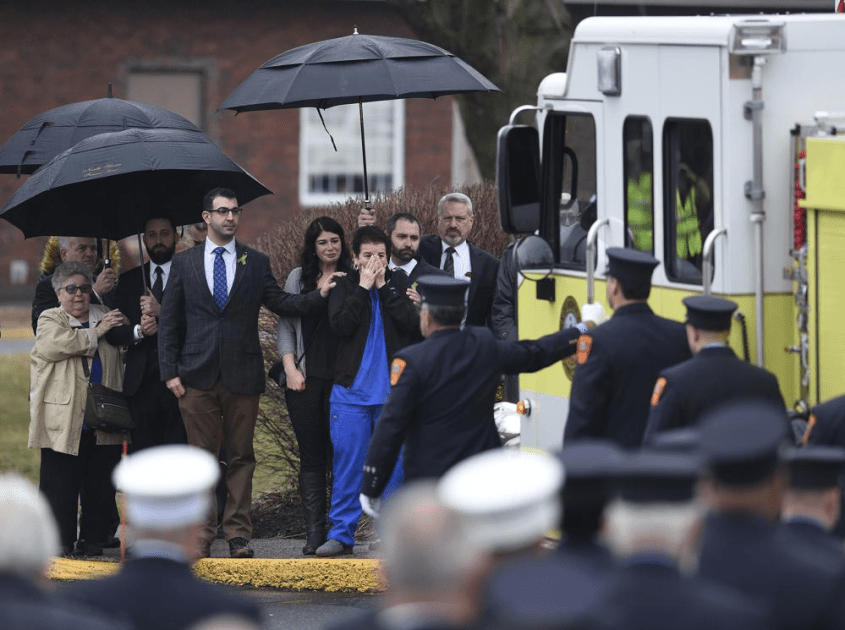


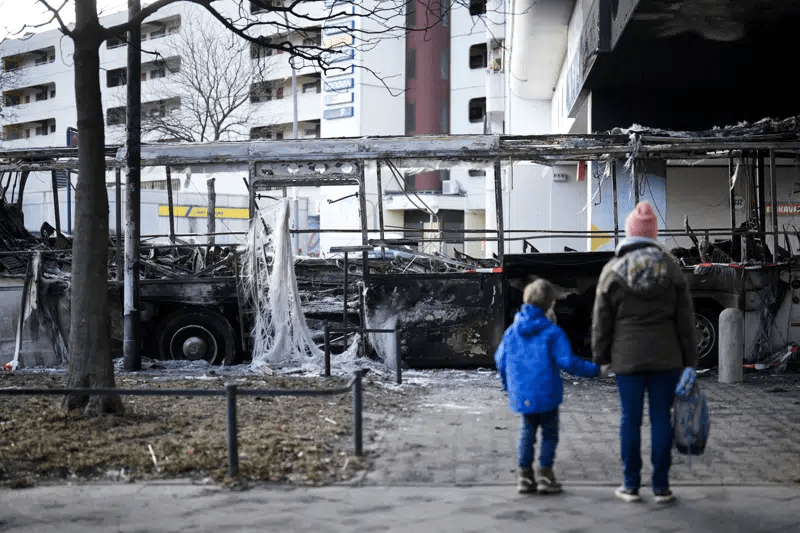





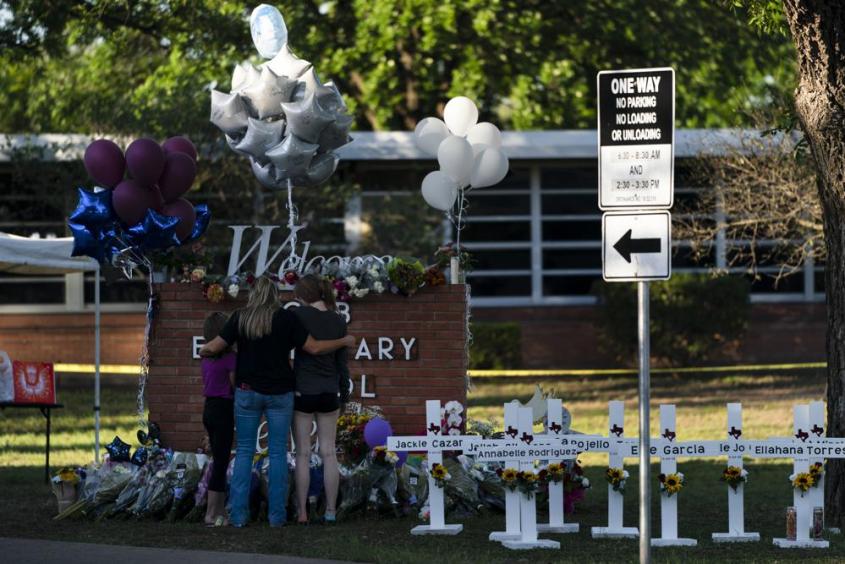





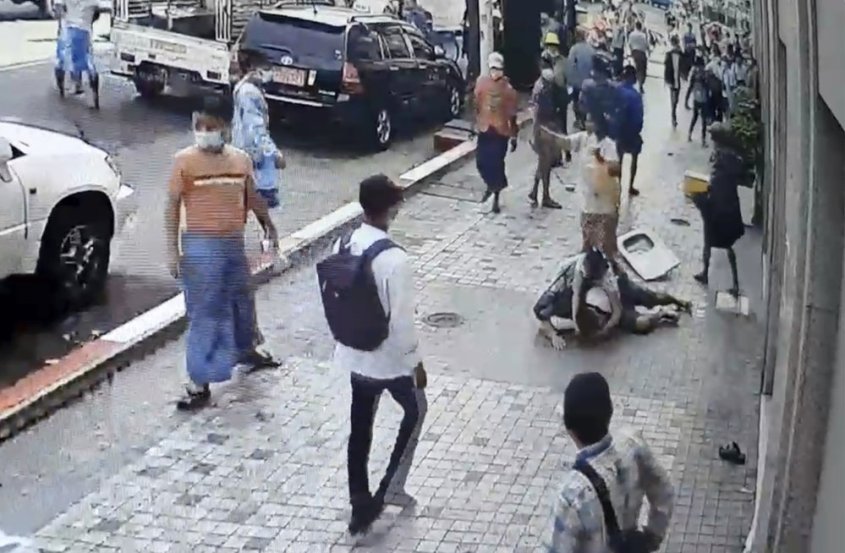








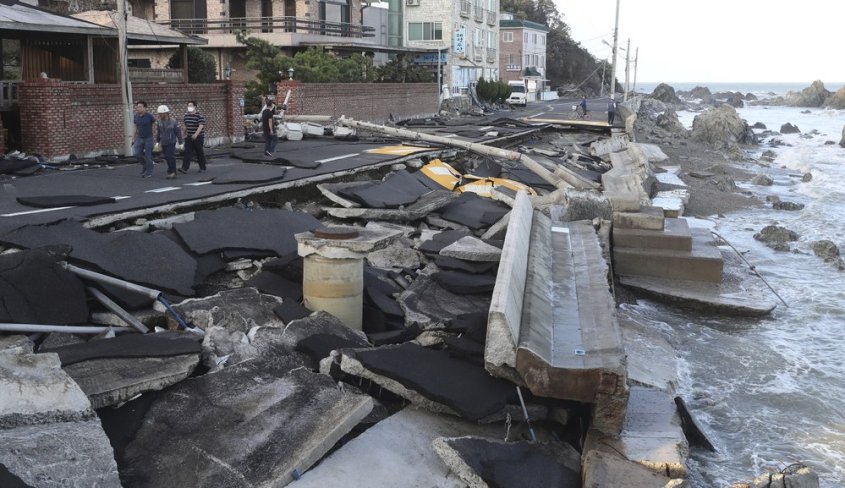


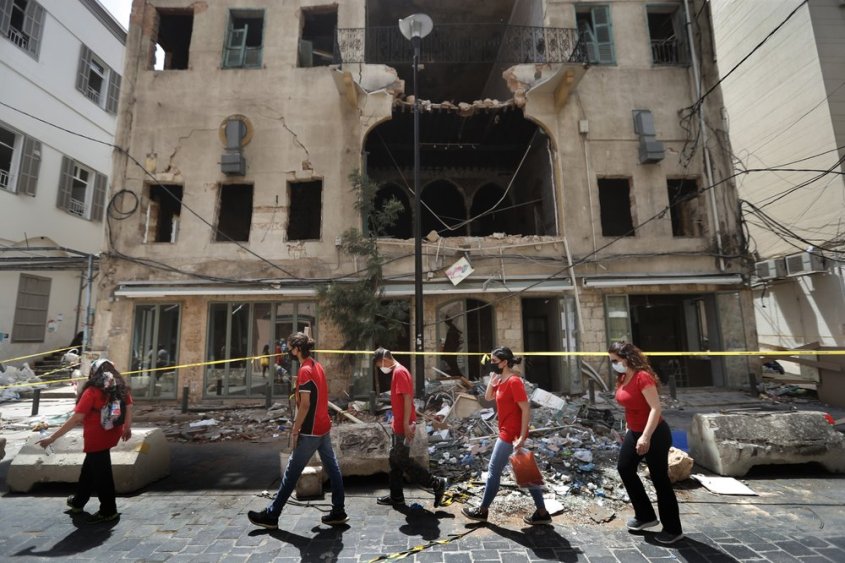


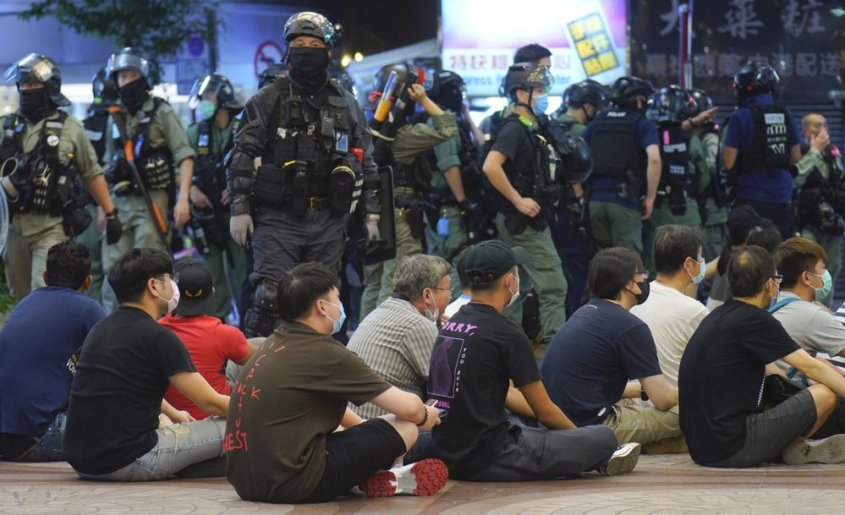


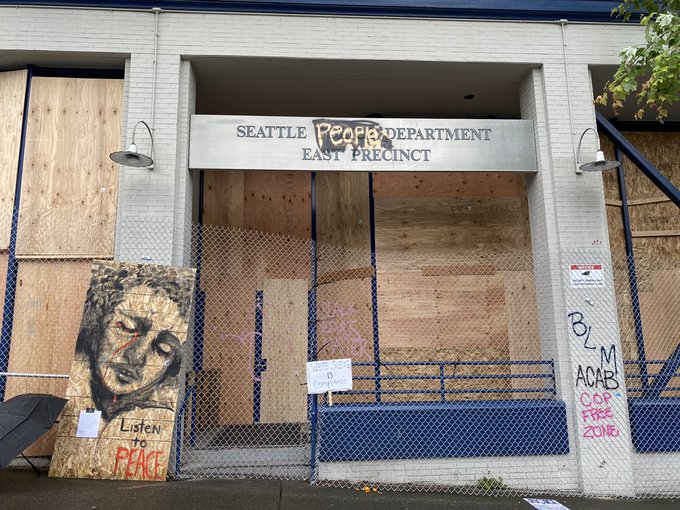
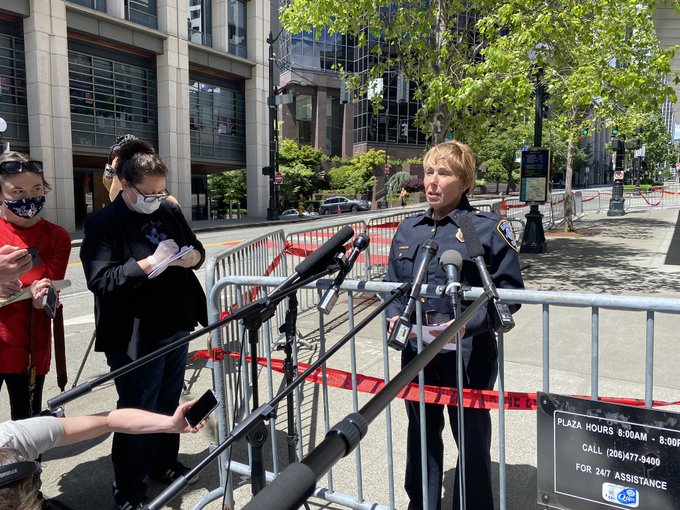
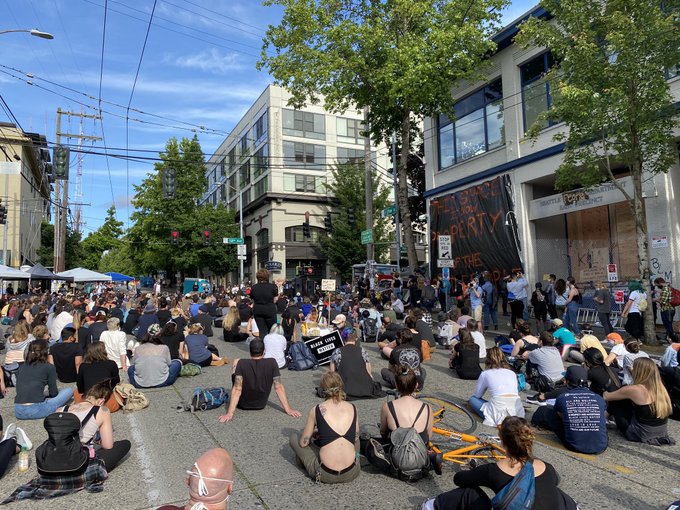


![A man who sells loose cigarettes rides a bike with a Mexican flag attached, as he passes roped-off government buildings in the Zocalo, Mexico City's main square [Rebecca Blackwell/AP Photo]](https://i0.wp.com/www.aljazeera.com/mritems/imagecache/mbdxxlarge/mritems/Images/2020/5/18/62fe5389a15948b5a6e7bf3270dc1f69_18.jpg?w=845&ssl=1 "Local leaders resist Mexico president's push for reopening")


![The Democratic-led House approved the package on a voice vote, rejecting a procedural challenge from Republican Representative Thomas Massie, who wanted a formal recorded vote [Win McNamee/Getty Images/AFP]](https://i0.wp.com/www.aljazeera.com/mritems/imagecache/mbdxxlarge/mritems/Images/2020/3/27/6db14d6209ce4bf6a40ac379114beb23_18.jpg?w=845&ssl=1)







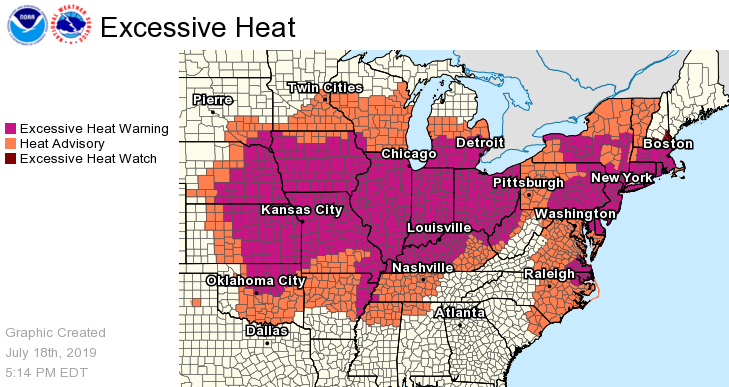





You must be logged in to post a comment.